EP4530292A1 - Plattform auf kristallinem protein mit verwendung von viralem nukleokapsid zur herstellung von zielproteinkondensierten selbstangeordneten nanopartikeln - Google Patents
Plattform auf kristallinem protein mit verwendung von viralem nukleokapsid zur herstellung von zielproteinkondensierten selbstangeordneten nanopartikeln Download PDFInfo
- Publication number
- EP4530292A1 EP4530292A1 EP23812103.2A EP23812103A EP4530292A1 EP 4530292 A1 EP4530292 A1 EP 4530292A1 EP 23812103 A EP23812103 A EP 23812103A EP 4530292 A1 EP4530292 A1 EP 4530292A1
- Authority
- EP
- European Patent Office
- Prior art keywords
- protein
- target protein
- crystallizable
- expression vector
- assembled nanoparticles
- Prior art date
- Legal status (The legal status is an assumption and is not a legal conclusion. Google has not performed a legal analysis and makes no representation as to the accuracy of the status listed.)
- Pending
Links
Images


Classifications
-
- C—CHEMISTRY; METALLURGY
- C07—ORGANIC CHEMISTRY
- C07K—PEPTIDES
- C07K14/00—Peptides having more than 20 amino acids; Gastrins; Somatostatins; Melanotropins; Derivatives thereof
- C07K14/005—Peptides having more than 20 amino acids; Gastrins; Somatostatins; Melanotropins; Derivatives thereof from viruses
-
- A—HUMAN NECESSITIES
- A61—MEDICAL OR VETERINARY SCIENCE; HYGIENE
- A61K—PREPARATIONS FOR MEDICAL, DENTAL OR TOILETRY PURPOSES
- A61K39/00—Medicinal preparations containing antigens or antibodies
- A61K39/12—Viral antigens
-
- A—HUMAN NECESSITIES
- A61—MEDICAL OR VETERINARY SCIENCE; HYGIENE
- A61P—SPECIFIC THERAPEUTIC ACTIVITY OF CHEMICAL COMPOUNDS OR MEDICINAL PREPARATIONS
- A61P31/00—Antiinfectives, i.e. antibiotics, antiseptics, chemotherapeutics
- A61P31/12—Antivirals
- A61P31/14—Antivirals for RNA viruses
-
- C—CHEMISTRY; METALLURGY
- C07—ORGANIC CHEMISTRY
- C07K—PEPTIDES
- C07K14/00—Peptides having more than 20 amino acids; Gastrins; Somatostatins; Melanotropins; Derivatives thereof
- C07K14/195—Peptides having more than 20 amino acids; Gastrins; Somatostatins; Melanotropins; Derivatives thereof from bacteria
- C07K14/24—Peptides having more than 20 amino acids; Gastrins; Somatostatins; Melanotropins; Derivatives thereof from bacteria from Enterobacteriaceae (F), e.g. Citrobacter, Serratia, Proteus, Providencia, Morganella, Yersinia
- C07K14/245—Escherichia (G)
-
- C—CHEMISTRY; METALLURGY
- C07—ORGANIC CHEMISTRY
- C07K—PEPTIDES
- C07K14/00—Peptides having more than 20 amino acids; Gastrins; Somatostatins; Melanotropins; Derivatives thereof
- C07K14/195—Peptides having more than 20 amino acids; Gastrins; Somatostatins; Melanotropins; Derivatives thereof from bacteria
- C07K14/35—Peptides having more than 20 amino acids; Gastrins; Somatostatins; Melanotropins; Derivatives thereof from bacteria from Mycobacteriaceae (F)
-
- C—CHEMISTRY; METALLURGY
- C12—BIOCHEMISTRY; BEER; SPIRITS; WINE; VINEGAR; MICROBIOLOGY; ENZYMOLOGY; MUTATION OR GENETIC ENGINEERING
- C12N—MICROORGANISMS OR ENZYMES; COMPOSITIONS THEREOF; PROPAGATING, PRESERVING, OR MAINTAINING MICROORGANISMS; MUTATION OR GENETIC ENGINEERING; CULTURE MEDIA
- C12N15/00—Mutation or genetic engineering; DNA or RNA concerning genetic engineering, vectors, e.g. plasmids, or their isolation, preparation or purification; Use of hosts therefor
- C12N15/09—Recombinant DNA-technology
- C12N15/63—Introduction of foreign genetic material using vectors; Vectors; Use of hosts therefor; Regulation of expression
- C12N15/70—Vectors or expression systems specially adapted for E. coli
-
- A—HUMAN NECESSITIES
- A61—MEDICAL OR VETERINARY SCIENCE; HYGIENE
- A61K—PREPARATIONS FOR MEDICAL, DENTAL OR TOILETRY PURPOSES
- A61K39/00—Medicinal preparations containing antigens or antibodies
- A61K2039/555—Medicinal preparations containing antigens or antibodies characterised by a specific combination antigen/adjuvant
- A61K2039/55511—Organic adjuvants
- A61K2039/55555—Liposomes; Vesicles, e.g. nanoparticles; Spheres, e.g. nanospheres; Polymers
-
- A—HUMAN NECESSITIES
- A61—MEDICAL OR VETERINARY SCIENCE; HYGIENE
- A61K—PREPARATIONS FOR MEDICAL, DENTAL OR TOILETRY PURPOSES
- A61K39/00—Medicinal preparations containing antigens or antibodies
- A61K2039/60—Medicinal preparations containing antigens or antibodies characteristics by the carrier linked to the antigen
- A61K2039/6031—Proteins
-
- C—CHEMISTRY; METALLURGY
- C07—ORGANIC CHEMISTRY
- C07K—PEPTIDES
- C07K2319/00—Fusion polypeptide
- C07K2319/20—Fusion polypeptide containing a tag with affinity for a non-protein ligand
- C07K2319/21—Fusion polypeptide containing a tag with affinity for a non-protein ligand containing a His-tag
-
- C—CHEMISTRY; METALLURGY
- C07—ORGANIC CHEMISTRY
- C07K—PEPTIDES
- C07K2319/00—Fusion polypeptide
- C07K2319/70—Fusion polypeptide containing domain for protein-protein interaction
- C07K2319/735—Fusion polypeptide containing domain for protein-protein interaction containing a domain for self-assembly, e.g. a viral coat protein (includes phage display)
-
- C—CHEMISTRY; METALLURGY
- C07—ORGANIC CHEMISTRY
- C07K—PEPTIDES
- C07K2319/00—Fusion polypeptide
- C07K2319/80—Fusion polypeptide containing a DNA binding domain, e.g. Lacl or Tet-repressor
- C07K2319/81—Fusion polypeptide containing a DNA binding domain, e.g. Lacl or Tet-repressor containing a Zn-finger domain for DNA binding
-
- C—CHEMISTRY; METALLURGY
- C12—BIOCHEMISTRY; BEER; SPIRITS; WINE; VINEGAR; MICROBIOLOGY; ENZYMOLOGY; MUTATION OR GENETIC ENGINEERING
- C12N—MICROORGANISMS OR ENZYMES; COMPOSITIONS THEREOF; PROPAGATING, PRESERVING, OR MAINTAINING MICROORGANISMS; MUTATION OR GENETIC ENGINEERING; CULTURE MEDIA
- C12N15/00—Mutation or genetic engineering; DNA or RNA concerning genetic engineering, vectors, e.g. plasmids, or their isolation, preparation or purification; Use of hosts therefor
- C12N15/09—Recombinant DNA-technology
- C12N15/11—DNA or RNA fragments; Modified forms thereof; Non-coding nucleic acids having a biological activity
- C12N15/62—DNA sequences coding for fusion proteins
-
- C—CHEMISTRY; METALLURGY
- C12—BIOCHEMISTRY; BEER; SPIRITS; WINE; VINEGAR; MICROBIOLOGY; ENZYMOLOGY; MUTATION OR GENETIC ENGINEERING
- C12N—MICROORGANISMS OR ENZYMES; COMPOSITIONS THEREOF; PROPAGATING, PRESERVING, OR MAINTAINING MICROORGANISMS; MUTATION OR GENETIC ENGINEERING; CULTURE MEDIA
- C12N2740/00—Reverse transcribing RNA viruses
- C12N2740/00011—Details
- C12N2740/10011—Retroviridae
- C12N2740/16011—Human Immunodeficiency Virus, HIV
- C12N2740/16022—New viral proteins or individual genes, new structural or functional aspects of known viral proteins or genes
-
- C—CHEMISTRY; METALLURGY
- C12—BIOCHEMISTRY; BEER; SPIRITS; WINE; VINEGAR; MICROBIOLOGY; ENZYMOLOGY; MUTATION OR GENETIC ENGINEERING
- C12N—MICROORGANISMS OR ENZYMES; COMPOSITIONS THEREOF; PROPAGATING, PRESERVING, OR MAINTAINING MICROORGANISMS; MUTATION OR GENETIC ENGINEERING; CULTURE MEDIA
- C12N2740/00—Reverse transcribing RNA viruses
- C12N2740/00011—Details
- C12N2740/10011—Retroviridae
- C12N2740/16011—Human Immunodeficiency Virus, HIV
- C12N2740/16034—Use of virus or viral component as vaccine, e.g. live-attenuated or inactivated virus, VLP, viral protein
-
- C—CHEMISTRY; METALLURGY
- C12—BIOCHEMISTRY; BEER; SPIRITS; WINE; VINEGAR; MICROBIOLOGY; ENZYMOLOGY; MUTATION OR GENETIC ENGINEERING
- C12N—MICROORGANISMS OR ENZYMES; COMPOSITIONS THEREOF; PROPAGATING, PRESERVING, OR MAINTAINING MICROORGANISMS; MUTATION OR GENETIC ENGINEERING; CULTURE MEDIA
- C12N2740/00—Reverse transcribing RNA viruses
- C12N2740/00011—Details
- C12N2740/10011—Retroviridae
- C12N2740/16011—Human Immunodeficiency Virus, HIV
- C12N2740/16041—Use of virus, viral particle or viral elements as a vector
- C12N2740/16042—Use of virus, viral particle or viral elements as a vector virus or viral particle as vehicle, e.g. encapsulating small organic molecule
-
- C—CHEMISTRY; METALLURGY
- C12—BIOCHEMISTRY; BEER; SPIRITS; WINE; VINEGAR; MICROBIOLOGY; ENZYMOLOGY; MUTATION OR GENETIC ENGINEERING
- C12N—MICROORGANISMS OR ENZYMES; COMPOSITIONS THEREOF; PROPAGATING, PRESERVING, OR MAINTAINING MICROORGANISMS; MUTATION OR GENETIC ENGINEERING; CULTURE MEDIA
- C12N2740/00—Reverse transcribing RNA viruses
- C12N2740/00011—Details
- C12N2740/10011—Retroviridae
- C12N2740/16011—Human Immunodeficiency Virus, HIV
- C12N2740/16111—Human Immunodeficiency Virus, HIV concerning HIV env
- C12N2740/16122—New viral proteins or individual genes, new structural or functional aspects of known viral proteins or genes
-
- C—CHEMISTRY; METALLURGY
- C12—BIOCHEMISTRY; BEER; SPIRITS; WINE; VINEGAR; MICROBIOLOGY; ENZYMOLOGY; MUTATION OR GENETIC ENGINEERING
- C12N—MICROORGANISMS OR ENZYMES; COMPOSITIONS THEREOF; PROPAGATING, PRESERVING, OR MAINTAINING MICROORGANISMS; MUTATION OR GENETIC ENGINEERING; CULTURE MEDIA
- C12N2760/00—MICROORGANISMS OR ENZYMES; COMPOSITIONS THEREOF; PROPAGATING, PRESERVING, OR MAINTAINING MICROORGANISMS; MUTATION OR GENETIC ENGINEERING; CULTURE MEDIA ssRNA viruses negative-sense
- C12N2760/00011—Details
- C12N2760/16011—Orthomyxoviridae
- C12N2760/16111—Influenzavirus A, i.e. influenza A virus
- C12N2760/16122—New viral proteins or individual genes, new structural or functional aspects of known viral proteins or genes
-
- C—CHEMISTRY; METALLURGY
- C12—BIOCHEMISTRY; BEER; SPIRITS; WINE; VINEGAR; MICROBIOLOGY; ENZYMOLOGY; MUTATION OR GENETIC ENGINEERING
- C12N—MICROORGANISMS OR ENZYMES; COMPOSITIONS THEREOF; PROPAGATING, PRESERVING, OR MAINTAINING MICROORGANISMS; MUTATION OR GENETIC ENGINEERING; CULTURE MEDIA
- C12N2760/00—MICROORGANISMS OR ENZYMES; COMPOSITIONS THEREOF; PROPAGATING, PRESERVING, OR MAINTAINING MICROORGANISMS; MUTATION OR GENETIC ENGINEERING; CULTURE MEDIA ssRNA viruses negative-sense
- C12N2760/00011—Details
- C12N2760/16011—Orthomyxoviridae
- C12N2760/16111—Influenzavirus A, i.e. influenza A virus
- C12N2760/16134—Use of virus or viral component as vaccine, e.g. live-attenuated or inactivated virus, VLP, viral protein
-
- C—CHEMISTRY; METALLURGY
- C12—BIOCHEMISTRY; BEER; SPIRITS; WINE; VINEGAR; MICROBIOLOGY; ENZYMOLOGY; MUTATION OR GENETIC ENGINEERING
- C12N—MICROORGANISMS OR ENZYMES; COMPOSITIONS THEREOF; PROPAGATING, PRESERVING, OR MAINTAINING MICROORGANISMS; MUTATION OR GENETIC ENGINEERING; CULTURE MEDIA
- C12N2770/00—MICROORGANISMS OR ENZYMES; COMPOSITIONS THEREOF; PROPAGATING, PRESERVING, OR MAINTAINING MICROORGANISMS; MUTATION OR GENETIC ENGINEERING; CULTURE MEDIA ssRNA viruses positive-sense
- C12N2770/00011—Details
- C12N2770/20011—Coronaviridae
- C12N2770/20022—New viral proteins or individual genes, new structural or functional aspects of known viral proteins or genes
-
- C—CHEMISTRY; METALLURGY
- C12—BIOCHEMISTRY; BEER; SPIRITS; WINE; VINEGAR; MICROBIOLOGY; ENZYMOLOGY; MUTATION OR GENETIC ENGINEERING
- C12N—MICROORGANISMS OR ENZYMES; COMPOSITIONS THEREOF; PROPAGATING, PRESERVING, OR MAINTAINING MICROORGANISMS; MUTATION OR GENETIC ENGINEERING; CULTURE MEDIA
- C12N2770/00—MICROORGANISMS OR ENZYMES; COMPOSITIONS THEREOF; PROPAGATING, PRESERVING, OR MAINTAINING MICROORGANISMS; MUTATION OR GENETIC ENGINEERING; CULTURE MEDIA ssRNA viruses positive-sense
- C12N2770/00011—Details
- C12N2770/20011—Coronaviridae
- C12N2770/20034—Use of virus or viral component as vaccine, e.g. live-attenuated or inactivated virus, VLP, viral protein
Definitions
- the present invention relates to a platform for producing target protein-fused self-assembled nanoparticles based on a crystallizable protein using a viral nucleocapsid. More particularly, the present invention relates to an expression vector which can efficiently produce self-assembled nanoparticles, which are fused with a target protein, particularly, a difficult-to-express protein (DtEP) expressed insoluble in E. coli, and present the target protein on the surface, for example, in an immunologically meaningful structure, in host cells, especially, E. coli using a crystallizable protein and a viral nucleocapsid as fusion partners, a host cell transformed with the expression vector, and a method of producing target protein-fused self-assembled nanoparticles using the same.
- a target protein particularly, a difficult-to-express protein (DtEP) expressed insoluble in E. coli
- VLP virus-like particle
- a chemical conjugation or genetic fusion method is used to introduce a foreign antigen into the VLP-based structure.
- the chemical conjugation method chemically fuses a separately prepared foreign antigen to the VLP-based structure that was already prepared through covalent bonding, but has disadvantages of difficult arrangement of the antigens in a certain direction and relatively low density of the presented antigens.
- the genetic fusion method has the advantage that chimeric VLPs can be prepared through a simpler process by fusion-expressing a gene of a VLP structure-forming protein and a gene of a target antigen protein at the DNA level.
- the present invention is directed to providing an expression vector that can efficiently produce self-assembled nanoparticles, which are fused with a target protein, particularly, a difficult-to-express protein (DtEP) expressed insoluble in E. coli, and present the target protein on the surface, for example, in an immunologically meaningful structure in host cells, especially, E. coli.
- a target protein particularly, a difficult-to-express protein (DtEP) expressed insoluble in E. coli
- the present invention is also directed to providing a host cell which is transformed with the expression vector to efficiently produce the self-assembled nanoparticles.
- the present invention is also directed to providing a method of efficiently producing the self-assembled nanoparticles using the expression vector and/or the host cells.
- the present invention provides an expression vector for producing target protein-fused self-assembled nanoparticles, which includes a polynucleotide encoding a crystallizable protein and a viral nucleocapsid as fusion partners of a target protein.
- the present invention also provides a host cell, which is transformed with the expression vector for producing target protein-fused self-assembled nanoparticles.
- the present invention also provides a method of producing target protein-fused self-assembled nanoparticles, which includes manufacturing an expression vector for producing target protein-fused self-assembled nanoparticles, including a polynucleotide that encodes a target protein, and a crystallizable protein and a viral nucleocapsid as fusion partners of the target protein; producing a transformant by introducing the expression vector for producing target protein-fused self-assembled nanoparticles into host cells; and culturing the transformant.
- self-assembled nanoparticles which are fused with a target protein, particularly, a difficult-to-express protein (DtEP) expressed insoluble in E. coli, and present the target protein on the surface, for example, in an immunologically meaningful structure, can be efficiently produced in host cells, especially, E. coli.
- a target protein particularly, a difficult-to-express protein (DtEP) expressed insoluble in E. coli
- an expression vector for producing target protein-fused self-assembled nanoparticles which includes a polynucleotide that encodes a crystallizable protein and a viral nucleocapsid as fusion partners of a target protein, is provided.
- target protein refers to a protein to be produced in large quantities by one of ordinary skill in the art, including all proteins that can be expressed in host cells after inserting a polynucleotide encoding the protein in a recombinant vector.
- a target protein may be selected from the group consisting of an antigen, an antibody, a cell receptor, an enzyme, a structural protein, serum, and a cell protein, but the present invention is not limited thereto.
- expression vector used herein is a vector for expressing a polynucleotide encoding a polypeptide of interest, which has been introduced into a heterologous or homologous host cell, and refers to a circular or linear polynucleotide, for example, a DNA or RNA molecule.
- An expression vector may include a promoter sequence and/or a terminator sequence, and may also include components required for use in a vector, such as a replication origin, a selection marker, a polyadenylation signal, etc.
- the expression vector of the present invention may be a plasmid, a viral vector, a phage particle, or a genome insert, and may be replicated regardless of the genome of a host cell or integrated into the genome of a host cell after being introduced into the host cell.
- the expression vector of the present invention may include a polynucleotide encoding a target protein, or may be used to include a polynucleotide encoding a target protein in the future. Particularly, in the latter case, as a component that allows easy inclusion of a target protein-encoding polynucleotide, a restriction enzyme-recognition site usually called a multiple cloning site (MSC) is preferably included.
- MSC multiple cloning site
- the present invention is based on new research results:
- the target protein can be efficiently expressed (for example, a protein that is expressed insoluble when no fusion partner is used or when another existing fusion partner is used can be expressed soluble); and when a crystallizable protein and a viral nucleocapsid are applied as fusion partners for a target protein, nanoparticles in which the target protein is self-assembled can be efficiently produced.
- the viral nucleocapsid used as a fusion partner in the present invention has the advantage of minimizing the interference with a target protein because the viral nucleocapsid has a very small size (short peptide).
- a fusion partner there is an advantage of producing a target protein with increased solubility, and in general, the larger the size of the fusion partner, the more helpful it is in enhancing the water solubility of the target protein.
- increased structural interference with the adjacent target protein due to the size of the fusion partner may also impede production of a physiologically active structure. Therefore, it is very important to discover a fusion partner that increases the solubility and activity of the target protein despite its small size, if possible.
- the viral nucleocapsid used as a fusion partner has a very small size (short peptide), so it has the advantages of minimizing structural interference with the target protein and minimizing structural interference with the self-assembly of a monomer of the target protein (in the present invention, self-assembly into nanoparticles).
- conventional technologies require the removal of the fusion partner by treating the fusion protein with a specific cleavage enzyme after production, and therefore, increased production costs due to the use of an expensive enzyme and additional cleavage, and a purification process remain as an obstacle.
- the present invention can technologically and dramatically improve this issue.
- a fusion protein can be easily purified without separate components for purification such as a histidine tag.
- the viral nucleocapsid may be a conventionally known viral nucleocapsid, and it may be a fragment or variant of the viral nucleocapsid, as long as the activity of the present invention is retained, in other words, the activity to form self-assembled nanoparticles in which the viral nucleocapsid acts as a fusion partner for a target protein along with a crystallizable protein to allow the target protein to be expressed soluble especially in E. coli and present on the surface, particularly, as an immunologically meaningful structure is retained.
- the viral nucleocapsid may be a nucleocapsid of a retrovirus, for example, human immunodeficiency virus-1 (HIV-1), SIV, or MuLV.
- HIV-1 human immunodeficiency virus-1
- SIV human immunodeficiency virus-1
- MuLV MuLV
- the viral nucleocapsid is preferably a nucleocapsid of human immunodeficiency virus (HIV).
- HIV human immunodeficiency virus
- the viral nucleocapsid may include an amino acid sequence having 50% or more, 60% or more, 70% or more, 80% or more, 90% or more, 95% or more, 96% or more, 97% or more, 98% or more, or 99% or more sequence identity with the amino acid sequence of SEQ ID NO: 1, or the amino acid sequence of SEQ ID NO: 1.
- the viral nucleocapsid includes, preferably, an amino acid sequence which retains amino acids 14, 17, 22, and 27, more preferably, amino acids 14, 17, 22, 27, 35, 38, 43, and 48, and even more preferably, amino acids 6, 9, 10, 13, 14, 17, 19, 22, 25, 27, 28, 31, 32, 33, 35, 37, 38, 40, 43, 46, 48, and 51 of SEQ ID NO: 1, and satisfies the above-mentioned sequence identity.
- the polynucleotide encoding the viral nucleocapsid includes a nucleotide sequence having, preferably, 50% or more, 60% or more, 70% or more, 80% or more, 90% or more, 95% or more, 96% or more, 97% or more, 98% or more, or 99% or more sequence identity with the nucleotide sequence of SEQ ID NO: 2 or 3, or the nucleotide sequence of SEQ ID NO: 2 or 3.
- the polynucleotide encoding the viral nucleocapsid includes a nucleotide sequence that encodes an amino acid sequence that retains, preferably, amino acids 14, 17, 22, and 27, more preferably, amino acids 14, 17, 22, 27, 35, 38, 43, and 48, and even more preferably, amino acids 6, 9, 10, 13, 14, 17, 19, 22, 25, 27, 28, 31, 32, 33, 35, 37, 38, 40, 43, 46, 48, and 51 of SEQ ID NO: 1, and satisfies the above-mentioned sequence identity.
- sequence identity means the sequence identity between an amino acid sequence and a reference amino acid sequence, or between a nucleotide sequence and a reference nucleotide sequence.
- sequence identity may be determined by comparing the positions in sequences that can be aligned for comparison. When a position in the comparative sequence is occupied by the same amino acid or base, molecules are identical at the position.
- the degree of identity between amino acid or nucleotide sequences is a function of the number of identical amino acids or nucleotides at each position shared by the same amino acid or nucleotide sequence. For example, using a variety of alignment algorithms and/or programs, including FASTA or BLAST, the identity between two sequences may be calculated.
- the crystallizable protein may be used without limitation as long as each protein is a protein with the activity to form an assembly, for example, a cage-shaped complex protein as a unit.
- encapsulin or ferritin may be used as the crystallizable protein.
- conventionally known encapsulin or ferritin as well as a fragment of encapsulin or ferritin may be used as long as the activity to form an assembly, for example, a cage-shaped complex protein as a unit, is maintained.
- Encapsulin derived from an organism such as Mycobacterium tuberculosis, Thermotoga maritima, Pyrococcus furiosus, or Myxococcus xanthus may be used, and preferably, Mycobacterium tuberculosis-derived encapsulin is used.
- the crystallizable protein preferably includes an amino acid sequence having 50% or more, 60% or more, 70% or more, 80% or more, 90% or more, 95% or more, 96% or more, 97% or more, 98% or more, or 99% or more sequence identity with the amino acid sequence of SEQ ID NO: 4 or 6, or the amino acid sequence of SEQ ID NO: 4 or 6.
- the polynucleotide encoding the crystallizable protein preferably includes a nucleotide sequence having 50% or more, 60% or more, 70% or more, 80% or more, 90% or more, 95% or more, 96% or more, 97% or more, 98% or more, or 99% or more sequence identity with the nucleotide sequence of SEQ ID NO: 5 or 7, or the nucleotide sequence of SEQ ID NO: 5 or 7.
- the expression vector of the present invention may be for producing target protein-fused self-assembled nanoparticles in cells selected from all organisms including prokaryotes and eukaryotes, preferably, a microorganism of the genus Escherichia, and more preferably, E. coli.
- the polynucleotide encoding a crystallizable protein and a viral nucleocapsid may further include other components, for example, a cloning site for inserting a target protein-encoding polynucleotide, such as a restriction enzyme recognition site, e.g., a multiple cloning site (MCS); a linker sequence for providing a gap between a target protein and a fusion partner and/or between fusion partners (between a crystallizable protein and a viral nucleocapsid); a tag sequence such as a histidine-tagging sequence; and/or a protease recognition site-encoding sequence for cleaving a portion of an expressed fusion protein.
- a cloning site for inserting a target protein-encoding polynucleotide such as a restriction enzyme recognition site, e.g., a multiple cloning site (MCS); a linker sequence for providing a gap between a target protein and a
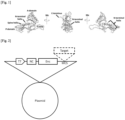
- the expression vector of the present invention includes a polynucleotide that encodes a crystallizable protein and a viral nucleocapsid as fusion partners of a target protein, and the polynucleotide encodes a crystallizable protein and a viral nucleocapsid linked to the N-terminus of the crystallizable protein, and includes a target protein-coding site or a cloning site for linking a target protein to the C-terminus of the crystallizable protein.
- self-assembled nanoparticles may be produced in such a way that the target protein is exposed on the outside of the nanoparticle and the viral nucleocapsid is located inside the nanoparticle, which is particularly effective in producing antigen-presenting nanoparticles for an immune response.
- the polynucleotide includes a construct in which a promoter, a viral nucleocapsid-coding site, a crystallizable protein-coding site, a target protein-coding site or a cloning site for inserting a target protein-coding polynucleotide (e.g., a restriction enzyme recognition site, e.g., MCS), and a terminator are operably linked sequentially in the 5' to 3' direction.
- a target protein-coding polynucleotide e.g., a restriction enzyme recognition site, e.g., MCS
- the expression vector of the present invention includes a polynucleotide that encodes a crystallizable protein and a viral nucleocapsid as fusion partners of the target protein, and the polynucleotide encodes a crystallizable protein and a viral nucleocapsid linked to the N-terminus of the crystallizable protein, and includes a target protein-coding site or a cloning site for linking a target protein between the crystallizable protein and the viral nucleocapsid.
- the polynucleotide includes a construct in which a promoter, a virus nucleocapsid-coding site, a target protein-coding site or a cloning site for inserting a target protein-coding polynucleotide (e.g., a restriction enzyme recognition site, e.g., MCS), a crystallizable protein-coding site and a terminator are operably linked sequentially in the 5' to 3' direction.
- a target protein-coding polynucleotide e.g., a restriction enzyme recognition site, e.g., MCS
- the expression vector of the present invention includes a polynucleotide that encodes a crystallizable protein and a viral nucleocapsid as fusion partners of the target protein, and the polynucleotide encodes a crystallizable protein and a viral nucleocapsid linked to the N-terminus of the crystallizable protein, and includes cloning sites for linking a target protein at the C-terminus of the crystallizable protein and between the crystallizable protein and the viral nucleocapsid.
- a user may choose whether to position the target protein at the C-terminus or the N-terminus of the crystallizable protein.
- the polynucleotide includes a construct in which a promoter, a virus nucleocapsid-coding site, a first cloning site for inserting the target protein-coding polynucleotide (e.g., a restriction enzyme recognition site, e.g., MCS), a crystallizable protein-coding site, a second cloning site for inserting the target protein-coding polynucleotide (e.g., a restriction enzyme recognition site, e.g., MCS), and a terminator are operably linked sequentially in the 5' to 3' direction.
- a promoter e.g., a virus nucleocapsid-coding site
- a first cloning site for inserting the target protein-coding polynucleotide e.g., a restriction enzyme recognition site, e.g., MCS
- a crystallizable protein-coding site e.g., a second cloning site for inserting the target
- the expression vector of the present invention may include a T7 promoter and a T7 terminator to regulate the transcription of the target protein and fusion partner-encoding DNA by a bacteriophage T7 system. According to this, the expression vector of the present invention can more effectively produce the target protein in E . coli.
- the expression vector of the present invention may be manufactured based on, for example, a conventional expression vector using a conventional recombination method.
- a host cell transformed with an expression vector for producing target protein-fused self-assembled nanoparticles of the present invention is provided.
- the host cell in the present invention may be selected from cells of all organisms including prokaryotes and eukaryotes, preferably, cells of a microorganism of the genus Escherichia, and more preferably, E. coli.
- transformation means introducing a polynucleotide into a host so that the polynucleotide becomes replicable either as an extrachromosomal element or by completion of chromosomal integration.
- a transformation method with the expression vector according to the present invention may include electroporation, a calcium phosphate (CaPO 4 ) method, a calcium chloride (CaCl 2 ) method, microinjection, a polyethylene glycol (PEG) method, a DEAE-dextran method, a cationic liposome method, or a lithium acetate-DMSO method, but the present invention is not limited thereto.
- a method of producing target protein-fused self-assembled nanoparticles which includes manufacturing an expression vector for producing target protein-fused self-assembled nanoparticles, which includes a polynucleotide that encodes a target protein and a crystallizable protein and a viral nucleocapsid as fusion partners of the target protein; producing a transformant by introducing the expression vector for producing target protein-fused self-assembled nanoparticles into host cells; and culturing the transformant is provided.
- any culture method known to be suitable for a host cell may be used.
- the host cell is E. coli
- a method of culturing in Luria-Bertani (LB) medium at 16 to 37 °C may be used.
- an antibiotic selection marker e.g., a gene resistant to the antibiotic ampicillin
- the proliferation of E. coli containing the expression vector can be preferentially induced by adding the corresponding antibiotic (e.g., ampicillin) to the medium and culturing the cells.
- the expression vector contains a component that regulates the transcription and/or translation of DNA encoding the target protein, for example, a lac operon-related component
- the expression of the target protein can be induced by adding a related material, such as IPTG.
- a vector was manufactured to be expressed in such a form that NC of human immunodeficiency virus (HIV) was linked to the N-terminus of the crystallizable protein, encapsulin, and six histidine tags and a tobacco etch virus (TEV) protease cleavage site were present between them ( FIG. 4 ).
- HAV human immunodeficiency virus
- the vector was manufactured based on a pGEMEX-1 (Promega) vector designed to regulate the expression of a target protein by a T7 promoter, and the sequence of SEQ ID NO: 5 was used as a sequence encoding encapsulin, and the sequence of SEQ ID NO: 2 (or SEQ ID NO: 3) was used as a sequence encoding NC.
- sequence of the construct region in the manufactured vector is the same as SEQ ID NO: 8, and the amino acid sequence of an expected expression fusion protein is the same as SEQ ID NO: 9.
- a vector for producing self-assembled nanoparticles of a fusion protein was manufactured in a form in which NC was linked to the N-terminus of a crystallizable protein encapsulin, six histidine and TEV protease cleavage sites were present therebetween, and a target protein, which is a COVID19 receptor-binding domain (RBD), was linked to the C-terminus of the encapsulin ( FIG. 5 ).
- NC was linked to the N-terminus of a crystallizable protein encapsulin
- six histidine and TEV protease cleavage sites were present therebetween
- a target protein which is a COVID19 receptor-binding domain (RBD)
- the manufacturing process was the same as in Preparation Example 1, but a sequence encoding the NC - 6X His tag - TEV protease cleavage site - encapsulin - target protein construct was inserted into the MCS of the pGEMEX -1(Promega) vector.
- sequence of the construct region in the manufactured vector is the same as SEQ ID NO: 10, and the amino acid sequence of an expected expression fusion protein is the same as SEQ ID NO: 11.
- a vector for producing self-assembled nanoparticles of a fusion protein was manufactured in a form in which a target protein, influenza antigen (H5N1 HA: H5gd) was linked to the N-terminus of a crystallizable protein ferritin, NC was linked to the N-terminus of the influenza antigen, and six histidine tags and a TEV protease cleavage site were present between the NC and influenza antigen ( FIG. 6 ).
- the manufacturing process was the same as in Preparation Example 1, but a sequence encoding the NC - 6X His tag - TEV protease cleavage site - target protein - ferritin construct was inserted into the MCS of the pGEMEX-1 (Promega) vector.
- sequence of the construct region in the manufactured vector is the same as SEQ ID NO: 12, and the amino acid sequence of an expected expression fusion protein is the same as SEQ ID NO: 13.
- the vectors of Preparation Example and Examples were transformed into E . coli SHuffle/T7(NEB) or SHuffle/T7/pLsS(NEB) and cultured.
- Shuffle/T7/pLysS was made by extracting a pLysS plasmid from BL21 star (DE3) pLysS One Shot TM competent E. coli (Invitrogen) using Mini-prep and introducing the extracted plasmid into Shuffle T7(NEB) competent E . coli, and selecting with chloramphenicol (CM), an antibiotic marker included in the pLysS. All transformed E.
- CM chloramphenicol
- coli was cultured in LB media containing 50 ⁇ g/mL of ampicillin alone, or 50 ⁇ g/mL of ampicillin and 34 ⁇ g/mL of chloramphenicol.
- the culture temperature was set to 16 to 37 °C.
- IPTG was added at a level of 0 ⁇ M to 1 mM to activate the T7 promoter, and the culture was performed at 37 °C for 3 hours or at 25 °C for 5 hours to allow sufficient protein production after adding IPTG.
- Sufficiently cultured E. coli was centrifuged to remove the supernatant, which was then stored. Subsequently, 0.3 mL of PBS was added to the E.
- coli harvest which corresponds to 5 mL of the LB medium, and subjected to sonication to obtain a lysate. Then, the lysate was centrifuged and divided into a soluble fraction and a pellet fraction, and the total lysate, the soluble fraction, and the pellet fraction were each analyzed by SDS-PAGE.
- the product obtained by inducing the expression of the vector of Example 1 that is, the self-assembled nanoparticles were injected intraperitoneally (IP) or intramuscularly (IM) into mice at appropriate doses, and two weeks later, serum was obtained from orbital blood collection, and then ELISA was performed. The injection was performed three times at two-week intervals. As a result, as shown in FIG. 14 , an IgG titer was shown. This demonstrates that, according to the method of the present invention, self-assembled nanoparticles in which the target protein is fused while maintaining its original structure can be produced.
- IP intraperitoneally
- IM intramuscularly
Landscapes
- Health & Medical Sciences (AREA)
- Life Sciences & Earth Sciences (AREA)
- Chemical & Material Sciences (AREA)
- Genetics & Genomics (AREA)
- Organic Chemistry (AREA)
- Engineering & Computer Science (AREA)
- Molecular Biology (AREA)
- General Health & Medical Sciences (AREA)
- Biochemistry (AREA)
- Biophysics (AREA)
- Biomedical Technology (AREA)
- Medicinal Chemistry (AREA)
- Biotechnology (AREA)
- Zoology (AREA)
- Wood Science & Technology (AREA)
- General Engineering & Computer Science (AREA)
- Bioinformatics & Cheminformatics (AREA)
- Proteomics, Peptides & Aminoacids (AREA)
- Gastroenterology & Hepatology (AREA)
- Virology (AREA)
- Microbiology (AREA)
- Plant Pathology (AREA)
- Physics & Mathematics (AREA)
- Veterinary Medicine (AREA)
- Public Health (AREA)
- Animal Behavior & Ethology (AREA)
- Pharmacology & Pharmacy (AREA)
- Oncology (AREA)
- General Chemical & Material Sciences (AREA)
- Chemical Kinetics & Catalysis (AREA)
- Nuclear Medicine, Radiotherapy & Molecular Imaging (AREA)
- Communicable Diseases (AREA)
- Immunology (AREA)
- Mycology (AREA)
- Epidemiology (AREA)
- Preparation Of Compounds By Using Micro-Organisms (AREA)
- Peptides Or Proteins (AREA)
- Micro-Organisms Or Cultivation Processes Thereof (AREA)
Applications Claiming Priority (2)
| Application Number | Priority Date | Filing Date | Title |
|---|---|---|---|
| KR20220062790 | 2022-05-23 | ||
| PCT/KR2023/006959 WO2023229329A1 (ko) | 2022-05-23 | 2023-05-23 | 바이러스 뉴클레오캡시드를 이용한 결정성 단백질 기반 목적 단백질 융합 자가 조립 나노 입자 제조 플랫폼 |
Publications (2)
| Publication Number | Publication Date |
|---|---|
| EP4530292A1 true EP4530292A1 (de) | 2025-04-02 |
| EP4530292A4 EP4530292A4 (de) | 2026-01-21 |
Family
ID=88919664
Family Applications (1)
| Application Number | Title | Priority Date | Filing Date |
|---|---|---|---|
| EP23812103.2A Pending EP4530292A4 (de) | 2022-05-23 | 2023-05-23 | Plattform auf kristallinem protein mit verwendung von viralem nukleokapsid zur herstellung von zielproteinkondensierten selbstangeordneten nanopartikeln |
Country Status (5)
| Country | Link |
|---|---|
| EP (1) | EP4530292A4 (de) |
| JP (1) | JP2025519107A (de) |
| KR (1) | KR102677201B1 (de) |
| CN (1) | CN119654333A (de) |
| WO (1) | WO2023229329A1 (de) |
Family Cites Families (12)
| Publication number | Priority date | Publication date | Assignee | Title |
|---|---|---|---|---|
| WO1997044064A2 (en) * | 1996-05-20 | 1997-11-27 | The Government Of The United States Of America, Represented By The Secretary, Department Of Health And Human Services | Oligonucleotides which specifically bind retroviral nucleocapsid proteins |
| US20030138769A1 (en) * | 2000-08-16 | 2003-07-24 | Birkett Ashley J. | Immunogenic HBc chimer particles having enhanced stability |
| KR101077612B1 (ko) * | 2008-12-29 | 2011-10-27 | 고려대학교 산학협력단 | 박테리오페리틴을 융합발현파트너로 이용한 가용성 재조합 단백질의 제조방법 |
| WO2016138160A1 (en) * | 2015-02-24 | 2016-09-01 | The United States Of America, As Represented By The Secretary, Department Of Health And Human Services | Middle east respiratory syndrome coronavirus immunogens, antibodies, and their use |
| KR20180050261A (ko) * | 2018-04-27 | 2018-05-14 | 동국대학교 산학협력단 | 단일사슬항체조각과 바이러스 외피 단백질을 포함하는 융합단백질 및 이의 용도 |
| CA3098103A1 (en) * | 2018-05-23 | 2019-11-28 | Adc Therapeutics Sa | Molecular adjuvant |
| US12570701B2 (en) * | 2018-06-05 | 2026-03-10 | International Aids Vaccine Initiative, Inc. | Ferritin nanoparticle displaying an HIV trimer |
| WO2019240429A1 (ko) * | 2018-06-14 | 2019-12-19 | (주) 에빅스젠 | 세포 투과 펩티드 및 아데노신 탈아미노화효소의 융합 단백질을 포함하는 중증복합면역결핍증 치료용 약학적 조성물 |
| KR102076917B1 (ko) * | 2018-10-25 | 2020-02-13 | 연세대학교 산학협력단 | 자가조립 나노 입자를 제조하기 위한 유전자 재조합 발현 벡터 시스템 및 이를 이용하는 방법 |
| CN115427071A (zh) * | 2020-02-25 | 2022-12-02 | 米加尔加利利研究所有限公司 | 包含ltb和病原性抗原的组合物及其用途 |
| KR102264535B1 (ko) * | 2020-06-01 | 2021-06-14 | (주)인테라 | 엔캡슐린 기반 백신 생산을 위한 재조합 발현 벡터 및 이의 제조방법 |
| CU24665B1 (es) * | 2020-11-04 | 2023-06-13 | Ct Ingenieria Genetica Biotecnologia | Proteína quimérica que comprende el dominio de unión al receptor de la proteína de la espiga de coronavirus y composiciones que las comprenden |
-
2023
- 2023-05-23 WO PCT/KR2023/006959 patent/WO2023229329A1/ko not_active Ceased
- 2023-05-23 EP EP23812103.2A patent/EP4530292A4/de active Pending
- 2023-05-23 KR KR1020230066237A patent/KR102677201B1/ko active Active
- 2023-05-23 CN CN202380055824.6A patent/CN119654333A/zh active Pending
- 2023-05-23 JP JP2024569232A patent/JP2025519107A/ja active Pending
Also Published As
| Publication number | Publication date |
|---|---|
| KR20230163940A (ko) | 2023-12-01 |
| EP4530292A4 (de) | 2026-01-21 |
| KR102677201B9 (ko) | 2025-04-04 |
| CN119654333A (zh) | 2025-03-18 |
| WO2023229329A1 (ko) | 2023-11-30 |
| KR102677201B1 (ko) | 2024-06-25 |
| JP2025519107A (ja) | 2025-06-24 |
Similar Documents
| Publication | Publication Date | Title |
|---|---|---|
| Bruun et al. | Engineering a rugged nanoscaffold to enhance plug-and-display vaccination | |
| KR102713707B1 (ko) | 신규 다가 나노입자 기반 백신 | |
| Miroshnikov et al. | Engineering trimeric fibrous proteins based on bacteriophage T4 adhesins. | |
| JPH08505769A (ja) | ウイルスの膜蛋白質の天然ドメインの獲得方法、特にhivに対するワクチンとしてのそれらの使用 | |
| CN114478718B (zh) | 一种重组新型冠状病毒蛋白疫苗、其制备方法和应用 | |
| WO2017207480A1 (en) | Stabilized pre-fusion rsv f proteins | |
| CN114315989A (zh) | 一种重组新型冠状病毒蛋白疫苗、其制备方法和应用 | |
| JP2003525619A (ja) | ウイルスコートタンパク質融合体としての植物における外来ポリペプチドの産生 | |
| JP2018505135A (ja) | ヤツメウナギ由来の配列への融合による組換えタンパク質の多量体化 | |
| CN105431457A (zh) | 单结构域抗体展示 | |
| EP4530292A1 (de) | Plattform auf kristallinem protein mit verwendung von viralem nukleokapsid zur herstellung von zielproteinkondensierten selbstangeordneten nanopartikeln | |
| JPH05506145A (ja) | 修飾ポチウイルス外被タンパク質に基づく自己ポリマー化発現系 | |
| Aguilera et al. | Porcine circovirus type 2 protective epitope densely carried by chimeric papaya ringspot virus–like particles expressed in Escherichia coli as a cost‐effective vaccine manufacture alternative | |
| EP4530352A1 (de) | Pentamer-herstellungsplattform mit verwendung von viralem nukleocapsid auf basis von pentameremer-toxinproteinfusion | |
| KR102201154B1 (ko) | 폴리글루타메이트-TAT-Cre 융합 단백질의 제조방법 | |
| CN114478717A (zh) | 一种重组新型冠状病毒蛋白疫苗、其制备方法和应用 | |
| EP4530291A1 (de) | Plattform zur expression von protein von interesse unter verwendung von viralem nukleocapsid | |
| US12351604B2 (en) | Fusion protein and use thereof | |
| CN119161495B (zh) | 呼吸道合胞病毒重构多肽及其应用 | |
| Uhde-Holzem et al. | Characterization and diagnostic potential of foreign epitope-presenting Ty1 virus-like particles expressed in Escherichia coli and Pichia pastoris | |
| HK40073047A (en) | A recombinant protein-based covid-19 vaccine as well as its preparation method and application thereof | |
| HK40073046A (en) | A recombinant protein-based covid-19 vaccine as well as its preparation method and application thereof | |
| WO2025076013A1 (en) | Engineered middle east respiratory syndrome proteins and related methods | |
| HK40073048A (en) | A recombinant protein-based covid-19 vaccine as well as its preparation method and application thereof | |
| US6995255B1 (en) | Cellular delivery agent |
Legal Events
| Date | Code | Title | Description |
|---|---|---|---|
| STAA | Information on the status of an ep patent application or granted ep patent |
Free format text: STATUS: THE INTERNATIONAL PUBLICATION HAS BEEN MADE |
|
| PUAI | Public reference made under article 153(3) epc to a published international application that has entered the european phase |
Free format text: ORIGINAL CODE: 0009012 |
|
| STAA | Information on the status of an ep patent application or granted ep patent |
Free format text: STATUS: REQUEST FOR EXAMINATION WAS MADE |
|
| 17P | Request for examination filed |
Effective date: 20241212 |
|
| AK | Designated contracting states |
Kind code of ref document: A1 Designated state(s): AL AT BE BG CH CY CZ DE DK EE ES FI FR GB GR HR HU IE IS IT LI LT LU LV MC ME MK MT NL NO PL PT RO RS SE SI SK SM TR |
|
| DAV | Request for validation of the european patent (deleted) | ||
| DAX | Request for extension of the european patent (deleted) | ||
| A4 | Supplementary search report drawn up and despatched |
Effective date: 20251223 |
|
| RIC1 | Information provided on ipc code assigned before grant |
Ipc: C07K 14/005 20060101AFI20251217BHEP Ipc: C07K 14/35 20060101ALI20251217BHEP Ipc: C12N 15/70 20060101ALI20251217BHEP Ipc: C12N 15/62 20060101ALI20251217BHEP |