EP4530283A1 - Organic compound salts - Google Patents
Organic compound salts Download PDFInfo
- Publication number
- EP4530283A1 EP4530283A1 EP24163033.4A EP24163033A EP4530283A1 EP 4530283 A1 EP4530283 A1 EP 4530283A1 EP 24163033 A EP24163033 A EP 24163033A EP 4530283 A1 EP4530283 A1 EP 4530283A1
- Authority
- EP
- European Patent Office
- Prior art keywords
- salt
- meo
- dmt
- hbr
- pattern
- Prior art date
- Legal status (The legal status is an assumption and is not a legal conclusion. Google has not performed a legal analysis and makes no representation as to the accuracy of the status listed.)
- Pending
Links
Images

Classifications
-
- C—CHEMISTRY; METALLURGY
- C07—ORGANIC CHEMISTRY
- C07D—HETEROCYCLIC COMPOUNDS
- C07D209/00—Heterocyclic compounds containing five-membered rings, condensed with other rings, with one nitrogen atom as the only ring hetero atom
- C07D209/02—Heterocyclic compounds containing five-membered rings, condensed with other rings, with one nitrogen atom as the only ring hetero atom condensed with one carbocyclic ring
- C07D209/04—Indoles; Hydrogenated indoles
- C07D209/10—Indoles; Hydrogenated indoles with substituted hydrocarbon radicals attached to carbon atoms of the hetero ring
- C07D209/14—Radicals substituted by nitrogen atoms, not forming part of a nitro radical
- C07D209/16—Tryptamines
-
- A—HUMAN NECESSITIES
- A61—MEDICAL OR VETERINARY SCIENCE; HYGIENE
- A61K—PREPARATIONS FOR MEDICAL, DENTAL OR TOILETRY PURPOSES
- A61K31/00—Medicinal preparations containing organic active ingredients
- A61K31/33—Heterocyclic compounds
- A61K31/395—Heterocyclic compounds having nitrogen as a ring hetero atom, e.g. guanethidine or rifamycins
- A61K31/40—Heterocyclic compounds having nitrogen as a ring hetero atom, e.g. guanethidine or rifamycins having five-membered rings with one nitrogen as the only ring hetero atom, e.g. sulpiride, succinimide, tolmetin, buflomedil
- A61K31/403—Heterocyclic compounds having nitrogen as a ring hetero atom, e.g. guanethidine or rifamycins having five-membered rings with one nitrogen as the only ring hetero atom, e.g. sulpiride, succinimide, tolmetin, buflomedil condensed with carbocyclic rings, e.g. carbazole
- A61K31/404—Indoles, e.g. pindolol
- A61K31/4045—Indole-alkylamines; Amides thereof, e.g. serotonin, melatonin
-
- A—HUMAN NECESSITIES
- A61—MEDICAL OR VETERINARY SCIENCE; HYGIENE
- A61P—SPECIFIC THERAPEUTIC ACTIVITY OF CHEMICAL COMPOUNDS OR MEDICINAL PREPARATIONS
- A61P25/00—Drugs for disorders of the nervous system
-
- A—HUMAN NECESSITIES
- A61—MEDICAL OR VETERINARY SCIENCE; HYGIENE
- A61P—SPECIFIC THERAPEUTIC ACTIVITY OF CHEMICAL COMPOUNDS OR MEDICINAL PREPARATIONS
- A61P25/00—Drugs for disorders of the nervous system
- A61P25/04—Centrally acting analgesics, e.g. opioids
-
- A—HUMAN NECESSITIES
- A61—MEDICAL OR VETERINARY SCIENCE; HYGIENE
- A61P—SPECIFIC THERAPEUTIC ACTIVITY OF CHEMICAL COMPOUNDS OR MEDICINAL PREPARATIONS
- A61P25/00—Drugs for disorders of the nervous system
- A61P25/06—Antimigraine agents
-
- A—HUMAN NECESSITIES
- A61—MEDICAL OR VETERINARY SCIENCE; HYGIENE
- A61P—SPECIFIC THERAPEUTIC ACTIVITY OF CHEMICAL COMPOUNDS OR MEDICINAL PREPARATIONS
- A61P25/00—Drugs for disorders of the nervous system
- A61P25/14—Drugs for disorders of the nervous system for treating abnormal movements, e.g. chorea, dyskinesia
- A61P25/16—Anti-Parkinson drugs
-
- A—HUMAN NECESSITIES
- A61—MEDICAL OR VETERINARY SCIENCE; HYGIENE
- A61P—SPECIFIC THERAPEUTIC ACTIVITY OF CHEMICAL COMPOUNDS OR MEDICINAL PREPARATIONS
- A61P25/00—Drugs for disorders of the nervous system
- A61P25/22—Anxiolytics
-
- A—HUMAN NECESSITIES
- A61—MEDICAL OR VETERINARY SCIENCE; HYGIENE
- A61P—SPECIFIC THERAPEUTIC ACTIVITY OF CHEMICAL COMPOUNDS OR MEDICINAL PREPARATIONS
- A61P25/00—Drugs for disorders of the nervous system
- A61P25/24—Antidepressants
-
- A—HUMAN NECESSITIES
- A61—MEDICAL OR VETERINARY SCIENCE; HYGIENE
- A61P—SPECIFIC THERAPEUTIC ACTIVITY OF CHEMICAL COMPOUNDS OR MEDICINAL PREPARATIONS
- A61P25/00—Drugs for disorders of the nervous system
- A61P25/30—Drugs for disorders of the nervous system for treating abuse or dependence
-
- C—CHEMISTRY; METALLURGY
- C07—ORGANIC CHEMISTRY
- C07B—GENERAL METHODS OF ORGANIC CHEMISTRY; APPARATUS THEREFOR
- C07B2200/00—Indexing scheme relating to specific properties of organic compounds
- C07B2200/13—Crystalline forms, e.g. polymorphs
Definitions
- the present invention relatesto 5-methoxy-N,N-dimethyltryptamine (5-MeO-DMT)hydrobromide, an acid addition salt of 5-MeO-DMT.
- the invention furthermore relatesto the preparation and to uses of this salt, polymorphic forms, and compositions containing the salt.
- 5-Methoxy-N,N-dimethyltryptamine has the formula shown below.
- 5-MeO-DMT is a naturally occurring serotonergic psychedelic tryptamine which acts as a 5-HT1A and 5-HT2A receptor agonist.
- 5-MeO-DMT was first isolated from the bark of Dictyoloma incanescens , but it is also contained in other plants, and it has been identified as the major active ingredient in the venom of Incilius alvarius ( Bufo alvarius ) toads.
- 5-MeO-DMT Based on its physiological activities, there has recently been an interest in medical uses of 5-MeO-DMT. Such uses are disclosed in WO 2020/169850 A1 and WO 2020/169851 A1 which are directed to improved methods for the treatment of mental disorders, in particular major depressive disorder, persistent depressive disorder, anxiety disorder, posttraumatic stress disorder, body dysmorphic disorder, obsessive-compulsive disorder, eating disorder and psychoactive substance abuse, comprising administering to a patient in need thereof a therapeutically effective amount of 5-MeO-DMT.
- salts show hygroscopicity or lack of stability, in particular thermal stability. Attempts to prepare salts based on dibasic acids may lead to mixed phases between mono and hemi salt versions.
- pharmaceutically acceptable salts of 5-MeO-DMT may be used.
- the hydrochloride is mentioned.
- WO 2021/250435 A1 also generally refers to benzoate, fumarate, citrate, acetate, succinate, halide, fluoride, bromide, iodide, oxalate, or triflate salts, without presenting any details, such as methodsof preparation or properties.
- succinate salt has a complex polymorphic landscape showing a proclivity to hydration and solvation.
- salt forming acids is fumaric acid, which is, however, suggested to be a Michael acceptor shown to form covalent products with amine-containing APIs under mild conditions. Moreover, the fumarate salt shows salt version instability due to disproportionation of the salt in various solvents.
- WO 2021/250434 A1 describes a benzoate salt which can occur in various polymorphic forms.
- salts and forms of salts that are crystalline; that have favourable polymorphic properties; that have favourable flow properties; that have low hygroscopicity; that are chemically pure; that have good solubility in typical pharmaceutical vehicles, like water for injection; that show high chemical stability under conditions typically encountered during formulation and storage; and/or that show high thermal stability.
- the present invention relatesto acrystalline hydrobromide salt of 5-methoxy-N,N-dimethyltryptamine (5-MeO-DMT HBr).
- the invention provides the salt in high chemical purity, namely in a chemical purity of at least 99.5% area, preferably at least 99.8 % area, in particular at least about 99.9 % area, as assessed by HPLC as defined in detail herein.
- the salt contains no impurity at a level of 0.1% area or higher.
- the invention also provides a stable polymorphic form of the salt.
- This form has a melting point of 174°C.
- the preferred polymorphic form is characterized by an X-ray diffraction pattern comprising peaks at 14.5°2• ⁇ 0.2°2• ; 17.0°2• ⁇ 0.2°2• ; 24.2°2• ⁇ 0.2°2• ; measured using Cu K• radiation.
- This polymorphic form can be further characterized by X-ray diffraction as set out in detail herein.
- the invention also provides a salt that has favourable flow properties.
- the present invention also relatesto a method of preparing a crystalline hydrobromide salt, which method involves a salt forming crystallisation, in particular wherein an isopropyl alcohol/water mixture, in particular an isopropyl alcohol/water mixture having an isopropyl alcohol water ratio within the range of 80:20 to 98:2 (parts by volume), in particular of about 90:10 (parts by volume) is used as the solvent system.
- the present invention furthermore provides pharmaceutical compositions comprising a salt according to the invention.
- the pharmaceutical composition can be in a form for administration via injection or in a form for intranasal administration.
- the present invention provides pharmaceutically acceptable acid addition salts of 5-MeO-DMT in general for particular routes of administration, such as buccal or sublingual administration.
- the present invention is based on the discovery that 5-methoxy-N,N-dimethyltryptamine hydrobromide (5-MeO-DMT HBr) is an acid addition salt that has particularly advantageous properties.
- the salt should have positive solid-state characteristics. This includes that it should be possible to obtain the salt in crystalline form.
- This form should have a high melting point and show a discrete melt endotherm.
- the crystalline form should not show polymorphism, or at least there should be a dominant thermodynamically stable form.
- the salt should not be prone of forming solvates under preparation conditions.
- the salt should have flow properties that allow easy processing.
- the salt should be anhydrous and show no or only minor hygroscopicity. At the same time, it should show excellent aqueous solubility.
- the salt should not only have high chemical purity but also show stability across a range of assessments both in solid form and in solution.
- the present invention provides 5-MeO-DMT HBr.
- This salt has positive solid-state characteristics. It can be obtained in a crystalline form which represents the dominant thermodynamically stable form (5-MeO-DMT HBr Pattern B). This form has a discrete melt endotherm at 174°Cand is anhydrous.
- the salt has an excellent solubility in water. At the same time, it shows only minor hygroscopicity.
- the salt demonstrates good stability across a range of assessments both in solid form and in solution.
- IPA isopropyl alcohol
- iPrOAc isopropyl acetate
- THF:H 2 O tetrahydrofuran:water
- 5-MeO-DMT was charged into crystallisation tubes. Solvent was added and the resulting solutions of the API were heated to 50°C. Acids were charged in one single aliquot. The solutions were held at temperature and equilibrated for 3 hours. The solutions were then cooled to room temperature and equilibrated for 18 hours.
- An appropriate column is a USP L11 column (phenyl groupschemically bonded to poroussilica particles, 1.5 to 10 ⁇ m in diameter), preferably a column containing particle with a size of 3.0 ⁇ m and a pore size of 120 ⁇ , wherein the phenyl groups are bonded via C4-spacers (phenylbutyl bonded phase).
- An appropriate column has a length of 150 mm and an inner diameter of 4.6 mm.
- a commercially available column from YM CCO., LTD. (Triart Phenyl: 150 x 4.6 mm, 3.0 ⁇ m particle size; TPH12S03-1546PTH) can be used.
- the analysis is carried out at a column temperature of 30°C.
- the column is eluted at a flow rate of 1.0 ml/min using a solvent gradient based on a mobile phase A (0.05 vol.% TFA in WFI) and a mobile phase B (0.05 vol.% TFA in acetonitrile) and the solvent gradient is established by the following gradient program: Time (mins) %A %B 0 95 5 13 62 38 26 5 95 30.5 5 95 31 95 5
- the hydrobromide salt has a chemical purity of at least 99.5% area, preferably at least 99.8 % area, in particular at least about 99.9 % area, as assessed by the HPLC described above.
- the salt contains no impurity at a level of 0.1% area or higher, as assessed by the HPLC method.
- the hydrobromide salt of 5-MeO-DMT has been obtained in two polymorphic forms, designated herein as5-MeO-DMT HBr Pattern A and 5-MeO-DMT HBr Pattern B.
- the melting behavior of both forms has been characterized.
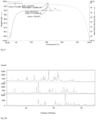
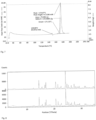
- the DSC thermograph of 5-MeO-DMT HBr Pattern A shows a positive thermal profile with a single endothermic event with a peak temperature of 154°Cand an onset of 150°C( Fig. 2 ).
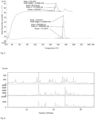
- the DSC thermograph of the 5-MeO-DMT HBr Pattern B shows a positive thermal profile with a single main melt endotherm with a peak temperature at 174°Cand an onset temperature of 171° ( Fig. 4 ).
- 5-MeO-DMT HBr Pattern B represents a more stable polymorph as compared to 5-MeO-DMT HBr Pattern A.
- 5-MeO-DMT HBr Pattern A is metastable.
- 5-MeO-DMT HBr Pattern B is the preferred polymorphic form of 5-MeO-DM T HBr.
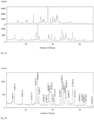
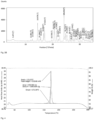
- 5-MeO-DM T HBr Pattern A and 5-MeO-DM T HBr Pattern B show distinctly different X-ray diffraction patterns (for a comparison, see Fig. 3A ).
- XRPD data as measured using Cu K• radiation are summarized in the tables below.
- the skilled person understands that, given the typical accuracy of the measurement method, when comparing XRPD data, the °2• values characterizing the peak positions will be rounded to the first decimal place. Further, the skilled person understands that the rounded peak positions are associated with an error margin of ⁇ 0.2°2•.
- 5-MeO-DMT HBr Pattern A is in particular characterized by the three most intensive peaks according to the above table; the four most intensive peaks according to the above table; the five most intensive peaks according to the above table; the six most intensive peaks according to the above table; the seven most intensive peaks according to the above table; the eight most intensive peaks according to the above table; the nine most intensive peaks according to the above table.
- the skilled person understands that, given the typical accuracy of the measurement method, when comparing XRPD data, the °2• values characterizing the peak positions will be rounded to the first decimal place. Further, the skilled person understands that the rounded peak positions are associated with an error margin of ⁇ 0.2°2•.
- 5-MeO-DM T HBr Pattern B is in particular characterized by the three most intensive peaks according to the above table; the four most intensive peaks according to the above table; the five most intensive peaks according to the above table; the six most intensive peaks according to the above table; the seven most intensive peaks according to the above table; the eight most intensive peaks according to the above table; the nine most intensive peaks according to the above table.
- 5-MeO-DMT HBr Pattern B is characterized by an X-ray diffraction pattern comprising the ten most intensive peaks from the above table, i.e., peaks at 14.5°2• ⁇ 0.2°2• ; 16.7°2• ⁇ 0.2°2• ; 17.0°2• ⁇ 0.2°2• ; 20.6°2• ⁇ 0.2°2• ; 20.7°2• ⁇ 0.2°2• ; 21.4°2• ⁇ 0.2°2• ; 24.2°2• ⁇ 0.2°2• ; 24.8°2• ⁇ 0.2°2• ; 25.3°2• ⁇ 0.2°2• ; 27.4°2• ⁇ 0.2°2• .
- the HBr salt according to the invention for instance, the salt as obtained by the preparation method described below, has a Carr's Index characterizing its flow properties of 25 % or below, for instance, in the range of 16 to 25 %, such as 20 to 25%. Additionally or alternatively, it has a Hausner Factor of 1.34 or below, for instance, in the range of 1.19 to 1.34, such as 1.26 to 1.34.
- the present invention also provides methods to prepare 5-MeO-DMT HBr, in particular 5-MeO-DMT HBr Pattern B.
- This salt can be prepared by salt forming crystallisation.
- Suitable solvents are IPA, IPA:water, isopropyl acetate and THF:H 2 O (97:3).
- a preferred solvent is IPA:water.
- 5-MeO-DMT free base isdissolved in the solvent at ambient temperature or with heating.
- HBr can be introduced in gaseous form or preferably added in the form of a solution, for instance a solution in ethanol, a solution in water or a solution on ethanol/water. Suitable solutions are, for instance, a 1M solution in ethanol or an 48 wt% solution in water.
- the final IPA to water ratio in the composition is preferably within the range of 80:20 to 98:2 (parts by volume), in particular about 90:10 (parts by volume).
- Combining 5-MeO-DMT free and HBr can be carried out at ambient temperature or with heating, for instance, with heating to 50°C - 70°C.
- the solid material After possible removal of part of the solvent and/or cooling, a solid material will precipitate.
- the solid material can be isolated, for instance, by filtration, and dried.
- the solid material obtained is crystalline 5-MeO-DMT hydrobromide.
- the present invention also encompasses preparation methods employing seeds, in particular seeds of 5-MeO-DMT HBr Pattern B.
- the hydrobromide is preferably prepared from 5-MeO-DMT having a purity of at least 98 % area, as determined by the HPLC method described herein.
- salt formation can also be used for purification.
- the present invention moreover relates to pharmaceutically acceptable acid addition salts of 5-MeO-DMT in general for buccal or sublingual administration.
- a pharmaceutically acceptable acid addition salt of 5-MeO-DMT can be used as such for buccal or sublingual administration or it can be used to prepare formulations for buccal or sublingual administration.
- These routes of administration involve absorption through the mucosal lining of the mouth, either sublingually (i.e., from the area beneath the tongue) or buccally (i.e., from the area between the cheek and gum). Administration via these routes can bypass the first-pass metabolism and can assure a rapid onset of action.
- Formulations for buccal or sublingual administration are designed with the aim of getting dissolved or disintegrated in saliva, without the requirement of additional water.
- the active ingredient in a form that has high water solubility as displayed by pharmaceutically acceptable acid addition salts of 5-MeO-DMT, in particular 5-MeO-DMT HBr.
- the active ingredient in a form that forms a solution in water having an acceptable pH value.
- Suitable salts include acid addition salts, wherein the acid is selected from acetic acid, benzoic acid, citric acid, fumaric acid, hydrobromic acid, hydrochloric acid, hydrofluoric acid, hydroiodic acid, oxalic acid, succinic acid and triflic acid.
- a preferred example is the hydrobromide salt (5-MeO-DMT HBr).
- Such acid addition salts can be prepared following procedures as illustrated on the example section for the preparation of the HBr salt.
- Formulations of pharmaceutically acceptable salts of 5-MeO-DMT for buccal administration or sublingual administration include, for instance, tablets, films, sprays, and creams. Such formulations can be prepared by methods known as such.
- a preferred example is a fast dissolving tablet that, when administered buccally or sublingually, disintegrates or dissolves instantaneously, releasing the drug within less than 60 seconds, such as less than 30 seconds, without the need of water.
- the 5-MeO-DMT HBr according to the invention can be used to prepare a pharmaceutical composition.
- a composition may comprise the salt in solid form, for instance, in the form of a dry powder, in the form of a suspension or in the form of a solution.
- the 5-MeO-DM T was characterized to provide a set of baseline reference data for use in salt screening.
- the solid was received as a beige, fine powder having a purity of 98.91% area, as determined by HPLC.
- the solid was shown to be crystalline by XRPD.
- the DSCthermograph shows a sharp main melt endotherm with an onset temperature of 68.3°Cand a peak temperature of 70.3°C.
- the TGA thermograph shows the material loses no mass prior to degradation, confirming an anhydrous solid.
- the 1 H NMR spectrum of the solid conforms to the molecular structure.
- 5-MeO-DMT (50mg) was charged into a crystallization tube. IPA (0.5mL, 10 vols) was added and the resulting solution of 5-MeO-DMT was heated to 50°C. HBr was charged (1M in ethanol, 1eq) in one single aliquot. The solution was held at temperature and equilibrated for 3 hours.
- the solution was then cooled to room temperature and equilibrated for 18 hours.
- 5-MeO-DMT (50mg) was charged into a crystallization tube. Isopropyl acetate (0.5mL, 10 vols) was added and the resulting solution of 5-MeO-DM T was heated to 50°C. HBr was charged (1M in ethanol, 1eq) in one single aliquot. The mixture was held at temperature and equilibrated for 3 hours.
- the suspension wasfinally cooled to room temperature and equilibrated for 18 hours.
- Solids were isolated by filtration and dried in vacuo at 40°C for 18 hours.
- 5-MeO-DMT (50mg) was charged into a crystallization tube. THF:H 2 O (97:3) (0.5mL, 10 vols) was added and the resulting solution of 5-MeO-DMT was heated to 50°C. HBr was charged (1M in ethanol, 1eq) in one single aliquot. The solution was held at temperature and equilibrated for 3 hours.
- the solution was then cooled to room temperature and equilibrated for 18 hours.
- the salt did not readily precipitate, so additional manipulation was required.
- the X-Ray Powder Diffraction patterns were collected on a PANalytical diffractometer using Cu K• radiation (45kV, 40mA), • - • goniometer, focusing mirror, divergence slit (1/2"), soller slits at both incident and divergent beam (4mm) and a PIXcel detector.
- the software used for data collection was X'Pert Data Collector, version 2.2f and the data was presented using X'Pert Data Viewer, version 1.2d.
- XRPD patterns were acquired under ambient conditions via a transmission foil sample stage (polyimide - Kapton, 12.7 ⁇ m thickness film) under ambient conditions using a PANalytical X'Pert PRO.
- the data collection range was 2.994 - 35o2• with a continuous scan speed of 0.202004os -1 .
- the DSC thermograph of 5-MeO-DMT HBr Pattern A was determined using a PerkinElmer Pyris 6000 DSC equipped with a 45-position sample holder. The instrument was verified for energy and temperature calibration using certified indium. A predefined amount of the sample, 0.5-3.0mg, was placed in a pin holed aluminium pan and heated at 20oC.min -1 from 30 to 350oC, or varied as experimentation dictated. A purge of dry nitrogen at 20ml min -1 was maintained over the sample. The instrument control, data acquisition and analysis were performed with Pyris Software v11.1.1 revision H. The thermograph shows a positive thermal profile with an endothermic event with a peak temperature of 154°Cand an onset of 150°C( Fig. 2 ).
- the corresponding TGA thermograph was determined using a PerkinElmer Pyris 1 TGA equipped with a20-position auto-sampler. The instrument was calibrated using a certified weight and certified Alumel and Perkalloy for temperature. A predefined amount of the sample, 1-5mg, was loaded onto a pretared aluminium crucible and was heated at 20oC.min-1 from ambient temperature to 400oC. A nitrogen purge at 20ml.min-1 was maintained over the sample. Instrument control, data acquisition and analysis were performed with Pyris Software v11.1.1 revision H. The TGA thermograph shows a lossof 0.2%prior to the main melt endotherm indicative of minor hydration/solvation ( Fig. 2 ).
- the 1 H NM R spectrum of 5-MeO-DMT HBr denotes a successful salt formation due to the shifts of the relevant signals; most notably the methyl groups of amine signal which has shifted from 2.2ppm to 2.8ppm.
- 5-MeO-DMT HBr was scaled up to 100mg.
- the methodology followed the same approach used to isolate the salts from initial screening with iPrOAc being used as the solvent.
- the XRPD profile of the salt isolated following the 100mg scale up of 5-MeO-DMT HBr is shown below.
- the crystallography of material differed from the freebase API as well as 5-MeO-DMT HBr Pattern A and has therefore been designated as 5-MeO-DMT HBr Pattern B ( Fig. 3A , B ).
- the two different patternsof the HBr salt are a result of polymorphism.
- the DSC thermograph of the 5-MeO-DMT HBr Pattern B shows a positive thermal profile with a single main melt endotherm with a peak temperature at 174°Cand an onset temperature of 171°C ( Fig. 4 ).
- the corresponding TGA thermograph shows no weight loss prior to the main melt, and represents an anhydrous version of the HBr salt ( Fig. 4 ).
- a 1 H NM R spectrum of 5-MeO-DMT HBr Pattern B denotes a successful salt formation due to the shifts of the relevant signals; most notably the methyl groups of amine signal which have shifted from 2.2ppm to 2.85ppm.
- 5-MeO-DMTfreebase as employed in the above salt formation experiments had a purity of 98.91% area and contains 0.20%area of an impurity having an RTTof 0.3 and 0.74% area of an impurity having an RRT of 0.96.
- 5-MeO-DMT HBr Pattern A as obtained in Example 2 has a purity of 99.59 % area
- 5-MeO-DMT HBr Pattern B has a purity of 99.91 % area.
- Residual solvents are provided in the table below. Compound Chemical purity by HPLC (% area) Residual solvent by 1H NMR 5-MeO DMT (Starting material) 98.91 1.5% TBM E 5-MeO DMT HBr (Pattern A; Example 2) 99.59 0.2% TBM E 0.3% IPA 5-MeO DMT HBr (Pattern B; Example 6) 99.91 0.05% TBM E 0.1 % IPA
- 5-MeO-DMT freebase and 5-MeO-DMT hydrobromide (30 mg) were weighed out into crystallisation tubes, water for injection (WFI; 150 ⁇ L, 5 vols) was charged and samples were left to equilibrate (25 °C) over 24 hours.
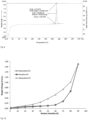
- 5-MeO-DMT HBr Pattern A Following 5 days of storage at 40°C/75% RH, the 5-MeO-DMT HBr Pattern A showed changes in the crystalline pattern by XRPD analysis. This resulting pattern has been designated as 5-MeO-DMT HBr Pattern C for descriptive purposes.
- Pattern C shows similarities to Pattern B.
- the DSC thermograph of 5-MeO-DMT HBr Pattern C shows a main melt endotherm with a peak temperature of 174°C and an onset temperature of 172°C.
- the small event at marked at 150°C is postulated to be the melt of the Pattern A phase of the material followed by a recrystallisation event producing pure phase Pattern B which is known to melt at 174°C ( Fig. 7 ).
- the corresponding TGA thermograph shows no loss of mass prior to the main melt of the material indicating an anhydrous version of the HBr salt ( Fig. 7 ).
- Pattern C represents a mixed phase between Pattern A and Pattern B of the HBr salt.
- the 5-MeO-DMT HBr produced a crystalline pattern by XRPD analysis that was similar to the Pattern B input version. Minor differences can be seen between the two XRPD profiles including the additional peaks in the 17-19°2• region. This pattern has been designated as 5-MeO-DMT HBr Pattern B• for descriptive purposes ( Fig. 8 ).
- the DSC thermograph of Pattern B• 5-MeO-DMT HBr shows a positive thermal profile with a single endothermic event with a peak temperature of 173°C(1°C lower than 5-MeO-DMT HBr Pattern B) and an onset of 171°C ( Fig. 9 ).
- the corresponding TGA thermograph shows no loss of mass prior to the main melt endotherm representing an anhydrous version of the HBr salt ( Fig. 9 ).
- 5-MeO-DMT HBr Pattern B had an initial purity of 99.91% area. After 5 days, the purity was 99.83% area.
- Dynamic vapor sorption (DVS) data was collected for both 5-MeO DMT HBr Pattern A and Pattern B.
- the DSV data are shown in Fig. 10 (Pattern A) und Fig. 11 (Pattern B).
- DVS profiles are almost identical. Neither form showed any modification following equilibration at extremes of relative humidity.
- the DVSprofile of 5-MeO DMT HBr Pattern A shows that during the first sorption cycle the solid gains 0.13% of water up to 60 %RH with a further 1.56wt% increase noted between 60%RH and 90%RH. This results in a total water absorption of 1.7wt% over the humidity range. The water uptake is reversible as this water is lost during the subsequent desorption cycle. Hysteresis is noted with water uptake being more facile than desorption.
- the DVSprofile of 5-MeO DMT HBr Pattern B shows that during the first sorption cycle the solid gains 0.14% of water up to 60 %RH with a further 1.57wt% increase noted between 60%RH and 90%RH. This results in a total water absorption of 1.71wt% over the humidity range. The water uptake is reversible as this water is lost during the subsequent desorption cycle. Hysteresis is noted with water uptake being more facile than desorption.
- the DVSprofiles indicate minor hygroscopicity.
- the stability of the 5 MeO DMT HBr was evaluated in WFI for 14 days at 40°C/ 75% RH.
- a stock solution of HBr acid was prepared to a 1M concentration in ethanol.
- 5-MeO-DMT free base (5.0g) was weighed into a round bottom flask and dissolved in 50mL of iPrOAc (10 vols) at 50°C.
- the HBr acid solution was then charged immediately at 1 equivalent.
- the mixture was then equilibrated at room temperature for 18 hours.
- the resulting suspension was isolated via vacuum filtration and dried in vacuo for 18 hours (6.28g, 91.68%yield).
- a salt forming crystallisation was conducted to prepare the HBr salt on a 106 g scale was conducted.
- 5-MeO DMT (106 g, 0.486 mol) was combined with IPA (8.9 vols, 1270 mL). The resulting solution was agitated at a rate of 275 rpm.
- Deionised water (90mL) was added to the reaction vessel to deliver a slightly opaque, deep brown solution (no change from IPA alone). The solution was clarified via a 1 micron filter to ajacketed vessel without issue.
- the mixture was then cooled back to 43°C and seeded with 5-MeO DMT HBr Pattern B (0.1% seed loading, 106 mg). The seed was observed to hold and crystallisation developed only marginally on holding the mixture at 43°Cfor 30 minutes. The mixture wasthen cooled to 41 °Cand agitated for an additional 1.5 hours to deliver a mild development.
- the mixture wasthen cooled to 5°Cat 5°C/hr and equilibrated for 18 hours.
- the batch was stirred at 15-25°C for 1 hour before the remaining polish filtered HBr acid in 2-propanol (3060mL) was added dropwise over 4 hours.
- the batch was stirred at 15-25°C for 1 hour then cooled to 0-10°C at 5°C/hr and equilibrated for 24 hours.
- the solids were then isolated via filtration and washed with polish filtered 2-propanol (1060mL), the solid was then dried in vacuo at 60°C.
- the HBr salt has been shown to have a D 50 of approx 240 ⁇ m with a crystal habit that is hexagonal in nature.
- the Carr's Index characterizing flow properties can be calculated (100 x (Tapped density - Bulk density/ 100)).
- the index is 24 %.
- the Hausner Factor (Tapped density / Bulk density) also characterizing flow properties is 1.31.
- the HBr salt according to the invention has significantly improved in flow properties.
Landscapes
- Health & Medical Sciences (AREA)
- Chemical & Material Sciences (AREA)
- Organic Chemistry (AREA)
- Animal Behavior & Ethology (AREA)
- Medicinal Chemistry (AREA)
- Life Sciences & Earth Sciences (AREA)
- Pharmacology & Pharmacy (AREA)
- General Health & Medical Sciences (AREA)
- Public Health (AREA)
- Veterinary Medicine (AREA)
- Neurosurgery (AREA)
- Engineering & Computer Science (AREA)
- Biomedical Technology (AREA)
- Neurology (AREA)
- Bioinformatics & Cheminformatics (AREA)
- Chemical Kinetics & Catalysis (AREA)
- General Chemical & Material Sciences (AREA)
- Nuclear Medicine, Radiotherapy & Molecular Imaging (AREA)
- Pain & Pain Management (AREA)
- Psychiatry (AREA)
- Epidemiology (AREA)
- Psychology (AREA)
- Addiction (AREA)
- Pharmaceuticals Containing Other Organic And Inorganic Compounds (AREA)
Applications Claiming Priority (3)
| Application Number | Priority Date | Filing Date | Title |
|---|---|---|---|
| EP22000081 | 2022-03-27 | ||
| EP23717046.9A EP4313945B1 (en) | 2022-03-27 | 2023-03-27 | Crystalline hydrobromide salt of 5-meo-dmt |
| PCT/EP2023/057882 WO2023186834A1 (en) | 2022-03-27 | 2023-03-27 | Crystalline hydrobromide salt of 5-meo-dmt |
Related Parent Applications (2)
| Application Number | Title | Priority Date | Filing Date |
|---|---|---|---|
| PCT/EP2023/057882 Previously-Filed-Application WO2023186834A1 (en) | 2022-03-27 | 2023-03-27 | Crystalline hydrobromide salt of 5-meo-dmt |
| EP23717046.9A Division EP4313945B1 (en) | 2022-03-27 | 2023-03-27 | Crystalline hydrobromide salt of 5-meo-dmt |
Publications (1)
| Publication Number | Publication Date |
|---|---|
| EP4530283A1 true EP4530283A1 (en) | 2025-04-02 |
Family
ID=80978907
Family Applications (2)
| Application Number | Title | Priority Date | Filing Date |
|---|---|---|---|
| EP24163033.4A Pending EP4530283A1 (en) | 2022-03-27 | 2023-03-27 | Organic compound salts |
| EP23717046.9A Active EP4313945B1 (en) | 2022-03-27 | 2023-03-27 | Crystalline hydrobromide salt of 5-meo-dmt |
Family Applications After (1)
| Application Number | Title | Priority Date | Filing Date |
|---|---|---|---|
| EP23717046.9A Active EP4313945B1 (en) | 2022-03-27 | 2023-03-27 | Crystalline hydrobromide salt of 5-meo-dmt |
Country Status (20)
| Country | Link |
|---|---|
| US (2) | US12172960B2 (lt) |
| EP (2) | EP4530283A1 (lt) |
| JP (1) | JP2025510292A (lt) |
| KR (1) | KR20240167881A (lt) |
| CN (1) | CN118974015A (lt) |
| AU (1) | AU2023246775A1 (lt) |
| CA (1) | CA3255323A1 (lt) |
| DK (1) | DK4313945T3 (lt) |
| ES (1) | ES2982834T3 (lt) |
| FI (1) | FI4313945T3 (lt) |
| HR (1) | HRP20240574T1 (lt) |
| HU (1) | HUE067428T2 (lt) |
| IL (1) | IL315889A (lt) |
| LT (1) | LT4313945T (lt) |
| PL (1) | PL4313945T3 (lt) |
| PT (1) | PT4313945T (lt) |
| RS (1) | RS65585B1 (lt) |
| SI (1) | SI4313945T1 (lt) |
| SM (1) | SMT202400196T1 (lt) |
| WO (1) | WO2023186834A1 (lt) |
Families Citing this family (4)
| Publication number | Priority date | Publication date | Assignee | Title |
|---|---|---|---|---|
| WO2022153266A1 (en) | 2021-01-15 | 2022-07-21 | Beckley Psytech Limited | Ergoline analogues |
| US12264131B2 (en) | 2022-08-19 | 2025-04-01 | Beckley Psytech Limited | Pharmaceutically acceptable salts and compositions thereof |
| GB202308830D0 (en) | 2023-06-13 | 2023-07-26 | Beckley Psytech Ltd | 5-methoxy-n,n-dimethyltryptamine (5-meo-dmt) formulations |
| US12246005B2 (en) | 2023-06-13 | 2025-03-11 | Beckley Psytech Limited | 5-methoxy-n,n-dimethyltryptamine (5-MeO-DMT) formulations |
Citations (5)
| Publication number | Priority date | Publication date | Assignee | Title |
|---|---|---|---|---|
| WO2020169851A1 (en) | 2019-02-22 | 2020-08-27 | Gh Research Limited | Compositions comprising 5-methoxy-n,n-dimethyltryptamine (5-meo-dmt) for use in treating mental disorders |
| WO2020169850A1 (en) | 2019-02-22 | 2020-08-27 | Gh Research Limited | 5-methoxy-n,n-dimethyltryptamine (5-meo-dmt) for treating depression |
| WO2020254584A1 (en) | 2019-06-19 | 2020-12-24 | Gh Research Limited | Recrystallisation of 5-methoxy-n,n-dimethyltryptamine (5-meo-dmt) in methyl tert.-butyl ether (mtbe) and less than 5 wt% of an aliphatic anti-solvent |
| WO2021250434A1 (en) | 2020-06-12 | 2021-12-16 | Beckley Psytech Limited | Composition comprising a benzoate salt of 5-methoxy-n,n-dimethyltryptamine |
| WO2023002005A1 (en) * | 2021-07-22 | 2023-01-26 | GH Research Ireland Limited | Method for preparing a tryptamine derivative. |
Family Cites Families (3)
| Publication number | Priority date | Publication date | Assignee | Title |
|---|---|---|---|---|
| US11697638B2 (en) | 2021-09-08 | 2023-07-11 | Small Pharma Ltd | 5-methoxy-N,N-dimethyltryptamine crystalline forms |
| US12264131B2 (en) | 2022-08-19 | 2025-04-01 | Beckley Psytech Limited | Pharmaceutically acceptable salts and compositions thereof |
| GB202212116D0 (en) | 2022-08-19 | 2022-10-05 | Beckley Psytech Ltd | Pharmaceutically acceptable salts and Compositions thereof |
-
2023
- 2023-03-27 DK DK23717046.9T patent/DK4313945T3/da active
- 2023-03-27 AU AU2023246775A patent/AU2023246775A1/en active Pending
- 2023-03-27 KR KR1020247035708A patent/KR20240167881A/ko active Pending
- 2023-03-27 SI SI202330002T patent/SI4313945T1/sl unknown
- 2023-03-27 LT LTEPPCT/EP2023/057882T patent/LT4313945T/lt unknown
- 2023-03-27 ES ES23717046T patent/ES2982834T3/es active Active
- 2023-03-27 EP EP24163033.4A patent/EP4530283A1/en active Pending
- 2023-03-27 FI FIEP23717046.9T patent/FI4313945T3/fi active
- 2023-03-27 JP JP2024557190A patent/JP2025510292A/ja active Pending
- 2023-03-27 PL PL23717046.9T patent/PL4313945T3/pl unknown
- 2023-03-27 HU HUE23717046A patent/HUE067428T2/hu unknown
- 2023-03-27 HR HRP20240574TT patent/HRP20240574T1/hr unknown
- 2023-03-27 PT PT237170469T patent/PT4313945T/pt unknown
- 2023-03-27 WO PCT/EP2023/057882 patent/WO2023186834A1/en not_active Ceased
- 2023-03-27 RS RS20240628A patent/RS65585B1/sr unknown
- 2023-03-27 SM SM20240196T patent/SMT202400196T1/it unknown
- 2023-03-27 IL IL315889A patent/IL315889A/en unknown
- 2023-03-27 CA CA3255323A patent/CA3255323A1/en active Pending
- 2023-03-27 EP EP23717046.9A patent/EP4313945B1/en active Active
- 2023-03-27 CN CN202380030949.3A patent/CN118974015A/zh active Pending
-
2024
- 2024-03-14 US US18/604,747 patent/US12172960B2/en active Active
- 2024-10-18 US US18/920,063 patent/US20250188029A1/en active Pending
Patent Citations (6)
| Publication number | Priority date | Publication date | Assignee | Title |
|---|---|---|---|---|
| WO2020169851A1 (en) | 2019-02-22 | 2020-08-27 | Gh Research Limited | Compositions comprising 5-methoxy-n,n-dimethyltryptamine (5-meo-dmt) for use in treating mental disorders |
| WO2020169850A1 (en) | 2019-02-22 | 2020-08-27 | Gh Research Limited | 5-methoxy-n,n-dimethyltryptamine (5-meo-dmt) for treating depression |
| WO2020254584A1 (en) | 2019-06-19 | 2020-12-24 | Gh Research Limited | Recrystallisation of 5-methoxy-n,n-dimethyltryptamine (5-meo-dmt) in methyl tert.-butyl ether (mtbe) and less than 5 wt% of an aliphatic anti-solvent |
| WO2021250434A1 (en) | 2020-06-12 | 2021-12-16 | Beckley Psytech Limited | Composition comprising a benzoate salt of 5-methoxy-n,n-dimethyltryptamine |
| WO2021250435A1 (en) | 2020-06-12 | 2021-12-16 | Beckley Psytech Limited | Pharmaceutical composition comprising 5-methoxy-n,n-dimethyltryptamine |
| WO2023002005A1 (en) * | 2021-07-22 | 2023-01-26 | GH Research Ireland Limited | Method for preparing a tryptamine derivative. |
Non-Patent Citations (3)
| Title |
|---|
| HOSHINOSHIMODAIRA, BULLETIN OF THE CHEMICAL SOCIETY OF JAPAN, vol. 11, no. 3, 1936, pages 221 - 224 |
| SHERWOOD A M ET AL: "Synthesis and Characterisation of 5MeO-DMT Succinate for Clinical Use", ACS OMEGA,, vol. 5, 2 December 2020 (2020-12-02), pages 32067 - 32075, XP002805029, DOI: 10.1021/ACSOMEGA.0C05099 * |
| SOMEI ET AL., CHEM. PHARM. BULL., vol. 49, no. 1, 2001, pages 87 - 96 |
Also Published As
| Publication number | Publication date |
|---|---|
| PT4313945T (pt) | 2024-06-11 |
| PL4313945T3 (pl) | 2024-08-19 |
| KR20240167881A (ko) | 2024-11-28 |
| HUE067428T2 (hu) | 2024-10-28 |
| RS65585B1 (sr) | 2024-06-28 |
| HRP20240574T1 (hr) | 2024-09-27 |
| US12172960B2 (en) | 2024-12-24 |
| EP4313945B1 (en) | 2024-03-13 |
| ES2982834T3 (es) | 2024-10-17 |
| IL315889A (en) | 2024-11-01 |
| CN118974015A (zh) | 2024-11-15 |
| SMT202400196T1 (it) | 2024-07-09 |
| WO2023186834A1 (en) | 2023-10-05 |
| US20250188029A1 (en) | 2025-06-12 |
| US20240228440A1 (en) | 2024-07-11 |
| JP2025510292A (ja) | 2025-04-14 |
| SI4313945T1 (sl) | 2024-10-30 |
| FI4313945T3 (fi) | 2024-05-23 |
| AU2023246775A1 (en) | 2024-11-07 |
| EP4313945A1 (en) | 2024-02-07 |
| LT4313945T (lt) | 2024-08-26 |
| DK4313945T3 (da) | 2024-05-06 |
| CA3255323A1 (en) | 2023-10-05 |
Similar Documents
| Publication | Publication Date | Title |
|---|---|---|
| EP4530283A1 (en) | Organic compound salts | |
| EP3565542B1 (en) | Polymorphic forms of rad1901-2hcl | |
| KR102508115B1 (ko) | 마크롤리드 고체상 형태 | |
| JP5086069B2 (ja) | 重硫酸アタザナビルおよび新規形態の製造方法 | |
| EP0579681B1 (en) | Crystalline tiagabine hydrochloride monohydrate, its preparation and use | |
| EP4073036B1 (en) | Crystalline form of a 7h-benzo[7]annulene-2-carboxylic acid derivative | |
| EP2468762A1 (en) | Optimized synthesis of pure, non-polymorphic, crystalline bile acids with defined particle size | |
| EP1507531B1 (en) | Stable pharmaceutical compositions of desloratadine | |
| HK40105022B (en) | Crystalline hydrobromide salt of 5-meo-dmt | |
| HK40105022A (en) | Crystalline hydrobromide salt of 5-meo-dmt | |
| JP5847567B2 (ja) | 活性医薬成分の結晶形態 | |
| MXPA01012325A (es) | Formas polimorfas de un citrato cristalino de azobiciclo(2.2.2)octan-3-amina y sus composiciones farmaceuticas. | |
| US20020193386A1 (en) | Polymorphic form of 3-[2-[4-(6-fluoro-1,2-benzisoxazol-3-yl)-1-piperidinyl]ethyl]-6,7,8,9-tetrahydro-2-methyl-4H-pyrido[1,2-alpha]pyrimidin-4-one and formulations thereof | |
| US7777049B2 (en) | Crystalline forms of Rizatriptan benzoate | |
| HU213410B (en) | Method for producing a novel physical modification of a carbamoylindole derivative and the pharmaceutical compositions comprising it | |
| EP4574811A1 (en) | Crystalline forms of elacestrant dihydrochloride | |
| EP4137133A1 (en) | Crystalline form of avacopan | |
| US20230075170A1 (en) | Novel salts of nilotinib and polymorphic forms thereof | |
| US20030191141A1 (en) | Polymorphic form of 3-[2-[4-(6-fluoro-1,2-benzisoxazol-3-yl)-1-piperidinyl]ethyl]-6,7,8,9-tetrahydro-2-methyl-4h-pyrido[1,2-alpha]pyrimidin-4-one and formulations thereof | |
| EP1768969B1 (en) | Crystalline mycophenolate sodium | |
| US20030191140A1 (en) | Polymorphic form of 3-[2-[4-(6-fluoro-1,2-benzisoxazol-3-yl)-1-piperidinyl]ethyl]-6,7,8,9-tetrahydro-2-methyl-4H-pyrido[1,2-alpha]pyrimidin-4-one and formulations thereof | |
| HK40017692B (en) | Polymorphic forms of rad1901-2hcl | |
| HK40017692A (en) | Polymorphic forms of rad1901-2hcl |
Legal Events
| Date | Code | Title | Description |
|---|---|---|---|
| PUAI | Public reference made under article 153(3) epc to a published international application that has entered the european phase |
Free format text: ORIGINAL CODE: 0009012 |
|
| STAA | Information on the status of an ep patent application or granted ep patent |
Free format text: STATUS: THE APPLICATION HAS BEEN PUBLISHED |
|
| AC | Divisional application: reference to earlier application |
Ref document number: 4313945 Country of ref document: EP Kind code of ref document: P |
|
| AK | Designated contracting states |
Kind code of ref document: A1 Designated state(s): AL AT BE BG CH CY CZ DE DK EE ES FI FR GB GR HR HU IE IS IT LI LT LU LV MC ME MK MT NL NO PL PT RO RS SE SI SK SM TR |
|
| STAA | Information on the status of an ep patent application or granted ep patent |
Free format text: STATUS: REQUEST FOR EXAMINATION WAS MADE |
|
| 17P | Request for examination filed |
Effective date: 20250930 |