EP4529337A1 - Direktzugriffsverfahren und -vorrichtung - Google Patents
Direktzugriffsverfahren und -vorrichtung Download PDFInfo
- Publication number
- EP4529337A1 EP4529337A1 EP22941985.8A EP22941985A EP4529337A1 EP 4529337 A1 EP4529337 A1 EP 4529337A1 EP 22941985 A EP22941985 A EP 22941985A EP 4529337 A1 EP4529337 A1 EP 4529337A1
- Authority
- EP
- European Patent Office
- Prior art keywords
- random access
- terminal device
- rnti
- occasions
- target
- Prior art date
- Legal status (The legal status is an assumption and is not a legal conclusion. Google has not performed a legal analysis and makes no representation as to the accuracy of the status listed.)
- Pending
Links
Images


Classifications
-
- H—ELECTRICITY
- H04—ELECTRIC COMMUNICATION TECHNIQUE
- H04W—WIRELESS COMMUNICATION NETWORKS
- H04W74/00—Wireless channel access
- H04W74/08—Non-scheduled access, e.g. ALOHA
- H04W74/0833—Random access procedures, e.g. with 4-step access
-
- H—ELECTRICITY
- H04—ELECTRIC COMMUNICATION TECHNIQUE
- H04L—TRANSMISSION OF DIGITAL INFORMATION, e.g. TELEGRAPHIC COMMUNICATION
- H04L1/00—Arrangements for detecting or preventing errors in the information received
- H04L1/08—Arrangements for detecting or preventing errors in the information received by repeating transmission, e.g. Verdan system
-
- H—ELECTRICITY
- H04—ELECTRIC COMMUNICATION TECHNIQUE
- H04W—WIRELESS COMMUNICATION NETWORKS
- H04W72/00—Local resource management
- H04W72/20—Control channels or signalling for resource management
- H04W72/23—Control channels or signalling for resource management in the downlink direction of a wireless link, i.e. towards a terminal
Definitions
- the disclosure relates to a field of communication technologies, more particularly, to a random access method and a random access apparatus.
- a terminal device in a 5G new radio (NR) system sends a first random access message 1 (Msg1, message 1) to a network device. After receiving the Msg1, the network device can send a second random access message 2 (Msg2, message 2) to the terminal device.
- Msg1, message 1 a first random access message 1
- Msg2, message 2 a second random access message 2
- a random access-radio network temporary identifier may represent time-frequency resources used for sending the Msg1.
- the network device may calculate the RA-RNTI and takes the RA-RNTI as a scrambling code to scramble cyclic redundancy check (CRC) of physical downlink control channel (PDCCH) downlink control information (DCI) format 1_0 of the Msg2. Therefore, only the terminal device that sends the Msg1 on the time-frequency resources identified by the RA-RNTI can correctly decode the DCI of this PDCCH.
- CRC cyclic redundancy check
- PDCCH physical downlink control channel
- DCI downlink control information
- a random access method is provided.
- the method is performed by a terminal device, and includes:
- determining, according to one of the plurality of random access occasions, the RA-RNTI of the terminal device includes:
- an index of the target random access occasion has an association relation with a number of the plurality of random access occasions.
- determining, according to one of the plurality of random access occasions, the RA-RNTI of the terminal device includes:
- determining, according to one of the plurality of random access occasions, the RA-RNTI of the terminal device includes:
- indexes of target random access occasions in two groups of random access occasions in adjacent system frames are different.
- a random access method is provided.
- the method is performed by a network device, and includes:
- determining, according to one of the plurality of random access occasions, the RA-RNTI of the terminal device includes:
- an index of the target random access occasion has an association relation with a number of the plurality of random access occasions.
- determining, according to one of the plurality of random access occasions, the RA-RNTI of the terminal device includes:
- determining, according to one of the plurality of random access occasions, the RA-RNTI of the terminal device includes:
- indexes of target random access occasions in two groups of random access occasions in adjacent system frames are different.
- a random access apparatus is provided.
- the apparatus is applied to a terminal device, and includes:
- processing unit is further configured to:
- an index of the target random access occasion has an association relation with a number of the plurality of random access occasions.
- processing unit is further configured to:
- processing unit is further configured to:
- indexes of target random access occasions in two groups of random access occasions in adjacent system frames are different.
- a random access apparatus is provided.
- the apparatus is applied to a network device, and includes:
- processing unit is further configured to:
- an index of the target random access occasion has an association relation with a number of the plurality of random access occasions.
- processing unit is further configured to:
- processing unit is further configured to:
- indexes of target random access occasions in two groups of random access occasions in adjacent system frames are different.
- a communication device includes a processor and a memory having a computer program stored thereon.
- the computer program is executed by the processor, the device is caused to perform the random access method as described in the embodiments of the first aspect.
- a communication device includes a processor and a memory having a computer program stored thereon.
- the computer program is executed by the processor, the device is caused to perform the random access method as described in the embodiments of the second aspect.
- a communication device includes a processor and an interface circuit.
- the interface circuit is configured to receive code instructions and transmit the code instructions to the processor.
- the processor is configured to run the code instructions to perform the random access method as described in the embodiments of the first aspect.
- a communication device includes a processor and an interface circuit.
- the interface circuit is configured to receive code instructions and transmit the code instructions to the processor.
- the processor is configured to run the code instructions to perform the random access method as described in the embodiments of the second aspect.
- a computer-readable storage medium for storing instructions. When the instructions are executed, the random access method as described in the embodiments of the first aspect is implemented.
- a computer-readable storage medium for storing instructions.
- the random access method as described in the embodiments of the second aspect is implemented.
- a computer program is provided.
- the computer program is run on a computer, the computer is caused to implement the random access method as described in the embodiments of the first aspect.
- a computer program is provided.
- the computer program is run on a computer, the computer is caused to implement the random access method as described in the embodiments of the second aspect.
- the terminal device sends the first random access message repeatedly to the network device at the plurality of random access occasions, determines its own RA-RNTI according to one of the plurality of random access occasions, and detects the second random access message or the PDCCH sent by the network device by using the RA-RNTI.
- the terminal device can perform blind detection for PDCCH using one RA-RNTI during PRACH repetition, which effectively reduces a complexity of the blind detection of the terminal device, reduces an energy consumption of the terminal device, and improves a communication efficiency of the system.
- first, second, and third may be used in embodiments of the disclosure to describe various types of information, the information should not be limited to these terms. These terms are only used to distinguish the same type of information from each other.
- the first information may also be referred to as the second information, and similarly, the second information may also be referred to as the first information.
- the term “if” as used herein may be interpreted as “when”, “upon” or “in response to determining”.
- FIG. 1 is a structural diagram of a communication system provided by an embodiment of the disclosure.
- the communication system may include, but is not limited to, a first network device, a second network device and a terminal device.
- the number and the form of devices illustrated in FIG. 1 are only for examples and do not constitute a limitation on embodiments of the disclosure, and two or more network devices and two or more terminal devices may be included in practical applications.
- the communication system illustrated in FIG. 1 may include, for example, a network device 101 and a terminal device 102.
- LTE long term evolution
- 5G 5th generation
- NR 5th generation new radio
- the network device 101 in embodiments of the disclosure is an entity on a network side for transmitting or receiving signals.
- the network device 101 may be an evolved NodeB (eNB), a transmission reception point (TRP), a next generation NodeB (gNB) in a NR system, a base station in other future mobile communication systems, or an access node in a wireless fidelity (WiFi) system.
- eNB evolved NodeB
- TRP transmission reception point
- gNB next generation NodeB
- WiFi wireless fidelity
- the specific technology and specific device form adopted by the network device are not limited in embodiments of the disclosure.
- the network device according to embodiments of the disclosure may be composed of a central unit (CU) and distributed units (DUs).
- the CU may also be called a control unit.
- CU-DU structure allows to divide a protocol layer of the network device, such as a base station, such that some functions of the protocol layer are placed in the CU for centralized control, and some or all of the remaining functions of the protocol layer are distributed in the DUs, and the DUs are centrally controlled by the CU.
- the terminal device 102 in embodiments of the disclosure is an entity on a user side for receiving or transmitting signals, such as a cellular phone.
- the terminal may also be referred to as a terminal device, a user equipment (UE), a mobile station (MS), a mobile terminal (MT), and the like.
- the terminal can be a car with a communication function, a smart car, a mobile phone, a wearable device, a Pad, a computer with a wireless transceiver function, a virtual reality (VR) terminal, an augmented reality (AR) terminal, a wireless terminal in industrial control, a wireless terminal in self-driving, a wireless terminal in remote medical surgery, a wireless terminal in smart grid, a wireless terminal in transportation safety, a wireless terminal in smart city, a wireless terminal in smart home, etc.
- the specific technology and specific device form adopted by the terminal are not limited in embodiments of the disclosure.
- the terminal device 102 in a 5G NR system can send a first random access message 1 (Msg1, message 1) to the network device 101.
- the network device 101 may send a second random access message 2 (Msg2, message 2) to the terminal device.
- a random access-radio network temporary identifier may represent time-frequency resources used for sending the Msg1.
- the terminal device 102 calculates and saves the RA-RNTI.
- the network device 101 After receiving the Msgl, the network device 101 also calculates the RA-RNTI and takes the RA-RNTI as a scrambling code to scramble cyclic redundancy check (CRC) of physical downlink control channel (PDCCH) downlink control information (DCI) format 1_0 of the Msg2.
- CRC cyclic redundancy check
- PDCCH physical downlink control channel
- DCI downlink control information
- 3GPP R18 has proposed sending the PRACH multiple times on a time domain, i.e., PRACH repetitions.
- PRACH physical random access channel
- One possible direction is that the terminal device 102 perform repetitions on a plurality of transmission occasions (i.e., random access channel (RACH) occasions (ROs)) by using the same uplink transmitting beam (UL TX beam).
- RACH random access channel
- the ROs correspond to a plurality of transmission slots, which may be continuous or discrete, which is not limited here.
- both the network device 101 and the terminal device 102 may perform transmission and detection of Msg2 or a PDCCH for Msg2 by using RA-RNTIs corresponding to different ROs, and thus the terminal device 102 may not be able to detect an Msg2 for the terminal device, or the terminal device 102 uses RA-RNTIs corresponding to the plurality of ROs for detection, which may increase the detection complexity.
- ROs random access occasion
- RACH random access channel
- FIG. 2 is a flowchart of a random access method provided in an embodiment of the disclosure. It should be noted that the random access method in an embodiment of the disclosure is performed by a terminal device. This method may be executed independently or in combination with any other embodiments of the disclosure. As illustrated in FIG. 2 , the method may include following steps.
- a first random access message is sent to a network device repeatedly on a plurality of random access occasions (ROs).
- ROs random access occasions
- the terminal device repeatedly sends the first random access message Msg1 to the network device on the plurality of ROs. After receiving the Msgl, the network device sends a second random access message Msg2 to the terminal device. The same first random access message is sent on the plurality of ROs.
- the first random access message Msg1 is a random access preamble
- the second random access message Msg2 is a random access response (RAR).
- the terminal device may try to detect the second random access message or a PDCCH sent by the network device in a RAR window.
- the plurality of ROs may be pre-configured by the network device or pre-agreed in a protocol.
- the plurality of ROs correspond to a plurality of slots in a time domain.
- the plurality of slots may be continuous or discrete, which is not limited here.
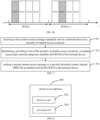
- FIG. 6a is a schematic diagram of a resource configuration of PRACH repetition provided in an embodiment of the disclosure.
- the terminal device may repeatedly send the Msg1 on 4 ROs (i.e., RO#0 to RO#3) configured in FIG. 6a .
- a random access-radio network temporary identifier (RA-RNTI) of the terminal device is determined according to parameters of a target random access occasion among the plurality of random access occasions.
- the terminal device may determine the RA-RATI of the terminal device according to the parameters of one RO of the plurality of ROs, and detects the Msg2 or the PDCCH sent by the network device through the RA-RATI.
- the terminal device determines the RO for determining the RA-RNTI according to a protocol agreement.
- the network device and the terminal device can determine the RA-RNTI according to the parameters related to this RO, so as to prevent a situation that the base station and the terminal device cannot determine which RO's parameters are used to determine the RA-RNTI when receiving the Msgs1 sent on the plurality of ROs.
- the terminal device determines the RO for determining the RA-RNTI according to received indication information sent by the network device.
- s_id an index of a starting symbol location of a RO, which ranges from 0 to 13 t_id an index of a starting slot location of a RO within a system frame, which ranges from 0 to 79, and is related to a sub-carrier spacing (SCS) f id an index of a location of a RO in a frequency domain, which ranges from 0 to 7 ul_carrier_id a value of ul_carrier_id being 0 in a normal uplink (NUL) scenario, and being 1 in a supplementary uplink (SUL) scenario
- SCS sub-carrier spacing
- the method may also include the following step.
- a second random access message or a physical downlink control channel (PDCCH) sent by the network device is detected by using the RA-RNTI.
- PDCCH physical downlink control channel
- the terminal device can detect the PDCCH DCI format 1_0 using the RA-RNTI.
- the terminal device sends the first random access message repeatedly to the network device at the plurality of random access occasions, determines its own RA-RNTI according to one of the plurality of random access occasions, and detects the second random access message or the PDCCH sent by the network device by using the RA-RNTI.
- the terminal device can perform blind detection for PDCCH using one RA-RNTI during PRACH repetition, which effectively reduces a complexity of the blind detection of the terminal device, reduces an energy consumption of the terminal device, and improves a communication efficiency of the system.
- FIG. 3 is a flowchart of a random access method provided in an embodiment of the disclosure. It should be noted that the random access method in an embodiment of the disclosure is performed by a terminal device. This method can be executed independently or in combination with any other embodiments of the disclosure. As illustrated in FIG. 3 , the method may include following steps.
- a first random access message is sent to a network device repeatedly on a plurality of random access occasions (ROs).
- ROs random access occasions
- the terminal device repeatedly sends the first random access message Msg1 to the network device on the plurality of ROs. After receiving the first random access message Msgl, the network device sends a second random access message Msg2 to the terminal device. The same first random access message is sent on the plurality of ROs.
- the terminal device may try to detect the second random access message or a PDCCH sent by the network device in a RAR window.
- the plurality of ROs may be pre-configured by the network device or pre-agreed in a protocol.
- the plurality of ROs correspond to a plurality of slots in a time domain.
- the plurality of slots may be continuous or discrete, which is not limited here.
- a target random access occasion among the plurality of random access occasions is determined according to a protocol agreement.
- the target random access occasion is a random access occasion on which the RA-RNTI can be calculated.
- the terminal device determines the target random access occasion on which the RA-RNTI can be calculated among the plurality of random access occasions on which the Msg1 is sent repeatedly according to the protocol agreement. Both the network device and the terminal device can determine the RA-RNTI according to the parameters related to this RO, so as to prevent a situation that the base station and the terminal device cannot determine which RO's parameters are used to determine the RA-RNTI when receiving the Msg1 sent on the plurality of ROs.
- an index of the target RO has an association relation with a number of the plurality of ROs.
- the terminal device can determine the target RO according to the number of ROs on which the PRACH is repeatedly sent.
- association relation between the index of the target RO and the number of the plurality ROs is only shown as an example, and there may be other association relations, which are not limited here.
- a RA-RNTI of the terminal device is determined according to parameters of the target random access occasion.
- the terminal device may determine the RA-RNTI of the terminal device according to the target RO.
- s_id an index of a starting symbol location of a target RO, which ranges from 0 to 13 t_id an index of a starting slot location of the target RO within a system frame, which ranges from 0 to 79, and is related to a SCS f id an index of a location of the target RO in a frequency domain, which ranges from 0 to 7 ul_carrier_id a value of ul_carrier_id being 0 in an NUL scenario, and being 1 in an SUL scenario
- the method may also include the following step.
- a second random access message or a physical downlink control channel (PDCCH) sent by the network device is detected by using the RA-RNTI.
- PDCCH physical downlink control channel
- the terminal device after sending the Msgl, can detect the Msg2 or PDCCH sent by the network device using the RA-RNTI determined in the above step over the RAR window.
- the terminal device can use the RA-RNTI to monitor the PDCCH DCI format 1_0.
- the terminal device sends the first random access message repeatedly to the network device at the plurality of random access occasions, determines the target random access occasion among the plurality of random access occasions according to the protocol agreement and then determines its own RA-RNTI according to the target RO, and detects the second random access message or the PDCCH sent by the network device by using the RA-RNTI.
- the terminal device can perform blind detection for PDCCH using one RA-RNTI during PRACH repetition, which effectively reduces a complexity of the blind detection of the terminal device, reduces an energy consumption of the terminal device, and improves a communication efficiency of the system.
- FIG. 4 is a flowchart of a random access method provided in an embodiment of the disclosure. It should be noted that the random access method in the embodiment of the disclosure is performed by a terminal device. This method can be executed independently or in combination with any other embodiments of the disclosure. As illustrated in FIG. 4 , the method may include following steps.
- a first random access message is sent to a network device repeatedly on a plurality of random access occasions (ROs).
- ROs random access occasions
- the terminal device repeatedly sends the first random access message Msg1 to the network device on the plurality of ROs. After receiving the first random access message Msgl, the network device sends a second random access message Msg2 to the terminal device. The same first random access message Msg1 is sent on the plurality of ROs.
- the first random access message Msg1 is a random access preamble
- the second random access message Msg2 is a random access response (RAR).
- the terminal device may try to detect the second random access message Msg2 or a PDCCH sent by the network device in a RAR window.
- the plurality of ROs may be pre-configured by the network device or pre-agreed in a protocol.
- the plurality of ROs correspond to a plurality of slots in a time domain.
- the plurality of slots may be continuous or discrete, which is not limited here.
- step 402 indication information sent by the network device is received, in which the indication information is used to determine a target random access occasion among the plurality of random access occasions.
- the target random access occasion is a random access occasion used for determining the RA-RNTI.
- the terminal device receives the indication information sent by the network device, and determines the target random access occasion on which the RA-RNTI can be calculated among the plurality of random access occasions when the Msg1 is repeatedly sent according to the received indication information. Both the network device and the terminal device can determine the RA-RNTI according to the parameters related to the RO, so as to prevent a situation that the base station and the terminal device cannot determine which RO's parameters are used to determine the RA-RNTI when receiving the Msg1 sent on the plurality of ROs.
- the indication information may indicate that the target RO is an M-th RO among the plurality of ROs (N ROs in total, N is a positive integer), where M ⁇ N, and M is a positive integer.
- the indication information may explicitly indicate the target RO, e.g., directly indicating the value of M or the index of the target RO, or may implicitly indicate the target RO.
- a RA-RNTI of the terminal device is determined according to parameters of the target random access occasion.
- s_id an index of a starting symbol location of a target RO, which ranges from 0 to 13 t_id an index of a starting slot location of the target RO within a system frame, which ranges from 0 to 79, and is related to a SCS f id an index of a location of the target RO in a frequency domain, which ranges from 0 to 7 ul_carrier_id a value of ul_carrier_id being 0 in an NUL scenario, and being 1 in an SUL scenario
- the method may also include the following step.
- the terminal device after sending the Msgl, can detect the Msg2 or PDCCH sent by the network device using the RA-RNTI determined in the above step over the RAR window.
- the terminal device sends the first random access message repeatedly to the network device at the plurality of random access occasions, receives the indication information sent by the network device, in which the indication information is used to determine the target RO among the plurality of ROs, determines its own RA-RNTI according to the target RO, and detects the second random access message or the PDCCH sent by the network device by using the RA-RNTI.
- the terminal device can perform blind detection for PDCCH using one RA-RNTI during PRACH repetition, which effectively reduces a complexity of the blind detection of the terminal device, reduces an energy consumption of the terminal device, and improves a communication efficiency of the system.
- FIG. 5 is a flowchart of a random access method provided in an embodiment of the disclosure. It should be noted that the random access method in the embodiment of the disclosure is performed by a terminal device. This method can be executed independently or in combination with any other embodiments of the disclosure. As illustrated in FIG. 5 , the method may include following steps.
- the terminal device may try to detect the second random access message Msg2 or a PDCCH sent by the network device in a RAR window.
- the plurality of ROs may be pre-configured by the network device or pre-agreed in a protocol.
- the plurality of ROs correspond to a plurality of slots in a time domain.
- the plurality of slots may be continuous or discrete, which is not limited here.
- the target random access occasion is a random access occasion used for determining the RA-RNTI.
- the terminal device determines, according to the SFNs of the system frames where the plurality of ROs are, the target random access occasion on which the RA-RNTI can be calculated among the plurality of random access occasions on which the Msgs1 is repeatedly sent.
- Both the network device and the terminal device can determine the RA-RNTI according to parameters related to the RO, so as to prevent a situation that the base station and the terminal device cannot determine which RO's parameters are used to determine the RA-RNTI when receiving the Msg1 sent on the plurality of ROs.
- the SFNs of the system frames where the plurality of ROs are located are different, and the time domain location of the determined target RO may be different in the plurality of ROs.
- the indexes of the target ROs in two groups of random access occasions in adjacent system frames are different.
- the target RO may be determined according to a remainder of the SFNs of the system frames where the plurality of ROs are located relative to a specified value.
- FIG. 6b is a schematic diagram of a method for determining a random access occasion provided in an embodiment of the disclosure.
- the target ROs determined by two groups of random access occasions in the adjacent system frames are different, which can avoid a situation where the terminal device may repeatedly interpret a DCI, especially in a scenario where configuration for a NR in Unlicensed Spectrum (NR-U) RAR window is relatively long.
- NR-U Unlicensed Spectrum
- a RAR window for the SFN#n may include a RAR window for the SFN#n+1, which means that the two RAR windows may overlap.
- the RAR window for the SFN#n may receive a RAR for the SFN#n+1. If the RA-RNTIs of the two RARs are consistent (that is, the ROs with the same index are selected as the target RO), the terminal device may repeatedly interpret the DCI.
- a RA-RNTI of the terminal device is determined according to the target random access occasion.
- the terminal device may determine the RA-RNTI of the terminal device according to the target RO.
- s_id an index of a starting symbol location of a target RO, which ranges from 0 to 13 t_id Within a system frame
- t_id represents an index of a starting slot location of the target RO within a system frame, which ranges from 0 to 79
- SCS f id an index of a location of the target RO in the frequency domain, which ranges from 0 to 7
- ul_carrier_id a value of ul_carrier_id being 0 in an NUL scenario, and being 1 in an SUL scenario
- the method also includes the following step.
- a second random access message or a physical downlink control channel (PDCCH) sent by the network device is detected by using the RA-RNTI.
- PDCCH physical downlink control channel
- the terminal device after sending the Msgl, can detect the Msg2 or PDCCH sent by the network device using the RA-RNTI determined in the above step over the RAR window.
- the terminal device can use the RA-RNTI to monitor the PDCCH DCI format 1_0.
- the terminal device sends the first random access message repeatedly to the network device at the plurality of random access occasions and then determines the target RO among the plurality of ROs according to the SFNs of the system frames where the plurality of ROs are, and determines its own RA-RNTI according to the target RO, and detects the second random access message or the PDCCH sent by the network device by using the RA-RNTI.
- the terminal device can perform blind detection for PDCCH using one RA-RNTI during PRACH repetition, which effectively reduces a complexity of the blind detection of the terminal device, reduces an energy consumption of the terminal device, and improves a communication efficiency of the system.
- FIG. 7 is a flowchart of a random access method provided in an embodiment of the disclosure. It should be noted that the random access method in an embodiment of the disclosure is performed by a network device. This method can be executed independently or in combination with any other embodiments of the disclosure. As illustrated in FIG. 7 , the method may include following steps.
- a first random access message repeatedly sent by a terminal device at a plurality of random access occasions is received.
- the terminal device repeatedly sends the first random access message Msg1 to the network device on the plurality of random access occasions ROs. The same first random access message is sent on the plurality of ROs. After receiving the Msgl, the network device can send a second random access message Msg2 to the terminal device.
- the e first random access message Msg1 is a random access preamble
- the second random access message Msg2 is a RAR
- the network device may perform a combined correlation detection of Msg1 (preamble) on the last RO of the plurality of ROs.
- the network device After receiving the Msg1, the network device calculates the RA-RNTI and sends a second random access message or a PDCCH scrambled with the RA-RNTI to the terminal device.
- the plurality of ROs may be pre-configured by the network device or pre-agreed in a protocol.
- the plurality of ROs correspond to a plurality of slots in a time domain.
- the plurality of slots may be continuous or discrete, which is not limited here.
- a RA-RNTI of the terminal device is determined according to parameters of a target random access occasion among the plurality of random access occasions.
- the terminal device determines the RA-RATI of the terminal device according to one of the plurality of configured ROs, and uses the RA-RATI to scramble the PDCCH DCI format1_0 to be sent.
- the network device can determine the random access occasion RO for calculating the RA-RNTI according to a protocol agreement.
- the network device determines the random access occasion RO for calculating the RA-RNTI by itself, and sends indication information to the terminal device.
- the indication information is used to indicate the target random access occasion RO.
- the network device can determine the random access occasion RO for calculating the RA-RNTI according to the SFNs of the system frames where the plurality of ROs are.
- s_id an index of a starting symbol location of a RO, which ranges from 0 to 13 t_id an index of a starting slot location of the a RO within a system frame, which ranges from 0 to 79, and is related to an SCS f id an index of a location of the target RO in the frequency domain, which ranges from 0 to 7 ul_carrier_id a value of ul_carrier_id being 0 in an NUL scenario, and being 1 in an SUL scenario
- the method may also include the following step.
- a second random access message or a PDCCH scrambled with the RA-RNTI is sent to the terminal device.
- the network device after receiving the Msgl, the network device sends the Msg2 or PDCCH scrambled using the RA-RNTI determined in the above steps to the terminal device.
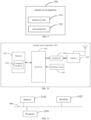
- the random access apparatus 800 includes: a transceiver unit 810 and a processing unit 820.
- the processing unit 820 is configured to determine, according to one of the plurality of random access occasions, a RA-RNTI of the terminal device.
- the transceiver unit 810 is further configured to detect a second random access message or a PDCCH sent by the network device by using the RA-RNTI.
- processing unit 820 is further configured to:
- an index of the target random access occasion has an association relation with a number of the plurality of random access occasions.
- processing unit 820 is further configured to:
- processing unit 820 is further configured to:
- indexes of target random access occasions in two groups of random access occasions in adjacent system frames are different.
- the random access apparatus of the embodiment of the disclosure sends the first random access message repeatedly to the network device at the plurality of random access occasions, determines its own RA-RNTI according to one of the plurality of random access occasions, and detects the second random access message or the PDCCH sent by the network device by using the RA-RNTI.
- the terminal device can perform blind detection for PDCCH using one RA-RNTI during PRACH repetition, which effectively reduces a complexity of the blind detection of the terminal device, reduces an energy consumption of the terminal device, and improves a communication efficiency of the system.
- FIG. 9 is a schematic diagram of a random access apparatus provided in an embodiment of the disclosure.
- the random access apparatus 900 includes: a transceiver unit 910 and a processing unit 920.
- the transceiver unit 910 is configured to receive a first random access message repeatedly sent by a terminal device at a plurality of random access occasions.
- the processing unit 920 is configured to determine, according to one of the plurality of random access occasions, a RA-RNTI of the terminal device.
- the transceiver unit 910 is further configured to send a second random access message or a PDCCH scrambled with the RA-RNTI to the terminal device.
- processing unit 920 is further configured to:
- an index of the target random access occasion has an association relation with a number of the plurality of random access occasions.
- processing unit 920 is further configured to:
- processing unit 920 is further configured to:
- indexes of target random access occasions in two groups of random access occasions in adjacent system frames are different.
- the random access apparatus of this embodiment may receive SCG failure information from the terminal device, in which the SCG failure information includes PSCell addition or change relevant information, so that when the SCG failure occurs, the network device is still able to obtain the PSCell addition or change relevant information. In this way, the network device can obtain the PSCell addition or change relevant information more comprehensively, and then more accurately analyze the cause of SCG failure, which effectively improves the communication efficiency of the system.
- an embodiment of the disclosure provides a communication device including: a processor and a memory having a computer program stored thereon.
- the computer program When executed by the processor, the device is caused to implement the methods illustrated in embodiments of FIGs. 2-5 .
- an embodiment of the disclosure provides another communication device including: a processor and a memory having a computer program stored thereon.
- the computer program is executed by the processor, the device is caused to implement the method illustrated in embodiment of FIG. 7 .
- an embodiment of the disclosure provides a communication device including: a processor and an interface circuit.
- the interface circuit is configured to receive code instructions and transmit the code instructions to the processor.
- the processor is configured to run the code instructions to implement the methods illustrated in embodiments of FIGs. 2-5 .
- an embodiment of the disclosure provides another communication device including: a processor and an interface circuit.
- the interface circuit is configured to receive code instructions and transmit the code instructions to the processor.
- the processor is configured to run the code instructions to perform the method illustrated in embodiment of FIG. 7 .
- FIG. 10 is a schematic diagram illustrating a random access apparatus 1000 according to an embodiment of the disclosure.
- the random access apparatus 1000 may be a network device, a terminal device, or a chip, a chip system or a processor that supports the network device to realize the above-described methods, or a chip, a chip system or a processor that supports the terminal device to realize the above-described methods.
- the apparatus may be used to realize the methods described in the above method embodiments with reference to the description of the above-described method embodiments.
- the random access apparatus 1000 may include one or more processors 1001.
- the processor 1001 may be a general purpose processor or a dedicated processor, such as, a baseband processor or a central processor.
- the baseband processor is used for processing communication protocols and communication data.
- the central processor is used for controlling the random access apparatus (e.g., base station, baseband chip, terminal device, terminal device chip, DU, or CU), executing computer programs, and processing data of the computer programs.
- the random access apparatus 1000 may include one or more memories 1002 on which computer programs 1003 may be stored.
- the processor 1001 executes the computer programs 1003 to cause the random access apparatus 1000 to perform the methods described in the above method embodiments.
- the computer programs 1003 may be solidified in the processor 1001, in which case the processor 1001 may be implemented by hardware.
- data may be stored in the memory 1002.
- the random access apparatus 1000 and the memory 1002 may be provided separately or may be integrated together.
- the random access apparatus 1000 may also include a transceiver 1005 and an antenna 1006.
- the transceiver 1005 may be referred to as a transceiver unit, a transceiver machine, or a transceiver circuit, for realizing the transceiver function.
- the transceiver 1005 may include a receiver and a transmitter.
- the receiver may be referred to as a receiver machine or a receiving circuit, for realizing the receiving function.
- the transmitter may be referred to as a transmitter machine or a transmitting circuit, for realizing the transmitting function.
- the random access apparatus 1000 may also include one or more interface circuits 1007.
- the interface circuits 1007 are used to receive code instructions and transmit the code instructions to the processor 1001.
- the processor 1001 runs the code instructions to cause the random access apparatus 1000 to perform the methods described in the method embodiments.
- the processor 1001 may include a transceiver for implementing the receiving and transmitting functions.
- the transceiver may be, for example, a transceiver circuit, an interface, or an interface circuit.
- the transceiver circuit, interface, or interface circuit for implementing the receiving and transmitting functions may be separated or may be integrated together.
- the transceiver circuit, interface, or interface circuit described above may be used for code/data reading and writing, or may be used for signal transmission or delivery.
- the random access apparatus 1000 may include circuits.
- the circuits may implement the sending, receiving or communicating function in the preceding method embodiments.
- the processor and transceiver described in this disclosure may be implemented on integrated circuits (ICs), analog ICs, radio frequency integrated circuits (RFICs), mixed signal ICs, application specific integrated circuits (ASICs), printed circuit boards (PCBs), and electronic devices.
- ICs integrated circuits
- RFICs radio frequency integrated circuits
- ASICs application specific integrated circuits
- PCBs printed circuit boards
- the processor and transceiver may also be produced using various IC process technologies, such as complementary metal oxide semiconductor (CMOS), nMetal-oxide-semiconductor (NMOS), positive channel metal oxide semiconductor (PMOS), bipolar junction transistor (BJT), bipolar CMOS (BiCMOS), silicon-germanium (SiGe), gallium arsenide (GaAs) and so on.
- CMOS complementary metal oxide semiconductor
- NMOS nMetal-oxide-semiconductor
- PMOS positive channel metal oxide semiconductor
- BJT bipolar junction transistor
- BiCMOS bipolar CMOS
- SiGe silicon-germanium
- GaAs gallium arsenide
- the random access apparatus in the above description of embodiments may be a network device or a terminal device, but the scope of the random access apparatus described in the disclosure is not limited thereto, and the structure of the random access apparatus may not be limited by FIGS. 8 and 9 .
- the random access apparatus may be a stand-alone device or may be part of a larger device.
- the random access apparatus may be:
- the chip further includes a memory 1103 used for storing necessary computer programs and data.
- Embodiments of the disclosure also provide a communication system.
- the system includes a random access apparatus as a terminal device and a random access apparatus as a network device in the preceding embodiments of FIGS. 8-9 .
- the system includes a random access apparatus as a terminal device and a random access apparatus as a network device in the preceding embodiment of FIG. 10 .
- the disclosure also provides a readable storage medium having instructions stored thereon. When the instructions are executed by a computer, the function of any of the method embodiments described above is implemented.
- the disclosure also provides a computer program product.
- the computer program product is executed by a computer, the function of any of the method embodiments described above is implemented.
- the above embodiments may be implemented in whole or in part by software, hardware, firmware, or any combination thereof.
- software When implemented using software, it may be implemented, in whole or in part, in the form of a computer program product.
- the computer program product includes one or more computer programs. When loading and executing the computer program on the computer, all or part of processes or functions described in the embodiments of the disclosure is implemented.
- the computer may be a general-purpose computer, a dedicated computer, a computer network, or other programmable devices.
- the computer program may be stored in a computer-readable storage medium or transmitted from one computer-readable storage medium to another computer-readable storage medium.
- the computer program may be transmitted from one web site, computer, server, or data center to another web site, computer, server, or data center, in a wired manner (e.g., by using coaxial cables, fiber optics, or digital subscriber lines (DSLs) or wirelessly (e.g., by using infrared wave, wireless wave, or microwave).
- the computer-readable storage medium may be any usable medium to which the computer has access or a data storage device such as a server and a data center integrated by one or more usable mediums.
- the usable medium may be a magnetic medium (e.g., floppy disk, hard disk, and tape), an optical medium (e.g., a high-density digital video disc (DVD)), or a semiconductor medium (e.g., a solid state disk (SSD)).
- a magnetic medium e.g., floppy disk, hard disk, and tape
- an optical medium e.g., a high-density digital video disc (DVD)
- DVD high-density digital video disc
- SSD solid state disk
- the term “at least one” in the disclosure may also be described as one or more, and the term “multiple” may be two, three, four, or more, which is not limited in the disclosure.
- “first”, “second”, and “third”, and “A”, “B”, “C” and “D” are used to distinguish different technical features of the type, the technical features described using the “first”, “second”, and “third”, and “A”, “B”, “C” and “D” do not indicate any order of precedence or magnitude.
- the correspondences shown in the tables in this disclosure may be configured or may be predefined.
- the values of information in the tables are merely examples and may be configured to other values, which are not limited by the disclosure.
- the correspondences illustrated in certain rows in the tables in this disclosure may not be configured.
- the above tables may be adjusted appropriately, such as splitting, combining, and the like.
- the names of the parameters shown in the titles of the above tables may be other names that may be understood by the communication device, and the values or representations of the parameters may be other values or representations that may be understood by the communication device.
- Each of the above tables may also be implemented with other data structures, such as, arrays, queues, containers, stacks, linear tables, pointers, chained lists, trees, graphs, structures, classes, heaps, and Hash tables.
- predefine in this disclosure may be understood as define, define in advance, store, pre-store, pre-negotiate, pre-configure, solidify, or pre-fire.
Landscapes
- Engineering & Computer Science (AREA)
- Computer Networks & Wireless Communication (AREA)
- Signal Processing (AREA)
- Mobile Radio Communication Systems (AREA)
Applications Claiming Priority (1)
| Application Number | Priority Date | Filing Date | Title |
|---|---|---|---|
| PCT/CN2022/093408 WO2023220943A1 (zh) | 2022-05-17 | 2022-05-17 | 随机接入方法及装置 |
Publications (2)
| Publication Number | Publication Date |
|---|---|
| EP4529337A1 true EP4529337A1 (de) | 2025-03-26 |
| EP4529337A4 EP4529337A4 (de) | 2025-06-25 |
Family
ID=88834448
Family Applications (1)
| Application Number | Title | Priority Date | Filing Date |
|---|---|---|---|
| EP22941985.8A Pending EP4529337A4 (de) | 2022-05-17 | 2022-05-17 | Direktzugriffsverfahren und -vorrichtung |
Country Status (4)
| Country | Link |
|---|---|
| US (1) | US20250311010A1 (de) |
| EP (1) | EP4529337A4 (de) |
| CN (2) | CN120812765A (de) |
| WO (1) | WO2023220943A1 (de) |
Family Cites Families (9)
| Publication number | Priority date | Publication date | Assignee | Title |
|---|---|---|---|---|
| BR112016017767B1 (pt) * | 2014-02-10 | 2022-11-29 | Telefonaktiebolaget Lm Ericsson (Publ) | Método e equipamento de usuário para realizar transmissões de preâmbulo e método e nó de rede para receber transmissões de preâmbulo em um canal de acesso aleatório |
| CN106559905B (zh) * | 2015-09-24 | 2020-04-21 | 株式会社Kt | 用于mtc ue接收随机接入响应的方法和装置 |
| WO2017197166A1 (en) * | 2016-05-11 | 2017-11-16 | Dinan Esmael Hejazi | Random access process in a wireless device and wireeless network |
| CN111867129B (zh) * | 2019-08-16 | 2023-06-23 | 维沃移动通信有限公司 | 物理随机接入信道传输方法、终端及网络侧设备 |
| EP4046455A4 (de) * | 2019-10-15 | 2023-01-11 | Guangdong Oppo Mobile Telecommunications Corp., Ltd. | Verfahren und vorrichtung zur bestimmung von ra-rnti und benutzergerät |
| CN112788712B (zh) * | 2019-11-04 | 2023-04-11 | 维沃移动通信有限公司 | 随机接入响应rar的检测方法、终端设备和网络设备 |
| US20230209606A1 (en) * | 2020-05-15 | 2023-06-29 | Qualcomm Incorporated | Random access radio network temporary identifier (ra-rnti) with physical random access channel (prach) repetition |
| CN113973271B (zh) * | 2020-07-24 | 2023-05-26 | 维沃移动通信有限公司 | 重复传输方法、装置及用户设备 |
| CN114080047B (zh) * | 2020-08-13 | 2024-06-07 | 维沃移动通信有限公司 | 随机接入的信号传输方法、终端及网络侧设备 |
-
2022
- 2022-05-17 CN CN202511081696.XA patent/CN120812765A/zh active Pending
- 2022-05-17 CN CN202280001650.0A patent/CN117426134B/zh active Active
- 2022-05-17 EP EP22941985.8A patent/EP4529337A4/de active Pending
- 2022-05-17 US US18/866,025 patent/US20250311010A1/en active Pending
- 2022-05-17 WO PCT/CN2022/093408 patent/WO2023220943A1/zh not_active Ceased
Also Published As
| Publication number | Publication date |
|---|---|
| US20250311010A1 (en) | 2025-10-02 |
| CN120812765A (zh) | 2025-10-17 |
| WO2023220943A1 (zh) | 2023-11-23 |
| CN117426134A (zh) | 2024-01-19 |
| EP4529337A4 (de) | 2025-06-25 |
| CN117426134B (zh) | 2025-08-26 |
Similar Documents
| Publication | Publication Date | Title |
|---|---|---|
| US20240397528A1 (en) | Feedback information transmission method, communication device, and storage medium | |
| EP4518213A1 (de) | Endgerätevorrichtungplanungsverfahren und vorrichtung dafür | |
| EP4518202A1 (de) | Verfahren zur bestimmung des anzeigestatus einer übertragungskonfiguration und vorrichtung | |
| US20250024517A1 (en) | Random access resource configuration method and apparatus, terminal, and network-side device | |
| EP4525534A1 (de) | Ressourcenkonfigurationsverfahren und -vorrichtung | |
| CN111478757A (zh) | 一种ra-rnti处理方法和装置 | |
| EP4550905A1 (de) | Verfahren zur bestimmung der nutzungszeit eines zustands einer übertragungskonfigurationsanzeige (tci) und vorrichtung dafür | |
| US20250274915A1 (en) | Methods and apparatuses for data transmission | |
| EP4440219A1 (de) | Strahlanzeigeverfahren und vorrichtung für intelligenten repeater | |
| US20250286666A1 (en) | Hybrid automatic repeat request (harq) feedback processing method and apparatus | |
| US20240365338A1 (en) | Method and apparatus for transmitting downlink control information (dci) | |
| EP4503457A1 (de) | Verfahren und vorrichtung zur bestimmung der effektiven zeit | |
| WO2023083304A1 (zh) | 随机接入的方法、终端及网络侧设备 | |
| EP4391676A1 (de) | Verfahren und vorrichtung zur ausrichtung von downlink-steuerungsinformationen | |
| EP4529337A1 (de) | Direktzugriffsverfahren und -vorrichtung | |
| EP4727247A1 (de) | Verfahren und vorrichtung zur übertragung eines physikalischen direktzugriffskanals (prach) | |
| EP4518211A1 (de) | Verarbeitungsverfahren für rückkopplung von hybriden automatischen wiederholungsanfragen (harq) und vorrichtung dafür | |
| EP4618460A1 (de) | Verfahren zur bestimmung der verarbeitungsverzögerung sowie vorrichtung, vorrichtung und speichermedium | |
| CN114008964B (zh) | Mbs业务中sps对应hpn的确定方法及其装置 | |
| EP4723789A1 (de) | Verarbeitungsverfahren, vorrichtung, vorrichtung und speichermedium | |
| EP4472308A1 (de) | Funkrufauslöseverfahren und -vorrichtung | |
| US20240179754A1 (en) | Method and apparatus for configuring physical random access channel (prach) | |
| EP4362564A1 (de) | Verfahren und vorrichtung zur anpassung der timing-beziehung | |
| EP4529336A1 (de) | Direktzugriffsverfahren und -vorrichtung | |
| EP4593507A1 (de) | Berichtsverfahren, -vorrichtung und -vorrichtung sowie speichermedium |
Legal Events
| Date | Code | Title | Description |
|---|---|---|---|
| STAA | Information on the status of an ep patent application or granted ep patent |
Free format text: STATUS: THE INTERNATIONAL PUBLICATION HAS BEEN MADE |
|
| PUAI | Public reference made under article 153(3) epc to a published international application that has entered the european phase |
Free format text: ORIGINAL CODE: 0009012 |
|
| STAA | Information on the status of an ep patent application or granted ep patent |
Free format text: STATUS: REQUEST FOR EXAMINATION WAS MADE |
|
| 17P | Request for examination filed |
Effective date: 20241216 |
|
| AK | Designated contracting states |
Kind code of ref document: A1 Designated state(s): AL AT BE BG CH CY CZ DE DK EE ES FI FR GB GR HR HU IE IS IT LI LT LU LV MC MK MT NL NO PL PT RO RS SE SI SK SM TR |
|
| REG | Reference to a national code |
Ref country code: DE Ref legal event code: R079 Free format text: PREVIOUS MAIN CLASS: H04W0074080000 Ipc: H04W0074083300 |
|
| A4 | Supplementary search report drawn up and despatched |
Effective date: 20250522 |
|
| RIC1 | Information provided on ipc code assigned before grant |
Ipc: H04L 1/08 20060101ALI20250516BHEP Ipc: H04W 74/0833 20240101AFI20250516BHEP |
|
| DAV | Request for validation of the european patent (deleted) | ||
| DAX | Request for extension of the european patent (deleted) |