EP4529136A1 - Verfahren und vorrichtung zur mehrfachverbindungsbasierten kommunikation - Google Patents
Verfahren und vorrichtung zur mehrfachverbindungsbasierten kommunikation Download PDFInfo
- Publication number
- EP4529136A1 EP4529136A1 EP23823003.1A EP23823003A EP4529136A1 EP 4529136 A1 EP4529136 A1 EP 4529136A1 EP 23823003 A EP23823003 A EP 23823003A EP 4529136 A1 EP4529136 A1 EP 4529136A1
- Authority
- EP
- European Patent Office
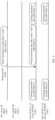
- Prior art keywords
- frame
- station
- sta
- group addressed
- ppdu
- Prior art date
- Legal status (The legal status is an assumption and is not a legal conclusion. Google has not performed a legal analysis and makes no representation as to the accuracy of the status listed.)
- Pending
Links
Images




Classifications
-
- H—ELECTRICITY
- H04—ELECTRIC COMMUNICATION TECHNIQUE
- H04L—TRANSMISSION OF DIGITAL INFORMATION, e.g. TELEGRAPHIC COMMUNICATION
- H04L69/00—Network arrangements, protocols or services independent of the application payload and not provided for in the other groups of this subclass
- H04L69/14—Multichannel or multilink protocols
-
- H—ELECTRICITY
- H04—ELECTRIC COMMUNICATION TECHNIQUE
- H04L—TRANSMISSION OF DIGITAL INFORMATION, e.g. TELEGRAPHIC COMMUNICATION
- H04L69/00—Network arrangements, protocols or services independent of the application payload and not provided for in the other groups of this subclass
- H04L69/16—Implementation or adaptation of Internet protocol [IP], of transmission control protocol [TCP] or of user datagram protocol [UDP]
-
- H—ELECTRICITY
- H04—ELECTRIC COMMUNICATION TECHNIQUE
- H04L—TRANSMISSION OF DIGITAL INFORMATION, e.g. TELEGRAPHIC COMMUNICATION
- H04L69/00—Network arrangements, protocols or services independent of the application payload and not provided for in the other groups of this subclass
- H04L69/28—Timers or timing mechanisms used in protocols
-
- H—ELECTRICITY
- H04—ELECTRIC COMMUNICATION TECHNIQUE
- H04W—WIRELESS COMMUNICATION NETWORKS
- H04W76/00—Connection management
- H04W76/20—Manipulation of established connections
-
- H—ELECTRICITY
- H04—ELECTRIC COMMUNICATION TECHNIQUE
- H04W—WIRELESS COMMUNICATION NETWORKS
- H04W76/00—Connection management
- H04W76/10—Connection setup
- H04W76/15—Setup of multiple wireless link connections
-
- H—ELECTRICITY
- H04—ELECTRIC COMMUNICATION TECHNIQUE
- H04W—WIRELESS COMMUNICATION NETWORKS
- H04W76/00—Connection management
- H04W76/20—Manipulation of established connections
- H04W76/27—Transitions between radio resource control [RRC] states
-
- H—ELECTRICITY
- H04—ELECTRIC COMMUNICATION TECHNIQUE
- H04W—WIRELESS COMMUNICATION NETWORKS
- H04W84/00—Network topologies
- H04W84/02—Hierarchically pre-organised networks, e.g. paging networks, cellular networks, WLAN [Wireless Local Area Network] or WLL [Wireless Local Loop]
- H04W84/10—Small scale networks; Flat hierarchical networks
- H04W84/12—WLAN [Wireless Local Area Networks]
Definitions
- This application relates to the field of communication technologies, and in particular, to a multi-link-based communication method and an apparatus.
- a multi-link operation (multi-link operation, MLO) technology is currently introduced to achieve a technical objective of extremely high throughput.
- MLO multi-link operation
- a non-wireless access point multi-link device non-access point multi-link device, non-AP MLD
- the non-AP MLD performs receiving on each link over one radio chain.
- AP MLD access point multi-link device
- AP MLD access point multi-link device
- the non-AP MLD If the non-AP MLD receives a group addressed frame during frame interaction with an AP, the non-AP MLD switches back (switch back) the radio chains to the links to perform a listening operation. Consequently, all frames sent to the non-AP MLD after the group addressed frame fail to be received.
- This application provides a multi-link-based communication method and an apparatus, to resolve a problem of an improper switching operation in an MLO.
- this application provides a multi-link-based communication method.
- the method may be performed by a receiver side device such as a non-AP MLD, and may be specifically a non-AP STA in the non-AP MLD, or may be a chip, a circuit, or another component configured to implement a function of the receiver side device.
- the method is performed by the non-AP STA.
- the method includes: receiving a first physical layer protocol data unit (PHY protocol data unit, PPDU) within first duration, where the first PPDU includes a first frame; and switching to a listening operation mode if the first frame does not meet all conditions in a condition set, where at least one condition in the condition set is frame information of a group addressed frame, and the group addressed frame is different from a trigger frame, a multi-station block acknowledgment frame, and a no-data PPDU announcement frame.
- PHY protocol data unit PHY protocol data unit
- a related condition of the group addressed frame other than the trigger frame, the multi-station block acknowledgment frame, and the no-data PPDU announcement frame is added to the condition set, so that the non-AP STA can determine, based on information about the group addressed frame when performing a switching operation, whether to switch to the listening operation mode.
- the non-AP STA directly switches to the listening operation mode after the group addressed frame is received
- whether to switch to the listening operation mode can be determined based on the information about the group addressed frame.
- the non-AP STA when the received group addressed frame does not meet all the conditions in the condition set, the non-AP STA switches to the listening operation mode; or when the received group addressed frame meets any condition in the condition set, the non-AP STA does not switch to the listening operation mode.
- This can improve flexibility, and can ensure that the group addressed frame and a subsequent frame can be received in time, to improve rationality of the switching operation.
- the at least one condition includes: a frame type is a group addressed frame, the group addressed frame is different from a broadcast frame. In other words, the group addressed frame is not the broadcast frame, and a receiving device indicated by the group addressed frame includes the station.
- the non-AP STA switches to the listening operation mode; or if the foregoing condition is met, the non-AP STA does not switch to the listening operation mode.
- the non-AP STA may determine not to switch to the listening operation mode. This can ensure that the group addressed frame and a subsequent frame can be received in time.
- the non-AP STA may switch to the listening operation mode in time when receiving a group addressed frame that is not sent to the non-AP STA. This can reduce a delay in communication with an access point on another link.
- the at least one condition includes: the frame type is a broadcast frame, and a transmitter address carried in the broadcast frame is an address of an access point affiliated with the station; or the frame type is a broadcast frame, and a receiving device indicated by the broadcast frame includes the station.
- the non-AP STA switches to the listening operation mode; or if the foregoing condition is met, the non-AP STA does not switch to the listening operation mode.
- the non-AP STA may determine not to switch to the listening operation mode. This can ensure that the group addressed frame and a subsequent frame can be received in time.
- the foregoing conditions may cover the trigger frame, the multi-station block acknowledgment frame, and the no-data PPDU announcement frame, so that conditions of the trigger frame, the multi-station block acknowledgment frame, and the no-data PPDU announcement frame may not be separately listed in the condition set. This can simplify protocol description based on the foregoing condition, and reduce implementation complexity.
- the broadcast frame is different from the trigger frame, the multi-station block acknowledgment frame, and the no-data PPDU announcement frame.
- a conflict or repetition with current switching rule logic can be avoided in the foregoing manner.
- condition set further includes at least one of the following five conditions:
- this application provides a multi-link-based communication method.
- the method may be performed by a receiver side device such as a non-AP MLD, and may be specifically a non-AP STA in the non-AP MLD, or may be a chip, a circuit, or another component configured to implement a function of a receiver side device.
- the method is performed by the non-AP STA.
- the method includes: receiving a first PPDU within first duration, where the first PPDU includes a first frame; and switching to a listening operation mode if the first frame meets any condition in a condition set, where a frame type corresponding to at least one condition included in the condition set includes a group addressed frame, and the group addressed frame is different from a trigger frame, a multi-station block acknowledgment frame, and a no-data physical layer protocol data unit PPDU announcement frame.
- a condition that may cover a group addressed frame other than the trigger frame, the multi-station block acknowledgment frame, and the no-data PPDU announcement frame is added to the condition set, so that the non-AP STA can determine, based on information about the group addressed frame when performing a switching operation, whether to switch to the listening operation mode.
- the non-AP STA directly switches to the listening operation mode after the group addressed frame is received
- whether to switch to the listening operation mode can be determined based on the information about the group addressed frame.
- the non-AP STA when any condition in the condition set is met the non-AP STA switches to the listening operation mode; or when all conditions in the condition set are not met, the non-AP STA does not switch to the listening operation mode.
- This can improve flexibility, and can ensure that the group addressed frame and a subsequent frame can be received in time, to improve rationality of the switching operation.
- the at least one condition includes at least one of the following three conditions:
- the non-AP STA switches to the listening operation mode; or if the foregoing conditions are not met, it indicates that the first frame is a group addressed frame sent to the non-AP STA, and when receiving the group addressed frame sent to the non-AP STA, the non-AP STA may determine not to switch to the listening operation mode. This can ensure that the group addressed frame and the subsequent frame can be received in time.
- the at least one condition includes at least one of the following two conditions:
- the non-AP STA may determine not to switch to the listening operation mode. This can ensure that the group addressed frame and the subsequent frame can be received in time.
- condition set further includes at least one of the following five conditions:
- the non-AP STA may determine not to switch to the listening operation mode. This can ensure that the group addressed frame and the subsequent frame can be received in time.
- this application provides a multi-link-based communication method.
- the method may be performed by a receiver side device such as a non-AP MLD, and may be specifically a non-AP STA in the non-AP MLD, or may be a chip, a circuit, or another component configured to implement a function of a receiver side device.
- the method is performed by the non-AP STA.
- the method includes: receiving a PPDU; and switching to a listening operation if a basic service set indicated by the PPDU is an external basic service set.
- an inter-BSS PPDU may be determined by using a physical layer SIG field, the SIG field is before the data part in the PPDU. Therefore, in the foregoing manner, the non-AP STA switches to the listening operation mode when the inter-BSS PPDU is detected, and MAC content in the data part of the PPDU does not need to be further parsed, so that switching can be performed in time. This helps reduce a delay in communication with an AP on another link.
- this application provides a multi-link-based communication method.
- the method may be performed by a receiver side device such as a non-AP MLD, and may be specifically a non-AP STA in the non-AP MLD, or may be a chip, a circuit, or another component configured to implement a function of a receiver side device.
- the method is performed by the non-AP STA.
- the method includes: determining that any condition in a condition set is met; and switching to a listening operation mode, where the condition set includes the following conditions: a group addressed frame is received, the group addressed frame is different from a broadcast frame, and a receiving device indicated by the group addressed frame does not include the station.
- a condition that may cover a group addressed frame other than a trigger frame, a multi-station block acknowledgment frame, and a no-data PPDU announcement frame is added, so that the non-AP STA can determine, based on information about the group addressed frame when performing a switching operation, whether to switch to the listening operation mode.
- the non-AP STA can determine, based on information about the group addressed frame when performing a switching operation, whether to switch to the listening operation mode.
- whether to switch to the listening operation mode can be determined based on the information about the group addressed frame. This can improve flexibility, and ensure that the group addressed frame and a subsequent frame can be received in time, to improve rationality of the switching operation.
- condition set further includes at least one of the following three conditions:
- the condition set includes the following condition: the broadcast frame is received, and a target receiving device indicated by the broadcast frame does not include the station.
- the condition that may cover the group addressed frame other than the trigger frame, the multi-station block acknowledgment frame, and the no-data PPDU announcement frame is added, so that the non-AP STA can determine, based on the information about the group addressed frame when performing the switching operation, whether to switch to the listening operation mode.
- the condition set further includes the following condition: an extremely high throughput multi-station block PPDU is received, where a basic service set indicated by the extremely high throughput multi-station block PPDU is the same as a basic service set of a cell in which the station is located, the extremely high throughput multi-station block PPDU does not indicate that the station is a receiving device, and a value of a basic service set disabled field carried in a high efficiency operation element last received by the station is 0.
- condition set is improved, so that rationality of the switching operation can be improved.
- condition set further includes at least one of the following conditions:
- this application provides a multi-link-based communication method.
- the method may be performed by a receiver side device such as a non-AP MLD, and may be specifically a non-AP STA in the non-AP MLD, or may be a chip, a circuit, or another component configured to implement a function of a receiver side device.
- the method is performed by the non-AP STA.
- the method includes: determining, in a first time period according to a first rule, whether to switch to a listening operation mode, where a start moment of the first time period is preset time or receiving time of a first beacon frame, and the first time period is used to receive a group addressed frame; and determining, in a second time period according to a second rule, whether to switch to the listening operation mode, where a start moment of the second time period is receiving time of an initial control frame.
- group addressed frames are centrally sent to the non-AP STA in a specific time period (namely, the first time period), and different switching rules are used in the time period and the second time period. This can ensure that the group addressed frame and a subsequent frame can be received in time, and can reduce a loss of a subsequent transmission opportunity.
- the determining, according to a first rule, whether to switch to a listening operation mode includes: switching to the listening operation mode if any condition in a first condition set is met.
- the first condition set includes at least one of the following:
- the non-AP STA can switch to the listening operation mode in time, so that the non-AP STA can communicate with an access point in time on another link.
- the preset time is pre-acquired sending time of the first beacon frame.
- the first beacon frame is a delivery traffic indication map beacon frame.
- starting of the first time period and the second time period may be determined based on the receiving time of the first beacon frame (or the preset time) and the receiving time of the initial control frame.
- the non-AP STA if the non-AP STA receives the group addressed frame in the first time period, and the group addressed frame indicates "transmission is not completed", the non-AP STA continues to receive the group addressed frame on the link.
- the determining, according to a second rule, whether to switch to the listening operation mode includes:
- the second condition set includes at least one of the following conditions:
- Two conditions of the group addressed frame are added, so that when receiving a group addressed frame that does not meet the foregoing condition set, the non-AP STA can switch to the listening operation mode; or when receiving a group addressed frame that meets the foregoing condition set, the non-AP STA does not switch to the listening operation mode. This can ensure that the group addressed frame and a subsequent frame can be received in time.
- the non-AP STA may switch to the listening operation mode in time when receiving a group addressed frame that is not sent to the non-AP STA. This can reduce a delay in communication with an access point on another link.
- the second condition set includes at least one of the following conditions:
- the foregoing conditions may cover the trigger frame, the multi-station block acknowledgment frame, the no-data PPDU announcement frame, and another group addressed frame, so that conditions of the trigger frame, the multi-station block acknowledgment frame, and the no-data PPDU announcement frame may not be separately listed in the second condition set.
- This can simplify protocol description, and reduce implementation complexity.
- the non-AP STA may determine not to switch to the listening operation mode. This can ensure that the group addressed frame and a subsequent frame can be received in time.
- the second condition set includes at least one of the following conditions:
- the foregoing conditions may cover the trigger frame, the multi-station block acknowledgment frame, the no-data PPDU announcement frame, and another group addressed frame, so that conditions of the trigger frame, the multi-station block acknowledgment frame, and the no-data PPDU announcement frame may not be separately listed in the second condition set.
- This can simplify protocol description, and reduce implementation complexity.
- the non-AP STA may determine not to switch to the listening operation mode. This can ensure that the group addressed frame and a subsequent frame can be received in time.
- the determining, according to a second rule, whether to switch to the listening operation mode includes:
- the third condition set includes at least one of the following conditions:
- a condition that may cover another group addressed frame is added, so that when receiving a group addressed frame that is not sent to the non-AP STA, the non-AP STA can determine to switch to the listening operation mode, or when receiving a group addressed frame sent to the non-AP STA, the non-AP STA determines not to switch to the listening operation mode. This can ensure that the group addressed frame and a subsequent frame can be received in time.
- the third condition set includes at least one of the following conditions:
- the non-AP STA when receiving a group addressed frame that is not sent to the non-AP STA, the non-AP STA may determine to switch to the listening operation mode, or when receiving a group addressed frame sent to the non-AP STA, the non-AP STA determines not to switch to the listening operation mode. This can ensure that the group addressed frame and a subsequent frame can be received in time.
- the third condition set includes at least one of the following conditions:
- the foregoing conditions may cover the trigger frame, the multi-station block acknowledgment frame, the no-data PPDU announcement frame, and another group addressed frame, so that conditions of the trigger frame, the multi-station block acknowledgment frame, and the no-data PPDU announcement frame may not be separately listed in the third condition set.
- This can simplify protocol description, and reduce implementation complexity.
- the non-AP STA may determine to switch to the listening operation mode, or when receiving the group addressed frame sent to the non-AP STA, the non-AP STA determines not to switch to the listening operation mode. This can ensure that the group addressed frame and a subsequent frame can be received in time.
- the third condition set includes at least one of the following conditions:
- a condition that may cover a group addressed frame other than the trigger frame, the multi-station block acknowledgment frame, and the no-data PPDU announcement frame is added, so that the non-AP STA can determine, based on information about the group addressed frame when performing a switching operation, whether to switch to the listening operation mode.
- the non-AP STA directly switches to the listening operation mode after the group addressed frame is received
- whether to switch to the listening operation mode can be determined based on the information about the group addressed frame. This can improve flexibility, and ensure that the group addressed frame and the subsequent frame can be received in time, to improve rationality of the switching operation.
- the third condition set includes at least one of the following conditions:
- the foregoing conditions may cover the trigger frame, the multi-station block acknowledgment frame, the no-data PPDU announcement frame, and another group addressed frame, so that conditions of the trigger frame, the multi-station block acknowledgment frame, and the no-data PPDU announcement frame may not be separately listed in the third condition set.
- This can simplify protocol description, and reduce implementation complexity.
- the non-AP STA may determine whether to switch to the listening operation mode. This can ensure that the group addressed frame and a subsequent frame can be received in time.
- the third condition set includes at least one of the following conditions:
- the foregoing conditions may cover the trigger frame, the multi-station block acknowledgment frame, the no-data PPDU announcement frame, and another group addressed frame, so that conditions of the trigger frame, the multi-station block acknowledgment frame, and the no-data PPDU announcement frame may not be separately listed in the third condition set.
- This can simplify protocol description, and reduce implementation complexity.
- the non-AP STA may determine not to switch to the listening operation mode. This can ensure that the group addressed frame and a subsequent frame can be received in time.
- whether to switch to the listening operation mode is determined based on the second condition set or the third condition set.
- the determining, according to a second rule, whether to switch to the listening operation mode may include:
- the fourth condition set includes at least one of the following conditions:
- this application further provides a multi-link-based communication apparatus.
- the communication apparatus has a function of implementing any method provided in any one of the first aspect to the fifth aspect.
- the communication apparatus may be implemented by hardware, or may be implemented by hardware executing corresponding software.
- the hardware or software includes one or more units or modules corresponding to the foregoing function.
- the communication apparatus includes a processor, and the processor is configured to support the communication apparatus to execute a corresponding function of the non-AP STA in the foregoing communication method.
- the communication apparatus may further include a memory.
- the memory may be coupled to the processor, and the memory stores program instructions and data that are necessary for the communication apparatus.
- the communication apparatus further includes an interface circuit, and the interface circuit is configured to support communication between the communication apparatus and another device.
- the communication apparatus includes corresponding functional modules, which are respectively configured to implement the steps in the foregoing method.
- the function may be implemented by hardware, or may be implemented by hardware executing corresponding software.
- the hardware or software includes one or more modules corresponding to the foregoing function.
- a structure of the communication apparatus includes a processing module and a communication module. These modules may perform corresponding functions in the foregoing method examples. For details, refer to the descriptions in the method provided in any one of the first aspect to the fifth aspect. Details are not described herein again.
- a multi-link-based communication apparatus includes a processor and an interface circuit.
- the interface circuit is configured to: receive a signal from a communication apparatus other than the communication apparatus and send the signal to the processor, or send a signal from the processor to a communication apparatus other than the communication apparatus.
- the processor is configured to implement the method in any one of the first aspect to the fifth aspect and the possible designs of the first aspect to the fifth aspect by using a logic circuit or executing code instructions.
- a computer-readable storage medium stores a computer program or instructions.
- the computer program or the instructions are executed by a processor, the method in any one of the first aspect to the fifth aspect and the possible designs of the first aspect to the fifth aspect is implemented.
- a computer program product storing instructions. When the instructions are run by a processor, the method in any one of the first aspect to the fifth aspect and the possible designs of the first aspect to the fifth aspect is implemented.
- a chip system includes a processor, and may further include a memory, configured to implement the method in any one of the first aspect to the fifth aspect and the possible designs of the first aspect to the fifth aspect.
- the chip system may include a chip, or may include a chip and another discrete component.
- a communication system includes the apparatus (for example, a non-AP MLD or a non-AP STA) in the first aspect, and may further include an AP MLD or an access point.
- a communication system includes the apparatus (for example, a non-AP MLD or a non-AP STA) in the second aspect, and may further include an AP MLD or an access point.
- a communication system includes the apparatus (for example, a non-AP MLD or a non-AP STA) in the third aspect, and may further include an AP MLD or an access point.
- a communication system includes the apparatus (for example, a non-AP MLD or a non-AP STA) in the fourth aspect, and may further include an AP MLD or an access point.
- a communication system includes the apparatus (for example, a non-AP MLD or a non-AP STA) in the fifth aspect, and may further include an AP MLD or an access point.
- Multi-link operation (multi-link operation, MLO)
- An MLO-supported wireless local area network (wireless local area network, WLAN) device has a capability of sending and receiving over multi-band (Multi-band).
- the multi-band may include but is not limited to a 2.4 GHz wireless fidelity (Wireless-Fidelity, Wi-Fi) frequency. band, a 5 GHz Wi-Fi frequency band, and a 6 GHz Wi-Fi frequency band. Access and transmission performed on each frequency band may be referred to as a link, or access and transmission performed within one frequency range on a same frequency band may be referred to as a link. Therefore, access and transmission formed on a plurality of links may be referred to as the MLO.
- a device that supports a plurality of links is referred to as a multi-link device (multi-link device, MLD), and an internal entity, responsible for any link, in the MLD is referred to as a station (STA).
- MLD multi-link device
- STA station
- all STAs in an MLD are wireless access points (access points, APs)
- the MLD may be referred to as an AP MLD; or if all STAs in an MLD are non-wireless access point stations (non-AP STAs), the MLD may be referred to as a non-AP MLD.
- EMLSR enhanced multi-link single radio
- a non-wireless access point multi-link device (non-wireless access point multi-link device, non-AP MLD) has only a capability of receiving and sending over a single radio chain, but can enter a listening operation (listening operation) on a plurality of links.
- the non-AP MLD performs receiving on each link over one radio chain.
- an AP MLD successfully sends an initial control frame (Initial Control Frame) to the non-AP MLD on any link i
- the non-AP MLD switches all radio chains to the link i for frame interaction with the AP MLDs, switches back (switch back) the radio chains to links to return to the listening operation after the frame interaction ends.
- the radio chain is a physical entity serving as a receive chain (receive chain) and/or a transmit chain (transmit chain).
- the receive chain is a physical entity that implements signal processing to provide a received signal for a digital baseband.
- Signal processing includes filtering, amplification, downconversion, sampling, and the like.
- the transmit chain is a physical entity that implements signal processing to generate a transmitted signal from the digital baseband.
- Signal processing includes digital-to-analog conversion, filtering, amplification, up-conversion, and the like.
- the radio chain may be wireless, radio, or the like.
- the group addressed frame is a frame oriented to a plurality of stations, and a MAC address of the group addressed frame corresponds to the plurality of stations.
- the broadcast frame is a group addressed frame used when a MAC address indicates a broadcast address. That is, the group addressed frame includes the broadcast frame, and the broadcast frame is a special group addressed frame.
- this solution provided in this application is described by using an example in which the group addressed frame includes the broadcast frame. It should be understood that embodiments of this application are also described by using an example in which the group addressed frame and the broadcast frame are of two different frame types. For example, the following description by using the example in which the group addressed frame includes the broadcast frame is "a frame type is a group addressed frame, the group addressed frame is different from a broadcast frame, and a receiving device indicated by the group addressed frame includes the station". If the solution is described by using the example in which the group addressed frame and the broadcast frame are of two different frame types, the solution is described as "a frame type is a group addressed frame, and a receiving device indicated by the group addressed frame includes the station".
- "at least one” means one or more, and "a plurality of" means two or more.
- the term “and/or” describes an association relationship between associated objects and indicates that three relationships may exist.
- a and/or B may indicate the following cases: Only A exists, both A and B exist, and only B exists.
- a and B may be singular or plural.
- the character "/” generally indicates an "or” relationship between the associated objects. At least one of the following items (pieces) or a similar expression thereof means any combination of these items, including any combination of singular items (pieces) or plural items (pieces).
- At least one item (piece) of a, b, or c may indicate: a, b, c, a and b, a and c, b and c, or a, b, and c, where a, b, and c may be singular or plural.
- ordinal numbers such as “first” and “second” in embodiments of this application are used to distinguish between a plurality of objects, and are not intended to limit sizes, content, an order, a time sequence, priorities, importance degrees, or the like of the plurality of obj ects.
- a first time period and a second time period are merely used to distinguish between different time periods, but do not indicate different priorities, time sequences, importance, or the like of the two time periods.
- a station in the MLD is used as an example for description in embodiments of this application.
- the station in embodiments of this application may be a STA in an MLD that supports EMLSR.
- a station in the non-AP MLD may be referred to as a non-AP STA, and a station in the AP MLD may be referred to as an AP.
- the IEEE 802.11be standard working group proposes an EMLSR working mechanism: When one of the following cases is met, a non-AP MLD needs to immediately switch an antenna back to each link for a listening operation.
- Case 1 A non-AP STA does not receive a physical layer receiving start indication (PHY-RXSTART.indication) within timeout interval starting from time at which the non-AP STA replies with a most recently received frame from an AP or starting from time at which the non-AP STA receives a most recently received frame that is from the AP and that does not require immediate acknowledgment from the non-AP STA.
- Timeout interval short interframe space (short interframe space, SIFS) time (aSIFSTime) + slot time (aSlotTime) + physical layer receiving start delay (aRxPHYStartDelay).
- the MAC of the STA affiliated with the non-AP MLD that received the initial Control frame does not receive a PHY-RXSTART.indication primitive during a timeout interval of aSIF STime + aSlotTime + aRxPHYStartDelay starting at the end of the PPDU transmitted by the STA of the non-AP MLD as a response to the most recently received frame from the AP affiliated with the AP MLD or starting at the end of the reception of the PPDU containing a frame for the STA from the AP affiliated with the AP MLD that does not require immediate acknowledgment).
- Case 2 A non-AP STA receives a physical layer receiving start indication within timeout interval starting from time at which the non-AP STA replies with a most recently received frame from an AP or starting from time at which the non-AP STAreceives a most recently received frame that is from the AP and that does not require immediate acknowledgment from the non-AP STA.
- the non-AP STA when receiving a PPDU corresponding to the physical layer receiving start indication, the non-AP STA does not detect any one of the following frames (The MAC of the STA affiliated with the non-AP MLD that received the initial Control frame receives a PHY-RXSTART.indication primitive during a timeout interval of aSIFSTime + aSlotTime + aRxPHYStartDelay starting at the end of the PPDU transmitted by the STA of the non-AP MLD as a response to the most recently received frame from the AP affiliated with the AP MLD or starting at the end of the reception of the PPDU containing a frame for the STA from the AP affiliated with the AP MLD that does not require immediate acknowledgment and the STA affiliated with the non-AP MLD does not detect, within the PPDU corresponding to the PHY-RXSTART.indication any of the following frames):
- Case 3 A non-AP STA does not respond to a most recently received frame from an AP affiliated with the non-AP STA that requires immediate response (The STA affiliated with the non-AP MLD that received the initial Control frame does not respond to the most recently received frame from the AP affiliated with the AP MLD that requires immediate response after a SIFS).
- a possible solution is not to send a broadcast frame or a group addressed frame to avoid antenna switching of the non-AP STA.
- the group addressed frame and the broadcast frame cannot be sent to the non-AP STA.
- Another possible solution is to send a broadcast frame or a group addressed frame after all individually addressed frames are sent. Consequently, at most one broadcast frame or group addressed frame can be successfully sent. In addition, this also limits flexibility. Furthermore, the broadcast frame or the group addressed frame usually takes precedence over the individually addressed frame in many cases. As a result, the broadcast frame or the group addressed frame cannot be sent in time in this method.
- embodiments of this application provide a multi-link-based communication method and an apparatus, to resolve the problem of the improper switching operation in the MLO.
- the method and the apparatus are based on a same concept.
- the method and the apparatus have similar problem-resolving principles. Therefore, for implementations of the apparatus and the method, refer to each other. No repeated description is provided.
- This application is applied to a wireless local area network system that supports a next-generation Wi-Fi protocol of IEEE 802.11ax, for example, 802.11 series protocols such as 802.11be, Wi-Fi 7, or EHT, and a next-generation protocol of 802.11be, Wi-Fi 8, or Wi-Fi AI, and may be further applied to an ultra-wideband (ultra-wideband, UWB)-based wireless personal local area network system, a sensing system, and the like.
- a next-generation Wi-Fi protocol of IEEE 802.11ax for example, 802.11 series protocols such as 802.11be, Wi-Fi 7, or EHT
- 802.11be, Wi-Fi 8, or Wi-Fi AI a next-generation protocol of 802.11be, Wi-Fi 8, or Wi-Fi AI
- UWB ultra-wideband
- the communication method provided in this application may be further applied to other communication systems, for example, an internet of things (internet of things, IoT) system, a narrow band internet of things (narrow band internet of things, NB-IoT) system, a long term evolution (long term evolution, LTE) system, a 5th generation (5G) communication system, an LTE and 5G hybrid architecture, a 5G new radio (new radio, NR) system, or a new communication system emerging in 6G or future communication development.
- the communication system provided in this application may alternatively be a machine to machine (machine to machine, M2M) network, a non-terrestrial network (non-terrestrial network, NTN) network, or another network.
- FIG. 3 is a diagram of a network architecture to which an embodiment of this application is applicable.
- the network includes a non-AP MLD 1 and a non-AP MLD 2 that are associated with an AP MLD and the AP MLD.
- the AP MLD may communicate with the non-AP MLD 1 and the non-AP MLD 2, and the non-AP MLD 1 and the non-AP MLD 2 may communicate with each other.
- quantities of AP MLDs and non-AP MLDs shown in FIG. 3 are merely examples. There may be more or fewer AP MLDs and non-AP MLDs.
- the non-AP MLDs in embodiments of this application may be various user terminals, user apparatuses, access apparatuses, subscriber stations, subscriber units, mobile stations, user agents, user devices, or other devices that have a wireless communication function.
- the user terminals may include various handheld devices, vehicle-mounted devices, wearable devices, computing devices, or other processing devices connected to a wireless modem that have the wireless communication function; and various forms of user equipment (user equipment, UE), mobile stations (mobile stations, MSs), terminals (terminals), terminal equipment (terminal equipment), portable communication devices, handheld devices, portable computing devices, entertainment devices, game devices or systems, and global positioning system devices, or any other suitable device configured to perform network communication by using a wireless medium.
- the devices mentioned above are collectively referred to as a non-AP MLD.
- the AP MLD in embodiments of this application is an apparatus that is deployed in a wireless communication network and that provides a wireless communication function.
- the AP MLD may be used as a hub of the communication system, and may be a communication device such as a base station, a router, a gateway, a repeater, a communication server, a switch, or a bridge.
- the base station may include various forms of macro base stations, micro base stations, relay stations, and the like.
- the devices mentioned above are collectively referred to as an AP MLD.
- the AP MLD and the non-AP MLD in this application may be respectively an AP MLD and a non-AP MLD that are applicable to an IEEE 802.11be system standard, may be respectively an AP MLD and a non-AP MLD that are applicable to an IEEE 802.11 system standard, or may be respectively an AP MLD and a non-AP MLD that are applicable to another standard, for example, an AP MLD and a non-AP MLD that are applicable to a future standard.
- a network architecture and a service scenario described in embodiments of this application are intended to describe the technical solutions in embodiments of this application more clearly, and do not constitute any limitation on the technical solutions provided in embodiments of this application. Persons of ordinary skill in the art may know that with evolution of the network architecture and emergence of new service scenarios, the technical solutions provided in embodiments of this application are also applicable to similar technical problems.
- if may also be described as “in a case of", “if", "when", or the like.
- switching to a listening operation mode may also be described as "if the first frame does not meet all conditions in the condition set, switching to the listening operation mode", “in a case in which the first frame does not meet all the conditions in the condition set, switching to the listening operation mode", "when the first frame does not meet all the conditions in the condition set, switching to the listening operation mode", or the like.
- a non-AP STA in the non-AP MLD is used as an example for description.
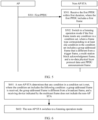
- FIG. 4 is a schematic flowchart of a communication method according to an embodiment of this application.
- S401 An AP sends a first PPDU.
- a non-AP STA receives the first PPDU within first duration.
- the first PPDU includes a first frame.
- the first duration may be preset duration starting from time at which the non-AP STA replies with a most recently received frame from the AP, or may be preset duration starting from time at which the non-AP STA receives a most recently received frame that is from the AP and that does not require immediate acknowledgment from the non-AP STA.
- Preset duration short interframe space (short interframe space, SIFS) time (aSIFSTime) + slot time (aSlotTime) + physical layer receiving start delay (aRxPHYStartDelay).
- that the non-AP STA receives the first PPDU within the first duration may be implemented in the following manner: The non-AP STA receives a physical layer receiving start indication within the first duration, and detects the first PPDU when receiving a PPDU corresponding to the indication.
- the non-AP STA switches to a listening operation mode if the first frame does not meet all conditions in a condition set.
- At least one condition in the condition set is frame information of a group addressed frame, and the group addressed frame is different from a trigger frame, a multi-station block acknowledgment frame, and a no-data PPDU announcement frame.
- the group addressed frame is different from (or is not) a currently defined trigger frame, multi-station block acknowledgment frame, or no-data PPDU announcement frame.
- the at least one condition may include at least one of the following conditions:
- Example 1.2 The at least one condition may alternatively include at least one of the following conditions:
- the at least one condition may alternatively include at least one of the following conditions:
- condition set may further include at least one of the following five conditions:
- condition set may include the following conditions:
- two conditions of the group addressed frame are added to the foregoing case 2, so that the non-AP STA can determine, when receiving a group addressed frame sent to the non-AP STA, whether to switch to the listening operation mode. For example, when the received group addressed frame does not meet all conditions in the condition set, the non-AP STA switches to the listening operation mode; or when the received group addressed frame meets any condition in the condition set, the non-AP STA does not switch to the listening operation mode. This can ensure that the group addressed frame and a subsequent frame can be received in time. In addition, based on the foregoing two conditions, the non-AP STA may switch to the listening operation mode in time when receiving a group addressed frame that is not sent to the non-AP STA. This can reduce a delay in communication with an AP on another link.
- condition set may include the following conditions:
- the foregoing conditions may cover the trigger frame, the multi-station block acknowledgment frame, the no-data PPDU announcement frame, and another group addressed frame, so that conditions of the trigger frame, the multi-station block acknowledgment frame, and the no-data PPDU announcement frame may not be separately listed in the condition set.
- This can simplify protocol description, and reduce implementation complexity.
- the non-AP STA may determine whether to switch to the listening operation mode. For example, when the received group addressed frame does not meet all conditions in the condition set, the non-AP STA switches to the listening operation mode; or when the received group addressed frame meets any condition in the condition set, the non-AP STA does not switch to the listening operation mode. This can improve flexibility, and can ensure that the group addressed frame and a subsequent frame can be received in time.
- condition set may include the following conditions:
- the foregoing conditions may cover the trigger frame, the multi-station block acknowledgment frame, the no-data PPDU announcement frame, and another group addressed frame, so that conditions of the trigger frame, the multi-station block acknowledgment frame, and the no-data PPDU announcement frame may not be separately listed in the condition set.
- This can simplify protocol description, and reduce implementation complexity.
- the non-AP STA may determine whether to switch to the listening operation mode. For example, when the received group addressed frame does not meet all conditions in the condition set, the non-AP STA switches to the listening operation mode; or when the received group addressed frame meets any condition in the condition set, the non-AP STA does not switch to the listening operation mode. This can improve flexibility, and can ensure that the group addressed frame and a subsequent frame can be received in time.
- the non-AP STA may further switch to the listening operation mode in the following scenario (or case or condition): receiving a second PPDU; and switching to the listening operation mode if a basic service set (basic service set, BSS) indicated by the second PPDU is an inter-BSS (The STA affiliated with the non-AP MLD receives a PPDU and classifies the PPDU as inter-BSS PPDU).
- BSS basic service set
- step S402 if it is determined that a BSS indicated by the first PPDU is an inter-BSS, it may be determined to switch to the listening operation mode. In this implementation, S402 may not be performed.
- an inter-BSS PPDU may be determined by using a physical layer SIG field, the SIG field is before the data part in the PPDU. Therefore, in the foregoing manner, the non-AP STA switches to the listening operation mode when the inter-BSS PPDU is detected, and MAC content in the data part of the PPDU does not need to be further parsed, so that switching can be performed in time. This helps reduce a delay in communication with an AP on another link.
- the non-AP STA may alternatively switch to the listening operation mode in another scenario (or case or condition), for example, the foregoing case 1 or case 3.
- scenario or case or condition
- the foregoing case 1 or case 3 for example, the foregoing case 1 or case 3.
- a related condition of a group addressed frame other than the trigger frame, the multi-station block acknowledgment frame, and the no-data PPDU announcement frame is added to the condition set, so that the non-AP STA can determine, based on information about the group addressed frame when performing a switching operation, whether to switch to the listening operation mode.
- the non-AP STA directly switches to the listening operation mode after the group addressed frame is received
- whether to switch to the listening operation mode can be determined based on information about the group addressed frame.
- the non-AP STA switches to the listening operation mode; or when the received group addressed frame meets any condition in the condition set, the non-AP STA does not switch to the listening operation mode. This can improve flexibility, and can ensure that the group addressed frame and the subsequent frame can be received in time.
- Embodiment 1 describes the technical solution of determining, based on whether the condition in the condition set is not met, whether to perform the switching operation, to ensure that the group addressed frame and the subsequent frame can be received in time.
- Embodiment 2 describes another method below. The method is a technical solution of determining, based on whether the condition in the condition set is met, whether to perform the switching operation, to ensure that the group addressed frame and the subsequent frame can be received in time.
- FIG. 5 is a schematic flowchart of a communication method according to an embodiment of this application.
- S501 An AP sends a first PPDU.
- a non-AP STA receives the first PPDU within first duration.
- a frame type corresponding to at least one condition in the condition set includes a group addressed frame, and the group addressed frame is different from a trigger frame, a multi-station block acknowledgment frame, and a no-data physical layer protocol data unit PPDU announcement frame.
- the at least one condition may include at least one of the following conditions:
- Example 2.2 The at least one condition may include at least one of the following conditions:
- condition set may further include at least one of the following five conditions:
- condition set may include the following conditions:
- a condition that may cover another group addressed frame is added, so that when receiving a group addressed frame sent to the non-AP STA, the non-AP STA can determine whether to switch to the listening operation mode. For example, when the received group addressed frame meets any condition in the condition set, the non-AP STA does not switch to the listening operation mode; or when the received group addressed frame does not meet all conditions in the condition set, the non-AP STA does not switch to the listening operation mode. This can ensure that the group addressed frame and a subsequent frame can be received in time.
- condition set may include the following conditions:
- the foregoing conditions may cover the trigger frame, the multi-station block acknowledgment frame, the no-data PPDU announcement frame, and another group addressed frame, so that conditions of the trigger frame, the multi-station block acknowledgment frame, and the no-data PPDU announcement frame may not be separately listed in the condition set.
- This can simplify protocol description, and reduce implementation complexity.
- the non-AP STA may determine whether to switch to the listening operation mode. For example, when the received group addressed frame meets any condition in the condition set, the non-AP STA does not switch to the listening operation mode; or when the received group addressed frame does not meet all conditions in the condition set, the non-AP STA switches to the listening operation mode. This can improve flexibility, and can ensure that the group addressed frame and a subsequent frame can be received in time.
- condition set may further include the following conditions:
- the non-AP STA when receiving the group addressed frame that meets any condition in the condition set, may switch to the listening operation mode; or when receiving the group addressed frame that does not meet all conditions in the condition set, the non-AP STA does not switch to the listening operation mode. This can ensure that the group addressed frame and a subsequent frame can be received in time.
- condition set may include the following conditions:
- a condition that may cover another group addressed frame is added, so that when receiving a group addressed frame sent to the non-AP STA, the non-AP STA can determine whether to switch to the listening operation mode. This can ensure that the group addressed frame and a subsequent frame can be received in time.
- the non-AP STA may further switch to the listening operation mode in the following scenario (or case or condition): receiving a second PPDU; and switching to the listening operation mode if a BSS indicated by the second PPDU is an inter-BSS (The STA affiliated with the non-AP MLD receives a PPDU and classifies the PPDU as inter-BSS PPDU). It should be noted that this manner may alternatively be implemented independently without depending on the method in Embodiment 1.
- step S502 if it is determined that a BSS indicated by the first PPDU is an inter-BSS, it may be determined to switch to the listening operation mode. In this implementation, S502 may not be performed.
- an inter-BSS PPDU may be determined by using a physical layer SIG field, the SIG field is before the data part in the PPDU. Therefore, in the foregoing manner, the non-AP STA switches to the listening operation mode when the inter-BSS PPDU is detected, and MAC content in the data part of the PPDU does not need to be further parsed, so that switching can be performed in time. This helps reduce a delay in communication with an AP on another link.
- the non-AP STA may further switch to the listening operation mode in another scenario (or case or condition), for example, the foregoing case 1 or case 3.
- scenario or case or condition
- the foregoing case 1 or case 3 for example, the foregoing case 1 or case 3.
- a condition that may cover a group addressed frame other than the trigger frame, the multi-station block acknowledgment frame, and the no-data PPDU announcement frame is added to the condition set, so that the non-AP STA can determine, based on information about the group addressed frame when performing a switching operation, whether to switch to the listening operation mode.
- the non-AP STA directly switches to the listening operation mode after the group addressed frame is received
- whether to switch to the listening operation mode can be determined based on the information about the group addressed frame.
- the non-AP STA when the received group addressed frame meets any condition in the condition set, the non-AP STA switches to the listening operation mode; or when the received group addressed frame does not meet all conditions in the condition set, the non-AP STA does not switch to the listening operation mode.
- This can improve flexibility, and ensure that the group addressed frame and a subsequent frame can be received in time, to improve rationality of the switching operation.
- Embodiment 1 describes a technical solution of determining, based on whether the condition in the condition set is not met, whether to perform the switching operation, to ensure that the group addressed frame and the subsequent frame can be received in time.
- Embodiment 2 describes a technical solution of determining, based on whether the condition in the condition set is met, whether to perform the switching operation, to ensure that the group addressed frame and the subsequent frame can be received in time.
- Embodiment 3 describes another method. In the method, whether to switch to the listening operation mode is determined according to an SM PS-based switching rule and an EMLSR-based switching rule, to ensure that the group addressed frame and the subsequent frame can be received in time.
- FIG. 6 is a schematic flowchart of a communication method according to an embodiment of this application.
- a non-AP STA determines that any condition in a condition set is met.
- the condition set includes the following condition: a group addressed frame is received, the group addressed frame is different from a broadcast frame, and a receiving device indicated by the group addressed frame does not include the non-AP STA (It receives a group addressed frame but the STA is not a member of this group).
- condition set may further include at least one of the following three conditions:
- condition set may further include: a broadcast frame is received, and a target receiving device indicated by the broadcast frame does not include the non-AP STA (It receives a broadcast frame but the STA is not involved in the successive procedure).
- condition set may further include one of the following conditions:
- condition set includes both the SM PS-based switching rule and the EMLSR-based switching rule, so that the EMLSR-based rule and the SM PS-based rule are unified.
- the non-AP STA switches to a listening operation mode.
- the condition set may include the following conditions:
- Example 3.2 The condition set may include the following conditions:
- the condition set may include the following conditions:
- the first four conditions and the last condition in the condition set are applicable to the SM PS-based switching rule, and the remaining conditions are applicable to the EMLSR-based switching rule.
- the condition set includes both the SM PS-based switching rule and the EMLSR-based switching rule, so that the EMLSR-based rule and the SM PS-based rule are unified.
- the SM PS-based switching rule is added to the EMLSR-based switching rule, or the EMLSR-based switching rule is added to the SM PS-based switching rule, so that the EMLSR-based rule and the SM PS-based rule are unified.
- a condition that may cover a group addressed frame other than the trigger frame, the multi-station block acknowledgment frame, and the no-data PPDU announcement frame is added to the EMLSR-based switching rule, so that the non-AP STA can determine, based on information about the group addressed frame when performing a switching operation, whether to switch to the listening operation mode.
- the non-AP STA can determine, based on the information about the group addressed frame, not to switch to the listening operation mode. This can improve flexibility, and ensure that the group addressed frame and a subsequent frame can be received in time, to improve rationality of the switching operation.
- the foregoing three embodiments cover a group addressed frame other than the trigger frame, the multi-station block acknowledgment frame, and the no-data PPDU announcement frame from a perspective of a switching rule, to ensure that the group addressed frame and the subsequent frame can be received in time.
- group addressed frames are centrally sent in a time period, and different switching rules are used in the time period and a time period for sending an individually addressed frame, to ensure that the group addressed frame and a subsequent frame can be received in time.
- FIG. 7 is a schematic flowchart of a communication method according to an embodiment of this application.
- Anon-AP STA determines, in a first time period according to a first rule, whether to switch to a listening operation mode.
- a start moment of the first time period is preset time or a receiving time of a first beacon frame, and the first time period is used to receive a group addressed frame.
- the receiving time of the first beacon frame may be time at which the first beacon frame is completed.
- the preset time may be pre-obtained sending time of the first beacon frame.
- the non-AP STA may obtain the sending time of the first beacon frame by using a received frame, so that the non-AP STA can enter the first time period when the sending time arrives.
- the first beacon frame may be a delivery traffic indication map beacon frame.
- Behavior of an AP in the first time period may be that only the group addressed frame is allowed to be sent.
- the AP may indicate, in each group addressed frame before a last group addressed frame in the first time period, that "transmission is not completed", and indicate, in the last group addressed frame in the first time period, that "transmission is completed”. For example, the AP may set a more data (more data) field of the last group addressed frame in the first time period to a first value, and set a more data field of another group addressed frame in the first time period to a second value.
- the first value may be 0, and the second value may be 1.
- the first value may be 1, and the second value may be 0.
- behavior of the non-AP STA in the first time period may be that if "transmission is not completed" is indicated in the received group addressed frame, the non-AP STA continues to operate over this link, for example, continues to receive the group addressed frame on the link, or determines, according to the first rule, to switch to the listening operation mode.
- That the non-AP STA determines, according to the first rule, whether to switch to the listening operation mode may be specifically determined in the following manner: switching to the listening operation mode if any condition in a first condition set is met.
- the first condition set includes at least one of the following:
- the non-AP STA determines, in a second time period according to a second rule, whether to switch to the listening operation mode, where a start moment of the second time period is receiving time of an initial control frame.
- the receiving time of the initial control frame may be time at which the initial control frame is completed.
- Behavior of the AP in the second time period may be that only an individually addressed frame is allowed to be sent, or both an individually addressed frame and a group addressed frame are allowed to be sent.
- that the non-AP STA determines, according to the second rule, to switch to the listening operation mode may be specifically: determining, according to the method in Embodiment 1, to switch to the listening operation mode.
- that the non-AP STA determines, according to the second rule, to switch to the listening operation mode may be specifically: determining, according to the method in Embodiment 2, to switch to the listening operation mode.
- that the non-AP STA determines, according to the second rule, to switch to the listening operation mode may be specifically: determining, according to the method in Embodiment 3, to switch to the listening operation mode.
- that the non-AP STA determines, according to the second rule, to switch to the listening operation mode may be, for example, the case 1 to the case 3 described in the foregoing background.
- the initial control frame may indicate whether the AP sends a group addressed frame in the second time period.
- the non-AP STA may determine, according to the method described in Embodiment 1, Embodiment 2, or Embodiment 3, to switch to the listening operation mode.
- the non-AP STA may determine, according to a rule for switching to the listening operation mode in the current IEEE 802.11be standard document, to switch to the listening operation mode.
- first time period and the second time period are not subject to a sequence, and may be specifically determined based on the preset time (or the receiving time of the first beacon frame) and the receiving time of the initial control frame.
- first time period and the second time period may appear alternately, as shown in FIG. 8 .
- the AP may trigger, by using the first beacon frame, the non-AP STA to enter the first time period.
- the AP may also trigger, by using the initial control frame, the non-AP STA to enter the second time period.
- group addressed frames are centrally sent to the non-AP STA in a specific time period (namely, the first time period), and different switching rules are used in the time period and the second time period. This can ensure that the group addressed frame and a subsequent frame can be received in time, and can reduce a loss of a subsequent transmission opportunity.
- Embodiment 1 to Embodiment 4 describe a method for switching to the listening operation mode from a perspective of the non-AP STA.
- the AP may trigger switching by sending some frames.
- the AP may trigger, by sending a frame that does not meet any condition in the condition set in Embodiment 1, the non-AP STA to switch to the listening operation mode.
- the AP may trigger, by sending a frame that meets any condition in the condition set in Embodiment 2, the non-AP STA to switch to the listening operation mode.
- the AP may trigger, by sending a frame that meets any condition in the condition set in Embodiment 3, the non-AP STA to switch to the listening operation mode.
- the AP may trigger, by sending a frame that meets the first rule in Embodiment 4 and in the first time period, the non-AP STA to switch to the listening operation mode, and may trigger, by sending a frame that meets the second rule in Embodiment 4 and in the second time period, the non-AP STA to switch to the listening operation mode.
- an embodiment of this application provides a communication apparatus.
- a structure of the communication apparatus may be shown in FIG. 9 .
- the communication apparatus includes a communication module 901 and a processing module 902.
- the communication apparatus may be specifically configured to implement the method performed by the non-AP STA in the embodiment shown in FIG. 4 .
- the apparatus may be the non-AP STA, or may be a chip, a chipset, or a part of a chip, where the chip and the chipset are in the non-AP STA, and the part of the chip is configured to perform a function of a related method.
- the communication module 901 is configured to receive a first PPDU within first duration, where the first PPDU includes a first frame.
- the processing module 902 is configured to switch to a listening operation mode if the first frame does not meet any condition in a condition set, where at least one condition in the condition set is frame information of a group addressed frame, and the group addressed frame is different from a trigger frame, a multi-station block acknowledgment frame, and a no-data PPDU announcement frame.
- the at least one condition includes: a frame type is a group addressed frame, the group addressed frame is different from a broadcast frame, and a receiving device indicated by the group addressed frame includes the station.
- the at least one condition includes: a frame type is a broadcast frame, and a transmitter address carried in the broadcast frame is an address of an access point station affiliated with the station; or a frame type is a broadcast frame, and a receiving device indicated by the broadcast frame includes the station.
- the broadcast frame is different from the trigger frame, the multi-station block acknowledgment frame, and the no-data PPDU announcement frame.
- condition set further includes at least one of the following five conditions:
- the communication module 901 is further configured to receive a PPDU; and the processing module 902 is further configured to switch to the listening operation if a basic service set indicated by the PPDU is an external basic service set.
- the communication apparatus may be specifically configured to implement the method performed by the non-AP STA in the embodiment shown in FIG. 5 .
- the apparatus may be the non-AP STA, or may be a chip, a chipset, or a part of a chip, where the chip and the chipset are in the non-AP STA, and the part of the chip is configured to perform a function of a related method.
- the communication module 901 is configured to receive a first PPDU within first duration, where the first PPDU includes a first frame.
- the processing module is configured to switch to a listening operation mode if the first frame meets any condition in a condition set, where a frame type corresponding to at least one condition in the condition set includes a group addressed frame, and the group addressed frame is different from a trigger frame, a multi-station block acknowledgment frame, and a no-data PPDU announcement frame.
- the at least one condition includes at least one of the following three conditions:
- the at least one condition includes at least one of the following two conditions:
- condition set further includes at least one of the following five conditions:
- the communication module 901 is further configured to receive a PPDU; and the processing module 902 is further configured to switch to the listening operation if a basic service set indicated by the PPDU is an external basic service set.
- the communication apparatus may be specifically configured to implement the method performed by the non-AP STA in the embodiment shown in FIG. 6 .
- the apparatus may be the non-AP STA, or may be a chip, a chipset, or a part of a chip, where the chip and the chipset are in the non-AP STA, and the part of the chip is configured to perform a function of a related method.
- the processing module 902 is configured to: determine that any condition in a condition set is met; and switch to a listening operation mode, where the condition set includes the following conditions: a group addressed frame is received, the group addressed frame is different from a broadcast frame, and a receiving device indicated by the group addressed frame does not include the station.
- condition set further includes at least one of the following three conditions:
- condition set includes the following conditions: the broadcast frame is received, and a target receiving device indicated by the broadcast frame does not include the station.
- condition set further includes the following conditions: an extremely high throughput multi-station block PPDU is received, where a basic service set indicated by the extremely high throughput multi-station block PPDU is the same as a basic service set of a cell in which the station is located, the extremely high throughput multi-station block PPDU does not indicate that the station is a receiving device, and a value of a basic service set disabled field carried in a high efficiency operation element last received by the station is 0.
- condition set further includes at least one of the following conditions:
- the communication apparatus may be specifically configured to implement the method performed by the non-AP STA in the embodiment shown in FIG. 7 .
- the apparatus may be the non-AP STA, or may be a chip, a chipset, or a part of a chip, where the chip and the chipset are in the non-AP STA, and the part of the chip is configured to perform a function of a related method.
- the processing module 902 is configured to: determine, in a first time period according to a first rule, whether to switch to a listening operation mode, where a start moment of the first time period is preset time or receiving time of a first beacon frame, and the first time period is used to receive a group addressed frame; and determine, in a second time period according to a second rule, whether to switch to the listening operation mode, where a start moment of the second time period is receiving time of an initial control frame.
- the processing module 902 is specifically configured to: switch to the listening operation mode if any condition in a first condition set is met.
- the first condition set includes at least one of the following:
- the first beacon frame is a delivery traffic indication map beacon frame.
- Division into modules in this embodiment of this application is an example, is merely logical function division, and may be other division during actual implementation.
- functional modules in embodiments of this application may be integrated into one processor, or each of the modules may exist alone physically, or two or more modules may be integrated into one module.
- the integrated module may be implemented in a form of hardware, or may be implemented in a form of a software functional module. It may be understood that for functions or implementations of the modules in embodiments of this application, further refer to related descriptions in the method embodiments.
- the communication apparatus may be shown in FIG. 10 .
- the apparatus may be a communication device or a chip in the communication device.
- the communication device may be the terminal device in the foregoing embodiment or the network device in the foregoing embodiment.
- the apparatus includes a processor 1001 and a communication interface 1002, and may further include a memory 1003.
- the processing module 902 may be the processor 1001.
- the communication module 901 may be the communication interface 1002.
- the processor 1001 and the memory 1003 may be integrated together.
- the processor 1001 may be a CPU, a digital processing module, or the like.
- the communication interface 1002 may be a transceiver, an interface circuit such as a transceiver circuit, a transceiver chip, or the like.
- the apparatus further includes the memory 1003, configured to store a program executed by the processor 1001.
- the memory 1003 may be a nonvolatile memory, for example, a hard disk drive (hard disk drive, HDD) or a solid-state drive (solid-state drive, SSD), or may be a volatile memory (volatile memory), for example, a random access memory (random access memory, RAM).
- the memory 1003 is any other medium that can be configured to carry or store expected program code in a form of an instruction or a data structure and that can be accessed by a computer. However, this is not limited thereto.
- the processor 1001 is configured to execute the program code stored in the memory 1003, and is specifically configured to execute an action of the processing module 902. Details are not described herein in this application.
- the communication interface 1002 is specifically configured to perform an action of the communication module 901. Details are not described herein in this application.
- a specific connection medium between the communication interface 1002, the processor 1001, and the memory 1003 is not limited in embodiments of this application.
- the memory 1003, the processor 1001, and the communication interface 1002 are connected through a bus 1004 in FIG. 10 .
- the bus is represented by using a thick line in FIG. 10 .
- a manner of connection between other components is merely an example for description, and is not limited thereto.
- Buses may be classified into an address bus, a data bus, a control bus, and the like.
- the bus is represented by using only one thick line in FIG. 10 . However, this does not mean that there is only one bus or one type of bus.
- An embodiment of the present invention further provides a computer-readable storage medium, configured to store computer software instructions that need to be executed for execution of the foregoing processor, and the computer-readable storage medium includes a program that needs to be executed for execution of the foregoing processor.
- An embodiment of this application further provides a communication system, including a communication apparatus configured to implement a function of a transmitter in the embodiment in FIG. 4 and a communication apparatus configured to implement a function of a receiver in the embodiment in FIG. 4 .
- embodiments of this application may be provided as a method, a system, or a computer program product. Therefore, this application may use a form of hardware only embodiments, software only embodiments, or embodiments with a combination of software and hardware. Moreover, this application may use a form of a computer program product that is implemented on one or more computer-usable storage media (including but not limited to a disk memory, a CD-ROM, an optical memory, and the like) that include computer-usable program code.
- computer-usable storage media including but not limited to a disk memory, a CD-ROM, an optical memory, and the like
- These computer program instructions may be provided for a general-purpose computer, a dedicated computer, an embedded processor, or a processor of another programmable data processing device to generate a machine, so that the instructions executed by a computer or the processor of another programmable data processing device generate an apparatus for implementing a specific function in one or more procedures in the flowcharts and/or in one or more blocks in the block diagrams.
- the computer program instructions may alternatively be stored in a computer-readable memory that can indicate a computer or another programmable data processing device to work in a specific manner, so that the instructions stored in the computer-readable memory generate an artifact that includes an instruction apparatus.
- the instruction apparatus implements a specific function in one or more procedures in the flowcharts and/or in one or more blocks in the block diagrams.
- the computer program instructions may alternatively be loaded onto a computer or another programmable data processing device, so that a series of operations and steps are performed on the computer or the another programmable device, so that computer-implemented processing is generated. Therefore, the instructions executed on the computer or the another programmable device provide steps for implementing a specific function in one or more procedures in the flowcharts and/or in one or more blocks in the block diagrams.
Landscapes
- Engineering & Computer Science (AREA)
- Computer Networks & Wireless Communication (AREA)
- Signal Processing (AREA)
- Computer Security & Cryptography (AREA)
- Mobile Radio Communication Systems (AREA)
Applications Claiming Priority (2)
| Application Number | Priority Date | Filing Date | Title |
|---|---|---|---|
| CN202210689577.2A CN117294775A (zh) | 2022-06-16 | 2022-06-16 | 一种基于多链路的通信方法及装置 |
| PCT/CN2023/098930 WO2023241435A1 (zh) | 2022-06-16 | 2023-06-07 | 一种基于多链路的通信方法及装置 |
Publications (2)
| Publication Number | Publication Date |
|---|---|
| EP4529136A1 true EP4529136A1 (de) | 2025-03-26 |
| EP4529136A4 EP4529136A4 (de) | 2025-11-26 |
Family
ID=89192138
Family Applications (1)
| Application Number | Title | Priority Date | Filing Date |
|---|---|---|---|
| EP23823003.1A Pending EP4529136A4 (de) | 2022-06-16 | 2023-06-07 | Verfahren und vorrichtung zur mehrfachverbindungsbasierten kommunikation |
Country Status (5)
| Country | Link |
|---|---|
| US (1) | US20250112979A1 (de) |
| EP (1) | EP4529136A4 (de) |
| CN (1) | CN117294775A (de) |
| TW (1) | TW202418795A (de) |
| WO (1) | WO2023241435A1 (de) |
Families Citing this family (1)
| Publication number | Priority date | Publication date | Assignee | Title |
|---|---|---|---|---|
| US12563547B2 (en) * | 2022-11-11 | 2026-02-24 | Cisco Technology, Inc. | AP controlled peer-to-peer multi-link operations signaling |
Family Cites Families (3)
| Publication number | Priority date | Publication date | Assignee | Title |
|---|---|---|---|---|
| US11882625B2 (en) * | 2020-04-07 | 2024-01-23 | Mediatek Singapore Pte. Ltd. | Apparatus and methods for proxy address resolution protocol (ARP) service for multi-link operation |
| US11825460B2 (en) * | 2020-05-27 | 2023-11-21 | Mediatek Singapore Pte. Ltd. | Extreme-high-throughput multi-link dynamic antenna switching in wireless communications |
| CN115776646B (zh) * | 2020-06-04 | 2023-09-01 | 华为技术有限公司 | 适用于多链路的组播业务传输方法及装置 |
-
2022
- 2022-06-16 CN CN202210689577.2A patent/CN117294775A/zh active Pending
-
2023
- 2023-06-06 TW TW112121054A patent/TW202418795A/zh unknown
- 2023-06-07 WO PCT/CN2023/098930 patent/WO2023241435A1/zh not_active Ceased
- 2023-06-07 EP EP23823003.1A patent/EP4529136A4/de active Pending
-
2024
- 2024-12-13 US US18/980,612 patent/US20250112979A1/en active Pending
Also Published As
| Publication number | Publication date |
|---|---|
| WO2023241435A1 (zh) | 2023-12-21 |
| TW202418795A (zh) | 2024-05-01 |
| CN117294775A (zh) | 2023-12-26 |
| EP4529136A4 (de) | 2025-11-26 |
| US20250112979A1 (en) | 2025-04-03 |
Similar Documents
| Publication | Publication Date | Title |
|---|---|---|
| EP4199598A1 (de) | Verfahren zur anzeige einer verbindung in der mehrverbindungskommunikation und zugehörige vorrichtung | |
| US8787328B2 (en) | Method and apparatus for reserving data channel in a wireless access system | |
| US20180020410A1 (en) | Power saving for wireless local area network | |
| JP2025507415A (ja) | Emlsrモードにおけるリンク状態指示方法および関連装置 | |
| EP3512259A1 (de) | Verfahren und vorrichtung zur suche nach einem zugangspunkt in einem drahtlosen lan | |
| CN103002544B (zh) | 一种传输信息的方法和装置 | |
| WO2022247901A1 (zh) | 通信方法及装置 | |
| US11963083B2 (en) | Communication method and apparatus | |
| JP7772916B2 (ja) | 通信方法および関連装置 | |
| CN118476314A (zh) | 一种无线通信方法及装置、通信设备 | |
| CN115695566B (zh) | 无线帧发送方法及装置、无线帧接收方法及装置 | |
| US20250112979A1 (en) | Multi-Link-Based Communication Method and Apparatus | |
| AU2025202056A1 (en) | Beacon frame transmission method in emlsr mode, and related apparatus | |
| JP2025513050A (ja) | 通信方法および装置 | |
| EP4709023A1 (de) | Verbesserte multilink-einzelfunk-in-vorrichtung-vernetzung und erststeuerungsrahmenkollisionsvermeidung und -handhabung derselben verbindung | |
| JP4201668B2 (ja) | 無線端末における共有データの同期方法および無線モジュール | |
| EP4503821A1 (de) | Funkkommunikationsvorrichtung und funkkommunikationsverfahren | |
| US11202261B2 (en) | Apparatus and method for communications | |
| WO2025218699A1 (zh) | 通信方法和相关装置 | |
| CN117560725A (zh) | 数据传输方法及装置 |
Legal Events
| Date | Code | Title | Description |
|---|---|---|---|
| STAA | Information on the status of an ep patent application or granted ep patent |
Free format text: STATUS: THE INTERNATIONAL PUBLICATION HAS BEEN MADE |
|
| PUAI | Public reference made under article 153(3) epc to a published international application that has entered the european phase |
Free format text: ORIGINAL CODE: 0009012 |
|
| STAA | Information on the status of an ep patent application or granted ep patent |
Free format text: STATUS: REQUEST FOR EXAMINATION WAS MADE |
|
| 17P | Request for examination filed |
Effective date: 20241219 |
|
| AK | Designated contracting states |
Kind code of ref document: A1 Designated state(s): AL AT BE BG CH CY CZ DE DK EE ES FI FR GB GR HR HU IE IS IT LI LT LU LV MC ME MK MT NL NO PL PT RO RS SE SI SK SM TR |
|
| RIC1 | Information provided on ipc code assigned before grant |
Ipc: H04L 69/14 20220101AFI20250731BHEP Ipc: H04L 69/28 20220101ALI20250731BHEP Ipc: H04W 76/20 20180101ALI20250731BHEP Ipc: H04W 76/15 20180101ALN20250731BHEP Ipc: H04W 76/27 20180101ALN20250731BHEP Ipc: H04W 84/12 20090101ALN20250731BHEP |
|
| DAV | Request for validation of the european patent (deleted) | ||
| DAX | Request for extension of the european patent (deleted) | ||
| A4 | Supplementary search report drawn up and despatched |
Effective date: 20251028 |
|
| RIC1 | Information provided on ipc code assigned before grant |
Ipc: H04L 69/14 20220101AFI20251022BHEP Ipc: H04L 69/28 20220101ALI20251022BHEP Ipc: H04W 76/20 20180101ALI20251022BHEP Ipc: H04W 76/15 20180101ALN20251022BHEP Ipc: H04W 76/27 20180101ALN20251022BHEP Ipc: H04W 84/12 20090101ALN20251022BHEP |