EP4525533A1 - Kommunikationsverfahren und kommunikationsvorrichtung - Google Patents
Kommunikationsverfahren und kommunikationsvorrichtung Download PDFInfo
- Publication number
- EP4525533A1 EP4525533A1 EP23819059.9A EP23819059A EP4525533A1 EP 4525533 A1 EP4525533 A1 EP 4525533A1 EP 23819059 A EP23819059 A EP 23819059A EP 4525533 A1 EP4525533 A1 EP 4525533A1
- Authority
- EP
- European Patent Office
- Prior art keywords
- communication apparatus
- phase
- information
- reference signal
- positioning reference
- Prior art date
- Legal status (The legal status is an assumption and is not a legal conclusion. Google has not performed a legal analysis and makes no representation as to the accuracy of the status listed.)
- Pending
Links
Images






Classifications
-
- H—ELECTRICITY
- H04—ELECTRIC COMMUNICATION TECHNIQUE
- H04W—WIRELESS COMMUNICATION NETWORKS
- H04W64/00—Locating users or terminals or network equipment for network management purposes, e.g. mobility management
-
- G—PHYSICS
- G01—MEASURING; TESTING
- G01S—RADIO DIRECTION-FINDING; RADIO NAVIGATION; DETERMINING DISTANCE OR VELOCITY BY USE OF RADIO WAVES; LOCATING OR PRESENCE-DETECTING BY USE OF THE REFLECTION OR RERADIATION OF RADIO WAVES; ANALOGOUS ARRANGEMENTS USING OTHER WAVES
- G01S5/00—Position-fixing by co-ordinating two or more direction or position line determinations; Position-fixing by co-ordinating two or more distance determinations
- G01S5/01—Determining conditions which influence positioning, e.g. radio environment, state of motion or energy consumption
-
- G—PHYSICS
- G01—MEASURING; TESTING
- G01S—RADIO DIRECTION-FINDING; RADIO NAVIGATION; DETERMINING DISTANCE OR VELOCITY BY USE OF RADIO WAVES; LOCATING OR PRESENCE-DETECTING BY USE OF THE REFLECTION OR RERADIATION OF RADIO WAVES; ANALOGOUS ARRANGEMENTS USING OTHER WAVES
- G01S5/00—Position-fixing by co-ordinating two or more direction or position line determinations; Position-fixing by co-ordinating two or more distance determinations
-
- G—PHYSICS
- G01—MEASURING; TESTING
- G01S—RADIO DIRECTION-FINDING; RADIO NAVIGATION; DETERMINING DISTANCE OR VELOCITY BY USE OF RADIO WAVES; LOCATING OR PRESENCE-DETECTING BY USE OF THE REFLECTION OR RERADIATION OF RADIO WAVES; ANALOGOUS ARRANGEMENTS USING OTHER WAVES
- G01S5/00—Position-fixing by co-ordinating two or more direction or position line determinations; Position-fixing by co-ordinating two or more distance determinations
- G01S5/0009—Transmission of position information to remote stations
- G01S5/0018—Transmission from mobile station to base station
- G01S5/0036—Transmission from mobile station to base station of measured values, i.e. measurement on mobile and position calculation on base station
-
- H—ELECTRICITY
- H04—ELECTRIC COMMUNICATION TECHNIQUE
- H04W—WIRELESS COMMUNICATION NETWORKS
- H04W4/00—Services specially adapted for wireless communication networks; Facilities therefor
- H04W4/02—Services making use of location information
Definitions
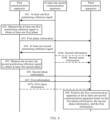
- a first aspect of this application provides a communication method, including: A first communication apparatus measures at least one first positioning reference signal from at least one second communication apparatus, to obtain at least one first phase.
- the first communication apparatus sends first phase information to a third communication apparatus, where the first phase information includes the at least one first phase, or the first phase information is determined based on the at least one first phase.
- the first communication apparatus measures at least one second positioning reference signal from the at least one second communication apparatus, to obtain at least one second phase.
- the first communication apparatus sends second phase information to the third communication apparatus, where the second phase information includes the at least one second phase, or the second phase information is determined based on the at least one second phase.
- the first communication apparatus sends first information to the third communication apparatus, where the first information is information about phase correlation between the first phase information and the second phase information.
- the first information includes consistency assistance information
- the consistency assistance information assists the third communication apparatus in determining correlation between the first phase information and the second phase information.
- the consistency assistance information includes information about an angle of arrival at which the at least one second positioning reference signal arrives at the first communication apparatus, or beam information of a receive beam used by the first communication apparatus to receive the at least one second positioning reference signal.
- the first information includes information about an angle of arrival at which the at least one second positioning reference signal arrives at the first communication apparatus, or beam information of a receive beam used by the first communication apparatus to receive the at least one second positioning reference signal.
- the first information may include the information about the angle of arrival or the beam information of the receive beam, so that the third communication apparatus determines whether the first phase information and the second phase information are correlated, thereby improving positioning accuracy.
- the first communication apparatus may further feed back the first cause information to the third communication apparatus, so that the third communication apparatus determines the cause why the first phase information and the second phase information are not correlated. This helps the third communication apparatus compensate for the first phase information or the second phase information based on the cause, and then perform positioning based on compensated phase information, thereby improving positioning accuracy.
- a second aspect of this application provides a communication method, including: A second communication apparatus sends at least one first positioning reference signal to a first communication apparatus.
- the second communication apparatus sends at least one second positioning reference signal to the first communication apparatus.
- the second communication apparatus sends second information to a third communication apparatus, where the second information indicates information about correlation between a transmit phase of the at least one first positioning reference signal and a transmit phase of the at least one second positioning reference signal.
- the third communication apparatus may position the first communication apparatus or the at least one second communication apparatus based on both the first phase information and the second phase information. For example, if the first phase information and the second phase information are not correlated, the third communication apparatus may position the first communication apparatus or the at least one second communication apparatus based on the first phase information only or the second phase information only. Therefore, a problem that positioning accuracy for positioning, by the third communication apparatus, the first communication apparatus or the at least one second communication apparatus is limited because correlation between the first phase information and the second phase information is difficult to be ensured due to a phase jump or a phase loss in a process in which the at least one second communication apparatus sends a positioning reference signal is avoided.
- a specific form of the second information is provided.
- whether the transmit phase of the at least one first positioning reference signal and the transmit phase of the at least one second positioning reference signal are correlated can be simply and quickly indicated, so that the third communication apparatus determines correlation between the first phase information and the second phase information, thereby improving positioning accuracy.
- the third communication apparatus positions the first communication apparatus or the at least one second communication apparatus based on the first phase information, the second phase information, and the first information.
- the third communication apparatus may obtain the first phase information and the second phase information.
- the third communication apparatus may receive the first information from the first communication apparatus, so that the third communication apparatus determines correlation between the first phase information and the second phase information, thereby improving positioning accuracy.
- a phase needs to be tracked, and the tracked phase needs to be continuous, that is, pieces of phase information are correlated.
- the third communication apparatus may position the first communication apparatus or the at least one second communication apparatus based on both the first phase information and the second phase information. For example, if the first phase information and the second phase information are not correlated, the third communication apparatus may position the first communication apparatus or the at least one second communication apparatus based on the first phase information only or the second phase information only. Therefore, a problem that positioning accuracy for positioning, by the third communication apparatus, the first communication apparatus or the at least one second communication apparatus is limited because correlation between the first phase information and the second phase information is difficult to be ensured due to a phase jump or a phase loss in a process in which the first communication apparatus tracks the phase is avoided.
- the first phase information is sent by the first communication apparatus to the third communication apparatus at a first moment
- the second phase information is sent by the first communication apparatus to the third communication apparatus at a second moment
- the first moment is one or more moments before the second moment.
- the first information is first indication information
- the first indication information indicates whether the first phase information and the second phase information are correlated.
- first information is provided.
- whether the first phase information and the second phase information are correlated can be simply and quickly indicated, so that the third communication apparatus determines correlation between the first phase information and the second phase information.
- the first information is information about a second label correlated with the second phase information
- a label correlated with phase information indirectly indicates whether the first phase information and the second phase information are correlated.
- the first label is a first time label correlated with the first phase information
- the second label is a second time label correlated with the second phase information
- a specific form of the first label and a specific form of the second label are provided, and implementability of the solution is provided.
- Each piece of phase information is correlated with a corresponding time label, so that the third communication apparatus determines correlation between the first phase information and the second phase information, thereby improving positioning accuracy.
- the consistency assistance information includes information about an angle of arrival at which the at least one second positioning reference signal arrives at the first communication apparatus, or beam information of a receive beam used by the first communication apparatus to receive the at least one second positioning reference signal.
- the beam information includes at least one of the following: a direction and an index of the receive beam used by the first communication apparatus to receive the at least one second positioning reference signal.
- the method further includes: The third communication apparatus receives first cause information from the first communication apparatus, where the first cause information indicates a cause why the first phase information and the second phase information are not correlated.
- That the third communication apparatus positions the first communication apparatus or the at least one second communication apparatus based on the first phase information, the second phase information, and the first information includes: The third communication apparatus positions the first communication apparatus or the at least one second communication apparatus based on the first phase information, the second phase information, the first information, and the first cause information.
- the method further includes: The third communication apparatus receives second information from the second communication apparatus, where the second information indicates information about correlation between a transmit phase of the at least one first positioning reference signal and a transmit phase of the at least one second positioning reference signal.
- That the third communication apparatus positions the first communication apparatus or the at least one second communication apparatus based on the first phase information, the second phase information, and the first information includes: The third communication apparatus positions the first communication apparatus or the at least one second communication apparatus based on the first phase information, the second phase information, the first information, and the second information.
- the third communication apparatus may further obtain the second information, so that the third communication apparatus obtains a case about whether a phase jump or phase loss occurs at a receive end and a transmit end of a positioning reference signal.
- the first communication apparatus may determine correlation between the first phase information and the second phase information based on the first information and the second information. This helps the third communication apparatus accurately position the first communication apparatus or the at least one second communication apparatus.
- the second information is second indication information
- the second indication information indicates whether the transmit phase of the at least one first positioning reference signal and the transmit phase of the at least one second positioning reference signal are correlated.
- the method further includes: The third communication apparatus receives second cause information from the second communication apparatus, where the second cause information indicates a cause why the transmit phase of the at least one first positioning reference signal and the transmit phase of the at least one second positioning reference signal are not correlated.
- That the third communication apparatus positions the first communication apparatus or the at least one second communication apparatus based on the first phase information, the second phase information, the first information, and the second information includes: The third communication apparatus positions the first communication apparatus or the at least one second communication apparatus based on the first phase information, the second phase information, the first information, the second information, and the second cause information.
- the third communication apparatus receives the second cause information from the second communication apparatus, so that the third communication apparatus determines the cause why the first phase information and the second phase information are not correlated. This helps the third communication apparatus compensate for the first phase information or the second phase information based on the cause, and then perform positioning based on compensated phase information, thereby improving positioning accuracy.
- a fourth aspect of this application provides a communication method, including: A third communication apparatus receives first phase information from a first communication apparatus, where the first phase information includes at least one first phase, or the first phase information is determined based on the at least one first phase, and the at least one first phase is obtained by the first communication apparatus by measuring at least one first positioning reference signal sent by at least one second communication apparatus.
- the third communication apparatus receives second phase information from the first communication apparatus, where the second phase information includes at least one second phase, or the second phase information is determined based on the at least one second phase, and the at least one second phase is obtained by the first communication apparatus by measuring at least one second positioning reference signal sent by the at least one second communication apparatus.
- the third communication apparatus receives second information from the at least one second communication apparatus, where the second information indicates information about correlation between a transmit phase of the at least one first positioning reference signal and a transmit phase of the at least one second positioning reference signal.
- the third communication apparatus positions the first communication apparatus or the at least one second communication apparatus based on the first phase information, the second phase information, and the second information.
- the third communication apparatus may obtain the first phase information and the second phase information.
- the third communication apparatus receives the second information from the at least one second communication apparatus, so that the third communication apparatus determines correlation between the first phase information and the second phase information, thereby improving positioning accuracy.
- a phase needs to be tracked, and the tracked phase needs to be continuous, that is, pieces of phase information are correlated.
- the third communication apparatus may position the first communication apparatus or the at least one second communication apparatus based on both the first phase information and the second phase information. For example, if the first phase information and the second phase information are not correlated, the third communication apparatus may position the first communication apparatus or the at least one second communication apparatus based on the first phase information only or the second phase information only. Therefore, a problem that positioning accuracy for positioning, by the third communication apparatus, the first communication apparatus or the at least one second communication apparatus is limited because correlation between the first phase information and the second phase information is difficult to be ensured due to a phase jump or a phase loss in a process in which the first communication apparatus tracks the phase is avoided.
- the second information is second indication information
- the second indication information indicates whether the transmit phase of the at least one first positioning reference signal and the transmit phase of the at least one second positioning reference signal are correlated.
- a specific form of the second information is provided.
- whether the transmit phase of the at least one first positioning reference signal and the transmit phase of the at least one second positioning reference signal are correlated can be simply and quickly indicated, so that the third communication apparatus determines correlation between the first phase information and the second phase information, thereby improving positioning accuracy.
- the method further includes: The third communication apparatus receives second cause information from the at least one second communication apparatus, where the second cause information indicates a cause why the transmit phase of the at least one first positioning reference signal and the transmit phase of the at least one second positioning reference signal are not correlated.
- That the third communication apparatus positions the first communication apparatus or the at least one second communication apparatus based on the first phase information, the second phase information, and the second information includes: The third communication apparatus positions the first communication apparatus or the at least one second communication apparatus based on the first phase information, the second phase information, the second information, and the second cause information.
- the third communication apparatus receives the second cause information from the at least one second communication apparatus, so that the third communication apparatus determines the cause why the first phase information and the second phase information are not correlated. This helps the third communication apparatus compensate for the first phase information or the second phase information based on the cause, and then perform positioning based on compensated phase information, thereby improving positioning accuracy.
- some possible causes included in the second cause information are provided, so that the cause why the transmit phase of the at least one first positioning reference signal and the transmit phase of the at least one second positioning reference signal are not correlated is shown.
- the cause may be antenna switching, beam switching, radio frequency link switching, a failure in sending the positioning reference signal, or the like.
- This helps the third communication apparatus determine a cause of a phase jump or a phase loss on the second communication apparatus side.
- the third communication apparatus may be assisted to compensate for phase information to some extent, thereby helping improve positioning accuracy.
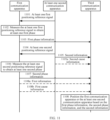
- the first information includes information about an angle of arrival at which the at least one first positioning reference signal arrives at the first communication apparatus, or beam index or direction information of a receive beam used by the first communication apparatus to receive the at least one first positioning reference signal.
- the method further includes: The first communication apparatus sends first cause information to the third communication apparatus, where the first cause information indicates a cause why the first phase information does not meet the first phase correlation condition.
- the second information is second indication information
- the second indication information indicates whether the transmit phase of the at least one first positioning reference signal meets the second phase correlation condition.
- the method further includes: The at least one second communication apparatus sends second cause information to the third communication apparatus, where the second cause information indicates a cause why the transmit phase of the at least one first positioning reference signal does not meet the second phase correlation condition.
- the third communication apparatus receives the first information from the first communication apparatus, where the first information indicates whether the first phase information meets the first phase correlation condition, so that the third communication apparatus determines correlation between the first phase information and phase information that is about the at least one second communication apparatus and that is previously reported by the first communication apparatus, thereby helping improve positioning accuracy.
- a phase needs to be tracked, and the tracked phase needs to be continuous, that is, pieces of phase information are correlated.
- the first information includes information about an angle of arrival at which the at least one first positioning reference signal arrives at the first communication apparatus, or beam index or direction information of a receive beam used by the first communication apparatus to receive the at least one first positioning reference signal.
- the first information includes third cause information.
- the third cause information indicates a cause whether the first phase information meets the first phase correlation condition.
- the method further includes: The third communication apparatus receives first cause information from the first communication apparatus, where the first cause information indicates a cause why the first phase information does not meet the first phase correlation condition.
- That the third communication apparatus positions the first communication apparatus or the at least one second communication apparatus based on the first phase information and the first information specifically includes: The third communication apparatus positions the first communication apparatus or the at least one second communication apparatus based on the first phase information, the first information, and the first cause information.
- the method further includes: The third communication apparatus receives second information from the at least one second communication apparatus, where the second information indicates whether a transmit phase of the at least one first positioning reference signal meets a second phase correlation condition.
- That the third communication apparatus positions the first communication apparatus or the at least one second communication apparatus based on the first phase information and the first information specifically includes: The third communication apparatus positions the first communication apparatus or the at least one second communication apparatus based on the first phase information, the first information, and the second information.
- the second information is second indication information
- the second indication information indicates whether the transmit phase of the at least one first positioning reference signal meets the second phase correlation condition.
- the second information is fourth cause information
- the fourth cause information indicates whether the transmit phase of the at least one first positioning reference signal meets the second phase correlation condition.
- An eighth aspect of this application provides a communication method, including: A third communication apparatus receives first phase information from a first communication apparatus, where the first phase information includes at least one first phase, or the first phase information is determined based on the at least one first phase, and the at least one first phase is obtained by the first communication apparatus by measuring at least one first positioning reference signal sent by at least one second communication apparatus.
- the third communication apparatus receives second information from the at least one second communication apparatus, where the second information indicates whether a transmit phase of the at least one first positioning reference signal meets a second phase correlation condition.
- the third communication apparatus positions the first communication apparatus or the at least one second communication apparatus based on the first phase information and the second information.
- the third communication apparatus receives the second information from the at least one second communication apparatus, where the second information indicates whether the transmit phase of the at least one first positioning reference signal meets the second phase correlation condition, so that the third communication apparatus determines correlation between first phase information obtained by the first communication apparatus by measuring the at least one first positioning reference signal and phase information that is previously reported by the first communication apparatus before the first phase information. Therefore, the third communication apparatus determines correlation between the first phase information and phase information that is about the at least one second communication apparatus and that is previously reported by the first communication apparatus, thereby helping improve positioning accuracy. This effectively avoids a problem that positioning accuracy is reduced because phase information is used for joint positioning in a scenario in which the first phase information and the phase information that is previously reported by the first communication apparatus are not correlated.
- a phase needs to be tracked, and the tracked phase needs to be continuous, that is, pieces of phase information are correlated.
- the third communication apparatus may position the first communication apparatus or the at least one second communication apparatus based on both the first phase information and the phase information that is previously reported by the first communication apparatus.
- the third communication apparatus may position the first communication apparatus or the at least one second communication apparatus based on the first phase information only or the phase information that is previously reported by the first communication apparatus only.
- a ninth aspect of this application provides a first communication apparatus, including:
- the first phase information is sent by the first communication apparatus to the third communication apparatus at a first moment
- the second phase information is sent by the first communication apparatus to the third communication apparatus at a second moment
- the first moment is one or more moments before the second moment.
- the first label is a first angle label correlated with the first phase information
- the second label is a second angle label correlated with the second phase information
- the first angle label identifies an angle of arrival at which the at least one first positioning reference signal arrives at the first communication apparatus
- the second angle label identifies an angle of arrival at which the at least one second positioning reference signal arrives at the first communication apparatus
- the first label is a first beam label correlated with the first phase information
- the second label is a second beam label correlated with the second phase information
- the first beam label identifies a receive beam used by the first communication apparatus to receive the at least one first positioning reference signal
- the second beam label identifies a receive beam used by the first communication apparatus to receive the at least one second positioning reference signal.
- the first information includes consistency assistance information
- the consistency assistance information assists the third communication apparatus in determining correlation between the first phase information and the second phase information.
- the consistency assistance information includes information about an angle of arrival at which the at least one second positioning reference signal arrives at the first communication apparatus, or beam information of a receive beam used by the first communication apparatus to receive the at least one second positioning reference signal.
- the first information includes information about an angle of arrival at which the at least one second positioning reference signal arrives at the first communication apparatus, or beam information of a receive beam used by the first communication apparatus to receive the at least one second positioning reference signal.
- the beam information includes at least one of the following: a direction and an index of the receive beam used by the first communication apparatus to receive the at least one second positioning reference signal.
- the transceiver module is further configured to: send first cause information to the third communication apparatus, where the first cause information indicates a cause why the first phase information and the second phase information are not correlated.
- the first cause information includes at least one of the following: first radio frequency link information, first antenna switching information, first beam switching information, or measurement failure information, where
- a tenth aspect of this application provides a second communication apparatus, including: a transceiver module, configured to: send at least one first positioning reference signal to a first communication apparatus; send at least one second positioning reference signal to the first communication apparatus; and send second information to a third communication apparatus, where the second information indicates information about correlation between a transmit phase of the at least one first positioning reference signal and a transmit phase of the at least one second positioning reference signal.
- a transceiver module configured to: send at least one first positioning reference signal to a first communication apparatus; send at least one second positioning reference signal to the first communication apparatus; and send second information to a third communication apparatus, where the second information indicates information about correlation between a transmit phase of the at least one first positioning reference signal and a transmit phase of the at least one second positioning reference signal.
- the second information is second indication information
- the second indication information indicates whether the transmit phase of the at least one first positioning reference signal and the transmit phase of the at least one second positioning reference signal are correlated.
- the transceiver module is further configured to: send second cause information to the third communication apparatus, where the second cause information indicates a cause why the transmit phase of the at least one first positioning reference signal and the transmit phase of the at least one second positioning reference signal are not correlated.
- the second cause information includes at least one of the following: second antenna switching information, second radio frequency link information, or sending failure information, where
- An eleventh aspect of this application provides a third communication apparatus, including:
- the first phase information is sent by the first communication apparatus to the third communication apparatus at a first moment
- the second phase information is sent by the first communication apparatus to the third communication apparatus at a second moment
- the first moment is one or more moments before the second moment.
- the first information is first indication information
- the first indication information indicates whether the first phase information and the second phase information are correlated.
- the first information is information about a second label correlated with the second phase information
- the first label is a first time label correlated with the first phase information
- the second label is a second time label correlated with the second phase information
- the first label is a first angle label correlated with the first phase information
- the second label is a second angle label correlated with the second phase information
- the first angle label identifies an angle of arrival at which the at least one first positioning reference signal arrives at the first communication apparatus
- the second angle label identifies an angle of arrival at which the at least one second positioning reference signal arrives at the first communication apparatus
- the first label is a first beam label correlated with the first phase information
- the second label is a second beam label correlated with the second phase information
- the first beam label identifies a receive beam used by the first communication apparatus to receive the at least one first positioning reference signal
- the second beam label identifies a receive beam used by the first communication apparatus to receive the at least one second positioning reference signal.
- the first information includes consistency assistance information
- the consistency assistance information assists the third communication apparatus in determining correlation between the first phase information and the second phase information.
- the consistency assistance information includes information about an angle of arrival at which the at least one second positioning reference signal arrives at the first communication apparatus, or beam information of a receive beam used by the first communication apparatus to receive the at least one second positioning reference signal.
- the at least one measurement communication apparatus includes N measurement communication apparatuses, where N is an integer greater than or equal to 1.
- the first phase information includes N first cumulative phase differences.
- An i th first cumulative phase difference in the N first cumulative phase differences is a difference between an i th first phase difference in N first phase differences and an i th second phase difference in N second phase differences.
- the i th first cumulative phase difference indicates a cumulative amount, in terms of time, of a phase difference between the first phase obtained by the first communication apparatus by measuring the first positioning reference signal sent by the reference communication apparatus and a first phase obtained by the first communication apparatus by measuring a first positioning reference signal sent by an i th measurement communication apparatus.
- the i th first phase difference in the N first phase differences is a phase difference between a first phase obtained by the first communication apparatus by measuring a first positioning reference signal sent by the reference communication apparatus at a moment 1 and a first phase obtained by the first communication apparatus by measuring a first positioning reference signal sent by the i th measurement communication apparatus in the N measurement communication apparatuses at the moment 1.
- the i th second phase difference in the N second phase differences is a phase difference between a first phase obtained by the first communication apparatus by measuring a first positioning reference signal sent by the reference communication apparatus at a moment 2 and a second phase obtained by the first communication apparatus by measuring a first positioning reference signal sent by the i th measurement communication apparatus in the N measurement communication apparatuses at the moment 2.
- the at least one measurement communication apparatus includes N measurement communication apparatuses, where N is an integer greater than or equal to 1.
- the first phase information includes N first cumulative phase difference rates.
- An i th first cumulative phase difference rate in the N first cumulative phase difference rates is equal to the i th first cumulative phase difference in the N first cumulative phase differences divided by a time interval between the moment 1 and the moment 2.
- the i th cumulative phase difference rate indicates a cumulative amount, in terms of unit time, of a phase difference between the first phase obtained by the first communication apparatus by measuring the first positioning reference signal sent by the reference communication apparatus and a first phase obtained by the first communication apparatus by measuring a first positioning reference signal sent by an i th measurement communication apparatus.
- the at least one second cumulative phase difference includes a cumulative amount, in terms of time, of a phase difference between phases obtained by the first communication apparatus by measuring first positioning reference signals sent by the second communication apparatus at different moments.
- the at least one second cumulative phase difference rate includes: a cumulative amount, in terms of unit time, of a phase difference between phases obtained by the first communication apparatus by measuring first positioning reference signals sent by the second communication apparatus at different moments.
- the (a+2) th third phase difference is a phase difference between a first phase obtained by the first communication apparatus by measuring a first positioning reference signal sent by the second communication apparatus at the (a+2) th moment and a first phase obtained by the first communication apparatus by measuring a first positioning reference signal sent by the second communication apparatus at an (a+1) th moment.
- the (a+1) th third phase difference is a phase difference between a first phase obtained by the first communication apparatus by measuring the first positioning reference signal sent by the second communication apparatus at the (a+1) th moment and a first phase obtained by the first communication apparatus by measuring a first positioning reference signal sent by the second communication apparatus at the a th moment.
- the at least one second communication apparatus sends at least one second positioning reference signal to the first communication apparatus.
- the first communication apparatus receives the at least one second positioning reference signal from the at least one second communication apparatus.
- the first communication apparatus sends second phase information to the third communication apparatus.
- the third communication apparatus receives the second phase information from the first communication apparatus.
- both the at least one first positioning reference signal and the at least one second positioning reference signal are SRSs.
- the first communication apparatus may report both the first phase information and the second phase information, or may separately report the first phase information and the second phase information. This is not specifically limited in this application.
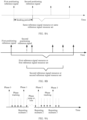
- the first phase information and the second phase information may be phase information separately obtained by the first communication apparatus through measurement at two different moments.
- the first phase information is obtained by the first communication apparatus by measuring the at least one first positioning reference signal at a moment 1.
- the second phase information is obtained by the first communication apparatus by measuring the at least one second positioning reference signal at a moment 2.
- the first phase information and the second phase information are separately obtained by the first communication apparatus by measuring positioning reference signals that are of the at least one second communication apparatus and that are received at two different moments.
- the first communication apparatus receives at least one first positioning reference signal at a moment 1, and measures the at least one first positioning reference signal to obtain the first phase information.
- the second communication apparatus receives the at least one second positioning reference signal at a moment 2, and measures the at least one second positioning reference signal to obtain the second phase information.
- the first phase information is sent by the first communication apparatus to the second communication apparatus at a first moment.
- the second phase information is sent by the first communication apparatus to the third communication apparatus at a second moment.
- the first moment is one or more moments before the second moment.
- the first phase information is phase information reported by the first communication apparatus to the third communication apparatus at a moment before the first moment.
- the following describes some possible implementations in which the first communication apparatus obtains the second phase information based on the at least one second phase.
- the at least one second communication apparatus sends at least one second positioning reference signal at a moment 2.
- the second phase information includes a phase difference between a second phase obtained by the first communication apparatus by measuring a second positioning reference signal sent by the reference communication apparatus at the moment 2 and a second phase obtained by measuring a first positioning reference signal sent by the at least one measurement communication apparatus at the moment 2.
- the at least one measurement communication apparatus includes N measurement communication apparatuses, where N is an integer greater than or equal to 1.
- the second phase information includes N fourth phase differences.
- the first communication apparatus determines the N fourth phase differences based on the at least one second phase.
- An i th fourth phase difference in the N fourth phase differences is a phase difference between the second phase obtained by the first communication apparatus by measuring the second positioning reference signal sent by the reference communication apparatus at the moment 2 and a second phase obtained by the first communication apparatus by measuring a second positioning reference signal sent by an i th measurement communication apparatus in the N measurement communication apparatuses at the moment 2.
- i is an integer greater than or equal to 1 and less than or equal to N.
- a reference network device is a TRP 1
- the N measurement network devices include a TRP 2, a TRP 3, and a TRP 4.
- the N second phase differences include ⁇ 21 ( t 10 ), ⁇ 31 ( t 10 ). and ⁇ 41 ( t 10 ) .
- ⁇ 21 ( t 10 ) is a phase difference between a second phase obtained by the terminal device by measuring a second positioning reference signal sent by the TRP 2 at the moment 2 and a second phase obtained by the terminal device by measuring a second positioning reference signal sent by the TRP 1 at the moment 2.
- ⁇ 31 ( t 10 ) is a phase difference between a second phase obtained by the terminal device by measuring a second positioning reference signal sent by the TRP 3 at the moment 2 and the second phase obtained by the terminal device by measuring the second positioning reference signal sent by the TRP 1 at the moment 2.
- ⁇ 41 ( t 10 ) is a phase difference between a second phase obtained by the terminal device by measuring a second positioning reference signal sent by the TRP 4 at the moment 2 and the second phase obtained by the terminal device by measuring the second positioning reference signal sent by the TRP 1 at the moment 2.
- the at least one second communication apparatus sends the at least one second positioning reference signal to the first communication apparatus at a plurality of moments.
- the second phase information includes: at least one third cumulative phase difference; or at least one third cumulative phase difference rate.
- the at least one third cumulative phase difference includes a cumulative amount, in terms of time, of a phase difference between a second phase obtained by the first communication apparatus by measuring a second positioning reference signal sent by the reference communication apparatus and a second phase obtained by the first communication apparatus by measuring a second positioning reference signal sent by the at least one measurement communication apparatus.
- the at least one third cumulative phase difference rate includes a cumulative amount, in terms of unit time, of a phase difference between a second phase obtained by the first communication apparatus by measuring a second positioning reference signal sent by the reference communication apparatus and a second phase obtained by the first communication apparatus by measuring a second positioning reference signal sent by the at least one measurement communication apparatus.
- the at least one measurement communication apparatus includes N measurement communication apparatuses, where N is an integer greater than or equal to 1.
- the second phase information includes N third cumulative phase differences.
- An i th third cumulative phase difference in the N third cumulative phase differences is a difference between an i th fifth phase difference in N fifth phase differences and an i th sixth phase difference in N sixth phase differences.
- the i th third cumulative phase difference indicates a cumulative amount, in terms of time, of a phase difference between the second phase obtained by the first communication apparatus by measuring the second positioning reference signal sent by the reference communication apparatus and a second phase obtained by the first communication apparatus by measuring a second positioning reference signal sent by an i th measurement communication apparatus.
- the i th fifth phase difference in the N fifth phase differences is a phase difference between a second phase obtained by the first communication apparatus by measuring a second positioning reference signal sent by the reference communication apparatus at a moment 3 and a second phase obtained by the first communication apparatus by measuring a second positioning reference signal sent by the i th measurement communication apparatus in the N measurement communication apparatuses at the moment 3.
- the i th sixth phase difference in the N sixth phase differences is a phase difference between a second phase obtained by the first communication apparatus by measuring a second positioning reference signal sent by the reference communication apparatus at a moment 4 and a second phase obtained by the first communication apparatus by measuring a second positioning reference signal sent by the i th measurement communication apparatus in the N measurement communication apparatuses at the moment 4.
- the at least one measurement communication apparatus includes N measurement communication apparatuses, where N is an integer greater than or equal to 1.
- the first phase information includes N third cumulative phase difference rates.
- An i th third cumulative phase difference rate in the N third cumulative phase difference rates is equal to the i th third cumulative phase difference in the N third cumulative phase differences divided by a time interval between the moment 3 and the moment 4.
- the at least one second communication apparatus includes one or more second communication apparatuses.
- the following uses one of the second communication apparatuses as an example to describe the second phase information. The same is applied to another second communication apparatus.
- the second communication apparatus sends the second positioning reference signal to the first communication apparatus at a plurality of moments.
- the second phase information includes a phase difference between second phases obtained by the first communication apparatus by measuring second positioning reference signals sent by the second communication apparatus at a plurality of moments; or the second phase information includes at least one fourth cumulative phase difference; or the second phase information includes at least one fourth cumulative phase difference rate.
- the at least one fourth cumulative phase difference includes a cumulative amount, in terms of time, of a phase difference between second phases obtained by the first communication apparatus by measuring second positioning reference signals sent by the second communication apparatus at different moments.
- the at least one fourth cumulative phase difference rate includes: a cumulative amount, in terms of unit time, of a phase difference between second phases obtained by the first communication apparatus by measuring second positioning reference signals sent by the second communication apparatus at different moments.
- the second phase information includes P seventh phase differences.
- An i th seventh phase difference in the P seventh phase differences is a phase difference between a second phase obtained by the first communication apparatus by measuring a second positioning reference signal sent by the second communication apparatus at an (i+1) th moment and a second phase obtained by the first communication apparatus by measuring a second positioning reference signal sent by the second communication apparatus at an i th moment.
- i is greater than or equal to 1 and less than or equal to P-1
- P is equal to a quantity of moments included in the plurality of moments minus one.
- the second phase information includes M fourth cumulative phase differences or M fourth cumulative phase difference rates.
- a (b+1) th fourth cumulative phase difference in the M fourth cumulative phase differences is a difference between a (b+2) th seventh phase difference in the P seventh phase differences and a (b+1) th seventh phase difference in the P seventh phase differences.
- a (b+1) th fourth cumulative phase difference rate in the M fourth cumulative phase difference rates is equal to the (b+1) th fourth cumulative phase difference divided by a time interval between a (b+2) th moment and a b th moment.
- b is an integer greater than or equal to 1 and less than or equal to P
- M is greater than or equal to 1 and less than or equal to P-1.
- the (b+2) th seventh phase difference is a phase difference between a second phase obtained by the first communication apparatus by measuring a second positioning reference signal sent by the second communication apparatus at the (b+2) th moment and a second phase obtained by the first communication apparatus by measuring a second positioning reference signal sent by the second communication apparatus at a (b+1) th moment.
- the (b+1) th seventh phase difference is a phase difference between a second phase obtained by the first communication apparatus by measuring the second positioning reference signal sent by the second communication apparatus at the (b+1) th moment and a second phase obtained by the first communication apparatus by measuring a second positioning reference signal sent by the second communication apparatus at the b th moment.
- the first communication apparatus sends first information to the third communication apparatus.
- the third communication apparatus receives the first information from the first communication apparatus.
- the first information is information about phase correlation between the first phase information and the second phase information.
- the information about phase correlation between the first phase information and the second phase information specifically includes: whether a phase jump, a phase loss, a phase jitter, or the like occurs in a time interval between a moment at which the first communication apparatus measures the at least one first positioning reference signal and a moment at which the first communication apparatus measures the at least one second positioning reference signal.
- the first phase information and the second phase information are not correlated. In other words, the first communication apparatus cannot continuously track a phase by using the at least one first positioning reference signal and the at least one second positioning reference signal. If the phase jump, the phase loss, or the phase jitter does not occur during measurement on the first communication apparatus in the time interval, the first phase information and the second phase information are correlated. In other words, the first communication apparatus continuously tracks a phase by using the at least one first positioning reference signal and the at least one second positioning reference signal.
- the terminal device selects the receive antenna 1 to perform phase measurement. Because a location of the receive antenna 1 and a location of the receive antenna 2 are different, a phase jump caused by different locations of the receive antennas is introduced when the terminal device switches the receive antenna. For this case, if the first communication apparatus does not indicate the first information to the third communication apparatus, the third communication apparatus considers that a phase change caused by the different locations of the receive antennas is caused by motion of the terminal device, thereby reducing positioning accuracy. Therefore, in this application, when receive antenna switching occurs on the first communication apparatus in the time interval, the first communication apparatus may consider that the first phase information and the second phase information are not correlated. The first communication apparatus may send the first information to the third communication apparatus, thereby improving positioning accuracy.
- the first communication apparatus may consider that the first phase information and the second phase information are not correlated.
- the first communication apparatus may indicate, to the third communication apparatus, that the first phase information and the second phase information are not correlated, thereby improving positioning accuracy.
- a cause why the first phase information and the second phase information are not correlated is that a phase error introduced by the radio frequency link and/or the transmit antenna used by the first communication apparatus to receive the at least one first positioning reference signal is inconsistent with a phase error introduced by the radio frequency link and/or the transmit antenna used by the first communication apparatus to receive the at least one second positioning reference signal.
- a phase error group phase error group, PEG
- the phase error is not compensable.
- a receive beam used by the first communication apparatus to receive the at least one first positioning reference signal is inconsistent with a receive beam used by the first communication apparatus to receive the at least one second positioning reference signal.
- the terminal device may receive, at a moment 2 via the receive beam 2, the at least one second positioning reference signal sent by the base station, and perform phase measurement.
- a phase center at which the terminal device performs phase measurement also has a directional offset, and consequently, a phase obtained through measurement also has a corresponding phase deviation.
- the phase deviation is related to an azimuth between the base station and the terminal device.
- a plurality of receive antennas of the terminal device are located at different locations.
- an equivalent phase center of the terminal device is a phase reference point.
- the phase reference point is a location of a first receive antenna on an antenna panel of the terminal device.
- the third communication apparatus considers that a phase change caused by receive beam switching is caused by motion of the terminal device, thereby reducing positioning accuracy. Therefore, in this application, when the receive beam used by the first communication apparatus to receive the at least one first positioning reference signal is inconsistent with the receive beam used by the first communication apparatus to receive the at least one second positioning reference signal, the first communication apparatus may consider that the first phase information and the second phase information are not correlated. The first communication apparatus may indicate, to the third communication apparatus, that the first phase information and the second phase information are not correlated, thereby improving positioning accuracy.
- the first communication apparatus may consider that the first phase information and the second phase information are correlated, and the first communication apparatus may indicate, to the third communication apparatus, that the first phase information and the second phase information are correlated.
- a phase measurement failure occurs in a process in which the first communication apparatus measures the at least one second positioning reference signal.
- the first communication apparatus may consider that the first phase information and the second phase information are not correlated.
- the first communication apparatus may indicate, to the third communication apparatus, that the first phase information and the second phase information are not correlated, thereby improving positioning accuracy.
- correlation may also be referred to as consistency or continuity.
- the following related descriptions may be replaced with each other. This is not specifically limited in this application.
- first indication information when a value of the first indication information is "1", it indicates that the first phase information and the second phase information are correlated. When a value of the first indication information is "0", it indicates that the first phase information and the second phase information are not correlated.
- first indication information when a value of the first indication information is "true (true)", it indicates that the first phase information and the second phase information are correlated.
- a value of the first indication information is "false (false)"
- first indication information when a value of the first indication information is "yes”, it indicates that the first phase information and the second phase information are correlated. When a value of the first indication information is "no", it indicates that the first phase information and the second phase information are not correlated.
- the first information is information about a second label correlated with the second phase information. If the second label correlated with the second phase information is the same as a first label correlated with the first phase information, it indicates that the first phase information and the second phase information are correlated; or if the second label correlated with the second phase information is different from the first label correlated with the first phase information, it indicates that the first phase information and the second phase information are not correlated.
- the third communication apparatus determines correlation between the first phase information and the second phase information by using the time label correlated with the first phase information and the time label correlated with the second phase information.
- the first label is a first angle label correlated with the first phase information
- the second label is a second angle label correlated with the second phase information.
- the first label is a first beam label correlated with the first phase information
- the second label is a second beam label correlated with the second phase information.
- the first angle label identifies an angle of arrival at which the at least one first positioning reference signal arrives at the first communication apparatus
- the second angle label identifies an angle of arrival at which the at least one second positioning reference signal arrives at the first communication apparatus
- Each angle label corresponds to a range of an angle of arrival.
- Each beam label corresponds to a direction range of a receive beam.
- the angle of arrival at which the at least one first positioning reference signal arrives at the first communication apparatus is approximately considered to be the same as the angle of arrival at which the at least one second positioning reference signal arrives at the first communication apparatus.
- the first phase information and the second phase information are correlated.
- Table 1 shows a correspondence between an angle label and an angle of arrival.
- a range of an angle of arrival corresponding to an angle label 1 is 10° to 20°.
- a range of an angle of arrival corresponding to an angle label 2 is 20° to 30°.
- Table 1 Angle label Angle of arrival Angle label 1 10° to 20° Angle label 2 20° to 30°
- Angle label 3 30° to 40°
- the third communication apparatus may perform phase deviation compensation on the first phase information based on an angle of arrival corresponding to the first angle label.
- the third communication apparatus may perform phase deviation compensation on the second phase information based on an angle of arrival corresponding to the second angle label.
- each angle label corresponds to one phase deviation. If different pieces of phase information are correlated with a same angle label, it indicates that the pieces of phase information are correlated.
- Table 2 shows a correspondence between an angle label and a phase deviation.
- Table 2 Angle label Phase deviation corresponding to the angle label Angle label 1 First phase deviation Angle label 2 Second phase deviation Angle label 3 Third phase deviation
- the third communication apparatus may compensate for the first phase information based on a phase deviation corresponding to the first angle label.
- the third communication apparatus may compensate for the second phase information based on a phase deviation corresponding to the second angle label.
- the first beam label identifies a receive beam used by the first communication apparatus to receive the at least one first positioning reference signal.
- the second beam label identifies a receive beam used by the first communication apparatus to receive the at least one second positioning reference signal.
- a direction of the receive beam used by the first communication apparatus to receive the at least one first positioning reference signal may be approximately considered to be the same as a direction of the receive beam used by the first communication apparatus to receive the at least one second positioning reference signal.
- the first phase information and the second phase information are correlated.
- Table 3 shows a correspondence between a beam label and a direction of a receive beam.
- a range of an angle of arrival corresponding to a beam label 1 is 10° to 20°.
- a range of an angle of arrival corresponding to a beam label 2 is 20° to 30°.
- Table 3 Beam label Direction of a receive beam Beam label 1 10° to 20° Beam label 2 20° to 30° Beam label 3 30° to 40°
- the first communication apparatus may report the first angle label and the second angle label.
- the first communication apparatus may report the first beam label and the second beam label.
- the first information includes information about an angle of arrival at which the at least one second positioning reference signal arrives at the first communication apparatus, or beam information of a receive beam used by the first communication apparatus to receive the at least one second positioning reference signal.
- the beam information includes at least one of the following: a beam direction and an index of the receive beam.
- the third communication apparatus may obtain information about an angle of arrival at which the at least one first positioning reference signal arrives at the first communication apparatus.
- the third communication apparatus obtains beam information of a receive beam used by the first communication apparatus to receive the at least one second positioning reference signal.
- the third communication apparatus may determine, based on the information about the angle of arrival at which the at least one second positioning reference signal arrives at the first communication apparatus and the information about the angle of arrival at which the at least one first positioning reference signal arrives at the first communication apparatus, whether the first phase information and the second phase information are correlated.
- the first information includes consistency assistance information
- the consistency assistance information assists the third communication apparatus in determining correlation between the first phase information and the second phase information.
- the consistency assistance information may be the information about the angle of arrival, the beam information, or other information used for assisting the third communication apparatus in determining correlation between the first phase information and the second phase information. This is not specifically limited in this application.
- the third communication apparatus obtains a direction 1 of the receive beam used by the first communication apparatus to receive the at least one first positioning reference signal and a direction 2 of the receive beam used by the first communication apparatus to receive the at least one second positioning reference signal. If the direction 1 is the same as the direction 2 or an angle difference between the direction 1 and the direction 2 is less than or equal to a specific threshold, it indicates that the first phase information and the second phase information are correlated. If the angle difference between the direction 1 and the direction 2 is greater than the specific threshold, it indicates that the first phase information and the second phase information are not correlated.
- the first information includes third cause information.
- the third cause information indicates whether the first phase information and the second phase information are correlated.
- the third cause information includes information indicating that radio frequency shutdown or hardware restart occurs on the first communication apparatus, it indicates that the first phase information and the second phase information are correlated. If the third cause information includes information indicating that radio frequency shutdown or hardware restart does not occur on the first communication apparatus, it indicates that the first phase information and the second phase information are not correlated.
- the third cause information includes information about whether receive antenna switching occurs on the first communication apparatus.
- the third cause information includes information indicating that receive antenna switching occurs on the first communication apparatus, it indicates that the first phase information and the second phase information are correlated. If the third cause information includes information indicating that receive antenna switching does not occur on the first communication apparatus, it indicates that the first phase information and the second phase information are not correlated.
- the third cause information includes information about whether receive beam switching occurs on the first communication apparatus.
- the third cause information includes information indicating that receive beam switching occurs on the first communication apparatus, it indicates that the first phase information and the second phase information are correlated. If the third cause information includes information indicating that receive beam switching does not occur on the first communication apparatus, it indicates that the first phase information and the second phase information are not correlated.
- the third cause information includes information about whether a measurement failure occurs on the first communication apparatus.
- the third cause information includes information indicating that the measurement failure occurs on the first communication apparatus, it indicates that the first phase information and the second phase information are correlated. If the third cause information includes information indicating that the measurement failure does not occur on the first communication apparatus, it indicates that the first phase information and the second phase information are not correlated.
- the third communication apparatus positions the first communication apparatus based on the first phase information, the second phase information, and the first information.
- the third communication apparatus positions the at least one second communication apparatus based on the first phase information, the second phase information, and the first information.
- the third communication apparatus positions the first communication apparatus based on the first phase information, the second phase information, the first information, and the second information.
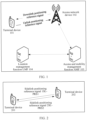
- the first communication apparatus is a terminal device
- the at least one second communication apparatus is at least one access network device.
- the third communication apparatus determines, based on the first information, whether the first phase information and the second phase information are correlated. If the first phase information and the second phase information are correlated, the third communication apparatus may position the first communication apparatus based on both the first phase information and the second phase information. If the first phase information and the second phase information are not correlated, the third communication apparatus may position the first communication apparatus based on the first phase information only, and/or the third communication apparatus positions the first communication apparatus based on the second phase information only.
- the first information includes information about an angle of arrival at which the at least one second positioning reference signal arrives at the first communication apparatus, or beam index or direction information of a receive beam used by the first communication apparatus to receive the at least one second positioning reference signal.
- the third communication apparatus may further perform phase deviation compensation on the second phase information based on the first information.
- the third communication apparatus positions the at least one second communication apparatus based on the first phase information, the second phase information, and the first information.
- the at least one second communication apparatus is a terminal device, and the first communication apparatus is a base station.
- the third communication apparatus determines, based on the first information, whether the first phase information and the second phase information are correlated. If the first phase information and the second phase information are correlated, the third communication apparatus may position the at least one second communication apparatus based on both the first phase information and the second phase information. If the first phase information and the second phase information are not correlated, the third communication apparatus may position the at least one second communication apparatus based on the first phase information only, and/or the third communication apparatus positions the at least one second communication apparatus based on the second phase information only.
- step 607a may be performed after step 607.
- the first communication apparatus sends first cause information to the third communication apparatus.
- the third communication apparatus receives the first cause information from the first communication apparatus.
- the first cause information indicates a cause why the first phase information and the second phase information are not correlated.
- the first cause information includes at least one of the following: first radio frequency link information, first antenna switching information, first beam switching information, or measurement failure information.
- the following describes some possible content included in the first cause information.
- the first antenna switching information includes information indicating that a receive antenna used by the first communication apparatus to receive the at least one first positioning reference signal is inconsistent with a receive antenna used by the first communication apparatus to receive the at least one second positioning reference signal.
- the first beam switching information includes information indicating that the receive beam used by the first communication apparatus to receive the at least one first positioning reference signal is inconsistent with the receive beam used by the first communication apparatus to receive the at least one second positioning reference signal.
- the measurement failure information includes information about a phase measurement failure that occurs in a process in which the first communication apparatus measures the at least one second positioning reference signal.
- the first communication apparatus may simultaneously report information in step 606, step 607, and step 607a, or may separately report information in step 606, step 607, and step 607a. This is not specifically limited in this application.
- the first communication apparatus may first perform step 606, then perform step 607, and finally perform step 607a; or first perform step 606, then perform step 607a, and then perform step 607. This is not specifically limited in this application.
- the first cause information is described by using an example in which the first phase information and the second phase information are not correlated.
- the first communication apparatus may also provide corresponding cause information for the third communication apparatus. This is not specifically limited in this application.
- step 608 specifically includes: The third communication apparatus positions the first communication apparatus based on the first phase information, the second phase information, the first information, and the first cause information.
- the third communication apparatus determines, based on the first information, that the first phase information and the second phase information are not correlated.
- the third communication apparatus determines, based on the first cause information, a cause why the first phase information and the second phase information are not correlated.
- the first cause information includes first beam switching information.
- the first beam switching information includes information indicating that the receive beam used by the first communication apparatus to receive the at least one first positioning reference signal is inconsistent with the receive beam used by the first communication apparatus to receive the at least one second positioning reference signal.
- the first information includes beam index or direction information of the receive beam of the at least one second positioning reference signal.
- the third communication apparatus performs phase deviation compensation on the second phase information based on the beam index or direction information of the receive beam of the at least one second positioning reference signal. Then, the third communication apparatus may position the first communication apparatus based on the second phase information only.
- the first communication apparatus is a terminal device
- the at least one second communication apparatus is a base station.
- N is a quantity of receive antennas of the terminal device
- ⁇ is a phase of a first receive antenna of the terminal device
- ⁇ is a direction angle of the receive beam used by the terminal device to receive the at least one second positioning reference signal.
- ⁇ is an incident angle of the at least one second positioning reference signal.
- ⁇ ⁇ N ⁇ 2 + N ⁇ 2 is a phase reported by the terminal device.
- ⁇ ⁇ N ⁇ 2 is a phase of a reference location of an antenna panel, and N ⁇ 2 may be understood as a phase change introduced by the receive beam.
- the third communication apparatus may compensate, by using the direction angle of the receive beam of the at least one second positioning reference signal, for the phase change that is introduced by the receive beam and that is in the phase ⁇ ⁇ N ⁇ 2 + N ⁇ 2 reported by the terminal device.
- step 604a may be performed after step 604.
- the at least one second communication apparatus sends second information to the third communication apparatus.
- the third communication apparatus receives the second information from the at least one second communication apparatus.
- the second information indicates information about correlation between a transmit phase of the at least one positioning reference signal and a transmit phase of the at least one second positioning reference signal.
- the transmit phase of the at least one positioning reference signal is an actual transmit phase at which the at least one second communication apparatus sends the at least one first positioning reference signal.
- the transmit phase of the at least one second positioning reference signal is an actual transmit phase at which the at least one second communication apparatus sends the at least one second positioning reference signal.
- the at least one second communication apparatus sends the at least one first positioning reference signal via a radio frequency link 1 and/or a transmit antenna 1.
- an ideal transmit phase of the at least one first positioning reference signal is ⁇ 1 .
- the phase error is caused when the at least one second communication apparatus sends the at least one first positioning reference signal via the radio frequency link 1 and/or the transmit antenna 1, the actual transmit phase of the at least one first positioning reference signal is ⁇ 1 '.
- the at least one second communication apparatus sends the at least one second positioning reference signal via a radio frequency link 2 and/or a transmit antenna 2.
- an ideal transmit phase of the at least one second positioning reference signal is ⁇ 2 .
- the phase error is caused when the at least one second communication apparatus sends the at least one second positioning reference signal via the radio frequency link 2 and/or the transmit antenna 2
- the actual transmit phase of the at least one second positioning reference signal is ⁇ 2 '. If ⁇ 1 - ⁇ 1 ' is equal to ⁇ 2 - ⁇ 2 ', or a difference between ⁇ 1 - ⁇ 1 ' and ⁇ 2 - ⁇ 2 ' is less than a specific threshold, the transmit phase of the at least one positioning reference signal and the transmit phase of the at least one second positioning reference signal are correlated.
- the difference indicates information about correlation between the phase error introduced by the radio frequency link and/or the transmit antenna used by the first communication apparatus to send the at least one first positioning reference signal and the phase error introduced by the radio frequency link and/or the transmit antenna used by the first communication apparatus to send the at least one second positioning reference signal.
- the at least one second communication apparatus may report the second information, so that the third communication apparatus determines whether the transmit phase of the at least one first positioning reference signal sent by the at least one second communication apparatus and the transmit phase of the at least one second positioning reference signal sent by the at least one second communication apparatus are correlated.
- the at least one second communication apparatus is a terminal device, and the first communication apparatus is a base station.
- the terminal device is equipped with a plurality of transmit antennas, and an appropriate transmit antenna is selected at different moments based on a location relationship between the base station and the terminal device to send a positioning reference signal to the base station.
- the terminal device sends at least one first positioning reference signal to the base station at a moment 1 via a transmit antenna 4.
- the terminal device switches to a transmit antenna 2, and sends at least one second positioning reference signal to the base station via the transmit antenna 2. It can be learned that, in a process in which the terminal device sends the at least one first positioning reference signal and the at least one second positioning reference signal, a phase jump or a phase loss occurs due to transmit antenna switching.
- phase jump the phase loss
- phase jitter the phase jitter in a process in which the at least one second communication apparatus sends the at least one first positioning reference signal and the at least one second positioning reference signal.
- a transmit antenna used by the at least one second communication apparatus to send the at least one first positioning reference signal is inconsistent with a transmit antenna used by the at least one second communication apparatus to send the at least one second positioning reference signal.
- the first communication apparatus is a base station
- the at least one second communication apparatus is a terminal device.
- the terminal device is equipped with four transmit antennas.
- the terminal device selects, as a location moves, an appropriate transmit antenna to send a positioning reference signal to the base station.
- the terminal device sends at least one first positioning reference signal to the base station via a transmit antenna 4.
- a location of the terminal device relative to the base station also changes.
- the terminal device sends at least one second positioning reference signal to the base station via a transmit antenna 2. Because a location of the transmit antenna 4 and a location of the transmit antenna 2 are different, a phase jump caused by different locations of the transmit antennas is introduced when the terminal device switches the transmit antenna. In this case, it may be understood as that a phase measured by the base station carries a phase deviation due to the location of the transmit antenna. Specifically, the base station side may perform corresponding compensation on the phase based on the location of the transmit antenna.
- a radio frequency initial phase of a radio frequency link used by the at least one second communication apparatus to send the at least one first positioning reference signal is inconsistent with a radio frequency initial phase of a radio frequency link used by the at least one second communication apparatus to send the at least one second positioning reference signal.
- the first communication apparatus is a base station
- the at least one second communication apparatus is a terminal device.
- the terminal device sends the at least one first positioning reference signal and the at least one second positioning reference signal via a same radio frequency link.
- radio frequency initial phases of the radio frequency link are different at different moments due to radio frequency shutdown or hardware restart, or radio frequency initial phases of the radio frequency link are different at different moments due to an external environment. Therefore, the radio frequency initial phase of the radio frequency link used by the at least one second communication apparatus to send the at least one first positioning reference signal is inconsistent with the radio frequency initial phase of the radio frequency link used by the at least one second communication apparatus to send the at least one second positioning reference signal.
- a phase jump is caused by the different radio frequency initial phases of the radio frequency link. In this case, it may be understood that a phase measured by the base station carries a phase error because the radio frequency initial phases of the radio frequency link are different.
- the at least one second communication apparatus may consider that the transmit phase of the at least one first positioning reference signal and the transmit phase of the at least one second positioning reference signal are not correlated.
- the first communication apparatus is a base station
- the at least one second communication apparatus is a terminal device.
- the terminal device fails to send the at least one second positioning reference signal.
- the base station cannot continuously trace a phase.
- the at least one second communication apparatus may consider that the transmit phase of the at least one first positioning reference signal and the transmit phase of the at least one second positioning reference signal are not correlated.
- a value of the second indication information when a value of the second indication information is "1", it indicates that the transmit phase of the at least one positioning reference signal and the transmit phase of the at least one second positioning reference signal are correlated.
- a value of the second indication information is "0", it indicates that the transmit phase of the at least one positioning reference signal and the transmit phase of the at least one second positioning reference signal are not correlated.
- a value of the second indication information is "true (true)"
- a value of the second indication information is "false (false)"
- a value of the second indication information is "yes”, it indicates that the transmit phase of the at least one positioning reference signal and the transmit phase of the at least one second positioning reference signal are correlated.
- a value of the second indication information is "no”, it indicates that the transmit phase of the at least one positioning reference signal and the transmit phase of the at least one second positioning reference signal are not correlated.
- the second information is fourth cause information.
- the fourth cause information indicates whether the transmit phase of the at least one positioning reference signal and the transmit phase of the at least one second positioning reference signal are correlated.
- the fourth cause information includes information indicating that radio frequency shutdown or hardware restart occurs on the at least one second communication apparatus, it indicates that the transmit phase of the at least one positioning reference signal and the transmit phase of the at least one second positioning reference signal are correlated. If the fourth cause information includes information indicating that radio frequency shutdown or hardware restart does not occur on the at least one second communication apparatus, it indicates that the transmit phase of the at least one positioning reference signal and the transmit phase of the at least one second positioning reference signal are not correlated.
- the fourth cause information includes information about whether transmit antenna switching occurs on the at least one second communication apparatus.
- the fourth cause information includes information indicating that transmit antenna switching occurs on the at least one second communication apparatus, it indicates that the transmit phase of the at least one positioning reference signal and the transmit phase of the at least one second positioning reference signal are correlated. If the fourth cause information includes information indicating that transmit antenna switching does not occur on the at least one second communication apparatus, it indicates that the transmit phase of the at least one positioning reference signal and the transmit phase of the at least one second positioning reference signal are not correlated.
- step 608 specifically includes: The third communication apparatus positions the first communication apparatus based on the first phase information, the second phase information, the first information, and the second information.
- the third communication apparatus positions the at least one second communication apparatus based on the first phase information, the second phase information, the first information, and the second information.
- the second information may include a resource identifier corresponding to the first positioning reference signal, a time label used by the at least second communication apparatus to send the at least one first positioning reference signal, and a time label used by the at least second communication apparatus to send the at least one second positioning reference signal.
- the third communication apparatus may determine the first phase information and the second phase information by using a resource label and the time label.
- the first phase information and the second phase information are phase information separately obtained by the first communication apparatus by measuring positioning reference signals with same resource labels.
- the third communication apparatus determines correlation between the first phase information and the second phase information based on the second information.
- the third communication apparatus determines, based on the first information and the second information, whether the first phase information and the second phase information are correlated. If the first phase information and the second phase information are correlated, the third communication apparatus may position the first communication apparatus based on both the first phase information and the second phase information. If the first phase information and the second phase information are not correlated, the third communication apparatus may position the first communication apparatus based on the first phase information only or the second phase information only.
- the third communication apparatus determines, based on the first information and the second information, whether the first phase information and the second phase information are correlated. If the first phase information and the second phase information are correlated, the third communication apparatus may position the at least one second communication apparatus based on both the first phase information and the second phase information. If the first phase information and the second phase information are not correlated, the third communication apparatus may position the at least one second communication apparatus based on the first phase information only or the second phase information only.
- step 604b may be performed after step 604.
- the at least one second communication apparatus sends second cause information to the third communication apparatus.
- the third communication apparatus receives the second cause information from the at least one second communication apparatus.
- the second cause information indicates a cause why the transmit phase of the at least one first positioning reference signal and the transmit phase of the at least one second positioning reference signal are not correlated.
- the second cause information includes at least one of the following: second antenna switching information, second radio frequency link information, or sending failure information.
- the second radio frequency link information includes information indicating that a radio frequency initial phase of a radio frequency link used by the second communication apparatus to send the at least one first positioning reference signal is inconsistent with a radio frequency initial phase of a radio frequency link used by the second communication apparatus to send the at least one second positioning reference signal.
- the sending failure information includes information indicating that the at least one second communication apparatus fails to send the at least one second positioning reference signal.
- the third communication apparatus determines, based on the first information, the second information, and the second cause information, that the first phase information and the second phase information are not correlated and a corresponding cause.
- the second cause information includes second antenna switching information. Therefore, the third communication apparatus may perform phase deviation compensation on the second phase information based on the location of the transmit antenna. Then, the third communication apparatus may position the first communication apparatus based on the second phase information only.
- the third communication apparatus may position the first communication apparatus based on the first phase information only or the second phase information only.
- the third communication apparatus determines, based on the first information and the second information, that the first phase information and the second phase information are correlated.
- the third communication apparatus may position the first communication apparatus based on both the first phase information and the second phase information, to improve positioning accuracy.
- the following describes, with reference to FIG. 7A , an example in which the third communication apparatus positions the first communication apparatus based on the first phase information only.
- the first communication apparatus is a terminal device, and the at least one second communication apparatus is a TRP 1, a TRP 2, a TRP 3, and a TRP 4.
- the first phase information includes P third phase differences, which are specifically ⁇ ⁇ 1 ( t 1 ,t 10 ), ⁇ ⁇ 2 ( t 10 ,t 20 ), ⁇ ⁇ 3 ( t 1 ,t 10 ), and ⁇ ⁇ 4 ( t 1 ,t 10 ) .
- ⁇ ⁇ 1 ( t 1 ,t 10 ) is a phase difference between a phase obtained by the terminal device by measuring a positioning reference signal sent by the TRP 1 at a moment 1 and a phase obtained by the terminal device by measuring a positioning reference signal sent by the TRP 1 at a moment 2.
- ⁇ ⁇ 2 ( t 1 ,t 10 ) is a phase difference between a phase obtained by the terminal device by measuring a positioning reference signal sent by the TRP 2 at the moment 1 and a phase obtained by the terminal device by measuring a positioning reference signal sent by the TRP 2 at the moment 2.
- ⁇ ⁇ 3 ( t 1 ,t 10 ) is a phase difference between a phase obtained by the terminal device by measuring a positioning reference signal sent by the TRP 3 at the moment 1 and a phase obtained by the terminal device by measuring a positioning reference signal sent by the TRP 3 at the moment 2.
- ⁇ ⁇ 4 ( t 1 ,t 10 ) is a phase difference between a phase obtained by the terminal device by measuring a positioning reference signal sent by the TRP 4 at the moment 1 and a phase obtained by the terminal device by measuring a positioning reference signal sent by the TRP 4 at the moment 2.
- the third communication apparatus obtains a distance difference ⁇ d 1 , a distance difference ⁇ d 2 , a distance difference ⁇ d 3 , and a distance difference ⁇ d 4 through calculation by using the four third phase differences reported by the terminal device.
- the distance difference ⁇ d 1 is a difference between a distance from the terminal device to the TRP 1 at the moment 1 and a distance from the terminal device to the TRP 1 at the moment 2.
- the distance difference ⁇ d 2 is a difference between a distance from the terminal device to the TRP 2 at the moment 1 and a distance from the terminal device to the TRP 2 at the moment 2.
- the distance difference ⁇ d 3 is a difference between a distance from the terminal device to the TRP 3 at the moment 1 and a distance from the terminal device to the TRP 3 at the moment 2.
- the distance difference ⁇ d 4 is a difference between a distance from the terminal device to the TRP 4 at the moment 1 and a distance from the terminal device to the TRP 4 at the moment 2.
- ⁇ d diff b x 1 y 1 x 2 y 2 indicates a difference between a distance from a location (x1, y1) of the terminal device at the moment 1 to a b th TRP and a distance from a location (x2, y2) of the terminal device at the moment 2 to the b th TRP.
- ⁇ b 2 indicates a fluctuation coefficient of the b th TRP, and the fluctuation coefficient is related to channel quality between the terminal device and the b th TRP.
- Better channel quality between the terminal device and the b th TRP indicates higher received signal energy of the b th TRP received by the terminal device and smaller ⁇ b 2 .
- ⁇ is a wavelength corresponding to a frequency of a carrier signal carrying a positioning reference signal of a TRP.
- ⁇ is a wavelength corresponding to a frequency of a carrier signal carrying a positioning reference signal of a TRP.
- the third communication apparatus may search for the location (x1, y1) of the terminal device at the moment 1 and the location (x2, y2) of the terminal device at the moment 2.
- the third communication apparatus substitutes the location (x1, y1) of the terminal device at the moment 1 and the location (x2, y2) of the terminal device at the moment 2 into ⁇ d diff b x 1 y 1 x 2 y 2 , to minimize the foregoing formula 6. Therefore, (x1, y1, x2, y2) is ( x ' 1, y 1 ',x 2 ', y 2 ') in the foregoing formula 6.
- the terminal device reports the P third phase differences, to eliminate the radio frequency initial phase error of the terminal device and the synchronization error between the terminal device and the TRP, so that the third communication apparatus determines the location of the terminal device at the moment 1 and the location of the terminal device at the moment 2 by using the P third phase differences reported by the terminal device. In this way, high-accuracy positioning on the terminal device is implemented.
- the following describes, with reference to FIG. 7B , an example in which the third communication apparatus positions the first communication apparatus based on both the first phase information and the second phase information.
- the first communication apparatus is a terminal device, and the at least one second communication apparatus is a TRP 1, a TRP 2, a TRP 3, and a TRP 4.
- the first phase information includes P third phase differences, which are specifically ⁇ ⁇ 1 ( t 1 , t 10 ) , ⁇ ⁇ 2 ( t 10 , t 20 ), ⁇ ⁇ 3 ( t 1 , t 10 ), and ⁇ ⁇ 4 ( t 1 , t 10 ).
- the second phase information includes P seventh phase differences, which are specifically ⁇ ⁇ 1 ( t 1 , t 20 ), ⁇ ⁇ 2 ( t 10 , t 20 ), ⁇ ⁇ 3 ( t 10 , t 20 ), and ⁇ ⁇ 4 ( t 1 , t 10 ) .
- ⁇ ⁇ 1 ( t 1 , t 10 ) is a phase difference between a phase obtained by the terminal device by measuring a positioning reference signal sent by the TRP 1 at a moment 1 and a phase obtained by the terminal device by measuring a positioning reference signal sent by the TRP 1 at a moment 2.
- ⁇ ⁇ 2 ( t 1 , t 10 ) is a phase difference between a phase obtained by the terminal device by measuring a positioning reference signal sent by the TRP 2 at the moment 1 and a phase obtained by the terminal device by measuring a positioning reference signal sent by the TRP 2 at the moment 2.
- ⁇ ⁇ 3 ( t 1 , t 10 ) is a phase difference between a phase obtained by the terminal device by measuring a positioning reference signal sent by the TRP 3 at the moment 1 and a phase obtained by the terminal device by measuring a positioning reference signal sent by the TRP 3 at the moment 2.
- ⁇ ⁇ 4 ( t 1 , t 10 ) is a phase difference between a phase obtained by the terminal device by measuring a positioning reference signal sent by the TRP 4 at the moment 1 and a phase obtained by the terminal device by measuring a positioning reference signal sent by the TRP 4 at the moment 2.
- ⁇ ⁇ 1 ( t 1 , t 10 ) is a phase difference between the phase obtained by the terminal device by measuring the positioning reference signal sent by the TRP 1 at the moment 2 and a phase obtained by the terminal device by measuring a positioning reference signal sent by the TRP 1 at a moment 3.
- ⁇ ⁇ 3 ( t 1 , t 20 ) is a phase difference between the phase obtained by the terminal device by measuring the positioning reference signal sent by the TRP 2 at the moment 2 and a phase obtained by the terminal device by measuring a positioning reference signal sent by the TRP 2 at a moment 3.
- ⁇ ⁇ 3 ( t 1 , t 10 ) is a phase difference between the phase obtained by the terminal device by measuring the positioning reference signal sent by the TRP 3 at the moment 2 and a phase obtained by the terminal device by measuring a positioning reference signal sent by the TRP 3 at a moment 3.
- ⁇ ⁇ 4 ( t 1 , t 10 ) is a phase difference between the phase obtained by the terminal device by measuring the positioning reference signal sent by the TRP 4 at the moment 2 and a phase obtained by the terminal device by measuring a positioning reference signal sent by the TRP 4 at a moment 3.
- the third communication apparatus may determine a second cumulative phase difference ⁇ ⁇ 1 , a second cumulative phase difference ⁇ ⁇ 2 , a second cumulative phase difference ⁇ ⁇ 3 , and a second cumulative phase difference ⁇ ⁇ 4 based on the first phase information and the second phase information.
- the third communication apparatus may determine the following equivalent distance change amount ⁇ d 1 , equivalent distance change amount ⁇ d 2 , equivalent distance change amount ⁇ d 3 , and equivalent distance change amount ⁇ d 4 based on the information reported by the terminal device.
- the equivalent distance change amount ⁇ d 1 is a difference between ⁇ d 1 and ⁇ d 5
- ⁇ d 5 is a difference between a distance from the terminal device to the TRP 1 at the moment 2 and a distance from the terminal device to the TRP 1 at the moment 3.
- ⁇ d 1 d 2 1 ⁇ d 1 1
- ⁇ d 5 d 3 1 ⁇ d 2 1 .
- the equivalent distance change amount ⁇ d 2 is a difference between ⁇ d 2 and ⁇ d 6
- ⁇ d 6 is a difference between a distance from the terminal device to the TRP 2 at the moment 2 and a distance from the terminal device to the TRP 2 at the moment 3.
- ⁇ d 2 d 2 2 ⁇ d 1 2
- ⁇ d 6 d 3 2 ⁇ d 2 2 .
- the equivalent distance change amount ⁇ d 3 is a difference between ⁇ d 3 and ⁇ d 7
- ⁇ d 7 is a difference between a distance from the terminal device to the TRP 3 at the moment 2 and a distance from the terminal device to the TRP 3 at the moment 3.
- ⁇ d 3 d 2 3 ⁇ d 1 3
- ⁇ d 7 d 3 3 ⁇ d 2 3 .
- the equivalent distance change amount ⁇ d 4 is a difference between ⁇ d 4 and ⁇ d 8
- ⁇ d 8 is a difference between a distance from the terminal device to the TRP 4 at the moment 2 and a distance from the terminal device to the TRP 4 at the moment 3.
- ⁇ d 4 d 2 4 ⁇ d 1 4
- ⁇ d 8 d 3 4 ⁇ d 2 4 .
- ⁇ d diff b x 1 y 1 x 2 y 2 indicates a difference between a distance from the terminal device to the b th TRP at the moment 1 and a distance from the terminal device to the b th TRP at the moment 2, the location of the terminal device at the moment 1 is (x1, y1), and the location of the terminal device at the moment 2 is (x2, y2).
- ⁇ b 2 refer to the foregoing related descriptions. Details are not described herein again.
- ⁇ is a wavelength corresponding to a frequency of a carrier signal carrying a positioning reference signal of a TRP.
- ⁇ is a wavelength corresponding to a frequency of a carrier signal carrying a positioning reference signal of a TRP.
- the third communication apparatus may search for the location (x1, y1) of the terminal device at the moment 1, the location (x2, y2) of the terminal device at the moment 2, and the location (x3, y3) of the terminal device at the moment 3.
- the third communication apparatus substitutes the location (x1, y1) of the terminal device at the moment 1, the location (x2, y2) of the terminal device at the moment 2, and the location (x3, y3) of the terminal device at the moment 3 into ⁇ d diff b x 2 y 2 x 3 y 3 and ⁇ d diff b x 1 y 1 x 2 y 2 , to minimize the foregoing formula 15.
- (x1, y1, x2, y2, x3, y3) is ( x ' 1 , y 1 ', x 2 ', y 2 ', x 3 ', y 3 ') in the foregoing formula 15.
- the terminal device reports the P third phase differences, to eliminate the radio frequency initial phase error of the terminal device and the synchronization error between the terminal device and the TRP, so that the third communication apparatus determines the location of the terminal device at the moment 1 and the location of the terminal device at the moment 2 by using the P third phase differences reported by the terminal device. In this way, high-accuracy positioning on the terminal device is implemented.
- the third communication apparatus positions the terminal device based on the P third phase differences and the P seventh phase differences that are provided by the terminal device.
- impact of the time drift error is eliminated through differentiation based on the phase difference.
- the phase difference can eliminate the radio frequency initial phase error of the terminal device and the synchronization error between the terminal device and the TRP.
- the second cumulative phase difference can further eliminate the impact of the time drift error.
- the third communication apparatus may implement high-accuracy positioning of the terminal device based on the at least one second cumulative phase difference.
- the first communication apparatus may feed back the first information to the third communication apparatus, so that the third communication apparatus determines correlation between the first phase information and the second phase information, thereby helping improve positioning accuracy.
- a phase needs to be tracked, and the tracked phase needs to be continuous, that is, pieces of phase information are correlated.
- the third communication apparatus may position the first communication apparatus or the at least one second communication apparatus based on both the first phase information and the second phase information.
- the third communication apparatus may position the first communication apparatus or the at least one second communication apparatus based on the first phase information only or the second phase information only. Therefore, the problem that positioning accuracy for positioning, by the third communication apparatus, the first communication apparatus or the at least one second communication apparatus is limited because correlation between the first phase information and the second phase information is difficult to be ensured due to the phase jump or the phase loss in the process in which the first communication apparatus tracks the phase is avoided.
- FIG. 11 is another diagram of an embodiment of a communication method according to an embodiment of this application.
- the communication method includes the following steps.
- At least one second communication apparatus sends at least one first positioning reference signal to a first communication apparatus.
- the first communication apparatus receives the at least one first positioning reference signal from the at least one second communication apparatus.
- the first communication apparatus measures the at least one first positioning reference signal to obtain at least one first phase.
- the first communication apparatus sends first phase information to a third communication apparatus.
- the third communication apparatus receives the first phase information from the first communication apparatus.
- the at least one second communication apparatus sends at least one second positioning reference signal to the first communication apparatus.
- the first communication apparatus receives the at least one second positioning reference signal from the at least one second communication apparatus.
- the at least one second communication apparatus sends second information to the third communication apparatus.
- the third communication apparatus receives the second information from the at least one second communication apparatus.
- Step 1101 to step 1105 are similar to step 601 to step 604a in the embodiment shown in FIG. 6 .
- Step 1101 to step 1105 are similar to step 601 to step 604a in the embodiment shown in FIG. 6 .
- Step 1101 to step 1105 are similar to step 601 to step 604a in the embodiment shown in FIG. 6 .
- Step 1101 to step 1105 are similar to step 601 to step 604a in the embodiment shown in FIG. 6 .
- Step 1101 to step 1105 are similar to step 601 to step 604a in the embodiment shown in FIG. 6 .
- Step 1101 to step 1105 are similar to step 601 to step 604a in the embodiment shown in FIG. 6 .
- step 1105a may be performed after step 1104.
- the at least one second communication apparatus sends second cause information to the third communication apparatus.
- the third communication apparatus receives the second cause information from the at least one second communication apparatus.
- Step 1105a is similar to step 604b in the embodiment shown in FIG. 6 .
- Step 1105a refers to related description of step 604b in the embodiment shown in FIG. 6 above. Details are not described herein again.
- the first communication apparatus measures the at least one second positioning reference signal to obtain at least one second phase.
- the first communication apparatus sends second phase information to the third communication apparatus.
- the third communication apparatus receives the second phase information from the first communication apparatus.
- Step 1106 to step 1107 are similar to step 605 to step 606 in the embodiment shown in FIG. 6 .
- Step 1106 to step 1107 are similar to step 605 to step 606 in the embodiment shown in FIG. 6 .
- Step 1106 to step 1107 are similar to step 605 to step 606 in the embodiment shown in FIG. 6 .
- Step 1106 to step 1107 are similar to step 605 to step 606 in the embodiment shown in FIG. 6 .
- Step 1106 to step 1107 are similar to step 605 to step 606 in the embodiment shown in FIG. 6 .
- the third communication apparatus positions the first communication apparatus or the at least one second communication apparatus based on the first phase information, the second phase information, and the second information.
- the third communication apparatus determines, based on the second information, that a transmit phase of the at least one first positioning reference signal and transmit phase of the at least one second positioning reference signal are not correlated.
- the third communication apparatus may determine that the first phase information obtained by the first communication apparatus by measuring the at least one first positioning reference signal and the second phase information obtained by the first communication apparatus by measuring the at least one second positioning reference signal are not correlated. Therefore, the third communication apparatus may position the first communication apparatus based on the first phase information only or the second phase information only. The same is applied to a case in which the at least one second communication apparatus is used as a positioning object. Details are not described herein.
- the third communication apparatus determines, based on the second information, that a transmit phase of the at least one first positioning reference signal and transmit phase of the at least one second positioning reference signal are correlated.
- the third communication apparatus may determine that the first phase information obtained by the first communication apparatus by measuring the at least one first positioning reference signal and the second phase information obtained by the first communication apparatus by measuring the at least one second positioning reference signal are correlated. Therefore, the third communication apparatus may position the first communication apparatus based on both the first phase information and the second phase information. The same is applied to a case in which the at least one second communication apparatus is used as a positioning object. Details are not described herein.
- step 1108a may be performed after step 1107.
- the first communication apparatus sends first information to the third communication apparatus.
- the third communication apparatus receives the first information from the first communication apparatus.
- Step 1108a is similar to step 607 in the embodiment shown in FIG. 6 .
- Step 1108a refers to related description of step 607 in the embodiment shown in FIG. 6 above.
- step 1108 specifically includes: The third communication apparatus positions the first communication apparatus or the at least one second communication apparatus based on the first phase information, the second phase information, the first information, and the second information.
- the third communication apparatus determines, based on the first information and the second information, that the first phase information and the second phase information are not correlated.
- the third communication apparatus may position the first communication apparatus based on the first phase information only or the second phase information only.
- the third communication apparatus may select a corresponding algorithm based on the case, and position the first communication apparatus based on the algorithm, the first phase information, and the second phase information.
- the third communication apparatus determines, based on the first information and the second information, that the first phase information and the second phase information are correlated.
- the third communication apparatus may position the first communication apparatus based on both the first phase information and the second phase information, to improve positioning accuracy.
- step 1108b may be performed after step 1107.
- the first communication apparatus sends first cause information to the third communication apparatus.
- the third communication apparatus receives the first cause information from the first communication apparatus.
- step 1108 specifically includes: The third communication apparatus positions the first communication apparatus or the at least one second communication apparatus based on the first phase information, the second phase information, the first information, the second information, and the first cause information.
- the third communication apparatus determines, based on the first information, the second information, and the first cause information, that the first phase information and the second phase information are not correlated and a corresponding cause.
- the third communication apparatus may position the first communication apparatus based on the first phase information only or the second phase information only.
- the first information includes information about an angle of arrival at which the at least one second positioning reference signal arrives at the first communication apparatus, and the third communication apparatus may perform phase deviation compensation on the second phase information based on the information about the angle of arrival. Then, the third communication apparatus positions the first communication apparatus based on the second phase information, to improve positioning accuracy.
- the at least one second communication apparatus sends the at least one first positioning reference signal to the first communication apparatus.
- the at least one second communication apparatus sends the at least one second positioning reference signal to the first communication apparatus.
- the at least one second communication apparatus sends the second information to the third communication apparatus, where the second information indicates information about correlation between the transmit phase of the at least one first positioning reference signal and the transmit phase of the at least one second positioning reference signal. It can be learned that the at least one second communication apparatus sends the second information to the third communication apparatus, so that the third communication apparatus determines correlation between the first phase information obtained by the first communication apparatus by measuring the at least one first positioning reference signal and the second phase information obtained by the first communication apparatus by measuring the at least one second positioning reference signal, thereby improving positioning accuracy.
- the third communication apparatus may position the first communication apparatus or the at least one second communication apparatus based on both the first phase information and the second phase information. For example, if the first phase information and the second phase information are not correlated, the third communication apparatus may position the first communication apparatus or the at least one second communication apparatus based on the first phase information only or the second phase information only.
- the problem that positioning accuracy for positioning, by the third communication apparatus, the first communication apparatus or the at least one second communication apparatus is limited because correlation between the first phase information and the second phase information is difficult to be ensured due to the phase jump or the phase loss in the process in which the first communication apparatus tracks the phase is avoided.
- FIG. 12 is a diagram of another embodiment of a communication method according to an embodiment of this application. With reference to FIG. 12 , the communication method includes the following steps.
- At least one second communication apparatus sends at least one first positioning reference signal to a first communication apparatus.
- the first communication apparatus receives the at least one first positioning reference signal from the at least one second communication apparatus.
- the first communication apparatus measures the at least one first positioning reference signal to obtain at least one first phase.
- the first communication apparatus sends first phase information to a third communication apparatus.
- the third communication apparatus receives the first phase information from the first communication apparatus.
- Step 1201 to step 1203 are similar to step 601 to step 603 in the embodiment shown in FIG. 6 .
- Step 1201 to step 1203 are similar to step 601 to step 603 in the embodiment shown in FIG. 6 .
- Step 1201 to step 1203 are similar to step 601 to step 603 in the embodiment shown in FIG. 6 .
- Step 1201 to step 1203 are similar to step 601 to step 603 in the embodiment shown in FIG. 6 .
- Step 1201 to step 1203 are similar to step 601 to step 603 in the embodiment shown in FIG. 6 .
- Step 1201 to step 1203 are similar to step 601 to step 603 in the embodiment shown in FIG. 6 .
- the first communication apparatus sends first information to the third communication apparatus.
- the third communication apparatus receives the first information from the first communication apparatus.
- the first information indicates whether the first phase information meets a first phase correlation condition.
- the first phase correlation condition is a condition of phase correlation between the first phase information and phase information that is about the at least one second communication apparatus and that is previously reported by the first communication apparatus to the third communication apparatus.
- phase correlation between the first phase information and the phase information that is about the at least one second communication apparatus and that is previously reported by the first communication apparatus to the third communication apparatus refer to the foregoing related description of correlation between the first phase information and the second phase information.
- first information indicates that the first phase information meets the first phase correlation condition, it may be understood that the first phase information and the phase information that is about the at least one second communication apparatus and that is previously reported by the first communication apparatus to the third communication apparatus are correlated. If the first information indicates that the first phase information does not meet the first phase correlation condition, it may be understood that the first phase information and the phase information that is about the at least one second communication apparatus and that is previously reported by the first communication apparatus to the third communication apparatus are not correlated.
- the first phase correlation condition may include at least one of the following:
- the first indication information when a value of the first indication information is "1", it indicates that the first phase information meets the first phase correlation condition. When a value of the first indication information is "0", it indicates that the first phase information does not meet the first phase correlation condition.
- first indication information when a value of the first indication information is "true (true)", it indicates that the first phase information meets the first phase correlation condition.
- a value of the first indication information is "false (false)"
- a value of the first indication information is "yes”, it indicates that the first phase information meets the first phase correlation condition.
- a value of the first indication information is "no", it indicates that the first phase information does not meet the first phase correlation condition.
- the first information is information about a first label correlated with the first phase information.
- the first label correlated with the first phase information is the same as a label that is correlated with the phase information that is about the at least one second communication apparatus and that is reported by the first communication apparatus, it indicates that the first phase information meets the first phase correlation condition. If the first label correlated with the first phase information is different from a label that is correlated with the phase information that is about the at least one second communication apparatus and that is reported by the first communication apparatus, it indicates that the first phase information does not meet the first phase correlation condition.
- the first information includes information about an angle of arrival at which the at least one first positioning reference signal arrives at the first communication apparatus, or beam information of a receive beam used by the first communication apparatus to receive the at least one first positioning reference signal.
- For the beam information of the receive beam used by the first communication apparatus to receive the at least one first positioning reference signal refer to the beam information of the receive beam used by the first communication apparatus to receive the at least one second positioning reference signal. For details, refer to the foregoing related descriptions.
- the first information includes third cause information, and the third cause information indicates whether the first phase information meets the first phase correlation condition.
- the third cause information includes information about whether radio frequency shutdown occurs on the first communication apparatus, or information about whether hardware restart occurs on the first communication apparatus. If yes, it indicates that the first phase information does not meet the first phase correlation condition; or if no, it indicates that the first phase information meets the first phase correlation condition.
- the third cause information includes information about whether receive antenna switching occurs on the first communication apparatus. If yes, it indicates that the first phase information does not meet the first phase correlation condition; or if no, it indicates that the first phase information meets the first phase correlation condition.
- the third cause information includes information about whether receive beam switching occurs on the first communication apparatus. If yes, it indicates that the first phase information does not meet the first phase correlation condition; or if no, it indicates that the first phase information meets the first phase correlation condition.
- the third cause information includes information about whether a measurement failure occurs on the first communication apparatus. If yes, it indicates that the first phase information does not meet the first phase correlation condition; or if no, it indicates that the first phase information meets the first phase correlation condition.
- the third cause information is similar to the third cause information in the embodiment shown in FIG. 6 .
- the third cause information is similar to the third cause information in the embodiment shown in FIG. 6 .
- step 1204a may be performed after step 1203.
- the first communication apparatus sends first cause information to the third communication apparatus.
- the third communication apparatus receives the first cause information from the first communication apparatus.
- the first cause information indicates a cause why the first phase information does not meet the first phase correlation condition.
- Step 1204a is similar to step 607a in the embodiment shown in FIG. 6 .
- Step 1204a refers to related description of step 607a in the embodiment shown in FIG. 6 above.
- the third communication apparatus positions the first communication apparatus or the at least one second communication apparatus based on the first phase information and the first information.
- the third communication apparatus determines, based on the first information, that the first phase information does not meet the first phase correlation condition. In this case, the third communication apparatus may position the first communication apparatus based on the first phase information only.
- the third communication apparatus determines, based on the first information, that the first phase information does not meet the first phase correlation condition. In this case, the third communication apparatus may position the first communication apparatus based on both the first phase information and the phase information that is about the at least one second communication apparatus and that is previously reported by the first communication apparatus.
- step 1205 specifically includes: The third communication apparatus positions the first communication apparatus or the at least one second communication apparatus based on the first phase information, the first information, and the first cause information.
- the third communication apparatus determines, based on the first information, that the first phase information and the phase information that is about the at least one second communication apparatus and that is previously reported by the first communication apparatus do not meet the first phase correlation condition.
- the third communication apparatus determines, based on the first cause information, a cause why the first phase information does not meet the first phase correlation condition.
- the receive beam used by the first communication apparatus to receive the at least one first positioning reference signal is inconsistent with the receive beam previously used by the first communication apparatus to receive the positioning reference signal from the at least one second communication apparatus.
- the first information includes beam index or direction information of the receive beam of the at least one first positioning reference signal.
- the third communication apparatus performs phase deviation compensation on the first phase information based on the beam index or direction information of the receive beam of the at least one first positioning reference signal. Then, the third communication apparatus may position the first communication apparatus based on the first phase information.
- step 1203a may be performed after step 1201.
- the at least one second communication apparatus sends second information to the third communication apparatus.
- the third communication apparatus receives the second information from the at least one second communication apparatus.
- the second information indicates whether a transmit phase of the at least one first positioning reference signal meets a second phase correlation condition.
- the second phase correlation condition is a condition of phase correlation between the transmit phase of the at least one first positioning reference signal and a transmit phase of a positioning reference signal sent by the at least one second communication apparatus to the first communication apparatus.
- Phase correlation between the transmit phase of the at least one first positioning reference signal and the transmit phase of the positioning reference signal sent by the at least one second communication apparatus to the first communication apparatus is similar to correlation between the transmit phase of the at least one first positioning reference signal and the transmit phase of the at least one second positioning reference signal.
- the second information indicates that the transmit phase of the at least one first positioning reference signal meets the second phase correlation condition, it may be understood that the transmit phase of the at least one first positioning reference signal and the transmit phase of the positioning reference signal sent by the at least one second communication apparatus to the first communication apparatus are correlated. If the second information indicates that the transmit phase of the at least one first positioning reference signal does not meet the second phase correlation condition, it may be understood that the transmit phase of the at least one first positioning reference signal and the transmit phase of the positioning reference signal sent by the at least one second communication apparatus to the first communication apparatus are not correlated.
- the second phase correlation condition may include at least one of the following:
- a value of the second indication information when a value of the second indication information is "1", it indicates that the transmit phase of the at least one first positioning reference signal meets the second phase correlation condition. When a value of the second indication information is "0", it indicates that the transmit phase of the at least one first positioning reference signal does not meet the second phase correlation condition.
- a value of the first indication information is "true (true)"
- a value of the first indication information is "false (false)"
- a value of the second indication information is "yes”, it indicates that the transmit phase of the at least one first positioning reference signal meets the second phase correlation condition.
- a value of the second indication information is "no”, it indicates that the transmit phase of the at least one first positioning reference signal does not meet the second phase correlation condition.
- the second information is fourth cause information, and the fourth cause information indicates whether the transmit phase of the at least one first positioning reference signal meets the second phase correlation condition.
- the fourth cause information includes information about whether radio frequency shutdown occurs on the at least one second communication apparatus. If yes, it indicates that the transmit phase of the at least one first positioning reference signal does not meet the second phase correlation condition; or if no, it indicates that the transmit phase of the at least one first positioning reference signal meets the second phase correlation condition.
- the fourth cause information includes information about whether hardware restart occurs on the at least one second communication apparatus. If yes, it indicates that the transmit phase of the at least one first positioning reference signal does not meet the second phase correlation condition; or if no, it indicates that the transmit phase of the at least one first positioning reference signal meets the second phase correlation condition.
- the fourth cause information includes information about whether transmit antenna switching occurs on the at least one second communication apparatus. If yes, it indicates that the transmit phase of the at least one first positioning reference signal does not meet the second phase correlation condition; or if no, it indicates that the transmit phase of the at least one first positioning reference signal meets the second phase correlation condition.
- the fourth cause information includes information about whether a measurement failure occurs on the at least one second communication apparatus. If yes, it indicates that the transmit phase of the at least one first positioning reference signal does not meet the second phase correlation condition; or if no, it indicates that the transmit phase of the at least one first positioning reference signal meets the second phase correlation condition.
- the fourth cause information is similar to the fourth cause information in the embodiment shown in FIG. 6 .
- the fourth cause information is similar to the fourth cause information in the embodiment shown in FIG. 6 .
- step 1205 specifically includes: The third communication apparatus positions the first communication apparatus or the at least one second communication apparatus based on the first phase information, the first information, and the second information.
- the third communication apparatus determines, based on the first information and the second information, that the first phase information and the phase information that is about the at least one second communication apparatus and that is previously reported by the first communication apparatus are not correlated.
- the third communication apparatus may position the first communication apparatus based on the first phase information only.
- the third communication apparatus determines, based on the first information and the second information, that the first phase information and the phase information that is about the at least one second communication apparatus and that is previously reported by the first communication apparatus are correlated.
- the third communication apparatus may position the first communication apparatus based on both the first phase information and the phase information that is about the at least one second communication apparatus and that is previously reported by the first communication apparatus.
- step 1203b may be performed after step 1201.
- the at least one second communication apparatus sends second cause information to the third communication apparatus.
- the third communication apparatus receives the second cause information from the at least one second communication apparatus.
- the second cause information indicates a cause why the transmit phase of the at least one first positioning reference signal does not meet the second phase correlation condition.
- the second cause information is similar to the second cause information in the embodiment shown in FIG. 6 .
- the at least one second communication apparatus may send both the second information and the second cause information, or may separately send the second information and the second cause information. This is not specifically limited in this application.
- the at least one second communication apparatus may first send the second information, and then send the second cause information; or the at least one second communication apparatus may first send the second cause information, and then send the second information. This is not specifically limited in this application.
- step 1205 specifically includes: The third communication apparatus positions the first communication apparatus based on the first phase information, the first information, the second information, and the second cause information. Alternatively, the third communication apparatus positions the at least one second communication apparatus based on the first phase information, the first information, the second information, and the second cause information.
- the third communication apparatus determines, based on the first information, the second information, and the second cause information, that the first phase information and the phase information that is about the at least one second communication apparatus and that is previously reported by the first communication apparatus are not correlated and a corresponding cause.
- the first information includes information about an angle of arrival at which the at least one first positioning reference signal arrives at the first communication apparatus, and the third communication apparatus may perform phase deviation compensation on the first phase information based on the information about the angle of arrival. Then, the third communication apparatus may position the first communication apparatus based on the first phase information.
- the first communication apparatus sends the first information to the third communication apparatus, where the first information indicates whether the first phase information meets the first phase correlation condition, so that the third communication apparatus determines phase correlation between the first phase information and the phase information that is about the at least one second communication apparatus and that is previously reported by the first communication apparatus, thereby helping improve positioning accuracy.
- a phase needs to be tracked, and the tracked phase needs to be continuous, that is, pieces of phase information are correlated.
- the third communication apparatus may position the first communication apparatus or the at least one second communication apparatus based on both the first phase information and the phase information that is previously reported by the first communication apparatus. For example, if the first phase information and the phase information that is previously reported by the first communication apparatus are not correlated, the third communication apparatus may position the first communication apparatus or the at least one second communication apparatus based on the first phase information only or the phase information that is previously reported by the first communication apparatus only.
- step 1203a is replaced with a mandatory step
- step 1205 is replaced with:
- the third communication apparatus positions the first communication apparatus or the at least one second communication apparatus based on the first phase information and the second information.
- Step 1204 is replaced with an optional step.
- step 1205 specifically includes: The third communication apparatus positions the first communication apparatus or the at least one second communication apparatus based on the first phase information, the second information, and the first information.
- FIG. 13 is a diagram of a structure of a communication apparatus according to an embodiment of this application.
- a communication apparatus 1300 includes a transceiver module 1301 and a processing module 1302.
- the transceiver module 1301 may implement a corresponding communication function, and the transceiver module 1301 may also be referred to as a communication interface or a communication unit.
- the processing module 1302 is configured to perform a processing operation.
- the communication apparatus 1300 may further include a storage module.
- the storage module may be configured to store instructions and/or data.
- the processing module 1302 may read the instructions and/or the data in the storage module, so that the communication apparatus implements the method embodiments shown in FIG. 6 , FIG. 11 , and FIG. 12 .
- the communication apparatus may be configured to perform the steps performed by the first communication apparatus in embodiments shown in FIG. 6 , FIG. 11 , and FIG. 12 .
- the steps performed by the first communication apparatus in embodiments shown in FIG. 6 , FIG. 11 , and FIG. 12 .
- the communication apparatus 1300 may be configured to perform the action performed by the first communication apparatus in the foregoing method embodiments.
- the communication apparatus 1300 may be the first communication apparatus or a part that may be disposed in the first communication apparatus.
- the transceiver module 1301 is configured to perform a receiving-related operation on the first communication apparatus side in the foregoing method embodiments
- the processing module 1302 is configured to perform a processing-related operation on the first communication apparatus side in the foregoing method embodiments.
- the transceiver module 1301 may include a sending module and a receiving module.
- the sending module is configured to perform the sending operation of the first communication apparatus in the foregoing method embodiments shown in FIG. 6 , FIG. 11 , and FIG. 12 .
- the receiving module is configured to perform the receiving operation of the first communication apparatus in the foregoing method embodiments shown in FIG. 6 , FIG. 11 , and FIG. 12 .
- the communication apparatus may be configured to perform the steps performed by the third communication apparatus in embodiments shown in FIG. 6 , FIG. 11 , and FIG. 12 .
- the communication apparatus may be configured to perform the steps performed by the third communication apparatus in embodiments shown in FIG. 6 , FIG. 11 , and FIG. 12 .
- the communication apparatus 1300 may be configured to perform the action performed by the third communication apparatus in the foregoing method embodiments.
- the communication apparatus 1300 may be the third communication apparatus or a part that may be disposed in the third communication apparatus.
- the transceiver module 1301 is configured to perform a receiving-related operation on the third communication apparatus side in the foregoing method embodiments
- the processing module 1302 is configured to perform a processing-related operation on the third communication apparatus side in the foregoing method embodiments.
- the transceiver module 1301 may include a sending module and a receiving module.
- the sending module is configured to perform the sending operation of the third communication apparatus in the foregoing method embodiments shown in FIG. 6 , FIG. 11 , and FIG. 12 .
- the receiving module is configured to perform the receiving operation of the third communication apparatus in the foregoing method embodiments shown in FIG. 6 , FIG. 11 , and FIG. 12 .
- the communication apparatus 1300 may include a sending module, but does not include a receiving module.
- the communication apparatus 1300 may include a receiving module, but does not include a sending module. This may be specifically determined depending on whether the foregoing solution performed by the communication apparatus 1300 includes a sending action and a receiving action.
- FIG. 14 is a diagram of a structure of a communication apparatus according to an embodiment of this application.
- the communication apparatus 1400 includes a transceiver module 1401.
- the communication apparatus 1400 further includes a processing module 1402.
- the transceiver module 1401 may implement a corresponding communication function, and the transceiver module 1401 may also be referred to as a communication interface or a communication unit.
- the processing module 1402 is configured to perform a processing operation.
- the communication apparatus 1400 may further include a storage module.
- the storage module may be configured to store instructions and/or data.
- the processing module 1402 may read the instructions and/or the data in the storage module, so that the communication apparatus implements the method embodiments shown in FIG. 6 , FIG. 11 , and FIG. 12 .
- the communication apparatus may be configured to perform the steps performed by the second communication apparatus in embodiments shown in FIG. 6 , FIG. 11 , and FIG. 12 .
- the communication apparatus may be configured to perform the steps performed by the second communication apparatus in embodiments shown in FIG. 6 , FIG. 11 , and FIG. 12 .
- FIG. 6 For details, refer to related descriptions in the foregoing method embodiments.
- the communication apparatus 1400 may be configured to perform the action performed by the second communication apparatus in the foregoing method embodiments.
- the communication apparatus 1400 may be the second communication apparatus or a part that may be disposed in the second communication apparatus.
- the transceiver module 1401 is configured to perform a receiving-related operation on the second communication apparatus side in the foregoing method embodiments
- the processing module 1402 is configured to perform a processing-related operation on the second communication apparatus side in the foregoing method embodiments.
- the transceiver module 1401 may include a sending module and a receiving module.
- the sending module is configured to perform the sending operation of the second communication apparatus in the foregoing method embodiments shown in FIG. 6 , FIG. 11 , and FIG. 12 .
- the receiving module is configured to perform the receiving operation of the second communication apparatus in the foregoing method embodiments shown in FIG. 6 , FIG. 11 , and FIG. 12 .
- the communication apparatus 1400 may include a sending module, but does not include a receiving module.
- the communication apparatus 1400 may include a receiving module, but does not include a sending module. This may be specifically determined depending on whether the foregoing solution performed by the communication apparatus 1400 includes a sending action and a receiving action.
- FIG. 15 is a simplified diagram of a structure of a terminal device.
- the terminal device includes a processor, a memory, a radio frequency circuit, an antenna, and an input/output apparatus.
- the processor is mainly configured to: process a communication protocol and communication data, control the terminal device, execute a software program, process data of the software program, and the like.
- the memory is mainly configured to store the software program and data.
- the radio frequency circuit is mainly configured to: perform conversion between a baseband signal and a radio frequency signal, and process the radio frequency signal.
- the antenna is mainly configured to receive and send a radio frequency signal in a form of an electromagnetic wave.
- the input/output apparatus such as a touchscreen, a display, or a keyboard, is mainly configured to: receive data input by a user and output data to the user.
- terminal devices may have no input/output apparatus.
- the processor When needing to send data, after performing baseband processing on the to-be-sent data, the processor outputs a baseband signal to the radio frequency circuit; and the radio frequency circuit performs radio frequency processing on the baseband signal and then sends the radio frequency signal to the outside in a form of an electromagnetic wave via the antenna.
- the radio frequency circuit receives the radio frequency signal via the antenna, converts the radio frequency signal into a baseband signal, and outputs the baseband signal to the processor.
- the processor converts the baseband signal into data, and processes the data.
- FIG. 15 shows only one memory and one processor.
- the memory may also be referred to as a storage medium, a storage device, or the like.
- the memory may be disposed independent of the processor, or may be integrated with the processor. This is not limited in embodiments of this application.
- the antenna and the radio frequency circuit that have receiving and sending functions may be considered as a transceiver unit of the terminal device, and the processor that has a processing function may be considered as a processing unit of the terminal device.
- the terminal device includes a transceiver unit 1510 and a processing unit 1520.
- the transceiver unit may also be referred to as a transceiver, a transceiver machine, a transceiver apparatus, or the like.
- the processing unit may also be referred to as a processor, a processing board, a processing module, a processing apparatus, or the like.
- a component configured to implement a receiving function in the transceiver unit 1510 may be considered as a receiving unit, and a component configured to implement a sending function in the transceiver unit 1510 may be considered as a sending unit.
- the transceiver unit 1510 includes the receiving unit and the sending unit.
- the transceiver unit sometimes may also be referred to as a transceiver machine, a transceiver, a transceiver circuit, or the like.
- the receiving unit sometimes may also be referred to as a receiver machine, a receiver, a receive circuit, or the like.
- the sending unit sometimes may also be referred to as a transmitter machine, a transmitter, a transmit circuit, or the like.
- transceiver unit 1510 is configured to perform a sending operation and a receiving operation of the first communication apparatus or the at least one second communication apparatus in the foregoing method embodiments
- processing unit 1520 is configured to perform an operation other than the receiving and sending operations of the first communication apparatus or the at least one second communication apparatus in the foregoing method embodiments.
- the chip When the terminal device is a chip, the chip includes a transceiver unit and a processing unit.
- the transceiver unit may be an input/output circuit or a communication interface.
- the processing unit is a processor, a microprocessor, an integrated circuit, or a logic circuit integrated on the chip.
- FIG. 16 is another diagram of a structure of a communication apparatus according to an embodiment of this application.
- the communication apparatus may be configured to perform the steps performed by at least one of the first communication apparatus, the second communication apparatus, or the third communication apparatus in embodiments shown in FIG. 6 , FIG. 11 , and FIG. 12 .
- FIG. 6 is another diagram of a structure of a communication apparatus according to an embodiment of this application.
- the communication apparatus may be configured to perform the steps performed by at least one of the first communication apparatus, the second communication apparatus, or the third communication apparatus in embodiments shown in FIG. 6 , FIG. 11 , and FIG. 12 .
- the communication apparatus includes a processor 1601.
- the communication apparatus further includes a memory 1602 and a transceiver 1603.
- the processor 1601, the memory 1602, and the transceiver 1603 are separately connected through a bus, and the memory stores computer instructions.
- the processing module 1402 in the foregoing embodiment may be specifically the processor 1601 in this embodiment. Therefore, a specific implementation of the processor 1601 is not described again.
- the transceiver module 1401 in the foregoing embodiment may be specifically the transceiver 1603 in this embodiment. Therefore, a specific implementation of the transceiver 1603 is not described again.
- the processing module 1302 in the foregoing embodiment may be specifically the processor 1601 in this embodiment. Therefore, a specific implementation of the processor 1601 is not described again.
- the transceiver module 1301 in the foregoing embodiment may be specifically the transceiver 1603 in this embodiment. Therefore, a specific implementation of the transceiver 1603 is not described again.
- An embodiment of this application further provides a communication system.
- the communication system includes a first communication apparatus and a third communication apparatus.
- the first communication apparatus is configured to perform all or some of the steps performed by the first communication apparatus in embodiments shown in FIG. 6 and FIG. 12 .
- the third communication apparatus is configured to perform all or some of the steps performed by the third communication apparatus in embodiments shown in FIG. 6 and FIG. 12 .
- the communication apparatus further includes at least one second communication apparatus.
- the at least one second communication apparatus is configured to perform all or some of the steps performed by the at least one second communication apparatus in embodiments shown in FIG. 6 and FIG. 12 .
- An embodiment of this application further provides a communication system.
- the communication system includes at least one second communication apparatus and a third communication apparatus.
- the at least one second communication apparatus is configured to perform all or some of the steps performed by the at least one second communication apparatus in the embodiment shown in FIG. 11 .
- the third communication apparatus is configured to perform all or some of the steps performed by the third communication apparatus in the embodiment shown in FIG. 11 .
- the communication system further includes a first communication apparatus, and the first communication apparatus is configured to perform all or some of the steps performed by the first communication apparatus in the embodiment shown in FIG. 11 .
- An embodiment of this application further provides a computer program product including instructions.
- the computer program product runs on a computer, the computer performs the communication methods in embodiments shown in FIG. 6 , FIG. 11 , and FIG. 12 .
- An embodiment of this application further provides a computer-readable storage medium, including computer instructions.
- the computer instructions When the computer instructions are run on a computer, the computer performs the methods in embodiments shown in FIG. 6 , FIG. 11 , and FIG. 12 .
- An embodiment of this application further provides a chip apparatus, including a processor, configured to: be connected to a memory, and invoke a program stored in the memory, for the processor to perform the methods in embodiments shown in FIG. 6 , FIG. 11 , and FIG. 12 .
- the processor mentioned anywhere above may be a general-purpose central processing unit, a microprocessor, an application-specific integrated circuit (application-specific integrated circuit, ASIC), or one or more integrated circuits configured to control program execution of the methods in embodiments shown in FIG. 6 , FIG. 11 , and FIG. 12 .
- the memory mentioned in any one of the foregoing may be a read-only memory (read-only memory, ROM), another type of static storage device that can store static information and instructions, a random access memory (random access memory, RAM), or the like.
- the disclosed system, apparatus, and method may be implemented in other manners.
- the described apparatus embodiment is merely an example.
- division into the units is merely logical function division and may be other division in actual implementation.
- a plurality of units or components may be combined or integrated into another system, or some features may be ignored or not performed.
- the displayed or discussed mutual couplings or direct couplings or communication connections may be implemented by using some interfaces.
- the indirect couplings or communication connections between the apparatuses or units may be implemented in electronic, mechanical, or other forms.
- the units described as separate parts may or may not be physically separate, and parts displayed as units may or may not be physical units, may be located in one position, or may be distributed on a plurality of network units. Some or all of the units may be selected based on actual requirements to achieve the objectives of the solutions of embodiments.
- functional units in embodiments of this application may be integrated into one processing unit, or each of the units may exist alone physically, or two or more units may be integrated into one unit.
- the integrated unit may be implemented in a form of hardware, or may be implemented in a form of a software functional unit.
- the integrated unit When the integrated unit is implemented in the form of the software functional unit and sold or used as an independent product, the integrated unit may be stored in a computer-readable storage medium. Based on such an understanding, the technical solutions of this application essentially, or the contributing part, or all or some of the technical solutions may be implemented in a form of a software product.
- the computer software product is stored in a storage medium and includes several instructions for instructing a computer device (which may be a personal computer, a server, or a network device) to perform all or some of the steps of the methods described in embodiments of this application.
- the foregoing storage medium includes any medium that can store program code, such as a USB flash drive, a removable hard disk, a ROM, a RAM, a magnetic disk, or an optical disc.
Landscapes
- Engineering & Computer Science (AREA)
- Computer Networks & Wireless Communication (AREA)
- Signal Processing (AREA)
- Physics & Mathematics (AREA)
- General Physics & Mathematics (AREA)
- Radar, Positioning & Navigation (AREA)
- Remote Sensing (AREA)
- Position Fixing By Use Of Radio Waves (AREA)
- Mobile Radio Communication Systems (AREA)
Applications Claiming Priority (2)
| Application Number | Priority Date | Filing Date | Title |
|---|---|---|---|
| CN202210631363.XA CN117241207A (zh) | 2022-06-06 | 2022-06-06 | 通信方法以及通信装置 |
| PCT/CN2023/098263 WO2023236894A1 (zh) | 2022-06-06 | 2023-06-05 | 通信方法以及通信装置 |
Publications (2)
| Publication Number | Publication Date |
|---|---|
| EP4525533A1 true EP4525533A1 (de) | 2025-03-19 |
| EP4525533A4 EP4525533A4 (de) | 2025-09-03 |
Family
ID=89097199
Family Applications (1)
| Application Number | Title | Priority Date | Filing Date |
|---|---|---|---|
| EP23819059.9A Pending EP4525533A4 (de) | 2022-06-06 | 2023-06-05 | Kommunikationsverfahren und kommunikationsvorrichtung |
Country Status (4)
| Country | Link |
|---|---|
| US (1) | US20250097893A1 (de) |
| EP (1) | EP4525533A4 (de) |
| CN (1) | CN117241207A (de) |
| WO (1) | WO2023236894A1 (de) |
Families Citing this family (1)
| Publication number | Priority date | Publication date | Assignee | Title |
|---|---|---|---|---|
| CN117981435A (zh) * | 2023-12-22 | 2024-05-03 | 上海移远通信技术股份有限公司 | 无线通信方法、终端设备以及通信设备 |
Family Cites Families (6)
| Publication number | Priority date | Publication date | Assignee | Title |
|---|---|---|---|---|
| CN118837818A (zh) * | 2017-09-15 | 2024-10-25 | 弗劳恩霍夫应用研究促进协会 | 能够用于使用相位估计进行用户设备定位的通信装置、方法和蜂窝网络 |
| CN111164447B (zh) * | 2017-10-12 | 2024-07-23 | 瑞士优北罗股份有限公司 | 用于辅助确定位置或时间的多频传输的相位比较 |
| CN114026927B (zh) * | 2019-10-30 | 2022-09-23 | 华为技术有限公司 | 一种角度定位的方法、装置以及设备 |
| CN113840321B (zh) * | 2020-06-24 | 2024-01-30 | 大唐移动通信设备有限公司 | 一种信息指示方法、装置及通信设备 |
| CN113840227B (zh) * | 2020-06-24 | 2023-04-07 | 大唐移动通信设备有限公司 | 一种测量上报方法、定位测量设备及定位服务器 |
| CN114466448B (zh) * | 2020-11-10 | 2023-04-11 | 大唐移动通信设备有限公司 | 定位方法、装置及处理器可读存储介质 |
-
2022
- 2022-06-06 CN CN202210631363.XA patent/CN117241207A/zh active Pending
-
2023
- 2023-06-05 EP EP23819059.9A patent/EP4525533A4/de active Pending
- 2023-06-05 WO PCT/CN2023/098263 patent/WO2023236894A1/zh not_active Ceased
-
2024
- 2024-12-04 US US18/968,853 patent/US20250097893A1/en active Pending
Also Published As
| Publication number | Publication date |
|---|---|
| WO2023236894A1 (zh) | 2023-12-14 |
| EP4525533A4 (de) | 2025-09-03 |
| CN117241207A (zh) | 2023-12-15 |
| US20250097893A1 (en) | 2025-03-20 |
Similar Documents
| Publication | Publication Date | Title |
|---|---|---|
| US11201715B2 (en) | Measurement method and device | |
| US10750398B2 (en) | UE beam management: a combined periodic and event-based report approach for traffic overhead and UE mobility tradeoff | |
| EP4152774A1 (de) | Positionierungsverfahren und -vorrichtung | |
| US12088523B2 (en) | Information processing method, communications device, system, and storage medium | |
| US20220123817A1 (en) | Apparatus, method and computer program for beam management | |
| US20250024415A1 (en) | Positioning information determining method, positioning method, and related apparatus | |
| EP4024905A1 (de) | Kommunikationsverbindungsverfahren und -vorrichtung sowie speichermedium | |
| EP3963972A1 (de) | Verfahren und vorrichtungen zur uplink-positionierung für nicht-terrestrische netzwerke | |
| US20250097893A1 (en) | Communication method and communication apparatus | |
| CN116931034A (zh) | 定位信息的确定方法、定位方法以及相关装置 | |
| US20240236922A1 (en) | Communication method and communication apparatus | |
| CN114280535A (zh) | 定位测量的方法、装置、设备及可读存储介质 | |
| EP4478627A1 (de) | Positionierungsverfahren, vorrichtung und computerlesbares speichermedium | |
| US20250317892A1 (en) | Positioning information reporting method, apparatus, and computer-readable storage medium | |
| WO2023179637A1 (zh) | 通信方法以及通信装置 | |
| WO2024060215A1 (en) | Methods and apparatuses for rat-dependent positioning integrity | |
| EP4425966A1 (de) | Kommunikationsverfahren und kommunikationsvorrichtung | |
| US12219430B2 (en) | Positioning method, device, system, chip, and storage medium | |
| EP4650826A1 (de) | Messverfahren und -vorrichtung | |
| EP4676137A1 (de) | Verfahren und vorrichtung zur positionierung | |
| EP4661539A1 (de) | Kommunikationsverfahren und -vorrichtung | |
| EP4580108A1 (de) | Kommunikationsverfahren und zugehörige vorrichtung | |
| US20250310041A1 (en) | Electronic device and method used in wireless communication system | |
| WO2024168513A1 (en) | Enhancement of user equipment location verification in non-terrestrial networks | |
| US20250358778A1 (en) | Ue, bs and network node for wireless communication |
Legal Events
| Date | Code | Title | Description |
|---|---|---|---|
| STAA | Information on the status of an ep patent application or granted ep patent |
Free format text: STATUS: THE INTERNATIONAL PUBLICATION HAS BEEN MADE |
|
| PUAI | Public reference made under article 153(3) epc to a published international application that has entered the european phase |
Free format text: ORIGINAL CODE: 0009012 |
|
| STAA | Information on the status of an ep patent application or granted ep patent |
Free format text: STATUS: REQUEST FOR EXAMINATION WAS MADE |
|
| 17P | Request for examination filed |
Effective date: 20241210 |
|
| AK | Designated contracting states |
Kind code of ref document: A1 Designated state(s): AL AT BE BG CH CY CZ DE DK EE ES FI FR GB GR HR HU IE IS IT LI LT LU LV MC ME MK MT NL NO PL PT RO RS SE SI SK SM TR |
|
| A4 | Supplementary search report drawn up and despatched |
Effective date: 20250804 |
|
| RIC1 | Information provided on ipc code assigned before grant |
Ipc: H04W 64/00 20090101AFI20250729BHEP Ipc: G01S 5/00 20060101ALI20250729BHEP |
|
| DAV | Request for validation of the european patent (deleted) | ||
| DAX | Request for extension of the european patent (deleted) |