EP4525447A2 - Neuer planarer prädiktionsmodus - Google Patents
Neuer planarer prädiktionsmodus Download PDFInfo
- Publication number
- EP4525447A2 EP4525447A2 EP25155785.6A EP25155785A EP4525447A2 EP 4525447 A2 EP4525447 A2 EP 4525447A2 EP 25155785 A EP25155785 A EP 25155785A EP 4525447 A2 EP4525447 A2 EP 4525447A2
- Authority
- EP
- European Patent Office
- Prior art keywords
- sample
- reference sample
- video data
- block
- current block
- Prior art date
- Legal status (The legal status is an assumption and is not a legal conclusion. Google has not performed a legal analysis and makes no representation as to the accuracy of the status listed.)
- Pending
Links
Images







Classifications
-
- H—ELECTRICITY
- H04—ELECTRIC COMMUNICATION TECHNIQUE
- H04N—PICTORIAL COMMUNICATION, e.g. TELEVISION
- H04N19/00—Methods or arrangements for coding, decoding, compressing or decompressing digital video signals
- H04N19/50—Methods or arrangements for coding, decoding, compressing or decompressing digital video signals using predictive coding
- H04N19/59—Methods or arrangements for coding, decoding, compressing or decompressing digital video signals using predictive coding involving spatial sub-sampling or interpolation, e.g. alteration of picture size or resolution
-
- G—PHYSICS
- G06—COMPUTING OR CALCULATING; COUNTING
- G06V—IMAGE OR VIDEO RECOGNITION OR UNDERSTANDING
- G06V10/00—Arrangements for image or video recognition or understanding
- G06V10/20—Image preprocessing
-
- H—ELECTRICITY
- H04—ELECTRIC COMMUNICATION TECHNIQUE
- H04N—PICTORIAL COMMUNICATION, e.g. TELEVISION
- H04N19/00—Methods or arrangements for coding, decoding, compressing or decompressing digital video signals
- H04N19/10—Methods or arrangements for coding, decoding, compressing or decompressing digital video signals using adaptive coding
- H04N19/102—Methods or arrangements for coding, decoding, compressing or decompressing digital video signals using adaptive coding characterised by the element, parameter or selection affected or controlled by the adaptive coding
- H04N19/103—Selection of coding mode or of prediction mode
- H04N19/105—Selection of the reference unit for prediction within a chosen coding or prediction mode, e.g. adaptive choice of position and number of pixels used for prediction
-
- H—ELECTRICITY
- H04—ELECTRIC COMMUNICATION TECHNIQUE
- H04N—PICTORIAL COMMUNICATION, e.g. TELEVISION
- H04N19/00—Methods or arrangements for coding, decoding, compressing or decompressing digital video signals
- H04N19/10—Methods or arrangements for coding, decoding, compressing or decompressing digital video signals using adaptive coding
- H04N19/102—Methods or arrangements for coding, decoding, compressing or decompressing digital video signals using adaptive coding characterised by the element, parameter or selection affected or controlled by the adaptive coding
- H04N19/103—Selection of coding mode or of prediction mode
- H04N19/11—Selection of coding mode or of prediction mode among a plurality of spatial predictive coding modes
-
- H—ELECTRICITY
- H04—ELECTRIC COMMUNICATION TECHNIQUE
- H04N—PICTORIAL COMMUNICATION, e.g. TELEVISION
- H04N19/00—Methods or arrangements for coding, decoding, compressing or decompressing digital video signals
- H04N19/10—Methods or arrangements for coding, decoding, compressing or decompressing digital video signals using adaptive coding
- H04N19/134—Methods or arrangements for coding, decoding, compressing or decompressing digital video signals using adaptive coding characterised by the element, parameter or criterion affecting or controlling the adaptive coding
- H04N19/136—Incoming video signal characteristics or properties
- H04N19/14—Coding unit complexity, e.g. amount of activity or edge presence estimation
-
- H—ELECTRICITY
- H04—ELECTRIC COMMUNICATION TECHNIQUE
- H04N—PICTORIAL COMMUNICATION, e.g. TELEVISION
- H04N19/00—Methods or arrangements for coding, decoding, compressing or decompressing digital video signals
- H04N19/10—Methods or arrangements for coding, decoding, compressing or decompressing digital video signals using adaptive coding
- H04N19/134—Methods or arrangements for coding, decoding, compressing or decompressing digital video signals using adaptive coding characterised by the element, parameter or criterion affecting or controlling the adaptive coding
- H04N19/157—Assigned coding mode, i.e. the coding mode being predefined or preselected to be further used for selection of another element or parameter
-
- H—ELECTRICITY
- H04—ELECTRIC COMMUNICATION TECHNIQUE
- H04N—PICTORIAL COMMUNICATION, e.g. TELEVISION
- H04N19/00—Methods or arrangements for coding, decoding, compressing or decompressing digital video signals
- H04N19/10—Methods or arrangements for coding, decoding, compressing or decompressing digital video signals using adaptive coding
- H04N19/169—Methods or arrangements for coding, decoding, compressing or decompressing digital video signals using adaptive coding characterised by the coding unit, i.e. the structural portion or semantic portion of the video signal being the object or the subject of the adaptive coding
- H04N19/17—Methods or arrangements for coding, decoding, compressing or decompressing digital video signals using adaptive coding characterised by the coding unit, i.e. the structural portion or semantic portion of the video signal being the object or the subject of the adaptive coding the unit being an image region, e.g. an object
- H04N19/176—Methods or arrangements for coding, decoding, compressing or decompressing digital video signals using adaptive coding characterised by the coding unit, i.e. the structural portion or semantic portion of the video signal being the object or the subject of the adaptive coding the unit being an image region, e.g. an object the region being a block, e.g. a macroblock
-
- H—ELECTRICITY
- H04—ELECTRIC COMMUNICATION TECHNIQUE
- H04N—PICTORIAL COMMUNICATION, e.g. TELEVISION
- H04N19/00—Methods or arrangements for coding, decoding, compressing or decompressing digital video signals
- H04N19/10—Methods or arrangements for coding, decoding, compressing or decompressing digital video signals using adaptive coding
- H04N19/169—Methods or arrangements for coding, decoding, compressing or decompressing digital video signals using adaptive coding characterised by the coding unit, i.e. the structural portion or semantic portion of the video signal being the object or the subject of the adaptive coding
- H04N19/182—Methods or arrangements for coding, decoding, compressing or decompressing digital video signals using adaptive coding characterised by the coding unit, i.e. the structural portion or semantic portion of the video signal being the object or the subject of the adaptive coding the unit being a pixel
-
- H—ELECTRICITY
- H04—ELECTRIC COMMUNICATION TECHNIQUE
- H04N—PICTORIAL COMMUNICATION, e.g. TELEVISION
- H04N19/00—Methods or arrangements for coding, decoding, compressing or decompressing digital video signals
- H04N19/44—Decoders specially adapted therefor, e.g. video decoders which are asymmetric with respect to the encoder
-
- H—ELECTRICITY
- H04—ELECTRIC COMMUNICATION TECHNIQUE
- H04N—PICTORIAL COMMUNICATION, e.g. TELEVISION
- H04N19/00—Methods or arrangements for coding, decoding, compressing or decompressing digital video signals
- H04N19/50—Methods or arrangements for coding, decoding, compressing or decompressing digital video signals using predictive coding
-
- H—ELECTRICITY
- H04—ELECTRIC COMMUNICATION TECHNIQUE
- H04N—PICTORIAL COMMUNICATION, e.g. TELEVISION
- H04N19/00—Methods or arrangements for coding, decoding, compressing or decompressing digital video signals
- H04N19/50—Methods or arrangements for coding, decoding, compressing or decompressing digital video signals using predictive coding
- H04N19/593—Methods or arrangements for coding, decoding, compressing or decompressing digital video signals using predictive coding involving spatial prediction techniques
-
- H—ELECTRICITY
- H04—ELECTRIC COMMUNICATION TECHNIQUE
- H04N—PICTORIAL COMMUNICATION, e.g. TELEVISION
- H04N19/00—Methods or arrangements for coding, decoding, compressing or decompressing digital video signals
- H04N19/80—Details of filtering operations specially adapted for video compression, e.g. for pixel interpolation
-
- H—ELECTRICITY
- H04—ELECTRIC COMMUNICATION TECHNIQUE
- H04N—PICTORIAL COMMUNICATION, e.g. TELEVISION
- H04N19/00—Methods or arrangements for coding, decoding, compressing or decompressing digital video signals
- H04N19/80—Details of filtering operations specially adapted for video compression, e.g. for pixel interpolation
- H04N19/82—Details of filtering operations specially adapted for video compression, e.g. for pixel interpolation involving filtering within a prediction loop
Definitions
- the present invention relates to a method and apparatus for performing intra planar mode type prediction decoding on digital video data that has been encoded using an intra planar mode type prediction.
- a decoding unit is then tasked with performing the decoding, or decompression, of the digital video data/signal.
- the decoding is processed by applying the same prediction mode processing on each prediction unit as was applied by the encoding unit. This is accomplished by parsing the identifying information and determining the proper prediction mode that is identified for predicting each prediction unit of video data. By applying the proper prediction on each of the prediction units of video data, the decoding unit is able to successfully reconstruct the original video.
- the decoding unit is thus assigned the task of reconstructing the digital video signal into a displayable representation of the original video signal. According to the intra prediction mode for decoding a prediction unit, previously reconstructed samples from previously reconstructed prediction units will be referenced to reconstruct samples of a current prediction unit that is currently being processed by the decoding unit.
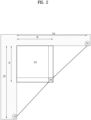
- the first current prediction sample RB will be predicted based on an intra DC mode prediction.
- the intra DC mode prediction will reference the sample value for sample T and the sample value for sample Land determine an average value of these two sample values.
- the reference sample T is referenced from the neighboring top block 103, and the reference sample L is referenced from the neighboring left block 102.
- the average sample value for reference samples T and L will serve as the prediction value for the first current prediction sample RB.
- the predicted value for RB can be referenced to predict the remaining samples of the current prediction unit 101.
- reference sample L specifically identifies the positions for reference samples Land T
- reference sample T specifically identifies the positions for reference samples Land T
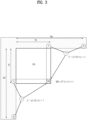
- Fig. 2 illustrates a second embodiment for predicting a first current prediction sample RB from within a current prediction unit 201 for referencing in the new intra planar mode prediction method according to the present invention.
- the first current prediction sample RB will be predicted based on an average of a previously reconstructed reference sample 2H and a previously reconstructed reference sample 2W.
- the reference sample 2H may be taken from either a neighboring left block or a neighboring bottom-left block, depending on the size of the neighboring blocks to the left of the current prediction unit 201.
- the reference sample 2W may be taken from either a neighboring top block or a neighboring top-right block, depending on the size of the neighboring blocks to the top of the current prediction unit 201.
- This average sample value for reference samples 2H and 2W will serve as the prediction value for the first current prediction sample RB according to this second embodiment. Now by referencing this prediction for first current prediction sample RB, the remaining samples of the current prediction unit 201 may be predicted. In the case where the reference sample 2H is not available, a reference sample located at distance H within the neighboring left block may be referenced instead of the reference sample 2H for purposes of this second embodiment. In the case where reference sample 2W is not available, a reference sample located at distance W within the neighboring top block may be referenced instead of the reference sample 2W for purposes of this second embodiment.
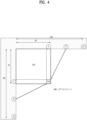
- Fig. 3 illustrates a third embodiment for predicting a first current prediction sample RB from within a current prediction unit 301 for referencing in the new intra planar mode prediction method according to the present invention.
- an average of four previously reconstructed reference samples from neighboring blocks will be referenced to predict the first current prediction sample RB.
- reference sample T and reference sample 2T will be referenced to obtain the averaged sample value of T'.
- reference sample T is referenced from a neighboring top block
- reference sample 2T may be referenced from the same neighboring top block or a separate neighboring top-right block depending on the size of the neighboring top block.
- reference samples L and 2L will be referenced to obtain the averaged sample value of L'.
- reference sample L is obtained from a neighboring left block
- reference sample 2L may be referenced from the same neighboring left block or a separate bottom-left neighboring block depending on the size of the neighboring left block.
- the prediction for the first current prediction sample RB will be the average of T' and L' according to this third embodiment. Now by referencing this prediction for first current prediction sample RB, the remaining samples of the current prediction unit 301 may be predicted.
- Fig. 3 the function for determining the average of two reference samples is denoted in terms of a shift function.
- a value of 1 is added to the sum of reference samples L and 2L in order to account for potential rounding errors, however it is within the scope of the present invention to forgo the plus 1.
- the double arrow shift function, » represents taking the average of the sum by dividing the sum by two.
- the remaining calculations for the average sample values for RB and T' illustrated in Fig. 3 that utilize the shift function may be understood to operate in a like manner.
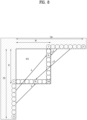
- Fig. 4 illustrates a fourth embodiment for predicting a first current prediction sample RB from within a current prediction unit 401 for referencing in the new intra planar mode prediction method according to the present invention.
- the prediction value for the first prediction sample RB is obtained by referencing two reference samples from neighboring blocks.
- a first reference sample T' is referenced from a neighboring block that may either be a neighboring top block or neighboring top-right block, depending on the size of the neighboring top block.
- the distinguishing feature of the first reference sample T' is that it is referenced from between previously reconstructed samples T and 2T.
- a second reference sample L' is referenced from a neighboring block that may either be a neighboring left block or neighboring bottom-left block, depending on the size of the neighboring left block.
- the distinguishing feature of the second reference sample L' is that it is referenced from a location between previously reconstructed samples L and 2L.
- the double arrow shift function, » represents taking the average of the sum by dividing the sum by two.
- the first current prediction sample RB may be referenced for predicting the remaining samples within the current prediction unit 401 according to the new intra planar mode prediction of the present invention.
- Fig. 5 illustrates a first embodiment for predicting the remaining samples within a current prediction unit 501 after first obtaining the prediction of the first current prediction sample RB.
- sample L from the neighboring left block 502 and sample RB from within the current prediction unit 501 will be referenced to perform a linear interpolation.
- the result from the linear interpolation of reference sample L and reference sample RB is referred to as LI1 in Fig. 5 .
- the resulting prediction value, LI1 from the linear interpolation of reference samples L and RB will then be filled in horizontally as the prediction value for all the current prediction samples that run along the bottom row of current prediction unit 501. These samples that run along the bottom row of current prediction unit 501 may now be referenced for predicting the remaining samples within current prediction unit 501.
- sample T from the neighboring top block 503 and sample RB from within the current prediction unit 501 will be referenced to perform a linear interpolation.
- the resulting prediction value from the linear interpolation of reference sample T and reference sample RB is represented in Fig. 5 as LI2.
- the resulting prediction value, LI2 from the linear interpolation of reference samples T and RB will then be filled in as the prediction value for all the current prediction samples that run vertically along the right-most column of current prediction unit 501. These samples that run vertically along the right-most column of current prediction unit 501 may now be referenced for predicting the remaining samples within current prediction unit 501.
- the remaining samples within current prediction unit 501 that have not been predicted are predicted by a bi-linear interpolation of four reference samples taken from among previously reconstructed samples from the left neighboring block 502, top neighboring block 503 and from within the current prediction unit 501.
- Fig. 5 depicts the prediction processing for current prediction sample C.
- the prediction for current prediction sample C will be the bi-linear interpolation of reference samples L y , LI2, T x and LI1. It can be seen that reference sample L y is the previously reconstructed sample from the neighboring left block 502 that is adjacent to the current prediction unit 501 and also shares the same y-coordinate as the current prediction sample C.
- Reference sample LI2 is the predicted sample from within the current prediction unit 501 that was predicted by the linear interpolation of reference samples Land RB. It can also be seen that reference sample T x is the previously reconstructed sample from the neighboring top block 503 that is adjacent to the current prediction unit 501 and also shares the same x-coordinate as the current prediction sample C.
- Reference sample LI1 is the predicted sample from within the current prediction unit 501 what was predicted by the linear interpolation of reference samples L and RB. The bi-linear interpolation of L y , LI2, T x and LI1 will be processed simultaneously in order to obtain the prediction value for the current prediction sample C. The remaining current prediction samples within the current prediction unit 501 will be predicted according to this first embodiment in a like manner as current prediction sample C.
- the bi-linear interpolation of current prediction sample C can also be processed by averaging two separate linear interpolations.
- the linear interpolation of reference samples L y and LI2 will be processed separately from the linear interpolation of reference samples T x and LI1, and then the prediction for the current prediction sample C will be based on the average of these two linear interpolations.
- the remaining current prediction samples will be predicted according to this alternative of the first embodiment in a like manner as current prediction sample C.
- Fig. 6 illustrates a second embodiment for predicting the remaining samples within a current prediction unit 601 after first obtaining the prediction of the first current prediction sample RB.
- the first current prediction RB is predicted by taking the average of reference sample 2L and reference sample 2T.
- the remaining current prediction samples along the bottom row of the current prediction unit 601 are copied from the neighboring block as depicted in Fig. 6 .
- the reference samples referenced to copy the bottom row of the current prediction unit 601 may come from either a neighboring left block or neighboring bottom-left block in relation to the current prediction unit 601, depending on the size of the neighboring left block.
- the remaining current prediction samples along the right-most vertical column of the current prediction unit 601 are copied from the neighboring block as depicted in Fig. 6 .
- the reference samples referenced to copy the rightmost vertical column in the current prediction unit 601 may come from either a neighboring top block or neighboring top-right block, depending on the size of the neighboring top block.
- Fig. 7 is a close up view of the current prediction unit 601 seen in Fig. 6 .
- the remaining samples within current prediction unit 601 are predicted according to a bi-linear interpolation.
- the bi-linear interpolation is processed by referencing four samples taken from among the left neighboring block 602, top neighboring block 603 and from within the current prediction unit 601.
- Fig. 7 depicts the prediction processing for current prediction sample C.
- the prediction for current prediction sample C will be the bi-linear interpolation of reference samples L y , Re, T x and Bc.
- Reference sample L y is a sample from the neighboring left block 602 that is adjacent to the current prediction unit 601 and is also on the same y-coordinate line as the current prediction sample C.
- Reference sample R C is a sample from within the current prediction sample 601 that has been predicted by copying a reference sample from a neighboring block as explained with reference to Fig. 6 above, and is also on the same y-coordinate line as the current prediction sample C.
- Reference sample T x is a sample from the neighboring top block 603 that is adjacent to the current prediction unit 601 and is also on the same x-coordinate line as the current prediction sample C.
- Reference sample Be is a sample from within the current prediction sample 501 that has been predicted by copying a reference sample from a neighboring block as explained in reference to Fig. 6 above, and is also on the same x-coordinate line as the current prediction sample C.
- the bi-linear interpolation of L y , R c , T x and B c will be processed simultaneously in order to obtain the prediction value for the current prediction sample C.
- the remaining current prediction samples will be predicted according to this second embodiment in a like manner as current prediction sample C.
- the bi-linear interpolation of current prediction sample C can also be processed by averaging two separate linear interpolations.
- the linear interpolation of reference samples L y and R c will be processed separately from the linear interpolation of reference samples T x and B c , and then the prediction for the current prediction sample C will be based on the average of these two linear interpolations.
- the remaining current prediction samples will be predicted according to this alternative of the second embodiment in a like manner.
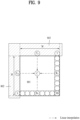
- Fig. 8 illustrates a third embodiment for predicting the remaining samples within a current prediction unit 801 after first obtaining the prediction of the first current prediction sample RB.
- the remaining current prediction samples that belong to the bottom row of the current prediction unit 801 are filled by utilizing a linear interpolation of two reference samples referenced from two neighboring blocks.
- the instance for predicting current prediction sample B 5 will be described as an exemplary instance for predicting the samples along the bottom row of the current prediction unit 801. It can be seen from Fig. 8 that the two reference samples referenced to predict current prediction sample B 5 lie along a common angular line and also come from two separate neighboring blocks.
- the first reference sample is referenced from either a neighboring left block or neighboring bottom-left block, depending on the size of the neighboring left block.
- the second reference sample is referenced from either a neighboring top block or neighboring top-right block, depending on the size of the neighboring top block.
- the remaining current prediction samples along the bottom row of the current prediction unit 801 will be predicted in a similar manner by referencing two separate reference samples that lay along a corresponding angular line. Predicted current prediction samples may then be referenced when predicting the remaining samples within the current prediction unit 801.
- Fig. 8 Also depicted in Fig. 8 is the prediction method for the right-most vertical column of samples within the current prediction unit 801 according to this third embodiment.
- the instance of predicting current prediction sample R 2 will be described as an exemplary instance for predicting the samples along the rightmost vertical column of the current prediction unit 801. It can be seen from Fig. 8 that the two reference samples referenced to predict current prediction sample R 2 lie along a common angular line and also come from two separate neighboring blocks.
- the first reference sample as indicated by the arrow ⁇ , is referenced from either a neighboring left block or neighboring bottom-left block, depending on the size of the left block.
- the second reference sample is referenced from either a neighboring top block or neighboring top-right block, depending on the size of the top block.
- the first reference sample and the second reference sample will be linearly interpolated to obtain a prediction value for current prediction sample R 2 .
- the remaining samples along the right-most vertical column of the current prediction unit 801 will be predicted in a similar manner by referencing two separate reference samples that lay along a corresponding angular line. Predicted current prediction samples may then be referenced when predicting the remaining samples within the current prediction unit 801.
- Fig. 9 is a close up view of the current prediction unit 801 seen in Fig. 8 where the samples along the bottom row and the samples along the right-most vertical column have been predicted. The remaining samples within current prediction unit 801 that have not been predicted are predicted by a bi-linear interpolation of four reference samples taken from among previously reconstructed samples from the left neighboring block 802, top neighboring block 803 and from within the current prediction unit 801.
- Fig. 9 depicts the instance for prediction processing of the current prediction sample C.
- the prediction for current prediction sample C will be the bi-linear interpolation of reference samples L y , Re, T x and B C .
- Reference sample L y is a sample from the neighboring left block 802 that is adjacent to the current prediction unit 801 and is also on the same y-coordinate line as the current prediction sample C.
- Reference sample R C is a sample from within the current prediction sample 801 that has been predicted based on the linear interpolation of two samples from neighboring blocks that lay along a common angular line as explained with reference to Fig. 8 above, and is also on the same y-coordinate line as the current prediction sample C.
- Reference sample T x is a sample from the neighboring top block 803 that is adjacent to the current prediction unit 801 and is also on the same x-coordinate line as the current prediction sample C.
- Reference sample Be is a sample from within the current prediction sample 801 that has been predicted by the linear interpolation of two samples from neighboring blocks that lay along a common angular line as explained in reference to Fig. 8 above, and is also on the same x-coordinate line as the current prediction sample C.
- the bi-linear interpolation of L y , R c , T x and B c will then be processed simultaneously in order to obtain the prediction value for the current prediction sample C.
- the remaining current prediction samples will be predicted according to this third embodiment in a like manner as current prediction sample C.
- the bi-linear interpolation of current prediction sample C can also be processed by separately taking the linear interpolation of reference samples L y and R C and taking the linear interpolation of reference samples T x and Be, and then taking the average of these two linear interpolations.
- the remaining current prediction samples will be predicted according this alternative to the third embodiment in a like manner.
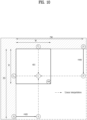
- Fig. 10 illustrates a fourth embodiment for predicting the remaining samples within a current prediction unit 1001 after first obtaining the prediction of the first current prediction sample RB. After having predicted the first current prediction sample RB according to any one of the previously mentioned embodiments above, all remaining current prediction samples that belong to the current prediction unit 1001 are filled/predicted by utilizing a bi-linear interpolation of four reference samples referenced from neighboring blocks. Therefore there is no need to separately calculate a prediction for the current prediction samples that lay along the bottom row of the current prediction unit 1001 and the current prediction samples that lay along the rightmost vertical column of current prediction unit 1001. For exemplary purposes, Fig. 10 depicts the prediction processing for current prediction sample C according to this fourth embodiment.
- Reference sample L y is a sample from a neighboring left block that is adjacent to the current prediction unit 1001 and is also on the same y-coordinate line as the current prediction sample C.
- Reference sample 2T is simply a copy of the previously reconstructed reference sample 2T taken from either a neighboring top block or neighboring top-right block.
- Reference sample T x is a sample from a neighboring top block that is adjacent to the current prediction unit 1001 and is also on the same x-coordinate line as the current prediction sample C.
- Reference sample 2L is simply a copy of the previously reconstructed reference sample 2L taken from either a neighboring left block or neighboring bottom-left block.
- the bi-linear interpolation of L y , 2T, T x , and 2L will then be processed simultaneously in order to obtain the prediction value for the current prediction sample C.
- the remaining current prediction samples will be predicted according to this fourth embodiment in a like manner as current prediction sample C.
- reference samples 2L and 2T will remain constant for each bi-linear interpolation made for predicting a current prediction sample within the current prediction unit 1001.
- reference samples L y and T x will vary to correspond to the x and y coordinates of the current prediction sample being predicted.
- the bi-linear interpolation can also be processed as the average of two separate linear interpolations.
- the first linear interpolation is taken by referencing samples L y and 2T.
- the second linear interpolation is taken by referencing samples T x and 2L.
- prediction for current prediction sample C will be the resulting average from the first linear interpolation of samples L y and 2T and the second linear interpolation of samples T x and 2L.
- the remaining current prediction samples may be predicted according to this alternative of the fourth embodiment in a like manner.
- the current prediction samples that lay in the bottom row of the current prediction unit 1001 may be padded with copies of 2L.
- the current prediction samples that lay in the right-most column of the current prediction unit 1001 may be padded with copies of 2T.
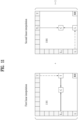
- Fig. 11 illustrates a fifth embodiment for predicting the remaining samples within a current prediction unit 1101 after first obtaining the prediction of the first current prediction sample RB. After having predicted the first current prediction sample RB according to any one of the methods of the present invention, all remaining current prediction samples within the current prediction unit 1101 are predicted by averaging a first linear interpolation of two previously reconstructed reference samples and a second linear interpolation of two previously reconstructed reference samples from neighboring blocks.
- the first linear interpolation is made by referencing previously reconstructed reference sample L y that is referenced from a neighboring left block that is at the same y-coordinate as the current prediction sample C, and referencing sample T which is a copy of the previously reconstructed sample T from a neighboring top block that is adjacent to the top-right sample from the current prediction unit 1101.
- the second linear interpolation is made by referencing previously reconstructed sample T x from a neighboring top block that is at the same x-coordinate as the current prediction sample C, and referencing sample L which is a copy of the previously reconstructed sample L from a neighboring left block that is adjacent to the bottom-left sample of the current prediction unit 1101.
Landscapes
- Engineering & Computer Science (AREA)
- Multimedia (AREA)
- Signal Processing (AREA)
- Physics & Mathematics (AREA)
- General Physics & Mathematics (AREA)
- Theoretical Computer Science (AREA)
- Compression Or Coding Systems Of Tv Signals (AREA)
- Compression, Expansion, Code Conversion, And Decoders (AREA)
Applications Claiming Priority (9)
| Application Number | Priority Date | Filing Date | Title |
|---|---|---|---|
| US34782110P | 2010-05-25 | 2010-05-25 | |
| US201161445538P | 2011-02-23 | 2011-02-23 | |
| US201161451121P | 2011-03-10 | 2011-03-10 | |
| US201161471185P | 2011-04-03 | 2011-04-03 | |
| EP24153421.3A EP4336826A3 (de) | 2010-05-25 | 2011-05-25 | Neuer planarer prädiktionsmodus |
| EP20186711.6A EP3745721B1 (de) | 2010-05-25 | 2011-05-25 | Neuer planarprädiktionsmodus |
| EP18204065.9A EP3457689B1 (de) | 2010-05-25 | 2011-05-25 | Neuer planarprädiktionsmodus |
| EP11004325.4A EP2391129B1 (de) | 2010-05-25 | 2011-05-25 | Neuer planarer Prädiktionsmodus |
| EP21201495.5A EP3962081B1 (de) | 2010-05-25 | 2011-05-25 | Neuer planarer prädiktionsmodus |
Related Parent Applications (5)
| Application Number | Title | Priority Date | Filing Date |
|---|---|---|---|
| EP20186711.6A Division EP3745721B1 (de) | 2010-05-25 | 2011-05-25 | Neuer planarprädiktionsmodus |
| EP24153421.3A Division EP4336826A3 (de) | 2010-05-25 | 2011-05-25 | Neuer planarer prädiktionsmodus |
| EP18204065.9A Division EP3457689B1 (de) | 2010-05-25 | 2011-05-25 | Neuer planarprädiktionsmodus |
| EP11004325.4A Division EP2391129B1 (de) | 2010-05-25 | 2011-05-25 | Neuer planarer Prädiktionsmodus |
| EP21201495.5A Division EP3962081B1 (de) | 2010-05-25 | 2011-05-25 | Neuer planarer prädiktionsmodus |
Publications (2)
| Publication Number | Publication Date |
|---|---|
| EP4525447A2 true EP4525447A2 (de) | 2025-03-19 |
| EP4525447A3 EP4525447A3 (de) | 2025-04-23 |
Family
ID=44318150
Family Applications (7)
| Application Number | Title | Priority Date | Filing Date |
|---|---|---|---|
| EP20186711.6A Active EP3745721B1 (de) | 2010-05-25 | 2011-05-25 | Neuer planarprädiktionsmodus |
| EP25155798.9A Pending EP4525448A3 (de) | 2010-05-25 | 2011-05-25 | Neuer planarer prädiktionsmodus |
| EP24153421.3A Pending EP4336826A3 (de) | 2010-05-25 | 2011-05-25 | Neuer planarer prädiktionsmodus |
| EP21201495.5A Active EP3962081B1 (de) | 2010-05-25 | 2011-05-25 | Neuer planarer prädiktionsmodus |
| EP18204065.9A Active EP3457689B1 (de) | 2010-05-25 | 2011-05-25 | Neuer planarprädiktionsmodus |
| EP25155785.6A Pending EP4525447A3 (de) | 2010-05-25 | 2011-05-25 | Neuer planarer prädiktionsmodus |
| EP11004325.4A Active EP2391129B1 (de) | 2010-05-25 | 2011-05-25 | Neuer planarer Prädiktionsmodus |
Family Applications Before (5)
| Application Number | Title | Priority Date | Filing Date |
|---|---|---|---|
| EP20186711.6A Active EP3745721B1 (de) | 2010-05-25 | 2011-05-25 | Neuer planarprädiktionsmodus |
| EP25155798.9A Pending EP4525448A3 (de) | 2010-05-25 | 2011-05-25 | Neuer planarer prädiktionsmodus |
| EP24153421.3A Pending EP4336826A3 (de) | 2010-05-25 | 2011-05-25 | Neuer planarer prädiktionsmodus |
| EP21201495.5A Active EP3962081B1 (de) | 2010-05-25 | 2011-05-25 | Neuer planarer prädiktionsmodus |
| EP18204065.9A Active EP3457689B1 (de) | 2010-05-25 | 2011-05-25 | Neuer planarprädiktionsmodus |
Family Applications After (1)
| Application Number | Title | Priority Date | Filing Date |
|---|---|---|---|
| EP11004325.4A Active EP2391129B1 (de) | 2010-05-25 | 2011-05-25 | Neuer planarer Prädiktionsmodus |
Country Status (13)
| Country | Link |
|---|---|
| US (8) | US8798146B2 (de) |
| EP (7) | EP3745721B1 (de) |
| KR (4) | KR101781874B1 (de) |
| CN (1) | CN102934441B (de) |
| DK (2) | DK3457689T3 (de) |
| ES (4) | ES2704296T3 (de) |
| FI (1) | FI3962081T3 (de) |
| HR (1) | HRP20240379T1 (de) |
| HU (3) | HUE056926T2 (de) |
| PL (4) | PL2391129T3 (de) |
| PT (2) | PT2391129T (de) |
| SI (2) | SI3962081T1 (de) |
| WO (1) | WO2011149265A2 (de) |
Families Citing this family (88)
| Publication number | Priority date | Publication date | Assignee | Title |
|---|---|---|---|---|
| JP2011223303A (ja) * | 2010-04-09 | 2011-11-04 | Sony Corp | 画像符号化装置と画像符号化方法および画像復号化装置と画像復号化方法 |
| CN106067982A (zh) * | 2010-06-07 | 2016-11-02 | 数码士有限公司 | 解码高分辨率图像的方法和装置 |
| US9532059B2 (en) | 2010-10-05 | 2016-12-27 | Google Technology Holdings LLC | Method and apparatus for spatial scalability for video coding |
| EP2635030A4 (de) * | 2010-10-26 | 2016-07-13 | Humax Co Ltd | Kodierungs- und dekodierungsverfahren mit adaptiver intraprädiktion |
| US9258573B2 (en) * | 2010-12-07 | 2016-02-09 | Panasonic Intellectual Property Corporation Of America | Pixel adaptive intra smoothing |
| WO2012081895A1 (ko) | 2010-12-13 | 2012-06-21 | 한국전자통신연구원 | 인트라 예측 방법 및 그 장치 |
| KR102086145B1 (ko) * | 2010-12-13 | 2020-03-09 | 한국전자통신연구원 | 인트라 예측 방법 및 그 장치 |
| ES2934221T3 (es) * | 2010-12-22 | 2023-02-20 | Lg Electronics Inc | Método de intrapredicción y aparato que utiliza el método |
| US9930366B2 (en) | 2011-01-28 | 2018-03-27 | Qualcomm Incorporated | Pixel level adaptive intra-smoothing |
| KR20120090740A (ko) * | 2011-02-07 | 2012-08-17 | (주)휴맥스 | 정밀한 단위의 필터 선택을 적용한 영상 부호화/복호화 장치 및 방법 |
| MY173195A (en) * | 2011-06-28 | 2020-01-03 | Samsung Electronics Co Ltd | Method and apparatus for image encoding and decoding using intra prediction |
| US9736489B2 (en) | 2011-09-17 | 2017-08-15 | Qualcomm Incorporated | Motion vector determination for video coding |
| US20130083844A1 (en) * | 2011-09-30 | 2013-04-04 | In Suk Chong | Coefficient coding for sample adaptive offset and adaptive loop filter |
| US9083983B2 (en) * | 2011-10-04 | 2015-07-14 | Qualcomm Incorporated | Motion vector predictor candidate clipping removal for video coding |
| US8811760B2 (en) * | 2011-10-25 | 2014-08-19 | Mitsubishi Electric Research Laboratories, Inc. | Coding images using intra prediction modes |
| WO2013067435A1 (en) * | 2011-11-04 | 2013-05-10 | Huawei Technologies Co., Ltd. | Differential pulse code modulation intra prediction for high efficiency video coding |
| US9094681B1 (en) | 2012-02-28 | 2015-07-28 | Google Inc. | Adaptive segmentation |
| KR101628797B1 (ko) * | 2012-04-20 | 2016-06-09 | 후아웨이 테크놀러지 컴퍼니 리미티드 | Hevc에서 무손실 코딩의 개선된 인트라 예측 |
| US9185429B1 (en) | 2012-04-30 | 2015-11-10 | Google Inc. | Video encoding and decoding using un-equal error protection |
| US9113164B1 (en) | 2012-05-15 | 2015-08-18 | Google Inc. | Constant bit rate control using implicit quantization values |
| US9781447B1 (en) | 2012-06-21 | 2017-10-03 | Google Inc. | Correlation based inter-plane prediction encoding and decoding |
| US9167268B1 (en) | 2012-08-09 | 2015-10-20 | Google Inc. | Second-order orthogonal spatial intra prediction |
| US9510019B2 (en) | 2012-08-09 | 2016-11-29 | Google Inc. | Two-step quantization and coding method and apparatus |
| US9332276B1 (en) | 2012-08-09 | 2016-05-03 | Google Inc. | Variable-sized super block based direct prediction mode |
| US9380298B1 (en) | 2012-08-10 | 2016-06-28 | Google Inc. | Object-based intra-prediction |
| US9344742B2 (en) | 2012-08-10 | 2016-05-17 | Google Inc. | Transform-domain intra prediction |
| US9491461B2 (en) * | 2012-09-27 | 2016-11-08 | Qualcomm Incorporated | Scalable extensions to HEVC and temporal motion vector prediction |
| US9826229B2 (en) | 2012-09-29 | 2017-11-21 | Google Technology Holdings LLC | Scan pattern determination from base layer pixel information for scalable extension |
| CN102883163B (zh) * | 2012-10-08 | 2014-05-28 | 华为技术有限公司 | 用于运动矢量预测的运动矢量列表建立的方法、装置 |
| US9369732B2 (en) | 2012-10-08 | 2016-06-14 | Google Inc. | Lossless intra-prediction video coding |
| US9407915B2 (en) | 2012-10-08 | 2016-08-02 | Google Inc. | Lossless video coding with sub-frame level optimal quantization values |
| US9350988B1 (en) | 2012-11-20 | 2016-05-24 | Google Inc. | Prediction mode-based block ordering in video coding |
| CN104885450B (zh) * | 2012-12-27 | 2017-09-08 | 日本电信电话株式会社 | 图像编码方法、图像解码方法、图像编码装置、图像解码装置、图像编码程序、以及图像解码程序 |
| US9628790B1 (en) | 2013-01-03 | 2017-04-18 | Google Inc. | Adaptive composite intra prediction for image and video compression |
| US9681128B1 (en) | 2013-01-31 | 2017-06-13 | Google Inc. | Adaptive pre-transform scanning patterns for video and image compression |
| US9609336B2 (en) * | 2013-04-16 | 2017-03-28 | Fastvdo Llc | Adaptive coding, transmission and efficient display of multimedia (acted) |
| US9247251B1 (en) | 2013-07-26 | 2016-01-26 | Google Inc. | Right-edge extension for quad-tree intra-prediction |
| EP3055998A1 (de) | 2013-10-11 | 2016-08-17 | Telefonaktiebolaget LM Ericsson (publ) | Verfahren und anordnung zur modus- oder bewegungs- oder schleifenfiltergesteuerten videotranscodierung |
| CN106688238B (zh) * | 2013-10-17 | 2019-12-17 | 华为技术有限公司 | 改进后的深度图帧内编码的参考像素点选择和滤波 |
| US10129542B2 (en) * | 2013-10-17 | 2018-11-13 | Futurewei Technologies, Inc. | Reference pixel selection and filtering for intra coding of depth map |
| US20150189333A1 (en) * | 2013-12-27 | 2015-07-02 | Industrial Technology Research Institute | Method and system for image processing, decoding method, encoder, and decoder |
| CN103841422B (zh) * | 2014-03-21 | 2017-05-31 | 华为技术有限公司 | 深度图像的帧内预测方法和装置 |
| CN105392008B (zh) * | 2014-08-22 | 2018-09-25 | 中兴通讯股份有限公司 | 一种预测编、解码方法和相应的编、解码器和电子设备 |
| WO2016026283A1 (zh) * | 2014-08-22 | 2016-02-25 | 中兴通讯股份有限公司 | 一种预测编、解码方法和相应的编、解码器和电子设备 |
| CN105430417B (zh) * | 2014-09-22 | 2020-02-07 | 中兴通讯股份有限公司 | 编码方法、解码方法、装置及电子设备 |
| KR20170082528A (ko) | 2014-11-05 | 2017-07-14 | 삼성전자주식회사 | 블록과 관련하여 결정된 적어도 하나의 샘플값 및 적어도 하나의 패턴에 기초한 인트라 예측을 수행하는 영상 부호화 방법 및 장치또는 영상 복호화 방법 및 장치 |
| CN105812823B (zh) * | 2014-12-31 | 2019-04-05 | 扬智科技股份有限公司 | Hevc中帧内预测的参考像素替换方法与装置 |
| WO2016175549A1 (ko) * | 2015-04-27 | 2016-11-03 | 엘지전자 주식회사 | 비디오 신호의 처리 방법 및 이를 위한 장치 |
| US10750174B2 (en) | 2015-08-28 | 2020-08-18 | Kt Corporation | Method and device for deriving a prediction sample in decoding/encoding video signal using binary and quad trees |
| US10735728B2 (en) * | 2015-10-12 | 2020-08-04 | Lg Electronics Inc. | Method for processing image and apparatus therefor |
| EP3367680B1 (de) * | 2015-10-22 | 2020-07-01 | LG Electronics Inc. | Intraprädiktionsverfahren und -vorrichtung in einem videocodierungssystem |
| KR20180129863A (ko) * | 2016-04-25 | 2018-12-05 | 엘지전자 주식회사 | 영상 코딩 시스템에서 영상 디코딩 방법 및 장치 |
| CN117014603A (zh) | 2016-08-31 | 2023-11-07 | 株式会社Kt | 用于处理视频信号的方法和设备 |
| KR102435000B1 (ko) | 2016-09-20 | 2022-08-23 | 주식회사 케이티 | 비디오 신호 처리 방법 및 장치 |
| EP3300362A1 (de) * | 2016-09-27 | 2018-03-28 | Thomson Licensing | Verfahren zur verbesserten intra-vorhersage, wenn referenzproben fehlen |
| CN120568078A (zh) * | 2016-10-11 | 2025-08-29 | Oppo广东移动通信有限公司 | 依赖于图像编译系统中的帧内预测的图像解码方法和装置 |
| CA3040452C (en) | 2016-10-14 | 2023-03-28 | Huawei Technologies Co., Ltd. | Devices and methods for video coding |
| JP6847211B2 (ja) | 2016-10-14 | 2021-03-24 | ホアウェイ・テクノロジーズ・カンパニー・リミテッド | 距離重み付けされた双方向性イントラ予測 |
| CN116915981A (zh) * | 2016-11-29 | 2023-10-20 | 韩国电子通信研究院 | 图像编码/解码方法和装置以及存储有比特流的记录介质 |
| US10917660B2 (en) * | 2017-01-13 | 2021-02-09 | Vid Scale, Inc. | Prediction approaches for intra planar coding |
| KR20190112776A (ko) | 2017-01-31 | 2019-10-07 | 샤프 가부시키가이샤 | 평면 내적 예측 비디오 코딩을 수행하기 위한 시스템들 및 방법들 |
| US11064205B2 (en) | 2017-03-21 | 2021-07-13 | Lg Electronics Inc. | Image decoding method and device according to intra prediction in image coding system |
| CN116828205B (zh) | 2017-05-17 | 2026-04-14 | 株式会社Kt | 用于解码视频的方法和用于编码视频的方法 |
| JP2020120141A (ja) * | 2017-05-26 | 2020-08-06 | シャープ株式会社 | 動画像符号化装置及び動画像復号装置、フィルタ装置 |
| EP3410708A1 (de) | 2017-05-31 | 2018-12-05 | Thomson Licensing | Verfahren und vorrichtung zur intraprädiktion mit interpolation |
| EP3643068B1 (de) | 2017-07-05 | 2021-05-05 | Huawei Technologies Co., Ltd. | Planare intra-prädiktion zur videokodierung |
| CN115037931B (zh) | 2017-10-18 | 2025-08-26 | 英迪股份有限公司 | 图像编码/解码方法和装置以及存储有比特流的记录介质 |
| US10484695B2 (en) | 2017-10-23 | 2019-11-19 | Google Llc | Refined entropy coding for level maps |
| CN111295881B (zh) * | 2017-11-13 | 2023-09-01 | 联发科技(新加坡)私人有限公司 | 用于图像和视频编解码的画面内预测融合的方法和装置 |
| CN118338017A (zh) * | 2017-11-22 | 2024-07-12 | 英迪股份有限公司 | 用于解码图像的方法、用于编码图像的方法和非暂态存储介质 |
| CN109996066A (zh) * | 2017-12-29 | 2019-07-09 | 富士通株式会社 | 图像编码装置,图像解码装置和电子设备 |
| WO2019182292A1 (ko) * | 2018-03-19 | 2019-09-26 | 주식회사 케이티 | 비디오 신호 처리 방법 및 장치 |
| WO2019198984A1 (ko) * | 2018-04-11 | 2019-10-17 | 엘지전자 주식회사 | 선형 보간 인트라 예측에 기반한 영상 코딩 방법 및 그 장치 |
| WO2019204234A1 (en) | 2018-04-15 | 2019-10-24 | Arris Enterprises Llc | Unequal weight planar motion vector derivation |
| US10645381B2 (en) * | 2018-04-30 | 2020-05-05 | Google Llc | Intra-prediction for smooth blocks in image/video |
| WO2019245342A1 (ko) | 2018-06-21 | 2019-12-26 | 주식회사 케이티 | 비디오 신호 처리 방법 및 장치 |
| WO2020007187A1 (zh) * | 2018-07-02 | 2020-01-09 | 华为技术有限公司 | 图像块解码方法及装置 |
| JP7410149B2 (ja) * | 2018-08-24 | 2024-01-09 | 中興通訊股▲ふん▼有限公司 | 視覚メディアエンコードおよびデコードのための平面予測モード |
| CN112823515B (zh) * | 2018-10-07 | 2024-03-19 | 三星电子株式会社 | 使用用于多参考线的mpm配置方法处理视频信号的方法和设备 |
| JP7182098B2 (ja) | 2018-11-22 | 2022-12-02 | 北京字節跳動網絡技術有限公司 | 映像処理におけるパルス符号変調技術 |
| US11438583B2 (en) * | 2018-11-27 | 2022-09-06 | Tencent America LLC | Reference sample filter selection in intra prediction |
| CN113068025B (zh) * | 2018-12-25 | 2023-05-12 | Oppo广东移动通信有限公司 | 解码预测方法、装置及计算机存储介质 |
| US11172195B2 (en) * | 2019-01-26 | 2021-11-09 | Qualcomm Incorporated | Excluding intra coded reference samples from local illumination compensation parameter derivation |
| EP3713235B1 (de) * | 2019-03-19 | 2023-08-02 | Axis AB | Verfahren und vorrichtungen zur codierung eines video-streams unter verwendung eines ersten und eines zweiten codierers |
| US11388419B2 (en) | 2020-02-05 | 2022-07-12 | Apple Inc. | Smoothed directional and DC intra prediction |
| EP4391530A4 (de) * | 2021-08-18 | 2025-07-30 | Lg Electronics Inc | Bildcodierungs-/-decodierungsverfahren und vorrichtung zur durchführung von referenzprobenfilterung auf basis eines intraprädiktionsmodus und verfahren zur bitstromübertragung |
| EP4437729A4 (de) * | 2021-11-22 | 2025-11-26 | Beijing Dajia Internet Information Tech Co Ltd | Planarmodusverbesserung zur intraprädiktion |
| WO2024025370A1 (ko) * | 2022-07-28 | 2024-02-01 | 현대자동차주식회사 | 영상 부호화/복호화 방법, 장치 및 비트스트림을 저장한 기록 매체 |
Family Cites Families (40)
| Publication number | Priority date | Publication date | Assignee | Title |
|---|---|---|---|---|
| US6980596B2 (en) * | 2001-11-27 | 2005-12-27 | General Instrument Corporation | Macroblock level adaptive frame/field coding for digital video content |
| US7236524B2 (en) * | 2002-05-28 | 2007-06-26 | Sharp Laboratories Of America, Inc. | Methods and systems for image intra-prediction mode communication |
| EP1645135A4 (de) * | 2003-01-10 | 2010-03-03 | Thomson Licensing | Definieren von interpolations-filtern für die fehler-verbergung in einem codierten bild |
| US7369707B2 (en) * | 2003-10-28 | 2008-05-06 | Matsushita Electric Industrial Co., Ltd. | Intra-picture prediction coding method |
| KR20050112445A (ko) * | 2004-05-25 | 2005-11-30 | 경희대학교 산학협력단 | 예측 부호화/복호화 장치, 예측 부호화/복호화 방법 및 그방법을 수행하는 프로그램이 기록된 컴퓨터 판독가능한기록매체 |
| US7953152B1 (en) * | 2004-06-28 | 2011-05-31 | Google Inc. | Video compression and encoding method |
| US7565020B2 (en) * | 2004-07-03 | 2009-07-21 | Microsoft Corp. | System and method for image coding employing a hybrid directional prediction and wavelet lifting |
| KR100703200B1 (ko) | 2005-06-29 | 2007-04-06 | 한국산업기술대학교산학협력단 | 인트라 부호화 장치 및 방법 |
| KR100750128B1 (ko) * | 2005-09-06 | 2007-08-21 | 삼성전자주식회사 | 영상의 인트라 예측 부호화, 복호화 방법 및 장치 |
| US8446954B2 (en) * | 2005-09-27 | 2013-05-21 | Qualcomm Incorporated | Mode selection techniques for multimedia coding |
| AU2006346583B2 (en) * | 2006-07-28 | 2011-04-28 | Kabushiki Kaisha Toshiba | Image encoding and decoding method and apparatus |
| JP4690966B2 (ja) * | 2006-08-11 | 2011-06-01 | 株式会社東芝 | 動画像符号化装置 |
| KR101380843B1 (ko) * | 2006-12-28 | 2014-04-07 | 삼성전자주식회사 | 인트라 예측을 통해 부호화된 블럭들을 포함하는압축영상에 대한 축소영상 생성방법 및 이를 적용한영상기기 |
| JP5188875B2 (ja) * | 2007-06-04 | 2013-04-24 | 株式会社エヌ・ティ・ティ・ドコモ | 画像予測符号化装置、画像予測復号装置、画像予測符号化方法、画像予測復号方法、画像予測符号化プログラム、及び画像予測復号プログラム |
| BR122019021946B1 (pt) * | 2007-06-29 | 2024-02-06 | Velos Media International Limited | Dispositivo de codificação de imagem para codificar imagens de entrada e dispositivo de decodificação de imagem para decodificar dados de imagens codificados |
| JP2009094828A (ja) * | 2007-10-10 | 2009-04-30 | Hitachi Ltd | 画像符号化装置及び画像符号化方法、画像復号化装置及び画像復号化方法 |
| EP2081386A1 (de) * | 2008-01-18 | 2009-07-22 | Panasonic Corporation | Hochpräzise Randvorhersage zur Intrakodierung |
| JP2009218742A (ja) * | 2008-03-07 | 2009-09-24 | Canon Inc | 画像符号化装置 |
| US8831086B2 (en) * | 2008-04-10 | 2014-09-09 | Qualcomm Incorporated | Prediction techniques for interpolation in video coding |
| US9277244B2 (en) * | 2008-05-07 | 2016-03-01 | Lg Electronics Inc. | Decoding a video signal using intra-prediction mode information |
| JP4945513B2 (ja) * | 2008-06-04 | 2012-06-06 | ルネサスエレクトロニクス株式会社 | 可変長復号装置およびそれを用いた動画復号装置 |
| KR101361005B1 (ko) | 2008-06-24 | 2014-02-13 | 에스케이 텔레콤주식회사 | 인트라 예측 방법 및 장치와 그를 이용한 영상부호화/복호화 방법 및 장치 |
| KR101517768B1 (ko) * | 2008-07-02 | 2015-05-06 | 삼성전자주식회사 | 영상의 부호화 방법 및 장치, 그 복호화 방법 및 장치 |
| TWI359617B (en) * | 2008-07-03 | 2012-03-01 | Univ Nat Taiwan | Low-complexity and high-quality error concealment |
| EP2141927A1 (de) * | 2008-07-03 | 2010-01-06 | Panasonic Corporation | Filter für die Videocodierung |
| US8660176B2 (en) * | 2008-09-26 | 2014-02-25 | Qualcomm Incorporated | Resolving geometric relationships among video data units |
| US8634457B2 (en) * | 2008-09-26 | 2014-01-21 | Qualcomm Incorporated | Determining availability of video data units |
| US20100226437A1 (en) * | 2009-03-06 | 2010-09-09 | Sony Corporation, A Japanese Corporation | Reduced-resolution decoding of avc bit streams for transcoding or display at lower resolution |
| TWI442777B (zh) * | 2009-06-23 | 2014-06-21 | Acer Inc | 空間性錯誤隱藏方法 |
| EP2509319A4 (de) * | 2009-12-01 | 2013-07-10 | Humax Co Ltd | Verfahren und vorrichtung zur kodierung/dekodierung von bildern mit hoher auflösung |
| KR101700358B1 (ko) * | 2009-12-09 | 2017-01-26 | 삼성전자주식회사 | 영상의 부호화 방법 및 장치, 그 복호화 방법 및 장치 |
| US8724692B2 (en) * | 2010-01-08 | 2014-05-13 | Nokia Corporation | Apparatus, a method and a computer program for video coding |
| US9082278B2 (en) * | 2010-03-19 | 2015-07-14 | University-Industry Cooperation Group Of Kyung Hee University | Surveillance system |
| US8619857B2 (en) * | 2010-04-09 | 2013-12-31 | Sharp Laboratories Of America, Inc. | Methods and systems for intra prediction |
| KR101752418B1 (ko) * | 2010-04-09 | 2017-06-29 | 엘지전자 주식회사 | 비디오 신호 처리 방법 및 장치 |
| US8644375B2 (en) * | 2010-04-09 | 2014-02-04 | Sharp Laboratories Of America, Inc. | Methods and systems for intra prediction |
| MX2012013263A (es) * | 2010-05-14 | 2013-01-24 | Thomson Licensing | Metodos y aparatos para intracodificar un bloque que tiene pixeles asignados a grupos. |
| EP2388999B1 (de) * | 2010-05-17 | 2021-02-24 | Lg Electronics Inc. | Neue Intra-Prädiktionsmodi |
| PT3370420T (pt) * | 2010-12-21 | 2019-10-31 | Ntt Docomo Inc | Codificação com intra-predição melhorada utilizando representações planares |
| ES2934221T3 (es) * | 2010-12-22 | 2023-02-20 | Lg Electronics Inc | Método de intrapredicción y aparato que utiliza el método |
-
2011
- 2011-05-25 FI FIEP21201495.5T patent/FI3962081T3/fi active
- 2011-05-25 PL PL11004325T patent/PL2391129T3/pl unknown
- 2011-05-25 HU HUE20186711A patent/HUE056926T2/hu unknown
- 2011-05-25 PL PL20186711T patent/PL3745721T3/pl unknown
- 2011-05-25 KR KR1020127033165A patent/KR101781874B1/ko active Active
- 2011-05-25 SI SI201132104T patent/SI3962081T1/sl unknown
- 2011-05-25 EP EP20186711.6A patent/EP3745721B1/de active Active
- 2011-05-25 DK DK18204065.9T patent/DK3457689T3/da active
- 2011-05-25 ES ES11004325T patent/ES2704296T3/es active Active
- 2011-05-25 CN CN201180026091.0A patent/CN102934441B/zh active Active
- 2011-05-25 SI SI201132021T patent/SI3745721T1/sl unknown
- 2011-05-25 PL PL21201495.5T patent/PL3962081T3/pl unknown
- 2011-05-25 ES ES21201495T patent/ES2975036T3/es active Active
- 2011-05-25 PT PT11004325T patent/PT2391129T/pt unknown
- 2011-05-25 EP EP25155798.9A patent/EP4525448A3/de active Pending
- 2011-05-25 EP EP24153421.3A patent/EP4336826A3/de active Pending
- 2011-05-25 EP EP21201495.5A patent/EP3962081B1/de active Active
- 2011-05-25 KR KR1020197032721A patent/KR102148660B1/ko active Active
- 2011-05-25 PL PL18204065T patent/PL3457689T3/pl unknown
- 2011-05-25 HU HUE11004325A patent/HUE041324T2/hu unknown
- 2011-05-25 EP EP18204065.9A patent/EP3457689B1/de active Active
- 2011-05-25 HU HUE21201495A patent/HUE066104T2/hu unknown
- 2011-05-25 EP EP25155785.6A patent/EP4525447A3/de active Pending
- 2011-05-25 PT PT182040659T patent/PT3457689T/pt unknown
- 2011-05-25 KR KR1020187030646A patent/KR102043218B1/ko active Active
- 2011-05-25 DK DK11004325.4T patent/DK2391129T3/en active
- 2011-05-25 EP EP11004325.4A patent/EP2391129B1/de active Active
- 2011-05-25 KR KR1020177026367A patent/KR101913264B1/ko active Active
- 2011-05-25 ES ES18204065T patent/ES2826798T3/es active Active
- 2011-05-25 US US13/115,397 patent/US8798146B2/en active Active
- 2011-05-25 HR HRP20240379TT patent/HRP20240379T1/hr unknown
- 2011-05-25 ES ES20186711T patent/ES2901793T3/es active Active
- 2011-05-25 WO PCT/KR2011/003828 patent/WO2011149265A2/en not_active Ceased
-
2014
- 2014-07-07 US US14/324,446 patent/US9762866B2/en active Active
-
2017
- 2017-07-14 US US15/649,906 patent/US10402674B2/en active Active
-
2019
- 2019-08-30 US US16/558,020 patent/US11010628B2/en active Active
-
2021
- 2021-04-19 US US17/234,340 patent/US11532142B2/en active Active
-
2022
- 2022-11-30 US US18/072,395 patent/US11818393B2/en active Active
-
2023
- 2023-07-19 US US18/223,817 patent/US12041269B2/en active Active
-
2024
- 2024-06-13 US US18/742,619 patent/US12587677B2/en active Active
Also Published As
Similar Documents
| Publication | Publication Date | Title |
|---|---|---|
| US12587677B2 (en) | Planar prediction mode | |
| EP3457694A1 (de) | Bildvorhersageverfahren und zugehörige vorrichtung | |
| EP3416384A1 (de) | Videokodierungsvorrichtung, videokodierungsverfahren, videokodierungsprogramm sowie videodekodierungsvorrichtung, videodekodierungsverfahren und videodekodierungsprogramm | |
| US20160277736A1 (en) | Method for encoding and decoding images, device for encoding and decoding images and corresponding computer programs | |
| US20160057417A1 (en) | Video encoding device and video decoding device | |
| CN105245902A (zh) | 新的平面预测模式 | |
| EP4697711A1 (de) | Codierungsverfahren, decodierungsverfahren, codestrom, codierer, decodierer und speichermedium |
Legal Events
| Date | Code | Title | Description |
|---|---|---|---|
| PUAI | Public reference made under article 153(3) epc to a published international application that has entered the european phase |
Free format text: ORIGINAL CODE: 0009012 |
|
| STAA | Information on the status of an ep patent application or granted ep patent |
Free format text: STATUS: REQUEST FOR EXAMINATION WAS MADE |
|
| REG | Reference to a national code |
Ref country code: DE Ref legal event code: R079 Free format text: PREVIOUS MAIN CLASS: H04N0019820000 Ipc: H04N0019110000 |
|
| 17P | Request for examination filed |
Effective date: 20250204 |
|
| AC | Divisional application: reference to earlier application |
Ref document number: 2391129 Country of ref document: EP Kind code of ref document: P Ref document number: 3457689 Country of ref document: EP Kind code of ref document: P Ref document number: 3745721 Country of ref document: EP Kind code of ref document: P Ref document number: 3962081 Country of ref document: EP Kind code of ref document: P Ref document number: 4336826 Country of ref document: EP Kind code of ref document: P |
|
| AK | Designated contracting states |
Kind code of ref document: A2 Designated state(s): AL AT BE BG CH CY CZ DE DK EE ES FI FR GB GR HR HU IE IS IT LI LT LU LV MC MK MT NL NO PL PT RO RS SE SI SK SM TR |
|
| PUAL | Search report despatched |
Free format text: ORIGINAL CODE: 0009013 |
|
| AK | Designated contracting states |
Kind code of ref document: A3 Designated state(s): AL AT BE BG CH CY CZ DE DK EE ES FI FR GB GR HR HU IE IS IT LI LT LU LV MC MK MT NL NO PL PT RO RS SE SI SK SM TR |
|
| RIC1 | Information provided on ipc code assigned before grant |
Ipc: H04N 19/82 20140101ALI20250317BHEP Ipc: H04N 19/44 20140101ALI20250317BHEP Ipc: H04N 19/157 20140101ALI20250317BHEP Ipc: H04N 19/14 20140101ALI20250317BHEP Ipc: H04N 19/182 20140101ALI20250317BHEP Ipc: H04N 19/70 20140101ALI20250317BHEP Ipc: H04N 19/105 20140101ALI20250317BHEP Ipc: H04N 19/61 20140101ALI20250317BHEP Ipc: H04N 19/80 20140101ALI20250317BHEP Ipc: H04N 19/593 20140101ALI20250317BHEP Ipc: H04N 19/159 20140101ALI20250317BHEP Ipc: H04N 19/11 20140101AFI20250317BHEP |