EP4525102A1 - Bipolarplatte mit oberflächenbehandelten strömungskanälen - Google Patents
Bipolarplatte mit oberflächenbehandelten strömungskanälen Download PDFInfo
- Publication number
- EP4525102A1 EP4525102A1 EP24199896.2A EP24199896A EP4525102A1 EP 4525102 A1 EP4525102 A1 EP 4525102A1 EP 24199896 A EP24199896 A EP 24199896A EP 4525102 A1 EP4525102 A1 EP 4525102A1
- Authority
- EP
- European Patent Office
- Prior art keywords
- coolant
- bipolar plate
- fuel cell
- channels
- cooling
- Prior art date
- Legal status (The legal status is an assumption and is not a legal conclusion. Google has not performed a legal analysis and makes no representation as to the accuracy of the status listed.)
- Pending
Links
Images
Classifications
-
- H—ELECTRICITY
- H01—ELECTRIC ELEMENTS
- H01M—PROCESSES OR MEANS, e.g. BATTERIES, FOR THE DIRECT CONVERSION OF CHEMICAL ENERGY INTO ELECTRICAL ENERGY
- H01M8/00—Fuel cells; Manufacture thereof
- H01M8/02—Details
- H01M8/0202—Collectors; Separators, e.g. bipolar separators; Interconnectors
- H01M8/0258—Collectors; Separators, e.g. bipolar separators; Interconnectors characterised by the configuration of channels, e.g. by the flow field of the reactant or coolant
-
- H—ELECTRICITY
- H01—ELECTRIC ELEMENTS
- H01M—PROCESSES OR MEANS, e.g. BATTERIES, FOR THE DIRECT CONVERSION OF CHEMICAL ENERGY INTO ELECTRICAL ENERGY
- H01M8/00—Fuel cells; Manufacture thereof
- H01M8/02—Details
- H01M8/0202—Collectors; Separators, e.g. bipolar separators; Interconnectors
- H01M8/0267—Collectors; Separators, e.g. bipolar separators; Interconnectors having heating or cooling means, e.g. heaters or coolant flow channels
-
- B—PERFORMING OPERATIONS; TRANSPORTING
- B64—AIRCRAFT; AVIATION; COSMONAUTICS
- B64D—EQUIPMENT FOR FITTING IN OR TO AIRCRAFT; FLIGHT SUITS; PARACHUTES; ARRANGEMENT OR MOUNTING OF POWER PLANTS OR PROPULSION TRANSMISSIONS IN AIRCRAFT
- B64D27/00—Arrangement or mounting of power plants in aircraft; Aircraft characterised by the type or position of power plants
- B64D27/02—Aircraft characterised by the type or position of power plants
- B64D27/30—Aircraft characterised by electric power plants
- B64D27/35—Arrangements for on-board electric energy production, distribution, recovery or storage
- B64D27/355—Arrangements for on-board electric energy production, distribution, recovery or storage using fuel cells
-
- B—PERFORMING OPERATIONS; TRANSPORTING
- B64—AIRCRAFT; AVIATION; COSMONAUTICS
- B64D—EQUIPMENT FOR FITTING IN OR TO AIRCRAFT; FLIGHT SUITS; PARACHUTES; ARRANGEMENT OR MOUNTING OF POWER PLANTS OR PROPULSION TRANSMISSIONS IN AIRCRAFT
- B64D33/00—Arrangement in aircraft of power plant parts or auxiliaries not otherwise provided for
- B64D33/08—Arrangement in aircraft of power plant parts or auxiliaries not otherwise provided for of power plant cooling systems
- B64D33/10—Radiator arrangement
-
- H—ELECTRICITY
- H01—ELECTRIC ELEMENTS
- H01M—PROCESSES OR MEANS, e.g. BATTERIES, FOR THE DIRECT CONVERSION OF CHEMICAL ENERGY INTO ELECTRICAL ENERGY
- H01M8/00—Fuel cells; Manufacture thereof
- H01M8/02—Details
- H01M8/0202—Collectors; Separators, e.g. bipolar separators; Interconnectors
- H01M8/0204—Non-porous and characterised by the material
- H01M8/0223—Composites
- H01M8/0228—Composites in the form of layered or coated products
-
- H—ELECTRICITY
- H01—ELECTRIC ELEMENTS
- H01M—PROCESSES OR MEANS, e.g. BATTERIES, FOR THE DIRECT CONVERSION OF CHEMICAL ENERGY INTO ELECTRICAL ENERGY
- H01M8/00—Fuel cells; Manufacture thereof
- H01M8/02—Details
- H01M8/0202—Collectors; Separators, e.g. bipolar separators; Interconnectors
- H01M8/0258—Collectors; Separators, e.g. bipolar separators; Interconnectors characterised by the configuration of channels, e.g. by the flow field of the reactant or coolant
- H01M8/026—Collectors; Separators, e.g. bipolar separators; Interconnectors characterised by the configuration of channels, e.g. by the flow field of the reactant or coolant characterised by grooves, e.g. their pitch or depth
-
- H—ELECTRICITY
- H01—ELECTRIC ELEMENTS
- H01M—PROCESSES OR MEANS, e.g. BATTERIES, FOR THE DIRECT CONVERSION OF CHEMICAL ENERGY INTO ELECTRICAL ENERGY
- H01M8/00—Fuel cells; Manufacture thereof
- H01M8/02—Details
- H01M8/0202—Collectors; Separators, e.g. bipolar separators; Interconnectors
- H01M8/0258—Collectors; Separators, e.g. bipolar separators; Interconnectors characterised by the configuration of channels, e.g. by the flow field of the reactant or coolant
- H01M8/0265—Collectors; Separators, e.g. bipolar separators; Interconnectors characterised by the configuration of channels, e.g. by the flow field of the reactant or coolant the reactant or coolant channels having varying cross sections
-
- H—ELECTRICITY
- H01—ELECTRIC ELEMENTS
- H01M—PROCESSES OR MEANS, e.g. BATTERIES, FOR THE DIRECT CONVERSION OF CHEMICAL ENERGY INTO ELECTRICAL ENERGY
- H01M8/00—Fuel cells; Manufacture thereof
- H01M8/04—Auxiliary arrangements, e.g. for control of pressure or for circulation of fluids
- H01M8/04007—Auxiliary arrangements, e.g. for control of pressure or for circulation of fluids related to heat exchange
-
- H—ELECTRICITY
- H01—ELECTRIC ELEMENTS
- H01M—PROCESSES OR MEANS, e.g. BATTERIES, FOR THE DIRECT CONVERSION OF CHEMICAL ENERGY INTO ELECTRICAL ENERGY
- H01M8/00—Fuel cells; Manufacture thereof
- H01M8/04—Auxiliary arrangements, e.g. for control of pressure or for circulation of fluids
- H01M8/04007—Auxiliary arrangements, e.g. for control of pressure or for circulation of fluids related to heat exchange
- H01M8/04029—Heat exchange using liquids
-
- H—ELECTRICITY
- H01—ELECTRIC ELEMENTS
- H01M—PROCESSES OR MEANS, e.g. BATTERIES, FOR THE DIRECT CONVERSION OF CHEMICAL ENERGY INTO ELECTRICAL ENERGY
- H01M8/00—Fuel cells; Manufacture thereof
- H01M8/04—Auxiliary arrangements, e.g. for control of pressure or for circulation of fluids
- H01M8/04007—Auxiliary arrangements, e.g. for control of pressure or for circulation of fluids related to heat exchange
- H01M8/04059—Evaporative processes for the cooling of a fuel cell
-
- H—ELECTRICITY
- H01—ELECTRIC ELEMENTS
- H01M—PROCESSES OR MEANS, e.g. BATTERIES, FOR THE DIRECT CONVERSION OF CHEMICAL ENERGY INTO ELECTRICAL ENERGY
- H01M8/00—Fuel cells; Manufacture thereof
- H01M8/10—Fuel cells with solid electrolytes
- H01M2008/1095—Fuel cells with polymeric electrolytes
-
- H—ELECTRICITY
- H01—ELECTRIC ELEMENTS
- H01M—PROCESSES OR MEANS, e.g. BATTERIES, FOR THE DIRECT CONVERSION OF CHEMICAL ENERGY INTO ELECTRICAL ENERGY
- H01M2250/00—Fuel cells for particular applications; Specific features of fuel cell system
- H01M2250/20—Fuel cells in motive systems, e.g. vehicle, ship, plane
-
- H—ELECTRICITY
- H01—ELECTRIC ELEMENTS
- H01M—PROCESSES OR MEANS, e.g. BATTERIES, FOR THE DIRECT CONVERSION OF CHEMICAL ENERGY INTO ELECTRICAL ENERGY
- H01M8/00—Fuel cells; Manufacture thereof
- H01M8/02—Details
- H01M8/0202—Collectors; Separators, e.g. bipolar separators; Interconnectors
- H01M8/0204—Non-porous and characterised by the material
- H01M8/0206—Metals or alloys
-
- H—ELECTRICITY
- H01—ELECTRIC ELEMENTS
- H01M—PROCESSES OR MEANS, e.g. BATTERIES, FOR THE DIRECT CONVERSION OF CHEMICAL ENERGY INTO ELECTRICAL ENERGY
- H01M8/00—Fuel cells; Manufacture thereof
- H01M8/02—Details
- H01M8/0202—Collectors; Separators, e.g. bipolar separators; Interconnectors
- H01M8/0204—Non-porous and characterised by the material
- H01M8/0213—Gas-impermeable carbon-containing materials
-
- H—ELECTRICITY
- H01—ELECTRIC ELEMENTS
- H01M—PROCESSES OR MEANS, e.g. BATTERIES, FOR THE DIRECT CONVERSION OF CHEMICAL ENERGY INTO ELECTRICAL ENERGY
- H01M8/00—Fuel cells; Manufacture thereof
- H01M8/02—Details
- H01M8/0202—Collectors; Separators, e.g. bipolar separators; Interconnectors
- H01M8/0204—Non-porous and characterised by the material
- H01M8/0215—Glass; Ceramic materials
- H01M8/0217—Complex oxides, optionally doped, of the type AMO3, A being an alkaline earth metal or rare earth metal and M being a metal, e.g. perovskites
-
- H—ELECTRICITY
- H01—ELECTRIC ELEMENTS
- H01M—PROCESSES OR MEANS, e.g. BATTERIES, FOR THE DIRECT CONVERSION OF CHEMICAL ENERGY INTO ELECTRICAL ENERGY
- H01M8/00—Fuel cells; Manufacture thereof
- H01M8/02—Details
- H01M8/0202—Collectors; Separators, e.g. bipolar separators; Interconnectors
- H01M8/0204—Non-porous and characterised by the material
- H01M8/0221—Organic resins; Organic polymers
-
- Y—GENERAL TAGGING OF NEW TECHNOLOGICAL DEVELOPMENTS; GENERAL TAGGING OF CROSS-SECTIONAL TECHNOLOGIES SPANNING OVER SEVERAL SECTIONS OF THE IPC; TECHNICAL SUBJECTS COVERED BY FORMER USPC CROSS-REFERENCE ART COLLECTIONS [XRACs] AND DIGESTS
- Y02—TECHNOLOGIES OR APPLICATIONS FOR MITIGATION OR ADAPTATION AGAINST CLIMATE CHANGE
- Y02E—REDUCTION OF GREENHOUSE GAS [GHG] EMISSIONS, RELATED TO ENERGY GENERATION, TRANSMISSION OR DISTRIBUTION
- Y02E60/00—Enabling technologies; Technologies with a potential or indirect contribution to GHG emissions mitigation
- Y02E60/30—Hydrogen technology
- Y02E60/36—Hydrogen production from non-carbon containing sources, e.g. by water electrolysis
-
- Y—GENERAL TAGGING OF NEW TECHNOLOGICAL DEVELOPMENTS; GENERAL TAGGING OF CROSS-SECTIONAL TECHNOLOGIES SPANNING OVER SEVERAL SECTIONS OF THE IPC; TECHNICAL SUBJECTS COVERED BY FORMER USPC CROSS-REFERENCE ART COLLECTIONS [XRACs] AND DIGESTS
- Y02—TECHNOLOGIES OR APPLICATIONS FOR MITIGATION OR ADAPTATION AGAINST CLIMATE CHANGE
- Y02E—REDUCTION OF GREENHOUSE GAS [GHG] EMISSIONS, RELATED TO ENERGY GENERATION, TRANSMISSION OR DISTRIBUTION
- Y02E60/00—Enabling technologies; Technologies with a potential or indirect contribution to GHG emissions mitigation
- Y02E60/30—Hydrogen technology
- Y02E60/50—Fuel cells
Definitions
- This description generally relates to the technical field of aviation.
- the description relates to a bipolar plate with surface-treated flow channels and a fuel cell system with such a bipolar plate.
- Fuel cells represent a potential solution for emission-free propulsion of aircraft, for example.
- Polymer electrolyte fuel cell stacks (PEMFCs) generate power and electricity through the electrochemical reaction of hydrogen and oxygen to form water. This reaction generates heat that must be dissipated. In commercial fuel cell stacks, this is achieved through liquid cooling.
- a potential alternative with significant weight reduction potential at the system level is to replace liquid cooling with a two-phase cooling circuit. This utilizes the latent heat of vaporization to remove large amounts of heat from the fuel cells. Furthermore, the high heat transfer coefficient improves the performance of the thermal management system compared to single-phase cooling. Changing the flow regime in the fuel cell stack from liquid to two-phase cooling requires a special thermal design of the flow fields.
- the bipolar plate for a fuel cell comprises a two-phase cooling system having the following features: a coolant inlet, a coolant outlet, and a plurality of coolant channels.
- the coolant inlet is in fluid communication with the coolant outlet via the plurality of coolant channels.
- at least one inner surface of the coolant inlet, the coolant outlet, and at least one of the plurality of coolant channels has a surface treatment to influence the flow path of a cooling liquid along at least one inner surface and/or a phase transition of the cooling liquid.
- a fuel cell system with a bipolar plate within the meaning of the invention is a technological unit consisting of several components and used to convert chemical energy into electrical energy through electrochemical reactions. It typically comprises one or more fuel cells, which function as electrochemical cells and represent the main component of the system.
- the system includes other components such as a fuel supply mechanism, an oxidant supply mechanism, an electrolyte, electrodes with catalysts, and an electrical connection.
- the fuel cell system uses a chemical reaction between a fuel and an oxidizer, typically hydrogen and oxygen, to generate electricity.
- the reaction produces water, along with heat and electrical energy, as a product, making the fuel cell system an environmentally friendly energy source.
- the generated electrical energy can then be used to power electrical devices, vehicles, or to generate electricity in various applications.
- a two-phase cooling system as defined by the invention, is a cooling solution that aims to efficiently dissipate large amounts of heat by utilizing the phase transition from liquid to vapor. It is often used in situations where conventional single-phase cooling systems reach their limits and cannot provide sufficient heat dissipation, or where a particularly lightweight, particularly weight-optimized cooling system is beneficial.
- a two-phase cooling system uses a coolant that can exist in both liquid and gaseous form at suitable temperatures and pressures.
- the coolant absorbs heat from the source to be cooled and evaporates, transforming from a liquid to a gaseous state. The resulting vapor absorbs large amounts of heat.
- a two-phase refrigeration system typically consists of an evaporator, where the refrigerant absorbs heat and evaporates, and a condenser, where the vapor condenses and releases the heat. The condensate is then returned to the evaporator to continue the refrigeration cycle.
- a coolant inlet is an opening or connection in a cooling system through which the cooling medium, in this case the coolant, is introduced into the system.
- the coolant inlet enables the controlled entry of the cooling fluid into the corresponding area or components that require cooling.
- a coolant outlet is an opening or connection in a cooling system through which the cooling medium, in this case the coolant, is discharged from the system.
- the coolant outlet enables the controlled discharge of the heated cooling liquid from the corresponding area or components to cool them down and ensure heat exchange.
- a plurality of coolant channels refers to multiple channels or passages in a component or structure through which the coolant flows to dissipate heat. These coolant channels serve to efficiently distribute the coolant across the areas or components to be cooled and enable heat exchange. The plurality of coolant channels creates a larger surface area for the heat transfer process, resulting in effective cooling.
- the surface treatment of the inside of the coolant inlet, coolant outlet, coolant channel or combination thereof refers to the targeted modification or treatment of the surface in contact with the coolant.
- This treatment may include various processes and techniques aimed at influencing the flow pattern of the coolant or improving the phase transition of the coolant.
- At least part of the surface treatment comprises the introduction of a macrostructure, such as grooves, a mesh or sintering, on the at least one inner surface.
- a macrostructure such as grooves, a mesh or sintering
- the advantage of such a design is that the macrostructure on the inner surface of the bipolar plate enables an increased surface area and improved flow guidance of the coolant.
- the grooves, mesh, or sintering create an enlarged contact area between the coolant and the bipolar plate, ensuring efficient heat transfer. This leads to improved cooling performance and a reduced risk of hot spots in the fuel cell.
- the targeted flow guidance also ensures an even distribution of the coolant across the entire inner surface of the bipolar plate, resulting in improved cooling and increased fuel cell performance.
- At least part of the surface treatment comprises the introduction of porous micro- and/or nanoparticles.
- porous particles can be selected from materials such as metals, ceramics, carbons, plastics, or combinations thereof.
- porous micro- and/or nanoparticles provide increased surface area and improved heat transfer efficiency.
- the contact area between the coolant and the plate is significantly increased.
- the porous particles also allow the coolant to be distributed more evenly through capillary transport. This enables more effective absorption and release of thermal energy, resulting in improved cooling performance and reduced thermal stress on the fuel cell.
- porous micro- and/or nanoparticles can also help filter or capture contaminants or pollutants in the coolant. This contributes to maintaining the operating performance and service life of the fuel cell by removing potentially harmful particles from the cooling system.
- At least part of the surface treatment involves the introduction of hydrophobic and/or hydrophilic layers.
- These layers can be selected from metals, the boron group, nitrogen, the fluorine group, chalcogens, halogens, or combinations thereof.
- the advantage of this design is that the hydrophobic and/or hydrophilic layers allow control over the wetting properties of the bipolar plate. By applying these layers to the inner surfaces of the coolant inlets, coolant outlets, and coolant channels, the flow and distribution of the coolant can be precisely controlled.
- hydrophobic layers make the bipolar plate water-repellent. This prevents water or other liquid components of the coolant from accumulating on the plate's surface and causing unwanted flow blockages or corrosion. By reducing wetting properties, hydrophobic layers can also help ensure that the coolant flows evenly and efficiently through the coolant channels.
- hydrophilic layers allow for improved wetting of the bipolar plate by the coolant. This can lead to a better distribution of the They can guide fluid along the internal surfaces, improving heat transfer efficiency. Hydrophilic layers can also help reduce the formation of gas bubbles in the coolant, further improving cooling performance.
- hydrophobic and/or hydrophilic layers from metals, boron, nitrogen, fluorine, chalcogens, halogens, or combinations thereof allows adaptation to the specific requirements of the fuel cell and the cooling system. Depending on the operating conditions and the type of coolant, the layers can be selected to ensure optimal performance and stability.
- the coating also improves the electrical conductivity between the sub-plates of a bipolar plate.
- the hydrophobic and/or hydrophilic layers are designed to reduce boiling delay. Furthermore, the hydrophobic and/or hydrophilic layers or the porous layers can be designed to enable better distribution of the coolant.
- hydrophobic layers are provided in the region of the coolant inlet, while porous micro- and/or nanoparticles are used in the region of the plurality of coolant channels.
- the advantage of this embodiment is that the specific application of hydrophobic layers in the area of the coolant inlet and porous micro- and/or nanoparticles in the area of the coolant channels leads to different effects, each of which is of great benefit.
- hydrophobic layers in the coolant inlet area repels the coolant from the surface of the bipolar plate. This prevents the liquid from accumulating at the inlet point and blocking the flow.
- the hydrophobic layers ensure ensures that the coolant flows quickly and evenly over the surface of the bipolar plate, ensuring efficient heat exchange.
- Porous micro- and/or nanoparticles are used in the area of the numerous coolant channels. These particles serve to increase the surface area of the coolant channels and improve wetting properties. This achieves a better distribution of the coolant along the channels, resulting in more efficient cooling of the bipolar plate.
- the porous particles promote turbulent coolant flow and can also contribute to the removal of gas bubbles, improving the performance and reliability of the cooling system.
- hydrophobic layers in the coolant inlet area and porous particles in the coolant channels achieves an optimal combination of effects. This leads to improved heat dissipation, more efficient cooling, and overall improved fuel cell performance.
- the coolant in the bipolar plate may comprise methanol and/or ethanol.
- One advantage is that methanol and ethanol have high thermal conductivity as coolants. This allows for efficient heat dissipation from the bipolar plate, resulting in better cooling and lower operating temperatures. A lower operating temperature can improve the performance and service life of the fuel cell.
- methanol and ethanol Another advantage of methanol and ethanol is their good flowability and low viscosity. These properties enable the coolant to flow smoothly through the coolant channels of the bipolar plate. Efficient flow ensures even distribution of the coolant across the surface of the bipolar plate and effective heat dissipation.
- the coolant can comprise an inert gas, such as nitrogen, dissolved in the bipolar plate. This allows boiling nuclei to form, for example, in the pores of the porous micro- and/or nanoparticles, thereby reducing the boiling delay.
- an inert gas such as nitrogen
- the fuel cell system comprises at least one fuel cell, a two-phase cooling system, and a bipolar plate.
- the bipolar plate is configured such that at least one inner surface of the coolant inlet, the coolant outlet, and at least one of the plurality of coolant channels has a surface treatment to influence a flow path of a cooling liquid along the at least one inner surface and/or a phase transition of the cooling liquid.
- both the flow pattern of the coolant and the phase transition of the liquid are influenced.
- One advantage is that the heat transfer between the bipolar plate and the coolant is improved.
- the optimized flow of the coolant along the inner surfaces enables efficient heat dissipation, resulting in effective cooling of the fuel cell. This stabilizes the operating temperature of the fuel cell and optimizes its performance.
- the targeted manipulation of the flow pattern and phase transition contributes to achieving a uniform distribution of the coolant within the bipolar plate. This prevents the formation of hot spots, i.e., areas with elevated temperatures, and ensures homogeneous cooling across the entire surface of the fuel cell. This ensures consistent fuel cell operation, which contributes to improved performance and a longer service life.
- the aircraft is an aircraft with a described fuel cell system.
- the fuel cell system can also be used in other systems, such as motor vehicles, watercraft, aerospace, or other fuel cell-powered units.
- An aircraft equipped with this fuel cell system offers the advantage of an environmentally friendly and efficient energy source.
- Fuel cell systems have a low emissions profile and can make aircraft operation more sustainable.
- the integration of the described bipolar plate with the surface treatment enhances the performance of the cooling system and contributes to the reliability and efficiency of the aircraft, ultimately contributing to more environmentally friendly and progressive air transport.
- the bipolar plate has a preheating region that is connected from the coolant inlet to the coolant outlet via a plurality of coolant channels. Located in the preheating region is at least one preheating channel that serves to redirect the flow direction of the coolant before it enters the plurality of coolant channels. This reduces a temperature gradient along the preheating channel.
- the preheating channel has at least one region in the preheating region in which the coolant flows counter to the usual flow direction.
- the advantage is that the preheating channel in the preheating area redirects the flow direction of the coolant and thus reduces a temperature gradient along the channel.
- At least one of the coolant channels has a variable cross-section which serves to adjust the pressure gradient of a coolant along the channels and/or to reduce the backflow of the coolant.
- variable cross-section of at least one, and especially all, coolant channels reduces the coolant pressure gradient along the channels. This enables a more even distribution of the cooling medium and prevents unwanted coolant backflow.
- Embodiments include coolant channels with a preheating channel located in a preheating area and coolant channels with a variable cross-section. These are advantageous for cooling in a two-phase cooling system, as they promote, for example, the formation of boiling initiators in the coolant.
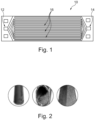
- FIG. 1 shows a bipolar plate 10 for a fuel cell with a two-phase cooling system.
- This bipolar plate has a coolant inlet 12, a coolant outlet 14, and a plurality of coolant channels 16.
- the coolant inlet 12 is in fluid communication with the coolant outlet 14 via the plurality of coolant channels 16.
- at least one inner surface of the coolant inlet 12, the coolant outlet 14, and at least one of the coolant channels 16 has a surface treatment to influence the flow pattern of the coolant along the at least one inner surface and/or the phase transition of the coolant.
- Figure 2 shows that various options are available for surface treatment of the inside of the coolant channels.
- One option is the use of grooved surfaces. This method is shown to work adequately, particularly with regard to gravity.
- wire mesh Another common option is the use of wire mesh. This technique also offers good performance. It's particularly worth noting that wire mesh works well against the effects of gravity, making it effective.
- a third surface treatment option is sintering. Sintered surfaces are particularly effective when it comes to counteracting gravity and achieve the best results in this regard.
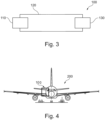
- FIG. 3 shows a fuel cell system 100 consisting of several components, including a fuel cell 110, which can also be designed as a fuel cell stack, and a two-phase cooling system 120 and a heat exchanger 130.
- the fuel cell 110 comprises a plurality of bipolar plates 10 (not shown) having a plurality of coolant channels 16.
- the surface treatment of an inner surface of the coolant inlet 12, the coolant outlet 14, and at least one of the plurality of coolant channels 16 positively influences the flow pattern of the coolant along at least one inner surface and/or a phase transition of the coolant.
- Figure 4 shows an aircraft 200 with a fuel cell system 100 with a fuel cell 100 and a bipolar plate 10 contained therein.
Landscapes
- Engineering & Computer Science (AREA)
- Chemical & Material Sciences (AREA)
- Chemical Kinetics & Catalysis (AREA)
- Sustainable Development (AREA)
- Sustainable Energy (AREA)
- Manufacturing & Machinery (AREA)
- Life Sciences & Earth Sciences (AREA)
- Electrochemistry (AREA)
- General Chemical & Material Sciences (AREA)
- Mechanical Engineering (AREA)
- Aviation & Aerospace Engineering (AREA)
- Composite Materials (AREA)
- Fuel Cell (AREA)
- Combustion & Propulsion (AREA)
Abstract
Es ist eine Bipolarplatte (10) und ein Brennstoffzellensystem (100), für eine Brennstoffzelle mit einem Zwei-Phasen-Kühlsystem angegeben, aufweisend:einen Kühlmitteleinlass (12),einen Kühlmittelauslass (14),eine Vielzahl von Kühlmittelkanälen (16),wobei der Kühlmitteleinlass (12) über die Vielzahl von Kühlmittelkanälen (16) mit dem Kühlmittelauslass (14) in Fluidverbindung steht,wobei mindestens eine Innenfläche von Kühlmitteleinlass (12), Kühlmittelauslass (14) und mindestens einem der Vielzahl von Kühlmittelkanälen (16) eine Oberflächenbehandlung aufweist um einen Strömungsverlauf einer Kühlflüssigkeit entlang mindestens einen Innenfläche und/oder einen Phasenübergang der Kühlflüssigkeit zu beeinflussen.
Description
- Die vorliegende Beschreibung betrifft allgemein das technische Gebiet der Luftfahrt. Insbesondere betrifft die Beschreibung eine Bipolarplatte mit oberflächenbehandelten Strömungskanälen sowie ein Brennstoffzellensystem mit einer derartigen Bipolarplatte.
- Brennstoffzellen stellen eine mögliche Lösung für den emissionsfreien Antrieb von beispielsweise Flugzeugen dar. Polymer-Elektrolyt-Brennstoffzellen-Stapel (PEMFC) erzeugen Strom und Elektrizität durch elektrochemische Reaktion von Wasserstoff und Sauerstoff zu Wasser. Bei dieser Reaktion entsteht Wärme, die abgeführt werden muss. In kommerziellen Brennstoffzellen-Stapeln wird dies durch eine Flüssigkeitskühlung erreicht. Eine potenzielle Alternative mit erheblichem Gewichtsreduktionspotenzial auf Systemebene besteht darin, die Flüssigkeitskühlung durch einen Zweiphasenkühlkreislauf zu ersetzen. Hierbei wird die latente Verdampfungswärme genutzt, um große Mengen an Wärme von den Brennstoffzellen abzuführen. Darüber hinaus verbessert der hohe Wärmeübergangskoeffizient im Vergleich zur einphasigen Kühlung die Leistung des thermischen Managementsystems. Die Änderung des Strömungsregimes im Brennstoffzellen-Stapel von Flüssigkeits- zu Zweiphasenkühlung erfordert dabei eine spezielle thermische Auslegung der Strömungsfelder.
- Es kann als Aufgabe der Erfindung betrachtet werden, die fluiddynamische Auslegung der Strömungsfelder zu verbessern.
- Diese Aufgabe wird gelöst durch die Gegenstände der unabhängigen Ansprüche. Weitere Ausführungsformen ergeben sich aus den abhängigen Ansprüchen sowie aus der folgenden Beschreibung.
- Gemäß einem Aspekt umfasst die Bipolarplatte für eine Brennstoffzelle ein Zwei-Phasen-Kühlsystem mit den folgenden Merkmalen: einen Kühlmitteleinlass, einen Kühlmittelauslass und eine Vielzahl von Kühlmittelkanälen. Der Kühlmitteleinlass steht über die Vielzahl von Kühlmittelkanälen mit dem Kühlmittelauslass in Fluidverbindung. Des Weiteren weist mindestens eine Innenfläche von Kühlmitteleinlass, Kühlmittelauslass und mindestens einer der Vielzahl von Kühlmittelkanälen eine Oberflächenbehandlung auf, um den Strömungsverlauf einer Kühlflüssigkeit entlang mindestens einer Innenfläche und/oder einen Phasenübergang der Kühlflüssigkeit zu beeinflussen.
- Ein Brennstoffzellensystem mit einer Bipolarplatte im Sinne der Erfindung ist eine technologische Einheit, die aus mehreren Komponenten besteht und zur Umwandlung chemischer Energie in elektrische Energie mittels elektrochemischer Reaktionen dient. Es umfasst in der Regel eine oder mehrere Brennstoffzellen, die als elektrochemische Zellen fungieren und die Hauptkomponente des Systems darstellen. Zusätzlich beinhaltet das System weitere Komponenten wie einen Brennstoffzufuhrmechanismus, einen Oxidationsmittelzufuhrmechanismus, einen Elektrolyt, Elektroden mit Katalysatoren und eine elektrische Verbindung.
- Das Brennstoffzellensystem nutzt eine chemische Reaktion zwischen einem Brennstoff und einem Oxidationsmittel, typischerweise Wasserstoff und Sauerstoff, um elektrischen Strom zu erzeugen. Dabei entsteht Wasser neben Wärme und elektrischer Energie als Reaktionsprodukt, wodurch das Brennstoffzellensystem als umweltfreundliche Energiequelle gilt. Die erzeugte elektrische Energie kann dann zur Versorgung von elektrischen Geräten, Fahrzeugen oder zur Stromerzeugung in verschiedenen Anwendungen genutzt werden.
- Ein Zwei-Phasen-Kühlsystem im Sinne der Erfindung ist eine Kühllösung, die darauf abzielt, große Wärmemengen effizient abzuführen, indem es den Phasenübergang von Flüssigkeit zu Dampf nutzt. Es wird häufig in Situationen eingesetzt, in denen herkömmliche einphasige Kühlsysteme an ihre Grenzen stoßen und nicht ausreichend Wärmeableitung bieten können oder ein besonders leichtes, insbesondere Gewicht optimiertes Kühlsystem von Nutzen ist.
- Bei einem Zwei-Phasen-Kühlsystem wird ein Kühlmittel verwendet, das bei geeigneten Temperaturen und Drücken sowohl in flüssiger als auch in gasförmiger Form existieren kann. Das Kühlmittel nimmt Wärme von der zu kühlenden Quelle auf und verdampft, wodurch es von flüssigem Zustand in einen gasförmigen Zustand übergeht. Der entstehende Dampf nimmt dabei große Mengen an Wärme auf.
- Ein Zwei-Phasen-Kühlsystem besteht in der Regel aus einem Verdampfer, in dem das Kühlmittel Wärme aufnimmt und verdampft, und einem Kondensator, in dem der Dampf wieder kondensiert und die Wärme abgibt. Das Kondensat wird dann zurück in den Verdampfer geleitet, um den Kühlkreislauf fortzusetzen.
- Ein Kühlmitteleinlass im Sinne der Erfindung ist eine Öffnung oder ein Anschluss in einem Kühlsystem, durch den das Kühlmedium, in diesem Fall das Kühlmittel, in das System eingeführt wird. Der Kühlmitteleinlass ermöglicht den kontrollierten Eintritt der Kühlflüssigkeit in den entsprechenden Bereich oder die Komponenten, die gekühlt werden müssen.
- Ein Kühlmittelauslass im Sinne der Erfindung ist eine Öffnung oder ein Anschluss in einem Kühlsystem, durch den das Kühlmedium, in diesem Fall das Kühlmittel, aus dem System abgeleitet wird. Der Kühlmittelauslass ermöglicht den kontrollierten Austritt der erwärmten Kühlflüssigkeit aus dem entsprechenden Bereich oder den Komponenten, um sie abzukühlen und den Wärmeaustausch zu gewährleisten.
- Eine Vielzahl von Kühlmittelkanälen im Sinne der Erfindung sind mehrere Kanäle oder Durchgänge in einer Komponente oder Struktur, durch die das Kühlmittel fließt, um Wärme abzuführen. Diese Kühlmittelkanäle dienen dazu, das Kühlmittel effizient über die zu kühlenden Bereiche oder Komponenten zu verteilen und den Wärmeaustausch zu ermöglichen. Durch die Vielzahl der Kühlmittelkanäle wird eine größere Oberfläche für den Wärmeübertragungsprozess geschaffen, was zu einer effektiven Kühlung führt.
- Die Oberflächenbehandlung der Innenseite von Kühlmitteleinlass, Kühlmittelauslass, Kühlmittelkanals oder Kombination hiervon bezieht sich auf die gezielte Veränderung oder Bearbeitung der Oberfläche, die mit dem Kühlmittel in Kontakt steht. Diese Behandlung kann verschiedene Verfahren und Techniken umfassen, die darauf abzielen, den Strömungsverlauf des Kühlmittels zu beeinflussen oder den Phasenübergang des Kühlmittels zu verbessern.
- Gemäß einer Ausführungsform umfasst mindestens ein Teil der Oberflächenbehandlung das Einbringen einer Makrostruktur, wie beispielsweise Rillen, ein Netz oder Sintern, auf der mindestens einen Innenfläche.
- Der Vorteil einer solchen Ausführungsform liegt darin, dass die Makrostruktur auf der Innenfläche der Bipolarplatte eine erhöhte Oberfläche und eine verbesserte Strömungsführung der Kühlflüssigkeit ermöglicht. Durch die Rillen, das Netz oder das Sintern entsteht eine vergrößerte Kontaktfläche zwischen der Kühlflüssigkeit und der Bipolarplatte, wodurch eine effiziente Wärmeübertragung gewährleistet wird. Dies führt zu einer verbesserten Kühlleistung und einem reduzierten Risiko von Hotspots in der Brennstoffzelle. Durch die gezielte Strömungsführung wird zudem eine gleichmäßige Verteilung der Kühlflüssigkeit über die gesamte Innenfläche der Bipolarplatte erreicht, was zu einer verbesserten Kühlung und einer erhöhten Leistungsfähigkeit der Brennstoffzelle führt.
- Gemäß einer weiteren Ausführungsform umfasst mindestens ein Teil der Oberflächenbehandlung das Einbringen von porösen Mikro- und/oder Nanopartikeln. Diese porösen Partikel können aus Materialien wie Metallen, Keramiken, Kohlenstoffen, Kunststoffen oder deren Kombinationen ausgewählt sein.
- Der Vorteil dieser Ausführungsform besteht darin, dass die porösen Mikro- und/oder Nanopartikel eine erhöhte Oberfläche und eine verbesserte Wärmeübertragungseffizienz bieten. Durch die Einführung dieser porösen Partikel in die Oberflächenstruktur der Bipolarplatte wird die Kontaktfläche zwischen der Kühlflüssigkeit und der Platte erheblich vergrößert. Durch die porösen Partikel kann zusätzlich das Kühlmittel durch Kapillartransport gleichmäßiger verteilt werden. Dies ermöglicht eine effektivere Aufnahme und Abgabe von Wärmeenergie, was zu einer verbesserten Kühlleistung und einer reduzierten thermischen Belastung der Brennstoffzelle führt.
- Darüber hinaus können die porösen Mikro- und/oder Nanopartikel auch dazu beitragen, Verunreinigungen oder Schadstoffe in der Kühlflüssigkeit zu filtern oder abzufangen. Dies trägt zur Erhaltung der Betriebsleistung und Lebensdauer der Brennstoffzelle bei, indem potenziell schädliche Partikel aus dem Kühlsystem entfernt werden.
- Die Auswahl der Materialien für die porösen Partikel, wie Metalle, Keramiken, Kohlenstoffe oder Kunststoffe, ermöglicht zudem eine Anpassung an spezifische Anforderungen hinsichtlich thermischer Stabilität, Korrosionsbeständigkeit und mechanischer Festigkeit. Dadurch kann die Bipolarplatte mit den porösen Partikeln in einer Vielzahl von Umgebungen und Betriebsbedingungen eingesetzt werden, ohne dass die Leistung beeinträchtigt wird.
- Gemäß einer weiteren Ausführungsform beinhaltet mindestens ein Teil der Oberflächenbehandlung das Einbringen von hydrophoben und/oder hydrophilen Schichten. Diese Schichten können aus Metallen, der Borgruppe, Stickstoffen, der Fluorgruppe, Chalkogenen, Halogenen oder deren Kombinationen ausgewählt sein.
- Der Vorteil dieser Ausführungsform liegt darin, dass die hydrophoben und/oder hydrophilen Schichten die Kontrolle über die Benetzungseigenschaften der Bipolarplatte ermöglichen. Durch das Einbringen dieser Schichten auf den Innenflächen der Kühlmitteleinlässe, Kühlmittelauslässe und der Kühlmittelkanäle kann der Fluss und die Verteilung der Kühlflüssigkeit präzise gesteuert werden.
- Die Verwendung hydrophober Schichten führt dazu, dass die Bipolarplatte wasserabweisend wird. Dies verhindert, dass sich Wasser oder andere flüssige Bestandteile der Kühlflüssigkeit auf der Oberfläche der Platte ansammeln und zu unerwünschten Strömungsblockaden oder Korrosion führen. Durch die Reduzierung der Benetzungseigenschaften können hydrophobe Schichten auch dazu beitragen, dass das Kühlmittel gleichmäßig und effizient durch die Kühlmittelkanäle fließt.
- Auf der anderen Seite ermöglichen hydrophile Schichten eine verbesserte Benetzung der Bipolarplatte durch das Kühlmittel. Dies kann zu einer besseren Verteilung der Flüssigkeit entlang der Innenflächen führen, wodurch die Wärmeübertragungseffizienz verbessert wird. Hydrophile Schichten können auch dazu beitragen, die Bildung von Gasblasen in der Kühlflüssigkeit zu reduzieren, was die Kühlleistung weiter verbessert.
- Die Auswahl der Materialien für die hydrophoben und/oder hydrophilen Schichten aus Metallen, der Borgruppe, Stickstoffen, der Fluorgruppe, Chalkogenen, Halogenen oder deren Kombinationen ermöglicht eine Anpassung an die spezifischen Anforderungen der Brennstoffzelle und des Kühlsystems. Je nach den betrieblichen Bedingungen und der Art der Kühlflüssigkeit können die Schichten so gewählt werden, dass sie eine optimale Leistung und Stabilität gewährleisten.
- Im Idealfall verbessert die Beschichtung auch die elektrische Leitfähigkeit zwischen den Teilplatten einer Bipolarplatte.
- Gemäß einer Ausführungsform sind die hydrophoben und/oder hydrophilen Schichten ausgelegt, den Siedeverzug zu verringern. Weiterhin können die hydrophoben und/oder hydrophilen Schichten oder die porösen Schichten so gestaltet sein, dass eine bessere Verteilung des Kühlmittels ermöglicht wird.
- Gemäß einer weiteren Ausführungsform sind hydrophobe Schichten im Bereich des Kühlmitteleinlasses vorgesehen, während im Bereich der Vielzahl von Kühlmittelkanälen poröse Mikro- und/oder Nanopartikel verwendet werden.
- Der Vorteil dieser Ausführungsform liegt darin, dass die spezifische Anwendung von hydrophoben Schichten im Bereich des Kühlmitteleinlasses und porösen Mikro- und/oder Nanopartikeln im Bereich der Kühlmittelkanäle zu unterschiedlichen Effekten führt, die jeweils von großem Nutzen sind.
- Durch die Verwendung von hydrophoben Schichten im Bereich des Kühlmitteleinlasses wird eine Abstoßung der Kühlflüssigkeit von der Oberfläche der Bipolarplatte erreicht. Dadurch wird verhindert, dass sich die Flüssigkeit an der Einlassstelle ansammelt und den Fluss blockiert. Die hydrophoben Schichten sorgen dafür, dass das Kühlmittel schnell und gleichmäßig über die Oberfläche der Bipolarplatte fließt, wodurch ein effizienter Wärmeaustausch gewährleistet wird.
- Im Bereich der Vielzahl von Kühlmittelkanälen werden poröse Mikro- und/oder Nanopartikel eingesetzt. Diese Partikel dienen dazu, die Oberfläche der Kühlmittelkanäle zu vergrößern und die Benetzungseigenschaften zu verbessern. Dadurch wird eine bessere Verteilung der Kühlflüssigkeit entlang der Kanäle erreicht, was zu einer effizienteren Kühlung der Bipolarplatte führt. Die porösen Partikel fördern den turbulenten Fluss der Kühlflüssigkeit und können auch zur Entfernung von Gasblasen beitragen, was die Leistung und Zuverlässigkeit des Kühlsystems verbessert.
- Durch die gezielte Verwendung von hydrophoben Schichten im Kühlmitteleinlassbereich und porösen Partikeln in den Kühlmittelkanälen wird also eine optimale Kombination von Effekten erzielt. Dies führt zu einer verbesserten Wärmeableitung, einer effizienteren Kühlung und einer insgesamt besseren Leistung der Brennstoffzelle.
- Gemäß einer weiteren Ausführungsform kann das Kühlmittel in der Bipolarplatte Methanol und/oder Ethanol umfassen.
- Ein Vorteil besteht darin, dass Methanol und Ethanol als Kühlflüssigkeiten eine hohe Wärmeleitfähigkeit aufweisen. Dies ermöglicht eine effiziente Ableitung der Wärme von der Bipolarplatte, was zu einer besseren Kühlung und einer geringeren Betriebstemperatur führt. Eine niedrigere Betriebstemperatur kann die Leistung und Lebensdauer der Brennstoffzelle verbessern.
- Ein weiterer Vorteil von Methanol und Ethanol liegt in ihrer guten Fließfähigkeit und geringen Viskosität. Diese Eigenschaften ermöglichen einen reibungslosen Durchfluss der Kühlflüssigkeit durch die Kühlmittelkanäle der Bipolarplatte. Ein effizienter Fluss gewährleistet eine gleichmäßige Verteilung der Kühlflüssigkeit entlang der Oberfläche der Bipolarplatte und eine effektive Wärmeableitung.
- Gemäß einer weiteren Ausführungsform kann das Kühlmittel in der Bipolarplatte gelöstes Inertgas wie beispielsweise Stickstoff umfassen. Hierdurch können sich beispielsweise in den Poren der porösen Mikro- und/oder Nanopartikeln Siedekeime bilden, wodurch der Siedeverzug vermindert wird.
- Gemäß einem anderen Aspekt umfasst das Brennstoffzellensystem mindestens eine Brennstoffzelle, ein Zwei-Phasen-Kühlsystem und eine Bipolarplatte. Die Bipolarplatte ist so konfiguriert, dass mindestens eine Innenfläche von Kühlmitteleinlass, Kühlmittelauslass und mindestens einem der Vielzahl von Kühlmittelkanälen eine Oberflächenbehandlung aufweist, um einen Strömungsverlauf einer Kühlflüssigkeit entlang der mindestens einen Innenfläche und/oder einen Phasenübergang der Kühlflüssigkeit zu beeinflussen.
- Durch die Verwendung einer Bipolarplatte mit einer Oberflächenbehandlung entlang der Innenflächen von Kühlmitteleinlass, Kühlmittelauslass und Kühlmittelkanälen werden sowohl der Strömungsverlauf der Kühlflüssigkeit als auch der Phasenübergang der Flüssigkeit beeinflusst.
- Ein Vorteil besteht darin, dass der Wärmeübergang zwischen der Bipolarplatte und der Kühlflüssigkeit verbessert wird. Die optimierte Strömung der Kühlflüssigkeit entlang der Innenflächen ermöglicht einen effizienten Abtransport der Wärme, was zu einer effektiven Kühlung der Brennstoffzelle führt. Dadurch wird die Betriebstemperatur der Brennstoffzelle stabilisiert und ihre Leistungsfähigkeit optimiert.
- Darüber hinaus trägt die gezielte Beeinflussung des Strömungsverlaufs und des Phasenübergangs dazu bei, eine gleichmäßige Verteilung der Kühlflüssigkeit in der Bipolarplatte zu erreichen. Dies verhindert die Bildung von Hot-Spots, also Bereichen mit erhöhter Temperatur, und gewährleistet eine homogene Kühlung über die gesamte Fläche der Brennstoffzelle. Ein gleichmäßiger Betrieb der Brennstoffzelle wird dadurch sichergestellt, was zu einer verbesserten Leistung und einer längeren Lebensdauer beiträgt.
- Durch das Bilden von Gasblasen durch die Oberflächenbehandlung einer Innenfläche wird ferner einem Siedeverzug des Kühlmittels vorgebeugt.
- Gemäß einem weiteren Aspekt handelt es sich bei dem Luftfahrzeug um ein Luftfahrzeug mit einem beschriebenen Brennstoffzellensystem. Das Brennstoffzellensystem kann dabei ausdrücklich auch in anderen Systemen Anwendung finden, wie Kraftfahrzeuge, Wasserfahrzeuge, Raumfahrt, oder sonstige mit einer Brennstoffzelle angetriebenen Einheiten.
- Das Luftfahrzeug mit diesem Brennstoffzellensystem bietet den Vorteil einer umweltfreundlichen und effizienten Energiequelle. Brennstoffzellensysteme haben ein geringes Emissionsprofil und können den Betrieb von Luftfahrzeugen nachhaltiger gestalten. Die Integration der beschriebenen Bipolarplatte mit der Oberflächenbehandlung verstärkt die Leistungsfähigkeit des Kühlsystems und trägt zur Zuverlässigkeit und Effizienz des Luftfahrzeugs bei, was letztendlich zu einem umweltfreundlicheren und fortschrittlicheren Luftverkehr beiträgt.
- Gemäß einer weiteren Ausführungsform weist die Bipolarplatte einen Vorwärm-Bereich auf, der von dem Kühlmitteleinlass mit dem Kühlmittelauslass über eine Vielzahl von Kühlmittelkanälen verbunden ist. Im Vorwärm-Bereich befindet sich mindestens ein Vorwärm-Kanal, der dazu dient, die Strömungsrichtung des Kühlmittels vor dem Eintritt in die Vielzahl von Kühlmittelkanälen umzulenken. Dadurch wird ein Temperaturgradient entlang des Vorwärm-Kanals reduziert. In einer spezifischen Ausführungsform weist der Vorwärm-Kanal im Vorwärm-Bereich mindestens einen Bereich auf, in dem das Kühlmittel entgegen der üblichen Fließrichtung strömt.
- Der Vorteil besteht dabei darin, dass durch den Vorwärm-Kanal im Vorwärm-Bereich die Strömungsrichtung des Kühlmittels umgelenkt und hierdurch ein Temperaturgradient entlang des Kanals reduziert wird.
- Gemäß einer weiteren Ausführungsform weist mindestens einer der Kühlmittelkanäle einen veränderlichen Querschnitt auf, der dazu dient, den Druckgradienten eines Kühlmittels entlang der Kanäle und/oder den Rückfluss des Kühlmittels zu reduzieren.
- Der Vorteil dieser Bipolarplatte mit einem effizienten Zwei-Phasen-Kühlsystem liegt darin, dass sie eine verbesserte Kühlleistung bietet. Durch den veränderlichen Querschnitt mindestens eines, insbesondere aller Kühlmittelkanäle wird der Druckgradient des Kühlmittels entlang der Kanäle reduziert. Dies ermöglicht eine gleichmäßigere Verteilung des Kühlmediums und verhindert einen unerwünschten Rückfluss des Kühlmittels.
- Ausführungsformen sind Kühlmittelkanäle mit einem in einem Vorwärm-Bereich befindlichen Vorwärm-Kanal und Kühlmittelkanäle mit einem veränderlichen Querschnitt. Diese sind vorteilhaft für die Kühlung in einem Zwei-Phasenkühlsystem, da sie beispielsweise das Bilden von Siedeinitiatoren des Kühlmittels begünstigen.
- Nachfolgend wird anhand der beigefügten Zeichnungen näher auf Ausführungsbeispiele der Erfindung eingegangen. Die Darstellungen sind schematisch und nicht maßstabsgetreu. Gleiche Bezugszeichen beziehen sich auf gleiche oder ähnliche Elemente. Es zeigen:
- Fig. 1
- eine Bipolarplatte;
- Fig. 2
- verschiedene Ausführungsformen der Oberflächenbehandlung der Innenseite eines Kühlmittelkanals;
- Fig. 3
- ein Brennstoffzellensystem;
- Fig. 4
- ein Luftfahrzeug mit einem Brennstoffzellensystem.
- Detaillierte Beschreibung von Ausführungsbeispielen
Figur 1 zeigt eine Bipolarplatte 10 für eine Brennstoffzelle mit einem Zwei-Phasen-Kühlsystem. Diese Bipolarplatte weist einen Kühlmitteleinlass 12, einen Kühlmittelauslass 14 und eine Vielzahl von Kühlmittelkanälen 16 auf. Der Kühlmitteleinlass 12 steht über die Vielzahl von Kühlmittelkanälen 16 mit dem Kühlmittelauslass 14 in Fluidverbindung. Es ist zu beachten, dass mindestens eine Innenfläche des Kühlmitteleinlasses 12, des Kühlmittelauslasses 14 und mindestens eines der Kühlmittelkanäle 16 eine Oberflächenbehandlung aufweist, um den Strömungsverlauf der Kühlflüssigkeit entlang der mindestens einen Innenfläche und/oder den Phasenübergang der Kühlflüssigkeit zu beeinflussen. -
Figur 2 zeigt, dass bei der Oberflächenbehandlung der Innenseite der Kühlmittelkanäle verschiedene Möglichkeiten zur Verfügung stehen. Eine Option ist die Verwendung von gerillten Oberflächen. Insbesondere in Bezug auf die Schwerkraft zeigt sich, dass diese Methode ausreichend funktioniert. - Eine andere gängige Möglichkeit besteht in der Verwendung von Drahtgeflechten. Diese Technik bietet ebenfalls eine gute Leistung. Besonders hervorzuheben ist, dass Drahtgeflechte gut gegen die Wirkung der Schwerkraft arbeiten und somit effektiv sind.
- Eine dritte Möglichkeit der Oberflächenbehandlung ist das Sintern. Gesinterte Oberflächen sind besonders effektiv, wenn es darum geht, der Schwerkraft entgegenzuwirken, und erzielen in dieser Hinsicht die besten Ergebnisse
-
Figur 3 zeigt ein Brennstoffzellensystem 100 bestehend aus mehreren Komponenten, darunter einer Brennstoffzelle 110, welche auch als Brennstoffzellen-Stack ausgestaltet sein kann und ein Zwei-Phasen-Kühlsystem 120 sowie einen Wärmetauscher 130. - Die Brennstoffzelle 110 umfasst dabei eine Vielzahl von Bipolarplatten 10 (nicht gezeigt), die eine Vielzahl von Kühlmittelkanälen 16 aufweist. Die Oberflächenbehandlung einer Innenfläche von Kühlmitteleinlass 12, Kühlmittelauslass 14 und mindestens einem der Vielzahl von Kühlmittelkanälen 16 beeinflusst dabei den Strömungsverlauf des Kühlmittels entlang der mindestens einen Innenfläche und/oder einen Phasenübergang der Kühlflüssigkeit positiv.
-
Figur 4 zeigt ein Luftfahrzeug 200 mit einem Brennstoffzellensystem 100 mit einer Brennstoffzelle 100 und einer darin enthaltenen Bipolarplatte 10. - Ergänzend ist darauf hinzuweisen, dass "umfassend" oder "aufweisend" keine anderen Elemente oder Schritte ausschließt und "eine" oder "ein" keine Vielzahl ausschließt. Ferner sei darauf hingewiesen, dass Merkmale oder Schritte, die mit Verweis auf eines der obigen Ausführungsbeispiele beschrieben worden sind, auch in Kombination mit anderen Merkmalen oder Schritten anderer oben beschriebener Ausführungsbeispiele verwendet werden können. Bezugszeichen in den Ansprüchen sind nicht als Einschränkung anzusehen.
-
- 10
- Bipolarplatte
- 12
- Kühlmitteleinlass
- 14
- Kühlmittelauslass
- 16
- Vielzahl von Kühlmittelkanälen
- 100
- Brennstoffzellensystem
- 110
- Brennstoffzelle
- 120
- Zwei-Phasen-Kühlsystem
- 130
- Wärmetauscher
- 200
- Luftfahrzeug
Claims (13)
- Bipolarplatte (10) für eine Brennstoffzelle mit einem Zwei-Phasen-Kühlsystem, aufweisend:einen Kühlmitteleinlass (12),einen Kühlmittelauslass (14),eine Vielzahl von Kühlmittelkanälen (16),wobei der Kühlmitteleinlass (12) über die Vielzahl von Kühlmittelkanälen (16) mit dem Kühlmittelauslass (14) in Fluidverbindung steht,wobei mindestens eine Innenfläche von Kühlmitteleinlass (12), Kühlmittelauslass (14) und mindestens einem der Vielzahl von Kühlmittelkanälen (16) eine Oberflächenbehandlung aufweist um einen Strömungsverlauf einer Kühlflüssigkeit entlang der mindestens einen Innenfläche und/oder einen Phasenübergang der Kühlflüssigkeit zu beeinflussen.
- Bipolarplatte (10) nach Anspruch 1,
wobei mindestens ein Teil der Oberflächenbehandlung das Einbringen einer Makrostruktur, vorzugsweise ausgewählt aus der Gruppe Rillen, Netz, Sintern auf der mindestens einen Innenfläche umfasst. - Bipolarplatte (10) nach einem der vorhergehenden Ansprüche,
wobei mindestens ein Teil der Oberflächenbehandlung das Einbringen von porösen Mikro- und/oder Nanopartikeln umfasst. - Bipolarplatte (10) nach Anspruch 3,
wobei die porösen Mikro- und/oder Nanopartikeln ausgewählt sind aus der Gruppe Metalle, Keramiken, Kohlenstoffe, Kunststoffe oder Kombinationen hiervon. - Bipolarplatte (10) nach Anspruch 3 oder 4, wobei die porösen Mikro- und/oder Nanopartikeln eingerichtet sind, einen Siedeverzug der Kühlflüssigkeit herabzusetzen.
- Bipolarplatte (10) nach einem der vorhergehenden Ansprüche,
wobei mindestens ein Teil der Oberflächenbehandlung das Einbringen von hydrophoben und/oder hydrophilen Schichten umfasst. - Bipolarplatte (10) nach Anspruch 6,
wobei die hydrophoben und/oder hydrophilen Schichten ausgewählt sind aus der Gruppe der Metalle, der Borgruppe, der Stickstoffe, Fluorgruppe, Chalkogene und Halogene, oder Kombinationen hiervon. - Bipolarplatte (10) nach Anspruch 6 oder 7, wobei die hydrophoben und/oder hydrophilen Schichten und/oder porösen Schichten eingerichtet sind, einen Siedeverzug der Kühlflüssigkeit herabzusetzen.
- Bipolarplatte (10) nach einem der Ansprüche 3 bis 8, wobei die hydrophoben Schichten im Bereich des Kühlmitteleinlass (12) vorgesehen sind und/oder im Bereich des mindestens einem der Vielzahl von Kühlmittelkanälen (16) poröse Mikro- und/oder Nanopartikel vorgesehen sind.
- Bipolarplatte (10) nach einem der vorhergehenden Ansprüche, wobei das Kühlmittel Methanol und/oder Ethanol umfasst.
- Bipolarplatte (10) nach einem der vorhergehenden Ansprüche, wobei das Kühlmittel gelöstes Inertgas umfasst.
- Brennstoffzellensystem (100), aufweisend:mindestens eine Brennstoffzelle (110),ein Zwei-Phasen-Kühlsystem (120),einen Wärmetauscher (130),eine Bipolarplatte (10) nach einem der Ansprüche 1 bis 11,wobei mindestens eine Innenfläche von Kühlmitteleinlass (12), Kühlmittelauslass (14) und mindestens einem der Vielzahl von Kühlmittelkanälen (16) eine Oberflächenbehandlung aufweist um einen Strömungsverlauf einer Kühlflüssigkeit entlang der mindestens einen Innenfläche und/oder einen Phasenübergang der Kühlflüssigkeit zu beeinflussen.
- Luftfahrzeug (200) mit einem Brennstoffzellensystem (100) nach Anspruch 12.
Applications Claiming Priority (1)
| Application Number | Priority Date | Filing Date | Title |
|---|---|---|---|
| DE102023124675.5A DE102023124675A1 (de) | 2023-09-13 | 2023-09-13 | Bipolarplatte mit oberflächenbehandelten strömungskanälen |
Publications (1)
| Publication Number | Publication Date |
|---|---|
| EP4525102A1 true EP4525102A1 (de) | 2025-03-19 |
Family
ID=92792039
Family Applications (1)
| Application Number | Title | Priority Date | Filing Date |
|---|---|---|---|
| EP24199896.2A Pending EP4525102A1 (de) | 2023-09-13 | 2024-09-12 | Bipolarplatte mit oberflächenbehandelten strömungskanälen |
Country Status (5)
| Country | Link |
|---|---|
| US (1) | US20250087718A1 (de) |
| EP (1) | EP4525102A1 (de) |
| JP (1) | JP2025041570A (de) |
| KR (1) | KR20250039292A (de) |
| DE (1) | DE102023124675A1 (de) |
Citations (2)
| Publication number | Priority date | Publication date | Assignee | Title |
|---|---|---|---|---|
| US20060088746A1 (en) * | 2004-10-25 | 2006-04-27 | 3M Innovative Properties Company | Passive dual-phase cooling for fuel cell assemblies |
| DE10392693B4 (de) * | 2002-05-22 | 2012-12-13 | General Motors Llc ( N. D. Ges. D. Staates Delaware ) | Verfahren zur Kühlung einer Brennstoffzelle sowie Brennstoffzelle und Kühlsystem |
Family Cites Families (1)
| Publication number | Priority date | Publication date | Assignee | Title |
|---|---|---|---|---|
| US20070154744A1 (en) * | 2005-12-30 | 2007-07-05 | Darling Robert M | Fuel cell coolant bubble control |
-
2023
- 2023-09-13 DE DE102023124675.5A patent/DE102023124675A1/de active Pending
-
2024
- 2024-09-10 KR KR1020240123191A patent/KR20250039292A/ko active Pending
- 2024-09-12 EP EP24199896.2A patent/EP4525102A1/de active Pending
- 2024-09-12 JP JP2024158280A patent/JP2025041570A/ja active Pending
- 2024-09-12 US US18/883,079 patent/US20250087718A1/en active Pending
Patent Citations (2)
| Publication number | Priority date | Publication date | Assignee | Title |
|---|---|---|---|---|
| DE10392693B4 (de) * | 2002-05-22 | 2012-12-13 | General Motors Llc ( N. D. Ges. D. Staates Delaware ) | Verfahren zur Kühlung einer Brennstoffzelle sowie Brennstoffzelle und Kühlsystem |
| US20060088746A1 (en) * | 2004-10-25 | 2006-04-27 | 3M Innovative Properties Company | Passive dual-phase cooling for fuel cell assemblies |
Also Published As
| Publication number | Publication date |
|---|---|
| JP2025041570A (ja) | 2025-03-26 |
| US20250087718A1 (en) | 2025-03-13 |
| KR20250039292A (ko) | 2025-03-20 |
| DE102023124675A1 (de) | 2025-03-13 |
Similar Documents
| Publication | Publication Date | Title |
|---|---|---|
| DE10392693B4 (de) | Verfahren zur Kühlung einer Brennstoffzelle sowie Brennstoffzelle und Kühlsystem | |
| EP1830426B1 (de) | Bipolarplatte, insbesondere für einen Brennstoffzellenstapel eines Fahrzeugs | |
| DE102014207594A1 (de) | Bipolarplatte für eine Elektrolyse- oder Brennstoffzelle | |
| DE112021000706B4 (de) | Brennstoffzellensystem, dessen Verwendung und Verfahren zu dessen Betrieb | |
| DE102016114948A1 (de) | Vorrichtung zum Temperieren eines Brennstoffzellenstapels sowie Kraftfahrzeug mit einer solchen Vorrichtung | |
| EP3328678A1 (de) | Traktionsbatterie für ein kraftfahrzeug mit einer kühlvorrichtung | |
| DE102022110122A1 (de) | Elektrolyseur und Verfahren zur Temperierung eines Elektrolyse-Stacks | |
| WO2015155125A1 (de) | Bipolarplatte und brennstoffzelle | |
| EP4525102A1 (de) | Bipolarplatte mit oberflächenbehandelten strömungskanälen | |
| DE102021118975B4 (de) | Kühlsystem, Brennstoffzellenfahrzeug und Verfahren zum Betreiben eines Kühlsystems | |
| DE102010023021A1 (de) | Brennstoffzelle mit einem Stack aus mehreren Bipolarplatten | |
| DE10306081B4 (de) | Brennstoffzellenstack mit Bipolarplatten | |
| DE102016120459A1 (de) | Brennstoffzellensystem mit einem Kühlmittelkreislauf sowie Fahrzeug ein Brennstoffzellensystem aufweisend | |
| EP1381104A1 (de) | Brennstoffzellenstapel mit Gegestromkühlung und einer Vielzahl von Kühlmittelsammelkanälen parallel zur Stapelachse | |
| DE102015100704B3 (de) | Kathodenplatte eines Bipolarelements und Verfahren zum Betreiben einer solchen Kathodenplatte | |
| DE102017215479A1 (de) | Brennstoffzellenstapel mit integrierter Endplattentemperierung sowie Brennstoffzellensystem und Fahrzeug mit einem solchen | |
| WO2016030095A1 (de) | Bipolarplatte und brennstoffzelle | |
| DE102022128447A1 (de) | Hohlzylindrische Wärmeübertragungsvorrichtung zum Kühlen einer Zelle eines elektrochemischen Energiespeichers und Anordnung zum Kühlen einer Zelle eines elektrochemischen Energiespeichers | |
| DE112022004052T5 (de) | Batterie-Wärmemanagementsystem mit Flüssigkeitskühlung und Kühlplatte | |
| DE102022121853A1 (de) | Fluidtemperierbare Traktionsbatterie | |
| DE102023124669A1 (de) | Bipolarplatte mit vorwärmkanal | |
| DE102015215381A1 (de) | Membran-Elektroden-Einheit für eine Brennstoffzelle sowie Brennstoffzelle | |
| EP4542691A1 (de) | Brennstoffzellensystem mit wärmerohr | |
| DE102023124673A1 (de) | Bipolarplatte mit einem strömungskanal mit veränderlichem querschnitt | |
| EP4525106B1 (de) | Brennstoffzellensystem mit einer zwei-phasenkühlung mit einem ejektor |
Legal Events
| Date | Code | Title | Description |
|---|---|---|---|
| PUAI | Public reference made under article 153(3) epc to a published international application that has entered the european phase |
Free format text: ORIGINAL CODE: 0009012 |
|
| STAA | Information on the status of an ep patent application or granted ep patent |
Free format text: STATUS: THE APPLICATION HAS BEEN PUBLISHED |
|
| AK | Designated contracting states |
Kind code of ref document: A1 Designated state(s): AL AT BE BG CH CY CZ DE DK EE ES FI FR GB GR HR HU IE IS IT LI LT LU LV MC ME MK MT NL NO PL PT RO RS SE SI SK SM TR |
|
| STAA | Information on the status of an ep patent application or granted ep patent |
Free format text: STATUS: REQUEST FOR EXAMINATION WAS MADE |
|
| 17P | Request for examination filed |
Effective date: 20250728 |