EP4524875A2 - Verfahren und vorrichtung zur bildverarbeitung, elektronische vorrichtung und speichermedium - Google Patents
Verfahren und vorrichtung zur bildverarbeitung, elektronische vorrichtung und speichermedium Download PDFInfo
- Publication number
- EP4524875A2 EP4524875A2 EP24221052.4A EP24221052A EP4524875A2 EP 4524875 A2 EP4524875 A2 EP 4524875A2 EP 24221052 A EP24221052 A EP 24221052A EP 4524875 A2 EP4524875 A2 EP 4524875A2
- Authority
- EP
- European Patent Office
- Prior art keywords
- image
- portrait
- area
- processed
- cropped
- Prior art date
- Legal status (The legal status is an assumption and is not a legal conclusion. Google has not performed a legal analysis and makes no representation as to the accuracy of the status listed.)
- Granted
Links
Images



Classifications
-
- G—PHYSICS
- G06—COMPUTING OR CALCULATING; COUNTING
- G06T—IMAGE DATA PROCESSING OR GENERATION, IN GENERAL
- G06T17/00—Three-dimensional [3D] modelling for computer graphics
-
- G—PHYSICS
- G06—COMPUTING OR CALCULATING; COUNTING
- G06T—IMAGE DATA PROCESSING OR GENERATION, IN GENERAL
- G06T7/00—Image analysis
- G06T7/10—Segmentation; Edge detection
- G06T7/194—Segmentation; Edge detection involving foreground-background segmentation
-
- G—PHYSICS
- G06—COMPUTING OR CALCULATING; COUNTING
- G06T—IMAGE DATA PROCESSING OR GENERATION, IN GENERAL
- G06T11/00—Two-dimensional [2D] image generation
- G06T11/60—Creating or editing images; Combining images with text
-
- G—PHYSICS
- G06—COMPUTING OR CALCULATING; COUNTING
- G06T—IMAGE DATA PROCESSING OR GENERATION, IN GENERAL
- G06T19/00—Manipulating three-dimensional [3D] models or images for computer graphics
- G06T19/20—Editing of three-dimensional [3D] images, e.g. changing shapes or colours, aligning objects or positioning parts
-
- G—PHYSICS
- G06—COMPUTING OR CALCULATING; COUNTING
- G06T—IMAGE DATA PROCESSING OR GENERATION, IN GENERAL
- G06T3/00—Geometric image transformations in the plane of the image
-
- G—PHYSICS
- G06—COMPUTING OR CALCULATING; COUNTING
- G06T—IMAGE DATA PROCESSING OR GENERATION, IN GENERAL
- G06T3/00—Geometric image transformations in the plane of the image
- G06T3/40—Scaling of whole images or parts thereof, e.g. expanding or contracting
-
- G—PHYSICS
- G06—COMPUTING OR CALCULATING; COUNTING
- G06T—IMAGE DATA PROCESSING OR GENERATION, IN GENERAL
- G06T7/00—Image analysis
- G06T7/10—Segmentation; Edge detection
- G06T7/11—Region-based segmentation
-
- G—PHYSICS
- G06—COMPUTING OR CALCULATING; COUNTING
- G06T—IMAGE DATA PROCESSING OR GENERATION, IN GENERAL
- G06T2200/00—Indexing scheme for image data processing or generation, in general
- G06T2200/04—Indexing scheme for image data processing or generation, in general involving 3D image data
-
- G—PHYSICS
- G06—COMPUTING OR CALCULATING; COUNTING
- G06T—IMAGE DATA PROCESSING OR GENERATION, IN GENERAL
- G06T2207/00—Indexing scheme for image analysis or image enhancement
- G06T2207/20—Special algorithmic details
- G06T2207/20112—Image segmentation details
- G06T2207/20132—Image cropping
-
- G—PHYSICS
- G06—COMPUTING OR CALCULATING; COUNTING
- G06T—IMAGE DATA PROCESSING OR GENERATION, IN GENERAL
- G06T2210/00—Indexing scheme for image generation or computer graphics
- G06T2210/22—Cropping
-
- G—PHYSICS
- G06—COMPUTING OR CALCULATING; COUNTING
- G06T—IMAGE DATA PROCESSING OR GENERATION, IN GENERAL
- G06T2219/00—Indexing scheme for manipulating 3D models or images for computer graphics
- G06T2219/20—Indexing scheme for editing of 3D models
- G06T2219/2021—Shape modification
Definitions
- the invention relates to the field of computer technology, in particular to an artificial intelligence field such as computer vision, and in particular to a method and an apparatus for image processing, a storage medium and a computer program product.
- a photo story is generally a collection of associated images.
- the photos in the collection may be created or processed before delivering the photo collection.
- the invention provides a method and an apparatus for image processing, an electronic device and a storage medium.
- an image with the effect that a portrait appears to jump out of a picture frame may be obtained by processing the image.
- the image may be referred to as a portrait breaking image or a portrait highlighting image and the like.
- a portrait breaking image may be obtained by manually using an application program having an image processing function.
- this method is cumbersome, complex, inefficient, and time-consuming.
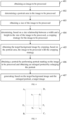
- FIG. 1 is a schematic flowchart illustrating a method for image processing provided in an embodiment of the invention.
- the method for image processing in embodiments of the invention may be performed by an apparatus for image processing in embodiments of the invention.
- the apparatus may be configured in an electronic device.
- the electronic device may be any device with computing capabilities, such as a personal computer (PC), a mobile terminal, a server, and the like.
- the mobile terminal may be, for example, a vehicle-mounted device, a mobile phone, a tablet, a personal digital assistant, a wearable device, or other hardware devices with various operating systems, touch screens, and/or displays.
- the method for image processing includes the following steps 101 to 104.
- step 101 an image to be processed is obtained.
- the image to be processed may be an image including a portrait.
- the image to be processed may be an image obtained by photographing, or an image filtered from a plurality of images provided by a user, or an image extracted from a video, and the like, or an image obtained by other means, which is not limited therein.
- a candidate image may be obtained, and it is determined whether the candidate image satisfies a preset condition. If the candidate image satisfies the preset condition, the candidate image is determined to be the image to be processed. There may be one or more candidate images, and which is not limited therein. If there are a plurality of candidate images, it may be determined whether each candidate image satisfies the preset condition.
- the preset condition may include, but are not limited to: a number of portraits included being a preset number, a portrait included being an area image of a partial human body, a photographing label being a preset label, or the candidate image being an original image.
- the preset number may be one, such as the image to be processed includes one portrait.
- face recognition may be performed on the image to be processed, and a number of portraits in the image to be processed may be determined by a face recognition result.
- the included portrait is an area image of a partial human body, i.e., the included portrait is not a full-body photograph.
- a portrait segmentation operator may be used to process the image to be processed and it is determined whether the portrait is attached to an edge or not based on a segmentation result. If the portrait is not attached to an edge, the portrait may be determined as a full-body photograph.
- the photographing label may be configured to characterize a photographing of the image, such as selfie, others shot, tripod shot, and the like.
- the preset label may be others shot, tripod shot, and the like.
- the image to be processed is not a selfie.
- the image to be processed is an original image and not a stitched image.
- the image to be processed may simultaneously satisfy preset conditions, including: only one portrait, the portrait being not full-body, not a selfie, not a stitched picture, and the like.
- an image that is suitable for making a portrait breaking image may be obtained by filtering the candidate images based on the preset condition, so as to improve the portrait breaking effect of the target image obtained finally.
- a background erased portrait may be obtained by performing background erasing on the candidate image
- a matting portrait may be obtained by performing portrait matting on the candidate image
- the background erased portrait may be understood as a portrait obtained by performing background erasing on the candidate image.
- the background erased portrait may be obtained by processing the candidate image using a background erasing operator.
- the matting portrait may be understood as a portrait obtained by performing the portrait matting on the candidate image.
- the matting portrait may be obtained by processing the candidate image using a portrait matting operator.
- the portrait obtained by performing the portrait matting on the candidate image may include a background similar to a depth of a person.
- the portrait obtained by performing the background erasing may include the bag, and the portrait obtained by performing the portrait matting may include only the person but not the bag.
- a ratio of different pixel points in the background erased portrait and the matting portrait to pixel points of the matting portrait is determined by comparing the background erased portrait with the matting portrait. If the ratio is less than a third threshold, the background and the person in the candidate image are clear hierarchical.
- the image to be processed may simultaneously satisfy the preset conditions, including: only one portrait, the portrait is not full-body, not a selfie, not a stitched picture, the ratio of different pixel points in the background erased portrait and the matting portrait to pixel points of the matting portrait being less than the third threshold, and the like.
- the third threshold is 0.25.
- the third threshold may be determined according to an actual need and is not limited therein.
- the image to be processed may be ensured to be an image with a clear hierarchy of the person and the background, so as to improve the portrait breaking effect of the target image obtained finally.
- a portrait area in the image to be processed is determined, and a target background image is cropped from the image to be processed based on the portrait area.
- the image to be processed may be detected to determine a position of the portrait in the image to be processed.
- An area occupied by the portrait in the image to be processed may be determined based on the portrait position, i.e., the portrait area may be determined.
- the target background image cropped from the image to be processed based on the portrait area may include part of the portrait area or all the portrait area, which is not limited herein.
- the target background image may be a square.
- a side length of the square may be equal to a width or a height of the image to be processed. For example, if the width of the image to be processed is smaller than the height, the side length of the square may be equal to the width of the image to be processed. If the height of the image to be processed is smaller than the width, the side length of the square may be equal to the height of the image to be processed.
- the target background image may be a rectangle.
- a short side of the rectangle may be equal to a width or a height of the image to be processed.
- a side length of the short side of the rectangle may be equal to the width of the image to be processed, and a side length of a long side of the rectangle is smaller than the height of the image to be processed.
- the side length of the short side of the rectangle may be equal to the height of the image to be processed, and the side length of the long side of the rectangle may be smaller than the width of the image to be processed.
- a portrait is obtained by performing portrait matting on the image to be processed and an enlarged portrait is obtained by enlarging the portrait.
- a portrait may be obtained by performing portrait matting on the image to be processed using the background erasing operator.
- a portrait may be obtained by performing portrait matting on the image to be processed using the portrait segmentation operator.
- a portrait output by a portrait segmentation model may be obtained by performing portrait matting on the image to be processed using a pre-trained portrait segmentation model.
- a height of the enlarged portrait may be greater than a height of the target background image to achieve a portrait overflow effect.
- the height of the target background image is 0.9 times the height of the enlarged portrait.
- the width of the enlarged portrait is smaller than the width of the target background image to avoid overflow of the portrait in the width, resulting in portrait cropping.
- the height of the target background image may be a preset multiple of the height of the enlarged portrait, and the preset multiple may be determined according to an actual need, which is not limited therein.
- a target image is generated based on the target background image and the enlarged portrait.
- the preset number may be 2. That is, two horizontal equally spaced transparent lines and two vertical equally spaced transparent lines may be added to the target background image, so that the processed background image has a nine-grid effect (the two horizontal equally spaced transparent lines and two vertical equally spaced transparent lines cause the target background picture to be divided into nine grids with the same size). Then the finally obtained target image has the effect that the portrait appears to jump out of the nine-grid frame, and the target image may be referred to as a nine-grid portrait breaking image.
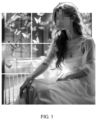
- FIG. 2 is an image to be processed
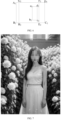
- FIG. 3 may be obtained by processing FIG. 2 using the method for image processing described above.
- the preset width-to-height ratio may be four to three or three to two, or the value thereof, which is not limited therein.
- a color of the background image with the preset width-to-height ratio may be white or black, or other colors, which is not limited therein.
- the target image may be obtained by pasting the target background image in the background image with the preset width-to-height ratio and pasting the enlarged portrait along a bottom edge of the portrait in the processed background image.
- the portrait area in the image to be processed is determined, the target background image is cropped, based on the portrait area, from the image to be processed, the portrait is obtained by performing portrait matting on the image to be processed and the portrait is enlarged. Since the height of the enlarged portrait is greater than the height of the target background image, the target image with the portrait breaking effect may be generated based on the target background image and the enlarged portrait. Thus, the target background image may be automatically cropped based on the portrait area in the image to be processed, and the portrait breaking effect may be realized by enlarging the portrait, which improves the efficiency of the generation of the portrait breaking image.
- FIG. 4 is a schematic flowchart illustrating a method for image processing provided in another embodiment of the invention.
- the method for image processing includes the following steps 401 to 407.
- step 401 an image to be processed is obtained.
- step 401 may be realized in any implementation of the embodiments of the invention, which is not be repeated herein.
- a portrait area in the image to be processed is determined.
- the step 402 may be realized in any implementation of the embodiments of the invention, which is not be repeated herein.
- a size of the image to be processed is obtained.
- attribute information of the image to be processed may be obtained, and the size of the image to be processed may be obtained from the attribute information.
- the size include a width and a height.
- a cropping strategy for the image to be processed is determined based on a size relationship between a width and a height in the size of the image to be processed.
- size relationships between the width and the height are different, and corresponding cropping strategies are different. That is, there is a cropping strategy corresponding to the width being smaller than the height, and there is also a cropping strategy corresponding to the width being larger than the height.
- the cropping strategy may include cropping the image to be processed from bottom to top or from top to bottom.
- the cropping strategy may include cropping the image to be processed from left to right or from right to left.
- the target background image is obtained by using the cropping strategy to crop, based on the portrait area, the image to be processed.
- a first area to be cropped may be determined in the image to be processed in a bottom-to-top order. If the first area to be cropped includes all of the portrait area, i.e., includes a complete portrait area, the target background image is obtained by cropping the first area to be cropped.
- a second area to be cropped may be determined in the image to be processed in a top-to-bottom order. If a proportion of a portrait area included in the second area to be cropped in an entire portrait area is greater than a first threshold, the target background image is obtained by cropping the second area to be cropped.
- the width of the first area to be cropped is the same as the width of the image to be processed
- the width of the second area to be cropped is the same as the width of the image to be processed
- it is determined that the width of the target background image is also the same as the width of the image to be processed.
- a rectangle may be used to crop the image to be processed.
- An area occupied by the rectangle in the image to be processed may be used as the first area to be cropped or the second area to be cropped.
- the rectangle may be a square, and a side length of the square is the same as the width of the image to be processed.
- the rectangle may also be a preset rectangle with two adjacent sides having different side lengths. For example, a side length of a short side of the preset rectangle is the same as the width of the image to be processed, and a side length of a long side of the preset rectangle is smaller than a height of the image to be processed.
- the target background image may be obtained by cropping the second area to be cropped.
- the first threshold may be determined according to an actual need, which is not limited therein.
- the first area to be cropped may be determined in the bottom-to-top order. It is determined whether or not to crop the first area to be cropped based on whether or not the first area to be cropped includes a complete portrait area. If the first area to be cropped does not include the complete portrait area, a second area to be cropped may be determined in the top-to-bottom order.
- the portrait area may first be determined whether the portrait area touches a bottom of the image to be processed, and a cropping mode of the image to be processed may be determined based on a determining result. If the portrait area does not touch the bottom of the image to be processed, then the image to be processed may be cropped in the top-to-bottom order. If the proportion of a portrait area included in an area to be cropped in the entire portrait area is greater than the first threshold, the area to be cropped may be cropped. If the portrait region touches the bottom of the image to be processed, the image to be processed may be cropped in the bottom-to-top order first, and then in the top-to-bottom order if the first area to be cropped does not include all of the portrait area. Therefore, the cropping time may be saved and the efficiency may be improved while ensuring that a cropped target background image meets the requirement.
- a rectangle A1B1C1D1 is an area of the image to be processed, and an area a1b1c1d1 is the portrait area. It is seen that the portrait area does not touch the bottom of the image to be processed, the image to be processed may be cropped in the top-to-bottom order. Since the proportion of the portrait area in a square A1E1F1D1 in the entire portrait area is greater than the first threshold, the target background image may be obtained by cropping the square A1E1F1D1.
- the proportion of the portrait area included in the second area to be cropped in the entire portrait area is smaller than the first threshold, it may be determined that a generation of the target image is failed, and prompt information for a failure of the generation of the target image may be returned.
- the prompt information includes a reason for the failure of the generation.
- the target background image may be obtained by cropping the second area to be cropped, or the prompt information for the failure of the generation of the target image may be returned.
- the specific details may be determined according to an actual need, which is not limited therein.
- a preset rectangle may be slid horizontally in the image to be processed.
- An area occupied by the preset rectangle in the image to be processed may be determined as a third area to be cropped. If it is determined that the portrait area is located in a preset area of the third area to be cropped, the target background image is obtained by cropping the third area to be cropped.
- the image to be processed contains a preset rectangle.
- a side of the preset rectangle is parallel to a vertical edge of the image to be processed, and a side length of the side is the same as the height of the image to be processed.
- the preset rectangle may be a square, and a side length of the square is the same as the height of the image to be processed.
- the preset rectangle may also be a rectangle with two adjacent sides having different side lengths.
- a side length of a short side of the preset rectangle may be the same as the height of the image to be processed
- a side length of a long side of the preset rectangle may be smaller than the width of the image to be processed.
- the side length of the long side of the preset rectangle may be the same as the height of the image to be processed.
- the preset area is a left area or a right area of the third area to be cropped and a proportion of the portrait area in the third area to be cropped is less than a second threshold.
- the target background image may be obtained by cropping the third area to be cropped.
- a rectangle A2B2C2D2 is an area of the image to be processed, and a2b2c2d2 is the portrait area.
- the square E2F2G2H2 may be slid horizontally within the rectangle A2B2C2D2, and when the square E2F2G2H2 is at a position shown in FIG. 6 , the portrait area is located in a preset area of the square E2F2G2H2, and the target background image may be obtained by cropping the square E2F2G2H2.
- the second threshold may be determined according to an actual need, which is not limited therein.
- the third area to be cropped is determined by sliding the preset rectangle horizontally in the image to be processed.
- the third area to be cropped is cropped, so that the portrait is located in a preset area of the target background image, which may improve the visual impression.
- a point at an upper left corner of the image to be processed may be used as an origin.
- a rectangular coordinate system is established with a positive direction of an x-axis pointing rightwards and a positive direction of a y-axis pointing downwards.
- a position of a center point of the portrait is determined.
- An initial position and a moving direction of the square are determined based on the position of the center point of the portrait.
- a range of a moving length is determined based on a horizontal coordinate of a left edge of the portrait or a horizontal coordinate of a right edge of the portrait, and a side length of the square.
- the third area to be cropped is obtained by moving, based on the range of the moving length, the square from the initial position along the moving direction. If the portrait area is located in the preset area of the third area to be cropped, the target background image may be obtained by cropping the third area to be cropped. Therefore, the area to be cropped that meets the requirement is determined based on the range of the moving length, and the cropping efficiency may be improved.
- the square may be moved from the initial position along the moving direction by moving a length to be moved, in which the length to be moved is within the range of moving length.
- An area to be cropped that meets the requirement may be obtained by differentially adjusting the length to be moved to move the square from the initial position along the moving direction.
- a right edge of the square may be overlapped with a right edge of the portrait, which is determined as the initial position of the square. Since the portrait area is to be located within the square, it may be determined that the moving direction of the square is rightward, and the range of the moving length may be determined based on the horizontal coordinate of the right edge of the portrait, the side length of the square, the width of the image to be processed, and the like.
- the third area to be cropped that meets the requirement is obtained by moving the square to the right from the initial position based on the range of the moving length.
- a minimum moving length may be determined based on the horizontal coordinate of the right edge of the portrait and the side length of the square.
- a maximum moving length may be determined based on the horizontal coordinate of the right edge of the portrait and the width of the image to be processed. Then the range of the moving length is greater than or equal to the minimum moving length and smaller than or equal to the maximum moving length.
- a left edge of the square may be overlapped with a left edge of the portrait, which is determined as the initial position of the square. Since the portrait area is to be located within the square, it may be determined that the moving direction of the square is leftward, and the range of the moving length may be determined based on a horizontal coordinate of the left edge of the portrait, the side length of the square, the width of the image to be processed, and the like.
- the third area to be cropped that meets the requirement is obtained by moving the square to the left from the initial position based on the range of the moving length.
- a maximum moving length may be determined based on the horizontal coordinate of the left edge of the portrait.
- a minimum moving length may be determined based on the horizontal coordinate of the left edge of the portrait, the side length of the square and the width of the image to be processed. Then the range of the moving length is greater than or equal to the minimum moving length and smaller than or equal to the maximum moving length.
- the width of the portrait area is greater than the height of the image to be processed, it may be determined that a generation of the target image is failed. Further, prompt information for a failure of the generation of the target image may be returned, and the prompt information includes a reason for the failure of the generation.
- a portrait is obtained by performing portrait matting on the image to be processed and an enlarged portrait is obtained by enlarging the portrait.
- the step 406 may be realized in any implementation of the embodiments of the invention, which is not be repeated herein.
- a cropped portrait may be obtained by cropping the portrait based on the portrait area included in the target background image, and the enlarged portrait may be obtained by enlarging the cropped portrait.
- the cropped portrait is the same as the portrait included in the target background image.
- a target image is generated based on the target background image and the enlarged portrait.
- the step 407 may be realized in any implementation of the embodiments of the invention, which is not be repeated herein.
- the FIG. 2 is taken as the image to be processed, and a width of the FIG. 2 is smaller than a height of the FIG. 2 .
- the image to be processed is cropped using a square with a side length the same as the width of the image to be processed.
- a first area to be cropped is determined in the FIG. 2 in a bottom-to-top order. If the first area to be cropped includes a complete portrait area, the target background image is obtained by cropping the first area to be cropped.
- a nine-grid effect image is obtained by adding two equally spaced transparent lines horizontally and vertically to the target background image. The image shown in FIG.
- 3 is obtained by pasting the nine-grid effect image in a white background image with a preset width-to-height ratio and pasting the enlarged portrait along a bottom edge of the portrait in the nine-grid effect image (pasting the enlarged portrait in the nine-grid effect image with a bottom edge of the enlarged portrait aligned with a bottom edge of the portrait in the nine-grid effect image).
- FIG. 7 is taken as the image to be processed, and a width of the FIG. 7 is smaller than a height of the FIG. 7 .
- the FIG. 7 is cropped using a square with a side length the same as the width of the image to be processed.
- a first area to be cropped is determined in the FIG. 7 in a bottom-to-top order. If the first area to be cropped does not include a complete portrait area, a second area to be cropped is determined in a top-to-bottom order. A proportion of a portrait area included in the second area to be cropped in an entire portrait area is greater than a first threshold of 60%. Then a target background image is obtained by cropping the second area to be cropped.
- a cropped portrait may be obtained by cropping the portrait in the target background image, and an enlarged portrait may be obtained by enlarging the cropped portrait.
- a nine-grid effect image is obtained by adding two equally spaced transparent lines horizontally and vertically to the target background image.
- the image shown in FIG. 8 is obtained by pasting the nine-grid effect image in a white background image with a preset width-to-height ratio and pasting the enlarged portrait along a bottom edge of the portrait in the nine-grid effect image.
- FIG. 9 is taken as the image to be processed, and a height of the FIG. 9 is smaller than a width of the FIG. 9 .
- a third area to be cropped is determined by sliding a square with a side length the same as the height of the FIG. 9 in the FIG. 9 .
- the target background image is obtained by cropping the third area to be cropped.
- a nine-grid effect image is obtained by adding two equally spaced transparent lines horizontally and vertically to the target background image.
- An image shown in FIG. 10 is obtained by pasting the nine-grid effect image in a black background image with a preset width-to-height ratio and pasting an enlarged portrait along a bottom edge of a portrait in the nine-grid effect image.
- the cropping strategy for the image to be processed is determined based on the size relationship between the width and the height in the size of the image to be processed, the target background image is obtained by cropping, based on the portrait area, the image to be processed using a corresponding cropping strategy. Therefore, for the vertical image and the horizontal image, target background images that meet the requirement may be obtained by cropping using different cropping strategies, so as to improve the portrait breaking effect of the target image obtained finally.
- the following is an example of obtaining a target background image by cropping using a square, and generating a nine-grid breaking image.
- the process of image processing in the invention may include the following steps.
- a side length of the square may be defined with a width of the vertical image, and the vertical image is cropped in a bottom-to-top order first. If a cropped square does not completely include a portrait rectangle area, it is tried to crop the vertical image in a bottom-to-top order until a portrait area within a cropped square is greater than 60% of a complete portrait area. If the portrait area is less than 60% of the complete portrait area, cropping is failed, and therefore the nine-grid breaking image is failed to be generated.
- a side length of the square may be defined with a height of the horizontal image.
- the square is slid within the horizontal image, and the portrait area is cropped to within a one-third range of a left side of the square or a one-third range of a right side of the square to ensure a better visual impression. Since a square is cropped from the horizontal image, a key to crop the square is to determine coordinates of an upper left corner of the square.
- a portrait may be matted by using a portrait cropping operator.
- a key for the portrait breaking image is that the portrait overflows the background.
- An overflow effect may be obtained by calculating a height of the portrait, enlarge the portrait to be higher than the cropped square.
- the portrait should not overflow the photo in the width, otherwise a body in the portrait may be cropped. If left and right sides of the body overflow the edge of a square background after enlarging the portrait, it can be considered that a nine-grid breaking image is failed to be generated.
- a nine-grid effect image is obtained by adding two equally spaced transparent lines horizontally and vertically to the cropped square.
- the nine-grid effect image is pasted on a background image with a width-to-height ratio of four to three.
- the portrait breaking image may be generated by pasting the enlarged portrait along a bottom edge of an original portrait in the square.
- FIG. 11 is a block diagram illustrating an apparatus for image processing provided in an embodiment of the invention.
- the apparatus 1100 for image processing includes an obtaining module 1110, a cropping module 1120, a matting and enlarging module 1130 and a generating module 1140.
- the obtaining module 1110 is configured to obtain an image to be processed.
- the cropping module 1120 is configured to determine a portrait area in the image to be processed, and crop, based on the portrait area, a target background image from the image to be processed.
- the matting and enlarging module 1130 is configured to obtain a portrait by performing portrait matting on the image to be processed and obtain an enlarged portrait by enlarging the portrait, in which a height of the enlarged portrait is greater than a height of the target background image;
- the generating module 1140 is configured to generate a target image based on the target background image and the enlarged portrait.
- the cropping module 1120 is configured to:
- the size relationship is that the width is smaller than the height
- the cropping module 1120 is configured to:
- the matting and enlarging module 1130 is configured to:
- the size relationship is that the height is smaller than the width
- the cropping module 1120 is configured to:
- the preset rectangle is a square
- the cropping module 1120 is configured to:
- the generating module 1140 is configured to:
- the obtaining module 1110 is configured to:
- the obtaining module 1110 is configured to:
- a portrait area in an image to be processed is determined, a target background image is cropped from the image to be processed based on the portrait area, a portrait is obtained by performing portrait matting on the image to be processed and the portrait is enlarged. Since a height of an enlarged portrait is greater than a height of the target background image, a target image with a portrait breaking effect may be generated based on the target background image and the enlarged portrait. Therefore, the target background image may be automatically cropped based on the portrait area in the image to be processed, and the portrait breaking effect may be realized by enlarging the portrait, which improves the efficiency of the generation of the portrait breaking image.
- an electronic device a readable storage medium, and a computer program product are also provided.
- FIG. 12 is a block diagram of an electronic device 1200 used to implement embodiments of the invention.
- Electronic devices are intended to represent various forms of digital computers, such as laptop computers, desktop computers, workbenches, personal digital assistants, servers, blade servers, mainframe computers, and other suitable computers.
- Electronic devices may also represent various forms of mobile devices, such as personal digital processing, cellular phones, smart phones, wearable devices, and other similar computing devices.
- the components shown here, their connections and relations, and their functions are merely examples, and are not intended to limit the implementation of the invention described and/or required herein.
- the electronic device 1200 includes a computing unit 1201 that can perform various appropriate actions and processes based on computer programs stored in ROM (Read Only Memory) 1202 or computer programs loaded from a storage unit 1208 into RAM (Random Access Memory) 1203. In RAM 1203, various programs and data required for the operation of the device 1200 can also be stored.
- the computing unit 1201, ROM 1202, and RAM 1203 are connected to each other through a bus 1204.
- the I/O (Input/Output) interface 1205 is also connected to the bus 1204.
- I/O interface 1205 Multiple components in device 1200 are connected to the I/O interface 1205, including input unit 1206 such as keyboard, mouse, and the like; output unit 1207, such as various types of displays, speakers, and the like; storage unit 1208, such as disks, CDs, and the like; and communication unit 1209, such as network card, modem, wireless communication transceiver, and the like.
- the communication unit 1209 allows device 1200 to exchange information/data with other devices through computer networks such as the Internet and/or various telecommunications networks.
- the computing unit 1201 can be various general-purpose and/or specialized processing components with processing and computing capabilities. Some examples of computing unit 1201 include but are not limited to CPU (Central Processing Unit), GPU (Graphic Processing Units), various specialized AI (Artificial Intelligence) computing chips, various computing units that run machine learning model algorithms, DSP (Digital Signal Processor), and any suitable processor, controller, microcontroller, and the like.
- the computing unit 1201 executes various methods and processes described above, such as the method for image processing.
- the method for image processing may be implemented as a computer software program tangibly contained in a machine-readable medium, such as storage unit 1208.
- some or all of the computer program may be loaded and/or installed onto the device 1200 via ROM 1202 and/or communication unit 1209.
- the computer program When the computer program is loaded into RAM 1203 and executed by the computing unit 1201, one or more steps of the method for image processing described above can be performed.
- the computing unit 1201 may be configured to perform the method for image processing through any other suitable means (e.g., with the aid of firmware).
- Various embodiments of the systems and technologies described herein may be implemented in digital electronic circuit systems, integrated circuit systems, Application Specific Integrated Circuits (ASICs), computer hardware, firmware, software, and/or combinations thereof. These various embodiments may be implemented in one or more computer programs, which may be executed and/or interpreted on a programmable system including at least one programmable processor.
- the programmable processor may be a dedicated or general purpose programmable processor that receives data and instructions from a storage system, at least one input device, and at least one output device, and transmits the data and instructions to the storage system, the at least one input device, and the at least one output device.
- the program codes used to implement the method of the present invention can be written in any combination of one or more programming languages. These program codes can be provided to processors or controllers of general-purpose computers, specialized computers, or other programmable data processing devices, so that when executed by the processor or controller, the program codes implement the functions/operations specified in the flowchart and/or block diagram.
- the program codes can be executed entirely on a machine, partially on a machine, partially on a machine as a standalone software package and partially on a remote machine, or entirely on a remote machine or server.
- a machine readable medium may be a tangible medium that contains or stores programs for use by or in combination with an instruction execution system, apparatus, or device.
- the machine readable medium can be machine readable signal medium or machine readable storage medium.
- the machine readable medium may include, but is not limited to, electronic, magnetic, optical, electromagnetic, infrared, or semiconductor systems, devices, or equipment, or any suitable combination of the above. More specific examples of machine-readable storage medium include electrical connections based on one or more wires, portable computer disks, hard drives, RAM, ROM, EPROM (Electrically Programmable Read Only Memory) or flash memory, fiber optics, CD-ROM (Compact Disc Read Only Memory), optical storage devices, magnetic storage devices, or any suitable combination of the above.
- the systems and techniques described herein may be implemented on a computer having a display device (e.g., a Cathode Ray Tube (CRT) or an LCD monitor for displaying information to a user); and a keyboard and pointing device (such as a mouse or trackball) through which the user can provide input to the computer.
- a display device e.g., a Cathode Ray Tube (CRT) or an LCD monitor for displaying information to a user
- a keyboard and pointing device such as a mouse or trackball
- Other kinds of devices may also be used to provide interaction with the user.
- the feedback provided to the user may be any form of sensory feedback (e.g., visual feedback, auditory feedback, or haptic feedback), and the input from the user may be received in any form (including acoustic input, voice input, or tactile input).
- the systems and technologies described herein can be implemented in a computing system that includes background components (for example, a data server), or a computing system that includes middleware components (for example, an application server), or a computing system that includes front-end components (for example, a user computer with a graphical user interface or a web browser, through which the user can interact with the implementation of the systems and technologies described herein), or a computing system that includes any combination of such background components, intermediate computing components, or front-end components.
- the components of the system may be interconnected by any form or medium of digital data communication (e.g., a communication network). Examples of communication networks include: a local area network (LAN), a wide area network (WAN), and the Internet.
- the computer system may include a client and a server.
- the client and server are generally remote from each other and interacting through a communication network.
- the client-server relation is generated by computer programs running on the respective computers and having a client-server relation with each other.
- the server may be a cloud server, also known as a cloud computing server or a cloud host, which is a host product in the cloud computing service system, to solve the defects of difficult management and weak business scalability in the traditional physical host and Virtual Private Server (VPS) service.
- the server can also be a server of a distributed system or a server combined with block-chain.
- the invention further provides a computer program product.
- the instructions in the computer program product are executed by the processor, the method for image processing proposed in the above embodiments of the present invention is implemented.
Landscapes
- Engineering & Computer Science (AREA)
- Physics & Mathematics (AREA)
- General Physics & Mathematics (AREA)
- Theoretical Computer Science (AREA)
- Computer Vision & Pattern Recognition (AREA)
- Computer Graphics (AREA)
- Software Systems (AREA)
- Architecture (AREA)
- Computer Hardware Design (AREA)
- General Engineering & Computer Science (AREA)
- Geometry (AREA)
- Editing Of Facsimile Originals (AREA)
- Image Processing (AREA)
Applications Claiming Priority (1)
| Application Number | Priority Date | Filing Date | Title |
|---|---|---|---|
| CN202410642778.6A CN118470213B (zh) | 2024-05-22 | 2024-05-22 | 图像处理方法、装置、电子设备及存储介质 |
Publications (3)
| Publication Number | Publication Date |
|---|---|
| EP4524875A2 true EP4524875A2 (de) | 2025-03-19 |
| EP4524875A3 EP4524875A3 (de) | 2025-06-25 |
| EP4524875B1 EP4524875B1 (de) | 2026-04-29 |
Family
ID=92157394
Family Applications (1)
| Application Number | Title | Priority Date | Filing Date |
|---|---|---|---|
| EP24221052.4A Active EP4524875B1 (de) | 2024-05-22 | 2024-12-18 | Verfahren und vorrichtung zur bildverarbeitung, elektronische vorrichtung und speichermedium |
Country Status (3)
| Country | Link |
|---|---|
| US (1) | US20250124580A1 (de) |
| EP (1) | EP4524875B1 (de) |
| CN (1) | CN118470213B (de) |
Family Cites Families (8)
| Publication number | Priority date | Publication date | Assignee | Title |
|---|---|---|---|---|
| CN109767397B (zh) * | 2019-01-09 | 2022-07-12 | 三星电子(中国)研发中心 | 一种基于人工智能的图像优化方法和系统 |
| CN110147833B (zh) * | 2019-05-09 | 2021-10-12 | 北京迈格威科技有限公司 | 人像处理方法、装置、系统和可读存储介质 |
| CN111862124B (zh) * | 2020-07-29 | 2024-11-22 | Oppo广东移动通信有限公司 | 图像处理方法、装置、设备及计算机可读存储介质 |
| CN114549574B (zh) * | 2022-03-01 | 2025-05-27 | 杭州电子科技大学 | 一种基于掩膜传播网络的交互式视频抠图系统 |
| CN115002359B (zh) * | 2022-05-23 | 2024-10-11 | 北京字跳网络技术有限公司 | 视频处理方法、装置、电子设备及存储介质 |
| CN116912621B (zh) * | 2023-07-14 | 2024-02-20 | 浙江大华技术股份有限公司 | 图像样本构建方法、目标识别模型的训练方法及相关装置 |
| CN117953104B (zh) * | 2024-02-05 | 2024-10-29 | 天翼爱音乐文化科技有限公司 | 人像美颜抠图的处理方法和装置、电子设备及存储介质 |
| CN118587231A (zh) * | 2024-04-30 | 2024-09-03 | 上海寸心创意科技有限公司 | 基于ai神经网络性别年龄检测的照片防切头优化剪裁方法 |
-
2024
- 2024-05-22 CN CN202410642778.6A patent/CN118470213B/zh active Active
- 2024-12-18 US US18/986,455 patent/US20250124580A1/en active Pending
- 2024-12-18 EP EP24221052.4A patent/EP4524875B1/de active Active
Also Published As
| Publication number | Publication date |
|---|---|
| US20250124580A1 (en) | 2025-04-17 |
| EP4524875B1 (de) | 2026-04-29 |
| EP4524875A3 (de) | 2025-06-25 |
| CN118470213B (zh) | 2025-10-17 |
| CN118470213A (zh) | 2024-08-09 |
Similar Documents
| Publication | Publication Date | Title |
|---|---|---|
| CN110163198B (zh) | 一种表格识别重建方法、装置和存储介质 | |
| US11176355B2 (en) | Facial image processing method and apparatus, electronic device and computer readable storage medium | |
| JP4916548B2 (ja) | 画像のドミナントライン(dominantline)の確定及び使用 | |
| US12430789B2 (en) | Image processing method and apparatus, and computer-readable storage medium | |
| WO2022089170A1 (zh) | 字幕区域识别方法、装置、设备及存储介质 | |
| US20210350541A1 (en) | Portrait extracting method and apparatus, and storage medium | |
| CN113657396B (zh) | 训练方法、译文展示方法、装置、电子设备以及存储介质 | |
| CN111192312B (zh) | 基于深度学习的深度图像获取方法、装置、设备及介质 | |
| CN107578467B (zh) | 一种医疗器械三维建模方法及装置 | |
| WO2023226371A1 (zh) | 目标对象交互式重现的控制方法、装置、设备及存储介质 | |
| JP7262530B2 (ja) | 位置情報の生成方法、関連装置及びコンピュータプログラム製品 | |
| US20230260211A1 (en) | Three-Dimensional Point Cloud Generation Method, Apparatus and Electronic Device | |
| CN113393558A (zh) | 漫画生成方法、装置、电子设备和存储介质 | |
| CN113591433A (zh) | 一种文本排版方法、装置、存储介质及计算机设备 | |
| CN109376618B (zh) | 图像处理方法、装置及电子设备 | |
| EP4524875B1 (de) | Verfahren und vorrichtung zur bildverarbeitung, elektronische vorrichtung und speichermedium | |
| CN116862920A (zh) | 一种人像分割方法、装置、设备及介质 | |
| CN114241378A (zh) | 生成转场视频的方法、装置、电子设备、存储介质 | |
| CN113538623A (zh) | 确定目标图像的方法、装置、电子设备及存储介质 | |
| CN114820908B (zh) | 虚拟形象生成方法、装置、电子设备和存储介质 | |
| CN111160265A (zh) | 文件转换方法、装置、存储介质及电子设备 | |
| CN118151804A (zh) | 一种大屏自动布局方法、装置、设备及存储介质 | |
| CN112583976B (zh) | 图形码显示方法、设备及可读存储介质 | |
| CN116777734A (zh) | 背景渗透图像的生成方法、装置、设备及存储介质 | |
| CN114820575A (zh) | 图像验证方法、装置、计算机设备及存储介质 |
Legal Events
| Date | Code | Title | Description |
|---|---|---|---|
| PUAI | Public reference made under article 153(3) epc to a published international application that has entered the european phase |
Free format text: ORIGINAL CODE: 0009012 |
|
| STAA | Information on the status of an ep patent application or granted ep patent |
Free format text: STATUS: THE APPLICATION HAS BEEN PUBLISHED |
|
| AK | Designated contracting states |
Kind code of ref document: A2 Designated state(s): AL AT BE BG CH CY CZ DE DK EE ES FI FR GB GR HR HU IE IS IT LI LT LU LV MC ME MK MT NL NO PL PT RO RS SE SI SK SM TR |
|
| PUAL | Search report despatched |
Free format text: ORIGINAL CODE: 0009013 |
|
| AK | Designated contracting states |
Kind code of ref document: A3 Designated state(s): AL AT BE BG CH CY CZ DE DK EE ES FI FR GB GR HR HU IE IS IT LI LT LU LV MC ME MK MT NL NO PL PT RO RS SE SI SK SM TR |
|
| RIC1 | Information provided on ipc code assigned before grant |
Ipc: G06T 11/60 20060101ALI20250520BHEP Ipc: G06T 7/194 20170101ALI20250520BHEP Ipc: G06T 7/11 20170101ALI20250520BHEP Ipc: G06T 3/40 20240101AFI20250520BHEP |
|
| STAA | Information on the status of an ep patent application or granted ep patent |
Free format text: STATUS: REQUEST FOR EXAMINATION WAS MADE |
|
| REG | Reference to a national code |
Ref country code: DE Ref legal event code: R079 Free format text: PREVIOUS MAIN CLASS: G06T0003400000 Ipc: G06T0011600000 Ref country code: DE Ref legal event code: R079 Ref document number: 602024004422 Country of ref document: DE Free format text: PREVIOUS MAIN CLASS: G06T0003400000 Ipc: G06T0011600000 |
|
| 17P | Request for examination filed |
Effective date: 20251219 |
|
| GRAP | Despatch of communication of intention to grant a patent |
Free format text: ORIGINAL CODE: EPIDOSNIGR1 |
|
| STAA | Information on the status of an ep patent application or granted ep patent |
Free format text: STATUS: GRANT OF PATENT IS INTENDED |
|
| RIC1 | Information provided on ipc code assigned before grant |
Ipc: G06T 11/60 20060101AFI20260112BHEP Ipc: G06T 3/00 20240101ALI20260112BHEP Ipc: G06T 7/11 20170101ALI20260112BHEP Ipc: G06T 7/194 20170101ALI20260112BHEP |
|
| INTG | Intention to grant announced |
Effective date: 20260202 |
|
| RIN1 | Information on inventor provided before grant (corrected) |
Inventor name: DONG, SHIYANG |
|
| GRAS | Grant fee paid |
Free format text: ORIGINAL CODE: EPIDOSNIGR3 |
|
| GRAA | (expected) grant |
Free format text: ORIGINAL CODE: 0009210 |
|
| STAA | Information on the status of an ep patent application or granted ep patent |
Free format text: STATUS: THE PATENT HAS BEEN GRANTED |
|
| AK | Designated contracting states |
Kind code of ref document: B1 Designated state(s): AL AT BE BG CH CY CZ DE DK EE ES FI FR GB GR HR HU IE IS IT LI LT LU LV MC ME MK MT NL NO PL PT RO RS SE SI SK SM TR |
|
| REG | Reference to a national code |
Ref country code: CH Ref legal event code: F10 Free format text: ST27 STATUS EVENT CODE: U-0-0-F10-F00 (AS PROVIDED BY THE NATIONAL OFFICE) Effective date: 20260429 |