EP4524486A1 - Method for controlling air conditioning system, air conditioning system, computer-readable storage medium, mobile terminal device and server - Google Patents
Method for controlling air conditioning system, air conditioning system, computer-readable storage medium, mobile terminal device and server Download PDFInfo
- Publication number
- EP4524486A1 EP4524486A1 EP24197866.7A EP24197866A EP4524486A1 EP 4524486 A1 EP4524486 A1 EP 4524486A1 EP 24197866 A EP24197866 A EP 24197866A EP 4524486 A1 EP4524486 A1 EP 4524486A1
- Authority
- EP
- European Patent Office
- Prior art keywords
- electric energy
- conditioning system
- air conditioning
- air
- information
- Prior art date
- Legal status (The legal status is an assumption and is not a legal conclusion. Google has not performed a legal analysis and makes no representation as to the accuracy of the status listed.)
- Granted
Links
Images


Classifications
-
- F—MECHANICAL ENGINEERING; LIGHTING; HEATING; WEAPONS; BLASTING
- F24—HEATING; RANGES; VENTILATING
- F24F—AIR-CONDITIONING; AIR-HUMIDIFICATION; VENTILATION; USE OF AIR CURRENTS FOR SCREENING
- F24F11/00—Control or safety arrangements
- F24F11/89—Arrangement or mounting of control or safety devices
-
- F—MECHANICAL ENGINEERING; LIGHTING; HEATING; WEAPONS; BLASTING
- F24—HEATING; RANGES; VENTILATING
- F24F—AIR-CONDITIONING; AIR-HUMIDIFICATION; VENTILATION; USE OF AIR CURRENTS FOR SCREENING
- F24F11/00—Control or safety arrangements
- F24F11/30—Control or safety arrangements for purposes related to the operation of the system, e.g. for safety or monitoring
- F24F11/46—Improving electric energy efficiency or saving
-
- F—MECHANICAL ENGINEERING; LIGHTING; HEATING; WEAPONS; BLASTING
- F24—HEATING; RANGES; VENTILATING
- F24F—AIR-CONDITIONING; AIR-HUMIDIFICATION; VENTILATION; USE OF AIR CURRENTS FOR SCREENING
- F24F11/00—Control or safety arrangements
- F24F11/30—Control or safety arrangements for purposes related to the operation of the system, e.g. for safety or monitoring
- F24F11/46—Improving electric energy efficiency or saving
- F24F11/47—Responding to energy costs
-
- F—MECHANICAL ENGINEERING; LIGHTING; HEATING; WEAPONS; BLASTING
- F24—HEATING; RANGES; VENTILATING
- F24F—AIR-CONDITIONING; AIR-HUMIDIFICATION; VENTILATION; USE OF AIR CURRENTS FOR SCREENING
- F24F11/00—Control or safety arrangements
- F24F11/62—Control or safety arrangements characterised by the type of control or by internal processing, e.g. using fuzzy logic, adaptive control or estimation of values
- F24F11/63—Electronic processing
- F24F11/64—Electronic processing using pre-stored data
-
- F—MECHANICAL ENGINEERING; LIGHTING; HEATING; WEAPONS; BLASTING
- F24—HEATING; RANGES; VENTILATING
- F24F—AIR-CONDITIONING; AIR-HUMIDIFICATION; VENTILATION; USE OF AIR CURRENTS FOR SCREENING
- F24F11/00—Control or safety arrangements
- F24F11/62—Control or safety arrangements characterised by the type of control or by internal processing, e.g. using fuzzy logic, adaptive control or estimation of values
- F24F11/63—Electronic processing
- F24F11/65—Electronic processing for selecting an operating mode
-
- F—MECHANICAL ENGINEERING; LIGHTING; HEATING; WEAPONS; BLASTING
- F24—HEATING; RANGES; VENTILATING
- F24F—AIR-CONDITIONING; AIR-HUMIDIFICATION; VENTILATION; USE OF AIR CURRENTS FOR SCREENING
- F24F11/00—Control or safety arrangements
- F24F11/88—Electrical aspects, e.g. circuits
-
- F—MECHANICAL ENGINEERING; LIGHTING; HEATING; WEAPONS; BLASTING
- F24—HEATING; RANGES; VENTILATING
- F24F—AIR-CONDITIONING; AIR-HUMIDIFICATION; VENTILATION; USE OF AIR CURRENTS FOR SCREENING
- F24F3/00—Air-conditioning systems in which conditioned primary air is supplied from one or more central stations to distributing units in the rooms or spaces where it may receive secondary treatment; Apparatus specially designed for such systems
- F24F3/06—Air-conditioning systems in which conditioned primary air is supplied from one or more central stations to distributing units in the rooms or spaces where it may receive secondary treatment; Apparatus specially designed for such systems characterised by the arrangements for the supply of heat-exchange fluid for the subsequent treatment of primary air in the room units
- F24F3/065—Air-conditioning systems in which conditioned primary air is supplied from one or more central stations to distributing units in the rooms or spaces where it may receive secondary treatment; Apparatus specially designed for such systems characterised by the arrangements for the supply of heat-exchange fluid for the subsequent treatment of primary air in the room units with a plurality of evaporators or condensers
-
- F—MECHANICAL ENGINEERING; LIGHTING; HEATING; WEAPONS; BLASTING
- F24—HEATING; RANGES; VENTILATING
- F24F—AIR-CONDITIONING; AIR-HUMIDIFICATION; VENTILATION; USE OF AIR CURRENTS FOR SCREENING
- F24F5/00—Air-conditioning systems or apparatus not covered by F24F1/00 or F24F3/00, e.g. using solar heat or combined with household units such as an oven or water heater
- F24F5/0007—Air-conditioning systems or apparatus not covered by F24F1/00 or F24F3/00, e.g. using solar heat or combined with household units such as an oven or water heater cooling apparatus specially adapted for use in air-conditioning
- F24F5/0017—Air-conditioning systems or apparatus not covered by F24F1/00 or F24F3/00, e.g. using solar heat or combined with household units such as an oven or water heater cooling apparatus specially adapted for use in air-conditioning using cold storage bodies, e.g. ice
-
- F—MECHANICAL ENGINEERING; LIGHTING; HEATING; WEAPONS; BLASTING
- F24—HEATING; RANGES; VENTILATING
- F24F—AIR-CONDITIONING; AIR-HUMIDIFICATION; VENTILATION; USE OF AIR CURRENTS FOR SCREENING
- F24F2120/00—Control inputs relating to users or occupants
- F24F2120/10—Occupancy
-
- F—MECHANICAL ENGINEERING; LIGHTING; HEATING; WEAPONS; BLASTING
- F24—HEATING; RANGES; VENTILATING
- F24F—AIR-CONDITIONING; AIR-HUMIDIFICATION; VENTILATION; USE OF AIR CURRENTS FOR SCREENING
- F24F2140/00—Control inputs relating to system states
- F24F2140/60—Energy consumption
Definitions
- This invention relates to the field of air conditioning, and particularly relates to a method for controlling an air conditioning system, an air conditioning system, a computer-readable storage medium, a mobile terminal device and a server.
- an air conditioning system operating therein consumes most of the electric energy.
- a common method for controlling the air conditioning system aims to reduce the consumed electric energy, and therefore a control method for stabilizing the set temperature of the air conditioning system within a specific range during working hours and turning off the air conditioning system during non-working hours is used.
- reducing the consumed electric energy may not be equivalent to reasonably utilizing the electric energy, and when the common method for controlling the air conditioning system is used, people in the building may feel less comfortable.
- This invention aims to provides a method for controlling an air conditioning system, an air conditioning system, a computer-readable storage medium, a mobile terminal device and a server so as to at least solve or alleviate part of the problems in the prior art.
- a method for controlling an air conditioning system including a plurality of indoor units arranged in different regions, where the control method includes: a step for acquiring occupancy information, acquiring occupancy information of the region; a step for acquiring electric energy information, acquiring electric energy information containing an electric energy characteristic; and a step for generating an energy storage instruction, generating an energy storage instruction for a specific region on the basis of the occupancy information when the electric energy information satisfies a predetermined energy storage condition.
- the electric energy characteristic refers to any one of a carbon emission index of a power grid, the cleanliness of a power grid, the percentage of clean electric energy, and the percentage of renewable energy sources.
- the electric energy characteristic varies over time.
- control method further includes a step for executing the energy storage instruction, making an indoor unit arranged in the specific region execute the energy storage instruction.
- the indoor unit includes a temperature controller, and making an indoor unit arranged in the specific region execute the energy storage instruction specifically includes: adjusting the set temperature of a temperature controller in the specific region.
- the indoor unit further includes a fan coil or an air valve
- making an indoor unit arranged in the specific region execute the energy storage instruction specifically includes: making the air speed of a fan coil in the specific region change, or making the opening degree of an air valve in the specific region change, or performing any of the above actions in response to an input from the temperature controller in the specific region.
- the electric energy information is historical electric energy information containing a historical electric energy characteristic
- the predetermined energy storage condition is determined on the basis of the result of a comparison of the historical electric energy characteristic with a threshold value.
- the electric energy information includes real-time electric energy information containing a real-time electric energy characteristic and historical electric energy information containing a historical electric energy characteristic
- the control method further includes: a step for generating an electric energy prediction point, generating an electric energy prediction point on the basis of the historical electric energy information; in the step for generating an energy storage instruction, the predetermined energy storage condition is determined on the basis of the result of a comparison of the electric energy prediction point with the real-time electric energy information.
- the occupancy information is determined on the basis of any one of information about the number of people in the region, pre-stored information about usage of the region, and information about a timetable of the set temperature of the temperature controller.
- control method further includes: a step for generating an energy release instruction, generating an energy release instruction when a predetermined energy release condition is satisfied.
- the predetermined energy release condition includes at least any one of that the temperature of the specific region reaches a specified value, the occupancy information of the specific region changes in response to an input, and the execution time of the energy storage instruction reaches a specified value.
- an air conditioning system including: a plurality of indoor units arranged in different regions, the indoor unit including an air supply port and an air exhaust port; an air supply duct, communicated with the plurality of air supply ports arranged in the different regions; and an air exhaust duct, communicated with the plurality of air exhaust ports arranged in different regions, the air exhaust duct being communicated with the air supply duct; the air conditioning system executes the method for controlling an air conditioning system in any of the above optional technical solutions.
- a computer-readable storage medium storing a control program, the control program implementing the method for controlling an air conditioning system in any of the above optional technical solutions when executed by a processor.
- a mobile terminal device including: a processor and a memory, a processor-readable instruction being stored in the memory, and the processor executing the method for controlling an air conditioning system in any of the above optional technical solutions by running the processor-readable instruction.
- a server including: a processor and a memory, a processor-readable instruction being stored in the memory, and the processor executing the method for controlling an air conditioning system in any of the above optional technical solutions by running the processor-readable instruction.
- the air conditioner system can more reasonably utilize electric energy.
- Air conditioning system 1 temperature controller 1011, fan coil 1012, fan 10121, hot coil 10122, cold coil 10123, air supply port 1013, air exhaust port 1014, air supply duct 102, fresh air coil 103, fresh air hot coil 1031, fresh air cold coil 1032, air exhaust duct 104, heat recycling heat exchanger 105, and fresh air fan 106.
- Air conditioning system 2 temperature controller 2011, air valve 2012, reheating coil 2015, air supply port 2013, air exhaust port 2014, air supply duct 202, central air conditioning coil 203, central air conditioning hot coil 2031, central air conditioning cold coil 2032, air exhaust duct 204, air return duct 205, and air supply fan 206.
- Mobile terminal device 30 processor 31, and memory 32.
- Server 40 processor 41, and memory 42.
- an energy storage instruction for a specific region may be generated to make the air conditioning system utilize electric energy more rationally and take into account the level of comfort of people in the region.
- An air conditioning system includes a plurality of indoor units arranged in different regions.
- a method for controlling an air conditioning system includes: a step for acquiring occupancy information, acquiring occupancy information of the region; a step for acquiring electric energy information, acquiring electric energy information containing an electric energy characteristic; and a step for generating an energy storage instruction, generating an energy storage instruction for a specific region on the basis of the occupancy information when the electric energy information satisfies a predetermined energy storage condition.
- the region mentioned herein refers to a space which is relatively independent in a building where the air conditioning system is used or a similar structure and thus can be subjected to temperature adjustment, such as, a warehouse of a certain company, a conference room, an independent office, etc. in the building.
- the occupancy information refers to related information about whether the region is occupied or not so as to determine whether to adjust temperature in a large range. For example, if there are usually no staff working in the warehouse, it is considered that the warehouse is not occupied and the temperature can be adjusted to below 16°C for a long period of time.
- the range of temperature adjustment is determined according to actual needs and is not specifically limited.
- the occupancy information is determined on the basis of any one of information about the number of people in the region, pre-stored information about usage of the region, and information about a timetable of the set temperature of the temperature controller.
- the air conditioning system can more easily know the arrangement of the different regions or information about persons in the different regions, so that information such as the level of sensitivity of the different regions to temperature fluctuations can be mastered. For example, if it is determined according to the occupancy information that a certain region is an office region or a rest region occupied by persons, it can be inferred that the region is high sensitive to temperature fluctuations, which means that if the temperature in the region is suddenly lowered or raised, persons in the region will feel a decrease in their level of comfort. For example, if it is determined according to the occupancy information that a certain region is an unoccupied region temporarily or for a long period of time, it can be inferred that the region is less sensitive to temperature fluctuations.
- the region is high sensitive to temperature fluctuations, i.e., if the temperature in the region is suddenly lowered or raised, the operational stability of the special machinery equipment in the region is reduced as a result.
- the occupancy information is determined on the basis of any one of the information about the number of people in the region, the pre-stored information about usage of the region, and the information about a timetable of the set temperature of the temperature controller.
- the method for acquiring the occupancy information of the region may be any one of the methods for acquiring the occupancy information by means of user instructions, sensor detection, a region occupancy timetable, and the like.
- the electric energy characteristic herein refers to related information that reflects the source of electric energy, information about a power grid, the type of electric energy, and the like.
- the electric energy characteristic refers to a carbon emission index of a power grid.
- the carbon emission index of a power grid may specifically be a value between 1 and 100. The smaller the value, the smaller the intensity of carbon emissions of a power grid, the less carbon emissions generated by electricity supplied by a power grid, and the higher the cleanliness of the electric energy. The larger the value, the larger the intensity of carbon emissions of a power grid, the more carbon emissions generated by electricity supplied by a power grid, and the lower the cleanliness of the electric energy.
- the carbon emission index of a power grid varies in different geographic locations, and the carbon emission index of a power grid in a certain geographic location can be acquired by means of information such as the postal code.
- the carbon emission index of a power grid varies at different times for the same geographical location, in other words, the carbon emission index of a power grid is a value updated in real time.
- the carbon emission index of a power grid can be calculated by means of a computational model, and data input in the computational model can include data such as carbon emissions of individual power plants, operation of a power grid, weather, renewable energy sources, and the like.
- the predetermined energy storage condition can be that "the carbon emission index of a power grid is less than or equal to 45", and when the acquired electric energy information conforms to this condition, then it is recommended to increase the amount of usage of electric energy, i.e., the predetermined energy storage condition is satisfied.
- the predetermined energy storage condition may be determined according to the power grid where the air conditioning system is located and the actual conditions of the building where the air conditioning system is installed.
- the electric energy characteristic refers to the price of electric energy available in the building, or the electric energy characteristic refers to the percentage of renewable electric energy used in the building, or the electric energy characteristic refers to any one of the cleanliness of a power grid, the percentage of clean electric energy, and the percentage of renewable energy sources.
- the electric energy characteristic refers to greenhouse gas emissions per unit of the electric energy, i.e., the purpose of acquiring the electric energy information is to reduce greenhouse gas emissions generated when the air conditioning system uses electricity.
- the electric energy used by the air conditioning system is more obtained by generating electricity in the form of wind power generation, hydro power generation, solar power generation, etc., and less obtained by generating electricity in the form of thermal power generation.
- the electricity generated in the form of wind power generation, hydro power generation, solar power generation, etc. is less uniform than the electricity generated in the form of thermal power generation, and generating electricity in the form of wind power generation, hydro power generation, solar power generation, etc. is more dependent on the weather.
- the electric energy is more utilized, for example, it is converted into cold energy/heat energy in the air conditioning system and stored, so that when the electricity generated in the form of wind power generation, hydro power generation, solar power generation, etc. is less, it is possible to reduce the electric energy consumed by the air conditioning system by means of the thermal inertia of the stored cold energy/heat energy. In this way, the total amount of electric energy consumed by the air conditioning system may not decrease or may increase to some extent, but the greenhouse gas emissions generated when the air conditioning system uses electricity may decrease.
- the air conditioning system can more easily rationalize the time and amount of usage of the electric energy for various purposes. For example, if the purpose is to reduce the cost of electricity used by the air conditioning system, it is required to acquire the electric energy information containing the price of available electric energy. If the purpose is reduce the amount of carbon emissions of the air conditioning system, it is required to acquire the electric energy information containing any one of the carbon emission index of a power grid, the cleanliness of a power grid, the percentage of clean electric energy, and the percentage of renewable energy sources. In some embodiments, the electric energy characteristic varies over time, and the electric energy information contains the electric energy characteristic at each point in time.
- an energy storage instruction for a specific region is generated.
- the electric energy information satisfies the predetermined energy storage condition i.e., after the electric energy information containing the electric energy characteristic is judged, it is considered that the electric energy information conforms to the condition for recommended electricity usage defined in accordance with the purpose of electricity usage (e.g., the purpose of reducing the cost of used electricity or the purpose of reducing the amount of carbon emissions), that is, it is recommended to increase the amount of usage of electric energy, i.e., it is recommended to store energy by increasing the usage of electric energy.
- the predetermined energy storage condition herein may be that "the price of available electric energy is less than or equal to a preset value"; when the acquired electric energy information conforms to the condition, it is recommended to increase the amount of usage of the electric energy, i.e., it is recommended to store energy by increasing the usage of electric energy.
- the predetermined energy storage condition herein may be that "the carbon emission index of a power grid is less than or equal to a preset value or a threshold value"; when the acquired electric energy information conforms to the condition, it is recommended to increase the amount of usage of electric energy, i.e., it is recommended to store energy by increasing the usage of the electric energy.
- the electric energy information is historical electric energy information containing a historical electric energy characteristic.
- the electric energy information is information about a historical carbon emission index of a power grid, for example, in the past month, the carbon emission index of a power grid is about 60 at about 8 o'clock, and about 40 at about 7 o'clock, then if the threshold value is set to 45, the predetermined energy storage condition is that "the carbon emission index of a power grid is less than or equal to a preset value or the threshold value"; the predetermined energy storage condition is satisfied, and the energy storage instruction for the specific region is generated.
- the predetermined energy storage condition may be further determined according to factors such as the electric energy characteristic, the power grid where the air conditioning system is located and the actual conditions of the building where the air conditioning system is installed.
- the increased energy may be stored in an appropriate mode, for example, the increased energy is stored in a region that is less sensitive to temperature fluctuations, and is utilized at an appropriate time.
- the control method includes a step for executing the energy storage instruction, making the indoor unit in the specific region execute the energy storage instruction.
- the indoor unit includes a temperature controller, making the set temperature of the temperature controller in the specific region change.
- the specific region refers to a region that is less sensitive to temperature fluctuations, which may be, for example, a vacant room in a building.
- the heat energy is stored in the vacant room, for example, it is stored in a space, a wall, or furniture of the vacant room for the purpose of storing the heat energy.
- the set temperature of the temperature controller may be adjusted higher or lower in a specific range each time the energy storage instruction is executed. In some embodiments, each time the energy storage instruction is executed, a range for adjusting the temperature higher or lower adapted to the electric energy information may be generated for the temperature controller according to real-time electric energy information and/or historical electric energy information.
- the air conditioning system which may be a fluorine system air conditioner or a water system air conditioner, a multi-connected system, an air-cooled chiller unit or a water-cooled chiller unit, and it is only required to increase the cold energy/heat energy in the vacant room by adjusting the set temperature of the temperature controller in the vacant room.
- the electric energy information may also include real-time electric energy information containing a real-time electric energy characteristic and historical electric energy information containing a historical electric energy characteristic, so that the predetermined energy storage condition can be more accurately determined on the basis of the real-time electric energy characteristic.
- the predetermined energy storage condition may be that "a real-time carbon emission index of a power grid is at a low point compared with the carbon emission index of a power grid one hour later as indicated by a curve of the historical carbon emission index of a power grid", and the predetermined energy storage condition may also be that "a difference value between a real-time carbon emission index of a power grid and the carbon emission index curve of a power grid one hour later as indicated by a curve of the historical carbon emission index of a power grid is greater than a threshold value".
- the electric energy information includes real-time electric energy information containing a real-time electric energy characteristic and historical electric energy information containing a historical electric energy characteristic
- the method for controlling an air conditioning system further includes: a step for generating an electric energy prediction point, generating an electric energy prediction point on the basis of the historical electric energy information.
- the predetermined energy storage condition is determined on the basis of the result of a comparison of the electric energy prediction point with the real-time electric energy information.
- the electric energy prediction point By generating the electric energy prediction point on the basis of the historical electric energy information, it is possible to predict electric energy information after a preset duration of time in the future, and accordingly determine whether it is suitable for generating an energy storage instruction at the current moment. For example, if the purpose is to reduce the amount of carbon emissions of the air conditioning system, when it is predicated that the carbon emission index of a power grid after a preset duration of time will increase/significantly increase, i.e., when it is predicted that the cleanliness of the electric energy after a preset duration of the time will decrease, it is possible to generate the energy storage instruction so as to store energy at the current moment when the cleanness of the electric energy is high, and decrease the consumed electric energy by releasing energy in the future when the cleanliness of the electric energy decreases, thereby achieving the purpose of reducing the amount of carbon emissions of the air conditioning system.
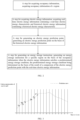
- the curve depicted by the dashed line in FIG. 3 is a prediction curve formed by fitting the historical carbon emission index of a power grid, and the solid dot represents the real-time carbon emission index of a power grid.
- the real-time carbon emission index of a power grid at 1 o'clock is a. According to the prediction curve, the carbon emission index of a power grid after 1 hour, i.e., an electric energy prediction point a', can be predicted.
- a' is greater than a, and a difference value between a' and a is greater than a set value, it means that the cleanliness of the electric energy at 1 o'clock is higher, and the cleanliness of the electric energy at 2 o'clock is significantly lowed, so it is judged that it is suitable for generating the energy storage instruction at the current moment (1 o'clock), and the specific content of the energy storage instruction can be making the set temperature of the temperature controller drop by 3°C during cooling operation.
- the real-time carbon emission index of a power grid at 2 o'clock is b. In the same way as the judgment described above, it can be judged that it is also suitable for generating the energy storage instruction at the current moment (2 o'clock).
- the real-time carbon emission index of a power grid at 3 o'clock is c. In the same way as the judgment described above, it can be judged that it is not suitable for generating the energy storage instruction at the current moment (3 o'clock), and the energy release instruction may be generated at this moment.
- the real-time carbon emission index of a power grid at 5 o'clock is d.
- the carbon emission index of a power grid after 1 hour i.e., an electric energy prediction point d'
- the carbon emission index of a power grid after 2 hours i.e., an electric energy prediction point d
- the carbon emission index of a power grid after 2 hours i.e., an electric energy prediction point d
- the specific content of the energy storage instruction may be making the set temperature of the temperature controller drop by 5°C during cooling operation.
- the carbon emission index of a power grid for a future period of time can be predicted, for example, the tendency is predicted by generating a plurality of electric energy prediction points, so that whether it is needed to generate the energy storage instruction can be determined by comparing the real-time carbon emission index of a power grid and the future carbon emission index of a power grid.
- control method further includes: a step for generating an energy release instruction, generating an energy release instruction when a predetermined energy release condition is satisfied.
- the predetermined energy release condition includes at least any one of that the temperature of the specific region reaches a specified value, the occupancy information of the specific region changes in response to an input, and the execution time of the energy storage instruction reaches a specified value.
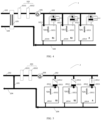
- an air conditioning system 1 is as shown in FIG. 4 , and the air conditioning system 1 includes: an air supply duct 102 communicated with external fresh air, fresh air units (103, 106), indoor units (1011, 1012, 1013, 1014) corresponding to different regions, an air exhaust duct 104, and a heat recycling heat exchanger 105 for recycling energy of exhaust air/fresh air.
- the fresh air units (103, 106) include a fresh air hot coil 1031, a fresh air cold coil 1032, and a fresh air fan 106 located in the air supply duct 102.
- the indoor units (1011, 1012, 1013, 1014) include a temperature controller 1011, a fan coil 1012, an air supply port 1013 communicated with the air supply duct 102, and an air exhaust port 1014 communicated with the air exhaust duct 104.
- the fan coil 1012 includes a fan 10121, a hot coil 10122, and a cold coil 10123.
- the external fresh air enters the air supply duct 102 by means of the heat recycling heat exchanger 105, and after passing through the fresh air coil 103, the external fresh air is fed to individual different regions by means of the air supply port 1013; air in the region enters the air exhaust duct 104 by means of the air exhaust port 1014, and the air entering the air exhaust duct 104, after pre-treating the fresh air by means of the heat recycling heat exchanger 105, is discharged to the outdoor space.
- the fan coil 1012 is correspondingly arranged in each region, and by making the air in the region pass through the fan coil 1012 and then be blown out, the cold energy or heat energy of the air which is blown out can be increased so as to adjust the temperature in the region.
- the air conditioning system 1 can operate for cooling and heating.
- the air conditioning system 1 during cooling operation is illustrated below as an example, and it is to be understood that similar control methods and control logic can also be applied to heating operation.
- the air conditioning system 1 starts to operate for cooling.
- the set temperature of the temperature controller 1011 in an unoccupied region A is T(A)
- the set temperature of the temperature controller 1011 in an occupied region B 1 is T(B1)
- the set temperature of the temperature controller 1011 in an occupied region B2 is T(B2)
- T(A) > T(B1) and T(A) > T(B2) i.e., the set temperature of the temperature controller 1011 in the unoccupied region A is higher, thereby making the fan coil 1012 corresponding to the unoccupied region A remain off.
- the fan coil 1012 is adjusted so as to maintain the indoor set temperature of the occupied regions B1 and B2.
- the set temperature of the fresh air units (103, 106) may be an average of the indoor set temperatures in the plurality of regions.
- the air in each region enters the air exhaust duct 104 by means of the air exhaust port 1014, and the air entering the air exhaust duct 104 pre-treats fresh air by means of the heat recycling heat exchanger 105 to lower the temperature of the external fresh air.
- the external fresh air passes through the fresh air cold coil 1032 so that the temperature thereof is further lowered to the set temperature of the fresh air unit, and the external fresh air is fed into different regions by means of the fresh air fan 106.
- the air conditioning system 1 When the electric energy information satisfies the predetermined energy storage condition, i.e., the current electricity supplied by a power grid is clean, and the carbon emission index of a power grid after a preset duration of time in the future is predicted to increase significantly, i.e., the electricity supplied by a power grid will be prone to generating more carbon emissions, then an energy storage instruction is generated for the unoccupied region A, and the air conditioning system 1 is switched to an energy storage operation mode. In the energy storage operation mode, the electric energy consumed by the air conditioning system 1 will significantly increase for the purpose of obtaining more cold energy and storing the cold energy in the unoccupied region A.
- the predetermined energy storage condition i.e., the current electricity supplied by a power grid is clean, and the carbon emission index of a power grid after a preset duration of time in the future is predicted to increase significantly, i.e., the electricity supplied by a power grid will be prone to generating more carbon emissions
- the indoor unit of the unoccupied region A is made to execute the energy storage instruction, and the set temperature T(A) of the temperature controller 1011 is lowered to satisfy T(A) ⁇ T(B1) and T(A) ⁇ T(B2), thereby making the fan coil 1012 corresponding to the unoccupied region A operate at a high speed.
- This allows the unoccupied region A to obtain more cold energy to lower the temperature of air in the unoccupied region A and the temperature of the wall structure and the furniture structure therein for the purpose of storing cold energy.
- the set temperatures of the temperature controllers 1011 in the occupied regions B1 and B2 remain unchanged, and the operation conditions of the fresh air units (103, 106) are maintained the same as in the normal operation mode.
- the predetermined energy release condition includes at least any one of that the temperature of the specific region reaches a specified value, the occupancy information of the specific region changes in response to an input, and the execution time of the energy storage instruction reaches a specified value.
- the electric energy consumed by the air conditioning system 1 will be significantly reduced, and the cold energy stored in the unoccupied region A is used as much as possible to maintain the indoor set temperature in the occupied regions B1 and B2.
- the set temperatures of the temperature controllers 1011 in the occupied regions B1 and B2 remain unchanged, and the indoor set temperature is still maintained by adjusting the operation of the fan coil 1012.
- the set temperature T(A) of the temperature controller 1011 of the unoccupied region A is adjusted higher to satisfy T(A) > T(B1) and T(A) > T(B2), and the fan coil 1012 is made to enter a shutdown state.
- Fresh air is pre-treated by the cold energy stored in the unoccupied region A, i.e., cold air, by means of the air exhaust duct 104 and the heat recycling heat exchanger 105 and then enters the fresh air units (103, 106).
- the temperature of the air returned from the unoccupied region A is lower, which can significantly lower the temperature of the external fresh air, so that the temperature of the air fed into the fresh air units (103, 106) can be lowered, so as to reduce the operating load of the fresh air coil, thereby reducing the operating time or the operating frequency of the compressor on the working fluid side of the fresh air cold coil 1032, so that the consumed electric energy can be significantly reduced.
- no energy release instruction when the electric energy information cannot satisfy the predetermined energy storage condition, no energy release instruction is purposely generated, no energy storage instruction is generated and no energy release instruction is generated. It is to be understood that when the indoor unit of each region is adjusted according to normal conditions, it is possible to allow the cold energy/heat energy that is stored in the specific region to enter the air conditioning system in order to affect the electric energy consumed by the air conditioning system.
- an air conditioning system 2 is as shown in FIG. 5 , and the air conditioning system 2 includes: an air supply duct 202 communicated with external fresh air, central air conditioning units (203, 206), indoor units (2011, 2012, 2013, 2014, 2015) corresponding to different regions, an air exhaust duct 204, and an air return duct 205 communicating the air supply duct 202 with the air exhaust duct 204.
- the central air conditioning units (203, 206) include a central air conditioning hot coil 2031, a central air conditioning cold coil 2032, and an air supply fan 206 located in the air supply duct 202.
- the indoor units (2011, 2012, 2013, 2014, 2015) include a temperature controller 2011, an air valve 2012, a reheating coil 2015, an air supply port 2013 communicated with the air supply duct 202, and an air exhaust port 2014 communicated with the air exhaust duct 204.
- a temperature controller 2011 an air valve 2012
- a reheating coil 2015 an air supply port 2013 communicated with the air supply duct 202
- an air exhaust port 2014 communicated with the air exhaust duct 204.
- the indoor set temperature in the region is adjusted by adjusting the opening degree of the air valve 2012.
- the air in the region enters the air exhaust duct 204 by means of the air exhaust port 2014, part of the air entering the air exhaust duct 204 enters the air supply duct 202 by means of the air return duct 205, and part of the air entering the air exhaust duct 204 is discharged to the outside.
- the air conditioning system 2 can operate for cooling and heating.
- the air conditioning system 2 during cooling operation is illustrated below as an example, and it is to be understood that similar control methods and control logic can also be applied to heating operation.
- the air conditioning system 2 starts to operate for cooling.
- the set temperature of the temperature controller 2011 in an unoccupied region A is T(A)
- the set temperature of the temperature controller 2011 in an occupied region B1 is T(B1)
- the set temperature of the temperature controller 2011 in an occupied region B2 is T(B2)
- T(A) > T(B1) and T(A) > T(B2) i.e., the set temperature of the temperature controller 2011 in the unoccupied region A is higher, thereby making the air valve 2012 corresponding to the unoccupied region A remain a minimum opening degree
- FIG. 5 is a schematic view of a maximum opening degree of the air valve 2012).
- the requirement of maintaining the indoor set temperature in the occupied regions B1 and B2 is met.
- air in the occupied regions B1 and B2 enters the air exhaust duct 204 by means of the air exhaust port 2014, part of the air entering the air exhaust duct 204 is discharged to the outside, and part of the air entering the air exhaust duct 204 enters the air supply duct 202 after being mixed with the external fresh air by means of the air return duct 205.
- the set temperature of the central air conditioning unit can be maintained on the working fluid side of the central air conditioning unit cold coil 2032 by turning on/off a compressor or adjusting the rotation speed of the compressor.
- the air conditioning system 2 When the electric energy information satisfies the predetermined energy storage condition, i.e., the current electricity supplied by a power grid is clean, and the carbon emission index of a power grid after a preset duration of time in the future is predicted to increase significantly, i.e., the electricity supplied by a power grid will be prone to generating more carbon emissions, then an energy storage instruction is generated for the unoccupied region A, and the air conditioning system 2 is switched to an energy storage operation mode. In the energy storage operation mode, the electric energy consumed by the air conditioning system 2 will significantly increase for the purpose of obtaining more cold energy and storing the cold energy in the unoccupied region A.
- the predetermined energy storage condition i.e., the current electricity supplied by a power grid is clean, and the carbon emission index of a power grid after a preset duration of time in the future is predicted to increase significantly, i.e., the electricity supplied by a power grid will be prone to generating more carbon emissions
- the indoor unit in the unoccupied region A is made to execute the energy storage instruction, and the set temperature T(A) of the temperature controller 2011 is lowered to satisfy T(A) ⁇ T(B1) and T(A) ⁇ T(B2), thereby making the opening degree of the air valve 2012 corresponding to the unoccupied region A become larger or adjusting the air valve 2012 to a maximum opening degree by means of a central controller ( FIG. 5 is a schematic view of a maximum opening degree of the air valve 2012).
- the set temperatures of the temperature controllers 2011 in the occupied regions B1 and B2 remain unchanged, and the indoor set temperature is maintained by adjusting the opening degree of the air valve 2012.
- the set temperature of the central air conditioning unit can be lowered and the rotation speed of the air supply fan 206 can be adjusted to increase the amount of air supplied, so that the proportion of the running time of the compressor on the working fluid side of the central air conditioning cold coil 2032 increases or the rotation speed increases, and thus, in the energy storage operation mode, the electric energy consumed by both the compressor and the air supply fan 206 increases.
- the predetermined energy release condition includes at least any one of that the temperature of the specific region reaches a specified value, the occupancy information of the specific region changes in response to an input, and the execution time of the energy storage instruction reaches a specified value.
- the electric energy consumed by the air conditioning system 2 will be significantly reduced, and cold energy stored in the unoccupied region A is used as much as possible to maintain the indoor set temperature in the occupied regions B1 and B2.
- the set temperatures of the temperature controllers 2011 in the occupied regions B1 and B2 remain unchanged, and the indoor set temperature is still maintained by adjusting the opening degree of the air valve 2012.
- the set temperature T(A) of the temperature controller 2011 in the unoccupied region A is adjusted higher to satisfy T(A) > T(B1) and T(A) > T(B2), and the air valve 2012 can be adjusted to a maximum opening degree by means of the central controller to promote circulation of air in the unoccupied region A and heat exchange with the wall of the unoccupied region A and other structures.
- the cold energy stored in the unoccupied region A i.e., cold air will return to the central air conditioning units (203, 206) by means of the air exhaust duct 204 and the air return duct 205.
- the set temperature of the fresh air unit can be appropriately raised. Due to the fact that the temperature of the air returned from the unoccupied region A is lower, the temperature of air at an inlet of the central air conditioning cold coil 2032 can be effectively lowered, so as to reduce the operating load of the central air conditioning cold coil 2032, thereby reducing the operating time or the operating frequency of the compressor on the working fluid side of the central air conditioning cold coil 2032, so that the consumed electric energy can be significantly reduced.
- a computer-readable storage medium stores a control program.
- the control program implements the method for controlling an air conditioning system introduced in some of the above embodiments when executed by a processor.
- a mobile terminal device 30 includes: a processor 31 and a memory 32.
- a processor-readable instruction is stored in the memory 32.
- the processor 31 executes the method for controlling an air conditioning system introduced in some of the above embodiments by running the processor-readable instruction.
- a server 40 includes: a processor 41 and a memory 42.
- a processor-readable instruction is stored in the memory 42.
- the processor 41 executes the method for controlling an air conditioning system introduced in some of the above embodiments by running the processor-readable instruction.
Landscapes
- Engineering & Computer Science (AREA)
- Chemical & Material Sciences (AREA)
- Combustion & Propulsion (AREA)
- Mechanical Engineering (AREA)
- General Engineering & Computer Science (AREA)
- Signal Processing (AREA)
- Physics & Mathematics (AREA)
- Fuzzy Systems (AREA)
- Mathematical Physics (AREA)
- Life Sciences & Earth Sciences (AREA)
- Sustainable Development (AREA)
- Air Conditioning Control Device (AREA)
Abstract
Description
- This invention relates to the field of air conditioning, and particularly relates to a method for controlling an air conditioning system, an air conditioning system, a computer-readable storage medium, a mobile terminal device and a server.
- For electric energy consumed by a building, an air conditioning system operating therein consumes most of the electric energy. A common method for controlling the air conditioning system aims to reduce the consumed electric energy, and therefore a control method for stabilizing the set temperature of the air conditioning system within a specific range during working hours and turning off the air conditioning system during non-working hours is used. However, reducing the consumed electric energy may not be equivalent to reasonably utilizing the electric energy, and when the common method for controlling the air conditioning system is used, people in the building may feel less comfortable.
- This invention aims to provides a method for controlling an air conditioning system, an air conditioning system, a computer-readable storage medium, a mobile terminal device and a server so as to at least solve or alleviate part of the problems in the prior art.
- According to a first aspect of the invention there is provided a method for controlling an air conditioning system, the air conditioning system including a plurality of indoor units arranged in different regions, where the control method includes: a step for acquiring occupancy information, acquiring occupancy information of the region; a step for acquiring electric energy information, acquiring electric energy information containing an electric energy characteristic; and a step for generating an energy storage instruction, generating an energy storage instruction for a specific region on the basis of the occupancy information when the electric energy information satisfies a predetermined energy storage condition.
- Optionally, the electric energy characteristic refers to any one of a carbon emission index of a power grid, the cleanliness of a power grid, the percentage of clean electric energy, and the percentage of renewable energy sources.
- Optionally, the electric energy characteristic varies over time.
- Optionally, the control method further includes a step for executing the energy storage instruction, making an indoor unit arranged in the specific region execute the energy storage instruction.
- Optionally, the indoor unit includes a temperature controller, and making an indoor unit arranged in the specific region execute the energy storage instruction specifically includes: adjusting the set temperature of a temperature controller in the specific region.
- Optionally, the indoor unit further includes a fan coil or an air valve, and making an indoor unit arranged in the specific region execute the energy storage instruction specifically includes: making the air speed of a fan coil in the specific region change, or making the opening degree of an air valve in the specific region change, or performing any of the above actions in response to an input from the temperature controller in the specific region.
- Optionally, the electric energy information is historical electric energy information containing a historical electric energy characteristic, and in the step for generating an energy storage instruction, the predetermined energy storage condition is determined on the basis of the result of a comparison of the historical electric energy characteristic with a threshold value.
- Optionally, the electric energy information includes real-time electric energy information containing a real-time electric energy characteristic and historical electric energy information containing a historical electric energy characteristic, and the control method further includes: a step for generating an electric energy prediction point, generating an electric energy prediction point on the basis of the historical electric energy information; in the step for generating an energy storage instruction, the predetermined energy storage condition is determined on the basis of the result of a comparison of the electric energy prediction point with the real-time electric energy information.
- Optionally, the occupancy information is determined on the basis of any one of information about the number of people in the region, pre-stored information about usage of the region, and information about a timetable of the set temperature of the temperature controller.
- Optionally, the control method further includes: a step for generating an energy release instruction, generating an energy release instruction when a predetermined energy release condition is satisfied.
- Optionally, the predetermined energy release condition includes at least any one of that the temperature of the specific region reaches a specified value, the occupancy information of the specific region changes in response to an input, and the execution time of the energy storage instruction reaches a specified value.
- According to a second aspect of the invention there is provided an air conditioning system, including: a plurality of indoor units arranged in different regions, the indoor unit including an air supply port and an air exhaust port; an air supply duct, communicated with the plurality of air supply ports arranged in the different regions; and an air exhaust duct, communicated with the plurality of air exhaust ports arranged in different regions, the air exhaust duct being communicated with the air supply duct; the air conditioning system executes the method for controlling an air conditioning system in any of the above optional technical solutions.
- According to a third aspect of the invention there is provided a computer-readable storage medium, storing a control program, the control program implementing the method for controlling an air conditioning system in any of the above optional technical solutions when executed by a processor.
- According to a fourth aspect of the invention there is provided a mobile terminal device, including: a processor and a memory, a processor-readable instruction being stored in the memory, and the processor executing the method for controlling an air conditioning system in any of the above optional technical solutions by running the processor-readable instruction.
- According to a fifth aspect of the invention there is provided a server, including: a processor and a memory, a processor-readable instruction being stored in the memory, and the processor executing the method for controlling an air conditioning system in any of the above optional technical solutions by running the processor-readable instruction.
- By means of the method for controlling an air conditioning system, the air conditioning system, the computer-readable storage medium, the mobile terminal device and the server according to this invention, the air conditioner system can more reasonably utilize electric energy.
- Certain exemplary embodiments will now be described in greater detail by way of example only and with reference to the accompanying drawings in which:
-
FIG. 1 is a schematic diagram of a method for controlling an air conditioning system; -
FIG. 2 is a schematic diagram of a method for controlling an air conditioning system; -
FIG. 3 is a schematic diagram of a step for generating an electric energy prediction point; -
FIG. 4 is a schematic diagram of an air conditioning system; -
FIG. 5 is a schematic diagram of an air conditioning system; -
FIG. 6 is a schematic diagram of a mobile terminal device; and -
FIG. 7 is a schematic diagram of a server. -
Air conditioning system 1,temperature controller 1011,fan coil 1012,fan 10121,hot coil 10122, cold coil 10123,air supply port 1013,air exhaust port 1014,air supply duct 102,fresh air coil 103, fresh airhot coil 1031, fresh aircold coil 1032,air exhaust duct 104, heatrecycling heat exchanger 105, andfresh air fan 106. -
Air conditioning system 2,temperature controller 2011,air valve 2012,reheating coil 2015,air supply port 2013,air exhaust port 2014,air supply duct 202, centralair conditioning coil 203, central air conditioninghot coil 2031, central air conditioningcold coil 2032,air exhaust duct 204,air return duct 205, andair supply fan 206. -
Mobile terminal device 30,processor 31, andmemory 32. -
Server 40,processor 41, andmemory 42. - It is to be noted that: the working principles, features, advantages and the like of a method for controlling an air conditioning system, an air conditioning system, a computer-readable storage medium, a mobile terminal device and a server according to this invention are illustrated below exemplarily. However, it is to be understood that all the description is given only for illustration, and thus cannot be understood as forming any limitation on this invention.
- In addition, for any single technical feature described or implied in the embodiments mentioned herein, or any single technical feature shown or implied in the drawings, this invention still permits any combination or deletion of these technical features (or equivalents thereof) to continue without any technical obstacles, so as to obtain more other embodiments of this invention which may not be directly mentioned herein.
- With reference to the drawings generally, a method for controlling an air conditioning system, an air conditioning system, a server, and a mobile terminal device are shown according to exemplary embodiments. On the basis of electric energy information containing an electric energy characteristic, an energy storage instruction for a specific region may be generated to make the air conditioning system utilize electric energy more rationally and take into account the level of comfort of people in the region.
- An air conditioning system according to an embodiment of this invention includes a plurality of indoor units arranged in different regions. With reference to
FIG. 1 , a method for controlling an air conditioning system according to an embodiment of this invention includes: a step for acquiring occupancy information, acquiring occupancy information of the region; a step for acquiring electric energy information, acquiring electric energy information containing an electric energy characteristic; and a step for generating an energy storage instruction, generating an energy storage instruction for a specific region on the basis of the occupancy information when the electric energy information satisfies a predetermined energy storage condition. - Specifically, in the step for acquiring occupancy information, acquiring occupancy information of the region, the region mentioned herein refers to a space which is relatively independent in a building where the air conditioning system is used or a similar structure and thus can be subjected to temperature adjustment, such as, a warehouse of a certain company, a conference room, an independent office, etc. in the building. The occupancy information refers to related information about whether the region is occupied or not so as to determine whether to adjust temperature in a large range. For example, if there are usually no staff working in the warehouse, it is considered that the warehouse is not occupied and the temperature can be adjusted to below 16°C for a long period of time. If, because of space transformation, the region becomes an independent office where there are staff working for a long period of time, it is considered that the region is occupied, so the temperature in the region cannot be adjusted in a large range. The range of temperature adjustment is determined according to actual needs and is not specifically limited. The occupancy information is determined on the basis of any one of information about the number of people in the region, pre-stored information about usage of the region, and information about a timetable of the set temperature of the temperature controller.
- By acquiring the occupancy information of the region, the air conditioning system can more easily know the arrangement of the different regions or information about persons in the different regions, so that information such as the level of sensitivity of the different regions to temperature fluctuations can be mastered. For example, if it is determined according to the occupancy information that a certain region is an office region or a rest region occupied by persons, it can be inferred that the region is high sensitive to temperature fluctuations, which means that if the temperature in the region is suddenly lowered or raised, persons in the region will feel a decrease in their level of comfort. For example, if it is determined according to the occupancy information that a certain region is an unoccupied region temporarily or for a long period of time, it can be inferred that the region is less sensitive to temperature fluctuations. For another example, if it is determined according to the occupancy information that a certain region is a control region or a storage region occupied by special machinery equipment, it can be inferred that the region is high sensitive to temperature fluctuations, i.e., if the temperature in the region is suddenly lowered or raised, the operational stability of the special machinery equipment in the region is reduced as a result. The occupancy information is determined on the basis of any one of the information about the number of people in the region, the pre-stored information about usage of the region, and the information about a timetable of the set temperature of the temperature controller. For example, the method for acquiring the occupancy information of the region may be any one of the methods for acquiring the occupancy information by means of user instructions, sensor detection, a region occupancy timetable, and the like.
- Further, in the step for acquiring electric energy information, acquiring electric energy information containing an electric energy characteristic, the electric energy characteristic herein refers to related information that reflects the source of electric energy, information about a power grid, the type of electric energy, and the like.
- In some embodiments, the electric energy characteristic refers to a carbon emission index of a power grid. The carbon emission index of a power grid may specifically be a value between 1 and 100. The smaller the value, the smaller the intensity of carbon emissions of a power grid, the less carbon emissions generated by electricity supplied by a power grid, and the higher the cleanliness of the electric energy. The larger the value, the larger the intensity of carbon emissions of a power grid, the more carbon emissions generated by electricity supplied by a power grid, and the lower the cleanliness of the electric energy. The carbon emission index of a power grid varies in different geographic locations, and the carbon emission index of a power grid in a certain geographic location can be acquired by means of information such as the postal code. The carbon emission index of a power grid varies at different times for the same geographical location, in other words, the carbon emission index of a power grid is a value updated in real time. The carbon emission index of a power grid can be calculated by means of a computational model, and data input in the computational model can include data such as carbon emissions of individual power plants, operation of a power grid, weather, renewable energy sources, and the like.
- For example, in a geographic location A, renewable energy sources such as wind energy and solar energy are abundant, the average carbon emission index of a power grid within one month is typically below 50. Therefore, according to information about the geographic location A, the predetermined energy storage condition can be that "the carbon emission index of a power grid is less than or equal to 45", and when the acquired electric energy information conforms to this condition, then it is recommended to increase the amount of usage of electric energy, i.e., the predetermined energy storage condition is satisfied. The predetermined energy storage condition may be determined according to the power grid where the air conditioning system is located and the actual conditions of the building where the air conditioning system is installed.
- In some embodiments, the electric energy characteristic refers to the price of electric energy available in the building, or the electric energy characteristic refers to the percentage of renewable electric energy used in the building, or the electric energy characteristic refers to any one of the cleanliness of a power grid, the percentage of clean electric energy, and the percentage of renewable energy sources.
- In some embodiments, the electric energy characteristic refers to greenhouse gas emissions per unit of the electric energy, i.e., the purpose of acquiring the electric energy information is to reduce greenhouse gas emissions generated when the air conditioning system uses electricity. In order to achieve the above purpose, then it is desired that the electric energy used by the air conditioning system is more obtained by generating electricity in the form of wind power generation, hydro power generation, solar power generation, etc., and less obtained by generating electricity in the form of thermal power generation. However, the electricity generated in the form of wind power generation, hydro power generation, solar power generation, etc. is less uniform than the electricity generated in the form of thermal power generation, and generating electricity in the form of wind power generation, hydro power generation, solar power generation, etc. is more dependent on the weather. Therefore, when the electricity generated in the form of wind power generation, hydro power generation, solar power generation, etc. is sufficient, the electric energy is more utilized, for example, it is converted into cold energy/heat energy in the air conditioning system and stored, so that when the electricity generated in the form of wind power generation, hydro power generation, solar power generation, etc. is less, it is possible to reduce the electric energy consumed by the air conditioning system by means of the thermal inertia of the stored cold energy/heat energy. In this way, the total amount of electric energy consumed by the air conditioning system may not decrease or may increase to some extent, but the greenhouse gas emissions generated when the air conditioning system uses electricity may decrease.
- By acquiring the electric energy information containing the electric energy characteristic, the air conditioning system can more easily rationalize the time and amount of usage of the electric energy for various purposes. For example, if the purpose is to reduce the cost of electricity used by the air conditioning system, it is required to acquire the electric energy information containing the price of available electric energy. If the purpose is reduce the amount of carbon emissions of the air conditioning system, it is required to acquire the electric energy information containing any one of the carbon emission index of a power grid, the cleanliness of a power grid, the percentage of clean electric energy, and the percentage of renewable energy sources. In some embodiments, the electric energy characteristic varies over time, and the electric energy information contains the electric energy characteristic at each point in time.
- Further, in the step for generating an energy storage instruction, when the electric energy information satisfies the predetermined energy storage condition, on the basis of the occupancy information, an energy storage instruction for a specific region is generated. When the electric energy information satisfies the predetermined energy storage condition, i.e., after the electric energy information containing the electric energy characteristic is judged, it is considered that the electric energy information conforms to the condition for recommended electricity usage defined in accordance with the purpose of electricity usage (e.g., the purpose of reducing the cost of used electricity or the purpose of reducing the amount of carbon emissions), that is, it is recommended to increase the amount of usage of electric energy, i.e., it is recommended to store energy by increasing the usage of electric energy. For example, if the purpose is to reduce the cost of electricity used by the air conditioning system, it may be required to acquire electric energy information containing the price of available electric energy, and the predetermined energy storage condition herein may be that "the price of available electric energy is less than or equal to a preset value"; when the acquired electric energy information conforms to the condition, it is recommended to increase the amount of usage of the electric energy, i.e., it is recommended to store energy by increasing the usage of electric energy. For example, if the purpose is to reduce the amount of carbon emissions of the air conditioning system, it may be required to acquire the electric energy information containing the carbon emission index of a power grid, and the predetermined energy storage condition herein may be that "the carbon emission index of a power grid is less than or equal to a preset value or a threshold value"; when the acquired electric energy information conforms to the condition, it is recommended to increase the amount of usage of electric energy, i.e., it is recommended to store energy by increasing the usage of the electric energy.
- In some embodiments, the electric energy information is historical electric energy information containing a historical electric energy characteristic. For example, the electric energy information is information about a historical carbon emission index of a power grid, for example, in the past month, the carbon emission index of a power grid is about 60 at about 8 o'clock, and about 40 at about 7 o'clock, then if the threshold value is set to 45, the predetermined energy storage condition is that "the carbon emission index of a power grid is less than or equal to a preset value or the threshold value"; the predetermined energy storage condition is satisfied, and the energy storage instruction for the specific region is generated.
- The predetermined energy storage condition may be further determined according to factors such as the electric energy characteristic, the power grid where the air conditioning system is located and the actual conditions of the building where the air conditioning system is installed.
- By generating, on the basis of the occupancy information, the energy storage instruction for the specific region, when the amount of usage of the electric energy increases and the amount of conversion of the electric energy to other forms of energy (e.g., cold energy/heat energy) increases, the increased energy may be stored in an appropriate mode, for example, the increased energy is stored in a region that is less sensitive to temperature fluctuations, and is utilized at an appropriate time.
- In some embodiments, the control method includes a step for executing the energy storage instruction, making the indoor unit in the specific region execute the energy storage instruction. Specifically, the indoor unit includes a temperature controller, making the set temperature of the temperature controller in the specific region change. The specific region refers to a region that is less sensitive to temperature fluctuations, which may be, for example, a vacant room in a building. By lowering the set temperature of the temperature controller of the vacant room during cooling operation of the air conditioning system, more cold energy can be obtained in the vacant room, and the cold energy is stored in the vacant room, for example, it is stored in a space, a wall, or furniture of the vacant room for the purpose of storing the cold energy. By raising the set temperature of the temperature controller of the vacant room during heating operation of the air conditioning system, more heat energy can be obtained in the vacant room, and the heat energy is stored in the vacant room, for example, it is stored in a space, a wall, or furniture of the vacant room for the purpose of storing the heat energy.
- In some embodiments, the set temperature of the temperature controller may be adjusted higher or lower in a specific range each time the energy storage instruction is executed. In some embodiments, each time the energy storage instruction is executed, a range for adjusting the temperature higher or lower adapted to the electric energy information may be generated for the temperature controller according to real-time electric energy information and/or historical electric energy information.
- There is no limitation here on the type of the air conditioning system, which may be a fluorine system air conditioner or a water system air conditioner, a multi-connected system, an air-cooled chiller unit or a water-cooled chiller unit, and it is only required to increase the cold energy/heat energy in the vacant room by adjusting the set temperature of the temperature controller in the vacant room.
- It is to be noted that: the electric energy information may also include real-time electric energy information containing a real-time electric energy characteristic and historical electric energy information containing a historical electric energy characteristic, so that the predetermined energy storage condition can be more accurately determined on the basis of the real-time electric energy characteristic. For example, the predetermined energy storage condition may be that "a real-time carbon emission index of a power grid is at a low point compared with the carbon emission index of a power grid one hour later as indicated by a curve of the historical carbon emission index of a power grid", and the predetermined energy storage condition may also be that "a difference value between a real-time carbon emission index of a power grid and the carbon emission index curve of a power grid one hour later as indicated by a curve of the historical carbon emission index of a power grid is greater than a threshold value".
- In some embodiment, the electric energy information includes real-time electric energy information containing a real-time electric energy characteristic and historical electric energy information containing a historical electric energy characteristic, and the method for controlling an air conditioning system further includes: a step for generating an electric energy prediction point, generating an electric energy prediction point on the basis of the historical electric energy information. In the step for generating an energy storage instruction, the predetermined energy storage condition is determined on the basis of the result of a comparison of the electric energy prediction point with the real-time electric energy information.
- By generating the electric energy prediction point on the basis of the historical electric energy information, it is possible to predict electric energy information after a preset duration of time in the future, and accordingly determine whether it is suitable for generating an energy storage instruction at the current moment. For example, if the purpose is to reduce the amount of carbon emissions of the air conditioning system, when it is predicated that the carbon emission index of a power grid after a preset duration of time will increase/significantly increase, i.e., when it is predicted that the cleanliness of the electric energy after a preset duration of the time will decrease, it is possible to generate the energy storage instruction so as to store energy at the current moment when the cleanness of the electric energy is high, and decrease the consumed electric energy by releasing energy in the future when the cleanliness of the electric energy decreases, thereby achieving the purpose of reducing the amount of carbon emissions of the air conditioning system. By predicting electric energy information for a preset duration of time in the future, it is possible to make the moment/timing for generating the energy storage instruction more appropriate, thereby contributing to reducing carbon emissions of the air conditioning system and taking into account the level of comfort when the air conditioning system is used.
- In some embodiments, as shown in
FIG. 3 , the curve depicted by the dashed line inFIG. 3 is a prediction curve formed by fitting the historical carbon emission index of a power grid, and the solid dot represents the real-time carbon emission index of a power grid. The real-time carbon emission index of a power grid at 1 o'clock is a. According to the prediction curve, the carbon emission index of a power grid after 1 hour, i.e., an electric energy prediction point a', can be predicted. When a' is greater than a, and a difference value between a' and a is greater than a set value, it means that the cleanliness of the electric energy at 1 o'clock is higher, and the cleanliness of the electric energy at 2 o'clock is significantly lowed, so it is judged that it is suitable for generating the energy storage instruction at the current moment (1 o'clock), and the specific content of the energy storage instruction can be making the set temperature of the temperature controller drop by 3°C during cooling operation. The real-time carbon emission index of a power grid at 2 o'clock is b. In the same way as the judgment described above, it can be judged that it is also suitable for generating the energy storage instruction at the current moment (2 o'clock). The real-time carbon emission index of a power grid at 3 o'clock is c. In the same way as the judgment described above, it can be judged that it is not suitable for generating the energy storage instruction at the current moment (3 o'clock), and the energy release instruction may be generated at this moment. The real-time carbon emission index of a power grid at 5 o'clock is d. According to the prediction curve, the carbon emission index of a power grid after 1 hour, i.e., an electric energy prediction point d', may be predicted, and the carbon emission index of a power grid after 2 hours, i.e., an electric energy prediction point d", may be predicted; by comparing d, d' and d", it indicates that the cleanliness of electric energy at 5 o'clock is higher, the cleanliness of electric energy will continue to decrease thereafter, and therefore it is judged that it is suitable for generating the energy storage instruction at the current moment (5 o'clock), and the specific content of the energy storage instruction may be making the set temperature of the temperature controller drop by 5°C during cooling operation. - In some embodiments, the carbon emission index of a power grid for a future period of time (e.g., 8 hours) can be predicted, for example, the tendency is predicted by generating a plurality of electric energy prediction points, so that whether it is needed to generate the energy storage instruction can be determined by comparing the real-time carbon emission index of a power grid and the future carbon emission index of a power grid.
- In some embodiment, the control method further includes: a step for generating an energy release instruction, generating an energy release instruction when a predetermined energy release condition is satisfied. The predetermined energy release condition includes at least any one of that the temperature of the specific region reaches a specified value, the occupancy information of the specific region changes in response to an input, and the execution time of the energy storage instruction reaches a specified value. By generating the energy release instruction, it is possible to release the cold energy/heat energy stored in the air conditioning system when needed or appropriate, or to better release the cold energy/heat energy stored in the air conditioning system, thereby improving the efficiency for utilizing the stored cold energy/heat energy.
- In some embodiments, an
air conditioning system 1 is as shown inFIG. 4 , and theair conditioning system 1 includes: anair supply duct 102 communicated with external fresh air, fresh air units (103, 106), indoor units (1011, 1012, 1013, 1014) corresponding to different regions, anair exhaust duct 104, and a heatrecycling heat exchanger 105 for recycling energy of exhaust air/fresh air. The fresh air units (103, 106) include a fresh airhot coil 1031, a freshair cold coil 1032, and afresh air fan 106 located in theair supply duct 102. The indoor units (1011, 1012, 1013, 1014) include atemperature controller 1011, afan coil 1012, anair supply port 1013 communicated with theair supply duct 102, and anair exhaust port 1014 communicated with theair exhaust duct 104. Thefan coil 1012 includes afan 10121, ahot coil 10122, and a cold coil 10123. The external fresh air enters theair supply duct 102 by means of the heatrecycling heat exchanger 105, and after passing through thefresh air coil 103, the external fresh air is fed to individual different regions by means of theair supply port 1013; air in the region enters theair exhaust duct 104 by means of theair exhaust port 1014, and the air entering theair exhaust duct 104, after pre-treating the fresh air by means of the heatrecycling heat exchanger 105, is discharged to the outdoor space. Thefan coil 1012 is correspondingly arranged in each region, and by making the air in the region pass through thefan coil 1012 and then be blown out, the cold energy or heat energy of the air which is blown out can be increased so as to adjust the temperature in the region. - The
air conditioning system 1 can operate for cooling and heating. Theair conditioning system 1 during cooling operation is illustrated below as an example, and it is to be understood that similar control methods and control logic can also be applied to heating operation. - The
air conditioning system 1 starts to operate for cooling. In a normal operation mode, the set temperature of thetemperature controller 1011 in an unoccupied region A is T(A), the set temperature of thetemperature controller 1011 in an occupiedregion B 1 is T(B1), the set temperature of thetemperature controller 1011 in an occupied region B2 is T(B2), T(A) > T(B1) and T(A) > T(B2), i.e., the set temperature of thetemperature controller 1011 in the unoccupied region A is higher, thereby making thefan coil 1012 corresponding to the unoccupied region A remain off. At this time, in the occupied regions B1 and B2, by turning on/off thefan coil 1012, that is, turning on/off thefan 10121, or adjusting the rotation speed of a compressor to change the temperature of working fluid in thehot coil 10122 or the cold coil 10123 of thefan coil 1012, thefan coil 1012 is adjusted so as to maintain the indoor set temperature of the occupied regions B1 and B2. At this time, the set temperature of the fresh air units (103, 106) may be an average of the indoor set temperatures in the plurality of regions. The air in each region enters theair exhaust duct 104 by means of theair exhaust port 1014, and the air entering theair exhaust duct 104 pre-treats fresh air by means of the heatrecycling heat exchanger 105 to lower the temperature of the external fresh air. The external fresh air passes through the freshair cold coil 1032 so that the temperature thereof is further lowered to the set temperature of the fresh air unit, and the external fresh air is fed into different regions by means of thefresh air fan 106. - When the electric energy information satisfies the predetermined energy storage condition, i.e., the current electricity supplied by a power grid is clean, and the carbon emission index of a power grid after a preset duration of time in the future is predicted to increase significantly, i.e., the electricity supplied by a power grid will be prone to generating more carbon emissions, then an energy storage instruction is generated for the unoccupied region A, and the
air conditioning system 1 is switched to an energy storage operation mode. In the energy storage operation mode, the electric energy consumed by theair conditioning system 1 will significantly increase for the purpose of obtaining more cold energy and storing the cold energy in the unoccupied region A. In the energy storage operation mode, the indoor unit of the unoccupied region A is made to execute the energy storage instruction, and the set temperature T(A) of thetemperature controller 1011 is lowered to satisfy T(A) < T(B1) and T(A) < T(B2), thereby making thefan coil 1012 corresponding to the unoccupied region A operate at a high speed. This allows the unoccupied region A to obtain more cold energy to lower the temperature of air in the unoccupied region A and the temperature of the wall structure and the furniture structure therein for the purpose of storing cold energy. In the energy storage operation mode, the set temperatures of thetemperature controllers 1011 in the occupied regions B1 and B2 remain unchanged, and the operation conditions of the fresh air units (103, 106) are maintained the same as in the normal operation mode. - When the electric energy information does not satisfy the predetermined energy storage condition, i.e., when the current carbon emission index of a power grid increases significantly, it is considered that the predetermined energy release condition is satisfied, and an energy release instruction is generated so that the air conditioning system enters an energy release operation mode. The predetermined energy release condition includes at least any one of that the temperature of the specific region reaches a specified value, the occupancy information of the specific region changes in response to an input, and the execution time of the energy storage instruction reaches a specified value. In the energy release operation mode, the electric energy consumed by the
air conditioning system 1 will be significantly reduced, and the cold energy stored in the unoccupied region A is used as much as possible to maintain the indoor set temperature in the occupied regions B1 and B2. In the energy release operation mode, the set temperatures of thetemperature controllers 1011 in the occupied regions B1 and B2 remain unchanged, and the indoor set temperature is still maintained by adjusting the operation of thefan coil 1012. In the energy release operation mode, the set temperature T(A) of thetemperature controller 1011 of the unoccupied region A is adjusted higher to satisfy T(A) > T(B1) and T(A) > T(B2), and thefan coil 1012 is made to enter a shutdown state. Fresh air is pre-treated by the cold energy stored in the unoccupied region A, i.e., cold air, by means of theair exhaust duct 104 and the heatrecycling heat exchanger 105 and then enters the fresh air units (103, 106). In the heat recycling heat exchanger, due to the fact that the temperature of the air returned from the unoccupied region A is lower, which can significantly lower the temperature of the external fresh air, so that the temperature of the air fed into the fresh air units (103, 106) can be lowered, so as to reduce the operating load of the fresh air coil, thereby reducing the operating time or the operating frequency of the compressor on the working fluid side of the freshair cold coil 1032, so that the consumed electric energy can be significantly reduced. - In some embodiments, when the electric energy information cannot satisfy the predetermined energy storage condition, no energy release instruction is purposely generated, no energy storage instruction is generated and no energy release instruction is generated. It is to be understood that when the indoor unit of each region is adjusted according to normal conditions, it is possible to allow the cold energy/heat energy that is stored in the specific region to enter the air conditioning system in order to affect the electric energy consumed by the air conditioning system.
- In some embodiments, an
air conditioning system 2 is as shown inFIG. 5 , and theair conditioning system 2 includes: anair supply duct 202 communicated with external fresh air, central air conditioning units (203, 206), indoor units (2011, 2012, 2013, 2014, 2015) corresponding to different regions, anair exhaust duct 204, and anair return duct 205 communicating theair supply duct 202 with theair exhaust duct 204. The central air conditioning units (203, 206) include a central air conditioninghot coil 2031, a central airconditioning cold coil 2032, and anair supply fan 206 located in theair supply duct 202. The indoor units (2011, 2012, 2013, 2014, 2015) include atemperature controller 2011, anair valve 2012, a reheatingcoil 2015, anair supply port 2013 communicated with theair supply duct 202, and anair exhaust port 2014 communicated with theair exhaust duct 204. After external fresh air enters theair supply duct 202, and passes through thefresh air coil 203, the external fresh air is fed into individual different regions from theair supply port 2013 after passing through theair valve 2012. The indoor set temperature in the region is adjusted by adjusting the opening degree of theair valve 2012. The air in the region enters theair exhaust duct 204 by means of theair exhaust port 2014, part of the air entering theair exhaust duct 204 enters theair supply duct 202 by means of theair return duct 205, and part of the air entering theair exhaust duct 204 is discharged to the outside. - The
air conditioning system 2 can operate for cooling and heating. Theair conditioning system 2 during cooling operation is illustrated below as an example, and it is to be understood that similar control methods and control logic can also be applied to heating operation. - The
air conditioning system 2 starts to operate for cooling. In a normal operation mode, the set temperature of thetemperature controller 2011 in an unoccupied region A is T(A), the set temperature of thetemperature controller 2011 in an occupied region B1 is T(B1), the set temperature of thetemperature controller 2011 in an occupied region B2 is T(B2), T(A) > T(B1) and T(A) > T(B2), i.e., the set temperature of thetemperature controller 2011 in the unoccupied region A is higher, thereby making theair valve 2012 corresponding to the unoccupied region A remain a minimum opening degree (FIG. 5 is a schematic view of a maximum opening degree of the air valve 2012). At this time, in the occupied regions B1 and B2, by adjusting the opening degree of theair valve 2012, the requirement of maintaining the indoor set temperature in the occupied regions B1 and B2 is met. At this time, air in the occupied regions B1 and B2 enters theair exhaust duct 204 by means of theair exhaust port 2014, part of the air entering theair exhaust duct 204 is discharged to the outside, and part of the air entering theair exhaust duct 204 enters theair supply duct 202 after being mixed with the external fresh air by means of theair return duct 205. The set temperature of the central air conditioning unit can be maintained on the working fluid side of the central air conditioningunit cold coil 2032 by turning on/off a compressor or adjusting the rotation speed of the compressor. - When the electric energy information satisfies the predetermined energy storage condition, i.e., the current electricity supplied by a power grid is clean, and the carbon emission index of a power grid after a preset duration of time in the future is predicted to increase significantly, i.e., the electricity supplied by a power grid will be prone to generating more carbon emissions, then an energy storage instruction is generated for the unoccupied region A, and the
air conditioning system 2 is switched to an energy storage operation mode. In the energy storage operation mode, the electric energy consumed by theair conditioning system 2 will significantly increase for the purpose of obtaining more cold energy and storing the cold energy in the unoccupied region A. In the energy storage operation mode, the indoor unit in the unoccupied region A is made to execute the energy storage instruction, and the set temperature T(A) of thetemperature controller 2011 is lowered to satisfy T(A) < T(B1) and T(A) < T(B2), thereby making the opening degree of theair valve 2012 corresponding to the unoccupied region A become larger or adjusting theair valve 2012 to a maximum opening degree by means of a central controller (FIG. 5 is a schematic view of a maximum opening degree of the air valve 2012). This allows the unoccupied region A to obtain more cold energy to lower the temperature of the air in the unoccupied region A and the temperature of the wall structure and the furniture structure therein for the purpose of storing cold energy. In the energy storage operation mode, the set temperatures of thetemperature controllers 2011 in the occupied regions B1 and B2 remain unchanged, and the indoor set temperature is maintained by adjusting the opening degree of theair valve 2012. In the energy storage operation mode, the set temperature of the central air conditioning unit can be lowered and the rotation speed of theair supply fan 206 can be adjusted to increase the amount of air supplied, so that the proportion of the running time of the compressor on the working fluid side of the central airconditioning cold coil 2032 increases or the rotation speed increases, and thus, in the energy storage operation mode, the electric energy consumed by both the compressor and theair supply fan 206 increases. - When the electric energy information does not satisfy the predetermined energy storage condition, i.e., when the current carbon emission index of a power grid increases significantly, it is considered that the predetermined energy release condition is satisfied, and an energy release instruction is generated so that the air conditioning system enters an energy release operation mode. The predetermined energy release condition includes at least any one of that the temperature of the specific region reaches a specified value, the occupancy information of the specific region changes in response to an input, and the execution time of the energy storage instruction reaches a specified value. In the energy release operation mode, the electric energy consumed by the
air conditioning system 2 will be significantly reduced, and cold energy stored in the unoccupied region A is used as much as possible to maintain the indoor set temperature in the occupied regions B1 and B2. In the energy release operation mode, the set temperatures of thetemperature controllers 2011 in the occupied regions B1 and B2 remain unchanged, and the indoor set temperature is still maintained by adjusting the opening degree of theair valve 2012. In the energy release operation mode, the set temperature T(A) of thetemperature controller 2011 in the unoccupied region A is adjusted higher to satisfy T(A) > T(B1) and T(A) > T(B2), and theair valve 2012 can be adjusted to a maximum opening degree by means of the central controller to promote circulation of air in the unoccupied region A and heat exchange with the wall of the unoccupied region A and other structures. The cold energy stored in the unoccupied region A, i.e., cold air will return to the central air conditioning units (203, 206) by means of theair exhaust duct 204 and theair return duct 205. In the central air conditioning units (203, 206), the set temperature of the fresh air unit can be appropriately raised. Due to the fact that the temperature of the air returned from the unoccupied region A is lower, the temperature of air at an inlet of the central airconditioning cold coil 2032 can be effectively lowered, so as to reduce the operating load of the central airconditioning cold coil 2032, thereby reducing the operating time or the operating frequency of the compressor on the working fluid side of the central airconditioning cold coil 2032, so that the consumed electric energy can be significantly reduced. - A computer-readable storage medium according to an embodiment of this invention stores a control program. The control program implements the method for controlling an air conditioning system introduced in some of the above embodiments when executed by a processor.
- A mobile
terminal device 30 according to an embodiment of this invention, as shown inFIG. 6 , includes: aprocessor 31 and amemory 32. A processor-readable instruction is stored in thememory 32. Theprocessor 31 executes the method for controlling an air conditioning system introduced in some of the above embodiments by running the processor-readable instruction. - A
server 40 according to an embodiment of this invention, as shown inFIG. 7 , includes: aprocessor 41 and amemory 42. A processor-readable instruction is stored in thememory 42. Theprocessor 41 executes the method for controlling an air conditioning system introduced in some of the above embodiments by running the processor-readable instruction. - The description above is only preferred embodiments of this invention and not intended to limit this invention. Any modification, equivalent replacement, improvement, etc. made shall fall within the protection scope of this invention as defined by the appended claims.
Claims (15)
- A method for controlling an air conditioning system (1;2), the air conditioning system comprising a plurality of indoor units arranged in different regions, wherein the control method comprises:a step for acquiring occupancy information, acquiring occupancy information of the region;a step for acquiring electric energy information, acquiring electric energy information containing an electric energy characteristic; anda step for generating an energy storage instruction, generating an energy storage instruction for a specific region on the basis of the occupancy information when the electric energy information satisfies a predetermined energy storage condition.
- The method for controlling an air conditioning system (1;2) according to claim 1, wherein the electric energy characteristic refers to any one of a carbon emission index of a power grid, the cleanliness of a power grid, the percentage of clean electric energy, and the percentage of renewable energy sources.
- The method for controlling an air conditioning system (1;2) according to claim 1 or 2, wherein the electric energy characteristic varies over time.
- The method for controlling an air conditioning system (1;2) according to any preceding claim,
further comprising: a step for executing the energy storage instruction, making an indoor unit arranged in the specific region execute the energy storage instruction. - The method for controlling an air conditioning system (1;2) according to claim 4, wherein the indoor unit comprises a temperature controller (1011;2011), and
making an indoor unit arranged in the specific region execute the energy storage instruction specifically comprises: adjusting the set temperature of a temperature controller (1011;2011) in the specific region. - The method for controlling an air conditioning system (1;2) according to claim 5, wherein the indoor unit further comprises a fan coil (1012) or an air valve (2012), and
making an indoor unit arranged in the specific region execute the energy storage instruction specifically comprises: making the air speed of a fan coil (1012) in the specific region change, or making the opening degree of an air valve (2012) in the specific region change, or performing any of the above actions in response to an input from the temperature controller (1011;2011) in the specific region. - The method for controlling an air conditioning system (1;2) according to any preceding claim, wherein the electric energy information is historical electric energy information containing a historical electric energy characteristic, and
in the step for generating an energy storage instruction, the predetermined energy storage condition is determined on the basis of the result of a comparison of the historical electric energy characteristic with a threshold value. - The method for controlling an air conditioning system (1;2) according to any of claims 1 to 6, wherein the electric energy information comprises real-time electric energy information containing a real-time electric energy characteristic and historical electric energy information containing a historical electric energy characteristic;
the control method further comprises:a step for generating an electric energy prediction point, generating an electric energy prediction point on the basis of the historical electric energy information;in the step for generating an energy storage instruction, the predetermined energy storage condition is determined on the basis of the result of a comparison of the electric energy prediction point with the real-time electric energy information. - The method for controlling an air conditioning system (1;2) according to any preceding claim, wherein the occupancy information is determined on the basis of any one of information about the number of people in the region, pre-stored information about usage of the region, and information about a timetable of the set temperature of the temperature controller (1011;2011).
- The method for controlling an air conditioning system (1;2) according to any of claims 1-9,
further comprising: a step for generating an energy release instruction, generating an energy release instruction when a predetermined energy release condition is satisfied. - The method for controlling an air conditioning system (1;2) according to claim 10, wherein the predetermined energy release condition comprises at least any one of that the temperature of the specific region reaches a specified value, the occupancy information of the specific region changes in response to an input, and the execution time of the energy storage instruction reaches a specified value.
- An air conditioning system (1;2), comprising:a plurality of indoor units arranged in different regions, the indoor unit comprising an air supply port (1013;2013) and an air exhaust port (1014;2014);an air supply duct (102;202), communicated with the plurality of air supply ports (1013;2013) arranged in the different regions; andan air exhaust duct (104;204), communicated with the plurality of air exhaust ports (1014;2014) arranged in the different regions, the air exhaust duct (104;204) being communicated with the air supply duct (102;202);the air conditioning system executing the method for controlling an air conditioning system according to any of claims 1-11.
- A computer-readable storage medium, storing a control program, wherein the control program implements the method for controlling an air conditioning system (1;2) according to any of claims 1-11 when executed by a processor.
- A mobile terminal device (30), comprising: a processor (31) and a memory (32), a processor-readable instruction being stored in the memory, and the processor executing the method for controlling an air conditioning system (1;2) according to any of claims 1-11 by running the processor-readable instruction.
- A server (40), comprising: a processor (41) and a memory (42), a processor-readable instruction being stored in the memory, and the processor executing the method for controlling an air conditioning system (1;2) according to any of claims 1-11 by running the processor-readable instruction.
Applications Claiming Priority (1)
| Application Number | Priority Date | Filing Date | Title |
|---|---|---|---|
| CN202311179301.0A CN119617618A (en) | 2023-09-13 | 2023-09-13 | Air conditioning system and control method thereof, storage medium, terminal device, and server |
Publications (2)
| Publication Number | Publication Date |
|---|---|
| EP4524486A1 true EP4524486A1 (en) | 2025-03-19 |
| EP4524486B1 EP4524486B1 (en) | 2026-03-25 |
Family
ID=92633758
Family Applications (1)
| Application Number | Title | Priority Date | Filing Date |
|---|---|---|---|
| EP24197866.7A Active EP4524486B1 (en) | 2023-09-13 | 2024-09-02 | Method for controlling air conditioning system, air conditioning system, computer-readable storage medium, mobile terminal device and server |
Country Status (3)
| Country | Link |
|---|---|
| US (1) | US20250085012A1 (en) |
| EP (1) | EP4524486B1 (en) |
| CN (1) | CN119617618A (en) |
Families Citing this family (1)
| Publication number | Priority date | Publication date | Assignee | Title |
|---|---|---|---|---|
| CN116558038B (en) * | 2023-04-28 | 2026-01-13 | 国网电力科学研究院武汉能效测评有限公司 | Air conditioning system carbon efficiency/energy efficiency management method and system and storage medium |
Citations (1)
| Publication number | Priority date | Publication date | Assignee | Title |
|---|---|---|---|---|
| US20110253796A1 (en) * | 2010-04-14 | 2011-10-20 | Posa John G | Zone-based hvac system |
Family Cites Families (7)
| Publication number | Priority date | Publication date | Assignee | Title |
|---|---|---|---|---|
| US8872379B2 (en) * | 2007-11-30 | 2014-10-28 | Johnson Controls Technology Company | Efficient usage, storage, and sharing of energy in buildings, vehicles, and equipment |
| US20090186572A1 (en) * | 2008-01-22 | 2009-07-23 | Gerald Farrell | Air distributing apparatus for reducing energy consumption |
| US8510255B2 (en) * | 2010-09-14 | 2013-08-13 | Nest Labs, Inc. | Occupancy pattern detection, estimation and prediction |
| US10371399B1 (en) * | 2012-03-15 | 2019-08-06 | Carlos Rodriguez | Smart vents and systems and methods for operating an air conditioning system including such vents |
| US10181165B2 (en) * | 2016-02-12 | 2019-01-15 | Fujitsu Limited | Critical peak pricing demand response participant assessment |
| US10830475B2 (en) * | 2018-10-29 | 2020-11-10 | Johnson Controls Technology Company | Systems and methods for thermal storage in a zoning system |
| US20240011659A1 (en) * | 2022-07-07 | 2024-01-11 | Johnson Controls Tyco IP Holdings LLP | Building system with multi-space air quality and occupancy optimization |
-
2023
- 2023-09-13 CN CN202311179301.0A patent/CN119617618A/en active Pending
- 2023-09-18 US US18/468,993 patent/US20250085012A1/en active Pending
-
2024
- 2024-09-02 EP EP24197866.7A patent/EP4524486B1/en active Active
Patent Citations (1)
| Publication number | Priority date | Publication date | Assignee | Title |
|---|---|---|---|---|
| US20110253796A1 (en) * | 2010-04-14 | 2011-10-20 | Posa John G | Zone-based hvac system |
Also Published As
| Publication number | Publication date |
|---|---|
| US20250085012A1 (en) | 2025-03-13 |
| CN119617618A (en) | 2025-03-14 |
| EP4524486B1 (en) | 2026-03-25 |
Similar Documents
| Publication | Publication Date | Title |
|---|---|---|
| CN103403465B (en) | Electric power storage accumulation of heat optimizes device, optimization method and optimization procedure | |
| Chu et al. | A direct load control of air-conditioning loads with thermal comfort control | |
| US10544956B2 (en) | HVAC system start/stop control | |
| Fong et al. | Investigation on zero grid-electricity design strategies of solid oxide fuel cell trigeneration system for high-rise building in hot and humid climate | |
| JPWO2015151363A1 (en) | Air conditioning system and control method for air conditioning equipment | |
| JP6422710B2 (en) | Operation control apparatus and operation control method for energy network | |
| SG179328A1 (en) | Operation management apparatus, operation management method, and operation management program | |
| Hagras et al. | An intelligent agent based approach for energy management in commercial buildings | |
| KR20240160164A (en) | Systems and methods for dynamic control of HVAC components in buildings | |
| EP4524486B1 (en) | Method for controlling air conditioning system, air conditioning system, computer-readable storage medium, mobile terminal device and server | |
| JP4178786B2 (en) | Air conditioning and heat source equipment optimum suppression control system | |
| JP2001065959A (en) | Energy supply device control method and device | |
| Afroz et al. | Technological advancement of energy management facility of institutional buildings: a case study | |
| TW201027014A (en) | Method for managing air conditioning power consumption | |
| JP7117443B1 (en) | Demand adjustment management server, demand adjustment management method, demand adjustment management program | |
| JP2015087092A (en) | Operation plan creation device and operation plan creation method | |
| Okitsu et al. | Towards an architecture for integrated Gas District Cooling with Data Center control to reduce CO2 emission | |
| EP4466771A1 (en) | Net zero energy facilities | |
| Chu et al. | Mitigating DLC constraints of air-conditioning loads using a group-DLC method | |
| Darwish et al. | HVAC Intelligence: Energy Conservation Based on Occupancy | |
| JP5062555B2 (en) | Energy saving air conditioning control system | |
| CN115623753B (en) | Water-cooling energy-saving timing regulation and control method based on dynamic time table | |
| Ren et al. | Predictive optimal control of fabric thermal storage systems | |
| Murayama et al. | Smart grid ready BEMS adopting model-based HVAC control for energy saving | |
| Miow et al. | Novel controller for virtual energy storage system for energy savings and peak demand reductions with acceptable comfortability: A real case study in a factory |
Legal Events
| Date | Code | Title | Description |
|---|---|---|---|
| PUAI | Public reference made under article 153(3) epc to a published international application that has entered the european phase |
Free format text: ORIGINAL CODE: 0009012 |
|
| STAA | Information on the status of an ep patent application or granted ep patent |
Free format text: STATUS: THE APPLICATION HAS BEEN PUBLISHED |
|
| AK | Designated contracting states |
Kind code of ref document: A1 Designated state(s): AL AT BE BG CH CY CZ DE DK EE ES FI FR GB GR HR HU IE IS IT LI LT LU LV MC ME MK MT NL NO PL PT RO RS SE SI SK SM TR |
|
| STAA | Information on the status of an ep patent application or granted ep patent |
Free format text: STATUS: REQUEST FOR EXAMINATION WAS MADE |
|
| 17P | Request for examination filed |
Effective date: 20250327 |
|
| GRAP | Despatch of communication of intention to grant a patent |
Free format text: ORIGINAL CODE: EPIDOSNIGR1 |
|
| STAA | Information on the status of an ep patent application or granted ep patent |
Free format text: STATUS: GRANT OF PATENT IS INTENDED |
|
| INTG | Intention to grant announced |
Effective date: 20260112 |
|
| GRAS | Grant fee paid |
Free format text: ORIGINAL CODE: EPIDOSNIGR3 |
|
| GRAA | (expected) grant |
Free format text: ORIGINAL CODE: 0009210 |
|
| STAA | Information on the status of an ep patent application or granted ep patent |
Free format text: STATUS: THE PATENT HAS BEEN GRANTED |
|
| AK | Designated contracting states |
Kind code of ref document: B1 Designated state(s): AL AT BE BG CH CY CZ DE DK EE ES FI FR GB GR HR HU IE IS IT LI LT LU LV MC ME MK MT NL NO PL PT RO RS SE SI SK SM TR |
|
| REG | Reference to a national code |
Ref country code: CH Ref legal event code: F10 Free format text: ST27 STATUS EVENT CODE: U-0-0-F10-F00 (AS PROVIDED BY THE NATIONAL OFFICE) Effective date: 20260325 Ref country code: GB Ref legal event code: FG4D |
|
| REG | Reference to a national code |
Ref country code: DE Ref legal event code: R096 Ref document number: 602024003425 Country of ref document: DE |
|
| REG | Reference to a national code |
Ref country code: IE Ref legal event code: FG4D |