EP4518409A1 - Verfahren und vorrichtung zur verbindungswiederherstellung, vorrichtung und speichermedium - Google Patents
Verfahren und vorrichtung zur verbindungswiederherstellung, vorrichtung und speichermedium Download PDFInfo
- Publication number
- EP4518409A1 EP4518409A1 EP23795298.1A EP23795298A EP4518409A1 EP 4518409 A1 EP4518409 A1 EP 4518409A1 EP 23795298 A EP23795298 A EP 23795298A EP 4518409 A1 EP4518409 A1 EP 4518409A1
- Authority
- EP
- European Patent Office
- Prior art keywords
- emr
- measurement
- configuration information
- measurement result
- measurement configuration
- Prior art date
- Legal status (The legal status is an assumption and is not a legal conclusion. Google has not performed a legal analysis and makes no representation as to the accuracy of the status listed.)
- Pending
Links
Images

Classifications
-
- H—ELECTRICITY
- H04—ELECTRIC COMMUNICATION TECHNIQUE
- H04W—WIRELESS COMMUNICATION NETWORKS
- H04W24/00—Supervisory, monitoring or testing arrangements
- H04W24/08—Testing, supervising or monitoring using real traffic
-
- H—ELECTRICITY
- H04—ELECTRIC COMMUNICATION TECHNIQUE
- H04W—WIRELESS COMMUNICATION NETWORKS
- H04W24/00—Supervisory, monitoring or testing arrangements
- H04W24/10—Scheduling measurement reports ; Arrangements for measurement reports
-
- H—ELECTRICITY
- H04—ELECTRIC COMMUNICATION TECHNIQUE
- H04W—WIRELESS COMMUNICATION NETWORKS
- H04W36/00—Hand-off or reselection arrangements
- H04W36/03—Reselecting a link using a direct mode connection
-
- H—ELECTRICITY
- H04—ELECTRIC COMMUNICATION TECHNIQUE
- H04W—WIRELESS COMMUNICATION NETWORKS
- H04W76/00—Connection management
- H04W76/10—Connection setup
- H04W76/14—Direct-mode setup
-
- H—ELECTRICITY
- H04—ELECTRIC COMMUNICATION TECHNIQUE
- H04W—WIRELESS COMMUNICATION NETWORKS
- H04W76/00—Connection management
- H04W76/10—Connection setup
- H04W76/15—Setup of multiple wireless link connections
-
- H—ELECTRICITY
- H04—ELECTRIC COMMUNICATION TECHNIQUE
- H04W—WIRELESS COMMUNICATION NETWORKS
- H04W76/00—Connection management
- H04W76/10—Connection setup
- H04W76/19—Connection re-establishment
-
- H—ELECTRICITY
- H04—ELECTRIC COMMUNICATION TECHNIQUE
- H04W—WIRELESS COMMUNICATION NETWORKS
- H04W76/00—Connection management
- H04W76/20—Manipulation of established connections
- H04W76/23—Manipulation of direct-mode connections
-
- H—ELECTRICITY
- H04—ELECTRIC COMMUNICATION TECHNIQUE
- H04W—WIRELESS COMMUNICATION NETWORKS
- H04W76/00—Connection management
- H04W76/20—Manipulation of established connections
- H04W76/27—Transitions between radio resource control [RRC] states
-
- H—ELECTRICITY
- H04—ELECTRIC COMMUNICATION TECHNIQUE
- H04W—WIRELESS COMMUNICATION NETWORKS
- H04W76/00—Connection management
- H04W76/30—Connection release
-
- H—ELECTRICITY
- H04—ELECTRIC COMMUNICATION TECHNIQUE
- H04W—WIRELESS COMMUNICATION NETWORKS
- H04W36/00—Hand-off or reselection arrangements
- H04W36/24—Reselection being triggered by specific parameters
- H04W36/30—Reselection being triggered by specific parameters by measured or perceived connection quality data
- H04W36/305—Handover due to radio link failure
-
- H—ELECTRICITY
- H04—ELECTRIC COMMUNICATION TECHNIQUE
- H04W—WIRELESS COMMUNICATION NETWORKS
- H04W88/00—Devices specially adapted for wireless communication networks, e.g. terminals, base stations or access point devices
- H04W88/02—Terminal devices
- H04W88/04—Terminal devices adapted for relaying to or from another terminal or user
-
- H—ELECTRICITY
- H04—ELECTRIC COMMUNICATION TECHNIQUE
- H04W—WIRELESS COMMUNICATION NETWORKS
- H04W92/00—Interfaces specially adapted for wireless communication networks
- H04W92/16—Interfaces between hierarchically similar devices
- H04W92/18—Interfaces between hierarchically similar devices between terminal devices
Definitions
- the present disclosure relates to the field of communication technology, and in particular to a link recovery method, device, equipment and storage medium.
- the UE User Equipment
- the relay UE itself is a terminal with relay function.
- the UE connected to the network through the relay UE is a remote UE.
- the sidelink direct communication interface is used between the relay UE and the remote UE, and the Uu link (air interface link) is used between the relay UE and the network/base station.
- the sidelink of R17 only allows the remote UE to access the network side through a single link connection of a single relay UE.
- R18 introduces a multi-path scenario, that is, the remote UE can access the network side through one to multiple relay UEs and a direct Uu link to improve the reliability and peak rate of the remote UE's access to the network.
- R18 currently only allows multiple paths to access the same base station. In the future, it may allow multiple paths to access different base stations, that is, multiple connections, to achieve multi-path/multi-connection scenarios.
- the current link recovery solution cannot achieve fast link recovery in this scenario, which limits the peak rate. Therefore, it is necessary to provide a fast link recovery solution for the multi-path/multi-connection scenario.
- the purpose of the present disclosure is to solve at least one of the above-mentioned technical defects to a certain extent, and the embodiments of the present disclosure provide the following technical solutions.
- a link recovery method is in an embodiment of the present disclosure, applied to a user equipment (UE) side, including:
- the method further includes: receiving multi-path link configuration information which is sent by the network side based on the SL-EMR measurement result, and performing the link recovery based on the multi-path link configuration information.
- the method further includes:
- the SL-EMR measurement configuration information includes one or more of the following:
- the SL-EMR measurement object information includes identification information of at least one preset relay UE, and the preset relay UE indicated by the identification information of the preset relay UE is measured preferentially.
- the obtaining the SL-EMR measurement result based on the SL-EMR measurement configuration information in the non-connected state includes:
- the method further includes:
- the sending the SL-EMR measurement result to the corresponding network side in the connected state includes:
- the method further includes: resending, when accessing a new cell, the SL-EMR measurement result to the corresponding network side in the new cell, if a handover or re-establishment occurs during a process of sending the SL-EMR measurement result to the corresponding network side.
- the performing the link recovery based on the multi-path link configuration information comprises: establishing a PC5 interface connection with the relay UE indicated by the multi-path link configuration information.
- the method further includes: sending SL-EMR measurement support indication information to the network side, before entering into the non-connected state.
- a link recovery method is in an embodiment of the present disclosure, applied to a network side, including:
- the method further includes: sending SL-EMR measurement configuration information to the UE before entering into the non-connected state, to enable the UE to obtain the SL-EMR measurement result based on the SL-EMR measurement configuration information when the UE is in a non-connected state.
- the sending SL-EMR measurement configuration information to the UE includes:
- the dedicated signaling includes a radio resource control (RRC) connection release message or an RRC reconfiguration message.
- RRC radio resource control
- the system information includes a system information block (SIB) message shared with a Uu-link early measurement report (Uu-EMR) measurement or a separate SIB message.
- SIB system information block
- Uu-EMR Uu-link early measurement report
- the SL-EMR measurement configuration information is obtained by:
- the obtaining the relay-related measurement configuration includes one of the following methods:
- the obtaining the SL-EMR measurement configuration information based on the relay-related measurement configuration and the network-related measurement configuration includes:
- the method further includes: sending a relay discovery instruction to the UE before entering into the non-connected state, to enable the UE to execute the relay discovery instruction and measure a discovered relay node when the UE is in the non-connected state, and taking a measurement result as the SL-EMR measurement result.
- the sending the SL-EMR measurement configuration information to the UE includes: sending the relay discovery instruction to the UE via a dedicated signaling carrying the relay discovery instruction; and/or sending the relay discovery instruction to the UE via system information carrying the relay discovery instruction.
- the dedicated signaling is a Radio Resource Control (RRC) connection release message or RRC reconfiguration message.
- RRC Radio Resource Control
- system information is a system information block (SIB) message shared with a Uu-link early measurement report (Uu-EMR) measurement or a separate SIB message.
- SIB system information block
- a user equipment in an embodiment of the present disclosure, including a memory, a transceiver, and a processor, where
- the processor is further configured to perform: receiving multi-path link configuration information which is sent by the network side based on the SL-EMR measurement result, and performing the link recovery based on the multi-path link configuration information.
- the processor is further configured to perform:
- the SL-EMR measurement configuration information includes one or more of the following:
- the SL-EMR measurement object information includes identification information of at least one preset relay UE, and the preset relay UE indicated by the identification information of the preset relay UE is measured preferentially.
- the obtaining the SL-EMR measurement result based on the SL-EMR measurement configuration information in the non-connected state includes:
- the processor is further configured to perform:
- the sending the SL-EMR measurement result to the corresponding network side in the connected state includes:
- the processor is further configured to perform: resending, when accessing a new cell, the SL-EMR measurement result to the corresponding network side in the new cell, if a handover or re-establishment occurs during a process of sending the SL-EMR measurement result to the corresponding network side.
- the performing the link recovery based on the multi-path link configuration information comprises: establishing a PC5 interface connection with the relay UE indicated by the multi-path link configuration information.
- the processor is further configured to perform: sending SL-EMR measurement support indication information to the network side, before entering into the non-connected state.
- a base station in an embodiment of the present disclosure, including a memory, a transceiver and a processor, where
- the processor is further configured to perform: sending SL-EMR measurement configuration information to the UE, before entering into the non-connected state, to enable the UE to obtain the SL-EMR measurement result based on the SL-EMR measurement configuration information when the UE is in a non-connected state.
- the sending SL-EMR measurement configuration information to the UE includes:
- the dedicated signaling includes a radio resource control (RRC) connection release message or an RRC reconfiguration message.
- RRC radio resource control
- the system information includes a system information block (SIB) message shared with a Uu-link early measurement report (Uu-EMR) measurement or a separate SIB message.
- SIB system information block
- Uu-EMR Uu-link early measurement report
- the SL-EMR measurement configuration information is obtained by:
- the obtaining the relay-related measurement configuration includes one of the following methods:
- the obtaining the SL-EMR measurement configuration information based on the relay-related measurement configuration and the network-related measurement configuration includes:
- the processor is further configured to perform: sending a relay discovery instruction to the UE, before entering into the non-connected state, to enable the UE to execute the relay discovery instruction and measure a discovered relay node when the UE is in the non-connected state, and taking a measurement result as the SL-EMR measurement result.
- the sending the SL-EMR measurement configuration information to the UE includes: sending the relay discovery instruction to the UE via a dedicated signaling carrying the relay discovery instruction; and/or sending the relay discovery instruction to the UE via system information carrying the relay discovery instruction.
- the dedicated signaling is a Radio Resource Control (RRC) connection release message or RRC reconfiguration message.
- RRC Radio Resource Control
- system information is a system information block (SIB) message shared with a Uu-link early measurement report (Uu-EMR) measurement or a separate SIB message.
- SIB system information block
- a link recovery device in an embodiment of the present disclosure, including:
- a link recovery device in an embodiment of the present disclosure, including:
- a processor-readable storage medium is in an embodiment of the present disclosure, storing a computer program, where the computer program is configured to enable the processor to execute the method according to the first or the second aspect.
- EMR early measurement report
- MN Master Node
- SN Secondary Nodes
- Both the MN and SN nodes are base station nodes, and can use technologies such as LTE/e-LTE/NR.
- the RRC release message carries EMR-related configuration information, including: carrier information, area range, and timer.
- EMR-related configuration information can also be carried in the system information.
- the EMR process for the Uu port can include the following steps:
- the network side needs to reconfigure the measurement for the UE, and then the UE reports to the network side after measurement and evaluation, so that the network can configure the appropriate dual connection for the UE.
- the time for the UE to re-receive measurement configuration and perform measurement and evaluation after entering the connected state is saved, so that the network can perform dual connection configuration for the UE as soon as possible, recover/establish dual connection, and quickly improve the peak rate.
- the link recovery method, device, equipment and storage medium provided by the present disclosure are intended to solve the above technical problems in the prior art.
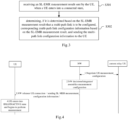
- FIG. 2 is a flow chart of a link recovery method in an embodiment of the present disclosure.
- the solution is applied to a user equipment (UE) side.
- the method may include:
- Step S201 obtaining a sidelink early measurement report (SL-EMR) measurement result in a non-connected state
- Step S202 sending the SL-EMR measurement result to a corresponding network side to perform a link recovery in a connected state.
- SL-EMR sidelink early measurement report
- the UE when the UE is in a non-connected state, the UE performs EMR measurement on the SL (sideline) related nodes based on the received SL-EMR measurement indication to obtain the corresponding SL-EMR measurement result.
- the SL-EMR measurement result is sent to the corresponding network side.
- the network side analyzes and judges based on the received SL-EMR measurement result to achieve connection recovery between the UE and the corresponding network side.
- the UE obtains the SL-EMR measurement result when it is in a non-connected state, and reports the SL-EMR measurement result to the corresponding network side when it enters into a connected state, so that the UE does not need to perform EMR measurements of SL-related nodes before the link recovery with the corresponding network side is needed, thereby saving the time of the UE to re-obtain the SL-EMR measurement result after entering the connected state, thereby enabling rapid link recovery in multi-path/multi-connection scenarios.
- the method may further include: receiving multi-path link configuration information which is sent by the network side based on the SL-EMR measurement result, and performing the link recovery based on the multi-path link configuration information.
- the network side determines whether to configure multi-path/multi-connection for the UE based on the content of the SL-EMR measurement result. If it is determined that multi-path/multi-connection needs to be configured, the network side will generate corresponding multi-path link configuration information based on the received SL-EMR measurement result, and feed back the multi-path link configuration information to the UE. After receiving the multi-path link configuration information, the UE will perform a link recovery based on the multi-path link configuration information.
- the UE can obtain the SL-EMR measurement result based on two methods, one is to obtain the SL-EMR measurement result based on the SL-EMR measurement configuration information sent by the network side, and the other is to obtain the SL-EMR measurement result based on the relay discovery indication sent by the network side.
- two methods one is to obtain the SL-EMR measurement result based on the SL-EMR measurement configuration information sent by the network side, and the other is to obtain the SL-EMR measurement result based on the relay discovery indication sent by the network side. The following will describe these two methods in detail.
- the method may further include:
- the UE Before the UE is in a non-connected state, it receives the SL-EMR measurement configuration information sent by the network side, and when it is in a connected state, it performs EMR measurement of SL-related nodes based on the received SL-EMR measurement configuration information to obtain the SL-EMR measurement result.
- the SL-EMR measurement configuration information may include one or more of the following:
- the SL-EMR measurement object information may further include: transmission resource pool related information, frequency information, reference symbol information, channel configuration information, measurement bandwidth information, etc.
- the SL-EMR report configuration information may further include: measurement trigger event configuration, related threshold information (such as measurement evaluation threshold value, which can be the threshold value of any one of SL-RSRP, SD-RSRP and SL-U measurement quantities), measurement recording period, number of records, etc.
- measurement trigger event configuration such as measurement evaluation threshold value, which can be the threshold value of any one of SL-RSRP, SD-RSRP and SL-U measurement quantities
- measurement evaluation threshold value such as measurement evaluation threshold value, which can be the threshold value of any one of SL-RSRP, SD-RSRP and SL-U measurement quantities
- the SL-EMR measurement area range information may further include: cell-level area information, TA-level area information, frequency-level area information or a PLMN list.
- the SL-EMR measurement object information includes identification information of at least one preset relay UE, and the preset relay UE indicated by the identification information of the preset relay UE is measured preferentially.
- the preset relay UE may be one or more relay UEs connected to the UE before the UE is in the non-connected state.
- the UE will preferentially measure these preset relay UEs.
- the link recovery mentioned in the embodiments of the present disclosure can be based on the SL-EMR measurement result to restore the link between the UE and the previously connected relay UE, or based on the SL-EMR measurement result to restore the link between the UE and a new relay UE.
- the relay nodes corresponding to the restored link and the previous link may be the same or different.
- obtaining a SL-EMR measurement result based on the SL-EMR measurement configuration information includes:
- the SL-EMR measurement configuration information includes the SL-EMR measurement time timer length information, it means that the network side has separately configured the SL-EMR measurement time timer for the UE, then the UE's EMR measurement for the relay is performed before the timer expires, that is, the SL-EMR measurement result is obtained based on the SL-EMR measurement configuration information, and whether to continue to execute after the timer expires depends on the UE implementation. If the SL-EMR measurement configuration information does not include the SL-EMR measurement time timer length information, it means that the network side has not separately configured the SL-EMR measurement time timer for the UE.
- the SL-EMR configuration information may also include Uu-EMR configuration parameters, and the process of performing EMR measurement on the Uu port based on the Uu-EMR configuration parameters will not be described in detail here.
- EMR measurement and recording is performed only for the relay. If the UE receives EMR configuration for both the cell/base station and the relay, EMR measurement and recording is performed for both the cell/base station and the relay.
- the UE Before the UE is in a non-connected state, it receives a relay discovery instruction sent by the network side, and when it is in a connected state, it executes the relay discovery instruction and measures the discovered relay UE, and uses the measurement result as the SL-EMR measurement result.
- This method saves the workload of the network side to configure the SL-EMR measurement configuration information, and simplifies the work of the network side during the link recovery process.
- the network side After the UE obtains the SL-EMR measurement result, there are two ways to report the SL-EMR measurement result to the network side when entering the connected state. One is to directly carry the SL-EMR measurement result in the wireless resource control RRC establishment/resume complete message and send it to the corresponding network side. The second is to send the RRC establishment/resume complete message carrying the SL-EMR measurement result indication information to the corresponding network side, that is, to send the SL-EMR measurement result available indication (available indicator) to the network side, and the available indication can reuse the existing EMR measurement result available indication for the Uu port. Then the network side requests the corresponding SL-EMR measurement result from the UE based on the available indication.
- available indication available indication
- the UE indicates to the network side that the UE has saved the SL-EMR measurement result, or the UE reuses the existing available indication of the EMR measurement result for the Uu port; the network side requests the UE for the SL's separate EMR measurement result, or all EMR measurement result, based on the available indication; accordingly, the UE reports the SL's separate EMR measurement result, or all EMR measurement result, to the network side.
- the method may further include: resending, when accessing a new cell, the SL-EMR measurement result to the corresponding network side in the new cell, if a handover or re-establishment occurs during a process of sending the SL-EMR measurement result to the corresponding network side.
- the reporting method can be:
- the relevant method or combination of methods is the same as that in the above embodiment.
- link recovery is performed based on multi-path link configuration information, including: establishing a PC5 port connection with the relay UE indicated by the multi-path link configuration information.
- the UE after receiving the multi-path link configuration information from the network side, the UE initiates a PC5 port connection with the relay UE indicated in the multi-path link configuration information.
- the connection may be triggered by the UE or by the relay UE.
- the method may further include: sending an indication message of supporting SL-EMR measurement to the network side, before entering into the non-connected state.
- the UE can report whether it supports SL-EMR in the AS capability report. Specifically, if the UE supports SL-EMR, it sends SL-EMR measurement indication information to the network side before being in a non-connected state.
- the network can determine whether the UE supports SL EMR, and thus determine whether to send SL-related EMR configuration information to the UE. If the UE's Uu-related EMR and SL-related EMR use a common available indicator, this capability enables the network to determine whether the EMR measurement result obtained from the UE include SL-EMR measurement result, thereby evaluating the size of the UE's reported information before requesting an indication from the UE and determining the appropriate time to obtain the EMR measurement result.
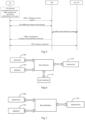
- FIG.3 is a flow chart of a link recovery method in an embodiment of the present disclosure, which is applied to a network side. As shown in FIG3 , the method may include:
- Step S301 receiving a sidelink early measurement report (SL-EMR) measurement result sent by the UE, when a UE enters into a connected state; Step S302, determining, if it is determined based on the SL-EMR measurement result that a multi-path link is to be configured, corresponding multi-path link configuration information based on the SL-EMR measurement result, and send the multi-path link configuration information to the UE, to enable the UE to perform a link recovery based on the multi-path link configuration information.
- SL-EMR sidelink early measurement report
- the SL-EMR measurement result sent by the UE is measured and obtained based on the received SL-EMR measurement indication when the UE is in a non-connected state.
- the UE obtains the SL-EMR measurement result when it is in a non-connected state, and reports the SL-EMR measurement result to the corresponding network side when it enters a connected state, so that the UE does not need to perform EMR measurements of SL-related nodes before the link recovery with the corresponding network side is needed, thereby saving the time of the UE to re-obtain the SL-EMR measurement result after entering the connected state, thereby enabling rapid link recovery in multi-path/multi-connection scenarios.
- the UE can obtain the SL-EMR measurement result based on two methods, one of which is to obtain the SL-EMR measurement result based on the SL-EMR measurement configuration information sent by the network side, and the other is based on the relay discovery indication sent by the network side. Therefore, in the first method, the network side needs to send the SL-EMR measurement configuration information, and in the second method, the network side needs to send the relay discovery indication.
- the network side's sending process in the two methods will be described in detail below.
- the method may further include: sending SL-EMR measurement configuration information to the UE, before entering into the non-connected state, to enable the UE to obtain the SL-EMR measurement result based on the SL-EMR measurement configuration information when the UE is in a non-connected state.
- the sending SL-EMR measurement configuration information to the UE includes: carrying the SL-EMR measurement configuration information in a dedicated signaling to send the SL-EMR measurement configuration information to the UE; and/or, carrying the SL-EMR measurement configuration information in system information to send the SL-EMR measurement configuration information to the UE.
- the dedicated signaling is a radio resource control (RRC) connection release message or an RRC reconfiguration message.
- the system information is a system information block (SIB) message shared with the air interface link early measurement report Uu-EMR measurement or a separate SIB message.
- SIB system information block
- the SL-EMR measurement configuration information is obtained in the following manner: obtaining relay-related measurement configuration; and obtaining SL-EMR measurement configuration information based on the relay-related measurement configuration and the network-related measurement configuration.
- the measurement configuration information for quickly establishing/restoring multi-path/multi-connection may allow the NW node to negotiate with the existing relay UE of the remote UE (i.e., the current relay UE connected to the UE), and finally the NW decides the measurement configuration information to be sent to the UE and sends it to the UE; or the NW may decide on its own to send the measurement configuration information to the UE and send it directly to the UE.
- the measurement configuration information finally sent can be obtained by integrating the relay-related measurement configuration and the network-related measurement configuration.
- obtaining the relay-related measurement configuration includes any one of the following methods: sending a first measurement configuration request to a current relay UE connected to the UE, and receiving the relay-related measurement configuration that the current relay UE is to measure and sent by the current relay UE in response to the first measurement configuration request, before the UE enters into the non-connected state;
- the NW when the NW decides to release the RRC connection with the UE to IDLE or INACTIVE, and wants to configure the UE for SL-EMR multi-path/multi-connection measurement, it can negotiate the SL-EMR measurement configuration information with the current relay UE of the UE.
- the negotiation process may include the following three schemes:
- the SL-EMR measurement configuration information is carried in an RRC connection release message and sent to the UE, the SL-EMR measurement configuration information is obtained based on the relay-related measurement configuration and the network-related measurement configuration, including:
- the NW when assembling the SL-EMR measurement configuration information finally sent to the UE, the NW can configure the relay-related measurement configuration and the NW-related measurement configuration together in an RRC connection release message, and set a separate field to carry it independently (for example, the NW node and the relay node are inter-RAT), or the NW node makes the decision/integration and only sets a set of final parameters to be sent to the UE.
- FIG.4 the process of the network side generating SL-EMR measurement configuration information and sending it to the UE for corresponding SL-EMR measurement is shown in FIG.4 and may include the following steps:
- the method may further include: sending a relay discovery instruction to the UE, before entering into the non-connected state, to enable the UE to execute the relay discovery instruction and measure a discovered relay node when the UE is in the non-connected state, and taking a measurement result as the SL-EMR measurement result.
- sending SL-EMR measurement configuration information to the UE includes: carrying the relay discovery instruction in dedicated signaling and sending it to the UE; and/or carrying the relay discovery instruction in system information and sending it to the UE.
- the dedicated signaling is a radio resource control (RRC) connection release message or an RRC reconfiguration message.
- the system information is a system information block (SIB) message shared with the air interface link early measurement report Uu-EMR measurement or a separate SIB message.
- SIB system information block
- the link recovery method in a multi-path/multi-connection scenario in an embodiment of the present disclosure is further described below by taking an example. As shown in FIG5 , the method may include the following steps:
- FIG.6 is a schematic diagram of the structure of a user equipment (UE) in an embodiment of the present disclosure.
- the UE includes a memory 620, a transceiver 610, a processor 600, and a user interface 630 :
- the memory 620 is used to store computer programs; the transceiver 610 is used to send and receive data under the control of the processor; the processor 600 is used to read the computer program in the memory 620 and perform the following operations:
- the processor is further configured to perform: receiving multi-path link configuration information which is sent by the network side based on the SL-EMR measurement result, and performing the link recovery based on the multi-path link configuration information.
- the processor is further configured to perform:
- the SL-EMR measurement configuration information includes one or more of the following:
- the SL-EMR measurement object information includes identification information of at least one preset relay UE, and the preset relay UE indicated by the identification information of the preset relay UE is measured preferentially.
- the obtaining the SL-EMR measurement result based on the SL-EMR measurement configuration information includes:
- the processor is further configured to perform:
- the sending the SL-EMR measurement result to the corresponding network side in the connected state includes:
- the processor is further configured to perform: resending, when accessing a new cell, the SL-EMR measurement result to the corresponding network side in the new cell, if a handover or re-establishment occurs during a process of sending the SL-EMR measurement result to the corresponding network side.
- the performing the link recovery based on the multi-path link configuration information comprises: establishing a PC5 interface connection with the relay UE indicated by the multi-path link configuration information.
- the method further includes: sending SL-EMR measurement support indication information to the network side, before entering into the non-connected state.
- transceiver 610 is used to receive and send data under the control of the processor 600.
- the bus architecture may include any number of interconnected buses and bridges, specifically one or more processors 600 represented by processor 600 and various circuits of memory 620 represented by memory 620 are linked together.
- the bus architecture can also link various other circuits such as peripherals, regulators, and power management circuits together, which are all well known in the art, so they are not further described herein.
- the bus interface provides an interface.
- the transceiver 610 can be a plurality of components, namely, a transmitter and a receiver, providing a unit for communicating with various other devices on a transmission medium, and these transmission media include transmission media such as wireless channels, wired channels, and optical cables.
- the user interface 630 can also be an interface that can be connected to external and internal devices, and the connected devices include but are not limited to keypads, displays, speakers, microphones, joysticks, etc.
- the processor 600 is responsible for managing the bus architecture and general processing, and the memory 620 can store data used by the processor 600 when performing operations.
- the processor 600 may be a CPU (central processing unit), an ASIC (Application Specific Integrated Circuit), an FPGA (Field-Programmable Gate Array) or a CPLD (Complex Programmable Logic Device), and the processor 600 may also adopt a multi-core architecture.
- CPU central processing unit
- ASIC Application Specific Integrated Circuit
- FPGA Field-Programmable Gate Array
- CPLD Complex Programmable Logic Device
- the processor 600 is used to execute any method provided by the embodiment of the present disclosure according to the obtained executable instructions by calling the computer program stored in the memory 620.
- the processor 600 and the memory 620 can also be arranged physically separately.
- FIG.7 is a schematic diagram of the structure of a base station in an embodiment of the present disclosure.
- the base station includes a memory 720, a transceiver 710, and a processor 700:
- the memory 720 is used to store computer programs; the transceiver 710 is used to send and receive data under the control of the processor; the processor 700 is used to read the computer program in the memory 720 and perform the following operations:
- the processor is further configured to perform: sending SL-EMR measurement configuration information to the UE, before entering into the non-connected state, to enable the UE to obtain the SL-EMR measurement result based on the SL-EMR measurement configuration information when the UE is in a non-connected state.
- the sending SL-EMR measurement configuration information to the UE includes:
- the dedicated signaling is a radio resource control (RRC) connection release message or an RRC reconfiguration message.
- RRC radio resource control
- the system information is a system information block (SIB) message shared with a Uu-link early measurement report (Uu-EMR) measurement or a separate SIB message.
- SIB system information block
- Uu-EMR Uu-link early measurement report
- the SL-EMR measurement configuration information is obtained by:
- the obtaining the relay-related measurement configuration includes one of the following methods:
- the obtaining the SL-EMR measurement configuration information based on the relay-related measurement configuration and the network-related measurement configuration includes:
- the processor is further configured to perform: sending a relay discovery instruction to the UE, before entering into the non-connected state, to enable the UE to execute the relay discovery instruction and measure a discovered relay node when the UE is in the non-connected state, and taking a measurement result as the SL-EMR measurement result.
- the sending the SL-EMR measurement configuration information to the UE includes: sending the relay discovery instruction to the UE via a dedicated signaling carrying the relay discovery instruction; and/or sending the relay discovery instruction to the UE via system information carrying the relay discovery instruction.
- the dedicated signaling is a Radio Resource Control (RRC) connection release message or RRC reconfiguration message.
- RRC Radio Resource Control
- system information is a system information block (SIB) message shared with a Uu-link early measurement report (Uu-EMR) measurement or a separate SIB message.
- SIB system information block
- transceiver 710 is used to receive and send data under the control of the processor 700.
- the bus architecture can include any number of interconnected buses and bridges, specifically one or more processors 700 represented by processor 700 and various circuits of memory 720 represented by memory 720 are linked together.
- the bus architecture can also link various other circuits such as peripherals, regulators, and power management circuits together, which are all well known in the art, so they are not further described herein.
- the bus interface provides an interface.
- the transceiver 710 can be a plurality of components, that is, including a transmitter and a receiver, providing a unit for communicating with various other devices on a transmission medium, and these transmission media include transmission media such as wireless channels, wired channels, and optical cables.
- the processor 700 is responsible for managing the bus architecture and general processing, and the memory 720 can store data used by the processor 700 when performing operations.
- the processor 700 may be a central processing unit (CPU), an application specific integrated circuit (ASIC), a field programmable gate array (FPGA) or a complex programmable logic device (CPLD).
- the processor 700 may also adopt a multi-core architecture.
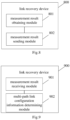
- FIG.8 is a structural block diagram of a link recovery device in an embodiment of the present disclosure.
- the device 800 may include: a measurement result obtaining module 801 and a measurement result sending module 802, where:
- the measurement result sending module is further configured to: receive multi-path link configuration information which is sent by the network side based on the SL-EMR measurement result, and perform the link recovery based on the multi-path link configuration information.
- the measurement result obtaining module is further configured to:
- the SL-EMR measurement configuration information includes one or more of the following:
- the SL-EMR measurement object information includes identification information of at least one preset relay UE, and the preset relay UE indicated by the identification information of the preset relay UE is measured preferentially.
- the measurement result obtaining module obtaining the SL-EMR measurement result based on the SL-EMR measurement configuration information in the non-connected state includes:
- the measurement result obtaining module is further configured to:
- the measurement result sending module sending the SL-EMR measurement result to the corresponding network side in the connected state includes:
- the measurement result sending module is further configured to: resend, when accessing a new cell, the SL-EMR measurement result to the corresponding network side in the new cell, if a handover or re-establishment occurs during a process of sending the SL-EMR measurement result to the corresponding network side.
- the measurement result obtaining module is further configured to: sending SL-EMR measurement support indication information to the network side, before entering into the non-connected state.
- FIG.9 is a structural block diagram of a link recovery device in an embodiment of the present disclosure.
- the device 900 may include: a measurement result receiving module 901 and a multi-path link configuration information determining module 902, where:
- the measurement result receiving module is further configured to: send SL-EMR measurement configuration information to the UE, before entering into the non-connected state, to enable the UE to obtain the SL-EMR measurement result based on the SL-EMR measurement configuration information when the UE is in a non-connected state.
- the measurement result receiving module sending SL-EMR measurement configuration information to the UE includes:
- the dedicated signaling includes a radio resource control (RRC) connection release message or an RRC reconfiguration message.
- RRC radio resource control
- the system information includes a system information block (SIB) message shared with a Uu-link early measurement report (Uu-EMR) measurement or a separate SIB message.
- SIB system information block
- Uu-EMR Uu-link early measurement report
- the SL-EMR measurement configuration information is obtained by:
- the obtaining the relay-related measurement configuration includes one of the following methods:
- the obtaining the SL-EMR measurement configuration information based on the relay-related measurement configuration and the network-related measurement configuration includes:
- the measurement result receiving module is further configured to: send a relay discovery instruction to the UE, before entering into the non-connected state, to enable the UE to execute the relay discovery instruction and measure a discovered relay node when the UE is in the non-connected state, and take a measurement result as the SL-EMR measurement result.
- the device of the embodiments of the present application can execute the method provided by the embodiments of the present application, and the implementation principles are similar.
- the actions performed by each module in the device of each embodiment of the present application correspond to the steps in the method of each embodiment of the present application.
- each functional unit in each embodiment of the present disclosure may be integrated into a processing unit, or each unit may exist physically separately, or two or more units may be integrated into one unit.
- the above-mentioned integrated unit may be implemented in the form of hardware or in the form of software functional units.
- the integrated unit is implemented in the form of a software functional unit and sold or used as an independent product, it can be stored in a processor-readable storage medium.
- the technical solution of the present disclosure is essentially or the part that contributes to the prior art or all or part of the technical solution can be embodied in the form of a software product.
- the computer software product is stored in a storage medium, including several instructions to enable a computer device (which can be a personal computer, server, or network device, etc.) or a processor (processor) to perform all or part of the steps of each embodiment method of the present disclosure.
- the aforementioned storage medium includes: U disk, mobile hard disk, read-only memory (ROM), random access memory (RAM), disk or optical disk, etc.
- the embodiment of the present disclosure provides a processor-readable storage medium, where the processor-readable storage medium stores a computer program, and the computer program is used to enable the processor to execute the method of the above embodiment.
- the processor-readable storage medium may be a non-transitory memory-readable storage medium.
- the processor-readable storage medium can be any available medium or data storage device that can be accessed by the processor, including but not limited to magnetic storage (such as floppy disks, hard disks, magnetic tapes, magneto-optical disks (MO)), optical storage (such as CDs, DVDs, BDs, HVDs, etc.), and semiconductor storage (such as ROM, EPROM, EEPROM, non-volatile memory (NAND FLASH), solid-state drives (SSDs)), etc.
- magnetic storage such as floppy disks, hard disks, magnetic tapes, magneto-optical disks (MO)
- optical storage such as CDs, DVDs, BDs, HVDs, etc.
- semiconductor storage such as ROM, EPROM, EEPROM, non-volatile memory (NAND FLASH), solid-state drives (SSDs)
- the applicable systems may be global system of mobile communication (GSM) system, code division multiple access (CDMA) system, wideband code division multiple access (WCDMA) general packet radio service (GPRS) system, long term evolution (LTE) system, LTE frequency division duplex (FDD) system, LTE time division duplex (TDD) system, long term evolution advanced (LTE-A) system, universal mobile telecommunication system (UMTS), worldwide interoperability for microwave access (WiMAX) system, 5G new radio (NR) system, etc.
- GSM global system of mobile communication
- CDMA code division multiple access
- WCDMA wideband code division multiple access
- GPRS general packet radio service
- LTE long term evolution
- FDD LTE frequency division duplex
- TDD LTE time division duplex
- LTE-A long term evolution advanced
- UMTS universal mobile telecommunication system
- WiMAX worldwide interoperability for microwave access
- NR 5G new radio
- the terminal device involved in the embodiments of the present disclosure may be a device that provides voice and/or data connectivity to a user, a handheld device with a wireless connection function, or other processing devices connected to a wireless modem.
- the names of terminal devices may also be different.
- the terminal device may be called a user equipment (UE).
- UE user equipment
- a wireless terminal device may communicate with one or more core networks (CN) via a radio access network (RAN).
- CN core networks
- RAN radio access network
- the wireless terminal device may be a mobile terminal device, such as a mobile phone (or a "cellular" phone) and a computer with a mobile terminal device.
- the wireless terminal device may also be referred to as a system, a subscriber unit, a subscriber station, a mobile station, a mobile station, a remote station, an access point, a remote terminal device, an access terminal device, a user terminal device, a user agent, and a user device, but is not limited in the embodiments of the present disclosure.
- the network device involved in the embodiments of the present disclosure may be a base station, which may include multiple cells that provide services to the terminal.
- the base station may also be called an access point, or may be a device in the access network that communicates with the wireless terminal device through one or more sectors on the air interface, or other names.
- the network device may be used to interchange received air frames with Internet Protocol (IP) packets, and serve as a router between the wireless terminal device and the rest of the access network, where the rest of the access network may include an Internet Protocol (IP) communication network.
- IP Internet Protocol
- the network device may also coordinate the attribute management of the air interface.
- the network device involved in the embodiments of the present disclosure may be a network device (Base Transceiver Station, BTS) in the Global System for Mobile communications (GSM ) or Code Division Multiple Access (CDMA), or a network device (NodeB) in Wide-band Code Division Multiple Access (WCDMA), or an evolutionary network device (eNB or e-NodeB) in the long term evolution (LTE) system, a 5G base station (gNB) in the 5G network architecture (next generation system), or a home evolved Node B (HeNB), a relay node, a home base station (femto), a pico base station (pico), etc., which is not limited in the embodiments of the present disclosure.
- the network device may include a centralized unit (CU) node and a distributed unit (DU) node, and the centralized unit and the distributed unit may also be arranged geographically separately.
- Network devices and terminal devices can each use one or more antennas for multiple input multiple output (MIMO) transmission.
- MIMO transmission can be single user MIMO (SU-MIMO) or multi-user MIMO (MU-MIMO).
- MIMO transmission can be 2D-MIMO, 3D-MIMO, FD-MIMO or massive-MIMO, or it can be diversity transmission, precoding transmission or beamforming transmission, etc.
Landscapes
- Engineering & Computer Science (AREA)
- Computer Networks & Wireless Communication (AREA)
- Signal Processing (AREA)
- Mobile Radio Communication Systems (AREA)
- Telephonic Communication Services (AREA)
Applications Claiming Priority (2)
| Application Number | Priority Date | Filing Date | Title |
|---|---|---|---|
| CN202210451477.6A CN116996929A (zh) | 2022-04-26 | 2022-04-26 | 链路恢复方法、装置、设备及处存储介质 |
| PCT/CN2023/090146 WO2023207865A1 (zh) | 2022-04-26 | 2023-04-23 | 链路恢复方法、装置、设备及处存储介质 |
Publications (2)
| Publication Number | Publication Date |
|---|---|
| EP4518409A1 true EP4518409A1 (de) | 2025-03-05 |
| EP4518409A4 EP4518409A4 (de) | 2025-11-12 |
Family
ID=88517760
Family Applications (1)
| Application Number | Title | Priority Date | Filing Date |
|---|---|---|---|
| EP23795298.1A Pending EP4518409A4 (de) | 2022-04-26 | 2023-04-23 | Verfahren und vorrichtung zur verbindungswiederherstellung, vorrichtung und speichermedium |
Country Status (3)
| Country | Link |
|---|---|
| EP (1) | EP4518409A4 (de) |
| CN (1) | CN116996929A (de) |
| WO (1) | WO2023207865A1 (de) |
Family Cites Families (7)
| Publication number | Priority date | Publication date | Assignee | Title |
|---|---|---|---|---|
| US11129041B2 (en) * | 2018-07-20 | 2021-09-21 | FG Innovation Company Limited | Reporting early measurement results in the next generation wireless networks |
| WO2020147120A1 (en) * | 2019-01-18 | 2020-07-23 | Qualcomm Incorporated | Early measurement reporting |
| WO2020167205A1 (en) * | 2019-02-12 | 2020-08-20 | Telefonaktiebolaget Lm Ericsson (Publ) | Early measurement reporting with rrc resume request message and indication of request for early measurements in association with paging |
| CN111757368A (zh) * | 2019-03-28 | 2020-10-09 | 苹果公司 | 载波聚合或双连接的配置的早期测量报告 |
| WO2021214518A1 (en) * | 2020-04-21 | 2021-10-28 | Nokia Technologies Oy | Utilization of regular measurements for early measurement reporting |
| WO2022012589A1 (en) * | 2020-07-14 | 2022-01-20 | FG Innovation Company Limited | User equipment and method for idle mode measurement |
| US20240015809A1 (en) * | 2020-11-06 | 2024-01-11 | Qualcomm Incorporated | Relay selection based on early measurement in l2 relay |
-
2022
- 2022-04-26 CN CN202210451477.6A patent/CN116996929A/zh active Pending
-
2023
- 2023-04-23 EP EP23795298.1A patent/EP4518409A4/de active Pending
- 2023-04-23 WO PCT/CN2023/090146 patent/WO2023207865A1/zh not_active Ceased
Also Published As
| Publication number | Publication date |
|---|---|
| EP4518409A4 (de) | 2025-11-12 |
| WO2023207865A1 (zh) | 2023-11-02 |
| CN116996929A (zh) | 2023-11-03 |
Similar Documents
| Publication | Publication Date | Title |
|---|---|---|
| EP4408045A1 (de) | Informationssendeverfahren und -vorrichtung | |
| WO2024168743A1 (zh) | 小区测量方法、装置、设备及存储介质 | |
| WO2024152978A1 (zh) | 测量预测方法与装置、终端设备、网络设备和芯片 | |
| EP4366375A1 (de) | Gruppenübergabeverfahren, -vorrichtung und -vorrichtung sowie speichermedium | |
| JP7816564B2 (ja) | マルチパスの設定方法、装置及びシステム | |
| EP4586666A1 (de) | Informationsverarbeitungsverfahren, -vorrichtung und -einrichtung | |
| CN114205883A (zh) | 网络切片重映射方法、装置及存储介质 | |
| CN114071805B (zh) | 业务处理方法、信息指示方法、终端和网络设备 | |
| WO2023088367A1 (zh) | 数据传输方法、远端ue、中继ue及存储介质 | |
| JP7669484B2 (ja) | Mro臨界シーンの判定方法、装置及び機器 | |
| WO2022083411A1 (zh) | 辅小区变换的错误类型的判定方法及设备 | |
| CN115707151A (zh) | 状态转换方法、装置、设备以及存储介质 | |
| EP4564894A1 (de) | Verfahren und vorrichtung zur anzeige einer qoe-messkonfiguration | |
| EP4436239A1 (de) | Informationsverarbeitungsverfahren und -vorrichtung | |
| EP4518409A1 (de) | Verfahren und vorrichtung zur verbindungswiederherstellung, vorrichtung und speichermedium | |
| CN115226153A (zh) | 信令发送方法、装置及存储介质 | |
| CN115134949A (zh) | 信息发送方法、装置、设备以及存储介质 | |
| CN115694752B (zh) | 信息发送方法、处理方法、终端、网络设备和存储介质 | |
| US20240098604A1 (en) | Information obtaining method, processing method, node, network device and apparatus | |
| US20250280340A1 (en) | Interaction method and related device | |
| EP4564945A1 (de) | Informationsübertragungsverfahren und -vorrichtung sowie speichermedium | |
| US20250119967A1 (en) | Method for handling consistent lbt failure, terminal, and network device | |
| WO2025020796A1 (zh) | 一种数据传输方法、装置及设备 | |
| CN117425174A (zh) | 通信方法和通信装置 | |
| WO2024207195A1 (zh) | 多路径的通信方法以及装置 |
Legal Events
| Date | Code | Title | Description |
|---|---|---|---|
| STAA | Information on the status of an ep patent application or granted ep patent |
Free format text: STATUS: THE INTERNATIONAL PUBLICATION HAS BEEN MADE |
|
| PUAI | Public reference made under article 153(3) epc to a published international application that has entered the european phase |
Free format text: ORIGINAL CODE: 0009012 |
|
| STAA | Information on the status of an ep patent application or granted ep patent |
Free format text: STATUS: REQUEST FOR EXAMINATION WAS MADE |
|
| 17P | Request for examination filed |
Effective date: 20241126 |
|
| AK | Designated contracting states |
Kind code of ref document: A1 Designated state(s): AL AT BE BG CH CY CZ DE DK EE ES FI FR GB GR HR HU IE IS IT LI LT LU LV MC ME MK MT NL NO PL PT RO RS SE SI SK SM TR |
|
| DAV | Request for validation of the european patent (deleted) | ||
| DAX | Request for extension of the european patent (deleted) | ||
| RIC1 | Information provided on ipc code assigned before grant |
Ipc: H04W 24/08 20090101AFI20250701BHEP Ipc: H04W 72/04 20230101ALI20250701BHEP Ipc: H04W 36/30 20090101ALI20250701BHEP Ipc: H04W 24/10 20090101ALI20250701BHEP Ipc: H04W 76/14 20180101ALI20250701BHEP Ipc: H04W 76/15 20180101ALI20250701BHEP Ipc: H04W 76/23 20180101ALI20250701BHEP Ipc: H04W 76/27 20180101ALI20250701BHEP Ipc: H04W 76/30 20180101ALI20250701BHEP Ipc: H04W 76/19 20180101ALI20250701BHEP Ipc: H04W 88/04 20090101ALN20250701BHEP Ipc: H04W 92/18 20090101ALN20250701BHEP |
|
| A4 | Supplementary search report drawn up and despatched |
Effective date: 20251015 |
|
| RIC1 | Information provided on ipc code assigned before grant |
Ipc: H04W 24/08 20090101AFI20251009BHEP Ipc: H04W 72/04 20230101ALI20251009BHEP Ipc: H04W 36/30 20090101ALI20251009BHEP Ipc: H04W 24/10 20090101ALI20251009BHEP Ipc: H04W 76/14 20180101ALI20251009BHEP Ipc: H04W 76/15 20180101ALI20251009BHEP Ipc: H04W 76/23 20180101ALI20251009BHEP Ipc: H04W 76/27 20180101ALI20251009BHEP Ipc: H04W 76/30 20180101ALI20251009BHEP Ipc: H04W 76/19 20180101ALI20251009BHEP Ipc: H04W 36/00 20090101ALI20251009BHEP Ipc: H04W 88/04 20090101ALN20251009BHEP Ipc: H04W 92/18 20090101ALN20251009BHEP |