EP4518336A2 - Am kopf tragbare vorrichtung zur erzeugung von binauralem audio - Google Patents
Am kopf tragbare vorrichtung zur erzeugung von binauralem audio Download PDFInfo
- Publication number
- EP4518336A2 EP4518336A2 EP25151768.6A EP25151768A EP4518336A2 EP 4518336 A2 EP4518336 A2 EP 4518336A2 EP 25151768 A EP25151768 A EP 25151768A EP 4518336 A2 EP4518336 A2 EP 4518336A2
- Authority
- EP
- European Patent Office
- Prior art keywords
- microphone
- signal
- beamformer
- head
- wearable apparatus
- Prior art date
- Legal status (The legal status is an assumption and is not a legal conclusion. Google has not performed a legal analysis and makes no representation as to the accuracy of the status listed.)
- Pending
Links
Images



Classifications
-
- H—ELECTRICITY
- H04—ELECTRIC COMMUNICATION TECHNIQUE
- H04R—LOUDSPEAKERS, MICROPHONES, GRAMOPHONE PICK-UPS OR LIKE ACOUSTIC ELECTROMECHANICAL TRANSDUCERS; ELECTRIC HEARING AIDS; PUBLIC ADDRESS SYSTEMS
- H04R1/00—Details of transducers, loudspeakers or microphones
- H04R1/10—Earpieces; Attachments therefor ; Earphones; Monophonic headphones
-
- H—ELECTRICITY
- H04—ELECTRIC COMMUNICATION TECHNIQUE
- H04N—PICTORIAL COMMUNICATION, e.g. TELEVISION
- H04N23/00—Cameras or camera modules comprising electronic image sensors; Control thereof
- H04N23/50—Constructional details
- H04N23/51—Housings
-
- H—ELECTRICITY
- H04—ELECTRIC COMMUNICATION TECHNIQUE
- H04N—PICTORIAL COMMUNICATION, e.g. TELEVISION
- H04N23/00—Cameras or camera modules comprising electronic image sensors; Control thereof
- H04N23/50—Constructional details
- H04N23/54—Mounting of pick-up tubes, electronic image sensors, deviation or focusing coils
-
- H—ELECTRICITY
- H04—ELECTRIC COMMUNICATION TECHNIQUE
- H04R—LOUDSPEAKERS, MICROPHONES, GRAMOPHONE PICK-UPS OR LIKE ACOUSTIC ELECTROMECHANICAL TRANSDUCERS; ELECTRIC HEARING AIDS; PUBLIC ADDRESS SYSTEMS
- H04R1/00—Details of transducers, loudspeakers or microphones
- H04R1/20—Arrangements for obtaining desired frequency or directional characteristics
- H04R1/32—Arrangements for obtaining desired frequency or directional characteristics for obtaining desired directional characteristic only
- H04R1/40—Arrangements for obtaining desired frequency or directional characteristics for obtaining desired directional characteristic only by combining a number of identical transducers
- H04R1/406—Arrangements for obtaining desired frequency or directional characteristics for obtaining desired directional characteristic only by combining a number of identical transducers microphones
-
- H—ELECTRICITY
- H04—ELECTRIC COMMUNICATION TECHNIQUE
- H04R—LOUDSPEAKERS, MICROPHONES, GRAMOPHONE PICK-UPS OR LIKE ACOUSTIC ELECTROMECHANICAL TRANSDUCERS; ELECTRIC HEARING AIDS; PUBLIC ADDRESS SYSTEMS
- H04R19/00—Electrostatic transducers
- H04R19/04—Microphones
-
- H—ELECTRICITY
- H04—ELECTRIC COMMUNICATION TECHNIQUE
- H04R—LOUDSPEAKERS, MICROPHONES, GRAMOPHONE PICK-UPS OR LIKE ACOUSTIC ELECTROMECHANICAL TRANSDUCERS; ELECTRIC HEARING AIDS; PUBLIC ADDRESS SYSTEMS
- H04R3/00—Circuits for transducers
- H04R3/005—Circuits for transducers for combining the signals of two or more microphones
-
- H—ELECTRICITY
- H04—ELECTRIC COMMUNICATION TECHNIQUE
- H04R—LOUDSPEAKERS, MICROPHONES, GRAMOPHONE PICK-UPS OR LIKE ACOUSTIC ELECTROMECHANICAL TRANSDUCERS; ELECTRIC HEARING AIDS; PUBLIC ADDRESS SYSTEMS
- H04R5/00—Stereophonic arrangements
- H04R5/027—Spatial or constructional arrangements of microphones, e.g. in dummy heads
-
- H—ELECTRICITY
- H04—ELECTRIC COMMUNICATION TECHNIQUE
- H04S—STEREOPHONIC SYSTEMS
- H04S1/00—Two-channel systems
- H04S1/007—Two-channel systems in which the audio signals are in digital form
-
- G—PHYSICS
- G02—OPTICS
- G02B—OPTICAL ELEMENTS, SYSTEMS OR APPARATUS
- G02B27/00—Optical systems or apparatus not provided for by any of the groups G02B1/00 - G02B26/00, G02B30/00
- G02B27/01—Head-up displays
- G02B27/0101—Head-up displays characterised by optical features
- G02B2027/0138—Head-up displays characterised by optical features comprising image capture systems, e.g. camera
-
- G—PHYSICS
- G02—OPTICS
- G02B—OPTICAL ELEMENTS, SYSTEMS OR APPARATUS
- G02B27/00—Optical systems or apparatus not provided for by any of the groups G02B1/00 - G02B26/00, G02B30/00
- G02B27/01—Head-up displays
- G02B27/0101—Head-up displays characterised by optical features
- G02B2027/0141—Head-up displays characterised by optical features characterised by the informative content of the display
-
- H—ELECTRICITY
- H04—ELECTRIC COMMUNICATION TECHNIQUE
- H04R—LOUDSPEAKERS, MICROPHONES, GRAMOPHONE PICK-UPS OR LIKE ACOUSTIC ELECTROMECHANICAL TRANSDUCERS; ELECTRIC HEARING AIDS; PUBLIC ADDRESS SYSTEMS
- H04R2201/00—Details of transducers, loudspeakers or microphones covered by H04R1/00 but not provided for in any of its subgroups
- H04R2201/003—Mems transducers or their use
-
- H—ELECTRICITY
- H04—ELECTRIC COMMUNICATION TECHNIQUE
- H04R—LOUDSPEAKERS, MICROPHONES, GRAMOPHONE PICK-UPS OR LIKE ACOUSTIC ELECTROMECHANICAL TRANSDUCERS; ELECTRIC HEARING AIDS; PUBLIC ADDRESS SYSTEMS
- H04R2201/00—Details of transducers, loudspeakers or microphones covered by H04R1/00 but not provided for in any of its subgroups
- H04R2201/10—Details of earpieces, attachments therefor, earphones or monophonic headphones covered by H04R1/10 but not provided for in any of its subgroups
-
- H—ELECTRICITY
- H04—ELECTRIC COMMUNICATION TECHNIQUE
- H04R—LOUDSPEAKERS, MICROPHONES, GRAMOPHONE PICK-UPS OR LIKE ACOUSTIC ELECTROMECHANICAL TRANSDUCERS; ELECTRIC HEARING AIDS; PUBLIC ADDRESS SYSTEMS
- H04R2201/00—Details of transducers, loudspeakers or microphones covered by H04R1/00 but not provided for in any of its subgroups
- H04R2201/40—Details of arrangements for obtaining desired directional characteristic by combining a number of identical transducers covered by H04R1/40 but not provided for in any of its subgroups
- H04R2201/403—Linear arrays of transducers
-
- H—ELECTRICITY
- H04—ELECTRIC COMMUNICATION TECHNIQUE
- H04R—LOUDSPEAKERS, MICROPHONES, GRAMOPHONE PICK-UPS OR LIKE ACOUSTIC ELECTROMECHANICAL TRANSDUCERS; ELECTRIC HEARING AIDS; PUBLIC ADDRESS SYSTEMS
- H04R2410/00—Microphones
- H04R2410/07—Mechanical or electrical reduction of wind noise generated by wind passing a microphone
-
- H—ELECTRICITY
- H04—ELECTRIC COMMUNICATION TECHNIQUE
- H04S—STEREOPHONIC SYSTEMS
- H04S2400/00—Details of stereophonic systems covered by H04S but not provided for in its groups
- H04S2400/15—Aspects of sound capture and related signal processing for recording or reproduction
Definitions
- a number of consumer electronic devices are adapted to capture audio and/or visual content.
- a user can use the built-in cameras on a mobile device to quickly capture an event or moment occurring in the user's life.
- some embodiments of the disclosure are directed to a head-wearable apparatus 100 that can capture audio content, which when played back, is an imitation of the sound as perceived by the user of the head-wearable apparatus 100.
- the head-wearable apparatus 100 can record audio using microphones that are arranged to create 3-dimensional (3D) sound sensation for the listener as if present when the audio was recorded. This is called binaural audio.
- the playback of the captured audio content will have the effect of binaural audio that has the stereo separation and the spectral content that would mimic a human ear and head response.
- the design of the head-wearable apparatus 100 uses, among other things, the diffraction pattern of the human head, the placement of the microphones on both sides of the head, and beamforming techniques.
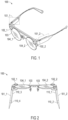
- Figure 1 illustrates a perspective view of a head-wearable apparatus 100 to generate binaural audio according to one example embodiment.
- Figure 2 illustrates a bottom view of the head-wearable apparatus 100 from Figure 1 , according to one example embodiment.
- the head-wearable apparatus 100 is a pair of eyeglasses.
- the head-wearable apparatus 100 can be sunglasses or goggles.
- Some embodiments can include one or more wearable devices, such as a pendant with an integrated camera that is integrated with, in communication with, or coupled to, the head-wearable apparatus 100 or a client device.
- any desired wearable device may be used in conj unction with the embodiments of the present disclosure, such as a watch, a headset, a wristband, earbuds, clothing (such as a hat or jacket with integrated electronics), a clip-on electronic device, or any other wearable devices.
- a client device e.g., machine 800 in Figure 8
- one or more elements as shown in Figure 5 and Figure 6 can be included in the head-wearable apparatus 100 and/or the client device.
- client device may refer to any machine that interfaces to a communications network to obtain resources from one or more server systems or other client devices.
- a client device may be, but is not limited to, a mobile phone, desktop computer, laptop, portable digital assistants (PDAs), smart phones, tablets, ultra books, netbooks, laptops, multi-processor systems, microprocessor-based or programmable consumer electronics, game consoles, set-top boxes, or any other communication device that a user may use to access a network.
- PDAs portable digital assistants
- smart phones tablets, ultra books, netbooks, laptops, multi-processor systems, microprocessor-based or programmable consumer electronics, game consoles, set-top boxes, or any other communication device that a user may use to access a network.
- the head-wearable apparatus 100 is a pair of eyeglasses that includes a frame 103 that includes eye wires (or rims) that are coupled to two stems (or temples), respectively, via hinges and/or end pieces.
- the eye wires of the frame 103 carry or hold a pair of lenses 104_1, 104_2.
- the frame 103 includes a first (e.g., right) side that is coupled to the first stem and a second (e.g., left) side that is coupled to the second stem. The first side is opposite the second side of the frame 103.
- the apparatus 100 further includes a camera module that includes camera lenses 102_1, 102_2 and at least one image sensor.
- the camera lens may be a perspective camera lens or a non-perspective camera lens.
- a non-perspective camera lens may be, for example, a fisheye lens, a wide-angle lens, an omnidirectional lens, etc.
- the image sensor captures digital video through the camera lens.
- the images may be also be still image frame or a video including a plurality of still image frames.
- the camera module can be coupled to the frame 103. As shown in Figures 1 and 2 , the frame 103 is coupled to the camera lenses 102_1, 102 2 such that the camera lenses face forward.
- the camera lenses 102_1, 102_2 can be perpendicular to the lenses 104_1, 104_2.
- the camera module can include dual-front facing cameras that are separated by the width of the frame 103 or the width of the head of the user of the apparatus 100.
- the two stems are respectively coupled to microphone housings 101_1, 101_2.
- the first and second stems are coupled to opposite sides of a frame 103 of the head-wearable apparatus 100.
- the first stem is coupled to the first microphone housing 101_1 and the second stem is coupled to the second microphone housing 101_2.
- the microphone housings 101_1, 101_2 can be coupled to the stems between the locations of the frame 103 and the temple tips.
- the microphone housings 101_1, 101_2 can be located on either side of the user's temples when the user is wearing the apparatus 100.
- the microphone housings 101_1, 101_2 encase a plurality of microphones 110_1 to 110 N (N>1).
- the microphones 110_1 to 110_N are air interface sound pickup devices that convert sound into an electrical signal. More specifically, the microphones 110_1 to 110_N are transducers that convert acoustic pressure into electrical signals (e.g., acoustic signals).
- Microphones 110_1 to 110_N can be digital or analog microelectro-mechanical systems (MEMS) microphones.
- MEMS microelectro-mechanical systems
- the acoustic signals generated by the microphones 110_1 to 110 N can be pulse density modulation (PDM) signals.
- PDM pulse density modulation
- the first microphone housing 101_1 encases microphones 110_3 and 110_4 and the second microphone housing 101_2 encases microphones 110_1 and 110_2.
- the first microphone housing 101 1 the first front microphone 110_3 and the first rear microphone 110_4 are separated by a predetermined distance d 1 and form a first order differential microphone array.
- the second front microphone 110_1 and the second rear microphone 110_2 are also separated by a predetermined distance d 2 and form a first order differential microphone array.
- the predetermined distances d 1 and d 2 can be the same distance or different distances.
- the predetermined distances d 1 and d 2 can be set based on the Nyquist frequency. Content above the Nyquist frequency for a beamformer is irrecoverable, especially for speech.
- the predetermined distances d 1 and d 2 can be set as any value of d that results in a frequency above 6 kHz, which is the cutoff for Wideband speech.
- the system 100 includes four microphones 110_1 to 110_4, the number of microphones can vary.
- the microphone housings 101_1, 101_2 can include at least two microphones and can form a microphone array.
- Each of the microphone housings 101_1, 101_2 can also include a battery.
- each of the microphone housings 101_1, 101_2 includes a front port and a rear port.
- the front port of the first microphone housing 101_1 is coupled to microphone 110_3 (e.g. first front microphone) and the rear port of the first microphone housing 101_1 is coupled to the microphone 110 4 (e.g., first rear microphone).
- the front port of the second microphone housing 101_2 is coupled to microphone 110_1 (e.g. second front microphone) and the rear port of the second microphone housing 101_2 is coupled to the microphone 110_2 (e.g., second rear microphone).
- the microphones 101_1 to 101 4 can be moved further towards the temple tips on the stems of the apparatus 100 (e.g., the back of the apparatus 100) to accentuate the binaural effect captured by the microphones.
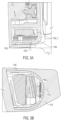
- Figure 3A-3B illustrates details of portions of one microphone housing of the head-wearable apparatus from Figure 1 , according to example embodiments.
- Figure 3A illustrates the details of the microphone 110_1 (e.g. second front microphone) and the front port associated therewith. While Figure 3A illustrates the details of the microphone 110_1 coupled to the front port in the second microphone housing 101_2, it is understood that the details of the microphone 110_3 (e.g., first front microphone) coupled to the front port in the first microphone housing 101_1 are similar to the details in Figure 3A .
- Figure 3A is a cutaway view of the front microphone 110_1 and the acoustic path 112. As shown, the acoustic path 112 travels through the separation between the chunk 114 (e.g., second microphone housing 101_2) and a housing 113 of the second stem.
- the housing 113 of the stem can be made of metal.
- the front microphone 110_1 and the front port are pointing (or facing) downwards. For example, when the user is standing and wearing the apparatus 100, the front port in Figure 3A is open in a direction towards the user's feet on the ground.
- the process 400 starts at operation 401 with microphones 110_1 to 110_4 generating acoustic signals.
- the microphones 110_1 to 110_4 can be MEMS microphones that convert acoustic pressure into electrical signals (e.g., acoustic signals).
- the first front microphone 110_3 and the first rear microphone 110 4 are encased in a first microphone 101_1 housing that is coupled on a first stem of the head-wearable apparatus 100.
- the first front microphone 110_3 and the first rear microphone 110_4 form a first order differential microphone array.
- the second front microphone 110_1 and the second rear microphone 110_2 are encased in a second microphone housing 101_2 that is coupled on a second stem of the head-wearable apparatus 100.
- the second front microphone 1 10_1 and the second rear microphone 110_2 form a first order differential microphone array.
- the first and second stems are coupled to opposite sides of a frame 103 of the head-wearable apparatus 100.
- the acoustic signals can be pulse density modulation (PDM) signals.
- the audio codecs 501 1, 501 2 decode the acoustic signals from the microphones 110_1 to 110_4.
- the audio codec 501_2 decodes the acoustic signals from the first front microphone 110_ and the first rear microphone 110_4 to generate a first decoded acoustic signal and the audio codec 501_1 decodes the second front microphone 110_1 and the second rear microphone 110_2 to generate a second decoded acoustic signal.
- the first and second decoded acoustic signals are pulse code modulation (PCM) signals.
- the first decoded acoustic signal is a PCM signal based on the acoustic signals from the first front microphone 110_3 and the first rear microphone 110_4.
- the second decoded acoustic signal is a PCM signal based on the acoustic signals from the second front microphone 110_1 and the second rear microphone 110 2.
- the TDM 502 processes the decoded acoustic signals from the audio codecs 501 1, 501_2.
- the TDM 502 processes the first and second decoded acoustic signals by time division multiplexing the first and second decoded acoustic signals.
- the TDM-processed signal includes the first decoded acoustic signal and the second decoded acoustic signal.
- the beamformer 601 beamforms the TDM-processed signal.
- the beamformer 601 can be a fixed beamformer that includes a fixed beam patterns that is sub-cardioid or cardioid.
- the beamformer 601 beamforms the first decoded signal to generate a first beamformer signal and beamforms the second decoded signal to generate a second beamformer signal.
- the storage device 604 stores the beamformer signals as a two-channel file.
- the two-channel file can be a two-channel PCM file or a two-channel Advanced Audio Coding (AAC)/PCM file.
- the storage device 604 can be a flash storage device.
- a noise suppressor 602 suppresses noise from the first beamformer signal and the second beamformer signal and generates a first noise-suppressed signal and a second noise-suppressed signal.
- a speech enhancer 603 can enhance speech from the first noise-suppressed signal and the second noise-suppressed signal to generate a first clean signal and a second clean signal, respectively.
- the storage device 604 stores the first and second clean signal as a two-channel PCM file.
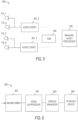
- Figure 5 illustrates a block diagram of a system 500 to generate binaural audio included in the head-wearable apparatus 100 from Figure 1 , according to one example embodiment.
- one or more portions of the system 500 can be included in the head-wearable apparatus 100 or can be included in a client device (e.g., machine 800 in Figure 8 ) that can be used in conjunction with the head-wearable apparatus 100.
- a client device e.g., machine 800 in Figure 8
- System 500 includes the microphones 110_1 to 110_N, audio codecs 501_1, 501_2, a time-division multiplexer (TDM) 502, and a binary audio processor 503.
- the first front microphone 110_3 and the first rear microphone 1 10_4 encased in the first microphone housing 101_1 form a first-order differential microphone array.
- the second front microphone 110_1 and the second rear microphone 110_2 encased in the second microphone housing 101_2 form another first-order differential microphone array.
- the microphones 110_1 to 110_4 can be analog or digital MEMS microphones.
- the acoustic signals generated by the microphones 110 1 to 110_4 can be pulse density modulation (PDM) signals.
- PDM pulse density modulation
- the audio codec 501_1 decodes the acoustic signals from the first front microphone 110_3 and the first rear microphone 110_4 to generate a first decoded acoustic signal.
- the audio codec 501_2 decodes the acoustic signals from the second front microphone 110_1 and the second rear microphone 110_2 to generate a second decoded acoustic signal.
- the first and second decoded acoustic signals can be pulse code modulation (PCM) signals.
- the audio codecs 501 1, 501 2 decode the acoustic signals that are PDM signals from a single-bit PDM format into a multibit pulse code modulation (PCM) format.
- the audio codecs 501_1, 501_2 can include PDM inputs with filters that convert the PDM signals to PCM format.
- the audio codecs 501_1, 501_2 use a microcontroller with a synchronous serial interface to capture the PDM data stream from the microphones 110_1 to 110 4 and convert the PDM data stream into PCM format using the filters implemented in software.
- the PCM signals can be interpreted by an interface of the binaural audio processor 503.
- binaural audio processor 503 is a Silicon-on-Chip (SoC).
- SoC Silicon-on-Chip
- the SoC can include an interface, such as the I2S interface, to receive and interpret the PCM signals.
- the interface of the binaural audio processor 503 can only handle one packet (e.g., 2 channels of audio), the time-division multiplexer (TDM) 502 in the system 500 receives and process the first and second decoded acoustic signals (e.g., PCM signals) to generate a TDM-processed signal.
- the TDM 502 time-division multiplexes the first and second decoded acoustic signals to generate the TDM-processed signal.
- the system 500 further oversamples the TDM-processed signal to allow for an input the four microphone signals.
- the system 500 can also include switches to create extra slots to allow for the microphone signals.
- the microphones 110_1 to 110 4 are digital MEMS microphones.
- the acoustic signals generated by digital MEMS microphones are relatively immune to noise, but signal integrity can still be a concern due to distortion created by parasitic capacitance, resistance, and inductance between the microphones 110_1 to 110_4 outputs and the SoC such as the binaural audio processor 503. Impedance mismatches can also create reflections that can distort the signals in applications with longer distances between the digital microphones 110_1 to 110_4 and the SoC.
- the microphones 110_1 to 110_4 are attached to flexible circuits designed to maximize signal integrity and also minimize the trace length between the elements.
- the flexible circuits are encased in the microphone housings 101_1, 101_2.
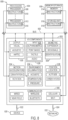
- FIG 6 illustrates a block diagram of the binaural audio processor 503 included in the system 500 in Figure 5 , according to one example embodiment.
- the binaural audio processor 503 includes a beamformer 601, a noise suppressor 602, a speech enhancer 603, and a storage device 604.
- the binaural audio processor 503 includes an interface that receives the TDM-processed signal.
- the TDM-processed signal is generated from the acoustic signals from the first front microphone 110_3, the first rear microphone 110_4, the second front microphone 110_1 and the second rear microphone 110_2.
- the microphones 110_1 to 110_4 are digital MEMS microphones which are inherently omnidirectional.
- the beamformer 601 which has direction steering properties, is a differential beamformer that allows for a flat frequency response except for the Nyquist frequency.
- the beamformer 601 uses the transfer functions of a first-order differential microphone array.
- the beamformer 601 is a fixed beamformer that includes a fixed beam pattern that is sub-cardioid with A and B coefficients of 0.25 and 0.75, respectively. In one embodiment, the beamformer 601 is a fixed beamformer that includes a fixed beam pattern that is cardioid with A and B coefficients of 0.5 and 0.5, respectively.
- the beamformer 601 receives the acoustic signals from the first front microphone 110_3, the first rear microphone 110_4, the second front microphone 110_1 and the second rear microphone 110_2. In one embodiment, the beamformer 601 receives the TDM-processed signal. The beamformer 601 generates a first beamformer signal based on the acoustic signals from the first front microphone 110_3 and the first rear microphone 110_4, and a second beamformer signal based on the acoustic signals from the second front microphone 110_1 and the second rear microphone 110 2.
- the storage device 604 can store the first and second beamformer signal as a two-channel file.
- Figure 7 is a block diagram illustrating an exemplary software architecture 706, which may be used in conjunction with various hardware architectures herein described.
- Figure 7 is a non-limiting example of a software architecture and it will be appreciated that many other architectures may be implemented to facilitate the functionality described herein.
- the software architecture 706 may execute on hardware such as machine 8 of Figure 8 that includes, among other things, processors 804, memory 814, and I/O components 818.
- a representative hardware layer 752 is illustrated and can represent, for example, the machine 800 of Figure 8 .
- the representative hardware layer 752 includes a processing unit 754 having associated executable instructions 704.
- Executable instructions 704 represent the executable instructions of the software architecture 706, including implementation of the methods, components and so forth described herein.
- the hardware layer 752 also includes memory or storage modules memory/storage 756, which also have executable instructions 704.
- the hardware layer 752 may also comprise other hardware 758.
- a hardware component may be a special-purpose processor, such as a Field-Programmable Gate Array (FPGA) or an Application Specific Integrated Circuit (ASIC).
- a hardware component may also include programmable logic or circuitry that is temporarily configured by software to perform certain operations.
- a hardware component may include software executed by a general-purpose processor or other programmable processor. Once configured by such software, hardware components become specific machines (or specific components of a machine) uniquely tailored to perform the configured functions and are no longer general-purpose processors. It will be appreciated that the decision to implement a hardware component mechanically, in dedicated and permanently configured circuitry, or in temporarily configured circuitry (e.g., configured by software) may be driven by cost and time considerations.
- one hardware component may perform an operation and store the output of that operation in a memory device to which it is communicatively coupled. A further hardware component may then, at a later time, access the memory device to retrieve and process the stored output. Hardware components may also initiate communications with input or output devices, and can operate on a resource (e.g., a collection of information).
- a resource e.g., a collection of information.
- the various operations of example methods described herein may be performed, at least partially, by one or more processors that are temporarily configured (e.g., by software) or permanently configured to perform the relevant operations. Whether temporarily or permanently configured, such processors may constitute processor-implemented components that operate to perform one or more operations or functions described herein.
- processor-implemented component refers to a hardware component implemented using one or more processors.
- the methods described herein may be at least partially processor-implemented, with a particular processor or processors being an example of hardware. For example, at least some of the operations of a method may be performed by one or more processors or processor-implemented components.
- the one or more processors may also operate to support performance of the relevant operations in a "cloud computing" environment or as a “software as a service” (SaaS).
- SaaS software as a service
- the operations may be performed by a group of computers (as examples of machines including processors), with these operations being accessible via a network (e.g., the Internet) and via one or more appropriate interfaces (e.g., an Application Program Interface (API)).
- API Application Program Interface
- the performance of certain of the operations may be distributed among the processors, not only residing within a single machine, but deployed across a number of machines.
- the processors or processor-implemented components may be located in a single geographic location (e.g., within a home environment, an office environment, or a server farm). In other exemplary embodiments, the processors or processor-implemented components may be distributed across a number of geographic locations.
- the software architecture 706 may be conceptualized as a stack of layers where each layer provides particular functionality.
- the software architecture 706 may include layers such as an operating system 702, libraries 720, applications 716 and a presentation layer 714.
- the applications 716 or other components within the layers may invoke application programming interface (API) API calls 708 through the software stack and receive messages 712 in response to the API calls 708.
- API application programming interface
- the layers illustrated are representative in nature and not all software architectures have all layers. For example, some mobile or special purpose operating systems may not provide a frameworks/middleware 718, while others may provide such a layer. Other software architectures may include additional or different layers.
- the operating system 702 may manage hardware resources and provide common services.
- the operating system 702 may include, for example, a kernel 722, services 724 and drivers 726.
- the kernel 722 may act as an abstraction layer between the hardware and the other software layers.
- the kernel 722 may be responsible for memory management, processor management (e.g., scheduling), component management, networking, security settings, and so on.
- the services 724 may provide other common services for the other software layers.
- the drivers 726 are responsible for controlling or interfacing with the underlying hardware.
- the drivers 726 include display drivers, camera drivers, Bluetooth ® drivers, flash memory drivers, serial communication drivers (e.g., Universal Serial Bus (USB) drivers), Wi-Fi ® drivers, audio drivers, power management drivers, and so forth depending on the hardware configuration.
- USB Universal Serial Bus
- the libraries 720 provide a common infrastructure that is used by the applications 916 or other components or layers.
- the libraries 720 provide functionality that allows other software components to perform tasks in an easier fashion than to interface directly with the underlying operating system 702 functionality (e.g., kernel 722, services 724 or drivers 726).
- the libraries 720 may include system libraries 744 (e.g., C standard library) that may provide functions such as memory allocation functions, string manipulation functions, mathematical functions, and the like.
- the libraries 720 may include API libraries 946 such as media libraries (e.g., libraries to support presentation and manipulation of various media format such as MPREG4, H.264, MP3, AAC, AMR, JPG, PNG), graphics libraries (e.g., an OpenGL framework that may be used to render 2D and 3D in a graphic content on a display), database libraries (e.g., SQLite that may provide various relational database functions), web libraries (e.g., WebKit that may provide web browsing functionality), and the like.
- the libraries 720 may also include a wide variety of other libraries 748 to provide many other APIs to the applications 716 and other software components/modules.
- the frameworks/middleware 718 provide a higher-level common infrastructure that may be used by the applications 716 or other software components/modules.
- the frameworks/middleware 718 may provide various graphic user interface (GUI) functions, high-level resource management, high-level location services, and so forth.
- GUI graphic user interface
- the frameworks/middleware 718 may provide a broad spectrum of other APIs that may be utilized by the applications 716 or other software components/modules, some of which may be specific to a particular operating system 702 or platform.
- the applications 716 include built-in applications 738 or third-party applications 940.
- built-in applications 738 may include, but are not limited to, a contacts application, a browser application, a book reader application, a location application, a media application, a messaging application, or a game application.
- Third-party applications 740 may include an application developed using software development kit (SDK) by an entity other than the vendor of the particular platform and may be mobile software running on a mobile operating system.
- SDK software development kit
- the third-party applications 740 may invoke the API calls 708 provided by the mobile operating system (such as operating system 702) to facilitate functionality described herein.
- the applications 716 may use built in operating system functions (e.g., kernel 722, services 724 or drivers 726), libraries 720, and frameworks/middleware 718 to create user interfaces to interact with users of the system. Alternatively, or additionally, in some systems interactions with a user may occur through a presentation layer, such as presentation layer 714. In these systems, the application/component "logic" can be separated from the aspects of the application/component that interact with a user.
- Figure 8 is a block diagram illustrating components (also referred to herein as "modules") of a machine 800, according to some exemplary embodiments, able to read instructions from a machine-readable medium (e.g., a machine-readable storage medium) and perform any one or more of the methodologies discussed herein.
- Figure 8 shows a diagrammatic representation of the machine 800 in the example form of a computer system, within which instructions 810 (e.g., software, a program, an application, an applet, an app, or other executable code) for causing the machine 800 to perform any one or more of the methodologies discussed herein may be executed.
- the instructions 810 may be used to implement modules or components described herein.
- the instructions 810 transform the general, non-programmed machine 800 into a particular machine 800 programmed to carry out the described and illustrated functions in the manner described.
- the machine 800 operates as a standalone device or may be coupled (e.g., networked) to other machines.
- the machine 800 may operate in the capacity of a server machine or a client machine in a server-client network environment, or as a peer machine in a peer-to-peer (or distributed) network environment.
- the machine 800 may comprise, but not be limited to, a server computer, a client computer, a personal computer (PC), a tablet computer, a laptop computer, a netbook, a set-top box (STB), a personal digital assistant (PDA), an entertainment media system, a cellular telephone, a smart phone, a mobile device, a wearable device (e.g., a smart watch), a smart home device (e.g., a smart appliance), other smart devices, a web appliance, a network router, a network switch, a network bridge, or any machine capable of executing the instructions 810, sequentially or otherwise, that specify actions to be taken by machine 800.
- the term "machine” shall also be taken to include a collection of machines that individually or jointly execute the instructions 1010 to perform any one or more of the methodologies discussed herein.
- the machine 800 may include processors 804, memory memory/storage 806, and I/O components 818, which may be configured to communicate with each other such as via a bus 802.
- the memory/storage 806 may include a memory 814, such as a main memory, or other memory storage, and a storage unit 816, both accessible to the processors 804 such as via the bus 802.
- the storage unit 816 and memory 814 store the instructions 810 embodying any one or more of the methodologies or functions described herein.
- the instructions 810 may also reside, completely or partially, within the memory 814, within the storage unit 816, within at least one of the processors 804 (e.g., within the processor's cache memory), or any suitable combination thereof, during execution thereof by the machine 800. Accordingly, the memory 814, the storage unit 816, and the memory of processors 804 are examples of machine-readable media.
- machine-readable medium may refer to any component, device or other tangible media able to store instructions and data temporarily or permanently. Examples of such media may include, but is not limited to, random-access memory (RAM), read-only memory (ROM), buffer memory, flash memory, optical media, magnetic media, cache memory, other types of storage (e.g., Erasable Programmable Read-Only Memory (EEPROM)) or any suitable combination thereof.
- RAM random-access memory
- ROM read-only memory
- buffer memory flash memory
- optical media magnetic media
- cache memory other types of storage
- EEPROM Erasable Programmable Read-Only Memory
- machine-readable medium should be taken to include a single medium or multiple media (e.g., a centralized or distributed database, or associated caches and servers) able to store instructions.
- machine-readable medium may also be taken to include any medium, or combination of multiple media, that is capable of storing instructions (e.g., code) for execution by a machine, such that the instructions, when executed by one or more processors of the machine, cause the machine to perform any one or more of the methodologies described herein. Accordingly, a “machine-readable medium” may refer to a single storage apparatus or device, as well as “cloud-based” storage systems or storage networks that include multiple storage apparatus or devices. The term “machine-readable medium” excludes signals per se.
- the I/O components 818 may include a wide variety of components to provide a user interface for receiving input, providing output, producing output, transmitting information, exchanging information, capturing measurements, and so on.
- the specific I/O components 818 that are included in the user interface of a particular machine 800 will depend on the type of machine. For example, portable machines such as mobile phones will likely include a touch input device or other such input mechanisms, while a headless server machine will likely not include such a touch input device. It will be appreciated that the I/O components 818 may include many other components that are not shown in Figure 8 .
- the I/O components 818 are grouped according to functionality merely for simplifying the following discussion and the grouping is in no way limiting.
- the I/O components 818 may include output components 826 and input components 828.
- the output components 826 may include visual components (e.g., a display such as a plasma display panel (PDP), a light emitting diode (LED) display, a liquid crystal display (LCD), a projector, or a cathode ray tube (CRT)), acoustic components (e.g., speakers), haptic components (e.g., a vibratory motor, resistance mechanisms), other signal generators, and so forth.
- a display such as a plasma display panel (PDP), a light emitting diode (LED) display, a liquid crystal display (LCD), a projector, or a cathode ray tube (CRT)
- acoustic components e.g., speakers
- haptic components e.g., a vibratory motor, resistance mechanisms
- the input components 828 may include alphanumeric input components (e.g., a keyboard, a touch screen configured to receive alphanumeric input, a photo-optical keyboard, or other alphanumeric input components), point based input components (e.g., a mouse, a touchpad, a trackball, a joystick, a motion sensor, or other pointing instrument), tactile input components (e.g., a physical button, a touch screen that provides location or force of touches or touch gestures, or other tactile input components), audio input components (e.g., a microphone), and the like.
- the input components 828 may also include one or more image-capturing devices, such as a digital camera for generating digital images or video.
- the I/O components 818 may include biometric components 830, motion components 834, environmental environment components 836, or position components 838, as well as a wide array of other components.
- biometric components 830 biometric components 830
- motion components 834 motion components 834
- environmental environment components 836 environmental environment components 836
- position components 838 position components 838
- One or more of such components (or portions thereof) may collectively be referred to herein as a "sensor component” or “sensor” for collecting various data related to the machine 800, the environment of the machine 800, a user of the machine 800, or a combination thereof.
- the biometric components 830 may include components to detect expressions (e.g., hand expressions, facial expressions, vocal expressions, body gestures, or eye tracking), measure biosignals (e.g., blood pressure, heart rate, body temperature, perspiration, or brain waves), identify a person (e.g., voice identification, retinal identification, facial identification, fingerprint identification, or electroencephalogram-based identification), and the like.
- the motion components 834 may include acceleration sensor components (e.g., accelerometer), gravitation sensor components, velocity sensor components (e.g., speedometer), rotation sensor components (e.g., gyroscope), and so forth.
- the environment components 836 may include, for example, illumination sensor components (e.g., photometer), temperature sensor components (e.g., one or more thermometer that detect ambient temperature), humidity sensor components, pressure sensor components (e.g., barometer), acoustic sensor components (e.g., one or more microphones that detect background noise), proximity sensor components (e.g., infrared sensors that detect nearby objects), gas sensors (e.g., gas detection sensors to detection concentrations of hazardous gases for safety or to measure pollutants in the atmosphere), or other components that may provide indications, measurements, or signals corresponding to a surrounding physical environment.
- illumination sensor components e.g., photometer
- temperature sensor components e.g., one or more thermometer that detect ambient temperature
- humidity sensor components e.g., pressure sensor components (e.g., barometer)
- acoustic sensor components e.g., one or more microphones that detect background noise
- proximity sensor components e.g., infrared sensors that detect nearby objects
- gas sensors
- the position components 838 may include location sensor components (e.g., a Global Position system (GPS) receiver component), altitude sensor components (e.g., altimeters or barometers that detect air pressure from which altitude may be derived), orientation sensor components (e.g., magnetometers), and the like.
- location sensor components e.g., a Global Position system (GPS) receiver component
- altitude sensor components e.g., altimeters or barometers that detect air pressure from which altitude may be derived
- orientation sensor components e.g., magnetometers
- the location sensor component may provide location information associated with the system 800, such as the system's 800 GPS coordinates or information regarding a location the system 1000 is at currently (e.g., the name of a restaurant or other business).
- the I/O components 818 may include communication components 840 operable to couple the machine 800 to a network 832 or devices 820 via coupling 822 and coupling 824 respectively.
- the communication components 840 may include a network interface component or other suitable device to interface with the network 832.
- communication components 840 may include wired communication components, wireless communication components, cellular communication components, Near Field Communication (NFC) components, Bluetooth ® components (e.g., Bluetooth ® Low Energy), Wi-Fi ® components, and other communication components to provide communication via other modalities.
- the devices 820 may be another machine or any of a wide variety of peripheral devices (e.g., a peripheral device coupled via a Universal Serial Bus (USB)).
- USB Universal Serial Bus
- the communication components 840 may detect identifiers or include components operable to detect identifiers.
- the communication components 840 may include Radio Frequency Identification (RFID) tag reader components, NFC smart tag detection components, optical reader components (e.g., an optical sensor to detect one-dimensional bar codes such as Universal Product Code (UPC) bar code, multi-dimensional bar codes such as Quick Response (QR) code, Aztec code, Data Matrix, Dataglyph, MaxiCode, PDF417, Ultra Code, UCC RSS-2D bar code, and other optical codes), or acoustic detection components (e.g., microphones to identify tagged audio signals).
- RFID Radio Frequency Identification
- NFC smart tag detection components e.g., an optical sensor to detect one-dimensional bar codes such as Universal Product Code (UPC) bar code, multi-dimensional bar codes such as Quick Response (QR) code, Aztec code, Data Matrix, Dataglyph, MaxiCode, PDF417, Ultra Code, UCC RSS-2D bar code, and other optical codes
- IP Internet Protocol
- Wi-Fi ® Wireless Fidelity
- NFC beacon a variety of information may be derived via the communication components 840, such as, location via Internet Protocol (IP) geo-location, location via Wi-Fi ® signal triangulation, location via detecting an NFC beacon signal that may indicate a particular location, and so forth.
- IP Internet Protocol
- Figure 9 is a high-level functional block diagram of an example head-wearable apparatus 100 communicatively coupled a mobile device 800 and a server system 998 via various networks.
- Apparatus 100 includes a camera, such as at least one of visible light camera 950, infrared emitter 951 and infrared camera 952.
- the camera can include the camera module with the lens 104_1, 104_2 in Figures 1 and 2 .
- Client device 800 can be capable of connecting with apparatus 100 using both a low-power wireless connection 925 and a high-speed wireless connection 937.
- Client device 800 is connected to server system 998 and network 995.
- the network 995 may include any combination of wired and wireless connections.
- Apparatus 100 further includes two image displays of the optical assembly 980A-B.
- the two image displays 980A-980B include one associated with the left lateral side and one associated with the right lateral side of the apparatus 100.
- Apparatus 100 also includes image display driver 942, image processor 912, low-power circuitry 920, and high-speed circuitry 930.
- Image display of optical assembly 980A-B are for presenting images and videos, including an image that can include a graphical user interface to a user of the apparatus 100.
- Image display driver 942 commands and controls the image display of the optical assembly 980A-B.
- Image display driver 942 may deliver image data directly to the image display of the optical assembly 980A-B for presentation or may have to convert the image data into a signal or data format suitable for delivery to the image display device.
- the image data may be video data formatted according to compression formats, such as H. 264 (MPEG-4 Part 10), HEVC, Theora, Dirac, Real Video RV40, VP8, VP9, or the like, and still image data may be formatted according to compression formats such as Portable Network Group (PNG), Joint Photographic Experts Group (JPEG), Tagged Image File Format (TIFF) or exchangeable image file format (Exif) or the like.
- compression formats such as Portable Network Group (PNG), Joint Photographic Experts Group (JPEG), Tagged Image File Format (TIFF) or exchangeable image file format (Exif) or the like.
- PNG Portable Network Group
- JPEG Joint Photographic Experts Group
- TIFF Tagged
- apparatus 100 includes a frame 103 and stems (or temples) extending from a lateral side of the frame 103.
- Apparatus 100 further includes a user input device 991 (e.g., touch sensor or push button) including an input surface on the apparatus 100.
- the user input device 991 e.g., touch sensor or push button
- the user input device 991 is to receive from the user an input selection to manipulate the graphical user interface of the presented image.
- Left and right visible light cameras 950 can include digital camera elements such as a complementary metal-oxide-semiconductor (CMOS) image sensor, charge coupled device, a lens 104_1, 104_2, or any other respective visible or light capturing elements that may be used to capture data, including images of scenes with unknown objects.
- CMOS complementary metal-oxide-semiconductor
- Apparatus 100 includes a memory 934 which stores instructions to perform a subset or all of the functions described herein for generating binatiral audio content.
- Memory 934 can also include storage device 604.
- the exemplary process illustrated in the flowchart in Figure 4 can be implemented in instructions stored in memory 934.
- high-speed circuitry 930 includes high-speed processor 932, memory 934, and high-speed wireless circuitry 936.
- the image display driver 942 is coupled to the high-speed circuitry 930 and operated by the high-speed processor 932 in order to drive the left and right image displays of the optical assembly 980A-B.
- High-speed processor 932 may be any processor capable of managing high-speed communications and operation of any general computing system needed for apparatus 100.
- High-speed processor 932 includes processing resources needed for managing high-speed data transfers on high-speed wireless connection 937 to a wireless local area network (WLAN) using high-speed wireless circuitry 936.
- WLAN wireless local area network
- the high-speed processor 932 executes an operating system such as a LINUX operating system or other such operating system of the apparatus 100 and the operating system is stored in memory 934 for execution. In addition to any other responsibilities, the high-speed processor 932 executing a software architecture for the apparatus 100 is used to manage data transfers with high-speed wireless circuitry 936.
- high-speed wireless circuitry 936 is configured to implement Institute of Electrical and Electronic Engineers (IEEE) 802.11 communication standards, also referred to herein as Wi-Fi. In other examples, other high-speed communications standards may be implemented by high-speed wireless circuitry 936.
- IEEE Institute of Electrical and Electronic Engineers
- Low-power wireless circuitry 924 and the high-speed wireless circuitry 936 of the apparatus 100 can include short range transceivers (Bluetooth TM ) and wireless wide, local, or wide area network transceivers (e.g., cellular or WiFi).
- Client device 800 including the transceivers communicating via the low-power wireless connection 925 and high-speed wireless connection 937, may be implemented using details of the architecture of the apparatus 100, as can other elements of network 995.
- Memory 934 includes any storage device capable of storing various data and applications, including, among other things, camera data generated by the left and right visible light cameras 950, infrared camera 952, and the image processor 912, as well as images generated for display by the image display driver 942 on the image displays of the optical assembly 980A-B. While memory 934 is shown as integrated with high-speed circuitry 930, in other examples, memory 934 may be an independent standalone element of the apparatus 100. In certain such examples, electrical routing lines may provide a connection through a chip that includes the high-speed processor 932 from the image processor 912 or low-power processor 922 to the memory 934. In other examples, the high-speed processor 932 may manage addressing of memory 934 such that the low-power processor 922 will boot the high-speed processor 932 any time that a read or write operation involving memory 934 is needed.
- the processor 932 of the apparatus 100 can be coupled to the camera (visible light cameras 950; infrared emitter 951, or infrared camera 952), the image display driver 942, the user input device 991 (e.g., touch sensor or push button), and the memory 934.
- Apparatus 100 is connected with a host computer.
- the apparatus 100 is paired with the client device 800 via the high-speed wireless connection 937 or connected to the server system 998 via the network 995.
- Server system 998 may be one or more computing devices as part of a service or network computing system, for example, that include a processor, a memory, and network communication interface to communicate over the network 995 with the client device 800 and apparatus 100.
- the client device 800 includes a processor and a network communication interface coupled to the processor.
- the network communication interface allows for communication over the network 925 or 937.
- Client device 800 can further store at least portions of the instructions for generating a binaural audio content in the client device 800's memory to implement the functionality described herein.
- Output components of the apparatus 100 include visual components, such as a display such as a liquid crystal display (LCD), a plasma display panel (PDP), a light emitting diode (LED) display, a projector, or a waveguide.
- the image displays of the optical assembly are driven by the image display driver 942.
- the output components of the apparatus 100 further include acoustic components (e.g., speakers), haptic components (e.g., a vibratory motor), other signal generators, and so forth.
- the input components of the apparatus 100, the client device 800, and server system 998, such as the user input device 991, may include alphanumeric input components (e.g., a keyboard, a touch screen configured to receive alphanumeric input, a photo-optical keyboard, or other alphanumeric input components), point-based input components (e.g., a mouse, a touchpad, a trackball, a joystick, a motion sensor, or other pointing instruments), tactile input components (e.g., a physical button, a touch screen that provides location and force of touches or touch gestures, or other tactile input components), audio input components (e.g., a microphone), and the like.
- alphanumeric input components e.g., a keyboard, a touch screen configured to receive alphanumeric input, a photo-optical keyboard, or other alphanumeric input components
- point-based input components e.g., a mouse, a touchpad, a trackball, a joystick, a motion sensor, or
- Apparatus 100 may optionally include additional peripheral device elements.
- Such peripheral device elements may include biometric sensors, additional sensors, or display elements integrated with apparatus 100.
- peripheral device elements may include any I/O components including output components, motion components, position components, or any other such elements described herein.
- the biometric components include components to detect expressions (e.g., hand expressions, facial expressions, vocal expressions, body gestures, or eye tracking), measure biosignals (e.g., blood pressure, heart rate, body temperature, perspiration, or brain waves), identify a person (e.g., voice identification, retinal identification, facial identification, fingerprint identification, or electroencephalogram based identification), and the like.
- the motion components include acceleration sensor components (e.g., accelerometer), gravitation sensor components, rotation sensor components (e.g., gyroscope), and so forth.
- the position components include location sensor components to generate location coordinates (e.g., a Global Positioning System (GPS) receiver component), WiFi or Bluetooth TM transceivers to generate positioning system coordinates, altitude sensor components (e.g., altimeters or barometers that detect air pressure from which altitude may be derived), orientation sensor components (e.g., magnetometers), and the like.
- location sensor components to generate location coordinates
- WiFi or Bluetooth TM transceivers to generate positioning system coordinates
- altitude sensor components e.g., altimeters or barometers that detect air pressure from which altitude may be derived
- orientation sensor components e.g., magnetometers
Landscapes
- Engineering & Computer Science (AREA)
- Signal Processing (AREA)
- Physics & Mathematics (AREA)
- Acoustics & Sound (AREA)
- Health & Medical Sciences (AREA)
- Otolaryngology (AREA)
- Multimedia (AREA)
- General Health & Medical Sciences (AREA)
- Circuit For Audible Band Transducer (AREA)
- Stereophonic Arrangements (AREA)
Applications Claiming Priority (3)
| Application Number | Priority Date | Filing Date | Title |
|---|---|---|---|
| US16/370,190 US10567898B1 (en) | 2019-03-29 | 2019-03-29 | Head-wearable apparatus to generate binaural audio |
| EP20717461.6A EP3949442B1 (de) | 2019-03-29 | 2020-03-12 | Am kopf tragbare vorrichtung zur erzeugung von binauralem audio |
| PCT/US2020/022311 WO2020205194A1 (en) | 2019-03-29 | 2020-03-12 | Head-wearable apparatus to generate binaural audio |
Related Parent Applications (1)
| Application Number | Title | Priority Date | Filing Date |
|---|---|---|---|
| EP20717461.6A Division EP3949442B1 (de) | 2019-03-29 | 2020-03-12 | Am kopf tragbare vorrichtung zur erzeugung von binauralem audio |
Publications (2)
| Publication Number | Publication Date |
|---|---|
| EP4518336A2 true EP4518336A2 (de) | 2025-03-05 |
| EP4518336A3 EP4518336A3 (de) | 2025-08-27 |
Family
ID=69528473
Family Applications (2)
| Application Number | Title | Priority Date | Filing Date |
|---|---|---|---|
| EP25151768.6A Pending EP4518336A3 (de) | 2019-03-29 | 2020-03-12 | Am kopf tragbare vorrichtung zur erzeugung von binauralem audio |
| EP20717461.6A Active EP3949442B1 (de) | 2019-03-29 | 2020-03-12 | Am kopf tragbare vorrichtung zur erzeugung von binauralem audio |
Family Applications After (1)
| Application Number | Title | Priority Date | Filing Date |
|---|---|---|---|
| EP20717461.6A Active EP3949442B1 (de) | 2019-03-29 | 2020-03-12 | Am kopf tragbare vorrichtung zur erzeugung von binauralem audio |
Country Status (5)
| Country | Link |
|---|---|
| US (4) | US10567898B1 (de) |
| EP (2) | EP4518336A3 (de) |
| KR (4) | KR102506593B1 (de) |
| CN (4) | CN120224066A (de) |
| WO (1) | WO2020205194A1 (de) |
Families Citing this family (12)
| Publication number | Priority date | Publication date | Assignee | Title |
|---|---|---|---|---|
| US10469974B2 (en) * | 2018-03-15 | 2019-11-05 | Philip Scott Lyren | Method to expedite playing of binaural sound to a listener |
| US10567898B1 (en) * | 2019-03-29 | 2020-02-18 | Snap Inc. | Head-wearable apparatus to generate binaural audio |
| KR102864505B1 (ko) * | 2019-06-28 | 2025-10-01 | 스냅 인코포레이티드 | 헤드-웨어러블 장치를 사용하여 캡처된 신호들의 신호 대 잡음비를 개선하기 위한 동적 빔포밍 |
| US11163167B2 (en) * | 2019-11-06 | 2021-11-02 | Microsoft Technology Licensing, Llc | Flexible printed circuit board for head-mounted display |
| US11562744B1 (en) * | 2020-02-13 | 2023-01-24 | Meta Platforms Technologies, Llc | Stylizing text-to-speech (TTS) voice response for assistant systems |
| WO2021173667A1 (en) * | 2020-02-28 | 2021-09-02 | Bose Corporation | Asymmetric microphone position for beamforming on wearables |
| US11546691B2 (en) | 2020-06-04 | 2023-01-03 | Northwestern Polytechnical University | Binaural beamforming microphone array |
| US11497028B2 (en) * | 2020-06-05 | 2022-11-08 | Meta Platforms Technologies, Llc | Interference mitigation through SINR-based iterative distributed beam selection |
| EP4262562B1 (de) | 2020-12-18 | 2026-02-18 | Snap Inc. | Am kopf tragbare vorrichtung zur atemanalyse |
| US20240305942A1 (en) * | 2023-03-10 | 2024-09-12 | Meta Platforms Technologies, Llc | Spatial audio capture using pairs of symmetrically positioned acoustic sensors on a headset frame |
| CN220983640U (zh) * | 2023-09-25 | 2024-05-17 | 华为技术有限公司 | 一种镜腿、眼镜及穿戴式设备 |
| CN118870259B (zh) * | 2024-07-01 | 2026-03-27 | 亿咖通(湖北)技术有限公司 | 音频播放方法、控制器和车载音频系统 |
Family Cites Families (54)
| Publication number | Priority date | Publication date | Assignee | Title |
|---|---|---|---|---|
| JPS5843959B2 (ja) * | 1977-04-04 | 1983-09-30 | 日本ビクター株式会社 | バイノ−ラル信号収録装置 |
| WO1993026085A1 (en) | 1992-06-05 | 1993-12-23 | Noise Cancellation Technologies | Active/passive headset with speech filter |
| US6661360B2 (en) * | 2002-02-12 | 2003-12-09 | Broadcom Corporation | Analog to digital converter that services voice communications |
| NL1021485C2 (nl) | 2002-09-18 | 2004-03-22 | Stichting Tech Wetenschapp | Hoorbril-samenstel. |
| US20040175008A1 (en) | 2003-03-07 | 2004-09-09 | Hans-Ueli Roeck | Method for producing control signals, method of controlling signal and a hearing device |
| US7806525B2 (en) * | 2003-10-09 | 2010-10-05 | Ipventure, Inc. | Eyeglasses having a camera |
| JP2005328315A (ja) * | 2004-05-14 | 2005-11-24 | Sony Corp | 音響装置および記録方法 |
| NL2000085C2 (nl) | 2006-06-02 | 2007-12-04 | Varibel B V | Bril met gehoorondersteuningsmiddelen welke slechts één omnidirectionele microfoon per oorbeugel gebruikt. |
| JP2007334149A (ja) * | 2006-06-16 | 2007-12-27 | Akira Hata | 聴覚障害者用ヘッドマウントディスプレイ装置 |
| CN102077607B (zh) | 2008-05-02 | 2014-12-10 | Gn奈康有限公司 | 组合至少两个音频信号的方法和包括至少两个麦克风的麦克风系统 |
| US20110091057A1 (en) * | 2009-10-16 | 2011-04-21 | Nxp B.V. | Eyeglasses with a planar array of microphones for assisting hearing |
| EP2360943B1 (de) * | 2009-12-29 | 2013-04-17 | GN Resound A/S | Strahlformung in Hörgeräten |
| US9025782B2 (en) | 2010-07-26 | 2015-05-05 | Qualcomm Incorporated | Systems, methods, apparatus, and computer-readable media for multi-microphone location-selective processing |
| US9438985B2 (en) | 2012-09-28 | 2016-09-06 | Apple Inc. | System and method of detecting a user's voice activity using an accelerometer |
| US10231065B2 (en) | 2012-12-28 | 2019-03-12 | Gn Hearing A/S | Spectacle hearing device system |
| US10229697B2 (en) | 2013-03-12 | 2019-03-12 | Google Technology Holdings LLC | Apparatus and method for beamforming to obtain voice and noise signals |
| CN105229737B (zh) * | 2013-03-13 | 2019-05-17 | 寇平公司 | 噪声消除麦克风装置 |
| US9363596B2 (en) * | 2013-03-15 | 2016-06-07 | Apple Inc. | System and method of mixing accelerometer and microphone signals to improve voice quality in a mobile device |
| US20140294366A1 (en) * | 2013-04-01 | 2014-10-02 | Michael-Ryan FLETCHALL | Capture, Processing, And Assembly Of Immersive Experience |
| US20150172807A1 (en) * | 2013-12-13 | 2015-06-18 | Gn Netcom A/S | Apparatus And A Method For Audio Signal Processing |
| US9301057B2 (en) * | 2014-01-17 | 2016-03-29 | Okappi, Inc. | Hearing assistance system |
| US9596554B2 (en) | 2014-05-26 | 2017-03-14 | Vladimir Sherman | Methods circuits devices systems and associated computer executable code for acquiring acoustic signals |
| US9426584B2 (en) | 2014-10-03 | 2016-08-23 | Umm Al-Qura University | Direction indicative hearing apparatus and method |
| US10231056B2 (en) | 2014-12-27 | 2019-03-12 | Intel Corporation | Binaural recording for processing audio signals to enable alerts |
| DE112015005862T5 (de) * | 2014-12-30 | 2017-11-02 | Knowles Electronics, Llc | Gerichtete Audioerfassung |
| EP3251116A4 (de) * | 2015-01-30 | 2018-07-25 | DTS, Inc. | System und verfahren zur erfassung, codierung, verteilung und decodierung von immersivem audio |
| HK1207526A2 (en) * | 2015-05-27 | 2016-01-29 | 力滔有限公司 | A hearing device and a method for operating thereof |
| EP3338461B1 (de) | 2015-08-19 | 2020-12-16 | Retune DSP ApS | Signalverarbeitungssystem für mikrofonarray |
| US9615179B2 (en) * | 2015-08-26 | 2017-04-04 | Bose Corporation | Hearing assistance |
| US20170155892A1 (en) * | 2015-11-28 | 2017-06-01 | Brian Herrera | Wearable stereoscopic camera system for 3d virtual reality imaging and networked area learning |
| WO2017135899A1 (en) | 2016-02-03 | 2017-08-10 | Nanyang Technological University | Methods for detecting a sleep disorder and sleep disorder detection devices |
| US20170303052A1 (en) | 2016-04-18 | 2017-10-19 | Olive Devices LLC | Wearable auditory feedback device |
| US9820042B1 (en) * | 2016-05-02 | 2017-11-14 | Knowles Electronics, Llc | Stereo separation and directional suppression with omni-directional microphones |
| US10726731B2 (en) | 2016-06-10 | 2020-07-28 | Apple Inc. | Breathing synchronization and monitoring |
| US9973849B1 (en) * | 2017-09-20 | 2018-05-15 | Amazon Technologies, Inc. | Signal quality beam selection |
| US11294464B2 (en) | 2018-02-22 | 2022-04-05 | TRIPP, Inc. | Adapting media content to a sensed state of a user |
| US12019716B2 (en) * | 2018-12-11 | 2024-06-25 | Avago Technologies International Sales Pte. Limited | Multimedia content recognition with local and cloud-assisted machine learning |
| US11069368B2 (en) * | 2018-12-18 | 2021-07-20 | Colquitt Partners, Ltd. | Glasses with closed captioning, voice recognition, volume of speech detection, and translation capabilities |
| US20220175309A1 (en) | 2019-03-06 | 2022-06-09 | Vardas Solutions LLC | Methods and apparatus for synchronizing cardiovascular and respiratory systems with stress and exertion analysis |
| US10567898B1 (en) | 2019-03-29 | 2020-02-18 | Snap Inc. | Head-wearable apparatus to generate binaural audio |
| KR102864505B1 (ko) | 2019-06-28 | 2025-10-01 | 스냅 인코포레이티드 | 헤드-웨어러블 장치를 사용하여 캡처된 신호들의 신호 대 잡음비를 개선하기 위한 동적 빔포밍 |
| US11948561B2 (en) | 2019-10-28 | 2024-04-02 | Apple Inc. | Automatic speech recognition imposter rejection on a headphone with an accelerometer |
| WO2021084488A1 (en) | 2019-10-31 | 2021-05-06 | Facense Ltd. | Smartglasses for detecting physiological parameters |
| US11857311B2 (en) | 2020-03-17 | 2024-01-02 | Prime Dragon Limited | Multi-purpose video monitoring camera |
| US11917384B2 (en) | 2020-03-27 | 2024-02-27 | Magic Leap, Inc. | Method of waking a device using spoken voice commands |
| CN115697194A (zh) | 2020-03-31 | 2023-02-03 | 瑞思迈传感器技术有限公司 | 用于绘制气道阻塞的系统和方法 |
| US11521643B2 (en) | 2020-05-08 | 2022-12-06 | Bose Corporation | Wearable audio device with user own-voice recording |
| CN111696575B (zh) | 2020-06-19 | 2023-01-03 | 杭州电子科技大学 | 基于混合神经网络模型的低通气和呼吸暂停检测识别系统 |
| US11342051B1 (en) | 2020-08-21 | 2022-05-24 | Vignet Incorporated | Infectious disease monitoring using location information and surveys |
| WO2022115387A1 (en) | 2020-11-24 | 2022-06-02 | Inz Human Engineering LLC | System for the detection and management of mental, emotional, and behavioral disorders |
| CA3141029A1 (en) | 2020-12-04 | 2022-06-04 | Sonny Chaiwala | Intelligent aromatherapy system |
| CN116685263A (zh) | 2020-12-18 | 2023-09-01 | 斯纳普公司 | 头戴式呼吸分析装置 |
| US20220192622A1 (en) | 2020-12-18 | 2022-06-23 | Snap Inc. | Head-wearable apparatus for breathing analysis |
| EP4262562B1 (de) | 2020-12-18 | 2026-02-18 | Snap Inc. | Am kopf tragbare vorrichtung zur atemanalyse |
-
2019
- 2019-03-29 US US16/370,190 patent/US10567898B1/en active Active
-
2020
- 2020-01-02 US US16/732,899 patent/US11044568B2/en active Active
- 2020-03-12 KR KR1020217034744A patent/KR102506593B1/ko active Active
- 2020-03-12 CN CN202510362781.7A patent/CN120224066A/zh active Pending
- 2020-03-12 CN CN202510362855.7A patent/CN120224068A/zh active Pending
- 2020-03-12 WO PCT/US2020/022311 patent/WO2020205194A1/en not_active Ceased
- 2020-03-12 KR KR1020247036378A patent/KR102905822B1/ko active Active
- 2020-03-12 KR KR1020237040956A patent/KR102725839B1/ko active Active
- 2020-03-12 CN CN202080024964.3A patent/CN113647116B/zh active Active
- 2020-03-12 KR KR1020237007297A patent/KR102608630B1/ko active Active
- 2020-03-12 EP EP25151768.6A patent/EP4518336A3/de active Pending
- 2020-03-12 EP EP20717461.6A patent/EP3949442B1/de active Active
- 2020-03-12 CN CN202510362800.6A patent/CN120224067A/zh active Pending
-
2021
- 2021-06-01 US US17/303,534 patent/US11632640B2/en active Active
-
2023
- 2023-04-06 US US18/296,804 patent/US12167218B2/en active Active
Also Published As
| Publication number | Publication date |
|---|---|
| CN113647116B (zh) | 2025-04-15 |
| KR102506593B1 (ko) | 2023-03-07 |
| CN113647116A (zh) | 2021-11-12 |
| EP3949442B1 (de) | 2025-01-15 |
| KR102725839B1 (ko) | 2024-11-06 |
| KR20210145215A (ko) | 2021-12-01 |
| KR102608630B1 (ko) | 2023-12-05 |
| EP4518336A3 (de) | 2025-08-27 |
| EP3949442A1 (de) | 2022-02-09 |
| KR102905822B1 (ko) | 2026-01-06 |
| CN120224066A (zh) | 2025-06-27 |
| WO2020205194A1 (en) | 2020-10-08 |
| US11632640B2 (en) | 2023-04-18 |
| US20200314577A1 (en) | 2020-10-01 |
| KR20230038302A (ko) | 2023-03-17 |
| US10567898B1 (en) | 2020-02-18 |
| CN120224067A (zh) | 2025-06-27 |
| US20210345055A1 (en) | 2021-11-04 |
| US11044568B2 (en) | 2021-06-22 |
| CN120224068A (zh) | 2025-06-27 |
| KR20240160677A (ko) | 2024-11-11 |
| US12167218B2 (en) | 2024-12-10 |
| US20230247378A1 (en) | 2023-08-03 |
| KR20230170106A (ko) | 2023-12-18 |
Similar Documents
| Publication | Publication Date | Title |
|---|---|---|
| US12167218B2 (en) | Head-wearable apparatus to generate binaural audio | |
| US11721354B2 (en) | Acoustic zooming | |
| WO2023200650A1 (en) | Intelligent actuated and adjustable glasses nose pad arms | |
| US20220366926A1 (en) | Dynamic beamforming to improve signal-to-noise ratio of signals captured using a head-wearable apparatus | |
| HK40120356A (en) | Head-wearable apparatus to generate binaural audio |
Legal Events
| Date | Code | Title | Description |
|---|---|---|---|
| PUAI | Public reference made under article 153(3) epc to a published international application that has entered the european phase |
Free format text: ORIGINAL CODE: 0009012 |
|
| STAA | Information on the status of an ep patent application or granted ep patent |
Free format text: STATUS: THE APPLICATION HAS BEEN PUBLISHED |
|
| AC | Divisional application: reference to earlier application |
Ref document number: 3949442 Country of ref document: EP Kind code of ref document: P |
|
| AK | Designated contracting states |
Kind code of ref document: A2 Designated state(s): AL AT BE BG CH CY CZ DE DK EE ES FI FR GB GR HR HU IE IS IT LI LT LU LV MC MK MT NL NO PL PT RO RS SE SI SK SM TR |
|
| REG | Reference to a national code |
Ref country code: DE Ref legal event code: R079 Free format text: PREVIOUS MAIN CLASS: H04N0023510000 Ipc: H04R0005027000 |
|
| PUAL | Search report despatched |
Free format text: ORIGINAL CODE: 0009013 |
|
| REG | Reference to a national code |
Ref country code: HK Ref legal event code: DE Ref document number: 40120356 Country of ref document: HK |
|
| AK | Designated contracting states |
Kind code of ref document: A3 Designated state(s): AL AT BE BG CH CY CZ DE DK EE ES FI FR GB GR HR HU IE IS IT LI LT LU LV MC MK MT NL NO PL PT RO RS SE SI SK SM TR |
|
| RIC1 | Information provided on ipc code assigned before grant |
Ipc: H04R 5/027 20060101AFI20250723BHEP Ipc: H04R 3/00 20060101ALI20250723BHEP Ipc: H04N 23/51 20230101ALI20250723BHEP Ipc: G02B 27/01 20060101ALN20250723BHEP Ipc: H04R 1/40 20060101ALN20250723BHEP Ipc: H04R 19/04 20060101ALN20250723BHEP |
|
| STAA | Information on the status of an ep patent application or granted ep patent |
Free format text: STATUS: REQUEST FOR EXAMINATION WAS MADE |
|
| 17P | Request for examination filed |
Effective date: 20260226 |