EP4518210A1 - Verfahren und vorrichtung zur rückkopplungsverarbeitung von hybriden automatischen wiederholungsanfragen (harq) - Google Patents
Verfahren und vorrichtung zur rückkopplungsverarbeitung von hybriden automatischen wiederholungsanfragen (harq) Download PDFInfo
- Publication number
- EP4518210A1 EP4518210A1 EP22938890.5A EP22938890A EP4518210A1 EP 4518210 A1 EP4518210 A1 EP 4518210A1 EP 22938890 A EP22938890 A EP 22938890A EP 4518210 A1 EP4518210 A1 EP 4518210A1
- Authority
- EP
- European Patent Office
- Prior art keywords
- harq
- control command
- harq feedback
- feedback function
- terminal device
- Prior art date
- Legal status (The legal status is an assumption and is not a legal conclusion. Google has not performed a legal analysis and makes no representation as to the accuracy of the status listed.)
- Pending
Links
Images




Classifications
-
- H—ELECTRICITY
- H04—ELECTRIC COMMUNICATION TECHNIQUE
- H04L—TRANSMISSION OF DIGITAL INFORMATION, e.g. TELEGRAPHIC COMMUNICATION
- H04L1/00—Arrangements for detecting or preventing errors in the information received
- H04L1/12—Arrangements for detecting or preventing errors in the information received by using return channel
- H04L1/16—Arrangements for detecting or preventing errors in the information received by using return channel in which the return channel carries supervisory signals, e.g. repetition request signals
- H04L1/18—Automatic repetition systems, e.g. Van Duuren systems
- H04L1/1867—Arrangements specially adapted for the transmitter end
- H04L1/1896—ARQ related signaling
-
- H—ELECTRICITY
- H04—ELECTRIC COMMUNICATION TECHNIQUE
- H04L—TRANSMISSION OF DIGITAL INFORMATION, e.g. TELEGRAPHIC COMMUNICATION
- H04L1/00—Arrangements for detecting or preventing errors in the information received
- H04L1/12—Arrangements for detecting or preventing errors in the information received by using return channel
- H04L1/16—Arrangements for detecting or preventing errors in the information received by using return channel in which the return channel carries supervisory signals, e.g. repetition request signals
- H04L1/18—Automatic repetition systems, e.g. Van Duuren systems
- H04L1/1829—Arrangements specially adapted for the receiver end
- H04L1/1854—Scheduling and prioritising arrangements
-
- H—ELECTRICITY
- H04—ELECTRIC COMMUNICATION TECHNIQUE
- H04L—TRANSMISSION OF DIGITAL INFORMATION, e.g. TELEGRAPHIC COMMUNICATION
- H04L1/00—Arrangements for detecting or preventing errors in the information received
- H04L1/12—Arrangements for detecting or preventing errors in the information received by using return channel
- H04L1/16—Arrangements for detecting or preventing errors in the information received by using return channel in which the return channel carries supervisory signals, e.g. repetition request signals
- H04L1/1607—Details of the supervisory signal
-
- H—ELECTRICITY
- H04—ELECTRIC COMMUNICATION TECHNIQUE
- H04L—TRANSMISSION OF DIGITAL INFORMATION, e.g. TELEGRAPHIC COMMUNICATION
- H04L1/00—Arrangements for detecting or preventing errors in the information received
- H04L1/12—Arrangements for detecting or preventing errors in the information received by using return channel
- H04L1/16—Arrangements for detecting or preventing errors in the information received by using return channel in which the return channel carries supervisory signals, e.g. repetition request signals
- H04L1/18—Automatic repetition systems, e.g. Van Duuren systems
- H04L1/1812—Hybrid protocols; Hybrid automatic repeat request [HARQ]
-
- H—ELECTRICITY
- H04—ELECTRIC COMMUNICATION TECHNIQUE
- H04L—TRANSMISSION OF DIGITAL INFORMATION, e.g. TELEGRAPHIC COMMUNICATION
- H04L1/00—Arrangements for detecting or preventing errors in the information received
- H04L1/12—Arrangements for detecting or preventing errors in the information received by using return channel
- H04L1/16—Arrangements for detecting or preventing errors in the information received by using return channel in which the return channel carries supervisory signals, e.g. repetition request signals
- H04L1/18—Automatic repetition systems, e.g. Van Duuren systems
- H04L1/1829—Arrangements specially adapted for the receiver end
- H04L1/1864—ARQ related signaling
-
- H—ELECTRICITY
- H04—ELECTRIC COMMUNICATION TECHNIQUE
- H04W—WIRELESS COMMUNICATION NETWORKS
- H04W72/00—Local resource management
- H04W72/20—Control channels or signalling for resource management
- H04W72/23—Control channels or signalling for resource management in the downlink direction of a wireless link, i.e. towards a terminal
-
- H—ELECTRICITY
- H04—ELECTRIC COMMUNICATION TECHNIQUE
- H04W—WIRELESS COMMUNICATION NETWORKS
- H04W72/00—Local resource management
- H04W72/20—Control channels or signalling for resource management
- H04W72/23—Control channels or signalling for resource management in the downlink direction of a wireless link, i.e. towards a terminal
- H04W72/232—Control channels or signalling for resource management in the downlink direction of a wireless link, i.e. towards a terminal the control data signalling from the physical layer, e.g. DCI signalling
-
- H—ELECTRICITY
- H04—ELECTRIC COMMUNICATION TECHNIQUE
- H04L—TRANSMISSION OF DIGITAL INFORMATION, e.g. TELEGRAPHIC COMMUNICATION
- H04L1/00—Arrangements for detecting or preventing errors in the information received
- H04L1/12—Arrangements for detecting or preventing errors in the information received by using return channel
- H04L1/16—Arrangements for detecting or preventing errors in the information received by using return channel in which the return channel carries supervisory signals, e.g. repetition request signals
- H04L1/18—Automatic repetition systems, e.g. Van Duuren systems
- H04L1/1822—Automatic repetition systems, e.g. Van Duuren systems involving configuration of automatic repeat request [ARQ] with parallel processes
Definitions
- the disclosure relates to the field of communication technologies, and provides a method and a device for processing hybrid automatic repeat request HARQ feedback.
- Embodiments of the present disclosure provide a method and a device for processing hybrid automatic repeat request HARQ feedback, so that the terminal device can determine whether to enable the HARQ feedback function for scheduled data by determining whether the scheduled data supports the HARQ feedback function, which avoids a problem of HARQ blocking due to excessive HARQ processes, and prevents the reduction in the effectiveness of data transmission caused by insufficient HARQ process of the terminal device, thereby improving the data transmission efficiency of the terminal device.
- an embodiment of the present disclosure provides a feedback processing method, which is performed by a terminal device.
- the method includes: receiving a control command transmitted by a network side device; and determining whether scheduled data supports a HARQ feedback function.
- the terminal device can determine whether the scheduled data supports the HARQ feedback function based on the received control command, and then can determine whether to enable the HARQ feedback function for the scheduled data, which avoids a problem of HARQ blocking due to excessive HARQ processes, and prevents the reduction in the effectiveness of data transmission caused by insufficient HARQ process of the terminal device, thereby improving the data transmission efficiency of the terminal device.
- whether current data scheduling by a first physical layer control signaling supports the HARQ feedback function is determined based on the control command, where the control command is the first physical layer control signaling used to indicate HARQ enabled and/or HARQ disabled.
- the terminal device can enable and/or disable HARQ for the data scheduled by the control command based on the control command including the first physical layer control signaling, which avoids a problem of HARQ blocking due to excessive HARQ processes, and prevents the reduction in the effectiveness of data transmission caused by insufficient HARQ process of the terminal device, thereby improving the data transmission efficiency of the terminal device.
- whether data scheduling within a first time period supports the HARQ feedback function is determined based on the control command, where the control command is a second physical layer control signaling used to indicate HARQ enabled or HARQ disabled, and the first time period.
- the terminal device can enable or disable HARQ within the first time period based on the control command including the second physical layer control signaling, which avoids a problem of HARQ blocking due to excessive HARQ processes, and prevents the reduction in the effectiveness of data transmission caused by insufficient HARQ process of the terminal device, thereby improving the data transmission efficiency of the terminal device.
- the determining whether scheduled data supports the HARQ feedback function includes determining, based on the control command, data scheduling within a second time period supports the HARQ feedback function, where the control command is a third physical layer control signaling used to indicate HARQ enabled or HARQ disabled, and the second time period is a time period starting from reception of the third physical layer control signaling used to indicate HARQ enabled, and ending until reception of the third physical layer control signaling used to indicate HARQ disabled; or the second time period is a time period starting from reception of the third physical layer control signaling used to indicate HARQ disabled, and ending until reception of the third physical layer control signaling used to indicate HARQ enabled.
- the terminal device can enable or disable HARQ based on the received control command including the second physical layer control signaling, which avoids a problem of HARQ blocking due to excessive HARQ processes, and prevents the reduction in the effectiveness of data transmission caused by insufficient HARQ process of the terminal device, thereby improving the data transmission efficiency of the terminal device.
- the method further includes: after the terminal device transmits uplink data, waiting for a scheduling command or a HARQ feedback further transmitted by the network side device, and determining whether to retransmit the uplink data based on the scheduling command or the HARQ feedback further transmitted by the network side device, where the control command is a control command for uplink transmission, and the scheduled data supports the HARQ feedback function; or, after the terminal device transmits uplink data, clearing a data cache in a HARQ process corresponding to the uplink data, where the control command is a control command for uplink transmission, and the scheduled data does not support the HARQ feedback function.
- the terminal device can determine whether the scheduled data supports the HARQ feedback function or not based on the received control command for uplink transmission, and can clear the data cache in the HARQ process corresponding to the data when the scheduled data does not support the HARQ feedback function, which avoids a problem of HARQ blocking due to excessive HARQ processes, and prevents the reduction in the effectiveness of data transmission caused by insufficient HARQ process of the terminal device, thereby improving the data transmission efficiency of the terminal device.
- the method further includes: after the terminal device receives downlink data, feeding back HARQ feedback information of the downlink data at an indicated position, where the control command is a control command for downlink transmission, and the scheduled data supports the HARQ feedback function; or, after the terminal device receives downlink data, disabling HARQ feedback, and clearing a data cache in a HARQ process corresponding to the downlink data, where the control command is the control command for downlink transmission, and the scheduled data does not support the HARQ feedback function.
- the terminal device can determine whether the scheduled data supports the HARQ feedback function based on the received control command for downlink transmission, and can clear a data cache in the HARQ process corresponding to the data when the scheduled data does not support the HARQ feedback function, which avoids a problem of HARQ blocking due to excessive HARQ processes, and prevents the reduction in the effectiveness of data transmission caused by insufficient HARQ process of the terminal device, thereby improving the data transmission efficiency of the terminal device.
- the determining whether the scheduled data supports the HARQ feedback function includes: determining whether the scheduled data supports the HARQ feedback function, based on indication information of a predetermined information field in the control command.
- a length and/or a position of the predetermined information field are defined by a protocol; or, a length and/or a position of the predetermined information field are preconfigured.
- the determining whether the scheduled data supports the HARQ feedback function includes: determining a correspondence between a value of a radio network temporary identifier (RNTI) and whether the HARQ feedback function is supported, where the control command is a scheduling command; parsing the scheduling command to obtain a target RNTI value in the scheduling command; and determining whether the scheduled data supports the HARQ feedback function, based on the correspondence and the target RNTI value.
- RNTI radio network temporary identifier
- the terminal device can determine whether the scheduled data supports the HARQ feedback function based on the RNTI value in the received scheduling command, and then can determine whether to enable or disable HARQ, which avoids a problem of HARQ blocking due to excessive HARQ processes, and prevents the reduction in the effectiveness of data transmission caused by insufficient HARQ process of the terminal device, thereby improving the data transmission efficiency of the terminal device.
- the determining whether the scheduled data supports the HARQ feedback function includes: determining a correspondence between a scrambling sequence and whether the HARQ feedback function is supported, where the control command is a scheduling command; parsing the scheduling command to obtain a target scrambling sequence in the scheduling command; and determining whether the scheduled data supports the HARQ feedback function, based on the correspondence and the target scrambling sequence.
- the terminal device can determine whether the scheduled data supports the HARQ feedback function based on the scrambling sequence in the received scheduling command, and then can determine whether to enable or disable HARQ, which avoids a problem of HARQ blocking due to excessive HARQ processes, and prevents the reduction in the effectiveness of data transmission caused by insufficient HARQ process of the terminal device, thereby improving the data transmission efficiency of the terminal device.
- an embodiment of the present disclosure provides a method for processing hybrid automatic repeat request (HARQ) feedback, which is performed by a network side device.
- the method includes: transmitting a control command to a terminal device; where the control command is used to instruct the terminal device to determine whether scheduled data supports a HARQ feedback function.
- HARQ hybrid automatic repeat request
- control command is a first physical layer control signaling used to indicate HARQ enabled and/or HARQ disabled; and the first physical layer control signaling is used to indicate whether current data scheduling supports the HARQ feedback function.
- control command is a second physical layer control signaling used to indicate HARQ enabled and/or HARQ disabled, and a first time period; and the second physical layer control signaling is used to indicate whether data scheduling within a first time period supports the HARQ feedback function.
- the control command is a third physical layer control signaling used to indicate HARQ enabled or HARQ disabled
- the third physical layer control signaling is used to indicate whether data scheduling within a second time period supports the HARQ feedback function, where the second time period is a time period starting from reception of the third physical layer control signaling used to indicate HARQ enabled, and ending until reception of the third physical layer control signaling used to indicate HARQ disabled; or the second time period is a time period starting from reception of the third physical layer control signaling used to indicate HARQ disabled, and ending until reception of the third physical layer control signaling used to indicate HARQ enabled.
- control command is a control command for uplink transmission or a control command for downlink transmission.
- control command includes a predetermined information field; and the predetermined information field is used to indicate whether the scheduled data supports the HARQ feedback function.
- a length and/or a position of the predetermined information field are defined by a protocol; or, a length and/or a position of the predetermined information field are preconfigured.
- the network side device can instruct the terminal device whether the scheduled data supports the HARQ feedback function through the control command, so that the terminal device enables or disables HARQ, which avoids a problem of HARQ blocking due to excessive HARQ processes of the terminal device, and prevents the reduction in the effectiveness of data transmission caused by insufficient HARQ process of the terminal device, thereby improving the data transmission efficiency of the terminal device.
- the transmitting the control command to the terminal device includes: scrambling the control command based on a target radio network temporary identifier (RNTI) value, where the control command is a scheduling command; and transmitting the scheduling command scrambled with the target RNTI value to the terminal device, where the scheduling command scrambled with the target RNTI value is used to implicitly indicate whether the scheduled data supports the HARQ feedback function.
- RNTI radio network temporary identifier
- the transmitting the control command to the terminal device includes: scrambling the control command on a radio network temporary identifier (RNTI) with a target scrambling sequence, where the control command is a scheduling command; and transmitting the scheduling command scrambled with the target scrambling sequence to the terminal device, where the scheduling command scrambled with the target scrambling sequence is used to implicitly indicate whether the scheduled data supports the HARQ feedback function.
- RNTI radio network temporary identifier
- an embodiment of the present disclosure provides a communication device.
- the device includes: a transceiver module, configured to receive a control command transmitted by a network side device; and a processing module, configured to determine whether scheduled data supports a HARQ feedback function.
- the processing module is specifically configured to: determine, based on the control command, whether current data scheduling by a first physical layer control signaling supports the HARQ feedback function, where the control command is the first physical layer control signaling used to indicate HARQ enabled and/or HARQ disabled.
- the processing module is specifically configured to: determine, based on the control command, whether data scheduling within a first time period supports the HARQ feedback function, where the control command is a second physical layer control signaling used to indicate HARQ enabled or HARQ disabled, and the first time period.
- the processing module is specifically configured to: determine, based on the control command, whether data scheduling within a second time period supports the HARQ feedback function, where the control command is a third physical layer control signaling used to indicate HARQ enabled or HARQ disabled, and the second time period is a time period starting from reception of the third physical layer control signaling used to indicate HARQ enabled, and ending until reception of the third physical layer control signaling used to indicate HARQ disabled; or the second time period is a time period starting from reception of the third physical layer control signaling used to indicate HARQ disabled, and ending until reception of the third physical layer control signaling used to indicate HARQ enabled.
- the transceiver module is further configured to: after the terminal device transmits uplink data, wait for a scheduling command or a HARQ feedback further transmitted by the network side device, and determine whether to retransmit the uplink data based on the scheduling command or the HARQ feedback further transmitted by the network side device, where the control command is a control command for uplink transmission, and the scheduled data supports the HARQ feedback function; or, after the terminal device transmits uplink data, clear a data cache in a HARQ process corresponding to the uplink data, where the control command is a control command for uplink transmission, and the scheduled data does not support the HARQ feedback function.
- the transceiver module is further configured to: after the terminal device receives downlink data, feed back HARQ feedback information of the downlink data at an indicated position, where the control command is a control command for downlink transmission, and the scheduled data supports the HARQ feedback function; or, after the terminal device receives downlink data, disable HARQ feedback, and clear a data cache in a HARQ process corresponding to the downlink data, where the control command is a control command for downlink transmission, and the scheduled data does not support the HARQ feedback function.
- the processing module is specifically configured to determine whether the scheduled data supports the HARQ feedback function, based on indication information of a predetermined information field in the control command.
- a length and/or a position of the predetermined information field are defined by a protocol; or, a length and/or a position of the predetermined information field are preconfigured.
- the processing module is specifically configured to: determine a correspondence between a value of a radio network temporary identifier (RNTI) and whether the HARQ feedback function is supported, where the control command is a scheduling command; parse the scheduling command to obtain a target RNTI value in the scheduling command; and determine whether the scheduled data supports the HARQ feedback function, based on the correspondence and the target RNTI value.
- RNTI radio network temporary identifier
- the processing module is specifically configured to: determine a correspondence between a scrambling sequence and whether the HARQ feedback function is supported, where the control command is a scheduling command; parse the scheduling command to obtain a target scrambling sequence in the scheduling command; and determine whether the scheduled data supports the HARQ feedback function, based on the correspondence and the target scrambling sequence.
- an embodiment of the present disclosure provides a communication device.
- the device includes a transceiver module configured to transmit a control command to a terminal device; where the control command is used to instruct the terminal device to determine whether scheduled data supports a HARQ feedback function.
- control command is a first physical layer control signaling used to indicate HARQ enabled and/or HARQ disabled; and the first physical layer control signaling is used to indicate whether current data scheduling supports the HARQ feedback function.
- control command is a second physical layer control signaling used to indicate HARQ enabled and/or HARQ disabled, and a first time period; and the second physical layer control signaling is used to indicate whether data scheduling within a first time period supports the HARQ feedback function.
- the control command is a third physical layer control signaling used to indicate HARQ enabled or HARQ disabled
- the third physical layer control signaling is used to indicate whether data scheduling within a second time period supports the HARQ feedback function, where the second time period is a time period starting from reception of the third physical layer control signaling used to indicate HARQ enabled, and ending until reception of the third physical layer control signaling used to indicate HARQ disabled; or the second time period is a time period starting from reception of the third physical layer control signaling used to indicate HARQ disabled, and ending until reception of the third physical layer control signaling used to indicate HARQ enabled.
- control command is a control command for uplink transmission or a control command for downlink transmission.
- control command includes a predetermined information field; and the predetermined information field is used to indicate whether the scheduled data supports the HARQ feedback function.
- a length and/or a position of the predetermined information field are defined by a protocol; or, a length and/or a position of the predetermined information field are preconfigured.
- the transceiver module is specifically configured to: scramble the control command based on a target radio network temporary identifier (RNTI) value, where the control command is a scheduling command; and transmit the scheduling command scrambled with the target RNTI value to the terminal device, where the scheduling command scrambled with the target RNTI value is used to implicitly indicate whether the scheduled data supports the HARQ feedback function.
- RNTI radio network temporary identifier
- the transceiver module is specifically configured to: scramble the control command on a radio network temporary identifier (RNTI) with a target scrambling sequence, where the control command is a scheduling command; and transmit the scheduling command scrambled with the target scrambling sequence to the terminal device, where the scheduling command scrambled with the target scrambling sequence is used to implicitly indicate whether the scheduled data supports the HARQ feedback function.
- RNTI radio network temporary identifier
- an embodiment of the present disclosure provides a communication device.
- the communication device includes a processor.
- the processor executes a computer program in a memory to perform the method described in the first aspect.
- an embodiment of the present disclosure provides a communication device.
- the communication device includes a processor.
- the processor executes a computer program in a memory to perform the method described in the second aspect.
- an embodiment of the present disclosure provides a communication device.
- the communication device includes a processor and a memory.
- a computer program is stored in the memory, and the processor executes the computer program stored in the memory to cause the communication device to perform the method described in the first aspect.
- an embodiment of the present disclosure provides a communication device.
- the communication device includes a processor and a memory.
- a computer program is stored in the memory, and the processor executes the computer program stored in the memory to cause the communication device to perform the method described in the second aspect.
- an embodiment of the present disclosure provides a communication device, which includes a processor and an interface circuit.
- the interface circuit is configured to receive code instructions and transmit the same to the processor, and the processor is configured to execute the code instructions to cause the device to perform the method described in the first aspect.
- an embodiment of the present disclosure provides a communication device, which includes a processor and an interface circuit.
- the interface circuit is configured to receive code instructions and transmit the same to the processor, and the processor is configured to execute the code instructions to cause the device to perform the method described in the second aspect.
- an embodiment of the present disclosure provides a system for processing hybrid automatic repeat request feedback.
- the system includes the communication device described in the third aspect and the communication device described in the fourth aspect; or the system includes the communication device described in the fifth aspect and the communication device described in the sixth aspect; or the communication device described in the seventh aspect and the communication device described in the eighth aspect; or the communication device described in the ninth aspect and the communication device described in the tenth aspect.
- an embodiment of the present invention provides a computer readable storage medium, configured to store instructions. The instructions are executed to cause the terminal device to execute the method described in the first aspect.
- an embodiment of the present invention provides a readable storage medium, configured to store instructions used by the above network side device. The instructions are executed to cause the network side device to execute the method described in the second aspect.
- the present disclosure further provides a computer program product including a computer program, which, when running on a computer, causes the computer to execute the method described in the first aspect.
- the present disclosure further provides a computer program product including a computer program, which, when running on a computer, causes the computer to execute the method described in the second aspect.
- the present disclosure provides a chip system.
- the chip system includes at least one processor and an interface for supporting a terminal device to implement the functions involved in the first aspect, for example, determining or processing at least one item of data or information involved in the above methods.
- the chip system further includes a memory, and the memory is used to store necessary computer programs and data for the terminal device.
- the chip system may be formed by chip(s), or may include chip(s) and other discrete device(s).
- the present disclosure provides a chip system.
- the chip system includes at least one processor and an interface for supporting a network side device to implement the functions involved in the first aspect, for example, determining or processing at least one item of data or information involved in the above methods.
- the chip system further includes a memory, and the memory is used to store necessary computer programs and data for the network side device.
- the chip system may be formed by chip(s), or may include chip(s) and other discrete device(s).
- the present disclosure provides a computer program.
- the computer program When running on a computer, the computer program causes the computer to execute the method described in the first aspect.
- the present disclosure provides a computer program.
- the computer program When running on a computer, the computer program causes the computer to execute the method described in the second aspect.
- DCI Downlink control information
- DCI is carried by a physical downlink control channel (PDCCH).
- DCI may include uplink and downlink data scheduling, hybrid automatic repeat request (HARQ) information, power control, etc.
- PDCCH is a physical channel used to carry downlink scheduling information.
- Scrambling is a digital signal processing method that XOR operation is performed on an original signal with a scrambling code to obtain a new signal.
- the scrambling code can be used to scramble and descramble the original signal.
- the scrambling code may be used to scramble a downlink control information (DCI), or may also be called scrambling a PDCCH.
- Scrambling the DCI may specifically refer to scrambling a cyclic redundancy check (CRC) field of the DCI.
- CRC cyclic redundancy check
- the terminal device descrambles the received DCI, which specifically refers to that the terminal device descrambles the CRC field of the DCI using a corresponding type of scrambling code to determine the format or the type of the DCI.
- the scrambling code may include but not limited to: cell radio network temporary identifier (C-RNTI), temporary cell radio network temporary identifier (TC-RNTI) and random access radio network temporary identifier (RA-RNTI).
- C-RNTI cell radio network temporary identifier
- TC-RNTI temporary cell radio network temporary identifier
- RA-RNTI random access radio network temporary identifier
- a terminal device In a case where a terminal device is in a radio resource control connected (RRC-connected) state, it means that a C-RNTI has been assigned to the terminal device, and the terminal device needs to carry the C-RNTI when initiating a random access request to a network side device. In a case where a terminal device is in an RRC idle state or an RRC inactive state, it means that a C-RNTI has not been assigned to the terminal device. If the terminal device requests an RRC connection, a network side device may assign a temporary C-RNTI to the terminal device in the subsequent response message, represented as TC-RNTI. After the random access of the terminal device is successful, the TC-RNTI may be changed to C-RNTI.
- RRC-connected radio resource control connected
- the generation of RA-RNTI is related to a time-frequency resource used by the terminal device to transmit the preamble. For example, when terminal device A and terminal device B initiate random access using the same time-frequency resource of random access channel, the corresponding RA-RNTIs are the same.
- FIG. 1 is a schematic architectural diagram of a communication system provided by an embodiment of the present disclosure.
- the communication system may include but not limited to one network side device and one terminal device.
- the number and the form of devices shown in FIG. 1 are only for examples and do not constitute a limitation on the embodiments of the present disclosure.
- the communication system may include two or more network side devices, and two or more terminal devices.
- the communication system shown in FIG. 1 includes a network side device 101 and a terminal device 102, which are taken as an example.
- LTE long term evolution
- 5G 5th generation
- NR 5th generation new radio
- the network side device 101 in the embodiments of the present disclosure is an entity on the network side that is used to transmit or receive signals.
- the network side device 101 may be an evolved NodeB (eNB), a transmission reception point (TRP), a next generation NodeB (gNB) in the NR system, a base station in other future mobile communication systems, or an access node in a wireless fidelity (WiFi) system, etc.
- eNB evolved NodeB
- TRP transmission reception point
- gNB next generation NodeB
- WiFi wireless fidelity
- the specific technologies and the specific device form used by the network side device are not limited in the embodiments of the present disclosure.
- the network side device provided by the embodiments of the present disclosure may include a centralized unit (CU) and a distributed unit (DU).
- the CU may also be referred to as a control unit.
- Protocol layers of the network side device may be split by using the structure of CU-DU, where functions of some protocol layers are arranged on the CU for centralized control, some or all of functions of the remaining protocol layers are distributed in the DU, and the CU centrally controls the DU.
- the terminal device 102 in the embodiments of the present disclosure is an entity on the user side that is used to receive or transmit signals, such as a mobile phone.
- the terminal device may also be referred to as terminal, user equipment (UE), mobile station (MS), mobile terminal (MT), etc.
- the terminal device may be a car with communication functions, a smart car, a mobile phone, a wearable device, a tablet computer (Pad), a computer with wireless transceiver functions, a virtual reality (VR) terminal, an augmented reality (AR) terminal, a wireless terminal in industrial control, a wireless terminal in self-driving, a wireless terminal in remote medical surgery, a wireless terminal in a smart grid, a wireless terminal in transportation safety, a wireless terminal in smart city, a wireless terminal in smart home, etc.
- the specific technologies and the specific device form used by the terminal device are not limited in the embodiments of the present disclosure.
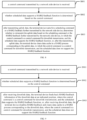
- FIG. 2 is a schematic flowchart of a feedback processing method provided by an embodiment of the present disclosure. As shown in FIG. 2 , the feedback processing method may include but not limited to the following steps.
- step S201 a control command transmitted by a network side device is received.
- control command is used to indicate whether scheduled data supports a HARQ feedback function.
- step S202 whether scheduled data supports a HARQ feedback function is determined.
- the scheduled data is data scheduled after receiving the control command, or data scheduled by the control command.
- the terminal device receives a control command, and determines, based on the control command, whether the data scheduled after receiving the control command supports the HARQ feedback function; or the terminal device parses the control command to obtain data that needs to be scheduled by the control command, so as to determine whether the data scheduled by the control command supports the HARQ feedback function.
- the terminal device can determine whether the scheduled data supports the HARQ feedback function or not based on the received control command, and then can determine whether to enable the HARQ feedback function for the scheduled data, which avoids a problem of HARQ blocking due to excessive HARQ processes, and prevents the reduction in the effectiveness of data transmission caused by insufficient HARQ process of the terminal device, thereby improving the data transmission efficiency of the terminal device.
- the control command may be a scheduling command, so that the terminal device can also enable and/or disable the HARQ feedback function for current data scheduling based on the control command.
- FIG. 3 is a schematic flowchart of another feedback processing method provided by an embodiment of the present disclosure.
- the control command in the feedback processing method includes a first physical layer control signaling, and the first physical layer control signaling is used to indicate HARQ enabled and/or HARQ disabled.
- the method may include but not limited to the following steps.
- a control command transmitted by a network side device is received, where the control command includes a first physical layer control signaling.
- the first physical layer control signaling is used to indicate HARQ enabled and/or HARQ disabled.
- a control command transmitted by a network side device is received, where the control command includes a first physical layer control signaling used to indicate HARQ enabled.
- a control command transmitted by a network side device is received, where the control command includes a first physical layer control signaling used to indicate HARQ disabled.
- a control command transmitted by a network side device is received, where the control command includes a first physical layer control signaling used to indicate HARQ enabled and/or HARQ disabled.
- the first physical layer control signaling may be a DCI.
- step S302 whether current data scheduling by the first physical layer control signaling supports the HARQ feedback function is determined based on the first physical layer control signaling.
- the first physical layer control signaling indicates HARQ enabled, and after receiving the control command, the terminal device enables the HARQ feedback function for the data scheduled by the control command.
- the first physical layer control signaling indicates HARQ disabled, and after receiving the control command, the terminal device disables the HARQ feedback function for the data scheduled by the control command.
- the first physical layer control signaling indicates HARQ enabled and/or HARQ disabled, after receiving the control command, the terminal device enables the HARQ feedback function for the data scheduled by the control command, and after transmission of the data scheduled by the control command is completed, the HARQ feedback function is disabled.
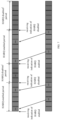
- FIG. 4 is a schematic diagram of hybrid automatic repeat request feedback provided by an embodiment of the present disclosure.
- the terminal device when the received control command includes information about scheduling HARQ enabled, the terminal device enables the HARQ feedback function for HARQ feedback; when the received control command includes information about scheduling HARQ disabled, the terminal device does not perform HARQ feedback and disables the HARQ feedback function to avoid the problem of HARQ blocking due to excessive HARQ processes.
- the terminal device can determine whether the data that needs to be scheduled by the control command supports the HARQ feedback function or not, based on the first physical layer control signaling included in the received control command, and then can determine whether to enable the HARQ feedback function, which avoids a problem of HARQ blocking due to excessive HARQ processes, and prevents the reduction in the effectiveness of data transmission caused by insufficient HARQ process of the terminal device, thereby improving the data transmission efficiency of the terminal device.
- the control command may be a control command used to indicate HARQ enabled or HARQ disabled for a time period, so that the terminal device can also enable or disable HARQ feedback function within the time period based on the control command.
- FIG. 5 is another schematic flowchart of a feedback processing method provided by an embodiment of the present disclosure.
- the feedback processing method includes a second physical layer control signaling, the second physical layer control signaling is used to indicate HARQ enabled and/or HARQ disabled, and a first time period. As shown in FIG. 5 , the method may include but not limited to the following steps.
- a control command transmitted by a network side device is received, where the control command includes a second physical layer control signaling.
- the second physical layer control signaling is used to indicate HARQ enabled and/or HARQ disabled, and the first time period.
- the first time period refers to a time period during which HARQ is enabled or disabled as indicated by the second physical layer control signaling.
- a control command transmitted by a network side device is received, where the control command includes a second physical layer control signaling, and the second physical layer control signaling is used to indicate HARQ enabled within a first time period.
- control command includes a second physical layer control signaling, and the second physical layer control signaling is used to indicate that HARQ is disabled within the first time period.
- step S502 whether data scheduling within the first time period supports the HARQ feedback function is determined based on the second physical layer control signaling.
- the second physical layer control signaling indicates HARQ disabled, and the terminal device disables the HARQ feedback function within the first time period after receiving the control command.
- the terminal device can enable or disable HARQ within the first time period based on the control command including the second physical layer control signaling, which avoids excessive HARQ processes, and prevents the reduction in the effectiveness of data transmission caused by insufficient HARQ process of the terminal device, thereby improving data transmission efficiency of the terminal device.
- the control command may be a control command used to indicate HARQ enabled or HARQ disabled, so that the terminal device can directly enable or disable the HARQ feedback function based on the control command.
- FIG. 6 is another schematic flowchart of a feedback processing method provided by an embodiment of the present disclosure.
- the feedback processing method includes a third physical layer control signaling, and the third physical layer control signaling is used to indicate HARQ enabled or HARQ disabled. As shown in FIG. 6 , the method may include but not limited to the following steps.
- a control command transmitted by a network side device is received, where the control command includes a third physical layer control signaling.
- the third physical layer control signaling is used to indicate HARQ enabled or HARQ disabled.
- a control command transmitted by the network side device is received, where the control command includes a third physical layer control signaling used to indicate HARQ enabled.
- a control command transmitted by the network side device is received, where the control command includes a third physical layer control signaling used to indicate HARQ disabled.
- step S602 whether data scheduling within a second time period supports the HARQ feedback function is determined based on the third physical layer control signaling.
- the second time period is a time period starting from reception of the third physical layer control signaling used to indicate HARQ enabled, and ending until reception of the third physical layer control signaling used to indicate HARQ disabled; or the second time period is a time period starting from reception of the third physical layer control signaling used to indicate HARQ disabled, and ending until reception of the third physical layer control signaling used to indicate HARQ enabled.
- FIG. 7 is another schematic diagram of a hybrid automatic repeat request feedback provided by an embodiment of the present disclosure.
- the terminal device after receiving a control command including a third physical layer control signaling used to indicate HARQ enabled, the terminal device enables the HARQ feedback function until the terminal device receives another control command including a third physical layer control signaling used to indicate HARQ disabled.
- the terminal device After receiving the control command including the third physical layer control signaling used to indicate HARQ disabled, the terminal device disables the HARQ feedback function until the terminal device receives a control command including the second physical layer control signaling used to indicate HARQ enabled.
- the HARQ enable period shown in FIG. 7 represents information of a time period during which the terminal supports HARQ feedback.
- the information of the time period may be indicated to the terminal device by the network side device through a predefined HARQ enabled pattern.
- the HARQ disable period shown in FIG. 7 represents a time period during which the terminal device disables the HARQ feedback function
- the HARQ enable period represents a time period during which the terminal device enables the HARQ feedback function. Time length information of the above time periods may be indicated to the terminal device by the network side device through a predefined HARQ pattern.
- the terminal device may receive a HARQ pattern transmitted by the network side device, and the HARQ pattern may include time information of HARQ enabled and/or time information of HARQ disabled.
- the time information of HARQ enabled is used to instruct the terminal device to enable the HARQ feedback function within a time period, and the time information of HARQ enabled may include any one or more of a time starting position, a time ending position and time length information, to indicate a specific time period during which the terminal device enables the HARQ feedback function.
- the time information of HARQ disabled instructs the terminal device to disable the HARQ feedback function within a time period, and may also instruct the terminal device to enable the HARQ feedback function during any other periods except the above time period.
- the time information of HARQ disabled may also include any one or more of a time starting position, a time ending position and time length information, to indicate a specific time period during which the terminal device disables the HARQ feedback function.
- the terminal device can enable or disable HARQ based on a received control command including the second physical layer control signaling, which avoids a problem of HARQ blocking due to excessive HARQ processes, and prevents the reduction in the effectiveness of data transmission caused by insufficient HARQ process of the terminal device, thereby improving the data transmission efficiency of the terminal device.
- the feedback processing method in the embodiments of the present disclosure is applicable to scenarios of uplink transmission and downlink transmission of the terminal device.
- the control command for the uplink transmission may be used as the control command, so that the terminal device can enable or disable the HARQ feedback function for scheduled uplink data based on the control command.
- FIG. 8 is another schematic flowchart of a feedback processing method provided by an embodiment of the present disclosure.
- the control command of the feedback processing method is a control command for the uplink transmission.
- the method may include but not limited to the following steps.
- step S801 a control command transmitted by a network side device is received.
- control command is a control command for uplink transmission.
- step S801 can be implemented in any manner in various embodiments of the present disclosure, which are not be limited by the embodiments of the present disclosure, and will not be repeated again.
- step S802 whether scheduled data supports a HARQ feedback function is determined based on the control command.
- step S802 can be implemented in any manner in multiple embodiments of the present disclosure, which are not be limited by the embodiments of the present disclosure, and will not be repeated again.
- the terminal device waits for a scheduling command or a HARQ feedback further transmitted by the network side device, determines whether to retransmit the uplink data based on the scheduling command or the HARQ feedback further transmitted by the network side device, where the control command is a control command for downlink transmission, and the scheduled data supports the HARQ feedback function; or, after the transmitting uplink data, the terminal device clears a data cache in a HARQ process corresponding to the uplink data, where the control command is a control command for downlink transmission, and the scheduled data does not support the HARQ feedback function.
- data scheduled by the control command for uplink transmission supports the HARQ feedback function.
- the terminal device waits for a scheduling command further transmitted by the network side device. It is assumed that the scheduling command further transmitted by the network side device indicates that the terminal device needs to retransmit the data scheduled by the uplink scheduling command, the terminal device needs to retransmit the data to the network side device; or, it is assumed that the scheduling command further transmitted by the network side device indicates that the terminal device does not need to retransmit the uplink data, the terminal device does not need to retransmit the data to the network side device.
- data scheduled by the control command for uplink transmission supports the HARQ feedback function.
- the terminal device waits for a HARQ feedback transmitted by the network side device.
- the terminal device needs to retransmit the data to the network side device; or, in a case where the HARQ feedback transmitted by the network side device indicates that the terminal device does not need to retransmit the uplink data, the terminal device does not need to retransmit the data to the network side device.
- data scheduled by the control command for uplink transmission does not support the HARQ feedback function, and after transmitting the data scheduled by the control command for uplink transmission, the terminal device clears a data cache in a HARQ process corresponding to the data.
- the terminal device can determine whether the scheduled uplink data supports the HARQ feedback function or not based on the received control command for uplink transmission, and can clear the data cache in the HARQ process corresponding to the data when the scheduled data does not support the HARQ feedback function, which avoids a problem of HARQ blocking due to excessive HARQ processes, and prevents the reduction in the effectiveness of data transmission caused by insufficient HARQ process of the terminal device, thereby improving the data transmission efficiency of the terminal device.
- the control command for the downlink transmission may be used as the control command, so that the terminal device can enable or disable the HARQ feedback function for the scheduled downlink data based on the control command.
- FIG. 9 is another schematic flowchart of a feedback processing method provided by an embodiment of the present disclosure.
- the control command of the feedback processing method is a control command for downlink transmission.
- the method may include but not limited to the following steps.
- step S901 a control command transmitted by a network side device is received.
- step S901 can be implemented in any one in multiple embodiments of the present disclosure, which are not be limited by the embodiments of the present disclosure, and will not be described again.
- step S902 whether scheduled data supports a HARQ feedback function is determined based on the control command.
- step S902 can be implemented in any one in multiple embodiments of the present disclosure, which are not be limited by the embodiments of the present disclosure, and will not be described again.
- the terminal device feeds back HARQ feedback information of the downlink data at an indicated position, where the control command is a control command for downlink transmission, and the scheduled data supports the HARQ feedback function; or, after receiving downlink data, the terminal device disables HARQ feedback and clears a data cache in a HARQ process corresponding to the downlink data, where the control command is a control command for downlink transmission, and the scheduled data does not support the HARQ feedback function.
- data scheduled by the control command for downlink transmission supports the HARQ feedback function.
- the terminal device after receiving the downlink data transmitted by the network side device, the terminal device feeds back HARQ feedback information of the received downlink data at the position indicated by the control command for downlink transmission.
- data scheduled by the downlink scheduling command does not support the HARQ feedback function.
- the terminal device after receiving the downlink data transmitted by the network side device, the terminal device disables its own HARQ feedback and clears a data cache in a HARQ process corresponding to the received downlink data.
- the terminal device can determine whether the scheduled downlink data supports the HARQ feedback function based on the received control command for downlink transmission, and can clear the data cache in the HARQ process corresponding to the data when the scheduled data does not support the HARQ feedback function, which avoids a problem of HARQ blocking due to excessive HARQ processes, and prevents the reduction in the effectiveness of data transmission caused by insufficient HARQ process of the terminal device, thereby improving the data transmission efficiency of the terminal device.
- a length and/or a position of the predetermined information field are agreed upon by a protocol; or, a length and/or a position of the predetermined information field are preconfigured.
- the length of the predetermined information field and the position of the predetermined information field may be agreed upon by the protocol.
- the length of the predetermined information field and the position of the predetermined information field may be preconfigured.
- the length of the predetermined information field may be agreed upon by the protocol, and the position of the predetermined information field may be preconfigured.
- an information field named "HARQ disabling flag” may be introduced into the control command.
- the information field has 1-bit length information. Value “1” means that the scheduled data supports the HARQ feedback function; value “0” means that the scheduled data does not support the HARQ feedback function.
- an existing information field in the control command may be used to carry a value in corresponding information (for example, RNTI value) as an indication target value to indicate whether the scheduled data supports the HARQ feedback function.
- RNTI value for example, RNTI value
- an indication value of a certain information field is a pre-agreed value, it is considered that scheduled data transmission supports the HARQ feedback function; if it is another value, it is considered that scheduled data transmission does not support the HARQ feedback function.
- the control command in the embodiments of the present disclosure may also be a scheduling command, and the scheduling command may be an existing communication command, so that the terminal device can obtain, in an implicit manner, information of whether data scheduled by the target control command supports the HARQ feedback function.
- whether the scheduled data supports the HARQ feedback function may be indicated by a value of RNTI (Radio Network Temporary Identifier).
- RNTI Radio Network Temporary Identifier
- the feedback processing method may pre-configure a correspondence between the value of RNTI and whether the HARQ feedback function is supported, so that the terminal device can determine whether the scheduled data supports the HARQ feedback function through the RNTI. As shown in FIG. 10 , the method may include but not limited to the following steps.
- a scheduling command transmitted by a network side device is received, where the scheduling command includes RNTI.
- step S1002 a correspondence between the value of RNTI and whether the HARQ feedback function is supported is determined.
- the network side device may notify the terminal device in advance of the correspondence between the value of RNTI and whether the HARQ feedback function is supported; or, the network side device and the terminal device can agree in advance on the correspondence between the value of RNTI and whether the HARQ feedback function is supported.
- the value range of RNTI may be divided into a first value range and a second value range, and the network side device can notify, through prior communication, the terminal device in advance of a correspondence between a RNTI value within the first value range and whether the HARQ feedback function is supported, and a correspondence between a RNTI value within the second value range and whether the HARQ feedback function is supported.
- the network side device may pre-agree with the terminal device a correspondence between a RNTI value within the first value range and whether the HARQ feedback function is supported, and a correspondence between a RNTI value within the second value range and whether the HARQ feedback function is supported.
- RNTI values in hexadecimal are represented as 0001 to 003C.
- Values 0001 to 001E are taken as the first value range, and correspondingly, scheduled data supports the HARQ feedback function; values 001F to 003C are taken as the second value range, and correspondingly, scheduled data does not support the HARQ feedback function.
- the network side device can notify the terminal device in advance of the above correspondence through prior communication.
- RNTI values in hexadecimal are represented as 0001 to 003C.
- the network side device may pre-agree with the terminal device the following: values 0001 to 001E are taken as the first value range, and correspondingly, scheduled data supports the HARQ feedback function; values 001F to 003C are taken as the second value range, and correspondingly, scheduled data does not support the HARQ feedback function.
- the scheduling command is parsed to obtain a target RNTI value in the scheduling command.
- step S1004 whether the data scheduled by the control command supports the HARQ feedback function is determined based on the correspondence and the target RNTI value.
- a range of RNTI values in hexadecimal is represented as 0001 to 003C, where values 0001 to 001E are taken as the first value range, and correspondingly, scheduled data supports the HARQ feedback function; values 001F to 003C are taken as the second value range, and correspondingly, scheduled data does not support the HARQ feedback function. It is assumed that the target RNTI value is 0010, the target RNTI value is within the first value range, and it may be determined that the data scheduled by the control command supports the HARQ feedback function.
- the terminal device can determine whether the scheduled data supports the HARQ feedback function or not based on the RNTI value in the received scheduling command, and then can determine whether to enable or disable HARQ, which avoids a problem of HARQ blocking due to excessive HARQ processes, and prevents the reduction in the effectiveness of data transmission caused by insufficient HARQ process of the terminal device, thereby improving the data transmission efficiency of the terminal device.
- the terminal device may also determine whether the data scheduled by the control command supports the HARQ feedback function through a scrambling sequence.
- FIG. 11 is another schematic flowchart of a feedback processing method provided by an embodiment of the present disclosure.
- the feedback processing method can pre-configure a correspondence between the scrambling sequence and whether the HARQ feedback function is supported, so that the terminal device can determine whether the data scheduled by the control command supports the HARQ feedback function through the scrambling sequence.
- the method may include but not limited to the following steps.
- a scheduling command transmitted by a network side device is received, where the scheduling command includes a scrambling sequence.
- step S1102 a correspondence between the scrambling sequence and whether the HARQ feedback function is supported is determined.
- two orthogonal scrambling sequences may be predefined, the existence of the above first scrambling sequence indicates that scheduled data supports the HARQ feedback function, and inexistence of the above second scrambling sequence indicates that scheduled data does not support the HARQ feedback function.
- the scheduling command is parsed to obtain a target scrambling sequence in the command.
- step S1104 whether the data scheduled by the control command supports the HARQ feedback function is determined based on the correspondence and the target scrambling sequence
- the existence of the above first scrambling sequence indicates that scheduled data supports the HARQ feedback function
- the inexistence of the above second scrambling sequence indicates that scheduled data does not support the HARQ feedback function. If the scrambling sequence obtained by the terminal device includes the first scrambling sequence, the terminal device may determine that the scheduled data supports the HARQ feedback function; if the scrambling sequence obtained by the terminal device includes the second scrambling sequence, the terminal device may determine that the scheduled data does not support the HARQ feedback function.
- the terminal device can determine whether the scheduled data supports the HARQ feedback function or not based on the scrambling sequence in the received scheduling command, and then can determine whether to enable or disable HARQ, which avoids a problem of HARQ blocking due to excessive HARQ processes, and prevents the reduction in the effectiveness of data transmission caused by insufficient HARQ process of the terminal device, thereby improving the data transmission efficiency of the terminal device.
- the method provided by the embodiments of the present disclosure is introduced from the perspective of a terminal device.
- the feedback processing method in the embodiments of the present disclosure will be further introduced below from the perspective of the network side device.
- FIG. 12 is a schematic flowchart of a feedback processing method provided by an embodiment of the present disclosure.
- the method is performed by a network side device. As shown in FIG. 12 , the method may include but not limited to the following steps.
- a control command is transmitted to a terminal device, where the control command is used to instruct the terminal device to determine whether scheduled data supports a HARQ feedback function.
- the target scheduled data is data scheduled after the terminal device receives the control command, or data scheduled by the control command.
- control command is transmitted to the terminal device, so that the terminal device determines whether the data scheduling after receiving the control command supports the HARQ feedback function or not based on the control command; or, the control command is transmitted to the terminal device, so that the terminal device parses the control command to obtain data that needs to be scheduled by the control command, so as to determine whether the data scheduled by the control command supports the HARQ feedback function or not.
- control command is a first physical layer control signaling used to indicate HARQ enabled and/or HARQ disabled; the first physical layer control signaling is used to indicate whether current data scheduling supports the HARQ feedback function.
- a control command is transmitted to the terminal device, and the control command includes a first physical layer control signaling.
- the first physical layer control signaling is used to instruct the terminal device to enable the HARQ feedback function for the data scheduled by the control command.
- a control command is transmitted to the terminal device, and the control command includes a first physical layer control signaling.
- the first physical layer control signaling is used to instruct the terminal device to disable HARQ feedback for the data scheduled by the control command.
- a control command is transmitted to the terminal device, and the control command includes a first physical layer control signaling.
- the first physical layer control signaling is used to instruct the terminal device to enable HARQ feedback function for the data scheduled by the control command, and to disable the HARQ feedback function after the data scheduled by the control command has been transmitted.
- control command includes a second physical layer control signaling used to indicate HARQ enabled or HARQ disabled, and a first time period; the second physical layer control signaling is used to indicate whether data scheduling within the first time period supports the HARQ feedback function.
- the length of the predetermined information field and the position of the predetermined information field may be agreed upon by the protocol.
- the length of the predetermined information field and the position of the predetermined information field may be preconfigured.
- the length of the predetermined information field may be agreed upon by the protocol, and the position of the predetermined information field may be preconfigured.
- the length of the predetermined information field may be preconfigured, and the position of the predetermined information field may be agreed upon by the protocol.
- the network side device can instruct, through a control command, the terminal device whether scheduled data supports the HARQ feedback function, so that the terminal device enables or disables HARQ, which avoids excessive HARQ processes, and prevents the reduction in the effectiveness of data transmission caused by insufficient HARQ process of the terminal device, thereby improving data transmission efficiency of the terminal device.
- the control command transmitted by the network side device may also be a scheduling command.
- FIG. 13 is another schematic flowchart of a feedback processing method provided by an embodiment of the present disclosure. The method is performed by a network side device. As shown in FIG. 13 , the method may include but not limited to the following steps.
- a control command is scrambled based on a target RNTI value, where the control command is a scheduling command.
- the target RNTI value is determined based on a correspondence between the RNTI value and whether the HARQ feedback function is supported, and the scheduling command is scrambled based on the target RNTI value, so that the scheduling command carries the target RNTI value.
- RNTI values in hexadecimal are represented as 0001 to 003C.
- RNTI values 0001 to 001E are taken as RNTI values used for that corresponding scheduled data supports the HARQ feedback function;
- RNTI values 001F to 003C are taken as RNTI values used for that corresponding scheduled data does not support the HARQ feedback function.
- the network side device may randomly select a value (for example, 0010) from 0001 to 001E as the target RNTI value, and may scramble the scheduling command based on the target RNTI value.
- the scheduling command scrambled with the target RNTI value is transmitted to the terminal device.
- the scheduling command scrambled with the target RNTI value is used to implicitly indicate whether the scheduled data supports the HARQ feedback function.
- the network side device can instruct the terminal device whether the scheduled data supports the HARQ feedback function or not through the target RNTI value in the control command, so that the terminal device enables or disables HARQ, which prevents the terminal device from overrunning the HARQ process, and prevents the reduction in the effectiveness of data transmission caused by insufficient HARQ processes of the terminal device, thereby improving the data transmission efficiency of the terminal device.
- the control command transmitted by the network side device may also be a scheduling command.
- FIG. 14 is another schematic flowchart of a feedback processing method provided by an embodiment of the present disclosure. This method is performed by a network side device. As shown in FIG. 14 , the method may include but not limited to the following steps.
- a control command is scrambled on an RNTI with a target scrambling sequence, where the control command is a scheduling command.
- the network side device may pre-define two orthogonal scrambling sequences with the terminal device, where the existence of the above scrambling sequences indicates that scheduled data supports the HARQ feedback function, and the absence of the above orthogonal scrambling sequence indicates that scheduled data does not support the HARQ feedback function. If the network side device needs to instruct the terminal device that the scheduled data supports the HARQ feedback function, the scheduling command is scrambled on the RNTI with the above orthogonal scrambling sequences; or, if the network side device needs to instruct the terminal device that the scheduled data supports the HARQ feedback function, the scheduling command is scrambled on the RNTI with other scrambling sequences different from the above orthogonal scrambling sequences.
- the scheduling command scrambled with the target scrambling sequence is transmitted to the terminal device.
- the scheduling command scrambled with the target scrambling sequence is used to implicitly indicate whether the scheduled data supports the HARQ feedback function.
- the network side device can instruct the terminal device to confirm whether the scheduled data supports the HARQ feedback function or not through the scrambling sequence in the control command, so that the terminal device enables or disables HARQ, which prevents excessive HARQ process of the terminal device, and prevents the reduction in the effectiveness of data transmission caused by insufficient HARQ processes of the terminal device, thereby improving the data transmission efficiency of the terminal device.
- the methods provided by the embodiments of the present disclosure are introduced from the perspectives of the terminal device and network side device, respectively.
- the network side device and the first terminal device may include a hardware structure and a software module to implement the above functions in the form of a hardware structure, a software module, or a hardware structure plus a software module.
- a certain function among the above functions can be executed by a hardware structure, a software module, or a hardware structure plus a software module.
- FIG. 15 is a schematic structural diagram of a communication device 1500 provided by an embodiment of the present disclosure.
- the communication device 1500 shown in FIG. 15 may include a transceiver module 15001 and a processing module 15002.
- the transceiver module 15001 may include a transmitting module and/or a receiving module.
- the transmitting module is configured to implement a transmitting function
- the receiving module is configured to implement a receiving function.
- the transceiver module 15001 may implement the transmitting function and/or the receiving function.
- the communication device 1500 may be a terminal device, a device in the terminal device, or a device that can be used in conjunction with the terminal device.
- the communication device 1500 may be a network side device, a device in the network side device, or a device that can be used in conjunction with the network side device.
- the communication device 1500 is a terminal device.
- the transceiver module 1501 is configured to receive a control command transmitted by the network side device.
- the processing module 1502 is configured to determine whether the scheduled data supports the HARQ feedback function.
- the processing module 1502 is specifically configured to: determine, based on the control command, whether current data scheduling by a first physical layer control signaling supports the HARQ feedback function, where the control command is the first physical layer control signaling used to indicate HARQ enabled and/or HARQ disabled.
- the processing module 1502 is specifically configured to: determine, based on the control command, whether data scheduling within a first time period supports the HARQ feedback function, where the control command is a second physical layer control signaling used to indicate HARQ enabled or HARQ disabled, and the first time period.
- the processing module 1502 is specifically configured to: determine, based on the control command, whether data scheduling within a second time period supports the HARQ feedback function, where the control command is a third physical layer control signaling used to indicate HARQ enabled or HARQ disabled, and the second time period is a time period starting from reception of the third physical layer control signaling used to indicate HARQ enabled, and ending until reception of the third physical layer control signaling used to indicate HARQ disabled; or the second time period is a time period starting from reception of the third physical layer control signaling used to indicate HARQ disabled, and ending until reception of the third physical layer control signaling used to indicate HARQ enabled.
- the transceiver module 1501 is further configured to: after the terminal device transmits uplink data, wait for a scheduling command or a HARQ feedback further transmitted by the network side device, and determine whether to retransmit the uplink data based on the scheduling command or the HARQ feedback further transmitted by the network side device, where the control command is a control command for uplink transmission, and the scheduled data supports the HARQ feedback function; or, after the terminal device transmits uplink data, clear a data cache in a HARQ process corresponding to the uplink data, where the control command is a control command for uplink transmission, and the scheduled data does not support the HARQ feedback function.
- the transceiver module 1501 is further configured to: after the terminal device receives downlink data, feed back HARQ feedback information of the downlink data at an indicated position, where the control command is a control command for downlink transmission, and the scheduled data supports the HARQ feedback function; or, after the terminal device receives downlink data, disable HARQ feedback, and clear a data cache in a HARQ process corresponding to the downlink data, where the control command is a control command for downlink transmission, and the scheduled data does not support the HARQ feedback function.
- the processing module 1502 is specifically configured to determine whether the scheduled data supports the HARQ feedback function based on indication information in a predetermined information field in the control command.
- a length and/or a position of the predetermined information field are defined by a protocol; or, a length and/or a position of the predetermined information field are preconfigured.
- the processing module 1502 is specifically configured to: determine a correspondence between a value of a radio network temporary identifier (RNTI) and whether the HARQ feedback function is supported, where the control command is a scheduling command; parse the scheduling command to obtain a target RNTI value in the scheduling command; and determine whether the scheduled data supports the HARQ feedback function based on the correspondence and the target RNTI value.
- RNTI radio network temporary identifier
- the processing module 1502 is specifically configured to: determine a correspondence between a scrambling sequence and whether the HARQ feedback function is supported, where the control command is a scheduling command; parse the scheduling command to obtain a target scrambling sequence in the scheduling command; and determine whether the scheduled data supports the HARQ feedback function based on the correspondence and the target scrambling sequence.
- the terminal device can determine whether the scheduled data supports the HARQ feedback function based on the received control command, and can determine whether to enable the HARQ feedback function for the scheduled data or not, which avoids excessive HARQ processes, and prevents the reduction in the effectiveness of data transmission caused by insufficient HARQ process of the terminal device, thereby improving data transmission efficiency of the terminal device.
- the communication device 1500 is a network side device.
- the transceiver module 1501 is configured to transmit a control command to a terminal device; where the control command are configured to instruct the terminal device to determine whether scheduled data supports a HARQ feedback function.
- control command is a first physical layer control signaling used to indicate HARQ enabled and/or HARQ disabled; and the first physical layer control signaling is used to indicate whether current data scheduling supports the HARQ feedback function.
- control command is a second physical layer control signaling used to indicate HARQ enabled and/or HARQ disabled, and a first time period; and the second physical layer control signaling is used to indicate whether data scheduling within a first time period supports the HARQ feedback function.
- the control command is a third physical layer control signaling used to indicate HARQ enabled or HARQ disabled
- the third physical layer control signaling is used to indicate whether data scheduling within a second time period supports the HARQ feedback function
- the second time period is a time period starting from reception of the third physical layer control signaling used to indicate HARQ enabled, and ending until reception of the third physical layer control signaling used to indicate HARQ disabled
- the second time period is a time period starting from reception of the third physical layer control signaling used to indicate HARQ disabled, and ending until reception of the third physical layer control signaling used to indicate HARQ enabled.
- control command is a control command for uplink transmission or a control command for downlink transmission.
- control command includes a predetermined information field; and the predetermined information field is used to indicate whether the scheduled data supports the HARQ feedback function.
- a length and/or a position of the predetermined information field are defined by a protocol; or, a length and/or a position of the predetermined information field are preconfigured.
- the transceiver module 1501 is specifically configured to: scramble the control command based on a target radio network temporary identifier (RNTI) value, where the control command is a scheduling command; and transmit the scheduling command scrambled with the target RNTI value to the terminal device, where the scheduling command scrambled with the target RNTI value is used to implicitly indicate whether the scheduled data supports the HARQ feedback function.
- RNTI radio network temporary identifier
- the transceiver module 1501 is specifically configured to: scramble the control command on a radio network temporary identifier (RNTI) with a target scrambling sequence, where the control command is a scheduling command; and transmit the scheduling command scrambled with the target scrambling sequence to the terminal device, where the scheduling command scrambled with the target scrambling sequence is used to implicitly indicate whether the scheduled data supports the HARQ feedback function.
- RNTI radio network temporary identifier
- the network side device can instruct the terminal device to confirm whether scheduled data supports the HARQ feedback function through control command, so that the terminal device enables or disables HARQ, which avoids excessive HARQ processes, and prevents the reduction in the effectiveness of data transmission caused by insufficient HARQ process of the terminal device, thereby improving data transmission efficiency of the terminal device.
- the communication device 1600 may include one or more processors 16001.
- the processor 16001 may be a general-purpose processor or a special-purpose processor, or the like, which, for example, may be a baseband processor or a central processor.
- the baseband processor may be configured to process communication protocols and communication data.
- the central processor may be configured to control communication devices (such as a base station, a baseband chip, a terminal device, a chip of the terminal device, a DU or a CU, etc.), to execute a computer program, and to process data for the computer program.
- the communication device 1600 may also include one or more memories 16002, on which a computer program 16003 may be stored.
- the processor 16001 is configured to execute the computer program 16003 to cause the communication device 1600 to perform steps described in the above method embodiments.
- the memory 16002 may also store data.
- the communication device 1600 and the memory 16002 may be arranged separately, or integrated together.
- the communication device 1600 may also include a transceiver 16004 and an antenna 16005.
- the transceiver 16004 may be referred to as a transceiver unit, a transceiver module, a transceiver circuit, etc., and is configured to implement transceiver functions.
- the transceiver 16004 may include a receiver and a transmitter.
- the receiver may be referred to as a receiver unit or a receiving circuit, etc., and is configured to implement the receiving function;
- the transmitter may be may be referred to as a transmitter unit or a transmitting circuit, etc., and is configured to implement the transmitting function.
- the communication device 1600 is a terminal device.
- the processor 16001 is configured to execute step S202 in FIG. 2 ; execute step S302 in FIG. 3 ; execute step S502 in FIG. 5 ; execute step S602 in FIG. 6 ; execute step S802 and step S803 in FIG. 8 ; execute step S802 and step S903 in FIG. 8 ; execute step S1002, step S1003 and step S 1004 in FIG. 10 ; execute step S1102, step S 1103 and step S1104 in FIG. 10 .
- the transceiver 16004 is configured to execute step S201 in FIG. 2 ; execute step S301 in FIG. 3 ; execute step S501 in FIG. 5 ; execute step S601 in FIG. 6 ; execute step S801 in FIG. 8 ; execute step S901 in FIG. 9 ; and execute step S1001 in FIG. 10 .
- the communication device 1600 is a network side device.
- the transceiver 16004 is configured to perform step S1201 in FIG. 12 ; perform step S1301 in FIG. 13 ; and perform step S1401 in FIG. 14 .
- the processor 16001 is configured to execute step S1302 in FIG. 13 ; and execute step S1402 in FIG. 14 .
- the processor 16001 may include a transceiver for implementing receiving and transmitting functions.
- the transceiver may be a transceiver circuit, an interface, or an interface circuit.
- the transceiver circuits, interfaces or interface circuits used to implement the receiving and transmitting functions can be arranged separately, or integrated together.
- the above transceiver circuit, interface or interface circuit can be configured to read and write codes/data, or the above transceiver circuit, interface or interface circuit can be used for signal transmission or transfer.
- the processor 16001 may store a computer program, and the computer program runs on the processor 16001, causing the communication device 1600 to perform the method described in the above method embodiments.
- the computer program may be solidified in the processor 16001, in which case the processor 16001 may be implemented by hardware.
- the communication device 1600 may include a circuit, which may implement functions of transmitting or receiving or communicating in the foregoing method embodiments.
- the processor and the transceiver described in the present disclosure may be implemented on an integrated circuit (IC), an analog IC, a radio frequency integrated circuit (RFIC), a mixed signal IC, an application specific integrated circuit (ASIC), a printed circuit board (PCB), electronic equipment, etc.
- IC integrated circuit
- RFIC radio frequency integrated circuit
- ASIC application specific integrated circuit
- PCB printed circuit board
- the processor and the transceiver may also be manufactured using various IC process technologies, such as complementary metal oxide semiconductor (CMOS), N-type Metal-oxide-semiconductor (NMOS), positive channel metal oxide semiconductor (PMOS), bipolar junction transistor (BJT), bipolar CMOS (BiCMOS), silicon germanium (SiGe), gallium arsenide (GaAs), etc.
- CMOS complementary metal oxide semiconductor
- NMOS N-type Metal-oxide-semiconductor
- PMOS positive channel metal oxide semiconductor
- BJT bipolar junction transistor
- BiCMOS bipolar CMOS
- SiGe silicon germanium
- GaAs gallium arsenide
- the communication device described in the above embodiments may be a network side device or a terminal device (the first terminal device in the above embodiments), but the scope of the communication device described in the present disclosure is not limited thereto.
- the structure of the communication device may not be limited by FIG. 16 .
- the communication device may be a stand-alone device or may be a part of a larger device.
- the communication device may be:
- the communication device may be a chip or a chip system
- the chip shown in FIG. 17 includes a processor 1701 and an interface 1702.
- the number of the processor 1701 may be one or more, and the number of the interface 1702 may be multiple.
- the chip is configured to implement the functions of the terminal device in the embodiments of the present application, or the chip is configured to implement the functions of the network side device in the embodiments of the present application.
- the chip further includes a memory 1703, and the memory 1703 is configured to store a necessary computer program and data.
- An embodiment of the present disclosure further provides a feedback system.
- the system includes a communication device as the terminal device and a communication device as the network side device in the aforementioned embodiment of FIG. 15 , or the system includes a communication device as the terminal device and a communication device as the network side device in the aforementioned embodiment of FIG. 16 .
- the present disclosure further provides a readable storage medium, on which instructions are stored. When the instructions are executed by a computer, functions in any of the above method embodiments are implemented.
- the present disclosure further provides a computer program product.
- the computer program product is executed by a computer to implement functions in any of the above method embodiments.
- the above embodiments may be implemented in whole or in part by software, hardware, firmware, or any combination thereof.
- software When implemented using software, it may be implemented in whole or in part in the form of a computer program product.
- the computer program product includes one or more computer programs.
- the computer program When the computer program is loaded and executed on a computer, the processes or functions described in the embodiments of the present disclosure are generated in whole or in part.
- the computer may be a general-purpose computer, a special-purpose computer, a computer network, or other programmable device(s).
- the computer program may be stored in a computer-readable storage medium, or transferred from one computer-readable storage medium to another computer-readable storage medium.
- the computer program may be transferred from a website, a computer, a server, or a data center to another website, another computer, another server or another data center through wired means (such as coaxial cable, optical fiber, digital subscriber line (DSL)), or wireless means (such as infrared, wireless, microwave, etc.).
- the computer-readable storage medium may be any available medium that can be accessed by a computer, or a data storage device integrated by one or more available media, which includes a server, a data center, and so on.
- the available media may be magnetic media (e.g., floppy disk, hard disk, magnetic tape), optical media (e.g., high-density digital video discs (DVD)), or semiconductor media (e.g., solid state disk (SSD)) etc.
- magnetic media e.g., floppy disk, hard disk, magnetic tape
- optical media e.g., high-density digital video discs (DVD)
- semiconductor media e.g., solid state disk (SSD)
- At least one in the present disclosure may also be described as one or more, and the plurality may be two, three, four or more, which are not limited by the present disclosure.
- technical features are distinguished by terms “first”, “second”, “third”, etc.
- the technical features described by the terms “first”, “second” and “third” are not in an order of precedence or in an order of size.
- the correspondence shown in each table in the present disclosure can be configured or predefined.
- the values of the information in each table are only for example and can be configured as other values, which is not limited by the present disclosure.
- the correspondences shown in some rows may not be configured.
- appropriate form adjustments can be made based on the above table, such as splitting, merging, etc.
- the names of the parameters shown in the titles of the above tables may also be other names understandable by the communication device, and the values or expressions of the parameters may also be other values or expressions understandable by the communication device.
- other data structures can also be used, such as array, queue, container, stack, linear list, pointer, linked list, tree, graph, structure, class, heap, distributed table or hash table.
- predefine in the present disclosure may be understood as define, define in advance, store, pre-store, pre-negotiate, pre-configure, solidify, or pre-burn.
Landscapes
- Engineering & Computer Science (AREA)
- Computer Networks & Wireless Communication (AREA)
- Signal Processing (AREA)
- Mobile Radio Communication Systems (AREA)
- Detection And Prevention Of Errors In Transmission (AREA)
Applications Claiming Priority (1)
| Application Number | Priority Date | Filing Date | Title |
|---|---|---|---|
| PCT/CN2022/089100 WO2023206033A1 (zh) | 2022-04-25 | 2022-04-25 | 混合自动重传请求harq反馈的处理方法及其装置 |
Publications (2)
| Publication Number | Publication Date |
|---|---|
| EP4518210A1 true EP4518210A1 (de) | 2025-03-05 |
| EP4518210A4 EP4518210A4 (de) | 2025-05-28 |
Family
ID=83023297
Family Applications (1)
| Application Number | Title | Priority Date | Filing Date |
|---|---|---|---|
| EP22938890.5A Pending EP4518210A4 (de) | 2022-04-25 | 2022-04-25 | Verfahren und vorrichtung zur rückkopplungsverarbeitung von hybriden automatischen wiederholungsanfragen (harq) |
Country Status (6)
| Country | Link |
|---|---|
| US (1) | US20250286666A1 (de) |
| EP (1) | EP4518210A4 (de) |
| JP (1) | JP7769149B2 (de) |
| KR (1) | KR20250002594A (de) |
| CN (1) | CN115004597A (de) |
| WO (1) | WO2023206033A1 (de) |
Families Citing this family (4)
| Publication number | Priority date | Publication date | Assignee | Title |
|---|---|---|---|---|
| WO2024124562A1 (zh) * | 2022-12-16 | 2024-06-20 | 北京小米移动软件有限公司 | 一种混合自动重传请求harq的配置方法及装置 |
| CN118449659A (zh) * | 2023-02-03 | 2024-08-06 | 华为技术有限公司 | 一种通信方法及装置 |
| EP4693983A4 (de) * | 2023-03-31 | 2026-02-11 | Beijing Xiaomi Mobile Software Co Ltd | Anzeigeverfahren zur deaktivierung von harq-feedback und vorrichtung dafür |
| EP4670303A4 (de) * | 2023-04-06 | 2025-12-31 | Apple Inc | Systeme und verfahren zur aktivierung/sperrung von hybrider automatischer wiederholungsanfragerückkopplung |
Family Cites Families (20)
| Publication number | Priority date | Publication date | Assignee | Title |
|---|---|---|---|---|
| US20160226628A1 (en) * | 2015-01-30 | 2016-08-04 | Huawei Technologies Co., Ltd. | System and method for data retransmission |
| WO2017078128A1 (ja) * | 2015-11-05 | 2017-05-11 | 株式会社Nttドコモ | ユーザ端末、無線基地局及び無線通信方法 |
| US11343022B2 (en) * | 2018-08-01 | 2022-05-24 | Charter Communications Operating, Llc | Disabling hybrid automatic repeat request (HARQ) acknowledgments for packets for which acknowledgements are supported at network or higher layer |
| CN110855401A (zh) * | 2018-08-20 | 2020-02-28 | 华为技术有限公司 | 一种harq反馈方法和装置 |
| CN111435899B (zh) * | 2019-02-15 | 2021-08-24 | 维沃移动通信有限公司 | 混合自动重传请求harq反馈方法、终端及网络设备 |
| CN116321470A (zh) * | 2019-03-29 | 2023-06-23 | 大唐移动通信设备有限公司 | Harq机制的处理方法、指示方法、终端及网络侧设备 |
| CN114208320B (zh) * | 2019-07-15 | 2024-03-05 | 中兴通讯股份有限公司 | 用于混合自动重传请求过程的方法和装置 |
| CN112311507B (zh) * | 2019-08-02 | 2023-04-28 | 中国信息通信研究院 | 一种车联网通信反馈定时方法、终端设备、网络设备、系统 |
| CN112398587B (zh) * | 2019-08-14 | 2022-06-07 | 中国移动通信有限公司研究院 | 混合自动重传请求harq进程反馈的控制方法、终端及设备 |
| US11595159B2 (en) * | 2020-02-13 | 2023-02-28 | Apple, Inc. | HARQ design for wireless communications |
| WO2021168834A1 (zh) * | 2020-02-28 | 2021-09-02 | Oppo广东移动通信有限公司 | 数据传输方法、装置及设备 |
| CN119316952A (zh) * | 2020-02-28 | 2025-01-14 | Oppo广东移动通信有限公司 | 数据传输方法、装置及设备 |
| CN114788204B (zh) * | 2020-02-28 | 2023-11-10 | Oppo广东移动通信有限公司 | Harq进程的状态确定方法、装置及设备 |
| CN113328834B (zh) * | 2020-02-28 | 2025-03-14 | 华为技术有限公司 | 一种通信方法及装置 |
| CN113472488B (zh) * | 2020-03-30 | 2022-09-02 | 维沃移动通信有限公司 | Harq-ack的反馈模式确定方法、配置方法及设备 |
| CN113472487B (zh) * | 2020-03-30 | 2023-04-28 | 维沃移动通信有限公司 | Harq-ack反馈方法及设备 |
| WO2022006724A1 (zh) * | 2020-07-06 | 2022-01-13 | Oppo广东移动通信有限公司 | 用于关闭harq重传的处理方法、终端设备和网络设备 |
| WO2022027195A1 (zh) * | 2020-08-03 | 2022-02-10 | 北京小米移动软件有限公司 | Harq反馈的处理方法及装置、存储介质 |
| WO2022029339A1 (en) | 2020-08-07 | 2022-02-10 | Telefonaktiebolaget Lm Ericsson (Publ) | Conditional feedback for harq operation with enabling/disabling per harq process |
| KR20220047167A (ko) * | 2020-10-08 | 2022-04-15 | 한국전자통신연구원 | 통신 시스템에서의 피드백 정보 송수신 방법 및 장치 |
-
2022
- 2022-04-25 CN CN202280001286.8A patent/CN115004597A/zh active Pending
- 2022-04-25 JP JP2024562801A patent/JP7769149B2/ja active Active
- 2022-04-25 EP EP22938890.5A patent/EP4518210A4/de active Pending
- 2022-04-25 WO PCT/CN2022/089100 patent/WO2023206033A1/zh not_active Ceased
- 2022-04-25 KR KR1020247038667A patent/KR20250002594A/ko active Pending
- 2022-04-25 US US18/859,118 patent/US20250286666A1/en active Pending
Also Published As
| Publication number | Publication date |
|---|---|
| KR20250002594A (ko) | 2025-01-07 |
| WO2023206033A1 (zh) | 2023-11-02 |
| JP2025515305A (ja) | 2025-05-14 |
| US20250286666A1 (en) | 2025-09-11 |
| EP4518210A4 (de) | 2025-05-28 |
| CN115004597A (zh) | 2022-09-02 |
| JP7769149B2 (ja) | 2025-11-12 |
Similar Documents
| Publication | Publication Date | Title |
|---|---|---|
| EP4518210A1 (de) | Verfahren und vorrichtung zur rückkopplungsverarbeitung von hybriden automatischen wiederholungsanfragen (harq) | |
| CN113841457B (zh) | 一种传输下行控制信息dci的方法及其装置 | |
| JP7749906B2 (ja) | 伝送タイミング決定方法及び装置 | |
| EP4535911A1 (de) | Verfahren und vorrichtung zur multiprach-übertragung | |
| US20250386378A1 (en) | Random access method and device | |
| CN109936871A (zh) | 系统消息接收方法及终端设备 | |
| CN115004809B (zh) | 一种确定侧链路时长的方法及其装置 | |
| CN115004596B (zh) | 混合自动重传请求harq反馈的处理方法及其装置 | |
| RU2848021C2 (ru) | Способ и устройство для обработки обратной связи гибридного автоматического запроса на повторную передачу (HARQ) | |
| CN114008964B (zh) | Mbs业务中sps对应hpn的确定方法及其装置 | |
| EP4723789A1 (de) | Verarbeitungsverfahren, vorrichtung, vorrichtung und speichermedium | |
| CN115486197A (zh) | 一种随机接入方法/装置/设备及存储介质 | |
| CN114424670A (zh) | 一种混合自动重传请求状态增强方法及其装置 | |
| CN115669182A (zh) | 一种上报方法/装置/设备及存储介质 | |
| CN115413406A (zh) | 物理随机接入信道prach的配置方法及其装置 | |
| EP4668843A1 (de) | Verfahren für mehrfache physikalische direktzugriffskanal (prach)-übertragungen und vorrichtung dafür | |
| CN115606313B (zh) | 直连sidelink终端设备间内部协调信息请求的发送方法及其装置 | |
| US20250393002A1 (en) | Method for triggering timing advance reporting (tar), apparatus, device, and storage medium | |
| EP4694416A1 (de) | Positionierungsverfahren, vorrichtungen, vorrichtung und speichermedium | |
| EP4535888A1 (de) | Verfahren und vorrichtung zur strahlbestimmung | |
| EP4412343A1 (de) | Verfahren und vorrichtung zur bestimmung der anfangssendeposition von tb | |
| EP4383875A1 (de) | Verfahren zur synchronisation von bandbreitenteilen und vorrichtung dafür | |
| WO2024208007A1 (zh) | 一种通信方法和通信装置 | |
| CN119278596A (zh) | 信息发送方法及装置 |
Legal Events
| Date | Code | Title | Description |
|---|---|---|---|
| STAA | Information on the status of an ep patent application or granted ep patent |
Free format text: STATUS: THE INTERNATIONAL PUBLICATION HAS BEEN MADE |
|
| PUAI | Public reference made under article 153(3) epc to a published international application that has entered the european phase |
Free format text: ORIGINAL CODE: 0009012 |
|
| STAA | Information on the status of an ep patent application or granted ep patent |
Free format text: STATUS: REQUEST FOR EXAMINATION WAS MADE |
|
| 17P | Request for examination filed |
Effective date: 20241118 |
|
| AK | Designated contracting states |
Kind code of ref document: A1 Designated state(s): AL AT BE BG CH CY CZ DE DK EE ES FI FR GB GR HR HU IE IS IT LI LT LU LV MC MK MT NL NO PL PT RO RS SE SI SK SM TR |
|
| REG | Reference to a national code |
Ref country code: DE Ref legal event code: R079 Free format text: PREVIOUS MAIN CLASS: H04L0001180000 Ipc: H04L0001186700 |
|
| A4 | Supplementary search report drawn up and despatched |
Effective date: 20250428 |
|
| RIC1 | Information provided on ipc code assigned before grant |
Ipc: H04W 72/12 20230101ALI20250422BHEP Ipc: H04L 1/1822 20230101ALI20250422BHEP Ipc: H04L 1/1829 20230101ALI20250422BHEP Ipc: H04L 1/1867 20230101AFI20250422BHEP |
|
| DAV | Request for validation of the european patent (deleted) | ||
| DAX | Request for extension of the european patent (deleted) | ||
| STAA | Information on the status of an ep patent application or granted ep patent |
Free format text: STATUS: EXAMINATION IS IN PROGRESS |
|
| 17Q | First examination report despatched |
Effective date: 20251210 |