EP4516628A1 - Eisenbahnhochfahrradsystem, verfahren dafür und erzeugungsverfahren dafür - Google Patents
Eisenbahnhochfahrradsystem, verfahren dafür und erzeugungsverfahren dafür Download PDFInfo
- Publication number
- EP4516628A1 EP4516628A1 EP23796557.9A EP23796557A EP4516628A1 EP 4516628 A1 EP4516628 A1 EP 4516628A1 EP 23796557 A EP23796557 A EP 23796557A EP 4516628 A1 EP4516628 A1 EP 4516628A1
- Authority
- EP
- European Patent Office
- Prior art keywords
- upcycle
- railway
- car
- storage battery
- digital twin
- Prior art date
- Legal status (The legal status is an assumption and is not a legal conclusion. Google has not performed a legal analysis and makes no representation as to the accuracy of the status listed.)
- Pending
Links
Images















Classifications
-
- G—PHYSICS
- G06—COMPUTING OR CALCULATING; COUNTING
- G06Q—INFORMATION AND COMMUNICATION TECHNOLOGY [ICT] SPECIALLY ADAPTED FOR ADMINISTRATIVE, COMMERCIAL, FINANCIAL, MANAGERIAL OR SUPERVISORY PURPOSES; SYSTEMS OR METHODS SPECIALLY ADAPTED FOR ADMINISTRATIVE, COMMERCIAL, FINANCIAL, MANAGERIAL OR SUPERVISORY PURPOSES, NOT OTHERWISE PROVIDED FOR
- G06Q10/00—Administration; Management
- G06Q10/06—Resources, workflows, human or project management; Enterprise or organisation planning; Enterprise or organisation modelling
-
- B—PERFORMING OPERATIONS; TRANSPORTING
- B61—RAILWAYS
- B61L—GUIDING RAILWAY TRAFFIC; ENSURING THE SAFETY OF RAILWAY TRAFFIC
- B61L27/00—Central railway traffic control systems; Trackside control; Communication systems specially adapted therefor
- B61L27/60—Testing or simulation
-
- B—PERFORMING OPERATIONS; TRANSPORTING
- B61—RAILWAYS
- B61L—GUIDING RAILWAY TRAFFIC; ENSURING THE SAFETY OF RAILWAY TRAFFIC
- B61L27/00—Central railway traffic control systems; Trackside control; Communication systems specially adapted therefor
- B61L27/50—Trackside diagnosis or maintenance, e.g. software upgrades
- B61L27/57—Trackside diagnosis or maintenance, e.g. software upgrades for vehicles or trains, e.g. trackside supervision of train conditions
-
- G—PHYSICS
- G06—COMPUTING OR CALCULATING; COUNTING
- G06Q—INFORMATION AND COMMUNICATION TECHNOLOGY [ICT] SPECIALLY ADAPTED FOR ADMINISTRATIVE, COMMERCIAL, FINANCIAL, MANAGERIAL OR SUPERVISORY PURPOSES; SYSTEMS OR METHODS SPECIALLY ADAPTED FOR ADMINISTRATIVE, COMMERCIAL, FINANCIAL, MANAGERIAL OR SUPERVISORY PURPOSES, NOT OTHERWISE PROVIDED FOR
- G06Q10/00—Administration; Management
- G06Q10/20—Administration of product repair or maintenance
-
- G—PHYSICS
- G06—COMPUTING OR CALCULATING; COUNTING
- G06Q—INFORMATION AND COMMUNICATION TECHNOLOGY [ICT] SPECIALLY ADAPTED FOR ADMINISTRATIVE, COMMERCIAL, FINANCIAL, MANAGERIAL OR SUPERVISORY PURPOSES; SYSTEMS OR METHODS SPECIALLY ADAPTED FOR ADMINISTRATIVE, COMMERCIAL, FINANCIAL, MANAGERIAL OR SUPERVISORY PURPOSES, NOT OTHERWISE PROVIDED FOR
- G06Q10/00—Administration; Management
- G06Q10/30—Administration of product recycling or disposal
-
- G—PHYSICS
- G06—COMPUTING OR CALCULATING; COUNTING
- G06Q—INFORMATION AND COMMUNICATION TECHNOLOGY [ICT] SPECIALLY ADAPTED FOR ADMINISTRATIVE, COMMERCIAL, FINANCIAL, MANAGERIAL OR SUPERVISORY PURPOSES; SYSTEMS OR METHODS SPECIALLY ADAPTED FOR ADMINISTRATIVE, COMMERCIAL, FINANCIAL, MANAGERIAL OR SUPERVISORY PURPOSES, NOT OTHERWISE PROVIDED FOR
- G06Q50/00—Information and communication technology [ICT] specially adapted for implementation of business processes of specific business sectors, e.g. utilities or tourism
- G06Q50/40—Business processes related to the transportation industry
-
- B—PERFORMING OPERATIONS; TRANSPORTING
- B60—VEHICLES IN GENERAL
- B60L—PROPULSION OF ELECTRICALLY-PROPELLED VEHICLES; SUPPLYING ELECTRIC POWER FOR AUXILIARY EQUIPMENT OF ELECTRICALLY-PROPELLED VEHICLES; ELECTRODYNAMIC BRAKE SYSTEMS FOR VEHICLES IN GENERAL; MAGNETIC SUSPENSION OR LEVITATION FOR VEHICLES; MONITORING OPERATING VARIABLES OF ELECTRICALLY-PROPELLED VEHICLES; ELECTRIC SAFETY DEVICES FOR ELECTRICALLY-PROPELLED VEHICLES
- B60L2200/00—Type of vehicles
- B60L2200/26—Rail vehicles
Definitions
- the present invention relates to a railway upcycle system, a method of the same, and a generation method by the same.
- value cited here can be classified into environmental value, economic value, and social value.
- environmental value include, aside from resource circulation, low energy consumption, low noise, low vibration, and the like in the field of railway system.
- economic value include, aside from low cost, small size and light weight, safety, usability from users' point of view, accessibility, and the like in the field of railway system.
- Social value is considered to be a goal to be aimed at together with realization of environmental value and economic value and SDGs (Sustainable Development Goals) and the like are known as social value.
- Patent Literature 1 describes a system that: acquires field performance data of a subsystem of a car monitored by a sensor mounted in the car in operation; and determines a performance compound index of the subsystem of the car based on dispersion between simulated performance data and the field performance data.
- the literature describes that based on performance compound index, a car in operation or in subsequent operation is controlled and that based on a health score, preventive maintenance of a car is automatically scheduled.
- Nonpatent Literature 1 describes robust adhesion control that appropriately follows a momentarily changing adhesion state by applying the frame of the Taguchi Method to parameter designing of adhesion control (the Taguchi Method is a stabilization designing technique in which, to exclude various quality variations produced in the manufacture of a product, those variations are accepted in the stage of designing to prevent variations from being produced in the functions of the actual product).
- Patent Literature 1 US 2018/0257683A1
- Nonpatent Literature 1 " Robust Adhesion Control", the 41st Cybernetics Utilization Symposium in railway Proceedings, Paper No. 518 (2004-11 )
- the present invention is a railway upcycle system including a controller and a memory; the controller and the memory construct a digital twin environment for simulating a railway system; and enhancement of the value of the railway system is implemented according to a program in the memory.
- the controller configures a first digital twin model that simulates a target of value enhancement belonging to the railway system, fetches operation data of the target to adjust a parameter of the first digital twin model; configures a second digital twin model that simulates an update target when the accuracy of the first digital twin model is enhanced and the value of the target is enhanced; compares results of simulations obtained when the first digital twin model and the second digital twin model are operated under identical conditions and thereby enables evaluation of the value enhancement.
- a railway upcycle system can be provided in which railway upcycle system, whether to upcycle can be correctly determined, and thus, the specification performance of such upcycle targets as equipment, software, and the like related to a railway system can be enhanced as compared with conventional specification performances and further, such performance enhancement can be repeatedly implemented.
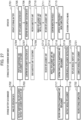
- FIG. 6 a relation between individual elements is also shown based on described words and phrases; therefore, reference signs will be omitted. Similarly, reference signs will be omitted in FIG. 9 , FIG. 11 , FIG. 13 , FIG. 15 , and FIG. 18 .
- a description will be given to a railway upcycle system or a railway upcycle method in which a controller and a memory are provided; the controller and the memory build a digital twin environment that simulates the railway system; and the enhancement of the value of the railway system is implemented according to a program in the memory.
- the controller configures a first digital twin model that simulates a target of value enhancement belonging to the railway system; fetches operation data of the target to adjust a parameter of the first digital twin model; configures a second digital twin model that simulates a target of update obtained when the accuracy of the first digital twin model is enhanced and the value of the target is enhanced; and compares results of simulations obtained when the first digital twin model and the second digital twin model are operated under identical conditions and thereby enables evaluation of the value enhancement.
- a description will be given to a railway upcycle generation method for using the railway upcycle system or the railway upcycle method to generate a railway system with the target's value enhanced.
- operation data used for the adjustment of a parameter of a digital twin model contains train operation information, traffic control or operating manipulation, train configuration information, or car equipment operation.
- operation data used for the adjustment of a parameter of a digital twin model contains frequency, input/output current/voltage, or power unit temperature when a target is a drive control device; frequency, input/output current/voltage, power unit temperature when a target is an auxiliary power supply control device; charge/discharge current, voltage, SOC, SOH, or temperature when a target is a storage battery; a state of each piece of equipment, vehicle occupancy, or temperature/room temperature when a target is a train control management system; and vibration, temperature, or distortion when a target is a member of a car.
- performance degradation is grasped by a time calendar-based simulation to predict performance deterioration timing and value enhancement timing is determined and proposed before deterioration of a target belonging to a railway system begins.
- a description will be given to that: for operation data of a target belonging to a railway system, data of operation utilizing an automatic operation or a driver advisory system is used.
- a description will be given to that: an operation patten required for the adjustment of a digital twin model is defined in advance for at least either of an operation profile of an automatic operation and an operation profile of a driver advisory system.
- evaluation of value enhancement is enabled by comparing simulation results with also other varying data than operation data of an actual car inputted.
- a target of value enhancement is any of actual car, storage battery, drive control device, auxiliary power supply control device, fuel cell system, air conditioner, cab monitoring device, train control management system, passenger information system, seat, member of car, front monitoring device, safety monitoring device, driver advisory system, automatic operation control function, or ground-on board radio information transmission control function.
- a target belonging to a railway system is supplied with ID used for individual recognition; a record chart is associated with the ID; and the record chart is updated according to the same contents of implemented work as changing work data.
- a parameter of control software is automatically adjusted on a digital twin model based on operation data and the automatically adjusted software is activated in accordance with a predetermined trigger.
- an automatically adjusted parameter of control software is adhesion control, front monitoring sensitivity, driver advisory system profile, automatic train control profile, hybrid energy management, storage battery current restriction, storage battery SOC range restriction, tractive force control by acceleration restriction, air brake blending control, or equipment operation change-over point information.
- control software for electric rail car drive system is taken as an example of an upcycle target related to railway; however, a control software for such on-board equipment as operation management system, car information control system, automatic operation system, and the like is also included.
- a parallel analysis system (Refer to FIG. 1 ) that predicts an operation of a railway car drive control system and optimizes control is taken. That is, the present upcycle system that verifies merit and demerit obtained when software implementing the railway car drive control system is updated and determines the validity of the update (upcycle) will be taken as an example.
- Search for a stability control parameter is preferably a procedure for searing for and determining a stability control parameter in a simulation environment or the like that implements an environment close to an actual car 11 as much as possible.
- the railway car drive control system controls a torque of a traction motor 117 mounted in a motor car, among a motor car and a trailer constituting a train, with a main traction converter mounted in the identical car or a nearby car and thereby drives the train.
- torque control of the traction motor 117 is implemented by software that is functionally designed so as to satisfy such predetermined car performance as acceleration characteristics and deceleration characteristics based on mechanical/mechanical characteristics of the traction motor 117, a drive system specification (wheel diameter, gear ratio, etc.), an equipment specification, such as a car specification (car mass, running resistance, load, etc.), and a car specification and installed in a controller of the main traction converter.
- control adjustment in an actual car 11 may be required sometimes.
- An example of control adjustment in an actual car 11 is "Robust Adhesion Control" described in Nonpatent Literature 1.
- adhesion control is disclosed in which adhesion control, wheel slip caused by wheel tread force transmitted from a wheel to a rail based on motor torque of railway car exceeding a frictional limit between a wheel and a rail in rainy weather or the like is suppressed by reducing the wheel tread force.
- This adhesion control performs the Taguchi Method for searching for stability control parameter with which wheel tread force is stably transmitted against fluctuation in frictional limit in a rainy state or the like and a performance validation by an actual car 11 to which the stability control parameter is applied.
- slip in acceleration is discriminately referred to as wheel slip and that in deceleration is discriminately referred to as skid but they are collectively referred to as "wheel slip" here.
- FIG. 1 is a block diagram illustrating the concept of parallel analysis in the present upcycle system.
- an actual car field 1 is an environment provided with facilities required for running of an actual car 11 and include, in addition to at least the actual car 11, a rail 15 ( FIG. 5 , FIG. 6 ), not shown, such as a railway tack.
- a power supply unit 16 FIG. 5 , FIG. 6
- FIG. 5 , FIG. 6 such as overhead contact line or third rail, that supplies the car 11 with electric power is provided.
- the actual car 11 includes an actual car driving unit 12 constituted of a motor that drives itself, an inverter device, and the like.
- the actual car driving unit 12 may be sometimes provided with a power storage unit that temporarily stores regenerative electric power generated by the motor during braking or generated power of a fuel cell, an engine, or the like and timely supplies the power to the motor to obtain driving force.
- An actual car control unit 13 monitors the conditions of each part constituting the above-mentioned actual car 11 and controls an operation thereof.
- the actual car driving unit 12 and an actual car driving control unit 14 are provided with an interface that communicates information required for driving control therebetween.
- the actual car driving control unit 14 outputs mainly a PWM signal V p that turns on/off a switching circuit of the inverter device constituting the actual car driving unit 12.
- the actual car driving unit 12 outputs at least a motor current I m passed through the motor and an input voltage E c f of the switching circuit and inputs them to a simulation car driving control unit 24.
- a simulation car field 2 is an environment provided with facilities required for running of a simulation car 21 and includes, in addition to at least the simulation car 21, a rail 15 ( FIG. 5 , FIG. 6 ), such as a railway tack.
- the power supply unit 16 FIG. 5 , FIG. 6
- the actual car 11 in the actual car field 1 is replaced with the simulation car 21.
- the simulation car field is so constituted that the actual car driving unit 12 is similarly replaced with a simulation car driving unit 22; the actual car control unit 13 is replaced with a simulation car control unit 23; and the actual car driving control unit 14 is replaced with a simulation car driving control unit 24.
- the simulation car 21, simulation car driving unit 22, simulation car control unit 23, and simulation car driving control unit 24 constituting the simulation car field 2 are simulators on a computer; however, Hardware in the Loop Simulator may also be implemented in which Hardware in the Loop Simulator, the actual car 11 is substituted for the simulation car 21; the actual car driving unit 12 is substituted for the simulation car driving unit 22; the actual car control unit 13 is substituted for the simulation car control unit 23; the actual car driving control unit 14 is substituted for the simulation car driving control unit 24, or any or a plurality of units are replaced with real units.
- the actual car field 1 and the simulation car field 2 operate on an identical time scale but the absolute times at which both the fields operate need not be identical.
- the simulation car 21 includes the simulation car driving unit 22 constituted of a motor that drives itself, an inverter device, and the like.
- the simulation car driving unit 22 may be sometimes provided with a power storage unit that temporarily stores regenerative electric power generated by the motor during braking or generated power of a fuel cell, an engine, or the like and timely supplies the power to the motor to obtain driving force.
- the simulation car control unit 23 monitors the conditions of each part constituting the above-mentioned simulation car 21 and controls an operation thereof.
- the simulation car driving unit 22 and the simulation car driving control unit 24 are provided with an interface that communicates information required for driving control therebetween.
- the simulation car driving control unit 24 outputs mainly a PWM signal V p that turns on/off a switching circuit of the inverter device constituting the simulation car driving unit 22.
- the simulation car driving unit 22 outputs at least a motor current I m passed through the motor and an input voltage E c f of the switching circuit and inputs them to the simulation car driving control unit 24.
- the simulation car field 2 replaces all or some of the actual car 11, actual car driving unit 12, actual car control unit 13, and actual car driving control unit 14 constituting the actual car field 1 with a simulator implemented by a computer that includes CPU and a memory, and data is communicated therebetween so that parallel running of the actual car field 1 and the simulation car field 2 is enabled.
- the parallel running cited here is a control method of a railway system in which, when the actual car field 1 and the simulation car field 2 run based on an identical operation command, a difference therebetween is minimized with respect to running data, for example, acceleration, velocity, and car mileage of a car and a current value and a voltage value of a car driving unit, and the like.
- a state of each part constituting the actual car 11 in the actual car field 1 is transmitted to the simulation car field 2 through an information transmission unit 3.
- the simulation car 21 constituting the simulation car field 2 is defined as physical theoretical model on a simulator implemented by a computer. However, as compared with a simulation car environment as a physical theoretical model, in an actual car environment, such variable elements as route conditions, passenger load conditions, meteorological conditions are present.
- a car operation analysis unit 231, not shown, that minimizes a difference therebetween is provided and a physical theoretical model of the simulation car 21 is corrected based on a result of analysis.
- the simulation car 21 based on the corrected physical theoretical model, it is expected that running data obtained when the actual car field 1 and the simulation car field 2 run based on an identical operation command is identical. That is, when in the simulation car field 2, control operation of the simulation car driving unit 22 and the simulation car control unit 23 is stable, it is expected that in the simulation car field 2, control operation of the actual car driving unit 12 and the actual car control unit 13 is also stable. For this reason, first, in the simulation car field 2, driving control operation data is corrected so that control operation of the simulation car driving unit 22 and the simulation car control unit 23 is stabilized.
- the simulation car control unit 23 is provided with an adjustment computation unit that modifies driving control operation data for implementing control operation of the simulation car driving control unit 24 and stabilizes a state of each part constituting the simulation car 21.
- an adjustment computation unit that modifies driving control operation data for implementing control operation of the simulation car driving control unit 24 and stabilizes a state of each part constituting the simulation car 21.
- the optimized driving control operation data is transmitted to the actual car field 1 through the information transmission unit 3 to update driving control operation data already installed in the car control unit 13 or the car driving control unit 14.
- Updating of driving control operation data of the car control unit 13 or the car driving control unit 14 is basically automatically performed when a predetermined condition holds, for example, when the actual car 11 in the actual car field 1 is at a stop or when the car driving control unit 14 is out of operation; however, as a special situation, updating can also be performed by manual operation based on a responsible person's decision or based on decision by AI or the like equivalent to a responsible person.
- running data of the actual car 11 operated by optimized driving control operation data in the actual car field 1 is transmitted to the simulation car field 2 through the information transmission unit 3 .
- running data for example acceleration, velocity, or car mileage of a car or a current value or a voltage value of a car driving unit obtained when the actual car field 1 and the simulation car field 2 run based on an identical operation command
- the driving control operation data of the physical theoretical model of the simulation car driving control unit 24 or the simulation car 21 is corrected again so as to minimize a difference therebetween.
- Which of the driving control operation data and the physical theoretical model should be corrected is determined by a simulator according to the following basis.
- Running data of the actual car 11 obtained when the actual car field 1 and the simulation car field 2 run based on an identical operation command, a running data difference of the actual car 11 operated based on driving control operation data before and after optimization with respect to the running data of the actual car 11, and a running data difference of the actual car 11 operated based on driving control operation data before and after optimization are compared and the following processing is performed.
- the driving control operation data cited here is a control logic of software or the like or a configuration parameter of a control logic installed in the actual car driving control unit 14 for controlling an operation of the actual car driving unit 12 or installed in the simulation car driving control unit 24 for controlling an operation of the simulation car driving unit 22.
- the model accuracy of a simulator constituting the simulation car field 2 can be enhanced based on running data of the actual car field 1. Owing to the enhancement of the model accuracy of a simulator constituting the simulation car field 2, an operation observed when driving control operation data is modified in the actual car field 1 can be predicted and proactively verified based on an operation observed when driving control operation data is modified in the simulation car field 2.
- the above-mentioned driving control operation data proactively verified in the simulation car field 2 can be transmitted to the actual car field 1 through the information transmission unit 3 and the driving control operation data in the actual car field 1 can be modified to check an actual operation.
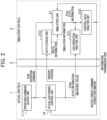
- FIG. 2 is a functional block diagram illustrating a basic operation of the present upcycle system in FIG. 1 .
- the actual car field 1 and the simulation car field 2 are so configured that they are capable of communicating information data therebetween through the information transmission unit 3.
- An operation commanding unit 111 outputs an operation command COM commanding an operation, such as power running (acceleration), brake (deceleration/stop), off (coasting), and the like, of the actual car 11.
- an ATO Automatic Train Operation
- the operation command COM is inputted to the actual car driving control unit 14 and controls driving force outputted by the actual car driving unit 12, not shown, so that the actual car 11 operates in accordance with the operation command COM.
- the actual car driving control unit 14 outputs state information STAR r so that the actual car 11 operates in accordance with an operation command COM.
- the state information STAR r is physical quantity data recognized in software computation of the actual car driving control unit 14 and includes an acceleration A cc , velocity V el , and position P os of a car, a rotational speed F r , current I m , and voltage V m of the traction motor 117, and a direct current I s , direct-current voltage E c f of the inverter device, and the like.
- the operation command COM and the state information STAR r are inputted to the simulation car field 2 through the information transmission unit 3.
- the operation command COM is inputted to the simulation car driving control unit 24 constituting the simulation car 21 and controls driving force outputted by the simulation car driving unit 22, not shown, so that the simulation car 21 operates in accordance with the operation command COM.
- state information STAR r especially, velocity data VEL r and position data POS r of the actual car 11 is inputted to a storage unit (memory) 233.
- the storage unit 233 holds the gradient data, curve data, station position data STN, and the like of a route along which the actual car 11 runs.
- the gradient data is table data in which with respect to running position data POS r of the actual car 11, an amount of gradient (altitude increase rate relative to car mileage) at that position is defined.
- the gradient data is table data in which a curvature (reciprocal of radius of curve) of a railway track is defined relative to running position data POS r of the actual car 11.
- the station position data STN is table data in which a position of a station facility disposed in a running route is indicated relative to running position data POS r of the actual car 11.
- Station facilities include a signal box and the like as well as a station and a stop and is usually indicated by a kilometerage indicating the center position of each facility.
- the car operation analysis unit 231 is fed with state information STA s outputted by the simulation car 21 and state information STAR r outputted by the actual car 11 and transmitted to the simulation car field 2 through the information transmission unit 3 and computes a correction parameter ⁇ MDL of the simulation car 21 with which an operation of the actual car 11 and an operation of the simulation car 21 approximate to each other based on the state information STA s and the state information STAR r .
- the correction parameter ⁇ MDL is inputted to the simulation car 21 and corrects a configuration parameter of the simulation car 21.
- a configuration parameter of the simulation car driving unit 22 is corrected so as to follow a behavior of the actual car driving unit 12.
- a control data analysis unit 232 is fed with state information STA s and analyzes and determines an optimization control parameter with which state information STA s and a state value STAp as a control result as the objective thereof are most approximated.
- This analysis of an optimization control parameter is performed after correction of a configuration parameter of the simulation car 21 is completed so that state information STA s as a result of operation of the simulation car 21 based on an operation command COM follows state information STAR r similarly as a result of operation of the actual car 11 based on the operation command COM.
- the simulation car 21 and the simulation car driving unit 22 exhibit a behavior equivalent to the actual car 11 and the actual car driving unit 12 to an operation command COM; therefore, by equalizing in control operation of the actual car control unit 13 and the simulation car control unit 23 and the actual car driving control unit 14 and the simulation car driving control unit 24, the actual car field 1 and the simulation car field 2 are also equalized in behavior with each other.
- the model accuracy of a simulator constituting the simulation car field 2 can be enhanced based on running data of the actual car field 1. Owing to the enhancement of the model accuracy of a simulator constituting the simulation car field 2, an operation observed when driving control operation data is modified in the actual car field 1 can be predicted and proactively verified based on an operation observed when driving control operation data is modified in the simulation car field 2.
- the above-mentioned driving control operation data proactively verified in the simulation car field 2 can be transmitted to the actual car field 1 through the information transmission unit 3 and the driving control operation data in the actual car field 1 can be modified to check an actual operation.
- the driving control operation data cited here is a control logic of software or the like or a configuration parameter of a control logic installed in the actual car driving control unit 14 for controlling an operation of the actual car driving unit 12 or installed in the simulation car driving control unit 24 for controlling an operation of the simulation car driving unit 22.
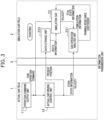
- FIG. 3 is a functional block diagram illustrating an example of a basic operation (simulation car model update) of the present upcycle system in FIG. 1 .
- the actual car field 1 and the simulation car field 2 are so configured that they are capable of communicating information data therebetween through the information transmission unit 3.
- An operation commanding unit 111 outputs an operation command COM commanding an operation, such as power running (acceleration), brake (deceleration/stop), off (coasting), and the like, of the actual car 11.
- an ATO device or the like applies.
- the operation command COM is inputted to the actual car driving control unit 14 and controls driving force outputted by the actual car driving unit 12, not shown, so that the actual car 11 operates in accordance with the operation command COM.
- the actual car driving control unit 14 outputs state information STAR r so that the actual car 11 operates in accordance with an operation command COM.
- an operation command, a position, and a velocity can be collected as actual car data.
- the state information STAR r is physical quantity data recognized in software computation of the actual car driving control unit 14 and includes an acceleration A cc , velocity V el , and position P os of a car, a rotational speed F r , current I m , and voltage V m of the traction motor 117, and a direct current I s , direct-current voltage E c f of the inverter device, and the like.
- the operation command COM and the state information STAR r are inputted to the simulation car field 2 through the information transmission unit 3.
- the storage unit 233 holds the gradient data GRD, curve data CRV, station position data STN, and the like of a route along which the actual car 11 runs.
- the gradient data GRD is table data in which with respect to running position data POS r of the actual car 11, an amount of gradient (altitude increase rate relative to car mileage) at that position is defined.
- the gradient data GRD is table data in which a curvature (reciprocal of radius of curve) of a railway track is defined relative to running position data POS r of the actual car 11.
- the station position data STN is table data in which a position of a station facility disposed in a running route is indicated relative to running position data POS r of the actual car 11.
- Station facilities include a signal box and the like as well as a station and a stop and is usually indicated by a kilometerage indicating the center position of each facility.
- the car operation analysis unit 231 is fed with state information STA s outputted by the simulation car 21 and state information STAR r outputted by the actual car 11 and transmitted to the simulation car field 2 through the information transmission unit 3 and computes a correction parameter ⁇ MDL of the simulation car 21 with which an operation of the actual car 11 and an operation of the simulation car 21 approximate to each other based on the state information STA s and the state information STAR r .
- the correction parameter ⁇ MDL is inputted to the simulation car 21 and corrects a configuration parameter of the simulation car 21.
- the car operation analysis unit 231 calculates a velocity difference between the actual car 11 and a simulation by the simulation car 21. Then, the car operation analysis unit 231 corrects a running resistance coefficient so as to correct the velocity difference ( ⁇ running resistance error).
- Gradient resistance R g (POS r ) is calculated from position data POS r and gradient data GRD as state information STA s outputted by the simulation car 21.
- Gradient resistance R c (POS r ) is calculated from position data POS r and curve data CRV.
- Rr (VEL r ) is calculated from velocity data VEL r by a running resistance formula.
- a running resistance formula is prescribed by a standard or the like and for example, the following formula (1) is known.
- R(v) (1.65+0.0247.V(v)) ⁇ m M+(0.78+0.0028.V(v)) ⁇ m T+9.81 ⁇ [0.028+0.00 78 ⁇ (n-1)] ⁇ V2(v) ---- (1)
- a running resistance Rmsd of the actual car 11 is measured based on the operation command COM, position POS, and velocity VER r (with timestamp) of the actual car 11.
- a running resistance correction value ⁇ R is calculated from a difference from the running resistance Rr(VER r ) calculated by the running resistance formula by the following Formula (2).
- ⁇ R Rr VER r ⁇ R msd
- an operation observed when driving control operation data is modified in the actual car field 1 can be predicted and proactively verified based on an operation observed when driving control operation data is modified in the simulation car field 2.
- the above-mentioned driving control operation data proactively verified in the simulation car field 2 can be transmitted to the actual car field 1 through the information transmission unit 3 and the driving control operation data in the actual car field 1 can be modified to check an actual operation.
- the driving control operation data cited here is a control logic of software or the like or a configuration parameter of a control logic installed in the actual car driving control unit 14 for controlling an operation of the actual car driving unit 12 or installed in the simulation car driving control unit 24 for controlling an operation of the simulation car driving unit 22.
- FIG. 4 is a functional block diagram illustrating an example of a basic operation (actual car control update) of the present upcycle system in FIG. 1 .
- the operation commanding unit 111 outputs an operation command COM commanding an operation, such as power running (acceleration), brake (deceleration/stop), off (coasting), and the like, of the actual car 11.
- an ATO device or the like applies.
- the operation command COM is inputted to the actual car driving control unit 14 and controls driving force outputted by the actual car driving unit 12, not shown, so that the actual car 11 operates in accordance with the operation command COM.
- the actual car driving control unit 14 outputs state information STAR r so that the actual car 11 operates in accordance with an operation command COM.
- an operation command, a position, and a velocity can be collected as actual car data.
- the state information STAR r is physical quantity data recognized in software computation of the actual car driving control unit 14 and includes an acceleration A cc , velocity V el , and position P os of a car, a rotational speed F r , current I m , and voltage V m of the traction motor 117, and a direct current I s , direct-current voltage E c f of the inverter device, and the like.
- the operation command COM and the state information STAR r are inputted to the simulation car field 2 through the information transmission unit 3.
- the storage unit 233 holds the gradient data GRD, curve data CRV, station position data STN, and the like of a route along which the actual car 11 runs.
- the gradient data GRD is table data in which with respect to running position data POS r of the actual car 11, an amount of gradient (altitude increase rate relative to car mileage) at that position is defined.
- the gradient data GRD is table data in which a curvature (reciprocal of radius of curve) of a railway track is defined relative to running position data POS r of the actual car 11.
- the station position data STN is table data in which a position of a station facility disposed in a running route is indicated relative to running position data POS r of the actual car 11.
- Station facilities include a signal box and the like as well as a station and a stop and is usually indicated by a kilometerage indicating the center position of each facility.
- the car operation analysis unit 231 is fed with state information STA s outputted by the simulation car 21 and state information STAR r outputted by the actual car 11 and transmitted to the simulation car field 2 through the information transmission unit 3 and computes an operation of the actual car 11 and operation data of the simulation car 21 based on the state information STA s and the state information STAR r .
- the operation data of the actual car 11 and the simulation car 21 is data related to car dynamics and includes the following or part thereof.
- the control data analysis unit 232 has a function of: taking a motor current I m outputted by the simulation car control unit 23 and an input voltage E c f of a switching circuit, and the like as control data; and searching for a control parameter that more stabilizes control of the simulation car driving control unit 24 based on the control data.
- An example of search for a control parameter that stabilizes control is described in Nonpatent Literature 1.
- Nonpatent Literature 1 proposes a technique in which a stability control parameter with which wheel tread force is stably transmitted against fluctuation in frictional limit in a rainy state or the like is searched for by the Taguchi Method and performance verification by an actual car 11 to which a stability control parameter is applied (slip in acceleration is discriminately referred to as wheel slip and that in deceleration is discriminately referred to as skid but they are collectively referred to as "wheel slip" here.
- a stability control parameter determined by the above-mentioned procedure is applied as a control parameter for the actual car driving control unit 14 in the actual car field 1 and the simulation car driving control unit 24 in the simulation car field 2 and is thereafter controlled by a stabilization parameter.
- a result of control by a stabilization parameter is aggregated in the car operation analysis unit 231 and it is confirmed that the operation data and control data of a car fall within an objective range.
- control data analysis unit 232 When operation data or control data of a car is out of an objective range, the following cycle is repeated in the control data analysis unit 232: a control parameter is searched for and a stabilization parameter is computed and is applied as a control parameter of the actual car driving control unit 14 in the actual car field 1 and the simulation car driving control unit 24 in the simulation car field 2.
- the car operation analysis unit 231 calculates a velocity difference between the actual car 11 and a simulation by the simulation car 21.
- the control data analysis unit 232 corrects a motor torque command so as to correct the velocity difference ( ⁇ acceleration error). Even if a transmission delay is present, it is not a problem as long as all the pieces of data delay by an equal amount.
- the model accuracy of a simulator constituting the simulation car field 2 can be enhanced based on running data of the actual car field 1 .
- an operation observed when driving control operation data is modified in the actual car field 1 can be predicted and proactively verified based on an operation observed when driving control operation data is modified in the simulation car field 2 .
- the above-mentioned driving control operation data proactively verified in the simulation car field 2 can be transmitted to the actual car field 1 through the information transmission unit 3 and the driving control operation data in the actual car field 1 can be modified to check an actual operation.
- Driving control operation data is a control logic or a configuration parameter of a control logic installed in the actual car driving control unit 14 for controlling an operation of the actual car driving unit 12 or installed in the simulation car driving control unit 24 for controlling an operation of the simulation car driving control unit 22.
- FIG. 5 is a schematic explanatory drawing illustrating an example of the information transmission unit 3 of the present upcycle system in FIG. 1 .
- a plurality of actual cars 11 is running along such a rail 15 as a rail.
- a driving system and such auxiliary equipment 118 as illumination and air conditioner are supplied with electric power from such a power supply unit 16 as an overhead contact line.
- a configuration of a driving control function of the actual car 11a will be described in more detail later with reference with FIG. 16 and FIG. 17 .
- the power supply unit 16 is not indispensable.
- An actual car 11 need not be a single car and may be a train set by coupling a plurality of cars sometimes.
- a plurality of rails 15 may be arranged in parallel to configure a double track section in which trains can simultaneously run in different directions, such as up direction and down direction.
- the simulation car field 2 communicates at least the above-mentioned state information STAR r of the actual car 11 and a control parameter PARA _ctrl of the actual car driving control unit 14 with the actual car field 1 through the information transmission unit 3.
- STAR r of the actual car 11 and a control parameter PARA _ctrl of the actual car driving control unit 14 with the actual car field 1 through the information transmission unit 3.
- An actual car 11 communicates information with a wide-area information transmission base 33 by radio communication.
- a mobile communication system in which communication is continued while an actual car is moving in a plurality of limited communication ranges by the fifth-generation mobile communication system (5G) or the like can be applied.
- Information communicated at the wide-area information transmission unit 32 is aggregated in the wide-area information transmission unit 32 and is connected with an external information interface (not shown) of the simulation car field 2 by the wide-area information transmission unit 32 such as the Internet. As a result, information of the actual car field 1 and the simulation car field 2 can be received.
- an actual car 11 communicates information with a local information communication base 36 by radio communication.
- the local information communication base 36 is installed in a station, a depot, and the like and enables radio communication with an actual car 11 at a stop.
- a wireless LAN, Bluetooth (registered trademark), infrared communication, and the like suitable for equipment-to-equipment communication at a short range can be applied.
- Information communicated at the local information communication base 36 is aggregated at the wide-area information transmission unit 32 and is connected with an external information interface (not shown) of the simulation car field 2 through a wide-area information transmission path 31 such as the Internet. As a result, information of the actual car field 1 and the simulation car field 2 can be received.
- the model accuracy of a simulator constituting the simulation car field 2 can be enhanced based on running data of the actual car field 1. Owing to the enhancement of the model accuracy of a simulator constituting the simulation car field 2, an operation observed when driving control operation data is modified in the actual car field 1 can be predicted and proactively verified based on an operation observed when driving control operation data is modified in the simulation car field 2.
- the above-mentioned driving control operation data proactively verified in the simulation car field 2 can be transmitted to the actual car field 1 through the information transmission unit 3 and the driving control operation data in the actual car field 1 can be modified to check an actual operation.
- the driving control operation data cited here is a control logic of software or the like or a configuration parameter of a control logic installed in the actual car driving control unit 14 for controlling an operation of the actual car driving unit 12 or installed in the simulation car driving control unit 24 for controlling an operation of the simulation car driving unit 22.
- measurement data of an actual car environment is transmitted to a simulation environment; a simulation model approximating movement of an actual car 11 is identified based on the measurement data; driving control is optimized in the simulation environment simulating such running conditions as route conditions, passenger load conditions, and meteorological conditions; and optimization control data is transmitted to an actual car environment and is reflected in control of the actual car 11.
- a merit and a demerit obtained when software implementing a railway car driving control system is updated are verified and determination of whether to update (upcycle) is assisted.
- the present upcycle system is capable of keeping driving control of a railway car in an optimum state corresponding to route conditions, passenger load conditions, and meteorological conditions.
- the present upcycle system prompts carbon neutrality due to an energy saving (hereafter, abbreviated as "ES") effect and circular economy due to an effect of reduction of wastes by lengthening a life of a wheel and the like by wheel slip prevention and thereby contributes to the realization of a sustainable society.
- ES energy saving
- a present upcycle system is taken as an example in which upcycle system, performance enhancement implemented when various parts or the like used in a battery powered electric railcar or a hybrid electric railcar (hereafter, referred to as "battery powered electric railcar and the like") are updated is verified and determination of timing or appropriateness of the update is assisted.
- a storage battery is taken as an example of a target product of upcycle related to railway but any other constituent part mounted in a railway car, especially, other on-board equipment in a battery powered electric railcar or the like and ground equipment and the like, such as a signal system, are also acceptable.
- Possible constituent parts mounted in a railway car include: on-board equipment, such as driving control device, auxiliary power supply control device, fuel cell system, air conditioner, cab monitoring device, TCMS (Train Control Management System), PIS (Passenger Information System); internal accommodations, such as seat and the like; member of car; front monitoring device, safety monitoring device; driver advisory system; automatic operation; and control function for ground-on board radio information transmission and the like.
- on-board equipment such as driving control device, auxiliary power supply control device, fuel cell system, air conditioner, cab monitoring device, TCMS (Train Control Management System), PIS (Passenger Information System); internal accommodations, such as seat and the like; member of car; front monitoring device, safety monitoring device; driver advisory system; automatic operation; and control function for ground-on board radio information transmission and the like.
- driving control device auxiliary power supply control device
- fuel cell system fuel cell system
- air conditioner air conditioner
- cab monitoring device TCMS (Train Control Management System)
- PIS Passenger Information System
- internal accommodations such as
- Measurement data of an actual car environment is transmitted to a simulation environment; a simulation model approximating movement of an actual car 11 is identified based on the measurement data; driving control is optimized in the simulation environment simulating such running conditions as route conditions, passenger load conditions, and meteorological conditions; and optimization control data is transmitted to an actual car environment and is reflected in control of the actual car 11.
- FIG. 6 is a conceptual explanatory drawing explaining a circulation system of a storage battery based on the present upcycle system in the second embodiment. A description will be substantially chronologically given to the circulation system in FIG. 6 .
- a storage battery is produced, installed, operated and works and is upcycled when value enhancement becomes feasible, and an upcycle article reflecting the foregoing is produced and circulated.
- a process of production includes organizations for planning, designing, specification decision, material procurement, manufacture of mass-produced products, inspection, and shipment.
- a storage battery is carried in, installed, and caused to work but is carried out after removal for value enhancement.
- a process of upcycle a spent storage battery is recovered, the quality is measured to determine a degree of deterioration, a storage battery is manufactured/produced based on an upcycle design, a grade thereof is evaluated, a rank of the storage battery is classified and managed, an upcycle article is thereby made into a product.
- Recovery cited here refers to returning of a spent storage battery. Meanwhile, recovery of software may mean a state in which the software does not exhibit an expected effect.
- Such an upcycle article is also placed in a sales route for new product supply and circulated.
- data management for product and material is required.
- operation plan, model identification, upcycle evaluation, quality management, and upcycle design guideline are important.
- a function of data management is mainly to collect operation data (command and working data) and provide an operation plan.
- More examples of information that must be collected for data management are production plan, specifications, required quantity, quality measurement data, and historical trail (such a history as lifetime data), and the like.
- Examples of information that can be provided by a function of data management are, aside from operation plane, trust data (quality and life) for a production department, information of production quantity and recipe for an upcycle department, and the like.
- upcycle In the concept of upcycle in FIG. 6 , items are not always in the order listed.
- a storage battery is produced, installed, made to work, and upcycle designed after recovery and an upcycle article reflecting the foregoing is produced and circulated.
- upcycle is performed only when an upcycle evaluation based on data management for product and material is high. By comparing a degree of deterioration before update and performance enhancement after update by a digital twin when a storage battery is replaced, the appropriateness of replacement at that time is clarified.
- a storage battery is operated for the long term with the energy efficiency so reduced that replacement with a new one is delayed; therefore, as replacement timing is more delayed, a dramatic ES effect due to recovery of a largely reduced storage capacity is obtained just by replacing the storage battery with a new one of the equivalent specifications.
- replacement timing is more delayed, a dramatic ES effect due to recovery of a largely reduced storage capacity is obtained just by replacing the storage battery with a new one of the equivalent specifications.
- the quality of storage batteries is altered to recyclable products with which wastes are reduced and extractable effective materials are recycled to continuously preserve environments.
- the present upcycle system performs advantageous upcycle only when upcycle evaluation is high according to the circulation system in FIG. 6 .
- the present upcycle system executes an operation command by manned operation with DAS (Driver Advisory System). Or, the present upcycle system executes an operation command by automatic operation.
- DAS Driver Advisory System
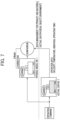
- FIG. 7 is a schematic explanatory drawing explaining parameter identification in relation to the circulation system in FIG. 6 .
- the present upcycle system causes both of the following to execute an operation command: a current actual car No. 1 (here, function A equipped in the actual car is included) indicated by "Current” representing before upcycle and a current physical model No. 1 (here, function A on the physical model is included) corresponding thereto.
- the present upcycle system performs paired comparison so that their respective operation data (velocity, temperature, vibration, operation time) can be identified and identifies parameters so as to eliminate a difference ⁇ Mode of results of comparison. That is, parameter identification refers to adjusting parameters of models so that the actual car No. 1 and the physical model No. 1 perform identical operation to an identical command.
- Agreement refers to a level at which a simulation result is acceptable.
- agreement refers to that a simulation result can be calculated and outputted to a determinable level; since as a result, by executing an operation command, a parameter can be identified by a predictable operation profile and thus, an effect of identification accuracy being enhanced and stabilized is obtained.
- a difference between the actual car No. 1 and the physical model No. 1 in operation may be permitted to some extent with a measurement error of current and voltage detectors mounted in the actual car No. 1 taken into account.
- the actual car No. 1 is actually operated in an actual car 11 (physical object) environment described later with reference to FIG. 15 .
- the current physical model No. 1 is a digital twin for: reproducing a real space in a virtual (cyber) space for data management for product and material shown in FIG. 15 ; and utilizing a simulation by a computer and predicting and evaluating a result of update of software and a part as well as a failure prediction.
- a description will be given to a procedure therefor with reference to FIG. 8 .
- FIG. 8 is a flowchart explaining a procedure for the parameter identification in FIG. 7 .
- the present upcycle system builds the physical model No. 1 simulating the actual car No. 1 (S81). Subsequently, the present upcycle system compares a difference in operation data based on an operation command of the actual car 11 as indicated by the following formula (S82).
- ⁇ Model operation data (physical model No. 1) - operation data (actual car No. 1)
- the present upcycle system corrects the physical model according to ⁇ Model (S83).
- the present upcycle system completes the identification of the physical model No. 1. 0 is just an example.
- FIG. 9 is a schematic explanatory drawing explaining upcycle evaluation in relation to the circulation system in FIG. 6 .
- the present upcycle system causes both of the following to execute an operation command: a current physical model No. 1 indicated by "Current” representing before upcycle and an updated physical model No. 2 indicated by "New" representing after upcycle corresponding thereto.
- the physical model No. 1 and the physical model No. 2 are digital twins for simulation in a virtual (cyber) space for the data management for product and material shown in FIG. 15 .
- parameter identification has been completed based on the operation data of the above-mentioned actual car No. 1.
- function A is altered to "function A'” as compared with the physical model No. 1.
- A' of both, for example, “A” is a current storage battery module.
- “A'” is a storage battery module with the performance of cells enhanced (loss reduction or the like).
- the present upcycle system can measure a degree of progression of deterioration using, for example, storage battery deterioration indicator SOH (State of Health) as an evaluation indicator. In this case, it is advisable to set a limit value of SOH at which replacement of a storage battery is determined as reference value K. A threshold value is determined with respect to Low/High relative to the set reference value K.
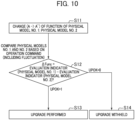
- FIG. 10 is a flowchart explaining a procedure for the upcycle evaluation in FIG. 9 .
- the function A of the physical model No. 1 is altered to the function A' of the physical model No. 2 (S11).
- the physical models No. 1 and No. 2 are compared based on an operation command (including fluctuation) as indicated by the following formula (S12).
- ⁇ Func evaluation indicator (physical model No. 1) - evaluation indicator (physical model No. 2)
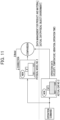
- FIG. 11 is a schematic explanatory drawing explaining parameter identification (after upcycle) in relation to the circulation system in FIG. 6 .
- the present upcycle system causes both of the following to execute an operation command: an updated actual car No. 2 (here, function A' mounted in the actual car is included) indicated by "New" representing after upcycle; and an updated physical model No. 2 (here, function A' on physical model is included) corresponding thereto.
- the functions of both are A', A'.
- the updated actual car No. 2 is actually operated in the actual car 11 (physical object) environment described later with reference to FIG. 15 .
- the updated physical model No. 2 is a digital twin for simulation in a virtual (cyber) space for the data management for product and material shown in FIG. 15 . Subsequently, a description will be given to a procedure therefor with reference to FIG. 12 .
- FIG. 12 is a flowchart explaining a procedure for the parameter identification (after upcycle) in FIG. 11 .
- the function A of the physical model No. 1 is altered to the function A' of the physical model No. 2 (S21).
- a difference in operation data is compared based on the operation command of the actual car 11 as indicated by the following formula (S22).
- ⁇ Model operation data (physical model No. 2) - operation data (actual car No. 2)
- the above-mentioned parameter identification is on the assumption that the parameter identification is performed based on operation data at normal time and use of operation data in such abnormal time as accident or failure in parameter identification must be avoided. For this reason, any accident or failure must be monitored in parallel with parameter identification and it is desirable to make a maintenance determination utilizing information based on this monitoring.
- upcycle is replacement involving value enhancement
- maintenance is an act of preservation to replace an article or the like deteriorated due to long time use.
- subjecting an article or the like deteriorated due long time use to replacement involving value enhancement is upcycle.
- FIG. 13 is a schematic explanatory drawing explaining maintenance determination in relation to the circulation system in FIG. 6 .
- the present upcycle system causes both of the following to execute an operation command: a current actual car No. 1 (here, function A mounted in the actual car is included) indicated by "Current” representing before upcycle; and a current physical model No. 1 (here, function A on the physical model is included) indicated by "Current" corresponding thereto.
- the present upcycle system performs paired comparison and, when a result of comparison reveals a presence of a difference, determines an abnormality.
- the current actual car No. 1 is actually operated in the actual car 11 (physical object) environment described later with reference to FIG. 15 .
- the current physical model No. 1 is a digital twin for simulation in a virtual (cyber) space for the data management for product and material shown in FIG. 15 .
- the present upcycle system takes, for example, operation data (velocity, temperature, vibration, operation time) as evaluation indicator; makes a threshold value determination with respect to Low/High relative to a set reference value K; and, when a result of determination is high, issues a signal prompting execution of maintenance.
- operation data velocity, temperature, vibration, operation time
- K a threshold value determination with respect to Low/High relative to a set reference value K
- the present upcycle system is capable of warning a driver in a cab of that.
- railway cars are characterized in that a failure of a storage battery module highly probably occurs only in a certain car and a failure less probably similarly occurs in other cars. At this time, a (sensor) failure in the subject car is determined from information of other cars. Therefore, only a failed certain storage battery can be disconnected from the relevant car and the driving force of the other sound cars can be intensified to continue the operation of the train. As a result, the present upcycle system is capable of enhancing the availability of train operation.
- FIG. 14 is a flowchart explaining a procedure for the maintenance determination in FIG. 13 .
- data is collected from all the actual cars No. 1 put into operation (S41).
- a difference in operation data is compared based on an operation command of the actual car 11 as indicated by the following formula (S42).
- ⁇ Model operation data (physical model No. 1) - operation data (actual car No. 1)
- FIG. 15 is a conceptual explanatory drawing explaining a data management function for product and material and a maintenance plan proposing function in the present upcycle system.
- information is communicated between a management department that manages data of product and material and an actual car 11 (physical object) environment through a network.
- the data management side acquires operation data from the actual car 11 (physical object) environment and provides an operation plan and a maintenance plan.
- the actual car 11 (physical object) environment has operation information, upcycle information, and production information. These pieces of information are connected to the network through respective data input/output units and is inputted/outputted to the outside.
- the management department plans and implements upcycle by simulation using a digital twin and a maintenance plan.
- Upcycle is performed with at least either of hardware and software.
- upcycle with software is taken as an example and in relation to the second embodiment, upcycle with hardware is taken as an example.
- Upcycle is represented by feedback to a design guideline based on quality management. Upcycle is appropriately evaluated and accumulated as data and is also fed back to an operation plan. The feedback from upcycle is connected to the network through a data input/output unit and the information thereof is effectively utilized.
- a maintenance plan is also implemented with at least either of hardware and software.
- Examples of maintenance of software are software modification arising from hardware modification, reflection of an improvement item in any other project, and the like.
- the upcycle and maintenance plan shown in FIG. 15 are identical in mode with each other except that information provided to the actual car 11 (physical object) environment is changed from operation plan to maintenance plan.
- a description will be given with a storage battery taken as an example; replacement of an article deteriorated due to long time use with an original new one is maintenance as an act of preservation and replacement involving value enhancement is upcycle.
- the management department makes an upcycle plan based on simulation using a digital twin or a maintenance plan and executes the plan.
- FIG. 16 is a functional block diagram illustrating a configuration of a modification in which the actual cars 11a, 11b in FIG. 5 are coupled into one set. With respect to a part already described with reference to FIG. 5 , a description thereof will be omitted and be given only to a difference.
- the actual car 11a having driving force is operated in a train set in which the actual car 11a tows the actual car 11b having no driving force.
- the actual cars 11a, 11b may both have driving force or the actual cars need not be an electric railcar and may be an electric locomotive.
- the actual car 11a forms a current path so that: an electric current received from the power supply unit 16 by a power collector 114 is inputted to the primary winding of a traction transformer 121 and is fed back to a substation through trucks 112a, 112b (collectively truck 112 when discrimination is unnecessary), wheelsets 113a to 113d (collectively 113 when discrimination is unnecessary), a grounding device 115, and a rail 15.
- the actual car 11a controls, the traction transformer 121, the driving control unit 122, a main circuit storage battery 123, and an auxiliary power system (APS_DC/AC) 124 as main on-board devices by the actual car control unit 13.
- An AC/DC converter 122a and a DC/AC inverter 122b are collectively referred to as driving control unit 122.
- An alternating-current voltage detector (ACPT) 131 is disposed between the power collector 114 and the primary winding of the traction transformer 121 and inputs a detected voltage signal to the actual car control unit 13 for control.
- An alternating current detector (ACCT) 132a inputs a detected current signal to the actual car control unit 13 for control.
- the actual car control unit 13 exercises ES-oriented control so as to minimize receiving power from the power supply unit 16.
- electric power outputted to the auxiliary power system (APS_DC/AC) 124 and the auxiliary equipment 118 ( FIG. 18 ) is appropriately controlled and consumption of electric power outputted from the secondary winding the traction transformer 121 is thereby minimized to reduce receiving power from the power supply unit 16.
- APS_DC/AC auxiliary power system
- the actual car 11a is capable of contributing realization of a sustainable society.
- FIG. 17 is a functional block diagram illustrating in more detail a configuration of the actual car 11a in FIG. 16 .
- a main direct current circuit is formed between the AC/DC converter 122a and the DC/AC inverter 122b and a direct-current voltage signal detected at the direct-current voltage detectors 133a, 133b is inputted to the actual car control unit 13 for control.
- the actual car control unit 13 includes a train control management system 141, an AC/DC converter control unit 142a, a DC/AC inverter control unit 142b, a storage battery control device 143, and an auxiliary power supply control device 144. Though illustration is omitted, the actual car control unit 13 is controlled by a control unit in higher order.
- the control unit in higher order is the core of operation and refers to an operation management system or a driver.
- the actual car control unit 13 is provided with control software and communicates a control signal with a control unit in higher order and controls a controlled unit in lower order as intended.
- the main direct current circuit is connected with the main circuit storage battery 123 and an auxiliary power system 124.
- Direct-current voltage detectors 133c to 133d and direct current detectors 134a to 134c are connected to these elements and a direct-current voltage signal detected at these detectors is inputted to the actual car control unit 13 for control.
- the storage battery control device 143 controls the main circuit storage battery 123.
- the auxiliary power supply control device 144 controls the auxiliary power system 124 and controls the auxiliary equipment 118.
- the auxiliary equipment 118 is connected with direct-current voltage detectors 135a, 135b and a direct-current voltage signal detected at these detectors is inputted to the actual car control unit 13 for control.
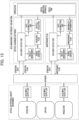
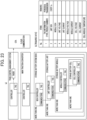
- FIG. 18 is a drawing illustrating an example of an ID system that enables the traceability of hardware/software of the parallel analysis system in FIG. 1 .
- the traceability refers to tracking procurement, production, consumption, up to discard of the raw materials of a product.
- the ID system in FIG. 18 has the following requirements and appropriately executes the requirements.
- an effect of implementation of upcycle is obtained by combining "electronic record chart” and "copy of family register", and "history” provided by the ID system.
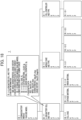
- ID system in FIG. 18 in lower order of ID: 1 storage battery year 2022 model, a parent-child relation to ID: 1-1 Li-ion battery cell ABC type, ID: 1-2 module case ABC type, ID: 1-3 cell controller ABC type, ..., is formed.
- ID: 1 (level A) is assigned to a final product
- ID: 1-1 (level B) is assigned to a part constituting a product
- ID: 1-1-1 (level C) is assigned to a material constituting a part.
- These levels need not be divided in three and the levels may be divided into two or less or may be divided into four or more depending on an actual configuration of the highest level A.
- ID: 1-1 a parent-child relation to ID: 1-1-1, ..., ID: 1-1-3, ..., is formed.
- ID: 1-2 a parent-child relation to ID: 1-2-1, ..., ID: 1-2-3, ..., is formed.
- ID: 1-3 a parent-child relation to ID: 1-3-1, ..., is formed. Therefore, ID: 1-1-1, - , ID: 1-3-1 is in a grandchild relation to ID: 1-1.
- the following pieces of information are systematized and stored in the storage unit 233 in a rewritable and retrievable manner.
- Information may be available from any other storage unit than the storage unit 233 by communication.
- the present upcycle system enhances the performance of the whole of a target product, including upcycle of software, and further, lengthens the life thereof to reduce wastes. Even reduced wastes are recycled and further, the quality thereof is altered to a circulatable product that continuously preserves environments and the value of a product is enhanced.
- the present upcycle system upcycles and optimally maintains a storage battery and thereby implements carbon neutrality by an ES effect and lengthens the life of the storage battery; further, the present upcycle system propels circular economy due to an effect of wastes reduction by recycling and thereby contributes to the realization of a sustainable society.
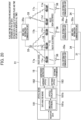
- FIG. 19 is a conceptual explanatory drawing explaining a circulation system of a storage battery in the upcycle system in the third embodiment.
- a storage battery is used by an operator.
- the operator is a railway company (operation department) and mounts a storage battery in a car and uses the storage battery as a power source.
- the railway company (operation department) can also be referred to as a destination of application of the storage battery.
- a storage battery is maintained and replaced by unit of storage battery unit in which a plurality of storage battery modules is housed.
- a storage battery unit is maintained by a storage battery hardware maintainer.
- the storage battery hardware maintainer performs maintenance by dismantling a storage battery unit and replacing storage battery modules constituting the storage battery unit in accordance with a request or the like from a storage battery hardware manager.
- this work is shown as storage battery hardware maintenance.
- a storage battery unit to be maintained is removed from a car as a unit to be maintained and recovered and is sent to a storage battery manager.
- a storage battery hardware maintainer performs storage battery hardware maintenance of the unit to be maintained and recovered.
- a maintained storage battery unit is sent to the operator as a maintenance completed unit and mounted in a car again and put to use.
- a storage battery unit is managed by a storage battery hardware manager.
- the storage battery hardware manager has an ownership right to the storage battery unit.
- the storage battery hardware manager recovers a storage battery unit from an operator as required (unit recovery). Further, the storage battery hardware manager provides a storage battery unit to an operator as required (unit provision).
- a storage battery unit owned by a storage battery hardware manager is further recovered and supplied by a storage battery hardware supplier.
- the storage battery hardware supplier produces and upcycles a storage battery unit.
- production the storage battery hardware supplier recovers a storage battery unit from a storage battery hardware manager (unit recovery) and dismantles the storage battery unit into storage battery modules (unit dismantlement). Meanwhile, regenerated storage battery modules are used to produce a storage battery unit (unit assembly). The produced storage battery unit is supplied to a storage battery hardware manager (unit supply).
- production the storage battery hardware supplier recovers a storage battery unit from a storage battery hardware manager (unit recovery) and dismantles the storage battery unit into storage battery modules (unit dismantlement). Meanwhile, regenerated storage battery modules are used to produce a storage battery unit (unit assembly). The produced storage battery unit is supplied to a storage battery hardware manager (unit supply).
- upcycle storage battery modules are recovered (module recovery) and cell materials are regenerated (cell material regeneration). As a result, storage battery modules are regenerated (module
- a storage battery hardware maintainer a storage battery hardware manager, and a storage battery hardware supplier
- storage battery data management is performed using an upcycle means having a server or the like that manages storage batteries.
- storage battery data management for example, data of storage batteries as a product and the materials of storage batteries is managed.
- operation data and quality data of storage battery units are communicated with an operator.
- the maintenance proposal is sent to an operator and date is answered for the maintenance proposal.
- information about unit maintenance and unit investigation is communicated with an operator or a storage battery hardware maintainer.
- information about storage battery module specifications (module specifications), storage battery unit specifications (unit specifications), and an analysis report is communicated with a storage battery hardware supplier.
- Storage battery data management performed by an upcycle means is in accordance with Battery Passport (data management for product and material) that records information related to a lifecycle of a storage battery from material procurement to recycle.
- Battery Passport data management for product and material
- FIG. 20 is a schematic explanatory drawing illustrating another example of the information transmission unit 3 shown in FIG. 5 .
- a wire-area information communication unit 32a is used in place of the wide-area information transmission unit 32.
- a local information communication unit 35a is used in place of the local information transmission unit 35.
- an upcycle means 18 is used in place of the simulation car field 2.
- a route is classified into three, shed, electrified section, and non-electrified section and information from respective routes is communicated. That is, routes are classified into route (shed) 17a, route (electrified) 17b, and route (non-electrified) 17c and information is communicated.
- route (shed) 17a route (electrified) 17b
- route (non-electrified) 17c route (non-electrified)
- the wide-area information transmission unit 32 and the wide-area information communication unit 32a are substantially identical in functionality but with respect to the wide-area information communication unit 32a, it is clarified that a function of communicating information is provided.
- the local information transmission unit 35 and the local information communication unit 35a are substantially identical in functionality but with respect to the local information communication unit 35a, it is clarified that a function of communicating information is provided.
- the upcycle means 18 upcycles hardware and software. Specifically, actual running data is received from an actual car 11 through the wide-area information communication unit 32a, local information communication unit 35a, and local information communication base 36 by radio communication. At this time, actual running data is received for each route (shed) 17a, route (electrified) 17b, and route (non-electrified) 17c. The received actual running data (reception data) is compared with simulation by a simulation car means 181a provided in a data analysis means 181. Using a result of comparison, upcycle evaluation is performed at an upcycle evaluation 181b. Based on the upcycle evaluation, hardware upcycle 182 as upcycle with hardware and software upcycle 183 as upcycle with software are performed. Examples of the hardware upcycle 182 are maintenance and update of storage battery hardware. Examples of the software upcycle 183 are update of control software that controls a storage battery system and control software that controls a driving system driven on electric power from a storage battery system.
- FIG. 21 is a block diagram illustrating a configuration of a driving system for an actual car 11 obtained when the main circuit storage battery 123 in FIG. 17 is comprised of a plurality of storage battery systems.
- FIG. 17 shows a case where the main circuit storage battery 123 in FIG. 17 is comprised of a plurality of storage battery systems, a storage battery system (1) 123a, a storage battery system (2) 123b, and a storage battery system (3) 123c.
- these storage battery systems are not discriminated, hereafter, they may be simply referred to as a storage battery system sometimes.
- the direct current detector 134b in FIG. 17 is connected with three direct current detectors 134b1 to 134b3.
- This example shows a case where the train control management system 141 is connected with a display 150 and an antenna 160.
- the display 150 displays collected data. As described with reference to FIG. 17 , examples of this data are control frequency, input current/voltage, output current/voltage of an AC/DC converter and a DC/AC inverter, power unit temperature estimation value, and the like.
- the antenna 160 communicates with the wide-area information communication unit 32a, local information communication unit 35a, and local information communication base 36 described with reference to FIG. 20 .
- the display 150 is not indispensable to an actual car 11.
- the train control management system 141 includes a controller 141a and routers 141b1, 141b2, 141b3, 141b4.
- the controller 141a controls the AC/DC converter control unit 142a, DC/AC inverter control unit 142b, storage battery control device 143, and auxiliary power supply control device 144.
- the routers 141b1, 141b2, 141b3, 141b4 respectively collect data from the AC/DC converter control unit 142a, DC/AC inverter control unit 142b, storage battery control device 143, and auxiliary power supply control device 144 and outputs a control signal from the controller 141a.
- FIG. 22 is a drawing showing an internal configuration of a storage battery system.
- the storage battery system is also referred to as storage battery box.
- a storage battery system a plurality of storage battery units is connected in series and a plurality of the storage battery units connected in series is further connected in parallel.
- Each storage battery unit is comprised of a plurality of storage battery modules. Though not shown in the drawing, each storage battery module is comprised of a plurality of storage battery cells.
- FIG. 22 a plurality of storage battery units connected in series is shown as a series unit U. This example shows that a plurality of series units U is connected in parallel.
- Each series unit U is provided with a current detection means.
- a direct-current voltage detection means (DCPT) detects an output voltage of a storage battery system (series unit U).
- a current control means controls an output current of a storage battery system.
- DCPT direct-current voltage detection means
- a controller of a storage battery system controls the current control means based on the current detection means and the direct-current voltage detection means. As a result, conduction and disconnection of an output current of a storage battery system can be continuously controlled.
- the current control means may be a breaker that switches between conduction and disconnection.
- FIG. 23(a) is a drawing illustrating a configuration of a controller that collects data from a storage battery system.
- the main circuit storage battery 123 is comprised of a plurality of storage battery systems.
- a plurality of the storage battery systems is, for example, the storage battery system (1) 123a to storage battery system (3) 123c in FIG. 21 .
- Each storage battery system is comprised of a plurality of storage battery units.
- Each storage battery unit is comprised of a plurality of storage battery modules.
- Each storage battery module is comprised of a plurality of storage battery cells.
- Each storage battery system is provided with a box controller.
- Each storage battery unit is provided with a unit controller.
- Each storage battery module is provided with a module controller.
- Each storage battery cell is provided with a cell controller.
- the box controllers, unit controllers, module controllers, and cell controllers are provided with a communication I/F (communication interface, shown as "communication" in FIG. 23(a) ) and a tag.
- the communication I/F communicates data with these controllers.
- the tag contains, as tag information, a type and a model number of a storage battery system, each storage battery unit, storage battery module and storage battery cell and enables an output source of collected data to be identified.
- the tag information may be ID shown in FIG. 18 and FIGS. 24 and 25 referred to later.
- Data collected by these controllers is collected by a controller provided in a main traction converter and is further acquired by a controller provided in the train control management system and is then sent to the upcycle means 18 utilizing such radio communication as described with reference to FIG. 20 .
- This example shows a case where an OTA (Over The Air) cloud communication is utilized as radio communication.
- OTA Over The Air
- FIG. 23(b) shows required data that is required as quality data of a storage battery.
- tag information (type, model number), a unit SOH that is SOH (State of Health: storage battery deterioration indicator) of a storage battery unit, a module SOH that is SOH of a storage battery module, a unit voltage that is a voltage of a storage battery unit, a unit current that is a current of a storage battery unit, a module voltage that is a voltage of a storage battery module, a module current that is a current of a storage battery module, a cell voltage that is a voltage of a storage battery cell, a cell current that is a current of a storage battery cell, and a cell/module temperature that is a temperature of a storage battery cell or a storage battery module are taken as required data.
- Remarks is a reference column. This example means that tag information (type, model number) is periodically transmitted and a unit SOH is acquired every 1s.
- FIGS. 24 and 25 are drawings illustrating an example of an ID system that enables traceability in the third embodiment.
- FIG. 24 illustrates an example of an ID system for a storage battery module or higher levels. That is, FIG. 24 illustrates an example of an ID system related to a storage battery system, a storage battery unit constituting a storage battery system, and a storage battery module constituting a storage battery unit.
- FIG. 25 illustrates an example of an ID system related to a storage battery module or lower levels.
- This drawing illustrates an example of an ID system related to a storage battery module, a storage battery cell constituting a storage battery module, a storage battery module case as a case of a storage battery module, a cell controller, a cell case as a case of a cell, a cathode material of a cell, and an anode material of a cell.
- This ID system has the same configuration as that of the ID system shown in FIG. 18 . That is, ID is assigned to each element of a storage battery system, a part, and a material in a layered structure and electronic record chart information is allocated to all the IDs and managed.
- An electronic record chart contains record chart information (higher-order constituent element, lower-order constituent element) that allows a parent-child relation to be tracked.
- ID is assigned to each storage battery system, each storage battery unit, and each storage battery module respectively in a layered structured.
- ID of a storage battery system is A.
- IDs of the individual storage battery units constituting this storage battery system are A-U1, A-U2, A-U3.
- IDs of storage battery modules constituting a storage battery unit having ID of A-U1 are A-U1-MD11, A-U1-MD12, A-U1-MD21, ..., and electronic record charts corresponding to these IDs are provided.
- Pieces ⁇ to ⁇ of record chart information are allocated to the individual electronic record charts. This electronic record chart contains record chart information ⁇ , ⁇ as record chart information that allows a parent-child relation to be tracked.
- the record chart information ⁇ is information indicating a higher-order constituent element as parent.
- the record chart information ⁇ is information indicating a lower-order constituent element as child.
- the record chart information ⁇ is history information containing size, mass, characteristics, and usage history.
- the record chart information ⁇ is information indicating associated data recording size, mass, characteristics, and usage history.
- ID is assigned to each storage battery system, each storage battery unit, and each storage battery module respectively in a layered structure.
- IDs are assigned to storage battery modules, storage battery cells, storage battery module cases, cell controllers, cell cases, cathode materials of cells, and anode materials of cells respectively in a layered structure.
- ID of a storage battery unit in which a storage battery module is housed is placed.
- *-MD11 shown as ID of a storage battery module constituting this storage battery unit is actually A-U1-MD11.
- respective IDs of a storage battery cell, a storage battery module case, a cell controller, a cell case, a cathode material of a cell, and an anode material of a cell are *-MD11-1, *-MD11-2, *-MD11-3, *-MD11-1-1, *-MD11-1-2, and *-MD11-1-3.
- FIG. 26 is a step diagram illustrating a maintenance and replacement process for a storage battery system.
- FIG. 26 shows a maintenance and replacement process for a storage battery system in three steps, Step 1 to Step 3. This drawing shows mutual action among an operator who uses storage batteries, a storage battery hardware maintainer who maintains storage batteries, and a storage battery data manager whose performs upcycle management.
- Step 1 is a process until the storage battery hardware maintainer proposes maintenance and replacement of a storage battery.
- operation data is transmitted from the operator to the storage battery data manager.
- the storage battery data manager analyses the operation data. When a result of analysis reveals that a storage battery requires replacement, the storage battery data manager issues a storage battery maintenance and replacement instruction to the storage battery hardware maintainer.
- the storage battery hardware maintainer checks a substitute unit and proposes storage battery maintenance and replacement to the operator.
- the substitute unit is a storage battery unit prepared as a substitute for a storage battery unit mounted in a car 11.
- Step 2 is a process until the storage battery hardware maintainer sends the substitute unit for the storage battery.
- the operator whose was proposed of storage battery maintenance and replacement from the storage battery hardware maintainer responds replacement date to the storage battery hardware maintainer.
- the storage battery hardware maintainer arranges the substitute unit.
- the storage battery hardware maintainer sends the substitute unit from a storage battery unit storage area to the operator's shed. Further, the storage battery hardware maintainer replaces the storage battery unit at the operator's shed.
- Step 3 is a process until the storage battery data manager receives a maintenance and replacement completion record.
- the storage battery hardware maintainer returns the removed replacement unit to the storage battery unit storage area.
- the replacement unit is a storage battery unit that had been mounted in a car 11 and was removed from the car 11 for installation of the substitute unit.
- the storage battery hardware maintainer inspects the replacement unit at the storage battery unit storage area. A result of inspection is presented to the operator and the operator confirms the result of inspection.
- the storage battery hardware maintainer sends a maintenance and replacement completion record to the storage battery data manager. As a result, the maintenance and replacement completion record becomes accessible also to a storage battery hardware manager.
- FIG. 27 is a flowchart illustrating a maintenance and replacement process for a storage battery system.
- an operator operates a storage battery (S701). That is, the operator uses the storage battery unit mounted in a car 11 as a power source.
- Operation data obtained when the storage battery is operated is sent to an upcycle means of a storage battery data manager and the storage battery data manager analyzes the operation data by the upcycle means (S702).
- the storage battery data manager issues a maintenance and replacement instruction for the storage battery to a storage battery hardware maintainer through the upcycle means. At this time, the storage battery data manager simultaneously instructs to prepare a replacement/substitute unit (S703).
- a storage battery hardware maintainer proposes storage battery maintenance and replacement to the operator through the upcycle means (S704).
- the operator sets storage battery replacement execution date with the upcycle means (S705) and responds the replacement execution date to the storage battery hardware maintainer through the upcycle means (S706).
- the storage battery hardware maintainer receives replacement execution date from the operator through the upcycle means and confirms the date (S707) and sends the substitute unit from a warehouse for storage battery units to the shed of the customer (operator) (S708).
- the storage battery hardware maintainer removes the replacement unit and installs the substitute unit (S710).
- the storage battery hardware maintainer returns the replacement unit removed at the operator's warehouse to the warehouse for storage battery units (S711).
- the storage battery hardware maintainer receives the replacement unit (S712).
- the storage battery hardware maintainer inspects the received replacement unit (S713) and inputs a result of inspection to the upcycle means and presents the result to the operator (S713).
- the operator confirms the result of inspection from the upcycle means (S714) and approves the result of inspection (work completion) through the upcycle means (S715).
- the storage battery hardware maintainer confirms the completion of storage battery maintenance and replacement through the upcycle means (S716).
- the storage battery hardware maintainer sends a record of maintenance and replacement completion to the storage battery data manager through the upcycle means and the storage battery data manager receives the record (S717).
- the maintenance and replacement completion record becomes accessible also to a storage battery hardware manager.
- a battery hardware manager can confirm a record of supply and recovery of a predetermined unit with the upcycle means and can confirm a state (car mounted with a desired unit, storage area, etc.) of the desired unit.
- the storage battery data manager issues an instruction to replace a storage battery module of the replacement unit to the storage battery hardware maintainer through the upcycle means as required (S718).
- the storage battery hardware maintainer instructed from the upcycle means replaces a storage battery module (S719).
- the storage battery hardware maintainer inspects the storage battery unit whose storage battery module as been replaced (S720).
- the storage battery hardware maintainer inputs a storage battery unit inspection record and that the storage battery module replacement has been completed to the upcycle means and stores the storage battery unit in the warehouse (S721).
- the storage battery data manager receives a record of storage battery unit storage completion from the upcycle means (S722). As a result, the storage battery inspection record and the record that storage battery module replacement has been completed becomes accessible also to the storage battery hardware manager.
- the battery hardware manager can confirm a record of maintenance of a predetermined unit and can confirm a state (configuration of a storage battery module, etc.) of a desired unit with the upcycle means.
- FIG. 28 is a drawing illustrating a configuration of a model (simulation model) simulating a charge/discharge operation of a storage battery system.
- the inputted operation data is converted into a predetermined data format at a simulation model interface (input).
- a simulation by a vehicle model is performed based on the operation data and a running profile is computed.
- the running profile represents velocity versus time.
- This running profile is a result obtained by simulating a velocity change to time of a car based on the operation data.
- the computed running profile is compared with an actual operation of the car and model identification is performed based on a difference therebetween.
- a simulation by a battery model is performed based on the operation data and a charging profile is computed.
- the charging profile represents current versus time.
- This charging profile is determined for each series unit U shown in FIG. 22 .
- This charging profile is a result obtained by simulating a change in current passed through the series unit U when a car is run with the above-mentioned running profile.
- the computed charging profile is compared with an actual current and a battery model is identified based on a difference therebetween.
- a running profile and a charging profile are converted into a predetermined data format at a simulation model interface (output).
- the running profile and the charging profile are analyzed.
- An example of analysis of a charging profile is to compute SOH of each series unit U. Timing of replacement of a storage battery unit can be determined from this SOH.
- SOH of a storage battery system may be computed. Further, by measuring voltages of a storage battery module and a storage battery cell, SOHs of the storage battery module and the storage battery cell can also be computed.
- a target to which the railway upcycle system and the railway upcycle method are applied is a storage battery.
- a first digital twin model simulates a current of a storage battery mounted in a car 11. This is equivalent to processing of determining a charging profile in FIG. 28 .
- the storage battery mounted in the car 11 corresponds to the replacement unit in FIGS. 26 and 27 .
- a second digital twin model simulates a current of a storage battery substituted for the storage battery mounted in the car 11.
- the storage battery substituted for the storage battery mounted in the car 11 corresponds to the substitute unit in FIGS. 26 and 27 .
- a predetermined charging profile is applicable to a current of the substitute unit.
- a charging profile computed when the storage battery was mounted in the car 11 before is applicable.
- a degree of progression of deterioration in a storage battery is measured using SOH as evaluation indicator, for example, as in the second embodiment.
- the SOH can be computed by the method described with reference to FIG. 28 .
- time of arrival at the limit value is predicted and upcycle of a storage battery is proposed while the storage battery is exhibiting desired performance.
- upcycle is performed only when an upcycle evaluation based on data management for product and material is high.
- a degree of deterioration before update can be determined by the SOH described with reference to FIG. 28 .
- the digital twin is comprised of at least either of a mathematic model and software imagining a target product so that an operation of the target product can be simulated.
- the storage unit is a memory for a computer that can store information of a parameter and a state related to an operation of the target product and further stores a reference value for evaluating an outcome of upcycle.
- a reference value K is determined by an AI system or a human based on at least either of past performance information stored in the storage unit and equipment specifications.
- Upcycle updates at least either of a part of a target product and software. Simulation by a digital twin is performed before and after this upcycle.
- the target product When evaluation of the simulation exceeds the reference value (K in FIG. 9 ), the target product is actually upcycled. Further, the upcycle alters a parameter of a digital twin to enhance the accuracy thereof based on an operation data of the target product.
- a digital twin of the target product and a new digital twin built when a part of the target product is renewed to a new device or new control are operated under identical conditions and results of this simulation are compared. When the result of comparison is favorable, the part of the target product is replaced with a new device or new control.
- the upcycle system described above the following effect is brought about: higher performance can be repeatedly ensured as compared with the conventional specification performance of the target product.
- the present upcycle system makes it possible to verify each part, including environmental conservation, performance enhancement, up to recycle, before and after update by simulation using a digital twin to determine appropriateness of upcycle and propose a useful update plan.
- the present upcycle system can perform further upcycle; therefore, as the result of such repeated upcycle as mentioned above, the effect of enhanced accuracy of simulation is brought about.
- Performance enhancement of an actual railway car contributes to the creation of a sustainable environment; therefore, the present upcycle system is advantageous also from this point of view.
- an already identified existing digital twin and a digital twin updated with a new function and newly generated are combined into one digital twin.
- an upcycled part (new function) model is altered; as a result, evaluation can be performed with attention paid onto the new functional part.
- a target belonging to a railway system and a digital twin model corresponding thereto are supplied with a common ID and operation data is associated with the ID.
- Operation data used for adjustment of a parameter of a digital twin model contains operation information of a train, traffic control or operation, configuration information of a train, or equipment operation of a car.
- ID family register data
- operation data At least any of operation information (equivalent to train schedule) of a train, operation command (traffic control), configuration information of a train, and car/equipment operation (can vary depending on model) is associated with digital twins of different actual cars in common.
- operation data common to each model (corresponding to car body, INV, control, or the like) is present and the operation data is as follows.
- CI frequency, input/output current/voltage, PU (power unit) temperature
- PU power unit temperature
- APS Advanced Power System
- storage battery charge/discharge current, voltage, SOC, SOH, temperature
- TCMS state of each device, vehicle occupancy, temperature/room temperature
- member information vibration, temperature, distortion
- the present upcycle system identifies, evaluates, and upcycles a digital twin with respect to the above-mentioned operation data and can cope with various situations.
- the TCMS Traffic control and Monitoring System
- the TCMS is a management system that has been enhanced in performance and functionality due to the development of information technology and has become indispensable to cars and implements energy saving by integrally controlling information of the entire train, rather than a single car, in cooperation with a ground device or by any other like means.
- Operation data used for adjustment of a parameter of a digital twin model contains: frequency, input/output current/voltage, or power unit temperature when a target is CI; optimization planning method when a target is APS; charge/discharge current, voltage, SOC, SOH, or temperature when a target is a storage battery; state of each device, vehicle occupancy, or temperature/room temperature when a target is TCMS; and vibration, temperature or distortion when a target is a member of a car.
- the present upcycle system adjusts a parameter of a digital twin model. According to the foregoing, not only history data of one car but also pieces of data of a plurality of cars (within a relevant set or a car in another set) are compared with each other to identify an abnormal spot and the abnormality data is removed; the accuracy of a digital twin model is thereby enhanced.
- the present upcycle system grasps degradation in performance by a time calendar-based simulation to predict timing of the performance degradation and decides and proposes value enhancement timing before deterioration begins in a target belonging to a railway system. According to the foregoing, performance is enhanced before a transition to a state considered as deterioration is made; continuous performance enhancement can be thereby provided for a long time and as a result, a recycling-oriented society can be constructed. Continuous performance enhancement refers to that a value equivalent to that at a new production time or higher is continuously provided without causing deterioration.
- the present upcycle system uses data of operation utilizing automatic train operation or a driver advisory system as operation data of a target belonging to a railway system.
- a model parameter can be conformed with a stable (known) operation profile; therefore, a digital twin is efficiently and accurately identified in a short time.
- model identification involves improper operation because of a difference in operation timing from human to human or for any other like reason; therefore, identification takes much time and variation is widened and this leads to lower accuracy.
- the present upcycle system prescribes an operation profile required for adjustment of a digital twin profile as at least either of operation profile for automatic train operation and operation profile for driver advisory system.
- a digital twin is efficiently and accurately identified in a short time.
- the effect of [7] mentioned above can be enhanced.
- the present upcycle system compares results of simulation in which other variable data than operation data of an actual car is inputted and thereby enables value enhancement to be evaluated.
- the variable data is not included in actual car operation data but is data within an allowable range in terms of specifications. According to the foregoing, appropriateness of upcycle can be determined also with cases other than normal time taken into account. By inputting operation data within an assumable range, the robustness of determination of appropriateness of upcycle (adjustment result in control) is enhanced.
- a target of value enhancement is any of actual car, storage battery, driving control device, auxiliary power supply control device, fuel cell system, air conditioner, cab monitoring device, train control management system, passenger information system, seat, member of car, front monitoring device, safety monitoring device, driver advisory system, automatic operation control function, and control function for ground-on board radio information transmission.
- the present upcycle system upcycles a product or software.
- products to be uncycled are storage battery and module product.
- Software to be upcycled are, as a function requiring customizing on a route-by-route basis, at least any of adhesion control, front monitoring sensitivity, DAS profile, ATO profile, hybrid energy management, storage battery current restriction, storage battery SOC range restriction, tractive force control by acceleration restriction, air brake blending control, equipment operation change-over point information.
- Examples of module products, software, and systems to be upcycled are safety monitoring device, seat, 5G_OTA (fifth-generation mobile communication_radio communication: Over-the-air), air conditioner, driverless system, fuel cell, driving device, storage battery, TCMS, and PIS.
- the present upcycle system mentioned above enhances functionality before a transition to a state considered as deterioration is made and can thereby provide continuous function enhancement for a long time.
- the present upcycle system separates basic functions and custom functions from each other and thus, for example, customization and performance enhancement on a route-by-route basis are expected. That is, the present upcycle system is capable of implementing at least either of function enhancement (module update) matched with a customer and a route situation and pursuit of highest performance (parameter adjustment). As a result, a recycling-oriented society can be realized.
- ID used for individual recognition is supplied to a target belonging to a railway system and a record chart is associated with the ID; the record chart is updated with the same contents of work execution as alteration work data.
- the record chart is updated with the same contents of work execution as alteration work data (replacement of some part of a product or the like).
- the present upcycle system automatically adjusts a parameter of control software on a digital twin model based on operation data and activates the automatically adjusted software according to a predetermined trigger.
- the predetermine trigger need not be manual operation and may be any opportunity, such as addressing a calendar or a train schedule, maintenance, and the like.
- the present upcycle system optimizes control in real time by a digital twin function according to a running state. At this time, it is advisable to complement security in terms of operation; for example, even when software is downloaded to an actual car controller memory, the software is not activated unless a person in charge presses the "Confirm" button.
- Control functions can be separated into standard functions (customization unnecessary, basic control of PWM and the like) and custom functions (adjustment required depending on the features of a route, adhesion control, DAS, and the like); the latter can be automatically identified to reduce the cost of software production.
- a train and a device can be temporarily made to accommodate subscription.
- the subscription method is known as a fixed rate charging method in which something can be freely utilized only for a term of contract. When a subscription method is adopted, parameter adjustment corresponding to each route is automated and thus optimization is implemented.
- automatically adjusted parameters of control software are adhesion control, front monitoring sensitivity, driver advisory system profile, automatic train control profile, hybrid energy management, storage battery current restriction, storage battery SOC range restriction, tractive force control by acceleration restriction, air brake blending control, or equipment operation change-over point information.
- a target is storage battery and a first digital twin model simulates a charge/discharge current of a storage battery mounted in a car 11. Actually, a charge/discharge current is simulated for each series unit U. In this case, a second digital twin model simulates a charge/discharge current of a storage battery substituted for a storage battery mounted in the car 11. In this case, with respect to upcycle evaluation, a degree of progression of deterioration in a storage battery is measured using SOH as an evaluation indicator.
- time of arrival at the limit value is predicted and upcycle of a storage battery is proposed while the storage battery is exhibiting desired performance.
- the upcycle generation method for a railway (hereafter, referred to as "the present generation method”) can be summarized as follows: In the following description, “the present generation method” may be replaced with “upcycle method”. [16]
- the present generation method is a generation method for generating products including railway-related software while a target product is uncycled according to a result of simulation. That is, the present generation method includes the following processes and produces a target product.
- a digital twin is configured in advance of at least either of a mathematic model and software imagining a target product. Parameters related to operation of a target product related to railway and information of a state thereof are stored in a storage unit of a computer in a readable manner. Further, a reference value for evaluating an outcome of upcycle is stored there. This reference value is determined by an AI system or a human based on at least either of stored past performance information and equipment specifications. When preparation has been completed, an operation of a target product is simulated by digital twin.
- Simulation by digital twin is performed before and after upcycle for updating at least either of a part of a target product and software. Whether upcycle is required is determined (in case of "required", time of execution) based on a result of the simulation; when it is determined that upcycle is required, the target product is updated at the execution time.
- the present generation method the following effect is brought about: as compared with conventional specification performance of the target product, higher performance can be repeatedly ensured.
- upcycle can be further performed even after upcycling; therefore, as the result of repeated upcycling mentioned above, an effect of enhanced accuracy of simulation is brought about.
Landscapes
- Engineering & Computer Science (AREA)
- Business, Economics & Management (AREA)
- Human Resources & Organizations (AREA)
- Strategic Management (AREA)
- Economics (AREA)
- Physics & Mathematics (AREA)
- General Business, Economics & Management (AREA)
- Entrepreneurship & Innovation (AREA)
- Marketing (AREA)
- Theoretical Computer Science (AREA)
- General Physics & Mathematics (AREA)
- Tourism & Hospitality (AREA)
- Mechanical Engineering (AREA)
- Quality & Reliability (AREA)
- Operations Research (AREA)
- Health & Medical Sciences (AREA)
- General Health & Medical Sciences (AREA)
- Primary Health Care (AREA)
- Biomedical Technology (AREA)
- Life Sciences & Earth Sciences (AREA)
- Sustainable Development (AREA)
- Development Economics (AREA)
- Educational Administration (AREA)
- Game Theory and Decision Science (AREA)
- Electric Propulsion And Braking For Vehicles (AREA)
Applications Claiming Priority (2)
| Application Number | Priority Date | Filing Date | Title |
|---|---|---|---|
| JP2022075515 | 2022-04-28 | ||
| PCT/JP2023/016960 WO2023210825A1 (ja) | 2022-04-28 | 2023-04-28 | 鉄道アップサイクルシステム、その方法及びそれによる生産方法 |
Publications (2)
| Publication Number | Publication Date |
|---|---|
| EP4516628A1 true EP4516628A1 (de) | 2025-03-05 |
| EP4516628A4 EP4516628A4 (de) | 2026-04-15 |
Family
ID=88518941
Family Applications (1)
| Application Number | Title | Priority Date | Filing Date |
|---|---|---|---|
| EP23796557.9A Pending EP4516628A4 (de) | 2022-04-28 | 2023-04-28 | Eisenbahnhochfahrradsystem, verfahren dafür und erzeugungsverfahren dafür |
Country Status (5)
| Country | Link |
|---|---|
| US (1) | US20250296609A1 (de) |
| EP (1) | EP4516628A4 (de) |
| JP (1) | JP7847645B2 (de) |
| CN (1) | CN119095758A (de) |
| WO (1) | WO2023210825A1 (de) |
Families Citing this family (2)
| Publication number | Priority date | Publication date | Assignee | Title |
|---|---|---|---|---|
| CN118608116B (zh) * | 2024-02-20 | 2025-02-21 | 普金硬科技(南通)有限公司 | 基于孪生工厂的水电厂设备监测预警方法及系统 |
| CN120109861B (zh) * | 2025-01-20 | 2025-09-02 | 西南交通大学 | 一种基于数字孪生架构的储能装置电压阈值优化方法 |
Family Cites Families (12)
| Publication number | Priority date | Publication date | Assignee | Title |
|---|---|---|---|---|
| US10752269B2 (en) | 2017-03-09 | 2020-08-25 | General Electric Company | System for vehicle subsystem control |
| JP2005041321A (ja) * | 2003-07-22 | 2005-02-17 | Mitsubishi Electric Corp | 駅分散型運行管理システム |
| JP5498039B2 (ja) * | 2009-03-18 | 2014-05-21 | 株式会社東芝 | 自動列車制御の事前検証装置 |
| KR101352216B1 (ko) * | 2011-10-24 | 2014-02-17 | 주식회사 포스코아이씨티 | 패턴기반의 열차운행 시뮬레이션 장치 및 이를 포함하는 열차운행 시뮬레이션 시스템 |
| JP6271400B2 (ja) * | 2014-11-20 | 2018-01-31 | 株式会社日立製作所 | 鉄道地上設備の劣化推定システム及びその方法 |
| JP6911747B2 (ja) * | 2017-12-25 | 2021-07-28 | トヨタ自動車株式会社 | 電池情報処理装置、電池製造支援装置、組電池、電池情報処理方法、及び組電池の製造方法 |
| US12019963B2 (en) * | 2018-02-07 | 2024-06-25 | Incucomm, Inc. | Operations and maintenance systems and methods employing sensor-less digital twins |
| US11727168B2 (en) * | 2018-02-28 | 2023-08-15 | Toyota Jidosha Kabushiki Kaisha | Proactive vehicle maintenance scheduling based on digital twin simulations |
| JP7293599B2 (ja) * | 2018-10-12 | 2023-06-20 | 株式会社Gsユアサ | 二次電池の再利用方法 |
| JP7178940B2 (ja) * | 2019-03-28 | 2022-11-28 | 本田技研工業株式会社 | 選定装置、選定方法、及びプログラム |
| US11453421B2 (en) * | 2019-10-11 | 2022-09-27 | Progress Rail Services Corporation | System and method for predicting failures of train components |
| US11200045B1 (en) * | 2020-10-15 | 2021-12-14 | International Business Machines Corporation | Digital twin enabled asset performance and upgrade management |
-
2023
- 2023-04-28 EP EP23796557.9A patent/EP4516628A4/de active Pending
- 2023-04-28 US US18/859,235 patent/US20250296609A1/en active Pending
- 2023-04-28 CN CN202380036539.XA patent/CN119095758A/zh active Pending
- 2023-04-28 WO PCT/JP2023/016960 patent/WO2023210825A1/ja not_active Ceased
- 2023-04-28 JP JP2024518083A patent/JP7847645B2/ja active Active
Also Published As
| Publication number | Publication date |
|---|---|
| JP7847645B2 (ja) | 2026-04-17 |
| EP4516628A4 (de) | 2026-04-15 |
| US20250296609A1 (en) | 2025-09-25 |
| CN119095758A (zh) | 2024-12-06 |
| WO2023210825A1 (ja) | 2023-11-02 |
| JPWO2023210825A1 (de) | 2023-11-02 |
Similar Documents
| Publication | Publication Date | Title |
|---|---|---|
| Yin et al. | A review on artificial intelligence in high-speed rail | |
| EP4516628A1 (de) | Eisenbahnhochfahrradsystem, verfahren dafür und erzeugungsverfahren dafür | |
| Zhang et al. | Development of an optimal operation approach in the MPC framework for heavy-haul trains | |
| CN101909965B (zh) | 在存在变化的优化参数的情况下优化动力系统性能的系统和方法 | |
| US8670890B2 (en) | Method and system for timetable optimization utilizing energy consumption factors | |
| EA033800B1 (ru) | Система и способ управления транспортным средством | |
| CN104637021A (zh) | 一种状态修模式的城轨车辆辅助维修系统 | |
| EP3219572B2 (de) | Verfahren zur bereitstellung einer fahrempfehlung für einen führer eines zuges und zugführerberatungssystem | |
| CN113191588A (zh) | 一种分布式驾驶系统的设备分配系统 | |
| CN113147841A (zh) | 一种轨道车辆的能力管理及节能辅助驾驶方法及相关装置 | |
| US20230173947A1 (en) | Control system and method for a vehicle system | |
| KR20170043962A (ko) | 주행환경정보 기반 차량 소모품 생산유통관리 시스템 | |
| US11541866B2 (en) | System and method of controlling power distribution of hybrid electric vehicle | |
| Bourzik et al. | The Optimal location of the wireless charging infrastructure for electric vehicles with heterogeneous batteries in the highway | |
| KR20230157115A (ko) | e-모빌리티 배터리 가치 판단 결과를 기반으로 금융 서비스를 제공하기 위한 배터리 포트폴리오 설정 방법 및 이러한 방법을 수행하는 장치 | |
| Guastafierro et al. | A method for optimizing coasting phases in railway speed profiles: An application to an Italian route | |
| JP7733597B2 (ja) | 運行管理システム及び運行管理方法 | |
| Lin et al. | An Approach to the High-level Maintenance Planning for EMU Trains Based on Simulated Annealing | |
| Aredah et al. | Goal Programming using the A* Algorithm to Optimize Energy Consumption in Train Operations | |
| WO2022009716A1 (ja) | 情報処理方法及び情報処理システム | |
| CN113869545A (zh) | 预测无人驾驶有轨电车的耗电量的方法和系统 | |
| US20260042473A1 (en) | Methods and Systems for Energy Efficient Route Planning and Control Strategies for Self-Propelled Railway Vehicles | |
| CN120552938A (zh) | 一种组合式智能矿用轨道运输车辆控制系统 | |
| Graffione et al. | A Multi-Scale Control Framework for Electric and Automated Buses in Intercity Lines | |
| Rezvanizanian et al. | A mobility performance assessment on plug-in EV battery |
Legal Events
| Date | Code | Title | Description |
|---|---|---|---|
| STAA | Information on the status of an ep patent application or granted ep patent |
Free format text: STATUS: THE INTERNATIONAL PUBLICATION HAS BEEN MADE |
|
| PUAI | Public reference made under article 153(3) epc to a published international application that has entered the european phase |
Free format text: ORIGINAL CODE: 0009012 |
|
| STAA | Information on the status of an ep patent application or granted ep patent |
Free format text: STATUS: REQUEST FOR EXAMINATION WAS MADE |
|
| 17P | Request for examination filed |
Effective date: 20241021 |
|
| AK | Designated contracting states |
Kind code of ref document: A1 Designated state(s): AL AT BE BG CH CY CZ DE DK EE ES FI FR GB GR HR HU IE IS IT LI LT LU LV MC ME MK MT NL NO PL PT RO RS SE SI SK SM TR |
|
| DAV | Request for validation of the european patent (deleted) | ||
| DAX | Request for extension of the european patent (deleted) | ||
| REG | Reference to a national code |
Ref country code: DE Ref legal event code: R079 Free format text: PREVIOUS MAIN CLASS: B61L0027600000 Ipc: B61L0027570000 |
|
| A4 | Supplementary search report drawn up and despatched |
Effective date: 20260316 |
|
| RIC1 | Information provided on ipc code assigned before grant |
Ipc: B61L 27/57 20220101AFI20260310BHEP Ipc: B61L 27/60 20220101ALI20260310BHEP Ipc: B60L 3/00 20190101ALI20260310BHEP Ipc: G01M 17/08 20060101ALI20260310BHEP Ipc: G06Q 10/30 20230101ALI20260310BHEP |