EP4513870A2 - Beschränkung der kleinen chromablockgrösse in der videocodierung - Google Patents
Beschränkung der kleinen chromablockgrösse in der videocodierung Download PDFInfo
- Publication number
- EP4513870A2 EP4513870A2 EP25150704.2A EP25150704A EP4513870A2 EP 4513870 A2 EP4513870 A2 EP 4513870A2 EP 25150704 A EP25150704 A EP 25150704A EP 4513870 A2 EP4513870 A2 EP 4513870A2
- Authority
- EP
- European Patent Office
- Prior art keywords
- coding unit
- chroma
- block
- mode type
- split
- Prior art date
- Legal status (The legal status is an assumption and is not a legal conclusion. Google has not performed a legal analysis and makes no representation as to the accuracy of the status listed.)
- Pending
Links
- 241000023320 Luma <angiosperm> Species 0.000 claims abstract description 169
- OSWPMRLSEDHDFF-UHFFFAOYSA-N methyl salicylate Chemical compound COC(=O)C1=CC=CC=C1O OSWPMRLSEDHDFF-UHFFFAOYSA-N 0.000 claims abstract description 169
- 238000000034 method Methods 0.000 claims abstract description 144
- 238000012545 processing Methods 0.000 claims description 56
- 238000003860 storage Methods 0.000 claims description 22
- 238000000638 solvent extraction Methods 0.000 claims description 21
- 230000004044 response Effects 0.000 claims description 14
- 238000004590 computer program Methods 0.000 claims description 5
- 239000013598 vector Substances 0.000 description 33
- 208000037170 Delayed Emergence from Anesthesia Diseases 0.000 description 20
- 230000008569 process Effects 0.000 description 19
- 238000013139 quantization Methods 0.000 description 16
- 238000004891 communication Methods 0.000 description 15
- 238000010586 diagram Methods 0.000 description 13
- 238000005192 partition Methods 0.000 description 11
- 230000006835 compression Effects 0.000 description 8
- 238000007906 compression Methods 0.000 description 8
- 238000009795 derivation Methods 0.000 description 7
- 230000002123 temporal effect Effects 0.000 description 6
- 238000003491 array Methods 0.000 description 5
- 230000005540 biological transmission Effects 0.000 description 5
- 238000013500 data storage Methods 0.000 description 4
- 238000013461 design Methods 0.000 description 4
- 230000006870 function Effects 0.000 description 4
- 238000005070 sampling Methods 0.000 description 4
- 238000004458 analytical method Methods 0.000 description 3
- 238000010276 construction Methods 0.000 description 3
- 238000012986 modification Methods 0.000 description 3
- 230000004048 modification Effects 0.000 description 3
- 230000003044 adaptive effect Effects 0.000 description 2
- 239000003086 colorant Substances 0.000 description 2
- 230000006837 decompression Effects 0.000 description 2
- 238000006073 displacement reaction Methods 0.000 description 2
- 230000009977 dual effect Effects 0.000 description 2
- 230000011664 signaling Effects 0.000 description 2
- 241000985610 Forpus Species 0.000 description 1
- 230000008901 benefit Effects 0.000 description 1
- 238000004422 calculation algorithm Methods 0.000 description 1
- 238000004364 calculation method Methods 0.000 description 1
- 230000008859 change Effects 0.000 description 1
- 230000001419 dependent effect Effects 0.000 description 1
- 238000012432 intermediate storage Methods 0.000 description 1
- 239000004973 liquid crystal related substance Substances 0.000 description 1
- 239000011159 matrix material Substances 0.000 description 1
- 238000001228 spectrum Methods 0.000 description 1
- 230000001360 synchronised effect Effects 0.000 description 1
- 238000012360 testing method Methods 0.000 description 1
- 238000012546 transfer Methods 0.000 description 1
- 230000009466 transformation Effects 0.000 description 1
Images






Classifications
-
- H—ELECTRICITY
- H04—ELECTRIC COMMUNICATION TECHNIQUE
- H04N—PICTORIAL COMMUNICATION, e.g. TELEVISION
- H04N19/00—Methods or arrangements for coding, decoding, compressing or decompressing digital video signals
- H04N19/10—Methods or arrangements for coding, decoding, compressing or decompressing digital video signals using adaptive coding
- H04N19/102—Methods or arrangements for coding, decoding, compressing or decompressing digital video signals using adaptive coding characterised by the element, parameter or selection affected or controlled by the adaptive coding
- H04N19/103—Selection of coding mode or of prediction mode
-
- H—ELECTRICITY
- H04—ELECTRIC COMMUNICATION TECHNIQUE
- H04N—PICTORIAL COMMUNICATION, e.g. TELEVISION
- H04N19/00—Methods or arrangements for coding, decoding, compressing or decompressing digital video signals
- H04N19/10—Methods or arrangements for coding, decoding, compressing or decompressing digital video signals using adaptive coding
- H04N19/102—Methods or arrangements for coding, decoding, compressing or decompressing digital video signals using adaptive coding characterised by the element, parameter or selection affected or controlled by the adaptive coding
- H04N19/103—Selection of coding mode or of prediction mode
- H04N19/107—Selection of coding mode or of prediction mode between spatial and temporal predictive coding, e.g. picture refresh
-
- H—ELECTRICITY
- H04—ELECTRIC COMMUNICATION TECHNIQUE
- H04N—PICTORIAL COMMUNICATION, e.g. TELEVISION
- H04N19/00—Methods or arrangements for coding, decoding, compressing or decompressing digital video signals
- H04N19/10—Methods or arrangements for coding, decoding, compressing or decompressing digital video signals using adaptive coding
- H04N19/102—Methods or arrangements for coding, decoding, compressing or decompressing digital video signals using adaptive coding characterised by the element, parameter or selection affected or controlled by the adaptive coding
- H04N19/103—Selection of coding mode or of prediction mode
- H04N19/109—Selection of coding mode or of prediction mode among a plurality of temporal predictive coding modes
-
- H—ELECTRICITY
- H04—ELECTRIC COMMUNICATION TECHNIQUE
- H04N—PICTORIAL COMMUNICATION, e.g. TELEVISION
- H04N19/00—Methods or arrangements for coding, decoding, compressing or decompressing digital video signals
- H04N19/10—Methods or arrangements for coding, decoding, compressing or decompressing digital video signals using adaptive coding
- H04N19/102—Methods or arrangements for coding, decoding, compressing or decompressing digital video signals using adaptive coding characterised by the element, parameter or selection affected or controlled by the adaptive coding
- H04N19/119—Adaptive subdivision aspects, e.g. subdivision of a picture into rectangular or non-rectangular coding blocks
-
- H—ELECTRICITY
- H04—ELECTRIC COMMUNICATION TECHNIQUE
- H04N—PICTORIAL COMMUNICATION, e.g. TELEVISION
- H04N19/00—Methods or arrangements for coding, decoding, compressing or decompressing digital video signals
- H04N19/10—Methods or arrangements for coding, decoding, compressing or decompressing digital video signals using adaptive coding
- H04N19/102—Methods or arrangements for coding, decoding, compressing or decompressing digital video signals using adaptive coding characterised by the element, parameter or selection affected or controlled by the adaptive coding
- H04N19/132—Sampling, masking or truncation of coding units, e.g. adaptive resampling, frame skipping, frame interpolation or high-frequency transform coefficient masking
-
- H—ELECTRICITY
- H04—ELECTRIC COMMUNICATION TECHNIQUE
- H04N—PICTORIAL COMMUNICATION, e.g. TELEVISION
- H04N19/00—Methods or arrangements for coding, decoding, compressing or decompressing digital video signals
- H04N19/10—Methods or arrangements for coding, decoding, compressing or decompressing digital video signals using adaptive coding
- H04N19/134—Methods or arrangements for coding, decoding, compressing or decompressing digital video signals using adaptive coding characterised by the element, parameter or criterion affecting or controlling the adaptive coding
-
- H—ELECTRICITY
- H04—ELECTRIC COMMUNICATION TECHNIQUE
- H04N—PICTORIAL COMMUNICATION, e.g. TELEVISION
- H04N19/00—Methods or arrangements for coding, decoding, compressing or decompressing digital video signals
- H04N19/10—Methods or arrangements for coding, decoding, compressing or decompressing digital video signals using adaptive coding
- H04N19/134—Methods or arrangements for coding, decoding, compressing or decompressing digital video signals using adaptive coding characterised by the element, parameter or criterion affecting or controlling the adaptive coding
- H04N19/157—Assigned coding mode, i.e. the coding mode being predefined or preselected to be further used for selection of another element or parameter
-
- H—ELECTRICITY
- H04—ELECTRIC COMMUNICATION TECHNIQUE
- H04N—PICTORIAL COMMUNICATION, e.g. TELEVISION
- H04N19/00—Methods or arrangements for coding, decoding, compressing or decompressing digital video signals
- H04N19/10—Methods or arrangements for coding, decoding, compressing or decompressing digital video signals using adaptive coding
- H04N19/169—Methods or arrangements for coding, decoding, compressing or decompressing digital video signals using adaptive coding characterised by the coding unit, i.e. the structural portion or semantic portion of the video signal being the object or the subject of the adaptive coding
- H04N19/17—Methods or arrangements for coding, decoding, compressing or decompressing digital video signals using adaptive coding characterised by the coding unit, i.e. the structural portion or semantic portion of the video signal being the object or the subject of the adaptive coding the unit being an image region, e.g. an object
- H04N19/176—Methods or arrangements for coding, decoding, compressing or decompressing digital video signals using adaptive coding characterised by the coding unit, i.e. the structural portion or semantic portion of the video signal being the object or the subject of the adaptive coding the unit being an image region, e.g. an object the region being a block, e.g. a macroblock
-
- H—ELECTRICITY
- H04—ELECTRIC COMMUNICATION TECHNIQUE
- H04N—PICTORIAL COMMUNICATION, e.g. TELEVISION
- H04N19/00—Methods or arrangements for coding, decoding, compressing or decompressing digital video signals
- H04N19/10—Methods or arrangements for coding, decoding, compressing or decompressing digital video signals using adaptive coding
- H04N19/169—Methods or arrangements for coding, decoding, compressing or decompressing digital video signals using adaptive coding characterised by the coding unit, i.e. the structural portion or semantic portion of the video signal being the object or the subject of the adaptive coding
- H04N19/186—Methods or arrangements for coding, decoding, compressing or decompressing digital video signals using adaptive coding characterised by the coding unit, i.e. the structural portion or semantic portion of the video signal being the object or the subject of the adaptive coding the unit being a colour or a chrominance component
-
- H—ELECTRICITY
- H04—ELECTRIC COMMUNICATION TECHNIQUE
- H04N—PICTORIAL COMMUNICATION, e.g. TELEVISION
- H04N19/00—Methods or arrangements for coding, decoding, compressing or decompressing digital video signals
- H04N19/50—Methods or arrangements for coding, decoding, compressing or decompressing digital video signals using predictive coding
- H04N19/593—Methods or arrangements for coding, decoding, compressing or decompressing digital video signals using predictive coding involving spatial prediction techniques
-
- H—ELECTRICITY
- H04—ELECTRIC COMMUNICATION TECHNIQUE
- H04N—PICTORIAL COMMUNICATION, e.g. TELEVISION
- H04N19/00—Methods or arrangements for coding, decoding, compressing or decompressing digital video signals
- H04N19/70—Methods or arrangements for coding, decoding, compressing or decompressing digital video signals characterised by syntax aspects related to video coding, e.g. related to compression standards
-
- H—ELECTRICITY
- H04—ELECTRIC COMMUNICATION TECHNIQUE
- H04N—PICTORIAL COMMUNICATION, e.g. TELEVISION
- H04N19/00—Methods or arrangements for coding, decoding, compressing or decompressing digital video signals
- H04N19/90—Methods or arrangements for coding, decoding, compressing or decompressing digital video signals using coding techniques not provided for in groups H04N19/10-H04N19/85, e.g. fractals
- H04N19/96—Tree coding, e.g. quad-tree coding
Definitions
- the present application generally relates to video data coding and compression, and in particular, to method and system of restricting the smallest available block size in video coding.
- Digital video is supported by a variety of electronic devices, such as digital televisions, laptop or desktop computers, tablet computers, digital cameras, digital recording devices, digital media players, video gaming consoles, smart phones, video teleconferencing devices, video streaming devices, etc.
- the electronic devices transmit, receive, encode, decode, and/or store digital video data by implementing video compression/decompression standards as defined by MPEG-4, ITU-T H.263, ITU-T H.264/MPEG-4, Part 10, Advanced Video Coding (AVC), High Efficiency Video Coding (HEVC), and Versatile Video Coding (VVC) standard.
- Video compression typically includes performing spatial (intra frame) prediction and/or temporal (inter frame) prediction to reduce or remove redundancy inherent in the video data.
- a video frame is partitioned into one or more slices, each slice having multiple video blocks, which may also be referred to as coding tree units (CTUs).
- Each CTU may contain one coding unit (CU) or recursively split into smaller CUs until the predefined minimum CU size is reached.
- Each CU also named leaf CU
- Each CU contains one or multiple transform units (TUs) and each CU also contains one or multiple prediction units (PUs).
- Each CU can be coded in either intra, inter or IBC modes.
- Video blocks in an intra coded (I) slice of a video frame are encoded using spatial prediction with respect to reference samples in neighboring blocks within the same video frame.
- Video blocks in an inter coded (P or B) slice of a video frame may use spatial prediction with respect to reference samples in neighboring blocks within the same video frame or temporal prediction with respect to reference samples in other previous and/or future reference video frames.
- the process of finding the reference block may be accomplished by block matching algorithm.
- Residual data representing pixel differences between the current block to be coded and the predictive block is referred to as a residual block or prediction errors.
- An inter-coded block is encoded according to a motion vector that points to a reference block in a reference frame forming the predictive block, and the residual block. The process of determining the motion vector is typically referred to as motion estimation.
- An intra coded block is encoded according to an intra prediction mode and the residual block.
- the residual block is transformed from the pixel domain to a transform domain, e.g., frequency domain, resulting in residual transform coefficients, which may then be quantized.
- the quantized transform coefficients initially arranged in a two-dimensional array, may be scanned to produce a one-dimensional vector of transform coefficients, and then entropy encoded into a video bitstream to achieve even more compression.
- the encoded video bitstream is then saved in a computer-readable storage medium (e.g., flash memory) to be accessed by another electronic device with digital video capability or directly transmitted to the electronic device wired or wirelessly.
- the electronic device then performs video decompression (which is an opposite process to the video compression described above) by, e.g., parsing the encoded video bitstream to obtain syntax elements from the bitstream and reconstructing the digital video data to its original format from the encoded video bitstream based at least in part on the syntax elements obtained from the bitstream, and renders the reconstructed digital video data on a display of the electronic device.
- video decompression which is an opposite process to the video compression described above
- MPEG MEETING; 20190325 - 20190329; GENEVA;no. m46738, JVET-N0082-v1 13 March 2019 (2019-03-13 ) discloses a method to disallow chroma intra CBs smaller than 16 chroma samples by constraining the partitioning of chroma intra CBs.
- a video decoder configurable to determine that a block of the video data is formatted in accordance with a 4:4:4 is known from WO 2021/026564 A1 .
- the present application describes implementations related to video data encoding and decoding and, more particularly, to system and method of restricting the smallest available block size in video coding.
- a method of encoding video data includes partitioning a frame into coding units associated with a predefined splitting method, wherein the predefined splitting method comprises quaternary split, horizontal ternary split, vertical ternary split, horizontal binary split or vertical binary split; determining a mode type of a coding unit of the coding units, including: in response to the coding unit being in 4:2:2 or 4:2:0 chroma format and the coding unit is a smallest chroma intra prediction unit (SCIPU), wherein the coding unit is a SCIPU if the coding unit has a chroma block with a chroma block size that is larger than or equal to N chroma samples and splitting the chroma block with the splitting method is to result in a child chroma block smaller than N chroma samples, wherein N is a positive integer: setting the mode type of the coding unit to a second
- an electronic apparatus includes one or more processing units, memory and a plurality of programs stored in the memory.
- the programs when executed by the one or more processing units, cause the electronic apparatus to perform the method of decoding video data as described above.
- a non-transitory computer readable storage medium stores a plurality of programs for execution by an electronic apparatus having one or more processing units.
- the programs when executed by the one or more processing units, cause the electronic apparatus to perform the method of decoding video data as described above.
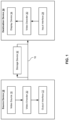
- FIG. 1 is a block diagram illustrating an exemplary system 10 for encoding and decoding video blocks in parallel in accordance with some implementations of the present disclosure.
- system 10 includes a source device 12 that generates and encodes video data to be decoded at a later time by a destination device 14.
- Source device 12 and destination device 14 may comprise any of a wide variety of electronic devices, including desktop or laptop computers, tablet computers, smart phones, set-top boxes, digital televisions, cameras, display devices, digital media players, video gaming consoles, video streaming device, or the like.
- source device 12 and destination device 14 are equipped with wireless communication capabilities.
- destination device 14 may receive the encoded video data to be decoded via a link 16.
- Link 16 may comprise any type of communication medium or device capable of moving the encoded video data from source device 12 to destination device 14.
- link 16 may comprise a communication medium to enable source device 12 to transmit the encoded video data directly to destination device 14 in real-time.
- the encoded video data may be modulated according to a communication standard, such as a wireless communication protocol, and transmitted to destination device 14.
- the communication medium may comprise any wireless or wired communication medium, such as a radio frequency (RF) spectrum or one or more physical transmission lines.
- the communication medium may form part of a packet-based network, such as a local area network, a wide-area network, or a global network such as the Internet.
- the communication medium may include routers, switches, base stations, or any other equipment that may be useful to facilitate communication from source device 12 to destination device 14.
- the encoded video data may be transmitted from output interface 22 to a storage device 32. Subsequently, the encoded video data in storage device 32 may be accessed by destination device 14 via input interface 28.
- Storage device 32 may include any of a variety of distributed or locally accessed data storage media such as a hard drive, Blu-ray discs, DVDs, CD-ROMs, flash memory, volatile or non-volatile memory, or any other suitable digital storage media for storing encoded video data.
- storage device 32 may correspond to a file server or another intermediate storage device that may hold the encoded video data generated by source device 12. Destination device 14 may access the stored video data from storage device 32 via streaming or downloading.
- the file server may be any type of computer capable of storing encoded video data and transmitting the encoded video data to destination device 14.
- Exemplary file servers include a web server (e.g., for a website), an FTP server, network attached storage (NAS) devices, or a local disk drive.
- Destination device 14 may access the encoded video data through any standard data connection, including a wireless channel (e.g., a Wi-Fi connection), a wired connection (e.g., DSL, cable modem, etc.), or a combination of both that is suitable for accessing encoded video data stored on a file server.
- the transmission of encoded video data from storage device 32 may be a streaming transmission, a download transmission, or a combination of both.
- source device 12 includes a video source 18, a video encoder 20 and an output interface 22.
- Video source 18 may include a source such as a video capture device, e.g., a video camera, a video archive containing previously captured video, a video feed interface to receive video from a video content provider, and/or a computer graphics system for generating computer graphics data as the source video, or a combination of such sources.
- a video capture device e.g., a video camera, a video archive containing previously captured video, a video feed interface to receive video from a video content provider, and/or a computer graphics system for generating computer graphics data as the source video, or a combination of such sources.
- source device 12 and destination device 14 may form camera phones or video phones.
- the implementations described in the present application may be applicable to video coding in general, and may be applied to wireless and/or wired applications.
- the captured, pre-captured, or computer-generated video may be encoded by video encoder 20.
- the encoded video data may be transmitted directly to destination device 14 via output interface 22 of source device 12.
- the encoded video data may also (or alternatively) be stored onto storage device 32 for later access by destination device 14 or other devices, for decoding and/or playback.
- Output interface 22 may further include a modem and/or a transmitter.
- Destination device 14 includes an input interface 28, a video decoder 30, and a display device 34.
- Input interface 28 may include a receiver and/or a modem and receive the encoded video data over link 16.
- the encoded video data communicated over link 16, or provided on storage device 32 may include a variety of syntax elements generated by video encoder 20 for use by video decoder 30 in decoding the video data. Such syntax elements may be included within the encoded video data transmitted on a communication medium, stored on a storage medium, or stored a file server.
- destination device 14 may include a display device 34, which can be an integrated display device and an external display device that is configured to communicate with destination device 14.
- Display device 34 displays the decoded video data to a user, and may comprise any of a variety of display devices such as a liquid crystal display (LCD), a plasma display, an organic light emitting diode (OLED) display, or another type of display device.
- LCD liquid crystal display
- OLED organic light emitting diode
- Video encoder 20 and video decoder 30 may operate according to proprietary or industry standards, such as VVC, HEVC, MPEG-4, Part 10, Advanced Video Coding (AVC), or extensions of such standards. It should be understood that the present application is not limited to a specific video coding/decoding standard and may be applicable to other video coding/decoding standards. It is generally contemplated that video encoder 20 of source device 12 may be configured to encode video data according to any of these current or future standards. Similarly, it is also generally contemplated that video decoder 30 of destination device 14 may be configured to decode video data according to any of these current or future standards.
- Video encoder 20 and video decoder 30 each may be implemented as any of a variety of suitable encoder circuitry, such as one or more microprocessors, digital signal processors (DSPs), application specific integrated circuits (ASICs), field programmable gate arrays (FPGAs), discrete logic, software, hardware, firmware or any combinations thereof.
- DSPs digital signal processors
- ASICs application specific integrated circuits
- FPGAs field programmable gate arrays
- an electronic device may store instructions for the software in a suitable, non-transitory computer-readable medium and execute the instructions in hardware using one or more processors to perform the video coding/decoding operations disclosed in the present disclosure.
- Each of video encoder 20 and video decoder 30 may be included in one or more encoders or decoders, either of which may be integrated as part of a combined encoder/decoder (CODEC) in a respective device.
- CDEC combined encoder/decoder
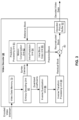
- FIG. 2 is a block diagram illustrating an exemplary video encoder 20 in accordance with some implementations described in the present application.
- Video encoder 20 may perform intra and inter predictive coding of video blocks within video frames. Intra predictive coding relies on spatial prediction to reduce or remove spatial redundancy in video data within a given video frame or picture. Inter predictive coding relies on temporal prediction to reduce or remove temporal redundancy in video data within adjacent video frames or pictures of a video sequence.
- video encoder 20 includes video data memory 40, prediction processing unit 41, decoded picture buffer (DPB) 64, summer 50, transform processing unit 52, quantization unit 54, and entropy encoding unit 56.
- Prediction processing unit 41 further includes motion estimation unit 42, motion compensation unit 44, partition unit 45, intra prediction processing unit 46, and intra block copy (BC) unit 48.
- video encoder 20 also includes inverse quantization unit 58, inverse transform processing unit 60, and summer 62 for video block reconstruction.
- a deblocking filter (not shown) may be positioned between summer 62 and DPB 64 to filter block boundaries to remove blockiness artifacts from reconstructed video.
- Video encoder 20 may take the form of a fixed or programmable hardware unit or may be divided among one or more of the illustrated fixed or programmable hardware units.
- Video data memory 40 may store video data to be encoded by the components of video encoder 20.
- the video data in video data memory 40 may be obtained, for example, from video source 18.
- DPB 64 is a buffer that stores reference video data for use in encoding video data by video encoder 20 (e.g., in intra or inter predictive coding modes).
- Video data memory 40 and DPB 64 may be formed by any of a variety of memory devices.
- video data memory 40 may be on-chip with other components of video encoder 20, or off-chip relative to those components.
- partition unit 45 within prediction processing unit 41 partitions the video data into video blocks.
- This partitioning may also include partitioning a video frame into slices, tiles, or other larger coding units (CUs) according to a predefined splitting structures such as quad-tree structure associated with the video data.
- the video frame may be divided into multiple video blocks (or sets of video blocks referred to as tiles).
- Prediction processing unit 41 may select one of a plurality of possible predictive coding modes, such as one of a plurality of intra predictive coding modes or one of a plurality of inter predictive coding modes, for the current video block based on error results (e.g., coding rate and the level of distortion).
- Prediction processing unit 41 may provide the resulting intra or inter prediction coded block to summer 50 to generate a residual block and to summer 62 to reconstruct the encoded block for use as part of a reference frame subsequently. Prediction processing unit 41 also provides syntax elements, such as motion vectors, intra-mode indicators, partition information, and other such syntax information, to entropy encoding unit 56.
- intra prediction processing unit 46 within prediction processing unit 41 may perform intra predictive coding of the current video block relative to one or more neighboring blocks in the same frame as the current block to be coded to provide spatial prediction.
- Motion estimation unit 42 and motion compensation unit 44 within prediction processing unit 41 perform inter predictive coding of the current video block relative to one or more predictive blocks in one or more reference frames to provide temporal prediction.
- Video encoder 20 may perform multiple coding passes, e.g., to select an appropriate coding mode for each block of video data.
- motion estimation unit 42 determines the inter prediction mode for a current video frame by generating a motion vector, which indicates the displacement of a prediction unit (PU) of a video block within the current video frame relative to a predictive block within a reference video frame, according to a predetermined pattern within a sequence of video frames.
- Motion estimation performed by motion estimation unit 42, is the process of generating motion vectors, which estimate motion for video blocks.
- a motion vector may indicate the displacement of a PU of a video block within a current video frame or picture relative to a predictive block within a reference frame (or other coded unit) relative to the current block being coded within the current frame (or other coded unit).
- the predetermined pattern may designate video frames in the sequence as P frames or B frames.
- Intra BC unit 48 may determine vectors, e.g., block vectors, for intra BC coding in a manner similar to the determination of motion vectors by motion estimation unit 42 for inter prediction, or may utilize motion estimation unit 42 to determine the block vector.
- a predictive block is a block of a reference frame that is deemed as closely matching the PU of the video block to be coded in terms of pixel difference, which may be determined by sum of absolute difference (SAD), sum of square difference (SSD), or other difference metrics.
- video encoder 20 may calculate values for sub-integer pixel positions of reference frames stored in DPB 64. For example, video encoder 20 may interpolate values of one-quarter pixel positions, one-eighth pixel positions, or other fractional pixel positions of the reference frame. Therefore, motion estimation unit 42 may perform a motion search relative to the full pixel positions and fractional pixel positions and output a motion vector with fractional pixel precision.
- Motion estimation unit 42 calculates a motion vector for a PU of a video block in an inter prediction coded frame by comparing the position of the PU to the position of a predictive block of a reference frame selected from a first reference frame list (List 0) or a second reference frame list (List 1), each of which identifies one or more reference frames stored in DPB 64. Motion estimation unit 42 sends the calculated motion vector to motion compensation unit 44 and then to entropy encoding unit 56.
- Motion compensation performed by motion compensation unit 44, may involve fetching or generating the predictive block based on the motion vector determined by motion estimation unit 42.
- motion compensation unit 44 may locate a predictive block to which the motion vector points in one of the reference frame lists, retrieve the predictive block from DPB 64, and forward the predictive block to summer 50.
- Summer 50 then forms a residual video block of pixel difference values by subtracting pixel values of the predictive block provided by motion compensation unit 44 from the pixel values of the current video block being coded.
- the pixel difference values forming the residual vide block may include luma or chroma difference components or both.
- Motion compensation unit 44 may also generate syntax elements associated with the video blocks of a video frame for use by video decoder 30 in decoding the video blocks of the video frame.
- the syntax elements may include, for example, syntax elements defining the motion vector used to identify the predictive block, any flags indicating the prediction mode, or any other syntax information described herein. Note that motion estimation unit 42 and motion compensation unit 44 may be highly integrated, but are illustrated separately for conceptual purposes.
- intra BC unit 48 may generate vectors and fetch predictive blocks in a manner similar to that described above in connection with motion estimation unit 42 and motion compensation unit 44, but with the predictive blocks being in the same frame as the current block being coded and with the vectors being referred to as block vectors as opposed to motion vectors.
- intra BC unit 48 may determine an intra-prediction mode to use to encode a current block.
- intra BC unit 48 may encode a current block using various intra-prediction modes, e.g., during separate encoding passes, and test their performance through rate-distortion analysis. Next, intra BC unit 48 may select, among the various tested intra-prediction modes, an appropriate intra-prediction mode to use and generate an intra-mode indicator accordingly.
- intra BC unit 48 may calculate rate-distortion values using a rate-distortion analysis for the various tested intra-prediction modes, and select the intra-prediction mode having the best rate-distortion characteristics among the tested modes as the appropriate intra-prediction mode to use.
- Rate-distortion analysis generally determines an amount of distortion (or error) between an encoded block and an original, unencoded block that was encoded to produce the encoded block, as well as a bitrate (i.e., a number of bits) used to produce the encoded block.
- Intra BC unit 48 may calculate ratios from the distortions and rates for the various encoded blocks to determine which intra-prediction mode exhibits the best rate-distortion value for the block.
- intra BC unit 48 may use motion estimation unit 42 and motion compensation unit 44, in whole or in part, to perform such functions for Intra BC prediction according to the implementations described herein.
- a predictive block may be a block that is deemed as closely matching the block to be coded, in terms of pixel difference, which may be determined by sum of absolute difference (SAD), sum of squared difference (SSD), or other difference metrics, and identification of the predictive block may include calculation of values for sub-integer pixel positions.
- video encoder 20 may form a residual video block by subtracting pixel values of the predictive block from the pixel values of the current video block being coded, forming pixel difference values.
- the pixel difference values forming the residual video block may include both luma and chroma component differences.
- summer 50 forms a residual video block by subtracting the predictive block from the current video block.
- the residual video data in the residual block may be included in one or more transform units (TUs) and is provided to transform processing unit 52.
- Transform processing unit 52 transforms the residual video data into residual transform coefficients using a transform, such as a discrete cosine transform (DCT) or a conceptually similar transform.
- DCT discrete cosine transform
- Transform processing unit 52 may send the resulting transform coefficients to quantization unit 54.
- Quantization unit 54 quantizes the transform coefficients to further reduce bit rate. The quantization process may also reduce the bit depth associated with some or all of the coefficients. The degree of quantization may be modified by adjusting a quantization parameter.
- quantization unit 54 may then perform a scan of a matrix including the quantized transform coefficients.
- entropy encoding unit 56 may perform the scan.
- Inverse quantization unit 58 and inverse transform processing unit 60 apply inverse quantization and inverse transformation, respectively, to reconstruct the residual video block in the pixel domain for generating a reference block for prediction of other video blocks.
- motion compensation unit 44 may generate a motion compensated predictive block from one or more reference blocks of the frames stored in DPB 64. Motion compensation unit 44 may also apply one or more interpolation filters to the predictive block to calculate sub-integer pixel values for use in motion estimation.
- Summer 62 adds the reconstructed residual block to the motion compensated predictive block produced by motion compensation unit 44 to produce a reference block for storage in DPB 64.
- the reference block may then be used by intra BC unit 48, motion estimation unit 42 and motion compensation unit 44 as a predictive block to inter predict another video block in a subsequent video frame.
- Video data memory 79 and DPB 92 may be formed by any of a variety of memory devices, such as dynamic random access memory (DRAM), including synchronous DRAM (SDRAM), magneto-resistive RAM (MRAM), resistive RAM (RRAM), or other types of memory devices.
- DRAM dynamic random access memory
- SDRAM synchronous DRAM
- MRAM magneto-resistive RAM
- RRAM resistive RAM
- video data memory 79 and DPB 92 are depicted as two distinct components of video decoder 30 in FIG. 3 . But it will be apparent to one skilled in the art that video data memory 79 and DPB 92 may be provided by the same memory device or separate memory devices. In some examples, video data memory 79 may be on-chip with other components of video decoder 30, or off-chip relative to those components.
- video decoder 30 receives an encoded video bitstream that represents video blocks of an encoded video frame and associated syntax elements.
- Video decoder 30 may receive the syntax elements at the video frame level and/or the video block level.
- Entropy decoding unit 80 of video decoder 30 entropy decodes the bitstream to generate quantized coefficients, motion vectors or intra-prediction mode indicators, and other syntax elements. Entropy decoding unit 80 then forwards the motion vectors and other syntax elements to prediction processing unit 81.
- intra BC unit 85 of prediction processing unit 81 produces predictive blocks for the current video block based on block vectors and other syntax elements received from entropy decoding unit 80.
- the predictive blocks may be within a reconstructed region of the same picture as the current video block defined by video encoder 20.
- Motion compensation unit 82 and/or intra BC unit 85 determines prediction information for a video block of the current video frame by parsing the motion vectors and other syntax elements, and then uses the prediction information to produce the predictive blocks for the current video block being decoded. For example, motion compensation unit 82 uses some of the received syntax elements to determine a prediction mode (e.g., intra or inter prediction) used to code video blocks of the video frame, an inter prediction frame type (e.g., B or P), construction information for one or more of the reference frame lists for the frame, motion vectors for each inter predictive encoded video block of the frame, inter prediction status for each inter predictive coded video block of the frame, and other information to decode the video blocks in the current video frame.
- a prediction mode e.g., intra or inter prediction
- an inter prediction frame type e.g., B or P
- intra BC unit 85 may use some of the received syntax elements, e.g., a flag, to determine that the current video block was predicted using the intra BC mode, construction information of which video blocks of the frame are within the reconstructed region and should be stored in DPB 92, block vectors for each intra BC predicted video block of the frame, intra BC prediction status for each intra BC predicted video block of the frame, and other information to decode the video blocks in the current video frame.
- a flag e.g., a flag
- Motion compensation unit 82 may also perform interpolation using the interpolation filters as used by video encoder 20 during encoding of the video blocks to calculate interpolated values for sub-integer pixels of reference blocks. In this case, motion compensation unit 82 may determine the interpolation filters used by video encoder 20 from the received syntax elements and use the interpolation filters to produce predictive blocks.
- Inverse quantization unit 86 inverse quantizes the quantized transform coefficients provided in the bitstream and entropy decoded by entropy decoding unit 80 using the same quantization parameter calculated by video encoder 20 for each video block in the video frame to determine a degree of quantization.
- Inverse transform processing unit 88 applies an inverse transform, e.g., an inverse DCT, an inverse integer transform, or a conceptually similar inverse transform process, to the transform coefficients in order to reconstruct the residual blocks in the pixel domain.
- summer 90 reconstructs decoded video block for the current video block by summing the residual block from inverse transform processing unit 88 and a corresponding predictive block generated by motion compensation unit 82 and intra BC unit 85.
- An in-loop filter (not pictured) may be positioned between summer 90 and DPB 92 to further process the decoded video block.
- the decoded video blocks in a given frame are then stored in DPB 92, which stores reference frames used for subsequent motion compensation of next video blocks.
- DPB 92 or a memory device separate from DPB 92, may also store decoded video for later presentation on a display device, such as display device 34 of FIG. 1 .
- a video sequence typically includes an ordered set of frames or pictures.
- Each frame may include three sample arrays, denoted SL, SCb, and SCr.
- SL is a two-dimensional array of luma samples.
- SCb is a two-dimensional array of Cb chroma samples.
- SCr is a two-dimensional array of Cr chroma samples.
- a frame may be monochrome and therefore includes only one two-dimensional array of luma samples.
- video encoder 20 (or more specifically partition unit 45) generates an encoded representation of a frame by first partitioning the frame into a set of coding tree units (CTUs).
- a video frame may include an integer number of CTUs ordered consecutively in a raster scan order from left to right and from top to bottom.
- Each CTU is a largest logical coding unit and the width and height of the CTU are signaled by the video encoder 20 in a sequence parameter set, such that all the CTUs in a video sequence have the same size being one of 128 ⁇ 128, 64 ⁇ 64, 32 ⁇ 32, and 16 ⁇ 16. But it should be noted that the present application is not necessarily limited to a particular size. As shown in FIG.
- each CTU may comprise one coding tree block (CTB) of luma samples, two corresponding coding tree blocks of chroma samples, and syntax elements used to code the samples of the coding tree blocks.
- the syntax elements describe properties of different types of units of a coded block of pixels and how the video sequence can be reconstructed at the video decoder 30, including inter or intra prediction, intra prediction mode, motion vectors, and other parameters.
- a CTU may comprise a single coding tree block and syntax elements used to code the samples of the coding tree block.
- a coding tree block may be an NxN block of samples.
- video encoder 20 may recursively perform tree partitioning such as binary-tree partitioning, ternary-tree partitioning, quad-tree partitioning or a combination of both on the coding tree blocks of the CTU and divide the CTU into smaller coding units (CUs).
- tree partitioning such as binary-tree partitioning, ternary-tree partitioning, quad-tree partitioning or a combination of both on the coding tree blocks of the CTU and divide the CTU into smaller coding units (CUs).
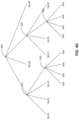
- the 64x64 CTU 400 is first divided into four smaller CU, each having a block size of 32x32.
- CU 410 and CU 420 are each divided into four CUs of 16x16 by block size.
- the two 16x16 CUs 430 and 440 are each further divided into four CUs of 8x8 by block size.
- each leaf node of the quad-tree corresponding to one CU of a respective size ranging from 32x32 to 8x8.
- each CU may comprise a coding block (CB) of luma samples and two corresponding coding blocks of chroma samples of a frame of the same size, and syntax elements used to code the samples of the coding blocks.
- CB coding block
- a CU may comprise a single coding block and syntax structures used to code the samples of the coding block.
- quad-tree partitioning depicted in FIGS. 4C and 4D is only for illustrative purposes and one CTU can be split into CUs to adapt to varying local characteristics based on quad/ternary/binary-tree partitions.
- one CTU is partitioned by a quad-tree structure and each quad-tree leaf CU can be further partitioned by a binary and ternary tree structure.
- FIG. 4E there are five partitioning types, i.e., quaternary partitioning, horizontal binary partitioning, vertical binary partitioning, horizontal ternary partitioning, and vertical ternary partitioning.
- video encoder 20 may further partition a coding block of a CU into one or more MxN prediction blocks (PB).
- a prediction block is a rectangular (square or non-square) block of samples on which the same prediction, inter or intra, is applied.
- a prediction unit (PU) of a CU may comprise a prediction block of luma samples, two corresponding prediction blocks of chroma samples, and syntax elements used to predict the prediction blocks.
- a PU may comprise a single prediction block and syntax structures used to predict the prediction block.
- Video encoder 20 may generate predictive luma, Cb, and Cr blocks for luma, Cb, and Cr prediction blocks of each PU of the CU.
- Video encoder 20 may use intra prediction or inter prediction to generate the predictive blocks for a PU. If video encoder 20 uses intra prediction to generate the predictive blocks of a PU, video encoder 20 may generate the predictive blocks of the PU based on decoded samples of the frame associated with the PU. If video encoder 20 uses inter prediction to generate the predictive blocks of a PU, video encoder 20 may generate the predictive blocks of the PU based on decoded samples of one or more frames other than the frame associated with the PU.
- video encoder 20 may generate a luma residual block for the CU by subtracting the CU's predictive luma blocks from its original luma coding block such that each sample in the CU's luma residual block indicates a difference between a luma sample in one of the CU's predictive luma blocks and a corresponding sample in the CU's original luma coding block.
- video encoder 20 may generate a Cb residual block and a Cr residual block for the CU, respectively, such that each sample in the CU's Cb residual block indicates a difference between a Cb sample in one of the CU's predictive Cb blocks and a corresponding sample in the CU's original Cb coding block and each sample in the CU's Cr residual block may indicate a difference between a Cr sample in one of the CU's predictive Cr blocks and a corresponding sample in the CU's original Cr coding block.
- video encoder 20 may use quad-tree partitioning to decompose the luma, Cb, and Cr residual blocks of a CU into one or more luma, Cb, and Cr transform blocks.
- a transform block is a rectangular (square or non-square) block of samples on which the same transform is applied.
- a transform unit (TU) of a CU may comprise a transform block of luma samples, two corresponding transform blocks of chroma samples, and syntax elements used to transform the transform block samples.
- each TU of a CU may be associated with a luma transform block, a Cb transform block, and a Cr transform block.
- the luma transform block associated with the TU may be a sub-block of the CU's luma residual block.
- the Cb transform block may be a sub-block of the CU's Cb residual block.
- the Cr transform block may be a sub-block of the CU's Cr residual block.
- a TU may comprise a single transform block and syntax structures used to transform the samples of the transform block.
- Video encoder 20 may apply one or more transforms to a luma transform block of a TU to generate a luma coefficient block for the TU.
- a coefficient block may be a two-dimensional array of transform coefficients.
- a transform coefficient may be a scalar quantity.
- Video encoder 20 may apply one or more transforms to a Cb transform block of a TU to generate a Cb coefficient block for the TU.
- Video encoder 20 may apply one or more transforms to a Cr transform block of a TU to generate a Cr coefficient block for the TU.
- video encoder 20 may quantize the coefficient block. Quantization generally refers to a process in which transform coefficients are quantized to possibly reduce the amount of data used to represent the transform coefficients, providing further compression.
- video encoder 20 may entropy encode syntax elements indicating the quantized transform coefficients. For example, video encoder 20 may perform Context-Adaptive Binary Arithmetic Coding (CABAC) on the syntax elements indicating the quantized transform coefficients.
- CABAC Context-Adaptive Binary Arithmetic Coding
- video encoder 20 may output a bitstream that includes a sequence of bits that forms a representation of coded frames and associated data, which is either saved in storage device 32 or transmitted to destination device 14.
- video decoder 30 may parse the bitstream to obtain syntax elements from the bitstream.
- Video decoder 30 may reconstruct the frames of the video data based at least in part on the syntax elements obtained from the bitstream.
- the process of reconstructing the video data is generally reciprocal to the encoding process performed by video encoder 20.
- video decoder 30 may perform inverse transforms on the coefficient blocks associated with TUs of a current CU to reconstruct residual blocks associated with the TUs of the current CU.
- Video decoder 30 also reconstructs the coding blocks of the current CU by adding the samples of the predictive blocks for PUs of the current CU to corresponding samples of the transform blocks of the TUs of the current CU. After reconstructing the coding blocks for each CU of a frame, video decoder 30 may reconstruct the frame.
- palette-based coding is another coding scheme that has been adopted by many video coding standards.
- a video coder e.g., video encoder 20 or video decoder 30
- the palette table includes the most dominant (e.g., frequently used) pixel values in the given block. Pixel values that are not frequently represented in the video data of the given block are either not included in the palette table or included in the palette table as escape colors.
- Each entry in the palette table includes an index for a corresponding pixel value that in the palette table.
- the palette indices for samples in the block may be coded to indicate which entry from the palette table is to be used to predict or reconstruct which sample.
- This palette mode starts with the process of generating a palette predictor for a first block of a picture, slice, tile, or other such grouping of video blocks.
- the palette predictor for subsequent video blocks is typically generated by updating a previously used palette predictor.
- the palette predictor is defined at a picture level. In other words, a picture may include multiple coding blocks, each having its own palette table, but there is one palette predictor for the entire picture.
- a video decoder may utilize a palette predictor for determining new palette entries in the palette table used for reconstructing a video block.
- the palette predictor may include palette entries from a previously used palette table or even be initialized with a most recently used palette table by including all entries of the most recently used palette table.
- the palette predictor may include fewer than all the entries from the most recently used palette table and then incorporate some entries from other previously used palette tables.
- the palette predictor may have the same size as the palette tables used for coding different blocks or may be larger or smaller than the palette tables used for coding different blocks.
- the palette predictor is implemented as a first-in-first-out (FIFO) table including 64 palette entries.
- a video decoder may receive, from the encoded video bitstream, a one-bit flag for each entry of the palette predictor.
- the one-bit flag may have a first value (e.g., a binary one) indicating that the associated entry of the palette predictor is to be included in the palette table or a second value (e.g., a binary zero) indicating that the associated entry of the palette predictor is not to be included in the palette table. If the size of palette predictor is larger than the palette table used for a block of video data, then the video decoder may stop receiving more flags once a maximum size for the palette table is reached.
- some entries in a palette table may be directly signaled in the encoded video bitstream instead of being determined using the palette predictor.
- the video decoder may receive, from the encoded video bitstream, three separate m-bit values indicating the pixel values for the luma and two chroma components associated with the entry, where m represents the bit depth of the video data.
- those palette entries derived from the palette predictor only require a one-bit flag. Therefore, signaling some or all palette entries using the palette predictor can significantly reduce the number of bits needed to signal the entries of a new palette table, thereby improving the overall coding efficiency of palette mode coding.
- the palette predictor for one block is determined based on the palette table used to code one or more previously coded blocks. But when coding the first coding tree unit in a picture, a slice or a tile, the palette table of a previously coded block may not be available. Therefore a palette predictor cannot be generated using entries of the previously used palette tables. In such case, a sequence of palette predictor initializers may be signaled in a sequence parameter set (SPS) and/or a picture parameter set (PPS), which are values used to generate a palette predictor when a previously used palette table is not available.
- SPS sequence parameter set
- PPS picture parameter set
- An SPS generally refers to a syntax structure of syntax elements that apply to a series of consecutive coded video pictures called a coded video sequence (CVS) as determined by the content of a syntax element found in the PPS referred to by a syntax element found in each slice segment header.
- a PPS generally refers to a syntax structure of syntax elements that apply to one or more individual pictures within a CVS as determined by a syntax element found in each slice segment header.
- an SPS is generally considered to be a higher level syntax structure than a PPS, meaning the syntax elements included in the SPS generally change less frequently and apply to a larger portion of video data compared to the syntax elements included in the PPS.
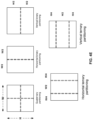
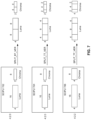
- FIG. 5 is a block diagram illustrating examples of smallest chroma intra prediction units (SCIPUs) in accordance with some implementations of the present disclosure.
- processing throughput drops when a picture has a large number of small intra blocks because of sample processing data dependency between neighboring intra blocks.
- the predictor generation of an intra block requires top and left boundary reconstructed samples from neighboring blocks. Therefore, intra prediction has to be sequentially processed block by block.
- the smallest intra CU is 8x8 luma samples.
- the luma component of the smallest intra CU can be further split into four 4x4 luma intra prediction units (PUs), but the chroma components of the smallest intra CU cannot be further split. Therefore, the worst case hardware processing throughput occurs when 4x4 chroma intra blocks or 4x4 luma intra blocks are processed.
- PUs 4x4 luma intra prediction units
- VTM5.0 in dual tree, 2x2/4x2/2x4 chroma blocks are already disabled in dual tree.
- the smallest chroma intra CB is 2x2. Therefore, in VTM5.0, the smallest chroma intra CBs in single coding tree is 2x2.
- the worst case hardware processing throughput for VVC decoding is only 1/4 of that for HEVC decoding.
- CCLM cross-component linear model
- PDPC position-dependent intra prediction combination
- CIIP combined inter intra prediction
- the goal of the scheme of SCIPU is to disallow chroma intra CBs smaller than 16 chroma samples by constraining the partitioning of chroma intra CBs.
- an SCIPU In single coding tree, an SCIPU is defined as a coding tree node whose chroma block size is larger than or equal to 16 chroma samples and has at least one child luma block smaller than 4* 16 luma samples. It is required that in each SCIPU, all CBs are inter, or all CBs are non-inter, i.e, either intra or intra block copying (IBC).
- IBC intra block copying
- chroma of the non-inter SCIPU shall not be further split and luma of the SCIPU is allowed to be further split.
- the smallest chroma intra CB size is 16 chroma samples, and 2x2, 2x4, and 4x2 chroma CBs are removed.
- chroma scaling is not applied in case of a non-inter SCIPU.
- Chroma CB 502 of 8x4 chroma samples and corresponding luma CBs form one SCIPU because the ternary tree (TT) split from the 8x4 chroma samples would result in chroma CBs smaller than 16 chroma samples (e.g., chroma CBs 502(a) and 502(c)).
- TT ternary tree
- Chroma CB 504(a) of 4x4 chroma samples (the left side of the chroma CB 504 of 8x4 chroma samples) and three luma CBs corresponding to the chroma CBS 504(c), 504(d), and 504(e) form one SCIPU
- chroma CB 504(b) of 4x4 samples (the right side of the 8x4 chroma samples) and two luma CBs (e.g., luma CBs corresponding to chroma CBs 504(g) and 504(b)) form one SCIPU because the binary tree (BT) split from the 4x4 chroma samples would result in chroma CBs smaller than 16 chroma samples (e.g., chroma CBs 504(g) and 504(f)).
- BT binary tree
- the type of an SCIPU is inferred to be non-inter if the current slice is an I-slice or the current SCIPU has a 4x4 luma partition in it after further split one time (because no inter 4x4 is allowed in VVC); otherwise, the type of the SCIPU (inter or non-inter) is indicated by one signaled flag before parsing the CUs in the SCIPU.
- the derivation of the types of an SCIPU is illustrated in Table 1 below.
- the modeTypeCondition 1 is defined as an SCIPU with type "non-inter” while the modeTypeCondition 2 is defined as an SCIPU with the type "inter or non-inter” and one flag "mode_constraint_flag" is signaled into the bitstream to indicate whether inter or non-inter is used by the associated SCIPU.
- the modeTypeCondition 0 represent conditions when the current CU spliting node is not SCIPU.
- the defination of all the variables in Table 2 can be referred to the version 6 of VVC draft spec (document JVET-O2001 at http://phenix.int-evry.fr/jvet/).
- modeTypeCondition is set equal to 0 mode_constraint_flag equal to 0 specifies that coding units inside the current coding tree node can only use inter prediction coding modes.
- mode_constraint_flag 1 specifies that coding units inside the current coding tree node cannot use inter prediction coding modes.
- the worst case hardware processing throughput occurs when 4x4, 2x8, or 8x2 chroma blocks, instead of a 2x2 chroma blocks, are processed.
- the worst case hardware processing throughput is the same as that in HEVC and is 4X of that in VTM5.0.
- FIGS. 6A-6C are block diagrams illustrating examples of chroma formats (e.g., also known as chroma subsampling formats) supported in VVC in accordance with some implementations of the present disclosure.
- Table 2 shows information for different chroma formats.
- SubWidthC and SubHeightC are used to specify the ratio between the width and height of a luma block and its associated chroma blocks.
- each of the two chroma arrays has half the height and half the width of the luma array.
- each of the two chroma arrays has the same height and half the width of the luma array.
- chroma_format_idc When the value of chroma_format_idc is equal to 1, the nominal vertical and horizontal relative locations of luma and chroma samples in pictures are shown in Figure 6A . Alternative chroma sample relative locations may be indicated in video usability information.
- chroma_format_idc When the value of chroma_format_idc is equal to 2, the chroma samples are co-sited with the corresponding luma samples and the nominal locations in a picture are as shown in Figure 6B .
- the design only considered the chroma format 4:2:0.
- the other chroma formats are not considered and the design therefore imposed over-restrictive rules to the size of intra chroma blocks for the chroma formats other than 4:2:0 (e.g. 4:4:4 and 4:2:2).
- the SCIPU was proposed, it was defined as a coding tree node whose chroma block size is larger than or equal to 16 chroma samples and has at least one child luma block smaller than 4x16 luma samples.
- the luma samples (e.g., when a block is encoded in 4:2:0 chroma format, there are four times as many luma samples as chroma samples) to define the SCIPU only works correctly when the chroma format is 4:2:0.
- the chroma size restriction is always applied through the SCIPU scheme with the assumption that the chroma format is 4:2:0 which implies that both width and height of the chroma block are half of the width and height of the associated luma block.
- the palette mode is newly adopted into VVC in 15 th JVET meeting (refer to the document JVET-O0119 at http://phenix.int-evry.fr/jvet/) and when the mode of the SCIPU is signaled as inter, only inter modes are allowed within this SCIPU and the chroma blocks could thus be split into small blocks such as 2x4 or 4x2 chroma blocks. While non-inter is signaled as the mode of the SCIPU or the modeTypeCondition of the SCIPU is non-inter (e.g.
- an SCIPU is defined as a coding tree node whose chroma block size is larger than or equal to N chroma samples and has at least one child luma block smaller than KxN luma samples with one further CU split.
- SCIPU 704 is a valid SCIPU because splitting the CB according to the predefined splitting method (e.g., ternary vertical split) would result in a chroma component with fewer than 16 chroma samples (e.g., a chroma component with 2x2 chroma samples).
- SCIPU 706 is a valid SCIPU because splitting the CB with the predefined splitting method (e.g., ternary vertical split) would result in a chroma component with fewer than 16 chroma samples (e.g., a chroma component with 4x2 chroma samples).
- the type of an SCIPU is inferred to be non-inter if the current slice is an I-slice or the current SCIPU has a 4x4 luma partition in it after further split one time (because no inter 4x4 is allowed in VVC); otherwise, the type of the SCIPU (inter or non-inter) is indicated by one signaled flag before parsing the CUs in the SCIPU.
- the number of the chroma samples and the number of the luma samples within one block are the same and therefore there is no need to impose any size restrict on the chroma blocks when the chroma format is 4:4:4.
- the type of an SCIPU is inferred to be non-inter according to the current design (see Table 1 above).
- a non-inter type SCIPU does not allow the chroma block (8x8 chroma block in this example) to be further split.
- modeTypeCondition is set equal to 0 mode_constraint_flag equal to 0 specifies that coding units inside the current coding tree node can only use inter prediction coding modes.
- mode_constraint_flag 1 specifies that coding units inside the current coding tree node cannot use inter prediction coding modes.
- the height of the chroma samples and the height of the luma samples within one block are the same but the width of the chroma samples are half of the width of the luma samples and therefore the derivation of the modeTypeCondition for the SCIPU has to be modified accordingly when the chroma format is 4:2:2.
- the SCIPU is defined as a coding tree node whose chroma block size is larger than or equal to sixteen chroma samples and has at least one child chroma block smaller than 16 chroma samples with one further split.
- An example of the proposed restrict on the format 4:2:2 based on VVC spec is illustrated in Table 4. In the modified modeTypeCondition derivation method, five more conditions are added for chroma format 4:2:2 for the non-inter type SCIPU.
- an 8x8 block with quad-tree CU split applied is regarded as an SCIPU because it's child blocks include chroma block smaller than 16 chroma samples (it contains four 4x4 luma blocks and four 2x4 chroma blocks for 4:2:2 chroma format). Moreover, since its child blocks include 4x4 luma block, this SCIPU is regarded as non-inter type SCIPU.
- a 16x4 block with the TT horizontal split (SPLIT_TT_VER) is also regarded as non-inter type SCIPU because its child blocks include 4x4 luma blocks and chroma blocks smaller than 16 chroma samples (it contains two 4x4 luma blocks and one 8x4 luma block, two 2x4 chroma blocks and one 4x4 chroma block). More examples could be referred to in the Table 4 below.
- CUs with width * height equal to 64 could be 8x8, 16x4 or 4x16 in current VVC.
- 8x8 CU is the only size which could apply quad-tree split (split_qt_flag is equal to 1).
- No Ternary tree (TT) split is allowed for an 8x8 CU.
- SPLIT_TT_VER is allowed for a 16x4 CU in current VVC and only SPLIT_TT_HOR is allowed for a 4x16 CU.
- CUs with width * height equal to 32 could be 8x4 or 4x8 in current VVC.
- SPLIT BTVER is allowed for an 8x4 CU and only SPLIT_BT_HOR is allowed for a 4x8 CU.
- modeTypeCondition is set equal to 0 mode_constraint_flag equal to 0 specifies that coding units inside the current coding tree node can only use inter prediction coding modes.
- mode_constraint_flag 1 specifies that coding units inside the current coding tree node cannot use inter prediction coding modes.
- modeTypeCondition is set equal to 0 mode_constraint_flag equal to 0 specifies that coding units inside the current coding tree node can only use inter prediction coding modes.
- mode_constraint_flag 1 specifies that coding units inside the current coding tree node cannot use inter prediction coding
- modeTypeCondition is set equal to 0 mode_constraint_flag equal to 0 specifies that coding units inside the current coding tree node can only use inter prediction coding modes.
- mode_constraint_flag 1 specifies that coding units inside the current coding tree node cannot use inter prediction coding
- FIG. 8 is a flowchart illustrating an exemplary process 800 by which a video decoder 30 implements the techniques of decoding a smallest chroma intra prediction unit (SCIPU) in accordance with some implementations of the present disclosure.
- SCIPU smallest chroma intra prediction unit
- the video decoder 30 receives, from bitstream, data encoding a coding tree node, wherein the coding tree node is associated with a predefined splitting method (e.g., horizontal/vertical binary split, horizontal/vertical ternary split, etc.) (810).
- a predefined splitting method e.g., horizontal/vertical binary split, horizontal/vertical ternary split, etc.
- a syntax element e.g., mode_constraint_flag
- the chroma blocks of the coding tree node can be further split when the coding tree node is the first mode type.
- the chroma blocks of the coding tree node cannot be further split when the coding tree node is the second mode type.
- the chroma blocks of the coding tree node cannot be further split when the coding tree node is the third mode type and a prediction mode indicate that current coding tree node is intra mode.
- the chroma blocks of the coding tree node can be further split when the coding tree node is the third mode type and a prediction mode indicate that current coding tree node is NOT intra mode.
- the coding tree node is the SCIPU if a chroma block of the coding tree node has a chroma block and splitting the chroma block with the splitting method would result in a child chroma block violating a minimum size limitation of intra chroma block (e.g., with the child chroma block size smaller than 16 chroma samples).
- the luma block of the coding tree node and the splitting method satisfy the first criterion if splitting the luma block of the coding tree node with the splitting method would result in a child luma block with a block size equal to 16 luma samples.
- the luma block of the coding tree node and the splitting method satisfy the first criterion if: the size of the luma block is 64 luma samples, and the splitting method is quad split (e.g., as shown in Table 9: cbWidth * cbHeight is equal to 64 and split_qt_flag is equal to 1 and chroma_format_idc is equal to 1 or 2); the size of the luma block is 64 luma samples, and the splitting method is horizontal or vertical ternary split (e.g., as shown in Table 9: cbWidth * cbHeight is equal to 64 and MttSplitMode[ x0 ][ y0 ][ mttDepth ] is equal to SPLIT_TT_HOR or SPLIT_TT_VER); or the size of the luma block is 32 luma samples, and the splitting method is horizontal or vertical binary split (e.g., as shown in Table 9: c
- the luma block of the coding tree node and the splitting method satisfy the second criterion if the coding tree node is not in an I-Slice and splitting the luma block of the coding tree node with the splitting method would not result in a child luma block with a block size equal to 16 luma samples (e.g., the resulting child luma block will be larger than 16 luma samples).
- the video decoder 30 sets the coding tree node to the first mode (e.g., splitting would not result in a child chroma block smaller than 16 chroma samples).
- Computer-readable media may include computer-readable storage media, which corresponds to a tangible medium such as data storage media, or communication media including any medium that facilitates transfer of a computer program from one place to another, e.g., according to a communication protocol.
- computer-readable media generally may correspond to (1) tangible computer-readable storage media which is non-transitory or (2) a communication medium such as a signal or carrier wave.
- Data storage media may be any available media that can be accessed by one or more computers or one or more processors to retrieve instructions, code and/or data structures for implementation of the implementations described in the present application.
- a computer program product may include a computer-readable medium.
- first, second, etc. may be used herein to describe various elements, these elements should not be limited by these terms. These terms are only used to distinguish one element from another.
- a first electrode could be termed a second electrode, and, similarly, a second electrode could be termed a first electrode, without departing from the scope of the implementations.
- the first electrode and the second electrode are both electrodes, but they are not the same electrode.
- Another embodiment is directed to a method for decoding video data, comprising receiving, from bitstream, data encoding a coding tree node, wherein the coding tree node is associated with a predefined splitting method; determining a mode type of the coding tree node, including: in accordance with a determination that the coding tree node is encoded in 4:4:4 or 4:0:0 chroma subsampling format, setting the coding tree node to a first mode type; in accordance with a determination that the coding tree node is encoded in 4:2:2 or 4:2:0 chroma subsampling format and the coding tree node is a smallest chroma intra prediction unit (SCIPU): setting the coding tree node to a second mode type if a luma block of the coding tree node and the splitting method satisfy a first criterion; and setting the coding tree node to a third mode type if the luma block of the coding tree node and
- chroma blocks of the coding tree node can be further split when the coding tree node is the first mode type.
- chroma blocks of the coding tree node cannot be further split when the coding tree node is the second mode type.
- chroma blocks of the coding tree node cannot be further split when the coding tree node is the third mode type and a prediction mode indicates that current coding tree node is intra mode.
- chroma blocks of the coding tree node can be further split when the coding tree node is the third mode type and a prediction mode indicates that current coding tree node is NOT intra mode.
- the coding tree node is the SCIPU if a chroma block of the coding tree node has a chroma block and splitting the chroma block with the splitting method would result in a child chroma block violating a minimum size limitation of intra chroma block.
- the luma block of the coding tree node and the splitting method satisfy the first criterion if splitting the luma block of the coding tree node with the splitting method would result in a child luma block with a block size equal to 16 luma samples.
- the luma block of the coding tree node and the splitting method satisfy the first criterion if: the size of the luma block is 64 luma samples, and the splitting method is quad split; the size of the luma block is 64 luma samples, and the splitting method is horizontal or vertical ternary split; or the size of the luma block is 32 luma samples, and the splitting method is horizontal or vertical binary split.
- the luma block of the coding tree node and the splitting method satisfy the second criterion if the coding tree node is not in an I-Slice and splitting the luma block of the coding tree node with the splitting method would not result in a child luma block with a block size equal to 16 luma samples.
- the luma block of the coding tree node and the splitting method satisfy the second criterion if the coding tree node is not of an I-Slice and: the size of the luma block is 64 luma samples and the splitting method is horizontal or vertical binary split; or the size of the luma block is 128 luma samples and the splitting method is horizontal or vertical ternary split.
- the method can further include: in accordance with a determination that the coding tree node is encoded in 4:2:2 or 4:2:0 chroma subsampling format and is not the SCIPU, setting the coding tree node to the first mode.
- An embodiment is directed to an electronic apparatus which may comprise: one or more processing units; memory coupled to the one or more processing units; and a plurality of programs stored in the memory that, when executed by the one or more processing units, cause the electronic apparatus to perform the method as described before.
- Another embodiment is directed to a non-transitory computer readable storage medium storing a plurality of programs for execution by an electronic apparatus having one or more processing units, wherein the plurality of programs, when executed by the one or more processing units, cause the electronic apparatus to perform the method as described before.
Landscapes
- Engineering & Computer Science (AREA)
- Multimedia (AREA)
- Signal Processing (AREA)
- Compression Or Coding Systems Of Tv Signals (AREA)
Applications Claiming Priority (4)
| Application Number | Priority Date | Filing Date | Title |
|---|---|---|---|
| US201962887650P | 2019-08-15 | 2019-08-15 | |
| US201962900424P | 2019-09-13 | 2019-09-13 | |
| EP20853492.5A EP4005215B1 (de) | 2019-08-15 | 2020-08-14 | Grössenbeschränkung für kleine chromablöcke in der videocodierung |
| PCT/US2020/046501 WO2021030747A1 (en) | 2019-08-15 | 2020-08-14 | Small chroma block size restriction in video coding |
Related Parent Applications (2)
| Application Number | Title | Priority Date | Filing Date |
|---|---|---|---|
| EP20853492.5A Division-Into EP4005215B1 (de) | 2019-08-15 | 2020-08-14 | Grössenbeschränkung für kleine chromablöcke in der videocodierung |
| EP20853492.5A Division EP4005215B1 (de) | 2019-08-15 | 2020-08-14 | Grössenbeschränkung für kleine chromablöcke in der videocodierung |
Publications (2)
| Publication Number | Publication Date |
|---|---|
| EP4513870A2 true EP4513870A2 (de) | 2025-02-26 |
| EP4513870A3 EP4513870A3 (de) | 2025-04-30 |
Family
ID=74571251
Family Applications (2)
| Application Number | Title | Priority Date | Filing Date |
|---|---|---|---|
| EP20853492.5A Active EP4005215B1 (de) | 2019-08-15 | 2020-08-14 | Grössenbeschränkung für kleine chromablöcke in der videocodierung |
| EP25150704.2A Pending EP4513870A3 (de) | 2019-08-15 | 2020-08-14 | Beschränkung der kleinen chromablockgrösse in der videocodierung |
Family Applications Before (1)
| Application Number | Title | Priority Date | Filing Date |
|---|---|---|---|
| EP20853492.5A Active EP4005215B1 (de) | 2019-08-15 | 2020-08-14 | Grössenbeschränkung für kleine chromablöcke in der videocodierung |
Country Status (8)
| Country | Link |
|---|---|
| US (3) | US12063375B2 (de) |
| EP (2) | EP4005215B1 (de) |
| JP (2) | JP7350988B2 (de) |
| KR (2) | KR102448518B1 (de) |
| CN (5) | CN116193131B (de) |
| ES (1) | ES3019082T3 (de) |
| MX (3) | MX2022001939A (de) |
| WO (1) | WO2021030747A1 (de) |
Families Citing this family (10)
| Publication number | Priority date | Publication date | Assignee | Title |
|---|---|---|---|---|
| US11399199B2 (en) * | 2019-08-05 | 2022-07-26 | Qualcomm Incorporated | Chroma intra prediction units for video coding |
| EP3994886A4 (de) | 2019-08-06 | 2022-12-28 | Beijing Bytedance Network Technology Co., Ltd. | Videobereichspartition auf basis eines farbformats |
| EP4005215B1 (de) * | 2019-08-15 | 2025-02-26 | Beijing Dajia Internet Information Technology Co., Ltd. | Grössenbeschränkung für kleine chromablöcke in der videocodierung |
| US20220224890A1 (en) * | 2019-08-23 | 2022-07-14 | Hfi Innovation Inc. | Method and Apparatus of Partitioning Small Size Coding Units with Partition Constraints |
| US20220286714A1 (en) * | 2019-08-23 | 2022-09-08 | Hfi Innovation Inc. | Method and Apparatus of Partitioning Small Size Coding Units with Partition Constraints |
| CN114979630B (zh) * | 2019-08-26 | 2024-11-05 | 腾讯科技(深圳)有限公司 | 数据解码方法、装置和数据编码方法、装置 |
| JP7381722B2 (ja) | 2019-09-02 | 2023-11-15 | 北京字節跳動網絡技術有限公司 | カラーフォーマットに基づいたコーディングモード決定 |
| MX2022003122A (es) | 2019-09-21 | 2022-04-06 | Beijing Bytedance Network Tech Co Ltd | Modo intra basado para croma de restriccion de tama?o. |
| CN115362681B (zh) | 2020-04-10 | 2025-02-25 | 抖音视界有限公司 | 视频编解码中的变换跳过块的最小允许量化 |
| US20250310540A1 (en) * | 2024-03-31 | 2025-10-02 | Tencent America LLC | Ibc signaling |
Citations (1)
| Publication number | Priority date | Publication date | Assignee | Title |
|---|---|---|---|---|
| WO2021026564A1 (en) | 2019-08-05 | 2021-02-11 | Qualcomm Incorporated | Chroma intra prediction units for video coding |
Family Cites Families (30)
| Publication number | Priority date | Publication date | Assignee | Title |
|---|---|---|---|---|
| EP2418855B1 (de) | 2009-04-08 | 2017-12-27 | Sharp Kabushiki Kaisha | Verfahren zur Auswahl einer Transformationsgrösse in einem Videodekodierverfahren |
| KR101379188B1 (ko) * | 2010-05-17 | 2014-04-18 | 에스케이 텔레콤주식회사 | 인트라 블록 및 인터 블록이 혼합된 코딩블록을 이용하는 영상 부호화/복호화 장치 및 그 방법 |
| WO2012176405A1 (ja) * | 2011-06-20 | 2012-12-27 | 株式会社Jvcケンウッド | 画像符号化装置、画像符号化方法及び画像符号化プログラム、並びに画像復号装置、画像復号方法及び画像復号プログラム |
| US9185405B2 (en) * | 2012-03-23 | 2015-11-10 | Qualcomm Incorporated | Coded block flag inference in video coding |
| US10440365B2 (en) * | 2013-06-28 | 2019-10-08 | Velos Media, Llc | Methods and devices for emulating low-fidelity coding in a high-fidelity coder |
| CN105765974B (zh) * | 2013-10-14 | 2019-07-02 | 微软技术许可有限责任公司 | 用于视频和图像编码和解码的帧内块复制预测模式的特征 |
| CN105594211B (zh) * | 2013-11-27 | 2019-03-15 | 寰发股份有限公司 | 用于图片的包括帧内区块复制模式的编码模式的发送方法 |
| JP2015106747A (ja) | 2013-11-28 | 2015-06-08 | 富士通株式会社 | 動画像符号化装置、動画像符号化方法及び動画像符号化用コンピュータプログラム |
| JP6268989B2 (ja) | 2013-11-29 | 2018-01-31 | 富士通株式会社 | 動画像符号化装置、動画像符号化方法及び動画像符号化用コンピュータプログラム |
| WO2015093565A1 (ja) * | 2013-12-19 | 2015-06-25 | シャープ株式会社 | 画像復号装置、画像符号化装置および残差予測装置 |
| WO2016074147A1 (en) * | 2014-11-11 | 2016-05-19 | Mediatek Singapore Pte. Ltd. | Separated coding tree for luma and chroma |
| WO2016157924A1 (ja) * | 2015-03-27 | 2016-10-06 | ソニー株式会社 | 画像処理装置、画像処理方法、プログラム及び記録媒体 |
| EP3269142B1 (de) * | 2015-04-13 | 2021-09-15 | MediaTek Inc. | Verfahren zur eingeschränkten intrablockkopie zur reduzierung der worst-case-bandbreite in der videocodierung |
| CN114786009B (zh) * | 2016-03-16 | 2025-07-08 | 寰发股份有限公司 | 视频编码中限制块尺寸的视频数据处理方法与装置 |
| ES2935261T3 (es) * | 2016-05-28 | 2023-03-03 | Hfi Innovation Inc | Método y aparato de codificación de modo de paleta para datos de video de color |
| EP3516869B1 (de) * | 2016-10-04 | 2022-06-08 | HFI Innovation Inc. | Verfahren und vorrichtung zur intra-chroma-codierung in der bild- und videocodierung |
| WO2018066809A1 (ko) * | 2016-10-04 | 2018-04-12 | 엘지전자(주) | 크로마 성분 코딩 유닛 분할 방법 및 장치 |
| WO2018070713A1 (ko) * | 2016-10-11 | 2018-04-19 | 엘지전자(주) | 크로마 성분에 대한 인트라 예측 모드를 유도하는 방법 및 장치 |
| JP7293189B2 (ja) * | 2017-07-24 | 2023-06-19 | アリス エンタープライジズ エルエルシー | イントラモードjvetコーディング |
| WO2019059676A1 (ko) * | 2017-09-20 | 2019-03-28 | 한국전자통신연구원 | 영상 부호화/복호화 방법, 장치 및 비트스트림을 저장한 기록 매체 |
| US10609384B2 (en) | 2017-09-21 | 2020-03-31 | Futurewei Technologies, Inc. | Restriction on sub-block size derivation for affine inter prediction |
| US10687071B2 (en) * | 2018-02-05 | 2020-06-16 | Tencent America LLC | Method and apparatus for video coding |
| CN112055964B (zh) * | 2018-04-30 | 2022-06-07 | 寰发股份有限公司 | 用于视频编解码中的独立编码树的语法交错方法和装置 |
| JP7204891B2 (ja) * | 2018-08-28 | 2023-01-16 | 華為技術有限公司 | ピクチャパーティショニング方法及び機器 |
| CN109600611B (zh) * | 2018-11-09 | 2021-07-13 | 北京达佳互联信息技术有限公司 | 环路滤波方法、环路滤波装置、电子设备和可读介质 |
| WO2020143684A1 (zh) | 2019-01-08 | 2020-07-16 | 华为技术有限公司 | 图像预测方法、装置、设备、系统及存储介质 |
| CN114173114B (zh) * | 2019-01-08 | 2022-09-23 | 华为技术有限公司 | 图像预测方法、装置、设备、系统及存储介质 |
| EP3994886A4 (de) * | 2019-08-06 | 2022-12-28 | Beijing Bytedance Network Technology Co., Ltd. | Videobereichspartition auf basis eines farbformats |
| EP4005215B1 (de) * | 2019-08-15 | 2025-02-26 | Beijing Dajia Internet Information Technology Co., Ltd. | Grössenbeschränkung für kleine chromablöcke in der videocodierung |
| JP7381722B2 (ja) * | 2019-09-02 | 2023-11-15 | 北京字節跳動網絡技術有限公司 | カラーフォーマットに基づいたコーディングモード決定 |
-
2020
- 2020-08-14 EP EP20853492.5A patent/EP4005215B1/de active Active
- 2020-08-14 EP EP25150704.2A patent/EP4513870A3/de active Pending
- 2020-08-14 JP JP2022509166A patent/JP7350988B2/ja active Active
- 2020-08-14 CN CN202310098532.2A patent/CN116193131B/zh active Active
- 2020-08-14 CN CN202210303132.6A patent/CN114710679B9/zh active Active
- 2020-08-14 CN CN202080057598.1A patent/CN114303385A/zh active Pending
- 2020-08-14 KR KR1020227006552A patent/KR102448518B1/ko active Active
- 2020-08-14 KR KR1020227033213A patent/KR20220133332A/ko active Pending
- 2020-08-14 MX MX2022001939A patent/MX2022001939A/es unknown
- 2020-08-14 ES ES20853492T patent/ES3019082T3/es active Active
- 2020-08-14 CN CN202411200930.1A patent/CN118842923B/zh active Active
- 2020-08-14 WO PCT/US2020/046501 patent/WO2021030747A1/en not_active Ceased
- 2020-08-14 CN CN202411201350.4A patent/CN118842924B/zh active Active
-
2022
- 2022-02-14 MX MX2024011854A patent/MX2024011854A/es unknown
- 2022-02-14 MX MX2024011852A patent/MX2024011852A/es unknown
- 2022-02-15 US US17/672,556 patent/US12063375B2/en active Active
-
2023
- 2023-09-13 JP JP2023148414A patent/JP7606575B2/ja active Active
-
2024
- 2024-06-26 US US18/755,495 patent/US12401807B2/en active Active
- 2024-06-26 US US18/755,384 patent/US20240348803A1/en active Pending
Patent Citations (1)
| Publication number | Priority date | Publication date | Assignee | Title |
|---|---|---|---|---|
| WO2021026564A1 (en) | 2019-08-05 | 2021-02-11 | Qualcomm Incorporated | Chroma intra prediction units for video coding |
Also Published As
| Publication number | Publication date |
|---|---|
| CN116193131B (zh) | 2023-10-31 |
| CN114710679B (zh) | 2023-03-24 |
| JP2023166556A (ja) | 2023-11-21 |
| WO2021030747A1 (en) | 2021-02-18 |
| US20240348803A1 (en) | 2024-10-17 |
| KR20220031749A (ko) | 2022-03-11 |
| EP4005215A4 (de) | 2022-10-26 |
| MX2024011854A (es) | 2024-11-08 |
| EP4005215C0 (de) | 2025-02-26 |
| US20220224919A1 (en) | 2022-07-14 |
| CN114303385A (zh) | 2022-04-08 |
| CN118842924B (zh) | 2025-09-09 |
| MX2024011852A (es) | 2024-11-08 |
| CN118842924A (zh) | 2024-10-25 |
| CN118842923A (zh) | 2024-10-25 |
| KR102448518B1 (ko) | 2022-09-27 |
| EP4005215B1 (de) | 2025-02-26 |
| JP7606575B2 (ja) | 2024-12-25 |
| CN114710679B9 (zh) | 2023-07-04 |
| JP7350988B2 (ja) | 2023-09-26 |
| US12063375B2 (en) | 2024-08-13 |
| EP4513870A3 (de) | 2025-04-30 |
| ES3019082T3 (en) | 2025-05-20 |
| CN118842923B (zh) | 2025-09-09 |
| US12401807B2 (en) | 2025-08-26 |
| US20240348804A1 (en) | 2024-10-17 |
| JP2022535162A (ja) | 2022-08-04 |
| CN114710679A (zh) | 2022-07-05 |
| CN116193131A (zh) | 2023-05-30 |
| MX2022001939A (es) | 2022-03-11 |
| EP4005215A1 (de) | 2022-06-01 |
| KR20220133332A (ko) | 2022-10-04 |
Similar Documents
| Publication | Publication Date | Title |
|---|---|---|
| EP4005215B1 (de) | Grössenbeschränkung für kleine chromablöcke in der videocodierung | |
| US12574561B2 (en) | Methods and apparatus of video coding in 4:4:4 chroma format | |
| US12531984B1 (en) | Prediction mode signaling in video coding | |
| WO2021061794A1 (en) | Methods and apparatus of video coding in 4:4:4 chroma format | |
| US12075047B2 (en) | Methods and apparatus of video coding in 4:4:4 color format | |
| WO2020223496A1 (en) | Methods and apparatus of joint coding of chroma residuals |
Legal Events
| Date | Code | Title | Description |
|---|---|---|---|
| PUAI | Public reference made under article 153(3) epc to a published international application that has entered the european phase |
Free format text: ORIGINAL CODE: 0009012 |
|
| STAA | Information on the status of an ep patent application or granted ep patent |
Free format text: STATUS: REQUEST FOR EXAMINATION WAS MADE |
|
| 17P | Request for examination filed |
Effective date: 20250108 |
|
| AC | Divisional application: reference to earlier application |
Ref document number: 4005215 Country of ref document: EP Kind code of ref document: P |
|
| AK | Designated contracting states |
Kind code of ref document: A2 Designated state(s): AL AT BE BG CH CY CZ DE DK EE ES FI FR GB GR HR HU IE IS IT LI LT LU LV MC MK MT NL NO PL PT RO RS SE SI SK SM TR |
|
| REG | Reference to a national code |
Ref country code: DE Ref legal event code: R079 Free format text: PREVIOUS MAIN CLASS: H04N0019176000 Ipc: H04N0019119000 |
|
| PUAL | Search report despatched |
Free format text: ORIGINAL CODE: 0009013 |
|
| AK | Designated contracting states |
Kind code of ref document: A3 Designated state(s): AL AT BE BG CH CY CZ DE DK EE ES FI FR GB GR HR HU IE IS IT LI LT LU LV MC MK MT NL NO PL PT RO RS SE SI SK SM TR |
|
| RIC1 | Information provided on ipc code assigned before grant |
Ipc: H04N 19/176 20140101ALI20250327BHEP Ipc: H04N 19/134 20140101ALI20250327BHEP Ipc: H04N 19/103 20140101ALI20250327BHEP Ipc: H04N 19/186 20140101ALI20250327BHEP Ipc: H04N 19/70 20140101ALI20250327BHEP Ipc: H04N 19/157 20140101ALI20250327BHEP Ipc: H04N 19/96 20140101ALI20250327BHEP Ipc: H04N 19/119 20140101AFI20250327BHEP |