EP4513801A2 - Reaktion auf einen neuen datenindikator für ein hybrides automatisches wiederholungsanfrageverfahren - Google Patents
Reaktion auf einen neuen datenindikator für ein hybrides automatisches wiederholungsanfrageverfahren Download PDFInfo
- Publication number
- EP4513801A2 EP4513801A2 EP25151019.4A EP25151019A EP4513801A2 EP 4513801 A2 EP4513801 A2 EP 4513801A2 EP 25151019 A EP25151019 A EP 25151019A EP 4513801 A2 EP4513801 A2 EP 4513801A2
- Authority
- EP
- European Patent Office
- Prior art keywords
- sidelink grant
- transmitted
- new data
- automatic repeat
- hybrid automatic
- Prior art date
- Legal status (The legal status is an assumption and is not a legal conclusion. Google has not performed a legal analysis and makes no representation as to the accuracy of the status listed.)
- Pending
Links
Images




Classifications
-
- H—ELECTRICITY
- H04—ELECTRIC COMMUNICATION TECHNIQUE
- H04L—TRANSMISSION OF DIGITAL INFORMATION, e.g. TELEGRAPHIC COMMUNICATION
- H04L1/00—Arrangements for detecting or preventing errors in the information received
- H04L1/12—Arrangements for detecting or preventing errors in the information received by using return channel
- H04L1/16—Arrangements for detecting or preventing errors in the information received by using return channel in which the return channel carries supervisory signals, e.g. repetition request signals
- H04L1/18—Automatic repetition systems, e.g. Van Duuren systems
- H04L1/1829—Arrangements specially adapted for the receiver end
- H04L1/1854—Scheduling and prioritising arrangements
-
- H—ELECTRICITY
- H04—ELECTRIC COMMUNICATION TECHNIQUE
- H04L—TRANSMISSION OF DIGITAL INFORMATION, e.g. TELEGRAPHIC COMMUNICATION
- H04L1/00—Arrangements for detecting or preventing errors in the information received
- H04L1/12—Arrangements for detecting or preventing errors in the information received by using return channel
- H04L1/16—Arrangements for detecting or preventing errors in the information received by using return channel in which the return channel carries supervisory signals, e.g. repetition request signals
- H04L1/18—Automatic repetition systems, e.g. Van Duuren systems
- H04L1/1812—Hybrid protocols; Hybrid automatic repeat request [HARQ]
-
- H—ELECTRICITY
- H04—ELECTRIC COMMUNICATION TECHNIQUE
- H04L—TRANSMISSION OF DIGITAL INFORMATION, e.g. TELEGRAPHIC COMMUNICATION
- H04L1/00—Arrangements for detecting or preventing errors in the information received
- H04L1/08—Arrangements for detecting or preventing errors in the information received by repeating transmission, e.g. Verdan system
-
- H—ELECTRICITY
- H04—ELECTRIC COMMUNICATION TECHNIQUE
- H04L—TRANSMISSION OF DIGITAL INFORMATION, e.g. TELEGRAPHIC COMMUNICATION
- H04L1/00—Arrangements for detecting or preventing errors in the information received
- H04L1/12—Arrangements for detecting or preventing errors in the information received by using return channel
- H04L1/16—Arrangements for detecting or preventing errors in the information received by using return channel in which the return channel carries supervisory signals, e.g. repetition request signals
- H04L1/18—Automatic repetition systems, e.g. Van Duuren systems
- H04L1/1812—Hybrid protocols; Hybrid automatic repeat request [HARQ]
- H04L1/1819—Hybrid protocols; Hybrid automatic repeat request [HARQ] with retransmission of additional or different redundancy
-
- H—ELECTRICITY
- H04—ELECTRIC COMMUNICATION TECHNIQUE
- H04L—TRANSMISSION OF DIGITAL INFORMATION, e.g. TELEGRAPHIC COMMUNICATION
- H04L1/00—Arrangements for detecting or preventing errors in the information received
- H04L1/12—Arrangements for detecting or preventing errors in the information received by using return channel
- H04L1/16—Arrangements for detecting or preventing errors in the information received by using return channel in which the return channel carries supervisory signals, e.g. repetition request signals
- H04L1/18—Automatic repetition systems, e.g. Van Duuren systems
- H04L1/1822—Automatic repetition systems, e.g. Van Duuren systems involving configuration of automatic repeat request [ARQ] with parallel processes
-
- H—ELECTRICITY
- H04—ELECTRIC COMMUNICATION TECHNIQUE
- H04L—TRANSMISSION OF DIGITAL INFORMATION, e.g. TELEGRAPHIC COMMUNICATION
- H04L1/00—Arrangements for detecting or preventing errors in the information received
- H04L1/12—Arrangements for detecting or preventing errors in the information received by using return channel
- H04L1/16—Arrangements for detecting or preventing errors in the information received by using return channel in which the return channel carries supervisory signals, e.g. repetition request signals
- H04L1/18—Automatic repetition systems, e.g. Van Duuren systems
- H04L1/1829—Arrangements specially adapted for the receiver end
- H04L1/1864—ARQ related signaling
-
- H—ELECTRICITY
- H04—ELECTRIC COMMUNICATION TECHNIQUE
- H04L—TRANSMISSION OF DIGITAL INFORMATION, e.g. TELEGRAPHIC COMMUNICATION
- H04L1/00—Arrangements for detecting or preventing errors in the information received
- H04L1/12—Arrangements for detecting or preventing errors in the information received by using return channel
- H04L1/16—Arrangements for detecting or preventing errors in the information received by using return channel in which the return channel carries supervisory signals, e.g. repetition request signals
- H04L1/18—Automatic repetition systems, e.g. Van Duuren systems
- H04L1/1867—Arrangements specially adapted for the transmitter end
- H04L1/1887—Scheduling and prioritising arrangements
-
- H—ELECTRICITY
- H04—ELECTRIC COMMUNICATION TECHNIQUE
- H04L—TRANSMISSION OF DIGITAL INFORMATION, e.g. TELEGRAPHIC COMMUNICATION
- H04L1/00—Arrangements for detecting or preventing errors in the information received
- H04L1/12—Arrangements for detecting or preventing errors in the information received by using return channel
- H04L1/16—Arrangements for detecting or preventing errors in the information received by using return channel in which the return channel carries supervisory signals, e.g. repetition request signals
- H04L1/18—Automatic repetition systems, e.g. Van Duuren systems
- H04L1/1867—Arrangements specially adapted for the transmitter end
- H04L1/1896—ARQ related signaling
-
- H—ELECTRICITY
- H04—ELECTRIC COMMUNICATION TECHNIQUE
- H04L—TRANSMISSION OF DIGITAL INFORMATION, e.g. TELEGRAPHIC COMMUNICATION
- H04L5/00—Arrangements affording multiple use of the transmission path
- H04L5/003—Arrangements for allocating sub-channels of the transmission path
- H04L5/0053—Allocation of signalling, i.e. of overhead other than pilot signals
- H04L5/0055—Physical resource allocation for ACK/NACK
-
- H—ELECTRICITY
- H04—ELECTRIC COMMUNICATION TECHNIQUE
- H04W—WIRELESS COMMUNICATION NETWORKS
- H04W72/00—Local resource management
- H04W72/20—Control channels or signalling for resource management
- H04W72/23—Control channels or signalling for resource management in the downlink direction of a wireless link, i.e. towards a terminal
-
- H—ELECTRICITY
- H04—ELECTRIC COMMUNICATION TECHNIQUE
- H04W—WIRELESS COMMUNICATION NETWORKS
- H04W92/00—Interfaces specially adapted for wireless communication networks
- H04W92/16—Interfaces between hierarchically similar devices
- H04W92/18—Interfaces between hierarchically similar devices between terminal devices
Definitions
- the subject matter disclosed herein relates generally to wireless communications and more particularly relates to responding to a new data indicator for a hybrid automatic repeat request process.
- UE autonomous selection may or may not be based on a resource sensing operation), Uplink (“UL”), UL SCH ("UL-SCH”), Universal Mobile Telecommunications System (“UMTS”), User Plane (“UP"), UP Function (“UPF”), Uplink Pilot Time Slot (“UpPTS”), Ultra-reliability and Low-latency Communications (“URLLC”), UE Route Selection Policy (“URSP”), Vehicle-to-Vehicle (“V2V”), Vehicle-to-Anything (“V2X”), V2X UE (e.g., a UE capable of vehicular communication using 3GPP protocols), Visiting AMF (“vAMF”), Visiting NSSF (“vNSSF”), Visiting PLMN (“VPLMN”), Wide Area Network (“WAN”), and Worldwide Interoperability for Microwave Access (“WiMAX”).
- vAMF Vehicle-to-Vehicle
- V2X Vehicle-to-Anything
- V2X UE e.g., a UE capable of vehicular communication
- a new data indicator may be used.
- One embodiment of a method includes determining whether a current new data indicator in a current sidelink grant matches a last received new data indicator in a last received sidelink grant for a first hybrid automatic repeat request process. In some embodiments, the method includes, in response to determining that the current new data indicator does not match the last received new data indicator, determining whether a negative acknowledgement has been transmitted in response to the last received sidelink grant.
- Another embodiment of a method for responding to a new data indicator for a hybrid automatic repeat request process includes determining whether a current new data indicator in a current sidelink grant matches a last received new data indicator in a last received sidelink grant for a first hybrid automatic repeat request process. In some embodiments, the method includes, in response to determining that the current new data indicator matches the last received new data indicator, determining whether a positive acknowledgement has been transmitted in response to the last received sidelink grant.
- Another apparatus for responding to a new data indicator for a hybrid automatic repeat request process includes a processor that: determines whether a current new data indicator in a current sidelink grant matches a last received new data indicator in a last received sidelink grant for a first hybrid automatic repeat request process; and, in response to determining that the current new data indicator matches the last received new data indicator, determines whether a positive acknowledgement has been transmitted in response to the last received sidelink grant.
- Modules may also be implemented in code and/or software for execution by various types of processors.
- An identified module of code may, for instance, include one or more physical or logical blocks of executable code which may, for instance, be organized as an object, procedure, or function. Nevertheless, the executables of an identified module need not be physically located together, but may include disparate instructions stored in different locations which, when joined logically together, include the module and achieve the stated purpose for the module.
- a module of code may be a single instruction, or many instructions, and may even be distributed over several different code segments, among different programs, and across several memory devices.
- operational data may be identified and illustrated herein within modules, and may be embodied in any suitable form and organized within any suitable type of data structure. The operational data may be collected as a single data set, or may be distributed over different locations including over different computer readable storage devices.
- the software portions are stored on one or more computer readable storage devices.
- the computer readable medium may be a computer readable storage medium.
- the computer readable storage medium may be a storage device storing the code.
- the storage device may be, for example, but not limited to, an electronic, magnetic, optical, electromagnetic, infrared, holographic, micromechanical, or semiconductor system, apparatus, or device, or any suitable combination of the foregoing.
- a storage device More specific examples (a non-exhaustive list) of the storage device would include the following: an electrical connection having one or more wires, a portable computer diskette, a hard disk, a random access memory (“RAM”), a read-only memory (“ROM”), an erasable programmable read-only memory (“EPROM” or Flash memory), a portable compact disc read-only memory (“CD-ROM”), an optical storage device, a magnetic storage device, or any suitable combination of the foregoing.
- a computer readable storage medium may be any tangible medium that can contain, or store a program for use by or in connection with an instruction execution system, apparatus, or device.
- Code for carrying out operations for embodiments may be any number of lines and may be written in any combination of one or more programming languages including an object oriented programming language such as Python, Ruby, Java, Smalltalk, C++, or the like, and conventional procedural programming languages, such as the "C" programming language, or the like, and/or machine languages such as assembly languages.
- the code may execute entirely on the user's computer, partly on the user's computer, as a stand-alone software package, partly on the user's computer and partly on a remote computer or entirely on the remote computer or server.
- the remote computer may be connected to the user's computer through any type of network, including a local area network (“LAN”) or a wide area network (“WAN”), or the connection may be made to an external computer (for example, through the Internet using an Internet Service Provider).
- LAN local area network
- WAN wide area network
- Internet Service Provider an Internet Service Provider
- the code may also be stored in a storage device that can direct a computer, other programmable data processing apparatus, or other devices to function in a particular manner, such that the instructions stored in the storage device produce an article of manufacture including instructions which implement the function/act specified in the schematic flowchart diagrams and/or schematic block diagrams block or blocks.
- the code may also be loaded onto a computer, other programmable data processing apparatus, or other devices to cause a series of operational steps to be performed on the computer, other programmable apparatus or other devices to produce a computer implemented process such that the code which execute on the computer or other programmable apparatus provide processes for implementing the functions/acts specified in the flowchart and/or block diagram block or blocks.
- each block in the schematic flowchart diagrams and/or schematic block diagrams may represent a module, segment, or portion of code, which includes one or more executable instructions of the code for implementing the specified logical function(s).
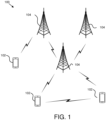
- the remote units 102 may include computing devices, such as desktop computers, laptop computers, personal digital assistants ("PDAs"), tablet computers, smart phones, smart televisions (e.g., televisions connected to the Internet), set-top boxes, game consoles, security systems (including security cameras), vehicle on-board computers, network devices (e.g., routers, switches, modems), aerial vehicles, drones, or the like.
- the remote units 102 include wearable devices, such as smart watches, fitness bands, optical head-mounted displays, or the like.
- the remote units 102 may be referred to as subscriber units, mobiles, mobile stations, users, terminals, mobile terminals, fixed terminals, subscriber stations, UE, user terminals, a device, or by other terminology used in the art.
- the remote units 102 may communicate directly with one or more of the network units 104 via UL communication signals. In certain embodiments, the remote units 102 may communicate directly with other remote units 102 via sidelink communication.
- the network units 104 may be distributed over a geographic region.
- a network unit 104 may also be referred to as an access point, an access terminal, a base, a base station, a Node-B, an eNB, a gNB, a Home Node-B, a relay node, a device, a core network, an aerial server, a radio access node, an AP, NR, a network entity, an AMF, a UDM, a UDR, a UDM/UDR, a PCF, a RAN, an NSSF, or by any other terminology used in the art.
- the network units 104 are generally part of a radio access network that includes one or more controllers communicably coupled to one or more corresponding network units 104.
- the radio access network is generally communicably coupled to one or more core networks, which may be coupled to other networks, like the Internet and public switched telephone networks, among other networks. These and other elements of radio access and core networks are not illustrated but are well known generally by those having ordinary skill in the art.
- the network units 104 may serve a number of remote units 102 within a serving area, for example, a cell or a cell sector via a wireless communication link.
- the network units 104 transmit DL communication signals to serve the remote units 102 in the time, frequency, and/or spatial domain.
- a remote unit 102 may determine whether a current new data indicator in a current sidelink grant matches a last received new data indicator in a last received sidelink grant for a first hybrid automatic repeat request process. In some embodiments, the remote unit 102 may, in response to determining that the current new data indicator does not match the last received new data indicator, determine whether a negative acknowledgement has been transmitted in response to the last received sidelink grant. Accordingly, the remote unit 102 may be used for responding to a new data indicator for a hybrid automatic repeat request process.
- a remote unit 102 may determine whether a current new data indicator in a current sidelink grant matches a last received new data indicator in a last received sidelink grant for a first hybrid automatic repeat request process. In some embodiments, the remote unit 102 may, in response to determining that the current new data indicator matches the last received new data indicator, determine whether a positive acknowledgement has been transmitted in response to the last received sidelink grant. Accordingly, the remote unit 102 may be used for responding to a new data indicator for a hybrid automatic repeat request process.
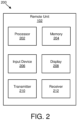
- Figure 2 depicts one embodiment of an apparatus 200 that may be used for responding to a new data indicator for a hybrid automatic repeat request process.
- the apparatus 200 includes one embodiment of the remote unit 102.
- the remote unit 102 may include a processor 202, a memory 204, an input device 206, a display 208, a transmitter 210, and a receiver 212.
- the input device 206 and the display 208 are combined into a single device, such as a touchscreen.
- the remote unit 102 may not include any input device 206 and/or display 208.
- the remote unit 102 may include one or more of the processor 202, the memory 204, the transmitter 210, and the receiver 212, and may not include the input device 206 and/or the display 208.
- the processor 202 may include any known controller capable of executing computer-readable instructions and/or capable of performing logical operations.
- the processor 202 may be a microcontroller, a microprocessor, a central processing unit (“CPU"), a graphics processing unit (“GPU”), an auxiliary processing unit, a field programmable gate array (“FPGA”), or similar programmable controller.
- the processor 202 executes instructions stored in the memory 204 to perform the methods and routines described herein.
- the processor 202 is communicatively coupled to the memory 204, the input device 206, the display 208, the transmitter 210, and the receiver 212.
- the memory 204 in one embodiment, is a computer readable storage medium.
- the memory 204 includes volatile computer storage media.
- the memory 204 may include a RAM, including dynamic RAM (“DRAM”), synchronous dynamic RAM (“SDRAM”), and/or static RAM (“SRAM”).
- the memory 204 includes non-volatile computer storage media.
- the memory 204 may include a hard disk drive, a flash memory, or any other suitable non-volatile computer storage device.
- the memory 204 includes both volatile and non-volatile computer storage media.
- the memory 204 also stores program code and related data, such as an operating system or other controller algorithms operating on the remote unit 102.
- the input device 206 may include any known computer input device including a touch panel, a button, a keyboard, a stylus, a microphone, or the like.
- the input device 206 may be integrated with the display 208, for example, as a touchscreen or similar touch-sensitive display.
- the input device 206 includes a touchscreen such that text may be input using a virtual keyboard displayed on the touchscreen and/or by handwriting on the touchscreen.
- the input device 206 includes two or more different devices, such as a keyboard and a touch panel.
- the display 208 may include any known electronically controllable display or display device.
- the display 208 may be designed to output visual, audible, and/or haptic signals.
- the display 208 includes an electronic display capable of outputting visual data to a user.
- the display 208 may include, but is not limited to, an LCD display, an LED display, an OLED display, a projector, or similar display device capable of outputting images, text, or the like to a user.
- the display 208 may include a wearable display such as a smart watch, smart glasses, a heads-up display, or the like.
- the display 208 may be a component of a smart phone, a personal digital assistant, a television, a table computer, a notebook (laptop) computer, a personal computer, a vehicle dashboard, or the like.
- the display 208 includes one or more speakers for producing sound.
- the display 208 may produce an audible alert or notification (e.g., a beep or chime).
- the display 208 includes one or more haptic devices for producing vibrations, motion, or other haptic feedback.
- all or portions of the display 208 may be integrated with the input device 206.
- the input device 206 and display 208 may form a touchscreen or similar touch-sensitive display.
- the display 208 may be located near the input device 206.
- the transmitter 210 is used to provide UL communication signals to the network unit 104 and the receiver 212 is used to receive DL communication signals from the network unit 104, as described herein.
- the processor 202 may: determine whether a current new data indicator in a current sidelink grant matches a last received new data indicator in a last received sidelink grant for a first hybrid automatic repeat request process; and, in response to determining that the current new data indicator does not match the last received new data indicator, determine whether a negative acknowledgement has been transmitted in response to the last received sidelink grant.
- the processor 202 may: determine whether a current new data indicator in a current sidelink grant matches a last received new data indicator in a last received sidelink grant for a first hybrid automatic repeat request process; and, in response to determining that the current new data indicator matches the last received new data indicator, determine whether a positive acknowledgement has been transmitted in response to the last received sidelink grant.
- the remote unit 102 may have any suitable number of transmitters 210 and receivers 212.
- the transmitter 210 and the receiver 212 may be any suitable type of transmitters and receivers.
- the transmitter 210 and the receiver 212 may be part of a transceiver.
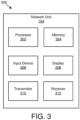
- Figure 3 depicts one embodiment of an apparatus 300 that may be used for transmitting and/or receiving data.
- the apparatus 300 includes one embodiment of the network unit 104.
- the network unit 104 may include a processor 302, a memory 304, an input device 306, a display 308, a transmitter 310, and a receiver 312.
- the processor 302, the memory 304, the input device 306, the display 308, the transmitter 310, and the receiver 312 may be substantially similar to the processor 202, the memory 204, the input device 206, the display 208, the transmitter 210, and the receiver 212 of the remote unit 102, respectively.
- the transmitter 310 and/or the receiver 312 may transmit and/or receive information described herein. Although only one transmitter 310 and one receiver 312 are illustrated, the network unit 104 may have any suitable number of transmitters 310 and receivers 312. The transmitter 310 and the receiver 312 may be any suitable type of transmitters and receivers. In one embodiment, the transmitter 310 and the receiver 312 may be part of a transceiver.
- HARQ feedback error detection and handling mechanisms may be used for sidelink NR mode 1 operation.
- a gNB may allocate transmission and retransmission resources for sidelink transmissions.
- a TX UE transmits ACK/NACK about a sidelink transmission and reception to the gNB and the gNB may not receive the ACK/NACK from the TX UE.
- eNB and/or gNB may be used for a base station but it may also be replaceable by any other radio access node (e.g., BS, eNB, gNB, AP, NR, and so forth).
- radio access node e.g., BS, eNB, gNB, AP, NR, and so forth.
- various embodiments described herein may be in the context of 5G NR; however, such embodiments may be applicable to other mobile communication systems supporting serving cells and/or carriers configured for sidelink communication over a PC5 interface.
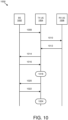
- Figure 4 is a diagram illustrating one embodiment of a method 400 for sidelink mode 1 HARQ operation.
- the method 400 includes detecting 402 an error and performing a configuration 404 in response to detecting the error.
- Second ACK to NACK error NDI is un-toggled, and there is a same TB size TX UE considers NDI un-toggled
- Option 1 TX UE generates new transmission according to the resource allocated in the DCI;
- Option 2 Ignore or skip the DCI and transmit ACK in the corresponding feedback; and/or
- Option 3 TX UE triggers SL BSR reporting.
- TX UE Third Missed DCI (toggled NDI compared to the previous transmission) and DTX to ACK NDI is toggled compared to the missed DCI, and there is a same or different TB size TX UE considers NDI is un-toggled
- Option 1 TX UE generates new transmission according to the resource allocated in the DCI;
- Option 2 Ignore or skip the DCI and transmit ACK in the corresponding feedback; and/or
- Option 3 TX UE triggers SL BSR reporting.
- Table 1 The embodiments of Table 1 are described in additional detail as found in the following embodiments which are also described in relation to Figures 5 through 10 .
- a NACK to ACK error there is a NACK to ACK error.
- the TX UE in NR mode 1, if a transmitter UE reports a NACK to a BS upon having received a NACK from an RX UE for a groupcast or unicast transmission to request retransmission resources, and if the BS decodes the NACK as an ACK, then the TX UE may detect the error to prevent packet loss.
- the TX UE expects a retransmission grant from the BS, but the BS transmits DCI with a toggled NDI (e.g., indicating resources for a new initial transmission, not a retransmission).
- the TX UE detects the error from the toggled NDI in DCI and/or if the TB size is different.
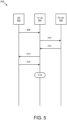
- Figure 5 shows one embodiment of a protocol error scenario that occurs in the first embodiment.
- FIG. 5 is a diagram illustrating one embodiment of communications 500 including a NACK to ACK error.
- the communications 500 include communications between a BS 502, a TX UE 504, and an RX UE 506.
- each of the communications 500 described herein may include one or more messages.
- the BS 502 transmits a mode 1 SL grant in DCI to the TX UE 504.
- the TX UE 504 transmits SCI (e.g., the first TB) to the RX UE 506.
- the RX UE 506 transmits NACK (e.g., NACK indicating that the first TB was not received correctly) to the TX UE 504.
- NACK e.g., NACK indicating that the first TB was not received correctly
- the TX UE 504 transmits a NACK indicator to the BS 502.
- the BS 502 misinterprets the NACK as ACK.
- the BS 502 transmits a mode 1 SL grant in DCI to the TX UE 504.
- the TX UE 504 detects 518 the protocol error because of the toggled NDI and/or the second TB being indicated (e.g., due to the second TB having a different size than the first TB).
- the TX UE 504 determines whether a NACK has been transmitted (e.g., in the third communication 512) in response to the last received sidelink grant. In some embodiments, the TX UE 504, in response to determining that the NACK has been transmitted (e.g., in the third communication 512) in response to the last received sidelink grant and that a current NDI does not match a last received NDI for the HARQ process, generates an autonomous HARQ retransmission for the first TB transmitted based on the last received sidelink grant.
- the TX UE 504 in response to determining that the NACK has been transmitted (e.g., in the third communication 512) in response to the last received sidelink grant and that a current NDI does not match a last received NDI for the HARQ process, selects a second HARQ process, generates a second TB , stores the second TB in a HARQ buffer corresponding to the second HARQ process, and transmits the second TB in the second HARQ process.
- a transmitter UE reports an ACK to a BS upon having received an ACK from an RX UE for a groupcast or unicast transmission to request transmission resources and, if the BS decodes ACK as NACK, then the TX UE may detect the error.
- the TX UE expects a new transmission grant from the BS, but the BS transmits DCI with an un-toggled NDI (e.g., indicating resources for a retransmission, not for a new transmission).
- the TX UE detects the error from the un-toggled NDI in DCI and the SL HARQ feedback which it received from the RX UE.
- Figure 6 shows one embodiment of a protocol error scenario that occurs in the second embodiment.
- the RX UE 706 transmits ACK (e.g., ACK indicating that the first TB was received correctly) to the TX UE 704.
- ACK e.g., ACK indicating that the first TB was received correctly
- the TX UE 704 does not detect 718 the DCI.
- the TX UE 704 detects 724 the protocol error because of the NDI being untoggled from the TX UE's 704 perspective and/or the third TB being indicated (e.g., due to the third TB having a different size than the first TB). As a result of detecting the error, the TX UE 704 may: 1) generate a new transmission according to the resource allocated in the DCI; 2) ignore or skip the DCI and transmit ACK to the BS 702 in the feedback corresponding to the mode 1 SL grant; and/or 3) trigger SL BSR reporting. As may be appreciated, the protocol error may have resulted from the combination of the two errors (e.g., the TX UE 704 missing the DCI and the BS 702 interpreting the DTX as ACK).
- a TX UE may miss DCI (e.g., having a toggled NDI compared to a previous transmission) and the TX UE may transmit a DTX to a BS, but the BS may interpret the DTX as a NACK.
- DCI e.g., having a toggled NDI compared to a previous transmission
- the BS 802 transmits a mode 1 SL grant in DCI to the TX UE 804.
- the TX UE 804 transmits SCI (e.g., the first TB) to the RX UE 806. Furthermore, in the second communication 810, the TX UE 804 may transmit the first TB in a physical layer sidelink shared channel to the RX UE 806 according to the received mode 1 SL grant in the first communication 808.
- SCI e.g., the first TB
- the RX UE 806 transmits ACK (e.g., ACK indicating that the first TB was received correctly) to the TX UE 804.
- ACK e.g., ACK indicating that the first TB was received correctly
- the TX UE 804 transmits an ACK indicator to the BS 802.
- the BS 802 transmits a mode 1 SL grant in DCI to the TX UE 804.
- the TX UE 804 does not detect 818 the DCI.
- DTX may mean that a UE (e.g., TX UE) does not transmit any information (e.g., ACK and/or NACK) in a PUCCH resource.
- the BS 802 misinterprets the DTX as a NACK.
- a seventh communication 822 transmitted from the BS 802 to the TX UE 804 the BS 802 transmits a mode 1 SL grant in DCI to the TX UE 804.
- the TX UE 804 detects 824 that there is no protocol error because of the NDI being toggled from the TX UE's 804 perspective. Accordingly, the TX UE 804 may operate as if no error has occurred.
- a TX UE may miss DCI (e.g., having an untoggled NDI compared to the previous transmission) and the TX UE may transmit a DTX to a BS, but the BS may interpret the DTX as an ACK.
- DCI e.g., having an untoggled NDI compared to the previous transmission
- the transmission of DCI by the BS may contain a toggled NDI indicating a new transmission and also the NDI is toggled from the TX UE's perspective because the TX UE missed the previous DCI from the BS.
- Figure 9 shows one embodiment of a protocol error scenario that occurs in the fifth embodiment.
- FIG. 9 is a diagram illustrating a further embodiment of communications 900 including a missed DCI.
- the communications 900 include communications between a BS 902, a TX UE 904, and an RX UE 906.
- each of the communications 900 described herein may include one or more messages.
- the BS 902 transmits a mode 1 SL grant in DCI to the TX UE 904.
- the TX UE 904 transmits SCI (e.g., the first TB) to the RX UE 906. Furthermore, in the second communication 910, the TX UE 904 may transmit first TB in a physical layer sidelink shared channel to the RX UE 906 according to the received mode 1 SL grant in the first communication 908.
- SCI e.g., the first TB
- the RX UE 906 transmits NACK (e.g., NACK indicating that the first TB was not received correctly) to the TX UE 904.
- NACK e.g., NACK indicating that the first TB was not received correctly
- the TX UE 904 transmits a NACK indicator to the BS 902.
- the BS 902 transmits a mode 1 SL grant in DCI to the TX UE 904.
- the TX UE 904 does not detect 918 the DCI.
- the TX UE 904 transmits a DTX indicator to the BS 902.
- the BS 902 misinterprets the DTX as an ACK.
- a seventh communication 922 transmitted from the BS 902 to the TX UE 904 the BS 902 transmits a mode 1 SL grant in DCI to the TX UE 904.
- the TX UE 904 detects 924 the protocol error because of the NDI being untoggled from the TX UE's 904 perspective and/or the third TB being indicated (e.g., due to the third TB having a different size than the first TB).
- the protocol error may have resulted from the combination of the two errors (e.g., the TX UE 904 missing the DCI and the BS 902 interpreting the DTX as ACK).
- a TX UE may miss DCI (e.g., having an untoggled NDI compared to the previous transmission) and the TX UE may transmit a DTX to a BS, but the BS may interpret the DTX as a NACK.
- DCI e.g., having an untoggled NDI compared to the previous transmission
- the RX UE 1006 transmits NACK (e.g., NACK indicating that the first TB was not received correctly) to the TX UE 1004.
- NACK e.g., NACK indicating that the first TB was not received correctly
- the TX UE 1004 does not detect 1018 the DCI.
- a TX UE in NR mode 1, starts a timer after transmitting NACK to a BS for a groupcast or unicast HARQ transmission (or retransmission), and before expiration of the timer, the TX UE expects a retransmission grant from the BS.
- the TX UE may, upon detection of the error (e.g., when the timer expires and no DCI indicating retransmission resources was received), perform a retransmission of the previous pending transport block for which a NACK was sent to the BS by switching to NR mode 2 operation for that HARQ process ID.
- a TX UE may drop a packet from its buffer and signal to one or more RX UEs to clear a soft buffer for that HARQ process ID using a toggled NDI within SCI.
- the TX UE may choose to either drop the packet or perform retransmission in NR mode 2 operation (e.g., based on a QoS priority of the packet to be transmitted and/or congestion metric, packet delay budget if the packet delay budget still allows performance of a retransmission), then the UE may switch to mode 2 and perform an autonomous retransmission.
- a configuration of a timer may be set based on a packet delay budget.
- a BS doesn't schedule retransmission for a pending packet because a PDB is already exceeded.
- a misaligned counter between a gNB and a TX UE.
- an error between the gNB and the TX UE e.g., a missed DCI and a DTX is interpreted as an ACK, a NACK is interpreted as an ACK, an ACK is interpreted as a NACK
- an actual retransmission number (or redundancy version) signaled in DCI between the TX UE and the gNB may be different from that used in SCI transmitted between the TX UE and the RX UE.
- a TX UE may ignore the redundancy version indicated by a gNB in DCI and transmit another redundancy version (e.g., correct redundancy version) in SCI.
- a gNB configures a TX UE with resources for 'k' blind repetitions, and if the TX UE receives an ACK from an RX UE before an end period of the scheduled 'k' repetition, then the TX UE may transmit an ACK to the gNB to free SL resources for other SL transmissions.
- a time domain configuration of UL feedback resources e.g., in terms of slots, minislots, or symbols
- a gNB configures sidelink common feedback resource for every beam, spatial direction, or panel for a TX UE and the TX UE may use beam sweeping in a different spatial direction and/or time domain for repeated transmission of a same TB or to perform a multi-beam operation of a TB.
- RX UEs may choose to transmit NACK over a sidelink feedback resource assigned for that particular beam, spatial direction, or panel.
- a TX UE may associate a received NACK with a particular beam, beam spatial direction, or panel, based on the received NACK per beam, beam spatial direction, or panel. In such embodiments, the TX UE may selectively retransmit in that particular beam, spatial direction, or panel.
- a resource configuration of a common NACK resource set may depend on a configuration of a number of beams or panels in the TX UE.
- SL common feedback resources that are configured for each beam, spatial direction, or panel may be differentiated either in time, frequency, or code resource sets, and may be indicated via L1, L2, or L3 signaling.
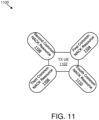
- FIG 11 is a block diagram illustrating one embodiment a system 1100 including a TX UE 1102 that may be used in embodiments described herein.
- the TX UE 1102 includes a first common NACK resource 1104, a second common NACK resource 1106, a third common NACK resource 1108, and a fourth common NACK resource 1110.
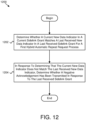
- the method 1200 includes determining 1202 whether a current new data indicator in a current sidelink grant matches a last received new data indicator in a last received sidelink grant for a first hybrid automatic repeat request process. In some embodiments, the method 1200 includes, in response to determining that the current new data indicator does not match the last received new data indicator, determining 1204 whether a negative acknowledgement has been transmitted in response to the last received sidelink grant. It should be noted that the negative acknowledgement is based on a negative acknowledgment received from RX UEs (e.g., at least one RX UE from a groupcast transmission) in PSFCH.
- RX UEs e.g., at least one RX UE from a groupcast transmission
- the method 1200 further comprises, in response to determining: that the negative acknowledgement has been transmitted in response to the last received sidelink grant; and that the current new data indicator does not match the last received new data indicator for the first hybrid automatic repeat request process; switching from a first mode to a second mode for the first hybrid automatic repeat request process. In some embodiments, the method 1200 further comprises, in response to determining: that the negative acknowledgement has been transmitted in response to the last received sidelink grant; and that the current new data indicator does not match the last received new data indicator for the first hybrid automatic repeat request process; generating an autonomous hybrid automatic repeat request retransmission for a first transport block transmitted based on the last received sidelink grant.
- the method 1200 further comprises, in response to determining: that the negative acknowledgement has been transmitted in response to the last received sidelink grant; and that the current new data indicator does not match the last received new data indicator for the first hybrid automatic repeat request process; selecting a second hybrid automatic repeat request process from a plurality of available hybrid automatic repeat request processes; generating a second transport block corresponding to the current sidelink grant; storing the second transport block in a hybrid automatic repeat request buffer corresponding to the second hybrid automatic repeat request process; and transmitting the second transport block in the second hybrid automatic repeat request process.
- the method 1200 further comprises, in response to determining: that the negative acknowledgement has been transmitted in response to the last received sidelink grant; and that the current new data indicator does not match the last received new data indicator for the first hybrid automatic repeat request process; ignoring or skipping the current sidelink grant and transmitting a positive acknowledgment to a base station.
- the method 1200 further comprises, in response to determining that a positive acknowledgement has been transmitted in response to the last received sidelink grant: generating the second transport block corresponding to the current sidelink grant; and transmitting the second transport block in the first hybrid automatic repeat request process. In some embodiments, the method 1200 further comprises, in response to the current new data indicator matching the last received new data indicator, determining whether a positive acknowledgement has been transmitted in response to the last received sidelink grant.
- the method 1200 further comprises, in response to determining that the positive acknowledgement has been transmitted in response to the last received sidelink grant: considering the new data indicator as toggled; generating the second transport block for the first hybrid automatic repeat request process according to the current sidelink grant; and transmitting the second transport block in the first hybrid automatic repeat request process.
- the method 1200 further comprises, in response to determining that the negative acknowledgement has been transmitted in response to the last received sidelink grant: performing a hybrid automatic repeat request retransmission of the first transport block stored in a hybrid automatic repeat request buffer for the first hybrid automatic repeat request process.
- Figure 13 is a flow chart diagram illustrating another embodiment of a method 1300 for responding to a new data indicator for a hybrid automatic repeat request process.
- the method 1300 is performed by an apparatus, such as the remote unit 102.
- the method 1300 may be performed by a processor executing program code, for example, a microcontroller, a microprocessor, a CPU, a GPU, an auxiliary processing unit, a FPGA, or the like.
- the method 1300 includes determining 1302 whether a current new data indicator in a current sidelink grant matches a last received new data indicator in a last received sidelink grant for a first hybrid automatic repeat request process. In some embodiments, the method 1300 includes, in response to determining that the current new data indicator matches the last received new data indicator, determining 1304 whether a positive acknowledgement has been transmitted in response to the last received sidelink grant.
- the method 1300 further comprises, in response to determining: that the positive acknowledgement has been transmitted in response to the last received sidelink grant; and that the current new data indicator matches the last received new data indicator for the first hybrid automatic repeat request process; considering the new data indicator as toggled. In some embodiments, the method 1300 further comprises generating a second transport block for the first hybrid automatic repeat request process according to the current sidelink grant.
- the method 1300 further comprises transmitting the second transport block in the first hybrid automatic repeat request process. In one embodiment, the method 1300 further comprises, in response to determining that a negative acknowledgement has been transmitted in response to the last received sidelink grant: performing a hybrid automatic repeat request retransmission of a first transport block stored in a hybrid automatic repeat request buffer for the first hybrid automatic repeat request process.
- the method 1300 further comprises, in response to the current new data indicator not matching the last received new data indicator, determining whether a negative acknowledgement has been transmitted in response to the last received sidelink grant. In some embodiments, the method 1300 further comprises, in response to determining that the negative acknowledgement has been transmitted in response to the last received sidelink grant: switching from a first mode to a second mode for the first hybrid automatic repeat request process; generating an autonomous hybrid automatic repeat request retransmission for a first transport block transmitted based on the last received sidelink grant; selecting a second hybrid automatic repeat request process from a plurality of available hybrid automatic repeat request processes; generating a second transport block corresponding to the current sidelink grant; storing the second transport block in a hybrid automatic repeat request buffer corresponding to the second hybrid automatic repeat request process; and transmitting the second transport block in the second hybrid automatic repeat request process.
- the method 1300 further comprises, in response to determining that the positive acknowledgement has been transmitted in response to the last received sidelink grant: generating a second transport block corresponding to the current sidelink grant; and transmitting the second transport block in the first hybrid automatic repeat request process.
- a method comprises: determining whether a current new data indicator in a current sidelink grant matches a last received new data indicator in a last received sidelink grant for a first hybrid automatic repeat request process; and, in response to determining that the current new data indicator does not match the last received new data indicator, determining whether a negative acknowledgement has been transmitted in response to the last received sidelink grant.
- the method further comprises, in response to determining: that the negative acknowledgement has been transmitted in response to the last received sidelink grant; and that the current new data indicator does not match the last received new data indicator for the first hybrid automatic repeat request process; switching from a first mode to a second mode for the first hybrid automatic repeat request process.
- the method further comprises, in response to determining: that the negative acknowledgement has been transmitted in response to the last received sidelink grant; and that the current new data indicator does not match the last received new data indicator for the first hybrid automatic repeat request process; generating an autonomous hybrid automatic repeat request retransmission for a first transport block transmitted based on the last received sidelink grant.
- the method further comprises, in response to determining: that the negative acknowledgement has been transmitted in response to the last received sidelink grant; and that the current new data indicator does not match the last received new data indicator for the first hybrid automatic repeat request process; selecting a second hybrid automatic repeat request process from a plurality of available hybrid automatic repeat request processes; generating a second transport block corresponding to the current sidelink grant; storing the second transport block in a hybrid automatic repeat request buffer corresponding to the second hybrid automatic repeat request process; and transmitting the second transport block in the second hybrid automatic repeat request process.
- the method further comprises, in response to determining: that the negative acknowledgement has been transmitted in response to the last received sidelink grant; and that the current new data indicator does not match the last received new data indicator for the first hybrid automatic repeat request process; ignoring or skipping the current sidelink grant and transmitting a positive acknowledgment to a base station.
- the method further comprises, in response to determining that a positive acknowledgement has been transmitted in response to the last received sidelink grant: generating the second transport block corresponding to the current sidelink grant; and transmitting the second transport block in the first hybrid automatic repeat request process.
- the method further comprises, in response to the current new data indicator matching the last received new data indicator, determining whether a positive acknowledgement has been transmitted in response to the last received sidelink grant.
- the method further comprises, in response to determining that the positive acknowledgement has been transmitted in response to the last received sidelink grant: considering the new data indicator as toggled; generating the second transport block for the first hybrid automatic repeat request process according to the current sidelink grant; and transmitting the second transport block in the first hybrid automatic repeat request process.
- the method further comprises, in response to determining that the negative acknowledgement has been transmitted in response to the last received sidelink grant: performing a hybrid automatic repeat request retransmission of the first transport block stored in a hybrid automatic repeat request buffer for the first hybrid automatic repeat request process.
- an apparatus comprises: a processor that: determines whether a current new data indicator in a current sidelink grant matches a last received new data indicator in a last received sidelink grant for a first hybrid automatic repeat request process; and, in response to determining that the current new data indicator does not match the last received new data indicator, determines whether a negative acknowledgement has been transmitted in response to the last received sidelink grant.
- the processor in response to determining: that the negative acknowledgement has been transmitted in response to the last received sidelink grant; and that the current new data indicator does not match the last received new data indicator for the first hybrid automatic repeat request process; switches from a first mode to a second mode for the first hybrid automatic repeat request process.
- the processor in response to determining: that the negative acknowledgement has been transmitted in response to the last received sidelink grant; and that the current new data indicator does not match the last received new data indicator for the first hybrid automatic repeat request process; generates an autonomous hybrid automatic repeat request retransmission for a first transport block transmitted based on the last received sidelink grant.
- the apparatus further comprises a transmitter, wherein, in response to determining: that the negative acknowledgement has been transmitted in response to the last received sidelink grant; and that the current new data indicator does not match the last received new data indicator for the first hybrid automatic repeat request process; the processor selects a second hybrid automatic repeat request process from a plurality of available hybrid automatic repeat request processes; the processor generates a second transport block corresponding to the current sidelink grant; the processor stores the second transport block in a hybrid automatic repeat request buffer corresponding to the second hybrid automatic repeat request process; and the transmitter transmits the second transport block in the second hybrid automatic repeat request process.
- the processor in response to determining: that the negative acknowledgement has been transmitted in response to the last received sidelink grant; and that the current new data indicator does not match the last received new data indicator for the first hybrid automatic repeat request process; ignores or skips the current sidelink grant and transmitting a positive acknowledgment to a base station.
- the apparatus further comprises a transmitter, wherein, in response to determining that a positive acknowledgement has been transmitted in response to the last received sidelink grant: the processor generates the second transport block corresponding to the current sidelink grant; and the transmitter transmits the second transport block in the first hybrid automatic repeat request process.
- the processor determines whether a positive acknowledgement has been transmitted in response to the last received sidelink grant.
- the apparatus further comprises a transmitter, wherein, in response to determining that the positive acknowledgement has been transmitted in response to the last received sidelink grant: the processor considers the new data indicator as toggled; the processor generates the second transport block for the first hybrid automatic repeat request process according to the current sidelink grant; and the transmitter transmits the second transport block in the first hybrid automatic repeat request process.
- the processor in response to determining that the negative acknowledgement has been transmitted in response to the last received sidelink grant: performs a hybrid automatic repeat request retransmission of the first transport block stored in a hybrid automatic repeat request buffer for the first hybrid automatic repeat request process.
- a method comprises: determining whether a current new data indicator in a current sidelink grant matches a last received new data indicator in a last received sidelink grant for a first hybrid automatic repeat request process; and, in response to determining that the current new data indicator matches the last received new data indicator, determining whether a positive acknowledgement has been transmitted in response to the last received sidelink grant.
- the method further comprises, in response to determining: that the positive acknowledgement has been transmitted in response to the last received sidelink grant; and that the current new data indicator matches the last received new data indicator for the first hybrid automatic repeat request process; considering the new data indicator as toggled.
- the method further comprises generating a second transport block for the first hybrid automatic repeat request process according to the current sidelink grant.
- the method further comprises transmitting the second transport block in the first hybrid automatic repeat request process.
- the method further comprises, in response to determining that a negative acknowledgement has been transmitted in response to the last received sidelink grant: performing a hybrid automatic repeat request retransmission of a first transport block stored in a hybrid automatic repeat request buffer for the first hybrid automatic repeat request process.
- the method further comprises, in response to the current new data indicator not matching the last received new data indicator, determining whether a negative acknowledgement has been transmitted in response to the last received sidelink grant.
- the method further comprises, in response to determining that the negative acknowledgement has been transmitted in response to the last received sidelink grant: switching from a first mode to a second mode for the first hybrid automatic repeat request process; generating an autonomous hybrid automatic repeat request retransmission for a first transport block transmitted based on the last received sidelink grant; selecting a second hybrid automatic repeat request process from a plurality of available hybrid automatic repeat request processes; generating a second transport block corresponding to the current sidelink grant; storing the second transport block in a hybrid automatic repeat request buffer corresponding to the second hybrid automatic repeat request process; and transmitting the second transport block in the second hybrid automatic repeat request process.
- the method further comprises, in response to determining that the positive acknowledgement has been transmitted in response to the last received sidelink grant: generating a second transport block corresponding to the current sidelink grant; and transmitting the second transport block in the first hybrid automatic repeat request process.
- the processor in response to determining: that the positive acknowledgement has been transmitted in response to the last received sidelink grant; and that the current new data indicator matches the last received new data indicator for the first hybrid automatic repeat request process; considers the new data indicator as toggled.
- the processor generates a second transport block for the first hybrid automatic repeat request process according to the current sidelink grant.
- the apparatus further comprises a transmitter that transmits the second transport block in the first hybrid automatic repeat request process.
- the processor in response to determining that a negative acknowledgement has been transmitted in response to the last received sidelink grant: performs a hybrid automatic repeat request retransmission of a first transport block stored in a hybrid automatic repeat request buffer for the first hybrid automatic repeat request process.
- the processor in response to the current new data indicator not matching the last received new data indicator, determines whether a negative acknowledgement has been transmitted in response to the last received sidelink grant.
- the apparatus further comprises a transmitter, wherein, in response to determining that the negative acknowledgement has been transmitted in response to the last received sidelink grant: the processor switches from a first mode to a second mode for the first hybrid automatic repeat request process; the processor generates an autonomous hybrid automatic repeat request retransmission for a first transport block transmitted based on the last received sidelink grant; the processor selects a second hybrid automatic repeat request process from a plurality of available hybrid automatic repeat request processes; the processor generates a second transport block corresponding to the current sidelink grant; the processor stores the second transport block in a hybrid automatic repeat request buffer corresponding to the second hybrid automatic repeat request process; and the transmitter transmits the second transport block in the second hybrid automatic repeat request process.
- the apparatus further comprises a transmitter, wherein, in response to determining that the positive acknowledgement has been transmitted in response to the last received sidelink grant: the processor generates a second transport block corresponding to the current sidelink grant; and the transmitter transmits the second transport block in the first hybrid automatic repeat request process.
Landscapes
- Engineering & Computer Science (AREA)
- Signal Processing (AREA)
- Computer Networks & Wireless Communication (AREA)
- Mobile Radio Communication Systems (AREA)
- Detection And Prevention Of Errors In Transmission (AREA)
- Communication Control (AREA)
Applications Claiming Priority (3)
| Application Number | Priority Date | Filing Date | Title |
|---|---|---|---|
| US201962860689P | 2019-06-12 | 2019-06-12 | |
| EP20753405.8A EP3984156B1 (de) | 2019-06-12 | 2020-06-11 | Reaktion auf einen neuen datenindikator für einen hybriden automatischen wiederholungsaufforderungsprozess |
| PCT/IB2020/000471 WO2020250035A1 (en) | 2019-06-12 | 2020-06-11 | Responding to a new data indicator for a hybrid automatic repeat request process |
Related Parent Applications (2)
| Application Number | Title | Priority Date | Filing Date |
|---|---|---|---|
| EP20753405.8A Division EP3984156B1 (de) | 2019-06-12 | 2020-06-11 | Reaktion auf einen neuen datenindikator für einen hybriden automatischen wiederholungsaufforderungsprozess |
| EP20753405.8A Division-Into EP3984156B1 (de) | 2019-06-12 | 2020-06-11 | Reaktion auf einen neuen datenindikator für einen hybriden automatischen wiederholungsaufforderungsprozess |
Publications (2)
| Publication Number | Publication Date |
|---|---|
| EP4513801A2 true EP4513801A2 (de) | 2025-02-26 |
| EP4513801A3 EP4513801A3 (de) | 2025-04-30 |
Family
ID=71994652
Family Applications (2)
| Application Number | Title | Priority Date | Filing Date |
|---|---|---|---|
| EP25151019.4A Pending EP4513801A3 (de) | 2019-06-12 | 2020-06-11 | Reaktion auf einen neuen datenindikator für ein hybrides automatisches wiederholungsanfrageverfahren |
| EP20753405.8A Active EP3984156B1 (de) | 2019-06-12 | 2020-06-11 | Reaktion auf einen neuen datenindikator für einen hybriden automatischen wiederholungsaufforderungsprozess |
Family Applications After (1)
| Application Number | Title | Priority Date | Filing Date |
|---|---|---|---|
| EP20753405.8A Active EP3984156B1 (de) | 2019-06-12 | 2020-06-11 | Reaktion auf einen neuen datenindikator für einen hybriden automatischen wiederholungsaufforderungsprozess |
Country Status (5)
| Country | Link |
|---|---|
| US (2) | US11398883B2 (de) |
| EP (2) | EP4513801A3 (de) |
| CN (2) | CN114008955B (de) |
| ES (1) | ES3015286T3 (de) |
| WO (1) | WO2020250035A1 (de) |
Families Citing this family (35)
| Publication number | Priority date | Publication date | Assignee | Title |
|---|---|---|---|---|
| CN111492698A (zh) * | 2017-11-09 | 2020-08-04 | 株式会社Ntt都科摩 | 用户终端以及无线通信方法 |
| EP3725037B1 (de) * | 2017-12-15 | 2025-04-02 | Nokia Technologies OY | Unterstützung der funktion eines zustandslosen netzwerks im kernnetzwerk |
| CN111327410B (zh) * | 2018-12-17 | 2021-05-18 | 华为技术有限公司 | 一种用于载波聚合系统的通信方法、终端及网络设备 |
| CN113574820B (zh) * | 2019-03-22 | 2024-04-26 | 联想(新加坡)私人有限公司 | 聚合harq反馈 |
| CN114080766B (zh) | 2019-04-18 | 2024-04-26 | 联想(新加坡)私人有限公司 | 传送块传输 |
| US11197249B2 (en) * | 2019-07-29 | 2021-12-07 | Qualcomm Incorporated | Transmit-power control mode selection |
| US11576157B2 (en) * | 2019-08-15 | 2023-02-07 | Intel Corporation | NR V2X sidelink resource selection and reselection using scheduling window |
| WO2021029722A1 (ko) * | 2019-08-15 | 2021-02-18 | 엘지전자 주식회사 | Nr v2x에서 sl harq 피드백 보고 자원을 할당하는 방법 및 장치 |
| KR102668855B1 (ko) * | 2019-10-04 | 2024-05-30 | 엘지전자 주식회사 | Nr v2x에서 전송 블록을 전송하는 방법 및 장치 |
| EP4000306B1 (de) * | 2019-10-28 | 2023-08-30 | LG Electronics Inc. | Verfahren und vorrichtung zum löschen von übertragungswiederholungsressourcen auf der basis von bestätigung |
| EP4057537B1 (de) * | 2019-11-06 | 2026-02-18 | LG Electronics Inc. | Verfahren und vorrichtung zum senden oder empfangen eines signals in einem drahtloskommunikationssystem |
| CN115242358A (zh) * | 2019-11-08 | 2022-10-25 | 华为技术有限公司 | 一种混合自动重传请求的处理方法及通信装置 |
| CN114616920B (zh) * | 2019-11-08 | 2024-07-19 | 株式会社Ntt都科摩 | 终端和通信方法 |
| CN113260024B (zh) * | 2020-02-10 | 2022-08-26 | 大唐移动通信设备有限公司 | 一种非连续接收定时器管理方法及终端 |
| CN115396947B (zh) * | 2020-03-19 | 2024-07-09 | Oppo广东移动通信有限公司 | 侧行数据传输方法、终端设备和网络设备 |
| CN115699648B (zh) * | 2020-04-09 | 2025-01-14 | Lg电子株式会社 | 用于在nr v2x中执行模式1 sl通信的方法和装置 |
| WO2021206329A1 (en) * | 2020-04-09 | 2021-10-14 | Lg Electronics Inc. | Bandwidth parts deactivation and discontinuous reception for communication between wireless devices |
| WO2021230644A1 (en) * | 2020-05-12 | 2021-11-18 | Lg Electronics Inc. | Periodic transmissions for configured grant |
| US11664938B2 (en) * | 2020-07-06 | 2023-05-30 | Qualcomm Incorporated | Delivering configured grants to sidelink receivers with confirmation |
| US11864231B2 (en) * | 2020-08-20 | 2024-01-02 | Qualcomm Incorporated | Listen-before-talk (LBT) aware autonomous sensing for sidelink |
| PL4240076T3 (pl) * | 2020-10-27 | 2025-10-06 | Guangdong Oppo Mobile Telecommunications Corp., Ltd. | Sposób transmisji i urządzenie końcowe |
| US11678171B2 (en) | 2020-12-21 | 2023-06-13 | Dish Network L.L.C. | Internet gateway provisioning and evaluation of embedded subscriber identity module privileges |
| KR20230121876A (ko) * | 2020-12-24 | 2023-08-21 | 베이징 시아오미 모바일 소프트웨어 컴퍼니 리미티드 | 데이터 재송신 결정 방법 및 기기 |
| CN114765897A (zh) * | 2021-01-13 | 2022-07-19 | 华为技术有限公司 | 一种通信方法及装置 |
| US11622342B2 (en) * | 2021-02-18 | 2023-04-04 | Qualcomm Incorporated | Sidelink feedback channel repetitions |
| JP7662134B2 (ja) * | 2021-03-12 | 2025-04-15 | 株式会社Nttドコモ | 通信装置及び通信方法 |
| US11533688B2 (en) * | 2021-03-17 | 2022-12-20 | T-Mobile Usa, Inc. | Dynamic switching of user equipment power class |
| US11750338B2 (en) * | 2021-06-02 | 2023-09-05 | Qualcomm Incorporated | Hybrid automatic repeat request feedback for sidelink |
| US20240380523A1 (en) * | 2021-08-12 | 2024-11-14 | Nokia Technologies Oy | Handling of harq feedback error for configured grant |
| US11844102B2 (en) * | 2021-09-23 | 2023-12-12 | Qualcomm Incorporated | Adaptive network coding for sidelink communications |
| JP2023079112A (ja) * | 2021-11-26 | 2023-06-07 | ソニーグループ株式会社 | 通信装置及び通信方法 |
| KR20230109998A (ko) * | 2022-01-14 | 2023-07-21 | 삼성전자주식회사 | 통신 시스템에서 제어 정보 및 데이터를 송수신하기 위한 장치 및 방법 |
| US12408054B2 (en) * | 2022-06-29 | 2025-09-02 | Verizon Patent And Licensing Inc. | Systems and methods for quality of service monitoring activated by policy control function |
| WO2024173211A1 (en) * | 2023-02-14 | 2024-08-22 | Interdigital Patent Holdings, Inc. | Harq sub-codebook for delayed harq feedback |
| US20250393044A1 (en) * | 2024-06-20 | 2025-12-25 | Apple Inc. | Enhancement for Power Saving in Hybrid Automatic Repeat Request (HARQ) Process for Long Term Evolution (LTE) and New Radio (NR) Wireless Networks |
Family Cites Families (12)
| Publication number | Priority date | Publication date | Assignee | Title |
|---|---|---|---|---|
| TW201018130A (en) * | 2005-12-29 | 2010-05-01 | Interdigital Tech Corp | Method and system for implementing H-ARQ-assisted ARQ operation |
| US20070259665A1 (en) | 2006-05-03 | 2007-11-08 | Chiu Chun-Yuan | Error detection and retransmission methods and devices for communication systems |
| CN101296059A (zh) * | 2006-05-03 | 2008-10-29 | 财团法人工业技术研究院 | 通信系统的错误检测方法与通信台和通信装置 |
| EP2422476A1 (de) * | 2009-03-27 | 2012-02-29 | Nec Corporation | Festlegung von harq-indikatoren |
| KR101782640B1 (ko) * | 2009-07-16 | 2017-09-28 | 엘지전자 주식회사 | 다중 반송파 시스템에서 harq 수행 장치 및 방법 |
| JP5685307B2 (ja) | 2010-03-29 | 2015-03-18 | エルジー エレクトロニクス インコーポレイティド | アップリンク多重アンテナ伝送を支援するための効率的な制御情報伝送方法及び装置 |
| CN103873211B (zh) * | 2012-12-10 | 2017-06-16 | 普天信息技术研究院有限公司 | 一种harq重传和盲检测方法 |
| CN108713302B (zh) * | 2016-03-25 | 2022-03-04 | 苹果公司 | 用于无线网络中的传输确认控制的方法、装置及系统 |
| US20190268903A1 (en) * | 2016-06-07 | 2019-08-29 | Lg Electronics Inc. | Transmission or reception method in wireless communication system, and device therefor |
| US11032051B2 (en) * | 2018-01-12 | 2021-06-08 | Mediatek Singapore Pte. Ltd. | Method and apparatus for reducing uplink overhead in mobile communications |
| US10952260B1 (en) * | 2019-09-13 | 2021-03-16 | Nokia Technologies Oy | Enhancements for contention based shared preconfigured uplink resource mechanism with additional resource allocation for retransmissions |
| WO2021071200A1 (en) * | 2019-10-10 | 2021-04-15 | Lg Electronics Inc. | Clearing retransmission resource based on harq-ack |
-
2020
- 2020-06-11 WO PCT/IB2020/000471 patent/WO2020250035A1/en not_active Ceased
- 2020-06-11 EP EP25151019.4A patent/EP4513801A3/de active Pending
- 2020-06-11 CN CN202080042105.7A patent/CN114008955B/zh active Active
- 2020-06-11 CN CN202411990284.3A patent/CN119921911A/zh active Pending
- 2020-06-11 US US16/899,329 patent/US11398883B2/en active Active
- 2020-06-11 EP EP20753405.8A patent/EP3984156B1/de active Active
- 2020-06-11 ES ES20753405T patent/ES3015286T3/es active Active
-
2022
- 2022-07-19 US US17/868,582 patent/US11916677B2/en active Active
Also Published As
| Publication number | Publication date |
|---|---|
| US11916677B2 (en) | 2024-02-27 |
| US20220353020A1 (en) | 2022-11-03 |
| WO2020250035A1 (en) | 2020-12-17 |
| CN114008955B (zh) | 2025-01-21 |
| CN119921911A (zh) | 2025-05-02 |
| US11398883B2 (en) | 2022-07-26 |
| CN114008955A (zh) | 2022-02-01 |
| EP3984156B1 (de) | 2025-03-19 |
| US20200396024A1 (en) | 2020-12-17 |
| EP4513801A3 (de) | 2025-04-30 |
| WO2020250035A8 (en) | 2022-01-13 |
| EP3984156C0 (de) | 2025-03-19 |
| EP3984156A1 (de) | 2022-04-20 |
| ES3015286T3 (en) | 2025-04-30 |
Similar Documents
| Publication | Publication Date | Title |
|---|---|---|
| US11916677B2 (en) | Responding to a new data indicator for a hybrid automatic repeat request process | |
| US12445189B2 (en) | Sidelink failure detection and recovery | |
| US11849484B2 (en) | Transport block transmission | |
| US12531610B2 (en) | Transmission skipping based on a beam correspondence | |
| US20250343635A1 (en) | Determining data transmission preemption | |
| US20220377810A1 (en) | Performing a listen-before-talk on beams and/or panels | |
| EP4000196A1 (de) | Übertragung von daten unter verwendung eines relaisbenutzergeräts | |
| EP4277414A2 (de) | Medienzugangs-steuerprotokolldateneinheit in einem nachrichten-3-puffer | |
| US12580683B2 (en) | Retransmitting a transport block with sidelink feedback not enabled | |
| WO2021053386A1 (en) | Providing a radio link failure indication |
Legal Events
| Date | Code | Title | Description |
|---|---|---|---|
| PUAI | Public reference made under article 153(3) epc to a published international application that has entered the european phase |
Free format text: ORIGINAL CODE: 0009012 |
|
| STAA | Information on the status of an ep patent application or granted ep patent |
Free format text: STATUS: THE APPLICATION HAS BEEN PUBLISHED |
|
| AC | Divisional application: reference to earlier application |
Ref document number: 3984156 Country of ref document: EP Kind code of ref document: P |
|
| AK | Designated contracting states |
Kind code of ref document: A2 Designated state(s): AL AT BE BG CH CY CZ DE DK EE ES FI FR GB GR HR HU IE IS IT LI LT LU LV MC MK MT NL NO PL PT RO RS SE SI SK SM TR |
|
| PUAL | Search report despatched |
Free format text: ORIGINAL CODE: 0009013 |
|
| AK | Designated contracting states |
Kind code of ref document: A3 Designated state(s): AL AT BE BG CH CY CZ DE DK EE ES FI FR GB GR HR HU IE IS IT LI LT LU LV MC MK MT NL NO PL PT RO RS SE SI SK SM TR |
|
| RIC1 | Information provided on ipc code assigned before grant |
Ipc: H04L 1/18 20230101AFI20250324BHEP |
|
| STAA | Information on the status of an ep patent application or granted ep patent |
Free format text: STATUS: REQUEST FOR EXAMINATION WAS MADE |
|
| 17P | Request for examination filed |
Effective date: 20251007 |
|
| STAA | Information on the status of an ep patent application or granted ep patent |
Free format text: STATUS: EXAMINATION IS IN PROGRESS |
|
| 17Q | First examination report despatched |
Effective date: 20260218 |