EP4513402A1 - Control method, program, shipping system, and showcase - Google Patents
Control method, program, shipping system, and showcase Download PDFInfo
- Publication number
- EP4513402A1 EP4513402A1 EP23791875.0A EP23791875A EP4513402A1 EP 4513402 A1 EP4513402 A1 EP 4513402A1 EP 23791875 A EP23791875 A EP 23791875A EP 4513402 A1 EP4513402 A1 EP 4513402A1
- Authority
- EP
- European Patent Office
- Prior art keywords
- product
- location
- control method
- robot arm
- actuator
- Prior art date
- Legal status (The legal status is an assumption and is not a legal conclusion. Google has not performed a legal analysis and makes no representation as to the accuracy of the status listed.)
- Pending
Links
Images




Classifications
-
- B—PERFORMING OPERATIONS; TRANSPORTING
- B25—HAND TOOLS; PORTABLE POWER-DRIVEN TOOLS; MANIPULATORS
- B25J—MANIPULATORS; CHAMBERS PROVIDED WITH MANIPULATION DEVICES
- B25J9/00—Program-controlled manipulators
- B25J9/16—Program controls
- B25J9/1694—Program controls characterised by use of sensors other than normal servo-feedback from position, speed or acceleration sensors, perception control, multi-sensor controlled systems, sensor fusion
- B25J9/1697—Vision controlled systems
-
- A—HUMAN NECESSITIES
- A47—FURNITURE; DOMESTIC ARTICLES OR APPLIANCES; COFFEE MILLS; SPICE MILLS; SUCTION CLEANERS IN GENERAL
- A47F—SPECIAL FURNITURE, FITTINGS, OR ACCESSORIES FOR SHOPS, STOREHOUSES, BARS, RESTAURANTS OR THE LIKE; PAYING COUNTERS
- A47F3/00—Show cases or show cabinets
-
- G—PHYSICS
- G06—COMPUTING OR CALCULATING; COUNTING
- G06K—GRAPHICAL DATA READING; PRESENTATION OF DATA; RECORD CARRIERS; HANDLING RECORD CARRIERS
- G06K7/00—Methods or arrangements for sensing record carriers, e.g. for reading patterns
- G06K7/10—Methods or arrangements for sensing record carriers, e.g. for reading patterns by electromagnetic radiation, e.g. optical sensing; by corpuscular radiation
- G06K7/14—Methods or arrangements for sensing record carriers, e.g. for reading patterns by electromagnetic radiation, e.g. optical sensing; by corpuscular radiation using light without selection of wavelength, e.g. sensing reflected white light
- G06K7/1404—Methods for optical code recognition
- G06K7/1408—Methods for optical code recognition the method being specifically adapted for the type of code
- G06K7/1413—1D bar codes
-
- G—PHYSICS
- G06—COMPUTING OR CALCULATING; COUNTING
- G06Q—INFORMATION AND COMMUNICATION TECHNOLOGY [ICT] SPECIALLY ADAPTED FOR ADMINISTRATIVE, COMMERCIAL, FINANCIAL, MANAGERIAL OR SUPERVISORY PURPOSES; SYSTEMS OR METHODS SPECIALLY ADAPTED FOR ADMINISTRATIVE, COMMERCIAL, FINANCIAL, MANAGERIAL OR SUPERVISORY PURPOSES, NOT OTHERWISE PROVIDED FOR
- G06Q10/00—Administration; Management
- G06Q10/08—Logistics, e.g. warehousing, loading or distribution; Inventory or stock management
-
- G—PHYSICS
- G06—COMPUTING OR CALCULATING; COUNTING
- G06T—IMAGE DATA PROCESSING OR GENERATION, IN GENERAL
- G06T7/00—Image analysis
- G06T7/0002—Inspection of images, e.g. flaw detection
- G06T7/0004—Industrial image inspection
- G06T7/001—Industrial image inspection using an image reference approach
-
- G—PHYSICS
- G06—COMPUTING OR CALCULATING; COUNTING
- G06T—IMAGE DATA PROCESSING OR GENERATION, IN GENERAL
- G06T2207/00—Indexing scheme for image analysis or image enhancement
- G06T2207/30—Subject of image; Context of image processing
- G06T2207/30108—Industrial image inspection
Definitions
- the present disclosure relates to a control method, a program, a shipping system, and a showcase.
- Patent Literature (PTL) 1 discloses a heating chamber having a lower surface on which a guide mark indicating the optimal placement position for food is formed by light from a light emitter.
- the present disclosure provides a control method and the like that improve upon the above related art.
- a control method is a control method used in a shipping system including a display device, and includes: obtaining a first product ID identifying a first product, based on sensing data obtained from a sensor; obtaining a first bottom image showing a shape of a bottom of the first product, based on (i) a first database that associates and manages product IDs and images each of which shows a shape of a bottom surface of a product corresponding to the product ID, and (ii) the first product ID obtained; and controlling the display device to display the first bottom image in a placement area for placing the first product.
- control method and the like according to the present disclosure are capable of improving upon the related art.
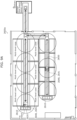
- shipping system 2600 according to the present embodiment will be described with reference to FIG. 1 through FIG. 3 .
- FIG. 1 illustrates an example of shipping system 2600 according to the embodiment.
- FIG. 2 illustrates an example of a stocked first product being placed on display device 2610 and displayed in a multi-level case in shipping system 2600 according to the embodiment.
- the dashed line in FIG. 2 illustrates the range of motion of robot arm 2620.
- FIG. 3 is a block diagram illustrating an example of shipping system 2600 according to the embodiment.
- shipping system 2600 when a user orders a first product via a terminal device and order information indicating the ordered first product is obtained, shipping system 2600 is used, for example, to ship (pick) the first product indicated in the obtained order information or to display the stocked first product in a multi-level case. Therefore, in shipping system 2600, the first product ordered by the user is first stocked and displayed in a multi-level case, and then the first product ordered by the user is delivered by the unmanned aerial vehicle, package transport device, etc., described in Embodiment 1, etc., above.
- this shipping system 2600 allows first products delivered to the store and removed from the delivery case, i.e., stocked first products, to be automatically displayed in a multi-level case using robot arm 2620 and display device 2610, etc.
- robot arm 2620 in shipping system 2600 can lift the first product and display it in a predetermined location in the multi-level case.
- robot arm 2620 when shipping the ordered first product, robot arm 2620 can remove the ordered first product from the multi-level case and move it into a package box for delivery. Since this allows a worker to carry the first product that has been moved to the package box and attach the first product to the unmanned transport device, the unmanned transport unit can deliver the first product to the user who ordered it.
- Shipping system 2600 includes barcode reader 2605, data manager 2606, display device 2610, and robot arm 2620.
- Barcode reader 2605 is capable of reading the barcode on the stocked first product when the first product is stocked. Barcode reader 2605 can read the barcode on the stocked first product by being used by a worker, but barcode reader 2605 may also be able to automatically read the barcode on the first product. Barcode reader 2605 outputs a unique first product ID associated with the read first product to data manager 2606. Barcode reader 2605 is one example of a sensor.
- Data manager 2606 holds first and second databases, which are information on all products that users can order, and manages the first and second databases.
- Data manager 2606 includes storage 2624 such as memory, and storage 2624 stores the first and second databases.
- the first database includes a plurality of items of data, each of which associates a product ID with a bottom image, arranged in a list.
- the product ID is an ID for identifying a product.
- the bottom image is an image showing the shape of the bottom of the product corresponding to the associated product ID.
- the first database may further include a plurality of items of data, each of which associates a product ID with an exterior image, arranged in a list.
- the product ID is an ID for identifying a product.
- the exterior image is an image showing the external appearance of the product corresponding to the associated product ID.
- the first database is a data table in which for each product, at least a product ID is associated with a bottom image, for example.
- the exterior image of the product may be an orthographic projection such as a plan view or frontal view of the product when the product is viewed from vertically above, or a product image showing the external appearance of the product.
- the second database includes a plurality of items of data, each of which associates a product ID, which is an ID for identifying the product, with 3D data of the product corresponding to the product ID, arranged in a list.
- the second database is a data table in which for each product, a product ID is associated with 3D data of the product.
- the 3D data includes the three-dimensional shape of the product, the size of the product, the height of the product, etc.
- Data manager 2606 can obtain a first product ID identifying the first product based on the sensing data obtained from barcode reader 2605.
- data manager 2606 obtains the first product ID from barcode reader 2605, it identifies the first bottom image, first exterior image, and 3D data corresponding to the obtained first product ID, from the first and second databases.
- the first bottom image is an image showing the shape of the bottom of the first product, and is the bottom image corresponding to the first product ID among the plurality of bottom images included in the first database.
- the first exterior image is an image showing the external shape of the first product, and is the exterior image corresponding to first product ID among the plurality of exterior images included in the first database.
- the 3D data is the 3D data of the first product, and is the 3D data corresponding to the first product ID among the plurality of 3D data included in the first database.
- Data manager 2606 outputs the identified first product ID and 3D data to robot arm 2620 and outputs the first bottom image and the first exterior image to display device 2610.
- Display device 2610 is a display for displaying the first bottom image and the first exterior image of the first product on display screen 2611.
- the product is a container such as a PET bottle
- display device 2610 can display a first bottom image on display screen 2611 that is similar in shape and size to the bottom of the PET bottle.
- Display device 2610 displays the first bottom image and the first exterior image of the first product on display screen 2611 after barcode reader 2605 reads the first product ID of the first product.
- display device 2610 includes display controller 2612 that performs control for displaying the first bottom image and the first exterior image corresponding to the first product for which the first product ID has been read on display screen 2611.
- display controller 2612 may be configured to display only the first bottom image on display screen 2611.
- display controller 2612 need not be equipped in display device 2610 and may be a separate device from display device 2610.
- display device 2610 can obtain the first bottom image of the first product based on the first database and the obtained first product ID. This allows display controller 2612 of display device 2610 to display the first bottom image on display screen 2611, which is in the placement area for placing the first product.
- the placement area corresponds to the area on the display where the first bottom image is displayed, is the same size and shape as display screen 2611, and is synonymous with display screen 2611.
- display device 2610 may include a touch panel in the placement area where the image is displayed on display screen 2611. In such cases, display device 2610 may be configured to make it recognizable that the first product has been placed in the placement area. Display device 2610 may be a projector for projecting the first bottom image onto a screen. In such cases, the placement area corresponds to the area on the screen where the first bottom image is projected, and the area where the first bottom image is projected corresponds to display screen 2611.
- Display device 2610 can also obtain the first exterior image, which is an image showing the external appearance of the first product, based on the first database and the obtained first product ID. This allows display controller 2612 of display device 2610 to display the first bottom image and additionally the first exterior image on display screen 2611, which is in the placement area for placing the first product.
- the first bottom image of the first product is displayed on display screen 2611 of display device 2610 or the first exterior image is displayed on display screen 2611 of display device 2610, a worker can place the first product whose first product ID has been read so that the first product is superimposed on a first location at which the first bottom image or the first exterior image is displayed on display screen 2611.
- Display device 2610 further includes position determination processor 2614 that, when the first product is placed in the placement area, determines whether the first product is correctly placed at the first location in the placement area where the first bottom image is displayed on display screen 2611.
- position determination processor 2614 need not include display device 2610; it is sufficient so long as position determination processor 2614 is included as an element of shipping system 2600.
- position determination processor 2614 may be a separate device from display device 2610.
- display controller 2612 controls display screen 2611 so as to display an image on display screen 2611 indicating that the first product is correctly placed at the first location. If position determination processor 2614 determines that the first product is not correctly placed at the first location, display controller 2612 controls display screen 2611 so as to display an image on display screen 2611 indicating that the first product is not correctly placed at the first location.
- Shipping system 2600 may include loudspeaker 2633.
- position determination processor 2614 determines that the first product is correctly placed at the first location in the placement area, it may control loudspeaker 2633 to output audio indicating that the first product is correctly placed at the first location. If position determination processor 2614 determines that the first product is not correctly placed at the first location in the placement area, it may control loudspeaker 2633 to output audio indicating that the first product is not correctly placed at the first location.
- loudspeaker 2633 may output audio indicating that the first product has been placed correctly. In addition to display screen 2611 displaying an image indicating that the first product has not been placed correctly, loudspeaker 2633 may output audio indicating that the first product has not been placed correctly.
- Shipping system 2600 may include drop sensor 2631 that detects dropping of the first product.
- shipping system 2600 may further include drop determination processor 2632 that determines whether the first product lifted by robot arm 2620 has been dropped based on sensing data obtained from drop sensor 2631.
- Drop sensor 2631 is, for example, an infrared sensor or a camera sensor, and is one example of a sensor. Drop sensor 2631 may be installed in the store or on robot arm 2620.
- display controller 2612 may control display screen 2611 to display an image on display screen 2611 indicating that the first product has been dropped. If drop determination processor 2632 determines that the first product lifted by robot arm 2620 has been dropped, it may control loudspeaker 2633 to output audio indicating that the first product has been dropped.
- display screen 2611 may display an image indicating that the first product has dropped, and loudspeaker 2633 may output audio indicating that the first product has dropped.
- Shipping system 2600 may include a camera capable of outputting image information, which is information indicating an image capturing the placement area and the first product placed in the placement area.
- position determination processor 2614 may determine whether the first product is correctly placed at the first location based on image information obtained from the camera.
- position determination processor 2614 may control display screen 2611 so as to display an image on display screen 2611 indicating that the first product is correctly placed at the first location. Additionally, if position determination processor 2614 determines based on image information that the first product is correctly placed at the first location, it may cause loudspeaker 2633 to output audio indicating that the first product is correctly placed at the first location. If position determination processor 2614 determines based on image information that the first product is not correctly placed at the first location, display controller 2612 may control display screen 2611 so as to display an image on display screen 2611 indicating that the first product is not correctly placed at the first location. If position determination processor 2614 determines based on image information that the first product is not correctly placed at the first location, it may cause loudspeaker 2633 to output audio indicating that the first product is not correctly placed at the first location.
- display controller 2612 When the first product is placed at the first location where the first bottom image is displayed on display screen 2611, display controller 2612 outputs, to robot arm 2620, the first location information, which is information indicating the first location where the first bottom image is displayed in the placement area that is display screen 2611.
- the first location information is expressed, for example, as the coordinates of the first bottom image in the placement area. These coordinates are the same or substantially the same as the coordinates of the product placed in the placement area.
- the first location information may further include location information, which is information indicating the location where the first exterior image is displayed.
- Display device 2610 may further include placement sensor 2613 that detects the placement of the first product at the first location where the first bottom image and the first exterior image of the first product are displayed on display screen 2611.
- Placement sensor 2613 is, for example, a camera, a pressure sensor, or an infrared sensor, and is one example of a sensor.
- display controller 2612 stops displaying the first bottom image and the first exterior image of the first product on display screen 2611.
- Placement sensor 2613 is one example of a camera.
- Robot arm 2620 is includes a plurality of arms and a plurality of joints (axles), etc., and can move freely, enabling it to lift and move the first product. Stated differently, robot arm 2620 can move the first product placed in the placement area of display device 2610 to a multi-level case for display, or move the first product displayed in the multi-level case to a package box.
- robot arm 2620 includes displacement portion 2622, first actuator 2621, arm controller 2623, and storage 2624.
- Displacement portion 2622 can be actuated by first actuator 2621 to lift a target first product, which is one or more first products placed in the placement area, and change the position of the first product.
- Displacement portion 2622 includes a gripping portion capable of holding the first product by pinching the first product, a suction portion capable of holding the first product by sucking in air, or a magnetic portion capable of holding the first product by attracting the first product through magnetic force.
- a gripping portion is used as one example of displacement portion 2622.
- a target refers to the product that displacement portion 2622 is to lift.
- Displacement portion 2622 can lift the first product placed in the placement area of display device 2610 and move the first product to inside the multi-level case to display it in the multi-level case. Displacement portion 2622 can lift the first product displayed in the multi-level case and move the first product to the package box.
- First actuator 2621 can be controlled by arm controller 2623 to actuate displacement portion 2622.
- first actuator 2621 causes displacement portion 2622 to lift the first product placed in the placement area of display device 2610 and move the first product.
- Arm controller 2623 can control the actuation of first actuator 2621. Arm controller 2623 can cause displacement portion 2622 to lift the first product by controlling first actuator 2621. More specifically, arm controller 2623 determines a method for lifting the first product using displacement portion 2622 by controlling first actuator 2621, using the second database, the first product ID, and the first location information, which is information indicating the first location where the first bottom image is displayed in the placement area.
- arm controller 2623 determining the method for lifting the first product using displacement portion 2622 includes arm controller 2623 determining a first part, which is a part for lifting the first product. More specifically, after the first product is placed at the first location in the placement area, arm controller 2623 controls first actuator 2621 to connect the first part of the first product placed in the placement area to displacement portion 2622. Stated differently, arm controller 2623 determines which part of the first product to connect to displacement portion 2622 in order to move the first product. This makes it less likely for the first product to drop from displacement portion 2622 even if the first product is moved after displacement portion 2622 lifts the first product.
- arm controller 2623 controls first actuator 2621 to lift the first product placed in the placement area using displacement portion 2622 according to the determined method, and move the first product into the multi-level case for display.
- arm controller 2623 can link the first product ID with the placement location for the first product stored in multi-level case and store this information in storage 2624 upon robot arm 2620 storing the first product in a predetermined placement location in the multi-level case.
- Information about the multi-level case is information indicating, for example, the number of shelves in the multi-level case, the height of each shelf, the position of each shelf, the storage space of each shelf, and the distance from robot arm 2620 to each shelf.
- robot arm 2620 can grab the first product having the first product ID indicated in the order information from the multi-level case and move it to the package box without a camera sensor or the like since the position of each first product displayed in the multi-level case is stored in storage 2624. This allows the first product indicated in the order information to be shipped.
- FIG. 4 is a flowchart illustrating Operation Example 1 of the operation of shipping system 2600 according to the embodiment.
- barcode reader 2605 reads the barcode on the stocked nth first product when the first product is stocked (S2601). Barcode reader 2605 outputs the first product ID associated with the read nth first product to data manager 2606.
- data manager 2606 when data manager 2606 obtains the first product ID from barcode reader 2605, it identifies the first bottom image corresponding to the obtained first product ID from the first database, and identifies the 3D data corresponding to the obtained first product ID from the second database. Data manager 2606 outputs the identified first product ID and 3D data corresponding to the first product ID from the second database to robot arm 2620, and outputs the identified first bottom image from the first database to display device 2610 (S2602). When data manager 2606 obtains the first product ID from barcode reader 2605, it may further identify the first exterior image corresponding to the obtained first product ID, from the first database. In such cases, data manager 2606 may output the first exterior image to display device 2610.
- display device 2610 displays the obtained first bottom image on display screen 2611 (S2603).
- display controller 2612 of display device 2610 displays the first bottom image at the first location on display screen 2611, which is in the placement area for placing the first product.
- display controller 2612 may additionally display the first exterior image at a specified location on display screen 2611, which is in the placement area for placing the first product.
- Display device 2610 outputs, to robot arm 2620, first location information in which the first bottom image is displayed in the placement area.
- the first product whose first product ID has been read by barcode reader 2605 is placed at the first location in the placement area (S2604).
- a worker places the first product whose first product ID has been read at the first location in the placement area in the present embodiment, a robot may place the first product at the first location in the placement area.
- robot arm 2620 moves the first product placed at the first location (S2605). More specifically, once the 3D data in the second database that corresponds to the identified first product ID and the first product ID are obtained from data manager 2606 and the first location information is obtained from display device 2610, robot arm 2620 causes displacement portion 2622 to lift and move the first product placed at the first location indicated by the first location information.
- robot arm 2620 determines whether or not the moving of the first product is complete (S2606). Stated differently, robot arm 2620 causes displacement portion 2622 to lift the first product placed at the first location and move the first product into the multi-level case by arm controller 2623 controlling first actuator 2621. At this time, robot arm 2620 determines whether the process of displaying the first product in the multi-level case has finished.
- robot arm 2620 determines that the moving of the first product is not complete (NO in S2606), robot arm 2620 returns to and executes step S2605.
- shipping system 2600 reads the respective first product ID of each first product and lifts the first product placed in the placement area to display it in a multi-level case.
- FIG. 5 is a flowchart illustrating Operation Example 2 of the operation of shipping system 2600 according to the embodiment.
- position determination processor 2614 of display device 2610 determines whether the first product is correctly placed at the first location in the placement area where the first bottom image is displayed on display screen 2611 (S2611).
- position determination processor 2614 determines that the first product is correctly placed at the first location in the placement area (YES in S2611)
- display controller 2612 of display device 2610 controls display screen 2611 so as to display an image on display screen 2611 indicating that the first product is correctly placed at the first location (S2612).
- the processing in the flowchart of FIG. 5 then ends.
- first location information which is information indicating the first location where the first product is placed
- robot arm 2620 can lift the first product placed in the first location.
- position determination processor 2614 determines that the first product is not correctly placed at the first location (NO in S2611)
- display controller 2612 controls display screen 2611 so as to display an image on display screen 2611 indicating that the first product is not correctly placed at the first location (S2613), and the processing returns to step S2611 and executes step S2611.
- the worker can recognize that the stocked first product is not placed in the correct location, and they can re-place the stocked first product in the correct location, i.e., the first location.
- first location information which is information indicating the first location where the first product, after being repositioned, is placed, robot arm 2620 can lift the first product placed in the first location.
- FIG. 6 is a flowchart illustrating Operation Example 3 of the operation of shipping system 2600 according to the embodiment.
- step S2611 shipping system 2600 causes loudspeaker 2633 to output audio indicating that the first product has been correctly placed in the first location (S2614).
- the processing in the flowchart of FIG. 6 then ends.
- display device 2610 outputs, to robot arm 2620, first location information, which is information indicating the first location where the first product is placed, robot arm 2620 can lift the first product placed in the first location.
- shipping system 2600 causes loudspeaker 2633 to output audio indicating that the first product has not been correctly placed in the first location (S2615), and returns to and executes step S2611.
- the worker can recognize that the stocked first product is not placed in the correct location, and they can re-place the stocked first product in the correct location, i.e., the first location.
- display device 2610 outputs, to robot arm 2620, first location information, which is information indicating the first location where the first product, after being repositioned, is placed, robot arm 2620 can lift the first product placed in the first location.
- FIG. 7 is a flowchart illustrating Operation Example 4 of the operation of shipping system 2600 according to the embodiment.
- drop determination processor 2632 of shipping system 2600 determines whether the first product lifted by robot arm 2620 has been dropped (S2621).
- drop determination processor 2632 determines that the first product lifted by robot arm 2620 has been dropped (YES in S2621)
- display controller 2612 controls display screen 2611 so as to display an image on display screen 2611 indicating that the first product has been dropped (S2622).
- the processing in the flowchart of FIG. 7 then ends. This allows a worker to recognize that a stocked first product has been dropped, and they can have robot arm 2620 grab the stocked first product again. If drop determination processor 2632 determines that the first product lifted by robot arm 2620 has been dropped, it may stop the actuation of robot arm 2620.
- drop determination processor 2632 determines that the first product lifted by robot arm 2620 has not been dropped (NO in S2621), the processing in the flowchart of FIG. 7 ends.
- FIG. 8 is a flowchart illustrating Operation Example 5 of the operation of shipping system 2600 according to the embodiment.
- shipping system 2600 controls display screen 2611 and causes loudspeaker 2633 to output audio indicating that the first product has been dropped (S2623).
- the processing in the flowchart of FIG. 8 then ends. This allows a worker to recognize that a stocked first product has been dropped, and they can have robot arm 2620 grab the stocked first product again.
- drop determination processor 2632 determines that the first product lifted by robot arm 2620 has not been dropped (NO in S2621), the processing in the flowchart of FIG. 8 ends.
- the control method is a control method in shipping system 2600 including display device 2610, and includes: obtaining a first product ID identifying a first product, based on sensing data obtained from a sensor; obtaining a first bottom image showing a shape of a bottom of the first product, based on (i) a first database that associates and manages product IDs and images, each of which shows a shape of a bottom surface of the product corresponding to the product ID, and (ii) the obtained first product ID; and controlling display device 2610 to display the first bottom image in a placement area for placing the first product.
- display device 2610 can display the first bottom image of the first product, the first product can be placed at the location where the first bottom image is displayed. Therefore, the location where the first product is placed can be presumed to be the location where the first bottom image is displayed without having to identify the location where the first product is placed using, for example, a sensor.
- Shipping system 2600 executes the above-described control method.
- the program according to the present embodiment is a program for causing shipping system 2600 to execute the control method.
- the first database further associates and manages product IDs and images, each of which shows the external appearance of the product corresponding to the product ID.
- the control method obtains the first bottom image and a first exterior image, which is an image showing the external appearance of the first product, based on the first database and the obtained first product ID, and controls display device 2610 to display the first bottom image and the first exterior image in the placement area.
- display device 2610 can display the first bottom image and the first exterior image
- the correct first product can be placed at the location where the first bottom image and the first exterior image are displayed. Therefore, by enabling smooth picking operations, etc., of stocked products, shipping system 2600 can inhibit a surge in the cost of energy, including shipping system 2600, and human resources.
- shipping system 2600 further includes robot arm 2620.
- Robot arm 2620 includes displacement portion 2622 that can lift a target first product, which is one or more first products placed in the placement area, and change the position of the first product.
- Displacement portion 2622 is actuated by first actuator 2621.
- the control method further includes: determining a method for lifting the first product using displacement portion 2622 using (i) a second database that associates and manages product IDs and 3D data, each item of 3D data being of the product corresponding to the product ID, (ii) the first product ID, and (iii) the first location information, which is information indicating the first location in the placement area where the first bottom image is displayed; and after the first product is placed at the first location in the placement area, controlling first actuator 2621 to lift the first product in the placement area using displacement portion 2622 according to the determined method.
- robot arm 2620 can lift the first product placed in the placement area of display device 2610 and move it to another location. Accordingly, this allows the stocked first product to be displayed in a predetermined location and allows the first product displayed to be removed and shipped.
- the control method further includes: when the first product is placed in the placement area, determining whether the first product is correctly placed at the first location; if the first product is determined to be correctly placed at the first location, controlling display device 2610 to display an image on display device 2610 indicating that the first product is correctly placed at the first location; and if the first product is determined to be not correctly placed at the first location, controlling display device 2610 to display an image on display device 2610 indicating that the first product is not correctly placed at the first location.
- an image indicating that the first product is correctly placed at the first location can be displayed. If the first product is not correctly placed at the first location, an image indicating that the first product is not correctly placed at the first location can be displayed. Accordingly, a worker can easily recognize whether the first product is correctly placed or not.
- shipping system 2600 further includes loudspeaker 2633.
- the control method further includes: when the first product is placed in the placement area, determining whether the first product is correctly placed at the first location; if the first product is determined to be correctly placed at the first location, controlling loudspeaker 2633 to cause loudspeaker 2633 to output audio indicating that the first product is correctly placed at the first location; and if the first product is determined to be not correctly placed, controlling loudspeaker 2633 to cause loudspeaker 2633 to output audio indicating that the first product is not correctly placed at the first location.
- the control method determines whether the first product is correctly placed based on image information obtained from the camera.
- displacement portion 2622 includes a gripping portion capable of holding the first product by pinching the first product, a suction portion capable of holding the first product by sucking in air, or a magnetic portion capable of holding the first product by attracting the first product through magnetic force.
- displacement portion 2622 is a device for holding by pinching.
- determining a method for lifting the first product using displacement portion 2622 includes determining a first part, which is a part for lifting the first product.
- the control method includes, after the first product is placed at the first location in the placement area, controlling the actuator to lift the first part of the first product in the placement area using displacement portion 2622.
- shipping system 2600 further includes loudspeaker 2633.
- the control method further includes: determining whether the first product lifted by displacement portion 2622 has been dropped, based on the sensing result obtained from the sensor (drop sensor 2631); and after it is determined that the first product has been dropped, controlling loudspeaker 2633 to output audio indicating that the first product has been dropped.
- the control method further includes: determining whether the first product lifted by displacement portion 2622 has been dropped, based on the sensing result obtained from the sensor; and after it is determined that the first product has been dropped, controlling display device 2610 to output an image indicating that the first product has been dropped.
- display device 2610 is a display for displaying, in the placement area, the first bottom image of the first product.
- the placement area corresponds to the area on the display where the first bottom image is displayed.
- the area on the display where the first bottom image is displayed includes a touch panel.
- display device 2610 is a projector for projecting the first bottom image onto a screen.
- the placement area corresponds to the area on the screen where the first bottom image is projected.
- FIG. 9A illustrates an example of shipping system 2600a according to Variation 1 of the embodiment.
- the dashed line in FIG. 9A illustrates the range of motion of robot arm 2620 when platform 2641 moves to a predetermined location on belt conveyor 2650.
- FIG. 9B is a block diagram illustrating an example of shipping system 2600a according to Variation 1 of the embodiment.
- Belt conveyor 2650 includes second actuator 2652, conveyor controller 2651, and transport slider 2640.
- Belt conveyor 2650 is illustrated by the shaded hatching in FIG. 9A and is arranged along the direction in which the plurality of multi-level cases are lined up. Stated differently, a plurality of multi-level cases are arranged along the lengthwise direction of belt conveyor 2650. Belt conveyor 2650 can be actuated by second actuator 2652 to transport slider 2640 arranged on belt conveyor 2650 in the lengthwise direction of belt conveyor 2650, as indicated by the arrow.
- Second actuator 2652 can be controlled by conveyor controller 2651 to actuate belt conveyor 2650.
- second actuator 2652 can be controlled by conveyor controller 2651 to move transport slider 2640 to the front of a given multi-level case among the plurality of multi-level cases.
- Transport slider 2640 includes platform 2641 that moves with robot arm 2620 by being actuated by belt conveyor 2650. Stated differently, platform 2641 is arranged on belt conveyor 2650 and can be moved by the actuation of belt conveyor 2650. Robot arm 2620 is arranged on platform 2641, and by being actuated by belt conveyor 2650, platform 2641 and robot arm 2620 move to the front of a given multi-level case.
- Platform 2641 includes a cache area where a plurality of products can be placed.
- the cache area corresponds to the area on the upper surface of platform 2641.
- the cache area can also be said to correspond to the area on the upper surface of platform 2641 connected to robot arm 2620.
- displacement portion 2622 of robot arm 2620 moves the first product from the placement area onto the cache area for temporary placement of the first product. Once at least the first product has been placed in the cache area, the cache area of platform 2641 moves with robot arm 2620 in accordance with the actuation of second actuator 2652.
- robot arm 2620 moves the first product, which is the first of the products, from the placement area and places it onto the cache area for temporary placement of the first product. After the second product is placed at the second location in the placement area, robot arm 2620 moves the second product from the placement area onto the cache area according to the determined method. Stated differently, robot arm 2620 moves the second product, which is the second of the products, from the placement area and places it onto the cache area for temporary placement of the second product.
- shipping system 2600a may actuate second actuator 2652 to move robot arm 2620 on belt conveyor 2650 to a first predetermined location for display.
- conveyor controller 2651 may control second actuator 2652 to move transport slider 2640 to a first predetermined location for display.
- robot arm 2620 may actuate first actuator 2621 to move the first product lifted by displacement portion 2622 to a second predetermined location, which is a predetermined placement location.
- robot arm 2620 can move the first product placed in the placement area onto the upper surface of platform 2641. More specifically, once a worker places the first product, which is the first of the products, in the placement area of display device 2610, robot arm 2620 places the first product in the cache area on the upper surface of platform 2641 after lifting the first product using displacement portion 2622. At this time, based on information about platform 2641 stored in storage 2624 and control commands for first actuator 2621, etc., robot arm 2620 can link the first product ID with the placement location for the first product placed in the cache area and store this information in storage 2624 upon placing the first product in the cache area.
- Information about platform 2641 is information indicating, for example, the height of platform 2641, the location of the cache area, the space of the cache area, and the distance from robot arm 2620 to the cache area. Therefore, robot arm 2620 can move to the first predetermined location, grab the first product having the first product ID placed in the cache area, and move it to the second predetermined location in the multi-level case without a camera sensor or the like, since the position of the first product placed in the cache area is stored in storage 2624. This allows the first product delivered to the store to be displayed in a multi-level case.
- robot arm 2620 places the first product in the cache area on the upper surface of platform 2641. Subsequently, once a worker places the second product, which is the second of the products, in the placement area of display device 2610, robot arm 2620 places the second product in the cache area on the upper surface of platform 2641 after lifting the second product using displacement portion 2622.
- robot arm 2620 can link the second product ID with the placement location for the second product placed in the cache area and store this information in storage 2624 upon placing the second product in the cache area. Therefore, robot arm 2620 can move to the first predetermined location, grab the second product having the second product ID placed in the cache area, and move it to the second predetermined location in the multi-level case without a camera sensor or the like, since the position of the second product placed in the cache area is stored in storage 2624. This allows the second product delivered to the store to be displayed in a multi-level case.
- belt conveyor 2650 may be actuated to move the first product to an unobstructed position.
- a weight sensor may be provided to detect the first product dropped on belt conveyor 2650.
- shipping system 2600a further includes belt conveyor 2650 for moving robot arm 2620.
- Belt conveyor 2650 is actuated by second actuator 2652.
- the control method further includes: actuating second actuator 2652 to move robot arm 2620 on belt conveyor 2650 to a first predetermined location after the first product is lifted by displacement portion 2622; and after robot arm 2620 on belt conveyor 2650 has moved to the first predetermined location, actuating first actuator 2621 to move the first product lifted by displacement portion 2622 to the second predetermined location.
- the control method includes: obtaining a first product ID identifying a first product, based on sensing data obtained from a sensor; obtaining a first bottom image showing the shape of the bottom of the first product, based on (i) a first database that associates and manages product IDs and images, each of which shows a shape of a bottom surface of the product corresponding to the product ID, and (ii) the obtained first product ID; controlling display device 2610 to display the first bottom image in a placement area for placing the product; obtaining a second product ID identifying a second product, based on sensing data obtained from the sensor; obtaining a second bottom image showing the shape of the bottom of the second product, based on the first database and the obtained second product ID; controlling display device 2610 to display the second bottom image in the placement area; determining a method for lifting the first product using displacement portion 2622 using (i) a second database that associates and manages product IDs and 3D data, each item of 3D data being of the product corresponding to the product ID, (ii
- the cache area moves with robot arm 2620 in accordance with the actuation of second actuator 2652.
- the control method further includes: determining a method for lifting the second product using displacement portion 2622 using the second database, the second product ID, and second location information, which is information indicating a second location in the placement area where the second bottom image is displayed; after the second product is placed at the second location in the placement area, controlling first actuator 2621 to lift the second product in the placement area using displacement portion 2622 according to the determined method; after lifting the second product, controlling first actuator 2621 to move the second product lifted by displacement portion 2622 to a cache area for temporary placement of the second product.
- the robot arm must lift the first product one at a time, move to a predetermined location for placing the first product, and then return after the move.
- display device 2610 can display the first bottom image of the first product
- the first product can be placed at the location where the first bottom image is displayed. Therefore, the location where the first product is placed can be presumed to be the location where the first bottom image is displayed without having to identify the location where the first product is placed using, for example, a sensor.
- the second product Accordingly, with this control method, it is possible to easily identify the location where the first product and the second product are placed and inhibit a surge in the cost of shipping system 2600a.
- Robot arm 2620 can lift the first product placed in the placement area of display device 2610 according to the 3D data of the first product, and can also move the first product to the cache area. After lifting the first product, robot arm 2620 can subsequently lift another second product according to the 3D data of that second product, and can also move that second product to the cache area.
- a plurality of products can be placed in the cache area in succession. This makes it possible to place a plurality of stocked products (first and second products) in the cache area, thus allowing a plurality of products to be moved at once. This allows a plurality of products to be displayed in a predetermined location and a plurality of displayed products to be removed and shipped.
- shipping system 2600a can inhibit a surge in the cost of energy, including shipping system 2600a, and human resources.
- the cache area corresponds to the area of a part connected to robot arm 2620.
- robot arm 2620 can be placed in the cache area, the first and second products along with robot arm 2620 can be moved to a second predetermined location, and thus a plurality of products can be displayed in a predetermined location and a plurality of displayed products can be removed and shipped. This makes it possible to inhibit an increase in the time required to display and ship a plurality of products.
- the cache area corresponds to an area on the upper surface of platform 2641 that moves with robot arm 2620 via belt conveyor 2650.
- robot arm 2620 can easily place the first and second products it lifted onto the upper surface of the platform.
- FIG. 10A illustrates an example of shipping system 2600b according to Variation 2 of the embodiment.
- (a) illustrates an example of first shelf 2656a, on which the first product is displayed, moving upward. The double-dotted lines indicate first shelf 2656a after it has been raised.
- (b) illustrates an example of robot arm 2620 extending its second arm 2620b for the first product located at the back of second shelf 2656b.
- (c) illustrates displacement portion 2622 of robot arm 2620 grabbing the first product.
- (d) illustrates displacement portion 2622 of robot arm 2620 lifting the first product.
- (e) illustrates robot arm 2620, which has lifted the first product, shortening its extended second arm 2620b.
- (f) illustrates robot arm 2620 moving the first product it has lifted.
- shipping system 2600b further includes multi-level case 2655.
- Shipping system 2600b may further include belt conveyor 2650 for moving the above-described robot arm 2620.
- multi-level case 2655 a plurality of shelves 2656 are arranged in a plurality of levels in the vertical direction. More specifically, multi-level case 2655 includes a plurality of shelves 2656, actuator 2657 that changes the anteroposterior position of each of the plurality of shelves 2656, and control processor 2658 that controls the actuation of actuator 2657. Multi-level case 2655 is one example of a showcase.
- Each of the plurality of shelves 2656 is plate-shaped and arranged in an attitude parallel to the horizontal direction.
- Each of the plurality of shelves 2656 is a shelf for placing the first product.
- the plurality of shelves 2656 are aligned in a plurality of levels in the vertical direction.
- the first product is displayed on each of the plurality of shelves 2656 by robot arm 2620.
- Each of the plurality of shelves 2656 can be moved in the vertical direction by the actuation of actuator 2657 controlled by control processor 2658.
- Actuator 2657 can be controlled by control processor 2658 to move each of the plurality of shelves 2656 in the vertical direction.
- actuator 2657 is controlled by control processor 2658 to move from, among the plurality of shelves 2656, the top shelf 2656 to a specified shelf 2656 in the vertical direction.
- Control processor 2658 can change the distance between first shelf 2656a and second shelf 2656b by controlling actuator 2657. More specifically, when control processor 2658 obtains a first signal for requesting a larger vertical spacing between the first shelf 2656a and the second shelf 2656b, control processor 2658 can control actuator 2657 to change the spacing from a first spacing to a second spacing greater than the first spacing.
- control processor 2658 can control actuator 2657 to raise the top shelf, which is first shelf 2656a. Since this causes first shelf 2656a to be raised by actuator 2657, the vertical spacing from second shelf 2656b changes from the first spacing to the second spacing.
- the spacing between first shelf 2656a on which the first product is placed and the ceiling of multi-level case 2655 is a third spacing that is greater than the first spacing.
- the third spacing may be the same as the second spacing, and, alternatively, may be greater than the second spacing.
- a space larger than the first spacing is formed between top shelf 2656 in multi-level case 2655 and the ceiling of multi-level case 2655.
- control processor 2658 can control actuator 2657 to lower the top shelf, which is first shelf 2656a, back to its original position. Since this causes first shelf 2656a to be lowered by actuator 2657, the vertical spacing from second shelf 2656b changes from the second spacing to the first spacing.
- shipping system 2600 when shipping a first product based on order information from a user, it may be necessary to remove the first product to be shipped from the back of shelf 2656. Since shipping system 2600 manages all first products and multi-level cases 2655, it manages which first product to be shipped is located on which shelf 2656 of which multi-level case 2655. Upon shipping system 2600 using robot arm 2620 to remove a target first product from the back of shelf 2656, the target first product may be difficult to remove due to a first product located on the front of shelf 2656.
- This operation example assumes that robot arm 2620 lifts and removes a target first product that is placed on second shelf 2656b and hidden behind another first product, and then ships the removed first product.
- robot arm 2620 moves to the front of multi-level case 2655 that is displaying the target first product.
- Robot arm 2620 then outputs a first signal for requesting multi-level case 2655 to increase the vertical spacing between first shelf 2656a and second shelf 2656b.
- control processor 2658 of multi-level case 2655 obtains the first signal.
- control processor 2658 when control processor 2658 obtains the first signal, control processor 2658 controls actuator 2657 to change the vertical spacing between first shelf 2656a and second shelf 2656b from the first spacing to a second spacing greater than the first spacing. Stated differently, actuator 2657 is controlled by control processor 2658 to raise first shelf 2656a so that the first product does not touch the ceiling of multi-level case 2655. This increases the spacing between second shelf 2656b and first shelf 2656a where the target first product is located, allowing robot arm 2620 to insert displacement portion 2622 between them.
- robot arm 2620 extends first arm 2620a upward so that displacement portion 2622 is positioned at a height between first shelf 2656a and second shelf 2656b, and then extends second arm 2620b in the horizontal direction.
- Robot arm 2620 positions displacement portion 2622 above the target first product, which is located at the back of second shelf 2656b and hidden behind another first product, and displaces displacement portion 2622 to change the attitude of displacement portion 2622 so that the target first product can be grabbed.
- displacement portion 2622 of robot arm 2620 grabs and lifts the target first product.
- robot arm 2620 lifts the target first product and retracts the extended second arm 2620b.
- robot arm 2620 After robot arm 2620 removes the target first product, it outputs a second signal for requesting multi-level case 2655 to decrease (return to original) the vertical spacing between first shelf 2656a and second shelf 2656b. With this, control processor 2658 of multi-level case 2655 obtains the second signal.
- control processor 2658 controls actuator 2657 to change the vertical spacing between first shelf 2656a and second shelf 2656b from the second spacing to the first spacing. This returns the spacing between second shelf 2656b and first shelf 2656a to the original first spacing.
- Robot arm 2620 can then place the lifted first product on platform 2641 of transport slider 2640. Robot arm 2620 does this until the target first product is removed from multi-level case 2655. Robot arm 2620 may move the target first product to the package box while the target first product is lifted, without placing the target first product on platform 2641 of transport slider 2640.
- shipping system 2600b in cases in which the target first product is to be removed, it may be determined in advance whether the target first product can be removed without raising shelf 2656. If shipping system 2600b determines that shelf 2656 cannot be removed without raising the shelf, the shipping system 2600b may perform the operation example described above.
- control processor 2658 can control actuator 2657 to change the vertical spacing between second shelf 2656b and the third shelf (the third shelf 2656 from the top) from the first spacing to the second spacing. Stated differently, actuator 2657 is controlled by control processor 2658 to raise first shelf 2656a and second shelf 2656b so that the first product does not touch the ceiling of multi-level case 2655. This increases the spacing between second shelf 2656b and the third shelf where the target first product is located, allowing robot arm 2620 to insert displacement portion 2622.
- robot arm 2620 takes a first product placed at the back of shelf 2656 and hidden behind another first product, it raises all of the shelves that are positioned above shelf 2656 where the target first product is placed.
- shipping system 2600b further includes a showcase (multi-level case 2655), the showcase includes a plurality of shelves 2656 for placing a first product, the plurality of shelves 2656 forming a plurality of levels in a vertical direction, and actuator 2657 that changes the anteroposterior position of each of shelves 2656.
- the plurality of shelves 2656 include first shelf 2656a and second shelf 2656b located one level below first shelf 2656a.
- robot arm 2620 can lift the first product at the back of shelf 2656 by increasing the vertical spacing between first shelf 2656a and second shelf 2656b. This allows the first product to be displayed in such a way that the space above shelf 2656 is effectively utilized, since the first product can be lifted no matter where the first product is placed on shelf 2656.
- FIG. 10B illustrates an example of shipping system 2600c according to Variation 3 of the embodiment.
- (a) illustrates an example of a plurality of shelves 2656 on which the first product is displayed.
- (b) illustrates an example of robot arm 2620 extending its arm for the first product located at the back of first shelf 2656a.
- (c) illustrates displacement portion 2622 of robot arm 2620 grabbing the first product.
- (d) illustrates displacement portion 2622 of robot arm 2620 lifting the first product.
- (e) illustrates an example of shelf 2656, on which the first product is displayed, sliding after front wall 2662 is rotated and tilted down. Note that the numbers 1 through 7 illustrated next to FIG. 10B indicate the number of levels of shelves 2656.
- Shipping system 2600c includes multi-level case 2655a and robot arm 2620. Shipping system 2600c is one example of a showcase system.
- multi-level case 2655a includes a plurality of shelves 2656 forming a plurality of levels in the vertical direction, first actuator 2657a that moves first shelf 2656a included in the plurality of shelves 2656 in the horizontal direction, signal obtainer 2660 that obtains a signal from outside multi-level case 2655a, signal transmitter 2661 that transmits a signal to the outside of multi-level case 2655a, control processor 2658, first curtain 2659a, second curtain 2659b, and second actuator 2657b.
- Multi-level case 2655a is one example of a showcase. Note that at least one of signal obtainer 2660 or signal transmitter 2661 may be provided in control processor 2658.
- "outside" of multi-level case 2655a refers to, for example, robot arm 2620 or an external device external to multi-level case 2655a.
- Each of the plurality of shelves 2656 is plate-shaped and arranged in an attitude parallel to the horizontal direction.
- Each of the plurality of shelves 2656 is a shelf for placing the first product.
- the plurality of shelves 2656 are aligned in the vertical direction.
- Each of the plurality of shelves 2656 is moved in the horizontal direction by first actuator 2657a.
- First shelf 2656a of the plurality of shelves 2656 can be moved to a first position and a second position that is forward of the first position by being actuated by first actuator 2657a.
- the first position is a position where first shelf 2656a is housed in multi-level case 2655a.
- the second position is a position where first shelf 2656a slides and extends in the horizontal direction from multi-level case 2655a so as to protrude from multi-level case 2655a.
- First curtain 2659a is located on the front of the plurality of shelves 2656 and extends from the upper area of multi-level case 2655a to the lower area. More specifically, the top end of first curtain 2659a is connected to the top plate of multi-level case 2655a, and the bottom end of first curtain 2659a can contact the top end of second curtain 2659b.
- Second curtain 2659b is located on the front of the plurality of shelves 2656 and extends from the lower area of multi-level case 2655a to the upper area. More specifically, the bottom end of second curtain 2659b is connected to the bottom plate of multi-level case 2655a, and the top end of second curtain 2659b can contact the bottom end of first curtain 2659a.
- the opening of multi-level case 2655a is covered by the bottom end of first curtain 2659a and the top end of second curtain 2659b contacting each other.
- Second actuator 2657b actuates first curtain 2659a and second curtain 2659b. With this, the bottom end of first curtain 2659a and the top end of second curtain 2659b can move in the vertical direction. By separating the bottom end of first curtain 2659a from the top end of second curtain 2659b, the inside of multi-level case 2655a can be opened, exposing the plurality of shelves 2656. Note that second actuator 2657b may be provided for each of first curtain 2659a and second curtain 2659b.
- Second actuator 2657b is controlled by control processor 2658 of multi-level case 2655a.
- control processor 2658 obtains a signal for requesting that first shelf 2656a should be moved forward that has been obtained by signal obtainer 2660
- control processor 2658 controls first actuator 2657a to move first shelf 2656a from the first position to the second position. More specifically, when the opening of multi-level case 2655a is covered, when control processor 2658 obtains a signal instructing that first shelf 2656a should be moved forward, control processor 2658 (1) controls second actuator 2657b to form a first gap between the bottom end of first curtain 2659a and the top end of second curtain 2659b, and (2) controls first actuator 2657a to move first shelf 2656a from the first position to the second position through the first gap.
- Control processor 2658 is one example of the controller.
- Robot arm 2620 includes displacement portion 2622, arm controller 2623, and arm actuator 2625.
- Displacement portion 2622 can be actuated by arm actuator 2625 to lift a target product (the first product), which is one or more products placed on first shelf 2656a, and the position of the target product can be changed by moving the product lifted by robot arm 2620 out of multi-level case 2655a.
- Displacement portion 2622 includes a gripping portion capable of holding the first product by pinching the first product, a suction portion capable of holding the first product by sucking in air, or a magnetic portion capable of holding the first product by attracting the first product through magnetic force.
- Displacement portion 2622 can lift the first product placed on shelf 2656 and move the first product to inside multi-level case 2655a to display it on another shelf 2656 or in another multi-level case 2655a.
- Arm actuator 2625 actuates displacement portion 2622. More specifically, arm actuator 2625 can be controlled by arm controller 2623 to actuate displacement portion 2622. "Arm actuator 2625" may be read as "first actuator 2621” described above. Therefore, arm actuator 2625 may have the same functional configuration as first actuator 2621.
- arm controller 2623 When arm controller 2623 obtains a signal instructing it to remove the first product on first shelf 2656a, it lifts the product placed on first shelf 2656a using robot arm 2620, and after the product lifted by robot arm 2620 has been moved outside multi-level case 2655a, first actuator 2657a is controlled by control processor 2658 to move first shelf 2656a from the first position to the second position, and arm actuator 2625 is controlled to displace the position of the first product on first shelf 2656a using displacement portion 2622.
- control processor 2658 When the opening (the front retrieval opening) of multi-level case 2655a is covered by first curtain 2659a and second curtain 2659b, when control processor 2658 obtains a signal instructing to remove the first product from first shelf 2656a, control processor 2658 (1) controls second actuator 2657b to form a first gap between the bottom end of first curtain 2659a and the top end of second curtain 2659b, and (2) controls first actuator 2657a to move first shelf 2656a from the first position to the second position through the first gap. After moving first shelf 2656a to the second position, control processor 2658 transmits, to robot arm 2620 via signal transmitter 2661, a signal indicating that first shelf 2656a has been moved forward. Arm controller 2623 of robot arm 2620 (3) controls arm actuator 2625 to displace the position of the first product on first shelf 2656a using displacement portion 2622.
- shipping system 2600c when shipping a first product based on order information from a user, it may be necessary to remove the first product to be shipped from the back of shelf 2656. Since shipping system 2600c manages all first products and multi-level cases 2655a, it manages which first product to be shipped is located on which shelf 2656 of which multi-level case 2655a. Upon shipping system 2600c using robot arm 2620 to remove a target first product from the back of shelf 2656, the target first product may be difficult to remove due to a first product located on the front of shelf 2656.
- This operation example assumes that robot arm 2620 lifts and removes a target first product by moving shelf 2656, and then ships the removed first product.
- control processor 2658 obtains a signal from the data manager instructing that first shelf 2656a should be moved forward when the opening of multi-level case 2655a is covered.
- control processor 2658 when control processor 2658 obtains a signal instructing that first shelf 2656a should be moved forward, control processor 2658 controls second actuator 2657b to form a first gap between the bottom end of first curtain 2659a and the top end of second curtain 2659b. Control processor 2658 controls second actuator 2657b so as to form a first gap in front of the shelf from which the first product is to be removed (first shelf 2656a). This separates the bottom end of first curtain 2659a from the top end of second curtain 2659b, creating a first gap in front of first shelf 2656a from which the first product is to be removed. In (b) in FIG. 10B , an example is illustrated in which the first gap is formed in front of the second shelf 2656 from the bottom.
- control processor 2658 controls first actuator 2657a to move first shelf 2656a from the first position to the second position through the first gap. This causes first shelf 2656a, from which the first product is to be removed, to slide and move in the horizontal direction from the first position to the second position. This allows first shelf 2656a to protrude from multi-level case 2655a along with the first product, whereby robot arm 2620 can grab the first product from above.
- arm controller 2623 when arm controller 2623 obtains a signal instructing it to remove the first product on first shelf 2656a, it controls arm actuator 2625 to move displacement portion 2622 to a position vertically above the first product to be removed. More specifically, robot arm 2620 moves displacement portion 2622 in the horizontal direction to a position vertically above the first product to be removed.
- displacement portion 2622 of robot arm 2620 descends, grabs, and lifts the target first product to be retrieved.
- arm controller 2623 controlling arm actuator 2625 to displace the position of the first product on first shelf 2656a using displacement portion 2622.
- displacement portion 2622 can lift the first product placed on first shelf 2656a and place it into a package box for shipping.
- control processor 2658 may control another actuator of multi-level case 2655a to rotate front wall 2662 in cases in which shelf 2656 which would come into contact with front wall 2662 of multi-level case 2655a is to be moved from the first position to the second position.
- the showcase (multi-level case 2655) includes a plurality of shelves 2656 for placing products, the plurality of shelves 2656 forming a plurality of levels in a vertical direction, an actuator that changes the anteroposterior position of each of the plurality of shelves 2656, signal obtainer 2660 that obtains a signal from outside the showcase, and a controller (control processor 2658) that controls the actuator.
- the plurality of shelves 2656 include first shelf 2656a. When the controller obtains a signal obtained by signal obtainer 2660, the signal being for requesting that first shelf 2656a be moved forward, the controller controls the actuator (first actuator 2657a) to move first shelf 2656a from the first position to a second position located forward of the first position.
- first shelf 2656a This allows first shelf 2656a to be moved forward from the first position. This makes it easier to place a product on first shelf 2656a and remove a product placed on first shelf 2656a.
- the signal is transmitted based on an instruction from a controller that controls robot arm 2620 capable of placing products on the showcase.
- first shelf 2656a to be moved forward from the first position by robot arm 2620 transmitting a signal. It can be expected that first shelf 2656a will be moved forward from the first position at the timing when robot arm 2620 places a product on first shelf 2656a, or at the timing when robot arm 2620 removes and grasps a product from first shelf 2656a. Robot arm 2620 can therefore smoothly place products onto first shelf 2656a and remove of products from first shelf 2656a. Consequently, it is possible to improve the overall operational efficiency, including the showcase and robot arm 2620.
- the showcase according to present variation further includes signal transmitter 2661 that transmits a signal to an outside of the showcase. After moving first shelf 2656a to the second position, the controller transmits, to robot arm 2620 via signal transmitter 2661, a signal indicating that first shelf 2656a has been moved forward.
- robot arm 2620 can recognize the timing for placing a product onto first shelf 2656a or removing a product from first shelf 2656a. Robot arm 2620 can therefore smoothly place products onto first shelf 2656a and remove of products from first shelf 2656a. Consequently, it is possible to improve the overall operational efficiency, including the showcase and robot arm 2620.
- the controller further controls the actuator to move first shelf 2656a from the first position to the second position after the product placed on first shelf 2656a has been lifted by robot arm 2620 and the product lifted by robot arm 2620 has been moved outside the showcase.
- first shelf 2656a This allows first shelf 2656a to be quickly moved to the second position when robot arm 2620 lifts a product.
- Each element included in the shipping system and the showcase according to the above embodiment may be implemented by dedicated hardware or through execution of a software program suitable for the element.
- Each element may be implemented by a program executing unit, such as a CPU or a processor, reading and executing a software program recorded on a recording medium, such as a hard disk or a semiconductor memory.
- the elements of the shipping system and the showcase are typically implemented as an LSI circuit, which is an integrated circuit.
- These processors may be realized as individual chips, or a portion or all of the processors may be realized collectively as a single chip.
- circuit integration is not limited to LSI; the processors may be realized as dedicated circuits or generic processors.
- a field programmable gate array (FPGA) that is programmable after the LSI circuit is manufactured, or a reconfigurable processor whose connections and settings regarding circuit cells in the LSI circuit are reconfigurable, may be used.
- each element may be implemented by dedicated hardware or through execution of a software program suitable for the element.
- Each element may be implemented by a program executing unit, such as a CPU or a processor, reading and executing a software program recorded on a recording medium, such as a hard disk or a semiconductor memory.
- the block diagrams illustrate one example of the division of functional blocks; a plurality of functional blocks may be realized as a single functional block, a single functional block may be broken up into a plurality of functional blocks, and part of one function may be transferred to another functional block.
- the functions of a plurality of functional blocks having similar functions may be processed by a single piece of hardware or software in parallel or by time-division.
- the present disclosure is applicable to, for example, a showcase for displaying products and a shipping system for products.
- the displacement portion includes a gripping portion capable of holding the one or more target first products by pinching, a suction portion capable of holding the one or more target first products by sucking in air, or a magnetic portion capable of holding the one or more target first products by attraction through magnetic force.
- control method according to any one of Techniques 3, 7, 8, 9, or 10, further comprising:
- a control method in a shipping system including a robot arm and a display device, the robot arm including a displacement portion actuated by a first actuator and configured to lift and change a position of a target, the shipping system further including a belt conveyor that is actuated by a second actuator and is for moving the robot arm, the control method comprising:
- a shipping system that executes the control method according to any one of Techniques 1 to 18.
- a showcase comprising:
- a product placed on the first shelf has been picked up by the robot arm and the product picked up by the robot arm has been moved outside the showcase may be determined based on, for example, a sensing result obtained from a sensor, or a signal transmitted based on an instruction from a controller that controls the robot arm and indicates that the product has moved outside the showcase.
- the sensor may be a weight sensor provided on the first shelf, or a camera.
- the sensor may be a camera provided on the robot arm, or a camera provided in the store.
- the product may be determined to have been moved outside the showcase after elapse of a predetermined amount of time.
Landscapes
- Engineering & Computer Science (AREA)
- Physics & Mathematics (AREA)
- Theoretical Computer Science (AREA)
- General Physics & Mathematics (AREA)
- Computer Vision & Pattern Recognition (AREA)
- Business, Economics & Management (AREA)
- Quality & Reliability (AREA)
- Artificial Intelligence (AREA)
- Toxicology (AREA)
- General Health & Medical Sciences (AREA)
- Robotics (AREA)
- Mechanical Engineering (AREA)
- Electromagnetism (AREA)
- Health & Medical Sciences (AREA)
- Economics (AREA)
- Development Economics (AREA)
- Entrepreneurship & Innovation (AREA)
- Human Resources & Organizations (AREA)
- Marketing (AREA)
- Operations Research (AREA)
- Strategic Management (AREA)
- Tourism & Hospitality (AREA)
- General Business, Economics & Management (AREA)
- Warehouses Or Storage Devices (AREA)
Abstract
Description
- The present disclosure relates to a control method, a program, a shipping system, and a showcase.
- Patent Literature (PTL) 1 discloses a heating chamber having a lower surface on which a guide mark indicating the optimal placement position for food is formed by light from a light emitter.
- [PTL 1]
Japanese Patent No. 6746332 - However, the heating chamber disclosed in
PTL 1 above can be improved upon. - Accordingly, the present disclosure provides a control method and the like that improve upon the above related art.
- A control method according to one aspect of the present disclosure is a control method used in a shipping system including a display device, and includes: obtaining a first product ID identifying a first product, based on sensing data obtained from a sensor; obtaining a first bottom image showing a shape of a bottom of the first product, based on (i) a first database that associates and manages product IDs and images each of which shows a shape of a bottom surface of a product corresponding to the product ID, and (ii) the first product ID obtained; and controlling the display device to display the first bottom image in a placement area for placing the first product.
- These general or specific aspects may be implemented as an integrated circuit, a computer program, a computer-readable recording medium such as CD-ROM, or any combination thereof.
- The control method and the like according to the present disclosure are capable of improving upon the related art.
-
- [
FIG. 1 ]
FIG. 1 illustrates an example of a shipping system according to an embodiment of the present disclosure. - [
FIG. 2 ]
FIG. 2 illustrates an example of a stocked first product being placed on a display device and displayed in a multi-level case in a shipping system according to an embodiment of the present disclosure. - [
FIG. 3 ]
FIG. 3 is a block diagram illustrating an example of a shipping system according to an embodiment of the present disclosure. - [
FIG. 4 ]
FIG. 4 is a flowchart illustrating Operation Example 1 of the operation of a shipping system according to an embodiment of the present disclosure. - [
FIG. 5 ]
FIG. 5 is a flowchart illustrating Operation Example 2 of the operation of a shipping system according to an embodiment of the present disclosure. - [
FIG. 6 ]
FIG. 6 is a flowchart illustrating Operation Example 3 of the operation of a shipping system according to an embodiment of the present disclosure. - [
FIG. 7 ]
FIG. 7 is a flowchart illustrating Operation Example 4 of the operation of a shipping system according to an embodiment of the present disclosure. - [
FIG. 8 ]
FIG. 8 is a flowchart illustrating Operation Example 5 of the operation of a shipping system according to an embodiment of the present disclosure. - [
FIG. 9A ]
FIG. 9A illustrates an example of a shipping system according toVariation 1 of an embodiment of the present disclosure. - [
FIG. 9B ]
FIG. 9B is a block diagram illustrating an example of a shipping system according toVariation 1 of an embodiment of the present disclosure. - [
FIG. 10A ]
FIG. 10A illustrates an example of a shipping system according toVariation 2 of an embodiment of the present disclosure. - [
FIG. 10B ]
FIG. 10B illustrates an example of a shipping system according toVariation 3 of an embodiment of the present disclosure. - These general and specific aspects may be implemented using a system, a method, an integrated circuit, a computer program, a computer-readable recording medium such as a CD-ROM, or any combination thereof.
- The embodiments described below illustrate general or specific examples. The numerical values, shapes, materials, elements, the arrangement and connectivity of the elements, steps, the order of the steps, and so on given in the following embodiments are examples and are not intended to limit the present disclosure. Among elements described in the following embodiments, those not described in any of the independent claims are presented as optional elements.
- Hereinafter, embodiments are specifically described with reference to the drawings.
- Hereinafter,
shipping system 2600 according to the present embodiment will be described with reference toFIG. 1 through FIG. 3 . -
FIG. 1 illustrates an example ofshipping system 2600 according to the embodiment.FIG. 2 illustrates an example of a stocked first product being placed ondisplay device 2610 and displayed in a multi-level case inshipping system 2600 according to the embodiment. The dashed line inFIG. 2 illustrates the range of motion ofrobot arm 2620.FIG. 3 is a block diagram illustrating an example ofshipping system 2600 according to the embodiment. - As illustrated in
FIG. 1 through FIG. 3 , when a user orders a first product via a terminal device and order information indicating the ordered first product is obtained,shipping system 2600 is used, for example, to ship (pick) the first product indicated in the obtained order information or to display the stocked first product in a multi-level case. Therefore, inshipping system 2600, the first product ordered by the user is first stocked and displayed in a multi-level case, and then the first product ordered by the user is delivered by the unmanned aerial vehicle, package transport device, etc., described inEmbodiment 1, etc., above. - More specifically, in a store where the first product is displayed and shipped, this
shipping system 2600 allows first products delivered to the store and removed from the delivery case, i.e., stocked first products, to be automatically displayed in a multi-level case usingrobot arm 2620 anddisplay device 2610, etc. By placing the stocked first product in the placement area, which isdisplay screen 2611 ofdisplay device 2610,robot arm 2620 inshipping system 2600 can lift the first product and display it in a predetermined location in the multi-level case. Inshipping system 2600, when shipping the ordered first product,robot arm 2620 can remove the ordered first product from the multi-level case and move it into a package box for delivery. Since this allows a worker to carry the first product that has been moved to the package box and attach the first product to the unmanned transport device, the unmanned transport unit can deliver the first product to the user who ordered it. -
Shipping system 2600 includesbarcode reader 2605,data manager 2606,display device 2610, androbot arm 2620. -
Barcode reader 2605 is capable of reading the barcode on the stocked first product when the first product is stocked.Barcode reader 2605 can read the barcode on the stocked first product by being used by a worker, butbarcode reader 2605 may also be able to automatically read the barcode on the first product.Barcode reader 2605 outputs a unique first product ID associated with the read first product todata manager 2606.Barcode reader 2605 is one example of a sensor. -
Data manager 2606 holds first and second databases, which are information on all products that users can order, and manages the first and second databases.Data manager 2606 includesstorage 2624 such as memory, andstorage 2624 stores the first and second databases. - The first database includes a plurality of items of data, each of which associates a product ID with a bottom image, arranged in a list. The product ID is an ID for identifying a product. The bottom image is an image showing the shape of the bottom of the product corresponding to the associated product ID. The first database may further include a plurality of items of data, each of which associates a product ID with an exterior image, arranged in a list. The product ID is an ID for identifying a product. The exterior image is an image showing the external appearance of the product corresponding to the associated product ID. Stated differently, the first database is a data table in which for each product, at least a product ID is associated with a bottom image, for example. The exterior image of the product may be an orthographic projection such as a plan view or frontal view of the product when the product is viewed from vertically above, or a product image showing the external appearance of the product.
- The second database includes a plurality of items of data, each of which associates a product ID, which is an ID for identifying the product, with 3D data of the product corresponding to the product ID, arranged in a list. Stated differently, the second database is a data table in which for each product, a product ID is associated with 3D data of the product. Here, the 3D data includes the three-dimensional shape of the product, the size of the product, the height of the product, etc.
-
Data manager 2606 can obtain a first product ID identifying the first product based on the sensing data obtained frombarcode reader 2605. Whendata manager 2606 obtains the first product ID frombarcode reader 2605, it identifies the first bottom image, first exterior image, and 3D data corresponding to the obtained first product ID, from the first and second databases. Here, the first bottom image is an image showing the shape of the bottom of the first product, and is the bottom image corresponding to the first product ID among the plurality of bottom images included in the first database. The first exterior image is an image showing the external shape of the first product, and is the exterior image corresponding to first product ID among the plurality of exterior images included in the first database. The 3D data is the 3D data of the first product, and is the 3D data corresponding to the first product ID among the plurality of 3D data included in the first database. -
Data manager 2606 outputs the identified first product ID and 3D data torobot arm 2620 and outputs the first bottom image and the first exterior image to displaydevice 2610. -
Display device 2610 is a display for displaying the first bottom image and the first exterior image of the first product ondisplay screen 2611. For example, when the product is a container such as a PET bottle, if the first bottom image is circular when the PET bottle is upright,display device 2610 can display a first bottom image ondisplay screen 2611 that is similar in shape and size to the bottom of the PET bottle.Display device 2610 displays the first bottom image and the first exterior image of the first product ondisplay screen 2611 afterbarcode reader 2605 reads the first product ID of the first product. - More specifically,
display device 2610 includesdisplay controller 2612 that performs control for displaying the first bottom image and the first exterior image corresponding to the first product for which the first product ID has been read ondisplay screen 2611. Note thatdisplay controller 2612 may be configured to display only the first bottom image ondisplay screen 2611. Note thatdisplay controller 2612 need not be equipped indisplay device 2610 and may be a separate device fromdisplay device 2610. - More specifically,
display device 2610 can obtain the first bottom image of the first product based on the first database and the obtained first product ID. This allowsdisplay controller 2612 ofdisplay device 2610 to display the first bottom image ondisplay screen 2611, which is in the placement area for placing the first product. The placement area corresponds to the area on the display where the first bottom image is displayed, is the same size and shape asdisplay screen 2611, and is synonymous withdisplay screen 2611. - Note that
display device 2610 may include a touch panel in the placement area where the image is displayed ondisplay screen 2611. In such cases,display device 2610 may be configured to make it recognizable that the first product has been placed in the placement area.Display device 2610 may be a projector for projecting the first bottom image onto a screen. In such cases, the placement area corresponds to the area on the screen where the first bottom image is projected, and the area where the first bottom image is projected corresponds to displayscreen 2611. -
Display device 2610 can also obtain the first exterior image, which is an image showing the external appearance of the first product, based on the first database and the obtained first product ID. This allowsdisplay controller 2612 ofdisplay device 2610 to display the first bottom image and additionally the first exterior image ondisplay screen 2611, which is in the placement area for placing the first product. - Thus, since the first bottom image of the first product is displayed on
display screen 2611 ofdisplay device 2610 or the first exterior image is displayed ondisplay screen 2611 ofdisplay device 2610, a worker can place the first product whose first product ID has been read so that the first product is superimposed on a first location at which the first bottom image or the first exterior image is displayed ondisplay screen 2611. -
Display device 2610 further includesposition determination processor 2614 that, when the first product is placed in the placement area, determines whether the first product is correctly placed at the first location in the placement area where the first bottom image is displayed ondisplay screen 2611. Note thatposition determination processor 2614 need not includedisplay device 2610; it is sufficient so long asposition determination processor 2614 is included as an element ofshipping system 2600. For example,position determination processor 2614 may be a separate device fromdisplay device 2610. - If
position determination processor 2614 determines that the first product is correctly placed at the first location in the placement area,display controller 2612controls display screen 2611 so as to display an image ondisplay screen 2611 indicating that the first product is correctly placed at the first location. Ifposition determination processor 2614 determines that the first product is not correctly placed at the first location,display controller 2612controls display screen 2611 so as to display an image ondisplay screen 2611 indicating that the first product is not correctly placed at the first location. -
Shipping system 2600 may includeloudspeaker 2633. In such cases, ifposition determination processor 2614 determines that the first product is correctly placed at the first location in the placement area, it may controlloudspeaker 2633 to output audio indicating that the first product is correctly placed at the first location. Ifposition determination processor 2614 determines that the first product is not correctly placed at the first location in the placement area, it may controlloudspeaker 2633 to output audio indicating that the first product is not correctly placed at the first location. - In addition to
display screen 2611 displaying an image indicating that the first product has been placed correctly,loudspeaker 2633 may output audio indicating that the first product has been placed correctly. In addition todisplay screen 2611 displaying an image indicating that the first product has not been placed correctly,loudspeaker 2633 may output audio indicating that the first product has not been placed correctly. -
Shipping system 2600 may includedrop sensor 2631 that detects dropping of the first product. In such cases,shipping system 2600 may further includedrop determination processor 2632 that determines whether the first product lifted byrobot arm 2620 has been dropped based on sensing data obtained fromdrop sensor 2631.Drop sensor 2631 is, for example, an infrared sensor or a camera sensor, and is one example of a sensor.Drop sensor 2631 may be installed in the store or onrobot arm 2620. - If
drop determination processor 2632 determines that the first product lifted byrobot arm 2620 has been dropped,display controller 2612 may controldisplay screen 2611 to display an image ondisplay screen 2611 indicating that the first product has been dropped. Ifdrop determination processor 2632 determines that the first product lifted byrobot arm 2620 has been dropped, it may controlloudspeaker 2633 to output audio indicating that the first product has been dropped. - If the first product lifted by
robot arm 2620 has dropped,display screen 2611 may display an image indicating that the first product has dropped, andloudspeaker 2633 may output audio indicating that the first product has dropped. -
Shipping system 2600 may include a camera capable of outputting image information, which is information indicating an image capturing the placement area and the first product placed in the placement area. In such cases,position determination processor 2614 may determine whether the first product is correctly placed at the first location based on image information obtained from the camera. - If
position determination processor 2614 determines based on image information that the first product is correctly placed at the first location,display controller 2612 may controldisplay screen 2611 so as to display an image ondisplay screen 2611 indicating that the first product is correctly placed at the first location. Additionally, ifposition determination processor 2614 determines based on image information that the first product is correctly placed at the first location, it may causeloudspeaker 2633 to output audio indicating that the first product is correctly placed at the first location. Ifposition determination processor 2614 determines based on image information that the first product is not correctly placed at the first location,display controller 2612 may controldisplay screen 2611 so as to display an image ondisplay screen 2611 indicating that the first product is not correctly placed at the first location. Ifposition determination processor 2614 determines based on image information that the first product is not correctly placed at the first location, it may causeloudspeaker 2633 to output audio indicating that the first product is not correctly placed at the first location. - When the first product is placed at the first location where the first bottom image is displayed on
display screen 2611,display controller 2612 outputs, torobot arm 2620, the first location information, which is information indicating the first location where the first bottom image is displayed in the placement area that isdisplay screen 2611. The first location information is expressed, for example, as the coordinates of the first bottom image in the placement area. These coordinates are the same or substantially the same as the coordinates of the product placed in the placement area. The first location information may further include location information, which is information indicating the location where the first exterior image is displayed. -
Display device 2610 may further includeplacement sensor 2613 that detects the placement of the first product at the first location where the first bottom image and the first exterior image of the first product are displayed ondisplay screen 2611.Placement sensor 2613 is, for example, a camera, a pressure sensor, or an infrared sensor, and is one example of a sensor. Whenplacement sensor 2613 detects the placement of the first product at the first location where the first bottom image and the first exterior image of the first product are displayed ondisplay screen 2611,display controller 2612 stops displaying the first bottom image and the first exterior image of the first product ondisplay screen 2611.Placement sensor 2613 is one example of a camera. -
Robot arm 2620 is includes a plurality of arms and a plurality of joints (axles), etc., and can move freely, enabling it to lift and move the first product. Stated differently,robot arm 2620 can move the first product placed in the placement area ofdisplay device 2610 to a multi-level case for display, or move the first product displayed in the multi-level case to a package box. - More specifically,
robot arm 2620 includesdisplacement portion 2622,first actuator 2621,arm controller 2623, andstorage 2624. -
Displacement portion 2622 can be actuated byfirst actuator 2621 to lift a target first product, which is one or more first products placed in the placement area, and change the position of the first product.Displacement portion 2622 includes a gripping portion capable of holding the first product by pinching the first product, a suction portion capable of holding the first product by sucking in air, or a magnetic portion capable of holding the first product by attracting the first product through magnetic force. InFIG. 2 and the like, an example is illustrated in which a gripping portion is used as one example ofdisplacement portion 2622. Here, a target refers to the product thatdisplacement portion 2622 is to lift. -
Displacement portion 2622 can lift the first product placed in the placement area ofdisplay device 2610 and move the first product to inside the multi-level case to display it in the multi-level case.Displacement portion 2622 can lift the first product displayed in the multi-level case and move the first product to the package box. -
First actuator 2621 can be controlled byarm controller 2623 to actuatedisplacement portion 2622. For example, under control byarm controller 2623,first actuator 2621 causesdisplacement portion 2622 to lift the first product placed in the placement area ofdisplay device 2610 and move the first product. -
Arm controller 2623 can control the actuation offirst actuator 2621.Arm controller 2623 can causedisplacement portion 2622 to lift the first product by controllingfirst actuator 2621. More specifically,arm controller 2623 determines a method for lifting the first product usingdisplacement portion 2622 by controllingfirst actuator 2621, using the second database, the first product ID, and the first location information, which is information indicating the first location where the first bottom image is displayed in the placement area. - Here,
arm controller 2623 determining the method for lifting the first product usingdisplacement portion 2622 includesarm controller 2623 determining a first part, which is a part for lifting the first product. More specifically, after the first product is placed at the first location in the placement area,arm controller 2623 controlsfirst actuator 2621 to connect the first part of the first product placed in the placement area todisplacement portion 2622. Stated differently,arm controller 2623 determines which part of the first product to connect todisplacement portion 2622 in order to move the first product. This makes it less likely for the first product to drop fromdisplacement portion 2622 even if the first product is moved afterdisplacement portion 2622 lifts the first product. - After the first product is placed at the first location in the placement area,
arm controller 2623 controlsfirst actuator 2621 to lift the first product placed in the placement area usingdisplacement portion 2622 according to the determined method, and move the first product into the multi-level case for display. - Based on information about the multi-level case stored in
storage 2624 ofrobot arm 2620, control commands forfirst actuator 2621, etc.,arm controller 2623 can link the first product ID with the placement location for the first product stored in multi-level case and store this information instorage 2624 uponrobot arm 2620 storing the first product in a predetermined placement location in the multi-level case. Information about the multi-level case is information indicating, for example, the number of shelves in the multi-level case, the height of each shelf, the position of each shelf, the storage space of each shelf, and the distance fromrobot arm 2620 to each shelf. Therefore,robot arm 2620 can grab the first product having the first product ID indicated in the order information from the multi-level case and move it to the package box without a camera sensor or the like since the position of each first product displayed in the multi-level case is stored instorage 2624. This allows the first product indicated in the order information to be shipped. - In this operation example, the operations from reading the first product ID of the stocked first product to displaying the product in the multi-level case will be described with reference to
FIG. 4 . -
FIG. 4 is a flowchart illustrating Operation Example 1 of the operation ofshipping system 2600 according to the embodiment. - First, as illustrated in
FIG. 4 ,barcode reader 2605 reads the barcode on the stocked nth first product when the first product is stocked (S2601).Barcode reader 2605 outputs the first product ID associated with the read nth first product todata manager 2606. - Next, when
data manager 2606 obtains the first product ID frombarcode reader 2605, it identifies the first bottom image corresponding to the obtained first product ID from the first database, and identifies the 3D data corresponding to the obtained first product ID from the second database.Data manager 2606 outputs the identified first product ID and 3D data corresponding to the first product ID from the second database torobot arm 2620, and outputs the identified first bottom image from the first database to display device 2610 (S2602). Whendata manager 2606 obtains the first product ID frombarcode reader 2605, it may further identify the first exterior image corresponding to the obtained first product ID, from the first database. In such cases,data manager 2606 may output the first exterior image to displaydevice 2610. - Next, once
display device 2610 obtains the first bottom image fromdata manager 2606,display device 2610 displays the obtained first bottom image on display screen 2611 (S2603). In other words,display controller 2612 ofdisplay device 2610 displays the first bottom image at the first location ondisplay screen 2611, which is in the placement area for placing the first product. Ifdisplay device 2610 obtains the first exterior image fromdata manager 2606, it may display the obtained first exterior image ondisplay screen 2611. In such cases,display controller 2612 may additionally display the first exterior image at a specified location ondisplay screen 2611, which is in the placement area for placing the first product.Display device 2610 outputs, torobot arm 2620, first location information in which the first bottom image is displayed in the placement area. - Next, the first product whose first product ID has been read by
barcode reader 2605 is placed at the first location in the placement area (S2604). Although a worker places the first product whose first product ID has been read at the first location in the placement area in the present embodiment, a robot may place the first product at the first location in the placement area. - Next,
robot arm 2620 moves the first product placed at the first location (S2605). More specifically, once the 3D data in the second database that corresponds to the identified first product ID and the first product ID are obtained fromdata manager 2606 and the first location information is obtained fromdisplay device 2610,robot arm 2620 causesdisplacement portion 2622 to lift and move the first product placed at the first location indicated by the first location information. - Next,
robot arm 2620 determines whether or not the moving of the first product is complete (S2606). Stated differently,robot arm 2620 causesdisplacement portion 2622 to lift the first product placed at the first location and move the first product into the multi-level case byarm controller 2623 controllingfirst actuator 2621. At this time,robot arm 2620 determines whether the process of displaying the first product in the multi-level case has finished. - If
robot arm 2620 determines that the moving of the first product is not complete (NO in S2606),robot arm 2620 returns to and executes step S2605. - However, if
robot arm 2620 determines that the moving of the first product is complete (YES in S2606), it sets n = n + 1, which is the next first product (S2607).Shipping system 2600 then returns to step S2601 and repeats the process for the next product, the n+1th first product. Thus, when a first product is delivered to the store,shipping system 2600 reads the respective first product ID of each first product and lifts the first product placed in the placement area to display it in a multi-level case. - In this operation example, the operations for a case in which the result of determining whether the first product has been correctly placed in the first location is displayed in an image in step S2604 of
FIG. 4 will be described with reference toFIG. 5 . -
FIG. 5 is a flowchart illustrating Operation Example 2 of the operation ofshipping system 2600 according to the embodiment. - First, as illustrated in
FIG. 5 , when the first product is placed in the placement area,position determination processor 2614 ofdisplay device 2610 determines whether the first product is correctly placed at the first location in the placement area where the first bottom image is displayed on display screen 2611 (S2611). - If
position determination processor 2614 determines that the first product is correctly placed at the first location in the placement area (YES in S2611),display controller 2612 ofdisplay device 2610 controlsdisplay screen 2611 so as to display an image ondisplay screen 2611 indicating that the first product is correctly placed at the first location (S2612). The processing in the flowchart ofFIG. 5 then ends. As a result, sincedisplay device 2610 outputs, torobot arm 2620, first location information, which is information indicating the first location where the first product is placed,robot arm 2620 can lift the first product placed in the first location. - However, if
position determination processor 2614 determines that the first product is not correctly placed at the first location (NO in S2611),display controller 2612controls display screen 2611 so as to display an image ondisplay screen 2611 indicating that the first product is not correctly placed at the first location (S2613), and the processing returns to step S2611 and executes step S2611. In such cases, the worker can recognize that the stocked first product is not placed in the correct location, and they can re-place the stocked first product in the correct location, i.e., the first location. As a result, sincedisplay device 2610 outputs, torobot arm 2620, first location information, which is information indicating the first location where the first product, after being repositioned, is placed,robot arm 2620 can lift the first product placed in the first location. - In this operation example, the operations for a case in which the result of determining whether the first product has been correctly placed in the first location is outputted as audio in step S2604 of
FIG. 4 will be described with reference toFIG. 6 . Operations that are the same as inFIG. 5 are assigned with the same reference signs, and repeated description will be omitted as appropriate. -
FIG. 6 is a flowchart illustrating Operation Example 3 of the operation ofshipping system 2600 according to the embodiment. - As illustrated in
FIG. 6 , if YES in step S2611,shipping system 2600 causesloudspeaker 2633 to output audio indicating that the first product has been correctly placed in the first location (S2614). The processing in the flowchart ofFIG. 6 then ends. As a result, sincedisplay device 2610 outputs, torobot arm 2620, first location information, which is information indicating the first location where the first product is placed,robot arm 2620 can lift the first product placed in the first location. - If NO in step S2611,
shipping system 2600 causesloudspeaker 2633 to output audio indicating that the first product has not been correctly placed in the first location (S2615), and returns to and executes step S2611. In such cases, the worker can recognize that the stocked first product is not placed in the correct location, and they can re-place the stocked first product in the correct location, i.e., the first location. As a result, sincedisplay device 2610 outputs, torobot arm 2620, first location information, which is information indicating the first location where the first product, after being repositioned, is placed,robot arm 2620 can lift the first product placed in the first location. - In this operation example, the operations for a case in which the result of determining whether the first product has fallen while being lifted and moved is displayed in an image in step S2606 of
FIG. 4 will be described with reference toFIG. 7 . -
FIG. 7 is a flowchart illustrating Operation Example 4 of the operation ofshipping system 2600 according to the embodiment. - First, as illustrated in
FIG. 7 , dropdetermination processor 2632 ofshipping system 2600 determines whether the first product lifted byrobot arm 2620 has been dropped (S2621). - If
drop determination processor 2632 determines that the first product lifted byrobot arm 2620 has been dropped (YES in S2621),display controller 2612controls display screen 2611 so as to display an image ondisplay screen 2611 indicating that the first product has been dropped (S2622). The processing in the flowchart ofFIG. 7 then ends. This allows a worker to recognize that a stocked first product has been dropped, and they can haverobot arm 2620 grab the stocked first product again. Ifdrop determination processor 2632 determines that the first product lifted byrobot arm 2620 has been dropped, it may stop the actuation ofrobot arm 2620. - However, if
drop determination processor 2632 determines that the first product lifted byrobot arm 2620 has not been dropped (NO in S2621), the processing in the flowchart ofFIG. 7 ends. - In this operation example, the operations for a case in which the result of determining whether the first product has fallen while being lifted and moved is outputted as audio in step S2606 of
FIG. 4 will be described with reference toFIG. 8 . -
FIG. 8 is a flowchart illustrating Operation Example 5 of the operation ofshipping system 2600 according to the embodiment. - As illustrated in
FIG. 8 , if YES in step S2621,shipping system 2600 controlsdisplay screen 2611 and causesloudspeaker 2633 to output audio indicating that the first product has been dropped (S2623). The processing in the flowchart ofFIG. 8 then ends. This allows a worker to recognize that a stocked first product has been dropped, and they can haverobot arm 2620 grab the stocked first product again. - However, if
drop determination processor 2632 determines that the first product lifted byrobot arm 2620 has not been dropped (NO in S2621), the processing in the flowchart ofFIG. 8 ends. - Next, advantageous effects achieved by the control method, the program, and
shipping system 2600 according to the present embodiment will be described. - The control method according to the present embodiment is a control method in
shipping system 2600 includingdisplay device 2610, and includes: obtaining a first product ID identifying a first product, based on sensing data obtained from a sensor; obtaining a first bottom image showing a shape of a bottom of the first product, based on (i) a first database that associates and manages product IDs and images, each of which shows a shape of a bottom surface of the product corresponding to the product ID, and (ii) the obtained first product ID; and controllingdisplay device 2610 to display the first bottom image in a placement area for placing the first product. - With this, since
display device 2610 can display the first bottom image of the first product, the first product can be placed at the location where the first bottom image is displayed. Therefore, the location where the first product is placed can be presumed to be the location where the first bottom image is displayed without having to identify the location where the first product is placed using, for example, a sensor. - Therefore, with this control method, it is possible to easily presume the location where the first product is placed and inhibit a surge in the cost of
shipping system 2600. -
Shipping system 2600 according to the present embodiment executes the above-described control method. - This achieves the same above-described advantageous effects achieved by the control method.
- The program according to the present embodiment is a program for causing
shipping system 2600 to execute the control method. - This achieves the same above-described advantageous effects achieved by the control method.
- In the control method according to the present embodiment, the first database further associates and manages product IDs and images, each of which shows the external appearance of the product corresponding to the product ID. The control method obtains the first bottom image and a first exterior image, which is an image showing the external appearance of the first product, based on the first database and the obtained first product ID, and controls
display device 2610 to display the first bottom image and the first exterior image in the placement area. - With this, since
display device 2610 can display the first bottom image and the first exterior image, the correct first product can be placed at the location where the first bottom image and the first exterior image are displayed. Therefore, by enabling smooth picking operations, etc., of stocked products,shipping system 2600 can inhibit a surge in the cost of energy, includingshipping system 2600, and human resources. - In the control method according to the present embodiment,
shipping system 2600 further includesrobot arm 2620.Robot arm 2620 includesdisplacement portion 2622 that can lift a target first product, which is one or more first products placed in the placement area, and change the position of the first product.Displacement portion 2622 is actuated byfirst actuator 2621. The control method further includes: determining a method for lifting the first product usingdisplacement portion 2622 using (i) a second database that associates and manages product IDs and 3D data, each item of 3D data being of the product corresponding to the product ID, (ii) the first product ID, and (iii) the first location information, which is information indicating the first location in the placement area where the first bottom image is displayed; and after the first product is placed at the first location in the placement area, controllingfirst actuator 2621 to lift the first product in the placement area usingdisplacement portion 2622 according to the determined method. - With this,
robot arm 2620 can lift the first product placed in the placement area ofdisplay device 2610 and move it to another location. Accordingly, this allows the stocked first product to be displayed in a predetermined location and allows the first product displayed to be removed and shipped. - The control method according to the present embodiment further includes: when the first product is placed in the placement area, determining whether the first product is correctly placed at the first location; if the first product is determined to be correctly placed at the first location, controlling
display device 2610 to display an image ondisplay device 2610 indicating that the first product is correctly placed at the first location; and if the first product is determined to be not correctly placed at the first location, controllingdisplay device 2610 to display an image ondisplay device 2610 indicating that the first product is not correctly placed at the first location. - With this, if the first product is correctly placed at the first location, an image indicating that the first product is correctly placed at the first location can be displayed. If the first product is not correctly placed at the first location, an image indicating that the first product is not correctly placed at the first location can be displayed. Accordingly, a worker can easily recognize whether the first product is correctly placed or not.
- In the control method according to the present embodiment,
shipping system 2600 further includesloudspeaker 2633. The control method further includes: when the first product is placed in the placement area, determining whether the first product is correctly placed at the first location; if the first product is determined to be correctly placed at the first location, controllingloudspeaker 2633 to causeloudspeaker 2633 to output audio indicating that the first product is correctly placed at the first location; and if the first product is determined to be not correctly placed, controllingloudspeaker 2633 to causeloudspeaker 2633 to output audio indicating that the first product is not correctly placed at the first location. - With this, if the first product is correctly placed at the first location, audio indicating that the first product is correctly placed at the first location can be output. If the first product is not correctly placed at the first location, audio indicating that the first product is not correctly placed at the first location can be output. Accordingly, a worker can easily recognize whether the first product is correctly placed or not.
- The control method according to the present embodiment determines whether the first product is correctly placed based on image information obtained from the camera.
- With this, it is possible to determine whether the first product is correctly placed or not using a camera. Additionally, it is possible to accurately determine whether the first product is correctly placed or not based on image information.
- In the control method according to the present embodiment,
displacement portion 2622 includes a gripping portion capable of holding the first product by pinching the first product, a suction portion capable of holding the first product by sucking in air, or a magnetic portion capable of holding the first product by attracting the first product through magnetic force. - With this, any type of first product can be lifted.
- In the control method according to the present embodiment,
displacement portion 2622 is a device for holding by pinching. In the control method, determining a method for lifting the first product usingdisplacement portion 2622 includes determining a first part, which is a part for lifting the first product. The control method includes, after the first product is placed at the first location in the placement area, controlling the actuator to lift the first part of the first product in the placement area usingdisplacement portion 2622. - With this, by determining a part of the first product by which to lift the first product and lifting the first product, it is possible to inhibit the lifted first product from dropping.
- In the control method according to the present embodiment,
shipping system 2600 further includesloudspeaker 2633. The control method further includes: determining whether the first product lifted bydisplacement portion 2622 has been dropped, based on the sensing result obtained from the sensor (drop sensor 2631); and after it is determined that the first product has been dropped, controllingloudspeaker 2633 to output audio indicating that the first product has been dropped. - With this, if the first product lifted by
robot arm 2620 is dropped, audio indicating that the first product has been dropped can be output. Since a worker can easily recognize whether the first product is correctly placed or not, the worker can take measures such as collecting the dropped first product. - The control method according to the present embodiment further includes: determining whether the first product lifted by
displacement portion 2622 has been dropped, based on the sensing result obtained from the sensor; and after it is determined that the first product has been dropped, controllingdisplay device 2610 to output an image indicating that the first product has been dropped. - With this, if the first product lifted by
robot arm 2620 is dropped, an image indicating that the first product has been dropped can be displayed. Since a worker can easily recognize whether the first product is correctly placed or not, the worker can take measures such as collecting the dropped first product. - In the control method according to the present embodiment,
display device 2610 is a display for displaying, in the placement area, the first bottom image of the first product. The placement area corresponds to the area on the display where the first bottom image is displayed. - This enables the first bottom image to be displayed using a general-purpose display.
- In the control method according to the present embodiment, the area on the display where the first bottom image is displayed includes a touch panel.
- With this, by simply placing the stocked first product in the area where the first bottom image is displayed on the display, this can be used when determining whether the first product has been placed correctly.
- In the control method according to the present embodiment,
display device 2610 is a projector for projecting the first bottom image onto a screen. The placement area corresponds to the area on the screen where the first bottom image is projected. - With this, it is possible to determine whether the first product has been placed correctly or not using a projector.
- Hereinafter, since the basic configuration of
shipping system 2600a according to the present variation is the same as the basic configuration of the shipping system according to the embodiment, the same reference signs as above are used and repeated description of the basic configuration ofshipping system 2600a in the present variation will be omitted where appropriate. - The configuration of the present variation will be described with reference to
FIG. 9A through FIG. 9B . -
FIG. 9A illustrates an example ofshipping system 2600a according toVariation 1 of the embodiment. The dashed line inFIG. 9A illustrates the range of motion ofrobot arm 2620 whenplatform 2641 moves to a predetermined location onbelt conveyor 2650.FIG. 9B is a block diagram illustrating an example ofshipping system 2600a according toVariation 1 of the embodiment. - As illustrated in
FIG. 9A andFIG. 9B ,shipping system 2600a further includesbelt conveyor 2650 for movingrobot arm 2620. -
Belt conveyor 2650 includessecond actuator 2652,conveyor controller 2651, andtransport slider 2640. -
Belt conveyor 2650 is illustrated by the shaded hatching inFIG. 9A and is arranged along the direction in which the plurality of multi-level cases are lined up. Stated differently, a plurality of multi-level cases are arranged along the lengthwise direction ofbelt conveyor 2650.Belt conveyor 2650 can be actuated bysecond actuator 2652 to transportslider 2640 arranged onbelt conveyor 2650 in the lengthwise direction ofbelt conveyor 2650, as indicated by the arrow. -
Second actuator 2652 can be controlled byconveyor controller 2651 to actuatebelt conveyor 2650. For example,second actuator 2652 can be controlled byconveyor controller 2651 to movetransport slider 2640 to the front of a given multi-level case among the plurality of multi-level cases. -
Conveyor controller 2651 can control the actuation ofsecond actuator 2652.Conveyor controller 2651 can actuate or stopbelt conveyor 2650 by controllingsecond actuator 2652. With this, sinceconveyor controller 2651 can control the movement oftransport slider 2640 placed onbelt conveyor 2650,conveyor controller 2651 can thus movetransport slider 2640 to the front of a given multi-level case. -
Transport slider 2640 includesplatform 2641 that moves withrobot arm 2620 by being actuated bybelt conveyor 2650. Stated differently,platform 2641 is arranged onbelt conveyor 2650 and can be moved by the actuation ofbelt conveyor 2650.Robot arm 2620 is arranged onplatform 2641, and by being actuated bybelt conveyor 2650,platform 2641 androbot arm 2620 move to the front of a given multi-level case. -
Platform 2641 includes a cache area where a plurality of products can be placed. The cache area corresponds to the area on the upper surface ofplatform 2641. The cache area can also be said to correspond to the area on the upper surface ofplatform 2641 connected torobot arm 2620. - When placing a product on
platform 2641,displacement portion 2622 ofrobot arm 2620 moves the first product from the placement area onto the cache area for temporary placement of the first product. Once at least the first product has been placed in the cache area, the cache area ofplatform 2641 moves withrobot arm 2620 in accordance with the actuation ofsecond actuator 2652. - When placing a plurality of products on
platform 2641 oftransport slider 2640,robot arm 2620 moves the first product, which is the first of the products, from the placement area and places it onto the cache area for temporary placement of the first product. After the second product is placed at the second location in the placement area,robot arm 2620 moves the second product from the placement area onto the cache area according to the determined method. Stated differently,robot arm 2620 moves the second product, which is the second of the products, from the placement area and places it onto the cache area for temporary placement of the second product. - After lifting the first product via
displacement portion 2622,shipping system 2600a may actuatesecond actuator 2652 to moverobot arm 2620 onbelt conveyor 2650 to a first predetermined location for display. Stated differently,conveyor controller 2651 may controlsecond actuator 2652 to movetransport slider 2640 to a first predetermined location for display. - After
robot arm 2620 arranged onbelt conveyor 2650 moves to the first predetermined location,robot arm 2620 may actuatefirst actuator 2621 to move the first product lifted bydisplacement portion 2622 to a second predetermined location, which is a predetermined placement location. - In
shipping system 2600a configured in this way, after a worker places the stocked first product in the placement area ofdisplay device 2610,robot arm 2620 can move the first product placed in the placement area onto the upper surface ofplatform 2641. More specifically, once a worker places the first product, which is the first of the products, in the placement area ofdisplay device 2610,robot arm 2620 places the first product in the cache area on the upper surface ofplatform 2641 after lifting the first product usingdisplacement portion 2622. At this time, based on information aboutplatform 2641 stored instorage 2624 and control commands forfirst actuator 2621, etc.,robot arm 2620 can link the first product ID with the placement location for the first product placed in the cache area and store this information instorage 2624 upon placing the first product in the cache area. Information aboutplatform 2641 is information indicating, for example, the height ofplatform 2641, the location of the cache area, the space of the cache area, and the distance fromrobot arm 2620 to the cache area. Therefore,robot arm 2620 can move to the first predetermined location, grab the first product having the first product ID placed in the cache area, and move it to the second predetermined location in the multi-level case without a camera sensor or the like, since the position of the first product placed in the cache area is stored instorage 2624. This allows the first product delivered to the store to be displayed in a multi-level case. - When a plurality of products such as the first product and the second product are placed in the cache area, once a worker places the first product, which is the first of the products, in the placement area of
display device 2610,robot arm 2620 places the first product in the cache area on the upper surface ofplatform 2641. Subsequently, once a worker places the second product, which is the second of the products, in the placement area ofdisplay device 2610,robot arm 2620 places the second product in the cache area on the upper surface ofplatform 2641 after lifting the second product usingdisplacement portion 2622. At this time, based on information aboutplatform 2641 stored instorage 2624 and control commands forfirst actuator 2621, etc.,robot arm 2620 can link the second product ID with the placement location for the second product placed in the cache area and store this information instorage 2624 upon placing the second product in the cache area. Therefore,robot arm 2620 can move to the first predetermined location, grab the second product having the second product ID placed in the cache area, and move it to the second predetermined location in the multi-level case without a camera sensor or the like, since the position of the second product placed in the cache area is stored instorage 2624. This allows the second product delivered to the store to be displayed in a multi-level case. - In the present variation, if the first product lifted by
robot arm 2620 drops onbelt conveyor 2650,belt conveyor 2650 may be actuated to move the first product to an unobstructed position. In such cases, a weight sensor may be provided to detect the first product dropped onbelt conveyor 2650. - Next, advantageous effects achieved by the control method according to the present variation will be described.
- In the control method according to the present variation,
shipping system 2600a further includesbelt conveyor 2650 for movingrobot arm 2620.Belt conveyor 2650 is actuated bysecond actuator 2652. The control method further includes: actuatingsecond actuator 2652 to moverobot arm 2620 onbelt conveyor 2650 to a first predetermined location after the first product is lifted bydisplacement portion 2622; and afterrobot arm 2620 onbelt conveyor 2650 has moved to the first predetermined location, actuatingfirst actuator 2621 to move the first product lifted bydisplacement portion 2622 to the second predetermined location. - This allows
robot arm 2620 that has lifted the first product to move with the first product onbelt conveyor 2650. This allowsrobot arm 2620 to move the first product to the second predetermined location even if the distance from the placement area to the second predetermined location is far. - The control method according to the present variation is a control method in
shipping system 2600a includingrobot arm 2620 anddisplay device 2610.Robot arm 2620 includesdisplacement portion 2622 which can lift a target and change the position of the target.Displacement portion 2622 is actuated byfirst actuator 2621, andshipping system 2600a further includesbelt conveyor 2650 for movingrobot arm 2620.Belt conveyor 2650 is actuated bysecond actuator 2652. The control method includes: obtaining a first product ID identifying a first product, based on sensing data obtained from a sensor; obtaining a first bottom image showing the shape of the bottom of the first product, based on (i) a first database that associates and manages product IDs and images, each of which shows a shape of a bottom surface of the product corresponding to the product ID, and (ii) the obtained first product ID; controlling display device 2610 to display the first bottom image in a placement area for placing the product; obtaining a second product ID identifying a second product, based on sensing data obtained from the sensor; obtaining a second bottom image showing the shape of the bottom of the second product, based on the first database and the obtained second product ID; controlling display device 2610 to display the second bottom image in the placement area; determining a method for lifting the first product using displacement portion 2622 using (i) a second database that associates and manages product IDs and 3D data, each item of 3D data being of the product corresponding to the product ID, (ii) the first product ID, and (iii) first location information, which is information indicating the first location in the placement area where the first bottom image is displayed; after the first product is placed in the first location in the placement area, controlling first actuator 2621 to lift the first product in the placement area using displacement portion 2622 according to the determined method; after lifting the first product, controlling first actuator 2621 to move the first product lifted by displacement portion 2622 to a cache area for temporary placement of the first product. The cache area moves withrobot arm 2620 in accordance with the actuation ofsecond actuator 2652. The control method further includes: determining a method for lifting the second product usingdisplacement portion 2622 using the second database, the second product ID, and second location information, which is information indicating a second location in the placement area where the second bottom image is displayed; after the second product is placed at the second location in the placement area, controllingfirst actuator 2621 to lift the second product in the placement area usingdisplacement portion 2622 according to the determined method; after lifting the second product, controllingfirst actuator 2621 to move the second product lifted bydisplacement portion 2622 to a cache area for temporary placement of the second product. - For example, if there is no cache area, the robot arm must lift the first product one at a time, move to a predetermined location for placing the first product, and then return after the move.
- In contrast, with the present variation, it is possible to place a plurality of products on the cache area. This allows
robot arm 2620 to collect a plurality of products in a short period of time, efficiently move them to a predetermined location, and place the products after the move. - Since
display device 2610 can display the first bottom image of the first product, the first product can be placed at the location where the first bottom image is displayed. Therefore, the location where the first product is placed can be presumed to be the location where the first bottom image is displayed without having to identify the location where the first product is placed using, for example, a sensor. The same applies to the second product. Accordingly, with this control method, it is possible to easily identify the location where the first product and the second product are placed and inhibit a surge in the cost ofshipping system 2600a. -
Robot arm 2620 can lift the first product placed in the placement area ofdisplay device 2610 according to the 3D data of the first product, and can also move the first product to the cache area. After lifting the first product,robot arm 2620 can subsequently lift another second product according to the 3D data of that second product, and can also move that second product to the cache area. Thus, a plurality of products can be placed in the cache area in succession. This makes it possible to place a plurality of stocked products (first and second products) in the cache area, thus allowing a plurality of products to be moved at once. This allows a plurality of products to be displayed in a predetermined location and a plurality of displayed products to be removed and shipped. - Therefore, by enabling smooth picking operations, etc., of stocked products,
shipping system 2600a can inhibit a surge in the cost of energy, includingshipping system 2600a, and human resources. - In the control method according to the present variation, the cache area corresponds to the area of a part connected to
robot arm 2620. - With this, since
robot arm 2620 can be placed in the cache area, the first and second products along withrobot arm 2620 can be moved to a second predetermined location, and thus a plurality of products can be displayed in a predetermined location and a plurality of displayed products can be removed and shipped. This makes it possible to inhibit an increase in the time required to display and ship a plurality of products. - In the control method according to the present variation, the cache area corresponds to an area on the upper surface of
platform 2641 that moves withrobot arm 2620 viabelt conveyor 2650. - With this,
robot arm 2620 can easily place the first and second products it lifted onto the upper surface of the platform. - Hereinafter, since the basic configuration of shipping system 2600b according to the present variation is the same as the basic configuration of the shipping system according to the embodiment, the same reference signs as above are used and repeated description of the basic configuration of shipping system 2600b in the present variation will be omitted where appropriate.
- The configuration of the present variation will be described with reference to
FIG. 10A . -
FIG. 10A illustrates an example of shipping system 2600b according toVariation 2 of the embodiment. InFIG. 10A , (a) illustrates an example offirst shelf 2656a, on which the first product is displayed, moving upward. The double-dotted lines indicatefirst shelf 2656a after it has been raised. InFIG. 10A , (b) illustrates an example ofrobot arm 2620 extending itssecond arm 2620b for the first product located at the back ofsecond shelf 2656b. InFIG. 10A , (c) illustratesdisplacement portion 2622 ofrobot arm 2620 grabbing the first product. InFIG. 10A , (d) illustratesdisplacement portion 2622 ofrobot arm 2620 lifting the first product. InFIG. 10A , (e) illustratesrobot arm 2620, which has lifted the first product, shortening its extendedsecond arm 2620b. InFIG. 10A , (f) illustratesrobot arm 2620 moving the first product it has lifted. - As illustrated in
FIG. 10A , shipping system 2600b further includesmulti-level case 2655. Shipping system 2600b may further includebelt conveyor 2650 for moving the above-describedrobot arm 2620. - In
multi-level case 2655, a plurality ofshelves 2656 are arranged in a plurality of levels in the vertical direction. More specifically,multi-level case 2655 includes a plurality ofshelves 2656,actuator 2657 that changes the anteroposterior position of each of the plurality ofshelves 2656, andcontrol processor 2658 that controls the actuation ofactuator 2657.Multi-level case 2655 is one example of a showcase. - Each of the plurality of
shelves 2656 is plate-shaped and arranged in an attitude parallel to the horizontal direction. Each of the plurality ofshelves 2656 is a shelf for placing the first product. The plurality ofshelves 2656 are aligned in a plurality of levels in the vertical direction. The first product is displayed on each of the plurality ofshelves 2656 byrobot arm 2620. - The plurality of
shelves 2656 includefirst shelf 2656a andsecond shelf 2656b located one level belowfirst shelf 2656a. In the present variation, two of the plurality ofshelves 2656 that are adjacent to each other in the vertical direction, namelyfirst shelf 2656a andsecond shelf 2656b, will be used as an example. - Each of the plurality of
shelves 2656 can be moved in the vertical direction by the actuation ofactuator 2657 controlled bycontrol processor 2658. -
Actuator 2657 can be controlled bycontrol processor 2658 to move each of the plurality ofshelves 2656 in the vertical direction. For example,actuator 2657 is controlled bycontrol processor 2658 to move from, among the plurality ofshelves 2656, thetop shelf 2656 to a specifiedshelf 2656 in the vertical direction. -
Control processor 2658 can change the distance betweenfirst shelf 2656a andsecond shelf 2656b by controllingactuator 2657. More specifically, whencontrol processor 2658 obtains a first signal for requesting a larger vertical spacing between thefirst shelf 2656a and thesecond shelf 2656b,control processor 2658 can controlactuator 2657 to change the spacing from a first spacing to a second spacing greater than the first spacing. - For example, as illustrated in (a) in
FIG. 10A , whenrobot arm 2620 is to take the first product displayed onsecond shelf 2656b, which is the second shelf from the top, upon receiving the first signal fromrobot arm 2620,control processor 2658 can controlactuator 2657 to raise the top shelf, which isfirst shelf 2656a. Since this causesfirst shelf 2656a to be raised byactuator 2657, the vertical spacing fromsecond shelf 2656b changes from the first spacing to the second spacing. - To prevent the first product from contacting the ceiling of
multi-level case 2655, beforefirst shelf 2656a is raised, it is preferable that the spacing betweenfirst shelf 2656a on which the first product is placed and the ceiling ofmulti-level case 2655 is a third spacing that is greater than the first spacing. The third spacing may be the same as the second spacing, and, alternatively, may be greater than the second spacing. Stated differently, a space larger than the first spacing is formed betweentop shelf 2656 inmulti-level case 2655 and the ceiling ofmulti-level case 2655. - As illustrated in (f) in
FIG. 10A , whenrobot arm 2620 is to take the first product displayed at the back onsecond shelf 2656b, which is the second shelf from the top, upon receiving the second signal fromrobot arm 2620,control processor 2658 can controlactuator 2657 to lower the top shelf, which isfirst shelf 2656a, back to its original position. Since this causesfirst shelf 2656a to be lowered byactuator 2657, the vertical spacing fromsecond shelf 2656b changes from the second spacing to the first spacing. - Next, an operation example of shipping system 2600b according to the present variation will be given.
- For example, in
shipping system 2600, when shipping a first product based on order information from a user, it may be necessary to remove the first product to be shipped from the back ofshelf 2656. Sinceshipping system 2600 manages all first products andmulti-level cases 2655, it manages which first product to be shipped is located on whichshelf 2656 of whichmulti-level case 2655. Uponshipping system 2600 usingrobot arm 2620 to remove a target first product from the back ofshelf 2656, the target first product may be difficult to remove due to a first product located on the front ofshelf 2656. - This operation example assumes that
robot arm 2620 lifts and removes a target first product that is placed onsecond shelf 2656b and hidden behind another first product, and then ships the removed first product. - First, as illustrated in (a) in
FIG. 10A , by movingtransport slider 2640 usingbelt conveyor 2650,robot arm 2620 moves to the front ofmulti-level case 2655 that is displaying the target first product.Robot arm 2620 then outputs a first signal for requestingmulti-level case 2655 to increase the vertical spacing betweenfirst shelf 2656a andsecond shelf 2656b. With this,control processor 2658 ofmulti-level case 2655 obtains the first signal. - Next, as illustrated in (a) and (b) in
FIG. 10A , whencontrol processor 2658 obtains the first signal,control processor 2658 controls actuator 2657 to change the vertical spacing betweenfirst shelf 2656a andsecond shelf 2656b from the first spacing to a second spacing greater than the first spacing. Stated differently,actuator 2657 is controlled bycontrol processor 2658 to raisefirst shelf 2656a so that the first product does not touch the ceiling ofmulti-level case 2655. This increases the spacing betweensecond shelf 2656b andfirst shelf 2656a where the target first product is located, allowingrobot arm 2620 to insertdisplacement portion 2622 between them. - Next, as illustrated in (b) in
FIG. 10A ,robot arm 2620 extendsfirst arm 2620a upward so thatdisplacement portion 2622 is positioned at a height betweenfirst shelf 2656a andsecond shelf 2656b, and then extendssecond arm 2620b in the horizontal direction.Robot arm 2620positions displacement portion 2622 above the target first product, which is located at the back ofsecond shelf 2656b and hidden behind another first product, and displacesdisplacement portion 2622 to change the attitude ofdisplacement portion 2622 so that the target first product can be grabbed. - Next, as illustrated in (c) and (d) in
FIG. 10A ,displacement portion 2622 ofrobot arm 2620 grabs and lifts the target first product. - Next, as illustrated in (e) in
FIG. 10A ,robot arm 2620 lifts the target first product and retracts the extendedsecond arm 2620b. - Next, as shown in (f) of
FIG. 10A , afterrobot arm 2620 removes the target first product, it outputs a second signal for requestingmulti-level case 2655 to decrease (return to original) the vertical spacing betweenfirst shelf 2656a andsecond shelf 2656b. With this,control processor 2658 ofmulti-level case 2655 obtains the second signal. - Next, when
control processor 2658 obtains the second signal,control processor 2658 controls actuator 2657 to change the vertical spacing betweenfirst shelf 2656a andsecond shelf 2656b from the second spacing to the first spacing. This returns the spacing betweensecond shelf 2656b andfirst shelf 2656a to the original first spacing. - Next, as illustrated in (f) in
FIG. 10A , whensecond arm 2620b ofrobot arm 2620 retracts to a predetermined amount,first arm 2620a retracts downward to a predetermined amount. -
Robot arm 2620 can then place the lifted first product onplatform 2641 oftransport slider 2640.Robot arm 2620 does this until the target first product is removed frommulti-level case 2655.Robot arm 2620 may move the target first product to the package box while the target first product is lifted, without placing the target first product onplatform 2641 oftransport slider 2640. - In shipping system 2600b, in cases in which the target first product is to be removed, it may be determined in advance whether the target first product can be removed without raising
shelf 2656. If shipping system 2600b determines thatshelf 2656 cannot be removed without raising the shelf, the shipping system 2600b may perform the operation example described above. - Although only
top shelf 2656 is raised in the example given in the present variation, when, for example, the target first product is placed at the back on thethird shelf 2656 from the top and hidden by another first product, upon receiving the first signal,control processor 2658 can controlactuator 2657 to change the vertical spacing betweensecond shelf 2656b and the third shelf (thethird shelf 2656 from the top) from the first spacing to the second spacing. Stated differently,actuator 2657 is controlled bycontrol processor 2658 to raisefirst shelf 2656a andsecond shelf 2656b so that the first product does not touch the ceiling ofmulti-level case 2655. This increases the spacing betweensecond shelf 2656b and the third shelf where the target first product is located, allowingrobot arm 2620 to insertdisplacement portion 2622. Thus, in the present variation, whenrobot arm 2620 takes a first product placed at the back ofshelf 2656 and hidden behind another first product, it raises all of the shelves that are positioned aboveshelf 2656 where the target first product is placed. - Next, advantageous effects achieved by the control method according to the present variation will be described.
- In the control method according to the present variation, shipping system 2600b further includes a showcase (multi-level case 2655), the showcase includes a plurality of
shelves 2656 for placing a first product, the plurality ofshelves 2656 forming a plurality of levels in a vertical direction, andactuator 2657 that changes the anteroposterior position of each ofshelves 2656. The plurality ofshelves 2656 includefirst shelf 2656a andsecond shelf 2656b located one level belowfirst shelf 2656a. When shipping system 2600b obtains a first signal for requesting a larger vertical spacing betweenfirst shelf 2656a andsecond shelf 2656b, shipping system 2600b controls actuator 2657 to change the spacing from a first spacing to a second spacing greater than the first spacing. - With this, in the plurality of
shelves 2656, even if the first product placed onshelf 2656 is placed at the back ofshelf 2656 and hidden by another first product,robot arm 2620 can lift the first product at the back ofshelf 2656 by increasing the vertical spacing betweenfirst shelf 2656a andsecond shelf 2656b. This allows the first product to be displayed in such a way that the space aboveshelf 2656 is effectively utilized, since the first product can be lifted no matter where the first product is placed onshelf 2656. - Hereinafter, since the basic configuration of
shipping system 2600c according to the present variation is the same as the basic configuration ofshipping system 2600c according to the embodiment, the same reference signs as above are used and repeated description of the basic configuration ofshipping system 2600c in the present variation will be omitted where appropriate. - The configuration of the present variation will be described with reference to
FIG. 10B. FIG. 10B illustrates an example ofshipping system 2600c according toVariation 3 of the embodiment. InFIG. 10B , (a) illustrates an example of a plurality ofshelves 2656 on which the first product is displayed. InFIG. 10B , (b) illustrates an example ofrobot arm 2620 extending its arm for the first product located at the back offirst shelf 2656a. InFIG. 10B , (c) illustratesdisplacement portion 2622 ofrobot arm 2620 grabbing the first product. InFIG. 10B , (d) illustratesdisplacement portion 2622 ofrobot arm 2620 lifting the first product. InFIG. 10B , (e) illustrates an example ofshelf 2656, on which the first product is displayed, sliding afterfront wall 2662 is rotated and tilted down. Note that thenumbers 1 through 7 illustrated next toFIG. 10B indicate the number of levels ofshelves 2656. -
Shipping system 2600c includesmulti-level case 2655a androbot arm 2620.Shipping system 2600c is one example of a showcase system. - As illustrated in (a) and (b) in
FIG. 10B ,multi-level case 2655a includes a plurality ofshelves 2656 forming a plurality of levels in the vertical direction,first actuator 2657a that movesfirst shelf 2656a included in the plurality ofshelves 2656 in the horizontal direction, signalobtainer 2660 that obtains a signal from outsidemulti-level case 2655a,signal transmitter 2661 that transmits a signal to the outside ofmulti-level case 2655a,control processor 2658,first curtain 2659a,second curtain 2659b, andsecond actuator 2657b.Multi-level case 2655a is one example of a showcase. Note that at least one ofsignal obtainer 2660 orsignal transmitter 2661 may be provided incontrol processor 2658. Note that "outside" ofmulti-level case 2655a refers to, for example,robot arm 2620 or an external device external tomulti-level case 2655a. - Each of the plurality of
shelves 2656 is plate-shaped and arranged in an attitude parallel to the horizontal direction. Each of the plurality ofshelves 2656 is a shelf for placing the first product. The plurality ofshelves 2656 are aligned in the vertical direction. Each of the plurality ofshelves 2656 is moved in the horizontal direction byfirst actuator 2657a. -
First shelf 2656a of the plurality ofshelves 2656 can be moved to a first position and a second position that is forward of the first position by being actuated byfirst actuator 2657a. The first position is a position wherefirst shelf 2656a is housed inmulti-level case 2655a. The second position is a position wherefirst shelf 2656a slides and extends in the horizontal direction frommulti-level case 2655a so as to protrude frommulti-level case 2655a. -
First curtain 2659a is located on the front of the plurality ofshelves 2656 and extends from the upper area ofmulti-level case 2655a to the lower area. More specifically, the top end offirst curtain 2659a is connected to the top plate ofmulti-level case 2655a, and the bottom end offirst curtain 2659a can contact the top end ofsecond curtain 2659b. -
Second curtain 2659b is located on the front of the plurality ofshelves 2656 and extends from the lower area ofmulti-level case 2655a to the upper area. More specifically, the bottom end ofsecond curtain 2659b is connected to the bottom plate ofmulti-level case 2655a, and the top end ofsecond curtain 2659b can contact the bottom end offirst curtain 2659a. - The opening of
multi-level case 2655a is covered by the bottom end offirst curtain 2659a and the top end ofsecond curtain 2659b contacting each other. -
Second actuator 2657b actuatesfirst curtain 2659a andsecond curtain 2659b. With this, the bottom end offirst curtain 2659a and the top end ofsecond curtain 2659b can move in the vertical direction. By separating the bottom end offirst curtain 2659a from the top end ofsecond curtain 2659b, the inside ofmulti-level case 2655a can be opened, exposing the plurality ofshelves 2656. Note thatsecond actuator 2657b may be provided for each offirst curtain 2659a andsecond curtain 2659b. -
Second actuator 2657b is controlled bycontrol processor 2658 ofmulti-level case 2655a. Whencontrol processor 2658 obtains a signal for requesting thatfirst shelf 2656a should be moved forward that has been obtained bysignal obtainer 2660,control processor 2658 controlsfirst actuator 2657a to movefirst shelf 2656a from the first position to the second position. More specifically, when the opening ofmulti-level case 2655a is covered, whencontrol processor 2658 obtains a signal instructing thatfirst shelf 2656a should be moved forward, control processor 2658 (1) controlssecond actuator 2657b to form a first gap between the bottom end offirst curtain 2659a and the top end ofsecond curtain 2659b, and (2) controlsfirst actuator 2657a to movefirst shelf 2656a from the first position to the second position through the first gap.Control processor 2658 is one example of the controller. -
Robot arm 2620 includesdisplacement portion 2622,arm controller 2623, andarm actuator 2625. -
Displacement portion 2622 can be actuated byarm actuator 2625 to lift a target product (the first product), which is one or more products placed onfirst shelf 2656a, and the position of the target product can be changed by moving the product lifted byrobot arm 2620 out ofmulti-level case 2655a.Displacement portion 2622 includes a gripping portion capable of holding the first product by pinching the first product, a suction portion capable of holding the first product by sucking in air, or a magnetic portion capable of holding the first product by attracting the first product through magnetic force. -
Displacement portion 2622 can lift the first product placed onshelf 2656 and move the first product to insidemulti-level case 2655a to display it on anothershelf 2656 or in anothermulti-level case 2655a. -
Arm actuator 2625 actuatesdisplacement portion 2622. More specifically,arm actuator 2625 can be controlled byarm controller 2623 to actuatedisplacement portion 2622. "Arm actuator 2625" may be read as "first actuator 2621" described above. Therefore,arm actuator 2625 may have the same functional configuration asfirst actuator 2621. - When
arm controller 2623 obtains a signal instructing it to remove the first product onfirst shelf 2656a, it lifts the product placed onfirst shelf 2656a usingrobot arm 2620, and after the product lifted byrobot arm 2620 has been moved outsidemulti-level case 2655a,first actuator 2657a is controlled bycontrol processor 2658 to movefirst shelf 2656a from the first position to the second position, andarm actuator 2625 is controlled to displace the position of the first product onfirst shelf 2656a usingdisplacement portion 2622. - When the opening (the front retrieval opening) of
multi-level case 2655a is covered byfirst curtain 2659a andsecond curtain 2659b, whencontrol processor 2658 obtains a signal instructing to remove the first product fromfirst shelf 2656a, control processor 2658 (1) controlssecond actuator 2657b to form a first gap between the bottom end offirst curtain 2659a and the top end ofsecond curtain 2659b, and (2) controlsfirst actuator 2657a to movefirst shelf 2656a from the first position to the second position through the first gap. After movingfirst shelf 2656a to the second position,control processor 2658 transmits, torobot arm 2620 viasignal transmitter 2661, a signal indicating thatfirst shelf 2656a has been moved forward.Arm controller 2623 of robot arm 2620 (3) controlsarm actuator 2625 to displace the position of the first product onfirst shelf 2656a usingdisplacement portion 2622. - Next, an operation example of
shipping system 2600c according to the present variation will be given. - As illustrated in (b) in
FIG. 10B , for example, inshipping system 2600c, when shipping a first product based on order information from a user, it may be necessary to remove the first product to be shipped from the back ofshelf 2656. Sinceshipping system 2600c manages all first products andmulti-level cases 2655a, it manages which first product to be shipped is located on whichshelf 2656 of whichmulti-level case 2655a. Uponshipping system 2600c usingrobot arm 2620 to remove a target first product from the back ofshelf 2656, the target first product may be difficult to remove due to a first product located on the front ofshelf 2656. - This operation example assumes that
robot arm 2620 lifts and removes a target first product by movingshelf 2656, and then ships the removed first product. - First, as illustrated in (a) in
FIG. 10B , there are times when the opening ofmulti-level case 2655a is covered. Therefore, whenrobot arm 2620 goes to remove the first product,control processor 2658 obtains a signal from the data manager instructing thatfirst shelf 2656a should be moved forward when the opening ofmulti-level case 2655a is covered. - As illustrated in (b) of
FIG. 10B , whencontrol processor 2658 obtains a signal instructing thatfirst shelf 2656a should be moved forward,control processor 2658 controlssecond actuator 2657b to form a first gap between the bottom end offirst curtain 2659a and the top end ofsecond curtain 2659b.Control processor 2658 controlssecond actuator 2657b so as to form a first gap in front of the shelf from which the first product is to be removed (first shelf 2656a). This separates the bottom end offirst curtain 2659a from the top end ofsecond curtain 2659b, creating a first gap in front offirst shelf 2656a from which the first product is to be removed. In (b) inFIG. 10B , an example is illustrated in which the first gap is formed in front of thesecond shelf 2656 from the bottom. - Next, based on a signal instructing that
first shelf 2656a should be moved forward, after the product placed onfirst shelf 2656a is lifted byrobot arm 2620 and the product lifted byrobot arm 2620 is moved out ofmulti-level case 2655a,control processor 2658 controlsfirst actuator 2657a to movefirst shelf 2656a from the first position to the second position through the first gap. This causesfirst shelf 2656a, from which the first product is to be removed, to slide and move in the horizontal direction from the first position to the second position. This allowsfirst shelf 2656a to protrude frommulti-level case 2655a along with the first product, wherebyrobot arm 2620 can grab the first product from above. - Next, as illustrated in (b) in
FIG. 10B , whenarm controller 2623 obtains a signal instructing it to remove the first product onfirst shelf 2656a, it controlsarm actuator 2625 to movedisplacement portion 2622 to a position vertically above the first product to be removed. More specifically,robot arm 2620 movesdisplacement portion 2622 in the horizontal direction to a position vertically above the first product to be removed. - Next, as illustrated in (c) and (d) in
FIG. 10B ,displacement portion 2622 ofrobot arm 2620 descends, grabs, and lifts the target first product to be retrieved. - This results in
arm controller 2623 controllingarm actuator 2625 to displace the position of the first product onfirst shelf 2656a usingdisplacement portion 2622. - In this way,
displacement portion 2622 can lift the first product placed onfirst shelf 2656a and place it into a package box for shipping. - Note that as illustrated in (d) in
FIG. 10B , for example, when horizontally sliding and movingshelf 2656 located at the lowest level among the plurality ofshelves 2656 ofmulti-level case 2655a (i.e., moving it from the first position to the second position), it comes into contact withfront wall 2662 ofmulti-level case 2655a. Therefore, when horizontally sliding and movingshelf 2656 that comes into contact withfront wall 2662 ofmulti-level case 2655a among the plurality ofshelves 2656, a configuration in whichfront wall 2662 ofmulti-level case 2655a is rotated and tilted down to inhibit contact betweenfront wall 2662 ofmulti-level case 2655a andshelf 2656 is acceptable. More specifically,control processor 2658 may control another actuator ofmulti-level case 2655a to rotatefront wall 2662 in cases in whichshelf 2656 which would come into contact withfront wall 2662 ofmulti-level case 2655a is to be moved from the first position to the second position. - Next, advantageous effects achieved by
multi-level case 2655 according to the present variation will be described. - The showcase (multi-level case 2655) according to the present variation includes a plurality of
shelves 2656 for placing products, the plurality ofshelves 2656 forming a plurality of levels in a vertical direction, an actuator that changes the anteroposterior position of each of the plurality ofshelves 2656, signalobtainer 2660 that obtains a signal from outside the showcase, and a controller (control processor 2658) that controls the actuator. The plurality ofshelves 2656 includefirst shelf 2656a. When the controller obtains a signal obtained bysignal obtainer 2660, the signal being for requesting thatfirst shelf 2656a be moved forward, the controller controls the actuator (first actuator 2657a) to movefirst shelf 2656a from the first position to a second position located forward of the first position. - This allows
first shelf 2656a to be moved forward from the first position. This makes it easier to place a product onfirst shelf 2656a and remove a product placed onfirst shelf 2656a. - In the showcase according to the present variation, the signal is transmitted based on an instruction from a controller that controls
robot arm 2620 capable of placing products on the showcase. - This allows
first shelf 2656a to be moved forward from the first position byrobot arm 2620 transmitting a signal. It can be expected thatfirst shelf 2656a will be moved forward from the first position at the timing whenrobot arm 2620 places a product onfirst shelf 2656a, or at the timing whenrobot arm 2620 removes and grasps a product fromfirst shelf 2656a.Robot arm 2620 can therefore smoothly place products ontofirst shelf 2656a and remove of products fromfirst shelf 2656a. Consequently, it is possible to improve the overall operational efficiency, including the showcase androbot arm 2620. - The showcase according to present variation further includes
signal transmitter 2661 that transmits a signal to an outside of the showcase. After movingfirst shelf 2656a to the second position, the controller transmits, torobot arm 2620 viasignal transmitter 2661, a signal indicating thatfirst shelf 2656a has been moved forward. - With this, by the controller transmitting a signal to
robot arm 2620,robot arm 2620 can recognize the timing for placing a product ontofirst shelf 2656a or removing a product fromfirst shelf 2656a.Robot arm 2620 can therefore smoothly place products ontofirst shelf 2656a and remove of products fromfirst shelf 2656a. Consequently, it is possible to improve the overall operational efficiency, including the showcase androbot arm 2620. - In the showcase according to the present variation, the controller further controls the actuator to move
first shelf 2656a from the first position to the second position after the product placed onfirst shelf 2656a has been lifted byrobot arm 2620 and the product lifted byrobot arm 2620 has been moved outside the showcase. - This allows
first shelf 2656a to be quickly moved to the second position whenrobot arm 2620 lifts a product. - Although the present disclosure has been described above based on various embodiments, the present disclosure is not limited to these embodiments. The embodiment includes the above-described
Variation 1 toVariation 3 of the embodiment and other variations. - Each element included in the shipping system and the showcase according to the above embodiment may be implemented by dedicated hardware or through execution of a software program suitable for the element. Each element may be implemented by a program executing unit, such as a CPU or a processor, reading and executing a software program recorded on a recording medium, such as a hard disk or a semiconductor memory.
- The elements of the shipping system and the showcase are typically implemented as an LSI circuit, which is an integrated circuit. These processors may be realized as individual chips, or a portion or all of the processors may be realized collectively as a single chip.
- Moreover, circuit integration is not limited to LSI; the processors may be realized as dedicated circuits or generic processors. A field programmable gate array (FPGA) that is programmable after the LSI circuit is manufactured, or a reconfigurable processor whose connections and settings regarding circuit cells in the LSI circuit are reconfigurable, may be used.
- In the above embodiments, each element may be implemented by dedicated hardware or through execution of a software program suitable for the element. Each element may be implemented by a program executing unit, such as a CPU or a processor, reading and executing a software program recorded on a recording medium, such as a hard disk or a semiconductor memory.
- All of the values used above are mere examples used for illustrative purposes; the embodiments of the present disclosure are not limited to the exemplary values.
- The block diagrams illustrate one example of the division of functional blocks; a plurality of functional blocks may be realized as a single functional block, a single functional block may be broken up into a plurality of functional blocks, and part of one function may be transferred to another functional block. The functions of a plurality of functional blocks having similar functions may be processed by a single piece of hardware or software in parallel or by time-division.
- The order in which the steps in the flowcharts are executed are mere examples in order to specifically describe the present disclosure, and may include orders other than those exemplified. Moreover, some of the steps may be executed at the same time as (in parallel with) other steps.
- Although the control method, program, shipping system, and showcase have been described based on embodiments, the present disclosure is not limited to these embodiments. Various modifications of the exemplary embodiments as well as embodiments resulting from arbitrary combinations of elements of different exemplary embodiments that may be conceived by those skilled in the art are intended to be included within the scope of one or more aspects of the present disclosure as long as they do not depart from the essence of the present disclosure.
- The present disclosure is applicable to, for example, a showcase for displaying products and a shipping system for products.
- Below, features of the control method, program, shipping system, and showcase described based on the above embodiments are disclosed.
- A control method used in a shipping system including a display device, the control method including:
- obtaining a first product ID identifying a first product, based on sensing data obtained from a sensor;
- obtaining a first bottom image showing a shape of a bottom of the first product, based on (i) a first database that associates and manages product IDs and images each of which shows a shape of a bottom surface of a product corresponding to the product ID, and (ii) the first product ID obtained; and
- controlling the display device to display the first bottom image in a placement area for placing the first product.
- Another expression of the shipping system is as follows.
- A control method used in a shipping system including a display device, the control method including:
- obtaining a first product ID identifying a first product, based on sensing data obtained from a sensor;
- obtaining a first bottom image showing a shape of a bottom of the first product, based on (i) a first database that associates and manages product IDs and images each of which shows a shape of a bottom surface of a product corresponding to the product ID, and (ii) the first product ID obtained; and
- controlling the display device to display the first bottom image in a placement area for placing the first product, wherein
- the control device is a display, and
- the placement area corresponds to an area on the display where the first bottom image is to be displayed.
- Yet another expression of the shipping system is as follows.
- A control method used in a shipping system including a display device and a robot arm, the control method including:
- obtaining a first product ID identifying a first product, based on sensing data obtained from a sensor;
- obtaining a first bottom image showing a shape of a bottom of the first product, based on (i) a first database that associates and manages product IDs and images, each of which shows a shape of a bottom surface of the product corresponding to the product ID, and (ii) the obtained first product ID; and
- controlling the display device to display the first bottom image in a placement area for placing the first product.
- Yet another expression of the shipping system is as follows.
- A control method used in a shipping system including a display device, the control method including:
- obtaining a first product ID identifying a first product, based on sensing data obtained from a sensor;
- obtaining a first bottom image showing a shape of a bottom of the first product, based on (i) a first database that associates and manages product IDs and images, each of which shows a shape of a bottom surface of the product corresponding to the product ID, and (ii) the obtained first product ID;
- controlling the display device to display the first bottom image in a placement area for placing the first product; and
- after the first product placed on the first bottom image displayed in the placement area is lifted by the robot arm, controlling the display device to erase the first bottom image.
- The control method according to
Technique 1, wherein - the first database further associates and manages the product IDs and images each of which shows an external appearance of the product corresponding to the product ID, and
- the control method further comprises:
- obtaining the first bottom image and a first exterior image showing an external appearance of the first product, based on the first database and the first product ID obtained; and
- controlling the display device to display the first bottom image and the first exterior image in the placement area.
- The control method according to
Technique - the shipping system further includes a robot arm,
- the robot arm includes a displacement portion that lifts, from among one or more first products each of which is the first product and placed in the placement area, one or more target first products and changes a position of the one or more target first products,
- the displacement portion is actuated by the first actuator, and
- the control method further comprises:
- determining a method for lifting the one or more target first products using the displacement portion by using (i) a second database that associates and manages the product IDs and 3D data, each item of 3D data being of the product corresponding to the product ID, (ii) the first product ID, and (iii) first location information indicating a first location in the placement area where the first bottom image is to be displayed; and
- after the one or more first products are placed at the first location in the placement area, controlling the first actuator to lift the one or more target first products in the placement area using the displacement portion according to the determined method.
- The control method according to any one of
Techniques 1 to 3, wherein - when the first product is placed in the placement area, determining whether the first product is correctly placed at a first location in the placement area;
- when the first product is determined to be correctly placed at the first location, controlling the display device to display an image on the display device indicating that the first product is correctly placed at the first location; and
- when the first product is determined to be not correctly placed at the first location, controlling the display device to display an image on the display device indicating that the first product is not correctly placed at the first location.
- The control method according to any one of
Techniques 1 to 4, wherein - the shipping system further includes a loudspeaker, and
- the control method further comprises:
- when the first product is placed in the placement area, determining whether the first product is correctly placed at a first location in the placement area;
- when the first product is determined to be correctly placed at the first location, controlling the loudspeaker to output audio indicating that the first product is correctly placed at the first location; and
- when the first product is determined to be not correctly placed, controlling the loudspeaker to output audio indicating that the first product is not correctly placed at the first location.
- The control method according to
Technique
the determining includes determining whether the first product is correctly placed based on image information obtained from a camera. - The control method according to
Technique 3, wherein
the displacement portion includes a gripping portion capable of holding the one or more target first products by pinching, a suction portion capable of holding the one or more target first products by sucking in air, or a magnetic portion capable of holding the one or more target first products by attraction through magnetic force. - The control method according to
Technique 7, wherein - the displacement portion is a device for holding by pinching,
- the determining of the method for lifting the one or more target first products using the displacement portion includes determining a first part of the one or more target first products which is a part for lifting the one or more target first products, and
- the controlling of the first actuator includes, after the one or more first products are placed at the first location in the placement area, controlling the first actuator to lift the first part of the one or more target first products in the placement area using the displacement portion.
- The control method according to any one of
Techniques - the shipping system further includes a belt conveyor for moving the robot arm, the belt conveyor being actuated by a second actuator, and
- the control method further comprises:
- after the one or more target first products are lifted by the displacement portion, actuating the second actuator to move the robot arm on the belt conveyor to a first predetermined location; and
- after the robot arm on the belt conveyor has moved to the first predetermined location, actuating the first actuator to move the one or more target first products lifted by the displacement portion to a second predetermined location.
- The control method according to any one of
Techniques - the shipping system further includes a loudspeaker, and
- the control method further comprises:
- determining whether the one or more target first products lifted by the displacement portion have been dropped, based on a sensing result obtained from a sensor; and
- after it is determined that the one or more target first products have been dropped, controlling the loudspeaker to output audio indicating that the one or more target first products have been dropped.
- The control method according to any one of
Techniques - determining whether the one or more target first products lifted by the displacement portion have been dropped, based on a sensing result obtained from a sensor; and
- after it is determined that the one or more target first products have been dropped, controlling the display device to output an image indicating that the one or more target first products have been dropped.
- A control method in a shipping system including a robot arm and a display device, the robot arm including a displacement portion actuated by a first actuator and configured to lift and change a position of a target, the shipping system further including a belt conveyor that is actuated by a second actuator and is for moving the robot arm, the control method comprising:
- obtaining a first product ID identifying a first product, based on sensing data obtained from a sensor;
- obtaining a first bottom image showing a shape of a bottom of the first product, based on (i) a first database that associates and manages product IDs and images, each of which shows a shape of a bottom surface of a product corresponding to the product ID, and (ii) the first product ID obtained;
- controlling the display device to display the first bottom image in a placement area for placing the product;
- obtaining a second product ID identifying a second product, based on sensing data obtained from a sensor;
- obtaining a second bottom image showing a shape of a bottom of the second product, based on the first database and the second product ID obtained;
- controlling the display device to display the second bottom image in the placement area;
- determining a method for lifting the first product using the displacement portion by using (i) a second database that associates and manages the product IDs and 3D data, each item of the 3D data being of the product corresponding to the product ID, (ii) the first product ID, and (iii) first location information indicating a first location in the placement area where the first bottom image is to be displayed;
- after the first product is placed at the first location in the placement area, controlling the first actuator to lift the first product in the placement area using the displacement portion according to the determined method;
- after the first product has been lifted, controlling the first actuator to move the first product lifted by the displacement portion onto a cache area for temporary placement of the first product, the cache area moving with the robot arm in accordance with actuation of the second actuator;
- determining a method for lifting the second product using the displacement portion by using (i) the second database, (ii) the second product ID, and (iii) second location information indicating a second location in the placement area where the second bottom image is to be displayed;
- after the second product is placed at the second location in the placement area, controlling the first actuator to lift the second product in the placement area using the displacement portion according to the determined method; and
- after the second product has been lifted, controlling the first actuator to move the second product lifted by the displacement portion onto a cache area for temporary placement of the second product.
- The control method according to Technique 12, wherein
the cache area corresponds to an area of a part connected to the robot arm. - The control method according to Technique 12 or 13, wherein
the cache area corresponds to an area on an upper surface of a platform that moves with the robot arm via the belt conveyor. - The control method according to any one of
Techniques 1 to 14, wherein - the shipping system further includes a showcase,
- the showcase includes:
- a plurality of shelves for placing the product, the plurality of shelves forming a plurality of levels in a vertical direction; and
- an actuator that changes an anteroposterior position of each of the plurality of shelves,
- the plurality of shelves include a first shelf, and
- when the showcase obtains a first signal for requesting to move the first shelf forward, the showcase controls the actuator to move the first shelf from a first position to a second position located forward of the first position.
- The control method according to any one of
Techniques 1 to 15, wherein - the display device is a display for displaying, in the placement area, the first bottom image of the first product, and
- the placement area corresponds to an area on the display where the first bottom image is to be displayed.
- The control method according to Technique 16, wherein
the display includes a touch panel in the area where the first bottom image is to be displayed. - The control method according to any one of
Techniques 1 to 17, wherein
the display device is a projector for projecting the first bottom image onto a screen, and the placement area corresponds to an area on the screen where the first bottom image is to be projected. - A shipping system that executes the control method according to any one of
Techniques 1 to 18. - A program for causing the shipping system to execute the control method according to any one of
Techniques 1 to 18. - A showcase comprising:
- a plurality of shelves for placing a product, the plurality of shelves forming a plurality of levels in a vertical direction;
- an actuator that changes an anteroposterior position of each of the plurality of shelves;
- a signal obtainer that obtains a signal from outside the showcase; and
- a controller that controls the actuator, wherein
- the plurality of shelves include a first shelf, and
- when the controller obtains the signal obtained by the signal obtainer, the signal being for requesting to move the first shelf forward, the controller controls the actuator to move the first shelf from a first position to a second position located forward of the first position.
- The showcase according to Technique 21, wherein
the signal is transmitted based on an instruction from the controller that controls a robot arm capable of placing the product on the showcase. - The showcase according to Technique 22, further comprising:
- a signal transmitter that transmits a signal to outside the showcase, wherein
- after moving the first shelf to the second position, the controller transmits, to the robot arm via the signal transmitter, a signal indicating that the first shelf has been moved forward.
- The showcase according to any one of Techniques 21 to 23, wherein
the controller further controls the actuator to move the first shelf from the first position to the second position after the product placed on the first shelf has been lifted by a robot arm and the product lifted by the robot arm has been moved outside the showcase. - Note that whether a product placed on the first shelf has been picked up by the robot arm and the product picked up by the robot arm has been moved outside the showcase may be determined based on, for example, a sensing result obtained from a sensor, or a signal transmitted based on an instruction from a controller that controls the robot arm and indicates that the product has moved outside the showcase. For example, the sensor may be a weight sensor provided on the first shelf, or a camera. The sensor may be a camera provided on the robot arm, or a camera provided in the store. For example, after a product having been lifted has been detected based on a sensing result from a weight sensor provided on the first shelf, the product may be determined to have been moved outside the showcase after elapse of a predetermined amount of time.
-
- 2600, 2600a, 2600b, 2600c shipping system
- 2605 barcode reader (sensor)
- 2610 display device
- 2613 placement sensor (camera, sensor)
- 2620 robot arm
- 2621 first actuator
- 2622 displacement portion (gripping portion, suction portion, magnetic portion)
- 2631 drop sensor (sensor)
- 2633 loudspeaker
- 2641 platform
- 2650 belt conveyor
- 2652 second actuator
- 2655, 2655a multi-level case (showcase)
- 2656 shelf
- 2656a first shelf
- 2656bsecond shelf
- 2657 actuator
- 2657a first actuator (actuator)
- 2657bsecond actuator (actuator)
- 2658 control processor (controller)
- 2660 signal obtainer
- 2661 signal transmitter
Claims (24)
- A control method used in a shipping system including a display device, the control method including:obtaining a first product ID identifying a first product, based on sensing data obtained from a sensor;obtaining a first bottom image showing a shape of a bottom of the first product, based on (i) a first database that associates and manages product IDs and images each of which shows a shape of a bottom surface of a product corresponding to the product ID, and (ii) the first product ID obtained; andcontrolling the display device to display the first bottom image in a placement area for placing the first product.
- The control method according to claim 1, whereinthe first database further associates and manages the product IDs and images each of which shows an external appearance of the product corresponding to the product ID, andthe control method further comprises:obtaining the first bottom image and a first exterior image showing an external appearance of the first product, based on the first database and the first product ID obtained; andcontrolling the display device to display the first bottom image and the first exterior image in the placement area.
- The control method according to claim 1 or 2, whereinthe shipping system further includes a robot arm,the robot arm includes a displacement portion that lifts, from among one or more first products each of which is the first product and placed in the placement area, one or more target first products and changes a position of the one or more target first products,the displacement portion is actuated by the first actuator, andthe control method further comprises:determining a method for lifting the one or more target first products using the displacement portion by using (i) a second database that associates and manages the product IDs and 3D data, each item of 3D data being of the product corresponding to the product ID, (ii) the first product ID, and (iii) first location information indicating a first location in the placement area where the first bottom image is to be displayed; andafter the one or more first products are placed at the first location in the placement area, controlling the first actuator to lift the one or more target first products in the placement area using the displacement portion according to the determined method.
- The control method according to any one of claims 1 to 3, further comprising:when the first product is placed in the placement area, determining whether the first product is correctly placed at a first location in the placement area;when the first product is determined to be correctly placed at the first location, controlling the display device to display an image on the display device indicating that the first product is correctly placed at the first location; andwhen the first product is determined to be not correctly placed at the first location, controlling the display device to display an image on the display device indicating that the first product is not correctly placed at the first location.
- The control method according to any one of claims 1 to 4, whereinthe shipping system further includes a loudspeaker, andthe control method further comprises:when the first product is placed in the placement area, determining whether the first product is correctly placed at a first location in the placement area;when the first product is determined to be correctly placed at the first location, controlling the loudspeaker to output audio indicating that the first product is correctly placed at the first location; andwhen the first product is determined to be not correctly placed, controlling the loudspeaker to output audio indicating that the first product is not correctly placed at the first location.
- The control method according to claim 4 or 5, wherein:
the determining includes determining whether the first product is correctly placed based on image information obtained from a camera. - The control method according to claim 3, wherein
the displacement portion includes a gripping portion capable of holding the one or more target first products by pinching, a suction portion capable of holding the one or more target first products by sucking in air, or a magnetic portion capable of holding the one or more target first products by attraction through magnetic force. - The control method according to claim 7, whereinthe displacement portion is a device for holding by pinching,the determining of the method for lifting the one or more target first products using the displacement portion includes determining a first part of the one or more target first products which is a part for lifting the one or more target first products, andthe controlling of the first actuator includes, after the one or more first products are placed at the first location in the placement area, controlling the first actuator to lift the first part of the one or more target first products in the placement area using the displacement portion.
- The control method according to any one of claims 3, 7, or 8, whereinthe shipping system further includes a belt conveyor for moving the robot arm, the belt conveyor being actuated by a second actuator, andthe control method further comprises:after the one or more target first products are lifted by the displacement portion, actuating the second actuator to move the robot arm on the belt conveyor to a first predetermined location; andafter the robot arm on the belt conveyor has moved to the first predetermined location, actuating the first actuator to move the one or more target first products lifted by the displacement portion to a second predetermined location.
- The control method according to any one of claims 3, 7, 8, or 9, whereinthe shipping system further includes a loudspeaker, andthe control method further comprises:determining whether the one or more target first products lifted by the displacement portion have been dropped, based on a sensing result obtained from a sensor; andafter it is determined that the one or more target first products have been dropped, controlling the loudspeaker to output audio indicating that the one or more target first products have been dropped.
- The control method according to any one of claims 3, 7, 8, 9, or 10, further comprising:determining whether the one or more target first products lifted by the displacement portion have been dropped, based on a sensing result obtained from a sensor; andafter it is determined that the one or more target first products have been dropped, controlling the display device to output an image indicating that the one or more target first products have been dropped.
- A control method in a shipping system including a robot arm and a display device, the robot arm including a displacement portion actuated by a first actuator and configured to lift and change a position of a target, the shipping system further including a belt conveyor that is actuated by a second actuator and is for moving the robot arm, the control method comprising:obtaining a first product ID identifying a first product, based on sensing data obtained from a sensor;obtaining a first bottom image showing a shape of a bottom of the first product, based on (i) a first database that associates and manages product IDs and images, each of which shows a shape of a bottom surface of a product corresponding to the product ID, and (ii) the first product ID obtained;controlling the display device to display the first bottom image in a placement area for placing the product;obtaining a second product ID identifying a second product, based on sensing data obtained from a sensor;obtaining a second bottom image showing a shape of a bottom of the second product, based on the first database and the second product ID obtained;controlling the display device to display the second bottom image in the placement area;determining a method for lifting the first product using the displacement portion by using (i) a second database that associates and manages the product IDs and 3D data, each item of the 3D data being of the product corresponding to the product ID, (ii) the first product ID, and (iii) first location information indicating a first location in the placement area where the first bottom image is to be displayed;after the first product is placed at the first location in the placement area, controlling the first actuator to lift the first product in the placement area using the displacement portion according to the determined method;after the first product has been lifted, controlling the first actuator to move the first product lifted by the displacement portion onto a cache area for temporary placement of the first product, the cache area moving with the robot arm in accordance with actuation of the second actuator;determining a method for lifting the second product using the displacement portion by using (i) the second database, (ii) the second product ID, and (iii) second location information indicating a second location in the placement area where the second bottom image is to be displayed;after the second product is placed at the second location in the placement area, controlling the first actuator to lift the second product in the placement area using the displacement portion according to the determined method; andafter the second product has been lifted, controlling the first actuator to move the second product lifted by the displacement portion onto a cache area for temporary placement of the second product.
- The control method according to claim 12, wherein
the cache area corresponds to an area of a part connected to the robot arm. - The control method according to claim 12 or 13, wherein
the cache area corresponds to an area on an upper surface of a platform that moves with the robot arm via the belt conveyor. - The control method according to any one of claims 1 to 14, whereinthe shipping system further includes a showcase,the showcase includes:a plurality of shelves for placing the product, the plurality of shelves forming a plurality of levels in a vertical direction; andan actuator that changes an anteroposterior position of each of the plurality of shelves,the plurality of shelves include a first shelf, andwhen the showcase obtains a first signal for requesting to move the first shelf forward, the showcase controls the actuator to move the first shelf from a first position to a second position located forward of the first position.
- The control method according to any one of claims 1 to 15, whereinthe display device is a display for displaying, in the placement area, the first bottom image of the first product, andthe placement area corresponds to an area on the display where the first bottom image is to be displayed.
- The control method according to claim 16, wherein
the display includes a touch panel in the area where the first bottom image is to be displayed. - The control method according to any one of claims 1 to 17, wherein
the display device is a projector for projecting the first bottom image onto a screen, and the placement area corresponds to an area on the screen where the first bottom image is to be projected. - A shipping system that executes the control method according to any one of claims 1 to 18.
- A program for causing the shipping system to execute the control method according to any one of claims 1 to 18.
- A showcase comprising:a plurality of shelves for placing a product, the plurality of shelves forming a plurality of levels in a vertical direction;an actuator that changes an anteroposterior position of each of the plurality of shelves;a signal obtainer that obtains a signal from outside the showcase; anda controller that controls the actuator, whereinthe plurality of shelves include a first shelf, andwhen the controller obtains the signal obtained by the signal obtainer, the signal being for requesting to move the first shelf forward, the controller controls the actuator to move the first shelf from a first position to a second position located forward of the first position.
- The showcase according to claim 21, wherein
the signal is transmitted based on an instruction from the controller that controls a robot arm capable of placing the product on the showcase. - The showcase according to claim 22, further comprising:a signal transmitter that transmits a signal to outside the showcase, whereinafter moving the first shelf to the second position, the controller transmits, to the robot arm via the signal transmitter, a signal indicating that the first shelf has been moved forward.
- The showcase according to any one of claims 21 to 23, wherein
the controller further controls the actuator to move the first shelf from the first position to the second position after the product placed on the first shelf has been lifted by a robot arm and the product lifted by the robot arm has been moved outside the showcase.
Applications Claiming Priority (2)
| Application Number | Priority Date | Filing Date | Title |
|---|---|---|---|
| JP2022068939 | 2022-04-19 | ||
| PCT/JP2023/015539 WO2023204227A1 (en) | 2022-04-19 | 2023-04-19 | Control method, program, shipping system, and showcase |
Publications (2)
| Publication Number | Publication Date |
|---|---|
| EP4513402A1 true EP4513402A1 (en) | 2025-02-26 |
| EP4513402A4 EP4513402A4 (en) | 2025-09-17 |
Family
ID=88419817
Family Applications (1)
| Application Number | Title | Priority Date | Filing Date |
|---|---|---|---|
| EP23791875.0A Pending EP4513402A4 (en) | 2022-04-19 | 2023-04-19 | CONTROL PROCESS, PROGRAM, SHIPPING SYSTEM AND DISPLAY CASE |
Country Status (5)
| Country | Link |
|---|---|
| US (1) | US20250033217A1 (en) |
| EP (1) | EP4513402A4 (en) |
| JP (2) | JP7723194B2 (en) |
| CN (1) | CN119032369A (en) |
| WO (1) | WO2023204227A1 (en) |
Family Cites Families (6)
| Publication number | Priority date | Publication date | Assignee | Title |
|---|---|---|---|---|
| JP3143717U (en) * | 2008-05-23 | 2008-07-31 | 株式会社豊田自動織機 | Rack equipment |
| JP6746332B2 (en) | 2015-06-30 | 2020-08-26 | パナソニック インテレクチュアル プロパティ コーポレーション オブ アメリカPanasonic Intellectual Property Corporation of America | Cooking support method and cooking device |
| JP2018043804A (en) * | 2016-09-12 | 2018-03-22 | 株式会社ダイフク | Horizontally-placed storage equipment |
| JP6727159B2 (en) * | 2017-03-17 | 2020-07-22 | トーヨーカネツ株式会社 | Movable projector type picking device |
| JP6738112B2 (en) * | 2019-01-14 | 2020-08-12 | 株式会社Mujin | Robot system control device and control method |
| CN113256318A (en) * | 2020-11-09 | 2021-08-13 | 深圳怡化时代智能自动化系统有限公司 | Product display method, system, equipment and storage medium |
-
2023
- 2023-04-19 EP EP23791875.0A patent/EP4513402A4/en active Pending
- 2023-04-19 WO PCT/JP2023/015539 patent/WO2023204227A1/en not_active Ceased
- 2023-04-19 CN CN202380034679.3A patent/CN119032369A/en active Pending
- 2023-04-19 JP JP2024516280A patent/JP7723194B2/en active Active
-
2024
- 2024-10-16 US US18/917,480 patent/US20250033217A1/en active Pending
-
2025
- 2025-07-31 JP JP2025128600A patent/JP2025160422A/en active Pending
Also Published As
| Publication number | Publication date |
|---|---|
| WO2023204227A1 (en) | 2023-10-26 |
| EP4513402A4 (en) | 2025-09-17 |
| US20250033217A1 (en) | 2025-01-30 |
| JP7723194B2 (en) | 2025-08-13 |
| JPWO2023204227A1 (en) | 2023-10-26 |
| CN119032369A (en) | 2024-11-26 |
| JP2025160422A (en) | 2025-10-22 |
Similar Documents
| Publication | Publication Date | Title |
|---|---|---|
| JP7429386B2 (en) | Robotic system for handling packages that arrive out of order | |
| JP6874951B2 (en) | Autonomous order fulfillment and inventory control robot | |
| CN115210152B (en) | Systems and methods for providing order fulfillment using a conveyor belt takeout system | |
| JP6948033B1 (en) | Method and calculation system for performing grip area detection | |
| US11628572B2 (en) | Robotic pack station | |
| JP6173883B2 (en) | Sample container extraction device and sample processing system | |
| KR20200144143A (en) | Control device and method for item verification | |
| JP2019535611A (en) | Sorting and optimizing items by robots along the vertical axis | |
| JPWO2015145982A1 (en) | Information processing apparatus, information processing system, information processing method, and computer program | |
| CN103635405A (en) | Systems and methods for merchandise display, sale and inventory control | |
| JP2004160567A (en) | Article taking-out device | |
| CN114072829A (en) | Method and control system for preparing an order for goods stored in an automated storage system | |
| JP6860017B2 (en) | Work support system, work support method and program | |
| KR102866025B1 (en) | Handler and automation system comprising the same | |
| EP4513402A1 (en) | Control method, program, shipping system, and showcase | |
| US10562723B2 (en) | Item inventory management system with vacuum operated robotic card sorter | |
| JP2021151699A (en) | Picking system, picking method, and program | |
| JP2019137496A (en) | Storage system | |
| JP6867781B2 (en) | Payout device | |
| US20240208728A1 (en) | Rack processing system, rack conveyance control system, and rack conveyance control method | |
| JP7755046B2 (en) | Indication device, handling system, handling method, program, and storage medium | |
| KR102723044B1 (en) | System for loading goods and method for receiving and delivering goods using the system | |
| CN113320872B (en) | Article processing method, device, equipment, system and storage medium | |
| JP7286524B2 (en) | Picking robot, picking method and program | |
| JP2019137494A (en) | Storage system |
Legal Events
| Date | Code | Title | Description |
|---|---|---|---|
| STAA | Information on the status of an ep patent application or granted ep patent |
Free format text: STATUS: THE INTERNATIONAL PUBLICATION HAS BEEN MADE |
|
| PUAI | Public reference made under article 153(3) epc to a published international application that has entered the european phase |
Free format text: ORIGINAL CODE: 0009012 |
|
| STAA | Information on the status of an ep patent application or granted ep patent |
Free format text: STATUS: REQUEST FOR EXAMINATION WAS MADE |
|
| 17P | Request for examination filed |
Effective date: 20241017 |
|
| AK | Designated contracting states |
Kind code of ref document: A1 Designated state(s): AL AT BE BG CH CY CZ DE DK EE ES FI FR GB GR HR HU IE IS IT LI LT LU LV MC ME MK MT NL NO PL PT RO RS SE SI SK SM TR |
|
| RIC1 | Information provided on ipc code assigned before grant |
Ipc: A47F 3/00 20060101ALI20250523BHEP Ipc: G06Q 10/08 20240101AFI20250523BHEP |
|
| DAV | Request for validation of the european patent (deleted) | ||
| DAX | Request for extension of the european patent (deleted) | ||
| A4 | Supplementary search report drawn up and despatched |
Effective date: 20250821 |
|
| RIC1 | Information provided on ipc code assigned before grant |
Ipc: G06Q 10/08 20240101AFI20250814BHEP Ipc: A47F 3/00 20060101ALI20250814BHEP |