EP4510048A1 - Kausalassoziationsschätzungsvorrichtung, kausalassoziationsschätzungsverfahren und kausalassoziationsschätzungsprogramm - Google Patents
Kausalassoziationsschätzungsvorrichtung, kausalassoziationsschätzungsverfahren und kausalassoziationsschätzungsprogramm Download PDFInfo
- Publication number
- EP4510048A1 EP4510048A1 EP22942666.3A EP22942666A EP4510048A1 EP 4510048 A1 EP4510048 A1 EP 4510048A1 EP 22942666 A EP22942666 A EP 22942666A EP 4510048 A1 EP4510048 A1 EP 4510048A1
- Authority
- EP
- European Patent Office
- Prior art keywords
- time
- series data
- causal relationship
- variables
- data
- Prior art date
- Legal status (The legal status is an assumption and is not a legal conclusion. Google has not performed a legal analysis and makes no representation as to the accuracy of the status listed.)
- Withdrawn
Links
Images



Classifications
-
- G—PHYSICS
- G06—COMPUTING OR CALCULATING; COUNTING
- G06N—COMPUTING ARRANGEMENTS BASED ON SPECIFIC COMPUTATIONAL MODELS
- G06N20/00—Machine learning
-
- G—PHYSICS
- G06—COMPUTING OR CALCULATING; COUNTING
- G06N—COMPUTING ARRANGEMENTS BASED ON SPECIFIC COMPUTATIONAL MODELS
- G06N20/00—Machine learning
- G06N20/10—Machine learning using kernel methods, e.g. support vector machines [SVM]
-
- G—PHYSICS
- G06—COMPUTING OR CALCULATING; COUNTING
- G06N—COMPUTING ARRANGEMENTS BASED ON SPECIFIC COMPUTATIONAL MODELS
- G06N5/00—Computing arrangements using knowledge-based models
- G06N5/01—Dynamic search techniques; Heuristics; Dynamic trees; Branch-and-bound
Definitions
- the present disclosure relates to a causal relationship inference device, a causal relationship inference method and a causal relationship inference program.
- Patent Reference 1 discloses a device that calculates a maximum mean discrepancy (MMD) as a value at which the difference between kernel means of bivariate time-series data (referred to also as “two-dimensional time-series data”) is the maximum and clarifies a causal relationship between variates by means of supervised learning.
- MMD maximum mean discrepancy
- Patent Reference 1 Japanese Patent Application Publication No. 2017-228256 .
- the device in the Patent Reference 1 has a problem in that the device is incapable of inferring the causal relationship between time-series data of an arbitrary number of variates (e.g., three or more variates).
- An object of the present disclosure which has been made to resolve the above-described problem, is to provide a causal relationship inference device, an inference method and an inference program that make it possible to infer the causal relationship between time-series data of an arbitrary number of variates.
- a causal relationship inference device in the present disclosure includes a data acquisition unit to acquire learning data including a set of time-series data of a plurality of state variables and a set of time-series data of a plurality of observation variables, a calculation unit to calculate a causal relationship parameter indicating a causal relationship between the time-series data of the plurality of state variables and the time-series data of the plurality of observation variables, to calculate a variance-covariance matrix of a Gaussian process from the learning data and the causal relationship parameter, and to represent the causal relationship parameter by a multi-task Gaussian process model, and an optimization unit to calculate an optimization function based on the variance-covariance matrix and to update the causal relationship parameter based on the optimization function.
- Another causal relationship inference device in the present disclosure includes a causal graph construction unit to read out a causal relationship parameter, indicating a causal relationship between time-series data of a plurality of state variables and time-series data of a plurality of observation variables in regard to each layer, from a causal relationship parameter database and to rearrange the time-series data of the plurality of state variables and the time-series data of the plurality of observation variables in regard to each layer based on the causal relationship parameter, a data acquisition unit to acquire verification data including a set of time-series data of a plurality of state variables and a set of time-series data of a plurality of observation variables, and a causal graph verification unit to perform one or both of verification of Granger causality by use of the verification data and verification of a spurious correlation by use of the verification data on the rearranged time-series data of the plurality of state variables and the rearranged time-series data of the plurality of observation variables.
- the inference of the causal relationship between time-series data of an arbitrary number of variates can be made possible.
- a causal relationship inference device, a causal relationship inference method and a causal relationship inference program according to each embodiment will be described below with reference to the drawings.
- the following embodiments are just examples and it is possible to appropriately combine embodiments and appropriately modify each embodiment.
- the causal relationship inference device is, for example, a device for inferring a causal relationship between time-series data (X) and time-series data (Y) like "X ⁇ Y", that is, "the time-series data (X) is cause and the time-series data (Y) is result” when multidimensional time-series data made up of the time-series data (X) regarding various economic indices (e.g., exchange rate between yen and dollar, oil price, public investment, etc.) and the time-series data (Y) of the stock price of a company is given as a sample.
- various economic indices e.g., exchange rate between yen and dollar, oil price, public investment, etc.
- the time-series data (X) is referred to as a state variable, while the time-series data (Y) is referred to as an observation variable. Further, the state variable is referred to also as an explanatory variable or a latent variable. The observation variable is referred to also as an objective variable, a dependent variable or an explained variable.
- Each of the time-series data (X) and the time-series data (Y) does not need to be one-dimensional time-series data but can also be multidimensional time-series data (i.e., multivariate time-series data) of two or more variates.
- the time-series data (X) as the state variable can also be an observation variable of time-series data (X') of a different state variable.
- the time-series data (Y) as the observation variable can also be a state variable of time-series data (Y') of a different observation variable.
- the causal relationship inference device is a machine learning device that generates a learned model (including a causal relationship parameter) from learning time-series data.
- the causal relationship inference device is a device that constructs a causal graph from the causal relationship parameter of the generated learned model (e.g., the causal relationship parameter generated by the causal relationship inference device according to the first embodiment) and verification time-series data and outputs the causal graph.
- the causal relationship inference device while being a device separate from the causal relationship inference device according to the first embodiment, may also have the configuration of the causal relationship inference device according to the first embodiment.
- a learning unit of the causal relationship inference device models multidimensional time-series data, including a correlation between data series and lag information regarding a lag between the data series, by using a Gaussian process model, for example.
- a Gaussian process model a publicly known method such as a Gaussian Process Dynamical Model (GPDM) or a Multi-Task Gaussian Process (MTGP) model can be used.
- GPDM Gaussian Process Dynamical Model
- MTGP Multi-Task Gaussian Process
- the causal relationship inference device stores the causal relationship obtained by the learning in a causal relationship parameter database (causal relationship parameter DB) in a storage device as a causal relationship parameter.
- a causal relationship parameter database causal relationship parameter DB
- the causal relationship inference device constructs the causal graph from the causal relationship parameter stored in the causal relationship parameter DB, verifies the causal graph by using the verification time-series data stored in a time-series data DB, and outputs the verified causal graph.
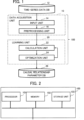
- Fig. 1 is a block diagram showing the configuration of a causal relationship inference device 100 according to the first embodiment.
- the causal relationship inference device 100 is a device capable of executing a causal relationship inference method (i.e., a learning method) according to the first embodiment.
- the causal relationship inference device 100 includes a data acquisition unit 10 and a learning unit 20.
- the causal relationship inference device 100 is a computer, for example.
- the causal relationship parameter obtained by the learning is stored in a causal relationship parameter DB 26 in a storage unit. While the causal relationship parameter DB 26 may be stored in the storage unit (storage unit 103 in Fig.
- the causal relationship parameter DB 26 may also be stored in a storage unit of an external device (e.g., server on a network capable of communicating with the causal relationship inference device 100) separate from the causal relationship inference device 100.
- an external device e.g., server on a network capable of communicating with the causal relationship inference device 100
- the causal relationship inference device 100 acquires learning data including a set X (0 : t) of time-series data of a plurality of state variables and a set Y (0 : t) of time-series data of a plurality of observation variables, calculates a causal relationship parameter ⁇ indicating a causal relationship between the time-series data of the plurality of state variables and the time-series data of the plurality of observation variables, calculates a variance-covariance matrix K (X, X') of a Gaussian process from the learning data and the causal relationship parameter ⁇ , represents the causal relationship parameter ⁇ by the multi-task Gaussian process model, calculates an optimization function based on the variance-covariance matrix, and updates the causal relationship parameter ⁇ based on the optimization function.
- the causal relationship parameter ⁇ includes a correlation coefficient indicating a correlation between the time-series data of the plurality of state variables and the time-series data of the plurality of observation variables and a lag coefficient indicating a lag between the time-series data of the plurality of state variables and the time-series data of the plurality of observation variables, and the causal relationship inference device 100 represents the correlation by a linear correlation of LMC (Linear Model of Coregion) kernels of the aforementioned multi-task Gaussian process model.
- LMC Linear Model of Coregion
- the data acquisition unit 10 includes an input unit 14 that receives time-series data inputted from the time-series data DB 12 and outputs the time-series data to a preprocessing unit 16 and the preprocessing unit 16 that performs preprocessing on the time-series data outputted from the input unit 14 and outputs the preprocessed time-series data to the learning unit 20. While the time-series data DB 12 may be stored in the storage unit (the storage unit 103 in Fig.
- the time-series data DB 12 may also be stored in a storage unit of an external device (e.g., server on a network capable of communicating with the causal relationship inference device 100) separate from the causal relationship inference device 100.
- an external device e.g., server on a network capable of communicating with the causal relationship inference device 100
- the learning unit 20 includes a calculation unit 22 and an optimization unit 24.
- the calculation unit 22 initializes the causal relationship parameter and calculates the variance-covariance matrix.
- the optimization unit 24 calculates the optimization function based on the variance-covariance matrix and updates the causal relationship parameter based on the optimization function. Details of the components will be described later.
- Fig. 2 is a diagram showing an example of the hardware configuration of the causal relationship inference device 100.
- the causal relationship inference device 100 includes a processor 101, a memory 102, and the storage unit 103 as a nonvolatile storage device.
- the causal relationship inference device 100 may include a communication unit that executes communication with other devices via a network.
- the processor 101 is a CPU (Central Processing Unit) or the like.
- the memory 102 is, for example, a volatile semiconductor memory such as a RAM (Random Access Memory).
- the storage unit 103 is a storage device such as a hard disk drive (HDD) or a solid state drive (SSD).
- the storage unit 103 stores information (e.g., various databases) and a program.
- the processing circuitry can be either dedicated hardware or the processor 101 executing a program stored in the memory 102.
- the processor 101 can be any one of a processing device, an arithmetic device, a microprocessor, a microcomputer and a DSP (Digital Signal Processor).
- the processing circuitry is, for example, a single circuit, a combined circuit, a programmed processor, an ASIC (Application Specific Integrated Circuit), an FPGA (Field-Programmable Gate Array) or a combination of some of these circuits.
- ASIC Application Specific Integrated Circuit
- FPGA Field-Programmable Gate Array
- the causal relationship inference program (i.e., learning program) according to the first embodiment is implemented by software, firmware, or a combination of software and firmware.
- the software and the firmware are described as programs and stored in the memory 102.
- the processor 101 is capable of implementing the functions of the units shown in Fig. 1 by reading out and executing the program stored in the memory 102.
- the causal relationship inference program is provided by downloading via a network or through a record medium (i.e., computer-readable storage medium) recording information such as an optical disc, and installed in the causal relationship inference device 100. It is also possible to implement part of the causal relationship inference device 100 by dedicated hardware and other part of the causal relationship inference device 100 by software or firmware.
- the processing circuitry is capable of implementing the functions of the functional blocks shown in Fig. 1 by hardware, software, firmware or a combination of some of these means.
- the input unit 14 of the data acquisition unit 10 acquires the set X (0 : t) of time-series data of the state variables (i.e., a plurality of items of time-series data) and the set Y (0 : t) of time-series data of the observation variables (i.e., a plurality of items of time-series data) from the time-series data DB 12 and outputs these sets X and Y of time-series data to the preprocessing unit 16.
- the input unit 14 selects time-series data x 1 (0 : t), x 2 (0 : t), ..., x Q (0 : t) of Q state variables (Q is a positive integer) and time-series data y 1 (0 : t), y 2 (0 : t), ⁇ , y D (0 : t) of D observation variables (D is a positive integer), which are considered to be in the relationship of cause and result, from the time-series data DB 12.
- time-series data of an angle ⁇ being state information is selected as the time-series data X q (0 : t) of a state variable and the angle ⁇ being state information is dimension-expanded into time-series data of sin ⁇ and time-series data of cos ⁇ as will be described later
- transform (sin ⁇ , cos ⁇ ) as a set of the time-series data of sin ⁇ and the time-series data of cos ⁇ to one two-dimensional time-series data, without handling each of the time-series data of sin ⁇ and the time-series data of cos ⁇ as a state variable of one-dimensional time-series data.
- the input unit 14 acquires a set X(0 : t) of time-series data of state variables and a set Y(0 : t) of time-series data of observation variables each having a length T (T is a positive integer) from the time-series data of the Q state variables and the time-series data of the D observation variables selected from the time-series data DB 12, and passes on these sets of time-series data to the preprocessing unit 16.
- T is a positive integer
- the expression 0 : t in the parentheses represents time-series data from time 0 to time t.
- the time-series data does not need to start with 0; it is also possible to select time-series data at an arbitrary place and having the length T from the time-series data stored in the time-series data DB 12.
- x q (0 : t) represents time-series data of a state variable of a state q.
- y d (0 : t) represents time-series data of an observation variable in a d-th dimension.
- the preprocessing unit 16 of the data acquisition unit 10 acquires the set X(0 : t) of time-series data of state variables and the set Y(0 : t) of time-series data of observation variables outputted from the input unit 14, performs the preprocessing on these sets of time-series data, and outputs the preprocessed set X(0 : t) of time-series data of state variables and the preprocessed set Y(0 : t) of time-series data of observation variables to the calculation unit 22 of the learning unit 20.
- Fig. 3 is a block diagram showing the configuration of the preprocessing unit 16 of the data acquisition unit 10. As shown in Fig. 3 , the preprocessing unit 16 includes a dimension change unit 17 and a normalization unit 18.
- the dimension change unit 17 performs an appropriate dimension reduction process (i.e., dimension compression process) or dimension expansion process on each item of state information for time-series data x q (0 : t) of state information for which a dimension change is necessary.
- Cases where the dimension change of the time-series data x q (0 : t) of state information is necessary include, for example, cases where the state information is information having periodicity such as time information or angle information, cases where the length of a diagonal line of a rectangle is more effective than the length of each side of the rectangle, and so forth. Examples of the dimension compression process and the dimension expansion process will be shown below. It is also possible to execute a process opposite to each of the following examples.
- Fig. 4 is a diagram showing an example of time information before (table on the left side) and after (table on the right side) the dimension compression by the dimension change unit 17 of the preprocessing unit 16.
- the time information exhibits a 24-hour periodicity when the observation data have a daily periodicity. Therefore, the time information can be compressed from three-dimensional time-series data to two-dimensional time-series data by integrating two items of information, "minute” and "hour”, and compressing them into one item of information, "hour and minute”.
- Fig. 5 is a diagram showing an example of angle information before and after the dimension expansion by the dimension change unit 17 of the preprocessing unit 16.
- the angle information can be expanded from one-dimensional time-series data to two-dimensional time-series data by expanding "angle ⁇ °" as one item of information into "sin ⁇ " and "cos ⁇ ” as a combination of two items of information.
- the dimension change unit 17 can employ a different dimension compression method (e.g., principal component analysis or the like) or a different dimension expansion method.
- the normalization unit 18 normalizes the set X(0 : t) of time-series data of state variables after undergoing the dimension change and the set Y(0 : t) of time-series data of observation variables after undergoing the dimension change so that the mean is 0 and the variance is 1.
- the calculation unit 22 of the learning unit 20 receives the preprocessed set X(0 : t) of time-series data of state variables and the preprocessed set Y(0 : t) of time-series data of observation variables from the preprocessing unit 16, executes the calculation of the variance-covariance matrix K (X, X') of the Gaussian process, and outputs the variance-covariance matrix K (X, X') to the optimization unit 24.
- Fig. 6 is a diagram showing an example of a process executed by the calculation unit 22 of the learning unit 20.
- the correlation between the time-series data of the observation variables expressed by the GPDM is represented by the linear correlation of the LMC kernels of the MTGP model.
- a time-shift operator (referred to also as a "lag operator") F L , it is possible to express a lag effect in which state functions g 1 (x 1 (t)) to g Q (x Q (t)) influence observation functions f 1 (x 1 (t)) to f D (x D (t)) with a lag (or with a lead (in advance)).
- the lag effect means not that cause influences result at the same time as the cause but that "cause influences result with a lag” or "cause influences result earlier".
- a concrete example of the lag effect is that the crude oil price rises and the gasoline price does not rise in conjunction with the crude oil price but rises after the elapse of a certain period (e.g., a period until the next stocking).
- Another concrete example of the lag effect is previously raising the gasoline price in anticipation of a rise in the crude oil price in the future.
- the calculation unit 22 can take a time-series property or the periodicity into consideration. However, it is also possible for the calculation unit 22 to leave the lag effect regarding the time information out of consideration.
- X(t) represents a set ⁇ x 1 (t), x 2 (t), ..., x Q (t) ⁇ of state variables.
- u q (t) and v d (t) represent white Gaussian noise.
- a Gaussian process state space model modeling of a state transition function f(x) and a state function g(x) in the model by the Gaussian process is executed, and the modeled functions are generally represented as the following expressions (3) and (4) by using representation in the Gaussian process: g x ⁇ gp 0 K g f x ⁇ gp 0 K f
- the expression (3) represents nonlinear time evolution of the state
- the expression (4) represents transformation from the state function to the observation function.
- Kg and Kf represent Gram matrices.
- the state function g q (x) in the expression (1) represents a model gp(0, k(x q ,x q ')) of the Gaussian process generated from state information x q .
- a notation k q represents a positive definite kernel.
- a kernel suitable for the data such as an RBF kernel (Radial Basis Function kernel) is selected.
- ⁇ q 1 , ... ⁇ q 2 are causal relationship parameters of the RBF kernel.
- a d,q represents a linear correlation of LMC in the conventional method, and represents a correlation coefficient from the state variable q to the observation variable d.
- F L d,q is the time-shift operator newly introduced in the first embodiment
- L d,q represents a lag coefficient from the state variable q to the observation variable d.
- F L represents the time-shift operator (lag operator) that shifts the state information of the state function towards the future (or the past) along the time axis, and is defined as the following expression (8):
- F L g q x q t g q x q t + L
- Fig. 7 is a diagram showing an example of a process executed by the time-shift operator of the calculation unit 22 of the learning unit 20.
- Fig. 7 shows the operation of the time-shift operator F L .
- the example of Fig. 7 shows a case where the information is shifted towards the future (L > 0) along the time axis t.
- the direction of the shifting is opposite to the direction in the case of Fig. 7 .
- K(X, X') is a matrix referred to as the variance-covariance matrix (or Gram matrix) and indicating similarity between state variables (i.e., X ⁇ X').
- K(X, X')) d,d of the variance-covariance matrix K(X, X') can be calculated as in the following expression (10) by using f d (X) in the expression (7) :
- K(X, X') is represented as in the following expressions (11) and (12):
- q B q a 1 , q 2 a 1 , q a 2 , q ⁇ a 1 , q a D , q a 1 , q a 2 , q a 2 , q 2 ⁇ a 2 , q a D , q ⁇ ⁇ ⁇ a 1 , q a D , q a 2 , q a D , q ⁇ ⁇ a 1 , q a D , q a 2 , q a D , q ⁇ ⁇ a D , q a D , q ⁇ a D
- B q is referred to as a coregionalization matrix, indicates linear transformation from a state function to an observation function, and is represented as follows: B q ⁇ R D ⁇ D .
- the calculation of the variance-covariance matrix K(X, X') can be performed by using the set X(0 : t) of time-series data of state variables and the causal relationship parameter ⁇ shown below.
- ⁇ ⁇ q n a d , q L d , q .
- Fig. 8 is a diagram showing examples of an initial value and the number of parameters regarding the causal relationship parameter ⁇ in tabular form. These causal relationship parameters are optimized by the optimization unit 24 of the learning unit 20.
- the optimization unit 24 receives the variance-covariance matrix K (X, X') calculated by the calculation unit 22, executes calculation of marginal likelihood and a process of optimizing the causal relationship parameter ⁇ so as to minimize the peripheral likelihood, and stores the optimized causal relationship parameter ⁇ in the causal relationship parameter DB.
- N represents the length of a feature vector X
- D represents the number of output dimensions of y.
- the optimization unit 24 updates ⁇ so as to minimize the optimization function E in the expression (15).
- updating K ⁇ (X, X') also becomes necessary, and thus the calculation unit 22 calculates K ⁇ (X, X').
- the optimization unit 24 can use stochastic gradient descent or the like as a known technique.
- L d,q can be optimized by using grid search, and the remaining causal relationship parameters can be optimized by using the stochastic gradient descent.
- the optimized causal relationship parameter ⁇ of multivariate causal relationship can be obtained.
- each of the state variable and the observation variable can be made one-dimensional or higher, and thus it is possible to infer the causal relationship between time-series data of an arbitrary number of variates, and the causal relationship of multivariate (Q + D) time-series data can be inferred.
- the first embodiment it becomes possible to clarify the causal relationship between a plurality of state variables and a plurality of observation variables, and it is possible to make not only the inference of the causal relationship of bivariate time-series data but also the inference of the causal relationship of time-series data of three or more variates.
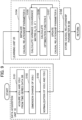
- Fig. 9 is a flowchart showing the operation (i.e., learning method) of the causal relationship inference device 100 according to the first embodiment.
- the input unit 14 acquires the set X(0 : t) of time-series data of state variables and the set Y(0 : t) of time-series data of observation variables from the time-series data DB 12.
- step S102 the preprocessing unit 16 performs the dimension change (i.e., dimension compression or dimension expansion) on state variables x q (0 : t) for which the dimension change is necessary in the set X(0 : t) of time-series data of state variables.
- the dimension change i.e., dimension compression or dimension expansion
- step S103 the preprocessing unit 16 executes the normalization of the set X(0 : t) of time-series data of state variables and the set Y(0 : t) of time-series data of observation variables.
- step S105 the calculation unit 22 calculates the variance-covariance matrix K ⁇ (X, X') in the expression (11) by using the set X(0 : t) of time-series data of state variables and the causal relationship parameter ⁇ .
- step S106 the optimization unit 24 calculates the optimization function E in the expression (15).
- step S107 the optimization unit 24 optimizes (i.e., updates) the causal relationship parameter ⁇ so as to minimize the optimization function E.
- K(X, X') in the expression (11) is calculated in the step S105 by using the updated causal relationship parameter ⁇ .
- the steps S105 to S107 are repeated until the optimization function E converges.
- the correlation coefficient a d,q and the lag coefficient L d,q as the causal relationship parameters are stored in the causal relationship parameter DB 26.
- the first embodiment it becomes possible to clarify the causal relationship between a plurality of state variables and a plurality of observation variables, and it is possible to infer the causal relationship of time-series data of an arbitrary number of variates.
- a causal relationship inference device 200 reads out a causal relationship parameter ⁇ , indicating the causal relationship between time-series data of a plurality of state variables and time-series data of a plurality of observation variables in regard to each layer, from the causal relationship parameter DB, rearranges the time-series data of the plurality of state variables and the time-series data of the plurality of observation variables in regard to each layer based on the causal relationship parameter, acquires verification data including a set X (0 : t) of time-series data of a plurality of state variables and a set Y (0 : t) of time-series data of a plurality of observation variables, and performs one or both of verification of Granger causality by use of the verification data and verification of a spurious correlation by use of the verification data on the rearranged time-series data of the plurality of state variables and the rearranged time-series data of the plurality of observation variables.
- the causal relationship inference device 200 is a causal graph construction device having a causal graph construction function of constructing a causal graph.
- the causal graph is a graph obtained by arranging a list of data items in a relationship of "cause ⁇ result" in graph structure based on the information regarding the causal relationship obtained in the first embodiment. State functions and observation functions as elements of the constructed causal graph are rearranged based on the correlation coefficient a d,q and the lag coefficient L d,q stored in the causal relationship parameter DB.
- the constructed causal graph is verified by using the Granger causality and the spurious correlation.
- the verified causal graph is outputted.
- the causal relationship inference device 200 constructs the causal graph by using the correlation coefficient a d,q and the lag coefficient L d,q as the causal relationship parameters.
- the correlation coefficient a d,q and the lag coefficient L d,q as the causal relationship parameters are, for example, causal relationship parameters of the learned model generated by the causal relationship inference device 100 according to the first embodiment.
- the causal relationship inference device 200 is a computer, for example.
- the causal relationship inference device 200 can be either a computer the same as or different from the computer forming the causal relationship inference device 100 according to the first embodiment.
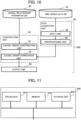
- Fig. 10 is a block diagram showing the configuration of the causal relationship inference device 200 according to the second embodiment.
- the causal relationship inference device 200 is a device capable of executing a causal relationship inference method (i.e., causal graph construction method) according to the second embodiment.
- the causal relationship inference device 200 includes a construction unit 30, a data acquisition unit 40 and an output unit 90.
- the construction unit 30 includes a causal graph construction unit 32 and a causal graph verification unit 34.
- the construction unit 30 may include a causal relationship parameter DB 80 that provides the causal relationship parameters to the causal graph construction unit 32.
- the data acquisition unit 40 includes an input unit 44 and a preprocessing unit 46.
- the data acquisition unit 40 may include a time-series data DB 42 that provides the time-series data to the input unit 44.
- the output unit 90 outputs the causal graph constructed by the construction unit 30. While the time-series data DB 42 and the causal relationship parameter DB 80 may be stored in a storage unit (a storage unit 203 in Fig. 11 which will be explained later) as a part of the causal relationship inference device 200, the time-series data DB 42 and the causal relationship parameter DB 80 may also be stored in a storage unit of an external device (e.g., server on a network capable of communicating with the causal relationship inference device 200) separate from the causal relationship inference device 200.
- an external device e.g., server on a network capable of communicating with the causal relationship inference device 200
- Fig. 11 is a diagram showing an example of the hardware configuration of the causal relationship inference device 200.
- the causal relationship inference device 200 includes a processor 201, a memory 202, and the storage unit 203 as a nonvolatile storage device.
- the causal relationship inference device 200 may include an interface with an external device, a communication unit that executes communication with other devices via a network, and so forth.
- the processor 201 is a CPU or the like.
- the memory 202 is, for example, a volatile semiconductor memory such as a RAM.
- the storage unit 203 is a storage device such as an HDD or an SSD.
- the storage unit 203 stores information (e.g., various databases) and a program.
- the processing circuitry can be either dedicated hardware or the processor 201 executing a program stored in the memory 202.
- an inference program i.e., causal graph construction program
- the software and the firmware are described as programs and stored in the memory 202.
- the processor 201 is capable of implementing the functions of the units shown in Fig. 10 by reading out and executing the program stored in the memory 202.
- the program is installed in the causal relationship inference device 200 by downloading via a network or from a record medium recording information such as an optical disc.
- the data acquisition unit 40 has functions similar to those of the data acquisition unit 10 in the first embodiment. However, the input unit 44 acquires data for verifying the causal graph by use of the Granger causality and the spurious correlation which will be described later.
- the causal graph construction unit 32 of the construction unit 30 acquires the causal relationship parameters a d,q , L d,q stored in the causal relationship parameter DB 80, constructs the causal graph by using the causal relationship parameters, and outputs the constructed causal graph to the causal graph verification unit 34.
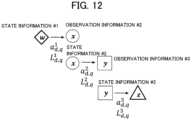
- Fig. 12 is a diagram showing a causal graph construction process executed by the causal graph construction unit 32 of the construction unit 30.
- x (state information) has a lag (delay) relative to y (observation information) and the correlation coefficient between x (state information) and y (observation information) is high
- the possibility that there is a causal relationship "y' fluctuates due to x' as the cause" i.e., x' ⁇ y'
- the causal relationship parameters are as follows: a d , q h , L d , q h .
- h is a positive integer representing a layer number.
- Figs. 13A and 13B are diagrams showing an example of a rearrangement process for state information and observation information executed by the causal graph construction unit 32 of the construction unit 30. As shown in Figs. 13A and 13B , state information and observation information are connected to each other by an arrow pointing from the state information towards the observation information.
- Fig. 13A when the observation information has a lag (lead) relative to the state function, the direction of the arrow is reversed.
- Fig. 13B when the correlation coefficient is low, in consideration of the possibility of being a confounding factor or an intermediate factor, rearrangement is made so as to place the information in an upper level or the like of the causal graph.
- the causal relationship parameters are obtained again by the causal relationship inference device 100 according to the first embodiment by using the state variables and the observation variables after the rearrangement.
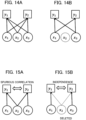
- Figs. 14A and 14B are diagrams showing an example of a verification process executed by the causal graph verification unit 34 of the construction unit 30.
- the Granger causality when the prediction accuracy decreases in a case (case 2) where the observation variables y 1 and y 2 are predicted by use of the state variables x 1 and x 3 by deleting the state variable x 2 as shown in Fig. 14B in comparison with a case (case 1) where the observation variables y 1 and y 2 are predicted by use of the state variables x 1 , x 2 and x 3 by including the state variable x 2 as shown in Fig. 14A , for example, the state variable x 2 is considered to have the Granger causality with the observation variables y 1 and y 2 .
- the state variable x 2 is considered not to have the Granger causality with the observation variables y 1 and y 2 .
- the state variable x 2 has no Granger causality, rearrangement of the state variable x 2 or deletion of the state variable x 2 from the causal graph is made.
- the set X(0 : t) of time-series data of state variables and the set Y(0 : t) of time-series data of observation variables used for the inference of the causal relationship by the causal relationship inference device 100 to a set X(t + 1 : t + ⁇ t) of time-series data of feature state variables and a set Y(t + 1 : t + ⁇ t) of time-series data of feature observation variables may be used as prediction verification data (i.e., test data).
- RMSE Root Mean Squared Error
- Figs. 15A and 15B are diagrams showing other examples of the verification process executed by the causal graph verification unit 34 of the construction unit 30. As shown in Figs. 15A and 15B , it is also possible to conduct the verification by estimating how much a factor is influenced (or how long a factor takes on a constant value without change) in a non-stationary state (in which a rapid change (impulse response) occurs in a certain factor due to an external factor or the like).
- a case is considered where the state variables x 1 and x 3 do not influence observation variables other than the observation variables y 1 and y 2 even though the state variable x 2 influences both of the observation variables y 1 and yz.
- x 2 does not change such as when x 2 keeps on taking on a fixed value, x 2 not changing stops influencing the observation variables y 1 and y 2 , and thus the observation variables y 1 and y 2 are considered to lose the correlation between each other.
- the causal graph By constructing the causal graph, it becomes possible to predict a sensor value at a place where direct measurement is impossible, search for the cause of abnormality, and so forth.
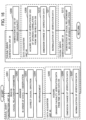
- Fig. 16 is a flowchart showing the operation (i.e., inference operation) of the causal relationship inference device 200.
- the construction unit 30 acquires a correlation a d , q h and a lag coefficient L d , q h regarding each layer from the causal relationship parameter DB.
- step S202 the causal graph construction unit 32 arranges the state information and the observation information in the order of "state information ⁇ observation information" in regard to each layer.
- step S203 the causal graph construction unit 32 corrects a causal direction (i.e., the direction of the arrow).
- step S204 the causal graph construction unit 32 makes the rearrangement of the state information and the observation information in the causal graph.
- step S205 the input unit 44 acquires Granger causality verification data from the time-series data DB 42.
- step S206 the preprocessing unit 46 performs the dimension change of the verification data.
- step S207 the preprocessing unit 46 performs the normalization of the verification data.
- step S208 the causal graph verification unit 34 verifies the causal graph by use of the Granger causality.
- step S209 the input unit 44 acquires verification data for verification by use of the spurious correlation from the time-series data DB 42.
- step S210 the preprocessing unit 46 performs the dimension change of the verification data.
- step S211 the preprocessing unit 46 performs the normalization of the verification data.
- step S212 the causal graph verification unit 34 conducts the verification of the causal relationship by use of the spurious correlation.
- the causal graph verified by the causal graph verification unit 34 according to the process described above is outputted to the output unit 90.
- the causal graph by constructing the causal graph, it becomes possible to predict a sensor value at a place where direct measurement is impossible, search for the cause of abnormality, and so forth.
- the second embodiment is applicable to the prediction of road surface damage from traffic volume or weather information, the river water level prediction from rainfall in the vicinity and water level data, the electric power demand prediction by use of weather or economic condition data in a vicinal region, and so forth, for example.
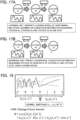
- Figs. 17A and 17B show a learning unit and an inference unit that execute a process of predicting time-series data not observed by the causal relationship inference device 200 due to a relationship between time-series data.
- the causal relationship inference device 100 generates a learned model by performing multitask learning on congestion information regarding a station A1, a station A2 and a station A3 in the past shown in Fig. 17A .
- the congestion information regarding only the station A1 and the station A2 among the station A1, the station A2 and the station A3 is known and the congestion information regarding the station A3 is unknown (in the case of Fig. 17B )
- the causal relationship inference device 100 is capable of making the inference unit predict (infer) a congestion level of the station A3 from a correlation between the congestion levels of stations or the lag information by using the learned model generated by the multitask learning.
- Fig. 18 is a diagram showing operation when change points or failures in sensor data are learned by introducing a change point kernel into the causal relationship inference device 100. Failure prediction can be made by using a learned model generated by the learning of the change points or the failures in the sensor data.
- the above-described calculation of the MTGP model is high in a computation amount O (D 3 N 3 ), a memory O(D 2 N 2 ), a computation load or a memory cost. Therefore, the multitask learning can be sped up and the memory cost can be reduced by using random Fourier features or variational Fourier features, for example.
- causal relationship inference device 200: causal relationship inference device (causal graph construction device), 10: data acquisition unit, 12, 42: time-series data DB, 14: input unit, 16: preprocessing unit, 17: dimension change unit, 18: normalization unit, 20: learning unit, 22: calculation unit, 24: optimization unit, 26, 80: causal relationship parameter, 30: construction unit, 32: causal graph construction unit, 34: causal graph verification unit, 40: data acquisition unit, 44: input unit, 46: preprocessing unit, 90: output unit.
Landscapes
- Engineering & Computer Science (AREA)
- Theoretical Computer Science (AREA)
- Software Systems (AREA)
- Computing Systems (AREA)
- Evolutionary Computation (AREA)
- Physics & Mathematics (AREA)
- Data Mining & Analysis (AREA)
- General Engineering & Computer Science (AREA)
- General Physics & Mathematics (AREA)
- Mathematical Physics (AREA)
- Artificial Intelligence (AREA)
- Computer Vision & Pattern Recognition (AREA)
- Medical Informatics (AREA)
- Computational Linguistics (AREA)
- Management, Administration, Business Operations System, And Electronic Commerce (AREA)
Applications Claiming Priority (1)
| Application Number | Priority Date | Filing Date | Title |
|---|---|---|---|
| PCT/JP2022/020680 WO2023223461A1 (ja) | 2022-05-18 | 2022-05-18 | 因果関係推定装置、因果関係推定方法、及び因果関係推定プログラム |
Publications (2)
| Publication Number | Publication Date |
|---|---|
| EP4510048A1 true EP4510048A1 (de) | 2025-02-19 |
| EP4510048A4 EP4510048A4 (de) | 2025-09-10 |
Family
ID=88834904
Family Applications (1)
| Application Number | Title | Priority Date | Filing Date |
|---|---|---|---|
| EP22942666.3A Withdrawn EP4510048A4 (de) | 2022-05-18 | 2022-05-18 | Kausalassoziationsschätzungsvorrichtung, kausalassoziationsschätzungsverfahren und kausalassoziationsschätzungsprogramm |
Country Status (5)
| Country | Link |
|---|---|
| US (1) | US20250053881A1 (de) |
| EP (1) | EP4510048A4 (de) |
| JP (1) | JP7483180B2 (de) |
| CN (1) | CN119317928A (de) |
| WO (1) | WO2023223461A1 (de) |
Families Citing this family (1)
| Publication number | Priority date | Publication date | Assignee | Title |
|---|---|---|---|---|
| CN118798412B (zh) * | 2024-06-14 | 2025-02-07 | 北京工业大学 | 产业集群预警及优化方法、装置、电子设备及存储介质 |
Family Cites Families (4)
| Publication number | Priority date | Publication date | Assignee | Title |
|---|---|---|---|---|
| US10267951B2 (en) * | 2016-05-12 | 2019-04-23 | The Climate Corporation | Statistical blending of weather data sets |
| JP6629682B2 (ja) | 2016-06-24 | 2020-01-15 | 日本電信電話株式会社 | 学習装置、分類装置、分類確率計算装置、及びプログラム |
| JP6815299B2 (ja) * | 2017-09-22 | 2021-01-20 | 株式会社神戸製鋼所 | 油圧システムのパラメータ推定方法 |
| JP7625813B2 (ja) * | 2020-09-25 | 2025-02-04 | 株式会社Gsユアサ | 推定装置、推定方法、及びコンピュータプログラム |
-
2022
- 2022-05-18 CN CN202280095955.2A patent/CN119317928A/zh active Pending
- 2022-05-18 WO PCT/JP2022/020680 patent/WO2023223461A1/ja not_active Ceased
- 2022-05-18 JP JP2024513679A patent/JP7483180B2/ja active Active
- 2022-05-18 EP EP22942666.3A patent/EP4510048A4/de not_active Withdrawn
-
2024
- 2024-10-30 US US18/931,754 patent/US20250053881A1/en not_active Abandoned
Also Published As
| Publication number | Publication date |
|---|---|
| US20250053881A1 (en) | 2025-02-13 |
| JP7483180B2 (ja) | 2024-05-14 |
| CN119317928A (zh) | 2025-01-14 |
| JPWO2023223461A1 (de) | 2023-11-23 |
| EP4510048A4 (de) | 2025-09-10 |
| WO2023223461A1 (ja) | 2023-11-23 |
Similar Documents
| Publication | Publication Date | Title |
|---|---|---|
| US6928398B1 (en) | System and method for building a time series model | |
| KR102044205B1 (ko) | 빅데이터와 기계학습을 이용한 타겟 정보 예측 시스템 및 예측 방법 | |
| Shekhar et al. | A metamodeling based seismic life-cycle cost assessment framework for highway bridge structures | |
| Moghaddass et al. | A parameter estimation method for a condition-monitored device under multi-state deterioration | |
| CN117076931A (zh) | 一种基于条件扩散模型的时间序列数据预测方法和系统 | |
| US20170116624A1 (en) | Systems and methods for pricing optimization with competitive influence effects | |
| US20170116653A1 (en) | Systems and methods for analytics based pricing optimization with competitive influence effects | |
| CN110889724A (zh) | 客户流失预测方法、装置、电子设备和存储介质 | |
| EP4009239A1 (de) | Verfahren und vorrichtung mit neuronaler architektursuche basierend auf hardware-leistung | |
| CN107016571A (zh) | 数据预测方法及其系统 | |
| JP7393244B2 (ja) | 時系列データ予測装置及び時系列データ予測方法 | |
| CN110020739B (zh) | 用于数据处理的方法、装置、电子设备及计算机可读介质 | |
| EP4425335A2 (de) | Zeitreihenvorhersage von anwendungsüberwachungsdaten und beobachtbarkeitsdaten durch quantitative regression | |
| KR20210061598A (ko) | 딥러닝 기반의 주식 스크리닝과 이를 이용한 포트폴리오 자동화 및 고도화 방법 및 장치 | |
| US20250053881A1 (en) | Causal relationship inference device, causal relationship inference method, and storage record medium storing causal relationship inference program | |
| Wang et al. | A new interpretation on structural reliability updating with adaptive batch sampling-based subset simulation | |
| Tierney et al. | Multivariate Bayesian dynamic modeling for causal prediction | |
| CN120409782A (zh) | 并联水库水情数据的预测方法、装置、设备、介质及产品 | |
| US20210192341A1 (en) | Learning device, learning method, and learning program | |
| US20240103920A1 (en) | Method and system for accelerating the convergence of an iterative computation code of physical parameters of a multi-parameter system | |
| US20240185143A1 (en) | Selecting Influencer Variables in Time Series Forecasting | |
| Trivedi et al. | Gold prices prediction: Comparative study of multiple forecasting models | |
| Pasha-Zanoosi | Classical and Bayesian inference for the reliability of linearly consecutive k-out-of-n: G system in a stress–strength framework based on standard omega distribution | |
| JP7736178B2 (ja) | 重み係数算出装置および重み係数算出方法 | |
| Collarin et al. | Integrating Complex Covariate Transformations in Generalized Additive Models |
Legal Events
| Date | Code | Title | Description |
|---|---|---|---|
| STAA | Information on the status of an ep patent application or granted ep patent |
Free format text: STATUS: THE INTERNATIONAL PUBLICATION HAS BEEN MADE |
|
| PUAI | Public reference made under article 153(3) epc to a published international application that has entered the european phase |
Free format text: ORIGINAL CODE: 0009012 |
|
| STAA | Information on the status of an ep patent application or granted ep patent |
Free format text: STATUS: REQUEST FOR EXAMINATION WAS MADE |
|
| 17P | Request for examination filed |
Effective date: 20241108 |
|
| AK | Designated contracting states |
Kind code of ref document: A1 Designated state(s): AL AT BE BG CH CY CZ DE DK EE ES FI FR GB GR HR HU IE IS IT LI LT LU LV MC MK MT NL NO PL PT RO RS SE SI SK SM TR |
|
| REG | Reference to a national code |
Ref country code: DE Ref legal event code: R079 Free format text: PREVIOUS MAIN CLASS: G06N0020000000 Ipc: G06N0020100000 |
|
| RIC1 | Information provided on ipc code assigned before grant |
Ipc: G06N 5/01 20230101ALI20250513BHEP Ipc: G06N 20/10 20190101AFI20250513BHEP |
|
| DAV | Request for validation of the european patent (deleted) | ||
| DAX | Request for extension of the european patent (deleted) | ||
| A4 | Supplementary search report drawn up and despatched |
Effective date: 20250811 |
|
| RIC1 | Information provided on ipc code assigned before grant |
Ipc: G06N 20/10 20190101AFI20250805BHEP Ipc: G06N 5/01 20230101ALI20250805BHEP |
|
| STAA | Information on the status of an ep patent application or granted ep patent |
Free format text: STATUS: THE APPLICATION HAS BEEN WITHDRAWN |
|
| 18W | Application withdrawn |
Effective date: 20251222 |