EP4502829A1 - Vorrichtung und computerimplementiertes verfahren zur verarbeitung eines digitalen bildes zur anomaliedetektion - Google Patents
Vorrichtung und computerimplementiertes verfahren zur verarbeitung eines digitalen bildes zur anomaliedetektion Download PDFInfo
- Publication number
- EP4502829A1 EP4502829A1 EP23189834.7A EP23189834A EP4502829A1 EP 4502829 A1 EP4502829 A1 EP 4502829A1 EP 23189834 A EP23189834 A EP 23189834A EP 4502829 A1 EP4502829 A1 EP 4502829A1
- Authority
- EP
- European Patent Office
- Prior art keywords
- probabilities
- digital image
- depending
- classes
- sub
- Prior art date
- Legal status (The legal status is an assumption and is not a legal conclusion. Google has not performed a legal analysis and makes no representation as to the accuracy of the status listed.)
- Pending
Links
Images
Classifications
-
- G—PHYSICS
- G06—COMPUTING OR CALCULATING; COUNTING
- G06F—ELECTRIC DIGITAL DATA PROCESSING
- G06F18/00—Pattern recognition
- G06F18/20—Analysing
- G06F18/24—Classification techniques
- G06F18/243—Classification techniques relating to the number of classes
- G06F18/2433—Single-class perspective, e.g. one-against-all classification; Novelty detection; Outlier detection
-
- G—PHYSICS
- G06—COMPUTING OR CALCULATING; COUNTING
- G06T—IMAGE DATA PROCESSING OR GENERATION, IN GENERAL
- G06T7/00—Image analysis
- G06T7/0002—Inspection of images, e.g. flaw detection
-
- G—PHYSICS
- G05—CONTROLLING; REGULATING
- G05B—CONTROL OR REGULATING SYSTEMS IN GENERAL; FUNCTIONAL ELEMENTS OF SUCH SYSTEMS; MONITORING OR TESTING ARRANGEMENTS FOR SUCH SYSTEMS OR ELEMENTS
- G05B23/00—Testing or monitoring of control systems or parts thereof
- G05B23/02—Electric testing or monitoring
- G05B23/0205—Electric testing or monitoring by means of a monitoring system capable of detecting and responding to faults
- G05B23/0259—Electric testing or monitoring by means of a monitoring system capable of detecting and responding to faults characterized by the response to fault detection
- G05B23/0275—Fault isolation and identification, e.g. classify fault; estimate cause or root of failure
-
- G—PHYSICS
- G06—COMPUTING OR CALCULATING; COUNTING
- G06F—ELECTRIC DIGITAL DATA PROCESSING
- G06F18/00—Pattern recognition
- G06F18/20—Analysing
- G06F18/25—Fusion techniques
- G06F18/254—Fusion techniques of classification results, e.g. of results related to same input data
- G06F18/256—Fusion techniques of classification results, e.g. of results related to same input data of results relating to different input data, e.g. multimodal recognition
-
- G—PHYSICS
- G06—COMPUTING OR CALCULATING; COUNTING
- G06V—IMAGE OR VIDEO RECOGNITION OR UNDERSTANDING
- G06V10/00—Arrangements for image or video recognition or understanding
- G06V10/70—Arrangements for image or video recognition or understanding using pattern recognition or machine learning
- G06V10/764—Arrangements for image or video recognition or understanding using pattern recognition or machine learning using classification, e.g. of video objects
-
- G—PHYSICS
- G06—COMPUTING OR CALCULATING; COUNTING
- G06V—IMAGE OR VIDEO RECOGNITION OR UNDERSTANDING
- G06V10/00—Arrangements for image or video recognition or understanding
- G06V10/70—Arrangements for image or video recognition or understanding using pattern recognition or machine learning
- G06V10/77—Processing image or video features in feature spaces; using data integration or data reduction, e.g. principal component analysis [PCA] or independent component analysis [ICA] or self-organising maps [SOM]; Blind source separation
- G06V10/774—Generating sets of training patterns; Bootstrap methods, e.g. bagging or boosting
-
- G—PHYSICS
- G06—COMPUTING OR CALCULATING; COUNTING
- G06V—IMAGE OR VIDEO RECOGNITION OR UNDERSTANDING
- G06V10/00—Arrangements for image or video recognition or understanding
- G06V10/70—Arrangements for image or video recognition or understanding using pattern recognition or machine learning
- G06V10/82—Arrangements for image or video recognition or understanding using pattern recognition or machine learning using neural networks
-
- G—PHYSICS
- G06—COMPUTING OR CALCULATING; COUNTING
- G06V—IMAGE OR VIDEO RECOGNITION OR UNDERSTANDING
- G06V20/00—Scenes; Scene-specific elements
- G06V20/50—Context or environment of the image
- G06V20/56—Context or environment of the image exterior to a vehicle by using sensors mounted on the vehicle
-
- G—PHYSICS
- G06—COMPUTING OR CALCULATING; COUNTING
- G06T—IMAGE DATA PROCESSING OR GENERATION, IN GENERAL
- G06T2207/00—Indexing scheme for image analysis or image enhancement
- G06T2207/20—Special algorithmic details
- G06T2207/20081—Training; Learning
-
- G—PHYSICS
- G06—COMPUTING OR CALCULATING; COUNTING
- G06T—IMAGE DATA PROCESSING OR GENERATION, IN GENERAL
- G06T2207/00—Indexing scheme for image analysis or image enhancement
- G06T2207/20—Special algorithmic details
- G06T2207/20084—Artificial neural networks [ANN]
-
- G—PHYSICS
- G06—COMPUTING OR CALCULATING; COUNTING
- G06V—IMAGE OR VIDEO RECOGNITION OR UNDERSTANDING
- G06V20/00—Scenes; Scene-specific elements
- G06V20/50—Context or environment of the image
- G06V20/56—Context or environment of the image exterior to a vehicle by using sensors mounted on the vehicle
- G06V20/58—Recognition of moving objects or obstacles, e.g. vehicles or pedestrians; Recognition of traffic objects, e.g. traffic signs, traffic lights or roads
Definitions
- the invention relates to a device and a computer-implemented method for processing a digital image for anomaly detection.
- Processing a digital image for anomaly detection is a safety relevant topic in particular in autonomous driving.
- the device and the computer implemented method for processing a digital image for anomaly detection mitigates a performance degradation of the anomaly detection.
- the method comprises providing a model that is trained with a data set that comprises digital images to output probabilities that are assigned to classes in a set of classes for classifying or semantically segmenting the digital image depending on the digital image, determining the probabilities for the digital image with the model, determining a size of a sub-set of the set of classes depending on a sum of the probabilities that are assigned to the classes in the sub-set and depending on a first threshold, and detecting an anomaly depending on the size, wherein the sum of the probabilities that are assigned to the classes in the sub-set is smaller than the first threshold, wherein determining the size of the sub-set comprises determining the first threshold depending on a weighted sum of scores, wherein a score is weighted in the weighted sum depending on a likelihood ratio between a distribution of the probabilities for the digital image and a distribution of the probabilities of the digital images in the data set.
- the size may be considered as anomaly score.
- the size is based on a conformal prediction of the classes.
- the term size in this context means a set size, i.e. number of elements in the set.
- the sub-set comprises the classes that are predicted with the highest confidence.
- the size of the sub-set i.e. the number of elements in the sub-set, indicates an uncertainty of the prediction and thus a likelihood for an anomaly, e.g. an outlier.
- the likelihood ratio weights the scores to consider a domain shift from a domain of the data set that is used for training the model to a domain of the digital image.
- the method comprises capturing the digital image, in particular a video, a radar, a LiDAR, an ultrasonic, a motion or thermal image, in an environment of a technical system, in particular an environment of a robot, a vehicle, a manufacturing machine, a power tool, a medical device, an access control system or a personal assist system, preferably an environment in front of a vehicle, and to operate the technical system upon detecting the anomaly, in particular to trigger a safety function, preferably an emergency stop or an emergency braking of the vehicle.
- a safety function preferably an emergency stop or an emergency braking of the vehicle.
- Determining the size of the sub-set may comprise selecting the classes for the sub-set from the set of classes such that the sum of the probabilities that are assigned to the classes in the sub-set is smaller than a first threshold.
- the sub-set is an adaptive predictive set that adapts according to the first threshold.
- Determining the size of the sub-set may comprise determining the score depending on the largest of the probabilities.
- the label provides the ground truth class for the digital image.
- the score comprises the largest probabilities the model outputs.
- the score influences the size of the sub-set of classes.
- Providing the model may comprise determining the score for a plurality of pairs, wherein the first threshold is determined depending on a predetermined quantile of the scores that are determined for the plurality of pairs.
- the method may comprise detecting the anomaly upon detecting that the size is equal to a second threshold or that the size is larger than a second threshold.
- the second threshold is a parameter to configure the sensitivity of the anomaly detection.
- Providing the model may comprise adding the largest of the probabilities to the sum in particular in a descending order of the probabilities. According to the descending order, the sum sums up the largest probabilities until it includes the probability of the class that is the ground truth class.
- the device for processing the digital image for anomaly detection comprises at least one processor, and at least one storage, wherein the at least one storage is configured to store instructions that, when executed by the at least one processor, cause the device to execute the method, wherein the at least one processor is configured to execute the instructions.
- the device has advantages that correspond to the advantages of the method.
- the instructions comprise computer-readable instructions.
- a computer program may comprise the computer-readable instructions.
- a computer may be configured to execute the computer-readable instructions.
- the computer-readable instructions may cause the computer to execute the method.
- the computer-implemented method is described for a model.
- the model may be configured for classifying the digital image 102 that is provided as input to the model.
- the model may be configured for semantically segmenting the digital image 102 that is provided as input to the model.
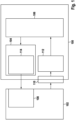
- the digital image may be captured with a camera 110.
- the device 100 may comprise the camera 110 or an interface 112 for receiving digital images from the camera 110.
- the device 100 may be configured to trigger a safety function upon detecting an anomaly.
- the controller 114 may be configured to execute the safety function.
- the safety function is an emergency stop or an emergency braking.
- the device 100 is configured to trigger the controller 114 to execute an emergency stop or an emergency braking.
- the model provides a coverage value 1- ⁇ .
- the coverage value comprises a user definable parameter ⁇ .
- the parameter ⁇ is chosen before the method starts.
- the method may comprise prompting a user for the parameter ⁇ .
- a calibration data set for example comprises digital images x 1 , ..., x n from the source distribution P ( X , Y ).
- test data e.g. a digital image x n +1
- the framework of conformal prediction ensures that for the test data a probabilistic coverage guarantee can be given, in the sense that the probability that the class that is the ground truth class is contained in the sub-set is at least the coverage value 1- ⁇ .
- the test data and the training data set and the calibration data set may comprise digital images of objects that may appear in a real world environment of the technical system 108.
- the digital images may be captured in a first environmental condition or in a second environmental condition.
- the digital images may be captured in a first environment or a second environment.
- the model is trained with the training data set to output the probabilities f ⁇ l ( x ).
- the model is configured to determine the plurality of scores s 1 ( x , y ), ... , s n ( x , y ) depending on the probabilities f ⁇ ( x ) i , ... , f ⁇ ( x ) i the model outputs for the respective digital images x 1 , ... , x n of the calibration data set.
- a score s i ( x ) for an exemplary image x is determined, by adding the largest of the probabilities f ⁇ ( x ) i to a sum in a descending order of the probabilities f ⁇ ( x ) i .
- the sum is an example for the score function.
- the model is configured to determine a first threshold depending on a plurality of the scores.
- the weighted sum comprises weights p i w x for the scores s i
- the digital image x n +1 is a new datapoint that was just collected e.g. from the camera 110.
- For the digital images from the training data set are datapoints for that the weights w ( x i ) can be precomputed.
- w x i p countryside x i p city x i
- the precomputed weights w ( x i ) are used to weight the empirical distribution of the scores for the new datapoint.
- the likelihood ratio w ( x n +1 ) is for example estimated.
- the likelihood ration w ( x n +1 ) is for example estimated by using probabilistic classification approaches, i.e. by training a binary domain classifier.
- a binary domain classifier is for example trained to indicate whether the digital image x n +1 is in the same domain as the images in the training data set or not.
- the weight w ( x n +1 ) is greater than one when the digital image x n +1 is captured in the countryside.
- the weigths p i w x n + 1 and p n + 1 w x n + 1 are then evaluate defined above.
- the training data set and the test data may comprise meta data that provides information about the domain the training data set and the test data set is collected in.
- the model may be configured to determine the likelihood ratio depending on the meta data.
- the model may be configured to estimate an occurrence of a digital image in the training data set or in the test data set depending on the information about the domain it was collected in.
- the model may be configured to determine the probabilities for the occurrence of the digital image in either the training data set or the test data set.
- the model may be configured to estimate the likelihood ratio.
- the model is configured to determine the sub-set C ( x n +1 ) of the set of classes for the digital image x n +1 depending on the probabilities f ⁇ ( x ) the model outputs for the digital image x n +1 such that the score s ( x n +1 ) is smaller than the first threshold.
- the sub-set C ( x n +1 ) for the digital image x n +1 comprises the classes y such that the score is equal to or smaller than the quantile q ⁇ ( x n +1 ) for the digital image x n +1 .
- the model is configured to determine the size of the sub-set C ( x n +1 ) for the digital image x n +1 .
- the model is configured to use the size
- the model is for example configured to detect the anomaly if the size
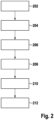
- the method comprises a step 202.
- the step 202 comprises providing the model.
- Providing the model comprises training the model with the training data set.
- the digital images in the training data set are of an image type, e.g. video, radar, LiDAR, ultrasonic, motion or thermal.
- the training data set may comprise digital images depicting at least one object in the first environment or the first environmental condition.
- the first environmental condition may be a first lighting condition.
- the second environmental condition may be a second lighting condition.
- the first environmental condition may be nighttime.
- the second environmental condition may be daytime. Instead of night or day time the lighting condition may be dark, dust or dawn.
- the first environmental condition may be a first weather condition.
- the second environmental condition may be a second weather condition.
- the first environmental condition may be rain.
- the second environmental condition may be sunshine.
- the weather condition may be fog or snow.
- the first environment may be a city environment, i.e. of the domain "city”.
- the second environment may be a countryside environment, i.e. of the domain "countryside”.
- the labels for example comprise a label "tree".
- a number of digital images or pixels with label "tree” is expected to be very little in the training data set and the calibration data set.
- digital images may be captured in the countryside and encounter lots of trees. Accordingly a larger number of digital images or pixels labels may be encountered as in the training data set or the calibrations data set.
- the method comprises a step 204.
- the step 204 comprises capturing a digital image x n +1 for anomaly detection.
- the digital image in the example is of the image type.
- the digital image is in the target domain.
- the target domain comprises digital images that are either captured in the first environmental condition or in the second environmental condition.
- the method comprises a step 206.
- the step 206 comprises determining the probabilities f ⁇ ⁇ x n + 1 for the digital image x n +1 with the model.
- the method comprises a step 208.
- the step 208 comprises determining the size
- the digital images in the calibration data set and the digital image x n +1 are of the same image type as the digital images in the training data set.
- the digital images of the training data and of the calibration data are digital images of the source domain.
- the digital image x n +1 is in the target domain.
- the source domain for example comprises digital images that are captured in the first environmental condition and in the second environmental condition.
- test data is sampled from the same distribution as the training data.
- framework of conformal prediction ensures that, for the digital image x n +1 in the target domain, the probabilistic coverage guarantee holds.
- the method comprises a step 210.
- the step 210 comprises detecting an anomaly depending on the size
- the anomaly is for example detected upon detecting that the size
- the method may use a predetermined second threshold or prompting a user for the second threshold.
- the method comprises a step 212.
- the step 212 comprises operating the technical system 108 upon detecting the anomaly.
- the safety function is triggered upon detecting the anomaly.
- the emergency stop or the emergency braking is triggered.
- the step 212 may comprise that the technical system 108 performs the safety function, in particular the emergency stop or the emergency braking.
- the digital images may be stored in the at least one storage 106, e.g. in a buffer. For example, a most recent few hundred digital images collected in particular at regularly spaced time intervals, may be maintained.
- the digital images are captured in a transition from the first environmental condition to the second environmental condition, e.g. when driving from a city center towards the outskirts and eventually onto the countryside.
- a slowly varying estimate of the likelihood ratio between the domains "city”, i.e. the city environment, and "countryside", i.e. the countryside environment, may be used in combination with the pretrained binary domain classifier to smoothen the transition.
- the binary domain classifier may be trained on the training data set.
- the likelihood ratio w ( x n +1 ) may be estimated. In fact it is advantageous to directly estimate the likelihood ratio w ( x n +1 ) between the domains directly without estimating the likelihoods p test ( x n +1 ) or p train ( x n +1 ) individually.
Landscapes
- Engineering & Computer Science (AREA)
- Theoretical Computer Science (AREA)
- General Physics & Mathematics (AREA)
- Physics & Mathematics (AREA)
- Computer Vision & Pattern Recognition (AREA)
- Evolutionary Computation (AREA)
- Artificial Intelligence (AREA)
- Multimedia (AREA)
- Databases & Information Systems (AREA)
- Health & Medical Sciences (AREA)
- General Health & Medical Sciences (AREA)
- Medical Informatics (AREA)
- Software Systems (AREA)
- Computing Systems (AREA)
- Data Mining & Analysis (AREA)
- Bioinformatics & Cheminformatics (AREA)
- Life Sciences & Earth Sciences (AREA)
- Bioinformatics & Computational Biology (AREA)
- Evolutionary Biology (AREA)
- General Engineering & Computer Science (AREA)
- Automation & Control Theory (AREA)
- Quality & Reliability (AREA)
- Image Analysis (AREA)
Priority Applications (3)
| Application Number | Priority Date | Filing Date | Title |
|---|---|---|---|
| EP23189834.7A EP4502829A1 (de) | 2023-08-04 | 2023-08-04 | Vorrichtung und computerimplementiertes verfahren zur verarbeitung eines digitalen bildes zur anomaliedetektion |
| US18/780,841 US20250046061A1 (en) | 2023-08-04 | 2024-07-23 | Device and the computer implemented method for processing a digital image for anomaly detection |
| CN202411054901.9A CN119444656A (zh) | 2023-08-04 | 2024-08-02 | 用于针对异常检测而处理数字图像的设备和计算机实现方法 |
Applications Claiming Priority (1)
| Application Number | Priority Date | Filing Date | Title |
|---|---|---|---|
| EP23189834.7A EP4502829A1 (de) | 2023-08-04 | 2023-08-04 | Vorrichtung und computerimplementiertes verfahren zur verarbeitung eines digitalen bildes zur anomaliedetektion |
Publications (1)
| Publication Number | Publication Date |
|---|---|
| EP4502829A1 true EP4502829A1 (de) | 2025-02-05 |
Family
ID=87557445
Family Applications (1)
| Application Number | Title | Priority Date | Filing Date |
|---|---|---|---|
| EP23189834.7A Pending EP4502829A1 (de) | 2023-08-04 | 2023-08-04 | Vorrichtung und computerimplementiertes verfahren zur verarbeitung eines digitalen bildes zur anomaliedetektion |
Country Status (3)
| Country | Link |
|---|---|
| US (1) | US20250046061A1 (de) |
| EP (1) | EP4502829A1 (de) |
| CN (1) | CN119444656A (de) |
-
2023
- 2023-08-04 EP EP23189834.7A patent/EP4502829A1/de active Pending
-
2024
- 2024-07-23 US US18/780,841 patent/US20250046061A1/en active Pending
- 2024-08-02 CN CN202411054901.9A patent/CN119444656A/zh active Pending
Non-Patent Citations (6)
| Title |
|---|
| ALEC FARID ET AL: "Failure Prediction with Statistical Guarantees for Vision-Based Robot Control", ARXIV.ORG, CORNELL UNIVERSITY LIBRARY, 201 OLIN LIBRARY CORNELL UNIVERSITY ITHACA, NY 14853, 6 May 2022 (2022-05-06), XP091217302 * |
| ANGELOPOULOS ANASTASIOS N ET AL: "A Gentle Introduction to Conformal Prediction and Distribution-Free Uncertainty Quantification", ARXIV (CORNELL UNIVERSITY), 7 December 2022 (2022-12-07), Ithaca, pages 1 - 51, XP093121708, Retrieved from the Internet <URL:https://arxiv.org/pdf/2107.07511.pdf> [retrieved on 20240119], DOI: 10.48550/arxiv.2107.07511 * |
| CHEN XU ET AL: "Conformal prediction for time series", ARXIV.ORG, CORNELL UNIVERSITY LIBRARY, 201 OLIN LIBRARY CORNELL UNIVERSITY ITHACA, NY 14853, 16 June 2021 (2021-06-16), XP091269505 * |
| GUAN LEYING ET AL: "Prediction and Outlier Detection in Classification Problems", JOURNAL OF THE ROYAL STATISTICAL SOCIETY - SERIES B: STATISTICAL METHODOLOGY, vol. 84, no. 2, 15 February 2022 (2022-02-15), pages 524 - 546, XP093122298, ISSN: 1369-7412, Retrieved from the Internet <URL:https://onlinelibrary.wiley.com/doi/full-xml/10.1111/rssb.12443> DOI: 10.1111/rssb.12443 * |
| LAXHAMMAR RIKARD: "Conformal anomaly detection : Detecting abnormal trajectories in surveillance applications", 2014, Skövde, Sweden, pages 1 - 206, XP093122277, Retrieved from the Internet <URL:https://www.diva-portal.org/smash/get/diva2:690997/FULLTEXT02.pdf> [retrieved on 20240122] * |
| STEPHEN BATES ET AL: "Testing for Outliers with Conformal p-values", ARXIV.ORG, CORNELL UNIVERSITY LIBRARY, 201 OLIN LIBRARY CORNELL UNIVERSITY ITHACA, NY 14853, 25 May 2022 (2022-05-25), XP091213888 * |
Also Published As
| Publication number | Publication date |
|---|---|
| US20250046061A1 (en) | 2025-02-06 |
| CN119444656A (zh) | 2025-02-14 |
Similar Documents
| Publication | Publication Date | Title |
|---|---|---|
| US11775827B2 (en) | Methods and systems for real-time data reduction | |
| EP3690741B1 (de) | Verfahren zur automatischen bewertung der kennzeichnungszuverlässigkeit von trainingsbildern zur verwendung in einem tiefenlernnetzwerk zur analyse von bildern und vorrichtung zur bewertung der zuverlässigkeit damit | |
| EP3690714B1 (de) | Verfahren zur erfassung von probenbildern zur inspektion einer markierung unter automatisch markierten bildern, die zum lernen eines neuronalen netzwerks verwendet werden sollen, sowie probenbilderfassungsvorrichtung damit | |
| EP3690740B1 (de) | Verfahren zur optimierung von hyperparametern einer automatischen etikettiervorrichtung, die trainingsbilder zur verwendung in einem tiefenlernnetzwerk automatisch etikettiert, um bilder mit hoher präzision zu analysieren, sowie optimierungsvorrichtung damit | |
| CN113496104A (zh) | 基于深度学习的降水预报订正方法及系统 | |
| CN113673298B (zh) | 一种基于时序门控循环单元模型的溢出监测方法 | |
| EP3907654A1 (de) | Verfahren für erklärbares aktives lernen zur verwendung für einen objektdetektor unter verwendung eines bayesschen dualen autocodierers und aktive lernvorrichtung damit | |
| EP3907655B1 (de) | Verfahren für erklärbares aktives lernen zur verwendung für einen objektdetektor unter verwendung eines tiefencodierers und aktive lernvorrichtung damit | |
| Mohd-Isa et al. | Detection of Malaysian traffic signs via modified YOLOv3 algorithm | |
| CN114937208B (zh) | 垃圾检测方法、计算机设备及介质 | |
| CN119380244A (zh) | 道路数据处理方法、装置、设备、计算机可读存储介质及计算机程序产品 | |
| CN116994313B (zh) | 基于边缘计算的电梯场景下口罩检测系统和方法 | |
| CN108764017B (zh) | 公交客流统计方法、装置及系统 | |
| CN111754816B (zh) | 一种移动物体意图识别装置、方法、系统、终端和介质 | |
| EP4502829A1 (de) | Vorrichtung und computerimplementiertes verfahren zur verarbeitung eines digitalen bildes zur anomaliedetektion | |
| CN119625977B (zh) | 基于训练模型的道路拥堵预测方法及装置 | |
| Lu et al. | Automated optimal parking slot prediction using deep learning and digital twin technology aided parking space management for material science application | |
| CN117830733A (zh) | 乘客异常行为监测方法、装置、电子设备及存储介质 | |
| Triwibowo et al. | Analysis of Classification and Calculation of Vehicle Type at APILL Intersection Using YOLO Method and Kalman Filter | |
| Li et al. | A fast detection method for polynomial fitting lane with self-attention module added | |
| CN116736409A (zh) | 汽车安全预警方法、装置、设备及存储介质 | |
| Muhammad | Detection parking Spaces by using the ResNet50 Algorithm | |
| US20260004580A1 (en) | Neural network-based analysis of images captured under different visibility conditions | |
| CN115953721B (zh) | 一种通道占用识别方法、装置、设备及存储介质 | |
| CN119131758B (zh) | 基于自动驾驶场景的大模型应用方法、装置、设备及介质 |
Legal Events
| Date | Code | Title | Description |
|---|---|---|---|
| PUAI | Public reference made under article 153(3) epc to a published international application that has entered the european phase |
Free format text: ORIGINAL CODE: 0009012 |
|
| STAA | Information on the status of an ep patent application or granted ep patent |
Free format text: STATUS: THE APPLICATION HAS BEEN PUBLISHED |
|
| AK | Designated contracting states |
Kind code of ref document: A1 Designated state(s): AL AT BE BG CH CY CZ DE DK EE ES FI FR GB GR HR HU IE IS IT LI LT LU LV MC ME MK MT NL NO PL PT RO RS SE SI SK SM TR |
|
| STAA | Information on the status of an ep patent application or granted ep patent |
Free format text: STATUS: REQUEST FOR EXAMINATION WAS MADE |
|
| 17P | Request for examination filed |
Effective date: 20250805 |