EP4501844A1 - Method for preparing sulfide-based solid electrolyte - Google Patents
Method for preparing sulfide-based solid electrolyte Download PDFInfo
- Publication number
- EP4501844A1 EP4501844A1 EP23781271.4A EP23781271A EP4501844A1 EP 4501844 A1 EP4501844 A1 EP 4501844A1 EP 23781271 A EP23781271 A EP 23781271A EP 4501844 A1 EP4501844 A1 EP 4501844A1
- Authority
- EP
- European Patent Office
- Prior art keywords
- reaction product
- heat treatment
- solvent
- sulfide
- alkali metal
- Prior art date
- Legal status (The legal status is an assumption and is not a legal conclusion. Google has not performed a legal analysis and makes no representation as to the accuracy of the status listed.)
- Pending
Links
Images


Classifications
-
- H—ELECTRICITY
- H01—ELECTRIC ELEMENTS
- H01B—CABLES; CONDUCTORS; INSULATORS; SELECTION OF MATERIALS FOR THEIR CONDUCTIVE, INSULATING OR DIELECTRIC PROPERTIES
- H01B1/00—Conductors or conductive bodies characterised by the conductive materials; Selection of materials as conductors
- H01B1/06—Conductors or conductive bodies characterised by the conductive materials; Selection of materials as conductors mainly consisting of other non-metallic substances
- H01B1/10—Conductors or conductive bodies characterised by the conductive materials; Selection of materials as conductors mainly consisting of other non-metallic substances sulfides
-
- C—CHEMISTRY; METALLURGY
- C01—INORGANIC CHEMISTRY
- C01B—NON-METALLIC ELEMENTS; COMPOUNDS THEREOF; METALLOIDS OR COMPOUNDS THEREOF NOT COVERED BY SUBCLASS C01C
- C01B25/00—Phosphorus; Compounds thereof
- C01B25/14—Sulfur, selenium, or tellurium compounds of phosphorus
-
- C—CHEMISTRY; METALLURGY
- C01—INORGANIC CHEMISTRY
- C01D—COMPOUNDS OF ALKALI METALS, i.e. LITHIUM, SODIUM, POTASSIUM, RUBIDIUM, CAESIUM, OR FRANCIUM
- C01D15/00—Lithium compounds
-
- H—ELECTRICITY
- H01—ELECTRIC ELEMENTS
- H01M—PROCESSES OR MEANS, e.g. BATTERIES, FOR THE DIRECT CONVERSION OF CHEMICAL ENERGY INTO ELECTRICAL ENERGY
- H01M10/00—Secondary cells; Manufacture thereof
- H01M10/05—Accumulators with non-aqueous electrolyte
- H01M10/052—Li-accumulators
-
- H—ELECTRICITY
- H01—ELECTRIC ELEMENTS
- H01M—PROCESSES OR MEANS, e.g. BATTERIES, FOR THE DIRECT CONVERSION OF CHEMICAL ENERGY INTO ELECTRICAL ENERGY
- H01M10/00—Secondary cells; Manufacture thereof
- H01M10/05—Accumulators with non-aqueous electrolyte
- H01M10/056—Accumulators with non-aqueous electrolyte characterised by the materials used as electrolytes, e.g. mixed inorganic/organic electrolytes
- H01M10/0561—Accumulators with non-aqueous electrolyte characterised by the materials used as electrolytes, e.g. mixed inorganic/organic electrolytes the electrolyte being constituted of inorganic materials only
- H01M10/0562—Solid materials
-
- C—CHEMISTRY; METALLURGY
- C01—INORGANIC CHEMISTRY
- C01P—INDEXING SCHEME RELATING TO STRUCTURAL AND PHYSICAL ASPECTS OF SOLID INORGANIC COMPOUNDS
- C01P2002/00—Crystal-structural characteristics
- C01P2002/70—Crystal-structural characteristics defined by measured X-ray, neutron or electron diffraction data
- C01P2002/72—Crystal-structural characteristics defined by measured X-ray, neutron or electron diffraction data by d-values or two theta-values, e.g. as X-ray diagram
-
- C—CHEMISTRY; METALLURGY
- C01—INORGANIC CHEMISTRY
- C01P—INDEXING SCHEME RELATING TO STRUCTURAL AND PHYSICAL ASPECTS OF SOLID INORGANIC COMPOUNDS
- C01P2002/00—Crystal-structural characteristics
- C01P2002/80—Crystal-structural characteristics defined by measured data other than those specified in group C01P2002/70
- C01P2002/82—Crystal-structural characteristics defined by measured data other than those specified in group C01P2002/70 by IR- or Raman-data
-
- C—CHEMISTRY; METALLURGY
- C01—INORGANIC CHEMISTRY
- C01P—INDEXING SCHEME RELATING TO STRUCTURAL AND PHYSICAL ASPECTS OF SOLID INORGANIC COMPOUNDS
- C01P2004/00—Particle morphology
- C01P2004/51—Particles with a specific particle size distribution
-
- C—CHEMISTRY; METALLURGY
- C01—INORGANIC CHEMISTRY
- C01P—INDEXING SCHEME RELATING TO STRUCTURAL AND PHYSICAL ASPECTS OF SOLID INORGANIC COMPOUNDS
- C01P2004/00—Particle morphology
- C01P2004/60—Particles characterised by their size
- C01P2004/61—Micrometer sized, i.e. from 1-100 micrometer
-
- C—CHEMISTRY; METALLURGY
- C01—INORGANIC CHEMISTRY
- C01P—INDEXING SCHEME RELATING TO STRUCTURAL AND PHYSICAL ASPECTS OF SOLID INORGANIC COMPOUNDS
- C01P2006/00—Physical properties of inorganic compounds
- C01P2006/40—Electric properties
-
- H—ELECTRICITY
- H01—ELECTRIC ELEMENTS
- H01M—PROCESSES OR MEANS, e.g. BATTERIES, FOR THE DIRECT CONVERSION OF CHEMICAL ENERGY INTO ELECTRICAL ENERGY
- H01M2300/00—Electrolytes
- H01M2300/0017—Non-aqueous electrolytes
- H01M2300/0065—Solid electrolytes
- H01M2300/0068—Solid electrolytes inorganic
-
- H—ELECTRICITY
- H01—ELECTRIC ELEMENTS
- H01M—PROCESSES OR MEANS, e.g. BATTERIES, FOR THE DIRECT CONVERSION OF CHEMICAL ENERGY INTO ELECTRICAL ENERGY
- H01M2300/00—Electrolytes
- H01M2300/0017—Non-aqueous electrolytes
- H01M2300/0065—Solid electrolytes
- H01M2300/0068—Solid electrolytes inorganic
- H01M2300/008—Halides
-
- Y—GENERAL TAGGING OF NEW TECHNOLOGICAL DEVELOPMENTS; GENERAL TAGGING OF CROSS-SECTIONAL TECHNOLOGIES SPANNING OVER SEVERAL SECTIONS OF THE IPC; TECHNICAL SUBJECTS COVERED BY FORMER USPC CROSS-REFERENCE ART COLLECTIONS [XRACs] AND DIGESTS
- Y02—TECHNOLOGIES OR APPLICATIONS FOR MITIGATION OR ADAPTATION AGAINST CLIMATE CHANGE
- Y02E—REDUCTION OF GREENHOUSE GAS [GHG] EMISSIONS, RELATED TO ENERGY GENERATION, TRANSMISSION OR DISTRIBUTION
- Y02E60/00—Enabling technologies; Technologies with a potential or indirect contribution to GHG emissions mitigation
- Y02E60/10—Energy storage using batteries
Definitions
- the present disclosure relates to a method of preparing a sulfide-based solid electrolyte.
- Lithium secondary batteries have been applied to small devices such as mobile phones, laptops, and the like, but have recently been expanding to medium- to large-scale devices such as energy storage systems (ESSs) and electric vehicles (EVs). Since lithium secondary batteries use an organic liquid electrolyte to which a lithium salt is added, there is a problem of electrolyte leakage and subsequently a potential risk of ignition and explosion.
- ESSs energy storage systems
- EVs electric vehicles
- All-solid-state batteries have no risk of fire or explosion by using solid electrolytes, and have high energy density, and thus, as with lithium secondary batteries, all-solid-state batteries may be used in medium- to large-scale devices such as EVs and power storage systems.
- Solid electrolytes may be divided into oxide-based solid electrolytes and sulfide-based solid electrolytes.
- sulfide-based solid electrolytes have excellent lithium ion conductivity compared to oxide-based solid electrolytes, and have advantages of being stable over a wide voltage range.
- Sulfide-based solid electrolytes may be generally prepared by a melting method or a solid-phase method. In particular, in the case of a solid-phase method, starting materials and balls are placed in a milling container, pulverized, and then heat-treated by providing high energy.
- KR 2019-0079135 that has been published in the art discloses a method of manufacturing a sulfide-based solid electrolyte by mixing and grinding starting materials and heat-treating the same.
- a solid-phase method has problems in that starting materials are difficult to be uniformly dispersed and are limited in amorphization, and it has a difficulty of oversizing a milling container, which does not facilitate large-scale synthesis.
- One object of the present disclosure is to provide a method of preparing a sulfide-based solid electrolyte having high purity and high efficiency.
- a method of preparing a sulfide-based solid electrolyte includes: forming a mixture by mixing precursors and a solvent; producing a reaction product by undergoing a reaction on the mixture; and performing heat treatment on the reaction product, wherein the heat treatment includes first heat treatment and second heat treatment that is performed at a higher temperature than a temperature at which the first heat treatment is performed, and in the first heat treatment, carbon contained in the reaction product is modified to amorphous carbon.
- a sulfide-based solid electrolyte having high purity may be obtained.
- a method of preparing a sulfide-based solid electrolyte includes: forming a mixture by mixing precursors and a solvent; producing a reaction product by undergoing a reaction on the mixture; and performing heat treatment on the reaction product, wherein the heat treatment includes first heat treatment and second heat treatment that is performed at a higher temperature than a temperature at which the first heat treatment is performed, and in the first heat treatment, carbon contained in the reaction product is modified to amorphous carbon.
- the second heat treatment may be performed in an inert gas atmosphere.
- the method before the performing of the heat treatment on the reaction product, the method may further include remixing the reaction product, and accordingly, the performing of the heat treatment may include performing heat treatment on the reaction product that has been heat-treated.
- the reaction product that has been dried may be remixed.
- the remixing may be performed by wet ball milling.
- the method may further include purifying the reaction product that has been heat-treated.
- the purifying of the reaction product may be performed by wet ball milling.
- the method may further include drying the reaction product that has been purified.
- the precursors may include alkali metal sulfide, alkali metal halide, and phosphorus pentasulfide.
- the alkali metal sulfide and the alkali metal halide may be mixed firstly with the solvent, and the phosphorus pentasulfide may be additionally mixed secondly.
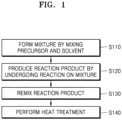
- FIG. 1 is a schematic flowchart explaining a method of preparing a sulfide-based solid electrolyte according to an embodiment of the present disclosure.
- the method of preparing a sulfide-based solid electrolyte includes: forming a mixture by mixing precursors and a solvent in a reactor (S110); producing a reaction product by undergoing a reaction on the mixture (S120); remixing the reaction product (S130); and performing heat treatment on the reaction product that has been remixed (S140).
- the mixing of the precursors and the solvent in the reactor (S100) may be performed by: adding the solvent first into the reactor and then adding the precursors; adding the precursors first into the reactor and then adding the solvent; or mixing the solvent and the precursors and adding the same into the reactor.
- the precursors may include alkali metal sulfide (A 2 S; A is alkali metal), alkali metal halide (AX; X is a halogen), and phosphorus pentasulfide (P 2 S 5 ).
- A is alkali metal
- AX alkali metal halide
- X is a halogen
- P 2 S 5 phosphorus pentasulfide
- the alkali metal may include lithium, sodium, potassium, or a combination thereof.
- the halogen may include fluorine, chlorine, bromine, iodine, or a combination thereof.
- the alkali metal sulfide, the alkali metal halide, and the phosphorus pentasulfide may be mixed at a molar ratio of 4.5 to 5.5 : 0.5 to 1.5 : 1.5 to 2.5.
- the alkali metal sulfide, the alkali metal halide, and the phosphorus pentasulfide may react at a stoichiometric molar ratio of 5 : 1 : 2.
- the solvent may include a first solvent that has low solubility in the alkali metal sulfide and the alkali metal halide.
- the solvent may further include a second solvent that at least partially dissolves the alkali metal sulfide and the alkali metal halide.
- the first solvent may include a nitrile-based solvent, an ether-based solvent, an ester-based solvent, etc.
- the nitrile-based solvent may include, for example, acetonitrile.
- the second solvent may include an alcohol-based solvent, a carboxylic acid-based solvent, an ester-based solvent, a ketone-based solvent, an amine-based solvent, a sulfoxide-based solvent, etc.
- the second solvent may include acetic acid, acetyl acetone, 2-aminoethanol, anisole, benzyl alcohol, 1-butanol, 2-butanol, 2-butanone, t-butyl alcohol, cyclohexanol, cyclohexanone, di-n-butyl phthalate, diethyl glycol, diglyme, dimethoxyethane, dimethylformamide, dimethyl phthalate, dimethyl sulfoxide, dioxane, ethanol, ether, ethyl acetate, ethyl acetoacetate, ethyl benzoate, ethylene glycol, glycerin, 1-heptanol, 1-hexanol, methanol,
- the second solvent may include acetone, 2-aminoethanol, anisole, benzyl alcohol, 1-butanol, 2-butanol, i-butanol, 2-butanone, t-butyl alcohol, cyclohexanol, cyclohexanone, dimethylformamide, ethanol, ether, 1-heptanol, 1-hexanol, methanol, methyl t-butyl ether, 1-octanol, 1-pentanol, 2-pentanol, 3-pentanol, 2-pentanone, 3-pentanone, 1-propanol, 2-propanol, tetrahydrofuran, etc., each of which contains one elemental oxygen.
- the second solvent may at least partially dissolve the alkali metal sulfide and the alkali metal halide, thereby effectively promoting a reaction of the alkali metal sulfide, the alkali metal halide, and the phosphorus pentasulfide to form a high-purity sulfide-based solid electrolyte.
- the alkali metal sulfide and the alkali metal halide may be mixed firstly in the first solvent, and the phosphorus pentasulfide may be additionally mixed secondly.
- the second solvent when the second solvent is additionally included, the second solvent may be mixed during the mixing done firstly.
- the alkali metal sulfide and the alkali metal halide may be pre-stirred in the first solvent.
- the alkali metal sulfide and the alkali metal halide may be dissolved in the first solvent, so that unreacted reactants used in synthesis of the sulfide-based solid electrolyte may be reduced and the purity of a synthesized product may be increased.
- the pre-stirring may be performed at 500 rpm or more, and may be performed for 0.5 to 10 hours, 0.5 to 5 hours, 0.5 to 3 hours, or 0.5 to 2 hours.
- the pre-stirring may be performed at room temperature to 100 °C. As the temperature at which the pre-stirring is performed increases, the quantity of impurities may decrease. Preferably, the pre-stirring may be performed at a temperature that does not exceed the boiling point of the first solvent and/or the second solvent, and for example, may be performed at 50 to 90 °C or 50 to 85 °C.
- the reaction product may be produced by wet ball milling.
- the reaction product may be formed by table ball milling, vertical-ball milling, planetary milling, bead milling, etc.
- the mixture inside the reactor may be stirred or ultrasonicated to cause a reaction.
- bubbles generated within the mixture by stirring or applying ultrasonic waves may continue to form until the end of the reaction.
- bulky bubbles may form.
- the mixing and contacting the reaction products may be promoted by the bubbles, thereby increasing the reaction rate.
- the solvent used in the formation of the mixture may be an organic solvent, such as heptane, n-heptane, toluene, etc., which does not contain oxygen.
- the reaction product is dried to remove the solvent therefrom. Drying may be done by various methods such as vacuum drying, hot-air drying, freeze-drying, spray drying, etc.
- the reaction product may be further mixed uniformly, the remaining solvent may be removed, and carbon which is an impurity contained in the solvent may be removed from the reaction product.
- the remixing may be performed by wet ball milling.
- the remixing may be performed by table ball milling, vertical-ball milling, planetary milling, bead milling, etc.
- the remixing may be performed by stirring, homogenizing, ultra-sonication, etc.
- a solvent used in the remixing may be the same as the solvent used in the formation of the mixture. That is, the solvent used in the remixing may include a nitrile-based solvent, an ether-based solvent, an ester-based solvent, etc. In an optional embodiment, the solvent used in the remixing may be an organic solvent, such as heptane, n-heptane, toluene, etc., which does not contain oxygen.
- the remixing may be performed for 10 minutes to 2 hours, may be performed multiple times if necessary, and may be performed by alternately repeating wet mixing and drying mixing.
- a high-purity sulfide-based solid electrolyte may be formed by completely mixing different precursors with low energy and by effectively removing impurities such as carbon and the like generated during wet synthesis.
- the heat treatment may be performed under an inert gas atmosphere, such as CO, H 2 , N 2 , Ar, He, Ne, etc., for 1 hour to 24 hours at a temperature of 450 °C to 600 °C.
- an inert gas atmosphere such as CO, H 2 , N 2 , Ar, He, Ne, etc.
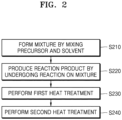
- FIG. 2 is a schematic flowchart explaining a method of preparing a sulfide-based solid electrolyte according to another embodiment of the present disclosure.
- the method of preparing a sulfide-based solid electrolyte includes: forming a mixture by mixing precursors and a solvent in a reactor (S210); producing a reaction product by undergoing a reaction on the mixture (S220); performing first heat treatment on the reaction product (S230); and performing second heat treatment on the reaction product (S240).
- the precursors may include alkali metal sulfide (A 2 S; A is alkali metal), alkali metal halide (AX; X is a halogen), and phosphorus pentasulfide (P 2 S 5 ).
- the alkali metal may include lithium, sodium, potassium, or a combination thereof.
- the halogen may include fluorine, chlorine, bromine, iodine, or a combination thereof.
- the alkali metal sulfide, the alkali metal halide, and the phosphorus pentasulfide may be mixed at a molar ratio of 4.5 to 5.5 : 0.5 to 1.5 : 1.5 to 2.5.
- the alkali metal sulfide, the alkali metal halide, and the phosphorus pentasulfide may react at a stoichiometric molar ratio of 5 : 1 : 2.
- the solvent may include a first solvent that has low solubility in the alkali metal sulfide and the alkali metal halide.
- the solvent may further include a second solvent that at least partially dissolves the alkali metal sulfide and the alkali metal halide, thereby effectively promoting a reaction of the alkali metal sulfide, the alkali metal halide, and the phosphorus pentasulfide to form a high-purity sulfide-based solid electrolyte.
- the first solvent may include a nitrile-based solvent, an ether-based solvent, an ester-based solvent, etc.
- the nitrile-based solvent may include, for example, acetonitrile.
- the second solvent may include an alcohol-based solvent, a carboxylic acid-based solvent, an ester-based solvent, a ketone-based solvent, an amine-based solvent, a sulfoxide-based solvent, etc.
- the second solvent may include acetic acid, acetyl acetone, 2-aminoethanol, anisole, benzyl alcohol, 1-butanol, 2-butanol, 2-butanone, t-butyl alcohol, cyclohexanol, cyclohexanone, di-n-butyl phthalate, diethyl glycol, diglyme, dimethoxyethane, dimethylformamide, dimethyl phthalate, dimethyl sulfoxide, dioxane, ethanol, ether, ethyl acetate, ethyl acetoacetate, ethyl benzoate, ethylene glycol, glycerin, 1-heptanol, 1-hexanol, methanol,
- the second solvent may include acetone, 2-aminoethanol, anisole, benzyl alcohol, 1-butanol, 2-butanol, i-butanol, 2-butanone, t-butyl alcohol, cyclohexanol, cyclohexanone, dimethylformamide, ethanol, ether, 1-heptanol, 1-hexanol, methanol, methyl t-butyl ether, 1-octanol, 1-pentanol, 2-pentanol, 3-pentanol, 2-pentanone, 3-pentanone, 1-propanol, 2-propanol, tetrahydrofuran, etc., each of which contains one elemental oxygen.
- the performing of the heat treatment may include performing of the first heat treatment (S230) and performing of the second heat treatment (S240) as shown in FIG. 2 .
- the reaction product When the reaction product is formed by wet synthesis, the residual solvent may remain even if the solvent is dried. Thus, when a heat treatment process is performed in the presence of the residual solvent remaining, carbon, nitrogen, etc. among the elements constituting the solvent may participate in the reaction and generate impurities.
- the most stable phase at a low temperatures is Li 3 PS 4 , which is synthesized at a temperature around 200 °C. This phase has a lower ionic conductivity than an argyrodite-based solid electrolyte having a crystalline structure, and thus it is treated as an impurity.
- the sulfide-based solid electrolyte may have low purity and low crystallinity as well as low ionic conductivity along with a large quantity of impurity phases.
- the performing of the heat treatment includes performing of the first heat treatment (S230) and the performing of the second heat treatment (S240), impurities may be additionally removed and a stable solid electrolyte crystal phase may be synthesized, resulting in high purity and high crystallinity.
- the performing of the first heat treatment may additionally induce volatilization of the solvent that may remain in the reaction product, may modify carbon among the elements of the remaining organic solvent to amorphous carbon having low electrical conductivity, and may maintain the stoichiometric ratio among the precursors, thereby inducing synthesis of structurally stable argyrodite.
- the performing of the first heat treatment (S230) may be done at a temperature of 100 °C, at which the solvent may sufficiently be volatilized, to 450°C at which amorphous carbon may be crystallized.
- the performing of the second heat treatment (S240) may be done at a higher temperature than the temperature at which the first heat treatment S230 is performed.
- the performing of the second heat treatment (S240) may be done under an inert gas atmosphere, such as CO, H 2 , N 2 , Ar, He, Ne, etc., for 1 hour to 24 hours at a temperature of 450 °C to 600 °C.
- an inert gas atmosphere such as CO, H 2 , N 2 , Ar, He, Ne, etc.
- the method may further include the remixing of the reaction product of FIG. 1 (S130 of FIG. 1 ), and as a result, impurities such as carbon generated during wet synthesis may be more effectively removed, thereby forming a high-purity sulfide-based solid electrolyte.
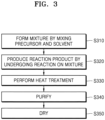
- FIG. 3 is a schematic flowchart explaining a method of preparing a sulfide-based solid electrolyte according to another embodiment of the present disclosure.
- the method of preparing a sulfide-based solid electrolyte includes: forming a mixture by mixing precursors and a solvent in a reactor (S310); producing a reaction product by undergoing a reaction on the mixture (S320); performing heat treatment on the reaction product (S330); purifying the reaction product that has been heat-treated (S340); and drying the reaction product that has been dried (S350).
- the precursors may include alkali metal sulfide (A 2 S; A is alkali metal), alkali metal halide (AX; X is a halogen), and phosphorus pentasulfide (P 2 S 5 ).
- the alkali metal may include lithium, sodium, potassium, or a combination thereof.
- the halogen may include fluorine, chlorine, bromine, iodine, or a combination thereof.
- the alkali metal sulfide, the alkali metal halide, and the phosphorus pentasulfide may be mixed at a molar ratio of 4.5 to 5.5 : 0.5 to 1.5 : 1.5 to 2.5.
- the alkali metal sulfide, the alkali metal halide, and the phosphorus pentasulfide may react at a stoichiometric molar ratio of 5 : 1 : 2.
- the solvent may include a first solvent that has low solubility in the alkali metal sulfide and the alkali metal halide.
- the solvent may further include a second solvent that at least partially dissolves the alkali metal sulfide and the alkali metal halide, thereby effectively promoting a reaction of the alkali metal sulfide, the alkali metal halide, and the phosphorus pentasulfide to form a high-purity sulfide-based solid electrolyte.
- the first solvent may include a nitrile-based solvent, an ether-based solvent, an ester-based solvent, etc.
- the nitrile-based solvent may include, for example, acetonitrile.
- the second solvent may include acetone, 2-aminoethanol, anisole, benzyl alcohol, 1-butanol, 2-butanol, i-butanol, 2-butanone, t-butyl alcohol, cyclohexanol, cyclohexanone, dimethylformamide, ethanol, ether, 1-heptanol, 1-hexanol, methanol, methyl t-butyl ether, 1-octanol, 1-pentanol, 2-pentanol, 3-pentanol, 2-pentanone, 3-pentanone, 1-propanol, 2-propanol, tetrahydrofuran, etc., each of which contains one elemental oxygen.
- the mixing of the precursors and the solvent in the reactor (3210), the producing of the reaction product by undergoing a reaction on the mixture (S320), and the performing of the heat treatment (S330) are the same as those described in connection with FIG. 1 , and thus will not be described again.
- the reaction product that has been heat-treated there may be a small quantity of impurities that have not been completely removed, and particularly, via the heat treatment, the reaction product may have a wide particle size distribution depending on a crystallization mechanism.
- the reaction product when the reaction product is mixed uniformly, aggregation may occur due to the surface energy so that, by additionally purifying the reaction product that has been heat-treated, aggregation of the reaction product may be eliminated, thereby preparing a solid electrolyte having high purity and uniform particle size distribution.
- the purifying of the reaction product (S340) may be performed by wet ball milling.
- the resulting reaction product may be purified by ball milling.
- impurities such as carbon on the surface of the reaction product may be removed, and the weak bonds between particles may be broken, thereby controlling the particle size of the reaction product.
- the reaction product that has been purified may be dried (S350).
- the reaction product that has been purified may be dried by using a centrifuge.
- the reaction product that has been purified is in a state of being free of impurities and having a controlled particle size through the purifying.
- the drying process may be performed by centrifugation .
- the drying process may be a general drying process such as hot-air drying, freeze-drying, spray drying, etc., and may include an eliminating process after the drying.
- the method may further include: the remixing of the reaction product as described in FIG. 1 (S130 of FIG. 1 ); and at least one of the performing of the first heat treatment described in FIG. 2 (S230 of FIG. 2 ) and the performing of the second heat treatment described in FIG. 2 (S240 of FIG. 2 ), and as a result, impurities such as carbon generated during wet synthesis may be more effectively removed to form a high-purity sulfide-based solid electrolyte.
- Li 7-x PS 6-x Ha x (1 ⁇ x ⁇ 2) was used, and in this example, Li 6 PS 5 Cl where Ha is chloride and x is 1 was synthesized.
- lithium sulfide (Li 2 S), phosphorus pentasulfide (P 2 S 5 ), and lithium chloride (LiCI) as precursors were mixed in acetonitrile as a solvent, and ball milling was performed thereon to form a mixture.
- reaction product was vacuum-dried, and then subjected to wet ball milling for 1 hour to produce a reaction product.
- first heat treatment was performed thereon at 200 °C for 5 hours to remove residual carbon, followed by second heat treatment at 550 °C for 12 hours in an argon (Ar) atmosphere, thereby growing crystals of the reaction product.
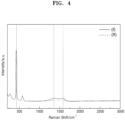
- FIG. 4 is a diagram showing the Raman spectroscopy results obtained from the Example and Comparative Example 1.
- (I) shows the Raman spectroscopy result obtained from the Example
- (II) shows the Raman spectroscopy result obtained from Example 1.
- Example (I) in which the remixing of the reaction product is performed after the formation of the mixture, there was no significant difference in the peaks at 470 cm -1 as compared to Comparative Example 1 (II), indicating that the intensity of PS 4 3- bonding was maintained and that the overall area of the peaks related to impurities including carbon presumed to originate from the solvent was relatively reduced. Accordingly, by performing the remixing after the formation of the reaction product, the sulfide-based solid electrolyte was confirmed to be structurally stable and effective in removing impurities.
- the three precursors could be completely mixed with low energy and impurities (carbon, etc.) generated during wet synthesis could be also effectively removed.
- Comparative Example 2 a sulfide-based solid electrolyte was prepared in the same manner as in the Example, except that a single heat treatment process was performed as compared to the Example.
- FIG. 5 is a diagram showing the X-ray diffraction (XRD) analysis results obtained from the sulfide-based solid electrolyte according to the present disclosure.
- XRD X-ray diffraction
- Comparative Example 3 a sulfide-based solid electrolyte was prepared in the same manner as in the Example, except that the purifying process and the drying process were not performed.
- FIGS. 6 and 7 are diagrams showing the XRD analysis and Raman spectroscopy results obtained from the sulfide-based solid electrolyte according to the present disclosure.
- (I) shows the XRD analysis and Raman spectroscopy results obtained from the Example
- (IV) shows the XRD analysis and Raman spectroscopy results obtained from Comparative Example 3.
- the resulting reaction product underwent the purifying by ball milling and the drying by centrifugation, and accordingly, impurities such as carbon on the surface of the reaction product were removed, and at the same time, aggregation of the sample was eliminated.
- impurities such as carbon on the surface of the reaction product were removed, and at the same time, aggregation of the sample was eliminated.
- Example (I) was found to have small values in the average particle size (D 50 ) and particle size distribution than those in Comparative Example 3 (IV), as shown in Table 1.
- D 50 Particle size distribution (width) Example (I) 4.47 6.47 Comparative Example 3 (IV) 10.37 19.32
- FIG. 8 is a diagram showing the electrochemical impedance spectroscopy (EIS) results obtained from the sulfide-based solid electrolyte according to the present disclosure.
- FIG. 8 shows the EIS results obtained from the sulfide-based solid electrolyte of the Example. Due to the nature of a battery, the electronic conductivity of an electrolyte itself must be minimized to maintain the performance of the electrolyte, and it is more advantageous to have higher ionic conductivity.
- EIS electrochemical impedance spectroscopy
- the slope of the EIS obtained from the Example was found to be 45° or more, indicating that the electronic conductivity is low and the ionic conductivity is excellent. Therefore, the sulfide-based solid electrolyte according to the present disclosure was confirmed to have excellent characteristics.
Landscapes
- Chemical & Material Sciences (AREA)
- Engineering & Computer Science (AREA)
- Inorganic Chemistry (AREA)
- Organic Chemistry (AREA)
- Chemical Kinetics & Catalysis (AREA)
- Manufacturing & Machinery (AREA)
- Electrochemistry (AREA)
- General Chemical & Material Sciences (AREA)
- Physics & Mathematics (AREA)
- Condensed Matter Physics & Semiconductors (AREA)
- General Physics & Mathematics (AREA)
- Materials Engineering (AREA)
- Secondary Cells (AREA)
- Conductive Materials (AREA)
Abstract
Description
- The present disclosure relates to a method of preparing a sulfide-based solid electrolyte.
- Lithium secondary batteries have been applied to small devices such as mobile phones, laptops, and the like, but have recently been expanding to medium- to large-scale devices such as energy storage systems (ESSs) and electric vehicles (EVs). Since lithium secondary batteries use an organic liquid electrolyte to which a lithium salt is added, there is a problem of electrolyte leakage and subsequently a potential risk of ignition and explosion.
- Recently, research is ongoing on all-solid-state batteries in which liquid electrolytes are replaced with solid electrolytes to overcome the limitations of lithium secondary batteries and to improve stability of batteries. All-solid-state batteries have no risk of fire or explosion by using solid electrolytes, and have high energy density, and thus, as with lithium secondary batteries, all-solid-state batteries may be used in medium- to large-scale devices such as EVs and power storage systems.
- Solid electrolytes may be divided into oxide-based solid electrolytes and sulfide-based solid electrolytes. In particular, sulfide-based solid electrolytes have excellent lithium ion conductivity compared to oxide-based solid electrolytes, and have advantages of being stable over a wide voltage range. Sulfide-based solid electrolytes may be generally prepared by a melting method or a solid-phase method. In particular, in the case of a solid-phase method, starting materials and balls are placed in a milling container, pulverized, and then heat-treated by providing high energy.
-
KR 2019-0079135 - Recently, to solve these problems, research is ongoing on a liquid-phase process for synthesizing a sulfide-based solid electrolyte by using an organic solvent. However, in a liquid-phase process, the crystallinity and ionic conductivity of the obtained solid electrolyte may be reduced due to residual organic solvent or the like.
- One object of the present disclosure is to provide a method of preparing a sulfide-based solid electrolyte having high purity and high efficiency.
- According to an embodiment of the present disclosure, a method of preparing a sulfide-based solid electrolyte includes: forming a mixture by mixing precursors and a solvent; producing a reaction product by undergoing a reaction on the mixture; and performing heat treatment on the reaction product, wherein the heat treatment includes first heat treatment and second heat treatment that is performed at a higher temperature than a temperature at which the first heat treatment is performed, and in the first heat treatment, carbon contained in the reaction product is modified to amorphous carbon.
- According to the present disclosure, a sulfide-based solid electrolyte having high purity may be obtained.
-
-
FIG. 1 is a schematic flowchart explaining a method of preparing a sulfide-based solid electrolyte according to an embodiment of the present disclosure. -
FIG. 2 is a schematic flowchart explaining a method of preparing a sulfide-based solid electrolyte according to another embodiment of the present disclosure. -
FIG. 3 is a schematic flowchart explaining a method of preparing a sulfide-based solid electrolyte according to another embodiment of the present disclosure. -
FIG. 4 is a diagram showing the Raman spectroscopy results obtained from a sulfide-based solid electrolyte according to the present disclosure. -
FIG. 5 is a diagram showing the X-ray diffraction (XRD) analysis results obtained from a sulfide-based solid electrolyte according to the present disclosure. -
FIGS. 6 and7 are diagrams showing the XRD analysis and Raman spectroscopy results obtained from a sulfide-based solid electrolyte according to the present disclosure. -
FIG. 8 is a diagram showing the electrochemical impedance spectroscopy (EIS) results obtained from a sulfide-based solid electrolyte according to the present disclosure. - According to an embodiment of the present disclosure, a method of preparing a sulfide-based solid electrolyte includes: forming a mixture by mixing precursors and a solvent; producing a reaction product by undergoing a reaction on the mixture; and performing heat treatment on the reaction product, wherein the heat treatment includes first heat treatment and second heat treatment that is performed at a higher temperature than a temperature at which the first heat treatment is performed, and in the first heat treatment, carbon contained in the reaction product is modified to amorphous carbon.
- In this embodiment, the second heat treatment may be performed in an inert gas atmosphere.
- In this embodiment, before the performing of the heat treatment on the reaction product, the method may further include remixing the reaction product, and accordingly, the performing of the heat treatment may include performing heat treatment on the reaction product that has been heat-treated.
- In this example, after drying the reaction product, the reaction product that has been dried may be remixed.
- In this embodiment, the remixing may be performed by wet ball milling.
- In this embodiment, after performing of the heat treatment on the reaction product, the method may further include purifying the reaction product that has been heat-treated.
- In this embodiment, the purifying of the reaction product may be performed by wet ball milling.
- In this embodiment, after purifying of the reaction product, the method may further include drying the reaction product that has been purified.
- In this embodiment, the precursors may include alkali metal sulfide, alkali metal halide, and phosphorus pentasulfide.
- In this embodiment, during the forming of the mixture, the alkali metal sulfide and the alkali metal halide may be mixed firstly with the solvent, and the phosphorus pentasulfide may be additionally mixed secondly.
- The aforementioned objects, other objects, characteristics, and advantages of the present disclosure will be easily understood through the following preferred embodiments related to the attached drawings. However, the present disclosure is not limited to the embodiments described herein, and may be embodied in other forms. Rather, embodiments introduced herein are provided so that the disclosed content will be thorough and complete and the ideas of the present disclosure will be sufficiently conveyed to those skilled in the art.
- In the description of each drawing, similar reference numerals are used for similar elements. In the accompanying drawings, the dimensions of structures are enlarged from the actual size for clarity of the present disclosure. The terms "first", "second", etc. may be used herein to describe various elements, but these elements should not be limited by these terms. These terms are only used to distinguish one element from another element. For example, a first element may be named a second element, and similarly, a second element may also be named a first component, without departing from the scope of the present disclosure. An expression used in the singular encompasses the expression of the plural, unless it has a clearly different meaning in the context.
- It will be further understood that the terms "comprises" or "includes" when used in the present specification, specify the presence of stated features, integers, steps, operations, elements, components, or combinations thereof, but do not preclude the presence or addition of one or more other features, integers, steps, operations, elements, components, or combinations thereof. Additionally, when a part of a layer, film, region, plate, etc. is said to be "on" another part, the part of a layer, film, region, plate, etc. can be "directly on" the another other part, or intervening elements may be present therebetween. On the other hand, when a part of a layer, film, region, plate, etc. is said to be "under" another part, the part of a layer, film, region, plate, etc. can be "directly under" the another other part, or intervening elements may be present therebetween.
- Unless otherwise specified, all numbers, values, and/or expressions used herein to express quantities of components, reaction conditions, polymer compositions, and formulations should be understood to be modified in all cases by the term "about" as these numbers are inherently approximate reflecting the various uncertainties of measurement encountered in obtaining these values, among other things. Additionally, when numerical ranges are disclosed herein, such ranges are continuous and, unless otherwise indicated, include all values from the minimum value to the maximum value of such range inclusively. Furthermore, when such a range indicates an integer, it includes all integers from the minimum value to the maximum value, unless otherwise indicated.
-
FIG. 1 is a schematic flowchart explaining a method of preparing a sulfide-based solid electrolyte according to an embodiment of the present disclosure. - Referring to
FIG. 1 , the method of preparing a sulfide-based solid electrolyte according to an embodiment of the present disclosure includes: forming a mixture by mixing precursors and a solvent in a reactor (S110); producing a reaction product by undergoing a reaction on the mixture (S120); remixing the reaction product (S130); and performing heat treatment on the reaction product that has been remixed (S140). - The mixing of the precursors and the solvent in the reactor (S100) may be performed by: adding the solvent first into the reactor and then adding the precursors; adding the precursors first into the reactor and then adding the solvent; or mixing the solvent and the precursors and adding the same into the reactor.
- In some embodiments, the precursors may include alkali metal sulfide (A2S; A is alkali metal), alkali metal halide (AX; X is a halogen), and phosphorus pentasulfide (P2S5).
- The alkali metal may include lithium, sodium, potassium, or a combination thereof.
- The halogen may include fluorine, chlorine, bromine, iodine, or a combination thereof.
- In some embodiments, the alkali metal sulfide, the alkali metal halide, and the phosphorus pentasulfide may be mixed at a molar ratio of 4.5 to 5.5 : 0.5 to 1.5 : 1.5 to 2.5. For example, the alkali metal sulfide, the alkali metal halide, and the phosphorus pentasulfide may react at a stoichiometric molar ratio of 5 : 1 : 2.
- The solvent may include a first solvent that has low solubility in the alkali metal sulfide and the alkali metal halide. In addition, the solvent may further include a second solvent that at least partially dissolves the alkali metal sulfide and the alkali metal halide.
- The first solvent may include a nitrile-based solvent, an ether-based solvent, an ester-based solvent, etc., and the nitrile-based solvent may include, for example, acetonitrile.
- The second solvent may include an alcohol-based solvent, a carboxylic acid-based solvent, an ester-based solvent, a ketone-based solvent, an amine-based solvent, a sulfoxide-based solvent, etc. For example, the second solvent may include acetic acid, acetyl acetone, 2-aminoethanol, anisole, benzyl alcohol, 1-butanol, 2-butanol, 2-butanone, t-butyl alcohol, cyclohexanol, cyclohexanone, di-n-butyl phthalate, diethyl glycol, diglyme, dimethoxyethane, dimethylformamide, dimethyl phthalate, dimethyl sulfoxide, dioxane, ethanol, ether, ethyl acetate, ethyl acetoacetate, ethyl benzoate, ethylene glycol, glycerin, 1-heptanol, 1-hexanol, methanol, methyl acetate, methyl t-butyl ether, 1-octanol, 1-pentanol, 2-pentanol, 3-pentanol, 2-pentanone, 3-pentanone, 1-propanol, tetrahydrofuran, etc.
- Preferably, the second solvent may include acetone, 2-aminoethanol, anisole, benzyl alcohol, 1-butanol, 2-butanol, i-butanol, 2-butanone, t-butyl alcohol, cyclohexanol, cyclohexanone, dimethylformamide, ethanol, ether, 1-heptanol, 1-hexanol, methanol, methyl t-butyl ether, 1-octanol, 1-pentanol, 2-pentanol, 3-pentanol, 2-pentanone, 3-pentanone, 1-propanol, 2-propanol, tetrahydrofuran, etc., each of which contains one elemental oxygen.
- The second solvent may at least partially dissolve the alkali metal sulfide and the alkali metal halide, thereby effectively promoting a reaction of the alkali metal sulfide, the alkali metal halide, and the phosphorus pentasulfide to form a high-purity sulfide-based solid electrolyte.
- In some embodiments, when mixing the precursors, the alkali metal sulfide and the alkali metal halide may be mixed firstly in the first solvent, and the phosphorus pentasulfide may be additionally mixed secondly.
- In some embodiments, when the second solvent is additionally included, the second solvent may be mixed during the mixing done firstly.
- In some embodiments, during the mixing done firstly, the alkali metal sulfide and the alkali metal halide may be pre-stirred in the first solvent. In this case, the alkali metal sulfide and the alkali metal halide may be dissolved in the first solvent, so that unreacted reactants used in synthesis of the sulfide-based solid electrolyte may be reduced and the purity of a synthesized product may be increased. For example, the pre-stirring may be performed at 500 rpm or more, and may be performed for 0.5 to 10 hours, 0.5 to 5 hours, 0.5 to 3 hours, or 0.5 to 2 hours.
- In some embodiments, the pre-stirring may be performed at room temperature to 100 °C. As the temperature at which the pre-stirring is performed increases, the quantity of impurities may decrease. Preferably, the pre-stirring may be performed at a temperature that does not exceed the boiling point of the first solvent and/or the second solvent, and for example, may be performed at 50 to 90 °C or 50 to 85 °C.
- Next, by undergoing a reaction on the mixture, a product reaction is produced (S120).
- The reaction product may be produced by wet ball milling. For example, the reaction product may be formed by table ball milling, vertical-ball milling, planetary milling, bead milling, etc.
- In another embodiment, while maintaining an open vacuum state of maintaining the gas pressure inside the reactor at -0.1 MPa or less in a state where the reactor is not sealed, the mixture inside the reactor may be stirred or ultrasonicated to cause a reaction. In this case, bubbles generated within the mixture by stirring or applying ultrasonic waves may continue to form until the end of the reaction. Here, bulky bubbles may form. The mixing and contacting the reaction products may be promoted by the bubbles, thereby increasing the reaction rate.
- In an optional embodiment, the solvent used in the formation of the mixture may be an organic solvent, such as heptane, n-heptane, toluene, etc., which does not contain oxygen.
- When the reaction product is formed, the reaction product is dried to remove the solvent therefrom. Drying may be done by various methods such as vacuum drying, hot-air drying, freeze-drying, spray drying, etc.
- Next, the product reaction product that has been dried is remixed (S130).
- By the remixing, the reaction product may be further mixed uniformly, the remaining solvent may be removed, and carbon which is an impurity contained in the solvent may be removed from the reaction product.
- In an embodiment, the remixing may be performed by wet ball milling. For example, the remixing may be performed by table ball milling, vertical-ball milling, planetary milling, bead milling, etc. In another embodiment, the remixing may be performed by stirring, homogenizing, ultra-sonication, etc.
- A solvent used in the remixing may be the same as the solvent used in the formation of the mixture. That is, the solvent used in the remixing may include a nitrile-based solvent, an ether-based solvent, an ester-based solvent, etc. In an optional embodiment, the solvent used in the remixing may be an organic solvent, such as heptane, n-heptane, toluene, etc., which does not contain oxygen.
- The remixing may be performed for 10 minutes to 2 hours, may be performed multiple times if necessary, and may be performed by alternately repeating wet mixing and drying mixing.
- As such, by performing additional mixing after producing the reaction product, a high-purity sulfide-based solid electrolyte may be formed by completely mixing different precursors with low energy and by effectively removing impurities such as carbon and the like generated during wet synthesis.
- Next, the reaction product that has been remixed is subjected to heat treatment (S140). The heat treatment may be performed under an inert gas atmosphere, such as CO, H2, N2, Ar, He, Ne, etc., for 1 hour to 24 hours at a temperature of 450 °C to 600 °C. By the heat treatment, crystals of the reaction product may grow.
-
FIG. 2 is a schematic flowchart explaining a method of preparing a sulfide-based solid electrolyte according to another embodiment of the present disclosure. - Referring to
FIG. 2 , the method of preparing a sulfide-based solid electrolyte according to an embodiment of the present disclosure includes: forming a mixture by mixing precursors and a solvent in a reactor (S210); producing a reaction product by undergoing a reaction on the mixture (S220); performing first heat treatment on the reaction product (S230); and performing second heat treatment on the reaction product (S240). - The mixing of the precursors and the solvent in the reactor (S210) and the producing of the reaction product by undergoing a reaction on the mixture (S220) are the same as those described in connection with
FIG. 1 , and thus will not be described again. - The precursors may include alkali metal sulfide (A2S; A is alkali metal), alkali metal halide (AX; X is a halogen), and phosphorus pentasulfide (P2S5). The alkali metal may include lithium, sodium, potassium, or a combination thereof. The halogen may include fluorine, chlorine, bromine, iodine, or a combination thereof.
- In some embodiments, the alkali metal sulfide, the alkali metal halide, and the phosphorus pentasulfide may be mixed at a molar ratio of 4.5 to 5.5 : 0.5 to 1.5 : 1.5 to 2.5. For example, the alkali metal sulfide, the alkali metal halide, and the phosphorus pentasulfide may react at a stoichiometric molar ratio of 5 : 1 : 2.
- The solvent may include a first solvent that has low solubility in the alkali metal sulfide and the alkali metal halide. In addition, the solvent may further include a second solvent that at least partially dissolves the alkali metal sulfide and the alkali metal halide, thereby effectively promoting a reaction of the alkali metal sulfide, the alkali metal halide, and the phosphorus pentasulfide to form a high-purity sulfide-based solid electrolyte.
- The first solvent may include a nitrile-based solvent, an ether-based solvent, an ester-based solvent, etc., and the nitrile-based solvent may include, for example, acetonitrile.
- The second solvent may include an alcohol-based solvent, a carboxylic acid-based solvent, an ester-based solvent, a ketone-based solvent, an amine-based solvent, a sulfoxide-based solvent, etc. For example, the second solvent may include acetic acid, acetyl acetone, 2-aminoethanol, anisole, benzyl alcohol, 1-butanol, 2-butanol, 2-butanone, t-butyl alcohol, cyclohexanol, cyclohexanone, di-n-butyl phthalate, diethyl glycol, diglyme, dimethoxyethane, dimethylformamide, dimethyl phthalate, dimethyl sulfoxide, dioxane, ethanol, ether, ethyl acetate, ethyl acetoacetate, ethyl benzoate, ethylene glycol, glycerin, 1-heptanol, 1-hexanol, methanol, methyl acetate, methyl t-butyl ether, 1-octanol, 1-pentanol, 2-pentanol, 3-pentanol, 2-pentanone, 3-pentanone, 1-propanol, tetrahydrofuran, etc. Preferably, the second solvent may include acetone, 2-aminoethanol, anisole, benzyl alcohol, 1-butanol, 2-butanol, i-butanol, 2-butanone, t-butyl alcohol, cyclohexanol, cyclohexanone, dimethylformamide, ethanol, ether, 1-heptanol, 1-hexanol, methanol, methyl t-butyl ether, 1-octanol, 1-pentanol, 2-pentanol, 3-pentanol, 2-pentanone, 3-pentanone, 1-propanol, 2-propanol, tetrahydrofuran, etc., each of which contains one elemental oxygen.
- After the producing of the reaction product by undergoing a reaction on the mixture by wet ball milling or the like (S220), the performing of the heat treatment may include performing of the first heat treatment (S230) and performing of the second heat treatment (S240) as shown in
FIG. 2 . - When the reaction product is formed by wet synthesis, the residual solvent may remain even if the solvent is dried. Thus, when a heat treatment process is performed in the presence of the residual solvent remaining, carbon, nitrogen, etc. among the elements constituting the solvent may participate in the reaction and generate impurities. In particular, among elemental lithium (Li), elemental phosphorus (P), elemental sulfur (S), and elemental halogen that constitute the sulfide-based solid electrolyte, the most stable phase at a low temperatures is Li3PS4, which is synthesized at a temperature around 200 °C. This phase has a lower ionic conductivity than an argyrodite-based solid electrolyte having a crystalline structure, and thus it is treated as an impurity. In addition, when crystallization is performed by heat treatment in the presence of impurities such as residual organic solvents, the sulfide-based solid electrolyte may have low purity and low crystallinity as well as low ionic conductivity along with a large quantity of impurity phases.
- However, as in the present disclosure, when the performing of the heat treatment includes performing of the first heat treatment (S230) and the performing of the second heat treatment (S240), impurities may be additionally removed and a stable solid electrolyte crystal phase may be synthesized, resulting in high purity and high crystallinity.
- More specifically, the performing of the first heat treatment (S230) may additionally induce volatilization of the solvent that may remain in the reaction product, may modify carbon among the elements of the remaining organic solvent to amorphous carbon having low electrical conductivity, and may maintain the stoichiometric ratio among the precursors, thereby inducing synthesis of structurally stable argyrodite.
- The performing of the first heat treatment (S230) may be done at a temperature of 100 °C, at which the solvent may sufficiently be volatilized, to 450°C at which amorphous carbon may be crystallized.
- The performing of the second heat treatment (S240) may be done at a higher temperature than the temperature at which the first heat treatment S230 is performed. The performing of the second heat treatment (S240) may be done under an inert gas atmosphere, such as CO, H2, N2, Ar, He, Ne, etc., for 1 hour to 24 hours at a temperature of 450 °C to 600 °C. By the second heat treatment, crystals of the reaction product may grow.
- Meanwhile, in an embodiment described in
FIG. 2 , the method may further include the remixing of the reaction product ofFIG. 1 (S130 ofFIG. 1 ), and as a result, impurities such as carbon generated during wet synthesis may be more effectively removed, thereby forming a high-purity sulfide-based solid electrolyte. -
FIG. 3 is a schematic flowchart explaining a method of preparing a sulfide-based solid electrolyte according to another embodiment of the present disclosure. - Referring to
FIG. 3 , the method of preparing a sulfide-based solid electrolyte according to an embodiment of the present disclosure includes: forming a mixture by mixing precursors and a solvent in a reactor (S310); producing a reaction product by undergoing a reaction on the mixture (S320); performing heat treatment on the reaction product (S330); purifying the reaction product that has been heat-treated (S340); and drying the reaction product that has been dried (S350). - Hereinafter, the same contents as described in
FIG. 1 will not be repeated, and only the differences will be described. - The precursors may include alkali metal sulfide (A2S; A is alkali metal), alkali metal halide (AX; X is a halogen), and phosphorus pentasulfide (P2S5). The alkali metal may include lithium, sodium, potassium, or a combination thereof. The halogen may include fluorine, chlorine, bromine, iodine, or a combination thereof.
- In some embodiments, the alkali metal sulfide, the alkali metal halide, and the phosphorus pentasulfide may be mixed at a molar ratio of 4.5 to 5.5 : 0.5 to 1.5 : 1.5 to 2.5. For example, the alkali metal sulfide, the alkali metal halide, and the phosphorus pentasulfide may react at a stoichiometric molar ratio of 5 : 1 : 2.
- The solvent may include a first solvent that has low solubility in the alkali metal sulfide and the alkali metal halide. In addition, the solvent may further include a second solvent that at least partially dissolves the alkali metal sulfide and the alkali metal halide, thereby effectively promoting a reaction of the alkali metal sulfide, the alkali metal halide, and the phosphorus pentasulfide to form a high-purity sulfide-based solid electrolyte.
- The first solvent may include a nitrile-based solvent, an ether-based solvent, an ester-based solvent, etc., and the nitrile-based solvent may include, for example, acetonitrile.
- The second solvent may include an alcohol-based solvent, a carboxylic acid-based solvent, an ester-based solvent, a ketone-based solvent, an amine-based solvent, a sulfoxide-based solvent, etc. For example, the second solvent may include acetic acid, acetyl acetone, 2-aminoethanol, anisole, benzyl alcohol, 1-butanol, 2-butanol, 2-butanone, t-butyl alcohol, cyclohexanol, cyclohexanone, di-n-butyl phthalate, diethyl glycol, diglyme, dimethoxyethane, dimethylformamide, dimethyl phthalate, dimethyl sulfoxide, dioxane, ethanol, ether, ethyl acetate, ethyl acetoacetate, ethyl benzoate, ethylene glycol, glycerin, 1-heptanol, 1-hexanol, methanol, methyl acetate, methyl t-butyl ether, 1-octanol, 1-pentanol, 2-pentanol, 3-pentanol, 2-pentanone, 3-pentanone, 1-propanol, tetrahydrofuran, etc. Preferably, the second solvent may include acetone, 2-aminoethanol, anisole, benzyl alcohol, 1-butanol, 2-butanol, i-butanol, 2-butanone, t-butyl alcohol, cyclohexanol, cyclohexanone, dimethylformamide, ethanol, ether, 1-heptanol, 1-hexanol, methanol, methyl t-butyl ether, 1-octanol, 1-pentanol, 2-pentanol, 3-pentanol, 2-pentanone, 3-pentanone, 1-propanol, 2-propanol, tetrahydrofuran, etc., each of which contains one elemental oxygen.
- The mixing of the precursors and the solvent in the reactor (3210), the producing of the reaction product by undergoing a reaction on the mixture (S320), and the performing of the heat treatment (S330) are the same as those described in connection with
FIG. 1 , and thus will not be described again. - In the purifying of the reaction product that has been heat-treated (S340), by additionally mixing the reaction product, residual impurities in the reaction product may be additionally removed by using physical force and weak physical bonds of secondary and tertiary particles may be broken, thereby ultimately controlling the particle size of the reaction product.
- In the reaction product that has been heat-treated, there may be a small quantity of impurities that have not been completely removed, and particularly, via the heat treatment, the reaction product may have a wide particle size distribution depending on a crystallization mechanism. In addition, when the reaction product is mixed uniformly, aggregation may occur due to the surface energy so that, by additionally purifying the reaction product that has been heat-treated, aggregation of the reaction product may be eliminated, thereby preparing a solid electrolyte having high purity and uniform particle size distribution.
- In an embodiment, the purifying of the reaction product (S340) may be performed by wet ball milling. For example, after mixing the reaction product and an organic solvent, the resulting reaction product may be purified by ball milling. By the ball milling, impurities such as carbon on the surface of the reaction product may be removed, and the weak bonds between particles may be broken, thereby controlling the particle size of the reaction product.
- The ball milling may include various methods such as table ball milling, vertical-ball milling, planetary milling, bead milling, or the like. In addition, the mixing in the purifying may be performed by stirring, homogenizing, ultra-sonication, etc.
- Meanwhile, the purifying may be performed in either a wet condition or a dry condition. In a wet condition, a drying process may be included, whereas, in a dry condition, a drying process is not included, but an additional eliminating process may be included instead. The drying process may be performed by alternately repeating drying in a wet condition and drying in a dry condition.
- Next, the reaction product that has been purified may be dried (S350). The reaction product that has been purified may be dried by using a centrifuge. The reaction product that has been purified is in a state of being free of impurities and having a controlled particle size through the purifying. However, to prevent the particle size from increasing again during the drying process due to the surface energy, the drying process may be performed by centrifugation .
- In an optional embodiment, in addition to the aforementioned methods, the drying process may be a general drying process such as hot-air drying, freeze-drying, spray drying, etc., and may include an eliminating process after the drying.
- Meanwhile, in an embodiment described in
FIG. 3 , the method may further include: the remixing of the reaction product as described inFIG. 1 (S130 ofFIG. 1 ); and at least one of the performing of the first heat treatment described inFIG. 2 (S230 ofFIG. 2 ) and the performing of the second heat treatment described inFIG. 2 (S240 ofFIG. 2 ), and as a result, impurities such as carbon generated during wet synthesis may be more effectively removed to form a high-purity sulfide-based solid electrolyte. - Hereinafter, the present disclosure will be described in more detail with reference to the following examples. The following examples are merely examples to aid understanding of the present disclosure, and the scope of the present disclosure is not limited thereto.
- As a starting material for preparing a sulfide-based solid electrolyte, Li7-xPS6-xHax (1≤x≤2), was used, and in this example, Li6PS5Cl where Ha is chloride and x is 1 was synthesized.
- First, lithium sulfide (Li2S), phosphorus pentasulfide (P2S5), and lithium chloride (LiCI) as precursors were mixed in acetonitrile as a solvent, and ball milling was performed thereon to form a mixture.
- Subsequently, the mixture was vacuum-dried, and then subjected to wet ball milling for 1 hour to produce a reaction product.
- The reaction product thus produced was dried, and then remixed by wet ball milling.
- Next, after drying the reaction product that has been remixed, first heat treatment was performed thereon at 200 °C for 5 hours to remove residual carbon, followed by second heat treatment at 550 °C for 12 hours in an argon (Ar) atmosphere, thereby growing crystals of the reaction product.
- In addition, ball milling using acetonitrile as a solvent was performed for 2 hours, followed by centrifugation at 4000 RPM for 1 hour to remove the supernatant liquid to perform a purification process, and as a drying process, vacuum drying was performed for 12 hours to finally prepare a sulfide-based solid electrolyte.
- In Comparative Example 1, a sulfide-based solid electrolyte was prepared in the same manner as in the Example, except that the remixing process after the formation of the reaction product was omitted.
-
FIG. 4 is a diagram showing the Raman spectroscopy results obtained from the Example and Comparative Example 1. InFIG. 4 , (I) shows the Raman spectroscopy result obtained from the Example, and (II) shows the Raman spectroscopy result obtained from Example 1. - Referring to
FIG. 4 , in the case of the Example (I) in which the remixing of the reaction product is performed after the formation of the mixture, there was no significant difference in the peaks at 470 cm-1 as compared to Comparative Example 1 (II), indicating that the intensity of PS4 3- bonding was maintained and that the overall area of the peaks related to impurities including carbon presumed to originate from the solvent was relatively reduced. Accordingly, by performing the remixing after the formation of the reaction product, the sulfide-based solid electrolyte was confirmed to be structurally stable and effective in removing impurities. - In other words, according to the present disclosure, by additionally remixing the reaction product, the three precursors could be completely mixed with low energy and impurities (carbon, etc.) generated during wet synthesis could be also effectively removed.
- In Comparative Example 2, a sulfide-based solid electrolyte was prepared in the same manner as in the Example, except that a single heat treatment process was performed as compared to the Example.
-
FIG. 5 is a diagram showing the X-ray diffraction (XRD) analysis results obtained from the sulfide-based solid electrolyte according to the present disclosure. InFIG. 5 , (I) shows the XRD analysis result obtained from the Example, and (III) shows the XRD analysis result obtained from Comparative Example 2. - Referring to
FIG. 5 , in the case of Comparative Example 2 (III), together with Li3PS4 at 16 (2θ/deg.) which is an impurity phase,in accordance with the stoichiometric ratio, Li2S at 27 (2θ/deg.),LiCl at 29 (2θ/deg.) and 32 (2θ/deg.), etc.,were detected in large quantities. However, in the case of the Example (I) in which the second heat treatment was performed after the first heat treatment, Li3PS4 was hardly detected, and other impurities other than a small quantity of Li2S were not detected. - In other words, by performing the heat treatment separately in two stages, the first heat treatment and the second heat treatment, impurities were additionally removed from the reaction product, and a stable solid electrolyte crystal phase was synthesized, resulting in high purity and high crystallinity.
- In Comparative Example 3, a sulfide-based solid electrolyte was prepared in the same manner as in the Example, except that the purifying process and the drying process were not performed.
-
FIGS. 6 and7 are diagrams showing the XRD analysis and Raman spectroscopy results obtained from the sulfide-based solid electrolyte according to the present disclosure. InFIGS. 6 and7 , (I) shows the XRD analysis and Raman spectroscopy results obtained from the Example, and (IV) shows the XRD analysis and Raman spectroscopy results obtained from Comparative Example 3. - First, as shown in
FIG. 6 , it was confirmed that there was no significant difference in the XRD results obtained from the Example (I), in which the purifying process and the drying process were performed after the heat treatment in the Example (I), and Comparative Example 3 (IV), in which the purifying process and the drying process were not performed. In other words, even if the purifying process and the dry process were performed after the heat treatment, there was no significant difference in crystallinity, phase change, etc., and thus the purifying process and the drying process do not seem to exhibit a significant effect on the solid electrolyte. - On the other hand, referring to
FIG. 7 , in the case of the Example (I) compared to Comparative Example 3 (IV), the peaks (at 1350 to 1580 cm-1) related to impurities, especially carbon, remaining in a small amount before the purification, were found to be sharply reduced. On the other hand, the PS4 3- peak (at 430 cm-1) representing the main bond of the sulfide solid electrolyte was found to have no effect. - In other words, after the reaction product that has been heat-treated was mixed with an organic solvent, the resulting reaction product underwent the purifying by ball milling and the drying by centrifugation, and accordingly, impurities such as carbon on the surface of the reaction product were removed, and at the same time, aggregation of the sample was eliminated. This means that a solid electrolyte with high purity and uniform particle size distribution was prepared.
- In addition, as a result of undergoing the purifying and the drying, the Example (I) was found to have small values in the average particle size (D50) and particle size distribution than those in Comparative Example 3 (IV), as shown in Table 1.
[Table 1] D50 Particle size distribution (width) Example (I) 4.47 6.47 Comparative Example 3 (IV) 10.37 19.32 -
FIG. 8 is a diagram showing the electrochemical impedance spectroscopy (EIS) results obtained from the sulfide-based solid electrolyte according to the present disclosure.FIG. 8 shows the EIS results obtained from the sulfide-based solid electrolyte of the Example. Due to the nature of a battery, the electronic conductivity of an electrolyte itself must be minimized to maintain the performance of the electrolyte, and it is more advantageous to have higher ionic conductivity. - Referring to
FIG. 8 , the slope of the EIS obtained from the Example was found to be 45° or more, indicating that the electronic conductivity is low and the ionic conductivity is excellent. Therefore, the sulfide-based solid electrolyte according to the present disclosure was confirmed to have excellent characteristics. - In addition, according to the present disclosure, the reaction product is formed by wet milling using a solvent, but through the remixing process performed on the reaction product thus formed, the first heat treatment, the second heat treatment, and the purifying process, carbon may be effectively removed, and the sulfide-based solid electrolyte having an argyrodite-type crystal structure may have a uniform particle size and freely adjust the particle size through the purifying process.
- As such, the present disclosure has been described with reference to an embodiment shown in the drawings, but this is merely an example, and those skilled in the art will understand that various modifications and variations of the embodiment are allowable therefrom. Therefore, the true technical protection scope of the present disclosure should be determined by the technical spirit of the attached patent claims.
Claims (10)
- A method of preparing a sulfide-based solid electrolyte, the method comprising:forming a mixture by mixing precursors and a solvent;producing a reaction product by undergoing a reaction on the mixture; andperforming heat treatment on the reaction product,wherein the heat treatment includes first heat treatment and second heat treatment that is performed at a higher temperature than a temperature at which the first heat treatment is performed, andin the first heat treatment, carbon contained in the reaction product is modified to amorphous carbon.
- The method of claim 1, wherein the second heat treatment is performed in an inert gas atmosphere.
- The method of claim 1, wherein the method further comprises, before the performing of the heat treatment on the reaction product, remixing the reaction product,
wherein the performing of the heat treatment comprises performing heat treatment on the reaction product that has been remixed. - The method of claim 3, wherein the remixing is to remix, after drying the reaction product, the dried reaction product.
- The method of claim 4, wherein the remixing is performed by wet ball milling.
- The method of claim 1, wherein the method further comprises, after the performing of the heat treatment on the reaction product, purifying the reaction product that has been heat-treated.
- The method of claim 6, wherein the purifying of the reaction product is performed by wet ball milling.
- The method of claim 7, wherein the method further comprises, after the purifying of the reaction product, drying the reaction product that has been purified.
- The method of claim 1, wherein the precursors comprise alkali metal sulfide, alkali metal halide, and phosphorus pentasulfide.
- The method of claim 9, wherein, in the forming of the mixture, the alkali metal sulfide and the alkali metal halide are mixed firstly in the solvent, and the phosphorus pentasulfide is additionally mixed secondly.
Applications Claiming Priority (3)
| Application Number | Priority Date | Filing Date | Title |
|---|---|---|---|
| KR20220040577 | 2022-03-31 | ||
| KR1020230038261A KR20230141520A (en) | 2022-03-31 | 2023-03-23 | Method of preparing sulfur compound-based all-solide-state electrolyte |
| PCT/KR2023/004032 WO2023191416A1 (en) | 2022-03-31 | 2023-03-27 | Method for preparing sulfide-based solid electrolyte |
Publications (2)
| Publication Number | Publication Date |
|---|---|
| EP4501844A1 true EP4501844A1 (en) | 2025-02-05 |
| EP4501844A4 EP4501844A4 (en) | 2025-11-26 |
Family
ID=88202682
Family Applications (1)
| Application Number | Title | Priority Date | Filing Date |
|---|---|---|---|
| EP23781271.4A Pending EP4501844A4 (en) | 2022-03-31 | 2023-03-27 | METHOD FOR THE PREPARATION OF A SULFID-BASED SOLID ELECTROLYTE |
Country Status (4)
| Country | Link |
|---|---|
| US (1) | US20250226440A1 (en) |
| EP (1) | EP4501844A4 (en) |
| JP (1) | JP2025512129A (en) |
| WO (1) | WO2023191416A1 (en) |
Family Cites Families (9)
| Publication number | Priority date | Publication date | Assignee | Title |
|---|---|---|---|---|
| JP2014209430A (en) * | 2012-11-28 | 2014-11-06 | 住友金属鉱山株式会社 | Method for manufacturing sulfide-based solid electrolyte slurry and sulfide-based solid electrolyte slurry produced thereby, and method for manufacturing sulfide-based solid electrolyte powder and sulfide-based solid electrolyte powder produced thereby |
| KR101684130B1 (en) * | 2015-06-16 | 2016-12-07 | 현대자동차주식회사 | Preparing method of lithium ion conductive sulfide, lithium ion conductive sulfide made by the same, and solid electrolyte, all solid battery comprising the same |
| KR20180055086A (en) * | 2016-11-16 | 2018-05-25 | 현대자동차주식회사 | A manufacturing method of sulfide-based solid electrolyte through wet process |
| KR102417513B1 (en) * | 2016-11-22 | 2022-07-05 | 현대자동차주식회사 | Sulfide-based solid electrolyte having high ion conductivity in a wide crystalization temperature range and preparation method thereof |
| JP6686860B2 (en) * | 2016-12-09 | 2020-04-22 | トヨタ自動車株式会社 | Method for producing sulfide solid electrolyte |
| HUE064016T2 (en) * | 2017-09-01 | 2024-02-28 | Mitsubishi Gas Chemical Co | Method for producing lgps-based solid electrolyte |
| KR102452005B1 (en) | 2017-12-27 | 2022-10-06 | 현대자동차주식회사 | A nitrogen doped sulfide-based solid electrolyte for all solid state battery |
| JP7513014B2 (en) * | 2019-03-05 | 2024-07-09 | 三菱瓦斯化学株式会社 | Method for producing sulfide-based solid electrolyte |
| KR102342871B1 (en) * | 2020-06-17 | 2021-12-24 | 한국전기연구원 | The manufacturing methods of solid electrolyte for lithium based secondary batteries |
-
2023
- 2023-03-27 WO PCT/KR2023/004032 patent/WO2023191416A1/en not_active Ceased
- 2023-03-27 JP JP2025504026A patent/JP2025512129A/en active Pending
- 2023-03-27 US US18/852,900 patent/US20250226440A1/en active Pending
- 2023-03-27 EP EP23781271.4A patent/EP4501844A4/en active Pending
Also Published As
| Publication number | Publication date |
|---|---|
| US20250226440A1 (en) | 2025-07-10 |
| WO2023191416A1 (en) | 2023-10-05 |
| EP4501844A4 (en) | 2025-11-26 |
| JP2025512129A (en) | 2025-04-16 |
Similar Documents
| Publication | Publication Date | Title |
|---|---|---|
| TWI440597B (en) | Synthesis of lifepo4 under hydrothermal conditions | |
| EP4620909A1 (en) | Phosphate precursor and preparation method therefor, positive electrode material and preparation method therefor, positive electrode sheet and secondary battery | |
| JP5441307B2 (en) | COMPOSITE MATERIAL CONTAINING ELECTRODE ACTIVE COMPOUND AND CONDUCTIVE COMPOUND, such as CARBON, METHOD FOR PREPARING COMPOSITE MATERIAL FOR LITHIUM BATTERY | |
| JP2010140893A (en) | Apparatus and method for manufacturing solid electrolyte | |
| WO2008077447A1 (en) | SYNTHESIS OF ELECTROACTIVE CRYSTALLINE NANOMETRIC LiMnPO4 POWDER | |
| WO2021045025A1 (en) | Positive electrode active material for lithium ion secondary batteries, method for producing same, and lithium ion secondary battery | |
| KR102673003B1 (en) | Manufacturing method of high-ion conductive sulfide-based solid electrolyte using dissolution-deposition and composition used therein | |
| EP3936473B1 (en) | Method for producing sulfide solid electrolyte | |
| CN116348427A (en) | Sulfide solid electrolyte glass ceramics and manufacturing method thereof | |
| KR102396159B1 (en) | Sulfide based solid electrolyte for all solid battery, manufacturing method thereof and all solid battery comprising the solid electrolyte | |
| JP3579598B2 (en) | Method for producing slurry for lithium secondary battery electrode | |
| CN114245945A (en) | Method for producing solid electrolyte | |
| JP2024542511A (en) | Method for preparing lithium hexafluorophosphate | |
| KR20230051800A (en) | Manufacturing method of lithium sulfide | |
| KR20230141520A (en) | Method of preparing sulfur compound-based all-solide-state electrolyte | |
| EP4501844A1 (en) | Method for preparing sulfide-based solid electrolyte | |
| CN115385365B (en) | Preparation method of hexafluorophosphate solution, product and application thereof | |
| KR20250006755A (en) | Manufacuring method of reactant | |
| US10450196B2 (en) | Process of fabrication of crystalline nanometric lithium transition metal phosphate | |
| KR102743846B1 (en) | Method of preparing sulfur compound-based all-solide-state electrolyte | |
| CN114203995B (en) | A nano-hybrid MoS2/Mo2CTx composite material and its synthesis method and application | |
| JPS5953216B2 (en) | Synthesis method of anhydrous lithium borofluoride | |
| JP5310407B2 (en) | Method for producing active material | |
| CN118973956A (en) | Preparation method of sulfide solid electrolyte | |
| EP3561925B1 (en) | Nonaqueous electrolyte positive electrode active material precursor |
Legal Events
| Date | Code | Title | Description |
|---|---|---|---|
| STAA | Information on the status of an ep patent application or granted ep patent |
Free format text: STATUS: THE INTERNATIONAL PUBLICATION HAS BEEN MADE |
|
| PUAI | Public reference made under article 153(3) epc to a published international application that has entered the european phase |
Free format text: ORIGINAL CODE: 0009012 |
|
| STAA | Information on the status of an ep patent application or granted ep patent |
Free format text: STATUS: REQUEST FOR EXAMINATION WAS MADE |
|
| 17P | Request for examination filed |
Effective date: 20241015 |
|
| AK | Designated contracting states |
Kind code of ref document: A1 Designated state(s): AL AT BE BG CH CY CZ DE DK EE ES FI FR GB GR HR HU IE IS IT LI LT LU LV MC ME MK MT NL NO PL PT RO RS SE SI SK SM TR |
|
| DAV | Request for validation of the european patent (deleted) | ||
| DAX | Request for extension of the european patent (deleted) | ||
| A4 | Supplementary search report drawn up and despatched |
Effective date: 20251024 |
|
| RIC1 | Information provided on ipc code assigned before grant |
Ipc: C01B 25/14 20060101AFI20251020BHEP Ipc: H01B 1/06 20060101ALI20251020BHEP Ipc: H01B 1/10 20060101ALI20251020BHEP Ipc: H01M 10/0562 20100101ALI20251020BHEP Ipc: H01M 10/052 20100101ALI20251020BHEP Ipc: C01D 15/00 20060101ALI20251020BHEP |