EP4501792A1 - Flugzeugantriebssystem mit triebwerksbewertungen als funktion von systemkomponenten - Google Patents
Flugzeugantriebssystem mit triebwerksbewertungen als funktion von systemkomponenten Download PDFInfo
- Publication number
- EP4501792A1 EP4501792A1 EP24192461.2A EP24192461A EP4501792A1 EP 4501792 A1 EP4501792 A1 EP 4501792A1 EP 24192461 A EP24192461 A EP 24192461A EP 4501792 A1 EP4501792 A1 EP 4501792A1
- Authority
- EP
- European Patent Office
- Prior art keywords
- electrical
- alternative
- engine
- propulsion subsystem
- ratings
- Prior art date
- Legal status (The legal status is an assumption and is not a legal conclusion. Google has not performed a legal analysis and makes no representation as to the accuracy of the status listed.)
- Pending
Links
Images


Classifications
-
- B—PERFORMING OPERATIONS; TRANSPORTING
- B64—AIRCRAFT; AVIATION; COSMONAUTICS
- B64D—EQUIPMENT FOR FITTING IN OR TO AIRCRAFT; FLIGHT SUITS; PARACHUTES; ARRANGEMENT OR MOUNTING OF POWER PLANTS OR PROPULSION TRANSMISSIONS IN AIRCRAFT
- B64D27/00—Arrangement or mounting of power plants in aircraft; Aircraft characterised by the type or position of power plants
- B64D27/02—Aircraft characterised by the type or position of power plants
- B64D27/30—Aircraft characterised by electric power plants
- B64D27/33—Hybrid electric aircraft
-
- B—PERFORMING OPERATIONS; TRANSPORTING
- B64—AIRCRAFT; AVIATION; COSMONAUTICS
- B64D—EQUIPMENT FOR FITTING IN OR TO AIRCRAFT; FLIGHT SUITS; PARACHUTES; ARRANGEMENT OR MOUNTING OF POWER PLANTS OR PROPULSION TRANSMISSIONS IN AIRCRAFT
- B64D27/00—Arrangement or mounting of power plants in aircraft; Aircraft characterised by the type or position of power plants
- B64D27/02—Aircraft characterised by the type or position of power plants
- B64D27/24—Aircraft characterised by the type or position of power plants using steam or spring force
-
- B—PERFORMING OPERATIONS; TRANSPORTING
- B60—VEHICLES IN GENERAL
- B60L—PROPULSION OF ELECTRICALLY-PROPELLED VEHICLES; SUPPLYING ELECTRIC POWER FOR AUXILIARY EQUIPMENT OF ELECTRICALLY-PROPELLED VEHICLES; ELECTRODYNAMIC BRAKE SYSTEMS FOR VEHICLES IN GENERAL; MAGNETIC SUSPENSION OR LEVITATION FOR VEHICLES; MONITORING OPERATING VARIABLES OF ELECTRICALLY-PROPELLED VEHICLES; ELECTRIC SAFETY DEVICES FOR ELECTRICALLY-PROPELLED VEHICLES
- B60L50/00—Electric propulsion with power supplied within the vehicle
- B60L50/40—Electric propulsion with power supplied within the vehicle using propulsion power supplied by capacitors
-
- B—PERFORMING OPERATIONS; TRANSPORTING
- B60—VEHICLES IN GENERAL
- B60L—PROPULSION OF ELECTRICALLY-PROPELLED VEHICLES; SUPPLYING ELECTRIC POWER FOR AUXILIARY EQUIPMENT OF ELECTRICALLY-PROPELLED VEHICLES; ELECTRODYNAMIC BRAKE SYSTEMS FOR VEHICLES IN GENERAL; MAGNETIC SUSPENSION OR LEVITATION FOR VEHICLES; MONITORING OPERATING VARIABLES OF ELECTRICALLY-PROPELLED VEHICLES; ELECTRIC SAFETY DEVICES FOR ELECTRICALLY-PROPELLED VEHICLES
- B60L50/00—Electric propulsion with power supplied within the vehicle
- B60L50/50—Electric propulsion with power supplied within the vehicle using propulsion power supplied by batteries or fuel cells
- B60L50/70—Electric propulsion with power supplied within the vehicle using propulsion power supplied by batteries or fuel cells using power supplied by fuel cells
-
- B—PERFORMING OPERATIONS; TRANSPORTING
- B60—VEHICLES IN GENERAL
- B60L—PROPULSION OF ELECTRICALLY-PROPELLED VEHICLES; SUPPLYING ELECTRIC POWER FOR AUXILIARY EQUIPMENT OF ELECTRICALLY-PROPELLED VEHICLES; ELECTRODYNAMIC BRAKE SYSTEMS FOR VEHICLES IN GENERAL; MAGNETIC SUSPENSION OR LEVITATION FOR VEHICLES; MONITORING OPERATING VARIABLES OF ELECTRICALLY-PROPELLED VEHICLES; ELECTRIC SAFETY DEVICES FOR ELECTRICALLY-PROPELLED VEHICLES
- B60L53/00—Methods of charging batteries, specially adapted for electric vehicles; Charging stations or on-board charging equipment therefor; Exchange of energy storage elements in electric vehicles
- B60L53/80—Exchanging energy storage elements, e.g. removable batteries
-
- B—PERFORMING OPERATIONS; TRANSPORTING
- B60—VEHICLES IN GENERAL
- B60L—PROPULSION OF ELECTRICALLY-PROPELLED VEHICLES; SUPPLYING ELECTRIC POWER FOR AUXILIARY EQUIPMENT OF ELECTRICALLY-PROPELLED VEHICLES; ELECTRODYNAMIC BRAKE SYSTEMS FOR VEHICLES IN GENERAL; MAGNETIC SUSPENSION OR LEVITATION FOR VEHICLES; MONITORING OPERATING VARIABLES OF ELECTRICALLY-PROPELLED VEHICLES; ELECTRIC SAFETY DEVICES FOR ELECTRICALLY-PROPELLED VEHICLES
- B60L58/00—Methods or circuit arrangements for monitoring or controlling batteries or fuel cells, specially adapted for electric vehicles
- B60L58/10—Methods or circuit arrangements for monitoring or controlling batteries or fuel cells, specially adapted for electric vehicles for monitoring or controlling batteries
- B60L58/12—Methods or circuit arrangements for monitoring or controlling batteries or fuel cells, specially adapted for electric vehicles for monitoring or controlling batteries responding to state of charge [SoC]
-
- B—PERFORMING OPERATIONS; TRANSPORTING
- B64—AIRCRAFT; AVIATION; COSMONAUTICS
- B64D—EQUIPMENT FOR FITTING IN OR TO AIRCRAFT; FLIGHT SUITS; PARACHUTES; ARRANGEMENT OR MOUNTING OF POWER PLANTS OR PROPULSION TRANSMISSIONS IN AIRCRAFT
- B64D27/00—Arrangement or mounting of power plants in aircraft; Aircraft characterised by the type or position of power plants
- B64D27/02—Aircraft characterised by the type or position of power plants
- B64D27/30—Aircraft characterised by electric power plants
- B64D27/35—Arrangements for on-board electric energy production, distribution, recovery or storage
- B64D27/355—Arrangements for on-board electric energy production, distribution, recovery or storage using fuel cells
-
- B—PERFORMING OPERATIONS; TRANSPORTING
- B64—AIRCRAFT; AVIATION; COSMONAUTICS
- B64D—EQUIPMENT FOR FITTING IN OR TO AIRCRAFT; FLIGHT SUITS; PARACHUTES; ARRANGEMENT OR MOUNTING OF POWER PLANTS OR PROPULSION TRANSMISSIONS IN AIRCRAFT
- B64D31/00—Power plant control systems; Arrangement of power plant control systems in aircraft
- B64D31/16—Power plant control systems; Arrangement of power plant control systems in aircraft for electric power plants
- B64D31/18—Power plant control systems; Arrangement of power plant control systems in aircraft for electric power plants for hybrid-electric power plants
-
- B—PERFORMING OPERATIONS; TRANSPORTING
- B64—AIRCRAFT; AVIATION; COSMONAUTICS
- B64D—EQUIPMENT FOR FITTING IN OR TO AIRCRAFT; FLIGHT SUITS; PARACHUTES; ARRANGEMENT OR MOUNTING OF POWER PLANTS OR PROPULSION TRANSMISSIONS IN AIRCRAFT
- B64D35/00—Transmitting power from power plants to propellers or rotors; Arrangements of transmissions
- B64D35/02—Transmitting power from power plants to propellers or rotors; Arrangements of transmissions specially adapted for specific power plants
- B64D35/021—Transmitting power from power plants to propellers or rotors; Arrangements of transmissions specially adapted for specific power plants for electric power plants
- B64D35/022—Transmitting power from power plants to propellers or rotors; Arrangements of transmissions specially adapted for specific power plants for electric power plants of hybrid-electric type
- B64D35/025—Transmitting power from power plants to propellers or rotors; Arrangements of transmissions specially adapted for specific power plants for electric power plants of hybrid-electric type of parallel type
-
- B—PERFORMING OPERATIONS; TRANSPORTING
- B60—VEHICLES IN GENERAL
- B60L—PROPULSION OF ELECTRICALLY-PROPELLED VEHICLES; SUPPLYING ELECTRIC POWER FOR AUXILIARY EQUIPMENT OF ELECTRICALLY-PROPELLED VEHICLES; ELECTRODYNAMIC BRAKE SYSTEMS FOR VEHICLES IN GENERAL; MAGNETIC SUSPENSION OR LEVITATION FOR VEHICLES; MONITORING OPERATING VARIABLES OF ELECTRICALLY-PROPELLED VEHICLES; ELECTRIC SAFETY DEVICES FOR ELECTRICALLY-PROPELLED VEHICLES
- B60L2200/00—Type of vehicles
- B60L2200/10—Air crafts
-
- B—PERFORMING OPERATIONS; TRANSPORTING
- B60—VEHICLES IN GENERAL
- B60L—PROPULSION OF ELECTRICALLY-PROPELLED VEHICLES; SUPPLYING ELECTRIC POWER FOR AUXILIARY EQUIPMENT OF ELECTRICALLY-PROPELLED VEHICLES; ELECTRODYNAMIC BRAKE SYSTEMS FOR VEHICLES IN GENERAL; MAGNETIC SUSPENSION OR LEVITATION FOR VEHICLES; MONITORING OPERATING VARIABLES OF ELECTRICALLY-PROPELLED VEHICLES; ELECTRIC SAFETY DEVICES FOR ELECTRICALLY-PROPELLED VEHICLES
- B60L2240/00—Control parameters of input or output; Target parameters
- B60L2240/40—Drive Train control parameters
- B60L2240/42—Drive Train control parameters related to electric machines
- B60L2240/421—Speed
-
- B—PERFORMING OPERATIONS; TRANSPORTING
- B64—AIRCRAFT; AVIATION; COSMONAUTICS
- B64D—EQUIPMENT FOR FITTING IN OR TO AIRCRAFT; FLIGHT SUITS; PARACHUTES; ARRANGEMENT OR MOUNTING OF POWER PLANTS OR PROPULSION TRANSMISSIONS IN AIRCRAFT
- B64D27/00—Arrangement or mounting of power plants in aircraft; Aircraft characterised by the type or position of power plants
- B64D27/02—Aircraft characterised by the type or position of power plants
- B64D27/026—Aircraft characterised by the type or position of power plants comprising different types of power plants, e.g. combination of a piston engine and a gas-turbine
Definitions
- the present disclosure relates aircraft propulsion systems in general and to management of engine ratings of the same in particular.
- FAA Federal Aviation Administration
- the approval is typically based on engine ratings that are selected by the propulsion system manufacturer.
- the regulatory approval signifies that the respective aspects of the propulsion system are in compliance with various standards such as air worthiness and the like.
- a "type certification" is granted evidencing the approval of that propulsion system for operation based on the specified engine ratings.
- the rating of a propulsion system is typically also the minimum performance that is guaranteed by the propulsion system manufacturer for a new system under specific operating conditions, such as takeoff, maximum continuous climb, and cruise power settings.
- Propulsion system / engine ratings that are utilized in the type certification include various engine ratings labeled as "power” ratings for turboshaft and turbopropeller engine applications and labeled as “thrust” ratings for turbojet and turbofan applications. To facilitate the description herein, engine ratings will be discussed in terms of power, but are also applicable to thrust. Some of the aforesaid engine ratings are defined in terms of a continuous duration and others are limited to specific time durations. Examples of engine ratings include maximum takeoff power (MTO), maximum continuous power (MCT), maximum cruise power (MCR), and all engines operating (AEO).
- MTO maximum takeoff power
- MCT maximum continuous power
- MCR maximum cruise power
- AEO all engines operating
- An emergency power rating such as a "one engine inoperative” or "OEI” rating.
- An OEI rating is typically a requirement that a multi-engine aircraft be airworthy for a limited period of time with one engine inoperable; e.g., the OEI regulation requires an aircraft to be able to maintain various positive climb gradients to the end of the takeoff path as well as various positive climb gradients associated with landing configurations and go-around power.
- These engine ratings and others are chosen by the engine manufacturer and once approval is granted the type certification limits engine operation to these ratings. Importantly, these ratings may dictate engine component lifing based on component time limitations or event occurrences.
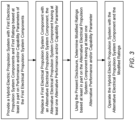
- a method of operating a hybrid-electric propulsion system includes providing a set of original engine ratings for operating the hybrid-electric propulsion system, the original engine ratings based at least in part on one or more first performance and/or capability parameters of an original electrical propulsion subsystem component; replacing the original electrical propulsion subsystem component with an alternative electrical propulsion system component, the alternative electrical propulsion subsystem component having one or more second performance and/or capability parameters, wherein the one or more second performance and/or capability parameters are different from the one or more first performance and/or capability parameters; producing a set of alternative engine ratings based at least in part on the one or more second performance and/or capability parameters; and operating the hybrid-electric propulsion system using the set of alternative engine ratings.
- the electrical propulsion subsystem components may include an electrical motor and electrical energy source, and the electrical energy source may be a fuel cell.
- the electrical propulsion subsystem components may include an electrical motor and electrical energy storage device, and the electrical energy storage device may be a supercapacitor, or a battery.
- the original electrical propulsion subsystem component may be an original battery
- the alternative electrical propulsion subsystem component may be an alternative battery.
- the original battery may have a first energy storage capacity
- the alternative battery may have a second energy storage capacity
- the second energy storage capacity may be different from the first energy storage capacity.
- the original battery may have a first C Rating
- the alternative battery may have a second C Rating, and the second C rating may be different from the first C Rating.
- the original electrical propulsion subsystem component may be an original electrical motor
- the alternative electrical propulsion subsystem component may be an alternative said electrical motor.
- the original electrical motor may have a first maximum continuous power rating
- the alternative electrical motor may have a second first maximum continuous power rating
- the second first maximum continuous power rating may be different from the first maximum continuous power rating.
- the thermal engine in the original engine ratings the thermal engine may be controlled to provide a first percentage of motive input and the electrical propulsion subsystem may be controlled to provide a second percentage of motive input during a flight segment, and in the alternative engine ratings the thermal engine may be controlled to provide a third percentage of motive input during the flight segment, wherein the third percentage of motive input may be different from the first percentage of motive input, and the electrical propulsion subsystem may be controlled to provide a fourth percentage of motive input during the flight segment, wherein the fourth percentage of motive input may be different from the second percentage of motive input.
- the thermal engine may have a first useful life value based on the original engine ratings, and the thermal engine may have a second useful life value based on the alternative engine ratings, and the second useful life value may be different from the first useful life value.
- a hybrid-electric propulsion system includes a thermal engine, an electrical propulsion subsystem, and a system controller.
- the electrical propulsion subsystem has a plurality of components.
- the system controller is in communication with the thermal engine, the electrical propulsion subsystem, and a non-transitory memory storing instructions.
- the stored instructions include a set of first engine ratings for operating the hybrid-electric propulsion system that are based at least in part on one or more first performance and/or capability parameters of a first electrical propulsion subsystem component.
- the instructions when executed cause the system controller to: subsequent to the first electrical propulsion subsystem component being replaced with an alternative electrical propulsion system component, the alternative electrical propulsion subsystem component having one or more second performance and/or capability parameters, wherein the one or more second performance and/or capability parameters are different from the one or more first performance and/or capability parameters, produce a set of alternative engine ratings based at least in part on the one or more second performance and/or capability parameters; and control the hybrid-electric propulsion system using the set of alternative engine ratings.
- the electrical propulsion subsystem components may include a battery and the first electrical propulsion subsystem component is a first battery, and the alternative electrical propulsion subsystem component is a second battery.
- the first battery may have a first energy storage capacity
- the alternative battery may have a second energy storage capacity
- the second energy storage capacity may be different from the first energy storage capacity.
- the first battery may have a first C Rating
- the alternative battery may have a second C Rating, and the second C rating may be different from the first C Rating.
- the electrical propulsion subsystem components may include an electrical motor, and the first electrical propulsion subsystem component may be a first electrical motor, and the alternative electrical propulsion subsystem component may be an alternative electrical motor, and the first electrical motor may have a first maximum continuous power rating, and the alternative electrical motor may have a second maximum continuous power rating, and the second maximum continuous power rating may be different from the first maximum continuous power rating.
- a method of operating an aircraft propulsion system includes: providing a set of first engine ratings for operating the aircraft propulsion system, the first engine ratings based at least in part on one or more first performance and/or capability parameters of a first thermal engine component; replacing the first thermal engine component with an alternative thermal engine component, the alternative thermal engine component having one or more second performance and/or capability parameters, wherein the one or more second performance and/or capability parameters are different from the one or more first performance and/or capability parameters; producing a set of alternative engine ratings based at least in part on the one or more second performance and/or capability parameters; and operating the aircraft propulsion system using the set of alternative engine ratings.
- Embodiments of the present disclosure system and method are configured for use with a hybrid-electric aircraft propulsion system.
- Embodiments of the present disclosure may be used with an aircraft having a single hybrid-electric aircraft propulsion system, or with aircraft having more than one hybrid-electric aircraft propulsion system.
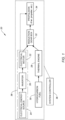
- FIG. 1 diagrammatically illustrates a hybrid-electric aircraft propulsion system 20 having an electrical motor 22, an electrical energy source 24, an inverter 26, a thermal engine 28, a source of hydrocarbon fuel 30, a reduction gearbox 32, a propulsion unit 34, and a system controller 36.
- the electrical motor 22, electrical energy source 24, and the inverter 26 may be referred to as an electrical propulsion subsystem 38.
- the hybrid-electric aircraft propulsion system 20 shown diagrammatically in FIG. 1 is provided to facilitate the description herein and the present disclosure is not limited to this or any hybrid-electric aircraft propulsion system configuration.
- the electrical motor 22 is configured to provide a motive input into the reduction gearbox 32.
- the electrical motor 22 typically has a maximum continuous power rating (e.g., torque as a function of rotor speed) and may be rated to provide such power at predetermined motor operating temperature.
- the electrical motor 22 motive input may be additive to the motive input into the reduction gearbox 32 from the thermal engine 28.
- the electrical motor 22 motive input may be the sole motive input into the reduction gearbox 32.
- the present disclosure is not limited to hybrid-electric propulsion systems having an electrical motor 22 providing motive input to a reduction gearbox 32.
- the electrical motor 22 may provide motive input to the thermal engine, or the electrical motor 22 may provide motive input between a reduction gearbox and a propulsion unit 34, or the like.
- the electrical energy source 24 includes an electrical energy storage device such as one or more batteries, supercapacitors, or the like, and/or electrical energy sources such as fuel cells.
- the electrical energy storage device includes a battery
- the battery will include a "C rating" which is a measurement of the current charging rate and discharging rate of the battery.
- the battery will also have an energy storage capacity value.
- the electrical energy source may include a generator that produces electrical energy.
- a generator may be driven by the thermal engine 28 and may be configured to provide electrical energy to the electrical motor 22, or to the batteries for recharging purposes, or some combination thereof.
- the invertor 26 may be configured to convert direct current (DC) from the batteries to alternating current (AC) that may be used to power the electrical motor 22.
- thermal engine includes various types of gas turbine engines, piston engines, and the like that combust traditional aviation fuels, or sustainable aviation fuels (SAFs), or hydrogen, or any combination thereof.
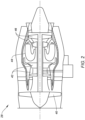
- FIG. 2 diagrammatically shows a thermal engine 28 in the form of a gas turbine engine.
- the gas turbine engine includes a fan section 40, a compressor section 42, a combustor section 44, and a turbine section 46.
- the gas turbine engine may alternatively be another type of gas turbine engine, for example a geared turbofan engine, a turboshaft engine, a turboprop engine, or a turbojet engine. Examples of geared turbofan engine architecture are disclosed in U.S. Patent Nos.
- the thermal engine 28 may be a piston engine or a rotary engine.
- the engine 28 is described herein for aircraft flight applications, it should be understood that the present disclosure may also be used with other flight applications; e.g., unmanned flight vehicles.
- the propulsion unit 34 may include a propeller for an aircraft, or a rotor for a rotary powered aircraft such as a helicopter, or the like, and may include a propeller blade pitch control system, or a rotor blade pitch control system, or a fan blade pitch control system.
- Embodiments of the present disclosure hybrid-electric aircraft propulsion system 20 may include a system controller 36 in communication with other components within the system 20, including the thermal engine 28, the electric motor 22, a reduction gearbox 32, and the like.
- the system controller 36 configured to control and or receive signals from such components to perform the functions described herein.
- the system controller 36 may include any type of computing device, computational circuit, processor(s), CPU, computer, or the like capable of executing a series of instructions that are stored in memory.
- the instructions may include an operating system, and/or executable software modules such as program files, system data, buffers, drivers, utilities, and the like.
- the executable instructions may apply to any functionality described herein to enable the system 20 to accomplish the same algorithmically and/or coordination of system components.
- the system controller 36 may include a single memory device or a plurality of memory devices and the present disclosure is not limited to any particular type of memory device.
- the functions of the system controller 36 described herein may be performed by an independent system controller 36 or alternatively some or all of the system controller 36 functions may be performed by an engine controller and/or an electric motor controller and/or an avionics system such as a flight control computer.
- the system controller functions may be distributed among different system components, for example the determination of the applicable engine ratings may be done by the engine controller, which then transmits to the other systems (for example cockpit displays and flight controls) the engine ratings or limits that have been selected.
- the thermal engine 28 and the electrical motor 22 are configured to provide motive input to drive a propulsion unit 34 for driving the aircraft.
- the thermal engine 28 and the electrical motor 22 are both coupled with the reduction gear box 32, and the reduction gear box 32 in turn is coupled with the propulsion unit 34.
- the thermal engine 28 may be controlled to prove all of the motive input necessary to drive the propulsion unit 34, or the electrical engine 22 may be controlled to prove all of the motive input necessary to drive the propulsion unit 34, or the electrical engine 22 and the thermal engine 28 may be controlled to additively provide the motive input necessary to drive the propulsion unit 34.
- the electrical motor 22 in a hybrid-electric aircraft propulsion system 20 is controlled to produce motive input that augments the motive input provided by the thermal engine 28 during particular segments of a flight; e.g., during takeoff, cruise, or during an OEI condition.
- the ratings of a hybrid-electric propulsion system 20 are selected by the propulsion system manufacturer or integrator based on the performance and capabilities of the propulsion system components, and the approval process of the system 20 is based on those ratings. It should be noted that a single type certification may be sought for an aircraft and its propulsion system, or a type certification may be sought for an aircraft (e.g., an aircraft-level type certificate) and a separate type certification for the propulsion system of the aircraft (e.g., the hybrid-electric propulsion system), or a type certification may be sought for an aircraft powered by a hybrid-electric propulsion system (e.g., an aircraft-level type certification), and a separate type certification for the thermal engine portion of the hybrid-electric propulsion system and a separate type certification for the electrical propulsion subsystem 38 portion of the hybrid-electric propulsion system.
- a single type certification may be sought for an aircraft and its propulsion system, or a type certification may be sought for an aircraft (e.g., an aircraft-level type certificate) and a separate type certification for the
- the present disclosure is applicable to any of these type certification scenarios.
- the type certification for a propulsion system is fixed for the operational life of the system and that operational life may be significant; e.g., 40-50 years.
- material modifications to a certified propulsion system require the modified system be reapproved and a new or modified type certificate issued.
- hybrid-electric propulsion systems provide an opportunity to improve the propulsion system during the operational life of the same.
- the performance and/or capabilities of electrical propulsion subsystem 38 components may improve over time.
- a first battery configuration relied upon in the ratings of the electrical propulsion subsystem 38 may be surpassed by a later available improved second battery configuration.
- the second battery configuration may have a greater energy storage capacity than the first battery configuration, and/or the second battery configuration may have a greater C rating than the first battery configuration.
- a system 20 may utilize an upgraded second battery configuration and the certification may be maintained provided the original ratings (e.g., MTO, MCT, AEO, OEI, and the like) are utilized.
- the second battery configuration may not be used to its fullest potential; e.g., because the engine ratings associated with the issued type certification do not recognize the improvements to the battery and therefore remain unchanged. More specifically, the ratings applicable to usage of the thermal engine 28 remain unchanged despite the improvements to the batteries. As a result, operational benefits that may be available to the thermal engine 28 are also unrealized.
- embodiments of the present disclosure provide a system 20 and method that is configured to leverage improvements of one or more electrical propulsion subsystem 38 components.
- one or more electrical propulsion subsystem 38 components e.g., batteries, electrical motors, and the like, or any combination thereof
- the thermal engine 28 is not modified but that one or more electrical propulsion subsystem 38 components (e.g., batteries, electrical motors, and the like, or any combination thereof) may be modified from an original configuration upon which the original type certification (e.g., indicating the original aircraft performance, engine performance requirements, engine certified ratings, and the like as applicable) is based.
- Embodiments of the present disclosure leverage improvements of one or more electrical propulsion subsystem 38 components by producing and/or using modified engine ratings that may be associated with the thermal engine 28.
- the system 20 may be configured to utilize the improved parameters of the improved electrical propulsion subsystem 38 component to determine and/or use a modified version of an engine rating that is a function of the performance of the modified electrical propulsion subsystem 38 component.
- the system 20 may be configured to utilize the alternative parameters of the electrical propulsion subsystem 38 component to determine and/or use a modified version of an engine rating that is a function of the performance of the modified electrical propulsion subsystem 38 component.
- a modified engine rating for maximum cruise power (MCR) or all engines operating (AEO) may be determined based on a greater percentage of the required power being provided by the electrical motor 22 and a lesser percentage of the power being provided by the thermal engine 28 in view of the fact that the improved batteries can power the electrical motor 22 at a higher burden rate and/or for a longer period of time.
- the decreased burden / stress on the thermal engine 28 can improve the component lifing of the thermal engine 28 (and its components) and/or decrease the maintenance requirements of the thermal engine 28.
- modified engine ratings such as maximum takeoff thrust (MTO) and/or maximum continuous thrust (MCT) may be determined based on a greater percentage of the required thrust being provided by the electrical motor 22 and a lesser percentage of the thrust being provided by the thermal engine 28 in view of the fact that the improved batteries can power the electrical motor 22 at a higher burden rate and/or for a longer period of time.
- MTO maximum takeoff thrust
- MCT maximum continuous thrust
- the decreased burden / stress on the thermal engine 28 can improve the component lifing of the thermal engine 28 and/or decrease the maintenance requirements of the thermal engine 28.
- a modified engine rating for an emergency condition such as one engine operative (OEI) may be determined based on a greater percentage of the required thrust being provided by the electrical motor 22 and a lesser percentage of the thrust being provided by the thermal engine 28 in view of the fact that the improved batteries can power the electrical motor 22 at a higher burden rate and/or for a longer period of time.
- OEI engine operative
- the present disclosure may be configured to permit a tiered type certification with different ratings at different tiers.
- the present disclosure may be configured to permit changes between different rating tiers during flight based on a change in the operational status of a component within the electrical propulsion subsystem 38.
- the system may operate under a first tier type certification (and the ratings associated therewith) based on a current status of a battery, and be configured to operate under a second tier type certification (and the ratings associated therewith) based on a change in the status of a battery; e.g., the battery is recharged during a flight segment.
- the system may operate under a first tier type certification (and the ratings associated therewith) based on a hybrid-electric propulsion system operating under a first fault status, and be configured to operate under a second tier type certification (and the ratings associated therewith) based on a change in the fault status; e.g., the fault status is present and then is resolved, or vice versa.
- the present disclosure system 20 provides a means for utilizing improved electrical propulsion subsystem 38 components and leveraging those improvements to produce and/or use modified engine ratings beneficial to the thermal engine 28 and its operation.
- improvements in an electrical propulsion subsystem 38 component e.g., battery, electrical motor 22, and the like
- MCT maximum continuous power
- the ability of the present disclosure system 20 to utilize improved electrical propulsion subsystem 38 components may also permit increases in permitted engine ratings / power at given atmospheric conditions since a greater percentage of the power requirements for OEI conditions are satisfied by the electrical motor 22 and a lesser percentage of the power requirements for OEI conditions are satisfied by the thermal engine 28.
- the present disclosure system 20 examples provided above are described in terms of how an improved battery may be used to produce and/or use modified engine ratings beneficial to the thermal engine 28 and its operation.
- the present disclosure is not limited to improvements in batteries.
- the present disclosure system 20 is able to leverage improvements in other electrical propulsion subsystem 38 components such as improvements in electrical motors and the like.
- the present disclosure system 20 may be configured to accept input parameters of an electrical propulsion subsystem 38 component (e.g., a battery) and to determine modified ratings using the input parameters.
- an electrical propulsion subsystem 38 component e.g., a battery
- a type certification may be issued to an aircraft, a propulsion system, propulsion system components; e.g., separate type certifications for the thermal engine portion and the electrical propulsion portion of a hybrid-electric propulsion system.
- the present disclosure is applicable to any of these type certification scenarios with the system 20 being configured to accept input parameters of an electrical propulsion subsystem 38 component (e.g., a battery) and to determine modified ratings using the input parameters for any of the aforesaid types of type certifications.
- the system controller 36 may be configured (e.g., via stored instructions) initially with original parameter values for an original electrical propulsion subsystem 38 component and an original set of engine ratings that are based on those original parameter values.
- the system controller 36 may be configured to accept an input of updated set of parameter values for the electrical propulsion subsystem 38 component.
- the system controller 36 may be configured to produce modified engine ratings based on the updated parameter values.
- the produced modified engine ratings may be engine rating values that are stored and accessed by the system controller 36, or the produced modified engine ratings may be engine rating values that are algorithmically determined using instructions stored and accessed by the system controller 36.
- system controller 36 may be reprogrammed with new instructions; e.g., the stored instructions (e.g., software) utilized by the system controller 36 with the original parameter values of the originally supplied electrical propulsion subsystem 38 component may be replaced / updated with stored instructions (e.g., software) that reflects the updated parameter values associated with the updated electrical propulsion subsystem 38 component.
- stored instructions e.g., software
- the functions of the system controller 36 may be performed by an independent system controller 36 or collectively by a plurality of different controllers; e.g., an engine controller, an electric motor controller, an avionics system controller, or the like.
- the system controller functions may be distributed among different electrical propulsion subsystem 38 components.
- the determination of the modified engine ratings may be performed by a first controller (e.g., the system controller 36), and that controller may communicate modified engine ratings or limits to other system components (including, for example, cockpit displays and flight controls) and any controller associated therewith.
- type certification of a hybrid-electric propulsion system 20 may be a tiered certification with different engine ratings at different tiers; e.g., see FIG. 4 .
- the engine ratings of the system 20 may be certified with a first type certification based on the system 20 using batteries having a first set of operating parameters, and may be certified with a second type certification based on the system 20 using improved batteries having a second set of operating parameters, and may be certified with a third type certification based on the system 20 using improved batteries having a third set of operating parameters, and so on.
- the engine ratings of the system 20 may be certified with a first type certification based on the system 20 using a first electrical motor having a first set of operating parameters (e.g., a first maximum continuous power rating), and may be certified with a second type certification based on the system 20 using a second electrical motor having a second set of operating parameters (e.g., a second maximum continuous power rating greater than the first), and may be certified with a third type certification based on the system 20 using a third electrical motor 22 having a third set of operating parameters (e.g., a third maximum continuous power rating greater than the second), and so on.
- a first electrical motor having a first set of operating parameters e.g., a first maximum continuous power rating
- second electrical motor having a second set of operating parameters e.g., a second maximum continuous power rating greater than the first
- a third type certification based on the system 20 using a third electrical motor 22 having a third set of operating parameters e.g., a third maximum continuous power rating greater than the second
- the tiers of type certification may be selected by the engine manufacturer (or other party) during initial analysis of the hybrid-electric propulsion system.
- the engine manufacturer may conduct analysis of how the key thermal engine parameters (e.g., ratings, time between overhaul, maintenance schedule, and the like) can be varied if operating parameters of one or more electrical propulsion subsystem 38 components are changed; e.g., a replacement battery having a change in energy storage capacity, or a replacement electrical motor having a change in maximum continuous power rating, and so on.
- the tiers of ratings can be provided to the appropriate regulatory agency for approval, and tiers of type certification granted if approved.
- the engine certification testing may be performed anticipating the changes in ratings that may be requested in the future due to changes in electrical propulsion subsystem 38 and later in time recertification can be minimized or avoided.
- a significant benefit of the present disclosure relates to the decreased burden on the thermal engine 28 and consequent slower thermal engine 28 degradation that is associated with the recognizing and utilizing an improved electrical propulsion subsystem 38 component such as, but not limited to, a battery.
- the improved electrical propulsion subsystem 38 component is understood to make it possible for the electrical propulsion subsystem 38 to provide a greater percentage of the requisite power and/or a greater percentage of mission energy during certain segments of flight; e.g., during takeoff, cruise, and the like. As a result, on any given flight the thermal engine 28 would consume less of its useful life.
- This unused field margin could be used to increase the OEI limits (e.g. the 30sec OEI ITT limit or the 30sec OEI Ng limit), provided these increased limits were certified and permitted in advance.
- the ability of the present disclosure system 20 to consume less of the thermal engine 28 useful life on any given flight may permit a relaxation of thermal engine 28 inspection requirements and/or may permit more occurrences on the thermal engine 28 of the use of the OEI or other emergency power.
- the present disclosure is described above in terms of a system and method configured for use with a hybrid-electric aircraft propulsion system.
- the present disclosure may be used to leverage improvements or alternative configurations of components within a conventional propulsion system that includes only a thermal engine.
- the performance and/or capabilities of a thermal engine component may improve or differ in a beneficial way over time.
- Embodiments of the present disclosure may produce and/or use modified ratings that are based on the modified / different thermal engine component.
- the system 20 may be configured to utilize the improved / different parameters of the new thermal engine component to determine and/or use a modified version of a rating that is a function of the performance of the new thermal engine component.
- any one of these structures may describe the operations as a sequential process, many of the operations can be performed in parallel or concurrently.
- the order of the operations may be rearranged.
- a process may correspond to a method, a function, a procedure, a subroutine, a subprogram, etc.
Landscapes
- Engineering & Computer Science (AREA)
- Mechanical Engineering (AREA)
- Aviation & Aerospace Engineering (AREA)
- Power Engineering (AREA)
- Transportation (AREA)
- Life Sciences & Earth Sciences (AREA)
- Sustainable Development (AREA)
- Sustainable Energy (AREA)
- Hybrid Electric Vehicles (AREA)
- Control Of Vehicle Engines Or Engines For Specific Uses (AREA)
Applications Claiming Priority (1)
| Application Number | Priority Date | Filing Date | Title |
|---|---|---|---|
| US18/228,986 US20250042559A1 (en) | 2023-08-01 | 2023-08-01 | Aircraft propulsion system with engine ratings as a function of system components |
Publications (1)
| Publication Number | Publication Date |
|---|---|
| EP4501792A1 true EP4501792A1 (de) | 2025-02-05 |
Family
ID=92208914
Family Applications (1)
| Application Number | Title | Priority Date | Filing Date |
|---|---|---|---|
| EP24192461.2A Pending EP4501792A1 (de) | 2023-08-01 | 2024-08-01 | Flugzeugantriebssystem mit triebwerksbewertungen als funktion von systemkomponenten |
Country Status (3)
| Country | Link |
|---|---|
| US (1) | US20250042559A1 (de) |
| EP (1) | EP4501792A1 (de) |
| CA (1) | CA3250629A1 (de) |
Citations (8)
| Publication number | Priority date | Publication date | Assignee | Title |
|---|---|---|---|---|
| US9726083B2 (en) | 2013-08-21 | 2017-08-08 | United Technologies Corporation | Load balanced journal bearing pin for planetary gear |
| WO2018010098A1 (en) * | 2016-07-12 | 2018-01-18 | SZ DJI Technology Co., Ltd. | Systems and methods for battery management |
| EP3623203A1 (de) * | 2018-08-17 | 2020-03-18 | United Technologies Corporation | Batterieaufladen von hybridem elektroflugzeug |
| US10830153B2 (en) | 2012-04-02 | 2020-11-10 | Raytheon Technologies Corporation | Geared turbofan engine with power density range |
| US11053843B2 (en) | 2012-04-02 | 2021-07-06 | Raytheon Technologies Corporation | Geared turbofan engine with a high ratio of thrust to turbine volume |
| US11073106B2 (en) | 2011-06-08 | 2021-07-27 | Raytheon Technologies Corporation | Geared architecture for high speed and small volume fan drive turbine |
| US11118507B2 (en) | 2012-02-29 | 2021-09-14 | Raytheon Technologies Corporation | Geared gas turbine engine with reduced fan noise |
| EP4082915A1 (de) * | 2021-04-30 | 2022-11-02 | Raytheon Technologies Corporation | Aktualisierungsmodul für ein hybridantriebssteuerungssystem |
Family Cites Families (2)
| Publication number | Priority date | Publication date | Assignee | Title |
|---|---|---|---|---|
| CA2902461C (en) * | 2013-03-14 | 2021-04-06 | Rolls-Royce Corporation | Hybrid turbo electric aero-propulsion system control |
| US9783185B2 (en) * | 2014-08-19 | 2017-10-10 | General Electric Company | Vehicle propulsion system having an energy storage system and optimized method of controlling operation thereof |
-
2023
- 2023-08-01 US US18/228,986 patent/US20250042559A1/en active Pending
-
2024
- 2024-07-31 CA CA3250629A patent/CA3250629A1/en active Pending
- 2024-08-01 EP EP24192461.2A patent/EP4501792A1/de active Pending
Patent Citations (8)
| Publication number | Priority date | Publication date | Assignee | Title |
|---|---|---|---|---|
| US11073106B2 (en) | 2011-06-08 | 2021-07-27 | Raytheon Technologies Corporation | Geared architecture for high speed and small volume fan drive turbine |
| US11118507B2 (en) | 2012-02-29 | 2021-09-14 | Raytheon Technologies Corporation | Geared gas turbine engine with reduced fan noise |
| US10830153B2 (en) | 2012-04-02 | 2020-11-10 | Raytheon Technologies Corporation | Geared turbofan engine with power density range |
| US11053843B2 (en) | 2012-04-02 | 2021-07-06 | Raytheon Technologies Corporation | Geared turbofan engine with a high ratio of thrust to turbine volume |
| US9726083B2 (en) | 2013-08-21 | 2017-08-08 | United Technologies Corporation | Load balanced journal bearing pin for planetary gear |
| WO2018010098A1 (en) * | 2016-07-12 | 2018-01-18 | SZ DJI Technology Co., Ltd. | Systems and methods for battery management |
| EP3623203A1 (de) * | 2018-08-17 | 2020-03-18 | United Technologies Corporation | Batterieaufladen von hybridem elektroflugzeug |
| EP4082915A1 (de) * | 2021-04-30 | 2022-11-02 | Raytheon Technologies Corporation | Aktualisierungsmodul für ein hybridantriebssteuerungssystem |
Also Published As
| Publication number | Publication date |
|---|---|
| CA3250629A1 (en) | 2025-06-05 |
| US20250042559A1 (en) | 2025-02-06 |
Similar Documents
| Publication | Publication Date | Title |
|---|---|---|
| EP2990626B1 (de) | Betrieb von flugzeugmotoren während transient-bedingungen | |
| KR102318629B1 (ko) | 다발 엔진 헬리콥터 추진 시스템의 구성, 및 대응하는 헬리콥터 | |
| RU2598476C2 (ru) | Способ контроля генерирования электричества, применяемого для газовой турбины летательного аппарата и устройство для применения такого способа | |
| US8820677B2 (en) | Aircraft power systems and methods | |
| US20170305541A1 (en) | Architecture for a propulsion system of a helicopter including a hybrid turboshaft engine and a system for reactivating said hybrid turboshaft engine | |
| US10906658B2 (en) | Energy storage system for a hybrid power system | |
| US20140020396A1 (en) | Method of automatically regulating an aircraft power plant, a device, and an aircraft | |
| US12296941B2 (en) | System and method for controlling a propulsor for a hybrid-electric aircraft propulsion system | |
| US20250202230A1 (en) | Electrically driven distributed propulsion system | |
| CN118414759A (zh) | 多源电气系统的电压保护方法 | |
| EP4227224A1 (de) | Hybrid-elektrisches flugzeugantriebssystem und verfahren zum betrieb davon | |
| EP4501792A1 (de) | Flugzeugantriebssystem mit triebwerksbewertungen als funktion von systemkomponenten | |
| Gurevich et al. | Analysis of possibilities to apply electric technologies for helicopter propulsion system | |
| EP4530454A1 (de) | Steuersystem und -verfahren für ein hybridelektrisches flugzeugantriebssystem | |
| EP4467803A1 (de) | Systeme und verfahren zur steuerung eines elektrischen verteilungssystems für ein hybridelektrisches flugzeugantriebssystem | |
| US12415498B2 (en) | Hybrid engine system and method of controlling the same | |
| US12545419B1 (en) | Emergency energy protection assembly for hybrid-electric aircraft propulsion systems | |
| US12545418B2 (en) | Control assembly for aircraft propulsion systems | |
| US20260001653A1 (en) | Systems and methods for controlling an electric motor of an aircraft propulsion system | |
| EP4620820A1 (de) | Verfahren zum antrieb eines hybridflugzeugs beim start | |
| US20250074606A1 (en) | Method and apparatus for determining series arcing in a hybrid-electric propulsion system | |
| WO2025248144A1 (en) | Reserve energy system sizing and operation |
Legal Events
| Date | Code | Title | Description |
|---|---|---|---|
| PUAI | Public reference made under article 153(3) epc to a published international application that has entered the european phase |
Free format text: ORIGINAL CODE: 0009012 |
|
| STAA | Information on the status of an ep patent application or granted ep patent |
Free format text: STATUS: THE APPLICATION HAS BEEN PUBLISHED |
|
| AK | Designated contracting states |
Kind code of ref document: A1 Designated state(s): AL AT BE BG CH CY CZ DE DK EE ES FI FR GB GR HR HU IE IS IT LI LT LU LV MC ME MK MT NL NO PL PT RO RS SE SI SK SM TR |
|
| STAA | Information on the status of an ep patent application or granted ep patent |
Free format text: STATUS: REQUEST FOR EXAMINATION WAS MADE |
|
| 17P | Request for examination filed |
Effective date: 20250805 |