EP4501698A1 - Fahrzeuginterne ladevorrichtung - Google Patents
Fahrzeuginterne ladevorrichtung Download PDFInfo
- Publication number
- EP4501698A1 EP4501698A1 EP24187653.1A EP24187653A EP4501698A1 EP 4501698 A1 EP4501698 A1 EP 4501698A1 EP 24187653 A EP24187653 A EP 24187653A EP 4501698 A1 EP4501698 A1 EP 4501698A1
- Authority
- EP
- European Patent Office
- Prior art keywords
- power supply
- power
- converter
- charging device
- vehicle charging
- Prior art date
- Legal status (The legal status is an assumption and is not a legal conclusion. Google has not performed a legal analysis and makes no representation as to the accuracy of the status listed.)
- Withdrawn
Links
Images







Classifications
-
- B—PERFORMING OPERATIONS; TRANSPORTING
- B60—VEHICLES IN GENERAL
- B60L—PROPULSION OF ELECTRICALLY-PROPELLED VEHICLES; SUPPLYING ELECTRIC POWER FOR AUXILIARY EQUIPMENT OF ELECTRICALLY-PROPELLED VEHICLES; ELECTRODYNAMIC BRAKE SYSTEMS FOR VEHICLES IN GENERAL; MAGNETIC SUSPENSION OR LEVITATION FOR VEHICLES; MONITORING OPERATING VARIABLES OF ELECTRICALLY-PROPELLED VEHICLES; ELECTRIC SAFETY DEVICES FOR ELECTRICALLY-PROPELLED VEHICLES
- B60L53/00—Methods of charging batteries, specially adapted for electric vehicles; Charging stations or on-board charging equipment therefor; Exchange of energy storage elements in electric vehicles
- B60L53/20—Methods of charging batteries, specially adapted for electric vehicles; Charging stations or on-board charging equipment therefor; Exchange of energy storage elements in electric vehicles characterised by converters located in the vehicle
- B60L53/24—Using the vehicle's propulsion converter for charging
-
- B—PERFORMING OPERATIONS; TRANSPORTING
- B60—VEHICLES IN GENERAL
- B60L—PROPULSION OF ELECTRICALLY-PROPELLED VEHICLES; SUPPLYING ELECTRIC POWER FOR AUXILIARY EQUIPMENT OF ELECTRICALLY-PROPELLED VEHICLES; ELECTRODYNAMIC BRAKE SYSTEMS FOR VEHICLES IN GENERAL; MAGNETIC SUSPENSION OR LEVITATION FOR VEHICLES; MONITORING OPERATING VARIABLES OF ELECTRICALLY-PROPELLED VEHICLES; ELECTRIC SAFETY DEVICES FOR ELECTRICALLY-PROPELLED VEHICLES
- B60L53/00—Methods of charging batteries, specially adapted for electric vehicles; Charging stations or on-board charging equipment therefor; Exchange of energy storage elements in electric vehicles
- B60L53/20—Methods of charging batteries, specially adapted for electric vehicles; Charging stations or on-board charging equipment therefor; Exchange of energy storage elements in electric vehicles characterised by converters located in the vehicle
- B60L53/22—Constructional details or arrangements of charging converters specially adapted for charging electric vehicles
-
- B—PERFORMING OPERATIONS; TRANSPORTING
- B60—VEHICLES IN GENERAL
- B60L—PROPULSION OF ELECTRICALLY-PROPELLED VEHICLES; SUPPLYING ELECTRIC POWER FOR AUXILIARY EQUIPMENT OF ELECTRICALLY-PROPELLED VEHICLES; ELECTRODYNAMIC BRAKE SYSTEMS FOR VEHICLES IN GENERAL; MAGNETIC SUSPENSION OR LEVITATION FOR VEHICLES; MONITORING OPERATING VARIABLES OF ELECTRICALLY-PROPELLED VEHICLES; ELECTRIC SAFETY DEVICES FOR ELECTRICALLY-PROPELLED VEHICLES
- B60L53/00—Methods of charging batteries, specially adapted for electric vehicles; Charging stations or on-board charging equipment therefor; Exchange of energy storage elements in electric vehicles
- B60L53/10—Methods of charging batteries, specially adapted for electric vehicles; Charging stations or on-board charging equipment therefor; Exchange of energy storage elements in electric vehicles characterised by the energy transfer between the charging station and the vehicle
- B60L53/14—Conductive energy transfer
-
- B—PERFORMING OPERATIONS; TRANSPORTING
- B60—VEHICLES IN GENERAL
- B60L—PROPULSION OF ELECTRICALLY-PROPELLED VEHICLES; SUPPLYING ELECTRIC POWER FOR AUXILIARY EQUIPMENT OF ELECTRICALLY-PROPELLED VEHICLES; ELECTRODYNAMIC BRAKE SYSTEMS FOR VEHICLES IN GENERAL; MAGNETIC SUSPENSION OR LEVITATION FOR VEHICLES; MONITORING OPERATING VARIABLES OF ELECTRICALLY-PROPELLED VEHICLES; ELECTRIC SAFETY DEVICES FOR ELECTRICALLY-PROPELLED VEHICLES
- B60L55/00—Arrangements for supplying energy stored within a vehicle to a power network, i.e. vehicle-to-grid [V2G] arrangements
-
- H—ELECTRICITY
- H02—GENERATION; CONVERSION OR DISTRIBUTION OF ELECTRIC POWER
- H02J—ELECTRIC POWER NETWORKS; CIRCUIT ARRANGEMENTS OR SYSTEMS FOR SUPPLYING OR DISTRIBUTING ELECTRIC POWER; SYSTEMS FOR STORING ELECTRIC ENERGY
- H02J7/00—Circuit arrangements for charging or discharging batteries or for supplying loads from batteries
- H02J7/02—Circuit arrangements for charging or discharging batteries or for supplying loads from batteries for charging batteries from AC mains by converters
-
- H—ELECTRICITY
- H02—GENERATION; CONVERSION OR DISTRIBUTION OF ELECTRIC POWER
- H02M—APPARATUS FOR CONVERSION BETWEEN AC AND AC, BETWEEN AC AND DC, OR BETWEEN DC AND DC, AND FOR USE WITH MAINS OR SIMILAR POWER SUPPLY SYSTEMS; CONVERSION OF DC OR AC INPUT POWER INTO SURGE OUTPUT POWER; CONTROL OR REGULATION THEREOF
- H02M1/00—Details of apparatus for conversion
- H02M1/0067—Converter structures employing plural converter units, other than for parallel operation of the units on a single load
- H02M1/007—Plural converter units in cascade
-
- H—ELECTRICITY
- H02—GENERATION; CONVERSION OR DISTRIBUTION OF ELECTRIC POWER
- H02M—APPARATUS FOR CONVERSION BETWEEN AC AND AC, BETWEEN AC AND DC, OR BETWEEN DC AND DC, AND FOR USE WITH MAINS OR SIMILAR POWER SUPPLY SYSTEMS; CONVERSION OF DC OR AC INPUT POWER INTO SURGE OUTPUT POWER; CONTROL OR REGULATION THEREOF
- H02M1/00—Details of apparatus for conversion
- H02M1/42—Circuits or arrangements for compensating for or adjusting power factor in converters or inverters
- H02M1/4208—Arrangements for improving power factor of AC input
- H02M1/4233—Arrangements for improving power factor of AC input using a bridge converter comprising active switches
-
- H—ELECTRICITY
- H02—GENERATION; CONVERSION OR DISTRIBUTION OF ELECTRIC POWER
- H02M—APPARATUS FOR CONVERSION BETWEEN AC AND AC, BETWEEN AC AND DC, OR BETWEEN DC AND DC, AND FOR USE WITH MAINS OR SIMILAR POWER SUPPLY SYSTEMS; CONVERSION OF DC OR AC INPUT POWER INTO SURGE OUTPUT POWER; CONTROL OR REGULATION THEREOF
- H02M3/00—Conversion of DC power input into DC power output
- H02M3/02—Conversion of DC power input into DC power output without intermediate conversion into AC
- H02M3/04—Conversion of DC power input into DC power output without intermediate conversion into AC by static converters
- H02M3/10—Conversion of DC power input into DC power output without intermediate conversion into AC by static converters using discharge tubes with control electrode or semiconductor devices with control electrode
- H02M3/145—Conversion of DC power input into DC power output without intermediate conversion into AC by static converters using discharge tubes with control electrode or semiconductor devices with control electrode using devices of a triode or transistor type requiring continuous application of a control signal
- H02M3/155—Conversion of DC power input into DC power output without intermediate conversion into AC by static converters using discharge tubes with control electrode or semiconductor devices with control electrode using devices of a triode or transistor type requiring continuous application of a control signal using semiconductor devices only
- H02M3/156—Conversion of DC power input into DC power output without intermediate conversion into AC by static converters using discharge tubes with control electrode or semiconductor devices with control electrode using devices of a triode or transistor type requiring continuous application of a control signal using semiconductor devices only with automatic control of output voltage or current, e.g. switching regulators
- H02M3/158—Conversion of DC power input into DC power output without intermediate conversion into AC by static converters using discharge tubes with control electrode or semiconductor devices with control electrode using devices of a triode or transistor type requiring continuous application of a control signal using semiconductor devices only with automatic control of output voltage or current, e.g. switching regulators including plural semiconductor devices as final control devices for a single load
- H02M3/1584—Conversion of DC power input into DC power output without intermediate conversion into AC by static converters using discharge tubes with control electrode or semiconductor devices with control electrode using devices of a triode or transistor type requiring continuous application of a control signal using semiconductor devices only with automatic control of output voltage or current, e.g. switching regulators including plural semiconductor devices as final control devices for a single load with a plurality of power processing stages connected in parallel
-
- B—PERFORMING OPERATIONS; TRANSPORTING
- B60—VEHICLES IN GENERAL
- B60L—PROPULSION OF ELECTRICALLY-PROPELLED VEHICLES; SUPPLYING ELECTRIC POWER FOR AUXILIARY EQUIPMENT OF ELECTRICALLY-PROPELLED VEHICLES; ELECTRODYNAMIC BRAKE SYSTEMS FOR VEHICLES IN GENERAL; MAGNETIC SUSPENSION OR LEVITATION FOR VEHICLES; MONITORING OPERATING VARIABLES OF ELECTRICALLY-PROPELLED VEHICLES; ELECTRIC SAFETY DEVICES FOR ELECTRICALLY-PROPELLED VEHICLES
- B60L2210/00—Converter types
- B60L2210/30—AC to DC converters
-
- H—ELECTRICITY
- H02—GENERATION; CONVERSION OR DISTRIBUTION OF ELECTRIC POWER
- H02J—ELECTRIC POWER NETWORKS; CIRCUIT ARRANGEMENTS OR SYSTEMS FOR SUPPLYING OR DISTRIBUTING ELECTRIC POWER; SYSTEMS FOR STORING ELECTRIC ENERGY
- H02J2105/00—Networks for supplying or distributing electric power characterised by their spatial reach or by the load
- H02J2105/30—Networks for supplying or distributing electric power characterised by their spatial reach or by the load the load networks being external to vehicles, i.e. exchanging power with vehicles
- H02J2105/33—Networks for supplying or distributing electric power characterised by their spatial reach or by the load the load networks being external to vehicles, i.e. exchanging power with vehicles exchanging power with road vehicles
- H02J2105/37—Networks for supplying or distributing electric power characterised by their spatial reach or by the load the load networks being external to vehicles, i.e. exchanging power with vehicles exchanging power with road vehicles exchanging power with electric vehicles [EV] or with hybrid electric vehicles [HEV]
-
- H—ELECTRICITY
- H02—GENERATION; CONVERSION OR DISTRIBUTION OF ELECTRIC POWER
- H02J—ELECTRIC POWER NETWORKS; CIRCUIT ARRANGEMENTS OR SYSTEMS FOR SUPPLYING OR DISTRIBUTING ELECTRIC POWER; SYSTEMS FOR STORING ELECTRIC ENERGY
- H02J2207/00—Details of circuit arrangements for charging or discharging batteries or supplying loads from batteries
- H02J2207/20—Charging or discharging characterised by the power electronics converter
-
- H—ELECTRICITY
- H02—GENERATION; CONVERSION OR DISTRIBUTION OF ELECTRIC POWER
- H02M—APPARATUS FOR CONVERSION BETWEEN AC AND AC, BETWEEN AC AND DC, OR BETWEEN DC AND DC, AND FOR USE WITH MAINS OR SIMILAR POWER SUPPLY SYSTEMS; CONVERSION OF DC OR AC INPUT POWER INTO SURGE OUTPUT POWER; CONTROL OR REGULATION THEREOF
- H02M1/00—Details of apparatus for conversion
- H02M1/0095—Hybrid converter topologies, e.g. NPC mixed with flying capacitor, thyristor converter mixed with MMC or charge pump mixed with buck
-
- H—ELECTRICITY
- H02—GENERATION; CONVERSION OR DISTRIBUTION OF ELECTRIC POWER
- H02M—APPARATUS FOR CONVERSION BETWEEN AC AND AC, BETWEEN AC AND DC, OR BETWEEN DC AND DC, AND FOR USE WITH MAINS OR SIMILAR POWER SUPPLY SYSTEMS; CONVERSION OF DC OR AC INPUT POWER INTO SURGE OUTPUT POWER; CONTROL OR REGULATION THEREOF
- H02M1/00—Details of apparatus for conversion
- H02M1/42—Circuits or arrangements for compensating for or adjusting power factor in converters or inverters
- H02M1/4208—Arrangements for improving power factor of AC input
- H02M1/4216—Arrangements for improving power factor of AC input operating from a three-phase input voltage
-
- H—ELECTRICITY
- H02—GENERATION; CONVERSION OR DISTRIBUTION OF ELECTRIC POWER
- H02M—APPARATUS FOR CONVERSION BETWEEN AC AND AC, BETWEEN AC AND DC, OR BETWEEN DC AND DC, AND FOR USE WITH MAINS OR SIMILAR POWER SUPPLY SYSTEMS; CONVERSION OF DC OR AC INPUT POWER INTO SURGE OUTPUT POWER; CONTROL OR REGULATION THEREOF
- H02M7/00—Conversion of AC power input into DC power output; Conversion of DC power input into AC power output
- H02M7/42—Conversion of DC power input into AC power output without possibility of reversal
- H02M7/44—Conversion of DC power input into AC power output without possibility of reversal by static converters
- H02M7/48—Conversion of DC power input into AC power output without possibility of reversal by static converters using discharge tubes with control electrode or semiconductor devices with control electrode
- H02M7/53—Conversion of DC power input into AC power output without possibility of reversal by static converters using discharge tubes with control electrode or semiconductor devices with control electrode using devices of a triode or transistor type requiring continuous application of a control signal
- H02M7/537—Conversion of DC power input into AC power output without possibility of reversal by static converters using discharge tubes with control electrode or semiconductor devices with control electrode using devices of a triode or transistor type requiring continuous application of a control signal using semiconductor devices only, e.g. single switched pulse inverters
- H02M7/5387—Conversion of DC power input into AC power output without possibility of reversal by static converters using discharge tubes with control electrode or semiconductor devices with control electrode using devices of a triode or transistor type requiring continuous application of a control signal using semiconductor devices only, e.g. single switched pulse inverters in a bridge configuration
- H02M7/53871—Conversion of DC power input into AC power output without possibility of reversal by static converters using discharge tubes with control electrode or semiconductor devices with control electrode using devices of a triode or transistor type requiring continuous application of a control signal using semiconductor devices only, e.g. single switched pulse inverters in a bridge configuration with automatic control of output voltage or current
-
- Y—GENERAL TAGGING OF NEW TECHNOLOGICAL DEVELOPMENTS; GENERAL TAGGING OF CROSS-SECTIONAL TECHNOLOGIES SPANNING OVER SEVERAL SECTIONS OF THE IPC; TECHNICAL SUBJECTS COVERED BY FORMER USPC CROSS-REFERENCE ART COLLECTIONS [XRACs] AND DIGESTS
- Y02—TECHNOLOGIES OR APPLICATIONS FOR MITIGATION OR ADAPTATION AGAINST CLIMATE CHANGE
- Y02T—CLIMATE CHANGE MITIGATION TECHNOLOGIES RELATED TO TRANSPORTATION
- Y02T10/00—Road transport of goods or passengers
- Y02T10/60—Other road transportation technologies with climate change mitigation effect
- Y02T10/70—Energy storage systems for electromobility, e.g. batteries
-
- Y—GENERAL TAGGING OF NEW TECHNOLOGICAL DEVELOPMENTS; GENERAL TAGGING OF CROSS-SECTIONAL TECHNOLOGIES SPANNING OVER SEVERAL SECTIONS OF THE IPC; TECHNICAL SUBJECTS COVERED BY FORMER USPC CROSS-REFERENCE ART COLLECTIONS [XRACs] AND DIGESTS
- Y02—TECHNOLOGIES OR APPLICATIONS FOR MITIGATION OR ADAPTATION AGAINST CLIMATE CHANGE
- Y02T—CLIMATE CHANGE MITIGATION TECHNOLOGIES RELATED TO TRANSPORTATION
- Y02T10/00—Road transport of goods or passengers
- Y02T10/60—Other road transportation technologies with climate change mitigation effect
- Y02T10/7072—Electromobility specific charging systems or methods for batteries, ultracapacitors, supercapacitors or double-layer capacitors
-
- Y—GENERAL TAGGING OF NEW TECHNOLOGICAL DEVELOPMENTS; GENERAL TAGGING OF CROSS-SECTIONAL TECHNOLOGIES SPANNING OVER SEVERAL SECTIONS OF THE IPC; TECHNICAL SUBJECTS COVERED BY FORMER USPC CROSS-REFERENCE ART COLLECTIONS [XRACs] AND DIGESTS
- Y02—TECHNOLOGIES OR APPLICATIONS FOR MITIGATION OR ADAPTATION AGAINST CLIMATE CHANGE
- Y02T—CLIMATE CHANGE MITIGATION TECHNOLOGIES RELATED TO TRANSPORTATION
- Y02T90/00—Enabling technologies or technologies with a potential or indirect contribution to GHG emissions mitigation
- Y02T90/10—Technologies relating to charging of electric vehicles
- Y02T90/14—Plug-in electric vehicles
Definitions
- the present disclosure relates to an in-vehicle charging device.
- CSAR unidirectional current source active rectifier 17
- AC-DC converter 1 an input stage
- DC-DC converter 2 an output stage
- DC-DC converter 2 an output stage
- DC-DC converter 3 an in-vehicle charging device is disclosed in which an AC-DC buck converter and a DC-DC boost converter are disposed in this order from the external AC power supply 4 toward the DC power supply 3.
- JP 2011-526775 A family: US 2012/0286740 A discloses an example of an in-vehicle charging device to which power is supplied from a three-phase external AC power supply 4 as illustrated in Fig. 17 . That is, this in-vehicle charging device also has a configuration in which an AC-DC buck converter and a DC-DC boost converter are disposed in this order from the external AC power supply 4 toward the DC power supply 3.
- a need thus exists for an in-vehicle charging device that can also use a vehicle driving device, charge an in-vehicle DC power supply with an external AC power supply, and output AC power from the DC power supply.
- An in-vehicle charging device is mounted on a vehicle including a rotating electrical machine that includes coils of multiple phases connected to each other at a neutral point and serves as a driving power source of a wheel, an inverter that converts power between a direct current (DC) and an alternating current (AC) of multiple phases, and a DC power supply connected to the rotating electrical machine via the inverter, and charges the DC power supply with power supplied from an external AC power supply
- the in-vehicle charging device including: an AC-DC converter that converts power between AC power on the external AC power supply side and first DC power; and a DC-DC converter that converts power between the first DC power and second DC power on the DC power supply side, in which the AC-DC converter includes a current source active rectifier having a power factor correct function, the DC-DC converter includes a chopper circuit including a reactor disposed on the AC-DC converter side and a half-bridge circuit disposed on the DC power supply side, the reactor is configured using a plurality of the coils, the
- the current source active rectifier having a power factor correct function in the AC-DC converter includes a bidirectional switching device. That is, the current source active rectifier is configured using a bidirectional switching device as a switching device.
- the bidirectional switching device is an element capable of causing a current to flow bidirectionally, and has a withstand voltage equivalent to a voltage having both positive and negative polarities with respect to the element. Therefore, it is easy to construct the AC-DC converter including the current control type active rectifier circuit.
- a voltage control type AC-DC converter requires a large-capacity capacitor. However, by using a current control type AC-DC converter, a large-capacity capacitor is unnecessary, and the component cost can be reduced and an increase in size of the device can be suppressed.
- a current source active rectifier configured using a bidirectional switching device is a current source active rectifier capable of bidirectional power conversion. Therefore, not only the power conversion from an AC to a DC but also the power conversion from a DC to an AC can be performed. Therefore, the DC power supply of the electric vehicle or the hybrid vehicle can also be used as an emergency AC power supply.
- an in-vehicle charging device that can also use a vehicle driving device, charge an in-vehicle DC power supply with an external AC power supply, and output AC power from the DC power supply.
- the circuit block diagram of Fig. 1 schematically illustrates a drive control system of a rotating electrical machine 70
- the circuit block diagram of Fig. 2 illustrates a first example of an in-vehicle charging device 10 using the drive control system of the rotating electrical machine 70.
- the in-vehicle charging device 10 is a device that charges a DC power supply 3 included in a vehicle driving device 9 as illustrated in Fig. 1 in a state where the DC power supply 3 is mounted on the vehicle. As illustrated in Fig.
- the vehicle driving device 9 of the present embodiment includes a rotating electrical machine 70 serving as a driving power source of wheels of a hybrid vehicle, an electric vehicle, or the like, an inverter 5 that converts power between a direct current (DC) and an alternating current (AC) of multiple phases (here, three phases), and a DC power supply 3 connected to the inverter 5.
- a rotating electrical machine 70 serving as a driving power source of wheels of a hybrid vehicle, an electric vehicle, or the like
- an inverter 5 that converts power between a direct current (DC) and an alternating current (AC) of multiple phases (here, three phases)
- DC power supply 3 connected to the inverter 5.
- the vehicle driving device 9 is not prevented from including other driving power sources such as an internal combustion engine (not illustrated) in addition to the rotating electrical machine 70.
- the in-vehicle charging device 10 is a device that charges the DC power supply 3 of the vehicle driving device 9 with power supplied from the external AC power supply 4 (grid power supply), and is a device called an onboard charger.
- the in-vehicle charging device 10 is configured to share a part with the vehicle driving device 9. Specifically, the inverter 5 and coils 7 of the rotating electrical machine 70 are shared.
- a DC link capacitor 6 is also used as an output capacitor Cs of the in-vehicle charging device 10. Note that all or at least a part of a control device (not illustrated) that controls a switching device, a contactor, and the like included in the in-vehicle charging device 10 may be shared with a control device 80 that controls the vehicle driving device 9.
- the vehicle driving device 9 includes a control device 80 that controls a rotating electrical machine 70 serving as a driving power source of the vehicle, and the control device 80 performs current feedback control to perform drive control of the rotating electrical machine 70.
- IPMSM interior permanent magnet synchronous motor
- the rotating electrical machine 70 may include, for example, two sets of coils 7 of three phases, and may be driven by AC of six phases. Note that the rotating electrical machine 70 can function as both an electric motor and a generator. When the rotating electrical machine 70 functions as an electric motor, the rotating electrical machine 70 is in a powering state, and when the rotating electrical machine 70 functions as a generator, the rotating electrical machine 70 is in a regeneration state.
- the vehicle driving device 9 includes the inverter 5.
- the inverter 5 is connected to the AC rotating electrical machine 70 and the DC power supply 3 to convert power between an AC and a DC of multiple phases.
- a pair of DC side terminals of the inverter 5 is connected to a positive electrode terminal and a negative electrode terminal of the DC power supply 3.
- AC side terminals of multiple phases of the inverter 5 are connected to the respective coils 7 of multiple phases.
- the inverter 5 includes a U-phase arm, a V-phase arm, and a W-phase arm as arms (also referred to as legs) of multiple phases.
- Each of the arms is formed by connecting an upper-stage side switching device disposed on the positive electrode side and the lower-stage side switching device disposed on the negative electrode side in series.
- a midpoint of each arm that is, a connection point between the upper-stage side switching device and the lower-stage side switching device is connected to the corresponding coil 7.
- the midpoint of the U-phase arm and a U-phase coil 7u are connected
- the midpoint of the V-phase arm and a V-phase coil 7v are connected
- the midpoint of the W-phase arm and a W-phase coil 7w are connected.
- a smoothing capacitor (DC link capacitor 6) that smooths a voltage (DC link voltage Vdc) between the positive electrode and the negative electrode is provided on the DC side of the inverter 5.
- a voltage sensor (DC link voltage sensor 61) that detects the DC link voltage is also provided on the DC side of the inverter 5.
- the DC link capacitor 6 is referred to as "first DC link capacitor”.
- the DC power supply 3 includes, for example, a rechargeable secondary battery (battery) such as a lithium ion battery, an electric double layer capacitor, and the like.
- a rechargeable secondary battery battery
- the DC power supply 3 is a high-voltage, high-capacity DC power supply, and the rated power supply voltage is, for example, 200 to 800 [V].
- the DC power supply 3 is configured to be able to connect and disconnect electrical connection to and from the inverter 5 and the rotating electrical machine 70 by operation of a main switch (ignition switch) or the like of the vehicle.
- the DC power supply 3 is connected to the inverter 5 and the rotating electrical machine 70 via a main contactor 11 including a relay or the like.
- the DC power supply 3 also includes a current sensor (battery current sensor 31) that detects an input/output current to/from the DC power supply 3, and a voltage sensor (battery voltage sensor 32) that detects a terminal voltage of the DC power supply 3.
- the relay may be a mechanical relay or a semiconductor relay (solid state relay).
- solid state relay solid state relay
- a battery management system (BMS) is often provided.
- a secondary battery such as a lithium ion battery includes a plurality of cells (battery cells).
- the battery management system is a battery management control system that performs (1) prevention of overcharge and overdischarge of a cell, (2) prevention of overcurrent from flowing through a cell, (3) temperature management of a cell, (4) calculation of a state of charge (SOC), (5) equalization of a cell voltage, and the like.
- the battery current sensor 31 and the battery voltage sensor 32 described above may be configured as a part of the battery management system.
- the inverter 5 includes a plurality of switching devices 5S.
- the present embodiment exemplifies a form in which a field effect transistor (FET) is used as the switching device 5S.
- FET field effect transistor
- IGBT insulated gate bipolar transistor
- a freewheel diode is connected in parallel to each switching device 5S with a direction from the negative electrode to the positive electrode (direction from the lower-stage side to the upper-stage side) as a forward direction.
- the freewheel diode of such a form may not be provided.
- the inverter 5 is controlled by the control device 80.
- the control device 80 is constructed using a logic circuit such as a microcomputer as a core member.
- the control device 80 drives the rotating electrical machine 70 via the inverter 5 by performing current feedback control on the basis of a target torque (torque command) of the rotating electrical machine 70 provided as a request signal from another control device such as a vehicle control device 90 which is one of host control devices.
- a target torque a target torque command
- a vehicle control device 90 which is one of host control devices.
- an operating voltage of a logic circuit element such as a microcomputer is generally 5 volts or less.
- a control signal generated by the logic circuit element is transmitted to the inverter 5 via a drive circuit, which is not illustrated for simplicity.
- the control device 80 includes a drive circuit.
- a current sensor motor current sensor 81
- the control device 80 acquires the detection result.
- the magnetic pole position (electrical angle) and the rotational speed (angular velocity) of the rotor of the rotating electrical machine 70 at each time point are detected by a rotation sensor 82 such as, for example, a resolver or an inductive position sensor, and the control device 80 acquires the detection result.
- the control device 80 executes current feedback control using the detection results of the motor current sensor 81 and the rotation sensor 82.
- the control device 80 includes various functional units for current feedback control, and each functional unit is realized by cooperation of hardware such as a microcomputer and software (program).
- the rotating electrical machine 70 connected to the DC power supply 3 via the inverter 5 functions as an electric motor by the power supplied from the DC power supply 3, and can also function as a generator to charge the DC power supply 3.
- mechanical energy can be supplied to the rotating electrical machine 70 by power of an internal combustion engine or the like to cause the rotating electrical machine 70 to generate power, but there are few opportunities for power generation, and the DC power supply 3 cannot be sufficiently charged in some cases.
- power generation is limited to that by mechanical energy from wheels in inertial traveling or the like, and the DC power supply 3 cannot be sufficiently charged in many cases.
- the DC power supply 3 can be charged by an external power supply in a state where the DC power supply 3 is mounted on the vehicle.
- an in-vehicle charging device When the DC power supply 3 is charged by an external power supply, an in-vehicle charging device is preferably mounted on the vehicle.
- the external power supply is often AC because it receives power from a commercial power supply. Therefore, the in-vehicle charging device is configured to have a power conversion function from an AC to a DC.
- An AC-DC converter including an inductor and a bridge circuit including a switching device is known as a circuit for converting power from AC to DC.
- the conversion from an AC to a DC can be realized by a rectifier circuit using a rectifier element such as a diode, but power conversion is preferably performed in a state where a power factor defined by a phase of an AC voltage and a current is close to "1". For this reason, the AC-DC converter often includes a power factor correction circuit using a switching device so that the power factor can be corrected.
- the in-vehicle charging device including such a power conversion circuit tends to have a large circuit scale, but the opportunity to charge the DC power supply 3 is less than the opportunity to drive the wheels. Therefore, it is preferable that the in-vehicle charging device has a small-scale configuration.
- the DC power supply 3 is charged by the external power supply, the vehicle is stopped (parked). Therefore, the inverter 5 including the switching device and the coils 7 of the rotating electrical machine 70 having inductance are not used to drive the wheels when the DC power supply 3 is charged by the external power supply. Therefore, it is conceivable to use the inverter 5 and the coils 7 to form an in-vehicle charging device.
- Fig. 16 illustrates a conventional in-vehicle charging device (first charging device 10X) also exemplified in the background art. Portions corresponding to those of the in-vehicle charging device 10 of the present embodiment are also denoted by the same reference numerals.
- the first charging device 10X also uses a traction power train that drives wheels.
- the first charging device 10X also uses the coils 7 in which the inverter 5 (traction inverter) and the coils 7 (electric machine windings of the rotating electrical machine) are used for the DC-DC converter 2, which is an output stage to the DC power supply 3, as a reactor (filtering inductor) similarly to the in-vehicle charging device 10 of the present embodiment.
- the inverter 5 having three-phase arms (legs are also synonymous)
- the switching devices on the upper-stage side are collectively subjected to switching control so as to be apparent one arm
- the switching devices on the lower-stage side are collectively subjected to switching control.
- the first charging device 10X includes the unidirectional current source active rectifier 17 (CSAR) having a buck function in the AC-DC converter 1 which is an input stage from the external AC power supply 4.
- the current source active rectifier includes a full-bridge circuit using a switching device, and is configured as a totem pole type power factor correction circuit.
- One arm of the full-bridge circuit is configured by sequentially connecting, from the positive electrode side to the negative electrode side of the DC, one diode having a cathode connected to the positive electrode side, two switching devices having a freewheel diode connected in parallel in a forward direction from the positive electrode side to the negative electrode side, and one diode having an anode connected to the negative electrode side in this order.
- a filter 1f (inductor-capacitor filter) including a filter inductor Lf and a filter capacitor Cf is disposed between the external AC power supply 4 and the current source active rectifier 17.
- a differential mode inductor Lg is disposed between the filter 1f and the external AC power supply 4.
- second charging device 10Y that charges the DC power supply 3 with the power from the external AC power supply 4 of three-phases illustrated in Fig. 17 .
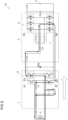
- the in-vehicle charging device 10 that is mounted on a vehicle including the rotating electrical machine 70 that includes the coils 7 of multiple phases connected to each other at the neutral point 7N and serves as a driving power source of wheels, an inverter 5 that converts power between DC and AC of the multiple phases, and a DC power supply 3 connected to the rotating electrical machine 70 via the inverter 5, and charges the DC power supply 3 with power supplied from an external AC power supply 4 is configured as follows. That is, as illustrated in Fig.
- the in-vehicle charging device 10 includes the AC-DC converter 1 that converts power between AC power on the external AC power supply 4 side and first DC power, and the DC-DC converter 2 that converts power between first DC power and second DC power on the DC power supply 3 side.
- the AC-DC converter 1 includes the current source active rectifier 17 having a power factor correct function
- the DC-DC converter 2 includes a chopper circuit including a reactor disposed on the AC-DC converter 1 side and a half-bridge circuit disposed on the DC power supply 3 side.
- the current source active rectifier 17 includes a full-bridge circuit including four switching devices 1S.
- a reactor is configured using a plurality of coils 7, and the half-bridge circuit is configured using the inverter 5.
- the coils 7 of multiple phases connected in parallel are an apparent one coil, and constitute a reactor together with an inductor Le described later.
- the arms of each phase connected in parallel of the inverter 5 are apparent one-phase arms and constitute a half-bridge circuit.
- the neutral point 7N of the coils 7 is connected to the AC-DC converter 1 via the inductor Le. Note that the neutral point 7N may be connected to the AC-DC converter 1 without including the inductor Le.
- the end of the coil 7 of each phase on the side opposite to the neutral point 7N is connected to the midpoint of the arm of each phase of the inverter 5 (the connection point between the upper-stage switching device and the lower-stage switching device of each arm).
- the reactor may be referred to as a choke coil.
- the current source active rectifier 17 of the AC-DC converter 1 includes a bidirectional switching device. Specifically, one arm of the full-bridge circuit constituting the current source active rectifier 17 is configured by connecting two bidirectional switching devices in series from the positive electrode side toward the negative electrode side of DC.
- the bidirectional switching device is an element capable of causing a current to flow bidirectionally, and has a withstand voltage equivalent to a voltage having both positive and negative polarities with respect to the element. Therefore, it is easy to construct the AC-DC converter 1 including the current control type active rectifier circuit.
- a voltage control type AC-DC converter requires a large-capacity capacitor. However, by using a current control type AC-DC converter, a large-capacity capacitor is unnecessary, and the component cost can be reduced and an increase in size of the device can be suppressed.
- the current source active rectifier 17 is not a unidirectional current source active rectifier as in the first charging device 10X illustrated in Fig. 16 , but a bidirectional current source active rectifier. Therefore, not only the power conversion from an AC to a DC but also the power conversion from a DC to an AC can be performed. Therefore, the DC power supply 3 of the electric vehicle or the hybrid vehicle can also be used as an emergency AC power supply.
- Fig. 2 illustrates a form in which a filter 1f (inductor-capacitor filter) including a filter inductor Lf and a filter capacitor Cf is disposed between the external AC power supply 4 and the current source active rectifier 17 similarly to the first charging device 10X.
- a filter 1f inductor filter
- the differential mode inductor Lg is disposed between the filter 1f and the external AC power supply 4 is illustrated.
- a freewheel diode DC link freewheel diode Dfw
- Dfw DC link freewheel diode
- the in-vehicle charging device 10 is not provided with, for example, an insulation circuit using a transformer, there is a possibility of being able to prepare for a short-circuit failure or the like of the external AC power supply 4 as described above. That is, it is possible to suppress an increase in circuit scale of the in-vehicle charging device 10.
- the in-vehicle charging device 10 of the present embodiment capable of bidirectional power conversion of power conversion from an AC to a DC (second DC power) and power conversion from the DC (second DC power) to the AC is configured as follows.
- the AC-DC converter 1 functions as an AC-DC buck converter unity power factor (UPF)
- the DC-DC converter 2 functions as a DC-DC boost converter.
- the in-vehicle charging device 10 functions as an emergency AC power supply that outputs AC power by the power stored in the DC power supply 3
- the DC-DC converter 2 functions as the DC-DC buck converter
- the AC-DC converter 1 functions as a DC-AC boost converter UPF.
- the DC-DC converter 2 when the in-vehicle charging device 10 charges the DC power supply 3 with the external AC power supply 4, the DC-DC converter 2 can also function as the DC-DC buck converter.
- the in-vehicle charging device 10 can have both a function of the AC-DC buck converter and a function of the AC-DC boost converter as a function of power conversion from the AC power to the second DC power (battery power) as a whole.
- Some DC power supplies 3 mounted on a vehicle for supplying electric power to the rotating electrical machine 70 that drives wheels have different rated voltages. Even in the same vehicle type, the rated voltage of the DC power supply 3 may be different depending on the grade. For example, in an advanced grade, the DC power supply 3 having a higher rated voltage may be mounted in order to obtain a higher output. When this voltage is higher than a voltage obtained by performing AC-DC conversion from the external AC power supply 4 which is a general commercial power supply, boost is required in the DC-DC converter 2.
- boost is required in the DC-DC converter 2.
- the DC-DC converter 2 is configured to have a buck/boost function
- the same hardware is used, and the same in-vehicle charging device 10 can be deployed to various grades and various vehicle types by changing a control form (for example, software such as a program).
- the in-vehicle charging device 10 having the same hardware configuration can be used in both the case where the rated voltage of the DC power supply 3 is 400 volts and the case where the rated voltage of the DC power supply 3 is 800 volts.
- the reactor of the DC-DC converter 2 is configured by a series circuit of the plurality of coils 7 connected in parallel and the inductor Le (additional inductor) or an external inductor connected to the neutral point 7N of the plurality of coils 7.
- the DC-DC converter 2 When the DC-DC converter 2 functions as a boost converter, energy is stored in the reactor. Since the coils 7 of the rotating electrical machine 70 are designed to have a high power density, the inductance of the reactor may be small. By connecting the inductor Le in series to the coils 7, it is possible to set a sufficient inductance in the reactor by also using the inductance of the inductor Le, and to appropriately secure the function as a boost converter.
- the in-vehicle charging device 10 includes the main contactor 11, a function switching contactor 12, and a grid contactor 13. These contactors include relays and the like, and are controlled by the control device 80, or the control device 80 and the vehicle control device 90. As described above with reference to Fig. 1 , the control device 80 is included in the drive control system of the rotating electrical machine, and the control device 80 is also shared by the drive control of the rotating electrical machine 70 and the charge control of the DC power supply 3.
- the main contactor 11 is installed so as to be able to connect and disconnect electrical connection between the DC power supply 3 and the inverter 5.
- the main contactor 11 is closed both when the inverter 5 functions as the vehicle driving device 9 and when the inverter 5 functions as the in-vehicle charging device 10.
- the electrical connection between the DC power supply 3 and the inverter 5 can be cut off by opening the main contactor 11.
- the grid contactor 13 is installed so that the electrical connection between the external AC power supply 4 and the AC-DC converter 1 can be disconnected.
- the function switching contactor 12 can disconnect the electrical connection between the AC-DC converter 1 and the reactor (here, the inductor Le).
- the reactor is disposed between the AC-DC converter 1 and the inverter 5 via the function switching contactor 12 that disconnects electrical connection.
- the function switching contactor 12 is closed when the inverter 5 functions as the in-vehicle charging device 10, and electrically connects the AC-DC converter 1 and the reactor.
- the function switching contactor 12 is opened.
- the in-vehicle charging device 10 can be configured with a simple configuration.
- the in-vehicle charging device 10 of the present embodiment is a bidirectional power conversion device capable of not only power conversion from the AC power to the second DC power but also power conversion from the second DC power to the AC power.
- a function of outputting the AC power from the DC power supply 3 can be realized.
- the main contactor 11 and the function switching contactor 12 are closed.
- the grid contactor 13 is opened or closed according to the form of the output destination of the AC.
- Figs. 3 to 6 illustrate a current loop when the in-vehicle charging device 10 functions as an AC-DC buck converter
- Figs. 7 to 10 illustrate a current loop when the in-vehicle charging device 10 functions as an AC-DC boost converter.
- the full-bridge circuit of the current source active rectifier 17 includes a first arm in which a first switch S1 and a second switch S2 are connected in series in the described order and a second arm in which a third switch S3 and a fourth switch S4 are connected in series in the described order from the positive electrode side to the negative electrode side of DC.
- the apparent half-bridge circuit realized by the inverter 5 is configured by connecting the fifth switch S5 and the sixth switch S6 in series in the described order from the positive electrode side to the negative electrode side of the DC.
- Table 1 below shows functions of the in-vehicle charging device 10 illustrated in Figs. 3 to 10 , directions of the current loop, operation phases, and control states (ON state/OFF state) of the switching device.
- Fig. indicates a number in drawings attached to the present specification
- “Function” indicates whether the function of the in-vehicle charging device 10 is the AC-DC boost converter or the AC-DC buck converter.
- “Loop” indicates whether the current loop is a positive current loop (Posi.)or a negative current loop (Nega.).
- Phase indicates an action by the current loop
- C Charging indicates a state of charging the output capacitor
- L Charging indicates a state of charging the reactor (the inductor Le, the coils 7)
- Free Wheeling indicates a state in which the current is flowing back.
- S1 to “S6” indicate the first switch S1 described above to a sixth switch S6, “ON” indicates that the switch is controlled to the on-state, and “OFF” indicates that the switch is controlled to the off-state.
- Table 1 Table 1 Fig Function Loop Phase S1 S2 S3 S4 S5 S6 3 AC/DC Buck Posi. C Charging ON OFF OFF ON OFF OFF 4 AC/DC Buck Posi.
- Free Wheeling OFF OFF ON ON OFF OFF 5 AC/DC Buck Nega.
- C Charging OFF ON ON ON OFF OFF OFF 6 AC/DC Buck Nega.
- Free Wheeling OFF OFF ON ON OFF OFF 7 AC/DC Boost Posi.
- L Charging ON OFF OFF ON OFF ON 8 AC/DC Boost Posi.
- Free Wheeling OFF OFF ON ON OFF OFF 9 AC/DC Boost Nega.
- L Charging ON OFF OFF ON OFF ON 10 AC/DC Boost Nega. Free Wheeling OFF OFF ON ON OFF OFF OFF
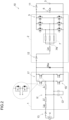
- Fig. 3 illustrates a positive current loop when charging the output capacitor Cs (DC link capacitor 6) connected in parallel to the DC power supply 3 in the in-vehicle charging device 10 that functions as an AC-DC buck converter when charging the DC power supply 3.
- the current from the external AC power supply 4 (on the plus side of the external AC power supply 4 for convenience) forms a current loop returning to the external AC power supply 4 (on the minus side of the external AC power supply 4 for convenience) through the input inductor Li, the first switch S1 in the on state, the reactor (the inductor Le, the coils 7), the freewheel diode connected in anti-parallel to the fifth switch S5 in the off state, the output capacitor Cs, and the fourth switch S4 in the on state.
- the output capacitor Cs is charged by this current loop.
- the freewheel diode may not be provided, and the current flowing from the freewheel diode may be passed by the body diode of the switching device or the reverse conduction function of the switching device. The same applies to the following description.
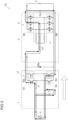
- Fig. 4 is a diagram illustrating a reflux loop of a positive current in the in-vehicle charging device 10 functioning as the AC-DC buck converter.
- the first switch S1 and the second switch S2 are in an off state, and the connection between the AC-DC converter 1 and the DC-DC converter 2 is cut off.
- the current returning from the output capacitor Cs to the external AC power supply 4 side returns to the DC-DC converter 2 through the DC link freewheel diode Dfw.
- the current flows through the reactor (the inductor Le, the coils 7), the freewheel diode connected in anti-parallel to the fifth switch S5 in the off state, the output capacitor Cs, the DC-link freewheel diode Dfw, and the reactor in this order, and flows back in the DC-DC converter 2.
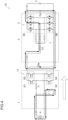
- Fig. 5 illustrates a negative current loop when charging the output capacitor Cs connected in parallel to the DC power supply 3 in the in-vehicle charging device 10 that functions as an AC-DC buck converter when charging the DC power supply 3.
- the current from the external AC power supply 4 (on the minus side of the external AC power supply 4 for convenience) forms a current loop returning to the external AC power supply 4 (on the plus side of the external AC power supply 4 for convenience) through the third switch S3 in the on state, the reactor (the inductor Le, the coils 7), the freewheel diode connected in anti-parallel to the fifth switch S5 in the off state, the output capacitor Cs, the second switch S2 in the on state, and the input inductor Li.
- the output capacitor Cs is charged by this current loop.
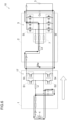
- Fig. 6 illustrates a reflux loop of a negative current in the in-vehicle charging device 10 functioning as the AC-DC buck converter.
- the first switch S1 and the second switch S2 are in an off state, and the connection between the AC-DC converter 1 and the DC-DC converter 2 is cut off.
- the current returning from the output capacitor Cs to the external AC power supply 4 side returns to the DC-DC converter 2 through the DC link freewheel diode Dfw.
- the current flows through the reactor (the inductor Le, the coils 7), the freewheel diode connected in anti-parallel to the fifth switch S5 in the off state, the output capacitor Cs, the DC-link freewheel diode Dfw, and the reactor in this order, and flows back in the DC-DC converter 2.
- Fig. 7 illustrates a positive current loop when charging a reactor in the in-vehicle charging device 10 that functions as an AC-DC boost converter when charging the DC power supply 3.
- the current from the external AC power supply 4 (on the plus side of the external AC power supply 4 for convenience) forms a current loop returning to the external AC power supply 4 (on the minus side of the external AC power supply 4 for convenience) through the input inductor Li, the first switch S1 in the on state, the reactor (the inductor Le, the coils 7), the sixth switch S6 in the on state, and the fourth switch S4 in the on state.
- the reactor is charged by this current loop.
- Fig. 8 illustrates a reflux loop of a positive current in the in-vehicle charging device 10 functioning as the AC-DC boost converter.
- the first switch S1 and the second switch S2 are in an off state, and the connection between the AC-DC converter 1 and the DC-DC converter 2 is cut off.
- the fifth switch S5 and the sixth switch S6 are both controlled to be in the off state, and the current flowing through the reactor (the inductor Le, the coils 7) flows through the freewheel diode connected in anti-parallel to the fifth switch S5 in the off state, the output capacitor Cs, the DC-link freewheel diode Dfw, and the reactor in this order, and flows back in the DC-DC converter 2.
- the energy stored in the reactor is supplied to the output capacitor Cs.
- Fig. 9 illustrates a negative current loop when charging a reactor to the DC power supply 3 in the in-vehicle charging device 10 that functions as an AC-DC boost converter when charging the DC power supply 3.
- the current from the external AC power supply 4 (on the minus side of the external AC power supply 4 for convenience) forms a current loop returning to the external AC power supply 4 (on the plus side of the external AC power supply 4 for convenience) through the third switch S3 in the on state, the reactor (the inductor Le, the coils 7), the sixth switch S6 in the on state, the second switch S2 in the on state, and the input inductor Li.
- the reactor is charged by this current loop.
- Fig. 10 illustrates a reflux loop of a negative current in the in-vehicle charging device 10 functioning as the AC-DC boost converter.
- the first switch S1 and the second switch S2 are in an off state, and the connection between the AC-DC converter 1 and the DC-DC converter 2 is cut off.
- the fifth switch S5 and the sixth switch S6 are both controlled to be in the off state, and the current flowing through the reactor (the inductor Le, the coils 7) flows through the freewheel diode connected in anti-parallel to the fifth switch S5 in the off state, the output capacitor Cs, the DC-link freewheel diode Dfw, and the reactor in this order, and flows back in the DC-DC converter 2.
- the energy stored in the reactor is supplied to the output capacitor Cs.
- the in-vehicle charging device 10 since the in-vehicle charging device 10 has the buck function and the boost function with respect to the second DC power (battery power) from the AC power, the in-vehicle charging device 10 having the same hardware configuration can be used in both the case where the rated voltage of the DC power supply 3 is 400 volts and the case where the rated voltage of the DC power supply 3 is 800 volts, for example.
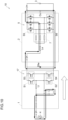
- the circuit block diagram of Fig. 11 illustrates a second example of the in-vehicle charging device 10.
- the external AC power supply 4 is a single-phase AC power supply
- the external AC power supply 4 is an AC power supply of multiple phases.
- a form is exemplified in which the external AC power supply 4 is connected at a neutral point 4N, and is constituted by three-phase AC power supply having phases different from each other by 2 ⁇ /3.
- the grid contactor 13 also includes three contacts.
- the AC-DC converter 1 of the second example includes a three-phase bridge circuit 18 having three arms corresponding to the three phases in order to convert power from three-phase AC to DC, similarly to the inverter 5.
- the three-phase bridge circuit 18 also includes a current source active rectifier having a power factor correct function.
- Other configurations are as described in the first example, and thus detailed description thereof is omitted.
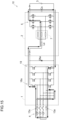
- the circuit block diagram of Fig. 12 illustrates a third example of the in-vehicle charging device 10.
- the external AC power supply 4 is a single-phase AC power supply
- the external AC power supply 4 is a multiple-phase AC power supply.
- the external AC power supply 4 is configured to be able to connect the external AC power supply 4 of both a single phase and multiple phases (three phases in this case). That is, in the in-vehicle charging device 10 of the third example, the external AC power supply 4 that supplies the single-phase AC and the external AC power supply 4 that supplies the AC of multiple phases can be selectively connected.
- the grid contactor 13 includes four contacts: a biphase contact 13u, a V-phase contact 13v, and a W-phase contact 13w for connecting the external AC power supply 4 of three phases; and a single-phase contact 13a for connecting the external AC power supply 4 of a single phase.
- the AC-DC converter 1 includes the three-phase bridge circuit 18 having three arms corresponding to the respective three phases and a single-phase arm 19 (half-bridge circuit).
- the external AC power supply 4 is a three-phase AC power supply as in the second example
- three contacts of the U-phase contact 13u, the V-phase contact 13v, and the W-phase contact 13w are closed, and the single-phase contact 13a is opened.
- the three-phase bridge circuit 18 is subjected to switching control, and the single-phase arm 19 is not subjected to switching control and is always maintained in an off state. That is, in this case, the in-vehicle charging device 10 of the third example is equivalent to the in-vehicle charging device 10 of the second example.
- the external AC power supply 4 is a single-phase AC power supply as in the first example
- one of the three phases of the AC power supplies corresponds to the single-phase AC power supply.
- a U-phase AC power supply 4u denoted by a reference sign in Fig. 12 is disposed as a single-phase AC power supply.
- the single-phase contact 13a and the U-phase contact 13u are closed, and the V-phase contact 13v and the W-phase contact 13w are opened.
- the three-phase bridge circuit 18 only the U-phase arm 18u is subjected to switching control, and other arms of two phases are not subjected to switching control and are always maintained in an off state.
- the single-phase arm 19 and the U-phase arm 18u are subjected to switching control. That is, in this case, the in-vehicle charging device 10 of the third example is equivalent to the in-vehicle charging device 10 of the first example.
- the in-vehicle charging device 10 of the third example can selectively implement the in-vehicle charging device 10 of the first example and the in-vehicle charging device 10 of the second example. Therefore, it is possible to apply the in-vehicle charging device 10 having the same specification to a large number of vehicle types, and it is easy to reduce the cost by the scale merit of the number of products. Note that, in a case where the external AC power supply 4 that can be connected is limited to a single phase, only the single-phase contact 13a is sufficient for the grid contactor 13 as in the first example. In addition, in the three-phase bridge circuit 18 of the AC-DC converter 1, at least the component cost can be reduced by not mounting the switching device while using the common circuit board.
- the in-vehicle charging device 10 of the third example can be realized at a cost substantially equivalent to that of the in-vehicle charging device 10 of the first example due to the above-described scale merit.
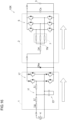
- Fig. 13 illustrates an example of a current loop when the in-vehicle charging device 10 of the third example is supplied with power from the external AC power supply 4 of three phases.
- Fig. 13 illustrates the current loop in a phase Q.
- a positive current flows through the U phase, and a negative current flows through the V phase and the W phase.
- the path of the current, particularly the path of the current flowing through the DC-DC converter 2 is the same as the form described above with reference to Fig. 3 , and thus detailed description thereof is omitted.
- Fig. 14 illustrates an example of a current reflux loop in the in-vehicle charging device 10 of the third example.
- the path of the current particularly the path of the current flowing through the DC-DC converter 2, is the same as the form described above with reference to Fig. 4 , and thus detailed description thereof is omitted.
- Fig. 15 illustrates an example of a positive current loop when the in-vehicle charging device 10 of the third example is supplied with power from the external AC power supply 4 of a single phase.
- the path of the current is as described above with reference to Fig. 3 , and thus a detailed description thereof will be omitted.
- the reflux loop is also as described above with reference to Fig. 4 , illustration and detailed description thereof are omitted.
Landscapes
- Engineering & Computer Science (AREA)
- Power Engineering (AREA)
- Transportation (AREA)
- Mechanical Engineering (AREA)
- Electric Propulsion And Braking For Vehicles (AREA)
- Charge And Discharge Circuits For Batteries Or The Like (AREA)
- Rectifiers (AREA)
- Dc-Dc Converters (AREA)
Applications Claiming Priority (1)
| Application Number | Priority Date | Filing Date | Title |
|---|---|---|---|
| JP2023125373A JP2025021580A (ja) | 2023-08-01 | 2023-08-01 | 車載充電装置 |
Publications (1)
| Publication Number | Publication Date |
|---|---|
| EP4501698A1 true EP4501698A1 (de) | 2025-02-05 |
Family
ID=91898913
Family Applications (1)
| Application Number | Title | Priority Date | Filing Date |
|---|---|---|---|
| EP24187653.1A Withdrawn EP4501698A1 (de) | 2023-08-01 | 2024-07-10 | Fahrzeuginterne ladevorrichtung |
Country Status (4)
| Country | Link |
|---|---|
| US (1) | US20250042280A1 (de) |
| EP (1) | EP4501698A1 (de) |
| JP (1) | JP2025021580A (de) |
| CN (1) | CN119428261A (de) |
Citations (5)
| Publication number | Priority date | Publication date | Assignee | Title |
|---|---|---|---|---|
| JP2011526775A (ja) | 2009-03-11 | 2011-10-13 | ルノー・エス・アー・エス | 電気自動車用の急速充電装置 |
| US20180131220A1 (en) * | 2015-05-12 | 2018-05-10 | Continental Automotive Gmbh | Vehicle-side charging circuit for a vehicle with electric drive, and method for operating a vehicle-side current converter, and use of at least one winding of a vehicle-side electric machine for intermediate storagectrical machine for buffer |
| US10562404B1 (en) * | 2015-10-05 | 2020-02-18 | University Of Maryland | Integrated onboard chargers for plug-in electric vehicles |
| CN113879154B (zh) * | 2021-09-27 | 2023-05-23 | 重庆长安新能源汽车科技有限公司 | 一种匹配多种电压平台的电动汽车充电电驱系统 |
| US20230238876A1 (en) * | 2020-04-28 | 2023-07-27 | Prodrive Technologies Innovation Services B.V. | Electrical power converter |
-
2023
- 2023-08-01 JP JP2023125373A patent/JP2025021580A/ja active Pending
-
2024
- 2024-06-24 US US18/751,842 patent/US20250042280A1/en active Pending
- 2024-07-10 EP EP24187653.1A patent/EP4501698A1/de not_active Withdrawn
- 2024-07-31 CN CN202411039169.8A patent/CN119428261A/zh active Pending
Patent Citations (6)
| Publication number | Priority date | Publication date | Assignee | Title |
|---|---|---|---|---|
| JP2011526775A (ja) | 2009-03-11 | 2011-10-13 | ルノー・エス・アー・エス | 電気自動車用の急速充電装置 |
| US20120286740A1 (en) | 2009-03-11 | 2012-11-15 | Renault S.A.S. | Fast charging device for an electric vehicle |
| US20180131220A1 (en) * | 2015-05-12 | 2018-05-10 | Continental Automotive Gmbh | Vehicle-side charging circuit for a vehicle with electric drive, and method for operating a vehicle-side current converter, and use of at least one winding of a vehicle-side electric machine for intermediate storagectrical machine for buffer |
| US10562404B1 (en) * | 2015-10-05 | 2020-02-18 | University Of Maryland | Integrated onboard chargers for plug-in electric vehicles |
| US20230238876A1 (en) * | 2020-04-28 | 2023-07-27 | Prodrive Technologies Innovation Services B.V. | Electrical power converter |
| CN113879154B (zh) * | 2021-09-27 | 2023-05-23 | 重庆长安新能源汽车科技有限公司 | 一种匹配多种电压平台的电动汽车充电电驱系统 |
Non-Patent Citations (2)
| Title |
|---|
| MURAT YILMAZ ET AL: "Review of Battery Charger Topologies, Charging Power Levels, and Infrastructure for Plug-In Electric and Hybrid Vehicles", IEEE TRANSACTIONS ON POWER ELECTRONICS, vol. 28, no. 5, 1 May 2013 (2013-05-01), pages 2151 - 2169, XP055096133, ISSN: 0885-8993, DOI: 10.1109/TPEL.2012.2212917 * |
| SABER CHRISTELLE ET AL: "Challenges Facing PFC of a Single-Phase On-Board Charger for Electric Vehicles Based on a Current Source Active Rectifier Input Stage", IEEE TRANSACTIONS ON POWER ELECTRONICS, INSTITUTE OF ELECTRICAL AND ELECTRONICS ENGINEERS, USA, vol. 31, no. 9, 1 September 2016 (2016-09-01), pages 6192 - 6202, XP011604391, ISSN: 0885-8993, [retrieved on 20160324], DOI: 10.1109/TPEL.2015.2500958 * |
Also Published As
| Publication number | Publication date |
|---|---|
| JP2025021580A (ja) | 2025-02-14 |
| US20250042280A1 (en) | 2025-02-06 |
| CN119428261A (zh) | 2025-02-14 |
Similar Documents
| Publication | Publication Date | Title |
|---|---|---|
| KR102868246B1 (ko) | 다중 출력을 가진 멀티브리지 전력 컨버터 | |
| CN103906650B (zh) | 电气系统 | |
| KR101866168B1 (ko) | 에너지 저장 장치의 충전 | |
| US20110248563A1 (en) | Operating arrangement for an electrically operated vehicle | |
| US10787088B2 (en) | Vehicle electrical system with inverter, energy store, electrical machine and DC transmission terminal | |
| JP7032249B2 (ja) | 電源システム | |
| US20250010739A1 (en) | In-vehicle charging device | |
| CN119654785A (zh) | 电力转换装置 | |
| JP2022119108A (ja) | 電力変換装置 | |
| US20250038675A1 (en) | In-vehicle charging device | |
| CN204392134U (zh) | 一种新型的电气系统 | |
| EP4488104A1 (de) | Fahrzeuginterne ladevorrichtung | |
| EP4501698A1 (de) | Fahrzeuginterne ladevorrichtung | |
| Shah et al. | Integrated power converter with G2V and V2G capabilities for 4-phase SRM drive based EV application | |
| JP6953634B2 (ja) | Dc/dcコンバータを備える車両充電器 | |
| CN103296900B (zh) | 储能装置的直流电压截取装置和由储能装置生成直流电压的方法 | |
| CN119856361A (zh) | 电力转换装置、程序 | |
| US20130234647A1 (en) | Method for transferring energy between at least two energy storage cells in a controllable energy store | |
| JP2025021579A (ja) | 車載充電装置 | |
| JP2025018350A (ja) | 車載充電装置 | |
| JP2024115455A (ja) | 車載充電装置 | |
| JP2025034652A (ja) | 車載充電装置 | |
| JP2024115454A (ja) | 車載充電装置 | |
| JP2025037821A (ja) | 車載充電装置 | |
| JP2026040289A (ja) | 車載充電装置 |
Legal Events
| Date | Code | Title | Description |
|---|---|---|---|
| PUAI | Public reference made under article 153(3) epc to a published international application that has entered the european phase |
Free format text: ORIGINAL CODE: 0009012 |
|
| STAA | Information on the status of an ep patent application or granted ep patent |
Free format text: STATUS: THE APPLICATION HAS BEEN PUBLISHED |
|
| AK | Designated contracting states |
Kind code of ref document: A1 Designated state(s): AL AT BE BG CH CY CZ DE DK EE ES FI FR GB GR HR HU IE IS IT LI LT LU LV MC ME MK MT NL NO PL PT RO RS SE SI SK SM TR |
|
| STAA | Information on the status of an ep patent application or granted ep patent |
Free format text: STATUS: THE APPLICATION IS DEEMED TO BE WITHDRAWN |
|
| 18D | Application deemed to be withdrawn |
Effective date: 20250806 |