EP4498752A2 - Verbindungswiederherstellung in der drahtlosen kommunikation - Google Patents
Verbindungswiederherstellung in der drahtlosen kommunikation Download PDFInfo
- Publication number
- EP4498752A2 EP4498752A2 EP24212725.6A EP24212725A EP4498752A2 EP 4498752 A2 EP4498752 A2 EP 4498752A2 EP 24212725 A EP24212725 A EP 24212725A EP 4498752 A2 EP4498752 A2 EP 4498752A2
- Authority
- EP
- European Patent Office
- Prior art keywords
- channel
- link recovery
- cell
- random access
- type
- Prior art date
- Legal status (The legal status is an assumption and is not a legal conclusion. Google has not performed a legal analysis and makes no representation as to the accuracy of the status listed.)
- Pending
Links
Images


Classifications
-
- H—ELECTRICITY
- H03—ELECTRONIC CIRCUITRY
- H03M—CODING; DECODING; CODE CONVERSION IN GENERAL
- H03M13/00—Coding, decoding or code conversion, for error detection or error correction; Coding theory basic assumptions; Coding bounds; Error probability evaluation methods; Channel models; Simulation or testing of codes
- H03M13/03—Error detection or forward error correction by redundancy in data representation, i.e. code words containing more digits than the source words
- H03M13/05—Error detection or forward error correction by redundancy in data representation, i.e. code words containing more digits than the source words using block codes, i.e. a predetermined number of check bits joined to a predetermined number of information bits
- H03M13/13—Linear codes
- H03M13/15—Cyclic codes, i.e. cyclic shifts of codewords produce other codewords, e.g. codes defined by a generator polynomial, Bose-Chaudhuri-Hocquenghem [BCH] codes
-
- H—ELECTRICITY
- H04—ELECTRIC COMMUNICATION TECHNIQUE
- H04B—TRANSMISSION
- H04B7/00—Radio transmission systems, i.e. using radiation field
- H04B7/02—Diversity systems; Multi-antenna system, i.e. transmission or reception using multiple antennas
- H04B7/04—Diversity systems; Multi-antenna system, i.e. transmission or reception using multiple antennas using two or more spaced independent antennas
- H04B7/06—Diversity systems; Multi-antenna system, i.e. transmission or reception using multiple antennas using two or more spaced independent antennas at the transmitting station
- H04B7/0686—Hybrid systems, i.e. switching and simultaneous transmission
- H04B7/0695—Hybrid systems, i.e. switching and simultaneous transmission using beam selection
- H04B7/06952—Selecting one or more beams from a plurality of beams, e.g. beam training, management or sweeping
- H04B7/06964—Re-selection of one or more beams after beam failure
-
- H—ELECTRICITY
- H04—ELECTRIC COMMUNICATION TECHNIQUE
- H04L—TRANSMISSION OF DIGITAL INFORMATION, e.g. TELEGRAPHIC COMMUNICATION
- H04L1/00—Arrangements for detecting or preventing errors in the information received
- H04L1/004—Arrangements for detecting or preventing errors in the information received by using forward error control
-
- H—ELECTRICITY
- H04—ELECTRIC COMMUNICATION TECHNIQUE
- H04L—TRANSMISSION OF DIGITAL INFORMATION, e.g. TELEGRAPHIC COMMUNICATION
- H04L5/00—Arrangements affording multiple use of the transmission path
- H04L5/003—Arrangements for allocating sub-channels of the transmission path
- H04L5/0048—Allocation of pilot signals, i.e. of signals known to the receiver
-
- H—ELECTRICITY
- H04—ELECTRIC COMMUNICATION TECHNIQUE
- H04W—WIRELESS COMMUNICATION NETWORKS
- H04W24/00—Supervisory, monitoring or testing arrangements
- H04W24/08—Testing, supervising or monitoring using real traffic
-
- H—ELECTRICITY
- H04—ELECTRIC COMMUNICATION TECHNIQUE
- H04W—WIRELESS COMMUNICATION NETWORKS
- H04W52/00—Power management, e.g. Transmission Power Control [TPC] or power classes
- H04W52/04—Transmission power control [TPC]
- H04W52/18—TPC being performed according to specific parameters
- H04W52/24—TPC being performed according to specific parameters using SIR [Signal to Interference Ratio] or other wireless path parameters
- H04W52/242—TPC being performed according to specific parameters using SIR [Signal to Interference Ratio] or other wireless path parameters taking into account path loss
-
- H—ELECTRICITY
- H04—ELECTRIC COMMUNICATION TECHNIQUE
- H04W—WIRELESS COMMUNICATION NETWORKS
- H04W72/00—Local resource management
- H04W72/20—Control channels or signalling for resource management
- H04W72/21—Control channels or signalling for resource management in the uplink direction of a wireless link, i.e. towards the network
-
- H—ELECTRICITY
- H04—ELECTRIC COMMUNICATION TECHNIQUE
- H04W—WIRELESS COMMUNICATION NETWORKS
- H04W72/00—Local resource management
- H04W72/20—Control channels or signalling for resource management
- H04W72/23—Control channels or signalling for resource management in the downlink direction of a wireless link, i.e. towards a terminal
-
- H—ELECTRICITY
- H04—ELECTRIC COMMUNICATION TECHNIQUE
- H04W—WIRELESS COMMUNICATION NETWORKS
- H04W72/00—Local resource management
- H04W72/20—Control channels or signalling for resource management
- H04W72/23—Control channels or signalling for resource management in the downlink direction of a wireless link, i.e. towards a terminal
- H04W72/232—Control channels or signalling for resource management in the downlink direction of a wireless link, i.e. towards a terminal the control data signalling from the physical layer, e.g. DCI signalling
-
- H—ELECTRICITY
- H04—ELECTRIC COMMUNICATION TECHNIQUE
- H04W—WIRELESS COMMUNICATION NETWORKS
- H04W74/00—Wireless channel access
- H04W74/002—Transmission of channel access control information
- H04W74/004—Transmission of channel access control information in the uplink, i.e. towards network
-
- H—ELECTRICITY
- H04—ELECTRIC COMMUNICATION TECHNIQUE
- H04W—WIRELESS COMMUNICATION NETWORKS
- H04W74/00—Wireless channel access
- H04W74/002—Transmission of channel access control information
- H04W74/006—Transmission of channel access control information in the downlink, i.e. towards the terminal
-
- H—ELECTRICITY
- H04—ELECTRIC COMMUNICATION TECHNIQUE
- H04W—WIRELESS COMMUNICATION NETWORKS
- H04W74/00—Wireless channel access
- H04W74/08—Non-scheduled access, e.g. ALOHA
- H04W74/0833—Random access procedures, e.g. with 4-step access
-
- H—ELECTRICITY
- H04—ELECTRIC COMMUNICATION TECHNIQUE
- H04W—WIRELESS COMMUNICATION NETWORKS
- H04W74/00—Wireless channel access
- H04W74/08—Non-scheduled access, e.g. ALOHA
- H04W74/0866—Non-scheduled access, e.g. ALOHA using a dedicated channel for access
- H04W74/0891—Non-scheduled access, e.g. ALOHA using a dedicated channel for access for synchronized access
-
- H—ELECTRICITY
- H04—ELECTRIC COMMUNICATION TECHNIQUE
- H04W—WIRELESS COMMUNICATION NETWORKS
- H04W76/00—Connection management
- H04W76/10—Connection setup
- H04W76/18—Management of setup rejection or failure
-
- H—ELECTRICITY
- H04—ELECTRIC COMMUNICATION TECHNIQUE
- H04W—WIRELESS COMMUNICATION NETWORKS
- H04W76/00—Connection management
- H04W76/10—Connection setup
- H04W76/19—Connection re-establishment
-
- H—ELECTRICITY
- H04—ELECTRIC COMMUNICATION TECHNIQUE
- H04W—WIRELESS COMMUNICATION NETWORKS
- H04W74/00—Wireless channel access
- H04W74/08—Non-scheduled access, e.g. ALOHA
- H04W74/0833—Random access procedures, e.g. with 4-step access
- H04W74/0838—Random access procedures, e.g. with 4-step access using contention-free random access [CFRA]
Definitions
- This patent document relates to the field of communications, and in particular, to configuration and transmission of data, control and reference signals.
- a base station can effectively receive the uplink channel, thereby ensuring the effectiveness of the entire link recovery process and significantly improving the system's flexibility.
- a method for wireless communication includes transmitting, by a first communication node, a first type of random access preamble, monitoring, by the first communication node, a link recovery confirmation information, performing, by the first communication node, after meeting a first type of condition, and the first type of condition includes detecting the link recovery confirmation information, an operation including performing a transmission on an outbound channel to a second communication node using a spatial filter determined by the first type of random access preamble.
- a method of wireless communication includes transmitting, by a first communication node, a first type of random access preamble, monitoring, by the first communication node, a link recovery confirmation information, performing, by the first communication node, after meeting a first type of condition, and the first type of condition includes detecting the link recovery confirmation information, an operation including: performing a transmission on an outbound channel to a second communication node, using a spatial filter determined by a second type of signal that is transmitted on the outbound channel.
- another method of wireless communication includes transmitting a first type of random access preamble by a first communication node, monitoring a link recovery confirmation information, by the first communication node; performing, by the first communication node, after meeting a first type of condition, and the first type of condition includes detecting the link recovery confirmation information, an operation including performing a transmission on an outbound channel to a second communication node, and configuration information for the transmission on the outbound channel is unprovided.
- another method of wireless communication includes receiving an indication that a terminal is attempting link recovery, and transmitting, in response, to the indication, a link recovery confirmation information message to the terminal for facilitating the link recovery.
- a wireless communication apparatus includes a processor that is configured to implement the above-described methods.
- a computer-program storage medium includes code stored thereon.
- the code when executed by a processor, causes the processor to implement a described method.
- the ultra-wide bandwidth high frequency band (e.g., millimeter wave communication) is emerging as a direction for the development of mobile communication in the future, attracting the attention of academic and industrial circles around the world.
- the advantages of millimeter waves have become more and more attractive when the increasingly congested spectrum resources and physical networks are heavily accessed.
- standards organizations such as IEEE and 3GPP
- corresponding standardization work has begun.
- high-frequency communication is an important feature of 5G New Radio Access Technology (New RAT) with its significant advantages of large bandwidth.
- New RAT 5G New Radio Access Technology
- each antenna panel may generate multiple beams.
- each antenna panel may generate multiple beams.
- the UE side there is a similar situation may occur. It is therefore beneficial to provide a mixed analog and digital domain multiple beam scheme using which reference signal, data channel and control channel are transmitted or received.
- the UE may actively initiate a link recovery procedure to indicate the reference signal by sending the physical random access channel (PRACH) resource associated with the reference signal.
- PRACH physical random access channel
- the spatial relation configured by the uplink control channel (e.g., the uplink beam information)
- the uplink control channel is still valid, but in fact, the physical uplink control channel (PUCCH) using the beam indicated by the spatial relation may not be received by the base station, and the problem of link recovery can still occur.
- uplink and downlink channels are used for ease of understanding in the 5G framework. However, in general, from a user device's perspective, the uplink channel may simply refer to a "from channel” over which the user device transmits signals and the downlink channel may simply refer to a "to channel” over which the user device (sometimes called a UE or a terminal) receives signals.
- Some disclosed embodiments determine the spatial relation or the beam information of the PUCCH and other uplink channels according to the UE-side link-recovery PRACH, and determines the uplink power control parameters and processes of the PUCCH and other uplink channels, ensuring that, after the link recovery process is started, the base station can effectively receive the uplink channel, thereby ensuring the effectiveness of the entire link recovery process and significantly improving the system's lubricity.
- Beam recovery also known as link recovery, is a process for resolving a sudden degradation in a link. Beam recovery includes both contention-free beam recovery and contention-based beam recovery. In particular, some details are as below.
- the beam may be considered to be a resource (e.g., a spatial filter at the transmitting end, a spatial filter at the receiving end, a precoding at the transmitting end, a precoding at the receiving end, an antenna port, an antenna weight vector, an antenna weight matrix, etc.), and the beam index may be replaced with resource index (e.g., reference signal resource index).
- the beam may also be an associated a transmission (transmit/receive) mode; the transmission mode may include space division multiplexing, frequency domain/time domain diversity, or another transmission technique.
- a spatial filter may provide spatial selectivity of transmission.
- the reference signal includes an uplink reference signal and a downlink reference signal.
- the uplink reference signal may be the sounding reference signal (SRS).
- the uplink reference signal may be the phase tracking reference signal (PT-RS).
- the uplink reference signal may be the demodulation reference signal (DMRS).
- the downlink reference signal may be the channel state information reference signal (CSI-RS). In some embodiments, the downlink reference signal may be the PT-RS. In some embodiments, the downlink reference signal may be the Synchronization signal block (SSB). In some embodiments, the downlink reference signal may be the Synchronization signal/physical broadcast channel (SS/PBCH). In some embodiments, the downlink reference signal may be the DMRS.
- CSI-RS channel state information reference signal
- the downlink reference signal may be the PT-RS.
- the downlink reference signal may be the Synchronization signal block (SSB). In some embodiments, the downlink reference signal may be the Synchronization signal/physical broadcast channel (SS/PBCH). In some embodiments, the downlink reference signal may be the DMRS.
- one PUSCH transmission which is scheduled by one random access response (RAR) uplink grant or DCI format 0_0 or 0_1 used for the link recovery confirmation information, from the UE is also called as Msg3 PUSCH.
- RAR random access response
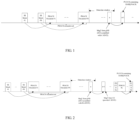
- FIG. 1 is a schematic diagram of a link recovery process.
- FIG. 1 describes a link-recovery procedure based on contention-free mode.
- the new candidate link set q_1 has a clear relationship with the PRACH resource.
- the UE sends the random access preamble associated with the q_new to the gNB.
- the UE attempts to receive the acknowledgment information from the gNB, that is, the C-RNTI scrambled DCI format is detected on the link recovery dedicated search space of the control resource set (CORESET). If the DCI or one DCI after the DCI triggers a PDSCH transmission, the PUCCH carries HARQ/ACK information indicating whether the PDSCH is successfully demodulated.
- both the PDSCH and the PDCCH obey the downlink reference channel indicated by q_new as a spatial parameter.
- FIG. 2 is another schematic flowchart of link recovery according to the present document, and describes a contention-based link recovery procedure.
- each beam of the new candidate beam set q_1 has a clear relationship with each PRACH resource.
- the UE sends the q_new associated with PRACH information is given to gNB. Under the corresponding detection window, the UE attempts to receive Msg2 from the gNB, that is, one DCI signaling scrambled by the RA-RNTI, assuming that it occurs at time n.
- the UE feeds back the Msg3 to the base station, where the Msg3 carries the C-RNTI information or the link recovery indication information, which is used to indicate that the current procedure is the link recovery procedure from the UE with the C-RNTI.
- both the PDSCH and the PDCCH will obey the downlink reference channel indicated by q_new as a spatial parameter.
- the PUCCH sends the HARQ/NACK information for carrying the PDSCH association.
- DCI format 0_0/0_1 can trigger the transmission of PUSCH.
- a method for transmitting a reference signal is applied to a first communication node, and the method includes: When the first type of condition is met, the first communication node determines, according to at least one of the following, a transmission mode of the uplink channel:
- the uplink channel is sent to the second communication node.
- the first type of condition includes at least one of the following:
- the uplink channel is a PUCCH or a PUSCH.
- the first type of RNTI is at least one of the following: C-RNTI, TC-RNTI, and RA-RNTI.
- a spatial relation or a spatial filter of the reference signal is determined according to the PRACH.
- the PRACH is used for link recovery.
- the configured window is used for link recovery
- the configured search space is used for link recovery or beam recovery
- the configured search space of the associated control channel resource set is used for link recovery or beam recovery.
- the cell of the PRACH is a primary cell, or the carrier of the PRACH is a primary carrier, or the PRACH belongs to an MCG.
- the cell of the uplink channel is a primary cell, or the carrier of the uplink channel is a primary carrier, or the uplink channel is associated with an MCG.
- the PUCCH resource may be a dedicated PUCCH resource, where the dedicated PUCCH resource takes effect only after the first type of condition is met. Further, the PUCCH resource is used only in the link recovery process.
- the PUCCH is a default PUCCH resource when the UE has not receive a dedicated UE-specific PUCCH configuration, or a default PUCCH resource is configured for a default PUCCH; or the PUCCH is a common PUCCH resource.
- the common PUCCH resource is indicated by a common PUCCH resource field in SIB1.
- the PUCCH resource is also a PUCCH resource configured by the current UE, but the spatial relation information thereof is reconfigured, or the spatial filter associated with the PRACH is used by default.
- the UE may also want to perform link recovery, but the PRACH resource of the primary cell is used for the occurrence, or the feedback is performed by using the MAC-CE signaling.
- the primary cell beam does not have a problem, and consequently link recovery only for the secondary cell may be performed.
- the only uplink channel of the secondary cell may have to be updated, or the first communication node considers that the previous configured spatial relation information for the secondary cell is released.
- the first type of condition further includes at least one of the following:
- the outbound or uplink channel has the following features:
- the link recovery process is only a temporary process for solving the problem of link failure. Therefore, it is useful to design one end time or condition of the link recovery process, which is referred to as the first type of event.
- the uplink and downlink transmissions are performed according to the configuration information in the normal RRC CONNECT state.
- the first communication node determines the transmission mode of the uplink channel according to at least one of the following: #1 the uplink channel uses the same spatial filter as the first type of PRACH; #2 determines according to the first type of PRACH spatial relation of the uplink channel; #3 ignoring or releasing the configuration information of the spatial relation of the uplink channel; #4 the configuration information of the spatial relation of the uplink channel is default or not configured or not provided.
- the configuration information of the channel is either default or unconfigured or unprovided.
- One example of the first type of event is when TCI status is reconfigured or reactivated.
- Another example of the first type event is the spatial relation associated with the uplink channel is reconfigured or reactivated.
- the uplink channel in which the spatial relation associated with the uplink channel is reconfigured or reactivated is also a PUCCH.
- the uplink channel is a PUSCH
- the spatial channel associated with the uplink channel is reconfigured or reactivated
- the uplink channel may be a PUCCH
- the spatial relation associated with the uplink channel is the spatial relation of the SRS used for codebook or non-codebook transmission mode of the PUSCH.
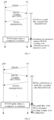
- FIG. 3 is an embodiment of determining a PUCCH spatial relation according to the present document.
- the UE After the UE sends the PRACH triggered link recovery request and receives the C-RNTI scrambled PDCCH, the UE considers that the link recovery request is acknowledged.
- the first communication node e.g., the UE
- the assumed end time is the time when the TCI of the PDCCH is reconfigured or reactivated, after which the PUCCH will use the spatial relation information that have been reconfigured or reactivated.
- the spatial information of the PUCCH also is updated by the corresponding RRC or MAC-CE signaling before the TCI of the PDCCH is reconfigured or reactivated.
- the process depicted in FIG. 3 includes the UE determining that a condition has occurred and based on the determining, performing a transmission of the PUCCH by using the beam of the PRACH until a time that the UE determines that an event (e.g., PDCCH TCI is reconfigured or reactivated) has occurred.
- an event e.g., PDCCH TCI is reconfigured or reactivated
- FIG. 4 is another embodiment of determining a PUCCH spatial relation according to the present document.
- the UE After the UE sends the PRACH triggered link recovery request and receives the C-RNTI scrambled PDCCH, the UE considers that the link recovery request is acknowledged.
- the first communication node e.g., the UE
- the assumed end time is that the spatial relation of the PUCCH is reconfigured or reactivated, after which the PUCCH will use the reconfigured or reactivated spatial relation information.
- FIG. 5 is an embodiment of determining a PUSCH transmission mode according to the present document.
- the UE After the UE sends the PRACH triggered link recovery request and receives the C-RNTI scrambled PDCCH, the UE considers that the link recovery request is acknowledged.
- the first communication node will assume that the PUSCH uses the same spatial filter as the PRACH or PUCCH until the spatial relation of the PUCCH is reconfigured or reactivated.
- the PUSCH will determine its transmission mode according to the PUSCH transmission configuration of the codebook or non-codebook option.
- the power control parameters of the uplink channel also may be adjusted accordingly to ensure uplink parameters and avoid interference.
- the power control parameter of the uplink channel may be performed by at least one of the following:
- the reference signal of the path loss estimation associated with the uplink channel may be at least one of the following:
- the channel measurement metric includes at least one of the following: BLER, RSRP, RSRQ, CQI, channel capacity, signal-to-noise ratio, and signal-to-noise ratio.
- the target power associated with the uplink channel is at least one of the following:
- the closed loop power control of the uplink channel is:
- the specific index is at least one of the following: the index is 0, the lowest index, and the highest index.
- the dedicated parameters associated with the first communication node are assumed to be default or unprovided, where the dedicated parameter includes at least one of the following: a downlink reference signal, and an uplink reference signal, PUCCH, PUSCH, power control parameters.
- the periodic or semi-persistent uplink reference signal or the uplink channel is not transmitted by the first communication node, or the first communication node does not receive a periodic or semi-continuous downlink reference signal or a downlink channel.
- the reference signal may be SRS for codebook, or SRS for non-codebook. In some embodiments, the reference signal may be CSI-RS for non-codebook.
- FIG. 6 is a schematic diagram of uplink reference signal transmission according to the present document.
- the SRS used for the codebook transmission will use the same spatial filter as the PRACH/PUCCH, which will facilitate the guarantee of the uplink transmission quality, taking into account the transmission chain corresponding to the original SRS. It is very likely that the road is no longer able to communicate effectively.
- the spatial filter of the SRS will be determined based on the spatial relation information of the upper layer.
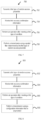
- FIG. 7 is a flowchart for an example method 700 of wireless communication.
- the method 700 includes transmitting (702), by a first communication node, a first type of random access preamble, monitoring (704), by the first communication node, a link recovery confirmation information, performing (706), by the first communication node, after meeting a first type of condition, and the first type of condition includes detecting the link recovery confirmation information, an operation including: performing (708) a transmission on an outbound channel to a second communication node using a spatial filter determined by the first type of random access preamble.
- FIG. 8 is a flowchart for an example method 800 of wireless communication.
- the method 800 includes transmitting (802) a first type of random access preamble by a first communication node, monitoring (804) a link recovery confirmation information, performing (806), after meeting a first type of condition, and the first type of condition includes detecting the link recovery confirmation information, an operation including: performing (808) a transmission on an outbound channel to a second communication node, and configuration information for the transmission on the outbound channel is unprovided.
- a wireless communication method performed by a first communication node includes transmitting a first type of random access preamble, monitoring a link recovery confirmation information, performing after meeting a first type of condition, where the first type of condition includes detecting the link recovery confirmation information, an operation including performing a transmission on an outbound channel to a second communication node, using a spatial filter determined by a second type of signal that it transmitted from on the outbound channel.
- FIG. 9 is a flowchart of an example method 900 of wireless communication.
- the method 900 may be implemented by a network node such as a base station in a wireless network.
- the method 900 includes receiving an indication that a terminal is attempting link recovery, and transmitting, in response to the indication, a message to the terminal for facilitating the link recovery.
- the message may be in the form of an encrypted DCI and may be sent within a time window.
- the message that is transmitted may facilitate various aspects of link recovery that are described throughout the present patent document. These include, for example, providing cyclic redundancy check using a RNTI, a signal, providing within a configured window, etc. to acknowledge the terminal's attempt of link recover. Other examples include transmitting information in system information block.
- the network node may be in a primary cell and receiving on a primary carrier.
- the terminal e.g., a user device or the first communication node
- the configuration information of the spatial relation of the outbound channel is default or unprovided.
- the configuration information of the uplink channel is default or unprovided.
- the link recovery confirmation information includes a DCI with CRC scrambled by a first type of RNTI.
- the monitoring of link recovery information may be performed by monitoring an inbound transmission from the second communication device to the first communication device indicating that the second communication device has realized that a link recovery process is to begin.
- the second type of signal may include Msg3 signal.
- the second type of signal may be a PUSCH.
- the second type of signal may be a PUSCH in response to the link recovery confirmation information.
- the second type of signal may be a PUCCH in response to the link recovery confirmation information.
- the outbound channel includes a physical uplink control channel. In some embodiments, the outbound channel includes a physical uplink shared channel. In some embodiments, the transmission is performed on a physical random access channel of a primary cell.
- the first communication node may be operating in a cellular network with a primary cell and a secondary cell. One example of such an arrangement is described in Release 15 of 3GPP.
- the transmission is performed on a physical random access channel corresponding to a primary carrier. In some embodiments, the transmission is performed on a physical random access channel corresponding to a master cell group.
- the outbound channel is in a primary cell, or a carrier of the outbound channel is a primary carrier, or the outbound channel is associated with a master cell group.
- the outbound channel is a dedicated physical uplink control channel having dedicated transmissions resources upon meeting the first type of condition.
- the outbound channel is a default physical uplink control channel when the dedicated resources for physical uplink control channel are unconfigured or unprovided. In some embodiments, the outbound channel is a common physical uplink control channel resource.
- the common physical uplink control channel resource is provided by a common physical uplink control channel resource field in a system broadcast message.
- the first type of condition includes: a carrier of the transmission is same as a carrier where a link recovery condition is met, or a carrier of the transmission is in a carrier group where the link recovery condition is met.
- the first type of condition includes: a cell of the transmission is same as a cell in which a link recovery condition is met, or a cell of the transmission is in a cell group in which the link recovery condition is met.
- the first type of condition includes: a carrier of the transmission is same as a carrier of the outbound channel, or a carrier of the transmission is in a carrier group as the outbound channel.
- the link recovery condition may be that a number of beam failure instance indication is equal to or greater than a first threshold. In some embodiments, the link recovery condition may be that a channel quality of a second type of reference signals from a second pool is equal to or greater than a second threshold. In some embodiments, the link recovery condition may be that a channel quality of a third type of reference signals from a third pool is less than the second threshold.
- the first type of condition includes: a cell of the transmission is same as a cell of the outbound channel, or a carrier of the transmission is in a cell group of the outbound channel.
- the method is further performed until occurrence of a first type of event.
- the first type of event is a reconfiguration or an activation of a transmission configuration indicator (TCI), or reconfiguration or activation of the spatial relation associated with the outbound channel.
- TCI transmission configuration indicator
- a path loss reference signal set configuration of the outbound channel is regarded as default, or is unprovided, or is released by default.
- a configuration of a target power set of the outbound channel is regarded as default, or is unprovided, or is released by default.
- a configuration of the target power of a shared control channel of the outbound channel and a set of weight coefficient alpha are regarded as default, or are unprovided, or are released by default.
- a reference signal of a path loss estimation associated with the outbound channel is a downlink reference signal associated with the first type of random access preamble.
- a reference signal of a path loss estimation associated with the outbound channel is provided by a higher layer message that includes information of a downlink reference signal index q_new; In some embodiments, a reference signal of a path loss estimation associated with the outbound channel is a result of a channel measurement metric of the reference signal being greater than or equal to a first type threshold.
- a reference signal of a path loss estimation associated with the outbound channel refers to a downlink reference signal indicated by a specific index in a reference signal set.
- the channel measurement metric includes at least one of the following: BLER (block error ratio), RSRP (reference signal received power), RSRQ (reference signal received quality), CQI (channel quality indicator), channel capacity, signal-to-noise ratio at the receiving end, and signal-to-noise ratio.
- a target power associated with the outbound channel is a target power indicated by a specific index in a target power set.
- the target power set may be communicated to the first communication node from the network.
- a target power associated with the outbound channel is one preamble received target power, or one preamble received target power plus the value indicated by transmission power command (TPC) in the downlink control information.
- TPC transmission power command
- a target power associated with the outbound channel is unprovided, or has a default value. In some embodiments, a target power is dedicated to the first communication node. In some embodiments, the default value (of the target power) is zero.
- a closed loop power control of the outbound channel has a specific index.
- a closed loop power control of the outbound channel is a pump-up value associated with the random access preamble, or a pump-up value associated with the random access preamble plus the value indicated by transmission power command (TPC) in the downlink control information.
- TPC transmission power command
- a closed loop power control of the outbound channel is reset.
- the specific index is zero or, a lowest index, or a highest index.
- a dedicated parameter associated with at least one of following signals is unprovided or is default: DL reference signal, UL reference signal, physical uplink control channel, physical uplink shared channel, or power control parameter.
- a periodic or semi-continuous outbound reference signal is untransmitted, or a periodic or semi-continuous inbound reference signal or an inbound channel are unmonitored or unreceived.
- the spatial relation of a reference signal is determined according to the random access preamble.
- the reference signal is a sounding reference signal for a codebook, or a sounding reference signal for a non-codebook.
- a quasi-co location of a reference signal is determined according to one downlink reference signal associated with the random access preamble, where the reference signal is a channel state information reference signal for non-codebook.
- the first type of radio network temporary identifier is a C-RNTI, or a TC-RNTI, or a RA-RNTI.
- unprovided or “unconfigured” may mean that the corresponding parameters have not been received from the network.
- Such parameters may be transmitted by a network node, such as a base station, in a broadcast message or a terminal-specific message to the first communication node.
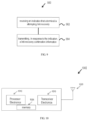
- FIG. 10 is a block diagram of an example of a wireless communication apparatus 1000.
- the apparatus 1000 includes a processor 1010 that may be configured to implement one of the techniques described herein, transceiver electronics 1015 that is able to transmit signals or receive signals using the antenna(s) 1020, and one or more memories 1005 that may be used to store instructions executable by the processor 1010 and/or data storage.
- the apparatus 1000 may implement the various functionalities of a network node, or a communication device or a terminal, as described herein.
- the apparatus may be embodied as a smartphone, a portable communication device, a computer, an internet of things (IoT) device or another wireless communication device.
- the apparatus may be embodied as a network node such as a base station providing wireless connectivity to multiple user devices.
- IoT internet of things
- FIG. 11 shows an example wireless communications network 1100.
- the network 1100 includes a base station BS 1102 and multiple user devices 1106 being able to communicate with each other over a transmission medium 1104.
- the transmissions from the BS 1102 to the devices 1106 are generally called downlink or downstream transmissions.
- the transmissions from the devices 1106 to the BS 1102 are generally called uplink or upstream transmissions.
- the transmission medium 1104 typically is wireless (air) medium.
- the BS 1102 may also be communicatively coupled with other base stations or other equipment in the network via a backhaul or an access network connection 1112.
- the spatial relation or beam information of the PUCCH and other uplink channels is determined according to the UE-side link recovery PRACH, and the uplink power control parameters of the PUCCH and other uplink channels are determined.
- the process ensures that the base station can effectively receive the uplink channel after the link recovery process is started, thereby ensuring the effectiveness of the entire link recovery process and significantly improving the system's lure.
Landscapes
- Engineering & Computer Science (AREA)
- Signal Processing (AREA)
- Computer Networks & Wireless Communication (AREA)
- Physics & Mathematics (AREA)
- Algebra (AREA)
- General Physics & Mathematics (AREA)
- Mathematical Physics (AREA)
- Pure & Applied Mathematics (AREA)
- Probability & Statistics with Applications (AREA)
- Theoretical Computer Science (AREA)
- Mobile Radio Communication Systems (AREA)
- Vehicle Body Suspensions (AREA)
Priority Applications (1)
| Application Number | Priority Date | Filing Date | Title |
|---|---|---|---|
| EP24212725.6A EP4498752A3 (de) | 2018-08-07 | 2018-08-07 | Verbindungswiederherstellung in der drahtlosen kommunikation |
Applications Claiming Priority (3)
| Application Number | Priority Date | Filing Date | Title |
|---|---|---|---|
| PCT/CN2018/099223 WO2020029083A1 (en) | 2018-08-07 | 2018-08-07 | Link recovery in wireless communications |
| EP24212725.6A EP4498752A3 (de) | 2018-08-07 | 2018-08-07 | Verbindungswiederherstellung in der drahtlosen kommunikation |
| EP18929673.4A EP3834537B1 (de) | 2018-08-07 | 2018-08-07 | Verbindungswiederherstellung in der drahtlosen kommunikation |
Related Parent Applications (2)
| Application Number | Title | Priority Date | Filing Date |
|---|---|---|---|
| EP18929673.4A Division EP3834537B1 (de) | 2018-08-07 | 2018-08-07 | Verbindungswiederherstellung in der drahtlosen kommunikation |
| EP18929673.4A Division-Into EP3834537B1 (de) | 2018-08-07 | 2018-08-07 | Verbindungswiederherstellung in der drahtlosen kommunikation |
Publications (2)
| Publication Number | Publication Date |
|---|---|
| EP4498752A2 true EP4498752A2 (de) | 2025-01-29 |
| EP4498752A3 EP4498752A3 (de) | 2025-04-23 |
Family
ID=69413927
Family Applications (2)
| Application Number | Title | Priority Date | Filing Date |
|---|---|---|---|
| EP18929673.4A Active EP3834537B1 (de) | 2018-08-07 | 2018-08-07 | Verbindungswiederherstellung in der drahtlosen kommunikation |
| EP24212725.6A Pending EP4498752A3 (de) | 2018-08-07 | 2018-08-07 | Verbindungswiederherstellung in der drahtlosen kommunikation |
Family Applications Before (1)
| Application Number | Title | Priority Date | Filing Date |
|---|---|---|---|
| EP18929673.4A Active EP3834537B1 (de) | 2018-08-07 | 2018-08-07 | Verbindungswiederherstellung in der drahtlosen kommunikation |
Country Status (10)
| Country | Link |
|---|---|
| US (3) | US11122631B2 (de) |
| EP (2) | EP3834537B1 (de) |
| JP (3) | JP7179961B2 (de) |
| KR (3) | KR102875945B1 (de) |
| CN (3) | CN112534908A (de) |
| AU (3) | AU2018435963B2 (de) |
| CA (2) | CA3105386C (de) |
| ES (1) | ES3005859T3 (de) |
| FI (1) | FI3834537T3 (de) |
| WO (1) | WO2020029083A1 (de) |
Families Citing this family (7)
| Publication number | Priority date | Publication date | Assignee | Title |
|---|---|---|---|---|
| CN109511156B (zh) * | 2018-11-29 | 2021-06-04 | 华为技术有限公司 | 一种选择prach资源的方法及装置 |
| US11632756B2 (en) | 2019-02-13 | 2023-04-18 | Ofinno, Llc | Beam management and beam indication in a radio system |
| US11388723B2 (en) * | 2019-03-28 | 2022-07-12 | Ofinno, Llc | Uplink transmission in a wireless communication system |
| WO2022052650A1 (en) * | 2020-09-10 | 2022-03-17 | Guangdong Oppo Mobile Telecommunications Corp., Ltd. | Apparatus and method of wireless communication |
| US11626913B2 (en) | 2020-12-17 | 2023-04-11 | Samsung Electronics Co., Ltd. | Method and apparatus for beam management after channel setup |
| CN119054407A (zh) * | 2022-04-22 | 2024-11-29 | 高通股份有限公司 | 与波束故障恢复相关联的功率控制参数重置 |
| CN117408647B (zh) * | 2023-12-14 | 2024-03-22 | 长春建业集团股份有限公司 | 应用于工程数智化管理平台的业务综合管理方法及系统 |
Family Cites Families (27)
| Publication number | Priority date | Publication date | Assignee | Title |
|---|---|---|---|---|
| CA2775313A1 (en) * | 2009-09-25 | 2011-03-31 | Research In Motion Limited | System and method for multi-carrier network operation |
| WO2012177060A2 (en) * | 2011-06-23 | 2012-12-27 | Pantech Co., Ltd. | Apparatus and method for performing random access in wireless communication system |
| EP2760243B1 (de) * | 2011-09-25 | 2017-03-22 | LG Electronics Inc. | Verfahren und vorrichtung zur steuerung einer uplink-übertragungsleistung |
| JP2013074447A (ja) * | 2011-09-28 | 2013-04-22 | Sharp Corp | 無線通信システム、移動局装置、基地局装置、無線通信方法及び集積回路 |
| JP5379255B2 (ja) * | 2012-03-14 | 2013-12-25 | シャープ株式会社 | 移動局装置、基地局装置、通信方法、集積回路および無線通信システム |
| US9491712B2 (en) | 2013-12-20 | 2016-11-08 | Qualcomm Incorporated | PUSCH and PUCCH power control under coverage enhancements in LTE |
| KR102470913B1 (ko) * | 2014-01-29 | 2022-11-28 | 인터디지탈 패튼 홀딩스, 인크 | 커버리지 향상 무선 송신을 위한 액세스 및 링크 적응 방법 |
| CN107005945B (zh) * | 2014-12-15 | 2020-04-10 | Lg电子株式会社 | 上行链路发送功率控制方法和设备 |
| CN108023630B (zh) * | 2016-11-04 | 2021-04-06 | 电信科学技术研究院 | 一种信息传输方法及相关设备 |
| US10595271B2 (en) | 2017-01-05 | 2020-03-17 | Samsung Electronics Co., Ltd | Method, apparatus, and system for terminal identification and paging signal transmission for terminal in power saving state |
| US11595905B2 (en) * | 2017-03-22 | 2023-02-28 | Idac Holdings, Inc. | Methods for performing power control in new radio (NR) systems |
| CN108112074B (zh) * | 2017-05-05 | 2023-07-18 | 中兴通讯股份有限公司 | 信息的上报、接收方法、装置及计算机可读存储介质 |
| US11388745B2 (en) * | 2017-11-16 | 2022-07-12 | Ntt Docomo, Inc. | User terminal and radio communication method |
| CN114710247A (zh) * | 2017-11-17 | 2022-07-05 | 中兴通讯股份有限公司 | 信息发送、接收方法及装置、存储介质、处理器 |
| CN108093481B (zh) * | 2017-11-28 | 2023-04-18 | 中兴通讯股份有限公司 | 发送波束恢复信息的方法和装置、波束检测方法和装置 |
| CN109962756A (zh) | 2017-12-22 | 2019-07-02 | 华为技术有限公司 | 通信方法和装置 |
| WO2019136205A1 (en) | 2018-01-04 | 2019-07-11 | Ofinno, Llc | Semi-persistent channel state information report |
| CN110034799B (zh) | 2018-01-11 | 2023-09-01 | 华为技术有限公司 | 通信方法和通信设备 |
| CN110149179B (zh) | 2018-02-12 | 2021-01-15 | 维沃移动通信有限公司 | 一种波束失败恢复的方法和设备 |
| CN111742502B (zh) | 2018-02-19 | 2024-06-25 | 株式会社Ntt都科摩 | 用户终端以及无线通信方法 |
| CN117394892A (zh) | 2018-02-23 | 2024-01-12 | 联发科技股份有限公司 | 默认上行链路波束确定的方法及其用户设备 |
| CN108135028B (zh) * | 2018-02-27 | 2022-08-19 | 中兴通讯股份有限公司 | 一种功率控制方法、装置及通信节点 |
| US11051353B2 (en) * | 2018-03-19 | 2021-06-29 | Apple Inc. | PUCCH and PUSCH default beam considering beam failure recovery |
| US11184126B2 (en) | 2018-04-06 | 2021-11-23 | Qualcomm Incorporated | Techniques for beam assignments for beamforming wireless communications |
| US11096219B2 (en) * | 2018-04-13 | 2021-08-17 | Asustek Computer Inc. | Method and apparatus for beam indication for data transmission in a wireless communication system |
| US11382051B2 (en) * | 2018-04-18 | 2022-07-05 | Ntt Docomo, Inc. | User terminal and radio communication method |
| EP3930237A1 (de) | 2018-05-10 | 2021-12-29 | Comcast Cable Communications, LLC | Priorisierung bei strahlausfallwiederherstellungsverfahren |
-
2018
- 2018-08-07 CN CN201880096344.3A patent/CN112534908A/zh active Pending
- 2018-08-07 AU AU2018435963A patent/AU2018435963B2/en active Active
- 2018-08-07 CN CN202311059267.3A patent/CN117015055A/zh active Pending
- 2018-08-07 FI FIEP18929673.4T patent/FI3834537T3/fi active
- 2018-08-07 KR KR1020237035540A patent/KR102875945B1/ko active Active
- 2018-08-07 EP EP18929673.4A patent/EP3834537B1/de active Active
- 2018-08-07 EP EP24212725.6A patent/EP4498752A3/de active Pending
- 2018-08-07 JP JP2021506502A patent/JP7179961B2/ja active Active
- 2018-08-07 KR KR1020217006371A patent/KR20210038954A/ko not_active Ceased
- 2018-08-07 CN CN202110757122.5A patent/CN113489522B/zh active Active
- 2018-08-07 KR KR1020247033357A patent/KR20240152412A/ko not_active Ceased
- 2018-08-07 CA CA3105386A patent/CA3105386C/en active Active
- 2018-08-07 WO PCT/CN2018/099223 patent/WO2020029083A1/en not_active Ceased
- 2018-08-07 ES ES18929673T patent/ES3005859T3/es active Active
- 2018-08-07 CA CA3195111A patent/CA3195111A1/en active Pending
-
2020
- 2020-12-09 US US17/247,374 patent/US11122631B2/en active Active
-
2021
- 2021-07-26 US US17/443,438 patent/US12082261B2/en active Active
-
2022
- 2022-10-01 AU AU2022241626A patent/AU2022241626B2/en active Active
- 2022-11-16 JP JP2022183414A patent/JP7459217B2/ja active Active
-
2024
- 2024-03-19 JP JP2024043714A patent/JP7642898B2/ja active Active
- 2024-03-19 AU AU2024201771A patent/AU2024201771B2/en active Active
- 2024-06-05 US US18/734,846 patent/US20240324026A1/en active Pending
Also Published As
Similar Documents
| Publication | Publication Date | Title |
|---|---|---|
| US12082261B2 (en) | Link recovery in wireless communications | |
| KR102886350B1 (ko) | 전송 방법, 장치, 제1 통신 노드, 제2 통신 노드, 및 매체 | |
| CN118199840A (zh) | 与带宽部分相对应的资源 | |
| CN113273301A (zh) | 无线链接恢复 | |
| CN108668374B (zh) | 一种调度请求的传输方法及装置 | |
| CN112312513B (zh) | 用于链路失败恢复的方法和装置 | |
| EP3782317B1 (de) | Strahlsuchpiloten für funkrufkanalkommunikation | |
| US12192785B2 (en) | Transmit/receive beam association in millimeter wave V2X | |
| CN117859402A (zh) | 用于prach重复的准则 | |
| WO2021147149A1 (en) | Collision resolution between channel state information reports | |
| CN113825232B (zh) | 资源更新方法及装置 | |
| EP4393219A1 (de) | Uplink-schalter zu quellzelle bei doppel-aktiv-protokollstapelübergabe |
Legal Events
| Date | Code | Title | Description |
|---|---|---|---|
| PUAI | Public reference made under article 153(3) epc to a published international application that has entered the european phase |
Free format text: ORIGINAL CODE: 0009012 |
|
| STAA | Information on the status of an ep patent application or granted ep patent |
Free format text: STATUS: THE APPLICATION HAS BEEN PUBLISHED |
|
| AC | Divisional application: reference to earlier application |
Ref document number: 3834537 Country of ref document: EP Kind code of ref document: P |
|
| AK | Designated contracting states |
Kind code of ref document: A2 Designated state(s): AL AT BE BG CH CY CZ DE DK EE ES FI FR GB GR HR HU IE IS IT LI LT LU LV MC MK MT NL NO PL PT RO RS SE SI SK SM TR |
|
| REG | Reference to a national code |
Ref country code: DE Ref legal event code: R079 Free format text: PREVIOUS MAIN CLASS: H04W0074083300 Ipc: H04B0007060000 |
|
| PUAL | Search report despatched |
Free format text: ORIGINAL CODE: 0009013 |
|
| AK | Designated contracting states |
Kind code of ref document: A3 Designated state(s): AL AT BE BG CH CY CZ DE DK EE ES FI FR GB GR HR HU IE IS IT LI LT LU LV MC MK MT NL NO PL PT RO RS SE SI SK SM TR |
|
| RIC1 | Information provided on ipc code assigned before grant |
Ipc: H04W 74/08 20240101ALN20250318BHEP Ipc: H04W 74/0833 20240101ALI20250318BHEP Ipc: H04W 76/19 20180101ALI20250318BHEP Ipc: H04W 72/04 20230101ALI20250318BHEP Ipc: H04B 7/06 20060101AFI20250318BHEP |
|
| STAA | Information on the status of an ep patent application or granted ep patent |
Free format text: STATUS: REQUEST FOR EXAMINATION WAS MADE |
|
| 17P | Request for examination filed |
Effective date: 20251023 |