EP4498477A2 - Schutzverfahren für batteriepack sowie schutzvorrichtung und batteriepack damit - Google Patents
Schutzverfahren für batteriepack sowie schutzvorrichtung und batteriepack damit Download PDFInfo
- Publication number
- EP4498477A2 EP4498477A2 EP24189819.6A EP24189819A EP4498477A2 EP 4498477 A2 EP4498477 A2 EP 4498477A2 EP 24189819 A EP24189819 A EP 24189819A EP 4498477 A2 EP4498477 A2 EP 4498477A2
- Authority
- EP
- European Patent Office
- Prior art keywords
- value
- temperature
- limit value
- temperature limit
- battery pack
- Prior art date
- Legal status (The legal status is an assumption and is not a legal conclusion. Google has not performed a legal analysis and makes no representation as to the accuracy of the status listed.)
- Pending
Links
Images

Classifications
-
- H—ELECTRICITY
- H01—ELECTRIC ELEMENTS
- H01M—PROCESSES OR MEANS, e.g. BATTERIES, FOR THE DIRECT CONVERSION OF CHEMICAL ENERGY INTO ELECTRICAL ENERGY
- H01M10/00—Secondary cells; Manufacture thereof
- H01M10/60—Heating or cooling; Temperature control
- H01M10/63—Control systems
- H01M10/633—Control systems characterised by algorithms, flow charts, software details or the like
-
- H—ELECTRICITY
- H01—ELECTRIC ELEMENTS
- H01M—PROCESSES OR MEANS, e.g. BATTERIES, FOR THE DIRECT CONVERSION OF CHEMICAL ENERGY INTO ELECTRICAL ENERGY
- H01M10/00—Secondary cells; Manufacture thereof
- H01M10/42—Methods or arrangements for servicing or maintenance of secondary cells or secondary half-cells
- H01M10/44—Methods for charging or discharging
- H01M10/441—Methods for charging or discharging for several batteries or cells simultaneously or sequentially
-
- B—PERFORMING OPERATIONS; TRANSPORTING
- B60—VEHICLES IN GENERAL
- B60L—PROPULSION OF ELECTRICALLY-PROPELLED VEHICLES; SUPPLYING ELECTRIC POWER FOR AUXILIARY EQUIPMENT OF ELECTRICALLY-PROPELLED VEHICLES; ELECTRODYNAMIC BRAKE SYSTEMS FOR VEHICLES IN GENERAL; MAGNETIC SUSPENSION OR LEVITATION FOR VEHICLES; MONITORING OPERATING VARIABLES OF ELECTRICALLY-PROPELLED VEHICLES; ELECTRIC SAFETY DEVICES FOR ELECTRICALLY-PROPELLED VEHICLES
- B60L3/00—Electric devices on electrically-propelled vehicles for safety purposes; Monitoring operating variables, e.g. speed, deceleration or energy consumption
- B60L3/0023—Detecting, eliminating, remedying or compensating for drive train abnormalities, e.g. failures within the drive train
- B60L3/0046—Detecting, eliminating, remedying or compensating for drive train abnormalities, e.g. failures within the drive train relating to electric energy storage systems, e.g. batteries or capacitors
-
- B—PERFORMING OPERATIONS; TRANSPORTING
- B60—VEHICLES IN GENERAL
- B60L—PROPULSION OF ELECTRICALLY-PROPELLED VEHICLES; SUPPLYING ELECTRIC POWER FOR AUXILIARY EQUIPMENT OF ELECTRICALLY-PROPELLED VEHICLES; ELECTRODYNAMIC BRAKE SYSTEMS FOR VEHICLES IN GENERAL; MAGNETIC SUSPENSION OR LEVITATION FOR VEHICLES; MONITORING OPERATING VARIABLES OF ELECTRICALLY-PROPELLED VEHICLES; ELECTRIC SAFETY DEVICES FOR ELECTRICALLY-PROPELLED VEHICLES
- B60L3/00—Electric devices on electrically-propelled vehicles for safety purposes; Monitoring operating variables, e.g. speed, deceleration or energy consumption
- B60L3/04—Cutting off the power supply under fault conditions
-
- B—PERFORMING OPERATIONS; TRANSPORTING
- B60—VEHICLES IN GENERAL
- B60L—PROPULSION OF ELECTRICALLY-PROPELLED VEHICLES; SUPPLYING ELECTRIC POWER FOR AUXILIARY EQUIPMENT OF ELECTRICALLY-PROPELLED VEHICLES; ELECTRODYNAMIC BRAKE SYSTEMS FOR VEHICLES IN GENERAL; MAGNETIC SUSPENSION OR LEVITATION FOR VEHICLES; MONITORING OPERATING VARIABLES OF ELECTRICALLY-PROPELLED VEHICLES; ELECTRIC SAFETY DEVICES FOR ELECTRICALLY-PROPELLED VEHICLES
- B60L58/00—Methods or circuit arrangements for monitoring or controlling batteries or fuel cells, specially adapted for electric vehicles
- B60L58/10—Methods or circuit arrangements for monitoring or controlling batteries or fuel cells, specially adapted for electric vehicles for monitoring or controlling batteries
- B60L58/24—Methods or circuit arrangements for monitoring or controlling batteries or fuel cells, specially adapted for electric vehicles for monitoring or controlling batteries for controlling the temperature of batteries
- B60L58/25—Methods or circuit arrangements for monitoring or controlling batteries or fuel cells, specially adapted for electric vehicles for monitoring or controlling batteries for controlling the temperature of batteries by controlling the electric load
-
- H—ELECTRICITY
- H01—ELECTRIC ELEMENTS
- H01M—PROCESSES OR MEANS, e.g. BATTERIES, FOR THE DIRECT CONVERSION OF CHEMICAL ENERGY INTO ELECTRICAL ENERGY
- H01M10/00—Secondary cells; Manufacture thereof
- H01M10/42—Methods or arrangements for servicing or maintenance of secondary cells or secondary half-cells
- H01M10/4207—Methods or arrangements for servicing or maintenance of secondary cells or secondary half-cells for several batteries or cells simultaneously or sequentially
-
- H—ELECTRICITY
- H01—ELECTRIC ELEMENTS
- H01M—PROCESSES OR MEANS, e.g. BATTERIES, FOR THE DIRECT CONVERSION OF CHEMICAL ENERGY INTO ELECTRICAL ENERGY
- H01M10/00—Secondary cells; Manufacture thereof
- H01M10/42—Methods or arrangements for servicing or maintenance of secondary cells or secondary half-cells
- H01M10/425—Structural combination with electronic components, e.g. electronic circuits integrated to the outside of the casing
-
- H—ELECTRICITY
- H01—ELECTRIC ELEMENTS
- H01M—PROCESSES OR MEANS, e.g. BATTERIES, FOR THE DIRECT CONVERSION OF CHEMICAL ENERGY INTO ELECTRICAL ENERGY
- H01M10/00—Secondary cells; Manufacture thereof
- H01M10/42—Methods or arrangements for servicing or maintenance of secondary cells or secondary half-cells
- H01M10/44—Methods for charging or discharging
- H01M10/443—Methods for charging or discharging in response to temperature
-
- H—ELECTRICITY
- H01—ELECTRIC ELEMENTS
- H01M—PROCESSES OR MEANS, e.g. BATTERIES, FOR THE DIRECT CONVERSION OF CHEMICAL ENERGY INTO ELECTRICAL ENERGY
- H01M10/00—Secondary cells; Manufacture thereof
- H01M10/42—Methods or arrangements for servicing or maintenance of secondary cells or secondary half-cells
- H01M10/44—Methods for charging or discharging
- H01M10/448—End of discharge regulating measures
-
- H—ELECTRICITY
- H01—ELECTRIC ELEMENTS
- H01M—PROCESSES OR MEANS, e.g. BATTERIES, FOR THE DIRECT CONVERSION OF CHEMICAL ENERGY INTO ELECTRICAL ENERGY
- H01M10/00—Secondary cells; Manufacture thereof
- H01M10/42—Methods or arrangements for servicing or maintenance of secondary cells or secondary half-cells
- H01M10/48—Accumulators combined with arrangements for measuring, testing or indicating the condition of cells, e.g. the level or density of the electrolyte
- H01M10/482—Accumulators combined with arrangements for measuring, testing or indicating the condition of cells, e.g. the level or density of the electrolyte for several batteries or cells simultaneously or sequentially
-
- H—ELECTRICITY
- H01—ELECTRIC ELEMENTS
- H01M—PROCESSES OR MEANS, e.g. BATTERIES, FOR THE DIRECT CONVERSION OF CHEMICAL ENERGY INTO ELECTRICAL ENERGY
- H01M10/00—Secondary cells; Manufacture thereof
- H01M10/42—Methods or arrangements for servicing or maintenance of secondary cells or secondary half-cells
- H01M10/48—Accumulators combined with arrangements for measuring, testing or indicating the condition of cells, e.g. the level or density of the electrolyte
- H01M10/486—Accumulators combined with arrangements for measuring, testing or indicating the condition of cells, e.g. the level or density of the electrolyte for measuring temperature
-
- H02J7/65—
-
- H02J7/977—
-
- B—PERFORMING OPERATIONS; TRANSPORTING
- B60—VEHICLES IN GENERAL
- B60L—PROPULSION OF ELECTRICALLY-PROPELLED VEHICLES; SUPPLYING ELECTRIC POWER FOR AUXILIARY EQUIPMENT OF ELECTRICALLY-PROPELLED VEHICLES; ELECTRODYNAMIC BRAKE SYSTEMS FOR VEHICLES IN GENERAL; MAGNETIC SUSPENSION OR LEVITATION FOR VEHICLES; MONITORING OPERATING VARIABLES OF ELECTRICALLY-PROPELLED VEHICLES; ELECTRIC SAFETY DEVICES FOR ELECTRICALLY-PROPELLED VEHICLES
- B60L2240/00—Control parameters of input or output; Target parameters
- B60L2240/40—Drive Train control parameters
- B60L2240/54—Drive Train control parameters related to batteries
- B60L2240/545—Temperature
-
- B—PERFORMING OPERATIONS; TRANSPORTING
- B60—VEHICLES IN GENERAL
- B60L—PROPULSION OF ELECTRICALLY-PROPELLED VEHICLES; SUPPLYING ELECTRIC POWER FOR AUXILIARY EQUIPMENT OF ELECTRICALLY-PROPELLED VEHICLES; ELECTRODYNAMIC BRAKE SYSTEMS FOR VEHICLES IN GENERAL; MAGNETIC SUSPENSION OR LEVITATION FOR VEHICLES; MONITORING OPERATING VARIABLES OF ELECTRICALLY-PROPELLED VEHICLES; ELECTRIC SAFETY DEVICES FOR ELECTRICALLY-PROPELLED VEHICLES
- B60L2240/00—Control parameters of input or output; Target parameters
- B60L2240/80—Time limits
-
- B—PERFORMING OPERATIONS; TRANSPORTING
- B60—VEHICLES IN GENERAL
- B60L—PROPULSION OF ELECTRICALLY-PROPELLED VEHICLES; SUPPLYING ELECTRIC POWER FOR AUXILIARY EQUIPMENT OF ELECTRICALLY-PROPELLED VEHICLES; ELECTRODYNAMIC BRAKE SYSTEMS FOR VEHICLES IN GENERAL; MAGNETIC SUSPENSION OR LEVITATION FOR VEHICLES; MONITORING OPERATING VARIABLES OF ELECTRICALLY-PROPELLED VEHICLES; ELECTRIC SAFETY DEVICES FOR ELECTRICALLY-PROPELLED VEHICLES
- B60L2260/00—Operating Modes
- B60L2260/40—Control modes
- B60L2260/42—Control modes by adaptive correction
-
- H—ELECTRICITY
- H01—ELECTRIC ELEMENTS
- H01M—PROCESSES OR MEANS, e.g. BATTERIES, FOR THE DIRECT CONVERSION OF CHEMICAL ENERGY INTO ELECTRICAL ENERGY
- H01M10/00—Secondary cells; Manufacture thereof
- H01M10/42—Methods or arrangements for servicing or maintenance of secondary cells or secondary half-cells
- H01M10/425—Structural combination with electronic components, e.g. electronic circuits integrated to the outside of the casing
- H01M2010/4271—Battery management systems including electronic circuits, e.g. control of current or voltage to keep battery in healthy state, cell balancing
-
- Y—GENERAL TAGGING OF NEW TECHNOLOGICAL DEVELOPMENTS; GENERAL TAGGING OF CROSS-SECTIONAL TECHNOLOGIES SPANNING OVER SEVERAL SECTIONS OF THE IPC; TECHNICAL SUBJECTS COVERED BY FORMER USPC CROSS-REFERENCE ART COLLECTIONS [XRACs] AND DIGESTS
- Y02—TECHNOLOGIES OR APPLICATIONS FOR MITIGATION OR ADAPTATION AGAINST CLIMATE CHANGE
- Y02E—REDUCTION OF GREENHOUSE GAS [GHG] EMISSIONS, RELATED TO ENERGY GENERATION, TRANSMISSION OR DISTRIBUTION
- Y02E60/00—Enabling technologies; Technologies with a potential or indirect contribution to GHG emissions mitigation
- Y02E60/10—Energy storage using batteries
Definitions
- the present disclosure relates to a protection method for a battery pack, and a protection device and a battery pack that perform the same.
- a secondary battery that may be repeatedly charged and discharged differs from a primary battery that provides only irreversible conversion of chemical energy to electrical energy.
- a low-capacity secondary battery is used as a power supply for a small electronic device such as a mobile phone, a laptop computer, or a camcorder, and a high-capacity secondary battery is used as a power supply for a hybrid vehicle or the like.
- a secondary battery cell in general, includes an electrode assembly including a positive electrode, a negative electrode, and a separator interposed between the positive electrode and the negative electrode, a case accommodating the electrode assembly, and an electrode terminal electrically connected to the electrode assembly.
- An electrolyte solution is injected into the case to enable charging and discharging of the battery cell through an electrochemical reaction between the positive electrode, the negative electrode, and the electrolyte solution.
- a shape of the case such as a cylindrical or rectangular shape varies depending on a use of the battery cell.
- Battery cells may be connected in series and/or in parallel to form a battery module with high energy density.
- a battery pack may include one or more of battery modules according to a required specification.
- an overheating phenomenon in which the battery cell is overheated may occur due to a short circuit, a disconnection, an overcurrent, an overvoltage, a high temperature environment, or the like.
- a protection circuit protects the battery pack by performing a protection action such as stopping charging and discharging or the like if a temperature value of the battery cell is higher than a predetermined temperature limit value.
- a protection action such as stopping charging and discharging or the like if a temperature value of the battery cell is higher than a predetermined temperature limit value.
- the temperature limit value is set in advance when the battery pack is released, and battery packs with the same specification are set to have the same temperature limit value.
- the residual heat after the protection operation is performed in the battery pack varies depending on an output of the battery pack at a time when the protection operation is performed.
- a degree of temperature rise of the battery cell after the protection operation may vary depending on the output of the battery pack at the time when the protection operation is performed.
- the output of the battery pack varies depending on an output of the mounted electronic device. If the battery pack is used in common, the output of the battery pack varies depending on the output of the electronic device on which the battery pack is mounted.
- an existing protection circuit performs a protection operation using a fixed temperature limit value so that there is a problem in which it is difficult to appropriately respond if the output of the battery pack changes.
- Embodiments are directed to, in a first aspect, a protection device for a battery pack including a battery module, including: a temperature sensor that may be configured to measure a temperature of the battery module; and a control device (i.e., a controller) that may be configured to perform a protection operation of the battery pack if a first temperature value measured through the temperature sensor during a use of the battery module is greater than a first temperature limit value and to correct the first temperature limit value according to a second temperature value measured through the temperature sensor after the protection operation is performed.
- a control device i.e., a controller
- the protection device may further include a storage device that may be configured to store at least one temperature limit value corresponding to at least one output value of the battery pack.
- the controller may be further configured to select the first temperature limit value according to the output value of the battery pack. If the battery pack outputs a first output value and the temperature limit value corresponding to the first output value is already stored in the storage device, the controller may be further configured to use the temperature limit value corresponding to the first output value as the first temperature limit value. If the battery pack outputs a second output value that is different from the first output value and the temperature limit value corresponding to the second output value is already stored in the storage device, the controller may be further configured to use the temperature limit value corresponding to the second output value as the first temperature limit value. If the battery pack outputs a third output value and the temperature limit value corresponding to the third output value is not stored in the storage device, the controller may be further configured to use a predetermined default value as the first temperature limit value.
- the controller may be further configured to correct the first temperature limit value to be reduced by a predetermined value.
- the controller may be further configured to maintain the first temperature limit value.
- the controller may be further configured to store the first temperature limit value in the storage device as the temperature limit value corresponding to the first output value.
- Embodiments are directed to, in a second aspect, a battery pack including: a battery module; and a protection device for the battery pack including a battery module.
- the protection device may include: a temperature sensor that may be configured to measure a temperature of the battery module; and a controller that may be configured to perform a protection operation of the battery pack if a first temperature value measured through the temperature sensor during a use of the battery module is greater than a first temperature limit value and to correct the first temperature limit value according to a second temperature value measured through the temperature sensor after the protection operation is performed.
- Embodiments are directed to, in a third aspect, a protection method for a battery pack, that may include: measuring a first temperature value of a battery module included in the battery pack while the battery pack discharges; performing a protection operation of the battery pack if the first temperature value is greater than a first temperature limit value; measuring a second temperature value of the battery module after the protection operation is performed; and correcting the first temperature limit value according to the second temperature value.
- the protection method may further include selecting the first temperature limit value according to an output value of the battery pack.
- the selecting of the first temperature limit value may include selecting an already stored temperature limit value corresponding to a first output value as the first temperature limit value if the battery pack outputs the first output value and a temperature limit value corresponding to the first output value is already stored.
- the selecting of the first temperature limit value may include selecting an already stored temperature limit value corresponding to a second output value as the first temperature limit value if the battery pack outputs the second output value different from the first output value and a temperature limit value corresponding to the second output value is already stored.
- the selecting of the first temperature limit value may include selecting a default value as the first temperature limit value if the battery pack outputs a third output value and a temperature limit value corresponding to the third output value is not stored.
- the correcting of the first temperature limit value may include correcting the first temperature limit value to be reduced by a predetermined value if the second temperature value is greater than a maximum allowable temperature value.
- the correcting of the first temperature limit value may include maintaining the first temperature limit value if the second temperature value is less than or equal to a maximum allowable temperature value.
- the protection method may further include registering the first temperature limit value as a temperature limit value corresponding to a first output value if the protection operation is performed while the battery pack discharges to the first output value and the temperature limit value corresponding to the first output value is not registered.
- the term “and/or” includes any and all combinations of the associated listed items.
- the use of “can” or “may” signifies at least one embodiment of the present disclosure.
- a singular term may include a plural form unless stated in another way.
- first, second, and third terms including ordinal numbers such as first, second, and third will be used only to describe various constituent elements, and are not to be interpreted as limiting these constituent elements. The terms are only used to differentiate one constituent element from other constituent elements. For example, a first constituent element could be termed a second constituent element, and similarly, a second constituent element could be termed a first constituent element, without departing from the scope of the present disclosure.
- the terms “substantially,” “about,” and similar terms are used as terms of approximation and not as terms of degree, and are intended to account for the inherent variations in measured or calculated values that would be recognized by those of ordinary skill in the art. Further, if the term “substantially” is used in combination with a feature that could be expressed using a numeric value, the term “substantially” denotes a range of +/- 5% of the value centered on the value.
- constituent element or layer when a constituent element or layer is referred to as being “on,” “connected to,” or “coupled to” another constituent element or layer, it may be directly on, connected to, or coupled to the other constituent element or layer, or one or more intervening constituent elements or layers may be present. It will also be understood that when a constituent element or layer is referred to as being “between” two constituent elements or layers, it may be the only constituent element or layer between the two constituent elements or layers, or one or more intervening constituent elements or layers may also be present.
- Electrically connecting two constituent elements may include directly connecting two constituent elements, and connecting the same with another constituent element therebetween.
- the other constituent element may include a switch, a resistor, a capacitor, or the like.
- FIG. 1 schematically shows the battery pack according to an embodiment.
- the battery pack 1 may include, for example, a battery module 10 and the protection device 20.
- the battery module 10 may include a plurality of battery cells connected in series and/or in parallel between pack terminals.
- the protection device 20 may include, for example, a measurement device 21, a storage device 22, and a control device 23.
- the measurement device 21 may measure a state (e.g., a voltage, a current, a temperature, or the like) of the battery module 10.
- the measurement device 21 may include a temperature sensor 211 for measuring a temperature of the battery module 10.
- the storage device 22 may include at least one memory, and may store various information, data, and the like processed by the protection device 20.
- the storage device 22 may temporarily store measurement data measured by the measurement device 21.
- the storage device 22 may store various protection values (e.g., a voltage limit value, a current limit value, a temperature limit value, and the like) that serve as a reference (or a reference value) for performing a protection function.
- the storage device 22 may store the temperature limit value that varies according to an output of the battery pack 1. For example, the storage device 22 may divide the output of the battery pack 1 into a plurality of sections (or a plurality of values), and may store the temperature limit value corresponding to each section (or each value). Table 1 below shows an example of the temperature limit value stored in the storage device 22. Table 1 Battery pack output (W) Temperature limit value (°C) 2000 65 1800 67 1000 70
- the storage device 22 may store temperature limit values in a table form as shown in Table 1.
- the storage device 22 may store a maximum allowable temperature value of the battery module 10.
- the maximum allowable temperature value may be different from the temperature limit value, and may be a reference value for evaluating a temperature increase of the battery module 10 due to residual heat after a protection operation.
- the temperature limit value may be an appropriate value so that the battery cell is not damaged even if the temperature of the battery cell rises due to the residual heat.
- a degree of temperature rise of the battery cell after the protection operation may vary depending on the output of the battery pack at the time when the protection operation is performed.
- the maximum allowable temperature value may be set to a value greater than the temperature limit value, and may be determined by a cell characteristic of the battery module 10.
- the control device 23 may receive the measurement data (e.g., a voltage, a current, a temperature, and the like) from the measurement device 21, and may monitor the state of the battery module 10 based on the measurement data.
- the control device 23 may perform a cell balancing function, a charging and discharging control function, the protection function, and the like depending on the state of the battery module 10.
- the control device 23 may perform a protection operation that blocks charging and discharging of the battery module 10. In this case, if there are a plurality of temperature limit values stored in the storage device 22, the control device 23 may, for example, select and use one of the plurality of temperature limit values according to a current output value (i.e., a discharging of electric power) of the battery pack 1.
- a current output value i.e., a discharging of electric power
- the control device 23 may perform the protection operation using a value of 70°C as the temperature limit value if the output of the battery pack 1 is less than or equal to 1000 W, the control device 23 may perform the protection operation using a value of 67°C as the temperature limit value if the output of the battery pack 1 is greater than 1000 W and less than or equal to 1800 W, and the control device 23 may perform the protection operation using a value of 65°C as the temperature limit value if the output of the battery pack 1 is greater than 1800 W and less than or equal to 2000 W.
- the control device 23 may monitor a temperature value measured after the protection operation is performed and an output value of the battery pack 1 at a time when the protection operation is performed, and may update or add the temperature limit value based on the monitored values.
- the battery module 10 may maintain temperature rise for a predetermined period of time due to residual heat even after the protection operation is performed.
- the control device 23 may continuously detect the temperature of the battery module 10 to check how much the temperature of the battery module 10 rises after the protection operation is performed.
- the control device 23 may determine whether the temperature limit value is updated by comparing the temperature value measured after the protection operation is performed with a predetermined maximum allowable temperature value.
- the control device 23 may determine a maximum temperature value among temperature values detected after the protection operation is performed, and may compare the maximum temperature value with the predetermined maximum allowable temperature value to check whether the temperature value after the protection operation is higher than the maximum allowable temperature value.
- the control device 23 may continuously measure the temperature value of the battery module 10 after the protection operation is performed, and may compare the measured temperature value with the maximum allowable temperature value each time the temperature value is obtained to check whether the temperature value after the protection operation is higher than the maximum allowable temperature value.
- the control device 23 may measure the temperature value of the battery module 10 after a predetermined time from a time when the protection operation is performed, and may compare the measured temperature value with the maximum allowable temperature value to check whether the temperature value after the protection operation is higher than the maximum allowable temperature value.
- the control device 23 may, for example, update the temperature limit value used when the protection operation is performed, e.g., lower the temperature limit value or otherwise correcting it, when the protection operation is performed by a predetermined value (e.g., 3°C). Then, the control device 23 may change the temperature limit value stored in the storage device 22 using the corrected temperature limit value.
- a predetermined value e.g. 3°C
- the control device 23 may correct the temperature limit value to be 67°C. Then, the control device 23 may update the temperature limit value stored in the storage device 22 corresponding to 2000 W to be 67°C.
- the control device 23 may perform the protection operation using the temperature limit value set by default. For example, if the battery pack 1 operates with an output of 1800 W in a state where only the temperature limit value set based on an output of 2000 W is stored in the storage device 22, the control device 23 may perform the protection operation using 70°C that is a default value of the temperature limit value.
- the control device 23 may be implemented by a battery management system (BMS) of the battery pack 1, and may include at least one processor to perform the above-described functions.
- BMS battery management system
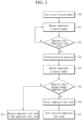
- FIG. 2 is a flow diagram for one example of the protection method of the battery pack 1 according to the embodiment. The method of FIG. 2 may be performed by the control device 23 described with reference to FIG. 1 .
- the control device 23 may obtain the temperature value by continuously measuring the temperature of the battery module 10 through the temperature sensor 211 (S11). The control device 23 may compare the measured temperature value with the temperature limit value to check whether the temperature value is greater than the temperature limit value (S12).
- the temperature limit value may be selected according to the current output value of the battery pack 1. If the temperature limit value corresponding to the current output value of the battery pack 1 is already stored in the storage device 22, the control device 23 may select the stored temperature limit value to compare the selected temperature limit value with the measured temperature value. If the temperature limit value corresponding to the current output value of the battery pack 1 is not yet stored in the storage device 22, the control device 23 may, for example, select the temperature limit value set by default to compare the selected temperature limit value with the measured temperature value.
- the control device 23 may perform the protection operation (S13). That is, the control device 23 may block a current path between output terminals of the battery pack 1 and the battery module 10 to block charging and discharging of the battery pack 1.
- the control device 23 may obtain the temperature value by continuously measuring the temperature of the battery module 10 through the measurement device_21 even after the protection operation is performed (S14). The control device 23 may compare the measured temperature value with a predetermined maximum allowable temperature value to check whether the temperature value of the battery module 10 measured after the protection operation is higher than the maximum allowable temperature value (S15).
- control device 23 may maintain a previously stored temperature limit value stored in the storage device 22 or may add a new temperature limit value to the storage device 22 (S18).
- the control device 23 may maintain an original value without changing the temperature limit value. If the temperature limit value corresponding to the output value of the battery pack 1 at the time when the protection operation is performed is not yet set, the control device 23 may map the temperature limit value (the default value) used in the step S12 to the output value of the battery pack 1 to additionally store the temperature limit value in the storage device 22.
- the control device may use the temperature limit value corresponding to the second output value as the first temperature limit value.
- control device may correct the first temperature limit value to be reduced by a predetermined value.
- control device may maintain the first temperature limit value.
- the control device may register the first temperature limit value as the temperature limit value corresponding to the first output value.
- a battery pack according to embodiments may include, for example: a battery module; and the protection device.
- a protection method of the battery pack may include for example: measuring a first temperature value of a battery module included in the battery pack while the battery pack discharges; performing a protection operation of the battery pack if the first temperature value is greater than a first temperature limit value; measuring a second temperature value of the battery module after the protection operation is performed; and correcting the first temperature limit value according to the second temperature value.
- the protection method may further include selecting the first temperature limit value according to an output value of the battery pack.
- the selecting of the first temperature limit value may include selecting an already stored temperature limit value corresponding to a first output value as the first temperature limit value if the battery pack outputs the first output value and a temperature limit value corresponding to the first output value is already stored.
- the selecting of the first temperature limit value may include selecting an already stored temperature limit value corresponding to a second output value as the first temperature limit value if the battery pack outputs the second output value different from the first output value and a temperature limit value corresponding to the second output value is already stored.
- the selecting of the first temperature limit value may include selecting a default value as the first temperature limit value if the battery pack outputs a third output value and a temperature limit value corresponding to the third output value is not stored.
- the correcting of the first temperature limit value may include correcting the first temperature limit value to be reduced by a predetermined value if the second temperature value is greater than a maximum allowable temperature value.
Landscapes
- Engineering & Computer Science (AREA)
- Manufacturing & Machinery (AREA)
- Chemical & Material Sciences (AREA)
- Chemical Kinetics & Catalysis (AREA)
- Electrochemistry (AREA)
- General Chemical & Material Sciences (AREA)
- Power Engineering (AREA)
- Sustainable Development (AREA)
- Life Sciences & Earth Sciences (AREA)
- Sustainable Energy (AREA)
- Transportation (AREA)
- Mechanical Engineering (AREA)
- Microelectronics & Electronic Packaging (AREA)
- Automation & Control Theory (AREA)
- Secondary Cells (AREA)
- Charge And Discharge Circuits For Batteries Or The Like (AREA)
- Battery Mounting, Suspending (AREA)
- Protection Of Static Devices (AREA)
Applications Claiming Priority (1)
| Application Number | Priority Date | Filing Date | Title |
|---|---|---|---|
| KR1020230098390A KR20250017528A (ko) | 2023-07-27 | 2023-07-27 | 배터리 팩의 배터리 팩의 보호 방법, 그리고 이를 수행하는 보호 장치 및 배터리 팩 |
Publications (2)
| Publication Number | Publication Date |
|---|---|
| EP4498477A2 true EP4498477A2 (de) | 2025-01-29 |
| EP4498477A3 EP4498477A3 (de) | 2025-04-16 |
Family
ID=91960561
Family Applications (1)
| Application Number | Title | Priority Date | Filing Date |
|---|---|---|---|
| EP24189819.6A Pending EP4498477A3 (de) | 2023-07-27 | 2024-07-19 | Schutzverfahren für batteriepack sowie schutzvorrichtung und batteriepack damit |
Country Status (4)
| Country | Link |
|---|---|
| US (1) | US20250038296A1 (de) |
| EP (1) | EP4498477A3 (de) |
| KR (1) | KR20250017528A (de) |
| CN (1) | CN119382271A (de) |
Family Cites Families (3)
| Publication number | Priority date | Publication date | Assignee | Title |
|---|---|---|---|---|
| JP5554622B2 (ja) * | 2010-04-21 | 2014-07-23 | 株式会社マキタ | 電動工具用装置 |
| US8344697B2 (en) * | 2010-08-02 | 2013-01-01 | GM Global Technlogy Operations LLC | Method for optimized design and operation of battery cooling system in electric vehicles |
| FR3005208B1 (fr) * | 2013-04-30 | 2015-04-24 | Renault Sa | Procede de gestion de la temperature d'une batterie de vehicule electrique ou hybride. |
-
2023
- 2023-07-27 KR KR1020230098390A patent/KR20250017528A/ko active Pending
-
2024
- 2024-02-14 US US18/441,336 patent/US20250038296A1/en active Pending
- 2024-07-08 CN CN202410905472.5A patent/CN119382271A/zh active Pending
- 2024-07-19 EP EP24189819.6A patent/EP4498477A3/de active Pending
Also Published As
| Publication number | Publication date |
|---|---|
| EP4498477A3 (de) | 2025-04-16 |
| US20250038296A1 (en) | 2025-01-30 |
| CN119382271A (zh) | 2025-01-28 |
| KR20250017528A (ko) | 2025-02-04 |
Similar Documents
| Publication | Publication Date | Title |
|---|---|---|
| US11802918B2 (en) | Thermal runaway detecting device, battery system, and thermal runaway detecting method of battery system | |
| CN112653204B (zh) | 电池系统及其控制方法 | |
| US20190379092A1 (en) | Method and system for validating a temperature sensor in a battery cell | |
| KR102360012B1 (ko) | 배터리 시스템 및 배터리 시스템 제어 방법 | |
| EP3579006B1 (de) | Validierung eines temperatursensors einer batteriezelle | |
| US11316210B2 (en) | Control unit for a battery module or system | |
| US11223213B2 (en) | Battery system and electric vehicle using the same | |
| US20260043870A1 (en) | Abnormal cell detection method, abnormal cell detection device, and battery pack | |
| EP4498477A2 (de) | Schutzverfahren für batteriepack sowie schutzvorrichtung und batteriepack damit | |
| EP4447258A1 (de) | Vorrichtung und verfahren zur steuerung des ladens eines batteriepacks | |
| US20240204537A1 (en) | Battery management method, battery management device and battery pack performing the same | |
| US20250141204A1 (en) | Overcurrent protection apparatus and protection method thereof | |
| EP4489258A2 (de) | Batteriesystem und lade-/entladesteuerungsverfahren dafür | |
| US20240175930A1 (en) | Method and system for determining state of charge, and battery system | |
| EP4451505A1 (de) | Ladesteuerungsverfahren und ladesteuerungsvorrichtung und batteriepack damit | |
| JP7735366B2 (ja) | 充電制御方法、およびこれを行う充電制御装置およびバッテリーパック | |
| US11075411B2 (en) | Protection circuit module, battery pack, and method of manufacturing the battery pack | |
| EP3657592B1 (de) | Steuereinheit für ein batteriemodul oder -system | |
| JP2025178125A (ja) | バッテリー過充電防止装置および方法、バッテリーパック | |
| KR20250062782A (ko) | 배터리 팩 및 전류 센서 진단 방법 |
Legal Events
| Date | Code | Title | Description |
|---|---|---|---|
| PUAI | Public reference made under article 153(3) epc to a published international application that has entered the european phase |
Free format text: ORIGINAL CODE: 0009012 |
|
| STAA | Information on the status of an ep patent application or granted ep patent |
Free format text: STATUS: REQUEST FOR EXAMINATION WAS MADE |
|
| 17P | Request for examination filed |
Effective date: 20240719 |
|
| AK | Designated contracting states |
Kind code of ref document: A2 Designated state(s): AL AT BE BG CH CY CZ DE DK EE ES FI FR GB GR HR HU IE IS IT LI LT LU LV MC ME MK MT NL NO PL PT RO RS SE SI SK SM TR |
|
| PUAL | Search report despatched |
Free format text: ORIGINAL CODE: 0009013 |
|
| AK | Designated contracting states |
Kind code of ref document: A3 Designated state(s): AL AT BE BG CH CY CZ DE DK EE ES FI FR GB GR HR HU IE IS IT LI LT LU LV MC ME MK MT NL NO PL PT RO RS SE SI SK SM TR |
|
| RIC1 | Information provided on ipc code assigned before grant |
Ipc: B60L 58/25 20190101ALI20250311BHEP Ipc: B60L 3/04 20060101ALI20250311BHEP Ipc: B60L 3/00 20190101ALI20250311BHEP Ipc: H01M 10/48 20060101ALI20250311BHEP Ipc: H01M 10/44 20060101ALI20250311BHEP Ipc: H01M 10/42 20060101AFI20250311BHEP |