EP4498461A2 - Vanadiumionen enthaltender wässriger elektrolyt und vanadiumionenbatterie denselben umfassend - Google Patents
Vanadiumionen enthaltender wässriger elektrolyt und vanadiumionenbatterie denselben umfassend Download PDFInfo
- Publication number
- EP4498461A2 EP4498461A2 EP24186073.3A EP24186073A EP4498461A2 EP 4498461 A2 EP4498461 A2 EP 4498461A2 EP 24186073 A EP24186073 A EP 24186073A EP 4498461 A2 EP4498461 A2 EP 4498461A2
- Authority
- EP
- European Patent Office
- Prior art keywords
- electrode
- vanadium ion
- vanadium
- positive
- negative
- Prior art date
- Legal status (The legal status is an assumption and is not a legal conclusion. Google has not performed a legal analysis and makes no representation as to the accuracy of the status listed.)
- Pending
Links
- 229910001456 vanadium ion Inorganic materials 0.000 title claims abstract description 255
- 239000003792 electrolyte Substances 0.000 title claims abstract description 206
- 230000003647 oxidation Effects 0.000 claims abstract description 91
- 238000007254 oxidation reaction Methods 0.000 claims abstract description 91
- 229920000642 polymer Polymers 0.000 claims description 30
- 239000004215 Carbon black (E152) Substances 0.000 claims description 27
- 229930195733 hydrocarbon Natural products 0.000 claims description 27
- 150000002430 hydrocarbons Chemical class 0.000 claims description 26
- OKTJSMMVPCPJKN-UHFFFAOYSA-N Carbon Chemical compound [C] OKTJSMMVPCPJKN-UHFFFAOYSA-N 0.000 claims description 21
- QAOWNCQODCNURD-UHFFFAOYSA-N Sulfuric acid Chemical compound OS(O)(=O)=O QAOWNCQODCNURD-UHFFFAOYSA-N 0.000 claims description 16
- 229910052799 carbon Inorganic materials 0.000 claims description 16
- 239000003929 acidic solution Substances 0.000 claims description 12
- 239000007787 solid Substances 0.000 claims description 12
- 229910052751 metal Inorganic materials 0.000 claims description 11
- 239000002184 metal Substances 0.000 claims description 11
- GNTDGMZSJNCJKK-UHFFFAOYSA-N divanadium pentaoxide Chemical compound O=[V](=O)O[V](=O)=O GNTDGMZSJNCJKK-UHFFFAOYSA-N 0.000 claims description 10
- XHCLAFWTIXFWPH-UHFFFAOYSA-N [O-2].[O-2].[O-2].[O-2].[O-2].[V+5].[V+5] Chemical compound [O-2].[O-2].[O-2].[O-2].[O-2].[V+5].[V+5] XHCLAFWTIXFWPH-UHFFFAOYSA-N 0.000 claims description 9
- 239000000243 solution Substances 0.000 claims description 9
- 229910001935 vanadium oxide Inorganic materials 0.000 claims description 9
- 238000004891 communication Methods 0.000 claims description 8
- 239000000758 substrate Substances 0.000 claims description 8
- VEXZGXHMUGYJMC-UHFFFAOYSA-N Hydrochloric acid Chemical compound Cl VEXZGXHMUGYJMC-UHFFFAOYSA-N 0.000 claims description 6
- NBIIXXVUZAFLBC-UHFFFAOYSA-N Phosphoric acid Chemical compound OP(O)(O)=O NBIIXXVUZAFLBC-UHFFFAOYSA-N 0.000 claims description 6
- 239000004693 Polybenzimidazole Substances 0.000 claims description 6
- 239000011248 coating agent Substances 0.000 claims description 6
- 238000000576 coating method Methods 0.000 claims description 6
- 229920002480 polybenzimidazole Polymers 0.000 claims description 6
- 125000002091 cationic group Chemical group 0.000 claims description 4
- 229910003206 NH4VO3 Inorganic materials 0.000 claims description 3
- GRYLNZFGIOXLOG-UHFFFAOYSA-N Nitric acid Chemical compound O[N+]([O-])=O GRYLNZFGIOXLOG-UHFFFAOYSA-N 0.000 claims description 3
- 239000004696 Poly ether ether ketone Substances 0.000 claims description 3
- 239000004695 Polyether sulfone Substances 0.000 claims description 3
- 229910021541 Vanadium(III) oxide Inorganic materials 0.000 claims description 3
- 229910021542 Vanadium(IV) oxide Inorganic materials 0.000 claims description 3
- 229910000147 aluminium phosphate Inorganic materials 0.000 claims description 3
- 229910017604 nitric acid Inorganic materials 0.000 claims description 3
- 229920006393 polyether sulfone Polymers 0.000 claims description 3
- 229920002530 polyetherether ketone Polymers 0.000 claims description 3
- 229920001721 polyimide Polymers 0.000 claims description 3
- UUUGYDOQQLOJQA-UHFFFAOYSA-L vanadyl sulfate Chemical compound [V+2]=O.[O-]S([O-])(=O)=O UUUGYDOQQLOJQA-UHFFFAOYSA-L 0.000 claims description 3
- 229910000352 vanadyl sulfate Inorganic materials 0.000 claims description 3
- 238000007599 discharging Methods 0.000 abstract description 26
- 230000007423 decrease Effects 0.000 abstract description 16
- LEONUFNNVUYDNQ-UHFFFAOYSA-N vanadium atom Chemical compound [V] LEONUFNNVUYDNQ-UHFFFAOYSA-N 0.000 description 33
- 229910052720 vanadium Inorganic materials 0.000 description 30
- 230000009467 reduction Effects 0.000 description 25
- 239000007800 oxidant agent Substances 0.000 description 9
- 238000002360 preparation method Methods 0.000 description 8
- MUBZPKHOEPUJKR-UHFFFAOYSA-N Oxalic acid Chemical compound OC(=O)C(O)=O MUBZPKHOEPUJKR-UHFFFAOYSA-N 0.000 description 6
- 230000008901 benefit Effects 0.000 description 6
- 239000000463 material Substances 0.000 description 6
- XLYOFNOQVPJJNP-UHFFFAOYSA-N water Chemical compound O XLYOFNOQVPJJNP-UHFFFAOYSA-N 0.000 description 6
- 238000006243 chemical reaction Methods 0.000 description 5
- 230000000694 effects Effects 0.000 description 5
- 238000004519 manufacturing process Methods 0.000 description 5
- 238000000034 method Methods 0.000 description 5
- 239000004698 Polyethylene Substances 0.000 description 4
- 239000011149 active material Substances 0.000 description 4
- 239000012530 fluid Substances 0.000 description 4
- -1 graphite felt Chemical compound 0.000 description 4
- 150000002500 ions Chemical class 0.000 description 4
- 229920000573 polyethylene Polymers 0.000 description 4
- 238000004448 titration Methods 0.000 description 4
- 150000003682 vanadium compounds Chemical class 0.000 description 4
- 229910001868 water Inorganic materials 0.000 description 4
- 229910021607 Silver chloride Inorganic materials 0.000 description 3
- 239000002253 acid Substances 0.000 description 3
- 238000013461 design Methods 0.000 description 3
- 229910002804 graphite Inorganic materials 0.000 description 3
- 239000010439 graphite Substances 0.000 description 3
- 125000004435 hydrogen atom Chemical group [H]* 0.000 description 3
- 239000000843 powder Substances 0.000 description 3
- HKZLPVFGJNLROG-UHFFFAOYSA-M silver monochloride Chemical compound [Cl-].[Ag+] HKZLPVFGJNLROG-UHFFFAOYSA-M 0.000 description 3
- 238000003860 storage Methods 0.000 description 3
- 239000000126 substance Substances 0.000 description 3
- IJGRMHOSHXDMSA-UHFFFAOYSA-N Atomic nitrogen Chemical group N#N IJGRMHOSHXDMSA-UHFFFAOYSA-N 0.000 description 2
- 239000004743 Polypropylene Substances 0.000 description 2
- 230000002378 acidificating effect Effects 0.000 description 2
- 125000000217 alkyl group Chemical group 0.000 description 2
- 229910052782 aluminium Inorganic materials 0.000 description 2
- XAGFODPZIPBFFR-UHFFFAOYSA-N aluminium Chemical compound [Al] XAGFODPZIPBFFR-UHFFFAOYSA-N 0.000 description 2
- 125000003118 aryl group Chemical group 0.000 description 2
- 238000004364 calculation method Methods 0.000 description 2
- 230000015556 catabolic process Effects 0.000 description 2
- 230000008859 change Effects 0.000 description 2
- 238000006731 degradation reaction Methods 0.000 description 2
- 230000005611 electricity Effects 0.000 description 2
- 238000003487 electrochemical reaction Methods 0.000 description 2
- 239000008151 electrolyte solution Substances 0.000 description 2
- 125000004185 ester group Chemical group 0.000 description 2
- 125000001033 ether group Chemical group 0.000 description 2
- 238000010438 heat treatment Methods 0.000 description 2
- 125000000468 ketone group Chemical group 0.000 description 2
- 238000005259 measurement Methods 0.000 description 2
- 239000012528 membrane Substances 0.000 description 2
- 235000006408 oxalic acid Nutrition 0.000 description 2
- 229920001155 polypropylene Polymers 0.000 description 2
- 230000002441 reversible effect Effects 0.000 description 2
- 238000007086 side reaction Methods 0.000 description 2
- 125000000472 sulfonyl group Chemical group *S(*)(=O)=O 0.000 description 2
- 230000002123 temporal effect Effects 0.000 description 2
- ZOXJGFHDIHLPTG-UHFFFAOYSA-N Boron Chemical group [B] ZOXJGFHDIHLPTG-UHFFFAOYSA-N 0.000 description 1
- 229920000049 Carbon (fiber) Polymers 0.000 description 1
- RYGMFSIKBFXOCR-UHFFFAOYSA-N Copper Chemical compound [Cu] RYGMFSIKBFXOCR-UHFFFAOYSA-N 0.000 description 1
- YCKRFDGAMUMZLT-UHFFFAOYSA-N Fluorine atom Chemical compound [F] YCKRFDGAMUMZLT-UHFFFAOYSA-N 0.000 description 1
- UFHFLCQGNIYNRP-UHFFFAOYSA-N Hydrogen Chemical compound [H][H] UFHFLCQGNIYNRP-UHFFFAOYSA-N 0.000 description 1
- 229920000557 Nafion® Polymers 0.000 description 1
- 229910006130 SO4 Inorganic materials 0.000 description 1
- BUGBHKTXTAQXES-UHFFFAOYSA-N Selenium Chemical group [Se] BUGBHKTXTAQXES-UHFFFAOYSA-N 0.000 description 1
- NINIDFKCEFEMDL-UHFFFAOYSA-N Sulfur Chemical group [S] NINIDFKCEFEMDL-UHFFFAOYSA-N 0.000 description 1
- 125000002723 alicyclic group Chemical group 0.000 description 1
- 125000001931 aliphatic group Chemical group 0.000 description 1
- 125000003342 alkenyl group Chemical group 0.000 description 1
- 125000003545 alkoxy group Chemical group 0.000 description 1
- 125000000304 alkynyl group Chemical group 0.000 description 1
- 125000003368 amide group Chemical group 0.000 description 1
- 125000003277 amino group Chemical group 0.000 description 1
- 239000007864 aqueous solution Substances 0.000 description 1
- 125000003710 aryl alkyl group Chemical group 0.000 description 1
- QVGXLLKOCUKJST-UHFFFAOYSA-N atomic oxygen Chemical group [O] QVGXLLKOCUKJST-UHFFFAOYSA-N 0.000 description 1
- 229910052796 boron Inorganic materials 0.000 description 1
- 239000006229 carbon black Substances 0.000 description 1
- 239000004917 carbon fiber Substances 0.000 description 1
- 239000003575 carbonaceous material Substances 0.000 description 1
- 125000003178 carboxy group Chemical group [H]OC(*)=O 0.000 description 1
- 239000003638 chemical reducing agent Substances 0.000 description 1
- 239000002131 composite material Substances 0.000 description 1
- 229920001940 conductive polymer Polymers 0.000 description 1
- 238000011109 contamination Methods 0.000 description 1
- 229910052802 copper Inorganic materials 0.000 description 1
- 239000010949 copper Substances 0.000 description 1
- 125000004093 cyano group Chemical group *C#N 0.000 description 1
- 238000011161 development Methods 0.000 description 1
- 230000004069 differentiation Effects 0.000 description 1
- 239000012153 distilled water Substances 0.000 description 1
- 238000001035 drying Methods 0.000 description 1
- 238000004146 energy storage Methods 0.000 description 1
- 238000005516 engineering process Methods 0.000 description 1
- 238000002474 experimental method Methods 0.000 description 1
- 238000004880 explosion Methods 0.000 description 1
- 229910052731 fluorine Inorganic materials 0.000 description 1
- 239000011737 fluorine Substances 0.000 description 1
- 239000011888 foil Substances 0.000 description 1
- 239000007789 gas Substances 0.000 description 1
- 229910021389 graphene Inorganic materials 0.000 description 1
- 229910052736 halogen Inorganic materials 0.000 description 1
- 150000002367 halogens Chemical class 0.000 description 1
- 125000004404 heteroalkyl group Chemical group 0.000 description 1
- 125000004475 heteroaralkyl group Chemical group 0.000 description 1
- 125000001072 heteroaryl group Chemical group 0.000 description 1
- 125000005842 heteroatom Chemical group 0.000 description 1
- 239000011796 hollow space material Substances 0.000 description 1
- 125000001183 hydrocarbyl group Chemical group 0.000 description 1
- 229910052739 hydrogen Inorganic materials 0.000 description 1
- 239000001257 hydrogen Substances 0.000 description 1
- 125000002887 hydroxy group Chemical group [H]O* 0.000 description 1
- 238000005470 impregnation Methods 0.000 description 1
- 238000009434 installation Methods 0.000 description 1
- 239000011810 insulating material Substances 0.000 description 1
- 239000003014 ion exchange membrane Substances 0.000 description 1
- 230000002427 irreversible effect Effects 0.000 description 1
- 230000007774 longterm Effects 0.000 description 1
- 239000007769 metal material Substances 0.000 description 1
- VNWKTOKETHGBQD-UHFFFAOYSA-N methane Chemical compound C VNWKTOKETHGBQD-UHFFFAOYSA-N 0.000 description 1
- 238000012986 modification Methods 0.000 description 1
- 230000004048 modification Effects 0.000 description 1
- 125000000449 nitro group Chemical group [O-][N+](*)=O 0.000 description 1
- 229910052757 nitrogen Inorganic materials 0.000 description 1
- 230000001151 other effect Effects 0.000 description 1
- 229910052760 oxygen Inorganic materials 0.000 description 1
- 239000001301 oxygen Substances 0.000 description 1
- 239000004033 plastic Substances 0.000 description 1
- 229920003023 plastic Polymers 0.000 description 1
- 229920001296 polysiloxane Chemical group 0.000 description 1
- 239000012286 potassium permanganate Substances 0.000 description 1
- 230000008569 process Effects 0.000 description 1
- 238000005070 sampling Methods 0.000 description 1
- 229910052711 selenium Chemical group 0.000 description 1
- 239000011669 selenium Chemical group 0.000 description 1
- 125000003808 silyl group Chemical group [H][Si]([H])([H])[*] 0.000 description 1
- 239000002904 solvent Substances 0.000 description 1
- 238000003756 stirring Methods 0.000 description 1
- 125000001424 substituent group Chemical group 0.000 description 1
- 229910052717 sulfur Inorganic materials 0.000 description 1
- 239000011593 sulfur Chemical group 0.000 description 1
- 229910021642 ultra pure water Inorganic materials 0.000 description 1
- 239000012498 ultrapure water Substances 0.000 description 1
Images



Classifications
-
- H—ELECTRICITY
- H01—ELECTRIC ELEMENTS
- H01M—PROCESSES OR MEANS, e.g. BATTERIES, FOR THE DIRECT CONVERSION OF CHEMICAL ENERGY INTO ELECTRICAL ENERGY
- H01M8/00—Fuel cells; Manufacture thereof
- H01M8/18—Regenerative fuel cells, e.g. redox flow batteries or secondary fuel cells
- H01M8/184—Regeneration by electrochemical means
- H01M8/188—Regeneration by electrochemical means by recharging of redox couples containing fluids; Redox flow type batteries
-
- H—ELECTRICITY
- H01—ELECTRIC ELEMENTS
- H01M—PROCESSES OR MEANS, e.g. BATTERIES, FOR THE DIRECT CONVERSION OF CHEMICAL ENERGY INTO ELECTRICAL ENERGY
- H01M10/00—Secondary cells; Manufacture thereof
- H01M10/36—Accumulators not provided for in groups H01M10/05-H01M10/34
-
- H—ELECTRICITY
- H01—ELECTRIC ELEMENTS
- H01M—PROCESSES OR MEANS, e.g. BATTERIES, FOR THE DIRECT CONVERSION OF CHEMICAL ENERGY INTO ELECTRICAL ENERGY
- H01M50/00—Constructional details or processes of manufacture of the non-active parts of electrochemical cells other than fuel cells, e.g. hybrid cells
- H01M50/40—Separators; Membranes; Diaphragms; Spacing elements inside cells
- H01M50/409—Separators, membranes or diaphragms characterised by the material
-
- H—ELECTRICITY
- H01—ELECTRIC ELEMENTS
- H01M—PROCESSES OR MEANS, e.g. BATTERIES, FOR THE DIRECT CONVERSION OF CHEMICAL ENERGY INTO ELECTRICAL ENERGY
- H01M50/00—Constructional details or processes of manufacture of the non-active parts of electrochemical cells other than fuel cells, e.g. hybrid cells
- H01M50/40—Separators; Membranes; Diaphragms; Spacing elements inside cells
- H01M50/409—Separators, membranes or diaphragms characterised by the material
- H01M50/411—Organic material
- H01M50/414—Synthetic resins, e.g. thermoplastics or thermosetting resins
- H01M50/417—Polyolefins
-
- H—ELECTRICITY
- H01—ELECTRIC ELEMENTS
- H01M—PROCESSES OR MEANS, e.g. BATTERIES, FOR THE DIRECT CONVERSION OF CHEMICAL ENERGY INTO ELECTRICAL ENERGY
- H01M2300/00—Electrolytes
- H01M2300/0002—Aqueous electrolytes
- H01M2300/0005—Acid electrolytes
-
- H—ELECTRICITY
- H01—ELECTRIC ELEMENTS
- H01M—PROCESSES OR MEANS, e.g. BATTERIES, FOR THE DIRECT CONVERSION OF CHEMICAL ENERGY INTO ELECTRICAL ENERGY
- H01M2300/00—Electrolytes
- H01M2300/0002—Aqueous electrolytes
- H01M2300/0005—Acid electrolytes
- H01M2300/0008—Phosphoric acid-based
-
- H—ELECTRICITY
- H01—ELECTRIC ELEMENTS
- H01M—PROCESSES OR MEANS, e.g. BATTERIES, FOR THE DIRECT CONVERSION OF CHEMICAL ENERGY INTO ELECTRICAL ENERGY
- H01M2300/00—Electrolytes
- H01M2300/0002—Aqueous electrolytes
- H01M2300/0005—Acid electrolytes
- H01M2300/0011—Sulfuric acid-based
-
- H—ELECTRICITY
- H01—ELECTRIC ELEMENTS
- H01M—PROCESSES OR MEANS, e.g. BATTERIES, FOR THE DIRECT CONVERSION OF CHEMICAL ENERGY INTO ELECTRICAL ENERGY
- H01M2300/00—Electrolytes
- H01M2300/0017—Non-aqueous electrolytes
- H01M2300/0065—Solid electrolytes
- H01M2300/0082—Organic polymers
-
- Y—GENERAL TAGGING OF NEW TECHNOLOGICAL DEVELOPMENTS; GENERAL TAGGING OF CROSS-SECTIONAL TECHNOLOGIES SPANNING OVER SEVERAL SECTIONS OF THE IPC; TECHNICAL SUBJECTS COVERED BY FORMER USPC CROSS-REFERENCE ART COLLECTIONS [XRACs] AND DIGESTS
- Y02—TECHNOLOGIES OR APPLICATIONS FOR MITIGATION OR ADAPTATION AGAINST CLIMATE CHANGE
- Y02E—REDUCTION OF GREENHOUSE GAS [GHG] EMISSIONS, RELATED TO ENERGY GENERATION, TRANSMISSION OR DISTRIBUTION
- Y02E60/00—Enabling technologies; Technologies with a potential or indirect contribution to GHG emissions mitigation
- Y02E60/30—Hydrogen technology
- Y02E60/50—Fuel cells
Definitions
- the present disclosure relates to an aqueous electrolyte containing vanadium ions and a vanadium ion battery including the same. More specifically, the present disclosure relates to an aqueous electrolyte containing vanadium ions in which an oxidation number of the vanadium ions is adjusted such that a decrease in charging energy (capacity) resulting from a difference between a vanadium ions concentration of an aqueous electrolyte containing vanadium ions in a positive-electrode and a vanadium ions concentration of an aqueous electrolyte containing vanadium ions in a negative-electrode in charging and discharging a vanadium ion battery using the aqueous electrolyte containing vanadium ions is reduced. Further, a vanadium ion battery including the aqueous electrolyte is disclosed.
- a redox flow battery has a system in which an active material in electrolyte is oxidized and reduced to charge and discharge the battery and refers to an electrochemical storage device that stores electrical energy therein in a form of chemical energy of the electrolyte.
- the electrolyte of an oxidation/reduction-based secondary battery uses a material with a redox couple.
- redox couples of different materials are applied to the positive-electrode and the negative-electrode, respectively.
- a crossover in which the different ionized materials cross each other through a separator occurs, resulting in a decrease in battery capacity.
- the crossover in which the vanadium ions of vanadium electrolyte cross over each other through the separator may occur.
- an amount by and a rate at which the vanadium ions migrate may vary, which may affect the difference between the vanadium ion concentrations in the positive-electrode and the negative-electrode.
- the electrolyte containing vanadium ions is an aqueous electrolyte, it not only has high stability against explosions when being applied to secondary batteries, but also increases the lifespan of the battery. For this reason, the electrolyte containing vanadium ions has been used until recently.
- the oxidation/reduction-based secondary battery including the aqueous electrolyte containing vanadium ions that uses the vanadium ions as an active material has the longest lifespan among the oxidation/reduction-based secondary batteries and is advantageous in increasing capacity.
- the electrolyte can be removed and reused via the electrochemical reaction of charging and discharging the secondary battery, thereby achieving the advantage of being cost-effective.
- a vanadium compound with a vanadium ion oxidation number of V 4+ is required for the positive-electrode
- a vanadium compound with a vanadium ion oxidation number of V 3+ is required for the negative-electrode, based on a fully discharged state.
- a vanadium compound with a vanadium ion oxidation number of V 5+ is required for the positive-electrode
- a vanadium compound with a vanadium ion oxidation number of V 2+ is required for the negative-electrode.
- the charge/discharge reaction occurs as the vanadium ion oxidation number of the vanadium active material changes.
- the positive-electrode contains an electrolyte solution (electrolyte) in which the positive-electrode redox couple (V 4+ /V 5+ ) is dissolved.
- the negative-electrode contains an electrolyte solution (electrolyte) in which the negative-electrode redox couple (V 2+ /V 3+ ) is dissolved.
- an electrolyte with a vanadium ion oxidation number of 3.5+ may be commonly used as the electrolyte supplied to the negative-electrode and the electrolyte supplied to the positive-electrode.
- a purpose of the present disclosure is to provide an aqueous electrolyte containing vanadium ions in which an oxidation number of the vanadium ions is adjusted such that decrease in performance of the oxidation/reduction-based secondary battery, especially, charging energy (capacity) thereof is minimized.
- Another purpose of the present disclosure is to provide a vanadium ion battery as an oxidation/reduction-based secondary battery whose a volume is significantly reduced by excluding an electrolyte tank and a fluid pump, wherein the electrolyte containing the vanadium ions according to the present discourse is contained in the battery.
- a vanadium ion battery comprising: at least one vanadium ion battery unit cell, wherein each of the at least one vanadium ion battery unit cell includes: a positive-electrode current collector; a negative-electrode current collector spaced apart from the positive-electrode current collector; a separator disposed between the positive-electrode current collector and the negative-electrode current collector; a positive-electrode electrolyte reservoir defined between the positive-electrode current collector and the separator; and a negative-electrode electrolyte reservoir defined between the negative-electrode current collector and the separator, wherein as a positive-electrode electrolyte containing vanadium ions is received in the positive-electrode electrolyte reservoir, wherein a negative-electrode electrolyte containing vanadium ions is received in the negative-electrode electrolyte reservoir, wherein each of
- the vanadium ion oxidation number of each of the positive-electrode and negative-electrode electrolytes is greater than 3.50+ and lower than or equal to 3.80+.
- the vanadium ion oxidation number of each of the positive-electrode and negative-electrode electrolytes may be 3.55+ or greater and lower than or equal to 3.80+.
- the vanadium ions of each of the positive-electrode and negative-electrode electrolytes are supplied from a vanadium oxide.
- the vanadium oxide includes at least one selected from a group consisting of V 2 O 5 , VOSO 4 , V 2 O 3 , NH 4 VO 3 and V 2 O 4 .
- the acidic solution includes at least one selected from a group consisting of sulfuric acid, hydrochloric acid, nitric acid, and phosphoric acid solutions.
- each vanadium ion battery unit cell further includes a communication channel communicating the positive-electrode electrolyte reservoir and the negative-electrode electrolyte reservoir to each other.
- the positive-electrode current collector includes a positive-electrode metal current collector and a positive-electrode carbon current collector, wherein the negative-electrode current collector includes a negative-electrode metal current collector and a negative-electrode carbon current collector.
- each vanadium ion battery unit cell further includes: a positive-electrode solid electrode received in the positive-electrode electrolyte reservoir and impregnated with the positive-electrode electrolyte; and a negative-electrode solid electrode received in the negative-electrode electrolyte reservoir and impregnated with the negative-electrode electrolyte.
- the separator is a hydrocarbon-based separator including a hydrocarbon-based polymer.
- the hydrocarbon-based separator is made of the hydrocarbon-based polymer, or is formed by coating the hydrocarbon-based polymer on one surface or both opposing surfaces of a substrate.
- the hydrocarbon-based polymer may include a cationic conductive hydrocarbon-based polymer.
- the hydrocarbon-based polymer includes at least one selected from a group consisting of a polyimide-based polymer, a polyetheretherketone-based polymer, a polyethersulfone-based polymer, and a polybenzimidazole-based polymer.
- the electrolytes containing vanadium ions in accordance with the present disclosure may be provided such that the vanadium ion oxidation number exceeds 3.50+.
- the reduction in charging energy (capacity) resulting from the difference between the vanadium ion concentrations in the positive-electrode and the negative-electrode when the battery is charged and discharged may be minimized.
- the energy density of the vanadium ion battery may be significantly increased, and the efficiency and lifespan of the vanadium ion battery may be improved.
- the battery with high energy density has a relatively low SoC (Stage of Charge) even when being charged with the same amount of energy, so that the potential difference between the positive-electrode and the negative-electrode becomes small.
- SoC Voltage of Charge
- the battery with the high energy density uses a smaller DoD (Depth of Discharge) even when discharging the same amount of energy.
- DoD Depth of Discharge
- the vanadium ion battery in accordance with the present disclosure is designed with a structure excluding the electrolyte storage tank and the fluid pump for electrolyte flow present in a conventional redox flow battery (RFB).
- a space may be secured when the vanadium ion battery in accordance with the present disclosure is used to manufacture a large energy storage system (ESS).
- ESS large energy storage system
- the battery using the electrolyte containing the vanadium ion of the present disclosure has a higher energy density than that of the battery using the conventional vanadium electrolyte having the vanadium ion oxidation number of 3.50+.
- the size of the aqueous secondary battery to which the electrolyte is applied may be further reduced.
- the reduction in charging energy may be lowered in the vanadium ion battery with a sealed structure.
- a shape, a size, a ratio, angle, a number, etc. disclosed in the drawings for illustrating embodiments of the present disclosure are illustrative, and an embodiment of the present disclosure is not limited thereto.
- first element or layer when a first element or layer is referred to as being present "on" a second element or layer, the first element may be disposed directly on the second element or may be disposed indirectly on the second element with a third element or layer being disposed between the first and second elements or layers. It will also be understood that when a first element or layer is referred to as being present "under” a second element or layer, the first element may be disposed directly under the second element or may be disposed indirectly under the second element with a third element or layer being disposed between the first and second elements or layers.
- a layer, film, region, plate, or the like when a layer, film, region, plate, or the like is disposed "on” or “on a top” of another layer, film, region, plate, or the like, the former may directly contact the latter or still another layer, film, region, plate, or the like may be disposed between the former and the latter.
- the former when a layer, film, region, plate, or the like is directly disposed “on” or “on a top” of another layer, film, region, plate, or the like, the former directly contacts the latter and still another layer, film, region, plate, or the like is not disposed between the former and the latter.
- the former when a layer, film, region, plate, or the like is disposed “below” or “under” another layer, film, region, plate, or the like, the former may directly contact the latter or still another layer, film, region, plate, or the like may be disposed between the former and the latter.
- the former when a layer, film, region, plate, or the like is directly disposed “below” or “under” another layer, film, region, plate, or the like, the former directly contacts the latter and still another layer, film, region, plate, or the like is not disposed between the former and the latter.
- temporal precedent relationships between two events such as “after”, “subsequent to”, “before”, etc., another event may occur therebetween unless “directly after”, “directly subsequent” or “directly before” is not indicated.
- a function or an operation specified in a specific block may occur in a different order from an order specified in a flowchart.
- two blocks in succession may be actually performed substantially concurrently, or the two blocks may be performed in a reverse order depending on a function or operation involved.
- spatially relative terms such as “beneath,” “below,” “lower,” “under,” “above,” “upper,” and the like, may be used herein for ease of illustration to illustrate one element or feature's relationship to another element or feature as illustrated in the figures. It will be understood that the spatially relative terms are intended to encompass different orientations of the device in use or in operation, in addition to the orientation depicted in the figures. For example, when the device in the drawings may be turned over, elements described as “below” or “beneath” or “under” other elements or features would then be oriented “above” the other elements or features. Thus, the example terms “below” and “under” may encompass both an orientation of above and below. The device may be otherwise oriented, for example, rotated 90 degrees or at other orientations, and the spatially relative descriptors used herein should be interpreted accordingly.
- 'or' means 'inclusive or' rather than 'exclusive or'. That is, unless otherwise stated or clear from the context, the expression that 'x uses a or b' means any one of natural inclusive permutations.
- a and/or B means A, B, or A and B, unless otherwise specified, and "C to D” means C inclusive to D inclusive unless otherwise specified.
- At least one should be understood to include any combination of one or more of listed components.
- at least one of first, second, and third components means not only a first, second, or third component, but also all combinations of two or more of the first, second, and third components.
- aqueous electrolyte containing vanadium ions may be interpreted as referring to “vanadium ion electrolyte", “electrolyte using (employing) vanadium ion”, “electrolyte containing vanadium oxide”, “vanadium electrolyte”, “electrolyte containing a vanadium active material”, etc. unless otherwise stated.
- the vanadium ion oxidation number electrolyte may refer to the vanadium ion oxidation number of the electrolyte itself at the time of preparation or supply, or an average value of the vanadium ion oxidation numbers of the electrolytes respectively supplied to the positive-electrode and negative-electrode, or the average value of the vanadium ion oxidation number of the positive-electrode electrolyte and the vanadium ion oxidation number of the negative-electrode electrolyte when the secondary battery performs charging and discharging.
- an electrolyte with a vanadium ion oxidation number of 3.5+ may be commonly used as the electrolyte supplied to the negative-electrode and the electrolyte supplied to the positive-electrode.
- a following problem occurs: as charging and discharging are repeated, a difference between the vanadium ion concentrations in the positive-electrode and the negative-electrode becomes larger, such that a decrease in charging energy (capacity) occurs.
- the inventors of the present disclosure have experimentally identified that when the vanadium electrolyte with a vanadium ion oxidation number exceeding 3.50+ is used rather than the vanadium electrolyte with a vanadium ion oxidation number of 3.50+ that has been used conventionally, the charging energy (capacity) reduction when charging and discharging the oxidation/reduction-based secondary battery is repeated multiple times may be resolved even when a difference between the vanadium ion concentrations in the positive-electrode and the negative-electrode occurs. In this way, the present disclosure has been completed.
- the aqueous electrolyte containing vanadium ions in accordance with the present disclosure contains vanadium ions and an acidic solution and is characterized in that the vanadium ion oxidation number is greater than 3.50+, for example 3.55+ or greater.
- the effect of solving the problem of the reduction in the charging energy may be achieved.
- the above effect further increases.
- the energy density of the electrolytes containing vanadium ions in accordance with the present disclosure may be improved, a size of the oxidation/reduction-based secondary battery using the aqueous electrolyte according to the present disclosure may be significantly reduced, and the efficiency and the lifespan of oxidation/reduction-based secondary battery may be improved.
- the vanadium ion oxidation number of the electrolyte becomes lower than 3.50+, not only is the charging energy lowered under several times of charging and discharging, but also the charging energy is further lowered under dozens or hundreds times of charging and discharging.
- the vanadium ion oxidation number may be lower than 4.00+, for example, the vanadium ion oxidation number may be lower than 3.70+, for example, the vanadium ion oxidation number may be 3.65+ or lower.
- the upper limit of the vanadium ion oxidation number may vary depending on a path along which the vanadium ions migrate.
- the vanadium ions of the vanadium electrolyte of the present disclosure may be supplied from the vanadium oxide.
- the vanadium oxide may include one or more selected from the group consisting of V 2 O 5 , VOSO 4 , V 2 O 3 , NH 4 VO 3 and V 2 O 4 .
- embodiments of the present disclosure are not necessarily limited thereto, and the vanadium oxide may be selected based on the electrolyte production conditions, the electrolyte production target amount, etc.
- a form in which the vanadium oxide is supplied is not particularly limited, but may be, for example, a powder type in terms of process efficiency.
- the acidic solution may include one or more selected from the group consisting of sulfuric acid, hydrochloric acid, nitric acid, and phosphoric acid solutions.
- a sulfuric acid solution may be used as the acidic solution.
- the concentration of the acidic solution may be, for example, in a range of 0.1 M to 10 M, for example, 1 M to 8 M, for example, 2 M to 5 M. However, embodiments of the present disclosure are not necessarily limited thereto. The concentration of the acidic solution may be appropriately adjusted depending on a type of the acid solution as used, etc.
- the concentration of the vanadium ions in the electrolyte containing the vanadium may be in a range of 1.5 M to 3.0 M.
- a vanadium ion battery (VIB) as an oxidation/reduction-based secondary battery with a sealed structure free of the electrolyte tank and the fluid pump is employed.
- the VIB is designed using one unit cell or by stacking at least two unit cells, wherein each unit cell includes a positive-electrode current collector; a negative-electrode current collector spaced apart from the positive-electrode current collector; and a separator disposed between the positive-electrode current collector and the negative-electrode current collector, such that the electrolyte circulates inside the battery by itself without the pump.
- a power density may be improved by 2 to 50 times, and the stability of energy output may be improved, compared to the conventional oxidation/reduction-based secondary battery.
- the vanadium ion battery according to an embodiment of the present disclosure may include at least one vanadium ion battery unit cell.
- the vanadium ion battery according to an embodiment of the present disclosure may include at least three vanadium ion battery unit cells as stacked on top of each other.
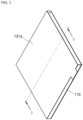
- a vanadium ion battery unit cell 100 includes a positive-electrode current collector 130a; a negative-electrode current collector 130b disposed spaced apart from the positive-electrode current collector; a separator 120 disposed between the positive-electrode current collector 130a and the negative-electrode current collector 130b; a positive-electrode electrolyte reservoir 111a formed between the positive-electrode current collector 130a and the separator 120; and a negative-electrode electrolyte reservoir 111b formed between the negative-electrode current collector 130b and the separator 120.
- Each of the positive-electrode current collector 130a and negative-electrode current collector 130b of the vanadium ion battery unit cell 100 may be manufactured by stacking each of metal current collectors 131a and 131b and each of carbon current collectors 132a and 132b.
- Each of the metal current collectors 131a and 131b may be made of a metal with high electrical conductivity (for example, copper or aluminum).
- the metal current collectors 131a and 131b may be connected to a busbar for electrically connecting the unit cells to each other.
- Each of the carbon current collectors 132a and 132b may be made of a material such as graphite, carbon, carbon plastic, etc. to have high electrical conductivity and high acid resistance.
- Each of the metal current collectors 131a and 131b and the carbon current collectors 132a and 132b may be formed in a rectangular plate shape.
- the vanadium ion battery unit cell 100 may include a support frame 110.
- the separator 120 may be placed in a space defined by the positive-electrode current collector 130a, the negative-electrode current collector 130b, and the support frame 110.
- the positive-electrode electrolyte reservoir 111a may be defined by the separator 120, the support frame 110, and the positive-electrode current collector 130a.
- the negative-electrode electrolyte reservoir 111b may be defined by the separator 120, the support frame 110, and the negative-electrode current collector 130b.
- the support frame 110 may be attached to the carbon current collector 132a of the positive-electrode current collector 130a and the carbon current collector 132b of the negative-electrode current collector 130b.
- the positive-electrode electrolyte reservoir 111a and the negative-electrode electrolyte reservoir 111b may be sealed.
- the airtightness required for the vanadium ion battery may be secured.
- the electrolyte containing the vanadium ions as the positive-electrode electrolyte may be supplied to the positive-electrode electrolyte reservoir 111a.
- the electrolyte containing the vanadium ions as the negative-electrode electrolyte may be supplied to the negative-electrode electrolyte reservoir 111b.
- the supplied electrolyte may be embodied as an aqueous electrolyte containing vanadium ions according to an aspect of the present disclosure as described above, and thus may be composed of vanadium ions with a vanadium ion oxidation number greater than 3.50+ and lower than 4.00+ and the acidic solution.
- the electrolyte may contain vanadium ions with a vanadium ion oxidation number greater than 3.50+ and lower than or equal to 3.80+.
- the electrolyte may contain vanadium ions with a vanadium ion oxidation number of 3.55+ or greater and lower than or equal to 3.80+.
- the vanadium ion battery unit cell 100 may include a communication channel 112 communicating the positive-electrode electrolyte reservoir and the negative-electrode electrolyte reservoir with each other.
- the communication channel 112 may be defined in the support frame 110.
- the communication channel 112 is configured to resolve the imbalance due to the crossover in which ionized substances (vanadium ions, ionized H 2 O, ions of acidic aqueous solution, etc.) cross each other through the separator 120 during charging and discharging of the secondary battery.
- ionized substances vanadium ions, ionized H 2 O, ions of acidic aqueous solution, etc.
- a volume of the electrolyte contained in the positive-electrode electrolyte reservoir 111a and a volume of the electrolyte contained in the negative-electrode electrolyte reservoir 111b may be different from each other as the charging and discharging are repeated.
- some ions ionized H 2 O, vanadium ions, SO 4 2- , etc.
- the divalent vanadium ions present in the negative-electrode electrolyte reservoir may strongly attract the ionized H 2 O to increase a volume of the negative-electrode electrolyte.
- the vanadium ion concentration of the negative-electrode may decrease, while the vanadium ion concentration of the positive-electrode may increase.
- the electrolyte may flow from the electrolyte reservoir of the relatively larger volume to the electrolyte reservoir of the relatively smaller volume through the communication channel 112, thereby resoling the imbalance between the volume of the electrolyte contained in the positive-electrode electrolyte reservoir 111a and the volume of the electrolyte contained in the negative-electrode electrolyte reservoir 111b.
- the water, vanadium ions, and negative ions (e.g., HSO 4 - when the sulfuric acid solution is the acidic solution) contained in the acidic solution in the electrolyte may flow from the negative-electrode electrolyte to the positive-electrode electrolyte through the communication channel 112.
- the phenomenon in which the vanadium ion concentration of the negative-electrode electrolyte decreases, while the vanadium ion concentration of the positive-electrode electrolyte increases may become more severe.
- the decrease in the energy density due to the vanadium ion concentration imbalance phenomenon between the positive-electrode electrolyte and the negative-electrode electrolyte that occurs during the charging and discharging may be resolved by applying the aqueous electrolyte containing vanadium ions according to an aspect of the present disclosure.
- the charging energy may be improved compared to when using the conventional vanadium ion electrolyte having the vanadium ion oxidation number of 3.50+.
- the efficiency and lifespan of the vanadium ion battery may be increased, and the size of the vanadium ion battery may be reduced.
- the vanadium ion battery unit cell 100 may further include a positive-electrode solid electrode 150a disposed in the positive-electrode electrolyte reservoir 111a and impregnated with the positive-electrode electrolyte; and a negative-electrode solid electrode 150b disposed in the negative-electrode electrolyte reservoir 111b and impregnated with the negative-electrode electrolyte.
- the positive-electrode solid electrode 150a and the negative-electrode solid electrode 150b may be impregnated with the positive-electrode electrolyte and the negative-electrode electrolyte, respectively, and may be received in the positive-electrode electrolyte reservoir 111a and the negative-electrode electrolyte reservoir 11 1b, respectively.
- Each of the positive-electrode solid electrode 150a and the negative-electrode solid electrode 150b may include carbon or a carbon-based material such as graphite felt, carbon fiber, carbon black, graphite powder, or graphene.
- the positive-electrode solid electrode 150a may be in close contact with the positive-electrode current collector 130a and the separator 120, while the negative-electrode solid electrode 150b may be in close contact with the negative-electrode current collector 130b and the separator 120.
- the separator 120 of the vanadium ion battery unit cell 100 in accordance with the present disclosure may include a hydrocarbon-based separator including a cationic conductive hydrocarbon-based polymer.
- Nafion ® which has been commonly used as the material of the separator is made of a fluorine-based cationic conductive polymer, and thus may emit the halogen substance, leading to contamination of the secondary battery. Further, in an aqueous secondary battery, pressure may be generated inside the cell due to micro-flow that occurs as protons (H + ) migrate in the electrolyte and side reactions (generation of gases such as H 2 , CO 2 , etc.) that commonly occur in aqueous secondary batteries.
- the separator 120 of the vanadium ion battery unit cell 100 in accordance with the present disclosure should have excellent mechanical strength to withstand the pressure in the vanadium ion battery (VIB) of the sealed structure in accordance with the present disclosure, and should be highly stable to prevent irreversibility and side reactions from occurring, and should maintain excellent acid resistance even when being immersed in the acidic electrolyte for a long time. For this reason, the hydrocarbon-based separator may be used.
- the hydrocarbon-based separator may be made of the hydrocarbon-based polymer, or may be formed by coating the hydrocarbon-based polymer on a substrate. For example, a solution in which the hydrocarbon-based polymer is dissolved in a solvent may applied to one surface or both opposing surface of a porous substrate such that the substrate is impregnated with the solution, and then, the substrate having the solution impregnated therein may be dried. In this way, the coating may be achieved.
- the hydrocarbon-based polymer is a polymer including a carbon and hydrogen skeleton, and the carbon and hydrogen skeleton may be aliphatic, alicyclic, aromatic, and combinations thereof, and may further include heteroatoms such as oxygen, sulfur, nitrogen, silicone, boron and selenium.
- Non-limiting examples of the carbon and hydrogen skeleton may include an alkyl group, an alkenyl group, an alkynyl group, a heteroalkyl group, an aryl group, a heteroaryl group, an aralkyl group, a heteroaralkyl group, an amide group, a sulfonyl group, an ether group, a ketone group, a ester group, and a combination thereof.
- the hydrocarbon-based polymer may be substituted with substituents such as a cyano group, a nitro group, an amine group, a hydroxyl group, an alkyl group, an alkoxy group, a ketone group, a carboxyl group, an ether group, an ester group, a sulfonic group, a sulfonyl group, a silyl group, and the like.
- substituents such as a cyano group, a nitro group, an amine group, a hydroxyl group, an alkyl group, an alkoxy group, a ketone group, a carboxyl group, an ether group, an ester group, a sulfonic group, a sulfonyl group, a silyl group, and the like.
- the porous substrate may exhibit high tensile strength (for example, 100 MPa or greater) even at a small thickness and may have excellent impregnation of the hydrocarbon-based polymer therein and may have excellent coating properties after the drying.
- a porous membrane made of polypropylene (PP) or polyethylene (PE) may be selected as the porous membrane.
- PP polypropylene
- PE polyethylene
- embodiments of the present disclosure are not necessarily limited thereto.
- the hydrocarbon-based polymer may include any one of polyimide-based polymers, polyetheretherketone-based polymers, polyethersulfone-based polymers, and polybenzimidazole-based polymers.
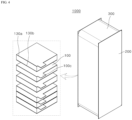
- a vanadium ion battery 1000 in accordance with the present disclosure may be manufactured by stacking a plurality of vanadium ion battery unit cells 100.
- the plurality of vanadium ion battery unit cells 100 may be electrically connected to each other via a busbar 200.
- a protrusion 100c may protrude from each of the metal current collectors 131a and 131b of each of the plurality of vanadium ion battery unit cells 100.
- the respective protrusions 100c of the plurality of vanadium ion battery unit cells 100 may be electrically connected to the bus bar 200.
- the plurality of vanadium ion battery unit cells 100 may be electrically connected to each other via the busbar 200.
- a pair of endplates 300 are respectively disposed on a top and a bottom of a vertical stack of the plurality of vanadium ion battery unit cells 100.
- Each of the end plates 300 is made of a relatively high-strength insulating material or an insulated metal material.
- the bus bar 200 transfers electricity generated from the plurality of unit cells 100 to an external load when the battery is discharged, and transfers external electricity from an external power source to the plurality of unit cells 100 when the battery is charged.
- the bus bar 200 may connect the plurality of unit cells 100 in parallel or series with each other.
- the bus bar 200 may extend so as to cover one side surface of the stack of the plurality of unit cells 100 and one side surface of each of the pair of end plates 300.
- a stirrer was installed in a heating mantle heated to approximately 80°C, and then tertiary distilled water (DI water; DW) prepared using a tertiary ultrapure water device, 98% sulfuric acid (H 2 SO 4 ), and 99.5% oxalic acid as a reducing agent were first added thereto. Then, V 2 O 5 powders were added thereto at a small amount.
- DI water tertiary distilled water
- H 2 SO 4 sulfuric acid
- oxalic acid a reducing agent
- the vanadium was sufficiently dissolved in the sulfuric acid to prepare the vanadium electrolyte with a vanadium ion oxidation number of 4+. Then, the vanadium electrolyte with a vanadium ion oxidation number of 4+ was injected into a VRFB cell (manufactured by Standard Energy) to perform electrochemical reduction. Thus, the reduction occurred in the negative-electrode.
- the vanadium ion electrolyte with vanadium ion oxidation numbers of each of 3.45+, 3.50+, 3.55+, 3.60+, 3.65+, 3.70+, and 3.80+ was prepared.
- V a refers to the amount (ml) of the oxidizing agent consumed when a state in which the vanadium ion oxidation number of vanadium electrolyte exceeds 3.00+ is oxidized to a state in which the vanadium ion oxidation number is 4.00+.
- V b refers to the amount (ml) of the oxidizing agent consumed when a state in which the vanadium ion oxidation number of vanadium electrolyte exceeds 3.00+ is oxidized to a state in which the vanadium ion oxidation number is 5.00+.
- the relative potential value (V) with respect to Ag/AgCl as a reference electrode was measured and a vanadium electrolyte titration graph was plotted based on the measurement. Then, a first-order derivative graph based on the vanadium electrolyte titration graph was plotted. There are two inflection points indicated by peaks on the derivative graph. In this regard, the inflection point means an equivalence point as the point at which the vanadium ion oxidation number of vanadium electrolyte changes.
- V a as the amount (ml) of the oxidizing agent consumed when a state in which the vanadium ion oxidation number of vanadium electrolyte exceeds 3.00+ is oxidized to a state in which the vanadium ion oxidation number is 4.00+
- V b as the amount (ml) of the oxidizing agent consumed when a state in which the vanadium ion oxidation number of vanadium electrolyte exceeds 3.00+ is oxidized to a state in which the vanadium ion oxidation number is 5.00+
- (V b - V a ) means the amount (ml) of the consumed oxidizing agent.
- Potential (V vs Ag/AgCl) refers to the relative potential value (V) relative to Ag/AgCl as the reference electrode.
- ⁇ V/ ⁇ mL means the differentiation of the change in the potential value ( ⁇ V) with respect to the volume of the consumed oxidizing agent ( ⁇ mL).
- V a was 1.6 (ml) and V b was 4.8 (ml).
- V b was 4.8 (ml).
- 5 - ⁇ 4.8 / (4.8 - 1.6) ⁇ 3.5.
- the vanadium ion oxidation number is 3.5+.
- the vanadium ion oxidation number value of each of the vanadium electrolytes as prepared above may be calculated.
- Each of two current collectors was manufactured by stacking a carbon current collector (graphite composite, thickness: 0.2mm) and a metal current collector (aluminum foil, thickness: 0.2mm), and was used as each of the positive-electrode current collector and the negative-electrode current collector.
- a positive ion exchange membrane (thickness: 20 ⁇ m, Standard Energy) as manufactured by coating m-PBI (poly[2,2-(m-phenylene)-5,5bibenzimidazole) on a substrate made of polyethylene (PE) was used as a separator (hereinafter, 'PBI separator').
- a hollow square support frame was provided.
- the positive-electrode current collector and the negative-electrode current collector were respectively disposed on both opposing surfaces of the support frame, and the PBI separator was placed in a hollow space of the support frame so as to be positioned at a center thereof.
- the positive-electrode electrolyte reservoir was defined by the positive-electrode current collector, the separator and the frame.
- he negative-electrode electrolyte reservoir was defined by the negative-electrode current collector, the separator and the frame.
- the communication channel connecting the positive-electrode electrolyte reservoir and the negative-electrode electrolyte reservoir to each other was formed in the support.
- the vanadium ion battery unit cell was manufactured.
- the prepared vanadium ion electrolyte with the vanadium ion oxidation number of 3.50+ in the Preparation Example 1 was added to each of the positive-electrode and the negative-electrode of the vanadium ion battery as manufactured in Preparation Example 2.
- the battery was charged with a constant current of 0.5 C until the voltage reached 1.70 V, and the battery was discharged with a constant current of 0.5 C until the voltage reached 1.10 V.
- the charging and discharging were performed up to 500 cycles under the above charging and discharging conditions.
- the charging energy (wh) was calculated at each of 5, 100, 200, 300, 400, and 500 cycles.
- the charging energy is a value obtained by multiplying the charging voltage measured at each measurement time (sampling time) by the charging current (0.5 C) while the battery is being charged, and adding up the resulting values.
- charging and discharging was performed up to 500 cycles under the above charging and discharging conditions.
- the charging energy (wh) was calculated at each of 5, 100, 200, 300, 400, and 500 cycles.
- the increase/decrease (percentage; %) in the charge energy of the battery including each of the vanadium ion electrolytes with vanadium ion oxidation numbers 3.45+, 3.50+, 3.55+, 3.60+, 3.65+, 3.70+, and 3.80+ relative to the charge energy of the battery including the vanadium ion electrolyte with the vanadium ion oxidation number 3.50+ was calculated based on Equation 2 as set forth below. The calculation result is listed in Table 1 as set forth below.
- E 3.5 refers to the charge energy of the battery including the vanadium ion electrolyte with the vanadium ion oxidation number 3.50+.
- E x refers to the charging energy of the battery including the vanadium ion electrolyte with the vanadium ion oxidation number x other than 3.50+.
- the increase/decrease (%) in the charging energy of the battery including the vanadium electrolyte with the vanadium ion oxidation number exceeding 3.50+ relative to the charge energy of the battery including the vanadium ion electrolyte with the vanadium ion oxidation number 3.50+ becomes the positive value (+) (that is, the increase) starting from 200 cycles of charging and discharging.
- (+) that is, the increase
- the decrease in the charging energy of the battery may be minimized.
- the energy density of the battery including the vanadium electrolyte in accordance with the present disclosure may be significantly improved, and thus, the lifespan and the efficiency of the aqueous electrolyte secondary battery using the vanadium electrolyte may be increased, and the battery size may be further reduced to remove the spatial constraint in terms of installation.
Landscapes
- Chemical & Material Sciences (AREA)
- Chemical Kinetics & Catalysis (AREA)
- Electrochemistry (AREA)
- General Chemical & Material Sciences (AREA)
- Engineering & Computer Science (AREA)
- Manufacturing & Machinery (AREA)
- Life Sciences & Earth Sciences (AREA)
- Sustainable Development (AREA)
- Sustainable Energy (AREA)
- Secondary Cells (AREA)
- Fuel Cell (AREA)
- Battery Electrode And Active Subsutance (AREA)
Applications Claiming Priority (1)
| Application Number | Priority Date | Filing Date | Title |
|---|---|---|---|
| KR1020230086608A KR20250006599A (ko) | 2023-07-04 | 2023-07-04 | 바나듐 이온을 포함하는 전해액 및 이를 포함하는 바나듐 이온 전지 |
Publications (2)
| Publication Number | Publication Date |
|---|---|
| EP4498461A2 true EP4498461A2 (de) | 2025-01-29 |
| EP4498461A3 EP4498461A3 (de) | 2025-03-26 |
Family
ID=91782304
Family Applications (1)
| Application Number | Title | Priority Date | Filing Date |
|---|---|---|---|
| EP24186073.3A Pending EP4498461A3 (de) | 2023-07-04 | 2024-07-02 | Vanadiumionen enthaltender wässriger elektrolyt und vanadiumionenbatterie denselben umfassend |
Country Status (5)
| Country | Link |
|---|---|
| US (1) | US20250015332A1 (de) |
| EP (1) | EP4498461A3 (de) |
| KR (1) | KR20250006599A (de) |
| CN (1) | CN119275382A (de) |
| WO (1) | WO2025009880A1 (de) |
Family Cites Families (8)
| Publication number | Priority date | Publication date | Assignee | Title |
|---|---|---|---|---|
| JP2016189318A (ja) * | 2015-03-30 | 2016-11-04 | 株式会社 東北テクノアーチ | バナジウムレドックス電池 |
| KR102069832B1 (ko) * | 2016-03-10 | 2020-01-23 | 주식회사 엘지화학 | 바나듐 레독스 플로우 전지용 전해액 저장부 및 이를 포함하는 바나듐 레독스 플로우 전지 |
| JP2017224486A (ja) * | 2016-06-15 | 2017-12-21 | 昭和電工株式会社 | レドックスフロー電池 |
| JP6882471B2 (ja) * | 2017-02-10 | 2021-06-02 | エルジー・ケム・リミテッド | フローバッテリの電解液再生方法および再生装置 |
| JP2018160404A (ja) * | 2017-03-23 | 2018-10-11 | ブラザー工業株式会社 | バナジウムレドックス二次電池 |
| KR102519292B1 (ko) * | 2020-12-28 | 2023-04-10 | 한국전자기술연구원 | 바나듐 레독스흐름전지용 전해액 및 그의 제조 방법 |
| KR102707200B1 (ko) * | 2021-04-07 | 2024-09-20 | 솔브레인 주식회사 | 바나듐 전해액 제조방법 및 바나듐 전해액을 포함하는 전지 |
| KR102706591B1 (ko) * | 2021-10-22 | 2024-09-19 | 솔브레인 주식회사 | 바나듐 전해액 제조방법 및 바나듐 전해액을 포함하는 전지 |
-
2023
- 2023-07-04 KR KR1020230086608A patent/KR20250006599A/ko active Pending
-
2024
- 2024-06-19 CN CN202410791706.8A patent/CN119275382A/zh active Pending
- 2024-07-02 EP EP24186073.3A patent/EP4498461A3/de active Pending
- 2024-07-03 WO PCT/KR2024/009383 patent/WO2025009880A1/ko not_active Ceased
- 2024-07-03 US US18/763,017 patent/US20250015332A1/en active Pending
Also Published As
| Publication number | Publication date |
|---|---|
| US20250015332A1 (en) | 2025-01-09 |
| EP4498461A3 (de) | 2025-03-26 |
| KR20250006599A (ko) | 2025-01-13 |
| WO2025009880A1 (ko) | 2025-01-09 |
| CN119275382A (zh) | 2025-01-07 |
Similar Documents
| Publication | Publication Date | Title |
|---|---|---|
| Li et al. | Progress and directions in low-cost redox-flow batteries for large-scale energy storage | |
| CN101185185A (zh) | 二次电池和使用了该二次电池的电源系统、以及电源系统的使用方法 | |
| Park et al. | Development of a redox flow battery with multiple redox couples at both positive and negative electrolytes for high energy density | |
| EP3322011A1 (de) | Elektrode für redox-flussbatterie und redox-flussbatteriesystem | |
| KR101509581B1 (ko) | 방전 특성이 우수한 흐름전지 | |
| KR20260033480A (ko) | 바나듐 이온을 포함하는 산화ㆍ환원 이차전지용 전해액 및 이를 포함하는 이차전지 | |
| Cha et al. | Scalable design of zinc-bromine battery in 3-dimensional honeycomb lattice for superior low-cost battery | |
| EP2800181A1 (de) | Verwendung einer protonenaustauschmembran in einer eisen-chrom-flüssigkeitsbatterie | |
| EP4498461A2 (de) | Vanadiumionen enthaltender wässriger elektrolyt und vanadiumionenbatterie denselben umfassend | |
| Dong et al. | Fabrication of a cost-effective cation exchange membrane for advanced energy storage in a decoupled alkaline-neutral electrolyte system | |
| US11799154B2 (en) | Hybrid energy storage device | |
| WO2025116362A1 (ko) | 바나듐 이온을 포함하는 전해액 및 이를 포함하는 산화ㆍ환원 이차전지 | |
| JP2001118577A (ja) | インドール系高分子を含む電極の製造方法およびそれを用いた二次電池 | |
| EP3627604B1 (de) | Ionenaustauschtrennmembran und flussbatterie damit | |
| Yikai | High-performance iron-chromium redox flow batteries for large-scale energy storage | |
| EP4383383A1 (de) | Verfahren zur nachbehandlung eines polybenzimidazolbasierten separators für sekundärbatterie und nachbehandelter polybenzimidazolbasierter separator | |
| EP2800167A1 (de) | Verwendung einer anionen-protonenaustauschmembrans in einer eisen-chrom-flüssigkeitsbatterie | |
| KR102932610B1 (ko) | 바나듐 수계 레독스 흐름 전지용 양극 전해액의 제조방법 | |
| EP4383437A1 (de) | Separator auf polybenzimidazolbasis für sekundärbatterie und herstellungsverfahren dafür | |
| KR20250136550A (ko) | 바나듐 전해액, 이의 제조방법, 및 이를 포함하는 이차전지 | |
| SHARMA | Enhancing performance of a vanadium redox flow battery by employing modified serpentine channels | |
| Katsuyama et al. | Practical Quinone-Based Organic Supercapacitor> 6 V | |
| JP2023098109A (ja) | レドックスキャパシタおよびレドックスキャパシタシステム | |
| Shin et al. | Developing 50+ Wh static zinc-bromine battery enabled by simple architecture and dual bromine capturing agent strategy | |
| Parasuraman et al. | A review of Innovative Active Materials in Redox Flow batteries: Examining Types and Essential component Requirements |
Legal Events
| Date | Code | Title | Description |
|---|---|---|---|
| PUAI | Public reference made under article 153(3) epc to a published international application that has entered the european phase |
Free format text: ORIGINAL CODE: 0009012 |
|
| STAA | Information on the status of an ep patent application or granted ep patent |
Free format text: STATUS: REQUEST FOR EXAMINATION WAS MADE |
|
| 17P | Request for examination filed |
Effective date: 20240802 |
|
| AK | Designated contracting states |
Kind code of ref document: A2 Designated state(s): AL AT BE BG CH CY CZ DE DK EE ES FI FR GB GR HR HU IE IS IT LI LT LU LV MC ME MK MT NL NO PL PT RO RS SE SI SK SM TR |
|
| PUAL | Search report despatched |
Free format text: ORIGINAL CODE: 0009013 |
|
| AK | Designated contracting states |
Kind code of ref document: A3 Designated state(s): AL AT BE BG CH CY CZ DE DK EE ES FI FR GB GR HR HU IE IS IT LI LT LU LV MC ME MK MT NL NO PL PT RO RS SE SI SK SM TR |
|
| RIC1 | Information provided on ipc code assigned before grant |
Ipc: H01M 50/417 20210101ALI20250214BHEP Ipc: H01M 8/18 20060101AFI20250214BHEP |