EP4497594A2 - Generative fertigung - Google Patents
Generative fertigung Download PDFInfo
- Publication number
- EP4497594A2 EP4497594A2 EP24219072.6A EP24219072A EP4497594A2 EP 4497594 A2 EP4497594 A2 EP 4497594A2 EP 24219072 A EP24219072 A EP 24219072A EP 4497594 A2 EP4497594 A2 EP 4497594A2
- Authority
- EP
- European Patent Office
- Prior art keywords
- module
- processing
- conveyor
- support
- optionally
- Prior art date
- Legal status (The legal status is an assumption and is not a legal conclusion. Google has not performed a legal analysis and makes no representation as to the accuracy of the status listed.)
- Pending
Links
Images
Classifications
-
- B—PERFORMING OPERATIONS; TRANSPORTING
- B29—WORKING OF PLASTICS; WORKING OF SUBSTANCES IN A PLASTIC STATE IN GENERAL
- B29C—SHAPING OR JOINING OF PLASTICS; SHAPING OF MATERIAL IN A PLASTIC STATE, NOT OTHERWISE PROVIDED FOR; AFTER-TREATMENT OF THE SHAPED PRODUCTS, e.g. REPAIRING
- B29C64/00—Additive manufacturing, i.e. manufacturing of three-dimensional [3D] objects by additive deposition, additive agglomeration or additive layering, e.g. by 3D printing, stereolithography or selective laser sintering
- B29C64/30—Auxiliary operations or equipment
- B29C64/35—Cleaning
-
- B—PERFORMING OPERATIONS; TRANSPORTING
- B22—CASTING; POWDER METALLURGY
- B22F—WORKING METALLIC POWDER; MANUFACTURE OF ARTICLES FROM METALLIC POWDER; MAKING METALLIC POWDER; APPARATUS OR DEVICES SPECIALLY ADAPTED FOR METALLIC POWDER
- B22F10/00—Additive manufacturing of workpieces or articles from metallic powder
- B22F10/60—Treatment of workpieces or articles after build-up
- B22F10/66—Treatment of workpieces or articles after build-up by mechanical means
-
- B—PERFORMING OPERATIONS; TRANSPORTING
- B22—CASTING; POWDER METALLURGY
- B22F—WORKING METALLIC POWDER; MANUFACTURE OF ARTICLES FROM METALLIC POWDER; MAKING METALLIC POWDER; APPARATUS OR DEVICES SPECIALLY ADAPTED FOR METALLIC POWDER
- B22F10/00—Additive manufacturing of workpieces or articles from metallic powder
- B22F10/60—Treatment of workpieces or articles after build-up
- B22F10/68—Cleaning or washing
-
- B—PERFORMING OPERATIONS; TRANSPORTING
- B22—CASTING; POWDER METALLURGY
- B22F—WORKING METALLIC POWDER; MANUFACTURE OF ARTICLES FROM METALLIC POWDER; MAKING METALLIC POWDER; APPARATUS OR DEVICES SPECIALLY ADAPTED FOR METALLIC POWDER
- B22F10/00—Additive manufacturing of workpieces or articles from metallic powder
- B22F10/70—Recycling
- B22F10/73—Recycling of powder
-
- B—PERFORMING OPERATIONS; TRANSPORTING
- B22—CASTING; POWDER METALLURGY
- B22F—WORKING METALLIC POWDER; MANUFACTURE OF ARTICLES FROM METALLIC POWDER; MAKING METALLIC POWDER; APPARATUS OR DEVICES SPECIALLY ADAPTED FOR METALLIC POWDER
- B22F12/00—Apparatus or devices specially adapted for additive manufacturing; Auxiliary means for additive manufacturing; Combinations of additive manufacturing apparatus or devices with other processing apparatus or devices
- B22F12/80—Plants, production lines or modules
- B22F12/88—Handling of additively manufactured products, e.g. by robots
-
- B—PERFORMING OPERATIONS; TRANSPORTING
- B22—CASTING; POWDER METALLURGY
- B22F—WORKING METALLIC POWDER; MANUFACTURE OF ARTICLES FROM METALLIC POWDER; MAKING METALLIC POWDER; APPARATUS OR DEVICES SPECIALLY ADAPTED FOR METALLIC POWDER
- B22F12/00—Apparatus or devices specially adapted for additive manufacturing; Auxiliary means for additive manufacturing; Combinations of additive manufacturing apparatus or devices with other processing apparatus or devices
- B22F12/90—Means for process control, e.g. cameras or sensors
-
- B—PERFORMING OPERATIONS; TRANSPORTING
- B29—WORKING OF PLASTICS; WORKING OF SUBSTANCES IN A PLASTIC STATE IN GENERAL
- B29C—SHAPING OR JOINING OF PLASTICS; SHAPING OF MATERIAL IN A PLASTIC STATE, NOT OTHERWISE PROVIDED FOR; AFTER-TREATMENT OF THE SHAPED PRODUCTS, e.g. REPAIRING
- B29C64/00—Additive manufacturing, i.e. manufacturing of three-dimensional [3D] objects by additive deposition, additive agglomeration or additive layering, e.g. by 3D printing, stereolithography or selective laser sintering
- B29C64/10—Processes of additive manufacturing
- B29C64/188—Processes of additive manufacturing involving additional operations performed on the added layers, e.g. smoothing, grinding or thickness control
-
- B—PERFORMING OPERATIONS; TRANSPORTING
- B29—WORKING OF PLASTICS; WORKING OF SUBSTANCES IN A PLASTIC STATE IN GENERAL
- B29C—SHAPING OR JOINING OF PLASTICS; SHAPING OF MATERIAL IN A PLASTIC STATE, NOT OTHERWISE PROVIDED FOR; AFTER-TREATMENT OF THE SHAPED PRODUCTS, e.g. REPAIRING
- B29C64/00—Additive manufacturing, i.e. manufacturing of three-dimensional [3D] objects by additive deposition, additive agglomeration or additive layering, e.g. by 3D printing, stereolithography or selective laser sintering
- B29C64/30—Auxiliary operations or equipment
-
- B—PERFORMING OPERATIONS; TRANSPORTING
- B29—WORKING OF PLASTICS; WORKING OF SUBSTANCES IN A PLASTIC STATE IN GENERAL
- B29C—SHAPING OR JOINING OF PLASTICS; SHAPING OF MATERIAL IN A PLASTIC STATE, NOT OTHERWISE PROVIDED FOR; AFTER-TREATMENT OF THE SHAPED PRODUCTS, e.g. REPAIRING
- B29C64/00—Additive manufacturing, i.e. manufacturing of three-dimensional [3D] objects by additive deposition, additive agglomeration or additive layering, e.g. by 3D printing, stereolithography or selective laser sintering
- B29C64/30—Auxiliary operations or equipment
- B29C64/379—Handling of additively manufactured objects, e.g. using robots
-
- B—PERFORMING OPERATIONS; TRANSPORTING
- B29—WORKING OF PLASTICS; WORKING OF SUBSTANCES IN A PLASTIC STATE IN GENERAL
- B29C—SHAPING OR JOINING OF PLASTICS; SHAPING OF MATERIAL IN A PLASTIC STATE, NOT OTHERWISE PROVIDED FOR; AFTER-TREATMENT OF THE SHAPED PRODUCTS, e.g. REPAIRING
- B29C64/00—Additive manufacturing, i.e. manufacturing of three-dimensional [3D] objects by additive deposition, additive agglomeration or additive layering, e.g. by 3D printing, stereolithography or selective laser sintering
- B29C64/30—Auxiliary operations or equipment
- B29C64/386—Data acquisition or data processing for additive manufacturing
-
- B—PERFORMING OPERATIONS; TRANSPORTING
- B29—WORKING OF PLASTICS; WORKING OF SUBSTANCES IN A PLASTIC STATE IN GENERAL
- B29C—SHAPING OR JOINING OF PLASTICS; SHAPING OF MATERIAL IN A PLASTIC STATE, NOT OTHERWISE PROVIDED FOR; AFTER-TREATMENT OF THE SHAPED PRODUCTS, e.g. REPAIRING
- B29C64/00—Additive manufacturing, i.e. manufacturing of three-dimensional [3D] objects by additive deposition, additive agglomeration or additive layering, e.g. by 3D printing, stereolithography or selective laser sintering
- B29C64/40—Structures for supporting 3D objects during manufacture and intended to be sacrificed after completion thereof
-
- B—PERFORMING OPERATIONS; TRANSPORTING
- B29—WORKING OF PLASTICS; WORKING OF SUBSTANCES IN A PLASTIC STATE IN GENERAL
- B29C—SHAPING OR JOINING OF PLASTICS; SHAPING OF MATERIAL IN A PLASTIC STATE, NOT OTHERWISE PROVIDED FOR; AFTER-TREATMENT OF THE SHAPED PRODUCTS, e.g. REPAIRING
- B29C71/00—After-treatment of articles without altering their shape; Apparatus therefor
- B29C71/0009—After-treatment of articles without altering their shape; Apparatus therefor using liquids, e.g. solvents, swelling agents
-
- B—PERFORMING OPERATIONS; TRANSPORTING
- B33—ADDITIVE MANUFACTURING TECHNOLOGY
- B33Y—ADDITIVE MANUFACTURING, i.e. MANUFACTURING OF THREE-DIMENSIONAL [3-D] OBJECTS BY ADDITIVE DEPOSITION, ADDITIVE AGGLOMERATION OR ADDITIVE LAYERING, e.g. BY 3-D PRINTING, STEREOLITHOGRAPHY OR SELECTIVE LASER SINTERING
- B33Y30/00—Apparatus for additive manufacturing; Details thereof or accessories therefor
-
- B—PERFORMING OPERATIONS; TRANSPORTING
- B33—ADDITIVE MANUFACTURING TECHNOLOGY
- B33Y—ADDITIVE MANUFACTURING, i.e. MANUFACTURING OF THREE-DIMENSIONAL [3-D] OBJECTS BY ADDITIVE DEPOSITION, ADDITIVE AGGLOMERATION OR ADDITIVE LAYERING, e.g. BY 3-D PRINTING, STEREOLITHOGRAPHY OR SELECTIVE LASER SINTERING
- B33Y40/00—Auxiliary operations or equipment, e.g. for material handling
-
- B—PERFORMING OPERATIONS; TRANSPORTING
- B33—ADDITIVE MANUFACTURING TECHNOLOGY
- B33Y—ADDITIVE MANUFACTURING, i.e. MANUFACTURING OF THREE-DIMENSIONAL [3-D] OBJECTS BY ADDITIVE DEPOSITION, ADDITIVE AGGLOMERATION OR ADDITIVE LAYERING, e.g. BY 3-D PRINTING, STEREOLITHOGRAPHY OR SELECTIVE LASER SINTERING
- B33Y40/00—Auxiliary operations or equipment, e.g. for material handling
- B33Y40/20—Post-treatment, e.g. curing, coating or polishing
-
- B—PERFORMING OPERATIONS; TRANSPORTING
- B33—ADDITIVE MANUFACTURING TECHNOLOGY
- B33Y—ADDITIVE MANUFACTURING, i.e. MANUFACTURING OF THREE-DIMENSIONAL [3-D] OBJECTS BY ADDITIVE DEPOSITION, ADDITIVE AGGLOMERATION OR ADDITIVE LAYERING, e.g. BY 3-D PRINTING, STEREOLITHOGRAPHY OR SELECTIVE LASER SINTERING
- B33Y50/00—Data acquisition or data processing for additive manufacturing
-
- B—PERFORMING OPERATIONS; TRANSPORTING
- B22—CASTING; POWDER METALLURGY
- B22F—WORKING METALLIC POWDER; MANUFACTURE OF ARTICLES FROM METALLIC POWDER; MAKING METALLIC POWDER; APPARATUS OR DEVICES SPECIALLY ADAPTED FOR METALLIC POWDER
- B22F10/00—Additive manufacturing of workpieces or articles from metallic powder
- B22F10/20—Direct sintering or melting
- B22F10/28—Powder bed fusion, e.g. selective laser melting [SLM] or electron beam melting [EBM]
-
- B—PERFORMING OPERATIONS; TRANSPORTING
- B29—WORKING OF PLASTICS; WORKING OF SUBSTANCES IN A PLASTIC STATE IN GENERAL
- B29C—SHAPING OR JOINING OF PLASTICS; SHAPING OF MATERIAL IN A PLASTIC STATE, NOT OTHERWISE PROVIDED FOR; AFTER-TREATMENT OF THE SHAPED PRODUCTS, e.g. REPAIRING
- B29C71/00—After-treatment of articles without altering their shape; Apparatus therefor
- B29C71/0009—After-treatment of articles without altering their shape; Apparatus therefor using liquids, e.g. solvents, swelling agents
- B29C2071/0027—Removing undesirable residual components, e.g. solvents, unreacted monomers
-
- B—PERFORMING OPERATIONS; TRANSPORTING
- B29—WORKING OF PLASTICS; WORKING OF SUBSTANCES IN A PLASTIC STATE IN GENERAL
- B29C—SHAPING OR JOINING OF PLASTICS; SHAPING OF MATERIAL IN A PLASTIC STATE, NOT OTHERWISE PROVIDED FOR; AFTER-TREATMENT OF THE SHAPED PRODUCTS, e.g. REPAIRING
- B29C64/00—Additive manufacturing, i.e. manufacturing of three-dimensional [3D] objects by additive deposition, additive agglomeration or additive layering, e.g. by 3D printing, stereolithography or selective laser sintering
- B29C64/10—Processes of additive manufacturing
- B29C64/141—Processes of additive manufacturing using only solid materials
- B29C64/153—Processes of additive manufacturing using only solid materials using layers of powder being selectively joined, e.g. by selective laser sintering or melting
-
- Y—GENERAL TAGGING OF NEW TECHNOLOGICAL DEVELOPMENTS; GENERAL TAGGING OF CROSS-SECTIONAL TECHNOLOGIES SPANNING OVER SEVERAL SECTIONS OF THE IPC; TECHNICAL SUBJECTS COVERED BY FORMER USPC CROSS-REFERENCE ART COLLECTIONS [XRACs] AND DIGESTS
- Y02—TECHNOLOGIES OR APPLICATIONS FOR MITIGATION OR ADAPTATION AGAINST CLIMATE CHANGE
- Y02P—CLIMATE CHANGE MITIGATION TECHNOLOGIES IN THE PRODUCTION OR PROCESSING OF GOODS
- Y02P10/00—Technologies related to metal processing
- Y02P10/25—Process efficiency
Definitions
- a system for automatically processing an additively manufactured part comprising:
- the system of the first aspect of the invention is able to provide a fully automated AM process, thereby improving system throughput.
- the system may comprise a controller configured to modify a processing parameter of a surface finishing process, performed by the processing module, based on the at least one part parameter determined by the inspection module.
- this helps to reduce the likelihood of the inspection module causing damage to the AM part during inspection.
- this helps to reduce wastage when using the system.
- this removes the need for separate measuring and conveyance steps to be performed by the system, and hence overall throughput can be further improved.
- the or a further robotic arm is configured to load and unload the support into and from the processing module.
- this enables AM parts with intricate geometries to be more easily processed.
- the solvent delivery system is configured to controllably heat the solvent to a predetermined solvent temperature to cause the same to vaporise.
- the support removal module may comprise a cooling chamber, and a sensor configured to monitor a temperature of the cooling chamber.
- this helps to reduce cooling times, and hence system processing times, thereby further improving system throughput.
- the controller may be configured to modify a support removal process parameter of a support removal process, performed by the support removal module, based on the at least one part parameter determined by the inspection module.
- this helps to improve the efficiency of support removal and helps to optimise the post-processing steps to improve system throughput.
- the inspection module may be configured to analyse the at least one part parameter after the surface of the part has been processed by the processing module.
- the system may comprise at least one conveyor for locating the part in the processing module.
- the at least one conveyor is configured to move the part from an additive manufacturing apparatus to the support removal module.
- the de-powdering module comprises a fluidising bed reactor.
- this feature enables courser powders to be removed efficiently.
- the de-powdering module is configured to impart ultrasonic waves in a water-surfactant solution.
- the feature enables the removal of finer powders from the AM part.
- this helps to reduce wastage when using the system.
- the support collection module comprises at least one powder recovery module for recovering unprocessed powder removed from the part.
- this enables recycling of powder from the system, thereby further reducing wastage.
- the conveyor belt provides a stable platform to enable processes to be performed whilst the part is being moved, thereby improved throughput of the system.
- the inspection module is configured to determine the at least one part parameter associated with a surface finish of the part whilst the part is being transported on the at least one conveyor.
- this removes the need for separate measuring and conveyance steps to be performed by the system, and hence overall throughput can be further improved.
- the at least one conveyor comprises at least one robotic arm.
- this enables AM parts to be directly placed within each of the respective modules, which helps to further improve system throughput and also provides a space-saving benefit since the need for intricate conveyance paths between modules can be avoided.
- the at least one robotic arm comprises a robotic arm configured to locate the part on a support of the processing module.
- the or a further robotic arm is configured to load and unload the support into and from the processing module.
- this enables parts processed by the system to exhibit skin-touch friendly and low friction characteristics.
- the processing module comprises a solvent delivery system configured to receive a predetermined amount of solvent from the reservoir and introduce the same into the processing chamber.
- this enables AM parts with intricate geometries to be more easily processed.
- the processing module is configured to colour a surface of the part.
- the system comprises at least one additive manufacturing apparatus.
- the support removal module may comprise a cooling chamber, and a sensor configured to monitor a temperature of the cooling chamber.
- the controller may be configured to receive feedback from the sensor and produce an output for adjusting a print procedure of an additive manufacturing apparatus based on the feedback received from the sensor.
- this helps to reduce cooling times, and hence system processing times, thereby further improving system throughput.
- the inspection module may be configured to analyse the at least one part parameter after the surface of the part has been processed by the processing module.
- the controller may be configured to further modify the processing parameter of the surface finishing process, performed by the processing module, based on the at least one part parameter determined by the inspection module after the surface of the part has been processed by the processing module.
- the system since the system is able to automatically analyse and accordingly process AM parts, the overall burden placed on the system operator can be drastically reduced, and hence, product throughput can be drastically improved as a result.
- this helps to reduce the system processing times, thereby further improving system throughput.
- the controller may modify a support removal process parameter of a support removal process, performed by the support removal module, based on the at least one part parameter determined by the inspection module.
- the controller may modify a processing parameter of a surface finishing process for processing a new part, based on the at least one part parameter determined by the inspection module.
- this helps to improve the surface finish quality of parts processed using the system.
- the system automatically adjusts the surface finishing process parameters in response to a part falling below a desired surface finish quality, the amount of waste or "dud" parts produced using the system is also reduced.
- the method comprises, by the support removal module, removing unprocessed support powder surrounding the part.
- the inspection module may determine the at least one part parameter associated with a surface finish of the part whilst the part is being transported on the at least one conveyor.
- a method of automatically processing an additively manufactured part comprising:
- system of the fourth aspect of the invention is able to provide a fully automated AM process, thereby improving system throughput.
- the system since the system is able to automatically analyse and accordingly process AM parts, the overall burden placed on the system operator can be drastically reduced, and hence, product throughput can be drastically improved as a result.
- the method further comprises, by a conveyor, moving the part from an additive manufacturing apparatus to the support removal module.
- the controller may receive feedback from the sensor and adjust a print procedure of an additive manufacturing apparatus based on the feedback received from the sensor.
- this helps to reduce the system processing times, thereby further improving system throughput.
- the controller may modify a support removal process parameter of a support removal process, performed by the support removal module, based on the at least one part parameter determined by the inspection module.
- this helps to improve the efficiency of support removal and helps to optimise the post-processing steps to improve system throughput.
- the controller may modify a processing parameter of a surface finishing process for processing a new part, based on the at least one part parameter determined by the inspection module.
- the inspection module may analyse the at least one part parameter after the surface of the part has been processed by the processing module.
- the controller may modify the processing parameter of the surface finishing process, performed by the processing module, based on the at least one part parameter determined by the inspection module after the surface of the part has been processed by the processing module.
- the controller may modify a processing parameter of the surface finishing process, performed by the processing module, based on the at least one part parameter determined by the inspection module after the surface of the part has been processed by the processing module.
- the system automatically adjusts the surface finishing process parameters in response to a part falling below a desired surface finish quality, the amount of waste or "dud" parts produced using the system is also reduced.
- the method comprises, by the support removal module, removing unprocessed support powder surrounding the part.
- the method comprises, by the inspection module optically determining a surface texture and/or roughness of the part.
- the method comprises, by the processing module, smoothing a surface of the part responsive to the at least one part parameter associated with a surface finish of the part.
- the inspection module may determine the at least one part parameter associated with a surface finish of the part whilst the part is being transported on the at least one conveyor.
- this removes the need for separate measuring and conveyance steps to be performed by the system, and hence overall throughput can be further improved.
- a method of automatically processing an additively manufactured part comprising:
- the system since the system is able to automatically analyse and accordingly process AM parts, the overall burden placed on the system operator can be drastically reduced, and hence, product throughput can be drastically improved as a result.
- the method may comprise, by the controller, modifying a support removal process parameter of a support removal process, performed by a support removal module, based on the at least one part parameter determined by the inspection module, and by the support removal module, removing support material from the part.
- this reduces the amount of processing that is required at the processing module.
- the inspection module may be configured to analyse the at least one part parameter after the surface of the part has been processed by the processing module.
- the controller may be configured to further modify the processing parameter of the surface finishing process, performed by the processing module, based on the at least one part parameter determined by the inspection module after the surface of the part has been processed by the processing module.
- the controller may be configured to further modify a processing parameter of the surface finishing process, performed by the processing module, based on the at least one part parameter determined by the inspection module after the surface of the part has been processed by the processing module.
- this helps to improve the surface finish quality of parts processed using the system.
- the system automatically adjusts the surface finishing process parameters in response to a part falling below a desired surface finish quality, the amount of waste or "dud" parts produced using the system is also reduced.
- the method may comprise, by an additive manufacturing apparatus, manufacturing a part.
- the method may comprise, by a cooling chamber, cooling the manufactured part, by a sensor, monitoring a temperature of the cooling chamber, and, by the controller, receiving feedback from the sensor and producing an output for adjusting a print procedure of an additive manufacturing apparatus based on the feedback received from the sensor.
- this helps to reduce cooling times, and hence system processing times, thereby further improving system throughput.
- the method comprises, by a conveyor, moving the part from an additive manufacturing apparatus to the support removal module.
- the method comprises, by the support removal module, removing unprocessed support powder surrounding the part.
- the method comprises, by the inspection module optically determining a surface texture and/or roughness of the part.
- the method comprises, by the processing module, smoothing a surface of the part responsive to the at least one part parameter associated with a surface finish of the part.
- the method may comprise, by a controller, modifying a processing parameter of a surface finishing process for processing a new part, based on the at least one part parameter determined by the inspection module.
- this helps to efficiently ensure than any future parts manufactured by the system meet the required quality standards, without any further operator input being required.
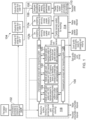
- a digital manufacturing system 100 includes a controller 102, e.g. a computer, connected by wire or wirelessly to one or more 3D printers 104 for additively manufacturing at least one AM part.
- the controller 102 is configured to receive data, for example CAD data, relating to the 3D part/s to be printed.
- the data e.g. an STL file including part requirements (e.g. dimensional tolerances, geometrical tolerances, surface texture, surface roughness, and colour), is sent to the 3D printer/s via suitable 3D printer software.
- the 3D printer/s 104 may be the same or a combination of different AM printers from the same or different manufacturers each suitable for printing a 3D part using an AM technique, including Selective Laser Sintering (SLS), Multi Jet Fusion (MJF), High Speed Sintering (HSS), Fused Filament Fabrication or Fused Deposition Modelling (FFF/FDM) or Stereolithography (SLA), or the like.
- SLS Selective Laser Sintering
- MJF Multi Jet Fusion
- HSS High Speed Sintering
- FFF/FDM Fused Filament Fabrication or Fused Deposition Modelling
- SLA Stereolithography
- a robotic system 106 is configured to retrieve one or more 3D printed powder blocks, including one or more AM parts therein, from at least one of the printers 104 and transport them to a support removal module 108.
- the support removal module 108 includes a cooling chamber to cool down an as-printed powder cake of AM parts to a temperature suitable for de-powdering.
- the cooling chamber is aptly configured to control the temperature of the cooling chamber surfaces and interior, and aptly includes at least one thermocouple to monitor the ambient temperature within the cooling chamber.
- a pump may be provided to flood the cooling chamber with an inert gas and a vacuum pump may be provided to remove the inert gas from the cooling chamber.
- At least one heat exchanger may be provided to control the temperature of the cooling chamber.
- the as-printed cake including one or more AM parts may be located in the cooling chamber by a robotic actuator of the robotic system 106, e.g. transported automatically and in a controlled manner from a printing/processing chamber of one of the 3D printers 104 to the cooling chamber.
- the support removal module 108 is configured to remove unprocessed powder surrounding the AM part.
- the module may include a de-powdering chamber which is separate to the cooling chamber or the cooling chamber may be configured to be a de-powdering chamber.
- the de-powdering chamber may aptly include a fluidising bed reactor to remove the powder from the AM part by fluidising loose powder and separating it from the solid AM part.
- the fluidising bed reactor comprises a gas inlet, distributor, and gas outlet.
- the de-powdering chamber may comprise a sieve shaker with an ultrasonic vibrating device to vigorously agitate the AM part/s and remove the bulk of un-sintered powder therefrom.
- the sieve may comprise a stainless-steel mesh with a pore size larger than the diameter of the polymer powder particles, and the vibrating device may comprise an array of ultrasonic transducers.
- the removed un-sintered powder may be collected beneath the fluidisation chamber or sieve shaker in a powder collection chamber of a powder recovery module 110.
- the AM part/s may be automatically transferred by the or a further robotic system to one or more additional de-powdering chambers 112a, 112b for further de-powdering, e.g. medium and fine grade de-powdering and/or half-sintered powder which is unsuitable for recycling.
- the additional de-powdering chamber/s 112 may also include a sieve shaker and ultrasonic vibrating device or may include other suitable de-powdering means such as a de-powdering module configured to impart ultrasonic waves in a water-surfactant solution, such as described in GB1808639.7 by Additive Manufacturing Technologies Limited.
- the recovered powder can be disposed via the same powder recovery module 110 or a different powder recovery module/s 114.
- the system 100 includes at least one first conveyor 116, e.g. belt, for transporting 'unprocessed' AM parts from the de-powdering modules 108,112a, 112b towards a surface finishing module/apparatus 118.
- first conveyor 116 e.g. belt
- An optical inspection module 120 is also provided to identify a surface texture of each AM part on the first conveyor 116, corresponding to a surface finish quality of the part before post-processing.
- the inspection module 120 is also configured to provide data relating to the surface finish quality of the part to the controller 102.
- the controller 102 is configured to then operate the surface finishing module/apparatus 118 accordingly to achieve a desired surface texture.
- a suitable inspection module 120 is described in GB1806168.9 by Additive Manufacturing Technologies Limited.
- the controller 102 may be configured to modify parameters of the de-powdering process, performed by the de-powdering module 108, based on the surface texture identified by the optical inspection module 120. This helps to remove the supports of the part in a more efficient way to ensure as much of the support as possible is removed. Also it helps to reduce the amount of surface processing that is required by the surface finishing module 118, thereby helping to further improve product throughput.
- the system 100 includes at least one first robotic arm 122 with object recognition/vision capability for automatically identifying an AM part/s on the first conveyor 116 and locating/retrieving the same onto/from a rack/hanger of the surface finishing module/apparatus 118.
- At least one further robotic arm 124 may be provided with object recognition/vision capability for automatically locating/retrieving each rack/hanger into/from the surface finishing module/apparatus 118.
- the first and further robotic arms 122,124 may be provided by the same unit.
- the surface finishing module/apparatus 118 is aptly configured to automatically smooth an AM polymer part to a desired surface roughness by using a solvent-based method, such as described in GB1721485.9 by Additive Manufacturing Technologies Limited.
- the surface finishing module/apparatus 118 is also aptly configured to automatically colour an AM polymer part using a suitable colouring method, such as described in GB1812476.8 by Additive Manufacturing Technologies Limited.
- the AM part/s is removed from the surface finishing module/apparatus 118 by the robotic arm/s 122,124 and placed on a second conveyor 126, e.g. belt.
- the optical inspection module 120 is configured to re-identify the surface texture of the AM part, after it has been processed by the surface finishing module 118, to determine the surface finish quality of the processed AM part/s. If the AM part fails to meet a desired surface finish quality, the part is reprocessed or discarded as required. The empty racks are retrieved from the second conveyor. Post-processed AM parts which meet the desired surface finish quality (i.e. a desired smoothness and/or colour) are removed from the second conveyor by the robotic arm/s for packaging and shipping.
- desired surface finish quality i.e. a desired smoothness and/or colour
- the optical inspection module 120 is configured to feed back the surface finish quality of the identified post-processed part to the controller 102.
- the controller 102 is configured to adjust parameters of the surface finishing process, performed by the surface finishing module 118, accordingly to help ensure that any further parts being manufactured and post-processed by the system achieve the desired surface finish quality.
- the individual processes and modules of the system 100 are linked and selectively controlled by a software application executed by the controller 102 which automatically manages the AM process and links the system 100 to the 3D printers and the initial CAD stage.
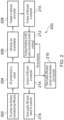
- a digital manufacturing method 200 according to certain embodiments of the present invention will now be described with reference to Figure 2 .
- a powder cake/block containing one or more AM parts has been manufactured using one of the 3D printers 104.
- the AM block is transferred by the robotic system 106, e.g. a robotic arm, to the cooling and de-powdering module 106 and cooled to a desired temperature for de-powdering.
- the AM block is cooled to around 100°C or less, it is transferred to the de-powdering module 108 by the robotic system 106.
- the controller 102 is configured to the adjust the print procedures of the 3D printers 104 based on the temperature of the cooling chamber to allow for more rapid cooling of the chamber and hence improved processing times.
- the AM block is broken down and the AM parts within the block are de-powdered by the de-powdering module/s.
- a support removing module may be provided for respective support removal of FDM or SLA parts, and optionally curing of SLA parts.
- the support removing module may in addition to or as an alternative to the de-powdering module.
- the surface of the de-powdered AM part/s is analysed using the non-contact optical inspection module 120.
- the inspection module 120 analyses the surface texture, colour, and part geometry and sends the information to the controller 102 which in turn sends appropriate parameters to the surface finishing module 118.
- the controller 102 may further modify parameters of the de-powdering process, performed by the de-powdering module 108, based on the analysis of the non-contact optical inspection module 120. This helps to improve the quality of support removing and reduce the amount of post-processing that is required at the surface finishing module 118.
- the AM parts are then transferred further along the first conveyor 116 towards the first robotic arm 122 which identifies the parts and hangs them onto a rack/hanger/frame support for loading into the surface finishing module 118.
- the AM parts undergo the desired surface processing, including smoothing and/or colouring before being removed from the surface finishing module 118 by the second robotic arm 124 and placed on the second conveyor 126.
- the processed AM parts are removed from the rack/hanger by the first robotic arm 122.
- the surface of the processed AM parts is re-analysed by the non-contact optical inspection module 120.
- the inspection module 120 feeds back the determined surface quality to the controller 102. Any AM parts that do not meet a predetermined quality criteria and which can no longer be improved via reprocessing are discarded for recycling.
- the controller 102 then adjusts parameters of the surface finishing process, performed by the surface finishing module 118, based upon the inspection module 120 feedback so that any future parts processed by the system are able to meet the desired surface quality criteria.
- the finished and acceptable AM parts are manually or robotically removed from the second conveyor to be packaged/shipped.
- the afore-described system and method are therefore able to digitally post-process and handling unique 3D printed components, without requiring burdensome operator input for the processing of each part, thereby removing the operator from the process.
- the system can generate special sets of parameters for each unique 3D printed part for each post-processing step, without any need of human supervision, to help efficiently ensure that any future parts manufactured using the system meet desired surface quality criteria.
- Certain embodiments of the present invention therefore provide a system and method for fully automating the AM process from initial part design to inspection of a post-processed AM part.
- the present invention provides a flexible and customisable modular end-to-end automated post-processing manufacturing system and method for fully automating the AM process which can be used for many different consumer and industrial applications.
- the support removal process and processing step may be performed as a single step e.g. by the system including a single processing module for processing a surface of the part responsive to the at least one part parameter and a controller configured to modify a processing parameter of a surface finishing process, performed by the processing module, based on the at least one part parameter determined by the inspection module.
Landscapes
- Engineering & Computer Science (AREA)
- Chemical & Material Sciences (AREA)
- Materials Engineering (AREA)
- Manufacturing & Machinery (AREA)
- Physics & Mathematics (AREA)
- Mechanical Engineering (AREA)
- Optics & Photonics (AREA)
- Robotics (AREA)
- Sustainable Development (AREA)
- Analytical Chemistry (AREA)
- Automation & Control Theory (AREA)
- Life Sciences & Earth Sciences (AREA)
- Laser Beam Processing (AREA)
Applications Claiming Priority (3)
| Application Number | Priority Date | Filing Date | Title |
|---|---|---|---|
| GB201816261 | 2018-10-05 | ||
| EP19787387.0A EP3860829B1 (de) | 2018-10-05 | 2019-10-04 | Generative fertigung |
| PCT/GB2019/052815 WO2020070518A1 (en) | 2018-10-05 | 2019-10-04 | Additive manufacturing |
Related Parent Applications (2)
| Application Number | Title | Priority Date | Filing Date |
|---|---|---|---|
| EP19787387.0A Division EP3860829B1 (de) | 2018-10-05 | 2019-10-04 | Generative fertigung |
| EP19787387.0A Division-Into EP3860829B1 (de) | 2018-10-05 | 2019-10-04 | Generative fertigung |
Publications (2)
| Publication Number | Publication Date |
|---|---|
| EP4497594A2 true EP4497594A2 (de) | 2025-01-29 |
| EP4497594A3 EP4497594A3 (de) | 2025-07-30 |
Family
ID=68242739
Family Applications (2)
| Application Number | Title | Priority Date | Filing Date |
|---|---|---|---|
| EP24219072.6A Pending EP4497594A3 (de) | 2018-10-05 | 2019-10-04 | Generative fertigung |
| EP19787387.0A Active EP3860829B1 (de) | 2018-10-05 | 2019-10-04 | Generative fertigung |
Family Applications After (1)
| Application Number | Title | Priority Date | Filing Date |
|---|---|---|---|
| EP19787387.0A Active EP3860829B1 (de) | 2018-10-05 | 2019-10-04 | Generative fertigung |
Country Status (7)
| Country | Link |
|---|---|
| US (1) | US20210387415A1 (de) |
| EP (2) | EP4497594A3 (de) |
| CN (1) | CN112996651A (de) |
| DE (1) | DE19787387T1 (de) |
| DK (1) | DK3860829T5 (de) |
| GB (2) | GB2583430B (de) |
| WO (1) | WO2020070518A1 (de) |
Families Citing this family (7)
| Publication number | Priority date | Publication date | Assignee | Title |
|---|---|---|---|---|
| KR102616985B1 (ko) * | 2018-03-10 | 2023-12-27 | 포스트프로세스 테크놀로지스 인코포레이티드 | 적층식으로 제조된 물체의 제작 시스템 및 방법 |
| US11946141B2 (en) | 2019-09-12 | 2024-04-02 | Hewlett-Packard Development Company, L.P. | Automated conveyance of articles in chemical vapor processing |
| US11718033B2 (en) * | 2019-11-15 | 2023-08-08 | Desktop Metal, Inc. | Systems and methods for powder recovery, cleaning, and blending, for additive manufacturing |
| WO2021116729A1 (en) * | 2019-12-10 | 2021-06-17 | Siemens Industry Software Ltd. | Method and system for determining an amount of printing material powder in a multi-object build job |
| EP3960338A1 (de) * | 2020-09-01 | 2022-03-02 | Koninklijke Philips N.V. | Nachbearbeitung eines objekts, das durch direktes metall-lasersintern hergestellt wurde |
| WO2022139840A1 (en) * | 2020-12-23 | 2022-06-30 | Hewlett-Packard Development Company, L.P. | Identification of objects |
| EP4366939A1 (de) * | 2021-07-09 | 2024-05-15 | Reset Technology Corporation | Netzwerkaktivierte 3d-druck- und automatisierte verarbeitungstechniken für orale vorrichtungen |
Family Cites Families (20)
| Publication number | Priority date | Publication date | Assignee | Title |
|---|---|---|---|---|
| DE19937260B4 (de) * | 1999-08-06 | 2006-07-27 | Eos Gmbh Electro Optical Systems | Verfahren und Vorrichtung zum Herstellen eines dreidimensionalen Objekts |
| US8765045B2 (en) * | 2007-01-12 | 2014-07-01 | Stratasys, Inc. | Surface-treatment method for rapid-manufactured three-dimensional objects |
| US7777155B2 (en) * | 2007-02-21 | 2010-08-17 | United Technologies Corporation | System and method for an integrated additive manufacturing cell for complex components |
| US8459280B2 (en) * | 2011-09-23 | 2013-06-11 | Stratasys, Inc. | Support structure removal system |
| US8888480B2 (en) * | 2012-09-05 | 2014-11-18 | Aprecia Pharmaceuticals Company | Three-dimensional printing system and equipment assembly |
| US9751260B2 (en) * | 2013-07-24 | 2017-09-05 | The Boeing Company | Additive-manufacturing systems, apparatuses and methods |
| US20170341183A1 (en) * | 2014-12-12 | 2017-11-30 | Velo3D, Inc. | Control Systems for Three-Dimensional Printing |
| US10226817B2 (en) * | 2015-01-13 | 2019-03-12 | Sigma Labs, Inc. | Material qualification system and methodology |
| JP6776056B2 (ja) * | 2015-08-31 | 2020-10-28 | キヤノン株式会社 | 造形装置及び造形方法 |
| US10391712B2 (en) * | 2016-02-18 | 2019-08-27 | Xerox Corporation | System and method for automated cleaning of parts produced by a three-dimensional object printer |
| US10596754B2 (en) * | 2016-06-03 | 2020-03-24 | The Boeing Company | Real time inspection and correction techniques for direct writing systems |
| CN106270514A (zh) * | 2016-09-23 | 2017-01-04 | 江西洪都航空工业集团有限责任公司 | 一种Ti6Al4V粉末3D打印增材制造工艺 |
| DE112017005132T5 (de) * | 2016-10-10 | 2019-09-26 | Postprocess Technologies Inc. | Selbstmodifizierendes bewegungsverfahren und vorrichtung zur trägerentfernung bei der additiven herstellung und 3d-druckmaterial |
| US20180141119A1 (en) * | 2016-11-23 | 2018-05-24 | Jun Shu | Metal Flake Composites and Methods of Making and Using the Same for Additive Manufacturing |
| GB201700346D0 (en) * | 2017-01-09 | 2017-02-22 | Additive Mfg Tech Ltd | Improvements to additive manufacturing |
| DE102017202088A1 (de) * | 2017-02-09 | 2018-08-09 | Siemens Aktiengesellschaft | Verfahren zum pulverbettbasierten additiven Herstellen eines Werkstücks, Computerprogrammprodukt zum Ausführen dieses Verfahrens, vorzugsweise auf einem Datenträger, und Maschine zum pulverbettbasierten additiven Herstellen |
| EP3589471B1 (de) * | 2017-02-28 | 2023-05-17 | Hewlett-Packard Development Company, L.P. | Strahlungsmengenbestimmung für ein bestimmtes oberflächeneigenschaftsniveau |
| WO2018200383A1 (en) * | 2017-04-24 | 2018-11-01 | Desktop Metal, Inc. | Three-dimensional (3d) printing using measured processing effects with feedback to processing parameters |
| GB2572953B8 (en) * | 2018-04-16 | 2021-02-17 | Additive Manufacturing Tech Ltd | Surface Analysis |
| GB2571804A (en) * | 2018-07-31 | 2019-09-11 | Additive Manufacturing Tech Ltd | Additive manufacturing |
-
2019
- 2019-10-04 EP EP24219072.6A patent/EP4497594A3/de active Pending
- 2019-10-04 CN CN201980074232.2A patent/CN112996651A/zh active Pending
- 2019-10-04 DK DK19787387.0T patent/DK3860829T5/da active
- 2019-10-04 GB GB2011341.1A patent/GB2583430B/en active Active
- 2019-10-04 US US17/282,713 patent/US20210387415A1/en active Pending
- 2019-10-04 GB GB1914397.3A patent/GB2579276B/en active Active
- 2019-10-04 EP EP19787387.0A patent/EP3860829B1/de active Active
- 2019-10-04 WO PCT/GB2019/052815 patent/WO2020070518A1/en not_active Ceased
- 2019-10-04 DE DE19787387.0T patent/DE19787387T1/de active Pending
Also Published As
| Publication number | Publication date |
|---|---|
| GB201914397D0 (en) | 2019-11-20 |
| WO2020070518A1 (en) | 2020-04-09 |
| GB2579276A (en) | 2020-06-17 |
| EP4497594A3 (de) | 2025-07-30 |
| GB2579276B (en) | 2020-12-02 |
| US20210387415A1 (en) | 2021-12-16 |
| DE19787387T1 (de) | 2021-11-11 |
| CN112996651A (zh) | 2021-06-18 |
| DK3860829T3 (da) | 2025-03-03 |
| GB2583430B (en) | 2021-11-10 |
| EP3860829A1 (de) | 2021-08-11 |
| EP3860829B1 (de) | 2025-01-22 |
| DK3860829T5 (da) | 2025-03-24 |
| GB202011341D0 (en) | 2020-09-02 |
| GB2583430A (en) | 2020-10-28 |
Similar Documents
| Publication | Publication Date | Title |
|---|---|---|
| EP3860829B1 (de) | Generative fertigung | |
| US20240190096A1 (en) | Method and apparatus for automatically manufacturing shoe soles | |
| CN109834712B (zh) | 一种机器人抓取顺序优化的方法 | |
| CN107107468B (zh) | 用于同时且以生成的方式制造多个零件的生产设备 | |
| US11691339B2 (en) | Product framing | |
| US20170225198A1 (en) | Method and apparatus for treatment of contaminated metal powder | |
| US9364897B2 (en) | Method and apparatus for reconditioning oxidized powder | |
| WO2018194647A1 (en) | Build material reclaim in additive manufacturing | |
| US20200198228A1 (en) | Systems and methods for electrophotography-based additive manufacturing of parts utilizing multiple printing paths | |
| WO2020222822A1 (en) | Material removal system | |
| US20210299753A1 (en) | Method for the Additive Manufacture of a Plurality of Motor Vehicle Components | |
| AU2022204785A1 (en) | Closed-loop automatic setting adjustments for additive manufacturing based on layer imaging | |
| CN117136133A (zh) | 生产三维对象的方法、控制系统和增材制造设备 | |
| US12059727B1 (en) | Systems and methods for automated depowdering and transfer of additively manufactured objects | |
| EP4182151B1 (de) | Verfahren zur behandlung von kuchen aus generativen fertigungsverfahren | |
| CN114126787A (zh) | 用于生产多材料工件的方法和装置 | |
| US11981083B2 (en) | Production line and 3D-printing device | |
| Kumari et al. | Revaluation of 3D Printing: Technology and Process Parameters | |
| US20230278290A1 (en) | Generation of print configuration data for three dimensional printers | |
| CN115016400A (zh) | 自动化生产站和相关方法 | |
| Gupta | Rapid Prototyping Techniques for Heterogeneous object modeling | |
| KR20230084966A (ko) | 복합 분말 적층 제조 시스템 및 복합 분말 적층 제조 방법 | |
| WO2022081146A1 (en) | Tool station with cleaning attachments | |
| Villarreal et al. | 5668452 Magnetic sensing robotics for automated semiconductor wafer processing systems |
Legal Events
| Date | Code | Title | Description |
|---|---|---|---|
| PUAI | Public reference made under article 153(3) epc to a published international application that has entered the european phase |
Free format text: ORIGINAL CODE: 0009012 |
|
| STAA | Information on the status of an ep patent application or granted ep patent |
Free format text: STATUS: THE APPLICATION HAS BEEN PUBLISHED |
|
| AC | Divisional application: reference to earlier application |
Ref document number: 3860829 Country of ref document: EP Kind code of ref document: P |
|
| AK | Designated contracting states |
Kind code of ref document: A2 Designated state(s): AL AT BE BG CH CY CZ DE DK EE ES FI FR GB GR HR HU IE IS IT LI LT LU LV MC MK MT NL NO PL PT RO RS SE SI SK SM TR |
|
| REG | Reference to a national code |
Ref country code: DE Ref legal event code: R079 Free format text: PREVIOUS MAIN CLASS: B33Y0040200000 Ipc: B29C0064300000 |
|
| PUAL | Search report despatched |
Free format text: ORIGINAL CODE: 0009013 |
|
| AK | Designated contracting states |
Kind code of ref document: A3 Designated state(s): AL AT BE BG CH CY CZ DE DK EE ES FI FR GB GR HR HU IE IS IT LI LT LU LV MC MK MT NL NO PL PT RO RS SE SI SK SM TR |
|
| RIC1 | Information provided on ipc code assigned before grant |
Ipc: B29C 64/30 20170101AFI20250623BHEP Ipc: B29C 64/393 20170101ALI20250623BHEP Ipc: B29C 64/40 20170101ALI20250623BHEP Ipc: B29C 64/379 20170101ALI20250623BHEP Ipc: B33Y 30/00 20150101ALI20250623BHEP Ipc: B33Y 40/00 20200101ALI20250623BHEP Ipc: B33Y 40/20 20200101ALI20250623BHEP Ipc: B22F 10/40 20210101ALI20250623BHEP Ipc: B22F 10/60 20210101ALI20250623BHEP Ipc: B22F 10/70 20210101ALI20250623BHEP |