EP4497490A2 - Atmosphärisches kohlendioxidsorptionsmittel - Google Patents
Atmosphärisches kohlendioxidsorptionsmittel Download PDFInfo
- Publication number
- EP4497490A2 EP4497490A2 EP24183895.2A EP24183895A EP4497490A2 EP 4497490 A2 EP4497490 A2 EP 4497490A2 EP 24183895 A EP24183895 A EP 24183895A EP 4497490 A2 EP4497490 A2 EP 4497490A2
- Authority
- EP
- European Patent Office
- Prior art keywords
- sorbent
- nanopores
- dac
- nanoparticles
- channels
- Prior art date
- Legal status (The legal status is an assumption and is not a legal conclusion. Google has not performed a legal analysis and makes no representation as to the accuracy of the status listed.)
- Pending
Links
Images


Classifications
-
- B—PERFORMING OPERATIONS; TRANSPORTING
- B01—PHYSICAL OR CHEMICAL PROCESSES OR APPARATUS IN GENERAL
- B01D—SEPARATION
- B01D53/00—Separation of gases or vapours; Recovering vapours of volatile solvents from gases; Chemical or biological purification of waste gases, e.g. engine exhaust gases, smoke, fumes, flue gases, aerosols
- B01D53/02—Separation of gases or vapours; Recovering vapours of volatile solvents from gases; Chemical or biological purification of waste gases, e.g. engine exhaust gases, smoke, fumes, flue gases, aerosols by adsorption, e.g. preparative gas chromatography
- B01D53/04—Separation of gases or vapours; Recovering vapours of volatile solvents from gases; Chemical or biological purification of waste gases, e.g. engine exhaust gases, smoke, fumes, flue gases, aerosols by adsorption, e.g. preparative gas chromatography with stationary adsorbents
-
- B—PERFORMING OPERATIONS; TRANSPORTING
- B01—PHYSICAL OR CHEMICAL PROCESSES OR APPARATUS IN GENERAL
- B01D—SEPARATION
- B01D53/00—Separation of gases or vapours; Recovering vapours of volatile solvents from gases; Chemical or biological purification of waste gases, e.g. engine exhaust gases, smoke, fumes, flue gases, aerosols
- B01D53/34—Chemical or biological purification of waste gases
- B01D53/46—Removing components of defined structure
- B01D53/62—Carbon oxides
-
- B—PERFORMING OPERATIONS; TRANSPORTING
- B01—PHYSICAL OR CHEMICAL PROCESSES OR APPARATUS IN GENERAL
- B01D—SEPARATION
- B01D53/00—Separation of gases or vapours; Recovering vapours of volatile solvents from gases; Chemical or biological purification of waste gases, e.g. engine exhaust gases, smoke, fumes, flue gases, aerosols
- B01D53/34—Chemical or biological purification of waste gases
- B01D53/74—General processes for purification of waste gases; Apparatus or devices specially adapted therefor
- B01D53/81—Solid phase processes
- B01D53/82—Solid phase processes with stationary reactants
-
- B—PERFORMING OPERATIONS; TRANSPORTING
- B01—PHYSICAL OR CHEMICAL PROCESSES OR APPARATUS IN GENERAL
- B01J—CHEMICAL OR PHYSICAL PROCESSES, e.g. CATALYSIS OR COLLOID CHEMISTRY; THEIR RELEVANT APPARATUS
- B01J20/00—Solid sorbent compositions or filter aid compositions; Sorbents for chromatography; Processes for preparing, regenerating or reactivating thereof
- B01J20/02—Solid sorbent compositions or filter aid compositions; Sorbents for chromatography; Processes for preparing, regenerating or reactivating thereof comprising inorganic material
- B01J20/10—Solid sorbent compositions or filter aid compositions; Sorbents for chromatography; Processes for preparing, regenerating or reactivating thereof comprising inorganic material comprising silica or silicate
- B01J20/103—Solid sorbent compositions or filter aid compositions; Sorbents for chromatography; Processes for preparing, regenerating or reactivating thereof comprising inorganic material comprising silica or silicate comprising silica
-
- B—PERFORMING OPERATIONS; TRANSPORTING
- B01—PHYSICAL OR CHEMICAL PROCESSES OR APPARATUS IN GENERAL
- B01J—CHEMICAL OR PHYSICAL PROCESSES, e.g. CATALYSIS OR COLLOID CHEMISTRY; THEIR RELEVANT APPARATUS
- B01J20/00—Solid sorbent compositions or filter aid compositions; Sorbents for chromatography; Processes for preparing, regenerating or reactivating thereof
- B01J20/28—Solid sorbent compositions or filter aid compositions; Sorbents for chromatography; Processes for preparing, regenerating or reactivating thereof characterised by their form or physical properties
- B01J20/28002—Solid sorbent compositions or filter aid compositions; Sorbents for chromatography; Processes for preparing, regenerating or reactivating thereof characterised by their form or physical properties characterised by their physical properties
- B01J20/28004—Sorbent size or size distribution, e.g. particle size
- B01J20/28007—Sorbent size or size distribution, e.g. particle size with size in the range 1-100 nanometers, e.g. nanosized particles, nanofibers, nanotubes, nanowires or the like
-
- B—PERFORMING OPERATIONS; TRANSPORTING
- B01—PHYSICAL OR CHEMICAL PROCESSES OR APPARATUS IN GENERAL
- B01J—CHEMICAL OR PHYSICAL PROCESSES, e.g. CATALYSIS OR COLLOID CHEMISTRY; THEIR RELEVANT APPARATUS
- B01J20/00—Solid sorbent compositions or filter aid compositions; Sorbents for chromatography; Processes for preparing, regenerating or reactivating thereof
- B01J20/28—Solid sorbent compositions or filter aid compositions; Sorbents for chromatography; Processes for preparing, regenerating or reactivating thereof characterised by their form or physical properties
- B01J20/28014—Solid sorbent compositions or filter aid compositions; Sorbents for chromatography; Processes for preparing, regenerating or reactivating thereof characterised by their form or physical properties characterised by their form
- B01J20/28026—Particles within, immobilised, dispersed, entrapped in or on a matrix, e.g. a resin
-
- B—PERFORMING OPERATIONS; TRANSPORTING
- B01—PHYSICAL OR CHEMICAL PROCESSES OR APPARATUS IN GENERAL
- B01J—CHEMICAL OR PHYSICAL PROCESSES, e.g. CATALYSIS OR COLLOID CHEMISTRY; THEIR RELEVANT APPARATUS
- B01J20/00—Solid sorbent compositions or filter aid compositions; Sorbents for chromatography; Processes for preparing, regenerating or reactivating thereof
- B01J20/28—Solid sorbent compositions or filter aid compositions; Sorbents for chromatography; Processes for preparing, regenerating or reactivating thereof characterised by their form or physical properties
- B01J20/28054—Solid sorbent compositions or filter aid compositions; Sorbents for chromatography; Processes for preparing, regenerating or reactivating thereof characterised by their form or physical properties characterised by their surface properties or porosity
- B01J20/28078—Pore diameter
- B01J20/2808—Pore diameter being less than 2 nm, i.e. micropores or nanopores
-
- B—PERFORMING OPERATIONS; TRANSPORTING
- B01—PHYSICAL OR CHEMICAL PROCESSES OR APPARATUS IN GENERAL
- B01J—CHEMICAL OR PHYSICAL PROCESSES, e.g. CATALYSIS OR COLLOID CHEMISTRY; THEIR RELEVANT APPARATUS
- B01J20/00—Solid sorbent compositions or filter aid compositions; Sorbents for chromatography; Processes for preparing, regenerating or reactivating thereof
- B01J20/28—Solid sorbent compositions or filter aid compositions; Sorbents for chromatography; Processes for preparing, regenerating or reactivating thereof characterised by their form or physical properties
- B01J20/28054—Solid sorbent compositions or filter aid compositions; Sorbents for chromatography; Processes for preparing, regenerating or reactivating thereof characterised by their form or physical properties characterised by their surface properties or porosity
- B01J20/28078—Pore diameter
- B01J20/28083—Pore diameter being in the range 2-50 nm, i.e. mesopores
-
- B—PERFORMING OPERATIONS; TRANSPORTING
- B01—PHYSICAL OR CHEMICAL PROCESSES OR APPARATUS IN GENERAL
- B01J—CHEMICAL OR PHYSICAL PROCESSES, e.g. CATALYSIS OR COLLOID CHEMISTRY; THEIR RELEVANT APPARATUS
- B01J20/00—Solid sorbent compositions or filter aid compositions; Sorbents for chromatography; Processes for preparing, regenerating or reactivating thereof
- B01J20/28—Solid sorbent compositions or filter aid compositions; Sorbents for chromatography; Processes for preparing, regenerating or reactivating thereof characterised by their form or physical properties
- B01J20/28054—Solid sorbent compositions or filter aid compositions; Sorbents for chromatography; Processes for preparing, regenerating or reactivating thereof characterised by their form or physical properties characterised by their surface properties or porosity
- B01J20/28078—Pore diameter
- B01J20/28085—Pore diameter being more than 50 nm, i.e. macropores
-
- B—PERFORMING OPERATIONS; TRANSPORTING
- B01—PHYSICAL OR CHEMICAL PROCESSES OR APPARATUS IN GENERAL
- B01J—CHEMICAL OR PHYSICAL PROCESSES, e.g. CATALYSIS OR COLLOID CHEMISTRY; THEIR RELEVANT APPARATUS
- B01J20/00—Solid sorbent compositions or filter aid compositions; Sorbents for chromatography; Processes for preparing, regenerating or reactivating thereof
- B01J20/28—Solid sorbent compositions or filter aid compositions; Sorbents for chromatography; Processes for preparing, regenerating or reactivating thereof characterised by their form or physical properties
- B01J20/28054—Solid sorbent compositions or filter aid compositions; Sorbents for chromatography; Processes for preparing, regenerating or reactivating thereof characterised by their form or physical properties characterised by their surface properties or porosity
- B01J20/28088—Pore-size distribution
- B01J20/28092—Bimodal, polymodal, different types of pores or different pore size distributions in different parts of the sorbent
-
- B—PERFORMING OPERATIONS; TRANSPORTING
- B01—PHYSICAL OR CHEMICAL PROCESSES OR APPARATUS IN GENERAL
- B01J—CHEMICAL OR PHYSICAL PROCESSES, e.g. CATALYSIS OR COLLOID CHEMISTRY; THEIR RELEVANT APPARATUS
- B01J20/00—Solid sorbent compositions or filter aid compositions; Sorbents for chromatography; Processes for preparing, regenerating or reactivating thereof
- B01J20/28—Solid sorbent compositions or filter aid compositions; Sorbents for chromatography; Processes for preparing, regenerating or reactivating thereof characterised by their form or physical properties
- B01J20/28054—Solid sorbent compositions or filter aid compositions; Sorbents for chromatography; Processes for preparing, regenerating or reactivating thereof characterised by their form or physical properties characterised by their surface properties or porosity
- B01J20/28095—Shape or type of pores, voids, channels, ducts
- B01J20/28097—Shape or type of pores, voids, channels, ducts being coated, filled or plugged with specific compounds
-
- B—PERFORMING OPERATIONS; TRANSPORTING
- B01—PHYSICAL OR CHEMICAL PROCESSES OR APPARATUS IN GENERAL
- B01D—SEPARATION
- B01D2252/00—Absorbents, i.e. solvents and liquid materials for gas absorption
- B01D2252/20—Organic absorbents
- B01D2252/204—Amines
-
- B—PERFORMING OPERATIONS; TRANSPORTING
- B01—PHYSICAL OR CHEMICAL PROCESSES OR APPARATUS IN GENERAL
- B01D—SEPARATION
- B01D2253/00—Adsorbents used in seperation treatment of gases and vapours
- B01D2253/10—Inorganic adsorbents
- B01D2253/106—Silica or silicates
-
- B—PERFORMING OPERATIONS; TRANSPORTING
- B01—PHYSICAL OR CHEMICAL PROCESSES OR APPARATUS IN GENERAL
- B01D—SEPARATION
- B01D2253/00—Adsorbents used in seperation treatment of gases and vapours
- B01D2253/20—Organic adsorbents
- B01D2253/202—Polymeric adsorbents
-
- B—PERFORMING OPERATIONS; TRANSPORTING
- B01—PHYSICAL OR CHEMICAL PROCESSES OR APPARATUS IN GENERAL
- B01D—SEPARATION
- B01D2253/00—Adsorbents used in seperation treatment of gases and vapours
- B01D2253/25—Coated, impregnated or composite adsorbents
-
- B—PERFORMING OPERATIONS; TRANSPORTING
- B01—PHYSICAL OR CHEMICAL PROCESSES OR APPARATUS IN GENERAL
- B01D—SEPARATION
- B01D2253/00—Adsorbents used in seperation treatment of gases and vapours
- B01D2253/30—Physical properties of adsorbents
- B01D2253/302—Dimensions
- B01D2253/308—Pore size
-
- B—PERFORMING OPERATIONS; TRANSPORTING
- B01—PHYSICAL OR CHEMICAL PROCESSES OR APPARATUS IN GENERAL
- B01D—SEPARATION
- B01D2257/00—Components to be removed
- B01D2257/50—Carbon oxides
- B01D2257/504—Carbon dioxide
-
- B—PERFORMING OPERATIONS; TRANSPORTING
- B01—PHYSICAL OR CHEMICAL PROCESSES OR APPARATUS IN GENERAL
- B01D—SEPARATION
- B01D2258/00—Sources of waste gases
- B01D2258/06—Polluted air
-
- Y—GENERAL TAGGING OF NEW TECHNOLOGICAL DEVELOPMENTS; GENERAL TAGGING OF CROSS-SECTIONAL TECHNOLOGIES SPANNING OVER SEVERAL SECTIONS OF THE IPC; TECHNICAL SUBJECTS COVERED BY FORMER USPC CROSS-REFERENCE ART COLLECTIONS [XRACs] AND DIGESTS
- Y02—TECHNOLOGIES OR APPLICATIONS FOR MITIGATION OR ADAPTATION AGAINST CLIMATE CHANGE
- Y02C—CAPTURE, STORAGE, SEQUESTRATION OR DISPOSAL OF GREENHOUSE GASES [GHG]
- Y02C20/00—Capture or disposal of greenhouse gases
- Y02C20/40—Capture or disposal of greenhouse gases of CO2
Definitions
- the present disclosure relates to a sorbent for capture of atmospheric carbon dioxide (CO 2 ) and a method of making and using the same.
- Carbon dioxide is a notorious greenhouse gas whose emissions have been sharply on the rise since the Industrial Revolution began in the 18 th century. Since then, the CO 2 emissions have been a confirmed culprit in the climate change around the world. Recent findings of the International Panel on Climate Change have proposed that the CO 2 emissions should be halved by 2030 to avoid further negative impact on the planet.
- Various technologies have been developed to capture atmospheric CO 2 , but their drawbacks prevent realization of more widespread CO 2 sequestration from air.
- a direct air capture (DAC) system may include a porous sorbent structure for CO 2 capture, the structure may include nanopores sized 4-10 nm forming an interpenetrating network of channels for CO 2 access to an interior volume of the sorbent; macropores for CO 2 diffusion within the sorbent; and nanoparticles sized about 4-10 nm and located within the network of channels.
- the DAC system may include nanoparticles which are hydrophobic.
- the nanoparticles may include hydrophobic and hydrophilic nanoparticles.
- the DAC system may further include nanoparticles of substantially uniform size.
- the DAC system may have at least a portion of the nanopores and nanoparticles having a uniform size.
- the channels may include localized hydrophilic regions.
- the DAC system may further include a controller configured to regulate relative humidity of the system.
- a direct air capture (DAC) system may include a compartment including a porous sorbent structure for CO 2 capture, the structure including nanopores, each sized at at least about 4 nm, the nanopores forming an intertwined, interpenetrating network of channels configured to attract a controlled amount of water less than a volume causing flooding within the channels such that the sorbent's CO 2 sorption is increased and energy requirements of the sorbent regeneration are reduced; and a controller programmed to regulate relative humidity (RH) of the system.
- the DAC system may include at least a portion of the nanopores including nanopores of a uniform size.
- the DAC system may include a majority of the nanopores having a size of about 4 nm.
- the DAC system may further include a plurality of macropores.
- the DAC system's relative humidity may be maintained at a value less than about 0.8.
- the DAC system may further include an exchange fluid configured to remove CO 2 from the structure through the channels.
- the DAC system's controlled amount of water in the sorbent may be dependent on RH, temperature, and degree of CO 2 saturation of the sorbent.
- the DAC system's network of channels may further include nanoparticles.
- a direct air capture (DAC) system may include a porous sorbent having a network of nanopores penetrating a volume of the sorbent, the nanopores having a uniformity characteristic within a range of about 4-10 nm configured to allow a controlled amount of water within the network of nanopores; and nanoparticles dispersed within the network of nanopores.
- the controlled amount may be less than an amount resulting in flooded channels.
- the controlled amount may be dependent on relative humidity (RH), temperature, and degree of CO 2 -saturation of the sorbent.
- the nanoparticles may include hydrophobic nanoparticles.
- the DAC system may further include a controller programmed to maintain RH of the system below a predetermined value.
- the term “substantially,” “generally,” or “about” means that the amount or value in question may be the specific value designated or some other value in its neighborhood. Generally, the term “about” denoting a certain value is intended to denote a range within ⁇ 5% of the value. As one example, the phrase “about 100” denotes a range of 100 ⁇ 5, i.e. the range from 95 to 105. Generally, when the term “about” is used, it can be expected that similar results or effects according to the disclosure can be obtained within a range of ⁇ 5% of the indicated value.
- the term “substantially” may modify a value or relative characteristic disclosed or claimed in the present disclosure. In such instances, “substantially” may signify that the value or relative characteristic it modifies is within ⁇ 0%, 0.1%, 0.5%, 1%, 2%, 3%, 4%, 5% or 10% of the value or relative characteristic.
- integer ranges explicitly include all intervening integers.
- the integer range 1-10 explicitly includes 1, 2, 3, 4, 5, 6, 7, 8, 9, and 10.
- the range 1 to 100 includes 1, 2, 3, 4.... 97, 98, 99, 100.
- intervening numbers that are increments of the difference between the upper limit and the lower limit divided by 10 can be taken as alternative upper or lower limits. For example, if the range is 1.1. to 2.1 the following numbers 1.2, 1.3, 1.4, 1.5, 1.6, 1.7, 1.8, 1.9, and 2.0 can be selected as lower or upper limits.
- concentrations, temperature, and reaction conditions e.g., pressure, pH, flow rates, etc .
- concentrations, temperature, and reaction conditions can be practiced with plus or minus 50 percent of the values indicated rounded to or truncated to two significant figures of the value provided in the examples.
- concentrations, temperature, and reaction conditions e.g., pressure, pH, flow rates, etc .
- concentrations, temperature, and reaction conditions can be practiced with plus or minus 30 percent of the values indicated rounded to or truncated to two significant figures of the value provided in the examples.
- concentrations, temperature, and reaction conditions e.g., pressure, pH, flow rates, etc .
- concentrations, temperature, and reaction conditions can be practiced with plus or minus 10 percent of the values indicated rounded to or truncated to two significant figures of the value provided in the examples.
- values of the subscripts can be plus or minus 50 percent of the values indicated rounded to or truncated to two significant figures. For example, if CH 2 O is indicated, a compound of formula C (0.8-1.2) H (1.6-2.4) O (0.8-1.2) . In a refinement, values of the subscripts can be plus or minus 30 percent of the values indicated rounded to or truncated to two significant figures. In still another refinement, values of the subscripts can be plus or minus 20 percent of the values indicated rounded to or truncated to two significant figures.
- the term “and/or” means that either all or only one of the elements of said group may be present.
- a and/or B means “only A, or only B, or both A and B”.
- only A the term also covers the possibility that B is absent, i.e. "only A, but not B”.
- one or more means “at least one” and the term “at least one” means “one or more.”
- Carbon dioxide or CO 2 is a primary greenhouse gas accounting for about 80% of all U.S. annual greenhouse gas emissions from human activities.
- the CO 2 emissions are a well-recognized global problem.
- Greenhouse gasses are gasses that trap heat in the atmosphere. The heat trapping causes changes in the radiative balance of the Earth that alter climate and weather patterns at global and regional scales.
- CO 2 is a chemical compound made up of molecules that each have one carbon atom covalently double bonded to two oxygen atoms. CO 2 is found in the gas state at ambient temperature. In the air, CO 2 is transparent to visible light but absorbs infrared radiation, thereby acting as a greenhouse gas.
- CO 2 enters the atmosphere through burning of fossil fuels such as coal, natural gas, and oil, solid waste, trees and other biological materials. CO 2 further enters the atmosphere as a result of certain chemical reactions such as manufacturing of cement or aluminum. Additionally, when methane enters the atmosphere, it combines with oxygen to form CO 2 .
- a typical sorbent technology in DAC includes a porous support material functionalized with amine-containing molecules or polymers.
- a porous silica or cellulose support material may be functionalized with amine-containing molecules or polyethyleneimine (PEI).
- PEI polyethyleneimine
- the amines react spontaneously with CO 2 to separate the CO 2 from the air while the porous support material provides a high surface area for the amine/air interface, ensures thar the air can flow through the sorbent, and anchors the amines in the solid sorbent, preventing their volatilization.
- a non-limiting example DAC sorption system/process includes two steps, shown schematically in Fig. 1 .
- a sorbent 20 chosen to selectively absorb CO 2 is exposed to air until it reaches a desired saturation point.
- air is passed over an amine-functionalized sorbent 20, which separates CO 2 from the incoming gas stream, denoted as air.
- the sorbent is regenerated by stripping the absorbed CO 2 from the sorbent 20 and storing the captured CO 2 at high pressure and purity for later utilization or sequestration, marked as B.
- the CO 2 bound to the solid sorbent 20 is detached using a change in temperature, pressure, humidity level, or other stimulus, marked as A, regenerating the sorbent to its pristine state and releasing the CO 2 for storage or utilization.
- A a change in temperature, pressure, humidity level, or other stimulus
- the regeneration stage requires energy input to desorb the captured CO 2 .
- the energy may come in the form of heat, changes in external pressure, changes in humidity, changes in potential, or washing with an exchange or transfer fluid having a component with preferential affinity towards CO 2 , as was described in U.S. Patent Application No. 18/162,326 , which is hereby incorporated in its entirety by reference.
- the energy cost of the DAC process, as well as the useful life of the sorbent material, are largely determined by the efficiency of the regeneration stage, making it an important design component of any DAC process.
- the cost of the DAC process is dependent on the amount of CO 2 which the sorbent can take up in a set amount of time as well as the energy input required to release the captured CO 2 during the regeneration stage.
- a state-of-the-art sorbent technology in DAC typically include a porous support material functionalized with amine-containing molecules or polymers.
- a porous silica, cellulose, or polystyrene support material may be functionalized with amine-containing functional groups.
- the amines react spontaneously with CO 2 to separate CO 2 from the air while the porous support material provides a high surface area for the amine/air interface, ensures thar the air can flow through the sorbent, and anchors the amines in the solid sorbent, preventing their volatilization.
- the porous sorbents used for CO 2 capture typically have a multiscale porosity schematically shown in Fig. 2 .
- This structure may include a small number of macropores (20-200 nm diameter) and a larger number of nanopores (1-4 nm diameter).
- the sorbent 20 includes macropores 22 and nanopores 24.
- Amine-functionalized solid sorbents are generally hydrophilic and absorb water alongside CO 2 with the amount and structure of absorbed water dependent on ambient conditions such as humidity and temperature, as well as the type of sorbent material used.
- the states of water uptake and impact on sorbent performance are shown schematically in Fig. 3 .
- Fig. 3 initially, the sorbent is dry. With the increasing humidity, water is absorbed by the bulk of the material, leading to a "wetted" state. At higher humidity levels, water condenses in the nanopores of the sorbent, leading to a "flooded” state. The absorbed water has a significant impact on the ability of the sorbent to take up CO 2 .
- water needs to be injected and removed from the sorbent.
- thermal regeneration is a process wherein the CO 2 is removed from the sorbent by washing it with a CO 2 -exchange fluid such as a solution of ethylenediamine or an alkali hydroxide salt.
- the CO 2 -exchange fluid must then be removed from the sorbent before the sorbent can be used for the next cycle of CO 2 capture.
- the efficiency of this regeneration process is highly dependent on how efficiently the sorbent nanopores can be flooded and drained without excessive energy usage.
- the amount of CO 2 absorbed in a given amount of time is thus highly dependent on the diffusivity of CO 2 through the sorbent, the binding energy of CO 2 to the sorbent, and the kinetics of the binding reaction. Furthermore, the subsequent regeneration of the sorbent requires substantial energy input to release the bound CO 2 for storage or utilization. Both the sorption performance and regeneration cost are highly dependent on the amount of water absorbed by the sorbent material alongside CO 2 and whether or not the absorbed water floods the nanopores of the sorbent.
- a solid sorbent for DAC is disclosed.
- the sorbent may be configured to control water uptake of the solid sorbent material to increase or maximize its CO 2 sorption performance and decrease or minimize the regeneration step energy requirements.
- the sorbent may be a solid.
- the sorbent may include a porous support material.
- the porous material may be functionalized with amine-containing molecules or polymers such as polyethyleneimine (PEI).
- PEI polyethyleneimine
- the amine-based chemistry may be attached or immobilized on the support.
- the support material may include a mesoporous silica, cellulose, polymer such as polymethylmethacrylate (PMMA), or polystyrene (PS), the like, or a combination thereof.
- the porous material may form a porous body or a body having a solid structure including a plurality of pores within its internal volume.
- the amine may be attached by impregnation, grafting, or the like.
- the sorbent may have a unique structure of the porous body.
- the sorbent may be configured to adjust the local water equilibrium in the internal volume of its body.
- the structure may include macropores and nanopores.
- the macropores are configured to allow for long-range gas diffusion.
- the macropores may measure about 20-200, 30-180, or 40-160 nm.
- the macropores may measure about, at least about, or at most about 20, 30, 40, 50, 60, 70 80, 90, 100, 110, 120, 130, 140, 150, 160, 170, 180, 190, 200, 210, or 220 nm, or any range of any two numerals named herein.
- the macropores may be randomly distributed within the sorbent.
- the macropores may not form a network or be part of a network within the sorbent.
- the macropores may be free of a contact with the nanopore network.
- the macropores may contact the nanopore network, providing a number of larger, macroscopic pathways through the sorbent. At least some of the nanopores may spread out from the macropores to provide contact to a large internal surface area of the sorbent.
- the nanopores may form an intertwined network.
- the network may be interpenetrating, in other words, a network of nanopores penetrating a volume of the sorbent.
- the nanopores may be thus configured to allow CO 2 gas to access the interior volume of the sorbent.
- the nanopores may have size of about 4-10, 5-9, or 6-8 nm.
- the nanopores may measure about, at least about, or at most about 4, 4.5, 5, 5.5, 6, 6.5, 7, 7.5, 8, 8.5, 9, 9.5, or 10 nm.
- At least some of the nanopores may have a size between 10-20 nm such as 10, 11, 12, 13, 14, 15, 16, 17, 18, 19, or 20 nm.
- the nanopores may have a uniformity characteristic, for example size, composition, shape, etc.
- the nanopores forming the network may have the same size.
- the nanopores network may include majority or up to 50, 60, 70, 80, 90, 99, or 100 % of total nanopores having a uniformity characteristic.
- the nanopores may have the same size of about 4 nm. Deviation of about ⁇ 1 nm is contemplated. Uniformity characteristic, especially size, is relevant regarding efficient operation of the system. Non-uniform sizing may result in a wide range of relevant RHs at which flooding does not occur. The wide range of humidities may result in inefficient operation and waste in effort to prevent the flooding events from occurring. On the other hand, uniform sizing of the nanopores results in a narrow RH range such that all the water enters and leaves the sorbent at a narrow range of humidities. Controlling a narrow RH range may thus contribute to a more efficient and sustainable operation of the system.
- the sorbent may be free of micropores or nanopores sized about 1-3 nm.
- the pores smaller than 4 nm tend to flood easily or at undesirably low relative humidity (RH), as was demonstrated and is described in the experimental section below.
- RH relative humidity
- a non-limiting example sorbent 120 having nanopores 122 with the size uniformity characteristic within the range of 4 to 10 nm is shown in Fig. 4A .
- the uniform pores forming a network allows CO 2 to travel through the sorbent volume.
- the expanded pore size disclosed herein may suppress flooding throughout the sorbent, as is demonstrated in the Experimental section below.
- the sorbent may be a hydrophilic sorbent.
- the sorbent is thus attracted to water molecules.
- the sorbent may have affinity to water molecules.
- the sorbent may become wet easily and maintain wetness, saturation for a prolonged period of time.
- the sorbent may be more hydrophilic than hydrophobic, but include hydrophobic components.
- the hydrophobic components may be localized in the nanopores, form localized hydrophobic regions within the network.
- the sorbent may thus be overall hydrophilic, but include portions, pockets, or islands which are hydrophobic.
- the sorbent structure may include one or more nanoparticles.
- the nanoparticles may be hydrophilic, hydrophobic, or a mixture of both. Unlike hydrophilic materials, which attract water molecules and maximize their contact with the water molecules, hydrophobic materials such as the hydrophobic nanoparticles are not attracted to water molecules and may seem to be repelled by it. Hydrophobic nanoparticles may thus cause formation of water droplets, minimizing contact with the water molecules.
- the nanoparticles may be provided within one or more nanopores, macropores, or a combination thereof. Preferably, the nanoparticles may be evenly dispersed within the nanopore network. Presence of the nanoparticles in the macropores is acceptable but may not provide the desired effects described herein.
- the nanoparticles may form a connected network of non-flooded, dry, or water-free pores.
- the nanoparticles may also, or alternatively, form locally flooded, water-rich, or saturated regions with or within the network of water-free pores.
- the water-free and water-containing pores may be included in a ratio of about 30:70, 40:60, 45:55, 50:50, 60:40, 70:30, 80:10, or 90:10.
- the water-free pores need to form a percolating network such that there is a continuous, uninterrupted pathway through the sorbent material following the water-free pores.
- the water-free pores should be at least about 30, 31, 32, 33, 34, 35, 36, 37, 38, 39, 40, 41, 42, 43, 44, or 45% or more of the total nanopores.
- the nanoparticles may have a size of about, at least about, or at most about 3, 3.2, 3.5, 3.8, 4, 4.2, 4.5, 4.8, 5, 5.2, 5.5, 5.8, 6, 6.2, 6.5, 6.8, 7, 7.2, 7.5, 7.8, 8, 8.2, 8.5, 8.8, 9, 9.2, 9.5, 9.8, or 10 nm.
- the nanoparticle size may be about 3-10, 3.2-8.8, or 3.5-7.5 nm.
- the nanoparticles may have a uniformity characteristic, similar to the pores. At least some of the nanoparticles may have a uniform size such that all, majority, or most of the nanoparticles included share a similar or same size such as 4 nm, of example. Alternatively, the nanoparticles may have different size.
- the nanoparticles may have different or uniform chemical composition. For example, if both hydrophobic and hydrophilic nanoparticles are added, their composition will differ.
- Non-limiting example materials of the nanoparticles may include silica, alumina, zinc oxide, iron oxide, titanium oxide, tin oxide, zirconium oxide, silver oxide, or their combination.
- the nanoparticles may include a coating imparting one or more beneficial properties such as hydrophilicity or hydrophobicity.
- Non-limiting example hydrophobic coatings may include PDMS (polydimethylsiloxane), PTFE (polytetrafluoroethylene), or PS (polystyrene).
- Non-limiting example hydrophilic coatings may include PEG (polyethylene glycol), PVA (polyvinyl alcohol) or PEI (polyethyleneimine).
- the nanoparticles may thus enable formation of a system or network of hydrophobic, water-free channels for CO 2 transport, connected to hydrophilic regions which attract water that enables CO 2 binding. Presence of the nanoparticles in the sorbent may create locally saturable regions while maintaining a connected network of non-saturable pores.
- a non-limiting schematic example of a sorbent including hydrophobic and hydrophilic regions is shown in Fig. 4B .
- a porous sorbent body 220 includes a network of pores 222 having channels 224 for CO 2 transport through the sorbent body 120.
- the sorbent body 220 may include hydrophilic nanoparticles 226, which are schematically shown in presence of water 50 attracted to the nanoparticles' surface.
- the sorbent body 220 further includes hydrophobic portions such as the percolating channels 224 within pores resistant to flooding due to their larger size and/or the presence of hydrophobic nanoparticles in them.
- the percolating network of pores 222, 224 resists flooding and allows for CO 2 transport throughout the sorbent 220 while locally saturated regions 226 provide the benefit of stronger and faster CO 2 binding.
- Addition of the nanoparticles may influence the size of the nanopores during formation of the sorbent.
- the nanoparticles may template the formation of nanopores with a diameter analogous to the size of the nanoparticle.
- the nanoparticles may thus act as a scaffolding, holding the pores open to achieve the desired size or uniformity characteristic described herein.
- the hydrophilicity or hydrophobicity of the nanoparticle surface may modify the local water equilibrium in the vicinity of the nanoparticles, promoting or suppressing flooding.
- the combination of structural features disclosed herein, specifically the presence of nanoparticles, pore size distribution of nanopores of about 4-10 nm, or both, may result in a controlled amount of water being present in the pores or the sorbent, but allowing the gas to move through the sorbent material. Flooding is thus avoided and diffusion of CO 2 through the sorbent is enabled.
- the sorbent which is partially water-attracting and partially water repulsing combines the advantages of water uptake (stronger and faster CO 2 binding) without incurring the penalties (poor gas transport and excessive thermal mass). Local water equilibrium may be thus achieved within the body of the sorbent, preventing excessive water uptake in DAC, and ensuring that the CO 2 sorbent can be operated efficiently.
- the controlled amount of water may be relative humidity (RH) dependent.
- RH relative humidity
- ambient or relative humidity (RH) should be kept below about 0.8-0.9.
- RH is a measure of how much water vapor is in a water-air mixture compared to the maximum amount possible.
- RH is a ratio of the amount of atmospheric moisture present relative to the amount that would be present if the air were saturated.
- RH is a function of moisture content and temperature.
- the controlled amount may be less than an amount resulting in flooded channels.
- the flooding or flooded channels relate to such saturation of the channels, network, or both with water that CO 2 movement through the sorbent is prevented.
- the controlled saturation may thus occur abruptly, at a high RH, rather than gradually over a wide range of conditions.
- the RH may be thus utilized to initiate and/or terminate saturation events within the sorbent.
- the sorbent may be switched between water-saturated and free of water or non-saturated states, the switch being triggered by fluctuation or change in RH.
- the fluctuation or change in RH may be controlled, for example by a central controller.
- the sorbent may thus exhibit controlled water presence within the sorbent tuned to the desired operating condition of the DAC sorbent.
- the sorbent disclosed herein may be part of a system structured to sequester CO 2 from dilute sources.
- the system may be a DAC system.
- the system is arranged to capture CO 2 from air, atmosphere.
- the capture may be direct capture.
- the CO 2 may be anthropogenic CO 2 , legacy CO 2 , naturally produced CO 2 , CO 2 from various sources such as decomposition CO 2 , ocean release CO 2 , respiration CO 2 , industrial sources CO 2 , deforestation CO 2 , fossil fuel burning CO 2 , transportation CO 2 , fuel combustion CO 2 , exhaust CO 2 , the like, or their combination.
- the system includes several components which cooperate mechanically, physically, chemically, fluidly, or a combination thereof.
- the system may include one more compartments housing the porous sorbent described herein, one or more mechanisms configured to regenerate the sorbent, one or more apparati for storage of the captured CO 2 , one or more components for release of the outgoing air having a lower concentration of CO 2 than the incoming air, the like, or a combination thereof.
- the compartment may be a tank, vessel, container, canister, capsule, tub, chamber, cistern, flask, receptacle, or the like.
- the container may be a closed, enclosable, openable, sealable, and/or resealable container.
- the compartments may include one or more air inputs structured as resealable or enclosable openings, one or more conduits connecting one or more portions of the system and arranged to lead one or more fluids between various portions of the system.
- the fluids may be air, exchange liquid(s), electrolyte(s), etc.
- the system may utilize the solid porous sorbent in combination with a liquid exchange of transfer fluid having a chemical with preferential affinity for CO 2 , configured to regenerate the sorbent after CO 2 is bound to the sorbent to a predetermined saturation point.
- the regeneration is realized by mediated transport of CO 2 from the sorbent by removing, desorbing, stripping, or displacing CO 2 absorbed onto the sorbent, and binding the CO 2 .
- the system may use heat, changes in external pressure, changes in RH to regenerate the porous sorbent.
- the system may thus include a heat source, pressure regulator(s), humidity control system, or the like.
- the system may further include one or more controllers, sensors, or both, receiving or providing inputs and outputs to trigger binding of CO 2 , release of CO 2 from the sorbent, regeneration of the sorbent, or a combination thereof.
- the controller(s) may thus monitor, adjust, initiate, terminate, or contribute to binding and/or release of the sorbent, for example by controlling, adjusting, monitoring RH of the system, subsystem, or cell which the sorbent is present in.
- controlled flooding may be secured by the structural features of the sorbent disclosed herein, and may not need a controller's assistance.
- Non-limiting examples of a controller 90 and sensor 92 are schematically depicted in the system shown in Fig. 1 . The placement and configuration is just schematical and may differ from that depicted in Fig. 1 .
- a method of preparing a sorbent for DAC system may include forming a porous sorbent including a functional group configured to capture or bind CO 2 from air and immobilizing the functional group on a support material which includes pores.
- the method may include polymerization, crosslinking of base components, or both to form a porous support material.
- the method may include tailoring the porosity of the material to achieve a balanced pore size distribution of nanopores having a size within the range of about 4-10 nm or any number within the range.
- the method may include checking, adjusting, confirming that the nanopores have substantial uniformity characteristic of shape, size, composition, or a combination thereof.
- the method may include providing the sorbent with a majority of nanopores of size 4 nm.
- the method may include providing nanoparticles of a certain size to hold the pores open and/or expand the pores throughout the polymerization, crosslinking, or both.
- the method may include using an initially non-porous support material and creating the desirable volume and size of nanopores within the support's volume.
- the method may include forming macropores and nanopores, as disclosed herein.
- the method may include using a porous support sorbent material and adjusting, increasing, or decreasing the pore size.
- the adjusting may include changing the size of the pores from about 1-3 nm to about 4-10 nm.
- the method may include expanding existing pores, for example by high-strain-rate tensile deformation or polymer crazing. Polymer crazing involves polymer fracture. The crazing may be triggered by application of excessive tensile stress to the support material, forming micro voids in a plane normal to stress.
- the pores may be expanded by an addition of pore-expanding fluid.
- the material may be saturated with CO 2 at high pressure and temperature. The temperature and/or pressure may then be brought closer to ambient conditions, leading the CO 2 to abruptly expand and push open the pores of the material.
- This processing may be additionally performed above the glass transition temperature of the sorbent material to facilitate the deformation of the polymeric material.
- the polymer may be brought back below its glass transition temperature to lock in the pore-expanded structure.
- Another alternative method may include blending the polymer with a phase-separating copolymer, e.g. dextran, with a characteristic length scale of the phase separation equal to the desired pore size.
- the method may include subsequently removing the copolymer by selective dissolution and leeching.
- the method may include adding nanoparticle additives.
- the method may include adding nanoparticles without expanding the pore size.
- the method may include providing the nanoparticles during the formation of the support material, as was described above.
- the method may include forming hydrophilic regions, hydrophobic regions, or both within the support material of the sorbent by including nanoparticles modified to be hydrophilic or hydrophobic, for example by having a relevant coating.
- the nanoparticles may be added after the pores are formed or expanded to a desirable size.
- a method of using the sorbent disclosed herein is disclosed herein.
- the method may include providing the sorbent in a DAC system.
- the method may include sorbing CO 2 within the sorbent until a predetermined CO 2 saturation point, value, or range.
- the method may include regenerating the sorbent by using a exchange fluid with affinity to CO 2 , thermally, or otherwise.
- the method may include controlling the amount of water absorbed by the sorbent by maintaining, keeping, or adjusting RH of the system.
- the controlling may include receiving input from one or more sensors within the sorbent by one or more controllers.
- the controlling may include processing the input by the controller(s) and providing output to one or more additional components of the system such as a humidifier release valve, air input valve, dehumidifier or the like.
- the method may include removing water from the sorbent, releasing water into the sorbent, triggering saturation of the network, and varying the degree of flooding of the network.
- the method may include preventing excess water from reaching the channels by pausing or stopping the influx of water/steam, air, or both into the sorbent.
- the method may include regulating RH by the controller based on the input.
- the method may include maintaining RH at or below a predetermined value based on the size, hydrophobicity, hydrophilicity, or a combination thereof of the nanopores within the network.
- the method may include maintaining RH at a value of less than about 0.8.
- Water uptake by the porous sorbent disclosed herein may be described by the sum of two mechanisms.
- the first mechanism is the uptake of water by the bulk of the sorbent material, characterized by the hydrophilicity of the dense regions of the sorbent.
- the second mechanism is the condensation of liquid water in the nanopores of the material.
- the formation of liquid water in the nanopores of the material may be described by a capillary mechanism, in which the relative humidity at which condensation occurs is defined by the interfacial energy between the pore walls and liquid water and the characteristic diameter of the pore.
- the critical relative humidity (RH crit ) for condensation (pore flooding) is given by the equation:
- RH crit Exp ⁇ d ⁇ H 2 O RT
- ⁇ H 2 O is the density of water
- R is the ideal gas constant
- T is temperature.
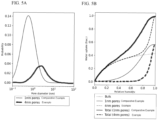
- a representative water-uptake curve for the sorbent may be constructed for each pore-size distribution as shown in Fig. 5B .
- RH relative humidity
- Fig. 5B shows water uptake curves corresponding to the pore size distributions of the Comparative Example and Example.
- modifying the pore-size distribution of a sorbent from the 1 nm scenario to the 4 nm scenario enabled more precise control over the water uptake by the sorbent.
- the water-uptake curve shown in Fig. 5B for the 4 nm Example prevented diffusion-blocking flooding from occurring until ambient humidity exceeded about 0.8-0.9.
- the dashed bottom line of the 4 nm Example exhibited lack of continuous flooding, showed no flooding, keeping consistently at or near 0 until RH of about 0.8.
- the Comparative Example line exhibited continuous water uptake from RH of about 0.1, consistently rising with increase in RH.
- Example's modified pore size distribution allowed condensed water to be removed from sorbent with only a small decrease in ambient humidity, enabling lower-cost sorbent regeneration.
- the processes, methods, or algorithms disclosed herein may be deliverable to or implemented by a processing device, controller, or computer, which may include any existing programmable electronic control unit or dedicated electronic control unit.
- the processes, methods, or algorithms may be stored as data and instructions executable by a controller or computer in many forms including, but not limited to, information permanently stored on non-writable storage media such as ROM devices and information alterably stored on writeable storage media such as floppy disks, magnetic tapes, CDs, RAM devices, and other magnetic and optical media.
- the processes, methods, or algorithms may also be implemented in a software executable object.
- the processes, methods, or algorithms may be embodied in whole or in part using suitable hardware components, such as Application Specific Integrated Circuits (ASICs), Field-Programmable Gate Arrays (FPGAs), state machines, controllers or other hardware components or devices, or a combination of hardware, software and firmware components.
- suitable hardware components such as Application Specific Integrated Circuits (ASICs), Field-Programmable Gate Arrays (FPGAs), state machines, controllers or other hardware components or devices, or a combination of hardware, software and firmware components.
Landscapes
- Chemical & Material Sciences (AREA)
- Analytical Chemistry (AREA)
- Chemical Kinetics & Catalysis (AREA)
- Engineering & Computer Science (AREA)
- Organic Chemistry (AREA)
- Nanotechnology (AREA)
- Oil, Petroleum & Natural Gas (AREA)
- General Chemical & Material Sciences (AREA)
- Environmental & Geological Engineering (AREA)
- Health & Medical Sciences (AREA)
- Biomedical Technology (AREA)
- Dispersion Chemistry (AREA)
- Crystallography & Structural Chemistry (AREA)
- Materials Engineering (AREA)
- Inorganic Chemistry (AREA)
- Solid-Sorbent Or Filter-Aiding Compositions (AREA)
- Separation Of Gases By Adsorption (AREA)
- Carbon And Carbon Compounds (AREA)
Applications Claiming Priority (1)
| Application Number | Priority Date | Filing Date | Title |
|---|---|---|---|
| US18/347,615 US20250010270A1 (en) | 2023-07-06 | 2023-07-06 | Atmospheric carbon dioxide sorbent |
Publications (2)
| Publication Number | Publication Date |
|---|---|
| EP4497490A2 true EP4497490A2 (de) | 2025-01-29 |
| EP4497490A3 EP4497490A3 (de) | 2025-04-23 |
Family
ID=91664576
Family Applications (1)
| Application Number | Title | Priority Date | Filing Date |
|---|---|---|---|
| EP24183895.2A Pending EP4497490A3 (de) | 2023-07-06 | 2024-06-24 | Atmosphärisches kohlendioxidsorptionsmittel |
Country Status (3)
| Country | Link |
|---|---|
| US (1) | US20250010270A1 (de) |
| EP (1) | EP4497490A3 (de) |
| CN (1) | CN119258708A (de) |
Family Cites Families (2)
| Publication number | Priority date | Publication date | Assignee | Title |
|---|---|---|---|---|
| US9302247B2 (en) * | 2012-04-28 | 2016-04-05 | Aspen Aerogels, Inc. | Aerogel sorbents |
| US12605671B2 (en) * | 2020-07-17 | 2026-04-21 | Carbyon Holding B.V. | Device and process for the direct carbon dioxide capture from air |
-
2023
- 2023-07-06 US US18/347,615 patent/US20250010270A1/en active Pending
-
2024
- 2024-06-24 EP EP24183895.2A patent/EP4497490A3/de active Pending
- 2024-07-08 CN CN202410907496.4A patent/CN119258708A/zh active Pending
Also Published As
| Publication number | Publication date |
|---|---|
| CN119258708A (zh) | 2025-01-07 |
| US20250010270A1 (en) | 2025-01-09 |
| EP4497490A3 (de) | 2025-04-23 |
Similar Documents
| Publication | Publication Date | Title |
|---|---|---|
| Asghari et al. | Supported PEBA-zeolite 13X nano-composite membranes for gas separation: Preparation, characterization and molecular dynamics simulation | |
| US8715392B2 (en) | Catalyzed CO2-transport membrane on high surface area inorganic support | |
| Drobek et al. | PVDF-MFI mixed matrix membranes as VOCs adsorbers | |
| JP2011504140A (ja) | 周囲co2を捕捉するための機能性イオン交換膜を備えた空気収集機 | |
| Khdary et al. | Polymer-silica nanocomposite membranes for CO2 capturing | |
| Lee et al. | Decompression stripping of carbon dioxide from rich monoethanolamine through porous hydrophobic modified ceramic hollow fiber membrane contactor | |
| AU2022231041B2 (en) | Polymer composite article having retained solids and methods of formation | |
| US8383026B1 (en) | Fabrication of fiber supported ionic liquids and methods of use | |
| CN110997120A (zh) | 碳捕获膜 | |
| WO2016014491A1 (en) | Composite membranes for separation of gases | |
| Roy et al. | Poly (acrylamide-co-acrylic acid) hydrophilization of porous polypropylene membrane for dehumidification | |
| Li et al. | NH2-MIL-125 filled mixed matrix membrane contactor with SO2 enrichment for flue gas desulphurization | |
| Guan et al. | Boosting the pervaporation performance of PDMS membrane for 1-butanol by MAF-6 | |
| Lee et al. | Integrated membrane contactor absorber/regeneration column process for CO2 capture with large scale module at various operating conditions | |
| CN113677417A (zh) | 用于减少蒸发排放控制系统中的烃渗出排放的吸附剂材料 | |
| EP4497490A2 (de) | Atmosphärisches kohlendioxidsorptionsmittel | |
| US20180296961A1 (en) | Articles for carbon dioxide capture and methods of making the same | |
| He et al. | Highly scalable honeycomb-like aminated PVDF-g-PEI hollow fiber membranes for direct air capture of CO2 | |
| US20250186931A1 (en) | Acid gas adsorption device | |
| US20250269307A1 (en) | Volumetric media and uses thereof | |
| PL217130B1 (pl) | Sposób i układ do kondycjonowania powietrza w ruchomych zamkniętych obiektach | |
| CA3209184C (en) | Polymer composite article having retained solids and methods of formation | |
| CN106823851B (zh) | 一种聚合物吸附剂/醋酸纤维素复合膜材料及其制备方法与应用 | |
| Ahmad et al. | Development of thin film composite for CO2 separation in membrane gas absorption application | |
| Al-Yafiee | Dilute CO2 effluents capture strategies with membranes |
Legal Events
| Date | Code | Title | Description |
|---|---|---|---|
| PUAI | Public reference made under article 153(3) epc to a published international application that has entered the european phase |
Free format text: ORIGINAL CODE: 0009012 |
|
| STAA | Information on the status of an ep patent application or granted ep patent |
Free format text: STATUS: THE APPLICATION HAS BEEN PUBLISHED |
|
| AK | Designated contracting states |
Kind code of ref document: A2 Designated state(s): AL AT BE BG CH CY CZ DE DK EE ES FI FR GB GR HR HU IE IS IT LI LT LU LV MC ME MK MT NL NO PL PT RO RS SE SI SK SM TR |
|
| PUAL | Search report despatched |
Free format text: ORIGINAL CODE: 0009013 |
|
| AK | Designated contracting states |
Kind code of ref document: A3 Designated state(s): AL AT BE BG CH CY CZ DE DK EE ES FI FR GB GR HR HU IE IS IT LI LT LU LV MC ME MK MT NL NO PL PT RO RS SE SI SK SM TR |
|
| RIC1 | Information provided on ipc code assigned before grant |
Ipc: B01J 20/28 20060101ALI20250319BHEP Ipc: B01D 53/04 20060101AFI20250319BHEP |
|
| STAA | Information on the status of an ep patent application or granted ep patent |
Free format text: STATUS: REQUEST FOR EXAMINATION WAS MADE |
|
| 17P | Request for examination filed |
Effective date: 20251023 |