EP4496403A1 - Kommunikationsverfahren, endgerätevorrichtung und netzwerkvorrichtung - Google Patents
Kommunikationsverfahren, endgerätevorrichtung und netzwerkvorrichtung Download PDFInfo
- Publication number
- EP4496403A1 EP4496403A1 EP22931470.3A EP22931470A EP4496403A1 EP 4496403 A1 EP4496403 A1 EP 4496403A1 EP 22931470 A EP22931470 A EP 22931470A EP 4496403 A1 EP4496403 A1 EP 4496403A1
- Authority
- EP
- European Patent Office
- Prior art keywords
- prach
- domain resource
- time domain
- synchronization signal
- terminal device
- Prior art date
- Legal status (The legal status is an assumption and is not a legal conclusion. Google has not performed a legal analysis and makes no representation as to the accuracy of the status listed.)
- Pending
Links
Images

Classifications
-
- H—ELECTRICITY
- H04—ELECTRIC COMMUNICATION TECHNIQUE
- H04W—WIRELESS COMMUNICATION NETWORKS
- H04W52/00—Power management, e.g. Transmission Power Control [TPC] or power classes
- H04W52/02—Power saving arrangements
- H04W52/0209—Power saving arrangements in terminal devices
- H04W52/0225—Power saving arrangements in terminal devices using monitoring of external events, e.g. the presence of a signal
- H04W52/0229—Power saving arrangements in terminal devices using monitoring of external events, e.g. the presence of a signal where the received signal is a wanted signal
- H04W52/0235—Power saving arrangements in terminal devices using monitoring of external events, e.g. the presence of a signal where the received signal is a wanted signal where the received signal is a power saving command
-
- H—ELECTRICITY
- H04—ELECTRIC COMMUNICATION TECHNIQUE
- H04W—WIRELESS COMMUNICATION NETWORKS
- H04W52/00—Power management, e.g. Transmission Power Control [TPC] or power classes
- H04W52/02—Power saving arrangements
- H04W52/0209—Power saving arrangements in terminal devices
- H04W52/0212—Power saving arrangements in terminal devices managed by the network, e.g. network or access point is leader and terminal is follower
- H04W52/0216—Power saving arrangements in terminal devices managed by the network, e.g. network or access point is leader and terminal is follower using a pre-established activity schedule, e.g. traffic indication frame
-
- H—ELECTRICITY
- H04—ELECTRIC COMMUNICATION TECHNIQUE
- H04W—WIRELESS COMMUNICATION NETWORKS
- H04W72/00—Local resource management
- H04W72/04—Wireless resource allocation
- H04W72/044—Wireless resource allocation based on the type of the allocated resource
-
- H—ELECTRICITY
- H04—ELECTRIC COMMUNICATION TECHNIQUE
- H04W—WIRELESS COMMUNICATION NETWORKS
- H04W74/00—Wireless channel access
- H04W74/002—Transmission of channel access control information
- H04W74/006—Transmission of channel access control information in the downlink, i.e. towards the terminal
-
- H—ELECTRICITY
- H04—ELECTRIC COMMUNICATION TECHNIQUE
- H04W—WIRELESS COMMUNICATION NETWORKS
- H04W74/00—Wireless channel access
- H04W74/08—Non-scheduled access, e.g. ALOHA
- H04W74/0833—Random access procedures, e.g. with 4-step access
-
- H—ELECTRICITY
- H04—ELECTRIC COMMUNICATION TECHNIQUE
- H04W—WIRELESS COMMUNICATION NETWORKS
- H04W52/00—Power management, e.g. Transmission Power Control [TPC] or power classes
- H04W52/02—Power saving arrangements
- H04W52/0209—Power saving arrangements in terminal devices
- H04W52/0212—Power saving arrangements in terminal devices managed by the network, e.g. network or access point is leader and terminal is follower
- H04W52/0219—Power saving arrangements in terminal devices managed by the network, e.g. network or access point is leader and terminal is follower where the power saving management affects multiple terminals
-
- H—ELECTRICITY
- H04—ELECTRIC COMMUNICATION TECHNIQUE
- H04W—WIRELESS COMMUNICATION NETWORKS
- H04W76/00—Connection management
- H04W76/20—Manipulation of established connections
- H04W76/27—Transitions between radio resource control [RRC] states
-
- Y—GENERAL TAGGING OF NEW TECHNOLOGICAL DEVELOPMENTS; GENERAL TAGGING OF CROSS-SECTIONAL TECHNOLOGIES SPANNING OVER SEVERAL SECTIONS OF THE IPC; TECHNICAL SUBJECTS COVERED BY FORMER USPC CROSS-REFERENCE ART COLLECTIONS [XRACs] AND DIGESTS
- Y02—TECHNOLOGIES OR APPLICATIONS FOR MITIGATION OR ADAPTATION AGAINST CLIMATE CHANGE
- Y02D—CLIMATE CHANGE MITIGATION TECHNOLOGIES IN INFORMATION AND COMMUNICATION TECHNOLOGIES [ICT], I.E. INFORMATION AND COMMUNICATION TECHNOLOGIES AIMING AT THE REDUCTION OF THEIR OWN ENERGY USE
- Y02D30/00—Reducing energy consumption in communication networks
- Y02D30/70—Reducing energy consumption in communication networks in wireless communication networks
Definitions
- the present application relates to the field of communication, and more specifically, to a communication method, a terminal device, a network device, a computer-readable storage medium, a computer program product, and a computer program.
- a method is proposed in which the terminal device uses a receiver with lower power consumption.
- a main receiver of the terminal device may be woken according to actual needs to perform relevant processing.
- how to ensure that the terminal device can perform subsequent operations in a timely manner becomes a problem that needs to be solved.
- Embodiments of the present application provide a communication method, a terminal device, a network device, a computer-readable storage medium, a computer program product, and a computer program.
- the embodiments of the present application provide a communication method, including: monitoring, by the terminal device, a wake-up signal (WUS), where the WUS is used to wake up the terminal device; the WUS carries first information, and the first information is used for an operation performed by the terminal device after being woken up.
- WUS wake-up signal
- the embodiments of the present application provide a communication method, including: transmitting, by the network device, a wake-up signal (WUS), where the WUS is used to wake up the terminal device; the WUS carries the first information, and the first information is used for an operation performed by the terminal device after being woken up.
- WUS wake-up signal
- the embodiments of the present application provide a terminal device, including: a first communication unit, configured to monitor a wake-up signal (WUS); where the WUS is used to wake up the terminal device; the WUS carries first information, and the first information is used for an operation performed by the terminal device after being woken up.
- WUS wake-up signal
- the embodiments of the present application provide a network device, including: a second communication unit, configured to transmit a wake-up signal (WUS); where the WUS is used to wake up a terminal device; the WUS carries first information, and the first information is used for an operation performed by the terminal device after being woken up.
- WUS wake-up signal
- the embodiments of the present application provide a terminal device, including a processor and a memory.
- the memory is configured to store a computer program
- the processor is configured to invoke and execute the computer program stored in the memory, to cause the terminal device to perform the above method.
- the embodiments of the present application further provide a network device, including a processor and a memory.
- the memory is configured to store a computer program
- the processor is configured to invoke and execute the computer program stored in the memory, to cause the network device to perform the above method.
- the embodiments of the present application provide a chip, configured to implement the above methods.
- the chip includes: a processor, configured to invoke and execute a computer program from a memory, to cause a device equipped with the chip to perform the above methods.
- the embodiments of the present application provide a computer-readable storage medium for storing a computer program, and the computer program, when executed by a device, causes the device to perform the above methods.
- the embodiments of the present application provide a computer program product, which includes computer program instructions, and the computer program instructions cause a computer to perform the above methods.
- the embodiments of the present application provide a computer program, and the computer program, when executed on a computer, causes the computer to perform the above methods.
- the terminal device may receive the WUS.
- the WUS may be used to wake up the terminal device. That carried in the WUS may be used for operations performed by the terminal device after being woken up.
- the terminal device may be woken up based on a reception of the WUS and may perform the operations after being woken up in a timely manner based on the first information in the WUS, thereby shortening a latency of the traffic transmission and improving the processing efficiency of a system.
- GSM Global System of Mobile communication
- CDMA Code Division Multiple Access
- WCDMA Wideband Code Division Multiple Access
- GPRS General Packet Radio Service
- LTE Long Term Evolution
- LTE-A Advanced long term evolution
- NR New Radio
- NTN Non-Terrestrial communication Network
- UMTS Universal Mobile Telecommunication System
- WLAN Wireless Local Area Network
- WiFi Wireless Fidelity
- 5G fifth-generation communication
- the mobile communication system will not only support the traditional communication, but also support, for example, Device to Device (D2D) communication, Machine to Machine (M2M) communication, Machine Type Communication (MTC), Vehicle to Vehicle (V2V) communication, or Vehicle to everything (V2X) communication, etc, and the embodiments of the present application may also be applied to these communication systems.
- D2D Device to Device
- M2M Machine to Machine
- MTC Machine Type Communication
- V2V Vehicle to Vehicle
- V2X Vehicle to everything
- the communication system in the embodiments of the present application may be applied to a carrier aggregation (CA) scenario, may also be applied to a dual connectivity (DC) scenario, and may also be applied to a standalone (SA) network deployment scenario.
- CA carrier aggregation
- DC dual connectivity
- SA standalone
- the communication system in the embodiments of the present application may be applied to an unlicensed spectrum, where the unlicensed spectrum may also be considered as a shared spectrum, or the communication system in the embodiments of the present application may also be applied to a licensed spectrum, where the licensed spectrum may also be considered as an unshared spectrum.
- the embodiments of the present application describe various embodiments in conjunction with a network device and a terminal device, where the terminal device may also be referred to as a user equipment (UE), an access terminal, a user unit, a user station, a mobile station, a mobile platform, a remote station, a remote terminal, a mobile device, a user terminal, a terminal, a wireless communication device, a user agent or a user apparatus, etc.
- UE user equipment
- the terminal device may be a station (STAION, ST) in the WLAN, may be a cellular phone, a cordless phone, a Session Initiation Protocol (SIP) phone, a Wireless Local Loop (WLL) station, or a personal digital processing (Personal Digital Assistant, PDA) device, a handheld device with a wireless communication function, a computing device or other processing devices connected to a wireless modem, a vehicle-mounted device, a wearable device, a terminal device in a next generation communication system such as in an NR network, or a terminal device in a Public Land Mobile Network (PLMN) network evolved in the future, etc.
- STAION, ST in the WLAN
- PDA Personal Digital Assistant
- the terminal device may be deployed on land, which includes indoor or outdoor, in handheld, worn or vehicle-mounted; may also be deployed on water (e.g., on a ship, etc.); may also be deployed in the air (e.g., on an airplane, a balloon, a satellite, etc.).
- the terminal device may be a mobile phone, a pad, a computer with a wireless transceiving function, a Virtual Reality (VR) terminal device, an Augmented Reality (AR) terminal device, a wireless terminal device in industrial control, a wireless terminal device in self-driving, a wireless terminal device in remote medical, a wireless terminal device in smart grid, a wireless terminal device in transportation safety, a wireless terminal device in smart city, a wireless terminal device in smart home, etc.
- VR Virtual Reality
- AR Augmented Reality
- the terminal device may also be a wearable device.
- the wearable device which is also referred to as a wearable smart device, is a generic term for a device that can be worn, into which the daily wear is intelligently designed and developed by applying wearable technologies, such as glasses, gloves, watches, clothing, and shoes, etc.
- the wearable device is a portable device that is worn directly on the body, or integrated into the user's clothing or accessories.
- the wearable device is not just a hardware device, but also achieves powerful functions through software supporting, data interaction, and cloud interaction.
- a generalized wearable smart device includes for example, a smartwatch or smart glasses, etc., with full functions, large size, and entire or partial functions without relying on a smartphone, as well as, for example, a smart bracelet and smart jewelry for physical sign monitoring, which only focuses on a certain type of application function and needs to be used in conjunction with other devices such as a smartphone.
- the network device may be a device used for communicating with a mobile device.
- the network device may be an Access Point (AP) in the WLAN, a base station (Base Transceiver Station, BTS) in the GSM or CDMA, may also be a base station (NodeB, NB) in the WCDMA, or may also be an evolutionary base station (Evolutionary Node B, eNB or eNodeB) in the LTE, or a relay station or an access point, or a vehicle-mounted device, a wearable device, and a network device or a base station (gNB) in an NR network, or a network device in the PLMN network evolved in the future or a network device in the NTN network, etc.
- AP Access Point
- BTS Base Transceiver Station
- NodeB NodeB
- NB evolved base station
- gNB network device or a base station
- the network device may have a mobile characteristic, for example, the network device may be a mobile device.
- the network device may be a satellite or a balloon station.
- the satellite may be a low earth orbit (LEO) satellite, a medium earth orbit (MEO) satellite, a geostationary earth orbit (GEO) satellite, a high elliptical orbit (HEO) satellite, etc.
- the network device may also be a base station provided on land, water, and other places.
- the network device may provide a service for a cell, and the terminal device communicates with the network device through a transmission resource (such as a frequency domain resource, or a frequency spectrum resource) used by the cell.
- the cell may be a cell corresponding to the network device (such as the base station), the cell may belong to a macro base station or may also belong to a base station corresponding to a small cell, and the small cell here may include: a metro cell, a micro cell, a pico cell, a femto cell, etc, these small cells have characteristics of small coverage range and low transmission power, which are applicable for providing a data transmission service with high speed.
- FIG. 1 exemplarily shows a communication system 100.
- the communication system includes one network device 110 and two terminal devices 120.
- the communication system 100 may include multiple network devices 110, and other numbers of terminal devices 120 may be included within a coverage range of each network device 110, which is not limited by the embodiments of the present application.
- the communication system 100 may also include other network entities such as a mobility management entity (MME), and an access and mobility management function (AMF), etc., which is not limited by the embodiments of the present application.
- the network device may also include an access network device and a core network device. That is, the wireless communication system also includes multiple core networks for communicating with the access network device.
- the access network device may be an evolutional base station (evolutional node B, referred to as eNB or e-NodeB for short), a macro base station, a micro base station (also referred to as a "small base station"), a pico base station, an access point (AP), a transmission point (TP) or a new generation base station (new generation Node B, gNodeB), etc., in a long-term evolution (LTE) system, a next-generation (mobile communication system) (next radio, NR) system or an authorized auxiliary access long-term evolution (LAA-LTE) system.
- LTE long-term evolution
- NR next-generation
- LAA-LTE authorized auxiliary access long-term evolution
- a device with a communication function in the network/system may be referred to as a communication device.
- the communication device may include a network device and a terminal device with the communication function.
- the network device and the terminal device may be specific devices in the embodiments of the present application, which will not be repeated herein.
- the communication device may also include other devices in the communication system, such as a network controller, a mobility management entity, and other network entities, which is not limited by the embodiments of the present application.
- the main application scenarios of 5G are: enhanced mobile ultra broadband (Enhanced Mobile Broadband, eMBB), Ultra Reliable Low Latency Communications (URLLC), and massive Machine Type Communications (mMTC).
- eMBB aims to enable users to obtain multimedia contents, services and data, and demands for the eMBB is growing rapidly. Since the eMBB may be deployed in different scenarios, such as indoors, in urban areas, and in rural areas, differences of capabilities and demands of the eMBB are relatively great, so it must be analyzed in detail in combination with specific deployment scenarios.
- Typical applications of the URLLC include: industrial automation, power automation, remote medical operation (e.g., surgery), transportation safety security, etc.
- Typical characteristics of the mMTC include: high connection density, small data volumes, delay-insensitive services, low cost, and long service life, etc.
- RRC Radio Resource Control
- RRC_INACTIVE RRC inactive
- RRC_IDLE RRC idle
- RRC_ACTIVE RRC active
- RRC_CONNECTED RRC connected
- the energy saving of the terminal device (or referred to as a UE) is described respectively below:
- the UE i.e., the terminal device
- PDCCH Physical Downlink Control CHannel
- an energy-saving signal is introduced to achieve further energy saving.
- the energy-saving signal may be used in combination with the DRX mechanism.
- a processing method for introducing the energy-saving signal may specifically include: receiving, by the terminal device, the energy-saving signal (or referred to as an energy-saving wake-up signal) before a DRX ON duration.
- the network device may "wake up" the terminal device by the energy-saving signal, so that the terminal device monitors the PDCCH during the DRX ON duration after being woken up; otherwise, when there is no data transmission for one terminal device in one DRX period, no energy-saving signal is transmitted to the terminal device (that is, the terminal device is not "woken up"), so that the terminal device does not need to monitor the PDCCH during the DRX ON duration.
- the above-mentioned processing method for introducing the energy-saving signal can omit the monitoring of the PDCCH during the DRX ON duration, when there is no data transmission for the terminal device, thereby achieving the energy saving of the terminal device.
- the energy-saving signal may be carried by a DCI (DownLink Control Information) format 2_6.
- the time of the terminal device outside the DRX (Discontinuous Reception) ON duration is referred to as an inactive time, and the time during the DRX ON duration is referred to as an active time.
- the processing method for introducing the energy-saving signal in the DRX is described, and the processing method may include: a first energy-saving signal indicates to monitore the PDCCH, then the terminal device monitors the PDCCH within an ON duration of a first DRX period (the ON duration of the first DRX period is represented as a black block in FIG.
- a second energy-saving signal indicates to not monitore the PDCCH, then the terminal device does not monitor the PDCCH within an ON duration of a second DRX period (the ON duration of the second DRX period is represented as a colorless block in FIG. 2 ) after receiving the second energy-saving signal;
- a third energy-saving signal indicates to not monitore the PDCCH, then the terminal device does not monitor the PDCCH within an ON duration of a third DRX period (the ON duration of the third DRX period is represented as a colorless block in FIG.
- a fourth energy-saving signal indicates to monitore the PDCCH, then the terminal device monitors the PDCCH within an ON duration of a fourth DRX period (the ON duration of the fourth DRX period is represented as a black block in FIG. 2 ) after receiving the fourth energy-saving signal.
- an enhanced scheme of search space set group switching of R16 and a scheme of skipping the PDCCH monitoring in a gap of the data transmission are introduced to achieve the power saving.
- control information related to the search space set group switching and the PDCCH skipping may be carried by the PDCCH.
- the terminal device in the RRC idle/inactive state receives a paging message in the manner of the DRX. Since there is one paging occasion (PO) within one DRX period, the terminal device only receives the paging message during the PO and does not receive the paging message at the time outside the PO, thereby achieving the purpose of power saving.
- PO paging occasion
- a probability of the terminal device being paged may not be high, therefore, if the terminal device periodically detects the PDCCH on the corresponding PO, and there is a high probability that the paging message sent to the terminal device itself is not detected, it will objectively cause a waste of power.
- the energy saving of the terminal device in the idle state for receiving the paging message is optimized, and an energy-saving signal similar to the aforementioned energy-saving signal is introduced, which is referred to as a PEI (paging early indication).
- the PEI is used to indicate whether the terminal device receives a paging PDCCH during a target PO before the target PO arrives.
- the above-mentioned energy-saving signal (i.e., the PEI) (hereinafter referred to as an energy-saving signal based on a PDCCH channel, for the convenience of description) is carried on a PDCCH channel, and specifically, the energy-saving signal (i.e., the PEI) is carried by DCI (Downlink Control Information) format 2_7.
- the energy-saving signal based on the PDCCH channel may carry more energy-saving information, for example, may carry sub-grouping information for indicating a terminal device sub-grouping (or a UE sub-grouping) corresponding to the energy-saving information.
- Multiple terminal device groups may be obtained by further grouping multiple terminal devices corresponding to the same PO according to UE_IDs (identifications).
- the terminal device needs to receive the paging message on the PO; otherwise, the terminal device does not need to receive the paging message.
- the terminal device group (or terminal device sub-grouping) information with the energy-saving information as above, the terminal device which needs to or not to receive the paging at the target PO, may be indicated more precisely. For example, a scenario in which a terminal device is woken up by an energy-saving signal to receive a paging message, is shown in FIG.
- a first energy-saving signal indicates that a terminal device in one or more terminal device groups receives paging on a corresponding PF (Paging Frame) or PO (the PF or PO indicated by the first energy-saving signal is represented as a gray block in FIG. 3 ), then terminal devices within the terminal device group monitor the paging on the PF or PO after being woken up;
- a second energy-saving signal indicates not to monitor the PDCCH, that is, indicates that terminal devices in one or more terminal device groups do not receive paging on a corresponding PF or PO (the PF or PO indicated by the second energy-saving signal is represented as a colorless block in FIG.
- a third energy-saving signal indicates that a terminal device in one or more terminal device groups receives paging on a corresponding PF or PO (the PF or PO indicated by the third energy-saving signal is represented as a gray block in FIG. 3 ), then terminal devices within the terminal device group monitor the paging on the PF or PO after being woken up.
- the R18 standard plans to introduce a scheme of a wake-up receiver (WUR) receiving the energy-saving signal.
- the WUR has the characteristics of extremely low cost, extremely low complexity and extremely low power consumption, and it receives the energy-saving signal in a manner based on envelope detection mainly. Therefore, the energy-saving signal received by the WUR is different from the signal carried based on the PDCCH defined in the existing R16, and R17 standards in modulation methods, waveforms, etc.
- the energy-saving signal is mainly an envelope signal obtained by performing an ASK modulation on a carrier signal.
- the demodulation for the envelope signal may also be accomplished by driving a low power comsunption circuit based on energy provided by a wireless radio frequency signal, so it may be passive.
- the WUR may also be powered by the terminal device, and regardless of the power supply method, the WUR greatly reduces the power consumption, compared to the traditional receiver of the terminal device. For example, the WUR may achieve the power consumption less than 1mw (milliwatt), which is much lower than the power consumption of the traditional receiver ranging from tens to hundreds of mW.
- the WUR may be combined with the terminal device as an additional module of a receiver of a terminal device, or may be a wake-up function module of a terminal device separately.
- system and “network” herein are often used interchangeably herein.
- the term “and/or” herein is only an associated relationship for describing associated objects, meaning that there may be three kinds of relationships, for example, A and/or B may mean three cases where: A exists alone, both A and B exist, and B exists alone.
- the character “/” herein generally means that associated objects before and after "/" are in an “or” relationship.
- the "indication" mentioned in the embodiments of the present application may be a direct indication, an indirect indication, or may also represent having an associated relationship.
- a indicates B which may mean that A directly indicates B, for example, B may be acquired by A; may also mean that A indirectly indicates B, for example, A indicates C, and B may be acquired by C; may also mean that there is an associated relationship between A and B.
- corresponding may mean that there is a direct correspondence or indirect correspondence between two objects, may also mean that there is an associated relationship between two objects, or may also mean relationships between "indicating” and “being indicated”, between “configuring” and “being configured”, etc.
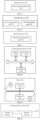
- FIG. 4 is a schematic flowchart of a communication method according to an embodiment of the first aspect of the present application.
- the method can optionally be applied to the system shown in FIG. 1 , but not limited thereto.
- the method includes at least a portion of the following contents.
- the terminal device monitors a wake-up signal (WUS).
- the WUS is used to wake up the terminal device; the WUS carries first information, and the first information is used for an operation performed by the terminal device after being woken up.
- the terminal device monitoring the WUS may refer to: the terminal device monitoring the WUS in a case where the terminal device is in an idle state.
- the terminal device may specifically be a low-power consumption device; or the low-power consumption device may also be called a zero-power consumption device.
- the terminal device, that is, the low-power consumption device may include a first component and a second component, the power consumption of the first component is lower than the power consumption of the second component.
- the terminal device monitoring the WUS in the above S410 may be that: the first component of the terminal device monitors the WUS. More specifically, the terminal device monitoring the WUS may be that when the terminal device is in an RRC idle state, the first component of the terminal device monitors the WUS.
- the second component of the terminal device may be in a dormant state.
- the dormant state may mean that a portion of functions or a portion of members of the second component are in an ON state, but another portion of the functions or another portion of the members are in an OFF state or in a pending woken-up state, etc.
- the terminal device may only include the first component and the second component described above; or, the terminal device may include other components in addition to the first component and the second component described above, which are not exhaustively listed in this embodiment.
- the first component may refer to a low power consumption receiver in the terminal device, or may be referred to as a wake-up receiver (WUR), or may be referred to as a zero-power consumption WUR, or may be referred to as a low-power consumption WUR, or may also be called a low-power consumption circuit, and more names for the first component are not exhaustively listed in this embodiment.
- the second component may refer to a main receiver in the terminal device.
- the aforementioned terminal device is illustrated, and the terminal device is formed by a main receiver and a WUR shown in FIG. 5 . Further, if the network device needs the terminal device to turn on or wake up the second component, i.e., the main receiver in FIG. 5 , the network device may transmit a WUS to the terminal device.
- the WUR of the terminal device may monitor the WUS; in a case where the WUR of the terminal device monitors the WUS, the main receiver (i.e., the aforementioned second component) of the terminal device is controlled to be turned on or woken up; in a case where the WUR of the terminal device does not monitor the WUS, the main receiver of the terminal device may keep in the dormant state.
- the terminal device may only use the WUR (i.e., the first component) to continuously monitor the WUS; only when the terminal device has a traffic or a paging message, the WUR of the terminal device monitors the WUS, and then the main receiver of the terminal device is woken up to receive and transmit data.
- WUR i.e., the first component
- the WUS is exclusive to the UE; or the WUS is shared for a UE group, and the UE group may be a UE group including the terminal device; or the WUS is dedicated to a cell, and the cell may be a serving cell where the terminal device is located. Therefore, the WUS may also include: a UE identifier, where the UE identifier is a UE ID or a UE group UD or a cell ID.
- the UE identifier may be contained in the first information in the WUS, or the UE identifier may not be contained in the first information in the WUS.
- the specific information about a location of the UE identifier in the WUS is not limited in this embodiment.
- the UE ID may refer to an identification of the terminal device, which may be a unique identifier of the terminal device, for example, the UE ID may be any one of the following: a Temporary Mobile Subscriber Identity (TMSI), an International Mobile Subscriber Identity (IMSI), and an I-RNTI (Inactive Radio Network Temporary Identifier).
- TMSI Temporary Mobile Subscriber Identity
- IMSI International Mobile Subscriber Identity
- I-RNTI Inactive Radio Network Temporary Identifier
- the UE group may be composed of one or more terminal devices; one or more UE groups may be configured in the system, and different IDs are allocated to different UE groups in the one or more UE groups in the system to uniquely distinguish the different UE groups.
- the cell ID may be one or more IDs corresponding to one or more cells contained in the system, respectively.
- the WUS is specifically used to wake up the terminal device that conforms to the UE identifier. That is, after receiving the WUS by the first component of the terminal device (i.e., WUR), the second component (i.e., the main receiver) may be woken up in a case where the terminal device itself is determined as the terminal device that conforms to the UE identifier based on the UE identifier carried in the WUS.
- the method that the terminal device determines whether the terminal device itself is the terminal device that conforms to the UE identifier may include: in a case where what the UE identifier includes is a UE ID, the terminal device determines whether the identifier of the terminal device is the same as the UE ID based on its own identifier, and in a case where the identifier of the terminal device is the same as the UE ID, the terminal device is determined as the terminal device that conforms to the UE identifier; or, in a case where what the UE identifier includes is a UE group ID, the terminal device determines whether an identifier of a UE group in which the terminal device is located is the same as the UE group ID based on the identifier of the UE group in which the terminal device is located, and in a case where the identifier of the UE group in which the terminal device is located is the same as the UE group ID, the terminal device is determined as the terminal device that conforms to the UE identifier;
- the UE identifier may be replaced with a bitmap.
- a value of a bit in the bitmap may be used to indicate whether to wake up a corresponding terminal device or a UE group. For example, a first value indicates to wake up the terminal device, and a second value indicates not to wake up the terminal device or the UE group. The first value is different from the second value, for example, the first value is 1 and the second value is 0, or vice versa.
- the WUS carries the bitmap
- the bitmap may include Q bits, where Q is an integer greater than or equal to 1.
- each bit may be used to correspond to a UE group, and different bits correspond to different UE groups.
- a value of each bit may be used to indicate whether to wake up a terminal device in a corresponding UE group.
- the value of each bit may include a binary first value and a binary second value.
- the binary first value is used to indicate to wake up the terminal device in the corresponding UE group, that is, the binary first value is used to indicate the terminal device in the corresponding UE group to wake up the second component
- the binary second value is used to indicate not to wake up the terminal device in the corresponding UE group, that is, the binary second value is used to indicate the terminal device in the corresponding UE group does not wake up the second component.
- the binary first value and the binary second value are different, for example, the binary first value is 1 and the binary second value is 0, or the binary first value is 0 and the binary second value is 1.
- the first component of the terminal device i.e., WUR
- WUR the first component of the terminal device
- the terminal device may wake up the second component (i.e., the main receiver).
- the WUR may include one or more of the following modulation manners: amplitude shift keying (ASK), phase shift keying (PSK), frequency shift keying (FSK), etc.
- ASK amplitude shift keying
- PSK phase shift keying
- FSK frequency shift keying
- the modulation manner supported by the main receiver may include one or more of the following modulation manners: quadrature phase shift keying (QPSK), quadrature amplitude modulation (QAM), orthogonal frequency division multiplexing (OFDM), etc.
- the main receiver may also support at least one modulation manner of the ASK, PSK, or FSK. This is not specifically limited by the embodiments of the present application.
- the complexity of the modulation waveform supported by WUR is lower than the complexity of the modulation waveform supported by the main receiver.
- the modulation waveform supported by the WUR may include one or more of the following modulation waveforms: a waveform corresponding to an ASK signal, a waveform corresponding to a PSK signal, and a waveform corresponding to an FSK signal.
- the modulation waveform supported by the main receiver may include one or more of the following modulation waveforms: a waveform corresponding to a QPSK signal, a waveform corresponding to a QAM signal, and a waveform corresponding to an OFDM signal.
- the modulation waveform supported by the main receiver may also include waveforms corresponding to one or more signals of the ASK signal, PSK signal, and FSK signal.
- the transmission rate supported by the WUR is lower than the transmission rate supported by the main receiver.
- the bandwidth range supported by the WUR is smaller than the bandwidth range supported by the main receiver, or in other words, the bandwidth supported by the WUR is narrower than the bandwidth supported by the main receiver.
- the code rate supported by the WUR is lower than the code rate supported by the main receiver.
- the terminal device only uses the first component (i.e., the WUR) to monitor the WUS, which may save the power consumption of the terminal device.
- the WUR of the terminal device uses a manner of the ASK or FSK to modulate a signal, which also enables the WUR of the terminal device to use an extremely simple hardware structure and an extremely simple receiving method to receive and demodulate the signal.
- the WUR of the terminal device only needs to use a manner of envelope detection to receive the signal. Therefore, compared to the traditional mode in which the terminal device always uses the main receiver, this embodiment adopts the WUR of the terminal device to monitor the WUS, which can greatly save the power consumption of the terminal device.
- the above WUS may also be called a low-power consumption WUS, or may be referred to as other names, which are not exhaustively listed in this embodiment.
- the WUS may also carry the aforementioned first information, where the first information is used for an operation performed by the terminal device after being woken up.
- the operation performed by the terminal device after being woken up may include one or more of the following: random access, initial access, and time-frequency synchronization.
- the first information may include one or more information of the following: information for performing the random access, where the information for performing the random access is configuration information of a first PRACH (Physical Random Access Channel) resource; information for performing the initial access, where the information for performing the initial access is configuration information of a target initial BWP (BandWidth Part) resource; and information for performing the time-frequency synchronization, where the information for performing the time-frequency synchronization is configuration information of a synchronization signal.
- a first PRACH Physical Random Access Channel
- BWP BitWidth Part
- the configuration information of the first PRACH resource may include one or more of the following: time domain resource location information of a first PRACH; frequency domain resource location information of the first PRACH; a period of the first PRACH; a slot of the first PRACH; a subcarrier spacing of the first PRACH; a number of first PRACH occasions; a mapping relationship between the first PRACH and a synchronization signal block (SSB); time domain resource location information of a first PRACH occasion; frequency domain resource location information of the first PRACH occasion; and a preamble index number.
- time domain resource location information of a first PRACH may include one or more of the following: time domain resource location information of a first PRACH; frequency domain resource location information of the first PRACH; a period of the first PRACH; a slot of the first PRACH; a subcarrier spacing of the first PRACH; a number of first PRACH occasions; a mapping relationship between the first PRACH and a synchronization signal block (SSB); time domain resource location information of a first PRACH occasion; frequency
- time domain resource information of the first PRACH is described in following two cases.
- the time domain resource information of the first PRACH may include an absolute time domain location of the time domain resource of the first PRACH.
- the time domain resource information of the first PRACH includes one or more of the following: a time domain location of a time domain resource of the first PRACH; and a duration of the time domain resource of the first PRACH.
- the time domain location of a time domain resource of the first PRACH includes: a time domain starting location of the time domain resource of the first PRACH, or a time domain ending location of the time domain resource of the first PRACH.
- the duration of the time domain resource of the first PRACH may refer to a length in the time domain occupied by the first PRACH resource. Any one of slot, symbol, subframe, millisecond, etc., may be used as a unit for the duration. Exemplarily, the duration of the time domain resource of the first PRACH may be: 1 slot, or 2 slots, or 1 millisecond, or 3 milliseconds. The duration may be longer or shorter, which is illustrated as an example herein, and not as a limitation to the embodiment.
- the time domain resource location information of the first PRACH specifically includes: the time domain starting location of the time domain resource of the first PRACH and the duration of the time domain resource of the first PRACH.
- the time domain starting location of the time domain resource of the first PRACH and the duration of the time domain resource of the first PRACH may be expressed in a unit of any one of symbol, slot, subframe, millisecond, microsecond, etc.
- the time domain starting location of the time domain resource of the first PRACH may be expressed as the A1-th slot; the duration of the time domain resource of the first PRACH may be expressed as A2 milliseconds.
- the time domain resource location information of the first PRACH specifically includes: the time domain starting location of the time domain resource of the first PRACH and the time domain ending location of the time domain resource of the first PRACH.
- the time domain starting location of the time domain resource of the first PRACH and the time domain ending location of the time domain resource of the first PRACH may be expressed in a unit of any one of symbol, slot, a subframe, millisecond, microsecond, etc.
- the time domain starting location of the time domain resource of the first PRACH may be expressed as the A1-th slot; the time domain ending location of the time domain resource of the first PRACH may be expressed as the A3-th slot.
- the time domain resource information of the first PRACH may include a relative time domain location of the time domain resource of the first PRACH.
- the time domain resource location information of the first PRACH includes one or more of the following: a first time domain offset, where the first time domain offset is used to represent an offset between a reception time of the WUS and a time domain location of the time domain resource of the first PRACH; and a duration of the time domain resource of the first PRACH.
- the duration of the time domain resource of the first PRACH may refer to a length in the time domain occupied by the first PRACH resource. Any one of slot, symbol, subframe, millisecond, etc., may be used as a unit for the duration. Exemplarily, the duration of the time domain resource of the first PRACH may be: 1 slot, or 2 slots, or 1 millisecond, or 3 milliseconds. The duration may be longer or shorter, which is illustrated as an example herein, and not as a limitation to the embodiment.
- the WUS may occupy a period of the time domain resource
- a time (or a moment) in the period of the time domain resource occupied by the WUS may be designated as the reception time of the WUS.
- the reception time of the WUS may include: a starting reception time of the WUS, or a reception completion time of the WUS. It should be understood that the reception time of the WUS may also be other time in the time domain resource occupied by the WUS, such as a midpoint time of the time domain resource occupied by the WUS, etc., as long as the terminal device and the network device both use the same reception time of the WUS.
- the time domain resource of the first PRACH may also occupy a period of the time domain resource, and a time (or a moment) in the time domain resource of the first PRACH may be designated as the time domain location of the time domain resource of the first PRACH.
- the time domain location of the time domain resource of the first PRACH includes: a time domain starting location of the time domain resource of the first PRACH, and/or a time domain ending location of the time domain resource of the first PRACH.
- time domain location of the time domain resource of the first PRACH may also be other time in the time domain resource of the first PRACH, such as a midpoint time of the time domain resource of the first PRACH, etc., as long as the terminal device and the network device both use the same time domain location of the time domain resource of the first PRACH.
- the first time domain offset may include one numerical value or multiple numerical values.
- a unit of the first time domain offset may be any one of symbol, slot, subframe, millisecond, microsecond, etc.
- the first time domain offset includes one numerical value, which is referred to as a first numerical value.
- the first numerical value may be used to represent a relative time offset between the time domain starting location of the time domain resource of the first PRACH and the reception time of the WUS (such as the starting reception time of the WUS); or, the value of the offset may be used to indicate a relative time offset between the time domain ending location of the time domain resource of the first PRACH and the reception time of the WUS (such as the starting reception time of the WUS).
- the time domain resource location information of the first PRACH may also include: the duration of the time domain resource of the first PRACH.
- the terminal device may determine a specific location of the time domain resource of the first PRACH based on the time domain starting location (or time domain ending location) of the time domain resource of the aforementioned first PRACH and the duration of the time domain resource of the first PRACH.
- the first time domain offset is the first numerical value
- the first numerical value is equal to A4
- a unit of the first time domain offset is slot.
- the terminal device may then determine that the time domain starting location of the time domain resource of the first PRACH is a location after the starting reception time of the WUS with a delay of A4 slots based on the starting reception time of the WUS.
- the terminal device may obtain the time domain ending location of the time domain resource of the first PRACH based on the time domain starting location of the time domain resource of the aforementioned first PRACH plus the duration of the time domain resource of the first PRACH; and designate a range between the time domain starting location and the time domain ending location of the time domain resource of the first PRACH as the specific location of the time domain resource of the first PRACH.
- the first time domain offset is the first numerical value
- the first numerical value is equal to A5
- a unit of the first time domain offset is slot.
- the terminal device may then determine that the time domain starting location of the time domain resource of the first PRACH is a loation after the reception ending time of the WUS with a delay of A5 slots.
- the terminal device may obtain the time domain ending location of the time domain resource of the first PRACH based on the time domain starting location of the time domain resource of the aforementioned first PRACH plus the duration of the time domain resource of the first PRACH; and designate a range between the time domain starting location and the time domain ending location of the time domain resource of the first PRACH as the specific location of the time domain resource of the first PRACH.
- the two numerical values are respectively represented as a second numerical value and a third numerical value; where the second numerical value may be used to represent a relative time offset between the time domain starting location of the time domain resource of the first PRACH and the reception time of the WUS (such as the starting reception time of the WUS); the third numerical value may represent a relative time offset between the time domain ending location of the time domain resource of the first PRACH and the reception time of the WUS (such as the starting reception time of the WUS).
- the second numerical value is smaller than the third numerical value.
- a unit of the first time domain offset i.e., two values of the offset or multiple values of the offset
- the second numerical value is equal to A6 slots
- the third value is equal to A7 slots
- A7 is greater than A6.
- the terminal device may determine that the time domain starting location of the time domain resource of the first PRACH is a location after the reception ending time of the WUS with a delay of A6 slots; and determine that the time domain ending location of the time domain resource of the first PRACH is a location after the reception ending time of the WUS with a delay of A7 slots.
- reception ending time of the WUS may also be replaced with the starting reception time of the WUS or other time of the WUS, as long as the network device and the terminal device use the same time. No more exhaustive list is given herein.
- the time domain resource location information of the first PRACH may not include the duration of the time domain resource of the first PRACH.
- the frequency domain resource location information of the first PRACH may also be described in following two cases.
- the frequency domain resource location information of the first PRACH is an absolute frequency domain location.
- the frequency domain resource location information of the first PRACH includes one or more of the following: a location of a first-type frequency point of a frequency domain resource of the first PRACH; and a size of the frequency domain resource of the first PRACH.
- the first-type frequency point may be expressed in a unit of any one of PRB (physical resource block), RB (resource block), Khz, Mhz, etc.
- PRB physical resource block
- RB resource block
- Khz a number of the specified frequency points may be one or more.
- the first-type frequency point of the frequency domain resource of the first PRACH includes one or more of the following: a lowest frequency point of the frequency domain resource of the first PRACH; a highest frequency point of the frequency domain resource of the first PRACH; and a central frequency point of the frequency domain resource of the first PRACH. It should be understood that the description herein is only for examplary illustration, and when actually performing the processing, the first-type frequency point may also be other frequency points. As long as the terminal device and the network device have the same definition or interpretation for the specified frequency point, they are all within the protection scope of this embodiment and are not listed exhaustively herein.
- the frequency domain resource location information of the first PRACH may only include a location of the first-type frequency point of the frequency domain resource of the first PRACH. That is, the frequency domain resource location information of the first PRACH may not include the size of the frequency domain resource of the first PRACH.
- the first-type frequency point of the frequency domain resource of the first PRACH may be multiple frequency points.
- the frequency domain resource location information of the first PRACH includes locations of the lowest frequency point and the central frequency point of the frequency domain resource of the first PRACH; or the frequency domain resource location information of the first PRACH includes locations of the lowest frequency point and the highest frequency point of the frequency domain resource of the first PRACH.
- the terminal device may directly obtain the locations of the lowest frequency point and the highest frequency point in the frequency domain resource of the first PRACH contained in the frequency domain resource location information of the first PRACH, and designate a frequency domain range between the lowest frequency point and the highest frequency point of the frequency domain resource of the first PRACH as a frequency domain range of the first PRACH.
- the frequency domain resource location information of the first PRACH may include the location of the first-type frequency point of the frequency domain resource of the first PRACH and the size of the frequency domain resource of the first PRACH.
- the first-type frequency point of the frequency domain resource of the first PRACH may be one frequency point.
- the frequency domain resource location information of the first PRACH includes the location of the lowest frequency point of the frequency domain resource of the first PRACH; or the location of the highest frequency point of the frequency domain resource of the first PRACH; or the location of the central frequency point of the frequency domain resource of the first PRACH.
- the terminal device may directly obtain the location of the lowest frequency point in the frequency domain resource of the first PRACH contained in the frequency domain resource location information of the first PRACH. After obtaining the location of the lowest frequency point in the frequency domain resource of the first PRACH, the frequency domain range of the frequency domain resource of the first PRACH is determined according to the size of the frequency domain resource of the first PRACH. Taking the first-type frequency point of the frequency domain resource of the first PRACH being the central frequency point as an example, the terminal device may take a location of a central frequency point in the frequency domain resource of the first PRACH contained in the frequency domain resource location information of the first PRACH as basis.
- the lowest frequency point and the highest frequency point of the frequency domain resource of the first PRACH can be determined according to the size of the frequency domain resource of the first PRACH, and the frequency domain resource between the lowest frequency point and the highest frequency point of the frequency domain resource of the first PRACH is used as the frequency domain range of the first PRACH.
- the frequency domain resource location information of the first PRACH is a relative frequency domain location.
- the frequency domain resource location information of the first PRACH includes one or more of the following: a first frequency domain offset, where the first frequency domain offset is used to represent an offset between a frequency domain location of the WUS and a first-type frequency point of a frequency domain resource of the first PRACH; and a size of the frequency domain resource of the first PRACH.
- a frequency domain location of the WUS includes one of the following: a lowest frequency point in a frequency domain resource occupied by the WUS; a highest frequency point in the frequency domain resource occupied by the WUS; and a central frequency point in the frequency domain resource occupied by the WUS. It should be understood that the frequency domain location of the WUS may also be represented by other frequency points of the WUS, as long as the terminal device and the network device use the same frequency point, which is within the protection scope of this embodiment, and is not exhaustively listed herein.
- the first-type frequency point of the frequency domain resource of the first PRACH includes one or more of the following: a lowest frequency point of the frequency domain resource of the first PRACH; a highest frequency point of the frequency domain resource of the first PRACH; and a central frequency point of the frequency domain resource of the first PRACH.
- the description herein is only for examplary illustration, and when actually performing the processing, the first-type frequency point may also be other frequency points.
- the terminal device and the network device have the same definition or interpretation for the first-type frequency point, they are all within the protection scope of this embodiment and are not listed exhaustively herein.
- the size of the frequency domain resource of the first PRACH may be included in the frequency domain resource location information of the first PRACH; or the size of the frequency domain resource of the first PRACH may be pre-acquired by the terminal device.
- the size of the frequency domain resource of the first PRACH may be transmitted to the terminal device by the network device via any one of DCI, a RRC signaling, and a system message when the terminal device was in an RRC connected state last time.
- a unit of the first frequency domain offset may be any one of PRB, RB, Khz, Mhz, etc.
- the first frequency domain offset may include one or more numerical values.
- the first frequency domain offset value when the first frequency domain offset includes one numerical value, the numerical value is referred to as a fourth numerical value.
- the first frequency domain offset value (i.e., the fourth numerical value) may be used to represent a relative frequency domain offset between one first-type frequency point of the frequency domain resource of the first PRACH and one frequency domain location of the WUS.
- the frequency domain resource location information of the first PRACH may also include: the size of the frequency domain resource of the first PRACH.
- the location of the lowest frequency point of the frequency domain resource of the first PRACH is obtained based on the location of the central frequency point in the frequency domain resource occupied by the WUS by increasing (or reducing) the fourth numerical value.
- the terminal device may obtain the location of the highest frequency point of the frequency domain resource of the first PRACH based on the location of the lowest frequency point of the frequency domain resource of the first PRACH plus the size of the frequency domain resource of the first PRACH, and designate a range between the highest frequency point and the lowest frequency point of the frequency domain resource of the first PRACH as a specific range of the frequency domain resource of the first PRACH.
- the location of the central frequency point of the frequency domain resource of the first PRACH is obtained based on the location of the highest frequency point of the WUS by increasing (or reducing) the fourth numerical value.
- the terminal device may obtain the location of the highest frequency point of the frequency domain resource of the first PRACH based on the location of the central frequency point of the frequency domain resource of the first PRACH plus 1/2 of the size of the frequency domain resource of the first PRACH, obtain the location of the lowest frequency point of the frequency domain resource of the first PRACH based on the location of the central frequency point of the frequency domain resource of the first PRACH minus 1/2 of the size of the frequency domain resource of the first PRACH, and designate a range between the highest frequency point and the lowest frequency point of the frequency domain resource of the first PRACH as a specific range of the frequency domain resource of the first PRACH.
- the first frequency domain offset includes two numerical values, which respectively are a fifth numerical value and a sixth numerical value; where the fifth numerical value may be used to represent a relative frequency domain offset between one first-type frequency point of the frequency domain resource of the first PRACH and one frequency domain location of the WUS; and the sixth numerical value is used to represent a relative frequency domain offset between another first-type frequency point of the frequency domain resource of the first PRACH and one frequency domain location of the WUS.
- the frequency domain resource location information of the first PRACH may not include the size of the frequency domain resource of the first PRACH.
- the location of the lowest frequency point of the frequency domain resource of the first PRACH is obatined based on the location of the central frequency point in the frequency domain resource occupied by the WUS by reducing the fifth numerical value; the location of the highest frequency point of the frequency domain resource of the first PRACH is obtained based on the location of the central frequency point in the frequency domain resource occupied by the WUS by increasing the sixth numerical value.
- a range between the highest frequency point and the lowest frequency point of the frequency domain resource of the first PRACH is designated as a specific range of the frequency domain resource of the first PRACH.
- the time domain resource location information of the aforementioned first PRACH is used to determine the range of the time domain resource (or time domain location) of the first PRACH resource
- the frequency domain resource location information of the aforementioned first PRACH is used to determine the range of the frequency domain resource (or frequency domain range) of the first PRACH resource.
- the range of the time domain resource and the range of the frequency domain resource of the aforementioned first PRACH resource may refer to a location (or a total range) of a time-frequency resource used for the random access.
- a first PRACH occasion (or referred to as a PRACH occasion in the first PRACH resource) with a finer granularity.
- the finer granularity may refer to that within the range of the time domain resource and range of the frequency domain resource of the first PRACH resource, there are time domain resources and frequency domain resources respectively corresponding to one or more first PRACH occasions.
- a duration of any first PRACH occasion is shorter than the duration of the time domain resource of the aforementioned first PRACH, and/or a size of the frequency domain range of any first PRACH occasion is smaller than the size of the frequency domain resource of the aforementioned first PRACH.
- a number of the first PRACH occasions may be configured according to the actual situations, and the number of the first PRACH occasions may specifically include one or more of the following: a total number of first PRACH occasions contained in the first PRACH resource (i.e., within the range of the time domain resource and the range of the frequency domain resource of the first PRACH), a number of first PRACH occasions contained in the time domain resource of the first PRACH; and a number of first PRACH occasions contained in the frequency domain resource of the first PRACH.
- the total number of first PRACH occasions contained in the first PRACH resource is greater than or equal to the number of first PRACH occasions contained in the time domain resource of the first PRACH; or the total number of first PRACH occasions contained in the first PRACH resource is greater than or equal to the number of first PRACH occasions contained in the frequency domain resource of the first PRACH.
- the number of the first PRACH occasions may be one or more.
- the description for a time-frequency location of a first PRACH occasion in the following embodiment may be understood as the description for a time-frequency location of any one of the one or more first PRACH occasions.
- the descriptions for the time-frequency locations of the first PRACH occasions are the same as each other, and are not repeated herein.
- the time domain resource location information of the first PRACH occasion may include one or more of the following: a time domain starting location of the first PRACH occasion, a time domain ending location of the first PRACH occasion, and a duration of the first PRACH occasion.
- the duration of the first PRACH occasion is shorter than the duration of the time domain resource of the aforementioned first PRACH.
- the time domain starting location/time domain ending location of the first PRACH occasion may be expressed in a unit of any one of slot, symbol, subframe, millisecond, etc.
- the time domain resource location information of the first PRACH occasion includes the time domain starting location of the first PRACH occasion and the time domain ending location of the first PRACH occasion.
- the time domain resource location information of the first PRACH occasion includes the time domain starting location of the first PRACH occasion and the duration of the first PRACH occasion.
- the time domain starting location of the PRACH occasion is the a1-th symbol of the A3-th slot, and the duration of the PRACH occasion is A4 slots.
- the time domain starting location of the PRACH occasion is the A5-th subframe, and the duration of the PRACH occasion is A6 subframes.
- the frequency domain resource location information of the first PRACH occasion may include one or more of the following: a location of a lowest frequency point of the first PRACH occasion, a location of a highest frequency point of the first PRACH occasion, a location of a central frequency point of the first PRACH occasion, and a size of a frequency domain range of the first PRACH occasion.
- the size of the frequency domain range of the first PRACH occasion is smaller than the size of the frequency domain resource of the first PRACH.
- the location of the lowest frequency point, the location of the central frequency point, and the location of the highest frequency point of the first PRACH occasion may be in a unit of any one of PRB, RB, Khz, and Mhz.
- the frequency domain resource location information of the first PRACH occasion includes the location of the lowest frequency point of the first PRACH occasion and the location of the highest frequency point of the first PRACH occasion.
- the terminal device may determine a range of the frequency domain resource of the first PRACH occasion based on the location of the lowest frequency point of the first PRACH occasion and the location of the highest frequency point of the first PRACH occasion.
- the frequency domain resource location information of the first PRACH occasion includes the location of the lowest frequency point of the first PRACH occasion and the size of the frequency domain range of the first PRACH occasion. Based on the location of the lowest frequency point of the first PRACH occasion and the size of the frequency domain range of the first PRACH occasion, the range of the frequency domain resource of the first PRACH occasion may be determined.
- the location of the lowest frequency point of the first PRACH occasion is the B3-th PRB, and the size of the frequency domain range of the first PRACH occasion includes B4 PRBs.
- other units may also be used in the indication for the frequency domain location of the above PRACH occasion, such as RB, KHz, and MHz.
- the frequency domain starting location of the PRACH occasion is B5 Mhz, and the size of the frequency domain range of the PRACH occasion may be B6 Mhz, which is not exhaustively listed herein.
- the frequency domain resource location information of the first PRACH occasion includes the location of the central frequency point of the first PRACH occasion and the size of the frequency domain range of the first PRACH occasion. Based on the location of the central frequency point of the first PRACH occasion, and the size of the frequency domain range of the first PRACH occasion, the range of the frequency domain resource of the first PRACH occasion may be determined.
- a mapping relationship between the first PRACH and the synchronization signal block may specifically refer to a mapping relationship between a PRACH occasion and the SSB. More specifically, the mapping relationship between the first PRACH and the SSB may refer to: a mapping relationship between an SSB number and the PRACH occasion.
- the terminal device may determine a slot of the first PRACH.
- the preamble index number may specifically refer to a preamble index number used by the terminal device this time.
- each first PRACH occasion may correspond to multiple pre-configured preambles (for example, there may be 64 preambles) and corresponding index numbers.
- the network device may indicate a preamble index number used this time via the configuration information of the first PRACH resource, for example, the network device may indicate a number of 6, 9 or other index numbers, which are not exhaustively herein.
- the terminal device may obtain the preamble index number to be used this time by analyzing the configuration information of the first PRACH resource, and further determine the preamble to be used this time. It should be pointed out that the multiple pre-configured preambles and the corresponding index numbers may be pre-configured by the network device for the terminal device via a system broadcast message.
- the period of the first PRACH may refer to a length of each period of the first PRACH.
- a unit of the period may be slot, symbol, subframe, microsecond, millisecond, etc.
- a length of a period of a first PRACH is 10 slots.
- the one or more periods may be determined based on the period of the first PRACH, and a first PRACH resource in each of one or more periods may be determined. For example, lengths of the periods may be determined respectively according to the period of the first PRACH.
- the range of the time domain resource of the first PRACH resource in the first period is determined as from the X1-th slot to the X2-th slot, and the frequency domain range is from the Y1-th PRB to the Y2-th PRB. Ranges of the time domain resources of the first PRACH in the periods may be determined respectively based on the lengths of the periods.
- the range of the time domain resource of the first PRACH in a second period may be from (L+X1)-th to (L+X2)-th slots, and the frequency domain range of the first PRACH in the second period may remain unchanged, which is from the Y1-th PRB to the Y2-th PRB.
- the slot of the first PRACH may refer to a transmitting slot of the first PRACH, or may be referred to as a transmitting slot for transmitting random access preamble via the first PRACH. It should be understood that, in a case where the time domain resource location information of the first PRACH and the mapping relationship between the first PRACH and the SSB are configured in the configuration information of the first PRACH resource, the configuration information of the first PRACH resource may not include the slot of the first PRACH. Alternatively, in a case where the time domain resource location information of the first PRACH and the mapping relationship between the first PRACH and the SSB are not configured in the configuration information of the first PRACH resource, the configuration information of the first PRACH resource may include the slot of the first PRACH.
- the subcarrier spacing of the first PRACH may refer to a subcarrier spacing used in the frequency domain resource of the first PRACH.
- the subcarrier spacing of the first PRACH may be the same as a subcarrier spacing of the current system.
- the subcarrier spacing of the first PRACH may be set according to the actual situations, for example, the subcarrier spacing of the first PRACH may be 15 kHz, 30 kHz, 60 kHz, 120 kHz, 240 kHz, etc., which are not exhaustively listed herein.
- the first information carried by the WUS received by the terminal device may include one or more specific contents of the configuration information of the aforementioned first PRACH resource.
- it may further include: determining, by the terminal device, the first PRACH resource based on the configuration information of the first PRACH resource; and performing, by the terminal device, the random access on the first PRACH resource.
- the terminal device monitoring the WUS may specifically be: the terminal device monitoring the WUS in a case where the terminal device is in an idle state.
- the terminal device determining the first PRACH resource based on the configuration information of the first PRACH resource contained in the first information carried by the WUS, and the terminal device performing the random access on the first PRACH resource may specifically refer to: in a case where the terminal device is in the idle state, the terminal device determining the first PRACH resource based on the configuration information of the first PRACH resource contained in the first information carried by the WUS, and then performing the random access on the first PRACH resource.
- the method further includes: receiving, by the terminal device, configuration information of a second PRACH resource configured by the network device; where the configuration information of the second PRACH resource is different from the configuration information of the first PRACH resource.
- the configuration information of the second PRACH resource is used to determine the second PRACH resource for performing the random access; and a time domain resource location of the second PRACH resource is different from a time domain resource location of the first PRACH resource. That is to say, the terminal device can further acquire and save the configuration information of the second PRACH resource, and the second PRACH resource for performing the random access may be determined based on the configuration information of the second PRACH resource.
- the configuration information of the second PRACH resource is used to determine the second PRACH resource.
- Contents that may be carried in the configuration information of the second PRACH resource includes, but is not limited to: a time domain resource location of the second PRACH (e.g., at least one of a starting location, a ending location, and a duration), a frequency domain resource location of the second PRACH (e.g., at least one of a size of the frequency domain resource, a lowest frequency point, a highest frequency point, and a central frequency point), locations and numbers of second PRACH occasions, etc.
- the time domain resource location of the second PRACH resource determined based on the configuration information of the second PRACH resource is at least different from the time domain resource location of the first PRACH resource.
- the second PRACH resource may be an original PRACH resource configured by the current system.
- a period of the second PRACH resource configured by the system for the terminal device is relatively large (e.g., 20ms), that is, the period of the second PRACH resource may be greater than the period of the first PRACH resource, and/or a time domain starting location of the second PRACH resource is later than the time domain starting location of the first PRACH resource.
- a device e.g., a MME
- the device of the core network may notify the network device to transmit the WUS to the terminal device which is in the idle state (or inactive state).
- the network device transmits the WUS to the terminal device which is in the idle state (or inactive state).
- the terminal device in the idle state is expected to perform the random access as soon as possible or in a timely manner, so that the terminal device may perform subsequent processing as soon as possible.
- the period of the second PRACH resource configured by the system for the terminal device is relatively large.
- the network device may add the configuration information of the first PRACH resource in the first information carried by the WUS.
- the terminal device may perform the random access earlier or more timely based on the first PRACH resource after being woken up by the WUS.
- the first PRACH resource may be a temporary PRACH resource configured for a contention-based random access process.
- the purpose is to be able to configure the first PRACH resource earlier than the second PRACH resource configured by the current system. Therefore, at least the time domain resource location information of the first PRACH and the frequency domain resource location information of the first PRACH may be carried in the configuration information of the first PRACH resource (or the temporary PRACH resource), so that the terminal device may obtain the first PRACH resource (or the temporary PRACH resource) different from the second PRACH resource configured by the current system, and then initiate the random access to establish an RRC connection as soon as possible.
- the configuration information of the first PRACH resource may include: the time domain resource location information of the first PRACH, the frequency domain resource location information of the first PRACH, the number of the first PRACH occasions, the mapping relationship between the first PRACH and the SSB, etc, which are not exhaustively listed herein.
- the time domain resource location information of the aforementioned first PRACH resource may specifically include the first time domain offset; and/or the frequency domain resource location information of the first PRACH may specifically include the first frequency domain offset.
- the descriptions of the first time domain offset and the first frequency domain offset are the same as that in the aforementioned embodiments and are not repeated herein.
- the first PRACH resource may be a PRACH dedicated to the terminal device, so that the terminal device may perform a non-contention based random access, so as to avoid the interference with random access of other terminal devices during the random access process when the terminal device uses the contention-based random access, thereby ensuring that the success rate of the terminal random access is improved and accelerating the RRC connection establishment process of the terminal.
- the configuration information of the first PRACH resource in the first indication carried in the WUS may be configuration information of a dedicated PRACH resource.
- the configuration information of the above first PRACH resource may include: the time domain resource location information of the first PRACH occasion, the frequency domain resource location information of the first PRACH occasion, and the preamble index number.
- the time domain resource location information of the first PRACH occasion may include the duration of the time domain resource of the first PRACH, etc.
- the configuration information of the first PRACH resource is specifically used to configure the terminal device that conforms to the UE identifier. That is, in a case where the terminal device determines that the terminal device itself is the terminal device that conforms to the UE identifier based on the UE identifier contained in the WUS, the terminal device may wake up the second component based on the WUS, and may determine the first PRACH resource based on the configuration information of the first PRACH resource contained in the first information of the WUS, and the terminal device may perform the random access on the first PRACH resource.
- performing the random access on the first PRACH resource may specifically refer to that the terminal device initiating random access request on the first PRACH resource (or temporary PRACH resource).
- the specific processing method regarding the UE identifier contained in the WUS and how the terminal device determines whether the terminal device itself is the terminal device that conforms the UE identifier has been illustrated in the previous embodiments, which is not repeated herein.
- the WUS may aslo carry a bitmap and a corresponding method for waking up the terminal device has been illustrated in detail in the above embodiments, which is not repeated herein.
- the first component (i.e., the WUR) of the terminal device receiving the WUS if the terminal device itself is determined as the terminal device comforms to the UE identifier, the first component (i.e., the WUR) of the terminal device wakes up the second component (i.e., the main receiver).
- the second component (i.e., the main receiver) of the terminal device determines the PRACH resource based on the configuration information of the first PRACH resource.
- the second component (i.e., the main receiver) of the terminal device determines the first PRACH resource (or temporary PRACH resource) based on the configuration information of the first PRACH resource (or temporary PRACH resource), and performs the random access on the first PRACH resource (or temporary PRACH resource) (specifically, may initiate the random access request).
- the first component (i.e., the WUR) of the terminal device receiving the WUS determines the first PRACH resource based on the configuration information of the first PRACH resource; the first component (i.e., the WUR) of the terminal device wakes up the second component (i.e., the main receiver); the main receiver (i.e., the second component) of the terminal device performs the random access on the first PRACH resource (or the temporary PRACH resource) (specifically, may initiate the random access request).
- the terminal device may wake up the second component (i.e., the main receiver); and the main receiver (i.e., the second component) of the terminal device performs the random access on the first PRACH resource (or the temporary PRACH resource) (specifically, may initiate the random access request).
- the second component i.e., the main receiver
- the main receiver i.e., the second component
- the first component (i.e., the WUR) of the terminal device receiving the WUS if that the WUS does not carry any identifier of the terminal device or identifier of a terminal group is determined, the first component (i.e., the WUR) of the terminal device wakes up the second component (i.e., the main receiver); the second component (i.e., the main receiver) of the terminal device determines the first PRACH resource based on the configuration information of the first PRACH resource; in a case where the second component (i.e., the main receiver) of the terminal device determines the first PRACH resource (or the temporary PRACH resource) based on the configuration information of the first PRACH resource (or the temporary PRACH resource), the second component performs the random access on the first PRACH resource (or the temporary PRACH resource) (specifically, may initiate the random access request).
- the second component i.e., the main receiver
- the configuration information of the first PRACH resource may further include a new UE identifier, and the new UE identifier may also be one of: a new UE ID, a new UE group ID, and a new cell ID.
- the second component may be woken up based on the WUS; in a case where the terminal device determines that the terminal device itself is the terminal device that conforms to the UE identifier based on the new UE identifier contained in the configuration information of the first PRACH resource, the configuration information of the first PRACH resource contained in the first information of the WUS may be used to determine the first PRACH resource.
- Such situations may also include: in a case where the terminal device determines that the terminal device itself is not the terminal device that conforms to the UE identifier based on the new UE identifier contained in the configuration information of the first PRACH resource, the configuration information of the first PRACH resource contained in the first information of the WUS may not be used.
- the configuration information of the target initial BWP contained in the first information and the processing performed by the terminal device based on the configuration information of the target initial BWP are illustrated below.
- the configuration information of the target initial BWP includes: an ID of the target initial BWP, the target initial BWP is one or more initial BWPs in a plurality of initial BWPs, the plurality of initial BWPs include one or more initial uplink BWPs and/or one or more initial downlink BWPs, and the target initial BWP is an uplink BWP and/or a downlink BWP.
- the terminal device may also pre-save configurations of the plurality of initial BWPs and index numbers of the plurality of initial BWPs. Specifically, the terminal device may pre-save configurations of one or more initial uplink BWPs and index numbers of the one or more initial uplink BWPs and/or configurations of one or more initial downlink BWPs and index numbers of the one or more initial downlink BWPs.
- the configurations of the above plurality of initial BWPs and index numbers of the plurality of initial BWPs may be preset by the terminal device according to a protocol, or may be obtained from the network device.
- the specific method may be: the terminal device receiving second information, where the second information includes the configurations of the plurality of initial BWPs and index numbers of the plurality of initial BWPs.
- the second information may be second information received by the terminal device transmitted by the network device when the terminal device is in the RRC connected state.
- the second information may be carried in any one of a system broadcast message, a RRC signaling, and a MAC CE, which are not exhaustively listed herein.
- the ID of the target initial BWP included in the configuration information of the target initial BWP may also be an index number of the target initial BWP.
- the target initial BWP may include an uplink BWP and/or a downlink. Accordingly, the ID (or index number) of the BWP target initial BWP may only include an ID (or index number) of the uplink BWP, or only include an ID (or index number) of the downlink BWP, or include the ID (or index number) of the uplink BWP and the ID (or index number) of the downlink BWP.
- a method for the terminal device to determine the target initial BWP may be illustrated in multiple cases.
- the initial BWPs pre-configured by the terminal device include one initial downlink BWP and multiple initial uplink BWPs.
- the ID of the target initial BWP included in the configuration information of the target initial BWP may be an ID of an uplink BWP.
- the terminal device may use the initial downlink BWP as a downlink BWP in the target initial BWP by default. Whether an ID of the target initial BWP contained is an uplink BWP or a downlink BWP is not needed to be indicated in the configuration information of the target initial BWP, the terminal device may designate the ID of the target initial BWP as an ID of the uplink BWP by default.
- the terminal device may determine the uplink BWP in the target initial BWP based on the ID of the uplink BWP, and then directly designate the initial downlink BWP pre-configured by the terminal device as the downlink BWP in the target initial BWP.
- the initial BWPs pre-configured by the terminal device include one initial uplink BWP and multiple initial downlink BWPs.
- the ID of the target initial BWP included in the configuration information of the target initial BWP may be an ID of a downlink BWP.
- the terminal device may use the initial uplink BWP as an uplink BWP in the target initial BWP by default.
- the terminal device may designate the ID of the target initial BWP as an ID of the downlink BWP by default.
- the terminal device may determine the downlink BWP in the target initial BWP based on the ID of the downlink BWP, and then directly designate the initial uplink BWP pre-configured by the terminal device as the uplink BWP in the target initial BWP.
- the initial BWPs pre-configured by the terminal device include multiple initial uplink BWPs and multiple initial downlink BWPs.
- a correspondence may refer to that an initial downlink BWP and an initial uplink BWP use the same ID (or index number).
- the initial BWPs pre-configured by the terminal device includes 2 initial uplink BWPs and 2 initial downlink BWPs; the IDs of the 2 initial uplink BWPs are initial uplink BWP-0 and initial uplink BWP-1, respectively, and the IDs of the 2 initial downlink BWPs are initial downlink BWP-0 and initial downlink BWP-1, respectively.
- the correspondence may also refer to a matching relationship between an ID of a preset initial downlink BWP and an ID of a preset initial uplink BWP.
- the initial BWPs pre-configured by the terminal device includes 2 initial uplink BWPs and 2 initial downlink BWPs; the IDs of the 2 initial uplink BWPs are initial uplink BWP-0 and initial uplink BWP-1, respectively, and the IDs of the 2 initial downlink BWPs are initial downlink BWP-3 and initial downlink BWP-2, respectively.
- a correspondence is preset between the initial uplink BWP-0 and the initial downlink BWP-2 (i.e., the two BWPs match), and a correspondence is preset between the initial uplink BWP-1 and the initial downlink BWP-3 (i.e., the two BWPs match).
- the configuration information of the target initial BWP may include an ID of the target initial BWP, and the ID of the target initial BWP may be a ID of a downlink BWP.
- the terminal device may determine the downlink BWP in the target initial BWP based on the ID of the downlink BWP, and then the terminal device determines a corresponding uplink BWP based on the ID of the downlink BWP in the target initial BWP according to the correspondences between the IDs of the pre-configured multiple initial uplink BWPs and the IDs of the pre-configured multiple initial downlink BWPs.
- the initial BWP pre-configured by the terminal device includes multiple initial uplink BWPs and multiple initial downlink BWPs. Differ from the aforementioned case 3, in this case, the correspondences between the IDs of the multiple initial uplink BWPs and the IDs of the multiple initial downlink BWPs may not be pre-configured in the terminal device. Therefore, the configuration information of the target initial BWP may include IDs of multiple target initial BWPs.
- the configuration information of the target initial BWP may include IDs of two target initial BWPs.
- the IDs of the two target initial BWPs may include an ID of a downlink BWP and an ID of a uplink BWP.
- the terminal device may determine the downlink BWP in the target initial BWP based on the ID of the downlink BWP, and determine the uplink BWP in the target initial BWP based on the ID of the downlink BWP.
- the method may further include: determining, by the terminal device, the target initial BWP based on the configuration information of the target initial BWP contained in the first information carried in the WUS, so as to perform the initial access on the target initial BWP. Specifically, in a case where the first component of the terminal device receiving the WUS, the second component of the terminal device is woken up; the second component of the terminal device determines the target initial BWP based on the configuration information of the target initial BWP, so as to perform the initial access on the target initial BWP.
- the second component of the terminal device is determined to be woken up based on relevant indication information carried in the WUS; in a case where the second component of the terminal device determines the target initial BWP based on the configuration information of the target initial BWP, the initial access is performed on the target initial BWP.
- the above initial access may include processes such as a cell searching and random access.
- the terminal device and the network device may achieve downlink synchronization, and then the terminal device may perform the random access.
- performing the initial access on the target initial BWP may be as follows: after the terminal device performing the cell searching and achieving the downlink synchronization with the network device, the terminal device may transmit a random access request (i.e., msg1) on the uplink BWP, and receive a random access response (i.e., msg2) transmitted by the network device on the downlink BWP; in a case where the target initial BWP also includes an uplink BWP, the terminal device transmits an RRC message (i.e., msg3) on the uplink BWP to notify the network device about a triggering reason for the random access process; and the terminal device receives contention conflict resolution information (i.e., msg4) on the downlink BWP.
- msg1 random access request
- the configuration information of the target initial BWP is specifically used to configure the terminal device that conforms to the UE identifier. That is, in a case where the terminal device determines that the terminal device itself is the terminal device that conforms to the UE identifier based on the UE identifier contained in the WUS, the second component of the terminal device determines the target initial BWP based on the configuration information of the target initial BWP, so as to perform the initial access on the target initial BWP.
- the specific processing method regarding the UE identifier contained in the WUS and how the terminal device determines whether the terminal device itself is the terminal device that conforms the UE identifier has been illustrated in the previous embodiments, which is not repeated herein.
- the WUS may aslo carry a bitmap and a corresponding method for waking up the terminal device has been illustrated in detail in the above embodiments, which is not repeated herein.
- the configuration information of the target initial BWP may further include a new UE identifier, and the new UE identifier may also be one of: a new UE ID, a new UE group ID, and a new cell ID.
- the terminal device determines that the terminal device itself is the terminal device that conforms to the UE identifier based on the UE identifier contained in the WUS, the second component may be woken up based on the WUS.
- the second component of the terminal device determines the target initial BWP based on the configuration information of the target initial BWP, so as to perform the initial access on the target initial BWP.
- such situations may also include: in a case where the terminal device is determined that the terminal device itself is not the terminal device that conforms to the UE identifier based on the new UE identifier contained in the configuration information of the target initial BWP, the second component of the terminal device does not determine the target initial BWP based on the configuration information of the target initial BWP.
- the terminal device is a reduced capability (RedCap) terminal.
- the system configures an initial BWP for them; but for a reduced capability (RedCap) terminal, due to the smaller bandwidth (usually 20MHz, which is less than the traditional 100MHz), fewer antennas, simpler modulation manners (such as 64QAM), and applying half-duplex FDD, etc., the system may pre-configure multiple initial BWPs for the RedCap terminal.
- multiple initial BWPs may be pre-configured to ensure that when the network device indicates different terminal devices to perform the initial access, the uplink BWP and/or downlink BWP to be used this time may be determined only by the first information in the WUS indicating the ID of the target initial BWP, and then the processing for the initial access is performed on the uplink BWP and/or downlink BWP, thereby achieving the effect of load diversion or load balancing.
- this method does not require the terminal device side to save too much information generated during the interaction process, the resource fragments may be reduced, which is more suitable for a narrowband RedCap terminal.
- the configuration information of the synchronization signal contained in the first information and the related processing by the terminal device are illustrated in detail as follows.
- the configuration information of the synchronization signal may include one or more of the following: a transmitting period of the synchronization signal; time domain resource location information of the synchronization signal; frequency domain resource location information of the synchronization signal; an antenna port of the synchronization signal; and a transmitting beam of the synchronization signal.
- the synchronization signal may specifically include one or more of the following: SSB (Synchronization Signal Block) and other reference signals.
- the other reference signals may include: a TRS (Time Reference Signal) and/or a CSI-RS (Channel-State Information Reference Signal).
- the transmitting period of the synchronization signal may be smaller than an original transmitting period of the synchronization signal in the current system, that is, the synchronization signal may be transmitted in denser (more frequently).
- the transmitting period of the synchronization signal may be specifically configured according to the actual situations, for example, the transmitting period of the synchronization signal may be 1ms, 2ms or longer or shorter, which is not exhaustively listed herein.
- the time domain resource location information of the synchronization signal may include one or more of: a time domain location of a time domain resource of the synchronization signal; and a duration of the time domain resource of the synchronization signal.
- a time unit of the time domain location of the time domain resource of the synchronization signal may be any one of slot, symbol, frame, subframe, millisecond, etc.
- the time domain location of the time domain resource of the synchronization signal may include: a time domain starting location of the time domain resource of the synchronization signal, and/or a time domain ending location of the time domain resource of the synchronization signal.
- the time domain resource location information of the synchronization signal directly includes the time domain resource location of the synchronization signal.
- the time domain location of the time domain resource of the synchronization signal includes: the time domain starting location of the time domain resource of the synchronization signal, and the time domain ending location of the time domain resource of the synchronization signal.
- the terminal device may directly determine a time domain range (or time domain location) of the synchronization signal based on the time domain starting location of the time domain resource of the synchronization signal and the time domain ending location of the time domain resource of the synchronization signal in the time domain location of the time domain resource of the synchronization signal.
- the time domain resource location information of the synchronization signal directly includes the time domain resource location of the synchronization signal and the duration of the time domain resource of the synchronization signal.
- the time domain location of the time domain resource of the synchronization signal includes: the time domain starting location of the time domain resource of the synchronization signal, or the time domain ending location of the time domain resource of the synchronization signal.
- the terminal device may determine the time domain ending location of the time domain resource of the synchronization signal based on the time domain starting location of the synchronization signal and the duration of the time domain resource of the synchronization signal; and determine the time domain range of the synchronization signal based on the time domain starting location of the time domain resource of the synchronization signal and the time domain ending location of the time domain resource of the synchronization signal.
- the time domain resource location information of the synchronization signal includes one or more of the following: a second time domain offset, where the second time domain offset is used to represent an offset between a reception time of the WUS and the time domain location of the time domain resource of the synchronization signal; and the duration of the time domain resource of the synchronization signal.
- the time domain location of the time domain resource of the synchronization signal may include: the time domain starting location of the time domain resource of the synchronization signal, and/or the time domain ending location of the time domain resource of the synchronization signal.
- the second time domain offset may include one numerical value or multiple numerical values.
- the second time domain offset may include multiple numerical values, such as two numerical values, which respectively are an eighth numerical value and a ninth numerical value.
- the eighth value is used to represent an offset between the reception time of the WUS and the time domain starting location of the time domain resource of the synchronization signal; and the ninth value is used to represent an offset between the reception time of the WUS and the time domain ending location of the time domain resource of the synchronization signal.
- the unit of the second time domain offset may be at least one of slot, symbol, frame, subframe, millisecond, etc.
- the eighth numerical value is smaller than the ninth numerical value.
- the terminal device may determine the time domain starting location of the time domain resource of the synchronization signal as a location after the starting reception time of the WUS with a delay of the eighth numerical value; determine the time domain ending location of the time domain resource of the synchronization signal as a location after the starting reception time of the WUS with a delay of the ninth numerical value; and a range between the time domain starting location and the time domain ending location of the time domain resource of the synchronization signal is designated as the specific location of the time domain resource of the synchronization signal.
- the frequency domain resource location information of the synchronization signal includes one or more of the following: a location of a second-type frequency point of a frequency domain resource of the synchronization signal; and a size of the frequency domain resource of the synchronization signal.
- the second-type frequency point of the frequency domain resource of the synchronization signal includes one or more of the following: a lowest frequency point of the frequency domain resource of the synchronization signal; a highest frequency point of the frequency domain resource of the synchronization signal; and a central frequency point of the frequency domain resource of the synchronization signal.
- a specific location of the second-type frequency point may also vary according to different actual situations, as long as the terminal device and the network device both determine to use the same reference frequency point in advance.
- the location of the second-type frequency point of the frequency domain resource of the synchronization signal includes the lowest frequency point of the frequency domain resource of the synchronization signal and the highest frequency point of the frequency domain resource of the synchronization signal. Accordingly, the terminal device may directly designate a frequency domain range between the lowest frequency point and the highest frequency point of the frequency domain resource of the synchronization signal as the frequency domain range of the synchronization signal.
- the location of the second-type frequency point of the frequency domain resource of the synchronization signal may include only one frequency point; and then the frequency domain resource location information of the synchronization signal may also include the size of the frequency domain resource of the synchronization signal.
- the frequency domain resource location information of the synchronization signal includes one or more of the following: the second frequency domain offset, where the second time domain offset is used to represent an offset between the frequency domain location of the WUS and the second-type frequency point of the frequency domain resource of the synchronization signal; and the size of the frequency domain resource of the synchronization signal.
- the unit of the second frequency domain offset may be any one of PRB, RB, Khz, and Mhz.
- the second-type frequency point of the frequency domain resource of the synchronization signal includes one or more of the following: the lowest frequency point of the frequency domain resource of the synchronization signal; the highest frequency point of the frequency domain resource of the synchronization signal; and the central frequency point of the frequency domain resource of the synchronization signal.
- the frequency domain location of the WUS include one of the following: a lowest frequency point in the frequency domain resource occupied by the WUS; a highest frequency point in the frequency domain resource occupied by the WUS; or a central frequency point in the frequency domain resource occupied by the WUS.
- the unit of the second frequency domain offset may be any one of PRB, RB, Khz, Mhz, etc.
- the second frequency domain offset may include one or more numerical values.
- the location of the lowest frequency point of the frequency domain resource of the synchronization signal is obtained based on the location of the central frequency point in the frequency domain resource occupied by the WUS by increasing (or reducing) the tenth numerical value.
- the terminal device may obtain the location of the highest frequency point of the frequency domain resource of the synchronization signal based on the location of the lowest frequency point of the frequency domain resource of the synchronization signal plus the size of the frequency domain resource of the synchronization signal; and a range between the highest frequency point and the lowest frequency point of the frequency domain resource of the synchronization signal is designated as the specific range of the frequency domain resource of the synchronization signal.
- the location of the central frequency point of the frequency domain resource of the synchronization signal is obtained based on the location of the highest frequency point in the frequency domain resource occupied by the WUS by increasing (or reducing) the fourth numerical value.
- the terminal device may obtain the location of the highest frequency point of the frequency domain resource of the synchronization signal based on the location of the central frequency point of the frequency domain resource of the synchronization signal plus 1/2 of the size of the frequency domain resource of the synchronization signal, obtain the location of the lowest frequency point of the frequency domain resource of the synchronization signal based on the location of the central frequency point of the frequency domain resource of the synchronization signal minus 1/2 of the size of the frequency domain resource of the synchronization signal, and designate a range between the highest frequency point and the lowest frequency point of the frequency domain resource of the synchronization signal as a specific range of the frequency domain resource of the synchronization signal.
- the second frequency domain offset includes two numerical values, which respectively an eleventh numerical value and a twelfth numerical value.
- the eleventh numerical value may be used to represent a relative frequency domain offset between one second-type frequency point of the frequency domain resource of the synchronization signal and one frequency domain location of the WUS; and the twelfth numerical value is used to represent a relative frequency domain offset between another second-type frequency point of the frequency domain resource of the synchronization signal and one frequency domain location of the WUS.
- the frequency domain resource location information of the synchronization signal may not include the size of the frequency domain resource of the first PRACH.
- the location of the lowest frequency point of the frequency domain resource of the synchronization signal is obatined based on the location of the central frequency point in the frequency domain resource occupied by the WUS by reducing the eleventh numerical value; the location of the highest frequency point of the frequency domain resource of the synchronization signal is obtained based on the location of the central frequency point in the frequency domain resource occupied by the WUS by increasing the twelfth numerical value.
- a range between the highest frequency point and the lowest frequency point of the frequency domain resource of the synchronization signal is designated as the specific range of the frequency domain resource of the synchronization signal.
- the terminal device may determine the frequency domain resource location of the synchronization signal based on the second frequency domain offset, and determine the frequency domain range of the synchronization signal based on the frequency domain resource location of the synchronization signal. Specifically, the terminal device determines a location of a reference frequency point of the frequency domain resource of the synchronization signal based on the second frequency domain offset and the frequency domain location of the WUS, and determines the frequency domain range of the synchronization signal based on the location of the reference frequency point of the synchronization signal.
- the terminal device obtains the location of the reference frequency point (e.g., the lowest frequency point) of the frequency domain resource of the synchronization signal based on the frequency domain location (e.g., the highest frequency point) of the WUS by increasing or reducing the second frequency domain offset, and then determines the frequency domain range of the synchronization signal based on the location of the reference frequency point (e.g., the lowest frequency point) of the synchronization signal and a preset size of the frequency domain resource of the synchronization signal.
- the location of the reference frequency point e.g., the lowest frequency point
- the synchronization signal e.g., the lowest frequency point of the synchronization signal and a preset size of the frequency domain resource of the synchronization signal.
- there may be other examples of determining the frequency domain range of the synchronization signal which are not exhaustively listed herein.
- the antenna port of the synchronization signal and the transmitting beam of the synchronization signal may be determined by the network device based on the actual situations of transmission, which are not limited herein.
- the configuration information of the aforementioned synchronization signal may include all of the above contents, or may only include a portion of the above contents.
- the configuration information of the synchronization signal may include third configuration information and fourth configuration information, or the configuration information of the synchronization signal may include the transmitting period of the synchronization signal and the fourth configuration information, etc., which are not exhaustively listed herein.
- the method may also include: determining, by the terminal device, the synchronization signal based on the configuration information of the synchronization signal; and performing, by the terminal device, the time-frequency synchronization based on the synchronization signal.
- the method may also include: performing, by the terminal device, the random access in a case where the time-frequency synchronization is completed.
- the aforementioned time-frequency synchronization may specifically refer to the terminal device and the network device completing downlink time-frequency synchronization.
- the configuration information of the aforementioned synchronization signal is specifically used to configure the terminal device that conforms to the UE identifier. Therefore, the WUS may also carry the UE identifier, which is a UE ID, a UE group ID, or a cell ID. Alternatively, the WUS may also carry a bitmap. The processing method for the terminal device to determine whether the terminal device itself is the terminal device that conforms to the UE identifier based on the UE identifier (or bitmap) carried in the WUS has been described in the previous embodiments and will not be repeated herein.
- the configuration information of the synchronization signal is specifically used to configure the terminal device that conforms to the UE identifier. That is, in a case where the terminal device determines that the terminal device itself is the terminal device that conforms to the UE identifier based on the UE identifier contained in the WUS, the second component of the terminal device determines the synchronization signal based on the configuration information of the synchronization signal; and performs the time-frequency synchronization based on the synchronization signal.
- the configuration information of the synchronization signal may further include a new UE identifier, and the new UE identifier may also be one of: a new UE ID, a new UE group ID, and a new cell ID.
- the second component may be woken up based on the WUS; in a case where the terminal device determines that the terminal device itself is the terminal device that conforms to the new UE identifier based on the new UE identifier contained in the configuration information of the synchronization signal, the second component of the terminal device determines the synchronization signal based on the configuration information of the synchronization signal; and performs the time-frequency synchronization based on the synchronization signal.
- the method may also include: in a case where the terminal device is determined that the terminal device itself does not conform to the new UE identifier based on the new UE identifier contained in the configuration information of the target initial BWP, the second component of the terminal device does not determine the synchronization signal based on the configuration information of the synchronization signal.
- the aforementioned configuration information of the synchronization signal is mainly used for the second component (also referred to as the main receiver) of the terminal device to transmit and receive data after the terminal device (the second component of the terminal device) is woken up.
- the main receiver of the terminal device needs to obtain the time-frequency synchronization using the synchronization signal.
- synchronization signals may additonally be transmitted in denser, or other reference signals (e.g., TRS, or CSI-RS) may be transmitted additionally, so that the terminal may receive more synchronization signals in a short time, which is used to speed up the terminal to complete the time-frequency synchronization process.
- the processing performed by the terminal device may also be different.
- the relevant processings performed by the terminal device are illustrated for a case where the first information respectively contains the configuration information of the first PRACH resource, the configuration information of the target initial BWP, and the configuration information of the synchronization signal.
- the first information may also include two or all of the above information, and the processings performed by the terminal device may also be adjusted accordingly, which are illustrated below by examples.
- the first information includes the configuration information of the target initial BWP and the configuration information of the synchronization signal.
- the terminal device determines the target initial BWP based on the configuration information of the target initial BWP, and in a case where the time-frequency synchronization is completed based on the configuration information of the synchronization signal, the terminal device performs the initial access on the target initial BWP.
- the first information includes the configuration information of the first PRACH resource and the configuration information of the synchronization signal.
- the terminal device determines the first PRACH resource based on the configuration information of the first PRACH resource, and in a case where the time-frequency synchronization is completed based on the configuration information of the synchronization signal, the terminal device performs the random access on the first PRACH resource (specifically may initiate a random access request on the first PRACH resource).
- the first information includes the configuration information of the first PRACH resource, the configuration information of the target initial BWP, and the configuration information of the synchronization signal.
- the terminal device determines the target initial BWP based on the configuration information of the target initial BWP, determines the first PRACH resource on the target initial BWP based on the configuration information of the first PRACH resource, and determines the synchronization signal based on the configuration information of the synchronization signal. In a case where the time-frequency synchronization is completed based on the synchronization signal, the terminal device initiates the random access request on the first PRACH resource, and performs the subsequent random access processing in the initial access on the target initial BWP.
- the terminal device may monitor the WUS, and the WUS may be used to wake up the terminal device.
- the first information carried in the WUS may be used for operations performed by the terminal device after being woken up.
- the terminal device may be woken up based on a reception of the WUS and may perform the operations after being woken up in a timely manner based on the first information in the WUS, thereby shortening a latency of the traffic transmission and improving the processing efficiency of the system.
- FIG. 6 is a schematic flowchart of a communication method according to the embodiments of the second aspect of the present application.
- the method can optionally be applied to the system shown in FIG. 1 , but is not limited hereto.
- the method includes at least a portion of the following.
- the network device transmits the wake-up signal (WUS), where the WUS is used to wake up the terminal device; the WUS carries the first information, and the first information is used for an operation performed by the terminal device after being woken up.
- WUS wake-up signal
- the aforementioned WUS may also be referred to as a low-power consumption WUS, or may be referred to as other names.
- the network device transmitting the wake-up signal may include: transmitting, by the network device, the WUS to the terminal device in a case where the network device receiving first notification information transmitted by a device of the core network.
- the WUS is exclusive to the UE; or the WUS is shared for a UE group, and the UE group may be a UE group including the terminal device; or the WUS is dedicated to a cell, and the cell may be a serving cell where the terminal device is located. Therefore, the WUS may also include: a UE identifier, where the UE identifier is a UE ID or a UE group UD or a cell ID. It needs to be pointed out that, the UE identifier may be contained in the first information in the WUS, or the UE identifier may not be contained in the first information in the WUS. The specific information about a location of the UE identifier in the WUS is not limited in this embodiment.
- the UE ID may refer to an identifier of the terminal device, which may be a unique identifier of the terminal device, for example, the UE ID may be any one of the following: a Temporary Mobile Subscriber Identity (TMSI), an International Mobile Subscriber Identity (IMSI), and an I-RNTI (Inactive Radio Network Temporary Identifier).
- TMSI Temporary Mobile Subscriber Identity
- IMSI International Mobile Subscriber Identity
- I-RNTI Inactive Radio Network Temporary Identifier
- the UE group may be composed of one or more terminal devices; one or more UE groups may be configured in the system, and different IDs are allocated to different UE groups in the one or more UE groups in the system to uniquely distinguish the different UE groups.
- the cell ID may be one or more IDs corresponding to one or more cells contained in the system, respectively.
- the WUS is specifically used to wake up the terminal device that conforms to the UE identifier.
- the UE identifier may be replaced with a bitmap.
- a value of a bit in the bitmap may be used to indicate whether to wake up a corresponding terminal device or a UE group. For example, a first value indicates to wake up the terminal device, and a second value indicates not to wake up the terminal device or the UE group. The first value is different from the second value, for example, the first value is 1 and the second value is 0, or vice versa.
- the WUS may also carry the aforementioned first information, where the first information is used for an operation performed by the terminal device after being woken up.
- the operation performed by the terminal device after being woken up may include one or more of the following: random access, initial access, and time-frequency synchronization.
- the first information may include one or more information of the following: information for performing the random access, where the information for performing the random access is configuration information of a first PRACH (Physical Random Access Channel) resource; information for performing the initial access, where the information for performing the initial access is configuration information of a target initial BWP (BandWidth Part) resource; and information for performing the time-frequency synchronization, where the information for performing the time-frequency synchronization is configuration information of a synchronization signal.
- a first PRACH Physical Random Access Channel
- BWP BitWidth Part
- the configuration information of the first PRACH resource may include one or more of the following: time domain resource location information of the first PRACH; frequency domain resource location information of the first PRACH; a period of the first PRACH; a slot of the first PRACH; a subcarrier spacing of the first PRACH; a number of first PRACH occasions; a mapping relationship between the first PRACH and a synchronization signal block (SSB); time domain resource location information of a first PRACH occasion; frequency domain resource location information of the first PRACH occasion; and a preamble index number.
- SSB synchronization signal block
- time domain resource information of the first PRACH is described in following two cases.
- the time domain resource information of the first PRACH may include an absolute time domain location of the time domain resource of the first PRACH.
- the time domain resource information of the first PRACH includes one or more of the following: a time domain location of a time domain resource of the first PRACH; and a duration of the time domain resource of the first PRACH.
- the time domain location of a time domain resource of the first PRACH includes: a time domain starting location of the time domain resource of the first PRACH, or a time domain ending location of the time domain resource of the first PRACH.
- the duration of the time domain resource of the first PRACH may refer to a length in the time domain occupied by the first PRACH resource.
- the time domain resource location information of the first PRACH specifically includes: the time domain starting location of the time domain resource of the first PRACH and the duration of the time domain resource of the first PRACH.
- the time domain starting location of the time domain resource of the first PRACH and the duration of the time domain resource of the first PRACH may be expressed in a unit of any one of symbol, slot, subframe, millisecond, microsecond, etc.
- the time domain resource location information of the first PRACH specifically includes: the time domain starting location of the time domain resource of the first PRACH and the time domain ending location of the time domain resource of the first PRACH.
- the time domain starting location of the time domain resource of the first PRACH and the time domain ending location of the time domain resource of the first PRACH may be expressed in a unit of any one of symbol, slot, a subframe, millisecond, microsecond, etc.
- the time domain resource information of the first PRACH may include a relative time domain location of the time domain resource of the first PRACH.
- the time domain resource location information of the first PRACH includes one or more of the following: a first time domain offset, where the first time domain offset is used to represent an offset between a reception time of the WUS and a time domain location of a time domain resource of the first PRACH; and a duration of the time domain resource of the first PRACH.
- the duration of the time domain resource of the first PRACH may refer to a length in the time domain occupied by the first PRACH resource. Any one of slot, symbol, subframe, millisecond, etc., may be used as a unit for the duration.
- the WUS may occupy a period of the time domain resource
- a time (or a moment) in the period of the time domain resource occupied by the WUS may be designated as the reception time of the WUS.
- the reception time of the WUS may include: a starting reception time of the WUS, or a reception completion time of the WUS. It should be understood that the reception time of the WUS may also be other time in the time domain resource occupied by the WUS, such as a midpoint time of the time domain resource occupied by the WUS, etc., as long as the terminal device and the network device both use the same reception time of the WUS.
- the time domain resource of the first PRACH may also occupy a period of the time domain resource, and a time (or a moment) in the time domain resource of the first PRACH may be designated as the time domain location of the time domain resource of the first PRACH.
- the time domain location of the time domain resource of the first PRACH includes: a time domain starting location of the time domain resource of the first PRACH, and/or a time domain ending location of the time domain resource of the first PRACH.
- time domain location of the time domain resource of the first PRACH may also be other time in the time domain resource of the first PRACH, such as a midpoint time of the time domain resource of the first PRACH, etc., as long as the terminal device and the network device both use the same time domain location of the time domain resource of the first PRACH.
- the first time domain offset may include one numerical value or multiple numerical values.
- a unit of the first time domain offset may be any one of symbol, slot, subframe, millisecond, microsecond, etc.
- the first time domain offset includes one numerical value, which is referred to as a first numerical value.
- the first numerical value may be used to represent a relative time offset between the time domain starting location of the time domain resource of the first PRACH and the reception time of the WUS (such as the starting reception time of the WUS); or, the value of the offset may be used to indicate a relative time offset between the time domain ending location of the time domain resource of the first PRACH and the reception time of the WUS (such as the starting reception time of the WUS).
- the time domain resource location information of the first PRACH may also include: the duration of the time domain resource of the first PRACH.
- the terminal device may determine a specific location of the time domain resource of the first PRACH based on the time domain starting location (or time domain ending location) of the time domain resource of the aforementioned first PRACH and the duration of the time domain resource of the first PRACH.
- the two numerical values are respectively represented as a second numerical value and a third numerical value; where the second numerical value may be used to represent a relative time offset between the time domain starting location of the time domain resource of the first PRACH and the reception time of the WUS (such as the starting reception time of the WUS); the third numerical value may represent a relative time offset between the time domain ending location of the time domain resource of the first PRACH and the reception time of the WUS (such as the starting reception time of the WUS).
- the second numerical value is smaller than the third numerical value.
- a unit of the first time domain offset (i.e., two values of the offset or multiple values of the offset) may be any one of symbol, slot, subframe, millisecond, microsecond, etc. It should be understood that in this embodiment, the reception ending time of the WUS may also be replaced with the starting reception time of the WUS or other time of the WUS, as long as the network device and the terminal device use the same time. No more exhaustive list is given herein.
- the time domain resource location information of the first PRACH may not include the duration of the time domain resource of the first PRACH.
- the frequency domain resource location information of the first PRACH may also be described in following two cases.
- the frequency domain resource location information of the first PRACH is an absolute frequency domain location.
- the frequency domain resource location information of the first PRACH includes one or more of the following: a location of a first-type frequency point of a frequency domain resource of the first PRACH; and a size of the frequency domain resource of the first PRACH.
- the first-type frequency point may be expressed in a unit of any one of PRB (physical resource block), RB (resource block), Khz, Mhz, etc.
- PRB physical resource block
- RB resource block
- Khz a number of the specified frequency points may be one or more.
- the first-type frequency point of the frequency domain resource of the first PRACH includes one or more of the following: a lowest frequency point of the frequency domain resource of the first PRACH; a highest frequency point of the frequency domain resource of the first PRACH; and a central frequency point of the frequency domain resource of the first PRACH. It should be understood that the description herein is only for examplary illustration, and when actually performing the processing, the first-type frequency point may also be other frequency points. As long as the terminal device and the network device have the same definition or interpretation for the specified frequency point, they are all within the protection scope of this embodiment and are not listed exhaustively herein.
- the frequency domain resource location information of the first PRACH may only include a location of the first-type frequency point of the frequency domain resource of the first PRACH.
- the first-type frequency point of the frequency domain resource of the first PRACH may be multiple frequency points.
- the frequency domain resource location information of the first PRACH includes locations of the lowest frequency point and the central frequency point of the frequency domain resource of the first PRACH; or the frequency domain resource location information of the first PRACH includes locations of the lowest frequency point and the highest frequency point of the frequency domain resource of the first PRACH.
- the frequency domain resource location information of the first PRACH may include the location of the first-type frequency point of the frequency domain resource of the first PRACH and the size of the frequency domain resource of the first PRACH.
- the first-type frequency point of the frequency domain resource of the first PRACH may be one frequency point.
- the frequency domain resource location information of the first PRACH is a relative frequency domain location.
- the frequency domain resource location information of the first PRACH includes one or more of the following: a first frequency domain offset, where the first frequency domain offset is used to represent an offset between a frequency domain location of the WUS and a first-type frequency point of a frequency domain resource of the first PRACH; and a size of the frequency domain resource of the first PRACH.
- the frequency domain location of the WUS include one of the following: a lowest frequency point in the frequency domain resource occupied by the WUS; a highest frequency point in the frequency domain resource occupied by the WUS; or a central frequency point in the frequency domain resource occupied by the WUS. It should be understood that the frequency domain location of the WUS may also be represented by other frequency points of the WUS, as long as the terminal device and the network device use the same frequency point, which is within the protection scope of this embodiment, and is not exhaustively listed herein.
- the first-type frequency point of the frequency domain resource of the first PRACH includes one or more of the following: a lowest frequency point of the frequency domain resource of the first PRACH; a highest frequency point of the frequency domain resource of the first PRACH; and a central frequency point of the frequency domain resource of the first PRACH. It should be understood that the description herein is only for examplary illustration, and when actually performing the processing, the first-type frequency point may also be other frequency points. As long as the terminal device and the network device have the same definition or interpretation for the first-type frequency point, they are all within the protection scope of this embodiment and are not listed exhaustively herein.
- a unit of the first frequency domain offset may be any one of PRB, RB, Khz, Mhz, etc.
- the first frequency domain offset may include one or more numerical values.
- the first frequency domain offset includes two numerical values, which respectively are a fifth numerical value and a sixth numerical value; where the fifth numerical value may be used to represent a relative frequency domain offset between one first-type frequency point of the frequency domain resource of the first PRACH and one frequency domain location of the WUS; and the sixth numerical value is used to represent a relative frequency domain offset between another first-type frequency point of the frequency domain resource of the first PRACH and one frequency domain location of the WUS.
- the frequency domain resource location information of the first PRACH may not include the size of the frequency domain resource of the first PRACH.
- the time domain resource location information of the aforementioned first PRACH is used to determine the range of the time domain resource (or time domain location) of the first PRACH resource
- the frequency domain resource location information of the aforementioned first PRACH is used to determine the range of the frequency domain resource (or frequency domain range) of the first PRACH resource.
- the range of the time domain resource and the range of the frequency domain resource of the aforementioned first PRACH resource may refer to a location (or a total range) of a time-frequency resource used for the random access.
- the finer granularity may refer to that within the range of the time domain resource and range of the frequency domain resource of the first PRACH resource, there are time domain resources and frequency domain resources respectively corresponding to one or more first PRACH occasions.
- a duration of any first PRACH occasion is shorter than the duration of the time domain resource of the aforementioned first PRACH, and/or a size of the frequency domain range of any first PRACH occasion is smaller than the size of the frequency domain resource of the aforementioned first PRACH.
- a number of the first PRACH occasions may be configured according to the actual situations, and the number of the first PRACH occasions may specifically include one or more of the following: a total number of first PRACH occasions contained in the first PRACH resource (i.e., within the range of the time domain resource and the range of the frequency domain resource of the first PRACH); a number of first PRACH occasions contained in the time domain resource of the first PRACH; and a number of first PRACH occasions contained in the frequency domain resource of the first PRACH.
- the number of the first PRACH occasions may be one or more.
- the description for a time-frequency location of a first PRACH occasion in the following embodiment may be understood as the description for a time-frequency location of any one of the one or more first PRACH occasions.
- the descriptions for the time-frequency locations of the first PRACH occasions are the same as each other, and are not repeated herein.
- the time domain resource location information of the first PRACH occasion may include one or more of the following: a time domain starting location of the first PRACH occasion, a time domain ending location of the first PRACH occasion, and a duration of the first PRACH occasion.
- the duration of the first PRACH occasion is shorter than the duration of the time domain resource of the aforementioned first PRACH.
- the time domain starting location/time domain ending location of the first PRACH occasion may be expressed in a unit of any one of slot, symbol, subframe, millisecond, etc.
- the time domain resource location information of the first PRACH occasion includes the time domain starting location of the first PRACH occasion and the time domain ending location of the first PRACH occasion.
- the time domain resource location information of the first PRACH occasion includes the time domain starting location of the first PRACH occasion and the duration of the first PRACH occasion.
- the frequency domain resource location information of the first PRACH occasion may include one or more of the following: a location of a lowest frequency point of the first PRACH occasion, a location of a highest frequency point of the first PRACH occasion, a location of a central frequency point of the first PRACH occasion, and a size of a frequency domain range of the first PRACH occasion.
- the size of the frequency domain range of the first PRACH occasion is smaller than the size of the frequency domain resource of the first PRACH.
- the location of the lowest frequency point, the location of the central frequency point, and the location of the highest frequency point of the first PRACH occasion may be in a unit of any one of PRB, RB, Khz, and Mhz.
- the frequency domain resource location information of the first PRACH occasion includes the location of the lowest frequency point of the first PRACH occasion and the location of the highest frequency point of the first PRACH occasion.
- the terminal device may determine a range of the frequency domain resource of the first PRACH occasion based on the location of the lowest frequency point of the first PRACH occasion and the location of the highest frequency point of the first PRACH occasion.
- the frequency domain resource location information of the first PRACH occasion includes the location of the lowest frequency point of the first PRACH occasion and the size of the frequency domain range of the first PRACH occasion. Based on the location of the lowest frequency point of the first PRACH occasion and the size of the frequency domain range of the first PRACH occasion, the range of the frequency domain resource of the first PRACH occasion may be determined.
- the frequency domain resource location information of the first PRACH occasion includes the location of the central frequency point of the first PRACH occasion and the size of the frequency domain range of the first PRACH occasion. Based on the location of the central frequency point of the first PRACH occasion, and the size of the frequency domain range of the first PRACH occasion, the range of the frequency domain resource of the first PRACH occasion may be determined.
- the preamble index number may specifically refer to a preamble index number used by the terminal device this time.
- each first PRACH occasion may correspond to multiple pre-configured preambles (for example, there may be 64 preambles) and corresponding index numbers.
- the network device may indicate a preamble index number used this time via the configuration information of the first PRACH resource.
- the subcarrier spacing of the first PRACH may refer to a subcarrier spacing used in the frequency domain resource of the first PRACH.
- the subcarrier spacing of the first PRACH may be the same as a subcarrier spacing of the current system.
- the subcarrier spacing of the first PRACH may be set according to the actual situations, for example, the subcarrier spacing of the first PRACH may be 15 kHz, 30 kHz, 60 kHz, 120 kHz, 240 kHz, etc., which are not exhaustively listed herein.
- the method further includes: configuring, by the network device, configuration information of a second PRACH resource for the terminal device; where the configuration information of the second PRACH resource is different from the configuration information of the first PRACH resource.
- the configuration information of the second PRACH resource is used to determine the second PRACH resource for performing the random access; and a time domain resource location of the second PRACH resource is different from a time domain resource location of the first PRACH resource.
- the configuration information of the second PRACH resource is used to determine the second PRACH resource.
- Contents that may be carried in the configuration information of the second PRACH resource includes, but is not limited to: a time domain resource location of the second PRACH (e.g., at least one of a starting location, a ending location, and a duration), a frequency domain resource location of the second PRACH (e.g., at least one of a size of the frequency domain resource, a lowest frequency point, a highest frequency point, and a central frequency point), locations and numbers of second PRACH occasions, etc.
- the time domain resource location of the second PRACH resource determined based on the configuration information of the second PRACH resource is at least different from the time domain resource location of the first PRACH resource.
- the second PRACH resource may be an original PRACH resource configured by the current system.
- a period of the second PRACH resource configured by the system for the terminal device is relatively large (e.g., 20ms), that is, the period of the second PRACH resource may be greater than the period of the first PRACH resource; and/or a time domain starting location of the second PRACH resource is later than the time domain starting location of the first PRACH resource.
- a device e.g., a MME of the core network determines that a certain terminal device in the idle state (or inactive state) currently needs to perform the traffic transmission; the device of the core network may notify the network device to transmit the WUS to the terminal device which is in the idle state (or inactive state). Accordingly, the network device transmits the WUS to the terminal device which is in the idle state (or inactive state).
- the terminal device in the idle state is expected to perform the random access as soon as possible or in a timely manner, so that the terminal device may perform subsequent processing as soon as possible.
- the period of the second PRACH resource configured by the system for the terminal device is relatively large.
- the network device may add the configuration information of the first PRACH resource in the first information carried by the WUS. Since the time domain starting location of the first PRACH resource is earlier than the time domain starting location of the first PRACH resource, and the period of the first PRACH resource is smaller than the period of the first PRACH resource, in a case where the terminal device is in the idle state (or inactive state), the terminal device may perform the random access earlier or more timely based on the first PRACH resource after being woken up by the WUS.
- the first PRACH resource may be a PRACH dedicated to the terminal device, so that the terminal device may perform a non-contention based random access, so as to avoid the interference with random access of other terminal devices during the random access process when the terminal device uses the contention-based random access, thereby ensuring that the success rate of the terminal random access is improved and accelerating the RRC connection establishment process of the terminal.
- the configuration information of the first PRACH resource in the first indication carried in the WUS may be configuration information of a dedicated PRACH resource.
- the configuration information of the first PRACH resource is specifically used to configure the terminal device that conforms to the UE identifier.
- the device (such as the MME) of the core network may determine that a certain terminal device currently needs to perform the traffic transmission; the device of the core network may notify the network device to transmit the WUS to the terminal device; accordingly, the network device transmits the WUS to the terminal device, and the WUS may carry the UE identifier and first information, and the first information may include the configuration information of the first PRACH resource (or temporary PRACH resource).
- the configuration information of the first PRACH resource may further include a new UE identifier, and the new UE identifier may also be one of: a new UE ID, a new UE group ID, and a new cell ID.
- the device of the core network may determine that one or more terminal devices in the terminal group need to perform the traffic transmission; the device of the core network may notify the network device to transmit the WUS to the terminal group; accordingly, the network device transmits the WUS to the terminal devices of the terminal group, and the WUS may carry the UE identifier and the first information, and the first information may include the configuration information of the first PRACH resource (or temporary PRACH resource), and the configuration information of the first PRACH resource may also include a new UE identifier.
- the configuration information of the target initial BWP contained in the first information are illustrated below.
- the configuration information of the target initial BWP includes: an ID of the target initial BWP, the target initial BWP is one or more initial BWPs in a plurality of initial BWPs, the plurality of initial BWPs include one or more initial uplink BWPs and/or one or more initial downlink BWPs, and the target initial BWP is an uplink BWP and/or a downlink BWP.
- the method may also include: transmitting, by the network device, second information.
- the second information includes configurations of multiple initial BWPs and index numbers of the multiple initial BWPs.
- the ID of the target initial BWP included in the configuration information of the target initial BWP may also be an index number of the target initial BWP.
- the target initial BWP may include an uplink BWP and/or a downlink. Accordingly, the ID (or index number) of the BWP target initial BWP may only include an ID (or index number) of the uplink BWP, or only include an ID (or index number) of the downlink BWP, or include the ID (or index number) of the uplink BWP and the ID (or index number) of the downlink BWP.
- the initial BWPs pre-configured by the terminal device includes one initial downlink BWP and multiple initial uplink BWPs.
- the ID of the target initial BWP included in the configuration information of the target initial BWP may be an ID of an uplink BWP.
- the initial BWPs pre-configured by the terminal device includes one initial uplink BWP and multiple initial downlink BWPs.
- the ID of the target initial BWP included in the configuration information of the target initial BWP may be an ID of a downlink BWP.
- the initial BWP pre-configured by the terminal device includes multiple initial uplink BWPs and multiple initial downlink BWPs.
- a correspondence may refer to that an initial downlink BWP and an initial uplink BWP use the same ID (or index number).
- the correspondence may also refer to a matching relationship between an ID of a preset initial downlink BWP and an ID of a preset initial uplink BWP.
- the configuration information of the target initial BWP may include an ID of the target initial BWP, and the ID of the target initial BWP may be a ID of a downlink BWP.
- the initial BWP pre-configured by the terminal device includes multiple initial uplink BWPs and multiple initial downlink BWPs. Differ from the aforementioned case 3, in this case, the correspondences between the IDs of the multiple initial uplink BWPs and the IDs of the multiple initial downlink BWPs may not be pre-configured in the terminal device. Therefore, the configuration information of the target initial BWP may include IDs of multiple target initial BWPs.
- the configuration information of the target initial BWP may include IDs of two target initial BWPs.
- the IDs of the two target initial BWPs may include an ID of a downlink BWP and an ID of a uplink BWP.
- the configuration information of the target initial BWP is specifically used to configure the terminal device that conforms to the UE identifier.
- the configuration information of the target initial BWP may further include a new UE identifier, and the new UE identifier may also be one of: a new UE ID, a new UE group ID, and a new cell ID.
- the second component may be woken up based on the WUS.
- the second component of the terminal device determines the target initial BWP based on the configuration information of the target initial BWP, so as to perform the initial access on the target initial BWP.
- such situations may also include: in a case where the terminal device is determined that the terminal device itself is not the terminal device that conforms to the UE identifier based on the new UE identifier contained in the configuration information of the target initial BWP, the second component of the terminal device does not determine the target initial BWP based on the configuration information of the target initial BWP.
- the terminal device is a reduced capability (RedCap) terminal.
- the system configures an initial BWP for them; but for a reduced capability (RedCap) terminal, due to the smaller bandwidth (usually 20MHz, which is less than the traditional 100MHz), fewer antennas, simpler modulation manners (such as 64QAM), and applying half-duplex FDD, etc., the system may pre-configure multiple initial BWPs for the RedCap terminal.
- multiple initial BWPs may be pre-configured to ensure that when the network device indicates different terminal devices to perform the initial access, the uplink BWP and/or downlink BWP to be used this time may be determined only by the first information in the WUS indicating the ID of the target initial BWP, and then the processing for the initial access is performed on the uplink BWP and/or downlink BWP, thereby achieving the effect of load diversion or load balancing.
- this method does not require the terminal device side to save too much information generated during the interaction process, the resource fragments may be reduced, which is more suitable for a narrowband RedCap terminal.
- the configuration information of the synchronization signal contained in the first information are illustrated below.
- the configuration information of the synchronization signal may include one or more of the following: a transmitting period of the synchronization signal; time domain resource location information of the synchronization signal; frequency domain resource location information of the synchronization signal; an antenna port of the synchronization signal; and a transmitting beam of the synchronization signal.
- the synchronization signal may specifically include one or more of the following: SSB (Synchronization Signal Block) and other reference signals.
- the other reference signals may include: a TRS (Time Reference Signal) and/or a CSI-RS (Channel-State Information Reference Signal).
- the transmitting period of the synchronization signal may be smaller than an original transmitting period of the synchronization signal in the current system, that is, the synchronization signal may be transmitted in denser (more frequently).
- the transmitting period of the synchronization signal may be specifically configured according to the actual situations, for example, the transmitting period of the synchronization signal may be 1ms, 2ms or longer or shorter, which is not exhaustively listed herein.
- the time domain resource location information of the synchronization signal may include one or more of: a time domain location of a time domain resource of the synchronization signal; and a duration of the time domain resource of the synchronization signal.
- a time unit of the time domain location of the time domain resource of the synchronization signal may be any one of slot, symbol, frame, subframe, millisecond, etc.
- the time domain location of the time domain resource of the synchronization signal may include: a time domain starting location of the time domain resource of the synchronization signal, and/or a time domain ending location of the time domain resource of the synchronization signal.
- the time domain resource location information of the synchronization signal includes one or more of the following: a second time domain offset, where the second time domain offset is used to represent an offset between a reception time of the WUS and a time domain location of a time domain resource of the synchronization signal; and a duration of the time domain resource of the synchronization signal.
- the time domain location of the time domain resource of the synchronization signal may include: the time domain starting location of the time domain resource of the synchronization signal, and/or the time domain ending location of the time domain resource of the synchronization signal. Since the WUS may occupy a period of the time domain resource, in this embodiment, a time (or a moment) in the period of the time domain resource occupied by the WUS may be designated as the reception time of the WUS.
- the reception time of the WUS may include: a starting reception time of the WUS, or a reception completion time of the WUS.
- the reception time of the WUS may also be other time in the time domain resource occupied by the WUS, such as a midpoint time of the time domain resource occupied by the WUS, etc., as long as the terminal device and the network device both use the same reception time of the WUS.
- the second time domain offset may include one numerical value or multiple numerical values.
- the second time domain offset includes one numerical value, such as a seventh numerical value; the seventh numerical value is used to represent an offset between the reception time of the WUS and the time domain starting location of the time domain resource of the synchronization signal; or the seventh numerical value is used to represent an offset between the reception time of the WUS and the time domain ending location of the time domain resource of the synchronization signal.
- a unit of the second time domain offset may be at least one of slot, symbol, frame, subframe, millisecond, etc.
- the time domain resource location information of the synchronization signal may further include: the duration of the time domain resource of the synchronization signal.
- the second time domain offset may include multiple numerical values, such as two numerical values, which respectively are an eighth numerical value and a ninth numerical value.
- the eighth value is used to represent an offset between the reception time of the WUS and the time domain starting location of the time domain resource of the synchronization signal; and the ninth value is used to represent an offset between the reception time of the WUS and the time domain ending location of the time domain resource of the synchronization signal.
- a unit of the second time domain offset may be at least one of slot, symbol, frame, subframe, millisecond, etc.
- the eighth numerical value is smaller than the ninth numerical value.
- the frequency domain resource location information of the synchronization signal includes one or more of the following: a location of a second-type frequency point of a frequency domain resource of the synchronization signal; and a size of the frequency domain resource of the synchronization signal.
- the second-type frequency point of the frequency domain resource of the synchronization signal includes one or more of the following: a lowest frequency point of the frequency domain resource of the synchronization signal; a highest frequency point of the frequency domain resource of the synchronization signal; and a central frequency point of the frequency domain resource of the synchronization signal.
- a specific location of the second-type frequency point may also vary according to different actual situations, as long as the terminal device and the network device both determine to use the same reference frequency point in advance.
- the frequency domain resource location information of the synchronization signal includes one or more of the following: a second frequency domain offset, where the second time domain offset is used to represent an offset between the frequency domain location of the WUS and a second-type frequency point of a frequency domain resource of the synchronization signal; and a size of the frequency domain resource of the synchronization signal.
- the unit of the second frequency domain offset may be any one of PRB, RB, Khz, and Mhz.
- the second-type frequency point of the frequency domain resource of the synchronization signal includes one or more of the following: the lowest frequency point of the frequency domain resource of the synchronization signal; the highest frequency point of the frequency domain resource of the synchronization signal; and the central frequency point of the frequency domain resource of the synchronization signal.
- the frequency domain location of the WUS include one of the following: a lowest frequency point in the frequency domain resource occupied by the WUS; a highest frequency point in the frequency domain resource occupied by the WUS; or a central frequency point in the frequency domain resource occupied by the WUS.
- the unit of the second frequency domain offset may be any one of PRB, RB, Khz, Mhz, etc.
- the second frequency domain offset may include one or more numerical values.
- the second frequency domain offset includes one numerical value, which is referred to as a tenth numerical value.
- the second frequency domain offset value (i.e., the tenth value) may be used to represent a relative frequency domain offset between the second-type frequency point of the frequency domain resource of the synchronization signal and a frequency domain location of the WUS.
- the frequency domain resource location information of the synchronization signal may further include: the size of the frequency domain resource of the synchronization signal.
- the second frequency domain offset includes two numerical values, which respectively an eleventh numerical value and a twelfth numerical value.
- the eleventh numerical value may be used to represent a relative frequency domain offset between one second-type frequency point of the frequency domain resource of the synchronization signal and one frequency domain location of the WUS; and the twelfth numerical value is used to represent a relative frequency domain offset between another second-type frequency point of the frequency domain resource of the synchronization signal and one frequency domain location of the WUS.
- the frequency domain resource location information of the synchronization signal may not include the size of the frequency domain resource of the first PRACH.
- the antenna port of the synchronization signal and the transmitting beam of the synchronization signal may be determined by the network device based on the actual situations of transmission, which are not limited herein.
- the configuration information of the aforementioned synchronization signal may include all of the above contents, or may only include a portion of the above contents.
- the configuration information of the synchronization signal may include third configuration information and fourth configuration information; or the configuration information of the synchronization signal may include the transmitting period of the synchronization signal and the fourth configuration information, etc., which are not exhaustively listed herein.
- the configuration information of the aforementioned synchronization signal is specifically used to configure the terminal device that conforms to the UE identifier. Therefore, the WUS may also carry the UE identifier, and the UE identifier is a UE ID, a UE group ID, or a cell ID. Alternatively, the WUS may also carry a bitmap. The processing method for the terminal device to determine whether the terminal device itself is the terminal device that conforms to the UE identifier based on the UE identifier (or bitmap) carried in the WUS has been described in the previous embodiments and will not be repeated herein.
- the configuration information of the synchronization signal is specifically used to configure the terminal device that conforms to the UE identifier.
- the configuration information of the synchronization signal may further include a new UE identifier, and the new UE identifier may also be one of: a new UE ID, a new UE group ID, and a new cell ID.
- the second component may be woken up based on the WUS; in a case where the terminal device determines that the terminal device itself is the terminal device that conforms to the new UE identifier based on the new UE identifier contained in the configuration information of the synchronization signal, the second component of the terminal device determines the synchronization signal based on the configuration information of the synchronization signal; and performs the time-frequency synchronization based on the synchronization signal.
- the network device transmits the WUS, and the WUS may be used to wake up the terminal device.
- the first information carried in the WUS may be used for operations performed by the terminal device after being woken up.
- the terminal device may be woken up based on a reception of the WUS and may perform the operations after being woken up in a timely manner based on the first information in the WUS, thereby shortening a latency of the traffic transmission and improving the processing efficiency of a system.
- FIG. 7 is a schematic block diagram of a terminal device 700 according to an embodiment of the present application.
- the terminal device 700 may include: a first communication unit 701, which is used to monitor a wake-up signal (WUS); where the WUS is used to wake up the terminal device; the WUS carries first information, and the first information is used for an operation performed by the terminal device after being woken up.
- WUS wake-up signal
- the WUS further includes: a UE identifier, where the UE identifier is a UE ID, or a UE group ID, or a cell ID.
- the WUS is specifically used to wake up the terminal device that conforms to the UE identifier.
- the first information includes one or more information of the following: information for performing random access, where the information for performing the random access is the configuration information of the first physical random access channel (PRACH) resource; information for performing an initial access, where the information for performing the initial access is the configuration information of the target initial bandwidth part (BWP); and information for performing time-frequency synchronization, where the information for performing the time-frequency synchronization is the configuration information of the synchronization signal.
- the configuration information of the first PRACH resource is specifically used to configure the terminal device that conforms to the UE identifier.
- the configuration information of the first PRACH resource includes one or more of the following: time domain resource location information of a first PRACH; frequency domain resource location information of the first PRACH; a period of the first PRACH; a slot of the first PRACH; a subcarrier spacing of the first PRACH; a number of first PRACH occasions; a mapping relationship between the first PRACH and a synchronization signal block (SSB); time domain resource location information of a first PRACH occasion; frequency domain resource location information of the first PRACH occasion; and a preamble index number.
- time domain resource location information of a first PRACH includes one or more of the following: time domain resource location information of a first PRACH; frequency domain resource location information of the first PRACH; a period of the first PRACH; a slot of the first PRACH; a subcarrier spacing of the first PRACH; a number of first PRACH occasions; a mapping relationship between the first PRACH and a synchronization signal block (SSB); time domain resource location information of a first PRACH occasion; frequency domain resource
- the time domain resource location information of the first PRACH includes one or more of the following: a time domain location of a time domain resource of the first PRACH; and a duration of the time domain resource of the first PRACH.
- the time domain resource location information of the first PRACH includes one or more of the following: a first time domain offset, where the first time domain offset is used to represent an offset between a reception time of the WUS and a time domain location of the time domain resource of the first PRACH; and a duration of the time domain resource of the first PRACH.
- the time domain location of the time domain resource of the first PRACH includes: a time domain starting location of the time domain resource of the first PRACH, and/or a time domain ending location of the time domain resource of the first PRACH.
- the frequency domain resource location information of the first PRACH includes one or more of the following: a location of a first-type frequency point of a frequency domain resource of the first PRACH; and a size of the frequency domain resource of the first PRACH.
- the frequency domain resource location information of the first PRACH includes one or more of the following: a first frequency domain offset, where the first frequency domain offset is used to represent an offset between a frequency domain location of the WUS and a first-type frequency point of a frequency domain resource of the first PRACH; and a size of the frequency domain resource of the first PRACH.
- the first-type frequency point of the frequency domain resource of the first PRACH includes one or more of the following: a lowest frequency point of the frequency domain resource of the first PRACH; a highest frequency point of the frequency domain resource of the first PRACH; and a central frequency point of the frequency domain resource of the first PRACH.
- the terminal device further includes: a first processing unit 702, which is used to determine the first PRACH resource based on the configuration information of the first PRACH resource, so as to perform the random access on the first PRACH resource.
- a first processing unit 702 which is used to determine the first PRACH resource based on the configuration information of the first PRACH resource, so as to perform the random access on the first PRACH resource.
- the first communication unit is used to monitor the WUS in a case where the terminal device is in an idle state.
- the first communication unit is used to receive configuration information of a second PRACH resource configured by a network device before monitoring the WUS, where the configuration information of the second PRACH resource is different from the configuration information of the first PRACH resource.
- the configuration information of the second PRACH resource is used to determine the second PRACH resource for performing the random access; and a time domain resource location of the second PRACH resource is different from a time domain resource location of the first PRACH resource.
- the configuration information of the target initial BWP includes: an ID of the target initial BWP, the target initial BWP is one or more initial BWPs in a plurality of initial BWPs, the plurality of initial BWPs include one or more initial uplink BWPs and/or one or more initial downlink BWPs, and the target initial BWP is an uplink BWP and/or a downlink BWP.
- the configuration information of the target initial BWP is specifically used to configure the terminal device that conforms to the UE identifier.
- the first processing unit 702 is used to determine the target initial BWP based on the configuration information of the target initial BWP, so as to perform the initial access on the target initial BWP.
- the terminal device is a reduced capability (RedCap) terminal.
- the configuration information of the synchronization signal includes one or more of the following: a transmitting period of the synchronization signal; time domain resource location information of the synchronization signal; frequency domain resource location information of the synchronization signal; an antenna port of the synchronization signal; and a transmitting beam of the synchronization signal.
- the configuration information of the synchronization signal is specifically used to configure the terminal device that conforms to the UE identifier.
- the time domain resource location information of the synchronization signal includes one or more of the following: a time domain location of a time domain resource of the synchronization signal; and a duration of the time domain resource of the synchronization signal.
- the time domain resource location information of the synchronization signal includes one or more of the following: a second time domain offset, where the second time domain offset is used to represent an offset between a reception time of the WUS and a time domain location of a time domain resource of the synchronization signal; and a duration of the time domain resource of the synchronization signal.
- the time domain location of the time domain resource of the synchronization signal includes: a time domain starting location of the time domain resource of the synchronization signal, and/or a time domain ending location of the time domain resource of the synchronization signal.
- the frequency domain resource location information of the synchronization signal includes one or more of the following: a location of a second-type frequency point of a frequency domain resource of the synchronization signal; and a size of the frequency domain resource of the synchronization signal.
- the frequency domain resource location information of the synchronization signal includes one or more of the following: a second frequency domain offset, where the second time domain offset is used to represent an offset between the frequency domain location of the WUS and a second-type frequency point of a frequency domain resource of the synchronization signal; and a size of the frequency domain resource of the synchronization signal.
- the second-type frequency point of the frequency domain resource of the synchronization signal includes one or more of the following: a lowest frequency point of the frequency domain resource of the synchronization signal; a highest frequency point of the frequency domain resource of the synchronization signal; and a central frequency point of the frequency domain resource of the synchronization signal.
- the configuration information of the synchronization signal is specifically used to configure the terminal device that conforms to the UE identifier.
- the first processing unit 702 is used to determine the synchronization signal based on the configuration information of the synchronization signal, as as to perform the time-frequency synchronization based on the synchronization signal.
- FIG. 9 is a schematic block diagram of a network device 900 according to an embodiment of the present application.
- the terminal device 900 may include: a second communication unit 901, which is used to transmit a wake-up signal (WUS); where the WUS is used to wake up the terminal device; the WUS carries first information, and the first information is used for an operation performed by a terminal device after being woken up.
- WUS wake-up signal
- the WUS further includes: a UE identifier, where the UE identifier is a UE ID, or a UE group ID, or a cell ID.
- the WUS is specifically used to wake up the terminal device that conforms to the UE identifier.
- the first information includes one or more information of the following: information for performing random access, where the information for performing the random access is the configuration information of the first physical random access channel (PRACH) resource; information for performing initial access, where the information for performing the initial access is the configuration information of the target initial bandwidth part (BWP); and information for performing time-frequency synchronization, where the information for performing the time-frequency synchronization is the configuration information of the synchronization signal.
- information for performing random access is the configuration information of the first physical random access channel (PRACH) resource
- PRACH physical random access channel
- BWP target initial bandwidth part
- time-frequency synchronization where the information for performing the time-frequency synchronization is the configuration information of the synchronization signal.
- the configuration information of the first PRACH resource is specifically used to configure the terminal device that conforms to the UE identifier.
- the configuration information of the first PRACH resource includes one or more of the following: time domain resource location information of a first PRACH; frequency domain resource location information of the first PRACH; a period of the first PRACH; a slot of the first PRACH; a subcarrier spacing of the first PRACH; a number of first PRACH occasions; a mapping relationship between the first PRACH and a synchronization signal block (SSB); time domain resource location information of a first PRACH occasion; frequency domain resource location information of the first PRACH occasion; and a preamble index number.
- time domain resource location information of a first PRACH includes one or more of the following: time domain resource location information of a first PRACH; frequency domain resource location information of the first PRACH; a period of the first PRACH; a slot of the first PRACH; a subcarrier spacing of the first PRACH; a number of first PRACH occasions; a mapping relationship between the first PRACH and a synchronization signal block (SSB); time domain resource location information of a first PRACH occasion; frequency domain resource
- the time domain resource location information of the first PRACH includes one or more of the following: a time domain location of a time domain resource of the first PRACH; and a duration of the time domain resource of the first PRACH.
- the time domain resource location information of the first PRACH includes one or more of the following: a first time domain offset, where the first time domain offset is used to represent an offset between a reception time of the WUS and time domain location of a time domain resource of the first PRACH; and a duration of the time domain resource of the first PRACH.
- the time domain location of the time domain resource of the first PRACH includes: a time domain starting location of the time domain resource of the first PRACH, and/or a time domain ending location of the time domain resource of the first PRACH.
- the frequency domain resource location information of the first PRACH includes one or more of the following: a location of a first-type frequency point of a frequency domain resource of the first PRACH; and a size of the frequency domain resource of the first PRACH.
- the frequency domain resource location information of the first PRACH includes one or more of the following: a first frequency domain offset, where the first frequency domain offset is used to represent an offset between a frequency domain location of the WUS and a first-type frequency point of a frequency domain resource of the first PRACH; and a size of the frequency domain resource of the first PRACH.
- the first-type frequency point of the frequency domain resource of the first PRACH includes one or more of the following: a lowest frequency point of the frequency domain resource of the first PRACH; a highest frequency point of the frequency domain resource of the first PRACH; and a central frequency point of the frequency domain resource of the first
- the second communication unit is used to configure configuration information of the second PRACH resource for the terminal device; where the configuration information of the second PRACH resource is different from the configuration information of the first PRACH resource.
- the configuration information of the second PRACH resource is used to determine the second PRACH resource for performing the random access; and a time domain resource location of the second PRACH resource is different from a time domain resource location of the first PRACH resource.
- the configuration information of the target initial BWP includes: an ID of the target initial BWP, the target initial BWP is one or more initial BWPs in a plurality of initial BWPs, the plurality of initial BWPs include one or more initial uplink BWPs and/or one or more initial downlink BWPs, and the target initial BWP is an uplink BWP and/or a downlink BWP.
- the configuration information of the target initial BWP is specifically used to configure the terminal device that conforms to the UE identifier.
- the configuration information of the synchronization signal includes one or more of the following: a transmitting period of the synchronization signal; time domain resource location information of the synchronization signal; frequency domain resource location information of the synchronization signal; an antenna port of the synchronization signal; and a transmitting beam of the synchronization signal.
- the configuration information of the synchronization signal is specifically used to configure the terminal device that conforms to the UE identifier.
- the time domain resource location information of the synchronization signal includes one or more of the following: a time domain location of a time domain resource of the synchronization signal; and a duration of the time domain resource of the synchronization signal.
- the time domain resource location information of the synchronization signal includes one or more of the following: a second time domain offset, where the second time domain offset is used to represent an offset between a reception time of the WUS and a time domain location of a time domain resource of the synchronization signal; and a duration of the time domain resource of the synchronization signal.
- the time domain location of the time domain resource of the synchronization signal includes: a time domain starting location of the time domain resource of the synchronization signal, and/or a time domain ending location of the time domain resource of the synchronization signal.
- the frequency domain resource location information of the synchronization signal includes one or more of the following: a location of a second-type frequency point of a frequency domain resource of the synchronization signal; and a size of the frequency domain resource of the synchronization signal.
- the frequency domain resource location information of the synchronization signal includes one or more of the following: a second frequency domain offset, where the second time domain offset is used to represent an offset between the frequency domain location of the WUS and a second-type frequency point of a frequency domain resource of the synchronization signal; and a size of the frequency domain resource of the synchronization signal.
- the second-type frequency point of the frequency domain resource of the synchronization signal includes one or more of the following: a lowest frequency point of the frequency domain resource of the synchronization signal; a highest frequency point of the frequency domain resource of the synchronization signal; and a central frequency point of the frequency domain resource of the synchronization signal.
- the configuration information of the synchronization signal is specifically used to configure the terminal device that comforms to the UE identifier.
- the network device in the embodiments of the present application can implement the corresponding functions of the network device in the aforementioned communication method embodiments of the network device.
- the processes, functions, implementations and beneficial effects corresponding to various modules (sub-modules, units or components, etc.) in the network device may refer to in the corresponding description in the above method embodiments, which will not be repeated herein. It needs to be noted that the functions described for various modules (sub-modules, units or components, etc.) in the network device of the embodiments of the application may be implemented by different modules (sub-modules, units or components, etc.), or may also be implemented by a same module (sub-module, unit or component, etc.).
- the network device may also include a second processing unit.
- the second processing unit may perform the processing such as the network device generating the WUS in the aforementioned second aspect of the communication method embodiment, which will not be repeated herein.
- FIG. 10 is a schematic structural diagram of a communication device 1000 according to the embodiments of the present application.
- the communication device 1000 includes a processor 1010, and the processor 1010 may invoke and execute a computer program from a memory to cause the communication device 1000 to implement the method in the embodiments of the present application.
- the communication device 1000 may further include a memory 1020.
- the processor 1010 may invoke and execute a computer program from the memory 1020 to cause the communication device 1000 to implement the method in the embodiments of the present application.
- the memory 1020 may be a separate device independent from the processor 1010, or may also be integrated into the processor 1010.
- the communication device 1000 may further include a transceiver 1030, and the processor 1010 may control the transceiver 1030 to communicate with other devices, and specifically, to be capable of transmitting information or data to other devices, or receive information or data transmitted by other devices.
- the transceiver 1030 may include a transmitter and a receiver.
- the transceiver 1030 may further include an antenna, and a number of antennas may be one or more.
- the communication device 1000 may be the network device in the embodiments of the present application, and the communication device 1000 may implement the corresponding processes implemented by the network device in respective methods of the embodiments of the present application, which will not be repeated here for the sake of brevity.
- the communication device 1000 may be the terminal device in the embodiments of the present application, and the communication device 1000 may implement the corresponding processes implemented by the terminal device in respective methods of the embodiments of the present application, which will not be repeated here for the sake of brevity.
- FIG. 11 is a schematic structural diagram of a chip 1100 according to the embodiments of the present application.
- the chip 1100 includes a processor 1110, and the processor 1110 may invoke and execute a computer program from a memory to implement the method in the embodiments of the present application.
- the chip 1100 may further include a memory 1120.
- the processor 1110 may invoke and execute the computer program from the memory 1120 to implement the method performed by the terminal device or the network device in the embodiments of the present application.
- the memory 1120 may be a separate device independent from the processor 1110, or may also be integrated into the processor 1110.
- the chip 1100 may further include an input interface 1130.
- the processor 1110 may control the input interface 1130 to communicate with other devices or chips, and specifically, to be capable of acquiring information or data transmitted by other devices or chips
- the chip 1100 may further include an output interface 1140.
- the processor 1110 may control the output interface 1140 to communicate with other devices or chips, and specifically, to be capable of outputting information or data to other devices or chips.
- the chip may be applied to the network device in the embodiments of the present application, and the chip may implement the corresponding processes implemented by a network device in the respective methods of the embodiments of the present application, which will not be repeated here for the sake of brevity.
- the chip may be applied to the terminal device in the embodiments of the present application, and the chip may implement the corresponding processes implemented by a terminal device in the respective methods of the embodiments of the present application, which will not be repeated here for the sake of brevity.
- the chips applied to the network device and the terminal device may be the same chip or different chips.
- chip mentioned in the embodiments of the present application may also be referred to as a system on chip, a system chip, a chip system or a system-on-chip chip, etc.
- the processor mentioned above may be a general-purpose processor, a digital signal processor (DSP), a field programmable gate array (FPGA), an application specific integrated circuit (ASIC) or other programmable logic devices, a transistor logic device, a discrete hardware component, etc.
- DSP digital signal processor
- FPGA field programmable gate array
- ASIC application specific integrated circuit
- the general-purpose processor mentioned above may be a microprocessor or may also be any conventional processor.
- the memory mentioned above may be a volatile memory or a non-volatile memory, or may include both volatile and non-volatile memories.
- the non-volatile memory may be a read-only memory (ROM), a programmable read-only memory (programmable ROM, PROM), an erasable programmable read-only memory (erasable PROM, EPROM), an electrically erasable programmable read-only memory (electrically EPROM, EEPROM) or a flash memory.
- the volatile memory may be a random access memory (RAM).
- the memory in embodiments of the present application may also be a static Random Access Memory (static RAM, SRAM), a Dynamic Random Access Memory (dynamic RAM, DRAM), a synchronous DRAM (SDRAM), a double data rate SDRAM (DDR SDRAM), an enhanced SDRAM (ESDRAM), a synch link DRAM (SLDRAM), and a Direct Rambus RAM (DR RAM), etc. That is, the memory in the embodiments of the present application is intended to include, but not limited to, these and any other suitable types of memories.
- static RAM static Random Access Memory
- DRAM Dynamic Random Access Memory
- SDRAM synchronous DRAM
- DDR SDRAM double data rate SDRAM
- ESDRAM enhanced SDRAM
- SLDRAM synch link DRAM
- DR RAM Direct Rambus RAM
- FIG. 12 is a schematic block diagram of a communication system 1200 according to the embodiments of the present application.
- the communication system 1200 includes a terminal device 1210 and a network device 1220.
- the terminal device 1210 may be configured to implement the corresponding functions implemented by the terminal device in the above method
- the network device 1220 may be configured to implement the corresponding functions implemented by the network device in the above method.
- the terminal device 1210 may be configured to implement the corresponding functions implemented by the terminal device in the above method
- the network device 1220 may be configured to implement the corresponding functions implemented by the network device in the above method.
- the above embodiments may be implemented in whole or in part by software, hardware, firmware, or any combination thereof.
- the above embodiments When the above embodiments are implemented by using software, they may be implemented in the form of a computer program product in whole or in part.
- the computer program product includes one or more computer instructions.
- the computer may be a general-purpose computer, a dedicated computer, a computer network, or any other programmable apparatus.
- the computer instructions may be stored in a computer-readable storage medium or transmitted from one computer-readable storage medium to another computer-readable storage medium, for example, the computer instructions may be transmitted from a website site, computer, server, or data center to another website site, computer, server, or data center via wired (such as coaxial cable, fiber optic, digital subscriber line (DSL)) or wireless (such as infrared, radio, microwave, etc.) means.
- the computer-readable storage medium may be any available medium that can be accessed by the computer, or a data storage device, such as including a server or a data center that integrates one or more available mediums.
- the available medium may be a magnetic medium (e.g., a floppy disk, a hard disk or a magnetic tape), an optical medium (e.g., a digital video disk (DVD)) or a semiconductor medium (e.g., a solid state disk (SSD)), etc.
- a magnetic medium e.g., a floppy disk, a hard disk or a magnetic tape
- an optical medium e.g., a digital video disk (DVD)
- DVD digital video disk
- SSD solid state disk
Landscapes
- Engineering & Computer Science (AREA)
- Computer Networks & Wireless Communication (AREA)
- Signal Processing (AREA)
- Mobile Radio Communication Systems (AREA)
Applications Claiming Priority (1)
| Application Number | Priority Date | Filing Date | Title |
|---|---|---|---|
| PCT/CN2022/081818 WO2023173439A1 (zh) | 2022-03-18 | 2022-03-18 | 通信方法、终端设备和网络设备 |
Publications (2)
| Publication Number | Publication Date |
|---|---|
| EP4496403A1 true EP4496403A1 (de) | 2025-01-22 |
| EP4496403A4 EP4496403A4 (de) | 2025-12-17 |
Family
ID=88021983
Family Applications (1)
| Application Number | Title | Priority Date | Filing Date |
|---|---|---|---|
| EP22931470.3A Pending EP4496403A4 (de) | 2022-03-18 | 2022-03-18 | Kommunikationsverfahren, endgerätevorrichtung und netzwerkvorrichtung |
Country Status (4)
| Country | Link |
|---|---|
| US (1) | US20250024375A1 (de) |
| EP (1) | EP4496403A4 (de) |
| CN (1) | CN118830319A (de) |
| WO (1) | WO2023173439A1 (de) |
Families Citing this family (6)
| Publication number | Priority date | Publication date | Assignee | Title |
|---|---|---|---|---|
| US12598526B2 (en) * | 2022-07-25 | 2026-04-07 | Mediatek Inc. | Method and apparatus for cell reselection for network energy saving in mobile communications |
| WO2025118160A1 (zh) * | 2023-12-05 | 2025-06-12 | Oppo广东移动通信有限公司 | 接入方法、第一设备和第二设备 |
| WO2025207006A1 (en) * | 2024-03-25 | 2025-10-02 | Telefonaktiebolaget Lm Ericsson (Publ) | Terminal and network node handling wakeup signal and methods performed therein |
| WO2025211694A1 (en) * | 2024-04-03 | 2025-10-09 | Samsung Electronics Co., Ltd. | Method and apparatus for configuring and monitoring low-power wake up signal in wireless communication system |
| WO2025227344A1 (zh) * | 2024-04-29 | 2025-11-06 | 北京小米移动软件有限公司 | 接入网络的方法、终端、网络设备及存储介质 |
| CN118158822B (zh) * | 2024-05-07 | 2024-07-23 | 中国星网网络系统研究院有限公司 | 生成帧配置消息的方法和资源配置信息确定方法、装置 |
Family Cites Families (4)
| Publication number | Priority date | Publication date | Assignee | Title |
|---|---|---|---|---|
| CN110351854B (zh) * | 2018-04-04 | 2021-08-20 | 华为技术有限公司 | 配置信息指示方法及通信装置 |
| CN110691344B (zh) * | 2018-07-04 | 2023-05-09 | 中国移动通信有限公司研究院 | 终端的唤醒方法、随机接入方法、装置、终端及网络设备 |
| WO2021035733A1 (zh) * | 2019-08-30 | 2021-03-04 | 华为技术有限公司 | 一种通信方法、装置及计算机可读存储介质 |
| CN114175801B (zh) * | 2020-01-10 | 2024-11-29 | 华为技术有限公司 | 一种随机接入方法及装置 |
-
2022
- 2022-03-18 EP EP22931470.3A patent/EP4496403A4/de active Pending
- 2022-03-18 CN CN202280093614.1A patent/CN118830319A/zh active Pending
- 2022-03-18 WO PCT/CN2022/081818 patent/WO2023173439A1/zh not_active Ceased
-
2024
- 2024-09-16 US US18/886,176 patent/US20250024375A1/en active Pending
Also Published As
| Publication number | Publication date |
|---|---|
| WO2023173439A1 (zh) | 2023-09-21 |
| US20250024375A1 (en) | 2025-01-16 |
| CN118830319A (zh) | 2024-10-22 |
| EP4496403A4 (de) | 2025-12-17 |
Similar Documents
| Publication | Publication Date | Title |
|---|---|---|
| EP4496403A1 (de) | Kommunikationsverfahren, endgerätevorrichtung und netzwerkvorrichtung | |
| US20230179374A1 (en) | Channel transmission method, terminal device, and network device | |
| US20240430805A1 (en) | Information transmission method, terminal device, and network device | |
| US20230328690A1 (en) | Wireless communication method, terminal device and network device | |
| US12108337B2 (en) | Resource reservation indication for mode 2 resource allocation with power saving | |
| CN116233975A (zh) | 资源确定方法与装置、终端 | |
| EP4362576A1 (de) | Kommunikationsverfahren und -vorrichtung | |
| CN115669133B (zh) | 无线通信的方法、终端设备和网络设备 | |
| US12471023B2 (en) | Resource determination method, terminal device, and network device | |
| CN118648337B (zh) | 用于无线通信的方法和装置 | |
| US20250106774A1 (en) | Wireless communication method, terminal device, and network device | |
| EP4439995A1 (de) | Verfahren und vorrichtung zur satellitenkommunikation | |
| US20250267585A1 (en) | Wireless communication method, terminal device, and network device | |
| US20250261120A1 (en) | Wireless communication method, terminal device, and network device | |
| EP4104622B1 (de) | Verfahren und vorrichtung für direktzugriff | |
| WO2021217513A1 (zh) | 工作带宽部分的切换方法、终端设备和网络设备 | |
| EP4486014A1 (de) | Informationsübertragungsverfahren, endgerätevorrichtung und netzwerkvorrichtung | |
| US20260121804A1 (en) | Method for wireless communication, and device | |
| US20250261278A1 (en) | Beam Based Discontinuous Transmission/Reception for Non-Terrestrial Networks | |
| US20250048344A1 (en) | Method for wireless communication, terminal device, and network device | |
| US20260122478A1 (en) | Method for wireless communication, and terminal device and network device thereof | |
| US20260059563A1 (en) | Wireless communication method and terminal device | |
| CN121486999A (zh) | 无线通信的方法、终端设备以及网络设备 | |
| CN119631373A (zh) | 无线通信方法、装置、设备、存储介质及程序产品 | |
| CN118511568A (zh) | 通信方法、终端设备和网络设备 |
Legal Events
| Date | Code | Title | Description |
|---|---|---|---|
| STAA | Information on the status of an ep patent application or granted ep patent |
Free format text: STATUS: THE INTERNATIONAL PUBLICATION HAS BEEN MADE |
|
| PUAI | Public reference made under article 153(3) epc to a published international application that has entered the european phase |
Free format text: ORIGINAL CODE: 0009012 |
|
| STAA | Information on the status of an ep patent application or granted ep patent |
Free format text: STATUS: REQUEST FOR EXAMINATION WAS MADE |
|
| 17P | Request for examination filed |
Effective date: 20241015 |
|
| AK | Designated contracting states |
Kind code of ref document: A1 Designated state(s): AL AT BE BG CH CY CZ DE DK EE ES FI FR GB GR HR HU IE IS IT LI LT LU LV MC MK MT NL NO PL PT RO RS SE SI SK SM TR |
|
| DAV | Request for validation of the european patent (deleted) | ||
| DAX | Request for extension of the european patent (deleted) | ||
| A4 | Supplementary search report drawn up and despatched |
Effective date: 20251118 |
|
| RIC1 | Information provided on ipc code assigned before grant |
Ipc: H04W 72/04 20230101AFI20251112BHEP Ipc: H04W 52/02 20090101ALI20251112BHEP Ipc: H04W 74/0833 20240101ALI20251112BHEP |