EP4494945A1 - Scalable in-vehicle video system and signal control apparatus - Google Patents
Scalable in-vehicle video system and signal control apparatus Download PDFInfo
- Publication number
- EP4494945A1 EP4494945A1 EP23213192.0A EP23213192A EP4494945A1 EP 4494945 A1 EP4494945 A1 EP 4494945A1 EP 23213192 A EP23213192 A EP 23213192A EP 4494945 A1 EP4494945 A1 EP 4494945A1
- Authority
- EP
- European Patent Office
- Prior art keywords
- control apparatus
- signal control
- audiovisual
- video recorders
- vehicle
- Prior art date
- Legal status (The legal status is an assumption and is not a legal conclusion. Google has not performed a legal analysis and makes no representation as to the accuracy of the status listed.)
- Pending
Links
Images


Classifications
-
- H—ELECTRICITY
- H04—ELECTRIC COMMUNICATION TECHNIQUE
- H04N—PICTORIAL COMMUNICATION, e.g. TELEVISION
- H04N23/00—Cameras or camera modules comprising electronic image sensors; Control thereof
- H04N23/60—Control of cameras or camera modules
- H04N23/667—Camera operation mode switching, e.g. between still and video, sport and normal or high- and low-resolution modes
-
- H—ELECTRICITY
- H04—ELECTRIC COMMUNICATION TECHNIQUE
- H04N—PICTORIAL COMMUNICATION, e.g. TELEVISION
- H04N7/00—Television systems
- H04N7/18—Closed-circuit television [CCTV] systems, i.e. systems in which the video signal is not broadcast
-
- F—MECHANICAL ENGINEERING; LIGHTING; HEATING; WEAPONS; BLASTING
- F41—WEAPONS
- F41C—SMALLARMS, e.g. PISTOLS, RIFLES; ACCESSORIES THEREFOR
- F41C33/00—Means for wearing or carrying smallarms
- F41C33/02—Holsters, i.e. cases for pistols having means for being carried or worn, e.g. at the belt or under the arm
- F41C33/029—Holsters, i.e. cases for pistols having means for being carried or worn, e.g. at the belt or under the arm combined with electronic devices, e.g. GPS
-
- G—PHYSICS
- G06—COMPUTING OR CALCULATING; COUNTING
- G06F—ELECTRIC DIGITAL DATA PROCESSING
- G06F1/00—Details not covered by groups G06F3/00 - G06F13/00 and G06F21/00
- G06F1/26—Power supply means, e.g. regulation thereof
- G06F1/32—Means for saving power
- G06F1/3203—Power management, i.e. event-based initiation of a power-saving mode
- G06F1/3206—Monitoring of events, devices or parameters that trigger a change in power modality
- G06F1/3231—Monitoring the presence, absence or movement of users
-
- G—PHYSICS
- G06—COMPUTING OR CALCULATING; COUNTING
- G06F—ELECTRIC DIGITAL DATA PROCESSING
- G06F1/00—Details not covered by groups G06F3/00 - G06F13/00 and G06F21/00
- G06F1/26—Power supply means, e.g. regulation thereof
- G06F1/32—Means for saving power
- G06F1/3203—Power management, i.e. event-based initiation of a power-saving mode
- G06F1/3234—Power saving characterised by the action undertaken
- G06F1/325—Power saving in peripheral device
- G06F1/3265—Power saving in display device
-
- G—PHYSICS
- G09—EDUCATION; CRYPTOGRAPHY; DISPLAY; ADVERTISING; SEALS
- G09G—ARRANGEMENTS OR CIRCUITS FOR CONTROL OF INDICATING DEVICES USING STATIC MEANS TO PRESENT VARIABLE INFORMATION
- G09G3/00—Control arrangements or circuits, of interest only in connection with visual indicators other than cathode-ray tubes
- G09G3/20—Control arrangements or circuits, of interest only in connection with visual indicators other than cathode-ray tubes for presentation of an assembly of a number of characters, e.g. a page, by composing the assembly by combination of individual elements arranged in a matrix no fixed position being assigned to or needed to be assigned to the individual characters or partial characters
- G09G3/34—Control arrangements or circuits, of interest only in connection with visual indicators other than cathode-ray tubes for presentation of an assembly of a number of characters, e.g. a page, by composing the assembly by combination of individual elements arranged in a matrix no fixed position being assigned to or needed to be assigned to the individual characters or partial characters by control of light from an independent source
- G09G3/3406—Control of illumination source
-
- G—PHYSICS
- G11—INFORMATION STORAGE
- G11B—INFORMATION STORAGE BASED ON RELATIVE MOVEMENT BETWEEN RECORD CARRIER AND TRANSDUCER
- G11B19/00—Driving, starting, stopping record carriers not specifically of filamentary or web form, or of supports therefor; Control thereof; Control of operating function ; Driving both disc and head
- G11B19/02—Control of operating function, e.g. switching from recording to reproducing
- G11B19/022—Control panels
-
- G—PHYSICS
- G11—INFORMATION STORAGE
- G11B—INFORMATION STORAGE BASED ON RELATIVE MOVEMENT BETWEEN RECORD CARRIER AND TRANSDUCER
- G11B19/00—Driving, starting, stopping record carriers not specifically of filamentary or web form, or of supports therefor; Control thereof; Control of operating function ; Driving both disc and head
- G11B19/02—Control of operating function, e.g. switching from recording to reproducing
- G11B19/027—Remotely controlled
-
- H—ELECTRICITY
- H04—ELECTRIC COMMUNICATION TECHNIQUE
- H04N—PICTORIAL COMMUNICATION, e.g. TELEVISION
- H04N1/00—Scanning, transmission or reproduction of documents or the like, e.g. facsimile transmission; Details thereof
- H04N1/32—Circuits or arrangements for control or supervision between transmitter and receiver or between image input and image output device, e.g. between a still-image camera and its memory or between a still-image camera and a printer device
- H04N1/32101—Display, printing, storage or transmission of additional information, e.g. ID code, date and time or title
- H04N1/32106—Display, printing, storage or transmission of additional information, e.g. ID code, date and time or title separate from the image data, e.g. in a different computer file
- H04N1/32117—Display, printing, storage or transmission of additional information, e.g. ID code, date and time or title separate from the image data, e.g. in a different computer file in a separate transmission or protocol signal prior to or subsequent to the image data transmission, e.g. in digital identification signal [DIS], in non standard setup [NSS] or in non standard field [NSF]
-
- H—ELECTRICITY
- H04—ELECTRIC COMMUNICATION TECHNIQUE
- H04N—PICTORIAL COMMUNICATION, e.g. TELEVISION
- H04N21/00—Selective content distribution, e.g. interactive television or video on demand [VOD]
- H04N21/40—Client devices specifically adapted for the reception of or interaction with content, e.g. set-top-box [STB]; Operations thereof
- H04N21/41—Structure of client; Structure of client peripherals
- H04N21/422—Input-only peripherals, i.e. input devices connected to specially adapted client devices, e.g. global positioning system [GPS]
- H04N21/42201—Input-only peripherals, i.e. input devices connected to specially adapted client devices, e.g. global positioning system [GPS] biosensors, e.g. heat sensor for presence detection, EEG sensors or any limb activity sensors worn by the user
-
- H—ELECTRICITY
- H04—ELECTRIC COMMUNICATION TECHNIQUE
- H04N—PICTORIAL COMMUNICATION, e.g. TELEVISION
- H04N21/00—Selective content distribution, e.g. interactive television or video on demand [VOD]
- H04N21/40—Client devices specifically adapted for the reception of or interaction with content, e.g. set-top-box [STB]; Operations thereof
- H04N21/43—Processing of content or additional data, e.g. demultiplexing additional data from a digital video stream; Elementary client operations, e.g. monitoring of home network or synchronising decoder's clock; Client middleware
- H04N21/442—Monitoring of processes or resources, e.g. detecting the failure of a recording device, monitoring the downstream bandwidth, the number of times a movie has been viewed, the storage space available from the internal hard disk
- H04N21/44213—Monitoring of end-user related data
- H04N21/44218—Detecting physical presence or behaviour of the user, e.g. using sensors to detect if the user is leaving the room or changes his face expression during a TV programme
-
- H—ELECTRICITY
- H04—ELECTRIC COMMUNICATION TECHNIQUE
- H04N—PICTORIAL COMMUNICATION, e.g. TELEVISION
- H04N21/00—Selective content distribution, e.g. interactive television or video on demand [VOD]
- H04N21/40—Client devices specifically adapted for the reception of or interaction with content, e.g. set-top-box [STB]; Operations thereof
- H04N21/43—Processing of content or additional data, e.g. demultiplexing additional data from a digital video stream; Elementary client operations, e.g. monitoring of home network or synchronising decoder's clock; Client middleware
- H04N21/443—OS processes, e.g. booting an STB, implementing a Java virtual machine in an STB or power management in an STB
- H04N21/4436—Power management, e.g. shutting down unused components of the receiver
-
- H—ELECTRICITY
- H04—ELECTRIC COMMUNICATION TECHNIQUE
- H04N—PICTORIAL COMMUNICATION, e.g. TELEVISION
- H04N23/00—Cameras or camera modules comprising electronic image sensors; Control thereof
- H04N23/60—Control of cameras or camera modules
- H04N23/62—Control of parameters via user interfaces
-
- H—ELECTRICITY
- H04—ELECTRIC COMMUNICATION TECHNIQUE
- H04N—PICTORIAL COMMUNICATION, e.g. TELEVISION
- H04N23/00—Cameras or camera modules comprising electronic image sensors; Control thereof
- H04N23/60—Control of cameras or camera modules
- H04N23/63—Control of cameras or camera modules by using electronic viewfinders
-
- H—ELECTRICITY
- H04—ELECTRIC COMMUNICATION TECHNIQUE
- H04N—PICTORIAL COMMUNICATION, e.g. TELEVISION
- H04N23/00—Cameras or camera modules comprising electronic image sensors; Control thereof
- H04N23/60—Control of cameras or camera modules
- H04N23/65—Control of camera operation in relation to power supply
- H04N23/651—Control of camera operation in relation to power supply for reducing power consumption by affecting camera operations, e.g. sleep mode, hibernation mode or power off of selective parts of the camera
-
- H—ELECTRICITY
- H04—ELECTRIC COMMUNICATION TECHNIQUE
- H04N—PICTORIAL COMMUNICATION, e.g. TELEVISION
- H04N23/00—Cameras or camera modules comprising electronic image sensors; Control thereof
- H04N23/60—Control of cameras or camera modules
- H04N23/66—Remote control of cameras or camera parts, e.g. by remote control devices
-
- H—ELECTRICITY
- H04—ELECTRIC COMMUNICATION TECHNIQUE
- H04N—PICTORIAL COMMUNICATION, e.g. TELEVISION
- H04N23/00—Cameras or camera modules comprising electronic image sensors; Control thereof
- H04N23/60—Control of cameras or camera modules
- H04N23/66—Remote control of cameras or camera parts, e.g. by remote control devices
- H04N23/661—Transmitting camera control signals through networks, e.g. control via the Internet
-
- H—ELECTRICITY
- H04—ELECTRIC COMMUNICATION TECHNIQUE
- H04N—PICTORIAL COMMUNICATION, e.g. TELEVISION
- H04N23/00—Cameras or camera modules comprising electronic image sensors; Control thereof
- H04N23/90—Arrangement of cameras or camera modules, e.g. multiple cameras in TV studios or sports stadiums
-
- H—ELECTRICITY
- H04—ELECTRIC COMMUNICATION TECHNIQUE
- H04N—PICTORIAL COMMUNICATION, e.g. TELEVISION
- H04N5/00—Details of television systems
- H04N5/76—Television signal recording
- H04N5/765—Interface circuits between an apparatus for recording and another apparatus
- H04N5/77—Interface circuits between an apparatus for recording and another apparatus between a recording apparatus and a television camera
-
- H—ELECTRICITY
- H04—ELECTRIC COMMUNICATION TECHNIQUE
- H04N—PICTORIAL COMMUNICATION, e.g. TELEVISION
- H04N7/00—Television systems
- H04N7/18—Closed-circuit television [CCTV] systems, i.e. systems in which the video signal is not broadcast
- H04N7/183—Closed-circuit television [CCTV] systems, i.e. systems in which the video signal is not broadcast for receiving images from a single remote source
- H04N7/185—Closed-circuit television [CCTV] systems, i.e. systems in which the video signal is not broadcast for receiving images from a single remote source from a mobile camera, e.g. for remote control
-
- H—ELECTRICITY
- H04—ELECTRIC COMMUNICATION TECHNIQUE
- H04N—PICTORIAL COMMUNICATION, e.g. TELEVISION
- H04N7/00—Television systems
- H04N7/18—Closed-circuit television [CCTV] systems, i.e. systems in which the video signal is not broadcast
- H04N7/188—Capturing isolated or intermittent images triggered by the occurrence of a predetermined event, e.g. an object reaching a predetermined position
-
- G—PHYSICS
- G03—PHOTOGRAPHY; CINEMATOGRAPHY; ANALOGOUS TECHNIQUES USING WAVES OTHER THAN OPTICAL WAVES; ELECTROGRAPHY; HOLOGRAPHY
- G03B—APPARATUS OR ARRANGEMENTS FOR TAKING PHOTOGRAPHS OR FOR PROJECTING OR VIEWING THEM; APPARATUS OR ARRANGEMENTS EMPLOYING ANALOGOUS TECHNIQUES USING WAVES OTHER THAN OPTICAL WAVES; ACCESSORIES THEREFOR
- G03B29/00—Combinations of cameras, projectors or photographic printing apparatus with non-photographic non-optical apparatus, e.g. clocks or weapons; Cameras having the shape of other objects
-
- G—PHYSICS
- G09—EDUCATION; CRYPTOGRAPHY; DISPLAY; ADVERTISING; SEALS
- G09G—ARRANGEMENTS OR CIRCUITS FOR CONTROL OF INDICATING DEVICES USING STATIC MEANS TO PRESENT VARIABLE INFORMATION
- G09G2320/00—Control of display operating conditions
- G09G2320/06—Adjustment of display parameters
- G09G2320/0613—The adjustment depending on the type of the information to be displayed
- G09G2320/062—Adjustment of illumination source parameters
-
- G—PHYSICS
- G09—EDUCATION; CRYPTOGRAPHY; DISPLAY; ADVERTISING; SEALS
- G09G—ARRANGEMENTS OR CIRCUITS FOR CONTROL OF INDICATING DEVICES USING STATIC MEANS TO PRESENT VARIABLE INFORMATION
- G09G2320/00—Control of display operating conditions
- G09G2320/06—Adjustment of display parameters
- G09G2320/0626—Adjustment of display parameters for control of overall brightness
-
- G—PHYSICS
- G09—EDUCATION; CRYPTOGRAPHY; DISPLAY; ADVERTISING; SEALS
- G09G—ARRANGEMENTS OR CIRCUITS FOR CONTROL OF INDICATING DEVICES USING STATIC MEANS TO PRESENT VARIABLE INFORMATION
- G09G2330/00—Aspects of power supply; Aspects of display protection and defect management
- G09G2330/02—Details of power systems and of start or stop of display operation
- G09G2330/021—Power management, e.g. power saving
- G09G2330/022—Power management, e.g. power saving in absence of operation, e.g. no data being entered during a predetermined time
-
- G—PHYSICS
- G09—EDUCATION; CRYPTOGRAPHY; DISPLAY; ADVERTISING; SEALS
- G09G—ARRANGEMENTS OR CIRCUITS FOR CONTROL OF INDICATING DEVICES USING STATIC MEANS TO PRESENT VARIABLE INFORMATION
- G09G2360/00—Aspects of the architecture of display systems
- G09G2360/14—Detecting light within display terminals, e.g. using a single or a plurality of photosensors
- G09G2360/144—Detecting light within display terminals, e.g. using a single or a plurality of photosensors the light being ambient light
-
- H—ELECTRICITY
- H04—ELECTRIC COMMUNICATION TECHNIQUE
- H04N—PICTORIAL COMMUNICATION, e.g. TELEVISION
- H04N2101/00—Still video cameras
-
- H—ELECTRICITY
- H04—ELECTRIC COMMUNICATION TECHNIQUE
- H04N—PICTORIAL COMMUNICATION, e.g. TELEVISION
- H04N2201/00—Indexing scheme relating to scanning, transmission or reproduction of documents or the like, and to details thereof
- H04N2201/32—Circuits or arrangements for control or supervision between transmitter and receiver or between image input and image output device, e.g. between a still-image camera and its memory or between a still-image camera and a printer device
- H04N2201/3201—Display, printing, storage or transmission of additional information, e.g. ID code, date and time or title
- H04N2201/3202—Display, printing, storage or transmission of additional information, e.g. ID code, date and time or title of communication or activity log or report
Definitions
- the present invention relates to a separable signal control apparatus, and more particularly to a scalable signal control apparatus providing various types of connection interfaces and a scalable in-vehicle video system implemented by applying the signal control apparatus.
- An in-vehicle video recorder includes an in-vehicle camera, a storage device, an audio receiver, a positioning system, a control device, a communication module, and various sensors.
- the in-vehicle camera can be installed on a dashboard, a windshield, or a rear mirror of a car.
- the storage device is used to store audiovisual contents.
- the audio receiver can be a microphone in the car or an external wireless microphone.
- the positioning system can be, for example, a global positioning system (GPS), so that all the audiovisual contents recorded by various audiovisual devices can have coordinates.
- the control device is used to control the various audiovisual devices connected with the in-vehicle video recorder to start or stop recording video, and annotate various video clips with tags.
- the communication module is used to transmit the audiovisual contents to other systems.
- a conventional in-vehicle audiovisual system is capable of processing audiovisual data.
- a processor of the in-vehicle audiovisual system is able to process the audio and the video received from peripheral devices, and then store the audio and the video to the storage device inside the in-vehicle audiovisual system.
- the quantity of peripheral video recorders supported by the in-vehicle audiovisual system is limited, and the quality and resolution of the audiovisual content are also limited.
- the conventional in-vehicle audiovisual system may also encounter the problem of video and audio synchronization in the process of video and audio processing.
- the in-vehicle audiovisual system integrates a communication function that uses a network connection or a mobile communication protocol to connect with a remote system (such as a control center), the load on the processor for processing data transmission of the in-vehicle audiovisual system will be increased.
- the present invention provides a scalable in-vehicle video system and a signal control apparatus.
- the scalable in-vehicle video system adopts a separable design that separates the video processing function, the signal integration function, and the connection function. Accordingly, the signal control apparatus does not process audiovisual data, and the quantity of the supported video recorders will not be limited by the limited audio and video processing capabilities, thereby improving the scalability of the in-vehicle video system.
- the signal control apparatus includes a control unit, a memory module, multiple interfaces, at least one communication port, and a plurality of connection ports.
- the interfaces are used to connect with one or more built-in sensors and receive sensing signals generated by the one or more sensors.
- the interfaces are also used to connect with an external circuit for receiving signals generated by the external circuit.
- the communication port is used to connect with an external communication system for communicating with an external system.
- the plurality of wireless or wired connection ports can be used to connect with multiple video recorders that generate audiovisual files received by the signal control apparatus. These audiovisual files are stored in a memory module or transmitted to the external system.
- the signal control apparatus is used to implement a hub device having multiple interfaces.
- the hub device can receive and transmit signals generated by one or more built-in sensors, one or more external circuits, an external system, and a plurality of video recorders.
- the signal control apparatus can be installed in a vehicle, and the multiple video recorders connected with the signal control apparatus can be an in-vehicle multi-view camera, a webcam, and/or multiple body-worn video recorders.
- the hub device implemented by the signal control apparatus can further embody an audiovisual hub device that can be used to receive audiovisual contents generated by the multiple video recorders.
- the hub device broadcasts the signals received by the one or more built-in sensors or the one or more external circuits to the video recorders via the connection ports.
- the signal control apparatus can remotely trigger the video recorder to activate a video recording function.
- the signal control apparatus includes a control panel, and a user is allowed to operate the control panel for remotely controlling any of the multiple video recorders to start or to stop recording the audiovisual content, and for previewing the audiovisual content.
- the communication system, the plurality of video recorders, and the signal control apparatus mentioned above are capable of achieving a separable and scalable in-vehicle video system.
- the present invention relates to a scalable in-vehicle video system and a signal control apparatus.
- the scalable in-vehicle video system can be implemented in a vehicle or a moving device driven by a law enforcement officer.
- the framework of the scalable in-vehicle video system is to separate video recording and audiovisual signal processing functionalities from the signal control apparatus that integrates various interfaces, communication ports, and connection ports.
- the signal control apparatus embodies a hub device having multiple interfaces that is capable of receiving signals generated by an external device and signals generated by sensors built in the signal control apparatus.
- a distribution framework can be implemented since the signal control apparatus is configured to connect with various IoT devices. While each component of the in-vehicle video system can operate independently, the components can also connect with and share data with each other for other integrated applications.
- the signal control apparatus does not provide audio and video processing functions that require a large amount of computing power, but adopts a separable design from a part that is conventionally used to process audiovisual data. As such, in the function of connecting with an external device, the signal control apparatus will not be restricted by the demand for additionally processing the audiovisual data since the signal control apparatus does not need to process audio and video synchronization individually. Therefore, the signal control apparatus has scalability. Further, power consumption and a heat dissipation problem of the apparatus can be improved. Still further, the signal control apparatus can adopt a low-power-consumption and low-performance processor.
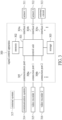
- Fig. 1 is a schematic diagram illustrating a signal control apparatus according to one embodiment of the present invention.
- the basic design of a signal control apparatus 100 is configured to include multiple interfaces for transmitting signals.
- the interfaces electrically connect with a control unit of the apparatus.
- the interface is, for example, an audiovisual interface 107 that is used to connect with a monitor 108 or a computer.
- the personnel can use the monitor 108 or the computer to check operating statuses of the signal control apparatus 100 and various peripheral devices, and to monitor signals generated by various sensors and audiovisual contents generated by video recorders.
- the multiple interfaces include a first interface 109 used to connect with one or more sensors 110 and a second interface 111 used to connect with a video recorder 112.
- the signal control apparatus 100 includes at least one communication port 101 that is used to connect with a communication system 102.
- the communication system 102 refers to various network devices, such as a router, a switch, and a base station.
- the signal control apparatus 100 transmits the received signals to an external system through the communication system 102.
- the signal control apparatus 100 includes multiple wireless or wired connection ports that are used to connect with various video recorders and receive audiovisual files generated by the video recorders.
- the audiovisual files are stored in a memory module or transmitted to the external system.
- a first connection port 103 of the signal control apparatus 100 is used to connect with the various video recorders (such as a body-worn video recorder or a drive recorder 104), and a second connection port 105 connects with an audiovisual hub device 106 that is used to collect the data generated by the various video recorders.
- the signal control apparatus 100 can include a control panel 120 that allows a user to manipulate the various devices connected thereto. Further, one of the functions provided by the control panel 120 is to annotate tags or contents on the received videos or clips, such as annotating a tag of an important item on an important event, annotating a tag of a specific personnel on a record of an event relating to behavior of said specific personnel, and annotating a tag on an interested clip in an audiovisual content. These tags can be used for searching a specific event in the future.
- Fig. 2 is a schematic diagram illustrating a signal control apparatus operated in a vehicle according to one embodiment of the present invention.
- the signal control apparatus 100 shown in Fig. 2 is installed in a vehicle 20.
- the signal control apparatus 100 connects with a monitor 108 or a computer via one of multiple interfaces.
- the monitor 108 or the computer provides for a person in the vehicle 20 to monitor operating statuses of various devices connected with the signal control apparatus 100.
- the operating statuses of the device include a battery capacity, a status of audiovisual contents to be transmitted, and a status of connection and operation of the device.
- the monitor 108 can be used to monitor images transmitted from the video recorders worn by multiple persons at the same time and clearly monitor the images at various angles.
- the monitor 108 or the computer allows the person in the vehicle 20 to be aware of an overall situation and keep track of the status of the person who performs a task.
- the signal control apparatus 100 connects with a drive recorder 104 in the vehicle 20 for obtaining the audiovisual contents recorded by the drive recorder 104.
- the drive recorder 104 adopts a multi-angle photographing module that can include a front camera module, a rear camera module, and an in-vehicle camera module.
- the drive recorder 104 can include a memory that can store images and audio data by itself.
- the data generated by the drive recorder 104 can be synchronized with the time at which the content is generated and stored in the signal control apparatus 100.
- the present example shows that the signal control apparatus 100 connects with a video recorder 112 outside the vehicle 20 via a wireless connection.
- the signal control apparatus 100 can connect with multiple ones of the video recorder 112, and the video recorder 112 can be an in-vehicle multi-view camera, a webcam, and/or multiple body-worn video recorders.
- the video recorder 112 can transmit a real-time audiovisual content to the signal control apparatus 100 in a streaming manner.
- a pre-buffer function is provided in an operating process of the front camera module, the rear camera module, the in-vehicle camera module, and the video recorder 112 worn by a person.
- the pre-buffer function is provided for buffering the recorded audiovisual data in a buffer before a video recording function is activated.
- the buffer has already buffered certain contents for a period of time (e.g., 30 seconds) before the occurrence of the event.
- the pre-buffered content can be combined with the content generated when the video recorder 122 is activated to start recording the video.
- the combined content can be stored to a storage device. In this way, the whole event that includes a cause and a process can be recorded.
- Fig. 3 is a schematic diagram depicting a framework of the signal control apparatus according to one embodiment of the present invention.
- the diagram shows main circuit components of a signal control apparatus 300 and a connection configuration between an external device and the signal control apparatus 300.
- the signal control apparatus 300 includes a control unit 301 that is electrically connected with a built-in memory module, e.g., a memory 302 and a storage 303.
- a security approach can be applied to the signal control apparatus 300 for preventing unauthorized persons from accessing the signal control apparatus 300.
- the signal control apparatus 300 provides various interfaces, which include input/output interfaces that are used to receive signals generated by external devices (as shown in the diagram).
- the input/output interfaces include a first interface 304a used to connect with a first sensor 311, a second interface 304b used to connect with a second sensor 312, and a third interface 304c connected with an external circuit 313.
- the first sensor 311 and the second sensor 312 represent the sensors disposed at various positions. Taking the vehicle as an example, the sensors can be disposed at many positions in the vehicle for sensing various conditions inside and outside the vehicle. In the case of collision or emergency braking, the in-vehicle video recorder can be instantly activated to start recording the event.
- the signal control apparatus 300 includes at least one communication port, such as a communication port 305.
- the communication port 305 can be a network communication port that allows the signal control apparatus 300 to connect with a communication system 314.
- the signal control apparatus 300 can connect with an external system 317 through the communication system 314.
- the external system 317 can be a vehicle control center.
- the external system 317 can be a control center.
- the communication port 305 is, for example, an interface for mobile communication.
- the communication system 314 can be a mobile station provided by a mobile communication service provider.
- the external system 317 can be used to implement remote control, which includes remotely configuring the apparatus, updating firmware and software of the apparatus, or performing system diagnosis. Further, the external system 317 can receive the data transmitted from the signal control apparatus 300 by a mobile communication protocol.
- the signal control apparatus 300 includes multiple wireless or wired connection ports, such as a first connection port 306a and a second connection port 306b that respectively connect with a first video recorder 315 and a second video recorder 316.
- the audiovisual data respectively generated by the first video recorder 315 and the second video recorder 316 can be transmitted to the signal control apparatus 300 via the first connection port 306a and the second connection port 306b in a form of an electronic file.
- the audiovisual data is stored to a memory module of the signal control apparatus 300.
- the audiovisual data can be temporarily stored in the memory 302. After format conversion or a compression process, the audiovisual data can be stored to the storage 303, or can be transmitted to the external system 317 through the communication system 314 via the communication port 305.
- the present invention provides a separation-type system.
- the above-described communication system 314 of Fig. 3 provides a network connection for connecting with the external system 317 in charge of data transmission.
- the multiple video recorders e.g., the first video recorder 315 and the second video recorder 316
- the signal control apparatus 300 is able to connect to both of the communication system 314 and the multiple video recorders.
- the signal control apparatus 300 can transmit the contents generated by the multiple video recorders to the external system 317 through the communication system 314. Therefore, a scalable in-vehicle video system can be implemented.
- the signal control apparatus 300 does not process the audiovisual data nor deal with the issue of audio and video synchronization.
- the design of the signal control apparatus allows the scalable in-vehicle video system to separately operate the communication system that is in charge of network communication, the multiple video recorders (e.g., the body-worn cameras) that are in charge of video recording and pre-processing, and the signal control apparatus that provides various interfaces and performs data integration and transmission.
- the implementation of the scalable in-vehicle video system is particularly based on the audiovisual hub device implemented by the signal control apparatus having the interfaces.
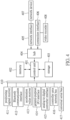
- Fig. 4 is a schematic diagram illustrating many types of interfaces of the signal control apparatus according to one embodiment of the present invention.
- the diagram provides an embodiment that illustrates the relationship between the built-in circuit components and the various interfaces of the signal control apparatus.
- the main core components of the signal control apparatus are, for example, a control unit 401, a memory 402, and a storage 403.
- the control unit 401 connects with a hub 404, and the hub 404 provides a network interface 405 for connecting with a network device 407 (such as a network router, a switch, or a base station), and provides a connection interface 406 for connecting with various video recorders 408.
- a network device 407 such as a network router, a switch, or a base station
- control unit 401 provides various interfaces via a bus 410, so as to implement a hub device having the multiple interfaces.
- the hub device is able to receive and transmit the data generated by one or more built-in sensors, and receive and transmit the data generated by one or more external circuits, an external system, and the multiple video recorders.
- the hub device also includes a positioning signal receiver 411 such as a GPS (global positioning system) receiver, a BLUETOOTH communication interface 412 such as a BLE (BLUETOOTH low energy) interface, an acceleration value receiver 413, a general-purpose I/O interface (GPIO) 414, an analog-to-digital converter (ADC) interface 415, a controller area network (CAN) bus 416, and a universal serial bus (USB) 417.
- a positioning signal receiver 411 such as a GPS (global positioning system) receiver
- BLUETOOTH communication interface 412 such as a BLE (BLUETOOTH low energy) interface
- an acceleration value receiver 413 such as a general-purpose I/O interface (GPIO) 414, an analog-to-digital converter (ADC) interface 415, a controller area network (CAN) bus 416, and a universal serial bus (USB) 417.
- GPIO general-purpose I/O interface
- ADC analog-to-digital
- the signal control apparatus is capable of receiving signals via various interfaces.
- the signals generated by sensors include positioning signals and accelerometer sensing signals.
- the signal control apparatus receives signals generated by various devices in a vehicle via a signal terminal, e.g., GPIO.
- the signals generated by the devices in the vehicle are, for example, signals generated by police equipment and transmitted via I/O of the vehicle.
- the hub device having the multiple interfaces implemented by the signal control apparatus can further embody an audiovisual hub device.
- the audiovisual hub device is used to receive and transmit the audiovisual contents generated by the multiple video recorders.
- the hub device is also used to broadcast the signals received from one or more built-in sensors or one or more external circuits via multiple wireless or wired connection ports. Accordingly, events sensed by the sensors connected with the signal control apparatus (such as images captured by a camera module in the video recorder) can be recorded and stored in the signal control apparatus, and then broadcasted to the other devices and the external system (e.g., a vehicle control center).
- the external system e.g., a vehicle control center
- the signal control apparatus also interconnects various data, such that different devices and sensors can collaborate with each other through the audiovisual hub device. For example, when the sensor transmits the sensing signals via some interfaces such as the positioning signal receiver 411 and the acceleration value receiver 413, and the control unit 401 determines that the sensing signals reach a triggering threshold, the signal control apparatus generates a signal to trigger one of the video recorders 408 to activate a function of video recording. The signal control apparatus receives the audiovisual contents generated by one or more of the video recorders 408, and then transmits the audiovisual contents to the external system through the network device 407 via the network interface 405 in a streaming manner.
- the sensor transmits the sensing signals via some interfaces such as the positioning signal receiver 411 and the acceleration value receiver 413
- the control unit 401 determines that the sensing signals reach a triggering threshold
- the signal control apparatus generates a signal to trigger one of the video recorders 408 to activate a function of video recording.
- the signal control apparatus receives the audiovisual contents generated by
- the video recorders 408 can be worn by persons.
- a user can manipulate a control panel (e.g., the control panel 120 of the signal control apparatus 100 of Fig. 1 ) of the signal control apparatus for controlling or remotely controlling any of the video recorders 408 to start or stop recording videos, and for previewing the recorded videos.
- a control panel e.g., the control panel 120 of the signal control apparatus 100 of Fig. 1
- the signal control apparatus provides circuit-protection measures, such as an overvoltage protection and an overload protection.
- overvoltage protection the apparatus is prevented from permanent damage due to voltage surges by suppressing high voltages when the apparatus is in operation.
- overload protection the apparatus is prevented from permanent damage due to an overcurrent by suppressing currents when the apparatus is in an abnormal operation.
- the signal control apparatus can be installed in a moving device such as a vehicle, a current spike may occur when the vehicle is actuated. Therefore, the current-protection measure needs to process the current spike for preventing the signal control apparatus from damage.
- the circuit-protection measure also provides a transient suppression mechanism that is used to suppress electromagnetic interference (EMI) or an instantaneous voltage fluctuation caused by various reasons for protecting sensitive components from damages. Further, the circuit-protection measure can protect the apparatus from damage caused by reverse polarity that occurs when the apparatus is accidentally connected to positive and negative terminals of a power supply in reverse.
- EMI electromagnetic interference
- the circuit-protection measure can protect the apparatus from damage caused by reverse polarity that occurs when the apparatus is accidentally connected to positive and negative terminals of a power supply in reverse.
- the control unit e.g., a microcontroller unit, MCU
- the control unit can enable an automatic shut-down procedure to avoid the problem caused by insufficient power.
- one of the main objectives is to allow the signal control apparatus and the quantity of its peripheral audiovisual devices to be not limited by the capacity of the processor through separating the audio and video processing function and the signal integration and connection function. Accordingly, the scalability of the in-vehicle video system can be improved, and the in-vehicle video system can operate in a normal manner by independent protection measures. Based on the separable design of the in-vehicle video system, the various video recorders connected with the signal control apparatus can independently operate, and the signal control apparatus provides the various interfaces for embodying an audiovisual hub device without needing to process audio and video synchronization.
- the in-vehicle video system allows various peripheral devices to perform functions of real-time monitoring, network transmission, and power supply.
Landscapes
- Engineering & Computer Science (AREA)
- Multimedia (AREA)
- Signal Processing (AREA)
- Theoretical Computer Science (AREA)
- General Engineering & Computer Science (AREA)
- Physics & Mathematics (AREA)
- General Physics & Mathematics (AREA)
- Health & Medical Sciences (AREA)
- General Health & Medical Sciences (AREA)
- Radar, Positioning & Navigation (AREA)
- Remote Sensing (AREA)
- Computer Networks & Wireless Communication (AREA)
- Social Psychology (AREA)
- Computer Hardware Design (AREA)
- Automation & Control Theory (AREA)
- Human Computer Interaction (AREA)
- Databases & Information Systems (AREA)
- Software Systems (AREA)
- Biophysics (AREA)
- Analytical Chemistry (AREA)
- Neurosurgery (AREA)
- Chemical & Material Sciences (AREA)
- Life Sciences & Earth Sciences (AREA)
- Biomedical Technology (AREA)
- Liquid Crystal Display Device Control (AREA)
- Fittings On The Vehicle Exterior For Carrying Loads, And Devices For Holding Or Mounting Articles (AREA)
- User Interface Of Digital Computer (AREA)
- Television Signal Processing For Recording (AREA)
- Devices For Indicating Variable Information By Combining Individual Elements (AREA)
- Photometry And Measurement Of Optical Pulse Characteristics (AREA)
- Electronic Switches (AREA)
Abstract
A scalable in-vehicle video system and a signal control apparatus (300) are provided. The signal control apparatus (300) of the scalable in-vehicle video system can be a standalone device that is used to connect with various peripheral devices for transmitting signals. The signal control apparatus (300) can implement an audiovisual hub device, and can be disposed in a vehicle. The signal control apparatus (300) includes a control unit (301), multiple interfaces (304a, 304b, 304c), at least one communication port (305), and multiple wireless or wired connection ports (306a, 306b). The signal control apparatus (300) connects with a sensor and an external circuit (313) via the multiple interfaces (304a, 304b, 304c), connects with an external system (317) via the communication port (305), and connects with multiple video recorders (315, 316) via the connection ports (306a, 306b). Audiovisual files generated by the video recorders (315, 316) can be stored to a memory module of the signal control apparatus (300), or can be transmitted to the external system (317) through the signal control apparatus (300).
Description
- The present invention relates to a separable signal control apparatus, and more particularly to a scalable signal control apparatus providing various types of connection interfaces and a scalable in-vehicle video system implemented by applying the signal control apparatus.
- An in-vehicle video recorder includes an in-vehicle camera, a storage device, an audio receiver, a positioning system, a control device, a communication module, and various sensors. The in-vehicle camera can be installed on a dashboard, a windshield, or a rear mirror of a car. The storage device is used to store audiovisual contents. The audio receiver can be a microphone in the car or an external wireless microphone. The positioning system can be, for example, a global positioning system (GPS), so that all the audiovisual contents recorded by various audiovisual devices can have coordinates. The control device is used to control the various audiovisual devices connected with the in-vehicle video recorder to start or stop recording video, and annotate various video clips with tags. The communication module is used to transmit the audiovisual contents to other systems.
- A conventional in-vehicle audiovisual system is capable of processing audiovisual data. A processor of the in-vehicle audiovisual system is able to process the audio and the video received from peripheral devices, and then store the audio and the video to the storage device inside the in-vehicle audiovisual system. However, due to restriction of capability of the processor and flow constraints of input/output ports, the quantity of peripheral video recorders supported by the in-vehicle audiovisual system is limited, and the quality and resolution of the audiovisual content are also limited. The conventional in-vehicle audiovisual system may also encounter the problem of video and audio synchronization in the process of video and audio processing. Furthermore, since the in-vehicle audiovisual system integrates a communication function that uses a network connection or a mobile communication protocol to connect with a remote system (such as a control center), the load on the processor for processing data transmission of the in-vehicle audiovisual system will be increased.
- When the in-vehicle audiovisual system integrates the audio and video processing and the communication function, high power consumption is incurred, such that larger and more stable power is required, and a heat dissipation problem may occur. Therefore, how to overcome the above-mentioned problems has become one of the important issues to be solved in the related art.
- In response to the above-referenced technical inadequacies of a conventional in-vehicle audiovisual system (for example, the quantity of supported video recorders, the real-time video processing function, and the scalability of the in-vehicle audiovisual system being limited by audio and video processing capabilities), the present invention provides a scalable in-vehicle video system and a signal control apparatus. The scalable in-vehicle video system adopts a separable design that separates the video processing function, the signal integration function, and the connection function. Accordingly, the signal control apparatus does not process audiovisual data, and the quantity of the supported video recorders will not be limited by the limited audio and video processing capabilities, thereby improving the scalability of the in-vehicle video system.
- In one of the embodiments, the signal control apparatus includes a control unit, a memory module, multiple interfaces, at least one communication port, and a plurality of connection ports. The interfaces are used to connect with one or more built-in sensors and receive sensing signals generated by the one or more sensors. The interfaces are also used to connect with an external circuit for receiving signals generated by the external circuit. The communication port is used to connect with an external communication system for communicating with an external system. The plurality of wireless or wired connection ports can be used to connect with multiple video recorders that generate audiovisual files received by the signal control apparatus. These audiovisual files are stored in a memory module or transmitted to the external system.
- In an aspect of the present invention, the signal control apparatus is used to implement a hub device having multiple interfaces. The hub device can receive and transmit signals generated by one or more built-in sensors, one or more external circuits, an external system, and a plurality of video recorders.
- Further, the signal control apparatus can be installed in a vehicle, and the multiple video recorders connected with the signal control apparatus can be an in-vehicle multi-view camera, a webcam, and/or multiple body-worn video recorders.
- In another aspect of the present invention, the hub device implemented by the signal control apparatus can further embody an audiovisual hub device that can be used to receive audiovisual contents generated by the multiple video recorders. The hub device broadcasts the signals received by the one or more built-in sensors or the one or more external circuits to the video recorders via the connection ports.
- Still further, the signal control apparatus can remotely trigger the video recorder to activate a video recording function.
- In one aspect, the signal control apparatus includes a control panel, and a user is allowed to operate the control panel for remotely controlling any of the multiple video recorders to start or to stop recording the audiovisual content, and for previewing the audiovisual content.
- The communication system, the plurality of video recorders, and the signal control apparatus mentioned above are capable of achieving a separable and scalable in-vehicle video system.
- These and other aspects of the present invention will become apparent from the following description of the embodiment taken in conjunction with the following drawings and their captions, although variations and modifications therein may be affected without departing from the spirit and scope of the novel concepts of the invention.
- The described embodiments may be better understood by reference to the following description and the accompanying drawings, in which:
-
Fig. 1 is a schematic diagram illustrating a signal control apparatus according to one embodiment of the present invention; -
Fig. 2 is a schematic diagram illustrating an in-vehicle signal control apparatus according to one embodiment of the present invention; -
Fig. 3 is a schematic diagram illustrating a framework of the signal control apparatus according to one embodiment of the present invention; and -
Fig. 4 is a schematic diagram illustrating various interfaces of the signal control apparatus according to one embodiment of the present invention. - The present disclosure is more particularly described in the following examples that are intended as illustrative only since numerous modifications and variations therein will be apparent to those skilled in the art. Like numbers in the drawings indicate like components throughout the views. As used in the description herein and throughout the claims that follow, unless the context clearly dictates otherwise, the meaning of "a," "an" and "the" includes plural reference, and the meaning of "in" includes "in" and "on." Titles or subtitles can be used herein for the convenience of a reader, which shall have no influence on the scope of the present disclosure.
- The terms used herein generally have their ordinary meanings in the art. In the case of conflict, the present document, including any definitions given herein, will prevail. The same thing can be expressed in more than one way. Alternative language and synonyms can be used for any term(s) discussed herein, and no special significance is to be placed upon whether a term is elaborated or discussed herein. A recital of one or more synonyms does not exclude the use of other synonyms. The use of examples anywhere in this specification including examples of any terms is illustrative only, and in no way limits the scope and meaning of the present disclosure or of any exemplified term. Likewise, the present disclosure is not limited to various embodiments given herein. Numbering terms such as "first," "second" or "third" can be used to describe various components, signals or the like, which are for distinguishing one component/signal from another one only, and are not intended to, nor should be construed to impose any substantive limitations on the components, signals or the like.
- The present invention relates to a scalable in-vehicle video system and a signal control apparatus. According to one embodiment of the present invention, the scalable in-vehicle video system can be implemented in a vehicle or a moving device driven by a law enforcement officer. The framework of the scalable in-vehicle video system is to separate video recording and audiovisual signal processing functionalities from the signal control apparatus that integrates various interfaces, communication ports, and connection ports. The signal control apparatus embodies a hub device having multiple interfaces that is capable of receiving signals generated by an external device and signals generated by sensors built in the signal control apparatus. In addition to implementing a comprehensive and scalable in-vehicle video system, a distribution framework can be implemented since the signal control apparatus is configured to connect with various IoT devices. While each component of the in-vehicle video system can operate independently, the components can also connect with and share data with each other for other integrated applications.
- The signal control apparatus does not provide audio and video processing functions that require a large amount of computing power, but adopts a separable design from a part that is conventionally used to process audiovisual data. As such, in the function of connecting with an external device, the signal control apparatus will not be restricted by the demand for additionally processing the audiovisual data since the signal control apparatus does not need to process audio and video synchronization individually. Therefore, the signal control apparatus has scalability. Further, power consumption and a heat dissipation problem of the apparatus can be improved. Still further, the signal control apparatus can adopt a low-power-consumption and low-performance processor.
-
Fig. 1 is a schematic diagram illustrating a signal control apparatus according to one embodiment of the present invention. - The basic design of a
signal control apparatus 100 is configured to include multiple interfaces for transmitting signals. The interfaces electrically connect with a control unit of the apparatus. The interface is, for example, anaudiovisual interface 107 that is used to connect with amonitor 108 or a computer. The personnel can use themonitor 108 or the computer to check operating statuses of thesignal control apparatus 100 and various peripheral devices, and to monitor signals generated by various sensors and audiovisual contents generated by video recorders. The multiple interfaces include afirst interface 109 used to connect with one ormore sensors 110 and asecond interface 111 used to connect with avideo recorder 112. - The
signal control apparatus 100 includes at least onecommunication port 101 that is used to connect with acommunication system 102. Thecommunication system 102 refers to various network devices, such as a router, a switch, and a base station. Thesignal control apparatus 100 transmits the received signals to an external system through thecommunication system 102. - The
signal control apparatus 100 includes multiple wireless or wired connection ports that are used to connect with various video recorders and receive audiovisual files generated by the video recorders. The audiovisual files are stored in a memory module or transmitted to the external system. For example, afirst connection port 103 of thesignal control apparatus 100 is used to connect with the various video recorders (such as a body-worn video recorder or a drive recorder 104), and asecond connection port 105 connects with anaudiovisual hub device 106 that is used to collect the data generated by the various video recorders. - The
signal control apparatus 100 can include acontrol panel 120 that allows a user to manipulate the various devices connected thereto. Further, one of the functions provided by thecontrol panel 120 is to annotate tags or contents on the received videos or clips, such as annotating a tag of an important item on an important event, annotating a tag of a specific personnel on a record of an event relating to behavior of said specific personnel, and annotating a tag on an interested clip in an audiovisual content. These tags can be used for searching a specific event in the future. -
Fig. 2 is a schematic diagram illustrating a signal control apparatus operated in a vehicle according to one embodiment of the present invention. - The
signal control apparatus 100 shown inFig. 2 is installed in avehicle 20. Thesignal control apparatus 100 connects with amonitor 108 or a computer via one of multiple interfaces. Themonitor 108 or the computer provides for a person in thevehicle 20 to monitor operating statuses of various devices connected with thesignal control apparatus 100. The operating statuses of the device include a battery capacity, a status of audiovisual contents to be transmitted, and a status of connection and operation of the device. In an exemplary example, themonitor 108 can be used to monitor images transmitted from the video recorders worn by multiple persons at the same time and clearly monitor the images at various angles. Themonitor 108 or the computer allows the person in thevehicle 20 to be aware of an overall situation and keep track of the status of the person who performs a task. - The
signal control apparatus 100 connects with adrive recorder 104 in thevehicle 20 for obtaining the audiovisual contents recorded by thedrive recorder 104. According to one embodiment of the present invention, thedrive recorder 104 adopts a multi-angle photographing module that can include a front camera module, a rear camera module, and an in-vehicle camera module. Thedrive recorder 104 can include a memory that can store images and audio data by itself. In one further embodiment of the present invention, the data generated by thedrive recorder 104 can be synchronized with the time at which the content is generated and stored in thesignal control apparatus 100. - The present example shows that the
signal control apparatus 100 connects with avideo recorder 112 outside thevehicle 20 via a wireless connection. Thesignal control apparatus 100 can connect with multiple ones of thevideo recorder 112, and thevideo recorder 112 can be an in-vehicle multi-view camera, a webcam, and/or multiple body-worn video recorders. Thevideo recorder 112 can transmit a real-time audiovisual content to thesignal control apparatus 100 in a streaming manner. - Further, a pre-buffer function is provided in an operating process of the front camera module, the rear camera module, the in-vehicle camera module, and the
video recorder 112 worn by a person. The pre-buffer function is provided for buffering the recorded audiovisual data in a buffer before a video recording function is activated. When an event occurs, apart from activating the video recorder 122 to start recording a video, the buffer has already buffered certain contents for a period of time (e.g., 30 seconds) before the occurrence of the event. - Afterwards, the pre-buffered content can be combined with the content generated when the video recorder 122 is activated to start recording the video. The combined content can be stored to a storage device. In this way, the whole event that includes a cause and a process can be recorded.
-
Fig. 3 is a schematic diagram depicting a framework of the signal control apparatus according to one embodiment of the present invention. The diagram shows main circuit components of asignal control apparatus 300 and a connection configuration between an external device and thesignal control apparatus 300. - The
signal control apparatus 300 includes acontrol unit 301 that is electrically connected with a built-in memory module, e.g., amemory 302 and astorage 303. A security approach can be applied to thesignal control apparatus 300 for preventing unauthorized persons from accessing thesignal control apparatus 300. - The
signal control apparatus 300 provides various interfaces, which include input/output interfaces that are used to receive signals generated by external devices (as shown in the diagram). The input/output interfaces include afirst interface 304a used to connect with afirst sensor 311, asecond interface 304b used to connect with asecond sensor 312, and athird interface 304c connected with anexternal circuit 313. According to one embodiment of the present invention, thefirst sensor 311 and thesecond sensor 312 represent the sensors disposed at various positions. Taking the vehicle as an example, the sensors can be disposed at many positions in the vehicle for sensing various conditions inside and outside the vehicle. In the case of collision or emergency braking, the in-vehicle video recorder can be instantly activated to start recording the event. - The
signal control apparatus 300 includes at least one communication port, such as acommunication port 305. Thecommunication port 305 can be a network communication port that allows thesignal control apparatus 300 to connect with acommunication system 314. Thesignal control apparatus 300 can connect with anexternal system 317 through thecommunication system 314. - Taking the in-vehicle
signal control apparatus 300 as an example, theexternal system 317 can be a vehicle control center. For the law enforcement officer, theexternal system 317 can be a control center. Thecommunication port 305 is, for example, an interface for mobile communication. Thecommunication system 314 can be a mobile station provided by a mobile communication service provider. Theexternal system 317 can be used to implement remote control, which includes remotely configuring the apparatus, updating firmware and software of the apparatus, or performing system diagnosis. Further, theexternal system 317 can receive the data transmitted from thesignal control apparatus 300 by a mobile communication protocol. - The
signal control apparatus 300 includes multiple wireless or wired connection ports, such as afirst connection port 306a and asecond connection port 306b that respectively connect with afirst video recorder 315 and asecond video recorder 316. The audiovisual data respectively generated by thefirst video recorder 315 and thesecond video recorder 316 can be transmitted to thesignal control apparatus 300 via thefirst connection port 306a and thesecond connection port 306b in a form of an electronic file. The audiovisual data is stored to a memory module of thesignal control apparatus 300. For example, the audiovisual data can be temporarily stored in thememory 302. After format conversion or a compression process, the audiovisual data can be stored to thestorage 303, or can be transmitted to theexternal system 317 through thecommunication system 314 via thecommunication port 305. - It should be noted that the present invention provides a separation-type system. For example, the above-described
communication system 314 ofFig. 3 provides a network connection for connecting with theexternal system 317 in charge of data transmission. The multiple video recorders (e.g., thefirst video recorder 315 and the second video recorder 316) can be worn by multiple persons for recording videos with different viewing angles at different locations. Thesignal control apparatus 300 is able to connect to both of thecommunication system 314 and the multiple video recorders. When the separation-type system is in operation, thesignal control apparatus 300 can transmit the contents generated by the multiple video recorders to theexternal system 317 through thecommunication system 314. Therefore, a scalable in-vehicle video system can be implemented. In particular, thesignal control apparatus 300 does not process the audiovisual data nor deal with the issue of audio and video synchronization. - According to the above embodiments of the present invention, the design of the signal control apparatus allows the scalable in-vehicle video system to separately operate the communication system that is in charge of network communication, the multiple video recorders (e.g., the body-worn cameras) that are in charge of video recording and pre-processing, and the signal control apparatus that provides various interfaces and performs data integration and transmission. It should be noted that the implementation of the scalable in-vehicle video system is particularly based on the audiovisual hub device implemented by the signal control apparatus having the interfaces.
- Reference is made to
Fig. 4 , which is a schematic diagram illustrating many types of interfaces of the signal control apparatus according to one embodiment of the present invention. - The diagram provides an embodiment that illustrates the relationship between the built-in circuit components and the various interfaces of the signal control apparatus. The main core components of the signal control apparatus are, for example, a
control unit 401, amemory 402, and astorage 403. Thecontrol unit 401 connects with ahub 404, and thehub 404 provides anetwork interface 405 for connecting with a network device 407 (such as a network router, a switch, or a base station), and provides aconnection interface 406 for connecting withvarious video recorders 408. - Further, in the diagram, the
control unit 401 provides various interfaces via abus 410, so as to implement a hub device having the multiple interfaces. The hub device is able to receive and transmit the data generated by one or more built-in sensors, and receive and transmit the data generated by one or more external circuits, an external system, and the multiple video recorders. The hub device also includes apositioning signal receiver 411 such as a GPS (global positioning system) receiver, aBLUETOOTH communication interface 412 such as a BLE (BLUETOOTH low energy) interface, anacceleration value receiver 413, a general-purpose I/O interface (GPIO) 414, an analog-to-digital converter (ADC)interface 415, a controller area network (CAN)bus 416, and a universal serial bus (USB) 417. An actual implementation of the hub device includes one or more of the abovementioned components. - The signal control apparatus is capable of receiving signals via various interfaces. For example, the signals generated by sensors include positioning signals and accelerometer sensing signals. The signal control apparatus receives signals generated by various devices in a vehicle via a signal terminal, e.g., GPIO. The signals generated by the devices in the vehicle are, for example, signals generated by police equipment and transmitted via I/O of the vehicle.
- According to the above embodiments of the present invention, the hub device having the multiple interfaces implemented by the signal control apparatus can further embody an audiovisual hub device. The audiovisual hub device is used to receive and transmit the audiovisual contents generated by the multiple video recorders. The hub device is also used to broadcast the signals received from one or more built-in sensors or one or more external circuits via multiple wireless or wired connection ports. Accordingly, events sensed by the sensors connected with the signal control apparatus (such as images captured by a camera module in the video recorder) can be recorded and stored in the signal control apparatus, and then broadcasted to the other devices and the external system (e.g., a vehicle control center).
- The signal control apparatus also interconnects various data, such that different devices and sensors can collaborate with each other through the audiovisual hub device. For example, when the sensor transmits the sensing signals via some interfaces such as the
positioning signal receiver 411 and theacceleration value receiver 413, and thecontrol unit 401 determines that the sensing signals reach a triggering threshold, the signal control apparatus generates a signal to trigger one of thevideo recorders 408 to activate a function of video recording. The signal control apparatus receives the audiovisual contents generated by one or more of thevideo recorders 408, and then transmits the audiovisual contents to the external system through thenetwork device 407 via thenetwork interface 405 in a streaming manner. - In an exemplary example, the
video recorders 408 can be worn by persons. When thevideo recorder 408 is in operation, a user can manipulate a control panel (e.g., thecontrol panel 120 of thesignal control apparatus 100 ofFig. 1 ) of the signal control apparatus for controlling or remotely controlling any of thevideo recorders 408 to start or stop recording videos, and for previewing the recorded videos. - Further, the signal control apparatus provides circuit-protection measures, such as an overvoltage protection and an overload protection. In the overvoltage protection, the apparatus is prevented from permanent damage due to voltage surges by suppressing high voltages when the apparatus is in operation. In the overload protection, the apparatus is prevented from permanent damage due to an overcurrent by suppressing currents when the apparatus is in an abnormal operation.
- Furthermore, since the signal control apparatus can be installed in a moving device such as a vehicle, a current spike may occur when the vehicle is actuated. Therefore, the current-protection measure needs to process the current spike for preventing the signal control apparatus from damage. The circuit-protection measure also provides a transient suppression mechanism that is used to suppress electromagnetic interference (EMI) or an instantaneous voltage fluctuation caused by various reasons for protecting sensitive components from damages. Further, the circuit-protection measure can protect the apparatus from damage caused by reverse polarity that occurs when the apparatus is accidentally connected to positive and negative terminals of a power supply in reverse.
- Based on the above-mentioned circuit-protection measures, the control unit (e.g., a microcontroller unit, MCU) of the signal control apparatus is required to continuously detect the voltage of an on-board power after the apparatus is activated, so as to ensure that the apparatus can operate properly. When the on-board power drops and meets a lower-power threshold, the control unit can enable an automatic shut-down procedure to avoid the problem caused by insufficient power.
- In conclusion, according to the above embodiments of the signal control apparatus and the scalable in-vehicle video system that is implemented by the signal control apparatus, one of the main objectives is to allow the signal control apparatus and the quantity of its peripheral audiovisual devices to be not limited by the capacity of the processor through separating the audio and video processing function and the signal integration and connection function. Accordingly, the scalability of the in-vehicle video system can be improved, and the in-vehicle video system can operate in a normal manner by independent protection measures. Based on the separable design of the in-vehicle video system, the various video recorders connected with the signal control apparatus can independently operate, and the signal control apparatus provides the various interfaces for embodying an audiovisual hub device without needing to process audio and video synchronization. The in-vehicle video system allows various peripheral devices to perform functions of real-time monitoring, network transmission, and power supply.
- The foregoing description of the exemplary embodiments of the invention has been presented only for the purposes of illustration and description and is not intended to be exhaustive or to limit the invention to the precise forms disclosed. Many modifications and variations are possible in light of the above teaching.
- The embodiments were chosen and described in order to explain the principles of the invention and their practical application so as to enable others skilled in the art to utilize the invention and various embodiments and with various modifications as are suited to the particular use contemplated. Alternative embodiments will become apparent to those skilled in the art to which the present invention pertains without departing from its spirit and scope.
Claims (15)
- A signal control apparatus (300), characterized in that the apparatus comprises:a control unit (301) connected with a built-in memory module;multiple interfaces (304a, 304b, 304c) electrically connected with the control unit (301), wherein the interfaces (304a, 304b, 304c) connect with one or more built-in sensors (311, 312) for generating sensing signals, and connect with one or more external circuits (313) for receiving signals generated by the one or more external circuits (313);at least one communication port (305) electrically connected with the control unit (301), wherein the at least one communication port (305) is used to connect with a communication system (314) that connects with an external system (317) via a network; andmultiple wireless or wired connection ports (306a, 306b) connected with multiple video recorders (315, 316) for receiving audiovisual files generated by the multiple video recorders (315, 316), wherein the audiovisual files are stored to the built-in memory module or transmitted to the external system (317).
- The signal control apparatus (300) according to claim 1, wherein the multiple interfaces (304a, 304b, 304c) include any combination of a positioning signal receiver (411), a BLUETOOTH communication interface (412), an acceleration value receiver (413), a general-purpose I/O interface (414), an analog-to-digital converter interface (415), a controller area network bus (416), and a universal serial bus (417).
- The signal control apparatus (300) according to claim 1, wherein the signal control apparatus (300) is used to implement a hub device having multiple interfaces (304a, 304b, 304c), and the hub device is capable of receiving and transmitting signals generated by the one or more built-in sensors (311, 312), the one or more external circuits (313), the external system (317), and the video recorders (315, 316).
- The signal control apparatus (300) according to claim 3, wherein the signal control apparatus (300) is installed in a vehicle, and the multiple video recorders (315, 316) include an in-vehicle multi-view camera, a webcam, and/or multiple body-worn video recorders (315, 316).
- The signal control apparatus (300) according to claim 3, wherein the hub device having the multiple interfaces (304a, 304b, 304c) implemented by the signal control apparatus (300) further embodies an audiovisual hub device that is used to receive audiovisual contents generated by the multiple video recorders (315, 316); wherein the hub device broadcasts the signals generated by the one or more built-in sensors (311, 312) or the one or more external circuits (313) to the video recorders (315, 316) via the multiple wireless or wired connection ports (306a, 306b).
- The signal control apparatus (300) according to claim 5, wherein the multiple video recorders (315, 316) are triggered by the signal transmitted by the signal control apparatus (300) to activate a video recording function.
- The signal control apparatus (300) according to claim 5, wherein the audiovisual hub device implemented by the signal control apparatus (300) connects with a network router through the at least one communication port (305), so as to transmit the audiovisual contents generated by the multiple video recorders (315, 316) to the external system (317) in a live streaming process.
- The signal control apparatus (300) according to any of claim 1 to claim 7, further comprising a control panel (120), wherein a user is allowed to operate the control panel (120) for remotely controlling any of the multiple video recorders (315, 316) to start or to stop recording the audiovisual content, and for previewing the audiovisual content.
- A scalable in-vehicle video system, characterized in that the system comprises:a communication system (314) providing a network connection to connect with an external system (317);multiple video recorders (315, 316) including an in-vehicle multi-view camera, a webcam, and/or multiple body-worn video recorders (315, 316) for recording audiovisual contents at different locations and with different viewing angles; anda signal control apparatus (300), which includes:a control unit (301) connected with a built-in memory module;multiple interfaces (304a, 304b, 304c), electrically connected with the control unit (301), wherein the interfaces (304a, 304b, 304c) connect with one or more built-in sensors (311, 312) for generating sensing signals, and connect with one or more external circuits (313) for receiving signals generated by the one or more external circuits (313);at least one communication port (305), electrically connected with the control unit (301), wherein the at least one communication port (305) is used to connect with the communication system (314) that connects with the external system (317) via a network; andmultiple wireless or wired connection ports (306a, 306b) connected with multiple video recorders (315, 316) for receiving audiovisual files generated by the multiple video recorders (315, 316), wherein the audiovisual files are stored to the built-in memory module or transmitted to the external system (317).
- The scalable in-vehicle video system according to claim 9, wherein the multiple interfaces (304a, 304b, 304c) of the signal control apparatus (300) include any combination of a positioning signal receiver (411), a BLUETOOTH communication interface (412), an acceleration value receiver (413), a general-purpose I/O interface (414), an analog-to-digital converter interface (415), a controller area network bus (416), and a universal serial bus (417).
- The scalable in-vehicle video system according to claim 9, wherein the signal control apparatus (300) implements a hub device having the multiple interfaces (304a, 304b, 304c) for receiving the audiovisual contents generated by the multiple video recorders (315, 316); wherein the hub device broadcasts the signals generated by the one or more built-in sensors (311, 312) or the one or more external circuits (313) to the video recorders (315, 316) via the multiple wireless or wired connection ports (306a, 306b).
- The scalable in-vehicle video system according to claim 11, wherein the multiple video recorders (315, 316) are triggered by the signal transmitted by the signal control apparatus (300) to activate a video recording function.
- The scalable in-vehicle video system according to claim 11, wherein the hub device having the multiple interfaces (304a, 304b, 304c) implemented by the signal control apparatus (300) further embodies an audiovisual hub device that is used to receive audiovisual contents generated by the multiple video recorders (315, 316); wherein the hub device broadcasts the signals generated by the one or more built-in sensors (311, 312) or the one or more external circuits (313) to the video recorders (315, 316) via the multiple wireless or wired connection ports (306a, 306b).
- The scalable in-vehicle video system according to claim 13, wherein the audiovisual hub device implemented by the signal control apparatus (300) connects with a network router through the at least one communication port (305), so as to transmit the audiovisual contents generated by the multiple video recorders (315, 316) to the external system (317) in a live streaming process.
- The scalable in-vehicle video system according to any of claim 9 to claim 14, wherein the signal control apparatus (300) further includes a control panel (120), and a user is allowed to operate the control panel (120) for remotely controlling any of the multiple video recorders (315, 316) to start or to stop recording the audiovisual content, and for previewing the audiovisual content.
Applications Claiming Priority (1)
| Application Number | Priority Date | Filing Date | Title |
|---|---|---|---|
| US202363527509P | 2023-07-18 | 2023-07-18 |
Publications (1)
| Publication Number | Publication Date |
|---|---|
| EP4494945A1 true EP4494945A1 (en) | 2025-01-22 |
Family
ID=89029590
Family Applications (3)
| Application Number | Title | Priority Date | Filing Date |
|---|---|---|---|
| EP23213192.0A Pending EP4494945A1 (en) | 2023-07-18 | 2023-11-30 | Scalable in-vehicle video system and signal control apparatus |
| EP23213642.4A Pending EP4496305A1 (en) | 2023-07-18 | 2023-12-01 | Sensor device and operating method thereof |
| EP24153118.5A Pending EP4495739A1 (en) | 2023-07-18 | 2024-01-22 | Adaptive display backlight control system and method for controlling the backlight |
Family Applications After (2)
| Application Number | Title | Priority Date | Filing Date |
|---|---|---|---|
| EP23213642.4A Pending EP4496305A1 (en) | 2023-07-18 | 2023-12-01 | Sensor device and operating method thereof |
| EP24153118.5A Pending EP4495739A1 (en) | 2023-07-18 | 2024-01-22 | Adaptive display backlight control system and method for controlling the backlight |
Country Status (4)
| Country | Link |
|---|---|
| US (4) | US12587740B2 (en) |
| EP (3) | EP4494945A1 (en) |
| AU (3) | AU2023270306A1 (en) |
| TW (2) | TWI867768B (en) |
Families Citing this family (1)
| Publication number | Priority date | Publication date | Assignee | Title |
|---|---|---|---|---|
| US12587699B2 (en) * | 2024-01-24 | 2026-03-24 | Nissan North America, Inc. | Synchronizing playback of multimedia between in-vehicle and mobile devices |
Citations (3)
| Publication number | Priority date | Publication date | Assignee | Title |
|---|---|---|---|---|
| US20140306835A1 (en) * | 2012-03-14 | 2014-10-16 | Flextronics Ap, Llc | Radar sensing and emergency response vehicle detection |
| US20180137698A1 (en) * | 2015-04-24 | 2018-05-17 | Pai-R Co., Ltd. | Drive recorder |
| US20190197354A1 (en) * | 2017-12-22 | 2019-06-27 | Motorola Solutions, Inc | Method, device, and system for adaptive training of machine learning models via detected in-field contextual sensor events and associated located and retrieved digital audio and/or video imaging |
Family Cites Families (40)
| Publication number | Priority date | Publication date | Assignee | Title |
|---|---|---|---|---|
| JP3882522B2 (en) | 2001-03-29 | 2007-02-21 | セイコーエプソン株式会社 | Mobile device with camera |
| GB2400667B (en) | 2003-04-15 | 2006-05-31 | Hewlett Packard Development Co | Attention detection |
| US7728316B2 (en) * | 2005-09-30 | 2010-06-01 | Apple Inc. | Integrated proximity sensor and light sensor |
| US7633076B2 (en) * | 2005-09-30 | 2009-12-15 | Apple Inc. | Automated response to and sensing of user activity in portable devices |
| US7714265B2 (en) * | 2005-09-30 | 2010-05-11 | Apple Inc. | Integrated proximity sensor and light sensor |
| TWM310381U (en) | 2006-08-14 | 2007-04-21 | Rung-Yuan Wang | Firearms control system |
| US20080061991A1 (en) | 2006-09-11 | 2008-03-13 | Randall Lee Urban | System and method for remote Audio/Video capture of weapon use |
| TWI397898B (en) * | 2008-04-22 | 2013-06-01 | Htc Corp | Portable electronic apparatus and backlight control method thereof |
| RU2493613C2 (en) * | 2008-08-22 | 2013-09-20 | Сони Корпорейшн | Image display device and driving method |
| US20100079508A1 (en) | 2008-09-30 | 2010-04-01 | Andrew Hodge | Electronic devices with gaze detection capabilities |
| US10282563B2 (en) | 2009-02-06 | 2019-05-07 | Tobii Ab | Video-based privacy supporting system |
| JP5299866B2 (en) | 2009-05-19 | 2013-09-25 | 日立コンシューマエレクトロニクス株式会社 | Video display device |
| RU2012140472A (en) | 2010-02-24 | 2014-03-27 | Шарп Кабусики Кайся | LIGHT-RADIATING DEVICE FOR DISPLAYING AN IMAGE AND DEVICE FOR DISPLAYING AN IMAGE |
| US20120169594A1 (en) * | 2010-12-30 | 2012-07-05 | Motorola-Mobility, Inc. | Electronic device and method for backlight control |
| TWI421624B (en) * | 2011-04-01 | 2014-01-01 | Ind Tech Res Inst | Adaptive surrounding view monitoring apparatus and method thereof |
| CN102842291B (en) * | 2012-09-04 | 2015-09-02 | 济南微晶电子技术有限公司 | A kind of back light adjusting system based on obverse face detection and method |
| US9958228B2 (en) * | 2013-04-01 | 2018-05-01 | Yardarm Technologies, Inc. | Telematics sensors and camera activation in connection with firearm activity |
| CN104133548A (en) * | 2013-05-03 | 2014-11-05 | 中国移动通信集团公司 | Method and device for determining viewpoint area and controlling screen luminance |
| US10619961B2 (en) | 2013-07-01 | 2020-04-14 | Karl F. Milde, Jr. | Apparatus and method for assisting law enforcement in managing crisis situations |
| US20160165192A1 (en) | 2014-12-08 | 2016-06-09 | Amirbahman Saatchi | Methods, systems, and apparatuses for capturing and archiving firearm event telemetry and environmental conditions |
| BR112017014261A2 (en) | 2014-12-29 | 2018-03-06 | PogoTec, Inc. | firearm and holster, head protector and method for wireless power transfer |
| US9613587B2 (en) | 2015-01-20 | 2017-04-04 | Snaptrack, Inc. | Apparatus and method for adaptive image rendering based on ambient light levels |
| TWM509359U (en) | 2015-03-20 | 2015-09-21 | hong-yi Zhang | Photographing guns with wired charging capability and gun sleeve |
| US10267596B2 (en) | 2015-08-21 | 2019-04-23 | Roy L. Weekly | Safety system including a weapon holster and body-worn camera system |
| US10712126B2 (en) | 2015-08-25 | 2020-07-14 | Axon Enterprise, Inc. | Systems and methods for cooperation among weapons, holsters, and recorders |
| TWM518656U (en) * | 2015-12-07 | 2016-03-11 | Dynamas Technology Corp | Car interior audio-video monitoring system |
| CN105677042A (en) * | 2016-02-24 | 2016-06-15 | 广东欧珀移动通信有限公司 | Control method and device for display mode of terminal |
| US11280582B2 (en) | 2016-11-30 | 2022-03-22 | James Clinton Estes, III | Pistol activity recording device |
| KR102790278B1 (en) * | 2016-12-22 | 2025-04-03 | 삼성전자주식회사 | Apparatus and method for Display |
| US10324525B2 (en) * | 2016-12-31 | 2019-06-18 | Intel Corporation | Context aware selective backlighting techniques |
| US20210172716A1 (en) | 2017-02-06 | 2021-06-10 | Check 6 Tactical & Training, LLC | Gun video camera system |
| US11385022B2 (en) * | 2017-02-14 | 2022-07-12 | Axon Enterprise, Inc. | Mounting systems and methods for positioning a detector on a weapon holster |
| WO2019022717A1 (en) * | 2017-07-25 | 2019-01-31 | Hewlett-Packard Development Company, L.P. | Determining user presence based on sensed distance |
| CN108646907A (en) | 2018-04-18 | 2018-10-12 | Oppo广东移动通信有限公司 | Backlight brightness adjusting method and related product |
| JP2022534338A (en) * | 2019-03-27 | 2022-07-29 | インテル コーポレイション | Smart display panel device and related method |
| WO2021258394A1 (en) | 2020-06-26 | 2021-12-30 | Intel Corporation | Systems, methods, and apparatus for display panel human presence detection |
| CN112683108B (en) | 2020-12-29 | 2024-02-27 | 卢祺 | Weapon supervision method and device, storage medium and electronic device |
| US12010464B2 (en) | 2021-09-30 | 2024-06-11 | Getac Technology Corporation | Automated camera activation |
| US20230209156A1 (en) * | 2021-12-27 | 2023-06-29 | Digital Barriers Services, Ltd. | Methods and Systems for Managing Body-Worn Video Recording Devices |
| CN115695695A (en) | 2022-10-31 | 2023-02-03 | 深圳泰美威视科技有限公司 | Firearms Recording Device and Law Enforcement Recording System |
-
2023
- 2023-09-28 TW TW112137220A patent/TWI867768B/en active
- 2023-10-02 TW TW112137609A patent/TWI866509B/en active
- 2023-11-23 AU AU2023270306A patent/AU2023270306A1/en not_active Abandoned
- 2023-11-24 US US18/518,679 patent/US12587740B2/en active Active
- 2023-11-29 US US18/522,608 patent/US20250030942A1/en active Pending
- 2023-11-30 AU AU2023274162A patent/AU2023274162A1/en not_active Abandoned
- 2023-11-30 EP EP23213192.0A patent/EP4494945A1/en active Pending
- 2023-12-01 EP EP23213642.4A patent/EP4496305A1/en active Pending
- 2023-12-01 US US18/526,145 patent/US12347395B2/en active Active
-
2024
- 2024-01-22 EP EP24153118.5A patent/EP4495739A1/en active Pending
-
2025
- 2025-06-02 US US19/225,136 patent/US20250294248A1/en active Pending
- 2025-08-15 AU AU2025217384A patent/AU2025217384A1/en active Pending
Patent Citations (3)
| Publication number | Priority date | Publication date | Assignee | Title |
|---|---|---|---|---|
| US20140306835A1 (en) * | 2012-03-14 | 2014-10-16 | Flextronics Ap, Llc | Radar sensing and emergency response vehicle detection |
| US20180137698A1 (en) * | 2015-04-24 | 2018-05-17 | Pai-R Co., Ltd. | Drive recorder |
| US20190197354A1 (en) * | 2017-12-22 | 2019-06-27 | Motorola Solutions, Inc | Method, device, and system for adaptive training of machine learning models via detected in-field contextual sensor events and associated located and retrieved digital audio and/or video imaging |
Also Published As
| Publication number | Publication date |
|---|---|
| US20250294248A1 (en) | 2025-09-18 |
| TWI866509B (en) | 2024-12-11 |
| TW202505896A (en) | 2025-02-01 |
| US20250027748A1 (en) | 2025-01-23 |
| US20250029568A1 (en) | 2025-01-23 |
| AU2023274162A1 (en) | 2025-02-06 |
| EP4495739A1 (en) | 2025-01-22 |
| TWI867768B (en) | 2024-12-21 |
| TW202505274A (en) | 2025-02-01 |
| US20250030942A1 (en) | 2025-01-23 |
| AU2025217384A1 (en) | 2025-09-04 |
| US12587740B2 (en) | 2026-03-24 |
| EP4496305A1 (en) | 2025-01-22 |
| US12347395B2 (en) | 2025-07-01 |
| AU2023270306A1 (en) | 2025-02-06 |
Similar Documents
| Publication | Publication Date | Title |
|---|---|---|
| JP2008244674A (en) | Wireless terminal, in-vehicle wireless terminal holder, server, and drive recorder system | |
| KR20100073893A (en) | Black box for a car, method and system for manegenet traffic accident using the same | |
| US20250030942A1 (en) | Scalable in-vehicle video system and signal control apparatus | |
| CN109685938A (en) | A kind of automobile data recorder | |
| WO2016089918A1 (en) | In-car digital video system with integrated alpr | |
| KR101987992B1 (en) | Device of video recording for vehicle using impact detection function and method thereof | |
| EP4095821B1 (en) | Vehicle abnormality monitoring and illuminating methods and apparatuses | |
| KR101477913B1 (en) | Black box for vehicle having event notifying function over wifi communication | |
| US20070268368A1 (en) | Activity based persistent recording | |
| US11323692B2 (en) | Asset management system and asset management method | |
| CN102760316A (en) | Access controller and access control system | |
| CN209312107U (en) | A kind of automobile data recorder | |
| WO2015163737A1 (en) | Black box for motorcycle including external data collecting part | |
| TWM453210U (en) | Monitoring system and photographic device for remote backup | |
| US20150070497A1 (en) | Recording apparatus for vehicles and method of recording | |
| KR20210129819A (en) | Impact detecting system for vehicle on parking and method thereof | |
| KR101902276B1 (en) | Portable Security Surveillance System and Method by Using Camera | |
| KR102337472B1 (en) | Image-processing Apparatus for Car and Method of Processing Data Using The Same | |
| JP2024154900A (en) | Image capture device, image capture device control method and program | |
| TW201347536A (en) | Video recorder with wireless transportation | |
| KR102058243B1 (en) | Blackbox Apparatus and Method for Transferring Moving Pictures through the LPWAN | |
| KR101116161B1 (en) | Digital video recording device for vehicles | |
| KR102588947B1 (en) | Blackbox system for vehicle | |
| KR102791042B1 (en) | Door-adhesive surveillance camera system and surveillance system including the same | |
| CN220884317U (en) | Vehicle monitoring device and vehicle |
Legal Events
| Date | Code | Title | Description |
|---|---|---|---|
| PUAI | Public reference made under article 153(3) epc to a published international application that has entered the european phase |
Free format text: ORIGINAL CODE: 0009012 |
|
| STAA | Information on the status of an ep patent application or granted ep patent |
Free format text: STATUS: THE APPLICATION HAS BEEN PUBLISHED |
|
| AK | Designated contracting states |
Kind code of ref document: A1 Designated state(s): AL AT BE BG CH CY CZ DE DK EE ES FI FR GB GR HR HU IE IS IT LI LT LU LV MC ME MK MT NL NO PL PT RO RS SE SI SK SM TR |
|
| STAA | Information on the status of an ep patent application or granted ep patent |
Free format text: STATUS: REQUEST FOR EXAMINATION WAS MADE |
|
| 17P | Request for examination filed |
Effective date: 20250516 |