EP4494484A1 - Collinsella bacteria proliferation controlling composition and use thereof - Google Patents
Collinsella bacteria proliferation controlling composition and use thereof Download PDFInfo
- Publication number
- EP4494484A1 EP4494484A1 EP23770904.3A EP23770904A EP4494484A1 EP 4494484 A1 EP4494484 A1 EP 4494484A1 EP 23770904 A EP23770904 A EP 23770904A EP 4494484 A1 EP4494484 A1 EP 4494484A1
- Authority
- EP
- European Patent Office
- Prior art keywords
- human milk
- composition
- bacteria
- milk oligosaccharide
- collinsella
- Prior art date
- Legal status (The legal status is an assumption and is not a legal conclusion. Google has not performed a legal analysis and makes no representation as to the accuracy of the status listed.)
- Pending
Links
Images
Classifications
-
- A—HUMAN NECESSITIES
- A61—MEDICAL OR VETERINARY SCIENCE; HYGIENE
- A61K—PREPARATIONS FOR MEDICAL, DENTAL OR TOILETRY PURPOSES
- A61K31/00—Medicinal preparations containing organic active ingredients
- A61K31/70—Carbohydrates; Sugars; Derivatives thereof
- A61K31/702—Oligosaccharides, i.e. having three to five saccharide radicals attached to each other by glycosidic linkages
-
- A—HUMAN NECESSITIES
- A23—FOODS OR FOODSTUFFS; TREATMENT THEREOF, NOT COVERED BY OTHER CLASSES
- A23L—FOODS, FOODSTUFFS OR NON-ALCOHOLIC BEVERAGES, NOT OTHERWISE PROVIDED FOR; PREPARATION OR TREATMENT THEREOF
- A23L33/00—Modifying nutritive qualities of foods; Dietetic products; Preparation or treatment thereof
- A23L33/10—Modifying nutritive qualities of foods; Dietetic products; Preparation or treatment thereof using additives
- A23L33/125—Modifying nutritive qualities of foods; Dietetic products; Preparation or treatment thereof using additives containing carbohydrate syrups; containing sugars; containing sugar alcohols; containing starch hydrolysates
-
- A—HUMAN NECESSITIES
- A23—FOODS OR FOODSTUFFS; TREATMENT THEREOF, NOT COVERED BY OTHER CLASSES
- A23L—FOODS, FOODSTUFFS OR NON-ALCOHOLIC BEVERAGES, NOT OTHERWISE PROVIDED FOR; PREPARATION OR TREATMENT THEREOF
- A23L33/00—Modifying nutritive qualities of foods; Dietetic products; Preparation or treatment thereof
- A23L33/10—Modifying nutritive qualities of foods; Dietetic products; Preparation or treatment thereof using additives
- A23L33/135—Bacteria or derivatives thereof, e.g. probiotics
-
- A—HUMAN NECESSITIES
- A61—MEDICAL OR VETERINARY SCIENCE; HYGIENE
- A61K—PREPARATIONS FOR MEDICAL, DENTAL OR TOILETRY PURPOSES
- A61K31/00—Medicinal preparations containing organic active ingredients
- A61K31/70—Carbohydrates; Sugars; Derivatives thereof
- A61K31/7004—Monosaccharides having only carbon, hydrogen and oxygen atoms
-
- A—HUMAN NECESSITIES
- A61—MEDICAL OR VETERINARY SCIENCE; HYGIENE
- A61K—PREPARATIONS FOR MEDICAL, DENTAL OR TOILETRY PURPOSES
- A61K31/00—Medicinal preparations containing organic active ingredients
- A61K31/70—Carbohydrates; Sugars; Derivatives thereof
- A61K31/7012—Compounds having a free or esterified carboxyl group attached, directly or through a carbon chain, to a carbon atom of the saccharide radical, e.g. glucuronic acid, neuraminic acid
-
- A—HUMAN NECESSITIES
- A61—MEDICAL OR VETERINARY SCIENCE; HYGIENE
- A61K—PREPARATIONS FOR MEDICAL, DENTAL OR TOILETRY PURPOSES
- A61K31/00—Medicinal preparations containing organic active ingredients
- A61K31/70—Carbohydrates; Sugars; Derivatives thereof
- A61K31/7016—Disaccharides, e.g. lactose, lactulose
-
- A—HUMAN NECESSITIES
- A61—MEDICAL OR VETERINARY SCIENCE; HYGIENE
- A61P—SPECIFIC THERAPEUTIC ACTIVITY OF CHEMICAL COMPOUNDS OR MEDICINAL PREPARATIONS
- A61P1/00—Drugs for disorders of the alimentary tract or the digestive system
-
- A—HUMAN NECESSITIES
- A61—MEDICAL OR VETERINARY SCIENCE; HYGIENE
- A61P—SPECIFIC THERAPEUTIC ACTIVITY OF CHEMICAL COMPOUNDS OR MEDICINAL PREPARATIONS
- A61P1/00—Drugs for disorders of the alimentary tract or the digestive system
- A61P1/04—Drugs for disorders of the alimentary tract or the digestive system for ulcers, gastritis or reflux esophagitis, e.g. antacids, inhibitors of acid secretion, mucosal protectants
-
- A—HUMAN NECESSITIES
- A61—MEDICAL OR VETERINARY SCIENCE; HYGIENE
- A61P—SPECIFIC THERAPEUTIC ACTIVITY OF CHEMICAL COMPOUNDS OR MEDICINAL PREPARATIONS
- A61P1/00—Drugs for disorders of the alimentary tract or the digestive system
- A61P1/12—Antidiarrhoeals
-
- A—HUMAN NECESSITIES
- A61—MEDICAL OR VETERINARY SCIENCE; HYGIENE
- A61P—SPECIFIC THERAPEUTIC ACTIVITY OF CHEMICAL COMPOUNDS OR MEDICINAL PREPARATIONS
- A61P1/00—Drugs for disorders of the alimentary tract or the digestive system
- A61P1/14—Prodigestives, e.g. acids, enzymes, appetite stimulants, antidyspeptics, tonics, antiflatulents
-
- A—HUMAN NECESSITIES
- A61—MEDICAL OR VETERINARY SCIENCE; HYGIENE
- A61P—SPECIFIC THERAPEUTIC ACTIVITY OF CHEMICAL COMPOUNDS OR MEDICINAL PREPARATIONS
- A61P1/00—Drugs for disorders of the alimentary tract or the digestive system
- A61P1/16—Drugs for disorders of the alimentary tract or the digestive system for liver or gallbladder disorders, e.g. hepatoprotective agents, cholagogues, litholytics
-
- A—HUMAN NECESSITIES
- A61—MEDICAL OR VETERINARY SCIENCE; HYGIENE
- A61P—SPECIFIC THERAPEUTIC ACTIVITY OF CHEMICAL COMPOUNDS OR MEDICINAL PREPARATIONS
- A61P11/00—Drugs for disorders of the respiratory system
- A61P11/06—Antiasthmatics
-
- A—HUMAN NECESSITIES
- A61—MEDICAL OR VETERINARY SCIENCE; HYGIENE
- A61P—SPECIFIC THERAPEUTIC ACTIVITY OF CHEMICAL COMPOUNDS OR MEDICINAL PREPARATIONS
- A61P13/00—Drugs for disorders of the urinary system
- A61P13/12—Drugs for disorders of the urinary system of the kidneys
-
- A—HUMAN NECESSITIES
- A61—MEDICAL OR VETERINARY SCIENCE; HYGIENE
- A61P—SPECIFIC THERAPEUTIC ACTIVITY OF CHEMICAL COMPOUNDS OR MEDICINAL PREPARATIONS
- A61P17/00—Drugs for dermatological disorders
-
- A—HUMAN NECESSITIES
- A61—MEDICAL OR VETERINARY SCIENCE; HYGIENE
- A61P—SPECIFIC THERAPEUTIC ACTIVITY OF CHEMICAL COMPOUNDS OR MEDICINAL PREPARATIONS
- A61P25/00—Drugs for disorders of the nervous system
-
- A—HUMAN NECESSITIES
- A61—MEDICAL OR VETERINARY SCIENCE; HYGIENE
- A61P—SPECIFIC THERAPEUTIC ACTIVITY OF CHEMICAL COMPOUNDS OR MEDICINAL PREPARATIONS
- A61P25/00—Drugs for disorders of the nervous system
- A61P25/14—Drugs for disorders of the nervous system for treating abnormal movements, e.g. chorea, dyskinesia
- A61P25/16—Anti-Parkinson drugs
-
- A—HUMAN NECESSITIES
- A61—MEDICAL OR VETERINARY SCIENCE; HYGIENE
- A61P—SPECIFIC THERAPEUTIC ACTIVITY OF CHEMICAL COMPOUNDS OR MEDICINAL PREPARATIONS
- A61P25/00—Drugs for disorders of the nervous system
- A61P25/18—Antipsychotics, i.e. neuroleptics; Drugs for mania or schizophrenia
-
- A—HUMAN NECESSITIES
- A61—MEDICAL OR VETERINARY SCIENCE; HYGIENE
- A61P—SPECIFIC THERAPEUTIC ACTIVITY OF CHEMICAL COMPOUNDS OR MEDICINAL PREPARATIONS
- A61P25/00—Drugs for disorders of the nervous system
- A61P25/20—Hypnotics; Sedatives
-
- A—HUMAN NECESSITIES
- A61—MEDICAL OR VETERINARY SCIENCE; HYGIENE
- A61P—SPECIFIC THERAPEUTIC ACTIVITY OF CHEMICAL COMPOUNDS OR MEDICINAL PREPARATIONS
- A61P29/00—Non-central analgesic, antipyretic or antiinflammatory agents, e.g. antirheumatic agents; Non-steroidal antiinflammatory drugs [NSAID]
-
- A—HUMAN NECESSITIES
- A61—MEDICAL OR VETERINARY SCIENCE; HYGIENE
- A61P—SPECIFIC THERAPEUTIC ACTIVITY OF CHEMICAL COMPOUNDS OR MEDICINAL PREPARATIONS
- A61P3/00—Drugs for disorders of the metabolism
-
- A—HUMAN NECESSITIES
- A61—MEDICAL OR VETERINARY SCIENCE; HYGIENE
- A61P—SPECIFIC THERAPEUTIC ACTIVITY OF CHEMICAL COMPOUNDS OR MEDICINAL PREPARATIONS
- A61P3/00—Drugs for disorders of the metabolism
- A61P3/04—Anorexiants; Antiobesity agents
-
- A—HUMAN NECESSITIES
- A61—MEDICAL OR VETERINARY SCIENCE; HYGIENE
- A61P—SPECIFIC THERAPEUTIC ACTIVITY OF CHEMICAL COMPOUNDS OR MEDICINAL PREPARATIONS
- A61P3/00—Drugs for disorders of the metabolism
- A61P3/06—Antihyperlipidemics
-
- A—HUMAN NECESSITIES
- A61—MEDICAL OR VETERINARY SCIENCE; HYGIENE
- A61P—SPECIFIC THERAPEUTIC ACTIVITY OF CHEMICAL COMPOUNDS OR MEDICINAL PREPARATIONS
- A61P3/00—Drugs for disorders of the metabolism
- A61P3/08—Drugs for disorders of the metabolism for glucose homeostasis
- A61P3/10—Drugs for disorders of the metabolism for glucose homeostasis for hyperglycaemia, e.g. antidiabetics
-
- A—HUMAN NECESSITIES
- A61—MEDICAL OR VETERINARY SCIENCE; HYGIENE
- A61P—SPECIFIC THERAPEUTIC ACTIVITY OF CHEMICAL COMPOUNDS OR MEDICINAL PREPARATIONS
- A61P31/00—Antiinfectives, i.e. antibiotics, antiseptics, chemotherapeutics
- A61P31/04—Antibacterial agents
-
- A—HUMAN NECESSITIES
- A61—MEDICAL OR VETERINARY SCIENCE; HYGIENE
- A61P—SPECIFIC THERAPEUTIC ACTIVITY OF CHEMICAL COMPOUNDS OR MEDICINAL PREPARATIONS
- A61P35/00—Antineoplastic agents
-
- A—HUMAN NECESSITIES
- A61—MEDICAL OR VETERINARY SCIENCE; HYGIENE
- A61P—SPECIFIC THERAPEUTIC ACTIVITY OF CHEMICAL COMPOUNDS OR MEDICINAL PREPARATIONS
- A61P37/00—Drugs for immunological or allergic disorders
- A61P37/08—Antiallergic agents
-
- A—HUMAN NECESSITIES
- A61—MEDICAL OR VETERINARY SCIENCE; HYGIENE
- A61P—SPECIFIC THERAPEUTIC ACTIVITY OF CHEMICAL COMPOUNDS OR MEDICINAL PREPARATIONS
- A61P43/00—Drugs for specific purposes, not provided for in groups A61P1/00-A61P41/00
-
- A—HUMAN NECESSITIES
- A61—MEDICAL OR VETERINARY SCIENCE; HYGIENE
- A61P—SPECIFIC THERAPEUTIC ACTIVITY OF CHEMICAL COMPOUNDS OR MEDICINAL PREPARATIONS
- A61P9/00—Drugs for disorders of the cardiovascular system
- A61P9/04—Inotropic agents, i.e. stimulants of cardiac contraction; Drugs for heart failure
-
- A—HUMAN NECESSITIES
- A61—MEDICAL OR VETERINARY SCIENCE; HYGIENE
- A61P—SPECIFIC THERAPEUTIC ACTIVITY OF CHEMICAL COMPOUNDS OR MEDICINAL PREPARATIONS
- A61P9/00—Drugs for disorders of the cardiovascular system
- A61P9/06—Antiarrhythmics
-
- C—CHEMISTRY; METALLURGY
- C12—BIOCHEMISTRY; BEER; SPIRITS; WINE; VINEGAR; MICROBIOLOGY; ENZYMOLOGY; MUTATION OR GENETIC ENGINEERING
- C12N—MICROORGANISMS OR ENZYMES; COMPOSITIONS THEREOF; PROPAGATING, PRESERVING, OR MAINTAINING MICROORGANISMS; MUTATION OR GENETIC ENGINEERING; CULTURE MEDIA
- C12N1/00—Microorganisms; Compositions thereof; Processes of propagating, maintaining or preserving microorganisms or compositions thereof; Processes of preparing or isolating a composition containing a microorganism; Culture media therefor
- C12N1/38—Chemical stimulation of growth or activity by addition of chemical compounds which are not essential growth factors; Stimulation of growth by removal of a chemical compound
-
- A—HUMAN NECESSITIES
- A61—MEDICAL OR VETERINARY SCIENCE; HYGIENE
- A61K—PREPARATIONS FOR MEDICAL, DENTAL OR TOILETRY PURPOSES
- A61K35/00—Medicinal preparations containing materials or reaction products thereof with undetermined constitution
- A61K35/12—Materials from mammals; Compositions comprising non-specified tissues or cells; Compositions comprising non-embryonic stem cells; Genetically modified cells
- A61K35/20—Milk; Whey; Colostrum
Definitions
- the present invention relates to a composition for controlling growth of bacteria of the genus Collinsella and use thereof.
- Non-patent document 1 Bacteria of the genus Collinsella are intestinal bacteria present in the human intestines, and it is known that, especially among them, C. aerofaciens is abundant in the intestines of responders to anti-PD-1 antibodies found in cancer immunotherapies (Non-patent document 1), and has a key gene relating to the effectiveness of the fecal transplantation therapy for recurrent Clostridium difficile infection (Non-patent document 2).
- GLM generalized linear model
- Patent document 1 describes a method for adsorbing bile acids characterized by using intestinal bacteria that have a property of taking up bile acids into the bacterial cells in the presence of a sugar source, and mentions bacteria of the genus Collinsella as one class of the intestinal bacteria to be used.
- Patent document 2 describes a composition containing at least one bacterial strain having a bile acid deconjugating activity and/or 7-epimerization activity for use in methods for treating intrahepatic bile stasis in a subject or reducing the risk of the same, and mentions Collinsella aerofaciens, ATCC25986 as one of the bacterial strains to be contained in the composition.
- Patent document 3 describes a method for producing L-ornithine and equol, comprising (1) the step of culturing an anaerobic microorganism in a medium containing isoflavones and dextrin, and (2) the step of collecting L-ornithine and equol obtained in the step (1), and mentions bacteria of the genus Collinsella as one class of the anaerobic microorganism.
- Patent document 4 describes a composition capable of efficiently treating and preventing inflammation, especially ulcerative colitis, characterized in that it contains Megamonas funiformis and/or metabolites thereof and Anaerofustis stercorihominis and/or metabolites thereof, and describes that the composition further contains Collinsella shenzhenensis and/or metabolites thereof, and Collinsella shenzhenensis is preferably Collinsella shenzhenensis TF06-26, of which deposition number is GDMCC60090.
- Patent document 5 describes a human intestinal bacterial microbiota model for evaluating a short-chain fatty acids increase promoting action and/or a diversity increase promoting action in a human intestine of a target food composition, which is constituted with a bacterial culture for evaluation containing at least 9 kinds of bacterial species including bacteria belonging to the genus Bifidobacterium, but not containing bacteria belonging to the phylum Proteobacteria or the genus Lactobacillus, and mentions bacteria of the genus Collinsella as one class of the bacteria that can be contained in that model.
- HMOs human milk oligosaccharides
- Bacteria of the genus Collinsella are considered to be one of the useful intestinal bacteria. It would be desirable if there were novel materials that can promote growth of bacteria of the genus Collinsella in the intestinal tract.
- the present invention provides the followings.
- the intestinal bacterial microbiota can be controlled.
- increase of bacteria of the genus Collinsella in the intestinal bacterial microbiota can be controlled.
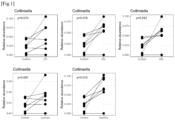
- Fig. 1 Changes in occupancy rate of bacteria of the genus Collinsella induced by various carbohydrates in a human fecal fermentation system, evaluated by the paired t-test.
- the present invention relates to a composition for controlling growth of bacteria of the genus Collinsella, which contains any selected from the group consisting of a human milk oligosaccharide (also referred to as HMO) and a constituent sugar of a human milk oligosaccharide as an active ingredient.
- a human milk oligosaccharide also referred to as HMO
- HMO human milk oligosaccharide
- the composition of the present invention contains any selected from the group consisting of a human milk oligosaccharide (also referred to as HMO) and a constituent sugar of a human milk oligosaccharide as an active ingredient.
- Human milk oligosaccharides are oligosaccharides contained in human milk and are the third most abundant solid component after lactose and lipids. With few exceptions, human milk oligosaccharides have a chemical structure comprising a lactose unit at the reducing end, to which fucose, sialic acid, galactose and so forth are added.
- the human milk oligosaccharide and constituent sugar of a human milk oligosaccharide used in the composition are not particularly limited so long as they can provide the desired effect.
- the human milk oligosaccharide and constituent sugar of a human milk oligosaccharide used in the composition may consist of one type or a combination of two or more types thereof.
- human milk oligosaccharide contained in the composition include the following neutral and acidic oligosaccharides
- Preferred examples of the human milk oligosaccharide contained in the composition include the following neutral and acidic oligosaccharides.
- human milk oligosaccharide contained in the composition include the following neutral and acidic oligosaccharides.
- Neutral oligosaccharides 2'-fucosyllactose (2'-FL), difucosyllactose (DFL), lacto-difucotetraose (LDFT), lacto-N-tetraose (LNT), and lacto-N-neotetraose (LNnT).
- Acidic oligosaccharides 3'-sialyllactose (3'-SL), and 6'-sialyllactose (6'-SL)
- constituent sugar of a human milk oligosaccharide refers to a sugar constituting a human milk oligosaccharide (sugar resulting from degradation of human milk oligosaccharide), excluding glucose and galactose.
- constituent sugar of a human milk oligosaccharide contained in the composition include lactose, fucose, sialic acid, and N-acetylglucosamine.
- Sialic acid is a general term for modifications of neuraminic acid.
- An example of sialic acid is N-acetylneuraminic acid (Neu5Ac), which is an acetyl-modified neuraminic acid.
- human milk oligosaccharides can generate lactose in the human digestive tract after ingestion.
- human milk oligosaccharides containing Neu5Ac as a constituent sugar can produce Neu5Ac in the human digestive tract after ingestion (see Non-patent documents 6 to 8 mentioned later).
- preferred examples of the human milk oligosaccharide and constituent sugar of a human milk oligosaccharide used in the composition are any selected from the group consisting of fucosylated human milk oligosaccharides, sialylated human milk oligosaccharides, a human milk oligosaccharide containing lactose as a constituent sugar, a human milk oligosaccharide containing sialic acid as a constituent sugar, lactose, and sialic acid.
- Human milk oligosaccharides containing sialic acid as a constituent sugar include sialylated human milk oligosaccharides (e.g., 3'-SL and 6'-SL) and human milk oligosaccharides containing sialic acid (e.g., LST a and DS-LNT).
- human milk oligosaccharide and constituent sugar of a human milk oligosaccharide used in the composition are any selected from the group consisting of 2'-FL, 3'-SL, 6'-SL, lactose, and Neu5Ac.
- composition of the present invention can be used for controlling growth of bacteria of the genus Collinsella in the intestinal bacterial microbiota.
- the control of growth includes promotion of growth and suppression of growth.
- Preferred compositions are for promotion of growth.
- bacteria of the intestinal bacterial microbiota include the followings:
- bacteria of the genus Collinsella refers to bacteria identified as belonging to the genus Collinsella by molecular phylogenetic analysis based on the 16S rRNA gene. Criteria for determining genus by molecular phylogenetic analysis based on the 16S rRNA gene are well known by those skilled in the art ( Stackebrandt E, Ebers J. Taxonomic parameters revisited: tarnished gold standards. Microbiol Today. 2006;33:152-155 ).
- controlling growth of specific bacteria in bacterial microbiota means controlling the proportion (occupancy rate) of the specific bacteria in the bacterial microbiota.
- Whether or not a certain ingredient controls growth of a particular type of bacteria in the intestinal bacterial microbiota can be evaluated as follows. A fecal material provided by a healthy person is added to an appropriate medium, cultured for a certain period of time as required, then an ingredient to be evaluated is added, cultured under appropriate conditions (e.g., at 37°C under anaerobic conditions, similar to those in the intestinal tract, for 48 hours), and the occupancy rate of the particular type of bacteria in the bacterial microbiota in the culture is measured.
- appropriate conditions e.g., at 37°C under anaerobic conditions, similar to those in the intestinal tract, for 48 hours
- the result of the measurement can then be compared with a result of a culture obtained under conditions that differ only in that a control (e.g., sterile water) is added in place of the ingredient to be evaluated but that are otherwise identical, and it can be determined that, if the occupancy rate is higher than the control, growth is promoted, and if lower, growth is suppressed.
- a control e.g., sterile water
- Occupancy rate of a particular type of bacteria in bacterial microbiota can be determined by known methods.
- One preferred method is to perform 16S metagenomic analysis (sequence analysis of 16S rRNA gene amplicons) on DNAs extracted from culture.
- 16S metagenomic analysis sequence analysis of 16S rRNA gene amplicons
- DNA extraction can be performed by using commercially available kits.
- the genomic region to be analyzed is not particularly limited so long as the bacteria can be determined, but the V3-V4 region of the 16S rRNA gene can be used. Primers, amplification conditions, method for purification of amplicons, and so forth well known to those skilled in the art can be used to analyze bacteria. Sequence decoding is preferably performed on a next-generation sequencer of higher performance.
- a next-generation microbiome bioinformatics platform such as QIIME 2 TM can be used to analyze the obtained data.
- QIIME 2 TM For the 16S metagenomic analysis, those skilled in the art can refer to such information as Sanschagrin S, Yergeau E. Next-generation sequencing of 16S ribosomal RNA gene amplicons. J Vis Exp. 2014;(90):51709. Published 2014 Aug 29. doi: 10.3791/51709 .
- Bacteria of the genus Collinsella as the object of the present invention are intestinal bacteria present in the human intestines, among which C. aerofaciens is known to be abundant in the intestines of responders to anti-PD-1 antibodies found in cancer immunotherapies (Non-patent document 1 mentioned above), and has a key gene relating to the effectiveness of the fecal transplantation therapy for recurrent Clostridium difficile infection (Non-patent document 2 mentioned above). Therefore, the composition can be expected to be used for treating such a disease or condition.
- composition can also be used for treating a disease or condition that can be ameliorated by controlling growth of bacteria of the genus Collinsella in the intestinal tract.
- a disease or condition can be various diseases or conditions.
- Non-patent document 3 bacteria of the genus Collinsella are known to have genes involved in production of ursodeoxycholic acid, which is a secondary bile acid (Non-patent document 9), and ursodeoxycholic acid is known to prevent SARS-CoV-2 from binding to the receptor angiotensin converting enzyme 2 (ACE2), to which the virus binds first at the time of infection (Non-patent documents 10 and 11).
- ACE2 receptor angiotensin converting enzyme 2
- ursodeoxycholic acid is known to suppress inflammation-inducing cytokines (Non-patent documents 12 and 13), have antioxidant and anti-apoptotic actions (Non-patent documents 14 and 15), and increase alveolar fluid clearance in acute respiratory distress syndrome (ARDS) (Non-patent document 16). Therefore, the composition that can control growth of bacteria of the genus Collinsella in the intestines can be used to treat respiratory tract infections such as COVID-19 infection.
- the respiratory tract infection includes infections caused by any virus selected from the group consisting of coronaviruses, influenza viruses, rhinoviruses, RS viruses, parainfluenza viruses, and adenoviruses.
- the composition is used for coronavirus infection among respiratory tract infections.
- the coronavirus infection is caused by any virus selected from the group consisting of HCoV-229E, HCoV-OC43, HCoV-NL63, HCoV-HKU1, severe acute respiratory syndrome coronavirus (SARS-CoV), middle east respiratory syndrome coronavirus (MERS-CoV), and novel coronavirus (SARS-CoV-2).
- the novel coronavirus infection is referred to as COVID-19.
- the composition is used for treating novel coronavirus infection (COVID-19).
- treating (treatment of) a disease or condition includes reducing the risk of developing the disease or condition, delaying or preventing the development of the disease or condition, and stopping or delaying the progression of the disease or condition.
- the therapy includes curative therapy (therapy to remove the cause) and symptomatic therapy (therapy to ameliorate symptoms).
- Actions for amelioration or treatment include medical actions performed by physicians and nurses, midwives, and others under the direction of physicians, and non-therapeutic actions performed by non-physicians, such as pharmacists, nutritionists (including registered dietitian nutritionists and sports nutritionists), public health nurses, midwives, nurses, clinical laboratory technicians, sports instructors, drug manufacturers, drug sellers, food manufacturers, food sellers, and others.
- prevention or reduction of the risk of developing disease or condition includes recommendations for intake of specific foods and nutritional guidance (including guidance on nutrition necessary for medical treatment of injured or sick persons and guidance on nutrition for the maintenance and promotion of good health).
- the composition of the present invention can be in the form of a food composition or pharmaceutical composition.
- Food and pharmaceutical are not limited to those for humans, and may be those for animals other than human, unless especially indicated.
- the food may be a common food, functional food, or nutritional composition, or a therapeutic diet (diet for the purpose of therapy, for which a medical practitioner writes a dietary prescription, and which is cooked by a dietitian or the like according to the prescription), dietetic food, ingredient-modified food, care food, or therapy-supporting food, unless especially indicated.
- the food is not limited to a solid food, but it may be a food in the form of liquid, for example, drink, drinkable preparation, liquid food, or soup, unless especially indicated.
- Functional food refers to a food that can give a predetermined functionality to a living body, and includes health foods at large, such as foods for specified health uses (abbreviated as "Tokuho" in Japanese, including conditional foods for specified health use), foods with function claims, foods with health claims including foods with nutrient function claims, foods for special dietary uses, supplements (for example, those of various kinds of dosage forms such as tablet, coated tablet, sugar-coated tablet, capsule and solution), and cosmetic food (for example, diet foods).
- the "functional foods” include health foods to which the health claim based on the food standards of CODEX (JOINT FAO/WHO FOOD STANDARDS PROGRAMME CODEX ALIMENTARIUS COMMISSION) is applied.
- composition of the present invention is suitable to be administered to subjects for whom it is desirable or necessary to control growth of bacteria of the genus Collinsella in the intestinal tract; subjects with a disease or condition that can be ameliorated by controlling growth of bacteria of the genus Collinsella in the intestinal tract; those at risk of infection with viruses responsible for respiratory tract infections, those at risk of infection with coronaviruses such as SARS-CoV-2, patients of respiratory tract infection, and patients of coronavirus infection such as COVID-19.
- Subjects for whom it is desirable or necessary to control growth of bacteria of the genus Collinsella in the intestinal tract include those with a low number of bacteria of the genus Collinsella in the intestinal tract.
- administration is used in the sense of administering a pharmaceutical product to a subject as well as having a subject ingest a food or other substance other than a pharmaceutical product.
- the age of the subject is not particularly limited, and the subject may be, for example, a neonate (within 28 days of birth); an infant (younger than 1 year of age); a young child (1 to 6 years of age); a child (7 years of age or older and younger than 15 years of age); an adult (15 years of age or older); or a person of 65 years of age or older.
- the composition can be administered to the subject repeatedly or continuously over a long period of time.
- the period of time is not particularly limited, but in order for the effect to be fully recognized, the composition should be administered continuously over a relatively long period of time, e.g., over 3 days or longer, 1 week or longer, 2 weeks or longer, 1 month or longer, 3 months or longer, 6 months or longer, or 1 year or longer.
- the composition may be administered routinely, in advance, such as when the risk is high, or when the need arises.
- the composition may be administered as a meal, before, after, or between meals, or when the disease or condition that is to be ameliorated by the composition occurs.
- the dose of the composition of the present invention may be such an amount that the desired effect is exerted.
- the dose can be appropriately set in consideration of various factors such as the age, weight, and symptoms of the subject.
- Administration may be once a day or multiple times a day, e.g., 2 to 10 times.
- the dose of the active ingredient per one time may be, for example, 0.01 mg or more, preferably 0.03 mg or more, more preferably 0.06 mg or more, further preferably 0.1 mg or more.
- the maximum amount of the active ingredient per one time may be 3 g or less, 1 g or less, 100 mg or less, 33 mg or less, 20 mg or less, 10 mg or less, or 5 mg or less, no matter how is the minimum amount is defined.
- the content of the active ingredient in the composition may be appropriately determined according to the form of the composition.
- the content of the active ingredient based on solid content of the composition can be 0.1% or more, preferably 0.3% or more, more preferably 0.6% or more, further preferably 1% or more.
- the maximum amount of the active ingredient based on solid content may be 50% or less, 30% or less, 20% or less, 10% or less, or 5% or less, no matter how the minimum amount is defined.
- % means mass percent unless otherwise stated.
- the content of the active ingredient can be, for example, 0.01% or more, preferably 0.03% or more, more preferably 0.06% or more, further preferably 0.1% or more.
- the maximum content of the active ingredient when the composition is a liquid may be 5% or less, 3% or less, 2% or less, 1% or less, or 0.5% or less, no matter how the minimum content is defined.
- composition of the present invention may contain other active ingredients or nutritional components that are acceptable as food or pharmaceutical.
- ingredients include lipids (e.g., milk fat, vegetable fats, fats containing medium-chain fatty acids), proteins (e.g., milk proteins, milk protein concentrate (MPC), whey protein concentrate (WPC), whey protein isolate (WPI), ⁇ -lactalbumin ( ⁇ -La), ⁇ -lactoglobulin ( ⁇ -Lg), heat-denatured whey proteins and enzyme-treated whey proteins, amino acids (e.g., lysine, arginine, glycine, alanine, glutamic acid, leucine, isoleucine, and valine), carbohydrates other than human milk oligosaccharides and constituent sugars of human milk oligosaccharides (e.g., glucose, sucrose, fructose, maltose, trehalose, erythritol, maltitol, palatinose, xylito
- composition of the present invention may contain prebiotics other than human milk oligosaccharides.
- Prebiotics are indigestible food ingredients that selectively alter growth and activity of certain bacteria in the large intestine, thereby favorably affecting the host and improving the host's health.
- One or more types of prebiotics other than human milk oligosaccharides may be used in the composition.
- Prebiotics other than human milk oligosaccharides are not particularly limited so long as they do not interfere with the effect of the active ingredient contained in the composition.
- Examples of prebiotics other than human milk oligosaccharides include galactooligosaccharides, fructooligosaccharides, xylooligosaccharides, isomaltooligosaccharides, raffinose, lactulose, lactosucrose, soy oligosaccharides, coffee oligosaccharides, dietary fibers, and gluconic acid.
- the composition may also further contain an additive acceptable for foods or pharmaceuticals.
- an additive include inactive carriers (solid and liquid carriers), excipients, surfactants, binders, disintegrating agents, lubricants, dissolving aids, suspending agents, coating agents, colorants, preservatives, buffering agents, pH adjustors, emulsifiers, stabilizers, sweeteners, antioxidants, perfumes, acidulants, and natural substances.
- More specific examples include water, other aqueous solvents, pharmaceutically acceptable organic solvents, collagen, polyvinyl alcohol, polyvinylpyrrolidone, carboxyvinyl polymer, sodium alginate, water-soluble dextran, water-soluble dextrin, carboxymethyl starch sodium, pectin, xanthan gum, gum arabic, casein, gelatin, agar, glycerin, propylene glycol, polyethylene glycol, vaseline, paraffin, stearyl alcohol, stearic acid, human serum albumin, mannitol, sorbitol, lactose, sucralose, stevia, aspartame, acesulfame potassium, citric acid, lactic acid, malic acid, tartaric acid, phosphoric acid, acetic acid, fruit juice, vegetable juice, and so forth.
- composition of the present invention in the form of a food may be prepared in an arbitrary form such as solid, liquid, mixture, suspension, powder, granule, paste, jelly, gel, and capsule.
- the composition of the present invention in the form of a food can be made in such an arbitrary form as dairy product, supplement, confectionery, drink, drinkable preparation, seasoning, processed food, daily dish, and soup.
- composition of the present invention may be in the form of liquid diet, semi-liquid diet, jelly, gel, powder, special formula powdered milk, special formula liquid milk, powdered and liquid milk for pregnant and nursing women, fermented milk, bar, mousse, chocolate, biscuit, ice cream, fermented milk, lactic acid bacteria beverage, lactic beverage, milk beverage, soft drink, tablet, cheese, bread, biscuit, cracker, pizza crust, food for sick persons, nutritional food, frozen food, processed food, or the like, or may be in a form of granule, powder, paste, thick solution or the like for being mixed in drink or food and then ingested.
- Granules and powders can be in the form of cubes or sticks (single-dose packets).
- special formula powdered milk means a product obtained from a product produced by processing a food made from raw milk, cow's milk, special cow's milk, or raw water buffalo's milk or a food made by using them as a main raw material, by adding nutrients necessary for infants and young children, and making the resulting composition into powder as defined in the "Ministerial Ordinance on Milk and Milk products Concerning Compositional Standards, etc. (hereinafter referred to as the "Ministerial Ordinance on Milk, etc.”)".
- special formula liquid milk means a product obtained from a product produced by processing a food made from raw milk, cow's milk, special cow's milk, or raw water buffalo's milk or a food made by using them as a main raw material, by adding nutrients necessary for infants and young children, and making the resulting composition into liquid as defined in the Ministerial Ordinance on Milk, etc.
- Special formula powdered milk and special formula liquid milk (these are sometimes collectively referred to as special formula powdered milk etc., and the explanation of the special formula powdered milk etc. may be made for special formula powdered milk as an example, but such an explanation shall also apply to special formula liquid milk) can be for infants, follow-up (as a supplement to weaning food), low birth weight infants, children, adults, expectant mothers, nursing mothers, elderly persons, those with allergies, those with lactose intolerance, and those with congenital metabolic disorders.
- Preferred examples of special formula powdered milk etc. are those for infants, follow-up, low birth weight infants, and children.
- composition of the present invention as a pharmaceutical can be in an arbitrary dosage form, for example, those suitable for oral administration including solid preparations such as tablet, granule, powder, pill, and capsule and liquid preparations such as solution, suspension, and syrup, gel, aerosol, or the like.
- time of adding the active ingredient can be appropriately chosen. Unless the characteristics of the active ingredient are not markedly degraded, the time of the addition is not particularly limited.
- the active ingredient can be blended by mixing it with raw materials.
- the active ingredient can be added at the final stage of the manufacture to produce a composition containing the active ingredient.
- composition of the invention can have an indication describing the purpose of use (intended use), or an indication describing that administration of the composition is recommended for specific subjects.
- the composition of the present invention can have an indication describing that, with the composition or the active ingredient, growth of bacteria of the genus Collinsella in the intestinal tract can be controlled, growth of bacteria of the genus Collinsella in the intestinal tract can be promoted, a disease or condition that can be ameliorated by controlling (preferably promoting) growth of bacteria of the genus Collinsella can be treated, the composition can be used as a prebiotic or can be used as a synbiotic (a combination of a probiotic and a prebiotic), or related diseases can be treated with the composition, or respiratory tract infections such as coronavirus infections can be treated with the composition.
- the indication may be a direct or indirect indication.
- HMOs containing Neu5Ac as a constituent sugar are thought to generate Neu5Ac in the human digestive tract after ingestion (Non-patent documents 6 to 8). Therefore, it is considered that a growth-promoting effect for bacteria of the genus Collinsella can be obtained with HMOs containing Neu5Ac as a constituent sugar (sialylated HMOs and HMOs containing sialic acid).
Landscapes
- Health & Medical Sciences (AREA)
- Life Sciences & Earth Sciences (AREA)
- Chemical & Material Sciences (AREA)
- General Health & Medical Sciences (AREA)
- Medicinal Chemistry (AREA)
- Public Health (AREA)
- Animal Behavior & Ethology (AREA)
- Pharmacology & Pharmacy (AREA)
- Veterinary Medicine (AREA)
- Engineering & Computer Science (AREA)
- Organic Chemistry (AREA)
- General Chemical & Material Sciences (AREA)
- Bioinformatics & Cheminformatics (AREA)
- Nuclear Medicine, Radiotherapy & Molecular Imaging (AREA)
- Chemical Kinetics & Catalysis (AREA)
- Molecular Biology (AREA)
- Epidemiology (AREA)
- Biomedical Technology (AREA)
- Diabetes (AREA)
- Neurosurgery (AREA)
- Neurology (AREA)
- Obesity (AREA)
- Hematology (AREA)
- Nutrition Science (AREA)
- Cardiology (AREA)
- Pulmonology (AREA)
- Communicable Diseases (AREA)
- Oncology (AREA)
- Zoology (AREA)
- Mycology (AREA)
- Heart & Thoracic Surgery (AREA)
- Food Science & Technology (AREA)
- Polymers & Plastics (AREA)
- Wood Science & Technology (AREA)
- Genetics & Genomics (AREA)
- Biotechnology (AREA)
- Biochemistry (AREA)
- Anesthesiology (AREA)
- Rheumatology (AREA)
- Pain & Pain Management (AREA)
Abstract
A means for controlling growth of bacteria of the genus Collinsella in the intestinal tract is provided. An object of the present invention is to provide a novel material that can control growth of bacteria of the genus Collinsella. There is provided a composition for controlling growth of bacteria of the genus Collinsella in intestinal bacterial microbiota, which contains any selected from the group consisting of a human milk oligosaccharide and a constituent sugar of a human milk oligosaccharide.
Description
- The present invention relates to a composition for controlling growth of bacteria of the genus Collinsella and use thereof.
- Bacteria of the genus Collinsella are intestinal bacteria present in the human intestines, and it is known that, especially among them, C. aerofaciens is abundant in the intestines of responders to anti-PD-1 antibodies found in cancer immunotherapies (Non-patent document 1), and has a key gene relating to the effectiveness of the fecal transplantation therapy for recurrent Clostridium difficile infection (Non-patent document 2). Recently, it has also been reported that a machine learning model (generalized linear model, GLM) was developed to predict COVID-19 mortality rate in each country using the intestinal microbiota, and the results of the GLM analysis showed that the lower the proportion of bacteria of the genus Collinsella in the intestinal microbiota, the higher the COVID-19 mortality rate (Non-patent document 3).
- With regard to bacteria of the genus Collinsella, WholeFiber and inulin are known as materials that allow growth of bacteria of the genus Collinsella in the intestines (Non-patent document 4). Patent document 1 describes a method for adsorbing bile acids characterized by using intestinal bacteria that have a property of taking up bile acids into the bacterial cells in the presence of a sugar source, and mentions bacteria of the genus Collinsella as one class of the intestinal bacteria to be used. Further, Patent document 2 describes a composition containing at least one bacterial strain having a bile acid deconjugating activity and/or 7-epimerization activity for use in methods for treating intrahepatic bile stasis in a subject or reducing the risk of the same, and mentions Collinsella aerofaciens, ATCC25986 as one of the bacterial strains to be contained in the composition. Furthermore, Patent document 3 describes a method for producing L-ornithine and equol, comprising (1) the step of culturing an anaerobic microorganism in a medium containing isoflavones and dextrin, and (2) the step of collecting L-ornithine and equol obtained in the step (1), and mentions bacteria of the genus Collinsella as one class of the anaerobic microorganism. Patent document 4 describes a composition capable of efficiently treating and preventing inflammation, especially ulcerative colitis, characterized in that it contains Megamonas funiformis and/or metabolites thereof and Anaerofustis stercorihominis and/or metabolites thereof, and describes that the composition further contains Collinsella shenzhenensis and/or metabolites thereof, and Collinsella shenzhenensis is preferably Collinsella shenzhenensis TF06-26, of which deposition number is GDMCC60090. Patent document 5 describes a human intestinal bacterial microbiota model for evaluating a short-chain fatty acids increase promoting action and/or a diversity increase promoting action in a human intestine of a target food composition, which is constituted with a bacterial culture for evaluation containing at least 9 kinds of bacterial species including bacteria belonging to the genus Bifidobacterium, but not containing bacteria belonging to the phylum Proteobacteria or the genus Lactobacillus, and mentions bacteria of the genus Collinsella as one class of the bacteria that can be contained in that model.
- By the way, human milk oligosaccharides (HMOs) are the third most abundant solid component in breast milk after lactose and lipids. It is known that feeding 2'-fucosyllactose, 3-fucosyllactose, and lactodifucotetraose, which are types of human milk oligosaccharides, causes bifidobacteria to grow (Non-patent document 5).
-
- Patent document 1:
Japanese Patent Publication (Kokai) No. 2006-314219 - Patent document 2:
WO2017/102816 (Japanese Patent Publication (Kohyo) No. 2018-537484 - Patent document 3:
Japanese Patent Publication (Kokai) No. 2014-54234 - Patent document 4:
WO2019/227418 (Japanese Patent Publication (Kohyo) No. 2021-524751 - Patent document 5:
WO2021/206106 -
- Non-patent document 1: Matson V, Fessler J, Bao R, et al. The commensal microbiome is associated with anti-PD-1 efficacy in metastatic melanoma patients. Science. 2018;359(6371):104-108. doi:10.1126/science.aao3290
- Non-patent literature 2: Mullish BH, McDonald JAK, Pechlivanis A, et al. Microbial bile salt hydrolases mediate the efficacy of faecal microbiota transplant in the treatment of recurrent Clostridioides difficile infection. Gut. 2019;68(10):1791-1800. doi:10.1136/gutjnl-2018-317842
- Non-patent literature 3: Hirayamal M, Nishiwaki H, et al. Intestinal Collinsella may mitigate infection and exacerbation of COVID-19 by producing ursodeoxycholate. PLoS One. 2021 Nov 23;16(11):e0260451. doi: 10.1371/journal.pone.0260451. eCollection 2021
- Non-patent document 4: Carlson JL, Erickson JM, Hess JM, Gould TJ, Slavin JL. Prebiotic Dietary Fiber and Gut Health: Comparing the in Vitro Fermentations of Beta-Glucan, Inulin and Xylooligosaccharide. Nutrients. 2017;9(12):1361. Published 2017 Dec 15. doi:10.3390/nu9121361
- Non-patent document 5: Yu ZT, Chen C, Newburg DS. Utilization of major fucosylated and sialylated human milk oligosaccharides by isolated human gut microbes. Glycobiology. 2013;23(11):1281-1292. doi:10.1093/glycob/cwt065
- Bacteria of the genus Collinsella are considered to be one of the useful intestinal bacteria. It would be desirable if there were novel materials that can promote growth of bacteria of the genus Collinsella in the intestinal tract.
- The present invention provides the followings.
- [1] A composition for controlling growth of bacteria of the genus Collinsella in the intestinal bacterial microbiota, which contains any selected from the group consisting of a human milk oligosaccharide and a constituent sugar of a human milk oligosaccharide.
- [2] The composition according to 1, which contains any selected from the group consisting of a fucosylated human milk oligosaccharide, a sialylated human milk oligosaccharide, a human milk oligosaccharide containing lactose as a constituent sugar, a human milk oligosaccharide containing sialic acid as a constituent sugar, lactose, and sialic acid.
- [3] The composition according to 1 or 2, which contains any selected from the group consisting of 2'-fucosyllactose, 3'-sialyllactose, 6'-sialyllactose, lactose, and N-acetylneuraminic acid.
- [4] The composition according to any one of 1 to 3, which is for use as a prebiotic or synbiotic.
- [5] A composition for treating a disease or condition that can be ameliorated by controlling growth of bacteria of the genus Collinsella in the intestinal tract, which contains any selected from the group consisting of a human milk oligosaccharide and a constituent sugar of a human milk oligosaccharide.
- [6] The composition according to 5, wherein the disease or condition that can be ameliorated by controlling growth of bacteria of the genus Collinsella in the intestinal tract is a respiratory tract infection.
- [7] A composition for treating a respiratory tract infection, which contains any selected from the group consisting of a human milk oligosaccharide and a constituent sugar of a human milk oligosaccharide.
- [8] The composition according to 6 or 7, wherein the respiratory tract infection is a coronavirus infection.
- [9] The composition according to 6 or 7, wherein the respiratory tract infection is a novel coronavirus infection (COVID-19).
- [10] The composition according to any one of 1 to 5, wherein the control of growth is promotion of growth.
- [11] A composition for use in a method for controlling growth of bacteria of the genus Collinsella in the intestinal bacterial microbiota, which contains any selected from the group consisting of a human milk oligosaccharide and a constituent sugar of a human milk oligosaccharide, use of any selected from the group consisting of a human milk oligosaccharide and a constituent sugar of a human milk oligosaccharide in manufacture of a composition for controlling growth of bacteria of the genus Collinsella in the intestinal bacterial microbiota, a method or non-therapeutic method for controlling growth of bacteria of the genus Collinsella in the intestinal bacterial microbiota, which comprises the step of administering a composition containing any selected from the group consisting of a human milk oligosaccharide and a constituent sugar of a human milk oligosaccharide to a subject, or use or non-therapeutic use of a composition containing any selected from the group consisting of a human milk oligosaccharide and a constituent sugar of a human milk oligosaccharide for controlling growth of bacteria of the genus Collinsella in the intestinal bacterial microbiota.
- [12] The composition according to 11, which contains any selected from the group consisting of a fucosylated human milk oligosaccharide, a sialylated human milk oligosaccharide, a human milk oligosaccharide containing lactose as a constituent sugar, a human milk oligosaccharide containing sialic acid as a constituent sugar, lactose, and sialic acid; the use in manufacture according to 11, which is of a fucosylated human milk oligosaccharide, a sialylated human milk oligosaccharide, a human milk oligosaccharide containing lactose as a constituent sugar, a human milk oligosaccharide containing sialic acid as a constituent sugar, lactose, and sialic acid; the method or non-therapeutic method according to 11, which comprises the step of administering a composition containing any selected from the group consisting of a fucosylated human milk oligosaccharide, a sialylated human milk oligosaccharide, a human milk oligosaccharide containing lactose as a constituent sugar, a human milk oligosaccharide containing sialic acid as a constituent sugar, lactose, and sialic acid to a subject; or the use or non-therapeutic use according to 11, which is of such a composition.
- [13] The composition according to 7 or 8, which contains any selected from the group consisting of 2'-fucosyllactose, 3'-sialyllactose, 6'-sialyllactose, lactose, and N-acetylneuraminic acid; the use in manufacture according to 11 or 12, which is of any selected from the group consisting of 2'-fucosyllactose, 3'-sialyllactose, 6'-sialyllactose, lactose, and N-acetylneuraminic acid; the method or non-therapeutic method according to 11 or 12, which comprises the step of administering a composition containing any selected from the group consisting of 2'-fucosyllactose, 3'-sialyllactose, 6'-sialyllactose, lactose, and N-acetylneuraminic acid to a subject; or the use or non-therapeutic use according to 11 or 12, which is of such a composition.
- [14] The composition, use in manufacture, method or non-therapeutic method, or use or non-therapeutic use according to any one of 11 to 13, wherein the composition is for use as a prebiotic or synbiotic.
- [15] A composition for use in a method for treating a disease or condition that can be ameliorated by controlling growth of bacteria of the genus Collinsella in the intestinal tract, which contains any selected from the group consisting of a human milk oligosaccharide and a constituent sugar of a human milk oligosaccharide, use of any selected from the group consisting of a human milk oligosaccharide and a constituent sugar of a human milk oligosaccharide in manufacture of a composition for treating a disease or condition that can be ameliorated by controlling growth of bacteria of the genus Collinsella in the intestinal tract, a method or non-therapeutic method for treating a disease or condition that can be ameliorated by controlling growth of bacteria of the genus Collinsella in the intestinal tract, which comprises the step of administering a composition containing any selected from the group consisting of a human milk oligosaccharide and a constituent sugar of a human milk oligosaccharide to a subject, or use or non-therapeutic use of a composition containing any selected from the group consisting of a human milk oligosaccharide and a constituent sugar of a human milk oligosaccharide for treating a disease or condition that can be ameliorated by controlling growth of bacteria of the genus Collinsella in the intestinal tract.
- [16] The composition, use in manufacture of a composition, method or non-therapeutic method, or use or non-therapeutic use according to 15, wherein the disease or condition that can be ameliorated by controlling of growth of bacteria of the genus Collinsella in the intestinal tract is a respiratory tract infection.
- [17] A composition for treating a respiratory tract infection, which contains any selected from the group consisting of a human milk oligosaccharide and a constituent sugar of a human milk oligosaccharide, a composition for use in a method for treating a respiratory tract infection, which contains any selected from the group consisting of a human milk oligosaccharide and a constituent sugar of a human milk oligosaccharide, use of any selected from the group consisting of a human milk oligosaccharide and a constituent sugar of a human milk oligosaccharide in manufacture of a composition for treating a respiratory tract infection, a method or non-therapeutic method for treating a respiratory tract infection, which comprises the step of administering a composition containing any selected from the group consisting of a human milk oligosaccharide and a constituent sugar of a human milk oligosaccharide to a subject, or use or non-therapeutic use of a composition containing any selected from the group consisting of a human milk oligosaccharide and a constituent sugar of a human milk oligosaccharide for treating a respiratory tract infection.
- [18] The composition, use in manufacture of a composition, method or non-therapeutic method, or use or non-therapeutic use according to 16 or 17, wherein the respiratory tract infection is a coronavirus infection.
- [19] The composition, use in manufacture of a composition, method or non-therapeutic method, or use or non-therapeutic use according to any one of 16 to 18, wherein the respiratory tract infection is a novel coronavirus infection (COVID-19).
- [20] The composition, use in manufacture of a composition, method or non-therapeutic method, or use or non-therapeutic use according to any one of 11 to 16, wherein the control of growth is promotion of growth.
- According to the present invention, the intestinal bacterial microbiota can be controlled. In particular, increase of bacteria of the genus Collinsella in the intestinal bacterial microbiota can be controlled.
- It can be expected that through controlling increase of bacteria of the genus Collinsella in the intestinal bacterial microbiota, various diseases or conditions that can be ameliorated by such a control, for example, respiratory tract infections such as COVID-19 infection, can be treated.
- By adding the active ingredients of the present invention, functional foods can be provided in various forms.
- [
Fig. 1 ] Changes in occupancy rate of bacteria of the genus Collinsella induced by various carbohydrates in a human fecal fermentation system, evaluated by the paired t-test. - Hereafter, the present invention will be explained in detail.
- The present invention relates to a composition for controlling growth of bacteria of the genus Collinsella, which contains any selected from the group consisting of a human milk oligosaccharide (also referred to as HMO) and a constituent sugar of a human milk oligosaccharide as an active ingredient.
- The composition of the present invention contains any selected from the group consisting of a human milk oligosaccharide (also referred to as HMO) and a constituent sugar of a human milk oligosaccharide as an active ingredient. Human milk oligosaccharides are oligosaccharides contained in human milk and are the third most abundant solid component after lactose and lipids. With few exceptions, human milk oligosaccharides have a chemical structure comprising a lactose unit at the reducing end, to which fucose, sialic acid, galactose and so forth are added.
- For the present invention, the abbreviation and structure of milk oligosaccharides are according to the desc Nutr Rev. 2017 Nov 1;75(11):920-933. doi: 10.1093/nutrit/nux044; and Nutrients 2021, 13(8), 2737; https://doi.org/10.3390/nu13082737. In case of discrepancies between these references, the latter should be followed.
- The human milk oligosaccharide and constituent sugar of a human milk oligosaccharide used in the composition are not particularly limited so long as they can provide the desired effect. The human milk oligosaccharide and constituent sugar of a human milk oligosaccharide used in the composition may consist of one type or a combination of two or more types thereof.
- Examples of the human milk oligosaccharide contained in the composition include the following neutral and acidic oligosaccharides
- Neutral oligosaccharides: 2'-fucosyllactose (2'-FL), 3-fucosyllactose (3-FL), difucosyllactose (DFL), lacto-difucotetraose (LDFT), lacto-N-tetraose (LNT), lacto-N-neotetraose (LNnT), lacto-N-fucopentaose I (LNFP I), lacto-N-fucopentaose II (LNFP II), lacto-N-fucopentaose III (LNFP III), lacto-N-fucopentaose V (LNFP V), lacto-N-fucopentaose VI (LNFP VI), lacto-N-difucohexaose I (LNDFH I), lacto-N-difucohexaose II (LNDFH II), lacto-N-hexaose (LNH), para-lacto-N-hexaose (pLNH), lacto-N-neohexaose (LNnH), para-lacto-N-neohexaose (pLNnH), fucosyllacto-N-hexaose I (F-LNH I), fucosyl-para-lacto-N-hexaose I (F-para-LNH I), fucosyllacto-N-hexaose II (F-LNH II), fucosyllacto-N-hexaose III (F-LNH III), difucosyllacto-N-hexaose I (DF-LNH I), difucosyllacto-N-hexaose II (DF-LNH II), difucosyllacto-N-hexaose III (DF-LNH III), difucosyl-para-lacto-N-neohexaose (DF -pLNnH), difucosyl-para-lacto-N-hexaose (DF-para-LNH), difucosyl-para-lacto-N-neohexaose (DF-para-LNnH), and trifucosyllacto-N-hexaose (TF-LNH).
- Acidic oligosaccharides: 3'-sialyllactose (3'-SL), 6'-sialyllactose (6'-SL), 6'-sialyl-N-acetyllactosamine (6'-SLN), LS-tetrasaccharide a (LST a, sialyllacto-N-tetraose a), LS-tetrasaccharide b (LST b, sialyllacto-N-tetraose b), LS-tetrasaccharide c (LST c, sialyllacto-N-tetraose c), disialyllacto-N-tetraose (DS-LNT), fucosyl-sialyllacto-N-tetraose a (F-LST a), fucosyl-sialyllacto-N-tetraose b (F-LST b), fucosyl-sialyllacto-N-hexaose (FS-LNH), fucosyl-sialyllacto-N-neohexaose (FS-LNnH I), fucosyl-disialyllacto-N-hexaose (FDS-LNH), and disialyllacto-N-hexaose (DS-LNH).
- Preferred examples of the human milk oligosaccharide contained in the composition include the following neutral and acidic oligosaccharides.
- Neutral oligosaccharides: 2'-fucosyllactose (2'-FL), 3-fucosyllactose (3-FL), difucosyllactose (DFL), lacto-difucotetraose (LDFT), lacto-N-tetraose (LNT), lacto-N-neotetraose (LNnT), lacto-N-fucopentaose I (LNFP I), lacto-N-fucopentaose II (LNFP II), lacto-N-fucopentaose III (LNFP III), lacto-N-fucopentaose V (LNFP V), lacto-N-fucopentaose VI (LNFP VI), lacto-N-difucohexaose I (LNDFH I), lacto-N-difucohexaose II (LNDFH II), lacto-N-hexaose (LNH), lacto-N-neohexaose (LNnH), para-lacto-N-neohexaose (pLNnH), fucosyllacto-N-hexaose I (F-LNH I), fucosyl-para-lacto-N-hexaose I (F-para-LNH I), fucosyllacto-N-hexaose II (F-LNH II), fucosyllacto-N-hexaose III (F-LNH III), difucosyllacto-N-hexaose I (DF-LNH I), difucosyllacto-N-hexaose II (DF-LNH II), difucosyllacto-N-hexaose III (DF-LNH III), difucosyl-para-lacto-N-neohexaose (DF-pLNnH), and trifucosyllacto-N-hexaose (TF-LNH).
- Acidic oligosaccharides: 3'-sialyllactose (3'-SL), 6'-sialyllactose (6'-SL), LS-tetrasaccharide a (LST a, sialyllacto-N-tetraose a), LS-tetrasaccharide b (LST b, sialyllacto-N-tetraose b), LS-tetrasaccharide c (LST c, sialyllacto-N-tetraose c), disialyllacto-N-tetraose (DS-LNT), fucosyl-sialyllacto-N-neohexaose (FS-LNnH I), and disialyllacto-N-hexaose (DS-LNH).
- More preferred examples of the human milk oligosaccharide contained in the composition include the following neutral and acidic oligosaccharides.
Neutral oligosaccharides: 2'-fucosyllactose (2'-FL), difucosyllactose (DFL), lacto-difucotetraose (LDFT), lacto-N-tetraose (LNT), and lacto-N-neotetraose (LNnT). Acidic oligosaccharides: 3'-sialyllactose (3'-SL), and 6'-sialyllactose (6'-SL) - For the present invention, the term constituent sugar of a human milk oligosaccharide refers to a sugar constituting a human milk oligosaccharide (sugar resulting from degradation of human milk oligosaccharide), excluding glucose and galactose. Examples of the constituent sugar of a human milk oligosaccharide contained in the composition include lactose, fucose, sialic acid, and N-acetylglucosamine. Sialic acid is a general term for modifications of neuraminic acid. An example of sialic acid is N-acetylneuraminic acid (Neu5Ac), which is an acetyl-modified neuraminic acid.
- According to the studies of the inventors of the present invention, there were confirmed superior growth-promoting effects of lactose, Neu5Ac, 2'-FL, 3'-SL, and 6'-SL for bacteria of the genus Collinsella. By the way, human milk oligosaccharides can generate lactose in the human digestive tract after ingestion. In addition, human milk oligosaccharides containing Neu5Ac as a constituent sugar can produce Neu5Ac in the human digestive tract after ingestion (see Non-patent documents 6 to 8 mentioned later). Furthermore, since the desired effect was confirmed for all of 2'-FL, 3'-SL, and 6'-SL, the desired effect would be sufficiently obtained with fucosylated human milk oligosaccharides and sialylated human milk oligosaccharides.
- From this point of view, preferred examples of the human milk oligosaccharide and constituent sugar of a human milk oligosaccharide used in the composition are any selected from the group consisting of fucosylated human milk oligosaccharides, sialylated human milk oligosaccharides, a human milk oligosaccharide containing lactose as a constituent sugar, a human milk oligosaccharide containing sialic acid as a constituent sugar, lactose, and sialic acid. Human milk oligosaccharides containing sialic acid as a constituent sugar include sialylated human milk oligosaccharides (e.g., 3'-SL and 6'-SL) and human milk oligosaccharides containing sialic acid (e.g., LST a and DS-LNT).
- Specific examples of the human milk oligosaccharide and constituent sugar of a human milk oligosaccharide used in the composition are any selected from the group consisting of 2'-FL, 3'-SL, 6'-SL, lactose, and Neu5Ac.
- The composition of the present invention can be used for controlling growth of bacteria of the genus Collinsella in the intestinal bacterial microbiota. The control of growth includes promotion of growth and suppression of growth. Preferred compositions are for promotion of growth.
- Examples of bacteria of the intestinal bacterial microbiota include the followings:
- bacteria of the genus Faecalibacterium, e.g., Faecalibacterium prausnitzii;
- bacteria of the genus Akkermansia, e.g., Akkermansia muciniphila;
- bacteria of the genus Blautia, e.g., Blautia coccoides, Blautia intestinalis, and Blautia faecicola;
- bacteria of the genus Subdoligranulum, e.g., Subdoligranulum variabile;
- bacteria of the genus Bilophila e.g., Bilophila wadsworthia;
- bacteria of the genus Collinsella, e.g., Collinsella aerofaciens and Collinsella intestinalis;
- bacteria of the genus Holdemania, e.g., Holdemania filiformis;
- bacteria of the genus Parasutterella, e.g., Parasutterella excrementihominis and Parasutterella secunda;
- bacteria of the genus Oscillibacter, e.g., Oscillibacter valericigenes;
- bacteria of the genus Eggerthella, e.g., Eggerthella lenta;
- bacteria of the genus Sutterella, e.g., Sutterella parvirubra and Sutterella wadsworthensis; and
- bacteria of the genus Bifidobacterium (bifidobacteria), e.g., B. adolescentis, B. bifidum, B. breve, B. catenulatum, B. infantis, B. lactis, B. longum, and B. pseudocatenulatum.
- For the present invention, the term bacteria of the genus Collinsella refers to bacteria identified as belonging to the genus Collinsella by molecular phylogenetic analysis based on the 16S rRNA gene. Criteria for determining genus by molecular phylogenetic analysis based on the 16S rRNA gene are well known by those skilled in the art (Stackebrandt E, Ebers J. Taxonomic parameters revisited: tarnished gold standards. Microbiol Today. 2006;33:152-155).
- For the present invention, controlling growth of specific bacteria in bacterial microbiota means controlling the proportion (occupancy rate) of the specific bacteria in the bacterial microbiota.
- Whether or not a certain ingredient controls growth of a particular type of bacteria in the intestinal bacterial microbiota can be evaluated as follows. A fecal material provided by a healthy person is added to an appropriate medium, cultured for a certain period of time as required, then an ingredient to be evaluated is added, cultured under appropriate conditions (e.g., at 37°C under anaerobic conditions, similar to those in the intestinal tract, for 48 hours), and the occupancy rate of the particular type of bacteria in the bacterial microbiota in the culture is measured. The result of the measurement can then be compared with a result of a culture obtained under conditions that differ only in that a control (e.g., sterile water) is added in place of the ingredient to be evaluated but that are otherwise identical, and it can be determined that, if the occupancy rate is higher than the control, growth is promoted, and if lower, growth is suppressed.
- Occupancy rate of a particular type of bacteria in bacterial microbiota can be determined by known methods. One preferred method is to perform 16S metagenomic analysis (sequence analysis of 16S rRNA gene amplicons) on DNAs extracted from culture. When the 16S metagenomic analysis is performed, DNA extraction can be performed by using commercially available kits. The genomic region to be analyzed is not particularly limited so long as the bacteria can be determined, but the V3-V4 region of the 16S rRNA gene can be used. Primers, amplification conditions, method for purification of amplicons, and so forth well known to those skilled in the art can be used to analyze bacteria. Sequence decoding is preferably performed on a next-generation sequencer of higher performance. A next-generation microbiome bioinformatics platform such as QIIME 2™ can be used to analyze the obtained data. For the 16S metagenomic analysis, those skilled in the art can refer to such information as Sanschagrin S, Yergeau E. Next-generation sequencing of 16S ribosomal RNA gene amplicons. J Vis Exp. 2014;(90):51709. Published 2014 Aug 29. doi: 10.3791/51709.
- Bacteria of the genus Collinsella as the object of the present invention are intestinal bacteria present in the human intestines, among which C. aerofaciens is known to be abundant in the intestines of responders to anti-PD-1 antibodies found in cancer immunotherapies (Non-patent document 1 mentioned above), and has a key gene relating to the effectiveness of the fecal transplantation therapy for recurrent Clostridium difficile infection (Non-patent document 2 mentioned above). Therefore, the composition can be expected to be used for treating such a disease or condition.
- The composition can also be used for treating a disease or condition that can be ameliorated by controlling growth of bacteria of the genus Collinsella in the intestinal tract. Such a disease or condition can be various diseases or conditions.
- Recently, it has been reported that the lower the proportion of bacteria of the genus Collinsella in the intestinal bacterial microbiota of COVID-19 patients, the higher the mortality rate of the patients (Non-patent document 3). In addition, bacteria of the genus Collinsella are known to have genes involved in production of ursodeoxycholic acid, which is a secondary bile acid (Non-patent document 9), and ursodeoxycholic acid is known to prevent SARS-CoV-2 from binding to the receptor angiotensin converting enzyme 2 (ACE2), to which the virus binds first at the time of infection (Non-patent documents 10 and 11). Furthermore, ursodeoxycholic acid is known to suppress inflammation-inducing cytokines (Non-patent documents 12 and 13), have antioxidant and anti-apoptotic actions (Non-patent documents 14 and 15), and increase alveolar fluid clearance in acute respiratory distress syndrome (ARDS) (Non-patent document 16). Therefore, the composition that can control growth of bacteria of the genus Collinsella in the intestines can be used to treat respiratory tract infections such as COVID-19 infection.
- Non-patent document 9: Liu L, Aigner A, Schmid RD. Identification, cloning, heterologous expression, and characterization of a NADPH-dependent 7β-hydroxysteroid dehydrogenase from Collinsella aerofaciens. Appl Microbiol Biotechnol. 2011;90(1):127-135. doi:10.1007/s00253-010-3052-y
- Non-patent document 10: Poochi SP, Easwaran M, Balasubramanian B, Anbuselvam M, Meyyazhagan A, Park S, et al. Employing bioactive compounds derived from Ipomoea obscura (L.) to evaluate potential inhibitor for SARSCoV-2 main protease and ACE2 protein. Food Front. 2020. Epub 2020/08/25. https://doi.org/10.1002/fft2.29 PMID: 32838301; PubMed Central PMCID: PMC7361879
- Non-patent document 11: Carino A, Moraca F, Fiorillo B, Marchiano S, Sepe V, Biagioli M, et al. Hijacking SARS-CoV-2/ACE2 Receptor Interaction by Natural and Semisynthetic Steroidal Agents Acting on Functional Pockets on the Receptor Binding Domain. Front Chem. 2020;8:572885. Epub 2020/11/17. doi: 10.3389/fchem.2020.572885; PubMed Central PMCID: PMC7645072
- Non-patent document 12: Ko WK, Lee SH, Kim SJ, Jo MJ, Kumar H, Han IB, et al. Anti-inflammatory effects of ursodeoxycholic acid by lipopolysaccharide-stimulated inflammatory responses in RAW 264.7 macrophages. PLoS One. 2017;12(6):e0180673. Epub 2017/07/01. doi: 10.1371/journal.pone.0180673; PubMed Central PMCID: PMC5493427
- Non-patent document 13: Ko WK, Kim SJ, Jo MJ, Choi H, Lee D, Kwon IK, et al. Ursodeoxycholic Acid Inhibits Inflammatory Responses and Promotes Functional Recovery After Spinal Cord Injury in Rats. Mol Neurobiol. 2019;56(1):267-77. Epub 2018/04/25. doi: 10.1007/s12035-018-0994-z
- Non-patent document 14: Lapenna D, Ciofani G, Festi D, Neri M, Pierdomenico SD, Giamberardino MA, et al. Antioxidant properties of ursodeoxycholic acid. Biochem Pharmacol. 2002;64(11):1661-7. Epub 2002/11/14. doi: 10.1016/s0006-2952(02)01391-6
- Non-patent document 15: Kim YJ, Jeong SH, Kim EK, Kim EJ, Cho JH. Ursodeoxycholic acid suppresses epithelial-mesenchymal transition and cancer stem cell formation by reducing the levels of peroxiredoxin II and reactive oxygen species in pancreatic cancer cells. Oncol Rep. 2017;38(6):3632-8. Epub 2017/11/14. doi: 10.3892/or.2017.6045
- Non-patent document 16: Niu F, Xu X, Zhang R, Sun L, Gan N, Wang A. Ursodeoxycholic acid stimulates alveolar fluid clearance in LPS-induced pulmonary edema via ALX/cAMP/PI3K pathway. J Cell Physiol. 2019;234(11):20057-65. Epub 2019/04/12. doi: 10.1002/jcp.28602
- For the present invention, the respiratory tract infection includes infections caused by any virus selected from the group consisting of coronaviruses, influenza viruses, rhinoviruses, RS viruses, parainfluenza viruses, and adenoviruses. In one embodiment, the composition is used for coronavirus infection among respiratory tract infections. The coronavirus infection is caused by any virus selected from the group consisting of HCoV-229E, HCoV-OC43, HCoV-NL63, HCoV-HKU1, severe acute respiratory syndrome coronavirus (SARS-CoV), middle east respiratory syndrome coronavirus (MERS-CoV), and novel coronavirus (SARS-CoV-2). The novel coronavirus infection is referred to as COVID-19. In one preferred embodiment, the composition is used for treating novel coronavirus infection (COVID-19).
- For the present invention, treating (treatment of) a disease or condition includes reducing the risk of developing the disease or condition, delaying or preventing the development of the disease or condition, and stopping or delaying the progression of the disease or condition. The therapy includes curative therapy (therapy to remove the cause) and symptomatic therapy (therapy to ameliorate symptoms). Actions for amelioration or treatment include medical actions performed by physicians and nurses, midwives, and others under the direction of physicians, and non-therapeutic actions performed by non-physicians, such as pharmacists, nutritionists (including registered dietitian nutritionists and sports nutritionists), public health nurses, midwives, nurses, clinical laboratory technicians, sports instructors, drug manufacturers, drug sellers, food manufacturers, food sellers, and others. Furthermore, prevention or reduction of the risk of developing disease or condition includes recommendations for intake of specific foods and nutritional guidance (including guidance on nutrition necessary for medical treatment of injured or sick persons and guidance on nutrition for the maintenance and promotion of good health).
- The composition of the present invention can be in the form of a food composition or pharmaceutical composition. Food and pharmaceutical are not limited to those for humans, and may be those for animals other than human, unless especially indicated. The food may be a common food, functional food, or nutritional composition, or a therapeutic diet (diet for the purpose of therapy, for which a medical practitioner writes a dietary prescription, and which is cooked by a dietitian or the like according to the prescription), dietetic food, ingredient-modified food, care food, or therapy-supporting food, unless especially indicated. The food is not limited to a solid food, but it may be a food in the form of liquid, for example, drink, drinkable preparation, liquid food, or soup, unless especially indicated. Functional food refers to a food that can give a predetermined functionality to a living body, and includes health foods at large, such as foods for specified health uses (abbreviated as "Tokuho" in Japanese, including conditional foods for specified health use), foods with function claims, foods with health claims including foods with nutrient function claims, foods for special dietary uses, supplements (for example, those of various kinds of dosage forms such as tablet, coated tablet, sugar-coated tablet, capsule and solution), and cosmetic food (for example, diet foods). In the present invention, the "functional foods" include health foods to which the health claim based on the food standards of CODEX (JOINT FAO/WHO FOOD STANDARDS PROGRAMME CODEX ALIMENTARIUS COMMISSION) is applied.
- The composition of the present invention is suitable to be administered to subjects for whom it is desirable or necessary to control growth of bacteria of the genus Collinsella in the intestinal tract; subjects with a disease or condition that can be ameliorated by controlling growth of bacteria of the genus Collinsella in the intestinal tract; those at risk of infection with viruses responsible for respiratory tract infections, those at risk of infection with coronaviruses such as SARS-CoV-2, patients of respiratory tract infection, and patients of coronavirus infection such as COVID-19. Subjects for whom it is desirable or necessary to control growth of bacteria of the genus Collinsella in the intestinal tract include those with a low number of bacteria of the genus Collinsella in the intestinal tract. For the present invention, the term administration is used in the sense of administering a pharmaceutical product to a subject as well as having a subject ingest a food or other substance other than a pharmaceutical product.
- The age of the subject is not particularly limited, and the subject may be, for example, a neonate (within 28 days of birth); an infant (younger than 1 year of age); a young child (1 to 6 years of age); a child (7 years of age or older and younger than 15 years of age); an adult (15 years of age or older); or a person of 65 years of age or older.
- The composition of the present invention may be administered orally, parenterally, e.g., via a tube (gastrostomy or enterostomy), or intranasally, but oral administration is preferred.
- The composition can be administered to the subject repeatedly or continuously over a long period of time. The period of time is not particularly limited, but in order for the effect to be fully recognized, the composition should be administered continuously over a relatively long period of time, e.g., over 3 days or longer, 1 week or longer, 2 weeks or longer, 1 month or longer, 3 months or longer, 6 months or longer, or 1 year or longer.
- The composition may be administered routinely, in advance, such as when the risk is high, or when the need arises. The composition may be administered as a meal, before, after, or between meals, or when the disease or condition that is to be ameliorated by the composition occurs.
- The dose of the composition of the present invention may be such an amount that the desired effect is exerted. The dose can be appropriately set in consideration of various factors such as the age, weight, and symptoms of the subject.
- The daily dose of the composition can be at least 0.1 mg, preferably at least 0.3 mg, more preferably at least 0.6 mg, even more preferably at least 1 mg, in terms of the amount of the active ingredient. The maximum amount of the active ingredient per day may be 10 g or less, 5 g or less, 1 g or less, 100 mg or less, 60 mg or less, 30 mg or less, or 15 mg or less, no matter how the minimum amount is defined. When two or more types of active ingredients are contained in the composition, the amount of active ingredient means the total amount of the active ingredients contained.
- Administration may be once a day or multiple times a day, e.g., 2 to 10 times. The dose of the active ingredient per one time may be, for example, 0.01 mg or more, preferably 0.03 mg or more, more preferably 0.06 mg or more, further preferably 0.1 mg or more. The maximum amount of the active ingredient per one time may be 3 g or less, 1 g or less, 100 mg or less, 33 mg or less, 20 mg or less, 10 mg or less, or 5 mg or less, no matter how is the minimum amount is defined.
- The content of the active ingredient in the composition may be appropriately determined according to the form of the composition. For example, the content of the active ingredient based on solid content of the composition can be 0.1% or more, preferably 0.3% or more, more preferably 0.6% or more, further preferably 1% or more. The maximum amount of the active ingredient based on solid content may be 50% or less, 30% or less, 20% or less, 10% or less, or 5% or less, no matter how the minimum amount is defined. For the present invention, % means mass percent unless otherwise stated.
- When the composition is a liquid, the content of the active ingredient can be, for example, 0.01% or more, preferably 0.03% or more, more preferably 0.06% or more, further preferably 0.1% or more. The maximum content of the active ingredient when the composition is a liquid may be 5% or less, 3% or less, 2% or less, 1% or less, or 0.5% or less, no matter how the minimum content is defined.
- The composition of the present invention may contain other active ingredients or nutritional components that are acceptable as food or pharmaceutical. Examples of such ingredients include lipids (e.g., milk fat, vegetable fats, fats containing medium-chain fatty acids), proteins (e.g., milk proteins, milk protein concentrate (MPC), whey protein concentrate (WPC), whey protein isolate (WPI), α-lactalbumin (α-La), β-lactoglobulin (β-Lg), heat-denatured whey proteins and enzyme-treated whey proteins, amino acids (e.g., lysine, arginine, glycine, alanine, glutamic acid, leucine, isoleucine, and valine), carbohydrates other than human milk oligosaccharides and constituent sugars of human milk oligosaccharides (e.g., glucose, sucrose, fructose, maltose, trehalose, erythritol, maltitol, palatinose, xylitol, and dextrin), electrolytes (e.g., sodium, potassium, calcium, and magnesium salts), vitamins (e.g., vitamin A, vitamin B1, vitamin B2, vitamin B6, vitamin B12, vitamin C, vitamin D, vitamin E, vitamin K, biotin, folic acid, pantothenic acid, and nicotinic acids), minerals (e.g., copper, zinc, iron, cobalt, and manganese), antibiotics, dietary fibers, and so forth.
- The composition of the present invention may contain prebiotics other than human milk oligosaccharides. Prebiotics are indigestible food ingredients that selectively alter growth and activity of certain bacteria in the large intestine, thereby favorably affecting the host and improving the host's health. One or more types of prebiotics other than human milk oligosaccharides may be used in the composition.
- Prebiotics other than human milk oligosaccharides are not particularly limited so long as they do not interfere with the effect of the active ingredient contained in the composition. Examples of prebiotics other than human milk oligosaccharides include galactooligosaccharides, fructooligosaccharides, xylooligosaccharides, isomaltooligosaccharides, raffinose, lactulose, lactosucrose, soy oligosaccharides, coffee oligosaccharides, dietary fibers, and gluconic acid.
- The composition may also further contain an additive acceptable for foods or pharmaceuticals. Examples of such an additive include inactive carriers (solid and liquid carriers), excipients, surfactants, binders, disintegrating agents, lubricants, dissolving aids, suspending agents, coating agents, colorants, preservatives, buffering agents, pH adjustors, emulsifiers, stabilizers, sweeteners, antioxidants, perfumes, acidulants, and natural substances. More specific examples include water, other aqueous solvents, pharmaceutically acceptable organic solvents, collagen, polyvinyl alcohol, polyvinylpyrrolidone, carboxyvinyl polymer, sodium alginate, water-soluble dextran, water-soluble dextrin, carboxymethyl starch sodium, pectin, xanthan gum, gum arabic, casein, gelatin, agar, glycerin, propylene glycol, polyethylene glycol, vaseline, paraffin, stearyl alcohol, stearic acid, human serum albumin, mannitol, sorbitol, lactose, sucralose, stevia, aspartame, acesulfame potassium, citric acid, lactic acid, malic acid, tartaric acid, phosphoric acid, acetic acid, fruit juice, vegetable juice, and so forth.
- The composition of the present invention in the form of a food may be prepared in an arbitrary form such as solid, liquid, mixture, suspension, powder, granule, paste, jelly, gel, and capsule. The composition of the present invention in the form of a food can be made in such an arbitrary form as dairy product, supplement, confectionery, drink, drinkable preparation, seasoning, processed food, daily dish, and soup. More specifically, the composition of the present invention may be in the form of liquid diet, semi-liquid diet, jelly, gel, powder, special formula powdered milk, special formula liquid milk, powdered and liquid milk for pregnant and nursing women, fermented milk, bar, mousse, chocolate, biscuit, ice cream, fermented milk, lactic acid bacteria beverage, lactic beverage, milk beverage, soft drink, tablet, cheese, bread, biscuit, cracker, pizza crust, food for sick persons, nutritional food, frozen food, processed food, or the like, or may be in a form of granule, powder, paste, thick solution or the like for being mixed in drink or food and then ingested. Granules and powders can be in the form of cubes or sticks (single-dose packets). For the present invention, special formula powdered milk means a product obtained from a product produced by processing a food made from raw milk, cow's milk, special cow's milk, or raw water buffalo's milk or a food made by using them as a main raw material, by adding nutrients necessary for infants and young children, and making the resulting composition into powder as defined in the "Ministerial Ordinance on Milk and Milk products Concerning Compositional Standards, etc. (hereinafter referred to as the "Ministerial Ordinance on Milk, etc.")". For the present invention, special formula liquid milk means a product obtained from a product produced by processing a food made from raw milk, cow's milk, special cow's milk, or raw water buffalo's milk or a food made by using them as a main raw material, by adding nutrients necessary for infants and young children, and making the resulting composition into liquid as defined in the Ministerial Ordinance on Milk, etc.
- Special formula powdered milk and special formula liquid milk (these are sometimes collectively referred to as special formula powdered milk etc., and the explanation of the special formula powdered milk etc. may be made for special formula powdered milk as an example, but such an explanation shall also apply to special formula liquid milk) can be for infants, follow-up (as a supplement to weaning food), low birth weight infants, children, adults, expectant mothers, nursing mothers, elderly persons, those with allergies, those with lactose intolerance, and those with congenital metabolic disorders. Preferred examples of special formula powdered milk etc. are those for infants, follow-up, low birth weight infants, and children.
- The composition of the present invention as a pharmaceutical can be in an arbitrary dosage form, for example, those suitable for oral administration including solid preparations such as tablet, granule, powder, pill, and capsule and liquid preparations such as solution, suspension, and syrup, gel, aerosol, or the like.
- In the manufacture of the composition of the present invention, time of adding the active ingredient can be appropriately chosen. Unless the characteristics of the active ingredient are not markedly degraded, the time of the addition is not particularly limited. For example, the active ingredient can be blended by mixing it with raw materials. Alternatively, the active ingredient can be added at the final stage of the manufacture to produce a composition containing the active ingredient.
- The composition of the invention can have an indication describing the purpose of use (intended use), or an indication describing that administration of the composition is recommended for specific subjects.
- The composition of the present invention can have an indication describing that, with the composition or the active ingredient, growth of bacteria of the genus Collinsella in the intestinal tract can be controlled, growth of bacteria of the genus Collinsella in the intestinal tract can be promoted, a disease or condition that can be ameliorated by controlling (preferably promoting) growth of bacteria of the genus Collinsella can be treated, the composition can be used as a prebiotic or can be used as a synbiotic (a combination of a probiotic and a prebiotic), or related diseases can be treated with the composition, or respiratory tract infections such as coronavirus infections can be treated with the composition. The indication may be a direct or indirect indication. Examples of the direct indication include descriptions on tangible articles such as the product itself, package, container, label, and tag, and examples of the indirect indication includes advertising and campaign activities using such places or means as web site, shop, pamphlet, exhibition, seminar such as media seminar, book, newspaper, magazine, television, radio, postal matter, E-mail, and sound.
- Hereafter, the present invention will be more specifically explained with reference to examples. However, the technical scope of the present invention is not limited by these examples.
- 2'-FL (Jennewein Biotechnologie GmbH), 3'-SL (Carbosynth), 6'-SL (Tokyo Kasei Kogyo, #S0886), lactose (Fujifilm Wako Pure Chemicals Corporation, #128-00095), and Neu5Ac (Fujifilm Wako Pure Chemicals Corporation, #011-26173) were dissolved in sterile water at 10 mass %, and then the solutions were sterilized with a 0.22 µm filter (Merck Millipore, #0369).
- Frozen fecal solutions provided by 8 healthy adults were thawed on a 37°C water bath. Each thawed fecal solution in a volume of 70 µL was added to 7 mL of GAM semisolid medium without dextrose (Nissui, #05460) for glycolysis test and incubated at 37°C for 24 hours under anaerobic conditions. Each fecal culture was added to 6 wells in total of a 96-well deep well plate in a volume of 900 µL each. To the 6 wells, the sugar solutions (5 types) and sterilized water were added, respectively, in a volume of 100 µL each (final concentrations of the sugar solutions, 1 mass %). After incubation at 37°C for 24 hours under anaerobic conditions, DNA was extracted with Maxwell (manufacturer's name, Promega), and amplicon sequencing of the V3-V4 region was performed with MiSeq (manufacturer's name, Illumina). The resulting fastq files were analyzed with QIIME2 (https://qiime2.org/) to calculate the occupancy rate of each type of intestinal bacteria.
- The results are shown in
Fig. 1 . Compared with the sterile water group as the control, the occupancy rate of bacteria of the genus Collinsella significantly increased or tended to increase in the groups in which 2'-FL, 3'-SL, 6'-SL, lactose, and Neu5Ac were added. These results suggested that 2'-FL, 3'-SL, 6'-SL, lactose, and Neu5Ac promote growth of bacteria of the genus Collinsella in the human intestinal tract. By the way, bacteria of the genus Bifidobacterium were detected in all the thawed fecal solutions. - In this example, a growth-promoting effect of lactose for bacteria of the genus Collinsella was confirmed. HMOs contain lactose as a constituent sugar, and HMOs are thought to generate lactose in the human digestive tract after ingestion (Non-patent document 6). Therefore, it is considered that a growth-promoting effect for bacteria of the genus Collinsella can be obtained with HMOs.
- In this example, a growth-promoting effect of Neu5Ac for bacteria of the genus Collinsella was confirmed. HMOs containing Neu5Ac as a constituent sugar are thought to generate Neu5Ac in the human digestive tract after ingestion (Non-patent documents 6 to 8). Therefore, it is considered that a growth-promoting effect for bacteria of the genus Collinsella can be obtained with HMOs containing Neu5Ac as a constituent sugar (sialylated HMOs and HMOs containing sialic acid).
- In this example, a growth-promoting effect for bacteria of the genus Collinsella was confirmed for all of 2'-FL, 3'-SL, and 6'-SL. Therefore, it is considered that a growth-promoting effect for bacteria of the genus Collinsella can be obtained with fucosylated HMOs and sialylated HMOs.
-
- Non-patent document 6: Masi AC, Stewart CJ. Untangling human milk oligosaccharides and infant gut microbiome. iScience. 2021;25(1):103542. Published 2021 Dec 1. doi:10.1016/j.isci.2021.103542
- Non-patent document 7: Nishiyama K, Yamamoto Y, Sugiyama M, et al. Bifidobacterium bifidum Extracellular Sialidase Enhances Adhesion to the Mucosal Surface and Supports Carbohydrate Assimilation. mBio. 2017;8(5):e00928-17. Published 2017 Oct 3. doi:10.1128/mBio.00928-17
- Non-patent document 8: Kiyohara M, Tanigawa K, Chaiwangsri T, Katayama T, Ashida H, Yamamoto K. An exo-alpha-sialidase from bifidobacteria involved in the degradation of sialyloligosaccharides in human milk and intestinal glycoconjugates. Glycobiology. 2011;21(4):437-447. doi:10.1093/glycob/cwq175
Claims (10)
- A composition for controlling growth of bacteria of the genus Collinsella in the intestinal bacterial microbiota, which contains any selected from the group consisting of a human milk oligosaccharide and a constituent sugar of a human milk oligosaccharide.
- The composition according to claim 1, which contains any selected from the group consisting of a fucosylated human milk oligosaccharide, a sialylated human milk oligosaccharide, a human milk oligosaccharide containing lactose as a constituent sugar, a human milk oligosaccharide containing sialic acid as a constituent sugar, lactose, and sialic acid.
- The composition according to claim 2, which contains any selected from the group consisting of 2'-fucosyllactose, 3'-sialyllactose, 6'-sialyllactose, lactose, and N-acetylneuraminic acid.
- The composition according to any one of claims 1 to 3, which is for use as a prebiotic or synbiotic.
- A composition for treating a disease or condition that can be ameliorated by controlling growth of bacteria of the genus Collinsella in the intestinal tract, which contains any selected from the group consisting of a human milk oligosaccharide and a constituent sugar of a human milk oligosaccharide.
- The composition according to claim 5, wherein the disease or condition that can be ameliorated by controlling growth of bacteria of the genus Collinsella in the intestinal tract is a respiratory tract infection.
- A composition for treating a respiratory tract infection, which contains any selected from the group consisting of a human milk oligosaccharide and a constituent sugar of a human milk oligosaccharide.
- The composition according to claim 6 or 7, wherein the respiratory tract infection is a coronavirus infection.
- The composition according to claim 6 or 7, wherein the respiratory tract infection is a novel coronavirus infection (COVID-19).
- The composition according to any one of claims 1 to 6, wherein the control of growth is promotion of growth.
Applications Claiming Priority (12)
| Application Number | Priority Date | Filing Date | Title |
|---|---|---|---|
| JP2022044398 | 2022-03-18 | ||
| JP2022044402 | 2022-03-18 | ||
| JP2022044397 | 2022-03-18 | ||
| JP2022044405 | 2022-03-18 | ||
| JP2022044401 | 2022-03-18 | ||
| JP2022044400 | 2022-03-18 | ||
| JP2022044399 | 2022-03-18 | ||
| JP2022044404 | 2022-03-18 | ||
| JP2022044407 | 2022-03-18 | ||
| JP2022044403 | 2022-03-18 | ||
| JP2022044406 | 2022-03-18 | ||
| PCT/JP2023/010497 WO2023176951A1 (en) | 2022-03-18 | 2023-03-17 | Collinsella bacteria proliferation controlling composition and use thereof |
Publications (2)
| Publication Number | Publication Date |
|---|---|
| EP4494484A1 true EP4494484A1 (en) | 2025-01-22 |
| EP4494484A4 EP4494484A4 (en) | 2026-03-18 |
Family
ID=88023354
Family Applications (3)
| Application Number | Title | Priority Date | Filing Date |
|---|---|---|---|
| EP23770904.3A Pending EP4494484A4 (en) | 2022-03-18 | 2023-03-17 | Composition for controlling the proliferation of Collinella bacteria and use thereof |
| EP23770905.0A Pending EP4494695A4 (en) | 2022-03-18 | 2023-03-17 | Composition for controlling the proliferation of bacteria in the intestine and its use |
| EP23770903.5A Pending EP4494483A4 (en) | 2022-03-18 | 2023-03-17 | Composition for controlling the proliferation of bacteria in the intestine and its use |
Family Applications After (2)
| Application Number | Title | Priority Date | Filing Date |
|---|---|---|---|
| EP23770905.0A Pending EP4494695A4 (en) | 2022-03-18 | 2023-03-17 | Composition for controlling the proliferation of bacteria in the intestine and its use |
| EP23770903.5A Pending EP4494483A4 (en) | 2022-03-18 | 2023-03-17 | Composition for controlling the proliferation of bacteria in the intestine and its use |
Country Status (4)
| Country | Link |
|---|---|
| US (2) | US20250205261A1 (en) |
| EP (3) | EP4494484A4 (en) |
| JP (3) | JPWO2023176951A1 (en) |
| WO (3) | WO2023176952A1 (en) |
Families Citing this family (3)
| Publication number | Priority date | Publication date | Assignee | Title |
|---|---|---|---|---|
| JP7565106B1 (en) | 2023-06-06 | 2024-10-10 | 株式会社G-Foods貿易 | Spleen hypertrophy inhibitor containing N-acetylneuraminic acid or its salt or ester |
| DK182227B1 (en) * | 2023-10-17 | 2025-12-18 | Dsm Ip Assets Bv | Genetically engineered cells comprising new fucosyltransferases for in vivo synthesis of complex fucosylated human milk oligosaccharides mixtures comprising lnfp-vi, methods using the same, and uses of new fucosyltransferases thereof. |
| WO2025110213A1 (en) * | 2023-11-22 | 2025-05-30 | キリンホールディングス株式会社 | Composition for promoting proliferation of bacteria of genus blautia, method for proliferating bacteria of genus blautia, and method for producing bacteria of genus blautia |
Family Cites Families (35)
| Publication number | Priority date | Publication date | Assignee | Title |
|---|---|---|---|---|
| EP1512408A4 (en) | 2002-06-13 | 2008-01-23 | Hououdou Co Ltd | ANTIBACTERIAL AGENT AND ANTIBACTERIAL COMPOSITION |
| JP2006314219A (en) | 2005-05-11 | 2006-11-24 | Asahi Breweries Ltd | Bile acid adsorption method using intestinal bacteria and bile acid adsorption substance |
| WO2012024638A2 (en) * | 2010-08-20 | 2012-02-23 | New York University | Compositions and methods for treating obesity and related disorders by characterizing and restoring mammalian bacterial microbiota |
| CN106620189B (en) | 2012-06-06 | 2021-11-19 | 上海交通大学 | Method for improving intestinal flora structure and application |
| JP6005453B2 (en) | 2012-09-14 | 2016-10-12 | 株式会社ダイセル | Composition comprising ornithine and equol |
| JP2015535280A (en) | 2012-11-01 | 2015-12-10 | レイクスユニフェルシテイト フローニンゲン | Methods and compositions for stimulating beneficial bacteria in the gastrointestinal tract |
| GB201312713D0 (en) | 2013-03-22 | 2013-08-28 | Weaver Connie M | Uses of soluble corn fibre for increasing colonic bacteria populations and increasing mineral absorption |
| CA2910752C (en) | 2013-05-01 | 2021-11-23 | Neoculi Pty Ltd | Use of robenidine in the treatment of bacterial infection |
| CN105722515A (en) * | 2013-11-15 | 2016-06-29 | 雀巢产品技术援助有限公司 | Compositions for preventing or treating URT infection in at-risk infants or young children |
| JP6247185B2 (en) | 2014-09-29 | 2017-12-13 | 森永乳業株式会社 | Vylophila bacterium growth inhibitor and method for suppressing virulence bacteria growth |
| WO2016066175A1 (en) | 2014-10-29 | 2016-05-06 | Glycom A/S | Synthetic composition and method for treating irritable bowel syndrome |
| US20160287637A1 (en) * | 2014-12-08 | 2016-10-06 | Glycom A/S | Synthetic composition and method for modulating emotion and mood disorders |
| US10780103B2 (en) * | 2015-10-28 | 2020-09-22 | Glycom A/S | Synthetic composition and method for modulating emotion and mood disorders |
| US10835545B2 (en) * | 2015-10-28 | 2020-11-17 | Glycom A/S | Synthetic composition and method for modulating brain function and behaviour |
| CA3008195A1 (en) | 2015-12-14 | 2017-06-22 | Metabogen Ab | Treatment of intrahepatic cholestasis and related liver diseases |
| EP3389404B1 (en) * | 2015-12-15 | 2019-10-02 | Société des Produits Nestlé S.A. | Mixture of hmos |
| ES2960053T3 (en) | 2016-06-14 | 2024-02-29 | Vedanta Biosciences Inc | Clostridium difficile infection treatment |
| WO2017215722A1 (en) * | 2016-06-15 | 2017-12-21 | Glycom A/S | Synthetic composition comprising hmo and method for modulating emotion and mood disorders |
| US20180064739A1 (en) * | 2016-09-06 | 2018-03-08 | Mead Johnson Nutrition Company | Nutritional composition with human milk oligosaccharides and uses thereof |
| EP3541400B1 (en) * | 2016-11-18 | 2025-05-14 | Sanford Burnham Prebys Medical Discovery Institute | Gut microbiota and treatment of cancer |
| JP2020513014A (en) | 2017-04-07 | 2020-04-30 | チルドレンズ ホスピタル メディカル センター | Treatment of inflammatory bowel disease with 2'-fucosyllactose compounds |
| WO2018218211A1 (en) | 2017-05-26 | 2018-11-29 | Animal Microbiome Analytics, Inc. | Products and methods for therapeutic administration of microorganisms to non-human animals |
| WO2018220237A1 (en) | 2017-06-02 | 2018-12-06 | Goodgut Sl | Grape skin for use in the treatment of dysbiosis |
| US10493113B2 (en) | 2017-11-14 | 2019-12-03 | Evelo Biosciences, Inc. | Compositions and methods for treating disease using a Blautia strain |
| CN111683665A (en) | 2017-11-30 | 2020-09-18 | 格礼卡姆股份公司 | Human milk oligosaccharides for microbiota modulation and their synthetic compositions |
| WO2019111115A2 (en) * | 2017-12-05 | 2019-06-13 | Glycom A/S | Human milk oligosaccharides for treating migraine |
| JP7464931B2 (en) | 2018-04-05 | 2024-04-10 | 丸共バイオフーズ株式会社 | Novel mucin-type glycoprotein and its use |
| CA3096528A1 (en) | 2018-04-13 | 2019-10-17 | Med-Life Discoveries Lp | Long chain dicarboxylic fatty acid (lcdfa) producing microbes and uses thereof |
| CN112218646B (en) | 2018-05-31 | 2024-06-11 | 深圳华大生命科学研究院 | A composition and its application |
| EP3597202A1 (en) | 2018-07-20 | 2020-01-22 | Maat Pharma | Fecal microbiota composition, for use in reducing treatment-induced inflammation |
| JP6842072B2 (en) | 2019-03-07 | 2021-03-17 | 物産フードサイエンス株式会社 | Eggerthella bacteria count suppressant |
| WO2021195011A1 (en) * | 2020-03-24 | 2021-09-30 | Intrinsic Medicine, Inc. | Immunomodulatory oligosaccharides for the treatment of viral respiratory infection |
| CN115811945A (en) | 2020-04-08 | 2023-03-17 | 雪印惠乳业株式会社 | Composition for improving intestinal flora |
| US11324766B2 (en) * | 2020-05-13 | 2022-05-10 | Glycosyn LLC | 2'-fucosyllactose for the prevention and treatment of coronavirus-induced inflammation |
| IL300573A (en) * | 2020-08-14 | 2023-04-01 | Prolacta Bioscience Inc | Human milk oligosaccharide compositions for use with bacteriotherapies |
-
2023
- 2023-03-17 EP EP23770904.3A patent/EP4494484A4/en active Pending
- 2023-03-17 JP JP2024508270A patent/JPWO2023176951A1/ja active Pending
- 2023-03-17 EP EP23770905.0A patent/EP4494695A4/en active Pending
- 2023-03-17 JP JP2024508269A patent/JPWO2023176950A1/ja active Pending
- 2023-03-17 EP EP23770903.5A patent/EP4494483A4/en active Pending
- 2023-03-17 US US18/847,365 patent/US20250205261A1/en active Pending
- 2023-03-17 WO PCT/JP2023/010498 patent/WO2023176952A1/en not_active Ceased
- 2023-03-17 JP JP2024508271A patent/JPWO2023176952A1/ja active Pending
- 2023-03-17 WO PCT/JP2023/010496 patent/WO2023176950A1/en not_active Ceased
- 2023-03-17 US US18/847,337 patent/US20250213600A1/en active Pending
- 2023-03-17 WO PCT/JP2023/010497 patent/WO2023176951A1/en not_active Ceased
Also Published As
| Publication number | Publication date |
|---|---|
| WO2023176952A1 (en) | 2023-09-21 |
| WO2023176950A1 (en) | 2023-09-21 |
| US20250205261A1 (en) | 2025-06-26 |
| EP4494483A1 (en) | 2025-01-22 |
| WO2023176951A1 (en) | 2023-09-21 |
| US20250213600A1 (en) | 2025-07-03 |
| EP4494695A4 (en) | 2026-03-18 |
| JPWO2023176951A1 (en) | 2023-09-21 |
| JPWO2023176950A1 (en) | 2023-09-21 |
| EP4494695A1 (en) | 2025-01-22 |
| JPWO2023176952A1 (en) | 2023-09-21 |
| EP4494483A4 (en) | 2026-03-18 |
| EP4494484A4 (en) | 2026-03-18 |
Similar Documents
| Publication | Publication Date | Title |
|---|---|---|
| US11566219B2 (en) | Bifidobacterium bacteria and composition including novel bifidobacterium bacteria | |
| US20250205261A1 (en) | Composition for controlling growth of bacteria in the intestinal tract and use thereof | |
| RU2757213C2 (en) | Bifidobacteria for increasing fat-free body weight | |
| EP4578299A1 (en) | Composition for improving intestinal bacterial flora | |
| KR20080059581A (en) | Intestinal Flora Improvement | |
| US20210244777A1 (en) | Novel bifidobacterium bacteria and composition including novel bifidobacterium bacteria | |
| CN112351693A (en) | Anti-influenza virus agent for inhibiting severe influenza | |
| RU2762096C2 (en) | Bifidobacteria for reducing food, energy and/or fat consumption | |
| EP1738761A1 (en) | Preventive and/or remedy for inflammatory bowel diseases | |
| TW201100084A (en) | Compositions comprising oligosaccharides | |
| CN102227223B (en) | Mineral absorption improver, and method for improving absorption of minerals | |
| CN111201026B (en) | Fermented milk and polysaccharides with cancer cachexia inhibitory effect | |
| CN118900639A (en) | Composition for controlling proliferation of Collinsella bacteria and its application | |
| CN120330110A (en) | Animal Bifidobacterium lactis subsp. Ca360 and its application | |
| WO2025005238A1 (en) | Composition for controlling bacteria of genus fusobacterium and use of same | |
| EP3782632A1 (en) | Anti-stress composition | |
| WO2018070513A1 (en) | Composition for inhibiting reduction of lactic acid bacteria of genus lactobacillus in intestine | |
| CN116635516A (en) | Compositions comprising Propionibacterium bacteria or processed products thereof | |
| WO2025005236A1 (en) | Fusobacterium controlling composition and use thereof | |
| US20250041327A1 (en) | Compositions for preventing or for reducing risk of developing secondary infectious diseases | |
| WO2025116014A1 (en) | Composition for controlling proliferation of subdoligranulum bacteria | |
| WO2025116013A1 (en) | Composition for controlling proliferation of butyric acid bacteria | |
| WO2025197919A1 (en) | Composition for promoting proliferation of genus parabacteroides | |
| WO2025116015A1 (en) | Composition for controlling growth of fusicatenibacter bacteria | |
| CN120678230A (en) | Composition for controlling the growth of Parabacteroides bacteria |
Legal Events
| Date | Code | Title | Description |
|---|---|---|---|
| STAA | Information on the status of an ep patent application or granted ep patent |
Free format text: STATUS: THE INTERNATIONAL PUBLICATION HAS BEEN MADE |
|
| PUAI | Public reference made under article 153(3) epc to a published international application that has entered the european phase |
Free format text: ORIGINAL CODE: 0009012 |
|
| STAA | Information on the status of an ep patent application or granted ep patent |
Free format text: STATUS: REQUEST FOR EXAMINATION WAS MADE |
|
| 17P | Request for examination filed |
Effective date: 20240806 |
|
| AK | Designated contracting states |
Kind code of ref document: A1 Designated state(s): AL AT BE BG CH CY CZ DE DK EE ES FI FR GB GR HR HU IE IS IT LI LT LU LV MC ME MK MT NL NO PL PT RO RS SE SI SK SM TR |
|
| DAV | Request for validation of the european patent (deleted) | ||
| DAX | Request for extension of the european patent (deleted) | ||
| A4 | Supplementary search report drawn up and despatched |
Effective date: 20260216 |