EP4492607A2 - Verfahren und system zur bereitstellung von empfehlungen für den inkongruenten verbrauch von elektrischer energie durch elektrische anlagen - Google Patents
Verfahren und system zur bereitstellung von empfehlungen für den inkongruenten verbrauch von elektrischer energie durch elektrische anlagen Download PDFInfo
- Publication number
- EP4492607A2 EP4492607A2 EP24187636.6A EP24187636A EP4492607A2 EP 4492607 A2 EP4492607 A2 EP 4492607A2 EP 24187636 A EP24187636 A EP 24187636A EP 4492607 A2 EP4492607 A2 EP 4492607A2
- Authority
- EP
- European Patent Office
- Prior art keywords
- electrical energy
- parameters
- energy consumption
- electrical
- consumption
- Prior art date
- Legal status (The legal status is an assumption and is not a legal conclusion. Google has not performed a legal analysis and makes no representation as to the accuracy of the status listed.)
- Pending
Links
Images


Classifications
-
- H—ELECTRICITY
- H02—GENERATION; CONVERSION OR DISTRIBUTION OF ELECTRIC POWER
- H02J—ELECTRIC POWER NETWORKS; CIRCUIT ARRANGEMENTS OR SYSTEMS FOR SUPPLYING OR DISTRIBUTING ELECTRIC POWER; SYSTEMS FOR STORING ELECTRIC ENERGY
- H02J13/00—Circuit arrangements for providing remote monitoring or remote control of equipment in a power distribution network
- H02J13/12—Monitoring network conditions, e.g. electrical magnitudes or operational status
-
- G—PHYSICS
- G06—COMPUTING OR CALCULATING; COUNTING
- G06Q—INFORMATION AND COMMUNICATION TECHNOLOGY [ICT] SPECIALLY ADAPTED FOR ADMINISTRATIVE, COMMERCIAL, FINANCIAL, MANAGERIAL OR SUPERVISORY PURPOSES; SYSTEMS OR METHODS SPECIALLY ADAPTED FOR ADMINISTRATIVE, COMMERCIAL, FINANCIAL, MANAGERIAL OR SUPERVISORY PURPOSES, NOT OTHERWISE PROVIDED FOR
- G06Q10/00—Administration; Management
- G06Q10/04—Forecasting or optimisation specially adapted for administrative or management purposes, e.g. linear programming or "cutting stock problem"
-
- G—PHYSICS
- G06—COMPUTING OR CALCULATING; COUNTING
- G06Q—INFORMATION AND COMMUNICATION TECHNOLOGY [ICT] SPECIALLY ADAPTED FOR ADMINISTRATIVE, COMMERCIAL, FINANCIAL, MANAGERIAL OR SUPERVISORY PURPOSES; SYSTEMS OR METHODS SPECIALLY ADAPTED FOR ADMINISTRATIVE, COMMERCIAL, FINANCIAL, MANAGERIAL OR SUPERVISORY PURPOSES, NOT OTHERWISE PROVIDED FOR
- G06Q50/00—Information and communication technology [ICT] specially adapted for implementation of business processes of specific business sectors, e.g. utilities or tourism
- G06Q50/06—Energy or water supply
-
- H—ELECTRICITY
- H02—GENERATION; CONVERSION OR DISTRIBUTION OF ELECTRIC POWER
- H02J—ELECTRIC POWER NETWORKS; CIRCUIT ARRANGEMENTS OR SYSTEMS FOR SUPPLYING OR DISTRIBUTING ELECTRIC POWER; SYSTEMS FOR STORING ELECTRIC ENERGY
- H02J3/00—Circuit arrangements for AC mains or AC distribution networks
- H02J3/003—Load forecast, e.g. methods or systems for forecasting future load demand
-
- H—ELECTRICITY
- H02—GENERATION; CONVERSION OR DISTRIBUTION OF ELECTRIC POWER
- H02J—ELECTRIC POWER NETWORKS; CIRCUIT ARRANGEMENTS OR SYSTEMS FOR SUPPLYING OR DISTRIBUTING ELECTRIC POWER; SYSTEMS FOR STORING ELECTRIC ENERGY
- H02J3/00—Circuit arrangements for AC mains or AC distribution networks
- H02J3/12—Arrangements for adjusting voltage in AC networks by changing a characteristic of the network load
- H02J3/14—Arrangements for adjusting voltage in AC networks by changing a characteristic of the network load by switching loads on to, or off from, the networks, e.g. progressively balanced loading
-
- H—ELECTRICITY
- H02—GENERATION; CONVERSION OR DISTRIBUTION OF ELECTRIC POWER
- H02J—ELECTRIC POWER NETWORKS; CIRCUIT ARRANGEMENTS OR SYSTEMS FOR SUPPLYING OR DISTRIBUTING ELECTRIC POWER; SYSTEMS FOR STORING ELECTRIC ENERGY
- H02J2103/00—Details of circuit arrangements for mains or AC distribution networks
- H02J2103/30—Simulating, planning, modelling, reliability check or computer assisted design [CAD] of electric power networks
Definitions
- the present disclosure generally relates to data analytics in electrical energy distribution systems. More particularly, the present disclosure relates to a system and a method for predicting incongruous electrical energy consumption by an electrical asset and providing recommendations for the incongruous electrical energy consumption.
- the primary objective of an electricity distribution system is to meet the user's demands for electrical energy after receiving the bulk electrical energy from transmission or sub-transmission stations.
- the electrical distribution system is an electrical network which distributes electrical energy to an end user for utilization.
- There are two major types of distribution substations i.e., primary substation and user substation.
- the primary substation serves as a load center and the user substation interfaces to the low voltage (LV) network.
- the electrical distribution system may include multiple electrical components or electrical assets such as supply lines, transformers, switchgears, circuit breakers, switches, relays, fuses, cooling circuits, receptacles, utilization components, and the like.
- the asset management is required to maintain functionality of the electrical assets and to minimize breakdowns of the electrical assets, to provide sustainable and uninterrupted power supply.
- the asset management includes monitoring behaviour of the electrical assets present in the electrical distribution system and restoring faults that result in supply interruption for end users.
- the present disclosure discloses a method of providing recommendations for incongruous consumption of electrical energy by an electrical asset.
- the method comprises predicting, in real-time, total electrical energy consumption of the electrical asset for a predefined time period using a non-linear relation depicting the consumption of electrical energy.
- the non-linear relation is determined by performing regression analysis on a plurality of parameters monitored in the real-time.
- the method comprises determining whether the predicted total electrical energy consumption falls outside of electrical energy consumption range having a lower electrical energy threshold and an upper electrical energy threshold.
- the electrical energy consumption range indicates a desired electrical energy consumption of the electrical asset.
- the method When the predicted total electrical energy consumption falls outside the electrical energy consumption range, the method performs generating of an explanation of the predicted total electrical energy consumption by calculating contribution values for each of the plurality of parameters.
- the contribution values indicate relative contribution of each of the plurality of parameters to the predicted total energy consumption.
- the method comprises identifying one or more parameters among the plurality of parameters, responsible for driving the predicted total electrical energy consumption outside the electrical energy consumption range, based on the contribution values calculated for the plurality of parameters.
- the method comprises providing recommendations to prevent the incongruous consumption of the electrical energy based on the one or more parameters identified among the plurality of parameters.
- the electrical asset comprises at least one of an active components of an electric grid, a passive component of the electric grid, an electrical distribution component in industrial, and an electrical appliance.
- the plurality of parameters comprises at least one of current, voltage, electric charge, resistance, capacitance, inductance, power factor, reactive power, and frequency.
- the plurality of parameters are monitored using corresponding plurality of sensors associated with the electrical asset.
- the plurality of parameters are selected among a group of parameters by: identifying the group of parameters responsible for the consumption of the electrical energy, computing coefficient values for each of the group of parameters, wherein each of the coefficient values indicate contribution of corresponding parameter in the consumption of the electrical energy, and selecting the plurality of parameters among the group of parameters based on the coefficient values of the group of parameters, wherein each of the selected plurality of parameters have a coefficient value greater than a threshold value.
- the regression analysis on the plurality of parameters to determine the non-linear relation is performed using a trained model.
- the method comprises: determining the non-linear relation between the consumption of the electrical energy by the electrical asset vis-à-vis the plurality of parameters using the regression analysis, updating the non-linear relation based on the plurality of parameters monitored in the real-time, and predicting the total electrical energy consumption of the electrical asset in the real-time based on the updated non-linear relation.
- identifying the one or more parameters among the plurality of parameters, responsible for driving the predicted total electrical energy consumption outside the electrical energy consumption range, based on the contribution values calculated for the plurality of parameters comprises: comparing the contribution value of each of the plurality of parameters with a global threshold value, and identifying the one or more parameters, among the plurality of parameters, such that the one or more parameters identified have the corresponding contribution values going beyond the global threshold value.
- the recommendations is provided based on whether the predicted total electrical energy consumption is below the lower electrical energy threshold or above the upper electrical energy threshold.
- the recommendations comprise at least one of software-related recommendations and hardware-related recommendations.
- the present disclosure discloses a computing system for providing recommendations for incongruous consumption of electrical energy by an electrical asset.
- the computing system comprises a processor and a memory.
- the processor is configured to predict, in real-time, total electrical energy consumption of the electrical asset for a predefined time period using a non-linear relation depicting the consumption of electrical energy.
- the non-linear relation is determined by performing regression analysis on a plurality of parameters monitored in real-time.
- the processor is configured to determine whether the predicted total electrical energy consumption falls outside of electrical energy consumption range having a lower electrical energy threshold and an upper electrical energy threshold.
- the electrical energy consumption range indicates a desired electrical energy consumption of the electrical asset.
- the processor configured to generate an explanation of the predicted total electrical energy consumption by calculating contribution values for each of the plurality of parameters.
- the contribution values indicate relative contribution of each of the plurality of parameters to the predicted total energy consumption.
- the processor is configured to identify one or more parameters among the plurality of parameters, responsible for driving the predicted total electrical energy consumption outside the electrical energy consumption range, based on the contribution values calculated for the plurality of parameters.
- the processor is configured to provide recommendations to prevent the incongruous consumption of the electrical energy based on the one or more parameters identified among the plurality of parameters.
- any block diagram herein represents conceptual views of illustrative systems embodying the principles of the present subject matter.
- any flow charts, flow diagrams, state transition diagrams, pseudo code, and the like represent various processes which may be substantially represented in computer readable medium and executed by a computer or processor, whether or not such computer or processor is explicitly shown.
- renewable energy resources such as solar and wind
- climate conditions Because of uncertainty in weather forecasting, the production of renewable energy resources will also be faced with uncertainty.
- the intermittent nature of the production of renewable energy resources has created specific challenges in the operation of these resources. Therefore, electrical distribution system has been facing basic problems with balancing between supply and demand and increasing reliability in the power grid.
- the present disclosure focuses on first identifying root cause of any incongruous consumption of electrical energy by electrical assets and thereafter providing recommendations for rectifying the same.
- Predicting the total electrical energy consumption of the electrical asset is crucial as power supply to any electrical asset if continually fluctuate, it creates transient and may consume higher energy. This is not only energy wastage but also can cause damage to the electrical assets or its components. Thus, it is important to monitor energy consumption and its usage pattern for the electrical assets while performing demand management.
- the present disclosure describes techniques to provide explainable prediction of energy consumption and recommendation based on the predicted energy consumption. Different parameters associated with energy consumption are monitored in real-time using corresponding sensors associated with the electrical asset. A total electrical energy consumption of the electrical asset is predicted for a predefined time period based on the monitoring of the parameters.
- the present disclosure utilizes a non-linear relation that depicts the consumption of electrical energy. The non-linear relation is determined by performing regression analysis on the parameters monitored in real-time.
- the parameters may include, for example, current, voltage, electric charge, resistance, capacitance, inductance, power factor, reactive power, and frequency.
- the energy consumption range may have a lower electrical energy threshold and an upper electrical energy threshold.
- the electrical energy consumption range indicates a desired electrical energy consumption of the electrical asset.
- the usage of electrical energy is predicted to determine whether energy consumption is outside the desired range.
- the electrical energy is transmitted to a power grid from the electrical distribution system and is continuously monitored in real-time to predict total electrical energy consumption of the electrical asset for a predefined time period using a non-linear relation depicting the consumption of electrical energy.
- an explanation is generated by calculating contribution values for each of the parameters.
- the contribution values indicate relative contribution of each of the parameters to the predicted total energy consumption.
- the recommendations are generated to prevent the incongruous consumption of the electrical energy.
- the present disclosure provides a method and a system for providing the recommendations for incongruous consumption of electrical energy by the electrical asset.
- the present disclosure discloses a technique that performs complex system analysis using the non-linear dynamics on measurement data of the electrical distribution system.
- the disclosed technique provides high accuracy in predicting demand of the electrical asset.
- the complex non-linear correlation is considered between the variables/parameters through sparse regression.
- One or more parameters responsible for driving the predicted total electrical energy consumption outside the electrical energy consumption range are identified. Further, an explanation is generated which helps in quick and easy understanding of what drove the system to such a demand state.
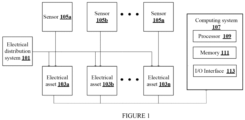
- FIG. 1 illustrates an exemplary environment 100 for providing recommendations for incongruous consumption of electrical energy by an electrical asset, in accordance with some embodiments of the present disclosure.
- the exemplary environment 100 comprises an electrical distribution system 101, one or more electrical assets 103 1 , 103 2 , ........., 103 n (collectively referred as the electrical asset 103 ), one or more sensors 105 1 , 105 2 , ........., 105 n (collectively referred as the sensors 105 ) and a computing system 107, but not limited thereto.
- the electrical distribution system 101 is an electrical network through which electrical energy is distributed to an end user for utilization.
- the electrical distribution system 101 comprises multiple components such as supply lines, transformers, switchgears, circuit breakers, switches, relays, fuses, cooling circuits, receptacles, utilization components, and the like.
- Components of the electrical distribution system 101 such as switchgears, circuit breakers, switches, relays, fuses, and the like, protect other components of the electrical distribution system 101 such as the supply lines, the transformers, the utilization components, and the like, by monitoring the other components.
- the electrical asset 103 may be at least one of an active components of an electric grid, a passive component of the electric grid, an electrical distribution component in industrial, and an electrical appliance, but not limited thereto.
- the electrical asset 103 is associated with one or more sensors 105 1 , 105 2 , ........., 105 N (collectively referred as the one or more sensors 105 ).
- the one or more sensors 105 may be implemented inside the electrical asset 103, but not limited thereto.
- the one or more sensors 105 may include a current sensor, a voltage sensor, and the like.
- the one or more sensors 105 may be implemented outside the electrical asset 103.
- the one or more sensors 105 may include environmental sensors such as a temperature sensor, a humidity sensor, and the like.
- the computing system 107 may be configured to provide recommendations for incongruous consumption of electrical energy by an electrical asset 103.
- the computing system 107 may comprise a processor 109, a memory 111 and an I/O interface 113.
- the computing system 107 may be a computing device such as, a laptop computer, a desktop computer, a Personal Computer (PC), a notebook, a smartphone, a tablet, e-book readers, a server, a network server, a cloud-based server, an edge computing device, a processing device, router, and the like.
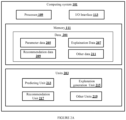
- FIG. 2A illustrates a detailed diagram of the computing system 107 for providing recommendations for incongruous consumption of electrical energy by an electrical asset 103, in accordance with some embodiments of the present disclosure.
- the computing system 107 comprises a processor 109, a memory 111 and an Input/ Output (I/O) interface 113.
- the memory 111 may be communicatively coupled to the processor 109.
- the memory 111 stores instructions may be executable by the processor 109.
- the processor 109 may comprise at least one data processor for executing program components for executing user or system-generated requests.
- the memory 111 may be communicatively coupled to the processor 109.
- the memory 111 stores instructions, executable by the processor 109, which, on execution, may cause the processor 109 to provide recommendations for incongruous consumption of electrical energy by an electrical asset 103.
- the computing system 107 further comprises data 201 and units 203 for performing various operations in accordance with the embodiments of the present disclosure.
- the data 201 may be stored within the memory 111 and may include, but not limited to, parameter data 205, explanation data 207, recommendation data 209 and other data 211. Further, the data 201 may be stored within the memory 111 in the form of various data structures. Additionally, the data 201 may be organized using data models, such as relational or hierarchical data models. The other data 211 may store temporary data and temporary files, generated by the units 203 while performing various functions of the computing system 107.
- the parameter data 205 may be related to at least one of current, voltage, electric charge, resistance, capacitance, inductance, power factor, reactive power, and frequency.
- the memory 111 may include one or more units 203.
- the one or more units 203 may be configured to perform the steps of the present disclosure using the parameter data 205, to provide recommendations for incongruous consumption of electrical energy by an electrical asset 103.
- Each of the one or more units 205 may be a hardware unit which may be outside the memory 111 and coupled with the computing system 107.
- the term one or more units 205 refers to an Application Specific Integrated Circuit (ASIC), an electronic circuit, a Field-Programmable Gate Arrays (FPGA), Programmable System-on-Chip (PSoC), a combinational logic circuit, and/or other suitable components that provide described functionality.
- ASIC Application Specific Integrated Circuit
- FPGA Field-Programmable Gate Arrays
- PSoC Programmable System-on-Chip
- the one or more units 205 when configured with the described functionality defined in the present disclosure will result in a novel hardware.
- the I/O interface 201 may be coupled with the processor 109 through which an input signal or/and
- the one or more units 205 may include, for example, a predicting unit 213, an explanation generation unit 215, a recommendation unit 217 and other units 219. It will be appreciated that such aforementioned units 205 may be represented as a single unit or a combination of different units.
- the processor 109 or the predicting unit 213 first identifies the group of parameters responsible for the consumption of the electrical energy.
- the processor 109 or the predicting unit 213 may be associated with one or more sensors 105 such as current sensor, a voltage sensor for receiving data pertaining to the parameters sensed by the sensors.
- the parameters may include, for example, current, voltage, electric charge, resistance, capacitance, inductance, power factor, reactive power, and frequency, but not limited thereto.
- the processor 109 or the predicting unit 213 computes the coefficient values for each identified parameter of the group of parameters.
- current, voltage, electric charge, resistance, capacitance, inductance, power factor, reactive power, and frequency are the group of parameters that are monitored continuously.
- coefficient value may be computed of current, power factor and capacitance is greater than the threshold, then the plurality of parameters are selected among the group of parameters based on the coefficient values of the group of parameters.
- the coefficient values indicate contribution of corresponding parameter in the consumption of the electrical energy. This way, all those parameters which are contributing to the electrical energy consumption are identified for further processing.
- the processor 109 or the predicting unit 213 predicts total electrical energy consumption of the electrical asset 103 for a predefined time period by using a non-linear relation depicting the consumption of electrical energy.
- the non-linear relation is determined by performing regression analysis on the plurality of parameters being identified and monitored in the real-time.
- the regression analysis on the plurality of parameters to determine the non-linear relation is performed using a trained model such as Machine Learning (ML) model.
- ML Machine Learning
- ML Machine Learning
- the library of candidate dynamics is chosen which comprises a mixture of nonlinear trigonometric functions such as sin ( ⁇ - ⁇ ) or cos ( ⁇ - ⁇ ).
- the plurality of parameters of the electrical asset 103 is used in the non-linear dynamic equation to retrieve plurality of parameters among the group of parameters to further predict the electrical energy demand of the electrical asset.
- the values of the plurality of parameters are used in the non-linear dynamics equation as mentioned above.
- the equation between the consumption of the electrical energy by the electrical asset 103 and the plurality of parameters may be determined using the regression analysis.
- the equation representing non-linearity of the electrical asset 103 may be based on one or more parameters such as current, voltage, resistance, power, and the like.
- the processor 109 determines whether the predicted total electrical energy consumption falls outside of electrical energy consumption range having a lower electrical energy threshold and an upper electrical energy threshold. For instance, consider the usage of voltage by electrical asset 103 is below the lower value [say for instance when the maximum utilization of power by the electrical asset 103 is 75KW and minimum possible consumption is 20 KW]. If the electrical asset 103 is utilizing 10KW, then it may be possible that there is a malfunctioning of a component of the electrical asset 103. In an alternate embodiment, when the electrical asset 103 utilizes 95KW which falls outside of electrical energy consumption range, then it is a criteria where there may be an effected component due to which the parameter values are changed in an electrical asset 103.
- the processor 109 or the explanation generation unit 215 may generate an explanation of the predicted total electrical energy consumption by calculating contribution values for each of the plurality of parameters.
- the contribution values indicate relative contribution of each of the plurality of parameters to the predicted total energy consumption.
- the contribution values are nothing but the Shapley values that apply primarily in situations when the contributions of the plurality of parameters are unequal, but each parameter contribution in cooperation with each other are responsible for driving the predicted total electrical energy consumption outside the electrical energy consumption range.
- the Shapley value is computed by taking the average difference from all combinations.
- the Shapley value is the average marginal contribution of a feature considering all possible combinations. Further, a person skilled in the art will appreciate that any known methods other than the above-mentioned method may be used to calculate the contribution values.
- the contribution values of each of the parameter may be as shown in FIG.2B .
- the machine learning model trained may predict the values responsible for driving the predicted total electrical energy consumption outside the electrical energy consumption range.
- the present disclosure identifies incongruous consumption of electrical energy by an electrical asset 103 and hence can be used to accurately predict system output for desired performance such as, for the asset and energy management of the electrical distribution system 101.
- the processor 109 identifies those one or more parameters among the plurality of parameters which are responsible for driving the predicted total electrical energy consumption outside the electrical energy consumption range.
- the one or more parameters responsible for driving the predicted total electrical energy consumption are identified by comparing the contribution value of each of the plurality of parameters with a global threshold value. For instance, when electrical appliances use high electrical energy than the desired value for example say 40 KW, then the total electrical energy consumption of the electrical appliances may be as shown in FIG.2C . In another example, when the electrical appliance uses high electrical energy than the desired value for example say 40 KW, then the time period at which the electrical asset utilizing the electrical energy may be as shown in FIG.2D .
- the processor 109 or the recommendation unit 217 may provide recommendations when the predicted total electrical energy consumption is below the lower electrical energy threshold. In an alternative embodiment, the processor 109 or the recommendation unit 217 may provide recommendations when the predicted total electrical energy consumption is high with respect to the upper electrical energy threshold.
- the recommendation may be stored in the form of recommendation data 209, which may include at least one of software-related recommendations and hardware-related recommendations. For instance, if there is any malfunctioning in a component associated with electrical asset 103 due to which there is more energy consumption, then the recommendation like replacement the component to achieve better results may be provided in case of hardware recommendation.
- the software recommendation may be to change the condition of threshold values or settings/values of the component.
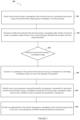
- Figure 3 shows an exemplary flow chart illustrating method steps for providing recommendations for incongruous consumption of electrical energy by an electrical asset 103, in accordance with some embodiments of the present disclosure.
- the method 300 may comprise one or more steps.
- the method 300 may be described in the general context of computer executable instructions.
- computer executable instructions can include routines, programs, objects, components, data structures, procedures, units, and functions, which perform particular functions or implement particular abstract data types.
- the order in which the method 300 is described is not intended to be construed as a limitation, and any number of the described method blocks can be combined in any order to implement the method. Additionally, individual blocks may be deleted from the methods without departing from the scope of the subject matter described herein. Furthermore, the method can be implemented in any suitable hardware, software, firmware, or combination thereof.
- the computing system 107 may predict in real-time, total electrical energy consumption of the electrical asset 103 for a predefined time period using a non-linear relation depicting the consumption of electrical energy.
- the non-linear relation is determined by performing regression analysis on a plurality of parameters monitored in real-time.
- the computing system 107 may determine whether the predicted total electrical energy consumption falls outside of electrical energy consumption range having a lower electrical energy threshold and an upper electrical energy threshold.
- the electrical energy consumption range indicates a desired electrical energy consumption of the electrical asset 103.
- the computing system 107 may determine whether the predicted total electrical energy consumption falls outside the electrical energy consumption range. If the predicted total electrical energy consumption falls outside the electrical energy consumption range then the step 304 may be processed.
- the computing system 107 may generate an explanation of the predicted total electrical energy consumption by calculating contribution values for each of the plurality of parameters.
- the contribution values indicate relative contribution of each of the plurality of parameters to the predicted total energy consumption.
- the computing system 107 may identify one or more parameters among the plurality of parameters, responsible for driving the predicted total electrical energy consumption outside the electrical energy consumption range, based on the contribution values calculated for the plurality of parameters.
- the computing system 107 may provide recommendations to prevent the incongruous consumption of electrical energy based on the one or more parameters identified among the plurality of parameters.
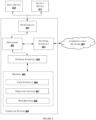
- FIG. 4 illustrates a block diagram of an exemplary computer system 400 for implementing embodiments consistent with the present disclosure.
- the computer system 400 may be used to implement the computing system 107.
- the computer system 400 may be used for providing recommendations for incongruous consumption of electrical energy by an electrical asset 103.
- the computer system 400 may receive the measurement data of the plurality of input variables from the one or more sensors 105 over the communication network 409, when the computer system 400 is implemented in the edge computing platform or the cloud computing platform or both.
- the computer system 400 may be implemented in the electrical distribution system 101.
- the computer system 400 may comprise a Central Processing Unit 402 (also referred as "CPU” or "processor").
- the processor 402 may comprise at least one data processor.
- the processor 402 may include specialized processing units such as integrated system (bus) controllers, memory management control units, floating point units, graphics processing units, digital signal processing units, etc.
- the processor 402 may be disposed in communication with one or more input/output (I/O) devices (not shown) via I/O interface 401.
- the I/O interface 401 may employ communication protocols/methods such as, without limitation, audio, analog, digital, monoaural, RCA, stereo, IEEE (Institute of Electrical and Electronics Engineers) -1394, serial bus, universal serial bus (USB), infrared, PS/2, BNC, coaxial, component, composite, digital visual interface (DVI), high-definition multimedia interface (HDMI), Radio Frequency (RF) antennas, S-Video, VGA, IEEE 802.n /b/g/n/x, Bluetooth, cellular (e.g., code-division multiple access (CDMA), highspeed packet access (HSPA+), global system for mobile communications (GSM), long-term evolution (LTE), WiMax, or the like), etc.
- CDMA code-division multiple access
- HSPA+ highspeed packet access
- GSM global system for mobile communications
- the computer system 400 may communicate with one or more I/O devices.
- the input device 410 may be an antenna, keyboard, mouse, joystick, (infrared) remote control, camera, card reader, fax machine, dongle, biometric reader, microphone, touch screen, touchpad, trackball, stylus, scanner, storage device, transceiver, video device/source, sensors, etc.
- the output device 411 may be a printer, fax machine, video display (e.g., cathode ray tube (CRT), liquid crystal display (LCD), light-emitting diode (LED), plasma, Plasma display panel (PDP), Organic light-emitting diode display (OLED) or the like), audio speaker, etc.
- CTR cathode ray tube
- LCD liquid crystal display
- LED light-emitting diode
- PDP Plasma display panel
- OLED Organic light-emitting diode display
- the processor 402 may be disposed in communication with the communication network 409 via a network interface 403.
- the network interface 403 may communicate with the communication network 409.
- the network interface 403 may employ connection protocols including, without limitation, direct connect, Ethernet (e.g., twisted pair 10/100/1000 Base T), transmission control protocol/internet protocol (TCP/IP), token ring, IEEE 802.11a/b/g/n/x, etc.
- the communication network 409 may include, without limitation, a direct interconnection, local area network (LAN), wide area network (WAN), wireless network (e.g., using Wireless Application Protocol), the Internet, etc.
- the network interface 403 may employ connection protocols include, but not limited to, direct connect, Ethernet (e.g., twisted pair 10/100/1000 Base T), transmission control protocol/internet protocol (TCP/IP), token ring, IEEE 802.11a/b/g/n/x, Bluetooth mesh, Zigbee, etc.
- connection protocols include, but not limited to, direct connect, Ethernet (e.g., twisted pair 10/100/1000 Base T), transmission control protocol/internet protocol (TCP/IP), token ring, IEEE 802.11a/b/g/n/x, Bluetooth mesh, Zigbee, etc.
- the communication network 409 includes, but is not limited to, a direct interconnection, an e-commerce network, a peer to peer (P2P) network, local area network (LAN), wide area network (WAN), wireless network (e.g., using Wireless Application Protocol), the Internet, Wi-Fi, and such.
- the first network and the second network may either be a dedicated network or a shared network, which represents an association of the different types of networks that use a variety of protocols, for example, Hypertext Transfer Protocol (HTTP), Transmission Control Protocol/Internet Protocol (TCP/IP), Wireless Application Protocol (WAP), etc., to communicate with each other.
- the first network and the second network may include a variety of network devices, including routers, bridges, servers, computing devices, storage devices, etc.
- the processor 402 may be disposed in communication with a memory 405 (e.g., RAM, ROM, etc. not shown in Figure 4 ) via a storage interface 404.
- the storage interface 404 may connect to memory 405 including, without limitation, memory drives, removable disc drives, etc., employing connection protocols such as serial advanced technology attachment (SATA), Integrated Drive Electronics (IDE), IEEE-1394, Universal Serial Bus (USB), fiber channel, Small Computer Systems Interface (SCSI), etc.
- the memory drives may further include a drum, magnetic disc drive, magneto-optical drive, optical drive, Redundant Array of Independent Discs (RAID), solid-state memory devices, solid-state drives, etc.
- the memory 405 may store a collection of program or database components, including, without limitation, user interface 406, an operating system 407, web browser 408 etc.
- computer system 400 may store user/application data, such as, the data, variables, records, etc., as described in this disclosure.
- databases may be implemented as fault-tolerant, relational, scalable, secure databases such as Oracle ® or Sybase ® .
- the operating system 407 may facilitate resource management and operation of the computer system 400.
- Examples of operating systems include, without limitation, APPLE MACINTOSH R OS X, UNIX R , UNIX-like system distributions (E.G., BERKELEY SOFTWARE DISTRIBUTION TM (BSD), FREEBSD TM , NETBSD TM , OPENBSD TM , etc.), LINUX DISTRIBUTIONS TM (E.G., RED HAT TM , UBUNTU TM , KUBUNTU TM , etc.), IBM TM OS/2, MICROSOFT TM WINDOWS TM (XP TM , VISTA TM /7/8, 10 etc.), APPLE R IOS TM , GOOGLE R ANDROIDTM, BLACKBERRY R OS, or the like.
- the computer system 400 may implement the web browser 408 stored program component.
- the web browser 408 may be a hypertext viewing application, for example MICROSOFT R INTERNET EXPLORER TM , GOOGLE R CHROME TM0 , MOZILLA R FIREFOX TM , APPLE R SAFARI TM , etc.
- Secure web browsing may be provided using Secure Hypertext Transport Protocol (HTTPS), Secure Sockets Layer (SSL), Transport Layer Security (TLS), etc.
- Web browsers 408 may utilize facilities such as AJAX TM , DHTML TM , ADOBE R FLASH TM , JAVASCRIPT TM , JAVA TM , Application Programming Interfaces (APIs), etc.
- the computer system 400 may implement a mail server (not shown in Figure) stored program component.
- the mail server may be an Internet mail server such as Microsoft Exchange, or the like.
- the mail server may utilize facilities such as ASP TM , ACTIVEX TM , ANSI TM C++/C#, MICROSOFT R , NET TM , CGI SCRIPTS TM , JAVA TM , JAVASCRIPT TM , PERL TM , PHP TM , PYTHON TM , WEBOBJECTS TM , etc.
- the mail server may utilize communication protocols such as Internet Message Access Protocol (IMAP), Messaging Application Programming Interface (MAPI), MICROSOFT R exchange, Post Office Protocol (POP), Simple Mail Transfer Protocol (SMTP), or the like.
- IMAP Internet Message Access Protocol
- MAPI Messaging Application Programming Interface
- PMP Post Office Protocol
- SMTP Simple Mail Transfer Protocol
- the computer system 400 may implement a mail client stored program component.
- the mail client (not shown in Figure) may be a mail viewing application, such as APPLE R MAIL TM , MICROSOFT R ENTOURAGE TM , MICROSOFT R OUTLOOK TM , MOZILLA R THUNDERBIRD TM , etc.
- a computer-readable storage medium refers to any type of physical memory on which information or data readable by a processor may be stored.
- a computer-readable storage medium may store instructions for execution by one or more processors, including instructions for causing the processor(s) to perform steps or stages consistent with the embodiments described herein.
- the term "computer-readable medium" should be understood to include tangible items and exclude carrier waves and transient signals, i.e., be non-transitory.
- RAM Random Access Memory
- ROM Read-Only Memory
- volatile memory volatile memory
- non-volatile memory hard drives
- CD ROMs Compact Disc Read-Only Memory
- DVDs Digital Video Disc
- flash drives disks, and any other known physical storage media.
- Embodiments of the present disclosure provides method and system for providing recommendations for incongruous consumption of electrical energy by an electrical asset 103.
- the present disclosure performs complex system analysis using non-linear dynamics on measurement data of the electrical distribution system 101.
- the present disclosure provides high accuracy in predicting demand of the electrical asset 103.
- the present disclosure considers the complex non-linear correlation between the variables through sparse regression.
- the present disclosure identifies one or more parameters responsible for driving the predicted total electrical energy consumption outside the electrical energy consumption range and also explanation of the predicted total electrical energy consumption. Thus, explanation helps in quick and easy understanding of what drove the system to such a demand state.
- an embodiment means “one or more (but not all) embodiments of the invention(s)" unless expressly specified otherwise.
- FIG. 3 shows certain events occurring in a certain order. In alternative embodiments, certain operations may be performed in a different order, modified, or removed. Moreover, steps may be added to the above described logic and still conform to the described embodiments. Further, operations described herein may occur sequentially or certain operations may be processed in parallel. Yet further, operations may be performed by a single processing unit or by distributed processing units.
- An aspect of the invention relates to a computing system for providing recommendations for incongruous consumption of electrical energy by an electrical asset
- the computing system comprising: a processor; and a memory coupled to the processor, the processor configured to: predict, in real-time, total electrical energy consumption of the electrical asset for a predefined time period using a non-linear relation depicting the consumption of electrical energy, wherein the non-linear relation is determined by performing regression analysis on a plurality of parameters monitored in the real-time; determine whether the predicted total electrical energy consumption falls outside of electrical energy consumption range having a lower electrical energy threshold and an upper electrical energy threshold, wherein the electrical energy consumption range indicates a desired electrical energy consumption of the electrical asset; and when the predicted total electrical energy consumption falls outside the electrical energy consumption range, the processor configured to: generate an explanation of the predicted total electrical energy consumption by calculating contribution values for each of the plurality of parameters, wherein the contribution values indicate relative contribution of each of the plurality of parameters to the predicted total energy consumption; identify one or more parameters among the plurality of parameters, responsible for driving the predicted total
- a further aspect is the computing system as described above, wherein the electrical asset comprises at least one of an active component of an electric grid, a passive component of the electric grid, an electrical distribution component in industrial, and an electrical appliance.
- the plurality of parameters comprises at least one of current, voltage, electric charge, resistance, capacitance, inductance, power factor, reactive power, and frequency.
- the plurality of parameters are monitored using corresponding plurality of sensors associated with the electrical asset.
- a further aspect is the computing system as described above, wherein the plurality of parameters are selected among a group of parameters, and wherein to select the plurality of parameters among the group of parameters, the processor is configured to: identify the group of parameters responsible for the consumption of the electrical energy; compute coefficient values for each of the group of parameters, wherein each of the coefficient values indicate contribution of corresponding parameter in the consumption of the electrical energy; and select the plurality of parameters among the group of parameters based on the coefficient values of the group of parameters, wherein each of the selected plurality of parameters have a coefficient value greater than a threshold value.
- a further aspect is the computing system as described above, wherein the regression analysis on the plurality of parameters to determine the non-linear relation is performed using a trained model.
- the processor is configured to: determine the non-linear relation between the consumption of the electrical energy by the electrical asset vis-à-vis the plurality of parameters using the regression analysis; update the non-linear relation based on the plurality of parameters monitored in the real-time; and predict the total electrical energy consumption of the electrical asset in the real-time based on the updated non-linear relation.
- a further aspect is the computing system as described above, wherein to identify the one or more parameters among the plurality of parameters, responsible for driving the predicted total electrical energy consumption outside the electrical energy consumption range, based on the contribution values calculated for the plurality of parameters, the processor is configured to: compare the contribution value of each of the plurality of parameters with a global threshold value; and identify the one or more parameters, among the plurality of parameters, such that the one or more parameters identified have the corresponding contribution values going beyond the global threshold value.
- a further aspect is the computing system as described above, wherein the processor is further configured to provide recommendations based on whether the predicted total electrical energy consumption is below the lower electrical energy threshold or above the upper electrical energy threshold.
- the recommendations comprise at least one of software-related recommendations and hardware-related recommendations.
- FIG. 1 Exemplary environment 101 Electrical distribution system 103 Electrical asset 105 One or more sensors 107 Computing system 109 Processor 111 Memory 113 I/O interface 201 data 203 Units 205 Parameter data 207 Explanation data 209 Recommendation data 211 Other data 213 Predicting Unit 215 Explanation generation unit 217 Recommendation Unit 219 Other units 400 Computer system 401 I/O interface 402 Processor 403 Network interface 404 Storage interface 405 Memory 406 User interface 407 Operating system 408 Web browser 409 Communication network 410 Input device 411 Output device
Landscapes
- Engineering & Computer Science (AREA)
- Business, Economics & Management (AREA)
- Economics (AREA)
- Power Engineering (AREA)
- Strategic Management (AREA)
- Human Resources & Organizations (AREA)
- Health & Medical Sciences (AREA)
- General Physics & Mathematics (AREA)
- Theoretical Computer Science (AREA)
- Marketing (AREA)
- General Business, Economics & Management (AREA)
- Physics & Mathematics (AREA)
- Tourism & Hospitality (AREA)
- Water Supply & Treatment (AREA)
- Primary Health Care (AREA)
- General Health & Medical Sciences (AREA)
- Public Health (AREA)
- Development Economics (AREA)
- Game Theory and Decision Science (AREA)
- Entrepreneurship & Innovation (AREA)
- Operations Research (AREA)
- Quality & Reliability (AREA)
- Management, Administration, Business Operations System, And Electronic Commerce (AREA)
- Supply And Distribution Of Alternating Current (AREA)
Applications Claiming Priority (1)
| Application Number | Priority Date | Filing Date | Title |
|---|---|---|---|
| IN202341046953 | 2023-07-12 |
Publications (2)
| Publication Number | Publication Date |
|---|---|
| EP4492607A2 true EP4492607A2 (de) | 2025-01-15 |
| EP4492607A3 EP4492607A3 (de) | 2025-06-25 |
Family
ID=91899163
Family Applications (1)
| Application Number | Title | Priority Date | Filing Date |
|---|---|---|---|
| EP24187636.6A Pending EP4492607A3 (de) | 2023-07-12 | 2024-07-10 | Verfahren und system zur bereitstellung von empfehlungen für den inkongruenten verbrauch von elektrischer energie durch elektrische anlagen |
Country Status (1)
| Country | Link |
|---|---|
| EP (1) | EP4492607A3 (de) |
Family Cites Families (3)
| Publication number | Priority date | Publication date | Assignee | Title |
|---|---|---|---|---|
| US20160294185A1 (en) * | 2015-03-31 | 2016-10-06 | Enernoc, Inc. | Energy brown out prediction system |
| CN106874581B (zh) * | 2016-12-30 | 2021-03-30 | 浙江大学 | 一种基于bp神经网络模型的建筑空调能耗预测方法 |
| CN115221782A (zh) * | 2022-07-15 | 2022-10-21 | 西安建筑科技大学 | 一种大型公共建筑能耗混合预测方法及系统 |
-
2024
- 2024-07-10 EP EP24187636.6A patent/EP4492607A3/de active Pending
Also Published As
| Publication number | Publication date |
|---|---|
| EP4492607A3 (de) | 2025-06-25 |
Similar Documents
| Publication | Publication Date | Title |
|---|---|---|
| US12530598B2 (en) | System and method for fault detection of components using information fusion technique | |
| US12111345B2 (en) | Electrical power cable monitoring device including partial discharge sensor | |
| CN114285728B (zh) | 一种预测模型训练方法、流量预测方法、装置及存储介质 | |
| US11782096B2 (en) | Method and system for improving state of health of rechargeable batteries | |
| David et al. | Quantitative comparison of cascading failure models for risk-based decision making in power systems | |
| EP3182341A1 (de) | Verfahren und system zum bestimmen des qualitätsniveaus von leistungsdaten in zusammenhang mit einer einheitsgruppe | |
| US10938216B2 (en) | Methods and systems for synchronizing energy management between neighboring microgrids | |
| US20170147023A1 (en) | Time-skew correction unit and a method thereof | |
| Zhang et al. | Robust classification model for PMU‐based on‐line power system DSA with missing data | |
| CN115564193A (zh) | 智能配电网多维度综合效益评估方法及系统、存储介质 | |
| CN116908629B (zh) | 一种电缆的绝缘状态检测方法、装置、设备及存储介质 | |
| US20250357786A1 (en) | Method for determination of phase labels in a three phase electric power distribution network | |
| Weng et al. | Data-driven topology estimation | |
| EP4492607A2 (de) | Verfahren und system zur bereitstellung von empfehlungen für den inkongruenten verbrauch von elektrischer energie durch elektrische anlagen | |
| US10317865B2 (en) | Method and system for determining potential energy saving for a multisite enterprise | |
| US20180218274A1 (en) | Device and method for identifying causal factors in classification decision making models using subjective judgement | |
| US11182142B2 (en) | Method and system for dynamic deployment and vertical scaling of applications in a cloud environment | |
| US20170031658A1 (en) | Method and system for enhancing quality of requirements for an application development | |
| US20250023349A1 (en) | Method and System for Performing Asset and Energy Management for an Electrical Distribution System | |
| EP4400918A1 (de) | Verfahren und system zur vorhersage des energieverbrauchs in einem stromverteilungssystem | |
| JP2021033952A (ja) | 修理工事優先順位決定方法 | |
| US20190251453A1 (en) | Method and system for determining occurrence of sewer flooding in a geographical area | |
| US10937112B2 (en) | System, method and device for creating a power generation plan in a power generation system | |
| CN111699414A (zh) | 一种太阳辐射量出现概率分布解析方法、太阳辐射量出现概率分布解析系统、太阳辐射量出现概率分布解析程序、太阳辐射量归一化统计解析系统、太阳辐射量归一化统计解析方法及太阳辐射量归一化统计解析程序 | |
| JP2020115101A (ja) | 日射量正規化統計解析システム、日射量正規化統計解析法および日射量正規化統計解析プログラム |
Legal Events
| Date | Code | Title | Description |
|---|---|---|---|
| PUAI | Public reference made under article 153(3) epc to a published international application that has entered the european phase |
Free format text: ORIGINAL CODE: 0009012 |
|
| STAA | Information on the status of an ep patent application or granted ep patent |
Free format text: STATUS: REQUEST FOR EXAMINATION WAS MADE |
|
| 17P | Request for examination filed |
Effective date: 20240710 |
|
| AK | Designated contracting states |
Kind code of ref document: A2 Designated state(s): AL AT BE BG CH CY CZ DE DK EE ES FI FR GB GR HR HU IE IS IT LI LT LU LV MC ME MK MT NL NO PL PT RO RS SE SI SK SM TR |
|
| PUAL | Search report despatched |
Free format text: ORIGINAL CODE: 0009013 |
|
| AK | Designated contracting states |
Kind code of ref document: A3 Designated state(s): AL AT BE BG CH CY CZ DE DK EE ES FI FR GB GR HR HU IE IS IT LI LT LU LV MC ME MK MT NL NO PL PT RO RS SE SI SK SM TR |
|
| RIC1 | Information provided on ipc code assigned before grant |
Ipc: H02J 13/00 20060101ALI20250519BHEP Ipc: H02J 3/14 20060101ALI20250519BHEP Ipc: H02J 3/00 20060101AFI20250519BHEP |