EP4492454A1 - Cooler - Google Patents
Cooler Download PDFInfo
- Publication number
- EP4492454A1 EP4492454A1 EP23788312.9A EP23788312A EP4492454A1 EP 4492454 A1 EP4492454 A1 EP 4492454A1 EP 23788312 A EP23788312 A EP 23788312A EP 4492454 A1 EP4492454 A1 EP 4492454A1
- Authority
- EP
- European Patent Office
- Prior art keywords
- longitudinal direction
- cooling plate
- joint surface
- cooler
- plate portion
- Prior art date
- Legal status (The legal status is an assumption and is not a legal conclusion. Google has not performed a legal analysis and makes no representation as to the accuracy of the status listed.)
- Pending
Links
Images









Classifications
-
- H—ELECTRICITY
- H10—SEMICONDUCTOR DEVICES; ELECTRIC SOLID-STATE DEVICES NOT OTHERWISE PROVIDED FOR
- H10W—GENERIC PACKAGES, INTERCONNECTIONS, CONNECTORS OR OTHER CONSTRUCTIONAL DETAILS OF DEVICES COVERED BY CLASS H10
- H10W40/00—Arrangements for thermal protection or thermal control
- H10W40/40—Arrangements for thermal protection or thermal control involving heat exchange by flowing fluids
- H10W40/47—Arrangements for thermal protection or thermal control involving heat exchange by flowing fluids by flowing liquids, e.g. forced water cooling
-
- B—PERFORMING OPERATIONS; TRANSPORTING
- B33—ADDITIVE MANUFACTURING TECHNOLOGY
- B33Y—ADDITIVE MANUFACTURING, i.e. MANUFACTURING OF THREE-DIMENSIONAL [3D] OBJECTS BY ADDITIVE DEPOSITION, ADDITIVE AGGLOMERATION OR ADDITIVE LAYERING, e.g. BY 3D PRINTING, STEREOLITHOGRAPHY OR SELECTIVE LASER SINTERING
- B33Y10/00—Processes of additive manufacturing
-
- F—MECHANICAL ENGINEERING; LIGHTING; HEATING; WEAPONS; BLASTING
- F28—HEAT EXCHANGE IN GENERAL
- F28F—DETAILS OF HEAT-EXCHANGE AND HEAT-TRANSFER APPARATUS, OF GENERAL APPLICATION
- F28F3/00—Plate-like or laminated elements; Assemblies of plate-like or laminated elements
- F28F3/12—Elements constructed in the shape of a hollow panel, e.g. with channels
-
- F—MECHANICAL ENGINEERING; LIGHTING; HEATING; WEAPONS; BLASTING
- F28—HEAT EXCHANGE IN GENERAL
- F28F—DETAILS OF HEAT-EXCHANGE AND HEAT-TRANSFER APPARATUS, OF GENERAL APPLICATION
- F28F9/00—Casings; Header boxes; Auxiliary supports for elements; Auxiliary members within casings
- F28F9/007—Auxiliary supports for elements
- F28F9/0075—Supports for plates or plate assemblies
-
- H—ELECTRICITY
- H01—ELECTRIC ELEMENTS
- H01M—PROCESSES OR MEANS, e.g. BATTERIES, FOR THE DIRECT CONVERSION OF CHEMICAL ENERGY INTO ELECTRICAL ENERGY
- H01M10/00—Secondary cells; Manufacture thereof
- H01M10/60—Heating or cooling; Temperature control
- H01M10/65—Means for temperature control structurally associated with the cells
- H01M10/655—Solid structures for heat exchange or heat conduction
- H01M10/6556—Solid parts with flow channel passages or pipes for heat exchange
-
- F—MECHANICAL ENGINEERING; LIGHTING; HEATING; WEAPONS; BLASTING
- F28—HEAT EXCHANGE IN GENERAL
- F28D—HEAT-EXCHANGE APPARATUS, NOT PROVIDED FOR IN ANOTHER SUBCLASS, IN WHICH THE HEAT-EXCHANGE MEDIA DO NOT COME INTO DIRECT CONTACT
- F28D21/00—Heat-exchange apparatus not covered by any of the groups F28D1/00 - F28D20/00
- F28D2021/0019—Other heat exchangers for particular applications; Heat exchange systems not otherwise provided for
- F28D2021/0028—Other heat exchangers for particular applications; Heat exchange systems not otherwise provided for for cooling heat generating elements, e.g. for cooling electronic components or electric devices
- F28D2021/0029—Heat sinks
-
- F—MECHANICAL ENGINEERING; LIGHTING; HEATING; WEAPONS; BLASTING
- F28—HEAT EXCHANGE IN GENERAL
- F28F—DETAILS OF HEAT-EXCHANGE AND HEAT-TRANSFER APPARATUS, OF GENERAL APPLICATION
- F28F1/00—Tubular elements; Assemblies of tubular elements
- F28F1/02—Tubular elements of cross-section which is non-circular
- F28F1/022—Tubular elements of cross-section which is non-circular with multiple channels
-
- F—MECHANICAL ENGINEERING; LIGHTING; HEATING; WEAPONS; BLASTING
- F28—HEAT EXCHANGE IN GENERAL
- F28F—DETAILS OF HEAT-EXCHANGE AND HEAT-TRANSFER APPARATUS, OF GENERAL APPLICATION
- F28F2275/00—Fastening; Joining
- F28F2275/04—Fastening; Joining by brazing
-
- F—MECHANICAL ENGINEERING; LIGHTING; HEATING; WEAPONS; BLASTING
- F28—HEAT EXCHANGE IN GENERAL
- F28F—DETAILS OF HEAT-EXCHANGE AND HEAT-TRANSFER APPARATUS, OF GENERAL APPLICATION
- F28F2275/00—Fastening; Joining
- F28F2275/06—Fastening; Joining by welding
Definitions
- One aspect of the present invention relates to a cooler that cools a battery or the like.
- Patent Literature 1 describes a cooler that cools a battery or the like.
- the cooler includes a flat cooling plate having a coolant passage along a longitudinal direction, and a pair of upper lid bodies joined to the cooling plate and having a coolant inflow port and a coolant outflow port communicating with the coolant passage.
- a pair of notches are formed to open the upper and longitudinal end portions while leaving both wall portions in a width direction.
- the pair of upper lid bodies are joined to the pair of notches by brazing.
- Patent Literature 1 Japanese Patent No. 6494134
- the cooling plate of the cooler described in Patent Literature 1 is formed in a flat shape by an upper piece, a lower piece, and a pair of both side walls.
- An upper surface of the upper piece and both end surfaces of the lower piece and the pair of both side walls in the longitudinal direction become joint surfaces of the cooling plate joined to the pair of upper lid bodies.
- the upper surface of the upper piece is a horizontal surface
- both end surfaces of the lower piece and the pair of both side walls in the longitudinal direction are vertical surfaces.
- a brazing material is likely to fall off from both end surfaces of the lower piece and the pair of both side walls in the longitudinal direction which are vertical surfaces.
- a holder for holding the brazing material is required, and there is a problem that manufacturing cost increases.
- welding directions are directions orthogonal to each other. That is, the upper surface of the upper piece which is a horizontal surface needs to be welded from a vertical direction, and both end surfaces of the lower piece and the pair of both side walls in the longitudinal direction which are vertical surfaces need to be welded from a horizontal direction. For this reason, there is a problem that a large welding facility is required and the manufacturing cost increases.
- an object of one aspect of the present invention is to provide a cooler capable of reducing manufacturing cost.
- a cooler according to one aspect of the present invention is as follows.
- manufacturing cost can be reduced.
- the cooler according to the present embodiment cools a body to be cooled.
- the body to be cooled is not particularly limited, and can be, for example, a battery mounted on a vehicle such as an electric vehicle.
- the same or corresponding elements are denoted by the same reference numerals, and redundant description will be omitted.
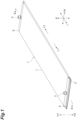
- FIG. 1 is a perspective view illustrating a cooler according to a first embodiment.
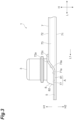
- FIG. 2 is a cross-sectional view taken along line II-II illustrated in FIG. 1 .
- a cooler 1 according to the present embodiment is formed in a flat shape so as to increase a contact area with a body to be cooled. That is, the cooler 1 extends in a longitudinal direction L and a width direction W orthogonal to the longitudinal direction L, and is flattened in a height direction H orthogonal to the longitudinal direction L and the width direction W.
- a cooling plate portion 7 is formed to be longer in the longitudinal direction L than in the width direction W.
- first longitudinal direction L One direction of the longitudinal direction L is referred to as a first longitudinal direction L1, and the other direction of the longitudinal direction L is referred to as a second longitudinal direction L2.
- the second longitudinal direction L2 is a direction opposite to the first longitudinal direction L1.
- One direction in the height direction H is referred to as a first height direction H1
- the other direction in the height direction H is referred to as a second height direction H2.
- the second height direction H2 is a direction opposite to the first height direction H1.
- FIG. 3 is a side view illustrating an end portion of the cooler in the first longitudinal direction.
- FIG. 4 is a side view illustrating the end portion of the cooler in the second longitudinal direction.
- FIG. 5 is a plan view illustrating the end portion of the cooler in the first longitudinal direction.
- FIG. 6 is a plan view illustrating the end portion of the cooler in the second longitudinal direction.
- the cooler 1 includes a coolant passage 2, a first port 3, a second port 4, first attachment portions 5, and second attachment portions 6.
- the coolant passage 2 is a passage (space) through which a coolant for cooling the body to be cooled flows.
- the first port 3 and the second port 4 communicate with the coolant passage 2 and supply or discharge the coolant to or from the coolant passage 2.
- the first port 3 is located at an end portion of the cooler 1 in the first longitudinal direction L1.
- the second port 4 is located at an end portion of the cooler 1 in the second longitudinal direction L2. Therefore, the coolant is supplied from one of the first port 3 and the second port 4 to the coolant passage 2, flows through the coolant passage 2 in the longitudinal direction L, and is discharged from the other of the first port 3 and the second port 4.
- the coolant absorbs heat from the cooler 1 when flowing through the coolant passage 2 to cool the body to be cooled coupled to the cooler 1.
- the first attachment portion 5 and the second attachment portion 6 are portions for attaching the cooler 1 to an external device (not illustrated).
- the first attachment portion 5 is located at the end portion of the cooler 1 in the first longitudinal direction L1.
- the second attachment portion 6 is located at the end portion of the cooler 1 in the second longitudinal direction L2.
- the first attachment portion 5 and the second attachment portion 6 are, for example, through-holes into which bolts (not illustrated) for attaching the cooler 1 to the external device are inserted.
- the external device may be a body to be cooled that is a cooling target of the cooler 1.
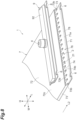
- FIG. 7 is a perspective view illustrating a state of the end portion of the cooler in the first longitudinal direction, before the cooling plate portion and the lid portion are joined to each other.
- FIG. 8 is a perspective view illustrating a state of the end portion of the cooler in the second longitudinal direction, before the cooling plate portion and the lid portion are joined to each other.
- the cooler 1 includes a cooling plate portion 7, and first lid portions 8 and second lid portions 9 joined to the cooling plate portion 7.
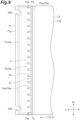
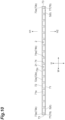
- FIG. 9 is a plan view illustrating the end portion of the cooling plate portion in the first longitudinal direction and the second longitudinal direction.
- FIG. 10 is a front view illustrating the end portion of the cooling plate portion in the first longitudinal direction and the second longitudinal direction.
- FIG. 11 is a side view illustrating the end portion of the cooling plate portion in the first longitudinal direction and the second longitudinal direction. Note that reference numerals in parentheses in FIGS. 9 to 11 indicate reference numerals of end portions of the cooling plate portion in the second longitudinal direction.
- the cooling plate portion 7 forms a main body of the cooler 1.
- the cooling plate portion 7 includes a bottom wall portion 71, an upper wall portion 72, a pair of side wall portions 73 and 73, a plurality of partition walls 74, a first opening 75, and a second opening 76.
- the bottom wall portion 71 is a portion which forms a bottom wall of the cooler 1 and is brought into contact with the body to be cooled.
- the bottom wall portion 71 is formed in a substantially flat plate extending in the longitudinal direction L and the width direction W.
- a part of the first attachment portion 5 is formed at an end portion of the bottom wall portion 71 in the first longitudinal direction L1
- a part of the second attachment portion 6 is formed at an end portion of the bottom wall portion 71 in the second longitudinal direction L2.
- the upper wall portion 72 is a portion forming an upper wall of the cooler 1.
- the upper wall portion 72 is formed in a substantially flat plate shape extending in the longitudinal direction L and the width direction W.
- the upper wall portion 72 is disposed so as to face the bottom wall portion 71 in the height direction H.
- the pair of side wall portions 73 and 73 are portions forming a pair of side walls of the cooler 1.
- the pair of side wall portions 73 and 73 are formed in a substantially flat plate shape extending in the longitudinal direction L and the height direction H.
- the pair of side wall portions 73 and 73 are disposed so as to face each other in the width direction W, and are coupled to both end portions of the bottom wall portion 71 and the upper wall portion 72 in the width direction W.
- the plurality of partition walls 74 extend in the longitudinal direction L and partition the coolant passage 2 in the width direction W. That is, the plurality of partition walls 74 extending in the longitudinal direction L are arranged in the width direction W.
- Each of the plurality of partition walls 74 is formed in a substantially flat plate shape extending in the longitudinal direction L and the height direction H, and is coupled to the bottom wall portion 71 and the upper wall portion 72.
- the coolant passage 2 is partitioned into a plurality of partitioned coolant passages 21 by the plurality of partition walls 74.
- the plurality of partitioned coolant passages 21 extend in the longitudinal direction L and are arranged in the width direction W.
- partitioned coolant passages 21 located at both ends in the width direction W are formed by the bottom wall portion 71, the upper wall portion 72, the side wall portion 73, and the partition wall 74, and the other partitioned coolant passages 21 are formed by the bottom wall portion 71, the upper wall portion 72, and the pair of adjacent partition walls 74.
- the first opening 75 opens the coolant passage 2 in the first longitudinal direction L1 and the first height direction H1 at the end portion of the cooling plate portion 7 in the first longitudinal direction L1.
- the second opening 76 opens the coolant passage 2 in the second longitudinal direction L2 and the first height direction H1 at the end portion of the cooling plate portion 7 in the second longitudinal direction L2.
- the first opening 75 and the second opening 76 are formed by the bottom wall portion 71, the upper wall portion 72, and the pair of side wall portions 73 and 73.
- the first opening 75 and the second opening 76 are formed, for example, by cutting out the upper wall portion 72, the pair of side wall portions 73 and 73, and the plurality of partition walls 74.
- a distal end of the upper wall portion 72 in the first longitudinal direction L1 is located on the second longitudinal direction L2 side with respect to a distal end of the bottom wall portion 71 in the first longitudinal direction L1, so that the coolant passage 2 is opened in the first height direction H1.
- the cooling plate portion 7 is not provided on the first longitudinal direction L1 side of the coolant passage 2, so that the coolant passage 2 is opened in the first longitudinal direction L1.
- a distal end of the upper wall portion 72 in the second longitudinal direction L2 is located on the first longitudinal direction L1 side with respect to a distal end of the bottom wall portion 71 in the second longitudinal direction L2, so that the coolant passage 2 is opened in the first height direction H1.
- the cooling plate portion 7 is not provided on the second longitudinal direction L2 side of the coolant passage 2, so that the coolant passage 2 is opened in the second longitudinal direction L2.
- the first lid portion 8 is joined to the cooling plate portion 7 so as to close the first opening 75.
- a portion where the cooling plate portion 7 and the first lid portion 8 are joined is referred to as a first joint portion A.
- a first joint surface 77 of the cooling plate portion 7 and a joint surface 81 of the first lid portion 8 are joined.
- the first joint surface 77 is a joint surface of the cooling plate portion 7 with the first lid portion 8, and does not include a surface not joined with the first lid portion 8.
- the joint surface 81 is a joint surface of the first lid portion 8 with the cooling plate portion 7, and does not include a surface not joined with the cooling plate portion 7.
- Joining of the first lid portion 8 to the cooling plate portion 7 is not particularly limited, but can be performed by, for example, brazing, welding, or the like.
- first joint portion A, the first joint surface 77, and the joint surface 81 are indicated by fine dot hatching.
- the first lid portion 8 has the first port 3 described above and a chamber forming portion 82.
- the chamber forming portion 82 forms a first chamber 22 disposed between the first port 3 and the plurality of partitioned coolant passages 21.
- the first chamber 22 is a space that is located on the first longitudinal direction L1 side of the plurality of partitioned coolant passages 21, communicates with the plurality of partitioned coolant passages 21, and communicates with the first port 3.
- the first chamber 22 forms a part of the coolant passage 2, and distributes or merges a coolant between the first port 3 and the plurality of partitioned coolant passages 21.
- the first attachment portion 5 is formed at an end portion of the first lid portion 8 in the first longitudinal direction L1.
- the first attachment portion 5 is formed by a portion where the bottom wall portion 71 of the cooling plate portion 7 and the first lid portion 8 overlap each other.
- the joint surface 81 of the first lid portion 8 surrounds the chamber forming portion 82 in order to close the first opening 75.
- the joint surface 81 has a shape corresponding to the first joint surface 77 of the cooling plate portion 7, that is, a shape along the first joint surface 77 of the cooling plate portion 7.
- the first joint surface 77 of the cooling plate portion 7 surrounds the first opening 75 in order to close the first opening 75.
- the first joint surface 77 is formed on an upper wall upper surface 72c which is a surface of the upper wall portion 72 on a side (first height direction H1 side) opposite to the bottom wall portion 71, a first upper wall end surface 72a which is an end surface of the upper wall portion 72 in the first longitudinal direction L1, first side wall end surfaces 73a and 73a which are end surfaces of the pair of side wall portions 73 and 73 in the first longitudinal direction L1, and a bottom wall upper surface 71a which is a surface of the bottom wall portion 71 on the upper wall portion 72 side (first height direction H1 side).
- the first joint surface 77 is formed by a horizontal surface extending in the longitudinal direction L and the width direction W and an inclined surface directed in the second height direction H2 as it goes toward the first longitudinal direction L1, and does not have a vertical surface extending in the height direction H. Therefore, the first joint surface 77 is directed further toward the first height direction H1 side (the upper wall portion 72 side with respect to the bottom wall portion 71) than toward the longitudinal direction L. That is, the entire first joint surface 77 surrounding the first opening 75 is directed further toward the first height direction H1 side than toward the longitudinal direction L.
- first joint surface 77 is directed further toward the first height direction H1 side than toward the longitudinal direction L and goes around the first opening 75 when viewed from the first height direction H1 (surrounds an entire circumference of the first opening 75 when viewed from the first height direction H1).
- the inclined surface is not limited to an inclined surface extending in a planar shape, and may be an inclined surface that is inclined while being bent at one or a plurality of places, or may be an inclined surface that is inclined while being curved.
- the upper wall upper surface 72c and the bottom wall upper surface 71a are horizontal surfaces extending in the longitudinal direction L and the width direction W.
- the first upper wall end surface 72a is an inclined surface directed in the second height direction H2 as it goes toward the first longitudinal direction L1.
- the first side wall end surfaces 73a and 73a are coupled to the first upper wall end surface 72a and the bottom wall upper surface 71a, and are inclined surfaces directed in the second height direction H2 as it goes toward the first longitudinal direction L1.
- An inclination angle of the first upper wall end surface 72a and an inclination angle of the first side wall end surfaces 73a and 73a can be the same. In this case, the first upper wall end surface 72a and the first side wall end surfaces 73a and 73a are flush with each other.
- First partition wall end surfaces 74a which are end surfaces of the plurality of partition walls 74 in the first longitudinal direction L1 are inclined surfaces directed in the second height direction H2 as it goes toward the first longitudinal direction L1.
- the first partition wall end surfaces 74a are formed at the same positions as the first side wall end surfaces 73a and 73a when viewed from the width direction W. That is, an inclination angle of the first partition wall end surfaces 74a is the same as the inclination angle of the first side wall end surfaces 73a and 73a.
- the first joint surface 77 of the cooling plate portion 7 is formed on the upper wall upper surface 72c which is a horizontal surface, the first upper wall end surface 72a which is an inclined surface, the first side wall end surfaces 73a and 73a which are inclined surfaces, and the bottom wall upper surface 71a which is a horizontal surface.
- the first joint portion A (the first joint surface 77 and the joint surface 81) may be formed at any position of the upper wall upper surface 72c, the first upper wall end surface 72a, the first side wall end surfaces 73a and 73a, and the bottom wall upper surface 71a, but it is preferable that the first attachment portion 5 be formed so as to be located on the opposite side of the coolant passage 2 with respect to the first joint portion A.
- the first joint portion A may be formed at a position spaced apart from the first attachment portion 5, or may be formed at a position surrounding a part of the first attachment portion 5.
- a case where the first joint portion A is formed at a position surrounding a part of the first attachment portion 5 is indicated.
- the second lid portion 9 is joined to the cooling plate portion 7 so as to close the second opening 76.
- a portion where the cooling plate portion 7 and the second lid portion 9 are joined is referred to as a second joint portion B.
- the cooling plate portion 7 and the second lid portion 9 are joined at the second joint portion B.
- a second joint surface 78 of the cooling plate portion 7 and a joint surface 91 of the second lid portion 9 are joined.
- the second joint surface 78 is a joint surface of the cooling plate portion 7 with the second lid portion 9, and does not include a surface not joined with the second lid portion 9.
- the joint surface 91 is a joint surface of the second lid portion 9 with the cooling plate portion 7, and does not include a surface not joined with the cooling plate portion 7. Joining of the second lid portion 9 to the cooling plate portion 7 is not particularly limited, but can be performed by, for example, brazing, welding, or the like. In the drawings, the second joint portion B, the second joint surface 78, and the joint surface 91 are indicated by fine dot hatching.
- the second lid portion 9 has the second port 4 described above and a chamber forming portion 92.
- the chamber forming portion 92 forms a second chamber 23 disposed between the second port 4 and the plurality of partitioned coolant passages 21.
- the second chamber 23 is a space that is located on the second longitudinal direction L2 side of the plurality of partitioned coolant passages 21, communicates with the plurality of partitioned coolant passages 21, and communicates with the second port 4.
- the second chamber 23 forms a part of the coolant passage 2, and distributes or merges a coolant between the second port 4 and the plurality of partitioned coolant passages 21.
- a part of the second attachment portion 6 is formed at an end portion of the second lid portion 9 in the second longitudinal direction L2.
- the second attachment portion 6 is formed by a portion where the bottom wall portion 71 of the cooling plate portion 7 and the second lid portion 9 overlap each other.
- the joint surface 91 of the second lid portion 9 surrounds the chamber forming portion 92 in order to close the second opening 76.
- the joint surface 91 has a shape corresponding to the second joint surface 78 of the cooling plate portion 7, that is, a shape along the second joint surface 78 of the cooling plate portion 7.
- the second joint surface 78 of the cooling plate portion 7 surrounds the second opening 76 in order to close the second opening 76.
- the second joint surface 78 is formed on the upper wall upper surface 72c, a second upper wall end surface 72b which is an end surface of the upper wall portion 72 in the second longitudinal direction L2, second side wall end surfaces 73b and 73b which are end surfaces of the pair of side wall portions 73 and 73 in the second longitudinal direction L2, and the bottom wall upper surface 71a.
- the second joint surface 78 is formed by a horizontal surface extending in the longitudinal direction L and the width direction W and an inclined surface directed in the second height direction H2 as it goes toward the second longitudinal direction L2, and does not have a vertical surface extending in the height direction H.
- the second joint surface 78 is directed further toward the first height direction H1 side than toward the longitudinal direction L. That is, the entire second joint surface 78 surrounding the second opening 76 is directed further toward the first height direction H1 side than toward the longitudinal direction L. In addition, the second joint surface 78 is directed further toward the first height direction H1 side than toward the longitudinal direction L and goes around the second opening 76 when viewed from the first height direction H1 (surrounds an entire circumference of the second opening 76 when viewed from the first height direction H1).
- the upper wall upper surface 72c and the bottom wall upper surface 71a are horizontal surfaces extending in the longitudinal direction L and the width direction W.
- the second upper wall end surface 72b is an inclined surface directed in the second height direction H2 as it goes toward the second longitudinal direction L2.
- the second side wall end surfaces 73b and 73b are coupled to the second upper wall end surface 72b and the bottom wall upper surface 71a, and are inclined surfaces directed in the second height direction H2 as it goes toward the second longitudinal direction L2.
- An inclination angle of the second upper wall end surface 72b and an inclination angle of the second side wall end surfaces 73b and 73b can be the same. In this case, the second upper wall end surface 72b and the second side wall end surfaces 73b and 73b are flush with each other.
- the second partition wall end surfaces 74b which are end surfaces of the plurality of partition walls 74 in the second longitudinal direction L2 are inclined surfaces directed in the second height direction H2 as it goes toward the second longitudinal direction L2.
- the second partition wall end surfaces 74b are formed at the same positions as the second side wall end surfaces 73b and 73b when viewed from the width direction W. That is, an inclination angle of the second partition wall end surfaces 74b is the same as the inclination angle of the second side wall end surfaces 73b and 73b.
- the second joint surface 78 of the cooling plate portion 7 is formed on the upper wall upper surface 72c which is a horizontal surface, the second upper wall end surface 72b which is an inclined surface, the second side wall end surfaces 73b and 73b which are inclined surfaces, and the bottom wall upper surface 71a which is a horizontal surface.
- the second joint portion B (the second joint surface 78 and the joint surface 91) may be formed at any position of the upper wall upper surface 72c, the second upper wall end surface 72b, the second side wall end surfaces 73b and 73b, and the bottom wall upper surface 71a, but it is preferable that the second attachment portion 6 be formed so as to be located on the opposite side of the coolant passage 2 with respect to the second joint portion B.
- the second joint portion B may be formed at a position spaced apart from the second attachment portion 6, or may be formed at a position surrounding a part of the second attachment portion 6.
- a case where the second joint portion B is formed at a position surrounding a part of the second attachment portion 6 is indicated.
- the first opening 75 and the second opening 76 of the cooling plate portion 7 are closed by joining the first lid portion 8 and the second lid portion 9 to the cooling plate portion 7.
- the first opening 75 opens the coolant passage 2 in the first longitudinal direction L1 and the first height direction H1
- a portion displaced in the height direction H exists on the first joint surface 77 of the cooling plate portion 7.
- the second opening 76 opens the coolant passage 2 in the second longitudinal direction L2 and the first height direction H1
- a portion displaced in the height direction H exists on the second joint surface 78 of the cooling plate portion 7.
- the first joint surface 77 and the second joint surface 78 of the cooling plate portion 7 are directed further toward the first height direction H1 side than toward the longitudinal direction L.
- the brazing material is less likely to fall off from the first joint surface 77 and the second joint surface 78.
- the welding direction does not need to be directed in the longitudinal direction L. Accordingly, manufacturing cost can be reduced.
- the first joint surface 77 since the first joint surface 77 has the inclined surface directed in the second height direction H2 as it goes toward the first longitudinal direction L1, the first joint surface 77 can be directed further toward the first height direction H1 than toward the first longitudinal direction L1 in the portion of the first joint surface 77 displaced in the height direction H.
- the second joint surface 78 since the second joint surface 78 has the inclined surface directed in the second height direction H2 as it goes toward the second longitudinal direction L2, the second joint surface 78 can be directed further toward the first height direction H1 side than toward the second longitudinal direction L2 in the portion of the second joint surface 78 displaced in the height direction H.
- the second joint surface 78 can be directed further toward the first height direction H1 side than toward the second longitudinal direction L2.
- the brazing material is less likely to fall off from the first joint surface 77 and the second joint surface 78, and when the cooling plate portion 7, the first lid portion 8, and the second lid portion 9 are joined by welding, it is not necessary to direct the welding direction in the longitudinal direction L.
- the cooling plate portion 7 has the bottom wall portion 71, the upper wall portion 72, and the pair of side wall portions 73 and 73, and the first joint surface 77 and the second joint surface 78 are formed on the bottom wall portion 71, the upper wall portion 72, and the pair of side wall portions 73 and 73. Therefore, the coolant passage 2 partitioned by the plurality of partition walls 74 can be appropriately formed, and the first opening 75 and the second opening 76 that open the coolant passage 2 can be appropriately closed by the first lid portion 8 and the second lid portion 9.
- the first joint surface 77 is formed on the upper wall upper surface 72c, the first upper wall end surface 72a, the pair of first side wall end surfaces 73a and 73a, and the bottom wall upper surface 71a
- the second joint surface 78 is formed on the upper wall upper surface 72c, the second upper wall end surface 72b, the pair of second side wall end surfaces 73b and 73b, and the bottom wall upper surface 71a.
- the first joint surface 77 and the second joint surface 78 formed on the upper wall upper surface 72c and the bottom wall upper surface 71a are horizontal surfaces extending in the longitudinal direction L and the width direction W.
- the first joint surface 77 formed on the first upper wall end surface 72a and the pair of first side wall end surfaces 73a and 73a and the second joint surface 78 formed on the second upper wall end surface 72b and the pair of second side wall end surfaces 73b and 73b are inclined surfaces directed in the second height direction H2 as it goes toward the first longitudinal direction L1. Therefore, the first joint surface 77 and the second joint surface 78 can be directed further toward the first height direction H1 side than toward the second longitudinal direction L2.
- the first partition wall end surfaces 74a are formed at the same positions as the first side wall end surfaces 73a and 73a when viewed from the width direction W, and the second partition wall end surfaces 74b are formed at the same positions as the second side wall end surfaces 73b and 73b when viewed from the width direction W. Therefore, the cooling plate portion 7 can be easily manufactured.
- the opening area of the partitioned coolant passages 21 formed by partitioning the coolant passage 2 by the plurality of partition walls 74 can be increased. As a result, a pressure loss of the coolant can be reduced. In addition, it is possible to suppress a rapid change in the pressure loss of the coolant due to the plurality of partition walls 74.
- the first attachment portion 5 is located on the opposite side of the coolant passage 2 with respect to the first joint surface 77
- the second attachment portion 6 is located on the opposite side of the coolant passage 2 with respect to the second joint surface 78. Therefore, it is possible to suppress blocking of the coolant passage 2 from being obstructed by the first attachment portion 5 and the second attachment portion 6, and it is possible to suppress the first joint surface 77 and the second joint surface 78 from being complicated in shape.
- the second embodiment is basically similar to the first embodiment. Therefore, in the following description, only matters different from those of the first embodiment will be described, and the same description as that of the first embodiment will be omitted.
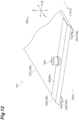
- FIG. 12 is a perspective view illustrating an end portion of a cooler according to the second embodiment in the first longitudinal direction and the second longitudinal direction.
- FIG. 13 is a cross-sectional view taken along line XIII-XIII illustrated in FIG. 12 .
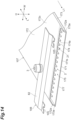
- FIG. 14 is a perspective view illustrating a state of the end portion of the cooler in the first longitudinal direction, before the cooling plate portion and the lid portion are joined to each other.
- FIG. 15 is a perspective view illustrating a state of the end portion of the cooler in the second longitudinal direction, before the cooling plate portion and the lid portion are joined to each other.
- a cooler 101 according to the second embodiment includes a coolant passage 2, a first port 3, a second port 4, first attachment portions 105, and second attachment portions 106.
- the first attachment portion 105 and the second attachment portion 106 correspond to the first attachment portion 5 and the second attachment portion 6 of the first embodiment.
- the cooler 101 includes a cooling plate portion 107, and first lid portions 108 and second lid portions 109 joined to the cooling plate portion 107.
- the cooling plate portion 107, the first lid portion 108, and the second lid portion 109 correspond to the cooling plate portion 7, the first lid portion 8, and the second lid portion 9 of the first embodiment.
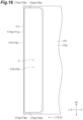
- FIG. 16 is a plan view illustrating the end portion of the cooling plate portion in the first longitudinal direction and the second longitudinal direction.
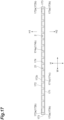
- FIG. 17 is a front view illustrating the end portion of the cooling plate portion in the first longitudinal direction and the second longitudinal direction.
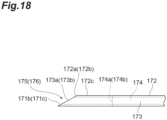
- FIG. 18 is a side view illustrating the end portion of the cooling plate portion in the first longitudinal direction and the second longitudinal direction. Note that reference numerals in parentheses in FIGS. 16 to 18 indicate reference numerals of end portions of the cooling plate portion in the second longitudinal direction.
- the cooling plate portion 107 includes a bottom wall portion 171, an upper wall portion 172, a pair of side wall portions 173 and 173, a plurality of partition walls 174, a first opening 175, and a second opening 176.
- the bottom wall portion 171, the upper wall portion 172, the pair of side wall portions 173 and 173, the plurality of partition walls 174, the first opening 175, and the second opening 176 correspond to the bottom wall portion 71, the upper wall portion 72, the pair of side wall portions 73 and 73, the plurality of partition walls 74, the first opening 75, and the second opening 76 of the first embodiment.
- the first attachment portion 105 is formed only in the first lid portion 108, and is not formed in the cooling plate portion 107.
- the second attachment portion 106 is formed only in the second lid portion 109, and is not formed in the cooling plate portion 107.
- the first opening 175 opens the coolant passage 2 in the first longitudinal direction L1 and the first height direction H1 at an end portion of the cooling plate portion 107 in the first longitudinal direction L1.
- the second opening 176 opens the coolant passage 2 in the second longitudinal direction L2 and the first height direction H1 at an end portion of the cooling plate portion 107 in the second longitudinal direction L2.
- the first lid portion 108 is joined to the cooling plate portion 107 so as to close the first opening 175.
- a portion where the cooling plate portion 107 and the first lid portion 108 are joined is referred to as a first joint portion A1.
- a first joint surface 177 of the cooling plate portion 107 and a joint surface 181 of the first lid portion 108 are joined.
- the first joint surface 177 is a joint surface of the cooling plate portion 107 with the first lid portion 108, and does not include a surface not joined with the first lid portion 108.
- the joint surface 181 is a joint surface of the first lid portion 108 with the cooling plate portion 107, and does not include a surface not joined with the cooling plate portion 107.
- Joining of the first lid portion 108 to the cooling plate portion 107 is not particularly limited, but can be performed by, for example, brazing, welding, or the like.
- the first lid portion 108 has the first port 3 described above and a chamber forming portion 82.
- the first attachment portion 105 is formed at an end portion of the first lid portion 108 in the first longitudinal direction L1.
- the joint surface 181 of the first lid portion 108 surrounds the chamber forming portion 82 in order to close the first opening 175.
- the joint surface 181 has a shape corresponding to the first joint surface 77 of the cooling plate portion 107, that is, a shape along the first joint surface 177 of the cooling plate portion 107.
- the first joint surface 177 of the cooling plate portion 107 surrounds the first opening 175 in order to close the first opening 175.
- the first joint surface 177 is formed on an upper wall upper surface 172c which is a surface of the upper wall portion 172 on a side (first height direction H1 side) opposite to the bottom wall portion 71, first upper wall end surfaces 172a which are end surfaces of the upper wall portion 172 in the first longitudinal direction L1, first side wall end surfaces 173a and 173a which are end surfaces of the pair of side wall portions 173 and 173 in the first longitudinal direction L1, and a first bottom wall end surface 171b which is an end surface of the bottom wall portion 171 in the first longitudinal direction L1.
- the first joint surface 177 is formed by a horizontal surface extending in the longitudinal direction L and the width direction W and an inclined surface directed in the second height direction H2 as it goes toward the first longitudinal direction L1, and does not have a vertical surface extending in the height direction H. Therefore, the first joint surface 177 is directed further toward the first height direction H1 side (the upper wall portion 172 side with respect to the bottom wall portion 171) than toward the longitudinal direction L. That is, the entire first joint surface 177 surrounding the first opening 175 is directed further toward the first height direction H1 side than toward the longitudinal direction L.
- first joint surface 177 is directed further toward the first height direction H1 side than toward the longitudinal direction L and goes around the first opening 175 when viewed from the first height direction H1 (surrounds an entire circumference of the first opening 175 when viewed from the first height direction H1).
- the inclined surface is not limited to an inclined surface extending in a planar shape, and may be an inclined surface that is inclined while being bent at one or a plurality of places, or may be an inclined surface that is inclined while being curved.
- the upper wall upper surface 172c is a horizontal surface extending in the longitudinal direction L and the width direction W.
- the first upper wall end surface 172a is an inclined surface directed in the second height direction H2 as it goes toward the first longitudinal direction L1.
- the first side wall end surfaces 173a and 173a are coupled to the first upper wall end surface 172a and the first bottom wall end surface 171b, and are inclined surfaces directed in the second height direction H2 as it goes toward the first longitudinal direction L1.
- the first bottom wall end surface 171b is an inclined surface directed in the second height direction H2 as it goes toward the first longitudinal direction L1.
- An inclination angle of the first upper wall end surface 172a, an inclination angle of the first side wall end surfaces 173a and 173a, and an inclination angle of the first bottom wall end surface 171b can be the same.
- the first upper wall end surface 172a, the first side wall end surfaces 173a and 173a, and the first bottom wall end surface 171b are flush with each other.
- First partition wall end surfaces 174a which are end surfaces of the plurality of partition walls 174 in the first longitudinal direction L1 are vertical surfaces extending in the height direction H.
- the first partition wall end surfaces 174a are located on the second longitudinal direction L2 side with respect to the first side wall end surfaces 173a and 173a when viewed from the width direction W.
- the first joint surface 177 of the cooling plate portion 107 is formed on the upper wall upper surface 172c which is a horizontal surface, the first upper wall end surface 172a which is an inclined surface, the first side wall end surfaces 173a and 173a which are inclined surfaces, and the first bottom wall end surface 171b which is an inclined surface.
- the second lid portion 109 is joined to the cooling plate portion 107 so as to close the second opening 176.
- a portion where the cooling plate portion 107 and the second lid portion 109 are joined is referred to as a second joint portion B 1.
- the cooling plate portion 107 and the second lid portion 109 are joined at the second joint portion B1.
- a second joint surface 178 of the cooling plate portion 107 and a joint surface 191 of the second lid portion 109 are joined.
- the second joint surface 178 is a joint surface of the cooling plate portion 107 with the second lid portion 109, and does not include a surface not joined with the second lid portion 109.
- the joint surface 191 is a joint surface of the second lid portion 109 with the cooling plate portion 107, and does not include a surface not joined with the cooling plate portion 107.
- Joining of the second lid portion 109 to the cooling plate portion 107 is not particularly limited, but can be performed by, for example, brazing, welding, or the like.
- the second lid portion 109 has the second port 4 described above and a chamber forming portion 92.
- the second attachment portion 106 is formed at an end portion of the second lid portion 109 in the second longitudinal direction L2.
- the joint surface 191 of the second lid portion 109 surrounds the chamber forming portion 92 in order to close the second opening 176.
- the joint surface 191 has a shape corresponding to the second joint surface 178 of the cooling plate portion 107, that is, a shape along the second joint surface 178 of the cooling plate portion 107.
- the second joint surface 178 of the cooling plate portion 107 surrounds the second opening 176 in order to close the second opening 176.
- the second joint surface 178 of the cooling plate portion 107 is formed on the upper wall upper surface 172c, second upper wall end surfaces 172b which are end surfaces of the upper wall portion 172 in the second longitudinal direction L2, second side wall end surfaces 173b and 173b which are end surfaces of the pair of side wall portions 173 and 173 in the second longitudinal direction L2, and a second bottom wall end surface 171c which is an end surface of the bottom wall portion 171 in the second longitudinal direction L2.
- the second joint surface 178 is formed by a horizontal surface extending in the longitudinal direction L and the width direction W and an inclined surface directed in the second height direction H2 as it goes toward the second longitudinal direction L2, and does not have a vertical surface extending in the height direction H. Therefore, the second joint surface 178 is directed further toward the first height direction H1 side than toward the longitudinal direction L. That is, the entire second joint surface 178 surrounding the second opening 176 is directed further toward the first height direction H1 side than toward the longitudinal direction L. In addition, the second joint surface 178 is directed further toward the first height direction H1 side than toward the longitudinal direction L and goes around the second opening 176 when viewed from the first height direction H1 (surrounds an entire circumference of the second opening 176 when viewed from the first height direction H1).
- the upper wall upper surface 172c is a horizontal surface extending in the longitudinal direction L and the width direction W.
- the second upper wall end surface 172b is an inclined surface directed in the second height direction H2 as it goes toward the second longitudinal direction L2.
- the second side wall end surfaces 173b and 173b are coupled to the second upper wall end surfaces 172b and the second bottom wall end surface 171c, and are inclined surfaces directed in the second height direction H2 as it goes toward the second longitudinal direction L2.
- the second bottom wall end surface 171c is an inclined surface directed in the second height direction H2 as it goes toward the first longitudinal direction L1.
- An inclination angle of the second upper wall end surface 172b, an inclination angle of the second side wall end surfaces 173b and 173b, and an inclination angle of the second bottom wall end surface 171c can be the same.
- the second upper wall end surface 172b, the second side wall end surfaces 173b and 173b, and the second bottom wall end surface 171c are flush with each other.
- Second partition wall end surfaces 174b which are end surfaces of the plurality of partition walls 174 in the second longitudinal direction L2 are vertical surfaces extending in the height direction H.
- the second partition wall end surfaces 174b are located on the first longitudinal direction L1 side with respect to the pair of second side wall end surfaces 173b and 173b when viewed from the width direction W.
- the second joint surface 178 of the cooling plate portion 107 is formed on the upper wall upper surface 172c which is a horizontal surface, the second upper wall end surface 172b which is an inclined surface, the second side wall end surfaces 173b and 173b which are inclined surfaces, and the second bottom wall end surface 171c which is an inclined surface.
- the first joint surface 177 is formed on the upper wall upper surface 172c, the first upper wall end surface 172a, the pair of first side wall end surfaces 173a and 173a, and the first bottom wall end surface 171b
- the second joint surface 178 is formed on the upper wall upper surface 172c, the second upper wall end surface 172b, the pair of second side wall end surfaces 173b and 173b, and the second bottom wall end surface 171c.
- the first joint surface 177 and the second joint surface 178 formed on the upper wall upper surface 172c are horizontal surfaces extending in the longitudinal direction L and the width direction W.
- the first joint surface 177 formed on the first upper wall end surface 172a, the pair of first side wall end surfaces 173a and 173a, and the first bottom wall end surface 171b and the second joint surface 178 formed on the second upper wall end surface 172b, the pair of second side wall end surfaces 173b and 173b, and the second bottom wall end surface 171c are inclined surfaces directed in the second height direction H2 as it goes toward the first longitudinal direction L1. Therefore, the first joint surface 177 and the second joint surface 178 can be directed further toward the first height direction H1 side than toward the second longitudinal direction L2.
- the third embodiment is basically similar to the first embodiment. Therefore, in the following description, only matters different from those of the first embodiment will be described, and the same description as that of the first embodiment will be omitted.
- FIG. 19 is a plan view illustrating a cooler of a third embodiment.
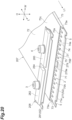
- FIG. 20 is a perspective view illustrating a state of the end portion of the cooler in the first longitudinal direction, before the cooling plate portion and the lid portion are joined to each other.
- FIG. 21 is a perspective view illustrating a state of the end portion of the cooler in the second longitudinal direction, before the cooling plate portion and the lid portion are joined to each other.
- a cooler 201 of the third embodiment includes a coolant passage 2, a first port 3, a second port 4, first attachment portions 5, and second attachment portions 6.
- the cooler 201 includes a cooling plate portion 207, and first lid portions 208 and second lid portions 209 joined to the cooling plate portion 207.
- the cooling plate portion 207, the first lid portion 208, and the second lid portion 209 correspond to the cooling plate portion 7, the first lid portion 8, and the second lid portion 9 of the first embodiment.
- the cooling plate portion 207 includes a bottom wall portion 71, an upper wall portion 72, a pair of side wall portions 73 and 73, a plurality of partition walls 74, a first opening 75, a second opening 76, and a separation wall 279.
- the separation wall 279 extends in the longitudinal direction L to separate the coolant passage 2 into a first coolant passage 2A and a second coolant passage 2B in the width direction W.
- the separation wall 279 is located at the center of the cooling plate portion 207 in the width direction W.
- the separation wall 279 is formed in a substantially flat plate shape extending in the longitudinal direction L and the height direction H, and is coupled to the bottom wall portion 71 and the upper wall portion 72.
- a first separation opening 75 an opening of the first coolant passage 2A on the first longitudinal direction L1 side is referred to as a first separation opening 75A
- an opening of the second coolant passage 2B on the second longitudinal direction L2 side is referred to as a second separation opening 75B.
- a first separation wall end surface 279a which is an end surface of the separation wall 279 in the first longitudinal direction L1 is an inclined surface directed in the second height direction H2 side as it goes toward the first longitudinal direction L1.
- the first separation wall end surface 279a is formed at the same position as the first side wall end surfaces 73a and 73a when viewed from the width direction W. That is, an inclination angle of the first separation wall end surface 279a is the same as an inclination angle of the first side wall end surfaces 73a and 73a.
- a second separation wall end surface (not illustrated) which is an end surface of the separation wall 279 in the second longitudinal direction L2 is an inclined surface directed in the second height direction H2 side as it goes toward the second longitudinal direction L2.
- the second separation wall end surface is formed at the same position as the second side wall end surfaces 73b and 73b when viewed from the width direction W. That is, an inclination angle of the second separation wall end surface is the same as an inclination angle of the second side wall end surfaces 73b and 73b.
- the plurality of partition walls 74 are arranged in the width direction W in each of the first coolant passage 2A and the second coolant passage 2B separated in the width direction W by the separation wall 279.
- the partitioned coolant passage 21 (partitioned coolant passage 21 adjacent to the separation wall 279) located at the end on the separation wall 279 side is formed by the bottom wall portion 71, the upper wall portion 72, the partition wall 74, and the separation wall 279.
- the first lid portion 208 is joined to the cooling plate portion 207 so as to close the first opening 75.
- a portion where the cooling plate portion 207 and the first lid portion 208 are joined is referred to as a first joint portion A2.
- a first joint surface 277 of the cooling plate portion 207 and a joint surface 281 of the first lid portion 208 are joined.
- the first joint surface 277 is a joint surface of the cooling plate portion 207 with the first lid portion 208, and does not include a surface not joined with the first lid portion 208.
- the joint surface 281 is a joint surface of the first lid portion 208 with the cooling plate portion 207, and does not include a surface not joined with the cooling plate portion 207.
- Joining of the first lid portion 208 to the cooling plate portion 207 is not particularly limited, but can be performed by, for example, brazing, welding, or the like.
- the first lid portion 208 has the first port 3 described above, the second port 4 described above, a first chamber forming portion 282, a second chamber forming portion 283, and a coolant passage separation portion 284.
- the first port 3 is provided in the first chamber forming portion 282, and the second port 4 is provided in the second chamber forming portion 283.
- the first chamber forming portion 282 forms a first chamber 222a disposed between the first port 3 and the first coolant passage 2A.
- the first chamber 222a is a space that is located on the first longitudinal direction L1 side of the first coolant passage 2A, communicates with the plurality of partitioned coolant passages 21 arranged in the first coolant passage 2A, and communicates with the first port 3.
- the second chamber forming portion 283 forms a second chamber 222b disposed between the second port 4 and the second coolant passage 2B.
- the second chamber 222b is a space that is located on the first longitudinal direction L1 side of the second coolant passage 2B, communicates with the plurality of partitioned coolant passages 21 arranged in the second coolant passage 2B, and communicates with the second port 4.
- the coolant passage separation portion 284 is joined to the cooling plate portion 207 at the first joint portion A2 to separate the first chamber 222a and the second chamber 222b.
- the first joint surface 277 of the cooling plate portion 207 surrounds the first opening 75 and surrounds each of the first separation opening 75A and the second separation opening 75B in order to close the first opening 75.
- the first joint surface 277 is formed on the upper wall upper surface 72c, the first upper wall end surface 72a, the first side wall end surfaces 73a and 73a, the bottom wall upper surface 71a, and the first separation wall end surface 279a.
- the first joint surface 277 is formed by a horizontal surface extending in the longitudinal direction L and the width direction W and an inclined surface directed in the second height direction H2 as it goes toward the first longitudinal direction L1, and does not have a vertical surface extending in the height direction H.
- the first joint surface 277 is directed further toward the first height direction H1 side (the upper wall portion 72 side with respect to the bottom wall portion 71) than toward the longitudinal direction L. That is, the entire first joint surface 277 surrounding the first opening 75 and surrounding each of the first separation opening 75A and the second separation opening 75B is directed further toward the first height direction H1 side than toward the longitudinal direction L.
- first joint surface 277 is directed further toward the first height direction H1 side than toward the longitudinal direction L, goes around the first opening 75 when viewed from the first height direction H1, and goes around each of the first separation opening 75A and the second separation opening 75B (surrounds the entire circumference of the first opening 75 when viewed from the first height direction H1, and surrounds an entire circumference of each of the first separation opening 75A and the second separation opening 75B).
- the first separation wall end surface 279a is coupled to the first upper wall end surface 72a and the bottom wall upper surface 71a, and is an inclined surface directed in the second height direction H2 as it goes toward the first longitudinal direction L1.
- An inclination angle of the first upper wall end surface 72a, an inclination angle of the first side wall end surfaces 73a and 73a, and an inclination angle of the first separation wall end surface 279a can be the same.
- the first upper wall end surface 72a, the first side wall end surfaces 73a and 73a, and the first separation wall end surface 279a are flush with each other.
- the first joint surface 277 of the cooling plate portion 207 is formed on the upper wall upper surface 72c which is a horizontal surface, the first upper wall end surface 72a which is an inclined surface, the first side wall end surfaces 73a and 73a which are inclined surfaces, the bottom wall upper surface 71a which is a horizontal surface, and the first separation wall end surface 279a which is an inclined surface. Therefore, the cooling plate portion 207 and the first lid portion 208 are joined at the first joint portion A2, whereby the first chamber 222a and the second chamber 222b separated from each other are formed.
- the second lid portion 209 is joined to the cooling plate portion 207 so as to close the second opening 76.
- a portion where the cooling plate portion 207 and the second lid portion 209 are joined is referred to as a second joint portion B2.
- the cooling plate portion 207 and the second lid portion 209 are joined at the second joint portion B2.
- a second joint surface 278 of the cooling plate portion 207 and a joint surface 291 of the second lid portion 209 are joined.
- the second joint portion B2, the second joint surface 278, and the joint surface 291 are similar to the second joint portion B, the second joint surface 78, and the joint surface 91 of the first embodiment.
- Joining of the second lid portion 209 to the cooling plate portion 207 is not particularly limited, but can be performed by, for example, brazing, welding, or the like.
- the second lid portion 209 has a chamber forming portion 292, and does not have any of the first port 3 and the second port 4 described above.
- the chamber forming portion 292 forms a communication chamber 223 that allows the first coolant passage 2A and the second coolant passage 2B to communicate with each other.
- the communication chamber 223 is a space located on the second longitudinal direction L2 side of the first coolant passage 2A and the second coolant passage 2B and communicated with the plurality of partitioned coolant passages 21 formed in the first coolant passage 2A and the plurality of partitioned coolant passages 21 formed in the second coolant passage 2B.
- the coolant passage 2 is separated in the width direction W into the first coolant passage 2A and the second coolant passage 2B by the separation wall 279, and the first chamber 222a and the second chamber 222b are separated by the first joint portion A2 between the cooling plate portion 207 and the first lid portion 208, so that the first port 3 and the second port 4 can be disposed in the same direction in the longitudinal direction L.
- a supply direction and a discharge direction of the coolant with respect to the cooler 201 can be the same. As a result, the cooler 201 can be attached even in a place where the coolant can be supplied and discharged only from one side.
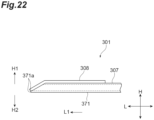
- first side wall end surfaces 173a and 173a which are end surfaces of the pair of side wall portions 173 and 173 in the first longitudinal direction L1 are inclined surfaces.
- a first bottom wall end surface 371a which is an end surface of a bottom wall portion 371 of a cooling plate 307 in the first longitudinal direction L1 may be formed by an inclined surface directed in the second height direction H2 as it goes toward the first longitudinal direction L1 and a vertical surface extending in the height direction H.
- a first lid portion 308 is joined to the inclined surface of the first bottom wall end surface 371a.
- first port 3 and the second port 4 extend in the first height direction H1 in the above embodiment, the direction in which the first port 3 and the second port 4 extend is not particularly limited. Although it is a reference example, in a cooler 401 illustrated in FIG. 23 , a first port 403 and a second port (not illustrated) extend along the longitudinal direction L which is the same direction as the extending direction of a partitioned coolant passage (not illustrated).
- One aspect of the present invention can be used as a cooler that cools a battery or the like.
Landscapes
- Engineering & Computer Science (AREA)
- General Engineering & Computer Science (AREA)
- Physics & Mathematics (AREA)
- Thermal Sciences (AREA)
- Mechanical Engineering (AREA)
- Manufacturing & Machinery (AREA)
- Chemical & Material Sciences (AREA)
- Materials Engineering (AREA)
- Chemical Kinetics & Catalysis (AREA)
- Electrochemistry (AREA)
- General Chemical & Material Sciences (AREA)
- Cooling Or The Like Of Electrical Apparatus (AREA)
- Cooling Or The Like Of Semiconductors Or Solid State Devices (AREA)
- Secondary Cells (AREA)
Abstract
Description
- One aspect of the present invention relates to a cooler that cools a battery or the like.
-
Patent Literature 1 describes a cooler that cools a battery or the like. The cooler includes a flat cooling plate having a coolant passage along a longitudinal direction, and a pair of upper lid bodies joined to the cooling plate and having a coolant inflow port and a coolant outflow port communicating with the coolant passage. At both ends of the cooling plate in the longitudinal direction, a pair of notches are formed to open the upper and longitudinal end portions while leaving both wall portions in a width direction. The pair of upper lid bodies are joined to the pair of notches by brazing. - Patent Literature 1:
Japanese Patent No. 6494134 - The cooling plate of the cooler described in
Patent Literature 1 is formed in a flat shape by an upper piece, a lower piece, and a pair of both side walls. An upper surface of the upper piece and both end surfaces of the lower piece and the pair of both side walls in the longitudinal direction become joint surfaces of the cooling plate joined to the pair of upper lid bodies. However, while the upper surface of the upper piece is a horizontal surface, both end surfaces of the lower piece and the pair of both side walls in the longitudinal direction are vertical surfaces. For this reason, when the cooling plate and the pair of upper lid bodies are brazed, a brazing material is likely to fall off from both end surfaces of the lower piece and the pair of both side walls in the longitudinal direction which are vertical surfaces. For this reason, a holder for holding the brazing material is required, and there is a problem that manufacturing cost increases. - Here, it is also conceivable to join the cooling plate and the pair of upper lid bodies by welding. However, in the welding to the upper surface of the upper piece which is a horizontal surface and the welding to both end surfaces of the lower piece and the pair of both side walls in the longitudinal direction which are vertical surfaces, welding directions are directions orthogonal to each other. That is, the upper surface of the upper piece which is a horizontal surface needs to be welded from a vertical direction, and both end surfaces of the lower piece and the pair of both side walls in the longitudinal direction which are vertical surfaces need to be welded from a horizontal direction. For this reason, there is a problem that a large welding facility is required and the manufacturing cost increases.
- Therefore, an object of one aspect of the present invention is to provide a cooler capable of reducing manufacturing cost.
- A cooler according to one aspect of the present invention is as follows.
- [1] A cooler having a coolant passage, the cooler including: a cooling plate portion having a plurality of partition walls extending in a longitudinal direction and partitioning the coolant passage in a width direction orthogonal to the longitudinal direction, and an opening that opens the coolant passage in a first longitudinal direction which is one direction of the longitudinal direction and a first height direction which is one direction of a height direction orthogonal to the longitudinal direction and the width direction; and a lid portion joined to the cooling plate portion so as to close the opening of the cooling plate portion, in which a joint surface of the cooling plate portion with the lid portion is directed further toward the first height direction side than toward the longitudinal direction.
In the cooler of [1], the lid portion is joined to the cooling plate portion to close the opening of the cooling plate portion. Here, since the opening opens the coolant passage in the first longitudinal direction and the first height direction, a portion displaced in the height direction exists on the joint surface of the cooling plate portion. However, the joint surface of the cooling plate portion is directed further toward the first height direction side than toward the longitudinal direction. Therefore, when the cooling plate portion and the lid portion are joined by brazing, a brazing material is less likely to fall off from the joint surface. When the cooling plate portion and the lid portion are joined by welding, a welding direction does not need to be directed in the longitudinal direction. Accordingly, manufacturing cost can be reduced. - [2] The cooler described in [1], in which the joint surface has an inclined surface directed in a second height direction opposite to the first height direction as the inclined surface goes toward the first longitudinal direction.
In the cooler of [2], since the joint surface has the inclined surface directed in the second direction as the inclined surface goes toward the first longitudinal direction, the joint surface can be directed further toward the first height direction side than toward the longitudinal direction in a portion of the joint surface displaced in the height direction. - [3] The cooler described in [2], in which the joint surface is formed by a horizontal surface extending in the longitudinal direction and the width direction, and the inclined surface.
In the cooler of [3], since the joint surface is formed by the horizontal surface and the inclined surface, the joint surface can be directed further toward the first height direction side than toward the longitudinal direction. - [4] The cooler described in any one of [1] to [3], in which the joint surface does not have a vertical surface extending in the height direction.
In the cooler of [4], since the joint surface does not have the vertical surface, when the cooling plate portion and the lid portion are joined by brazing, the brazing material is less likely to fall off from the joint surface, and when the cooling plate portion and the lid portion are joined by welding, it is not necessary to direct a welding direction in the longitudinal direction. - [5] The cooler described in any one of [1] to [4], in which the cooling plate portion has a bottom wall portion extending in the longitudinal direction and the width direction, an upper wall portion extending in the longitudinal direction and the width direction and facing the bottom wall portion in the height direction, and a pair of side wall portions coupled to the bottom wall portion and the upper wall portion and facing each other in the width direction, and the joint surface is formed on the bottom wall portion, the upper wall portion, and the pair of side wall portions.
In the cooler of [5], the cooling plate portion has the bottom wall portion, the upper wall portion, and the pair of side wall portions, and the joint surface is formed on the bottom wall portion, the upper wall portion, and the pair of side wall portions. Therefore, the coolant passage partitioned by the plurality of partition walls can be appropriately formed, and the opening that opens the coolant passage can be appropriately closed by the lid portion. - [6] The cooler described in [5], in which the joint surface is formed by an upper wall upper surface which is a surface of the upper wall portion on a side opposite to the bottom wall portion, an upper wall end surface which is an end surface of the upper wall portion in the first longitudinal direction, side wall end surfaces which are end surfaces of the pair of side wall portions in the first longitudinal direction, and a bottom wall upper surface which is a surface of the bottom wall portion on the upper wall portion side, the joint surface formed on the upper wall upper surface and the bottom wall upper surface is a horizontal surface extending in the longitudinal direction and the width direction, and the joint surface formed on the upper wall end surface and the side wall end surfaces is an inclined surface directed in a second height direction opposite to the first height direction as the inclined surface goes toward the first longitudinal direction.
In the cooler of [6], since the joint surface is formed by the horizontal surface and the inclined surface, the joint surface can be directed further toward the first height direction side than toward the longitudinal direction. - [7] The cooler described in [5], in which the joint surface is formed by an upper wall upper surface which is a surface of the upper wall portion on a side opposite to the bottom wall portion, an upper wall end surface which is an end surface of the upper wall portion in the first longitudinal direction, side wall end surfaces which are end surfaces of the pair of side wall portions in the first longitudinal direction, and a bottom wall end surface which is an end surface of the bottom wall portion in the first longitudinal direction, the joint surface formed on the upper wall upper surface is a horizontal surface extending in the longitudinal direction and the width direction, and the joint surface formed on the upper wall end surface, the side wall end surfaces, and the bottom wall end surface is an inclined surface directed in a second height direction opposite to the first height direction as the inclined surface goes toward the first longitudinal direction.
In the cooler of [7], since the joint surface is formed by the horizontal surface and the inclined surface, the joint surface can be directed further toward the first height direction side than toward the longitudinal direction. - [8] The cooler described in any one of [5] to [7], in which partition wall end surfaces which are end surfaces of the plurality of partition walls in the first longitudinal direction are formed at same positions as side wall end surfaces which are end surfaces of the pair of side wall portions in the first longitudinal direction when viewed from the width direction.
In the cooler of [8], since the partition wall end surfaces are formed at the same positions as the side wall end surfaces when viewed from the width direction, the cooling plate portion can be easily manufactured. - [9] The cooler described in any one of [1] to [8], in which partition wall end surfaces which are end surfaces of the plurality of partition walls in the first longitudinal direction are inclined surfaces directed in second height direction opposite to the first height direction as the inclined surfaces go toward the first longitudinal direction.
In the cooler of [9], since the partition wall end surfaces of the plurality of partition walls in the first longitudinal direction are inclined surfaces, an opening area of partitioned coolant passages formed by partitioning the coolant passage by the plurality of partition walls can be increased. As a result, a pressure loss of the coolant can be reduced. In addition, it is possible to suppress a rapid change in the pressure loss of the coolant due to the plurality of partition walls. - [10] The cooler described in any one of [1] to [9], further including an attachment portion for attaching the cooler to an external device, in which the attachment portion is located on an opposite side of the coolant passage with respect to the joint surface.
- In the cooler of [10], since the attachment portion is located on the opposite side of the coolant passage with respect to the joint surface, it is possible to suppress blocking of the coolant passage from being obstructed by the attachment portion and to suppress complication of a shape of the joint surface.
- According to one aspect of the present invention, manufacturing cost can be reduced.
-
-
FIG. 1 is a perspective view illustrating a cooler of a first embodiment. -
FIG. 2 is a cross-sectional view taken along line II-II illustrated inFIG. 1 . -
FIG. 3 is a side view illustrating an end portion of the cooler in a first longitudinal direction. -
FIG. 4 is a side view illustrating the end portion of the cooler in a second longitudinal direction. -
FIG. 5 is a plan view illustrating the end portion of the cooler in the first longitudinal direction. -
FIG. 6 is a plan view illustrating the end portion of the cooler in the second longitudinal direction. -
FIG. 7 is a perspective view illustrating a state of the end portion of the cooler in the first longitudinal direction, before a cooling plate portion and lid portion are joined to each other. -
FIG. 8 is a perspective view illustrating a state of the end portion of the cooler in the second longitudinal direction, before the cooling plate portion and the lid portion are joined to each other. -
FIG. 9 is a plan view illustrating the end portion of the cooling plate portion in the first longitudinal direction and the second longitudinal direction. -
FIG. 10 is a front view illustrating the end portion of the cooling plate portion in the first longitudinal direction and the second longitudinal direction. -
FIG. 11 is a side view illustrating the end portion of the cooling plate portion in the first longitudinal direction and the second longitudinal direction. -
FIG. 12 is a perspective view illustrating an end portion of a cooler according to a second embodiment in the first longitudinal direction and the second longitudinal direction. -
FIG. 13 is a cross-sectional view taken along line XIII-XIII illustrated inFIG. 12 . -
FIG. 14 is a perspective view illustrating a state of the end portion of the cooler in the first longitudinal direction, before the cooling plate portion and the lid portion are joined to each other. -
FIG. 15 is a perspective view illustrating the state of the end portion of the cooler in the second longitudinal direction, before the cooling plate portion and the lid portion are joined to each other. -
FIG. 16 is a plan view illustrating the end portion of the cooling plate portion in the first longitudinal direction and the second longitudinal direction. -
FIG. 17 is a front view illustrating the end portion of the cooling plate portion in the first longitudinal direction and the second longitudinal direction. -
FIG. 18 is a side view illustrating the end portion of the cooling plate portion in the first longitudinal direction and the second longitudinal direction. -
FIG. 19 is a plan view illustrating a cooler of a third embodiment. -
FIG. 20 is a perspective view illustrating a state of the end portion of the cooler in the first longitudinal direction, before the cooling plate portion and the lid portion are joined to each other. -
FIG. 21 is a perspective view illustrating the state of the end portion of the cooler in the second longitudinal direction, before the cooling plate portion and the lid portion are joined to each other. -
FIG. 22 is a side view illustrating a cooler of a modification. -
FIG. 23 is a perspective view illustrating a cooler of a reference example. - Hereinafter, a cooler according to embodiments will be described with reference to the drawings. The cooler according to the present embodiment cools a body to be cooled. The body to be cooled is not particularly limited, and can be, for example, a battery mounted on a vehicle such as an electric vehicle. In the drawings, the same or corresponding elements are denoted by the same reference numerals, and redundant description will be omitted.
-
FIG. 1 is a perspective view illustrating a cooler according to a first embodiment.FIG. 2 is a cross-sectional view taken along line II-II illustrated inFIG. 1 . As illustrated inFIGS. 1 and2 , acooler 1 according to the present embodiment is formed in a flat shape so as to increase a contact area with a body to be cooled. That is, thecooler 1 extends in a longitudinal direction L and a width direction W orthogonal to the longitudinal direction L, and is flattened in a height direction H orthogonal to the longitudinal direction L and the width direction W. Acooling plate portion 7 is formed to be longer in the longitudinal direction L than in the width direction W. One direction of the longitudinal direction L is referred to as a first longitudinal direction L1, and the other direction of the longitudinal direction L is referred to as a second longitudinal direction L2. The second longitudinal direction L2 is a direction opposite to the first longitudinal direction L1. One direction in the height direction H is referred to as a first height direction H1, and the other direction in the height direction H is referred to as a second height direction H2. The second height direction H2 is a direction opposite to the first height direction H1. -
FIG. 3 is a side view illustrating an end portion of the cooler in the first longitudinal direction.FIG. 4 is a side view illustrating the end portion of the cooler in the second longitudinal direction.FIG. 5 is a plan view illustrating the end portion of the cooler in the first longitudinal direction.FIG. 6 is a plan view illustrating the end portion of the cooler in the second longitudinal direction. As illustrated inFIGS. 1 to 6 , thecooler 1 includes acoolant passage 2, afirst port 3, asecond port 4,first attachment portions 5, andsecond attachment portions 6. - The
coolant passage 2 is a passage (space) through which a coolant for cooling the body to be cooled flows. Thefirst port 3 and thesecond port 4 communicate with thecoolant passage 2 and supply or discharge the coolant to or from thecoolant passage 2. Thefirst port 3 is located at an end portion of thecooler 1 in the first longitudinal direction L1. Thesecond port 4 is located at an end portion of thecooler 1 in the second longitudinal direction L2. Therefore, the coolant is supplied from one of thefirst port 3 and thesecond port 4 to thecoolant passage 2, flows through thecoolant passage 2 in the longitudinal direction L, and is discharged from the other of thefirst port 3 and thesecond port 4. The coolant absorbs heat from thecooler 1 when flowing through thecoolant passage 2 to cool the body to be cooled coupled to thecooler 1. - The
first attachment portion 5 and thesecond attachment portion 6 are portions for attaching thecooler 1 to an external device (not illustrated). Thefirst attachment portion 5 is located at the end portion of thecooler 1 in the first longitudinal direction L1. Thesecond attachment portion 6 is located at the end portion of thecooler 1 in the second longitudinal direction L2. Thefirst attachment portion 5 and thesecond attachment portion 6 are, for example, through-holes into which bolts (not illustrated) for attaching thecooler 1 to the external device are inserted. The external device may be a body to be cooled that is a cooling target of thecooler 1. -
FIG. 7 is a perspective view illustrating a state of the end portion of the cooler in the first longitudinal direction, before the cooling plate portion and the lid portion are joined to each other.FIG. 8 is a perspective view illustrating a state of the end portion of the cooler in the second longitudinal direction, before the cooling plate portion and the lid portion are joined to each other. As illustrated inFIGS. 1 to 8 , thecooler 1 includes acooling plate portion 7, andfirst lid portions 8 andsecond lid portions 9 joined to thecooling plate portion 7. -
FIG. 9 is a plan view illustrating the end portion of the cooling plate portion in the first longitudinal direction and the second longitudinal direction.FIG. 10 is a front view illustrating the end portion of the cooling plate portion in the first longitudinal direction and the second longitudinal direction.FIG. 11 is a side view illustrating the end portion of the cooling plate portion in the first longitudinal direction and the second longitudinal direction. Note that reference numerals in parentheses inFIGS. 9 to 11 indicate reference numerals of end portions of the cooling plate portion in the second longitudinal direction. As illustrated inFIGS. 1 to 11 , thecooling plate portion 7 forms a main body of thecooler 1. Thecooling plate portion 7 includes abottom wall portion 71, anupper wall portion 72, a pair ofside wall portions partition walls 74, afirst opening 75, and asecond opening 76. - The
bottom wall portion 71 is a portion which forms a bottom wall of thecooler 1 and is brought into contact with the body to be cooled. Thebottom wall portion 71 is formed in a substantially flat plate extending in the longitudinal direction L and the width direction W. A part of thefirst attachment portion 5 is formed at an end portion of thebottom wall portion 71 in the first longitudinal direction L1, and a part of thesecond attachment portion 6 is formed at an end portion of thebottom wall portion 71 in the second longitudinal direction L2. - The
upper wall portion 72 is a portion forming an upper wall of thecooler 1. Theupper wall portion 72 is formed in a substantially flat plate shape extending in the longitudinal direction L and the width direction W. Theupper wall portion 72 is disposed so as to face thebottom wall portion 71 in the height direction H. - The pair of
side wall portions cooler 1. The pair ofside wall portions side wall portions bottom wall portion 71 and theupper wall portion 72 in the width direction W. - The plurality of
partition walls 74 extend in the longitudinal direction L and partition thecoolant passage 2 in the width direction W. That is, the plurality ofpartition walls 74 extending in the longitudinal direction L are arranged in the width direction W. Each of the plurality ofpartition walls 74 is formed in a substantially flat plate shape extending in the longitudinal direction L and the height direction H, and is coupled to thebottom wall portion 71 and theupper wall portion 72. In thecooling plate portion 7, thecoolant passage 2 is partitioned into a plurality of partitionedcoolant passages 21 by the plurality ofpartition walls 74. The plurality of partitionedcoolant passages 21 extend in the longitudinal direction L and are arranged in the width direction W. Of the plurality of partitionedcoolant passages 21, partitionedcoolant passages 21 located at both ends in the width direction W are formed by thebottom wall portion 71, theupper wall portion 72, theside wall portion 73, and thepartition wall 74, and the other partitionedcoolant passages 21 are formed by thebottom wall portion 71, theupper wall portion 72, and the pair ofadjacent partition walls 74. - As illustrated in
FIGS. 7 to 11 , thefirst opening 75 opens thecoolant passage 2 in the first longitudinal direction L1 and the first height direction H1 at the end portion of thecooling plate portion 7 in the first longitudinal direction L1. Thesecond opening 76 opens thecoolant passage 2 in the second longitudinal direction L2 and the first height direction H1 at the end portion of thecooling plate portion 7 in the second longitudinal direction L2. Thefirst opening 75 and thesecond opening 76 are formed by thebottom wall portion 71, theupper wall portion 72, and the pair ofside wall portions first opening 75 and thesecond opening 76 are formed, for example, by cutting out theupper wall portion 72, the pair ofside wall portions partition walls 74. - In the
first opening 75, a distal end of theupper wall portion 72 in the first longitudinal direction L1 is located on the second longitudinal direction L2 side with respect to a distal end of thebottom wall portion 71 in the first longitudinal direction L1, so that thecoolant passage 2 is opened in the first height direction H1. In thefirst opening 75, thecooling plate portion 7 is not provided on the first longitudinal direction L1 side of thecoolant passage 2, so that thecoolant passage 2 is opened in the first longitudinal direction L1. - In the
second opening 76, a distal end of theupper wall portion 72 in the second longitudinal direction L2 is located on the first longitudinal direction L1 side with respect to a distal end of thebottom wall portion 71 in the second longitudinal direction L2, so that thecoolant passage 2 is opened in the first height direction H1. In thesecond opening 76, thecooling plate portion 7 is not provided on the second longitudinal direction L2 side of thecoolant passage 2, so that thecoolant passage 2 is opened in the second longitudinal direction L2. - As illustrated in
FIGS. 1 to 3 ,5 ,7 , and9 to 11 , thefirst lid portion 8 is joined to thecooling plate portion 7 so as to close thefirst opening 75. A portion where thecooling plate portion 7 and thefirst lid portion 8 are joined is referred to as a first joint portion A. At the first joint portion A, a firstjoint surface 77 of thecooling plate portion 7 and ajoint surface 81 of thefirst lid portion 8 are joined. The firstjoint surface 77 is a joint surface of thecooling plate portion 7 with thefirst lid portion 8, and does not include a surface not joined with thefirst lid portion 8. Thejoint surface 81 is a joint surface of thefirst lid portion 8 with thecooling plate portion 7, and does not include a surface not joined with thecooling plate portion 7. Joining of thefirst lid portion 8 to thecooling plate portion 7 is not particularly limited, but can be performed by, for example, brazing, welding, or the like. In the drawings, the first joint portion A, the firstjoint surface 77, and thejoint surface 81 are indicated by fine dot hatching. - The
first lid portion 8 has thefirst port 3 described above and achamber forming portion 82. Thechamber forming portion 82 forms afirst chamber 22 disposed between thefirst port 3 and the plurality of partitionedcoolant passages 21. Thefirst chamber 22 is a space that is located on the first longitudinal direction L1 side of the plurality of partitionedcoolant passages 21, communicates with the plurality of partitionedcoolant passages 21, and communicates with thefirst port 3. Thefirst chamber 22 forms a part of thecoolant passage 2, and distributes or merges a coolant between thefirst port 3 and the plurality of partitionedcoolant passages 21. - Apart of the
first attachment portion 5 is formed at an end portion of thefirst lid portion 8 in the first longitudinal direction L1. Thefirst attachment portion 5 is formed by a portion where thebottom wall portion 71 of thecooling plate portion 7 and thefirst lid portion 8 overlap each other. - The
joint surface 81 of thefirst lid portion 8 surrounds thechamber forming portion 82 in order to close thefirst opening 75. Thejoint surface 81 has a shape corresponding to the firstjoint surface 77 of thecooling plate portion 7, that is, a shape along the firstjoint surface 77 of thecooling plate portion 7. - The first
joint surface 77 of thecooling plate portion 7 surrounds thefirst opening 75 in order to close thefirst opening 75. The firstjoint surface 77 is formed on an upper wallupper surface 72c which is a surface of theupper wall portion 72 on a side (first height direction H1 side) opposite to thebottom wall portion 71, a first upperwall end surface 72a which is an end surface of theupper wall portion 72 in the first longitudinal direction L1, first side wall end surfaces 73a and 73a which are end surfaces of the pair ofside wall portions upper surface 71a which is a surface of thebottom wall portion 71 on theupper wall portion 72 side (first height direction H1 side). The firstjoint surface 77 is formed by a horizontal surface extending in the longitudinal direction L and the width direction W and an inclined surface directed in the second height direction H2 as it goes toward the first longitudinal direction L1, and does not have a vertical surface extending in the height direction H. Therefore, the firstjoint surface 77 is directed further toward the first height direction H1 side (theupper wall portion 72 side with respect to the bottom wall portion 71) than toward the longitudinal direction L. That is, the entire firstjoint surface 77 surrounding thefirst opening 75 is directed further toward the first height direction H1 side than toward the longitudinal direction L. In addition, the firstjoint surface 77 is directed further toward the first height direction H1 side than toward the longitudinal direction L and goes around thefirst opening 75 when viewed from the first height direction H1 (surrounds an entire circumference of thefirst opening 75 when viewed from the first height direction H1). Note that the inclined surface is not limited to an inclined surface extending in a planar shape, and may be an inclined surface that is inclined while being bent at one or a plurality of places, or may be an inclined surface that is inclined while being curved. - Specifically, the upper wall
upper surface 72c and the bottom wallupper surface 71a are horizontal surfaces extending in the longitudinal direction L and the width direction W. The first upperwall end surface 72a is an inclined surface directed in the second height direction H2 as it goes toward the first longitudinal direction L1. The first side wall end surfaces 73a and 73a are coupled to the first upperwall end surface 72a and the bottom wallupper surface 71a, and are inclined surfaces directed in the second height direction H2 as it goes toward the first longitudinal direction L1. An inclination angle of the first upperwall end surface 72a and an inclination angle of the first side wall end surfaces 73a and 73a can be the same. In this case, the first upperwall end surface 72a and the first side wall end surfaces 73a and 73a are flush with each other. - First partition wall end surfaces 74a which are end surfaces of the plurality of
partition walls 74 in the first longitudinal direction L1 are inclined surfaces directed in the second height direction H2 as it goes toward the first longitudinal direction L1. The first partition wall end surfaces 74a are formed at the same positions as the first side wall end surfaces 73a and 73a when viewed from the width direction W. That is, an inclination angle of the first partitionwall end surfaces 74a is the same as the inclination angle of the first side wall end surfaces 73a and 73a. - The first
joint surface 77 of thecooling plate portion 7 is formed on the upper wallupper surface 72c which is a horizontal surface, the first upperwall end surface 72a which is an inclined surface, the first side wall end surfaces 73a and 73a which are inclined surfaces, and the bottom wallupper surface 71a which is a horizontal surface. - The first joint portion A (the first
joint surface 77 and the joint surface 81) may be formed at any position of the upper wallupper surface 72c, the first upperwall end surface 72a, the first side wall end surfaces 73a and 73a, and the bottom wallupper surface 71a, but it is preferable that thefirst attachment portion 5 be formed so as to be located on the opposite side of thecoolant passage 2 with respect to the first joint portion A. In this case, the first joint portion A may be formed at a position spaced apart from thefirst attachment portion 5, or may be formed at a position surrounding a part of thefirst attachment portion 5. In the drawings, as an example, a case where the first joint portion A is formed at a position surrounding a part of thefirst attachment portion 5 is indicated. - As illustrated in
FIGS. 1 ,2 ,4 ,6 , and8 to 11 , thesecond lid portion 9 is joined to thecooling plate portion 7 so as to close thesecond opening 76. A portion where thecooling plate portion 7 and thesecond lid portion 9 are joined is referred to as a second joint portion B. Thecooling plate portion 7 and thesecond lid portion 9 are joined at the second joint portion B. In the second joint portion B, a secondjoint surface 78 of thecooling plate portion 7 and ajoint surface 91 of thesecond lid portion 9 are joined. The secondjoint surface 78 is a joint surface of thecooling plate portion 7 with thesecond lid portion 9, and does not include a surface not joined with thesecond lid portion 9. Thejoint surface 91 is a joint surface of thesecond lid portion 9 with thecooling plate portion 7, and does not include a surface not joined with thecooling plate portion 7. Joining of thesecond lid portion 9 to thecooling plate portion 7 is not particularly limited, but can be performed by, for example, brazing, welding, or the like. In the drawings, the second joint portion B, the secondjoint surface 78, and thejoint surface 91 are indicated by fine dot hatching. - The
second lid portion 9 has thesecond port 4 described above and achamber forming portion 92. Thechamber forming portion 92 forms asecond chamber 23 disposed between thesecond port 4 and the plurality of partitionedcoolant passages 21. Thesecond chamber 23 is a space that is located on the second longitudinal direction L2 side of the plurality of partitionedcoolant passages 21, communicates with the plurality of partitionedcoolant passages 21, and communicates with thesecond port 4. Thesecond chamber 23 forms a part of thecoolant passage 2, and distributes or merges a coolant between thesecond port 4 and the plurality of partitionedcoolant passages 21. - A part of the
second attachment portion 6 is formed at an end portion of thesecond lid portion 9 in the second longitudinal direction L2. Thesecond attachment portion 6 is formed by a portion where thebottom wall portion 71 of thecooling plate portion 7 and thesecond lid portion 9 overlap each other. - The
joint surface 91 of thesecond lid portion 9 surrounds thechamber forming portion 92 in order to close thesecond opening 76. Thejoint surface 91 has a shape corresponding to the secondjoint surface 78 of thecooling plate portion 7, that is, a shape along the secondjoint surface 78 of thecooling plate portion 7. - The second
joint surface 78 of thecooling plate portion 7 surrounds thesecond opening 76 in order to close thesecond opening 76. The secondjoint surface 78 is formed on the upper wallupper surface 72c, a second upperwall end surface 72b which is an end surface of theupper wall portion 72 in the second longitudinal direction L2, second side wall end surfaces 73b and 73b which are end surfaces of the pair ofside wall portions upper surface 71a. The secondjoint surface 78 is formed by a horizontal surface extending in the longitudinal direction L and the width direction W and an inclined surface directed in the second height direction H2 as it goes toward the second longitudinal direction L2, and does not have a vertical surface extending in the height direction H. Therefore, the secondjoint surface 78 is directed further toward the first height direction H1 side than toward the longitudinal direction L. That is, the entire secondjoint surface 78 surrounding thesecond opening 76 is directed further toward the first height direction H1 side than toward the longitudinal direction L. In addition, the secondjoint surface 78 is directed further toward the first height direction H1 side than toward the longitudinal direction L and goes around thesecond opening 76 when viewed from the first height direction H1 (surrounds an entire circumference of thesecond opening 76 when viewed from the first height direction H1). - Specifically, the upper wall
upper surface 72c and the bottom wallupper surface 71a are horizontal surfaces extending in the longitudinal direction L and the width direction W. The second upperwall end surface 72b is an inclined surface directed in the second height direction H2 as it goes toward the second longitudinal direction L2. The second side wall end surfaces 73b and 73b are coupled to the second upperwall end surface 72b and the bottom wallupper surface 71a, and are inclined surfaces directed in the second height direction H2 as it goes toward the second longitudinal direction L2. An inclination angle of the second upperwall end surface 72b and an inclination angle of the second side wall end surfaces 73b and 73b can be the same. In this case, the second upperwall end surface 72b and the second side wall end surfaces 73b and 73b are flush with each other. - The second partition wall end surfaces 74b which are end surfaces of the plurality of
partition walls 74 in the second longitudinal direction L2 are inclined surfaces directed in the second height direction H2 as it goes toward the second longitudinal direction L2. The second partition wall end surfaces 74b are formed at the same positions as the second side wall end surfaces 73b and 73b when viewed from the width direction W. That is, an inclination angle of the second partition wall end surfaces 74b is the same as the inclination angle of the second side wall end surfaces 73b and 73b. - The second
joint surface 78 of thecooling plate portion 7 is formed on the upper wallupper surface 72c which is a horizontal surface, the second upperwall end surface 72b which is an inclined surface, the second side wall end surfaces 73b and 73b which are inclined surfaces, and the bottom wallupper surface 71a which is a horizontal surface. - The second joint portion B (the second
joint surface 78 and the joint surface 91) may be formed at any position of the upper wallupper surface 72c, the second upperwall end surface 72b, the second side wall end surfaces 73b and 73b, and the bottom wallupper surface 71a, but it is preferable that thesecond attachment portion 6 be formed so as to be located on the opposite side of thecoolant passage 2 with respect to the second joint portion B. In this case, the second joint portion B may be formed at a position spaced apart from thesecond attachment portion 6, or may be formed at a position surrounding a part of thesecond attachment portion 6. In the drawings, as an example, a case where the second joint portion B is formed at a position surrounding a part of thesecond attachment portion 6 is indicated. - As described above, in the cooler 1 according to the present embodiment, the
first opening 75 and thesecond opening 76 of thecooling plate portion 7 are closed by joining thefirst lid portion 8 and thesecond lid portion 9 to thecooling plate portion 7. Here, since thefirst opening 75 opens thecoolant passage 2 in the first longitudinal direction L1 and the first height direction H1, a portion displaced in the height direction H exists on the firstjoint surface 77 of thecooling plate portion 7. Since thesecond opening 76 opens thecoolant passage 2 in the second longitudinal direction L2 and the first height direction H1, a portion displaced in the height direction H exists on the secondjoint surface 78 of thecooling plate portion 7. However, the firstjoint surface 77 and the secondjoint surface 78 of thecooling plate portion 7 are directed further toward the first height direction H1 side than toward the longitudinal direction L. Therefore, when thecooling plate portion 7 is joined to thefirst lid portion 8 and thesecond lid portion 9 by brazing, the brazing material is less likely to fall off from the firstjoint surface 77 and the secondjoint surface 78. When thecooling plate portion 7 is joined to thefirst lid portion 8 and thesecond lid portion 9 by welding, the welding direction does not need to be directed in the longitudinal direction L. Accordingly, manufacturing cost can be reduced. - In the
cooler 1, since the firstjoint surface 77 has the inclined surface directed in the second height direction H2 as it goes toward the first longitudinal direction L1, the firstjoint surface 77 can be directed further toward the first height direction H1 than toward the first longitudinal direction L1 in the portion of the firstjoint surface 77 displaced in the height direction H. In addition, since the secondjoint surface 78 has the inclined surface directed in the second height direction H2 as it goes toward the second longitudinal direction L2, the secondjoint surface 78 can be directed further toward the first height direction H1 side than toward the second longitudinal direction L2 in the portion of the secondjoint surface 78 displaced in the height direction H. - In the
cooler 1, since the firstjoint surface 77 and the secondjoint surface 78 are formed by the horizontal surface and the inclined surface, the secondjoint surface 78 can be directed further toward the first height direction H1 side than toward the second longitudinal direction L2. - Further, in the
cooler 1, since the firstjoint surface 77 and the secondjoint surface 78 do not have a vertical surface, when thecooling plate portion 7, thefirst lid portion 8, and thesecond lid portion 9 are joined by brazing, the brazing material is less likely to fall off from the firstjoint surface 77 and the secondjoint surface 78, and when thecooling plate portion 7, thefirst lid portion 8, and thesecond lid portion 9 are joined by welding, it is not necessary to direct the welding direction in the longitudinal direction L. - In the
cooler 1, thecooling plate portion 7 has thebottom wall portion 71, theupper wall portion 72, and the pair ofside wall portions joint surface 77 and the secondjoint surface 78 are formed on thebottom wall portion 71, theupper wall portion 72, and the pair ofside wall portions coolant passage 2 partitioned by the plurality ofpartition walls 74 can be appropriately formed, and thefirst opening 75 and thesecond opening 76 that open thecoolant passage 2 can be appropriately closed by thefirst lid portion 8 and thesecond lid portion 9. - In the
cooler 1, the firstjoint surface 77 is formed on the upper wallupper surface 72c, the first upperwall end surface 72a, the pair of first side wall end surfaces 73a and 73a, and the bottom wallupper surface 71a, and the secondjoint surface 78 is formed on the upper wallupper surface 72c, the second upperwall end surface 72b, the pair of second side wall end surfaces 73b and 73b, and the bottom wallupper surface 71a. The firstjoint surface 77 and the secondjoint surface 78 formed on the upper wallupper surface 72c and the bottom wallupper surface 71a are horizontal surfaces extending in the longitudinal direction L and the width direction W. The firstjoint surface 77 formed on the first upperwall end surface 72a and the pair of first side wall end surfaces 73a and 73a and the secondjoint surface 78 formed on the second upperwall end surface 72b and the pair of second side wall end surfaces 73b and 73b are inclined surfaces directed in the second height direction H2 as it goes toward the first longitudinal direction L1. Therefore, the firstjoint surface 77 and the secondjoint surface 78 can be directed further toward the first height direction H1 side than toward the second longitudinal direction L2. - In the
cooler 1, the first partition wall end surfaces 74a are formed at the same positions as the first side wall end surfaces 73a and 73a when viewed from the width direction W, and the second partition wall end surfaces 74b are formed at the same positions as the second side wall end surfaces 73b and 73b when viewed from the width direction W. Therefore, thecooling plate portion 7 can be easily manufactured. - In the
cooler 1, since the first partition wall end surfaces 74a and the second partition wall end surfaces 74b are inclined surfaces, the opening area of the partitionedcoolant passages 21 formed by partitioning thecoolant passage 2 by the plurality ofpartition walls 74 can be increased. As a result, a pressure loss of the coolant can be reduced. In addition, it is possible to suppress a rapid change in the pressure loss of the coolant due to the plurality ofpartition walls 74. - In the
cooler 1, thefirst attachment portion 5 is located on the opposite side of thecoolant passage 2 with respect to the firstjoint surface 77, and thesecond attachment portion 6 is located on the opposite side of thecoolant passage 2 with respect to the secondjoint surface 78. Therefore, it is possible to suppress blocking of thecoolant passage 2 from being obstructed by thefirst attachment portion 5 and thesecond attachment portion 6, and it is possible to suppress the firstjoint surface 77 and the secondjoint surface 78 from being complicated in shape. - Next, a second embodiment will be described. The second embodiment is basically similar to the first embodiment. Therefore, in the following description, only matters different from those of the first embodiment will be described, and the same description as that of the first embodiment will be omitted.
-
FIG. 12 is a perspective view illustrating an end portion of a cooler according to the second embodiment in the first longitudinal direction and the second longitudinal direction.FIG. 13 is a cross-sectional view taken along line XIII-XIII illustrated inFIG. 12 .FIG. 14 is a perspective view illustrating a state of the end portion of the cooler in the first longitudinal direction, before the cooling plate portion and the lid portion are joined to each other.FIG. 15 is a perspective view illustrating a state of the end portion of the cooler in the second longitudinal direction, before the cooling plate portion and the lid portion are joined to each other. As illustrated inFIGS. 12 to 15 , a cooler 101 according to the second embodiment includes acoolant passage 2, afirst port 3, asecond port 4,first attachment portions 105, andsecond attachment portions 106. Thefirst attachment portion 105 and thesecond attachment portion 106 correspond to thefirst attachment portion 5 and thesecond attachment portion 6 of the first embodiment. The cooler 101 includes acooling plate portion 107, andfirst lid portions 108 andsecond lid portions 109 joined to thecooling plate portion 107. Thecooling plate portion 107, thefirst lid portion 108, and thesecond lid portion 109 correspond to thecooling plate portion 7, thefirst lid portion 8, and thesecond lid portion 9 of the first embodiment. -
FIG. 16 is a plan view illustrating the end portion of the cooling plate portion in the first longitudinal direction and the second longitudinal direction.FIG. 17 is a front view illustrating the end portion of the cooling plate portion in the first longitudinal direction and the second longitudinal direction.FIG. 18 is a side view illustrating the end portion of the cooling plate portion in the first longitudinal direction and the second longitudinal direction. Note that reference numerals in parentheses inFIGS. 16 to 18 indicate reference numerals of end portions of the cooling plate portion in the second longitudinal direction. As illustrated inFIGS. 12 to 18 , thecooling plate portion 107 includes abottom wall portion 171, anupper wall portion 172, a pair ofside wall portions partition walls 174, afirst opening 175, and asecond opening 176. Thebottom wall portion 171, theupper wall portion 172, the pair ofside wall portions partition walls 174, thefirst opening 175, and thesecond opening 176 correspond to thebottom wall portion 71, theupper wall portion 72, the pair ofside wall portions partition walls 74, thefirst opening 75, and thesecond opening 76 of the first embodiment. - The
first attachment portion 105 is formed only in thefirst lid portion 108, and is not formed in thecooling plate portion 107. Thesecond attachment portion 106 is formed only in thesecond lid portion 109, and is not formed in thecooling plate portion 107. - Similarly to the
first opening 75 of the first embodiment, thefirst opening 175 opens thecoolant passage 2 in the first longitudinal direction L1 and the first height direction H1 at an end portion of thecooling plate portion 107 in the first longitudinal direction L1. Similarly to thesecond opening 76 of the first embodiment, thesecond opening 176 opens thecoolant passage 2 in the second longitudinal direction L2 and the first height direction H1 at an end portion of thecooling plate portion 107 in the second longitudinal direction L2. - As illustrated in
FIGS. 12 to 14 and16 to 18 , thefirst lid portion 108 is joined to thecooling plate portion 107 so as to close thefirst opening 175. A portion where thecooling plate portion 107 and thefirst lid portion 108 are joined is referred to as a first joint portion A1. At the first joint portion A1, a firstjoint surface 177 of thecooling plate portion 107 and ajoint surface 181 of thefirst lid portion 108 are joined. The firstjoint surface 177 is a joint surface of thecooling plate portion 107 with thefirst lid portion 108, and does not include a surface not joined with thefirst lid portion 108. Thejoint surface 181 is a joint surface of thefirst lid portion 108 with thecooling plate portion 107, and does not include a surface not joined with thecooling plate portion 107. Joining of thefirst lid portion 108 to thecooling plate portion 107 is not particularly limited, but can be performed by, for example, brazing, welding, or the like. - The
first lid portion 108 has thefirst port 3 described above and achamber forming portion 82. Thefirst attachment portion 105 is formed at an end portion of thefirst lid portion 108 in the first longitudinal direction L1. - The
joint surface 181 of thefirst lid portion 108 surrounds thechamber forming portion 82 in order to close thefirst opening 175. Thejoint surface 181 has a shape corresponding to the firstjoint surface 77 of thecooling plate portion 107, that is, a shape along the firstjoint surface 177 of thecooling plate portion 107. - The first
joint surface 177 of thecooling plate portion 107 surrounds thefirst opening 175 in order to close thefirst opening 175. The firstjoint surface 177 is formed on an upper wallupper surface 172c which is a surface of theupper wall portion 172 on a side (first height direction H1 side) opposite to thebottom wall portion 71, first upper wall end surfaces 172a which are end surfaces of theupper wall portion 172 in the first longitudinal direction L1, first sidewall end surfaces side wall portions wall end surface 171b which is an end surface of thebottom wall portion 171 in the first longitudinal direction L1. The firstjoint surface 177 is formed by a horizontal surface extending in the longitudinal direction L and the width direction W and an inclined surface directed in the second height direction H2 as it goes toward the first longitudinal direction L1, and does not have a vertical surface extending in the height direction H. Therefore, the firstjoint surface 177 is directed further toward the first height direction H1 side (theupper wall portion 172 side with respect to the bottom wall portion 171) than toward the longitudinal direction L. That is, the entire firstjoint surface 177 surrounding thefirst opening 175 is directed further toward the first height direction H1 side than toward the longitudinal direction L. In addition, the firstjoint surface 177 is directed further toward the first height direction H1 side than toward the longitudinal direction L and goes around thefirst opening 175 when viewed from the first height direction H1 (surrounds an entire circumference of thefirst opening 175 when viewed from the first height direction H1). Note that the inclined surface is not limited to an inclined surface extending in a planar shape, and may be an inclined surface that is inclined while being bent at one or a plurality of places, or may be an inclined surface that is inclined while being curved. - More specifically, the upper wall
upper surface 172c is a horizontal surface extending in the longitudinal direction L and the width direction W. The first upperwall end surface 172a is an inclined surface directed in the second height direction H2 as it goes toward the first longitudinal direction L1. The first sidewall end surfaces wall end surface 172a and the first bottomwall end surface 171b, and are inclined surfaces directed in the second height direction H2 as it goes toward the first longitudinal direction L1. The first bottomwall end surface 171b is an inclined surface directed in the second height direction H2 as it goes toward the first longitudinal direction L1. An inclination angle of the first upperwall end surface 172a, an inclination angle of the first sidewall end surfaces wall end surface 171b can be the same. In this case, the first upperwall end surface 172a, the first sidewall end surfaces wall end surface 171b are flush with each other. - First partition wall end surfaces 174a which are end surfaces of the plurality of
partition walls 174 in the first longitudinal direction L1 are vertical surfaces extending in the height direction H. The first partitionwall end surfaces 174a are located on the second longitudinal direction L2 side with respect to the first sidewall end surfaces - The first
joint surface 177 of thecooling plate portion 107 is formed on the upper wallupper surface 172c which is a horizontal surface, the first upperwall end surface 172a which is an inclined surface, the first sidewall end surfaces wall end surface 171b which is an inclined surface. - As illustrated in
FIGS. 12 ,13 , and15 to 18 , thesecond lid portion 109 is joined to thecooling plate portion 107 so as to close thesecond opening 176. A portion where thecooling plate portion 107 and thesecond lid portion 109 are joined is referred to as a secondjoint portion B 1. Thecooling plate portion 107 and thesecond lid portion 109 are joined at the second joint portion B1. In the second joint portion B1, a secondjoint surface 178 of thecooling plate portion 107 and ajoint surface 191 of thesecond lid portion 109 are joined. The secondjoint surface 178 is a joint surface of thecooling plate portion 107 with thesecond lid portion 109, and does not include a surface not joined with thesecond lid portion 109. Thejoint surface 191 is a joint surface of thesecond lid portion 109 with thecooling plate portion 107, and does not include a surface not joined with thecooling plate portion 107. Joining of thesecond lid portion 109 to thecooling plate portion 107 is not particularly limited, but can be performed by, for example, brazing, welding, or the like. - The
second lid portion 109 has thesecond port 4 described above and achamber forming portion 92. Thesecond attachment portion 106 is formed at an end portion of thesecond lid portion 109 in the second longitudinal direction L2. - The
joint surface 191 of thesecond lid portion 109 surrounds thechamber forming portion 92 in order to close thesecond opening 176. Thejoint surface 191 has a shape corresponding to the secondjoint surface 178 of thecooling plate portion 107, that is, a shape along the secondjoint surface 178 of thecooling plate portion 107. - The second
joint surface 178 of thecooling plate portion 107 surrounds thesecond opening 176 in order to close thesecond opening 176. The secondjoint surface 178 of thecooling plate portion 107 is formed on the upper wallupper surface 172c, second upper wall end surfaces 172b which are end surfaces of theupper wall portion 172 in the second longitudinal direction L2, second side wall end surfaces 173b and 173b which are end surfaces of the pair ofside wall portions wall end surface 171c which is an end surface of thebottom wall portion 171 in the second longitudinal direction L2. The secondjoint surface 178 is formed by a horizontal surface extending in the longitudinal direction L and the width direction W and an inclined surface directed in the second height direction H2 as it goes toward the second longitudinal direction L2, and does not have a vertical surface extending in the height direction H. Therefore, the secondjoint surface 178 is directed further toward the first height direction H1 side than toward the longitudinal direction L. That is, the entire secondjoint surface 178 surrounding thesecond opening 176 is directed further toward the first height direction H1 side than toward the longitudinal direction L. In addition, the secondjoint surface 178 is directed further toward the first height direction H1 side than toward the longitudinal direction L and goes around thesecond opening 176 when viewed from the first height direction H1 (surrounds an entire circumference of thesecond opening 176 when viewed from the first height direction H1). - More specifically, the upper wall
upper surface 172c is a horizontal surface extending in the longitudinal direction L and the width direction W. The second upperwall end surface 172b is an inclined surface directed in the second height direction H2 as it goes toward the second longitudinal direction L2. The second side wall end surfaces 173b and 173b are coupled to the second upper wall end surfaces 172b and the second bottomwall end surface 171c, and are inclined surfaces directed in the second height direction H2 as it goes toward the second longitudinal direction L2. The second bottomwall end surface 171c is an inclined surface directed in the second height direction H2 as it goes toward the first longitudinal direction L1. An inclination angle of the second upperwall end surface 172b, an inclination angle of the second side wall end surfaces 173b and 173b, and an inclination angle of the second bottomwall end surface 171c can be the same. In this case, the second upperwall end surface 172b, the second side wall end surfaces 173b and 173b, and the second bottomwall end surface 171c are flush with each other. - Second partition wall end surfaces 174b which are end surfaces of the plurality of
partition walls 174 in the second longitudinal direction L2 are vertical surfaces extending in the height direction H. The second partition wall end surfaces 174b are located on the first longitudinal direction L1 side with respect to the pair of second side wall end surfaces 173b and 173b when viewed from the width direction W. - The second
joint surface 178 of thecooling plate portion 107 is formed on the upper wallupper surface 172c which is a horizontal surface, the second upperwall end surface 172b which is an inclined surface, the second side wall end surfaces 173b and 173b which are inclined surfaces, and the second bottomwall end surface 171c which is an inclined surface. - As described above, in the cooler 101 according to the present embodiment, the first
joint surface 177 is formed on the upper wallupper surface 172c, the first upperwall end surface 172a, the pair of first sidewall end surfaces wall end surface 171b, and the secondjoint surface 178 is formed on the upper wallupper surface 172c, the second upperwall end surface 172b, the pair of second side wall end surfaces 173b and 173b, and the second bottomwall end surface 171c. The firstjoint surface 177 and the secondjoint surface 178 formed on the upper wallupper surface 172c are horizontal surfaces extending in the longitudinal direction L and the width direction W. The firstjoint surface 177 formed on the first upperwall end surface 172a, the pair of first sidewall end surfaces wall end surface 171b and the secondjoint surface 178 formed on the second upperwall end surface 172b, the pair of second side wall end surfaces 173b and 173b, and the second bottomwall end surface 171c are inclined surfaces directed in the second height direction H2 as it goes toward the first longitudinal direction L1. Therefore, the firstjoint surface 177 and the secondjoint surface 178 can be directed further toward the first height direction H1 side than toward the second longitudinal direction L2. - Next, a third embodiment will be described. The third embodiment is basically similar to the first embodiment. Therefore, in the following description, only matters different from those of the first embodiment will be described, and the same description as that of the first embodiment will be omitted.
-
FIG. 19 is a plan view illustrating a cooler of a third embodiment.FIG. 20 is a perspective view illustrating a state of the end portion of the cooler in the first longitudinal direction, before the cooling plate portion and the lid portion are joined to each other.FIG. 21 is a perspective view illustrating a state of the end portion of the cooler in the second longitudinal direction, before the cooling plate portion and the lid portion are joined to each other. As illustrated inFIGS. 19 to 21 , a cooler 201 of the third embodiment includes acoolant passage 2, afirst port 3, asecond port 4,first attachment portions 5, andsecond attachment portions 6. The cooler 201 includes acooling plate portion 207, andfirst lid portions 208 andsecond lid portions 209 joined to thecooling plate portion 207. Thecooling plate portion 207, thefirst lid portion 208, and thesecond lid portion 209 correspond to thecooling plate portion 7, thefirst lid portion 8, and thesecond lid portion 9 of the first embodiment. - The
cooling plate portion 207 includes abottom wall portion 71, anupper wall portion 72, a pair ofside wall portions partition walls 74, afirst opening 75, asecond opening 76, and aseparation wall 279. - The
separation wall 279 extends in the longitudinal direction L to separate thecoolant passage 2 into afirst coolant passage 2A and asecond coolant passage 2B in the width direction W. Theseparation wall 279 is located at the center of thecooling plate portion 207 in the width direction W. Similarly to the plurality ofpartition walls 74, theseparation wall 279 is formed in a substantially flat plate shape extending in the longitudinal direction L and the height direction H, and is coupled to thebottom wall portion 71 and theupper wall portion 72. Of thefirst opening 75, an opening of thefirst coolant passage 2A on the first longitudinal direction L1 side is referred to as afirst separation opening 75A, and an opening of thesecond coolant passage 2B on the second longitudinal direction L2 side is referred to as asecond separation opening 75B. - A first separation
wall end surface 279a which is an end surface of theseparation wall 279 in the first longitudinal direction L1 is an inclined surface directed in the second height direction H2 side as it goes toward the first longitudinal direction L1. The first separationwall end surface 279a is formed at the same position as the first side wall end surfaces 73a and 73a when viewed from the width direction W. That is, an inclination angle of the first separationwall end surface 279a is the same as an inclination angle of the first side wall end surfaces 73a and 73a. A second separation wall end surface (not illustrated) which is an end surface of theseparation wall 279 in the second longitudinal direction L2 is an inclined surface directed in the second height direction H2 side as it goes toward the second longitudinal direction L2. The second separation wall end surface is formed at the same position as the second side wall end surfaces 73b and 73b when viewed from the width direction W. That is, an inclination angle of the second separation wall end surface is the same as an inclination angle of the second side wall end surfaces 73b and 73b. - The plurality of
partition walls 74 are arranged in the width direction W in each of thefirst coolant passage 2A and thesecond coolant passage 2B separated in the width direction W by theseparation wall 279. Of the plurality of partitionedcoolant passages 21 disposed in thefirst coolant passage 2A and thesecond coolant passage 2B, the partitioned coolant passage 21 (partitionedcoolant passage 21 adjacent to the separation wall 279) located at the end on theseparation wall 279 side is formed by thebottom wall portion 71, theupper wall portion 72, thepartition wall 74, and theseparation wall 279. - The
first lid portion 208 is joined to thecooling plate portion 207 so as to close thefirst opening 75. A portion where thecooling plate portion 207 and thefirst lid portion 208 are joined is referred to as a first joint portion A2. At the first joint portion A2, a first joint surface 277 of thecooling plate portion 207 and ajoint surface 281 of thefirst lid portion 208 are joined. The first joint surface 277 is a joint surface of thecooling plate portion 207 with thefirst lid portion 208, and does not include a surface not joined with thefirst lid portion 208. Thejoint surface 281 is a joint surface of thefirst lid portion 208 with thecooling plate portion 207, and does not include a surface not joined with thecooling plate portion 207. Joining of thefirst lid portion 208 to thecooling plate portion 207 is not particularly limited, but can be performed by, for example, brazing, welding, or the like. - The
first lid portion 208 has thefirst port 3 described above, thesecond port 4 described above, a firstchamber forming portion 282, a secondchamber forming portion 283, and a coolantpassage separation portion 284. - The
first port 3 is provided in the firstchamber forming portion 282, and thesecond port 4 is provided in the secondchamber forming portion 283. The firstchamber forming portion 282 forms afirst chamber 222a disposed between thefirst port 3 and thefirst coolant passage 2A. Thefirst chamber 222a is a space that is located on the first longitudinal direction L1 side of thefirst coolant passage 2A, communicates with the plurality of partitionedcoolant passages 21 arranged in thefirst coolant passage 2A, and communicates with thefirst port 3. The secondchamber forming portion 283 forms asecond chamber 222b disposed between thesecond port 4 and thesecond coolant passage 2B. Thesecond chamber 222b is a space that is located on the first longitudinal direction L1 side of thesecond coolant passage 2B, communicates with the plurality of partitionedcoolant passages 21 arranged in thesecond coolant passage 2B, and communicates with thesecond port 4. The coolantpassage separation portion 284 is joined to thecooling plate portion 207 at the first joint portion A2 to separate thefirst chamber 222a and thesecond chamber 222b. - The first joint surface 277 of the
cooling plate portion 207 surrounds thefirst opening 75 and surrounds each of thefirst separation opening 75A and the second separation opening 75B in order to close thefirst opening 75. The first joint surface 277 is formed on the upper wallupper surface 72c, the first upperwall end surface 72a, the first side wall end surfaces 73a and 73a, the bottom wallupper surface 71a, and the first separationwall end surface 279a. The first joint surface 277 is formed by a horizontal surface extending in the longitudinal direction L and the width direction W and an inclined surface directed in the second height direction H2 as it goes toward the first longitudinal direction L1, and does not have a vertical surface extending in the height direction H. Therefore, the first joint surface 277 is directed further toward the first height direction H1 side (theupper wall portion 72 side with respect to the bottom wall portion 71) than toward the longitudinal direction L. That is, the entire first joint surface 277 surrounding thefirst opening 75 and surrounding each of thefirst separation opening 75A and thesecond separation opening 75B is directed further toward the first height direction H1 side than toward the longitudinal direction L. In addition, the first joint surface 277 is directed further toward the first height direction H1 side than toward the longitudinal direction L, goes around thefirst opening 75 when viewed from the first height direction H1, and goes around each of thefirst separation opening 75A and the second separation opening 75B (surrounds the entire circumference of thefirst opening 75 when viewed from the first height direction H1, and surrounds an entire circumference of each of thefirst separation opening 75A and the second separation opening 75B). - Specifically, the first separation
wall end surface 279a is coupled to the first upperwall end surface 72a and the bottom wallupper surface 71a, and is an inclined surface directed in the second height direction H2 as it goes toward the first longitudinal direction L1. An inclination angle of the first upperwall end surface 72a, an inclination angle of the first side wall end surfaces 73a and 73a, and an inclination angle of the first separationwall end surface 279a can be the same. In this case, the first upperwall end surface 72a, the first side wall end surfaces 73a and 73a, and the first separationwall end surface 279a are flush with each other. - The first joint surface 277 of the
cooling plate portion 207 is formed on the upper wallupper surface 72c which is a horizontal surface, the first upperwall end surface 72a which is an inclined surface, the first side wall end surfaces 73a and 73a which are inclined surfaces, the bottom wallupper surface 71a which is a horizontal surface, and the first separationwall end surface 279a which is an inclined surface. Therefore, thecooling plate portion 207 and thefirst lid portion 208 are joined at the first joint portion A2, whereby thefirst chamber 222a and thesecond chamber 222b separated from each other are formed. - The
second lid portion 209 is joined to thecooling plate portion 207 so as to close thesecond opening 76. A portion where thecooling plate portion 207 and thesecond lid portion 209 are joined is referred to as a second joint portion B2. Thecooling plate portion 207 and thesecond lid portion 209 are joined at the second joint portion B2. In the second joint portion B, a secondjoint surface 278 of thecooling plate portion 207 and ajoint surface 291 of thesecond lid portion 209 are joined. The second joint portion B2, the secondjoint surface 278, and thejoint surface 291 are similar to the second joint portion B, the secondjoint surface 78, and thejoint surface 91 of the first embodiment. Joining of thesecond lid portion 209 to thecooling plate portion 207 is not particularly limited, but can be performed by, for example, brazing, welding, or the like. - The
second lid portion 209 has achamber forming portion 292, and does not have any of thefirst port 3 and thesecond port 4 described above. Thechamber forming portion 292 forms acommunication chamber 223 that allows thefirst coolant passage 2A and thesecond coolant passage 2B to communicate with each other. Thecommunication chamber 223 is a space located on the second longitudinal direction L2 side of thefirst coolant passage 2A and thesecond coolant passage 2B and communicated with the plurality of partitionedcoolant passages 21 formed in thefirst coolant passage 2A and the plurality of partitionedcoolant passages 21 formed in thesecond coolant passage 2B. - As described above, in the cooler 201 according to the present embodiment, the
coolant passage 2 is separated in the width direction W into thefirst coolant passage 2A and thesecond coolant passage 2B by theseparation wall 279, and thefirst chamber 222a and thesecond chamber 222b are separated by the first joint portion A2 between the coolingplate portion 207 and thefirst lid portion 208, so that thefirst port 3 and thesecond port 4 can be disposed in the same direction in the longitudinal direction L. In addition, a supply direction and a discharge direction of the coolant with respect to the cooler 201 can be the same. As a result, the cooler 201 can be attached even in a place where the coolant can be supplied and discharged only from one side. - Although the embodiments of the present invention have been described above, the present invention is not limited to the above embodiments.
- For example, in the above embodiments, in the second embodiment, it has been described that the first side
wall end surfaces side wall portions FIG. 22 , a first bottomwall end surface 371a, which is an end surface of abottom wall portion 371 of acooling plate 307 in the first longitudinal direction L1 may be formed by an inclined surface directed in the second height direction H2 as it goes toward the first longitudinal direction L1 and a vertical surface extending in the height direction H. In this case, afirst lid portion 308 is joined to the inclined surface of the first bottomwall end surface 371a. - Although the
first port 3 and thesecond port 4 extend in the first height direction H1 in the above embodiment, the direction in which thefirst port 3 and thesecond port 4 extend is not particularly limited. Although it is a reference example, in a cooler 401 illustrated inFIG. 23 , afirst port 403 and a second port (not illustrated) extend along the longitudinal direction L which is the same direction as the extending direction of a partitioned coolant passage (not illustrated). - One aspect of the present invention can be used as a cooler that cools a battery or the like.
-
- 1
- Cooler
- 2
- Coolant passage
- 2A
- First coolant passage
- 2B
- Second coolant passage
- 3
- First port
- 4
- Second port
- 5
- First attachment portion
- 6
- Second attachment portion
- 7
- Cooling plate portion
- 8
- First lid portion
- 9
- Second lid portion
- 21
- Partitioned coolant passage
- 22
- First chamber
- 23
- Second chamber
- 71
- Bottom wall portion
- 71a
- Bottom wall upper surface
- 72
- Upper wall portion
- 72a
- First upper wall end surface
- 72b
- Second upper wall end surface
- 72c
- Upper wall upper surface
- 73
- Side wall portion
- 73a
- First side wall end surface
- 73b
- Second side wall end surface
- 74
- Partition wall
- 74a
- First partition wall end surface
- 74b
- Second partition wall end surface
- 75
- First opening
- 75A
- First separation opening
- 75B
- Second separation opening
- 76
- Second opening
- 77
- First joint surface
- 78
- Second joint surface
- 81
- Joint surface
- 82
- Chamber forming portion
- 91
- Joint surface
- 92
- Chamber forming portion
- 101
- Cooler
- 105
- First attachment portion
- 106
- Second attachment portion
- 107
- Cooling plate portion
- 108
- First lid portion
- 109
- Second lid portion
- 171
- Bottom wall portion
- 171b
- First bottom wall end surface
- 171c
- Second bottom wall end surface
- 172
- Upper wall portion
- 172a
- First upper wall end surface
- 172b
- Second upper wall end surface
- 172c
- Upper wall upper surface
- 173
- Side wall portion
- 173a
- First side wall end surface
- 173b
- Second side wall end surface
- 174
- Partition wall
- 174a
- First partition wall end surface
- 174b
- Second partition wall end surface
- 175
- First opening
- 176
- Second opening
- 177
- First joint surface
- 178
- Second j oint surface
- 181
- Joint surface
- 191
- Joint surface
- 201
- Cooler
- 207
- Cooling plate portion
- 208
- First lid portion
- 209
- Second lid portion
- 222a
- First chamber
- 222b
- Second chamber
- 223
- Communication chamber
- 277
- First joint surface
- 278
- Second joint surface
- 279
- Separation wall
- 279a
- First separation wall end surface
- 281
- Joint surface
- 282
- First chamber forming portion
- 283
- Second chamber forming portion
- 284
- Coolant passage separation portion
- 291
- Joint surface
- 292
- Chamber forming portion
- 301
- Cooler
- 371
- Bottom wall portion
- 371a
- First bottom wall end surface
- 401
- Cooler
- 403
- First port
- A
- First j oint portion
- A1
- First joint portion
- A2
- First j oint portion
- B
- Second j oint portion
- B1
- Second j oint portion
- B2
- Second joint portion
- H
- Height direction
- H1
- First height direction
- H2
- Second height direction
- L
- Longitudinal direction
- L1
- First longitudinal direction
- L2
- Second longitudinal direction
- W
- Width direction
Claims (10)
- A cooler having a coolant passage, the cooler comprising:a cooling plate portion having a plurality of partition walls extending in a longitudinal direction and partitioning the coolant passage in a width direction orthogonal to the longitudinal direction, and an opening that opens the coolant passage in a first longitudinal direction which is one direction of the longitudinal direction and a first height direction which is one direction of a height direction orthogonal to the longitudinal direction and the width direction; anda lid portion joined to the cooling plate portion so as to close the opening of the cooling plate portion, whereina joint surface of the cooling plate portion with the lid portion is directed further toward the first height direction side than toward the longitudinal direction.
- The cooler according to claim 1, wherein
the joint surface has an inclined surface directed in a second height direction opposite to the first height direction as the inclined surface goes toward the first longitudinal direction. - The cooler according to claim 2, wherein
the joint surface is formed by a horizontal surface extending in the longitudinal direction and the width direction, and the inclined surface. - The cooler according to any one of claims 1 to 3, wherein
the joint surface does not have a vertical surface extending in the height direction. - The cooler according to any one of claims 1 to 4, whereinthe cooling plate portion hasa bottom wall portion extending in the longitudinal direction and the width direction,an upper wall portion extending in the longitudinal direction and the width direction and facing the bottom wall portion in the height direction, anda pair of side wall portions coupled to the bottom wall portion and the upper wall portion and facing each other in the width direction, andthe joint surface is formed on the bottom wall portion, the upper wall portion, and the pair of side wall portions.
- The cooler according to claim 5, whereinthe joint surface is formed byan upper wall upper surface which is a surface of the upper wall portion on a side opposite to the bottom wall portion,an upper wall end surface which is an end surface of the upper wall portion in the first longitudinal direction,side wall end surfaces which are end surfaces of the pair of side wall portions in the first longitudinal direction, anda bottom wall upper surface which is a surface of the bottom wall portion on the upper wall portion side,the joint surface formed on the upper wall upper surface and the bottom wall upper surface is a horizontal surface extending in the longitudinal direction and the width direction, andthe joint surface formed on the upper wall end surface and the side wall end surfaces is an inclined surface directed in a second height direction opposite to the first height direction as the inclined surface goes toward the first longitudinal direction.
- The cooler according to claim 5, whereinthe joint surface is formed byan upper wall upper surface which is a surface of the upper wall portion on a side opposite to the bottom wall portion,an upper wall end surface which is an end surface of the upper wall portion in the first longitudinal direction,side wall end surfaces which are end surfaces of the pair of side wall portions in the first longitudinal direction, anda bottom wall end surface which is an end surface of the bottom wall portion in the first longitudinal direction,the joint surface formed on the upper wall upper surface is a horizontal surface extending in the longitudinal direction and the width direction, andthe joint surface formed on the upper wall end surface, the side wall end surfaces, and the bottom wall end surface is an inclined surface directed in a second height direction opposite to the first height direction as the inclined surface goes toward the first longitudinal direction.
- The cooler according to any one of claims 5 to 7, wherein
partition wall end surfaces which are end surfaces of the plurality of partition walls in the first longitudinal direction are formed at same positions as side wall end surfaces which are end surfaces of the pair of side wall portions in the first longitudinal direction when viewed from the width direction. - The cooler according to any one of claims 1 to 8, wherein
partition wall end surfaces which are end surfaces of the plurality of partition walls in the first longitudinal direction are inclined surfaces directed in second height direction opposite to the first height direction as the inclined surfaces go toward the first longitudinal direction. - The cooler according to any one of claims 1 to 9, further comprising:an attachment portion for attaching the cooler to an external device, whereinthe attachment portion is located on an opposite side of the coolant passage with respect to the joint surface.
Applications Claiming Priority (2)
| Application Number | Priority Date | Filing Date | Title |
|---|---|---|---|
| JP2022065120A JP7685462B2 (en) | 2022-04-11 | 2022-04-11 | cooler |
| PCT/JP2023/014584 WO2023199894A1 (en) | 2022-04-11 | 2023-04-10 | Cooler |
Publications (2)
| Publication Number | Publication Date |
|---|---|
| EP4492454A1 true EP4492454A1 (en) | 2025-01-15 |
| EP4492454A4 EP4492454A4 (en) | 2026-01-28 |
Family
ID=88329780
Family Applications (1)
| Application Number | Title | Priority Date | Filing Date |
|---|---|---|---|
| EP23788312.9A Pending EP4492454A4 (en) | 2022-04-11 | 2023-04-10 | COOLER |
Country Status (5)
| Country | Link |
|---|---|
| US (1) | US20250257956A1 (en) |
| EP (1) | EP4492454A4 (en) |
| JP (2) | JP7685462B2 (en) |
| CN (1) | CN118922938A (en) |
| WO (1) | WO2023199894A1 (en) |
Families Citing this family (2)
| Publication number | Priority date | Publication date | Assignee | Title |
|---|---|---|---|---|
| JP7847530B2 (en) * | 2022-11-21 | 2026-04-17 | 三桜工業株式会社 | Cooler and battery housing |
| WO2025198059A1 (en) * | 2024-03-22 | 2025-09-25 | 三桜工業株式会社 | Cooler and assembly |
Family Cites Families (10)
| Publication number | Priority date | Publication date | Assignee | Title |
|---|---|---|---|---|
| JP2010123881A (en) * | 2008-11-21 | 2010-06-03 | Fujikura Ltd | Cold plate |
| JP2013254787A (en) * | 2012-06-05 | 2013-12-19 | Sumitomo Light Metal Ind Ltd | Heat exchanger and manufacturing method of the same |
| KR101431550B1 (en) * | 2012-07-03 | 2014-10-06 | (주)인벤티오 | Apparatus for cooling battery and method of producing the same |
| JP2016038120A (en) * | 2014-08-05 | 2016-03-22 | カルソニックカンセイ株式会社 | Heat exchanger |
| JP6712915B2 (en) * | 2015-07-08 | 2020-06-24 | 株式会社フジクラ | Cold plate |
| WO2017022244A1 (en) * | 2015-08-05 | 2017-02-09 | 日軽熱交株式会社 | Cooler |
| JP6631637B2 (en) * | 2015-10-26 | 2020-01-15 | 日本軽金属株式会社 | Cooler manufacturing method |
| JP6646004B2 (en) * | 2017-03-24 | 2020-02-14 | 株式会社ケーヒン | Power module |
| CN207009602U (en) * | 2017-05-23 | 2018-02-13 | 东莞市迈泰热传科技有限公司 | An integral T-shaped water-cooled plate |
| CN109546263B (en) * | 2018-12-03 | 2023-09-08 | 清华大学苏州汽车研究院(相城) | Water cooling plate mechanism and water cooling plate processing technology |
-
2022
- 2022-04-11 JP JP2022065120A patent/JP7685462B2/en active Active
-
2023
- 2023-04-10 CN CN202380029893.XA patent/CN118922938A/en active Pending
- 2023-04-10 EP EP23788312.9A patent/EP4492454A4/en active Pending
- 2023-04-10 WO PCT/JP2023/014584 patent/WO2023199894A1/en not_active Ceased
- 2023-04-10 US US18/855,826 patent/US20250257956A1/en active Pending
-
2025
- 2025-03-28 JP JP2025054904A patent/JP7825761B2/en active Active
Also Published As
| Publication number | Publication date |
|---|---|
| EP4492454A4 (en) | 2026-01-28 |
| CN118922938A (en) | 2024-11-08 |
| JP7685462B2 (en) | 2025-05-29 |
| JP2025089538A (en) | 2025-06-12 |
| JP7825761B2 (en) | 2026-03-06 |
| WO2023199894A1 (en) | 2023-10-19 |
| JP2023155662A (en) | 2023-10-23 |
| US20250257956A1 (en) | 2025-08-14 |
Similar Documents
| Publication | Publication Date | Title |
|---|---|---|
| EP4492454A1 (en) | Cooler | |
| US5465783A (en) | Sacrificial erosion bridge for a heat exchanger | |
| EP2583046B1 (en) | A plate type heat exchanger, an oil cooling system and a method for cooling oil | |
| US20040177950A1 (en) | Stacked plate heat exchanger with integrated connector | |
| JP7128165B2 (en) | battery cooler | |
| US20220196348A1 (en) | Support and connection device | |
| US20250158207A1 (en) | Housing | |
| ES3033118T3 (en) | Heat exchanger plate | |
| JP7726886B2 (en) | Metallurgical furnace cooling plates | |
| JP4124905B2 (en) | Heat exchanger | |
| JP7847530B2 (en) | Cooler and battery housing | |
| ES3016462T3 (en) | Heat exchanger plate and method for producing a heat exchanger plate | |
| KR20250148187A (en) | Cooling plate assembly and battery module including the same | |
| EP4342624A1 (en) | Heat exchanger module, heat exchanger welding method and heat exchanger assembly | |
| KR20240053389A (en) | Heat Exchanger | |
| EP4491856A2 (en) | Manifold | |
| KR102858962B1 (en) | Battery cooling plate for electric vehicle | |
| US20250369666A1 (en) | Refrigerant manifold and cooling module including the same | |
| JP4017707B2 (en) | Stacked heat exchanger | |
| JP2009047401A (en) | Header tank structure for heat exchanger | |
| KR20260029928A (en) | Method for making battery cooling plate for electric vehicle | |
| KR200159672Y1 (en) | Heat exchanger | |
| KR100714086B1 (en) | Adapter for Evaporator | |
| WO2025069911A1 (en) | Cooler | |
| JP4648143B2 (en) | Heat exchanger |
Legal Events
| Date | Code | Title | Description |
|---|---|---|---|
| STAA | Information on the status of an ep patent application or granted ep patent |
Free format text: STATUS: THE INTERNATIONAL PUBLICATION HAS BEEN MADE |
|
| PUAI | Public reference made under article 153(3) epc to a published international application that has entered the european phase |
Free format text: ORIGINAL CODE: 0009012 |
|
| STAA | Information on the status of an ep patent application or granted ep patent |
Free format text: STATUS: REQUEST FOR EXAMINATION WAS MADE |
|
| 17P | Request for examination filed |
Effective date: 20241010 |
|
| AK | Designated contracting states |
Kind code of ref document: A1 Designated state(s): AL AT BE BG CH CY CZ DE DK EE ES FI FR GB GR HR HU IE IS IT LI LT LU LV MC ME MK MT NL NO PL PT RO RS SE SI SK SM TR |
|
| DAV | Request for validation of the european patent (deleted) | ||
| DAX | Request for extension of the european patent (deleted) | ||
| REG | Reference to a national code |
Ref country code: DE Ref legal event code: R079 Free format text: PREVIOUS MAIN CLASS: H01L0023473000 Ipc: F28F0003120000 |
|
| A4 | Supplementary search report drawn up and despatched |
Effective date: 20260107 |
|
| RIC1 | Information provided on ipc code assigned before grant |
Ipc: F28F 3/12 20060101AFI20251222BHEP Ipc: H01L 23/473 20060101ALI20251222BHEP Ipc: H05K 7/20 20060101ALI20251222BHEP Ipc: H01M 10/613 20140101ALI20251222BHEP Ipc: H01M 10/625 20140101ALI20251222BHEP Ipc: H01M 10/6554 20140101ALI20251222BHEP Ipc: H01M 10/6556 20140101ALI20251222BHEP Ipc: B33Y 10/00 20150101ALI20251222BHEP Ipc: F28F 1/02 20060101ALI20251222BHEP Ipc: F28D 21/00 20060101ALI20251222BHEP |