EP4491390A1 - Housing assembly, method for manufacturing housing assembly, and electronic apparatus - Google Patents
Housing assembly, method for manufacturing housing assembly, and electronic apparatus Download PDFInfo
- Publication number
- EP4491390A1 EP4491390A1 EP23795132.2A EP23795132A EP4491390A1 EP 4491390 A1 EP4491390 A1 EP 4491390A1 EP 23795132 A EP23795132 A EP 23795132A EP 4491390 A1 EP4491390 A1 EP 4491390A1
- Authority
- EP
- European Patent Office
- Prior art keywords
- layer
- substrate
- membrane
- decoration
- housing assembly
- Prior art date
- Legal status (The legal status is an assumption and is not a legal conclusion. Google has not performed a legal analysis and makes no representation as to the accuracy of the status listed.)
- Pending
Links
Images






Classifications
-
- H—ELECTRICITY
- H04—ELECTRIC COMMUNICATION TECHNIQUE
- H04M—TELEPHONIC COMMUNICATION
- H04M1/00—Substation equipment, e.g. for use by subscribers
- H04M1/02—Constructional features of telephone sets
- H04M1/0202—Portable telephone sets, e.g. cordless phones, mobile phones or bar type handsets
- H04M1/0279—Improving the user comfort or ergonomics
- H04M1/0283—Improving the user comfort or ergonomics for providing a decorative aspect, e.g. customization of casings, exchangeable faceplate
-
- H—ELECTRICITY
- H05—ELECTRIC TECHNIQUES NOT OTHERWISE PROVIDED FOR
- H05K—PRINTED CIRCUITS; CASINGS OR CONSTRUCTIONAL DETAILS OF ELECTRIC APPARATUS; MANUFACTURE OF ASSEMBLAGES OF ELECTRICAL COMPONENTS
- H05K5/00—Casings, cabinets or drawers for electric apparatus
- H05K5/02—Details
- H05K5/0217—Mechanical details of casings
- H05K5/0243—Mechanical details of casings for decorative purposes
-
- H—ELECTRICITY
- H01—ELECTRIC ELEMENTS
- H01M—PROCESSES OR MEANS, e.g. BATTERIES, FOR THE DIRECT CONVERSION OF CHEMICAL ENERGY INTO ELECTRICAL ENERGY
- H01M50/00—Constructional details or processes of manufacture of the non-active parts of electrochemical cells other than fuel cells, e.g. hybrid cells
- H01M50/20—Mountings; Secondary casings or frames; Racks, modules or packs; Suspension devices; Shock absorbers; Transport or carrying devices; Holders
- H01M50/244—Secondary casings; Racks; Suspension devices; Carrying devices; Holders characterised by their mounting method
-
- B—PERFORMING OPERATIONS; TRANSPORTING
- B29—WORKING OF PLASTICS; WORKING OF SUBSTANCES IN A PLASTIC STATE IN GENERAL
- B29C—SHAPING OR JOINING OF PLASTICS; SHAPING OF MATERIAL IN A PLASTIC STATE, NOT OTHERWISE PROVIDED FOR; AFTER-TREATMENT OF THE SHAPED PRODUCTS, e.g. REPAIRING
- B29C70/00—Shaping composites, i.e. plastics material comprising reinforcements, fillers or preformed parts, e.g. inserts
- B29C70/02—Shaping composites, i.e. plastics material comprising reinforcements, fillers or preformed parts, e.g. inserts comprising combinations of reinforcements, e.g. non-specified reinforcements, fibrous reinforcing inserts and fillers, e.g. particulate fillers, incorporated in matrix material, forming one or more layers and with or without non-reinforced or non-filled layers
-
- B—PERFORMING OPERATIONS; TRANSPORTING
- B29—WORKING OF PLASTICS; WORKING OF SUBSTANCES IN A PLASTIC STATE IN GENERAL
- B29C—SHAPING OR JOINING OF PLASTICS; SHAPING OF MATERIAL IN A PLASTIC STATE, NOT OTHERWISE PROVIDED FOR; AFTER-TREATMENT OF THE SHAPED PRODUCTS, e.g. REPAIRING
- B29C70/00—Shaping composites, i.e. plastics material comprising reinforcements, fillers or preformed parts, e.g. inserts
- B29C70/68—Shaping composites, i.e. plastics material comprising reinforcements, fillers or preformed parts, e.g. inserts by incorporating or moulding on preformed parts, e.g. inserts or layers, e.g. foam blocks
- B29C70/685—Shaping composites, i.e. plastics material comprising reinforcements, fillers or preformed parts, e.g. inserts by incorporating or moulding on preformed parts, e.g. inserts or layers, e.g. foam blocks by laminating inserts between two plastic films or plates
-
- B—PERFORMING OPERATIONS; TRANSPORTING
- B32—LAYERED PRODUCTS
- B32B—LAYERED PRODUCTS, i.e. PRODUCTS BUILT-UP OF STRATA OF FLAT OR NON-FLAT, e.g. CELLULAR OR HONEYCOMB, FORM
- B32B17/00—Layered products essentially comprising sheet glass, or glass, slag, or like fibres
- B32B17/02—Layered products essentially comprising sheet glass, or glass, slag, or like fibres in the form of fibres or filaments
-
- B—PERFORMING OPERATIONS; TRANSPORTING
- B32—LAYERED PRODUCTS
- B32B—LAYERED PRODUCTS, i.e. PRODUCTS BUILT-UP OF STRATA OF FLAT OR NON-FLAT, e.g. CELLULAR OR HONEYCOMB, FORM
- B32B27/00—Layered products comprising a layer of synthetic resin
- B32B27/12—Layered products comprising a layer of synthetic resin next to a fibrous or filamentary layer
-
- B—PERFORMING OPERATIONS; TRANSPORTING
- B32—LAYERED PRODUCTS
- B32B—LAYERED PRODUCTS, i.e. PRODUCTS BUILT-UP OF STRATA OF FLAT OR NON-FLAT, e.g. CELLULAR OR HONEYCOMB, FORM
- B32B27/00—Layered products comprising a layer of synthetic resin
- B32B27/30—Layered products comprising a layer of synthetic resin comprising vinyl (co)polymers; comprising acrylic (co)polymers
-
- B—PERFORMING OPERATIONS; TRANSPORTING
- B32—LAYERED PRODUCTS
- B32B—LAYERED PRODUCTS, i.e. PRODUCTS BUILT-UP OF STRATA OF FLAT OR NON-FLAT, e.g. CELLULAR OR HONEYCOMB, FORM
- B32B27/00—Layered products comprising a layer of synthetic resin
- B32B27/36—Layered products comprising a layer of synthetic resin comprising polyesters
-
- B—PERFORMING OPERATIONS; TRANSPORTING
- B32—LAYERED PRODUCTS
- B32B—LAYERED PRODUCTS, i.e. PRODUCTS BUILT-UP OF STRATA OF FLAT OR NON-FLAT, e.g. CELLULAR OR HONEYCOMB, FORM
- B32B27/00—Layered products comprising a layer of synthetic resin
- B32B27/36—Layered products comprising a layer of synthetic resin comprising polyesters
- B32B27/365—Layered products comprising a layer of synthetic resin comprising polyesters comprising polycarbonates
-
- C—CHEMISTRY; METALLURGY
- C25—ELECTROLYTIC OR ELECTROPHORETIC PROCESSES; APPARATUS THEREFOR
- C25D—PROCESSES FOR THE ELECTROLYTIC OR ELECTROPHORETIC PRODUCTION OF COATINGS; ELECTROFORMING; APPARATUS THEREFOR
- C25D3/00—Electroplating: Baths therefor
- C25D3/02—Electroplating: Baths therefor from solutions
-
- C—CHEMISTRY; METALLURGY
- C25—ELECTROLYTIC OR ELECTROPHORETIC PROCESSES; APPARATUS THEREFOR
- C25D—PROCESSES FOR THE ELECTROLYTIC OR ELECTROPHORETIC PRODUCTION OF COATINGS; ELECTROFORMING; APPARATUS THEREFOR
- C25D5/00—Electroplating characterised by the process; Pretreatment or after-treatment of workpieces
- C25D5/627—Electroplating characterised by the visual appearance of the layers, e.g. colour, brightness or mat appearance
-
- H—ELECTRICITY
- H01—ELECTRIC ELEMENTS
- H01M—PROCESSES OR MEANS, e.g. BATTERIES, FOR THE DIRECT CONVERSION OF CHEMICAL ENERGY INTO ELECTRICAL ENERGY
- H01M50/00—Constructional details or processes of manufacture of the non-active parts of electrochemical cells other than fuel cells, e.g. hybrid cells
- H01M50/20—Mountings; Secondary casings or frames; Racks, modules or packs; Suspension devices; Shock absorbers; Transport or carrying devices; Holders
- H01M50/202—Casings or frames around the primary casing of a single cell or a single battery
-
- H—ELECTRICITY
- H01—ELECTRIC ELEMENTS
- H01M—PROCESSES OR MEANS, e.g. BATTERIES, FOR THE DIRECT CONVERSION OF CHEMICAL ENERGY INTO ELECTRICAL ENERGY
- H01M50/00—Constructional details or processes of manufacture of the non-active parts of electrochemical cells other than fuel cells, e.g. hybrid cells
- H01M50/20—Mountings; Secondary casings or frames; Racks, modules or packs; Suspension devices; Shock absorbers; Transport or carrying devices; Holders
- H01M50/204—Racks, modules or packs for multiple batteries or multiple cells
- H01M50/207—Racks, modules or packs for multiple batteries or multiple cells characterised by their shape
-
- H—ELECTRICITY
- H01—ELECTRIC ELEMENTS
- H01M—PROCESSES OR MEANS, e.g. BATTERIES, FOR THE DIRECT CONVERSION OF CHEMICAL ENERGY INTO ELECTRICAL ENERGY
- H01M50/00—Constructional details or processes of manufacture of the non-active parts of electrochemical cells other than fuel cells, e.g. hybrid cells
- H01M50/20—Mountings; Secondary casings or frames; Racks, modules or packs; Suspension devices; Shock absorbers; Transport or carrying devices; Holders
- H01M50/247—Mountings; Secondary casings or frames; Racks, modules or packs; Suspension devices; Shock absorbers; Transport or carrying devices; Holders specially adapted for portable devices, e.g. mobile phones, computers, hand tools or pacemakers
-
- H—ELECTRICITY
- H05—ELECTRIC TECHNIQUES NOT OTHERWISE PROVIDED FOR
- H05K—PRINTED CIRCUITS; CASINGS OR CONSTRUCTIONAL DETAILS OF ELECTRIC APPARATUS; MANUFACTURE OF ASSEMBLAGES OF ELECTRICAL COMPONENTS
- H05K5/00—Casings, cabinets or drawers for electric apparatus
- H05K5/02—Details
- H05K5/0217—Mechanical details of casings
-
- H—ELECTRICITY
- H05—ELECTRIC TECHNIQUES NOT OTHERWISE PROVIDED FOR
- H05K—PRINTED CIRCUITS; CASINGS OR CONSTRUCTIONAL DETAILS OF ELECTRIC APPARATUS; MANUFACTURE OF ASSEMBLAGES OF ELECTRICAL COMPONENTS
- H05K5/00—Casings, cabinets or drawers for electric apparatus
- H05K5/02—Details
- H05K5/03—Covers
-
- B—PERFORMING OPERATIONS; TRANSPORTING
- B32—LAYERED PRODUCTS
- B32B—LAYERED PRODUCTS, i.e. PRODUCTS BUILT-UP OF STRATA OF FLAT OR NON-FLAT, e.g. CELLULAR OR HONEYCOMB, FORM
- B32B2260/00—Layered product comprising an impregnated, embedded, or bonded layer wherein the layer comprises an impregnation, embedding, or binder material
- B32B2260/04—Impregnation, embedding, or binder material
- B32B2260/046—Synthetic resin
-
- B—PERFORMING OPERATIONS; TRANSPORTING
- B32—LAYERED PRODUCTS
- B32B—LAYERED PRODUCTS, i.e. PRODUCTS BUILT-UP OF STRATA OF FLAT OR NON-FLAT, e.g. CELLULAR OR HONEYCOMB, FORM
- B32B2262/00—Composition or structural features of fibres which form a fibrous or filamentary layer or are present as additives
- B32B2262/10—Inorganic fibres
- B32B2262/101—Glass fibres
-
- B—PERFORMING OPERATIONS; TRANSPORTING
- B32—LAYERED PRODUCTS
- B32B—LAYERED PRODUCTS, i.e. PRODUCTS BUILT-UP OF STRATA OF FLAT OR NON-FLAT, e.g. CELLULAR OR HONEYCOMB, FORM
- B32B2307/00—Properties of the layers or laminate
- B32B2307/30—Properties of the layers or laminate having particular thermal properties
- B32B2307/306—Resistant to heat
-
- B—PERFORMING OPERATIONS; TRANSPORTING
- B32—LAYERED PRODUCTS
- B32B—LAYERED PRODUCTS, i.e. PRODUCTS BUILT-UP OF STRATA OF FLAT OR NON-FLAT, e.g. CELLULAR OR HONEYCOMB, FORM
- B32B2307/00—Properties of the layers or laminate
- B32B2307/40—Properties of the layers or laminate having particular optical properties
- B32B2307/412—Transparent
-
- B—PERFORMING OPERATIONS; TRANSPORTING
- B32—LAYERED PRODUCTS
- B32B—LAYERED PRODUCTS, i.e. PRODUCTS BUILT-UP OF STRATA OF FLAT OR NON-FLAT, e.g. CELLULAR OR HONEYCOMB, FORM
- B32B2307/00—Properties of the layers or laminate
- B32B2307/50—Properties of the layers or laminate having particular mechanical properties
- B32B2307/558—Impact strength, toughness
-
- B—PERFORMING OPERATIONS; TRANSPORTING
- B32—LAYERED PRODUCTS
- B32B—LAYERED PRODUCTS, i.e. PRODUCTS BUILT-UP OF STRATA OF FLAT OR NON-FLAT, e.g. CELLULAR OR HONEYCOMB, FORM
- B32B2363/00—Epoxy resins
-
- B—PERFORMING OPERATIONS; TRANSPORTING
- B32—LAYERED PRODUCTS
- B32B—LAYERED PRODUCTS, i.e. PRODUCTS BUILT-UP OF STRATA OF FLAT OR NON-FLAT, e.g. CELLULAR OR HONEYCOMB, FORM
- B32B2457/00—Electrical equipment
-
- B—PERFORMING OPERATIONS; TRANSPORTING
- B32—LAYERED PRODUCTS
- B32B—LAYERED PRODUCTS, i.e. PRODUCTS BUILT-UP OF STRATA OF FLAT OR NON-FLAT, e.g. CELLULAR OR HONEYCOMB, FORM
- B32B5/00—Layered products characterised by the non- homogeneity or physical structure, i.e. comprising a fibrous, filamentary, particulate or foam layer; Layered products characterised by having a layer differing constitutionally or physically in different parts
- B32B5/22—Layered products characterised by the non- homogeneity or physical structure, i.e. comprising a fibrous, filamentary, particulate or foam layer; Layered products characterised by having a layer differing constitutionally or physically in different parts characterised by the presence of two or more layers which are next to each other and are fibrous, filamentary, formed of particles or foamed
- B32B5/24—Layered products characterised by the non- homogeneity or physical structure, i.e. comprising a fibrous, filamentary, particulate or foam layer; Layered products characterised by having a layer differing constitutionally or physically in different parts characterised by the presence of two or more layers which are next to each other and are fibrous, filamentary, formed of particles or foamed one layer being a fibrous or filamentary layer
- B32B5/26—Layered products characterised by the non- homogeneity or physical structure, i.e. comprising a fibrous, filamentary, particulate or foam layer; Layered products characterised by having a layer differing constitutionally or physically in different parts characterised by the presence of two or more layers which are next to each other and are fibrous, filamentary, formed of particles or foamed one layer being a fibrous or filamentary layer another layer next to it also being fibrous or filamentary
-
- H—ELECTRICITY
- H01—ELECTRIC ELEMENTS
- H01M—PROCESSES OR MEANS, e.g. BATTERIES, FOR THE DIRECT CONVERSION OF CHEMICAL ENERGY INTO ELECTRICAL ENERGY
- H01M2220/00—Batteries for particular applications
- H01M2220/30—Batteries in portable systems, e.g. mobile phone, laptop
-
- Y—GENERAL TAGGING OF NEW TECHNOLOGICAL DEVELOPMENTS; GENERAL TAGGING OF CROSS-SECTIONAL TECHNOLOGIES SPANNING OVER SEVERAL SECTIONS OF THE IPC; TECHNICAL SUBJECTS COVERED BY FORMER USPC CROSS-REFERENCE ART COLLECTIONS [XRACs] AND DIGESTS
- Y02—TECHNOLOGIES OR APPLICATIONS FOR MITIGATION OR ADAPTATION AGAINST CLIMATE CHANGE
- Y02E—REDUCTION OF GREENHOUSE GAS [GHG] EMISSIONS, RELATED TO ENERGY GENERATION, TRANSMISSION OR DISTRIBUTION
- Y02E60/00—Enabling technologies; Technologies with a potential or indirect contribution to GHG emissions mitigation
- Y02E60/10—Energy storage using batteries
Definitions
- Embodiments of this application relate to the field of electronic device technologies, and in particular, to a housing assembly, a housing assembly preparation method, and an electronic device.
- elements of the battery cover include polycarbonate (Polycarbonate, PC), but the PC has a small modulus, low rigidity, and poor texture.
- the modulus is a ratio of a stress to a strain of a material in a stressed state.
- a decoration layer is disposed only on one side of the battery cover, and consequently a decoration effect is poor.
- Embodiments of this application provide a housing assembly, a housing assembly preparation method, and an electronic device.
- Decoration layers may be disposed on both sides of the housing assembly, and a decoration effect is better.
- a housing assembly including: a substrate, where the substrate includes a first surface and a second surface that are opposite to each other, the first surface of the substrate is close to an electronic device, and the substrate is formed through hot-pressing after glass fiber cloth is soaked in an epoxy resin adhesive solution; a first decoration layer, disposed on the first surface of the substrate; a light shielding layer, disposed on a surface that is of the first decoration layer and that is away from the substrate; and a second decoration layer, disposed on the second surface of the substrate. Therefore, the substrate uses a glass fiber epoxy resin plate, which is a light and thin material, and is high in strength, modulus, and transparency. Decoration layers may be disposed on both surfaces, and a decoration effect is better.
- the light shielding layer can prevent light from penetrating and prevent light leakage.
- the first decoration layer includes a reflection layer and at least one of a color layer and a texture layer that are stacked, where the color layer and the texture layer are close to the substrate, and the reflection layer is away from the substrate. Therefore, the first decoration layer includes a plurality of layers, so that the layers are richer and a decoration effect is better.
- the color layer may enrich a color effect of the product, and the texture layer may enable a finally prepared product to reflect light differently, so that the product has special texture in appearance, and a product appearance use effect is enriched.
- the reflection layer is configured to reflect light transmitted by the second surface of the substrate, so that the color layer and the texture layer can reflect a good appearance decoration effect.
- the housing assembly further includes a membrane, the first decoration layer is disposed on the membrane, and the membrane is bonded to the first surface of the substrate by using a transparent adhesive layer. Therefore, the membrane is bonded to the substrate by using the transparent adhesive layer, and a process is simple.
- the housing assembly further includes a membrane, the membrane is located on the first surface of the substrate, the membrane and the substrate are integrally formed through hot-pressing, and the first decoration layer is disposed on the membrane. Therefore, the membrane and the substrate are directly formed through hot-pressing, and the connection is more stable.
- the second decoration layer includes a hardening layer, and a surface of the hardening layer is a frosted surface. Therefore, a surface with a glitter sand effect may be formed, and a product appearance use effect may be further enriched.
- a first glossy coating is disposed between the first surface of the substrate and the first decoration layer. Therefore, the first glossy coating can better attach the first decoration layer to the surface of the substrate.
- a second glossy coating is disposed between the second surface of the substrate and the second decoration layer. Therefore, the second glossy coating can better attach the second decoration layer to the surface of the substrate.
- a housing assembly preparation method including: soaking glass fiber cloth in an epoxy resin adhesive solution and then performing hot-pressing to form a substrate, where the substrate includes a first surface and a second surface that are disposed opposite to each other, and the first surface of the substrate is disposed close to an electronic device; forming a first decoration layer on the first surface of the substrate; forming a light shielding layer on a surface of the first decoration layer; and forming a second decoration layer on the second surface of the substrate. Therefore, the substrate uses a glass fiber epoxy resin plate, which is a light and thin material, and is high in strength, modulus, and transparency. Decoration layers may be disposed on both surfaces, and a decoration effect is better.
- the light shielding layer can prevent light from penetrating and prevent light leakage.
- the forming a first decoration layer on the first surface of the substrate includes: sequentially stacking at least one of a color layer and a texture layer on the first surface of the substrate. Therefore, the first decoration layer includes a plurality of layers, so that the layers are richer and a decoration effect is better.
- the color layer may enrich a color effect of the product
- the texture layer may enable a finally prepared product to reflect light differently, so that the product has special texture in appearance, and a product appearance use effect is enriched.
- the method further includes: electroplating a reflection layer on the color layer or the texture layer. Therefore, the reflection layer is configured to reflect light transmitted by the second surface of the substrate, so that the color layer and the texture layer can reflect a good appearance decoration effect.
- a housing assembly further includes a membrane
- the forming a first decoration layer on the first surface of the substrate includes: forming the first decoration layer on a first surface of the membrane, where the membrane includes the first surface and a second surface that are opposite to each other; and bonding the membrane to the first surface of the substrate by using a transparent adhesive layer, where the second surface of the membrane is opposite to the first surface of the substrate. Therefore, the membrane is bonded to the substrate by using the transparent adhesive layer, no hot-pressing is required, and a process is simpler.
- a housing assembly further includes a membrane, and the forming a first decoration layer on the first surface of the substrate includes: integrally forming the substrate and the membrane through hot-pressing; and forming the first decoration layer on a first surface of the membrane, where the membrane includes the first surface and a second surface that are opposite to each other. Therefore, the membrane and the substrate are directly formed through hot-pressing, and the connection is more stable.
- the forming the first decoration layer on a first surface of the membrane includes: sequentially stacking at least one of a color layer and a texture layer on the first surface of the membrane. Therefore, the first decoration layer includes a plurality of layers, so that the layers are richer and a decoration effect is better.
- the method further includes: electroplating a reflection layer on the color layer or the texture layer. Therefore, the reflection layer is configured to reflect light transmitted by the second surface of the substrate, so that the color layer and the texture layer can reflect a good appearance decoration effect.
- the forming a second decoration layer on the second surface of the substrate includes: coating hardening liquid on the second surface of the substrate to form a hardening layer; performing mold rubbing on a surface of the semi-cured hardening layer to form a frosted surface; and curing the hardening layer. Therefore, a surface with a glitter sand effect may be formed, and a product appearance use effect may be further enriched.
- the method before the forming a first decoration layer on the first surface of the substrate, the method further includes: printing a first glossy coating on the first surface of the substrate. Therefore, the first glossy coating can better attach the first decoration layer to the surface of the substrate.
- the method before the forming a second decoration layer on the second surface of the substrate, the method further includes: printing a first glossy coating on the second surface of the substrate. Therefore, the second glossy coating can better attach the second decoration layer to the surface of the substrate.
- an electronic device including a middle frame, a display, and a battery cover, where the battery cover and the display are respectively connected to two opposite sides of the middle frame, and the battery cover includes the housing assembly described above, or the battery cover includes the housing assembly obtained by using the foregoing preparation method. Therefore, the electronic device uses the foregoing housing assembly, and a decoration effect is better.
- the substrate of the housing assembly is formed through hot-pressing after the glass fiber cloth is soaked in the epoxy resin adhesive solution, so that the substrate is high in transparency, and the decoration layers can be formed on the two surfaces of the substrate, thereby implementing an inner texture effect and an outer glitter sand effect.
- the substrate is used in the battery cover, and therefore the decoration effect is better, and the battery cover features a light and high-strength characteristic.
- first and second mentioned below are merely intended for a purpose of description, and shall not be understood as an indication or implication of relative importance or implicit indication of a quantity of indicated technical features. Therefore, features defined with “first”, “second”, and the like may explicitly or implicitly include one or more such features. In description of this application, unless otherwise stated, "a plurality of" means two or more than two.
- position terms such as “up”, and “down” are defined relative to an illustrative position of a component in the accompanying drawings. It should be understood that these direction terms are relative concepts and are used for relative description and clarification, and may vary accordingly depending on a position change in which components are placed in the accompanying drawings.
- Embodiments of this application provide an electronic device.
- the electronic device may be a product having a display interface, such as a tablet computer, a mobile phone, an electronic reader, a remote control, a personal computer (personal computer, PC), a notebook computer, a personal digital assistant (personal digital assistant, PDA), a vehicle-mounted device, a web television, a wearable device, or a television, or a smart display wearable product such as a smart watch or a smart band.
- a specific form of the electronic device is not specially limited in embodiments of this application.
- an example in which the electronic device is a mobile phone is used for description in the following embodiments.
- an electronic device 1 includes a display assembly 10, a middle frame 11, and a battery cover (or referred to as a rear housing) 12.
- the middle frame 11 is located between the display assembly 10 and the battery cover 12.
- the display assembly 10 is configured to display an image.
- the display assembly 10, the middle frame 11, and the battery cover 12 may be disposed at different layers in a thickness direction of the electronic device. These layers may be parallel to each other. A plane in which each layer is located may be referred to as an X-Y plane, and a direction perpendicular to the X-Y plane may be referred to as a Z direction. In other words, the display assembly 10, the middle frame 11, and the battery cover 12 may be distributed in layers in the Z direction.
- the display assembly 10 After passing through the middle frame 11 by using a flexible printed circuit (flexible printed circuit, FPC) board shown in FIG. 1 , the display assembly 10 may be electrically connected to a PCB disposed on the middle frame 11. Therefore, the PCB can transmit display data to the display assembly 10, to control the display assembly 10 to display an image.
- FPC flexible printed circuit
- the middle frame 11 is located between the display assembly 10 and the battery cover 12.
- a surface that is of the middle frame 11 and that is away from the display assembly 10 is used to install internal components like a battery, a printed circuit board (printed circuit board, PCB), a camera (camera), and an antenna.
- PCB printed circuit board
- camera camera
- antenna antenna
- the battery cover 12 is connected to the middle frame 11 to form an accommodating cavity used to accommodate the electronic components like the PCB, the camera, and the battery. Therefore, moisture and dust from the outside can be prevented from entering the accommodating cavity and affecting performance of the electronic components.
- An existing battery cover uses a PC plate, but the PC plate has a small modulus, low rigidity, and poor texture.
- a decoration layer is disposed only on a single side, and consequently a decoration effect is poor.
- the battery cover 12 includes a housing assembly 120.
- the battery cover may be obtained by processing the housing assembly 120 through computer numerical control (Computer Numerical Control, CNC).
- a thickness of the battery cover is 0.35 mm to 0.65 mm.
- CNC processing may mill off surplus materials of edges and corners of the housing assembly 120, to obtain a battery cover in a finally required size suitable for assembling.
- R angle modification may be performed on the housing assembly 120 through CNC, to obtain a battery cover in a required form.
- An R angle of the battery cover 12 is shown in FIG. 2 .
- the R angle is a rounded corner of an arc tangent to two intersecting straight lines.
- the R angle modification means cutting and polishing a right angle of the battery cover to make the right angle into a rounded corner.
- FIG. 4 is a sectional view along A-A in FIG. 2 .
- the housing assembly includes a first decoration layer 122, a substrate 121, and a second decoration layer 123 that are stacked.
- the substrate 121 includes a first surface and a second surface that are opposite to each other.
- the first surface of the substrate 121 is close to the display assembly.
- the substrate 121 includes a glass fiber epoxy resin composite plate, and may be formed through hot-pressing after glass fiber cloth is soaked in an epoxy resin adhesive solution.
- the glass fiber epoxy resin composite plate is high in strength and modulus.
- the glass fiber epoxy resin composite plate is used for the battery cover, which is a light and thin material, and is high in strength.
- a thickness, a quantity of layers, and a combination form of the glass fiber cloth are not limited in embodiments of this application.
- a thickness of single-layer glass fiber cloth may be 0.03 mm to 0.2 mm
- a thickness of each stacked layer and a quantity of stacked layers are not limited
- a thickness of a high-transparency glass fiber plate formed through stacking and hot-pressing is 0.3 mm to 0.6 mm.
- the thickness of the glass fiber cloth is 0.05 mm or 0.1 mm.
- a quantity of layers of stacked glass fiber cloth is, for example, 2 to 10.
- the formed substrate 121 has a thickness of 0.3 mm to 0.6 mm, a density of 1.5 g/cm 3 to 2.3 g/cm 3 , transparency of 60% to 90%, a haze of 5% to 20%, a bending strength of 300 MPa to 500 MPa, and a bending modulus of 18 GPa to 30 GPa.
- the quantity of layers of stacked glass fiber cloth should not be excessively large. More layers indicate a thicker plate and lower transparency.
- soaking time of the glass fiber cloth may be further controlled, so that an impregnation amount of the glass fiber cloth is adjustable.
- the glass fiber epoxy resin is further formed through hot-pressing after being soaked, so that a microstructure of the transparent glass fiber plate and a distribution form, a size, a structure, and a quantity of particles can be improved through hot-pressing, and a crystal structure is uniform, thereby improving a strength and good light transmittance of the transparent glass fiber plate material.
- the glass fiber epoxy resin composite plate is high in transparency, and the decoration layers may be disposed on both sides.
- the first decoration layer 122 is disposed on the first surface of the substrate 121, and the second decoration layer 123 is disposed on the second surface of the substrate 121.
- the first decoration layer 122 includes a reflection layer 1223 and at least one of a color layer 1221 and a texture layer 1222 that are stacked.
- the color layer 1221 and the texture layer 1222 are close to the substrate 121, and the reflection layer 1223 is far away from the substrate 121.
- the first decoration layer 122 includes the color layer 1221 and the reflection layer 1223.
- the first decoration layer 122 includes the texture layer 1222 and the reflection layer 1223.
- the first decoration layer 122 includes the color layer 1221, the texture layer 1222, and the reflection layer 1223.
- the color layer 1221 may be first formed on the first surface of the substrate 121, and then the texture layer 1222 is formed on a surface that is of the color layer 1221 and that is away from the substrate 121.
- the color layer 1221 may be formed by providing ink on the first surface of the substrate 121.
- a manner of providing the ink includes printing, printing out, spraying, silkscreen printing, dip dyeing, or the like.
- a material and a thickness of the color layer 1221 are not limited in embodiments of this application.
- the color layer 1221 includes at least one layer of monochromatic ink, for example, red, green, or blue.
- the color layer 1221 includes a plurality of layers of monochromatic ink of different colors, a color gradient effect may be further implemented. Therefore, the color layer 1221 can enrich a color effect of the product.
- the thickness of the color layer 1221 is, for example, 5 ⁇ m to 10 ⁇ m.
- the texture layer 1222 may be formed by transferring a UV adhesive on a surface that is of the color layer 1221 and that faces away from the substrate 121 in an ultraviolet (Ultraviolet, UV) transferring manner.
- UV ultraviolet
- a UV transfer adhesive may be first disposed on the surface that is of the color layer 1221 and that faces away from the substrate 121, then texture is given to the UV transfer adhesive by using a mold, and then the UV transfer adhesive is cured and formed through ultraviolet irradiation.
- a material and a thickness of the texture layer 1222 are not limited in embodiments of this application.
- the material of the texture layer 1222 may include one or more of epoxy acrylate, polyurethane acrylate, polyether acrylate, polyester acrylate, and acrylic resin.
- the thickness of the texture layer 1222 is 5 ⁇ m to 20 ⁇ m.
- a finally prepared product may reflect light differently, so that the product has special texture in appearance, and a product appearance use effect is enriched.
- the texture layer 1222 may be first formed on the first surface of the substrate 121, and then the color layer 1221 is formed based on the texture layer 1222.
- the reflection layer 1223 may be electroplated on a surface that is of the color layer 1221 or the texture layer 1222 and that is away from the substrate 121.
- the reflection layer 1223 is configured to reflect light transmitted by the second surface of the substrate 121, so that the color layer 1221 and the texture layer 1222 can reflect a good appearance decoration effect.
- a material and a thickness of the reflection layer 1223 are not limited in embodiments of this application.
- the material of the reflection layer 1223 includes one or more of an indium tin alloy film layer, a silicon dioxide film layer, a titanium oxide film layer, and a zirconia film layer.
- the thickness of the reflection layer 1223 is 0.05 ⁇ m to 1.0 ⁇ m.
- the housing assembly 120 further includes a light shielding layer 124.
- the light shielding layer 124 is disposed on a surface that is of the first decoration layer 122 and that is away from the substrate 121.
- the light shielding layer 124 may be obtained by forming an ink layer on the surface that is of the first decoration layer 122 and that is away from the substrate 121.
- a forming manner of the ink layer includes: printing, printing out, spraying, silkscreen printing, dip dyeing, or the like.
- a material and a thickness of the light shielding layer 124 are not limited in embodiments of this application.
- the light shielding layer 124 includes at least one layer of monochromatic ink.
- a color can be black or white to prevent light penetration and light leakage.
- the material of the light shielding layer 124 includes one or more of epoxy resin, acrylate resin, and polyurethane resin.
- the thickness of the light shielding layer 124 is 5 ⁇ m to 20 ⁇ m.
- the color layer 1221 may also be used as the light shielding layer 124, and a light shielding structure such as another light shielding layer does not need to be disposed.
- the color layer 1221 may be disposed on a side that is of the first decoration layer 122 and that is away from the substrate 121.
- a manner of connecting the first decoration layer 122 to the substrate 121 is not limited in embodiments of this application.
- the first decoration layer 122 is directly formed on the first surface of the substrate 121.
- the housing assembly further includes a membrane 125.
- the membrane 125 is disposed close to the first surface of the substrate 121, and the first decoration layer 122 is disposed on the membrane 125.
- a material and a thickness of the membrane 125 are not limited in embodiments of this application.
- the material of the membrane 125 includes one or more of a polyethylene terephthalate (Polyethylene terephthalate, PET) plate, a polymethyl methacrylate (Polymethyl Methacrylate, PMMA) plate, and a polycarbonate (Polycarbonate, PC) plate.
- the PET plate has excellent electrical insulation performance, creep resistance performance, and fatigue resistance performance.
- the PMMA plate commonly known as plexiglass, is the most excellent texture in synthetic transparent materials, and is more suitable in price; and is not easy to produce sharp fragments when broken, and has a better appearance and easy to process.
- the PC plate is tough thermoplastic resin, has colorless transparency, heat resistance, impact resistance, and other characteristics, and has good mechanical properties.
- the thickness of the membrane 125 is 0.1 mm to 0.2 mm.
- the thickness of the membrane 125 is 0.115 mm or 0.125 mm.
- a manner of connecting the membrane 125 to the substrate 121 is not limited in embodiments of this application.
- the membrane 125 is bonded to the first surface of the substrate 121 by using a transparent adhesive layer 126.
- the transparent adhesive layer 126 is, for example, located on a side that is of the membrane 125 and that is close to the substrate 121, and the transparent adhesive layer 126 may be bonded to the substrate 121 through heating and pressing.
- a material and a thickness of the transparent adhesive layer 126 are not limited in embodiments of this application, and the transparent adhesive layer 126 is, for example, an optically clear adhesive (Optically Clear Adhesive, OCA).
- the material of the transparent adhesive layer 126 includes one or more of an acrylic adhesive, unsaturated polyester, polyurethane, and an epoxy adhesive.
- the thickness of the transparent adhesive layer 126 is 10 ⁇ m to 50 ⁇ m.
- the membrane 125 and the substrate 121 are integrally formed.
- the substrate 121 may be formed through hot-pressing after the glass fiber cloth is soaked in the epoxy resin adhesive solution. After the glass fiber cloth is soaked in the epoxy resin adhesive solution, the membrane 125 may be attached to the glass fiber cloth, and then the soaked glass fiber cloth and the membrane 125 are integrally formed through hot-pressing. In this way, the substrate 121 and the membrane 125 are more securely connected.
- the second decoration layer 123 is disposed on the second surface of the substrate 121.
- the second decoration layer 123 includes a hardening layer, and a surface of the hardening layer is a frosted surface.
- the hardening layer may be formed by coating hardening liquid on the second surface of the substrate 121 and performing UV curing. It should be noted that the UV curing means that the hardening liquid is formed through curing after being cured and crosslinked through ultraviolet irradiation.
- the hardening liquid may be first coated on the second surface of the substrate 121, to form the hardening layer through UV curing, then mold rubbing is performed on a surface of the semi-cured hardening layer, to form a frosted surface, and then the hardening layer continues to be cured in the UV curing manner, to form a surface having a glitter sand effect.
- a material and a thickness of the hardening layer are not limited in embodiments of this application.
- the material of the hardening layer includes acrylate.
- the thickness of the hardening layer is 5 ⁇ m to 20 ⁇ m.
- a first glossy coating (not shown in the figure) is further disposed on the first surface of the substrate 121, and the first glossy coating is located between the first surface of the substrate 121 and the first decoration layer 122.
- the first decoration layer 122 can better attach to the surface of the substrate 121.
- a second glossy coating (not shown in the figure) is further disposed on the second surface of the substrate 121, and the second glossy coating is located between the second surface of the substrate 121 and the second decoration layer 123.
- the second decoration layer 123 can better attach to the surface of the substrate 121.
- Materials and thicknesses of the first glossy coating and the second glossy coating are not limited in embodiment of this application.
- materials of the first glossy coating and the second glossy coating include acrylic resin and polyurethane resin.
- the thicknesses of the first glossy coating and the second glossy coating are 5 ⁇ m to 15 ⁇ m.
- the following describes a structure and a preparation method of the housing assembly with reference to an example 1, an example 2, and an example 3.
- the housing assembly includes a second decoration layer 123, a substrate 121, a first decoration layer 122, and a light shielding layer 124 that are stacked.
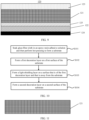
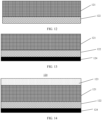
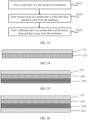
- FIG. 10 is a housing assembly preparation method according to the example 1. As shown in FIG. 10 , the preparation method includes the following steps.
- S101 As shown in FIG. 11 , soak glass fiber cloth in an epoxy resin adhesive solution and then perform hot-pressing to form the substrate 121.
- the substrate 121 includes a glass fiber epoxy resin composite plate.
- the glass fiber epoxy resin composite plate is high in strength and modulus.
- the glass fiber epoxy resin composite plate is used for the battery cover, which is a light and thin material, and is high in strength.
- a thickness, a quantity of layers, and a combination form of the glass fiber cloth are not limited in embodiments of this application.
- a thickness of single-layer glass fiber cloth may be 0.03 mm to 0.2 mm, and a thickness of each stacked layer and a quantity of stacked layers are not limited.
- a thickness of a high-transparency glass fiber plate formed through stacking and hot-pressing is 0.3 mm to 0.6 mm.
- the thickness of the glass fiber cloth is 0.05 mm or 0.1 mm.
- a quantity of layers of stacked glass fiber cloth is, for example, 2 to 10.
- the formed substrate 121 has a thickness of 0.3 mm to 0.6 mm, a density of 1.5 g/cm 3 to 2.3 g/cm 3 , transparency of 60% to 90%, a haze of 5% to 20%, a bending strength of 300 MPa to 500 MPa, and a bending modulus of 18 GPa to 30 GPa.
- the quantity of layers of stacked glass fiber cloth should not be excessively large. More layers indicate a thicker plate and lower transparency.
- soaking time of the glass fiber cloth may be further controlled, so that an impregnation amount of the glass fiber cloth is adjustable.
- the glass fiber epoxy resin is further formed through hot-pressing after being soaked, so that a microstructure of the transparent glass fiber plate and a distribution form, a size, a structure, and a quantity of particles can be improved through hot-pressing, and a crystal structure is uniform, thereby improving a strength and good light transmittance of the transparent glass fiber plate material.
- the glass fiber epoxy resin composite plate is high in transparency, and the decoration layers may be disposed on both sides.
- the substrate 121 includes the first surface and a second surface that are disposed opposite to each other, and the first surface of the substrate 121 is disposed close to an electronic device.
- the first decoration layer 122 includes a reflection layer 1223 and at least one of a color layer 1221 and a texture layer 1222 that are stacked.
- the color layer 1221 and the texture layer 1222 are close to the substrate 121, and the reflection layer 1223 is away from the substrate 121.
- the first decoration layer 122 includes the color layer 1221 and the reflection layer 1223.
- the first decoration layer 122 includes the texture layer 1222 and the reflection layer 1223.
- the first decoration layer 122 includes the color layer 1221, the texture layer 1222, and the reflection layer 1223.
- the first decoration layer 122 is directly formed on the first surface of the substrate 121.
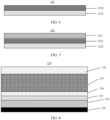
- a method for forming the first decoration layer 122 on the first surface of the substrate 121 in S102 includes the following steps.
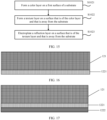
- S1021 As shown in FIG. 16 , form the color layer 1221 on the first surface of the substrate 121.
- the color layer 1221 may be formed by providing ink on the first surface of the substrate 121.
- a manner of providing the ink includes printing, printing out, spraying, silkscreen printing, dip dyeing, or the like.
- a material and a thickness of the color layer 1221 are not limited in embodiments of this application.
- the color layer 1221 includes at least one layer of monochromatic ink, for example, red, green, or blue.
- the color layer 1221 includes a plurality of layers of monochromatic ink of different colors, a color gradient effect may be further implemented. Therefore, the color layer 1221 can enrich a color effect of the product.
- the thickness of the color layer 1221 is, for example, 5 ⁇ m to 10 ⁇ m.
- S1022 As shown in FIG. 17 , form the texture layer 1222 on a surface that is of the color layer 1221 and that is away from the substrate 121.
- the texture layer 1222 may be formed by transferring a UV adhesive on a surface that is of the color layer 1221 and that faces away from the substrate 121 in a UV transferring manner.
- a UV transfer adhesive may be first disposed on the surface that is of the color layer 1221 and that faces away from the substrate 121, then texture is given to the UV transfer adhesive by using a mold, and then the UV transfer adhesive is cured and formed through ultraviolet irradiation.
- a material and a thickness of the texture layer 1222 are not limited in embodiments of this application.
- the material of the texture layer 1222 includes one or more of epoxy acrylate, urethane acrylate, polyether acrylate, polyester acrylate, and acrylic resin.
- the thickness of the texture layer 1222 is 5 ⁇ m to 20 ⁇ m.
- a finally prepared product may reflect light differently, so that the product has special texture in appearance, and a product appearance use effect is enriched.
- the texture layer 1222 may be first formed on the first surface of the substrate 121, and then the color layer 1221 is formed based on the texture layer 1222.
- S1023 As shown in FIG. 18 , electroplate the reflection layer 1223 on a surface that is of the texture layer 1222 and that is away from the substrate.
- the reflection layer 1223 may be electroplated on the texture layer 1222 in a vacuum electroplating manner.
- the reflection layer 1223 is configured to reflect light transmitted by the second surface of the substrate 121, so that the color layer 1221 and the texture layer 1222 can reflect a good appearance decoration effect.
- a material and a thickness of the reflection layer 1223 are not limited in embodiments of this application.
- the material of the reflection layer 1223 includes one or more of an indium tin alloy film layer, a silicon dioxide film layer, a titanium oxide film layer, and a zirconia film layer.
- the thickness of the reflection layer 1223 is 0.05 ⁇ m to 1.0 ⁇ m.
- the light shielding layer 124 may be formed by providing ink on the surface that is of the first decoration layer 122 and that is away from the substrate 121.
- a manner of providing the ink includes printing, printing out, spraying, silkscreen printing, dip dyeing, or the like.
- a material and a thickness of the light shielding layer 124 are not limited in embodiments of this application.
- the light shielding layer 124 includes at least one layer of monochromatic ink.
- a color can be black or white to prevent light penetration and light leakage.
- the material of the light shielding layer 124 includes one or more of epoxy resin, acrylate resin, and polyurethane resin.
- the thickness of the light shielding layer 124 is 5 ⁇ m to 20 ⁇ m.
- the second decoration layer 123 is disposed on the second surface of the substrate 121.
- the second decoration layer 123 includes a hardening layer, and a surface of the hardening layer is a frosted surface.
- the hardening layer may be formed by coating hardening liquid on the second surface of the substrate 121 and performing UV curing.
- the forming the second decoration layer 123 on the second surface of the substrate 121 includes the following steps.
- a material and a thickness of the hardening layer are not limited in embodiments of this application.
- the material of the hardening layer includes acrylate.
- the thickness of the hardening layer is 5 ⁇ m to 20 ⁇ m.
- the hardening liquid may be cured in a UV curing manner.
- UV curing means that the hardening liquid is formed through hardening after being cured and crosslinked through ultraviolet irradiation.
- S1042 Perform mold rubbing on a surface of the semi-cured hardening layer to form a frosted surface.
- a surface having a glitter sand effect may be formed.
- the hardening layer may be further cured in a UV curing manner.
- the first decoration layer is directly formed on the substrate, and a process is simpler.
- the housing assembly includes a second decoration layer 123, a substrate 121, a transparent adhesive layer 126, a membrane 125, a first decoration layer 122, and a light shielding layer 124 that are stacked.
- the housing assembly further includes the membrane 125.
- the membrane 125 is disposed close to a first surface of the substrate 121, and the first decoration layer 122 is disposed on the membrane 125.
- a manner of connecting the membrane 125 to the substrate 121 is not limited in embodiments of this application.
- the membrane 125 is bonded to the first surface of the substrate 121 by using the transparent adhesive layer 126.
- the membrane 125 and the substrate 121 are integrally formed through hot-pressing.
- FIG. 20 is a flowchart of a housing assembly preparation method according to the example 2.
- the membrane 125 is bonded to the first surface of the substrate 121 by using the transparent adhesive layer 126, as shown in FIG. 20
- the housing assembly preparation method compared with the example 1, in step S102 of forming the first decoration layer on a first surface of the substrate, the method may be replaced with the following.
- S105 As shown in FIG. 21 , form the first decoration layer 122 on a first surface of the membrane 125.
- the membrane 125 includes a first surface and a second surface that are opposite to each other, the second surface of the membrane 125 is close to the substrate 121, and the first surface of the membrane 125 is away from the substrate 121.
- a material and a thickness of the membrane 125 are not limited in embodiments of this application.
- the material of the membrane 125 includes one or more of a polyethylene terephthalate (Polyethylene terephthalate, PET) plate, a polymethyl methacrylate (Polymethyl Methacrylate, PMMA) plate, and a polycarbonate (Polycarbonate, PC) plate.
- the PET plate has excellent electrical insulation performance, creep resistance performance, and fatigue resistance performance.
- the PMMA plate commonly known as plexiglass, is the most excellent texture in synthetic transparent materials, and is more suitable in price; and is not easy to produce sharp fragments when broken, and has a better appearance and easy to process.
- the PC plate is tough thermoplastic resin, has colorless transparency, heat resistance, impact resistance, and other characteristics, and has good mechanical properties.
- the thickness of the membrane 125 is 0.1 mm to 0.2 mm.
- the thickness of the membrane 125 is 0.115 mm or 0.125 mm.
- the second surface of the membrane 125 is opposite to the first surface of the substrate 121.
- the transparent adhesive layer 126 is, for example, located on a side that is of the membrane 125 and that is close to the substrate 121, and the transparent adhesive layer 126 may be bonded to the substrate 121 through heating and pressing.
- a material and a thickness of the transparent adhesive layer 126 are not limited in embodiments of this application, and the transparent adhesive layer 126 is, for example, an optically clear adhesive (Optically Clear Adhesive, OCA).
- the material of the transparent adhesive layer 126 includes one or more of an acrylic adhesive, unsaturated polyester, polyurethane, and an epoxy adhesive.
- the thickness of the transparent adhesive layer 126 is 10 ⁇ m to 50 ⁇ m.
- the membrane is bonded to the substrate by using the transparent adhesive layer, no hot-pressing is required, and a process is simple.
- the first decoration layer 122 includes a reflection layer 1223 and at least one of a color layer 1221 and a texture layer 1222 that are stacked.
- the color layer 1221 and the texture layer 1222 are close to the substrate 121, and the reflection layer 1223 is away from the substrate 121.
- the first decoration layer 122 includes the color layer 1221 and the reflection layer 1223.
- the first decoration layer 122 includes the texture layer 1222 and the reflection layer 1223.
- the first decoration layer 122 includes the color layer 1221, the texture layer 1222, and the reflection layer 1223.
- the forming the first decoration layer 122 on a first surface of the membrane 125 includes the following steps.
- S1051 As shown in FIG. 24 , form the color layer 1221 on the first surface of the membrane 125.
- the color layer 1221 may be formed by providing ink on the first surface of the membrane 125.
- a manner of providing the ink includes printing, printing out, spraying, silkscreen printing, dip dyeing, or the like.
- S1052 As shown in FIG. 25 , form the texture layer 1222 on a surface that is of the color layer 1221 and that is away from the membrane 125.
- the texture layer 1222 may be formed by transferring a UV adhesive on a surface that is of the color layer 1221 and that faces away from the substrate 121 in a UV transferring manner.
- a UV transfer adhesive may be first disposed on the surface that is of the color layer 1221 and that faces away from the substrate 121, then texture is given to the UV transfer adhesive by using a mold, and then the UV transfer adhesive is cured and formed through ultraviolet irradiation.
- a finally prepared product may reflect light differently, so that the product has special texture in appearance, and a product appearance use effect is enriched.
- texture layer 1222 For a structure of the texture layer 1222, refer to the foregoing embodiment. Details are not described herein again.
- the texture layer 1222 may be first formed on the first surface of the membrane 125, and then the color layer 1221 is formed based on the texture layer 1222.
- S1053 As shown in FIG. 26 , electroplate the reflection layer 1223 on a surface that is of the texture layer 1222 and that is away from the membrane 125.
- the reflection layer 1223 is configured to reflect light transmitted by a second surface of the substrate 121, so that the color layer 1221 and the texture layer 1222 can reflect a good appearance decoration effect.
- reflection layer 1223 For a structure of the reflection layer 1223, refer to the foregoing embodiment. Details are not described herein again.
- the membrane is bonded to the substrate by using the transparent adhesive layer, no hot-pressing is required, and a process is simple.
- the housing assembly includes a second decoration layer 123, a substrate 121, a membrane 125, a first decoration layer 122, and a light shielding layer 124 that are stacked.
- the membrane 125 and the substrate 121 are integrally formed through hot-pressing.
- FIG. 27 is a flowchart of a housing assembly preparation method according to the example 3.
- the membrane 125 and the substrate 121 are integrally formed through hot-pressing.
- step S102 of forming the first decoration layer on a first surface of the substrate may be replaced with the following.
- S107 As shown in FIG. 28 , integrally form the substrate 121 and the membrane 125 through hot-pressing.
- the substrate 121 may be formed through hot-pressing after glass fiber cloth is soaked in an epoxy resin adhesive solution. After the glass fiber cloth is soaked in the epoxy resin adhesive solution, the membrane 125 may be attached to the glass fiber cloth, and then the soaked glass fiber cloth and the membrane 125 are integrally formed through hot-pressing. In this way, the substrate 121 and the membrane 125 are more securely connected.
- a thickness of the membrane 125 is 0.1 mm to 0.2 mm.
- the thickness of the membrane 125 is 0.115 mm or 0.125 mm.
- the membrane 125 includes the first surface and a second surface that are opposite to each other, the second surface of the membrane 125 is close to the substrate 121, and the first surface of the membrane 125 is away from the substrate 121.
- the membrane and the substrate are directly formed through hot-pressing, and the connection is more stable.
- the housing assembly includes a second decoration layer 123, a substrate 121, a first glossy coating, a first decoration layer 122, and a light shielding layer 124 that are stacked.
- FIG. 30 is a flowchart of a housing assembly preparation method according to the example 4. As shown in FIG. 30 , before step S102, the housing assembly preparation method further includes the following step.
- the first glossy coating is located between the first surface of the substrate 121 and the first decoration layer 122.
- the first decoration layer 122 can better attach to the surface of the substrate 121.
- a material of the first glossy coating includes, for example, acrylic resin and polyurethane resin.
- a thickness of the first glossy coating is 5 ⁇ m to 15 ⁇ m.
- the first glossy coating can better attach the first decoration layer to the surface of the substrate.
- the first glossy coating is disposed on the first surface of the substrate 121 based on the example 1.
- the first glossy coating may also be disposed on the first surface of the substrate 121 based on the example 2 and the example 3. These all fall within the protection scope of this application.
- the housing assembly includes a second decoration layer 123, a second glossy coating, a substrate 121, a first decoration layer 122, and a light shielding layer 124 that are stacked.
- FIG. 31 is a flowchart of a housing assembly preparation method according to the example 5. As shown in FIG. 31 , before step S104, the housing assembly preparation method further includes the following step.
- the second glossy coating is located between the second surface of the substrate 121 and the second decoration layer 123, so that the second decoration layer 123 can better attach to the surface of the substrate 121.
- a material of the second glossy coating includes, for example, acrylic resin and polyurethane resin.
- a thickness of the second glossy coating is 5 ⁇ m to 15 ⁇ m.
- the second glossy coating can better attach the second decoration layer to the surface of the substrate.
- the second glossy coating is disposed on the second surface of the substrate 121 based on the example 1.
- the second glossy coating may also be disposed on the second surface of the substrate 121 based on the example 2, the example 3, and the example 4. These all fall within the protection scope of this application.
- the substrate of the housing assembly formed through hot-pressing after the glass fiber cloth is soaked in the epoxy resin adhesive solution, so that the substrate is high in transparency, and decoration layers can be formed on two surfaces of the substrate, thereby implementing application of a solution of inner texture and an outer glitter effect on the battery cover, and therefore the decoration effect is better, and the battery cover features a light and high-strength characteristic.
Landscapes
- Engineering & Computer Science (AREA)
- Chemical & Material Sciences (AREA)
- Chemical Kinetics & Catalysis (AREA)
- Electrochemistry (AREA)
- General Chemical & Material Sciences (AREA)
- Microelectronics & Electronic Packaging (AREA)
- Life Sciences & Earth Sciences (AREA)
- Biophysics (AREA)
- Computer Hardware Design (AREA)
- Materials Engineering (AREA)
- Metallurgy (AREA)
- Organic Chemistry (AREA)
- Mechanical Engineering (AREA)
- Composite Materials (AREA)
- Signal Processing (AREA)
- Laminated Bodies (AREA)
- Casings For Electric Apparatus (AREA)
Abstract
Description
- This application claims priority to
Chinese Patent Application No. 202210467203.6, filed with the China National Intellectual Property Administration on April 29, 2022 - Embodiments of this application relate to the field of electronic device technologies, and in particular, to a housing assembly, a housing assembly preparation method, and an electronic device.
- With development of a mobile phone terminal and a plastic battery cover industry, it is a unified pursuit in the industry to build a light, high-strength, and high-design appearance battery cover.
- Currently, elements of the battery cover include polycarbonate (Polycarbonate, PC), but the PC has a small modulus, low rigidity, and poor texture. The modulus is a ratio of a stress to a strain of a material in a stressed state.
- In addition, in the conventional technology, a decoration layer is disposed only on one side of the battery cover, and consequently a decoration effect is poor.
- Embodiments of this application provide a housing assembly, a housing assembly preparation method, and an electronic device. Decoration layers may be disposed on both sides of the housing assembly, and a decoration effect is better.
- To achieve the foregoing objective, the following technical solutions are used in embodiments of this application.
- According to a first aspect of embodiments of this application, a housing assembly is provided, including: a substrate, where the substrate includes a first surface and a second surface that are opposite to each other, the first surface of the substrate is close to an electronic device, and the substrate is formed through hot-pressing after glass fiber cloth is soaked in an epoxy resin adhesive solution; a first decoration layer, disposed on the first surface of the substrate; a light shielding layer, disposed on a surface that is of the first decoration layer and that is away from the substrate; and a second decoration layer, disposed on the second surface of the substrate. Therefore, the substrate uses a glass fiber epoxy resin plate, which is a light and thin material, and is high in strength, modulus, and transparency. Decoration layers may be disposed on both surfaces, and a decoration effect is better. The light shielding layer can prevent light from penetrating and prevent light leakage.
- In an optional implementation, the first decoration layer includes a reflection layer and at least one of a color layer and a texture layer that are stacked, where the color layer and the texture layer are close to the substrate, and the reflection layer is away from the substrate. Therefore, the first decoration layer includes a plurality of layers, so that the layers are richer and a decoration effect is better. The color layer may enrich a color effect of the product, and the texture layer may enable a finally prepared product to reflect light differently, so that the product has special texture in appearance, and a product appearance use effect is enriched. The reflection layer is configured to reflect light transmitted by the second surface of the substrate, so that the color layer and the texture layer can reflect a good appearance decoration effect.
- In an optional implementation, the housing assembly further includes a membrane, the first decoration layer is disposed on the membrane, and the membrane is bonded to the first surface of the substrate by using a transparent adhesive layer. Therefore, the membrane is bonded to the substrate by using the transparent adhesive layer, and a process is simple.
- In an optional implementation, the housing assembly further includes a membrane, the membrane is located on the first surface of the substrate, the membrane and the substrate are integrally formed through hot-pressing, and the first decoration layer is disposed on the membrane. Therefore, the membrane and the substrate are directly formed through hot-pressing, and the connection is more stable.
- In an optional implementation, the second decoration layer includes a hardening layer, and a surface of the hardening layer is a frosted surface. Therefore, a surface with a glitter sand effect may be formed, and a product appearance use effect may be further enriched.
- In an optional implementation, a first glossy coating is disposed between the first surface of the substrate and the first decoration layer. Therefore, the first glossy coating can better attach the first decoration layer to the surface of the substrate.
- In an optional implementation, a second glossy coating is disposed between the second surface of the substrate and the second decoration layer. Therefore, the second glossy coating can better attach the second decoration layer to the surface of the substrate.
- According to a second aspect of embodiments of this application, a housing assembly preparation method is provided, including: soaking glass fiber cloth in an epoxy resin adhesive solution and then performing hot-pressing to form a substrate, where the substrate includes a first surface and a second surface that are disposed opposite to each other, and the first surface of the substrate is disposed close to an electronic device; forming a first decoration layer on the first surface of the substrate; forming a light shielding layer on a surface of the first decoration layer; and forming a second decoration layer on the second surface of the substrate. Therefore, the substrate uses a glass fiber epoxy resin plate, which is a light and thin material, and is high in strength, modulus, and transparency. Decoration layers may be disposed on both surfaces, and a decoration effect is better. The light shielding layer can prevent light from penetrating and prevent light leakage.
- In an optional implementation, the forming a first decoration layer on the first surface of the substrate includes: sequentially stacking at least one of a color layer and a texture layer on the first surface of the substrate. Therefore, the first decoration layer includes a plurality of layers, so that the layers are richer and a decoration effect is better. The color layer may enrich a color effect of the product, and the texture layer may enable a finally prepared product to reflect light differently, so that the product has special texture in appearance, and a product appearance use effect is enriched.
- In an optional implementation, after the sequentially stacking at least one of a color layer and a texture layer on the first surface of the substrate, the method further includes: electroplating a reflection layer on the color layer or the texture layer. Therefore, the reflection layer is configured to reflect light transmitted by the second surface of the substrate, so that the color layer and the texture layer can reflect a good appearance decoration effect.
- In an optional implementation, a housing assembly further includes a membrane, and the forming a first decoration layer on the first surface of the substrate includes: forming the first decoration layer on a first surface of the membrane, where the membrane includes the first surface and a second surface that are opposite to each other; and bonding the membrane to the first surface of the substrate by using a transparent adhesive layer, where the second surface of the membrane is opposite to the first surface of the substrate. Therefore, the membrane is bonded to the substrate by using the transparent adhesive layer, no hot-pressing is required, and a process is simpler.
- In an optional implementation, a housing assembly further includes a membrane, and the forming a first decoration layer on the first surface of the substrate includes: integrally forming the substrate and the membrane through hot-pressing; and forming the first decoration layer on a first surface of the membrane, where the membrane includes the first surface and a second surface that are opposite to each other. Therefore, the membrane and the substrate are directly formed through hot-pressing, and the connection is more stable.
- In an optional implementation, the forming the first decoration layer on a first surface of the membrane includes: sequentially stacking at least one of a color layer and a texture layer on the first surface of the membrane. Therefore, the first decoration layer includes a plurality of layers, so that the layers are richer and a decoration effect is better.
- In an optional implementation, after the sequentially stacking at least one of a color layer and a texture layer on the first surface of the membrane, the method further includes: electroplating a reflection layer on the color layer or the texture layer. Therefore, the reflection layer is configured to reflect light transmitted by the second surface of the substrate, so that the color layer and the texture layer can reflect a good appearance decoration effect.
- In an optional implementation, the forming a second decoration layer on the second surface of the substrate includes: coating hardening liquid on the second surface of the substrate to form a hardening layer; performing mold rubbing on a surface of the semi-cured hardening layer to form a frosted surface; and curing the hardening layer. Therefore, a surface with a glitter sand effect may be formed, and a product appearance use effect may be further enriched.
- In an optional implementation, before the forming a first decoration layer on the first surface of the substrate, the method further includes: printing a first glossy coating on the first surface of the substrate. Therefore, the first glossy coating can better attach the first decoration layer to the surface of the substrate.
- In an optional implementation, before the forming a second decoration layer on the second surface of the substrate, the method further includes: printing a first glossy coating on the second surface of the substrate. Therefore, the second glossy coating can better attach the second decoration layer to the surface of the substrate.
- According to a third aspect of embodiments of this application, an electronic device is provided, including a middle frame, a display, and a battery cover, where the battery cover and the display are respectively connected to two opposite sides of the middle frame, and the battery cover includes the housing assembly described above, or the battery cover includes the housing assembly obtained by using the foregoing preparation method. Therefore, the electronic device uses the foregoing housing assembly, and a decoration effect is better.
- According to the housing assembly, the housing assembly preparation method, and the electronic device provided in this application, the substrate of the housing assembly is formed through hot-pressing after the glass fiber cloth is soaked in the epoxy resin adhesive solution, so that the substrate is high in transparency, and the decoration layers can be formed on the two surfaces of the substrate, thereby implementing an inner texture effect and an outer glitter sand effect. The substrate is used in the battery cover, and therefore the decoration effect is better, and the battery cover features a light and high-strength characteristic.
-
-
FIG. 1 is a diagram of a disassembled structure of an electronic device; -
FIG. 2 is a diagram of a structure of a battery cover according to an embodiment of this appli cati on; -
FIG. 3 is a diagram of a partial structure of a battery cover according to an embodiment of this application; -
FIG. 4 is a sectional view of a housing assembly inFIG. 2 along A-A; -
FIG. 5 is a diagram of a structure of a first decoration layer according to an embodiment of this application; -
FIG. 6 is a diagram of a structure of another first decoration layer according to an embodiment of this application; -
FIG. 7 is a diagram of a structure of still another first decoration layer according to an embodiment of this application; -
FIG. 8 is a sectional view of another housing assembly inFIG. 2 along A-A; -
FIG. 9 is a sectional view of still another housing assembly inFIG. 2 along A-A; -
FIG. 10 is a flowchart of a housing assembly preparation method according to an example 1 of this application; -
FIG. 11 ,FIG. 12, FIG. 13, and FIG. 14 are respectively diagrams of structures of products formed after steps inFIG. 10 are performed; -
FIG. 15 is a flowchart of a method for preparing a first decoration layer according to an example 1; -
FIG. 16, FIG. 17 , andFIG. 18 are respectively diagrams of structures of products formed after steps inFIG. 15 are performed; -
FIG. 19 is a flowchart of a method for preparing a second decoration layer according to an embodiment of this application; -
FIG. 20 is a flowchart of a housing assembly preparation method according to an example 2 of this application; -
FIG. 21 is a diagram of a structure of a product formed after S105 inFIG. 20 is performed; -
FIG. 22 is a diagram of a structure of a product formed after S106 inFIG. 20 is performed; -
FIG. 23 is a flowchart of a method for preparing a first decoration layer according to an example 2; -
FIG. 24, FIG. 25, and FIG. 26 are respectively diagrams of structures of products formed after steps inFIG. 23 are performed; -
FIG. 27 is a flowchart of a housing assembly preparation method according to an example 3 of this application; -
FIG. 28 is a diagram of a structure of a product formed after S107 inFIG. 27 is performed; -
FIG. 29 is a diagram of a structure of a product formed after S108 inFIG. 27 is performed; -
FIG. 30 is a flowchart of a housing assembly preparation method according to an example 4; and -
FIG. 31 is a flowchart of a housing assembly preparation method according to an example 5. - To make the objectives, technical solutions, and advantages of this application clearer, the following further describes this application in detail with reference to the accompanying drawings.
- The terms "first" and "second" mentioned below are merely intended for a purpose of description, and shall not be understood as an indication or implication of relative importance or implicit indication of a quantity of indicated technical features. Therefore, features defined with "first", "second", and the like may explicitly or implicitly include one or more such features. In description of this application, unless otherwise stated, "a plurality of" means two or more than two.
- In addition, in this application, position terms such as "up", and "down" are defined relative to an illustrative position of a component in the accompanying drawings. It should be understood that these direction terms are relative concepts and are used for relative description and clarification, and may vary accordingly depending on a position change in which components are placed in the accompanying drawings.
- Embodiments of this application provide an electronic device. The electronic device may be a product having a display interface, such as a tablet computer, a mobile phone, an electronic reader, a remote control, a personal computer (personal computer, PC), a notebook computer, a personal digital assistant (personal digital assistant, PDA), a vehicle-mounted device, a web television, a wearable device, or a television, or a smart display wearable product such as a smart watch or a smart band. A specific form of the electronic device is not specially limited in embodiments of this application. For ease of description, an example in which the electronic device is a mobile phone is used for description in the following embodiments.
- As shown in
FIG. 1 , an electronic device 1 includes adisplay assembly 10, amiddle frame 11, and a battery cover (or referred to as a rear housing) 12. Themiddle frame 11 is located between thedisplay assembly 10 and thebattery cover 12. - The
display assembly 10 is configured to display an image. - The
display assembly 10, themiddle frame 11, and thebattery cover 12 may be disposed at different layers in a thickness direction of the electronic device. These layers may be parallel to each other. A plane in which each layer is located may be referred to as an X-Y plane, and a direction perpendicular to the X-Y plane may be referred to as a Z direction. In other words, thedisplay assembly 10, themiddle frame 11, and thebattery cover 12 may be distributed in layers in the Z direction. - After passing through the
middle frame 11 by using a flexible printed circuit (flexible printed circuit, FPC) board shown inFIG. 1 , thedisplay assembly 10 may be electrically connected to a PCB disposed on themiddle frame 11. Therefore, the PCB can transmit display data to thedisplay assembly 10, to control thedisplay assembly 10 to display an image. - The
middle frame 11 is located between thedisplay assembly 10 and thebattery cover 12. A surface that is of themiddle frame 11 and that is away from thedisplay assembly 10 is used to install internal components like a battery, a printed circuit board (printed circuit board, PCB), a camera (camera), and an antenna. After thebattery cover 12 is closed with themiddle frame 11, the foregoing internal components are located between thebattery cover 12 and themiddle frame 11. - The
battery cover 12 is connected to themiddle frame 11 to form an accommodating cavity used to accommodate the electronic components like the PCB, the camera, and the battery. Therefore, moisture and dust from the outside can be prevented from entering the accommodating cavity and affecting performance of the electronic components. - An existing battery cover uses a PC plate, but the PC plate has a small modulus, low rigidity, and poor texture. In addition, a decoration layer is disposed only on a single side, and consequently a decoration effect is poor.
- Embodiments of this application provide an improved battery cover. As shown in
FIG. 2 andFIG. 3 , thebattery cover 12 includes ahousing assembly 120. The battery cover may be obtained by processing thehousing assembly 120 through computer numerical control (Computer Numerical Control, CNC). - For example, a thickness of the battery cover is 0.35 mm to 0.65 mm.
- CNC processing may mill off surplus materials of edges and corners of the
housing assembly 120, to obtain a battery cover in a finally required size suitable for assembling. - For example, R angle modification may be performed on the
housing assembly 120 through CNC, to obtain a battery cover in a required form. An R angle of thebattery cover 12 is shown inFIG. 2 . - It should be noted that the R angle is a rounded corner of an arc tangent to two intersecting straight lines. The R angle modification means cutting and polishing a right angle of the battery cover to make the right angle into a rounded corner.
-
FIG. 4 is a sectional view along A-A inFIG. 2 . As shown inFIG. 4 , the housing assembly includes afirst decoration layer 122, asubstrate 121, and asecond decoration layer 123 that are stacked. - The
substrate 121 includes a first surface and a second surface that are opposite to each other. The first surface of thesubstrate 121 is close to the display assembly. Thesubstrate 121 includes a glass fiber epoxy resin composite plate, and may be formed through hot-pressing after glass fiber cloth is soaked in an epoxy resin adhesive solution. - The glass fiber epoxy resin composite plate is high in strength and modulus. The glass fiber epoxy resin composite plate is used for the battery cover, which is a light and thin material, and is high in strength.
- A thickness, a quantity of layers, and a combination form of the glass fiber cloth are not limited in embodiments of this application. For example, a thickness of single-layer glass fiber cloth may be 0.03 mm to 0.2 mm, a thickness of each stacked layer and a quantity of stacked layers are not limited, and a thickness of a high-transparency glass fiber plate formed through stacking and hot-pressing is 0.3 mm to 0.6 mm.
- Preferably, the thickness of the glass fiber cloth is 0.05 mm or 0.1 mm.
- A quantity of layers of stacked glass fiber cloth is, for example, 2 to 10.
- The formed
substrate 121 has a thickness of 0.3 mm to 0.6 mm, a density of 1.5 g/cm3 to 2.3 g/cm3, transparency of 60% to 90%, a haze of 5% to 20%, a bending strength of 300 MPa to 500 MPa, and a bending modulus of 18 GPa to 30 GPa. - It should be noted that neither thicker or thinner glass fiber cloth means the better. The thicker glass fiber cloth may affect its transparency. Excessively thin glass fiber cloth presents insufficient tension, and is vulnerable to being torn during rolling.
- In addition, the quantity of layers of stacked glass fiber cloth should not be excessively large. More layers indicate a thicker plate and lower transparency.
- Furthermore, soaking time of the glass fiber cloth may be further controlled, so that an impregnation amount of the glass fiber cloth is adjustable.
- During forming of the substrate, the glass fiber epoxy resin is further formed through hot-pressing after being soaked, so that a microstructure of the transparent glass fiber plate and a distribution form, a size, a structure, and a quantity of particles can be improved through hot-pressing, and a crystal structure is uniform, thereby improving a strength and good light transmittance of the transparent glass fiber plate material.
- Therefore, as the
substrate 121, the glass fiber epoxy resin composite plate is high in transparency, and the decoration layers may be disposed on both sides. - The
first decoration layer 122 is disposed on the first surface of thesubstrate 121, and thesecond decoration layer 123 is disposed on the second surface of thesubstrate 121. - As shown in
FIG. 5 ,FIG. 6, and FIG. 7 , thefirst decoration layer 122 includes areflection layer 1223 and at least one of acolor layer 1221 and atexture layer 1222 that are stacked. Thecolor layer 1221 and thetexture layer 1222 are close to thesubstrate 121, and thereflection layer 1223 is far away from thesubstrate 121. - In some embodiments of this application, as shown in
FIG. 5 , thefirst decoration layer 122 includes thecolor layer 1221 and thereflection layer 1223. - In some other embodiments of this application, as shown in
FIG. 6 , thefirst decoration layer 122 includes thetexture layer 1222 and thereflection layer 1223. - In another embodiment of this application, as shown in
FIG. 7 , thefirst decoration layer 122 includes thecolor layer 1221, thetexture layer 1222, and thereflection layer 1223. - The following uses an example in which the
first decoration layer 122 includes thecolor layer 1221, thetexture layer 1222, and thereflection layer 1223 for description. - The
color layer 1221 may be first formed on the first surface of thesubstrate 121, and then thetexture layer 1222 is formed on a surface that is of thecolor layer 1221 and that is away from thesubstrate 121. - The
color layer 1221 may be formed by providing ink on the first surface of thesubstrate 121. A manner of providing the ink includes printing, printing out, spraying, silkscreen printing, dip dyeing, or the like. - A material and a thickness of the
color layer 1221 are not limited in embodiments of this application. For example, thecolor layer 1221 includes at least one layer of monochromatic ink, for example, red, green, or blue. When thecolor layer 1221 includes a plurality of layers of monochromatic ink of different colors, a color gradient effect may be further implemented. Therefore, thecolor layer 1221 can enrich a color effect of the product. - The thickness of the
color layer 1221 is, for example, 5 µm to 10 µm. - The
texture layer 1222 may be formed by transferring a UV adhesive on a surface that is of thecolor layer 1221 and that faces away from thesubstrate 121 in an ultraviolet (Ultraviolet, UV) transferring manner. - A UV transfer adhesive may be first disposed on the surface that is of the
color layer 1221 and that faces away from thesubstrate 121, then texture is given to the UV transfer adhesive by using a mold, and then the UV transfer adhesive is cured and formed through ultraviolet irradiation. - A material and a thickness of the
texture layer 1222 are not limited in embodiments of this application. The material of thetexture layer 1222 may include one or more of epoxy acrylate, polyurethane acrylate, polyether acrylate, polyester acrylate, and acrylic resin. - For example, the thickness of the
texture layer 1222 is 5 µm to 20 µm. - Based on the formed
texture layer 1222, a finally prepared product may reflect light differently, so that the product has special texture in appearance, and a product appearance use effect is enriched. - It may be understood that, in another embodiment of this application, the
texture layer 1222 may be first formed on the first surface of thesubstrate 121, and then thecolor layer 1221 is formed based on thetexture layer 1222. - The
reflection layer 1223 may be electroplated on a surface that is of thecolor layer 1221 or thetexture layer 1222 and that is away from thesubstrate 121. Thereflection layer 1223 is configured to reflect light transmitted by the second surface of thesubstrate 121, so that thecolor layer 1221 and thetexture layer 1222 can reflect a good appearance decoration effect. - A material and a thickness of the
reflection layer 1223 are not limited in embodiments of this application. For example, the material of thereflection layer 1223 includes one or more of an indium tin alloy film layer, a silicon dioxide film layer, a titanium oxide film layer, and a zirconia film layer. - The thickness of the
reflection layer 1223 is 0.05 µm to 1.0 µm. - In addition, as shown in
FIG. 4 , thehousing assembly 120 further includes alight shielding layer 124. Thelight shielding layer 124 is disposed on a surface that is of thefirst decoration layer 122 and that is away from thesubstrate 121. - The
light shielding layer 124 may be obtained by forming an ink layer on the surface that is of thefirst decoration layer 122 and that is away from thesubstrate 121. A forming manner of the ink layer includes: printing, printing out, spraying, silkscreen printing, dip dyeing, or the like. - A material and a thickness of the
light shielding layer 124 are not limited in embodiments of this application. Thelight shielding layer 124 includes at least one layer of monochromatic ink. A color can be black or white to prevent light penetration and light leakage. For example, the material of thelight shielding layer 124 includes one or more of epoxy resin, acrylate resin, and polyurethane resin. - For example, the thickness of the
light shielding layer 124 is 5 µm to 20 µm. - It should be noted that, in some embodiments of this application, the
color layer 1221 may also be used as thelight shielding layer 124, and a light shielding structure such as another light shielding layer does not need to be disposed. In this case, thecolor layer 1221 may be disposed on a side that is of thefirst decoration layer 122 and that is away from thesubstrate 121. - A manner of connecting the
first decoration layer 122 to thesubstrate 121 is not limited in embodiments of this application. In some embodiments of this application, as shown inFIG. 4 , thefirst decoration layer 122 is directly formed on the first surface of thesubstrate 121. - In some other embodiments of this application, as shown in
FIG. 8 andFIG. 9 , the housing assembly further includes amembrane 125. Themembrane 125 is disposed close to the first surface of thesubstrate 121, and thefirst decoration layer 122 is disposed on themembrane 125. - A material and a thickness of the
membrane 125 are not limited in embodiments of this application. For example, the material of themembrane 125 includes one or more of a polyethylene terephthalate (Polyethylene terephthalate, PET) plate, a polymethyl methacrylate (Polymethyl Methacrylate, PMMA) plate, and a polycarbonate (Polycarbonate, PC) plate. - It should be noted that the PET plate has excellent electrical insulation performance, creep resistance performance, and fatigue resistance performance.
- The PMMA plate, commonly known as plexiglass, is the most excellent texture in synthetic transparent materials, and is more suitable in price; and is not easy to produce sharp fragments when broken, and has a better appearance and easy to process.
- The PC plate is tough thermoplastic resin, has colorless transparency, heat resistance, impact resistance, and other characteristics, and has good mechanical properties.
- For example, the thickness of the
membrane 125 is 0.1 mm to 0.2 mm. For example, the thickness of themembrane 125 is 0.115 mm or 0.125 mm. - A manner of connecting the
membrane 125 to thesubstrate 121 is not limited in embodiments of this application. In some embodiments, as shown inFIG. 8 , themembrane 125 is bonded to the first surface of thesubstrate 121 by using a transparentadhesive layer 126. - The transparent
adhesive layer 126 is, for example, located on a side that is of themembrane 125 and that is close to thesubstrate 121, and the transparentadhesive layer 126 may be bonded to thesubstrate 121 through heating and pressing. - A material and a thickness of the transparent
adhesive layer 126 are not limited in embodiments of this application, and the transparentadhesive layer 126 is, for example, an optically clear adhesive (Optically Clear Adhesive, OCA). For example, the material of the transparentadhesive layer 126 includes one or more of an acrylic adhesive, unsaturated polyester, polyurethane, and an epoxy adhesive. - For example, the thickness of the transparent
adhesive layer 126 is 10 µm to 50 µm. - In some other embodiments, as shown in
FIG. 9 , themembrane 125 and thesubstrate 121 are integrally formed. - The
substrate 121 may be formed through hot-pressing after the glass fiber cloth is soaked in the epoxy resin adhesive solution. After the glass fiber cloth is soaked in the epoxy resin adhesive solution, themembrane 125 may be attached to the glass fiber cloth, and then the soaked glass fiber cloth and themembrane 125 are integrally formed through hot-pressing. In this way, thesubstrate 121 and themembrane 125 are more securely connected. - In addition, still refer to
FIG. 4 ,FIG. 8 , andFIG. 9 . Thesecond decoration layer 123 is disposed on the second surface of thesubstrate 121. - The
second decoration layer 123 includes a hardening layer, and a surface of the hardening layer is a frosted surface. - The hardening layer may be formed by coating hardening liquid on the second surface of the
substrate 121 and performing UV curing. It should be noted that the UV curing means that the hardening liquid is formed through curing after being cured and crosslinked through ultraviolet irradiation. - When the
second decoration layer 123 is formed, the hardening liquid may be first coated on the second surface of thesubstrate 121, to form the hardening layer through UV curing, then mold rubbing is performed on a surface of the semi-cured hardening layer, to form a frosted surface, and then the hardening layer continues to be cured in the UV curing manner, to form a surface having a glitter sand effect. - A material and a thickness of the hardening layer are not limited in embodiments of this application. For example, the material of the hardening layer includes acrylate. For example, the thickness of the hardening layer is 5 µm to 20 µm.
- In some embodiments of this application, a first glossy coating (not shown in the figure) is further disposed on the first surface of the
substrate 121, and the first glossy coating is located between the first surface of thesubstrate 121 and thefirst decoration layer 122. - In this way, the
first decoration layer 122 can better attach to the surface of thesubstrate 121. - In some embodiments of this application, a second glossy coating (not shown in the figure) is further disposed on the second surface of the
substrate 121, and the second glossy coating is located between the second surface of thesubstrate 121 and thesecond decoration layer 123. - In this way, the
second decoration layer 123 can better attach to the surface of thesubstrate 121. - Materials and thicknesses of the first glossy coating and the second glossy coating are not limited in embodiment of this application. For example, materials of the first glossy coating and the second glossy coating include acrylic resin and polyurethane resin.
- For example, the thicknesses of the first glossy coating and the second glossy coating are 5 µm to 15 µm.
- The following describes a structure and a preparation method of the housing assembly with reference to an example 1, an example 2, and an example 3.
- This example provides a housing assembly. As shown in
FIG. 4 , the housing assembly includes asecond decoration layer 123, asubstrate 121, afirst decoration layer 122, and alight shielding layer 124 that are stacked. -
FIG. 10 is a housing assembly preparation method according to the example 1. As shown inFIG. 10 , the preparation method includes the following steps. - S101: As shown in
FIG. 11 , soak glass fiber cloth in an epoxy resin adhesive solution and then perform hot-pressing to form thesubstrate 121. - The
substrate 121 includes a glass fiber epoxy resin composite plate. The glass fiber epoxy resin composite plate is high in strength and modulus. The glass fiber epoxy resin composite plate is used for the battery cover, which is a light and thin material, and is high in strength. - A thickness, a quantity of layers, and a combination form of the glass fiber cloth are not limited in embodiments of this application. For example, a thickness of single-layer glass fiber cloth may be 0.03 mm to 0.2 mm, and a thickness of each stacked layer and a quantity of stacked layers are not limited. A thickness of a high-transparency glass fiber plate formed through stacking and hot-pressing is 0.3 mm to 0.6 mm.
- Preferably, the thickness of the glass fiber cloth is 0.05 mm or 0.1 mm.
- A quantity of layers of stacked glass fiber cloth is, for example, 2 to 10.
- The formed
substrate 121 has a thickness of 0.3 mm to 0.6 mm, a density of 1.5 g/cm3 to 2.3 g/cm3, transparency of 60% to 90%, a haze of 5% to 20%, a bending strength of 300 MPa to 500 MPa, and a bending modulus of 18 GPa to 30 GPa. - It should be noted that neither thicker or thinner glass fiber cloth means the better. The thicker glass fiber cloth may affect its transparency. Excessively thin glass fiber cloth presents insufficient tension, and is vulnerable to being torn during rolling.
- In addition, the quantity of layers of stacked glass fiber cloth should not be excessively large. More layers indicate a thicker plate and lower transparency.
- Furthermore, soaking time of the glass fiber cloth may be further controlled, so that an impregnation amount of the glass fiber cloth is adjustable.
- During forming of the substrate, the glass fiber epoxy resin is further formed through hot-pressing after being soaked, so that a microstructure of the transparent glass fiber plate and a distribution form, a size, a structure, and a quantity of particles can be improved through hot-pressing, and a crystal structure is uniform, thereby improving a strength and good light transmittance of the transparent glass fiber plate material.
- Therefore, as the
substrate 121, the glass fiber epoxy resin composite plate is high in transparency, and the decoration layers may be disposed on both sides. - S102: As shown in
FIG. 12 , form thefirst decoration layer 122 on a first surface of thesubstrate 121. - The
substrate 121 includes the first surface and a second surface that are disposed opposite to each other, and the first surface of thesubstrate 121 is disposed close to an electronic device. - The
first decoration layer 122 includes areflection layer 1223 and at least one of acolor layer 1221 and atexture layer 1222 that are stacked. Thecolor layer 1221 and thetexture layer 1222 are close to thesubstrate 121, and thereflection layer 1223 is away from thesubstrate 121. - In some embodiments of this application, the
first decoration layer 122 includes thecolor layer 1221 and thereflection layer 1223. - In some other embodiments of this application, the
first decoration layer 122 includes thetexture layer 1222 and thereflection layer 1223. - In another embodiment of this application, the
first decoration layer 122 includes thecolor layer 1221, thetexture layer 1222, and thereflection layer 1223. - The following uses an example in which the
first decoration layer 122 includes thecolor layer 1221, thetexture layer 1222, and thereflection layer 1223 for description. - In some embodiments of this application, the
first decoration layer 122 is directly formed on the first surface of thesubstrate 121. As shown inFIG. 15 , a method for forming thefirst decoration layer 122 on the first surface of thesubstrate 121 in S102 includes the following steps. - S1021: As shown in
FIG. 16 , form thecolor layer 1221 on the first surface of thesubstrate 121. - The
color layer 1221 may be formed by providing ink on the first surface of thesubstrate 121. A manner of providing the ink includes printing, printing out, spraying, silkscreen printing, dip dyeing, or the like. - A material and a thickness of the
color layer 1221 are not limited in embodiments of this application. For example, thecolor layer 1221 includes at least one layer of monochromatic ink, for example, red, green, or blue. When thecolor layer 1221 includes a plurality of layers of monochromatic ink of different colors, a color gradient effect may be further implemented. Therefore, thecolor layer 1221 can enrich a color effect of the product. - The thickness of the
color layer 1221 is, for example, 5 µm to 10 µm. - S1022: As shown in
FIG. 17 , form thetexture layer 1222 on a surface that is of thecolor layer 1221 and that is away from thesubstrate 121. - The
texture layer 1222 may be formed by transferring a UV adhesive on a surface that is of thecolor layer 1221 and that faces away from thesubstrate 121 in a UV transferring manner. - A UV transfer adhesive may be first disposed on the surface that is of the
color layer 1221 and that faces away from thesubstrate 121, then texture is given to the UV transfer adhesive by using a mold, and then the UV transfer adhesive is cured and formed through ultraviolet irradiation. - A material and a thickness of the
texture layer 1222 are not limited in embodiments of this application. The material of thetexture layer 1222 includes one or more of epoxy acrylate, urethane acrylate, polyether acrylate, polyester acrylate, and acrylic resin. - The thickness of the
texture layer 1222 is 5 µm to 20 µm. - Based on the formed
texture layer 1222, a finally prepared product may reflect light differently, so that the product has special texture in appearance, and a product appearance use effect is enriched. - It may be understood that, in another embodiment of this application, the
texture layer 1222 may be first formed on the first surface of thesubstrate 121, and then thecolor layer 1221 is formed based on thetexture layer 1222. - S1023: As shown in
FIG. 18 , electroplate thereflection layer 1223 on a surface that is of thetexture layer 1222 and that is away from the substrate. - The
reflection layer 1223 may be electroplated on thetexture layer 1222 in a vacuum electroplating manner. Thereflection layer 1223 is configured to reflect light transmitted by the second surface of thesubstrate 121, so that thecolor layer 1221 and thetexture layer 1222 can reflect a good appearance decoration effect. - A material and a thickness of the
reflection layer 1223 are not limited in embodiments of this application. For example, the material of thereflection layer 1223 includes one or more of an indium tin alloy film layer, a silicon dioxide film layer, a titanium oxide film layer, and a zirconia film layer. - The thickness of the
reflection layer 1223 is 0.05 µm to 1.0 µm. - S103: As shown in
FIG. 13 , form thelight shielding layer 124 on a surface that is of thefirst decoration layer 122 and that is away from the substrate. - The
light shielding layer 124 may be formed by providing ink on the surface that is of thefirst decoration layer 122 and that is away from thesubstrate 121. A manner of providing the ink includes printing, printing out, spraying, silkscreen printing, dip dyeing, or the like. - A material and a thickness of the
light shielding layer 124 are not limited in embodiments of this application. Thelight shielding layer 124 includes at least one layer of monochromatic ink. A color can be black or white to prevent light penetration and light leakage. For example, the material of thelight shielding layer 124 includes one or more of epoxy resin, acrylate resin, and polyurethane resin. - For example, the thickness of the
light shielding layer 124 is 5 µm to 20 µm. - S104: As shown in
FIG. 14 , form thesecond decoration layer 123 on the second surface of thesubstrate 121. - The
second decoration layer 123 is disposed on the second surface of thesubstrate 121. - The
second decoration layer 123 includes a hardening layer, and a surface of the hardening layer is a frosted surface. - The hardening layer may be formed by coating hardening liquid on the second surface of the
substrate 121 and performing UV curing. - As shown in
FIG. 19 , the forming thesecond decoration layer 123 on the second surface of thesubstrate 121 includes the following steps. - S1041: Coat the hardening liquid on the second surface of the
substrate 121 to form the semi-cured hardening layer. - A material and a thickness of the hardening layer are not limited in embodiments of this application. For example, the material of the hardening layer includes acrylate. For example, the thickness of the hardening layer is 5 µm to 20 µm.
- The hardening liquid may be cured in a UV curing manner.
- It should be noted that the UV curing means that the hardening liquid is formed through hardening after being cured and crosslinked through ultraviolet irradiation.
- S1042: Perform mold rubbing on a surface of the semi-cured hardening layer to form a frosted surface.
- After the frosted surface is cured, a surface having a glitter sand effect may be formed.
- S1043: Cure the hardening layer.
- The hardening layer may be further cured in a UV curing manner.
- According to the housing assembly provided in this example, the first decoration layer is directly formed on the substrate, and a process is simpler.
- This example provides a housing assembly. As shown in
FIG. 8 , the housing assembly includes asecond decoration layer 123, asubstrate 121, a transparentadhesive layer 126, amembrane 125, afirst decoration layer 122, and alight shielding layer 124 that are stacked. - For forming manners of the
second decoration layer 123, thesubstrate 121, thefirst decoration layer 122, and thelight shielding layer 124, refer to the example 1. Details are not described herein again. - The housing assembly further includes the
membrane 125. Themembrane 125 is disposed close to a first surface of thesubstrate 121, and thefirst decoration layer 122 is disposed on themembrane 125. A manner of connecting themembrane 125 to thesubstrate 121 is not limited in embodiments of this application. In some embodiments, themembrane 125 is bonded to the first surface of thesubstrate 121 by using the transparentadhesive layer 126. In some other embodiments, themembrane 125 and thesubstrate 121 are integrally formed through hot-pressing. -
FIG. 20 is a flowchart of a housing assembly preparation method according to the example 2. In this example, when themembrane 125 is bonded to the first surface of thesubstrate 121 by using the transparentadhesive layer 126, as shown inFIG. 20 , in the housing assembly preparation method, compared with the example 1, in step S102 of forming the first decoration layer on a first surface of the substrate, the method may be replaced with the following. - S105: As shown in
FIG. 21 , form thefirst decoration layer 122 on a first surface of themembrane 125. - The
membrane 125 includes a first surface and a second surface that are opposite to each other, the second surface of themembrane 125 is close to thesubstrate 121, and the first surface of themembrane 125 is away from thesubstrate 121. - A material and a thickness of the
membrane 125 are not limited in embodiments of this application. For example, the material of themembrane 125 includes one or more of a polyethylene terephthalate (Polyethylene terephthalate, PET) plate, a polymethyl methacrylate (Polymethyl Methacrylate, PMMA) plate, and a polycarbonate (Polycarbonate, PC) plate. - It should be noted that the PET plate has excellent electrical insulation performance, creep resistance performance, and fatigue resistance performance.
- The PMMA plate, commonly known as plexiglass, is the most excellent texture in synthetic transparent materials, and is more suitable in price; and is not easy to produce sharp fragments when broken, and has a better appearance and easy to process.
- The PC plate is tough thermoplastic resin, has colorless transparency, heat resistance, impact resistance, and other characteristics, and has good mechanical properties.
- The thickness of the
membrane 125 is 0.1 mm to 0.2 mm. For example, the thickness of themembrane 125 is 0.115 mm or 0.125 mm. - S106: As shown in
FIG. 22 , bond themembrane 125 to the first surface of thesubstrate 121 by using the transparentadhesive layer 126. - The second surface of the
membrane 125 is opposite to the first surface of thesubstrate 121. - The transparent
adhesive layer 126 is, for example, located on a side that is of themembrane 125 and that is close to thesubstrate 121, and the transparentadhesive layer 126 may be bonded to thesubstrate 121 through heating and pressing. - A material and a thickness of the transparent
adhesive layer 126 are not limited in embodiments of this application, and the transparentadhesive layer 126 is, for example, an optically clear adhesive (Optically Clear Adhesive, OCA). For example, the material of the transparentadhesive layer 126 includes one or more of an acrylic adhesive, unsaturated polyester, polyurethane, and an epoxy adhesive. - For example, the thickness of the transparent
adhesive layer 126 is 10 µm to 50 µm. - Therefore, the membrane is bonded to the substrate by using the transparent adhesive layer, no hot-pressing is required, and a process is simple.
- It should be noted that a structure of the
first decoration layer 122 is not limited in embodiments of this application. In some embodiments, thefirst decoration layer 122 includes areflection layer 1223 and at least one of acolor layer 1221 and atexture layer 1222 that are stacked. Thecolor layer 1221 and thetexture layer 1222 are close to thesubstrate 121, and thereflection layer 1223 is away from thesubstrate 121. - In some embodiments of this application, the
first decoration layer 122 includes thecolor layer 1221 and thereflection layer 1223. - In some other embodiments of this application, the
first decoration layer 122 includes thetexture layer 1222 and thereflection layer 1223. - In another embodiment of this application, the
first decoration layer 122 includes thecolor layer 1221, thetexture layer 1222, and thereflection layer 1223. - The following uses an example in which the
first decoration layer 122 includes thecolor layer 1221, thetexture layer 1222, and thereflection layer 1223 for description. - As shown in
FIG. 23 , the forming thefirst decoration layer 122 on a first surface of themembrane 125 includes the following steps. - S1051: As shown in
FIG. 24 , form thecolor layer 1221 on the first surface of themembrane 125. - The
color layer 1221 may be formed by providing ink on the first surface of themembrane 125. A manner of providing the ink includes printing, printing out, spraying, silkscreen printing, dip dyeing, or the like. - For a structure of the
color layer 1221, refer to the foregoing embodiment. Details are not described herein again. - S1052: As shown in
FIG. 25 , form thetexture layer 1222 on a surface that is of thecolor layer 1221 and that is away from themembrane 125. - The
texture layer 1222 may be formed by transferring a UV adhesive on a surface that is of thecolor layer 1221 and that faces away from thesubstrate 121 in a UV transferring manner. - A UV transfer adhesive may be first disposed on the surface that is of the
color layer 1221 and that faces away from thesubstrate 121, then texture is given to the UV transfer adhesive by using a mold, and then the UV transfer adhesive is cured and formed through ultraviolet irradiation. - Based on the formed
texture layer 1222, a finally prepared product may reflect light differently, so that the product has special texture in appearance, and a product appearance use effect is enriched. - For a structure of the
texture layer 1222, refer to the foregoing embodiment. Details are not described herein again. - It may be understood that, in another embodiment of this application, the
texture layer 1222 may be first formed on the first surface of themembrane 125, and then thecolor layer 1221 is formed based on thetexture layer 1222. - S1053: As shown in
FIG. 26 , electroplate thereflection layer 1223 on a surface that is of thetexture layer 1222 and that is away from themembrane 125. - The
reflection layer 1223 is configured to reflect light transmitted by a second surface of thesubstrate 121, so that thecolor layer 1221 and thetexture layer 1222 can reflect a good appearance decoration effect. - For a structure of the
reflection layer 1223, refer to the foregoing embodiment. Details are not described herein again. - According to the housing assembly provided in this example, the membrane is bonded to the substrate by using the transparent adhesive layer, no hot-pressing is required, and a process is simple.
- This example provides a housing assembly. As shown in
FIG. 9 , the housing assembly includes asecond decoration layer 123, asubstrate 121, amembrane 125, afirst decoration layer 122, and alight shielding layer 124 that are stacked. - For forming manners of the
second decoration layer 123, thesubstrate 121, thefirst decoration layer 122, and thelight shielding layer 124, refer to the example 1. Details are not described herein again. - In this example, the
membrane 125 and thesubstrate 121 are integrally formed through hot-pressing. -
FIG. 27 is a flowchart of a housing assembly preparation method according to the example 3. In this example, themembrane 125 and thesubstrate 121 are integrally formed through hot-pressing. As shown inFIG. 27 , in the housing assembly preparation method, compared with the example 1, step S102 of forming the first decoration layer on a first surface of the substrate may be replaced with the following. - S107: As shown in
FIG. 28 , integrally form thesubstrate 121 and themembrane 125 through hot-pressing. - The
substrate 121 may be formed through hot-pressing after glass fiber cloth is soaked in an epoxy resin adhesive solution. After the glass fiber cloth is soaked in the epoxy resin adhesive solution, themembrane 125 may be attached to the glass fiber cloth, and then the soaked glass fiber cloth and themembrane 125 are integrally formed through hot-pressing. In this way, thesubstrate 121 and themembrane 125 are more securely connected. - S108: As shown in
FIG. 29 , form thefirst decoration layer 122 on a first surface of themembrane 125. - A thickness of the
membrane 125 is 0.1 mm to 0.2 mm. For example, the thickness of themembrane 125 is 0.115 mm or 0.125 mm. - The
membrane 125 includes the first surface and a second surface that are opposite to each other, the second surface of themembrane 125 is close to thesubstrate 121, and the first surface of themembrane 125 is away from thesubstrate 121. - For a step of forming the
first decoration layer 122 on the first surface of themembrane 125, refer toFIG. 22 . Details are not described herein again. - Therefore, the membrane and the substrate are directly formed through hot-pressing, and the connection is more stable.
- This example provides a housing assembly. The housing assembly includes a
second decoration layer 123, asubstrate 121, a first glossy coating, afirst decoration layer 122, and alight shielding layer 124 that are stacked. - For forming manners of the
second decoration layer 123, thesubstrate 121, thefirst decoration layer 122, and thelight shielding layer 124, refer to the example 1. Details are not described herein again. -
FIG. 30 is a flowchart of a housing assembly preparation method according to the example 4. As shown inFIG. 30 , before step S102, the housing assembly preparation method further includes the following step. - S109: Dispose the first glossy coating on a first surface of the
substrate 121. - The first glossy coating is located between the first surface of the
substrate 121 and thefirst decoration layer 122. - In this way, the
first decoration layer 122 can better attach to the surface of thesubstrate 121. - A material of the first glossy coating includes, for example, acrylic resin and polyurethane resin.
- For example, a thickness of the first glossy coating is 5 µm to 15 µm.
- Therefore, the first glossy coating can better attach the first decoration layer to the surface of the substrate.
- It should be noted that, in this example, the first glossy coating is disposed on the first surface of the
substrate 121 based on the example 1. In some other embodiments of this example, the first glossy coating may also be disposed on the first surface of thesubstrate 121 based on the example 2 and the example 3. These all fall within the protection scope of this application. - This example provides a housing assembly. The housing assembly includes a
second decoration layer 123, a second glossy coating, asubstrate 121, afirst decoration layer 122, and alight shielding layer 124 that are stacked. - For forming manners of the
second decoration layer 123, thesubstrate 121, thefirst decoration layer 122, and thelight shielding layer 124, refer to the example 1. Details are not described herein again. -
FIG. 31 is a flowchart of a housing assembly preparation method according to the example 5. As shown inFIG. 31 , before step S104, the housing assembly preparation method further includes the following step. - S110: Dispose the second glossy coating on a second surface of the
substrate 121. - The second glossy coating is located between the second surface of the
substrate 121 and thesecond decoration layer 123, so that thesecond decoration layer 123 can better attach to the surface of thesubstrate 121. - A material of the second glossy coating includes, for example, acrylic resin and polyurethane resin.
- For example, a thickness of the second glossy coating is 5 µm to 15 µm.
- Therefore, the second glossy coating can better attach the second decoration layer to the surface of the substrate.
- It should be noted that, in this example, the second glossy coating is disposed on the second surface of the
substrate 121 based on the example 1. In some other embodiments of this example, the second glossy coating may also be disposed on the second surface of thesubstrate 121 based on the example 2, the example 3, and the example 4. These all fall within the protection scope of this application. - According to the housing assembly, the housing assembly preparation method, and the electronic device provided in this application, the substrate of the housing assembly formed through hot-pressing after the glass fiber cloth is soaked in the epoxy resin adhesive solution, so that the substrate is high in transparency, and decoration layers can be formed on two surfaces of the substrate, thereby implementing application of a solution of inner texture and an outer glitter effect on the battery cover, and therefore the decoration effect is better, and the battery cover features a light and high-strength characteristic.
- The foregoing descriptions are merely specific implementations of this application, but are not intended to limit the protection scope of this application. Any variation or replacement within the technical scope disclosed in this application shall fall within the protection scope of this application. Therefore, the protection scope of this application shall be subject to the protection scope of the claims.
Claims (18)
- A housing assembly, comprising:a substrate, wherein the substrate comprises a first surface and a second surface that are opposite to each other, the first surface of the substrate is close to an electronic device, and the substrate is formed through hot-pressing after glass fiber cloth is soaked in an epoxy resin adhesive solution;a first decoration layer, disposed on the first surface of the substrate;a light shielding layer, disposed on a surface that is of the first decoration layer and that is away from the substrate; anda second decoration layer, disposed on the second surface of the substrate.
- The housing assembly according to claim 1, wherein the first decoration layer comprises a reflection layer and at least one of a color layer and a texture layer that are stacked, wherein the color layer and the texture layer are close to the substrate, and the reflection layer is away from the substrate.
- The housing assembly according to claim 1 or 2, wherein the housing assembly further comprises a membrane, the first decoration layer is disposed on the membrane, and the membrane is bonded to the first surface of the substrate by using a transparent adhesive layer.
- The housing assembly according to claim 1 or 2, wherein the housing assembly further comprises a membrane, the membrane is located on the first surface of the substrate, the membrane and the substrate are integrally formed through hot-pressing, and the first decoration layer is disposed on the membrane.
- The housing assembly according to any one of claims 1 to 4, wherein the second decoration layer comprises a hardening layer, and a surface of the hardening layer is a frosted surface.
- The housing assembly according to any one of claims 1 to 5, wherein a first glossy coating is disposed between the first surface of the substrate and the first decoration layer.
- The housing assembly according to any one of claims 1 to 6, wherein a second glossy coating is disposed between the second surface of the substrate and the second decoration layer.
- A housing assembly preparation method, comprising:soaking glass fiber cloth in an epoxy resin adhesive solution and then performing hot-pressing to form a substrate, wherein the substrate comprises a first surface and a second surface that are disposed opposite to each other, and the first surface of the substrate is disposed close to an electronic device;forming a first decoration layer on the first surface of the substrate;forming a light shielding layer on a surface that is of the first decoration layer and that is away from the substrate; andforming a second decoration layer on the second surface of the substrate.
- The method according to claim 8, wherein the forming a first decoration layer on the first surface of the substrate comprises:
sequentially stacking at least one of a color layer and a texture layer on the first surface of the substrate. - The method according to claim 9, wherein after the sequentially stacking at least one of a color layer and a texture layer on the first surface of the substrate, the method further comprises:
electroplating a reflection layer on the color layer or the texture layer. - The method according to claim 8, wherein a housing assembly further comprises a membrane, and the forming a first decoration layer on the first surface of the substrate comprises:forming the first decoration layer on a first surface of the membrane, wherein the membrane comprises the first surface and a second surface that are opposite to each other; andbonding the membrane to the first surface of the substrate by using a transparent adhesive layer, wherein the second surface of the membrane is opposite to the first surface of the substrate.
- The method according to claim 8, wherein a housing assembly further comprises a membrane, and the forming a first decoration layer on the first surface of the substrate comprises:integrally forming the substrate and the membrane through hot-pressing; andforming the first decoration layer on a first surface of the membrane, wherein the membrane comprises the first surface and a second surface that are opposite to each other.
- The method according to claim 11 or 12, wherein the forming the first decoration layer on a first surface of the membrane comprises:
sequentially stacking at least one of a color layer and a texture layer on the first surface of the membrane. - The method according to claim 13, wherein after the sequentially stacking at least one of a color layer and a texture layer on the first surface of the membrane, the method further comprises:
electroplating a reflection layer on the color layer or the texture layer. - The method according to any one of claims 8 to 14, wherein the forming a second decoration layer on the second surface of the substrate comprises:coating hardening liquid on the second surface of the substrate to form a hardening layer;performing mold rubbing on a surface of the semi-cured hardening layer to form a frosted surface; andcuring the hardening layer.
- The method according to any one of claims 8 to 15, wherein before the forming a first decoration layer on the first surface of the substrate, the method further comprises:
printing a first glossy coating on the first surface of the substrate. - The method according to any one of claims 8 to 16, wherein before the forming a second decoration layer on the second surface of the substrate, the method further comprises:
printing a first glossy coating on the second surface of the substrate. - An electronic device, comprising a middle frame, a display, and a battery cover, wherein the battery cover and the display are respectively connected to two opposite sides of the middle frame, and the battery cover comprises the housing assembly according to any one of claims 1 to 7, or the battery cover comprises the housing assembly obtained by using the preparation method according to any one of claims 8 to 17.
Applications Claiming Priority (2)
| Application Number | Priority Date | Filing Date | Title |
|---|---|---|---|
| CN202210467203.6A CN114899539B (en) | 2022-04-29 | 2022-04-29 | Housing component, preparation method of housing component and electronic device |
| PCT/CN2023/089179 WO2023207699A1 (en) | 2022-04-29 | 2023-04-19 | Housing assembly, method for manufacturing housing assembly, and electronic apparatus |
Publications (2)
| Publication Number | Publication Date |
|---|---|
| EP4491390A1 true EP4491390A1 (en) | 2025-01-15 |
| EP4491390A4 EP4491390A4 (en) | 2025-06-25 |
Family
ID=82718782
Family Applications (1)
| Application Number | Title | Priority Date | Filing Date |
|---|---|---|---|
| EP23795132.2A Pending EP4491390A4 (en) | 2022-04-29 | 2023-04-19 | HOUSING ASSEMBLY, METHOD FOR MANUFACTURING HOUSING ASSEMBLY, AND ELECTRONIC DEVICE |
Country Status (4)
| Country | Link |
|---|---|
| US (1) | US20250056744A1 (en) |
| EP (1) | EP4491390A4 (en) |
| CN (1) | CN114899539B (en) |
| WO (1) | WO2023207699A1 (en) |
Families Citing this family (4)
| Publication number | Priority date | Publication date | Assignee | Title |
|---|---|---|---|---|
| CN114899539B (en) * | 2022-04-29 | 2024-03-01 | 华为技术有限公司 | Housing component, preparation method of housing component and electronic device |
| CN117656611A (en) * | 2022-08-31 | 2024-03-08 | 荣耀终端有限公司 | Electronic equipment, housing and manufacturing method thereof |
| CN119730089A (en) * | 2023-09-26 | 2025-03-28 | 北京小米移动软件有限公司 | Shell manufacturing process, shell and electronic equipment |
| WO2026020282A1 (en) * | 2024-07-22 | 2026-01-29 | 荣耀终端股份有限公司 | Housing assembly, manufacturing method for housing assembly, and device having housing assembly |
Family Cites Families (20)
| Publication number | Priority date | Publication date | Assignee | Title |
|---|---|---|---|---|
| JP4086713B2 (en) * | 2002-05-27 | 2008-05-14 | 日東電工株式会社 | Liquid crystal cell substrate |
| JP2009244757A (en) * | 2008-03-31 | 2009-10-22 | Panasonic Electric Works Co Ltd | Transparent substrate |
| CN101662899B (en) * | 2008-08-25 | 2012-01-25 | 比亚迪股份有限公司 | Electronic product outer shell and manufacturing method thereof |
| JP2014159091A (en) * | 2013-02-19 | 2014-09-04 | Tokai Carbon Co Ltd | Metal mold and production method of resin composition made flat plate |
| JP6163970B2 (en) * | 2013-08-27 | 2017-07-19 | 王子ホールディングス株式会社 | Decorative molded product and method for producing decorative molded product |
| CN105623548B (en) * | 2015-12-17 | 2018-12-28 | 东莞市纳利光学材料有限公司 | A kind of frosted anti-dazzle protection film and preparation method thereof |
| CN107458058B (en) * | 2017-08-31 | 2020-08-07 | 维沃移动通信有限公司 | Method for making terminal equipment casing, terminal equipment casing, and terminal equipment |
| CN108773022A (en) * | 2018-05-25 | 2018-11-09 | Oppo广东移动通信有限公司 | Housing, electronic device, and method for manufacturing housing |
| CN110830609A (en) * | 2018-08-10 | 2020-02-21 | 华为技术有限公司 | A casing and a mobile terminal |
| CN110708905A (en) * | 2019-09-29 | 2020-01-17 | 联想(北京)有限公司 | Shell, manufacturing method of shell and electronic equipment |
| CN112848563B (en) * | 2019-11-27 | 2022-11-11 | 北京小米移动软件有限公司 | Glass shell, manufacturing method thereof and electronic equipment |
| CN110901110A (en) * | 2019-11-29 | 2020-03-24 | Oppo广东移动通信有限公司 | Housing assembly, method of making the same, and electronic device |
| CN111263545A (en) * | 2020-01-19 | 2020-06-09 | Oppo广东移动通信有限公司 | Decorative film and preparation method, housing assembly and electronic device |
| CN111469518A (en) * | 2020-05-08 | 2020-07-31 | 廊坊市高瓷新材料科技有限公司 | Composite organic ceramic material, mobile phone backplane and preparation method |
| CN111591080A (en) * | 2020-05-14 | 2020-08-28 | Oppo广东移动通信有限公司 | Glass housing assembly, method of making the same, and electronic device |
| CN113059938B (en) * | 2021-03-24 | 2023-08-25 | Oppo广东移动通信有限公司 | Shell, manufacturing method thereof and electronic equipment |
| CN215897772U (en) * | 2021-08-13 | 2022-02-22 | 惠州市众力电子科技有限公司 | Take fine 3D cell-phone shell of transparent glass of texture |
| CN113747720B (en) * | 2021-09-14 | 2023-06-20 | Oppo广东移动通信有限公司 | Housing, manufacturing method of housing, and electronic device |
| CN113878952A (en) * | 2021-09-22 | 2022-01-04 | Oppo广东移动通信有限公司 | Electronic device, casing and method of making the same |
| CN114899539B (en) * | 2022-04-29 | 2024-03-01 | 华为技术有限公司 | Housing component, preparation method of housing component and electronic device |
-
2022
- 2022-04-29 CN CN202210467203.6A patent/CN114899539B/en active Active
-
2023
- 2023-04-19 EP EP23795132.2A patent/EP4491390A4/en active Pending
- 2023-04-19 WO PCT/CN2023/089179 patent/WO2023207699A1/en not_active Ceased
-
2024
- 2024-10-29 US US18/930,135 patent/US20250056744A1/en active Pending
Also Published As
| Publication number | Publication date |
|---|---|
| CN114899539A (en) | 2022-08-12 |
| WO2023207699A1 (en) | 2023-11-02 |
| EP4491390A4 (en) | 2025-06-25 |
| US20250056744A1 (en) | 2025-02-13 |
| CN114899539B (en) | 2024-03-01 |
Similar Documents
| Publication | Publication Date | Title |
|---|---|---|
| EP4491390A1 (en) | Housing assembly, method for manufacturing housing assembly, and electronic apparatus | |
| US10643503B2 (en) | Motherboard and manufacturing method thereof, cover plate and manufacturing method thereof, and display device | |
| US7268770B1 (en) | Liquid crystal display of touch input type, and method of manufacture | |
| CN111049959B (en) | Housing assembly, manufacturing method of housing assembly and electronic device | |
| JP5827278B2 (en) | Electronic device housing and processing method thereof | |
| CN110901110A (en) | Housing assembly, method of making the same, and electronic device | |
| CN214338314U (en) | Housing components, colorful films and electronic equipment | |
| EP1882584A1 (en) | Removable protection panel mount structure and mounting sheet for use therein | |
| KR20130036045A (en) | Hard screen polarizing plate for liquid crystal screen | |
| CN103847063A (en) | Housing, manufacturing method thereof, and electronic device using the same | |
| EP3989684B1 (en) | Shell and electronic device | |
| WO2011157037A1 (en) | Polarizing plate for liquid crystal screen | |
| CN215120859U (en) | Composite materials and housings and electronic devices using the same | |
| EP4195889A1 (en) | Housing assembly and preparation method therefor, and terminal | |
| CN113561605A (en) | Electronic equipment, housing assembly, membrane material and preparation method thereof | |
| CN113710028A (en) | Electronic equipment, shell and manufacturing method thereof | |
| CN113677125B (en) | Shell assembly, manufacturing method thereof and electronic equipment | |
| CN110370761A (en) | Decorative membrane, shell assembly and electronic equipment | |
| CN113498281B (en) | Shell assembly, preparation method of shell assembly and electronic equipment | |
| CN119502486B (en) | Composite material structure, shell and electronic equipment | |
| CN116744589B (en) | Shell structure, manufacturing method thereof and electronic equipment | |
| CN220171373U (en) | Display module and display device | |
| CN111816808B (en) | Battery cover, shell assembly and electronic equipment | |
| CN210605046U (en) | Composite prism film | |
| WO2024167082A1 (en) | Substrate-less double-patterned film and preparation method tehrefor |
Legal Events
| Date | Code | Title | Description |
|---|---|---|---|
| STAA | Information on the status of an ep patent application or granted ep patent |
Free format text: STATUS: THE INTERNATIONAL PUBLICATION HAS BEEN MADE |
|
| PUAI | Public reference made under article 153(3) epc to a published international application that has entered the european phase |
Free format text: ORIGINAL CODE: 0009012 |
|
| STAA | Information on the status of an ep patent application or granted ep patent |
Free format text: STATUS: REQUEST FOR EXAMINATION WAS MADE |
|
| 17P | Request for examination filed |
Effective date: 20241007 |
|
| AK | Designated contracting states |
Kind code of ref document: A1 Designated state(s): AL AT BE BG CH CY CZ DE DK EE ES FI FR GB GR HR HU IE IS IT LI LT LU LV MC ME MK MT NL NO PL PT RO RS SE SI SK SM TR |
|
| A4 | Supplementary search report drawn up and despatched |
Effective date: 20250526 |
|
| RIC1 | Information provided on ipc code assigned before grant |
Ipc: B32B 27/36 20060101ALI20250520BHEP Ipc: B32B 27/30 20060101ALI20250520BHEP Ipc: B32B 27/12 20060101ALI20250520BHEP Ipc: B32B 5/26 20060101ALI20250520BHEP Ipc: H05K 5/02 20060101ALI20250520BHEP Ipc: H04M 1/02 20060101ALI20250520BHEP Ipc: B32B 27/38 20060101ALI20250520BHEP Ipc: B32B 17/06 20060101ALI20250520BHEP Ipc: B32B 17/02 20060101AFI20250520BHEP |
|
| DAV | Request for validation of the european patent (deleted) | ||
| DAX | Request for extension of the european patent (deleted) |