EP4489476A1 - Elektronische vorrichtung, steuerungsverfahren dafür, programm und speichermedium mit darauf gespeichertem programm - Google Patents
Elektronische vorrichtung, steuerungsverfahren dafür, programm und speichermedium mit darauf gespeichertem programm Download PDFInfo
- Publication number
- EP4489476A1 EP4489476A1 EP24185262.3A EP24185262A EP4489476A1 EP 4489476 A1 EP4489476 A1 EP 4489476A1 EP 24185262 A EP24185262 A EP 24185262A EP 4489476 A1 EP4489476 A1 EP 4489476A1
- Authority
- EP
- European Patent Office
- Prior art keywords
- print data
- connection destination
- mfp
- change
- printing
- Prior art date
- Legal status (The legal status is an assumption and is not a legal conclusion. Google has not performed a legal analysis and makes no representation as to the accuracy of the status listed.)
- Pending
Links
Images






Classifications
-
- H—ELECTRICITY
- H04—ELECTRIC COMMUNICATION TECHNIQUE
- H04W—WIRELESS COMMUNICATION NETWORKS
- H04W48/00—Access restriction; Network selection; Access point selection
- H04W48/20—Selecting an access point
-
- H—ELECTRICITY
- H04—ELECTRIC COMMUNICATION TECHNIQUE
- H04W—WIRELESS COMMUNICATION NETWORKS
- H04W36/00—Hand-off or reselection arrangements
- H04W36/24—Reselection being triggered by specific parameters
-
- H—ELECTRICITY
- H04—ELECTRIC COMMUNICATION TECHNIQUE
- H04W—WIRELESS COMMUNICATION NETWORKS
- H04W36/00—Hand-off or reselection arrangements
- H04W36/08—Reselecting an access point
-
- G—PHYSICS
- G06—COMPUTING OR CALCULATING; COUNTING
- G06F—ELECTRIC DIGITAL DATA PROCESSING
- G06F3/00—Input arrangements for transferring data to be processed into a form capable of being handled by the computer; Output arrangements for transferring data from processing unit to output unit, e.g. interface arrangements
- G06F3/12—Digital output to print unit, e.g. line printer, chain printer
- G06F3/1201—Dedicated interfaces to print systems
- G06F3/1202—Dedicated interfaces to print systems specifically adapted to achieve a particular effect
- G06F3/121—Facilitating exception or error detection and recovery, e.g. fault, media or consumables depleted
-
- G—PHYSICS
- G06—COMPUTING OR CALCULATING; COUNTING
- G06F—ELECTRIC DIGITAL DATA PROCESSING
- G06F3/00—Input arrangements for transferring data to be processed into a form capable of being handled by the computer; Output arrangements for transferring data from processing unit to output unit, e.g. interface arrangements
- G06F3/12—Digital output to print unit, e.g. line printer, chain printer
- G06F3/1201—Dedicated interfaces to print systems
- G06F3/1223—Dedicated interfaces to print systems specifically adapted to use a particular technique
- G06F3/1229—Printer resources management or printer maintenance, e.g. device status, power levels
- G06F3/1234—Errors handling and recovery, e.g. reprinting
-
- G—PHYSICS
- G06—COMPUTING OR CALCULATING; COUNTING
- G06F—ELECTRIC DIGITAL DATA PROCESSING
- G06F3/00—Input arrangements for transferring data to be processed into a form capable of being handled by the computer; Output arrangements for transferring data from processing unit to output unit, e.g. interface arrangements
- G06F3/12—Digital output to print unit, e.g. line printer, chain printer
- G06F3/1201—Dedicated interfaces to print systems
- G06F3/1223—Dedicated interfaces to print systems specifically adapted to use a particular technique
- G06F3/1236—Connection management
-
- G—PHYSICS
- G06—COMPUTING OR CALCULATING; COUNTING
- G06F—ELECTRIC DIGITAL DATA PROCESSING
- G06F3/00—Input arrangements for transferring data to be processed into a form capable of being handled by the computer; Output arrangements for transferring data from processing unit to output unit, e.g. interface arrangements
- G06F3/12—Digital output to print unit, e.g. line printer, chain printer
- G06F3/1201—Dedicated interfaces to print systems
- G06F3/1223—Dedicated interfaces to print systems specifically adapted to use a particular technique
- G06F3/1237—Print job management
- G06F3/1253—Configuration of print job parameters, e.g. using UI at the client
-
- G—PHYSICS
- G06—COMPUTING OR CALCULATING; COUNTING
- G06F—ELECTRIC DIGITAL DATA PROCESSING
- G06F3/00—Input arrangements for transferring data to be processed into a form capable of being handled by the computer; Output arrangements for transferring data from processing unit to output unit, e.g. interface arrangements
- G06F3/12—Digital output to print unit, e.g. line printer, chain printer
- G06F3/1201—Dedicated interfaces to print systems
- G06F3/1278—Dedicated interfaces to print systems specifically adapted to adopt a particular infrastructure
- G06F3/1292—Mobile client, e.g. wireless printing
-
- H—ELECTRICITY
- H04—ELECTRIC COMMUNICATION TECHNIQUE
- H04N—PICTORIAL COMMUNICATION, e.g. TELEVISION
- H04N1/00—Scanning, transmission or reproduction of documents or the like, e.g. facsimile transmission; Details thereof
- H04N1/00127—Connection or combination of a still picture apparatus with another apparatus, e.g. for storage, processing or transmission of still picture signals or of information associated with a still picture
- H04N1/00281—Connection or combination of a still picture apparatus with another apparatus, e.g. for storage, processing or transmission of still picture signals or of information associated with a still picture with a telecommunication apparatus, e.g. a switched network of teleprinters for the distribution of text-based information, a selective call terminal
- H04N1/00307—Connection or combination of a still picture apparatus with another apparatus, e.g. for storage, processing or transmission of still picture signals or of information associated with a still picture with a telecommunication apparatus, e.g. a switched network of teleprinters for the distribution of text-based information, a selective call terminal with a mobile telephone apparatus
-
- H—ELECTRICITY
- H04—ELECTRIC COMMUNICATION TECHNIQUE
- H04N—PICTORIAL COMMUNICATION, e.g. TELEVISION
- H04N1/00—Scanning, transmission or reproduction of documents or the like, e.g. facsimile transmission; Details thereof
- H04N1/00127—Connection or combination of a still picture apparatus with another apparatus, e.g. for storage, processing or transmission of still picture signals or of information associated with a still picture
- H04N1/00281—Connection or combination of a still picture apparatus with another apparatus, e.g. for storage, processing or transmission of still picture signals or of information associated with a still picture with a telecommunication apparatus, e.g. a switched network of teleprinters for the distribution of text-based information, a selective call terminal
- H04N1/00315—Connection or combination of a still picture apparatus with another apparatus, e.g. for storage, processing or transmission of still picture signals or of information associated with a still picture with a telecommunication apparatus, e.g. a switched network of teleprinters for the distribution of text-based information, a selective call terminal with a radio transmission apparatus
-
- H—ELECTRICITY
- H04—ELECTRIC COMMUNICATION TECHNIQUE
- H04N—PICTORIAL COMMUNICATION, e.g. TELEVISION
- H04N1/00—Scanning, transmission or reproduction of documents or the like, e.g. facsimile transmission; Details thereof
- H04N1/0035—User-machine interface; Control console
- H04N1/00352—Input means
- H04N1/00392—Other manual input means, e.g. digitisers or writing tablets
-
- H—ELECTRICITY
- H04—ELECTRIC COMMUNICATION TECHNIQUE
- H04N—PICTORIAL COMMUNICATION, e.g. TELEVISION
- H04N1/00—Scanning, transmission or reproduction of documents or the like, e.g. facsimile transmission; Details thereof
- H04N1/0035—User-machine interface; Control console
- H04N1/00405—Output means
- H04N1/00408—Display of information to the user, e.g. menus
- H04N1/00411—Display of information to the user, e.g. menus the display also being used for user input, e.g. touch screen
-
- H—ELECTRICITY
- H04—ELECTRIC COMMUNICATION TECHNIQUE
- H04N—PICTORIAL COMMUNICATION, e.g. TELEVISION
- H04N1/00—Scanning, transmission or reproduction of documents or the like, e.g. facsimile transmission; Details thereof
- H04N1/0035—User-machine interface; Control console
- H04N1/00405—Output means
- H04N1/00408—Display of information to the user, e.g. menus
- H04N1/00413—Display of information to the user, e.g. menus using menus, i.e. presenting the user with a plurality of selectable options
-
- H—ELECTRICITY
- H04—ELECTRIC COMMUNICATION TECHNIQUE
- H04N—PICTORIAL COMMUNICATION, e.g. TELEVISION
- H04N1/00—Scanning, transmission or reproduction of documents or the like, e.g. facsimile transmission; Details thereof
- H04N1/32—Circuits or arrangements for control or supervision between transmitter and receiver or between image input and image output device, e.g. between a still-image camera and its memory or between a still-image camera and a printer device
- H04N1/32561—Circuits or arrangements for control or supervision between transmitter and receiver or between image input and image output device, e.g. between a still-image camera and its memory or between a still-image camera and a printer device using a programmed control device, e.g. a microprocessor
- H04N1/32593—Using a plurality of controllers, e.g. for controlling different interfaces
-
- H—ELECTRICITY
- H04—ELECTRIC COMMUNICATION TECHNIQUE
- H04W—WIRELESS COMMUNICATION NETWORKS
- H04W24/00—Supervisory, monitoring or testing arrangements
- H04W24/08—Testing, supervising or monitoring using real traffic
-
- H—ELECTRICITY
- H04—ELECTRIC COMMUNICATION TECHNIQUE
- H04W—WIRELESS COMMUNICATION NETWORKS
- H04W36/00—Hand-off or reselection arrangements
- H04W36/0005—Control or signalling for completing the hand-off
- H04W36/0011—Control or signalling for completing the hand-off for data sessions of end-to-end connection
-
- H—ELECTRICITY
- H04—ELECTRIC COMMUNICATION TECHNIQUE
- H04W—WIRELESS COMMUNICATION NETWORKS
- H04W48/00—Access restriction; Network selection; Access point selection
- H04W48/16—Discovering, processing access restriction or access information
-
- H—ELECTRICITY
- H04—ELECTRIC COMMUNICATION TECHNIQUE
- H04W—WIRELESS COMMUNICATION NETWORKS
- H04W84/00—Network topologies
- H04W84/02—Hierarchically pre-organised networks, e.g. paging networks, cellular networks, WLAN [Wireless Local Area Network] or WLL [Wireless Local Loop]
- H04W84/10—Small scale networks; Flat hierarchical networks
- H04W84/12—WLAN [Wireless Local Area Networks]
Definitions
- the present invention relates to an electronic device connectable by a wireless LAN, a control method thereof, a program, and a storage medium storing a program.
- connection destination AP an Access Point (AP) and a Station (STA) in an Extended Service Set (ESS) constituted by a plurality of APs. If it is determined to switch the connection destination AP based on the degree of congestion of an AP to which an STA connects, the availability of other APs, the radio wave status, and the like, the connected AP transmits a connection AP change request to the STA. Upon receiving the AP change request, the STA can switch the connection destination AP in accordance with the request and connect to a proper AP.
- AP Access Point
- STA Station
- ESS Extended Service Set
- Japanese Patent Laid-Open No. 2021-175068 discloses the following processing as processing of requesting change of a connection destination from a router having an AP function, of a connected wireless slave device.
- a mobile router (MR1) connectable to a plurality of wireless slave devices checks whether a wireless slave terminal complies with IEEE 802.11v. Whether a wireless slave terminal complies with IEEE 802.11v can be determined from an Association Request frame transmitted when the wireless slave terminal wirelessly connects to the MR1.
- the MR1 transmits a basic service set (BSS) Transition Management (BTM) Request frame to the wireless slave terminal.
- BSS basic service set
- BTM Transition Management
- the BSS Transition Candidate List Entries field of the BTM Request frame designates the BSSID of a master router RT2 as a connection destination. This prompts switching of the connection destination of the wireless slave terminal, and the wireless slave terminal switches the connection destination from the MR1 to the RT2 in accordance with the received BTM Request frame.
- the present invention provides an electronic device that more properly performs change of an access point serving as a connection destination, a control method thereof, a program, and a storage medium storing a program.
- the present invention in its first aspect provides an electronic device as specified in claims 1 to 16.
- the present invention in its second aspect provides an electronic device control method executed in an electronic device as specified in claim 17.
- the present invention in its third aspect provides a program as specified in claim 18.
- the present invention in its fourth aspect provides a non-transitory computer-readable storage medium storing a program as specified in claim 19.
- change of an access point serving as a connection destination can be performed more properly.
- a STA takes a state in which no problem occurs even upon switching an AP, and a state in which a problem occurs upon switching an AP or disconnection from a connected AP. If the STA receives an AP change request from the AP and switches the connection destination AP in accordance with the request in the state in which a problem occurs, a problem occurs in the STA.
- change of an access point serving as a connection destination can be performed more properly.
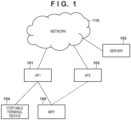
- Fig. 1 shows an example of the configuration of a system according to the embodiment.
- the system is a wireless communication system in which a plurality of communication apparatuses can communicate with each other wirelessly.
- the system includes a mobile terminal device 104 and an MFP 100 as communication apparatuses, APs 101 and 102 as access points, a server 103, and a network 110.
- the APs 101 and 102 are sometimes referred to as AP1 and AP2, respectively.
- the mobile terminal device 104 is a device having a wireless communication function by a wireless LAN or the like.
- the wireless LAN is sometimes referred to as WLAN.
- the mobile terminal device 104 can be a personal information terminal such as a Personal Digital Assistant (PDA), a mobile phone (smartphone), a digital camera, a personal computer, or the like.
- PDA Personal Digital Assistant
- mobile phone smart phone
- digital camera a personal computer, or the like.
- the MFP 100 is a printing apparatus having a printing function, and may further have a reading function (scanner), a FAX function, and a telephone function.
- the MFP 100 according to the embodiment has a communication function capable of wirelessly communicating with the mobile terminal device 104.
- a case where the MFP 100 is used will be exemplified in the embodiment, but some embodiments are not limited to this.
- a scanner, a projector, a mobile terminal, a smartphone, a notebook PC, a tablet terminal, a PDA, a digital camera, a music player, a television, or a smart speaker having a communication function may be used instead of the MFP 100.
- the MFP is an acronym for Multi Function Peripheral.
- the AP 101 is provided separately from (outside) the mobile terminal device 104 and the MFP 100, and functions as a WLAN base station apparatus.
- a communication apparatus having a WLAN communication function can communicate in a WLAN infrastructure mode via the AP 101.
- the access point is sometimes referred to as "AP”.
- the infrastructure mode is sometimes referred to as "wireless infrastructure mode”.
- the AP 101 performs wireless communication with a communication apparatus for which the AP 101 permits (authenticates) connection to the AP 101, and relays wireless communication between the communication apparatus and another communication apparatus.
- the AP 101 is connected to, for example, a wired communication network, and can relay communication between a communication apparatus connected to the wired communication network and another communication apparatus wirelessly connected to the AP 101.
- the AP 102 has a function equivalent to that of the AP 101, and the MFP 100 switches the connection from the AP 101 to the AP 102, as needed.
- the server 103 connects to the MFP 100 via the AP 101 and the network 110, and provides services to the MFP 100 in response to a request from the MFP 100.
- the network 110 may be the so-called Internet, or a closed office network or a mobile phone network.
- Fig. 2A shows an example of the outer appearance arrangement of the MFP 100.
- the MFP 100 includes, for example, a document table 201, a document cover 202, a print sheet insertion port 203, a print sheet discharge port 204, and an operation display unit 205.
- the document table 201 is a table on which a document to be read is placed.
- the document cover 202 is a cover that presses a document on the document table 201 and prevents outward leakage of light from a light source irradiating the document at the time of reading.
- the print sheet insertion port 203 is an insertion port capable of setting sheets of various sizes.
- the print sheet discharge port 204 is a discharge port from which a sheet upon printing is discharged.
- the operation display unit 205 includes keys, such as character input keys, cursor keys, an OK key, and a cancel key; an LED; and an LCD.
- the operation display unit 205 can accept activation of various functions of the MFP 100 and operation of various settings by the user.
- the operation display unit 205 may include a touch panel display.
- the MFP 100 has a WLAN wireless communication function, and includes a wireless communication antenna 206 for the wireless communication that need not always be visible from the outer appearance. Similar to the mobile terminal device 104, the MFP 100 can perform wireless communication in the 2.4- and 5-GHz frequency bands by the WLAN.
- Fig. 2B shows an example of the arrangement of the MFP 100.
- the MFP 100 includes a main board 211 that performs main control of the MFP 100, and a wireless unit 226 serving as one communication module that performs WLAN communication using at least one common antenna.
- the MFP 100 includes a modem 229 for performing, for example, wired communication.
- the main board 211 includes, for example, a central processing unit (CPU) 212, a ROM 213, a RAM 214, a nonvolatile memory 215, an image memory 216, a reading control unit 217, a data conversion unit 218, a reading unit 219, and an encoding/decoding processing unit 221.
- the main board 211 includes, for example, a printing unit 222, a sheet feeding unit 223, a printing control unit 224, and an operation display unit 220.
- the functional units in the main board 211 are connected to each other via a system bus 230 managed by the CPU 212.
- the main board 211 and the wireless unit 226 are connected via, for example, a dedicated bus 225, and the main board 211 and the modem 229 are connected via, for example, a bus 228.
- the CPU 212 is a system control unit including at least one processor, and controls the overall MFP 100.
- processing of the MFP 100 to be described below is implemented by executing a program stored in the ROM 213 by the CPU 212.
- the ROM 213 stores control programs to be executed by the CPU 212, an embedded OS program, and the like.
- the CPU 212 executes each control program stored in the ROM 213 under the management of the embedded OS similarly stored in the ROM 213, thereby performing software control such as scheduling or task switching.
- the RAM 214 is constituted by a SRAM or the like.
- the RAM 214 stores data such as program control variables, and data such as set values registered by the user and management data of the MFP 100.
- the RAM 214 can be used as a buffer for various works.
- the nonvolatile memory 215 is constituted by a memory such as a flash memory, and keeps storing data even after the MFP 100 is turned off.
- the image memory 216 is constituted by a memory such as a DRAM.
- the image memory 216 accumulates image data received via the wireless unit 226, image data processed by the encoding/decoding processing unit 221, and the like. Note that the memory configuration of the MFP 100 is not limited to the above-described one.
- the data conversion unit 218 performs analysis of data of various forms, conversion from image data into print data, and the like.
- the reading control unit 217 controls the reading unit 219 (for example, a contact image sensor (CIS)) to optically read a document on the document table 201.
- the reading control unit 217 converts an image obtained by optically reading the document into electrical image data (image signal), and outputs the image data.
- the reading control unit 217 may output image data after performing various image processes, such as binarization processing and halftone processing.
- the operation display unit 220 is the operation display unit 205 described with reference to Fig. 2A , and executes display on a display based on display control by the CPU 212, generation of a signal in response to acceptance of a user operation, and the like.
- the encoding/decoding processing unit 221 performs encoding processing, decoding processing, and scaling processing on image data (JPEG, PNG, and the like) handled by the MFP 100.
- the sheet feeding unit 223 holds sheets for printing.
- the sheet feeding unit 223 can supply a set sheet under the control of the printing control unit 224.
- the sheet feeding unit 223 may include a plurality of sheet feeding portions in order to hold sheets of a plurality of types, and can control which sheet feeding portion feeds a sheet under the control of the printing control unit 224.
- the printing control unit 224 performs various image processes, such as smoothing processing, print density correction processing, and color correction, on image data to be printed, and outputs the processed image data to the printing unit 222.
- the printing unit 222 is constituted to be able to execute printing processing by, for example, the inkjet printing method.
- the printing unit 222 discharges, from a printhead, ink supplied from an ink tank, and prints an image on a print medium such as a sheet.
- the printing unit 222 may be constituted to be able to execute another printing processing by the electrophotographic method or the like.
- the printing control unit 224 can periodically read out information of the printing unit 222, and update status information and the like that are stored in the RAM 214 and include the remaining amount of the ink tank, the state of the printhead, and the like.
- the wireless unit 226 is a unit capable of providing the WLAN communication function, and can provide, for example, a function similar to a combination of a WLAN unit 429 of the mobile terminal device 104. That is, the wireless unit 226 converts data into a packet in accordance with the WLAN standard, and transmits the packet to another device. In addition, the wireless unit 226 restores original data from a packet from another external device, and outputs the data to the CPU 212.
- the wireless unit 226 can communicate as a station compliant with the IEEE 802.11 standard series. In particular, the wireless unit 226 can communicate as a station compliant with IEEE 802.11a/b/g/n/ac/ax. The station is sometimes referred to as a STA.
- the wireless unit 226 can also communicate as a STA compliant with Wi-Fi Agile Multiband TM .
- the wireless unit 226 complies with IEEE 802.11ax, that is, Wi-Fi 6 TM , and the MFP 100 can operate even as a STA compliant with at least either of Orthogonal Frequency-Division Multiple Access (OFDMA) and Target Wake Time (TWT). Since the MFP 100 complies with TWT, the timing of data communication from a master device to a STA is adjusted.
- the wireless unit 226 (MFP 100) as the STA shifts the communication function to a sleep state when it need not wait for signal reception. This can suppress power consumption.
- the wireless unit 226 also complies with Wi-Fi 6E TM . That is, the wireless unit 226 can communicate even in the 6-GHz band (5.925 GHz to 7.125 GHz).
- a target band present in the 5-GHz band in which Dynamic Frequency Selection (DFS) is performed does not exist in the 6-GHz band.
- DFS Dynamic Frequency Selection
- the mobile terminal device 104 and the MFP 100 can perform WFD-based P2P (WLAN) communication, and the wireless unit 226 has a software access point (soft AP) function or a group owner function. That is, the wireless unit 226 can construct a P2P communication network and decide a channel used in P2P communication.
- WFD-based P2P WLAN
- the wireless unit 226 has a software access point (soft AP) function or a group owner function. That is, the wireless unit 226 can construct a P2P communication network and decide a channel used in P2P communication.
- Figs. 3A to 3C schematically show an example of a screen display on a display (touch panel display) included in the operation display unit 220 of the MFP 100.
- Fig. 3A shows an example of a home screen displayed during a state (idle state or Standby state) in which the MFP 100 is turned on and an operation such as printing or scanning is not performed.
- display items (menu items) corresponding to copy, scan, cloud are displayed.
- Cloud is a menu item regarding a cloud function using Internet communication.
- the MFP 100 can start executing a corresponding setting or function.
- the MFP 100 can seamlessly display a screen different from one in Fig. 3A by accepting a key operation or a touch panel operation on the home screen in Fig. 3A .
- Fig. 3B shows a display example of another portion of the home screen. This screen is shifted from the state in Fig. 3A by an operation (for example, a slide operation to left or right) of displaying another page of the home screen.
- display items menu items
- a function corresponding to the selected menu item that is, any of the printing function, photo function, and communication settings is executed.
- Fig. 3C shows a display example of the menu screen of the communication settings displayed when communication setting is selected on the screen in Fig. 3B .
- the menu screen of communication setting displays menu items (choices) "wireless LAN”, “wired LAN”, “wireless direct”, “Bluetooth”, and “common”.
- "Wireless LAN”, “wired LAN”, and “wireless direct” are menu items for performing LAN setting. From these items, settings such as setting of wired connection, valid/invalid setting of the wireless infrastructure mode, and valid/invalid setting of the P2P mode such as WFD or soft AP mode can be performed.
- the wireless infrastructure mode becomes valid.
- the P2P (WLAN) mode becomes valid.
- a common setting menu regarding various connection forms is also displayed. The user can perform, from this screen, setting of the frequency band and frequency channel of the wireless LAN, and the like.
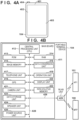
- Fig. 4A is a view showing an example of the outer appearance arrangement of the mobile terminal device 104.
- the mobile terminal device 104 includes, for example, a display unit 402, an operation unit 403, and a power key 404.
- the display unit 402 is, for example, a display including a Liquid Crystal Display (LCD) type display mechanism.
- the display unit 402 may display information using a Light Emitting Diode (LED) or the like.
- the mobile terminal device 104 may have a function of outputting information by sound, in addition to or instead of the display unit 402.
- the operation unit 403 includes physical keys, such as keys and buttons, a touch panel, and the like, for detecting a user operation.
- information display on the display unit 402 and acceptance of a user operation by the operation unit 403 are performed using a common touch panel display, and the display unit 402 and the operation unit 403 are implemented by one device.
- button icons and a software keyboard are displayed using the display function of the display unit 402, and touches of these portions by the user are detected by the operation acceptance function of the operation unit 403.
- the power key 404 is a physical key for accepting a user operation of turning on or off the mobile terminal device 104.
- the mobile terminal device 104 includes a WLAN unit 401 that provides the WLAN communication function though it need not always be visible from the outer appearance.
- the WLAN unit 401 is constituted to be able to execute data (packet) communication in a WLAN system compliant with, for example, the IEEE 802.11 standard series (for example, IEEE 802.11a/b/g/n/ac/ax).
- the WLAN unit 401 can communicate as an AP compliant with Wi-Fi Agile Multiband TM .
- the WLAN unit 401 is not limited to this, and may be able to execute communication of a WLAN system compliant with another standard. Note that this example assumes that the WLAN unit 401 can communicate in both the 2.4- and 5-GHz frequency bands.
- the WLAN unit 401 can execute WFD-based communication, communication in the soft AP mode, communication in the wireless infrastructure mode, and the like. Operations in these modes will be described later.
- Fig. 4B shows an example of the arrangement of the mobile terminal device 104.
- the mobile terminal device 104 includes a main board 411 that performs main control of the mobile terminal device 104, and a WLAN unit 429 that performs WLAN communication.
- the main board 411 includes, for example, a CPU 412, a ROM 413, a RAM 414, an image memory 415, a data conversion unit 416, a telephone unit 417, a GPS 419, a camera unit 421, a nonvolatile memory 422, a data accumulation unit 423, a loudspeaker unit 424, and a power supply unit 425.
- the CPU is an acronym for Central Processing Unit
- the ROM is an acronym for Read Only Memory
- the RAM is an acronym for Random Access Memory
- the GPS is an acronym for Global Positioning System.
- the mobile terminal device 104 also includes a display unit 420 and an operation unit 418.
- the functional units in the main board 411 are connected to each other via a system bus 628 managed by the CPU 412.
- the main board 411 and the WLAN unit 429 are connected via, for example, a dedicated bus 426.
- the CPU 412 is a system control unit including at least one processor, and controls the overall mobile terminal device 104.
- processing of the mobile terminal device 104 to be described below is implemented by executing a program stored in the ROM 413 by the CPU 412.
- the ROM 413 stores control programs to be executed by the CPU 412, an embedded operating system (OS) program, and the like.
- the CPU 412 executes each control program stored in the ROM 413 under the management of the embedded OS similarly stored in the ROM 413, thereby performing software control such as scheduling or task switching.
- the RAM 414 is constituted by a Static RAM (SRAM) or the like.
- the RAM 414 stores data such as program control variables, and data such as set values registered by the user and management data of the mobile terminal device 104.
- the RAM 414 can be used as a buffer for various works.
- the image memory 415 is constituted by a memory, such as a Dynamic RAM (DRAM).
- the image memory 415 temporarily stores image data received via the WLAN unit 429, and image data read out from the data accumulation unit 423, in order to process the data by the CPU 412.
- the nonvolatile memory 422 is constituted by a memory such as a flash memory, and keeps storing data even after the mobile terminal device 104 is turned off.
- the memory configuration of the mobile terminal device 104 is not limited to the above-described one.
- the image memory 415 and the RAM 414 may be shared, or the data accumulation unit 423 may be used to perform backup of data or the like.
- the DRAM is exemplified as the image memory 415 in the embodiment, but another storage medium such as a hard disk or a nonvolatile memory, may be used.
- the data conversion unit 416 performs analysis of data of various forms, and data conversion such as color conversion or image conversion.
- the telephone unit 417 controls a telephone line, and processes audio data input/output via the loudspeaker unit 424, thereby implementing telephone communication.
- the GPS 419 receives radio waves sent from a satellite and obtains position information, such as the current latitude and longitude, of the mobile terminal device 104.
- the camera unit 421 has a function of electronically recording an image input via a lens and encoding it. Image data obtained by image capturing by the camera unit 421 is saved in the data accumulation unit 423.
- the loudspeaker unit 424 performs control for implementing a function of inputting or outputting voice for the telephone function, and a function such as alarm notification.
- the power supply unit 425 is, for example, a portable battery and performs power supply control into the device.
- the power supply state includes, for example, a battery exhaustion state in which the battery runs out, a power off state in which the power key 404 is not pressed, an active state in which the mobile terminal device 104 is normally activated, and a power saving state in which the mobile terminal device 104 is activated but power is saved.
- the display unit 420 is the display unit 402 described with reference to Fig. 4A , and displays various input operations, the operation state of the MFP 100, the status state, and the like based on the control of the CPU 412.
- the operation unit 418 is the operation unit 403 described with reference to Fig. 4A , and executes control of, upon accepting a user operation, generating an electrical signal corresponding to the operation and outputting it to the CPU 412.
- the mobile terminal device 104 performs wireless communication with the WLAN unit 429, and performs data communication with another device such as the MFP 100.
- the WLAN unit 429 converts data into a packet, and transmits the packet to another device.
- the WLAN unit 429 restores original data from a packet from another external device, and outputs the data to the CPU 412.
- the WLAN unit 429 is a unit for implementing communication compliant with the WLAN standard.
- the WLAN unit 429 can operate concurrently in at least two communication modes including the wireless infrastructure mode and the P2P (WLAN) mode. Note that frequency bands used in these communication modes can be restricted by the hardware functions and performance.
- Fig. 5 is a block diagram showing the arrangement of the AP 101 having a wireless LAN access point function.
- the AP 101 includes a main board 510 that controls the AP 101, a wireless LAN unit 516, a wired LAN unit 518, and an operation button 520.
- a CPU 511 in the form of a microprocessor arranged on the main board 510 operates in accordance with a control program stored in a program memory 513 in the form of a ROM connected via an internal bus 512, and the contents of a data memory 514 in the form of a RAM.
- the CPU 511 performs wireless LAN communication with another communication terminal apparatus by controlling the wireless LAN unit 516 via a wireless LAN communication control unit 515.
- the CPU 511 performs wired LAN communication with another communication terminal apparatus by controlling the wired LAN unit 518 via a wired LAN communication control unit 517.
- the CPU 511 can accept an operation from the user via the operation button 520 by controlling an operation unit control circuit 519.
- the CPU 511 includes at least one processor.
- the AP 101 also includes an interference wave detection unit 521 and a channel change unit 522.
- the interference wave detection unit 521 performs interference wave detection processing when wireless communication is executed in a band in which Dynamic Frequency Selection (DFS) is executed.
- DFS Dynamic Frequency Selection
- the channel change unit 522 performs change processing of a channel used in a case where the channel has to be immediately changed to a free channel.
- the AP 102 also has an arrangement similar to that of the AP 101.
- P2P (WLAN) communication can be implemented using a plurality of methods.
- a communication apparatus supports a plurality of modes for P2P (WLAN) communication, and can execute P2P communication (WLAN) by selectively using any one of these modes.
- a communication apparatus capable of executing P2P communication can be constituted to support at least either of these modes. However, even a communication apparatus capable of executing P2P communication need not support all these modes, and may be constituted to support only some of the modes.
- a communication apparatus for example, the mobile terminal device 104) having a WFD communication function accepts a user operation via the operation unit, and invokes an application for (in some cases, dedicated to) implementing the communication function.
- the communication apparatus can display a user interface (UI) screen provided by the application to prompt a user operation, and execute WFD communication based on a user operation accepted in response.
- UI user interface
- a communication apparatus for example, the mobile terminal device 104 operates as the role of a client that requests various services.
- the other communication apparatus (for example, the MFP 100) operates as a soft AP capable of executing a WLAN AP function by software setting. Note that commands and parameters transmitted/received when establishing wireless connection between the client and the soft AP suffice to be those defined by the Wi-Fi ® standard, so a description thereof will be omitted here.
- the MFP 100 operating in the soft AP mode decides, as a master station, a frequency band and a frequency channel. The MFP 100 can select which of 5 GHz and 2.4 GHz is used as a frequency band, and which frequency channel is used in the frequency band.
- the MFP 100 may be statically activated as a master station in the WFD mode (Autonomous Group Owner). In this case, GO Negotiation processing for deciding a role becomes unnecessary. Also, in this case, the MFP 100 decides, as a master station, a frequency band and a frequency channel. The MFP 100 can select which of 5 GHz and 2.4 GHz is used as a frequency band, and which frequency channel is used in the frequency band.
- communication apparatuses for example, the mobile terminal device 104 and the MFP 100 that communicate with each other are connected to an external AP (for example, the AP 101) that controls the overall network, and communication between the communication apparatuses is performed via the AP.
- communication between the communication apparatuses is performed via a network constructed by an external AP.
- the mobile terminal device 104 and the MFP 100 respectively discover the AP 101, transmit connection requests to the AP 101, connect to the AP 101, and enable communication in the wireless infrastructure mode between these communication apparatuses via the AP 101.
- a plurality of communication apparatuses may connect to separate APs. In this case, communication between the communication apparatuses becomes possible by transferring data between the APs.
- the AP 101 decides a frequency band and a frequency channel.
- the AP 101 can select which of 5 GHz, 2.4 GHz, and 6 GHz is used as a frequency band, and which frequency channel is used in the frequency band.
- Wi-Fi Agile Multiband is a function of enabling selection of an optimal environment in accordance with a situation in which a Wi-Fi network changes. More specifically, STAs such as the mobile terminal device 104 and the MFP 100, and APs such as the AP 101 exchange information about a network environment using the IEEE 802.11 series communication standard. By this information exchange, when a network is congested, the AP can induce (change the connection destination) the STA to another AP, frequency band, channel, or in some cases, another cellular service.
- Fig. 6 is a sequence chart when the MFP 100 changes the connection destination AP from the AP 101 to the AP 102 in accordance with a connection destination change request from the AP 101. Processing executed by each apparatus in this sequence is implemented by reading out various programs stored in the memory of each apparatus such as a ROM to a RAM and executing them by the CPU of each apparatus.
- the MFP 100 establishes connection with the AP 101 in the wireless infrastructure mode.
- the AP 101 obtains information of whether the MFP 100 complies with IEEE 802.11v. If the AP 101 obtains information representing that the MFP 100 complies with IEEE 802.1 1v, the following processing is performed.
- the AP 101 transmits, to the MFP 100, an inquiry (measurement requests) about the radio field intensities of APs around the MFP 100.
- This inquiry can be transmitted including a beacon frame request or a beacon report request. That is, this request can use a mechanism defined by the IEEE 802.11k standard.
- the MFP 100 receives frames transmitted from the surrounding APs in accordance with the request received in S601, and measures radio field intensities. Hence, the radio field intensities of the respective APs including the APs 101 and 102 are measured.
- the MFP 100 transmits, as a response to the request received in S601, a list of the radio field intensities of the APs around the MFP 100 that are measured in S602.
- the radio field intensity as a response may be information saved in the RAM 214 or nonvolatile memory 215 of the MFP 100, in addition to or instead of the information measured in S602. This response is transmitted including a Beacon Report or measurement reports.
- the AP 101 determines, based on the congestion status within a network grasped by the AP 101 and the radio field intensities received from the MFP 100 in S603, whether the connection destination of the MFP 100 needs to be switched. Factors with which the AP 101 determines that the connection needs to be switched are, for example, many connected STAs, a large communication amount, less congestion of another AP, the presence/absence of an interference radio wave, and the stop of the AP function. If it is determined that the connection destination of the MFP 100 needs to be switched, and the SSID, channel, and frequency band of another AP designated as the switching destination of the MFP 100 are decided, the process advances to S605.
- the AP 101 transmits an AP change request (connection destination switching request) to the MFP 100.
- the connection destination change request includes information of the SSID, channel, and frequency band of another AP designated as the switching destination of the MFP 100, which are decided in S604. Note that a plurality of SSIDs may be designated.
- the connection destination change request is transmitted as, for example, a BTM Request. That is, a BSS Transition Management (BTM) Request frame defined by the IEEE 802.11v standard is transmitted.
- BTM BSS Transition Management
- the MFP 100 if the MFP 100 complies with the connection destination change request received in S605, it transmits, to the AP 101, a response representing approval of switching. If the MFP 100 does not comply with the connection destination change request, it may transmit rejection of switching as a response. The response is transmitted as a BTM Response. In the example of Fig. 6 , assume that a response representing approval of switching is transmitted.
- the AP 101 and the MFP 100 cancel connection in the wireless infrastructure mode.
- the MFP 100 transmits a connection request to the AP 102 so as to connect to the AP 102 designated by the connection destination change request received in S605.
- connection between the MFP 100 and the AP 102 in the wireless infrastructure mode is established.
- the MFP 100 serving as a STA can change the connection destination from the AP 101 to the AP 102 based on the connection destination change request from the originally connected AP 101.
- the APs 101 and 102 may be APs installed in different places. That is, by the processing of Fig. 6 , the MFP 100 can switch to another AP installed at a position different from that of the originally connected AP.
- APs sometimes correspond to different frequency bands out of a plurality of frequency bands (two or three of 2.4-, 5-, and 6-GHz bands) provided by an identical device. That is, by the processing of Fig. 6 , the MFP 100 can switch to another frequency band provided by an apparatus identical to the originally connected AP. For example, the connection destination can be changed to a 6-GHz band AP based on the connection destination change request.
- a measurement request and connection destination change request from an AP are transmitted by a mechanism compliant with Wi-Fi Agile Multiband, and a STA responds to them, but some embodiments are not limited to this.
- the embodiment is applicable to a case where a STA responds to a measurement request and connection destination change request transmitted from an AP using a mechanism different from the above-described example, and changes a connection destination AP (switching, deletion, or addition of an AP serving as a connection destination).
- a STA takes a state in which no problem occurs even upon switching an AP, and a state in which a problem occurs upon switching an AP or disconnection from a connected AP. If the STA receives an AP change request from the AP and switches the connection destination AP in accordance with the request in the state in which a problem occurs, a problem occurs in the STA. If the STA does not meet the AP change request in order to avoid generation of a problem, it may be disconnected from the connected AP. Even at this time, a problem occurs in the STA.
- the STA when the STA is prompted to switch the connection destination from a wireless slave terminal by a BTM Request from the AP while executing printing (to be sometimes referred to as a print job hereinafter), if it interrupts reception of print data, this may influence a printed material, resulting in uneven printing or the like.
- a BTM Request from the AP while executing printing
- generation of uneven printing or the like caused by interrupting reception of print data by the STA can be prevented.
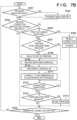
- Fig. 7B is a flowchart of processing corresponding to a connection destination AP switching request while an MFP 100 executes printing. Processing executed by each apparatus in this sequence is implemented by reading out, to a RAM 214, various programs stored in a memory such as a computer-readable ROM 213 in the MFP 100, and executing them by a CPU 212 of the MFP 100.
- the MFP 100 establishes connection with an AP 101 in the wireless infrastructure mode.
- the AP 101 obtains information of whether the MFP 100 complies with IEEE 802.11v. If the AP 101 obtains information representing that the MFP 100 complies with IEEE 802.11v, the following processing is performed.
- step S701 the CPU 212 determines whether an inquiry (measurement requests) about the radio field intensities of APs around the MFP 100 has been received from the AP 101.
- This inquiry can include a beacon frame request or a beacon report request and in this embodiment, includes either request.
- the radio field intensity inquiry, reception of which is checked in step S701 is equivalent to one transmitted from the AP 101 in S601 of Fig. 6 . If the CPU 212 determines in step S701 that the inquiry has been received, it advances to step S702. If the CPU 212 determines in step S701 that the inquiry has not been received, it advances to step S703.
- step S702 as described in S602 and S603 of Fig. 6 , the CPU 212 measures the radio field intensities of APs around the MFP 100, and transmits a list of the radio field intensities of the APs as a Beacon report to the AP 101.
- step S703 the CPU 212 determines whether a connection destination AP switching request transmitted from the AP 101 in S605 of Fig. 6 has been received. If the CPU 212 determines that the connection destination AP switching request has been received, it advances to step S705. If the CPU 212 determines that the connection destination AP switching request has not been received, it advances to step S704. In step S704, the CPU 212 determines whether connection with the connected AP 101 ends. If the CPU 212 determines that connection with the connected AP 101 does not end, it returns to step S701. If the CPU 212 determines that connection with the connected AP 101 ends, it ends the processing in Fig. 7B .
- step S705 the CPU 212 determines whether the MFP 100 is receiving print data. If the CPU 212 determines that the MFP 100 is receiving print data, it advances to step S706. If the CPU 212 determines that the MFP 100 is not receiving print data, it advances to step S707.
- step S706 the CPU 212 sends back rejection of switching with respect to the switching request from the AP 101, and advances to step S704. Note that in step S706, the CPU 212 may not send back a response to the change request from the AP 101.
- Fig. 7A shows the sequence of a series of printing processes with the lapse of time in the MFP 100 in which the MFP 100 receives a printing start request, receives print data, starts printing, executes printing by operating a printhead, and ends the printing. Reception of a printing start request is equivalent to, for example, the execution start timing of a print job in the MFP 100.
- a period 722 in Fig. 7A is a period in which the MFP 100 receives print data, starts printing, and executes printing by operating the printhead (outputs a printed material). If the MFP 100 is in the state of the period 722, it is determined in step S705 that print data is being received.
- the MFP 100 During reception of print data, part of print data of an image to be printed has already been received from a mobile terminal device 104 serving as a partner device, and reception of the remaining part of the print data is not completed.
- the MFP 100 does not store all print data to be printed on one sheet. Instead, upon receiving part of the print data, the MFP 100 prints the received print data (for example, receives print data of one line and prints it), and upon receiving subsequent data, prints this data. The MFP 100 repeats this processing and performs printing.
- step S707 the CPU 212 determines whether the MFP 100 has received a printing start request. More specifically, the CPU 212 may store, in a predetermined storage area of a nonvolatile memory, a flag representing that the printing start request has been received, and make the determination in step S707 based on the presence/absence of the flag. If the CPU 212 determines that the MFP 100 has received a printing start request, it advances to step S708. If the CPU 212 determines that the MFP 100 has not received a printing start request, it advances to step S709.
- step S707 In the state of a period 721 in Fig. 7A in which the MFP 100 has received setting information and the like in accordance with execution of a print job, but has not started printing triggered by reception of print data, it is determined in step S707 that the printing start request has been received.
- step S708 the CPU 212 delays (suspends) reception of print data. More specifically, the CPU 212 temporarily stops processing immediately before reception of print data, and stores, in a predetermined storage area of the nonvolatile memory, a flag representing that the reception of print data has been delayed, and data received in the print job. After step S708, the CPU 212 advances to step S709.
- step S709 the CPU 212 sends back approval of switching of the connection destination AP to the AP 101, and advances to step S710.
- Step S709 is equivalent to S606 in Fig. 6 .
- step S710 the CPU 212 cancels connection with the AP 101 in the wireless infrastructure mode, and advances to step S711.
- Step S710 is equivalent to S607 in Fig. 6 .
- step S711 the CPU 212 starts connection to a recommended AP 102 in accordance with the switching request from the connection destination AP, and advances to step S712.
- step S712 the CPU 212 determines whether the connection with the AP 102 is completed.
- the CPU 212 repeats step S712 until it determines that the connection with the AP 102 is completed. If the CPU 212 determines that the connection with the AP 102 is completed, it advances to step S713.
- step S713 the CPU 212 determines whether the flag representing that the reception of print data has been delayed is stored in the predetermined storage area of the nonvolatile memory. If the CPU 212 determines that the flag representing that the reception of print data has been delayed is stored, it advances to step S714. If the CPU 212 determines that the flag representing that the reception of print data has been delayed is not stored, it advances to step S704.
- step S714 the CPU 212 starts the delayed (suspended) reception of print data.
- the MFP 100 changes to the state of the period 722 in Fig. 7A .
- reception of print data starts. Since the communication state is more stable than in a case where the MFP 100 connects to the AP 101 before switching, printing in the more stable communication state can be implemented.
- the CPU 212 advances to step S704.
- the CPU 212 may erase the flag representing that the reception of print data has been delayed, which is stored in the predetermined storage area of the nonvolatile memory.
- a flag representing that the printing start request has been received may be stored in a predetermined storage area of the nonvolatile memory.
- the flag representing that the printing start request has been received which is stored in the predetermined storage area of the nonvolatile memory, may be erased.
- step S7A in which the reception of print data is completed, the process advances from NO in step S705 to NO in step S707, and approval of switching of the connection is sent back to the AP 101 in step S709.
- NO is determined in step S713.
- the period 723 includes a state in which the reception of print data is completed and the printhead is operating (a printed material is being output).
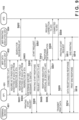
- Fig. 8 is a sequence chart showing an example of a sequence when the MFP 100 rejects switching from the AP 101 to the AP 102 with respect to a connection destination AP switching request from the AP 101 while the MFP 100 is executing printing according to the embodiment.
- a terminal device 801 is equivalent to the terminal device 104 in Fig. 1 .
- the user operates an application installed in the terminal device 801 to transmit a print command or print data to the MFP 100 via a network to which the AP 101 belongs.
- a data control unit 802 is a print data control unit in the MFP 100, receives a print command or print data, and controls execution of a print job.
- a printing execution unit 804 is a printing execution unit in the MFP 100, and executes, in accordance with an instruction from the data control unit 802, printing including control of an engine necessary to convey a print medium and including control of a printhead necessary to discharge ink.
- the printing execution unit 804 includes a sheet feeding unit 223 and a printing unit 222.
- S601, S602, S603, S604, and S605 are the same as those in the description of Fig. 6 , and a description thereof will not be repeated. That is, in these steps, the MFP 100 switches the connection destination AP from the AP 101 to the AP 102 in accordance with a connection destination AP switching request from the AP 101 based on the premise of the Wi-Fi Agile Multiband specifications.
- S805 is performed.
- the data control unit 802 receives a printing start request from the terminal device 801. This corresponds to reception of a printing start request in Fig. 7A .
- the data control unit 802 transmits a printing start request to the printing execution unit 804.
- the data control unit 802 sends back a printing start response to the terminal device 801.
- the data control unit 802 starts reception of print data from the terminal device 801.
- the data control unit 802 transmits a printing start request to the printing execution unit 804.
- the MFP 100 receives a request of switching from the AP 101 to the AP 102 in S605.
- the MFP 100 makes a response determination with respect to the received switching request.
- the data control unit 802 determines which of approval and rejection is sent back with respect to the switching request. Since print data is being received, the data control unit 802 determines to send back a rejection in step S706 according to the flowchart of Fig. 7B .
- the MFP 100 sends back a rejection of switching as a response to the AP 101.
- the data control unit 802 Upon completion of the reception of print data in the MFP 100, in S814, the data control unit 802 sends back a print data reception completion response to the terminal device 801. Then, in S815, the printing execution unit 804 sends back the completion of printing to the data control unit 802 at the timing of the completion of the printing operation. In S816, the data control unit 802 sends back a printing completion response to the terminal device 801, and ends the print job.
- the MFP 100 rejects the switching request from the AP 101 while receiving print data. This can prevent generation of uneven printing or the like caused by interruption of print data during printing owing to switching of the connection.
- Fig. 9 is a sequence chart showing an example of a sequence when the MFP 100 switches the connection destination AP from the AP 101 to the AP 102 in accordance with a connection destination AP switching request from the AP 101 while the MFP 100 is executing printing according to the embodiment.
- S601, S602, S603, S604, S605, S606, S607, S608, and S609 are the same as those in the description of Fig. 6 , and a description thereof will not be repeated. That is, in these steps, the MFP 100 switches the connection destination AP from the AP 101 to the AP 102 in accordance with a connection destination AP switching request from the AP 101 based on the premise of the Wi-Fi Agile Multiband specifications.
- S805, S807, S808, S809, S811, S814, S815, and S816 are the same as those in the description of Fig. 8 , and a description thereof will not be repeated.
- the terminal device 801 transmits a printing start request to the data control unit 802.
- the data control unit 802 transmits a printing start request to the printing execution unit 804.
- the data control unit 802 sends back a printing start response to the terminal device 801.
- S605 is performed.
- the AP 101 transmits, to the MFP 100, a request of switching to the AP 102.
- the MFP 100 makes response determination with respect to the received switching request in S912.
- the data control unit 802 determines which of approval and rejection is sent back with respect to the switching request. Since print data is not being received, the data control unit 802 determines to send back approval in step S709 according to the flowchart of Fig. 7B .
- the MFP 100 transmits, to the AP 101, a response representing approval of switching in order to meet the connection destination AP switching request received in S605 (first processing). The response is transmitted as a BTM Response.
- connection between the AP 101 and the MFP 100 in the wireless infrastructure mode is canceled.
- the data control unit 802 transmits a connection request to the AP 102 to connect to the AP 102 designated by the connection destination AP switching request received in S605.
- S609 connection between the MFP 100 and the AP 102 in the wireless infrastructure mode is established.
- the data control unit 802 may request the AP 102 to allocate, from the AP 102 to the MFP 100, an IP address currently allocated to the MFP 100. That is, the data control unit 802 requests the AP 102 to allocate, to the MFP 100 by the AP 102 using a DHCP function, the IP address allocated to the MFP 100 by the AP 101 (second processing). Before and after the MFP 100 switches the connection destination AP, the terminal device 801 can access the MFP 100 using the same IP address.
- the data control unit 802 may request, of the terminal device 801 via the AP 101, specifying processing of the IP address of the MFP 100 after changing the connection destination, based on at least either of the domain name and model-specific information (model name, model number, manufacturing number, and the like) of the MFP 100 (third processing).
- the terminal device 801 can access the MFP 100. That is, when changing the connection destination based on the change request, the MFP 100 controls to execute at least one of the following three processes (a plurality of processes may be executed):
- the data control unit 802 receives print data from the terminal device 801.
- the print data is received via the AP 102 with which the connection is established.
- the data control unit 802 transmits a printing start request to the printing execution unit 804.
- the data control unit 802 sends back a data reception completion response to the AP 101 at the timing of the end of reception of print data.
- the printing execution unit 804 sends back the completion of printing to the data control unit 802 at the timing of the completion of the printing operation.
- the data control unit 802 sends back a printing completion response to the terminal device 801, and ends the print job.
- the MFP 100 executes switching of the connection before it starts receiving print data. This can reduce the possibility at which print data being received is interrupted owing to contention with connection switching processing. As a result, generation of uneven printing or the like caused by interruption of print data during printing can be prevented.
- Fig. 10 is a sequence chart showing an example of a sequence when the MFP 100 switches the connection destination AP from the AP 101 to the AP 102 in accordance with a connection destination switching request from the AP 101 while the MFP 100 is executing printing according to the embodiment.
- a difference from Fig. 9 is that a switching request from the AP 101 is transmitted in S605 before receiving print data in Fig. 9 , whereas a switching request is transmitted in S605 upon completion of receiving print data in Fig. 10 .
- S601, S602, S603, S604, S605, S606, S607, S608, and S609 are the same as those in the description of Fig. 6 , and a description thereof will not be repeated. That is, in these steps, the MFP 100 switches the connection destination AP from the AP 101 to the AP 102 in accordance with a connection destination switching request from the AP 101 based on the premise of the Wi-Fi Agile Multiband specifications.
- S805, S807, S808, S809, S811, S814, S815, and S816 are the same as those in the description of Fig. 8 , and a description thereof will not be repeated.
- the terminal device 801 transmits a printing start request to the data control unit 802.
- the data control unit 802 transmits a printing start request to the printing execution unit 804.
- the data control unit 802 sends back a printing start response to the terminal device 801.
- the data control unit 802 receives print data from the terminal device 801.
- the data control unit 802 transmits a printing start request to the printing execution unit 804.
- the data control unit 802 sends back a data reception completion response to the terminal device 801.
- the printing execution unit 804 sends back the completion of printing to the data control unit 802 at the timing of the completion of the printing operation.
- the data control unit 802 sends back a printing completion response to the terminal device 801, and ends the print job.
- the AP 101 transmits, to the MFP 100 in S605, a request of switching to the AP 102.
- the data control unit 802 makes response determination with respect to the received switching request in S1012.
- the data control unit 802 determines which of approval and rejection is sent back with respect to the switching request. Since print data is not being received, the data control unit 802 determines to send back approval in step S709 according to the flowchart of Fig. 7B .
- the data control unit 802 transmits, to the AP 101, a response representing approval of switching in order to meet the connection destination AP switching request received in S605. The response is transmitted as a BTM Response.
- connection between the AP 101 and the MFP 100 in the wireless infrastructure mode is canceled.
- the data control unit 802 transmits a connection request to the AP 102 to connect to the AP 102 designated by the connection destination AP switching request received in S605. Accordingly, in S609, connection between the MFP 100 and the AP 102 in the wireless infrastructure mode is established.
- the MFP 100 executes switching of the connection upon completion of reception of print data. This can reduce the possibility at which print data being received is interrupted owing to contention with connection switching processing. Therefore, generation of uneven printing or the like caused by interruption of print data during printing can be prevented.
- the second embodiment will be explained in regard to a difference from the first embodiment.
- determination of a response to a connection destination AP switching request using a rejection list and a safe list is performed in addition to determination of whether print data is being received in the first embodiment.
- the rejection list holds, as a list, conditions to reject switching of the connection destination AP and not to perform switching.
- the rejection list in the embodiment holds, as a list, conditions such as the operation state of a printer, and whether a specific print job is being executed.
- the safe list holds, as a list, conditions to always perform switching of the connection destination AP.
- the safe list in the embodiment holds, as a list, conditions such as the operation state of a printer, the type of received job, the type of medium used for printing, and the type of ink used for printing.
- processing of connection to an AP and an operation other than the connection processing may contend with each other immediately after activation of an MFP 100.
- Examples of a case where this condition is satisfied are a case where while the MFP 100 is activated, a connection destination AP switching request is transmitted from an AP 101 without waiting for the time until the MFP 100 becomes idle, and a case where the occupancy of a CPU 212 increases to a certain degree or higher owing to another processing regarding activation.
- Another example is a case where the use ratios of a RAM 214, a nonvolatile memory 215, and the like increase to a certain degree or higher owing to another processing regarding activation.
- the MFP 100 rejects switching of the connection destination AP in order to implement secure switching in the system.
- the MFP 100 stops and cannot be connected, so switching of the connection destination AP cannot be executed.
- the MFP 100 rejects switching of the connection destination AP.
- the MFP 100 collates the ID and type of a print job, and the ID and type coincide with a predetermined ID and type.
- the MFP 100 When this condition is satisfied, the MFP 100 always rejects switching of the connection destination AP.
- this condition can be defined to reject switching of the connection destination AP in response to, as a trigger, a request to execute a specific print job, for example, reception of a printing start request.
- a condition other than the above-described ones may be defined in the rejection list. For example, a condition that improvement of the communication speed after switching of the connection destination AP cannot be expected may be defined.
- the MFP 100 approves switching of the connection destination AP even in a state in which the MFP 100 receives part of print data and does not complete reception of the remaining print data. Reception of print data is interrupted owing to generation of an error. Hence, in switching of the connection destination AP, interruption of print data does not occur in the first place, and switching of the connection destination AP can be executed.
- the MFP 100 approves switching of the connection destination AP even in a state in which the MFP 100 receives part of print data and does not complete reception of the remaining print data. If the printing cancel operation has been executed, reception of the remaining data itself is unnecessary. In switching of the connection destination AP, interruption of print data does not occur in the first place, and switching of the connection destination AP can be executed.
- a print medium is of a predetermined type.
- the MFP 100 approves switching of the connection destination AP even in a state in which the MFP 100 receives part of print data and does not complete reception of the remaining print data.
- reception of print data is slightly interrupted, no problem occurs in the image formation quality depending on the type of print medium. For example, this corresponds to a case where the image quality is important for glossy paper and photo paper, whereas interruption of print data is permitted to a certain degree for plain paper/postcard.
- ink is of a predetermined type.
- the MFP 100 approves switching of the connection destination AP.
- the MFP 100 approves switching of the connection destination AP.
- no problem occurs in the image formation quality depending on the type of print material such as ink. For example, this corresponds to a case where interruption of print data is permitted to a certain degree for quick-drying ink.
- the MFP 100 approves switching of the connection destination AP. For example, this corresponds to a case where the monochrome image formation quality need not be so high as the color one.
- a condition that monochrome printing is executed is added to the safe list. Also, for example, a condition that printing is text printing and a condition that the printing mode is not a high-quality printing mode are added to the safe list.
- a condition other than the above-described ones may be defined in the safe list.
- a condition that improvement of the communication speed after switching of the connection destination AP is expected may be defined.
- step S705 the CPU 212 determines whether the state of the MFP 100 satisfies the condition defined in the rejection list. If the CPU 212 determines that the state of the MFP 100 does not satisfy the condition of the rejection list, it advances to step S707. If the CPU 212 determines that the state of the MFP 100 satisfies the condition of the rejection list, it determines whether the state of the MFP 100 satisfies the condition defined in the safe list. If the CPU 212 determines that the state of the MFP 100 satisfies the condition of the safe list, it advances to step S707. If the CPU 212 determines that the state of the MFP 100 does not satisfy the condition of the safe list, it advances to step S706.
- a reply of switching of the connection may be executed by referring to the value of a flag dynamically set in the MFP 100.
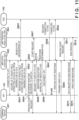
- Fig. 11 is a sequence chart showing an example of a sequence when an MFP 100 switches the connection destination AP from an AP 101 to an AP 102 in accordance with a connection destination AP switching request from the AP 101 while the MFP 100 is executing printing according to the embodiment.
- S601, S602, S603, S604, S605, S606, S607, S608, and S609 are the same as those in the description of Fig. 6 , and a description thereof will not be repeated. That is, in these steps, the MFP 100 switches the connection destination AP from the AP 101 to the AP 102 in accordance with a connection destination switching request from the AP 101 based on the premise of the Wi-Fi Agile Multiband specifications.
- S805, S807, S808, S809, S811, S814, S815, and S816 are the same as those in the description of Fig. 8 , and a description thereof will not be repeated.
- a terminal device 801 transmits a printing start request to a data control unit 802.
- the data control unit 802 transmits a printing start request to a printing execution unit 804.
- the AP 101 transmits, to the MFP 100, a request of switching to the AP 102.
- the data control unit 802 performs response determination with respect to the received switching request.
- the data control unit 802 determines which of approval and rejection is sent back with respect to the switching request. Since no print data is being received, the data control unit 802 determines to send back approval in step S709 according to the flowchart of Fig. 7B .
- the MFP 100 receives the switching request in S605 and the printing start request in S805 at almost the same timing. Therefore, the MFP 100 controls to shift these timings from each other so as not to interrupt reception of print data and not to simultaneously execute data reception and connection switching.
- the data control unit 802 determines to transmit a response to the printing start request with a delay after switching the connection destination AP. More specifically, after receiving the printing start request in S805, a printing start response is not sent back until the MFP 100 connects to the AP 102 in S609.
- the data control unit 802 transmits, to the AP 101, a response representing approval of switching in order to meet the connection destination AP switching request received in S605.
- the response is transmitted as a BTM Response.
- connection between the AP 101 and the MFP 100 in the wireless infrastructure mode is canceled.
- the data control unit 802 transmits a connection request to the AP 102 to connect to the AP 102 designated by the connection destination AP switching request received in S605. Accordingly, in S609, connection between the MFP 100 and the AP 102 in the wireless infrastructure mode is established.
- the data control unit 802 After the connection between the MFP 100 and the AP 102 in the wireless infrastructure mode is established, the data control unit 802 sends back a printing start response to the terminal device 801 in S1108.
- the data control unit 802 receives print data from the terminal device 801.
- the data control unit 802 transmits a printing start request to the printing execution unit 804.
- the data control unit 802 sends back a data reception completion response to the terminal device 801.
- the printing execution unit 804 sends back the completion of printing to the data control unit 802 at the timing of the completion of the printing operation.
- the data control unit 802 sends back a printing completion response to the terminal device 801, and ends the print job.
- the MFP 100 executes switching of the connection destination AP before reception of print data, so print data being received is not interrupted. This can prevent generation of uneven printing or the like caused by interruption of print data during printing owing to switching of the connection destination AP.
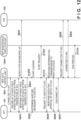
- Fig. 12 is a sequence chart showing an example of a sequence when the MFP 100 switches the connection destination AP in accordance with a connection destination AP switching request while executing pattern printing in a maintenance function.
- the pattern printing is printing of performing test printing of a fixed pattern and checking a printhead and the ink discharge quality.
- a maintenance execution unit 1204 is an execution unit for the maintenance function in the MFP 100, and executes cleaning of the printhead or the like or executes printing of pattern data saved in the MFP 100.
- the maintenance execution unit 1204 executes pattern printing. Pattern data of pattern printing is not obtained by data communication from an external device, but is stored in a storage medium in the MFP 100, such as a hard disk or a nonvolatile memory.
- S601, S602, S603, S604, S605, S606, S607, S608, and S609 are the same as those in the description of Fig. 6 , and a description thereof will not be repeated. That is, in these steps, the MFP 100 switches the connection destination AP from the AP 101 to the AP 102 in accordance with a connection destination switching request from the AP 101 based on the premise of the Wi-Fi Agile Multiband specifications.
- the data control unit 802 starts maintenance printing.
- a trigger to start maintenance printing is, for example, automatic execution based on periodic maintenance or an operation on the MFP 100 by the user.
- the data control unit 802 transmits a maintenance printing start request to the maintenance printing execution unit 1204.
- the AP 101 transmits, to the MFP 100, a request of switching to the AP 102.
- the data control unit 802 performs response determination with respect to the received switching request.
- the data control unit 802 determines which of approval and rejection is sent back with respect to the switching request.
- the MFP 100 is executing maintenance printing at this time. Since print data need not be externally obtained by data communication in maintenance printing, the data control unit 802 always determines approval of switching with respect to the connection destination AP switching request received during maintenance printing.
- the data control unit 802 transmits, to the AP 101, a response representing approval of switching in order to meet the connection destination AP switching request received in S605.
- the response is transmitted as a BTM Response.
- connection between the AP 101 and the MFP 100 in the wireless infrastructure mode is canceled.
- the data control unit 802 transmits a connection request to the AP 102 to connect to the AP 102 designated by the connection destination AP switching request received in S605.
- S609 therefore, connection between the MFP 100 and the AP 102 in the wireless infrastructure mode is established.
- the maintenance printing execution unit 1204 transmits the completion of maintenance printing to the data control unit 802.
- a connection destination AP switching request is rejected during reception of print data.
- rejection of switching may be sent back to a connection destination AP switching request received not only during reception of print data, but also during execution of a job. Note that "during execution of a job” is, for example, from reception of a printing start request or transmission of a printing start response till transmission of a printing completion response.
- a STA for example, the MFP 100
- changes the connection destination AP based on a connection destination change request received from a connected AP for example, the AP 101
- the specific switching condition is, for example, a decrease in radio field intensity of the connected AP.
- the radio field intensity of the connected AP is measured, and if a predetermined condition representing that the radio field intensity of the connected AP becomes weak is satisfied, the STA voluntarily determines to switch the connection destination AP.
- the predetermined condition is that, for example, the radio field intensity of the connected AP becomes lower than a threshold, the state in which the radio field intensity of the connected AP becomes lower than the threshold continues for a predetermined time, or the average of the radio field intensity of the connected AP in a specific period becomes lower than a threshold.
- the STA When the STA determines to switch the connection destination AP, it searches for APs (AP search), and decides, as a switching target AP serving as a connection destination after switching, an AP different from the currently connected AP out of APs detected by AP search, cancels connection with the connected AP, and switches the connection destination to the switching target AP.
- AP search AP search
- an AP after switching may be added and connected without canceling connection with the connected AP.
- Even such voluntary switching control of the connection destination AP by the STA may be suppressed based on a condition similar to that of switching of the connection destination AP based on a change request described above. More specifically, even if the above-described specific switching condition is satisfied, it is controlled not to perform switching (change) of the connection destination AP during reception of print data, or to suppress switching (change) of the connection destination AP.
- control operations described above that are performed by the MFP 100 in the above-described embodiments may be performed by one hardware, or control of the overall apparatus may be performed by sharing processing between a plurality of hardware units (for example, a plurality of processors or circuits).
- some embodiments are not limited to this example, and some are applicable to a wireless device that has a plurality of operation modes and functions as a STA capable of processing corresponding to a connection destination change request from an AP. That is, some embodiments are applicable to a personal computer, a PDA, a tablet terminal, a mobile phone terminal such as a smartphone, a music player, a game device, an electronic book reader, a smartwatch, and various measurement devices (sensor devices) such as a thermometer and a hygrometer.
- Some embodiments are applicable to digital cameras (including a still camera, a video camera, a network camera, and a security camera), a printer, a scanner, and a drone. Some embodiments are applicable to a video output device, an audio output device (for example, a smart speaker), a media streaming player, and a wireless LAN slave device (adaptor) capable of connecting to a USB terminal or a LAN cable terminal.
- digital cameras including a still camera, a video camera, a network camera, and a security camera
- Some embodiments are applicable to a video output device, an audio output device (for example, a smart speaker), a media streaming player, and a wireless LAN slave device (adaptor) capable of connecting to a USB terminal or a LAN cable terminal.
- the video output device includes a device that implements streaming playback on a display device by obtaining (downloading) a movie on the Internet specified by a URL designated from an electronic device and outputting it to the display device connected via a video output terminal such as HDMI ® , and a device that implements mirroring display (display in which contents displayed on an electronic device are also displayed on a display device).
- the video output device also includes media players, such as a television, a hard disk recorder, a Blu-ray recorder, and a DVD recorder, a head-mounted display, a projector, a television, a display device (monitor), and a signage device.
- Some embodiments are applicable to even Wi-Fi connectable devices called smart home appliances, such as an air conditioner, a refrigerator, a washing machine, a cleaner, an oven, a microwave oven, lighting equipment, a heating appliance, and cooling equipment.
- Embodiment(s) of the present invention can also be realized by a computer of a system or apparatus that reads out and executes computer executable instructions (e.g., one or more programs) recorded on a storage medium (which may also be referred to more fully as a 'non-transitory computer-readable storage medium') to perform the functions of one or more of the above-described embodiment(s) and/or that includes one or more circuits (e.g., application specific integrated circuit (ASIC)) for performing the functions of one or more of the above-described embodiment(s), and by a method performed by the computer of the system or apparatus by, for example, reading out and executing the computer executable instructions from the storage medium to perform the functions of one or more of the above-described embodiment(s) and/or controlling the one or more circuits to perform the functions of one or more of the above-described embodiment(s).
- computer executable instructions e.g., one or more programs
- a storage medium which may also be referred to more fully as
- the computer may comprise one or more processors (e.g., central processing unit (CPU), micro processing unit (MPU)) and may include a network of separate computers or separate processors to read out and execute the computer executable instructions.
- the computer executable instructions may be provided to the computer, for example, from a network or the storage medium.
- the storage medium may include, for example, one or more of a hard disk, a random-access memory (RAM), a read only memory (ROM), a storage of distributed computing systems, an optical disk (such as a compact disc (CD), digital versatile disc (DVD), or Blu-ray Disc (BD) TM ), a flash memory device, a memory card, and the like.
Landscapes
- Engineering & Computer Science (AREA)
- Signal Processing (AREA)
- Theoretical Computer Science (AREA)
- Computer Networks & Wireless Communication (AREA)
- Human Computer Interaction (AREA)
- General Engineering & Computer Science (AREA)
- General Physics & Mathematics (AREA)
- Physics & Mathematics (AREA)
- Multimedia (AREA)
- Computer Security & Cryptography (AREA)
- Computer Hardware Design (AREA)
- Microelectronics & Electronic Packaging (AREA)
- Mobile Radio Communication Systems (AREA)
Applications Claiming Priority (1)
| Application Number | Priority Date | Filing Date | Title |
|---|---|---|---|
| JP2023108518A JP2025007245A (ja) | 2023-06-30 | 2023-06-30 | 電子機器、その制御方法、プログラム、記憶媒体 |
Publications (1)
| Publication Number | Publication Date |
|---|---|
| EP4489476A1 true EP4489476A1 (de) | 2025-01-08 |
Family
ID=91738773
Family Applications (1)
| Application Number | Title | Priority Date | Filing Date |
|---|---|---|---|
| EP24185262.3A Pending EP4489476A1 (de) | 2023-06-30 | 2024-06-28 | Elektronische vorrichtung, steuerungsverfahren dafür, programm und speichermedium mit darauf gespeichertem programm |
Country Status (5)
| Country | Link |
|---|---|
| US (1) | US20250004679A1 (de) |
| EP (1) | EP4489476A1 (de) |
| JP (1) | JP2025007245A (de) |
| KR (1) | KR20250003357A (de) |
| CN (1) | CN119233342A (de) |
Citations (6)
| Publication number | Priority date | Publication date | Assignee | Title |
|---|---|---|---|---|
| EP3490295A1 (de) * | 2017-11-27 | 2019-05-29 | Canon Kabushiki Kaisha | Kommunikationsvorrichtung, verfahren zur steuerung der kommunikationsvorrichtung und programm |
| US20190265924A1 (en) * | 2018-02-27 | 2019-08-29 | Seiko Epson Corporation | Terminal apparatus, communication system, computer-readable recording medium, and communication control method |
| US20190268751A1 (en) * | 2016-05-20 | 2019-08-29 | Canon Kabushiki Kaisha | Communication apparatus and control method for the same |
| US20190387123A1 (en) * | 2016-02-09 | 2019-12-19 | Canon Kabushiki Kaisha | Communication apparatus, control method, and recording medium |
| US20210306944A1 (en) * | 2020-03-27 | 2021-09-30 | Seiko Epson Corporation | Electronic apparatus, communication system, and communication method |
| JP2021175068A (ja) | 2020-04-23 | 2021-11-01 | Necプラットフォームズ株式会社 | モバイルルータ、モバイルルータ制御方法及びモバイルルータ制御プログラム |
-
2023
- 2023-06-30 JP JP2023108518A patent/JP2025007245A/ja active Pending
-
2024
- 2024-06-25 CN CN202410826803.6A patent/CN119233342A/zh active Pending
- 2024-06-27 US US18/756,846 patent/US20250004679A1/en active Pending
- 2024-06-28 EP EP24185262.3A patent/EP4489476A1/de active Pending
- 2024-06-28 KR KR1020240085023A patent/KR20250003357A/ko active Pending
Patent Citations (6)
| Publication number | Priority date | Publication date | Assignee | Title |
|---|---|---|---|---|
| US20190387123A1 (en) * | 2016-02-09 | 2019-12-19 | Canon Kabushiki Kaisha | Communication apparatus, control method, and recording medium |
| US20190268751A1 (en) * | 2016-05-20 | 2019-08-29 | Canon Kabushiki Kaisha | Communication apparatus and control method for the same |
| EP3490295A1 (de) * | 2017-11-27 | 2019-05-29 | Canon Kabushiki Kaisha | Kommunikationsvorrichtung, verfahren zur steuerung der kommunikationsvorrichtung und programm |
| US20190265924A1 (en) * | 2018-02-27 | 2019-08-29 | Seiko Epson Corporation | Terminal apparatus, communication system, computer-readable recording medium, and communication control method |
| US20210306944A1 (en) * | 2020-03-27 | 2021-09-30 | Seiko Epson Corporation | Electronic apparatus, communication system, and communication method |
| JP2021175068A (ja) | 2020-04-23 | 2021-11-01 | Necプラットフォームズ株式会社 | モバイルルータ、モバイルルータ制御方法及びモバイルルータ制御プログラム |
Also Published As
| Publication number | Publication date |
|---|---|
| JP2025007245A (ja) | 2025-01-17 |
| KR20250003357A (ko) | 2025-01-07 |
| CN119233342A (zh) | 2024-12-31 |
| US20250004679A1 (en) | 2025-01-02 |
Similar Documents
| Publication | Publication Date | Title |
|---|---|---|
| EP4489476A1 (de) | Elektronische vorrichtung, steuerungsverfahren dafür, programm und speichermedium mit darauf gespeichertem programm | |
| EP4486055A1 (de) | Elektronische vorrichtung, steuerungsverfahren dafür, programm und speichermedium mit darauf gespeichertem programm | |
| US20250150961A1 (en) | Electronic apparatus, control method of electronic apparatus, and non-transitory computer-readable storage medium storing program | |
| EP4486004A1 (de) | Elektronische vorrichtung, steuerungsverfahren dafür, computerlesbares speichermedium mit darauf gespeichertem programm und programm | |
| EP4486010A1 (de) | Elektronische vorrichtung, steuerungsverfahren dafür, programm und computerlesbares speichermedium mit darauf gespeichertem programm | |
| EP4486005A1 (de) | Elektronische vorrichtung, verfahren zur steuerung davon, nichttransitorisches computerlesbares speichermedium und programm | |
| US20250008386A1 (en) | Electronic apparatus, method for controlling electronic apparatus, print control apparatus, method for controlling print control apparatus, and storage medium | |
| US20250150917A1 (en) | Electronic device, method, and storage medium storing program | |
| US20250097798A1 (en) | Electronic apparatus, control method thereof, and non-transitory computer-readable storage medium storing a program | |
| US20260012987A1 (en) | Communication apparatus, control method, and non-transitory computer-readable storage medium storing program | |
| US20250386269A1 (en) | Electronic device, method of controlling same, and medium | |
| EP4618625A1 (de) | Elektronische vorrichtung, steuerungsverfahren dafür, computerlesbares speichermedium mit darauf gespeichertem programm und programm | |
| US20250317843A1 (en) | Electronic device, method of controlling electronic device, and storage medium storing program | |
| EP4604663A1 (de) | Kommunikationsvorrichtung, steuerungsverfahren dafür, computerlesbares speichermedium mit darauf gespeichertem programm und programm | |
| JP2025006817A (ja) | 電子機器、その制御方法、プログラム及び記憶媒体 | |
| JP2025006816A (ja) | 電子機器、その制御方法、プログラム及び記憶媒体 | |
| JP2025060251A (ja) | 電子機器及びその制御方法、プログラム、記憶媒体 | |
| JP2025006820A (ja) | 電子機器、その制御方法、プログラム及び記憶媒体 | |
| JP2026043460A (ja) | 電子機器、その制御方法、プログラム及び記憶媒体 | |
| JP2025054515A (ja) | 電子機器、制御方法、プログラム、および記憶媒体 | |
| CN119233337A (zh) | 电子装置、用于控制电子装置的方法以及存储介质 |
Legal Events
| Date | Code | Title | Description |
|---|---|---|---|
| PUAI | Public reference made under article 153(3) epc to a published international application that has entered the european phase |
Free format text: ORIGINAL CODE: 0009012 |
|
| STAA | Information on the status of an ep patent application or granted ep patent |
Free format text: STATUS: THE APPLICATION HAS BEEN PUBLISHED |
|
| AK | Designated contracting states |
Kind code of ref document: A1 Designated state(s): AL AT BE BG CH CY CZ DE DK EE ES FI FR GB GR HR HU IE IS IT LI LT LU LV MC ME MK MT NL NO PL PT RO RS SE SI SK SM TR |
|
| STAA | Information on the status of an ep patent application or granted ep patent |
Free format text: STATUS: REQUEST FOR EXAMINATION WAS MADE |
|
| 17P | Request for examination filed |
Effective date: 20250708 |