EP4489434A1 - Sound system - Google Patents
Sound system Download PDFInfo
- Publication number
- EP4489434A1 EP4489434A1 EP24186301.8A EP24186301A EP4489434A1 EP 4489434 A1 EP4489434 A1 EP 4489434A1 EP 24186301 A EP24186301 A EP 24186301A EP 4489434 A1 EP4489434 A1 EP 4489434A1
- Authority
- EP
- European Patent Office
- Prior art keywords
- seat
- gain
- sound
- transfer function
- notification sound
- Prior art date
- Legal status (The legal status is an assumption and is not a legal conclusion. Google has not performed a legal analysis and makes no representation as to the accuracy of the status listed.)
- Pending
Links
Images

Classifications
-
- H—ELECTRICITY
- H04—ELECTRIC COMMUNICATION TECHNIQUE
- H04R—LOUDSPEAKERS, MICROPHONES, GRAMOPHONE PICK-UPS OR LIKE ACOUSTIC ELECTROMECHANICAL TRANSDUCERS; ELECTRIC HEARING AIDS; PUBLIC ADDRESS SYSTEMS
- H04R9/00—Transducers of moving-coil, moving-strip, or moving-wire type
- H04R9/06—Loudspeakers
-
- H—ELECTRICITY
- H04—ELECTRIC COMMUNICATION TECHNIQUE
- H04R—LOUDSPEAKERS, MICROPHONES, GRAMOPHONE PICK-UPS OR LIKE ACOUSTIC ELECTROMECHANICAL TRANSDUCERS; ELECTRIC HEARING AIDS; PUBLIC ADDRESS SYSTEMS
- H04R1/00—Details of transducers, loudspeakers or microphones
- H04R1/20—Arrangements for obtaining desired frequency or directional characteristics
- H04R1/32—Arrangements for obtaining desired frequency or directional characteristics for obtaining desired directional characteristic only
- H04R1/34—Arrangements for obtaining desired frequency or directional characteristics for obtaining desired directional characteristic only by using a single transducer with sound reflecting, diffracting, directing or guiding means
- H04R1/345—Arrangements for obtaining desired frequency or directional characteristics for obtaining desired directional characteristic only by using a single transducer with sound reflecting, diffracting, directing or guiding means for loudspeakers
-
- B—PERFORMING OPERATIONS; TRANSPORTING
- B60—VEHICLES IN GENERAL
- B60Q—ARRANGEMENT OF SIGNALLING OR LIGHTING DEVICES, THE MOUNTING OR SUPPORTING THEREOF OR CIRCUITS THEREFOR, FOR VEHICLES IN GENERAL
- B60Q9/00—Arrangement or adaptation of signal devices not provided for in one of main groups B60Q1/00 - B60Q7/00, e.g. haptic signalling
-
- B—PERFORMING OPERATIONS; TRANSPORTING
- B60—VEHICLES IN GENERAL
- B60R—VEHICLES, VEHICLE FITTINGS, OR VEHICLE PARTS, NOT OTHERWISE PROVIDED FOR
- B60R11/00—Arrangements for holding or mounting articles, not otherwise provided for
- B60R11/02—Arrangements for holding or mounting articles, not otherwise provided for for radio sets, television sets, telephones, or the like; Arrangement of controls thereof
- B60R11/0217—Arrangements for holding or mounting articles, not otherwise provided for for radio sets, television sets, telephones, or the like; Arrangement of controls thereof for loud-speakers
-
- H—ELECTRICITY
- H04—ELECTRIC COMMUNICATION TECHNIQUE
- H04R—LOUDSPEAKERS, MICROPHONES, GRAMOPHONE PICK-UPS OR LIKE ACOUSTIC ELECTROMECHANICAL TRANSDUCERS; ELECTRIC HEARING AIDS; PUBLIC ADDRESS SYSTEMS
- H04R1/00—Details of transducers, loudspeakers or microphones
- H04R1/02—Casings; Cabinets ; Supports therefor; Mountings therein
- H04R1/025—Arrangements for fixing loudspeaker transducers, e.g. in a box, furniture
-
- H—ELECTRICITY
- H04—ELECTRIC COMMUNICATION TECHNIQUE
- H04R—LOUDSPEAKERS, MICROPHONES, GRAMOPHONE PICK-UPS OR LIKE ACOUSTIC ELECTROMECHANICAL TRANSDUCERS; ELECTRIC HEARING AIDS; PUBLIC ADDRESS SYSTEMS
- H04R29/00—Monitoring arrangements; Testing arrangements
- H04R29/001—Monitoring arrangements; Testing arrangements for loudspeakers
-
- H—ELECTRICITY
- H04—ELECTRIC COMMUNICATION TECHNIQUE
- H04R—LOUDSPEAKERS, MICROPHONES, GRAMOPHONE PICK-UPS OR LIKE ACOUSTIC ELECTROMECHANICAL TRANSDUCERS; ELECTRIC HEARING AIDS; PUBLIC ADDRESS SYSTEMS
- H04R3/00—Circuits for transducers
-
- H—ELECTRICITY
- H04—ELECTRIC COMMUNICATION TECHNIQUE
- H04R—LOUDSPEAKERS, MICROPHONES, GRAMOPHONE PICK-UPS OR LIKE ACOUSTIC ELECTROMECHANICAL TRANSDUCERS; ELECTRIC HEARING AIDS; PUBLIC ADDRESS SYSTEMS
- H04R9/00—Transducers of moving-coil, moving-strip, or moving-wire type
- H04R9/02—Details
-
- B—PERFORMING OPERATIONS; TRANSPORTING
- B60—VEHICLES IN GENERAL
- B60R—VEHICLES, VEHICLE FITTINGS, OR VEHICLE PARTS, NOT OTHERWISE PROVIDED FOR
- B60R11/00—Arrangements for holding or mounting articles, not otherwise provided for
- B60R2011/0001—Arrangements for holding or mounting articles, not otherwise provided for characterised by position
- B60R2011/0003—Arrangements for holding or mounting articles, not otherwise provided for characterised by position inside the vehicle
- B60R2011/0012—Seats or parts thereof
- B60R2011/0017—Head-rests
-
- B—PERFORMING OPERATIONS; TRANSPORTING
- B60—VEHICLES IN GENERAL
- B60R—VEHICLES, VEHICLE FITTINGS, OR VEHICLE PARTS, NOT OTHERWISE PROVIDED FOR
- B60R11/00—Arrangements for holding or mounting articles, not otherwise provided for
- B60R2011/0042—Arrangements for holding or mounting articles, not otherwise provided for characterised by mounting means
- B60R2011/0043—Arrangements for holding or mounting articles, not otherwise provided for characterised by mounting means for integrated articles, i.e. not substantially protruding from the surrounding parts
-
- H—ELECTRICITY
- H04—ELECTRIC COMMUNICATION TECHNIQUE
- H04R—LOUDSPEAKERS, MICROPHONES, GRAMOPHONE PICK-UPS OR LIKE ACOUSTIC ELECTROMECHANICAL TRANSDUCERS; ELECTRIC HEARING AIDS; PUBLIC ADDRESS SYSTEMS
- H04R2400/00—Loudspeakers
- H04R2400/11—Aspects regarding the frame of loudspeaker transducers
-
- H—ELECTRICITY
- H04—ELECTRIC COMMUNICATION TECHNIQUE
- H04R—LOUDSPEAKERS, MICROPHONES, GRAMOPHONE PICK-UPS OR LIKE ACOUSTIC ELECTROMECHANICAL TRANSDUCERS; ELECTRIC HEARING AIDS; PUBLIC ADDRESS SYSTEMS
- H04R2420/00—Details of connection covered by H04R, not provided for in its groups
- H04R2420/05—Detection of connection of loudspeakers or headphones to amplifiers
-
- H—ELECTRICITY
- H04—ELECTRIC COMMUNICATION TECHNIQUE
- H04R—LOUDSPEAKERS, MICROPHONES, GRAMOPHONE PICK-UPS OR LIKE ACOUSTIC ELECTROMECHANICAL TRANSDUCERS; ELECTRIC HEARING AIDS; PUBLIC ADDRESS SYSTEMS
- H04R2430/00—Signal processing covered by H04R, not provided for in its groups
- H04R2430/01—Aspects of volume control, not necessarily automatic, in sound systems
-
- H—ELECTRICITY
- H04—ELECTRIC COMMUNICATION TECHNIQUE
- H04R—LOUDSPEAKERS, MICROPHONES, GRAMOPHONE PICK-UPS OR LIKE ACOUSTIC ELECTROMECHANICAL TRANSDUCERS; ELECTRIC HEARING AIDS; PUBLIC ADDRESS SYSTEMS
- H04R2499/00—Aspects covered by H04R or H04S not otherwise provided for in their subgroups
- H04R2499/10—General applications
- H04R2499/13—Acoustic transducers and sound field adaptation in vehicles
-
- H—ELECTRICITY
- H04—ELECTRIC COMMUNICATION TECHNIQUE
- H04S—STEREOPHONIC SYSTEMS
- H04S7/00—Indicating arrangements; Control arrangements, e.g. balance control
- H04S7/30—Control circuits for electronic adaptation of the sound field
- H04S7/302—Electronic adaptation of stereophonic sound system to listener position or orientation
Definitions
- the present invention relates to a technique for outputting a sound to a specific user without bothering other users.
- the present disclosure relates to a sound system according to the appended claims. Embodiments are disclosed in the depended claims.
- the present disclosure provides a sound system for outputting, as a notification sound, a sound that is output from a sound source to a user seated on a first seat among a plurality of seats situated in an interior, wherein the sound system includes:
- the gain setter estimates a magnitude of noise at each seat based on the noise collected by the microphone, calculates the gain for the notification sound that makes the notification sound larger than the noise at a position of the user seated on the first seat and makes the notification sound smaller than the noise at a position of the user seated on the second seat based on the magnitude of the noise estimated, and the first transfer function and the second transfer function, and sets the gain in the gain adjuster.
- P N represents an estimated power of the noise at each seat
- Px represents a power of a signal obtained by convolving the first transfer function in the sound output from the sound source
- C d represents the first transfer function
- C t represents the second transfer function
- A represents the gain to be set in the gain adjuster.
- the interior may be the interior of an automobile.
- the present disclosure provides a sound system for outputting, as a notification sound, a sound that is output from a sound source to a user seated on a first seat among a plurality of seats situated in an interior of an automobile, wherein the sound system includes:
- the gain setter estimates a magnitude of noise at each seat based on the noise collected by the microphone, and calculates the gain to be set in the gain adjuster so as to satisfy to an extent possible ⁇ 0.41 P N + 34.71 ⁇ P XA / P N ⁇ ⁇ 0.71 P N + 57.03 , and P TA / P N ⁇ ⁇ 0.41 P N + 34.71
- P N represents an estimated power of the noise at each seat
- P XA represents a power of a signal obtained by convolving the first transfer function in a signal obtained by the gain adjuster adjusting the level of the sound output from the sound source at the gain that is set
- P TA represents a power of a signal obtained by convolving the second transfer function in a signal obtained by the gain adjuster adjusting the level of the sound output from the sound source at the gain that is set.
- the first seat may be a driver's seat of the automobile.
- the loudspeaker is provided on a headrest of the driver's seat.
- a transfer function of the notification sound from the loudspeaker to a user seated on the second seat has a maximum gain among transfer functions of the notification sound from the loudspeaker to users seated on the seats of the automobile other than the driver's seat, or the second seat may be a seat selected by a user from among the seats of the automobile other than the driver's seat.
- the sound system described herein can output the notification sound such that a user of the first seat can hear the notification sound at a level at which the notification sound is not muffled by noise, while a user of the second seat cannot hear the notification sound clearly due to the notification sound being masked by noise.
- FIG. 1 illustrates a configuration of a sound system according to an embodiment.
- the sound system is a system mounted on an automobile, and includes, as illustrated, a notification sound source 1 configured to output a notification sound, a variable gain amplifier 2 having a variable gain A, a loudspeaker 3, a microphone 4, a gain setter 5, and a controller 6.
- the notification sound output by the notification sound source 1 is, for example, a sound representing driving information for a driver, such as a car navigation message sound or a warning sound.
- the notification sound output by the notification sound source 1 is output via the loudspeaker 3 with its power adjusted by the variable gain amplifier 2.
- the gain A of the variable gain amplifier 2 is set by the gain setter 5.
- the loudspeaker 3 is situated on the headrest of the driver's seat so as to output a notification sound to the driver seated on the driver's seat.
- the microphone 4 is configured to collect noise in the automobile such as engine noise and road noise.
- the microphone 4 can be situated, for example, on the ceiling at a position in the center of the automobile.
- a target frequency-range transfer function of the notification sound from the loudspeaker 3 to the user seated on each seat is used for the setting.
- the target frequency range is the frequency range of the notification sound, and is, for example, from 100 Hz through 1 kHz, which is the frequency range of the human voice.
- the target frequency-range transfer function from the loudspeaker 3 situated on the headrest of the driver's seat to the user (driver) seated on the driver's seat is represented by C d
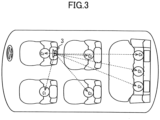
- the target frequency-range transfer functions from the loudspeaker 3 to the users seated on the respective seats other than the driver's seat are represented by C i (C 1 to C 6 in the drawing) where i represents the seat number of each seat other than the driver's seat. Since the loudspeaker 3 is situated on the headrest of the driver's seat, the gain of the transfer function C d to the driver's seat is significantly larger than the gain of the transfer functions C i to the other seats.
- the transfer function C d and the transfer functions C i to the users seated on the respective seats are previously determined by actual measurement or the like for each automobile model or the like, and stored in the controller 6.
- the controller 6 sets the transfer function C d to the driver's seat in the gain setter 5, and sets the transfer function corresponding to a specific seat among the seats other than the driver's seat in the gain setter 5 as the target transfer function C t .
- the seat corresponding to the target transfer function Ct set in the gain setter 5 will be described by referring to it as the "target seat”.
- the transfer function having the largest gain among the transfer functions C i is set, or the transfer function corresponding to a seat (e.g., a VIP seat) that is set as the target seat by the user from among the seats other than the driver's seat is set.
- a seat e.g., a VIP seat
- the transfer function having the largest gain among the transfer functions C i may be set fixedly.
- the transfer function C d to the driver's seat and the transfer function set as the target transfer function Ct among the transfer functions C i may be stored in the controller 6.
- the transfer function C d to the driver's seat and the transfer function set as the target transfer function Ct may be previously set in the gain setter 5.
- the gain setter 5 in which the transfer function C d to the driver's seat and the target transfer function C t are set, calculates the target frequency-range power P N of noise in the automobile that is collected by the microphone 4. Since the level of the noise in the automobile, which includes engine noise and road noise, is uniformly the same level in the automobile, the power P N calculated from the noise collected by the microphone 4 can be used as an indicator of the power of noise at each seat in the automobile.
- the gain setter 5 calculates the gain A by the following formula based on the power P N of the noise, the notification sound that is input from the notification sound source 1, and the transfer function C d to the driver's seat and the target transfer function Ct that are set, and sets the gain A in the variable gain amplifier 2.
- A ⁇ P N / P X 1 ⁇ ⁇ ⁇ C d / C t
- Px represents the power of a signal obtained by convolving the transfer function C d to the driver's seat in the notification sound (not gain-adjusted) that is input from the notification sound source 1.
- the SNR of the notification sound to the noise at the driver's seat is 0 dB.
- the SNR of the notification sound to the noise at the target seat is 0 dB.
- the user on the driver's seat can hear the notification sound without it being muffled by the noise, while the user on the target seat cannot hear the notification sound clearly because the notification sound is masked by the noise.
- the gain A may be set to the maximum value within the range in which the condition that 1 ⁇ ⁇ ⁇ Ca/Ct is satisfied. Alternatively, it may be set to become closest to a previously set standard gain within the range in which the condition that 1 ⁇ ⁇ ⁇ C a /C t is satisfied.
- the transfer function having the largest gain among the transfer functions C i is set as the target transfer function Ct, the largest notification sound is transmitted to the target seat among the seats other than the driver's seat.
- calculating and setting the gain A as described above results in the notification sound becoming smaller than the noise in all seats other than the driver's seat.
- the gain A may be set as follows in the gain setter 5.
- the ITU recommendation "Recommendation ITU-T P. 1150, In-car communication audio specification” indicates that the SNR between Upper y and Lower y expressed by the following equations is the SNR of a sound preferred with respect to a noise level x.
- the SNR of the notification sound at the driver's seat is expressed as P XA /P N where P XA represents the power of a signal obtained by convolving the transfer function C d to the driver's seat in a signal obtained by gain-adjusting the notification sound at the gain A
- the SNR of the notification sound at the target seat is expressed as P TA /P N where P TA represents the power of a signal obtained by convolving the target transfer function C t in a signal obtained by gain-adjusting the notification sound at the gain A
- P TA represents the power of a signal obtained by convolving the target transfer function C t in a signal obtained by gain-adjusting the notification sound at the gain A
- the SNR of the notification sound at the target seat can become less than Lower, and the notification sound can be masked by the noise so as to not be heard clearly, on the following condition.
- the gain A is calculated and set to satisfy -0.41P N + 34.71 ⁇ P XA /P N ⁇ -0.71P N + 57.03 and P TA /P N ⁇ -0.41P N + 34.71.
- the medium value between Upper and Lower that are fixed with respect to the noise level is defined as Target
- the gain A calculated such that the SNR at the driver's seat becomes Target that is fixed with respect to the power P N of the noise satisfies P TA /P N ⁇ -0.41P N + 34.71
- the gain A thus calculated such that the SNR at the driver's seat becomes Target is set in the variable gain amplifier 2.
- the black circles in FIG. 4 represent the SNR at the driver's seat according to the gain A thus set, and the diamonds represent the SNR at the target seat according to this gain A.
- the graph As illustrated in the graph, at each of different noise levels, like the noise level during idling and the noise level during travelling at 60 km, it is possible to enable the user on the driver's seat to hear the notification sound at the preferred SNR, while enabling the notification sound to not be heard clearly at the target seat by masking the notification sound with the noise.
- the gain A calculated such that the SNR at the driver's seat becomes Target does not satisfy P TA /P N ⁇ -0.41P N + 34.71
- the maximum gain A that satisfies -0.41P N + 34.71 ⁇ P XA /P N and P TA /P N ⁇ -0.41P N + 34.71 is calculated and set in the variable gain amplifier 2.
- the loudspeaker 3 is situated on the headrest of the driver's seat.
- the loudspeaker 3 may be situated at any other position that is closest to the user seated on the driver's seat among users seated on the respective seats.
- the above embodiments have been described regarding application to the interior of an automobile.
- the present embodiments may be applied to any interior in which a plurality of seats are situated fixedly, such that a user seated on a specific seat in the interior can hear the notification sound whereas users seated on other seats cannot hear the notification sound clearly.
Landscapes
- Engineering & Computer Science (AREA)
- Physics & Mathematics (AREA)
- Acoustics & Sound (AREA)
- Signal Processing (AREA)
- Health & Medical Sciences (AREA)
- Otolaryngology (AREA)
- Mechanical Engineering (AREA)
- General Health & Medical Sciences (AREA)
- Human Computer Interaction (AREA)
- Fittings On The Vehicle Exterior For Carrying Loads, And Devices For Holding Or Mounting Articles (AREA)
- Circuit For Audible Band Transducer (AREA)
Abstract
A "sound system" is provided for outputting a notification sound easy for a specific user to hear within a range in which other users are not bothered. A notification sound output from a notification sound source is output to a driver via a loudspeaker situated on headrest of the driver's seat after gain adjustment by a variable gain amplifier. Gain setter estimates power of noise at each seat based on noise collected by microphone, calculates gain for notification sound that makes notification sound larger than noise at the driver's seat and makes notification sound smaller than noise at a specific seat by using a first transfer function of notification sound from loudspeaker to the user on the driver's seat and a second transfer function of notification sound from loudspeaker to the user on the specific seat, which are previously determined, and sets the gain in the variable gain amplifier.
Description
- The present invention relates to a technique for outputting a sound to a specific user without bothering other users.
- As a technique for outputting a sound to a specific user without bothering other users, there is known a technique of providing a loudspeaker on a headrest of a seat of an automobile and outputting a sound from the loudspeaker to a user seated on the seat (For example,
JP 2001-95646A - Even in the case of outputting a sound from a loudspeaker provided on a headrest of a seat of an automobile to a user seated on the seat, when the volume is high, the sound output from the loudspeaker can be heard by other users, bothering them. On the other hand, when the volume is reduced to a level at which it is always guaranteed that other users cannot hear the sound, the sound output from the loudspeaker becomes difficult even for the user seated on the seat to hear.
- Therefore, it is an object of the present disclosure to output a sound, which is easy for a specific user to hear, to the specific user within a range in which other users are not bothered.
- The present disclosure relates to a sound system according to the appended claims. Embodiments are disclosed in the depended claims.
- According to an aspect, the present disclosure provides a sound system for outputting, as a notification sound, a sound that is output from a sound source to a user seated on a first seat among a plurality of seats situated in an interior, wherein the sound system includes:
- a loudspeaker situated at a position closest to the user seated on the first seat among users seated on the seats;
- a gain adjuster configured to adjust a level of the sound output from the sound source at a gain that is set and output the sound as the notification sound to the loudspeaker;
- a gain setter configured to set the gain in the gain adjuster, wherein a first transfer function that is a transfer function of the notification sound from the loudspeaker to the user seated on the first seat, and a second transfer function that is a transfer function of the notification sound from the loudspeaker to a user seated on a second seat different from the first seat among the plurality of seats are previously set in the gain setter; and
- a microphone configured to collect noise in the interior.
- Here, the gain setter estimates a magnitude of noise at each seat based on the noise collected by the microphone, calculates the gain for the notification sound that makes the notification sound larger than the noise at a position of the user seated on the first seat and makes the notification sound smaller than the noise at a position of the user seated on the second seat based on the magnitude of the noise estimated, and the first transfer function and the second transfer function, and sets the gain in the gain adjuster.
- In the sound system, the gain setter may calculate the gain to be set in the gain adjuster so as to satisfy


- In the sound system described herein, the interior may be the interior of an automobile. In a further aspect, the present disclosure provides a sound system for outputting, as a notification sound, a sound that is output from a sound source to a user seated on a first seat among a plurality of seats situated in an interior of an automobile, wherein the sound system includes:
- a loudspeaker situated at a position closest to a user seated on the first seat among users seated on the seats;
- a gain adjuster configured to adjust a level of the sound output from the sound source at a gain that is set and output the sound as the notification sound to the loudspeaker;
- a gain setter configured to set the gain in the gain adjuster, wherein a first transfer function that is a transfer function of the notification sound from the loudspeaker to the user seated on the first seat, and a second transfer function that is a transfer function of the notification sound from the loudspeaker to a user seated on a second seat that is different from the first seat among the plurality of seats are previously set in the gain setter; and
- a microphone configured to collect noise in the interior of the automobile.
- Here, the gain setter estimates a magnitude of noise at each seat based on the noise collected by the microphone, and calculates the gain to be set in the gain adjuster so as to satisfy to an extent possible


- In a sound system in which the interior is the interior of an automobile, the first seat may be a driver's seat of the automobile.
- In this case, it is preferable that the loudspeaker is provided on a headrest of the driver's seat.
- In this case, a transfer function of the notification sound from the loudspeaker to a user seated on the second seat has a maximum gain among transfer functions of the notification sound from the loudspeaker to users seated on the seats of the automobile other than the driver's seat, or the second seat may be a seat selected by a user from among the seats of the automobile other than the driver's seat.
- The sound system described herein can output the notification sound such that a user of the first seat can hear the notification sound at a level at which the notification sound is not muffled by noise, while a user of the second seat cannot hear the notification sound clearly due to the notification sound being masked by noise.
- According to the present disclosure, it is possible to output a sound, which is easy for a specific user to hear, to the specific user within a range in which other users are not bothered.
-
FIG. 1 is a block diagram illustrating a configuration of a sound system according to an embodiment of the present disclosure; -
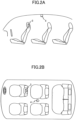
FIG. 2A is a view illustrating the positioning of a microphone and a loudspeaker in a sound system according to an embodiment of the present disclosure; -
FIG. 2B is a view illustrating the positioning of a microphone and a loudspeaker in a sound system according to an embodiment of the present disclosure; -
FIG. 3 is a view illustrating transfer functions studied in relation to a sound system according to an embodiment of the present disclosure; and -
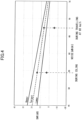
FIG. 4 is a graph illustrating an example of sound volume control of a sound system according to an embodiment of the present disclosure. - Embodiments of the present disclosure will be described below.
-
FIG. 1 illustrates a configuration of a sound system according to an embodiment. - The sound system is a system mounted on an automobile, and includes, as illustrated, a
notification sound source 1 configured to output a notification sound, avariable gain amplifier 2 having a variable gain A, aloudspeaker 3, a microphone 4, again setter 5, and acontroller 6. - The notification sound output by the
notification sound source 1 is, for example, a sound representing driving information for a driver, such as a car navigation message sound or a warning sound. - The notification sound output by the
notification sound source 1 is output via theloudspeaker 3 with its power adjusted by thevariable gain amplifier 2. The gain A of thevariable gain amplifier 2 is set by thegain setter 5. - Next, as illustrated in
FIGS. 2A and 2B , theloudspeaker 3 is situated on the headrest of the driver's seat so as to output a notification sound to the driver seated on the driver's seat. - The microphone 4 is configured to collect noise in the automobile such as engine noise and road noise. The microphone 4 can be situated, for example, on the ceiling at a position in the center of the automobile.
- The setting of the gain A in the
variable gain amplifier 2 performed by thegain setter 5 will be described below. - A target frequency-range transfer function of the notification sound from the
loudspeaker 3 to the user seated on each seat is used for the setting. - The target frequency range is the frequency range of the notification sound, and is, for example, from 100 Hz through 1 kHz, which is the frequency range of the human voice.
- In the following, as illustrated in
FIG. 3 , the target frequency-range transfer function from theloudspeaker 3 situated on the headrest of the driver's seat to the user (driver) seated on the driver's seat is represented by Cd, and the target frequency-range transfer functions from theloudspeaker 3 to the users seated on the respective seats other than the driver's seat are represented by Ci (C1 to C6 in the drawing) where i represents the seat number of each seat other than the driver's seat. Since theloudspeaker 3 is situated on the headrest of the driver's seat, the gain of the transfer function Cd to the driver's seat is significantly larger than the gain of the transfer functions Ci to the other seats. - Returning to
FIG. 1 , the transfer function Cd and the transfer functions Ci to the users seated on the respective seats are previously determined by actual measurement or the like for each automobile model or the like, and stored in thecontroller 6. - The
controller 6 sets the transfer function Cd to the driver's seat in thegain setter 5, and sets the transfer function corresponding to a specific seat among the seats other than the driver's seat in thegain setter 5 as the target transfer function Ct. - Hereinafter, for the sake of expediency, the seat corresponding to the target transfer function Ct set in the
gain setter 5 will be described by referring to it as the "target seat". - As the target transfer function Ct, the transfer function having the largest gain among the transfer functions Ci is set, or the transfer function corresponding to a seat (e.g., a VIP seat) that is set as the target seat by the user from among the seats other than the driver's seat is set.
- Here, as the target transfer function Ct, the transfer function having the largest gain among the transfer functions Ci may be set fixedly. In this case, only the transfer function Cd to the driver's seat and the transfer function set as the target transfer function Ct among the transfer functions Ci may be stored in the
controller 6. Alternatively, instead of storing the transfer function Cd to the driver's seat and the transfer functions Ci in thecontroller 6, the transfer function Cd to the driver's seat and the transfer function set as the target transfer function Ct may be previously set in thegain setter 5. - The
gain setter 5, in which the transfer function Cd to the driver's seat and the target transfer function Ct are set, calculates the target frequency-range power PN of noise in the automobile that is collected by the microphone 4. Since the level of the noise in the automobile, which includes engine noise and road noise, is uniformly the same level in the automobile, the power PN calculated from the noise collected by the microphone 4 can be used as an indicator of the power of noise at each seat in the automobile. - Then, the
gain setter 5 calculates the gain A by the following formula based on the power PN of the noise, the notification sound that is input from thenotification sound source 1, and the transfer function Cd to the driver's seat and the target transfer function Ct that are set, and sets the gain A in thevariable gain amplifier 2.

- Here, Px represents the power of a signal obtained by convolving the transfer function Cd to the driver's seat in the notification sound (not gain-adjusted) that is input from the
notification sound source 1. - Here, when α = 1, A = α(PN/PX) becomes A = PN/PX, and the power A·Px of the notification sound to be transmitted to the user on the driver's seat is calculated as follows.

- Thus, the SNR of the notification sound to the noise at the driver's seat is 0 dB.
- On the other hand, when α = Cd/Ct, A = α(PN/PX) becomes A = (Cd/Ct)·(PN/PX), and the power Ct·A·(PX/Cd) of the notification sound to be transmitted to the user on the target seat is calculated as follows.
math texte a saisir - Thus, the SNR of the notification sound to the noise at the target seat is 0 dB.
- Therefore, by calculating and setting the gain A so as to satisfy the condition that 1 < α < Cd/Ct, it is possible to output the notification sound via the
loudspeaker 3 by adjusting its volume such that the notification sound becomes larger than the noise at the driver's seat and the notification sound becomes smaller than the noise at the target seat - Therefore, the user on the driver's seat can hear the notification sound without it being muffled by the noise, while the user on the target seat cannot hear the notification sound clearly because the notification sound is masked by the noise.
- Here, the gain A may be set to the maximum value within the range in which the condition that 1 < α < Ca/Ct is satisfied. Alternatively, it may be set to become closest to a previously set standard gain within the range in which the condition that 1 < α < Ca/Ct is satisfied.
- When the transfer function having the largest gain among the transfer functions Ci is set as the target transfer function Ct, the largest notification sound is transmitted to the target seat among the seats other than the driver's seat. Thus, calculating and setting the gain A as described above results in the notification sound becoming smaller than the noise in all seats other than the driver's seat.
- Alternatively, the gain A may be set as follows in the
gain setter 5. - The ITU recommendation "Recommendation ITU-T P. 1150, In-car communication audio specification" indicates that the SNR between Upper y and Lower y expressed by the following equations is the SNR of a sound preferred with respect to a noise level x.
- Upper; y = -0.71x + 57.03
- Lower; y = -0.41x + 34.71
- Therefore, when the SNR of the notification sound at the driver's seat is expressed as PXA/PN where PXA represents the power of a signal obtained by convolving the transfer function Cd to the driver's seat in a signal obtained by gain-adjusting the notification sound at the gain A, and the SNR of the notification sound at the target seat is expressed as PTA/PN where PTA represents the power of a signal obtained by convolving the target transfer function Ct in a signal obtained by gain-adjusting the notification sound at the gain A, the SNR of the notification sound at the driver's seat can become a value between Upper and Lower, and the user on the driver's seat can hear the notification sound at the preferable SNR, on the following condition.

- On the other hand, the SNR of the notification sound at the target seat can become less than Lower, and the notification sound can be masked by the noise so as to not be heard clearly, on the following condition.

- Therefore, the gain A is calculated and set to satisfy -0.41PN + 34.71 < PXA/PN < -0.71PN + 57.03 and PTA/PN < -0.41PN + 34.71.
- That is, for example, as illustrated in
FIG. 4 , where the medium value between Upper and Lower that are fixed with respect to the noise level is defined as Target, if the gain A calculated such that the SNR at the driver's seat becomes Target that is fixed with respect to the power PN of the noise satisfies PTA/PN < -0.41PN + 34.71, the gain A thus calculated such that the SNR at the driver's seat becomes Target is set in thevariable gain amplifier 2. - The black circles in
FIG. 4 represent the SNR at the driver's seat according to the gain A thus set, and the diamonds represent the SNR at the target seat according to this gain A. As illustrated in the graph, at each of different noise levels, like the noise level during idling and the noise level during travelling at 60 km, it is possible to enable the user on the driver's seat to hear the notification sound at the preferred SNR, while enabling the notification sound to not be heard clearly at the target seat by masking the notification sound with the noise. - On the other hand, when the gain A calculated such that the SNR at the driver's seat becomes Target does not satisfy PTA/PN < -0.41PN + 34.71, the maximum gain A that satisfies -0.41PN + 34.71 < PXA/PN and PTA/PN < -0.41PN + 34.71 is calculated and set in the
variable gain amplifier 2. - Further, when there is no gain A that satisfies -0.41PN + 34.71 < PXA/PN and PTA/PN < - 0.41PN + 34.71, a gain A that satisfies -0.41PN + 34.71 + M = PXA/PN, where M is a predetermined margin, is calculated and set in the
variable gain amplifier 2. - Embodiments of the present disclosure have been described above.
- In the above embodiments, the
loudspeaker 3 is situated on the headrest of the driver's seat. However, theloudspeaker 3 may be situated at any other position that is closest to the user seated on the driver's seat among users seated on the respective seats. - In addition, the above embodiments have been described for the case of performing control such that the user seated on the driver's seat can hear the notification sound and the users seated on the other seats cannot hear the notification sound clearly. However, in a case of performing control such that a user seated on a specific seat other than the driver's seat can hear the notification sound and users seated on seats other than the specific seat cannot hear the notification sound clearly, it is possible to apply the present disclosure similarly by substituting the specific seat in the place of the driver's seat in the above description.
- Moreover, the above embodiments have been described regarding application to the interior of an automobile. However, the present embodiments may be applied to any interior in which a plurality of seats are situated fixedly, such that a user seated on a specific seat in the interior can hear the notification sound whereas users seated on other seats cannot hear the notification sound clearly.
Claims (8)
- A sound system for outputting, as a notification sound, a sound that is output from a sound source to a user seated on a first seat among a plurality of seats situated in an interior, the sound system comprising:a loudspeaker situated at a position closest to the user seated on the first seat among users seated on the seats;a gain adjuster configured to adjust a level of the sound output from the sound source at a gain that is set, and output the sound to the loudspeaker as the notification sound;a gain setter configured to set the gain in the gain adjuster, wherein a first transfer function that is a transfer function of the notification sound from the loudspeaker to the user seated on the first seat, and a second transfer function that is a transfer function of the notification sound from the loudspeaker to a user seated on a second seat different from the first seat among the plurality of seats are previously set in the gain setter; anda microphone configured to collect noise in the interior,wherein the gain setter is configured to estimate a magnitude of noise at each seat based on the noise collected by the microphone, to calculate the gain for the notification sound that makes the notification sound larger than the noise at a position of the user seated on the first seat and to make the notification sound smaller than the noise at a position of the user seated on the second seat based on the magnitude of the noise estimated, and the first transfer function and the second transfer function, and to set the gain in the gain adjuster.
- The sound system according to claim 1,wherein the gain setter is configured to calculate the gain to be set in the gain adjuster so as to satisfy

 where PN represents an estimated power of the noise at each seat, Px represents a power of a signal obtained by convolving the first transfer function in the sound output from the sound source, Cd represents the first transfer function, Ct represents the second transfer function, and A represents the gain to be set in the gain adjuster.
 - A sound system for outputting, as a notification sound, a sound that is output from a sound source to a user seated on a first seat among a plurality of seats situated in an interior of an automobile, the sound system comprising:a loudspeaker situated at a position closest to the user seated on the first seat among users seated on the seats;a gain adjuster configured to adjust a level of the sound output from the sound source at a gain that is set, and output the sound to the loudspeaker as the notification sound;a gain setter configured to set the gain in the gain adjuster, wherein a first transfer function that is a transfer function of the notification sound from the loudspeaker to the user seated on the first seat, and a second transfer function that is a transfer function of the notification sound from the loudspeaker to a user seated on a second seat that is different from the first seat among the plurality of seats are previously set in the gain setter; anda microphone configured to collect noise in the interior of the automobile,wherein the gain setter is configured to estimate a magnitude of noise at each seat based on the noise collected by the microphone, and to calculate the gain to be set in the gain adjuster so as to satisfy to an extent possible

 where PN represents an estimated power of the noise at each seat, PXA represents a power of a signal obtained by convolving the first transfer function in a signal obtained by the gain adjuster adjusting the level of the sound output from the sound source at the gain that is set, and PTA represents a power of a signal obtained by convolving the second transfer function in a signal obtained by the gain adjuster adjusting the level of the sound output from the sound source at the gain that is set.
 - The sound system according to one of claims 1 to 3,
wherein the interior is an interior of an automobile. - The sound system according to one of claims 1 to 4,
wherein the first seat is a driver's seat of an automobile. - The sound system according to claim 5,
wherein the loudspeaker is provided on a headrest of the driver's seat. - The sound system according to one of claims 5 to 6,
wherein a transfer function of the notification sound from the loudspeaker to a user seated on the second seat has a maximum gain among transfer functions of the notification sound from the loudspeaker to users seated on the seats of the automobile other than the driver's seat. - The sound system according to one of claims 4 to 7,
wherein the second seat is a seat selected by a user from among the seats of the automobile other than the driver's seat.
Applications Claiming Priority (1)
| Application Number | Priority Date | Filing Date | Title |
|---|---|---|---|
| JP2023112116A JP2025009249A (en) | 2023-07-07 | 2023-07-07 | Sound System |
Publications (1)
| Publication Number | Publication Date |
|---|---|
| EP4489434A1 true EP4489434A1 (en) | 2025-01-08 |
Family
ID=91810298
Family Applications (1)
| Application Number | Title | Priority Date | Filing Date |
|---|---|---|---|
| EP24186301.8A Pending EP4489434A1 (en) | 2023-07-07 | 2024-07-03 | Sound system |
Country Status (4)
| Country | Link |
|---|---|
| US (1) | US20250016500A1 (en) |
| EP (1) | EP4489434A1 (en) |
| JP (1) | JP2025009249A (en) |
| CN (1) | CN119277274A (en) |
Citations (4)
| Publication number | Priority date | Publication date | Assignee | Title |
|---|---|---|---|---|
| JP2001095646A (en) | 1999-10-01 | 2001-04-10 | Matsushita Electric Ind Co Ltd | Headrest |
| WO2010074899A2 (en) * | 2008-12-23 | 2010-07-01 | Bose Corporation | Masking based gain control |
| WO2019126034A1 (en) * | 2017-12-21 | 2019-06-27 | Bose Corporation | Dynamic sound adjustment based on noise floor estimate |
| EP4114043A1 (en) * | 2021-06-30 | 2023-01-04 | Harman International Industries, Inc. | System and method for controlling output sound in a listening environment |
-
2023
- 2023-07-07 JP JP2023112116A patent/JP2025009249A/en active Pending
-
2024
- 2024-07-01 CN CN202410865992.8A patent/CN119277274A/en active Pending
- 2024-07-03 EP EP24186301.8A patent/EP4489434A1/en active Pending
- 2024-07-03 US US18/763,306 patent/US20250016500A1/en active Pending
Patent Citations (4)
| Publication number | Priority date | Publication date | Assignee | Title |
|---|---|---|---|---|
| JP2001095646A (en) | 1999-10-01 | 2001-04-10 | Matsushita Electric Ind Co Ltd | Headrest |
| WO2010074899A2 (en) * | 2008-12-23 | 2010-07-01 | Bose Corporation | Masking based gain control |
| WO2019126034A1 (en) * | 2017-12-21 | 2019-06-27 | Bose Corporation | Dynamic sound adjustment based on noise floor estimate |
| EP4114043A1 (en) * | 2021-06-30 | 2023-01-04 | Harman International Industries, Inc. | System and method for controlling output sound in a listening environment |
Also Published As
| Publication number | Publication date |
|---|---|
| CN119277274A (en) | 2025-01-07 |
| US20250016500A1 (en) | 2025-01-09 |
| JP2025009249A (en) | 2025-01-20 |
Similar Documents
| Publication | Publication Date | Title |
|---|---|---|
| US9236843B2 (en) | Sound system with individual playback zones | |
| EP3912366B1 (en) | Method and system for creating a plurality of sound zones within an acoustic cavity | |
| CN108806660A (en) | Sensitivity is gone to the active sound of vehicle medium pitch noise | |
| JP5439200B2 (en) | Background noise estimation | |
| EP1530400B1 (en) | Automotive audio controller with vibration sensor | |
| CN102257559B (en) | Gain control based on sheltering | |
| EP4001014A1 (en) | Sound production apparatus for vehicle | |
| EP1876706B1 (en) | Acoustic reproduction device | |
| EP3520435B1 (en) | Noise estimation for dynamic sound adjustment | |
| CN114194128A (en) | Vehicle volume control method, vehicle, and storage medium | |
| JP2018024339A (en) | Sound environment adjustment device and sound environment adjustment method | |
| US20250016500A1 (en) | Sound system | |
| DE102018213761B4 (en) | Method and device for adapting an audio output to the user of a vehicle, as well as motor vehicle | |
| JP2016082443A (en) | Speaker arrangement selection unit, speaker arrangement selection method and sound field control system | |
| DE102014210606A1 (en) | Individual hearing curve adjustment | |
| DE102017210688A1 (en) | Sound generating device for a motor vehicle and method for operating such and motor vehicle with such | |
| JP4187615B2 (en) | Output sound correction device | |
| CN117121097A (en) | Method and apparatus for acoustically outputting functional system noise of a vehicle | |
| WO2021205601A1 (en) | Sound signal processing device, sound signal processing method, program, and recording medium | |
| JP2017147702A (en) | Sound field control device, sound field control system, and sound field control method | |
| KR20100129378A (en) | Automatic audio conversion car audio control device when navigation voice is generated and its control method | |
| JPH11225398A (en) | Loudness adjustment method and hearing aid | |
| GB2557177A (en) | Improvements relating to hearing assistance in vehicles | |
| JP5371599B2 (en) | Speech intelligibility improvement system and speech intelligibility improvement method | |
| JP4495581B2 (en) | Audio output device |
Legal Events
| Date | Code | Title | Description |
|---|---|---|---|
| PUAI | Public reference made under article 153(3) epc to a published international application that has entered the european phase |
Free format text: ORIGINAL CODE: 0009012 |
|
| STAA | Information on the status of an ep patent application or granted ep patent |
Free format text: STATUS: THE APPLICATION HAS BEEN PUBLISHED |
|
| AK | Designated contracting states |
Kind code of ref document: A1 Designated state(s): AL AT BE BG CH CY CZ DE DK EE ES FI FR GB GR HR HU IE IS IT LI LT LU LV MC ME MK MT NL NO PL PT RO RS SE SI SK SM TR |
|
| STAA | Information on the status of an ep patent application or granted ep patent |
Free format text: STATUS: REQUEST FOR EXAMINATION WAS MADE |
|
| 17P | Request for examination filed |
Effective date: 20250623 |