EP4488997A2 - Verbesserung von nichtsprachlichem inhalt für celp-decoder mit niedriger rate - Google Patents
Verbesserung von nichtsprachlichem inhalt für celp-decoder mit niedriger rate Download PDFInfo
- Publication number
- EP4488997A2 EP4488997A2 EP24213237.1A EP24213237A EP4488997A2 EP 4488997 A2 EP4488997 A2 EP 4488997A2 EP 24213237 A EP24213237 A EP 24213237A EP 4488997 A2 EP4488997 A2 EP 4488997A2
- Authority
- EP
- European Patent Office
- Prior art keywords
- domain excitation
- frequency
- time
- synthesis
- excitation
- Prior art date
- Legal status (The legal status is an assumption and is not a legal conclusion. Google has not performed a legal analysis and makes no representation as to the accuracy of the status listed.)
- Pending
Links
Images


Classifications
-
- H—ELECTRICITY
- H03—ELECTRONIC CIRCUITRY
- H03G—CONTROL OF AMPLIFICATION
- H03G3/00—Gain control in amplifiers or frequency changers
- H03G3/20—Automatic control
-
- G—PHYSICS
- G10—MUSICAL INSTRUMENTS; ACOUSTICS
- G10L—SPEECH ANALYSIS TECHNIQUES OR SPEECH SYNTHESIS; SPEECH RECOGNITION; SPEECH OR VOICE PROCESSING TECHNIQUES; SPEECH OR AUDIO CODING OR DECODING
- G10L19/00—Speech or audio signals analysis-synthesis techniques for redundancy reduction, e.g. in vocoders; Coding or decoding of speech or audio signals, using source filter models or psychoacoustic analysis
- G10L19/04—Speech or audio signals analysis-synthesis techniques for redundancy reduction, e.g. in vocoders; Coding or decoding of speech or audio signals, using source filter models or psychoacoustic analysis using predictive techniques
- G10L19/16—Vocoder architecture
- G10L19/18—Vocoders using multiple modes
- G10L19/20—Vocoders using multiple modes using sound class specific coding, hybrid encoders or object based coding
-
- G—PHYSICS
- G10—MUSICAL INSTRUMENTS; ACOUSTICS
- G10L—SPEECH ANALYSIS TECHNIQUES OR SPEECH SYNTHESIS; SPEECH RECOGNITION; SPEECH OR VOICE PROCESSING TECHNIQUES; SPEECH OR AUDIO CODING OR DECODING
- G10L19/00—Speech or audio signals analysis-synthesis techniques for redundancy reduction, e.g. in vocoders; Coding or decoding of speech or audio signals, using source filter models or psychoacoustic analysis
- G10L19/04—Speech or audio signals analysis-synthesis techniques for redundancy reduction, e.g. in vocoders; Coding or decoding of speech or audio signals, using source filter models or psychoacoustic analysis using predictive techniques
- G10L19/26—Pre-filtering or post-filtering
-
- G—PHYSICS
- G10—MUSICAL INSTRUMENTS; ACOUSTICS
- G10L—SPEECH ANALYSIS TECHNIQUES OR SPEECH SYNTHESIS; SPEECH RECOGNITION; SPEECH OR VOICE PROCESSING TECHNIQUES; SPEECH OR AUDIO CODING OR DECODING
- G10L19/00—Speech or audio signals analysis-synthesis techniques for redundancy reduction, e.g. in vocoders; Coding or decoding of speech or audio signals, using source filter models or psychoacoustic analysis
- G10L19/04—Speech or audio signals analysis-synthesis techniques for redundancy reduction, e.g. in vocoders; Coding or decoding of speech or audio signals, using source filter models or psychoacoustic analysis using predictive techniques
- G10L19/08—Determination or coding of the excitation function; Determination or coding of the long-term prediction parameters
-
- G—PHYSICS
- G10—MUSICAL INSTRUMENTS; ACOUSTICS
- G10L—SPEECH ANALYSIS TECHNIQUES OR SPEECH SYNTHESIS; SPEECH RECOGNITION; SPEECH OR VOICE PROCESSING TECHNIQUES; SPEECH OR AUDIO CODING OR DECODING
- G10L19/00—Speech or audio signals analysis-synthesis techniques for redundancy reduction, e.g. in vocoders; Coding or decoding of speech or audio signals, using source filter models or psychoacoustic analysis
- G10L19/04—Speech or audio signals analysis-synthesis techniques for redundancy reduction, e.g. in vocoders; Coding or decoding of speech or audio signals, using source filter models or psychoacoustic analysis using predictive techniques
- G10L19/16—Vocoder architecture
- G10L19/18—Vocoders using multiple modes
- G10L19/22—Mode decision, i.e. based on audio signal content versus external parameters
-
- G—PHYSICS
- G10—MUSICAL INSTRUMENTS; ACOUSTICS
- G10L—SPEECH ANALYSIS TECHNIQUES OR SPEECH SYNTHESIS; SPEECH RECOGNITION; SPEECH OR VOICE PROCESSING TECHNIQUES; SPEECH OR AUDIO CODING OR DECODING
- G10L25/00—Speech or voice analysis techniques not restricted to a single one of groups G10L15/00 - G10L21/00
- G10L25/78—Detection of presence or absence of voice signals
-
- G—PHYSICS
- G10—MUSICAL INSTRUMENTS; ACOUSTICS
- G10L—SPEECH ANALYSIS TECHNIQUES OR SPEECH SYNTHESIS; SPEECH RECOGNITION; SPEECH OR VOICE PROCESSING TECHNIQUES; SPEECH OR AUDIO CODING OR DECODING
- G10L25/00—Speech or voice analysis techniques not restricted to a single one of groups G10L15/00 - G10L21/00
- G10L25/78—Detection of presence or absence of voice signals
- G10L25/81—Detection of presence or absence of voice signals for discriminating voice from music
-
- G—PHYSICS
- G10—MUSICAL INSTRUMENTS; ACOUSTICS
- G10L—SPEECH ANALYSIS TECHNIQUES OR SPEECH SYNTHESIS; SPEECH RECOGNITION; SPEECH OR VOICE PROCESSING TECHNIQUES; SPEECH OR AUDIO CODING OR DECODING
- G10L25/00—Speech or voice analysis techniques not restricted to a single one of groups G10L15/00 - G10L21/00
- G10L25/93—Discriminating between voiced and unvoiced parts of speech signals
Definitions
- the present disclosure relates to a device and method for modifying a synthesis of a time-domain excitation decoded by a time-domain decoder.
- a state-of-the-art conversational codec can represent with a very good quality a clean speech signal with a bit rate of around 8 kbps and approach transparency at a bit rate of 16 kbps.
- a multi modal coding scheme may be used.
- the input sound signal is split among different categories reflecting its characteristics.
- the different categories may include voiced, unvoiced and onset.
- the codec uses different coding modes optimized for all these categories.
- the present disclosure relates to device for modifying a synthesis of a time-domain excitation decoded by a time-domain decoder, comprising: a classifier of the synthesis of the decoded time-domain excitation into one of a number of categories; a converter of the decoded time-domain excitation into a frequency-domain excitation; a modifier of the frequency-domain excitation as a function of the category in which the synthesis of the decoded time-domain excitation is classified by the classifier; a converter of the modified frequency-domain excitation into a modified time-domain excitation; and a synthesis filter supplied with the modified time-domain excitation to produce a modified synthesis of the decoded time-domain excitation.
- the present disclosure relates to device for decoding a sound signal encoded by encoding parameters, comprising: a decoder of a time-domain excitation in response to the sound signal encoding parameters; a synthesis filter responsive to the decoded time-domain excitation to produce a synthesis of said time-domain excitation; and the above described device for modifying the synthesis of the time-domain excitation.
- the present disclosure relates to a method for modifying a synthesis of a time-domain excitation decoded by a time-domain decoder, comprising: classifying the synthesis of the decoded time-domain excitation into one of a number of categories; converting the decoded time-domain excitation into a frequency-domain excitation; modifying the frequency-domain excitation as a function of the category in which the synthesis of the decoded time-domain excitation is classified; converting the modified frequency-domain excitation into a modified time-domain excitation; and synthesizing the modified time-domain excitation to produce a modified synthesis of the decoded time-domain excitation.
- the present disclosure is concerned with a method for decoding a sound signal encoded by encoding parameters, comprising: decoding a time-domain excitation in response to the sound signal encoding parameters; synthesizing the decoded time-domain excitation to produce a synthesis of said time-domain excitation; and the above described method for modifying the synthesis of the time-domain excitation.
- the present disclosure relates to an approach to implement on the decoder side a multimodal decoding such that interoperability is maintained and the perceived quality is increased.
- AMR-WB as described in reference [ 3GPP TS 26.190, "Adaptive Multi-Rate - Wideband (AMR-WB) speech codec; Transcoding functions ] of which the full content is incorporated herein by reference, is used as illustrative example, it should be kept in mind that this approach can be applied to other types of low bit rate speech decoders as well.
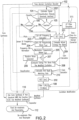
- a time-domain excitation decoder 102 first decodes entirely the received bitstream 101, for example the AMR-WB bitstream, to get a complete time-domain Code-Excited Linear Prediction (CELP) decoded excitation.
- the decoded time-domain excitation is processed through a Linear Prediction (LP) synthesis filter 103 to obtain a speech/sound signal time-domain synthesis at the inner sampling frequency of the decoder.
- this inner sampling frequency is 12.8 kHz, but for another codec it could be different.
- the time-domain synthesis of the current frame from the LP synthesis filter 103 is processed through a classifier 104-105-106-301 ( Figures 1 , 2 and 3 ) supplied with voice activity detection (VAD) information 109 from the bitstream 101.
- VAD voice activity detection
- the classifier 104-105-106-301 analyses and categorizes the time-domain synthesis either as inactive speech, active voiced speech, active unvoiced speech, or generic audio.
- Inactive speech includes all background noises between speech burst
- active voiced speech represents a frame during an active speech burst having voiced characteristics
- active unvoiced speech represents a frame during a speech burst having unvoiced characteristics
- generic audio represents music or reverberant speech.
- Other categories can be added or derived from the above categories. The disclosed approach aims at improving in particular, but not exclusively, the perceived quality of the inactive speech, the active unvoiced speech and the generic audio.
- a converter/modifier 107 converts the decoded excitation from the time-domain excitation decoder 102 into frequency domain using a non-overlap frequency transform.
- An overlap transform can be used as well, but it implies an increase of the end-to-end delay which is not desirable in most cases.
- the frequency representation of the excitation is then split into different frequency bands in the converter/modifier 107.
- the frequency bands can have fixed size, can rely on critical bands [ J. D. Johnston, "Transform coding of audio signal using perceptual noise criteria," IEEE J. Select. Areas Commun., vol. 6, pp. 314-323, Feb. 1988 ], of which the full content is incorporated herein by reference, or any other combinations.
- the energy per band is computed and kept in memory in the converter/modifier 107 for use after the reshaping process to ensure the modification does not alter the global frame energy level.
- the modification of the excitation in the frequency domain as performed by the converter/modifier 107 may differ with the classification of the synthesis.
- the reshaping may consist of a normalization of the low frequencies with an addition of noise and replacement of the high frequency content with noise only.
- a cut-off frequency of the decoded time-domain synthesis, the limit between low and high frequency, can be fixed at a value around 1 to 1.2 kHz.
- the modification process has as effect of removing the kind of electrical noise associated with the low bit rate speech codec. After the modification process, a gain matching per frequency band is applied to get back the initial energy level per frequency band with a slight increase of the energy for the frequencies above 6 kHz to compensate for an LP filter gain drop at those frequencies.
- the processing in the converter/modifier 107 is different.
- First the normalization is performed per frequency band for all the bands. In the normalization operation, all the bins inside a frequency band that are below a fraction of the maximum frequency value within the band are set to zero. For higher frequency bands, more bins are zeroed per band. This simulates a frequency quantification scheme with a high bit budget, but having more bits allocated to the lower frequencies.
- a noise fill can be applied to replace the zeroed bins with random noise but, depending on the bit rate, the noise fill is not always used.
- a gain matching per frequency band is applied to get back the initial energy level per frequency band and a tilt correction depending on the bit rate is applied along the frequency band to compensate for the systematic under estimation of the LP filter in case of generic audio input.
- Another differentiation for the generic audio path comes from the fact that the gain matching is not applied over all frequency bins. Because the spectrum of generic audio is usually more peaky than speech, the perceived quality is improved when it is possible to identify spectral pulses and to put some emphasis thereon. To do so, full gain matching with tilt correction is applied only to the highest energy bins inside a frequency band. For the lowest energy bins, only a fraction of the gain matching is applied to those bins. This results in increasing the spectral dynamic.
- the converter/modifier 107 applies an inverse frequency transform to obtain the modified time-domain excitation.
- This modified excitation is processed through the LP synthesis filter 108 to obtain a modified time-domain synthesis.
- An overwriter 110 simply overwrites the time-domain decoded synthesis from LP synthesis filter 103 with the modified time-domain synthesis from the LP synthesis filter 108 depending on the classification of the time-domain decoded synthesis before final de-emphasis and resampling to 16 kHz (for the example of AMR-WB) in a de-emphasizing filter and resampler 112.
- the classifier 104-105-106-301 performs at the decoder a classification of the time-domain synthesis 1021 of the speech/sound signal as described hereinabove for the bit rates where the modification is applied.
- the LP synthesis filter 103 is not shown in Figure 2 .
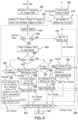
- an attenuator 405 attenuates the gain G e from the sub-calculator 413 by a factor 0.86 as shown in the lower line of Equation (28).
- a sub-calculator 406 applies the attenuated gain from attenuator 405 to the normalized spectral excitation f' eN in the frequency bin according to the lower line of Equation (28) to obtain the modified (de-normalized) frequency-domain excitation f ' edN .
- the tilt is calculated by tilt calculator 407-408 and is applied to the normalized frequency-domain excitation f' eN by frequency bin according to the upper line of Equation (30) by a sub-calculator 409 to obtain the modified (de-normalized) frequency-domain excitation f' odN .
- an attenuator 410 calculates an attenuation gain f ′ eN j / max a ⁇ j ⁇ b f eN j 2 applied to the normalized spectral excitation f' eN by frequency bin according to the lower line of Equation (30) by a sub-calculator 411 to obtain the modified (de-normalized) frequency-domain excitation f' edN .
- f edN ′ j ⁇ i ⁇ f eN ′ j , if f eN ′ j ⁇ 0.86 ⁇ max a ⁇ j ⁇ b f eN j f eN ′ j max a ⁇ j ⁇ b f eN j 2 ⁇ f eN ′ j , otherwise where a and b are described herein above. It is also possible to further increase the gain applied to the latest bands, where the energy matching of the LPC is the worst.
- a combiner 453 combines the contributions to the modified (de-normalized) frequency-domain excitation f' edN from the sub-calculators 414, 403, 406, 409 and 411 to form the complete modified (de-normalized) frequency-domain excitation f' edN .
- an inverse frequency-time transform 202 is applied to the modified (de-normalized) frequency-domain excitation f' edN from combiner 453 to find the time-domain modified excitation.
- the frequency-to-time conversion is achieved with the inverse of the same type II DCT as used for the time-to-frequency conversion giving a resolution of 25 Hz. Again, any other transforms can be used.
- f edN ′ n is the frequency representation of the modified excitation
- L is the frame length.
- the frame length is 256 samples for a corresponding inner sampling frequency of 12.8 kHz (AMR-WB).
- the modified excitation is processed through the synthesis filter 108 to obtain a modified synthesis for the current frame.
- the overwriter 110 uses this modified synthesis to overwrite the decoded synthesis thus to increase the perceptual quality.
- a device for modifying a synthesis of a time-domain excitation decoded by a time-domain decoder comprising:
- a device for modifying a synthesis of a time-domain excitation wherein the modifier comprises: a calculator of a cut-off frequency where a time-domain excitation contribution stops to be used.
- a device for modifying a synthesis of a time-domain excitation comprising:
- a device for modifying a synthesis of a time-domain excitation wherein the modifier comprises a random noise generator and an adder of the random noise to the normalized frequency-domain excitation.
- a device for modifying a synthesis of a time-domain excitation wherein the modifier comprises: a calculator of a matching gain using an energy of the frequency-domain excitation before and after modification, the calculator applying the matching gain to the normalized frequency-domain excitation to produce the modified frequency-domain excitation.
- a device for modifying a synthesis of a time-domain excitation wherein the classifier classifies the synthesis of the decoded time-domain excitation as inactive or active unvoiced.
- a device for modifying a synthesis of a time-domain excitation comprising a smoother of the synthesis filter when the synthesis of the decoded time-domain excitation is classified as a given one of the categories by the classifier.
- a device for modifying a synthesis of a time-domain excitation wherein the frequency-domain excitation is divided into frequency bands each divided into frequency bins, and wherein the modifier comprises: a normalizer of the frequency-domain excitation using a frequency band-varying normalization factor to produce a normalized frequency-domain excitation.
- a device for modifying a synthesis of a time-domain excitation wherein the normalizer comprises a zeroer of the frequency bins below a fraction of a maximum value of the normalized frequency-domain excitation in the frequency band comprising the frequency bins.
- a device for modifying a synthesis of a time-domain excitation wherein the modifier comprises: a calculator of a matching gain per frequency band using an energy of the frequency-domain excitation before and after modification.
- a device for modifying a synthesis of a time-domain excitation wherein the modifier comprises, for the frequency bands below a first frequency, a calculator for applying the matching gain to the normalized frequency-domain excitation to produce the modified frequency-domain excitation.
- a device for modifying a synthesis of a time-domain excitation comprising, for the frequency bands between a first lower frequency and a second higher frequency:
- a device for modifying a synthesis of a time-domain excitation comprising, for the frequency bands between a first lower frequency and a second higher frequency:
- a device for modifying a synthesis of a time-domain excitation comprising, for the frequency bands above a given frequency:
- a device for modifying a synthesis of a time-domain excitation comprising, for the frequency bands above a given frequency:
- a device for decoding a sound signal encoded by encoding parameters comprising:
- a method for modifying a synthesis of a time-domain excitation decoded by a time-domain decoder comprising:
- a method for modifying a synthesis of a time-domain excitation comprises: calculating a cut-off frequency where a time-domain excitation contribution stops to be used.
- a method for modifying a synthesis of a time-domain excitation, wherein modifying the frequency-domain excitation comprises:
- a method for modifying a synthesis of a time-domain excitation comprising generating a random noise and adding the random noise to the normalized frequency-domain excitation.
- a method for modifying a synthesis of a time-domain excitation comprising: calculating a matching gain using an energy of the frequency-domain excitation before and after modification, and applying the matching gain to the normalized frequency-domain excitation to produce the modified frequency-domain excitation.
- a method for modifying a synthesis of a time-domain excitation wherein the synthesis of the decoded time-domain excitation is classified as inactive or active unvoiced.
- a method for modifying a synthesis of a time-domain excitation comprising smoothing a synthesis filter performing the synthesis of the modified time-domain excitation when the synthesis of the decoded time-domain excitation is classified as a given one of the categories by the classifier.
- a method for modifying a synthesis of a time-domain excitation wherein the frequency-domain excitation is divided into frequency bands each divided into frequency bins, and wherein modifying the frequency-domain excitation comprises: normalizing the frequency-domain excitation using a frequency band-varying normalization factor to produce a normalized frequency-domain excitation.
- a method for modifying a synthesis of a time-domain excitation wherein modifying the frequency-domain excitation comprises zeroing the frequency bins below a fraction of a maximum value of the normalized frequency-domain excitation in the frequency band comprising the frequency bins.
- a method for modifying a synthesis of a time-domain excitation comprises: calculating a matching gain per frequency band using an energy of the frequency-domain excitation before and after modification.
- a method for modifying a synthesis of a time-domain excitation wherein modifying the frequency-domain excitation comprises, for the frequency bands below a first frequency, applying the matching gain to the normalized frequency-domain excitation to produce the modified frequency-domain excitation.
- a method for modifying a synthesis of a time-domain excitation comprising, for the frequency bands between a first lower frequency and a second higher frequency:
- a method for modifying a synthesis of a time-domain excitation comprising, for the frequency bands between a first lower frequency and a second higher frequency:
- a method for modifying a synthesis of a time-domain excitation comprising, for the frequency bands above a given frequency:
- a method for modifying a synthesis of a time-domain excitation comprising, for the frequency bands above a given frequency:
- a method for decoding a sound signal encoded by encoding parameters comprising:
Landscapes
- Engineering & Computer Science (AREA)
- Computational Linguistics (AREA)
- Signal Processing (AREA)
- Health & Medical Sciences (AREA)
- Audiology, Speech & Language Pathology (AREA)
- Human Computer Interaction (AREA)
- Physics & Mathematics (AREA)
- Acoustics & Sound (AREA)
- Multimedia (AREA)
- Compression, Expansion, Code Conversion, And Decoders (AREA)
- Magnetic Resonance Imaging Apparatus (AREA)
- Ultra Sonic Daignosis Equipment (AREA)
- Measurement And Recording Of Electrical Phenomena And Electrical Characteristics Of The Living Body (AREA)
Applications Claiming Priority (4)
| Application Number | Priority Date | Filing Date | Title |
|---|---|---|---|
| US201161555246P | 2011-11-03 | 2011-11-03 | |
| EP20172813.6A EP3709298B1 (de) | 2011-11-03 | 2012-11-01 | Verbesserung von nichtsprachlichem inhalt für celp-dekodierer mit niedriger rate |
| PCT/CA2012/001011 WO2013063688A1 (en) | 2011-11-03 | 2012-11-01 | Improving non-speech content for low rate celp decoder |
| EP12844916.2A EP2774145B1 (de) | 2011-11-03 | 2012-11-01 | Verbesserung von nicht nichtsprachlichem inhalt für celp-dekodierer mit niedriger rate |
Related Parent Applications (2)
| Application Number | Title | Priority Date | Filing Date |
|---|---|---|---|
| EP20172813.6A Division EP3709298B1 (de) | 2011-11-03 | 2012-11-01 | Verbesserung von nichtsprachlichem inhalt für celp-dekodierer mit niedriger rate |
| EP12844916.2A Division EP2774145B1 (de) | 2011-11-03 | 2012-11-01 | Verbesserung von nicht nichtsprachlichem inhalt für celp-dekodierer mit niedriger rate |
Publications (2)
| Publication Number | Publication Date |
|---|---|
| EP4488997A2 true EP4488997A2 (de) | 2025-01-08 |
| EP4488997A3 EP4488997A3 (de) | 2025-01-22 |
Family
ID=48191141
Family Applications (3)
| Application Number | Title | Priority Date | Filing Date |
|---|---|---|---|
| EP24213237.1A Pending EP4488997A3 (de) | 2011-11-03 | 2012-11-01 | Verbesserung von nichtsprachlichem inhalt für celp-decoder mit niedriger rate |
| EP12844916.2A Active EP2774145B1 (de) | 2011-11-03 | 2012-11-01 | Verbesserung von nicht nichtsprachlichem inhalt für celp-dekodierer mit niedriger rate |
| EP20172813.6A Active EP3709298B1 (de) | 2011-11-03 | 2012-11-01 | Verbesserung von nichtsprachlichem inhalt für celp-dekodierer mit niedriger rate |
Family Applications After (2)
| Application Number | Title | Priority Date | Filing Date |
|---|---|---|---|
| EP12844916.2A Active EP2774145B1 (de) | 2011-11-03 | 2012-11-01 | Verbesserung von nicht nichtsprachlichem inhalt für celp-dekodierer mit niedriger rate |
| EP20172813.6A Active EP3709298B1 (de) | 2011-11-03 | 2012-11-01 | Verbesserung von nichtsprachlichem inhalt für celp-dekodierer mit niedriger rate |
Country Status (15)
| Country | Link |
|---|---|
| US (1) | US9252728B2 (de) |
| EP (3) | EP4488997A3 (de) |
| JP (5) | JP6239521B2 (de) |
| KR (1) | KR102105044B1 (de) |
| CN (3) | CN104040624B (de) |
| CA (1) | CA2851370C (de) |
| DK (2) | DK2774145T3 (de) |
| ES (2) | ES2805308T3 (de) |
| FI (1) | FI3709298T3 (de) |
| HR (2) | HRP20241659T1 (de) |
| HU (2) | HUE050600T2 (de) |
| IN (1) | IN2014DN03022A (de) |
| LT (2) | LT3709298T (de) |
| SI (2) | SI2774145T1 (de) |
| WO (1) | WO2013063688A1 (de) |
Families Citing this family (12)
| Publication number | Priority date | Publication date | Assignee | Title |
|---|---|---|---|---|
| CN104040624B (zh) * | 2011-11-03 | 2017-03-01 | 沃伊斯亚吉公司 | 改善低速率码激励线性预测解码器的非语音内容 |
| SI3848929T1 (sl) * | 2013-03-04 | 2023-12-29 | Voiceage Evs Llc | Naprava in metoda za zmanjšanje šuma kvantizacije v dekoderju časovne domene |
| US9418671B2 (en) * | 2013-08-15 | 2016-08-16 | Huawei Technologies Co., Ltd. | Adaptive high-pass post-filter |
| JP6383000B2 (ja) * | 2014-03-03 | 2018-08-29 | サムスン エレクトロニクス カンパニー リミテッド | 帯域幅拡張のための高周波復号方法及びその装置 |
| CN110097892B (zh) * | 2014-06-03 | 2022-05-10 | 华为技术有限公司 | 一种语音频信号的处理方法和装置 |
| JP6401521B2 (ja) * | 2014-07-04 | 2018-10-10 | クラリオン株式会社 | 信号処理装置及び信号処理方法 |
| US10049684B2 (en) * | 2015-04-05 | 2018-08-14 | Qualcomm Incorporated | Audio bandwidth selection |
| US9972334B2 (en) * | 2015-09-10 | 2018-05-15 | Qualcomm Incorporated | Decoder audio classification |
| US10373608B2 (en) | 2015-10-22 | 2019-08-06 | Texas Instruments Incorporated | Time-based frequency tuning of analog-to-information feature extraction |
| BR112020004883A2 (pt) * | 2017-09-20 | 2020-09-15 | Voiceage Corporation | método e dispositivo para alocar um bit-budget entre subquadros em um codec celp |
| TWI790705B (zh) * | 2021-08-06 | 2023-01-21 | 宏正自動科技股份有限公司 | 語速調整方法及其系統 |
| CN115857614B (zh) * | 2022-11-17 | 2023-12-29 | 弘正储能(上海)能源科技有限公司 | 多路光伏mppt交错式boost控制方法及其系统 |
Citations (2)
| Publication number | Priority date | Publication date | Assignee | Title |
|---|---|---|---|---|
| WO2003102921A1 (en) | 2002-05-31 | 2003-12-11 | Voiceage Corporation | Method and device for efficient frame erasure concealment in linear predictive based speech codecs |
| WO2007073604A1 (en) | 2005-12-28 | 2007-07-05 | Voiceage Corporation | Method and device for efficient frame erasure concealment in speech codecs |
Family Cites Families (46)
| Publication number | Priority date | Publication date | Assignee | Title |
|---|---|---|---|---|
| JPS58220199A (ja) * | 1982-06-17 | 1983-12-21 | 日本電気株式会社 | 帯域分割型ボコ−ダ |
| JP3088121B2 (ja) * | 1991-04-12 | 2000-09-18 | 沖電気工業株式会社 | 統計励振コードベクトルの最適化方法 |
| JP2606006B2 (ja) * | 1991-05-24 | 1997-04-30 | ヤマハ株式会社 | ノイズ音発生装置 |
| JP3328080B2 (ja) * | 1994-11-22 | 2002-09-24 | 沖電気工業株式会社 | コード励振線形予測復号器 |
| US6240386B1 (en) * | 1998-08-24 | 2001-05-29 | Conexant Systems, Inc. | Speech codec employing noise classification for noise compensation |
| JP3451998B2 (ja) * | 1999-05-31 | 2003-09-29 | 日本電気株式会社 | 無音声符号化を含む音声符号化・復号装置、復号化方法及びプログラムを記録した記録媒体 |
| US7272553B1 (en) * | 1999-09-08 | 2007-09-18 | 8X8, Inc. | Varying pulse amplitude multi-pulse analysis speech processor and method |
| US7139700B1 (en) * | 1999-09-22 | 2006-11-21 | Texas Instruments Incorporated | Hybrid speech coding and system |
| JP3478209B2 (ja) * | 1999-11-01 | 2003-12-15 | 日本電気株式会社 | 音声信号復号方法及び装置と音声信号符号化復号方法及び装置と記録媒体 |
| US6704711B2 (en) * | 2000-01-28 | 2004-03-09 | Telefonaktiebolaget Lm Ericsson (Publ) | System and method for modifying speech signals |
| JP3462464B2 (ja) * | 2000-10-20 | 2003-11-05 | 株式会社東芝 | 音声符号化方法、音声復号化方法及び電子装置 |
| JP2003110429A (ja) * | 2001-09-28 | 2003-04-11 | Sony Corp | 符号化方法及び装置、復号方法及び装置、伝送方法及び装置、並びに記録媒体 |
| US20040002856A1 (en) * | 2002-03-08 | 2004-01-01 | Udaya Bhaskar | Multi-rate frequency domain interpolative speech CODEC system |
| JP3861770B2 (ja) * | 2002-08-21 | 2006-12-20 | ソニー株式会社 | 信号符号化装置及び方法、信号復号装置及び方法、並びにプログラム及び記録媒体 |
| WO2004084182A1 (en) * | 2003-03-15 | 2004-09-30 | Mindspeed Technologies, Inc. | Decomposition of voiced speech for celp speech coding |
| WO2004090870A1 (ja) * | 2003-04-04 | 2004-10-21 | Kabushiki Kaisha Toshiba | 広帯域音声を符号化または復号化するための方法及び装置 |
| CN101185120B (zh) * | 2005-04-01 | 2012-05-30 | 高通股份有限公司 | 用于高频带突发抑制的系统、方法和设备 |
| US7707034B2 (en) * | 2005-05-31 | 2010-04-27 | Microsoft Corporation | Audio codec post-filter |
| US7630882B2 (en) * | 2005-07-15 | 2009-12-08 | Microsoft Corporation | Frequency segmentation to obtain bands for efficient coding of digital media |
| US8135588B2 (en) * | 2005-10-14 | 2012-03-13 | Panasonic Corporation | Transform coder and transform coding method |
| US7490036B2 (en) * | 2005-10-20 | 2009-02-10 | Motorola, Inc. | Adaptive equalizer for a coded speech signal |
| US20090281812A1 (en) * | 2006-01-18 | 2009-11-12 | Lg Electronics Inc. | Apparatus and Method for Encoding and Decoding Signal |
| US8271277B2 (en) * | 2006-03-03 | 2012-09-18 | Nippon Telegraph And Telephone Corporation | Dereverberation apparatus, dereverberation method, dereverberation program, and recording medium |
| US7590523B2 (en) * | 2006-03-20 | 2009-09-15 | Mindspeed Technologies, Inc. | Speech post-processing using MDCT coefficients |
| CN101086845B (zh) * | 2006-06-08 | 2011-06-01 | 北京天籁传音数字技术有限公司 | 声音编码装置及方法以及声音解码装置及方法 |
| US7873511B2 (en) * | 2006-06-30 | 2011-01-18 | Fraunhofer-Gesellschaft Zur Foerderung Der Angewandten Forschung E.V. | Audio encoder, audio decoder and audio processor having a dynamically variable warping characteristic |
| CN101140759B (zh) * | 2006-09-08 | 2010-05-12 | 华为技术有限公司 | 语音或音频信号的带宽扩展方法及系统 |
| CN101025918B (zh) * | 2007-01-19 | 2011-06-29 | 清华大学 | 一种语音/音乐双模编解码无缝切换方法 |
| WO2008108719A1 (en) * | 2007-03-05 | 2008-09-12 | Telefonaktiebolaget Lm Ericsson (Publ) | Method and arrangement for smoothing of stationary background noise |
| CN101388214B (zh) * | 2007-09-14 | 2012-07-04 | 向为 | 一种变速率的声码器及其编码方法 |
| CN100585699C (zh) * | 2007-11-02 | 2010-01-27 | 华为技术有限公司 | 一种音频解码的方法和装置 |
| CA2716817C (en) * | 2008-03-03 | 2014-04-22 | Lg Electronics Inc. | Method and apparatus for processing audio signal |
| WO2009110751A2 (ko) * | 2008-03-04 | 2009-09-11 | Lg Electronics Inc. | 오디오 신호 처리 방법 및 장치 |
| CN101620854B (zh) * | 2008-06-30 | 2012-04-04 | 华为技术有限公司 | 频带扩展的方法、系统和设备 |
| RU2498419C2 (ru) * | 2008-07-11 | 2013-11-10 | Фраунхофер-Гезелльшафт цур Фёердерунг дер ангевандтен | Устройство аудио кодирования и декодирования для кодирования фреймов, представленных в виде выборок звуковых сигналов |
| EP2144229A1 (de) * | 2008-07-11 | 2010-01-13 | Fraunhofer-Gesellschaft zur Förderung der angewandten Forschung e.V. | Effiziente Nutzung von Phaseninformationen beim Audio-Codieren und -Decodieren |
| ES2592416T3 (es) * | 2008-07-17 | 2016-11-30 | Fraunhofer-Gesellschaft zur Förderung der angewandten Forschung e.V. | Esquema de codificación/decodificación de audio que tiene una derivación conmutable |
| KR20130133917A (ko) * | 2008-10-08 | 2013-12-09 | 프라운호퍼 게젤샤프트 쭈르 푀르데룽 데어 안겐반텐 포르슝 에. 베. | 다중 분해능 스위치드 오디오 부호화/복호화 방법 |
| KR101622950B1 (ko) * | 2009-01-28 | 2016-05-23 | 삼성전자주식회사 | 오디오 신호의 부호화 및 복호화 방법 및 그 장치 |
| ES2441069T3 (es) * | 2009-10-08 | 2014-01-31 | Fraunhofer-Gesellschaft zur Förderung der angewandten Forschung e.V. | Decodificador multimodo para señal de audio, codificador multimodo para señal de audio, procedimiento y programa de computación que usan un modelado de ruido en base a linealidad-predicción-codificación |
| US8892428B2 (en) * | 2010-01-14 | 2014-11-18 | Panasonic Intellectual Property Corporation Of America | Encoding apparatus, decoding apparatus, encoding method, and decoding method for adjusting a spectrum amplitude |
| US8958572B1 (en) * | 2010-04-19 | 2015-02-17 | Audience, Inc. | Adaptive noise cancellation for multi-microphone systems |
| US9047875B2 (en) * | 2010-07-19 | 2015-06-02 | Futurewei Technologies, Inc. | Spectrum flatness control for bandwidth extension |
| CN102074245B (zh) * | 2011-01-05 | 2012-10-10 | 瑞声声学科技(深圳)有限公司 | 基于双麦克风语音增强装置及语音增强方法 |
| CN104040624B (zh) * | 2011-11-03 | 2017-03-01 | 沃伊斯亚吉公司 | 改善低速率码激励线性预测解码器的非语音内容 |
| DE102014101462B3 (de) * | 2014-02-06 | 2015-03-05 | Sartorius Lab Instruments Gmbh & Co. Kg | Verfahren zur Funktionsprüfung eines Messgerätes |
-
2012
- 2012-11-01 CN CN201280065936.1A patent/CN104040624B/zh active Active
- 2012-11-01 ES ES12844916T patent/ES2805308T3/es active Active
- 2012-11-01 DK DK12844916.2T patent/DK2774145T3/da active
- 2012-11-01 HR HRP20241659TT patent/HRP20241659T1/hr unknown
- 2012-11-01 EP EP24213237.1A patent/EP4488997A3/de active Pending
- 2012-11-01 LT LTEP20172813.6T patent/LT3709298T/lt unknown
- 2012-11-01 DK DK20172813.6T patent/DK3709298T3/da active
- 2012-11-01 CN CN201710020311.8A patent/CN106910509B/zh active Active
- 2012-11-01 WO PCT/CA2012/001011 patent/WO2013063688A1/en not_active Ceased
- 2012-11-01 HR HRP20201070TT patent/HRP20201070T1/hr unknown
- 2012-11-01 CN CN201710019918.4A patent/CN107068158B/zh active Active
- 2012-11-01 EP EP12844916.2A patent/EP2774145B1/de active Active
- 2012-11-01 JP JP2014539195A patent/JP6239521B2/ja active Active
- 2012-11-01 SI SI201231800T patent/SI2774145T1/sl unknown
- 2012-11-01 LT LTEP12844916.2T patent/LT2774145T/lt unknown
- 2012-11-01 IN IN3022DEN2014 patent/IN2014DN03022A/en unknown
- 2012-11-01 HU HUE12844916A patent/HUE050600T2/hu unknown
- 2012-11-01 FI FIEP20172813.6T patent/FI3709298T3/fi active
- 2012-11-01 ES ES20172813T patent/ES3012033T3/es active Active
- 2012-11-01 KR KR1020147013465A patent/KR102105044B1/ko active Active
- 2012-11-01 CA CA2851370A patent/CA2851370C/en active Active
- 2012-11-01 HU HUE20172813A patent/HUE070390T2/hu unknown
- 2012-11-01 SI SI201232086T patent/SI3709298T1/sl unknown
- 2012-11-01 EP EP20172813.6A patent/EP3709298B1/de active Active
- 2012-11-02 US US13/667,921 patent/US9252728B2/en active Active
-
2017
- 2017-11-01 JP JP2017211617A patent/JP6513769B2/ja active Active
- 2017-11-01 JP JP2017211618A patent/JP6532926B2/ja active Active
-
2019
- 2019-05-22 JP JP2019096082A patent/JP2019152878A/ja active Pending
-
2021
- 2021-11-18 JP JP2021188032A patent/JP7237127B2/ja active Active
Patent Citations (2)
| Publication number | Priority date | Publication date | Assignee | Title |
|---|---|---|---|---|
| WO2003102921A1 (en) | 2002-05-31 | 2003-12-11 | Voiceage Corporation | Method and device for efficient frame erasure concealment in linear predictive based speech codecs |
| WO2007073604A1 (en) | 2005-12-28 | 2007-07-05 | Voiceage Corporation | Method and device for efficient frame erasure concealment in speech codecs |
Non-Patent Citations (1)
| Title |
|---|
| J. D. JOHNSTON: "Transform coding of audio signal using perceptual noise criteria", IEEE J. SELECT. AREAS COMMUN., vol. 6, February 1988 (1988-02-01), pages 314 - 323 |
Also Published As
Similar Documents
| Publication | Publication Date | Title |
|---|---|---|
| EP2774145B1 (de) | Verbesserung von nicht nichtsprachlichem inhalt für celp-dekodierer mit niedriger rate | |
| EP3848929B1 (de) | Vorrichtung und verfahren zur reduktion von quantisierungsrauschen in einem zeitbereichsdecoder | |
| US8396707B2 (en) | Method and device for efficient quantization of transform information in an embedded speech and audio codec | |
| EP1997101B1 (de) | Verfahren und system zum verringern der auswirkungen von geräuschproduzierenden artefakten | |
| HK40117447A (en) | Improving non-speech content for low rate celp decoder | |
| HK40035914A (en) | Improving non-speech content for low rate celp decoder | |
| HK40035914B (en) | Improving non-speech content for low rate celp decoder | |
| US20240371382A1 (en) | Apparatus and method for harmonicity-dependent tilt control of scale parameters in an audio encoder | |
| HK40100968A (en) | Device and method for reducing quantization noise in a time-domain decoder | |
| HK40100968B (en) | Device and method for reducing quantization noise in a time-domain decoder | |
| HK40045960B (en) | Device and method for reducing quantization noise in a time-domain decoder | |
| HK40011549B (en) | Device and method for reducing quantization noise in a time-domain decoder | |
| HK40011549A (en) | Device and method for reducing quantization noise in a time-domain decoder | |
| HK40045960A (en) | Device and method for reducing quantization noise in a time-domain decoder | |
| HK1198265B (en) | Improving non-speech content for low rate celp decoder |
Legal Events
| Date | Code | Title | Description |
|---|---|---|---|
| PUAI | Public reference made under article 153(3) epc to a published international application that has entered the european phase |
Free format text: ORIGINAL CODE: 0009012 |
|
| STAA | Information on the status of an ep patent application or granted ep patent |
Free format text: STATUS: THE APPLICATION HAS BEEN PUBLISHED |
|
| REG | Reference to a national code |
Ref country code: DE Ref legal event code: R079 Free format text: PREVIOUS MAIN CLASS: G10L0019260000 Ipc: G10L0019200000 |
|
| PUAL | Search report despatched |
Free format text: ORIGINAL CODE: 0009013 |
|
| AC | Divisional application: reference to earlier application |
Ref document number: 2774145 Country of ref document: EP Kind code of ref document: P Ref document number: 3709298 Country of ref document: EP Kind code of ref document: P |
|
| AK | Designated contracting states |
Kind code of ref document: A2 Designated state(s): AL AT BE BG CH CY CZ DE DK EE ES FI FR GB GR HR HU IE IS IT LI LT LU LV MC MK MT NL NO PL PT RO RS SE SI SK SM TR |
|
| AK | Designated contracting states |
Kind code of ref document: A3 Designated state(s): AL AT BE BG CH CY CZ DE DK EE ES FI FR GB GR HR HU IE IS IT LI LT LU LV MC MK MT NL NO PL PT RO RS SE SI SK SM TR |
|
| RIC1 | Information provided on ipc code assigned before grant |
Ipc: G10L 25/93 20130101ALN20241219BHEP Ipc: G10L 25/81 20130101ALN20241219BHEP Ipc: G10L 25/78 20130101ALN20241219BHEP Ipc: G10L 19/22 20130101ALN20241219BHEP Ipc: G10L 19/08 20130101ALN20241219BHEP Ipc: G10L 19/26 20130101ALI20241219BHEP Ipc: G10L 19/20 20130101AFI20241219BHEP |
|
| REG | Reference to a national code |
Ref country code: HK Ref legal event code: DE Ref document number: 40117447 Country of ref document: HK |
|
| STAA | Information on the status of an ep patent application or granted ep patent |
Free format text: STATUS: REQUEST FOR EXAMINATION WAS MADE |
|
| 17P | Request for examination filed |
Effective date: 20250717 |
|
| GRAP | Despatch of communication of intention to grant a patent |
Free format text: ORIGINAL CODE: EPIDOSNIGR1 |
|
| STAA | Information on the status of an ep patent application or granted ep patent |
Free format text: STATUS: GRANT OF PATENT IS INTENDED |
|
| RIC1 | Information provided on ipc code assigned before grant |
Ipc: G10L 19/20 20130101AFI20251125BHEP Ipc: G10L 19/26 20130101ALI20251125BHEP Ipc: G10L 19/08 20130101ALN20251125BHEP Ipc: G10L 19/22 20130101ALN20251125BHEP Ipc: G10L 25/78 20130101ALN20251125BHEP Ipc: G10L 25/81 20130101ALN20251125BHEP Ipc: G10L 25/93 20130101ALN20251125BHEP |
|
| INTG | Intention to grant announced |
Effective date: 20251216 |