EP4488939B1 - Verfahren und nichttransitorisches computerlesbares speichermedium zur erkennung eines oder mehrerer verdeckter bereiche einer szene - Google Patents
Verfahren und nichttransitorisches computerlesbares speichermedium zur erkennung eines oder mehrerer verdeckter bereiche einer szene Download PDFInfo
- Publication number
- EP4488939B1 EP4488939B1 EP23184034.9A EP23184034A EP4488939B1 EP 4488939 B1 EP4488939 B1 EP 4488939B1 EP 23184034 A EP23184034 A EP 23184034A EP 4488939 B1 EP4488939 B1 EP 4488939B1
- Authority
- EP
- European Patent Office
- Prior art keywords
- area
- video sequences
- areas
- scene
- track
- Prior art date
- Legal status (The legal status is an assumption and is not a legal conclusion. Google has not performed a legal analysis and makes no representation as to the accuracy of the status listed.)
- Active
Links
Images

Classifications
-
- G—PHYSICS
- G06—COMPUTING OR CALCULATING; COUNTING
- G06V—IMAGE OR VIDEO RECOGNITION OR UNDERSTANDING
- G06V10/00—Arrangements for image or video recognition or understanding
- G06V10/20—Image preprocessing
- G06V10/26—Segmentation of patterns in the image field; Cutting or merging of image elements to establish the pattern region, e.g. clustering-based techniques; Detection of occlusion
- G06V10/267—Segmentation of patterns in the image field; Cutting or merging of image elements to establish the pattern region, e.g. clustering-based techniques; Detection of occlusion by performing operations on regions, e.g. growing, shrinking or watersheds
-
- G—PHYSICS
- G06—COMPUTING OR CALCULATING; COUNTING
- G06T—IMAGE DATA PROCESSING OR GENERATION, IN GENERAL
- G06T7/00—Image analysis
- G06T7/20—Analysis of motion
-
- G—PHYSICS
- G06—COMPUTING OR CALCULATING; COUNTING
- G06T—IMAGE DATA PROCESSING OR GENERATION, IN GENERAL
- G06T7/00—Image analysis
- G06T7/20—Analysis of motion
- G06T7/277—Analysis of motion involving stochastic approaches, e.g. using Kalman filters
-
- G—PHYSICS
- G01—MEASURING; TESTING
- G01S—RADIO DIRECTION-FINDING; RADIO NAVIGATION; DETERMINING DISTANCE OR VELOCITY BY USE OF RADIO WAVES; LOCATING OR PRESENCE-DETECTING BY USE OF THE REFLECTION OR RERADIATION OF RADIO WAVES; ANALOGOUS ARRANGEMENTS USING OTHER WAVES
- G01S17/00—Systems using the reflection or reradiation of electromagnetic waves other than radio waves, e.g. lidar systems
- G01S17/88—Lidar systems specially adapted for specific applications
- G01S17/89—Lidar systems specially adapted for specific applications for mapping or imaging
-
- G—PHYSICS
- G06—COMPUTING OR CALCULATING; COUNTING
- G06N—COMPUTING ARRANGEMENTS BASED ON SPECIFIC COMPUTATIONAL MODELS
- G06N3/00—Computing arrangements based on biological models
- G06N3/02—Neural networks
- G06N3/04—Architecture, e.g. interconnection topology
- G06N3/0464—Convolutional networks [CNN, ConvNet]
-
- G—PHYSICS
- G06—COMPUTING OR CALCULATING; COUNTING
- G06T—IMAGE DATA PROCESSING OR GENERATION, IN GENERAL
- G06T7/00—Image analysis
- G06T7/10—Segmentation; Edge detection
- G06T7/11—Region-based segmentation
-
- G—PHYSICS
- G06—COMPUTING OR CALCULATING; COUNTING
- G06T—IMAGE DATA PROCESSING OR GENERATION, IN GENERAL
- G06T7/00—Image analysis
- G06T7/20—Analysis of motion
- G06T7/246—Analysis of motion using feature-based methods, e.g. the tracking of corners or segments
-
- G—PHYSICS
- G06—COMPUTING OR CALCULATING; COUNTING
- G06T—IMAGE DATA PROCESSING OR GENERATION, IN GENERAL
- G06T7/00—Image analysis
- G06T7/70—Determining position or orientation of objects or cameras
-
- G—PHYSICS
- G06—COMPUTING OR CALCULATING; COUNTING
- G06V—IMAGE OR VIDEO RECOGNITION OR UNDERSTANDING
- G06V10/00—Arrangements for image or video recognition or understanding
- G06V10/20—Image preprocessing
- G06V10/25—Determination of region of interest [ROI] or a volume of interest [VOI]
-
- G—PHYSICS
- G06—COMPUTING OR CALCULATING; COUNTING
- G06V—IMAGE OR VIDEO RECOGNITION OR UNDERSTANDING
- G06V10/00—Arrangements for image or video recognition or understanding
- G06V10/20—Image preprocessing
- G06V10/26—Segmentation of patterns in the image field; Cutting or merging of image elements to establish the pattern region, e.g. clustering-based techniques; Detection of occlusion
-
- G—PHYSICS
- G06—COMPUTING OR CALCULATING; COUNTING
- G06V—IMAGE OR VIDEO RECOGNITION OR UNDERSTANDING
- G06V10/00—Arrangements for image or video recognition or understanding
- G06V10/40—Extraction of image or video features
- G06V10/44—Local feature extraction by analysis of parts of the pattern, e.g. by detecting edges, contours, loops, corners, strokes or intersections; Connectivity analysis, e.g. of connected components
- G06V10/443—Local feature extraction by analysis of parts of the pattern, e.g. by detecting edges, contours, loops, corners, strokes or intersections; Connectivity analysis, e.g. of connected components by matching or filtering
- G06V10/449—Biologically inspired filters, e.g. difference of Gaussians [DoG] or Gabor filters
- G06V10/451—Biologically inspired filters, e.g. difference of Gaussians [DoG] or Gabor filters with interaction between the filter responses, e.g. cortical complex cells
- G06V10/454—Integrating the filters into a hierarchical structure, e.g. convolutional neural networks [CNN]
-
- G—PHYSICS
- G06—COMPUTING OR CALCULATING; COUNTING
- G06V—IMAGE OR VIDEO RECOGNITION OR UNDERSTANDING
- G06V10/00—Arrangements for image or video recognition or understanding
- G06V10/40—Extraction of image or video features
- G06V10/62—Extraction of image or video features relating to a temporal dimension, e.g. time-based feature extraction; Pattern tracking
-
- G—PHYSICS
- G06—COMPUTING OR CALCULATING; COUNTING
- G06V—IMAGE OR VIDEO RECOGNITION OR UNDERSTANDING
- G06V10/00—Arrangements for image or video recognition or understanding
- G06V10/70—Arrangements for image or video recognition or understanding using pattern recognition or machine learning
- G06V10/762—Arrangements for image or video recognition or understanding using pattern recognition or machine learning using clustering, e.g. of similar faces in social networks
-
- G—PHYSICS
- G06—COMPUTING OR CALCULATING; COUNTING
- G06V—IMAGE OR VIDEO RECOGNITION OR UNDERSTANDING
- G06V10/00—Arrangements for image or video recognition or understanding
- G06V10/70—Arrangements for image or video recognition or understanding using pattern recognition or machine learning
- G06V10/762—Arrangements for image or video recognition or understanding using pattern recognition or machine learning using clustering, e.g. of similar faces in social networks
- G06V10/763—Non-hierarchical techniques, e.g. based on statistics of modelling distributions
-
- G—PHYSICS
- G06—COMPUTING OR CALCULATING; COUNTING
- G06V—IMAGE OR VIDEO RECOGNITION OR UNDERSTANDING
- G06V10/00—Arrangements for image or video recognition or understanding
- G06V10/70—Arrangements for image or video recognition or understanding using pattern recognition or machine learning
- G06V10/82—Arrangements for image or video recognition or understanding using pattern recognition or machine learning using neural networks
-
- G—PHYSICS
- G06—COMPUTING OR CALCULATING; COUNTING
- G06V—IMAGE OR VIDEO RECOGNITION OR UNDERSTANDING
- G06V20/00—Scenes; Scene-specific elements
- G06V20/40—Scenes; Scene-specific elements in video content
- G06V20/41—Higher-level, semantic clustering, classification or understanding of video scenes, e.g. detection, labelling or Markovian modelling of sport events or news items
-
- G—PHYSICS
- G06—COMPUTING OR CALCULATING; COUNTING
- G06V—IMAGE OR VIDEO RECOGNITION OR UNDERSTANDING
- G06V20/00—Scenes; Scene-specific elements
- G06V20/40—Scenes; Scene-specific elements in video content
- G06V20/46—Extracting features or characteristics from the video content, e.g. video fingerprints, representative shots or key frames
-
- G—PHYSICS
- G06—COMPUTING OR CALCULATING; COUNTING
- G06V—IMAGE OR VIDEO RECOGNITION OR UNDERSTANDING
- G06V40/00—Recognition of biometric, human-related or animal-related patterns in image or video data
- G06V40/20—Movements or behaviour, e.g. gesture recognition
-
- G—PHYSICS
- G06—COMPUTING OR CALCULATING; COUNTING
- G06T—IMAGE DATA PROCESSING OR GENERATION, IN GENERAL
- G06T2207/00—Indexing scheme for image analysis or image enhancement
- G06T2207/10—Image acquisition modality
- G06T2207/10016—Video; Image sequence
-
- G—PHYSICS
- G06—COMPUTING OR CALCULATING; COUNTING
- G06T—IMAGE DATA PROCESSING OR GENERATION, IN GENERAL
- G06T2207/00—Indexing scheme for image analysis or image enhancement
- G06T2207/10—Image acquisition modality
- G06T2207/10028—Range image; Depth image; 3D point clouds
-
- G—PHYSICS
- G06—COMPUTING OR CALCULATING; COUNTING
- G06T—IMAGE DATA PROCESSING OR GENERATION, IN GENERAL
- G06T2207/00—Indexing scheme for image analysis or image enhancement
- G06T2207/20—Special algorithmic details
- G06T2207/20081—Training; Learning
-
- G—PHYSICS
- G06—COMPUTING OR CALCULATING; COUNTING
- G06T—IMAGE DATA PROCESSING OR GENERATION, IN GENERAL
- G06T2207/00—Indexing scheme for image analysis or image enhancement
- G06T2207/20—Special algorithmic details
- G06T2207/20084—Artificial neural networks [ANN]
-
- G—PHYSICS
- G06—COMPUTING OR CALCULATING; COUNTING
- G06V—IMAGE OR VIDEO RECOGNITION OR UNDERSTANDING
- G06V2201/00—Indexing scheme relating to image or video recognition or understanding
- G06V2201/07—Target detection
Definitions
- the present invention relates to object tracking and in particular to a computer-implemented method for detecting one or more occluded areas of a scene analysed by an object tracking system.
- Object tracking is an important and widely studied field within computer vision.
- the goal of object tracking is to keep track of an object (or multiple objects) in sensor data capturing a scene.
- coasting When an object track is lost, a process referred to as coasting may be used to try to resume the object track again.
- Coasting refers to the practice of predicting an object's position based on its previous movement when the object is temporarily undetected, such as during occlusions or signal loss. It utilizes techniques like linear extrapolation or more complex motion models to estimate the object's trajectory. Coasting continues to estimate the object's trajectory during the period of loss, maintaining a hypothetical track. When a new object is detected close to the hypothetical track, the object may be considered to be the same as the object of the lost track, and the track can be considered to be successfully reacquired and tracking resumes.
- coasting carries the risk of accruing errors over time, particularly if the object changes its speed or direction while undetected. For this reason, coasting of an object track is typically only performed for a certain period of time (referred to as coasting period). If the object track has not been successfully reacquired before the end of the coasting period, the coasting is considered as failed, and the object track is considered as lost and is deleted.
- Re-identification refers to the process of identifying an object in a video sequence as the same object that was previously detected (e.g., before being occluded) in a previous frame or frames of the video sequence or in a frame of another video sequence.
- Re-identification works by extracting meaningful features from the detected objects.
- an object needs to be re-identified for example, after it was occluded or left the field of view
- features are extracted from untracked objects in a scene.
- a similarity measure like Euclidean distance or cosine similarity
- Re-identification typically requires substantial computational resources. Moreover, re-identification is not possible in all object tracking systems, such as systems tracking objects in data captured by a radar device.
- Maintaining a map of occluded areas of the monitored scene may improve the coasting process and/or the re-identification process. However, it may be complex to correctly identify occluded areas in the scene and use these to predict object behaviour while being occluded.
- Hierarchical database for a multi-camera surveillance system (JAMES BLACK ET AL, PATTERN ANALYSIS AND APPLICATIONS, SPRINGER-VERLAG, LO, vol. 7, no. 4, 1 December 2004, XP019381474 ) presents a framework for event detection and video content analysis for visual surveillance applications.
- a computer-implemented method for detecting one or more occluded areas in one or more video sequences analysed by an object tracking system comprising: providing one or more video sequences, wherein the one or more video sequences are depicting a same scene, the one or more video sequences comprising a plurality of objects; determining a plurality of object tracks in the one or more video sequences, and of one or more occluded areas in the one or more video sequences.
- the expression "areas in the one or more video sequences depicting the scene” and similar expressions referring to areas in the 2D representation of the scene that the one or more video sequences captures may be simplified to just "areas of the scene” or similar, for simplicity and ease of explanation. It should be noted that in case several video sequences are used, if these are captured from e.g., different positions in the (real) scene, the coordinate system of one of the video sequences may generally function as the base coordinates system for the plurality of video sequences, such that object detections, areas etc in a video sequence may be transformed into the base coordinate system.
- each area of the scene may be represented by a certain pixel area in the image frames of the video sequence.
- a similar base coordinate system as described above may be determined and used to transform areas/detections from one image frame to another (e.g., using the pan, tilt, role, zoom parameters of the moving camera).
- an area of the scene as used herein is a representation of a real world 3D area in the 2D representation formed by a video sequence capturing the real world scene.
- occluded area should, in the context of present specification, be understood as an area in the one or more video sequences depicting the scene in which the object tracker system tracking objects in the one or more video sequences loses track of an object it is tracking.
- the occluded area is herein referred to as an area between a first area where a track has been lost and a second area where the track has been resumed.
- An occluded area is thus an area in the video sequence(s) that extends between one area where historical tracking data statistically shows that the tracker could no longer track (or reasonably reliably predict, possibly after a coasting period) an object, the first area (the "start area”), and another area where a re-identification algorithm has successfully matched the lost object's track with another object's track, the second area (the "end area”). Consequently, the map of occluded areas as used herein refers to a map of connections between areas in the video sequence, i.e., connections between a start area and one or more end areas.
- An occluded area may be the result of static objects that prevent direct observation or detection (in the sensor data from the sensing or imaging system such as a camera or radar) of other objects behind them. This may also be the result of a more temporary occlusion of a tracked object in the real-world scene, such as a person getting temporarily occluded by another person or car.
- reasons for an occluded area includes that it is very dark in a certain area in one or more video sequences, or that a privacy mask is added to a certain area in one or more video sequences such that no detections of objects from the object tracking system may be received for objects in these areas.
- Object tracking is the process of locating and following an object's position and movement across a series of image frames in a video sequence. It involves detecting and identifying the object in the initial frame and then continuously updating its position in subsequent frames by matching object detection in the subsequent frames to the object in the initial frame.
- object track is lost or similar terms should, in the context of present specification, be understood that an object tracker system for some reasons do not detect an object in a frame which can be matched to the object track detected in previous frames. In some embodiments, the object track may be considered lost after the coasting process have failed as described further below.
- the object track may be considered as lost as soon as the object tracker system does not detect an object in a frame that can be matched to the object track from the previous frames.
- the object track is considered as lost when the object tracker system has not detected an object during a threshold number of frames that can be matched to the object track from previous frames.
- the term "resuming the first object track” or similar terms should, in the context of present specification, be understood that an object track that was previously lost (for example, due to occlusion or the object moving out of the frame) has been successfully resumed (restored, re-established, continued, matched with a previously lost track, etc.) using the re-identification algorithm.
- the objective of re-identification is to correctly associate, or match a given object across different video sequences or image frames, even when there are temporal gaps in between these observations.
- the initial object tracking process can thus be resumed by tracking the same object that has been re-identified following a period of loss (for example, due to occlusion by another object).
- coasting is typically used to try to resume an object track when the tracked object is occluded.
- the coasting process has a set coasting period which defines for how long a hypothetical track is maintained before the coasting process times out.
- the track may be considered as lost, and re-identification may be employed to try to resume the object track.
- the re-identification algorithm may be run on subsequent image frames in the video sequence as where the latest observation of the object in the lost object track was made, or on other video sequences capturing the same scene.
- the object track may be resumed by continuing the tracking of the re-identified object.
- successful re-identifications may indicate the locations and size of occluded areas in the monitored scene, as well as indicate an object's trajectory when being occluded.
- locations/areas in the monitored scene where an object track is lost may be identified and registered (for example stored in a database structure, in a log file or in memory).
- the location/area in the monitored scene where the track is resumed i.e., where the object determined to match the object of the lost track is detected
- an occluded area exists between the first area and the second area of the scene.
- a map of one or more occluded areas of the scene may thus be determined.
- the map of one or more occluded areas may be referred to simply as the map of occluded areas for simplicity.
- the map of one or more occluded areas comprises connections between areas of the monitored scene such that it identifies, for a specific area of the scene (the "start" of an occluded area), one or more other areas in the scene where an object track being lost in that specific area of the scene has been resumed (the "end” of the occluded area).
- the map may be implemented using a table or similar data structure, where each area where an object track has been lost is connected (e.g., connected via a shared ID or similar) to one or more areas where the object track has been resumed.
- the connection may be implemented by creating a table of positions in the one or more video sequences where object tracks have been lost and successfully resumed.
- Each area may be represented by a centre point or by a range (e.g., a pixel coordinate or a pixel area). Using this, it can be determined if an object is close to an area (e.g., just before an object tracker loses track of it), as will be discussed further below.
- a map of occluded areas may be maintained and updated.
- the map may be defined "offline" using video sequence(s) capturing the monitored scene.
- the map of occluded areas may then be used in a real-time object tracking application to improve object tracking, for example to reduce the number of lost object tracks, reduce the number of erroneous object tracks, and/or to reduce computational resources required to implement the object tracking.
- building the map comprises performing step a) and b) on a plurality of lost object tracks among the plurality of object tracks. Consequently, the map of one or more occluded areas may identify a plurality of areas of the scene where one or more object tracks have been lost. Moreover, the map of occluded areas may identify, for each area where one or more object tracks have been lost, one or more areas where the lost object(s) have been resumed.
- a more flexible map of one or more occluded areas may be determined, identifying a plurality of occluded areas in the scene, and/or taking into account that objects being occluded may take different trajectories while being occluded.
- an area of the scene is not determined to be the start or the end of an occluded area until at least a threshold number of object tracks have been lost or resumed in this area.
- a more reliable map of occluded areas may be determined.
- the map of one or more occluded areas further indicates a probability that an object track being lost in the first area is resumed in the second area. For example, if 5 out of 10 object track that are lost in the first area of the scene are resumed in the second area of the scene, the probability for that connection in the map of occluded areas may be indicated to be 50%.
- the map indicates that an object track being lost in the first area has been resumed in a subset of areas in the one or more video sequences, the subset comprising at least two areas in the one or more video sequences among the plurality of areas in the one or more video sequences, wherein the map further indicates for each area in the subset, the probability that an object track being lost in the first area is resumed in that area in the subset.
- the map may indicate a probability for each of these connections.
- the probability for that connection (between the first and the second area of the scene) in the map of occluded areas may be indicated to be 50%.
- 3 may be resumed in the third area of the scene, such that the probability for that connection (between the first and the third area of the scene) in the map of occluded areas is indicated to be 30%.
- the remaining 2 lost track may for example not be successfully resumed using the re-identification process or determined to be resumed in yet another area of the scene.
- the method further comprises: providing sensor data capturing the scene; tracking a second object in the sensor data to determine a second object track; and upon determining that the second object being untrackable in the sensor data, determining a position in the sensor data of a latest observation of the second object in the second object track, and upon determining that the position of the latest observation of the second object in the second object track is within a threshold distance from the first area: identifying, from the map, an area in the one or more video sequences where an object track being lost in the first area has been resumed, and determining a distance between the first area and the identified area, and setting a coasting period for the second object track based on the determined distance, wherein a larger distance results in a comparably longer coasting period.
- the map of occluded areas may be used to adapt the coasting period/coasting time based on where in the scene an object of an object track is located when coasting is started for that object track.
- the object When coasting is started, the object is considered as untrackable in the sensor data, for example due to the object is being occluded.
- an object When an object is occluded or otherwise not detectable in a current image frame (or similar for other types of sensor data) of a video sequence, there is no detection of that object in the current image frame that can be matched to the existing object track for that object (i.e., as determined for previous image frames). In other words, the second object is considered untrackable when coasting is started for the second object track.
- the coasting period is predetermined for the object tracking system. However, based on a size of an occluded area, a coasting period may need to be prolonged at certain areas of the scene, and may be reduced for other areas.
- the coasting period may thus be adapted based on an estimated distance in the scene between the start (the first area) and the end (determined from the map of occluded areas) of the occluded area that the second object entered (and thus being untrackable in the sensor data). For the second object (having a certain speed before coasting is started) a longer distance results in a longer coasting period, compared to a shorter distance.
- this may improve object tracking and reduce the number of lost tracks, which in turn reduces the need of the computational demanding re-identification process.
- re-identification may not be available for all types of sensor data.
- re-identification is not available for radar (Radio Detection and Ranging) or lidar (light detection and ranging) data.
- video data capturing the scene may be used to define the map of occluded areas, while object tracking using radar data may be improved using the map of occluded areas as described herein.
- the map of occluded areas is transformed into radar coordinates. If the sensor data comprises a video sequence captured from another position or otherwise having a different coordinate system compared to the map of occluded areas, a transformation is necessary to map positions etc from the video sequence to the map of occluded areas, as further described above.
- the step of identifying from the map, an area in the one or more video sequences where an object track being lost in the first area has been resumed comprises: selecting the area in the one or more video sequences from the subset having the largest probability as indicated by the map.
- the most likely area from the subset of areas may be selected and used to determine the coasting period.
- an angle of motion that the second object has in the latest observation of the second object in the second object track (before the coasting process is started) may be used when selecting which of the subset of areas to use to determine the coasting period such that the area among the subset of areas that has the most similar angle in relation to the first area may be prioritized (e.g. probability increased) in the selection process.
- setting the coasting period comprises: determining a speed of the second object at the latest observation of the second object in the second object track; and setting the costing period for the second track further based on the speed of the second object, wherein a higher speed results in a comparably shorter coasting period.
- both the estimated distance from the start to the end of the occluded area i.e., estimated size of the occluded area
- the velocity of the second object is used to determine the coasting period, resulting in a more accurate estimation of how long the second object may be occluded.
- the second object's estimated trajectory and position during occlusion may be improved using the techniques described herein.
- the method upon determining that the second object being untrackable in the sensor data: the method comprises predicting a position of the second object while being untrackable in the sensor data based on the determined speed. For example, a point in time when the second object is considered as untrackable plus the determined speed may thus result in that the hypothetical track of the second object may be more accurate, resulting in an improved coasting process.
- the method further comprises, upon determining that the second object being untrackable in the sensor data: determining an angle between the first area and the identified area in the one or more video sequences; and predicting the position of the second object while being untrackable in the sensor data further based on the angle.
- the hypothetical track of the second object may be more accurately estimated while the second object being occluded, since the position of the second object in the hypothetical track may be predicted as described herein.
- the sensor data is one of; radar data, lidar data, or video data.
- radar data lidar data
- video data the techniques described herein may be used to improve object tracking in radar/lidar data, where re-identification algorithms are not applicable.
- the map of occluded areas may be employed to improve the coasting process, as discussed herein.
- the plurality of areas in the one or more video sequences comprises a plurality of predetermined areas in the one or more video sequences.
- the scene may be divided into areas based on the format and the resolution of the sensor data capturing the scene.
- each area corresponds to a certain area of pixels (X*Y pixels large) in an image frame of the video sequences capturing the scene.
- each area corresponds to a certain physical size of the scene, such as Z*W meters (or other size units) as represented by the one or more video sequences.
- the one or more video sequences is iteratively divided into the plurality of areas in the one or more video sequences, based on positions in the one or more video sequences where an object track among the plurality of object tracks is lost and resumed.
- a configuration phase (offline or online) may comprise a first phase where objects are tracked to determine positions in the scene where object tracks are lost and resumed to determine the areas of the scene that will used in the second phase where the map of occluded areas is determined (based on the plurality of areas of the scene) as described above.
- the first and the second phase is implemented simultaneously such that when the areas of the scene changes based on the gathered statistics about lost and resumed (re-identified) tracks, the map of occluded areas is updated accordingly.
- the step of iteratively dividing the one or more video sequences into the plurality of areas in the one or more video sequences comprises: determining a first plurality of positions, each position indicating a position in the one or more video sequences where an object track among the plurality of object tracks is lost, clustering the first plurality of positions into a first plurality of clusters, and for each cluster of the first plurality of clusters, determine an area in the one or more video sequences based on the positions in the cluster; and determining a second plurality of positions, each position indicating a position in the one or more video sequences where an object track among the plurality of object tracks is resumed, clustering the second plurality of positions into a second plurality of clusters, and for each cluster of the second plurality of clusters, determine an area in the one or more video sequences based on the positions in the cluster.
- clustering algorithm Any suitable clustering algorithm may be used, depending on requirements on the object tracking application.
- Example of clustering algorithms include OPTICS (Ordering Points To Identify the Clustering Structure), Mean shift and Density-Based Spatial Clustering of Applications with Noise (DBSCAN).
- the map of occluded areas may have many uses in an object detecting or tracking application.
- the method comprises the steps of: providing sensor data capturing the scene; tracking a third object in the sensor data to determine a third object track; determining that a location of the third object in the sensor data is within a threshold distance from the first area in the one or more video sequences; and determining a feature vector for the third object for the purpose of object re-identification in the object tracking application.
- the present method may provide a low complexity and efficient selection criteria for which objects that may be analysed to determine feature vectors for object re-identification. By giving precedence to areas in the scene where object tracks have been lost before, objects that are likely to be occluded in subsequent image frames can be prioritized for feature extraction. This approach prioritizes objects that the tracking system might lose track of in subsequent image frames.
- the above object is achieved by a non-transitory computer-readable storage medium having stored thereon instructions for implementing the method according to the first aspect when executed on a device having processing capabilities.
- a system for detecting one or more occluded areas of a scene analysed by an object tracking system comprising: one or more processors; and one or more non-transitory computer-readable media storing computer executable instructions that, when executed by the one or more processors, cause the system to perform actions according to the first aspect.
- the second and third aspect may generally have the same features and advantages as the first aspect. It is further noted that the disclosure relates to all possible combinations of features unless explicitly stated otherwise.
- Occlusion poses significant challenges in object tracking because it leads to the temporary obstruction of a target object from the tracking system's viewpoint.
- the lack of visual information during the occlusion period introduces uncertainty into the tracking process.
- any abrupt change in the visible portion of the object can cause confusion for the tracking system, particularly if it relies heavily on visual features to identify and track the object.
- An additional difficulty may arise if the object alters its state such as speed or direction during occlusion. This may make predicting the re-emergence of the object especially challenging, thereby complicating the process of re-identification.
- An object tracking system may use several techniques to identify and keep track of occluded areas in a monitored scene. For example, using depth information from stereo cameras, lidar, or depth sensors, a tracking system can identify when an object moves behind another, indicating a potential occlusion. However, this technique is dependent on the availability and accuracy of depth information, which may not always be reliable or available. Other techniques include machine learning models that can be trained to predict occlusions based on patterns and features in the input data. These models may be complex to implement and require substantial amounts of training data.
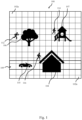
- Figure 1 shows a scene 100 analysed by an object tracking system.
- the scene comprises three static objects 104, 106, 107 which forms occluded areas.
- an individual 112 who is jogging within the scene 100 may temporarily disappear behind a tree 106.
- another person 114, walking within the same scene 100 could momentarily vanish behind a playground building 107.
- a car 110 moving along a road 109 may become obscured by a house 104, and another pedestrian 116 walking adjacent to the road 109 might also be concealed by the same house 104.
- the speed of movement of the objects 110, 112, 114, 116 as well as the direction of those objects 110, 112, 114, 116 while being occluded all influence for how long duration the moving objects 110, 112, 114, 116 are hidden from view of a tracking system analysing the scene 100.
- coasting may be used to try to resume the object track again.
- Coasting continues to estimate the object's trajectory during the period of loss, maintaining a hypothetical track, using e.g., a Kalman filter.
- Coasting carries the risk of accruing errors over time, particularly if the object changes its speed or direction while undetected.
- coasting is typically performed for a specified duration of time, referred herein as coasting period or coasting time.
- coasting period the system uses prior information and a motion model to estimate the current state of the object. Once the coasting period has elapsed, the tracking system will typically mark the track as lost if the object has not been re-detected.
- re-identification may be performed as described above and further below.
- the track is considered (determined) as lost when an object tracker no longer can track the object of the object track, as further described above, and re-identification may be performed.
- the scene 100 shown in figure 1 has been divided into a plurality of predetermined areas 102a-n, represented by dashed lines.
- each such area corresponds to a pixel area of an image frame of a video sequence capturing the scene 100.
- These areas 100a-n may be used to identify occluded areas in the scene.
- Other ways of dividing the scene 100 into areas may be employed, for example as described in conjunction with figure 4 below.
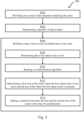
- a method 500 for detecting one or more occluded areas of a scene 100 analysed by an object tracking system may start by providing S502 one or more video sequences depicting the scene 100, e.g., the scene 100 in figure 1 .
- the one or more video sequences may comprise a plurality of tracked objects 110, 112, 114, 116. Consequently, a plurality of object tracks is determined S504, each object track being associated with a single object among the plurality of objects 110, 112, 114, 116.
- the scene may comprise any number (1 - n) of occluded areas.
- the scene 100 comprises three occluded areas.
- a map of occluded areas may be built S506 as described by the method of figure 5 .
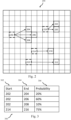
- Figure 2 shows an example of such map 200 according to some embodiments.
- the map 200 includes the corresponding areas (marked by dashed lines in figure 2 ) of the scene as the areas 102a-n from figure 1 , but the areas in map 200 are referred to with specific numbers (202 - 222) for ease of explanation.
- a re-identification algorithm may be run S510.
- the re-identification algorithm may be run on the same video sequence as the one where the person 116 last was detected, or on another video sequence capturing the scene 100.
- the purpose of the re-identification algorithm is to try to resume the object track associated with the person 116.
- Re-identification algorithms aim to recognize the same object across different spatial or temporal gaps. These algorithms can vary greatly based on the specific requirements of the application, the kind of objects being tracked, and the types of features used for identification. Examples include Euclidean distance-based matching or cosine similarity-based matching to measure the similarity between feature vectors. More complex methods such as Deep Learning Based Re-Identification may be used. For example, Convolutional Neural Networks (CNNs) can be trained to extract feature vectors from images of objects and perform re-identification.
- CNNs Convolutional Neural Networks
- the method 500 comprises the step of determining S512 a first area of the scene 100 among a plurality of areas of the scene 100 where the object track is lost and a second area of the scene 100 among the plurality of areas of the scene 100 where the first object track is resumed.
- a connection may then be added between the first and the second area of the scene to the map of occluded areas, such that the map identifies that an object track being lost in the first area of the scene has been resumed in the second area of the scene.
- an object track associated with the person 116 may be lost at a first area 214 (also referred to as a start area) of the scene and resumed at a second area 216 (also referred to as an end area) of the scene.
- the connection between the first area 214 and the second area 216 are indicated as an arrow in figure 2 . Consequently, the map 200 identifies that an object track being lost in the first area 214 of the scene has been resumed in the second area 216 of the scene. Put differently, the map 200 indicates that there may be an occluded area between the first area 214 and the second area 216 of the scene.
- the map 200 indicates that an object track being lost in an area of the scene has been resumed in a subset of areas of the scene, the subset comprising at least two areas of the scene among the plurality of areas of the scene.
- This example is shown in figure 2 for the occluded area resulting from the tree 106 in the scene 100.
- object tracks that got lost in the area 202 of the scene has been resumed in a plurality of areas 204, 206, 208 of the scene.
- an object track associated with the jogging person 112 may have been re-identified, after being occluded by the tree 106, in area 206 of the scene.
- building the map may comprise performing step S512 and S514 of the method 500 on a plurality of lost object tracks.
- the map 200 further indicates two other occluded areas, in that a connection between the area 210 and the area 212 is included in the map, as well as a connection between the area 218 and a plurality of areas 220, 222.
- Figure 3 shows of a map 300 of occluded areas shown according to some embodiments.
- the map 300 corresponds to parts of the map 200 shown in figure 2 and thus shows a map 300 of occluded areas in the scene 100 shown in figure 1 using another representation.
- the map 300 is represented by a table, including a column for start areas 302 and end areas 304, where each row represents a connection between the start area and an end area of the scene between which an occluded area is situated.
- the table 300 identifies that an object track being lost in the start area 214 of the scene has been resumed in the end area 216 of the scene.
- the table further indicates a probability 306 that an object track being lost in that start area 214 of the scene is resumed that end area 216 of the scene. In the example of figure 3 , the table indicates that this probability is 75%. In other words, 75% of the object tracks being lost in the area 214 of the scene has been resumed in the area 216 of the scene.
- Table 300 further comprises a representation of the occluded area resulting from the tree 106 of the scene 100.
- the table 300 comprises three rows relating to the occluded area resulting from the tree 106 of the scene 100. The first row represents the connection between the start area 202 and end area 204 of the scene. The second row represents the connection between the start area 202 and end area 206 of the scene.
- the third row represents the connection between the start area 202 and end area 208 of the scene.
- Each of the three rows further comprises an associated probability.
- the table 300 indicates that an object track being lost in the first area 202 of the scene has been resumed in a subset of areas 204, 206, 208 of the scene, the subset comprising at least two areas of the scene among the plurality of areas of the scene, wherein the map further indicates for each area 204, 206, 208 in the subset, the probability 306 that an object track being lost in the first area 202 of the scene is resumed in that area in the subset.
- Figures 1-3 shows embodiments where the areas of the scene that are used to identify occluded areas are predetermined.
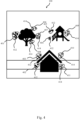
- the scene iteratively is divided into the plurality of areas of the scene. This embodiment is shown in figure 4 .
- the objects that forms the occluded areas are also shown for ease of explanation.
- the scene iteratively is divided into the plurality of areas of the scene 401-411, based on positions 412, 414 in the scene where an object track among the plurality of object tracks is lost and resumed. This may be achieved by a clustering algorithm applied to each position 412 indicating a position in the scene where an object track among the plurality of object tracks is lost. In figure 4 , these positions are represented by filled circles.
- positions 412 have been clustered into 5 clusters, which each is used to determine an area 401, 402, 403, 404, 405 of the scene.
- a clustering algorithm is applied to each position 414 indicating a position in the scene where an object track among the plurality of object tracks is resumed.
- these positions are represented by unfilled circles.
- These positions 414 have been clustered into 6 clusters, which each is used to determine an area 406, 407, 408, 409, 410, 411 of the scene. Consequently, the map of occluded area comprises connection (not shown in figure 4 ) between area according to the below table.
- Table 1 Start End Probability 401 406 22% 401 407 45% 401 408 33% 403 414 100% 402 411 100% 405 409 100% 404 409 100%
- the probabilities in table 1 assumes that all object tracks being lost in a start area 401-405 are indeed determined to be resumed in any of the end areas 406-411. However, it should be noted that object tracks being lost sometimes are not resumed, due to that the re-identification algorithm did not succeed to find any object that match the object of the lost object track.
- the re-identification algorithm may for example fail due to it not being trained/configured for all edge cases. In other examples, the reason may be that a tracked object stayed in the occluded area, e.g. went in to the house. In these cases, the probability may be lower than 100% for a certain start area of the scene.
- the positions 412 and the positions 414 may be clustered each time a new track is lost and/or resumed, resulting in that the areas 401-411 may change size and location, or that new areas are added, or two areas are combined into one area. If such change to the areas is made, the corresponding connections (and optionally the probabilities) will change accordingly. For example, if an object track is lost between areas 405 and 404 in figure 4 , these areas may in some cases be merged into one area. In another example, if an object track is resumed close to area 409 in figure 4 , the area 409 may be divided into two separate areas.
- Figure 1-4 shows embodiments of how the map of occluded areas may be built.
- the map of occluded areas may be built offline, in a configuration phase, using one or more video sequences capturing the scene.
- the map of occluded areas may also be built and adjusted in real time while the tracker system tracks objects in the scene, for example when available computational resources exist for the tracking system to use.
- the map of occluded areas is not considered built until a threshold number of object tracks have been lost and resumed using the techniques described herein.
- the map of occluded areas may not be used to improve object tracking (as will be described below in conjunction with figures 6-7 ) until the threshold number of objects have been lost and resumed.
- a connection between a first area and a second area of the scene may not be considered as verified until a threshold number of object tracks that were lost in the first area of the scene were indeed resumed in that second area of the scene.
- the connection between the first and second area may not be used to improve object tracking (as will be described below in conjunction with figure 6-7 ) until the connection has been verified.
- the map of occluded areas may be used to improve object tracking. Examples of how to accomplish this will now be described in conjunction with figures 6-7 .
- Figure 6 shows by way of example a method 600 for improving coasting using the map of occluded areas.
- a map of occluded areas is provided as described above, for example as shown in method 500 of figure 5 , and as exemplified in figure 1-4 .
- the method 600 comprises the step of providing S602 sensor data capturing the scene.
- the sensor data may be video data, radar data or lidar data.
- the sensor data is used to track objects, to determine object tracks. For example, a second object may be tracked in the sensor data to determine a second object track. If the second object becomes occluded by another object, moves out of the field of view, or the system fails to detect the object due to changes in lighting conditions, noise, or other factors, the second object is thus determined S604 to be untrackable since the tracking system is losing track of the second object. Coasting may thus be needed as discussed above.
- Coasting be improved using the map of occluded areas. More specifically, a position in the scene of a latest observation of the second object in the second object track is determined S606. The position is compared to the positions of the occluded areas as specified in the map of occluded areas. In case the position is inside or close to (within a threshold distance) one of the start areas (referred to here as the first area) of an occluded area, the connection(s) between the start area and other areas in the scene may be used to improve coasting. For example, using the map of occluded areas, an area of the scene where an object track being lost in the first area of the scene has been resumed can be identified S608.
- the identified S608 area is thus the end area for the relevant occluded area (which occludes the second object).
- the identified area equals area 216.
- a distance between the first area of the scene and the identified area of the scene may be determined S610. The distance may be determined using for example the coordinate system of the sensor data, or by counting the pixels between the areas in a representation of the scene.
- the map of occluded areas comprises a distance for each connection in the map. Such distance may have been determined during the configuration phase, for example using the field of view of the video camera capturing the one or more video sequences to determine how far one area of the scene is from another area of the scene.
- the tracking system may estimate a size of the occluded area which is currently hiding the second object. Consequently, the tracking system may set S614 a coasting period based on the estimated size, such that a larger distance results in a comparably longer coasting period.
- the coasting period may be prolonged or shortened (compared to a predefined global coasting period), based on the assessment, such that it is targeted to the size of the relevant occluded area in the scene increase the possibility that the coasting process is successful.
- the coasting period may be set based on a predetermined mapping function between a determined distance and coasting period.
- the coasting period is further defined by determining a speed of the second object; and setting the costing period for the second track further based in the speed of the second object, wherein a higher speed results in a comparably shorter coasting period.
- the coasting period may thus be determined by dividing the determined distance with the speed (possibly adding a margin as well), to estimate the time period during which the second object will be occluded.
- a position of the second object may be predicted S616 based on the determined speed.
- the map indicates that an object track being lost in the first area of the scene has been resumed in a subset of areas of the scene, the subset comprising at least two areas of the scene among the plurality of areas of the scene.
- This example is shown in figure 2-4 and table 1, for area 202 and 401, respectively.
- the area of the scene from the subset having the largest probability as indicated by the map may be selected.
- the method 600 is aborted without setting 614 a coasting period, etc.
- an estimated trajectory of the second object while being occluded is also determined based on the map of occluded areas.
- an angle in the scene between the first area and the identified area may be determined S612.
- the position of the second object during the coasting may then be predicted S616 further based on the angle.
- the historical data used to configure the map of occluded areas may indicate that an object occluded at a certain area of the scene typically take a certain trajectory when being occluded which may differ from direction at which the object entered the occluded area. Using the techniques described herein, such behaviours may be considered when estimating/predicting the position of the second object during the coasting.
- the velocity of the second object before being occluded may need to be mapped to the estimated trajectory.
- the map of occluded areas may be used for other purposes than improving coasting.
- the map of occluded areas may be used to improve the chances of a successful and efficient re-identification process.
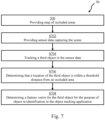
- Figure 7 shows by way of example a method 700 for improving re-identification using the map of occluded areas.
- a map of occluded areas is provided as described above, for example as shown in method 500 of figure 5 , and as exemplified in figure 1-4 .
- the method 700 further comprises providing S702 sensor data capturing the scene.
- the sensor data may comprise video data.
- Objects may be tracked in the sensor data.
- a third object may be tracked S704 in the sensor data to determine a third object track.
- the tracking system may prepare for the possibility that the third object will be occluded.
- the preparation may include determining S708 a feature vector for the third object for the purpose of object re-identification in the object tracking application.
- the map of occluded objects may be used to determine which areas to not prioritize for re-identification. Since coasting may be improved for the occluded areas of the map as described above, re-identification can be prioritized in other areas of the scene, for example areas that may be temporarily occluded by moving objects.
- the map of occluded areas may further be used to set up fixed privacy masks on areas where objects typically get visible again after being occluded.
- the map of occluded areas may be used to guide the compression algorithm, for example to compress occluded areas less or more (depending on requirements).
- Other exemplary use of the map of occluded areas include changing noise filtering, increase gain parameters, adjust local tone mapping, etc., in the sensor data corresponding to an area of the scene where an occluded objects is estimated to appear again, at the time the object is estimated to appear again.
Landscapes
- Engineering & Computer Science (AREA)
- Theoretical Computer Science (AREA)
- Physics & Mathematics (AREA)
- General Physics & Mathematics (AREA)
- Multimedia (AREA)
- Computer Vision & Pattern Recognition (AREA)
- Evolutionary Computation (AREA)
- General Health & Medical Sciences (AREA)
- Health & Medical Sciences (AREA)
- Software Systems (AREA)
- Artificial Intelligence (AREA)
- Computing Systems (AREA)
- Databases & Information Systems (AREA)
- Medical Informatics (AREA)
- Biomedical Technology (AREA)
- Molecular Biology (AREA)
- Computational Linguistics (AREA)
- Life Sciences & Earth Sciences (AREA)
- Electromagnetism (AREA)
- Radar, Positioning & Navigation (AREA)
- Remote Sensing (AREA)
- Computer Networks & Wireless Communication (AREA)
- Data Mining & Analysis (AREA)
- Social Psychology (AREA)
- Human Computer Interaction (AREA)
- Probability & Statistics with Applications (AREA)
- Biodiversity & Conservation Biology (AREA)
- Psychiatry (AREA)
- Mathematical Physics (AREA)
- General Engineering & Computer Science (AREA)
- Biophysics (AREA)
- Image Analysis (AREA)
- Closed-Circuit Television Systems (AREA)
- Studio Devices (AREA)
Claims (15)
- Computerimplementiertes Verfahren (500) zum Erkennen eines oder mehrerer verdeckter Bereiche in einer oder mehreren Videosequenzen, die durch ein Objektverfolgungssystem analysiert werden, wobei das Verfahren Folgendes umfasst:Bereitstellen (S502) einer oder mehrerer Videosequenzen, wobei die eine oder die mehreren Videosequenzen ein und dieselbe Szene (100) abbilden und die eine oder die mehreren Videosequenzen mehrere Objekte (110, 112, 114, 116) umfassen;Bestimmen (S504) mehrerer Objektspuren in der einen oder den mehreren Videosequenzen,Erstellen (S506) einer Karte (200, 300) eines oder mehrerer verdeckter Bereiche in der einen oder den mehreren Videosequenzen, wobei das Erstellen der Karte Folgendes umfasst:a) bei Bestimmen (S508), dass eine erste Objektspur unter den mehreren Objektspuren verloren wird, wobei die erste Objektspur einem ersten Objekt unter den mehreren Objekten entspricht: Ausführen (S510) eines Wiedererkennungsalgorithmus an mindestens einer Videosequenz der einen oder der mehreren Videosequenzen, um zu versuchen, die erste Objektspur wiederaufzunehmen; dadurch gekennzeichnet, dass das Verfahren ferner umfasst:
b) bei erfolgreichem Wiederaufnehmen der ersten Objektspur:Bestimmen (S512) eines ersten Bereichs (202, 210, 214, 218, 302), in dem die erste Objektspur verloren wird, wobei der erste Bereich in der einen oder den mehreren Videosequenzen unter mehreren Bereichen (102a-n, 202-222, 401-411) in der einen oder den mehreren Videosequenzen bestimmt wird, und eines zweiten Bereichs (304, 204, 206, 208, 212, 216, 220, 222), in dem die erste Objektspur wiederaufgenommen wird, wobei der zweite Bereich in der einen oder den mehreren Videosequenzen unter den mehreren Bereichen in der einen oder den mehreren Videosequenzen bestimmt wird, wobei jeder Bereich der mehreren Bereiche in der einen oder den mehreren Videosequenzen auf einen Bereich in einer 2D-Darstellung eines 3D-Bereichs der Szene, wie durch die eine oder die mehreren Videosequenzen aufgenommen, verweist, wobei die eine oder die mehreren Videosequenzen einem Basis-Koordinatensystem zugeordnet sind, in das Objekte und Bereiche, die in Einzelbildern dieser jeden Videosequenz abgebildet sind, umgewandelt werden; undHinzufügen (S514) einer Verbindung zwischen dem ersten und dem zweiten Bereich zu der Karte eines oder mehrerer verdeckter Bereiche, so dass die Karte identifiziert, dass eine Objektspur, die in dem ersten Bereich verloren wurde, in dem zweiten Bereich wiederaufgenommen worden ist. - Verfahren nach Anspruch 1, wobei das Erstellen der Karte das Durchführen von Schritt a) und b) an mehreren verlorenen Objektspuren unter den mehreren Objektspuren umfasst.
- Verfahren nach Anspruch 2, wobei die Karte eines oder mehrerer verdeckter Bereiche ferner eine Wahrscheinlichkeit (306) angibt, dass eine Objektspur, die in dem ersten Bereich verloren wird, in dem zweiten Bereich wiederaufgenommen wird.
- Verfahren nach Anspruch 3, wobei die Karte angibt, dass eine Objektspur, die in dem ersten Bereich verloren wird, in einer Teilmenge von Bereichen in der einen oder den mehreren Videosequenzen wiederaufgenommen wurde, wobei die Teilmenge mindestens zwei Bereiche in der einen oder den mehreren Videosequenzen unter den mehreren Bereichen in der einen oder den mehreren Videosequenzen umfasst, wobei die Karte ferner für jeden Bereich in der Teilmenge die Wahrscheinlichkeit (306) angibt, dass eine Objektspur, die in dem ersten Bereich verloren wird, in diesem Bereich in der Teilmenge wiederaufgenommen wird.
- Verfahren nach einem der Ansprüche 1-4, ferner umfassend die folgenden Schritte:Bereitstellen (S602) von Sensordaten, welche die Szene aufnehmen;Verfolgen eines zweiten Objekts in den Sensordaten, um eine zweite Objektspur zu bestimmen;
undbei Bestimmen (S604), dass das zweite Objekt in den Sensordaten unverfolgbar ist, Bestimmen (S606) einer Position in den Sensordaten einer letzten Beobachtung des zweiten Objekts in der zweiten Objektspur, und bei Bestimmen, dass sich die Position der letzten Beobachtung des zweiten Objekts in der zweiten Objektspur innerhalb eines Mindestabstands von dem ersten Bereich befindet:Identifizieren (S608), aus der Karte, eines Bereichs in der einen oder den mehreren Videosequenzen, in dem eine Objektspur, die in dem ersten Bereich verloren wird, wiederaufgenommen wurde, und Bestimmen (S610) eines Abstands zwischen dem ersten Bereich und dem identifizierten Bereich,
undFestlegen (S614) eines Weiterverfolgungszeitraums für die zweite Objektspur basierend auf dem bestimmten Abstand, wobei ein größerer Abstand zu einem vergleichsweise längeren Weiterverfolgungszeitraum führt. - Verfahren nach Anspruch 5, wenn er von Anspruch 4 abhängt, wobei der Schritt des Identifizierens, aus der Karte, eines Bereichs in der einen oder den mehreren Videosequenzen, in dem eine Objektspur, die in dem ersten Bereich verloren wird, wiederaufgenommen wurde, umfasst:
Auswählen des Bereichs in der einen oder den mehreren Videosequenzen aus der Teilmenge, welche die größte Wahrscheinlichkeit aufweist, wie durch die Karte angegeben. - Verfahren nach einem der Ansprüche 5-6, wobei das Festlegen des Weiterverfolgungszeitraums Folgendes umfasst:Bestimmen einer Geschwindigkeit des zweiten Objekts bei der letzten Beobachtung des zweiten Objekts in der zweiten Objektspur; undFestlegen des Weiterverfolgungszeitraums für die zweite Spur, ferner basierend auf der Geschwindigkeit des zweiten Objekts, wobei eine höhere Geschwindigkeit zu einem vergleichsweise kürzeren Weiterverfolgungszeitraum führt.
- Verfahren nach Anspruch 7, wobeibei Bestimmen, dass das zweite Objekt in den Sensordaten unverfolgbar ist,Vorhersagen (S616) einer Position des zweiten Objekts, während es in den Sensordaten unverfolgbar ist, basierend auf der bestimmten Geschwindigkeit.
- Verfahren nach Anspruch 8, ferner umfassend
bei Bestimmen, dass das zweite Objekt in den Sensordaten unverfolgbar ist:Bestimmen (S612) eines Winkels zwischen dem ersten Bereich und dem identifizierten Bereich in der einen oder den mehreren Videosequenzen;Vorhersagen (S616) der Position des zweiten Objekts, während es in den Sensordaten unverfolgbar ist, ferner basierend auf dem Winkel. - Verfahren nach einem der Ansprüche 4-8, wobei es sich bei den Sensordaten um eines von Folgenden handelt: Radardaten, Lidardaten oder Videodaten.
- Verfahren nach einem der Ansprüche 1-10, wobei die mehreren Bereiche in der einen oder den mehreren Videosequenzen mehrere vorgegebene Bereiche in der einen oder den mehreren Videosequenzen (102a-n, 202-222) umfassen.
- Verfahren nach einem der Ansprüche 1-11, wobei die eine oder die mehreren Videosequenzen basierend auf Positionen (412, 414) in der einen oder den mehreren Videosequenzen, an denen eine Objektspur unter den mehreren Objektspuren verloren und wiederaufgenommen wird, iterativ in die mehreren Bereiche in der einen oder den mehreren Videosequenzen (401-411) unterteilt werden.
- Verfahren nach Anspruch 12, wobei der Schritt des iterativen Unterteilens der einen oder der mehreren Videosequenzen in die mehreren Bereiche in der einen oder den mehreren Videosequenzen Folgendes umfasst:Bestimmen mehrerer erster Positionen (412), wobei jede Position eine Position in der einen oder den mehreren Videosequenzen angibt, bei der eine Objektspur unter den mehreren Objektspuren verloren wird, Clusteranalyse der mehreren ersten Positionen in mehreren ersten Clustern, und für jeden Cluster der mehreren ersten Cluster, Bestimmen eines Bereichs (401-405) in der einen oder den mehreren Videosequenzen basierend auf den Positionen in dem Cluster; undBestimmen mehrerer zweiter Positionen (414), wobei jede Position eine Position in der einen oder den mehreren Videosequenzen, an der eine Objektspur unter den mehreren Objektspuren wiederaufgenommen wird, angibt, Clusteranalyse der mehreren zweiten Positionen in mehreren zweiten Clustern, und für jeden Cluster der mehreren zweiten Cluster, Bestimmen eines Bereichs (406-411) in der einen oder den mehreren Videosequenzen basierend auf den Positionen in dem Cluster.
- Verfahren nach einem der Ansprüche 1-13, ferner umfassend die folgenden Schritte:Bereitstellen (S702) von Sensordaten, welche die Szene aufnehmen;Verfolgen (S704) eines dritten Objekts in den Sensordaten, um eine dritte Objektspur zu bestimmen;Bestimmen (S706), dass sich eine Position des dritten Objekts in den Sensordaten innerhalb eines Mindestabstands von dem ersten Bereich in der einen oder den mehreren Videosequenzen befindet; undBestimmen (S708) eines Merkmalsvektors für das dritte Objekt zum Zweck einer Wiedererkennung von Objekten bei der Objektverfolgungsanwendung.
- Nicht-transitorisches computerlesbares Speichermedium, auf dem Anweisungen zum Implementieren des Verfahrens nach einem der Ansprüche 1-14, wenn sie auf einer Vorrichtung mit Verarbeitungsfähigkeiten ausgeführt werden, gespeichert sind.
Priority Applications (6)
| Application Number | Priority Date | Filing Date | Title |
|---|---|---|---|
| EP23184034.9A EP4488939B1 (de) | 2023-07-07 | 2023-07-07 | Verfahren und nichttransitorisches computerlesbares speichermedium zur erkennung eines oder mehrerer verdeckter bereiche einer szene |
| KR1020240077645A KR20250008456A (ko) | 2023-07-07 | 2024-06-14 | 장면의 하나 이상의 폐색 영역을 검출하기 위한 방법 및 비일시적 컴퓨터 판독 가능 저장 매체 |
| CN202410878356.9A CN119273908A (zh) | 2023-07-07 | 2024-07-02 | 用于检测场景的一个或多个被遮挡区域的方法 |
| US18/762,342 US20250014190A1 (en) | 2023-07-07 | 2024-07-02 | Method and non-transitory computer-readable storage medium for detecting one or more occluded areas of a scene |
| TW113125032A TW202504327A (zh) | 2023-07-07 | 2024-07-04 | 偵測場景之一或多個遮蔽區域之方法及非暫態電腦可讀儲存媒體 |
| JP2024108703A JP2025010520A (ja) | 2023-07-07 | 2024-07-05 | シーンの1つまたは複数のオクルージョンされたエリアを検出するための方法および非一時的コンピュータ可読記憶媒体 |
Applications Claiming Priority (1)
| Application Number | Priority Date | Filing Date | Title |
|---|---|---|---|
| EP23184034.9A EP4488939B1 (de) | 2023-07-07 | 2023-07-07 | Verfahren und nichttransitorisches computerlesbares speichermedium zur erkennung eines oder mehrerer verdeckter bereiche einer szene |
Publications (3)
| Publication Number | Publication Date |
|---|---|
| EP4488939A1 EP4488939A1 (de) | 2025-01-08 |
| EP4488939C0 EP4488939C0 (de) | 2025-04-02 |
| EP4488939B1 true EP4488939B1 (de) | 2025-04-02 |
Family
ID=87158263
Family Applications (1)
| Application Number | Title | Priority Date | Filing Date |
|---|---|---|---|
| EP23184034.9A Active EP4488939B1 (de) | 2023-07-07 | 2023-07-07 | Verfahren und nichttransitorisches computerlesbares speichermedium zur erkennung eines oder mehrerer verdeckter bereiche einer szene |
Country Status (6)
| Country | Link |
|---|---|
| US (1) | US20250014190A1 (de) |
| EP (1) | EP4488939B1 (de) |
| JP (1) | JP2025010520A (de) |
| KR (1) | KR20250008456A (de) |
| CN (1) | CN119273908A (de) |
| TW (1) | TW202504327A (de) |
Families Citing this family (2)
| Publication number | Priority date | Publication date | Assignee | Title |
|---|---|---|---|---|
| US11643115B2 (en) * | 2019-05-31 | 2023-05-09 | Waymo Llc | Tracking vanished objects for autonomous vehicles |
| CN119559702B (zh) * | 2025-01-21 | 2025-04-04 | 每日互动股份有限公司 | 一种用于行人检索的数据处理方法、装置、介质及设备 |
-
2023
- 2023-07-07 EP EP23184034.9A patent/EP4488939B1/de active Active
-
2024
- 2024-06-14 KR KR1020240077645A patent/KR20250008456A/ko active Pending
- 2024-07-02 CN CN202410878356.9A patent/CN119273908A/zh active Pending
- 2024-07-02 US US18/762,342 patent/US20250014190A1/en active Pending
- 2024-07-04 TW TW113125032A patent/TW202504327A/zh unknown
- 2024-07-05 JP JP2024108703A patent/JP2025010520A/ja active Pending
Also Published As
| Publication number | Publication date |
|---|---|
| TW202504327A (zh) | 2025-01-16 |
| EP4488939C0 (de) | 2025-04-02 |
| EP4488939A1 (de) | 2025-01-08 |
| CN119273908A (zh) | 2025-01-07 |
| US20250014190A1 (en) | 2025-01-09 |
| JP2025010520A (ja) | 2025-01-21 |
| KR20250008456A (ko) | 2025-01-14 |
Similar Documents
| Publication | Publication Date | Title |
|---|---|---|
| CN112669349B (zh) | 一种客流统计方法、电子设备及存储介质 | |
| US10417503B2 (en) | Image processing apparatus and image processing method | |
| EP2858008B1 (de) | Zieldetektionsverfahren und -system | |
| CN104008371B (zh) | 一种基于多摄像机的区域可疑目标跟踪与识别方法 | |
| CN109791603B (zh) | 通过预测对象的运动来捕获机动车辆的环境区域中的对象的方法、摄像机系统以及机动车辆 | |
| CN105405154B (zh) | 基于颜色-结构特征的目标对象跟踪方法 | |
| US20250014190A1 (en) | Method and non-transitory computer-readable storage medium for detecting one or more occluded areas of a scene | |
| JP2016099941A (ja) | オブジェクト位置推定システム、及びそのプログラム | |
| JP7675339B2 (ja) | 物体追跡装置 | |
| CN102034355A (zh) | 一种基于特征点匹配的车辆检测及跟踪方法 | |
| CN105654516B (zh) | 基于目标显著性的卫星图像对地面弱小运动目标检测方法 | |
| WO2013012091A1 (ja) | 情報処理装置、物体追跡方法およびプログラム記憶媒体 | |
| JP6659095B2 (ja) | 画像処理装置、画像処理方法及びプログラム | |
| Mujtaba et al. | Drone Based Traffic Surveillance using Semantic Segmentation and DeepSort | |
| JP7488674B2 (ja) | 物体認識装置、物体認識方法及び物体認識プログラム | |
| CN118968009B (zh) | 对对象进行优先级排序的方法、系统和计算机可读介质 | |
| CN119722738A (zh) | 目标跟踪方法和装置 | |
| KR101595334B1 (ko) | 농장에서의 움직임 개체의 이동 궤적 트래킹 방법 및 장치 | |
| JP7488673B2 (ja) | 移動物体追跡装置、移動物体追跡方法及び移動物体追跡プログラム | |
| JP7422572B2 (ja) | 移動物体追跡装置、移動物体追跡方法及び移動物体追跡プログラム | |
| Mitzel et al. | Real-Time Multi-Person Tracking with Time-Constrained Detection. | |
| JP2019144900A (ja) | 状態推定装置及びプログラム | |
| CN118279351A (zh) | 一种水葫芦跟踪统计方法及装置 | |
| CN117095030B (zh) | 一种用于路侧系统的追踪对象的方法、装置及设备 | |
| JP2011043863A (ja) | 対象領域判定・追跡装置、方法、プログラム及び対象領域判定装置 |
Legal Events
| Date | Code | Title | Description |
|---|---|---|---|
| PUAI | Public reference made under article 153(3) epc to a published international application that has entered the european phase |
Free format text: ORIGINAL CODE: 0009012 |
|
| STAA | Information on the status of an ep patent application or granted ep patent |
Free format text: STATUS: REQUEST FOR EXAMINATION WAS MADE |
|
| 17P | Request for examination filed |
Effective date: 20240104 |
|
| AK | Designated contracting states |
Kind code of ref document: A1 Designated state(s): AL AT BE BG CH CY CZ DE DK EE ES FI FR GB GR HR HU IE IS IT LI LT LU LV MC ME MK MT NL NO PL PT RO RS SE SI SK SM TR |
|
| GRAP | Despatch of communication of intention to grant a patent |
Free format text: ORIGINAL CODE: EPIDOSNIGR1 |
|
| STAA | Information on the status of an ep patent application or granted ep patent |
Free format text: STATUS: GRANT OF PATENT IS INTENDED |
|
| RIC1 | Information provided on ipc code assigned before grant |
Ipc: G06V 10/62 20220101ALI20250108BHEP Ipc: G06V 10/26 20220101ALI20250108BHEP Ipc: G06V 10/82 20220101ALI20250108BHEP Ipc: G06T 7/277 20170101AFI20250108BHEP |
|
| INTG | Intention to grant announced |
Effective date: 20250120 |
|
| GRAS | Grant fee paid |
Free format text: ORIGINAL CODE: EPIDOSNIGR3 |
|
| GRAA | (expected) grant |
Free format text: ORIGINAL CODE: 0009210 |
|
| STAA | Information on the status of an ep patent application or granted ep patent |
Free format text: STATUS: THE PATENT HAS BEEN GRANTED |
|
| AK | Designated contracting states |
Kind code of ref document: B1 Designated state(s): AL AT BE BG CH CY CZ DE DK EE ES FI FR GB GR HR HU IE IS IT LI LT LU LV MC ME MK MT NL NO PL PT RO RS SE SI SK SM TR |
|
| REG | Reference to a national code |
Ref country code: GB Ref legal event code: FG4D |
|
| REG | Reference to a national code |
Ref country code: CH Ref legal event code: EP |
|
| REG | Reference to a national code |
Ref country code: IE Ref legal event code: FG4D |
|
| U01 | Request for unitary effect filed |
Effective date: 20250402 |
|
| U07 | Unitary effect registered |
Designated state(s): AT BE BG DE DK EE FI FR IT LT LU LV MT NL PT RO SE SI Effective date: 20250408 |
|
| U20 | Renewal fee for the european patent with unitary effect paid |
Year of fee payment: 3 Effective date: 20250620 |
|
| PG25 | Lapsed in a contracting state [announced via postgrant information from national office to epo] |
Ref country code: ES Free format text: LAPSE BECAUSE OF FAILURE TO SUBMIT A TRANSLATION OF THE DESCRIPTION OR TO PAY THE FEE WITHIN THE PRESCRIBED TIME-LIMIT Effective date: 20250402 |
|
| PG25 | Lapsed in a contracting state [announced via postgrant information from national office to epo] |
Ref country code: NO Free format text: LAPSE BECAUSE OF FAILURE TO SUBMIT A TRANSLATION OF THE DESCRIPTION OR TO PAY THE FEE WITHIN THE PRESCRIBED TIME-LIMIT Effective date: 20250702 Ref country code: GR Free format text: LAPSE BECAUSE OF FAILURE TO SUBMIT A TRANSLATION OF THE DESCRIPTION OR TO PAY THE FEE WITHIN THE PRESCRIBED TIME-LIMIT Effective date: 20250703 |
|
| PG25 | Lapsed in a contracting state [announced via postgrant information from national office to epo] |
Ref country code: PL Free format text: LAPSE BECAUSE OF FAILURE TO SUBMIT A TRANSLATION OF THE DESCRIPTION OR TO PAY THE FEE WITHIN THE PRESCRIBED TIME-LIMIT Effective date: 20250402 |
|
| PG25 | Lapsed in a contracting state [announced via postgrant information from national office to epo] |
Ref country code: HR Free format text: LAPSE BECAUSE OF FAILURE TO SUBMIT A TRANSLATION OF THE DESCRIPTION OR TO PAY THE FEE WITHIN THE PRESCRIBED TIME-LIMIT Effective date: 20250402 |
|
| PG25 | Lapsed in a contracting state [announced via postgrant information from national office to epo] |
Ref country code: RS Free format text: LAPSE BECAUSE OF FAILURE TO SUBMIT A TRANSLATION OF THE DESCRIPTION OR TO PAY THE FEE WITHIN THE PRESCRIBED TIME-LIMIT Effective date: 20250702 |
|
| PG25 | Lapsed in a contracting state [announced via postgrant information from national office to epo] |
Ref country code: IS Free format text: LAPSE BECAUSE OF FAILURE TO SUBMIT A TRANSLATION OF THE DESCRIPTION OR TO PAY THE FEE WITHIN THE PRESCRIBED TIME-LIMIT Effective date: 20250802 |