EP4485972A1 - An audio system arranged in a vehicle - Google Patents
An audio system arranged in a vehicle Download PDFInfo
- Publication number
- EP4485972A1 EP4485972A1 EP23181346.0A EP23181346A EP4485972A1 EP 4485972 A1 EP4485972 A1 EP 4485972A1 EP 23181346 A EP23181346 A EP 23181346A EP 4485972 A1 EP4485972 A1 EP 4485972A1
- Authority
- EP
- European Patent Office
- Prior art keywords
- vehicle
- display
- audio system
- loudspeaker
- audio
- Prior art date
- Legal status (The legal status is an assumption and is not a legal conclusion. Google has not performed a legal analysis and makes no representation as to the accuracy of the status listed.)
- Withdrawn
Links
Images

Classifications
-
- H—ELECTRICITY
- H04—ELECTRIC COMMUNICATION TECHNIQUE
- H04R—LOUDSPEAKERS, MICROPHONES, GRAMOPHONE PICK-UPS OR LIKE ACOUSTIC ELECTROMECHANICAL TRANSDUCERS; ELECTRIC HEARING AIDS; PUBLIC ADDRESS SYSTEMS
- H04R1/00—Details of transducers, loudspeakers or microphones
- H04R1/02—Casings; Cabinets ; Supports therefor; Mountings therein
- H04R1/028—Casings; Cabinets ; Supports therefor; Mountings therein associated with devices performing functions other than acoustics, e.g. electric candles
-
- H—ELECTRICITY
- H04—ELECTRIC COMMUNICATION TECHNIQUE
- H04R—LOUDSPEAKERS, MICROPHONES, GRAMOPHONE PICK-UPS OR LIKE ACOUSTIC ELECTROMECHANICAL TRANSDUCERS; ELECTRIC HEARING AIDS; PUBLIC ADDRESS SYSTEMS
- H04R7/00—Diaphragms for electromechanical transducers; Cones
- H04R7/02—Diaphragms for electromechanical transducers; Cones characterised by the construction
- H04R7/04—Plane diaphragms
- H04R7/045—Plane diaphragms using the distributed mode principle, i.e. whereby the acoustic radiation is emanated from uniformly distributed free bending wave vibration induced in a stiff panel and not from pistonic motion
-
- H—ELECTRICITY
- H04—ELECTRIC COMMUNICATION TECHNIQUE
- H04R—LOUDSPEAKERS, MICROPHONES, GRAMOPHONE PICK-UPS OR LIKE ACOUSTIC ELECTROMECHANICAL TRANSDUCERS; ELECTRIC HEARING AIDS; PUBLIC ADDRESS SYSTEMS
- H04R1/00—Details of transducers, loudspeakers or microphones
- H04R1/20—Arrangements for obtaining desired frequency or directional characteristics
- H04R1/32—Arrangements for obtaining desired frequency or directional characteristics for obtaining desired directional characteristic only
- H04R1/34—Arrangements for obtaining desired frequency or directional characteristics for obtaining desired directional characteristic only by using a single transducer with sound reflecting, diffracting, directing or guiding means
- H04R1/345—Arrangements for obtaining desired frequency or directional characteristics for obtaining desired directional characteristic only by using a single transducer with sound reflecting, diffracting, directing or guiding means for loudspeakers
-
- G—PHYSICS
- G10—MUSICAL INSTRUMENTS; ACOUSTICS
- G10K—SOUND-PRODUCING DEVICES; METHODS OR DEVICES FOR PROTECTING AGAINST, OR FOR DAMPING, NOISE OR OTHER ACOUSTIC WAVES IN GENERAL; ACOUSTICS NOT OTHERWISE PROVIDED FOR
- G10K11/00—Methods or devices for transmitting, conducting or directing sound in general; Methods or devices for protecting against, or for damping, noise or other acoustic waves in general
- G10K11/16—Methods or devices for protecting against, or for damping, noise or other acoustic waves in general
- G10K11/175—Methods or devices for protecting against, or for damping, noise or other acoustic waves in general using interference effects; Masking sound
- G10K11/178—Methods or devices for protecting against, or for damping, noise or other acoustic waves in general using interference effects; Masking sound by electro-acoustically regenerating the original acoustic waves in anti-phase
- G10K11/1781—Methods or devices for protecting against, or for damping, noise or other acoustic waves in general using interference effects; Masking sound by electro-acoustically regenerating the original acoustic waves in anti-phase characterised by the analysis of input or output signals, e.g. frequency range, modes, transfer functions
- G10K11/17821—Methods or devices for protecting against, or for damping, noise or other acoustic waves in general using interference effects; Masking sound by electro-acoustically regenerating the original acoustic waves in anti-phase characterised by the analysis of input or output signals, e.g. frequency range, modes, transfer functions characterised by the analysis of the input signals only
- G10K11/17823—Reference signals, e.g. ambient acoustic environment
-
- G—PHYSICS
- G10—MUSICAL INSTRUMENTS; ACOUSTICS
- G10K—SOUND-PRODUCING DEVICES; METHODS OR DEVICES FOR PROTECTING AGAINST, OR FOR DAMPING, NOISE OR OTHER ACOUSTIC WAVES IN GENERAL; ACOUSTICS NOT OTHERWISE PROVIDED FOR
- G10K11/00—Methods or devices for transmitting, conducting or directing sound in general; Methods or devices for protecting against, or for damping, noise or other acoustic waves in general
- G10K11/16—Methods or devices for protecting against, or for damping, noise or other acoustic waves in general
- G10K11/175—Methods or devices for protecting against, or for damping, noise or other acoustic waves in general using interference effects; Masking sound
- G10K11/178—Methods or devices for protecting against, or for damping, noise or other acoustic waves in general using interference effects; Masking sound by electro-acoustically regenerating the original acoustic waves in anti-phase
- G10K11/1785—Methods, e.g. algorithms; Devices
- G10K11/17857—Geometric disposition, e.g. placement of microphones
-
- G—PHYSICS
- G10—MUSICAL INSTRUMENTS; ACOUSTICS
- G10K—SOUND-PRODUCING DEVICES; METHODS OR DEVICES FOR PROTECTING AGAINST, OR FOR DAMPING, NOISE OR OTHER ACOUSTIC WAVES IN GENERAL; ACOUSTICS NOT OTHERWISE PROVIDED FOR
- G10K11/00—Methods or devices for transmitting, conducting or directing sound in general; Methods or devices for protecting against, or for damping, noise or other acoustic waves in general
- G10K11/16—Methods or devices for protecting against, or for damping, noise or other acoustic waves in general
- G10K11/175—Methods or devices for protecting against, or for damping, noise or other acoustic waves in general using interference effects; Masking sound
- G10K11/178—Methods or devices for protecting against, or for damping, noise or other acoustic waves in general using interference effects; Masking sound by electro-acoustically regenerating the original acoustic waves in anti-phase
- G10K11/1787—General system configurations
- G10K11/17873—General system configurations using a reference signal without an error signal, e.g. pure feedforward
-
- G—PHYSICS
- G10—MUSICAL INSTRUMENTS; ACOUSTICS
- G10K—SOUND-PRODUCING DEVICES; METHODS OR DEVICES FOR PROTECTING AGAINST, OR FOR DAMPING, NOISE OR OTHER ACOUSTIC WAVES IN GENERAL; ACOUSTICS NOT OTHERWISE PROVIDED FOR
- G10K11/00—Methods or devices for transmitting, conducting or directing sound in general; Methods or devices for protecting against, or for damping, noise or other acoustic waves in general
- G10K11/18—Methods or devices for transmitting, conducting or directing sound
- G10K11/24—Methods or devices for transmitting, conducting or directing sound for conducting sound through solid bodies, e.g. wires
-
- H—ELECTRICITY
- H04—ELECTRIC COMMUNICATION TECHNIQUE
- H04R—LOUDSPEAKERS, MICROPHONES, GRAMOPHONE PICK-UPS OR LIKE ACOUSTIC ELECTROMECHANICAL TRANSDUCERS; ELECTRIC HEARING AIDS; PUBLIC ADDRESS SYSTEMS
- H04R1/00—Details of transducers, loudspeakers or microphones
- H04R1/02—Casings; Cabinets ; Supports therefor; Mountings therein
- H04R1/025—Arrangements for fixing loudspeaker transducers, e.g. in a box, furniture
-
- H—ELECTRICITY
- H04—ELECTRIC COMMUNICATION TECHNIQUE
- H04R—LOUDSPEAKERS, MICROPHONES, GRAMOPHONE PICK-UPS OR LIKE ACOUSTIC ELECTROMECHANICAL TRANSDUCERS; ELECTRIC HEARING AIDS; PUBLIC ADDRESS SYSTEMS
- H04R1/00—Details of transducers, loudspeakers or microphones
- H04R1/20—Arrangements for obtaining desired frequency or directional characteristics
- H04R1/32—Arrangements for obtaining desired frequency or directional characteristics for obtaining desired directional characteristic only
- H04R1/40—Arrangements for obtaining desired frequency or directional characteristics for obtaining desired directional characteristic only by combining a number of identical transducers
- H04R1/403—Arrangements for obtaining desired frequency or directional characteristics for obtaining desired directional characteristic only by combining a number of identical transducers loud-speakers
-
- G—PHYSICS
- G10—MUSICAL INSTRUMENTS; ACOUSTICS
- G10K—SOUND-PRODUCING DEVICES; METHODS OR DEVICES FOR PROTECTING AGAINST, OR FOR DAMPING, NOISE OR OTHER ACOUSTIC WAVES IN GENERAL; ACOUSTICS NOT OTHERWISE PROVIDED FOR
- G10K2210/00—Details of active noise control [ANC] covered by G10K11/178 but not provided for in any of its subgroups
- G10K2210/10—Applications
- G10K2210/128—Vehicles
-
- G—PHYSICS
- G10—MUSICAL INSTRUMENTS; ACOUSTICS
- G10K—SOUND-PRODUCING DEVICES; METHODS OR DEVICES FOR PROTECTING AGAINST, OR FOR DAMPING, NOISE OR OTHER ACOUSTIC WAVES IN GENERAL; ACOUSTICS NOT OTHERWISE PROVIDED FOR
- G10K2210/00—Details of active noise control [ANC] covered by G10K11/178 but not provided for in any of its subgroups
- G10K2210/10—Applications
- G10K2210/128—Vehicles
- G10K2210/1282—Automobiles
-
- G—PHYSICS
- G10—MUSICAL INSTRUMENTS; ACOUSTICS
- G10K—SOUND-PRODUCING DEVICES; METHODS OR DEVICES FOR PROTECTING AGAINST, OR FOR DAMPING, NOISE OR OTHER ACOUSTIC WAVES IN GENERAL; ACOUSTICS NOT OTHERWISE PROVIDED FOR
- G10K2210/00—Details of active noise control [ANC] covered by G10K11/178 but not provided for in any of its subgroups
- G10K2210/10—Applications
- G10K2210/129—Vibration, e.g. instead of, or in addition to, acoustic noise
-
- G—PHYSICS
- G10—MUSICAL INSTRUMENTS; ACOUSTICS
- G10K—SOUND-PRODUCING DEVICES; METHODS OR DEVICES FOR PROTECTING AGAINST, OR FOR DAMPING, NOISE OR OTHER ACOUSTIC WAVES IN GENERAL; ACOUSTICS NOT OTHERWISE PROVIDED FOR
- G10K2210/00—Details of active noise control [ANC] covered by G10K11/178 but not provided for in any of its subgroups
- G10K2210/30—Means
- G10K2210/301—Computational
- G10K2210/3027—Feedforward
-
- G—PHYSICS
- G10—MUSICAL INSTRUMENTS; ACOUSTICS
- G10K—SOUND-PRODUCING DEVICES; METHODS OR DEVICES FOR PROTECTING AGAINST, OR FOR DAMPING, NOISE OR OTHER ACOUSTIC WAVES IN GENERAL; ACOUSTICS NOT OTHERWISE PROVIDED FOR
- G10K2210/00—Details of active noise control [ANC] covered by G10K11/178 but not provided for in any of its subgroups
- G10K2210/30—Means
- G10K2210/301—Computational
- G10K2210/3032—Harmonics or sub-harmonics
-
- G—PHYSICS
- G10—MUSICAL INSTRUMENTS; ACOUSTICS
- G10K—SOUND-PRODUCING DEVICES; METHODS OR DEVICES FOR PROTECTING AGAINST, OR FOR DAMPING, NOISE OR OTHER ACOUSTIC WAVES IN GENERAL; ACOUSTICS NOT OTHERWISE PROVIDED FOR
- G10K2210/00—Details of active noise control [ANC] covered by G10K11/178 but not provided for in any of its subgroups
- G10K2210/30—Means
- G10K2210/301—Computational
- G10K2210/3046—Multiple acoustic inputs, multiple acoustic outputs
-
- G—PHYSICS
- G10—MUSICAL INSTRUMENTS; ACOUSTICS
- G10K—SOUND-PRODUCING DEVICES; METHODS OR DEVICES FOR PROTECTING AGAINST, OR FOR DAMPING, NOISE OR OTHER ACOUSTIC WAVES IN GENERAL; ACOUSTICS NOT OTHERWISE PROVIDED FOR
- G10K2210/00—Details of active noise control [ANC] covered by G10K11/178 but not provided for in any of its subgroups
- G10K2210/30—Means
- G10K2210/321—Physical
- G10K2210/3212—Actuator details, e.g. composition or microstructure
-
- G—PHYSICS
- G10—MUSICAL INSTRUMENTS; ACOUSTICS
- G10K—SOUND-PRODUCING DEVICES; METHODS OR DEVICES FOR PROTECTING AGAINST, OR FOR DAMPING, NOISE OR OTHER ACOUSTIC WAVES IN GENERAL; ACOUSTICS NOT OTHERWISE PROVIDED FOR
- G10K2210/00—Details of active noise control [ANC] covered by G10K11/178 but not provided for in any of its subgroups
- G10K2210/30—Means
- G10K2210/321—Physical
- G10K2210/3219—Geometry of the configuration
-
- H—ELECTRICITY
- H04—ELECTRIC COMMUNICATION TECHNIQUE
- H04R—LOUDSPEAKERS, MICROPHONES, GRAMOPHONE PICK-UPS OR LIKE ACOUSTIC ELECTROMECHANICAL TRANSDUCERS; ELECTRIC HEARING AIDS; PUBLIC ADDRESS SYSTEMS
- H04R2499/00—Aspects covered by H04R or H04S not otherwise provided for in their subgroups
- H04R2499/10—General applications
- H04R2499/13—Acoustic transducers and sound field adaptation in vehicles
-
- H—ELECTRICITY
- H04—ELECTRIC COMMUNICATION TECHNIQUE
- H04R—LOUDSPEAKERS, MICROPHONES, GRAMOPHONE PICK-UPS OR LIKE ACOUSTIC ELECTROMECHANICAL TRANSDUCERS; ELECTRIC HEARING AIDS; PUBLIC ADDRESS SYSTEMS
- H04R2499/00—Aspects covered by H04R or H04S not otherwise provided for in their subgroups
- H04R2499/10—General applications
- H04R2499/15—Transducers incorporated in visual displaying devices, e.g. televisions, computer displays, laptops
Definitions
- the disclosure relates to an audio system arranged in a listening environment, in particular in a listening environment in a vehicle.
- Integration of speakers in a vehicle may be challenging.
- an audio system comprising one or more speakers into a vehicle
- many different aspects and constraints have to be considered.
- An important aspect to be considered is that each passenger of the vehicle should have a satisfying listening experience, which is often achieved by increasing the number of speakers combined with sophisticated digital signal processing algorithms, requiring significant processing power.
- Increasing the number of speakers in a listening environment in a vehicle is generally cost intensive and challenging, due to limited space that is available in the vehicle.
- Each additional electrodynamic speaker as are generally used in vehicles (e.g., loudspeakers arranged in loudspeaker box or enclosure), requires additional mounting space.
- an audio system should further provide the possibility of creating individual listening zones, one for each passenger of the vehicle.
- the audio system includes at least one multimedia unit configured to output an audio signal, and at least one display loudspeaker, wherein each of the at least one display loudspeaker is coupled to the at least one multimedia unit and receives the audio signal from the at least one multimedia unit, and each of the at least one display loudspeaker includes an OLED panel and at least one exciter coupled to the OLED panel and configured to vibrate the OLED panel to reproduce the audio signal.
Landscapes
- Engineering & Computer Science (AREA)
- Physics & Mathematics (AREA)
- Acoustics & Sound (AREA)
- Multimedia (AREA)
- Signal Processing (AREA)
- Health & Medical Sciences (AREA)
- Otolaryngology (AREA)
- Fittings On The Vehicle Exterior For Carrying Loads, And Devices For Holding Or Mounting Articles (AREA)
Abstract
An audio system arranged in a listening environment in a vehicle (10) comprises at least one multimedia unit (306) configured to output an audio signal, and at least one display loudspeaker (300), wherein each of the at least one display loudspeaker (300) is coupled to the at least one multimedia unit (306) and receives the audio signal from the at least one multimedia unit (306), and each of the at least one display loudspeaker (300) comprises an OLED panel (302) and at least one exciter (304) coupled to the OLED panel (302) and configured to vibrate the OLED panel (302) to reproduce the audio signal.
Description
- The disclosure relates to an audio system arranged in a listening environment, in particular in a listening environment in a vehicle.
- Integration of speakers in a vehicle may be challenging. When integrating an audio system comprising one or more speakers into a vehicle, many different aspects and constraints have to be considered. An important aspect to be considered is that each passenger of the vehicle should have a satisfying listening experience, which is often achieved by increasing the number of speakers combined with sophisticated digital signal processing algorithms, requiring significant processing power. Increasing the number of speakers in a listening environment in a vehicle is generally cost intensive and challenging, due to limited space that is available in the vehicle. Each additional electrodynamic speaker, as are generally used in vehicles (e.g., loudspeakers arranged in loudspeaker box or enclosure), requires additional mounting space. Ideally, an audio system should further provide the possibility of creating individual listening zones, one for each passenger of the vehicle.
- There is a need for an audio system arranged in a listening environment in a vehicle that provides a satisfying listening experience for all occupants that are present in the listening environment while requiring only little assembly space.
- An audio system arranged in a listening environment in a vehicle is disclosed herein. The audio system includes at least one multimedia unit configured to output an audio signal, and at least one display loudspeaker, wherein each of the at least one display loudspeaker is coupled to the at least one multimedia unit and receives the audio signal from the at least one multimedia unit, and each of the at least one display loudspeaker includes an OLED panel and at least one exciter coupled to the OLED panel and configured to vibrate the OLED panel to reproduce the audio signal.
- Other systems, features and advantages of the disclosure will be or will become apparent to one with skill in the art upon examination of the following detailed description and figures. It is intended that all such additional systems, methods, features and advantages included within this description, be within the scope of the invention and be protected by the following claims.
- The arrangements may be better understood with reference to the following description and drawings. The components in the figures are not necessarily to scale, emphasis instead being placed upon illustrating the principles of the invention. Moreover, in the figures, like referenced numerals designate corresponding parts throughout the different views.
-
Figure 1 schematically illustrates a top view of an audio system arranged in a listening environment in a vehicle according to embodiments of the disclosure. -
Figure 2 schematically illustrates the influence of sound emitted by classical electrodynamic speakers with wide directivity on different passengers of a vehicle including sound reflections from in-cabin surfaces. -
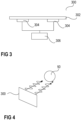
Figure 3 schematically illustrates an audio system according to embodiments of the disclosure. -
Figure 4 schematically illustrates flat sound waves emitted by a display loudspeaker. -
Figure 5 schematically illustrates the influence of sound emitted by display loudspeakers on different passengers of a vehicle. -
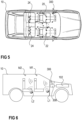
Figure 6 schematically illustrates an example of a classical engine order cancellation system. -
Figure 1 schematically illustrates a top view of avehicle 10. Thevehicle 10 comprises a driver'sseat 20, afront passenger seat 22, and tworear passenger seats 24. Vehicles generally may comprise less seats (e.g., only a driver'sseat 20 and a front passenger seat 22), or even more than four seats (e.g., more than two rear passenger seats 24). When audio is played by means of an audio system arranged in the listening environment in thevehicle 10, all passengers should experience a similarly satisfying listening experience. This, however, may be challenging. Assembly space in avehicle 10 is generally limited, therefore, a satisfying listening experience for all passengers should be achieved with as few loudspeakers as possible. If possible, an audio system should further provide the possibility of creating individual listening zones, one for each passenger of thevehicle 10. -
Figure 2 schematically illustrates the influence of conventional electrodynamic speakers with wide directivity on different passengers of avehicle 10. As can be seen, each passenger of thevehicle 10 perceives direct sound from each of a plurality ofloudspeakers vehicle 10. Sound that is output by afirst speaker 400 is indicated in solid lines, sound that is output by asecond speaker 402 is indicated in dashed lines, sound that is output by athird speaker 404 is indicated in dot-dashed lines, and sound that is output by afourth speaker 406 is indicated in dotted lines. Each of thedifferent loudspeakers seats vehicle 10 generally comprise a plurality of loudspeakers that are mounted, e.g., in a dashboard or side panel of thevehicle 10. Each of the plurality of speakers requires a significant amount of mounting space as well as its own cabling connecting it to (at least one) multimedia unit of the vehicle. - Again referring to
Figure 1 and with further reference toFigure 3 , an audio system in a listening environment in avehicle 10 according to embodiments of the disclosure comprises at least onemultimedia unit 306 configured to output an audio signal, and at least onedisplay loudspeaker 300. InFigure 3 only onemultimedia unit 306 is exemplarily illustrated. Each of the at least onedisplay loudspeaker 300 is coupled to the at least onemultimedia unit 306 and receives the audio signal from the at least onemultimedia unit 306. As is illustrated inFigure 3 , each of the at least onedisplay loudspeaker 300 comprises anOLED panel 302 and at least oneexciter 304 coupled to theOLED panel 302 and configured to vibrate theOLED panel 302 to reproduce the audio signal. TheOLED panel 302 may be any conventional OLED (organic light emitting diode) panel or display which are generally known and will not be described in further detail herein. OLED panels are generally very thin as compared to, e.g., LCD displays, and require only little mounting space. TheOLED panel 302 may be vibrated by means of one ormore exciters 304. The one ormore exciters 304 may be attached to the back of theOLED panel 302 and are therefore not visible for passengers of thevehicle 10. As anOLED panel 302 does not require backlights, theexciters 304 attached to the back of theOLED panel 302 do not influence the general function of the panel (i.e. they do not influence the presentation of video content on the OLED panel). When presenting video content on theOLED panel 302, the corresponding audio track may be easily synchronized (in time and/or space, where the sound should be emitted in order to match the video content) with the video content when generating the audio track by means of vibrating theOLED panel 302. - Each of the one or
more exciters 304 may be any suitable kind of exciter. For example, anexciter 304 may comprise a magnet and a coil (not specifically illustrated), similar to conventional speakers. TheOLED panel 302 has a similar function as a diaphragm in a conventional speaker. Generally, in adisplay loudspeaker 300, flexural resonance is encouraged such that theOLED panel 302 vibrates as randomly as possible. According to one example, eachdisplay loudspeaker 300 may comprise twoexciter 304 coupled to therespective OLED panel 302 at different positions. Generally, however, asingle exciter 304 may suffice, due to the comparably small size of (OLED)panels 302 used in vehicles. It is also possible that eachdisplay loudspeaker 300 comprise even more than twoexciter 304. - Generally, any surface may be vibrated in order to generate sound waves. (OLED) displays are generally mounted directly in front of a passenger of a vehicle in order to present video content to the user. When vibrating the
respective OLED panel 302 to generate sound waves (present audio content to the user), the sound will be perceived by the user as coming directly from the front. The sound provided to the user therefore is provided from the same direction as the video itself (positions of image and sound match). This gives the user a very intense experience and maximizes the effect of information transfer. The direction of sound emitted by adisplay loudspeaker 300 is schematically illustrated by means of the arrows inFigure 1 . - In the example illustrated in
Figure 1 , the audio system comprises fourdisplay loudspeakers 300, wherein onedisplay loudspeaker 300 is arranged in front of adriver seat 20 of thevehicle 10, onedisplay loudspeaker 300 is arranged in front of afront passenger seat 22 of thevehicle 10, onedisplay loudspeaker 300 is arranged at the back of thedriver seat 20 and in front of a firstrear passenger seat 24, and onedisplay loudspeaker 300 is arranged at the back of thefront passenger seat 22 and in front of a secondrear passenger seat 24. This, however, is only an example. The audio system may comprise less than four display loudspeakers 300 (e.g., only for the driver, only for the front passenger, only for one or more of the rear passengers or any combination thereof), or even more than fourdisplay loudspeakers 300. - The sound waves emitted by a
display loudspeaker 300 are generally flat sound waves. This is schematically illustrated by means ofFigure 4 , whereinFigure 4 illustrates auser 50 seated in front of adisplay loudspeaker 300 and the flat sound waves emitted by thedisplay loudspeaker 300. When the sound waves are received from the direction of the display, the sound is perceived by theuser 50 as more natural. Further, planar sound waves have a high directivity as compared to spheric acoustic waves emitted by conventional electrodynamic loudspeakers. This allows to easily generate different listening zones in avehicle 10. As can be seen inFigure 5 , for example, the sound output by adisplay loudspeaker 300 is mainly only perceived by the user seated directly in front of therespective display loudspeaker 300. Other passengers within thevehicle 10 do not receive direct sound from therespective display loudspeaker 300. For example, only the driver of thevehicle 10 will receive direct sound that is output by thedisplay loudspeaker 300 arranged directly in front of the driver'sseat 20. All other passengers (e.g., front passenger or rear passengers) will only receive indirect sound from thedisplay loudspeaker 300 arranged in front of the driver'sseat 20, caused by reflections. This is schematically illustrated by means of solid lines inFigure 5 . Similarly, direct sound as well as sound caused by reflections within thevehicle 10 is indicated in dot-dashed lines for adisplay loudspeaker 300 arranged in front of thefront passenger seat 22, in dashed lines for adisplay loudspeaker 300 arranged in front of a firstrear passenger seat 24, and in dotted lines for adisplay loudspeaker 300 arranged in front of a secondrear passenger seat 24. As can be seen, cross-influences between thedifferent display loudspeakers 300 and the different passengers of thevehicle 10 are significantly less as compared to the conventional audio system ofFigure 2 . Any reflections received from neighboringdisplay loudspeakers 300 can be significantly compensated using suitable sound absorbing materials in the vehicle cabin, for example. -
Display loudspeakers 300 may be used in an audio system in a listening environment in avehicle 10 instead of or in addition to conventional speakers. That is, the audio system, in addition to the at least onedisplay loudspeaker 300, may comprise one or more (conventional) loudspeakers such as, e.g., one or more front passenger speakers, one or more rear passenger speakers, one or more subwoofers, and/or one or more tweeters. - The audio systems as disclosed herein may provide a satisfying listening experience for every passenger of a vehicle, while at the same time requiring only little mounting space. Further, less wires will be required in order to couple the one or
more display loudspeakers 300 to the at least onemultimedia unit 306 as compared to audio systems only comprising conventional electrodynamic loudspeakers. The audio system, therefore, may be implemented in a smaller and considerably lighter and cheaper way as conventional audio systems for vehicles. Personalized content may be provided for every passenger of a vehicle in a very simple, cost-effective and space saving way. No or at least less loudspeakers will have to be mounted in the side panels (doors) of the vehicle. The respective mounting space in the vehicle doors, therefore, is available for other systems or elements, or the vehicle doors can be designed by car manufacturers in more efficient ways according to various criteria, e.g., less weight, less air-resistance (resulting in, e.g., a lower fuel and/or energy consumption of the vehicle), higher convenience for users of the vehicle, etc. - Further, the direction of the
display loudspeakers 300, and therefore the direction from which the sound waves are perceived by a user corresponds not only to the direction of video content provided on theOLED panel 302, but also to the direction of the most critical and disturbing engine sounds. The planar waves emitted by thedisplay loudspeakers 300 and their directivity therefore can be advantageously used in engine order cancellation systems. For this reason, the sweet-spot (e.g., space where the engine order compensation effect takes place) is much bigger as compared to conventional systems. The effects of the engine order cancellation, therefore, are much more noticeable for the occupants of thevehicle 10. Even further, the engine order compensation effect can be personalized for each individual passenger because of the directivity of the planar waves. Algorithms for active compensation of regular components of engine noise by emitting anti-waves (Engine Order Compensation, EOC, systems) are generally known. - One example of an EOC system is schematically illustrated in
Figure 6 . Engine sound, illustrated in solid lines inFigure 6 , passes through the vehicle cabin. As theengine 102 is typically located in a frontal part of thevehicle 10, the engine sound reaches each passenger from the front. Acontrol unit 308 may generate regular anti-noise components indicated in dashed lines inFigure 6 , using microphone signals perceived by microphones M1, M2 as reference. One or more reference microphones M1, M2 may be arranged in a roof liner of thevehicle 10, for example. Anti-noise components are harmonic signals having a phase opposite to the phase of the engine harmonic orders. Anti-noise components are often emitted by speakers L1, L2 arranged in the vehicle doors. In order to make the cancellation of noise more efficient over a wide area, the speakers L1, L2 emitting the anti-noise may be arranged in the direct way of the engine noise. In other words, the signal which cancels the engine noise is output in essentially the same direction as the engine noise itself (noise to be cancelled). The more this general rule is deviated (the larger the deviation between directions of engine noise and cancellation sound), the smaller the spatial cancellation area (the sweet spot). The size of this cancellation area also depends on the frequency of the harmonic (i.e. the higher the frequency, the smaller the compensation area or sweet spot). However, the direction from which the cancellation signal is emitted plays an essential role for the efficiency of engine noise cancellation. Thedisplay loudspeakers 300 as described herein are arranged in front of the passenger's faces and, therefore, directly in the way of the engine noise coming from the front of thevehicle 10. That is, the directions almost exactly match, resulting in a large compensation area. Further, as the sound waves emitted by thedisplay loudspeakers 300 are planar waves, they are directed directly towards the respective passengers, which further decreases the influence of the emitted compensation signals for neighboring passengers. This makes the problem of cross-talk cancellation superfluous and efficiency of engine noise compensation is improved further. - Summarizing the above, an audio system according to embodiments of the disclosure may further comprise one or more reference microphones M1, M2 arranged in a cabin of the
vehicle 10, one or more loudspeakers L1, L2 arranged in the cabin of thevehicle 10, and acontrol unit 308. Thecontrol unit 308 receives reference signals from the one or more references microphones M1, M2, the reference signals being indicative of engine sound present in the vehicle cabin. Thecontrol unit 308, based on the reference signals, generates anti-noise components having a phase opposite to the phase of the engine sound, and the anti-noise components are output by the one ormore display loudspeakers 300. That is, thedisplay loudspeakers 300 may also replace the loudspeakers used in conventional engine order compensation systems. It shall be noted that engine order cancellation algorithms are often implemented by means of a car multimedia system. - The general concept has been described with respect to a listening environment in a passenger car above. Generally, however, the
vehicle 10 may be any kind of vehicle such as, e.g., a passenger car, a van, a camper van, a caravan, a truck, a bus, a tractor, an airplane, a ship, etc. It may be understood, that the illustrated systems are merely examples. While various embodiments of the invention have been described, it will be apparent to those of ordinary skill in the art that many more embodiments and implementations are possible within the scope of the invention. In particular, the skilled person will recognize the interchangeability of various features from different embodiments. Although these techniques and systems have been disclosed in the context of certain embodiments and examples, it will be understood that these techniques and systems may be extended beyond the specifically disclosed embodiments to other embodiments and/or uses and obvious modifications thereof. Accordingly, the invention is not to be restricted except in light of the attached claims and their equivalents. - The description of embodiments has been presented for purposes of illustration and description. Suitable modifications and variations to the embodiments may be performed in light of the above description or may be acquired from practicing the methods. The described arrangements are exemplary in nature, and may include additional elements and/or omit elements. As used in this application, an element recited in the singular and proceeded with the word "a" or "an" should be understood as not excluding plural of said elements, unless such exclusion is stated. Furthermore, references to "one embodiment" or "one example" of the present disclosure are not intended to be interpreted as excluding the existence of additional embodiments that also incorporate the recited features. The terms "first," "second," and "third," etc. are used merely as labels, and are not intended to impose numerical requirements or a particular positional order on their objects. The described systems are exemplary in nature, and may include additional elements and/or omit elements. The subject matter of the present disclosure includes all novel and non-obvious combinations and sub-combinations of the various systems and configurations, and other features, functions, and/or properties disclosed. The following claims particularly point out subject matter from the above disclosure that is regarded as novel and non-obvious.
Claims (9)
- An audio system arranged in a listening environment in a vehicle (10) comprises at least one multimedia unit (306) configured to output an audio signal, and at least one display loudspeaker (300), whereineach of the at least one display loudspeaker (300) is coupled to the at least one multimedia unit (306) and receives the audio signal from the at least one multimedia unit (306), andeach of the at least one display loudspeaker (300) comprises an OLED panel (302) and at least one exciter (304) coupled to the OLED panel (302) and configured to vibrate the OLED panel (302) to reproduce the audio signal.
- The audio system of claim 1, wherein at least one of:one display loudspeaker (300) is arranged in front of a driver seat (20) of the vehicle (10),one display loudspeaker (300) is arranged in front of a front passenger seat (22) of the vehicle (10),one display loudspeaker (300) is arranged at the back of the driver seat (20) and in front of a first rear passenger seat (24), andone display loudspeaker (300) is arranged at the back of the front passenger seat (22) and in front of a second rear passenger seat (24).
- The audio system of claim 1 or 2, wherein each of the at least one display loudspeaker (300) comprises two exciter (304) coupled to the respective OLED panel (302).
- The audio system of any of claims 1 to 3, whereinthe at least one multimedia unit (306) is further configured to output a video signal, andeach of the at least one display loudspeaker (300) is configured to output the video signal on the OLED panel (302).
- The audio system of claim 4, wherein the audio signal represents an audio track corresponding to the video signal.
- The audio system of any of the preceding claims, further comprising at least one additional loudspeaker (400, 402, 404, 406) coupled to the at least one multimedia unit (306).
- The audio system of claim 6, wherein the at least one additional loudspeaker (400, 402, 404, 406) comprises at least one ofone or more front passenger speakers,one or more rear passenger speakers,one or more subwoofers, andone or more tweeters.
- The audio system of any of the preceding claims, further comprisingone or more reference microphones (M1, M2) arranged in a cabin of the vehicle (10);one or more loudspeakers (L1, L2) arranged in the cabin of the vehicle (10), anda control unit (308), whereinthe control unit (308) receives reference signals from the one or more references microphones (M1, M2), the reference signals being indicative of engine sound present in the vehicle cabin,the control unit (308), based on the reference signals, generates anti-noise components having a phase opposite to the phase of the engine sound, andthe anti-noise components are output by the one or more display loudspeakers (300).
- The audio system of any of the preceding claims, wherein the vehicle (10) is a passenger car, a van, a camper van, a caravan, a truck, a bus, a tractor, an airplane, or a ship.
Priority Applications (3)
| Application Number | Priority Date | Filing Date | Title |
|---|---|---|---|
| EP23181346.0A EP4485972A1 (en) | 2023-06-26 | 2023-06-26 | An audio system arranged in a vehicle |
| CN202410789301.0A CN119211805A (en) | 2023-06-26 | 2024-06-19 | Audio system placed in the listening environment |
| US18/753,885 US12689850B2 (en) | 2023-06-26 | 2024-06-25 | Audio system arranged in a listening environment |
Applications Claiming Priority (1)
| Application Number | Priority Date | Filing Date | Title |
|---|---|---|---|
| EP23181346.0A EP4485972A1 (en) | 2023-06-26 | 2023-06-26 | An audio system arranged in a vehicle |
Publications (1)
| Publication Number | Publication Date |
|---|---|
| EP4485972A1 true EP4485972A1 (en) | 2025-01-01 |
Family
ID=87047906
Family Applications (1)
| Application Number | Title | Priority Date | Filing Date |
|---|---|---|---|
| EP23181346.0A Withdrawn EP4485972A1 (en) | 2023-06-26 | 2023-06-26 | An audio system arranged in a vehicle |
Country Status (3)
| Country | Link |
|---|---|
| US (1) | US12689850B2 (en) |
| EP (1) | EP4485972A1 (en) |
| CN (1) | CN119211805A (en) |
Citations (4)
| Publication number | Priority date | Publication date | Assignee | Title |
|---|---|---|---|---|
| US20150341714A1 (en) * | 2014-05-20 | 2015-11-26 | Samsung Display Co., Ltd. | Display apparatus |
| US20180317012A1 (en) * | 2017-04-29 | 2018-11-01 | Lg Display Co., Ltd. | Display apparatus |
| US20210266661A1 (en) * | 2020-02-21 | 2021-08-26 | Harman International Industries, Incorporated | Dual-zone automotive multimedia system |
| US20220129234A1 (en) * | 2019-07-22 | 2022-04-28 | Lg Display Co., Ltd. | Display apparatus and vehicle including the same |
Family Cites Families (1)
| Publication number | Priority date | Publication date | Assignee | Title |
|---|---|---|---|---|
| JP2022029603A (en) * | 2020-08-05 | 2022-02-18 | 株式会社デンソーテン | Display device, display system, and display control method |
-
2023
- 2023-06-26 EP EP23181346.0A patent/EP4485972A1/en not_active Withdrawn
-
2024
- 2024-06-19 CN CN202410789301.0A patent/CN119211805A/en active Pending
- 2024-06-25 US US18/753,885 patent/US12689850B2/en active Active
Patent Citations (4)
| Publication number | Priority date | Publication date | Assignee | Title |
|---|---|---|---|---|
| US20150341714A1 (en) * | 2014-05-20 | 2015-11-26 | Samsung Display Co., Ltd. | Display apparatus |
| US20180317012A1 (en) * | 2017-04-29 | 2018-11-01 | Lg Display Co., Ltd. | Display apparatus |
| US20220129234A1 (en) * | 2019-07-22 | 2022-04-28 | Lg Display Co., Ltd. | Display apparatus and vehicle including the same |
| US20210266661A1 (en) * | 2020-02-21 | 2021-08-26 | Harman International Industries, Incorporated | Dual-zone automotive multimedia system |
Also Published As
| Publication number | Publication date |
|---|---|
| US20240430600A1 (en) | 2024-12-26 |
| US12689850B2 (en) | 2026-07-21 |
| CN119211805A (en) | 2024-12-27 |
Similar Documents
| Publication | Publication Date | Title |
|---|---|---|
| US7343020B2 (en) | Vehicle audio system with directional sound and reflected audio imaging for creating a personal sound stage | |
| JP5816811B2 (en) | Speaker system, electronic device using the same, and mobile device | |
| US11503401B2 (en) | Dual-zone automotive multimedia system | |
| US8090116B2 (en) | Vehicle directional electroacoustical transducing | |
| US20040237111A1 (en) | Multimedia and entertainment system for an automobile | |
| US20200154220A1 (en) | Vehicular sound processing system | |
| US8155344B2 (en) | Vehicle speaker | |
| US20070092100A1 (en) | Headrest surround channel electroacoustical transducing | |
| US8374356B2 (en) | Noise canceling apparatus and noise canceling method | |
| HUP0002185A2 (en) | Passenger vehicle with speakers containing a panel-shaped speaker element | |
| CN213906909U (en) | Panoramic sound equipment in car | |
| US7164773B2 (en) | Vehicle electroacoustical transducing | |
| WO2021049165A1 (en) | Vehicle onboard speaker system | |
| US20210377637A1 (en) | Near to the ear subwoofer | |
| US20240430600A1 (en) | Audio system arranged in a listening environment | |
| JP7122602B2 (en) | Speakers, electronics and mobile devices | |
| JP4268622B2 (en) | Active vibration and noise control device | |
| JP7066931B2 (en) | Vehicle speaker system | |
| WO2012013743A1 (en) | Vehicle with center-rear-speaker | |
| JP2012074780A (en) | Speaker unit | |
| US12263771B2 (en) | Seat provided with a microphone for a vehicle | |
| US20260129363A1 (en) | Vehicle audio system | |
| JP7604072B2 (en) | Audio System | |
| CN220210549U (en) | Vehicle-mounted sound system | |
| US20240416812A1 (en) | Audio system arranged in a listening environment in a vehicle and headrest for a vehicle |
Legal Events
| Date | Code | Title | Description |
|---|---|---|---|
| PUAI | Public reference made under article 153(3) epc to a published international application that has entered the european phase |
Free format text: ORIGINAL CODE: 0009012 |
|
| STAA | Information on the status of an ep patent application or granted ep patent |
Free format text: STATUS: THE APPLICATION HAS BEEN PUBLISHED |
|
| AK | Designated contracting states |
Kind code of ref document: A1 Designated state(s): AL AT BE BG CH CY CZ DE DK EE ES FI FR GB GR HR HU IE IS IT LI LT LU LV MC ME MK MT NL NO PL PT RO RS SE SI SK SM TR |
|
| STAA | Information on the status of an ep patent application or granted ep patent |
Free format text: STATUS: THE APPLICATION IS DEEMED TO BE WITHDRAWN |
|
| 18D | Application deemed to be withdrawn |
Effective date: 20250702 |