EP4484580A1 - Nukleinsäuresequenz zum nachweis der glycine max pflanze dbn8205 und nachweisverfahren dafür - Google Patents
Nukleinsäuresequenz zum nachweis der glycine max pflanze dbn8205 und nachweisverfahren dafür Download PDFInfo
- Publication number
- EP4484580A1 EP4484580A1 EP22926520.2A EP22926520A EP4484580A1 EP 4484580 A1 EP4484580 A1 EP 4484580A1 EP 22926520 A EP22926520 A EP 22926520A EP 4484580 A1 EP4484580 A1 EP 4484580A1
- Authority
- EP
- European Patent Office
- Prior art keywords
- seq
- nucleic acid
- dbn8205
- sequence
- transgenic soybean
- Prior art date
- Legal status (The legal status is an assumption and is not a legal conclusion. Google has not performed a legal analysis and makes no representation as to the accuracy of the status listed.)
- Pending
Links
Images


Classifications
-
- A—HUMAN NECESSITIES
- A01—AGRICULTURE; FORESTRY; ANIMAL HUSBANDRY; HUNTING; TRAPPING; FISHING
- A01H—NEW PLANTS OR NON-TRANSGENIC PROCESSES FOR OBTAINING THEM; PLANT REPRODUCTION BY TISSUE CULTURE TECHNIQUES
- A01H1/00—Processes for modifying genotypes ; Plants characterised by associated natural traits
- A01H1/04—Processes of selection involving genotypic or phenotypic markers; Methods of using phenotypic markers for selection
- A01H1/045—Processes of selection involving genotypic or phenotypic markers; Methods of using phenotypic markers for selection using molecular markers
-
- C—CHEMISTRY; METALLURGY
- C07—ORGANIC CHEMISTRY
- C07K—PEPTIDES
- C07K14/00—Peptides having more than 20 amino acids; Gastrins; Somatostatins; Melanotropins; Derivatives thereof
- C07K14/195—Peptides having more than 20 amino acids; Gastrins; Somatostatins; Melanotropins; Derivatives thereof from bacteria
- C07K14/32—Peptides having more than 20 amino acids; Gastrins; Somatostatins; Melanotropins; Derivatives thereof from bacteria from Bacillus (G)
- C07K14/325—Bacillus thuringiensis crystal peptides, i.e. delta-endotoxins
-
- A—HUMAN NECESSITIES
- A01—AGRICULTURE; FORESTRY; ANIMAL HUSBANDRY; HUNTING; TRAPPING; FISHING
- A01G—HORTICULTURE; CULTIVATION OF VEGETABLES, FLOWERS, RICE, FRUIT, VINES, HOPS OR SEAWEED; FORESTRY; WATERING
- A01G13/00—Protection of plants
-
- A—HUMAN NECESSITIES
- A01—AGRICULTURE; FORESTRY; ANIMAL HUSBANDRY; HUNTING; TRAPPING; FISHING
- A01G—HORTICULTURE; CULTIVATION OF VEGETABLES, FLOWERS, RICE, FRUIT, VINES, HOPS OR SEAWEED; FORESTRY; WATERING
- A01G22/00—Cultivation of specific crops or plants not otherwise provided for
- A01G22/40—Fabaceae, e.g. beans or peas
-
- A—HUMAN NECESSITIES
- A01—AGRICULTURE; FORESTRY; ANIMAL HUSBANDRY; HUNTING; TRAPPING; FISHING
- A01H—NEW PLANTS OR NON-TRANSGENIC PROCESSES FOR OBTAINING THEM; PLANT REPRODUCTION BY TISSUE CULTURE TECHNIQUES
- A01H1/00—Processes for modifying genotypes ; Plants characterised by associated natural traits
- A01H1/02—Methods or apparatus for hybridisation; Artificial pollination ; Fertility
-
- A—HUMAN NECESSITIES
- A01—AGRICULTURE; FORESTRY; ANIMAL HUSBANDRY; HUNTING; TRAPPING; FISHING
- A01H—NEW PLANTS OR NON-TRANSGENIC PROCESSES FOR OBTAINING THEM; PLANT REPRODUCTION BY TISSUE CULTURE TECHNIQUES
- A01H1/00—Processes for modifying genotypes ; Plants characterised by associated natural traits
- A01H1/12—Processes for modifying agronomic input traits, e.g. crop yield
- A01H1/122—Processes for modifying agronomic input traits, e.g. crop yield for stress resistance, e.g. heavy metal resistance
- A01H1/123—Processes for modifying agronomic input traits, e.g. crop yield for stress resistance, e.g. heavy metal resistance for herbicide resistance
-
- A—HUMAN NECESSITIES
- A01—AGRICULTURE; FORESTRY; ANIMAL HUSBANDRY; HUNTING; TRAPPING; FISHING
- A01H—NEW PLANTS OR NON-TRANSGENIC PROCESSES FOR OBTAINING THEM; PLANT REPRODUCTION BY TISSUE CULTURE TECHNIQUES
- A01H1/00—Processes for modifying genotypes ; Plants characterised by associated natural traits
- A01H1/12—Processes for modifying agronomic input traits, e.g. crop yield
- A01H1/122—Processes for modifying agronomic input traits, e.g. crop yield for stress resistance, e.g. heavy metal resistance
- A01H1/1245—Processes for modifying agronomic input traits, e.g. crop yield for stress resistance, e.g. heavy metal resistance for biotic stress resistance, e.g. pathogen, pest or disease resistance
- A01H1/127—Processes for modifying agronomic input traits, e.g. crop yield for stress resistance, e.g. heavy metal resistance for biotic stress resistance, e.g. pathogen, pest or disease resistance for insect resistance
-
- A—HUMAN NECESSITIES
- A01—AGRICULTURE; FORESTRY; ANIMAL HUSBANDRY; HUNTING; TRAPPING; FISHING
- A01N—PRESERVATION OF BODIES OF HUMANS OR ANIMALS OR PLANTS OR PARTS THEREOF; BIOCIDES, e.g. AS DISINFECTANTS, AS PESTICIDES OR AS HERBICIDES; PEST REPELLANTS OR ATTRACTANTS; PLANT GROWTH REGULATORS
- A01N65/00—Biocides, pest repellants or attractants, or plant growth regulators containing material from algae, lichens, bryophyta, multi-cellular fungi or plants, or extracts thereof
- A01N65/08—Magnoliopsida [dicotyledons]
- A01N65/20—Fabaceae or Leguminosae [Pea or Legume family], e.g. pea, lentil, soybean, clover, acacia, honey locust, derris or millettia
-
- A—HUMAN NECESSITIES
- A01—AGRICULTURE; FORESTRY; ANIMAL HUSBANDRY; HUNTING; TRAPPING; FISHING
- A01P—BIOCIDAL, PEST REPELLANT, PEST ATTRACTANT OR PLANT GROWTH REGULATORY ACTIVITY OF CHEMICAL COMPOUNDS OR PREPARATIONS
- A01P7/00—Arthropodicides
- A01P7/04—Insecticides
-
- A—HUMAN NECESSITIES
- A23—FOODS OR FOODSTUFFS; TREATMENT THEREOF, NOT COVERED BY OTHER CLASSES
- A23D—EDIBLE OILS OR FATS, e.g. MARGARINES, SHORTENINGS OR COOKING OILS
- A23D9/00—Other edible oils or fats, e.g. shortenings or cooking oils
-
- A—HUMAN NECESSITIES
- A23—FOODS OR FOODSTUFFS; TREATMENT THEREOF, NOT COVERED BY OTHER CLASSES
- A23J—PROTEIN COMPOSITIONS FOR FOODSTUFFS; WORKING-UP PROTEINS FOR FOODSTUFFS; PHOSPHATIDE COMPOSITIONS FOR FOODSTUFFS
- A23J1/00—Obtaining protein compositions for foodstuffs; Bulk opening of eggs and separation of yolks from whites
- A23J1/14—Obtaining protein compositions for foodstuffs; Bulk opening of eggs and separation of yolks from whites from leguminous or other vegetable seeds; from press-cake or oil-bearing seeds
-
- A—HUMAN NECESSITIES
- A23—FOODS OR FOODSTUFFS; TREATMENT THEREOF, NOT COVERED BY OTHER CLASSES
- A23J—PROTEIN COMPOSITIONS FOR FOODSTUFFS; WORKING-UP PROTEINS FOR FOODSTUFFS; PHOSPHATIDE COMPOSITIONS FOR FOODSTUFFS
- A23J3/00—Working-up of proteins for foodstuffs
- A23J3/14—Vegetable proteins
- A23J3/16—Vegetable proteins from soybean
-
- A—HUMAN NECESSITIES
- A23—FOODS OR FOODSTUFFS; TREATMENT THEREOF, NOT COVERED BY OTHER CLASSES
- A23L—FOODS, FOODSTUFFS OR NON-ALCOHOLIC BEVERAGES, NOT OTHERWISE PROVIDED FOR; PREPARATION OR TREATMENT THEREOF
- A23L11/00—Pulses, i.e. fruits of leguminous plants, for production of food; Products from legumes; Preparation or treatment thereof
-
- A—HUMAN NECESSITIES
- A23—FOODS OR FOODSTUFFS; TREATMENT THEREOF, NOT COVERED BY OTHER CLASSES
- A23L—FOODS, FOODSTUFFS OR NON-ALCOHOLIC BEVERAGES, NOT OTHERWISE PROVIDED FOR; PREPARATION OR TREATMENT THEREOF
- A23L11/00—Pulses, i.e. fruits of leguminous plants, for production of food; Products from legumes; Preparation or treatment thereof
- A23L11/01—Pulses or legumes in the form of whole pieces or fragments thereof, without mashing or comminuting
- A23L11/03—Soya beans, e.g. full-fat soya bean flakes or grits
-
- A—HUMAN NECESSITIES
- A23—FOODS OR FOODSTUFFS; TREATMENT THEREOF, NOT COVERED BY OTHER CLASSES
- A23L—FOODS, FOODSTUFFS OR NON-ALCOHOLIC BEVERAGES, NOT OTHERWISE PROVIDED FOR; PREPARATION OR TREATMENT THEREOF
- A23L11/00—Pulses, i.e. fruits of leguminous plants, for production of food; Products from legumes; Preparation or treatment thereof
- A23L11/05—Mashed or comminuted pulses or legumes; Products made therefrom
- A23L11/07—Soya beans, e.g. oil-extracted soya bean flakes
-
- A—HUMAN NECESSITIES
- A23—FOODS OR FOODSTUFFS; TREATMENT THEREOF, NOT COVERED BY OTHER CLASSES
- A23L—FOODS, FOODSTUFFS OR NON-ALCOHOLIC BEVERAGES, NOT OTHERWISE PROVIDED FOR; PREPARATION OR TREATMENT THEREOF
- A23L11/00—Pulses, i.e. fruits of leguminous plants, for production of food; Products from legumes; Preparation or treatment thereof
- A23L11/40—Pulse curds
- A23L11/45—Soy bean curds, e.g. tofu
-
- A—HUMAN NECESSITIES
- A23—FOODS OR FOODSTUFFS; TREATMENT THEREOF, NOT COVERED BY OTHER CLASSES
- A23L—FOODS, FOODSTUFFS OR NON-ALCOHOLIC BEVERAGES, NOT OTHERWISE PROVIDED FOR; PREPARATION OR TREATMENT THEREOF
- A23L11/00—Pulses, i.e. fruits of leguminous plants, for production of food; Products from legumes; Preparation or treatment thereof
- A23L11/60—Drinks from legumes, e.g. lupine drinks
- A23L11/65—Soy drinks
-
- A—HUMAN NECESSITIES
- A23—FOODS OR FOODSTUFFS; TREATMENT THEREOF, NOT COVERED BY OTHER CLASSES
- A23L—FOODS, FOODSTUFFS OR NON-ALCOHOLIC BEVERAGES, NOT OTHERWISE PROVIDED FOR; PREPARATION OR TREATMENT THEREOF
- A23L29/00—Foods or foodstuffs containing additives; Preparation or treatment thereof
- A23L29/03—Organic compounds
- A23L29/035—Organic compounds containing oxygen as heteroatom
-
- A—HUMAN NECESSITIES
- A23—FOODS OR FOODSTUFFS; TREATMENT THEREOF, NOT COVERED BY OTHER CLASSES
- A23L—FOODS, FOODSTUFFS OR NON-ALCOHOLIC BEVERAGES, NOT OTHERWISE PROVIDED FOR; PREPARATION OR TREATMENT THEREOF
- A23L29/00—Foods or foodstuffs containing additives; Preparation or treatment thereof
- A23L29/03—Organic compounds
- A23L29/035—Organic compounds containing oxygen as heteroatom
- A23L29/04—Fatty acids or derivatives
-
- A—HUMAN NECESSITIES
- A23—FOODS OR FOODSTUFFS; TREATMENT THEREOF, NOT COVERED BY OTHER CLASSES
- A23L—FOODS, FOODSTUFFS OR NON-ALCOHOLIC BEVERAGES, NOT OTHERWISE PROVIDED FOR; PREPARATION OR TREATMENT THEREOF
- A23L29/00—Foods or foodstuffs containing additives; Preparation or treatment thereof
- A23L29/30—Foods or foodstuffs containing additives; Preparation or treatment thereof containing carbohydrate syrups; containing sugars; containing sugar alcohols, e.g. xylitol; containing starch hydrolysates, e.g. dextrin
-
- C—CHEMISTRY; METALLURGY
- C12—BIOCHEMISTRY; BEER; SPIRITS; WINE; VINEGAR; MICROBIOLOGY; ENZYMOLOGY; MUTATION OR GENETIC ENGINEERING
- C12N—MICROORGANISMS OR ENZYMES; COMPOSITIONS THEREOF; PROPAGATING, PRESERVING, OR MAINTAINING MICROORGANISMS; MUTATION OR GENETIC ENGINEERING; CULTURE MEDIA
- C12N15/00—Mutation or genetic engineering; DNA or RNA concerning genetic engineering, vectors, e.g. plasmids, or their isolation, preparation or purification; Use of hosts therefor
- C12N15/09—Recombinant DNA-technology
- C12N15/63—Introduction of foreign genetic material using vectors; Vectors; Use of hosts therefor; Regulation of expression
- C12N15/79—Vectors or expression systems specially adapted for eukaryotic hosts
- C12N15/82—Vectors or expression systems specially adapted for eukaryotic hosts for plant cells, e.g. plant artificial chromosomes (PACs)
- C12N15/8241—Phenotypically and genetically modified plants via recombinant DNA technology
- C12N15/8261—Phenotypically and genetically modified plants via recombinant DNA technology with agronomic (input) traits, e.g. crop yield
- C12N15/8271—Phenotypically and genetically modified plants via recombinant DNA technology with agronomic (input) traits, e.g. crop yield for stress resistance, e.g. heavy metal resistance
- C12N15/8274—Phenotypically and genetically modified plants via recombinant DNA technology with agronomic (input) traits, e.g. crop yield for stress resistance, e.g. heavy metal resistance for herbicide resistance
-
- C—CHEMISTRY; METALLURGY
- C12—BIOCHEMISTRY; BEER; SPIRITS; WINE; VINEGAR; MICROBIOLOGY; ENZYMOLOGY; MUTATION OR GENETIC ENGINEERING
- C12N—MICROORGANISMS OR ENZYMES; COMPOSITIONS THEREOF; PROPAGATING, PRESERVING, OR MAINTAINING MICROORGANISMS; MUTATION OR GENETIC ENGINEERING; CULTURE MEDIA
- C12N15/00—Mutation or genetic engineering; DNA or RNA concerning genetic engineering, vectors, e.g. plasmids, or their isolation, preparation or purification; Use of hosts therefor
- C12N15/09—Recombinant DNA-technology
- C12N15/63—Introduction of foreign genetic material using vectors; Vectors; Use of hosts therefor; Regulation of expression
- C12N15/79—Vectors or expression systems specially adapted for eukaryotic hosts
- C12N15/82—Vectors or expression systems specially adapted for eukaryotic hosts for plant cells, e.g. plant artificial chromosomes (PACs)
- C12N15/8241—Phenotypically and genetically modified plants via recombinant DNA technology
- C12N15/8261—Phenotypically and genetically modified plants via recombinant DNA technology with agronomic (input) traits, e.g. crop yield
- C12N15/8271—Phenotypically and genetically modified plants via recombinant DNA technology with agronomic (input) traits, e.g. crop yield for stress resistance, e.g. heavy metal resistance
- C12N15/8274—Phenotypically and genetically modified plants via recombinant DNA technology with agronomic (input) traits, e.g. crop yield for stress resistance, e.g. heavy metal resistance for herbicide resistance
- C12N15/8277—Phosphinotricin
-
- C—CHEMISTRY; METALLURGY
- C12—BIOCHEMISTRY; BEER; SPIRITS; WINE; VINEGAR; MICROBIOLOGY; ENZYMOLOGY; MUTATION OR GENETIC ENGINEERING
- C12N—MICROORGANISMS OR ENZYMES; COMPOSITIONS THEREOF; PROPAGATING, PRESERVING, OR MAINTAINING MICROORGANISMS; MUTATION OR GENETIC ENGINEERING; CULTURE MEDIA
- C12N15/00—Mutation or genetic engineering; DNA or RNA concerning genetic engineering, vectors, e.g. plasmids, or their isolation, preparation or purification; Use of hosts therefor
- C12N15/09—Recombinant DNA-technology
- C12N15/63—Introduction of foreign genetic material using vectors; Vectors; Use of hosts therefor; Regulation of expression
- C12N15/79—Vectors or expression systems specially adapted for eukaryotic hosts
- C12N15/82—Vectors or expression systems specially adapted for eukaryotic hosts for plant cells, e.g. plant artificial chromosomes (PACs)
- C12N15/8241—Phenotypically and genetically modified plants via recombinant DNA technology
- C12N15/8261—Phenotypically and genetically modified plants via recombinant DNA technology with agronomic (input) traits, e.g. crop yield
- C12N15/8271—Phenotypically and genetically modified plants via recombinant DNA technology with agronomic (input) traits, e.g. crop yield for stress resistance, e.g. heavy metal resistance
- C12N15/8279—Phenotypically and genetically modified plants via recombinant DNA technology with agronomic (input) traits, e.g. crop yield for stress resistance, e.g. heavy metal resistance for biotic stress resistance, pathogen resistance, disease resistance
- C12N15/8286—Phenotypically and genetically modified plants via recombinant DNA technology with agronomic (input) traits, e.g. crop yield for stress resistance, e.g. heavy metal resistance for biotic stress resistance, pathogen resistance, disease resistance for insect resistance
-
- C—CHEMISTRY; METALLURGY
- C12—BIOCHEMISTRY; BEER; SPIRITS; WINE; VINEGAR; MICROBIOLOGY; ENZYMOLOGY; MUTATION OR GENETIC ENGINEERING
- C12N—MICROORGANISMS OR ENZYMES; COMPOSITIONS THEREOF; PROPAGATING, PRESERVING, OR MAINTAINING MICROORGANISMS; MUTATION OR GENETIC ENGINEERING; CULTURE MEDIA
- C12N9/00—Enzymes; Proenzymes; Compositions thereof; Processes for preparing, activating, inhibiting, separating or purifying enzymes
- C12N9/10—Transferases (2.)
- C12N9/1025—Acyltransferases (2.3)
- C12N9/1029—Acyltransferases (2.3) transferring groups other than amino-acyl groups (2.3.1)
-
- C—CHEMISTRY; METALLURGY
- C12—BIOCHEMISTRY; BEER; SPIRITS; WINE; VINEGAR; MICROBIOLOGY; ENZYMOLOGY; MUTATION OR GENETIC ENGINEERING
- C12Q—MEASURING OR TESTING PROCESSES INVOLVING ENZYMES, NUCLEIC ACIDS OR MICROORGANISMS; COMPOSITIONS OR TEST PAPERS THEREFOR; PROCESSES OF PREPARING SUCH COMPOSITIONS; CONDITION-RESPONSIVE CONTROL IN MICROBIOLOGICAL OR ENZYMOLOGICAL PROCESSES
- C12Q1/00—Measuring or testing processes involving enzymes, nucleic acids or microorganisms; Compositions therefor; Processes of preparing such compositions
- C12Q1/68—Measuring or testing processes involving enzymes, nucleic acids or microorganisms; Compositions therefor; Processes of preparing such compositions involving nucleic acids
- C12Q1/6813—Hybridisation assays
-
- C—CHEMISTRY; METALLURGY
- C12—BIOCHEMISTRY; BEER; SPIRITS; WINE; VINEGAR; MICROBIOLOGY; ENZYMOLOGY; MUTATION OR GENETIC ENGINEERING
- C12Q—MEASURING OR TESTING PROCESSES INVOLVING ENZYMES, NUCLEIC ACIDS OR MICROORGANISMS; COMPOSITIONS OR TEST PAPERS THEREFOR; PROCESSES OF PREPARING SUCH COMPOSITIONS; CONDITION-RESPONSIVE CONTROL IN MICROBIOLOGICAL OR ENZYMOLOGICAL PROCESSES
- C12Q1/00—Measuring or testing processes involving enzymes, nucleic acids or microorganisms; Compositions therefor; Processes of preparing such compositions
- C12Q1/68—Measuring or testing processes involving enzymes, nucleic acids or microorganisms; Compositions therefor; Processes of preparing such compositions involving nucleic acids
- C12Q1/6813—Hybridisation assays
- C12Q1/6816—Hybridisation assays characterised by the detection means
-
- C—CHEMISTRY; METALLURGY
- C12—BIOCHEMISTRY; BEER; SPIRITS; WINE; VINEGAR; MICROBIOLOGY; ENZYMOLOGY; MUTATION OR GENETIC ENGINEERING
- C12Q—MEASURING OR TESTING PROCESSES INVOLVING ENZYMES, NUCLEIC ACIDS OR MICROORGANISMS; COMPOSITIONS OR TEST PAPERS THEREFOR; PROCESSES OF PREPARING SUCH COMPOSITIONS; CONDITION-RESPONSIVE CONTROL IN MICROBIOLOGICAL OR ENZYMOLOGICAL PROCESSES
- C12Q1/00—Measuring or testing processes involving enzymes, nucleic acids or microorganisms; Compositions therefor; Processes of preparing such compositions
- C12Q1/68—Measuring or testing processes involving enzymes, nucleic acids or microorganisms; Compositions therefor; Processes of preparing such compositions involving nucleic acids
- C12Q1/6844—Nucleic acid amplification reactions
- C12Q1/6851—Quantitative amplification
-
- C—CHEMISTRY; METALLURGY
- C12—BIOCHEMISTRY; BEER; SPIRITS; WINE; VINEGAR; MICROBIOLOGY; ENZYMOLOGY; MUTATION OR GENETIC ENGINEERING
- C12Q—MEASURING OR TESTING PROCESSES INVOLVING ENZYMES, NUCLEIC ACIDS OR MICROORGANISMS; COMPOSITIONS OR TEST PAPERS THEREFOR; PROCESSES OF PREPARING SUCH COMPOSITIONS; CONDITION-RESPONSIVE CONTROL IN MICROBIOLOGICAL OR ENZYMOLOGICAL PROCESSES
- C12Q1/00—Measuring or testing processes involving enzymes, nucleic acids or microorganisms; Compositions therefor; Processes of preparing such compositions
- C12Q1/68—Measuring or testing processes involving enzymes, nucleic acids or microorganisms; Compositions therefor; Processes of preparing such compositions involving nucleic acids
- C12Q1/6876—Nucleic acid products used in the analysis of nucleic acids, e.g. primers or probes
- C12Q1/6888—Nucleic acid products used in the analysis of nucleic acids, e.g. primers or probes for detection or identification of organisms
- C12Q1/6895—Nucleic acid products used in the analysis of nucleic acids, e.g. primers or probes for detection or identification of organisms for plants, fungi or algae
-
- C—CHEMISTRY; METALLURGY
- C12—BIOCHEMISTRY; BEER; SPIRITS; WINE; VINEGAR; MICROBIOLOGY; ENZYMOLOGY; MUTATION OR GENETIC ENGINEERING
- C12Y—ENZYMES
- C12Y203/00—Acyltransferases (2.3)
- C12Y203/01—Acyltransferases (2.3) transferring groups other than amino-acyl groups (2.3.1)
- C12Y203/01183—Phosphinothricin acetyltransferase (2.3.1.183)
-
- A—HUMAN NECESSITIES
- A23—FOODS OR FOODSTUFFS; TREATMENT THEREOF, NOT COVERED BY OTHER CLASSES
- A23D—EDIBLE OILS OR FATS, e.g. MARGARINES, SHORTENINGS OR COOKING OILS
- A23D9/00—Other edible oils or fats, e.g. shortenings or cooking oils
- A23D9/02—Other edible oils or fats, e.g. shortenings or cooking oils characterised by the production or working-up
-
- A—HUMAN NECESSITIES
- A23—FOODS OR FOODSTUFFS; TREATMENT THEREOF, NOT COVERED BY OTHER CLASSES
- A23V—INDEXING SCHEME RELATING TO FOODS, FOODSTUFFS OR NON-ALCOHOLIC BEVERAGES AND LACTIC OR PROPIONIC ACID BACTERIA USED IN FOODSTUFFS OR FOOD PREPARATION
- A23V2002/00—Food compositions, function of food ingredients or processes for food or foodstuffs
-
- C—CHEMISTRY; METALLURGY
- C12—BIOCHEMISTRY; BEER; SPIRITS; WINE; VINEGAR; MICROBIOLOGY; ENZYMOLOGY; MUTATION OR GENETIC ENGINEERING
- C12Q—MEASURING OR TESTING PROCESSES INVOLVING ENZYMES, NUCLEIC ACIDS OR MICROORGANISMS; COMPOSITIONS OR TEST PAPERS THEREFOR; PROCESSES OF PREPARING SUCH COMPOSITIONS; CONDITION-RESPONSIVE CONTROL IN MICROBIOLOGICAL OR ENZYMOLOGICAL PROCESSES
- C12Q2600/00—Oligonucleotides characterized by their use
- C12Q2600/13—Plant traits
-
- Y—GENERAL TAGGING OF NEW TECHNOLOGICAL DEVELOPMENTS; GENERAL TAGGING OF CROSS-SECTIONAL TECHNOLOGIES SPANNING OVER SEVERAL SECTIONS OF THE IPC; TECHNICAL SUBJECTS COVERED BY FORMER USPC CROSS-REFERENCE ART COLLECTIONS [XRACs] AND DIGESTS
- Y02—TECHNOLOGIES OR APPLICATIONS FOR MITIGATION OR ADAPTATION AGAINST CLIMATE CHANGE
- Y02A—TECHNOLOGIES FOR ADAPTATION TO CLIMATE CHANGE
- Y02A40/00—Adaptation technologies in agriculture, forestry, livestock or agroalimentary production
- Y02A40/10—Adaptation technologies in agriculture, forestry, livestock or agroalimentary production in agriculture
- Y02A40/146—Genetically Modified [GMO] plants, e.g. transgenic plants
Definitions
- the present invention relates to the field of plant molecular biology, especially the field of transgenic crop breeding in the agricultural biotechnology research.
- the present invention relates to an insect resistant and glufosinate ammonium herbicide tolerant transgenic soybean event DBN8205, nucleic acid sequences for detecting whether a biological sample contains the specific transgenic soybean event DBN8205 and detection methods thereof.
- Soybean ( Glycine max ) is one of the five main crops in the world. Biotechnology methods have been applied to such crops to produce soybean varieties with desirable traits. The two most important agronomic traits in soybean production are insect resistance and herbicide tolerance.
- the insect resistance of soybean may be conferred by expressing insect resistance genes in soybean plants through a transgenic method, and transgenic soybeans that rely on expression of a single insect-resistant protein against insect infestation are at risk of limited tolerance, since insects will evolve resistance to insecticidal proteins expressed in transgenic soybeans under constant selective pressure, which once developed and not effectively controlled will undoubtedly limit the commercial value of insecticidal protein-containing transgenic soybean varieties.
- the combined use of two or more insecticidal proteins can be used as a method for delaying insect resistance, and at the same time can broaden the insect-resistant spectrum.
- the phosphinothricin N-acetyltransferase (PAT) isolated from Streptomyces catalyses the conversion of L-phosphinothricin to its inactive form by acetylation.
- the plant-optimized forms of genes expressing PAT have been used in soybeans to confer tolerance to glufosinate ammonium herbicides, such as soybean event A5547-127.
- the commercial glyphosate-resistant soybean transformation events GTS 40-3-2 ( US5633435 ) and MON89788 ( CN101252831B ), both of which have been transformed with the CP4-EPSPS gene (the amino acid sequences are the same) having the molecular design of a single expression cassette, but due to the selection of different regulatory elements, have significantly different expression levels of EPSPS protein and different yield levels. Therefore, the combination and interaction of regulatory elements and the arrangement design on the T-DNA need to be fully considered and analyzed in the design of expression vectors.
- soybean transformation event also requires a comprehensive consideration of factors such as vector design for the cCry2Ab, cCry1Ac and cPAT genes in soybean plants, interactions between the three expression cassettes, insect resistance efficacy, herbicide tolerance efficacy, and the impacts on yield and other plant physiological indices, so that the cCry2Ab, cCry1Ac and cPAT genes can be expressed in appropriate amounts in soybean and serve their corresponding functions without influencing the yield and other physiological indices of the soybean event.
- exogenous genes in plants is known to be influenced by their positions on chromosomes, perhaps due to chromatin structure (e.g., heterochromatin) or the proximity of transcriptional regulation elements (e.g., enhancer) to the integration site. For this reason, it is often necessary to screen a large number of events in order to identify the event that can be commercialized (i.e. the event in which an introduced target gene is optimally expressed).
- chromatin structure e.g., heterochromatin
- transcriptional regulation elements e.g., enhancer
- a pair of primers spanning the junction between the inserted transgene and the flanking DNA is usually used to identify a particular transgenic event by PCR, in particular, a first primer comprised in the inserted sequence and a second primer comprised in the inserted sequence.
- the object of the present invention is to provide nucleic acid sequences for detecting soybean plant DBN8205 and detection methods thereof.
- the transgenic soybean event DBN8205 has good insect resistance as well as good glufosinate ammonium herbicide tolerance.
- the detection methods can accurately and rapidly identify whether a biological sample contains a DNA molecule of the transgenic soybean event DBN8205.
- the present invention provides a nucleic acid molecule having the following nucleic acid sequences: said nucleic acid sequence comprises at least 11 consecutive nucleotides at positions 1-462 of SEQ ID NO: 3 or a complementary sequence thereof, and at least 11 consecutive nucleotides at positions 463-634 of SEQ ID NO: 3 or a complementary sequence thereof; and/or at least 11 consecutive nucleotides at positions 1-225 of SEQ ID NO: 4 or a complementary sequence thereof, and at least 11 consecutive nucleotides at positions 226-642 of SEQ ID NO: 4 or a complementary sequence thereof.
- said nucleic acid sequence comprises 22-25 consecutive nucleotides at positions 1-462 of SEQ ID NO: 3 or a complementary sequence thereof, and 22-25 consecutive nucleotides at positions 463-634 of SEQ ID NO: 3 or a complementary sequence thereof; and/or 22-25 consecutive nucleotides at positions 1-225 of SEQ ID NO: 4 or a complementary sequence thereof, and 22-25 consecutive nucleotides at positions 226-642 of SEQ ID NO: 4 or a complementary sequence thereof.
- said nucleic acid sequence comprises SEQ ID NO: 1 or a complementary sequence thereof, and/or SEQ ID NO: 2 or a complementary sequence thereof.
- Said SEQ ID NO: 1 or a complementary sequence thereof is a sequence of 22 nucleotides that is adjacent to the insertion junction at the 5' end of the inserted sequence in the transgenic soybean event DBN8205.
- Said SEQ ID NO: 1 or a complementary sequence thereof spans the genomic DNA sequences flanking the soybean insertion site and the DNA sequence at the 5' end of the inserted sequence. Therefore, inclusion of SEQ ID NO: 1 or a complementary sequence thereof could be identified as the presence of the transgenic soybean event DBN8205.
- Said SEQ ID NO: 2 or a complementary sequence thereof is a sequence of 22 nucleotides that is adjacent to the insertion junction at the 3' end of the inserted sequence in the transgenic soybean event DBN8205.
- Said SEQ ID NO: 2 or a complementary sequence thereof spans the DNA sequence at the 3' end of the inserted sequence and the genomic DNA sequences flanking the soybean insertion site. Therefore, inclusion of SEQ ID NO: 2 or a complementary sequence thereof could be identified as the presence of the transgenic soybean event DBN8205.
- said nucleic acid sequence comprises SEQ ID NO: 3 or a complementary sequence thereof, and/or SEQ ID NO: 4 or a complementary sequence thereof.
- Said nucleic acid sequence of the present invention comprises at least 11 or more consecutive polynucleotides in any portion of the T-DNA inserted sequence in SEQ ID NO: 3 or a complementary sequence thereof (the first nucleic acid sequence), and at least 11 or more consecutive polynucleotides in any portion of the 5' flanking soybean genomic DNA region in SEQ ID NO: 3 or a complementary sequence thereof (the second nucleic acid sequence).
- said nucleic acid sequence can be homologous or complementary to a portion of SEQ ID NO: 3 comprising the entire SEQ ID NO: 1.
- the first nucleic acid sequence and the second nucleic acid sequence can be used as a DNA primer pair in a DNA amplification method that produces an amplification product.
- the amplification product produced by using a DNA primer pair in the DNA amplification method comprises SEQ ID NO: 1, the presence of the transgenic soybean event DBN8205 or progeny thereof can be diagnosed.
- Said SEQ ID NO: 3 or a complementary sequence thereof is a sequence of 634 nucleotides that is adjacent to the insertion junction at the 5' end of the T-DNA inserted sequence in the transgenic soybean event DBN8205.
- SEQ ID NO: 3 or a complementary sequence thereof consists of 462 nucleotides from the soybean genomic 5' flanking sequence (nucleotides 1-462 of SEQ ID NO: 3) and 172 nucleotides from pDBN4031 construct DNA sequence (nucleotides 463-634 of SEQ ID NO: 3). Therefore, inclusion of SEQ ID NO: 3 or a complementary sequence thereof could be identified as the presence of the transgenic soybean event DBN8205.
- Said nucleic acid sequence comprises at least 11 or more consecutive polynucleotides in any portion of the T-DNA inserted sequence in SEQ ID NO: 4 or a complementary sequence thereof (the third nucleic acid sequence), and at least 11 or more consecutive polynucleotides in any portion of the 3' flanking soybean genomic DNA region in SEQ ID NO: 4 or a complementary sequence thereof (the fourth nucleic acid sequence).
- said nucleic acid sequence can be homologous or complementary to a portion of SEQ ID NO: 4 comprising the entire SEQ ID NO: 2.
- the third nucleic acid sequence and the fourth nucleic acid sequence can used as a DNA primer pair in a DNA amplification method that produces an amplification product.
- the amplification product produced by using said DNA primer pair in the DNA amplification method comprises SEQ ID NO: 2, the presence of the transgenic soybean event DBN8205 or progeny thereof can be diagnosed.
- Said SEQ ID NO: 4 or a complementary sequence thereof is a sequence of 642 nucleotides that is adjacent to the T-DNA insertion junction at the 3' end of the inserted sequence in the transgenic soybean event DBN8205.
- SEQ ID NO: 4 or a complementary sequence thereof consists of 21 nucleotides from the DNA sequence of a t35S transcriptional terminator (nucleotides 1-21 of SEQ ID NO:4), 204 nucleotides from pDBN4031 construct DNA sequence (nucleotides 22-225 of SEQ ID NO: 4), and 417 nucleotides from the soybean genomic 3' flanking sequence (nucleotides 226-642 of SEQ ID NO: 4). Therefore, inclusion of SEQ ID NO: 4 or a complementary sequence thereof could be identified as the presence of the transgenic soybean event DBN8205.
- nucleic acid sequence comprises SEQ ID NO: 5 or a complementary sequence thereof.
- Said SEQ ID NO: 5 or a complementary sequence thereof is a sequence of 12813 nucleotides that characterizes the transgenic soybean event DBN8205.
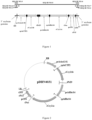
- the specific genomes and genetic elements contained in SEQ ID NO: 5 are shown in Table 1. Inclusion of SEQ ID NO: 5 or a complementary sequence thereof could be identified as the presence of the transgenic soybean event DBN8205.
- Table 1 The genomes and genetic elements contained in SEQ ID NO: 5 Genetic element/genome Length (bp) Position in SEQ ID NO: 5 5' genome 481 1-481 RB 137 482-618 prAtAct2-01 1408 866-2273 spAtCTP2 228 2282-2509 cCry2Ab 1905 2519-4423 tPsE9 643 4431-5073 prAtRbcS4 1723 5080-6802 spAtRbcS4 264 6803-7066 cCry1Ac 3537 7067-10603 tNos 253 10610-10862 pr35S 530 10916-11445 cPAT 552 11446-11997 t35S 195 11998-12192 LB 50 12347-12396 3' genome 417 12397-12813
- the first, second, third and fourth nucleic acid sequences may not necessarily consist of DNA alone, but may also comprise RNA, a mixture of DNA and RNA, or a combination of DNA, RNA or other nucleotides or analogues thereof that do not act as templates for one or more polymerases.
- the probes or primers of the present invention should be at least about 11, 12, 13, 14, 15, 16, 17, 18, 19, 20, 21 or 22 consecutive nucleotides in length and may be selected from the nucleotides as set forth in SEQ ID NO: 1, SEQ ID NO: 2, SEQ ID NO: 3, SEQ ID NO: 4 and SEQ ID NO: 5.
- the probes and primers may be at least about 21 to about 50 or more consecutive nucleotides in length.
- Said nucleic acid sequences or complementary sequences thereof can be used in DNA amplification methods to produce amplicons which are used to detect the presence of the transgenic soybean event DBN8205 or progeny thereof in a biological sample.
- Said nucleic acid sequences or complementary sequences thereof can be used in nucleotide detection methods to detect the presence of the transgenic soybean event DBN8205 or progeny thereof in a biological sample.
- the present invention also provides a method for detecting the presence of DNA of the transgenic soybean event DBN8205 in a sample, comprising:
- the target amplification product comprises SEQ ID NO: 1 or a complementary sequence thereof, SEQ ID NO: 2 or a complementary sequence thereof, SEQ ID NO: 6 or a complementary sequence thereof, and/or SEQ ID NO: 7 or a complementary sequence thereof.
- the two primers comprise SEQ ID NO: 8 and SEQ ID NO: 9, SEQ ID NO: 10 and SEQ ID NO: 11, or the complementary sequences of SEQ ID NO: 1 and SEQ ID NO: 2.
- the present invention also provides a method for detecting the presence of DNA of the transgenic soybean event DBN8205 in a sample, comprising:
- the stringent conditions may be hybridization at 65°C in a solution of 6 ⁇ SSC (sodium citrate) and 0.5% SDS (sodium dodecyl sulfate), followed by membrane washing in a solution of 2 ⁇ SSC and 0.1% SDS and a solution of 1 ⁇ SSC and 0.1% SDS (each for one time).
- 6 ⁇ SSC sodium citrate
- SDS sodium dodecyl sulfate
- the probe comprises SEQ ID NO: 1 or a complementary sequence thereof, SEQ ID NO: 2 or a complementary sequence thereof, SEQ ID NO: 6 or a complementary sequence thereof, and/or SEQ ID NO: 7 or a complementary sequence thereof.
- At least one of the probes is labeled with at least one fluorophore.
- the present invention also provides a method for detecting the presence of DNA of the transgenic soybean event DBN8205 in a sample, comprising:
- the marker nucleic acid molecule comprises at least one sequence selected from the group consisting of SEQ ID NO: 1 or a complementary sequence thereof, SEQ ID NO: 2 or a complementary sequence thereof, and SEQ ID NOs: 6-11 or complementary sequences thereof.
- the present invention also provides a DNA detection kit comprising at least one DNA molecule, wherein the DNA molecule comprises said nucleic acid sequence, and can act as a DNA primer or a probe specific for the transgenic soybean event DBN8205 or progeny thereof.
- the DNA molecule comprises SEQ ID NO: 1 or a complementary sequence thereof, SEQ ID NO: 2 or a complementary sequence thereof, SEQ ID NO: 6 or a complementary sequence thereof, and/or SEQ ID NO: 7 or a complementary sequence thereof.
- the present invention also provides a plant cell or part comprising a nucleic acid sequence encoding the insect resistant Cry2Ab protein, a nucleic acid sequence encoding the insect resistant Cry1Ac protein, a nucleic acid sequence encoding the glufosinate ammonium tolerant PAT protein and a nucleic acid sequence of a specific region, wherein the nucleic acid sequence of the specific region comprises the sequence as set forth in SEQ ID NO: 1 and/or SEQ ID NO: 2; preferably, the nucleic acid sequence of the specific region comprises the sequence as set forth in SEQ ID NO: 3 and/or SEQ ID NO: 4.
- the plant cell or part successively comprises SEQ ID NO: 1, the nucleic acid sequence at positions 866-12192 of SEQ ID NO: 5 and SEQ ID NO: 2, or comprises the sequence as set forth in SEQ ID NO: 5.
- the plant cell or part comprises the transgenic soybean event DBN8205;
- the plant cell or part further comprises at least one other transgenic soybean event different from transgenic soybean event DBN8205;
- the other transgenic soybean event is transgenic soybean event DBN9004 and/or transgenic soybean event DBN8002.
- the present invention also provides a method for protecting a soybean plant from insect invasion, comprising providing at least one transgenic soybean plant cell in the diet of the target insect, wherein the transgenic soybean plant cell comprises in its genome the sequence as set forth in SEQ ID NO: 1 and/or SEQ ID NO: 2; and ingestion of the transgenic soybean plant cell inhibits the target insect from further ingesting the transgenic soybean plant.
- the transgenic soybean plant cell comprises in its genome the sequence as set forth in SEQ ID NO: 3 and/or SEQ ID NO: 4.
- the transgenic soybean plant cell successively comprises in its genome SEQ ID NO: 1, the nucleic acid sequence at positions 866-12192 of SEQ ID NO: 5 and SEQ ID NO: 2, or comprises SEQ ID NO: 5.
- the present invention also provides a method for protecting a soybean plant from damage caused by a herbicide or controlling weeds in a field in which a soybean plant is planted, comprising applying an effective amount of glufosinate ammonium herbicide into the field in which at least one transgenic soybean plant is planted, wherein the transgenic soybean plant comprises in its genome the sequence as set forth in SEQ ID NO: 1 and/or SEQ ID NO: 2, and the transgenic soybean plant has glufosinate ammonium herbicide tolerance.
- the transgenic soybean plant comprises in its genome the sequence as set forth in SEQ ID NO: 3 and/or SEQ ID NO: 4.
- the transgenic soybean plant successively comprises in its genome SEQ ID NO: 1, the nucleic acid sequence at positions 866-12192 of SEQ ID NO: 5 and SEQ ID NO: 2, or comprises the sequence as set forth in SEQ ID NO: 5.
- the present invention also provides a method for breeding an insect resistant and/or glufosinate ammonium herbicide tolerant soybean plant, comprising:
- the present invention also provides a method for producing an insect resistant and/or glufosinate ammonium herbicide tolerant soybean plant, comprising:
- the method comprises: sexually crossing a first soybean plant comprising the transgenic soybean event DBN8205 with a second soybean plant, thereby producing a plurality of progeny plants; selecting the progeny plants comprising the nucleic acid sequence of the specific region;
- the present invention also provides an agricultural product or commodity derived from a soybean plant comprising the transgenic soybean event DBN8205, wherein the agricultural product or commodity is lecithin, fatty acids, glycerol, sterols, soy flakes, soy flours, soy proteins or their concentrates, soybean oils, soy protein fibers, soy milk clots or bean curd.
- the present invention also provides an agricultural product or commodity derived from a soybean plant comprising the transgenic soybean event DBN8205, wherein the soybean plant further comprises at least one other transgenic soybean event different from transgenic soybean event DBN8205;
- the other transgenic soybean event is transgenic soybean event DBN9004 and/or transgenic soybean event DBN8002.
- the present invention also provides a method for expanding the insect-resistant spectrum and/or the herbicide-tolerant range for a plant, wherein the transgenic soybean event DBN8205 is expressed in a plant together with at least one other transgenic soybean event different from transgenic soybean event DBN8205;
- the other transgenic soybean event is transgenic soybean event DBN9004 and/or transgenic soybean event DBN8002.
- the DBN9004 provided by the present invention is the transgenic soybean event disclosed in the patent CN106086011A , wherein the transgenic soybean event DBN9004 is deposited in the form of seeds and under the accession number CGMCC No. 11171 at the China General Microbiological Culture Collection Center, CGMCC.
- the DBN8002 provided by the present invention is the transgenic soybean event disclosed in the patent CN111406117A , wherein the transgenic soybean event DBN8002 is deposited in the form of seeds and under the accession number CGMCC No. 17299 at the China General Microbiological Culture Collection Center, CGMCC.
- nucleic acid sequences for detecting soybean plants and detection methods thereof according to the present invention the following definitions and methods are provided to better define the present invention and to guide those skilled in the art in the implementation of the present invention. Unless otherwise stated, the terms are to be understood according to conventional usage by those skilled in the art.
- soybean refers to Glycine max and comprises all plant varieties that can mate with the soybean, including wild soybean species.
- plant includes the whole plants, plant cells, plant organs, plant protoplasts, plant cell tissue cultures from which plants can be regenerated, plant calli, plant clumps, and plant cells that are intact in plants or plant parts, wherein the plant parts can be, for example, embryos, pollens, ovules, seeds, leaves, flowers, branches, fruit, stalks, roots, root tips, or anthers.
- parts of transgenic plants include but are not limited to plant cells, protoplasts, tissues, calli, embryos, flowers, stems, fruits, leaves and roots.
- the above-mentioned plant parts are derived from the transgenic plants or progeny thereof which have been previously transformed with the DNA molecules of the present invention and therefore at least partially consist of transgenic cells.
- gene refers to a nucleic acid fragment that expresses a specific protein, including regulatory sequences preceding (5' non-coding sequences) and following (3' non-coding sequences) the coding sequence.
- “Native gene” refers to a gene with its own regulatory sequences as found in nature.
- “Chimeric gene” refers to any gene that is not a native gene, comprising regulatory and coding sequences that are not found in nature.
- “Endogenous gene” refers to a native gene at its natural location in the genome of an organism.
- Exogenous gene is a foreign gene currently present in the genome of an organism which does not contain it naturally, and also refers to a gene introduced into a receptor cell via a transgenic procedure.
- Exogenous genes can comprise native genes or chimeric genes inserted into a non-native organism.
- Transgene is a gene that has been introduced into a genome by a transformation procedure.
- Insert site or “target site” refers to the site in a plant genome into which a recombinant DNA has been inserted.
- flanking DNA can comprise either a genome naturally present in an organism such as a plant, or an exogenous (heterologous) DNA introduced via a transformation procedure, e.g. a fragment associated with a transformation event.
- flanking DNA may include a combination of native DNA and exogenous DNA.
- flanking DNA also called as “flanking region”, “flanking sequence”, “flanking genomic sequence”, or “flanking genomic DNA” refers to a sequence of at least 3, 5, 10, 11, 15, 20, 50, 100, 200, 300, 400, 1000, 1500, 2000, 2500 or 5000 base pairs or greater, which is located either immediate upstream or downstream of the originally inserted exogenous DNA molecule and is adjacent to the DNA molecule.
- flanking region When this flanking region is located downstream, it may also be referred to as "3' flank” or “left border flank”, and the like. When this flanking region is located upstream, it may also be referred to as “5' flank” or “right border flank”, and the like.
- Transformants will also contain unique junctions between a heterologous insert DNA and a genomic DNA fragment, or between two genomic DNA fragments, or between two heterologous DNA fragments.
- "Junction” is a point where two specific DNA fragments are linked. For example, a junction exists in the position where an insert DNA is linked to a flanking DNA. A junction point also exists in a transformed organism in which two DNA fragments are linked together in a manner modified from that found in a native organism.
- “Junction region” or “junction sequence” refers to DNA that comprises a junction point.
- the present invention provides a transgenic soybean event called DBN8205 and its progeny.
- the transgenic soybean event DBN8205 is also referred to as a soybean plant DBN8205, including plants and seeds of the transgenic soybean event DBN8205, together with plant cells or regenerable parts thereof, wherein the plant parts of the transgenic soybean event DBN8205 include but are not limited to cells, pollens, ovules, flowers, buds, roots, stems, leaves, pods and products derived from the soybean plant DBN8205 such as soybean cakes, powders and oils, specifically lecithin, fatty acids, glycerol, sterols, edible oils, defatted soy flakes, including defatted and baked soy flours, soy milk clots, bean curd, soy protein concentrates, isolated soy proteins, hydrolyzed vegetable proteins, organized soy proteins and soy protein fibers.
- the transgenic soybean event DBN8205 of the present invention contains a DNA construct which, when expressed in plant cells, confers the transgenic soybean event DBN8205 resistance to insects and tolerance to glufosinate ammonium herbicide.
- the DNA construct comprises three expression cassettes arranged in tandem.
- the first expression cassette comprises a suitable promoter for expression in a plant, a nucleic acid sequence encoding a signal peptide/transit peptide, a nucleic acid sequence encoding a Cry2Ab protein and a suitable polyadenylation signal sequence, wherein the Cry2Ab protein is mainly resistant to Lepidoptera insects.
- the second expression cassette comprises a suitable promoter for expression in a plant, a nucleic acid sequence encoding a signal peptide/transit peptide, a nucleic acid sequence encoding a Cry1Ac protein and a suitable polyadenylation signal sequence, wherein the Cry 1 Ac protein is also mainly resistant to Lepidoptera insects.
- the third expression cassette comprises a suitable promoter for expression in a plant, a nucleic acid sequence encoding phosphinothricin N-acetyltransferase (PAT) and a suitable polyadenylation signal sequence, wherein the PAT protein is tolerant to glufosinate ammonium herbicide.
- PAT phosphinothricin N-acetyltransferase
- the promoter may be a suitable promoter isolated from plants, including constitutive, inducible and/or tissue-specific promoters.
- the suitable promoter includes but is not limited to, Cauliflower mosaic virus (CaMV) 35S promoter, figwort mosaic virus (FMV) 35S promoter, Ubiquitin promoter, Actin promoter, Agrobacterium tumefaciens nopaline synthetase (NOS) promoter, octopine synthetase (OCS) promoter, Cestrum yellow leaf curl virus promoter, Patatin promoter, ribulose-1,5-bisphosphate carboxylase/oxygenase (RuBisCO) promoter, glutathione S-transferase (GST) promoter, E9 promoter, GOS promoter, alcA/alcR promoter, Agrobacterium rhizogenes RolD promoter and Arabidopsis thaliana Suc2 promoter.
- the signal peptide/transit peptide may direct Cry2Ab protein and/or Cry1Ac protein and transport them into a specific intracellular organelle or compartment.
- a sequence encoding chloroplast transit peptide is used for targeting chloroplast, or a 'KDEL' retention sequence is used for targeting endoplasmic reticulum.
- the polyadenylation signal sequence may be a suitable polyadenylation signal sequence that works in plants.
- the suitable polyadenylation signal sequence includes but is not limited to, a polyadenylation signal sequence derived from nopaline synthetase (NOS) gene of Agrobacterium tumefaciens, a polyadenylation signal sequence derived from Cauliflower mosaic virus (CaMV) 35S terminator, a polyadenylation signal sequence derived from Protease Inhibitor II (PIN II) gene and a polyadenylation signal sequence derived from ⁇ -tubulin gene.
- NOS nopaline synthetase
- CaMV Cauliflower mosaic virus
- PIN II Protease Inhibitor II
- the expression cassette may further comprise other genetic elements, including but not limited to an enhancer.
- the enhancer which may enhance gene expression level, includes but is not limited to Tobacco Etch Virus (TEV) translation activator, CaMV35S enhancer and FMV35S enhancer.
- TSV Tobacco Etch Virus
- Cry2Ab insecticidal protein and Cry 1 Ac insecticidal protein are two of many insecticidal proteins, which are insoluble parasporal crystal proteins produced by Bacillus thuringiensis (Abbr. as Bt ) .
- Cry2Ab protein or Cry1Ac protein is ingested into the midgut by insects.
- the poisonous protein protoxin is dissolved in the alkaline pH environment of the insect midgut, and the N-and C-terminal of the protein are digested by alkaline proteases to convert the protoxin into active fragments.
- the active fragments bind to the receptors on the upper surface of the cell membrane of the insect midgut epithelium and insert into the intestinal membrane, resulting in the occurrence of focus of perforation in the cell membrane, destroying the osmotic pressure change inside and outside the cell membrane and the pH balance, etc., and disrupting the digestion process of the insect, eventually leading to its death.
- Lepidoptera including both moths and butterflies, is the largest order of pests in agriculture and forestry. It includes for example Agrotis ypsilon (Rottemberg), Helicoverpa armigera (Hubner), Prodenia litura , Athetis lepigone, and Conogethes punctiferalis.
- the phosphinothricin N-acetyltransferase (PAT) gene can be an enzyme isolated from Streptomyces viridochromogenes strain, which catalyzes the conversion of L-phosphinothricin into its inactive form by acetylation so as to confer glufosinate ammonium herbicide tolerance to a plant.
- Phosphinothricin PTC, 2-amino-4-methylphosphinyl-butyric acid
- PTC is a structural unit of the antibiotic 2-amino-4-methylphosphinyl-alanyl-alanine.
- PTT This tripeptide
- PAT phosphinothricin N-acetyltransferase
- glufosinate ammonium also known as phosphinothricin refers to ammonium 2-amino-4-[hydroxy(methyl)phosphinyl]butyrate.
- Treatments with a "glufosinate ammonium herbicide” refer to treatments with any herbicide formulation containing glufosinate ammonium. It is within the skills of an ordinary agricultural technician to select application rates for a glufosinate ammonium formulation so as to realize a biologically effective amount.
- Treatment of a field containing plant materials from the transgenic soybean event DBN8205 with any herbicide formulation containing glufosinate ammonium will control the growth of weeds in the field and will not affect the growth or yield of the plant materials derived from the transgenic soybean event DBN8205.
- the DNA construct is introduced into a plant via transformation methods including but not limited to Agrobacterium -mediated transformation, ballistic transformation and pollen tube pathway transformation.
- the agrobacterium- mediated transformation is a commonly-used method for plant transformation.
- An exogenous DNA to be introduced into a plant is cloned into a vector between left and right border consensus sequences, i.e., a T-DNA region.
- the vector is transformed into Agrobacterium cells, which are subsequently used to infect plant tissues.
- the T-DNA region in the vector comprising the exogenous DNA is inserted into the plant genome.
- Ballistic transformation is bombardment of plant cells with a vector comprising an exogenous DNA (particle-mediated biolistic transformation).
- the pollen tube pathway transformation is a method for carrying an exogenous DNA into an embryo sac via a nucellus pathway using a natural pollen tube (also known as the transmitting tissue of pollen tube) formed after plant pollination.
- a natural pollen tube also known as the transmitting tissue of pollen tube
- a DNA construct is an assembly of DNA molecules linked together that provides one or more expression cassettes.
- the DNA construct is preferably a plasmid that can self-replicate in a bacterial cell and contains various restriction endonuclease sites that are useful for introducing DNA molecules that provide functional genetic elements, i.e. promoters, introns, leader sequences, coding sequences, 3' terminator regions and other sequences.
- the expression cassettes contained in a DNA construct comprise genetic elements which are necessary for the transcription of a messenger RNA and can be designed to express in prokaryote cells or eukaryotic cells. Most preferably, the expression cassettes of the present invention are designed to express in plant cells.
- a transgenic "event” is produced by transformation of plant cells with a heterologous DNA construct, comprising: inserting a nucleic acid expression cassette comprising at least one target gene into the genome of a plant through a transgenic method in order to generate a plant population, regenerating the plant population, and selecting a specific plant having the characteristics of insertion into a specific genome site.
- the term “event” refers to the original transformant and a progeny thereof that include a heterologous DNA.
- the term “event” also refers to a progeny produced by sexually crossing the original transformant with an individual of other varieties that include a heterologous DNA.
- vent also refers to a DNA sequence from the original transformant comprising an inserted DNA and flanking genomic sequences immediately adjacent to the inserted DNA, wherein the DNA sequence would be expected to be transferred to a progeny that is produced by sexually crossing a parental line that includes the inserted DNA (e.g., the original transformant and progeny thereof produced by selfing) with a parental line that does not contain the inserted DNA, and the progeny receives the inserted DNA including the target gene.
- Recombination refers to a form of a DNA and/or a protein and/or an organism that normally could not be found in nature and as such is created by human intervention. Such human intervention may produce a recombinant DNA molecule and/or a recombinant plant.
- the "recombinant DNA molecule” is obtained by an artificial combination of two otherwise separated sequence segments, e.g., manipulation of isolated nucleic acid segments by chemical synthesis or by genetic engineering technology. The technology of manipulating nucleic acids is well known in the art.
- transgene includes any cell, cell line, callus, tissue, plant part or plant, the genotype of which has been changed due to the presence of a heterologous nucleic acid.
- Transgene includes those transgenic organisms originally so altered as well as the individual progeny produced from the original transgenic organism by sexual cross or asexual propagation.
- the term “transgene” as used herein does not encompass the (chromosomal or extrachromosomal) alteration of genome by conventional plant breeding methods or by naturally occurring events, such as random cross-fertilization, non-recombinant viral infection, non-recombinant bacterial transformation, non-recombinant transposition or spontaneous mutation.
- Heterologous refers to a first molecule which is not normally found in combination with a second molecule in nature.
- a molecule may be derived from a first species and inserted into the genome of a second species. The molecule would thus be heterologous to the host and artificially introduced into the genome of the host cell.
- a method for producing a transgenic soybean event DBN8205 having resistance to Lepidoptera insects and tolerance to glufosinate ammonium herbicide comprises the following steps: firstly, sexually crossing a first parental soybean plant consisting of a soybean plant bred from the transgenic soybean event DBN8205 and a progeny thereof, with a second parental soybean plant that lacks resistance to Lepidoptera insects and tolerance to glufosinate ammonium herbicide, thereby producing a plurality of first progeny plants, wherein the transgenic soybean event DBN8205 and progeny thereof are obtained from the transformation using the expression cassette of the present invention that is resistant to Lepidoptera insects and tolerant to glufosinate ammonium herbicide; and then selecting a progeny plant that is resistant to the invasion of Lepidoptera insects and/or tolerant to glufosinate ammonium herbicide, thereby producing a soybean plant that is resistant to the invasion of Lepidoptera insects and tolerant to glufosinate ammonium herbicide
- These steps can further include backcrossing the Lepidoptera insect-resistant and/or glufosinate ammonium-tolerant progeny plants with the second parental soybean plant or a third parental soybean plant, then screening the progeny by invasion of Lepidoptera insects, application of glufosinate ammonium herbicide or identification with molecular markers (e.g., the DNA molecule comprising the junctions identified from the 5' and 3' ends of the inserted sequence in the transgenic soybean event DBN8205) associated with the trait, thereby producing a Lepidoptera insect-resistant and glufosinate ammonium herbicide-tolerant soybean plant.
- molecular markers e.g., the DNA molecule comprising the junctions identified from the 5' and 3' ends of the inserted sequence in the transgenic soybean event DBN8205
- transgenic plants can also be crossed to produce a progeny that contains two independent and separately added exogenous genes. Selfing of an appropriate progeny can produce progeny plants that are homozygous for both of the added exogenous genes.
- Backcrossing with a parental plant and outcrossing with a non-transgenic plant as previously described are also contemplated, as is vegetative propagation.
- probe means an isolated nucleic acid molecule to which a conventional detectable label or reporter molecule, for example, a radioactive isotope, a ligand, a chemiluminescent agent, or an enzyme is attached.
- a probe is complementary to a strand of a target nucleic acid, in the present invention, to a DNA strand from the genome of the transgenic soybean event DBN8205, no matter whether the genome DNA is derived from the transgenic soybean event DBN8205 or a seed or from a plant of the transgenic soybean event DBN8205 or a seed or extract thereof.
- Probes of the present invention include not only deoxyribonucleic acids or ribonucleic acids, but also polyamides and other probe materials that bind specifically to a target DNA sequence and can be used to detect the presence of that target DNA sequence.
- primer is a fragment of isolated nucleic acid molecule which is annealed to a complementary target DNA strand by nucleic acid hybridization to form a hybrid between the primer and the target DNA strand, and then extends along the target DNA strand under the action of a polymerase (for example, a DNA polymerase).
- a polymerase for example, a DNA polymerase.
- Primer pairs of the present invention refer to their use in the amplification of a target nucleic acid sequence, for example, by a polymerase chain reaction (PCR) or other conventional nucleic acid amplification methods.
- Probes and primers are generally 11 polynucleotides or more, preferably 18 polynucleotides or more, more preferably 24 polynucleotides or more, most preferably 30 polynucleotides or more in length. Such probes and primers hybridize specifically to a target sequence under high stringency hybridization conditions. A probe that differs from the target DNA sequence and retains the ability to hybridize to the target DNA sequence may be designed by conventional methods. Nevertheless, preferably, probes and primers of the present invention have complete DNA sequence identity to consecutive nucleic acids in a target sequence.
- Primers and probes based on the flanking genomic DNA and the inserted sequence of the present invention can be determined by conventional methods, for example, by isolating the corresponding DNA molecules from a plant material derived from the transgenic soybean event DBN8205, and determining the nucleic acid sequence of the DNA molecules.
- the DNA molecules comprise the transgenic inserted sequence and soybean genomic flanking sequences, and a fragment of the DNA molecule may be used as a primer or probe.
- nucleic acid probe and primer of the present invention hybridize to a target DNA sequence under stringent conditions. Any conventional nucleic acid hybridization or amplification method can be used to identify the presence of a DNA from the transgenic soybean event DBN8205 in a sample.
- Nucleic acid molecules or fragments thereof are capable of specifically hybridizing to other nucleic acid molecules under certain circumstances. As used herein, two nucleic acid molecules are capable of specifically hybridizing to each other if the two molecules are capable of forming an anti-parallel, double-stranded nucleic acid structure. A nucleic acid molecule is referred to be the "complement" of the other nucleic acid molecule if they exhibit complete complementarity.
- two nucleic acid molecules are referred to exhibit "complete complementarity", if each nucleotide of a nucleic acid molecule is complementary to the corresponding nucleotide of the other nucleic acid molecule.
- Two nucleic acid molecules are referred to be “minimally complementary”, if they can hybridize to each other with sufficient stability such that they can anneal and bind to each other under at least conventional "low stringency” conditions.
- two nucleic acid molecules are referred to possess “complementarity”, if they can hybridize to each other with sufficient stability such that they can anneal and bind to each other under conventional "high stringency" conditions.
- nucleic acid molecule only needs to have sufficient complementarity in sequence such that it can form a stable double-stranded structure in a particular solvent and at particular salt concentrations employed.
- a substantially homologous sequence is a nucleic acid molecule which will specifically hybridize to a complementary strand of another matching nucleic acid molecule under high stringency conditions.
- Appropriate stringent conditions which promote DNA hybridization are known to those skilled in the art, for example, treating with 6.0 ⁇ sodium chloride/sodium citrate (SSC) at about 45°C, followed by washing with 2.0 ⁇ SSC at 50°C.
- the salt concentration in the washing step can be about 2.0 ⁇ SSC at 50°C under low stringency conditions to about 0.2 ⁇ SSC at 50°C under high stringency conditions.
- the temperature in the washing step can be increased from room temperature (about 22°C) under low stringency conditions to about 65°C under high stringency conditions.
- a nucleic acid molecule of the present invention can specifically hybridize to one or more nucleic acid molecules of SEQ ID NO: 1, SEQ ID NO: 2, SEQ ID NO: 3, SEQ ID NO: 4, SEQ ID NO: 5, SEQ ID NO: 6 and SEQ ID NO: 7, or complementary sequences thereof, or any fragment of the above sequences under moderate stringency conditions, for example at about 2.0 ⁇ SSC and about 65°C.
- a nucleic acid molecule of the present invention can specifically hybridize to one or more nucleic acid molecules of SEQ ID NO: 1, SEQ ID NO: 2, SEQ ID NO: 3, SEQ ID NO: 4, SEQ ID NO: 5, SEQ ID NO: 6 and SEQ ID NO: 7, or complementary sequences thereof, or any fragment of the above sequences under high stringency conditions.
- a preferred marker nucleic acid molecule of the present invention comprises SEQ ID NO: 1, SEQ ID NO: 2, SEQ ID NO: 6 or SEQ ID NO: 7, or complementary sequences thereof, or any fragment of the above sequences.
- Another preferred marker nucleic acid molecule of the present invention has 80% to 100% or 90% to 100% sequence identity to SEQ ID NO: 1, SEQ ID NO: 2, SEQ ID NO: 6 or SEQ ID NO: 7, or complementary sequences thereof, or any fragment of the above sequences.
- SEQ ID NO: 1, SEQ ID NO: 2, SEQ ID NO: 6 and SEQ ID NO: 7 may be used as markers in plant breeding methods to identify a progeny of genetic cross.
- the hybridization of a probe to a target DNA molecule can be detected by any method well-known to those skilled in the art, including but not limited to, fluorescent labels, radioactive labels, antibody-based labels, and chemiluminescent labels.
- stringent conditions are conditions that only permit a primer to hybridize to a target nucleic acid sequence in a DNA thermal amplification reaction, wherein the primer has a wild-type sequence corresponding to the target nucleic acid sequence (or its complementary sequence) and thus could bind to it, preferably to produce a unique amplification product, i.e. amplicon.
- telomere binding to (a target sequence) means that under stringent hybridization conditions, a probe or primer hybridizes only to a target sequence in a sample comprising the target sequence.
- amplicon refers to a nucleic acid amplification product of a target nucleic acid sequence as a part of a nucleic acid template.
- the DNA extracted from a soybean plant tissue sample or extract may be subject to a nucleic acid amplification method using a primer pair to produce an amplicon that is diagnostic for the presence of the DNA of the transgenic soybean event DBN8205.
- the primer pair includes a first primer derived from the flanking sequences adjacent to the insertion site of the inserted exogenous DNA in the plant genome, and a second primer derived from the inserted exogenous DNA.
- the amplicon with a certain length has a sequence that is also diagnostic for the transgenic soybean event DBN8205.
- the amplicon may have a length range that is the combined lengths of the primer pair plus one nucleotide base pair, preferably plus about 50 nucleotide base pairs, more preferably plus about 250 nucleotide base pairs, most preferably plus about 450 nucleotide base pairs or more.
- a primer pair can be derived from flanking genomic sequences on both sides of the inserted DNA so as to produce an amplicon that includes the entire inserted nucleotide sequence.
- One of the primer pair derived from the plant genomic sequence may be located at a certain distance from the inserted DNA sequence, and this distance can range from one nucleotide base pair to about twenty thousand nucleotide base pairs.
- the term "amplicon" specifically excludes primer dimers formed in a DNA thermal amplification reaction.
- a nucleic acid amplification reaction can be accomplished by any one of various nucleic acid amplification methods known in the art, including polymerase chain reaction (PCR).
- PCR polymerase chain reaction
- a variety of nucleic acid amplification methods are known to those skilled in the art.
- PCR amplification methods have been developed to amplify up to 22 kb genomic DNA and up to 42 kb bacteriophage DNA. These methods as well as other DNA amplification methods known in the art can be used in the present invention.
- the inserted exogenous DNA sequence and flanking DNA sequences from the transgenic soybean event DBN8205 can be amplified on the genome of the transgenic soybean event DBN8205 using the primer sequences provided. After amplification, the PCR amplicon or cloned DNA is sequenced by standard sequencing methods.
- DNA detection kits that are based on DNA amplification methods contain DNA molecules used as primers that hybridize specifically to a target DNA and amplify a diagnostic amplicon under appropriate reaction conditions.
- the kit may provide an agarose gel-based detection method or many known methods in the art for detecting a diagnostic amplicon.
- Provided by the present invention is a kit containing DNA primers homologous or complementary to any portion of the soybean genome in SEQ ID NO: 3 or SEQ ID NO: 4 and to any portion of the transgenic inserted region in SEQ ID NO: 5.
- a primer pair that is specifically identified as useful in a DNA amplification method is SEQ ID NO: 8 and SEQ ID NO: 9, which amplify a diagnostic amplicon homologous to a portion of 5' transgene/genome region of the transgenic soybean event DBN8205, wherein the amplicon comprises SEQ ID NO: 1.
- Other DNA molecules useful as DNA primers can be selected from SEQ ID NO: 5.
- the amplicon produced by these methods may be detected by a plurality of techniques.
- One of such methods is Genetic Bit Analysis, in which a DNA oligonucleotide strand spanning the inserted DNA sequence and the adjacent flanking genomic DNA sequences is designed.
- the oligonucleotide strand is immobilized in wells of a microplate.
- a single-stranded PCR product can be hybridized to the immobilized oligonucleotide strand and serve as a template for a single base extension reaction in which a DNA polymerase and specifically labeled ddNTPs for the next predictable base are used.
- the result can be obtained by fluorescent or ELISA-based methods.
- a signal represents the presence of the inserted/flanking sequence, which demonstrates that the amplification, hybridization, and single base extension are successful.
- Another method is the Pyrosequencing technique.
- an oligonucleotide strand spanning the inserted DNA sequence and the adjacent genomic DNAjunction is designed.
- the oligonucleotide strand is hybridized to the single-stranded PCR product from the target region (using two primers respectively for the inside of the inserted sequence and the adjacent flanking genomic sequence) and incubated together with a DNA polymerase, ATP, sulfurylase, luciferase, apyrase, adenosine-5'-phosphosulfate and luciferin.
- the dNTPs are added separately and the produced light signal is measured.
- a light signal represents the presence of the inserted/flanking sequence, which demonstrates that the amplification, hybridization, and single or multi-base extension are successful.
- Fluorescence polarization phenomenon as described by Chen et al. is also a method for detecting the amplicon of the present invention.
- the oligonucleotide strand is hybridized to the single-stranded PCR product from the target region (using two primers respectively for the inside of the inserted sequence and the adjacent flanking genomic sequences) and incubated together with a DNA polymerase and a fluorescently-labeled ddNTP.
- Single base extension results in the incorporation of ddNTP.
- Such incorporation can be measured as a change in polarization using a fluorometer.
- a change in polarization represents the presence of the inserted/flanking sequence, which demonstrates that the amplification, hybridization, and single base extension are successful.
- Taqman is described as a method for detecting and quantitatively analyzing the presence of a DNA sequence and is fully described in the instructions provided by the manufacturer. Now, it is briefly illustrated as follows.
- a FRET oligonucleotide probe spanning the inserted DNA sequence and the adjacent genomic flanking junction is designed.
- the FRET probe and PCR primers (using two primers respectively for the inside of the inserted sequence and the adjacent flanking genomic sequences) are subject to reaction cycles in the presence of a thermostable polymerase and dNTPs.
- Hybridization of the FRET probe results in cleavage between the fluorescent moiety and quenching moiety on the FRET probe and release of the fluorescent moiety.
- the generation of a fluorescent signal represents the presence of the inserted/flanking sequence, which demonstrates that the amplification and hybridization are successful.
- suitable techniques for detecting plant materials from the transgenic soybean event DBN8205 also comprise Southern blot, Northern blot and in situ hybridization. Particularly, the suitable techniques involve incubating a probe with a sample, washing them to remove unbound probe, and detecting whether the probe has been hybridized.
- the detection method is dependent on the type of the label attached to the probe, for example, a radioactively-labeled probe can be detected by exposure and development of X-ray film, or an enzymatically-labeled probe can be detected by conversion of a substrate to effect a color change.
- a FRET oligonucleotide probe spanning the inserted DNA sequence and the adjacent genomic flanking junctions is designed. Due to the unique structure of the FRET probe, it contains a secondary structure that keeps the fluorescent moiety and the quenching moiety in close proximity.
- the FRET probe and PCR primers (using two primers respectively for the inside of the inserted sequence and the flanking genomic sequences) are subject to reaction cycles in the presence of a thermostable polymerase and dNTPs.
- hybridization of the FRET probe to the target sequence results in loss of the probe's secondary structure, so that the fluorescent moiety and the quenching moiety are spatially separated and a fluorescent signal is generated.
- the generation of a fluorescent signal represents the presence of the inserted/flanking sequence, which demonstrates that the amplification and hybridization are successful.
- Nanotube devices which comprise an electronic sensor for detecting DNA molecules or nanobeads for binding specific DNA molecules and thus can be detected, are useful for detecting the DNA molecules of the present invention.
- DNA detection kits can be developed using the compositions described herein and methods described or known in the field of DNA detection.
- the kits are useful for identifying whether a sample contains DNA of the transgenic soybean event DBN8205 and can also be applied to breed soybean plants containing the DNA of the transgenic soybean event DBN8205.
- the kits may comprise DNA primers or probes homologous or complementary to at least a portion of SEQ ID NO: 1, 2, 3, 4 or 5, or comprise other DNA primers or probes homologous or complementary to the DNA contained in the transgenic genetic elements of DNA. These DNA sequences can be used in DNA amplification reactions or as probes in DNA hybridization methods.
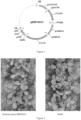
- the DNA structure of the transgenic inserted sequence and the soybean genomic junctions contained in the soybean genome and illustrated in Figure 1 and Table 1 comprises: the soybean plant DBN8205 flanking genomic region adjacent to the 5' end of the transgenic inserted sequence; a portion of an inserted sequence from the right border region (RB) of Agrobacterium; a first expression cassette consisting of an Arabidopsis ACT2 promoter (prAtAct2-01), operably linked to the Arabidopsis chloroplast transit peptide gene (spAtCTP2), further operably linked to the insect-resistant cCry2Ab gene of Bacillus thuringiensis, further operably linked to a pea ( Pisum sativu ) RbcS gene terminator (tPsE9); a second expression cassette consisting of an Arabidopsis ribulose-1,5-bisphosphate carboxylase small subunit gene promoter (prAtRbcS4), operably linked to an Arabidopsis ribulose-1,5-
- the transgenic soybean event DBN8205 can be used in combination with other transgenic soybean varieties, for example, herbicide (such as glyphosate and dicamba)-tolerant transgenic soybean varieties, or transgenic soybean varieties carrying other insect-resistant genes.
- herbicide such as glyphosate and dicamba
- transgenic soybean varieties carrying other insect-resistant genes can provide improved hybrid transgenic soybean varieties resistant to various insects and tolerant to various herbicides. These varieties can exhibit better performances, as compared with non-transgenic varieties and single-trait transgenic varieties.
- the invention provides the superimposed transgenic soybean event DBN8205 ⁇ DBN8002 ⁇ DBN9004 obtained by crossing DBN8205, DBN8002 and DBN9004.
- the superimposed transgenic soybean event DBN8205 ⁇ DBN8002 ⁇ DBN9004 comprises a cCry2Ab gene, a cCry1Ac gene, a cPAT gene, a cVip3Aa gene, and a cEPSPS gene inserted into specific sites within the genome of a soybean cell to effectively control major Lepidoptera pests of soybean in South America (Argentina and Brazil) and China by three insect-resistance mechanisms; also, the cPAT gene and the cEPSPS gene in the superimposed transgenic soybean event can confer tolerance to glufosinate ammonium herbicide and glyphosate herbicide to soybean plants without compromising the yield.
- the term "superimposed" means that at least two transgenic events having desired traits are combined into the same plant.
- the transgenic events are superimposed by crossing between parents of the transgenic event having the desired traits and then identifying a progeny having all of these desired traits.
- Superposition of transgenic events can be used to combine two or more different traits, including, for example, two or more different insect resistance traits, two or more herbicide resistance traits, and/or insect resistance traits and herbicide resistance traits.
- the transgenic soybean event DBN8205 of the present invention is resistant to the ingestion damage caused by Lepidoptera pests, and tolerant to the phytotoxicity of agricultural herbicides containing glufosinate ammonium.
- the dual-trait soybean plant expresses the Cry2Ab protein and Cry1Ac protein of Bacillus thuringiensis, providing resistance to the ingestion damage caused by Lepidoptera pests, and expresses glufosinate ammonium-resistant phosphinothricin-N-acetyl-transferase (PAT) protein of Streptomyces, conferring glufosinate ammonium tolerance to the plant.
- PAT phosphinothricin-N-acetyl-transferase
- transgenes encoding insect-resistant and glufosinate ammonium-tolerant traits are linked on the same DNA segment, and exist in a single locus of the transgenic soybean event DBN8205 genome, which provide an enhanced breeding efficacy and allow to track the transgenic inserted fragments in the propagating population and progeny thereof by using molecular markers.
- SEQ ID NO: 1 or a complementary sequence thereof, SEQ ID NO: 2 or a complementary sequence thereof, SEQ ID NO: 6 or a complementary sequence thereof, or SEQ ID NO: 7 or a complementary sequence thereof can be used as DNA primers or probes to produce amplification products diagnostic for the transgenic soybean event DBN8205 or progeny thereof, and can rapidly, accurately and stably identify the presence of plant materials derived from the transgenic soybean event DBN8205.
- a recombinant expression vector pDBN4031 (as shown in Figure 2 ) was constructed by using standard gene cloning techniques.
- the vector pDBN4031 comprises three transgenic expression cassettes arranged in tandem: the first expression cassette consisting of an Arabidopsis ACT2 promoter (prAtAct2-01), operably linked to the Arabidopsis chloroplast transit peptide gene (spAtCTP2), further operably linked to the insect-resistant cCry2Ab gene of Bacillus thuringiensis, further operably linked to a pea RbcS gene terminator (tPsE9); the second expression cassette consisting of an Arabidopsis ribulose-1,5-bisphosphate carboxylase small subunit gene promoter (prAtRbcS4), operably linked to an Arabidopsis ribulose-1,5-bisphosphate carboxylase small subunit gene chloroplast transit peptide gene (spAtRbcS4), further operably
- a recombinant expression vector pDBN4032 (as shown in Figure 3 ) was constructed by using standard gene cloning techniques.
- the vector pDBN4032 comprises three transgenic expression cassettes arranged in tandem: the first expression cassette consisting of an Arabidopsis ACT2 promoter (prAtAct2-02) (SEQ ID NO:36), operably linked to the Arabidopsis chloroplast transit peptide gene (spAtCTP2), further operably linked to the insect-resistant cCry2Ab gene of Bacillus thuringiensis, further operably linked to a metallothionein-like protein gene terminator (tOsMth) (SEQ ID NO:37); the second expression cassette consisting of an Arabidopsis ribulose-1,5-bisphosphate carboxylase small subunit gene promoter (prAtRbcS4), operably linked to an Arabidopsis ribulose-1,5-bisphosphate carboxylase small subunit gene chloroplast transit
- Agrobacterium LBA4404 (Invitrogen, Chicago, USA; Cat. No: 18313-015) was transformed with the vector pDBN4031 and pDBN4032 respectively by liquid nitrogen method, and 4-[hydroxy(methyl)phosphinyl]-DL-homoalanine was used as a selective marker for screening transformed cells.
- the Agrobacterium -mediated soybean transformation comprises: germinating mature soybean seeds (soybean variety Jack) in a soybean germination medium (3.1 g/L B5 salt, B5 vitamin, 20 g/L sucrose, and 8 g/L agar; pH 5.6); inoculating the seeds onto the germination medium, and culturing them under the conditions of: a temperature of 25 ⁇ 1°C and a photoperiod (light/dark) of 16 h/8 h; at 4-6 days after germination, collecting fresh green soybean sterile plantlets with inflated cotyledonary node; excising the hypocotyls approximately 3-4 mm below the cotyledonary node; making longitudinal cuts through the cotyledons, and removing apical buds, lateral buds and seminal roots; wounding at the cotyledonary node with the back of a surgical blade, and contacting the wounded cotyledonary node tissues with an Agrobacterium suspension
- the cotyledonary node tissues were co-cultured with Agrobacterium for a period of time (3 days) (step 2: co-culture step).
- the recovery medium (3.1 g/L B5 salt, B5 vitamin, 1 g/L MES, 30 g/L sucrose, 2 mg/L ZT, 8 g/L of agar, 150 mg/L cephalosporin, 100 mg/L glutamic acid, and 100 mg/L aspartic acid; pH 5.6) comprises at least one antibiotic (150-250 mg/L cephalosporin) known to inhibit the growth of Agrobacterium, without addition of any selective agent for plant transformants (step 3: recovery step).
- the tissue blocks regenerated from the cotyledonary node were cultured in a solid medium comprising an antibiotic but no selective agent to eliminate Agrobacterium and provide a recovery stage for the infected cells. Subsequently, the tissue blocks regenerated from the cotyledonary node were cultured on a medium containing a selective agent (4-[(hydroxy(methyl)phosphinyl)]-DL-homoalanine), and the growing transformed calli were selected (step 4: selection step).
- a selective agent (4-[(hydroxy(methyl)phosphinyl)]-DL-homoalanine
- the tissue blocks regenerated from the cotyledonary node were cultured in a screening solid selective medium (3.1 g/L B5 salt, B5 vitamin, 1 g/L MES, 30 g/L sucrose, 1 mg/L 6-benzyladenine (6-BAP), 8 g/L agar, 150 mg/L cephalosporin, 100 mg/L glutamic acid, 100 mg/L aspartic acid, and 10 mg/L 4-(hydroxy(methyl)phosphinyl)-DL-homoalanine; pH 5.6) comprising a selective agent, which resulted in the continuous growth of the transformed cells.
- the transformed cells regenerated into plants (step 5: regeneration step).
- the tissue blocks regenerated from the cotyledonary node growing on the medium containing a selective agent were cultured on a solid medium (B5 differentiation medium and B5 rooting medium) to regenerate plants.
- the resistant tissues obtained from screening were transferred to B5 differentiation medium (3.1 g/L B5 salt, B5 vitamin, 1 g/L MES, 30 g/L sucrose, 1 mg/L ZT, 8 g/L agar, 150 mg/L cephalosporin, 50 mg/L glutamic acid, 50 mg/L aspartic acid, 1 mg/L gibberellin, 1 mg/L auxin, and 5 mg/L 4-(hydroxy(methyl)phosphinyl)-DL-homoalanine; pH 5.6), and cultured for differentiation at 25°C.
- B5 differentiation medium 3.1 g/L B5 salt, B5 vitamin, 1 g/L MES, 30 g/L sucrose, 1 mg/L ZT, 8 g/L agar, 150 mg/L cephalosporin, 50 mg/L glutamic acid, 50 mg/L aspartic acid, 1 mg/L gibberellin, 1 mg/L auxin, and 5 mg/L 4-(hydroxy(methyl)phosphiny
- the differentiated plantlets were transferred to B5 rooting medium (3.1 g/L B5 salt, B5 vitamin, 1 g/L MES, 30 g/L sucrose, 8 g/L agar, 150 mg/L cephalosporin, and 1 mg/L indole-3-butyric acid (IBA)), and cultured at 25°C.
- B5 rooting medium 3.1 g/L B5 salt, B5 vitamin, 1 g/L MES, 30 g/L sucrose, 8 g/L agar, 150 mg/L cephalosporin, and 1 mg/L indole-3-butyric acid (IBA)
- IBA indole-3-butyric acid
- a total of 1037 independent transgenic T 0 plants were produced by the vector pDBN4031.
- the above 1037 independent transgenic T 0 single plants were moved into the greenhouse for transplantation, cultivation and propagation to afford transgenic T 1 single plants.
- the T 1 generation was sprayed with glufosinate ammonium to identify positive transgenic events, and a total of 137 positive transgenic single plants were obtained.
- TaqMan TM analysis the above 137 transgenic soybean plants were detected for the presence of single-copied cCry2Ab gene, cCry1Ac gene and cPAT gene and the absence of backbone sequence of the vector; and a total of 84 transgenic single plants were obtained.
- transgenic single plants were obtained by screening, in which the sequences on both sides of T-DNA were intact, the T-DNA was not inserted into important genes of the soybean genome and the gene insertion did not result in any large open reading frame (ORF).
- ORF open reading frame
- transgenic soybean plants Since genetic transformation and gene insertion may affect agronomic traits of soybean plants (such as seedling vigor, propagation period, plant height or lodging), the above 25 transgenic T 2 -generation single plants were planted in a field to identify the agronomic trait performance of the transgenic T 2 single plants at different stages (seedling stage to full flowering stage, initial grain-forming stage to maturity stage); then, by means of selfing and backcross breeding, it is screened whether the agronomic traits, molecular biology, resistance against the target insects and glufosinate ammonium tolerance of the transgenic soybean plants can be stably inherited under the conditions of different generations, different geographical environments and/or different background materials, and three excellent transgenic soybean events DBN8205, pDBN4031-1 and pDBN4031-2 were selected, wherein the transgenic soybean event DBN8205 has the most excellent traits (see Examples 6 to 9).
- agronomic traits of soybean plants such as seedling vigor, propagation period, plant height or
- the genomic DNA was extracted from the leaf (about 100 mg) of the transgenic soybean event DBN8205 as a sample, and the copy numbers of cCry2Ab gene, cCry1Ac gene and cPAT gene were detected by a fluorescent quantitative PCR method using Taqman probe. Meanwhile, a wild-type soybean plant as a control was subject to the detection and analysis according to the above methods. Experiments were carried out in triplicate and the average value was calculated.
- the PCR reaction system comprises: JumpStart TM Taq ReadyMix TM (Sigma) 10 ⁇ L 50 ⁇ primer/probe mix 1 ⁇ L Genomic DNA 3 ⁇ L Double distilled water (ddH 2 O) 6 ⁇ L wherein the 50 ⁇ primer/probe mix comprises 45 ⁇ l of each primer at a concentration of 1 mM, 50 ⁇ l of a probe at a concentration of 100 ⁇ M, and 860 ⁇ l of 1 ⁇ TE buffer (10 mM Tris-HCl, 1 mM EDTA; pH 8.0), and was stored in an amber tube at 4°C.
- PCR reaction condition was set as follows: Step Temperature Time 1 95°C 5 min 2 95°C 30 s 3 60°C 1 min 4 go back to step 2 and repeat 40 times
- DNA was extracted by the conventional CTAB (cetyl trimethyl ammonium bromide) method: after 2 g young leaf of the transgenic soybean event DBN8205 was ground to powder in liquid nitrogen, 0.5 mL CTAB DNA extraction buffer (20 g/L CTAB, 1.4 M NaCl, 100 mM Tris-HCl, and 20 mM EDTA (edetic acid), with a pH adjusted to pH 8.0 with NaOH) preheated at 65°C was added, then they were mixed thoroughly and extracted at 65°C for 90 min; 0.5 volume of phenol and 0.5 volume of chloroform were added and mixed by inversion; the mixture was centrifuged at 12,000 rpm (revolution per minute) for 10 min; the supernatant was pipetted and 2 volumes of absolute ethanol was added; the centrifuge tube was gently shaken and then left standing at 4°C for 30 min; the centrifuge tube was centrifuged again at 12,000 rpm for 10 min such that DNA was collected to the bottom of the tube; the supern
- the concentration of the above extracted DNA sample was measured.
- the concentration of the sample to be tested is 80-100 ng/ ⁇ L.
- the genomic DNA was digested using restriction endonucleases EcoR I (5' end analysis) and EcoR V (3' end analysis) respectively.
- Each enzymatic digestion system was added with 26.5 ⁇ L of genomic DNA, 0.5 ⁇ L of the above restriction endonucleases and 3 ⁇ L of enzymatic digestion buffer (all employed restriction endonucleases are enzymes with assorted buffers thereof or generic buffers from NEB company (now known as NEBCutSmart)), and was digested for 1 hour.
- the enzymatic digestion system was added with 70 ⁇ L of absolute ethanol, kept in ice bath for 30 min, and centrifuged at 12,000 rpm for 7 min. After discarding the supernatant, the pellet was blow-dried, then added with 8.5 ⁇ L of double distilled water, 1 ⁇ L of 10 ⁇ T 4 -DNA ligase buffer (NEB T4 DNA Ligase Reaction Buffer; for its specific formulation, please visit the websites of NEB or refer to https://www.neb.com/products/restriction-endonucleases or https://www.neb.com/products/b0202-t4-dna-ligase-reaction-buffer) and 0.5 ⁇ L of T 4 -DNA ligase, and then ligated overnight at 4°C.
- NEB T4 DNA Ligase Reaction Buffer for its specific formulation, please visit the websites of NEB or refer to https://www.neb.com/products/restriction
- the 5' and 3' end genomic DNAs were isolated by PCR amplification using a series of nested primers.
- the primer combination for isolating the 5' end genomic DNA comprises SEQ ID NO: 13 and SEQ ID NO: 30 as first primers, SEQ ID NO: 32 and SEQ ID NO: 33 as second primers, and SEQ ID NO: 13 as a sequencing primer.
- the primer combination for isolating 3' end genomic DNA comprises SEQ ID NO: 15 and SEQ ID NO: 31 as first primers, SEQ ID NO: 34 and SEQ ID NO: 35 as second primers, and SEQ ID NO: 15 as a sequencing primer.
- PCR reaction conditions were shown in Table 3.
- the amplification product resulted from the above PCR amplification was subject to electrophoresis on an agarose gel with a mass fraction of 2.0% to isolate the PCR amplification product; subsequently, the target fragment was isolated from agarose matrix using a gel extraction kit (QIAquick Gel Extraction Kit, catalog #_28704, Qiagen Inc., Valencia, CA). Then the purified PCR amplification product was sequenced (e.g., using ABI PrismTM 377, PE Biosystems, Foster City, CA) and analyzed (e.g., using DNASTAR sequence analysis software, DNASTAR Inc., Madison, WI).
- the 5' and 3' flanking sequences and junction sequences were confirmed using standard PCR procedures.
- the 5' flanking and junction sequences were confirmed using SEQ ID NO: 8 or SEQ ID NO: 12 in combination with SEQ ID NO: 9, SEQ ID NO: 13 or SEQ ID NO: 30.
- the 3' flanking and junction sequences were confirmed using SEQ ID NO: 11 or SEQ ID NO: 14 in combination with SEQ ID NO: 10, SEQ ID NO: 15 or SEQ ID NO: 31.
- PCR reaction systems and amplification conditions were shown in Tables 2 and 3. It will be recognized by those skilled in the art that other primer sequences could also be used to confirm the flanking and junction sequences.
- DNA sequencing of the PCR amplification products provides a DNA that could be used to design other DNA molecules which could be used as primers and probes for identifying soybean plants or seeds derived from the transgenic soybean event DBN8205.
- the inserted sequence of the transgenic soybean event DBN8205 was found to be flanked on the right border (5' flanking sequence) by the soybean genomic sequence shown in the nucleotides 1-481 of SEQ ID NO: 5 and flanked on the left border (3' flanking sequence) by the soybean genomic sequence shown in the nucleotides 12397-12813 of SEQ ID NO: 5.
- the 5' junction sequence was set forth in SEQ ID NO: 1 and the 3' junction sequence was set forth in SEQ ID NO: 2.
- junction sequence is a relatively short polynucleotide molecule, which is a new DNA sequence and is diagnostic for the DNA of the transgenic soybean event DBN8205 when detected in polynucleotide detection and analysis.
- the junction sequences in SEQ ID NO: 1 and SEQ ID NO: 2 respectively are 11 polynucleotides on each side of the insertion site of the transgenic fragment and soybean genomic DNA in the transgenic soybean event DBN8205.
- Longer or shorter polynucleotide junction sequences can be selected from SEQ ID NO: 3 or SEQ ID NO: 4.
- the junction sequences (5' junction region, SEQ ID NO: 1 and 3' junction region, SEQ ID NO: 2) were useful in the method for detecting DNA as DNA probes or DNA primer molecules.
- junction sequences SEQ ID NO: 6 and SEQ ID NO: 7 were also new DNA sequences of the transgenic soybean event DBN8205, and could also be used for detecting the presence of the transgenic soybean event DBN8205 as DNA probes or DNA primer molecules.
- SEQ ID NO: 6 spans a DNA sequence of the pDBN4031 construct and a prAtAct2-01 transcription origin sequence
- SEQ ID NO: 7 spans a t35S transcriptional termination sequence and a DNA sequence of the pDBN4031 construct.
- an amplicon was generated by using at least one primer derived from SEQ ID NO: 3 or SEQ ID NO: 4. Said primer, when used in a PCR method, generated an amplicon diagnostic for the transgenic soybean event DBN8205.
- the PCR amplification product was generated from the 5' end of the transgenic inserted sequence.
- Said PCR amplification product comprises a portion of the genomic DNA at 5' end flanking the T-DNA inserted sequence in the genome of plant materials derived from the transgenic soybean event DBN8205.
- the PCR amplification product comprises SEQ ID NO: 3.
- primer 7 SEQ ID NO: 8
- primer 8 SEQ ID NO: 9
- the PCR amplification product was generated from the 3' end of the transgenic inserted sequence.
- Said PCR amplification product comprises a portion of the genomic DNA at 3' end flanking the T-DNA inserted sequence in the genome of plant materials derived from the transgenic soybean event DBN8205.
- the PCR amplification product comprises SEQ ID NO: 4.
- primer 9 SEQ ID NO: 10
- primer 10 SEQ ID NO: 11
- DNA amplification conditions described in Tables 2 and 3 could be used in the above PCR assays for zygosity to generate an amplicon diagnostic for the transgenic soybean event DBN8205. Detection of amplicons could be conducted by using a thermocycler such as Stratagene Robocycler, MJ Engine, Perkin-Elmer 9700, or Eppendorf Mastercycler Gradient, or by the methods and apparatus known to those skilled in the art.
- a thermocycler such as Stratagene Robocycler, MJ Engine, Perkin-Elmer 9700, or Eppendorf Mastercycler Gradient, or by the methods and apparatus known to those skilled in the art.
- thermocycler such as Stratagene Robocycler (Stratagene, La Jolla, CA), MJ Engine (MJ R-Biorad, Hercules, CA), Perkin-Elmer 9700 (Perkin Elmer, Boston, MA), or Eppendorf Mastercycler Gradient (Eppendorf, Hamburg, Germany) using the cycle parameters shown in Table 3. MJ Engine or Eppendorf Mastercycler Gradient thermocycler should be run in the calculated mode.
- the Perkin-Elmer 9700 thermocycler should have a ramp speed set at maximum when running.
- the experiments show the following results: when used in a PCR reaction of the transgenic soybean event DBN8205 genomic DNA, primers 7 and 8 (SEQ ID NO: 8 and 9) result in a 634 bp fragment of an amplification product, but when they were used in PCR reactions of a non-transformed soybean genomic DNA and non-DBN8205 soybean genomic DNA, no fragment was amplified; when used in a PCR reaction of the transgenic soybean event DBN8205 genomic DNA, primers 9 and 10 (SEQ ID NO: 10 and 11) result in a 642 bp fragment of an amplification product, but when they were used in PCR reactions of a non-transformed soybean genomic DNA and non-DBN8205 soybean genomic DNA, no fragment was amplified.
- PCR assays for zygosity could also be used to identify whether the material derived from the transgenic soybean event DBN8205 is homozygous or heterozygous.
- Primer 11 SEQ ID NO: 12
- primer 12 SEQ ID NO: 13
- primer 13 SEQ ID NO: 14
- DNA amplification conditions described in Tables 4 and 5 could be used in the above assays for zygosity to produce an amplicon diagnostic for the transgenic soybean event DBN8205.
- thermocycler such as Stratagene Robocycler (Stratagene, La Jolla, CA), MJ Engine (MJ R-Biorad, Hercules, CA), Perkin-Elmer 9700 (Perkin Elmer, Boston, MA), or Eppendorf Mastercycler Gradient (Eppendorf, Hamburg, Germany) using the cycle parameters shown in Table 5. MJ Engine or Eppendorf Mastercycler Gradient thermocycler should be run in the calculated mode.
- the Perkin-Elmer 9700 thermocycler should have a ramp speed set at maximum when running.
- the biological sample comprising template DNA contains the DNA diagnostic for the presence of the transgenic soybean event DBN8205.
- the amplification reaction would generate two different DNA amplicons from the biological sample comprising the DNA derived from soybean genome, and the DNA derived from soybean genome is heterozygous for the corresponding allele of the inserted DNA present in the transgenic soybean event DBN8205.
- the two different amplicons would correspond to a first amplicon (SEQ ID NO: 12 and SEQ ID NO: 14) derived from a locus of wild-type soybean genome and a second amplicon (SEQ ID NO: 12 and SEQ ID NO: 13) diagnostic for the presence of the transgenic soybean event DBN8205 DNA.
- a soybean DNA sample that only generates a single amplicon corresponding to the second amplicon as described in regard to heterozygous genome could be diagnosed as the presence of the transgenic soybean event DBN8205 in that sample, and the sample was produced from soybean seeds homozygous for the corresponding allele of the inserted DNA present in the transgenic soybean plant DBN8205.
- primer pairs for the transgenic soybean event DBN8205 are used to produce an amplicon diagnostic for genomic DNA of the transgenic soybean event DBN8205.
- These primer pairs include but are not limited to primers 7 and 8 (SEQ ID NO: 8 and SEQ ID NO: 9), and primers 9 and 10 (SEQ ID NO: 10 and SEQ ID NO: 11), and are used in the DNA amplification method.
- control primers 14 and 15 SEQ ID NOs: 25 and 26 for amplification of an endogenous soybean gene are included as an internal standard for reaction conditions.
- the analysis of a DNA extraction sample of the transgenic soybean event DBN8205 should include a positive tissue DNA extract from the transgenic soybean event DBN8205 as control, a negative DNA extract from a soybean plant that is not the transgenic soybean event DBN8205 as control, and a negative control without template soybean DNA extract.
- any primer pair from SEQ ID NO: 3 or a complementary sequence thereof, or SEQ ID NO: 4 or a complementary sequence thereof can be used; when they are used for DNA amplification reaction, they respectively produce amplicons comprising SEQ ID NO: 1 or SEQ ID NO: 2 and diagnostic for tissues derived from the transgenic soybean event DBN8205.
- DNA amplification conditions as described in Tables 2 to 5 can be used in the production of an amplicon diagnostic for the transgenic soybean event DBN8205 by using suitable primer pairs.
- the DNA extract of soybean plants or seeds which produces an amplicon diagnostic for the transgenic soybean event DBN8205 in a DNA amplification method and is presumed to contain the transgenic soybean event DBN8205, or a product derived from the transgenic soybean event DBN8205 can be used as a template for amplification to determine the presence of the transgenic soybean event DBN8205.
- the mixture was mixed uniformly, left standing at a temperature of -20°C for 1 hour to precipitate DNA, and then centrifuged at a rotation speed of 4,000 rpm for 5 minutes to obtain the DNA pellet, which was subsequently resuspended in 1 mL of TE buffer (10 mM Tris-HCl, 1 mM EDTA; pH 8.0).
- the DNA was incubated with 40 ⁇ L of 10 mg/mL RNase A at a temperature of 37°C for 30 minutes, centrifuged at a rotation speed of 4,000 rpm for 5 minutes, and then centrifuged at a rotation speed of 12,000 rpm for 10 minutes in the presence of 0.1-fold volume of 3 M sodium acetate (pH 5.2) and 2-fold volumes of absolute ethanol to precipitate DNA. After the supernatant was discarded, the pellet was washed with 1 mL of 70% (v/v) ethanol and dried under room temperature, and then the DNA was re-dissolved in 1 mL of TE buffer.
- the concentration of genomic DNA in the above-mentioned sample was measured by using an ultra micro-volume spectrophotometer (NanoDrop 2000, Thermo Scientific).
- Genomic DNA was digested respectively with restriction endonucleases Mfe I, Nco I, Hind III and Sph I using a portion of the sequences of cCry2Ab gene, cCry1Ac gene and cPAT gene in T-DNA as probes.
- restriction endonucleases Mfe I, Nco I, Hind III and Sph I using a portion of the sequences of cCry2Ab gene, cCry1Ac gene and cPAT gene in T-DNA as probes.
- the digestion products were incubated overnight at an appropriate temperature.
- the sample was spun in a centrifugal vacuum concentrator (speed Vacuum, Thermo Scientific) to reduce the volume to 20 ⁇ l.
- Bromophenol blue loading dye was added to each sample from Example 4.2, and each sample was loaded onto a 0.7% agarose gel containing ethidium bromide and electrophoresed for isolation in TAE electrophoresis buffer (40 mM Tris-acetic acid, 2 mM EDTA, pH 8.5). The gel electrophoresis was run overnight at a voltage of 20 V
- the gel was treated with 0.25 M HCl for 10 minutes to depurinate the DNA, and then treated with a denaturation solution (1.5 M NaCl, 0.5 M NaOH) and a neutralization solution (1.5 M NaCl, 0.5 M Tris-HCl; pH 7.2) for 30 minutes, respectively.
- 5 ⁇ SSC (3 M NaCl, 0.3 M Sodium citrate; pH 7.0) was poured into a porcelain dish; a piece of glass was covered; and then a wet filter paper bridge, a gel, a positively charged nylon membrane (Roche, Cat. No. 11417240001), three pieces of filter paper, a paper tower, and a heavy object were placed successively.
- the nylon membrane was rinsed with deionized water twice, and the DNA was immobilized onto the membrane by ultraviolet crosslinker (UVP, UV Crosslinker CL-1000).
- a suitable DNA sequence was amplified by PCR for probe preparation.
- the DNA probes were SEQ ID NO: 27, SEQ ID NO: 28 or SEQ ID NO: 29, or partially homologous or complementary to the above sequences.
- the DIG labeling of the probes, Southern blot, membrane washing, and other operations were performed by using the DNA Labeling and Detection Starter Kit II (Roche, Cat. No. 11585614910). For specific methods, please refer to their Product Instructions. Finally, an X-ray film (Roche, Cat. No. 11666916001) was used to detect the position where the probe was bound.
- Each Southern blot included two control samples: (1) DNA from a negative (untransformed) segregant, which was used to identify any endogenous soybean sequences that could hybridize to the element-specific probe; and (2) DNA from a negative segregant, into which Hind III-digested pDBN4031 plasmid was introduced, in an amount equivalent to a single copy number based on the length of the probe, which was used as a positive control to show the sensitivity of the experiment when a single copy of gene was detected in the soybean genome.
- the hybridization data provides corroboratory evidence to support TaqMan TM PCR analysis, namely, the soybean plant DBN8205 contains cCry2Ab gene, cCry1Ac gene and cPAT gene in a single copy.
- the probe for cCry2Ab gene the enzymatic digestions of Mfe I and Spe I respectively generate single bands of about 8.0 kb and 6.0 kb; and by using the probe for cCry1Ac gene, the enzymatic digestions of Hind III and Sph I respectively generate single bands of about 13 kb and 7.5 kb; and by using the probe for cPAT gene, the enzymatic digestions of Mfe I and Spe I respectively generate single bands of about 9.5 kb and 13 kb.
- the expression ranges of Cry1Ac protein in the transgenic soybean event DBN8205 can be detected by ELISA.
- the leaves at V5 stage, stems and flowers at R2 stage, roots, stems and seeds at R6 stage were extracted from transgenic soybean event DBN8205, and the different soybean tissues at different growth stages described above were lyophilized and used as the samples.
- 20 mg of samples were weighed respectively and ground in liquid nitrogen, then added with 1 mL extraction buffer (8 g/L NaCl, 0.27 g/L KH 2 PO 4 , 1.42 g/L Na 2 HPO 4 , 0.2 g/L KCl, and 5.5 ml/L Tween-20; pH 7.4) respectively.
- the mixture was mixed uniformly, left standing at a temperature of 4°C for 30 minutes, and then centrifuged at a rotation speed of 12,000 rpm for 10 minutes.
- the supernatant was pipetted and diluted with the above extraction buffer to suitable dilution. 80 ⁇ L of the diluted supernatant was collected for detection by ELISA.
- the proportion of protein (Cry1Ac protein) amounts in the sample based on the dry weight of different soybean tissues was measured and analyzed by ELISA (Enzyme-Linked Immunosorbent Assay) detection kits (ENVIRLOGIX Company, Cry1Ac kit (AP003)). For specific methods, please refer to their Product Instructions. Meanwhile, corresponding tissues of a wild-type soybean plant (non-transgenic, NGM) were used as a control sample. Detection and analysis were carried out according to the above-mentioned method, with 6 replicates per plant.
- Table 6 sufficiently indicates that in the transgenic soybean event DBN8205, Cry1Ac proteins are expressed in different soybean tissues at different growth stages, and have higher expression levels especially in leaves, flowers and seeds, which shows good resistance against Lepidoptera insects, meanwhile indicates that the vector pDBN4031 is designed excellently.
- Example 6 Evaluation of resistance of vectors pDBN4031 and pDBN4032 against insects
- transgenic soybean event described above and wild-type soybean plant were taken respectively, rinsed with sterile water and aspirated to dryness with a gauze. Then with the removal of veins, soybean leaves were cut into shapes of about 2.5 cm ⁇ 3 cm. 1 to 3 cut leaves (the number of the leaf was determined based on the ingestion amount of insects) were placed on filter paper moistened with distilled water at the bottom of round plastic Petri dishes. 10 newly-hatched larvae by artificial feeding were placed in each dish. Then the Petri dishes were covered with lids and kept for 3 days under the following conditions: a temperature of 26-28°C, a relative humidity of 70%-80%, and a photoperiod (light/dark) of 16:8.
- the total resistance score 100 ⁇ mortality + [100 ⁇ mortality + 90 ⁇ (number of newly-hatched larvae/a total number of the inoculated larvae) + 60 ⁇ (number of insects bigger than the size of newly-hatched larvae to smaller than the size of negative control/a total number of the inoculated larvae) + 10 ⁇ (number of insects for negative control/a total number of the inoculated larvae)] + 100 ⁇ (1 - leaf damage ratio), wherein a total number of the inoculated larvae refers to the total number of the larvae inoculated, i.e.
- the leaf damage ratio refers to the proportion of pest-ingested area in total leaf area.
- five plants from the transgenic soybean plants DBN8205, pDBN4031-1, pDBN4031-2, pDBN4032-1, pDBN4032-2, pDBN4032-3 and the wild-type soybean plant (non-transgenic, NGM) were tested respectively, 3 replicates per plant. The results were shown in Tables 7.
- Table 7 The bioassay results of insect resistance of the transgenic soybean plants DBN8205, pDBN4031-1, pDBN4031-2, pDBN4032-1, pDBN4032-2, pDBN4032-3 - Mortality (%) and total resistance score (points) Vector Transformation event BAW TCW Mortality (%) Total resistance score Mortality (%) Total resistance score pDBN4031 DBN8205 100 ⁇ 0 299 ⁇ 0 100 ⁇ 0 299 ⁇ 0 pDBN4031-1 97 ⁇ 2 294 ⁇ 4 98 ⁇ 2 296 ⁇ 3 pDBN4031-2 97 ⁇ 2 294 ⁇ 4 100 ⁇ 0 299 ⁇ 0 pDBN4032 pDBN4032-1 87 ⁇ 5 278 ⁇ 8 81 ⁇ 5 282 ⁇ 7 pDBN4032-2 84 ⁇ 6 258 ⁇ 11 76 ⁇ 9 253 ⁇ 10 pDBN4032-3 84 ⁇ 7 258 ⁇ 10 81 ⁇ 6 282 ⁇ 7 NGM 6 ⁇ 5 62 ⁇ 10 10 ⁇ 0 86
- transgenic soybean events (DBN8205, pDBN4031-1 and pDBN4031-2) screened by vector pDBN4031 and transgenic soybean events (pDBN4032-1, pDBN4032-2 and pDBN4032-3) screened by vector pDBN4032 exhibit significantly more excellent resistance against Spodoptera exigua and Spodoptera litura than the NGM;
- transgenic soybean events (DBN8205, pDBN4031-1 and pDBN4031-2) screened by vector pDBN4031 exhibit more excellent resistance against Spodoptera exigua and Spodoptera litura than transgenic soybean events (pDBN4032-1, pDBN4032-2 and pDBN4032-3) screened by vector pDBN4032, indicating that the vector pDBN4031 is designed more excellently, which is an excellent vector obtained by sufficiently considering and analyzing combinations and interactions of regulatory elements; (3) the resistance of transgenic soybean event DBN8205 against Spod
- Example 7 Detection of the resistance of the event DBN8205 against insects
- transgenic soybean event DBN8205 and wild-type soybean plant were tested against Helicoverpa armigera (CBW), Agrotis ypsilon (BCW), Clanis bilineata (BHM) and Spodoptera frugiperda (FAW) according to the following bioassays: Top second leaves at V3 stage from two kinds of plants, i.e. the transgenic soybean event DBN8205 and wild-type soybean plant (non-transgenic, NGM), were taken respectively, rinsed with sterile water and aspirated to dryness with a gauze. Then with the removal of veins, soybean leaves were cut into shapes of about 2.5 cm ⁇ 3 cm.
- the total resistance score 100 ⁇ mortality + [100 ⁇ mortality + 90 ⁇ (number of newly-hatched larvae/a total number of the inoculated larvae) + 60 ⁇ (number of insects bigger than the size of newly-hatched larvae to smaller than the size of negative control/a total number of the inoculated larvae) + 10 ⁇ (number of insects for negative control/a total number of the inoculated larvae)] + 100 ⁇ (1 - leaf damage ratio), wherein a total number of the inoculated larvae refers to the total number of the larvae inoculated, i.e.
- Table 8 The bioassay result of insect resistance of the transgenic soybean event DBN8205 against major pests in China - Mortality (%) and total resistance score (points) Insect/plant DBN8205 NGM Mortality (%) Total resistance score Mortality (%) Total resistance score CBW 100 ⁇ 0 299 ⁇ 0 15 ⁇ 6 84 ⁇ 16 BCW 56 ⁇ 15 227 ⁇ 33 18 ⁇ 8 99 ⁇ 18 BHM 93 ⁇ 7 289 ⁇ 10 8 ⁇ 8 33 ⁇ 23 FAW 34 ⁇ 5 178 ⁇ 23 0 ⁇ 0 24 ⁇ 5
- transgenic soybean event DBN8205 exhibits significantly higher mortality of tested insects and total resistance score than the NGM, indicating that the transgenic soybean event DBN8205 has good resistance against Helicoverpa armigera, Agrotis ypsilon, Clanis bilineata and Spodoptera frugiperda.
- the transgenic soybean event DBN8205 and wild-type soybean plant were planted in a field. Randomized block design with 3 replicates was employed. The district had an area of 30 m 2 (5 m ⁇ 6 m), row spacing of 60 cm and plant spacing of 10 cm. The plants were conventionally cultivated and managed, and were not sprayed with insecticides against the target pests during the whole propagation period.
- the results show that under the conditions of natural occurrence of Spodoptera exigua, as compared with the NGM, the transgenic soybean event DBN8205 exhibits significantly reduced damage area rate by Spodoptera exigua, thus indicating that the transgenic soybean event DBN8205 has good resistance against Spodoptera exigua.
- the field effect of the transgenic soybean event DBN8205 under the conditions of natural occurrence of Spodoptera exigua is shown in Figure 5 .
- Table 11 The result of resistance of the transgenic soybean event DBN8205 against Argyrogramma agnata under the conditions of natural infestation Program/plant DBN8205 NGM Damage area rate (%) 0.2 ⁇ 0.6 16.2 ⁇ 6.4
- Table 12 The result of resistance of the transgenic soybean event DBN8205 against Leguminivora glycinivorella under the conditions of natural infestation
- Program/plant rate of ingested grain (%) Area one DBN8205 0.0 ⁇ 0.0 NGM 16.2 ⁇ 2.0 Area two DBN8205 0.0 ⁇ 0.0 NGM 7.9 ⁇ 2.0 Area three DBN8205 0.0 ⁇ 0.0 NGM 4.1 ⁇ 0.8
- transgenic soybean event DBN8205 and wild-type soybean plant were tested against Rachiplusia nu (SFL), Anticarsia gemmatalis (VBC), Chrisiodexys includes (SBL), Helicoverpa gelotopoeon (SABW), Chloridea virescens (TBW), Spodoptera frugiperda (FAW), Spodoptera cosmioides (BLAW), Helicoverpa zea (SPW), Spodoptera eridania (SAW) and Spodoptera albula (GSAW) according to the following bioassays: Top second leaves at V3 stage from two kinds of plants, i.e.
- the transgenic soybean event DBN8205 and wild-type soybean plant were taken respectively, rinsed with sterile water and aspirated to dryness with a gauze. Then with the removal of veins, the soybean leaves were cut into circular shapes with a diameter of about 1.6 cm. Then, 1 to 3 (the number of the leaf was determined based on the ingestion amount of insects) circular leaves were placed on round plastic petri dishes with 2mL agar. One newly-hatched larva was placed in each petri dish. Then the plates were covered with lids and kept for 3 days under the following conditions: a temperature of 26-28°C, relative humidity of 60%-80%, and a photoperiod (light/dark) of 14:10.
- Table 13 Bioassay of the transgenic soybean event DBN8205 against major pests in South America (Argentina and Brazil) Insect Plant Mortality (%) Leaf damage ratio (%) SFL DBN8205 100 ⁇ 0 3 ⁇ 1 NGM 15 ⁇ 7 40 ⁇ 7 VBC DBN8205 100 ⁇ 0 3 ⁇ 1 NGM 7 ⁇ 3 39 ⁇ 2 SBL DBN8205 100 ⁇ 0 3 ⁇ 1 NGM 16 ⁇ 7 42 ⁇ 4 SABW DBN8205 100 ⁇ 0 3 ⁇ 1 NGM 42 ⁇ 13 21 ⁇ 4 TBW DBN8205 100 ⁇ 0 3 ⁇ 1 NGM 3 ⁇ 2 48 ⁇ 4 FAW DBN8205 56 ⁇ 7 5 ⁇ 1 NGM 24 ⁇ 6 45 ⁇ 2 BLAW DBN8205 22 ⁇ 9 33 ⁇ 5 NGM 8 ⁇ 3 38 ⁇ 5 SPW DBN8205 24 ⁇ 4 15 ⁇ 3 NGM 15 ⁇ 4 25 ⁇ 6 SAW DBN8205 32 ⁇ 16 9 ⁇ 3 NGM 1 ⁇ 1 49 ⁇ 4 GSAW DBN8205 37 ⁇ 9 8 ⁇ 4 NGM 18 ⁇ 10 32 ⁇ 9
- transgenic soybean event DBN8205 exhibits significantly higher mortality of the above tested insects than the NGM, and exhibits lower leaf damage ratio than the NGM, indicating that the transgenic soybean event DBN8205 has good resistance against Rachiplusia nu, Anticarsia gemmatalis, Chrisiodexys includes, Helicoverpa gelotopoeon, Chloridea virescens, Spodoptera frugiperda, Spodoptera cosmioides, Helicoverpa zea, Spodoptera eridania and Spodoptera albula.
- transgenic soybean event DBN8205 and wild-type soybean plant (non-transgenic, NGM) were tested against Elasmopalpus lignosellus (LSCB) according to the following bioassays to determine mortality of pests, plant damage ratio and mortality of plants.
- NGM non-transgenic soybean event
- LSCB Elasmopalpus lignosellus
- Plant damage ratio refers to the proportion of the total number of survived plants damaged by pests in the total number of all tested plants
- mortality of plants (mortality of plants refers to the proportion of the total number of plants killed by pests in the total number of all tested plants) were statistically analyzed 15 days after inoculation. Each plant includes six replicates. The results are shown in Table 14.
- Table 14 Effect of resistance of the soybean plant DBN8205 against Elasmopalpus lignosellus Program/plant DBN8205 NGM mortality of insects % 100 ⁇ 0 16 ⁇ 12 plant damage ratio % 3 ⁇ 3 87 ⁇ 10 mortality of plants % 0 ⁇ 0 7 ⁇ 5
- transgenic soybean event DBN8205 exhibits significantly higher mortality of tested insects against Elasmopalpus lignosellus than the NGM, and exhibits significantly lower plant damage ratio and mortality of plants than the NGM, indicating that the transgenic soybean event DBN8205 has good resistance against Elasmopalpus lignosellus.
- Basta herbicide in which the active ingredient is 18% glufosinate ammonium aqueous solution was selected for spray application in the experiment. Randomized block design with three replicates was employed. The district had an area of 15 m 2 (5 m ⁇ 3 m), row spacing of 60 cm and plant spacing of 10 cm, and one-meter isolation belt was set among districts for conventional cultivation and management.
- the transgenic soybean event DBN8205 was treated according to the following two manners: (1) no herbicide spray application, artificial grass control to removed effect of weeds on soybean growth; and (2) spray application of Basta herbicide at V2-V3 leaf stage at a dose of 800 g a.i./ha (a.i./ha means "active ingredient per hectare").
- glufosinate ammonium herbicide such as Basta
- Basta a contact-type herbicide
- the herbicide is manipulated inappropriately in the field, e.g., accumulating too much herbicide solution locally, phytotoxicity symptoms may occur; this does not mean that the transgenic soybean event DBN8205 has impaired tolerance; and various concentrations and dosage forms of glufosinate ammonium herbicides are also applicable to the following conclusion if they are converted to the above equivalent amount of the active ingredient glufosinate ammonium.
- the investigation of phytotoxicity symptoms was respectively carried out at 1 week and 2 weeks after application, and the yields of the districts were determined at the time of harvest.
- the levels of phytotoxicity symptoms are shown in Table 15.
- the herbicide tolerance of the transformation event was assessed by using the herbicide damage rate as an indicator.
- the herbicide damage rate (%) ⁇ (number of plants of the same damage level ⁇ level number) / (total number of plants ⁇ highest level), wherein the herbicide damage rate refers to the damage rate of glufosinate ammonium, which was determined according to the result of phytotoxicity investigation two weeks after glufosinate ammonium treatment; and the tolerance level of soybean to the herbicide was assessed based on the herbicide (glufosinate) damage rate.
- Table 15 Grading standard of phytotoxicity degree of glufosinate ammonium herbicide to soybean Phytotoxicity level Description of symptoms 1 Regularly growing without any damage symptom 2 Slight phytotoxicity of less than 10% 3 Moderate phytotoxicity, which can be recovered later without affecting yield 4 Serious phytotoxicity, which is difficult to recover and results in reduced yield 5 Serious phytotoxicity, which cannot be recovered and results in significantly reduced yield or no yield
- Table 16 Results of glufosinate ammonium herbicide tolerance of the transgenic soybean event DBN8205 and the soybean yield Program/plant DBN8205 NGM glufosinate ammonium damage rate% (no spray application) 0 ⁇ 0 0 glufosinate ammonium damage rate% (800 g a.i./ha) 0 ⁇ 0 100 percentage of yield % (800 g a.i./ha) 100.8 ⁇ 8.3 0
- the results show that, in terms of glufosinate ammonium herbicide damage rate: the damage rate of the transgenic soybean event DBN8205 treated with glufosinate ammonium herbicide (800 g a.i./ha) is 0.
- the transgenic soybean event DBN8205 has good tolerance to glufosinate ammonium herbicide.
- the soybean plant DBN8205 in transformational context of soybean plant Jack in Example 1 was transferred into soybean plants in parental contexts of Heihe 43 and Zhonghuang 35 by backcross respectively, and the transgenic soybean event DBN8205 in transformational context of Heihe 43 and the transgenic soybean event DBN8205 in transformational context of Zhonghuang 35 were obtained respectively by five-generation backcross and three-generation selfing, wherein integrity of the transgenic soybean event DBN8205 was detected by PCR in each generation (see Example 3).
- Table 17 The bioassay result of insect resistance of the transgenic soybean plant DBN8205 in different transformational contexts - Mortality (%) and total resistance score (points) Insect/plant transformational context DBN8205 NGM Mortality (%) Total resistance score Mortality (%) Total resistance score CBW Jack 100 ⁇ 0 299 ⁇ 0 15 ⁇ 10 83 ⁇ 32 Heihe 43 100 ⁇ 0 299 ⁇ 0 10 ⁇ 10 69 ⁇ 27 Zhonghuang 35 100 ⁇ 0 299 ⁇ 0 17 ⁇ 6 70 ⁇ 13
- Example 10 Detection of the resistance of the superimposed transgenic soybean event DBN8205 ⁇ DBN8002 ⁇ DBN9004 against insects
- the transgenic soybean event DBN9004 ( CN106086011A ) (male parent) was crossed with the transgenic soybean event DBN8002 (female parent) to obtain hybrid plants of the superimposed transgenic soybean event DBN8002 ⁇ DBN9004. Then two generations of selfing were performed, and the copy number of the target genes was detected by TaqMan (see Example 2) and PCR zygosity assay was performed to detect site homozygosity/heterozygosity (see Example 3), thereby obtaining the homozygous plants of the superimposed transgenic soybean event DBN8002 ⁇ DBN9004.
- the superimposed transgenic soybean event DBN8002 ⁇ DBN9004 as a male parent was crossed with the transgenic soybean event DBN8205 (female parent) to obtain the superimposed transgenic soybean event DBN8205 ⁇ DBN8002 ⁇ DBN9004.
- Table 18 The bioassay result of the superimposed transgenic soybean event DBN8205 ⁇ DBN8002 ⁇ DBN9004 against major pests in China - Mortality (%) and total resistance score (points) Insect/plant DBN8205 ⁇ DBN8002 ⁇ DBN9004 NGM Mortality (%) Total resistance score Mortality (%) Total resistance score CBW 100 ⁇ 0 299 ⁇ 0 16 ⁇ 15 76 ⁇ 30 BAW 100 ⁇ 0 299 ⁇ 0 16 ⁇ 11 71 ⁇ 20 FAW 100 ⁇ 0 299 ⁇ 0 0 ⁇ 0 24 ⁇ 5
- Nongda herbicide (41% glyphosate isopropyl-ammonium aqueous agent) and Basta herbicide (in which the active ingredient is 18% glufosinate ammonium aqueous agent) was selected for spray application in the experiment. Randomized block design with three replicates was employed. The district had an area of 15 m 2 (5 m ⁇ 3 m), row spacing of 60 cm and plant spacing of 25 cm, and one-meter isolation belt was set among districts for conventional cultivation and management.
- the superimposed transgenic soybean event DBN8205 ⁇ DBN8002 ⁇ DBN9004 was treated according to the following two manners: (1) no herbicide spray application, artificial grass control to removed effect of weeds on soybean growth; (2) spray application of Nongda herbicide at V3 leaf stage at a dose of 1680 g a.e./ha (a.e./ha means "active ingredient equivalent acid per hectare"), and then spray application of Nongda herbicide again at R2 stage (full flowering stage) at the same dose; (3) spray application of Basta herbicide at V3 leaf stage at a dose of 800 g a.i./ha (a.i./ha means "active ingredient per hectare"), and then spray application of Basta herbicide again at V6 stage at the same dose; (4) spray application of Basta herbicide at V3 leaf stage at a dose of 800 g a.i./ha, and then spray application of Nongda herbicide at R2 stage at a dose of 1680 g a.e./
- Wild-type soybean plant (non-transgenic, NGM) was used as parallel control. It should be noted that if different amounts and dosage forms of glyphosate are converted into equivalent amounts of glyphosate acid, and different concentrations of glufosinate ammonium solutions are converted into the above equivalent effective ingredient glufosinate ammonium, they are all applicable to the following conclusions.
- the investigation of phytotoxicity symptoms was respectively carried out at 1 week and 2 weeks after application, and the yields of the districts were determined at the time of harvest.
- the levels of phytotoxicity symptoms are shown in Table 14 of example 7.
- the herbicide tolerance of the transformation event was assessed by using the herbicide damage rate as an indicator.
- the herbicide damage rate (%) ⁇ (number of plants of the same damage level ⁇ level number) / (total number of plants ⁇ highest level), wherein the herbicide damage rate includes the damage rate of glyphosate and the damage rate of glufosinate ammonium, and was determined according to the result of phytotoxicity investigation two weeks after glyphosate or glufosinate ammonium treatment.
- Table 20 Results of herbicide tolerance of the superimposed transgenic soybean event DBN8205 ⁇ DBN8002 ⁇ DBN9004 and the yield test Program/plant DBN8205 ⁇ DBN8002 ⁇ DBN9004 NGM herbicide damage rate (%) (without spray application) 0 0 glyphosate damage rate (%) 0 100 glufosinate ammonium damage rate (%) 0 100 (glufosinate ammonium+glyphosate) damage rate 0 100 (%) Percentage of yield (%) (glyphosate) 103.5 ⁇ 9.7 0 Percentage of yield (%) (glufosinate ammonium) 102.8 ⁇ 8.6 0 Percentage of yield (%) (glufosinate ammonium + glyphosate) 101.4 ⁇ 9.5 0
- the damage rate of the superimposed transgenic soybean event DBN8205 ⁇ DBN8002 ⁇ DBN9004 treated with glufosinate ammonium herbicide (800 g a.i./ha) is also basically 0;
- the damage rate of the superimposed transgenic soybean event DBN8205 ⁇ DBN8002 ⁇ DBN9004 treated with glufosinate ammonium herbicide (800 g a.i./ha) and glyphosate herbicide (1680 g a.e. /ha) is also basically 0.
- the superimposed transgenic soybean event DBN8205 ⁇ DBN8002 ⁇ DBN9004 has good herbicide (glyphosate and glufosinate ammonium) tolerance.
- the superimposed transgenic soybean event DBN8205 ⁇ DBN8002 ⁇ DBN9004 has good herbicide (glyphosate and glufosinate ammonium) tolerance.
- Agricultural products or commodities can be produced from soybean plants comprising the transgenic soybean event DBN8205 or soybean plants comprising the transgenic soybean event DBN8205 and at least one transgenic soybean event different from transgenic soybean event DBN8205. If sufficient expression is detected in the agricultural products or commodities, they are expected to contain the nucleotide sequences that can be diagnostic for the presence of the transgenic soybean event DBN8205 materials in the agricultural products or commodities.
- the agricultural products or commodities include, but are not limited to, soybean cakes, powders and oils, specifically lecithin, fatty acids, glycerol, sterols, edible oils, defatted soy flakes, including defatted and baked soy flours, soy milk clots, bean curd, soy protein concentrates, isolated soy proteins, hydrolyzed vegetable proteins, organized soy proteins, soy protein fibers, and any other foods intended for consumption as a food source by an animal, etc.
- Nucleic acid detection methods and/or kits based on probes or primer pairs can be developed to detect nucleotide sequences derived from the transgenic soybean event DBN8205 in a biological sample, such as those shown in SEQ ID NO: 1 or SEQ ID NO: 2, wherein the probe sequence or primer sequence is selected from the sequences as shown in SEQ ID NO: 1, SEQ ID NO: 2, SEQ ID NO: 3, SEQ ID NO: 4 and SEQ ID NO: 5 or portions thereof, so as to diagnose the presence of the transgenic soybean event DBN8205.
- the transgenic soybean event DBN8205 of the present invention has good resistance against Lepidoptera insects and high tolerance to glufosinate ammonium herbicide without compromising other agronomic traits and yields of the plant. Additionally, the detection methods of the present invention can accurately and rapidly identify whether a biological sample contains DNA molecules of the transgenic soybean event DBN8205.
- the seeds corresponding to the transgenic soybean event DBN8205 were deposited under the Budapest Treaty at the General Microbiological Center of China Microbiological Culture Collection Management Committee (CGMCC for short, Address: No.3, No.1 Precinct, Beichen West Road, Chaoyang District, Beijing, Institute of Microbiology, Academy of Sciences of China, zip code 100101) on December 27, 2021, of which the classified nomenclature is soybean ( Glycine max ), the deposit status is viable, and the accession number is CGMCC No. 45071. The deposit will be deposited in the depository for 30 years.
- CGMCC General Microbiological Center of China Microbiological Culture Collection Management Committee
Landscapes
- Life Sciences & Earth Sciences (AREA)
- Health & Medical Sciences (AREA)
- Chemical & Material Sciences (AREA)
- Genetics & Genomics (AREA)
- Engineering & Computer Science (AREA)
- Organic Chemistry (AREA)
- Zoology (AREA)
- Wood Science & Technology (AREA)
- Biotechnology (AREA)
- General Health & Medical Sciences (AREA)
- Bioinformatics & Cheminformatics (AREA)
- Molecular Biology (AREA)
- General Engineering & Computer Science (AREA)
- Proteomics, Peptides & Aminoacids (AREA)
- Biochemistry (AREA)
- Microbiology (AREA)
- Botany (AREA)
- Biophysics (AREA)
- Physics & Mathematics (AREA)
- Biomedical Technology (AREA)
- Analytical Chemistry (AREA)
- Polymers & Plastics (AREA)
- Food Science & Technology (AREA)
- Nutrition Science (AREA)
- Environmental Sciences (AREA)
- Plant Pathology (AREA)
- Immunology (AREA)
- Agronomy & Crop Science (AREA)
- Cell Biology (AREA)
- Developmental Biology & Embryology (AREA)
- Pest Control & Pesticides (AREA)
- Mycology (AREA)
- Insects & Arthropods (AREA)
- Medicinal Chemistry (AREA)
- Chemical Kinetics & Catalysis (AREA)
- Natural Medicines & Medicinal Plants (AREA)
- Spectroscopy & Molecular Physics (AREA)
- Crystallography & Structural Chemistry (AREA)
- Gastroenterology & Hepatology (AREA)
- Dentistry (AREA)
Applications Claiming Priority (1)
| Application Number | Priority Date | Filing Date | Title |
|---|---|---|---|
| PCT/CN2022/077093 WO2023155193A1 (zh) | 2022-02-21 | 2022-02-21 | 用于检测大豆植物dbn8205的核酸序列及其检测方法 |
Publications (2)
| Publication Number | Publication Date |
|---|---|
| EP4484580A1 true EP4484580A1 (de) | 2025-01-01 |
| EP4484580A4 EP4484580A4 (de) | 2025-12-03 |
Family
ID=82422304
Family Applications (1)
| Application Number | Title | Priority Date | Filing Date |
|---|---|---|---|
| EP22926520.2A Pending EP4484580A4 (de) | 2022-02-21 | 2022-02-21 | Nukleinsäuresequenz zum nachweis der glycine max pflanze dbn8205 und nachweisverfahren dafür |
Country Status (12)
| Country | Link |
|---|---|
| US (1) | US20250386787A1 (de) |
| EP (1) | EP4484580A4 (de) |
| JP (1) | JP2025507424A (de) |
| KR (1) | KR20240152379A (de) |
| CN (1) | CN114787389A (de) |
| AR (1) | AR128454A1 (de) |
| AU (1) | AU2022442022A1 (de) |
| BR (1) | BR112023005093A2 (de) |
| MX (1) | MX2024010152A (de) |
| UY (1) | UY40149A (de) |
| WO (1) | WO2023155193A1 (de) |
| ZA (1) | ZA202404430B (de) |
Families Citing this family (4)
| Publication number | Priority date | Publication date | Assignee | Title |
|---|---|---|---|---|
| CN116103332B (zh) * | 2022-09-07 | 2025-09-23 | 杭州瑞丰生物科技有限公司 | 转基因大豆事件cal16及其检测方法 |
| CN116640880B (zh) * | 2023-07-24 | 2023-09-22 | 捷康生物科技(海南)有限公司 | 转基因大豆事件jk1001-1及其检测方法 |
| CN116656870B (zh) * | 2023-07-25 | 2023-09-22 | 隆平生物技术(海南)有限公司 | 转基因大豆事件lp086-3及其检测方法 |
| CN117487844A (zh) * | 2023-09-28 | 2024-02-02 | 中国农业科学院作物科学研究所 | 耐除草剂抗虫耐逆大豆京豆632和京豆633培育方法及其应用 |
Family Cites Families (13)
| Publication number | Priority date | Publication date | Assignee | Title |
|---|---|---|---|---|
| US5633435A (en) | 1990-08-31 | 1997-05-27 | Monsanto Company | Glyphosate-tolerant 5-enolpyruvylshikimate-3-phosphate synthases |
| PT1885176T (pt) | 2005-05-27 | 2016-11-28 | Monsanto Technology Llc | Evento mon89788 de soja e métodos para a sua deteção |
| WO2012075429A1 (en) * | 2010-12-03 | 2012-06-07 | Dow Agrosciences Llc | Stacked herbicide tolerance event 8291.45.36.2, related transgenic soybean lines, and detection thereof |
| US9475847B2 (en) * | 2012-07-26 | 2016-10-25 | Pioneer Hi-Bred International, Inc. | Insecticidal proteins and methods for their use |
| BR102014027466B1 (pt) * | 2013-11-04 | 2022-09-27 | Dow Agrosciences Llc | Molécula de ácido nucleico recombinante, método para produzir uma célula vegetal transgênica e usos de uma planta de soja, parte de planta de soja ou célula de planta de soja transgênica |
| WO2016114973A1 (en) * | 2015-01-15 | 2016-07-21 | Pioneer Hi Bred International, Inc | Insecticidal proteins and methods for their use |
| CN106119245B (zh) * | 2016-06-18 | 2019-10-18 | 北京大北农科技集团股份有限公司 | 用于检测除草剂耐受性大豆植物dbn9001的核酸序列及其检测方法 |
| CN106086011B (zh) | 2016-06-18 | 2019-10-18 | 北京大北农科技集团股份有限公司 | 用于检测除草剂耐受性大豆植物dbn9004的核酸序列及其检测方法 |
| CN106086010B (zh) * | 2016-06-18 | 2019-10-18 | 北京大北农科技集团股份有限公司 | 用于检测除草剂耐受性大豆植物dbn9008的核酸序列及其检测方法 |
| EP4012028A4 (de) * | 2019-08-09 | 2023-05-03 | Beijing Dabeinong Biotechnology Co., Ltd. | Nukleinsäuresequenz zum nachweis von sojabohnenpflanze dbn8002 und nachweisverfahren dafür |
| WO2021026689A1 (zh) * | 2019-08-09 | 2021-02-18 | 北京大北农生物技术有限公司 | 用于检测大豆植物dbn8007的核酸序列及其检测方法 |
| CN113151533B (zh) * | 2021-01-27 | 2023-08-08 | 隆平生物技术(海南)有限公司 | 转基因玉米事件lp007-6及其检测方法 |
| CN113201531B (zh) * | 2021-04-27 | 2023-06-27 | 隆平生物技术(海南)有限公司 | 转基因玉米事件lw2-1及其检测方法 |
-
2022
- 2022-02-21 JP JP2024549163A patent/JP2025507424A/ja active Pending
- 2022-02-21 MX MX2024010152A patent/MX2024010152A/es unknown
- 2022-02-21 EP EP22926520.2A patent/EP4484580A4/de active Pending
- 2022-02-21 AU AU2022442022A patent/AU2022442022A1/en active Pending
- 2022-02-21 WO PCT/CN2022/077093 patent/WO2023155193A1/zh not_active Ceased
- 2022-02-21 KR KR1020247031543A patent/KR20240152379A/ko active Pending
- 2022-02-21 CN CN202280000580.7A patent/CN114787389A/zh active Pending
- 2022-02-21 BR BR112023005093A patent/BR112023005093A2/pt unknown
- 2022-02-21 US US18/839,890 patent/US20250386787A1/en active Pending
-
2023
- 2023-02-06 AR ARP230100274A patent/AR128454A1/es unknown
- 2023-02-16 UY UY0001040149A patent/UY40149A/es unknown
-
2024
- 2024-06-06 ZA ZA2024/04430A patent/ZA202404430B/en unknown
Also Published As
| Publication number | Publication date |
|---|---|
| CN114787389A (zh) | 2022-07-22 |
| US20250386787A1 (en) | 2025-12-25 |
| AU2022442022A1 (en) | 2024-07-11 |
| JP2025507424A (ja) | 2025-03-18 |
| ZA202404430B (en) | 2025-10-29 |
| AR128454A1 (es) | 2024-05-08 |
| EP4484580A4 (de) | 2025-12-03 |
| UY40149A (es) | 2023-05-15 |
| KR20240152379A (ko) | 2024-10-21 |
| BR112023005093A2 (pt) | 2023-11-07 |
| MX2024010152A (es) | 2024-08-26 |
| WO2023155193A1 (zh) | 2023-08-24 |
Similar Documents
| Publication | Publication Date | Title |
|---|---|---|
| RU2707527C2 (ru) | Растение маиса dbn9936 и способ применения в детектировании его последовательности нуклеиновой кислоты | |
| CN112852801B (zh) | 转基因玉米事件lp007-1及其检测方法 | |
| CN109868273B (zh) | 用于检测玉米植物dbn9501的核酸序列及其检测方法 | |
| US12213421B2 (en) | Nucleic acid sequence for detecting soybean plant DBN8002 and detection method therefor | |
| EP4484580A1 (de) | Nukleinsäuresequenz zum nachweis der glycine max pflanze dbn8205 und nachweisverfahren dafür | |
| CN109971880B (zh) | 用于检测玉米植物dbn9508的核酸序列及其检测方法 | |
| CN111247255B (zh) | 用于检测大豆植物dbn8007的核酸序列及其检测方法 | |
| KR20190003994A (ko) | 생물학적 샘플에서 형질전환 대두 이벤트 dbn9004의 존재를 검출하기 위한 핵산 서열, 이를 포함하는 키트 및 이의 검출 방법 | |
| CN116694813B (zh) | 转基因大豆事件lp086-1及其检测方法 | |
| CN116694812B (zh) | 转基因大豆事件lp086-2及其检测方法 | |
| CN104878097B (zh) | 用于检测玉米植物dbn9981的核酸序列及其检测方法 | |
| CN116656870B (zh) | 转基因大豆事件lp086-3及其检测方法 | |
| CN116640761B (zh) | 转基因玉米事件lp018-1及其检测方法 | |
| CN116622701B (zh) | 转基因水稻事件lp126-3及其检测方法 | |
| CN116694626B (zh) | 转基因玉米事件lp035-2及其检测方法 | |
| RU2818368C2 (ru) | Последовательность нуклеиновой кислоты для выявления растения сои dbn8002 и способ ее выявления | |
| CN116656673A (zh) | 转基因水稻事件lp126-2及其检测方法 | |
| BR112021000302B1 (pt) | Molécula de ácidos nucleicos, método para detectar a presença do dna do evento de milho transgênico dbn9501 em uma amostra, kit de detecção de dna, métodos para proteger uma planta de milho e métodos para criar uma planta de milho resistente a insetos e/ou tolerante ao herbicida glufosinato | |
| BR112021009416B1 (pt) | Moléculas de ácido nucleico para detecção de planta de soja dbn8002, método de detecção das mesmas, kit de detecção de dna, métodos para proteger uma planta de soja contra a invasão de insetos, contra danos causados por um herbicida ou controlar ervas daninhas, para criar uma planta de soja resistente a insetos e / ou tolerante a herbicida glufosinato |
Legal Events
| Date | Code | Title | Description |
|---|---|---|---|
| STAA | Information on the status of an ep patent application or granted ep patent |
Free format text: STATUS: THE INTERNATIONAL PUBLICATION HAS BEEN MADE |
|
| PUAI | Public reference made under article 153(3) epc to a published international application that has entered the european phase |
Free format text: ORIGINAL CODE: 0009012 |
|
| STAA | Information on the status of an ep patent application or granted ep patent |
Free format text: STATUS: REQUEST FOR EXAMINATION WAS MADE |
|
| 17P | Request for examination filed |
Effective date: 20240716 |
|
| AK | Designated contracting states |
Kind code of ref document: A1 Designated state(s): AL AT BE BG CH CY CZ DE DK EE ES FI FR GB GR HR HU IE IS IT LI LT LU LV MC MK MT NL NO PL PT RO RS SE SI SK SM TR |
|
| DAV | Request for validation of the european patent (deleted) | ||
| DAX | Request for extension of the european patent (deleted) | ||
| A4 | Supplementary search report drawn up and despatched |
Effective date: 20251031 |