EP4481982A1 - Batteriesystem und batterieausgleichsverfahren dafür - Google Patents
Batteriesystem und batterieausgleichsverfahren dafür Download PDFInfo
- Publication number
- EP4481982A1 EP4481982A1 EP23897953.8A EP23897953A EP4481982A1 EP 4481982 A1 EP4481982 A1 EP 4481982A1 EP 23897953 A EP23897953 A EP 23897953A EP 4481982 A1 EP4481982 A1 EP 4481982A1
- Authority
- EP
- European Patent Office
- Prior art keywords
- battery
- balancing
- voltage value
- battery assembly
- soc
- Prior art date
- Legal status (The legal status is an assumption and is not a legal conclusion. Google has not performed a legal analysis and makes no representation as to the accuracy of the status listed.)
- Pending
Links
Images



Classifications
-
- H—ELECTRICITY
- H02—GENERATION; CONVERSION OR DISTRIBUTION OF ELECTRIC POWER
- H02J—ELECTRIC POWER NETWORKS; CIRCUIT ARRANGEMENTS OR SYSTEMS FOR SUPPLYING OR DISTRIBUTING ELECTRIC POWER; SYSTEMS FOR STORING ELECTRIC ENERGY
- H02J7/00—Circuit arrangements for charging or discharging batteries or for supplying loads from batteries
- H02J7/90—Regulation of charging or discharging current or voltage
- H02J7/933—Regulation of charging or discharging current or voltage the cycle being controlled or terminated in response to electric parameters
-
- H—ELECTRICITY
- H01—ELECTRIC ELEMENTS
- H01M—PROCESSES OR MEANS, e.g. BATTERIES, FOR THE DIRECT CONVERSION OF CHEMICAL ENERGY INTO ELECTRICAL ENERGY
- H01M10/00—Secondary cells; Manufacture thereof
- H01M10/42—Methods or arrangements for servicing or maintenance of secondary cells or secondary half-cells
- H01M10/44—Methods for charging or discharging
- H01M10/441—Methods for charging or discharging for several batteries or cells simultaneously or sequentially
-
- G—PHYSICS
- G01—MEASURING; TESTING
- G01R—MEASURING ELECTRIC VARIABLES; MEASURING MAGNETIC VARIABLES
- G01R31/00—Arrangements for testing electric properties; Arrangements for locating electric faults; Arrangements for electrical testing characterised by what is being tested not provided for elsewhere
- G01R31/36—Arrangements for testing, measuring or monitoring the electrical condition of accumulators or electric batteries, e.g. capacity or state of charge [SoC]
- G01R31/367—Software therefor, e.g. for battery testing using modelling or look-up tables
-
- G—PHYSICS
- G01—MEASURING; TESTING
- G01R—MEASURING ELECTRIC VARIABLES; MEASURING MAGNETIC VARIABLES
- G01R31/00—Arrangements for testing electric properties; Arrangements for locating electric faults; Arrangements for electrical testing characterised by what is being tested not provided for elsewhere
- G01R31/36—Arrangements for testing, measuring or monitoring the electrical condition of accumulators or electric batteries, e.g. capacity or state of charge [SoC]
- G01R31/382—Arrangements for monitoring battery or accumulator variables, e.g. SoC
- G01R31/3835—Arrangements for monitoring battery or accumulator variables, e.g. SoC involving only voltage measurements
-
- H—ELECTRICITY
- H01—ELECTRIC ELEMENTS
- H01M—PROCESSES OR MEANS, e.g. BATTERIES, FOR THE DIRECT CONVERSION OF CHEMICAL ENERGY INTO ELECTRICAL ENERGY
- H01M10/00—Secondary cells; Manufacture thereof
- H01M10/42—Methods or arrangements for servicing or maintenance of secondary cells or secondary half-cells
-
- H—ELECTRICITY
- H01—ELECTRIC ELEMENTS
- H01M—PROCESSES OR MEANS, e.g. BATTERIES, FOR THE DIRECT CONVERSION OF CHEMICAL ENERGY INTO ELECTRICAL ENERGY
- H01M10/00—Secondary cells; Manufacture thereof
- H01M10/42—Methods or arrangements for servicing or maintenance of secondary cells or secondary half-cells
- H01M10/44—Methods for charging or discharging
-
- H—ELECTRICITY
- H02—GENERATION; CONVERSION OR DISTRIBUTION OF ELECTRIC POWER
- H02J—ELECTRIC POWER NETWORKS; CIRCUIT ARRANGEMENTS OR SYSTEMS FOR SUPPLYING OR DISTRIBUTING ELECTRIC POWER; SYSTEMS FOR STORING ELECTRIC ENERGY
- H02J7/00—Circuit arrangements for charging or discharging batteries or for supplying loads from batteries
-
- H—ELECTRICITY
- H02—GENERATION; CONVERSION OR DISTRIBUTION OF ELECTRIC POWER
- H02J—ELECTRIC POWER NETWORKS; CIRCUIT ARRANGEMENTS OR SYSTEMS FOR SUPPLYING OR DISTRIBUTING ELECTRIC POWER; SYSTEMS FOR STORING ELECTRIC ENERGY
- H02J7/00—Circuit arrangements for charging or discharging batteries or for supplying loads from batteries
- H02J7/50—Circuit arrangements for charging or discharging batteries or for supplying loads from batteries acting upon multiple batteries simultaneously or sequentially
- H02J7/52—Circuit arrangements for charging or discharging batteries or for supplying loads from batteries acting upon multiple batteries simultaneously or sequentially for charge balancing, e.g. equalisation of charge between batteries
-
- H—ELECTRICITY
- H02—GENERATION; CONVERSION OR DISTRIBUTION OF ELECTRIC POWER
- H02J—ELECTRIC POWER NETWORKS; CIRCUIT ARRANGEMENTS OR SYSTEMS FOR SUPPLYING OR DISTRIBUTING ELECTRIC POWER; SYSTEMS FOR STORING ELECTRIC ENERGY
- H02J7/00—Circuit arrangements for charging or discharging batteries or for supplying loads from batteries
- H02J7/50—Circuit arrangements for charging or discharging batteries or for supplying loads from batteries acting upon multiple batteries simultaneously or sequentially
- H02J7/52—Circuit arrangements for charging or discharging batteries or for supplying loads from batteries acting upon multiple batteries simultaneously or sequentially for charge balancing, e.g. equalisation of charge between batteries
- H02J7/54—Passive balancing, e.g. using resistors or parallel MOSFETs
-
- H—ELECTRICITY
- H02—GENERATION; CONVERSION OR DISTRIBUTION OF ELECTRIC POWER
- H02J—ELECTRIC POWER NETWORKS; CIRCUIT ARRANGEMENTS OR SYSTEMS FOR SUPPLYING OR DISTRIBUTING ELECTRIC POWER; SYSTEMS FOR STORING ELECTRIC ENERGY
- H02J7/00—Circuit arrangements for charging or discharging batteries or for supplying loads from batteries
- H02J7/80—Circuit arrangements for charging or discharging batteries or for supplying loads from batteries including monitoring or indicating arrangements
-
- H—ELECTRICITY
- H02—GENERATION; CONVERSION OR DISTRIBUTION OF ELECTRIC POWER
- H02J—ELECTRIC POWER NETWORKS; CIRCUIT ARRANGEMENTS OR SYSTEMS FOR SUPPLYING OR DISTRIBUTING ELECTRIC POWER; SYSTEMS FOR STORING ELECTRIC ENERGY
- H02J7/00—Circuit arrangements for charging or discharging batteries or for supplying loads from batteries
- H02J7/80—Circuit arrangements for charging or discharging batteries or for supplying loads from batteries including monitoring or indicating arrangements
- H02J7/82—Control of state of charge [SOC]
-
- H—ELECTRICITY
- H01—ELECTRIC ELEMENTS
- H01M—PROCESSES OR MEANS, e.g. BATTERIES, FOR THE DIRECT CONVERSION OF CHEMICAL ENERGY INTO ELECTRICAL ENERGY
- H01M10/00—Secondary cells; Manufacture thereof
- H01M10/42—Methods or arrangements for servicing or maintenance of secondary cells or secondary half-cells
- H01M10/425—Structural combination with electronic components, e.g. electronic circuits integrated to the outside of the casing
- H01M2010/4271—Battery management systems including electronic circuits, e.g. control of current or voltage to keep battery in healthy state, cell balancing
-
- Y—GENERAL TAGGING OF NEW TECHNOLOGICAL DEVELOPMENTS; GENERAL TAGGING OF CROSS-SECTIONAL TECHNOLOGIES SPANNING OVER SEVERAL SECTIONS OF THE IPC; TECHNICAL SUBJECTS COVERED BY FORMER USPC CROSS-REFERENCE ART COLLECTIONS [XRACs] AND DIGESTS
- Y02—TECHNOLOGIES OR APPLICATIONS FOR MITIGATION OR ADAPTATION AGAINST CLIMATE CHANGE
- Y02E—REDUCTION OF GREENHOUSE GAS [GHG] EMISSIONS, RELATED TO ENERGY GENERATION, TRANSMISSION OR DISTRIBUTION
- Y02E60/00—Enabling technologies; Technologies with a potential or indirect contribution to GHG emissions mitigation
- Y02E60/10—Energy storage using batteries
Definitions
- the present invention relates to a battery system and a battery balancing method thereof, and more particularly, to a battery system and a battery balancing method thereof, for balancing a battery having a voltage plateau in a charging characteristic curve.
- a secondary battery is a battery that can be recharged and reused even after being discharged.
- the secondary battery can be used as an energy source for small devices such as mobile phones, tablet PCs and vacuum cleaners, and also used as an energy source for medium and large devices such as ESS (Energy Storage System) for automobiles and smart grids.
- ESS Electronicgy Storage System
- the secondary battery is applied to a system in a form of an assembly such as a battery module in which a plurality of battery cells are connected in series and parallel or a battery pack in which battery modules are connected in series and parallel according to system requirements.
- a high-capacity battery system in which a plurality of battery packs are connected in parallel may be applied in order to satisfy a required capacity of the device.
- Carbon materials are mainly used as an anode active material of lithium secondary batteries, and lithium-containing cobalt oxide (LiCoO 2 ) is mainly used as a cathode active material.
- lithium-containing manganese oxides LiMnO 2 , LiMn2O 4 , etc.
- lithium-containing nickel oxide LiNiO 2
- LiFePO4 lithium iron phosphate
- LiFePO4 lithium iron phosphate
- a lithium iron phosphate (LFP) battery using lithium iron phosphate as a cathode active material is superior in terms of thermal stability and cost efficiency compared to other types of batteries.
- the LFP battery shows a flat characteristic with a voltage plateau in a charging characteristic curve (a relationship curve between open circuit voltage and SOC), and a problem arises due to this that SOC (State Of Charge) cannot be accurately estimated in the plateau section.
- cell balancing control based on an estimated SOC is value essential.
- cell balancing control is performed only in non-flat sections (e.g., a section where the SOC is 90% or more, or a section where the SOC is 10% or less).
- embodiments of the present disclosure provide a battery system for balancing a battery having a voltage plateau in a charging characteristic curve.
- embodiments of the present disclosure also provide a battery balancing method by the battery system.
- embodiments of the present disclosure also provide a battery management apparatus performing the battery balancing method.
- a battery system includes: a battery assembly including a plurality of battery cells; and a battery management apparatus for collecting state information on the battery assembly and for managing and controlling the battery assembly based on the collected state information.
- the battery management apparatus may be configured to, in a charging mode of the battery assembly, check a charge rate of the battery assembly, and determine whether to initiate a balancing mode for balancing the plurality of battery cells based on the checked charge rate.
- the battery management apparatus may be configured to, upon being switched to the charging mode of the battery assembly, check a constant power-rate (CP-rate) or a current-rate (C-rate) for charging the battery assembly.
- CP-rate constant power-rate
- C-rate current-rate
- the battery management apparatus may be configured to determine whether to initiate a balancing mode based on whether a pre-stored threshold voltage value or threshold SOC corresponding to the checked charge rate is reached.
- the battery management apparatus may be configured to, in a process of charging the battery assembly, check a voltage value of the battery assembly at every predetermined time and initiate a balancing mode in the instance that the voltage value reaches the threshold voltage value.
- the battery management apparatus may be configured to, in a process of charging the battery assembly, check a voltage value of the battery assembly at every predetermined time and initiate a balancing mode in the instance that a state of charge (SOC) which is calculated based on the voltage value reaches the threshold SOC.
- SOC state of charge
- a lower value for the threshold SOC may be defined as the charge rate of the battery assembly increases.
- the threshold voltage value or the threshold SOC may be predefined based on a voltage-SOC correspondence curve or a voltage-SOC correspondence table derived in a pre-charging process according to the charge rate of the battery assembly.
- the threshold voltage value may be defined as a voltage value at a point where a change amount in voltage value versus a unit change amount in SOC becomes greater than or equal to a preset reference value.
- the threshold SOC may be defined as a SOC at a point where a change amount in voltage value versus a unit change amount in SOC becomes greater than or equal to a preset reference value.
- the battery management apparatus may be configured to, upon the balancing mode being initiated, determine whether balancing is necessary based on the state information on the plurality of battery cells and perform at least one predefined control operation for balancing the plurality of battery cells when it is determined that balancing is necessary.
- a battery balancing method to be performed by a battery management apparatus connected with a battery assembly including a plurality of battery cells, may include: checking a charge rate of the battery assembly in a charging mode of the battery assembly; and determining whether to initiate a balancing mode for balancing the plurality of battery cells based on the checked charge rate.
- the checking a charge rate of the battery assembly may include, upon being switched to the charging mode of the battery assembly, checking a constant power-rate (CP-rate) or a current-rate (C-rate) for charging the battery assembly.
- CP-rate constant power-rate
- C-rate current-rate
- the determining whether to initiate a balancing mode may include determining whether to initiate a balancing mode based on whether a pre-stored threshold voltage value or threshold SOC corresponding to the checked charge rate is reached.
- the determining whether to initiate a balancing mode may include: in a process of charging the battery assembly, checking a voltage value of the battery assembly at every predetermined time; and initiating a balancing mode in the instance that the voltage value reaches the threshold voltage value.
- the determining whether to initiate a balancing mode may include: in a process of charging the battery assembly, checking a voltage value of the battery assembly at every predetermined time; and initiating a balancing mode in the instance that a state of charge (SOC) which is calculated based on the voltage value reaches the threshold SOC.
- SOC state of charge
- a lower value for the threshold SOC may be defined as the charge rate of the battery assembly increases.
- the threshold voltage value or the threshold SOC may be predefined based on a voltage-SOC correspondence curve or a voltage-SOC correspondence table derived in a pre-charging process according to the charge rate of the battery assembly.
- the threshold voltage value may be defined as a voltage value at a point where a change amount in voltage value versus a unit change amount in SOC becomes greater than or equal to a preset reference value.
- the threshold SOC may be defined as a SOC at a point where a change amount in voltage value versus a unit change amount in SOC becomes greater than or equal to a preset reference value.
- the method may further include: upon the balancing mode being initiated, determining whether balancing is necessary based on the state information on the plurality of battery cells; and performing at least one predefined control operation for balancing the plurality of battery cells when it is determined that balancing is necessary.
- a battery management apparatus connected with a battery assembly including a plurality of battery cells, may include: at least one processor; and a memory configured to store at least one instruction executed by the at least one processor.
- the at least one instruction may include: an instruction to check a charge rate of the battery assembly in a charging mode of the battery assembly; and an instruction to determine whether to initiate a balancing mode for balancing the plurality of battery cells based on the checked charge rate.
- the instruction to check a charge rate of the battery assembly may include an instruction to, upon being switched to the charging mode of the battery assembly, check a constant power-rate (CP-rate) or a current-rate (C-rate) for charging the battery assembly.
- CP-rate constant power-rate
- C-rate current-rate
- the instruction to determine whether to initiate a balancing mode may include an instruction to determine whether to initiate a balancing mode based on whether a pre-stored threshold voltage value or threshold SOC corresponding to the checked charge rate is reached.
- the instruction to determine whether to initiate a balancing mode may include: an instruction to, in a process of charging the battery assembly, check a voltage value of the battery assembly at every predetermined time; and an instruction to initiate a balancing mode in the instance that the voltage value reaches the threshold voltage value.
- the instruction to determine whether to initiate a balancing mode may include: an instruction to, in a process of charging the battery assembly, check a voltage value of the battery assembly at every predetermined time; and an instruction to initiate a balancing mode in the instance that a state of charge (SOC) which is calculated based on the voltage value reaches the threshold SOC.
- SOC state of charge
- the at least one instruction may further include: upon the balancing mode being initiated, an instruction to determine whether balancing is necessary based on the state information on the plurality of battery cells; and an instruction to perform at least one predefined control operation for balancing the plurality of battery cells when it is determined that balancing is necessary.
- balancing control in performing balancing of a battery having a plateau characteristic, is possible in a wider SOC range compared to the prior art.
- balancing control can be performed by entering a balancing mode even in a charging state.
- first, second, A, B, and the like may be used herein to describe various elements, these elements should not be limited by these terms. These terms are only used to distinguish one element from another. For example, a first element could be termed a second element, and, similarly, a second element could be termed a first element, without departing from the scope of the present invention.
- the term "and/or" includes combinations of a plurality of associated listed items or any of the plurality of associated listed items.
- a battery cell is a minimum unit that serves to store power and a battery module refers to an assembly in which a plurality of battery cells are electrically connected.
- a battery pack or battery rack refers to a system of a minimum single structure which is assembled by electrically connecting module units, set by a battery manufacturer, and can be monitored and controlled by a battery management apparatus/system (BMS).
- BMS battery management apparatus/system
- a battery pack or battery rack may include several battery modules and a battery protection unit or any other protection device.
- a battery bank refers to a group of large-scale battery rack systems configured by connecting several racks in parallel.
- a bank BMS for a battery bank may monitor and control several rack BMSs, each of which manages a battery rack.
- a battery assembly may include a plurality of electrically connected battery cells, and refers to an assembly that functions as a power supply source by being applied to a specific system or device.
- the battery assembly may mean a battery module, a battery pack, a battery rack, or a battery bank, but the scope of the present invention is not limited to these entities.
- State of Charge refers to a current state of charge of a battery, represented in percent points [%]
- SOH State of Health
- a nominal capacity refers to a capacity [Ah] of a battery which is set by a battery manufacturer during development of the battery.
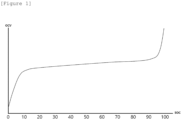
- FIG. 1 shows a charging characteristic curve of an LFP battery.
- FIG. 1 shows a charging characteristic curve of a lithium iron phosphate (LFP) battery in which lithium iron phosphate is used as a cathode active material.
- the charging characteristic curve represents a correspondence between an open circuit voltage (OCV) and a SOC measured during a battery charging process.
- OCV open circuit voltage
- the battery management system may compare SOCs of the battery cells to determine an imbalance state and, upon the imbalance state exceeding a predefined threshold level, balancing control may be performed.
- a method of measuring an open-circuit voltage value of the battery and estimating an SOC of the battery based on the measured open-circuit voltage value is mainly used, in order to determine imbalance between battery cells.
- the charging characteristic curve of the LFP battery has a voltage plateau in the SOC range of about 10% to about 90%.
- balancing control is performed only in a non-flat section (eg, a section where the SOC is 90% or more, or a section where the SOC is 10% or less).
- a non-flat section eg, a section where the SOC is 90% or more, or a section where the SOC is 10% or less.
- the operational stability of the system is limited because balancing control is possible only in a very limited SOC section.
- the present invention which is presented to solve the problems of the prior art, relates to a battery balancing method capable of balancing control in a wider SOC range than that of the prior art, and a battery system performing the same.
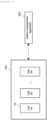
- FIG. 2 is a block diagram illustrating a battery system according to the present invention.
- the battery system includes a battery assembly 100 including a plurality of battery cells 10 and a battery management apparatus 200.
- the plurality of battery cells 10 may be electrically connected to each other to form a battery assembly.
- the battery cell 10 may correspond to an LFP battery cell, but the scope of the present invention is not limited to this.
- the battery cell according to the present invention may correspond to a battery having at least a part of a voltage plateau section in a charging characteristic curve.
- the battery management apparatus 200 may manage and control the battery assembly 100 by collecting state information on the plurality of battery cells 10 and performing a predefined control operation based on the collected state information.
- the battery management apparatus 200 may control charging and discharging of battery cells, diagnose whether battery cells are out of order, and determine an imbalanced state of battery cells to perform balancing control.
- the battery management apparatus 200 may be implemented by being included in a battery management system (BMS) located inside a battery system.
- BMS battery management system
- the battery system according to embodiments of the present invention may be implemented by being included in an energy storage system (ESS), but the scope of the present invention is not limited thereto. In other words, the battery system according to the present invention may be applied to various devices such as electric vehicles.
- ESS energy storage system
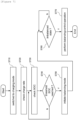
- FIG. 3 is an operation flowchart of a battery balancing method according to embodiments of the present invention.
- the battery management apparatus 200 may check a charge rate of the battery assembly 100 (S320).
- the charge rate may mean a CP-rate (Constant Power-rate) or C-rate (Current-rate) for charging the battery assembly 100.
- the battery management apparatus 200 may check the charge rate from a charging/discharging device (not shown) that charges the battery assembly 100, or check the charge rate based on a state value of one or more of a charging voltage value and a charging current value which may be sensed through one or more of a voltage sensor and a current sensor included in the battery system.
- the battery management apparatus 200 may determine whether to initiate a balancing mode for balancing a plurality of battery cells by determining whether a predefined balancing mode start condition is satisfied based on the checked charge rate (S330).
- the battery management apparatus 200 may initiate a balancing mode (S340).
- the balancing mode starting condition may be defined based on a charge rate.
- the balancing mode starting condition may be defined as a state in which a threshold voltage value or threshold SOC, which is stored in correspondence to the charge rate, is reached.
- the battery management apparatus 200 may check the voltage value of the battery assembly every predefined time during the charging process, and, when the voltage value of the battery assembly reaches a threshold voltage value (e.g., 3.4009 V) which is predefined corresponding to 0.10 CP (balancing mode start condition is satisfied), the start of the balancing mode may be determined.
- a threshold voltage value e.g., 3.4009 V
- the battery management apparatus 200 may check the SOC of the battery assembly at every predefined time during the charging process, and, when the SOC of the battery assembly reaches a threshold SOC (e.g., 86) which is predefied corresponding to 0.50 C (balancing mode start condition is satisfied), the start of the balancing mode may be determined.
- a threshold SOC e.g., 86
- the battery management apparatus 200 may determine whether balancing is required and perform at least one predefined control operation for balancing, if balancing is required.
- the battery management apparatus 200 may collect state information (eg, voltage value or SOC) of a plurality of battery cells. Thereafter, the battery management apparatus 200 may determine whether balancing is required by determining whether a predefined imbalance condition is satisfied based on the collected state information.
- the imbalance condition may be defined as a state in which a difference between a minimum value and a maximum value among state values (voltage value or SOC) of battery cells is greater than or equal to a predetermined threshold value.
- the battery management apparatus 200 may perform at least one predefined balancing control operation.
- the at least one balancing control operation may include an operation of reducing unbalanced state between battery cells by controlling a balancing circuit included in the battery system.
- the battery management apparatus 200 may control a cell balancing circuit to reduce a voltage deviation or an SOC deviation between battery cells.
- the balancing control technique may be a known technique such as a manual balancing control technique, and a detailed description thereof will be omitted because specific details about the balancing technique and the balancing circuit is not an essential configuration of the present invention.
- FIG. 4 is a reference diagram for explaining a battery balancing method according to embodiments of the present invention
- FIG. 5 is a reference table for explaining a battery balancing method according to embodiments of the present invention.
- the battery management apparatus 200 may determine whether to initiate a balancing mode by determining whether a predefined balancing mode start condition is satisfied based on a charge rate of the battery assembly.
- the balancing mode starting condition may be defined as a state in which a threshold voltage value or threshold SOC, which is stored in correspondence to the charge rate, is reached.
- the threshold SOC according to embodiments of the present invention may be defined as a lower value as the charge rate of the battery assembly increases.
- a threshold voltage value according to embodiments of the present invention may be defined as a voltage value corresponding to the threshold SOC in the charging characteristic curve.
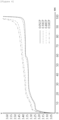
- FIG. 4 shows a charging characteristic curve derived by performing a pre-charging test while changing the charge rate for a battery assembly to which an LFP battery is applied.
- the horizontal axis represents the SOC
- the vertical axis represents the voltage value of the battery assembly measured during the charging process.
- a flat region appears in a wide SOC region as the charge rate is lower, but a flat region appears in a relatively narrow SOC region as the charge rate is higher. This is because, when charging is performed at a high charge rate, voltage due to current and resistance has a high effect on the voltage profile during charging of the LFP battery.
- the charging characteristic curve according to a high charge rate shows a slope even in a part (e.g., SOC is 70 to 90%) of the plateau region of the charging characteristic curve of a low charge rate (e.g., 0.05 CP). Accordingly, when charging is performed at a high charge rate, a SOC can be estimated with high accuracy even in a relatively low SOC section, and accurate balancing control can be performed even when switching to a balancing mode in a relatively low SOC section.
- the threshold SOC according to embodiments of the present invention may be defined as.
- a balancing mode may be initiated.
- a balancing mode may be initiated.
- a balancing mode may be initiated.
- a balancing mode may be initiated.
- the threshold voltage value or threshold SOC may be predefined based on voltage-SOC correspondence values, a voltage-SOC correspondence curve, or a voltage-SOC correspondence table derived in a pre-charging process according to the charge rate of the battery assembly.
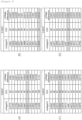
- FIG. 5 is a voltage-SOC correspondence table obtained by performing pre-charging while changing the charge rate for a battery assembly to which an LFP battery is applied.
- FIGS. 5(A) to 5(D) show correspondence tables between voltage and SOC according to charge rates of 0.05, 0.10, 0.40, and 0.50 CP, respectively.
- the threshold voltage value may be defined as a voltage value at a point where a change amount of the voltage value relative to an unit change amount of SOC is equal to or greater than a predetermined reference value.
- the reference value may be set based on measurement accuracy of a voltage measuring device included in the battery system.
- the threshold voltage value may be defined as 3.3877 V, which is a voltage value at a point where the voltage difference becomes equal to or greater than a predefined reference value of 0.03 V (e.g., a minimum voltage value that can be distinguished by a voltage measuring device).
- a predefined reference value of 0.03 V e.g., a minimum voltage value that can be distinguished by a voltage measuring device.
- the threshold SOC may be defined as an SOC value at a point where a change amount in voltage value relative to a unit change in SOC is equal to or greater than a predetermined reference value.
- the threshold SOC may be defined as 96, which is the SOC at the point where the voltage difference becomes equal to or greater than a predefined reference value (0.03 V).
- the threshold voltage value is defined as 3.4009 V and the threshold SOC is 95.
- the threshold voltage value is defined as 3.4443 V and the threshold SOC is defined as 88.
- the threshold voltage value may be defined as 3.46 V and the threshold SOC as 86.
- threshold voltage values or threshold SOCs for charge rates which are not performed in a pre-charging test process may be estimated and defined based on predefined values. For example, as shown in FIG. 5 , when preliminary tests are performed only for charge rates of 0.05, 0.10, 0.40, and 0.50 CP, threshold SOCs for 0.02 and 0.03 CP may be defined (for example, as 93, 91) by estimation using correlation between charge rates (0.05, 0.10, 0.40, and 0.50) and threshold SOCs (96, 95, 88, and 86) .
- FIG. 6 is an operation flowchart of a battery balancing method based on a threshold voltage value according to an embodiment of the present invention.
- the battery management apparatus 200 may check the charge rate of the battery assembly 100 (S620).
- the charge rate may mean a CP-rate (Constant Power-rate) or C-rate (Current-rate) for charging the battery assembly 100.
- the battery management apparatus 200 may check the voltage value of the battery assembly at predetermined time intervals during a charging process of the battery assembly 100 (S630).
- the battery management apparatus 200 may determine whether the voltage value of the battery assembly reaches a threshold voltage value which is predefined corresponding to the charge rate checked in S620 (S640).
- the threshold voltage value may be predefined based on voltage-SOC correspondence values, a voltage-SOC correspondence curve, or a voltage-SOC correspondence table derived in a pre-charging process according to the charge rate of the battery assembly.
- the threshold voltage value may be defined as a voltage value at a point where a change amount of the voltage value relative to a unit change amount of SOC becomes equal to or greater than a predetermined reference value.
- the battery management apparatus 200 may determine to initiate a balancing mode (S650).
- the battery management apparatus 200 may determine whether balancing is required by determining whether a predefined imbalance condition is satisfied based on state information on a plurality of battery cells (S660).
- the imbalance condition may be defined as a state in which a difference between a minimum value and a maximum value among state values (voltage values or SOCs) of battery cells is greater than or equal to a predetermined threshold value.
- the battery management apparatus 200 may perform at least one predefined balancing control operation (S670).
- the at least one balancing control operation may include an operation of reducing an unbalanced state between battery cells by controlling a balancing circuit included in the battery system.
- the battery management apparatus 200 may control a cell balancing circuit to reduce a voltage deviation or an SOC deviation between battery cells.
- FIG. 7 is an operation flowchart of a battery balancing method based on a threshold SOC according to another embodiment of the present invention.
- the battery management apparatus 200 may check a charge rate of the battery assembly 100 (S720).
- the charge rate may mean a CP-rate (Constant Power-rate) or C-rate (Current-rate) for charging the battery assembly 100.
- the battery management apparatus 200 may check the SOC of the battery assembly at predetermined times during a charging process of the battery assembly 100 (S730).
- the SOC of the assembly may correspond to a value estimated based on the voltage value of the battery assembly.
- the battery management apparatus 200 may determine whether the SOC of the battery assembly reaches a threshold SOC which is predefined in correspondence with the charge rate checked in S720 (S740).
- the threshold SOC may be predefined based on voltage-SOC correspondence values, a voltage-SOC correspondence curve, or a voltage-SOC correspondence table which has been derived in a pre-charging process according to the charge rate of a battery assembly.
- the threshold SOC may be defined as a SOC at a point where a change amount in voltage value relative to a unit change in SOC becomes equal to or greater than a predetermined reference value.
- the battery management apparatus 200 may determine to initiate a balancing mode (S750).
- the battery management apparatus 200 may determine whether balancing is required by determining whether a predefined imbalance condition is satisfied based on state information on a plurality of battery cells (S760).
- the imbalance condition may be defined as a state in which a difference between a minimum value and a maximum value among state values (voltage values or SOCs) of battery cells is greater than or equal to a predetermined threshold value.
- the battery management apparatus 200 may perform a predefined balancing control operation (S770).
- FIG. 8 is a block diagram of a battery management apparatus according to embodiments of the present invention.
- the battery management apparatus 800 may be located in a battery system and operate in connection with a battery assembly including a plurality of battery cells.
- the battery management apparatus 800 may include at least one processor 810, a memory 820 that stores at least one instruction executed by the processor, and a transceiver 830 connected to a network to perform communication.
- the at least one instruction may include: an instruction to check a charge rate of the battery assembly in a charging mode of the battery assembly; and an instruction to determine whether to start a balancing mode for balancing the plurality of battery cells based on the checked charge rate.
- the instruction to check a charge rate of the battery assembly may include an instruction to, upon being switched to the charging mode of the battery assembly, check a constant power-rate (CP-rate) or a current-rate (C-rate) for charging the battery assembly.
- CP-rate constant power-rate
- C-rate current-rate
- the instruction to determine whether to start a balancing mode may include an instruction to determine whether to start a balancing mode based on whether a pre-stored threshold voltage value or threshold SOC corresponding to the checked charge rate is reached.
- the instruction to determine whether to start a balancing mode may include an instruction to, in a process of charging the battery assembly, check a voltage value of the battery assembly at every predetermined time; and an instruction to initiate a balancing mode when the voltage value reaches the threshold voltage value.
- the instruction to determine whether to start a balancing mode may include an instruction to, in a process of charging the battery assembly, check a voltage value of the battery assembly at every predetermined time; and an instruction to initiate a balancing mode in the instance that a state of charge (SOC) which is calculated based on the voltage value reaches the threshold SOC.
- SOC state of charge
- the at least one instruction may further include, upon a balancing mode being initiated, an instruction to determine whether balancing is necessary based on the state information on the plurality of battery cells; and an instruction to perform at least one predefined control operation for balancing the plurality of battery cells when it is determined that balancing is necessary.
- the battery management apparatus 800 may further include an input interface 840, an output interface 850, a storage device 860, and the like. Respective components included in the battery management system 800 may be connected by a bus 870 to communicate with each other.
- the processor 810 may mean a central processing unit (CPU), a graphics processing unit (GPU), or a dedicated processor on which methods according to embodiments of the present invention are performed.
- the memory (or storage device) may include at least one of a volatile storage medium and a nonvolatile storage medium.
- the memory may include at least one of read only memory (ROM) and random access memory (RAM).
- the operations of the method according to the embodiments of the present invention may be implemented as a computer-readable program or code on a computer-readable recording medium.
- the computer-readable recording medium includes all types of recording devices in which data readable by a computer system is stored.
- the computer-readable recording medium may be distributed in a network-connected computer system to store and execute computer-readable programs or codes in a distributed manner.
- a block or apparatus corresponds to a method step or feature of a method step.
- aspects described in the context of a method may also represent a feature of a corresponding block or item or a corresponding apparatus.
- Some or all of the method steps may be performed by (or using) a hardware device, such as, for example, a microprocessor, a programmable computer, or an electronic circuit. In some embodiments, one or more of the most important method steps may be performed by such an apparatus.
Landscapes
- Engineering & Computer Science (AREA)
- Power Engineering (AREA)
- Manufacturing & Machinery (AREA)
- Chemical & Material Sciences (AREA)
- Chemical Kinetics & Catalysis (AREA)
- Electrochemistry (AREA)
- General Chemical & Material Sciences (AREA)
- Physics & Mathematics (AREA)
- General Physics & Mathematics (AREA)
- Charge And Discharge Circuits For Batteries Or The Like (AREA)
- Secondary Cells (AREA)
Applications Claiming Priority (2)
| Application Number | Priority Date | Filing Date | Title |
|---|---|---|---|
| KR1020220164439A KR20240080789A (ko) | 2022-11-30 | 2022-11-30 | 배터리 시스템 및 이의 배터리 밸런싱 방법 |
| PCT/KR2023/008432 WO2024117413A1 (ko) | 2022-11-30 | 2023-06-19 | 배터리 시스템 및 이의 배터리 밸런싱 방법 |
Publications (2)
| Publication Number | Publication Date |
|---|---|
| EP4481982A1 true EP4481982A1 (de) | 2024-12-25 |
| EP4481982A4 EP4481982A4 (de) | 2025-07-30 |
Family
ID=91324313
Family Applications (1)
| Application Number | Title | Priority Date | Filing Date |
|---|---|---|---|
| EP23897953.8A Pending EP4481982A4 (de) | 2022-11-30 | 2023-06-19 | Batteriesystem und batterieausgleichsverfahren dafür |
Country Status (7)
| Country | Link |
|---|---|
| US (1) | US20250233437A1 (de) |
| EP (1) | EP4481982A4 (de) |
| JP (1) | JP7749861B2 (de) |
| KR (1) | KR20240080789A (de) |
| CN (1) | CN118891802A (de) |
| AU (1) | AU2023406191A1 (de) |
| WO (1) | WO2024117413A1 (de) |
Family Cites Families (10)
| Publication number | Priority date | Publication date | Assignee | Title |
|---|---|---|---|---|
| US8773068B2 (en) * | 2011-01-20 | 2014-07-08 | Valence Technology, Inc. | Rechargeable battery systems and rechargeable battery system operational methods |
| US9368979B2 (en) * | 2013-03-15 | 2016-06-14 | O2Micro Inc | System and methods for battery balancing |
| KR102222305B1 (ko) * | 2014-10-14 | 2021-03-03 | 삼성전자주식회사 | 배터리 관리 장치 및 방법 |
| CN105871021B (zh) * | 2016-05-16 | 2018-07-17 | 北京小飞快充网络科技有限公司 | 用于电动自行车电池组快速充电的电池管理系统及方法 |
| KR101934858B1 (ko) * | 2017-04-18 | 2019-01-03 | 세방전지(주) | 자동차용 lfp 전지의 soc 산출 시스템 및 방법 |
| KR102875759B1 (ko) * | 2019-10-30 | 2025-10-24 | 주식회사 엘지에너지솔루션 | 배터리 관리 시스템 및 배터리 셀의 과전압 판단 방법 |
| KR20210053785A (ko) * | 2019-11-02 | 2021-05-12 | 삼성전자주식회사 | 배터리 충전을 제어하는 배터리 관리 시스템 및 방법 |
| JP7481147B2 (ja) | 2020-03-31 | 2024-05-10 | Fdk株式会社 | 電池電圧均等化装置 |
| KR102758018B1 (ko) | 2021-02-16 | 2025-01-21 | 주식회사 엘지에너지솔루션 | 배터리 관리 시스템, 배터리 팩, 에너지 저장 시스템 및 배터리 관리 방법 |
| KR20220164439A (ko) | 2021-06-04 | 2022-12-13 | 주식회사 피플스헬스 | 인공지능 기반 전자차트 및 표준 emr 자동 생성 방법 |
-
2022
- 2022-11-30 KR KR1020220164439A patent/KR20240080789A/ko active Pending
-
2023
- 2023-06-19 CN CN202380031762.5A patent/CN118891802A/zh active Pending
- 2023-06-19 AU AU2023406191A patent/AU2023406191A1/en active Pending
- 2023-06-19 JP JP2024559057A patent/JP7749861B2/ja active Active
- 2023-06-19 US US18/853,508 patent/US20250233437A1/en active Pending
- 2023-06-19 WO PCT/KR2023/008432 patent/WO2024117413A1/ko not_active Ceased
- 2023-06-19 EP EP23897953.8A patent/EP4481982A4/de active Pending
Also Published As
| Publication number | Publication date |
|---|---|
| JP7749861B2 (ja) | 2025-10-06 |
| JP2025511680A (ja) | 2025-04-16 |
| EP4481982A4 (de) | 2025-07-30 |
| WO2024117413A1 (ko) | 2024-06-06 |
| AU2023406191A1 (en) | 2024-09-26 |
| KR20240080789A (ko) | 2024-06-07 |
| US20250233437A1 (en) | 2025-07-17 |
| CN118891802A (zh) | 2024-11-01 |
Similar Documents
| Publication | Publication Date | Title |
|---|---|---|
| US20130293006A1 (en) | Battery balancing system and battery balancing method using the same | |
| US11415637B2 (en) | System and method for estimating battery state of health | |
| US12348067B2 (en) | Reconfigurable battery pack | |
| EP4481982A1 (de) | Batteriesystem und batterieausgleichsverfahren dafür | |
| EP4415209A1 (de) | Batteriesteuerungsvorrichtung zur reaktion auf den verlust einer kommunikationssituation und energiespeichersystem damit | |
| EP4365613B1 (de) | Batteriepack und betriebsverfahren dafür | |
| US20240421610A1 (en) | Battery Control System and Method for Managing Battery State | |
| US20150212163A1 (en) | Device for detecting remaining battery capacity, battery system, method of detecting remaining battery capacity and program | |
| EP4697552A1 (de) | Batterieverwaltungsvorrichtung und batterieausgleichsverfahren damit | |
| US12235322B2 (en) | Battery diagnosis apparatus and method for leakage current detection | |
| EP4489254A1 (de) | Batterieverwaltungsvorrichtung eines batteriesystems mit zusätzlicher batterie und steuerungsverfahren dafür | |
| US20250239866A1 (en) | Battery System for Sequential Charging of Batteries and Control Method Thereof | |
| EP4432512A1 (de) | Batterieverwaltungsvorrichtung für batterie mit spannungsplateauabschnitt und verfahren zur steuerung davon | |
| EP4307440A1 (de) | Batteriesteuerungssystem zur verhinderung von ungleichgewichten zwischen batteriezellen und steuerungsverfahren dafür | |
| EP4550617A1 (de) | Vorrichtung und verfahren zur steuerung des ladens einer batterie | |
| US20250314709A1 (en) | Battery Diagnosis Apparatus and Operating Method Thereof | |
| EP4414730A1 (de) | Batteriesteuerungsvorrichtung zur reaktion auf eine abnormale kommunikationssituation und energiespeichersystem damit | |
| US20250164572A1 (en) | Abnormally deteriorated cell detection apparatus and method | |
| US20250149663A1 (en) | Battery Management Apparatus and Operating Method Thereof | |
| KR20250048842A (ko) | 전압 평탄 구간을 갖는 배터리를 위한 배터리 제어 장치 및 방법 | |
| KR20250035136A (ko) | 배터리의 soh 추정 장치 및 방법 | |
| EP4708620A1 (de) | Vorrichtung und verfahren zur steuerung einer batterie | |
| KR20250143489A (ko) | 배터리 진단 방법 및 장치 | |
| JP2025041506A (ja) | バッテリー充電状態推定装置および方法 |
Legal Events
| Date | Code | Title | Description |
|---|---|---|---|
| STAA | Information on the status of an ep patent application or granted ep patent |
Free format text: STATUS: THE INTERNATIONAL PUBLICATION HAS BEEN MADE |
|
| PUAI | Public reference made under article 153(3) epc to a published international application that has entered the european phase |
Free format text: ORIGINAL CODE: 0009012 |
|
| STAA | Information on the status of an ep patent application or granted ep patent |
Free format text: STATUS: REQUEST FOR EXAMINATION WAS MADE |
|
| 17P | Request for examination filed |
Effective date: 20240918 |
|
| AK | Designated contracting states |
Kind code of ref document: A1 Designated state(s): AL AT BE BG CH CY CZ DE DK EE ES FI FR GB GR HR HU IE IS IT LI LT LU LV MC ME MK MT NL NO PL PT RO RS SE SI SK SM TR |
|
| A4 | Supplementary search report drawn up and despatched |
Effective date: 20250702 |
|
| RIC1 | Information provided on ipc code assigned before grant |
Ipc: H02J 7/00 20060101AFI20250626BHEP Ipc: G01R 31/3835 20190101ALI20250626BHEP Ipc: H01M 10/44 20060101ALI20250626BHEP Ipc: H01M 10/42 20060101ALI20250626BHEP |
|
| DAV | Request for validation of the european patent (deleted) | ||
| DAX | Request for extension of the european patent (deleted) | ||
| STAA | Information on the status of an ep patent application or granted ep patent |
Free format text: STATUS: EXAMINATION IS IN PROGRESS |