EP4481702A1 - Videoaufzeichnungssystem für laufwerk und verfahren zur steuerung davon - Google Patents
Videoaufzeichnungssystem für laufwerk und verfahren zur steuerung davon Download PDFInfo
- Publication number
- EP4481702A1 EP4481702A1 EP23210623.7A EP23210623A EP4481702A1 EP 4481702 A1 EP4481702 A1 EP 4481702A1 EP 23210623 A EP23210623 A EP 23210623A EP 4481702 A1 EP4481702 A1 EP 4481702A1
- Authority
- EP
- European Patent Office
- Prior art keywords
- record system
- user interface
- password
- processor
- vehicle
- Prior art date
- Legal status (The legal status is an assumption and is not a legal conclusion. Google has not performed a legal analysis and makes no representation as to the accuracy of the status listed.)
- Pending
Links
Images


Classifications
-
- G—PHYSICS
- G07—CHECKING-DEVICES
- G07C—TIME OR ATTENDANCE REGISTERS; REGISTERING OR INDICATING THE WORKING OF MACHINES; GENERATING RANDOM NUMBERS; VOTING OR LOTTERY APPARATUS; ARRANGEMENTS, SYSTEMS OR APPARATUS FOR CHECKING NOT PROVIDED FOR ELSEWHERE
- G07C5/00—Registering or indicating the working of vehicles
- G07C5/08—Registering or indicating performance data other than driving, working, idle, or waiting time, with or without registering driving, working, idle or waiting time
- G07C5/0841—Registering performance data
- G07C5/085—Registering performance data using electronic data carriers
- G07C5/0866—Registering performance data using electronic data carriers the electronic data carrier being a digital video recorder in combination with video camera
-
- G—PHYSICS
- G06—COMPUTING OR CALCULATING; COUNTING
- G06F—ELECTRIC DIGITAL DATA PROCESSING
- G06F21/00—Security arrangements for protecting computers, components thereof, programs or data against unauthorised activity
- G06F21/30—Authentication, i.e. establishing the identity or authorisation of security principals
- G06F21/31—User authentication
-
- G—PHYSICS
- G06—COMPUTING OR CALCULATING; COUNTING
- G06F—ELECTRIC DIGITAL DATA PROCESSING
- G06F21/00—Security arrangements for protecting computers, components thereof, programs or data against unauthorised activity
- G06F21/30—Authentication, i.e. establishing the identity or authorisation of security principals
- G06F21/31—User authentication
- G06F21/32—User authentication using biometric data, e.g. fingerprints, iris scans or voiceprints
-
- G—PHYSICS
- G06—COMPUTING OR CALCULATING; COUNTING
- G06F—ELECTRIC DIGITAL DATA PROCESSING
- G06F21/00—Security arrangements for protecting computers, components thereof, programs or data against unauthorised activity
- G06F21/30—Authentication, i.e. establishing the identity or authorisation of security principals
- G06F21/45—Structures or tools for the administration of authentication
- G06F21/46—Structures or tools for the administration of authentication by designing passwords or checking the strength of passwords
-
- G—PHYSICS
- G06—COMPUTING OR CALCULATING; COUNTING
- G06F—ELECTRIC DIGITAL DATA PROCESSING
- G06F21/00—Security arrangements for protecting computers, components thereof, programs or data against unauthorised activity
- G06F21/60—Protecting data
- G06F21/602—Providing cryptographic facilities or services
-
- G—PHYSICS
- G06—COMPUTING OR CALCULATING; COUNTING
- G06F—ELECTRIC DIGITAL DATA PROCESSING
- G06F21/00—Security arrangements for protecting computers, components thereof, programs or data against unauthorised activity
- G06F21/60—Protecting data
- G06F21/62—Protecting access to data via a platform, e.g. using keys or access control rules
- G06F21/6209—Protecting access to data via a platform, e.g. using keys or access control rules to a single file or object, e.g. in a secure envelope, encrypted and accessed using a key, or with access control rules appended to the object itself
-
- G—PHYSICS
- G06—COMPUTING OR CALCULATING; COUNTING
- G06F—ELECTRIC DIGITAL DATA PROCESSING
- G06F21/00—Security arrangements for protecting computers, components thereof, programs or data against unauthorised activity
- G06F21/60—Protecting data
- G06F21/62—Protecting access to data via a platform, e.g. using keys or access control rules
- G06F21/629—Protecting access to data via a platform, e.g. using keys or access control rules to features or functions of an application
-
- G—PHYSICS
- G06—COMPUTING OR CALCULATING; COUNTING
- G06V—IMAGE OR VIDEO RECOGNITION OR UNDERSTANDING
- G06V20/00—Scenes; Scene-specific elements
- G06V20/50—Context or environment of the image
- G06V20/56—Context or environment of the image exterior to a vehicle by using sensors mounted on the vehicle
-
- G—PHYSICS
- G06—COMPUTING OR CALCULATING; COUNTING
- G06V—IMAGE OR VIDEO RECOGNITION OR UNDERSTANDING
- G06V20/00—Scenes; Scene-specific elements
- G06V20/50—Context or environment of the image
- G06V20/59—Context or environment of the image inside of a vehicle, e.g. relating to seat occupancy, driver state or inner lighting conditions
-
- G—PHYSICS
- G06—COMPUTING OR CALCULATING; COUNTING
- G06V—IMAGE OR VIDEO RECOGNITION OR UNDERSTANDING
- G06V40/00—Recognition of biometric, human-related or animal-related patterns in image or video data
- G06V40/10—Human or animal bodies, e.g. vehicle occupants or pedestrians; Body parts, e.g. hands
- G06V40/12—Fingerprints or palmprints
-
- G—PHYSICS
- G06—COMPUTING OR CALCULATING; COUNTING
- G06V—IMAGE OR VIDEO RECOGNITION OR UNDERSTANDING
- G06V40/00—Recognition of biometric, human-related or animal-related patterns in image or video data
- G06V40/10—Human or animal bodies, e.g. vehicle occupants or pedestrians; Body parts, e.g. hands
- G06V40/12—Fingerprints or palmprints
- G06V40/1365—Matching; Classification
-
- G—PHYSICS
- G06—COMPUTING OR CALCULATING; COUNTING
- G06V—IMAGE OR VIDEO RECOGNITION OR UNDERSTANDING
- G06V40/00—Recognition of biometric, human-related or animal-related patterns in image or video data
- G06V40/10—Human or animal bodies, e.g. vehicle occupants or pedestrians; Body parts, e.g. hands
- G06V40/16—Human faces, e.g. facial parts, sketches or expressions
-
- G—PHYSICS
- G06—COMPUTING OR CALCULATING; COUNTING
- G06V—IMAGE OR VIDEO RECOGNITION OR UNDERSTANDING
- G06V40/00—Recognition of biometric, human-related or animal-related patterns in image or video data
- G06V40/10—Human or animal bodies, e.g. vehicle occupants or pedestrians; Body parts, e.g. hands
- G06V40/16—Human faces, e.g. facial parts, sketches or expressions
- G06V40/172—Classification, e.g. identification
-
- G—PHYSICS
- G07—CHECKING-DEVICES
- G07C—TIME OR ATTENDANCE REGISTERS; REGISTERING OR INDICATING THE WORKING OF MACHINES; GENERATING RANDOM NUMBERS; VOTING OR LOTTERY APPARATUS; ARRANGEMENTS, SYSTEMS OR APPARATUS FOR CHECKING NOT PROVIDED FOR ELSEWHERE
- G07C5/00—Registering or indicating the working of vehicles
- G07C5/08—Registering or indicating performance data other than driving, working, idle, or waiting time, with or without registering driving, working, idle or waiting time
- G07C5/0841—Registering performance data
- G07C5/085—Registering performance data using electronic data carriers
- G07C5/0858—Registering performance data using electronic data carriers wherein the data carrier is removable
-
- H—ELECTRICITY
- H04—ELECTRIC COMMUNICATION TECHNIQUE
- H04L—TRANSMISSION OF DIGITAL INFORMATION, e.g. TELEGRAPHIC COMMUNICATION
- H04L9/00—Cryptographic mechanisms or cryptographic arrangements for secret or secure communications; Network security protocols
- H04L9/08—Key distribution or management, e.g. generation, sharing or updating, of cryptographic keys or passwords
- H04L9/0861—Generation of secret information including derivation or calculation of cryptographic keys or passwords
- H04L9/0866—Generation of secret information including derivation or calculation of cryptographic keys or passwords involving user or device identifiers, e.g. serial number, physical or biometrical information, DNA, hand-signature or measurable physical characteristics
-
- H—ELECTRICITY
- H04—ELECTRIC COMMUNICATION TECHNIQUE
- H04N—PICTORIAL COMMUNICATION, e.g. TELEVISION
- H04N7/00—Television systems
- H04N7/16—Analogue secrecy systems; Analogue subscription systems
-
- B—PERFORMING OPERATIONS; TRANSPORTING
- B60—VEHICLES IN GENERAL
- B60R—VEHICLES, VEHICLE FITTINGS, OR VEHICLE PARTS, NOT OTHERWISE PROVIDED FOR
- B60R25/00—Fittings or systems for preventing or indicating unauthorised use or theft of vehicles
- B60R25/30—Detection related to theft or to other events relevant to anti-theft systems
- B60R25/302—Detection related to theft or to other events relevant to anti-theft systems using recording means, e.g. black box
-
- B—PERFORMING OPERATIONS; TRANSPORTING
- B60—VEHICLES IN GENERAL
- B60R—VEHICLES, VEHICLE FITTINGS, OR VEHICLE PARTS, NOT OTHERWISE PROVIDED FOR
- B60R25/00—Fittings or systems for preventing or indicating unauthorised use or theft of vehicles
- B60R25/30—Detection related to theft or to other events relevant to anti-theft systems
- B60R25/305—Detection related to theft or to other events relevant to anti-theft systems using a camera
-
- G—PHYSICS
- G06—COMPUTING OR CALCULATING; COUNTING
- G06F—ELECTRIC DIGITAL DATA PROCESSING
- G06F2221/00—Indexing scheme relating to security arrangements for protecting computers, components thereof, programs or data against unauthorised activity
- G06F2221/21—Indexing scheme relating to G06F21/00 and subgroups addressing additional information or applications relating to security arrangements for protecting computers, components thereof, programs or data against unauthorised activity
- G06F2221/2141—Access rights, e.g. capability lists, access control lists, access tables, access matrices
Definitions
- the present disclosure relates to a drive video record system, and a method of controlling the same.
- a drive video record system is, for example, a device that records video of a driving situation of a vehicle.
- the drive video record system may include a controller, a memory for video storage, and a camera for video capture.
- the drive video record system generally stores vehicle driving data along with video around a vehicle during driving, and records video according to an input setting when a set event is detected during parking.
- the drive video record system has initially been called a black box and installed only externally, and is recently provided by being previously incorporated in a vehicle as a built-in system before the vehicle is shipped.
- a built-in type is more advantageous than an external type in that the built-in type allows access to driving data of a host vehicle and connection with other controllers, and use thereof is expected to gradually increase.
- video or audio files stored by the drive video record system may include personal information.
- the present disclosure is directed to a method of controlling a drive video record system and the drive video record system that substantially obviate one or more problems due to limitations and disadvantages of the related art.
- a method of controlling a drive video record system including providing a camera module configured to monitor an area around a vehicle, a first memory configured to store video transmitted from the camera module, and a controller including a second memory configured to store a computer program for controlling storage of the video and a processor configured to execute the computer program; acquiring, by the processor executing the computer program, password information of a user; acquiring, by the processor, video or audio according to a set condition; and encrypting and storing, by the processor, the video or audio based on the password information.
- the password information may include at least one of a password including a letter or a number, fingerprint recognition information, or face recognition information.
- the method may further comprise restricting access to a user interface of the drive video record system in a case of a valet mode.
- the processor may allow access to a user interface of the drive video record system.
- the method may further comprise requesting input of a password, and determining whether to restrict or allow access to the user interface according to the password.
- the method may further comprise allowing access to the user interface.
- a computer-readable recording medium stores a computer program for executing the method of controlling the drive video record system according to any one of the above described methods.
- a drive video record system includes a camera module configured to monitor an area around a vehicle, a first memory configured to store video transmitted from the camera module, and a controller including a second memory configured to store a computer program for controlling storage of the video and a processor configured to execute the computer program, wherein, through execution of the computer program, the processor is configured to acquire password information of a user, acquire video or audio according to a set condition, and encrypt and store the video or audio based on the password information.
- the password information may include at least one of a password including a letter or a number, fingerprint recognition information, or face recognition information.
- the processor may restrict access to a user interface of the drive video record system in a case of a valet mode.
- the processor may be further configured to deactivate a menu of the user interface or hiding the menu to restrict the access.
- the processor may be further configured to allow access to a user interface of the drive video record system.
- the processor may be further configured to request input of biometric information, and determine whether to restrict or allow access to the user interface according to the biometric information.
- the processor may be further configured to request input of a password, and determine whether to restrict or allow access to the user interface according to the password.
- the processor may be further configured to send a warning to a pre-registered user terminal.
- the processor may be further configured to allow access to the user interface.
- a vehicle may include the drive video recording system.
- vehicle or “vehicular” or other similar term as used herein is inclusive of motor vehicles in general such as passenger automobiles including sports utility vehicles (SUV), buses, trucks, various commercial vehicles, watercraft including a variety of boats and ships, aircraft, and the like, and includes hybrid vehicles, electric vehicles, plug-in hybrid electric vehicles, hydrogen-powered vehicles and other alternative fuel vehicles (e.g. fuels derived from resources other than petroleum).
- a hybrid vehicle is a vehicle that has two or more sources of power, for example both gasoline-powered and electric-powered vehicles.
- a and/or B includes all three cases of "A,” “B,” and “A and B.”
- ком ⁇ онент When a component is referred to as being “coupled” or “connected” to another component, the component may be directly coupled or connected to the other component. However, it should be understood that another component may be present therebetween.
- a processor may include a semiconductor integrated circuit and/or an electronic device performing at least one or more of comparison, determination, calculation, or decision to achieve a programmed function.
- the processor may be any one or a combination of a computer, a microprocessor, a CPU, an ASIC, and an electronic circuit (circuitry or logic circuits).
- the computer-readable recording medium includes all types of storage devices that store data readable by a computer system.
- the recording medium may include at least one of a memory of a flash memory type, a hard disk type, a micro type, or a card type (for example, an SD card (Secure Digital Card) or an XD card (eXtreme Digital Card)), or a memory of a type of RAM (Random Access Memory), SRAM (Static RAM), ROM (Read-Only Memory), PROM (Programmable ROM), EEPROM (Electrically Erasable PROM), MRAM (Magnetic RAM), magnetic disk, or optical disc.
- a type of RAM Random Access Memory
- SRAM Static RAM
- ROM Read-Only Memory
- PROM Programmable ROM
- EEPROM Electrical Erasable PROM
- MRAM Magnetic RAM
- magnetic disk or optical disc.
- Such a recording medium may be electrically connected to the processor, and the processor may import and record data from the recording medium.
- the recording medium and the processor may be integrated or may be physically separated.
- a built-in drive video record system a so-called built-in cam system BCS, according to an embodiment of the present disclosure is installed inside a host vehicle HV and includes a camera module C, a computer-readable storage medium M1, a first communication module CM1, a microphone MC, an impact sensor IS, a power auxiliary battery BT, and a built-in cam controller BCC.
- the drive video record system of this embodiment is a built-in type, but is not necessarily limited thereto.
- the camera module C includes a front camera and a rear camera in this embodiment, but is not necessarily limited thereto.
- the front camera is installed to photograph a front area of the vehicle HV
- the rear camera is installed to photograph a rear area of the vehicle HV.
- the front camera may be installed on a windshield near a rearview mirror in a vehicle HV cabin
- the rear camera may be installed on a rear window or rear bumper of the vehicle HV cabin.
- the front camera and the rear camera may each support, for example, image quality of any one of HD, FHD, and Quad HD.
- the image qualities of the front camera and the rear camera do not have to be the same, and it is obvious that a camera of an ADAS (Advanced Driver Assistance System) of the host vehicle HV may be used.
- ADAS Advanced Driver Assistance System
- the camera has an aperture value of f/2.0 or less, preferably f/1.6 or less.
- the aperture value is lowered, more light is gathered, and thus bright recording is possible.
- image tuning technology is applied to minimize noise and light loss, thereby enabling clear recording even in a dark environment.
- a user may easily check content stored in the memory on a desktop computer by removing the SD card.
- State information of the SD card may be checked through a connected car service, and it is possible to check replacement timing depending on the memory state.
- the first communication module CM1 is for wired or wireless communication with the outside and is not limited as to a communication protocol thereof.
- the first communication module CM1 is provided with a communication device capable of communicating with peripheral devices, and illustratively supports Wi-Fi.
- a Wi-Fi module of this embodiment may include an AP (Access Point) function, and the user may easily and rapidly access the built-in cam through, for example, a smartphone.
- AP Access Point
- the microphone MC supports audio recording. When driving video of the vehicle HV is recorded, not only video but also audio may be recorded.
- the impact sensor IS senses external impact and may be, for example, a 1-axis or 3-axis acceleration sensor.
- the impact sensor IS may be exclusively provided in the built-in cam system BCS, but it is obvious that the acceleration sensor installed in the host vehicle HV may be used.
- a signal from the impact sensor IS may be a basis for starting event recording, which will be described later, and the magnitude of the impact serving as the basis may be set by the user.
- the user may select impact detection sensitivity serving as a basis for event recording when performing setting for the built-in cam system BCS through a display screen in the vehicle HV (for example, an AVNT (Audio Video Navigation Telematics) screen, which will be described later).
- a display screen in the vehicle HV for example, an AVNT (Audio Video Navigation Telematics) screen, which will be described later.
- impact detection sensitivity may be divided into five levels of level 1 (significantly insensitive), level 2 (insensitive), level 3 (moderate), level 4 (sensitive), and level 5 (significantly sensitive).
- the built-in cam system BCS may receive power from a battery (for example, a 12 V-battery) installed in the vehicle HV.
- a battery for example, a 12 V-battery
- this embodiment includes the power auxiliary battery BT.
- the built-in cam system BCS receives power from one of the battery of the vehicle HV during driving, an alternator in the case of an internal combustion engine vehicle, and a lower DC/DC converter (LDC) in the case of an electric vehicle, and receives power from the power auxiliary battery BT during parking.
- LDC lower DC/DC converter
- the power auxiliary battery BT may be charged/discharged according to an operating environment of the vehicle HV and supplies optimal power for recording and wireless software update (OTA software update) during parking.
- OTA software update wireless software update
- the power auxiliary battery BT may be charged by the battery of the vehicle HV (low-voltage battery or high-voltage battery of an electric vehicle) or by an alternator in the case of an internal combustion engine vehicle HV.
- vehicle HV low-voltage battery or high-voltage battery of an electric vehicle
- alternator in the case of an internal combustion engine vehicle HV.
- the built-in cam controller BCC is a higher-level controller that controls other components of the built-in cam system BCS, and exchanges signals with a controller VC of the host vehicle HV and/or a second communication module CM2 (vehicle communication module), a sensor module SM, component controllers APCs, AVNT, etc.
- CM2 vehicle communication module
- SM sensor module
- APCs AVNT
- the sensor module SM may include one or more of a speed sensor, an acceleration sensor, a vehicle position sensor (for example, GPS receiver), a steering angle sensor, a yaw rate sensor, a pitch sensor, and a roll sensor
- the component controllers APCs may include one or more of a directional signal controller, a turn signal controller, a wiper controller, an ADAS system controller, and an airbag controller.
- the built-in cam controller BCC controls other components to perform continuous recording during driving, continuous recording during parking, and event recording according to an impact detection signal.
- driving information of the vehicle HV may also be recorded.
- the driving information of the vehicle HV may include a time, a vehicle speed, a gear position, directional signal information, a degree of impact detection (one of the five levels mentioned above), global positioning system (GPS) location information, etc.
- GPS global positioning system
- the vehicle driving information may be transmitted from the vehicle controller VC, and the vehicle driving information may naturally be directly received from the corresponding module or component of the vehicle HV.
- the vehicle speed may be directly received from the speed sensor of the vehicle HV
- directional signal information (or turn signal information from the turn signal controller) may be directly received from the directional signal controller
- the GPS location information may be received from the AVNT or the GPS receiver.
- event recording is performed when event occurrence is detected during parking according to impact detection sensitivity set by the user.
- recording proceeds from a set time before event occurrence to a set time thereafter, and the set time may be selected by the user.
- the built-in cam controller BCC may include a memory M2 and a processor MP to perform the function.
- the processor MP may include a semiconductor integrated circuit and/or electronic devices performing at least one or more of comparison, determination, calculation, or decision to achieve a programmed function.
- the processor MP may be any one or a combination of a computer, a microprocessor, a CPU, an ASIC, and an electronic circuit (circuitry or logic circuits).
- the memory M2 includes all types of storage devices storing data readable by the computer system.
- the memory may include at least one of a memory of a flash memory type, a hard disk type, a micro type, or a card type (for example, an SD card or an xD card), or a memory of a type of RAM, SRAM, ROM, PROM, EEPROM, MRAM, magnetic disk, or optical disc.
- Operating software of the built-in cam controller BCC may be stored in the memory M2, and the processor MP performs a function of the built-in cam controller BCC by reading and executing the software.
- the built-in cam controller BCC may include a buffer memory BM for determination and calculation in the processor MP.
- step S 10 is a step in which user information is registered.
- a device for registering user information may be prepared in the vehicle HV.
- the user may register a password using the AVNT screen as a user interface.
- a device for fingerprint or face recognition may be prepared in the vehicle HV, and the user may register a fingerprint or a face of the user using the device.
- Registered user information may be used to authenticate the user.
- An authenticated user may access various settings of a vehicle system.
- the registered fingerprint or face may be used for user authentication for starting the vehicle HV.
- user information may be individually registered by a plurality of users.
- Step S20 means that the built-in cam BCS is in an on state.
- the built-in cam controller BCC may manage the built-in cam BCS in an on state, a sleep state, an off state, etc. depending on the power usage state.
- the on state is an active state in which power is supplied to the entire built-in cam BCS, and continuous recording or event recording is possible.
- the sleep state is a state in which minimal power use is maintained to reduce power consumption, and is similar to a sleep state of a typical electrical device.
- the off state may be defined as a state in which power use is blocked.
- Video recording cannot be performed in the sleep state, and the sleep state may be switched to the on state as a set condition is satisfied.
- the built-in cam controller BCC acquires video and/or audio by controlling the camera module C according to a condition set in step S30, that is, according to a set continuous recording condition or event recording condition.
- step S40 the acquired video and/or audio is encrypted and stored using the above-described user information.
- a different password may be applied to each user. That is, a file of a user A may be encrypted and stored using a password A, and a file of a user B may be encrypted and stored using a password B.
- the password A may be a registration password, a fingerprint, a face, etc. of the user A
- the password B may be a registration password, a fingerprint, a face, etc. of the user B.
- the built-in cam controller BCC may request input of registration information through the user interface on the AVNT screen when starting the vehicle HV to identify the user.
- the built-in cam controller BCC identifies the user among a plurality of users based on the input user information and encrypts the file according to the registration information of the user.
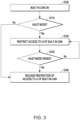
- FIG. 3 is a flowchart illustrating another control method according to an embodiment of the present disclosure.
- step S 100 indicates that the built-in cam is in an on state.
- step S 110 the built-in cam controller determines whether the vehicle HV is in a valet mode.
- the built-in cam controller may receive information about a current mode of the vehicle HV from the vehicle HV controller.
- the built-in cam controller may request information about the current mode from the vehicle HV controller and receive information indicating whether the vehicle is in the valet mode in response.
- the valet mode is a vehicle HV mode for the case of entrusting the vehicle HV to someone else during valet parking or when the driver is unable to drive.
- the vehicle HV controller switches various systems to predetermined settings.
- step S110 upon determining that the vehicle is in the valet mode, the built-in cam controller BCC restricts access to the user interface of the built-in cam BCS in step S120.
- restriction of access to the user interface of the built-in cam BCS may include deactivating a built-in cam BCS menu or hiding the built-in cam BCS menu from the screen.
- step S130 upon determining that the valet mode has ended in step S130 (Yes in S130), the access restriction is released in step S140. Upon determining in step S130 that a state of the valet mode continues (No in S130), the access restriction is maintained (step S120).
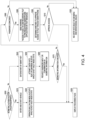
- FIG. 3 is a flowchart illustrating still another control method according to an embodiment of the present disclosure, which will be described in detail below.
- Step S200 is a procedure for receiving biometric information from a biometric device installed in the vehicle HV and authenticating the user accordingly.
- the vehicle HV controller performs user authentication by comparing information recognized by a fingerprint or facial recognition device with previously stored information.
- step S210 represents the case where a legitimate user authenticated as such enters and starts the vehicle HV.
- step S220 When the authenticated user operates the built-in cam BCS menu in step S220 and accesses a folder where recorded driving video files are stored, the corresponding files are output to the screen in step S230. In other words, file access is allowed to legitimate users authenticated in step S230.
- steps S120, S130, and S140 of FIG. 3 described above may be performed.
- step S240 represents the case where the vehicle HV is entered and started using a smart key rather than a biometric authentication method.
- the built-in cam controller BCC may request password input or confirmation of biometric information in step S260.
- a password input window may be displayed on a user interface screen (for example, the AVNT screen), or the recognition device may be activated to receive biometric information, and the information may be received as the biometric information is recognized through the device.
- steps S120, S130, and S140 of FIG. 3 described above may be performed.
- step S270 the biometric information input in step S260 is compared with previously stored information to confirm that the user is a legitimate user.
- step S270 Upon determining that the user is a legitimate user in step S270, the process proceeds to step S230.
- step S270 upon determining that the user is not a legitimate user in step S270, the input password is matched with a previously stored number in step S280 to verify whether the password coincides with the number.
- a warning is sent to a pre-registered user terminal (for example, smartphone) in step S290.
- the built-in cam controller BCC may send a text message to the user terminal to warn that the stored file of the built-in cam BCS is being accessed.
- step S300 when the user receives such a warning, the user may transmit information indicating whether access to the file is approved to the built-in cam controller.
- step S300 Upon receiving a determination as to whether to approve the user, that is, whether to grant permission, in step S300, the built-in controller proceeds to step S320 when permission has not been granted according to the determination in step S310, and proceeds to step S230 when permission has been granted.
- the built-in controller may deactivate the built-in cam BCS menu or display an error message on the screen as a modal dialog.
- the drive video record system may prevent leakage of personal information by blocking access by an unauthorized person to a stored file.
Landscapes
- Engineering & Computer Science (AREA)
- Theoretical Computer Science (AREA)
- Physics & Mathematics (AREA)
- General Physics & Mathematics (AREA)
- Computer Security & Cryptography (AREA)
- Multimedia (AREA)
- General Engineering & Computer Science (AREA)
- Computer Hardware Design (AREA)
- Software Systems (AREA)
- General Health & Medical Sciences (AREA)
- Health & Medical Sciences (AREA)
- Human Computer Interaction (AREA)
- Bioethics (AREA)
- Oral & Maxillofacial Surgery (AREA)
- Signal Processing (AREA)
- Computer Networks & Wireless Communication (AREA)
- Fittings On The Vehicle Exterior For Carrying Loads, And Devices For Holding Or Mounting Articles (AREA)
- Lock And Its Accessories (AREA)
- Time Recorders, Dirve Recorders, Access Control (AREA)
Applications Claiming Priority (1)
| Application Number | Priority Date | Filing Date | Title |
|---|---|---|---|
| KR1020230078302A KR20240177179A (ko) | 2023-06-19 | 2023-06-19 | 주행영상기록장치 제어방법 및 주행영상기록장치 |
Publications (1)
| Publication Number | Publication Date |
|---|---|
| EP4481702A1 true EP4481702A1 (de) | 2024-12-25 |
Family
ID=88839128
Family Applications (1)
| Application Number | Title | Priority Date | Filing Date |
|---|---|---|---|
| EP23210623.7A Pending EP4481702A1 (de) | 2023-06-19 | 2023-11-17 | Videoaufzeichnungssystem für laufwerk und verfahren zur steuerung davon |
Country Status (4)
| Country | Link |
|---|---|
| US (1) | US20240419769A1 (de) |
| EP (1) | EP4481702A1 (de) |
| KR (1) | KR20240177179A (de) |
| CN (1) | CN119169716A (de) |
Citations (3)
| Publication number | Priority date | Publication date | Assignee | Title |
|---|---|---|---|---|
| US20180220189A1 (en) * | 2016-10-25 | 2018-08-02 | 725-1 Corporation | Buffer Management for Video Data Telemetry |
| US20190313257A1 (en) * | 2018-04-06 | 2019-10-10 | Hyundai Motor Company | System and method for controlling access to image information |
| US20200334929A1 (en) * | 2019-04-22 | 2020-10-22 | Hyundai Motor Company | Image data access control apparatus for vehicle and method thereof |
-
2023
- 2023-06-19 KR KR1020230078302A patent/KR20240177179A/ko active Pending
- 2023-11-17 EP EP23210623.7A patent/EP4481702A1/de active Pending
- 2023-11-28 US US18/521,631 patent/US20240419769A1/en active Pending
- 2023-12-06 CN CN202311665723.9A patent/CN119169716A/zh active Pending
Patent Citations (3)
| Publication number | Priority date | Publication date | Assignee | Title |
|---|---|---|---|---|
| US20180220189A1 (en) * | 2016-10-25 | 2018-08-02 | 725-1 Corporation | Buffer Management for Video Data Telemetry |
| US20190313257A1 (en) * | 2018-04-06 | 2019-10-10 | Hyundai Motor Company | System and method for controlling access to image information |
| US20200334929A1 (en) * | 2019-04-22 | 2020-10-22 | Hyundai Motor Company | Image data access control apparatus for vehicle and method thereof |
Also Published As
| Publication number | Publication date |
|---|---|
| US20240419769A1 (en) | 2024-12-19 |
| CN119169716A (zh) | 2024-12-20 |
| KR20240177179A (ko) | 2024-12-27 |
Similar Documents
| Publication | Publication Date | Title |
|---|---|---|
| CN106921647B (zh) | 汽车管理系统和方法 | |
| CN107042811B (zh) | 车辆安全和认证系统 | |
| US20120148117A1 (en) | System and method for facial identification | |
| CN104057919A (zh) | 用于车辆的生物识别访问和个性化服务的系统 | |
| CN109697363B (zh) | 用于交通工具书面材料集成的系统和方法 | |
| KR20200108515A (ko) | 차량 스마트키 시스템 및 그 제어 방법 | |
| JP2012121386A (ja) | 車載装置 | |
| EP3471067A1 (de) | Sicherheitssystem und -verfahren | |
| JP2017223068A (ja) | 認証方法及び認証装置 | |
| US20200247364A1 (en) | Safety methods and systems for vehicles | |
| US11604865B2 (en) | Method for the secured access of data of a transportation vehicle | |
| US12147798B2 (en) | Server managing operation of automatic driving vehicle and updating of control program, and information processing method | |
| EP4481702A1 (de) | Videoaufzeichnungssystem für laufwerk und verfahren zur steuerung davon | |
| US20230129564A1 (en) | Server, information processing system and information processing method | |
| EP4033466A1 (de) | Informationsverarbeitungsvorrichtung, fahrzeug, informationsverarbeitungsverfahren und nichtflüchtiges speichermedium | |
| EP4331920B1 (de) | Vorrichtung und verfahren für tragbare benutzer- und fahrzeugeinstellungen | |
| US20240144758A1 (en) | Vehicle control device, vehicle, vehicle control method and recording medium on which a program is recorded | |
| JPWO2022129970A5 (de) | ||
| JP4239703B2 (ja) | 車両用通信システム、及び、車載装置 | |
| JP2024160629A (ja) | 車両用情報処理装置 | |
| US20250126472A1 (en) | Wi-fi password setting method for each registered user and system for the same | |
| JP2023148273A (ja) | 車両用パーソナライズ設定システム、及び車両用パーソナライズ設定方法 | |
| US12600311B2 (en) | Video record system for vehicle, method of controlling the video record system, and user terminal | |
| CN119239470B (zh) | 车辆隐私保护方法、装置、电子设备及车辆 | |
| US20250156560A1 (en) | Method for managing recorded images for each driver, and system for the same |
Legal Events
| Date | Code | Title | Description |
|---|---|---|---|
| PUAI | Public reference made under article 153(3) epc to a published international application that has entered the european phase |
Free format text: ORIGINAL CODE: 0009012 |
|
| STAA | Information on the status of an ep patent application or granted ep patent |
Free format text: STATUS: REQUEST FOR EXAMINATION WAS MADE |
|
| 17P | Request for examination filed |
Effective date: 20241009 |
|
| AK | Designated contracting states |
Kind code of ref document: A1 Designated state(s): AL AT BE BG CH CY CZ DE DK EE ES FI FR GB GR HR HU IE IS IT LI LT LU LV MC ME MK MT NL NO PL PT RO RS SE SI SK SM TR |
|
| P01 | Opt-out of the competence of the unified patent court (upc) registered |
Free format text: CASE NUMBER: APP_30346/2025 Effective date: 20250625 |
|
| RIC1 | Information provided on ipc code assigned before grant |
Ipc: G07C 5/08 20060101AFI20250910BHEP Ipc: G06F 21/32 20130101ALI20250910BHEP Ipc: G06F 21/62 20130101ALI20250910BHEP Ipc: G06V 20/56 20220101ALI20250910BHEP Ipc: G06V 20/59 20220101ALI20250910BHEP Ipc: G06V 40/12 20220101ALI20250910BHEP Ipc: G06V 40/16 20220101ALI20250910BHEP Ipc: B60R 25/30 20130101ALN20250910BHEP |
|
| STAA | Information on the status of an ep patent application or granted ep patent |
Free format text: STATUS: EXAMINATION IS IN PROGRESS |
|
| 17Q | First examination report despatched |
Effective date: 20251017 |