EP4481237A1 - Transmission assembly for an aircraft - Google Patents
Transmission assembly for an aircraft Download PDFInfo
- Publication number
- EP4481237A1 EP4481237A1 EP23180561.5A EP23180561A EP4481237A1 EP 4481237 A1 EP4481237 A1 EP 4481237A1 EP 23180561 A EP23180561 A EP 23180561A EP 4481237 A1 EP4481237 A1 EP 4481237A1
- Authority
- EP
- European Patent Office
- Prior art keywords
- opening
- tank
- transmission assembly
- axis
- threshold value
- Prior art date
- Legal status (The legal status is an assumption and is not a legal conclusion. Google has not performed a legal analysis and makes no representation as to the accuracy of the status listed.)
- Granted
Links
Images




Classifications
-
- F—MECHANICAL ENGINEERING; LIGHTING; HEATING; WEAPONS; BLASTING
- F16—ENGINEERING ELEMENTS AND UNITS; GENERAL MEASURES FOR PRODUCING AND MAINTAINING EFFECTIVE FUNCTIONING OF MACHINES OR INSTALLATIONS; THERMAL INSULATION IN GENERAL
- F16H—GEARING
- F16H57/00—General details of gearing
- F16H57/04—Features relating to lubrication or cooling or heating
- F16H57/0434—Features relating to lubrication or cooling or heating relating to lubrication supply, e.g. pumps; Pressure control
- F16H57/0442—Features relating to lubrication or cooling or heating relating to lubrication supply, e.g. pumps; Pressure control for supply in case of failure, i.e. auxiliary supply
-
- B—PERFORMING OPERATIONS; TRANSPORTING
- B64—AIRCRAFT; AVIATION; COSMONAUTICS
- B64C—AEROPLANES; HELICOPTERS
- B64C27/00—Rotorcraft; Rotors peculiar thereto
- B64C27/04—Helicopters
- B64C27/12—Rotor drives
-
- F—MECHANICAL ENGINEERING; LIGHTING; HEATING; WEAPONS; BLASTING
- F02—COMBUSTION ENGINES; HOT-GAS OR COMBUSTION-PRODUCT ENGINE PLANTS
- F02C—GAS-TURBINE PLANTS; AIR INTAKES FOR JET-PROPULSION PLANTS; CONTROLLING FUEL SUPPLY IN AIR-BREATHING JET-PROPULSION PLANTS
- F02C7/00—Features, components parts, details or accessories, not provided for in, or of interest apart form groups F02C1/00 - F02C6/00; Air intakes for jet-propulsion plants
- F02C7/36—Power transmission arrangements between the different shafts of the gas turbine plant, or between the gas-turbine plant and the power user
-
- F—MECHANICAL ENGINEERING; LIGHTING; HEATING; WEAPONS; BLASTING
- F16—ENGINEERING ELEMENTS AND UNITS; GENERAL MEASURES FOR PRODUCING AND MAINTAINING EFFECTIVE FUNCTIONING OF MACHINES OR INSTALLATIONS; THERMAL INSULATION IN GENERAL
- F16C—SHAFTS; FLEXIBLE SHAFTS; ELEMENTS OR CRANKSHAFT MECHANISMS; ROTARY BODIES OTHER THAN GEARING ELEMENTS; BEARINGS
- F16C33/00—Parts of bearings; Special methods for making bearings or parts thereof
- F16C33/30—Parts of ball or roller bearings
- F16C33/66—Special parts or details in view of lubrication
- F16C33/6637—Special parts or details in view of lubrication with liquid lubricant
- F16C33/6659—Details of supply of the liquid to the bearing, e.g. passages or nozzles
- F16C33/667—Details of supply of the liquid to the bearing, e.g. passages or nozzles related to conditioning, e.g. cooling, filtering
-
- F—MECHANICAL ENGINEERING; LIGHTING; HEATING; WEAPONS; BLASTING
- F16—ENGINEERING ELEMENTS AND UNITS; GENERAL MEASURES FOR PRODUCING AND MAINTAINING EFFECTIVE FUNCTIONING OF MACHINES OR INSTALLATIONS; THERMAL INSULATION IN GENERAL
- F16H—GEARING
- F16H57/00—General details of gearing
- F16H57/04—Features relating to lubrication or cooling or heating
- F16H57/041—Coatings or solid lubricants, e.g. anti-seize layers or pastes
-
- F—MECHANICAL ENGINEERING; LIGHTING; HEATING; WEAPONS; BLASTING
- F16—ENGINEERING ELEMENTS AND UNITS; GENERAL MEASURES FOR PRODUCING AND MAINTAINING EFFECTIVE FUNCTIONING OF MACHINES OR INSTALLATIONS; THERMAL INSULATION IN GENERAL
- F16H—GEARING
- F16H57/00—General details of gearing
- F16H57/04—Features relating to lubrication or cooling or heating
- F16H57/0412—Cooling or heating; Control of temperature
-
- F—MECHANICAL ENGINEERING; LIGHTING; HEATING; WEAPONS; BLASTING
- F16—ENGINEERING ELEMENTS AND UNITS; GENERAL MEASURES FOR PRODUCING AND MAINTAINING EFFECTIVE FUNCTIONING OF MACHINES OR INSTALLATIONS; THERMAL INSULATION IN GENERAL
- F16H—GEARING
- F16H57/00—General details of gearing
- F16H57/04—Features relating to lubrication or cooling or heating
- F16H57/0412—Cooling or heating; Control of temperature
- F16H57/0413—Controlled cooling or heating of lubricant; Temperature control therefor
-
- F—MECHANICAL ENGINEERING; LIGHTING; HEATING; WEAPONS; BLASTING
- F16—ENGINEERING ELEMENTS AND UNITS; GENERAL MEASURES FOR PRODUCING AND MAINTAINING EFFECTIVE FUNCTIONING OF MACHINES OR INSTALLATIONS; THERMAL INSULATION IN GENERAL
- F16H—GEARING
- F16H57/00—General details of gearing
- F16H57/04—Features relating to lubrication or cooling or heating
- F16H57/045—Lubricant storage reservoirs, e.g. reservoirs in addition to a gear sump for collecting lubricant in the upper part of a gear case
-
- F—MECHANICAL ENGINEERING; LIGHTING; HEATING; WEAPONS; BLASTING
- F16—ENGINEERING ELEMENTS AND UNITS; GENERAL MEASURES FOR PRODUCING AND MAINTAINING EFFECTIVE FUNCTIONING OF MACHINES OR INSTALLATIONS; THERMAL INSULATION IN GENERAL
- F16H—GEARING
- F16H57/00—General details of gearing
- F16H57/04—Features relating to lubrication or cooling or heating
- F16H57/0467—Elements of gearings to be lubricated, cooled or heated
- F16H57/0479—Gears or bearings on planet carriers
-
- F—MECHANICAL ENGINEERING; LIGHTING; HEATING; WEAPONS; BLASTING
- F16—ENGINEERING ELEMENTS AND UNITS; GENERAL MEASURES FOR PRODUCING AND MAINTAINING EFFECTIVE FUNCTIONING OF MACHINES OR INSTALLATIONS; THERMAL INSULATION IN GENERAL
- F16H—GEARING
- F16H57/00—General details of gearing
- F16H57/04—Features relating to lubrication or cooling or heating
- F16H57/048—Type of gearings to be lubricated, cooled or heated
-
- F—MECHANICAL ENGINEERING; LIGHTING; HEATING; WEAPONS; BLASTING
- F16—ENGINEERING ELEMENTS AND UNITS; GENERAL MEASURES FOR PRODUCING AND MAINTAINING EFFECTIVE FUNCTIONING OF MACHINES OR INSTALLATIONS; THERMAL INSULATION IN GENERAL
- F16H—GEARING
- F16H57/00—General details of gearing
- F16H57/04—Features relating to lubrication or cooling or heating
- F16H57/048—Type of gearings to be lubricated, cooled or heated
- F16H57/0482—Gearings with gears having orbital motion
-
- F—MECHANICAL ENGINEERING; LIGHTING; HEATING; WEAPONS; BLASTING
- F16—ENGINEERING ELEMENTS AND UNITS; GENERAL MEASURES FOR PRODUCING AND MAINTAINING EFFECTIVE FUNCTIONING OF MACHINES OR INSTALLATIONS; THERMAL INSULATION IN GENERAL
- F16H—GEARING
- F16H57/00—General details of gearing
- F16H57/04—Features relating to lubrication or cooling or heating
- F16H57/048—Type of gearings to be lubricated, cooled or heated
- F16H57/0482—Gearings with gears having orbital motion
- F16H57/0486—Gearings with gears having orbital motion with fixed gear ratio
-
- F—MECHANICAL ENGINEERING; LIGHTING; HEATING; WEAPONS; BLASTING
- F16—ENGINEERING ELEMENTS AND UNITS; GENERAL MEASURES FOR PRODUCING AND MAINTAINING EFFECTIVE FUNCTIONING OF MACHINES OR INSTALLATIONS; THERMAL INSULATION IN GENERAL
- F16C—SHAFTS; FLEXIBLE SHAFTS; ELEMENTS OR CRANKSHAFT MECHANISMS; ROTARY BODIES OTHER THAN GEARING ELEMENTS; BEARINGS
- F16C2361/00—Apparatus or articles in engineering in general
- F16C2361/61—Toothed gear systems, e.g. support of pinion shafts
Definitions
- the present invention concerns a transmission assembly for an aircraft.
- the present invention concerns in particular a transmission assembly for an aircraft capable of hovering, for example a helicopter or a convertiplane.
- Helicopters are known essentially comprising a fuselage, a main rotor located at the top of the fuselage and revolving about its own axis, and an auxiliary rotor arranged at a tail end of the fuselage.
- Said aircraft further comprise, in a known manner, one or more motor members, for example turbines, and a transmission assembly interposed between the turbines and the main rotor and adapted to transmit the motion from the turbines to the main rotor.
- the aircraft can also comprise further transmission assemblies, which are adapted to transmit the motion from the turbines to a plurality of accessory devices adapted, for example, to supply the energy required for operation of the on-board equipment.
- the aircraft During operation of the aircraft, it is fundamental to ensure correct lubrication of the transmission assembly, since inadequate lubrication conditions could pose a risk for the entire aircraft.
- the aircraft comprise a circuit for overall lubrication of the transmission assembly.
- the object of the present invention is to provide a transmission assembly for an aircraft, which meets the above-mentioned need in a simple and inexpensive manner.
- the number 1 indicates an aircraft capable of hovering.
- the aircraft is a helicopter.
- the aircraft 1 comprises:
- the rotor 4 essentially comprises:
- the helicopter 1 further comprises a transmission assembly 3, which transmits the motion from the turbines 2 to the main rotor 4.
- the transmission assembly 3 comprises a terminal stage 20 formed essentially of a planetary gear train 21, which transmits the power to the drive shaft 11 with the correct torque and angular velocity values ( Figure 2 ).
- the planetary gear train 21 is a reduction gear.
- the planetary gear train 21 comprises essentially:
- the planetary gear train 21 further comprises a planet carrier 30 rotatable about the axis A, connected directly to the drive shaft 11 and connected to the planets 18.
- the crown gear 17 has a larger diameter than the sun gear 15 and surrounds the planet carrier 30.
- the crown gear 17 is furthermore carried by a fixed structure only partially illustrated in the attached figures.
- each planet 18 revolves about its own axis I relative to the planet carrier 30 and describes a revolution motion around the axis A integrally with the planet carrier 30.
- the mechanical power enters the planetary gear train 21 at the sun gear 15 and exits, in the direction of the drive shaft 11, at the planet carrier 30, with the correct torque value and number of revolutions.
- the planet carrier 30 comprises, in turn ( Figures 2 and 3 ):
- the main body 31 is opposite the inlet shaft 22 relative to the arms 33.
- all the arms 33 are identical to one another.
- Each bearing 40 is adapted to support a respective planet 18 in a revolving manner about the respective axis I on the respective pin 32.
- the bearing 40 comprises, in turn ( Figure 3 ):
- the ring 41 comprises ( Figures 4 and 5 ):
- the two annular elements 41c, 41d are spaced from each other parallel to the axis I and define respective shoulders for the bodies 45 parallel to the axis I. More specifically, the annular element 41c is arranged on the side of the arms 33 and the annular element 41d is opposite the annular element 41c relative to the bodies 45 parallel to the axis I.
- the pin 32 comprises a cylindrical body 34 extending from the respective arm 33 parallel to the axis I.
- the cylindrical body 34 comprises, in turn, relative to the axis I:
- the compartment 37 comprises a section 37a arranged on the side of the arm 33 and a compartment 37b opposite the arm 33 relative to the section 37a.
- the extension of the section 37a orthogonally to the axis I is smaller than the extension of the section 37b orthogonally to the axis I.
- the sections 37a and 37b are cylindrical and coaxial to the axis I.
- the transmission assembly 3 further comprises a main lubrication circuit 47 - only partially illustrated - inside which a lubricating fluid flows for lubrication of the planetary gear train 21 and, in particular, the planets 18 and bearings 40 ( Figure 3 ).
- the pin 32 comprises two holes 48, 49 passing radially to the axis I from the radially inner surface 35 to the radially outer surface 36.
- the holes 48, 49 are spaced from each other parallel to the axis I and arranged at the section 37b.
- the holes 48 and 49 form part of the main lubrication circuit 47 and are adapted to allow the passage of the lubricating fluid that flows inside it.
- the transmission assembly 3 further comprises ( Figure 3 ):
- the transmission assembly 3 comprises:
- the threshold value could be a range of values.
- the lubricating fluid flowing out of the tank 50 is adapted to lubricate the bearing 40 and/or the planet 18.
- the temperature of a component means a local temperature at any point of the component (for example, a point of the component near the retaining means 60), or a mean temperature of the component, or a temperature around the component (for example, the temperature of the air surrounding the component).
- the lubricating fluid that flows in the main lubrication circuit 47 is the same lubricating fluid contained in the tank 50.
- the tank 50 is preferably filled with the lubricating fluid before installation.
- the tank 50 is a cartridge of lubricating fluid.
- the fact that the retaining means 60 are passive means that the passage from the configuration in which they prevent outflow of the lubricating fluid to the configuration in which they allow outflow of the lubricating fluid takes place without the supply of electrical, pneumatic or hydraulic energy from the outside.
- the retaining means 60 comprise a shutter 60, which can be arranged in:
- the shutter 60 is adapted to move automatically from the closed configuration to the open configuration when the temperature of the bearing 40 and/or of the relative planet 18 exceeds the threshold value.
- the shutter 60 is adapted to move from the closed configuration to the open configuration in an irreversible manner. In other words, once arranged in the open configuration, the shutter 60 cannot automatically return to the closed configuration.
- the tank 50 is rotatable about the axis A integrally with the planet carrier 30.
- the tank 50 is radially internal to the planet carrier 30 relative to the axis A.
- the tank 50 is arranged coaxially to the axis A.
- the tank 50 comprises, in turn, a main body 51 and a plurality of appendages 52 extending radially cantilevered from the main body 51. More specifically, the appendages 52 extend radially towards the crown gear 17.
- the main body 51 comprises a compartment 510 adapted to contain at least part of the lubricating fluid of the tank 50.
- the main body 51 further comprises a base surface 51a, which faces the sun gear 15 and a top surface 51b opposite the base surface 51a parallel to the axis A.
- the tank 50 comprises an appendage 52 at each arm 33.
- each appendage 52 is aligned with a respective arm 33 in a circumferential direction relative to the axis A. Furthermore, each appendage 52 is interposed between the respective arm 33 and the respective bearing 40 parallel to the respective axis I. In other words, each appendage 52 extends directly below the respective arm 33 parallel to the respective axis I.
- each arm 33 in a circumferential direction relative to the axis A is greater than or equal to the extension of the relative appendage 52 in the same circumferential direction.
- the appendages 52 extend from the main body 51 in respective directions J transverse to the axis A.
- Said directions J are the generatrices of a virtual conical surface having vertical axis coinciding with the axis A and vertex belonging to the axis A and arranged on the side opposite the inlet shaft 22 relative to the sun gear 15.
- the appendages 52 extend from the base surface 51a ( Figures 3 , 4 and 5 ).
- the appendage 52 comprises a cavity 53 adapted to house at least partly the shutter 60 and to guide the lubricating fluid ( Figures 4 and 5 ).
- the cavity 53 comprises, in turn, an opening 54, which fluidically connects the compartment 510 to the cavity 53 and an opening 55 adapted to allow outflow of the lubricating fluid from the cavity 53 and therefore from the tank 50.
- the opening 55 directly faces the bearing 40.
- the opening 55 directly faces the annular element 41c ( Figures 4 and 5 ).
- the radially external surface 56 abuts against the protuberance 46.
- the protuberance 46 extends throughout the circumferential extension of the ring 41 relative to the axis I.
- the cavity 53 comprises ( Figures 4 and 5 ):
- the radial extension of the section 53b in a plane perpendicular to the direction J is greater than the radial extension of the section 53a in a plane perpendicular to the same direction J.
- the opening 55 is furthermore arranged at the section 53b ( Figures 4 and 5 ).
- the shuttle 61 slides between a first position, in which it determines obstruction of the opening 55, and a second position in which it determines unblocking of the opening 55.
- the shuttle 61 is in the first position when the shutter 60 is in the closed configuration ( Figure 4 ) and in the second position when the shutter 60 is in the open configuration ( Figure 5 ).
- the shutter 60 further comprises a striker element 62 integral with the appendage 52.
- the meltable element 63 is adapted to keep the shuttle 61 and the striker element 62 at a distance from each other ( Figure 4 ); when the shutter 60 is in the open configuration, the shuttle 61 abuts against the striker element 62 ( Figure 5 ).
- the striker element 62 is furthermore arranged at the section 53b and is positioned in abutment against the protuberance 46.
- the shutter 60 also comprises elastic means 64 adapted to preload the shuttle 61 towards the second position.
- the elastic means 64 comprise a helical spring cooperating in contact with the shuttle 61 on the side opposite the striker element 62.
- the shutter 60 further comprises a seal element 65 slidable relative to the cavity 53 integrally with the shuttle 61.
- the seal element 65 is fitted around the shuttle 61.
- the seal element 65 is interposed between the shuttle 61 and the inner walls of the cavity 53.
- the shuttle 61 comprises a cylindrical portion 61a arranged on the side of the striker element 62 and a portion 61b also cylindrical and opposite the portion 61a parallel to the direction J.
- the radial extension of the portion 61a is greater than the radial extension of the portion 61b.
- the shuttle 61 further comprises a seat 61c interposed between the portion 61a and the portion 61b parallel to the direction J and adapted to house the seal element 65.
- the shuttle 61 also comprises:
- the shuttle 61 further comprises a flat surface 61f directed perpendicular to the direction J and arranged at one end of the shuttle 61 opposite the portion 61b.
- the compartment 61d has a cylindrical shape and extends from the surface 61f towards the portion 61b for part of the extension of the portion 61a along direction J.
- the opening 61e is spaced from the surface 61f parallel to the direction J.
- the shuttle 61 comprises a plurality of seats 61g adapted to house respective elastic bands. Said seats 61g are arranged at the portion 61a.
- the meltable element 63 in the solid state is a cylindrical body comprising:
- meltable element 6 in the solid state is partially housed in the compartment 61d on the side of the end 63a ( Figure 4 ).
- the meltable element 63 is made of a material adapted to melt at (namely at values equal to or higher than) or near the temperature threshold value.
- the meltable element 63 is made of tin or lead, or an alloy thereof.
- the striker element 62 is a cylindrical or substantially cylindrical body comprising:
- the striker element 62 further comprises a through opening 62d passing parallel to the direction J and adapted to allow passage of the material of the meltable element 63 in the melted state towards the opening 57.
- the shuttle 61 slides between the section 53a and the section 53b.
- the radial extension of the portion 61a is greater than the radial extension of the section 53a and the portion 61a is completely housed at the section 53b.
- the elastic means 64 are completely housed at the section 53a.
- the operation of the transmission assembly 3 is described below with reference to a single planet 18 and the relative shutter 60, said operation being equal for all the planets 18 and the relative shutters 60.
- the operation is described starting from a condition in which the shutter 60 is in the closed configuration and the temperature of the bearing 40 and/or the planet 18 is below the threshold value.
- the planetary gear train 21 transmits the power from the inlet shaft 22 to the drive shaft 11 with the correct torque and angular velocity values.
- the components of the transmission assembly 3 are regularly lubricated by the main lubrication circuit 47.
- the tank 50 rotates integrally with the planet carrier 30 and the outflow of the lubricating fluid from the tank 50 is prevented.
- the meltable element 63 keeps the shuttle 61 at a distance from the striker element 62 and constrains the shuttle 61 in the first position. Consequently, the seal element 65 obstructs the opening 55.
- the meltable element 63 melts.
- the melted material of the meltable element 63 flows through the openings 62d and 57 and accumulates in the space between the protuberance 46, the appendage 52 and the annular element 41c.
- the elastic means 64 push the shuttle 61 towards the second position, until the surface 61f abuts against the abutment surface 62a.
- the lubricating fluid that has flowed out of the opening 55 runs between the interstices between the rings 41, 43 and the bodies 45 and/or on the surfaces of the planet 18 and/or between the surfaces interposed between the planet 18 and the bearing 40, providing an emergency lubrication of the bearing 40 and/or of the satellite 18.
- the number 3' indicates a transmission assembly according to a second embodiment of the present invention.
- the transmission assembly 3' is similar to the transmission assembly 3 and will be described below only insofar as it differs from the latter; equal or equivalent parts of the transmission assemblies 3, 3' will be identified, where possible, by the same reference numbers.
- the transmission assembly 3' differs from the transmission assembly 3 due to the fact that it comprises shutters 60' instead of the shutters 60. Below, reference will be made to one single shutter 60', since all the shutters 60' are identical to one another.
- the shutters 60' are adapted to control the flow of lubricating fluid coming from the tank 50 for lubrication of the planet 18 and/or the bearing 40.
- the shutter 60' comprises ( Figures 8 and 9 ):
- the cavity 61d' comprises an opening 610', which is fluidically connected to the tank 50 and an opening 611', which is adapted to allow outflow of the lubricating fluid from the cavity 61d'.
- the cavity 61d' comprises:
- the section 612' has a conical shape and the section 613' has a parallelepipedal shape.
- the cavity 61d' could be directly fluidically connected to the compartment 510, or be connected to a cavity 53 of an appendage 52 of the transmission assembly 3'.
- the meltable element 63' in the solid state comprises a conical section 63a', which is housed at the section 612', and a section 63b' having parallelepipedal shape, which is housed at the section 613' ( Figure 8 ).
- the shutter 60' further comprises elastic means 64'.
- Said elastic means 64' comprise an elastic bar 64a' fixed to the planet carrier 30.
- the elastic bar 64a' comprises, in turn:
- the elastic bar 64a' is fixed to the main body 31 at the section 64b' and is operatively connected to the meltable element 63' in the solid state at the section 64c'.
- the section 64b' is curved and has the shape of an arc of a circle centred or substantially centred in a point belonging to the axis A, when the elastic bar 64a' is in the position it assumes when the meltable element 63' is in the solid state.
- the section 64c' is adapted to guide the lubricating fluid coming out of the opening 611' towards the surfaces to be lubricated, when the shutter 60' is in the open configuration. More specifically, the section 64c' comprises a surface facing the main body 31, which is directed parallel or substantially parallel to the axis A and which is adapted to guide the lubricating fluid.
- the section 64b' comprises a first end 640' and a second end 641' opposite each other in the circumferential direction relative to the axis A.
- the section 64b' is fixed to the main body 31 at the first end 640' and the section 64c' extends from the section 64b' at the second end 641'.
- the section 64c' has an S shape in a plane perpendicular to the axis A.
- the operation of the transmission assembly 3' is similar to that of the transmission assembly 3 and will be described below only insofar as it differs from the latter.
- the operation is described below with reference to a single planet 18 and to the relative shutter 60', said operation being equal for all the planets 18 and the relative shutters 60'.
- the operation is described starting from a condition in which the shutter 60' is in the closed configuration and the temperature of the bearing 40 and/or of the planet 18 is below the threshold value.
- the meltable element 63' occupies the compartment 61d', preventing the passage of the lubricating fluid from the opening 610' to the opening 611'.
- the meltable element 63' melts due to its proximity to the bearing 40 and/or the planet 18, unblocking the openings 610' and 611' and leaving the elastic means 64' free to come into contact against the pin 32.
- the lubricating fluid that has come out of the opening 611' is then guided by the section 64c' and flows into the interstices between the rings 41, 43 and the bodies 45 and/or on the surfaces of the planet 18 and/or between the surfaces interposed between the planet 18 and the bearing 40, providing emergency lubrication of the bearing 40 and/or of the planet 18.
- the number 3" indicates a transmission assembly according to a third embodiment of the present invention.
- the transmission assembly 3'' is similar to the transmission assembly 3, and will be described below only insofar as it differs from the latter; identical or equivalent parts of the transmission assemblies 3; 3'' will be indicated, where possible, by the same reference numbers.
- the transmission assembly 3" differs from the transmission assembly 3 due to the fact that it comprises:
- the retaining means 501'' comprise a casing 501", which defines the tank 500" and is adapted to be in the solid state below the temperature threshold value and is adapted to melt at the threshold value.
- the tank 500" is fixed to the ring 41 and is therefore rotatable integrally with the planet carrier 30 about the axis A.
- the tank 500" ' is preferably filled with the lubricating fluid before installation.
- the tank 500" is a cartridge of lubricating fluid.
- the tank 500" has a rectangular section in a plane passing through the axis I.
- the tank 500" is arranged in abutment against the annular element 41c parallel to the axis I and is opposite the bodies 45 relative to the annular element 41c parallel to the axis I.
- the tank 500" is also in abutment against the protuberance 46 radially relative to the axis I.
- the tank 500" is a toroidal-shaped body arranged coaxially to the axis I.
- the operation of the transmission assembly 3" is described below starting from a condition in which the temperature of the bearing 40 and/or of the planet 18 is below the threshold value. In said condition, the casing 501" is completely solid and the outflow of the lubricating fluid from the tank 500" is prevented.
- the casing 501" melts, developing the openings 502" and allowing outflow of the lubricating fluid contained in the tank 500".
- a transmission assembly 3''' according to a fourth embodiment of the present invention is indicated.
- the transmission assembly 3′′′ is similar to the transmission assembly 3" and will be described below only insofar as it differs from the latter; equal or equivalent parts of the transmission assemblies 3" and 3′′′ will be indicated, where possible, by the same reference numbers.
- the transmission assembly 3′′′ differs from the transmission assembly 3" due to the fact that the tank 500′′′ comprises a casing 501′′′ comprising, in turn, an opening 502′′′ and passive retaining means 503′′′, 504'''.
- the retaining means 503′′′, 504′′′ comprise:
- the meltable element 504′′′ is adapted to maintain the elastic element 503′′′ in the flat configuration, when it is in the solid state, and is adapted to determine displacement of the elastic element 503′′′ to the bent configuration when it melts.
- the elastic element 503′′′ in the flat configuration obstructs, together with the meltable element 504''', the opening 502′′′ ( Figure 12 ).
- the elastic element 503′′′ in the flat configuration is directed perpendicular or substantially perpendicular to the axis I ( Figure 12 ).
- the elastic element 503′′′ in the bent configuration frees at least partly the opening 502''', allowing outflow of the lubricating fluid from the tank 500′′′.
- the elastic element 503′′′ in the bent configuration has its concavity facing the bodies 45 ( Figure 13 ).
- the casing 501′′′ is made of metal.
- the casing 501′′′ comprises:
- the radially external surface 501a′′′ comprises a tooth 505′′′ at an end thereof opposite the top surface 501c′′′ parallel to the axis I.
- the tooth 505′′′ extends radially towards the radially internal surface 501b′′′ ( Figures 12 and 13 ).
- the base surface 501d′′′ extends from the radially internal surface 501b′′′ towards the radially external surface 501a′′′ only for part of the radial extension of the tank 500′′′.
- the opening 502′′′ is defined by the radial and axial space between the radially external surface 501a′′′ and the base surface 501d′′′.
- the opening 502''' furthermore, faces the bodies 45.
- the opening 502′′′ faces the annular element 41c.
- the elastic element 503′′′ extends from the radially internal surface 501b"' towards the radially external surface 501a'' radially to the axis I.
- the elastic element 503′′′ is spaced from the radially external surface 501a'' both radially to the axis I and parallel to the axis I.
- the meltable element 504′′′ in the solid state is interposed between the radially external surface 501a"' and the elastic element 503′′′ radially to the axis I and parallel to the axis I.
- the meltable element 504′′′ in the solid state comprises:
- the second section and the third section are arranged at respective opposite ends of the first section parallel to the axis I.
- the meltable element 504′′′ in the solid state has an S shape in a plane passing through the axis I.
- meltable element 504′′′ in the solid state is in contact with the tooth 505′′′ at the second section and with the elastic element 503′′′ at the third section.
- the second section is opposite the third section relative to the tooth 505" and the third section is opposite the second section relative to the elastic element 503′′′.
- the operation of the transmission assembly 3′′′ is similar to that of the transmission assembly 3" and will therefore be described insofar as it differs from the latter starting from a condition in which the temperature of the bearing 40 and/or of the planet 18 is below the threshold value and outflow of the lubricating fluid from the tank 500′′′ is therefore prevented.
- the meltable element 504′′′ melts, allowing the elastic element 503′′′ to be arranged in the bent configuration.
- the elastic element 503′′′ partially uncovers the opening 502''', allowing outflow of the lubricating fluid from the tank 500'''.
- the lubricating fluid that has come out of the tank 500′′′ lubricates the surfaces in contact between the bodies 45 and the rings 41, 43 and/or the planet 18.
- the number 3 ⁇ indicates a transmission assembly according to a fifth embodiment of the present invention.
- the transmission assembly 3 ⁇ is similar to the transmission assembly 3" and will be described below only insofar as it differs from the latter; identical or equivalent parts of the transmission assemblies 3''; 3 ⁇ will be indicated, where possible, by the same reference numbers.
- the transmission assembly 3 ⁇ differs from the transmission assembly 3" due to the fact that the tank 500 ⁇ comprises a casing 501 ⁇ comprising, in turn, an opening 502 ⁇ and passive retaining means 503 ⁇ .
- the retaining means 503 ⁇ comprise an element 503 ⁇ made of a shape-memory material arranged in a flat configuration below the temperature threshold value and adapted to reacquire a bent configuration at the threshold value.
- the element 503 ⁇ in the flat configuration obstructs the opening 502 ⁇ .
- the element 503"" in the flat configuration is directed perpendicular or substantially perpendicular to the axis I ( Figure 14 ).
- the opening 502 ⁇ is defined by the radial and/or axial space between the radially external surface 501a ⁇ and the base surface 501d ⁇ .
- the element 503"" in the bent configuration frees at least partly the opening 502"", allowing outflow of the lubricating fluid.
- the element 503 ⁇ in the bent configuration has its concavity facing the bodies 45 ( Figure 15 ) .
- the element 503 ⁇ in the flat configuration extends from the radially internal surface 501b ⁇ towards the radially external surface 501a ⁇ radially relative to the axis I and is in contact with the radially external surface 501a ⁇ .
- the casing 501 ⁇ is made of metal.
- the operation of the transmission assembly 3 ⁇ is similar to that of the transmission assembly 3" and will therefore be described insofar as it differs from the latter and starting from a condition in which the temperature of the bearing 40 and/or of the planet 18 is below the threshold value and outflow of the lubricating fluid from the tank 500 ⁇ is prevented.
- the element 503 ⁇ When the temperature of the bearing 40 and/or of the planet 18 is equal to or exceeds the threshold value, the element 503 ⁇ returns to the bent configuration, partly uncovering the opening 502 ⁇ and allowing outflow of the lubricating fluid from the tank 500 ⁇ .
- the lubricating fluid that has flowed out of the tank 500 ⁇ lubricates the surfaces in contact between the bodies 45 and the rings 41, 43 and/or the planet 18.
- the number 3′′′ ⁇ indicates a transmission assembly according to a sixth embodiment of the present invention.
- the transmission assembly 3′′′ ⁇ is similar to the transmission assembly 3" and will be described below only insofar as it differs from the latter; identical or equivalent parts of the transmission assemblies 3''; 3′′′ ⁇ will be indicated, where possible, by the same reference numbers.
- the transmission assembly 3′′′ ⁇ differs from the transmission assembly 3" due to the fact that the tank 500′′′ ⁇ comprises a casing 501′′′ ⁇ comprising, in turn, an opening 502′′′ ⁇ and passive retaining means 503′′′ ⁇ , 506′′′ ⁇ .
- the retaining means 503′′′ ⁇ , 506′′′ ⁇ comprise:
- the elastic element 503′′′ ⁇ in the flat configuration obstructs the opening 502′′′ ⁇ .
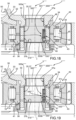
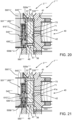
- the element 503′′′ ⁇ in the flat configuration is directed perpendicular or substantially perpendicular to the axis I ( Figure 16 ).
- the element 503′′′ ⁇ in the bent configuration frees at least partly the opening 502′′′ ⁇ , allowing outflow of the lubricating fluid.
- the element 503′′′ ⁇ in the bent configuration has its concavity facing the bodies 45 ( Figure 17 ) .
- the opening 502′′′ ⁇ is defined by the radial and/or axial space between the radially external surface 501a′′′ ⁇ and the base surface 501d′′′ ⁇ .
- the element 506′′′ ⁇ in the compressed configuration is adapted to maintain the elastic element 503′′′ ⁇ in the flat configuration.
- the element 506′′′ ⁇ in the extended configuration is adapted to move away and/or detach the elastic element 503′′′ ⁇ from the casing 501′′′ ⁇ - in particular, from the radially external surface 501a′′′ ⁇ - allowing the elastic element 503′′′ ⁇ to be arranged in the bent configuration.
- the element 506′′′ ⁇ extends into the inner volume of the tank 500′′′ ⁇ and comprises a first end and a second end opposite each other parallel to the axis I.
- the first end is fixed to the top surface 501c′′′ ⁇ and the second end is fixed to the elastic element 503′′′ ⁇ .
- the element 506′′′ ⁇ in the extended configuration is parallel or substantially parallel to the axis I.
- the casing 501′′′ ⁇ is made of metal.
- the element 506′′′ ⁇ returns to the extended configuration, detaching the elastic element 503′′′ ⁇ from the radially external surface 501a′′′ ⁇ .
- the elastic element 503′′′ ⁇ is therefore arranged in the bent configuration, partly uncovering the opening 502′′′ ⁇ and allowing outflow of the lubricating fluid from the tank 500′′′ ⁇ .
- the lubricating fluid that has flowed out of the tank 500′′′ ⁇ lubricates the surfaces in contact between the bodies 45 and the rings 41, 43 and/or the planet 18.
- the number 3′′′′′′ indicates a transmission assembly according to a seventh embodiment of the present invention.
- the transmission assembly 3′′′′′′ is similar to the transmission assembly 3 and will be described below only insofar as it differs from the latter; identical or equivalent parts of the transmission assemblies 3; 3′′′′′′ will be indicated, where possible, by the same reference numbers.
- the transmission assembly 3′′′′′′ differs from the transmission assembly 3 due to the fact that it comprises:
- the retaining means 501′′′′′′ comprise a shutter 600′′′′′′, which can be arranged in:
- the tank 500′′′′′′ ' is rotatable about the axis A integrally with the planet carrier 30.
- the tank 500′′′′′′ is housed in the compartment 37 and is fixed to the pin 32 of the relative planet 18.
- the tank 500′′′′′′ comprises a section 500a′′′′′′ arranged on the side of the arm 33 and a compartment 500b′′′′′′ opposite the arm 33 relative to the section 500a′′′′′′.
- the extension of the section 500a′′′′′′ orthogonally to the axis I is less than the extension of the section 500b′′′′′′ orthogonally to the axis I.
- the section 500a′′′′′′ ' and the section 500b′′′′′′ ' are cylindrical and coaxial to the axis I.
- the section 500a′′′′′′ ' is housed at the section 37a and the section 500b′′′′′′ ' is housed at the section 37b.
- the section 500a′′′′′′ is in contact with the radially internal surface 35 at the section 37a.
- the tank 500′′′′′′ comprises a compartment 510′′′′′′ adapted to contain at least part of the lubricating fluid of the tank 500′′′′′′ and a cavity 530′′′′′′ fluidically connected to the compartment 510′′′′′′ adapted to house the shutter 600′′′′′′.
- the cavity 530′′′′′′ comprises:
- the cavity 530′′′′′′ has a cylindrical shape having axis parallel to the axis I.
- the opening 550′′′′′′ is fluidically connected to the compartment 37.
- the opening 550′′′′′′ communicates with the compartment 37 both when the shutter 600′′′′′′ is in the closed configuration ( Figures 18 and 20 ) and when the shutter 600′′′′′′ is in the open configuration ( Figures 19 and 21 ).
- the shuttle 610′′′′′′ is slidable between a first position and a second position parallel to the axis I.
- the shuttle 610′′′′′′ is in the first position when the shutter 600′′′′′′ is in the closed configuration ( Figures 18 , 20 ) and in the second position when the shuttle 600''''' ' is in the open configuration ( Figures 19 , 21 ).
- the shuttle 610′′′′′′ in the first position determines obstruction of the opening 540′′′′′′; the shuttle 610′′′′′′ in the second position determines unblocking of the opening 540′′′′′′.
- the shuttle 610′′′′′′ abuts against the meltable element 630′′′′′′ in the solid state.
- the meltable element 630′′′′′′ is adapted to maintain the shuttle 610′′′′′′ in the first position when it is in the solid state and is adapted to determine sliding of the shuttle 610′′′′′′ towards the second position when it is at least partly melted.
- the cavity 530′′′′′′ also comprises an opening 560′′′′′′ for outflow of the melted material of the meltable element 630′′′′′′ from the cavity 530′′′′′′.
- the main lubrication circuit 47 also comprises:
- the duct 70 is defined by the interstice between the radially internal surface 41a and the radially external surface 36.
- the duct 71 extends from the radially internal surface 41a to the radially external surface 41b, preferably orthogonally to the axis I.
- the openings 48, 49 and/or the ducts 70, 71 are adapted to be crossed both by the lubricating fluid of the main lubrication circuit 47 and by the lubricating fluid that flows out of the tank 500′′′′′′.
- the meltable element 630′′′′′′ melts and flows through the opening 560′′′′′′.
- the elastic means 640′′′′′′ push the shuttle 610′′′′′′ towards the second position, until it unblocks the opening 540′′′′′′ thus allowing passage of the lubricating fluid from the opening 540′′′′′′ to the opening 550′′′′′′.
- the lubricating fluid that has flowed out of the opening 550′′′′′′ flows in sequence through the compartment 37, the openings 48, 49, and the ducts 70 and 71, lubricating the bearing 40 and/or the planet 18.
- the number 3′′′′′′′ indicates a transmission assembly according to an eighth embodiment of the present invention.
- the transmission assembly 3′′′′′′′ comprises:
- the transmission assembly 3′′′′′′′ further comprises:
- the bearing 1400 comprises, in turn:
- the bearing 1401 comprises:
- the ring 1431 is in contact with the support 230 and the bodies 1451 are spaced from the bodies 1450 parallel to the axis M.
- the ring 1430 is in contact with the ring 1431 on the side of the ring 1431 opposite the support 230.
- the rings 1430 and 1431 are rotationally fixed.
- the cog wheels 1800 and 1801 are bevel gears and the rotation axis M is perpendicular to the rotation axis of the cog wheel 1801.
- the transmission assembly 3′′′′′′′ forms part of a collector stage of the aircraft 1′′′′′′′ without this being understood as limiting in any way.
- the transmission assembly 3′′′′′′′ comprises:
- the tank 1500 is rotationally fixed relative to the axis M.
- the tank 1500 is partly integrated in the support 230 and partly in the ring 1431. According to a variation not illustrated, the tank 1500 is completely integrated in the support 230.
- the tank 1500 comprises a compartment 1510 adapted to contain at least a part of the lubricating fluid of the tank 1500 and a cavity 1530 fluidically connected to the compartment 1510 and adapted to house the shutter 1600.
- the tank 1500 is preferably filled with the lubricating fluid before installation.
- the tank 1500 is a cartridge of lubricating fluid.
- the cavity 1530 comprises:
- the cavity 1530 has a cylindrical shape having an axis W, which is perpendicular to the axis M.
- the cavity 1530 comprises two sections 1530a, 1530b at the support 23 and a section 1530c at the ring 1431.
- the section 1530a extends from the opening 1540 and sections 1530a, 1530b and 1530c are contiguous to one another and extend in sequence parallel to the axis W.
- the extension of the cross section of the section 1530b perpendicular to the axis W is greater than the extension of the cross section of the section 1530a perpendicular to the axis W.
- the extension of the cross section of the section 1530c is equal to that of the section 1530a.
- the shutter 1600 can be arranged in:
- the shutter 1600 is adapted to move automatically from the closed configuration to the open configuration, when the temperature of the bearing 1400 and/or of the bearing 1401 and/or of the cog wheel 1800 and/or of the shaft 1802 exceeds the threshold value.
- the shutter 1600 is adapted to move from the closed configuration to the open configuration in an irreversible manner.
- the shuttle 1610 slides between a first position and a second position parallel to the axis W.
- the distance between the shuttle 1610 and the ring 1430 is greater in the first position than in the second position.
- the shuttle 1610 is in the first position when the shutter 1600 is in the closed configuration ( Figure 22 ) and in the second position when the shutter 1600 is in the open configuration ( Figure 23 ).
- the shuttle 1610 in the first position determines obstruction of the opening 1550; the shuttle 1610 in the second position determines unblocking of the opening 1550 ( Figure 23 ). In detail, the shuttle 1610 contributes only indirectly to obstruction and unblocking of the opening 1550.
- the shuttle 1610 abuts against the meltable element 1630 in the solid state.
- the meltable element 1630 is adapted to maintain the shuttle 1610 in the first position when in the solid state and is adapted to determine sliding of the shuttle 1610 towards the second position when it is at least partly melted.
- the shutter 1600 also comprises elastic means 1640 adapted to preload the shuttle 1610 towards the second position.
- the elastic means 1640 comprise a helical spring arranged in contact with the shuttle 1610 on the side opposite the meltable element 1630.
- the shutter 1600 further comprises a seal element 1650 fixed to the shuttle 1610 on the side opposite the meltable element 1630.
- the seal element 1650 slides relative to the cavity 1530 integrally with the shuttle 1610.
- the seal element 1650 prevents fluidic communication between the opening 1540 and the opening 1550 ( Figure 22 ).
- the seal element 1650 allows fluidic communication between the opening 1540 and the opening 1550.
- the meltable element 1630 in the solid state is a cylindrical body and is adapted to cooperate with the ring 1430.
- the meltable element 1630 in the solid state is arranged directly in abutment against the ring 1430.
- one or more elements are interposed between the meltable element 1630 in the solid state and the ring 1430.
- the meltable element 1630 is made of a material adapted to melt at or near the threshold temperature.
- the meltable element 1630 is made of tin or lead, or an alloy thereof.
- the cavity 1530 also comprises an opening 1560 for outflow of the melted material of the meltable element 1630 from the cavity 1530.
- the opening 1560 is arranged at the section 1530c.
- the bearing 1400 further comprises one or more ducts 1700 passing through the ring 1410 and the ring 1430 parallel to the axis W or transversely to the axis W.
- the ducts 1700 are adapted to be crossed by the lubricating fluid.
- the support 230 comprises ducts 1701, which extend from the opening 1550 and are adapted to be crossed by the lubricating fluid.
- the bearing 1401 comprises ducts 1702, which fluidically connect the ducts 1701 with at least some of the ducts 1700.
- the ducts 1702 are arranged at the ring 1431.
- the ducts 1700 are directly fluidically connected to the ducts 1701.
- the meltable element 1630 melts and flows through the opening 1560.
- the elastic means 1640 push the shuttle 1610 towards the second position, until it unblocks the opening 1550 thus allowing passage of the lubricating fluid from the opening 1540 to the opening 1550.
- the lubricating fluid that has come out of the opening 1550 flows in sequence through the ducts 1701, 1702 and 1700, lubricating the bearing 1400 and/or the bearing 1401 and/or the cog wheel 1800 and/or the shaft 1802.
- the number 3′′′′′′ ⁇ indicates a transmission assembly according to a ninth embodiment of the present invention.
- the transmission assembly 3′′′′′′ ⁇ is similar to the transmission assembly 3′′′′′′ ⁇ and will be described below only insofar as it differs from the latter; identical or equivalent parts of the transmission assemblies 3′′′′′′′; 3′′′′′′ ⁇ will be indicated, where possible, by the same reference numbers.
- the transmission assembly 3 ⁇ ′′′′′′ comprises the cog wheels 1800, 1801, the bearings 1400, 1401 and the support 230.
- the transmission assembly 3′′′′′′ ⁇ comprises:
- the bearing 1402 comprises:
- the cog wheel 1801 comprises a main body 1804 and an inner toothing 1805 extending from the main body 1804.
- the transmission assembly 3′′′′′′ ⁇ differs from the transmission assembly 3′′′′′′ ⁇ due to the fact that it comprises:
- the tank 2500 comprises a compartment 2510 adapted to contain at least part of the lubricating fluid of the tank 2500 and a cavity 2530 fluidically connected to the compartment 2510 and adapted to house the shutter 2600.
- the tank 2500 is preferably filled with the lubricating fluid before installation.
- the tank 2500 is a cartridge of lubricating fluid.
- the cavity 2530 comprises:
- the cavity 2530 has a cylindrical shape with axis Q, which is perpendicular to the axis N.
- the extension of the cross section of the section 2530b perpendicular to the axis Q is greater than the extension of the cross section of the section 2530a perpendicular to the axis Q.
- the extension of the cross section of the section 2530c perpendicular to the axis Q is equal to that of the section 2530a.
- the shutter 2600 can be arranged in:
- the shutter 2600 is adapted to move automatically from the closed configuration to the open configuration, when the temperature of the bearing 1402 and/or of the cog wheel 1801 and/or of the shaft 1803 exceeds the threshold value.
- the shutter 2600 is adapted to move from the closed configuration to the open configuration in an irreversible manner.
- the shutter 2600 comprises:
- the shuttle 2610 slides between a first position and a second position parallel to the axis Q.
- the shuttle 2610 is in the first position when the shutter 2600 is in the closed configuration ( Figure 24 ) and in the second position when the shutter 2600 is in the open configuration ( Figure 25 ).
- the distance between the shuttle 2610 and the toothing 1805 parallel to the axis Q is greater in the first position than in the second position.
- the meltable element 2630 is adapted to maintain the shuttle 2610 in the first position when it is in the solid state and is adapted to determine sliding of the shuttle 2610 towards the second position when it is at least partly melted.
- the shuttle 2610 abuts against the meltable element 2630 in the solid state.
- the meltable element 2630 in the solid state furthermore abuts directly against the main body 1804 ( Figure 24 ).
- the shutter 2600 further comprises a seal element 2650 fixed to the shuttle 2610 on the side opposite the meltable element 2630.
- the seal element 2650 slides relative to the cavity 2530 integrally with the shuttle 2610.
- the seal element 2650 When the shuttle 2610 is in the first position, the seal element 2650 obstructs the opening 2550 and prevents fluidic communication between the opening 2540 and the opening 2550 ( Figure 24 ). Vice versa, when the shuttle 2610 is in the second position, the seal element 2650 unblocks the opening 2550 and allows fluidic communication between the opening 2540 and the opening 2550 ( Figure 25 ). Therefore, the shuttle 2610 contributes only indirectly to the obstruction and unblocking of the opening 2550.
- the meltable element 2630 in the solid state is a cylindrical body arranged directly in abutment against the main body 1804.
- the meltable element 2630 is made of a material adapted to melt at or near the threshold temperature.
- the meltable element 2630 is made of tin or lead, or an alloy thereof.
- the cavity 2530 also comprises an opening 2560 for outflow of the melted material of the meltable element 2630 from the cavity 2530.
- the cog wheel 1801 further comprises an opening 2570 and a duct 2800, which extends inside the main body 1804 and which fluidically connects the opening 2550 to the opening 2570.
- the meltable element 2630 melts at least partly, the elastic means 2640 push the shuttle 2610 towards the second position and the opening 2550 is unblocked. Consequently, the passage of the lubricating fluid from the opening 2540 to the opening 2550 is allowed.
- the lubricating fluid that has come out of the opening 2550 flows in sequence through the ducts 2800 to the opening 2570 and lubricates the cog wheels 1800 and/or 1801 and/or the shaft 1803.
- the retaining means 60; 60'; 501''; 503''', 504′′′; 503 ⁇ ; 503′′′′′′, 506′′′ ⁇ ; 1600; 2600 do not require the supply of electrical, pneumatic or hydraulic energy to operate and are calibrated as a function of the threshold temperature of the part to be lubricated.
- the passive retaining means 60; 60'; 501"; 503′′′, 504′′′; 600′′′′′′; 1600; 2600 comprise meltable portions that melt at the threshold temperature or the passive retaining means 503 ⁇ ; 503′′′ ⁇ , 506′′′ ⁇ comprise shape-memory portions adapted to return to an initial configuration at the threshold temperature, the outflow of the lubricating fluid from the tank 50; 500"; 500′′′; 500 ⁇ ; 500′′′ ⁇ ; 500′′′′′′; 1500; 2500 is effectively obtained when the part to be lubricated reaches said threshold temperature.
- tank 50; 500 ⁇ ; 500′′′; 500 ⁇ ; 500′′′ ⁇ ; 500′′′′′′; 2500 is carried by a rotating component, outflow of the lubricating fluid in emergency conditions is facilitated by the centrifugal force to which it is subject during the rotation.
- the shutter 60; 600′′′′′′; 1600; 2600 comprises the elastic means 64; 640′′′′′′; 1640; 2640, the movement of the shuttle 61; 610′′′′′′; 1610; 2610 towards the second position, in which it allows outflow of the lubricating fluid, is facilitated in emergency conditions.
- the transmission assembly 3; 3' could comprise, in addition to the tank 50:
- the transmission assembly 3′′′′′′ could comprise passive retaining means analogous to the retaining means 60' or 501"; or 503''', 504''' or 503 ⁇ or 503′′′ ⁇ , 506′′′ ⁇ .
- the tank 500′′′′′′ could be revolving relative to the respective axis I integrally with the respective planet 18.
- the aircraft 1; 1'; 1 ⁇ ; 1′′′; 1 ⁇ ; 1′′′ ⁇ ; 1′′′′′′; 1′′′ ⁇ ; 1′′′′′′ ⁇ could be a convertiplane or an airplane.
- the shutter 60; 600′′′′′′; 1600; 2600 could be housed outside the cavity 53; 530′′′′′′; 1530; 2530.
- meltable element 63; 63'; 504′′′; 630′′′′′′; 1630; 2630 could be adapted to be in a non-deformed state below the threshold temperature and adapted to deform and/or lose its mechanical characteristics when the temperature is equal to or exceeds the threshold value.
Landscapes
- Engineering & Computer Science (AREA)
- General Engineering & Computer Science (AREA)
- Mechanical Engineering (AREA)
- Chemical & Material Sciences (AREA)
- Combustion & Propulsion (AREA)
- Aviation & Aerospace Engineering (AREA)
- General Details Of Gearings (AREA)
- Lubricants (AREA)
Abstract
Description
- The present invention concerns a transmission assembly for an aircraft.
- The present invention concerns in particular a transmission assembly for an aircraft capable of hovering, for example a helicopter or a convertiplane.
- Helicopters are known essentially comprising a fuselage, a main rotor located at the top of the fuselage and revolving about its own axis, and an auxiliary rotor arranged at a tail end of the fuselage.
- Said aircraft further comprise, in a known manner, one or more motor members, for example turbines, and a transmission assembly interposed between the turbines and the main rotor and adapted to transmit the motion from the turbines to the main rotor. The aircraft can also comprise further transmission assemblies, which are adapted to transmit the motion from the turbines to a plurality of accessory devices adapted, for example, to supply the energy required for operation of the on-board equipment.
- During operation of the aircraft, it is fundamental to ensure correct lubrication of the transmission assembly, since inadequate lubrication conditions could pose a risk for the entire aircraft. For said purpose, the aircraft comprise a circuit for overall lubrication of the transmission assembly.
- Nevertheless, some critical components of the transmission assembly tend to reach particularly high temperatures during operation and the lubrication circuit of the transmission assembly of the known aircraft is not always suitable to ensure the lubrication of said critical components and therefore limit the temperatures reached locally.
- The need is therefore felt in the sector to ensure lubrication of the critical components of the transmission assembly.
- The object of the present invention is to provide a transmission assembly for an aircraft, which meets the above-mentioned need in a simple and inexpensive manner.
- The above-mentioned object is achieved by the present invention, which concerns a transmission assembly as defined in
claim 1. - For a better understanding of the present invention, nine preferred embodiments are described below, purely by way of non-limiting example and with reference to the attached drawings, in which:
-
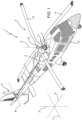
Figure 1 is a perspective view of a helicopter comprising a transmission assembly according to a first embodiment of the present invention; -
Figure 2 is a perspective view of the transmission assembly ofFigure 1 ; -
Figure 3 is a view in section and on an enlarged scale along the plane III-III inFigure 2 ; -
Figures 4 and5 are detail views of the section illustrated inFigure 3 , which illustrate the transmission assembly in respective different operating positions; -
Figure 6 is an exploded view of a component of the transmission assembly ofFigures 1 to 5 on a further enlarged scale; -
Figure 7 is a perspective view of a portion of a transmission assembly according to a second embodiment of the present invention; -
Figures 8 and 9 are perspective cutaway view which illustrate the transmission assembly ofFigure 7 on an enlarged scale and in respective different operating positions; -
Figures 10 and 11 are section views of a portion of a transmission assembly according to a third embodiment of the present invention in respective different operating positions; -
Figures 12 and 13 are section views of a portion of a transmission assembly according to a fourth embodiment of the present invention in respective different operating positions; -
Figures 14 and 15 are section views of a portion of a transmission assembly according to a fifth embodiment of the present invention in respective different operating positions; -
Figures 16 and 17 are section views of a portion of a transmission assembly according to a sixth embodiment of the present invention in respective different operating positions; -
Figures 18 and 19 are section views of a portion of a transmission assembly according to a seventh embodiment of the present invention in respective different operating positions; -
Figures 20 and 21 are detail views of the transmission assembly according to the seventh embodiment, in the operating positions ofFigures 18 and 19 respectively; -
Figures 22 and 23 are section views of a portion of a transmission assembly according to an eighth embodiment of the present invention in respective different operating positions; and -
Figures 24 and 25 are section views of a portion of a transmission assembly according to a ninth embodiment of the present invention in respective different operating positions. - With reference to
Figure 1 , thenumber 1 indicates an aircraft capable of hovering. In the non-limiting embodiment shown, the aircraft is a helicopter. - In the following part of the present description, the expressions "front", "rear", "upper" and "lower" are used with reference to a normal advanced direction of flight and operating position of the
aircraft 1 illustrated in the attached figures. It is also possible to define a reference system integral with theaircraft 1 and comprising (Figure 1 ): - a longitudinal axis X;
- a transverse axis Y, which is orthogonal to the axis X; and
- an axis Z orthogonal to the axes X and Y and directed vertically to the ground during a normal condition of use of the
aircraft 1. - The
aircraft 1 comprises: - a
fuselage 1a; - one or more turbines 2;
- a main rotor 4 located at the top of the fuselage 2 and rotatable about an axis A; and
- an auxiliary rotor 5 located at a tail end of the fuselage 2 and rotatable about its own axis B transverse to the axis A.
- In further detail, the rotor 4 essentially comprises:
- a
drive shaft 11 rotatable about the axis A; - a
hub 12 driven in rotation by thedrive shaft 11; and - a plurality of
blades 13 articulated on thehub 12. - The
helicopter 1 further comprises atransmission assembly 3, which transmits the motion from the turbines 2 to the main rotor 4. - The
transmission assembly 3 comprises aterminal stage 20 formed essentially of aplanetary gear train 21, which transmits the power to thedrive shaft 11 with the correct torque and angular velocity values (Figure 2 ). - In the case illustrated, the
planetary gear train 21 is a reduction gear. - With particular reference to
Figure 3 , theplanetary gear train 21 comprises essentially: - a
sun gear 15 comprising a plurality ofteeth 16, rotatable about the axis A and operatively connected to aninlet shaft 22 of theterminal stage 20; - a
crown gear 17 angularly fixed relative to the axis A; and - a plurality of cog wheels performing the function of
respective planets 18 rotatable about respective axes I parallel to the axis A and meshing with thesun gear 15 and thecrown gear 17. - The
planetary gear train 21 further comprises aplanet carrier 30 rotatable about the axis A, connected directly to thedrive shaft 11 and connected to theplanets 18. - The
crown gear 17 has a larger diameter than thesun gear 15 and surrounds theplanet carrier 30. Thecrown gear 17 is furthermore carried by a fixed structure only partially illustrated in the attached figures. - In particular, each
planet 18 revolves about its own axis I relative to theplanet carrier 30 and describes a revolution motion around the axis A integrally with theplanet carrier 30. - The mechanical power enters the
planetary gear train 21 at thesun gear 15 and exits, in the direction of thedrive shaft 11, at theplanet carrier 30, with the correct torque value and number of revolutions. - The
planet carrier 30 comprises, in turn (Figures 2 and3 ): - a
main body 31 arranged coaxially to the axis A; - a plurality of
pins 32 extending along respective axes I and on whichrespective planets 18 are revolvingly mounted about the respective axes I; - a plurality of
arms 33 extending radially cantilevered from themain body 31 and each connecting arespective pin 32 to themain body 31; and - a plurality of
rolling bearings 40, each interposed radially between arespective pin 32 and therelative planet 18. - In detail, the
main body 31 is opposite theinlet shaft 22 relative to thearms 33. - Preferably, furthermore, all the
arms 33 are identical to one another. - Each bearing 40 is adapted to support a
respective planet 18 in a revolving manner about the respective axis I on therespective pin 32. - In the following part of the present description, reference will be made to a single bearing 40 and to the
relative pin 32, since all thebearings 40 and thepins 32 are identical to one another. - The
bearing 40 comprises, in turn (Figure 3 ): - a
ring 41 angularly fixed relative to thepin 32 and defining arace 42; - a
ring 43 defined integrally by theplanet 18, arranged radially more external than thering 41 relative to the axis I, and defining arace 44 facing therace 42; and - a plurality of rolling
bodies 45 rolling on theraces - In detail, the
ring 41 comprises (Figures 4 and5 ): - a radially
inner surface 41a relative to the axis I, which is in contact with thepin 32; - a radially
outer surface 41b relative to the axis I, which comprises therace 42; and - two
annular elements outer surface 41b towards thering 43. - The two
annular elements bodies 45 parallel to the axis I. More specifically, theannular element 41c is arranged on the side of thearms 33 and theannular element 41d is opposite theannular element 41c relative to thebodies 45 parallel to the axis I. - The
pin 32 comprises acylindrical body 34 extending from therespective arm 33 parallel to the axis I. Thecylindrical body 34 comprises, in turn, relative to the axis I: - a radially
inner surface 35; - a radially
outer surface 36; and - a
compartment 37 defined by the radiallyinner surface 35. - In detail, the
compartment 37 comprises asection 37a arranged on the side of thearm 33 and acompartment 37b opposite thearm 33 relative to thesection 37a. In further detail, the extension of thesection 37a orthogonally to the axis I is smaller than the extension of thesection 37b orthogonally to the axis I. Thesections - The
transmission assembly 3 further comprises a main lubrication circuit 47 - only partially illustrated - inside which a lubricating fluid flows for lubrication of theplanetary gear train 21 and, in particular, theplanets 18 and bearings 40 (Figure 3 ). - In detail, in the embodiment illustrated, the
pin 32 comprises twoholes inner surface 35 to the radiallyouter surface 36. In further detail, theholes section 37b. Theholes main lubrication circuit 47 and are adapted to allow the passage of the lubricating fluid that flows inside it. - The
transmission assembly 3 further comprises (Figure 3 ): - a rotationally fixed
casing 23 housing theplanetary gear train 21; and - a rolling
bearing 24 radially interposed between theplanet carrier 30 and thecasing 23 and adapted to support the rotation of theplanet carrier 30 relative to thecasing 23. - Advantageously, the
transmission assembly 3 comprises: - a
tank 50 for a lubricating fluid; and - passive retaining means 60 adapted to prevent outflow of the lubricating fluid from the
tank 50 when the temperature of thebearing 40 and/or of theplanet 18 is below a threshold value and allow outflow of the lubricating fluid from thetank 50 when the temperature of thebearing 40 and/or of theplanet 18 is higher than or equal to the threshold value. - In detail, the threshold value could be a range of values.
- The lubricating fluid flowing out of the
tank 50 is adapted to lubricate thebearing 40 and/or theplanet 18. - In the following part of the present description, the temperature of a component (for example, of the
bearing 40 or the planet 18) means a local temperature at any point of the component (for example, a point of the component near the retaining means 60), or a mean temperature of the component, or a temperature around the component (for example, the temperature of the air surrounding the component). - Preferably, furthermore, the lubricating fluid that flows in the
main lubrication circuit 47 is the same lubricating fluid contained in thetank 50. In addition, thetank 50 is preferably filled with the lubricating fluid before installation. In other words, thetank 50 is a cartridge of lubricating fluid. - The fact that the retaining means 60 are passive means that the passage from the configuration in which they prevent outflow of the lubricating fluid to the configuration in which they allow outflow of the lubricating fluid takes place without the supply of electrical, pneumatic or hydraulic energy from the outside.
- In the embodiment illustrated in the Figures from 1 to 6, the retaining means 60 comprise a
shutter 60, which can be arranged in: - a closed configuration, in which it prevents outflow of the lubricating fluid from the tank 50 (
Figure 4 ); or - an open configuration, in which it allows outflow of the lubricating fluid from the tank 50 (
Figure 5 ). - The
shutter 60 is adapted to move automatically from the closed configuration to the open configuration when the temperature of thebearing 40 and/or of therelative planet 18 exceeds the threshold value. Preferably, theshutter 60 is adapted to move from the closed configuration to the open configuration in an irreversible manner. In other words, once arranged in the open configuration, theshutter 60 cannot automatically return to the closed configuration. - In detail, the
tank 50 is rotatable about the axis A integrally with theplanet carrier 30. - As illustrated in
Figure 3 , thetank 50 is radially internal to theplanet carrier 30 relative to the axis A. In detail, thetank 50 is arranged coaxially to the axis A. - The
tank 50 comprises, in turn, amain body 51 and a plurality ofappendages 52 extending radially cantilevered from themain body 51. More specifically, theappendages 52 extend radially towards thecrown gear 17. - In detail, the
main body 51 comprises acompartment 510 adapted to contain at least part of the lubricating fluid of thetank 50. - The
main body 51 further comprises abase surface 51a, which faces thesun gear 15 and atop surface 51b opposite thebase surface 51a parallel to the axis A. - The
tank 50 comprises anappendage 52 at eacharm 33. In detail, eachappendage 52 is aligned with arespective arm 33 in a circumferential direction relative to the axis A. Furthermore, eachappendage 52 is interposed between therespective arm 33 and therespective bearing 40 parallel to the respective axis I. In other words, eachappendage 52 extends directly below therespective arm 33 parallel to the respective axis I. - Preferably, furthermore, the extension of each
arm 33 in a circumferential direction relative to the axis A is greater than or equal to the extension of therelative appendage 52 in the same circumferential direction. - In detail, the
appendages 52 extend from themain body 51 in respective directions J transverse to the axis A. Said directions J are the generatrices of a virtual conical surface having vertical axis coinciding with the axis A and vertex belonging to the axis A and arranged on the side opposite theinlet shaft 22 relative to thesun gear 15. In further detail, theappendages 52 extend from thebase surface 51a (Figures 3 ,4 and5 ). - Below, reference will be made to only one
appendage 52 since all theappendages 52 are identical to one another. - The
appendage 52 comprises acavity 53 adapted to house at least partly theshutter 60 and to guide the lubricating fluid (Figures 4 and5 ). - The
cavity 53 comprises, in turn, anopening 54, which fluidically connects thecompartment 510 to thecavity 53 and anopening 55 adapted to allow outflow of the lubricating fluid from thecavity 53 and therefore from thetank 50. In detail, theopening 55 directly faces thebearing 40. In further detail, theopening 55 directly faces theannular element 41c (Figures 4 and5 ). - The
appendage 52 further comprises a radiallyexternal surface 56 relative to the axis A and afurther opening 57 arranged at the radiallyexternal surface 56. - As illustrated in
Figures 4 and5 , thering 41 comprises aprotuberance 46 extending parallel to the axis I on the side of thering 41 facing thetop surface 51b. In detail, theprotuberance 46 is radially interposed between the radiallyinternal surface 41a and the radiallyexternal surface 41b. - Preferably, the radially
external surface 56 abuts against theprotuberance 46. - Preferably, furthermore, the
protuberance 46 extends throughout the circumferential extension of thering 41 relative to the axis I. - In the embodiment illustrated, the
cavity 53 comprises (Figures 4 and5 ): - a
section 53a arranged on the side of thebase surface 51a, cylindrical and directed parallel to the direction J; - a
section 53b arranged on the side of the radiallyexternal surface 56, also cylindrical and directed parallel to the direction J; and - a
section 53c extending between theopening 54 and thesection 53a, having cylindrical shape and directed transversally to the direction J. - In detail, the radial extension of the
section 53b in a plane perpendicular to the direction J is greater than the radial extension of thesection 53a in a plane perpendicular to the same direction J. - The
opening 55 is furthermore arranged at thesection 53b (Figures 4 and5 ). - The
shutter 60 comprises (Figure 6 ): - a
shuttle 61 slidable inside thecavity 53; and - a
meltable element 63 adapted to be in the solid state below the threshold temperature and adapted to melt when the temperature is equal to or higher than the threshold value. - The
shuttle 61 slides between a first position, in which it determines obstruction of theopening 55, and a second position in which it determines unblocking of theopening 55. Theshuttle 61 is in the first position when theshutter 60 is in the closed configuration (Figure 4 ) and in the second position when theshutter 60 is in the open configuration (Figure 5 ). - The
meltable element 63 is adapted to maintain theshuttle 61 in the first position when it is in the solid state and is adapted to determine and/or allow sliding of theshuttle 61 towards the second position when it is at least partly melted. - The
shutter 60 further comprises astriker element 62 integral with theappendage 52. - In further detail, when the
shutter 60 is in the closed configuration, themeltable element 63 is adapted to keep theshuttle 61 and thestriker element 62 at a distance from each other (Figure 4 ); when theshutter 60 is in the open configuration, theshuttle 61 abuts against the striker element 62 (Figure 5 ). - The
striker element 62 is furthermore arranged at thesection 53b and is positioned in abutment against theprotuberance 46. - The
shutter 60 also comprises elastic means 64 adapted to preload theshuttle 61 towards the second position. In detail, the elastic means 64 comprise a helical spring cooperating in contact with theshuttle 61 on the side opposite thestriker element 62. - The
shutter 60 further comprises aseal element 65 slidable relative to thecavity 53 integrally with theshuttle 61. In detail, theseal element 65 is fitted around theshuttle 61. In addition, theseal element 65 is interposed between theshuttle 61 and the inner walls of thecavity 53. - When the
shutter 60 is in the closed configuration, theseal element 65 obstructs theopening 55 and prevents fluidic communication between theopening 54 and the opening 55 (Figure 4 ). Vice versa, when theshutter 60 is in the open configuration, theseal element 65 unblocks theopening 55 and allows fluidic communication between theopening 54 and the opening 55 (Figure 5 ). Therefore, theshuttle 61 contributes only indirectly to obstruction and unblocking of theopening 55. - As illustrated in
Figure 6 , theshuttle 61 comprises acylindrical portion 61a arranged on the side of thestriker element 62 and aportion 61b also cylindrical and opposite theportion 61a parallel to the direction J. In detail, the radial extension of theportion 61a is greater than the radial extension of theportion 61b. - The
shuttle 61 further comprises aseat 61c interposed between theportion 61a and theportion 61b parallel to the direction J and adapted to house theseal element 65. - The
shuttle 61 also comprises: - a
compartment 61d arranged at theportion 61a on the side opposite theportion 61b; and - an
opening 61e at theportion 61a, passing radially to the direction J and directly communicating with thecompartment 61d. - The
shuttle 61 further comprises aflat surface 61f directed perpendicular to the direction J and arranged at one end of theshuttle 61 opposite theportion 61b. - In detail, the
compartment 61d has a cylindrical shape and extends from thesurface 61f towards theportion 61b for part of the extension of theportion 61a along direction J. In addition, theopening 61e is spaced from thesurface 61f parallel to the direction J. - Preferably, the
shuttle 61 comprises a plurality ofseats 61g adapted to house respective elastic bands. Saidseats 61g are arranged at theportion 61a. - The
meltable element 63 in the solid state is a cylindrical body comprising: - two
ends - a
protuberance 63c extending radially in the direction J and adapted to engage theopening 61e, so as to prevent the relative sliding between themeltable element 63 in the solid state and themain body 62 parallel to the direction J. - In detail, the meltable element 6 in the solid state is partially housed in the
compartment 61d on the side of theend 63a (Figure 4 ). - The
meltable element 63 is made of a material adapted to melt at (namely at values equal to or higher than) or near the temperature threshold value. For example, themeltable element 63 is made of tin or lead, or an alloy thereof. - The
striker element 62 is a cylindrical or substantially cylindrical body comprising: - a
flat abutment surface 62a facing theshuttle 61; - an
end surface 62b positioned in abutment against theprotuberance 46; and - an
abutment surface 62c interposed between theabutment surface 62a and theend surface 62b parallel to the direction J. - In detail, when the
shuttle 61 is in the first position, theend 63b is in contact with theabutment surface 62c; when theshuttle 61 is in the second position, thesurface 61f is in contact with theabutment surface 62a. - The
striker element 62 further comprises a throughopening 62d passing parallel to the direction J and adapted to allow passage of the material of themeltable element 63 in the melted state towards theopening 57. - As illustrated in
Figures 4 and5 , theshuttle 61 slides between thesection 53a and thesection 53b. In detail, the radial extension of theportion 61a is greater than the radial extension of thesection 53a and theportion 61a is completely housed at thesection 53b. In addition, the elastic means 64 are completely housed at thesection 53a. - The operation of the
transmission assembly 3 is described below with reference to asingle planet 18 and therelative shutter 60, said operation being equal for all theplanets 18 and therelative shutters 60. In addition, the operation is described starting from a condition in which theshutter 60 is in the closed configuration and the temperature of thebearing 40 and/or theplanet 18 is below the threshold value. - In use, the
planetary gear train 21 transmits the power from theinlet shaft 22 to thedrive shaft 11 with the correct torque and angular velocity values. During transmission of the motion, the components of thetransmission assembly 3 are regularly lubricated by themain lubrication circuit 47. - In detail, the
tank 50 rotates integrally with theplanet carrier 30 and the outflow of the lubricating fluid from thetank 50 is prevented. In further detail, inside theshutter 60, themeltable element 63 keeps theshuttle 61 at a distance from thestriker element 62 and constrains theshuttle 61 in the first position. Consequently, theseal element 65 obstructs theopening 55. - When the temperature of the
bearing 40 and/or of theplanet 18 reaches or exceeds the threshold value, themeltable element 63 melts. The melted material of themeltable element 63 flows through theopenings protuberance 46, theappendage 52 and theannular element 41c. - Following melting of the meltable element, the elastic means 64 push the
shuttle 61 towards the second position, until thesurface 61f abuts against theabutment surface 62a. - During the sliding of the
shuttle 61, theopening 55 is unblocked thus allowing the passage of the lubricating fluid from theopening 54 to theopening 55. In detail, the lubricating fluid flows from thecompartment 510 in sequence through theopening 54, thesection 53c, thesection 53a, thesection 53b and the opening 55 (as indicated by the arrow illustrated inFigure 5 ). - The lubricating fluid that has flowed out of the
opening 55 runs between the interstices between therings bodies 45 and/or on the surfaces of theplanet 18 and/or between the surfaces interposed between theplanet 18 and thebearing 40, providing an emergency lubrication of thebearing 40 and/or of thesatellite 18. - With reference to
Figures 7 to 9 , the number 3' indicates a transmission assembly according to a second embodiment of the present invention. The transmission assembly 3' is similar to thetransmission assembly 3 and will be described below only insofar as it differs from the latter; equal or equivalent parts of thetransmission assemblies 3, 3' will be identified, where possible, by the same reference numbers. - The transmission assembly 3' differs from the
transmission assembly 3 due to the fact that it comprises shutters 60' instead of theshutters 60. Below, reference will be made to one single shutter 60', since all the shutters 60' are identical to one another. - Analogously to the
shutters 60, the shutters 60' are adapted to control the flow of lubricating fluid coming from thetank 50 for lubrication of theplanet 18 and/or thebearing 40. - The shutter 60' comprises (
Figures 8 and 9 ): - a main body 61' integral with the
tank 50, in particular integrated in or fixed to anarm 33, and comprising acavity 61d'; and - a meltable element 63' adapted to be in the solid state below the temperature threshold value and adapted to melt at least partly at the temperature threshold value.
- The
cavity 61d' comprises an opening 610', which is fluidically connected to thetank 50 and an opening 611', which is adapted to allow outflow of the lubricating fluid from thecavity 61d'. - The meltable element 63' in the solid state occupies at least part of the
cavity 61d' and is adapted to prevent the fluidic communication between the opening 610' and the opening 611'. The meltable element 63' is furthermore adapted to allow fluidic communication between the opening 610' and the opening 611' when it is at least partly melted. - In further detail, the
cavity 61d' comprises: - a section 612' extending from the opening 610' and having section with extension gradually decreasing in the direction oriented from the opening 610' to the opening 611'; and
- a section 613' extending from the section 612' to the opening 611'.
- Preferably, the section 612' has a conical shape and the section 613' has a parallelepipedal shape.
- The
cavity 61d' could be directly fluidically connected to thecompartment 510, or be connected to acavity 53 of anappendage 52 of the transmission assembly 3'. - The meltable element 63' in the solid state comprises a
conical section 63a', which is housed at the section 612', and asection 63b' having parallelepipedal shape, which is housed at the section 613' (Figure 8 ). - The shutter 60' further comprises elastic means 64'. Said elastic means 64' comprise an elastic bar 64a' fixed to the
planet carrier 30. - The elastic bar 64a' is operatively connected to the meltable element 63' when it is in the solid state (
Figure 8 ) and abuts against thepin 32 when the shutter 60' is in the open configuration (Figure 9 ). In detail, the elastic bar 64a' is elastically loaded towards the position in which it abuts against thepin 32. In further detail, the elastic bar 64a' is partly embedded in the material of the meltable element 63' in the solid state or engages an opening formed in the meltable element 63' in the solid state. - The elastic bar 64a' comprises, in turn:
- a
section 64b', which extends partly in contact with themain body 31; and - a section 64c', which extends cantilevered from the
section 64b' radially relative to the axis A towards thecrown gear 17. - In detail, the elastic bar 64a' is fixed to the
main body 31 at thesection 64b' and is operatively connected to the meltable element 63' in the solid state at the section 64c'. In further detail, thesection 64b' is curved and has the shape of an arc of a circle centred or substantially centred in a point belonging to the axis A, when the elastic bar 64a' is in the position it assumes when the meltable element 63' is in the solid state. - Preferably, the section 64c' is adapted to guide the lubricating fluid coming out of the opening 611' towards the surfaces to be lubricated, when the shutter 60' is in the open configuration. More specifically, the section 64c' comprises a surface facing the
main body 31, which is directed parallel or substantially parallel to the axis A and which is adapted to guide the lubricating fluid. - In further detail, the
section 64b' comprises a first end 640' and a second end 641' opposite each other in the circumferential direction relative to the axis A. Thesection 64b' is fixed to themain body 31 at the first end 640' and the section 64c' extends from thesection 64b' at the second end 641'. - As illustrated in
Figures 8 and 9 , the section 64c' has an S shape in a plane perpendicular to the axis A. - The operation of the transmission assembly 3' is similar to that of the
transmission assembly 3 and will be described below only insofar as it differs from the latter. In particular, the operation is described below with reference to asingle planet 18 and to the relative shutter 60', said operation being equal for all theplanets 18 and the relative shutters 60'. In addition, the operation is described starting from a condition in which the shutter 60' is in the closed configuration and the temperature of thebearing 40 and/or of theplanet 18 is below the threshold value. - In detail, inside the shutter 60', the meltable element 63' occupies the
compartment 61d', preventing the passage of the lubricating fluid from the opening 610' to the opening 611'. - When the temperature is equal to or exceeds the threshold value, the meltable element 63' melts due to its proximity to the
bearing 40 and/or theplanet 18, unblocking the openings 610' and 611' and leaving the elastic means 64' free to come into contact against thepin 32. - The lubricating fluid that has come out of the opening 611' is then guided by the section 64c' and flows into the interstices between the
rings bodies 45 and/or on the surfaces of theplanet 18 and/or between the surfaces interposed between theplanet 18 and thebearing 40, providing emergency lubrication of thebearing 40 and/or of theplanet 18. - With reference to
figures 10 and 11 , thenumber 3" indicates a transmission assembly according to a third embodiment of the present invention. The transmission assembly 3'' is similar to thetransmission assembly 3, and will be described below only insofar as it differs from the latter; identical or equivalent parts of thetransmission assemblies 3; 3'' will be indicated, where possible, by the same reference numbers. - The
transmission assembly 3" differs from thetransmission assembly 3 due to the fact that it comprises: - a
tank 500" for a lubricating fluid, for example grease, at one or all theplanets 18; and - passive retaining means 501" adapted to prevent outflow of the lubricating fluid from the
tank 500" when the temperature of thebearing 40 and/or of theplanet 18 is below a threshold value and to allow outflow of the lubricating fluid when the temperature of thebearing 40 and/or of theplanet 18 is higher than or equal to the threshold value. - In particular, the retaining means 501'' comprise a
casing 501", which defines thetank 500" and is adapted to be in the solid state below the temperature threshold value and is adapted to melt at the threshold value. - More specifically, when the casing 501'' begins to melt, it develops one or more through
openings 502" through which the lubricating fluid contained in thetank 500" flows (Figure 11 ) . - The
tank 500" is fixed to thering 41 and is therefore rotatable integrally with theplanet carrier 30 about the axis A. In addition, thetank 500" ' is preferably filled with the lubricating fluid before installation. In other words, thetank 500" is a cartridge of lubricating fluid. - In addition, the
tank 500" has a rectangular section in a plane passing through the axis I. - In detail, the
tank 500" is arranged in abutment against theannular element 41c parallel to the axis I and is opposite thebodies 45 relative to theannular element 41c parallel to the axis I. Thetank 500" is also in abutment against theprotuberance 46 radially relative to the axis I. - Preferably, the
tank 500" is a toroidal-shaped body arranged coaxially to the axis I. - The operation of the
transmission assembly 3" is described below starting from a condition in which the temperature of thebearing 40 and/or of theplanet 18 is below the threshold value. In said condition, thecasing 501" is completely solid and the outflow of the lubricating fluid from thetank 500" is prevented. - When the temperature of the
bearing 40 and/or of theplanet 18 is equal to or higher than the threshold value, thecasing 501" melts, developing theopenings 502" and allowing outflow of the lubricating fluid contained in thetank 500". - The lubricating fluid that has flowed out of the tank 500'' lubricates the surfaces in contact between the
bodies 45 and therings planet 18. - With reference to
figures 12 and 13 , a transmission assembly 3''' according to a fourth embodiment of the present invention is indicated. Thetransmission assembly 3‴ is similar to thetransmission assembly 3" and will be described below only insofar as it differs from the latter; equal or equivalent parts of thetransmission assemblies 3" and 3‴ will be indicated, where possible, by the same reference numbers. - The
transmission assembly 3‴ differs from thetransmission assembly 3" due to the fact that thetank 500‴ comprises acasing 501‴ comprising, in turn, anopening 502‴ and passive retaining means 503‴, 504'''. - The retaining means 503‴, 504‴ comprise:
- an
elastic element 503‴ arranged in a flat configuration below the temperature threshold value and preloaded towards a bent configuration; and - a meltable element 504‴ adapted to be in the solid state below the temperature threshold value and adapted to melt at least partly at the threshold value.
- The meltable element 504‴ is adapted to maintain the
elastic element 503‴ in the flat configuration, when it is in the solid state, and is adapted to determine displacement of theelastic element 503‴ to the bent configuration when it melts. - The
elastic element 503‴ in the flat configuration obstructs, together with the meltable element 504''', theopening 502‴ (Figure 12 ). - In detail, the
elastic element 503‴ in the flat configuration is directed perpendicular or substantially perpendicular to the axis I (Figure 12 ). - The
elastic element 503‴ in the bent configuration frees at least partly the opening 502''', allowing outflow of the lubricating fluid from thetank 500‴. In detail, theelastic element 503‴ in the bent configuration has its concavity facing the bodies 45 (Figure 13 ). - Preferably, the
casing 501‴ is made of metal. - Considering a section of the
transmission assembly 3‴ in a plane passing through the axis I, thecasing 501‴ comprises: - a surface radially external 501a‴ to the axis I;
- a radially
internal surface 501b‴; - a top surface 501c‴ extending between the radially
external surface 501a‴ and the radiallyinternal surface 501b‴ radially relative to the axis I and arranged on the side opposite thebodies 45 parallel to the axis I; and - a
base surface 501d‴ opposite the top surface 501c‴ parallel to the axis I and in contact with theannular element 41c. - The radially
external surface 501a‴ comprises atooth 505‴ at an end thereof opposite the top surface 501c‴ parallel to the axis I. Thetooth 505‴ extends radially towards the radiallyinternal surface 501b‴ (Figures 12 and 13 ). - The
base surface 501d‴ extends from the radiallyinternal surface 501b‴ towards the radiallyexternal surface 501a‴ only for part of the radial extension of thetank 500‴. - In further detail, the
opening 502‴ is defined by the radial and axial space between the radiallyexternal surface 501a‴ and thebase surface 501d‴. - The opening 502''', furthermore, faces the
bodies 45. In particular, theopening 502‴ faces theannular element 41c. - The
elastic element 503‴ extends from the radiallyinternal surface 501b"' towards the radiallyexternal surface 501a'' radially to the axis I. Preferably, theelastic element 503‴ is spaced from the radiallyexternal surface 501a'' both radially to the axis I and parallel to the axis I. - The meltable element 504‴ in the solid state is interposed between the radially
external surface 501a"' and theelastic element 503‴ radially to the axis I and parallel to the axis I. - Considering a section of the meltable element 504‴ in a plane passing through the axis I, the meltable element 504‴ in the solid state comprises:
- a first rectilinear section directed parallel to the axis I;
- a second section extending radially from the first section towards the radially
external surface 501a‴; and - a third section extending radially from the first section towards the radially
internal surface 501b‴. - The second section and the third section are arranged at respective opposite ends of the first section parallel to the axis I. In other words, the meltable element 504‴ in the solid state has an S shape in a plane passing through the axis I.
- In detail, the meltable element 504‴ in the solid state is in contact with the
tooth 505‴ at the second section and with theelastic element 503‴ at the third section. In further detail, the second section is opposite the third section relative to thetooth 505" and the third section is opposite the second section relative to theelastic element 503‴. - The operation of the
transmission assembly 3‴ is similar to that of thetransmission assembly 3" and will therefore be described insofar as it differs from the latter starting from a condition in which the temperature of thebearing 40 and/or of theplanet 18 is below the threshold value and outflow of the lubricating fluid from thetank 500‴ is therefore prevented. - In particular, when the temperature of the
bearing 40 and/or of theplanet 18 is equal to or exceeds the threshold value, the meltable element 504‴ melts, allowing theelastic element 503‴ to be arranged in the bent configuration. - At this point, the
elastic element 503‴ partially uncovers the opening 502''', allowing outflow of the lubricating fluid from the tank 500'''. - The lubricating fluid that has come out of the
tank 500‴ lubricates the surfaces in contact between thebodies 45 and therings planet 18. - With reference to
figures 14 and 15 , the number 3ʺʺ indicates a transmission assembly according to a fifth embodiment of the present invention. The transmission assembly 3ʺʺʺʺ is similar to thetransmission assembly 3" and will be described below only insofar as it differs from the latter; identical or equivalent parts of the transmission assemblies 3''; 3ʺʺ will be indicated, where possible, by the same reference numbers. - The transmission assembly 3ʺʺʺ differs from the
transmission assembly 3" due to the fact that the tank 500ʺʺ comprises a casing 501ʺʺ comprising, in turn, an opening 502ʺʺ and passive retaining means 503ʺʺ. - The retaining means 503ʺʺ comprise an element 503ʺʺ made of a shape-memory material arranged in a flat configuration below the temperature threshold value and adapted to reacquire a bent configuration at the threshold value.
- The element 503ʺʺ in the flat configuration obstructs the opening 502ʺʺ. Preferably, the
element 503"" in the flat configuration is directed perpendicular or substantially perpendicular to the axis I (Figure 14 ). In further detail, the opening 502ʺʺ is defined by the radial and/or axial space between the radially external surface 501aʺʺ and the base surface 501dʺʺ. - The
element 503"" in the bent configuration frees at least partly theopening 502"", allowing outflow of the lubricating fluid. In detail, the element 503ʺʺ in the bent configuration has its concavity facing the bodies 45 (Figure 15 ) . - The element 503ʺʺ in the flat configuration extends from the radially internal surface 501bʺʺ towards the radially external surface 501aʺʺ radially relative to the axis I and is in contact with the radially external surface 501aʺʺ.
- Preferably, the casing 501ʺʺ is made of metal.
- The operation of the transmission assembly 3ʺʺ is similar to that of the
transmission assembly 3" and will therefore be described insofar as it differs from the latter and starting from a condition in which the temperature of thebearing 40 and/or of theplanet 18 is below the threshold value and outflow of the lubricating fluid from the tank 500ʺʺ is prevented. - When the temperature of the
bearing 40 and/or of theplanet 18 is equal to or exceeds the threshold value, the element 503ʺʺ returns to the bent configuration, partly uncovering the opening 502ʺʺ and allowing outflow of the lubricating fluid from the tank 500ʺʺ. - The lubricating fluid that has flowed out of the tank 500ʺʺ lubricates the surfaces in contact between the
bodies 45 and therings planet 18. - With reference to
figures 16 and 17 , thenumber 3‴ʺ indicates a transmission assembly according to a sixth embodiment of the present invention. Thetransmission assembly 3‴ʺ is similar to thetransmission assembly 3" and will be described below only insofar as it differs from the latter; identical or equivalent parts of the transmission assemblies 3''; 3‴ʺ will be indicated, where possible, by the same reference numbers. - The
transmission assembly 3‴ʺ differs from thetransmission assembly 3" due to the fact that thetank 500‴ʺ comprises acasing 501‴ʺ comprising, in turn, anopening 502‴ʺ and passive retaining means 503‴ʺ, 506‴ʺ. - The retaining means 503‴ʺ, 506‴ʺ comprise:
- an
elastic element 503‴ʺ arranged in a flat configuration below the temperature threshold value and preloaded towards a bent configuration; and - an
element 506‴ʺ made of a shape-memory material, adapted to cooperate in contact with theelastic element 503‴ʺ. Theelement 506‴ʺ is adapted to be arranged in a configuration compressed below the temperature threshold value and adapted to reacquire an extended configuration at the temperature threshold value. - The
elastic element 503‴ʺ in the flat configuration obstructs theopening 502‴ʺ. Preferably, theelement 503‴ʺ in the flat configuration is directed perpendicular or substantially perpendicular to the axis I (Figure 16 ). - The
element 503‴ʺ in the bent configuration frees at least partly theopening 502‴ʺ, allowing outflow of the lubricating fluid. In detail, theelement 503‴ʺ in the bent configuration has its concavity facing the bodies 45 (Figure 17 ) . - In further detail, the
opening 502‴ʺ is defined by the radial and/or axial space between the radiallyexternal surface 501a‴ʺ and thebase surface 501d‴ʺ. - The
elastic element 503‴ʺ extends from the radiallyinternal surface 501b‴ʺ towards the radiallyexternal surface 501a‴ʺ radially to the axis I and is fixed to the radiallyexternal surface 501a‴ʺ. - The
element 506‴ʺ in the compressed configuration is adapted to maintain theelastic element 503‴ʺ in the flat configuration. Theelement 506‴ʺ in the extended configuration is adapted to move away and/or detach theelastic element 503‴ʺ from thecasing 501‴ʺ - in particular, from the radiallyexternal surface 501a‴ʺ - allowing theelastic element 503‴ʺ to be arranged in the bent configuration. - Preferably, the
element 506‴ʺ extends into the inner volume of thetank 500‴ʺ and comprises a first end and a second end opposite each other parallel to the axis I. In detail, the first end is fixed to the top surface 501c‴ʺ and the second end is fixed to theelastic element 503‴ʺ. - In addition, preferably, the
element 506‴ʺ in the extended configuration is parallel or substantially parallel to the axis I. - Preferably, the
casing 501‴ʺ is made of metal. - The operation of the
transmission assembly 3‴ʺ is similar to that of thetransmission assembly 3" and will therefore be described insofar as it differs from the latter and starting from a condition in which the temperature of thebearing 40 and/or of theplanet 18 is below the threshold value and outflow of the lubricating fluid from thetank 500‴ʺ is therefore prevented. - In particular, when the temperature of the
bearing 40 and/or of theplanet 18 is equal to or exceeds the threshold value, theelement 506‴ʺ returns to the extended configuration, detaching theelastic element 503‴ʺ from the radiallyexternal surface 501a‴ʺ. - The
elastic element 503‴ʺ is therefore arranged in the bent configuration, partly uncovering theopening 502‴ʺ and allowing outflow of the lubricating fluid from thetank 500‴ʺ. - The lubricating fluid that has flowed out of the
tank 500‴ʺ lubricates the surfaces in contact between thebodies 45 and therings planet 18. - With reference to
figures 18 to 21 , thenumber 3‴‴ indicates a transmission assembly according to a seventh embodiment of the present invention. Thetransmission assembly 3‴‴ is similar to thetransmission assembly 3 and will be described below only insofar as it differs from the latter; identical or equivalent parts of thetransmission assemblies 3; 3‴‴ will be indicated, where possible, by the same reference numbers. - The
transmission assembly 3‴‴ differs from thetransmission assembly 3 due to the fact that it comprises: - a
tank 500‴‴ for a lubricating fluid at one or all theplanets 18; and - passive retaining means 501‴‴ adapted to prevent outflow of the lubricating fluid from the
tank 500‴‴ when the temperature of thebearing 40 and/or theplanet 18 is below a threshold value and to allow outflow of the lubricating fluid when the temperature of thebearing 40 and/or of theplanet 18 is higher than or equal to the threshold value. - Below, reference will be made to only one
tank 500‴‴ and to the relative retaining means 501‴‴, since all thetanks 500‴‴ and the retaining means 501‴‴ are identical. - In detail, the retaining means 501‴‴ comprise a
shutter 600‴‴, which can be arranged in: - a closed configuration, in which it prevents outflow of the lubricating fluid from the
tank 500‴‴ (Figures 18 and20 ); or - an open configuration, in which it allows outflow of the lubricating fluid from the
tank 500‴‴ (Figures 19 and21 ). - The
shutter 600‴‴ is adapted to automatically move from the closed configuration to the open configuration when the temperature of thebearing 40 and/or of therelative planet 18 is equal to or exceeds the threshold value. Preferably, theshutter 600‴‴ is adapted to move from the closed configuration to the open configuration in an irreversible manner. - The
tank 500‴‴ ' is rotatable about the axis A integrally with theplanet carrier 30. In detail, thetank 500‴‴ is housed in thecompartment 37 and is fixed to thepin 32 of therelative planet 18. - In further detail, the
tank 500‴‴ comprises asection 500a‴‴ arranged on the side of thearm 33 and acompartment 500b‴‴ opposite thearm 33 relative to thesection 500a‴‴. In further detail, the extension of thesection 500a‴‴ orthogonally to the axis I is less than the extension of thesection 500b‴‴ orthogonally to the axis I. Preferably, furthermore, thesection 500a‴‴ ' and thesection 500b‴‴ ' are cylindrical and coaxial to the axis I. - As illustrated in
Figures 18 and 19 , thesection 500a‴‴ ' is housed at thesection 37a and thesection 500b‴‴ ' is housed at thesection 37b. In detail, thesection 500a‴‴ is in contact with the radiallyinternal surface 35 at thesection 37a. - The
tank 500‴‴ comprises acompartment 510‴‴ adapted to contain at least part of the lubricating fluid of thetank 500‴‴ and acavity 530‴‴ fluidically connected to thecompartment 510‴‴ adapted to house theshutter 600‴‴. Thecavity 530‴‴ comprises: - an
opening 540‴‴, which fluidically connects thecompartment 510‴‴ to thecavity 530‴‴; and - an
opening 550‴‴ adapted to allow outflow of the lubricating fluid from thecavity 530‴‴ and therefore from thetank 500‴‴. - Preferably, the
cavity 530‴‴ has a cylindrical shape having axis parallel to the axis I. - In detail, the
opening 550‴‴ is fluidically connected to thecompartment 37. In further detail, theopening 550‴‴ communicates with thecompartment 37 both when theshutter 600‴‴ is in the closed configuration (Figures 18 and20 ) and when theshutter 600‴‴ is in the open configuration (Figures 19 and21 ). - In the embodiment illustrated, the
cavity 530‴‴ is arranged at thesection 500b‴‴ and is spaced radially from the axis I. - The
shutter 600‴‴ is adapted to automatically move from the closed configuration to the open configuration when the temperature of thebearing 40 and/or of theplanet 18 exceeds a threshold value. - The
shutter 600‴‴ comprises: - a
shuttle 610‴‴ slidable inside thecavity 530‴‴; and - a
meltable element 630‴‴ adapted to be in the solid state below the temperature threshold value and adapted to melt at least partly at the temperature threshold value. - The
shuttle 610‴‴ is slidable between a first position and a second position parallel to the axis I. Theshuttle 610‴‴ is in the first position when theshutter 600‴‴ is in the closed configuration (Figures 18 ,20 ) and in the second position when the shuttle 600''''' ' is in the open configuration (Figures 19 ,21 ). - The
shuttle 610‴‴ in the first position determines obstruction of theopening 540‴‴; theshuttle 610‴‴ in the second position determines unblocking of theopening 540‴‴. - In further detail, when the
shutter 600‴‴ is in the closed configuration, theshuttle 610‴‴ abuts against themeltable element 630‴‴ in the solid state. - The
meltable element 630‴‴ is adapted to maintain theshuttle 610‴‴ in the first position when it is in the solid state and is adapted to determine sliding of theshuttle 610‴‴ towards the second position when it is at least partly melted. - The
shutter 600‴‴ also compriseselastic means 640‴‴ adapted to elastically preload theshuttle 610‴‴ towards the second position. In detail, theelastic means 640‴‴ comprise a helical spring adapted to cooperate in contact with theshuttle 610‴‴ on the side opposite themeltable element 630‴‴. - The
cavity 530‴‴ also comprises anopening 560‴‴ for outflow of the melted material of themeltable element 630‴‴ from thecavity 530‴‴. - In the embodiment illustrated, the
main lubrication circuit 47 also comprises: - a
duct 70, which fluidically connects theopenings - a
duct 71, which extends between theduct 70 and therace 42. - In detail, the
duct 70 is defined by the interstice between the radiallyinternal surface 41a and the radiallyexternal surface 36. Theduct 71 extends from the radiallyinternal surface 41a to the radiallyexternal surface 41b, preferably orthogonally to the axis I. - The
openings ducts main lubrication circuit 47 and by the lubricating fluid that flows out of thetank 500‴‴. - Below, operation of the
transmission assembly 3‴‴ is described starting from a condition in which theshutter 600‴‴ is in the closed configuration and the temperature of thebearing 40 and/or of theplanet 18 is below the threshold value. In said condition, theopening 540‴‴ is obstructed and outflow of the lubricating fluid from thecavity 503‴ is prevented. - When the temperature of the
planet 18 and/or of thebearing 40 is equal to or exceeds the threshold value, themeltable element 630‴‴ melts and flows through theopening 560‴‴. - Following melting of the meltable element, the
elastic means 640‴‴ push theshuttle 610‴‴ towards the second position, until it unblocks theopening 540‴‴ thus allowing passage of the lubricating fluid from theopening 540‴‴ to theopening 550‴‴. - The lubricating fluid that has flowed out of the
opening 550‴‴ flows in sequence through thecompartment 37, theopenings ducts bearing 40 and/or theplanet 18. - With reference to
figures 22 and 23 , thenumber 3‴‴′ indicates a transmission assembly according to an eighth embodiment of the present invention. - The
transmission assembly 3‴‴′ comprises: - a rotationally fixed
support 230; - a
cog wheel 1800 rotatable about its own rotation axis M relative to thesupport 230; and - two rolling
bearings cog wheel 1800 relative to thesupport 230. - The
transmission assembly 3‴‴′ further comprises: - a
cog wheel 1801 rotatable about its own rotation axis and meshing with thecog wheel 1800; and - a shaft 1802 - only partially illustrated - on which the
cog wheel 1800 is fitted or with which thecog wheel 1800 is formed in one piece, and rotatable about the axis M. - The
bearing 1400 comprises, in turn: - a
ring 1410 defining arace 1420 and in contact with theshaft 1802; - a
ring 1430 defining arace 1440 facing therace 1420 and radially spaced from thering 1410 relative to the axis M; and - a plurality of rolling
bodies 1450, in particular spheres, rolling on theraces - The
bearing 1401 comprises: - a
ring 1411 defining arace 1421 and defined integrally by theshaft 1802; - a
ring 1431 defining arace 1441 facing therace 1421 and radially spaced from thering 1411 relative to the axis M; and - a plurality of rolling
bodies 1451, in particular rollers directed parallel to the axis M, rolling on theraces - In detail, the
ring 1431 is in contact with thesupport 230 and thebodies 1451 are spaced from thebodies 1450 parallel to the axis M. In further detail, thering 1430 is in contact with thering 1431 on the side of thering 1431 opposite thesupport 230. - In addition, the
rings - In the embodiment illustrated, the
cog wheels cog wheel 1801. - In addition, the
transmission assembly 3‴‴′ forms part of a collector stage of theaircraft 1‴‴′ without this being understood as limiting in any way. - Advantageously, the
transmission assembly 3‴‴′ comprises: - a
tank 1500 for a lubricating fluid; and - passive retaining means 1600 comprising a
shutter 1600 adapted to prevent outflow of the lubricating fluid from thetank 1500 when the temperature of thebearing 1400 and/or of thebearing 1401 and/or of thecog wheel 1800 and/or of theshaft 1802 is below a threshold value and to allow outflow of the lubricating fluid when the temperature of thebearing 1400 and/or of thebearing 1401 and/or of thecog wheel 1800 and/or of theshaft 1802 is higher than or equal to the threshold value. - In detail, the
tank 1500 is rotationally fixed relative to the axis M. In further detail, thetank 1500 is partly integrated in thesupport 230 and partly in thering 1431. According to a variation not illustrated, thetank 1500 is completely integrated in thesupport 230. - The
tank 1500 comprises acompartment 1510 adapted to contain at least a part of the lubricating fluid of thetank 1500 and a cavity 1530 fluidically connected to thecompartment 1510 and adapted to house theshutter 1600. In addition, thetank 1500 is preferably filled with the lubricating fluid before installation. In other words, thetank 1500 is a cartridge of lubricating fluid. - The cavity 1530 comprises:
- an
opening 1540, that fluidically connects thecompartment 1510 to the cavity 1530; and - an
opening 1550 adapted to allow outflow of the lubricating fluid from the cavity 1530 and therefore from thetank 1500. - Preferably, the cavity 1530 has a cylindrical shape having an axis W, which is perpendicular to the axis M.
- In the embodiment illustrated, the cavity 1530 comprises two
sections support 23 and asection 1530c at thering 1431. - The
section 1530a extends from theopening 1540 andsections - In detail, the extension of the cross section of the
section 1530b perpendicular to the axis W is greater than the extension of the cross section of thesection 1530a perpendicular to the axis W. Preferably, furthermore, the extension of the cross section of thesection 1530c is equal to that of thesection 1530a. - The
shutter 1600 can be arranged in: - a closed configuration, in which it prevents outflow of the lubricating fluid from the tank 1500 (
Figure 22 ); or - an open configuration, in which it allows outflow of the lubricating fluid from the tank 1500 (
Figure 23 ). - The
shutter 1600 is adapted to move automatically from the closed configuration to the open configuration, when the temperature of thebearing 1400 and/or of thebearing 1401 and/or of thecog wheel 1800 and/or of theshaft 1802 exceeds the threshold value. Preferably, theshutter 1600 is adapted to move from the closed configuration to the open configuration in an irreversible manner. - The
shutter 1600 comprises: - a
shuttle 1610 slidable inside the cavity 1530; and - a
meltable element 1630 adapted to be in the solid state below the temperature threshold value and adapted to melt at least partly at the temperature threshold value. - The
shuttle 1610 slides between a first position and a second position parallel to the axis W. In detail, the distance between theshuttle 1610 and thering 1430 is greater in the first position than in the second position. - The
shuttle 1610 is in the first position when theshutter 1600 is in the closed configuration (Figure 22 ) and in the second position when theshutter 1600 is in the open configuration (Figure 23 ). - The
shuttle 1610 in the first position determines obstruction of theopening 1550; theshuttle 1610 in the second position determines unblocking of the opening 1550 (Figure 23 ). In detail, theshuttle 1610 contributes only indirectly to obstruction and unblocking of theopening 1550. - In further detail, when the
shutter 1600 is in the closed configuration, theshuttle 1610 abuts against themeltable element 1630 in the solid state. - The
meltable element 1630 is adapted to maintain theshuttle 1610 in the first position when in the solid state and is adapted to determine sliding of theshuttle 1610 towards the second position when it is at least partly melted. - The
shutter 1600 also compriseselastic means 1640 adapted to preload theshuttle 1610 towards the second position. In detail, theelastic means 1640 comprise a helical spring arranged in contact with theshuttle 1610 on the side opposite themeltable element 1630. - The
shutter 1600 further comprises aseal element 1650 fixed to theshuttle 1610 on the side opposite themeltable element 1630. Theseal element 1650 slides relative to the cavity 1530 integrally with theshuttle 1610. - When the
shuttle 1610 is in the first position, theseal element 1650 prevents fluidic communication between theopening 1540 and the opening 1550 (Figure 22 ). Vice versa, when theshuttle 1610 is in the second position, theseal element 1650 allows fluidic communication between theopening 1540 and theopening 1550. - The
meltable element 1630 in the solid state is a cylindrical body and is adapted to cooperate with thering 1430. In the embodiment illustrated, themeltable element 1630 in the solid state is arranged directly in abutment against thering 1430. According to an alternative not illustrated, one or more elements are interposed between themeltable element 1630 in the solid state and thering 1430. - The
meltable element 1630 is made of a material adapted to melt at or near the threshold temperature. For example, themeltable element 1630 is made of tin or lead, or an alloy thereof. - The cavity 1530 also comprises an
opening 1560 for outflow of the melted material of themeltable element 1630 from the cavity 1530. In detail, theopening 1560 is arranged at thesection 1530c. - The
bearing 1400 further comprises one ormore ducts 1700 passing through thering 1410 and thering 1430 parallel to the axis W or transversely to the axis W. Theducts 1700 are adapted to be crossed by the lubricating fluid. - The
support 230 comprisesducts 1701, which extend from theopening 1550 and are adapted to be crossed by the lubricating fluid. - The
bearing 1401 comprisesducts 1702, which fluidically connect theducts 1701 with at least some of theducts 1700. In detail, theducts 1702 are arranged at thering 1431. According to a variation not illustrated, theducts 1700 are directly fluidically connected to theducts 1701. - The operation of the
transmission assembly 3‴‴′ starting from a condition in which theshutter 1600 is in the closed configuration and the temperature of thebearing 1400 and/or of thebearing 1401 and/or of thecog wheel 1800 and/or of theshaft 1802 is lower than the threshold value is described below. - In said condition, the
seal element 1650 obstructs theopening 1550 and themeltable element 1630 is in abutment against the ring 1430 (Figure 22 ). - When the temperature of the
bearing 1400 and/or of thebearing 1401 and/or of thecog wheel 1800 and/or of theshaft 1802 is equal to or higher than the threshold value, themeltable element 1630 melts and flows through theopening 1560. - Following melting of the meltable element, the
elastic means 1640 push theshuttle 1610 towards the second position, until it unblocks theopening 1550 thus allowing passage of the lubricating fluid from theopening 1540 to theopening 1550. - The lubricating fluid that has come out of the
opening 1550 flows in sequence through theducts bearing 1400 and/or thebearing 1401 and/or thecog wheel 1800 and/or theshaft 1802. - With reference to
figures 24 and 25 thenumber 3‴‴ʺ indicates a transmission assembly according to a ninth embodiment of the present invention. Thetransmission assembly 3‴‴ʺ is similar to thetransmission assembly 3‴‴ʺ and will be described below only insofar as it differs from the latter; identical or equivalent parts of thetransmission assemblies 3‴‴′; 3‴‴ʺ will be indicated, where possible, by the same reference numbers. - Analogously to the
transmission assembly 3‴′‴, the transmission assembly 3ʺ‴‴ comprises thecog wheels bearings support 230. In addition, thetransmission assembly 3‴‴ʺ comprises: - a
shaft 1803 on which thecog wheel 1801 is fitted or with which thecog wheel 1801 is formed in one piece, and rotatable about a rotation axis N orthogonal to the axis M; and - a rolling
bearing 1402 adapted to support thecog wheel 1801 in a revolving manner relative to thesupport 230. - The
bearing 1402 comprises: - a
ring 1412 defining arace 1422 and defined integrally by theshaft 1803; - a
ring 1432 defining arace 1442 facing therace 1422 and radially spaced from thering 1412 relative to the axis N; and - a plurality of rolling
bodies 1452, in particular rollers directed parallel to the axis N, rolling on theraces - In detail, the
cog wheel 1801 comprises amain body 1804 and aninner toothing 1805 extending from themain body 1804. - The
transmission assembly 3‴‴ʺ differs from thetransmission assembly 3‴‴ʺ due to the fact that it comprises: - a
tank 2500 for a lubricating fluid integrated in thecog wheel 1801 and therefore revolving relative to the axis N; and - passive retaining means 2600 comprising a
shutter 2600 and adapted to prevent outflow of the lubricating fluid from thetank 2500 when the temperature of thebearing 1402 and/or of thecog wheel 1801 and/or of theshaft 1803 is below a threshold value and to allow outflow of the lubricating fluid when the temperature of thebearing 1402 and/or of thecog wheel 1801 and/or of theshaft 1803 is higher than or equal to the threshold value. - The
tank 2500 comprises acompartment 2510 adapted to contain at least part of the lubricating fluid of thetank 2500 and acavity 2530 fluidically connected to thecompartment 2510 and adapted to house theshutter 2600. In addition, thetank 2500 is preferably filled with the lubricating fluid before installation. In other words, thetank 2500 is a cartridge of lubricating fluid. - The
cavity 2530 comprises: - an
opening 2540, that fluidically connects thecompartment 2510 to thecavity 2530; - an
opening 2550 adapted to allow outflow of the lubricating fluid from thecavity 2530 and therefore from thetank 2500. - Preferably, the
cavity 2530 has a cylindrical shape with axis Q, which is perpendicular to the axis N. - In the embodiment illustrated, the
cavity 2530 comprises, in sequence: - a
section 2530a extending from theopening 2540; - a
section 2530b; and - a
section 2530c. - In detail, the extension of the cross section of the
section 2530b perpendicular to the axis Q is greater than the extension of the cross section of thesection 2530a perpendicular to the axis Q. Preferably, furthermore, the extension of the cross section of thesection 2530c perpendicular to the axis Q is equal to that of thesection 2530a. - The
shutter 2600 can be arranged in: - a closed configuration, in which it prevents outflow of the lubricating fluid from the tank 2500 (
Figure 24 ); or - an open configuration, in which it allows outflow of the lubricating fluid from the tank 2500 (
Figure 25 ). - The
shutter 2600 is adapted to move automatically from the closed configuration to the open configuration, when the temperature of thebearing 1402 and/or of thecog wheel 1801 and/or of theshaft 1803 exceeds the threshold value. Preferably, theshutter 2600 is adapted to move from the closed configuration to the open configuration in an irreversible manner. - The
shutter 2600 comprises: - a
shuttle 2610 slidable inside thecavity 2530; - a
meltable element 2630, which is in the solid state below the temperature threshold value and which is adapted to melt at the temperature threshold value. - In detail, the
shuttle 2610 slides between a first position and a second position parallel to the axis Q. In detail, theshuttle 2610 is in the first position when theshutter 2600 is in the closed configuration (Figure 24 ) and in the second position when theshutter 2600 is in the open configuration (Figure 25 ). In addition, the distance between theshuttle 2610 and thetoothing 1805 parallel to the axis Q is greater in the first position than in the second position. - The
meltable element 2630 is adapted to maintain theshuttle 2610 in the first position when it is in the solid state and is adapted to determine sliding of theshuttle 2610 towards the second position when it is at least partly melted. - In further detail, when the
shutter 2600 is in the closed configuration, theshuttle 2610 abuts against themeltable element 2630 in the solid state. Themeltable element 2630 in the solid state furthermore abuts directly against the main body 1804 (Figure 24 ). - The
shutter 2600 further compriseselastic means 2640 adapted to preload theshuttle 2610 towards the second position. In detail, theelastic means 2640 comprise a helical spring arranged in contact with theshuttle 2610 on the side opposite themeltable element 2630. - The
shutter 2600 further comprises a seal element 2650 fixed to theshuttle 2610 on the side opposite themeltable element 2630. The seal element 2650 slides relative to thecavity 2530 integrally with theshuttle 2610. - When the
shuttle 2610 is in the first position, the seal element 2650 obstructs theopening 2550 and prevents fluidic communication between theopening 2540 and the opening 2550 (Figure 24 ). Vice versa, when theshuttle 2610 is in the second position, the seal element 2650 unblocks theopening 2550 and allows fluidic communication between theopening 2540 and the opening 2550 (Figure 25 ). Therefore, theshuttle 2610 contributes only indirectly to the obstruction and unblocking of theopening 2550. - The
meltable element 2630 in the solid state is a cylindrical body arranged directly in abutment against themain body 1804. - The
meltable element 2630 is made of a material adapted to melt at or near the threshold temperature. For example, themeltable element 2630 is made of tin or lead, or an alloy thereof. - The
cavity 2530 also comprises anopening 2560 for outflow of the melted material of themeltable element 2630 from thecavity 2530. - Preferably, the
cog wheel 1801 further comprises anopening 2570 and aduct 2800, which extends inside themain body 1804 and which fluidically connects theopening 2550 to theopening 2570. - The operation of the
transmission assembly 3‴‴ʺ starting from a condition in which theshutter 2600 is in the closed configuration and the temperature of thebearing 1402 and/or of thecog wheel 1801 and/or of theshaft 1803 is below the threshold value (Figure 24 ) is described below. - When the temperature is equal to or exceeds the threshold value, the
meltable element 2630 melts at least partly, theelastic means 2640 push theshuttle 2610 towards the second position and theopening 2550 is unblocked. Consequently, the passage of the lubricating fluid from theopening 2540 to theopening 2550 is allowed. - The lubricating fluid that has come out of the
opening 2550 flows in sequence through theducts 2800 to theopening 2570 and lubricates thecog wheels 1800 and/or 1801 and/or theshaft 1803. - From an examination of the characteristics of the
transmission assembly 3; 3'; 3"; 3'''; 3ʺʺ; 3‴ʺ; 3‴‴; 3‴‴′; 3‴‴ʺ according to the present invention, the advantages it offers are evident. - In particular, since the
transmission assembly 3; 3'; 3"; 3‴; 3ʺʺ; 3‴ʺ; 3‴‴; 3‴‴′; 3‴‴ʺ comprises the passive retaining means 60; 60'; 501''; 503''', 504'''; 503ʺʺ; 503‴ʺ, 506‴ʺ; 600‴‴; 1600; 2600, which are adapted to selectively allow outflow of the lubricating fluid from thetank 50; 500ʺ; 500‴; 500ʺʺ; 500‴ʺ; 500‴‴; 1500; 2500, it is possible to ensure lubrication of the critical components of the transmission assembly in an efficient manner. In fact, the retaining means 60; 60'; 501''; 503''', 504‴; 503ʺʺ; 503‴‴, 506‴ʺ; 1600; 2600 do not require the supply of electrical, pneumatic or hydraulic energy to operate and are calibrated as a function of the threshold temperature of the part to be lubricated. - Since the passive retaining means 60; 60'; 501"; 503‴, 504‴; 600‴‴; 1600; 2600 comprise meltable portions that melt at the threshold temperature or the passive retaining means 503ʺʺ; 503‴ʺ, 506‴ʺ comprise shape-memory portions adapted to return to an initial configuration at the threshold temperature, the outflow of the lubricating fluid from the
tank 50; 500"; 500‴; 500ʺʺ; 500‴ʺ; 500‴‴; 1500; 2500 is effectively obtained when the part to be lubricated reaches said threshold temperature. - Since the
tank 50; 500ʺ; 500‴; 500ʺʺ; 500‴ʺ; 500‴‴; 2500 is carried by a rotating component, outflow of the lubricating fluid in emergency conditions is facilitated by the centrifugal force to which it is subject during the rotation. - Since the
shutter 60; 600‴‴; 1600; 2600 comprises the elastic means 64; 640‴‴; 1640; 2640, the movement of theshuttle 61; 610‴‴; 1610; 2610 towards the second position, in which it allows outflow of the lubricating fluid, is facilitated in emergency conditions. - Lastly it is clear that modifications and variations that do not depart from the protective scope defined by the claims can be made to the
transmission assembly 3; 3'; 3ʺ; 3‴; 3ʺʺ; 3‴ʺ; 3‴‴; 3‴‴′; 3‴‴ʺ described and illustrated here. - In particular, the
transmission assembly - The
transmission assembly 3; 3' could comprise, in addition to the tank 50: - one or
more tanks 500" and relative retaining means 501''; and/or - one or
more tanks 500‴ and relative retaining means 503''', 504'''; and/or - one or more tanks 500ʺʺ and relative retaining means 503ʺʺ; and/or
- one or more tanks 500ʺ‴ and relative retaining means 503‴ʺ, 506'''''; and/or
- one or
more tanks 500‴‴ and relative retaining means 600‴‴. - The
meltable element 63; 63'; 504‴; 630‴‴; 1630; 2630 could be adapted to melt at a temperature lower or higher than the temperature threshold value of the component to be lubricated, for example, as a function of the distance between the meltable element and the component to be lubricated and/or the assembly characteristics. - The
transmission assembly 3‴‴ could comprise passive retaining means analogous to the retaining means 60' or 501"; or 503''', 504''' or 503ʺʺ or 503‴ʺ, 506‴ʺ. - The
tank 500‴‴ could be revolving relative to the respective axis I integrally with therespective planet 18. - The
aircraft 1; 1'; 1ʺ; 1‴; 1ʺʺ; 1‴ʺ; 1‴‴; 1‴ʺʺ; 1‴‴ʺ could be a convertiplane or an airplane. - Some or all the components of the
shutter 60; 60'; 600‴‴; 1600; 2600 (theshuttle 61; 61'; 610‴‴; 1610; 2610, thestriker element 62; 62', themeltable element 63; 63'; 630‴‴; 1630; 2630, the elastic means 64; 64'; 640‴‴; 1640; 2640, theseal element 65; 1650; 2650) could be combined, integrated and/or welded to one another. In detail, some or all the components of theshutter 60; 60'; 600‴‴; 1600; 2600 could be produced by additive manufacturing. - The
shutter 60; 600‴‴; 1600; 2600 could be housed outside thecavity 53; 530‴‴; 1530; 2530. - Alternatively or additionally, the
meltable element 63; 63'; 504‴; 630‴‴; 1630; 2630 could be adapted to be in a non-deformed state below the threshold temperature and adapted to deform and/or lose its mechanical characteristics when the temperature is equal to or exceeds the threshold value.
Claims (18)
- A transmission assembly (3; 3'; 3''; 3'''; 3ʺʺ; 3‴ʺ; 3‴‴; 3‴‴′; 3‴‴ʺ) for an aircraft (1; 1'; 1ʺ; 1‴; 1ʺʺ; 1‴ʺ; 1‴‴, 1‴‴′; 1‴‴ʺ), comprising at least a member to be lubricated (18; 40; 1800; 1801; 1400; 1401) for transmission of the motion;
characterised in that it comprises:- at least one tank (50; 500''; 500'''; 500ʺʺ; 500‴ʺ; 50‴‴; 1500; 2500) adapted to contain a lubricating fluid; and- passive retaining means (60; 60'; 501ʺ; 503''', 504‴; 503ʺʺ; 503‴ʺ, 506‴ʺ; 600‴‴; 1600; 2600) adapted to prevent, in use, the outflow of said lubricating fluid from said tank (50; 500''; 500'''; 500ʺʺ; 500‴ʺ; 500‴‴; 1500; 2500) when the temperature of said member to be lubricated (18; 40; 1800; 1801; 1400; 1401) is below a threshold value and to allow, in use, the outflow of said lubricating fluid from said tank (50; 500''; 500'''; 500ʺʺ; 500‴ʺ; 500‴‴; 1500; 2500) towards said member to be lubricated (18; 40; 1800; 1801; 1400; 1401), when the temperature of said member to be lubricated (18; 40; 1800; 1801; 1400; 1401) is higher than said threshold value. - The transmission assembly according to claim 1, characterised in that it comprises a further member for transmission of the motion;said member to be lubricated (18; 40; 1801) being rotatable relative to said further member for transmission of the motion about a first rotation axis (A; N; I);said tank (50; 500''; 500'''; 500ʺʺ; 500‴ʺ; 500‴‴; 2500) being revolving integrally with said member to be lubricated (18; 40; 1801) relative to said first axis (A; N; I) .
- The transmission assembly according to claim 1 or 2, characterised in that said tank (50; 500‴‴; 1500; 2500) comprises at least a first opening (55; 550‴‴; 1550; 2550) adapted to allow, in use, the outflow of said lubricating fluid;said passive retaining means (60; 600‴‴; 1600; 2600) furthermore comprising a shutter (60; 600‴‴; 1600; 2600) housed at least partly inside or outside said tank (50; 500‴‴; 1500; 2500);said shutter (60; 600‴‴; 1600; 2600) comprising, in turn:- a first main body (61; 610‴‴; 1610; 2610) slidable between a first position in which, in use, it determines the obstruction of said first opening (55; 1550; 2550) and a second position in which, in use, it determines the unblocking of said first opening (55; 1550; 2550); and- a meltable element (63; 630‴‴; 1630; 2630) adapted to be, in use, in the solid state below said threshold value and being adapted to melt at least partly and/or deform at said threshold value;said meltable element (63; 630‴‴; 1630; 2630) being adapted to maintain, in use, said first main body (61; 610‴‴; 1610; 2610) in said first position, when it is in the solid state and being adapted to determine, in use, the sliding of said first main body (61; 610‴‴; 1610; 2610) towards said second position, when it is at least partly melted.
- The transmission assembly according to claim 3, characterised in that said shutter (60; 600‴‴; 1600; 2600) further comprises elastic means (64; 640‴‴; 1640; 2640) adapted to elastically preload said first main body (61; 610‴‴; 1610; 2610) towards said second position.
- The transmission assembly according to claim 1, characterised in that said passive retaining means (60') comprise a shutter (60') comprising:- a first main body (61') integral with said tank (50) and comprising a first cavity (61d');- a meltable element (63') adapted to be, in use, in the solid state below said threshold value and being adapted to melt at least partly and/or deform at said threshold value; I said first cavity (61d') comprising, in turn, a second opening (610'), which is fluidically connected to said tank (50) and a third opening (611'), which is adapted to allow the outflow of said lubricating fluid from said first cavity (61d');said meltable element (63') in said solid state occupying, in use, said first cavity (61d') and being adapted to prevent fluidic communication between said second opening (610') and said third opening (611'); said meltable element (63') being adapted to allow, in use, fluidic communication between said second opening (610') and said third opening (611') when it is at least partly melted.
- The transmission assembly according to any one of the preceding claims, comprising a planetary gear train (21) adapted to transmit power, in use, from a first shaft (22) to a second shaft (11) of said aircraft (1; 1'; 1''; 1‴; 1ʺʺ; 1‴ʺ; 1‴‴):said planetary gear train (21) comprising:- a sun gear (15) rotatable about a first axis (A) and adapted to be operatively connected to said first shaft (22);- a crown gear (17) angularly fixed relative to said first axis (A);- a plurality of planets (18) rotatable about respective second axes (I) parallel to said first axis (A) and meshing, in use, with said sun gear (15) and said crown gear (17); and- a planet carrier (30) rotatable about said first axis (A), operatively connected to said planets (18) and adapted to be operatively connected to said second shaft (11);said planet carrier (30) comprising:- a second main body (31) arranged coaxially to said first axis (A);- a plurality of pins (32) extending along respective said second axes (I) and on which respective said planets (18) are revolvingly mounted about the respective said second axes (I);- a plurality of arms (33) extending radially cantilevered from said second main body (31) and each connecting a respective said pin (32) to said second main body (31); and- a plurality of first rolling bearings (40) radially interposed between respective said pins (32) and said planets (18) .
- The transmission assembly according to claim 6, characterised in that said tank (50; 500‴‴) is carried by said planet carrier (30) and said at least one member to be lubricated (18) is a said planet (18) and/or a said first bearing (40).
- The transmission assembly according to claim 6 or 7, characterised in that said tank (50) comprises:- a third main body (51);- a plurality of appendages (52) extending radially cantilevered from said third main body (51) towards said crown gear (17) relative to said first axis (A);- a compartment (510; 510‴‴) adapted to contain, in use, at least part of said lubricating fluid of said tank (50; 500‴‴); and- at least one second cavity (53; 530‴ʺ) fluidically connected to said compartment (510; 510‴‴);each said appendage (52) comprising a respective said second cavity (53) and being interposed between a respective said arm (33) and the respective said first bearing (40) parallel to the respective said second axis (I);
said second cavity (53; 530‴‴) comprising, in turn:- a fourth opening (54; 540‴‴), that fluidically connects said compartment (510; 510‴‴) to said second cavity (53; 530‴‴); and- said first opening (55; 550‴‴) adapted to allow, in use, the outflow of said lubricating fluid from said second cavity (53; 530ʺʺʺ);said first main body (61; 610ʺʺʺ; 1610; 2610) being slidable inside said second cavity (53; 530ʺʺʺ; 1530; 2530) . - The transmission assembly according to claim 8, characterised in that said second opening (55) of said second cavity (53) of each said appendage (52) directly faces the respective said first bearing (40).
- The transmission assembly according to claim 6, characterised in that said tank (500ʺʺʺ) is radially inside a said planet (18) relative to the respective said second axis (I) and said member to be lubricated (18) is said planet (18) and/or said first bearing (40).
- The transmission assembly according to claims 5 and 6, characterised in that said shutter (60') comprises elastic means (64');said elastic means (64') comprising, in turn, an elastic bar (64a') fixed to said planet carrier (30);said elastic bar (64a') being operatively connected to said meltable element (63'), when said meltable element (63') is, in use, in said solid state;said elastic bar (64a') being elastically preloaded, in use, towards a position in which it abuts against a said pin (32).
- The transmission assembly according to claim 1 or 3 or 4, comprising:- a rotationally fixed support (230);- a cog wheel (1800) rotatable about a third rotation axis (M) relative to said support (230); and- at least one second rolling bearing (1400, 1401) adapted to support, in use, said cog wheel (1800) in a revolving manner relative to said support (230);characterised in that said tank (1500) is integrated in and/or fixed to said support (230).
- The transmission assembly according to claim 12 when it depends on claim 3 or 4, wherein said second bearing (1400) comprises:- a first ring (1410) defining a first race (1420);- a second ring (1430) defining a second race (1440) facing said first race (1420); and- a plurality of rolling bodies (1450) adapted to roll, in use, on said first and second race (1420, 1440);characterised in that said meltable element (1630) in said solid state is adapted to cooperate with said second ring (1430).
- The transmission assembly according to claim 12, when depending on claim 3 or 4, or according to claim 13, characterised in that said second bearing (1400) comprises a plurality of first ducts (1700), which extend through said first ring (1410) and/or said second ring (1430) and adapted to be crossed, in use, by said lubricating fluid;
said support (230) comprising second ducts (1701) adapted to fluidically connect said second opening (1550) to at least some of said first ducts (1700). - The transmission assembly according to claim 3 or 4, wherein said member to be lubricated (1801) for transmission of the motion comprises a cog wheel (1801);said cog wheel (1801) comprising, in turn:- a fourth main body (1804);- a toothing (1805) fixed to or integrated in said fourth main body (1804)characterised in that said tank (2500) is integrated in said fourth main body (1804) and in that said meltable element (2630) in said solid state is arranged, in use, in abutment against said fourth main body (1804).
- The transmission assembly according to claim 1 or 2 or 6, characterised in that said passive retaining means (501") comprise a casing (501") of said tank (500");said casing (501") being adapted to melt and/or deform, in use, when said temperature exceeds said threshold value; and/orcharacterised in that said tank (500‴) comprises a casing (501‴) comprising a fifth opening (502‴);said passive retaining means (503‴; 504‴) comprising:- an elastic element (503‴) adapted to be arranged, in use, in a flat configuration below said threshold value and elastically preloaded towards a bent configuration; and- a meltable element (504‴), adapted to be, in use, in the solid state below said threshold value and being adapted to melt at least partly and/or deform at said threshold value;said meltable element (504‴) in said solid state being adapted to maintain, in use, said elastic element (503‴) in said flat configuration, and to allow, in use, the displacement of said elastic element (503‴) to said bent configuration when, in use, it is melted;said elastic element (503‴) in said flat configuration and said meltable element (504‴) in said solid state being adapted to obstruct, in use, said fifth opening (502‴);said elastic element (503‴) in said bent configuration being adapted to unblock at least partly said fifth opening (502‴), allowing the outflow of said lubricating fluid from said tank (500‴); and/orcharacterised in that said tank (500ʺʺ) comprises a casing (501ʺʺ) comprising a fifth opening (502ʺʺ) ;said passive retaining means (503ʺʺ) comprising an element (503ʺʺ) made of a shape-memory material adapted to be arranged, in use, in a flat configuration below said threshold value and adapted to be arranged, in use, in a bent configuration at said threshold value;said element (503ʺʺ) in said flat configuration being adapted to obstruct, in use, said fifth opening (502ʺʺ);said element (503ʺʺ) in said bent configuration being adapted to unblock, in use, at least part of said fifth opening (502ʺʺ), allowing the outflow of said lubricating fluid from said tank (500ʺʺ); and/orcharacterised in that said tank (500ʺ‴) comprises a casing (501ʺ‴) comprising a fifth opening (50ʺ‴);said passive retaining means (503ʺ‴) comprising:- an elastic element (503ʺ‴) adapted to be arranged, in use, in a flat configuration below said threshold value and preloaded towards a bent configuration; said elastic element (503ʺ‴) being fixed to said casing (501ʺ‴) at least in said flat configuration; and- an element (506ʺ‴) made of a shape-memory material, adapted to cooperate in contact with said elastic element (503ʺ‴); said element (506ʺ‴) being adapted to be arranged in a compressed configuration below said temperature threshold value and adapted to be arranged in an extended configuration at said temperature threshold value;said element (506ʺ‴) in said compressed configuration being adapted to maintain, in use, said elastic element (503ʺ‴) in said flat configuration; said element (506ʺ‴) in said extended configuration being adapted to move away and/or detach said elastic element (503ʺ‴) from said casing (501ʺ‴), allowing said elastic element (503ʺ‴) to be arranged, in use, in said bent configuration;said elastic element (503ʺ‴) in said flat configuration obstructing, in use, said fifth opening (502ʺ‴); said elastic element (503ʺ‴) in said bent configuration freeing, in use, at least partly, said fifth opening (502ʺ‴).
- The transmission assembly according to claim 6 and any one of the claims from 15 to 16, wherein said first bearing (40) comprises:- a third ring (41) defining a third race (42);- a fourth ring (43) defining a fourth race (44) facing said third race (42); and- a plurality of second rolling bodies (45) adapted to roll, in use, on said third and fourth race (42, 44);said third ring (41) being integral with a respective said pin (32) and said tank (500ʺ; 500‴; 500ʺʺ; 500ʺ‴) being fixed to said third ring (41).
- An aircraft (1; 1'; 1"; 1‴; 1ʺʺ; 1ʺ‴; 1‴‴; 1‴ʺʺ; 1ʺʺʺʺ), in particular an aircraft capable of hovering, comprising a transmission assembly (3; 3'; 3ʺ; 3‴; 3ʺʺ; 3ʺ‴; 3‴‴; 3‴ʺʺ; 3ʺ‴‴) according to any one of the preceding claims.
Priority Applications (7)
| Application Number | Priority Date | Filing Date | Title |
|---|---|---|---|
| EP23180561.5A EP4481237B1 (en) | 2023-06-21 | 2023-06-21 | Transmission assembly for an aircraft |
| EP24183061.1A EP4484802A1 (en) | 2023-06-21 | 2023-06-21 | Transmission assembly for an aircraft |
| EP25212326.0A EP4663966A3 (en) | 2023-06-21 | 2023-06-21 | Transmission assembly for an aircraft |
| CN202480043264.7A CN121420146A (en) | 2023-06-21 | 2024-06-20 | Transmission components for aircraft |
| KR1020257043815A KR20260039941A (en) | 2023-06-21 | 2024-06-20 | Aircraft transmission assembly |
| EP24738392.0A EP4731918A1 (en) | 2023-06-21 | 2024-06-20 | Transmission assembly for an aircraft |
| PCT/IB2024/056024 WO2024261682A1 (en) | 2023-06-21 | 2024-06-20 | Transmission assembly for an aircraft |
Applications Claiming Priority (1)
| Application Number | Priority Date | Filing Date | Title |
|---|---|---|---|
| EP23180561.5A EP4481237B1 (en) | 2023-06-21 | 2023-06-21 | Transmission assembly for an aircraft |
Related Child Applications (3)
| Application Number | Title | Priority Date | Filing Date |
|---|---|---|---|
| EP24183061.1A Division EP4484802A1 (en) | 2023-06-21 | 2023-06-21 | Transmission assembly for an aircraft |
| EP24183061.1A Division-Into EP4484802A1 (en) | 2023-06-21 | 2023-06-21 | Transmission assembly for an aircraft |
| EP25212326.0A Division EP4663966A3 (en) | 2023-06-21 | 2023-06-21 | Transmission assembly for an aircraft |
Publications (2)
| Publication Number | Publication Date |
|---|---|
| EP4481237A1 true EP4481237A1 (en) | 2024-12-25 |
| EP4481237B1 EP4481237B1 (en) | 2025-11-26 |
Family
ID=87580223
Family Applications (4)
| Application Number | Title | Priority Date | Filing Date |
|---|---|---|---|
| EP24183061.1A Pending EP4484802A1 (en) | 2023-06-21 | 2023-06-21 | Transmission assembly for an aircraft |
| EP25212326.0A Pending EP4663966A3 (en) | 2023-06-21 | 2023-06-21 | Transmission assembly for an aircraft |
| EP23180561.5A Active EP4481237B1 (en) | 2023-06-21 | 2023-06-21 | Transmission assembly for an aircraft |
| EP24738392.0A Pending EP4731918A1 (en) | 2023-06-21 | 2024-06-20 | Transmission assembly for an aircraft |
Family Applications Before (2)
| Application Number | Title | Priority Date | Filing Date |
|---|---|---|---|
| EP24183061.1A Pending EP4484802A1 (en) | 2023-06-21 | 2023-06-21 | Transmission assembly for an aircraft |
| EP25212326.0A Pending EP4663966A3 (en) | 2023-06-21 | 2023-06-21 | Transmission assembly for an aircraft |
Family Applications After (1)
| Application Number | Title | Priority Date | Filing Date |
|---|---|---|---|
| EP24738392.0A Pending EP4731918A1 (en) | 2023-06-21 | 2024-06-20 | Transmission assembly for an aircraft |
Country Status (3)
| Country | Link |
|---|---|
| EP (4) | EP4484802A1 (en) |
| KR (1) | KR20260039941A (en) |
| CN (1) | CN121420146A (en) |
Citations (2)
| Publication number | Priority date | Publication date | Assignee | Title |
|---|---|---|---|---|
| US20210116016A1 (en) * | 2019-10-18 | 2021-04-22 | Bell Textron Inc. | Thermostatically controlled emergency lubrication system |
| US11415174B2 (en) * | 2019-04-11 | 2022-08-16 | Textron Innovations Inc. | Lubrication system |
Family Cites Families (2)
| Publication number | Priority date | Publication date | Assignee | Title |
|---|---|---|---|---|
| US2742332A (en) * | 1952-03-28 | 1956-04-17 | Gen Motors Corp | Bearings and lubrication therefor |
| WO2023043466A1 (en) * | 2021-09-20 | 2023-03-23 | Daniella Sladen | Centralized oil distribution system |
-
2023
- 2023-06-21 EP EP24183061.1A patent/EP4484802A1/en active Pending
- 2023-06-21 EP EP25212326.0A patent/EP4663966A3/en active Pending
- 2023-06-21 EP EP23180561.5A patent/EP4481237B1/en active Active
-
2024
- 2024-06-20 KR KR1020257043815A patent/KR20260039941A/en active Pending
- 2024-06-20 CN CN202480043264.7A patent/CN121420146A/en active Pending
- 2024-06-20 EP EP24738392.0A patent/EP4731918A1/en active Pending
Patent Citations (2)
| Publication number | Priority date | Publication date | Assignee | Title |
|---|---|---|---|---|
| US11415174B2 (en) * | 2019-04-11 | 2022-08-16 | Textron Innovations Inc. | Lubrication system |
| US20210116016A1 (en) * | 2019-10-18 | 2021-04-22 | Bell Textron Inc. | Thermostatically controlled emergency lubrication system |
Also Published As
| Publication number | Publication date |
|---|---|
| EP4663966A3 (en) | 2026-03-11 |
| EP4484802A1 (en) | 2025-01-01 |
| CN121420146A (en) | 2026-01-27 |
| EP4663966A2 (en) | 2025-12-17 |
| EP4731918A1 (en) | 2026-04-29 |
| KR20260039941A (en) | 2026-03-23 |
| EP4481237B1 (en) | 2025-11-26 |
Similar Documents
| Publication | Publication Date | Title |
|---|---|---|
| EP2711292B1 (en) | Gearbox Lubrication | |
| CA2312323C (en) | Planetary gear | |
| US9057431B2 (en) | Differential apparatus | |
| EP3330574B1 (en) | Axle assembly | |
| CN111094791B (en) | Pivot of sliding bearing | |
| US11703088B2 (en) | Lubrication system | |
| US11384695B2 (en) | Assembly for aircraft turbine engine comprising an improved system for lubricating a fan drive reduction gear in case of autorotation of the fan | |
| ITMI972028A1 (en) | HOMOCINETIC REVOLVING JOINT WITH LUBRICANT TANK | |
| EP4484802A1 (en) | Transmission assembly for an aircraft | |
| US10760613B2 (en) | Rotary device | |
| WO2024261682A1 (en) | Transmission assembly for an aircraft | |
| US10760676B2 (en) | Differential apparatus | |
| JP6549425B2 (en) | Breather structure | |
| US12188552B2 (en) | Beam axle drain back valve | |
| CN121002308A (en) | Moving ring gear for mechanical reduction gears in aircraft | |
| US11885407B1 (en) | Fluid scavenge system | |
| CN210195834U (en) | Camshaft and engine | |
| EP4063694B1 (en) | Planetary gear for a transmission for an aircraft capable of hovering | |
| ES2878673T3 (en) | Air Turbine Starter | |
| JP3133219B2 (en) | Power transmission device lubrication structure | |
| US12410731B2 (en) | Lubrication and cooling of equipment of an aircraft turbomachine | |
| JP6013262B2 (en) | Casing structure | |
| JP7815824B2 (en) | Rotating Device | |
| EP4556255A1 (en) | Configurable wheel for a vehicle | |
| US20260126110A1 (en) | Systems and methods for heating a gearbox prior to fan rotation |
Legal Events
| Date | Code | Title | Description |
|---|---|---|---|
| PUAI | Public reference made under article 153(3) epc to a published international application that has entered the european phase |
Free format text: ORIGINAL CODE: 0009012 |
|
| STAA | Information on the status of an ep patent application or granted ep patent |
Free format text: STATUS: EXAMINATION IS IN PROGRESS |
|
| 17P | Request for examination filed |
Effective date: 20240618 |
|
| AK | Designated contracting states |
Kind code of ref document: A1 Designated state(s): AL AT BE BG CH CY CZ DE DK EE ES FI FR GB GR HR HU IE IS IT LI LT LU LV MC ME MK MT NL NO PL PT RO RS SE SI SK SM TR |
|
| GRAP | Despatch of communication of intention to grant a patent |
Free format text: ORIGINAL CODE: EPIDOSNIGR1 |
|
| STAA | Information on the status of an ep patent application or granted ep patent |
Free format text: STATUS: GRANT OF PATENT IS INTENDED |
|
| INTG | Intention to grant announced |
Effective date: 20250618 |
|
| GRAS | Grant fee paid |
Free format text: ORIGINAL CODE: EPIDOSNIGR3 |
|
| GRAA | (expected) grant |
Free format text: ORIGINAL CODE: 0009210 |
|
| STAA | Information on the status of an ep patent application or granted ep patent |
Free format text: STATUS: THE PATENT HAS BEEN GRANTED |
|
| AK | Designated contracting states |
Kind code of ref document: B1 Designated state(s): AL AT BE BG CH CY CZ DE DK EE ES FI FR GB GR HR HU IE IS IT LI LT LU LV MC ME MK MT NL NO PL PT RO RS SE SI SK SM TR |
|
| REG | Reference to a national code |
Ref country code: CH Ref legal event code: F10 Free format text: ST27 STATUS EVENT CODE: U-0-0-F10-F00 (AS PROVIDED BY THE NATIONAL OFFICE) Effective date: 20251126 Ref country code: GB Ref legal event code: FG4D |
|
| P01 | Opt-out of the competence of the unified patent court (upc) registered |
Free format text: CASE NUMBER: UPC_APP_0011384_4481237/2025 Effective date: 20251028 |
|
| REG | Reference to a national code |
Ref country code: IE Ref legal event code: FG4D |
|
| REG | Reference to a national code |
Ref country code: DE Ref legal event code: R096 Ref document number: 602023008919 Country of ref document: DE |
|
| REG | Reference to a national code |
Ref country code: CH Ref legal event code: R17 Free format text: ST27 STATUS EVENT CODE: U-0-0-R10-R17 (AS PROVIDED BY THE NATIONAL OFFICE) Effective date: 20260106 |
|
| REG | Reference to a national code |
Ref country code: NL Ref legal event code: MP Effective date: 20251126 |
|
| PG25 | Lapsed in a contracting state [announced via postgrant information from national office to epo] |
Ref country code: ES Free format text: LAPSE BECAUSE OF FAILURE TO SUBMIT A TRANSLATION OF THE DESCRIPTION OR TO PAY THE FEE WITHIN THE PRESCRIBED TIME-LIMIT Effective date: 20251126 |
|
| REG | Reference to a national code |
Ref country code: LT Ref legal event code: MG9D |
|
| PG25 | Lapsed in a contracting state [announced via postgrant information from national office to epo] |
Ref country code: NO Free format text: LAPSE BECAUSE OF FAILURE TO SUBMIT A TRANSLATION OF THE DESCRIPTION OR TO PAY THE FEE WITHIN THE PRESCRIBED TIME-LIMIT Effective date: 20260226 |
|
| PG25 | Lapsed in a contracting state [announced via postgrant information from national office to epo] |
Ref country code: FI Free format text: LAPSE BECAUSE OF FAILURE TO SUBMIT A TRANSLATION OF THE DESCRIPTION OR TO PAY THE FEE WITHIN THE PRESCRIBED TIME-LIMIT Effective date: 20251126 Ref country code: HR Free format text: LAPSE BECAUSE OF FAILURE TO SUBMIT A TRANSLATION OF THE DESCRIPTION OR TO PAY THE FEE WITHIN THE PRESCRIBED TIME-LIMIT Effective date: 20251126 Ref country code: AT Free format text: LAPSE BECAUSE OF FAILURE TO SUBMIT A TRANSLATION OF THE DESCRIPTION OR TO PAY THE FEE WITHIN THE PRESCRIBED TIME-LIMIT Effective date: 20251126 |
|
| REG | Reference to a national code |
Ref country code: AT Ref legal event code: MK05 Ref document number: 1861334 Country of ref document: AT Kind code of ref document: T Effective date: 20251126 |
|
| PG25 | Lapsed in a contracting state [announced via postgrant information from national office to epo] |
Ref country code: NL Free format text: LAPSE BECAUSE OF FAILURE TO SUBMIT A TRANSLATION OF THE DESCRIPTION OR TO PAY THE FEE WITHIN THE PRESCRIBED TIME-LIMIT Effective date: 20251126 |
|
| PG25 | Lapsed in a contracting state [announced via postgrant information from national office to epo] |
Ref country code: RS Free format text: LAPSE BECAUSE OF FAILURE TO SUBMIT A TRANSLATION OF THE DESCRIPTION OR TO PAY THE FEE WITHIN THE PRESCRIBED TIME-LIMIT Effective date: 20260226 |
|
| PG25 | Lapsed in a contracting state [announced via postgrant information from national office to epo] |
Ref country code: IS Free format text: LAPSE BECAUSE OF FAILURE TO SUBMIT A TRANSLATION OF THE DESCRIPTION OR TO PAY THE FEE WITHIN THE PRESCRIBED TIME-LIMIT Effective date: 20260326 |
|
| PG25 | Lapsed in a contracting state [announced via postgrant information from national office to epo] |
Ref country code: PT Free format text: LAPSE BECAUSE OF FAILURE TO SUBMIT A TRANSLATION OF THE DESCRIPTION OR TO PAY THE FEE WITHIN THE PRESCRIBED TIME-LIMIT Effective date: 20260326 |
|
| PG25 | Lapsed in a contracting state [announced via postgrant information from national office to epo] |
Ref country code: PL Free format text: LAPSE BECAUSE OF FAILURE TO SUBMIT A TRANSLATION OF THE DESCRIPTION OR TO PAY THE FEE WITHIN THE PRESCRIBED TIME-LIMIT Effective date: 20251126 |
|
| PG25 | Lapsed in a contracting state [announced via postgrant information from national office to epo] |
Ref country code: LV Free format text: LAPSE BECAUSE OF FAILURE TO SUBMIT A TRANSLATION OF THE DESCRIPTION OR TO PAY THE FEE WITHIN THE PRESCRIBED TIME-LIMIT Effective date: 20251126 |
|
| PG25 | Lapsed in a contracting state [announced via postgrant information from national office to epo] |
Ref country code: BG Free format text: LAPSE BECAUSE OF FAILURE TO SUBMIT A TRANSLATION OF THE DESCRIPTION OR TO PAY THE FEE WITHIN THE PRESCRIBED TIME-LIMIT Effective date: 20251126 |