EP4478635A1 - Kommunikationsverfahren und kommunikationsvorrichtung - Google Patents
Kommunikationsverfahren und kommunikationsvorrichtung Download PDFInfo
- Publication number
- EP4478635A1 EP4478635A1 EP22925359.6A EP22925359A EP4478635A1 EP 4478635 A1 EP4478635 A1 EP 4478635A1 EP 22925359 A EP22925359 A EP 22925359A EP 4478635 A1 EP4478635 A1 EP 4478635A1
- Authority
- EP
- European Patent Office
- Prior art keywords
- data packet
- information
- packet
- entity
- deactivation
- Prior art date
- Legal status (The legal status is an assumption and is not a legal conclusion. Google has not performed a legal analysis and makes no representation as to the accuracy of the status listed.)
- Pending
Links
Images


Classifications
-
- H—ELECTRICITY
- H04—ELECTRIC COMMUNICATION TECHNIQUE
- H04L—TRANSMISSION OF DIGITAL INFORMATION, e.g. TELEGRAPHIC COMMUNICATION
- H04L1/00—Arrangements for detecting or preventing errors in the information received
- H04L1/0001—Systems modifying transmission characteristics according to link quality, e.g. power backoff
- H04L1/0009—Systems modifying transmission characteristics according to link quality, e.g. power backoff by adapting the channel coding
-
- H—ELECTRICITY
- H04—ELECTRIC COMMUNICATION TECHNIQUE
- H04L—TRANSMISSION OF DIGITAL INFORMATION, e.g. TELEGRAPHIC COMMUNICATION
- H04L1/00—Arrangements for detecting or preventing errors in the information received
- H04L1/0001—Systems modifying transmission characteristics according to link quality, e.g. power backoff
- H04L1/0023—Systems modifying transmission characteristics according to link quality, e.g. power backoff characterised by the signalling
-
- H—ELECTRICITY
- H04—ELECTRIC COMMUNICATION TECHNIQUE
- H04L—TRANSMISSION OF DIGITAL INFORMATION, e.g. TELEGRAPHIC COMMUNICATION
- H04L1/00—Arrangements for detecting or preventing errors in the information received
- H04L1/004—Arrangements for detecting or preventing errors in the information received by using forward error control
- H04L1/0075—Transmission of coding parameters to receiver
-
- H—ELECTRICITY
- H04—ELECTRIC COMMUNICATION TECHNIQUE
- H04L—TRANSMISSION OF DIGITAL INFORMATION, e.g. TELEGRAPHIC COMMUNICATION
- H04L1/00—Arrangements for detecting or preventing errors in the information received
- H04L1/004—Arrangements for detecting or preventing errors in the information received by using forward error control
- H04L1/0076—Distributed coding, e.g. network coding, involving channel coding
Definitions
- This application relates to the field of communication technologies, and more specifically, to a communication method and a communication apparatus.
- NC network coding
- This application provides a communication method and a communication apparatus, which can achieve an NC function in a communication system.
- a communication method including: performing, by a terminal device, a first operation based on first information, where the first information includes network coding NC configuration information, NC input information, and/or NC state information of the terminal device, the NC state information indicates NC activation or NC deactivation, and the first operation includes at least one of the following: configuring an NC entity, configuring an NC layer, performing NC activation or NC deactivation, generating a data packet, transmitting a data packet, determining NC as being active, or determining NC as being inactive.
- a communication apparatus including an execution unit, configured to perform a first operation based on first information, where the first information includes network coding NC configuration information, NC input information, and/or NC state information of the apparatus, the NC state information indicates NC activation or NC deactivation, and the first operation includes at least one of the following: configuring an NC entity, configuring an NC layer, performing NC activation or NC deactivation, generating a data packet, transmitting a data packet, determining NC as being active, or determining NC as being inactive.
- a communication apparatus including a memory and a processor, where the memory is configured to store a program, and the processor is configured to invoke the program in the memory to perform the method according to the first aspect.
- a communication apparatus including a processor, configured to invoke a program from a memory to perform the method according to the first aspect.
- a chip including a processor, configured to invoke a program from a memory to cause a device installed with the chip to perform the method according to the first aspect.
- a computer-readable storage medium stores a program that causes a computer to perform the method according to the first aspect.
- a computer program product includes a program that causes a computer to perform the method according to the first aspect.
- a computer program is provided, where the computer program causes a computer to perform the method according to the first aspect.
- a terminal device performs a first operation based on NC configuration information, NC input information, and/or NC state information of the terminal device, thereby achieving an NC function in a communication system.
- FIG. 1 shows a wireless communication system 100 to which an embodiment of this application is applied.
- the wireless communication system 100 may include a network device 110 and user equipment (user equipment, UE) 120.
- the network device 110 may communicate with the UE 120.
- the network device 110 may provide communication coverage for a specific geographic area, and may communicate with the UE 120 within the coverage area.
- the UE 120 may access a network (for example, a wireless network) through a network device 110.
- a network for example, a wireless network
- FIG. 1 exemplarily shows one network device and two UEs.
- the wireless communication system 100 may include a plurality of network devices, and another quantity of terminal devices may be included in the coverage of each network device, which is not limited in embodiments of this application.
- the wireless communication system 100 may further include other network entities such as a network controller and a mobility management entity, which is not limited in this embodiment of this application.
- the UE in embodiments of this application may also be referred to as a terminal device, an access terminal, a subscriber unit, a subscriber station, a mobile site, a mobile station (mobile station, MS), a mobile terminal (mobile Terminal, MT), a remote station, a remote terminal, a mobile device, a user terminal, a terminal, a wireless communication device, a user agent, or a user apparatus.
- the UE in embodiments of this application may be a device providing a user with voice and/or data connectivity and may be used to connect to people, objects, and machines, such as a handheld device or vehicle-mounted device having a wireless connection function.
- the UE in embodiments of this application may be a mobile phone (mobile phone), a tablet computer (pad), a notebook computer, a palmtop computer, a mobile internet device (mobile internet device, MID), a wearable device, a virtual reality (virtual reality, VR) device, an augmented reality (augmented reality, AR) device, a wireless terminal in industrial control (industrial control), a wireless terminal in self driving (self driving), a wireless terminal in remote medical surgery (remote medical surgery), a wireless terminal in a smart grid (smart grid), a wireless terminal in transportation safety (transportation safety), a wireless terminal (smart city) in smart city, a wireless terminal in smart home (smart home), or the like.
- the UE may function as a base station.
- the UE may function as a scheduling entity, and provides a sidelink signal between UEs in V2X, D2D, or the like.
- a cellular phone and a vehicle communicate with each other by using a sidelink signal.
- a cellular phone and a smart household device communicate with each other, without relaying a communication signal through a base station.
- the network device in embodiments of this application may be a device for communicating with the UE.
- the network device may also be referred to as an access network device or a wireless access network device.
- the network device may be a base station.
- the network device in embodiments of this application may be a radio access network (radio access network, RAN) node (or device) that connects the UE to a wireless network.
- radio access network radio access network, RAN node (or device) that connects the UE to a wireless network.
- the base station may broadly cover the following various names, or may be interchanged with the following names, such as a NodeB, an evolved NodeB (evolved NodeB, eNB), a next generation NodeB (next generation NodeB, gNB), a relay station, an access point, a transmitting and receiving point (transmitting and receiving point, TRP), a transmitting point (transmitting point, TP), a master eNode MeNB, a secondary eNode SeNB, a multi-standard radio (MSR) node, a home base station, a network controller, an access node, a radio node, an access point (access point, AP), a transmission node, a transceiver node, a baseband unit (baseband unit, BBU), a remote radio unit (Remote Radio Unit, RRU), an active antenna unit (active antenna unit, AAU), a remote radio head (remote radio head, RRH), a central unit (central unit, CU),
- the network device may be a fixed or mobile network device.
- a helicopter or an unmanned aerial vehicle may be configured to function as a mobile network device, and one or more cells may move based on a position of the mobile network device.
- a helicopter or an unmanned aerial vehicle may be configured to function as a device in communication with another network device.
- the network device may refer to a CU or a DU, or the network device may include a CU and a DU, or the network device further includes an AAU.
- the network device may be deployed on land, including an indoor or outdoor scenario and a handheld or vehicle-mounted scenario, or may be deployed on water, or may be deployed on an airplane, a balloon, or a satellite in the air.
- the network device and a scenario in which the network device is located in embodiments of this application are not limited in embodiments of this application.
- NC network coding
- this application proposes a communication method and a communication apparatus, which can implement an NC function in a communication system.
- FIG. 2 and FIG. 3 are schematic diagrams of a protocol stack in a communication system.
- FIG. 2 and FIG. 3 each include a radio resource control (radio resource control, RRC) layer (the terminal device side and the network device side each include two RLC layers in FIG. 3 ), a packet data convergence protocol (packet data convergence protocol, PDCP) layer, a radio link control (radio link control, RLC) layer, a media access control (media access control, MAC) layer, and a physical (physical, PHY) layer.
- RRC radio resource control
- PDCP packet data convergence protocol
- RLC radio link control
- media access control media access control
- MAC media access control
- PHY physical (physical, PHY) layer.
- the NC layer may alternatively be located at another position in the protocol stack, and this is not limited in embodiments of this application.
- the NC layer may alternatively be located between the RLC layer and the MAC layer.
- a service data adaptation protocol service data adaptation protocol, SDAP
- SDAP service data adaptation protocol
- an NC packet header may be located between two existing protocol layers in which the NC layer is located.
- a packet header order may be MAC, RLC, NC, PDCP, and SDAP (if any); if the NC layer is located between the RLC layer and the MAC layer, a packet header order may be MAC, NC, RLC, PDCP, and SDAP (if any). Examples are not listed one by one herein.
- an NC sublayer, an NC function, an NC algorithm, or an NC entity may be established within a protocol layer in an existing protocol stack.
- the protocol layer in the existing protocol stack includes the NC sublayer, the NC function, the NC algorithm, or the NC entity; in other words, an existing protocol entity includes the NC sublayer, the NC function, the NC algorithm, or the NC entity.
- FIG. 4 is a schematic diagram of a protocol stack in a communication system, and an NC sublayer, an NC function, or an NC algorithm may be added to a PDCP layer.
- an NC sublayer, an NC function, an NC algorithm, or an NC entity may be added into a PDCP entity.
- an NC entity may be established in a PDCP entity in the PDCP layer, that is, the NC function can be embedded in the PDCP entity.
- an NC entity may alternatively be established in another protocol layer in the protocol stack shown in FIG. 4 , which is not limited in embodiments of this application.
- an SDAP layer may be further arranged above the PDCP layer, and the NC entity may alternatively be established in the SDAP layer.
- a protocol stack architecture (for example, the protocol stack architecture shown in FIG. 2 or FIG. 3 ) may be preconfigured for a terminal device or a network device.
- a data packet needs to be transmitted through the NC layer or the NC entity. In this way, it is unnecessary to introduce a plurality of protocol layer architectures, thereby simplifying processing during the transmission of the data packet.
- the NC layer or the NC entity
- one protocol stack architecture for example, the protocol stack architecture shown in FIG. 2 or FIG. 3
- another protocol stack architecture shown in FIG. 4 another (for example, the protocol stack architecture shown in FIG. 4 ) of the plurality of protocol stack architectures is used.
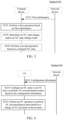
- FIG. 5 is a schematic flowchart of a communication method according to an embodiment of this application.
- a method 500 shown in FIG. 5 may include step S520, and details are as follows.
- step S520 a terminal device performs a first operation based on first information.
- the first information may include network coding NC configuration information (NC config), NC input information (NC input), and/or NC state information of the terminal device.
- NC config network coding NC configuration information
- NC input NC input
- NC state information of the terminal device.
- the NC configuration information may be used to configure an NC layer or an NC entity (entity).
- the NC configuration information includes at least one of the following: identification information (coding profile id) of the NC configuration information, a quantity of segments supported by NC, a quantity of data streams supported by the NC, a number of data packets supported by the NC, and an NC algorithm.
- the NC input information may refer to input information received by the NC layer or the NC entity.
- the NC state information may indicate NC activation or NC deactivation.
- the NC entity (entity) or the NC layer may include at least one of the following: an NC entity (instance), an NC sending entity (instance) and NC receiving entity (instance), an NC sending function and NC receiving function, a network encoding function, or a network decoding function.
- the NC configuration information, the NC input information, and/or the NC state information may include at least one of the following granularities: bearer (per bearer), packet data convergence protocol PDCP entity (per PDCP entity), radio link control RLC entity (per RLC entity), NC entity (per NC entity), terminal device, or cell (cell common).
- bearer per bearer
- packet data convergence protocol PDCP entity per PDCP entity
- radio link control RLC entity per RLC entity
- NC entity per NC entity
- terminal device or cell (cell common).
- the NC configuration information, the NC input information, and/or the NC state information may be predefined.
- the NC configuration information, the NC input information, and/or the NC state information may be predefined by a protocol.
- the NC configuration information, the NC input information, and/or the NC state information may be determined by a network device.
- the method 500 may further include a step in which the network device may send or indicate the first information to the terminal device.
- the network device may indicate the NC configuration information to the terminal device through a radio resource control (radio resource control, RRC) message, a media access control control element (media access control control element, MAC CE), or downlink control information (downlink control information, DCI).
- RRC radio resource control
- media access control element media access control element
- DCI downlink control information
- the first operation may include at least one of the following: configuring an NC entity, configuring an NC layer, performing NC activation and NC deactivation, generating a data packet, transmitting a data packet, determining NC as being active, or determining NC as being inactive.
- a terminal device performing a first operation based on first information may include at least one of the following: if the NC state information represents or indicates NC activation, performing, by the terminal device, NC activation; if the NC state information represents or indicates NC deactivation, performing, by the terminal device, NC deactivation; if the NC state information represents or indicates NC activation, generating or transmitting, by the terminal device, a data packet corresponding to NC activation; if the NC state information represents or indicates NC deactivation, generating or transmitting, by the terminal device, a data packet corresponding to NC deactivation; if the NC state information represents or indicates NC activation, considering NC as being active or determining NC as being active; or if the NC state information represents or indicates NC deactivation, considering NC as being inactive or determining NC as being inactive.
- the terminal device may determine NC activation or deactivation, or consider NC as being active or inactive.
- the method 500 may further include step S530 and step 540, and details are as follows.
- step S530 the terminal device determines an NC state change and/or an NC state change result.
- the network device may send second information to the terminal device; and accordingly, the terminal device may determine the NC state change and/or the NC state change result based on the second information.
- the second information may be used to indicate NC activation or NC deactivation.
- the second information may be carried in a radio resource control (radio resource control, RRC) message, a media access control control element (media access control control element, MAC CE), or downlink control information (downlink control information, DCI).
- RRC radio resource control
- MAC CE media access control control element
- DCI downlink control information
- the second information may include at least one of the following granularities: bearer (per bearer), user plane bearer (per (data radio bearer, DRB)), packet data convergence protocol PDCP entity (per PDCP entity), radio link control RLC entity (per RLC entity), NC entity (per NC entity), media access control MAC entity (per MAC entity), or terminal device.
- bearer per bearer
- user plane bearer per (data radio bearer, DRB)
- packet data convergence protocol PDCP entity per PDCP entity
- RLC entity radio link control RLC entity
- NC entity per NC entity
- media access control MAC entity per MAC entity
- the second information carries at least one of the following: an NC state change indication, a user plane bearer indication, a media access control MAC entity index (MAC entity index) indication, a packet data convergence protocol PDCP entity index (PDCP entity index) indication, a radio link control RLC entity index (RLC entity index) indication, activation indication information, deactivation indication information, or the NC state change result.
- an NC state change indication a user plane bearer indication
- MAC entity index media access control MAC entity index
- PDCP entity index packet data convergence protocol
- RLC entity index radio link control RLC entity index
- the second information may be determined by the network device based on third information
- the third information may include at least one of the following: channel quality, a quality of service (quality of service, QoS) requirement, a quantity of retransmissions, a bandwidth, a channel capacity, a bit error rate, a frequency band, or application layer information.
- the terminal device may determine the NC state change and/or the NC state change result based on fourth information.
- the fourth information may include at least one of the following: channel quality, a quality of service QoS requirement, a quantity of retransmissions, a bandwidth, a channel capacity, a bit error rate, a frequency band, or application layer information.
- the terminal device may determine the NC state change and/or the NC state change result based on the second information and the fourth information.
- the terminal device may send fifth information to the network device.
- the fifth information is used to indicate the NC state change and/or the NC state change result of the terminal device.
- the fifth information is carried in a radio resource control RRC message, a media access control control element MAC CE or uplink control information (uplink control information, UCI).
- the fifth information may include at least one of the following granularities: per bearer, per user plane bearer, per packet data convergence protocol PDCP entity, per radio link control RLC entity, per NC entity, per media access control MAC entity, or per terminal device.
- the fifth information may carry at least one of the following: an NC state change indication, a user plane bearer indication, a media access control MAC entity index indication, a packet data convergence protocol PDCP entity index indication, a radio link control RLC entity index indication, activation indication information, deactivation indication information, or the NC state change result.
- step S540 the terminal device performs a second operation based on a changed NC state.
- the second operation may include at least one of the following: performing an NC operation, performing NC activation, or performing NC deactivation.
- the NC operation may include at least one of the following: obtaining NC input information, generating a data packet, transmitting a data packet, rolling back to duplicate transmission, generating an NC packet, outputting NC output information, performing data segmentation, or executing an NC algorithm.
- the terminal device performing a second operation based on a changed NC state may include at least one of the following: if the NC state is changed to NC activation, performing, by the terminal device, NC activation and/or an NC operation; if the NC state is changed to NC deactivation, performing, by the terminal device, NC deactivation; if the NC state is changed to NC activation, generating or transmitting, by the terminal device, a data packet corresponding to NC activation; if the NC state is changed to NC deactivation, generating or transmitting, by the terminal device, a data packet corresponding to NC deactivation; if the NC state is changed to NC activation, determining, by the terminal device, NC input information and/or NC output information corresponding to NC activation; if the NC state is changed to NC deactivation, determining, by the terminal device, NC input information and/or NC output information corresponding to NC deactivation; or if the NC state is changed to NC deactivation, determining, by the terminal device, NC input information and/or NC output information
- a protocol stack architecture may be preconfigured for the terminal device or the network device, and regardless of NC activation or deactivation, a data packet needs to be transmitted through the NC layer or the NC entity. In this way, it is unnecessary to introduce a plurality of protocol stack architectures, thereby simplifying processing during the transmission of the data packet.
- NC processing to be performed may be at least partially the same, or NC processing to be performed may be different.
- the terminal device includes a first protocol stack architecture, and the first protocol stack architecture includes an NC entity or an NC layer.
- the first protocol stack architecture may be the protocol stack architecture shown in FIG. 2 or FIG. 3 , or the first protocol stack architecture may alternatively be the protocol stack architecture shown in FIG. 4 .
- An NC sublayer, an NC function, an NC algorithm, or an NC entity may be established within a protocol layer in the protocol stack, or an NC sublayer, an NC function, an NC algorithm, or an NC entity may be added to a protocol entity in the protocol stack. In this case, during data transmission, the terminal device may submit a data packet to the NC entity or the NC layer.
- the terminal device may use a first protocol stack architecture, or maintain a first protocol stack architecture unchanged, where the first protocol stack architecture may include an NC entity or an NC layer.
- an NC operation may be performed by using the NC entity or the NC layer, where the NC operation includes at least one of the following: obtaining NC input information, generating a data packet, transmitting a data packet, rolling back to duplicate transmission, generating an NC packet, outputting NC output information, performing data segmentation, or executing an NC algorithm.
- the NC input information may include at least one of the following granularities: a bearer, a packet data convergence protocol PDCP entity, a radio link control RLC entity, an NC entity, a terminal device, or a cell.
- the data packet or the NC packet may include NC information or NC state information.
- the data packet or the NC packet may include at least one of the following information: a quantity of NC segments, a quantity of NC data streams, a quantity of NC data packets, identification information of coding configuration information, whether to perform NC segmentation, a quantity of NC segments, whether a segment being a first NC segment, whether a segment being a last NC segment, whether to carry padding information, a length of padding information, a sequence number SN, or whether to perform an NC operation or NC activation or NC deactivation.
- NC segmentation and NC packet padding are performed by using the NC entity or the NC layer.
- a first value may be carried in one of a data packet header, a data packet, an NC packet header, or an NC packet, where the first value may be an actual value, a non-special value, a non-default value, or a non-all-zero value.
- NC activation may be determined based on the first value.
- at least one of the quantity of data streams supported by the NC, the quantity of data packets supported by the NC, or the quantity of NC segments may be greater than 1.
- the data packet or the NC packet may include NC information or NC state information.
- the data packet or the NC packet may include at least one of the following information: a quantity of NC segments, a quantity of NC data streams, a quantity of NC data packets, identification information of coding configuration information, whether to perform NC segmentation, a quantity of NC segments, whether a segment being a first NC segment, whether a segment being a last NC segment, whether to carry padding information, a length of padding information, a sequence number SN, or whether to perform an NC operation or NC activation or NC deactivation.
- At least one of the following operations may be performed by using the NC entity or the NC layer: skipping performing NC segmentation, skipping performing NC packet padding, using identification information of default encoding configuration information, or skipping performing NC coding.
- a second value may be carried in one of a data packet header, a data packet, an NC packet header, or an NC packet, where the second value may be a special value, a default value, or an all-zero value.
- NC deactivation may be determined based on the second value.
- at least one of the quantity of data streams supported by the NC, the quantity of data packets supported by the NC, or the quantity of NC segments may be equal to 1.
- the data packet or the NC packet may not include NC information or NC state information.
- the data packet or the NC packet may not include at least one of the following information: a quantity of NC segments, a quantity of NC data streams, a quantity of NC data packets, identification information of coding configuration information, whether to perform NC segmentation, a quantity of NC segments, whether a segment being a first NC segment, whether a segment being a last NC segment, whether to carry padding information, a length of padding information, a sequence number SN, or whether to perform an NC operation or NC activation or NC deactivation.
- sequence numbers (sequence numbers, SNs) of NC packets or data packets may be consecutive or inconsecutive.
- an NC packet subsequent to NC deactivation may use a sequence number SN that is consecutive to that of an NC packet prior to the deactivation, or a data packet subsequent to NC deactivation may use an SN that is consecutive to that of a data packet prior to the deactivation, or a data packet for NC deactivation and a data packet for NC activation may use consecutive SNs.
- an NC packet subsequent to NC activation may use a sequence number SN that is consecutive to that of an NC packet prior to the activation, or a data packet subsequent to NC activation may use an SN that is consecutive to that of a data packet prior to the activation, or a data packet for NC deactivation and a data packet for NC activation may use consecutive SNs.
- the NC entity or the NC layer, serving as an NC transmitting end may perform at least one of the following operations on a data packet that is prior to NC deactivation; and/or in the case of NC activation, the NC entity or the NC layer, serving as an NC transmitting end, may perform at least one of the following operations on a data packet that is prior to NC activation:
- the NC entity or the NC layer, serving as an NC receiving end performs at least one of the following operations on a data packet that is prior to NC deactivation; and/or in the case of NC activation, the NC entity or the NC layer, serving as an NC receiving end, may perform at least one of the following operations on a data packet that is prior to NC activation:
- the NC layer or the NC entity
- one protocol stack architecture for example, the protocol stack architecture shown in FIG. 2 or FIG. 3 , or the protocol stack architecture shown in FIG. 4 may be used.
- an NC sublayer, an NC function, an NC algorithm, or an NC entity may be established within a protocol layer in the protocol stack, or an NC sublayer, an NC function, an NC algorithm, or an NC entity may be added to a protocol entity in the protocol stack) of the plurality of protocol stack architectures is used.
- the NC layer (or the NC entity) is inactive
- another (for example, the protocol stack architecture shown in FIG. 4 ) of the plurality of protocol stack architectures is used.
- the NC layer (or the NC entity) is inactive, a data packet is unnecessary to be transmitted through the NC layer or the NC entity (the data packet needs to be transmitted through the NC layer or the NC entity in a case that the NC layer (or the NC entity) is active), thereby improving transmission efficiency of the system.
- NC processing to be performed may be different.
- the terminal device may include a first protocol stack architecture and a second protocol stack architecture, the first protocol stack architecture includes an NC entity or an NC layer, and the second protocol stack architecture does not include an NC entity or an NC layer.
- the first protocol stack architecture may be the protocol stack architecture shown in FIG. 2 or FIG. 3
- the second protocol stack architecture may be the protocol stack architecture shown in FIG. 4 .
- the terminal device may use the first protocol stack architecture or the second protocol stack architecture, or the terminal device performs changes the first protocol stack architecture or the second protocol stack architecture.
- the data packet or the NC packet may not include NC information or NC state information. In at least one embodiment, the data packet or the NC packet may not include at least one of the following information: a quantity of NC segments, a quantity of NC data streams, a quantity of NC data packets, identification information of coding configuration information, whether to perform NC segmentation, a quantity of NC segments, whether a segment being a first NC segment, whether a segment being a last NC segment, whether to carry padding information, a length of padding information, a sequence number SN, whether to perform an NC operation or NC activation or NC deactivation, or NC state information.
- a first value may be not carried in one of a data packet header, a data packet, an NC packet header, or an NC packet, where the first value may be an actual value, a non-special value, a non-default value, or a non-all-zero value.
- the data packet or the NC packet may include NC information or NC state information.
- the data packet or the NC packet may include at least one of the following information: a quantity of NC segments, a quantity of NC data streams, a quantity of NC data packets, identification information of coding configuration information, whether to perform NC segmentation, a quantity of NC segments, whether a segment being a first NC segment, whether a segment being a last NC segment, whether to carry padding information, a length of padding information, a sequence number SN, whether to perform an NC operation or NC activation or NC deactivation, or NC state information.
- a first value may be carried in one of a data packet header, a data packet, an NC packet header, or an NC packet, where the first value may be an actual value, a non-special value, a non-default value, or a non-all-zero value.
- the data packet or the NC packet may not include NC information or NC state information.
- the data packet or the NC packet may not include at least one of the following information: a quantity of NC segments, a quantity of NC data streams, a quantity of NC data packets, identification information of coding configuration information, whether to perform NC segmentation, a quantity of NC segments, whether a segment being a first NC segment, whether a segment being a last NC segment, whether to carry padding information, a length of padding information, a sequence number SN, whether to perform an NC operation or NC activation or NC deactivation, or NC state information.
- a first value may be not carried in one of a data packet header, a data packet, an NC packet header, or an NC packet.
- the first value may be an actual value, a non-special value, a non-default value, or a non-all-zero value.
- sequence numbers (sequence numbers, SNs) of NC packets or data packets may be consecutive or inconsecutive.
- an NC packet subsequent to NC deactivation may use a sequence number SN that is consecutive to that of an NC packet prior to the deactivation, or a data packet subsequent to NC deactivation may use an SN that is consecutive to that of a data packet prior to the deactivation, or a data packet for NC deactivation and a data packet for NC activation may use consecutive SNs.
- an NC packet subsequent to NC activation may use a sequence number SN that is consecutive to that of an NC packet prior to the activation, or a data packet subsequent to NC activation may use an SN that is consecutive to that of a data packet prior to the activation, or a data packet for NC deactivation and a data packet for NC activation may use consecutive SNs, or a data packet for NC activation and a data packet for NC deactivation may use consecutive SNs.
- the terminal device may perform at least one of the following: adding or maintaining an NC entity or an NC layer; using the first protocol stack architecture or changing to the first protocol stack architecture; or submitting a data packet to an NC entity or an NC layer.
- an NC operation may be performed by using the NC entity or the NC layer, where the NC operation may include at least one of the following: obtaining NC input information, generating an NC packet, generating a data packet corresponding to NC activation, transmitting a data packet corresponding to NC activation, transmitting an NC packet, outputting NC output information, performing data segmentation, performing NC packet padding, or executing an NC algorithm.
- the NC input information includes at least one of the following granularities: a bearer, a packet data convergence protocol PDCP entity, a radio link control RLC entity, an NC entity, a terminal device, or a cell.
- the data packet or the NC packet may include NC information or NC state information.
- the data packet or the NC packet includes at least one of the following information: a quantity of NC segments, a quantity of NC data streams, a quantity of NC data packets, identification information of coding configuration information, whether to perform NC segmentation, a quantity of NC segments, whether a segment being a first NC segment, whether a segment being a last NC segment, whether to carry padding information, a length of padding information, a sequence number SN, whether to perform an NC operation or NC activation or NC deactivation, or NC state information.
- NC segmentation and NC packet padding may be performed by using the NC entity or the NC layer.
- a first value may be carried in one of a data packet header, a data packet, an NC packet header, or an NC packet, where the first value may be an actual value, a non-special value, a non-default value, or a non-all-zero value.
- NC activation may be determined based on the first value.
- at least one of the quantity of data streams supported by the NC, the quantity of data packets supported by the NC, or the quantity of NC segments may be greater than 1.
- the method further includes: performing, by the terminal device, at least one of the following:
- the corresponding sending entity may perform at least one of the following operations on a data packet that is prior to NC activation: deleting all stored data packets; deleting at least one of the following data packets at a lower layer: an unsent data packet, a data packet without an acknowledgment ACK feedback, a data packet for which successful sending is not confirmed, or all data packets; sending a deletion indication to a lower layer; instructing a lower layer to delete at least one of the following data packets: an unsent data packet, a data packet without an acknowledgment ACK feedback, a data packet for which successful sending is not confirmed, or all data packets; performing NC rollback operation on, and/or submitting, to a lower layer, a data packet for which an NC operation has been performed before NC activation; performing data sending for a data packet for which an NC operation has been performed before NC activation or a data packet that has been submitted to a lower layer; or
- the corresponding receiving entity may perform at least one of the following operations on a data packet that is prior to NC activation: deleting all data packets that have not been submitted to a higher layer; submitting a corresponding data packet to a higher layer after performing NC coding; establishing an NC entity or layer or function corresponding to the data packet; or indicating a data receiving result to a peer end.
- a terminal device performs a first operation based on NC configuration information, NC input information, and/or NC state information of the terminal device, to achieve an NC function in a communication system.
- FIG. 6 is a schematic flowchart of a communication method according to an embodiment of this application.
- a method 600 shown in FIG. 6 may include steps S610 to S630, and details are as follows.
- a network device for example, a gNB sends configuration information to UE.
- the configuration information may include at least one of the following: NC configuration information (NC config), NC state information, and NC input information (input).
- the NC configuration information may be indicated to the UE through an RRC reconfiguration message.
- the NC config may include but is not limited to at least one of the following: a used coding profile id, a maximum quantity L of supported segments, a quantity of supported NC data streams, a quantity N of data packet processing channels (two or more data NC channels), or an NC algorithm. L and N are integers.
- the NC config may be an optional configuration.
- the NC config may be a predefined configuration.
- the NC config may be per bearer, per PDCP entity, per RLC entity, per NC entity, per UE, or cell common.
- the NC config may not be configured by a network but is predefined (for example, specified by a protocol).
- the NC state information may be default or initial state information.
- the default or initial state information may indicate NC activation or NC deactivation.
- step S620 the UE configures an NC entity (entity) or an NC layer or performs NC activation/deactivation based on the configuration information.
- an NC deactivation function or operation is performed.
- NC default or initial state information is activation
- an NC activation function or operation is performed.
- the NC layer or the NC entity (entity) may include one NC entity (instance), or may include at most one NC sending entity (instance) and one NC receiving entity (instance).
- the NC layer or the NC entity may include an NC sending and NC receiving function, or a network encoding function and network decoding function.
- a PDCP packet data unit (packet data unit, PDU) is a PDCP data PDU.
- the PDCP PDU carries at least one of the following indications: an SN number, or whether to perform an NC operation on the packet.
- the NC entity or the NC instance performs at least one of the following operations: obtaining an NC input, outputting NC output information (output), performing segmentation (reassembly or cascading), or executing an NC algorithm.
- At least one of the NC inputs may be determined by an NC protocol function, or configured by a network device, or predefined.
- the NC input may be per bearer, per PDCP entity/RLC entity, per NC entity, per UE, or cell common.
- the NC packet carries one of the following information indications: a maximum quantity L of supported segments, a quantity of supported NC data streams, a quantity N of data packet processing channels, a coding profile id, whether to perform NC segmentation, a number of NC segments, whether a segment being a first NC segment, whether a segment being a last NC segment (In at least one embodiment, for data before the NC protocol function), whether to carry padding, a length of padding, an SN, whether the packet being used to perform an NC operation or NC activation/deactivation.
- step S630 the UE performs an NC operation or performs NC activation/deactivation based on the change of NC activation or deactivation.
- Step 630 may be implemented in the following manner.
- the activation/deactivation manner of the NC layer or the NC entity is provided to define an implementation of the NC function.
- an NC operation is performed in a case that the NC layer or entity is active/inactive.
- a difference between operations for activation and deactivation lies in different NC parameters or NC inputs used. Accordingly, regardless of NC activation or deactivation, a data packet is transmitted through the NC layer or entity.
- uplink as an example, but is also applicable to downlink.
- the UE may perform at least one of the following operations 1 to 5.
- At least one of the NC inputs may be determined by an NC protocol function, or configured by a network, or predefined.
- the NC input is per bearer, per PDCP entity/RLC entity, per NC entity, per UE, or cell common.
- the NC packet carries one of the following information indications: a maximum quantity L of supported segments, a quantity of supported NC data streams, a quantity N of data packet processing channels, a coding profile id, whether to perform NC segmentation, a number of NC segments, whether a segment being a first NC segment, whether a segment being a last NC segment (in at least one embodiment, for data before the NC protocol function), whether to carry padding, a length of padding, an SN, whether the packet being used to perform an NC operation or NC activation/deactivation.
- NC segmentation is performed, or padding (padding) is performed.
- the UE generates an NC packet carrying an NC packet header.
- information carried in the NC packet header is an actual value, a non-special value, a non-default value, or a non-all-zero value.
- the UE performs at least one of the following operations 1 to 6.
- At least one of the NC inputs may be determined by an NC protocol function, or configured by a network, or predefined.
- the NC input is per bearer, per PDCP entity/RLC entity, per NC entity, per UE, or cell common.
- the NC packet carries one of the following information indications: L, N, a coding profile id, whether to perform NC segmentation, a number of NC segments, whether a segment being a first NC segment, whether a segment being a last NC segment (in at least one embodiment, for data before the NC protocol function), whether to carry padding, a length of padding, an SN, whether the packet being used to perform an NC operation or NC activation/deactivation.
- the UE skips performing NC, skips performing padding, uses a default coding profile id, or skips performing NC coding.
- the UE generates an NC packet.
- an NC packet header is carried, but information carried in the NC packet header is a special value, a default value, or an all-zero value.
- a packet subsequent to deactivation uses an SN that is consecutive to and subsequent to that of an NC packet prior to the deactivation.
- NC layer is inactive, at least one of the following is included:
- the NC entity, or the NC transmitting end performs at least one of the following operations on a packet that is prior to deactivation: deleting all stored packets (including PDUs and SDUs), or instructing a lower layer to delete a data packet, where the data packet may be at least one of the following: an unsent data packet, a data packet without an ACK feedback, a data packet for which successful sending is not confirmed, or all data packets; performing NC rollback operation on, and/or submitting, to a lower layer, a data packet for which an NC operation has been performed before NC deactivation; performing data sending for a data packet for which an NC operation has been performed before NC deactivation or a data packet that has been submitted to a lower layer; indicating an end-marker to a peer end, to indicate the start of NC deactivation or indicate a packet from which NC deactivation starts; (accordingly, the end-marker is carried in a new NC packet (a last one); in at least one embodiment, this packet carries an SN indication of
- the NC entity, or the NC receiving end performs at least one of the following operations on a packet that is prior to deactivation:
- the UE and the network device may use the protocol stack architecture shown in FIG. 2 or FIG. 3 .
- the NC activation/deactivation operation may be provided.
- the data packet always needs to be submitted to the NC layer to perform related processing.
- it is unnecessary to introduce a new protocol layer architecture.
- an NC operation is performed in a case that the NC layer or entity is active/inactive.
- a difference between operations for activation and deactivation lies in that different protocol stack architectures are used in the case of NC activation/deactivation. Specifically, a data packet is unnecessary be submitted to the NC layer when the NC is inactive, and needs to be submitted to the NC layer only when the NC is active.
- uplink as an example, but is also applicable to downlink.
- the UE if the NC layer or the NC entity is active, the UE performs at least one of the following operations 1 to 7.
- the architecture includes an NC layer or an NC entity.
- the architecture is an NC protocol stack architecture including an NC layer or an NC entity, or an enhanced architecture of an existing NC protocol stack architecture.
- the UE submits a data packet to the NC layer.
- data is received from an upper layer and sent to a lower layer.
- data is received from a lower layer and sent to a higher layer.
- the NC layer/entity or the NC instance performs at least one of the following operations: obtaining an NC input, outputting an NC output, performing segmentation (reassembly or cascading), or executing an NC algorithm.
- At least one of the NC inputs may be determined by an NC protocol function, or configured by a network, or predefined.
- the NC input is per bearer, per PDCP entity/RLC entity, per NC entity, per UE, or cell common.
- the NC packet carries one of the following information indications: L, N, a coding profile id, whether to perform NC segmentation, a number of NC segments, whether a segment being a first NC segment, whether a segment being a last NC segment (in at least one embodiment, for data before the NC protocol function), whether to carry padding, a length of padding, an SN, whether the packet being used to perform an NC operation or NC activation/deactivation.
- NC segmentation is performed, or padding is performed.
- the UE generates an NC packet carrying an NC packet header.
- the UE performs at least one of the following operations 1 to 5.
- the architecture does not include an NC layer or an NC entity.
- the architecture is an existing NC protocol stack architecture.
- the UE skips transmitting a data packet through the NC layer or skips submitting a data packet to the NC layer.
- the NC layer/entity does not exist.
- the UE skips the NC layer, receives data from an upper layer, and sends the data to a lower layer.
- the UE skips the NC layer, receives data from a lower layer, and sends the data to a higher layer.
- the UE skips generating an NC packet, and skips adding an NC packet header to the NC packet.
- NC layer in a case that the NC layer is inactive, at least one of the following is included:
- the NC entity, or the NC transmitting end performs at least one of the following:
- the NC entity, or the NC receiving end performs at least one of the following operations:
- the UE and the network device may use the protocol stack architecture shown in FIG. 2 or FIG. 3 in the case of activation, and may use the protocol stack architecture shown in FIG. 4 in the case of deactivation.
- the NC activation/deactivation operation may be provided. Compared with the above Embodiment, in this manner, a data packet is unnecessary to be submitted to the NC layer when the NC is inactive, and needs to be submitted to the NC layer only when the NC is active. That is, different protocol stack architectures are used in the case of NC activation/deactivation.
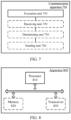
- FIG. 7 is a schematic diagram of a structure of a communication apparatus according to an embodiment of this application.
- the apparatus 700 includes: an execution unit 710, configured to perform a first operation based on first information, where the first information includes network coding NC configuration information, NC input information, and/or NC state information of the apparatus, the NC state information indicates NC activation or NC deactivation, and the first operation includes at least one of the following: configuring an NC entity, configuring an NC layer, performing NC activation or NC deactivation, generating a data packet, transmitting a data packet, determining NC as being active, or determining NC as being inactive.
- the apparatus further includes a receiving unit 720, configured to receive first information sent or indicated by a network device.
- At least one of the NC configuration information, the NC input information, or the NC state information is predefined.
- the NC configuration information includes at least one of the following: identification information of coding configuration information, a quantity of segments supported by the NC, a quantity of data streams supported by the NC, a quantity of data packets supported by the NC, or an NC algorithm.
- At least one of the NC configuration information, the NC input information, or the NC state information includes at least one of the following granularities: per bearer, per packet data convergence protocol PDCP entity, per radio link control RLC entity, per NC entity, per terminal device, or per cell.
- the execution unit 710 is configured to perform at least one of the following: if the NC state information represents or indicates NC activation, performing NC activation; if the NC state information represents or indicates NC deactivation, performing NC deactivation; if the NC state information represents or indicates NC activation, generating or transmitting a data packet corresponding to NC activation; if the NC state information represents or indicates NC deactivation, generating or transmitting a data packet corresponding to NC deactivation; if the NC state information represents or indicates NC activation, considering NC as being active or determining NC as being active; or if the NC state information represents or indicates NC deactivation, considering NC as being inactive or determining NC as being inactive.
- the NC entity or the NC layer includes at least one of the following: an NC entity, an NC sending entity and NC receiving entity, an NC sending function and NC receiving function, a network encoding function, or a network decoding function.
- the execution unit 710 is further configured to: based on the first information, determine NC activation or deactivation, or consider NC as being active or inactive.
- the apparatus further includes a determining unit 730, configured to determine an NC state change and/or an NC state change result; and the execution unit 710 is further configured to perform a second operation based on a changed NC state, where the second operation includes at least one of the following: performing an NC operation, performing NC activation, or performing NC deactivation, and the NC operation includes at least one of the following: obtaining NC input information, generating a data packet, transmitting a data packet, rolling back to duplicate transmission, generating an NC packet, outputting NC output information, performing data segmentation, or executing an NC algorithm.
- the second operation includes at least one of the following: performing an NC operation, performing NC activation, or performing NC deactivation
- the NC operation includes at least one of the following: obtaining NC input information, generating a data packet, transmitting a data packet, rolling back to duplicate transmission, generating an NC packet, outputting NC output information, performing data segmentation, or executing an NC algorithm.
- the apparatus 700 further includes a receiving unit 720, configured to receive second information sent by the network device, where the second information is used to indicate NC activation or NC deactivation; and the determining unit 730 is configured to determine the NC state change and/or the NC state change result based on the second information.
- the second information is carried in a radio resource control RRC message, a media access control control element MAC CE, or downlink control information DCI.
- the second information may include at least one of the following granularities: per bearer, per user plane bearer, per packet data convergence protocol PDCP entity, per radio link control RLC entity, per NC entity, per media access control MAC entity, or per terminal device.
- the second information may carry at least one of the following: an NC state change indication, a user plane bearer indication, a media access control MAC entity index indication, a packet data convergence protocol PDCP entity index indication, a radio link control RLC entity index indication, activation indication information, deactivation indication information, or the NC state change result.
- the second information is determined by the network device based on third information
- the third information includes at least one of the following: channel quality, a quality of service QoS requirement, a quantity of retransmissions, a bandwidth, a channel capacity, a bit error rate, a frequency band, or application layer information.
- the determining unit 730 is configured to determine the NC state change and/or the NC state change result based on fourth information, where the fourth information includes at least one of the following: channel quality, a quality of service QoS requirement, a quantity of retransmissions, a bandwidth, a channel capacity, a bit error rate, a frequency band, or application layer information.
- the determining unit 730 is configured to: in a case that the apparatus receives the second information sent by the network device, determine the NC state change and/or the NC state change result based on the second information and the fourth information.
- the apparatus 700 further includes a sending unit 740, configured to send fifth information to the network device, where the fifth information is used to indicate the NC state change and/or the NC state change result of the apparatus.
- the fifth information is carried in a radio resource control RRC message, a media access control control element MAC CE, or uplink control information UCI.
- the fifth information includes at least one of the following granularities: per bearer, per user plane bearer, per packet data convergence protocol PDCP entity, per radio link control RLC entity, per NC entity, per media access control MAC entity, or per terminal device.
- the fifth information carries at least one of the following: an NC state change indication, a user plane bearer indication, a media access control MAC entity index indication, a packet data convergence protocol PDCP entity index indication, a radio link control RLC entity index indication, activation indication information, deactivation indication information, or the NC state change result.
- the execution unit 710 is configured to: if the NC state is changed to NC activation, perform NC activation and/or an NC operation; if the NC state is changed to NC deactivation, perform NC deactivation; if the NC state is changed to NC activation, generate or transmit a data packet corresponding to NC activation; if the NC state is changed to NC deactivation, generate or transmit a data packet corresponding to NC deactivation; if the NC state is changed to NC activation, determine NC input information and/or NC output information corresponding to NC activation; if the NC state is changed to NC deactivation, determine NC input information and/or NC output information corresponding to NC deactivation; or if the NC state is changed to NC deactivation, determine NC input information and/or NC output information.
- the apparatus includes a first protocol stack architecture, and the first protocol stack architecture includes an NC entity or an NC layer.
- the execution unit 710 is further configured to submit a data packet to the NC entity or the NC layer.
- the execution unit 710 is further configured to: in the case of the NC state change, use a first protocol stack, or maintain a first protocol stack architecture unchanged, where the first protocol stack architecture includes an NC entity or an NC layer.
- the execution unit 710 is further configured to perform an NC operation by using the NC entity or the NC layer, where the NC operation includes at least one of the following: obtaining NC input information, generating a data packet, transmitting a data packet, rolling back to duplicate transmission, generating an NC packet, outputting NC output information, performing data segmentation, or executing an NC algorithm.
- the NC input information includes at least one of the following granularities: per bearer, per packet data convergence protocol PDCP entity, per radio link control RLC entity, per NC entity, per terminal device, or per cell.
- the data packet or the NC packet includes NC information or NC state information.
- the data packet or the NC packet includes at least one of the following information: a quantity of NC segments, a quantity of NC data streams, a quantity of NC data packets, identification information of coding configuration information, whether to perform NC segmentation, a quantity of NC segments, whether a segment being a first NC segment, whether a segment being a last NC segment, whether to carry padding information, a length of padding information, a sequence number SN, or whether to perform an NC operation or NC activation or NC deactivation.
- the execution unit 710 is configured to perform NC segmentation and NC packet padding by using the NC entity or the NC layer.
- a first value is carried in one of a data packet header, a data packet, an NC packet header, or an NC packet, where the first value is an actual value, a non-special value, a non-default value, or a non-all-zero value.
- At least one of the quantity of data streams supported by the NC, the quantity of data packets supported by the NC, or the quantity of NC segments is greater than 1.
- the execution unit 710 is configured to perform at least one of the following operations by using the NC entity or the NC layer: skipping performing NC segmentation, skipping performing NC packet padding, using identification information of default encoding configuration information, or skipping performing NC coding.
- a second value is carried in one of a data packet header, a data packet, an NC packet header, or an NC packet, where the second value is a special value, a default value, or an all-zero value.
- At least one of the quantity of data streams supported by the NC, the quantity of data packets supported by the NC, or the quantity of NC segments is equal to 1.
- NC packet or data packet SNs are consecutive or inconsecutive.
- an NC packet subsequent to NC deactivation uses a sequence number SN that is consecutive to that of an NC packet prior to the deactivation, or a data packet subsequent to NC deactivation uses an SN that is consecutive to that of a data packet prior to the deactivation, or a data packet for NC deactivation and a data packet for NC activation use consecutive SNs.
- an NC packet subsequent to NC activation uses a sequence number SN that is consecutive to that of an NC packet prior to the activation, or a data packet subsequent to NC activation uses an SN that is consecutive to that of a data packet prior to the activation, or a data packet for NC deactivation and a data packet for NC activation use consecutive SNs.
- the NC entity or the NC layer serves as an NC transmitting end
- the execution unit 710 is configured to perform at least one of the following operations on a data packet that is prior to NC deactivation: deleting all stored data packets; deleting at least one of the following data packets at a lower layer: an unsent data packet, a data packet without an acknowledgment ACK feedback, a data packet for which successful sending is not confirmed, or all data packets; sending a deletion indication to a lower layer; instructing a lower layer to delete at least one of the following data packets: an unsent data packet, a data packet without an acknowledgment ACK feedback, a data packet for which successful sending is not confirmed, or all data packets; performing NC rollback operation on, and/or submitting, to a lower layer, a data packet for which an NC operation has been performed before NC deactivation; performing data sending for a data packet for which an NC operation has been performed before NC deactivation or a data packet that has been submitted to a lower layer; or deleting an
- the NC entity or the NC layer serves as an NC receiving end
- the execution unit 710 is configured to perform at least one of the following operations on a data packet that is prior to NC deactivation: deleting all data packets that have not been submitted to a higher layer; submitting a corresponding data packet to a higher layer after performing NC coding; deleting an NC entity corresponding to the data packet; or indicating a data packet receiving result to a peer end.
- the apparatus may include a first protocol stack architecture and a second protocol stack architecture, the first protocol stack architecture includes an NC entity or an NC layer, and the second protocol stack architecture does not include an NC entity or an NC layer.
- the execution unit 710 is further configured to: in the case of the NC state change, use the first protocol stack architecture or the second protocol stack architecture, or change the first protocol stack architecture or the second protocol stack architecture.
- the execution unit 710 is further configured to perform at least one of the following operations: adding or maintaining an NC entity or an NC layer; using the first protocol stack architecture or changing to the first protocol stack architecture; or submitting a data packet to an NC entity or an NC layer.
- the execution unit 710 is further configured to perform an NC operation by using the NC entity or the NC layer, where the NC operation includes at least one of the following: obtaining NC input information, generating an NC packet, generating a data packet corresponding to NC activation, transmitting a data packet corresponding to NC activation, transmitting an NC packet, outputting NC output information, performing data segmentation, performing NC packet padding, or executing an NC algorithm.
- the NC input information includes at least one of the following granularities: per bearer, per packet data convergence protocol PDCP entity, per radio link control RLC entity, per NC entity, per terminal device, or per cell.
- the data packet or the NC packet includes NC information or NC state information.
- the data packet or the NC packet includes at least one of the following information: a quantity of NC segments, a quantity of NC data streams, a quantity of NC data packets, identification information of coding configuration information, whether to perform NC segmentation, a quantity of NC segments, whether a segment being a first NC segment, whether a segment being a last NC segment, whether to carry padding information, a length of padding information, a sequence number SN, whether to perform an NC operation or NC activation or NC deactivation, or NC state information.
- the execution unit 710 is configured to perform NC segmentation and NC packet padding by using the NC entity or the NC layer.
- a first value is carried in one of a data packet header, a data packet, an NC packet header, or an NC packet, where the first value is an actual value, a non-special value, a non-default value, or a non-all-zero value.
- At least one of the quantity of data streams supported by the NC, the quantity of data packets supported by the NC, or the quantity of NC segments is greater than 1.
- the execution unit 710 is further configured to perform at least one of the following: deleting or suspending an NC entity or an NC layer; using the second protocol stack architecture or changing to the second protocol stack architecture; skipping transmitting a data packet through an NC entity or an NC layer, or skipping submitting a data packet to an NC entity or an NC layer; skipping generating an NC packet; skipping adding an NC packet header to a data packet; skipping adding NC information to a data packet; skipping adding NC state information to a data packet; or skipping performing an NC operation.
- the data packet or the NC packet does not include NC information or NC state information.
- the data packet or the NC packet does not include at least one of the following information: a quantity of NC segments, a quantity of NC data streams, a quantity of NC data packets, identification information of coding configuration information, whether to perform NC segmentation, a quantity of NC segments, whether a segment being a first NC segment, whether a segment being a last NC segment, whether to carry padding information, a length of padding information, a sequence number SN, whether to perform an NC operation or NC activation or NC deactivation, or NC state information.
- a first value is not carried in one of a data packet header, a data packet, an NC packet header, or an NC packet, where the first value is an actual value, a non-special value, a non-default value, or a non-all-zero value.
- the NC entity or the NC layer serves as an NC transmitting end
- the execution unit 710 is further configured to perform at least one of the following operations on a data packet that is prior to NC deactivation: deleting all stored data packets; deleting at least one of the following data packets at a lower layer: an unsent data packet, a data packet without an acknowledgment ACK feedback, a data packet for which successful sending is not confirmed, or all data packets; sending a deletion indication to a lower layer; instructing a lower layer to delete at least one of the following data packets: an unsent data packet, a data packet without an acknowledgment ACK feedback, a data packet for which successful sending is not confirmed, or all data packets; performing NC rollback operation on, and/or submitting, to a lower layer, a data packet for which an NC operation has been performed before NC deactivation; performing data sending for a data packet for which an NC operation has been performed before NC deactivation or a data packet that has been submitted to a lower layer; or deleting
- the NC entity or the NC layer serves as an NC receiving end
- the execution unit 710 is further configured to perform at least one of the following operations on a data packet that is prior to NC deactivation: deleting all data packets that have not been submitted to a higher layer; submitting a corresponding data packet to a higher layer after performing NC coding; deleting an NC entity corresponding to the data packet; or indicating a data receiving result to a peer end.
- NC packet or data packet SNs are consecutive or inconsecutive.
- an NC packet or a data packet subsequent to NC deactivation uses an SN that is consecutive to that of an NC packet or a data packet prior to the deactivation
- an NC packet or a data packet subsequent to NC activation uses an SN that is consecutive to that of an NC packet or a data packet prior to the activation
- a data packet for NC deactivation and a data packet for NC activation use consecutive SNs.
- an NC packet or a data packet subsequent to NC deactivation uses an SN that is inconsecutive to that of an NC packet or a data packet prior to the deactivation
- an NC packet or a data packet subsequent to NC activation uses an SN that is inconsecutive to that of an NC packet or a data packet prior to the activation
- a data packet for NC deactivation and a data packet for NC activation use consecutive SNs.
- the execution unit 710 is further configured to: perform SN initialization, or use an initialized SN for an NC packet or a data packet.
- FIG. 8 is a schematic diagram of a structure of an apparatus according to an embodiment of this application.
- the dashed lines in FIG. 8 indicate that a unit or module is optional.
- the apparatus 800 may be configured to implement the methods described in the foregoing method embodiments.
- the apparatus 800 may be a chip or a communication apparatus.
- the apparatus 800 may include one or more processors 810.
- the processor 810 may allow the apparatus 800 to implement the methods described in the foregoing method embodiments.
- the processor 810 may be a general-purpose processor or a dedicated processor.
- the processor may be a central processing unit (central processing unit, CPU).
- the processor may be another general-purpose processor, a digital signal processor (digital signal processor, DSP), an application-specific integrated circuit (application specific integrated circuit, ASIC), a field-programmable gate array (field programmable gate array, FPGA) or another programmable logic device, a discrete gate or transistor logic device, a discrete hardware component, or the like.
- the general-purpose processor may be a microprocessor, or the processor may be any conventional processor or the like.
- the apparatus 800 may further include one or more memories 820.
- the memory 820 stores a program that may be executed by the processor 810, so that the processor 810 performs the method described in the foregoing method embodiments.
- the memory 820 may be independent of the processor 810 or may be integrated into the processor 810.
- the apparatus 800 may further include a transceiver 830.
- the processor 810 may communicate with another device or chip through the transceiver 830.
- the processor 810 may transmit data to and receive data from another device or chip by using the transceiver 830.
- An embodiment of this application further provides a computer-readable storage medium for storing a program.
- the computer-readable storage medium may be applied to a communication apparatus provided in embodiments of this application, and the program causes a computer to perform the methods performed by the communication apparatus in various embodiments of this application.
- An embodiment of this application further provides a computer program product.
- the computer program product includes a program.
- the computer program product may be applied to a communication apparatus provided in embodiments of this application, and the program causes a computer to perform the methods performed by the communication apparatus in various embodiments of this application.
- An embodiment of this application further provides a computer program.
- the computer program may be applied to a communication apparatus provided in embodiments of this application, and the computer program causes a computer to perform the methods performed by the communication apparatus in various embodiments of this application.
- B corresponding to A means that B is associated with A, and B may be determined based on A.
- determining B based on A does not mean determining B based only on A, but instead, B may be determined based on A and/or other information.
- sequence numbers of the foregoing processes do not mean execution sequences.
- the execution sequences of the processes should be determined according to functions and internal logic of the processes, and should not be construed as any limitation on the implementation processes of the embodiments of this application.
- the disclosed system, apparatus, and method may be implemented in other manners.
- the described apparatus embodiments are merely examples.
- the unit division is merely logical function division and may be other division in actual implementation.
- a plurality of units or components may be combined or integrated into another system, or some features may be ignored or not performed.
- the displayed or discussed mutual couplings or direct couplings or communication connections may be implemented as indirect couplings or communication connections through some interface, apparatuses or units, and may be implemented in electrical, mechanical, or other forms.
- the units described as separate components may be or may not be physically separated, and the components displayed as units may be or may not be physical units, that is, may be located in one place or distributed on a plurality of network units. Some or all of the units may be selected according to actual requirements to achieve the objectives of the solutions of embodiments.
- All or some of the foregoing embodiments may be implemented by using software, hardware, firmware, or any combination thereof.
- the method may be implemented completely or partially in the form of a computer program product.
- the computer program product includes one or more computer instructions.
- the computer program instructions When the computer program instructions are loaded and executed on a computer, the procedures or functions according to embodiments of this application are completely or partially generated.
- the computer may be a general-purpose computer, a dedicated computer, a computer network, or another programmable apparatus.
- the computer instructions may be stored in a computer-readable storage medium or transmitted from one computer-readable storage medium to another computer-readable storage medium.
- the computer instructions may be transmitted from a website, computer, server, or data center to another website, computer, server, or data center in a wired (such as a coaxial cable, an optical fiber, and a digital subscriber line (DSL)) manner or a wireless (such as infrared, wireless, and microwave) manner.
- the computer-readable storage medium may be any usable medium readable by the computer, or a data storage device, such as a server or a data center, integrating one or more usable media.
- the usable medium may be a magnetic medium (for example, a floppy disk, a hard disk, or a magnetic tape), an optical medium (for example, a digital video disc (DVD)), a semiconductor medium (for example, a solid state drive (SSD)), or the like.
- a magnetic medium for example, a floppy disk, a hard disk, or a magnetic tape
- an optical medium for example, a digital video disc (DVD)
- DVD digital video disc
- SSD solid state drive
Landscapes
- Engineering & Computer Science (AREA)
- Computer Networks & Wireless Communication (AREA)
- Signal Processing (AREA)
- Quality & Reliability (AREA)
- Mobile Radio Communication Systems (AREA)
- Data Exchanges In Wide-Area Networks (AREA)
Applications Claiming Priority (1)
| Application Number | Priority Date | Filing Date | Title |
|---|---|---|---|
| PCT/CN2022/075960 WO2023150997A1 (zh) | 2022-02-11 | 2022-02-11 | 通信方法及通信装置 |
Publications (2)
| Publication Number | Publication Date |
|---|---|
| EP4478635A1 true EP4478635A1 (de) | 2024-12-18 |
| EP4478635A4 EP4478635A4 (de) | 2025-12-03 |
Family
ID=87563467
Family Applications (1)
| Application Number | Title | Priority Date | Filing Date |
|---|---|---|---|
| EP22925359.6A Pending EP4478635A4 (de) | 2022-02-11 | 2022-02-11 | Kommunikationsverfahren und kommunikationsvorrichtung |
Country Status (3)
| Country | Link |
|---|---|
| EP (1) | EP4478635A4 (de) |
| CN (1) | CN118633254A (de) |
| WO (1) | WO2023150997A1 (de) |
Family Cites Families (4)
| Publication number | Priority date | Publication date | Assignee | Title |
|---|---|---|---|---|
| US20210127296A1 (en) * | 2019-10-25 | 2021-04-29 | Qualcomm Incorporated | Reducing feedback latency for network coding in wireless backhaul communications networks |
| CN113271176B (zh) * | 2020-02-14 | 2024-04-12 | 华为技术有限公司 | 网络编码方法和通信装置 |
| GB2595279B (en) * | 2020-05-20 | 2023-11-08 | Canon Kk | Method and apparatus for configuring network coding and controlling network coding activation |
| US12107728B2 (en) * | 2020-08-17 | 2024-10-01 | Intel Corporation | E2 node and near real-time RAN intelligent controller (near-RT RIC) configured for PDCP duplication |
-
2022
- 2022-02-11 EP EP22925359.6A patent/EP4478635A4/de active Pending
- 2022-02-11 CN CN202280067740.XA patent/CN118633254A/zh active Pending
- 2022-02-11 WO PCT/CN2022/075960 patent/WO2023150997A1/zh not_active Ceased
Also Published As
| Publication number | Publication date |
|---|---|
| CN118633254A (zh) | 2024-09-10 |
| WO2023150997A1 (zh) | 2023-08-17 |
| EP4478635A4 (de) | 2025-12-03 |
Similar Documents
| Publication | Publication Date | Title |
|---|---|---|
| US12520215B2 (en) | Method and communications apparatus for configuring assistance information | |
| US12556301B2 (en) | Wireless communication method and apparatus | |
| EP4187820B1 (de) | Verfahren und vorrichtungen zur anzeige und bestimmung einer sequenznummer | |
| WO2022151306A1 (zh) | 数据传输的方法和装置 | |
| WO2019192458A1 (zh) | 通信方法和装置 | |
| AU2021426270A1 (en) | Transmission method and communication apparatus | |
| WO2021036910A1 (zh) | 数据传输方法及装置 | |
| US20250159545A1 (en) | Method for communication and communication device | |
| US20220338288A1 (en) | Communication method and apparatus | |
| CN112312588A (zh) | 用于传输数据的方法、终端设备和网络设备 | |
| CN116156560B (zh) | 无线通信方法及装置 | |
| WO2022141332A1 (zh) | 一种通信方法及装置 | |
| EP4333494A1 (de) | Kommunikationsverfahren und -vorrichtung | |
| EP4478635A1 (de) | Kommunikationsverfahren und kommunikationsvorrichtung | |
| US20230179371A1 (en) | Communication method and apparatus | |
| CN114845405A (zh) | 信息上报方法及装置 | |
| CN115918242B (zh) | 通信方法及装置 | |
| US20240381177A1 (en) | Wireless communication method and apparatus | |
| US20240373260A1 (en) | Communication method and communications apparatus | |
| EP4694341A1 (de) | Kommunikationsverfahren, -vorrichtung und -system sowie speichermedium | |
| US20250142406A1 (en) | Communication method and communications apparatus | |
| CN115460624B (zh) | 一种数据传输方法、装置及可读存储介质 | |
| US20250351161A1 (en) | Data transmission method and communication apparatus | |
| WO2026030876A1 (zh) | 无线通信的方法,终端设备及网络设备 | |
| WO2025161778A1 (zh) | 通信方法、装置和系统 |
Legal Events
| Date | Code | Title | Description |
|---|---|---|---|
| STAA | Information on the status of an ep patent application or granted ep patent |
Free format text: STATUS: THE INTERNATIONAL PUBLICATION HAS BEEN MADE |
|
| PUAI | Public reference made under article 153(3) epc to a published international application that has entered the european phase |
Free format text: ORIGINAL CODE: 0009012 |
|
| STAA | Information on the status of an ep patent application or granted ep patent |
Free format text: STATUS: REQUEST FOR EXAMINATION WAS MADE |
|
| 17P | Request for examination filed |
Effective date: 20240909 |
|
| AK | Designated contracting states |
Kind code of ref document: A1 Designated state(s): AL AT BE BG CH CY CZ DE DK EE ES FI FR GB GR HR HU IE IS IT LI LT LU LV MC MK MT NL NO PL PT RO RS SE SI SK SM TR |
|
| DAV | Request for validation of the european patent (deleted) | ||
| DAX | Request for extension of the european patent (deleted) | ||
| A4 | Supplementary search report drawn up and despatched |
Effective date: 20251104 |
|
| RIC1 | Information provided on ipc code assigned before grant |
Ipc: H04L 1/00 20060101AFI20251029BHEP Ipc: H04L 5/00 20060101ALI20251029BHEP |