EP4475537A1 - Information processing device, information processing method, and program - Google Patents
Information processing device, information processing method, and program Download PDFInfo
- Publication number
- EP4475537A1 EP4475537A1 EP23746856.6A EP23746856A EP4475537A1 EP 4475537 A1 EP4475537 A1 EP 4475537A1 EP 23746856 A EP23746856 A EP 23746856A EP 4475537 A1 EP4475537 A1 EP 4475537A1
- Authority
- EP
- European Patent Office
- Prior art keywords
- refresh
- display apparatus
- rate
- frame image
- assumed
- Prior art date
- Legal status (The legal status is an assumption and is not a legal conclusion. Google has not performed a legal analysis and makes no representation as to the accuracy of the status listed.)
- Pending
Links
Images


Classifications
-
- G—PHYSICS
- G09—EDUCATION; CRYPTOGRAPHY; DISPLAY; ADVERTISING; SEALS
- G09G—ARRANGEMENTS OR CIRCUITS FOR CONTROL OF INDICATING DEVICES USING STATIC MEANS TO PRESENT VARIABLE INFORMATION
- G09G5/00—Control arrangements or circuits for visual indicators common to cathode-ray tube indicators and other visual indicators
- G09G5/14—Display of multiple viewports
-
- G—PHYSICS
- G09—EDUCATION; CRYPTOGRAPHY; DISPLAY; ADVERTISING; SEALS
- G09G—ARRANGEMENTS OR CIRCUITS FOR CONTROL OF INDICATING DEVICES USING STATIC MEANS TO PRESENT VARIABLE INFORMATION
- G09G3/00—Control arrangements or circuits, of interest only in connection with visual indicators other than cathode-ray tubes
- G09G3/20—Control arrangements or circuits, of interest only in connection with visual indicators other than cathode-ray tubes for presentation of an assembly of a number of characters, e.g. a page, by composing the assembly by combination of individual elements arranged in a matrix no fixed position being assigned to or needed to be assigned to the individual characters or partial characters
- G09G3/2092—Details of a display terminals using a flat panel, the details relating to the control arrangement of the display terminal and to the interfaces thereto
-
- G—PHYSICS
- G09—EDUCATION; CRYPTOGRAPHY; DISPLAY; ADVERTISING; SEALS
- G09G—ARRANGEMENTS OR CIRCUITS FOR CONTROL OF INDICATING DEVICES USING STATIC MEANS TO PRESENT VARIABLE INFORMATION
- G09G5/00—Control arrangements or circuits for visual indicators common to cathode-ray tube indicators and other visual indicators
- G09G5/18—Timing circuits for raster scan displays
-
- G—PHYSICS
- G09—EDUCATION; CRYPTOGRAPHY; DISPLAY; ADVERTISING; SEALS
- G09G—ARRANGEMENTS OR CIRCUITS FOR CONTROL OF INDICATING DEVICES USING STATIC MEANS TO PRESENT VARIABLE INFORMATION
- G09G2320/00—Control of display operating conditions
- G09G2320/10—Special adaptations of display systems for operation with variable images
-
- G—PHYSICS
- G09—EDUCATION; CRYPTOGRAPHY; DISPLAY; ADVERTISING; SEALS
- G09G—ARRANGEMENTS OR CIRCUITS FOR CONTROL OF INDICATING DEVICES USING STATIC MEANS TO PRESENT VARIABLE INFORMATION
- G09G2340/00—Aspects of display data processing
- G09G2340/04—Changes in size, position or resolution of an image
- G09G2340/0407—Resolution change, inclusive of the use of different resolutions for different screen areas
- G09G2340/0435—Change or adaptation of the frame rate of the video stream
-
- G—PHYSICS
- G09—EDUCATION; CRYPTOGRAPHY; DISPLAY; ADVERTISING; SEALS
- G09G—ARRANGEMENTS OR CIRCUITS FOR CONTROL OF INDICATING DEVICES USING STATIC MEANS TO PRESENT VARIABLE INFORMATION
- G09G2350/00—Solving problems of bandwidth in display systems
-
- H—ELECTRICITY
- H04—ELECTRIC COMMUNICATION TECHNIQUE
- H04N—PICTORIAL COMMUNICATION, e.g. TELEVISION
- H04N21/00—Selective content distribution, e.g. interactive television or video on demand [VOD]
- H04N21/40—Client devices specifically adapted for the reception of or interaction with content, e.g. set-top-box [STB]; Operations thereof
- H04N21/43—Processing of content or additional data, e.g. demultiplexing additional data from a digital video stream; Elementary client operations, e.g. monitoring of home network or synchronising decoder's clock; Client middleware
- H04N21/436—Interfacing a local distribution network, e.g. communicating with another STB or one or more peripheral devices inside the home
- H04N21/4363—Adapting the video stream to a specific local network, e.g. a Bluetooth® network
- H04N21/43632—Adapting the video stream to a specific local network, e.g. a Bluetooth® network involving a wired protocol, e.g. IEEE 1394
- H04N21/43635—HDMI
Definitions
- the present invention relates to an information processing apparatus, an information processing method, and a program which generate video to be displayed on a screen of a display apparatus.
- a display apparatus such as a home television receiver displays video by continuously updating, at a predetermined cycle (refresh rate), a still image (frame image) to be displayed on a screen.
- a predetermined cycle fresh rate
- a still image frame image
- an information processing apparatus which generates the video which the display apparatus is caused to display is required to draw each frame image forming the video, at a fixed frame rate matching this refresh rate.
- the frame rate is fixed, there are such problems that a drawing capability of the information processing apparatus is not fully utilized, and, conversely, disorder in display such as stuttering and tearing occurs in a case in which the drawing capability of the information processing apparatus is insufficient.
- variable refresh rate VRR
- the display apparatus can update the display image at any refresh rate, and thus, the information processing apparatus dynamically changes the frame rate according to an own drawing speed and the like, to thereby be able to draw the frame image at a more desirable frame rate.
- the present invention has been made in view of the actual situation described above, and one of objects thereof is to provide an information processing apparatus, an information processing method, and a program capable of executing more desirable display on a display apparatus which supports a variable refresh rate.
- An information processing apparatus is an information processing apparatus connected to a display apparatus capable of updating a frame image at a variable refresh rate, the information processing apparatus including a frame image drawing section that executes an application program to draw a frame image to be displayed on a screen of the display apparatus, according to a processing content of the application program, and a refresh rate control section that determines a permissible rate range permitted as a refresh rate, according to an operation condition of the display apparatus assumed by the application program, and causes the display apparatus to execute refresh at a variable refresh rate within the determined permissible rate range.
- An information processing method is an information processing method that controls a display apparatus capable of updating a frame image at a variable refresh rate, the information processing method including a step of executing an application program to draw a frame image to be displayed on a screen of the display apparatus, according to a processing content of the application program, and a step of determining a permissible rate range permitted as a refresh rate, according to an operation condition of the display apparatus assumed by the application program, and causing the display apparatus to execute refresh at a variable refresh rate within the determined permissible rate range.
- a program according to one aspect of the present invention is a program that causes a computer connected to a display apparatus capable of updating a frame image at a variable refresh rate to execute a step of executing an application program to draw a frame image to be displayed on a screen of the display apparatus, according to a processing content of the application program, and a step of determining a permissible rate range permitted as a refresh rate, according to an operation condition of the display apparatus assumed by the application program, and causing the display apparatus to execute refresh at a variable refresh rate within the determined permissible rate range.
- This program may be stored in a computer-readable non-transitory information storage medium and may then be provided.
- An information processing apparatus 10 is a home game machine, a personal computer, or the like, and includes a control section 11, a storage section 12, and an interface section 13 as illustrated in FIG. 1 . Moreover, the information processing apparatus 10 is connected to a display apparatus 14 and an operation device 15 for enabling data communication.
- the control section 11 includes at least one processor such as a central processing unit (CPU) and executes programs stored in the storage section 12, to execute various types of information processing.
- the control section 11 may include an arithmetic processing apparatus such as a graphics processing unit (GPU) dedicated for image processing. Note that, a specific example of processing executed by the control section 11 in the present embodiment is described later.
- the storage section 12 includes at least one memory device such as a random access memory (RAM) and stores the programs executed by the control section 11 and data processed by this program.
- the storage section 12 includes a buffer memory which temporality stores a frame image described later.
- the interface section 13 is an interface for the data communication between the display apparatus 14 and the operation device 15.
- the information processing apparatus 10 is wirelessly or wiredly connected to each of the display apparatus 14 and the operation device 15 via the interface section 13.
- the interface section 13 includes a multimedia interface for transmitting, to the display apparatus 14, a video signal supplied by the information processing apparatus 10.
- the interface section 13 includes an interface such as HDMI which can transmit the video signal in compliance to a standard which supports a variable refresh rate.
- the interface section 13 includes a data communication interface for receiving, from the operation device 15, an operation signal indicating a content of operation input performed by a user.
- the interface section 13 may include a communication interface for transmitting and receiving data to and from another computer via a communication network such as the Internet.
- the display apparatus 14 is a home television receiver, a monitor for a personal computer, or the like and displays video based on the video signal received from the information processing apparatus 10.
- the display apparatus 14 supports a variable refresh rate technology and executes refresh of an image displayed on a screen at a desired timing determined according to the video signal supplied by the information processing apparatus 10.
- the refresh refers to an operation of starting redisplay of the image to be displayed by the display apparatus 14 on the screen.
- the display apparatus 14 executes the refresh, thereby updating the frame image displayed on the screen to a new frame image received from the information processing apparatus 10 or redisplaying the frame image currently displayed.
- the display apparatus 14 executes this refresh at a desired timing and thereby becomes able to update the displayed frame image at the refresh rate which dynamically changes.
- the operation device 15 is a device for receiving the operation input performed by the user of the information processing apparatus 10 and may be, for example, a controller for a home game machine, a keyboard, a mouse, or the like.
- the operation device 15 is provided with operation members such as buttons and a touch pad for receiving the operation input made by the user and transmits, to the information processing apparatus 10, the operation signal indicating a content of the operation input made by the user on this operation member.
- the information processing apparatus 10 includes, in terms of function, a frame image drawing section 21, a frame image transmission section 22, and a refresh rate control section 23. These functions are implemented by the control section 11 executing one or a plurality of programs stored in the storage section 12. These programs may be supplied to the information processing apparatus 10 via a communication network such as the Internet or may be supplied to the information processing apparatus 10 while these programs are stored in an information recording medium such as an optical disc.
- the frame image drawing section 21 determines a content of the frame image to be displayed on the screen of the display apparatus 14 and draws the content. It is assumed that the frame image drawing section 21 is implemented by the control section 11 executing an application program such as a game program. As an example, in a case in which processing for a game of a type of operating a character in a virtual space is executed, the frame image drawing section 21 determines positions and states of various objects to be disposed in the virtual space, a view point position, and the like and draws a frame image indicating a scene of this virtual space. Note that the drawing of the frame image and processing of a part thereof may be implemented by a program such as a graphic library, a game engine, or the like independent of the application program which determines the content of the frame image.
- the frame image drawing section 21 continuously executes loop processing, thereby repetitively executing the drawing of the frame image described above.
- the display apparatus 14 supports the variable refresh rate as described before, and hence, the frame image drawing section 21 does not execute the drawing of the frame image every constant time and may execute the drawing of the frame image at any time interval.
- the specific programs there is a specific program which assumes to cause the display apparatus to update the frame image at an update rate lower than the refresh rate and hence reduces a drawing frequency of the frame image to a value lower than the refresh rate of the display apparatus during the execution thereof.
- the specific program assumes that the display apparatus displays a new frame image at a frequency of once in every second refresh while executing the refresh at a fixed refresh rate of 60 Hz. In this case, the specific program draws the new frame image at a frame rate of substantially 30 fps.
- the frame image drawing section 21 can draw the frame image at a lower frequency with a relatively long time margin.
- the value of the update rate of the frame image assumed by the specific program in this case is hereinafter denoted as an assumed update rate value Ru.
- the number of times of the refresh assumed to be executed by the display apparatus until the frame image is updated once is denoted as an assumed number of times of refresh N.
- the assumed refresh rate value Rr of the display apparatus 14 is 60 Hz
- Ru Rr/N
- the specific program is not required to assume that the display apparatus always operates at the same assumed refresh rate value Rr and assumed number of times of refresh N during execution thereof and hence the specific program may assume to cause the display apparatus to execute the refresh control under an operation condition different from, for example, scene to scene as the processing progresses.
- the frame image transmission section 22 sequentially transmits, to the display apparatus 14, the frame image drawn by the frame image drawing section 21.
- the processing result of the application program is presented to the user as video by the display apparatus 14 sequentially displaying, on the screen, the frame image transmitted by the frame image transmission section 22.
- the frame image drawing section 21 draws the frame image at the frame rate corresponding to the assumed update rate value Ru as described before.
- the frame image transmission section 22 transmits a new frame image to the display apparatus 14 at the assumed update rate value Ru every substantially constant time to match a timing at which the frame image drawing section 21 draws the frame image.
- the refresh rate control section 23 controls the refresh rate of the display apparatus 14.
- the refresh rate control section 23 controls the refresh rate of the display apparatus 14 such that the frame image is updated at the assumed update rate value Ru thereof or an update rate close thereto. This is because, when the frame image is updated at a timing deviated from the assumed update rate value Ru as a result of the display apparatus 14 updating the frame image at the variable refresh rate by any chance, there is a risk of occurrence of such problems that the video is reproduced at a speed different from the speed assumed by the specific program or a drop frame occurs.
- the refresh rate control section 23 acquires information (herein referred to as assumed operation condition information) relating to an operation condition of the display apparatus assumed by this specific program.
- assumed operation condition information information relating to an operation condition of the display apparatus assumed by this specific program.
- the specific program may specify a new assumed operation condition for the refresh rate control section 23 at a timing of the change in assumed operation condition.
- the refresh rate control section 23 may acquire the assumed operation condition information by, for example, referring to a setting file stored in advance in the storage section 12 in association with this specific program.
- the assumed operation condition information is required to include information capable of specifying at least the assumed update rate value Ru.
- Such information may be the value itself of the assumed update rate value Ru or a set of the values of the assumed refresh rate value Rr and the assumed number of times of refresh N.
- default values may be set, in advance, for at least some of these parameters.
- the refresh rate control section 23 uses the acquired assumed operation condition information to determine an actual operation condition of the display apparatus 14 and controls the refresh rate of the display apparatus 14 according to this operation condition. Specifically, the refresh rate control section 23 determines which of the fixed refresh rate and the variable refresh rate the display apparatus 14 is caused to operate at. Moreover, in a case in which the display apparatus 14 is caused to operate at the variable refresh rate, a range of values permitted as the refresh rate is determined, and the refresh at the variable refresh rate is caused to be executed in this range of values. This range of values permitted as the refresh rate is hereinafter referred to as a permissible rate range.
- the permissible rate range is defined by at least one of an upper limit value Rmax and a lower limit value Rmin of the value of the rate.
- the permissible rate range from the lower limit value Rmin to the upper limit value Rmax is hereinafter denoted as [Rmin, Rmax].
- the refresh rate control section 23 can limit the time interval at which the display apparatus 14 executes the refresh, by setting the permissible rate range for the display apparatus 14.
- the time interval at which the display apparatus 14 executes the refresh is hereinafter referred to as a refresh interval
- a range of time permitted as the refresh interval corresponding to the permissible rate range is hereinafter referred to as a permissible refresh interval range.
- a lower limit value of the refresh interval corresponding to the upper limit value Rmax of the permissible rate range is denoted as Tmin
- an upper limit value of the refresh interval corresponding to the lower limit value Rmin of the permissible rate range is denoted as Tmax.
- the display apparatus 14 waits until the time of the lower limit value Tmin elapses, executes the next refresh, and displays the new frame image. Moreover, in a case in which the time of the upper limit value Tmax of the refresh interval has elapsed since the previous refresh without the new frame image being received from the information processing apparatus 10, the display apparatus 14 executes the next refresh. In this refresh, the previous frame image is displayed again.
- the display apparatus 14 which operates at the variable refresh rate immediately executes the refresh and displays the received frame image.
- the refresh rate control section 23 sets an appropriate permissible rate range for the display apparatus 14 according to the assumed refresh rate value Rr, and can cause the display apparatus 14 to update the frame image at the assumed update rate value Ru of the specific program or an update rate close thereto while enjoying the advantage of the variable refresh rate.
- the refresh rate control section 23 determines the permissible rate range such that the permissible rate range falls within a rate range of the variable refresh rate which the display apparatus 14 can support.
- a display apparatus which supports the variable refresh rate has a function of notifying the connected information processing apparatus 10 of the rate range of the variable refresh rate which the display apparatus itself can support.
- the refresh rate control section 23 determines the permissible rate range such that the supportable rate range notified in advance by the connected display apparatus 14 is not exceeded.
- the refresh rate control section 23 determines the permissible rate range such that the permissible rate range includes the assumed refresh rate value Rr (in this example, equal to the assumed update rate value Ru) of this specific program.
- the specific program draws a new frame image at a frame rate corresponding to the assumed refresh rate value Rr, and hence, when the permissible rate range includes the assumed refresh rate value Rr, it is expected that the display apparatus 14 immediately execute the refresh in a case in which a new frame image is received, and update the frame image.
- the refresh rate control section 23 may provide such control that the display apparatus 14 executes the refresh at the fixed frame rate.
- the display apparatus 14 can execute the refresh at the assumed refresh rate value Rr of the application program as a fixed refresh rate even in a case in which the assumed refresh rate value Rr is not included in the rate range of the supportable variable refresh rate.
- the refresh rate control section 23 instructs the display apparatus 14 to execute the display at the fixed refresh rate.
- the permissible rate range of the variable refresh rate which the display apparatus 14 can support is 70 to 144 Hz.
- the refresh rate control section 23 sets [70 Hz, 144 Hz] as the permissible rate range or a permissible rate range which is narrower than this permissible rate range but includes 120 Hz.
- the display apparatus 14 can display the video at the assumed refresh rate value Rr or a refresh rate close thereto while enjoying the advantage of the variable refresh rate.
- the refresh rate control section 23 instructs the display apparatus 14 to execute the refresh at the fixed refresh rate of 60 Hz. As a result, the video can be displayed as the specific program assumes.
- the refresh rate control section 23 controls the refresh rate of the display apparatus 14 such that the display apparatus 14 executes (N-1) times of the refresh without the accompanying update of the frame image after a previous update of the frame image and then executes the next frame image update when the N-th refresh is executed. Further, the refresh rate control section 23 sets the permissible rate range at least when the display apparatus 14 executes the N-th refresh, and thereby controls the frame image to be updated at the variable refresh rate. At this time, the refresh rate control section 23 determines the permissible rate range for the N-th refresh such that the permissible refresh interval range corresponding to the permissible rate range for the N-th refresh includes the assumed update timing of the frame image. As a result, the display apparatus 14 can update the frame image at the assumed update timing of the specific program or a timing close thereto.
- the assumed update rate value Ru is Rr/N
- the refresh rate control section 23 determines a control content up to the (N-1)-th refresh rate and the permissible rate range at the time of the N-th refresh such that the following relational formula is satisfied.
- timings up to the (N-1)-th refresh may be any timings.
- the refresh rate control section 23 may set the permissible rate range up to the (N-1)-th refresh, and thereby cause the refresh to be executed at a variable refresh rate or may cause the refresh to be executed at a fixed refresh rate.
- a description is now given of several specific examples of the control executed by the refresh rate control section 23 in order to cause the display apparatus 14 to execute the N times of refresh.
- the refresh rate control section 23 determines the permissible rate range such that the display apparatus 14 updates, after the execution of the (N-1) times of the refresh without the accompanying update of the frame image, the frame image at the time of the execution of the N-th refresh.
- the refresh rate control section 23 controls the display apparatus 14 such that the display apparatus 14 is caused to execute the N times of the refresh at the variable refresh rate within this permissible rate range in such a manner that a timing of the reception of the new frame image is the timing at which the N-th refresh can be executed.
- the display apparatus 14 executes the refresh at a timing at which a time of the upper limit value Tmax has elapsed since the previous refresh unless the new frame image has been received. After that, in a case in which the next frame image is received at a timing after the lower limit value Tmin has elapsed, the display apparatus 14 immediately executes the refresh at this time point and updates the frame image.
- the update interval of the frame image corresponding to the assumed update rate value Ru is longer than (Tmin + Tmax) but shorter than 2Tmax, the display apparatus 14 can immediately display the received frame image.
- the assumed refresh rate value Rr of the specific program is 60 Hz and the assumed number of times of refresh N is 2
- the assumed update rate value Ru is 30 Hz
- the specific program draws the frame image at the frame rate of 30 fps, and the display apparatus 14 receives the new frame image every approximately 33.3 ms.
- the refresh rate control section 23 determines the permissible rate range such that the permissible refresh interval range [Tmin, Tmax] satisfies the following relational formula. Tmin + Tmax ⁇ Tu ⁇ 2Tmax
- Tmax Tu / 2 Tmin ⁇ Tu ⁇ Tmax
- the display apparatus 14 can continue to update the frame image at the assumed update interval Tu of the specific program or at a time interval close thereto while maintaining the variable refresh rate.
- the permissible rate range can be determined in a similar manner. Specifically, the refresh rate control section 23 determines the permissible rate ranges for the N times such that the update of the frame image does not occur up to the (N-1)-th refresh and the next frame image is received by the timing of the occurrence of the N-th refresh, to thereby be able to update the frame image at the update timing assumed by the specific program or at a timing close thereto.
- the display apparatus 14 causes the refresh to be generated every time the upper limit value Tmax of the time interval is reached while the frame image is not being updated. Moreover, when the new frame image is received at a timing at which a time longer than the lower limit value Tmin but shorter than the upper limit value Tmax elapses after such refresh without the accompanying update of the frame image occurs (N-1) times, the display apparatus 14 executes the N-th refresh, and can immediately display the new frame image.
- FIG. 3 is a diagram for depicting the content of the refresh rate control described above and illustrating an example of the refresh executed by the display apparatus 14 in a case in which the assumed number of times of refresh N is 3.
- a symbol ⁇ denotes the refresh without the accompanying update of the frame image
- a symbol ⁇ denotes the refresh with the accompanying update of the frame image.
- each of first refresh and second refresh after the previous update of the frame image is executed at a timing at which the time Tmax has elapsed since the previous refresh. After that, the update of the frame image occurs at the timing at which a new frame image is received within the permissible refresh interval range [Tmin, Tmax] .
- the refresh rate control section 23 changes the control content between the refresh up to the (N-1)-th time and the N-th refresh, which is different from the first example. Specifically, up to the (N-1)-th refresh, the refresh is caused to be executed at the fixed refresh rate of the assumed refresh rate value Rr, as assumed by the specific program. After that, for the N-th refresh, the refresh is caused to be executed at a variable refresh rate and within the permissible rate range including the assumed refresh rate value Rr.
- the refresh rate control section 23 causes the refresh to be executed twice at the fixed refresh rate of 120 Hz after the previous frame image update is executed. After that, the refresh rate control section 23 sets the permissible rate range including 120 Hz, and causes the refresh to be executed at the variable refresh rate.
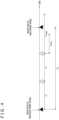
- FIG. 4 is a diagram for depicting the content of the refresh rate control described above and each of the symbols ⁇ and ⁇ denotes the timing of the refresh as in FIG. 3 .
- a refresh interval in this configuration, referred to as an assumed refresh interval Tr
- the permissible rate range is set such that the permissible refresh interval range [Tmin, Tmax] includes the assumed refresh interval Tr.
- the frame image can be updated at the assumed update interval Tu or at a time interval close thereto at the frequency of once in every N-th refresh.
- it is required to frequently switch the refresh rate of the display apparatus 14, which is different from the first example, but it is possible to cause the display apparatus 14 to execute the refresh at the assumed refresh rate value Rr of the specific program or a refresh rate close thereto.
- the display apparatus 14 is caused to execute the refresh from the previous frame image update until the occurrence of the (N-1)-th refresh under the same condition in any case of the first and second examples described above.
- the control by the refresh rate control section 23 is not limited to these examples, and the rate value of the fixed refresh rate or the permissible rate range for the variable refresh rate may be changed every occurrence of the refresh.
- the refresh rate control section 23 sets the permissible rate range different for each of the (N-1) times of refresh and causes the refresh to be executed
- the length of T N-1 is a sum of the upper limit values of the permissible refresh interval ranges each corresponding to the permissible rate range set for each time of refresh.
- the permissible rate ranges each set for each time of refresh may be ranges different from one another.
- the information processing apparatus 10 in a case in which the display apparatus 14 supporting the variable refresh rate is caused to display the frame image drawn by the specific program, it is possible to cause the display apparatus 14 to update the frame image at the assumed update rate value of the specific program or at an update rate close thereto.
- the embodiment of the present invention is not limited to the embodiment described above.
- any one of the values of the parameters such as the assumed refresh rate value Rr, the assumed number of times of refresh N, the assumed update rate value Ru, and the like in the description given above is simply exemplification, and hence, various values which the specific program and the display apparatus 14 can support may be employed.
Landscapes
- Engineering & Computer Science (AREA)
- Physics & Mathematics (AREA)
- Computer Hardware Design (AREA)
- General Physics & Mathematics (AREA)
- Theoretical Computer Science (AREA)
- Multimedia (AREA)
- Controls And Circuits For Display Device (AREA)
Abstract
Description
- The present invention relates to an information processing apparatus, an information processing method, and a program which generate video to be displayed on a screen of a display apparatus.
- In general, a display apparatus such as a home television receiver displays video by continuously updating, at a predetermined cycle (refresh rate), a still image (frame image) to be displayed on a screen. Thus, an information processing apparatus which generates the video which the display apparatus is caused to display is required to draw each frame image forming the video, at a fixed frame rate matching this refresh rate. However, when the frame rate is fixed, there are such problems that a drawing capability of the information processing apparatus is not fully utilized, and, conversely, disorder in display such as stuttering and tearing occurs in a case in which the drawing capability of the information processing apparatus is insufficient.
- Hence, in a video standard such as the HDMI (registered trademark), a technology called variable refresh rate (VRR) which variably changes the refresh rate of the display apparatus is proposed. With this technology, the display apparatus can update the display image at any refresh rate, and thus, the information processing apparatus dynamically changes the frame rate according to an own drawing speed and the like, to thereby be able to draw the frame image at a more desirable frame rate.
- There are various types of application programs which determine a content of the video which the display apparatus is caused to display, and there is, in these types, a type of application program which does not support the variable refresh rate described above and assumes display at a fixed refresh rate. As described above, depending on the type of the application program, the frame image is updated at a timing different from an assumed timing in a case in which the frame image is updated at the variable refresh rate, and hence, disfavored display such as unsmooth display of the video may be executed.
- The present invention has been made in view of the actual situation described above, and one of objects thereof is to provide an information processing apparatus, an information processing method, and a program capable of executing more desirable display on a display apparatus which supports a variable refresh rate.
- An information processing apparatus according to one aspect of the present invention is an information processing apparatus connected to a display apparatus capable of updating a frame image at a variable refresh rate, the information processing apparatus including a frame image drawing section that executes an application program to draw a frame image to be displayed on a screen of the display apparatus, according to a processing content of the application program, and a refresh rate control section that determines a permissible rate range permitted as a refresh rate, according to an operation condition of the display apparatus assumed by the application program, and causes the display apparatus to execute refresh at a variable refresh rate within the determined permissible rate range.
- An information processing method according to one aspect of the present invention is an information processing method that controls a display apparatus capable of updating a frame image at a variable refresh rate, the information processing method including a step of executing an application program to draw a frame image to be displayed on a screen of the display apparatus, according to a processing content of the application program, and a step of determining a permissible rate range permitted as a refresh rate, according to an operation condition of the display apparatus assumed by the application program, and causing the display apparatus to execute refresh at a variable refresh rate within the determined permissible rate range.
- A program according to one aspect of the present invention is a program that causes a computer connected to a display apparatus capable of updating a frame image at a variable refresh rate to execute a step of executing an application program to draw a frame image to be displayed on a screen of the display apparatus, according to a processing content of the application program, and a step of determining a permissible rate range permitted as a refresh rate, according to an operation condition of the display apparatus assumed by the application program, and causing the display apparatus to execute refresh at a variable refresh rate within the determined permissible rate range. This program may be stored in a computer-readable non-transitory information storage medium and may then be provided.
-
- [
FIG. 1 ]
FIG. 1 is a configuration block diagram for illustrating a schematic configuration of an information processing apparatus according to an embodiment of the present invention. - [
FIG. 2 ]
FIG. 2 is a functional block diagram for illustrating functions implemented by the information processing apparatus according to the embodiment of the present invention. - [
FIG. 3 ]
FIG. 3 is a diagram for illustrating an example of refresh rate control in a case of causing a frame image to be updated once in every N-th refresh. - [
FIG. 4 ]
FIG. 4 is a diagram for illustrating another example of the refresh rate control in the case of causing the frame image to be updated once in every N-th refresh. - A detailed description is now given of an embodiment of the present invention in reference to the drawings.
- An
information processing apparatus 10 according to an embodiment of the present invention is a home game machine, a personal computer, or the like, and includes acontrol section 11, astorage section 12, and aninterface section 13 as illustrated inFIG. 1 . Moreover, theinformation processing apparatus 10 is connected to adisplay apparatus 14 and anoperation device 15 for enabling data communication. - The
control section 11 includes at least one processor such as a central processing unit (CPU) and executes programs stored in thestorage section 12, to execute various types of information processing. Thecontrol section 11 may include an arithmetic processing apparatus such as a graphics processing unit (GPU) dedicated for image processing. Note that, a specific example of processing executed by thecontrol section 11 in the present embodiment is described later. Thestorage section 12 includes at least one memory device such as a random access memory (RAM) and stores the programs executed by thecontrol section 11 and data processed by this program. Moreover, thestorage section 12 includes a buffer memory which temporality stores a frame image described later. - The
interface section 13 is an interface for the data communication between thedisplay apparatus 14 and theoperation device 15. Theinformation processing apparatus 10 is wirelessly or wiredly connected to each of thedisplay apparatus 14 and theoperation device 15 via theinterface section 13. Specifically, it is assumed that theinterface section 13 includes a multimedia interface for transmitting, to thedisplay apparatus 14, a video signal supplied by theinformation processing apparatus 10. In particular, in the present embodiment, it is assumed that theinterface section 13 includes an interface such as HDMI which can transmit the video signal in compliance to a standard which supports a variable refresh rate. Moreover, theinterface section 13 includes a data communication interface for receiving, from theoperation device 15, an operation signal indicating a content of operation input performed by a user. Further, theinterface section 13 may include a communication interface for transmitting and receiving data to and from another computer via a communication network such as the Internet. - The
display apparatus 14 is a home television receiver, a monitor for a personal computer, or the like and displays video based on the video signal received from theinformation processing apparatus 10. In particular, in the present embodiment, it is assumed that thedisplay apparatus 14 supports a variable refresh rate technology and executes refresh of an image displayed on a screen at a desired timing determined according to the video signal supplied by theinformation processing apparatus 10. In this configuration, the refresh refers to an operation of starting redisplay of the image to be displayed by thedisplay apparatus 14 on the screen. Thedisplay apparatus 14 executes the refresh, thereby updating the frame image displayed on the screen to a new frame image received from theinformation processing apparatus 10 or redisplaying the frame image currently displayed. Thedisplay apparatus 14 executes this refresh at a desired timing and thereby becomes able to update the displayed frame image at the refresh rate which dynamically changes. - The
operation device 15 is a device for receiving the operation input performed by the user of theinformation processing apparatus 10 and may be, for example, a controller for a home game machine, a keyboard, a mouse, or the like. Theoperation device 15 is provided with operation members such as buttons and a touch pad for receiving the operation input made by the user and transmits, to theinformation processing apparatus 10, the operation signal indicating a content of the operation input made by the user on this operation member. - A description is now given of functions implemented by the
information processing apparatus 10 in the present embodiment by using a functional block diagram ofFIG. 2 . As illustrated in this diagram, theinformation processing apparatus 10 includes, in terms of function, a frameimage drawing section 21, a frameimage transmission section 22, and a refreshrate control section 23. These functions are implemented by thecontrol section 11 executing one or a plurality of programs stored in thestorage section 12. These programs may be supplied to theinformation processing apparatus 10 via a communication network such as the Internet or may be supplied to theinformation processing apparatus 10 while these programs are stored in an information recording medium such as an optical disc. - The frame
image drawing section 21 determines a content of the frame image to be displayed on the screen of thedisplay apparatus 14 and draws the content. It is assumed that the frameimage drawing section 21 is implemented by thecontrol section 11 executing an application program such as a game program. As an example, in a case in which processing for a game of a type of operating a character in a virtual space is executed, the frameimage drawing section 21 determines positions and states of various objects to be disposed in the virtual space, a view point position, and the like and draws a frame image indicating a scene of this virtual space. Note that the drawing of the frame image and processing of a part thereof may be implemented by a program such as a graphic library, a game engine, or the like independent of the application program which determines the content of the frame image. - The frame
image drawing section 21 continuously executes loop processing, thereby repetitively executing the drawing of the frame image described above. In this state, thedisplay apparatus 14 supports the variable refresh rate as described before, and hence, the frameimage drawing section 21 does not execute the drawing of the frame image every constant time and may execute the drawing of the frame image at any time interval. - However, of the application programs which determine the content of the frame image, there is a type of program which does not support the variable refresh rate and hence operates while assuming that the display apparatus updates the frame image at a fixed refresh rate. The application program that operates under this assumption is hereinafter referred to as a specific program. Moreover, a rate value of the fixed refresh rate assumed by the specific program is denoted as an assumed refresh rate value Rr. In a case in which a display apparatus which does not support the variable refresh rate and supports only the fixed refresh rate is connected, it is assumed that the frame
image drawing section 21, which executes the specific program, draws the frame image every substantially constant time at a frame rate determined according to the assumed refresh rate value Rr. - Further, there is such a case that, of the specific programs, there is a specific program which assumes to cause the display apparatus to update the frame image at an update rate lower than the refresh rate and hence reduces a drawing frequency of the frame image to a value lower than the refresh rate of the display apparatus during the execution thereof. As an example, for example, there is such a case that the specific program assumes that the display apparatus displays a new frame image at a frequency of once in every second refresh while executing the refresh at a fixed refresh rate of 60 Hz. In this case, the specific program draws the new frame image at a frame rate of substantially 30 fps. With this method, while the display apparatus is operating at the fixed refresh rate of 60 Hz, the frame
image drawing section 21 can draw the frame image at a lower frequency with a relatively long time margin. The value of the update rate of the frame image assumed by the specific program in this case is hereinafter denoted as an assumed update rate value Ru. Moreover, the number of times of the refresh assumed to be executed by the display apparatus until the frame image is updated once is denoted as an assumed number of times of refresh N. In the example described above, the assumed refresh rate value Rr of thedisplay apparatus 14 is 60 Hz, and the assumed number of times of refresh N is 2; hence, the assumed update rate value Ru is 30 Hz (=60/2). In general, between the assumed refresh rate value Rr, the assumed update rate value Ru, and the assumed number of times of refresh N, the following relational formula is established.
- Note that the specific program is not required to assume that the display apparatus always operates at the same assumed refresh rate value Rr and assumed number of times of refresh N during execution thereof and hence the specific program may assume to cause the display apparatus to execute the refresh control under an operation condition different from, for example, scene to scene as the processing progresses.
- The frame
image transmission section 22 sequentially transmits, to thedisplay apparatus 14, the frame image drawn by the frameimage drawing section 21. The processing result of the application program is presented to the user as video by thedisplay apparatus 14 sequentially displaying, on the screen, the frame image transmitted by the frameimage transmission section 22. - In this configuration, in a case in which the frame
image drawing section 21 is implemented by the specific program, the frameimage drawing section 21 draws the frame image at the frame rate corresponding to the assumed update rate value Ru as described before. The frameimage transmission section 22 transmits a new frame image to thedisplay apparatus 14 at the assumed update rate value Ru every substantially constant time to match a timing at which the frameimage drawing section 21 draws the frame image. - The refresh
rate control section 23 controls the refresh rate of thedisplay apparatus 14. In particular, in the present embodiment, in the case in which the frameimage drawing section 21 is implemented by the specific program, the refreshrate control section 23 controls the refresh rate of thedisplay apparatus 14 such that the frame image is updated at the assumed update rate value Ru thereof or an update rate close thereto. This is because, when the frame image is updated at a timing deviated from the assumed update rate value Ru as a result of thedisplay apparatus 14 updating the frame image at the variable refresh rate by any chance, there is a risk of occurrence of such problems that the video is reproduced at a speed different from the speed assumed by the specific program or a drop frame occurs. - Specifically, in a case in which the application program which implements the function of the frame
image drawing section 21 is a specific program, the refreshrate control section 23 acquires information (herein referred to as assumed operation condition information) relating to an operation condition of the display apparatus assumed by this specific program. For example, in a case in which an assumed operation condition of the display apparatus changes for each scene or the like during the execution of the specific program, the specific program may specify a new assumed operation condition for the refreshrate control section 23 at a timing of the change in assumed operation condition. With this configuration, even when the assumed operation condition changes as the processing of the specific program progresses, the refreshrate control section 23 can always acquire the assumed operation condition information as of this timing. Moreover, in a case in which the assumed operation condition does not change during the execution of the specific program, the refreshrate control section 23 may acquire the assumed operation condition information by, for example, referring to a setting file stored in advance in thestorage section 12 in association with this specific program. - The assumed operation condition information is required to include information capable of specifying at least the assumed update rate value Ru. Such information may be the value itself of the assumed update rate value Ru or a set of the values of the assumed refresh rate value Rr and the assumed number of times of refresh N. Note that default values may be set, in advance, for at least some of these parameters. With this configuration, even when the specific program does not assume the operation at the variable refresh rate and further does not have a function of specifying the assumed operation condition, the refresh
rate control section 23 presumes that the specific program assumes the default assumed refresh rate value Rr and assumed number of times of refresh N, and can execute the control at a refresh rate corresponding to this value. - The refresh
rate control section 23 uses the acquired assumed operation condition information to determine an actual operation condition of thedisplay apparatus 14 and controls the refresh rate of thedisplay apparatus 14 according to this operation condition. Specifically, the refreshrate control section 23 determines which of the fixed refresh rate and the variable refresh rate thedisplay apparatus 14 is caused to operate at. Moreover, in a case in which thedisplay apparatus 14 is caused to operate at the variable refresh rate, a range of values permitted as the refresh rate is determined, and the refresh at the variable refresh rate is caused to be executed in this range of values. This range of values permitted as the refresh rate is hereinafter referred to as a permissible rate range. The permissible rate range is defined by at least one of an upper limit value Rmax and a lower limit value Rmin of the value of the rate. The permissible rate range from the lower limit value Rmin to the upper limit value Rmax is hereinafter denoted as [Rmin, Rmax]. - The refresh
rate control section 23 can limit the time interval at which thedisplay apparatus 14 executes the refresh, by setting the permissible rate range for thedisplay apparatus 14. The time interval at which thedisplay apparatus 14 executes the refresh is hereinafter referred to as a refresh interval, and a range of time permitted as the refresh interval corresponding to the permissible rate range is hereinafter referred to as a permissible refresh interval range. Moreover, a lower limit value of the refresh interval corresponding to the upper limit value Rmax of the permissible rate range is denoted as Tmin, and an upper limit value of the refresh interval corresponding to the lower limit value Rmin of the permissible rate range is denoted as Tmax. - Specifically, in the case in which the frame image is updated at the variable refresh rate, when a time equal to or longer than the lower limit value Tmin of the refresh interval has not elapsed since the previous refresh at a timing of the reception of a new frame image from the
information processing apparatus 10, thedisplay apparatus 14 waits until the time of the lower limit value Tmin elapses, executes the next refresh, and displays the new frame image. Moreover, in a case in which the time of the upper limit value Tmax of the refresh interval has elapsed since the previous refresh without the new frame image being received from theinformation processing apparatus 10, thedisplay apparatus 14 executes the next refresh. In this refresh, the previous frame image is displayed again. Meanwhile, in a case in which a new frame image is received at a timing between the lower limit value Tmin and the upper limit value Tmax, thedisplay apparatus 14 which operates at the variable refresh rate immediately executes the refresh and displays the received frame image. The refreshrate control section 23 sets an appropriate permissible rate range for thedisplay apparatus 14 according to the assumed refresh rate value Rr, and can cause thedisplay apparatus 14 to update the frame image at the assumed update rate value Ru of the specific program or an update rate close thereto while enjoying the advantage of the variable refresh rate. - A description is now given of a specific example of a method of determining, by the refresh
rate control section 23, the operation condition of thedisplay apparatus 14. First, a description is given of an example of control executed by the refreshrate control section 23 in a case in which it is assumed that the specific program updates the frame image at the assumed refresh rate value Rr, that is, in a case in which the assumed number of times of refresh N is 1 and hence the assumed update rate value Ru is equal to the assumed refresh rate value Rr. - It is assumed that the refresh
rate control section 23 determines the permissible rate range such that the permissible rate range falls within a rate range of the variable refresh rate which thedisplay apparatus 14 can support. In general, a display apparatus which supports the variable refresh rate has a function of notifying the connectedinformation processing apparatus 10 of the rate range of the variable refresh rate which the display apparatus itself can support. Thus, the refreshrate control section 23 determines the permissible rate range such that the supportable rate range notified in advance by theconnected display apparatus 14 is not exceeded. - Further, in a case in which the application program which implements the frame
image drawing section 21 is a specific program, the refreshrate control section 23 determines the permissible rate range such that the permissible rate range includes the assumed refresh rate value Rr (in this example, equal to the assumed update rate value Ru) of this specific program. The specific program draws a new frame image at a frame rate corresponding to the assumed refresh rate value Rr, and hence, when the permissible rate range includes the assumed refresh rate value Rr, it is expected that thedisplay apparatus 14 immediately execute the refresh in a case in which a new frame image is received, and update the frame image. - In this state, in a case in which the assumed refresh rate value Rr is not included in the rate range of the variable refresh rate which the
display apparatus 14 can support, the refreshrate control section 23 may provide such control that thedisplay apparatus 14 executes the refresh at the fixed frame rate. There is such a case that thedisplay apparatus 14 can execute the refresh at the assumed refresh rate value Rr of the application program as a fixed refresh rate even in a case in which the assumed refresh rate value Rr is not included in the rate range of the supportable variable refresh rate. In this case, it is assumed that the refreshrate control section 23 instructs thedisplay apparatus 14 to execute the display at the fixed refresh rate. As a result, the advantage of the variable refresh rate is not obtained, but thedisplay apparatus 14 can display the video at the refresh rate originally assumed by the specific program. - As a specific example, a description is given of a case in which the permissible rate range of the variable refresh rate which the
display apparatus 14 can support is 70 to 144 Hz. In this case, when the specific program having the assumed refresh rate value Rr of 120 Hz is to be executed, it is assumed that the refreshrate control section 23 sets [70 Hz, 144 Hz] as the permissible rate range or a permissible rate range which is narrower than this permissible rate range but includes 120 Hz. As a result, thedisplay apparatus 14 can display the video at the assumed refresh rate value Rr or a refresh rate close thereto while enjoying the advantage of the variable refresh rate. - Meanwhile, in a case in which the assumed refresh rate value Rr of the specific program is 60 Hz, when the
display apparatus 14 executes the refresh in the permissible rate range [70 Hz, 144 Hz], even for the longest refresh interval, the refresh interval is shorter than that corresponding to the assumed refresh rate value Rr, and hence, there is a risk that the video may be displayed such that the video is forwarded faster than the assumption of the specific program or the drawing of the frame image may be so slow that a drop frame occurs. Thus, the refreshrate control section 23 instructs thedisplay apparatus 14 to execute the refresh at the fixed refresh rate of 60 Hz. As a result, the video can be displayed as the specific program assumes. - A description is now given of control executed by the refresh
rate control section 23 in a case in which the assumed number of times of refresh N is equal to or large than 2, that is, in a case in which the specific program draws the frame image at the assumed update rate value Ru lower than the assumed refresh rate value Rr. - First, it is generally assumed that the refresh
rate control section 23 controls the refresh rate of thedisplay apparatus 14 such that thedisplay apparatus 14 executes (N-1) times of the refresh without the accompanying update of the frame image after a previous update of the frame image and then executes the next frame image update when the N-th refresh is executed. Further, the refreshrate control section 23 sets the permissible rate range at least when thedisplay apparatus 14 executes the N-th refresh, and thereby controls the frame image to be updated at the variable refresh rate. At this time, the refreshrate control section 23 determines the permissible rate range for the N-th refresh such that the permissible refresh interval range corresponding to the permissible rate range for the N-th refresh includes the assumed update timing of the frame image. As a result, thedisplay apparatus 14 can update the frame image at the assumed update timing of the specific program or a timing close thereto. - Specifically, in a case of the assumed refresh rate value Rr and the assumed number of times of refresh N, the assumed update rate value Ru is Rr/N, and an assumed time interval (hereinafter referred to as an assumed update interval Tu) from the frame image update for the previous time to the frame image update for the next time corresponding to this assumed update rate value Ru is calculated as Tu = 1000/Ru (ms). In a case in which a permissible refresh interval range at the N-th refresh is denoted as [Tmin, Tmax] and a required time from the frame image update for the previous time to the (N-1)-th refresh is denoted as TN-1, the refresh
rate control section 23 determines a control content up to the (N-1)-th refresh rate and the permissible rate range at the time of the N-th refresh such that the following relational formula is satisfied.
- Note that, it is required that Tmin < Tmax hold true, and hence, it is not required that two equalities in the relational formula described above be simultaneously satisfied.
- When the relational formula described above is satisfied, timings up to the (N-1)-th refresh may be any timings. Thus, the refresh
rate control section 23 may set the permissible rate range up to the (N-1)-th refresh, and thereby cause the refresh to be executed at a variable refresh rate or may cause the refresh to be executed at a fixed refresh rate. Moreover, it is not required to cause the refresh having the same control content to be executed up to the (N-1)-th time, and the refresh having a different control content may be executed each time. A description is now given of several specific examples of the control executed by the refreshrate control section 23 in order to cause thedisplay apparatus 14 to execute the N times of refresh. - As a first example, a description is first given of a case in which the control content of the refresh rate is not changed and the frame image is caused to be updated every number of times of refresh which is the same as the assumed number of times of refresh N assumed by the specific program. In this example, the refresh
rate control section 23 determines the permissible rate range such that thedisplay apparatus 14 updates, after the execution of the (N-1) times of the refresh without the accompanying update of the frame image, the frame image at the time of the execution of the N-th refresh. After that, the refreshrate control section 23 controls thedisplay apparatus 14 such that thedisplay apparatus 14 is caused to execute the N times of the refresh at the variable refresh rate within this permissible rate range in such a manner that a timing of the reception of the new frame image is the timing at which the N-th refresh can be executed. - For the sake of description, a description is first given of a case in which the assumed number of times of refresh N is 2. In a case in which the permissible refresh interval range is limited to [Tmin, Tmax] by the permissible rate range being set, the
display apparatus 14 executes the refresh at a timing at which a time of the upper limit value Tmax has elapsed since the previous refresh unless the new frame image has been received. After that, in a case in which the next frame image is received at a timing after the lower limit value Tmin has elapsed, thedisplay apparatus 14 immediately executes the refresh at this time point and updates the frame image. Thus, when the update interval of the frame image corresponding to the assumed update rate value Ru is longer than (Tmin + Tmax) but shorter than 2Tmax, thedisplay apparatus 14 can immediately display the received frame image. - As a specific example, in a case in which the assumed refresh rate value Rr of the specific program is 60 Hz and the assumed number of times of refresh N is 2, the assumed update rate value Ru is 30 Hz, and hence, the assumed update interval Tu corresponding to this assumed update rate value Ru is approximately 33.3 ms (=1000/30). In this configuration, the specific program draws the frame image at the frame rate of 30 fps, and the
display apparatus 14 receives the new frame image every approximately 33.3 ms. - In this case, the refresh
rate control section 23 determines the permissible rate range such that the permissible refresh interval range [Tmin, Tmax] satisfies the following relational formula.
- The permissible rate range satisfying the relational formula described above can be determined by determining each of Tmin and Tmax as follows.


- As a result of this determination, the
display apparatus 14 can continue to update the frame image at the assumed update interval Tu of the specific program or at a time interval close thereto while maintaining the variable refresh rate. - In more general, also in a case in which the specific program assumes that the display apparatus causes the frame image to be updated at a frequency of once in every N-th (N is integer 2 or more) refresh, the permissible rate range can be determined in a similar manner. Specifically, the refresh
rate control section 23 determines the permissible rate ranges for the N times such that the update of the frame image does not occur up to the (N-1)-th refresh and the next frame image is received by the timing of the occurrence of the N-th refresh, to thereby be able to update the frame image at the update timing assumed by the specific program or at a timing close thereto. In this case, it is only required to determine the permissible rate range such that the assumed update interval Tu satisfies the following relational formula for the refresh interval range [Tmin, Tmax].
- As a result of this determination, the
display apparatus 14 causes the refresh to be generated every time the upper limit value Tmax of the time interval is reached while the frame image is not being updated. Moreover, when the new frame image is received at a timing at which a time longer than the lower limit value Tmin but shorter than the upper limit value Tmax elapses after such refresh without the accompanying update of the frame image occurs (N-1) times, thedisplay apparatus 14 executes the N-th refresh, and can immediately display the new frame image. -
FIG. 3 is a diagram for depicting the content of the refresh rate control described above and illustrating an example of the refresh executed by thedisplay apparatus 14 in a case in which the assumed number of times of refresh N is 3. In this diagram, a symbol Δ denotes the refresh without the accompanying update of the frame image, and a symbol ▲ denotes the refresh with the accompanying update of the frame image. In the example of this diagram, each of first refresh and second refresh after the previous update of the frame image is executed at a timing at which the time Tmax has elapsed since the previous refresh. After that, the update of the frame image occurs at the timing at which a new frame image is received within the permissible refresh interval range [Tmin, Tmax] . - A description is now given of a second example of the control method for the refresh rate in the case in which the frame image is updated once in every N-th time. In this second example, the refresh
rate control section 23 changes the control content between the refresh up to the (N-1)-th time and the N-th refresh, which is different from the first example. Specifically, up to the (N-1)-th refresh, the refresh is caused to be executed at the fixed refresh rate of the assumed refresh rate value Rr, as assumed by the specific program. After that, for the N-th refresh, the refresh is caused to be executed at a variable refresh rate and within the permissible rate range including the assumed refresh rate value Rr. - As a specific example, in a case in which the specific program assumes 120 Hz as the assumed refresh rate value Rr and assumes that the frame image is updated at a frequency of once in every third refresh, the refresh
rate control section 23 causes the refresh to be executed twice at the fixed refresh rate of 120 Hz after the previous frame image update is executed. After that, the refreshrate control section 23 sets the permissible rate range including 120 Hz, and causes the refresh to be executed at the variable refresh rate. -
FIG. 4 is a diagram for depicting the content of the refresh rate control described above and each of the symbols △ and ▲ denotes the timing of the refresh as inFIG. 3 . In a case in which the assumed refresh rate value Rr is 120 Hz, a refresh interval (in this configuration, referred to as an assumed refresh interval Tr) corresponding to this assumed refresh rate value Rr is approximately 8.3 ms (=1000/120). The refreshrate control section 23 causes the refresh to be executed 2 (= 3 - 1) times at this assumed refresh interval. After that, for the third refresh, the permissible rate range is set such that the permissible refresh interval range [Tmin, Tmax] includes the assumed refresh interval Tr. As a result, as in the first example, the frame image can be updated at the assumed update interval Tu or at a time interval close thereto at the frequency of once in every N-th refresh. In this second example, it is required to frequently switch the refresh rate of thedisplay apparatus 14, which is different from the first example, but it is possible to cause thedisplay apparatus 14 to execute the refresh at the assumed refresh rate value Rr of the specific program or a refresh rate close thereto. - Note that it is assumed that the
display apparatus 14 is caused to execute the refresh from the previous frame image update until the occurrence of the (N-1)-th refresh under the same condition in any case of the first and second examples described above. However, as described before, the control by the refreshrate control section 23 is not limited to these examples, and the rate value of the fixed refresh rate or the permissible rate range for the variable refresh rate may be changed every occurrence of the refresh. - In this configuration, for example, in a case in which the refresh
rate control section 23 sets the permissible rate range different for each of the (N-1) times of refresh and causes the refresh to be executed, it is assumed that the length of TN-1 is a sum of the upper limit values of the permissible refresh interval ranges each corresponding to the permissible rate range set for each time of refresh. As long as the setting is made such that this sum satisfies the relational formula described above, the permissible rate ranges each set for each time of refresh may be ranges different from one another. - As described above, with the
information processing apparatus 10 according to the present embodiment, in a case in which thedisplay apparatus 14 supporting the variable refresh rate is caused to display the frame image drawn by the specific program, it is possible to cause thedisplay apparatus 14 to update the frame image at the assumed update rate value of the specific program or at an update rate close thereto. - Note that the embodiment of the present invention is not limited to the embodiment described above. For example, any one of the values of the parameters such as the assumed refresh rate value Rr, the assumed number of times of refresh N, the assumed update rate value Ru, and the like in the description given above is simply exemplification, and hence, various values which the specific program and the
display apparatus 14 can support may be employed. -
- 10: Information processing apparatus
- 11: Control section
- 12: Storage section
- 13: Interface section
- 14: Display apparatus
- 15: Operation device
- 21: Frame image drawing section
- 22: Frame image transmission section
- 23: Refresh rate control section
Claims (9)
- An information processing apparatus connected to a display apparatus capable of updating a frame image at a variable refresh rate, the information processing apparatus comprising:a frame image drawing section that executes an application program to draw a frame image to be displayed on a screen of the display apparatus, according to a processing content of the application program; anda refresh rate control section that determines a permissible rate range permitted as a refresh rate, according to an operation condition of the display apparatus assumed by the application program, and causes the display apparatus to execute refresh at a variable refresh rate within the determined permissible rate range.
- The information processing apparatus according to claim 1, wherein the refresh rate control section determines the permissible rate range such that an assumed refresh rate value assumed by the application program as a rate value in a case in which the display apparatus updates the frame image at a fixed refresh rate is included.
- The information processing apparatus according to claim 2, wherein the refresh rate control section causes the display apparatus to execute the refresh at a fixed refresh rate in a case in which the assumed refresh rate value is not included in a rate range supported by the display apparatus using the variable refresh rate.
- The information processing apparatus according to claim 1, wherein the refresh rate control section determines, in a case in which the application program assumes that the display apparatus updates the frame image at a frequency of once in an assumed number of times of refresh N (N is an integer equal to or more than 2) at a fixed refresh rate, according to an assumed refresh rate value assumed as a rate value of the fixed refresh rate and the assumed number of times of refresh, a control content of the refresh that the display apparatus is caused to execute.
- The information processing apparatus according to claim 4, wherein the refresh rate control section determines the permissible rate range at a time of execution of an N-th refresh when the display apparatus executes the N-th refresh after execution of (N-1) times of the refresh without accompanying update of the frame image after a previous update of the frame image such that a time interval permitted according to the permissible rate range at the time of the execution of the N-th refresh includes an assumed update timing of the frame image determined according to the assumed refresh rate value and the assumed number of times of refresh and causes the display apparatus to execute the N-th refresh within the determined permissible rate range.
- The information processing apparatus according to claim 5, wherein the refresh rate control section determines the permissible rate range such that the display apparatus updates the frame image at the time of the execution of the N-th refresh after the execution of the (N-1) times of the refresh without the accompanying update of the frame image and causes the display apparatus to execute the refresh at the variable refresh rate N times within the determined permissible rate range.
- The information processing apparatus according to claim 5, wherein the refresh rate control section causes the display apparatus to execute the (N-1) times of the refresh at the fixed refresh rate having the assumed refresh rate value and then causes the display apparatus to execute the refresh at the variable refresh rate within the permissible rate range including the assumed refresh rate value.
- An information processing method that controls a display apparatus capable of updating a frame image at a variable refresh rate, the information processing method comprising:a step of executing an application program to draw a frame image to be displayed on a screen of the display apparatus, according to a processing content of the application program; anda step of determining a permissible rate range permitted as a refresh rate, according to an operation condition of the display apparatus assumed by the application program, and causing the display apparatus to execute refresh at a variable refresh rate within the determined permissible rate range.
- A program that causes a computer connected to a display apparatus capable of updating a frame image at a variable refresh rate to execute:a step of executing an application program to draw a frame image to be displayed on a screen of the display apparatus, according to a processing content of this application program; anda step of determining a permissible rate range permitted as a refresh rate, according to an operation condition of the display apparatus assumed by the application program, and causing the display apparatus to execute refresh at a variable refresh rate within the determined permissible rate range.
Applications Claiming Priority (2)
| Application Number | Priority Date | Filing Date | Title |
|---|---|---|---|
| JP2022013446 | 2022-01-31 | ||
| PCT/JP2023/001693 WO2023145643A1 (en) | 2022-01-31 | 2023-01-20 | Information processing device, information processing method, and program |
Publications (1)
| Publication Number | Publication Date |
|---|---|
| EP4475537A1 true EP4475537A1 (en) | 2024-12-11 |
Family
ID=87471791
Family Applications (1)
| Application Number | Title | Priority Date | Filing Date |
|---|---|---|---|
| EP23746856.6A Pending EP4475537A1 (en) | 2022-01-31 | 2023-01-20 | Information processing device, information processing method, and program |
Country Status (5)
| Country | Link |
|---|---|
| US (1) | US20250104597A1 (en) |
| EP (1) | EP4475537A1 (en) |
| JP (1) | JP7774648B2 (en) |
| CN (1) | CN118402245A (en) |
| WO (1) | WO2023145643A1 (en) |
Families Citing this family (1)
| Publication number | Priority date | Publication date | Assignee | Title |
|---|---|---|---|---|
| EP4475116A4 (en) | 2022-01-31 | 2026-02-18 | Sony Interactive Entertainment Inc | INFORMATION PROCESSING DEVICE, METHOD FOR CONTROLLING THE INFORMATION PROCESSING DEVICE, PROGRAM AND RECORDING MEDIUM |
Family Cites Families (9)
| Publication number | Priority date | Publication date | Assignee | Title |
|---|---|---|---|---|
| US7692642B2 (en) * | 2004-12-30 | 2010-04-06 | Intel Corporation | Method and apparatus for controlling display refresh |
| US7903107B2 (en) * | 2007-06-18 | 2011-03-08 | Sony Ericsson Mobile Communications Ab | Adaptive refresh rate features |
| US8542221B1 (en) * | 2009-06-25 | 2013-09-24 | Nvidia Corporation | Method and system for optimizing display power reduction through a continuously variable refresh rate adjustment |
| US9858899B2 (en) * | 2013-06-13 | 2018-01-02 | Microsoft Technology Licensing, Llc | Managing transitions of adaptive display rates for different video playback scenarios |
| US9773460B2 (en) * | 2013-10-18 | 2017-09-26 | Nvidia Corporation | System, method, and computer program product for combining low motion blur and variable refresh rate in a display |
| US9880649B2 (en) * | 2014-09-29 | 2018-01-30 | Apple Inc. | Touch, pen and force sensor operation with variable refresh displays |
| US11568823B2 (en) * | 2020-08-11 | 2023-01-31 | Everdisplay Optronics (Shanghai) Co., Ltd | Driving method of display panel and display device |
| US11170692B1 (en) * | 2020-09-11 | 2021-11-09 | Synaptics Incorporated | Device and method for controlling a display panel |
| US11776502B1 (en) * | 2021-09-07 | 2023-10-03 | Amazon Technologies, Inc. | Using variable refresh rate to seamlessly adapt to arbitrary and variable video frame rates |
-
2023
- 2023-01-20 JP JP2023576872A patent/JP7774648B2/en active Active
- 2023-01-20 WO PCT/JP2023/001693 patent/WO2023145643A1/en not_active Ceased
- 2023-01-20 CN CN202380015000.6A patent/CN118402245A/en active Pending
- 2023-01-20 EP EP23746856.6A patent/EP4475537A1/en active Pending
- 2023-01-20 US US18/730,805 patent/US20250104597A1/en active Pending
Also Published As
| Publication number | Publication date |
|---|---|
| JPWO2023145643A1 (en) | 2023-08-03 |
| JP7774648B2 (en) | 2025-11-21 |
| US20250104597A1 (en) | 2025-03-27 |
| CN118402245A (en) | 2024-07-26 |
| WO2023145643A1 (en) | 2023-08-03 |
Similar Documents
| Publication | Publication Date | Title |
|---|---|---|
| CN113805832B (en) | Image data transmission method, device, terminal and medium | |
| CN113805831B (en) | Image data transmission method, device, terminal and medium | |
| KR20200037530A (en) | Display apparatus, method for controlling thereof and system | |
| EP2003545A2 (en) | Display system and method for displaying video signals | |
| US20230410732A1 (en) | Timing controller having mechanism for frame synchronization, display panel thereof, and display system thereof | |
| JP2018028559A (en) | Image data output device, image data output method, image display device, and integrated circuit | |
| CN113781949A (en) | Image display method, DDIC, display screen module and terminal | |
| EP3869493A1 (en) | Dynamic frame rate adjustment mechanism | |
| KR20080063982A (en) | Image processing device, image display control device and control method | |
| KR102836018B1 (en) | Performing asynchronous memory clock changes on multi-display systems | |
| US20250104597A1 (en) | Information processing apparatus, information processing method, and program | |
| EP3603059A1 (en) | Display diagnostics for enhancing performance of display devices | |
| US9087473B1 (en) | System, method, and computer program product for changing a display refresh rate in an active period | |
| KR101446808B1 (en) | Monitor screen setting system and control method | |
| US9544474B1 (en) | Video frame transmitting system and video frame transmitting method | |
| US11132957B2 (en) | Method and apparatus for performing display control of an electronic device with aid of dynamic refresh-rate adjustment | |
| US11320853B2 (en) | Image transmission apparatus, image transmission system, and method of controlling image transmission apparatus | |
| CN108965763B (en) | Video output apparatus, video conversion apparatus, video output method, and video conversion method | |
| JP6500199B2 (en) | Image processing apparatus and image processing system | |
| US20250106354A1 (en) | Information processing apparatus, controlling method therefor, and program | |
| US12505818B2 (en) | Information processing apparatus, information processing method, and program with frame rate optimization | |
| EP4715797A1 (en) | Information processing system, information processing method, and a program | |
| US20220270572A1 (en) | Image transmission apparatus, image transmission method, and program | |
| CN116343661A (en) | Display control method and device | |
| CN114747226A (en) | Signal processing device, image display device, and signal processing method |
Legal Events
| Date | Code | Title | Description |
|---|---|---|---|
| STAA | Information on the status of an ep patent application or granted ep patent |
Free format text: STATUS: THE INTERNATIONAL PUBLICATION HAS BEEN MADE |
|
| PUAI | Public reference made under article 153(3) epc to a published international application that has entered the european phase |
Free format text: ORIGINAL CODE: 0009012 |
|
| STAA | Information on the status of an ep patent application or granted ep patent |
Free format text: STATUS: REQUEST FOR EXAMINATION WAS MADE |
|
| 17P | Request for examination filed |
Effective date: 20240612 |
|
| AK | Designated contracting states |
Kind code of ref document: A1 Designated state(s): AL AT BE BG CH CY CZ DE DK EE ES FI FR GB GR HR HU IE IS IT LI LT LU LV MC ME MK MT NL NO PL PT RO RS SE SI SK SM TR |
|
| DAV | Request for validation of the european patent (deleted) | ||
| DAX | Request for extension of the european patent (deleted) | ||
| RIC1 | Information provided on ipc code assigned before grant |
Ipc: H04N 21/436 20110101AFI20260115BHEP Ipc: G09G 5/00 20060101ALI20260115BHEP Ipc: H04N 21/4402 20110101ALI20260115BHEP |