EP4475382A1 - Circuit, power supply method, electronic device, and computer program product - Google Patents
Circuit, power supply method, electronic device, and computer program product Download PDFInfo
- Publication number
- EP4475382A1 EP4475382A1 EP23784210.9A EP23784210A EP4475382A1 EP 4475382 A1 EP4475382 A1 EP 4475382A1 EP 23784210 A EP23784210 A EP 23784210A EP 4475382 A1 EP4475382 A1 EP 4475382A1
- Authority
- EP
- European Patent Office
- Prior art keywords
- power supply
- circuit
- switch
- supply path
- path
- Prior art date
- Legal status (The legal status is an assumption and is not a legal conclusion. Google has not performed a legal analysis and makes no representation as to the accuracy of the status listed.)
- Pending
Links
Images

























Classifications
-
- H—ELECTRICITY
- H02—GENERATION; CONVERSION OR DISTRIBUTION OF ELECTRIC POWER
- H02J—ELECTRIC POWER NETWORKS; CIRCUIT ARRANGEMENTS OR SYSTEMS FOR SUPPLYING OR DISTRIBUTING ELECTRIC POWER; SYSTEMS FOR STORING ELECTRIC ENERGY
- H02J7/00—Circuit arrangements for charging or discharging batteries or for supplying loads from batteries
- H02J7/34—Parallel operation in networks using both storage and other DC sources, e.g. providing buffering
-
- H—ELECTRICITY
- H02—GENERATION; CONVERSION OR DISTRIBUTION OF ELECTRIC POWER
- H02M—APPARATUS FOR CONVERSION BETWEEN AC AND AC, BETWEEN AC AND DC, OR BETWEEN DC AND DC, AND FOR USE WITH MAINS OR SIMILAR POWER SUPPLY SYSTEMS; CONVERSION OF DC OR AC INPUT POWER INTO SURGE OUTPUT POWER; CONTROL OR REGULATION THEREOF
- H02M1/00—Details of apparatus for conversion
- H02M1/32—Means for protecting converters other than automatic disconnection
-
- H—ELECTRICITY
- H02—GENERATION; CONVERSION OR DISTRIBUTION OF ELECTRIC POWER
- H02J—ELECTRIC POWER NETWORKS; CIRCUIT ARRANGEMENTS OR SYSTEMS FOR SUPPLYING OR DISTRIBUTING ELECTRIC POWER; SYSTEMS FOR STORING ELECTRIC ENERGY
- H02J7/00—Circuit arrangements for charging or discharging batteries or for supplying loads from batteries
- H02J7/80—Circuit arrangements for charging or discharging batteries or for supplying loads from batteries including monitoring or indicating arrangements
-
- H—ELECTRICITY
- H01—ELECTRIC ELEMENTS
- H01M—PROCESSES OR MEANS, e.g. BATTERIES, FOR THE DIRECT CONVERSION OF CHEMICAL ENERGY INTO ELECTRICAL ENERGY
- H01M10/00—Secondary cells; Manufacture thereof
- H01M10/42—Methods or arrangements for servicing or maintenance of secondary cells or secondary half-cells
- H01M10/425—Structural combination with electronic components, e.g. electronic circuits integrated to the outside of the casing
-
- H—ELECTRICITY
- H02—GENERATION; CONVERSION OR DISTRIBUTION OF ELECTRIC POWER
- H02J—ELECTRIC POWER NETWORKS; CIRCUIT ARRANGEMENTS OR SYSTEMS FOR SUPPLYING OR DISTRIBUTING ELECTRIC POWER; SYSTEMS FOR STORING ELECTRIC ENERGY
- H02J1/00—Circuit arrangements for DC mains or DC distribution networks
- H02J1/08—Three-wire DC power distribution systems; Systems having more than three wires
- H02J1/084—Three-wire DC power distribution systems; Systems having more than three wires for selectively connecting the load or loads to one or several among a plurality of power lines or power sources
-
- H—ELECTRICITY
- H02—GENERATION; CONVERSION OR DISTRIBUTION OF ELECTRIC POWER
- H02J—ELECTRIC POWER NETWORKS; CIRCUIT ARRANGEMENTS OR SYSTEMS FOR SUPPLYING OR DISTRIBUTING ELECTRIC POWER; SYSTEMS FOR STORING ELECTRIC ENERGY
- H02J1/00—Circuit arrangements for DC mains or DC distribution networks
- H02J1/08—Three-wire DC power distribution systems; Systems having more than three wires
- H02J1/084—Three-wire DC power distribution systems; Systems having more than three wires for selectively connecting the load or loads to one or several among a plurality of power lines or power sources
- H02J1/086—Three-wire DC power distribution systems; Systems having more than three wires for selectively connecting the load or loads to one or several among a plurality of power lines or power sources for providing alternative feeding paths between load or loads and source or sources when the main path fails
-
- H—ELECTRICITY
- H02—GENERATION; CONVERSION OR DISTRIBUTION OF ELECTRIC POWER
- H02J—ELECTRIC POWER NETWORKS; CIRCUIT ARRANGEMENTS OR SYSTEMS FOR SUPPLYING OR DISTRIBUTING ELECTRIC POWER; SYSTEMS FOR STORING ELECTRIC ENERGY
- H02J7/00—Circuit arrangements for charging or discharging batteries or for supplying loads from batteries
- H02J7/855—Circuit arrangements for charging or discharging batteries or for supplying loads from batteries with circuits adapted for supplying loads from the battery
-
- H—ELECTRICITY
- H02—GENERATION; CONVERSION OR DISTRIBUTION OF ELECTRIC POWER
- H02J—ELECTRIC POWER NETWORKS; CIRCUIT ARRANGEMENTS OR SYSTEMS FOR SUPPLYING OR DISTRIBUTING ELECTRIC POWER; SYSTEMS FOR STORING ELECTRIC ENERGY
- H02J7/00—Circuit arrangements for charging or discharging batteries or for supplying loads from batteries
- H02J7/865—Battery or charger load switching, e.g. concurrent charging and load supply
-
- H—ELECTRICITY
- H02—GENERATION; CONVERSION OR DISTRIBUTION OF ELECTRIC POWER
- H02J—ELECTRIC POWER NETWORKS; CIRCUIT ARRANGEMENTS OR SYSTEMS FOR SUPPLYING OR DISTRIBUTING ELECTRIC POWER; SYSTEMS FOR STORING ELECTRIC ENERGY
- H02J7/00—Circuit arrangements for charging or discharging batteries or for supplying loads from batteries
- H02J7/90—Regulation of charging or discharging current or voltage
- H02J7/933—Regulation of charging or discharging current or voltage the cycle being controlled or terminated in response to electric parameters
-
- H—ELECTRICITY
- H02—GENERATION; CONVERSION OR DISTRIBUTION OF ELECTRIC POWER
- H02J—ELECTRIC POWER NETWORKS; CIRCUIT ARRANGEMENTS OR SYSTEMS FOR SUPPLYING OR DISTRIBUTING ELECTRIC POWER; SYSTEMS FOR STORING ELECTRIC ENERGY
- H02J7/00—Circuit arrangements for charging or discharging batteries or for supplying loads from batteries
- H02J7/90—Regulation of charging or discharging current or voltage
- H02J7/96—Regulation of charging or discharging current or voltage in response to battery voltage
-
- H—ELECTRICITY
- H02—GENERATION; CONVERSION OR DISTRIBUTION OF ELECTRIC POWER
- H02J—ELECTRIC POWER NETWORKS; CIRCUIT ARRANGEMENTS OR SYSTEMS FOR SUPPLYING OR DISTRIBUTING ELECTRIC POWER; SYSTEMS FOR STORING ELECTRIC ENERGY
- H02J7/00—Circuit arrangements for charging or discharging batteries or for supplying loads from batteries
- H02J7/90—Regulation of charging or discharging current or voltage
- H02J7/971—Regulation of charging or discharging current or voltage the charge cycle being controlled or terminated in response to non-electric parameters
- H02J7/975—Regulation of charging or discharging current or voltage the charge cycle being controlled or terminated in response to non-electric parameters in response to temperature
-
- H—ELECTRICITY
- H02—GENERATION; CONVERSION OR DISTRIBUTION OF ELECTRIC POWER
- H02J—ELECTRIC POWER NETWORKS; CIRCUIT ARRANGEMENTS OR SYSTEMS FOR SUPPLYING OR DISTRIBUTING ELECTRIC POWER; SYSTEMS FOR STORING ELECTRIC ENERGY
- H02J7/00—Circuit arrangements for charging or discharging batteries or for supplying loads from batteries
- H02J7/90—Regulation of charging or discharging current or voltage
- H02J7/971—Regulation of charging or discharging current or voltage the charge cycle being controlled or terminated in response to non-electric parameters
- H02J7/975—Regulation of charging or discharging current or voltage the charge cycle being controlled or terminated in response to non-electric parameters in response to temperature
- H02J7/977—Regulation of charging or discharging current or voltage the charge cycle being controlled or terminated in response to non-electric parameters in response to temperature of the battery
-
- H—ELECTRICITY
- H02—GENERATION; CONVERSION OR DISTRIBUTION OF ELECTRIC POWER
- H02M—APPARATUS FOR CONVERSION BETWEEN AC AND AC, BETWEEN AC AND DC, OR BETWEEN DC AND DC, AND FOR USE WITH MAINS OR SIMILAR POWER SUPPLY SYSTEMS; CONVERSION OF DC OR AC INPUT POWER INTO SURGE OUTPUT POWER; CONTROL OR REGULATION THEREOF
- H02M1/00—Details of apparatus for conversion
- H02M1/08—Circuits specially adapted for the generation of control voltages for semiconductor devices incorporated in static converters
- H02M1/088—Circuits specially adapted for the generation of control voltages for semiconductor devices incorporated in static converters for the simultaneous control of series or parallel connected semiconductor devices
-
- H—ELECTRICITY
- H02—GENERATION; CONVERSION OR DISTRIBUTION OF ELECTRIC POWER
- H02M—APPARATUS FOR CONVERSION BETWEEN AC AND AC, BETWEEN AC AND DC, OR BETWEEN DC AND DC, AND FOR USE WITH MAINS OR SIMILAR POWER SUPPLY SYSTEMS; CONVERSION OF DC OR AC INPUT POWER INTO SURGE OUTPUT POWER; CONTROL OR REGULATION THEREOF
- H02M3/00—Conversion of DC power input into DC power output
- H02M3/02—Conversion of DC power input into DC power output without intermediate conversion into AC
- H02M3/04—Conversion of DC power input into DC power output without intermediate conversion into AC by static converters
-
- H—ELECTRICITY
- H01—ELECTRIC ELEMENTS
- H01M—PROCESSES OR MEANS, e.g. BATTERIES, FOR THE DIRECT CONVERSION OF CHEMICAL ENERGY INTO ELECTRICAL ENERGY
- H01M10/00—Secondary cells; Manufacture thereof
- H01M10/42—Methods or arrangements for servicing or maintenance of secondary cells or secondary half-cells
- H01M10/425—Structural combination with electronic components, e.g. electronic circuits integrated to the outside of the casing
- H01M2010/4271—Battery management systems including electronic circuits, e.g. control of current or voltage to keep battery in healthy state, cell balancing
-
- H—ELECTRICITY
- H02—GENERATION; CONVERSION OR DISTRIBUTION OF ELECTRIC POWER
- H02J—ELECTRIC POWER NETWORKS; CIRCUIT ARRANGEMENTS OR SYSTEMS FOR SUPPLYING OR DISTRIBUTING ELECTRIC POWER; SYSTEMS FOR STORING ELECTRIC ENERGY
- H02J2207/00—Details of circuit arrangements for charging or discharging batteries or supplying loads from batteries
- H02J2207/20—Charging or discharging characterised by the power electronics converter
-
- H—ELECTRICITY
- H02—GENERATION; CONVERSION OR DISTRIBUTION OF ELECTRIC POWER
- H02M—APPARATUS FOR CONVERSION BETWEEN AC AND AC, BETWEEN AC AND DC, OR BETWEEN DC AND DC, AND FOR USE WITH MAINS OR SIMILAR POWER SUPPLY SYSTEMS; CONVERSION OF DC OR AC INPUT POWER INTO SURGE OUTPUT POWER; CONTROL OR REGULATION THEREOF
- H02M3/00—Conversion of DC power input into DC power output
- H02M3/02—Conversion of DC power input into DC power output without intermediate conversion into AC
- H02M3/04—Conversion of DC power input into DC power output without intermediate conversion into AC by static converters
- H02M3/10—Conversion of DC power input into DC power output without intermediate conversion into AC by static converters using discharge tubes with control electrode or semiconductor devices with control electrode
- H02M3/145—Conversion of DC power input into DC power output without intermediate conversion into AC by static converters using discharge tubes with control electrode or semiconductor devices with control electrode using devices of a triode or transistor type requiring continuous application of a control signal
- H02M3/155—Conversion of DC power input into DC power output without intermediate conversion into AC by static converters using discharge tubes with control electrode or semiconductor devices with control electrode using devices of a triode or transistor type requiring continuous application of a control signal using semiconductor devices only
- H02M3/156—Conversion of DC power input into DC power output without intermediate conversion into AC by static converters using discharge tubes with control electrode or semiconductor devices with control electrode using devices of a triode or transistor type requiring continuous application of a control signal using semiconductor devices only with automatic control of output voltage or current, e.g. switching regulators
-
- Y—GENERAL TAGGING OF NEW TECHNOLOGICAL DEVELOPMENTS; GENERAL TAGGING OF CROSS-SECTIONAL TECHNOLOGIES SPANNING OVER SEVERAL SECTIONS OF THE IPC; TECHNICAL SUBJECTS COVERED BY FORMER USPC CROSS-REFERENCE ART COLLECTIONS [XRACs] AND DIGESTS
- Y02—TECHNOLOGIES OR APPLICATIONS FOR MITIGATION OR ADAPTATION AGAINST CLIMATE CHANGE
- Y02E—REDUCTION OF GREENHOUSE GAS [GHG] EMISSIONS, RELATED TO ENERGY GENERATION, TRANSMISSION OR DISTRIBUTION
- Y02E60/00—Enabling technologies; Technologies with a potential or indirect contribution to GHG emissions mitigation
- Y02E60/10—Energy storage using batteries
Definitions
- This application relates to the field of electronic technologies, and in particular, to a circuit, a power supply method, an electronic device, and a computer program product.
- This application provides a circuit, a power supply method, an electronic device, and a computer program product.
- a boost circuit supplies power to a working circuit, to improve a battery life of the electronic device in the low-temperature or low-voltage state.
- the third power supply path 1612 may include the first boost circuit 131 and a second switch 1304, the second switch 1304 is electrically connected in parallel to the first unidirectional conductive switch 1301, the third power supply path 1612 may provide, for the first working circuit through the second switch 1304, a voltage obtained by performing boost conversion by the first boost circuit 131, the second switch 1304 may include a second control end, and the second control end may be configured to receive a control signal of the processing circuit.
- the processing circuit controls the second power supply path 1611 to be connected, and the second power supply path 1611 provides, for the first working circuit through the first unidirectional conductive switch 1301, the voltage obtained by performing boost conversion by the first boost circuit 131; when the second power supply path 1611 is connected, the processing circuit controls the first switch 120 to be turned off, so that the first power supply path 160 is disconnected; and when the first switch 120 is turned off, the processing circuit controls the second switch 1304 to be turned on, so that the third power supply path 1612 is connected, and the third power supply path 1612 may provide, for the first working circuit through the second switch 1304, the voltage obtained by performing boost conversion by the first boost circuit 131.
- the first unidirectional conductive switch 1301 is turned off, so that the second power supply path 1611 is disconnected.
- the second power supply path 1611 Before the first power supply path 160 is disconnected, the second power supply path 1611 has been connected. In this way, when power is stopped from being supplied to the first working circuit through the first power supply path 160, power may be supplied to the first working circuit through the second power supply path 1611, so that the first working circuit is not powered off because the first power supply path 160 is disconnected.
- the voltage provided by the second power supply path 1611 for the first working circuit is lower than the voltage provided by the first power supply path 160 for the first working circuit, because the first unidirectional conductive switch 1301 has unidirectional conductivity, the first unidirectional conductive switch 1301 is turned off. This can prevent an output current of the battery 110 from being excessively large, and further prevent the excessively large output current of the battery 110 from exceeding an overcurrent threshold of the battery 110.
- the battery 110 stops working, and then the first working circuit is powered off.
- the third power supply path 1612 is further connected.
- the first unidirectional conductive switch 1301 is turned off, and the second power supply path 1611 is disconnected. This can reduce power consumption of the first unidirectional conductive switch 1301, and prolong power supply duration of the battery 110.
- the processing circuit when the second power supply path 1611 and the third power supply path 1612 are in the disconnected state, and power is supplied to the first working circuit through the first power supply path 160, if the processing circuit detects that the electronic device 100 meets the first preset condition, the processing circuit controls the second power supply path 1611 to be connected, and the second power supply path 1611 provides, for the first working circuit through the first unidirectional conductive switch 1301, the voltage obtained by performing boost conversion by the first boost circuit 131, where the voltage provided by the second power supply path 1611 for the first working circuit is not higher than the voltage provided by the first power supply path 160 for the first working circuit.
- the voltage provided by the second power supply path 1611 for the first working circuit is not higher than the voltage provided by the first power supply path 160 for the first working circuit
- an output current of the second power supply path 1611 is not excessively large
- an output current of the first boost circuit 131 is not excessively large and does not exceed an overcurrent threshold of the first boost circuit 131. This avoids a case in which the first boost circuit 131 stops working, and then the first working circuit cannot work normally because a voltage obtained by the first working circuit from the first power supply path 160 is excessively low.
- the voltage obtained by performing boost conversion by the first boost circuit 131 is a first voltage.
- the first unidirectional conductive switch 1301 is turned off, the second power supply path 1611 is disconnected.
- the voltage obtained by performing boost conversion by the first boost circuit 131 may be adjusted to a second voltage, and the first boost circuit 131 supplies power to the first working circuit through the second switch 1304, where the second voltage is lower than the first voltage.
- an output voltage of the first boost circuit 131 is reduced, so that a voltage difference between an input voltage and an output voltage of the first boost circuit 131 can be reduced, conversion efficiency of the first boost circuit 131 can be improved, and power supply duration of the battery 110 can be prolonged.
- the first switch 120 may include a triode or a metal-oxide-semiconductor field-effect transistor (Metal-Oxide-Semiconductor Field-Effect Transistor, MOSFET), and the second switch 1304 may include a triode or a metal-oxide-semiconductor field-effect transistor (Metal-Oxide-Semiconductor Field-Effect Transistor, MOSFET).
- MOSFET Metal-Oxide-Semiconductor Field-Effect Transistor
- the first unidirectional conductive switch 1301 may include a diode.
- the first unidirectional conductive switch 1301 may be a part of the second switch 1304, so that an area of a circuit board occupied by the first unidirectional conductive switch 1301 can be reduced, and more electronic components can be placed on the circuit board.
- the circuit may further include a first temperature sensor 111, a second temperature sensor 151, a power detection circuit, and a voltage detection circuit.
- the first temperature sensor 111 may be disposed in the battery 110.
- the first temperature sensor 111 and the second temperature sensor 151 each may be configured to detect a temperature
- the power detection circuit may be configured to detect power of the battery 110
- the voltage detection circuit may be configured to detect a voltage of the battery 110.
- the battery 110 When the electronic device 100 meets the first preset condition, the battery 110 is in a low-voltage state, and the battery 110 cannot provide, for the first working circuit, a voltage required by the first working circuit.
- the first boost circuit 131 performs boost conversion on the voltage of the battery 110, and then the first boost circuit 131 may provide a boosted voltage for the first working circuit after boosting the voltage of the battery 110, so that the first working circuit can work normally.
- the battery 110 may be a silicon negative electrode lithium-ion battery.
- the silicon negative electrode lithium-ion battery can improve energy density of the battery.
- a voltage of the silicon negative electrode lithium-ion battery is lower than that of the graphite negative electrode lithium-ion battery in terms of same power, use of the silicon negative electrode lithium-ion battery can make it easier for the electronic device 100 to meet the first preset condition, so that the first boost circuit 131 provides the boosted voltage for the first working circuit after boosting the voltage of the battery 110. Because the boosted voltage can reach a working voltage required by the first working circuit, the first working circuit can work normally, and a battery life of the silicon negative electrode lithium-ion battery is improved.
- the processing circuit when power is supplied to the first working circuit through the third power supply path 1612 and the second switch 1304, if the processing circuit detects that the electronic device 100 meets a second preset condition, the processing circuit controls the second power supply path 1611 to be connected, the third power supply path 1612 is disconnected, and the second power supply path 1611 may provide, for the first working circuit through the first unidirectional conductive switch 1301, the voltage obtained by performing boost conversion by the first boost circuit 131.
- the processing circuit may further control the first switch 120 to be turned on, so that the first power supply path 160 is connected, and power may be supplied to the first working circuit through the first power supply path 160 and the first switch 120.
- the processing circuit controls the second power supply path 1611 to be disconnected.
- the first power supply path 160 Before the second power supply path 1611 is disconnected, the first power supply path 160 has been connected. In this way, when power is stopped from being supplied to the first working circuit through the second power supply path 1611, power may be supplied to the first working circuit through the first power supply path 160, so that the first working circuit is not powered off because the second power supply path 1611 is disconnected. In addition, after the first power supply path 160 is connected, the second power supply path 1611 is disconnected, so that the first unidirectional conductive switch 1301 is turned off. Therefore, power consumption of the first unidirectional conductive switch 1301 can be reduced, a power loss caused when the first boost circuit 131 performs boost conversion on the voltage of the battery 110 can be further reduced, and power supply duration of the battery 110 can be prolonged.
- the second preset condition may include at least one of the following: A temperature detected by a first temperature sensor 111 is higher than a third preset temperature threshold, power of the battery 110 detected by a power detection circuit is higher than a second preset battery capacity threshold, a voltage of the battery 110 detected by a voltage detection circuit is higher than a second preset voltage threshold, or a temperature detected by a second temperature sensor 115 is higher than a fourth preset temperature threshold.
- the battery 110 may provide, for the first working circuit, a voltage required by the first working circuit.
- the second power supply path 1611 is disconnected after the first power supply path 160 is connected, so that the first unidirectional conductive switch 1301 is turned off. In this way, power consumption of the first unidirectional conductive switch 1301 can be reduced, and a power loss caused when the first boost circuit performs boost conversion on the voltage of the battery 110 can be reduced, and power supply duration of the battery 110 can be prolonged.
- the first preset temperature threshold is different from the third preset temperature threshold
- the first preset battery capacity threshold is different from the second preset battery capacity threshold
- the first preset voltage threshold is different from the second preset voltage threshold
- the second preset temperature threshold is different from the fourth preset temperature threshold.
- the circuit may further include an external power supply interface, and the first switch 120 may be electrically connected in series between the battery 110 and the external power supply interface.
- the external power supply interface may be configured to be electrically connected to an external power supply device.
- the processing circuit may control the external power supply device to provide a charging current for the battery 110 through the first switch 120.
- the battery 110 When the electronic device 100 meets the first preset condition, the battery 110 is in the low-voltage state, and the battery 110 cannot provide, for the first working circuit, the voltage required by the first working circuit.
- the external power supply device charges the battery 110, so that the voltage of the battery 110 can be changed to be in a normal state.
- the external power supply device can provide, for the first working circuit, the voltage required by the first working circuit, so that the first working circuit can work normally.
- the voltage provided by the external power supply device for the first working circuit is not lower than the voltage provided by the second power supply path 1611 for the first working circuit
- an output current of the second power supply path 1611 is not excessively large, and further an output current of the first boost circuit 131 is not excessively large and does not exceed an overcurrent threshold of the first boost circuit 131, so that the first boost circuit 131 does not stop working.
- the first unidirectional conductive switch 1301 when the voltage provided by the external power supply device for the first working circuit is higher than the voltage provided by the first power supply path 160 for the first working circuit, because the first unidirectional conductive switch 1301 has unidirectional conductivity, the first unidirectional conductive switch 1301 is turned off. This can prevent an output current of the external power supply device from being excessively large, and further prevent the excessively large output current of the external power supply device from exceeding an overcurrent threshold of the external power supply device. This avoids a case in which the external power supply device stops working, resulting in reduced working duration of the first working circuit when the first working circuit obtains power only through the first boost circuit 131.
- the battery 110 is in the low-voltage state, and the battery 110 cannot provide, for the first working circuit, the voltage required by the first working circuit.
- the external power supply device charges the battery 110, and then the voltage required by the first working circuit can be provided for the first working circuit, so that the first working circuit can work normally.
- the second power supply path 1611 when power is supplied to the first working circuit through the second power supply path 1611 and the external power supply device, the second power supply path 1611 is disconnected.
- the circuit may further include an external power supply interface.
- the processing circuit may control the second power supply path 1611 to be connected, and the second power supply path 1611 may provide, for the first working circuit through the first unidirectional conductive switch 1301, the voltage obtained by performing boost conversion by the first boost circuit 131; and when the second power supply path 1611 is connected, the third power supply path 1612 is disconnected, the processing circuit may control the first switch 120 to be turned on, and power is supplied to the first working circuit through the first power supply path 160 and the first switch 120, where the voltage provided by the first power supply path 160 for the first working circuit through the first switch 120 is not lower than the voltage provided by the second power supply path 1611 for the first working circuit.
- the first switch 120 may further be electrically connected in series between the battery 110 and the external power supply interface.
- the processing circuit may control the external power supply device to separately provide a power supply current and a charging current for the first working circuit and the battery 110 through the external power supply interface, where a voltage provided by the external power supply device for the first working circuit is not lower than the voltage provided by the second power supply path 1611 for the first working circuit.
- the voltage provided by the external power supply device for the first working circuit is not lower than the voltage provided by the second power supply path 1611 for the first working circuit
- an output current of the second power supply path 1611 is not excessively large, and further an output current of the first boost circuit 131 is not excessively large and does not exceed an overcurrent threshold of the first boost circuit 131, so that the first boost circuit 131 does not stop working.
- the first unidirectional conductive switch 1301 when the voltage provided by the external power supply device for the first working circuit is higher than the voltage provided by the first power supply path 160 for the first working circuit, because the first unidirectional conductive switch 1301 has unidirectional conductivity, the first unidirectional conductive switch 1301 is turned off. This can prevent an output current of the external power supply device from being excessively large, and further prevent the excessively large output current of the external power supply device from exceeding an overcurrent threshold of the external power supply device. This avoids a case in which the external power supply device stops working, resulting in reduced working duration of the first working circuit when the first working circuit obtains power only through the first boost circuit 131.
- the battery 110 is in the low-voltage state, and the battery 110 cannot provide, for the first working circuit, the voltage required by the first working circuit.
- the external power supply device charges the battery 110, and then the voltage required by the first working circuit can be provided for the first working circuit, so that the first working circuit can work normally.
- the second power supply path 1611 when power is supplied to the first working circuit through the second power supply path 1611 and the external power supply device, the second power supply path 1611 is disconnected.
- the circuit may further include a second working circuit, and the voltage obtained by performing boost conversion by the first boost circuit 131 may further supply power to the second working circuit.
- the voltage obtained by performing boost conversion by the first boost circuit 131 may further directly supply power to the second working circuit, the voltage obtained by performing boost conversion by the first boost circuit 131 does not need to be converted by another electronic component to supply power to the second working circuit. This avoids a power loss caused when the another electronic component performs voltage conversion, improves use efficiency of the first boost circuit, avoids adding an additional boost circuit, and reduces an occupied area of a circuit board.
- the circuit may further include a third switch 1303 and a second unidirectional conductive switch 1302.
- the second unidirectional conductive switch 1302 is electrically connected in series between the first working circuit and the first unidirectional conductive switch 1301, the third switch 1303 is electrically connected in parallel to the second unidirectional conductive switch 1302, and a conduction direction of the second unidirectional conductive switch 1302 is a direction from the first working circuit to the first unidirectional conductive switch 1301.
- the second switch 1304 is electrically connected in parallel to the first unidirectional conductive switch 1301.
- the second power supply path 1611 may further include the third switch 1303, and the third switch 1303 is electrically connected in series between the first unidirectional conductive switch 1301 and the first working circuit.
- the third power supply path 1612 may further include the third switch 1303, and the third switch 1303 is electrically connected in series to the third power supply path 1612.
- the third switch 1303 When power is supplied to the first working circuit through the first power supply path 160, the third switch 1303 may be in a turn-off state, the first boost circuit 131 may be in a working state, and the voltage obtained by performing boost conversion by the first boost circuit 131 may supply power to the second working circuit.
- the second unidirectional conductive switch 1302 When the voltage obtained by performing boost conversion by the first boost circuit 131 directly supplies power to the second working circuit, if the voltage provided by the first boost circuit 131 for the second working circuit is higher than the voltage provided by the first power supply path 160 for the first working circuit, because the second unidirectional conductive switch 1302 has unidirectional conductivity, the second unidirectional conductive switch 1302 is turned off.
- the third switch 1303 may include a triode or a metal-oxide-semiconductor field-effect transistor (Metal-Oxide-Semiconductor Field-Effect Transistor, MOSFET).
- MOSFET Metal-Oxide-Semiconductor Field-Effect Transistor
- the circuit further includes an output component, where the output component may output prompt information, and the prompt information may indicate that the electronic device 100 meets the first preset condition.
- the second unidirectional conductive switch 1302 may be a part of the third switch 1303, so that an area of a circuit board occupied by the second unidirectional conductive switch 1302 can be reduced, and more electronic components can be placed on the circuit board.
- the circuit may further include a fourth power supply path 165, where the fourth power supply path 165 includes a second boost circuit 132, a third switch 1303, and a third unidirectional conductive switch.
- a circuit input end of the second boost circuit 132 is electrically connected to the battery 110, and the third unidirectional conductive switch is electrically connected in series between a circuit output end of the second boost circuit 132 and the third switch 1303.
- a voltage provided by the fourth power supply path 165 for the first working circuit is not higher than the voltage provided by the second power supply path 1611 for the first working circuit. Because the circuit may boost the voltage of the battery 110 simultaneously through both boost circuits to supply power to the first working circuit, a larger input current can be provided for the first working circuit, so that a higher system load can be supported.
- the second power supply path 1611 may further include a first resistor R1, where the first resistor R1 is electrically connected in series between the first boost circuit 131 and the first unidirectional conductive switch 1301.
- the fourth power supply path 165 may further include a second resistor R2, where the second resistor R2 is electrically connected in series between the second boost circuit 132 and the third unidirectional conductive switch.
- the first resistor R1 and the second resistor R2 may be used, so that a current provided by the second power supply path 1611 for the first working circuit is equal to a current provided by the fourth power supply path 165 for the first working circuit. This avoids a case in which the current provided by either of the second power supply path 1611 or the fourth power supply path 165 for the first working circuit is excessively large, resulting in an excessively large output current of a boost circuit on a path, enabling of overcurrent protection, and abnormal working.
- this application provides a power supply method, where the method is applied to an electronic device 100.
- the electronic device 100 includes a battery 110, a first working circuit, and a first power supply path 160, a second power supply path 1611, and a third power supply path 1612 that are electrically connected in series between the battery and the first working circuit.
- the first power supply path 160 may include a first switch 120, and the first power supply circuit 160 may provide a voltage of the battery for the first working circuit through the first switch 120.
- the second power supply path 1611 may include a first boost circuit 131, the first boost circuit 131 may perform boost conversion based on the voltage of the battery, and power may be supplied to the first working circuit through the second power supply path 1611 based on a voltage obtained by performing boost conversion by the first boost circuit 131.
- the third power supply path 1612 may include the first boost circuit 131, and power may be supplied to the first working circuit through the third power supply path 1612 based on the voltage obtained by performing boost conversion by the first boost circuit 131.
- the second power supply path 1611 may further include a first unidirectional conductive switch 1301, the first boost circuit 131 is electrically connected in series between the battery 110 and the first unidirectional conductive switch 1301, the first unidirectional conductive switch 1301 is electrically connected in series between the first boost circuit 131 and the first working circuit, and a conduction direction of the first unidirectional conductive switch 1301 is a direction from the first boost circuit 131 to the first working circuit.
- the method specifically includes: when the second power supply path 1611 and the third power supply path 1612 are in a disconnected state, and power is supplied to the first working circuit through the first power supply path 160, if the electronic device 100 meets a first preset condition, connecting the second power supply path 1611, and supplying power to the first working circuit through the first power supply path 160 and the second power supply path 1611, where a voltage provided by the second power supply path 1611 for the first working circuit is not higher than the voltage provided by the first power supply path 160 for the first working circuit; when the second power supply path 1611 is connected, disconnecting the first power supply path 160, and connecting the third power supply path 1612; and when the third power supply path 1612 is connected, disconnecting the second power supply path 1611, and supplying power to the first working circuit through the third power supply path 1612.
- the second power supply path 1611 Before the first power supply path 160 is disconnected, the second power supply path 1611 has been connected. In this way, when power is stopped from being supplied to the first working circuit through the first power supply path 160, power may be supplied to the first working circuit through the second power supply path 1611, so that the first working circuit is not powered off because the first power supply path 160 is disconnected.
- the voltage provided by the second power supply path 1611 for the first working circuit is lower than the voltage provided by the first power supply path 160 for the first working circuit, because the first unidirectional conductive switch 1301 has unidirectional conductivity, the first unidirectional conductive switch 1301 is turned off. This can prevent an output current of the battery 110 from being excessively large, and further prevent the excessively large output current of the battery 110 from exceeding an overcurrent threshold of the battery 110.
- the battery 110 stops working, and then the first working circuit is powered off.
- the third power supply path 1612 is further connected.
- the first unidirectional conductive switch 1301 is turned off, and the second power supply path 1611 is disconnected. This can reduce power consumption of the first unidirectional conductive switch 1301, and prolong power supply duration of the battery 110.
- the second power supply path 1611 and the third power supply path 1612 are in the disconnected state, and power is supplied to the first working circuit through the first power supply path 160
- the electronic device 100 meets the first preset condition
- the second power supply path 1611 is connected, and power may be supplied to the first working circuit through the first power supply path 160 and the second power supply path 1611, where a voltage provided by the first boost circuit 131 for the first working circuit through the first unidirectional conductive switch 1301 is not higher than the voltage provided by the first power supply path 160 for the first working circuit.
- the voltage provided by the second power supply path 1611 for the first working circuit is not higher than the voltage provided by the first power supply path 160 for the first working circuit
- an output current of the second power supply path 1611 is not excessively large, and further an output current of the first boost circuit 131 is not excessively large and does not exceed an overcurrent threshold of the first boost circuit 131. This avoids a case in which the first boost circuit 131 stops working, and then the first working circuit cannot work normally because a voltage obtained by the first working circuit from the first power supply path 160 is excessively low.
- the electronic device 100 may further include a first temperature sensor 111, a second temperature sensor 151, a power detection circuit, and a voltage detection circuit.
- the first temperature sensor 111 may be disposed in the battery 110.
- the first temperature sensor 111 and the second temperature sensor 151 each may be configured to detect a temperature
- the power detection circuit may be configured to detect power of the battery 110
- the voltage detection circuit may be configured to detect a voltage of the battery 110.
- the first preset condition includes at least one of the following: The temperature detected by the first temperature sensor 111 is not higher than a first preset temperature threshold, the power of the battery 110 detected by the power detection circuit is not higher than a first preset battery capacity threshold, the voltage of the battery 110 detected by the voltage detection circuit is not higher than a first preset voltage threshold, or the temperature detected by the second temperature sensor 115 is not higher than a second preset temperature threshold.
- the battery 110 When the electronic device 100 meets the first preset condition, the battery 110 is in a low-voltage state, and the battery 110 cannot provide, for the first working circuit, a voltage required by the first working circuit.
- the first boost circuit 131 performs boost conversion on the voltage of the battery 110, and then the first boost circuit 131 may provide a boosted voltage for the first working circuit after boosting the voltage of the battery 110, so that the first working circuit can work normally.
- the second power supply path 1611 when power is supplied to the first working circuit through the third power supply path 1612, if the electronic device 100 meets a second preset condition, the second power supply path 1611 is connected, the third power supply path 1612 is disconnected, and power may be supplied to the first working circuit through the second power supply path 1611.
- the first power supply path 160 When the second power supply path 1611 is connected, the first power supply path 160 is connected, and power may be supplied to the first working circuit through the first power supply path 160 and the second power supply path 1611.
- the second power supply path 1611 When the first power supply path 160 is connected, the second power supply path 1611 is disconnected, and power may be supplied to the first working circuit through the first power supply path 160.
- the first power supply path 160 Before the second power supply path 1611 is disconnected, the first power supply path 160 has been connected. In this way, when power is stopped from being supplied to the first working circuit through the second power supply path 1611, power may be supplied to the first working circuit through the first power supply path 160, so that the first working circuit is not powered off because the second power supply path 1611 is disconnected. In addition, after the first power supply path 160 is connected, the second power supply path 1611 is disconnected, so that the first unidirectional conductive switch 1301 is turned off. Therefore, power consumption of the first unidirectional conductive switch 1301 can be reduced, a power loss caused when the first boost circuit 131 performs boost conversion on the voltage of the battery 110 can be further reduced, and power supply duration of the battery 110 can be prolonged.
- the first preset temperature threshold is different from the third preset temperature threshold
- the first preset battery capacity threshold is different from the second preset battery capacity threshold
- the first preset voltage threshold is different from the second preset voltage threshold
- the second preset temperature threshold is different from the fourth preset temperature threshold.
- the electronic device 100 may further include a first temperature sensor 111, a second temperature sensor 151, a power detection circuit, and a voltage detection circuit.
- the first temperature sensor 111 may be disposed in the battery 110.
- the first temperature sensor 111 and the second temperature sensor 151 each may be configured to detect a temperature
- the power detection circuit may be configured to detect power of the battery 110
- the voltage detection circuit may be configured to detect a voltage of the battery 110.
- the second preset condition may include at least one of the following: The temperature detected by the first temperature sensor 111 is higher than a third preset temperature threshold, the power of the battery 110 detected by the power detection circuit is higher than a second preset battery capacity threshold, the voltage of the battery 110 detected by the voltage detection circuit is higher than a second preset voltage threshold, or the temperature detected by the second temperature sensor 115 is higher than a fourth preset temperature threshold.
- the battery 110 may provide, for the first working circuit, a voltage required by the first working circuit.
- the second power supply path 1611 is disconnected after the first power supply path 160 is connected, so that the first unidirectional conductive switch 1301 is turned off. In this way, power consumption of the first unidirectional conductive switch 1301 can be reduced, and a power loss caused when the first boost circuit performs boost conversion on the voltage of the battery 110 can be reduced, and power supply duration of the battery 110 can be prolonged.
- an output voltage of the first boost circuit 131 is adjusted. In this way, after the first power supply path 160 is connected, the voltage provided by the second power supply path 1611 for the first working circuit is not higher than the voltage provided by the first power supply path 160 for the first working circuit.
- the voltage provided by the second power supply path 1611 for the first working circuit is not higher than the voltage provided by the first power supply path 160 for the first working circuit
- an output current of the second power supply path 1611 is not excessively large, and further an output current of the first boost circuit 131 is not excessively large and does not exceed an overcurrent threshold of the first boost circuit 131, so that the first boost circuit 131 does not stop working.
- the first unidirectional conductive switch 1301 when the voltage provided by the second power supply path 1611 for the first working circuit is lower than the voltage provided by the first power supply path 160 for the first working circuit, because the first unidirectional conductive switch 1301 has unidirectional conductivity, the first unidirectional conductive switch 1301 is turned off. This can prevent an output current of the battery 110 from being excessively large, and further prevent the excessively large output current of the battery 110 from exceeding an overcurrent threshold of the battery 110. This avoids a case in which the battery 110 stops working, and then the first working circuit is powered off.
- the method further includes: when power is supplied to the first working circuit through the third power supply path 1612, and an external power supply device is electrically connected to a power supply interface of the electronic device 100, connecting the second power supply path 1611, disconnecting the third power supply path 1612, and supplying power to the first working circuit through the second power supply path 1611; and when the second power supply path 1611 is connected, further supplying power to the first working circuit through the external power supply device, where a voltage provided by the external power supply device for the first working circuit is not lower than the voltage provided by the second power supply path 1611 for the first working circuit.
- the battery 110 is in the low-voltage state, and the battery 110 cannot provide, for the first working circuit, the voltage required by the first working circuit.
- the external power supply device charges the battery 110, and then the voltage required by the first working circuit can be provided for the first working circuit, so that the first working circuit can work normally.
- the first switch 120 may further be electrically connected in series between the battery 110 and the power supply interface of the electronic device 100.
- the external power supply device When the second power supply path 1611 is connected, the external power supply device may supply power to the first working circuit.
- the first switch 120 When the first switch 120 is turned on, the external power supply device may charge the battery 110. A voltage provided by the external power supply device for the first working circuit is not lower than the voltage provided by the second power supply path 1611 for the first working circuit.
- the battery 110 When the electronic device 100 meets the first preset condition, the battery 110 is in the low-voltage state, and the battery 110 cannot provide, for the first working circuit, the voltage required by the first working circuit.
- the external power supply device charges the battery 110, so that the voltage of the battery 110 can be changed to be in a normal state.
- the external power supply device can provide, for the first working circuit, the voltage required by the first working circuit, so that the first working circuit can work normally.
- the second power supply path 1611 when power is supplied to the first working circuit through the second power supply path 1611 and the external power supply device, the second power supply path 1611 is disconnected.
- the second power supply path 1611 when power is supplied to the first working circuit through the third power supply path 1612, and the external power supply device is electrically connected to the electronic device 100, the second power supply path 1611 may be connected, and power may be supplied to the first working circuit through the second power supply path 1611; and when the second power supply path 1611 is connected, the third power supply path 1612 is disconnected, the first power supply path 160 may be connected, and power is supplied to the first working circuit through the first power supply path 160 and the second power supply path 1611, where the voltage provided by the first power supply path 160 for the first working circuit is not lower than the voltage provided by the second power supply path 1611 for the first working circuit.
- the first switch 120 may further be electrically connected in series between the battery 110 and the power supply interface of the electronic device 100.
- the first switch 120 When the first power supply path 160 is connected, the first switch 120 is turned on, and the external power supply device may separately provide a power supply current and a charging current for the first working circuit and the battery 110, where the voltage provided by the external power supply device for the first working circuit is not lower than the voltage provided by the second power supply path 1611 for the first working circuit.
- the battery 110 is in the low-voltage state, and the battery 110 cannot provide, for the first working circuit, the voltage required by the first working circuit.
- the external power supply device charges the battery 110, and then the voltage required by the first working circuit can be provided to the first working circuit, so that the first working circuit can work normally.
- the second power supply path 1611 when power is supplied to the first working circuit through the second power supply path 1611 and the external power supply device, the second power supply path 1611 is disconnected.
- the electronic device 100 may further include a second working circuit, and the voltage obtained by performing boost conversion by the first boost circuit 131 may further supply power to the second working circuit.
- the voltage obtained by performing boost conversion by the first boost circuit 131 may further directly supply power to the second working circuit, the voltage obtained by performing boost conversion by the first boost circuit 131 does not need to be converted by another electronic component to supply power to the second working circuit. This avoids a power loss caused when the another electronic component performs voltage conversion.
- the third power supply path 1612 may further include a second switch 1304, where the second switch 1304 is electrically connected in series to the third power supply path 1612, and the second switch 1304 is electrically connected in parallel to the first unidirectional conductive switch 1301.
- the first unidirectional conductive switch may be turned on, so that the second power supply path 1611 is connected.
- the second switch 1304 is turned off.
- the electronic device 100 turns off the first switch 120, so that the first power supply path 160 is disconnected.
- the third power supply path 1612 may be connected by turning on the second switch 1304, so that the first unidirectional conductive switch 1301 is turned off. This can reduce power consumption of the first unidirectional conductive switch 1301, and prolong power supply duration of the battery 110.
- the electronic device 100 may further include a third switch 1303 and a second unidirectional conductive switch 1302.
- the third switch 1303 is electrically connected in parallel to the second unidirectional conductive switch 1302.
- the third switch 1303 and the second switch 1304 may further be electrically connected in series to the third power supply path 1612.
- the third switch 1303 and the first unidirectional conductive switch 1301 may further be electrically connected in series to the second power supply path 1611.
- the first boost circuit 131 When the second power supply path 1611 and the third power supply path 1612 are in a disconnected state, and power is supplied to the first working circuit through the first power supply path 160, the first boost circuit 131 may be in a working state, the voltage obtained by performing boost conversion by the first boost circuit may supply power to the second working circuit, the second power supply path 1611 is in a disconnected state, and the second switch 1304 is in a turn-off state.
- the third switch 1303 and the first unidirectional conductive switch 1301 may be turned on, so that the second power supply path 1611 is connected. In this case, the second switch 1304 is turned off.
- the electronic device 100 turns off the first switch 120, so that the first power supply path 160 is disconnected.
- the electronic device 100 disconnects the first power supply path 160
- the electronic device 100 turns on the second switch 1304, so that the third power supply path 1612 is connected, and the first unidirectional conductive switch 1301 is turned off.
- the first unidirectional conductive switch 1301 is turned off, the second power supply path 1611 is disconnected, and power may be supplied to the first working circuit through the third power supply path 1612, the second switch 1304, and the third switch 1303.
- the prompt information may be alternatively used to prompt the user whether to enable the method in any possible implementation of the second aspect.
- the first unidirectional conductive switch 1301 may include a diode
- the second unidirectional conductive switch 1302 may include a diode
- the third unidirectional conductive switch 1303 may include a diode
- the electronic device 100 may include a battery 110, a first working circuit, and a first power supply path 160, a second power supply path 1611, and a third power supply path 1612 that are electrically connected in series between the battery and the first working circuit. Power may be supplied to the first working circuit through the first power supply path 160 based on a voltage of the battery.
- the second power supply path 1611 may include a first boost circuit 131, the first boost circuit 131 may perform boost conversion based on the voltage of the battery, and power may be supplied to the first working circuit through the second power supply path 1611 based on a voltage obtained by performing boost conversion by the first boost circuit 131.
- the third power supply path 1612 may include the first boost circuit 131, and power may be supplied to the first working circuit through the third power supply path 1612 based on the voltage obtained by performing boost conversion by the first boost circuit 131.
- the second power supply path 1611 may further include a first unidirectional conductive switch 1301, the first boost circuit 131 is electrically connected in series between the battery 110 and the first unidirectional conductive switch 1301, the first unidirectional conductive switch 1301 is electrically connected in series between the first boost circuit 131 and the first working circuit, and a conduction direction of the first unidirectional conductive switch 1301 is a direction from the first boost circuit 131 to the first working circuit.
- the electronic device 100 may further include at least one processing circuit, at least one memory, a plurality of applications, and at least one computer program.
- the at least one computer program is stored in the memory, and one or more computer programs include instructions.
- the electronic device 100 is enabled to perform the method in any possible implementation of the second aspect.
- the second power supply path 1611 may include a first boost circuit 131, the first boost circuit 131 may perform boost conversion based on the voltage of the battery, and the second power supply path 1611 may be configured to supply power to the first working circuit based on a voltage obtained by performing boost conversion by the first boost circuit 131.
- the third power supply path 1612 may include the first boost circuit 131, and power may be supplied to the first working circuit through the third power supply path 1612 based on the voltage obtained by performing boost conversion by the first boost circuit 131.
- the second power supply path 1611 may further include a first unidirectional conductive switch 1301, the first boost circuit 131 is electrically connected in series between the battery 110 and the first unidirectional conductive switch 1301, the first unidirectional conductive switch 1301 is electrically connected in series between the first boost circuit 131 and the first working circuit, and a conduction direction of the first unidirectional conductive switch 1301 is a direction from the first boost circuit 131 to the first working circuit.
- embodiments of this application provide a power supply circuit, a power supply method, and an electronic device, which may be applied to an electronic device, for example, a mobile phone, a foldable electronic device, a tablet computer, a desktop computer, a laptop computer, a handheld computer, a notebook computer, an ultra-mobile personal computer (ultra-mobile personal computer, UMPC), a netbook, a cellular phone, a personal digital assistant (Personal Digital Assistant, PDA), an AR device, a VR device, an artificial intelligence device, a wearable device, a vehicle-mounted device, a smart home device, or a smart city device.
- PDA Personal Digital Assistant
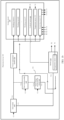
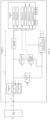
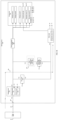
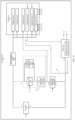
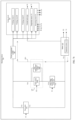
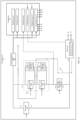
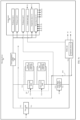
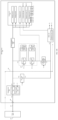
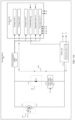
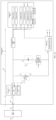
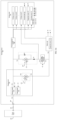
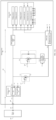
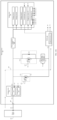
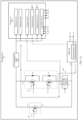
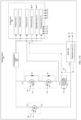
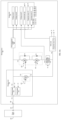
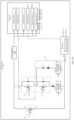
- FIG. 1a to FIG. 1c are diagrams of structures of a group of electronic devices according to an embodiment of this application.
- An electronic device 100 may include a battery 110, a first switch 120, a first switch module 130, a first voltage transformation circuit 131, a power management module 140, and a system circuit 150.
- the battery 110 may include a temperature sensor 111.
- the system circuit 150 may include one or more working circuits (such as a working circuit A to a working circuit N), a coulomb meter 112, a temperature sensor 151, and a processing circuit 152.
- the battery 110 may be electrically connected to the coulomb meter 112, the processing circuit 152 may be electrically connected to the coulomb meter 112, the temperature sensor 111, and the temperature sensor 151, and the processing circuit 152 may control working statuses of the first switch 120, the first switch module 130, and the first voltage transformation circuit 131.
- the processing circuit 152 may include one or more processing units, and the processing circuit 152 may control, through a signal circuit C1, the first switch 120 to be turned on or turned off.
- the first switch 120 In response to that an input signal of a control end of the first switch 120 is a turn-off signal (for example, the turn-off signal received by the control end of the first switch 120 may be a signal output by the processing circuit 152, or may be a signal generated based on a signal output by the processing circuit 152), the first switch 120 is turned off; or in response to that an input signal of a control end of the first switch 120 is a turn-on signal (for example, the turn-on signal received by the control end of the first switch 120 may be a signal output by the processing circuit 152, or may be a signal generated based on a signal output by the processing circuit 152), the first switch 120 is turned on.
- a turn-off signal for example, the turn-off signal received by the control end of the first switch 120 may be a signal output by the processing circuit
- the processing circuit 152 may control, through the signal circuit C1, the first switch 120 to be turned on or turned off, and in response to that the input signal of the control end of the first switch 120 is the turn-on signal or the turn-off signal, the first switch 120 is turned on or turned off is used as a uniform description in the following embodiments.
- the processing circuit 152 may control, through a signal circuit C3, the first switch module 130 to be turned on or turned off.
- the first switch module 130 In response to that an input signal of a control end of the first switch module 130 is a turn-off signal (for example, the turn-off signal received by the control end of the first switch module 130 may be a signal output by the processing circuit 152, or may be a signal generated based on a signal output by the processing circuit 152), the first switch module 130 is turned off; or in response to that an input signal of a control end of the first switch module 130 is a turn-on signal (for example, the turn-on signal received by the control end of the first switch module 130 may be a signal output by the processing circuit 152, or may be a signal generated based on a signal output by the processing circuit 152), the first switch module 130 is turned on.
- a turn-off signal for example, the turn-off signal received by the control end of the first switch module 130 may be a signal output by the processing circuit 152, or may be a signal generated based on a signal output by the processing circuit 152
- the processing circuit 152 may control, through the signal circuit C3, the first switch module 130 to be turned on or turned off, and in response to that the input signal of the control end of the first switch module 130 is the turn-on signal or the turn-off signal, the first switch module 130 is turned on or turned off is used as a uniform description in the following embodiments.
- the processing circuit 152 may control, through a signal circuit C2, the first voltage transformation circuit 131 to work or be disconnected.
- an input signal of a control end of the first voltage transformation circuit 131 is a working signal (for example, the working signal received by the control end of the first voltage transformation circuit 131 may be a signal output by the processing circuit 152, or may be a signal generated based on a signal output by the processing circuit 152), the first voltage transformation circuit 131 works; or in response to that an input signal of a control end of the first voltage transformation circuit 131 is a disconnected signal (for example, the disconnected signal received by the control end of the first voltage transformation circuit 131 may be a signal output by the processing circuit 152, or may be a signal generated based on a signal output by the processing circuit 152), the first voltage transformation circuit 131 is disconnected.
- a working signal for example, the working signal received by the control end of the first voltage transformation circuit 131 may be a signal output by the processing circuit 152, or may be a signal generated based on a signal output by the processing circuit 152
- the processing circuit 152 may control, through the signal circuit C2, the first voltage transformation circuit 131 to work or be disconnected, and in response to that the input signal of the control end of the first voltage transformation circuit 131 is the working signal or the disconnected signal, the first voltage transformation circuit 131 works or is disconnected is used as a uniform description in the following embodiments.
- the first voltage transformation circuit 131 may include a buck circuit and a boost circuit.
- the working circuit may include any one or more circuits of a memory, a logic circuit, an input/output module (for example, a display or an audio module), a communication module (for example, a Bluetooth module or a cellular module), and an electronic component. It should be noted that a quantity of circuits and a circuit type that are included in the working circuit are not specifically limited in embodiments of this application.
- the battery 110 may be electrically connected to a first end of the first switch 120, the battery 110 may provide a voltage V11 for the first switch 120, a second end of the first switch 120 may be electrically connected to an input end of the power management module 140, and an output end of the power management module 140 may be electrically connected to the system circuit 150.
- the processing circuit 152 controls, through the signal circuit C1, the first switch 120 to be turned on. In response to that the input signal of the control end of the first switch 120 is the turn-on signal, the first switch 120 is turned on.
- the battery 110 may supply power to the power management module 140 through the first switch 120, and the second end of the first switch 120 may provide a voltage V12 for the power management module 140.
- the power management module 140 performs voltage conversion to supply power to the system circuit 150.
- the battery 110 may supply power to the system circuit 150 through a path 160, where the path 160 indicates a current flow direction from the battery 110 to the system circuit 150 through the first switch 120 and the power management module 140.
- An output voltage and an output current of the battery 110 may be coupled to the system circuit 150 through the first switch 120 and the power management module 140 to supply power to the system circuit 150.
- the processing circuit 152 may be electrically connected to the temperature sensor 111, the coulomb meter 112, and the temperature sensor 151 separately.
- the processing circuit 152 may detect a temperature T1 by using the temperature sensor 111 or detect a temperature T2 by using the temperature sensor 152.
- the processing circuit 152 may also detect power E1 of the battery by using the coulomb meter 112, and the processing circuit 152 may further detect a voltage of the battery by using the coulomb meter 112.
- the processing circuit 152 may determine, by detecting at least one of the voltage of the battery, the power of the battery, the temperature of the battery, or an ambient temperature, that the electronic device 100 meets a first condition.
- the first condition may include at least one of four conditions: The temperature of the battery 110 is not higher than a first preset temperature threshold, the power of the battery 110 is not higher than a first preset battery capacity threshold, the voltage of the battery 110 is not higher than a first preset voltage threshold, or the ambient temperature is not higher than a second preset temperature threshold.
- a preset working voltage threshold of the electronic device 100 may be a second preset voltage threshold. Therefore, the first preset voltage threshold needs to be not lower than the second preset voltage threshold. To ensure that the electronic device 100 can work normally, the voltage V11 of the battery 110 is not lower than the second preset voltage threshold. It should be noted that a manner in which the processing circuit 152 detects each of the temperature of the battery, the power of the battery, the voltage of the battery, and the ambient temperature is not specifically limited in embodiments of this application.
- the system circuit 150 may include one or more working circuits
- the power management module 140 may include a boost circuit and a buck circuit.
- the power management module 140 performs boost conversion or buck conversion on an input voltage through at least one of the boost circuit or the buck circuit, to output a boosted or bucked voltage through a voltage output end.
- the power management module 140 may have one or more voltage output ends, and the one or more voltage output ends of the power management module 140 separately supply power to one or more working circuits of the system circuit 150.
- either of the temperature T1 and the temperature T2 may be the temperature of the battery or the ambient temperature.
- the first condition may be that the temperature of the battery 110 is not higher than the first preset temperature threshold, and the power of the battery 110 is not higher than the first preset battery capacity threshold.
- the first preset temperature threshold may be -15 degrees
- the first condition may alternatively be that the voltage of the battery 110 is not higher than the first preset voltage threshold.
- the first preset voltage threshold may be 3.5 V That the processing circuit 152 detects that the electronic device 100 meets the first condition may include that the processing circuit 152 detects that the voltage of the battery 110 is lower than or equal to 3.5 V
- the battery 110 may be electrically connected to an input end of the first voltage transformation circuit 131, and the battery 110 may provide the voltage V11 for the first voltage transformation circuit 131.
- a first output end of the first voltage transformation circuit 131 may be electrically connected to a first end of the first switch module 130, a second end of the first switch module 130 may be electrically connected to the input end of the power management module 140, and the output end of the power management module 140 may be electrically connected to the system circuit 150.
- the processing circuit 152 may be electrically connected to the first voltage transformation circuit 131. When the processing circuit 152 detects that the electronic device 100 meets the first condition, the processing circuit 152 may control, through the signal circuit C2, the first voltage transformation circuit 131 to work.
- the first voltage transformation circuit 131 works. After performing voltage conversion on the voltage of the battery, the first voltage transformation circuit 131 may output a voltage V131 through the first output end.
- the processing circuit 152 may control, through the signal circuit C3, the first switch module 130 to be turned on.
- the first switch module 130 is turned on.
- the power management module 140 performs voltage conversion by using an output voltage V13 of the first switch module 130 as an input voltage, to supply power to the system circuit 150. For example, as shown in FIG.
- the first switch 120 when the first switch 120 is turned on, and before the battery 110 supplies power to the system circuit 150 through the path 161, it needs to be ensured that an output current of the first voltage transformation circuit 131 cannot exceed an overcurrent threshold of the first voltage transformation circuit 131 when the battery 110 supplies power to the system circuit 150 through the path 161.
- the first switch module 130 When the first switch module 130 is turned on, the first switch module 130 is used as a switch, and an impedance of the first switch module 130 is small or even ignored. Therefore, the output voltage V13 of the first switch module 130 may be considered as the same as the output voltage V131 of the first voltage transformation circuit 131. In embodiments of this application, "same" does not mean absolute same.
- the processing circuit 152 may control, to be lower than or equal to the output voltage V12 of the first switch 120, the output voltage V13 obtained after the output voltage V131 of the first voltage transformation circuit 131 passes through the first switch module 130.
- the output voltage V131 of the first voltage transformation circuit 131 needs to be higher than the second preset voltage threshold, to ensure that after the first switch 120 is turned off, the output voltage V13 of the first switch module 130 can ensure normal working of the electronic device 100, and the electronic device is not powered off because the first switch 120 is turned off.
- the some circuits of the system circuit 150 may be any one or more of a memory card, a universal flash storage (Universal Flash Storage, UFS), a time-of-flight camera (time-of-flight camera, TOF camera), a screen (TP), or a compass.
- UFS Universal Flash Storage
- TOF camera time-of-flight camera
- TP screen
- compass compass
- the processing circuit 152 when the battery 110 supplies power to the system circuit 150 through the path 160, if the processing circuit 152 detects that the electronic device 100 meets the first condition, the processing circuit 152 may control the first voltage transformation circuit 131 to work, the first switch module 130 is turned on. The path 161 is connected, and power may be supplied to the system circuit 150 through the path 161.
- the output voltage of the first switch module 130 is higher than the second preset voltage threshold and is not higher than the output voltage of the first switch 120, so that the battery 110 can supply power to the system circuit 150 through the path 161, and system power-off caused by overcurrent protection enabled by the first voltage transformation circuit 131 due to an excessively large output current of the first voltage transformation circuit 131 is avoided.
- the processing circuit 152 may control the first switch 120 to be turned off, so that the path 160 is disconnected.
- the output voltage of the first switch module 130 is higher than the second preset voltage threshold, and the first switch module 130 has a capability of supplying power to the system circuit 150. Therefore, after the first switch 120 is turned off, the battery 110 may supply power to the electronic device 100 through the path 161, so that the electronic device 100 is not powered off because the first switch 120 is turned off.
- the first condition includes that the voltage of the battery 110 is not higher than the first preset voltage threshold.
- the second preset voltage threshold is 3.4 V
- the first preset voltage threshold is 3.5 V.
- the processing circuit 152 When the processing circuit detects that an output voltage of the battery 110 is 3.5 V, the processing circuit 152 first controls the first voltage transformation circuit 131 to work, the first switch module 130 is turned on, and the first voltage transformation circuit 131 outputs the voltage 3.5 V, so that the battery 110 can supply power to the system circuit 150 through the path 161; then, the processing circuit 152 controls the switch module 120 to be turned off; and after the switch module 120 is turned off, the battery 110 may supply power to the electronic device 100 through the first voltage transformation circuit 131.
- the processing circuit 152 may also detect a temperature by using a temperature sensor, for example, detect a temperature T1 by using the temperature sensor 111 or detect a temperature T2 by using the temperature sensor 152.
- the processing circuit 152 may also detect power and a voltage of the battery 110, for example, detect power E1 of the battery and a voltage of the battery by using the coulomb meter 112.
- the processing circuit 152 may determine, by detecting at least one of the voltage of the battery, the power of the battery, the temperature of the battery, or an ambient temperature, that the electronic device 100 meets a second condition.
- the battery 110 may supply power to the system circuit 150 through the path 160.
- the processing circuit 152 may output the signal circuit C2 to the control end of the first voltage transformation circuit 131.
- the first voltage transformation circuit 131 stops working, the first output end has no output voltage V131, and the battery 110 stops supplying power to the system circuit 150 through the path 161.
- the first switch 120 is turned on, the path 160 is connected, and the battery 110 may supply power to the system circuit 150 through the path 160, so that the electronic device 100 is not powered off because the first voltage transformation circuit 131 is disconnected.
- the first preset temperature threshold is different from the third preset temperature threshold
- the first preset battery capacity threshold is different from the second preset battery capacity threshold
- the first preset voltage threshold is different from the third preset voltage threshold
- the second preset temperature threshold is different from the fourth preset temperature threshold.
- a person skilled in the art may understand that, because a person skilled in the art may appropriately adjust selection of an electronic component based on a design requirement, because of selection of different electronic components and design tolerances, a difference within a specific range is allowed when two voltages are "the same", for example, a difference is 0.1 V, 0.2 V, or 0.5 V. Therefore, in the solution provided in this embodiment of this application, before the processing circuit 152 controls the first switch 120 to be turned on, the processing circuit 152 may control, to be not higher than the output voltage V11 of the battery 110, the output voltage V13 obtained after the output voltage V131 of the first voltage transformation circuit 131 passes through the first switch module 130.
- the battery 110 is electrically connected to the input end of the first voltage transformation circuit 131, and the first output end of the first voltage transformation circuit 131 may be electrically connected to the some circuits of the system circuit 150.
- the first voltage transformation circuit 131 may supply power to the system circuit 150 through the first output end.
- the battery 110 may further supply power to the system circuit 150 through the path 162.
- the processing circuit 152 may alternatively control the first voltage transformation circuit 131 to stop working. In this case, the first output end of the first voltage transformation circuit 131 has no output, so that power consumption of the first voltage transformation circuit 131 can be reduced.
- FIG. 2a to FIG. 2c each are a diagram of a structure of another electronic device according to an embodiment of this application.
- the electronic device 100 may further include a charging circuit 170 and an external power supply interface 180.
- the charging circuit 170 may include a control module 171 and a charging module 172.
- the electronic device 100 may further be connected to an external power supply 200, and the external power supply 200 may be electrically connected to the electronic device 100 through the external power supply interface 180.
- the external power supply 200 may be electrically connected to the charging module 172 through the external power supply interface 180, and the external power supply 200 may be coupled to the charging module 172 through one or more conducting wires 210 (for example, a cable) to supply power to the charging module 172.
- the processing circuit 152 may be electrically connected to the control module 171 and the charging module 172, and the processing circuit 152 may control working statuses of the charging module 172 and the control module 171.
- the charging circuit 170 may include an integrated charging chip.
- the external power supply 200 may be a charger, or the external power supply 200 may be a portable charging device.
- the first switch 120 may be alternatively disposed in the charging circuit 170, so that an area of a circuit board occupied by the first switch 120 can be reduced, and more electronic components can be placed on the circuit board.
- the processing circuit 152 may include one or more processing units, and the processing circuit 152 may control, through a signal circuit C4, the charging module 172 to work or be disconnected.
- the charging module 172 works; or in response to that an input signal of a control end of the charging module 172 is a disconnected signal (for example, the disconnected signal received by the control end of the charging module 172 may be a signal output by the processing circuit 152, or may be a signal generated based on a signal output by the processing circuit 152), the charging module 172 is disconnected.
- the processing circuit 152 may control, through the signal circuit C4, the charging module 172 to work or be disconnected, and in response to that the input signal of the control end of the charging module 172 is the working signal or the disconnected signal, the charging module 172 works or is disconnected is used as a uniform description in the following embodiments.
- the external power supply 200 when the electronic device 100 is connected to the external power supply 200, the external power supply 200 may be electrically connected to the charging module 172, and the external power supply 200 may provide a voltage V21 for the charging module 172.
- the charging module 172 may be electrically connected to an input end of the power management module 140, and an output end of the power management module 140 may be electrically connected to the system circuit 150.
- the external power supply 200 may supply power to the system circuit 150 through a path 163, where the path 163 indicates a current flow direction from the external power supply 200 to the system circuit 150 through the charging module 172 and the power management module 140.
- An output voltage and current of the external power supply 200 may be coupled to the system circuit 150 through the charging module 172 and the power management module 140 to supply power to the system circuit 150.
- the processing circuit 152 may control, through a signal circuit C3, the first switch module 130 to be turned off.
- the first switch module 130 is turned off, the path 161 is disconnected, and the battery 110 stops supplying power to the system circuit 150 through the path 161.
- the external power supply 200 has supplied power to the system circuit 150 through the path 163, so that the electronic device 100 is not powered off when the path 161 is disconnected.
- the external power supply 200 may be electrically connected to the charging module 172, the charging module 172 may be electrically connected to the first switch 120, and the first switch 120 may be electrically connected to the battery 110.
- the processing circuit 152 may control, through a signal circuit C1, the first switch 120 to be turned on, and in response to that an input signal of a control end of the first switch 120 is a turn-on signal, the first switch 120 is turned on. For example, as shown in FIG.
- control module 171 may further control a working status of the first switch 120.
- the processing circuit 152 may control the control module 171 through a signal circuit C5, so that the control module 171 may control the first switch 120 to be turned on.
- the external power supply 200 may also provide the charging current for the battery 110 through the path 164.
- the battery 110 is electrically connected to an input end of the first voltage transformation circuit 131, and the first output end of the first voltage transformation circuit 131 may be electrically connected to some circuits of the system circuit 150.
- the first voltage transformation circuit 131 supplies power to the system circuit 150 directly through the first output end, refer to descriptions in the foregoing other embodiments. Details are not described herein again.
- the processing circuit 152 may output a signal to the first voltage transformation circuit 131 to control the first voltage transformation circuit 131 to stop working.
- the first output end of the first voltage transformation circuit 131 has no output, so that power consumption of the first voltage transformation circuit 131 can be reduced.
- control module 171 may further control a working status of the charging module 172.
- the processing circuit 152 may control the control module 171 through the signal circuit C5, so that the control module 171 may control the charging module 172 to output a voltage and a current to the power management module 140, and the external power supply 200 may supply power to the system circuit 150 through the path 163.
- the processing circuit 152 when the processing circuit 152 detects that the electronic device 100 meets a first condition, for example, as shown in FIG. 1b , the battery 110 may supply power to the system circuit 150 through a path 161.
- the processing circuit 152 may control, through a signal circuit C1, the first switch 120 to be turned on, and in response to that an input signal of a control end of the first switch 120 is a turn-on signal, the first switch 120 is turned on.
- the path 160 is connected, and the battery 110 may supply power to the system circuit 150 through the path 160.
- an output voltage V12 of the first switch 120 may be considered as the same as an output voltage V11 of the battery 110.
- the processing circuit 152 may output a signal to the first voltage transformation circuit 131 to control the output voltage V13 of the first switch module 130 to be not higher than the output voltage V11 of the battery 110 after the output voltage V131 of the first voltage transformation circuit 131 passes through the first switch module 130.
- control module 171 may further control a working status of the first switch 120.
- the processing circuit 152 may control the control module 171 through a signal circuit C5, so that the control module 171 may control the first switch 120 to be turned on.
- the battery 110 may supply power to the system circuit 150 through the path 160.
- the processing circuit 152 may control, through the signal circuit C3, the first switch module 130 to be turned off.
- the first switch module 130 is turned off, the path 161 is disconnected, and the battery 110 stops supplying power to the system circuit 150 through the path 161.
- the battery 110 has supplied power to the system circuit 150 through the path 160, so that the electronic device 100 is not powered off when the path 161 is disconnected.
- the battery 110 is electrically connected to the input end of the first voltage transformation circuit 131, and the first output end of the first voltage transformation circuit 131 may be electrically connected to some circuits of the system circuit 150.
- the first voltage transformation circuit 131 supplies power to the system circuit 150 directly through the first output end, refer to descriptions in the foregoing other embodiments. Details are not described herein again.
- the processing circuit 152 may alternatively control the first voltage transformation circuit 131 to stop working. In this case, the first output end of the first voltage transformation circuit 131 has no output, so that power consumption of the first voltage transformation circuit 131 can be reduced.
- the processing circuit 152 may control, through the signal circuit C4, the charging module 172 to work.
- the charging module 172 works, and the charging module 172 may provide a voltage V22 for the power management module 140.
- the power management module 140 performs voltage conversion to supply power to the system circuit 150.
- the external power supply 200 may supply power to the system circuit 150 through the path 163.
- the external power supply 200 may be electrically connected to the charging module 172, the charging module 172 may be electrically connected to the first switch 120, and the first switch 120 may be electrically connected to the battery 110.
- the charging module 172 may also provide the voltage V22 for the first switch 120, and the processing circuit 152 may control, through the signal circuit C1, the first switch 120 to be turned on.
- the first switch 120 is turned on, and the first switch 120 may provide a voltage V23 for the battery 110.
- the battery 110 may stop supplying power to the system circuit 150 through the path 160. For example, as shown in FIG.
- the external power supply 200 may provide a charging current for the battery 110 through the path 164. Before the battery 110 stops supplying power to the system circuit 150 through the path 160, the battery 110 has supplied power to the system circuit 150 through the path 163, so that the electronic device 100 is not powered off when the path 160 is disconnected. It should be noted that, for a manner in which the external power supply 200 provides the charging current for the battery 110 through the path 164, refer to specific descriptions in the foregoing embodiments. Details are not described herein again.
- the processing circuit 152 may control the output voltage V13 of the second end of the first switch module 130 to be not higher than the output voltage V22 of the charging module 172 after the output voltage V131 of the first voltage transformation circuit 131 passes through the first switch module 130. This avoids a case in which the first voltage transformation circuit 131 enables overcurrent protection and cannot work normally.
- the first voltage transformation circuit 131 enables overcurrent protection and cannot work normally.
- control module 171 may further control a working status of the charging module 172.
- the processing circuit 152 may output a signal to the control module 171 through the signal circuit C5.
- control module 171 may output a signal to the charging module 172 to control the charging module 172 to output a voltage and a current to the power management module 140, so that the external power supply 200 may supply power to the system circuit 150 through the path 163.
- the processing circuit 152 detects that an output current of the battery 110 is greater than a first preset current threshold, the output voltage and the output current of the external power supply 200 may be all supplied to the system circuit 150, and the battery 110 may supply power to the system circuit 150 through the path 160.
- the system circuit 150 may obtain input currents through both the path 160 and the path 163, so that the electronic device 100 can support a higher system load.
- FIG. 3a and FIG. 3b each are a diagram of a structure of another electronic device according to an embodiment of this application.
- FIG. 3a and FIG. 3b show an implementation of the first switch module 130 in FIG. 1a to FIG. 1c .
- the first switch module 130 may include a first unidirectional conductive switch 1301.
- a battery 110 may be electrically connected to an input end of the first voltage transformation circuit 131, a first output end of the first voltage transformation circuit 131 may be electrically connected to a first end of the first unidirectional conductive switch 1301, and a second end of the first unidirectional conductive switch 1301 may be electrically connected to an input end of the power management module 140.
- the battery 110 may supply power to the system circuit 150 through a path 160.
- the processing circuit 152 may control the first voltage transformation circuit 131 to work. After performing voltage conversion on a voltage of the battery, the first voltage transformation circuit 131 may output a voltage V131 through the first output end.
- the first unidirectional conductive switch 1301 may have unidirectional conductivity, and a unidirectional conduction direction of the first unidirectional conductive switch 1301 is a direction from the first voltage transformation circuit 131 to the power management module 140.
- the first unidirectional conductive switch 1301 When the voltage V131 output by the first output end of the first voltage transformation circuit 131 is higher than a positive conduction voltage of the first unidirectional conductive switch 1301, the first unidirectional conductive switch 1301 is turned on, and the first output end of the first voltage transformation circuit 131 may provide an input voltage V13 for the power management module 140 through the first unidirectional conductive switch 1301. Then, the power management module 140 performs voltage conversion, to supply power to the system circuit 150. For example, as shown in FIG. 3b , the battery 110 may supply power to the system circuit 150 through a path 1611, where the path 1611 indicates a current flow direction from the battery 110 to the system circuit 150 through the first voltage transformation circuit 131, the first unidirectional conductive switch 1301, and the power management module 140.
- the battery 110 may be coupled to the system circuit 150 through the first voltage transformation circuit 131, the first unidirectional conductive switch 1301, and the power management module 140, to supply power to the electronic device 100.
- the first unidirectional conductive switch 1301 may be used. This avoids a case in which an output current of the battery 110 is excessively large and exceeds an overcurrent threshold of the battery 110 when an output voltage V12 of the first switch 120 is higher than the output voltage V13 of the second end of the first unidirectional conductive switch 1301, avoids overcurrent protection of the battery 110, and further prevents the electronic device 100 from being powered off.
- the power management module 140, and the system circuit 150 refer to related descriptions in the foregoing other embodiments. Details are not described herein again.
- the processing circuit 152 may control the output voltage V13 of the second end of the first unidirectional conductive switch 1301 to be lower than or equal to the voltage V12 output by the second end of the first switch 120 after the output voltage V131 of the first voltage transformation circuit 131 passes through the first unidirectional conductive switch 1301.
- V13 is higher than V12
- the output current of the first voltage transformation circuit 131 is excessively large; further, the first voltage transformation circuit 131 enables overcurrent protection; and consequently the electronic device 100 is powered off because the battery 110 is in a low-voltage state in this case.
- a voltage obtained after the output voltage V131 of the first voltage transformation circuit 131 passes through the first unidirectional conductive switch 1301 needs to be higher than a second preset voltage threshold, to ensure that after the first switch 120 is turned off, the output voltage V13 of the first unidirectional conductive switch 1301 can ensure normal working of the electronic device 100, and the electronic device 100 is not powered off because the first switch 120 is turned off.
- the processing circuit 152 may control the first switch 120 to be turned off, and the battery 110 stops supplying power to the system circuit 150 through the path 160.
- the battery 110 has supplied power to the system circuit 150 through the path 1611, so that the electronic device 100 is not powered off because the first switch 120 is turned off.
- the output voltage of the first voltage transformation circuit 131 passes through the first unidirectional conductive switch 1301, the output voltage of the first unidirectional conductive switch 1301 is 3.5 V, so that the battery 110 may supply power to the system circuit 150 through the path 1611. Then, the processing circuit 152 controls the first switch 120 to be turned off. Because the processing circuit 152 controls the output voltage of the first unidirectional conductive switch 1301 to be 3.5 V, the electronic device 100 can work normally.
- the processing circuit 152 may control, through a signal circuit C1, the first switch 120 to be turned on. In response to that an input signal of a control end of the first switch 120 is a turn-on signal, the first switch 120 is turned on.
- the path 160 is connected.
- the first unidirectional conductive switch 1301 with unidirectional conductivity may be used.
- the processing circuit 152 may control the output voltage V13 of the first unidirectional conductive switch 1301 to be lower than or equal to the output voltage V12 of the first switch 120 after the output voltage V131 of the first voltage transformation circuit 131 passes through the first unidirectional conductive switch 1301.
- the processing circuit 152 may control, through a signal circuit C2, the first voltage transformation circuit 131 to be disconnected.
- the first voltage transformation circuit 131 is disconnected, and the path 1611 is disconnected.
- the first switch 120 has been turned on, the path 160 is connected, and the battery 110 may supply power to the system circuit 150 through the path 160, so that the electronic device 100 is not powered off because the path 1611 is disconnected.
- FIG. 4a to FIG. 4c each are a diagram of a structure of another electronic device according to an embodiment of this application.
- the electronic device 100 may further include a charging circuit 170 and an external power supply interface 180.
- the charging circuit 170 may include a control module 171 and a charging module 172.
- the electronic device 100 may further be connected to an external power supply 200, and the external power supply 200 may be electrically connected to the electronic device 100 through the external power supply interface 180.
- the external power supply 200 may be electrically connected to the charging module 172 through the external power supply interface 180, and the external power supply 200 may be coupled to the charging module 172 through one or more conducting wires 210 (for example, a cable) to supply power to the charging module 172.
- the processing circuit 152 may be electrically connected to the control module 171 and the charging module 172, and the processing circuit 152 may control working statuses of the charging module 172 and the control module 171.
- the charging circuit 170 may include an integrated charging chip.
- the external power supply 200 may be a charger, or the external power supply 200 may be a portable charging device.
- the first switch 120 may be alternatively disposed in the charging circuit 170, so that an area of a circuit board occupied by the first switch 120 can be reduced, and more electronic components can be placed on the circuit board.
- the external power supply 200 when the electronic device 100 is connected to the external power supply 200, the external power supply 200 may be electrically connected to the charging module 172, and the external power supply 200 may provide a voltage V21 for the charging module 172.
- the charging module 172 may be electrically connected to an input end of the power management module 140, and an output end of the power management module 140 may be electrically connected to the system circuit 150.
- the processing circuit 152 may control, through a signal circuit C4, the charging module 172 to work.
- the charging module 172 works, and the charging module 172 may provide a voltage V22 for the power management module 140.
- the power management module 140 performs voltage conversion to supply power to the system circuit 150.
- the external power supply 200 may supply power to the system circuit 150 through a path 163.
- the processing circuit 152 may control, to be not higher than the output voltage V22 of the charging module 172, an output voltage V13 that is of the first unidirectional conductive switch 1301 and that is obtained after an output voltage V131 of the first voltage transformation circuit 131 passes through the first unidirectional conductive switch 1301.
- the external power supply 200 may be electrically connected to the charging module 172, the charging module 172 may be electrically connected to the first switch 120, and the first switch 120 may be electrically connected to the battery 110.
- the processing circuit 152 may control, through a signal circuit C1, the first switch 120 to be turned on.
- the external power supply 200 may also provide a charging current for the battery 110 through a path 164.
- the external power supply 200 provides the charging current for the battery 110 through the path 164, refer to specific descriptions in the foregoing other embodiments. Details are not described herein again.
- control module 171 may further control a working status of the first switch 120.
- the processing circuit 152 may control the control module 171 through a signal circuit C5, so that the control module 171 may control the first switch 120 to be turned on.
- the external power supply 200 may also provide the charging current for the battery 110 through the path 164.
- the processing circuit 152 detects that an output current of the battery 110 is greater than a first preset current threshold, an output voltage and an output current of the external power supply 200 may be all supplied to the system circuit 150, and the battery 110 may also supply power to the system circuit 150 through the path 160.
- the system circuit 150 may obtain input currents through both the path 160 and the path 163, so that the electronic device 100 can support a higher system load.
- the processing circuit 152 may control, through a signal circuit C2, the first voltage transformation circuit 131 to be disconnected, and then control the path 1611 to be disconnected. Before the path 1611 is disconnected, the external power supply 200 has supplied power to the system circuit 150 through the path 163, so that the electronic device 100 is not powered off when the path 1611 is disconnected.
- the processing circuit 152 may control, through the signal circuit C1, the first switch 120 to be turned on. In response to that an input signal of a control end of the first switch 120 is a turn-on signal, the first switch 120 is turned on. For example, as shown in FIG. 3a , the path 160 is connected, and the battery 110 may supply power to the system circuit 150 through the path 160.
- the processing circuit 152 may output a signal to the first voltage transformation circuit 131 to control the output voltage V13 of a second end of the first unidirectional conductive switch to be not higher than the output voltage V11 of the battery 110 after the output voltage V 131 of the first voltage transformation circuit 131 passes through the first unidirectional conductive switch 1301.
- control module 171 may further control a working status of the first switch 120.
- the processing circuit 152 may control the control module 171 through the signal circuit C5, so that the control module 171 may control the first switch 120 to be turned on.
- the battery 110 may supply power to the system circuit 150 through the path 160.
- the external power supply 200 may supply power to the system circuit 150 through the path 163.
- the external power supply 200 may be electrically connected to the charging module 172, the charging module 172 may be electrically connected to the first switch 120, and the first switch 120 may be electrically connected to the battery 110.
- the external power supply 200 may supply power to the system circuit 150 through the path 163, for example, as shown in FIG. 4b , the external power supply 200 may provide a charging current for the battery 110 through the path 164. In this case, the path 160 is disconnected.
- the battery 110 Before the battery 110 stops supplying power to the system circuit 150 through the path 160, the battery 110 has supplied power to the system circuit 150 through the path 163, so that the electronic device 100 is not powered off when the path 160 is disconnected. It should be noted that, for a manner in which the external power supply 200 separately supplies power to the system circuit 150 through the path 163 and provides the charging current for the battery 110 through the path 164, refer to specific descriptions in the foregoing embodiments. Details are not described herein again.
- the processing circuit 152 may control the output voltage V13 of the second end of the first unidirectional conductive switch 1301 to be not higher than the output voltage V22 of the charging module 172 after the output voltage V131 of the first voltage transformation circuit 131 passes through the first unidirectional conductive switch 1301. This avoids a case in which the first voltage transformation circuit 131 enables overcurrent protection and cannot work normally.
- the processing circuit 152 may further control, through the signal circuit C2, the first voltage transformation circuit 131 to be disconnected, and then control the path 1611 to be disconnected.
- the battery 110 Before the path 1611 is disconnected, the battery 110 has supplied power to the system circuit 150 through the path 163, so that the electronic device 100 is not powered off when the path 1611 is disconnected.
- the first voltage transformation circuit 131 For a specific manner of preventing the first voltage transformation circuit 131 from enabling overcurrent protection, refer to descriptions in the foregoing other embodiments. Details are not described herein again.
- the processing circuit 152 may control, through the signal circuit C2, the first voltage transformation circuit 131 to be disconnected, and then control the path 1611 to be disconnected. Before the path 1611 is disconnected, the battery 110 has supplied power to the system circuit 150 through the path 160, so that the electronic device 100 is not powered off when the path 1611 is disconnected.
- control module 171 may further control a working status of the charging module 172.
- the processing circuit 152 may output a signal to the control module 171 through the signal circuit C5.
- control module 171 may output a signal to the charging module 172 to control the charging module 172 to output a voltage and a current to the power management module 140, so that the external power supply 200 may supply power to the system circuit 150 through the path 163.
- the processing circuit 152 detects that an output current of the battery 110 is greater than a first preset current threshold, the output voltage and the output current of the external power supply 200 may be all supplied to the system circuit 150, and the battery 110 may supply power to the system circuit 150 through the path 160.
- the system circuit 150 may obtain input currents through both the path 160 and the path 163, so that the electronic device 100 can support a higher system load.
- a first output end of the first voltage transformation circuit 131 may also be electrically connected to some working circuits of the system circuit 150 directly. After the output voltage V131 of the first output end of the first voltage transformation circuit 131 passes through the first unidirectional conductive switch 1301, the output voltage is higher than the output voltage V12 of the first switch 120, resulting in overcurrent protection of the first voltage transformation circuit 131. Therefore, in some embodiments, the electronic device 100 further includes a second switch 1303 and a second unidirectional conductive switch 1302.
- FIG. 5a to FIG. 5c each are a diagram of a structure of another electronic device according to an embodiment of this application. FIG. 5a to FIG. 5c show another implementation of the first switch module 130 in FIG. 1a to FIG. 1c .
- the first switch module 130 may further include a second switch 1303 and a second unidirectional conductive switch 1302.
- the second switch 1303 is electrically connected in series to a path 1611
- the second unidirectional conductive switch 1302 is electrically connected in parallel to the second switch 1303
- a first end of the second switch 1303 is electrically connected to a first end of the second unidirectional conductive switch 1302
- a second end of the second switch 1303 is electrically connected to a second end of the second unidirectional conductive switch 1302.
- the second unidirectional conductive switch 1302 may be a part of the second switch 1303, so that an area of a circuit board occupied by the second unidirectional conductive switch 1302 can be reduced, and more electronic components can be placed on the circuit board.
- the processing circuit 152 may include one or more processing units, and the processing circuit 152 may control, through a signal circuit C31, the second switch 1303 to be turned on or turned off.
- the second switch 1303 In response to that an input signal of a control end of the second switch 1303 is a turn-off signal (for example, the turn-off signal received by the control end of the second switch 1303 may be a signal output by the processing circuit 152, or may be a signal generated based on a signal output by the processing circuit 152), the second switch 1303 is turned off; or in response to that an input signal of a control end of the second switch 1303 is a turn-on signal (for example, the turn-on signal received by the control end of the second switch 1303 may be a signal output by the processing circuit 152, or may be a signal generated based on a signal output by the processing circuit 152), the first switch 120 is turned on.
- a turn-off signal for example, the turn-off signal received by the control end of the second switch 1303 may
- the processing circuit 152 may control, through the signal circuit C31, the second switch 1303 to be turned on or turned off, and in response to that the input signal of the control end of the second switch 1303 is the turn-on signal or the turn-off signal, the second switch 1303 is turned on or turned off is used as a uniform description in the following embodiments.
- the path 1611 further includes the second switch 1303, where the second switch 1303 is electrically connected in series to the path 1611.
- the path 1611 is configured to indicate a current flow direction from the battery 110 to the system circuit 150 through the first voltage transformation circuit 131, the first unidirectional conductive switch 1301, the second switch 1303, and the power management module 140.
- a path 160 shown in FIG. 5a and the path 160 shown in FIG. 3a are a same path.
- the processing circuit 152 may control an output voltage V131 of the first voltage transformation circuit 131 to be higher than a forward turn-on voltage of the first unidirectional conductive switch 1301, and the first unidirectional conductive switch 1301 is turned on.
- the processing circuit 152 may control, through the signal circuit C31, the second switch 1303 to be turned on.
- the second switch 1303 In response to that the input signal of the control end of the second switch 1303 is the turn-on signal, the second switch 1303 is turned on, the path 1611 is connected, and a first output end of the first voltage transformation circuit 131 may provide an input voltage V13 for the power management module 140 through the first unidirectional conductive switch 1301 and the second switch 1303. Then, the power management module 140 performs voltage conversion to supply power to the system circuit 150.
- the battery 110 may supply power to the system circuit 150 through the path 1611.
- the first unidirectional conductive switch 1301 with unidirectional conductivity may be used.
- the processing circuit 152 may control the output voltage V13 to be lower than or equal to the voltage V12 output by the second end of the first switch 120 after the output voltage V131 of the first voltage transformation circuit 131 passes through the first unidirectional conductive switch 1301 and the second switch 1303.
- V13 is higher than V12
- the output current of the first voltage transformation circuit 131 is excessively large; further, the first voltage transformation circuit 131 enables overcurrent protection; and consequently the electronic device 100 is powered off because the battery 110 is in a low-voltage state in this case.
- the processing circuit 152 may control the first switch 120 to be turned off, and the battery 110 stops supplying power to the system circuit 150 through the path 160.
- the battery 110 has supplied power to the system circuit 150 through the path 1611, so that the electronic device 100 is not powered off because the first switch 120 is turned off.
- an output voltage obtained after the output voltage V131 of the first voltage transformation circuit 131 passes through the first unidirectional conductive switch 1301 and the second switch 1303 needs to be higher than a second preset voltage threshold, to ensure that after the first switch 120 is turned off, the output voltage V13 can ensure normal working of the electronic device 100, and the electronic device 100 is not powered off because the first switch 120 is turned off.
- the battery 110 is electrically connected to an input end of the first voltage transformation circuit 131, and the first output end of the first voltage transformation circuit 131 may be electrically connected to some circuits of the system circuit 150.
- the first output end of the first voltage transformation circuit 131 outputs the voltage V131, and the battery 110 may also supply power to the some circuits of the system circuit 150 through the first output end of the first voltage transformation circuit 131.
- the battery 110 may supply power to the some circuits of the system circuit 150 through a path 162.
- the path 162 indicates a current flow direction from the battery 110 to the system circuit 150 through the first voltage transformation circuit 131.
- An output voltage and current of the battery 110 may be coupled to the system circuit 150 through the first voltage transformation circuit 131. Because the battery 110 directly supplies power to the some circuits of the system circuit 150 through the first voltage transformation circuit 131, and the power management module 140 does not need to perform voltage conversion, a power loss caused by working of an electronic component in the power management module 140 when the power management module 140 performs voltage conversion is reduced, and utilization of power output by the battery 110 can be improved.
- the first condition includes that a voltage of the battery 110 is not higher than a first preset voltage threshold.
- the second preset voltage threshold is 3.4 V
- the first preset voltage threshold is 3.5 V.
- the processing circuit 152 first controls the first voltage transformation circuit 131 to work and the second switch 1303 to be turned on. Because a voltage drop of the first unidirectional conductive switch 1301 is 0.7 V, the processing circuit 152 controls the output voltage of the first voltage transformation circuit 131 to be 4.2 V.
- the processing circuit 152 controls the first switch 120 to be turned off. Because the processing circuit 152 controls the output voltage to be 3.5 V after the output voltage of the first voltage transformation circuit 131 passes through the first unidirectional conductive switch 1301 and the second switch 1303, the electronic device 100 can work normally.
- the processing circuit 152 may control, through a signal circuit C1, the first switch 120 to be turned on. In response to that an input signal of a control end of the first switch 120 is a turn-on signal, the first switch 120 is turned on.
- the path 160 is connected.
- the first unidirectional conductive switch 1301 with unidirectional conductivity may be used.
- the processing circuit 152 may control, to be lower than or equal to the output voltage V12 of the first switch 120, the output voltage V13 obtained after the output voltage V131 of the first voltage transformation circuit 131 passes through the first unidirectional conductive switch 1301 and the second switch 1303. This avoids a case in which when the first switch 120 is turned on, the output current of the first voltage transformation circuit 131 exceeds the overcurrent threshold of the first voltage transformation circuit 131, and consequently the first voltage transformation circuit 131 enables overcurrent protection and cannot work normally.
- the battery 110 is electrically connected to the input end of the first voltage transformation circuit 131, and the first output end of the first voltage transformation circuit 131 may be electrically connected to the some circuits of the system circuit 150.
- the second switch 1303 When the second switch 1303 is turned off, the path 1611 is disconnected, and the first voltage transformation circuit 131 may supply power to the system circuit 150 through the first output end.
- the battery 110 may further supply power to the system circuit 150 through the path 162.
- a unidirectional conduction direction of the second unidirectional conductive switch 1302 is a direction from the first switch 120 to the first voltage transformation circuit 131.
- the second unidirectional conductive switch 1302 is turned on.
- the first switch 120 is turned on, the second switch 1303 is turned off, and the first voltage transformation circuit 131 outputs a voltage through the first output end, and when the output voltage V131 of the first voltage transformation circuit 131 is higher than the forward conduction voltage of the first unidirectional conductive switch 1301, the first unidirectional conductive switch 1301 is turned on.
- the second unidirectional conductive switch 1302 Because the second unidirectional conductive switch 1302 has unidirectional conductivity, the second unidirectional conductive switch 1302 is not turned on. This can avoid a case in which when an output voltage obtained after the output voltage V131 of the first voltage transformation circuit 131 passes through the first unidirectional conductive switch 1301 is higher than the output voltage V12 of the first switch 120, if the second unidirectional conductive switch 1302 is turned on, when the output voltage V13 obtained after the output voltage V131 of the first voltage transformation circuit 131 passes through the first unidirectional conductive switch 1301 and the second unidirectional conductive switch 1302 is higher than the output voltage V12 of the first switch 120, because the voltage V13 is electrically connected to the voltage V12 through a wire, an output current of a second end of the first unidirectional conductive switch 1301 is excessively large; further, the output current of the first voltage transformation circuit 131 is excessively large, and consequently the first voltage transformation circuit 131 enables overcurrent protection and cannot work normally.
- the output voltage V12 is higher than the forward conduction voltage of the second unidirectional conductive switch 1302, and the second unidirectional conductive switch 1302 is turned on. Because the first unidirectional conductive switch 1301 has unidirectional conductivity, the first unidirectional conductive switch 1301 is not turned on.
- the processing circuit 152 may alternatively control the first voltage transformation circuit 131 to stop working. In this case, the first output end of the first voltage transformation circuit 131 has no output, so that power consumption of the first voltage transformation circuit 131 can be reduced.
- the processing circuit 152 may control, through the signal circuit C31, the second switch 1303 to be turned off.
- the second switch 1303 is turned off, and the path 1611 is disconnected.
- the first switch 120 is turned on, and the path 160 is connected. Therefore, the battery 110 may supply power to the system circuit 150 through the path 160, so that the electronic device 100 is not powered off because the path 1611 is disconnected.
- FIG. 6a to FIG. 6c each are a diagram of a structure of another electronic device according to an embodiment of this application.
- the electronic device 100 may further include a charging circuit 170 and an external power supply interface 180.
- the charging circuit 170 may include a control module 171 and a charging module 172.
- the electronic device 100 may further be connected to an external power supply 200, and the external power supply 200 may be electrically connected to the electronic device 100 through the external power supply interface 180.
- the processing circuit 152 may be electrically connected to the control module 171 and the charging module 172, and the processing circuit 152 may control working statuses of the charging module 172 and the control module 171. It should be noted that, for the charging circuit 170 and the external power supply 200, refer to related descriptions in the foregoing other embodiments. Details are not described herein again.
- the first switch 120 may be alternatively disposed in the charging circuit 170, so that an area of a circuit board occupied by the first switch 120 can be reduced, and more electronic components can be placed on the circuit board.
- the external power supply 200 when the electronic device 100 is connected to the external power supply 200, the external power supply 200 may be electrically connected to the charging module 172, and the external power supply 200 may provide a voltage V21 for the charging module 172.
- the charging module 172 may be electrically connected to an input end of the power management module 140, and an output end of the power management module 140 may be electrically connected to the system circuit 150.
- the processing circuit 152 may control, through a signal circuit C4, the charging module 172 to work, and the charging module 172 may provide a voltage V22 for the power management module 140. Then, the power management module 140 performs voltage conversion to supply power to the system circuit 150. For example, as shown in FIG. 6a , the external power supply 200 may supply power to the system circuit 150 through a path 163.
- the processing circuit 152 may control, to be not higher than the output voltage V22 of the charging module 172, an output voltage V13 obtained after an output voltage V131 of the first voltage transformation circuit 131 passes through the first unidirectional conductive switch 1301 and the second switch 1303.
- the external power supply 200 may be electrically connected to the charging module 172, the charging module 172 may be electrically connected to the first switch 120, and the first switch 120 may be electrically connected to the battery 110.
- the external power supply 200 supplies power to the system circuit 150 through the path 163, for example, as shown in FIG. 6b
- the external power supply 200 may also provide a charging current for the battery 110 through a path 164.
- the external power supply 200 provides the charging current for the battery 110 through the path 164, refer to specific descriptions in the foregoing other embodiments. Details are not described herein again.
- control module 171 may further control a working status of the first switch 120.
- control module 171 may further control a working status of the first switch 120.
- the system circuit 150 may obtain input currents through both the path 160 and the path 163, so that the electronic device 100 can support a higher system load.
- the processing circuit 152 may control, through a signal circuit C31, the second switch 1303 to be turned off, and then control the path 1611 to be disconnected. Before the path 1611 is disconnected, the external power supply 200 has supplied power to the system circuit 150 through the path 163, so that the electronic device 100 is not powered off when the path 1611 is disconnected.
- the path 1611 when the second switch 1303 is turned off, the path 1611 is disconnected, and the first voltage transformation circuit 131 may further supply power to the system circuit 150 through a first output end.
- the battery 110 may further supply power to the system circuit 150 through the path 162.
- first unidirectional conductive switch 1301 and the second unidirectional conductive switch 1302 have unidirectional conductivity, to avoid a case in which the first voltage transformation circuit 131 enables overcurrent protection and cannot work normally; and avoid a case in which the battery 110 enables overcurrent protection, so that the electronic device 100 is not powered off.
- the processing circuit 152 may alternatively control the first voltage transformation circuit 131 to stop working. In this case, the first output end of the first voltage transformation circuit 131 has no output, so that power consumption of the first voltage transformation circuit 131 can be reduced.
- the processing circuit 152 may control, through a signal circuit C1, the first switch 120 to be turned on. For example, as shown in FIG. 5a , the path 160 is connected.
- an output voltage of a second end of the first switch circuit 120 may be considered as the same as an output voltage V11 of the battery 110. Therefore, in the solution provided in this embodiment of this application, before the battery 110 supplies power to the system circuit 150 through the path 160, the processing circuit 152 may output a signal to the first voltage transformation circuit 131 to control, to be not higher than the output voltage V11 of the battery 110, the output voltage V13 obtained after the output voltage V131 of the first voltage transformation circuit 131 passes through the first unidirectional conductive switch 1301 and the second switch 1303.
- control module 171 may further control a working status of the first switch 120.
- control module 171 may further control a working status of the first switch 120.
- the external power supply 200 may separately supply power to the system circuit 150 through the path 163 and charge the battery 110 through the path 164. In this case, the path 160 is disconnected.
- the processing circuit 152 may control, to be not higher than the output voltage V22 of the charging module 172, the output voltage V13 obtained after the output voltage V131 of the first voltage transformation circuit 131 passes through the first unidirectional conductive switch 1301 and the second switch 1303. This avoids a case in which the first voltage transformation circuit 131 enables overcurrent protection and cannot work normally.
- the processing circuit 152 may further control, through the signal circuit C31, the second switch 1303 to be turned off, and then control the path 1611 to be disconnected.
- the battery 110 Before the path 1611 is disconnected, the battery 110 has supplied power to the system circuit 150 through the path 163, so that the electronic device 100 is not powered off when the path 1611 is disconnected.
- the battery 110 For details, refer to the descriptions in the foregoing other embodiments. Details are not described herein again.
- control module 171 may further control a working status of the charging module 172.
- control module 171 may further control a working status of the charging module 172.
- the system circuit 150 may obtain input currents through both the path 160 and the path 163, so that the electronic device 100 can support a higher system load.
- the processing circuit 152 may control, through the signal circuit C31, the second switch 1303 to be turned off, and then control the path 1611 to be disconnected.
- the processing circuit 152 controls the path 163 and the path 164 to be connected.
- the battery 110 has supplied power to the system circuit 150 through the path 160, so that the electronic device 100 is not powered off when the path 1611 is disconnected.
- the path 1611 when the second switch 1303 is turned off, the path 1611 is disconnected, and the first voltage transformation circuit 131 may supply power to the system circuit 150 through the first output end.
- the battery 110 may further supply power to the system circuit 150 through the path 162. Because the first unidirectional conductive switch 1301 and the second unidirectional conductive switch 1302 have unidirectional conductivity, to avoid a case in which the first voltage transformation circuit 131 enables overcurrent protection and cannot work normally; and avoid a case in which the battery 110 enables overcurrent protection, so that the electronic device 100 is not powered off.
- the first voltage transformation circuit 131 enables overcurrent protection and cannot work normally
- the battery 110 enables overcurrent protection
- the processing circuit 152 may alternatively control the first voltage transformation circuit 131 to stop working. In this case, the first output end of the first voltage transformation circuit 131 has no output, so that power consumption of the first voltage transformation circuit 131 can be reduced.
- the first switch module 130 may further include a third switch 1304.
- a first output end of the first voltage transformation circuit 131 is electrically connected to a first end of the third switch 1304, a second end of the third switch 1304 is electrically connected to an input end of the power management module 140, and the third switch 1304 is electrically connected in parallel to the first unidirectional conductive switch 1301.
- the first unidirectional conductive switch 1301 may be a part of the third switch 1304, so that an area of a circuit board occupied by the first unidirectional conductive switch 1301 can be reduced, and more electronic components can be placed on the circuit board.
- the processing circuit 152 may include one or more processing units, and the processing circuit 152 may control, through a signal circuit C32, the third switch 1304 to be turned on or turned off.
- the third switch 1304 In response to that an input signal of a control end of the third switch 1304 is a turn-off signal (for example, the turn-off signal received by the control end of the third switch 1304 may be a signal output by the processing circuit 152, or may be a signal generated based on a signal output by the processing circuit 152), the third switch 1304 is turned off; or in response to that an input signal of a control end of the third switch 1304 is a turn-on signal (for example, the turn-on signal received by the control end of the third switch 1304 may be a signal output by the processing circuit 152, or may be a signal generated based on a signal output by the processing circuit 152), the first switch 120 is turned on.
- a turn-off signal for example, the turn-off signal received by the control end of the third switch 1304 may
- the processing circuit 152 may control, through the signal circuit C32, the third switch 1304 to be turned on or turned off, and in response to that the input signal of the control end of the third switch 1304 is the turn-on signal or the turn-off signal, the third switch 1304 is turned on or turned off is used as a uniform description in the following embodiments.
- the processing circuit 152 may control an output voltage V131 of the first voltage transformation circuit 131 to be higher than a forward conduction voltage of the first unidirectional conductive switch 1301, and then the first unidirectional conductive switch 1301 is turned on.
- a path 1611 is connected.
- the first unidirectional conductive switch 1301 with unidirectional conductivity may be used, so that the electronic device 100 is not powered off.
- the first voltage transformation circuit 131 enables overcurrent protection, and the electronic device 100 is powered off because the battery 110 is in a low-voltage state in this case.
- the processing circuit 152 may control, through a signal circuit C1, the first switch 120 to be turned off, and the battery 110 stops supplying power to the system circuit 150 through the path 160. Before the battery 110 stops supplying power to the system circuit 150 through the path 160, the battery 110 has supplied power to the system circuit 150 through the path 1611, so that the electronic device 100 is not powered off because the first switch 120 is turned off.
- a voltage V13 is the voltage V131 minus a voltage drop of the first unidirectional conductive switch 1301.
- a voltage V13 is the voltage V131 minus a voltage drop of the third switch 1304.
- the voltage drop of the first unidirectional conductive switch 1301 is higher than the voltage drop of the third switch 1304, when the output voltage V131 of the first output end of the first voltage transformation circuit 131 remains unchanged, the voltage V13 corresponding to a case in which the battery 110 supplies power to the system circuit 150 through the path 1612 is higher than the voltage V13 corresponding to a case in which the battery supplies power to the system circuit 150 through the path 1611.
- a higher voltage V13 indicates a higher output voltage V131 of the first voltage transformation circuit 131.
- an input voltage of the first voltage transformation circuit 131 is an output voltage V11 of the battery 110
- a higher output voltage V131 of the first voltage transformation circuit 131 indicates a larger voltage difference between an input voltage and an output voltage of the first voltage transformation circuit 131, and lower efficiency of the first voltage transformation circuit 131. Therefore, when the battery 110 supplies power to the system circuit 150 through the path 1612, to reduce power consumption of the electronic device 100 and prolong standby time of the electronic device 100, efficiency of the first voltage transformation circuit 131 needs to be improved as much as possible, that is, the output voltage V131 of the first voltage transformation circuit 131 needs to be reduced as much as possible.
- the processing circuit 152 may control the first voltage transformation circuit 131 to reduce an output voltage, to reduce the voltage difference between an output voltage and an input voltage of the first voltage transformation circuit 131 as much as possible.
- the output voltage V 13 of the third switch 1304 needs to be higher than a second preset voltage threshold, to ensure that after the path 1612 is connected, the output voltage V13 can ensure normal working of the electronic device 100, and the electronic device 100 is not powered off because the path 1611 is disconnected.
- the processing circuit 152 may control the output voltage V131 of the first voltage transformation circuit 131 by using a pulse width modulation (Pulse width modulation, PWM) signal.
- PWM pulse width modulation
- the processing circuit 152 changes working time of the first voltage transformation circuit 131 by adjusting a duty cycle of the PWM signal, and then adjusts a magnitude of the output voltage of the first voltage transformation circuit 131.
- the processing circuit 152 may control, through the signal circuit C32, the third switch 1304 to be turned on.
- the third switch 1304 is turned on, and the third switch 1304 may provide the voltage V13 for the power management module 140 through the second end.
- the path 1612 is connected, where the path 1612 indicates a current flow direction from the battery 110 to the system circuit 150 through the first voltage transformation circuit 131, the third switch 1304, and the power management module 140, and the battery 110 may supply power to the system circuit 150 through the path 1612. Because the first unidirectional conductive switch 1301 is bypassed when the third switch 1304 is turned on, power consumption of the electronic device 100 can be reduced, and standby time of the electronic device 100 can be prolonged.
- the first condition includes that a voltage of the battery 110 is not higher than a first preset voltage threshold.
- the second preset voltage threshold is 3.4 V
- the first preset voltage threshold is 3.5 V.
- the processing circuit 152 first controls the first voltage transformation circuit 131 to work. Because a voltage drop of the first unidirectional conductive switch 1301 is 0.7 V, the processing circuit 152 controls the output voltage of the first voltage transformation circuit 131 to be 4.2 V.
- an output voltage of the first unidirectional conductive switch 1301 is 3.5 V, so that the battery 110 may supply power to the system circuit 150 through the path 1611.
- the processing circuit 152 controls the first switch 120 to be turned off.
- the processing circuit 152 controls the third switch 1304 to be turned on, and then controls the output voltage of the first voltage transformation circuit 131 to be 3.5 V.
- an output voltage of the third switch 1304 is 3.5 V, so that the electronic device 100 can work normally.
- the processing circuit 152 may control, through the signal circuit C32, the third switch 1304 to be turned on, so that the path 1612 is connected.
- the processing circuit 152 may control the output voltage V13 of the second end of the third switch 1304 to be equal to a voltage V12 output by the second end of the first switch 120 after the output voltage V131 of the first voltage transformation circuit 131 passes through the third switch 1304.
- the processing circuit 152 may control the first switch 120 to be turned off, and the battery 110 stops supplying power to the system circuit 150 through the path 160.
- the battery 110 Before the battery 110 stops supplying power to the system circuit 150 through the path 160, the battery 110 has supplied power to the system circuit 150 through the path 1612, so that the electronic device 100 is not powered off because the first switch 120 is turned off.
- the output voltage V13 of the third switch 1304 needs to be higher than the second preset voltage threshold, to ensure that after the path 1612 is connected, the output voltage V13 can ensure normal working of the electronic device 100, and the electronic device 100 is not powered off because the path 160 is disconnected.
- the first condition includes that a voltage of the battery 110 is not higher than the first preset voltage threshold.
- the second preset voltage threshold is 3.4 V
- the first preset voltage threshold is 3.5 V.
- the output voltage of the third switch 1304 is 3.5 V, so that the battery 110 may supply power to the system circuit 150 through the path 1612, and then the electronic device 100 can work normally. Then, the processing circuit 152 controls the first switch 120 to be turned off.
- the processing circuit 152 may control, through the signal circuit C32, the third switch 1304 to be turned off. In response to that the input signal of the control end of the third switch 1304 is the turn-off signal, the third switch 1304 is turned off, the path 1612 is disconnected, and the path 1611 is connected.
- the processing circuit 152 may control the path 160 to be connected, and may further control the path 1611 to be disconnected after the path 160 is connected. For details, refer to the embodiment related to FIG. 3a and FIG. 3b . Details are not described herein again.
- FIG. 8a to FIG. 8c each are a diagram of a structure of another electronic device according to an embodiment of this application.
- the electronic device 100 may further include a charging circuit 170 and an external power supply interface 180.
- the charging circuit 170 may include a control module 171 and a charging module 172.
- the electronic device 100 may further be connected to an external power supply 200, and the external power supply 200 may be electrically connected to the electronic device 100 through the external power supply interface 180.
- the processing circuit 152 may be electrically connected to the control module 171 and the charging module 172, and the processing circuit 152 may control working statuses of the charging module 172 and the control module 171. It should be noted that, for the charging circuit 170 and the external power supply 200, refer to related descriptions in the foregoing other embodiments. Details are not described herein again.
- the first switch 120 may be alternatively disposed in the charging circuit 170, so that an area of a circuit board occupied by the first switch 120 can be reduced, and more electronic components can be placed on the circuit board.
- the external power supply 200 when the electronic device 100 is connected to the external power supply 200, the external power supply 200 may be electrically connected to the charging module 172, and the external power supply 200 may provide a voltage V21 for the charging module 172.
- the charging module 172 may be electrically connected to an input end of the power management module 140, and an output end of the power management module 140 may be electrically connected to the system circuit 150.
- the first switch module 130 may further include a third switch 1304.
- a first output end of the first voltage transformation circuit 131 is electrically connected to a first end of the third switch 1304, a second end of the third switch 1304 is electrically connected to an input end of the power management module 140, and the third switch 1304 is electrically connected in parallel to the first unidirectional conductive switch 1301.
- the processing circuit 152 may control, through a signal circuit C32, the third switch 1304 to be turned off.
- the third switch 1304 In response to that an input signal of a control end of the third switch 1304 is a turn-off signal, the third switch 1304 is turned off, and the path 1612 is disconnected.
- the path 1612 When the path 1612 is disconnected, for example, as shown in FIG. 7b , the path 1611 is connected.
- the processing circuit 152 may control a path 163 to be connected, and may further control the path 1611 to be disconnected after the path 163 is connected.
- the processing circuit 152 may further control a path 164 to be connected.
- the processing circuit 152 may control a path 160 to be connected; and may further control the path 1611 to be disconnected after the path 160 is connected, and then control the path 163 and the path 164 to be connected, so that the path 160 is disconnected.
- the processing circuit 152 may control the path 160 to be connected, and then control the path 163 and the path 164 to be connected, so that the path 160 is disconnected; and may further control the path 1611 to be disconnected after the path 160 is disconnected.
- FIG. 4a to FIG. 4c Details are not described herein again.
- FIG. 9a to FIG. 9d each are a diagram of a structure of another electronic device according to an embodiment of this application.
- FIG. 9a to FIG. 9c show another implementation of the first switch module 130 in FIG. 1a to FIG. 1c .
- the electronic device 100 further includes a third switch 1304.
- the first unidirectional conductive switch 1301 is electrically connected in parallel to the third switch 1304, a first end of the third switch 1304 is electrically connected to a first end of the first unidirectional conductive switch 1301, and a second end of the third switch 1304 is electrically connected to a second end of the first unidirectional conductive switch 1301.
- the first unidirectional conductive switch 1301 may be a part of the third switch 1304, so that an area of a circuit board occupied by the first unidirectional conductive switch 1301 can be reduced, and more electronic components can be placed on the circuit board.
- the processing circuit 152 may control an output voltage V131 of the first voltage transformation circuit 131 to be higher than a forward conduction voltage of the first unidirectional conductive switch 1301, and then the first unidirectional conductive switch 1301 is turned on; and the processing circuit 152 may control, through a signal circuit C31, the second switch 1303 to be turned on.
- a path 1611 is connected.
- the first unidirectional conductive switch 1301 with unidirectional conductivity may be used, so that the electronic device 100 is not powered off.
- the processing circuit 152 may control the output voltage V13 to be lower than or equal to the voltage V12 output by the second end of the first switch 120 after the output voltage V131 of the first voltage transformation circuit 131 passes through the first unidirectional conductive switch 1301 and the second switch 1303. It needs to be avoided that the first voltage transformation circuit 131 enables overcurrent protection when the path 1611 is connected, and consequently the electronic device 100 is powered off because the battery 110 is in a low-voltage state in this case. For details, refer to the descriptions in the foregoing other embodiments. Details are not described herein again.
- the processing circuit 152 may control, through a signal circuit C1, the first switch 120 to be turned off, so that the path 160 is disconnected.
- the battery 110 Before the battery 110 stops supplying power to the system circuit 150 through the path 160, the battery 110 has supplied power to the system circuit 150 through the path 1611, so that the electronic device 100 is not powered off because the first switch 120 is turned off.
- the processing circuit 152 may control, through a signal circuit C32, the third switch 1304 to be turned on.
- a path 1612 is connected, where the path 1612 indicates a current flow direction from the battery 110 to the system circuit 150 through the first voltage transformation circuit 131, the third switch 1304, the second switch 1303, and the power management module 140.
- the battery 110 may supply power to the system circuit 150 through the path 1612. Because the first unidirectional conductive switch 1301 is bypassed when the third switch 1304 is turned on, power consumption of the electronic device 100 can be reduced, and standby time of the electronic device 100 can be prolonged.
- efficiency of the first voltage transformation circuit 131 needs to be improved as much as possible, that is, the output voltage V131 of the first voltage transformation circuit 131 needs to be reduced as much as possible, and a voltage difference between an output voltage and an input voltage of the first voltage transformation circuit 131 needs to be reduced as much as possible.
- the output voltage V13 of a first end of the first voltage transformation circuit 131 passes through the third switch 1304 and the second switch 1303, the output voltage V13 needs to be higher than a second preset voltage threshold, to ensure that after the path 1612 is connected, the output voltage V13 can ensure normal working of the electronic device 100, and the electronic device 100 is not powered off because the path 1611 is disconnected.
- the first condition includes that a voltage of the battery 110 is not higher than a first preset voltage threshold.
- the second preset voltage threshold is 3.4 V
- the first preset voltage threshold is 3.5 V.
- the processing circuit 152 first controls the first voltage transformation circuit 131 to work and the second switch 1303 to be turned on. Because a voltage drop of the first unidirectional conductive switch 1301 is 0.7 V, the processing circuit 152 controls the output voltage of the first voltage transformation circuit 131 to be 4.2 V.
- an output voltage is 3.5 V, so that the battery 110 may supply power to the system circuit 150 through the path 1611.
- the processing circuit 152 controls the first switch 120 to be turned off.
- the processing circuit 152 controls the third switch 1304 to be turned on, and then controls the output voltage of the first voltage transformation circuit 131 to be 3.5 V.
- the output voltage is 3.5 V, so that the electronic device 100 can work normally.
- the processing circuit 152 may separately control, through the signal circuit C31 and the signal circuit C32, the second switch 1303 and the third switch 1304 to be turned on, so that the path 1612 is connected.
- the processing circuit 152 may control, to be equal to the voltage V12 output by the second end of the first switch 120, the output voltage V13 obtained after the output voltage V131 of the first voltage transformation circuit 131 passes through the third switch 1304 and the second switch 1303.
- the processing circuit 152 may control, to be equal to the voltage V12 output by the second end of the first switch 120, the output voltage V13 obtained after the output voltage V131 of the first voltage transformation circuit 131 passes through the third switch 1304 and the second switch 1303.
- the processing circuit 152 may control the first switch 120 to be turned off, and the battery 110 stops supplying power to the system circuit 150 through the path 160. Before the battery 110 stops supplying power to the system circuit 150 through the path 160, the battery 110 has supplied power to the system circuit 150 through the path 1612, so that the electronic device 100 is not powered off because the first switch 120 is turned off.
- the output voltage V13 of the first voltage transformation circuit 131 passes through the third switch 1304 and the second switch 1303, the output voltage V13 needs to be higher than the second preset voltage threshold, to ensure that after the path 1612 is connected, the output voltage V13 can ensure normal working of the electronic device 100, and the electronic device 100 is not powered off because the path 160 is disconnected.
- the battery 110 is electrically connected to an input end of the first voltage transformation circuit 131, and a first output end of the first voltage transformation circuit 131 may be electrically connected to some circuits of the system circuit 150.
- the battery 110 may supply power to the some circuits of the system circuit 150 through a path 162.
- the first condition includes that a voltage of the battery 110 is not higher than the first preset voltage threshold.
- the second preset voltage threshold is 3.4 V
- the first preset voltage threshold is 3.5 V.
- an output voltage is 3.5 V, so that the battery 110 may supply power to the system circuit 150 through the path 1612, and then the electronic device 100 can work normally. Then, the processing circuit 152 controls the first switch 120 to be turned off.
- the processing circuit 152 may control, through the signal circuit C32, the third switch 1304 to be turned off, so that the path 1612 is disconnected, and the path 1611 is connected.
- the processing circuit 152 may control the path 160 to be connected, and may further control the path 1611 to be disconnected after the path 160 is connected.
- FIG. 10a to FIG. 10c each are a diagram of a structure of another electronic device according to an embodiment of this application.
- the electronic device 100 may further include a charging circuit 170 and an external power supply interface 180.
- the charging circuit 170 may include a control module 171 and a charging module 172.
- the electronic device 100 may further be connected to an external power supply 200, and the external power supply 200 may be electrically connected to the electronic device 100 through the external power supply interface 180.
- the processing circuit 152 may be electrically connected to the control module 171 and the charging module 172, and the processing circuit 152 may control working statuses of the charging module 172 and the control module 171. It should be noted that, for the charging circuit 170 and the external power supply 200, refer to related descriptions in the foregoing other embodiments. Details are not described herein again.
- the first switch 120 may be alternatively disposed in the charging circuit 170, so that an area of a circuit board occupied by the first switch 120 can be reduced, and more electronic components can be placed on the circuit board.
- the external power supply 200 when the electronic device 100 is connected to the external power supply 200, the external power supply 200 may be electrically connected to the charging module 172, and the external power supply 200 may provide a voltage V21 for the charging module 172.
- the charging module 172 may be electrically connected to an input end of the power management module 140, and an output end of the power management module 140 may be electrically connected to the system circuit 150.
- the first switch module 130 may further include a third switch 1304.
- the first unidirectional conductive switch 1301 is electrically connected in parallel to the third switch 1304, a first end of the third switch 1304 is electrically connected to a first end of the first unidirectional conductive switch 1301, and a second end of the third switch 1304 is electrically connected to a second end of the first unidirectional conductive switch 1301.
- the processing circuit 152 may control, through a signal circuit C32, the third switch 1304 to be turned off.
- the processing circuit 152 may control a path 163 to be connected, and may further control the path 1611 to be disconnected after the path 163 is connected.
- the processing circuit 152 may alternatively control a path 164 to be connected.
- the processing circuit 152 may alternatively control the path 160 to be connected; and may further control the path 1611 to be disconnected after the path 160 is connected, and then control the path 163 and the path 164 to be connected, so that the path 160 is disconnected.
- the processing circuit 152 may alternatively control the path 160 to be connected; and may further control the path 1611 to be disconnected after the path 160 is connected, and then control the path 163 and the path 164 to be connected, so that the path 160 is disconnected.
- the first switch 120, the second switch 1303, the third switch 1304, the first unidirectional conductive switch 1301, and the second unidirectional conductive switch 1302 in the foregoing embodiments may be a switch Q1, a switch Q2, a switch Q3, a diode D1, and a diode D2 respectively.
- Any one or more of the switch Q1, the switch Q2, or the switch Q3 may be a MOS transistor (for example, a PMOS transistor or an NMOS transistor) or may be a triode.
- An anode of the diode D1 is the first end of the first unidirectional conductive switch 1301, and a cathode of the diode D1 is the second end of the first unidirectional conductive switch 1301.
- An anode of the diode D2 is a second end of the second unidirectional conductive switch 1302, and a cathode of the diode D2 is a first end of the second unidirectional conductive switch 1302.
- the first unidirectional conductive switch 1301 may be a part of the third switch 1304, in other words, the diode D1 may be a parasitic diode of the switch Q3; or the diode D1 may be a diode connected in parallel to the switch Q3.
- the second unidirectional conductive switch 1302 may be a part of the second switch 1303, in other words, the diode D2 may be a parasitic diode of the switch Q2; or the diode D2 may be a diode connected in parallel to the switch Q2.
- the following describes in detail the power supply circuit provided in embodiments of this application by using an example in which the first unidirectional conductive switch 1301 and the second unidirectional conductive switch 1302 are the diode D1 and the diode D2 respectively, and the switch Q1, the switch Q2, and the switch Q3 are PMOS transistors.
- the PMOS transistor has an s electrode, a g electrode, and a d electrode, and Vgs is a voltage between the g electrode and the s electrode. When Vgs is lower than a first voltage threshold (for example, -0.4 V), the PMOS transistor is conducted.
- a first voltage threshold for example, -0.4 V
- the processing circuit 152 may include one or more processing units, and the processing circuit 152 may control, through a signal circuit C1, the switch Q1 to be turned on or turned off.
- an input signal of a control end of the switch Q1 is an open circuit (for example, the open circuit received by the control end of the switch Q1 may be a signal output by the processing circuit 152, or may be a signal generated based on a signal output by the processing circuit 152)
- the g electrode may be pulled up to the s electrode by using a pull-up resistor, Vgs is not lower than the first voltage threshold, and the switch Q1 is turned off.
- Vgs is lower than the first voltage threshold, and the switch Q1 is turned on.
- the processing circuit 152 may control, through the signal circuit C1, the switch Q1 to be turned on or turned off, and in response to that the input signal of the control end of the switch Q1 is at the low level or the open circuit, the switch Q1 is turned on or turned off is used as a uniform description in the following embodiments.
- the processing circuit 152 may control, through a signal circuit C31, the switch Q2 to be turned on or turned off.
- an input signal of a control end of the switch Q2 is an open circuit (for example, the open circuit received by the control end of the switch Q2 may be a signal output by the processing circuit 152, or may be a signal generated based on a signal output by the processing circuit 152)
- the g electrode may be pulled up to the s electrode by using a pull-up resistor, Vgs is not lower than the first voltage threshold, and the switch Q2 is turned off.
- Vgs is lower than the first voltage threshold, and the switch Q2 is turned on.
- the processing circuit 152 may control, through the signal circuit C31, the switch Q2 to be turned on or turned off, and in response to that the input signal of the control end of the switch Q2 is at the low level or the open circuit, the switch Q2 is turned on or turned off is used as a uniform description in the following embodiments.
- the processing circuit 152 may control, through a signal circuit C32, the switch Q3 to be turned on or turned off.
- an input signal of a control end of the switch Q3 is an open circuit (for example, the open circuit received by the control end of the switch Q3 may be a signal output by the processing circuit 152, or may be a signal generated based on a signal output by the processing circuit 152)
- the g electrode may be pulled up to the s electrode by using a pull-up resistor, Vgs is not lower than the first voltage threshold, and the switch Q3 is turned off.
- Vgs is lower than the first voltage threshold, and the switch Q3 is turned on.
- the processing circuit 152 may control, through the signal circuit C32, the switch Q3 to be turned on or turned off, and in response to that the input signal of the control end of the switch Q3 is at the low level or the open circuit, the switch Q3 is turned on or turned off is used as a uniform description in the following embodiments.
- FIG. 11a and FIG. 11b show an implementation of the first switch 120 and the first unidirectional conductive switch 1301 in FIG. 3a and FIG. 3b .
- the first switch 120 may include the switch Q1
- the first unidirectional conductive switch 1301 may include the diode D1.
- the battery 110 may be electrically connected to the d electrode of the switch Q1, and an s electrode of the switch Q1 may be electrically connected to an input end of the power management module 140; and the anode of the diode D1 may be electrically connected to a first output end of the first voltage transformation circuit 131, and the cathode of the diode D1 may be electrically connected to the input end of the power management module 140.
- a path 160 indicates a current flow direction from the battery 110 to the system circuit 150 through the switch Q1 and the power management module 140.
- the processing circuit 152 may control, through the signal circuit C1, the switch Q1 to be turned on.
- a path 1611 indicates a current flow direction from the battery 110 to the system circuit 150 through the first voltage transformation circuit 131, the diode D1, and the power management module 140.
- the processing circuit 152 may control the first voltage transformation circuit 131 to work.
- the first voltage transformation circuit 131 may output a voltage V131 through the first output end, and when the output voltage V131 of the first output end of the first voltage transformation circuit 131 is higher than a positive conduction voltage of the diode D1, the diode D1 is conducted, and the path 1611 is connected.
- the processing circuit 152 may control the first voltage transformation circuit 131 to be disconnected, so that the path 1611 is disconnected.
- the processing circuit 152 may control the path 1611 to be connected, and may further control the path 160 to be disconnected after the path 1611 is connected.
- the processing circuit 152 may control the path 1611 to be connected, and may further control the path 160 to be disconnected after the path 1611 is connected.
- the processing circuit 152 may control the path 160 to be connected, and may further control the path 1611 to be disconnected after the path 160 is connected.
- the processing circuit 152 may control the path 160 to be connected, and may further control the path 1611 to be disconnected after the path 160 is connected.
- FIG. 12a to FIG. 12c each are a diagram of a structure of another electronic device according to an embodiment of this application.
- the electronic device 100 may further include a charging circuit 170 and an external power supply interface 180, and an external power supply 200 may be electrically connected to the electronic device 100 through the external power supply interface 180.
- a charging circuit 170 and an external power supply interface 180 may be electrically connected to the electronic device 100 through the external power supply interface 180.
- an external power supply 200 may be electrically connected to the electronic device 100 through the external power supply interface 180.
- the charging circuit 170, the external power supply interface 180, and the external power supply 200 refer to related descriptions in the foregoing other embodiments. Details are not described herein again.
- FIG. 12a to FIG. 12c show an implementation of the first switch 120 and the first unidirectional conductive switch 1301 in FIG. 4a to FIG. 4c .
- the first switch 120 may include the switch Q1
- the first unidirectional conductive switch 1301 may include the diode D1
- the battery 110 may be electrically connected to the d electrode of the switch Q1
- the s electrode of the switch Q1 may be electrically connected to the charging module 172.
- a path 164 indicates a current flow direction from the external power supply 200 to the battery 110 through the charging module 172 and the switch Q1.
- the processing circuit 152 may control, through the signal circuit C1, the switch Q1 to be turned on.
- the switch Q1 In response to that the input signal of the control end of the switch Q1 is the low level, the switch Q1 is turned on, and the path 164 is connected.
- the processing circuit 152 may control, through the signal circuit C1, the switch Q1 to be turned off. In response to that the input signal of the control end of the switch Q1 is the open circuit, the switch Q1 is turned off, and the path 164 is disconnected.
- the processing circuit 152 may control the path 163 to be connected; may further control the path 1611 to be disconnected after the path 163 is connected; and may further control the path 164 to be connected.
- the processing circuit 152 may control the path 160 to be connected; and may further control the path 1611 to be disconnected after the path 160 is connected, and then control the path 163 and the path 164 to be connected, so that the path 160 is disconnected.
- the processing circuit 152 may control the path 160 to be connected, and then control the path 163 and the path 164 to be connected, so that the path 160 is disconnected; and may further control the path 1611 to be disconnected after the path 160 is disconnected.
- the processing circuit 152 may control the path 160 to be connected, and then control the path 163 and the path 164 to be connected, so that the path 160 is disconnected; and may further control the path 1611 to be disconnected after the path 160 is disconnected.
- FIG. 13a to FIG. 13c show an implementation of the first switch 120, the first unidirectional conductive switch 1301, the second switch 1303, and the second unidirectional conductive switch 1302 in FIG. 5a to FIG. 5c .
- the first switch 120 may include the switch Q1
- the first unidirectional conductive switch 1301 may include the diode D1
- the second switch 1303 may include the switch Q2
- the second unidirectional conductive switch 1302 may include the diode D2.
- the diode D2 may be a part of the switch Q2, so that an area of a circuit board occupied by the diode D2 can be reduced, and more electronic components can be placed on the circuit board.
- a path 160 indicates a current flow direction from the battery 110 to the system circuit 150 through the switch Q1 and the power management module 140.
- the processing circuit 152 may control, through a signal circuit C1, the switch Q1 to be turned on. In response to that an input signal of a control end of the switch Q1 is at a low level, the switch Q1 is turned on, and the path 160 is connected.
- the processing circuit 152 may control, through a signal circuit C1, the switch Q1 to be turned off. In response to that an input signal of a control end of the switch Q1 is an open circuit, the switch Q1 is turned off, and the path 160 is disconnected. As shown in FIG.
- the diode D1 and the switch Q2 are electrically connected in series to a path 1611, where the path 1611 indicates a current flow direction from the battery 110 to the system circuit 150 through the first voltage transformation circuit 131, the diode D1, the switch Q2, and the power management module 140.
- the processing circuit 152 may control the first voltage transformation circuit 131 to work, and the first voltage transformation circuit 131 may output a voltage V131 through a first output end. When the output voltage V131 of the first output end of the first voltage transformation circuit 131 is higher than a forward conduction voltage of the diode D1, the diode D1 is conducted.
- the processing circuit 152 may control, through a signal circuit C31, the switch Q2 to be turned on, and in response to that an input signal of a control end of the switch Q2 is at a low level, the switch Q2 is turned on.
- the processing circuit 152 may control, through a signal circuit C31, the switch Q2 to be turned off, and in response to an input signal of a control end of the switch Q2 is an open circuit, the switch Q2 is turned off, and the path 1611 is disconnected.
- the processing circuit 152 may control the path 1611 to be connected, and may further control the path 160 to be disconnected after the path 1611 is connected.
- the processing circuit 152 may control the path 1611 to be connected, and may further control the path 160 to be disconnected after the path 1611 is connected.
- the processing circuit 152 may control the path 160 to be connected, and may further control the path 1611 to be disconnected after the path 160 is connected.
- the processing circuit 152 may control the path 160 to be connected, and may further control the path 1611 to be disconnected after the path 160 is connected.
- the battery 110 may further supply power to some working circuits of the system circuit 150 through a path 162.
- the battery 110 may further supply power to some working circuits of the system circuit 150 through a path 162.
- FIG. 14a to FIG. 14c each are a diagram of a structure of another electronic device according to an embodiment of this application.
- the electronic device 100 may further include a charging circuit 170 and an external power supply interface 180, and an external power supply 200 may be electrically connected to the electronic device 100 through the external power supply interface 180.
- a charging circuit 170 and an external power supply interface 180 may be electrically connected to the electronic device 100 through the external power supply interface 180.
- an external power supply 200 may be electrically connected to the electronic device 100 through the external power supply interface 180.
- the charging circuit 170, the external power supply interface 180, and the external power supply 200 refer to related descriptions in the foregoing other embodiments. Details are not described herein again.
- FIG. 14a to FIG. 14c show an implementation of the first switch 120, the first unidirectional conductive switch 1301, the second switch 1303, and the second unidirectional conductive switch 1302 in FIG. 6a to FIG. 6c .
- the first switch 120 may include the switch Q1
- the first unidirectional conductive switch 1301 may include the diode D1
- the second switch 1303 may include the switch Q2
- the second unidirectional conductive switch 1302 may include the diode D2.
- a path 164 indicates a current flow direction from the external power supply 200 to the battery 110 through the charging module 172 and the switch Q1.
- the processing circuit 152 controls the path 164 to be connected or disconnected refer to specific descriptions in a related embodiment in FIG. 12a to FIG. 12c . Details are not described herein again.
- the processing circuit 152 may control the path 163 to be connected; may further control the path 1611 to be disconnected after the path 163 is connected; and may further control the path 164 to be connected.
- the processing circuit 152 may control the path 160 to be connected; and may further control the path 1611 to be disconnected after the path 160 is connected, and then control the path 163 and the path 164 to be connected, so that the path 160 is disconnected.
- the processing circuit 152 may control the path 160 to be connected, and then control the path 163 and the path 164 to be connected, so that the path 160 is disconnected; and may further control the path 1611 to be disconnected after the path 160 is disconnected.
- the processing circuit 152 may control the path 160 to be connected, and then control the path 163 and the path 164 to be connected, so that the path 160 is disconnected; and may further control the path 1611 to be disconnected after the path 160 is disconnected.
- FIG. 15a to FIG. 15c show an implementation of the first switch 120, the third switch 1304, and the first unidirectional conductive switch 1301 in FIG. 7a to FIG. 7c .
- the first switch 120 may include the switch Q1
- the third switch 1304 may include the switch Q3
- the first unidirectional conductive switch 1301 may include the diode D1.
- the diode D1 may be a part of the switch Q3, so that an area of a circuit board occupied by the diode D1 can be reduced, and more electronic components can be placed on the circuit board.
- a path 160 indicates a current flow direction from the battery 110 to the system circuit 150 through the switch Q1 and the power management module 140.
- a path 1611 indicates a current flow direction from the battery 110 to the system circuit 150 through the first voltage transformation circuit 131, the diode D1, and the power management module 140.
- a path 1612 indicates a current flow direction from the battery 110 to the system circuit 150 through the first voltage transformation circuit 131, the switch Q3, and the power management module 140.
- the processing circuit 152 may control, through a signal circuit C32, the switch Q3 to be turned on.
- the processing circuit 152 may control, through a signal circuit C32, the switch Q3 to be turned off. In response to that an input signal of a control end of the switch Q3 is an open circuit, the switch Q3 is turned off, and the path 1612 is disconnected.
- the processing circuit 152 controls the path 1611 to be connected or disconnected, refer to specific descriptions in a related embodiment in FIG. 11a and FIG. 11b . Details are not described herein again.
- the processing circuit 152 may control the path 1611 to be connected, may further control the path 160 to be disconnected after the path 1611 is connected, and may further control the path 1612 to be connected after the path 160 is disconnected, so that the path 1611 is disconnected.
- the processing circuit 152 may control the path 1612 to be connected, and may further control the path 160 to be disconnected after the path 1612 is connected.
- the processing circuit 152 may control the switch Q3 to be turned off, so that the path 1612 is disconnected and the path 1611 is connected.
- the processing circuit 152 may control the path 160 to be connected, and may further control the path 1611 to be disconnected after the path 160 is connected.
- FIG. 16a to FIG. 16c each are a diagram of a structure of another electronic device according to an embodiment of this application.
- the electronic device 100 may further include a charging circuit 170 and an external power supply interface 180, and an external power supply 200 may be electrically connected to the electronic device 100 through the external power supply interface 180.
- a charging circuit 170 and an external power supply interface 180 may be electrically connected to the electronic device 100 through the external power supply interface 180.
- an external power supply 200 may be electrically connected to the electronic device 100 through the external power supply interface 180.
- the charging circuit 170, the external power supply interface 180, and the external power supply 200 refer to related descriptions in the foregoing other embodiments. Details are not described herein again.
- FIG. 16a to FIG. 16c show an implementation of the first switch 120, the first unidirectional conductive switch 1301, and the third switch 1304 in FIG. 8a to FIG. 8c .
- the first switch 120 may include the switch Q1
- the first unidirectional conductive switch 1301 may include the diode D1
- the third switch 1304 may include the switch Q3.
- a path 164 indicates a current flow direction from the external power supply 200 to the battery 110 through the charging module 172 and the switch Q1.
- the processing circuit 152 controls the path 164 to be connected or disconnected, refer to specific descriptions in a related embodiment in FIG. 12a to FIG. 12c . Details are not described herein again.
- the processing circuit 152 may control, through a signal circuit C32, the switch Q3 to be turned off. In response to that an input signal of a control end of the switch Q3 is a turn-off signal, the switch Q3 is turned off, the path 1612 is disconnected, and a path 1611 is connected.
- the processing circuit 152 may control a path 163 to be connected; may further control the path 1611 to be disconnected after the path 163 is connected; and may further control the path 164 to be connected.
- the processing circuit 152 may control a path 160 to be connected; and may further control the path 1611 to be disconnected after the path 160 is connected, and then control the path 163 and the path 164 to be connected, so that the path 160 is disconnected.
- the processing circuit 152 may control the path 160 to be connected, and then control the path 163 and the path 164 to be connected, so that the path 160 is disconnected; and may further control the path 1611 to be disconnected after the path 160 is disconnected.
- FIG. 8a to FIG. 8c Details are not described herein again.
- FIG. 17a to FIG. 17d show an implementation of the first switch 120, the second switch 1303, the third switch 1304, the first unidirectional conductive switch 1301, and the second unidirectional conductive switch 1302 in FIG. 9a to FIG. 9d .
- the first switch 120 may include the switch Q1, the second switch 1303 may include the switch Q2, the third switch 1304 may include the switch Q3, the first unidirectional conductive switch 1301 may include the diode D1, and the second unidirectional conductive switch 1302 may include the diode D2.
- the processing circuit 152 may control working statuses of the switch Q2, the switch Q3, the switch Q1, and the first voltage transformation circuit 131.
- the diode D1 may be a part of the switch Q3
- the diode D2 may be a part of the switch Q2, so that an area of a circuit board occupied by the diode D1 and the diode D2 can be reduced, and more electronic components can be placed on the circuit board.
- a path 160 indicates a current flow direction from the battery 110 to the system circuit 150 through the switch Q1 and the power management module 140.
- a path 1611 indicates a current flow direction from the battery 110 to the system circuit 150 through the first voltage transformation circuit 131, the diode D1, the switch Q2, and the power management module 140.
- a path 1612 indicates a current flow direction from the battery 110 to the system circuit 150 through the first voltage transformation circuit 131, the switch Q3, the switch Q2, and the power management module 140.
- the processing circuit 152 may control, through a signal circuit C32, the switch Q3 to be turned on, and may control, through a signal circuit C31, the switch Q2 to be turned on. When the switch Q3 and the switch Q2 are turned on, the path 1612 is connected. Alternatively, the processing circuit 152 may control, through a signal circuit C32, the switch Q3 to be turned off, and may control, through a signal circuit C32, the switch Q2 to be turned off. When any one or more of the switch Q3 or the switch Q2 are turned off, the path 1612 is disconnected. For a manner in which the processing circuit 152 controls the path 1611 to be connected or disconnected, refer to specific descriptions in a related embodiment in FIG. 13a to FIG. 13c . Details are not described herein again.
- the processing circuit 152 may control the path 1611 to be connected, may further control the path 160 to be disconnected after the path 1611 is connected, and may further control the path 1612 to be connected after the path 160 is disconnected, so that the path 1611 is disconnected; or when the processing circuit 152 detects that the electronic device 100 meets a first condition, the processing circuit 152 may control the path 1612 to be connected, and may further control the path 160 to be disconnected after the path 1612 is connected.
- the processing circuit 152 may control the path 1612 to be connected, and may further control the path 160 to be disconnected after the path 1612 is connected.
- the processing circuit 152 may control the switch Q3 to be turned off, so that the path 1612 is disconnected and the path 1611 is connected.
- the processing circuit 152 may control the path 160 to be connected, and may further control the path 1611 to be disconnected after the path 160 is connected.
- the battery 110 may further supply power to some working circuits of the system circuit 150 through a path 162.
- the battery 110 may further supply power to some working circuits of the system circuit 150 through a path 162.
- FIG. 18a to FIG. 18c each are a diagram of a structure of another electronic device according to an embodiment of this application.
- the electronic device 100 may further include a charging circuit 170 and an external power supply interface 180, and an external power supply 200 may be electrically connected to the electronic device 100 through the external power supply interface 180.
- a charging circuit 170 and an external power supply interface 180 may be electrically connected to the electronic device 100 through the external power supply interface 180.
- an external power supply 200 may be electrically connected to the electronic device 100 through the external power supply interface 180.
- the charging circuit 170, the external power supply interface 180, and the external power supply 200 refer to related descriptions in the foregoing other embodiments. Details are not described herein again.
- FIG. 18a to FIG. 18c show an implementation of the first switch 120, the second switch 1303, the third switch 1304, the first unidirectional conductive switch 1301, and the second unidirectional conductive switch 1302 in FIG. 10a to FIG. 10c .
- the first switch 120 may include the switch Q1, the second switch 1303 may include the switch Q2, the third switch 1304 may include the switch Q3, the first unidirectional conductive switch 1301 may include the diode D1, and the second unidirectional conductive switch 1302 may include the diode D2.
- a path 164 indicates a current flow direction from the external power supply 200 to the battery 110 through the charging module 172 and the switch Q1.
- the processing circuit 152 controls the path 164 to be connected or disconnected refer to specific descriptions in a related embodiment in FIG. 12a to FIG. 12c . Details are not described herein again.
- the processing circuit 152 may control, through a signal circuit C32, the switch Q3 to be turned off. In response to that an input signal of a control end of the switch Q3 is a turn-off signal, the switch Q3 is turned off, the path 1612 is disconnected, and a path 1611 is connected.
- the processing circuit 152 may control a path 163 to be connected; may further control the path 1611 to be disconnected after the path 163 is connected; and may further control the path 164 to be connected.
- the processing circuit 152 may control a path 160 to be connected; and may further control the path 1611 to be disconnected after the path 160 is connected, and then control the path 163 and the path 164 to be connected, so that the path 160 is disconnected.
- the processing circuit 152 may control the path 160 to be connected, and then control the path 163 and the path 164 to be connected, so that the path 160 is disconnected; and may further control the path 1611 to be disconnected after the path 160 is disconnected.
- FIG. 10a to FIG. 10c Details are not described herein again.
- FIG. 19a and FIG. 19b each are a diagram of a structure of another electronic device according to an embodiment of this application.
- the electronic device 100 may further include a second voltage transformation circuit 132 and a diode D3, and the processing circuit 152 may control a working status of the second voltage transformation circuit 132.
- the battery 110 may be electrically connected to an input end of the second voltage transformation circuit 132, a first output end of the second voltage transformation circuit 132 may be electrically connected to an anode of the diode D3, and a cathode of the diode D3 may be electrically connected to a cathode of the diode D1.
- the processing circuit 152 may include one or more processing units, and the processing circuit 152 may control, through a signal circuit C6, the second voltage transformation circuit 132 to work or be disconnected.
- an input signal of a control end of the second voltage transformation circuit 132 is a working signal (for example, the working signal received by the control end of the second voltage transformation circuit 132 may be a signal output by the processing circuit 152, or may be a signal generated based on a signal output by the processing circuit 152), the second voltage transformation circuit 132 works.
- the second voltage transformation circuit 132 in response to that an input signal of a control end of the second voltage transformation circuit 132 is a disconnected signal (for example, the disconnected signal received by the control end of the second voltage transformation circuit 132 may be a signal output by the processing circuit 152, or may be a signal generated based on a signal output by the processing circuit 152), the second voltage transformation circuit 132 is disconnected.
- the processing circuit 152 may control, through the signal circuit C6, the second voltage transformation circuit 132 to work or be disconnected, and in response to that the input signal of the control end of the second voltage transformation circuit 132 is the working signal or the disconnected signal, the second voltage transformation circuit 132 works or is disconnected is used as a uniform description in the following embodiments.
- the processing circuit 152 may control, through the signal circuit C6, the second voltage transformation circuit 132 to work. In response to that the input signal of the control end of the second voltage transformation circuit 132 is the working signal, the second voltage transformation circuit 132 works. After performing voltage conversion on an input voltage, the second voltage transformation circuit 132 may output a voltage V133 through the first output end. When the output voltage V133 is higher than a forward conduction voltage of the diode D3, the diode D3 is conducted. The processing circuit 152 may control, through a signal circuit C31, the switch Q2 to be turned on.
- the battery 110 may supply power to the system circuit 150 through a path 165, and the path 165 indicates a current flow direction from the battery 110 to the system circuit 150 through the second voltage transformation circuit 132, the diode D3, the switch Q2, and the power management module 140, an output voltage and an output current of the battery 110 may be coupled to the system circuit 150 through the second voltage transformation circuit 132, the diode D3, the switch Q2, and the power management module 140 to supply power to the system circuit 150.
- the processing circuit 152 may control any one or more of the first voltage transformation circuit 131 or the second voltage transformation circuit 132 to adjust an output voltage, so that after the output voltage V132 of the second voltage transformation circuit 132 passes through the diode D3, an output voltage of the diode D3 is equal to an output voltage obtained after the output voltage V131 of the first voltage transformation circuit 131 passes through the diode D1, and then an output current provided by the battery 110 for the system circuit 150 through the path 1611 is equal to an output current provided by the battery 110 for the system circuit 150 through the path 165.
- either of the first voltage transformation circuit 131 or the second voltage transformation circuit 132 before both the path 1612 and the path 165 are connected, either of the first voltage transformation circuit 131 or the second voltage transformation circuit 132 also cannot enable current protection.
- the path 1612 and a method for preventing either of the first voltage transformation circuit 131 or the second voltage transformation circuit 132 from enabling current protection refer to descriptions in the foregoing embodiments. Details are not described herein again.
- the electronic device may supply power to the power management module 140 through both the path 1611 and the path 165, a larger input current may be provided for the power management module 140, so that a higher system load can be supported.
- the electronic device 100 may further include a resistor R1 and a resistor R2.
- the resistor R1 is electrically connected in series to the path 1611 and the path 1612.
- the path 1611 is a current flow direction from the battery 110 to the system circuit 150 through the first voltage transformation circuit 131, the resistor R1, the diode D1, the switch Q2, and the power management module 140
- the path 1612 is a current flow direction from the battery 110 to the system circuit 150 through the first voltage transformation circuit 131, the resistor R1, the switch Q3, the switch Q2, and the power management module 140
- the resistor R2 is electrically connected in series to the path 165.
- the path 165 is a current flow direction from the battery 110 to the system circuit 150 through the second voltage transformation circuit 132, the diode D3, the resistor R2, the switch Q2, and the power management module 140.
- the resistor R1 and the resistor R2 have a current equalization function.
- a voltage obtained after the output voltage V131 of the first voltage transformation circuit 131 passes through the resistor R1 and the diode D1 is higher than a voltage obtained after the output voltage V133 of the second voltage transformation circuit 132 passes through the resistor R2
- an output current provided by the battery 110 for the system circuit 150 through the path 1611 is greater than an output current provided by the battery 110 for the system circuit 150 through the path 165, and the resistor R1 may obtain a higher voltage.
- an output voltage obtained after the output voltage of the battery 110 passes through the first voltage transformation circuit 131, the resistor R1, and the diode D1 is reduced, and finally is equal to an output voltage obtained after the output voltage of the battery 110 passes through the second voltage transformation circuit 132, the diode D3, and the resistor R2, so that the output current provided by the battery 110 for the system circuit 150 through the path 1611 is equal to the output current provided by the battery 110 for the system circuit 150 through the path 165.
- an output voltage obtained after the output voltage of the battery 110 passes through the second voltage transformation circuit 132, the diode D3, and the resistor R2 is reduced, and finally is equal to an output voltage obtained after the output voltage of the battery 110 passes through the first voltage transformation circuit 131, the resistor R1, and the diode D1, so that the output current provided by the battery 110 for the system circuit 150 through the path 165 is equal to the output current provided by the battery 110 for the system circuit 150 through the path 1611.
- the resistor R1 and the resistor R2 have a same current equalization function as in the foregoing embodiments. Details are not described herein again.
- the path 1612 refer to specific descriptions in the foregoing embodiments. Details are not described herein again.
- a function of the second voltage transformation circuit 132 is the same as a function of the first voltage transformation circuit 131, and a function of the diode D3 is the same as a function of the diode D1.
- a function of the second voltage transformation circuit 132 and the diode D3 refer to specific descriptions of the first voltage transformation circuit 131 and the diode D1 in the foregoing embodiments. Details are not described herein again.
- FIG. 20 is a method flowchart of a power supply method according to an embodiment of this application.
- the method includes but is not limited to step S201 and step S202.
- the following describes a method procedure of the power supply method in detail.
- a processing circuit 152 detects whether an electronic device 100 meets a first condition.
- the first condition may include at least one of four conditions: A temperature of the battery 110 is not higher than a first preset temperature threshold, power of the battery 110 is not higher than a first preset battery capacity threshold, a voltage of the battery 110 is not higher than a first preset voltage threshold, and an ambient temperature is not higher than a second preset temperature threshold.
- a temperature of the battery 110 is not higher than a first preset temperature threshold
- power of the battery 110 is not higher than a first preset battery capacity threshold
- a voltage of the battery 110 is not higher than a first preset voltage threshold
- an ambient temperature is not higher than a second preset temperature threshold.
- the processing circuit 152 enables circuit protection in response to detecting that the electronic device 100 meets the first condition.
- the processing circuit 152 may start the power supply circuit in any one of the foregoing embodiments to supply power to the electronic device 100, so that the electronic device 100 can work normally, to avoid abnormal working of the electronic device 100.
- FIG. 21a to FIG. 21c show a group of graphical user interfaces according to this embodiment of this application.
- the electronic device 100 includes a display interface 101.
- the processing circuit 152 may start the power supply circuit in any one of the foregoing embodiments to supply power to the electronic device 100.
- the electronic device 100 may display a prompt box 102 on the display interface 101, where the prompt box 102 displays content indicating that "The current device is in a low-voltage state. Low voltage protection is to be enabled".
- the electronic device 100 includes a display interface 101. Before the power supply circuit is started, the electronic device 100 may display a prompt box 102 on the display interface 101, where the prompt box 102 displays content indicating that "The current device is in a low-voltage state. Do you want to enable low voltage protection?", and options of "yes” and “no" are displayed in the prompt box 102. When a user selects “yes”, the foregoing voltage boost method is started; or when a user selects "no", the foregoing voltage boost method is not started.
- the electronic device 100 has a preset first list, where the first list includes one or more applications installed on the electronic device 100.
- the processing circuit 152 may start the power supply circuit in any one of the foregoing embodiments to supply power to the electronic device 100.
- the electronic device 100 may keep running a currently running application.
- the electronic device 100 determines whether the application is an application in the first list. If the application is an application in the first list, the application is allowed to be run; or if the application is not an application in the first list, the application is not started.
- the application in the first list may be any one or more of high-power-consumption applications such as Flash, Game, Video recording, Photo, and Speaker. It should be noted that this is not specifically limited in embodiments of this application.
- the electronic device 100 includes a display interface 101, and the interface 101 includes an icon 103 of a camera application.
- the processing circuit 152 may start the power supply circuit in any one of the foregoing embodiments to supply power to the electronic device 100.
- the user selects an application (for example, a Camera application) that is not in the first list, the electronic device 100 does not run the application. Before the application is not run, the electronic device 100 may display a prompt box 102 on the display interface 101, where the prompt box 102 displays content indicating that "The current device is in a low-voltage state. The application has been prohibited from being started”.
- the user may choose to exit the circuit protection.
- the user may choose to exit the circuit protection by performing a touch operation (for example, a tap operation or a touch and hold operation), or the user may indicate, by using a voice, the electronic device 100 to exit the circuit protection.
- a touch operation for example, a tap operation or a touch and hold operation
- An embodiment of this application provides an electronic device.
- the electronic device includes one or more processing circuits and one or more memories.
- the one or more memories store one or more computer programs, and the one or more computer programs include instructions.
- the electronic device 100 is enabled to perform the technical solutions in the foregoing embodiments.
- An implementation principle and technical effect thereof are similar to those of the foregoing method-related embodiments. Details are not described herein again.
- An embodiment of this application further provides a computer program product including instructions.
- the instructions When the instructions are run on an electronic device 100, the electronic device 100 is enabled to perform the technical solutions in the foregoing embodiments.
- An implementation principle and technical effect thereof are similar to those of the foregoing method-related embodiments. Details are not described herein again.
- relational terms such as first, second, and third are only used to distinguish one entity or operation from another, and do not necessarily require or imply that any actual relationship or sequence exists between these entities or operations.
- the terms “include”, “contain”, or any other variant thereof are intended to cover a non-exclusive inclusion, so that a method or device that includes a list of elements not only includes those elements but also includes other elements that are not expressly listed, or further includes elements inherent to such a method or device.
- An element preceded by "includes " or “contains " does not, without more constraints, preclude the presence of additional identical elements in the method or device that includes the elements.
- a relationship between resistance values, a relationship between voltage values, and a high/low state of a logical level in the embodiments of the present invention are merely an implementation of embodiments of the present invention, and parameter values may be appropriately adjusted based on a circuit requirement.
- sequence numbers in the foregoing embodiments of the present invention are merely for illustrative purposes, and are not intended to indicate priorities of embodiments.
- a person of ordinary skill in the art may understand that all or some of the steps in the foregoing embodiments may be implemented by hardware, or a program instructing related hardware.
- the program may be stored in a computer-readable storage medium.
- the storage medium may be a read-only memory, a magnetic disk, an optical disc, or the like.
Landscapes
- Engineering & Computer Science (AREA)
- Power Engineering (AREA)
- Microelectronics & Electronic Packaging (AREA)
- Manufacturing & Machinery (AREA)
- Chemical & Material Sciences (AREA)
- Chemical Kinetics & Catalysis (AREA)
- Electrochemistry (AREA)
- General Chemical & Material Sciences (AREA)
- Direct Current Feeding And Distribution (AREA)
- Charge And Discharge Circuits For Batteries Or The Like (AREA)
Abstract
Description
- This application claims priority to
Chinese Patent Application No. 202210353890.9, filed with the China National Intellectual Property Administration on April 6, 2022 - This application relates to the field of electronic technologies, and in particular, to a circuit, a power supply method, an electronic device, and a computer program product.
- Currently, in a low-temperature scenario, an internal resistance of a battery increases exponentially. As a result, an output voltage of the battery drops sharply, and an electronic device cannot work normally. Further, the electronic device works abnormally or even is powered off. This greatly reduces user experience. In addition, in a scenario in which the output voltage of the battery is low but there is still available power, because the voltage of the battery is lower than a preset working voltage threshold of the electronic device, the electronic device may also work abnormally. Consequently, the power of the battery cannot be fully used by the electronic device.
- This application provides a circuit, a power supply method, an electronic device, and a computer program product. When a battery is in a low-temperature or low-voltage state and cannot normally supply power to the electronic device, a boost circuit supplies power to a working circuit, to improve a battery life of the electronic device in the low-temperature or low-voltage state.
- According to a first aspect, this application provides a circuit, used in an electronic device including a battery and a first working circuit. The circuit may include a processing circuit, a
battery 110, a first working circuit, a firstpower supply path 160 electrically connected in series between the battery and the first working circuit, a secondpower supply path 1611 electrically connected in series between the battery and the first working circuit, and a thirdpower supply path 1612 electrically connected in series between the battery and the first working circuit. The firstpower supply path 160 may include afirst switch 120, the firstpower supply path 160 may provide a voltage of the battery for the first working circuit through thefirst switch 120, thefirst switch 120 may include a first control end, and the first control end may be configured to receive a control signal of the processing circuit. The secondpower supply path 1611 may include afirst boost circuit 131, and thefirst boost circuit 131 may perform boost conversion based on the voltage of the battery. The secondpower supply path 1611 may further include a first unidirectionalconductive switch 1301, thefirst boost circuit 131 is electrically connected in series between thebattery 110 and the first unidirectionalconductive switch 1301, the first unidirectionalconductive switch 1301 is electrically connected in series between thefirst boost circuit 131 and the first working circuit, and a conduction direction of the first unidirectionalconductive switch 1301 is a direction from thefirst boost circuit 131 to the first working circuit. The thirdpower supply path 1612 may include thefirst boost circuit 131 and asecond switch 1304, thesecond switch 1304 is electrically connected in parallel to the first unidirectionalconductive switch 1301, the thirdpower supply path 1612 may provide, for the first working circuit through thesecond switch 1304, a voltage obtained by performing boost conversion by thefirst boost circuit 131, thesecond switch 1304 may include a second control end, and the second control end may be configured to receive a control signal of the processing circuit. When the secondpower supply path 1611 and the thirdpower supply path 1612 are in a disconnected state, and power is supplied to the first working circuit through the firstpower supply path 160, if the processing circuit detects that theelectronic device 100 meets a first preset condition, the processing circuit controls the secondpower supply path 1611 to be connected, and the secondpower supply path 1611 provides, for the first working circuit through the first unidirectionalconductive switch 1301, the voltage obtained by performing boost conversion by thefirst boost circuit 131; when the secondpower supply path 1611 is connected, the processing circuit controls thefirst switch 120 to be turned off, so that the firstpower supply path 160 is disconnected; and when thefirst switch 120 is turned off, the processing circuit controls thesecond switch 1304 to be turned on, so that the thirdpower supply path 1612 is connected, and the thirdpower supply path 1612 may provide, for the first working circuit through thesecond switch 1304, the voltage obtained by performing boost conversion by thefirst boost circuit 131. In this case, the first unidirectionalconductive switch 1301 is turned off, so that the secondpower supply path 1611 is disconnected. - Before the first
power supply path 160 is disconnected, the secondpower supply path 1611 has been connected. In this way, when power is stopped from being supplied to the first working circuit through the firstpower supply path 160, power may be supplied to the first working circuit through the secondpower supply path 1611, so that the first working circuit is not powered off because the firstpower supply path 160 is disconnected. When the voltage provided by the secondpower supply path 1611 for the first working circuit is lower than the voltage provided by the firstpower supply path 160 for the first working circuit, because the first unidirectionalconductive switch 1301 has unidirectional conductivity, the first unidirectionalconductive switch 1301 is turned off. This can prevent an output current of thebattery 110 from being excessively large, and further prevent the excessively large output current of thebattery 110 from exceeding an overcurrent threshold of thebattery 110. This avoids a case in which thebattery 110 stops working, and then the first working circuit is powered off. After the secondpower supply path 1611 is connected, the thirdpower supply path 1612 is further connected. In this case, the first unidirectionalconductive switch 1301 is turned off, and the secondpower supply path 1611 is disconnected. This can reduce power consumption of the first unidirectionalconductive switch 1301, and prolong power supply duration of thebattery 110. - With reference to the first aspect, in this embodiment of this application, when the second
power supply path 1611 and the thirdpower supply path 1612 are in the disconnected state, and power is supplied to the first working circuit through the firstpower supply path 160, if the processing circuit detects that theelectronic device 100 meets the first preset condition, the processing circuit controls the secondpower supply path 1611 to be connected, and the secondpower supply path 1611 provides, for the first working circuit through the first unidirectionalconductive switch 1301, the voltage obtained by performing boost conversion by thefirst boost circuit 131, where the voltage provided by the secondpower supply path 1611 for the first working circuit is not higher than the voltage provided by the firstpower supply path 160 for the first working circuit. - Because the voltage provided by the second
power supply path 1611 for the first working circuit is not higher than the voltage provided by the firstpower supply path 160 for the first working circuit, when the voltage provided by the secondpower supply path 1611 for the first working circuit is higher than the voltage provided by the firstpower supply path 160 for the first working circuit, an output current of the secondpower supply path 1611 is not excessively large, and further, an output current of thefirst boost circuit 131 is not excessively large and does not exceed an overcurrent threshold of thefirst boost circuit 131. This avoids a case in which thefirst boost circuit 131 stops working, and then the first working circuit cannot work normally because a voltage obtained by the first working circuit from the firstpower supply path 160 is excessively low. - With reference to the first aspect, in this embodiment of this application, when the second
power supply path 1611 is connected, the voltage obtained by performing boost conversion by thefirst boost circuit 131 is a first voltage. When the first unidirectionalconductive switch 1301 is turned off, the secondpower supply path 1611 is disconnected. In this case, the voltage obtained by performing boost conversion by thefirst boost circuit 131 may be adjusted to a second voltage, and thefirst boost circuit 131 supplies power to the first working circuit through thesecond switch 1304, where the second voltage is lower than the first voltage. After the first unidirectionalconductive switch 1301 is turned off, an output voltage of thefirst boost circuit 131 is reduced, so that a voltage difference between an input voltage and an output voltage of thefirst boost circuit 131 can be reduced, conversion efficiency of thefirst boost circuit 131 can be improved, and power supply duration of thebattery 110 can be prolonged. - With reference to the first aspect, in this embodiment of this application, the
first switch 120 may include a triode or a metal-oxide-semiconductor field-effect transistor (Metal-Oxide-Semiconductor Field-Effect Transistor, MOSFET), and thesecond switch 1304 may include a triode or a metal-oxide-semiconductor field-effect transistor (Metal-Oxide-Semiconductor Field-Effect Transistor, MOSFET). - With reference to the first aspect, in this embodiment of this application, the first unidirectional
conductive switch 1301 may include a diode. - In some embodiments, the first unidirectional
conductive switch 1301 may be a part of thesecond switch 1304, so that an area of a circuit board occupied by the first unidirectionalconductive switch 1301 can be reduced, and more electronic components can be placed on the circuit board. - In some embodiments, the
first switch 120 may be a PMOS transistor, does not need to be driven by an additional power supply, and has a small impedance after being turned on, so that power consumption of the switch can be reduced. - With reference to the first aspect, in this embodiment of this application, the circuit may further include a
first temperature sensor 111, asecond temperature sensor 151, a power detection circuit, and a voltage detection circuit. Thefirst temperature sensor 111 may be disposed in thebattery 110. Thefirst temperature sensor 111 and thesecond temperature sensor 151 each may be configured to detect a temperature, the power detection circuit may be configured to detect power of thebattery 110, and the voltage detection circuit may be configured to detect a voltage of thebattery 110. The first preset condition includes at least one of the following: The temperature detected by thefirst temperature sensor 111 is not higher than a first preset temperature threshold, the power of thebattery 110 detected by the power detection circuit is not higher than a first preset battery capacity threshold, the voltage of thebattery 110 detected by the voltage detection circuit is not higher than a first preset voltage threshold, or the temperature detected by the second temperature sensor 115 is not higher than a second preset temperature threshold. - When the
electronic device 100 meets the first preset condition, thebattery 110 is in a low-voltage state, and thebattery 110 cannot provide, for the first working circuit, a voltage required by the first working circuit. In this case, thefirst boost circuit 131 performs boost conversion on the voltage of thebattery 110, and then thefirst boost circuit 131 may provide a boosted voltage for the first working circuit after boosting the voltage of thebattery 110, so that the first working circuit can work normally. - In some embodiments, the
battery 110 may be a silicon negative electrode lithium-ion battery. Compared with a conventional graphite negative electrode lithium-ion battery, the silicon negative electrode lithium-ion battery can improve energy density of the battery. In addition, because a voltage of the silicon negative electrode lithium-ion battery is lower than that of the graphite negative electrode lithium-ion battery in terms of same power, use of the silicon negative electrode lithium-ion battery can make it easier for theelectronic device 100 to meet the first preset condition, so that thefirst boost circuit 131 provides the boosted voltage for the first working circuit after boosting the voltage of thebattery 110. Because the boosted voltage can reach a working voltage required by the first working circuit, the first working circuit can work normally, and a battery life of the silicon negative electrode lithium-ion battery is improved. - With reference to the first aspect, in this embodiment of this application, when power is supplied to the first working circuit through the third
power supply path 1612 and thesecond switch 1304, if the processing circuit detects that theelectronic device 100 meets a second preset condition, the processing circuit controls the secondpower supply path 1611 to be connected, the thirdpower supply path 1612 is disconnected, and the secondpower supply path 1611 may provide, for the first working circuit through the first unidirectionalconductive switch 1301, the voltage obtained by performing boost conversion by thefirst boost circuit 131. When the secondpower supply path 1611 is connected, the processing circuit may further control thefirst switch 120 to be turned on, so that the firstpower supply path 160 is connected, and power may be supplied to the first working circuit through the firstpower supply path 160 and thefirst switch 120. When thefirst switch 120 is turned on, the processing circuit controls the secondpower supply path 1611 to be disconnected. - Before the second
power supply path 1611 is disconnected, the firstpower supply path 160 has been connected. In this way, when power is stopped from being supplied to the first working circuit through the secondpower supply path 1611, power may be supplied to the first working circuit through the firstpower supply path 160, so that the first working circuit is not powered off because the secondpower supply path 1611 is disconnected. In addition, after the firstpower supply path 160 is connected, the secondpower supply path 1611 is disconnected, so that the first unidirectionalconductive switch 1301 is turned off. Therefore, power consumption of the first unidirectionalconductive switch 1301 can be reduced, a power loss caused when thefirst boost circuit 131 performs boost conversion on the voltage of thebattery 110 can be further reduced, and power supply duration of thebattery 110 can be prolonged. - In some embodiments, the second preset condition may include at least one of the following: A temperature detected by a
first temperature sensor 111 is higher than a third preset temperature threshold, power of thebattery 110 detected by a power detection circuit is higher than a second preset battery capacity threshold, a voltage of thebattery 110 detected by a voltage detection circuit is higher than a second preset voltage threshold, or a temperature detected by a second temperature sensor 115 is higher than a fourth preset temperature threshold. - When the processing circuit detects that the
electronic device 100 meets the second preset condition, thebattery 110 is not in a low-voltage state, thebattery 110 may provide, for the first working circuit, a voltage required by the first working circuit. In this case, the secondpower supply path 1611 is disconnected after the firstpower supply path 160 is connected, so that the first unidirectionalconductive switch 1301 is turned off. In this way, power consumption of the first unidirectionalconductive switch 1301 can be reduced, and a power loss caused when the first boost circuit performs boost conversion on the voltage of thebattery 110 can be reduced, and power supply duration of thebattery 110 can be prolonged. - In some embodiments, the first preset temperature threshold is different from the third preset temperature threshold, the first preset battery capacity threshold is different from the second preset battery capacity threshold, the first preset voltage threshold is different from the second preset voltage threshold, and the second preset temperature threshold is different from the fourth preset temperature threshold.
- With reference to the first aspect, in this embodiment of this application, the circuit may further include an external power supply interface, and the
first switch 120 may be electrically connected in series between thebattery 110 and the external power supply interface. The external power supply interface may be configured to be electrically connected to an external power supply device. When the external power supply device is electrically connected to the external power supply interface, the processing circuit may control the external power supply device to provide a charging current for thebattery 110 through thefirst switch 120. - When the
electronic device 100 meets the first preset condition, thebattery 110 is in the low-voltage state, and thebattery 110 cannot provide, for the first working circuit, the voltage required by the first working circuit. In this case, the external power supply device charges thebattery 110, so that the voltage of thebattery 110 can be changed to be in a normal state. In addition, the external power supply device can provide, for the first working circuit, the voltage required by the first working circuit, so that the first working circuit can work normally. - With reference to the first aspect, in this embodiment of this application, the circuit may further include an external power supply interface. When the third
power supply path 1612 provides, for the first working circuit through thesecond switch 1304, the voltage obtained by performing boost conversion by thefirst boost circuit 131, and the processing circuit detects that an external power supply device is electrically connected to the external power supply interface, the processing circuit may control the secondpower supply path 1611 to be connected, and the secondpower supply path 1611 may provide, for the first working circuit through the first unidirectionalconductive switch 1301, the voltage obtained by performing boost conversion by thefirst boost circuit 131; and when the secondpower supply path 1611 is connected, the thirdpower supply path 1612 is disconnected, and the processing circuit may further control the external power supply device to supply power to the first working circuit through the external power supply interface, where a voltage provided by the external power supply device for the first working circuit is not lower than the voltage provided by the secondpower supply path 1611 for the first working circuit. - Because the voltage provided by the external power supply device for the first working circuit is not lower than the voltage provided by the second
power supply path 1611 for the first working circuit, when the voltage provided by the external power supply device for the first working circuit is lower than the voltage provided by the secondpower supply path 1611 for the first working circuit, an output current of the secondpower supply path 1611 is not excessively large, and further an output current of thefirst boost circuit 131 is not excessively large and does not exceed an overcurrent threshold of thefirst boost circuit 131, so that thefirst boost circuit 131 does not stop working. However, when the voltage provided by the external power supply device for the first working circuit is higher than the voltage provided by the firstpower supply path 160 for the first working circuit, because the first unidirectionalconductive switch 1301 has unidirectional conductivity, the first unidirectionalconductive switch 1301 is turned off. This can prevent an output current of the external power supply device from being excessively large, and further prevent the excessively large output current of the external power supply device from exceeding an overcurrent threshold of the external power supply device. This avoids a case in which the external power supply device stops working, resulting in reduced working duration of the first working circuit when the first working circuit obtains power only through thefirst boost circuit 131. However, when theelectronic device 100 meets the first preset condition, thebattery 110 is in the low-voltage state, and thebattery 110 cannot provide, for the first working circuit, the voltage required by the first working circuit. In this case, the external power supply device charges thebattery 110, and then the voltage required by the first working circuit can be provided for the first working circuit, so that the first working circuit can work normally. - In some embodiments, when power is supplied to the first working circuit through the second
power supply path 1611 and the external power supply device, the secondpower supply path 1611 is disconnected. - With reference to the first aspect, in this embodiment of this application, the circuit may further include an external power supply interface. When the third
power supply path 1612 provides, for the first working circuit through thesecond switch 1304, the voltage obtained by performing boost conversion by thefirst boost circuit 131, and the processing circuit detects that an external power supply device is electrically connected to the external power supply interface, the processing circuit may control the secondpower supply path 1611 to be connected, and the secondpower supply path 1611 may provide, for the first working circuit through the first unidirectionalconductive switch 1301, the voltage obtained by performing boost conversion by thefirst boost circuit 131; and when the secondpower supply path 1611 is connected, the thirdpower supply path 1612 is disconnected, the processing circuit may control thefirst switch 120 to be turned on, and power is supplied to the first working circuit through the firstpower supply path 160 and thefirst switch 120, where the voltage provided by the firstpower supply path 160 for the first working circuit through thefirst switch 120 is not lower than the voltage provided by the secondpower supply path 1611 for the first working circuit. Thefirst switch 120 may further be electrically connected in series between thebattery 110 and the external power supply interface. When thefirst switch 120 is turned on, the processing circuit may control the external power supply device to separately provide a power supply current and a charging current for the first working circuit and thebattery 110 through the external power supply interface, where a voltage provided by the external power supply device for the first working circuit is not lower than the voltage provided by the secondpower supply path 1611 for the first working circuit. - Because the voltage provided by the external power supply device for the first working circuit is not lower than the voltage provided by the second
power supply path 1611 for the first working circuit, when the voltage provided by the external power supply device for the first working circuit is lower than the voltage provided by the secondpower supply path 1611 for the first working circuit, an output current of the secondpower supply path 1611 is not excessively large, and further an output current of thefirst boost circuit 131 is not excessively large and does not exceed an overcurrent threshold of thefirst boost circuit 131, so that thefirst boost circuit 131 does not stop working. However, when the voltage provided by the external power supply device for the first working circuit is higher than the voltage provided by the firstpower supply path 160 for the first working circuit, because the first unidirectionalconductive switch 1301 has unidirectional conductivity, the first unidirectionalconductive switch 1301 is turned off. This can prevent an output current of the external power supply device from being excessively large, and further prevent the excessively large output current of the external power supply device from exceeding an overcurrent threshold of the external power supply device. This avoids a case in which the external power supply device stops working, resulting in reduced working duration of the first working circuit when the first working circuit obtains power only through thefirst boost circuit 131. However, when theelectronic device 100 meets the first preset condition, thebattery 110 is in the low-voltage state, and thebattery 110 cannot provide, for the first working circuit, the voltage required by the first working circuit. In this case, the external power supply device charges thebattery 110, and then the voltage required by the first working circuit can be provided for the first working circuit, so that the first working circuit can work normally. - In some embodiments, when power is supplied to the first working circuit through the second
power supply path 1611 and the external power supply device, the secondpower supply path 1611 is disconnected. - With reference to the first aspect, in this embodiment of this application, the circuit may further include a second working circuit, and the voltage obtained by performing boost conversion by the
first boost circuit 131 may further supply power to the second working circuit. - Because the voltage obtained by performing boost conversion by the
first boost circuit 131 may further directly supply power to the second working circuit, the voltage obtained by performing boost conversion by thefirst boost circuit 131 does not need to be converted by another electronic component to supply power to the second working circuit. This avoids a power loss caused when the another electronic component performs voltage conversion, improves use efficiency of the first boost circuit, avoids adding an additional boost circuit, and reduces an occupied area of a circuit board. - In some embodiments, the circuit may further include a
third switch 1303 and a second unidirectionalconductive switch 1302. The second unidirectionalconductive switch 1302 is electrically connected in series between the first working circuit and the first unidirectionalconductive switch 1301, thethird switch 1303 is electrically connected in parallel to the second unidirectionalconductive switch 1302, and a conduction direction of the second unidirectionalconductive switch 1302 is a direction from the first working circuit to the first unidirectionalconductive switch 1301. Thesecond switch 1304 is electrically connected in parallel to the first unidirectionalconductive switch 1301. The secondpower supply path 1611 may further include thethird switch 1303, and thethird switch 1303 is electrically connected in series between the first unidirectionalconductive switch 1301 and the first working circuit. The thirdpower supply path 1612 may further include thethird switch 1303, and thethird switch 1303 is electrically connected in series to the thirdpower supply path 1612. When power is supplied to the first working circuit through the firstpower supply path 160, thethird switch 1303 may be in a turn-off state, thefirst boost circuit 131 may be in a working state, and the voltage obtained by performing boost conversion by thefirst boost circuit 131 may supply power to the second working circuit. - When the voltage obtained by performing boost conversion by the
first boost circuit 131 directly supplies power to the second working circuit, if the voltage provided by thefirst boost circuit 131 for the second working circuit is higher than the voltage provided by the firstpower supply path 160 for the first working circuit, because the second unidirectionalconductive switch 1302 has unidirectional conductivity, the second unidirectionalconductive switch 1302 is turned off. This can prevent an output current of thefirst boost circuit 131 from being excessively large and exceeding an overcurrent threshold of thefirst boost circuit 131, and prevent the second working circuit from being powered off caused by a fact that thefirst boost circuit 131 stops working; or if the voltage provided by thefirst boost circuit 131 for the second working circuit is lower than the voltage provided by the firstpower supply path 160 for the first working circuit, because the first unidirectionalconductive switch 1301 has unidirectional conductivity, the first unidirectionalconductive switch 1301 is turned off. This can prevent an output current of thebattery 110 from being excessively large, and further prevent the excessively large output current of thebattery 110 from exceeding an overcurrent threshold of thebattery 110. This avoids a case in which thebattery 110 stops working, and then the first working circuit and the second working circuit is powered off. - In some embodiments, the
third switch 1303 may include a triode or a metal-oxide-semiconductor field-effect transistor (Metal-Oxide-Semiconductor Field-Effect Transistor, MOSFET). - With reference to the first aspect, in this embodiment of this application, the circuit further includes an output component, where the output component may output prompt information, and the prompt information may indicate that the
electronic device 100 meets the first preset condition. - In some embodiments, the second unidirectional
conductive switch 1302 may be a part of thethird switch 1303, so that an area of a circuit board occupied by the second unidirectionalconductive switch 1302 can be reduced, and more electronic components can be placed on the circuit board. - In some embodiments, the circuit may further include a fourth
power supply path 165, where the fourthpower supply path 165 includes a second boost circuit 132, athird switch 1303, and a third unidirectional conductive switch. A circuit input end of the second boost circuit 132 is electrically connected to thebattery 110, and the third unidirectional conductive switch is electrically connected in series between a circuit output end of the second boost circuit 132 and thethird switch 1303. A voltage provided by the fourthpower supply path 165 for the first working circuit is not higher than the voltage provided by the secondpower supply path 1611 for the first working circuit. Because the circuit may boost the voltage of thebattery 110 simultaneously through both boost circuits to supply power to the first working circuit, a larger input current can be provided for the first working circuit, so that a higher system load can be supported. - In some embodiments, the second
power supply path 1611 may further include a first resistor R1, where the first resistor R1 is electrically connected in series between thefirst boost circuit 131 and the first unidirectionalconductive switch 1301. The fourthpower supply path 165 may further include a second resistor R2, where the second resistor R2 is electrically connected in series between the second boost circuit 132 and the third unidirectional conductive switch. When the voltage provided by the fourthpower supply path 165 for the first working circuit is not equal to the voltage provided by the secondpower supply path 1611 for the first working circuit, the first resistor R1 and the second resistor R2 may be used, so that a current provided by the secondpower supply path 1611 for the first working circuit is equal to a current provided by the fourthpower supply path 165 for the first working circuit. This avoids a case in which the current provided by either of the secondpower supply path 1611 or the fourthpower supply path 165 for the first working circuit is excessively large, resulting in an excessively large output current of a boost circuit on a path, enabling of overcurrent protection, and abnormal working. - According to a second aspect, this application provides a power supply method, where the method is applied to an
electronic device 100. Theelectronic device 100 includes abattery 110, a first working circuit, and a firstpower supply path 160, a secondpower supply path 1611, and a thirdpower supply path 1612 that are electrically connected in series between the battery and the first working circuit. The firstpower supply path 160 may include afirst switch 120, and the firstpower supply circuit 160 may provide a voltage of the battery for the first working circuit through thefirst switch 120. The secondpower supply path 1611 may include afirst boost circuit 131, thefirst boost circuit 131 may perform boost conversion based on the voltage of the battery, and power may be supplied to the first working circuit through the secondpower supply path 1611 based on a voltage obtained by performing boost conversion by thefirst boost circuit 131. The thirdpower supply path 1612 may include thefirst boost circuit 131, and power may be supplied to the first working circuit through the thirdpower supply path 1612 based on the voltage obtained by performing boost conversion by thefirst boost circuit 131. The secondpower supply path 1611 may further include a first unidirectionalconductive switch 1301, thefirst boost circuit 131 is electrically connected in series between thebattery 110 and the first unidirectionalconductive switch 1301, the first unidirectionalconductive switch 1301 is electrically connected in series between thefirst boost circuit 131 and the first working circuit, and a conduction direction of the first unidirectionalconductive switch 1301 is a direction from thefirst boost circuit 131 to the first working circuit. The method specifically includes: when the secondpower supply path 1611 and the thirdpower supply path 1612 are in a disconnected state, and power is supplied to the first working circuit through the firstpower supply path 160, if theelectronic device 100 meets a first preset condition, connecting the secondpower supply path 1611, and supplying power to the first working circuit through the firstpower supply path 160 and the secondpower supply path 1611, where a voltage provided by the secondpower supply path 1611 for the first working circuit is not higher than the voltage provided by the firstpower supply path 160 for the first working circuit; when the secondpower supply path 1611 is connected, disconnecting the firstpower supply path 160, and connecting the thirdpower supply path 1612; and when the thirdpower supply path 1612 is connected, disconnecting the secondpower supply path 1611, and supplying power to the first working circuit through the thirdpower supply path 1612. - Before the first
power supply path 160 is disconnected, the secondpower supply path 1611 has been connected. In this way, when power is stopped from being supplied to the first working circuit through the firstpower supply path 160, power may be supplied to the first working circuit through the secondpower supply path 1611, so that the first working circuit is not powered off because the firstpower supply path 160 is disconnected. When the voltage provided by the secondpower supply path 1611 for the first working circuit is lower than the voltage provided by the firstpower supply path 160 for the first working circuit, because the first unidirectionalconductive switch 1301 has unidirectional conductivity, the first unidirectionalconductive switch 1301 is turned off. This can prevent an output current of thebattery 110 from being excessively large, and further prevent the excessively large output current of thebattery 110 from exceeding an overcurrent threshold of thebattery 110. This avoids a case in which thebattery 110 stops working, and then the first working circuit is powered off. After the secondpower supply path 1611 is connected, the thirdpower supply path 1612 is further connected. In this case, the first unidirectionalconductive switch 1301 is turned off, and the secondpower supply path 1611 is disconnected. This can reduce power consumption of the first unidirectionalconductive switch 1301, and prolong power supply duration of thebattery 110. - With reference to the second aspect, in this embodiment of this application, when the second
power supply path 1611 and the thirdpower supply path 1612 are in the disconnected state, and power is supplied to the first working circuit through the firstpower supply path 160, if theelectronic device 100 meets the first preset condition, the secondpower supply path 1611 is connected, and power may be supplied to the first working circuit through the firstpower supply path 160 and the secondpower supply path 1611, where a voltage provided by thefirst boost circuit 131 for the first working circuit through the first unidirectionalconductive switch 1301 is not higher than the voltage provided by the firstpower supply path 160 for the first working circuit. - Because the voltage provided by the second
power supply path 1611 for the first working circuit is not higher than the voltage provided by the firstpower supply path 160 for the first working circuit, when the voltage provided by the secondpower supply path 1611 for the first working circuit is higher than the voltage provided by the firstpower supply path 160 for the first working circuit, an output current of the secondpower supply path 1611 is not excessively large, and further an output current of thefirst boost circuit 131 is not excessively large and does not exceed an overcurrent threshold of thefirst boost circuit 131. This avoids a case in which thefirst boost circuit 131 stops working, and then the first working circuit cannot work normally because a voltage obtained by the first working circuit from the firstpower supply path 160 is excessively low. - With reference to the second aspect, in this embodiment of this application, the
electronic device 100 may further include afirst temperature sensor 111, asecond temperature sensor 151, a power detection circuit, and a voltage detection circuit. Thefirst temperature sensor 111 may be disposed in thebattery 110. Thefirst temperature sensor 111 and thesecond temperature sensor 151 each may be configured to detect a temperature, the power detection circuit may be configured to detect power of thebattery 110, and the voltage detection circuit may be configured to detect a voltage of thebattery 110. The first preset condition includes at least one of the following: The temperature detected by thefirst temperature sensor 111 is not higher than a first preset temperature threshold, the power of thebattery 110 detected by the power detection circuit is not higher than a first preset battery capacity threshold, the voltage of thebattery 110 detected by the voltage detection circuit is not higher than a first preset voltage threshold, or the temperature detected by the second temperature sensor 115 is not higher than a second preset temperature threshold. - When the
electronic device 100 meets the first preset condition, thebattery 110 is in a low-voltage state, and thebattery 110 cannot provide, for the first working circuit, a voltage required by the first working circuit. In this case, thefirst boost circuit 131 performs boost conversion on the voltage of thebattery 110, and then thefirst boost circuit 131 may provide a boosted voltage for the first working circuit after boosting the voltage of thebattery 110, so that the first working circuit can work normally. - With reference to the second aspect, in this embodiment of this application, when power is supplied to the first working circuit through the third
power supply path 1612, if theelectronic device 100 meets a second preset condition, the secondpower supply path 1611 is connected, the thirdpower supply path 1612 is disconnected, and power may be supplied to the first working circuit through the secondpower supply path 1611. When the secondpower supply path 1611 is connected, the firstpower supply path 160 is connected, and power may be supplied to the first working circuit through the firstpower supply path 160 and the secondpower supply path 1611. When the firstpower supply path 160 is connected, the secondpower supply path 1611 is disconnected, and power may be supplied to the first working circuit through the firstpower supply path 160. - Before the second
power supply path 1611 is disconnected, the firstpower supply path 160 has been connected. In this way, when power is stopped from being supplied to the first working circuit through the secondpower supply path 1611, power may be supplied to the first working circuit through the firstpower supply path 160, so that the first working circuit is not powered off because the secondpower supply path 1611 is disconnected. In addition, after the firstpower supply path 160 is connected, the secondpower supply path 1611 is disconnected, so that the first unidirectionalconductive switch 1301 is turned off. Therefore, power consumption of the first unidirectionalconductive switch 1301 can be reduced, a power loss caused when thefirst boost circuit 131 performs boost conversion on the voltage of thebattery 110 can be further reduced, and power supply duration of thebattery 110 can be prolonged. - In some embodiments, the first preset temperature threshold is different from the third preset temperature threshold, the first preset battery capacity threshold is different from the second preset battery capacity threshold, the first preset voltage threshold is different from the second preset voltage threshold, and the second preset temperature threshold is different from the fourth preset temperature threshold.
- In some embodiments, the
electronic device 100 may further include afirst temperature sensor 111, asecond temperature sensor 151, a power detection circuit, and a voltage detection circuit. Thefirst temperature sensor 111 may be disposed in thebattery 110. Thefirst temperature sensor 111 and thesecond temperature sensor 151 each may be configured to detect a temperature, the power detection circuit may be configured to detect power of thebattery 110, and the voltage detection circuit may be configured to detect a voltage of thebattery 110. The second preset condition may include at least one of the following: The temperature detected by thefirst temperature sensor 111 is higher than a third preset temperature threshold, the power of thebattery 110 detected by the power detection circuit is higher than a second preset battery capacity threshold, the voltage of thebattery 110 detected by the voltage detection circuit is higher than a second preset voltage threshold, or the temperature detected by the second temperature sensor 115 is higher than a fourth preset temperature threshold. - When the
electronic device 100 meets the second preset condition, thebattery 110 is not in a low-voltage state, thebattery 110 may provide, for the first working circuit, a voltage required by the first working circuit. In this case, the secondpower supply path 1611 is disconnected after the firstpower supply path 160 is connected, so that the first unidirectionalconductive switch 1301 is turned off. In this way, power consumption of the first unidirectionalconductive switch 1301 can be reduced, and a power loss caused when the first boost circuit performs boost conversion on the voltage of thebattery 110 can be reduced, and power supply duration of thebattery 110 can be prolonged. - In some embodiments, after the second
power supply path 1611 is connected and before the firstpower supply path 160 is connected, an output voltage of thefirst boost circuit 131 is adjusted. In this way, after the firstpower supply path 160 is connected, the voltage provided by the secondpower supply path 1611 for the first working circuit is not higher than the voltage provided by the firstpower supply path 160 for the first working circuit. - Because the voltage provided by the second
power supply path 1611 for the first working circuit is not higher than the voltage provided by the firstpower supply path 160 for the first working circuit, when the voltage provided by the secondpower supply path 1611 for the first working circuit is higher than the voltage provided by the firstpower supply path 160 for the first working circuit, an output current of the secondpower supply path 1611 is not excessively large, and further an output current of thefirst boost circuit 131 is not excessively large and does not exceed an overcurrent threshold of thefirst boost circuit 131, so that thefirst boost circuit 131 does not stop working. However, when the voltage provided by the secondpower supply path 1611 for the first working circuit is lower than the voltage provided by the firstpower supply path 160 for the first working circuit, because the first unidirectionalconductive switch 1301 has unidirectional conductivity, the first unidirectionalconductive switch 1301 is turned off. This can prevent an output current of thebattery 110 from being excessively large, and further prevent the excessively large output current of thebattery 110 from exceeding an overcurrent threshold of thebattery 110. This avoids a case in which thebattery 110 stops working, and then the first working circuit is powered off. - With reference to the second aspect, in this embodiment of this application, the method further includes: when power is supplied to the first working circuit through the third
power supply path 1612, and an external power supply device is electrically connected to a power supply interface of theelectronic device 100, connecting the secondpower supply path 1611, disconnecting the thirdpower supply path 1612, and supplying power to the first working circuit through the secondpower supply path 1611; and when the secondpower supply path 1611 is connected, further supplying power to the first working circuit through the external power supply device, where a voltage provided by the external power supply device for the first working circuit is not lower than the voltage provided by the secondpower supply path 1611 for the first working circuit. - Because the voltage provided by the external power supply device for the first working circuit is not lower than the voltage provided by the second
power supply path 1611 for the first working circuit, when the voltage provided by the external power supply device for the first working circuit is lower than the voltage provided by the secondpower supply path 1611 for the first working circuit, an output current of the secondpower supply path 1611 is not excessively large, and further an output current of thefirst boost circuit 131 is not excessively large and does not exceed an overcurrent threshold of thefirst boost circuit 131, so that thefirst boost circuit 131 does not stop working. However, when the voltage provided by the external power supply device for the first working circuit is higher than the voltage provided by the firstpower supply path 160 for the first working circuit, because the first unidirectionalconductive switch 1301 has unidirectional conductivity, the first unidirectionalconductive switch 1301 is turned off. This can prevent an output current of the external power supply device from being excessively large, and further prevent the excessively large output current of the external power supply device from exceeding an overcurrent threshold of the external power supply device. This avoids a case in which the external power supply device stops working, resulting in reduced working duration of the first working circuit when the first working circuit obtains power only through thefirst boost circuit 131. However, when theelectronic device 100 meets the first preset condition, thebattery 110 is in the low-voltage state, and thebattery 110 cannot provide, for the first working circuit, the voltage required by the first working circuit. In this case, the external power supply device charges thebattery 110, and then the voltage required by the first working circuit can be provided for the first working circuit, so that the first working circuit can work normally. - In some embodiments, the
first switch 120 may further be electrically connected in series between thebattery 110 and the power supply interface of theelectronic device 100. When the secondpower supply path 1611 is connected, the external power supply device may supply power to the first working circuit. When thefirst switch 120 is turned on, the external power supply device may charge thebattery 110. A voltage provided by the external power supply device for the first working circuit is not lower than the voltage provided by the secondpower supply path 1611 for the first working circuit. - When the
electronic device 100 meets the first preset condition, thebattery 110 is in the low-voltage state, and thebattery 110 cannot provide, for the first working circuit, the voltage required by the first working circuit. In this case, the external power supply device charges thebattery 110, so that the voltage of thebattery 110 can be changed to be in a normal state. In addition, the external power supply device can provide, for the first working circuit, the voltage required by the first working circuit, so that the first working circuit can work normally. - In some embodiments, when power is supplied to the first working circuit through the second
power supply path 1611 and the external power supply device, the secondpower supply path 1611 is disconnected. - With reference to the second aspect, in this embodiment of this application, when power is supplied to the first working circuit through the third
power supply path 1612, and the external power supply device is electrically connected to theelectronic device 100, the secondpower supply path 1611 may be connected, and power may be supplied to the first working circuit through the secondpower supply path 1611; and when the secondpower supply path 1611 is connected, the thirdpower supply path 1612 is disconnected, the firstpower supply path 160 may be connected, and power is supplied to the first working circuit through the firstpower supply path 160 and the secondpower supply path 1611, where the voltage provided by the firstpower supply path 160 for the first working circuit is not lower than the voltage provided by the secondpower supply path 1611 for the first working circuit. Thefirst switch 120 may further be electrically connected in series between thebattery 110 and the power supply interface of theelectronic device 100. When the firstpower supply path 160 is connected, thefirst switch 120 is turned on, and the external power supply device may separately provide a power supply current and a charging current for the first working circuit and thebattery 110, where the voltage provided by the external power supply device for the first working circuit is not lower than the voltage provided by the secondpower supply path 1611 for the first working circuit. - Because the voltage provided by the external power supply device for the first working circuit is not lower than the voltage provided by the second
power supply path 1611 for the first working circuit, when the voltage provided by the external power supply device for the first working circuit is lower than the voltage provided by the secondpower supply path 1611 for the first working circuit, an output current of the secondpower supply path 1611 is not excessively large, and further an output current of thefirst boost circuit 131 is not excessively large and does not exceed an overcurrent threshold of thefirst boost circuit 131, so that thefirst boost circuit 131 does not stop working. However, when the voltage provided by the external power supply device for the first working circuit is higher than the voltage provided by the firstpower supply path 160 for the first working circuit, because the first unidirectionalconductive switch 1301 has unidirectional conductivity, the first unidirectionalconductive switch 1301 is turned off. This can prevent an output current of the external power supply device from being excessively large, and further prevent the excessively large output current of the external power supply device from exceeding an overcurrent threshold of the external power supply device. This avoids a case in which the external power supply device stops working, resulting in reduced working duration of the first working circuit when the first working circuit obtains power only through thefirst boost circuit 131. However, when theelectronic device 100 meets the first preset condition, thebattery 110 is in the low-voltage state, and thebattery 110 cannot provide, for the first working circuit, the voltage required by the first working circuit. In this case, the external power supply device charges thebattery 110, and then the voltage required by the first working circuit can be provided to the first working circuit, so that the first working circuit can work normally. - In some embodiments, when power is supplied to the first working circuit through the second
power supply path 1611 and the external power supply device, the secondpower supply path 1611 is disconnected. - With reference to the second aspect, in this embodiment of this application, the
electronic device 100 may further include a second working circuit, and the voltage obtained by performing boost conversion by thefirst boost circuit 131 may further supply power to the second working circuit. - Because the voltage obtained by performing boost conversion by the
first boost circuit 131 may further directly supply power to the second working circuit, the voltage obtained by performing boost conversion by thefirst boost circuit 131 does not need to be converted by another electronic component to supply power to the second working circuit. This avoids a power loss caused when the another electronic component performs voltage conversion. - In some embodiments, the third
power supply path 1612 may further include asecond switch 1304, where thesecond switch 1304 is electrically connected in series to the thirdpower supply path 1612, and thesecond switch 1304 is electrically connected in parallel to the first unidirectionalconductive switch 1301. When theelectronic device 100 meets the first preset condition, the first unidirectional conductive switch may be turned on, so that the secondpower supply path 1611 is connected. In this case, thesecond switch 1304 is turned off. When the secondpower supply path 1611 is connected, theelectronic device 100 turns off thefirst switch 120, so that the firstpower supply path 160 is disconnected. When theelectronic device 100 disconnects the firstpower supply path 160, theelectronic device 100 turns on thesecond switch 1304, so that the thirdpower supply path 1612 is connected, and the first unidirectionalconductive switch 1301 is turned off. When the first unidirectionalconductive switch 1301 is turned off, the secondpower supply path 1611 is disconnected, and power may be supplied to the first working circuit through the thirdpower supply path 1612 and thesecond switch 1304. - Because the
second switch 1304 is electrically connected in parallel to the first unidirectionalconductive switch 1301, when power is supplied to the first working circuit through the secondpower supply path 1611, the thirdpower supply path 1612 may be connected by turning on thesecond switch 1304, so that the first unidirectionalconductive switch 1301 is turned off. This can reduce power consumption of the first unidirectionalconductive switch 1301, and prolong power supply duration of thebattery 110. - In some embodiments, the
electronic device 100 may further include athird switch 1303 and a second unidirectionalconductive switch 1302. Thethird switch 1303 is electrically connected in parallel to the second unidirectionalconductive switch 1302. Thethird switch 1303 and thesecond switch 1304 may further be electrically connected in series to the thirdpower supply path 1612. Thethird switch 1303 and the first unidirectionalconductive switch 1301 may further be electrically connected in series to the secondpower supply path 1611. When the secondpower supply path 1611 and the thirdpower supply path 1612 are in a disconnected state, and power is supplied to the first working circuit through the firstpower supply path 160, thefirst boost circuit 131 may be in a working state, the voltage obtained by performing boost conversion by the first boost circuit may supply power to the second working circuit, the secondpower supply path 1611 is in a disconnected state, and thesecond switch 1304 is in a turn-off state. - When the voltage obtained by performing boost conversion by the
first boost circuit 131 directly supplies power to the second working circuit, if the voltage provided by thefirst boost circuit 131 for the second working circuit is higher than the voltage provided by the firstpower supply path 160 for the first working circuit, because the second unidirectionalconductive switch 1302 has unidirectional conductivity, the second unidirectionalconductive switch 1302 is turned off. This can prevent an output current of thefirst boost circuit 131 from being excessively large and exceeding an overcurrent threshold of thefirst boost circuit 131, and prevent the second working circuit from being powered off caused by a fact that thefirst boost circuit 131 stops working; or if the voltage provided by thefirst boost circuit 131 for the second working circuit is lower than the voltage provided by the firstpower supply path 160 for the first working circuit, because the first unidirectionalconductive switch 1301 has unidirectional conductivity, the first unidirectionalconductive switch 1301 is turned off. This can prevent an output current of thebattery 110 from being excessively large, and further prevent the excessively large output current of thebattery 110 from exceeding an overcurrent threshold of thebattery 110. This avoids a case in which thebattery 110 stops working, and then the first working circuit and the second working circuit is powered off. When theelectronic device 100 meets the first preset condition, thethird switch 1303 and the first unidirectionalconductive switch 1301 may be turned on, so that the secondpower supply path 1611 is connected. In this case, thesecond switch 1304 is turned off. When the secondpower supply path 1611 is connected, theelectronic device 100 turns off thefirst switch 120, so that the firstpower supply path 160 is disconnected. When theelectronic device 100 disconnects the firstpower supply path 160, theelectronic device 100 turns on thesecond switch 1304, so that the thirdpower supply path 1612 is connected, and the first unidirectionalconductive switch 1301 is turned off. When the first unidirectionalconductive switch 1301 is turned off, the secondpower supply path 1611 is disconnected, and power may be supplied to the first working circuit through the thirdpower supply path 1612, thesecond switch 1304, and thethird switch 1303. - With reference to the second aspect, in this embodiment of this application, the
electronic device 100 may further include an output component, and the method further includes: outputting prompt information by using the output component, where the prompt information indicates that theelectronic device 100 meets the first preset condition. - In some embodiments, the prompt information may be alternatively used to prompt the user whether to enable the method in any possible implementation of the second aspect.
- With reference to the second aspect, in this embodiment of this application, the first unidirectional
conductive switch 1301 may include a diode, the second unidirectionalconductive switch 1302 may include a diode, and the third unidirectionalconductive switch 1303 may include a diode. Thefirst switch 120 may include a triode or a metal-oxide-semiconductor field-effect transistor (Metal-Oxide-Semiconductor Field-Effect Transistor, MOSFET), the second switch may include a triode or a metal-oxide-semiconductor field-effect transistor (Metal-Oxide-Semiconductor Field-Effect Transistor, MOSFET), and the third switch may include a triode or a metal-oxide-semiconductor field-effect transistor (Metal-Oxide-Semiconductor Field-Effect Transistor, MOSFET). - According to a third aspect, this application provides an
electronic device 100. Theelectronic device 100 may include abattery 110, a first working circuit, and a firstpower supply path 160, a secondpower supply path 1611, and a thirdpower supply path 1612 that are electrically connected in series between the battery and the first working circuit. Power may be supplied to the first working circuit through the firstpower supply path 160 based on a voltage of the battery. The secondpower supply path 1611 may include afirst boost circuit 131, thefirst boost circuit 131 may perform boost conversion based on the voltage of the battery, and power may be supplied to the first working circuit through the secondpower supply path 1611 based on a voltage obtained by performing boost conversion by thefirst boost circuit 131. The thirdpower supply path 1612 may include thefirst boost circuit 131, and power may be supplied to the first working circuit through the thirdpower supply path 1612 based on the voltage obtained by performing boost conversion by thefirst boost circuit 131. The secondpower supply path 1611 may further include a first unidirectionalconductive switch 1301, thefirst boost circuit 131 is electrically connected in series between thebattery 110 and the first unidirectionalconductive switch 1301, the first unidirectionalconductive switch 1301 is electrically connected in series between thefirst boost circuit 131 and the first working circuit, and a conduction direction of the first unidirectionalconductive switch 1301 is a direction from thefirst boost circuit 131 to the first working circuit. Theelectronic device 100 may further include at least one processing circuit, at least one memory, a plurality of applications, and at least one computer program. The at least one computer program is stored in the memory, and one or more computer programs include instructions. When the instructions are executed by theelectronic device 100, theelectronic device 100 is enabled to perform the method in any possible implementation of the second aspect. - According to a fourth aspect, this application provides a computer program product including instructions. When the instructions are run on an
electronic device 100, theelectronic device 100 is enabled to perform the method according to any possible implementation of the second aspect. Theelectronic device 100 may include abattery 110, a first working circuit, and a firstpower supply path 160, a secondpower supply path 1611, and a thirdpower supply path 1612 that are electrically connected in series between the battery and the first working circuit. Power may be supplied to the first working circuit through the firstpower supply path 160 based on a voltage of the battery. The secondpower supply path 1611 may include afirst boost circuit 131, thefirst boost circuit 131 may perform boost conversion based on the voltage of the battery, and the secondpower supply path 1611 may be configured to supply power to the first working circuit based on a voltage obtained by performing boost conversion by thefirst boost circuit 131. The thirdpower supply path 1612 may include thefirst boost circuit 131, and power may be supplied to the first working circuit through the thirdpower supply path 1612 based on the voltage obtained by performing boost conversion by thefirst boost circuit 131. The secondpower supply path 1611 may further include a first unidirectionalconductive switch 1301, thefirst boost circuit 131 is electrically connected in series between thebattery 110 and the first unidirectionalconductive switch 1301, the first unidirectionalconductive switch 1301 is electrically connected in series between thefirst boost circuit 131 and the first working circuit, and a conduction direction of the first unidirectionalconductive switch 1301 is a direction from thefirst boost circuit 131 to the first working circuit. -
-
FIG. 1a to FIG. 1c are diagrams of structures of a group of electronic devices according to an embodiment of this application; -
FIG. 2a to FIG. 2c are diagrams of structures of another group of electronic devices according to an embodiment of this application; -
FIG. 3a andFIG. 3b are diagrams of structures of another group of electronic devices according to an embodiment of this application; -
FIG. 4a to FIG. 4c are diagrams of structures of another group of electronic devices according to an embodiment of this application; -
FIG. 5a to FIG. 5c are diagrams of structures of another group of electronic devices according to an embodiment of this application; -
FIG. 6a to FIG. 6c are diagrams of structures of another group of electronic devices according to an embodiment of this application; -
FIG. 7a to FIG. 7c are diagrams of structures of another group of electronic devices according to an embodiment of this application; -
FIG. 8a to FIG. 8c are diagrams of structures of another group of electronic devices according to an embodiment of this application; -
FIG. 9a to FIG. 9d are diagrams of structures of another group of electronic devices according to an embodiment of this application; -
FIG. 10a to FIG. 10c are diagrams of structures of another group of electronic devices according to an embodiment of this application; -
FIG. 11a andFIG. 11b are diagrams of structures of another group of electronic devices according to an embodiment of this application; -
FIG. 12a to FIG. 12c are diagrams of structures of another group of electronic devices according to an embodiment of this application; -
FIG. 13a to FIG. 13c are diagrams of structures of another group of electronic devices according to an embodiment of this application; -
FIG. 14a to FIG. 14c are diagrams of structures of another group of electronic devices according to an embodiment of this application; -
FIG. 15a to FIG. 15c are diagrams of structures of another group of electronic devices according to an embodiment of this application; -
FIG. 16a to FIG. 16c are diagrams of structures of another group of electronic devices according to an embodiment of this application; -
FIG. 17a to FIG. 17d are diagrams of structures of another group of electronic devices according to an embodiment of this application; -
FIG. 18a to FIG. 18c are diagrams of structures of another group of electronic devices according to an embodiment of this application; -
FIG. 19a andFIG. 19b are diagrams of structures of another group of electronic devices according to an embodiment of this application; -
FIG. 20 is a method flowchart of a power supply method according to an embodiment of this application; and -
FIG. 21a to FIG. 21c show a group of graphical user interfaces according to an embodiment of this application. - The following further provides detailed descriptions with reference to accompanying drawings. In embodiments of this application, the word "example" or "for example" is used to represent giving an example, an illustration, or a description. Exactly, use of the term "example", "for example", or the like is intended to present a related concept in a specific manner. It should be understood that, in descriptions of embodiments of this application, "coupling" includes direct coupling or indirect coupling, and "connection" includes a direct connection or an indirect connection.
- For example, embodiments of this application provide a power supply circuit, a power supply method, and an electronic device, which may be applied to an electronic device, for example, a mobile phone, a foldable electronic device, a tablet computer, a desktop computer, a laptop computer, a handheld computer, a notebook computer, an ultra-mobile personal computer (ultra-mobile personal computer, UMPC), a netbook, a cellular phone, a personal digital assistant (Personal Digital Assistant, PDA), an AR device, a VR device, an artificial intelligence device, a wearable device, a vehicle-mounted device, a smart home device, or a smart city device. This is not limited in embodiments of this application.
-
FIG. 1a to FIG. 1c are diagrams of structures of a group of electronic devices according to an embodiment of this application. Anelectronic device 100 may include abattery 110, afirst switch 120, afirst switch module 130, a firstvoltage transformation circuit 131, apower management module 140, and asystem circuit 150. Thebattery 110 may include atemperature sensor 111. Thesystem circuit 150 may include one or more working circuits (such as a working circuit A to a working circuit N), acoulomb meter 112, atemperature sensor 151, and aprocessing circuit 152. Thebattery 110 may be electrically connected to thecoulomb meter 112, theprocessing circuit 152 may be electrically connected to thecoulomb meter 112, thetemperature sensor 111, and thetemperature sensor 151, and theprocessing circuit 152 may control working statuses of thefirst switch 120, thefirst switch module 130, and the firstvoltage transformation circuit 131. - It should be noted that the
processing circuit 152 may include one or more processing units, and theprocessing circuit 152 may control, through a signal circuit C1, thefirst switch 120 to be turned on or turned off. In response to that an input signal of a control end of thefirst switch 120 is a turn-off signal (for example, the turn-off signal received by the control end of thefirst switch 120 may be a signal output by theprocessing circuit 152, or may be a signal generated based on a signal output by the processing circuit 152), thefirst switch 120 is turned off; or in response to that an input signal of a control end of thefirst switch 120 is a turn-on signal (for example, the turn-on signal received by the control end of thefirst switch 120 may be a signal output by theprocessing circuit 152, or may be a signal generated based on a signal output by the processing circuit 152), thefirst switch 120 is turned on. For ease of description, that theprocessing circuit 152 may control, through the signal circuit C1, thefirst switch 120 to be turned on or turned off, and in response to that the input signal of the control end of thefirst switch 120 is the turn-on signal or the turn-off signal, thefirst switch 120 is turned on or turned off is used as a uniform description in the following embodiments. Theprocessing circuit 152 may control, through a signal circuit C3, thefirst switch module 130 to be turned on or turned off. In response to that an input signal of a control end of thefirst switch module 130 is a turn-off signal (for example, the turn-off signal received by the control end of thefirst switch module 130 may be a signal output by theprocessing circuit 152, or may be a signal generated based on a signal output by the processing circuit 152), thefirst switch module 130 is turned off; or in response to that an input signal of a control end of thefirst switch module 130 is a turn-on signal (for example, the turn-on signal received by the control end of thefirst switch module 130 may be a signal output by theprocessing circuit 152, or may be a signal generated based on a signal output by the processing circuit 152), thefirst switch module 130 is turned on. For ease of description, that theprocessing circuit 152 may control, through the signal circuit C3, thefirst switch module 130 to be turned on or turned off, and in response to that the input signal of the control end of thefirst switch module 130 is the turn-on signal or the turn-off signal, thefirst switch module 130 is turned on or turned off is used as a uniform description in the following embodiments. Theprocessing circuit 152 may control, through a signal circuit C2, the firstvoltage transformation circuit 131 to work or be disconnected. In response to that an input signal of a control end of the firstvoltage transformation circuit 131 is a working signal (for example, the working signal received by the control end of the firstvoltage transformation circuit 131 may be a signal output by theprocessing circuit 152, or may be a signal generated based on a signal output by the processing circuit 152), the firstvoltage transformation circuit 131 works; or in response to that an input signal of a control end of the firstvoltage transformation circuit 131 is a disconnected signal (for example, the disconnected signal received by the control end of the firstvoltage transformation circuit 131 may be a signal output by theprocessing circuit 152, or may be a signal generated based on a signal output by the processing circuit 152), the firstvoltage transformation circuit 131 is disconnected. For ease of description, that theprocessing circuit 152 may control, through the signal circuit C2, the firstvoltage transformation circuit 131 to work or be disconnected, and in response to that the input signal of the control end of the firstvoltage transformation circuit 131 is the working signal or the disconnected signal, the firstvoltage transformation circuit 131 works or is disconnected is used as a uniform description in the following embodiments. - In this embodiment of this application, the first
voltage transformation circuit 131 may include a buck circuit and a boost circuit. - In this embodiment of this application, the working circuit may include any one or more circuits of a memory, a logic circuit, an input/output module (for example, a display or an audio module), a communication module (for example, a Bluetooth module or a cellular module), and an electronic component. It should be noted that a quantity of circuits and a circuit type that are included in the working circuit are not specifically limited in embodiments of this application.
- As shown in
FIG. 1a , thebattery 110 may be electrically connected to a first end of thefirst switch 120, thebattery 110 may provide a voltage V11 for thefirst switch 120, a second end of thefirst switch 120 may be electrically connected to an input end of thepower management module 140, and an output end of thepower management module 140 may be electrically connected to thesystem circuit 150. Theprocessing circuit 152 controls, through the signal circuit C1, thefirst switch 120 to be turned on. In response to that the input signal of the control end of thefirst switch 120 is the turn-on signal, thefirst switch 120 is turned on. Thebattery 110 may supply power to thepower management module 140 through thefirst switch 120, and the second end of thefirst switch 120 may provide a voltage V12 for thepower management module 140. Then, thepower management module 140 performs voltage conversion to supply power to thesystem circuit 150. For example, as shown inFIG. 1a , thebattery 110 may supply power to thesystem circuit 150 through apath 160, where thepath 160 indicates a current flow direction from thebattery 110 to thesystem circuit 150 through thefirst switch 120 and thepower management module 140. An output voltage and an output current of thebattery 110 may be coupled to thesystem circuit 150 through thefirst switch 120 and thepower management module 140 to supply power to thesystem circuit 150. Theprocessing circuit 152 may be electrically connected to thetemperature sensor 111, thecoulomb meter 112, and thetemperature sensor 151 separately. When thebattery 110 supplies power to thesystem circuit 150 through thepath 160, theprocessing circuit 152 may detect a temperature T1 by using thetemperature sensor 111 or detect a temperature T2 by using thetemperature sensor 152. Theprocessing circuit 152 may also detect power E1 of the battery by using thecoulomb meter 112, and theprocessing circuit 152 may further detect a voltage of the battery by using thecoulomb meter 112. Theprocessing circuit 152 may determine, by detecting at least one of the voltage of the battery, the power of the battery, the temperature of the battery, or an ambient temperature, that theelectronic device 100 meets a first condition. The first condition may include at least one of four conditions: The temperature of thebattery 110 is not higher than a first preset temperature threshold, the power of thebattery 110 is not higher than a first preset battery capacity threshold, the voltage of thebattery 110 is not higher than a first preset voltage threshold, or the ambient temperature is not higher than a second preset temperature threshold. A preset working voltage threshold of theelectronic device 100 may be a second preset voltage threshold. Therefore, the first preset voltage threshold needs to be not lower than the second preset voltage threshold. To ensure that theelectronic device 100 can work normally, the voltage V11 of thebattery 110 is not lower than the second preset voltage threshold. It should be noted that a manner in which theprocessing circuit 152 detects each of the temperature of the battery, the power of the battery, the voltage of the battery, and the ambient temperature is not specifically limited in embodiments of this application. - In this embodiment of this application, the
system circuit 150 may include one or more working circuits, and thepower management module 140 may include a boost circuit and a buck circuit. Thepower management module 140 performs boost conversion or buck conversion on an input voltage through at least one of the boost circuit or the buck circuit, to output a boosted or bucked voltage through a voltage output end. Thepower management module 140 may have one or more voltage output ends, and the one or more voltage output ends of thepower management module 140 separately supply power to one or more working circuits of thesystem circuit 150. - In this embodiment of this application, either of the temperature T1 and the temperature T2 may be the temperature of the battery or the ambient temperature.
- In this embodiment of this application, the first condition may be that the temperature of the
battery 110 is not higher than the first preset temperature threshold, and the power of thebattery 110 is not higher than the first preset battery capacity threshold. For example, the first preset temperature threshold may be -15 degrees, and the first preset battery capacity threshold may be 20% of a battery capacity. That theprocessing circuit 152 detects that theelectronic device 100 meets the first condition may include that theprocessing circuit 152 detects that the temperature of thebattery 110 is lower than or equal to -15 degrees and the power of thebattery 110 is lower than or equal to 20% of the battery capacity. - In some embodiments, the first condition may alternatively be that the voltage of the
battery 110 is not higher than the first preset voltage threshold. For example, the first preset voltage threshold may be 3.5 V That theprocessing circuit 152 detects that theelectronic device 100 meets the first condition may include that theprocessing circuit 152 detects that the voltage of thebattery 110 is lower than or equal to 3.5 V - In some embodiments, the first condition may alternatively be that the temperature of the
battery 110 is not higher than the first preset temperature threshold, the power of thebattery 110 is not higher than the first preset battery capacity threshold, and the ambient temperature is not higher than the second preset temperature threshold. For example, the first preset temperature threshold may be -15 degrees, the first preset battery capacity threshold may be 20% of the battery capacity, and the second preset temperature threshold may be -25 degrees. That theprocessing circuit 152 detects that theelectronic device 100 meets the first condition may include that theprocessing circuit 152 detects that the temperature of thebattery 110 is lower than or equal to -15 degrees, the power of thebattery 110 is lower than or equal to 20% of the battery capacity, and the ambient temperature is lower than or equal to -25 degrees. An inner core temperature of thebattery 110 is usually lower than the battery temperature detected by the temperature sensor. When the temperature sensor detects that the battery temperature is lower than or equal to the first preset temperature threshold, the inner core temperature of the battery is already lower than the first preset temperature threshold, and the ambient temperature is usually lower than the inner core temperature of thebattery 110. Therefore, whether thebattery 110 is in a low-temperature state can be detected in a more timely manner by detecting the temperature of the battery and the ambient temperature, and further whether thebattery 110 is in a low-voltage state can be detected in a more timely manner. In this way, the output voltage of thebattery 110 is boosted in a timely manner, so that theelectronic device 100 can work normally. - It should be noted that the first preset temperature threshold, the first preset battery capacity threshold, the first preset voltage threshold, and the second preset temperature threshold are not specifically limited in embodiments of this application.
- As shown in
FIG. 1b , thebattery 110 may be electrically connected to an input end of the firstvoltage transformation circuit 131, and thebattery 110 may provide the voltage V11 for the firstvoltage transformation circuit 131. A first output end of the firstvoltage transformation circuit 131 may be electrically connected to a first end of thefirst switch module 130, a second end of thefirst switch module 130 may be electrically connected to the input end of thepower management module 140, and the output end of thepower management module 140 may be electrically connected to thesystem circuit 150. Theprocessing circuit 152 may be electrically connected to the firstvoltage transformation circuit 131. When theprocessing circuit 152 detects that theelectronic device 100 meets the first condition, theprocessing circuit 152 may control, through the signal circuit C2, the firstvoltage transformation circuit 131 to work. In response to that an input signal of a control end of the firstvoltage transformation circuit 131 is a working signal, the firstvoltage transformation circuit 131 works. After performing voltage conversion on the voltage of the battery, the firstvoltage transformation circuit 131 may output a voltage V131 through the first output end. Theprocessing circuit 152 may control, through the signal circuit C3, thefirst switch module 130 to be turned on. In response to that an input signal of a control end of thefirst switch module 130 is a turn-on signal, thefirst switch module 130 is turned on. Thepower management module 140 performs voltage conversion by using an output voltage V13 of thefirst switch module 130 as an input voltage, to supply power to thesystem circuit 150. For example, as shown inFIG. 1b , thebattery 110 may supply power to thesystem circuit 150 through apath 161, where thepath 161 indicates a current flow direction from thebattery 110 to thesystem circuit 150 through the firstvoltage transformation circuit 131, thefirst switch module 130, and thepower management module 140. An output voltage and current of thebattery 110 may be coupled to thesystem circuit 150 through the firstvoltage transformation circuit 131, thefirst switch module 130, and thepower module 140, to supply power to theelectronic device 100. When thebattery 110 supplies power to thesystem circuit 150 through thepath 161, theprocessing circuit 152 may control, through the signal circuit C1, thefirst switch 120 to be turned off. In response to the signal circuit C1 output by theprocessing circuit 152, thefirst switch 120 is turned off, and thebattery 110 stops supplying power to thesystem circuit 150 through thepath 160. Before thebattery 110 stops supplying power to thesystem circuit 150 through thepath 160, thebattery 110 has supplied power to thesystem circuit 150 through thepath 161, so that theelectronic device 100 is not powered off because thefirst switch 120 is turned off. - In this embodiment of this application, the
battery 110 may be a silicon negative electrode lithium-ion battery. Compared with a conventional graphite negative electrode lithium-ion battery, the silicon negative electrode lithium-ion battery can improve energy density of the battery. In addition, because a voltage of the silicon negative electrode lithium-ion battery is lower than that of the graphite negative electrode lithium-ion battery in terms of same power, use of the silicon negative electrode lithium-ion battery may make it easier for the electronic device to meet the first condition. In this way, thepath 161 is connected, and thebattery 110 may supply power to thesystem circuit 150 through thepath 161, so that theelectronic device 100 can work normally. - In this embodiment of this application, when the
first switch 120 is turned on, and before thebattery 110 supplies power to thesystem circuit 150 through thepath 161, it needs to be ensured that an output current of the firstvoltage transformation circuit 131 cannot exceed an overcurrent threshold of the firstvoltage transformation circuit 131 when thebattery 110 supplies power to thesystem circuit 150 through thepath 161. When thefirst switch module 130 is turned on, thefirst switch module 130 is used as a switch, and an impedance of thefirst switch module 130 is small or even ignored. Therefore, the output voltage V13 of thefirst switch module 130 may be considered as the same as the output voltage V131 of the firstvoltage transformation circuit 131. In embodiments of this application, "same" does not mean absolute same. A person skilled in the art may understand that, because a person skilled in the art may appropriately adjust selection of an electronic component based on a design requirement, because of selection of different electronic components and design tolerances, a difference within a specific range is allowed when two voltages are "the same", for example, a difference is 0.1 V, 0.2 V, or 0.5 V. Therefore, in the solution provided in this embodiment of this application, before thebattery 110 supplies power to thesystem circuit 150 through thepath 161, theprocessing circuit 152 may control, to be lower than or equal to the output voltage V12 of thefirst switch 120, the output voltage V13 obtained after the output voltage V131 of the firstvoltage transformation circuit 131 passes through thefirst switch module 130. This avoids a case in which when thefirst switch module 130 is turned on, and thebattery 110 supplies power to thesystem circuit 150 through thepath 161, because thefirst switch 120 is electrically connected to thefirst switch module 130 through a wire, and an impedance of the wire is small, when the output voltage V13 of thefirst switch module 130 is higher than the output voltage V12 of thefirst switch 120, an output current of thefirst switch module 130 is excessively large; further, the output current of the firstvoltage transformation circuit 131 is excessively large and exceeds the overcurrent threshold of the firstvoltage transformation circuit 131; and consequently the firstvoltage transformation circuit 131 enables overcurrent protection and cannot work normally. The output voltage V131 of the firstvoltage transformation circuit 131 needs to be higher than the second preset voltage threshold, to ensure that after thefirst switch 120 is turned off, the output voltage V13 of thefirst switch module 130 can ensure normal working of theelectronic device 100, and the electronic device is not powered off because thefirst switch 120 is turned off. - In this embodiment of this application, the
battery 110 is electrically connected to the input end of the firstvoltage transformation circuit 131, the first output end of the firstvoltage transformation circuit 131 may also be electrically connected to some circuits of thesystem circuit 150, and the first output end of the firstvoltage transformation circuit 131 is configured to supply power to the some circuits of thesystem circuit 150. For example, as shown inFIG. 1c , the first output end of the firstvoltage transformation circuit 131 outputs the voltage V131, and thebattery 110 may supply power to the some circuits of thesystem circuit 150 through the first output end of the firstvoltage transformation circuit 131. For example, as shown inFIG. 1c , thebattery 110 may supply power to the some circuits of thesystem circuit 150 through apath 162, where thepath 162 indicates a current flow direction from thebattery 110 to thesystem circuit 150 through the firstvoltage transformation circuit 131. An output voltage and current of thebattery 110 may be coupled to thesystem circuit 150 through the firstvoltage transformation circuit 131 to supply power to thesystem circuit 150. Because thebattery 110 directly supplies power to the some circuits of thesystem circuit 150 through the firstvoltage transformation circuit 131, and thepower management module 140 does not need to perform voltage conversion, a power loss caused by working of an electronic component in thepower management module 140 when thepower management module 140 performs voltage conversion is reduced, and utilization of power output by thebattery 110 can be improved. - In some embodiments, when the
battery 110 supplies power to the some circuits of thesystem circuit 150 through the first output end of the firstvoltage transformation circuit 131, where the some circuits of thesystem circuit 150 may be any one or more of a memory card, a universal flash storage (Universal Flash Storage, UFS), a time-of-flight camera (time-of-flight camera, TOF camera), a screen (TP), or a compass. - In the foregoing embodiment, when the
battery 110 supplies power to thesystem circuit 150 through thepath 160, if theprocessing circuit 152 detects that theelectronic device 100 meets the first condition, theprocessing circuit 152 may control the firstvoltage transformation circuit 131 to work, thefirst switch module 130 is turned on. Thepath 161 is connected, and power may be supplied to thesystem circuit 150 through thepath 161. In this case, the output voltage of thefirst switch module 130 is higher than the second preset voltage threshold and is not higher than the output voltage of thefirst switch 120, so that thebattery 110 can supply power to thesystem circuit 150 through thepath 161, and system power-off caused by overcurrent protection enabled by the firstvoltage transformation circuit 131 due to an excessively large output current of the firstvoltage transformation circuit 131 is avoided. After the firstvoltage transformation circuit 131 works and thefirst switch module 130 is turned on, theprocessing circuit 152 may control thefirst switch 120 to be turned off, so that thepath 160 is disconnected. Before thefirst switch 120 is turned off, the output voltage of thefirst switch module 130 is higher than the second preset voltage threshold, and thefirst switch module 130 has a capability of supplying power to thesystem circuit 150. Therefore, after thefirst switch 120 is turned off, thebattery 110 may supply power to theelectronic device 100 through thepath 161, so that theelectronic device 100 is not powered off because thefirst switch 120 is turned off. - For example, when the
processing circuit 152 detects that theelectronic device 100 meets the first condition, the first condition includes that the voltage of thebattery 110 is not higher than the first preset voltage threshold. For example, the second preset voltage threshold is 3.4 V, and the first preset voltage threshold is 3.5 V. When the processing circuit detects that an output voltage of thebattery 110 is 3.5 V, theprocessing circuit 152 first controls the firstvoltage transformation circuit 131 to work, thefirst switch module 130 is turned on, and the firstvoltage transformation circuit 131 outputs the voltage 3.5 V, so that thebattery 110 can supply power to thesystem circuit 150 through thepath 161; then, theprocessing circuit 152 controls theswitch module 120 to be turned off; and after theswitch module 120 is turned off, thebattery 110 may supply power to theelectronic device 100 through the firstvoltage transformation circuit 131. - As shown in
FIG. 1b , when thebattery 110 supplies power to thesystem circuit 150 through thepath 161, theprocessing circuit 152 may also detect a temperature by using a temperature sensor, for example, detect a temperature T1 by using thetemperature sensor 111 or detect a temperature T2 by using thetemperature sensor 152. Theprocessing circuit 152 may also detect power and a voltage of thebattery 110, for example, detect power E1 of the battery and a voltage of the battery by using thecoulomb meter 112. Theprocessing circuit 152 may determine, by detecting at least one of the voltage of the battery, the power of the battery, the temperature of the battery, or an ambient temperature, that theelectronic device 100 meets a second condition. The second condition may include at least one of four conditions: The temperature of thebattery 110 is higher than a third preset temperature threshold, the power of thebattery 110 is higher than a second preset battery capacity threshold, the voltage of thebattery 110 is higher than a third preset voltage threshold, or the ambient temperature is higher than a fourth preset temperature threshold. When theprocessing circuit 152 detects that theelectronic device 100 meets the second condition, theprocessing circuit 152 controls, through the signal circuit C1, thefirst switch 120 to be turned on, and in response to that an input signal of a control end of thefirst switch 120 is a turn-on signal, thefirst switch 120 is turned on, so that thepath 160 is connected. For example, as shown inFIG. 1a , when thefirst switch 120 is turned on, thebattery 110 may supply power to thesystem circuit 150 through thepath 160. When thebattery 110 supplies power to thesystem circuit 150 through thepath 160, theprocessing circuit 152 may output the signal circuit C2 to the control end of the firstvoltage transformation circuit 131. In response to the signal circuit C2, the firstvoltage transformation circuit 131 stops working, the first output end has no output voltage V131, and thebattery 110 stops supplying power to thesystem circuit 150 through thepath 161. Before thebattery 110 stops supplying power to thesystem circuit 150 through thepath 161, thefirst switch 120 is turned on, thepath 160 is connected, and thebattery 110 may supply power to thesystem circuit 150 through thepath 160, so that theelectronic device 100 is not powered off because the firstvoltage transformation circuit 131 is disconnected. - In some embodiments, the first preset temperature threshold is different from the third preset temperature threshold, the first preset battery capacity threshold is different from the second preset battery capacity threshold, the first preset voltage threshold is different from the third preset voltage threshold, and the second preset temperature threshold is different from the fourth preset temperature threshold. For the first preset temperature threshold, the first preset battery capacity threshold, the first preset voltage threshold, and the second preset temperature threshold, refer to specific descriptions in the foregoing embodiments. Details are not described herein again.
- In this embodiment of this application, when the
battery 110 supplies power to thesystem circuit 150 through thepath 161, and before theprocessing circuit 152 controls thefirst switch 120 to be turned on, it needs to be ensured that when thefirst switch 120 is turned on, an output current of the firstvoltage transformation circuit 131 cannot exceed an overcurrent threshold of the firstvoltage transformation circuit 131. When thefirst switch 120 is turned on, thefirst switch module 120 is used as a switch, and an impedance of thefirst switch 120 is small or even ignored. Therefore, the output voltage V12 of thefirst switch 120 may be considered as the same as the output voltage V11 of thebattery 110. In embodiments of this application, "same" does not mean absolute same. A person skilled in the art may understand that, because a person skilled in the art may appropriately adjust selection of an electronic component based on a design requirement, because of selection of different electronic components and design tolerances, a difference within a specific range is allowed when two voltages are "the same", for example, a difference is 0.1 V, 0.2 V, or 0.5 V. Therefore, in the solution provided in this embodiment of this application, before theprocessing circuit 152 controls thefirst switch 120 to be turned on, theprocessing circuit 152 may control, to be not higher than the output voltage V11 of thebattery 110, the output voltage V13 obtained after the output voltage V131 of the firstvoltage transformation circuit 131 passes through thefirst switch module 130. This avoids a case in which when thefirst switch 120 is turned on, and thebattery 110 supplies power to thesystem circuit 150 through thepath 160, because thefirst switch 120 is electrically connected to thefirst switch module 130 through a wire, and an impedance of the wire is small, when the output voltage V13 obtained after the output voltage V131 of the firstvoltage transformation circuit 131 passes through thefirst switch module 130 is higher than the output voltage V12 of thefirst switch 120, an output current of thefirst switch module 130 is excessively large; further, the output current of the firstvoltage transformation circuit 131 is excessively large and exceeds the overcurrent threshold of the firstvoltage transformation circuit 131; and consequently the firstvoltage transformation circuit 131 enables overcurrent protection and cannot work normally. - In this embodiment of this application, the
battery 110 is electrically connected to the input end of the firstvoltage transformation circuit 131, and the first output end of the firstvoltage transformation circuit 131 may be electrically connected to the some circuits of thesystem circuit 150. When thepath 161 is disconnected, the firstvoltage transformation circuit 131 may supply power to thesystem circuit 150 through the first output end. For example, as shown inFIG. 1c , thebattery 110 may further supply power to thesystem circuit 150 through thepath 162. For a manner in which the firstvoltage transformation circuit 131 directly supplies power to thesystem circuit 150 through the first output end, refer to descriptions in the foregoing other embodiments. Details are not described herein again. - In some embodiments, when the
battery 110 stops supplying power to thesystem circuit 150 through thepath 161, theprocessing circuit 152 may alternatively control the firstvoltage transformation circuit 131 to stop working. In this case, the first output end of the firstvoltage transformation circuit 131 has no output, so that power consumption of the firstvoltage transformation circuit 131 can be reduced. -
FIG. 2a to FIG. 2c each are a diagram of a structure of another electronic device according to an embodiment of this application. As shown inFIG. 2a to FIG. 2c , based on theelectronic device 100 shown inFIG. 1a to FIG. 1c , theelectronic device 100 may further include acharging circuit 170 and an externalpower supply interface 180. The chargingcircuit 170 may include acontrol module 171 and acharging module 172. Theelectronic device 100 may further be connected to anexternal power supply 200, and theexternal power supply 200 may be electrically connected to theelectronic device 100 through the externalpower supply interface 180. Theexternal power supply 200 may be electrically connected to thecharging module 172 through the externalpower supply interface 180, and theexternal power supply 200 may be coupled to thecharging module 172 through one or more conducting wires 210 (for example, a cable) to supply power to thecharging module 172. Theprocessing circuit 152 may be electrically connected to thecontrol module 171 and thecharging module 172, and theprocessing circuit 152 may control working statuses of thecharging module 172 and thecontrol module 171. - In this embodiment of this application, the charging
circuit 170 may include an integrated charging chip. - In this embodiment of this application, the
external power supply 200 may be a charger, or theexternal power supply 200 may be a portable charging device. - In this embodiment of this application, as shown in
FIG. 2c , thefirst switch 120 may be alternatively disposed in thecharging circuit 170, so that an area of a circuit board occupied by thefirst switch 120 can be reduced, and more electronic components can be placed on the circuit board. - It should be noted that the
processing circuit 152 may include one or more processing units, and theprocessing circuit 152 may control, through a signal circuit C4, thecharging module 172 to work or be disconnected. In response to that an input signal of a control end of thecharging module 172 is a working signal (for example, the working signal received by the control end of thecharging module 172 may be a signal output by theprocessing circuit 152, or may be a signal generated based on a signal output by the processing circuit 152), thecharging module 172 works; or in response to that an input signal of a control end of thecharging module 172 is a disconnected signal (for example, the disconnected signal received by the control end of thecharging module 172 may be a signal output by theprocessing circuit 152, or may be a signal generated based on a signal output by the processing circuit 152), thecharging module 172 is disconnected. For ease of description, that theprocessing circuit 152 may control, through the signal circuit C4, thecharging module 172 to work or be disconnected, and in response to that the input signal of the control end of thecharging module 172 is the working signal or the disconnected signal, thecharging module 172 works or is disconnected is used as a uniform description in the following embodiments. - As shown in
FIG. 2a to FIG. 2c , when theelectronic device 100 is connected to theexternal power supply 200, theexternal power supply 200 may be electrically connected to thecharging module 172, and theexternal power supply 200 may provide a voltage V21 for thecharging module 172. Thecharging module 172 may be electrically connected to an input end of thepower management module 140, and an output end of thepower management module 140 may be electrically connected to thesystem circuit 150. - In a possible embodiment, when the
processing circuit 152 detects that theelectronic device 100 meets a first condition, for example, as shown inFIG. 1b , thebattery 110 may supply power to thesystem circuit 150 through apath 161. When theprocessing circuit 152 detects that theexternal power supply 200 is connected, theprocessing circuit 152 may control, through the signal circuit C4, thecharging module 172 to work. In response to that the input signal of the control end of thecharging module 172 is the working signal, thecharging module 172 works, and thecharging module 172 may provide a voltage V22 for thepower management module 140. Then, thepower management module 140 performs voltage conversion to supply power to thesystem circuit 150. For example, as shown inFIG. 2a , theexternal power supply 200 may supply power to thesystem circuit 150 through apath 163, where thepath 163 indicates a current flow direction from theexternal power supply 200 to thesystem circuit 150 through thecharging module 172 and thepower management module 140. An output voltage and current of theexternal power supply 200 may be coupled to thesystem circuit 150 through thecharging module 172 and thepower management module 140 to supply power to thesystem circuit 150. - In this embodiment of this application, when the
path 161 is connected, and before theexternal power supply 200 supplies power to thesystem circuit 150 through thepath 163, it needs to be ensured that an output current of the firstvoltage transformation circuit 131 cannot exceed an overcurrent threshold of the firstvoltage transformation circuit 131 when theexternal power supply 200 supplies power to thesystem circuit 150 through thepath 163. In the solution provided in this embodiment of this application, before thepath 163 is connected, theprocessing circuit 152 may control, to be not higher than the output voltage V22 of thecharging module 172, an output voltage V13 that is of a second end of afirst switch module 130 and that is obtained after an output voltage V131 of the firstvoltage transformation circuit 131 passes through thefirst switch module 130. This avoids a case in which when the voltage V13 is higher than the voltage V22 after theexternal power supply 200 supplies power to thesystem circuit 150 through thepath 163, because thefirst switch module 130 is electrically connected to thecharging module 172 through a wire, and an impedance of the wire is small, an output current of thefirst switch module 130 is excessively large; further, the output current of the firstvoltage transformation circuit 131 is excessively large and exceeds the overcurrent threshold of the firstvoltage transformation circuit 131; and consequently the firstvoltage transformation circuit 131 enables overcurrent protection and cannot work normally. - In this embodiment of this application, when the
external power supply 200 may supply power to thesystem circuit 150 through thepath 163, theprocessing circuit 152 may control, through a signal circuit C3, thefirst switch module 130 to be turned off. In response to that an input signal of a control end of thefirst switch module 130 is a turn-off signal, thefirst switch module 130 is turned off, thepath 161 is disconnected, and thebattery 110 stops supplying power to thesystem circuit 150 through thepath 161. Before thebattery 110 stops supplying power to thesystem circuit 150 through thepath 161, theexternal power supply 200 has supplied power to thesystem circuit 150 through thepath 163, so that theelectronic device 100 is not powered off when thepath 161 is disconnected. - In this embodiment of this application, the
external power supply 200 may be electrically connected to thecharging module 172, thecharging module 172 may be electrically connected to thefirst switch 120, and thefirst switch 120 may be electrically connected to thebattery 110. When theexternal power supply 200 supplies power to thesystem circuit 150 through thepath 163, theprocessing circuit 152 may control, through a signal circuit C1, thefirst switch 120 to be turned on, and in response to that an input signal of a control end of thefirst switch 120 is a turn-on signal, thefirst switch 120 is turned on. For example, as shown inFIG. 2b , theexternal power supply 200 may also provide a charging current for thebattery 110 through apath 164, where thepath 164 indicates a charging current flow direction from theexternal power supply 200 to thebattery 110 through the chargingcircuit 170 and thefirst switch 120. An output voltage and current of theexternal power supply 200 may be coupled to thebattery 110 through the chargingcircuit 170 and thefirst switch 120 to provide the charging current for thebattery 110. - In some embodiments, the
control module 171 may further control a working status of thefirst switch 120. Theprocessing circuit 152 may control thecontrol module 171 through a signal circuit C5, so that thecontrol module 171 may control thefirst switch 120 to be turned on. When thefirst switch 120 is turned on, theexternal power supply 200 may also provide the charging current for thebattery 110 through thepath 164. - In some embodiments, when the
external power supply 200 separately supplies power to thesystem circuit 150 through thepath 163 and charges thebattery 110 through thepath 164, and a system load of theelectronic device 100 is high, theprocessing circuit 152 detects that an output current of thebattery 110 is greater than a first preset current threshold, the output voltage and the output current of theexternal power supply 200 may be all supplied to thesystem circuit 150, and thebattery 110 may also supply power to thesystem circuit 150 through thepath 160. In other words, thesystem circuit 150 may obtain input currents through both thepath 160 and thepath 163, so that theelectronic device 100 can support a higher system load. - In this embodiment of this application, the
battery 110 is electrically connected to an input end of the firstvoltage transformation circuit 131, and the first output end of the firstvoltage transformation circuit 131 may be electrically connected to some circuits of thesystem circuit 150. For a manner in which the firstvoltage transformation circuit 131 supplies power to thesystem circuit 150 directly through the first output end, refer to descriptions in the foregoing other embodiments. Details are not described herein again. - In some embodiments, when the
battery 110 stops supplying power to thesystem circuit 150 through thepath 161, theprocessing circuit 152 may output a signal to the firstvoltage transformation circuit 131 to control the firstvoltage transformation circuit 131 to stop working. In this case, the first output end of the firstvoltage transformation circuit 131 has no output, so that power consumption of the firstvoltage transformation circuit 131 can be reduced. - In this embodiment of this application, the
control module 171 may further control a working status of thecharging module 172. Theprocessing circuit 152 may control thecontrol module 171 through the signal circuit C5, so that thecontrol module 171 may control thecharging module 172 to output a voltage and a current to thepower management module 140, and theexternal power supply 200 may supply power to thesystem circuit 150 through thepath 163. - In another possible embodiment, when the
processing circuit 152 detects that theelectronic device 100 meets a first condition, for example, as shown inFIG. 1b , thebattery 110 may supply power to thesystem circuit 150 through apath 161. When theelectronic device 100 is connected to theexternal power supply 200, theprocessing circuit 152 may control, through a signal circuit C1, thefirst switch 120 to be turned on, and in response to that an input signal of a control end of thefirst switch 120 is a turn-on signal, thefirst switch 120 is turned on. For example, as shown inFIG. 1a , thepath 160 is connected, and thebattery 110 may supply power to thesystem circuit 150 through thepath 160. - In this embodiment of this application, when the
path 161 is connected, and before thebattery 110 supplies power to thesystem circuit 150 through thepath 160, it needs to be ensured that an output current of the firstvoltage transformation circuit 131 cannot exceed an overcurrent threshold of the firstvoltage transformation circuit 131 when thebattery 110 supplies power to thesystem circuit 150 through thepath 160. When thefirst switch 120 is turned on, thefirst switch 120 is used as a switch, and an impedance of thefirst switch 120 is small or even ignored. Therefore, an output voltage V12 of thefirst switch 120 may be considered as the same as an output voltage V11 of thebattery 110. Therefore, in the solution provided in this embodiment of this application, before thebattery 110 supplies power to thesystem circuit 150 through thepath 160, theprocessing circuit 152 may output a signal to the firstvoltage transformation circuit 131 to control the output voltage V13 of thefirst switch module 130 to be not higher than the output voltage V11 of thebattery 110 after the output voltage V131 of the firstvoltage transformation circuit 131 passes through thefirst switch module 130. This avoids a case in which the output voltage V13 of thefirst switch module 130 is higher than the output voltage V12 of thefirst switch 120 when thefirst switch 120 is turned on; because thefirst switch 120 is electrically connected to thefirst switch module 130 through a wire, and an impedance of the wire is small, when the output voltage V13 of thefirst switch module 130 is higher than the output voltage V12 of thefirst switch 120, an output current of thefirst switch module 130 is excessively large; further, the output current of the firstvoltage transformation circuit 131 is excessively large and exceeds the overcurrent threshold of the firstvoltage transformation circuit 131; and consequently the firstvoltage transformation circuit 131 enables overcurrent protection and cannot work normally. - In this embodiment of this application, the
control module 171 may further control a working status of thefirst switch 120. Theprocessing circuit 152 may control thecontrol module 171 through a signal circuit C5, so that thecontrol module 171 may control thefirst switch 120 to be turned on. When thefirst switch 120 is turned on, thebattery 110 may supply power to thesystem circuit 150 through thepath 160. - In this embodiment of this application, when the
battery 110 supplies power to thesystem circuit 150 through thepath 160, theprocessing circuit 152 may control, through the signal circuit C3, thefirst switch module 130 to be turned off. In response to that an input signal of a control end of thefirst switch module 130 is a turn-off signal, thefirst switch module 130 is turned off, thepath 161 is disconnected, and thebattery 110 stops supplying power to thesystem circuit 150 through thepath 161. Before thebattery 110 stops supplying power to thesystem circuit 150 through thepath 161, thebattery 110 has supplied power to thesystem circuit 150 through thepath 160, so that theelectronic device 100 is not powered off when thepath 161 is disconnected. - In some embodiments, the
battery 110 is electrically connected to the input end of the firstvoltage transformation circuit 131, and the first output end of the firstvoltage transformation circuit 131 may be electrically connected to some circuits of thesystem circuit 150. For a manner in which the firstvoltage transformation circuit 131 supplies power to thesystem circuit 150 directly through the first output end, refer to descriptions in the foregoing other embodiments. Details are not described herein again. - In some embodiments, when the
battery 110 stops supplying power to thesystem circuit 150 through thepath 161, theprocessing circuit 152 may alternatively control the firstvoltage transformation circuit 131 to stop working. In this case, the first output end of the firstvoltage transformation circuit 131 has no output, so that power consumption of the firstvoltage transformation circuit 131 can be reduced. - In this embodiment of this application, when the
battery 110 supplies power to thesystem circuit 150 through thepath 160, theprocessing circuit 152 may control, through the signal circuit C4, thecharging module 172 to work. In response to that the input signal of the control end of thecharging module 172 is the working signal, thecharging module 172 works, and thecharging module 172 may provide a voltage V22 for thepower management module 140. Then, thepower management module 140 performs voltage conversion to supply power to thesystem circuit 150. For example, as shown inFIG. 2a , theexternal power supply 200 may supply power to thesystem circuit 150 through thepath 163. Theexternal power supply 200 may be electrically connected to thecharging module 172, thecharging module 172 may be electrically connected to thefirst switch 120, and thefirst switch 120 may be electrically connected to thebattery 110. When theexternal power supply 200 may supply power to thesystem circuit 150 through thepath 163, thecharging module 172 may also provide the voltage V22 for thefirst switch 120, and theprocessing circuit 152 may control, through the signal circuit C1, thefirst switch 120 to be turned on. In response to that an input signal of a control end of thefirst switch 120 is a turn-on signal, thefirst switch 120 is turned on, and thefirst switch 120 may provide a voltage V23 for thebattery 110. In this case, thebattery 110 may stop supplying power to thesystem circuit 150 through thepath 160. For example, as shown inFIG. 2b , theexternal power supply 200 may provide a charging current for thebattery 110 through thepath 164. Before thebattery 110 stops supplying power to thesystem circuit 150 through thepath 160, thebattery 110 has supplied power to thesystem circuit 150 through thepath 163, so that theelectronic device 100 is not powered off when thepath 160 is disconnected. It should be noted that, for a manner in which theexternal power supply 200 provides the charging current for thebattery 110 through thepath 164, refer to specific descriptions in the foregoing embodiments. Details are not described herein again. - In some embodiments, before the
external power supply 200 separately supplies power to thesystem circuit 150 through thepath 163 and charges thebattery 110 through thepath 164, theprocessing circuit 152 may control the output voltage V13 of the second end of thefirst switch module 130 to be not higher than the output voltage V22 of thecharging module 172 after the output voltage V131 of the firstvoltage transformation circuit 131 passes through thefirst switch module 130. This avoids a case in which the firstvoltage transformation circuit 131 enables overcurrent protection and cannot work normally. For details, refer to the descriptions in the foregoing other embodiments. Details are not described herein again. - In some embodiments, the
control module 171 may further control a working status of thecharging module 172. Theprocessing circuit 152 may output a signal to thecontrol module 171 through the signal circuit C5. In response to the signal, thecontrol module 171 may output a signal to thecharging module 172 to control thecharging module 172 to output a voltage and a current to thepower management module 140, so that theexternal power supply 200 may supply power to thesystem circuit 150 through thepath 163. - In some embodiments, when the
external power supply 200 separately supplies power to thesystem circuit 150 through thepath 163 and charges thebattery 110 through thepath 164, and a system load of theelectronic device 100 is high, theprocessing circuit 152 detects that an output current of thebattery 110 is greater than a first preset current threshold, the output voltage and the output current of theexternal power supply 200 may be all supplied to thesystem circuit 150, and thebattery 110 may supply power to thesystem circuit 150 through thepath 160. In other words, thesystem circuit 150 may obtain input currents through both thepath 160 and thepath 163, so that theelectronic device 100 can support a higher system load. -
FIG. 3a andFIG. 3b each are a diagram of a structure of another electronic device according to an embodiment of this application.FIG. 3a andFIG. 3b show an implementation of thefirst switch module 130 inFIG. 1a to FIG. 1c . Based on theelectronic device 100 shown inFIG. 1a to FIG. 1c , thefirst switch module 130 may include a first unidirectionalconductive switch 1301. Abattery 110 may be electrically connected to an input end of the firstvoltage transformation circuit 131, a first output end of the firstvoltage transformation circuit 131 may be electrically connected to a first end of the first unidirectionalconductive switch 1301, and a second end of the first unidirectionalconductive switch 1301 may be electrically connected to an input end of thepower management module 140. - As shown in
FIG. 3a , thebattery 110 may supply power to thesystem circuit 150 through apath 160. When theprocessing circuit 152 detects that theelectronic device 100 meets a first condition, theprocessing circuit 152 may control the firstvoltage transformation circuit 131 to work. After performing voltage conversion on a voltage of the battery, the firstvoltage transformation circuit 131 may output a voltage V131 through the first output end. The first unidirectionalconductive switch 1301 may have unidirectional conductivity, and a unidirectional conduction direction of the first unidirectionalconductive switch 1301 is a direction from the firstvoltage transformation circuit 131 to thepower management module 140. When the voltage V131 output by the first output end of the firstvoltage transformation circuit 131 is higher than a positive conduction voltage of the first unidirectionalconductive switch 1301, the first unidirectionalconductive switch 1301 is turned on, and the first output end of the firstvoltage transformation circuit 131 may provide an input voltage V13 for thepower management module 140 through the first unidirectionalconductive switch 1301. Then, thepower management module 140 performs voltage conversion, to supply power to thesystem circuit 150. For example, as shown inFIG. 3b , thebattery 110 may supply power to thesystem circuit 150 through apath 1611, where thepath 1611 indicates a current flow direction from thebattery 110 to thesystem circuit 150 through the firstvoltage transformation circuit 131, the first unidirectionalconductive switch 1301, and thepower management module 140. Thebattery 110 may be coupled to thesystem circuit 150 through the firstvoltage transformation circuit 131, the first unidirectionalconductive switch 1301, and thepower management module 140, to supply power to theelectronic device 100. When thepath 1611 is connected, the first unidirectionalconductive switch 1301 may be used. This avoids a case in which an output current of thebattery 110 is excessively large and exceeds an overcurrent threshold of thebattery 110 when an output voltage V12 of thefirst switch 120 is higher than the output voltage V13 of the second end of the first unidirectionalconductive switch 1301, avoids overcurrent protection of thebattery 110, and further prevents theelectronic device 100 from being powered off. It should be noted that, in this embodiment of this application, for the first condition, thepower management module 140, and thesystem circuit 150, refer to related descriptions in the foregoing other embodiments. Details are not described herein again. - In this embodiment of this application, when the
path 160 is in a connected state, and before thepath 1611 is connected, theprocessing circuit 152 may control the output voltage V13 of the second end of the first unidirectionalconductive switch 1301 to be lower than or equal to the voltage V12 output by the second end of thefirst switch 120 after the output voltage V131 of the firstvoltage transformation circuit 131 passes through the first unidirectionalconductive switch 1301. This avoids a case in which when thepath 1611 is connected, V13 is higher than V12, the output current of the firstvoltage transformation circuit 131 is excessively large; further, the firstvoltage transformation circuit 131 enables overcurrent protection; and consequently theelectronic device 100 is powered off because thebattery 110 is in a low-voltage state in this case. A voltage obtained after the output voltage V131 of the firstvoltage transformation circuit 131 passes through the first unidirectionalconductive switch 1301 needs to be higher than a second preset voltage threshold, to ensure that after thefirst switch 120 is turned off, the output voltage V13 of the first unidirectionalconductive switch 1301 can ensure normal working of theelectronic device 100, and theelectronic device 100 is not powered off because thefirst switch 120 is turned off. - When the
path 160 and thepath 1611 are turned on, thebattery 110 supplies power to thesystem circuit 150 through thepath 1611, theprocessing circuit 152 may control thefirst switch 120 to be turned off, and thebattery 110 stops supplying power to thesystem circuit 150 through thepath 160. Before thebattery 110 stops supplying power to thesystem circuit 150 through thepath 160, thebattery 110 has supplied power to thesystem circuit 150 through thepath 1611, so that theelectronic device 100 is not powered off because thefirst switch 120 is turned off. - For example, in the foregoing embodiment, when the
battery 110 supplies power to thesystem circuit 150 through thepath 160, and theprocessing circuit 152 detects that theelectronic device 100 meets the first condition, the first condition includes that a voltage of thebattery 110 is not higher than a first preset voltage threshold. For example, the second preset voltage threshold is 3.4 V, and the first preset voltage threshold is 3.5 V. When the processing circuit detects that an output voltage of thebattery 110 is 3.5 V, theprocessing circuit 152 first controls the firstvoltage transformation circuit 131 to work. Because a voltage drop of the first unidirectionalconductive switch 1301 is 0.7 V, theprocessing circuit 152 controls the output voltage of the firstvoltage transformation circuit 131 to be 4.2 V. In this case, after the output voltage of the firstvoltage transformation circuit 131 passes through the first unidirectionalconductive switch 1301, the output voltage of the first unidirectionalconductive switch 1301 is 3.5 V, so that thebattery 110 may supply power to thesystem circuit 150 through thepath 1611. Then, theprocessing circuit 152 controls thefirst switch 120 to be turned off. Because theprocessing circuit 152 controls the output voltage of the first unidirectionalconductive switch 1301 to be 3.5 V, theelectronic device 100 can work normally. - As shown in
FIG. 3b , when thebattery 110 supplies power to thesystem circuit 150 through thepath 1611, and theprocessing circuit 152 detects that theelectronic device 100 meets a second condition, theprocessing circuit 152 may control, through a signal circuit C1, thefirst switch 120 to be turned on. In response to that an input signal of a control end of thefirst switch 120 is a turn-on signal, thefirst switch 120 is turned on. For example, as shown inFIG. 3a , thepath 160 is connected. When thepath 160 is connected, the first unidirectionalconductive switch 1301 with unidirectional conductivity may be used. This avoids a case in which an output current of thebattery 110 is excessively large and exceeds an overcurrent threshold of thebattery 110 when an output voltage V12 of thefirst switch 120 is higher than the output voltage V13 of the second end of the first unidirectionalconductive switch 1301, avoids overcurrent protection of thebattery 110, and further prevents the electronic device from being powered off. It should be noted that, for the second condition, refer to specific descriptions in the foregoing embodiments. Details are not described herein again. - In this embodiment of this application, when the
path 1611 is connected, and before thebattery 110 supplies power to thesystem circuit 150 through thepath 160, theprocessing circuit 152 may control the output voltage V13 of the first unidirectionalconductive switch 1301 to be lower than or equal to the output voltage V12 of thefirst switch 120 after the output voltage V131 of the firstvoltage transformation circuit 131 passes through the first unidirectionalconductive switch 1301. This avoids a case in which when thefirst switch 120 is turned on, the output current of the firstvoltage transformation circuit 131 exceeds the overcurrent threshold of the firstvoltage transformation circuit 131, and consequently the firstvoltage transformation circuit 131 enables overcurrent protection and cannot work normally. For a manner of preventing the firstvoltage transformation circuit 131 from enabling overcurrent protection, refer to descriptions in the foregoing other embodiments. Details are not described herein again. - In this embodiment of this application, when the
path 160 is connected, theprocessing circuit 152 may control, through a signal circuit C2, the firstvoltage transformation circuit 131 to be disconnected. In response to that an input signal of a control end of the firstvoltage transformation circuit 131 is a disconnected signal, the firstvoltage transformation circuit 131 is disconnected, and thepath 1611 is disconnected. Before thepath 1611 is disconnected, thefirst switch 120 has been turned on, thepath 160 is connected, and thebattery 110 may supply power to thesystem circuit 150 through thepath 160, so that theelectronic device 100 is not powered off because thepath 1611 is disconnected. -
FIG. 4a to FIG. 4c each are a diagram of a structure of another electronic device according to an embodiment of this application. As shown inFIG. 4a to FIG. 4c , based on theelectronic device 100 shown inFIG. 3a andFIG. 3b , theelectronic device 100 may further include acharging circuit 170 and an externalpower supply interface 180. The chargingcircuit 170 may include acontrol module 171 and acharging module 172. Theelectronic device 100 may further be connected to anexternal power supply 200, and theexternal power supply 200 may be electrically connected to theelectronic device 100 through the externalpower supply interface 180. Theexternal power supply 200 may be electrically connected to thecharging module 172 through the externalpower supply interface 180, and theexternal power supply 200 may be coupled to thecharging module 172 through one or more conducting wires 210 (for example, a cable) to supply power to thecharging module 172. Theprocessing circuit 152 may be electrically connected to thecontrol module 171 and thecharging module 172, and theprocessing circuit 152 may control working statuses of thecharging module 172 and thecontrol module 171. - In this embodiment of this application, the charging
circuit 170 may include an integrated charging chip. - In this embodiment of this application, the
external power supply 200 may be a charger, or theexternal power supply 200 may be a portable charging device. - In this embodiment of this application, as shown in
FIG. 4c , thefirst switch 120 may be alternatively disposed in thecharging circuit 170, so that an area of a circuit board occupied by thefirst switch 120 can be reduced, and more electronic components can be placed on the circuit board. - As shown in
FIG. 4a to FIG. 4c , when theelectronic device 100 is connected to theexternal power supply 200, theexternal power supply 200 may be electrically connected to thecharging module 172, and theexternal power supply 200 may provide a voltage V21 for thecharging module 172. Thecharging module 172 may be electrically connected to an input end of thepower management module 140, and an output end of thepower management module 140 may be electrically connected to thesystem circuit 150. - In a possible embodiment, when the
battery 110 supplies power to thesystem circuit 150 through apath 1611, and theprocessing circuit 152 detects that theexternal power supply 200 is connected, theprocessing circuit 152 may control, through a signal circuit C4, thecharging module 172 to work. In response to that an input signal of a control end of thecharging module 172 is a working signal, thecharging module 172 works, and thecharging module 172 may provide a voltage V22 for thepower management module 140. Then, thepower management module 140 performs voltage conversion to supply power to thesystem circuit 150. For example, as shown inFIG. 4a , theexternal power supply 200 may supply power to thesystem circuit 150 through apath 163. - In this embodiment of this application, when the
path 1611 is connected, and before theexternal power supply 200 supplies power to thesystem circuit 150 through thepath 163, it needs to be ensured that an output current of the firstvoltage transformation circuit 131 cannot exceed an overcurrent threshold of the firstvoltage transformation circuit 131 when theexternal power supply 200 supplies power to thesystem circuit 150 through thepath 163. In the solution provided in this embodiment of this application, before thepath 163 is connected, theprocessing circuit 152 may control, to be not higher than the output voltage V22 of thecharging module 172, an output voltage V13 that is of the first unidirectionalconductive switch 1301 and that is obtained after an output voltage V131 of the firstvoltage transformation circuit 131 passes through the first unidirectionalconductive switch 1301. This avoids a case in which when the voltage V13 is higher than the voltage V22 after theexternal power supply 200 supplies power to thesystem circuit 150 through thepath 163, because the first unidirectionalconductive switch 1301 is electrically connected to thecharging module 172 through a wire, and an impedance of the wire is small, an output current of the first unidirectionalconductive switch 1301 is excessively large; further, the output current of the firstvoltage transformation circuit 131 is excessively large and exceeds the overcurrent threshold of the firstvoltage transformation circuit 131; and consequently the firstvoltage transformation circuit 131 enables overcurrent protection and cannot work normally. - In this embodiment of this application, the
external power supply 200 may be electrically connected to thecharging module 172, thecharging module 172 may be electrically connected to thefirst switch 120, and thefirst switch 120 may be electrically connected to thebattery 110. When theexternal power supply 200 supplies power to thesystem circuit 150 through thepath 163, theprocessing circuit 152 may control, through a signal circuit C1, thefirst switch 120 to be turned on. For example, as shown inFIG. 4b , theexternal power supply 200 may also provide a charging current for thebattery 110 through apath 164. For a manner in which theexternal power supply 200 provides the charging current for thebattery 110 through thepath 164, refer to specific descriptions in the foregoing other embodiments. Details are not described herein again. - In some embodiments, the
control module 171 may further control a working status of thefirst switch 120. Theprocessing circuit 152 may control thecontrol module 171 through a signal circuit C5, so that thecontrol module 171 may control thefirst switch 120 to be turned on. When thefirst switch 120 is turned on, theexternal power supply 200 may also provide the charging current for thebattery 110 through thepath 164. - In some embodiments, when the
external power supply 200 separately supplies power to thesystem circuit 150 through thepath 163 and charges thebattery 110 through thepath 164, and a system load of theelectronic device 100 is high, theprocessing circuit 152 detects that an output current of thebattery 110 is greater than a first preset current threshold, an output voltage and an output current of theexternal power supply 200 may be all supplied to thesystem circuit 150, and thebattery 110 may also supply power to thesystem circuit 150 through thepath 160. In other words, thesystem circuit 150 may obtain input currents through both thepath 160 and thepath 163, so that theelectronic device 100 can support a higher system load. - In this embodiment of this application, when the
path 163 is connected, theprocessing circuit 152 may control, through a signal circuit C2, the firstvoltage transformation circuit 131 to be disconnected, and then control thepath 1611 to be disconnected. Before thepath 1611 is disconnected, theexternal power supply 200 has supplied power to thesystem circuit 150 through thepath 163, so that theelectronic device 100 is not powered off when thepath 1611 is disconnected. - In another possible embodiment, when the
battery 110 supplies power to thesystem circuit 150 through thepath 1611, and theprocessing circuit 152 detects that theexternal power supply 200 is connected, theprocessing circuit 152 may control, through the signal circuit C1, thefirst switch 120 to be turned on. In response to that an input signal of a control end of thefirst switch 120 is a turn-on signal, thefirst switch 120 is turned on. For example, as shown inFIG. 3a , thepath 160 is connected, and thebattery 110 may supply power to thesystem circuit 150 through thepath 160. - In this embodiment of this application, when the
path 1611 is connected, because when thefirst switch 120 is turned on, thefirst switch 120 is used as a switch, and an impedance of thefirst switch 120 is small or even ignored, an output voltage of a second end of thefirst switch circuit 120 may be considered as the same as an output voltage V11 of thebattery 110. Therefore, in the solution provided in this embodiment of this application, before thebattery 110 supplies power to thesystem circuit 150 through thepath 160, theprocessing circuit 152 may output a signal to the firstvoltage transformation circuit 131 to control the output voltage V13 of a second end of the first unidirectional conductive switch to be not higher than the output voltage V11 of thebattery 110 after theoutput voltage V 131 of the firstvoltage transformation circuit 131 passes through the first unidirectionalconductive switch 1301. This avoids a case in which when thefirst switch 120 is turned on, the voltage V13 is higher than the voltage V12, resulting in an excessively large output current of the firstvoltage transformation circuit 131; further, the output current of the firstvoltage transformation circuit 131 exceeds the overcurrent threshold of the firstvoltage transformation circuit 131; and consequently the firstvoltage transformation circuit 131 enables overcurrent protection and cannot work normally. - In this embodiment of this application, the
control module 171 may further control a working status of thefirst switch 120. Theprocessing circuit 152 may control thecontrol module 171 through the signal circuit C5, so that thecontrol module 171 may control thefirst switch 120 to be turned on. When thefirst switch 120 is turned on, thebattery 110 may supply power to thesystem circuit 150 through thepath 160. - In this embodiment of this application, when both the
path 160 and thepath 1611 are connected, for example, as shown inFIG. 4a , theexternal power supply 200 may supply power to thesystem circuit 150 through thepath 163. Theexternal power supply 200 may be electrically connected to thecharging module 172, thecharging module 172 may be electrically connected to thefirst switch 120, and thefirst switch 120 may be electrically connected to thebattery 110. When theexternal power supply 200 may supply power to thesystem circuit 150 through thepath 163, for example, as shown inFIG. 4b , theexternal power supply 200 may provide a charging current for thebattery 110 through thepath 164. In this case, thepath 160 is disconnected. Before thebattery 110 stops supplying power to thesystem circuit 150 through thepath 160, thebattery 110 has supplied power to thesystem circuit 150 through thepath 163, so that theelectronic device 100 is not powered off when thepath 160 is disconnected. It should be noted that, for a manner in which theexternal power supply 200 separately supplies power to thesystem circuit 150 through thepath 163 and provides the charging current for thebattery 110 through thepath 164, refer to specific descriptions in the foregoing embodiments. Details are not described herein again. - In some embodiments, before the
external power supply 200 separately supplies power to thesystem circuit 150 through thepath 163 and charges thebattery 110 through thepath 164, theprocessing circuit 152 may control the output voltage V13 of the second end of the first unidirectionalconductive switch 1301 to be not higher than the output voltage V22 of thecharging module 172 after the output voltage V131 of the firstvoltage transformation circuit 131 passes through the first unidirectionalconductive switch 1301. This avoids a case in which the firstvoltage transformation circuit 131 enables overcurrent protection and cannot work normally. When both thepath 163 and thepath 164 are connected, theprocessing circuit 152 may further control, through the signal circuit C2, the firstvoltage transformation circuit 131 to be disconnected, and then control thepath 1611 to be disconnected. Before thepath 1611 is disconnected, thebattery 110 has supplied power to thesystem circuit 150 through thepath 163, so that theelectronic device 100 is not powered off when thepath 1611 is disconnected. For a specific manner of preventing the firstvoltage transformation circuit 131 from enabling overcurrent protection, refer to descriptions in the foregoing other embodiments. Details are not described herein again. - In some embodiments, when both the
path 160 and thepath 1611 are connected, and before thepath 163 and thepath 164 are connected, theprocessing circuit 152 may control, through the signal circuit C2, the firstvoltage transformation circuit 131 to be disconnected, and then control thepath 1611 to be disconnected. Before thepath 1611 is disconnected, thebattery 110 has supplied power to thesystem circuit 150 through thepath 160, so that theelectronic device 100 is not powered off when thepath 1611 is disconnected. - In some embodiments, the
control module 171 may further control a working status of thecharging module 172. Theprocessing circuit 152 may output a signal to thecontrol module 171 through the signal circuit C5. In response to the signal, thecontrol module 171 may output a signal to thecharging module 172 to control thecharging module 172 to output a voltage and a current to thepower management module 140, so that theexternal power supply 200 may supply power to thesystem circuit 150 through thepath 163. - In some embodiments, when the
external power supply 200 separately supplies power to thesystem circuit 150 through thepath 163 and charges thebattery 110 through thepath 164, and a system load of theelectronic device 100 is high, theprocessing circuit 152 detects that an output current of thebattery 110 is greater than a first preset current threshold, the output voltage and the output current of theexternal power supply 200 may be all supplied to thesystem circuit 150, and thebattery 110 may supply power to thesystem circuit 150 through thepath 160. In other words, thesystem circuit 150 may obtain input currents through both thepath 160 and thepath 163, so that theelectronic device 100 can support a higher system load. - A first output end of the first
voltage transformation circuit 131 may also be electrically connected to some working circuits of thesystem circuit 150 directly. After the output voltage V131 of the first output end of the firstvoltage transformation circuit 131 passes through the first unidirectionalconductive switch 1301, the output voltage is higher than the output voltage V12 of thefirst switch 120, resulting in overcurrent protection of the firstvoltage transformation circuit 131. Therefore, in some embodiments, theelectronic device 100 further includes asecond switch 1303 and a second unidirectionalconductive switch 1302.FIG. 5a to FIG. 5c each are a diagram of a structure of another electronic device according to an embodiment of this application.FIG. 5a to FIG. 5c show another implementation of thefirst switch module 130 inFIG. 1a to FIG. 1c . Based on theelectronic device 100 shown inFIG. 3a andFIG. 3b , thefirst switch module 130 may further include asecond switch 1303 and a second unidirectionalconductive switch 1302. Thesecond switch 1303 is electrically connected in series to apath 1611, the second unidirectionalconductive switch 1302 is electrically connected in parallel to thesecond switch 1303, a first end of thesecond switch 1303 is electrically connected to a first end of the second unidirectionalconductive switch 1302, a second end of thesecond switch 1303 is electrically connected to a second end of the second unidirectionalconductive switch 1302. - In this embodiment of this application, the second unidirectional
conductive switch 1302 may be a part of thesecond switch 1303, so that an area of a circuit board occupied by the second unidirectionalconductive switch 1302 can be reduced, and more electronic components can be placed on the circuit board. - It should be noted that the
processing circuit 152 may include one or more processing units, and theprocessing circuit 152 may control, through a signal circuit C31, thesecond switch 1303 to be turned on or turned off. In response to that an input signal of a control end of thesecond switch 1303 is a turn-off signal (for example, the turn-off signal received by the control end of thesecond switch 1303 may be a signal output by theprocessing circuit 152, or may be a signal generated based on a signal output by the processing circuit 152), thesecond switch 1303 is turned off; or in response to that an input signal of a control end of thesecond switch 1303 is a turn-on signal (for example, the turn-on signal received by the control end of thesecond switch 1303 may be a signal output by theprocessing circuit 152, or may be a signal generated based on a signal output by the processing circuit 152), thefirst switch 120 is turned on. For ease of description, that theprocessing circuit 152 may control, through the signal circuit C31, thesecond switch 1303 to be turned on or turned off, and in response to that the input signal of the control end of thesecond switch 1303 is the turn-on signal or the turn-off signal, thesecond switch 1303 is turned on or turned off is used as a uniform description in the following embodiments. - Based on the
path 1611 shown inFIG. 3b , for example, as shown inFIG. 5b , thepath 1611 further includes thesecond switch 1303, where thesecond switch 1303 is electrically connected in series to thepath 1611. Thepath 1611 is configured to indicate a current flow direction from thebattery 110 to thesystem circuit 150 through the firstvoltage transformation circuit 131, the first unidirectionalconductive switch 1301, thesecond switch 1303, and thepower management module 140. - A
path 160 shown inFIG. 5a and thepath 160 shown inFIG. 3a are a same path. As shown inFIG. 5a , when thepath 160 is connected, and theprocessing circuit 152 detects that theelectronic device 100 meets a first condition, theprocessing circuit 152 may control an output voltage V131 of the firstvoltage transformation circuit 131 to be higher than a forward turn-on voltage of the first unidirectionalconductive switch 1301, and the first unidirectionalconductive switch 1301 is turned on. Theprocessing circuit 152 may control, through the signal circuit C31, thesecond switch 1303 to be turned on. In response to that the input signal of the control end of thesecond switch 1303 is the turn-on signal, thesecond switch 1303 is turned on, thepath 1611 is connected, and a first output end of the firstvoltage transformation circuit 131 may provide an input voltage V13 for thepower management module 140 through the first unidirectionalconductive switch 1301 and thesecond switch 1303. Then, thepower management module 140 performs voltage conversion to supply power to thesystem circuit 150. For example, as shown inFIG. 5b , thebattery 110 may supply power to thesystem circuit 150 through thepath 1611. When thepath 1611 is connected, the first unidirectionalconductive switch 1301 with unidirectional conductivity may be used. This avoids a case in which an output current of thebattery 110 is excessively large and exceeds an overcurrent threshold of thebattery 110 when an output voltage V12 of thefirst switch 120 is higher than the output voltage V13 obtained after the output voltage of the first output end of the firstvoltage transformation circuit 131 passes through the first unidirectionalconductive switch 1301 and thesecond switch 1303, resulting in overcurrent protection of thebattery 110. Further, theelectronic device 100 is not powered off. It should be noted that, in this embodiment of this application, for the first condition, thepower management module 140, and thesystem circuit 150, refer to related descriptions in the foregoing other embodiments. Details are not described herein again. - In this embodiment of this application, when the
path 160 is in a connected state, and before thepath 1611 is connected, theprocessing circuit 152 may control the output voltage V13 to be lower than or equal to the voltage V12 output by the second end of thefirst switch 120 after the output voltage V131 of the firstvoltage transformation circuit 131 passes through the first unidirectionalconductive switch 1301 and thesecond switch 1303. This avoids a case in which when thepath 1611 is connected, V13 is higher than V12, the output current of the firstvoltage transformation circuit 131 is excessively large; further, the firstvoltage transformation circuit 131 enables overcurrent protection; and consequently theelectronic device 100 is powered off because thebattery 110 is in a low-voltage state in this case. - When the
path 160 and thepath 1611 are turned on, thebattery 110 supplies power to thesystem circuit 150 through thepath 1611, theprocessing circuit 152 may control thefirst switch 120 to be turned off, and thebattery 110 stops supplying power to thesystem circuit 150 through thepath 160. Before thebattery 110 stops supplying power to thesystem circuit 150 through thepath 160, thebattery 110 has supplied power to thesystem circuit 150 through thepath 1611, so that theelectronic device 100 is not powered off because thefirst switch 120 is turned off. - In this embodiment of this application, an output voltage obtained after the output voltage V131 of the first
voltage transformation circuit 131 passes through the first unidirectionalconductive switch 1301 and thesecond switch 1303 needs to be higher than a second preset voltage threshold, to ensure that after thefirst switch 120 is turned off, the output voltage V13 can ensure normal working of theelectronic device 100, and theelectronic device 100 is not powered off because thefirst switch 120 is turned off. - As shown in
FIG. 5a to FIG. 5c , thebattery 110 is electrically connected to an input end of the firstvoltage transformation circuit 131, and the first output end of the firstvoltage transformation circuit 131 may be electrically connected to some circuits of thesystem circuit 150. The first output end of the firstvoltage transformation circuit 131 outputs the voltage V131, and thebattery 110 may also supply power to the some circuits of thesystem circuit 150 through the first output end of the firstvoltage transformation circuit 131. For example, as shown inFIG. 5c , thebattery 110 may supply power to the some circuits of thesystem circuit 150 through apath 162. Thepath 162 indicates a current flow direction from thebattery 110 to thesystem circuit 150 through the firstvoltage transformation circuit 131. An output voltage and current of thebattery 110 may be coupled to thesystem circuit 150 through the firstvoltage transformation circuit 131. Because thebattery 110 directly supplies power to the some circuits of thesystem circuit 150 through the firstvoltage transformation circuit 131, and thepower management module 140 does not need to perform voltage conversion, a power loss caused by working of an electronic component in thepower management module 140 when thepower management module 140 performs voltage conversion is reduced, and utilization of power output by thebattery 110 can be improved. - For example, in the foregoing embodiment, when the
battery 110 supplies power to thesystem circuit 150 through thepath 160, and theprocessing circuit 152 detects that theelectronic device 100 meets the first condition, the first condition includes that a voltage of thebattery 110 is not higher than a first preset voltage threshold. For example, the second preset voltage threshold is 3.4 V, and the first preset voltage threshold is 3.5 V. When the processing circuit detects that an output voltage of thebattery 110 is 3.5 V, theprocessing circuit 152 first controls the firstvoltage transformation circuit 131 to work and thesecond switch 1303 to be turned on. Because a voltage drop of the first unidirectionalconductive switch 1301 is 0.7 V, theprocessing circuit 152 controls the output voltage of the firstvoltage transformation circuit 131 to be 4.2 V. In this case, after the output voltage of the firstvoltage transformation circuit 131 passes through the first unidirectionalconductive switch 1301 and thesecond switch 1303, the output voltage is 3.5 V, so that thebattery 110 may supply power to thesystem circuit 150 through thepath 1611. Then, theprocessing circuit 152 controls thefirst switch 120 to be turned off. Because theprocessing circuit 152 controls the output voltage to be 3.5 V after the output voltage of the firstvoltage transformation circuit 131 passes through the first unidirectionalconductive switch 1301 and thesecond switch 1303, theelectronic device 100 can work normally. - As shown in
FIG. 5b , when thebattery 110 supplies power to thesystem circuit 150 through thepath 1611, and theprocessing circuit 152 detects that theelectronic device 100 meets a second condition, theprocessing circuit 152 may control, through a signal circuit C1, thefirst switch 120 to be turned on. In response to that an input signal of a control end of thefirst switch 120 is a turn-on signal, thefirst switch 120 is turned on. For example, as shown inFIG. 5a , thepath 160 is connected. When thepath 160 is connected, the first unidirectionalconductive switch 1301 with unidirectional conductivity may be used. This avoids a case in which an output current of thebattery 110 is excessively large and exceeds an overcurrent threshold of thebattery 110 when an output voltage V12 of thefirst switch 120 is higher than the output voltage V13 obtained after the output voltage of the firstvoltage transformation circuit 131 passes through the first unidirectionalconductive switch 1301 and thesecond switch 1303, resulting in overcurrent protection of thebattery 110. Further, the electronic device is not powered off. It should be noted that, for the second condition, refer to specific descriptions in the foregoing embodiments. Details are not described herein again. - In this embodiment of this application, when the
path 1611 is connected, and before thebattery 110 supplies power to thesystem circuit 150 through thepath 160, theprocessing circuit 152 may control, to be lower than or equal to the output voltage V12 of thefirst switch 120, the output voltage V13 obtained after the output voltage V131 of the firstvoltage transformation circuit 131 passes through the first unidirectionalconductive switch 1301 and thesecond switch 1303. This avoids a case in which when thefirst switch 120 is turned on, the output current of the firstvoltage transformation circuit 131 exceeds the overcurrent threshold of the firstvoltage transformation circuit 131, and consequently the firstvoltage transformation circuit 131 enables overcurrent protection and cannot work normally. - In this embodiment of this application, the
battery 110 is electrically connected to the input end of the firstvoltage transformation circuit 131, and the first output end of the firstvoltage transformation circuit 131 may be electrically connected to the some circuits of thesystem circuit 150. When thesecond switch 1303 is turned off, thepath 1611 is disconnected, and the firstvoltage transformation circuit 131 may supply power to thesystem circuit 150 through the first output end. For example, as shown inFIG. 5c , thebattery 110 may further supply power to thesystem circuit 150 through thepath 162. - In some embodiments, because the second unidirectional
conductive switch 1302 may have unidirectional conductivity, a unidirectional conduction direction of the second unidirectionalconductive switch 1302 is a direction from thefirst switch 120 to the firstvoltage transformation circuit 131. When the output voltage V12 of thefirst switch 120 is higher than a forward conduction voltage of the second unidirectionalconductive switch 1302, the second unidirectionalconductive switch 1302 is turned on. When thefirst switch 120 is turned on, thesecond switch 1303 is turned off, and the firstvoltage transformation circuit 131 outputs a voltage through the first output end, and when the output voltage V131 of the firstvoltage transformation circuit 131 is higher than the forward conduction voltage of the first unidirectionalconductive switch 1301, the first unidirectionalconductive switch 1301 is turned on. Because the second unidirectionalconductive switch 1302 has unidirectional conductivity, the second unidirectionalconductive switch 1302 is not turned on. This can avoid a case in which when an output voltage obtained after the output voltage V131 of the firstvoltage transformation circuit 131 passes through the first unidirectionalconductive switch 1301 is higher than the output voltage V12 of thefirst switch 120, if the second unidirectionalconductive switch 1302 is turned on, when the output voltage V13 obtained after the output voltage V131 of the firstvoltage transformation circuit 131 passes through the first unidirectionalconductive switch 1301 and the second unidirectionalconductive switch 1302 is higher than the output voltage V12 of thefirst switch 120, because the voltage V13 is electrically connected to the voltage V12 through a wire, an output current of a second end of the first unidirectionalconductive switch 1301 is excessively large; further, the output current of the firstvoltage transformation circuit 131 is excessively large, and consequently the firstvoltage transformation circuit 131 enables overcurrent protection and cannot work normally. After the output voltage V11 of thebattery 110 passes through thefirst switch 120, the output voltage V12 is higher than the forward conduction voltage of the second unidirectionalconductive switch 1302, and the second unidirectionalconductive switch 1302 is turned on. Because the first unidirectionalconductive switch 1301 has unidirectional conductivity, the first unidirectionalconductive switch 1301 is not turned on. This can avoid a case in which when an output voltage obtained after thefirst switch 120 passes through the second unidirectionalconductive switch 1302 is higher than the output voltage V131 of the firstvoltage transformation circuit 131, if the first unidirectionalconductive switch 1301 is turned on, when an output voltage obtained after the output voltage of thefirst switch 120 passes through the first unidirectionalconductive switch 1301 and the second unidirectionalconductive switch 1302 is higher than the output voltage V131 of the firstvoltage transformation circuit 131, because the firstvoltage transformation circuit 131 is electrically connected to the first unidirectionalconductive switch 1301 or the second unidirectionalconductive switch 1302 through a wire, an output current from the second unidirectionalconductive switch 1302 to the firstvoltage transformation circuit 131 is excessively large; further, an output current of thebattery 110 is excessively large, and consequently thebattery 110 enables overcurrent protection. Further, theelectronic device 100 is not powered off. - In some embodiments, when the
battery 110 stops supplying power to thesystem circuit 150 through thepath 1611, theprocessing circuit 152 may alternatively control the firstvoltage transformation circuit 131 to stop working. In this case, the first output end of the firstvoltage transformation circuit 131 has no output, so that power consumption of the firstvoltage transformation circuit 131 can be reduced. - In this embodiment of this application, when the
path 160 is connected, theprocessing circuit 152 may control, through the signal circuit C31, thesecond switch 1303 to be turned off. In response to that the input signal of the control end of thesecond switch 1303 is the turn-off signal, thesecond switch 1303 is turned off, and thepath 1611 is disconnected. Before thepath 1611 is disconnected, thefirst switch 120 is turned on, and thepath 160 is connected. Therefore, thebattery 110 may supply power to thesystem circuit 150 through thepath 160, so that theelectronic device 100 is not powered off because thepath 1611 is disconnected. -
FIG. 6a to FIG. 6c each are a diagram of a structure of another electronic device according to an embodiment of this application. As shown inFIG. 6a to FIG. 6c , based on theelectronic device 100 shown inFIG. 5a to FIG. 5c , theelectronic device 100 may further include acharging circuit 170 and an externalpower supply interface 180. The chargingcircuit 170 may include acontrol module 171 and acharging module 172. Theelectronic device 100 may further be connected to anexternal power supply 200, and theexternal power supply 200 may be electrically connected to theelectronic device 100 through the externalpower supply interface 180. Theprocessing circuit 152 may be electrically connected to thecontrol module 171 and thecharging module 172, and theprocessing circuit 152 may control working statuses of thecharging module 172 and thecontrol module 171. It should be noted that, for the chargingcircuit 170 and theexternal power supply 200, refer to related descriptions in the foregoing other embodiments. Details are not described herein again. - In this embodiment of this application, as shown in
FIG. 6c , thefirst switch 120 may be alternatively disposed in thecharging circuit 170, so that an area of a circuit board occupied by thefirst switch 120 can be reduced, and more electronic components can be placed on the circuit board. - As shown in
FIG. 6a to FIG. 6c , when theelectronic device 100 is connected to theexternal power supply 200, theexternal power supply 200 may be electrically connected to thecharging module 172, and theexternal power supply 200 may provide a voltage V21 for thecharging module 172. Thecharging module 172 may be electrically connected to an input end of thepower management module 140, and an output end of thepower management module 140 may be electrically connected to thesystem circuit 150. - In a possible embodiment, when the
battery 110 supplies power to thesystem circuit 150 through apath 1611, and theprocessing circuit 152 detects that theexternal power supply 200 is connected, theprocessing circuit 152 may control, through a signal circuit C4, thecharging module 172 to work, and thecharging module 172 may provide a voltage V22 for thepower management module 140. Then, thepower management module 140 performs voltage conversion to supply power to thesystem circuit 150. For example, as shown inFIG. 6a , theexternal power supply 200 may supply power to thesystem circuit 150 through apath 163. - In this embodiment of this application, when the
path 1611 is connected, and before theexternal power supply 200 supplies power to thesystem circuit 150 through thepath 163, it needs to be ensured that an output current of the firstvoltage transformation circuit 131 cannot exceed an overcurrent threshold of the firstvoltage transformation circuit 131 when theexternal power supply 200 supplies power to thesystem circuit 150 through thepath 163. In the solution provided in this embodiment of this application, before thepath 163 is connected, theprocessing circuit 152 may control, to be not higher than the output voltage V22 of thecharging module 172, an output voltage V13 obtained after an output voltage V131 of the firstvoltage transformation circuit 131 passes through the first unidirectionalconductive switch 1301 and thesecond switch 1303. This avoids a case in which when the voltage V13 is higher than the voltage V22 after theexternal power supply 200 supplies power to thesystem circuit 150 through thepath 163, because the voltage V13 is electrically connected to the voltage V22 through a wire, and an impedance of the wire is small, an output current of the first unidirectionalconductive switch 1301 is excessively large; further, the output current of the firstvoltage transformation circuit 131 is excessively large and exceeds the overcurrent threshold of the firstvoltage transformation circuit 131; and consequently the firstvoltage transformation circuit 131 enables overcurrent protection and cannot work normally. - In this embodiment of this application, the
external power supply 200 may be electrically connected to thecharging module 172, thecharging module 172 may be electrically connected to thefirst switch 120, and thefirst switch 120 may be electrically connected to thebattery 110. When theexternal power supply 200 supplies power to thesystem circuit 150 through thepath 163, for example, as shown inFIG. 6b , theexternal power supply 200 may also provide a charging current for thebattery 110 through apath 164. For a manner in which theexternal power supply 200 provides the charging current for thebattery 110 through thepath 164, refer to specific descriptions in the foregoing other embodiments. Details are not described herein again. - In some embodiments, the
control module 171 may further control a working status of thefirst switch 120. For details, refer to the descriptions in the foregoing other embodiments. Details are not described herein again. - In some embodiments, when the
external power supply 200 separately supplies power to thesystem circuit 150 through thepath 163 and charges thebattery 110 through thepath 164, and a system load of theelectronic device 100 is high, thesystem circuit 150 may obtain input currents through both thepath 160 and thepath 163, so that theelectronic device 100 can support a higher system load. For details, refer to the descriptions in the foregoing other embodiments. Details are not described herein again. - In this embodiment of this application, when the
path 163 is connected, theprocessing circuit 152 may control, through a signal circuit C31, thesecond switch 1303 to be turned off, and then control thepath 1611 to be disconnected. Before thepath 1611 is disconnected, theexternal power supply 200 has supplied power to thesystem circuit 150 through thepath 163, so that theelectronic device 100 is not powered off when thepath 1611 is disconnected. - In some embodiments, when the
second switch 1303 is turned off, thepath 1611 is disconnected, and the firstvoltage transformation circuit 131 may further supply power to thesystem circuit 150 through a first output end. For example, as shown inFIG. 5c , thebattery 110 may further supply power to thesystem circuit 150 through thepath 162. For details, refer to the descriptions in the foregoing other embodiments. Details are not described herein again. - In some embodiments, because the first unidirectional
conductive switch 1301 and the second unidirectionalconductive switch 1302 have unidirectional conductivity, to avoid a case in which the firstvoltage transformation circuit 131 enables overcurrent protection and cannot work normally; and avoid a case in which thebattery 110 enables overcurrent protection, so that theelectronic device 100 is not powered off. For details, refer to the descriptions in the foregoing other embodiments. Details are not described herein again. - In some embodiments, when the
battery 110 stops supplying power to thesystem circuit 150 through thepath 1611, theprocessing circuit 152 may alternatively control the firstvoltage transformation circuit 131 to stop working. In this case, the first output end of the firstvoltage transformation circuit 131 has no output, so that power consumption of the firstvoltage transformation circuit 131 can be reduced. - In another possible embodiment, when the
battery 110 supplies power to thesystem circuit 150 through thepath 1611, and theprocessing circuit 152 detects that theexternal power supply 200 is connected, theprocessing circuit 152 may control, through a signal circuit C1, thefirst switch 120 to be turned on. For example, as shown inFIG. 5a , thepath 160 is connected. - In this embodiment of this application, when the
path 1611 is connected, because when thefirst switch 120 is turned on, thefirst switch 120 is used as a switch, and an impedance of thefirst switch 120 is small or even ignored, an output voltage of a second end of thefirst switch circuit 120 may be considered as the same as an output voltage V11 of thebattery 110. Therefore, in the solution provided in this embodiment of this application, before thebattery 110 supplies power to thesystem circuit 150 through thepath 160, theprocessing circuit 152 may output a signal to the firstvoltage transformation circuit 131 to control, to be not higher than the output voltage V11 of thebattery 110, the output voltage V13 obtained after the output voltage V131 of the firstvoltage transformation circuit 131 passes through the first unidirectionalconductive switch 1301 and thesecond switch 1303. This avoids a case in which when thefirst switch 120 is turned on, the voltage V13 is higher than the voltage V12, resulting in an excessively large output current of the firstvoltage transformation circuit 131; further, the output current of the firstvoltage transformation circuit 131 exceeds the overcurrent threshold of the firstvoltage transformation circuit 131; and consequently the firstvoltage transformation circuit 131 enables overcurrent protection and cannot work normally. - In this embodiment of this application, the
control module 171 may further control a working status of thefirst switch 120. For details, refer to the descriptions in the foregoing other embodiments. Details are not described herein again. - In this embodiment of this application, when both the
path 1611 and thepath 160 are connected, for example, as shown inFIG. 6a andFIG. 6b , theexternal power supply 200 may separately supply power to thesystem circuit 150 through thepath 163 and charge thebattery 110 through thepath 164. In this case, thepath 160 is disconnected. For details, refer to specific descriptions in the foregoing embodiments. Details are not described herein again. - In some embodiments, before the
external power supply 200 separately supplies power to thesystem circuit 150 through thepath 163 and charges thebattery 110 through thepath 164, theprocessing circuit 152 may control, to be not higher than the output voltage V22 of thecharging module 172, the output voltage V13 obtained after the output voltage V131 of the firstvoltage transformation circuit 131 passes through the first unidirectionalconductive switch 1301 and thesecond switch 1303. This avoids a case in which the firstvoltage transformation circuit 131 enables overcurrent protection and cannot work normally. When both thepath 163 and thepath 164 are connected, theprocessing circuit 152 may further control, through the signal circuit C31, thesecond switch 1303 to be turned off, and then control thepath 1611 to be disconnected. Before thepath 1611 is disconnected, thebattery 110 has supplied power to thesystem circuit 150 through thepath 163, so that theelectronic device 100 is not powered off when thepath 1611 is disconnected. For details, refer to the descriptions in the foregoing other embodiments. Details are not described herein again. - In some embodiments, the
control module 171 may further control a working status of thecharging module 172. For details, refer to the descriptions in the foregoing other embodiments. Details are not described herein again. - In some embodiments, when the
external power supply 200 separately supplies power to thesystem circuit 150 through thepath 163 and charges thebattery 110 through thepath 164, and a system load of theelectronic device 100 is high, thesystem circuit 150 may obtain input currents through both thepath 160 and thepath 163, so that theelectronic device 100 can support a higher system load. For details, refer to the descriptions in the foregoing other embodiments. Details are not described herein again. - In this embodiment of this application, when both the
path 160 and thepath 1611 are connected, theprocessing circuit 152 may control, through the signal circuit C31, thesecond switch 1303 to be turned off, and then control thepath 1611 to be disconnected. When thepath 1611 is disconnected, theprocessing circuit 152 controls thepath 163 and thepath 164 to be connected. Before thepath 1611 is disconnected, thebattery 110 has supplied power to thesystem circuit 150 through thepath 160, so that theelectronic device 100 is not powered off when thepath 1611 is disconnected. - In some embodiments, when the
second switch 1303 is turned off, thepath 1611 is disconnected, and the firstvoltage transformation circuit 131 may supply power to thesystem circuit 150 through the first output end. For example, as shown inFIG. 5c , thebattery 110 may further supply power to thesystem circuit 150 through thepath 162. Because the first unidirectionalconductive switch 1301 and the second unidirectionalconductive switch 1302 have unidirectional conductivity, to avoid a case in which the firstvoltage transformation circuit 131 enables overcurrent protection and cannot work normally; and avoid a case in which thebattery 110 enables overcurrent protection, so that theelectronic device 100 is not powered off. For details, refer to the descriptions in the foregoing other embodiments. Details are not described herein again. - In some embodiments, when the
battery 110 stops supplying power to thesystem circuit 150 through thepath 1611, theprocessing circuit 152 may alternatively control the firstvoltage transformation circuit 131 to stop working. In this case, the first output end of the firstvoltage transformation circuit 131 has no output, so that power consumption of the firstvoltage transformation circuit 131 can be reduced. - Because the first unidirectional
conductive switch 1301 with unidirectional conductivity has a conduction voltage drop and high power consumption, when power is supplied to thesystem circuit 150 through thepath 1611, power consumption of thepath 1611 is high due to existence of the first unidirectionalconductive switch 1301. Therefore, in some embodiments, the electronic device includes athird switch 1304. Thethird switch 1304 is connected in parallel to the first unidirectionalconductive switch 1301, and thethird switch 1304 has a small conduction impedance and low power consumption.FIG. 7a to FIG. 7c each are a diagram of a structure of another electronic device according to an embodiment of this application.FIG. 7a to FIG. 7c show another implementation of thefirst switch module 130 inFIG. 1a to FIG. 1c . Based on theelectronic device 100 shown inFIG. 3a to FIG. 3b , thefirst switch module 130 may further include athird switch 1304. A first output end of the firstvoltage transformation circuit 131 is electrically connected to a first end of thethird switch 1304, a second end of thethird switch 1304 is electrically connected to an input end of thepower management module 140, and thethird switch 1304 is electrically connected in parallel to the first unidirectionalconductive switch 1301. - In this embodiment of this application, the first unidirectional
conductive switch 1301 may be a part of thethird switch 1304, so that an area of a circuit board occupied by the first unidirectionalconductive switch 1301 can be reduced, and more electronic components can be placed on the circuit board. - It should be noted that the
processing circuit 152 may include one or more processing units, and theprocessing circuit 152 may control, through a signal circuit C32, thethird switch 1304 to be turned on or turned off. In response to that an input signal of a control end of thethird switch 1304 is a turn-off signal (for example, the turn-off signal received by the control end of thethird switch 1304 may be a signal output by theprocessing circuit 152, or may be a signal generated based on a signal output by the processing circuit 152), thethird switch 1304 is turned off; or in response to that an input signal of a control end of thethird switch 1304 is a turn-on signal (for example, the turn-on signal received by the control end of thethird switch 1304 may be a signal output by theprocessing circuit 152, or may be a signal generated based on a signal output by the processing circuit 152), thefirst switch 120 is turned on. For ease of description, that theprocessing circuit 152 may control, through the signal circuit C32, thethird switch 1304 to be turned on or turned off, and in response to that the input signal of the control end of thethird switch 1304 is the turn-on signal or the turn-off signal, thethird switch 1304 is turned on or turned off is used as a uniform description in the following embodiments. - In a possible embodiment, as shown in
FIG. 7a , when apath 160 is connected, and theprocessing circuit 152 detects that theelectronic device 100 meets a first condition, theprocessing circuit 152 may control an output voltage V131 of the firstvoltage transformation circuit 131 to be higher than a forward conduction voltage of the first unidirectionalconductive switch 1301, and then the first unidirectionalconductive switch 1301 is turned on. For example, as shown inFIG. 7b , apath 1611 is connected. When thepath 1611 is connected, the first unidirectionalconductive switch 1301 with unidirectional conductivity may be used, so that theelectronic device 100 is not powered off. For details, refer to the descriptions in the foregoing other embodiments. Details are not described herein again. - In this embodiment of this application, when the
path 160 is in a connected state, and before thepath 1611 is connected, it needs to be avoided that when thepath 1611 is connected, the firstvoltage transformation circuit 131 enables overcurrent protection, and theelectronic device 100 is powered off because thebattery 110 is in a low-voltage state in this case. For details, refer to the descriptions in the foregoing other embodiments. Details are not described herein again. - When both the
path 160 and thepath 1611 are connected, theprocessing circuit 152 may control, through a signal circuit C1, thefirst switch 120 to be turned off, and thebattery 110 stops supplying power to thesystem circuit 150 through thepath 160. Before thebattery 110 stops supplying power to thesystem circuit 150 through thepath 160, thebattery 110 has supplied power to thesystem circuit 150 through thepath 1611, so that theelectronic device 100 is not powered off because thefirst switch 120 is turned off. - In this embodiment of this application, when the
battery 110 supplies power to thesystem circuit 150 through thepath 1611, a voltage V13 is the voltage V131 minus a voltage drop of the first unidirectionalconductive switch 1301. When thebattery 110 supplies power to thesystem circuit 150 through apath 1612, a voltage V13 is the voltage V131 minus a voltage drop of thethird switch 1304. Because the voltage drop of the first unidirectionalconductive switch 1301 is higher than the voltage drop of thethird switch 1304, when the output voltage V131 of the first output end of the firstvoltage transformation circuit 131 remains unchanged, the voltage V13 corresponding to a case in which thebattery 110 supplies power to thesystem circuit 150 through thepath 1612 is higher than the voltage V13 corresponding to a case in which the battery supplies power to thesystem circuit 150 through thepath 1611. When thebattery 110 supplies power to thesystem circuit 150 through thepath 1612, a higher voltage V13 indicates a higher output voltage V131 of the firstvoltage transformation circuit 131. Because an input voltage of the firstvoltage transformation circuit 131 is an output voltage V11 of thebattery 110, a higher output voltage V131 of the firstvoltage transformation circuit 131 indicates a larger voltage difference between an input voltage and an output voltage of the firstvoltage transformation circuit 131, and lower efficiency of the firstvoltage transformation circuit 131. Therefore, when thebattery 110 supplies power to thesystem circuit 150 through thepath 1612, to reduce power consumption of theelectronic device 100 and prolong standby time of theelectronic device 100, efficiency of the firstvoltage transformation circuit 131 needs to be improved as much as possible, that is, the output voltage V131 of the firstvoltage transformation circuit 131 needs to be reduced as much as possible. Theprocessing circuit 152 may control the firstvoltage transformation circuit 131 to reduce an output voltage, to reduce the voltage difference between an output voltage and an input voltage of the firstvoltage transformation circuit 131 as much as possible. The output voltage V 13 of thethird switch 1304 needs to be higher than a second preset voltage threshold, to ensure that after thepath 1612 is connected, the output voltage V13 can ensure normal working of theelectronic device 100, and theelectronic device 100 is not powered off because thepath 1611 is disconnected. - In some embodiments, the
processing circuit 152 may control the output voltage V131 of the firstvoltage transformation circuit 131 by using a pulse width modulation (Pulse width modulation, PWM) signal. For example, theprocessing circuit 152 changes working time of the firstvoltage transformation circuit 131 by adjusting a duty cycle of the PWM signal, and then adjusts a magnitude of the output voltage of the firstvoltage transformation circuit 131. - In this embodiment of this application, when the
path 160 is disconnected, theprocessing circuit 152 may control, through the signal circuit C32, thethird switch 1304 to be turned on. In response to that the input signal of the control end of thethird switch 1304 is the turn-on signal, thethird switch 1304 is turned on, and thethird switch 1304 may provide the voltage V13 for thepower management module 140 through the second end. For example, as shown inFIG. 7c , thepath 1612 is connected, where thepath 1612 indicates a current flow direction from thebattery 110 to thesystem circuit 150 through the firstvoltage transformation circuit 131, thethird switch 1304, and thepower management module 140, and thebattery 110 may supply power to thesystem circuit 150 through thepath 1612. Because the first unidirectionalconductive switch 1301 is bypassed when thethird switch 1304 is turned on, power consumption of theelectronic device 100 can be reduced, and standby time of theelectronic device 100 can be prolonged. - For example, in the foregoing embodiment, when the
battery 110 supplies power to thesystem circuit 150 through thepath 160, and theprocessing circuit 152 detects that theelectronic device 100 meets the first condition, the first condition includes that a voltage of thebattery 110 is not higher than a first preset voltage threshold. For example, the second preset voltage threshold is 3.4 V, and the first preset voltage threshold is 3.5 V. When the processing circuit detects that an output voltage of thebattery 110 is 3.5 V, theprocessing circuit 152 first controls the firstvoltage transformation circuit 131 to work. Because a voltage drop of the first unidirectionalconductive switch 1301 is 0.7 V, theprocessing circuit 152 controls the output voltage of the firstvoltage transformation circuit 131 to be 4.2 V. In this case, after the output voltage of the firstvoltage transformation circuit 131 passes through the first unidirectionalconductive switch 1301, an output voltage of the first unidirectionalconductive switch 1301 is 3.5 V, so that thebattery 110 may supply power to thesystem circuit 150 through thepath 1611. Then, theprocessing circuit 152 controls thefirst switch 120 to be turned off. When thefirst switch 120 is turned off, theprocessing circuit 152 controls thethird switch 1304 to be turned on, and then controls the output voltage of the firstvoltage transformation circuit 131 to be 3.5 V. In this case, an output voltage of thethird switch 1304 is 3.5 V, so that theelectronic device 100 can work normally. - In another possible embodiment, as shown in
FIG. 7a , when thepath 160 is connected, and theprocessing circuit 152 detects that theelectronic device 100 meets the first condition, theprocessing circuit 152 may control, through the signal circuit C32, thethird switch 1304 to be turned on, so that thepath 1612 is connected. - In this embodiment of this application, when the
path 160 is in a connected state, and before thepath 1612 is connected, theprocessing circuit 152 may control the output voltage V13 of the second end of thethird switch 1304 to be equal to a voltage V12 output by the second end of thefirst switch 120 after the output voltage V131 of the firstvoltage transformation circuit 131 passes through thethird switch 1304. This avoids a case in which when the voltage V13 is higher than V12, because thethird switch 1304 is electrically connected to thefirst switch 120 through a wire, an output current of the firstvoltage transformation circuit 131 is greater than an overcurrent threshold of the firstvoltage transformation circuit 131; further, the firstvoltage transformation circuit 131 enables overcurrent protection; and consequently theelectronic device 100 is powered off because thebattery 110 is in a low-voltage state in this case. This also avoids a case in which when the voltage V12 is higher than V13, because thethird switch 1304 is electrically connected to thefirst switch 120 through a wire, an output current of thebattery 110 is greater than an overcurrent threshold of thebattery 110, thebattery 110 enables overcurrent protection, and theelectronic device 100 is powered off. - In this embodiment of this application, when the
path 1612 is connected, theprocessing circuit 152 may control thefirst switch 120 to be turned off, and thebattery 110 stops supplying power to thesystem circuit 150 through thepath 160. Before thebattery 110 stops supplying power to thesystem circuit 150 through thepath 160, thebattery 110 has supplied power to thesystem circuit 150 through thepath 1612, so that theelectronic device 100 is not powered off because thefirst switch 120 is turned off. The output voltage V13 of thethird switch 1304 needs to be higher than the second preset voltage threshold, to ensure that after thepath 1612 is connected, the output voltage V13 can ensure normal working of theelectronic device 100, and theelectronic device 100 is not powered off because thepath 160 is disconnected. - For example, in the foregoing embodiment, when the
battery 110 supplies power to thesystem circuit 150 through thepath 160, and theprocessing circuit 152 detects that theelectronic device 100 meets the first condition, the first condition includes that a voltage of thebattery 110 is not higher than the first preset voltage threshold. For example, the second preset voltage threshold is 3.4 V, and the first preset voltage threshold is 3.5 V. When the processing circuit detects that an output voltage of thebattery 110 is 3.5 V, theprocessing circuit 152 first controls the firstvoltage transformation circuit 131 to work, thethird switch 1304 is turned on, and theprocessing circuit 152 controls the output voltage of the firstvoltage transformation circuit 131 to be 3.5 V. In this case, after the output voltage of the firstvoltage transformation circuit 131 passes through thethird switch 1304, the output voltage of thethird switch 1304 is 3.5 V, so that thebattery 110 may supply power to thesystem circuit 150 through thepath 1612, and then theelectronic device 100 can work normally. Then, theprocessing circuit 152 controls thefirst switch 120 to be turned off. - As shown in
FIG. 7c , when thebattery 110 supplies power to thesystem circuit 150 through thepath 1612, and theprocessing circuit 152 detects that theelectronic device 100 meets a second condition, theprocessing circuit 152 may control, through the signal circuit C32, thethird switch 1304 to be turned off. In response to that the input signal of the control end of thethird switch 1304 is the turn-off signal, thethird switch 1304 is turned off, thepath 1612 is disconnected, and thepath 1611 is connected. When thepath 1611 is connected, theprocessing circuit 152 may control thepath 160 to be connected, and may further control thepath 1611 to be disconnected after thepath 160 is connected. For details, refer to the embodiment related toFIG. 3a andFIG. 3b . Details are not described herein again. -
FIG. 8a to FIG. 8c each are a diagram of a structure of another electronic device according to an embodiment of this application. As shown inFIG. 8a to FIG. 8c , based on theelectronic device 100 shown inFIG. 7a to FIG. 7c , theelectronic device 100 may further include acharging circuit 170 and an externalpower supply interface 180. The chargingcircuit 170 may include acontrol module 171 and acharging module 172. Theelectronic device 100 may further be connected to anexternal power supply 200, and theexternal power supply 200 may be electrically connected to theelectronic device 100 through the externalpower supply interface 180. Theprocessing circuit 152 may be electrically connected to thecontrol module 171 and thecharging module 172, and theprocessing circuit 152 may control working statuses of thecharging module 172 and thecontrol module 171. It should be noted that, for the chargingcircuit 170 and theexternal power supply 200, refer to related descriptions in the foregoing other embodiments. Details are not described herein again. - In this embodiment of this application, as shown in
FIG. 8c , thefirst switch 120 may be alternatively disposed in thecharging circuit 170, so that an area of a circuit board occupied by thefirst switch 120 can be reduced, and more electronic components can be placed on the circuit board. - As shown in
FIG. 8a to FIG. 8c , when theelectronic device 100 is connected to theexternal power supply 200, theexternal power supply 200 may be electrically connected to thecharging module 172, and theexternal power supply 200 may provide a voltage V21 for thecharging module 172. Thecharging module 172 may be electrically connected to an input end of thepower management module 140, and an output end of thepower management module 140 may be electrically connected to thesystem circuit 150. - As shown in
FIG. 8a to FIG. 8c , based on theelectronic device 100 shown inFIG. 4a to FIG. 4c , thefirst switch module 130 may further include athird switch 1304. A first output end of the firstvoltage transformation circuit 131 is electrically connected to a first end of thethird switch 1304, a second end of thethird switch 1304 is electrically connected to an input end of thepower management module 140, and thethird switch 1304 is electrically connected in parallel to the first unidirectionalconductive switch 1301. When thebattery 110 supplies power to thesystem circuit 150 through apath 1612, and theprocessing circuit 152 detects that theexternal power supply 200 is connected, theprocessing circuit 152 may control, through a signal circuit C32, thethird switch 1304 to be turned off. In response to that an input signal of a control end of thethird switch 1304 is a turn-off signal, thethird switch 1304 is turned off, and thepath 1612 is disconnected. When thepath 1612 is disconnected, for example, as shown inFIG. 7b , thepath 1611 is connected. When thepath 1611 is connected, for example, as shown inFIG. 8a , theprocessing circuit 152 may control apath 163 to be connected, and may further control thepath 1611 to be disconnected after thepath 163 is connected. For example, as shown inFIG. 8b , theprocessing circuit 152 may further control apath 164 to be connected. Alternatively, when thepath 1611 is connected, theprocessing circuit 152 may control apath 160 to be connected; and may further control thepath 1611 to be disconnected after thepath 160 is connected, and then control thepath 163 and thepath 164 to be connected, so that thepath 160 is disconnected. Alternatively, when thepath 1611 is connected, theprocessing circuit 152 may control thepath 160 to be connected, and then control thepath 163 and thepath 164 to be connected, so that thepath 160 is disconnected; and may further control thepath 1611 to be disconnected after thepath 160 is disconnected. For details, refer to the embodiment related toFIG. 4a to FIG. 4c . Details are not described herein again. -
FIG. 9a to FIG. 9d each are a diagram of a structure of another electronic device according to an embodiment of this application.FIG. 9a to FIG. 9c show another implementation of thefirst switch module 130 inFIG. 1a to FIG. 1c . Based on theelectronic device 100 shown inFIG. 5a to FIG. 5c , theelectronic device 100 further includes athird switch 1304. The first unidirectionalconductive switch 1301 is electrically connected in parallel to thethird switch 1304, a first end of thethird switch 1304 is electrically connected to a first end of the first unidirectionalconductive switch 1301, and a second end of thethird switch 1304 is electrically connected to a second end of the first unidirectionalconductive switch 1301. - In this embodiment of this application, the first unidirectional
conductive switch 1301 may be a part of thethird switch 1304, so that an area of a circuit board occupied by the first unidirectionalconductive switch 1301 can be reduced, and more electronic components can be placed on the circuit board. - In a possible embodiment, as shown in
FIG. 9a , when apath 160 is connected, and theprocessing circuit 152 detects that theelectronic device 100 meets a first condition, theprocessing circuit 152 may control an output voltage V131 of the firstvoltage transformation circuit 131 to be higher than a forward conduction voltage of the first unidirectionalconductive switch 1301, and then the first unidirectionalconductive switch 1301 is turned on; and theprocessing circuit 152 may control, through a signal circuit C31, thesecond switch 1303 to be turned on. For example, as shown inFIG. 9b , apath 1611 is connected. When thepath 1611 is connected, the first unidirectionalconductive switch 1301 with unidirectional conductivity may be used, so that theelectronic device 100 is not powered off. For details, refer to the descriptions in the foregoing other embodiments. Details are not described herein again. - In this embodiment of this application, when the
path 160 is in a connected state, and before thepath 1611 is connected, theprocessing circuit 152 may control the output voltage V13 to be lower than or equal to the voltage V12 output by the second end of thefirst switch 120 after the output voltage V131 of the firstvoltage transformation circuit 131 passes through the first unidirectionalconductive switch 1301 and thesecond switch 1303. It needs to be avoided that the firstvoltage transformation circuit 131 enables overcurrent protection when thepath 1611 is connected, and consequently theelectronic device 100 is powered off because thebattery 110 is in a low-voltage state in this case. For details, refer to the descriptions in the foregoing other embodiments. Details are not described herein again. - When both the
path 160 and thepath 1611 are connected, theprocessing circuit 152 may control, through a signal circuit C1, thefirst switch 120 to be turned off, so that thepath 160 is disconnected. Before thebattery 110 stops supplying power to thesystem circuit 150 through thepath 160, thebattery 110 has supplied power to thesystem circuit 150 through thepath 1611, so that theelectronic device 100 is not powered off because thefirst switch 120 is turned off. - In this embodiment of this application, when the
path 160 is disconnected, theprocessing circuit 152 may control, through a signal circuit C32, thethird switch 1304 to be turned on. For example, as shown inFIG. 9c , apath 1612 is connected, where thepath 1612 indicates a current flow direction from thebattery 110 to thesystem circuit 150 through the firstvoltage transformation circuit 131, thethird switch 1304, thesecond switch 1303, and thepower management module 140. Thebattery 110 may supply power to thesystem circuit 150 through thepath 1612. Because the first unidirectionalconductive switch 1301 is bypassed when thethird switch 1304 is turned on, power consumption of theelectronic device 100 can be reduced, and standby time of theelectronic device 100 can be prolonged. - In this embodiment of this application, when the
battery 110 supplies power to thesystem circuit 150 through thepath 1612, to reduce power consumption of theelectronic device 100 and prolong standby time of theelectronic device 100, efficiency of the firstvoltage transformation circuit 131 needs to be improved as much as possible, that is, the output voltage V131 of the firstvoltage transformation circuit 131 needs to be reduced as much as possible, and a voltage difference between an output voltage and an input voltage of the firstvoltage transformation circuit 131 needs to be reduced as much as possible. After the output voltage V131 of a first end of the firstvoltage transformation circuit 131 passes through thethird switch 1304 and thesecond switch 1303, the output voltage V13 needs to be higher than a second preset voltage threshold, to ensure that after thepath 1612 is connected, the output voltage V13 can ensure normal working of theelectronic device 100, and theelectronic device 100 is not powered off because thepath 1611 is disconnected. For details, refer to the descriptions in the foregoing other embodiments. Details are not described herein again. - For example, in the foregoing embodiment, when the
battery 110 supplies power to thesystem circuit 150 through thepath 160, and theprocessing circuit 152 detects that theelectronic device 100 meets the first condition, the first condition includes that a voltage of thebattery 110 is not higher than a first preset voltage threshold. For example, the second preset voltage threshold is 3.4 V, and the first preset voltage threshold is 3.5 V. When the processing circuit detects that an output voltage of thebattery 110 is 3.5 V, theprocessing circuit 152 first controls the firstvoltage transformation circuit 131 to work and thesecond switch 1303 to be turned on. Because a voltage drop of the first unidirectionalconductive switch 1301 is 0.7 V, theprocessing circuit 152 controls the output voltage of the firstvoltage transformation circuit 131 to be 4.2 V. In this case, after the output voltage of the firstvoltage transformation circuit 131 passes through the first unidirectionalconductive switch 1301 and thesecond switch 1303, an output voltage is 3.5 V, so that thebattery 110 may supply power to thesystem circuit 150 through thepath 1611. Then, theprocessing circuit 152 controls thefirst switch 120 to be turned off. When thefirst switch 120 is turned off, theprocessing circuit 152 controls thethird switch 1304 to be turned on, and then controls the output voltage of the firstvoltage transformation circuit 131 to be 3.5 V. In this case, after the output voltage of the firstvoltage transformation circuit 131 passes through thethird switch 1304 and thesecond switch 1303, the output voltage is 3.5 V, so that theelectronic device 100 can work normally. - In another possible embodiment, as shown in
FIG. 9a , when thepath 160 is connected, and theprocessing circuit 152 detects that theelectronic device 100 meets the first condition, theprocessing circuit 152 may separately control, through the signal circuit C31 and the signal circuit C32, thesecond switch 1303 and thethird switch 1304 to be turned on, so that thepath 1612 is connected. - In this embodiment of this application, when the
path 160 is in a connected state, and before thepath 1612 is connected, theprocessing circuit 152 may control, to be equal to the voltage V12 output by the second end of thefirst switch 120, the output voltage V13 obtained after the output voltage V131 of the firstvoltage transformation circuit 131 passes through thethird switch 1304 and thesecond switch 1303. This avoids a case in which when the voltage V13 is higher than V12, the firstvoltage transformation circuit 131 enables overcurrent protection, and consequently theelectronic device 100 is powered off because thebattery 110 is in a low-voltage state in this case. This also avoids a case in which when the voltage V12 is higher than V13, theelectronic device 100 is powered off because thebattery 110 enables overcurrent protection. For details, refer to the descriptions in the foregoing other embodiments. Details are not described herein again. - In this embodiment of this application, when the
path 1612 is connected, theprocessing circuit 152 may control thefirst switch 120 to be turned off, and thebattery 110 stops supplying power to thesystem circuit 150 through thepath 160. Before thebattery 110 stops supplying power to thesystem circuit 150 through thepath 160, thebattery 110 has supplied power to thesystem circuit 150 through thepath 1612, so that theelectronic device 100 is not powered off because thefirst switch 120 is turned off. - In some embodiments, after the output voltage V131 of the first
voltage transformation circuit 131 passes through thethird switch 1304 and thesecond switch 1303, the output voltage V13 needs to be higher than the second preset voltage threshold, to ensure that after thepath 1612 is connected, the output voltage V13 can ensure normal working of theelectronic device 100, and theelectronic device 100 is not powered off because thepath 160 is disconnected. - As shown in
FIG. 9a to FIG. 9d , thebattery 110 is electrically connected to an input end of the firstvoltage transformation circuit 131, and a first output end of the firstvoltage transformation circuit 131 may be electrically connected to some circuits of thesystem circuit 150. For example, as shown inFIG. 9d , thebattery 110 may supply power to the some circuits of thesystem circuit 150 through apath 162. For details, refer to the descriptions in the foregoing other embodiments. Details are not described herein again. - For example, in the foregoing embodiment, when the
battery 110 supplies power to thesystem circuit 150 through thepath 160, and theprocessing circuit 152 detects that theelectronic device 100 meets the first condition, the first condition includes that a voltage of thebattery 110 is not higher than the first preset voltage threshold. For example, the second preset voltage threshold is 3.4 V, and the first preset voltage threshold is 3.5 V. When the processing circuit detects that an output voltage of thebattery 110 is 3.5 V, theprocessing circuit 152 first controls the firstvoltage transformation circuit 131 to work and thethird switch 1304 and thesecond switch 1303 to be turned on, and theprocessing circuit 152 controls the output voltage of the firstvoltage transformation circuit 131 to be 3.5 V. In this case, after the output voltage of the firstvoltage transformation circuit 131 passes through thethird switch 1304 and thesecond switch 1303, an output voltage is 3.5 V, so that thebattery 110 may supply power to thesystem circuit 150 through thepath 1612, and then theelectronic device 100 can work normally. Then, theprocessing circuit 152 controls thefirst switch 120 to be turned off. - As shown in
FIG. 9c , when thebattery 110 supplies power to thesystem circuit 150 through thepath 1612, and theprocessing circuit 152 detects that theelectronic device 100 meets a second condition, theprocessing circuit 152 may control, through the signal circuit C32, thethird switch 1304 to be turned off, so that thepath 1612 is disconnected, and thepath 1611 is connected. When thepath 1611 is connected, theprocessing circuit 152 may control thepath 160 to be connected, and may further control thepath 1611 to be disconnected after thepath 160 is connected. For details, refer to the embodiment related toFIG. 5a to FIG. 5c . Details are not described herein again. -
FIG. 10a to FIG. 10c each are a diagram of a structure of another electronic device according to an embodiment of this application. As shown inFIG. 10a to FIG. 10c , based on theelectronic device 100 shown inFIG. 9a to FIG. 9c , theelectronic device 100 may further include acharging circuit 170 and an externalpower supply interface 180. The chargingcircuit 170 may include acontrol module 171 and acharging module 172. Theelectronic device 100 may further be connected to anexternal power supply 200, and theexternal power supply 200 may be electrically connected to theelectronic device 100 through the externalpower supply interface 180. Theprocessing circuit 152 may be electrically connected to thecontrol module 171 and thecharging module 172, and theprocessing circuit 152 may control working statuses of thecharging module 172 and thecontrol module 171. It should be noted that, for the chargingcircuit 170 and theexternal power supply 200, refer to related descriptions in the foregoing other embodiments. Details are not described herein again. - In this embodiment of this application, as shown in
FIG. 10c , thefirst switch 120 may be alternatively disposed in thecharging circuit 170, so that an area of a circuit board occupied by thefirst switch 120 can be reduced, and more electronic components can be placed on the circuit board. - As shown in
FIG. 10a to FIG. 10c , when theelectronic device 100 is connected to theexternal power supply 200, theexternal power supply 200 may be electrically connected to thecharging module 172, and theexternal power supply 200 may provide a voltage V21 for thecharging module 172. Thecharging module 172 may be electrically connected to an input end of thepower management module 140, and an output end of thepower management module 140 may be electrically connected to thesystem circuit 150. Based on theelectronic device 100 inFIG. 6a to FIG. 6c , thefirst switch module 130 may further include athird switch 1304. The first unidirectionalconductive switch 1301 is electrically connected in parallel to thethird switch 1304, a first end of thethird switch 1304 is electrically connected to a first end of the first unidirectionalconductive switch 1301, and a second end of thethird switch 1304 is electrically connected to a second end of the first unidirectionalconductive switch 1301. When thebattery 110 supplies power to thesystem circuit 150 through apath 1612, and theprocessing circuit 152 detects that theexternal power supply 200 is connected, theprocessing circuit 152 may control, through a signal circuit C32, thethird switch 1304 to be turned off. In response to that an input signal of a control end of thethird switch 1304 is a turn-off signal, thethird switch 1304 is turned off, thepath 1612 is disconnected, and apath 1611 is connected. When thepath 1611 is connected, for example, as shown inFIG. 10a , theprocessing circuit 152 may control apath 163 to be connected, and may further control thepath 1611 to be disconnected after thepath 163 is connected. For example, as shown inFIG. 10b , theprocessing circuit 152 may alternatively control apath 164 to be connected. When thepath 1611 is connected, theprocessing circuit 152 may alternatively control thepath 160 to be connected; and may further control thepath 1611 to be disconnected after thepath 160 is connected, and then control thepath 163 and thepath 164 to be connected, so that thepath 160 is disconnected. For details, refer to the embodiment related toFIG. 6a to FIG. 6c . Details are not described herein again. - In some embodiments, the
first switch 120, thesecond switch 1303, thethird switch 1304, the first unidirectionalconductive switch 1301, and the second unidirectionalconductive switch 1302 in the foregoing embodiments may be a switch Q1, a switch Q2, a switch Q3, a diode D1, and a diode D2 respectively. Any one or more of the switch Q1, the switch Q2, or the switch Q3 may be a MOS transistor (for example, a PMOS transistor or an NMOS transistor) or may be a triode. An anode of the diode D1 is the first end of the first unidirectionalconductive switch 1301, and a cathode of the diode D1 is the second end of the first unidirectionalconductive switch 1301. An anode of the diode D2 is a second end of the second unidirectionalconductive switch 1302, and a cathode of the diode D2 is a first end of the second unidirectionalconductive switch 1302. - In this embodiment of this application, the first unidirectional
conductive switch 1301 may be a part of thethird switch 1304, in other words, the diode D1 may be a parasitic diode of the switch Q3; or the diode D1 may be a diode connected in parallel to the switch Q3. The second unidirectionalconductive switch 1302 may be a part of thesecond switch 1303, in other words, the diode D2 may be a parasitic diode of the switch Q2; or the diode D2 may be a diode connected in parallel to the switch Q2. - For example, the following describes in detail the power supply circuit provided in embodiments of this application by using an example in which the first unidirectional
conductive switch 1301 and the second unidirectionalconductive switch 1302 are the diode D1 and the diode D2 respectively, and the switch Q1, the switch Q2, and the switch Q3 are PMOS transistors. The PMOS transistor has an s electrode, a g electrode, and a d electrode, and Vgs is a voltage between the g electrode and the s electrode. When Vgs is lower than a first voltage threshold (for example, -0.4 V), the PMOS transistor is conducted. An s electrode, a g electrode, and a d electrode of the switch Q1 are a second end, a control end, and a first end of thefirst switch 120 respectively; an s electrode, a g electrode, and a d electrode of the switch Q2 are a first end, a control end, and a second end of thesecond switch 1303 respectively; and an s electrode, a g electrode, and a d electrode of the switch Q3 are a second end, a control end, and a first end of thethird switch 1304 respectively. - It should be noted that the
processing circuit 152 may include one or more processing units, and theprocessing circuit 152 may control, through a signal circuit C1, the switch Q1 to be turned on or turned off. In response to that an input signal of a control end of the switch Q1 is an open circuit (for example, the open circuit received by the control end of the switch Q1 may be a signal output by theprocessing circuit 152, or may be a signal generated based on a signal output by the processing circuit 152), the g electrode may be pulled up to the s electrode by using a pull-up resistor, Vgs is not lower than the first voltage threshold, and the switch Q1 is turned off. Alternatively, in response to that an input signal of a control end of the switch Q1 is at a low level (for example, the low level received by the control end of the switch Q1 may be a signal output by theprocessing circuit 152, or may be a signal generated based on a signal output by the processing circuit 152), Vgs is lower than the first voltage threshold, and the switch Q1 is turned on. For ease of description, that theprocessing circuit 152 may control, through the signal circuit C1, the switch Q1 to be turned on or turned off, and in response to that the input signal of the control end of the switch Q1 is at the low level or the open circuit, the switch Q1 is turned on or turned off is used as a uniform description in the following embodiments. Theprocessing circuit 152 may control, through a signal circuit C31, the switch Q2 to be turned on or turned off. In response to that an input signal of a control end of the switch Q2 is an open circuit (for example, the open circuit received by the control end of the switch Q2 may be a signal output by theprocessing circuit 152, or may be a signal generated based on a signal output by the processing circuit 152), the g electrode may be pulled up to the s electrode by using a pull-up resistor, Vgs is not lower than the first voltage threshold, and the switch Q2 is turned off. Alternatively, in response to that an input signal of a control end of the switch Q2 is at a low level (for example, the low level received by the control end of the switch Q2 may be a signal output by theprocessing circuit 152, or may be a signal generated based on a signal output by the processing circuit 152), Vgs is lower than the first voltage threshold, and the switch Q2 is turned on. For ease of description, that theprocessing circuit 152 may control, through the signal circuit C31, the switch Q2 to be turned on or turned off, and in response to that the input signal of the control end of the switch Q2 is at the low level or the open circuit, the switch Q2 is turned on or turned off is used as a uniform description in the following embodiments. Theprocessing circuit 152 may control, through a signal circuit C32, the switch Q3 to be turned on or turned off. In response to that an input signal of a control end of the switch Q3 is an open circuit (for example, the open circuit received by the control end of the switch Q3 may be a signal output by theprocessing circuit 152, or may be a signal generated based on a signal output by the processing circuit 152), the g electrode may be pulled up to the s electrode by using a pull-up resistor, Vgs is not lower than the first voltage threshold, and the switch Q3 is turned off. Alternatively, in response to that an input signal of a control end of the switch Q3 is at a low level (for example, the low level received by the control end of the switch Q3 may be a signal output by theprocessing circuit 152, or may be a signal generated based on a signal output by the processing circuit 152), Vgs is lower than the first voltage threshold, and the switch Q3 is turned on. For ease of description, that theprocessing circuit 152 may control, through the signal circuit C32, the switch Q3 to be turned on or turned off, and in response to that the input signal of the control end of the switch Q3 is at the low level or the open circuit, the switch Q3 is turned on or turned off is used as a uniform description in the following embodiments. -
FIG. 11a andFIG. 11b show an implementation of thefirst switch 120 and the first unidirectionalconductive switch 1301 inFIG. 3a andFIG. 3b . Thefirst switch 120 may include the switch Q1, and the first unidirectionalconductive switch 1301 may include the diode D1. - As shown in
FIG. 11a andFIG. 11b , thebattery 110 may be electrically connected to the d electrode of the switch Q1, and an s electrode of the switch Q1 may be electrically connected to an input end of thepower management module 140; and the anode of the diode D1 may be electrically connected to a first output end of the firstvoltage transformation circuit 131, and the cathode of the diode D1 may be electrically connected to the input end of thepower management module 140. For example, as shown inFIG. 11a , apath 160 indicates a current flow direction from thebattery 110 to thesystem circuit 150 through the switch Q1 and thepower management module 140. Theprocessing circuit 152 may control, through the signal circuit C1, the switch Q1 to be turned on. In response to that the input signal of the control end of the switch Q1 is at the low level, the switch Q1 is turned on, and thepath 160 is connected. Alternatively, theprocessing circuit 152 may control, through the signal circuit C1, the switch Q1 to be turned off. In response to that the input signal of the control end of the switch Q1 is the open circuit, the switch Q1 is turned off, and thepath 160 is disconnected. As shown inFIG. 11b , apath 1611 indicates a current flow direction from thebattery 110 to thesystem circuit 150 through the firstvoltage transformation circuit 131, the diode D1, and thepower management module 140. Theprocessing circuit 152 may control the firstvoltage transformation circuit 131 to work. The firstvoltage transformation circuit 131 may output a voltage V131 through the first output end, and when the output voltage V131 of the first output end of the firstvoltage transformation circuit 131 is higher than a positive conduction voltage of the diode D1, the diode D1 is conducted, and thepath 1611 is connected. Alternatively, theprocessing circuit 152 may control the firstvoltage transformation circuit 131 to be disconnected, so that thepath 1611 is disconnected. - As shown in
FIG. 11a , when thepath 160 is connected, and theprocessing circuit 152 detects that theelectronic device 100 meets a first condition, theprocessing circuit 152 may control thepath 1611 to be connected, and may further control thepath 160 to be disconnected after thepath 1611 is connected. For details, refer to the embodiment related toFIG. 3a andFIG. 3b . Details are not described herein again. - As shown in
FIG. 11b , when thepath 1611 is connected, and theprocessing circuit 152 detects that theelectronic device 100 meets a second condition, theprocessing circuit 152 may control thepath 160 to be connected, and may further control thepath 1611 to be disconnected after thepath 160 is connected. For details, refer to the embodiment related toFIG. 3a andFIG. 3b . Details are not described herein again. -
FIG. 12a to FIG. 12c each are a diagram of a structure of another electronic device according to an embodiment of this application. As shown inFIG. 12a to FIG. 12c , based on theelectronic device 100 shown inFIG. 11a andFIG. 11b , theelectronic device 100 may further include acharging circuit 170 and an externalpower supply interface 180, and anexternal power supply 200 may be electrically connected to theelectronic device 100 through the externalpower supply interface 180. It should be noted that, for the chargingcircuit 170, the externalpower supply interface 180, and theexternal power supply 200, refer to related descriptions in the foregoing other embodiments. Details are not described herein again. -
FIG. 12a to FIG. 12c show an implementation of thefirst switch 120 and the first unidirectionalconductive switch 1301 inFIG. 4a to FIG. 4c . Thefirst switch 120 may include the switch Q1, the first unidirectionalconductive switch 1301 may include the diode D1, thebattery 110 may be electrically connected to the d electrode of the switch Q1, and the s electrode of the switch Q1 may be electrically connected to thecharging module 172. For example, as shown inFIG. 12b , apath 164 indicates a current flow direction from theexternal power supply 200 to thebattery 110 through thecharging module 172 and the switch Q1. Theprocessing circuit 152 may control, through the signal circuit C1, the switch Q1 to be turned on. In response to that the input signal of the control end of the switch Q1 is the low level, the switch Q1 is turned on, and thepath 164 is connected. Alternatively, theprocessing circuit 152 may control, through the signal circuit C1, the switch Q1 to be turned off. In response to that the input signal of the control end of the switch Q1 is the open circuit, the switch Q1 is turned off, and thepath 164 is disconnected. - As shown in
FIG. 11b , when thepath 1611 is connected, and theprocessing circuit 152 detects that theexternal power supply 200 is connected, theprocessing circuit 152 may control thepath 163 to be connected; may further control thepath 1611 to be disconnected after thepath 163 is connected; and may further control thepath 164 to be connected. Alternatively, when thepath 1611 is connected, theprocessing circuit 152 may control thepath 160 to be connected; and may further control thepath 1611 to be disconnected after thepath 160 is connected, and then control thepath 163 and thepath 164 to be connected, so that thepath 160 is disconnected. Alternatively, when thepath 1611 is connected, theprocessing circuit 152 may control thepath 160 to be connected, and then control thepath 163 and thepath 164 to be connected, so that thepath 160 is disconnected; and may further control thepath 1611 to be disconnected after thepath 160 is disconnected. For details, refer to the embodiment related toFIG. 4a to FIG. 4c . Details are not described herein again. -
FIG. 13a to FIG. 13c show an implementation of thefirst switch 120, the first unidirectionalconductive switch 1301, thesecond switch 1303, and the second unidirectionalconductive switch 1302 inFIG. 5a to FIG. 5c . Thefirst switch 120 may include the switch Q1, the first unidirectionalconductive switch 1301 may include the diode D1, thesecond switch 1303 may include the switch Q2, and the second unidirectionalconductive switch 1302 may include the diode D2. - In this embodiment of this application, the diode D2 may be a part of the switch Q2, so that an area of a circuit board occupied by the diode D2 can be reduced, and more electronic components can be placed on the circuit board.
- As shown in
FIG. 13a , apath 160 indicates a current flow direction from thebattery 110 to thesystem circuit 150 through the switch Q1 and thepower management module 140. Theprocessing circuit 152 may control, through a signal circuit C1, the switch Q1 to be turned on. In response to that an input signal of a control end of the switch Q1 is at a low level, the switch Q1 is turned on, and thepath 160 is connected. Alternatively, theprocessing circuit 152 may control, through a signal circuit C1, the switch Q1 to be turned off. In response to that an input signal of a control end of the switch Q1 is an open circuit, the switch Q1 is turned off, and thepath 160 is disconnected. As shown inFIG. 13b , the diode D1 and the switch Q2 are electrically connected in series to apath 1611, where thepath 1611 indicates a current flow direction from thebattery 110 to thesystem circuit 150 through the firstvoltage transformation circuit 131, the diode D1, the switch Q2, and thepower management module 140. Theprocessing circuit 152 may control the firstvoltage transformation circuit 131 to work, and the firstvoltage transformation circuit 131 may output a voltage V131 through a first output end. When the output voltage V131 of the first output end of the firstvoltage transformation circuit 131 is higher than a forward conduction voltage of the diode D1, the diode D1 is conducted. Alternatively, theprocessing circuit 152 may control, through a signal circuit C31, the switch Q2 to be turned on, and in response to that an input signal of a control end of the switch Q2 is at a low level, the switch Q2 is turned on. When the diode D1 is conducted and the switch Q2 is turned on, thepath 1611 is connected. Alternatively, theprocessing circuit 152 may control, through a signal circuit C31, the switch Q2 to be turned off, and in response to an input signal of a control end of the switch Q2 is an open circuit, the switch Q2 is turned off, and thepath 1611 is disconnected. - As shown in
FIG. 13a , when thepath 160 is connected, and theprocessing circuit 152 detects that theelectronic device 100 meets a first condition, theprocessing circuit 152 may control thepath 1611 to be connected, and may further control thepath 160 to be disconnected after thepath 1611 is connected. For details, refer to the embodiment related toFIG. 5a to FIG. 5c . Details are not described herein again. - As shown in
FIG. 13b , when thepath 1611 is connected, and theprocessing circuit 152 detects that theelectronic device 100 meets a second condition, theprocessing circuit 152 may control thepath 160 to be connected, and may further control thepath 1611 to be disconnected after thepath 160 is connected. For details, refer to the embodiment related toFIG. 5a to FIG. 5c . Details are not described herein again. - As shown in
FIG. 13c , thebattery 110 may further supply power to some working circuits of thesystem circuit 150 through apath 162. For details, refer to the embodiment related toFIG. 5a to FIG. 5c . Details are not described herein again. -
FIG. 14a to FIG. 14c each are a diagram of a structure of another electronic device according to an embodiment of this application. As shown inFIG. 14a to FIG. 14c , based on theelectronic device 100 shown inFIG. 13a andFIG. 13c , theelectronic device 100 may further include acharging circuit 170 and an externalpower supply interface 180, and anexternal power supply 200 may be electrically connected to theelectronic device 100 through the externalpower supply interface 180. It should be noted that, for the chargingcircuit 170, the externalpower supply interface 180, and theexternal power supply 200, refer to related descriptions in the foregoing other embodiments. Details are not described herein again. -
FIG. 14a to FIG. 14c show an implementation of thefirst switch 120, the first unidirectionalconductive switch 1301, thesecond switch 1303, and the second unidirectionalconductive switch 1302 inFIG. 6a to FIG. 6c . Thefirst switch 120 may include the switch Q1, the first unidirectionalconductive switch 1301 may include the diode D1, thesecond switch 1303 may include the switch Q2, and the second unidirectionalconductive switch 1302 may include the diode D2. For example, as shown inFIG. 14b , apath 164 indicates a current flow direction from theexternal power supply 200 to thebattery 110 through thecharging module 172 and the switch Q1. For a manner in which theprocessing circuit 152 controls thepath 164 to be connected or disconnected, refer to specific descriptions in a related embodiment inFIG. 12a to FIG. 12c . Details are not described herein again. - As shown in
FIG. 13b , when thepath 1611 is connected, and theprocessing circuit 152 detects that theexternal power supply 200 is connected, theprocessing circuit 152 may control thepath 163 to be connected; may further control thepath 1611 to be disconnected after thepath 163 is connected; and may further control thepath 164 to be connected. Alternatively, when thepath 1611 is connected, theprocessing circuit 152 may control thepath 160 to be connected; and may further control thepath 1611 to be disconnected after thepath 160 is connected, and then control thepath 163 and thepath 164 to be connected, so that thepath 160 is disconnected. Alternatively, when thepath 1611 is connected, theprocessing circuit 152 may control thepath 160 to be connected, and then control thepath 163 and thepath 164 to be connected, so that thepath 160 is disconnected; and may further control thepath 1611 to be disconnected after thepath 160 is disconnected. For details, refer to the embodiment related toFIG. 6a to FIG. 6c . Details are not described herein again. -
FIG. 15a to FIG. 15c show an implementation of thefirst switch 120, thethird switch 1304, and the first unidirectionalconductive switch 1301 inFIG. 7a to FIG. 7c . Thefirst switch 120 may include the switch Q1, thethird switch 1304 may include the switch Q3, and the first unidirectionalconductive switch 1301 may include the diode D1. - In this embodiment of this application, the diode D1 may be a part of the switch Q3, so that an area of a circuit board occupied by the diode D1 can be reduced, and more electronic components can be placed on the circuit board.
- As shown in
FIG. 15a , apath 160 indicates a current flow direction from thebattery 110 to thesystem circuit 150 through the switch Q1 and thepower management module 140. As shown inFIG. 15b , apath 1611 indicates a current flow direction from thebattery 110 to thesystem circuit 150 through the firstvoltage transformation circuit 131, the diode D1, and thepower management module 140. As shown inFIG. 15c , apath 1612 indicates a current flow direction from thebattery 110 to thesystem circuit 150 through the firstvoltage transformation circuit 131, the switch Q3, and thepower management module 140. Theprocessing circuit 152 may control, through a signal circuit C32, the switch Q3 to be turned on. In response to that an input signal of a control end of the switch Q3 is at a low level, the switch Q3 is turned on, and thepath 1612 is turned on. Alternatively, theprocessing circuit 152 may control, through a signal circuit C32, the switch Q3 to be turned off. In response to that an input signal of a control end of the switch Q3 is an open circuit, the switch Q3 is turned off, and thepath 1612 is disconnected. For a manner in which theprocessing circuit 152 controls thepath 1611 to be connected or disconnected, refer to specific descriptions in a related embodiment inFIG. 11a andFIG. 11b . Details are not described herein again. - As shown in
FIG. 15a , when thepath 160 is connected, and theprocessing circuit 152 detects that theelectronic device 100 meets a first condition, theprocessing circuit 152 may control thepath 1611 to be connected, may further control thepath 160 to be disconnected after thepath 1611 is connected, and may further control thepath 1612 to be connected after thepath 160 is disconnected, so that thepath 1611 is disconnected. Alternatively, when thepath 160 is connected, and theprocessing circuit 152 detects that theelectronic device 100 meets a first condition, theprocessing circuit 152 may control thepath 1612 to be connected, and may further control thepath 160 to be disconnected after thepath 1612 is connected. For details, refer to the embodiment related toFIG. 7a to FIG. 7c . Details are not described herein again. - As shown in
FIG. 15c , when thepath 1612 is connected, and theprocessing circuit 152 detects that theelectronic device 100 meets a second condition, theprocessing circuit 152 may control the switch Q3 to be turned off, so that thepath 1612 is disconnected and thepath 1611 is connected. When thepath 1611 is connected, theprocessing circuit 152 may control thepath 160 to be connected, and may further control thepath 1611 to be disconnected after thepath 160 is connected. For details, refer to the embodiment related toFIG. 7a to FIG. 7c . Details are not described herein again. -
FIG. 16a to FIG. 16c each are a diagram of a structure of another electronic device according to an embodiment of this application. As shown inFIG. 16a to FIG. 16c , based on theelectronic device 100 shown inFIG. 15a to FIG. 15c , theelectronic device 100 may further include acharging circuit 170 and an externalpower supply interface 180, and anexternal power supply 200 may be electrically connected to theelectronic device 100 through the externalpower supply interface 180. It should be noted that, for the chargingcircuit 170, the externalpower supply interface 180, and theexternal power supply 200, refer to related descriptions in the foregoing other embodiments. Details are not described herein again. -
FIG. 16a to FIG. 16c show an implementation of thefirst switch 120, the first unidirectionalconductive switch 1301, and thethird switch 1304 inFIG. 8a to FIG. 8c . Thefirst switch 120 may include the switch Q1, the first unidirectionalconductive switch 1301 may include the diode D1, and thethird switch 1304 may include the switch Q3. For example, as shown inFIG. 16b , apath 164 indicates a current flow direction from theexternal power supply 200 to thebattery 110 through thecharging module 172 and the switch Q1. For a manner in which theprocessing circuit 152 controls thepath 164 to be connected or disconnected, refer to specific descriptions in a related embodiment inFIG. 12a to FIG. 12c . Details are not described herein again. - As shown in
FIG. 15c , when thebattery 110 supplies power to thesystem circuit 150 through apath 1612, and theprocessing circuit 152 detects that theexternal power supply 200 is connected, theprocessing circuit 152 may control, through a signal circuit C32, the switch Q3 to be turned off. In response to that an input signal of a control end of the switch Q3 is a turn-off signal, the switch Q3 is turned off, thepath 1612 is disconnected, and apath 1611 is connected. When thepath 1611 is connected, theprocessing circuit 152 may control apath 163 to be connected; may further control thepath 1611 to be disconnected after thepath 163 is connected; and may further control thepath 164 to be connected. Alternatively, when thepath 1611 is connected, theprocessing circuit 152 may control apath 160 to be connected; and may further control thepath 1611 to be disconnected after thepath 160 is connected, and then control thepath 163 and thepath 164 to be connected, so that thepath 160 is disconnected. Alternatively, when thepath 1611 is connected, theprocessing circuit 152 may control thepath 160 to be connected, and then control thepath 163 and thepath 164 to be connected, so that thepath 160 is disconnected; and may further control thepath 1611 to be disconnected after thepath 160 is disconnected. For details, refer to the embodiment related toFIG. 8a to FIG. 8c . Details are not described herein again. -
FIG. 17a to FIG. 17d show an implementation of thefirst switch 120, thesecond switch 1303, thethird switch 1304, the first unidirectionalconductive switch 1301, and the second unidirectionalconductive switch 1302 inFIG. 9a to FIG. 9d . Thefirst switch 120 may include the switch Q1, thesecond switch 1303 may include the switch Q2, thethird switch 1304 may include the switch Q3, the first unidirectionalconductive switch 1301 may include the diode D1, and the second unidirectionalconductive switch 1302 may include the diode D2. Theprocessing circuit 152 may control working statuses of the switch Q2, the switch Q3, the switch Q1, and the firstvoltage transformation circuit 131. - In this embodiment of this application, the diode D1 may be a part of the switch Q3, the diode D2 may be a part of the switch Q2, so that an area of a circuit board occupied by the diode D1 and the diode D2 can be reduced, and more electronic components can be placed on the circuit board.
- As shown in
FIG. 17a , apath 160 indicates a current flow direction from thebattery 110 to thesystem circuit 150 through the switch Q1 and thepower management module 140. As shown inFIG. 17b , apath 1611 indicates a current flow direction from thebattery 110 to thesystem circuit 150 through the firstvoltage transformation circuit 131, the diode D1, the switch Q2, and thepower management module 140. As shown inFIG. 17c , apath 1612 indicates a current flow direction from thebattery 110 to thesystem circuit 150 through the firstvoltage transformation circuit 131, the switch Q3, the switch Q2, and thepower management module 140. Theprocessing circuit 152 may control, through a signal circuit C32, the switch Q3 to be turned on, and may control, through a signal circuit C31, the switch Q2 to be turned on. When the switch Q3 and the switch Q2 are turned on, thepath 1612 is connected. Alternatively, theprocessing circuit 152 may control, through a signal circuit C32, the switch Q3 to be turned off, and may control, through a signal circuit C32, the switch Q2 to be turned off. When any one or more of the switch Q3 or the switch Q2 are turned off, thepath 1612 is disconnected. For a manner in which theprocessing circuit 152 controls thepath 1611 to be connected or disconnected, refer to specific descriptions in a related embodiment inFIG. 13a to FIG. 13c . Details are not described herein again. - As shown in
FIG. 17a , when thepath 160 is connected, and theprocessing circuit 152 detects that theelectronic device 100 meets a first condition, theprocessing circuit 152 may control thepath 1611 to be connected, may further control thepath 160 to be disconnected after thepath 1611 is connected, and may further control thepath 1612 to be connected after thepath 160 is disconnected, so that thepath 1611 is disconnected; or when theprocessing circuit 152 detects that theelectronic device 100 meets a first condition, theprocessing circuit 152 may control thepath 1612 to be connected, and may further control thepath 160 to be disconnected after thepath 1612 is connected. For details, refer to the embodiment related toFIG. 9a to FIG. 9c . Details are not described herein again. - As shown in
FIG. 17c , when thepath 1612 is connected, and theprocessing circuit 152 detects that theelectronic device 100 meets a second condition, theprocessing circuit 152 may control the switch Q3 to be turned off, so that thepath 1612 is disconnected and thepath 1611 is connected. When thepath 1611 is connected, theprocessing circuit 152 may control thepath 160 to be connected, and may further control thepath 1611 to be disconnected after thepath 160 is connected. For details, refer to the embodiment related toFIG. 9a to FIG. 9c . Details are not described herein again. - As shown in
FIG. 17d , thebattery 110 may further supply power to some working circuits of thesystem circuit 150 through apath 162. For details, refer to the embodiment related toFIG. 9a to FIG. 9c . Details are not described herein again. -
FIG. 18a to FIG. 18c each are a diagram of a structure of another electronic device according to an embodiment of this application. As shown inFIG. 18a to FIG. 18c , based on theelectronic device 100 shown inFIG. 17a to FIG. 17c , theelectronic device 100 may further include acharging circuit 170 and an externalpower supply interface 180, and anexternal power supply 200 may be electrically connected to theelectronic device 100 through the externalpower supply interface 180. It should be noted that, for the chargingcircuit 170, the externalpower supply interface 180, and theexternal power supply 200, refer to related descriptions in the foregoing other embodiments. Details are not described herein again. -
FIG. 18a to FIG. 18c show an implementation of thefirst switch 120, thesecond switch 1303, thethird switch 1304, the first unidirectionalconductive switch 1301, and the second unidirectionalconductive switch 1302 inFIG. 10a to FIG. 10c . Thefirst switch 120 may include the switch Q1, thesecond switch 1303 may include the switch Q2, thethird switch 1304 may include the switch Q3, the first unidirectionalconductive switch 1301 may include the diode D1, and the second unidirectionalconductive switch 1302 may include the diode D2. For example, as shown inFIG. 18b , apath 164 indicates a current flow direction from theexternal power supply 200 to thebattery 110 through thecharging module 172 and the switch Q1. For a manner in which theprocessing circuit 152 controls thepath 164 to be connected or disconnected, refer to specific descriptions in a related embodiment inFIG. 12a to FIG. 12c . Details are not described herein again. - As shown in
FIG. 17c , when thebattery 110 supplies power to thesystem circuit 150 through apath 1612, and theprocessing circuit 152 detects that theexternal power supply 200 is connected, theprocessing circuit 152 may control, through a signal circuit C32, the switch Q3 to be turned off. In response to that an input signal of a control end of the switch Q3 is a turn-off signal, the switch Q3 is turned off, thepath 1612 is disconnected, and apath 1611 is connected. When thepath 1611 is connected, theprocessing circuit 152 may control apath 163 to be connected; may further control thepath 1611 to be disconnected after thepath 163 is connected; and may further control thepath 164 to be connected. Alternatively, when thepath 1611 is connected, theprocessing circuit 152 may control apath 160 to be connected; and may further control thepath 1611 to be disconnected after thepath 160 is connected, and then control thepath 163 and thepath 164 to be connected, so that thepath 160 is disconnected. Alternatively, when thepath 1611 is connected, theprocessing circuit 152 may control thepath 160 to be connected, and then control thepath 163 and thepath 164 to be connected, so that thepath 160 is disconnected; and may further control thepath 1611 to be disconnected after thepath 160 is disconnected. For details, refer to the embodiment related toFIG. 10a to FIG. 10c . Details are not described herein again. -
FIG. 19a andFIG. 19b each are a diagram of a structure of another electronic device according to an embodiment of this application. - As shown in
FIG. 19a , based on theelectronic device 100 shown inFIG. 17a to FIG. 17d , theelectronic device 100 may further include a second voltage transformation circuit 132 and a diode D3, and theprocessing circuit 152 may control a working status of the second voltage transformation circuit 132. Thebattery 110 may be electrically connected to an input end of the second voltage transformation circuit 132, a first output end of the second voltage transformation circuit 132 may be electrically connected to an anode of the diode D3, and a cathode of the diode D3 may be electrically connected to a cathode of the diode D1. - It should be noted that the
processing circuit 152 may include one or more processing units, and theprocessing circuit 152 may control, through a signal circuit C6, the second voltage transformation circuit 132 to work or be disconnected. In response to that an input signal of a control end of the second voltage transformation circuit 132 is a working signal (for example, the working signal received by the control end of the second voltage transformation circuit 132 may be a signal output by theprocessing circuit 152, or may be a signal generated based on a signal output by the processing circuit 152), the second voltage transformation circuit 132 works. Alternatively, in response to that an input signal of a control end of the second voltage transformation circuit 132 is a disconnected signal (for example, the disconnected signal received by the control end of the second voltage transformation circuit 132 may be a signal output by theprocessing circuit 152, or may be a signal generated based on a signal output by the processing circuit 152), the second voltage transformation circuit 132 is disconnected. For ease of description, that theprocessing circuit 152 may control, through the signal circuit C6, the second voltage transformation circuit 132 to work or be disconnected, and in response to that the input signal of the control end of the second voltage transformation circuit 132 is the working signal or the disconnected signal, the second voltage transformation circuit 132 works or is disconnected is used as a uniform description in the following embodiments. - As shown in
FIG. 19a , when theprocessing circuit 152 detects that theelectronic device 100 meets a first condition, theprocessing circuit 152 may control, through the signal circuit C6, the second voltage transformation circuit 132 to work. In response to that the input signal of the control end of the second voltage transformation circuit 132 is the working signal, the second voltage transformation circuit 132 works. After performing voltage conversion on an input voltage, the second voltage transformation circuit 132 may output a voltage V133 through the first output end. When the output voltage V133 is higher than a forward conduction voltage of the diode D3, the diode D3 is conducted. Theprocessing circuit 152 may control, through a signal circuit C31, the switch Q2 to be turned on. When the diode D3 is conducted and the switch Q2 is turned on, thebattery 110 may supply power to thesystem circuit 150 through apath 165, and thepath 165 indicates a current flow direction from thebattery 110 to thesystem circuit 150 through the second voltage transformation circuit 132, the diode D3, the switch Q2, and thepower management module 140, an output voltage and an output current of thebattery 110 may be coupled to thesystem circuit 150 through the second voltage transformation circuit 132, the diode D3, the switch Q2, and thepower management module 140 to supply power to thesystem circuit 150. - In this embodiment of this application, before both a
path 1611 and thepath 165 are connected, theprocessing circuit 152 may control any one or more of the firstvoltage transformation circuit 131 or the second voltage transformation circuit 132 to adjust an output voltage, so that after the output voltage V132 of the second voltage transformation circuit 132 passes through the diode D3, an output voltage of the diode D3 is equal to an output voltage obtained after the output voltage V131 of the firstvoltage transformation circuit 131 passes through the diode D1, and then an output current provided by thebattery 110 for thesystem circuit 150 through thepath 1611 is equal to an output current provided by thebattery 110 for thesystem circuit 150 through thepath 165. This avoids a case in which when an input current required by thesystem circuit 150 is large, the current obtained by thesystem circuit 150 through thepath 1611 is excessively large; further, an output current of the firstvoltage transformation circuit 131 is excessively large and exceeds an overcurrent threshold of the firstvoltage transformation circuit 131; and consequently the firstvoltage transformation circuit 131 enables overcurrent protection and cannot work normally; and can also avoid a case in which when an input current required by thesystem circuit 150 is large, the current obtained by thesystem circuit 150 through thepath 165 is excessively large; further, an output current of the second voltage transformation circuit 132 is excessively large and exceeds an overcurrent threshold of the second voltage transformation circuit 132; and consequently the second voltage transformation circuit 132 enables overcurrent protection and cannot work normally. For thepath 1611, refer to specific descriptions in the foregoing embodiments. Details are not described herein again. - In some embodiments, before both the
path 1612 and thepath 165 are connected, either of the firstvoltage transformation circuit 131 or the second voltage transformation circuit 132 also cannot enable current protection. For details about thepath 1612 and a method for preventing either of the firstvoltage transformation circuit 131 or the second voltage transformation circuit 132 from enabling current protection, refer to descriptions in the foregoing embodiments. Details are not described herein again. - In the foregoing embodiments, because the electronic device may supply power to the
power management module 140 through both thepath 1611 and thepath 165, a larger input current may be provided for thepower management module 140, so that a higher system load can be supported. - As shown in
FIG. 19b , theelectronic device 100 may further include a resistor R1 and a resistor R2. The resistor R1 is electrically connected in series to thepath 1611 and thepath 1612. In this case, thepath 1611 is a current flow direction from thebattery 110 to thesystem circuit 150 through the firstvoltage transformation circuit 131, the resistor R1, the diode D1, the switch Q2, and thepower management module 140, and thepath 1612 is a current flow direction from thebattery 110 to thesystem circuit 150 through the firstvoltage transformation circuit 131, the resistor R1, the switch Q3, the switch Q2, and thepower management module 140. The resistor R2 is electrically connected in series to thepath 165. In this case, thepath 165 is a current flow direction from thebattery 110 to thesystem circuit 150 through the second voltage transformation circuit 132, the diode D3, the resistor R2, the switch Q2, and thepower management module 140. - In this embodiment of this application, the resistor R1 and the resistor R2 have a current equalization function. When both the
path 1611 and thepath 165 are connected, and a voltage obtained after the output voltage V131 of the firstvoltage transformation circuit 131 passes through the resistor R1 and the diode D1 is higher than a voltage obtained after the output voltage V133 of the second voltage transformation circuit 132 passes through the resistor R2, an output current provided by thebattery 110 for thesystem circuit 150 through thepath 1611 is greater than an output current provided by thebattery 110 for thesystem circuit 150 through thepath 165, and the resistor R1 may obtain a higher voltage. Further, an output voltage obtained after the output voltage of thebattery 110 passes through the firstvoltage transformation circuit 131, the resistor R1, and the diode D1 is reduced, and finally is equal to an output voltage obtained after the output voltage of thebattery 110 passes through the second voltage transformation circuit 132, the diode D3, and the resistor R2, so that the output current provided by thebattery 110 for thesystem circuit 150 through thepath 1611 is equal to the output current provided by thebattery 110 for thesystem circuit 150 through thepath 165. This avoids a case in which when an input current required by thesystem circuit 150 is large, the current obtained by thesystem circuit 150 through thepath 1611 is excessively large; further, the output current of the firstvoltage transformation circuit 131 is excessively large and exceeds the overcurrent threshold of the firstvoltage transformation circuit 131; and consequently the firstvoltage transformation circuit 131 enables overcurrent protection and cannot work normally. On the contrary, when a voltage obtained after the output voltage V133 of the second voltage transformation circuit 132 passes through the diode D3 and the resistor R2 is higher than a voltage obtained after the output voltage V131 of the firstvoltage transformation circuit 131 passes through the resistor R1 and the diode D1, an output current provided by thebattery 110 for thesystem circuit 150 through thepath 165 is greater than an output current provided by thebattery 110 for thesystem circuit 150 through thepath 1611, and the resistor R2 may obtain a higher voltage. Further, an output voltage obtained after the output voltage of thebattery 110 passes through the second voltage transformation circuit 132, the diode D3, and the resistor R2 is reduced, and finally is equal to an output voltage obtained after the output voltage of thebattery 110 passes through the firstvoltage transformation circuit 131, the resistor R1, and the diode D1, so that the output current provided by thebattery 110 for thesystem circuit 150 through thepath 165 is equal to the output current provided by thebattery 110 for thesystem circuit 150 through thepath 1611. This avoids a case in which when an input current required by thesystem circuit 150 is large, the current obtained by thesystem circuit 150 through thepath 165 is excessively large; further, the output current of the second voltage transformation circuit 132 is excessively large and exceeds the overcurrent threshold of the second voltage transformation circuit 132; and consequently the second voltage transformation circuit 132 enables overcurrent protection and cannot work normally. For thepath 1611, refer to specific descriptions in the foregoing embodiments. Details are not described herein again. - In some embodiments, when both the
path 1612 and thepath 165 are connected, the resistor R1 and the resistor R2 have a same current equalization function as in the foregoing embodiments. Details are not described herein again. For thepath 1612, refer to specific descriptions in the foregoing embodiments. Details are not described herein again. - It should be noted that a function of the second voltage transformation circuit 132 is the same as a function of the first
voltage transformation circuit 131, and a function of the diode D3 is the same as a function of the diode D1. For functions and related descriptions of the second voltage transformation circuit 132 and the diode D3, refer to specific descriptions of the firstvoltage transformation circuit 131 and the diode D1 in the foregoing embodiments. Details are not described herein again. -
FIG. 20 is a method flowchart of a power supply method according to an embodiment of this application. The method includes but is not limited to step S201 and step S202. The following describes a method procedure of the power supply method in detail. - S201: A
processing circuit 152 detects whether anelectronic device 100 meets a first condition. - For example, the first condition may include at least one of four conditions: A temperature of the
battery 110 is not higher than a first preset temperature threshold, power of thebattery 110 is not higher than a first preset battery capacity threshold, a voltage of thebattery 110 is not higher than a first preset voltage threshold, and an ambient temperature is not higher than a second preset temperature threshold. It should be noted that, for the first condition, refer to related descriptions in the foregoing embodiments. Details are not described herein. - S202: The
processing circuit 152 enables circuit protection in response to detecting that theelectronic device 100 meets the first condition. - For example, when the
processing circuit 152 detects that theelectronic device 100 meets the first condition, theprocessing circuit 152 may start the power supply circuit in any one of the foregoing embodiments to supply power to theelectronic device 100, so that theelectronic device 100 can work normally, to avoid abnormal working of theelectronic device 100. - In this embodiment of this application,
FIG. 21a to FIG. 21c show a group of graphical user interfaces according to this embodiment of this application. As shown inFIG. 21a , theelectronic device 100 includes adisplay interface 101. When theprocessing circuit 152 detects that theelectronic device 100 meets the first condition, theprocessing circuit 152 may start the power supply circuit in any one of the foregoing embodiments to supply power to theelectronic device 100. Before the power supply circuit is started, theelectronic device 100 may display aprompt box 102 on thedisplay interface 101, where theprompt box 102 displays content indicating that "The current device is in a low-voltage state. Low voltage protection is to be enabled". - In some embodiments, as shown in
FIG. 21b , theelectronic device 100 includes adisplay interface 101. Before the power supply circuit is started, theelectronic device 100 may display aprompt box 102 on thedisplay interface 101, where theprompt box 102 displays content indicating that "The current device is in a low-voltage state. Do you want to enable low voltage protection?", and options of "yes" and "no" are displayed in theprompt box 102. When a user selects "yes", the foregoing voltage boost method is started; or when a user selects "no", the foregoing voltage boost method is not started. - In this embodiment of this application, the
electronic device 100 has a preset first list, where the first list includes one or more applications installed on theelectronic device 100. When theprocessing circuit 152 detects that theelectronic device 100 meets the first condition, theprocessing circuit 152 may start the power supply circuit in any one of the foregoing embodiments to supply power to theelectronic device 100. In this case, theelectronic device 100 may keep running a currently running application. When the user chooses to start a new application, theelectronic device 100 determines whether the application is an application in the first list. If the application is an application in the first list, the application is allowed to be run; or if the application is not an application in the first list, the application is not started. - In some embodiments, the application in the first list may be any one or more of high-power-consumption applications such as Flash, Game, Video recording, Photo, and Speaker. It should be noted that this is not specifically limited in embodiments of this application.
- In some embodiments, as shown in
FIG. 21c , theelectronic device 100 includes adisplay interface 101, and theinterface 101 includes anicon 103 of a camera application. When theprocessing circuit 152 detects that theelectronic device 100 meets the first condition, theprocessing circuit 152 may start the power supply circuit in any one of the foregoing embodiments to supply power to theelectronic device 100. When the user selects an application (for example, a Camera application) that is not in the first list, theelectronic device 100 does not run the application. Before the application is not run, theelectronic device 100 may display aprompt box 102 on thedisplay interface 101, where theprompt box 102 displays content indicating that "The current device is in a low-voltage state. The application has been prohibited from being started". - In this embodiment of this application, when the
processing circuit 152 enables circuit protection, the user may choose to exit the circuit protection. For example, the user may choose to exit the circuit protection by performing a touch operation (for example, a tap operation or a touch and hold operation), or the user may indicate, by using a voice, theelectronic device 100 to exit the circuit protection. - An embodiment of this application provides an electronic device. The electronic device includes one or more processing circuits and one or more memories. The one or more memories store one or more computer programs, and the one or more computer programs include instructions. When the instructions are run by the one or more processing circuits, the
electronic device 100 is enabled to perform the technical solutions in the foregoing embodiments. An implementation principle and technical effect thereof are similar to those of the foregoing method-related embodiments. Details are not described herein again. - An embodiment of this application further provides a computer program product including instructions. When the instructions are run on an
electronic device 100, theelectronic device 100 is enabled to perform the technical solutions in the foregoing embodiments. An implementation principle and technical effect thereof are similar to those of the foregoing method-related embodiments. Details are not described herein again. - It should be further noted that, in embodiments of the present invention, relational terms such as first, second, and third are only used to distinguish one entity or operation from another, and do not necessarily require or imply that any actual relationship or sequence exists between these entities or operations. Moreover, the terms "include", "contain", or any other variant thereof are intended to cover a non-exclusive inclusion, so that a method or device that includes a list of elements not only includes those elements but also includes other elements that are not expressly listed, or further includes elements inherent to such a method or device. An element preceded by "includes ..." or "contains ..." does not, without more constraints, preclude the presence of additional identical elements in the method or device that includes the elements.
- A relationship between resistance values, a relationship between voltage values, and a high/low state of a logical level in the embodiments of the present invention are merely an implementation of embodiments of the present invention, and parameter values may be appropriately adjusted based on a circuit requirement.
- The sequence numbers in the foregoing embodiments of the present invention are merely for illustrative purposes, and are not intended to indicate priorities of embodiments. A person of ordinary skill in the art may understand that all or some of the steps in the foregoing embodiments may be implemented by hardware, or a program instructing related hardware. The program may be stored in a computer-readable storage medium. The storage medium may be a read-only memory, a magnetic disk, an optical disc, or the like.
- The foregoing descriptions are merely specific implementations of embodiments, but are not intended to limit the protection scope of embodiments. Any variation or replacement within the technical scope disclosed in embodiments shall fall within the protection scope of embodiments. Therefore, the protection scope of embodiments shall be subject to the protection scope of the claims.
Claims (31)
- A circuit, used in an electronic device comprising a battery and a first working circuit, wherein the circuit comprises a processing circuit, a first power supply path (160) electrically connected in series between the battery (110) and the first working circuit, a second power supply path (1611) electrically connected in series between the battery (110) and the first working circuit, and a third power supply path (1612) electrically connected in series between the battery (110) and the first working circuit;the first power supply path (160) comprises a first switch (120), the first power supply path (160) is configured to provide a voltage of the battery for the first working circuit through the first switch (120), the first switch (120) comprises a first control end, and the first control end is configured to receive a control signal of the processing circuit;the second power supply path (1611) comprises a first boost circuit (131), and the first boost circuit (131) is configured to perform boost conversion based on the voltage of the battery (110);the second power supply path (1611) further comprises a first unidirectional conductive switch (1301), the first boost circuit (131) is electrically connected in series between the battery (110) and the first unidirectional conductive switch (1301), the first unidirectional conductive switch (1301) is electrically connected in series between the first boost circuit (131) and the first working circuit, and a conduction direction of the first unidirectional conductive switch (1301) is a direction from the first boost circuit (131) to the first working circuit;the third power supply path (1612) comprises the first boost circuit (131) and a second switch (1304), the second switch (1304) is electrically connected in parallel to the first unidirectional conductive switch (1301), the third power supply path (1612) is configured to provide, for the first working circuit through the second switch (1304), a voltage obtained by performing boost conversion by the first boost circuit (131), the second switch (1304) comprises a second control end, and the second control end is configured to receive a control signal of the processing circuit;the processing circuit is configured to:when power is supplied to the first working circuit through the first power supply path (160), and the second power supply path (1611) and the third power supply path (1612) are disconnected, in response to that the electronic device (100) meets a first preset condition, control the second power supply path (1611) to be connected;in response to that the second power supply path (1611) is connected, the second power supply path (1611) is configured to provide, for the first working circuit through the first unidirectional conductive switch (1301), the voltage obtained by performing boost conversion by the first boost circuit (131);the processing circuit is further configured to:after the second power supply path (1611) is connected, control the first switch (120) to be turned off; andafter the first switch (120) is turned off, control the second switch (1304) to be turned on, wherein the first unidirectional conductive switch (1301) is turned off when the second switch (1304) is turned on; andthe third power supply path (1612) is configured to supply power to the first working circuit through the second switch (1304) in response to that the second switch (1304) is turned on.
- The circuit according to claim 1, wherein the processing circuit is further configured to:
when power is supplied to the first working circuit through the first power supply path (160), and the second power supply path (1611) and the third power supply path (1612) are disconnected, in response to that the electronic device (100) meets the first preset condition, control the second power supply path (1611) to be connected, and control the voltage obtained by performing boost conversion by the first boost circuit (131), wherein the voltage provided by the first boost circuit (131) for the first working circuit through the first unidirectional conductive switch (1301) is not higher than the voltage provided by the first power supply path (160) for the first working circuit. - The circuit according to claim 1 or 2, wherein the processing circuit is further configured to:
in response to that the second switch (1304) is turned on, after power is supplied to the first working circuit through the third power supply path (1612) and the second switch (1304), control the first boost circuit (131) to reduce the voltage obtained by performing boost conversion. - The circuit according to claim 1 or 2, whereinthe first switch (120) comprises a triode or a metal-oxide-semiconductor field-effect transistor (Metal-Oxide-Semiconductor Field-Effect Transistor, MOSFET); andthe second switch (1304) comprises a triode or a metal-oxide-semiconductor field-effect transistor (Metal-Oxide-Semiconductor Field-Effect Transistor, MOSFET).
- The circuit according to claim 1 or 2, wherein
the first unidirectional conductive switch (1301) comprises a diode. - The circuit according to claim 1 or 2, wherein the circuit further comprises a first temperature sensor (111), a second temperature sensor (151), a power detection circuit, and a voltage detection circuit, and the first temperature sensor (111) is disposed in the battery (110);the first temperature sensor (111) is configured to detect a temperature;the second temperature sensor (151) is configured to detect a temperature;the power detection circuit is configured to detect power of the battery (110);the voltage detection circuit is configured to detect a voltage of the battery (110); andthe first preset condition comprises at least one of the following:the temperature detected by the first temperature sensor (111) is not higher than a first preset temperature threshold;the power of the battery (110) detected by the power detection circuit is not higher than a first preset battery capacity threshold;the voltage of the battery (110) detected by the voltage detection circuit is not higher than a first preset voltage threshold; orthe temperature detected by the second temperature sensor (115) is not higher than a second preset temperature threshold.
- The circuit according to claim 1 or 2, whereinthe processing circuit is further configured to: when power is supplied to the first working circuit through the third power supply path (1612) and the second switch (1304), in response to detecting that the electronic device (100) meets a second preset condition, control the second power supply path (1611) to be connected;in response to that the second power supply path (1611) is connected, the second power supply path (1611) is configured to provide, for the first working circuit through the first unidirectional conductive switch (1301), the voltage obtained by performing boost conversion by the first boost circuit (131), wherein the third power supply path (1612) is disconnected after the second power supply path (1611) is connected;the processing circuit is further configured to:after the second power supply path (1611) is connected in response to detecting that the electronic device (100) meets the second preset condition, control the first switch (120) to be turned on;in response to that the first switch (120) is turned on, the first power supply path (160) is configured to supply power to the first working circuit through the first switch (120); andthe processing circuit is further configured to: after the first switch (120) is turned on, control the second power supply path (1611) to be disconnected.
- The circuit according to claim 7, wherein the second preset condition comprises at least one of the following:a temperature detected by a first temperature sensor (111) is higher than a third preset temperature threshold;power of the battery (110) detected by a power detection circuit is higher than a second preset battery capacity threshold;a voltage of the battery (110) detected by a voltage detection circuit is higher than a second preset voltage threshold; ora temperature detected by a second temperature sensor (1151) is higher than a fourth preset temperature threshold.
- The circuit according to claim 1 or 2, wherein the circuit further comprises an external power supply interface;the first switch (120) is further electrically connected in series between the battery (110) and the external power supply interface;the external power supply interface is configured to be electrically connected to an external power supply device; andthe processing circuit is further configured to: when the external power supply device is electrically connected to the external power supply interface, control the first switch (120) to be turned on, and control the first switch (120) to receive a charging current provided by the external power supply device for the battery (110).
- The circuit according to claim 1 or 2, wherein the circuit further comprises an external power supply interface;the processing circuit is further configured to: when power is supplied to the first working circuit through the third power supply path (1612) and the second switch (1304), in response to that an external power supply device is electrically connected to the external power supply interface, control the second power supply path (1611) to be connected;in response to that the second power supply path (1611) is connected, the second power supply path (1611) is configured to provide, for the first working circuit through the first unidirectional conductive switch (1301), the voltage obtained by performing boost conversion by the first boost circuit (131), wherein the third power supply path (1612) is disconnected after the second power supply path (1611) is connected; andthe processing circuit is further configured to: after the external power supply device is electrically connected to the external power supply interface, and the second power supply path (1611) is connected, control the external power supply interface to receive a power supply current provided by the external power supply device for the first working circuit, wherein a voltage provided by the external power supply device for the first working circuit is not lower than the voltage provided by the second power supply path (1611) for the first working circuit.
- The circuit according to claim 1 or 2, wherein the circuit further comprises an external power supply interface;the processing circuit is further configured to: when power is supplied to the first working circuit through the third power supply path (1612) and the second switch (1304), in response to that an external power supply device is electrically connected to the external power supply interface, control the second power supply path (1611) to be connected;in response to that the second power supply path (1611) is connected, the second power supply path (1611) is configured to provide, for the first working circuit through the first unidirectional conductive switch (1301), the voltage obtained by performing boost conversion by the first boost circuit (131), wherein the third power supply path (1612) is disconnected after the second power supply path (1611) is connected;the processing circuit is further configured to: after the second power supply path (1611) is connected in response to that the external power supply device is electrically connected to the external power supply interface, control the first switch (120) to be turned on;the first power supply path (160) is configured to: after the first switch (120) is turned on, supply power to the first working circuit through the first switch (120), wherein the voltage provided by the first power supply path (160) for the first working circuit through the first switch (120) is not lower than the voltage provided by the second power supply path (1611) for the first working circuit;the first switch (120) is further electrically connected in series between the battery (110) and the external power supply interface; andthe processing circuit is further configured to: after the external power supply device is electrically connected to the external power supply interface, and the first switch (120) is turned on, control the external power supply interface to receive a power supply current provided by the external power supply device for the first working circuit, and control the external power supply interface to receive a charging current provided by the external power supply device for the battery (110), wherein a voltage provided by the external power supply device for the first working circuit is not lower than the voltage provided by the second power supply path (1611) for the first working circuit.
- The circuit according to claim 1 or 2, wherein the electronic device further comprises a second working circuit, and the first boost circuit (131) is further configured to supply power to the second working circuit.
- The circuit according to claim 12, wherein the circuit further comprises a third switch (1303) and a second unidirectional conductive switch (1302);the second unidirectional conductive switch (1302) is electrically connected in series between the first working circuit and the first unidirectional conductive switch (1301), the third switch (1303) is electrically connected in parallel to the second unidirectional conductive switch (1302), and a conduction direction of the second unidirectional conductive switch (1302) is a direction from the first working circuit to the first unidirectional conductive switch (1301);the second switch (1304) is electrically connected in parallel to the first unidirectional conductive switch (1301);the second power supply path (1611) comprises the third switch (1303), and the third switch (1303) is electrically connected in series between the first unidirectional conductive switch (1301) and the first working circuit;the third power supply path (1612) comprises the third switch (1303), and the third switch (1303) is electrically connected in series to the third power supply path (1612); andthat when power is supplied to the first working circuit through the first power supply path (160), and the second power supply path (1611) and the third power supply path (1612) are disconnected comprises: when power is supplied to the first working circuit through the first power supply path (160), the first boost circuit (131) is in a working state, the voltage obtained by performing boost conversion by the first boost circuit (131) supplies power to the second working circuit, wherein the third switch (1303) is turned off.
- The circuit according to claim 13, whereinthe third switch (1303) comprises a triode or a metal-oxide-semiconductor field-effect transistor (Metal-Oxide-Semiconductor Field-Effect Transistor, MOSFET); andthe second unidirectional conductive switch (1302) comprises a diode.
- The circuit according to claim 1 or 2, wherein the circuit further comprises an output component, and
the output component is configured to output prompt information, wherein the prompt information indicates that the electronic device (100) meets the first preset condition. - A power supply method, wherein the power supply method is applied to an electronic device (100), and the electronic device (100) comprises a battery (110), a first working circuit, and a first power supply path (160), a second power supply path (1611), and a third power supply path (1612) that are electrically connected in series between the battery (110) and the first working circuit;the first power supply path (160) comprises a first switch (120), and the first power supply path (160) is configured to provide a voltage of the battery for the first working circuit through the first switch (120);the second power supply path (1611) comprises a first boost circuit (131), the first boost circuit (131) is configured to perform boost conversion based on the voltage of the battery (110), and the second power supply path (1611) is configured to supply power to the first working circuit based on a voltage obtained by performing boost conversion by the first boost circuit (131);the third power supply path (1612) comprises the first boost circuit (131), and the third power supply path (1612) is configured to supply power to the first working circuit based on the voltage obtained by performing boost conversion by the first boost circuit (131);the second power supply path (1611) comprises a first unidirectional conductive switch (1301), the first boost circuit (131) is electrically connected in series between the battery (110) and the first unidirectional conductive switch (1301), the first unidirectional conductive switch (1301) is electrically connected in series between the first boost circuit (131) and the first working circuit, and a conduction direction of the first unidirectional conductive switch (1301) is a direction from the first boost circuit (131) to the first working circuit; andthe method comprises:when power is supplied to the first working circuit through the first power supply path (160), and the second power supply path (1611) and the third power supply path (1612) are disconnected, in response to that the electronic device (100) meets a first preset condition, connecting the second power supply path (1611), and supplying power to the first working circuit through the first power supply path (160) and the second power supply path (1611), wherein the third power supply path (1612) is disconnected;after the second power supply path (1611) is connected, disconnecting the first power supply path (160), and supplying power to the first working circuit through the second power supply path (1611); andafter the first power supply path (160) is disconnected, connecting the third power supply path (1612), disconnecting the second power supply path (1611), and supplying power to the first working circuit through the third power supply path (1612).
- The power supply method according to claim 16, whereinwhen power is supplied to the first working circuit through the first power supply path (160), and the second power supply path (1611) andthe third power supply path (1612) are disconnected, in response to that the electronic device (100) meets the first preset condition, the second power supply path (1611) is connected, and power is supplied to the first working circuit through the first power supply path (160) and the second power supply path (1611), wherein a voltage provided by the first boost circuit (131) for the first working circuit through the first unidirectional conductive switch (1301) is not higher than the voltage provided by the first power supply path (160) for the first working circuit.
- The power supply method according to claim 16 or 17, wherein the electronic device further comprises a first temperature sensor (111), a second temperature sensor (151), a power detection circuit, and a voltage detection circuit, and the first temperature sensor (111) is disposed in the battery (110);the first temperature sensor (111) is configured to detect a temperature;the power detection circuit is configured to detect power of the battery (110);the voltage detection circuit is configured to detect a voltage of the battery (110); andthe first preset condition comprises at least one of the following:the temperature detected by the first temperature sensor (111) is not higher than a first preset temperature threshold;the power of the battery (110) detected by the power detection circuit is not higher than a first preset battery capacity threshold;the voltage of the battery (110) detected by the voltage detection circuit is not higher than a first preset voltage threshold; ora temperature detected by the second temperature sensor (1151) is not higher than a second preset temperature threshold.
- The power supply method according to claim 16 or 17, wherein the method further comprises:when power is supplied to the first working circuit through the third power supply path (1612), in response to that the electronic device (100)meets a second preset condition, connecting the second power supply path (1611), and supplying power to the first working circuit through the second power supply path (1611), wherein the second power supply path (1611) is connected after the third power supply path (1612) is disconnected;after the second power supply path (1611) is connected, connecting the first power supply path (160), and supplying power to the first working circuit through the first power supply path (160) and the second power supply path (1611), wherein a voltage provided by the second power supply path (1611) for the first working circuit is not higher than the voltage provided by the first power supply path (160) for the first working circuit; andafter the first power supply path (160) is connected, disconnecting the second power supply path (1611), and supplying power to the first working circuit through the first power supply path (160).
- The power supply method according to claim 19, wherein the electronic device further comprises a first temperature sensor (111), a second temperature sensor (151), a power detection circuit, and a voltage detection circuit, and the first temperature sensor (111) is disposed in the battery (110);the first temperature sensor (111) is configured to detect a temperature;the power detection circuit is configured to detect power of the battery (110);the voltage detection circuit is configured to detect a voltage of the battery (110); and the second preset condition comprises at least one of the following:the temperature detected by the first temperature sensor (111) is higher than a first preset temperature threshold;the power of the battery (110) is higher than a preset battery capacity threshold;the voltage of the battery (110) is higher than a preset voltage threshold; ora temperature detected by the second temperature sensor (1151) is higher than a second preset temperature threshold.
- The power supply method according to claim 19, wherein after the second power supply path (1611) is connected, the connecting the first power supply path (160) comprises: after the second power supply path (1611) is connected and before the first power supply path (160) is connected, adjusting an output voltage of the first boost circuit (131), wherein after the first power supply path (160) is connected, the voltage provided by the second power supply path (1611) for the first working circuit is not higher than the voltage provided by the first power supply path (160) for the first working circuit.
- The power supply method according to claim 16 or 17, wherein the method further comprises:when power is supplied to the first working circuit through the third power supply path (1612), in response to that an external power supply device is electrically connected to a power supply interface of the electronic device (100), connecting the second power supply path (1611), and supplying power to the first working circuit through the second power supply path (1611), wherein the third power supply path (1612) is disconnected after the second power supply path (1611) is connected; andafter the second power supply path (1611) is connected and the third power supply path (1612) is disconnected, supplying power to the first working circuit by the external power supply device, wherein a voltage provided by the external power supply device for the first working circuit is not lower than the voltage provided by the second power supply path (1611) for the first working circuit.
- The power supply method according to claim 22, wherein the first switch (120) is further electrically connected in series between the battery (110) and the power supply interface of the electronic device (100); and the method further comprises: after the second power supply path (1611) is connected, turning on the first switch (120), supplying power to the first working circuit through the external power supply device, and charging the battery (110) by the external power supply device, wherein the voltage provided by the external power supply device for the first working circuit is not lower than the voltage provided by the second power supply path (1611) for the first working circuit.
- The power supply method according to claim 16 or 17, wherein the method further comprises:when power is supplied to the first working circuit through the third power supply path (1612), in response to that an external power supply device is electrically connected to the electronic device (100), connecting the second power supply path (1611), and supplying power to the first working circuit through the second power supply path (1611), wherein the third power supply path (1612) is disconnected after the second power supply path (1611) is connected; andwhen power is supplied to the first working circuit through the second power supply path (1611), connecting the first power supply path (160), and supplying power to the first working circuit through the first power supply path (160) and the second power supply path (1611), wherein the voltage provided by the first power supply path (160) for the first working circuit is not lower than the voltage provided by the second power supply path (1611) for the first working circuit, whereinthe first switch (120) is further electrically connected in series between the battery (110) and a power supply interface of the electronic device (100); and after the first power supply path (160) is connected, the first switch (120) is turned on, the external power supply device supplies power to the first working circuit, and the external power supply device charges the battery (110), wherein a voltage provided by the external power supply device for the first working circuit is not lower than the voltage provided by the second power supply path (1611) for the first working circuit.
- The power supply method according to claim 16 or 17, wherein the electronic device (100) further comprises a second working circuit, and the voltage obtained by performing boost conversion by the first boost circuit (131) further supplies power to the second working circuit.
- The power supply method according to claim 25, wherein the third power supply path (1612) further comprises a second switch (1304), and the second switch (1304) is electrically connected in parallel to the first unidirectional conductive switch (1301);the third power supply path (1612) comprises the second switch (1304), and the second switch (1304) is electrically connected in series to the third power supply path (1612);the in response to that the electronic device (100) meets a first preset condition, connecting the second power supply path (1611), and supplying power to the first working circuit through the first power supply path (160) and the second power supply path (1611), wherein the third power supply path (1612) is disconnected comprises: in response to that the electronic device (100) meets the first preset condition, turning on the first unidirectional conductive switch (1301), supplying power to the first working circuit through the first power supply path (160), and supplying power to the first working circuit through the first unidirectional conductive switch (1301), wherein the second switch (1304) is turned off;after the second power supply path (1611) is connected, the disconnecting the first power supply path (160), and supplying power to the first working circuit through the second power supply path (1611) comprises: after the second power supply path (1611) is connected, turning off the first switch (120), and supplying power to the first working circuit through the second power supply path (1611); andafter the electronic device (100) disconnects the first power supply path (160), the connecting, by the electronic device (100),the third power supply path (1612), disconnecting the second power supply path (1611), and supplying power to the first working circuit through the third power supply path (1612) comprises: after the electronic device (100) disconnects the first power supply path (160), turning on, by the electronic device (100), the second switch (1304), and turning off the first unidirectional conductive switch (1301), so that the second power supply path (1611) is disconnected, and power is supplied to the first working circuit through the third power supply path (1612) and the second switch (1304).
- The power supply method according to claim 26, wherein the electronic device (100) further comprises a third switch (1303) and a second unidirectional conductive switch (1302), the third switch (1303) is electrically connected in parallel to the second unidirectional conductive switch (1302), and the second switch (1304) and the third switch (1303) are electrically connected in series to the third power supply path (1612);the second power supply path (1611) comprises the third switch (1303), and the third switch (1303) and the first unidirectional conductive switch (1301) are electrically connected in series to the second power supply path (1611);the third power supply path (1612) comprises the third switch (1303), and the third switch (1303) is electrically connected in series to the third power supply path (1612);that when power is supplied to the first working circuit through the first power supply path (160), and the second power supply path (1611) and the third power supply path (1612) are disconnected comprises: when power is supplied to the first working circuit through the first power supply path (160), the first boost circuit (131) is in a working state, the voltage obtained by performing boost conversion by the first boost circuit (131) supplies power to the second working circuit, the second power supply path (1611) is disconnected, and the second switch (1304) is turned off;the in response to that the electronic device (100) meets a first preset condition, connecting the second power supply path (1611), and supplying power to the first working circuit through the first power supply path (160) and the second power supply path (1611), wherein the third power supply path (1612) is disconnected comprises: in response to that the electronic device (100) meets the first preset condition, turning on the third switch (1303), supplying power to the first working circuit through the first power supply path (160), and supplying power to the first working circuit through the third switch (1303) and the first unidirectional conductive switch (1301), wherein the second switch (1304) is turned off;after the second power supply path (1611) is connected, the disconnecting the first power supply path (160), and supplying power to the first working circuit through the second power supply path (1611) comprises: after the second power supply path (1611) is connected, turning off the first switch (120), and supplying power to the first working circuit through the second power supply path (1611); andafter the electronic device (100) disconnects the first power supply path (160), the connecting, by the electronic device (100), the third power supply path (1612), disconnecting the second power supply path (1611), and supplying power to the first working circuit through the third power supply path (1612) comprises: after the electronic device (100) disconnects the first power supply path (160), turning on, by the electronic device (100), the second switch (1304), and turning off the first unidirectional conductive switch (1301), so that the second power supply path (1611) is disconnected, and power is supplied to the first working circuit through the third power supply path (1612), the second switch (1304), and the third switch (1303).
- The power supply method according to claim 16 or 17, wherein the electronic device (100) further comprises an output component, and the method further comprises:
outputting prompt information by using the output component, wherein the prompt information indicates that the electronic device (100) meets the first preset condition. - The power supply method according to claim 16 or 17, whereinthe first unidirectional conductive switch (1301) comprises a diode;the second unidirectional conductive switch (1302) comprises a diode;the first switch (120) comprises a triode or a metal-oxide-semiconductor field-effect transistor (Metal-Oxide-Semiconductor Field-Effect Transistor, MOSFET);the second switch (1304) comprises a triode or a metal-oxide-semiconductor field-effect transistor (Metal-Oxide-Semiconductor Field-Effect Transistor, MOSFET); andthe third switch (1303) comprises a triode or a metal-oxide-semiconductor field-effect transistor (Metal-Oxide-Semiconductor Field-Effect Transistor, MOSFET).
- An electronic device, comprising a battery (110), a first working circuit, and a first power supply path (160), a second power supply path (1611), and a third power supply path (1612) that are electrically connected in series between the battery (110) and the first working circuit, whereinthe first power supply path (160) is configured to supply power to the first working circuit based on a voltage of the battery;the second power supply path (1611) comprises a first boost circuit (131), the first voltage transformation circuit (131) is configured to perform boost conversion based on the voltage of the battery, and the second power supply path (1611) is configured to supply power to the first working circuit based on a voltage obtained by performing boost conversion by the first boost circuit (131);the third power supply path (1612) comprises the first boost circuit (131), and the third power supply path (1612) is configured to supply power to the first working circuit based on the voltage obtained by performing boost conversion by the first boost circuit (131);the second power supply path (1611) comprises a first unidirectional conductive switch (1301), the first boost circuit (131) is electrically connected in series between the battery (110) and the first unidirectional conductive switch (1301), the first unidirectional conductive switch (1301) is electrically connected in series between the first boost circuit (131) and the first working circuit, and a conduction direction of the first unidirectional conductive switch (1301) is a direction from the first boost circuit (131) to the first working circuit; andthe electronic device (100) further comprises at least one processing circuit, at least one memory, a plurality of applications, and at least one computer program, wherein the at least one computer program is stored in the memory, the one or more computer programs comprise instructions, and when the instructions are executed by the electronic device (100), the electronic device (100) is enabled to perform the method according to any one of claims 16 to 29.
- A computer program product comprising instructions, wherein when the instructions are run on an electronic device (100), the electronic device (100) is enabled to perform the method according to any one of claims 16 to 29; andthe electronic device (100) comprises a battery (110), a first working circuit, and a first power supply path (160), a second power supply path (1611), and a third power supply path (1612) that are electrically connected in series between the battery (110) and the first working circuit, whereinthe first power supply path (160) is configured to supply power to the first working circuit based on a voltage of the battery;the second power supply path (1611) comprises a first boost circuit (131), the first boost circuit (131) is configured to perform boost conversion based on the voltage of the battery (110), and the second power supply path (1611) is configured to supply power to the first working circuit based on a voltage obtained by performing boost conversion by the first boost circuit (131);the third power supply path (1612) comprises the first boost circuit (131), and the third power supply path (1612) is configured to supply power to the first working circuit based on the voltage obtained by performing boost conversion by the first boost circuit (131); andthe second power supply path (1611) comprises a first unidirectional conductive switch (1301), the first boost circuit (131) is electrically connected in series between the battery (110) and the first unidirectional conductive switch (1301), the first unidirectional conductive switch (1301) is electrically connected in series between the first boost circuit (131) and the first working circuit, and a conduction direction of the first unidirectional conductive switch (1301) is a direction from the first boost circuit (131) to the first working circuit.
Applications Claiming Priority (2)
| Application Number | Priority Date | Filing Date | Title |
|---|---|---|---|
| CN202210353890.9A CN115001065B (en) | 2022-04-06 | 2022-04-06 | Circuit, power supply method, electronic device and computer program product |
| PCT/CN2023/084733 WO2023193646A1 (en) | 2022-04-06 | 2023-03-29 | Circuit, power supply method, electronic device, and computer program product |
Publications (2)
| Publication Number | Publication Date |
|---|---|
| EP4475382A1 true EP4475382A1 (en) | 2024-12-11 |
| EP4475382A4 EP4475382A4 (en) | 2025-07-02 |
Family
ID=83023939
Family Applications (1)
| Application Number | Title | Priority Date | Filing Date |
|---|---|---|---|
| EP23784210.9A Pending EP4475382A4 (en) | 2022-04-06 | 2023-03-29 | CIRCUIT, POWER SUPPLY METHOD, ELECTRONIC DEVICE AND COMPUTER PROGRAM PRODUCT |
Country Status (4)
| Country | Link |
|---|---|
| US (1) | US12531425B2 (en) |
| EP (1) | EP4475382A4 (en) |
| CN (1) | CN115001065B (en) |
| WO (1) | WO2023193646A1 (en) |
Families Citing this family (3)
| Publication number | Priority date | Publication date | Assignee | Title |
|---|---|---|---|---|
| CN115001065B (en) | 2022-04-06 | 2026-01-27 | 华为技术有限公司 | Circuit, power supply method, electronic device and computer program product |
| TWI877989B (en) * | 2024-01-12 | 2025-03-21 | 廣達電腦股份有限公司 | Power supply device |
| CN118137648B (en) * | 2024-03-18 | 2024-10-08 | 山东海纳智能装备科技股份有限公司 | A mine backup power supply management system |
Family Cites Families (21)
| Publication number | Priority date | Publication date | Assignee | Title |
|---|---|---|---|---|
| US20060119322A1 (en) * | 2004-12-04 | 2006-06-08 | Hossein Maleki | Battery pack with temperature activated boost |
| CA2657758C (en) * | 2006-08-09 | 2013-03-26 | Mitsubishi Electric Corporation | Power converter and controller using such converter for electric rolling stock |
| CN101350530B (en) | 2008-04-25 | 2010-10-13 | 中银(宁波)电池有限公司 | Charger with illumination function |
| KR20090129243A (en) * | 2008-06-12 | 2009-12-16 | (주)동성이엔씨 | Battery pack circuit and its control method having normal discharge function in cryogenic condition |
| CN201349211Y (en) | 2008-12-16 | 2009-11-18 | 宇龙计算机通信科技(深圳)有限公司 | Mobile terminal and power supply system thereof |
| US9263897B2 (en) * | 2011-03-29 | 2016-02-16 | Panasonic Intellectual Property Management Co., Ltd. | Power supply control system |
| EP2808978B1 (en) * | 2012-01-27 | 2019-06-19 | Sony Corporation | Electronic device and feed system |
| CN103181054B (en) * | 2012-08-07 | 2015-11-25 | 华为终端有限公司 | For device, method and the subscriber equipment of powering |
| JP6152241B2 (en) * | 2014-04-23 | 2017-06-21 | レノボ・シンガポール・プライベート・リミテッド | Power system, portable electronic device, and power supply method |
| KR101872655B1 (en) * | 2014-09-02 | 2018-06-28 | 애플 인크. | Multi-phase battery charging with boost bypass |
| CN105337374A (en) | 2015-12-04 | 2016-02-17 | 上海斐讯数据通信技术有限公司 | Method for prolonging power supply time |
| WO2017161587A1 (en) * | 2016-03-25 | 2017-09-28 | 华为技术有限公司 | Power supply circuit for load, and terminal |
| CN106026249A (en) * | 2016-06-22 | 2016-10-12 | 深圳众思科技有限公司 | Battery low-voltage operating circuit and control method thereof |
| US10250059B2 (en) * | 2016-09-19 | 2019-04-02 | Microsoft Technology Licensing, Llc | Charging circuit for battery-powered device |
| CN108281991A (en) * | 2017-01-06 | 2018-07-13 | 中兴通讯股份有限公司 | A kind of circuit protection circuit, method and power cable |
| CN115632454B (en) * | 2018-07-27 | 2023-10-13 | 荣耀终端有限公司 | Power supply circuit of terminal equipment, terminal equipment and power supply method |
| CN111049203A (en) * | 2018-10-11 | 2020-04-21 | 圣邦微电子(北京)股份有限公司 | Charge and discharge management circuit and chargeable electronic equipment |
| CN111490567A (en) | 2019-01-28 | 2020-08-04 | 青岛海信移动通信技术股份有限公司 | Mobile terminal and power supply control method thereof |
| CN113078699A (en) * | 2020-01-03 | 2021-07-06 | 华为技术有限公司 | Terminal, power supply method thereof and charging and discharging management circuit |
| JP7517210B2 (en) * | 2021-03-15 | 2024-07-17 | トヨタ自動車株式会社 | Electric vehicles |
| CN115001065B (en) * | 2022-04-06 | 2026-01-27 | 华为技术有限公司 | Circuit, power supply method, electronic device and computer program product |
-
2022
- 2022-04-06 CN CN202210353890.9A patent/CN115001065B/en active Active
-
2023
- 2023-03-29 EP EP23784210.9A patent/EP4475382A4/en active Pending
- 2023-03-29 WO PCT/CN2023/084733 patent/WO2023193646A1/en not_active Ceased
-
2024
- 2024-10-07 US US18/907,898 patent/US12531425B2/en active Active
Also Published As
| Publication number | Publication date |
|---|---|
| CN115001065A (en) | 2022-09-02 |
| CN115001065B (en) | 2026-01-27 |
| US20250030266A1 (en) | 2025-01-23 |
| US12531425B2 (en) | 2026-01-20 |
| EP4475382A4 (en) | 2025-07-02 |
| WO2023193646A1 (en) | 2023-10-12 |
Similar Documents
| Publication | Publication Date | Title |
|---|---|---|
| EP4475382A1 (en) | Circuit, power supply method, electronic device, and computer program product | |
| US11949272B2 (en) | Power supply circuit of terminal device, terminal device, and power supply method | |
| US7982428B2 (en) | Apparatus and method of recharging a battery using a USB device in a portable device | |
| US10784722B2 (en) | BLUETOOTH headset, charging cabin and charging system thereof | |
| US9490644B2 (en) | Reconfigurable compensator with large-signal stabilizing network | |
| US11791721B2 (en) | Multi-mode DC-to-DC power converter | |
| US20110304299A1 (en) | System of charging battery pack and method thereof | |
| CN101350532B (en) | Over-voltage protected battery charger with bypass | |
| CN112688383B (en) | Power supply control circuit, power supply control method, device and electronic equipment | |
| CN110429673A (en) | A power supply system, method, chip and terminal device for terminal equipment | |
| US6153949A (en) | Electrical power management system providing momentarily high power to a load | |
| JP6053280B2 (en) | Charging circuit and electronic device using the same | |
| JP5912514B2 (en) | Electronics | |
| CN116231778A (en) | Charging circuit, method, electronic device and readable storage medium | |
| JP2005080491A (en) | Power supply | |
| JP2017060354A (en) | Charge and discharge control device | |
| TW202450214A (en) | Power supply circuit for independent control and monitoring of multi-battery charging | |
| US20230045028A1 (en) | Charging system, method and device for controlling charging system, and electronic device | |
| TW202409791A (en) | Power management chip and operating method thereof | |
| CN117650593A (en) | Secondary battery protection integrated circuits, power systems and battery devices | |
| CN115603409A (en) | Battery management circuit and battery management method | |
| US20250260247A1 (en) | Power supply circuit with short circuit protection | |
| US20250343482A1 (en) | Low-dropout regulator circuit with adaptive transistor well switching | |
| EP0944160A1 (en) | Electrical power management system | |
| CN108023381A (en) | Charge management circuit and mobile terminal |
Legal Events
| Date | Code | Title | Description |
|---|---|---|---|
| STAA | Information on the status of an ep patent application or granted ep patent |
Free format text: STATUS: THE INTERNATIONAL PUBLICATION HAS BEEN MADE |
|
| PUAI | Public reference made under article 153(3) epc to a published international application that has entered the european phase |
Free format text: ORIGINAL CODE: 0009012 |
|
| STAA | Information on the status of an ep patent application or granted ep patent |
Free format text: STATUS: REQUEST FOR EXAMINATION WAS MADE |
|
| 17P | Request for examination filed |
Effective date: 20240905 |
|
| AK | Designated contracting states |
Kind code of ref document: A1 Designated state(s): AL AT BE BG CH CY CZ DE DK EE ES FI FR GB GR HR HU IE IS IT LI LT LU LV MC ME MK MT NL NO PL PT RO RS SE SI SK SM TR |
|
| A4 | Supplementary search report drawn up and despatched |
Effective date: 20250530 |
|
| RIC1 | Information provided on ipc code assigned before grant |
Ipc: H02J 1/08 20060101ALI20250523BHEP Ipc: H02M 3/156 20060101ALI20250523BHEP Ipc: H02M 1/32 20070101ALI20250523BHEP Ipc: H02J 7/00 20060101AFI20250523BHEP |
|
| DAV | Request for validation of the european patent (deleted) | ||
| DAX | Request for extension of the european patent (deleted) |