EP4475283A1 - Battery structure and preparation method therefor - Google Patents
Battery structure and preparation method therefor Download PDFInfo
- Publication number
- EP4475283A1 EP4475283A1 EP24150281.4A EP24150281A EP4475283A1 EP 4475283 A1 EP4475283 A1 EP 4475283A1 EP 24150281 A EP24150281 A EP 24150281A EP 4475283 A1 EP4475283 A1 EP 4475283A1
- Authority
- EP
- European Patent Office
- Prior art keywords
- housing
- battery structure
- cover body
- pressing plate
- cap assembly
- Prior art date
- Legal status (The legal status is an assumption and is not a legal conclusion. Google has not performed a legal analysis and makes no representation as to the accuracy of the status listed.)
- Pending
Links
Images


Classifications
-
- H—ELECTRICITY
- H01—ELECTRIC ELEMENTS
- H01M—PROCESSES OR MEANS, e.g. BATTERIES, FOR THE DIRECT CONVERSION OF CHEMICAL ENERGY INTO ELECTRICAL ENERGY
- H01M10/00—Secondary cells; Manufacture thereof
- H01M10/04—Construction or manufacture in general
- H01M10/0422—Cells or battery with cylindrical casing
- H01M10/0427—Button cells
-
- H—ELECTRICITY
- H01—ELECTRIC ELEMENTS
- H01M—PROCESSES OR MEANS, e.g. BATTERIES, FOR THE DIRECT CONVERSION OF CHEMICAL ENERGY INTO ELECTRICAL ENERGY
- H01M50/00—Constructional details or processes of manufacture of the non-active parts of electrochemical cells other than fuel cells, e.g. hybrid cells
- H01M50/10—Primary casings; Jackets or wrappings
- H01M50/102—Primary casings; Jackets or wrappings characterised by their shape or physical structure
- H01M50/109—Primary casings; Jackets or wrappings characterised by their shape or physical structure of button or coin shape
-
- H—ELECTRICITY
- H01—ELECTRIC ELEMENTS
- H01M—PROCESSES OR MEANS, e.g. BATTERIES, FOR THE DIRECT CONVERSION OF CHEMICAL ENERGY INTO ELECTRICAL ENERGY
- H01M50/00—Constructional details or processes of manufacture of the non-active parts of electrochemical cells other than fuel cells, e.g. hybrid cells
- H01M50/10—Primary casings; Jackets or wrappings
- H01M50/102—Primary casings; Jackets or wrappings characterised by their shape or physical structure
-
- H—ELECTRICITY
- H01—ELECTRIC ELEMENTS
- H01M—PROCESSES OR MEANS, e.g. BATTERIES, FOR THE DIRECT CONVERSION OF CHEMICAL ENERGY INTO ELECTRICAL ENERGY
- H01M10/00—Secondary cells; Manufacture thereof
- H01M10/04—Construction or manufacture in general
- H01M10/0481—Compression means other than compression means for stacks of electrodes and separators
-
- H—ELECTRICITY
- H01—ELECTRIC ELEMENTS
- H01M—PROCESSES OR MEANS, e.g. BATTERIES, FOR THE DIRECT CONVERSION OF CHEMICAL ENERGY INTO ELECTRICAL ENERGY
- H01M10/00—Secondary cells; Manufacture thereof
- H01M10/04—Construction or manufacture in general
- H01M10/049—Processes for forming or storing electrodes in the battery container
-
- H—ELECTRICITY
- H01—ELECTRIC ELEMENTS
- H01M—PROCESSES OR MEANS, e.g. BATTERIES, FOR THE DIRECT CONVERSION OF CHEMICAL ENERGY INTO ELECTRICAL ENERGY
- H01M10/00—Secondary cells; Manufacture thereof
- H01M10/05—Accumulators with non-aqueous electrolyte
- H01M10/052—Li-accumulators
- H01M10/0525—Rocking-chair batteries, i.e. batteries with lithium insertion or intercalation in both electrodes; Lithium-ion batteries
-
- H—ELECTRICITY
- H01—ELECTRIC ELEMENTS
- H01M—PROCESSES OR MEANS, e.g. BATTERIES, FOR THE DIRECT CONVERSION OF CHEMICAL ENERGY INTO ELECTRICAL ENERGY
- H01M10/00—Secondary cells; Manufacture thereof
- H01M10/05—Accumulators with non-aqueous electrolyte
- H01M10/058—Construction or manufacture
-
- H—ELECTRICITY
- H01—ELECTRIC ELEMENTS
- H01M—PROCESSES OR MEANS, e.g. BATTERIES, FOR THE DIRECT CONVERSION OF CHEMICAL ENERGY INTO ELECTRICAL ENERGY
- H01M50/00—Constructional details or processes of manufacture of the non-active parts of electrochemical cells other than fuel cells, e.g. hybrid cells
- H01M50/10—Primary casings; Jackets or wrappings
- H01M50/102—Primary casings; Jackets or wrappings characterised by their shape or physical structure
- H01M50/107—Primary casings; Jackets or wrappings characterised by their shape or physical structure having curved cross-section, e.g. round or elliptic
-
- H—ELECTRICITY
- H01—ELECTRIC ELEMENTS
- H01M—PROCESSES OR MEANS, e.g. BATTERIES, FOR THE DIRECT CONVERSION OF CHEMICAL ENERGY INTO ELECTRICAL ENERGY
- H01M50/00—Constructional details or processes of manufacture of the non-active parts of electrochemical cells other than fuel cells, e.g. hybrid cells
- H01M50/10—Primary casings; Jackets or wrappings
- H01M50/131—Primary casings; Jackets or wrappings characterised by physical properties, e.g. gas permeability, size or heat resistance
- H01M50/133—Thickness
-
- H—ELECTRICITY
- H01—ELECTRIC ELEMENTS
- H01M—PROCESSES OR MEANS, e.g. BATTERIES, FOR THE DIRECT CONVERSION OF CHEMICAL ENERGY INTO ELECTRICAL ENERGY
- H01M50/00—Constructional details or processes of manufacture of the non-active parts of electrochemical cells other than fuel cells, e.g. hybrid cells
- H01M50/10—Primary casings; Jackets or wrappings
- H01M50/147—Lids or covers
- H01M50/148—Lids or covers characterised by their shape
-
- H—ELECTRICITY
- H01—ELECTRIC ELEMENTS
- H01M—PROCESSES OR MEANS, e.g. BATTERIES, FOR THE DIRECT CONVERSION OF CHEMICAL ENERGY INTO ELECTRICAL ENERGY
- H01M50/00—Constructional details or processes of manufacture of the non-active parts of electrochemical cells other than fuel cells, e.g. hybrid cells
- H01M50/10—Primary casings; Jackets or wrappings
- H01M50/147—Lids or covers
- H01M50/148—Lids or covers characterised by their shape
- H01M50/152—Lids or covers characterised by their shape for cells having curved cross-section, e.g. round or elliptic
-
- H—ELECTRICITY
- H01—ELECTRIC ELEMENTS
- H01M—PROCESSES OR MEANS, e.g. BATTERIES, FOR THE DIRECT CONVERSION OF CHEMICAL ENERGY INTO ELECTRICAL ENERGY
- H01M50/00—Constructional details or processes of manufacture of the non-active parts of electrochemical cells other than fuel cells, e.g. hybrid cells
- H01M50/10—Primary casings; Jackets or wrappings
- H01M50/147—Lids or covers
- H01M50/166—Lids or covers characterised by the methods of assembling casings with lids
- H01M50/169—Lids or covers characterised by the methods of assembling casings with lids by welding, brazing or soldering
-
- H—ELECTRICITY
- H01—ELECTRIC ELEMENTS
- H01M—PROCESSES OR MEANS, e.g. BATTERIES, FOR THE DIRECT CONVERSION OF CHEMICAL ENERGY INTO ELECTRICAL ENERGY
- H01M50/00—Constructional details or processes of manufacture of the non-active parts of electrochemical cells other than fuel cells, e.g. hybrid cells
- H01M50/10—Primary casings; Jackets or wrappings
- H01M50/172—Arrangements of electric connectors penetrating the casing
- H01M50/174—Arrangements of electric connectors penetrating the casing adapted for the shape of the cells
- H01M50/181—Arrangements of electric connectors penetrating the casing adapted for the shape of the cells for button or coin cells
-
- H—ELECTRICITY
- H01—ELECTRIC ELEMENTS
- H01M—PROCESSES OR MEANS, e.g. BATTERIES, FOR THE DIRECT CONVERSION OF CHEMICAL ENERGY INTO ELECTRICAL ENERGY
- H01M50/00—Constructional details or processes of manufacture of the non-active parts of electrochemical cells other than fuel cells, e.g. hybrid cells
- H01M50/10—Primary casings; Jackets or wrappings
- H01M50/183—Sealing members
-
- H—ELECTRICITY
- H01—ELECTRIC ELEMENTS
- H01M—PROCESSES OR MEANS, e.g. BATTERIES, FOR THE DIRECT CONVERSION OF CHEMICAL ENERGY INTO ELECTRICAL ENERGY
- H01M50/00—Constructional details or processes of manufacture of the non-active parts of electrochemical cells other than fuel cells, e.g. hybrid cells
- H01M50/10—Primary casings; Jackets or wrappings
- H01M50/183—Sealing members
- H01M50/186—Sealing members characterised by the disposition of the sealing members
-
- H—ELECTRICITY
- H01—ELECTRIC ELEMENTS
- H01M—PROCESSES OR MEANS, e.g. BATTERIES, FOR THE DIRECT CONVERSION OF CHEMICAL ENERGY INTO ELECTRICAL ENERGY
- H01M50/00—Constructional details or processes of manufacture of the non-active parts of electrochemical cells other than fuel cells, e.g. hybrid cells
- H01M50/50—Current conducting connections for cells or batteries
- H01M50/528—Fixed electrical connections, i.e. not intended for disconnection
-
- H—ELECTRICITY
- H01—ELECTRIC ELEMENTS
- H01M—PROCESSES OR MEANS, e.g. BATTERIES, FOR THE DIRECT CONVERSION OF CHEMICAL ENERGY INTO ELECTRICAL ENERGY
- H01M50/00—Constructional details or processes of manufacture of the non-active parts of electrochemical cells other than fuel cells, e.g. hybrid cells
- H01M50/50—Current conducting connections for cells or batteries
- H01M50/531—Electrode connections inside a battery casing
-
- H—ELECTRICITY
- H01—ELECTRIC ELEMENTS
- H01M—PROCESSES OR MEANS, e.g. BATTERIES, FOR THE DIRECT CONVERSION OF CHEMICAL ENERGY INTO ELECTRICAL ENERGY
- H01M10/00—Secondary cells; Manufacture thereof
- H01M10/04—Construction or manufacture in general
- H01M10/0436—Small-sized flat cells or batteries for portable equipment
-
- H—ELECTRICITY
- H01—ELECTRIC ELEMENTS
- H01M—PROCESSES OR MEANS, e.g. BATTERIES, FOR THE DIRECT CONVERSION OF CHEMICAL ENERGY INTO ELECTRICAL ENERGY
- H01M2220/00—Batteries for particular applications
- H01M2220/30—Batteries in portable systems, e.g. mobile phone, laptop
-
- H—ELECTRICITY
- H01—ELECTRIC ELEMENTS
- H01M—PROCESSES OR MEANS, e.g. BATTERIES, FOR THE DIRECT CONVERSION OF CHEMICAL ENERGY INTO ELECTRICAL ENERGY
- H01M50/00—Constructional details or processes of manufacture of the non-active parts of electrochemical cells other than fuel cells, e.g. hybrid cells
- H01M50/10—Primary casings; Jackets or wrappings
- H01M50/147—Lids or covers
- H01M50/148—Lids or covers characterised by their shape
- H01M50/153—Lids or covers characterised by their shape for button or coin cells
-
- Y—GENERAL TAGGING OF NEW TECHNOLOGICAL DEVELOPMENTS; GENERAL TAGGING OF CROSS-SECTIONAL TECHNOLOGIES SPANNING OVER SEVERAL SECTIONS OF THE IPC; TECHNICAL SUBJECTS COVERED BY FORMER USPC CROSS-REFERENCE ART COLLECTIONS [XRACs] AND DIGESTS
- Y02—TECHNOLOGIES OR APPLICATIONS FOR MITIGATION OR ADAPTATION AGAINST CLIMATE CHANGE
- Y02E—REDUCTION OF GREENHOUSE GAS [GHG] EMISSIONS, RELATED TO ENERGY GENERATION, TRANSMISSION OR DISTRIBUTION
- Y02E60/00—Enabling technologies; Technologies with a potential or indirect contribution to GHG emissions mitigation
- Y02E60/10—Energy storage using batteries
Definitions
- the present invention relates to the field of battery technologies, and in particular, to a battery structure and a preparation method therefor.
- a rechargeable lithium-ion battery is widely used in a handheld electronic device, such as a coin cell in a mobile phone and Bluetooth headsets.
- a battery volumetric energy density is a key consideration, such as hearing aids, wireless Bluetooth headsets, an electronic watch, a gastroenteroscopy device, and the like.
- An objective of the present invention is to overcome shortcomings of the related art, and provide a battery structure and a preparation method therefor.
- the cap assembly includes a cover body, a pressing plate, and an insulating layer; and the insulating layer is located between the cover body and the pressing plate, an opening is provided on the cover body, a boss is arranged on the pressing plate, the boss extends from the opening, and the housing is connected to the cover body.
- an upper end surface is arranged on the housing, a connecting wall extends from the cover body, a lower end surface is arranged on the connecting wall, and the upper end surface is connected to the lower end surface.
- the upper end surface is welded to the lower end surface, to implement a sealing connection.
- a thickness of the connecting wall is the same as a thickness of the housing.
- the thickness of the housing ranges from 0.1 mm to 0.25 mm.
- the insulating layer is an insulating ring, and a width of the insulating ring is greater than a width in which the pressing plate overlaps the cover body.
- the width in which the pressing plate overlaps the cover body ranges from 0.5 mm to 10 mm.
- the housing is in a shape of a cylinder, and a cross section of the housing is in a shape of an ellipse, a square, or a heart.
- the battery structure in the present invention has the following beneficial effects: an accommodating cavity is provided in the housing, the electrode assembly is placed in the accommodating cavity, the accommodating cavity is further filled with electrolyte, two electrodes are arranged on the electrode assembly, one of the two electrodes is electrically connected to the cap assembly, and the other of the two electrodes is electrically connected to the housing, and the housing is connected to a side wall after being combined with the cap assembly; and compared with multi-layered side walls of a conventional button battery, a wall thickness is reduced, which may effectively increase a volume of the accommodating cavity, to increase a filling amount of electrolyte, thereby effectively increasing a battery energy density.
- embodiments of the present invention provide a preparation method for a battery structure, which uses the battery structure and includes the following steps:
- beneficial effects of the preparation method for the battery structure in the present invention are: placing the insulating layer between the cover body and the pressing plate, and then assembling, heating, and cooling the cover body and the pressing plate, to form the cap assembly; then electrically connecting two electrodes of the electrode assembly to the cap assembly and the housing respectively; and finally injecting the electrolyte into the housing, and then welding and sealing the cap assembly and the housing, to complete preparation of the battery structure.
- the wall thickness is reduced, which may effectively increase the volume of the accommodating cavity, to increase the filling amount of the electrolyte, thereby effectively increasing the battery energy density.
- orientations or position relationships indicated by terms such as “center”, “longitudinal”, “transverse”, “length”, “width”, “thickness”, “up”, “down”, “front”, “rear”, “left”, “right”, “vertical”, “horizontal”, “top”, “bottom”, “inner”, “outer”, “clockwise”, and “counterclockwise” are orientations or position relationship shown based on the accompanying drawings, and are merely used for describing the present invention and simplifying the description, rather than indicating or implying that the apparatus or element should have a particular orientation or be constructed and operated in a particular orientation, and therefore, should not be construed as a limitation on the present invention.
- first and second are used merely for the purpose of description, and shall not be construed as indicating or implying relative importance or implying a quantity of indicated technical features. Therefore, a feature limited by “first” or “second” may explicitly or implicitly include one or more features. In the descriptions of the present invention, unless otherwise explicitly specified, "multiple” means two or more than two.
- connection may be a connection, a detachable connection, or an integral connection; or the connection may be a mechanical connection or an electrical connection; or the connection may be a direct connection, an indirect connection through an intermediary, or internal communication between two components.
- a first feature is "on” or “under” a second feature may include that the first and second features are in direct contact, or may include that the first and second features are not in direct contact but in contact by using other features therebetween.
- the first feature is "on”, “above”, or “over” the second feature includes that the first feature is right above and on the inclined top of the second feature or merely indicates that a level of the first feature is higher than that of the second feature.
- That the first feature is "below”, “under”, or “beneath” the second feature includes that the first feature is right below and at the inclined bottom of the second feature or merely indicates that a level of the first feature is lower than that of the second feature.
- the present invention discloses a battery structure, including: a housing 10, a cap assembly 20, and an electrode assembly 30, where an accommodating cavity 11 is provided in the housing 10, the electrode assembly 30 is placed in the accommodating cavity 11, the accommodating cavity 11 is further filled with electrolyte (not shown in the figure), two electrodes are arranged on the electrode assembly 30, one of the two electrodes is electrically connected to the cap assembly 20, and the other of the two electrodes is electrically connected to the housing 10, and the housing 10 is connected to a side wall after being combined with the cap assembly 20.
- the electrodes include a positive electrode 31 and a negative electrode 32.
- the positive electrode 31 is electrically connected to the cap assembly 20 or the housing 10
- the negative electrode 32 is electrically connected to the housing 10 or the cap assembly 20.
- the positive electrode 31 is electrically connected to the cap assembly 20, and the negative electrode 32 is electrically connected to the housing 10.
- an accommodating cavity 11 is provided in the housing 10, the electrode assembly 30 is placed in the accommodating cavity 11, the accommodating cavity 11 is further filled with electrolyte, two electrodes are arranged on the electrode assembly 30, one of the two electrodes is electrically connected to the cap assembly 20, and the other of the two electrodes is electrically connected to the housing 10, and the housing 10 is connected to a side wall after being combined with the cap assembly 20, to implement sealing; and compared with multi-layered side walls of a conventional button battery, a wall thickness is reduced, which may effectively increase a volume of the accommodating cavity 11, to increase a filling amount of electrolyte, thereby effectively increasing a battery energy density.
- the electrolyte uses an existing technology, and this is not described in detail herein.
- the cap assembly 20 includes a cover body 21, a pressing plate 22, and an insulating layer 23; and the insulating layer 23 is located between the cover body 21 and the pressing plate 22, an opening 211 is provided on the cover body 21, a boss 221 is arranged on the pressing plate 22, the boss 221 extends from the opening 211, and the housing 10 is connected to the cover body 21.
- the insulating layer 23 is arranged between the cover body 21 and the pressing plate 22, to implement an insulating and sealing effect.
- Both the cover body 21 and the pressing plate 22 are made of metal.
- the cover body 21, the pressing plate 22, and the insulating layer 23 heat the metal by using high frequency induction, so that the insulating layer 23 is closely attached to the cover body 21 and the pressing plate 22 upon reaching a molten state, and is fused into the cover body 21 and the pressing plate 22 after cooling, resulting in a good sealing and insulating effect.
- a heating block or a heating device may also be used to heat the cap assembly 20 at a constant temperature, to achieve the same effect, or a combination of the two heating manners may be used.
- both the cover body 21 and the pressing plate 22 are made of stainless steel, which has a high strength and good corrosion resistance.
- the insulating layer 23 reaches a molten state, a gap is generated between the cover body 21 and the pressing plate 22, and gas inside the battery structure flows out along the gap, which reduces the possibility of explosion, and achieves an explosion-proof effect.
- an upper end surface 12 is arranged on the housing 10
- a connecting wall 212 extends from the cover body 21
- a lower end surface (not shown in the figure) is arranged on the connecting wall 212, and the upper end surface 12 is connected to the lower end surface.
- the connecting wall 212 extends from the cover body 21, the lower end surface is arranged on the connecting wall 212, and the upper end surface 12 is connected to the lower end surface.
- the connecting wall 212 and the housing 10 are butted to form a good welding line, and the upper end surface 12 is welded to the lower end surface, to implement a sealing connection.
- Laser welding is performed on the battery structure from a side surface, which may effectively improve a yield.
- butt welding is used.
- Laser welding is used.
- a welding current ranges from 15 to 50A
- a pulse width ranges from 0.5 to 5 ms
- a frequency/duty cycle is 40/50%
- a starting speed ranges from 10 to 25 mm/s
- a processing speed ranges from 5 to 200 mm/s
- an acceleration ranges from 5 to 20 mm/s 2
- a spot diameter ranges from 0.1 to 0.5 mm.
- a thickness of the connecting wall 212 is the same as a thickness of the housing 10, so that a contact surface of the connecting wall 212 is aligned with a contact surface of the housing 10. In this way, a welding effect between the cover body 21 and the housing 10 is better, and the sealing effect is better.
- a specific thickness value of the housing 10 may be set as required, and is not specifically limited herein.
- the thickness of the housing 10 ranges from 0.1 mm to 0.25 mm.
- the insulating layer 23 is an insulating ring, and a width of the insulating ring is greater than a width in which the pressing plate 22 overlaps the cover body 21.
- the insulating ring is designed to have an annular shape that engages with the cover body 21 and the pressing plate 22.
- the width of the insulating ring is greater than the width in which the pressing plate 22 overlaps the cover body 21, to provide a good insulating effect.
- the insulating ring cannot cover a region of the boss 221.
- the insulating layer 23 is made of three layers of polypropylene material.
- the material has good insulating and sealing properties.
- the width in which the pressing plate 22 overlaps the cover body 21 ranges from 0.5 mm to 10 mm.
- the width of the overlapping part is a width of a battery sealing line.
- a specific thickness value of the width in which the pressing plate 22 overlaps the cover body 21 may be set as required, and is not specifically limited herein.
- the width of the overlapping part ranges from 0.5 mm to 10 mm.
- the housing 10 is in a shape of a cylinder, and a cross section of the housing is in a shape of a circle, an ellipse, a square, or a heart, to be applied to different scenarios.
- the electrode includes a positive electrode 31 and a negative electrode 32.
- the positive electrode 31 is made of aluminum foil
- the negative electrode 32 is made of copper foil.
- the positive electrode 31 and the negative electrode 32 are separated by a battery separator, and are spirally wound or laminated to form an electrode assembly 30.
- the electrode assembly 30 implements an energy storage function.
- the battery separator refers to a film made of plastics such as polypropylene.
- an active material is evenly coated on two surfaces of the aluminum foil with a thickness ranging from 0.06 to 0.016 mm to serve as the positive electrode 31.
- An active material is evenly coated on two surfaces of the copper foil with a thickness ranging from 0.06 to 0.012 mm to serve as the negative electrode 32.
- the active material includes lithium cobalt oxide, lithium titanate, or graphite. The lithium cobalt oxide and the lithium titanate are used for the positive electrode 31, and the graphite is used for the negative electrode 32.
- the positive electrode 31 is electrically connected to the boss 221
- the negative electrode 32 is electrically connected to a bottom portion of the housing 10, to form an electrical cycle
- the boss 221 is configured to output electric energy to the outside.
- the present invention further discloses a preparation method for a battery structure, which uses the battery structure and includes the following steps: S1: Place an insulating layer between a cover body and a pressing plate, and then assemble, heat, and cool the cover body and the pressing plate, to form a cap assembly.
- a mold is used as required to stamp the cover body, the pressing plate, and the housing for use in advance.
- a mold of a corresponding shape is used to make a sealing insulating glue into a sheet-shaped insulating layer for use.
- An electrode assembly of a corresponding shape and size is made as required for use.
- the prepared insulating layer is placed between the cover body and the pressing plate, and then the cover body and the pressing plate are assembled, and then combined together through a fixture device to form a cap assembly.
- Specific set process parameters are shown in Table 1: Table 1 Device name Item Parameter Tooling fixture Concentricity of three accessories ⁇ 0.1 mm High frequency induction heating device Frequency 800 ⁇ 200 KHZ Current 5 ⁇ 2A Heating duration 5 ⁇ 3 seconds Cooling water ⁇ 0.3 MPa/ ⁇ 3 L/min Thermostatic device Temperature 150 ⁇ 20°C Duration 8 ⁇ 2s Pressure 5 ⁇ 2g
- S2 Place an electrode assembly into a housing, and then electrically connect two electrodes of the electrode assembly to the cap assembly and the housing respectively.
- the electrode assembly is placed into the housing, the positive electrode is electrically connected to the boss, and the negative electrode is electrically connected to the housing.
- the method further includes: placing a semi-finished product after electrical connection into a high vacuum environment for baking and dehumidification.
- Table 3 Device name Item Parameter Vacuum pump Air pressure in an oven 30 ⁇ 10 pa Oven Temperature 88 ⁇ 3°C Duration 10H Remarks Total baking duration is 10 hours, and air pressure in the oven cycles once an hour between 20 pa and the atmospheric pressure. When the pressure in the oven is quickly converted to the atmospheric pressure at 20 pa, dry gas is filled in the oven, to optimize internal dryness of the battery.
- S3 Inject electrolyte into the housing, and then weld and seal the cap assembly and the housing, to complete preparation of the battery structure.
- the electrolyte is injected into the housing.
- a laser is used to weld a contact surface between the cover body and the housing in an environment with a relative humidity of less than 1%, to complete packaging of the battery.
- Parameters of laser welding are shown in Table 4: Table 4 Welding current 15 to 50A Pulse width 0.5 to 5 ms Frequency/duty cycle 40/50% Starting speed 10 to 25 mm/s Processing speed 5 to 200 mm/s Acceleration 5--20 mm/s 2 Spot diameter 0.1 to 0.5 mm
- the method further includes: performing activation, formation, and capacity division on the welded battery, to complete the battery preparation.
- Activation refers to fully soaking a battery core into the electrolyte after the electrolyte is injected; formation refers to precharging and activating the battery; and capacity division refers to testing a battery capacity.
- Table 5 shows performance comparison between the battery prepared in the present invention and the conventional button battery: Table 5 Capacity Service life Storage Remarks Conventional button battery 60 mAh 500 charge and discharge cycles 3 to 6 months With the same appearance and volume Battery in the present invention 90 mAh More than 1000 charge and discharge cycles More than one year
- the preparation method for the battery structure in the present invention are: placing the insulating layer between the cover body and the pressing plate, and then assembling, heating, and cooling the cover body and the pressing plate, to form the cap assembly; then electrically connecting two electrodes of the electrode assembly to the cap assembly and the housing respectively; and finally injecting the electrolyte into the housing, and then welding and sealing the cap assembly and the housing, to complete preparation of the battery structure.
- the wall thickness is reduced, which may effectively increase the volume of the accommodating cavity, to increase the filling amount of the electrolyte, thereby effectively increasing the battery energy density.
- the battery structure in the present invention has features of a simple structure, a low manufacturing cost, and good sealing performance, and may increase a volume of the battery cavity, and may further have various shapes.
Landscapes
- Chemical & Material Sciences (AREA)
- Chemical Kinetics & Catalysis (AREA)
- Electrochemistry (AREA)
- General Chemical & Material Sciences (AREA)
- Engineering & Computer Science (AREA)
- Manufacturing & Machinery (AREA)
- Materials Engineering (AREA)
- Sealing Battery Cases Or Jackets (AREA)
- Connection Of Batteries Or Terminals (AREA)
Abstract
The present invention relates to a battery structure and a preparation method therefor. The battery structure includes: a housing (10), a cap assembly (20), and an electrode assembly, where an accommodating cavity is provided in the housing, the electrode assembly is placed in the accommodating cavity, the accommodating cavity is further filled with electrolyte, two electrodes are arranged on the electrode assembly, one of the two electrodes is electrically connected to the cap assembly, and the other of the two electrodes is electrically connected to the housing, and the housing is connected to a side wall after being combined with the cap assembly. In the present invention, a wall thickness is reduced, which may effectively increase a volume of the accommodating cavity, to increase a filling amount of electrolyte, thereby effectively increasing a battery energy density.
Description
- The present invention relates to the field of battery technologies, and in particular, to a battery structure and a preparation method therefor.
- A rechargeable lithium-ion battery is widely used in a handheld electronic device, such as a coin cell in a mobile phone and Bluetooth headsets. In a small and sophisticated device, a battery volumetric energy density is a key consideration, such as hearing aids, wireless Bluetooth headsets, an electronic watch, a gastroenteroscopy device, and the like.
- A conventional button battery generally uses a double-cylindrical upper shell and lower shell. The upper shell and the lower shell are overlapped and sleeved together, and then there is a sealing insulating layer in the middle. Because an overall volume of the button battery is limited, and the upper shell, the lower shell, and the sealing insulating layer are all thick, a volume of a battery cavity may only be compressed to ensure that the overall volume remains unchanged. As a result, a battery energy density fails to be increased. Therefore, increasing the energy density in a limited volume is an urgent problem that needs to be resolved.
- An objective of the present invention is to overcome shortcomings of the related art, and provide a battery structure and a preparation method therefor.
- To resolve the foregoing technical problem, the following technical solutions are used in the present invention:
According to a first aspect, embodiments of the present invention provide a battery structure, including: a housing, a cap assembly, and an electrode assembly, where an accommodating cavity is provided in the housing, the electrode assembly is placed in the accommodating cavity, the accommodating cavity is further filled with electrolyte, two electrodes are arranged on the electrode assembly, one of the two electrodes is electrically connected to the cap assembly, and the other of the two electrodes is electrically connected to the housing, and the housing is connected to a side wall after being combined with the cap assembly. - In a specific embodiment, the cap assembly includes a cover body, a pressing plate, and an insulating layer; and the insulating layer is located between the cover body and the pressing plate, an opening is provided on the cover body, a boss is arranged on the pressing plate, the boss extends from the opening, and the housing is connected to the cover body.
- In a specific embodiment, an upper end surface is arranged on the housing, a connecting wall extends from the cover body, a lower end surface is arranged on the connecting wall, and the upper end surface is connected to the lower end surface.
- In a specific embodiment, the upper end surface is welded to the lower end surface, to implement a sealing connection.
- In a specific embodiment, a thickness of the connecting wall is the same as a thickness of the housing.
- In a specific embodiment, the thickness of the housing ranges from 0.1 mm to 0.25 mm.
- In a specific embodiment, the insulating layer is an insulating ring, and a width of the insulating ring is greater than a width in which the pressing plate overlaps the cover body.
- In a specific embodiment, the width in which the pressing plate overlaps the cover body ranges from 0.5 mm to 10 mm.
- In a specific embodiment, the housing is in a shape of a cylinder, and a cross section of the housing is in a shape of an ellipse, a square, or a heart.
- Compared with the related art, the battery structure in the present invention has the following beneficial effects: an accommodating cavity is provided in the housing, the electrode assembly is placed in the accommodating cavity, the accommodating cavity is further filled with electrolyte, two electrodes are arranged on the electrode assembly, one of the two electrodes is electrically connected to the cap assembly, and the other of the two electrodes is electrically connected to the housing, and the housing is connected to a side wall after being combined with the cap assembly; and compared with multi-layered side walls of a conventional button battery, a wall thickness is reduced, which may effectively increase a volume of the accommodating cavity, to increase a filling amount of electrolyte, thereby effectively increasing a battery energy density.
- According to a second aspect, embodiments of the present invention provide a preparation method for a battery structure, which uses the battery structure and includes the following steps:
- placing the insulating layer between the cover body and the pressing plate, and then assembling, heating, and cooling the cover body and the pressing plate, to form the cap assembly;
- placing the electrode assembly into the housing, and then electrically connecting two electrodes of the electrode assembly to the cap assembly and the housing respectively; and
- injecting the electrolyte into the housing, and then welding and sealing the cap assembly and the housing, to complete preparation of the battery structure.
- Compared with the related art, beneficial effects of the preparation method for the battery structure in the present invention are: placing the insulating layer between the cover body and the pressing plate, and then assembling, heating, and cooling the cover body and the pressing plate, to form the cap assembly; then electrically connecting two electrodes of the electrode assembly to the cap assembly and the housing respectively; and finally injecting the electrolyte into the housing, and then welding and sealing the cap assembly and the housing, to complete preparation of the battery structure. Compared with the multi-layered side walls of the conventional button battery, the wall thickness is reduced, which may effectively increase the volume of the accommodating cavity, to increase the filling amount of the electrolyte, thereby effectively increasing the battery energy density.
- The following further describes the present invention in detail with reference to the accompanying drawings and specific embodiments.
- To describe the technical solutions in the embodiments of the present invention more clearly, the following briefly introduces the accompanying drawings required for describing the embodiments or the related art. Apparently, the accompanying drawings in the following description show merely some embodiments of the present invention, and a person of ordinary skill in the art may still derive other drawings from these accompanying drawings without creative efforts.
-
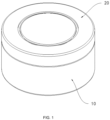
FIG. 1 is a schematic diagram of a structure of a battery structure according to an embodiment of the present invention; -
FIG. 2 is a schematic cross-sectional view of a battery structure according to an embodiment of the present invention; -
FIG. 3 is an exploded schematic diagram of a battery structure according to an embodiment of the present invention; and -
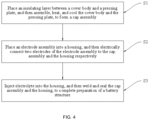
FIG. 4 is a schematic flowchart of a preparation method for a battery structure according to an embodiment of the present invention. - To make the objectives, technical solutions, and advantages of the present invention clearer and more comprehensible, the following further describes the present invention in detail with reference to the accompanying drawings and specific implementations.
- The following clearly and completely describes the technical solutions in the embodiments of the present invention with reference to the accompanying drawings in the embodiments of the present invention. Apparently, the described embodiments are some of the embodiments of the present invention rather than all of the embodiments. All other embodiments obtained by a person of ordinary skill in the art based on the embodiments of the present invention without creative efforts shall fall within the protection scope of the present invention.
- In the description of the present invention, it should be understood that, orientations or position relationships indicated by terms such as "center", "longitudinal", "transverse", "length", "width", "thickness", "up", "down", "front", "rear", "left", "right", "vertical", "horizontal", "top", "bottom", "inner", "outer", "clockwise", and "counterclockwise" are orientations or position relationship shown based on the accompanying drawings, and are merely used for describing the present invention and simplifying the description, rather than indicating or implying that the apparatus or element should have a particular orientation or be constructed and operated in a particular orientation, and therefore, should not be construed as a limitation on the present invention.
- In addition, the terms "first" and "second" are used merely for the purpose of description, and shall not be construed as indicating or implying relative importance or implying a quantity of indicated technical features. Therefore, a feature limited by "first" or "second" may explicitly or implicitly include one or more features. In the descriptions of the present invention, unless otherwise explicitly specified, "multiple" means two or more than two.
- In the description of the present invention, unless otherwise explicitly specified or defined, the terms such as "mount", "install", "connect", and "connection" should be understood in a broad sense. For example, the connection may be a connection, a detachable connection, or an integral connection; or the connection may be a mechanical connection or an electrical connection; or the connection may be a direct connection, an indirect connection through an intermediary, or internal communication between two components. A person of ordinary skill in the art may understand the specific meanings of the foregoing terms in the present invention according to specific situations.
- In the present invention, unless otherwise explicitly stipulated and restricted, that a first feature is "on" or "under" a second feature may include that the first and second features are in direct contact, or may include that the first and second features are not in direct contact but in contact by using other features therebetween. In addition, that the first feature is "on", "above", or "over" the second feature includes that the first feature is right above and on the inclined top of the second feature or merely indicates that a level of the first feature is higher than that of the second feature. That the first feature is "below", "under", or "beneath" the second feature includes that the first feature is right below and at the inclined bottom of the second feature or merely indicates that a level of the first feature is lower than that of the second feature.
- In the descriptions of this specification, a description of a reference term such as "an embodiment", "some embodiments", "an example", "a specific example", or "some examples" means that a specific feature, structure, material, or characteristic that is described with reference to the embodiment or the example is included in at least one embodiment or example of the present invention. In the present specification, schematic representations of the above terms should not be understood as being directed to the same embodiments or examples. In addition, the described specific features, structures, materials, or characteristics may be combined in a proper manner in any one or more of the embodiments or examples. In addition, a person skilled in the art may combine different embodiments or examples described in this specification.
- Referring to
FIG. 1 to FIG. 3 , the present invention discloses a battery structure, including: ahousing 10, acap assembly 20, and anelectrode assembly 30, where anaccommodating cavity 11 is provided in thehousing 10, theelectrode assembly 30 is placed in theaccommodating cavity 11, theaccommodating cavity 11 is further filled with electrolyte (not shown in the figure), two electrodes are arranged on theelectrode assembly 30, one of the two electrodes is electrically connected to thecap assembly 20, and the other of the two electrodes is electrically connected to thehousing 10, and thehousing 10 is connected to a side wall after being combined with thecap assembly 20. - In an embodiment, the electrodes include a
positive electrode 31 and anegative electrode 32. Thepositive electrode 31 is electrically connected to thecap assembly 20 or thehousing 10, and thenegative electrode 32 is electrically connected to thehousing 10 or thecap assembly 20. Preferably, thepositive electrode 31 is electrically connected to thecap assembly 20, and thenegative electrode 32 is electrically connected to thehousing 10. - Specifically, in the battery structure, an
accommodating cavity 11 is provided in thehousing 10, theelectrode assembly 30 is placed in theaccommodating cavity 11, theaccommodating cavity 11 is further filled with electrolyte, two electrodes are arranged on theelectrode assembly 30, one of the two electrodes is electrically connected to thecap assembly 20, and the other of the two electrodes is electrically connected to thehousing 10, and thehousing 10 is connected to a side wall after being combined with thecap assembly 20, to implement sealing; and compared with multi-layered side walls of a conventional button battery, a wall thickness is reduced, which may effectively increase a volume of theaccommodating cavity 11, to increase a filling amount of electrolyte, thereby effectively increasing a battery energy density. - Specifically, the electrolyte uses an existing technology, and this is not described in detail herein.
- In an embodiment, the
cap assembly 20 includes acover body 21, apressing plate 22, and aninsulating layer 23; and theinsulating layer 23 is located between thecover body 21 and thepressing plate 22, anopening 211 is provided on thecover body 21, aboss 221 is arranged on thepressing plate 22, theboss 221 extends from the opening 211, and thehousing 10 is connected to thecover body 21. - Specifically, the
insulating layer 23 is arranged between thecover body 21 and thepressing plate 22, to implement an insulating and sealing effect. Both thecover body 21 and thepressing plate 22 are made of metal. Thecover body 21, thepressing plate 22, and the insulatinglayer 23 heat the metal by using high frequency induction, so that the insulatinglayer 23 is closely attached to thecover body 21 and thepressing plate 22 upon reaching a molten state, and is fused into thecover body 21 and thepressing plate 22 after cooling, resulting in a good sealing and insulating effect. In other embodiments, a heating block or a heating device may also be used to heat thecap assembly 20 at a constant temperature, to achieve the same effect, or a combination of the two heating manners may be used. - Preferably, both the
cover body 21 and thepressing plate 22 are made of stainless steel, which has a high strength and good corrosion resistance. - Further, in actual application, when a high temperature occurs inside the battery structure, the insulating
layer 23 reaches a molten state, a gap is generated between thecover body 21 and thepressing plate 22, and gas inside the battery structure flows out along the gap, which reduces the possibility of explosion, and achieves an explosion-proof effect. - In an embodiment, an
upper end surface 12 is arranged on thehousing 10, a connectingwall 212 extends from thecover body 21, a lower end surface (not shown in the figure) is arranged on the connectingwall 212, and theupper end surface 12 is connected to the lower end surface. - Specifically, the connecting
wall 212 extends from thecover body 21, the lower end surface is arranged on the connectingwall 212, and theupper end surface 12 is connected to the lower end surface. The connectingwall 212 and thehousing 10 are butted to form a good welding line, and theupper end surface 12 is welded to the lower end surface, to implement a sealing connection. Laser welding is performed on the battery structure from a side surface, which may effectively improve a yield. Preferably, to increase a volume of theaccommodating cavity 11 of the battery, butt welding is used. Laser welding is used. Specific welding parameters are as follows: A welding current ranges from 15 to 50A, a pulse width ranges from 0.5 to 5 ms, a frequency/duty cycle is 40/50%, a starting speed ranges from 10 to 25 mm/s, a processing speed ranges from 5 to 200 mm/s, an acceleration ranges from 5 to 20 mm/s2, and a spot diameter ranges from 0.1 to 0.5 mm. - In an embodiment, a thickness of the connecting
wall 212 is the same as a thickness of thehousing 10, so that a contact surface of the connectingwall 212 is aligned with a contact surface of thehousing 10. In this way, a welding effect between thecover body 21 and thehousing 10 is better, and the sealing effect is better. - In an embodiment, a specific thickness value of the
housing 10 may be set as required, and is not specifically limited herein. Preferably, the thickness of thehousing 10 ranges from 0.1 mm to 0.25 mm. - In an embodiment, the insulating
layer 23 is an insulating ring, and a width of the insulating ring is greater than a width in which thepressing plate 22 overlaps thecover body 21. - Specifically, the insulating ring is designed to have an annular shape that engages with the
cover body 21 and thepressing plate 22. The width of the insulating ring is greater than the width in which thepressing plate 22 overlaps thecover body 21, to provide a good insulating effect. In addition, the insulating ring cannot cover a region of theboss 221. - Preferably, the insulating
layer 23 is made of three layers of polypropylene material. The material has good insulating and sealing properties. - In an embodiment, the width in which the
pressing plate 22 overlaps thecover body 21 ranges from 0.5 mm to 10 mm. The width of the overlapping part is a width of a battery sealing line. - Specifically, a specific thickness value of the width in which the
pressing plate 22 overlaps thecover body 21 may be set as required, and is not specifically limited herein. Preferably, the width of the overlapping part ranges from 0.5 mm to 10 mm. - In an embodiment, the
housing 10 is in a shape of a cylinder, and a cross section of the housing is in a shape of a circle, an ellipse, a square, or a heart, to be applied to different scenarios. - In an embodiment, the electrode includes a
positive electrode 31 and anegative electrode 32. Thepositive electrode 31 is made of aluminum foil, and thenegative electrode 32 is made of copper foil. - Specifically, the
positive electrode 31 and thenegative electrode 32 are separated by a battery separator, and are spirally wound or laminated to form anelectrode assembly 30. Theelectrode assembly 30 implements an energy storage function. The battery separator refers to a film made of plastics such as polypropylene. - Specifically, an active material is evenly coated on two surfaces of the aluminum foil with a thickness ranging from 0.06 to 0.016 mm to serve as the
positive electrode 31. An active material is evenly coated on two surfaces of the copper foil with a thickness ranging from 0.06 to 0.012 mm to serve as thenegative electrode 32. The active material includes lithium cobalt oxide, lithium titanate, or graphite. The lithium cobalt oxide and the lithium titanate are used for thepositive electrode 31, and the graphite is used for thenegative electrode 32. - Preferably, the
positive electrode 31 is electrically connected to theboss 221, thenegative electrode 32 is electrically connected to a bottom portion of thehousing 10, to form an electrical cycle, and theboss 221 is configured to output electric energy to the outside. - Referring to
FIG. 4 , the present invention further discloses a preparation method for a battery structure, which uses the battery structure and includes the following steps:
S1: Place an insulating layer between a cover body and a pressing plate, and then assemble, heat, and cool the cover body and the pressing plate, to form a cap assembly. - In an embodiment, a mold is used as required to stamp the cover body, the pressing plate, and the housing for use in advance. A mold of a corresponding shape is used to make a sealing insulating glue into a sheet-shaped insulating layer for use. An electrode assembly of a corresponding shape and size is made as required for use.
- Specifically, the prepared insulating layer is placed between the cover body and the pressing plate, and then the cover body and the pressing plate are assembled, and then combined together through a fixture device to form a cap assembly. Specific set process parameters are shown in Table 1:
Table 1 Device name Item Parameter Tooling fixture Concentricity of three accessories ±0.1 mm High frequency induction heating device Frequency 800±200 KHZ Current 5±2A Heating duration 5±3 seconds Cooling water ≥0.3 MPa/≥3 L/min Thermostatic device Temperature 150±20°C Duration 8±2s Pressure 5±2g - S2: Place an electrode assembly into a housing, and then electrically connect two electrodes of the electrode assembly to the cap assembly and the housing respectively.
- Specifically, the electrode assembly is placed into the housing, the positive electrode is electrically connected to the boss, and the negative electrode is electrically connected to the housing.
- Electrical connection is performed by using resistance welding or laser welding. Specifically, parameters of resistance welding are shown in Table 2:
Table 2 Device name Item Parameter Transistor resistance Power 1.5±0.5 kw welding machine Current 0.5±0.2 KA Duration 5±0.5 ms Pressure 1 to 5 Mpa Tooling fixture Size ±1 mm - Specifically, after step S2, the method further includes: placing a semi-finished product after electrical connection into a high vacuum environment for baking and dehumidification. Specific parameters are shown in Table 3:
Table 3 Device name Item Parameter Vacuum pump Air pressure in an oven 30±10 pa Oven Temperature 88±3°C Duration 10H Remarks Total baking duration is 10 hours, and air pressure in the oven cycles once an hour between 20 pa and the atmospheric pressure. When the pressure in the oven is quickly converted to the atmospheric pressure at 20 pa, dry gas is filled in the oven, to optimize internal dryness of the battery. - S3: Inject electrolyte into the housing, and then weld and seal the cap assembly and the housing, to complete preparation of the battery structure.
- Specifically, the electrolyte is injected into the housing. After the electrolyte is injected, a laser is used to weld a contact surface between the cover body and the housing in an environment with a relative humidity of less than 1%, to complete packaging of the battery. Parameters of laser welding are shown in Table 4:
Table 4 Welding current 15 to 50A Pulse width 0.5 to 5 ms Frequency/duty cycle 40/50 % Starting speed 10 to 25 mm/s Processing speed 5 to 200 mm/s Acceleration 5--20 mm/s2 Spot diameter 0.1 to 0.5 mm - Specifically, after S4, the method further includes: performing activation, formation, and capacity division on the welded battery, to complete the battery preparation. Activation refers to fully soaking a battery core into the electrolyte after the electrolyte is injected; formation refers to precharging and activating the battery; and capacity division refers to testing a battery capacity.
- Table 5 shows performance comparison between the battery prepared in the present invention and the conventional button battery:
Table 5 Capacity Service life Storage Remarks Conventional button battery 60 mAh 500 charge and discharge cycles 3 to 6 months With the same appearance and volume Battery in the present invention 90 mAh More than 1000 charge and discharge cycles More than one year - The preparation method for the battery structure in the present invention are: placing the insulating layer between the cover body and the pressing plate, and then assembling, heating, and cooling the cover body and the pressing plate, to form the cap assembly; then electrically connecting two electrodes of the electrode assembly to the cap assembly and the housing respectively; and finally injecting the electrolyte into the housing, and then welding and sealing the cap assembly and the housing, to complete preparation of the battery structure. Compared with the multi-layered side walls of the conventional button battery, the wall thickness is reduced, which may effectively increase the volume of the accommodating cavity, to increase the filling amount of the electrolyte, thereby effectively increasing the battery energy density.
- The battery structure in the present invention has features of a simple structure, a low manufacturing cost, and good sealing performance, and may increase a volume of the battery cavity, and may further have various shapes.
- The foregoing embodiments are preferred implementation solutions of the present invention. In addition, the present invention may be further implemented in other manners. Any obvious substitutions fall within a protection scope of the present invention without departing from the concept of the technical solution.
Claims (10)
- A battery structure, comprising: a housing, a cap assembly, and an electrode assembly, wherein an accommodating cavity is provided in the housing, the electrode assembly is placed in the accommodating cavity, the accommodating cavity is further filled with electrolyte, two electrodes are arranged on the electrode assembly, one of the two electrodes is electrically connected to the cap assembly, and the other of the two electrodes is electrically connected to the housing, and the housing is connected to a side wall after being combined with the cap assembly.
- The battery structure according to claim 1, wherein the cap assembly comprises a cover body, a pressing plate, and an insulating layer; and the insulating layer is located between the cover body and the pressing plate, an opening is provided on the cover body, a boss is arranged on the pressing plate, the boss extends from the opening, and the housing is connected to the cover body.
- The battery structure according to claim 2, wherein an upper end surface is arranged on the housing, a connecting wall extends from the cover body, a lower end surface is arranged on the connecting wall, and the upper end surface is connected to the lower end surface.
- The battery structure according to claim 3, wherein the upper end surface is welded to the lower end surface, to implement a sealing connection.
- The battery structure according to claim 3, wherein a thickness of the connecting wall is the same as a thickness of the housing.
- The battery structure according to claim 5, wherein the thickness of the housing ranges from 0.1 mm to 0.25 mm.
- The battery structure according to claim 2, wherein the insulating layer is an insulating ring, and a width of the insulating ring is greater than a width in which the pressing plate overlaps the cover body.
- The battery structure according to claim 7, wherein the width in which the pressing plate overlaps the cover body ranges from 0.5 mm to 10 mm.
- The battery structure according to claim 2, wherein the housing is in a shape of a cylinder, and a cross section of the housing is in a shape of an ellipse, a square, or a heart.
- A preparation method for a battery structure, using the battery structure according to any one of claims 2 to 9, and comprising the following steps:placing the insulating layer between the cover body and the pressing plate, and then assembling, heating, and cooling the cover body and the pressing plate, to form the cap assembly;placing the electrode assembly into the housing, and then electrically connecting two electrodes of the electrode assembly to the cap assembly and the housing respectively; andinjecting the electrolyte into the housing, and then welding and sealing the cap assembly and the housing, to complete preparation of the battery structure.
Applications Claiming Priority (1)
| Application Number | Priority Date | Filing Date | Title |
|---|---|---|---|
| CN202310680451.3A CN116526030A (en) | 2023-06-08 | 2023-06-08 | Battery structure and preparation method thereof |
Publications (1)
| Publication Number | Publication Date |
|---|---|
| EP4475283A1 true EP4475283A1 (en) | 2024-12-11 |
Family
ID=87399580
Family Applications (1)
| Application Number | Title | Priority Date | Filing Date |
|---|---|---|---|
| EP24150281.4A Pending EP4475283A1 (en) | 2023-06-08 | 2024-01-04 | Battery structure and preparation method therefor |
Country Status (5)
| Country | Link |
|---|---|
| US (1) | US20240413377A1 (en) |
| EP (1) | EP4475283A1 (en) |
| JP (1) | JP7835723B2 (en) |
| KR (1) | KR102946644B1 (en) |
| CN (1) | CN116526030A (en) |
Citations (3)
| Publication number | Priority date | Publication date | Assignee | Title |
|---|---|---|---|---|
| US20210320386A1 (en) * | 2020-04-13 | 2021-10-14 | Samsung Sdi Co., Ltd. | Rechargeable battery |
| US20210399368A1 (en) * | 2020-06-23 | 2021-12-23 | Samsung Sdi Co., Ltd. | Rechargeable battery |
| WO2022113716A1 (en) * | 2020-11-24 | 2022-06-02 | 株式会社村田製作所 | Method for manufacturing secondary battery |
Family Cites Families (9)
| Publication number | Priority date | Publication date | Assignee | Title |
|---|---|---|---|---|
| KR102518352B1 (en) | 2016-04-11 | 2023-04-05 | 삼성에스디아이 주식회사 | Secondary battery |
| DE102018130171A1 (en) | 2018-11-28 | 2020-05-28 | Carl Freudenberg Kg | Electrochemical energy storage cell |
| TWI900540B (en) | 2020-03-11 | 2025-10-11 | 南韓商Lg新能源股份有限公司 | Button type secondary battery |
| JP7381569B2 (en) | 2020-05-18 | 2023-11-15 | 寧徳新能源科技有限公司 | Batteries and electrical devices equipped with said batteries |
| CN113991220A (en) * | 2021-10-09 | 2022-01-28 | 银隆新能源股份有限公司 | Battery structure and battery preparation method |
| CN217788565U (en) * | 2022-02-21 | 2022-11-11 | 东莞市电的电子有限公司 | Button cell |
| CN114552080A (en) * | 2022-02-21 | 2022-05-27 | 东莞市电的电子有限公司 | Button battery and surface treatment process of cover cap thereof |
| CN114744341A (en) | 2022-04-02 | 2022-07-12 | 广东维都利新能源有限公司 | Button cell with flange structure and preparation method |
| CN220155624U (en) * | 2023-06-08 | 2023-12-08 | 东莞市电的电子有限公司 | Battery structure |
-
2023
- 2023-06-08 CN CN202310680451.3A patent/CN116526030A/en active Pending
- 2023-12-18 US US18/542,871 patent/US20240413377A1/en active Pending
- 2023-12-18 JP JP2023212690A patent/JP7835723B2/en active Active
-
2024
- 2024-01-04 EP EP24150281.4A patent/EP4475283A1/en active Pending
- 2024-01-09 KR KR1020240003499A patent/KR102946644B1/en active Active
Patent Citations (4)
| Publication number | Priority date | Publication date | Assignee | Title |
|---|---|---|---|---|
| US20210320386A1 (en) * | 2020-04-13 | 2021-10-14 | Samsung Sdi Co., Ltd. | Rechargeable battery |
| US20210399368A1 (en) * | 2020-06-23 | 2021-12-23 | Samsung Sdi Co., Ltd. | Rechargeable battery |
| WO2022113716A1 (en) * | 2020-11-24 | 2022-06-02 | 株式会社村田製作所 | Method for manufacturing secondary battery |
| US20230307713A1 (en) * | 2020-11-24 | 2023-09-28 | Murata Manufacturing Co., Ltd. | Method for manufacturing secondary battery |
Also Published As
| Publication number | Publication date |
|---|---|
| KR20240174461A (en) | 2024-12-17 |
| CN116526030A (en) | 2023-08-01 |
| KR102946644B1 (en) | 2026-03-31 |
| JP7835723B2 (en) | 2026-03-25 |
| US20240413377A1 (en) | 2024-12-12 |
| JP2024177039A (en) | 2024-12-19 |
Similar Documents
| Publication | Publication Date | Title |
|---|---|---|
| CN102148407B (en) | Prismatic sealed secondary cell and method of manufacturing the same | |
| JP4433650B2 (en) | Lithium secondary cell and connection structure of lithium secondary cell | |
| CN111613739A (en) | Button battery and its manufacturing method, electronic equipment | |
| CN109065822B (en) | Button cell | |
| CN110783615B (en) | Manufacturing method of soft pack button lithium battery and soft pack button lithium battery | |
| CN111180616A (en) | Button battery and preparation process thereof | |
| CN216563466U (en) | Battery with a battery cell | |
| JP4304304B2 (en) | Film outer battery | |
| CN215896541U (en) | A button battery and its electronic product | |
| CN215988973U (en) | Button cell structure | |
| CN220155624U (en) | Battery structure | |
| EP4475283A1 (en) | Battery structure and preparation method therefor | |
| KR101233466B1 (en) | Lithium rechargeable battery and Method of making the same | |
| CN216436004U (en) | Button type lithium ion battery and combined cover suitable for button type lithium ion battery | |
| CN215869508U (en) | Lithium ion battery and combined cover suitable for lithium ion battery | |
| CN215896535U (en) | A button battery and its electronic product | |
| CN215896629U (en) | Button cell structure | |
| CN216698523U (en) | A miniature button battery and its shell | |
| CN216903063U (en) | Button type lithium ion battery and electronic product | |
| CN215933698U (en) | Casing subassembly and battery | |
| CN214753930U (en) | A battery cover structure | |
| CN213782220U (en) | Button type lithium ion battery | |
| WO2023030547A1 (en) | Button-type lithium ion battery and electronic product | |
| CN214254555U (en) | Miniature column type lithium ion battery sealing structure and miniature column type lithium ion battery | |
| CN213782114U (en) | Button Lithium Ion Battery and Combination Cover for Button Lithium Ion Battery |
Legal Events
| Date | Code | Title | Description |
|---|---|---|---|
| PUAI | Public reference made under article 153(3) epc to a published international application that has entered the european phase |
Free format text: ORIGINAL CODE: 0009012 |
|
| STAA | Information on the status of an ep patent application or granted ep patent |
Free format text: STATUS: THE APPLICATION HAS BEEN PUBLISHED |
|
| AK | Designated contracting states |
Kind code of ref document: A1 Designated state(s): AL AT BE BG CH CY CZ DE DK EE ES FI FR GB GR HR HU IE IS IT LI LT LU LV MC ME MK MT NL NO PL PT RO RS SE SI SK SM TR |
|
| STAA | Information on the status of an ep patent application or granted ep patent |
Free format text: STATUS: REQUEST FOR EXAMINATION WAS MADE |
|
| 17P | Request for examination filed |
Effective date: 20250204 |