EP4474636A1 - Two-stroke engine - Google Patents
Two-stroke engine Download PDFInfo
- Publication number
- EP4474636A1 EP4474636A1 EP23770393.9A EP23770393A EP4474636A1 EP 4474636 A1 EP4474636 A1 EP 4474636A1 EP 23770393 A EP23770393 A EP 23770393A EP 4474636 A1 EP4474636 A1 EP 4474636A1
- Authority
- EP
- European Patent Office
- Prior art keywords
- fuel
- piston
- large end
- crank
- stroke engine
- Prior art date
- Legal status (The legal status is an assumption and is not a legal conclusion. Google has not performed a legal analysis and makes no representation as to the accuracy of the status listed.)
- Pending
Links
Images



Classifications
-
- F—MECHANICAL ENGINEERING; LIGHTING; HEATING; WEAPONS; BLASTING
- F02—COMBUSTION ENGINES; HOT-GAS OR COMBUSTION-PRODUCT ENGINE PLANTS
- F02B—INTERNAL-COMBUSTION PISTON ENGINES; COMBUSTION ENGINES IN GENERAL
- F02B33/00—Engines characterised by provision of pumps for charging or scavenging
- F02B33/02—Engines with reciprocating-piston pumps; Engines with crankcase pumps
- F02B33/04—Engines with reciprocating-piston pumps; Engines with crankcase pumps with simple crankcase pumps, i.e. with the rear face of a non-stepped working piston acting as sole pumping member in co-operation with the crankcase
-
- F—MECHANICAL ENGINEERING; LIGHTING; HEATING; WEAPONS; BLASTING
- F02—COMBUSTION ENGINES; HOT-GAS OR COMBUSTION-PRODUCT ENGINE PLANTS
- F02M—SUPPLYING COMBUSTION ENGINES IN GENERAL WITH COMBUSTIBLE MIXTURES OR CONSTITUENTS THEREOF
- F02M61/00—Fuel-injectors not provided for in groups F02M39/00 - F02M57/00 or F02M67/00
- F02M61/14—Arrangements of injectors with respect to engines; Mounting of injectors
-
- F—MECHANICAL ENGINEERING; LIGHTING; HEATING; WEAPONS; BLASTING
- F01—MACHINES OR ENGINES IN GENERAL; ENGINE PLANTS IN GENERAL; STEAM ENGINES
- F01M—LUBRICATING OF MACHINES OR ENGINES IN GENERAL; LUBRICATING INTERNAL COMBUSTION ENGINES; CRANKCASE VENTILATING
- F01M3/00—Lubrication specially adapted for engines with crankcase compression of fuel-air mixture or for other engines in which lubricant is contained in fuel, combustion air, or fuel-air mixture
-
- F—MECHANICAL ENGINEERING; LIGHTING; HEATING; WEAPONS; BLASTING
- F02—COMBUSTION ENGINES; HOT-GAS OR COMBUSTION-PRODUCT ENGINE PLANTS
- F02B—INTERNAL-COMBUSTION PISTON ENGINES; COMBUSTION ENGINES IN GENERAL
- F02B25/00—Engines characterised by using fresh charge for scavenging cylinders
- F02B25/14—Engines characterised by using fresh charge for scavenging cylinders using reverse-flow scavenging, e.g. with both outlet and inlet ports arranged near bottom of piston stroke
-
- F—MECHANICAL ENGINEERING; LIGHTING; HEATING; WEAPONS; BLASTING
- F02—COMBUSTION ENGINES; HOT-GAS OR COMBUSTION-PRODUCT ENGINE PLANTS
- F02B—INTERNAL-COMBUSTION PISTON ENGINES; COMBUSTION ENGINES IN GENERAL
- F02B75/00—Other engines
- F02B75/02—Engines characterised by their cycles, e.g. six-stroke
-
- F—MECHANICAL ENGINEERING; LIGHTING; HEATING; WEAPONS; BLASTING
- F02—COMBUSTION ENGINES; HOT-GAS OR COMBUSTION-PRODUCT ENGINE PLANTS
- F02F—CYLINDERS, PISTONS OR CASINGS, FOR COMBUSTION ENGINES; ARRANGEMENTS OF SEALINGS IN COMBUSTION ENGINES
- F02F7/00—Casings, e.g. crankcases
-
- F—MECHANICAL ENGINEERING; LIGHTING; HEATING; WEAPONS; BLASTING
- F02—COMBUSTION ENGINES; HOT-GAS OR COMBUSTION-PRODUCT ENGINE PLANTS
- F02M—SUPPLYING COMBUSTION ENGINES IN GENERAL WITH COMBUSTIBLE MIXTURES OR CONSTITUENTS THEREOF
- F02M69/00—Low-pressure fuel-injection apparatus ; Apparatus with both continuous and intermittent injection; Apparatus injecting different types of fuel
- F02M69/10—Low-pressure fuel-injection apparatus ; Apparatus with both continuous and intermittent injection; Apparatus injecting different types of fuel peculiar to scavenged two-stroke engines, e.g. injecting into crankcase-pump chamber
-
- F—MECHANICAL ENGINEERING; LIGHTING; HEATING; WEAPONS; BLASTING
- F02—COMBUSTION ENGINES; HOT-GAS OR COMBUSTION-PRODUCT ENGINE PLANTS
- F02B—INTERNAL-COMBUSTION PISTON ENGINES; COMBUSTION ENGINES IN GENERAL
- F02B75/00—Other engines
- F02B75/02—Engines characterised by their cycles, e.g. six-stroke
- F02B2075/022—Engines characterised by their cycles, e.g. six-stroke having less than six strokes per cycle
- F02B2075/025—Engines characterised by their cycles, e.g. six-stroke having less than six strokes per cycle two
-
- F—MECHANICAL ENGINEERING; LIGHTING; HEATING; WEAPONS; BLASTING
- F02—COMBUSTION ENGINES; HOT-GAS OR COMBUSTION-PRODUCT ENGINE PLANTS
- F02B—INTERNAL-COMBUSTION PISTON ENGINES; COMBUSTION ENGINES IN GENERAL
- F02B2710/00—Gas engines
- F02B2710/03—Two stroke engines
- F02B2710/036—Scavenging or charging channels or openings
-
- Y—GENERAL TAGGING OF NEW TECHNOLOGICAL DEVELOPMENTS; GENERAL TAGGING OF CROSS-SECTIONAL TECHNOLOGIES SPANNING OVER SEVERAL SECTIONS OF THE IPC; TECHNICAL SUBJECTS COVERED BY FORMER USPC CROSS-REFERENCE ART COLLECTIONS [XRACs] AND DIGESTS
- Y02—TECHNOLOGIES OR APPLICATIONS FOR MITIGATION OR ADAPTATION AGAINST CLIMATE CHANGE
- Y02T—CLIMATE CHANGE MITIGATION TECHNOLOGIES RELATED TO TRANSPORTATION
- Y02T10/00—Road transport of goods or passengers
- Y02T10/10—Internal combustion engine [ICE] based vehicles
- Y02T10/12—Improving ICE efficiencies
Definitions
- the present disclosure relates to a two-stroke engine of a piston valve type.
- Patent Literature 1 a fuel injection two-stroke engine in which a main scavenging passage and an auxiliary scavenging passage are formed in a cylinder block is known.
- a fuel injection device is attached to a crankcase.
- the fuel injection device is directed to inject fuel toward a scavenging inlet of the auxiliary scavenging passage.
- a fuel injection method a method of injecting fuel into an intake path to a crank chamber, a method of directly injecting fuel into a combustion chamber, and the like are known.
- Patent Literature 1 Japanese Unexamined Patent Publication No. H7-224741
- the present inventors have found that in a piston valve type two-stroke engine, lubrication and cooling at a large end of a connecting rod disposed in a crankcase are weight. Fuel such as gasoline is mixed with oil and supplied (injected) as mixed fuel. From the viewpoint of low fuel consumption and environmental consideration, a two-stroke engine capable of performing lubrication and cooling with a small amount of mixed fuel is desired.
- the present disclosure describes a two-stroke engine capable of lubricating and cooling a large end with a small amount of mixed fuel.
- the fuel injector (30) attached to the crankcase sprays the mixed fuel to the large end (22) of the connecting rod.
- the fuel injector (30) injects the mixed fuel in a tangential direction of a circumferential trajectory of the large end (22).
- the large end (22) is lubricated and cooled by the oil contained in the mixed fuel.
- the fuel (gasoline or the like) contained in the mixed fuel also cools the large end (22).
- the mixed fuel since the mixed fuel is injected not into the combustion chamber or the bore portion (3) but into the crankcase, it is not necessary to consider pressure resistance and heat resistance with respect to a peripheral configuration of the fuel injector (30).
- the crank mechanism (7) may include a pair of crank webs (7b) connected to the crankshaft (7a) and separated from each other in an axial direction of the crankshaft (7a), and the injection port (31) of the fuel injector (30) may be disposed at a position passing through a gap (G) between the pair of crank webs (7b).
- the injection port (31) can be brought closer to the large end (22), and the large end (22) can be cooled more reliably and effectively.
- a scavenging hole (14) is formed in the cylinder (2), and an inlet (14a) of the scavenging hole (14) opening toward the crank chamber (6a) may be located at the same height as the injection port (31) of the fuel injector (30) in the axial direction.
- the fuel sprayed to the large end (22) is easily introduced into the scavenging hole (14). Since the mixed fuel stays in the vicinity of the inlet (14a) of the scavenging hole (14), the fuel is easily introduced into the scavenging hole (14).
- an engine (two-stroke engine) 1 is a two-stroke engine employing a Schnuerle method as a scavenging method, and is mounted on, for example, a brush cutter, a knapsack-type power sprayer, or the like.
- the engine 1 includes the cylinder 2, the piston 4 that reciprocates in the bore portion 3 in the cylinder 2, a crankcase 6 connected below the cylinder 2 and having a crank chamber 6a, and a crank mechanism 7 disposed in the crank chamber 6a of the crankcase 6.
- a piston pin 8 provided in the piston 4 and a crank pin 9 of the crank mechanism 7 provided in the crankcase 6 are connected by a connecting rod 10.
- the piston 4 is disposed in the bore portion 3 and can reciprocate along the axis L direction between a combustion chamber 11 and the crank chamber 6a.
- the connecting rod 10 is referred to as a con-rod 10.
- the cylinder 2 is formed with the combustion chamber 11, a cylindrical bore portion 3 connected to the combustion chamber 11 and into which the piston 4 is inserted, an intake port 12 and an exhaust port 13 communicating with the bore portion 3, and a pair of intake side scavenging holes 14 and a pair of exhaust side scavenging holes 16.
- the cylinder 2 includes a cylinder body 2a and a pair of scavenging cassettes 2b fitted into a lower portion of the cylinder body 2a.
- the pair of scavenging cassettes 2b is fitted and fixed in two openings formed to face each other in the radial direction of the bore portion 3.
- the pair of intake side scavenging holes 14 and the pair of exhaust side scavenging holes 16 are formed by, for example, the cylinder body 2a and the pair of scavenging cassettes 2b (see FIG. 2 ).
- the bore portion 3 has a cylindrical bore surface 3a and extends in the axis L direction in the cylinder 2.
- a bottom dead center side (lower side in the drawing) of the bore portion 3 is opened and communicates with the crank chamber 6a.
- a combustion chamber 11 having a recessed shape is formed at an end of the bore portion 3 on the top dead center side, and a discharge electrode such as an ignition plug 18 is disposed inside the combustion chamber 11.
- An ignition plug attachment hole 19 to which the ignition plug 18 is attached is provided near the combustion chamber 11 of the cylinder body 2a.
- the intake port 12 and the exhaust port 13 each communicate with the bore portion 3, and the exhaust port 13 is disposed slightly closer to the top dead center than the intake port 12 in the axis L direction.
- the intake port 12 and the exhaust port 13 are disposed to be shifted from each other by approximately 180° in a circumferential direction of the bore portion 3 so as to face each other in the radial direction of the bore portion 3.
- the intake side scavenging holes 14 are for introducing fresh air gas containing fuel into the bore portion 3 and the combustion chamber 11 in the scavenging process, and extend along the axis L direction inside the side wall of the cylinder 2.
- the fresh air gas is an air-fuel mixture for engine operation in which a mixed fuel including gasoline and oil and air are mixed. Ends of the intake side scavenging holes 14 on the top dead center side each communicate with the bore portion 3 at a position substantially similar to that of the exhaust port 13 in the axis L direction.
- the intake side scavenging holes 14 are disposed apart from each other in the circumferential direction of the bore portion 3.
- the intake side scavenging holes 14 are disposed substantially line-symmetrically with respect to an imaginary line connecting the intake port 12 and the exhaust port 13 in the radial direction.
- the intake side scavenging holes 14 are provided so that fresh air gas introduced into the bore portion 3 is directed toward the intake port 12.
- An end (inlet 14a to be described later) of the intake side scavenging hole 14 on the bottom dead center side communicates with the crank chamber 6a.
- An end (not illustrated) of the exhaust side scavenging hole 16 on the bottom dead center side communicates with the crank chamber 6a described above.
- the exhaust side scavenging holes 16 are for introducing exhaust gas recirculation (EGR) gas, which is an exhaust gas after combustion having a lower fuel content than the working gas, into the bore portion 3 and the combustion chamber 11 in the scavenging process, and extend along the axis L direction inside the side wall of the cylinder 2. Ends of the exhaust side scavenging holes 16 on the top dead center side each communicate with the bore portion 3 at a position substantially similar to that of the exhaust port 13 in the axis L direction.
- the exhaust side scavenging holes 16 are disposed apart from each other in the circumferential direction of the bore portion 3.
- the exhaust side scavenging holes 16 are disposed substantially line-symmetrically with respect to the imaginary line connecting the intake port 12 and the exhaust port 13 in the radial direction.
- the exhaust side scavenging holes 16 are provided so that the EGR gas introduced into the bore portion 3 is directed toward the intake port 12.
- the piston 4 may be provided with a communication passage that allows the exhaust port 13 and the exhaust side scavenging holes 16 to communicate with each other when the piston 4 is near the top dead center, and allows the exhaust gas after combustion to be taken into the exhaust side scavenging holes 16 from the exhaust port 13 as the EGR gas.
- the engine 1 is a two-stroke engine of a piston valve type in which the intake port 12 is opened and closed by the piston 4 reciprocating in the bore portion 3.
- air is introduced from the intake port 12, and the mixed fuel containing gasoline and oil is injected into the crank chamber 6a for cooling the large end 22 of the con-rod 10.
- the air and the mixed fuel are mixed in the crank chamber 6a of the crankcase 6 to generate the air-fuel mixture.
- the crank mechanism 7 includes a crankshaft 7a, a pair of crank webs 7b connected to the crankshaft 7a, and a pair of connecting portions 7c provided on the opposite side of the crank web 7b in the radial direction.
- the connecting rod 10 includes a small end 21 rotatably connected to the piston 4 via the piston pin 8 by inserting the piston pin 8 into the pin insertion hole 21a, a large end 22 rotatably connected to the connecting portion 7c of the crank mechanism 7 via the crank pin 9 by inserting the crank pin 9 into the pin insertion hole 22a, and a rod main body 23 connecting the small end 21 and the large end 22.
- crank web 7b, the connecting portion 7c, and the crankshaft 7a are integrally molded.
- the crank pin 9 inserted through the pair of connecting portions 7c is joined and fixed to these connecting portions 7c, and the entire crank mechanism 7 forms a rigid body.
- the pair of crank webs 7b has a fan shape centered on the crankshaft 7a, and is guided by a cylindrical wall surface of the crank chamber 6a to rotate around the crankshaft 7a.
- the pair of crank webs 7b extends parallel to each other and is separated from each other in the axial direction of the crankshaft 7a.
- a gap G is formed between the pair of crank webs 7b.
- the engine 1 includes a fuel injection nozzle (fuel injector) 30 that sprays the mixed fuel toward the large end 22 of the con-rod 10.
- the fuel injection nozzle 30 is attached to an upper portion of the crankcase 6 and near a connection position with the cylinder body 2a.
- a tip portion of the fuel injection nozzle 30 including the injection port 31 through which the mixed fuel is injected is fitted from the outside to the inside of the crankcase 6.
- the injection port 31 of the fuel injection nozzle 30 is directed, for example, in a direction intersecting both the axis L direction of the bore portion 3 and the axial direction of the crankshaft 7a. More specifically, the injection port 31 of the fuel injection nozzle 30 is oriented in a direction orthogonal to both the axis L direction of the bore portion 3 and the axial direction of the crankshaft 7a.
- FIG. 4 is a cross-sectional view taken along line IV-IV of FIG. 1 .
- the fuel injection nozzle 30 is disposed in a diametrical direction of the bore portion 3 (bore surface 3a) in plan view.
- the injection port 31 of the fuel injection nozzle 30 slightly protrudes into the crank chamber 6a.
- the injection port 31 is disposed at a position passing through the gap G (see FIG. 5 (b) ) between the pair of crank webs 7b during the rotation of the crank mechanism 7. Since the injection port 31 faces (faces) the gap G in this manner, there is a positional relationship in which no other member exists between the injection port 31 and the pin insertion hole 22a.
- inlets 14a of the pair of intake side scavenging holes 14 are located in the vicinity of the side of the injection port 31.
- the pair of inlets 14a opens toward the crank chamber 6a.
- the pair of inlets 14a also communicates with the pair of exhaust side scavenging holes 16.
- the distance along the circumferential direction between the injection port 31 and the inlet 14a is shorter than 1/4 of the length of the peripheral surface of the bore surface 3a (the inner peripheral surface of the bore portion 3). That is, the injection port 31 and the one intake side scavenging hole 14 are disposed within a range of 90° as a central angle with respect to the axis L of the bore portion 3.
- the injection port 31 and the other intake side scavenging hole 14 are disposed within a range of 90° as a central angle with respect to the axis L of the bore portion 3.
- the inlet 14a of the intake side scavenging hole 14 is located at the same height as the injection port 31 of the fuel injection nozzle 30 in the direction of the axis L.
- the injection port 31 of the fuel injection nozzle 30 is located at the height position of the upper end of the crankcase 6.
- the fuel injection nozzle 30 injects the mixed fuel in a tangential direction of the circumferential track of the large end 22.
- the period during which the mixed fuel is injected from the fuel injection nozzle 30 includes at least when the piston 4 is located at the top dead center (at that time, the pin large end 22 is also located at the uppermost position).
- the injection of the mixed fuel from the fuel injection nozzle 30 may be continued, for example, up to a point of time 30° after the top dead center.
- the period during which the mixed fuel is injected from the fuel injection nozzle 30 may start when the piston 4 is located at the top dead center (at 0°) or slightly before the top dead center (about several° to 15°) and end at the time point of 30° after the top dead center.
- the fuel injection nozzle 30 is configured to spray the mixed fuel to the large end 22 of the con-rod 10.
- the fuel injection nozzle 30 injects the mixed fuel while the large end 22 passes in front of the injection port 31.
- the injection timing of the mixed fuel in the fuel injection nozzle 30 is controlled by the ECU 40 that controls the engine 1 as illustrated in FIG. 6 .
- the ECU 40 controls the valve 50 and the fuel injection nozzle 30 that open and close the intake path to the intake port 12 on the basis of opening degree information of the throttle input from a throttle sensor S1 and rotation angle information of the crank mechanism 7 input from an angle sensor S2.
- the injection timing (injection period) described above can be appropriately adjusted by the ECU 40 based on the state of the engine 1.
- the fuel injection nozzle 30 is an injector for electronic control, and can adjust the injection amount of the mixed fuel with high accuracy.
- the ECU 40 injects the mixed fuel corresponding to a controllable limit value (minimum amount) from the fuel injection nozzle 30.
- the fuel injection nozzle 30 is configured to spray the mixed fuel to the large end 22 at least when the piston 4 is located at the top dead center. Note that, in FIG. 6 , the line (path) of the mixed fuel connected to the fuel injection nozzle 30 is omitted.
- the mixed fuel injected from the injection port 31 may be radial or linear.
- the type of the nozzle may be appropriately selected.
- An injection direction (central axis direction of injection) of the fuel injection nozzle 30 intersects the axis L and crosses the bore portion 3 in plan view.
- the central axis direction of the injection of the fuel injection nozzle 30 is, for example, orthogonal to the axis L.
- the central axis direction of the injection of the fuel injection nozzle 30 is also orthogonal to the axial direction of the crankshaft 7a, for example.
- the crank chamber 6a when the piston 4 is located near the top dead center, the mixed fuel is injected from the fuel injection nozzle 30 under the control of the ECU 40. The mixed fuel is sprayed onto the large end 22 of the con-rod 10, thereby lubricating and cooling the large end 22. The injection of the mixed fuel is stopped immediately after the start of lowering of the piston 4 (at the latest by 30° after the top dead center). The air and the mixed fuel are mixed in the crank chamber 6a to generate fresh air gas.
- the exhaust port 13 is opened, and the combustion gas is exhausted (see FIG. 3 ). Then, slightly after the opening of the exhaust port 13, the intake side scavenging hole 14 and the exhaust side scavenging hole 16 are exposed to the inside of the bore portion 3, and the scavenging stroke is started.
- the injection of the mixed fuel is close to the timing of the start of the scavenging process. In addition, the distance from the injection port 31 to the inlet 14a of the intake side scavenging hole 14 is also short.
- the mixed fuel fresh air gas
- the exhaust side scavenging holes 16 are filled with EGR gas
- the intake side scavenging holes 14 are filled with fresh air gas.
- the fuel injection nozzle 30 attached to the crankcase 6 sprays the mixed fuel to the large end 22 of the con-rod 10. At this time, the fuel injection nozzle 30 injects the mixed fuel in the tangential direction of the circumferential track of the large end 22. Lubrication and cooling of the large end 22 are performed by the oil contained in the mixed fuel. The large end 22 is also cooled by gasoline contained in the mixed fuel. This enables lubrication and cooling of the large end 22 with a small amount of mixed fuel. In addition, since the mixed fuel is injected not into the combustion chamber 11 or the bore portion 3 but into the crankcase 6, it is not necessary to consider pressure resistance and heat resistance with respect to a peripheral configuration of the fuel injection nozzle 30.
- the injection port 31 of the fuel injection nozzle 30 protrudes into the crank chamber 6a. Accordingly, the mixed fuel can be injected from a position closer to the large end 22, and thus the desired lubricating effect and cooling effect described above can be easily obtained.
- the injection port 31 of the fuel injection nozzle 30 is disposed at a position passing through the gap G between the pair of crank webs 7b.
- the injection port 31 can be brought closer to the large end 22, and the large end can be cooled more reliably and effectively.
- the fuel injection nozzle 30 is configured to inject the mixed fuel into the large end 22 at least when the piston 4 is located at the top dead center. Thus, since the fuel injection matches the scavenging timing, it is easy to introduce the fuel sprayed to the large end 22 into the intake side scavenging hole 14.
- the inlet 14a of the intake side scavenging hole 14 is located at the same height as the injection port 31 of the fuel injection nozzle 30 in the direction of the axis L. Accordingly, the fuel sprayed to the large end 22 can be easily introduced into the intake side scavenging hole 14. Since the mixed fuel stays in the vicinity of the inlet 14a of the intake side scavenging hole 14, the fuel is easily introduced into the intake side scavenging hole 14. Thus, unnecessary fuel that is not introduced into the intake side scavenging hole 14 can be reduced, and an effect of reducing fuel consumption can also be obtained. Furthermore, transient responsiveness and startability are improved.
- the present invention is not limited to the above embodiments.
- the present invention is not limited to the configuration in which the fuel injection nozzle 30 injects the mixed fuel to the large end 22 at least when the piston 4 is located at the top dead center.
- the fuel injection nozzle 30 may spray the mixed fuel to the large end 22 of the con-rod 10 on the way of the piston 4 toward the top dead center.
- the fuel injection nozzle 30 may be attached to, for example, a lower portion of the crankcase 6 in order to inject the mixed fuel in a tangential direction of a circumferential trajectory of the large end 22.
- the injection port 31 may be directed upward.
- the present invention is not limited to the case where the cylinder 2 is provided with the four scavenging holes, that is, the pair of intake side scavenging holes 14 and the pair of exhaust side scavenging holes 16, and a configuration may be employed in which the cylinder 2 is provided with one intake side scavenging hole 14 and one exhaust side scavenging hole 16.
- the present invention is not limited to the configuration in which the intake side scavenging holes 14 introduce the fresh air gas and the exhaust side scavenging holes 16 introduce the EGR gas.
- the present invention is also applicable to layered scavenging engines of the type using air.
- only a pair of scavenging holes facing each other in the radial direction may be provided between the intake port 12 and the exhaust port 13. Only one scavenging hole may be provided in the cylinder 2.
Landscapes
- Engineering & Computer Science (AREA)
- Mechanical Engineering (AREA)
- General Engineering & Computer Science (AREA)
- Chemical & Material Sciences (AREA)
- Combustion & Propulsion (AREA)
- Fuel-Injection Apparatus (AREA)
- Cylinder Crankcases Of Internal Combustion Engines (AREA)
- Lubrication Of Internal Combustion Engines (AREA)
Abstract
Description
- The present disclosure relates to a two-stroke engine of a piston valve type.
- Conventionally, as described in
Patent Literature 1, a fuel injection two-stroke engine in which a main scavenging passage and an auxiliary scavenging passage are formed in a cylinder block is known. In this two-stroke engine, a fuel injection device is attached to a crankcase. The fuel injection device is directed to inject fuel toward a scavenging inlet of the auxiliary scavenging passage. As a fuel injection method, a method of injecting fuel into an intake path to a crank chamber, a method of directly injecting fuel into a combustion chamber, and the like are known. - Patent Literature 1:
Japanese Unexamined Patent Publication No. H7-224741 - According to the injection method described in
Patent Literature 1, a two-stroke engine excellent in starting performance and responsiveness is provided. However, the supply of lubricating oil to the crankshaft and the bearing portion has not been particularly studied. Conventionally, in order to lubricate the crankshaft and the bearing portion, it has been necessary to provide another passage for lubricating oil or to mount an oil pump or the like. When lubrication is insufficient, problems such as image sticking may occur. - The present inventors have found that in a piston valve type two-stroke engine, lubrication and cooling at a large end of a connecting rod disposed in a crankcase are weight. Fuel such as gasoline is mixed with oil and supplied (injected) as mixed fuel. From the viewpoint of low fuel consumption and environmental consideration, a two-stroke engine capable of performing lubrication and cooling with a small amount of mixed fuel is desired.
- The present disclosure describes a two-stroke engine capable of lubricating and cooling a large end with a small amount of mixed fuel.
- One aspect of the present disclosure is a two-stroke engine (1) of a piston valve type in which an intake port is opened and closed by a piston (4) configured to reciprocate in a bore portion (3) of a cylinder (2) along an axial direction, the engine including a crankcase connected to the cylinder (2) and having a crank chamber (6a), a crank mechanism (7) disposed in the crank chamber (6a) and configured to rotate about a crankshaft (7a), a connecting rod having a small end (21) connected to the piston (4) and a large end (22) connected to the crank mechanism (7), and a fuel injector (30) attached to the crankcase and configured to inject mixed fuel in a tangential direction of a circumferential trajectory of the large end (22) to spray the mixed fuel to the large end (22).
- In this two-stroke engine (1), the fuel injector (30) attached to the crankcase sprays the mixed fuel to the large end (22) of the connecting rod. At this time, the fuel injector (30) injects the mixed fuel in a tangential direction of a circumferential trajectory of the large end (22). The large end (22) is lubricated and cooled by the oil contained in the mixed fuel. The fuel (gasoline or the like) contained in the mixed fuel also cools the large end (22). Thus, it is possible to perform lubrication and cooling in the large end (22) with a small amount of mixed fuel. In addition, since the mixed fuel is injected not into the combustion chamber or the bore portion (3) but into the crankcase, it is not necessary to consider pressure resistance and heat resistance with respect to a peripheral configuration of the fuel injector (30).
- The injection port (31) of the fuel injector (30) may protrude into the crank chamber (6a). With this configuration, since the mixed fuel can be injected from a position closer to the large end (22), the above-described desired lubricating effect and cooling effect can be easily obtained.
- The crank mechanism (7) may include a pair of crank webs (7b) connected to the crankshaft (7a) and separated from each other in an axial direction of the crankshaft (7a), and the injection port (31) of the fuel injector (30) may be disposed at a position passing through a gap (G) between the pair of crank webs (7b). With this configuration, the injection port (31) can be brought closer to the large end (22), and the large end (22) can be cooled more reliably and effectively.
- The fuel injector (30) may be configured to inject the mixed fuel to the large end (22) at least when the piston (4) is located at a top dead center. With this configuration, the fuel injection matches the scavenging timing, and thus it is easy to introduce the fuel sprayed to the large end (22) into a scavenging hole.
- A scavenging hole (14) is formed in the cylinder (2), and an inlet (14a) of the scavenging hole (14) opening toward the crank chamber (6a) may be located at the same height as the injection port (31) of the fuel injector (30) in the axial direction. With this configuration, the fuel sprayed to the large end (22) is easily introduced into the scavenging hole (14). Since the mixed fuel stays in the vicinity of the inlet (14a) of the scavenging hole (14), the fuel is easily introduced into the scavenging hole (14). Thus, it is possible to reduce unnecessary fuel that is not introduced into the scavenging hole (14), and it is also possible to obtain an effect of reducing fuel consumption. Furthermore, transient responsiveness and startability are improved.
- According to the present disclosure, lubrication and cooling at a large end can be performed with a small amount of mixed fuel.
-
-
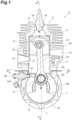
FIG. 1 is a longitudinal sectional view of a two-stroke engine according to an embodiment of the present disclosure. -
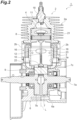
FIG. 2 is a cross-sectional view taken along line II-II ofFIG. 1 . -
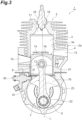
FIG. 3 is a longitudinal sectional view illustrating a state in which a piston is located at a bottom dead center. -
FIG. 4 is a cross-sectional view taken along line IV-IV ofFIG. 1 . -
FIG. 5(a) is an exploded perspective view illustrating a crank mechanism and a connecting rod, andFIG. 5(b) is a side view illustrating the crank mechanism and the connecting rod. -
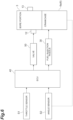
FIG. 6 is a block diagram illustrating a schematic configuration related to injection control of mixed fuel in a fuel injector. -
FIG. 7(a) is a diagram illustrating an injection timing of a mixed fuel in the two-stroke engine ofFIG. 1 , andFIG. 7(b) is a diagram illustrating an injection timing of a mixed fuel in a two-stroke engine according to a modification. - Hereinafter, embodiments of the present disclosure will be described with reference to the drawings. Note that, in the description of the drawings, the same elements are denoted by the same reference numerals, and redundant description is omitted. In the following description, the term "up and down" is based on a case where a
cylinder body 2a is erected so that abore portion 3 of acylinder 2 extends in the vertical direction with the opening portion into which apiston 4 is inserted facing downward. "Upper" corresponds to one side in an axis L direction of thebore portion 3, and "lower" corresponds to a lower side in the axis L direction. - As illustrated in
FIGS. 1 ,2 , and3 , an engine (two-stroke engine) 1 is a two-stroke engine employing a Schnuerle method as a scavenging method, and is mounted on, for example, a brush cutter, a knapsack-type power sprayer, or the like. Theengine 1 includes thecylinder 2, thepiston 4 that reciprocates in thebore portion 3 in thecylinder 2, acrankcase 6 connected below thecylinder 2 and having acrank chamber 6a, and acrank mechanism 7 disposed in thecrank chamber 6a of thecrankcase 6. Apiston pin 8 provided in thepiston 4 and acrank pin 9 of thecrank mechanism 7 provided in thecrankcase 6 are connected by a connectingrod 10. Thepiston 4 is disposed in thebore portion 3 and can reciprocate along the axis L direction between acombustion chamber 11 and thecrank chamber 6a. In the following description, the connectingrod 10 is referred to as a con-rod 10. - The
cylinder 2 is formed with thecombustion chamber 11, acylindrical bore portion 3 connected to thecombustion chamber 11 and into which thepiston 4 is inserted, anintake port 12 and anexhaust port 13 communicating with thebore portion 3, and a pair of intake side scavengingholes 14 and a pair of exhaust side scavengingholes 16. Thecylinder 2 includes acylinder body 2a and a pair ofscavenging cassettes 2b fitted into a lower portion of thecylinder body 2a. The pair ofscavenging cassettes 2b is fitted and fixed in two openings formed to face each other in the radial direction of thebore portion 3. The pair of intake side scavengingholes 14 and the pair of exhaustside scavenging holes 16 are formed by, for example, thecylinder body 2a and the pair ofscavenging cassettes 2b (seeFIG. 2 ). - The
bore portion 3 has acylindrical bore surface 3a and extends in the axis L direction in thecylinder 2. A bottom dead center side (lower side in the drawing) of thebore portion 3 is opened and communicates with thecrank chamber 6a. Acombustion chamber 11 having a recessed shape is formed at an end of thebore portion 3 on the top dead center side, and a discharge electrode such as anignition plug 18 is disposed inside thecombustion chamber 11. An ignitionplug attachment hole 19 to which theignition plug 18 is attached is provided near thecombustion chamber 11 of thecylinder body 2a. - The
intake port 12 and theexhaust port 13 each communicate with thebore portion 3, and theexhaust port 13 is disposed slightly closer to the top dead center than theintake port 12 in the axis L direction. Theintake port 12 and theexhaust port 13 are disposed to be shifted from each other by approximately 180° in a circumferential direction of thebore portion 3 so as to face each other in the radial direction of thebore portion 3. - The intake side scavenging holes 14 are for introducing fresh air gas containing fuel into the
bore portion 3 and thecombustion chamber 11 in the scavenging process, and extend along the axis L direction inside the side wall of thecylinder 2. The fresh air gas is an air-fuel mixture for engine operation in which a mixed fuel including gasoline and oil and air are mixed. Ends of the intake side scavenging holes 14 on the top dead center side each communicate with thebore portion 3 at a position substantially similar to that of theexhaust port 13 in the axis L direction. The intake side scavenging holes 14 are disposed apart from each other in the circumferential direction of thebore portion 3. More specifically, the intake side scavenging holes 14 are disposed substantially line-symmetrically with respect to an imaginary line connecting theintake port 12 and theexhaust port 13 in the radial direction. The intake side scavenging holes 14 are provided so that fresh air gas introduced into thebore portion 3 is directed toward theintake port 12. - An end (
inlet 14a to be described later) of the intakeside scavenging hole 14 on the bottom dead center side communicates with thecrank chamber 6a. An end (not illustrated) of the exhaustside scavenging hole 16 on the bottom dead center side communicates with thecrank chamber 6a described above. - The exhaust
side scavenging holes 16 are for introducing exhaust gas recirculation (EGR) gas, which is an exhaust gas after combustion having a lower fuel content than the working gas, into thebore portion 3 and thecombustion chamber 11 in the scavenging process, and extend along the axis L direction inside the side wall of thecylinder 2. Ends of the exhaust side scavenging holes 16 on the top dead center side each communicate with thebore portion 3 at a position substantially similar to that of theexhaust port 13 in the axis L direction. The exhaustside scavenging holes 16 are disposed apart from each other in the circumferential direction of thebore portion 3. More specifically, the exhaustside scavenging holes 16 are disposed substantially line-symmetrically with respect to the imaginary line connecting theintake port 12 and theexhaust port 13 in the radial direction. The exhaustside scavenging holes 16 are provided so that the EGR gas introduced into thebore portion 3 is directed toward theintake port 12. For example, thepiston 4 may be provided with a communication passage that allows theexhaust port 13 and the exhaustside scavenging holes 16 to communicate with each other when thepiston 4 is near the top dead center, and allows the exhaust gas after combustion to be taken into the exhaustside scavenging holes 16 from theexhaust port 13 as the EGR gas. - As described above, the
engine 1 is a two-stroke engine of a piston valve type in which theintake port 12 is opened and closed by thepiston 4 reciprocating in thebore portion 3. In theengine 1, among the components constituting the fresh air gas, air is introduced from theintake port 12, and the mixed fuel containing gasoline and oil is injected into thecrank chamber 6a for cooling thelarge end 22 of the con-rod 10. Thus, the air and the mixed fuel are mixed in thecrank chamber 6a of thecrankcase 6 to generate the air-fuel mixture. - Configurations of the
crank mechanism 7 and the con-rod 10 will be described with reference toFIGS. 5(a) and 5(b) . As illustrated inFIG. 5(a) , thecrank mechanism 7 includes acrankshaft 7a, a pair of crankwebs 7b connected to thecrankshaft 7a, and a pair of connectingportions 7c provided on the opposite side of thecrank web 7b in the radial direction. The connectingrod 10 includes asmall end 21 rotatably connected to thepiston 4 via thepiston pin 8 by inserting thepiston pin 8 into thepin insertion hole 21a, alarge end 22 rotatably connected to the connectingportion 7c of thecrank mechanism 7 via thecrank pin 9 by inserting thecrank pin 9 into thepin insertion hole 22a, and a rodmain body 23 connecting thesmall end 21 and thelarge end 22. - The
crank web 7b, the connectingportion 7c, and thecrankshaft 7a are integrally molded. Thecrank pin 9 inserted through the pair of connectingportions 7c is joined and fixed to these connectingportions 7c, and theentire crank mechanism 7 forms a rigid body. The pair of crankwebs 7b has a fan shape centered on thecrankshaft 7a, and is guided by a cylindrical wall surface of thecrank chamber 6a to rotate around thecrankshaft 7a. When the con-rod 10 moves up and down along with the reciprocating motion of thepiston 4, thelarge end 22 of the con-rod 10 moves (rotates) along a circumferential track together with thecrank pin 9 and the connectingportion 7c, and the reciprocating motion of thepiston 4 is converted into a rotational motion of thecrankshaft 7a. - As illustrated in
FIG. 5(b) , the pair of crankwebs 7b extends parallel to each other and is separated from each other in the axial direction of thecrankshaft 7a. A gap G is formed between the pair of crankwebs 7b. During the rotation of thecrank mechanism 7, thelarge end 22 of the con-rod 10 and the gap G between thecrank webs 7b are always located on the opposite side in the radial direction. The circumferential trajectory of thelarge end 22 and the circumferential trajectory of the gap G overlap. - As illustrated in
FIG. 1 , theengine 1 includes a fuel injection nozzle (fuel injector) 30 that sprays the mixed fuel toward thelarge end 22 of the con-rod 10. Thefuel injection nozzle 30 is attached to an upper portion of thecrankcase 6 and near a connection position with thecylinder body 2a. A tip portion of thefuel injection nozzle 30 including theinjection port 31 through which the mixed fuel is injected is fitted from the outside to the inside of thecrankcase 6. Theinjection port 31 of thefuel injection nozzle 30 is directed, for example, in a direction intersecting both the axis L direction of thebore portion 3 and the axial direction of thecrankshaft 7a. More specifically, theinjection port 31 of thefuel injection nozzle 30 is oriented in a direction orthogonal to both the axis L direction of thebore portion 3 and the axial direction of thecrankshaft 7a. -
FIG. 4 is a cross-sectional view taken along line IV-IV ofFIG. 1 . As illustrated inFIG. 4 , thefuel injection nozzle 30 is disposed in a diametrical direction of the bore portion 3 (boresurface 3a) in plan view. Theinjection port 31 of thefuel injection nozzle 30 slightly protrudes into thecrank chamber 6a. Theinjection port 31 is disposed at a position passing through the gap G (seeFIG. 5 (b) ) between the pair of crankwebs 7b during the rotation of thecrank mechanism 7. Since theinjection port 31 faces (faces) the gap G in this manner, there is a positional relationship in which no other member exists between theinjection port 31 and thepin insertion hole 22a. - Furthermore, as illustrated in
FIGS. 1 and4 ,inlets 14a of the pair of intake side scavenging holes 14 are located in the vicinity of the side of theinjection port 31. The pair ofinlets 14a opens toward thecrank chamber 6a. The pair ofinlets 14a also communicates with the pair of exhaust side scavenging holes 16. The distance along the circumferential direction between theinjection port 31 and theinlet 14a is shorter than 1/4 of the length of the peripheral surface of thebore surface 3a (the inner peripheral surface of the bore portion 3). That is, theinjection port 31 and the one intakeside scavenging hole 14 are disposed within a range of 90° as a central angle with respect to the axis L of thebore portion 3. Theinjection port 31 and the other intakeside scavenging hole 14 are disposed within a range of 90° as a central angle with respect to the axis L of thebore portion 3. Theinlet 14a of the intakeside scavenging hole 14 is located at the same height as theinjection port 31 of thefuel injection nozzle 30 in the direction of the axis L. In other words, theinjection port 31 of thefuel injection nozzle 30 is located at the height position of the upper end of thecrankcase 6. - As illustrated in
FIGS. 1 and7 (a) , thefuel injection nozzle 30 injects the mixed fuel in a tangential direction of the circumferential track of thelarge end 22. The period during which the mixed fuel is injected from thefuel injection nozzle 30 includes at least when thepiston 4 is located at the top dead center (at that time, the pinlarge end 22 is also located at the uppermost position). The injection of the mixed fuel from thefuel injection nozzle 30 may be continued, for example, up to a point oftime 30° after the top dead center. In other words, the period during which the mixed fuel is injected from thefuel injection nozzle 30 may start when thepiston 4 is located at the top dead center (at 0°) or slightly before the top dead center (about several° to 15°) and end at the time point of 30° after the top dead center. Thefuel injection nozzle 30 is configured to spray the mixed fuel to thelarge end 22 of the con-rod 10. Thefuel injection nozzle 30 injects the mixed fuel while thelarge end 22 passes in front of theinjection port 31. - The injection timing of the mixed fuel in the
fuel injection nozzle 30 is controlled by theECU 40 that controls theengine 1 as illustrated inFIG. 6 . TheECU 40 controls thevalve 50 and thefuel injection nozzle 30 that open and close the intake path to theintake port 12 on the basis of opening degree information of the throttle input from a throttle sensor S1 and rotation angle information of thecrank mechanism 7 input from an angle sensor S2. The injection timing (injection period) described above can be appropriately adjusted by theECU 40 based on the state of theengine 1. Thefuel injection nozzle 30 is an injector for electronic control, and can adjust the injection amount of the mixed fuel with high accuracy. For example, even when the required mixed fuel (gasoline amount) is minimum, theECU 40 injects the mixed fuel corresponding to a controllable limit value (minimum amount) from thefuel injection nozzle 30. In the present embodiment, thefuel injection nozzle 30 is configured to spray the mixed fuel to thelarge end 22 at least when thepiston 4 is located at the top dead center. Note that, inFIG. 6 , the line (path) of the mixed fuel connected to thefuel injection nozzle 30 is omitted. - The mixed fuel injected from the
injection port 31 may be radial or linear. The type of the nozzle may be appropriately selected. An injection direction (central axis direction of injection) of thefuel injection nozzle 30 intersects the axis L and crosses thebore portion 3 in plan view. The central axis direction of the injection of thefuel injection nozzle 30 is, for example, orthogonal to the axis L. The central axis direction of the injection of thefuel injection nozzle 30 is also orthogonal to the axial direction of thecrankshaft 7a, for example. - Next, an operation in the
engine 1 will be described. First, as thepiston 4 rises from the bottom dead center toward the top dead center, the intakeside scavenging hole 14, the exhaustside scavenging hole 16, and theexhaust port 13 are closed by thepiston 4, and the fresh air gas in thecombustion chamber 11 is compressed. As thepiston 4 further rises, theintake port 12 communicates with thecrank chamber 6a via thebore portion 3, and air is introduced into thecrank chamber 6a (seeFIGS. 1 and2 ). - When the
piston 4 reaches the vicinity of the top dead center, the air-fuel mixture explodes in thecombustion chamber 11, and thepiston 4 descends to the bottom dead center side. On the other hand, in thecrank chamber 6a, when thepiston 4 is located near the top dead center, the mixed fuel is injected from thefuel injection nozzle 30 under the control of theECU 40. The mixed fuel is sprayed onto thelarge end 22 of the con-rod 10, thereby lubricating and cooling thelarge end 22. The injection of the mixed fuel is stopped immediately after the start of lowering of the piston 4 (at the latest by 30° after the top dead center). The air and the mixed fuel are mixed in thecrank chamber 6a to generate fresh air gas. - As the
piston 4 further descends, theexhaust port 13 is opened, and the combustion gas is exhausted (seeFIG. 3 ). Then, slightly after the opening of theexhaust port 13, the intakeside scavenging hole 14 and the exhaustside scavenging hole 16 are exposed to the inside of thebore portion 3, and the scavenging stroke is started. The injection of the mixed fuel is close to the timing of the start of the scavenging process. In addition, the distance from theinjection port 31 to theinlet 14a of the intakeside scavenging hole 14 is also short. The mixed fuel (fresh air gas) is reliably and easily introduced into the intakeside scavenging hole 14. In the first half of the scavenging process, the exhaustside scavenging holes 16 are filled with EGR gas, and the intake side scavenging holes 14 are filled with fresh air gas. - When the intake
side scavenging hole 14 opens in thebore portion 3, introduction of the fresh air gas from the intakeside scavenging hole 14 into thebore portion 3 is started. As thepiston 4 descends, the fresh air gas flows into thebore portion 3 from the intakeside scavenging hole 14. At the same time, when the exhaustside scavenging hole 16 is opened, the EGR gas and the fresh air gas flow in this order from the exhaustside scavenging hole 16. Thus, layered scavenging is performed. - In the process in which the
piston 4 reaches the bottom dead center, the pair of crankwebs 7b of thecrank mechanism 7 passes near thefuel injection nozzle 30, but since theinjection port 31 passes through the gap G between the pair of crankwebs 7b, they do not interfere. - In the
engine 1 of the present embodiment, thefuel injection nozzle 30 attached to thecrankcase 6 sprays the mixed fuel to thelarge end 22 of the con-rod 10. At this time, thefuel injection nozzle 30 injects the mixed fuel in the tangential direction of the circumferential track of thelarge end 22. Lubrication and cooling of thelarge end 22 are performed by the oil contained in the mixed fuel. Thelarge end 22 is also cooled by gasoline contained in the mixed fuel. This enables lubrication and cooling of thelarge end 22 with a small amount of mixed fuel. In addition, since the mixed fuel is injected not into thecombustion chamber 11 or thebore portion 3 but into thecrankcase 6, it is not necessary to consider pressure resistance and heat resistance with respect to a peripheral configuration of thefuel injection nozzle 30. - The
injection port 31 of thefuel injection nozzle 30 protrudes into thecrank chamber 6a. Accordingly, the mixed fuel can be injected from a position closer to thelarge end 22, and thus the desired lubricating effect and cooling effect described above can be easily obtained. - The
injection port 31 of thefuel injection nozzle 30 is disposed at a position passing through the gap G between the pair of crankwebs 7b. Thus, theinjection port 31 can be brought closer to thelarge end 22, and the large end can be cooled more reliably and effectively. - The
fuel injection nozzle 30 is configured to inject the mixed fuel into thelarge end 22 at least when thepiston 4 is located at the top dead center. Thus, since the fuel injection matches the scavenging timing, it is easy to introduce the fuel sprayed to thelarge end 22 into the intakeside scavenging hole 14. - The
inlet 14a of the intakeside scavenging hole 14 is located at the same height as theinjection port 31 of thefuel injection nozzle 30 in the direction of the axis L. Accordingly, the fuel sprayed to thelarge end 22 can be easily introduced into the intakeside scavenging hole 14. Since the mixed fuel stays in the vicinity of theinlet 14a of the intakeside scavenging hole 14, the fuel is easily introduced into the intakeside scavenging hole 14. Thus, unnecessary fuel that is not introduced into the intakeside scavenging hole 14 can be reduced, and an effect of reducing fuel consumption can also be obtained. Furthermore, transient responsiveness and startability are improved. - Although the embodiments of the present disclosure have been described above, the present invention is not limited to the above embodiments. For example, the present invention is not limited to the configuration in which the
fuel injection nozzle 30 injects the mixed fuel to thelarge end 22 at least when thepiston 4 is located at the top dead center. For example, as illustrated inFIG. 7(b) , thefuel injection nozzle 30 may spray the mixed fuel to thelarge end 22 of the con-rod 10 on the way of thepiston 4 toward the top dead center. Thefuel injection nozzle 30 may be attached to, for example, a lower portion of thecrankcase 6 in order to inject the mixed fuel in a tangential direction of a circumferential trajectory of thelarge end 22. Theinjection port 31 may be directed upward. - The present invention is not limited to the case where the
cylinder 2 is provided with the four scavenging holes, that is, the pair of intake side scavenging holes 14 and the pair of exhaustside scavenging holes 16, and a configuration may be employed in which thecylinder 2 is provided with one intakeside scavenging hole 14 and one exhaustside scavenging hole 16. The present invention is not limited to the configuration in which the intake side scavenging holes 14 introduce the fresh air gas and the exhaustside scavenging holes 16 introduce the EGR gas. The present invention is also applicable to layered scavenging engines of the type using air. In addition, only a pair of scavenging holes facing each other in the radial direction may be provided between theintake port 12 and theexhaust port 13. Only one scavenging hole may be provided in thecylinder 2. -
- 1
- Engine (two-stroke engine)
- 2
- Cylinder
- 3
- Bore portion
- 4
- Piston
- 6
- Crankcase
- 6a
- Crank chamber
- 7
- Crank mechanism
- 7a
- Crankshaft
- 7b
- Crank web
- 9
- Crank pin
- 11
- Combustion chamber
- 12
- Intake port
- 13
- Exhaust port
- 14
- Intake side scavenging hole (scavenging hole)
- 16
- Exhaust side scavenging hole (scavenging hole)
- 21
- Small end
- 22
- Large end
- 30
- Fuel injection nozzle (fuel injector)
- 31
- Injection port
- G
- Gap
- L
- Axis (of bore portion)
Claims (5)
- A two-stroke engine (1) of a piston valve type including a cylinder (2) and a piston (4) configured to reciprocate in a bore portion (3) of the cylinder (2) along an axial direction in which an intake port is opened and closed by the piston (4), the two-stroke engine (1) comprising:a crankcase connected to the cylinder (2) and having a crank chamber (6a);a crank mechanism (7) disposed in the crank chamber (6a) and configured to rotate about a crankshaft (7a);a connecting rod having a small end (21) connected to the piston (4) and a large end (22) connected to the crank mechanism (7); anda fuel injector (30) attached to the crankcase and configured to inject mixed fuel in a tangential direction of a circumferential trajectory of the large end (22) to spray the mixed fuel to the large end (22).
- The two-stroke engine according to claim 1, wherein an injection port (31) of the fuel injector (30) protrudes into the crank chamber (6a).
- The two-stroke engine according to claim 2, whereinthe crank mechanism (7) includes a pair of crank webs (7b) connected to the crankshaft (7a) and separated from each other in an axial direction of the crankshaft (7a), andthe injection port (31) of the fuel injector (30) is disposed at a position passing through a gap (G) between the pair of crank webs (7b).
- The two-stroke engine according to any one of claims 1 to 3, wherein the fuel injector (30) is configured to spray the mixed fuel to the large end (22) at least when the piston (4) is located at a top dead center.
- The two-stroke engine according to any one of claims 1 to 4, whereina scavenging hole (14) is formed in the cylinder (2), andan inlet (14a) of the scavenging hole (14) opening toward the crank chamber (6a) is located at a same height as an injection port (31) of the fuel injector (30) in the axial direction.
Applications Claiming Priority (2)
| Application Number | Priority Date | Filing Date | Title |
|---|---|---|---|
| JP2022043649A JP7827505B2 (en) | 2022-03-18 | 2022-03-18 | two-stroke engine |
| PCT/JP2023/007374 WO2023176435A1 (en) | 2022-03-18 | 2023-02-28 | Two-stroke engine |
Publications (2)
| Publication Number | Publication Date |
|---|---|
| EP4474636A1 true EP4474636A1 (en) | 2024-12-11 |
| EP4474636A4 EP4474636A4 (en) | 2026-01-14 |
Family
ID=88023527
Family Applications (1)
| Application Number | Title | Priority Date | Filing Date |
|---|---|---|---|
| EP23770393.9A Pending EP4474636A4 (en) | 2022-03-18 | 2023-02-28 | TWO-STROKE ENGINE |
Country Status (6)
| Country | Link |
|---|---|
| US (1) | US12429020B2 (en) |
| EP (1) | EP4474636A4 (en) |
| JP (1) | JP7827505B2 (en) |
| KR (1) | KR20240138519A (en) |
| CN (1) | CN118984909A (en) |
| WO (1) | WO2023176435A1 (en) |
Families Citing this family (1)
| Publication number | Priority date | Publication date | Assignee | Title |
|---|---|---|---|---|
| JP2025059399A (en) * | 2023-09-29 | 2025-04-10 | 株式会社丸山製作所 | 2-stroke engine |
Family Cites Families (13)
| Publication number | Priority date | Publication date | Assignee | Title |
|---|---|---|---|---|
| JPS61164029A (en) * | 1985-01-12 | 1986-07-24 | Nippon Clean Engine Res | Two-cycle engine |
| US4967712A (en) * | 1987-11-12 | 1990-11-06 | Injection Research Specialists, Inc. | Two-cycle engine with electronic fuel injection |
| JPH07224741A (en) | 1994-02-15 | 1995-08-22 | Yamaha Motor Co Ltd | Fuel injection type 2-cycle engine |
| JP2789443B2 (en) | 1995-09-08 | 1998-08-20 | 川崎重工業株式会社 | 2 cycle engine |
| JPH10122102A (en) * | 1996-10-16 | 1998-05-12 | Kioritz Corp | Two-stroke internal combustion engine |
| JP2000283008A (en) * | 1999-03-31 | 2000-10-10 | Suzuki Motor Corp | Fuel injection system for two-stroke engine |
| US7093570B2 (en) * | 2003-12-31 | 2006-08-22 | Nagesh S Mavinahally | Stratified scavenged two-stroke engine |
| EP2021606B1 (en) * | 2006-05-12 | 2019-06-12 | Husqvarna AB | Method for adjusting the air-fuel ratio of an internal combustion engine |
| DE102011120468A1 (en) | 2011-12-07 | 2013-06-13 | Andreas Stihl Ag & Co. Kg | Internal combustion engine with fuel supply device |
| JP6276724B2 (en) | 2015-03-02 | 2018-02-07 | 株式会社丸山製作所 | 2-cycle engine |
| DE102020000989A1 (en) * | 2020-02-15 | 2021-08-19 | Andreas Stihl Ag & Co. Kg | Two-stroke engine and method of operating a two-stroke engine |
| US11946408B2 (en) * | 2020-03-02 | 2024-04-02 | Yamabiko Corporation | Two-stroke internal combustion engine and engine working machine |
| JP7592690B2 (en) | 2020-03-02 | 2024-12-02 | 株式会社やまびこ | Two-stroke internal combustion engine and engine working machine |
-
2022
- 2022-03-18 JP JP2022043649A patent/JP7827505B2/en active Active
-
2023
- 2023-02-28 KR KR1020247028766A patent/KR20240138519A/en active Pending
- 2023-02-28 CN CN202380026356.XA patent/CN118984909A/en active Pending
- 2023-02-28 WO PCT/JP2023/007374 patent/WO2023176435A1/en not_active Ceased
- 2023-02-28 EP EP23770393.9A patent/EP4474636A4/en active Pending
-
2024
- 2024-09-03 US US18/822,492 patent/US12429020B2/en active Active
Also Published As
| Publication number | Publication date |
|---|---|
| JP2023137435A (en) | 2023-09-29 |
| US20240426266A1 (en) | 2024-12-26 |
| JP7827505B2 (en) | 2026-03-10 |
| US12429020B2 (en) | 2025-09-30 |
| CN118984909A (en) | 2024-11-19 |
| EP4474636A4 (en) | 2026-01-14 |
| KR20240138519A (en) | 2024-09-20 |
| WO2023176435A1 (en) | 2023-09-21 |
Similar Documents
| Publication | Publication Date | Title |
|---|---|---|
| US4945864A (en) | Two cycle engine piston lubrication | |
| JP6025705B2 (en) | 2-stroke engine | |
| US10221732B2 (en) | Lubrication system for internal combustion engine | |
| US5806631A (en) | Piston pin lubrication | |
| US12429020B2 (en) | Two-stroke engine with crankcase fuel injector | |
| US8113155B2 (en) | Two-cycle engine | |
| JP2025000986A (en) | Two-cycle internal combustion engine and engine working machine | |
| US5396867A (en) | Two-cycle engine | |
| US5901673A (en) | Two-cycle internal combustion engine | |
| JPH04276182A (en) | Fuel injector for 2-cycle engine | |
| WO2004038195A1 (en) | Air scavenging-type two-cycle engine | |
| CN216008688U (en) | Two-stroke engine | |
| US5983851A (en) | Method for lubricating a two-cycle internal combustion engine | |
| US10502103B2 (en) | Internal combustion engine with improved lubrication system | |
| US6899067B2 (en) | Two-stroke engine and method of operating the same | |
| US6895909B2 (en) | Two-cycle combustion engine having two-staged piston | |
| JP2000283008A (en) | Fuel injection system for two-stroke engine | |
| US6581563B2 (en) | Method for lubricating two-cycle internal combustion engine | |
| US6530349B2 (en) | Two-cycle internal combustion engine | |
| JPH02125961A (en) | Fuel supply device for two-cycle internal combustion engine | |
| US20030075124A1 (en) | Method and apparatus for dissipating heat from a combustion chamber of an internal combustion engine | |
| KR20260058871A (en) | 2-cycle engine | |
| JP2979007B2 (en) | Lubricating device for two-cycle engine | |
| CN109642481B (en) | Cylinder oiling device and crosshead internal combustion engine | |
| JPS6365122A (en) | Two-cycle diesel engine |
Legal Events
| Date | Code | Title | Description |
|---|---|---|---|
| STAA | Information on the status of an ep patent application or granted ep patent |
Free format text: STATUS: THE INTERNATIONAL PUBLICATION HAS BEEN MADE |
|
| PUAI | Public reference made under article 153(3) epc to a published international application that has entered the european phase |
Free format text: ORIGINAL CODE: 0009012 |
|
| STAA | Information on the status of an ep patent application or granted ep patent |
Free format text: STATUS: REQUEST FOR EXAMINATION WAS MADE |
|
| 17P | Request for examination filed |
Effective date: 20240902 |
|
| AK | Designated contracting states |
Kind code of ref document: A1 Designated state(s): AL AT BE BG CH CY CZ DE DK EE ES FI FR GB GR HR HU IE IS IT LI LT LU LV MC ME MK MT NL NO PL PT RO RS SE SI SK SM TR |
|
| DAV | Request for validation of the european patent (deleted) | ||
| DAX | Request for extension of the european patent (deleted) | ||
| A4 | Supplementary search report drawn up and despatched |
Effective date: 20251212 |
|
| RIC1 | Information provided on ipc code assigned before grant |
Ipc: F02M 69/10 20060101AFI20251208BHEP Ipc: F01M 3/00 20060101ALI20251208BHEP Ipc: F02B 25/14 20060101ALI20251208BHEP Ipc: F02F 7/00 20060101ALI20251208BHEP |