EP4474529A2 - Binäre legierungen und ihre oxide zur elektrokatalytischen reduktion von kohlendioxid - Google Patents
Binäre legierungen und ihre oxide zur elektrokatalytischen reduktion von kohlendioxid Download PDFInfo
- Publication number
- EP4474529A2 EP4474529A2 EP24207009.2A EP24207009A EP4474529A2 EP 4474529 A2 EP4474529 A2 EP 4474529A2 EP 24207009 A EP24207009 A EP 24207009A EP 4474529 A2 EP4474529 A2 EP 4474529A2
- Authority
- EP
- European Patent Office
- Prior art keywords
- transition metal
- oxalate
- feature
- products
- organic products
- Prior art date
- Legal status (The legal status is an assumption and is not a legal conclusion. Google has not performed a legal analysis and makes no representation as to the accuracy of the status listed.)
- Pending
Links
Images







Classifications
-
- C—CHEMISTRY; METALLURGY
- C25—ELECTROLYTIC OR ELECTROPHORETIC PROCESSES; APPARATUS THEREFOR
- C25B—ELECTROLYTIC OR ELECTROPHORETIC PROCESSES FOR THE PRODUCTION OF COMPOUNDS OR NON-METALS; APPARATUS THEREFOR
- C25B11/00—Electrodes; Manufacture thereof not otherwise provided for
- C25B11/04—Electrodes; Manufacture thereof not otherwise provided for characterised by the material
- C25B11/051—Electrodes formed of electrocatalysts on a substrate or carrier
- C25B11/052—Electrodes comprising one or more electrocatalytic coatings on a substrate
-
- C—CHEMISTRY; METALLURGY
- C25—ELECTROLYTIC OR ELECTROPHORETIC PROCESSES; APPARATUS THEREFOR
- C25B—ELECTROLYTIC OR ELECTROPHORETIC PROCESSES FOR THE PRODUCTION OF COMPOUNDS OR NON-METALS; APPARATUS THEREFOR
- C25B11/00—Electrodes; Manufacture thereof not otherwise provided for
- C25B11/04—Electrodes; Manufacture thereof not otherwise provided for characterised by the material
- C25B11/051—Electrodes formed of electrocatalysts on a substrate or carrier
- C25B11/073—Electrodes formed of electrocatalysts on a substrate or carrier characterised by the electrocatalyst material
- C25B11/075—Electrodes formed of electrocatalysts on a substrate or carrier characterised by the electrocatalyst material consisting of a single catalytic element or catalytic compound
- C25B11/089—Alloys
-
- C—CHEMISTRY; METALLURGY
- C25—ELECTROLYTIC OR ELECTROPHORETIC PROCESSES; APPARATUS THEREFOR
- C25B—ELECTROLYTIC OR ELECTROPHORETIC PROCESSES FOR THE PRODUCTION OF COMPOUNDS OR NON-METALS; APPARATUS THEREFOR
- C25B11/00—Electrodes; Manufacture thereof not otherwise provided for
- C25B11/04—Electrodes; Manufacture thereof not otherwise provided for characterised by the material
- C25B11/051—Electrodes formed of electrocatalysts on a substrate or carrier
- C25B11/073—Electrodes formed of electrocatalysts on a substrate or carrier characterised by the electrocatalyst material
- C25B11/091—Electrodes formed of electrocatalysts on a substrate or carrier characterised by the electrocatalyst material consisting of at least one catalytic element and at least one catalytic compound; consisting of two or more catalytic elements or catalytic compounds
-
- C—CHEMISTRY; METALLURGY
- C25—ELECTROLYTIC OR ELECTROPHORETIC PROCESSES; APPARATUS THEREFOR
- C25B—ELECTROLYTIC OR ELECTROPHORETIC PROCESSES FOR THE PRODUCTION OF COMPOUNDS OR NON-METALS; APPARATUS THEREFOR
- C25B3/00—Electrolytic production of organic compounds
- C25B3/01—Products
- C25B3/07—Oxygen containing compounds
-
- C—CHEMISTRY; METALLURGY
- C25—ELECTROLYTIC OR ELECTROPHORETIC PROCESSES; APPARATUS THEREFOR
- C25B—ELECTROLYTIC OR ELECTROPHORETIC PROCESSES FOR THE PRODUCTION OF COMPOUNDS OR NON-METALS; APPARATUS THEREFOR
- C25B3/00—Electrolytic production of organic compounds
- C25B3/20—Processes
- C25B3/25—Reduction
-
- C—CHEMISTRY; METALLURGY
- C25—ELECTROLYTIC OR ELECTROPHORETIC PROCESSES; APPARATUS THEREFOR
- C25B—ELECTROLYTIC OR ELECTROPHORETIC PROCESSES FOR THE PRODUCTION OF COMPOUNDS OR NON-METALS; APPARATUS THEREFOR
- C25B3/00—Electrolytic production of organic compounds
- C25B3/20—Processes
- C25B3/25—Reduction
- C25B3/26—Reduction of carbon dioxide
-
- C—CHEMISTRY; METALLURGY
- C25—ELECTROLYTIC OR ELECTROPHORETIC PROCESSES; APPARATUS THEREFOR
- C25B—ELECTROLYTIC OR ELECTROPHORETIC PROCESSES FOR THE PRODUCTION OF COMPOUNDS OR NON-METALS; APPARATUS THEREFOR
- C25B9/00—Cells or assemblies of cells; Constructional parts of cells; Assemblies of constructional parts, e.g. electrode-diaphragm assemblies; Process-related cell features
- C25B9/17—Cells comprising dimensionally-stable non-movable electrodes; Assemblies of constructional parts thereof
Definitions
- the present invention relates to the electrocatalytic reduction of CO 2 and, in particular, to the electrocatalytic reduction of CO 2 via binary alloy systems and/or oxides thereof.
- a system for providing oxygenated organic products comprises an electrochemical cell including an electrolyte solution comprising CO 2 , and a working electrode comprising a transition metal/post transition metal (TM/PTM) binary alloy and/or oxide(s) thereof for electrocatalytic reduction of the CO 2 to the oxygenated organic products.
- the oxygenated organic products comprise two or more carbon atoms and/or two or more oxygen atoms.
- Binary alloy of the working electrode can be of the formula TM x PTM y , wherein x and y are integers independently selected from 1 to 10.
- binary alloy of the working electrode may be in oxide form wherein one or both of the transition metal and post transition metal are metal oxides.
- Oxygenated organic products produced by the system can comprise one or more of propanol, butanol, ethanol, oxalate, formic acid or formate and acetone.
- oxygenated organic products further include a single oxygen atom, including CO and methanol.
- a system for providing oxygenated organic products comprises an electrochemical cell including an electrolyte solution comprising CO 2 , and an electrode comprising an alloy and/or mixture of metal oxides.
- the electrode comprises an electrocatalytic site for reduction of CO 2 to CO, wherein CO is incorporated into the oxygenated organic products.
- the alloy comprises at least one of a transition metal and post-transition metal.
- metal oxides of the electrode can comprise at least one of a transition metal oxide and post-transition metal oxide.
- a system for providing organic products comprises an electrochemical cell including an electrolyte solution comprising CO 2 , and a working electrode comprising a transition metal/post-transition metal (TM/PTM) binary alloy and/or oxides thereof for electrocatalytic reduction of the CO 2 to the organic products.
- binary alloy excludes nickel and gallium.
- binary metal oxides comprising nickel and gallium are not excluded.
- Organic products produced by the system can comprise one carbon atom, two carbon atoms, three carbon atoms or mixtures thereof. Additionally, the organic products can be oxygenated, in some embodiments.
- a method of forming oxygenated organic products includes providing an electrochemical cell including an electrolyte solution comprising CO 2 , and a working electrode comprising a transition metal/post transition metal (TM/PTM) binary alloy and/or oxide(s) thereof and electrocatalytically reducing the CO 2 to the oxygenated organic products.
- the oxygenated organic products can comprise two or more carbon atoms and/or two or more oxygen atoms.
- Oxygenated products can include one or more of propanol, butanol, ethanol, oxalate, formic acid or formate and acetone.
- oxygenated products additionally include a single oxygen atom including CO and methanol.
- a method of forming oxygenated organic products comprises providing an electrochemical cell including an electrolyte solution comprising CO 2 , and an electrode comprising an alloy and/or mixture of metal oxides. CO 2 is reduced to CO at an electrocatalytic site on the electrode, and the oxygenated organic products are derived from the CO.
- the oxygenated products comprise oxalate.
- a method of forming organic products comprises providing an electrochemical cell including an electrolyte solution comprising CO 2 , and a working electrode comprising a transition metal/post-transition metal (TM/PTM) binary alloy and/or oxide(s) thereof and electrocatalytically reducing the CO 2 to the organic products.
- the binary alloy excludes combination of nickel and gallium, without excluding binary metal oxide composition including oxides of nickel and/or gallium.
- Organic products can comprise one carbon atom, two carbon atoms, three carbon atoms or mixtures thereof. Additionally, the organic products can be oxygenated, in some embodiments.
- a method of oxalate production comprises providing an electrochemical cell including an electrolyte solution comprising CO 2 , and a working electrode comprising a transition metal oxide/post-transition metal oxide composite and electrocatalytically reducing the CO 2 to oxalate via generating CO and methanol from the CO 2 .
- CO is incorporated into the oxalate product, and methanol is excluded from the oxalate product.
- oxalate can be produced at Faradaic efficiencies of at least 60 percent.
- various aspects and/or parameters of oxalate production methods can be altered or adjusted to achieve higher Faradaic efficiencies, including efficiencies greater than 70 percent or greater than 80 percent.
- Binary alloys and/or oxide(s) thereof for the electrocatalytic reduction of CO 2 to various organic products comprise a transition metal and a post-transition metal (TM/PTM).
- the transition metal is a first row transition metal.
- post-transition metals can be selected from Groups IIB-VA of the Periodic Table. Groups of the Periodic Table referenced herein are identified according to the CAS designation.
- Binary alloys, in some embodiments are of the formula TM x PTM y , wherein x and y are integers independently selected from 1 to 10.
- Transition metal and post-transition metal can be combined in any ratio operable for the electrocatalytic reduction of CO 2 into various organic products.
- x is 3 and y is 1.
- x can range from 1 to 9 and y can range from 1 to 6.
- Table I provides a listing of various binary alloys operable for the electrocatalytic reduction of CO 2 into various organic products, including oxygenated products comprising two or more carbon atoms and/or two or more oxygen atoms.
- the binary alloy can be in oxide form.
- at least one of the transition metal and post transition metal is a metal oxide.
- both the transition metal and post transition metal are metal oxides.
- Binary alloy may be partially oxidized or fully oxidized.
- Binary metal oxides may form surface and/or bulk regions of the material administering the electrocatalytic reduction of CO 2 .
- the working electrode comprises the binary system of chromium oxide and gallium oxide including, but not limited to, Cr 2 O 3 -Ga 2 O 3 .
- stoichiometries or ratios of the transition metal and post-transition metal can remain the same in the metal oxide as in the binary alloy. Accordingly, the values provided for x and y above apply to metal oxide embodiments.
- the ratio of chromium to gallium can be 3:1.
- a binary alloy and/or oxides thereof contain one metal that can bind CO 2 at the electrode interface via a Lewis acid interaction and second metal that is moderately effective at participating in proton coupled electron transfers.
- binary alloys and/or associated oxides of interest for electrocatalytic CO 2 reduction contain a d 9 valence electron count.
- Binary alloy and/or oxides thereof can be provided as a thin film on the working electrode of the electrochemical cell.
- the thin film of binary alloy and/or oxides thereof can be deposited on any substrate consistent with the objectives of the present invention.
- the thin film of alloy and/or oxide is deposited on glassy carbon.
- the electrochemical cell also comprises an electrolyte solution having CO 2 dissolved therein.
- Any electrolyte solution consistent with the objectives of the present invention can be employed, including aqueous electrolyte solution.
- aqueous electrolyte solution comprises alkali metal salt or alkaline earth metal salt.
- the electrolyte solution may also comprise CO in addition to CO 2 , in some embodiments.
- the electrolyte solution can have neutral or acidic pH, in some embodiments.
- the electrolyte solution for example, can have pH ranging from 3-7 or from 3-6.5. In other embodiments, pH of the electrolyte solution ranges from 4-6.
- Oxygenated organic products formed by the electrocatalytic reduction of CO 2 at the working electrode can include one or more of propanol, butanol, ethanol, oxalate, formic acid or formate and acetone.
- oxygenated products include a single oxygen atom, such as CO and methanol.
- TM/PTM binary alloy and/or oxides thereof of the working electrode are operable to form additional organic products from the electrocatalytic reduction of CO 2 .
- These organic products can comprise one carbon atom, two carbon atoms, three carbon atoms or mixtures thereof.
- Such organic products can be aliphatic or oxygenated.
- TM/PTM binary alloy excludes the combination of nickel and gallium for the production of aliphatic products and oxygenated products comprising a single carbon atom and/or single oxygen atom.
- a system for providing oxygenated organic products comprises an electrochemical cell including an electrolyte solution comprising CO 2 , and an electrode comprising an alloy and/or mixture of metal oxides.
- the electrode comprises an electrocatalytic site for reduction of CO 2 to CO, wherein CO is incorporated into the oxygenated organic products.
- the alloy comprises at least one of a transition metal and post-transition metal.
- metal oxides of the electrode can comprise at least one of a transition metal oxide and post-transition metal oxide.
- the electrode for example, can have any composition and/or properties described herein.
- the electrode is a mixture of metal oxides, such as chromium oxide and gallium oxide.
- the electrocatalytic site for reduction of CO 2 to CO may be anionic or exhibit anionic character, in some embodiments. Additionally, the electrocatalytic site may be selective to the reduction of CO 2 to CO in that the site does not participate in other redox chemistries.
- the electrode comprising an alloy and/or mixture of metal oxides may contain one or more additional electrocatalytic sites for producing other products. In some embodiments, for example, the electrode comprises a non-ionic site for the production of formate in addition to the electrocatalytic site for CO 2 reduction to CO.
- Ni 3 Al thin film electrocatalyst supported on glassy carbon can generate reduced C 1 , C 2 , and C 3 products from CO 2 with good performance, stability, and reproducibility at modest overpotential.
- Competing copper-based electrocatalysts were first reported to carry out the reduction of CO 2 to C 2 and C 3 products in 1988.
- metal alloys can generate C 3 products, electrocatalytic activity that, until now, has been uniquely associated with copper-based electrode systems. Further, the data presented here suggest that the Ni 3 Al system is more stable than copper-based systems.
- Ni 3 Al thin film alloys were synthesized on glassy carbon substrates by adapting a drop-casting and furnace reduction procedure employed by Torelli et al., ACS Catal. 2016, 6, 2100-2104 .
- powder X-ray diffraction of the alloys confirmed the successful generation of the cubic Ni 3 Al composition as indicated by the (111) and (211) planes; energy-dispersive X-ray spectroscopy supported the compositional analysis.
- electrode showed the presence of three Ni species: Ni(OH) 2 , NiO, and Ni metal, with the Ni 2+ components making up a majority of the composition, while all surface Al adopted the oxidized Al 2 O 3 form.
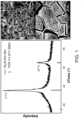
- Thin films exhibited macroscopic surface areas of approximately 0.75 cm 2 , while imaging by scanning electron microscopy, shown in FIG. 1 , indicated that the films were comprised of micro-scale platelets uniformly distributed across the glassy carbon surface.
- cyclic voltammetry scans performed in aqueous electrolyte under CO 2 versus Ar saturation resulted in relatively featureless traces, although current enhancement was observed at more negative potentials leading into a proton reduction wave ( FIG. 2A ).
- CO is, in fact, an intermediate leading to Ni 3 Al's generation of methanol, C 2 , and C 3 products from CO 2 .
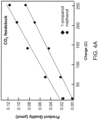
- the reduction of CO 2 to CO is the limiting process in this electroreduction, leading to preferential use of CO as the reactant when both CO and CO 2 are present, as well as linear product generation curves when CO 2 is the available species being reduced.
- Only one CO 2 molecule, and therefore one CO molecule, must be present to produce methanol, so when the system is supplied with CO as the feedstock it generates methanol relatively easily, leading to an exponential production curve.
- Ni 3 Al generates quantifiable amounts of C 3 products, alongside useful C 1 and C 2 products, is interesting because of the thin film's stability, reproducibility, and modest overpotential. It is worth noting that, upon cursory examination of the related intermetallic NiAl, significantly diminished Faradaic efficiencies were achieved for the products described herein.
- the previously reported Ni-Ga thin film system plated on a highly oriented pyrolytic graphite substrate achieved maximum Faradaic efficiencies for C2 products of approximately 1.7% and 0.4% for ethane and ethylene, respectively, with no indication of C3 product formation. Methane was also observed. Faradaic efficiency of 1.9 ⁇ 0.3% for the C 3 product 1-propanol indicates a heterogeneous synthetic route to higher order organic compounds that has not previously been reported at alloy electrode interfaces.
- Ni 3 Al catalytic efficiency parameter for 1-propanol generation is calculated to be 0.5 ⁇ 0.1%. This is comparable to the catalytic efficiency parameter for Torelli et al. 's Ni-Ga thin film in the generation of ethane (0.44%; based on maximum Faradaic efficiency), their major C2 product.
- Ni 3 Al is stable in aqueous solution over the time scale explored here. This work shows that Ni 3 Al generates electroreduced products from CO 2 continuously over a period of four to five days. Scanning electron microscopy confirms that the thin film is robust and, as demonstrated by the small amount of material loss observed, withstands exposure to electrochemical conditions while maintaining initial efficiencies for CO 2 reduction. This finding is supported by post-electrolysis XPS analysis demonstrating that the electrode surface composition remains unchanged during electrochemical CO 2 reduction.
- Ni 3 Al thin film on glassy carbon reported here is the first copper-free, heterogeneous electrocatalyst capable of generating C 3 products, including 1-propanol and acetone, from CO 2 starting material, and its Faradaic efficiencies for 1-propanol generation are competitive with those achieved on most copper electrodes.
- heterogeneous catalysts comprised of metals other than copper may generate highly reduced products from CO 2 whose identities, Faradaic efficiencies, selectivities, or overpotentials rival or exceed those achieved on copper catalysts.
- Thin film Ni 3 Al alloys were synthesized as previously described. 19 Briefly, aqueous solutions of 0.052 M nickel(II) nitrate hexahydrate and 0.036 M aluminum(III) nitrate nonahydrate were combined in appropriate ratios to achieve the Ni 3 Al stoichiometry. In 0.1-mL increments, 0.5-mL portions of the nickel-aluminum nitrate solution were drop-casted onto glassy carbon pieces that had been set on a hot plate and heated to 150 °C. After drop-casting, the substrates remained on the hot plate for 15 min until the solution completely evaporated, revealing green surface films.
- the substrates were then placed in alumina boats and loaded into either a Lindberg/Blue M or Carbolite Quartz Tube Furnace under 95% Ar/5% H 2 gas flow.
- the furnace was ramped at a rate of 3 °C/min to 700 °C, where it rested for 5 h.
- Electrodes were prepared by affixing a coiled copper wire to the glassy carbon substrate using conducting silver epoxy, extending the length of copper wire through a glass tube, and sealing both ends of the tube using insulating epoxy. It was critical that the insulating epoxy was also used to completely cover the silver epoxy and copper wire attached to the substrate. In some experiments, the top of a film-deposited substrate was wrapped in copper tape and held using an alligator clip attached to copper wire similarly threaded through a glass tube sealed with insulating epoxy. Comparable amounts of charge were passed in electrochemical experiments featuring the two types of electrode preparations.
- Electrochemical experiments were performed using CH Instruments 760 and 1140 potentiostats. Cyclic voltammetry experiments were completed in a three-neck round-bottom flask using the Ni 3 Al film on glassy carbon as the working electrode referenced to Ag/AgCl and a Pt mesh counter electrode in 0.1 M K 2 SO 4 at pH 4.5. Bulk electrolysis experiments were undertaken in the same electrolyte solution (with the exception of pH dependence experiments, which utilized K 2 SO 4 buffered with KHCO 3 /CO 2 ) using custom electrolysis cells with gas-tight ports for the above electrodes.
- the Pt mesh counter electrode was situated in a fritted gas dispersion tube to separate the reduction reaction at the cathode from oxidation processes at the anode, and a stir bar was employed.
- the reaction solutions were purged with CO 2 , CO, or Ar for 20 min prior to experimental or control trials; experiments using 13 CO 2 were not completely purged with the starting material, resulting in a small amount of 12 CO 2 contamination that could be quantified by 1 H-NMR.
- Bulk electrolysis experiments were performed over intervals of at least 4 h, during which time the headspace was sampled every 20 min and the electrochemical solution was sampled every 60 min. During and after bulk electrolysis experiments, both the solution and headspace were sampled for products using 1 H- or 13 C-NMR (referenced to 1,4-dioxane internal standard) and gas chromatography, respectively.
- an electrode composed of a chromium oxide-gallium oxide thin film on glassy carbon is employed to transform CO 2 to oxalate in water.
- this is the first heterogeneous electrocatalyst system capable of transforming CO 2 to oxalate in water, introducing new possibilities for catalyst discovery and tangible opportunities for the energy efficient conversion of CO 2 to a chemical feedstock containing more than one carbon.
- Thin films of Cr-Ga (3:1 ratio) on glassy carbon solid supports were synthesized using a drop-casting and thermal reduction method adapted from Torelli et al, Nickel-gallium-catalyzed electrochemical reduction of CO2 to highly reduced products at low overpotentials.
- ACS Catal. 6, 2100-2104 2016 .
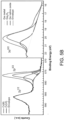
- Powder X-ray diffraction (XRD; FIG. 5A ) coupled with energy-dispersive X-ray spectroscopy suggested that the bulk films were comprised of Cr 2 O 3 and Ga 2 O 3 in the desired 3:1 stoichiometry. Surface compositions were analyzed by X-ray photoelectron spectroscopy ( FIG.
- FIG. 5B which pointed to an oxidized surface comprised of mostly Cr(III), matching the bulk, and Ga oxides.
- Scanning electron microscopy indicated that Cr 2 O 3 -Ga 2 O 3 films were comprised of discontinuous platelets scattered across the glassy carbon surface, not unlike alternative bimetallic systems similarly synthesized.
- Materials characterization post-electrolysis suggested that Cr 2 O 3 -Ga 2 O 3 system continued to be chemically and physically stable.
- XPS analysis revealed only subtle changes in surface composition. Surface Cr remained more than 99% Cr(III), in agreement with the Cr Pourbaix diagram.
- Ga metal did not make up the majority of the sample, but its XPS spectrum largely resembled its pre-electrolysis analog, confirming a stable surface. SEM imaging indicated that the thin film incurred only slight erosion at platelets' edges during electrolysis, while EDX showed that the 3:1 Cr:Ga stoichiometry was maintained. A single Cr 2 O 3 -Ga 2 O 3 /glassy carbon electrode could transform CO 2 continuously for more than 10 days (the longest time period studied), suggesting an attractive catalytic lifetime.
- the Cr 2 O 3 -Ga 2 O 3 film on glassy carbon is a promising catalyst due to its high oxalate Faradaic efficiency, good stability, and, perhaps most interestingly, its ability to perform the electrochemical transformation in water.
- CO 2 reduction to oxalate cannot occur through a CO 2 ⁇ - intermediate, which means a pathway as-yet unreported for the electrochemical CO 2 -to-oxalate transformation must be at play.
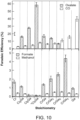
- FIG 9 illustrates Faradaic efficiencies of carbon-containing products. While oxalate generation is generally suppressed at high KCl concentrations, low CO and high formate Faradaic efficiencies contribute to decreased oxalate production at low KCl concentrations. Electrolyses were performed at -1.48 V vs. Ag/AgCl. In feedstock experiments, formate was shown to be a competitor of, rather than intermediate contributing to, oxalate production.
- Cr 2 O 3 -Ga 2 O 3 methods of generating oxalate exhibit critical mechanistic differences with oxidative carbonylation processes, which could make Cr 2 O 3 -Ga 2 O 3 a more attractive option for oxalate synthesis.
- the Cr 3 Ga catalyst introduces a new and practical means of generating oxalate from CO 2 , but it also demonstrates that electrochemical routes excluding a CO 2 ⁇ - intermediate are not only possible but can operate both in aqueous environments and at much lower applied potentials than previously thought.
- Oxalate Faradaic efficiencies of 59 ⁇ 3% and initial lifetime studies exceeding 10 days of continuous use show the potential for Cr 2 O 3 -Ga 2 O 3 as a candidate catalyst for a new industrial oxalate process, especially because it achieves the desired end product using aqueous solution, atmospheric pressure, and CO 2 starting material.
- Glassy carbon plates (GLAS11; 25 x 25 x 3 mm; Structure Probe Inc.) were cut in half lengthwise prior to use.
- Conducting silver and Loctite Hysol insulating epoxies were purchased from Epo-Tek and Grainger, respectively. All chemicals were used as received except for methanol and formic acid for standard curves, 1,4-dioxane for NMR internal standards, and HCl, all of which were diluted prior to use.
- the furnace was ramped at a rate of 3 °C/min to 700 °C under 95% Ar/5% H 2 gas flow; it rested at this state for 5 h prior to cooling to room temperature at a rate of -3 °C/min.
- Resulting Cr-Ga films were olive green in color, with Cr-rich stoichiometries tending toward kelly green and Ga-rich stoichiometries tending toward gray.
- Electrodes were prepared in one of two fashions.
- One electrode configuration involved connecting copper wire to the glassy carbon support using conducting silver epoxy, feeding the wire through a glass tube, and covering both ends of the tube (including any exposed copper or silver) with insulating epoxy.
- the second configuration featured the same general setup, but the copper wire was attached to an alligator clip, which could then be used to reversibly hold glassy carbon pieces whose tops had been wrapped in copper tape.
- Experiments using both electrode configurations yielded identical results, both in terms of charge passage and product distribution.
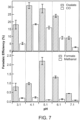
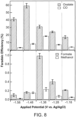
- Electrochemical experiments were conducted using CH Instruments 760 and 1140 potentiostats. Bulk electrolysis experiments utilized custom electrochemical cells with gas-tight ports for the working, Pt mesh counter (situated in a gas dispersion tube), and Ag/AgCl reference electrodes. The electrolyte was continuously stirred. Unless otherwise noted, 0.1 M KCl was used as the electrolyte, and it was buffered with KHCO 3 to achieve CO 2 -saturated pH values > 4 or adjusted with 0.01 M HCl for values ⁇ 4. Electrolyte solutions were purged with CO 2 for 30 min prior to experimentation.
- Electrolysis experiments were performed until 30-40°C charge had passed, unless the experiment was meant to determine catalyst lifetime.
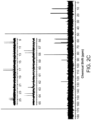
- the solution and headspace of electrochemical cells were sampled for liquid and gaseous products by 1 H-NMR (referenced to 1,4-dioxane internal standard) and gas chromatography, respectively, both during and after bulk electrolysis. Oxalate was detected by 13 C-NMR and quantified by precipitation of the calcium salt.
- compositions and morphologies of Cr-Ga films were analyzed by a variety of materials characterization techniques.
- Powder X-ray diffraction was performed using a Bruker D8 Advance diffractometer with 0.083° step size and CuK ⁇ radiation.
- XRD samples either remained on the glassy carbon support or were scraped from the surface; resulting patterns were identical, except that scraped samples exhibited significantly less carbon intrusion and were therefore selected for presentation herein.
- Thin film morphology and additional bulk composition data were obtained using a FEI XL30 FEG-SEM equipped with EVEX EDS detector. SEM images and EDX spectra were obtained using a 5 or 10 keV electron beam with a 10-15 mm working distance.
- XPS spectra were collected using a ThermoFisher K-Alpha X-Ray Photoelectron Spectrometer set to 20 eV pass energy and 50 ms dwell time. Resulting data were analyzed using the Thermo Scientific Avantage Data System and CasaXPS software. Materials characterization was conducted before and after electrochemistry in designated experiments.
- Oxalate was quantified by first treating a sample of the electrolysis solution with 1 M HCl (to remove any carbonate byproduct) and then adding 1 M calcium bromide solution, which resulted in the precipitation of calcium oxalate.
- the calcium oxalate sample was dried in an oven at 105 °C overnight and then massed; this mass was used to calculate the total quantity of oxalate.
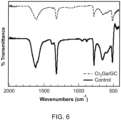
- IR spectra of calcium oxalate samples were obtained using a Thermo Diamond Smart Orbit IR Spectrometer set at 1 cm -1 resolution.
- the carbonate byproduct could be quantified by finding the difference in mass between two electrolysis samples, one treated with HCl and the other untreated prior to calcium bromide addition; the difference in mass was attributed to calcium carbonate, which was then calculated as a percentage of the total CO 2 in solution (based on the electrolyte volume unique to each experiment). Calcium carbonate was also examined by IR spectroscopy. Experimental calcium oxalate and calcium carbonate samples were compared to control compounds made by combining calcium bromide and either oxalic acid or K 2 CO 3 in aqueous solution.
- the headspace was also sampled following 13 CO 2 electrolyses using a KBr-terminated gas cell and Nicolet iS50 FT-IR Spectrometer with 1 cm -1 resolution; this confirmed that the CO product was derived from CO 2 .
- Faradaic efficiencies for all products, gaseous and liquid, were calculated based on the charge passed during each experiment as well as the product quantities determined by gas chromatography, 1 H-NMR, or calcium bromide precipitation.
Landscapes
- Chemical & Material Sciences (AREA)
- Organic Chemistry (AREA)
- Engineering & Computer Science (AREA)
- Chemical Kinetics & Catalysis (AREA)
- Electrochemistry (AREA)
- Materials Engineering (AREA)
- Metallurgy (AREA)
- Electrolytic Production Of Non-Metals, Compounds, Apparatuses Therefor (AREA)
- Electrodes For Compound Or Non-Metal Manufacture (AREA)
Applications Claiming Priority (4)
| Application Number | Priority Date | Filing Date | Title |
|---|---|---|---|
| US201762555503P | 2017-09-07 | 2017-09-07 | |
| US201862646816P | 2018-03-22 | 2018-03-22 | |
| PCT/US2018/050016 WO2019051268A1 (en) | 2017-09-07 | 2018-09-07 | BINARY ALLOYS AND THEIR OXIDES FOR THE ELECTROCATALYTIC REDUCTION OF CARBON DIOXIDE |
| EP18853747.6A EP3679177B1 (de) | 2017-09-07 | 2018-09-07 | Binäre legierungen und ihre oxide zur elektrokatalytischen reduktion von kohlendioxid |
Related Parent Applications (1)
| Application Number | Title | Priority Date | Filing Date |
|---|---|---|---|
| EP18853747.6A Division EP3679177B1 (de) | 2017-09-07 | 2018-09-07 | Binäre legierungen und ihre oxide zur elektrokatalytischen reduktion von kohlendioxid |
Publications (2)
| Publication Number | Publication Date |
|---|---|
| EP4474529A2 true EP4474529A2 (de) | 2024-12-11 |
| EP4474529A3 EP4474529A3 (de) | 2025-03-05 |
Family
ID=65634414
Family Applications (2)
| Application Number | Title | Priority Date | Filing Date |
|---|---|---|---|
| EP18853747.6A Active EP3679177B1 (de) | 2017-09-07 | 2018-09-07 | Binäre legierungen und ihre oxide zur elektrokatalytischen reduktion von kohlendioxid |
| EP24207009.2A Pending EP4474529A3 (de) | 2017-09-07 | 2018-09-07 | Binäre legierungen und ihre oxide zur elektrokatalytischen reduktion von kohlendioxid |
Family Applications Before (1)
| Application Number | Title | Priority Date | Filing Date |
|---|---|---|---|
| EP18853747.6A Active EP3679177B1 (de) | 2017-09-07 | 2018-09-07 | Binäre legierungen und ihre oxide zur elektrokatalytischen reduktion von kohlendioxid |
Country Status (3)
| Country | Link |
|---|---|
| US (1) | US20210079540A1 (de) |
| EP (2) | EP3679177B1 (de) |
| WO (1) | WO2019051268A1 (de) |
Families Citing this family (3)
| Publication number | Priority date | Publication date | Assignee | Title |
|---|---|---|---|---|
| US20240360576A1 (en) * | 2023-04-28 | 2024-10-31 | The Trustees Of Princeton University | Metal enhanced transition metal oxide electrocatalysts for reduction of co2 |
| CN117505871A (zh) * | 2023-10-27 | 2024-02-06 | 华中科技大学 | 一种室温液态金属核壳复合材料的液相合成方法及其产物和应用 |
| CN119876971B (zh) * | 2025-01-16 | 2025-09-30 | 南京大学 | 一种酸性co2电解方法 |
Family Cites Families (8)
| Publication number | Priority date | Publication date | Assignee | Title |
|---|---|---|---|---|
| US5747185A (en) * | 1995-11-14 | 1998-05-05 | Ztek Corporation | High temperature electrochemical converter for hydrocarbon fuels |
| WO2013122693A1 (en) * | 2012-02-14 | 2013-08-22 | Wisconsin Alumni Research Foundation | Electrocatalysts having mixed metal oxides |
| US8821709B2 (en) * | 2012-07-26 | 2014-09-02 | Liquid Light, Inc. | System and method for oxidizing organic compounds while reducing carbon dioxide |
| US9267212B2 (en) | 2012-07-26 | 2016-02-23 | Liquid Light, Inc. | Method and system for production of oxalic acid and oxalic acid reduction products |
| JP6221067B2 (ja) | 2013-12-03 | 2017-11-01 | パナソニックIpマネジメント株式会社 | ギ酸生成装置および方法 |
| WO2015139136A1 (en) * | 2014-03-19 | 2015-09-24 | Brereton Clive M H | Co2 electro-reduction process |
| US20160253461A1 (en) * | 2014-10-01 | 2016-09-01 | Xsolis, Llc | System for management and documentation of health care decisions |
| WO2018064347A1 (en) * | 2016-09-28 | 2018-04-05 | California Institute Of Technology | Tuning electrode surface electronics with thin layers |
-
2018
- 2018-09-07 EP EP18853747.6A patent/EP3679177B1/de active Active
- 2018-09-07 WO PCT/US2018/050016 patent/WO2019051268A1/en not_active Ceased
- 2018-09-07 US US16/644,816 patent/US20210079540A1/en active Pending
- 2018-09-07 EP EP24207009.2A patent/EP4474529A3/de active Pending
Non-Patent Citations (1)
| Title |
|---|
| TORELLI ET AL.: "Nickel-gallium-catalyzed electrochemical reduction of CO to highly reduced products at low overpotentials", ACS CATAL, vol. 6, 2016, pages 2100 - 2104, XP055581003, DOI: 10.1021/acscatal.5b02888 |
Also Published As
| Publication number | Publication date |
|---|---|
| WO2019051268A1 (en) | 2019-03-14 |
| US20210079540A1 (en) | 2021-03-18 |
| EP3679177B1 (de) | 2024-11-06 |
| EP4474529A3 (de) | 2025-03-05 |
| EP3679177A4 (de) | 2021-08-11 |
| EP3679177A1 (de) | 2020-07-15 |
Similar Documents
| Publication | Publication Date | Title |
|---|---|---|
| Du et al. | Highly efficient and robust nickel-iron bifunctional catalyst coupling selective methanol oxidation and freshwater/seawater hydrogen evolution via CO-free pathway | |
| Bian et al. | Grain boundary-abundant copper nanoribbons on balanced gas-liquid diffusion electrodes for efficient CO2 electroreduction to C2H4 | |
| Xie et al. | Selective electrochemical CO2 reduction on Cu-Pd heterostructure | |
| US20210301408A1 (en) | A Method for the Electrochemical Synthesis of Ammonia from Nitrates and Water | |
| EP3679177B1 (de) | Binäre legierungen und ihre oxide zur elektrokatalytischen reduktion von kohlendioxid | |
| Li et al. | Grain boundary-induced stabilization of Bi3+/Bi0 coexistence in β-Bi2O3 for highly efficient electrochemical CO2 reduction to formate | |
| Wang et al. | Industrial-grade electrocatalytic synthesis of glycine from oxalic acid and nitrate using a porous PbSnBi catalyst | |
| Kong et al. | A cascade of in situ conversion of bicarbonate to CO2 and CO2 electroreduction in a flow cell with a Ni-NS catalyst | |
| Wang et al. | Efficient CN coupling in electrocatalytic urea generation on copper carbonate hydroxide electrocatalysts | |
| McEnaney et al. | A cyclic electrochemical strategy to produce acetylene from CO 2, CH 4, or alternative carbon sources | |
| Huang et al. | Atomically dispersed nickel-bismuth dual-atom sites for high rate electrochemical CO2 reduction | |
| Wang et al. | Self-supported copper-cobalt oxide hybrid electrode for bifunctionally electrocatalytic nitrate reduction and methanol oxidation reactions | |
| Zhang et al. | Efficient nitrate electroreduction to ammonia via synergistic cascade catalysis at Cu/Fe2O3 hetero-interfaces | |
| Wang et al. | Anchored silver-palladium aerogel on carbon cloth via diazonium chemistry for electrochemical reduction of CO2 | |
| Li et al. | Charge redistribution of Mo-incorporated Fe2Ni2N customizes potential-determining step for highly selective electroreduction of nitrobenzene to azoxybenzene | |
| Jiang et al. | Petal-like high-entropy metal-organic framework grown on nickel foam as a bifunctional electrocatalyst for efficient overall water splitting | |
| Wang et al. | Ag–Cr2O3 interfaces with local alkaline microenvironments for electroreduction of CO2 to CO in an acidic electrolyte | |
| EP4136277B1 (de) | Material auf kupfer- und antimonbasis und elektrode zur selektiven umwandlung von kohlendioxid in kohlenmonoxid | |
| Mosali et al. | Selective electrochemical methanation of carbon dioxide using a sulphide derived CuZn catalyst | |
| Wang et al. | Ligand-regulated Schiff base complexes for efficient electrocatalytic carbon dioxide reduction | |
| Chen et al. | Modulating the electrocatalytic activity of mononuclear nickel complexes toward water oxidation by tertiary amine group | |
| Ma et al. | Mn0. 6Ce0. 4O2/CNT electrocatalyst boosts the efficient electrocatalytic oxidation of toluene to benzoic acid | |
| Yao et al. | Balancing CO chemisorption with hydrogen electrochemical adsorption on Pt alloy catalyst for improving direct CO reduction to formaldehyde | |
| US12188138B1 (en) | Electrochemical carbon oxides reduction to ethylene | |
| WO2025014901A1 (en) | Systems and methods for formation of ammonia using diverse nitrogen based feedstocks |
Legal Events
| Date | Code | Title | Description |
|---|---|---|---|
| PUAI | Public reference made under article 153(3) epc to a published international application that has entered the european phase |
Free format text: ORIGINAL CODE: 0009012 |
|
| STAA | Information on the status of an ep patent application or granted ep patent |
Free format text: STATUS: THE APPLICATION HAS BEEN PUBLISHED |
|
| AC | Divisional application: reference to earlier application |
Ref document number: 3679177 Country of ref document: EP Kind code of ref document: P |
|
| AK | Designated contracting states |
Kind code of ref document: A2 Designated state(s): AL AT BE BG CH CY CZ DE DK EE ES FI FR GB GR HR HU IE IS IT LI LT LU LV MC MK MT NL NO PL PT RO RS SE SI SK SM TR |
|
| REG | Reference to a national code |
Ref country code: DE Ref legal event code: R079 Free format text: PREVIOUS MAIN CLASS: C25B0011091000 Ipc: C25B0003070000 |
|
| PUAL | Search report despatched |
Free format text: ORIGINAL CODE: 0009013 |
|
| AK | Designated contracting states |
Kind code of ref document: A3 Designated state(s): AL AT BE BG CH CY CZ DE DK EE ES FI FR GB GR HR HU IE IS IT LI LT LU LV MC MK MT NL NO PL PT RO RS SE SI SK SM TR |
|
| RIC1 | Information provided on ipc code assigned before grant |
Ipc: C25B 11/091 20210101ALI20250124BHEP Ipc: C25B 11/089 20210101ALI20250124BHEP Ipc: C25B 11/052 20210101ALI20250124BHEP Ipc: C25B 3/26 20210101ALI20250124BHEP Ipc: C25B 3/25 20210101ALI20250124BHEP Ipc: C25B 3/07 20210101AFI20250124BHEP |
|
| STAA | Information on the status of an ep patent application or granted ep patent |
Free format text: STATUS: REQUEST FOR EXAMINATION WAS MADE |
|
| 17P | Request for examination filed |
Effective date: 20250903 |
|
| STAA | Information on the status of an ep patent application or granted ep patent |
Free format text: STATUS: EXAMINATION IS IN PROGRESS |