EP4472272A1 - Synchronisationssignalblockempfangsverfahren, synchronisationssignalblocksendeverfahren und zugehörige vorrichtung - Google Patents
Synchronisationssignalblockempfangsverfahren, synchronisationssignalblocksendeverfahren und zugehörige vorrichtung Download PDFInfo
- Publication number
- EP4472272A1 EP4472272A1 EP23746292.4A EP23746292A EP4472272A1 EP 4472272 A1 EP4472272 A1 EP 4472272A1 EP 23746292 A EP23746292 A EP 23746292A EP 4472272 A1 EP4472272 A1 EP 4472272A1
- Authority
- EP
- European Patent Office
- Prior art keywords
- information
- ssb
- bwp
- terminal
- signaling
- Prior art date
- Legal status (The legal status is an assumption and is not a legal conclusion. Google has not performed a legal analysis and makes no representation as to the accuracy of the status listed.)
- Pending
Links
Images


Classifications
-
- H—ELECTRICITY
- H04—ELECTRIC COMMUNICATION TECHNIQUE
- H04L—TRANSMISSION OF DIGITAL INFORMATION, e.g. TELEGRAPHIC COMMUNICATION
- H04L5/00—Arrangements affording multiple use of the transmission path
- H04L5/003—Arrangements for allocating sub-channels of the transmission path
- H04L5/0048—Allocation of pilot signals, i.e. of signals known to the receiver
- H04L5/0051—Allocation of pilot signals, i.e. of signals known to the receiver of dedicated pilots, i.e. pilots destined for a single user or terminal
-
- H—ELECTRICITY
- H04—ELECTRIC COMMUNICATION TECHNIQUE
- H04W—WIRELESS COMMUNICATION NETWORKS
- H04W56/00—Synchronisation arrangements
- H04W56/001—Synchronization between nodes
-
- H—ELECTRICITY
- H04—ELECTRIC COMMUNICATION TECHNIQUE
- H04L—TRANSMISSION OF DIGITAL INFORMATION, e.g. TELEGRAPHIC COMMUNICATION
- H04L5/00—Arrangements affording multiple use of the transmission path
-
- H—ELECTRICITY
- H04—ELECTRIC COMMUNICATION TECHNIQUE
- H04W—WIRELESS COMMUNICATION NETWORKS
- H04W24/00—Supervisory, monitoring or testing arrangements
- H04W24/08—Testing, supervising or monitoring using real traffic
-
- H—ELECTRICITY
- H04—ELECTRIC COMMUNICATION TECHNIQUE
- H04W—WIRELESS COMMUNICATION NETWORKS
- H04W36/00—Hand-off or reselection arrangements
- H04W36/08—Reselecting an access point
-
- H—ELECTRICITY
- H04—ELECTRIC COMMUNICATION TECHNIQUE
- H04W—WIRELESS COMMUNICATION NETWORKS
- H04W36/00—Hand-off or reselection arrangements
- H04W36/34—Reselection control
-
- H—ELECTRICITY
- H04—ELECTRIC COMMUNICATION TECHNIQUE
- H04W—WIRELESS COMMUNICATION NETWORKS
- H04W56/00—Synchronisation arrangements
-
- H—ELECTRICITY
- H04—ELECTRIC COMMUNICATION TECHNIQUE
- H04W—WIRELESS COMMUNICATION NETWORKS
- H04W68/00—User notification, e.g. alerting and paging, for incoming communication, change of service or the like
- H04W68/02—Arrangements for increasing efficiency of notification or paging channel
-
- H—ELECTRICITY
- H04—ELECTRIC COMMUNICATION TECHNIQUE
- H04W—WIRELESS COMMUNICATION NETWORKS
- H04W72/00—Local resource management
- H04W72/04—Wireless resource allocation
- H04W72/044—Wireless resource allocation based on the type of the allocated resource
-
- H—ELECTRICITY
- H04—ELECTRIC COMMUNICATION TECHNIQUE
- H04W—WIRELESS COMMUNICATION NETWORKS
- H04W72/00—Local resource management
- H04W72/04—Wireless resource allocation
- H04W72/044—Wireless resource allocation based on the type of the allocated resource
- H04W72/0453—Resources in frequency domain, e.g. a carrier in FDMA
-
- H—ELECTRICITY
- H04—ELECTRIC COMMUNICATION TECHNIQUE
- H04W—WIRELESS COMMUNICATION NETWORKS
- H04W72/00—Local resource management
- H04W72/04—Wireless resource allocation
- H04W72/044—Wireless resource allocation based on the type of the allocated resource
- H04W72/0457—Variable allocation of band or rate
-
- H—ELECTRICITY
- H04—ELECTRIC COMMUNICATION TECHNIQUE
- H04W—WIRELESS COMMUNICATION NETWORKS
- H04W72/00—Local resource management
- H04W72/20—Control channels or signalling for resource management
- H04W72/23—Control channels or signalling for resource management in the downlink direction of a wireless link, i.e. towards a terminal
-
- H—ELECTRICITY
- H04—ELECTRIC COMMUNICATION TECHNIQUE
- H04W—WIRELESS COMMUNICATION NETWORKS
- H04W74/00—Wireless channel access
- H04W74/002—Transmission of channel access control information
- H04W74/004—Transmission of channel access control information in the uplink, i.e. towards network
-
- H—ELECTRICITY
- H04—ELECTRIC COMMUNICATION TECHNIQUE
- H04W—WIRELESS COMMUNICATION NETWORKS
- H04W76/00—Connection management
- H04W76/30—Connection release
-
- H—ELECTRICITY
- H04—ELECTRIC COMMUNICATION TECHNIQUE
- H04W—WIRELESS COMMUNICATION NETWORKS
- H04W88/00—Devices specially adapted for wireless communication networks, e.g. terminals, base stations or access point devices
- H04W88/02—Terminal devices
Definitions
- This application pertains to the field of communication technologies and specifically relates to a method for receiving a synchronization signal block, a method for transmitting a synchronization signal block, and a related device.
- RedCap reduced capability terminals
- BWP Bandwidth Part
- this first BWP does not include a cell-defining synchronization signal block (Cell Defining Synchronization Signal and PBCH block, CD-SSB), paging monitoring is not considered on this first BWP but needs to switch to a second BWP that includes CD-SSB. This can lead to significant system signaling overhead and resource wastage.
- Cell Defining Synchronization Signal and PBCH block, CD-SSB Cell Defining Synchronization Signal and PBCH block
- Embodiments of this application provide a method for receiving a synchronization signal block, a method for transmitting a synchronization signal block, and a related device, able to solve the problem of significant system signaling overhead and resource wastage.
- a method for receiving a synchronization signal block including:
- a method for transmitting a synchronization signal block including:
- an apparatus for receiving a synchronization signal block including:
- a synchronization signal block transmitting apparatus including:
- a terminal includes a processor and a memory.
- the memory stores a program or instructions executable on the processor. When the program or instructions are executed by the processor, the steps of the method according to the first aspect are implemented.
- a terminal including a processor and a communication interface, where the communication interface is configured to acquire first information of a first synchronization signal block SSB from a network-side device and receive the first SSB based on the first information; where the first SSB is a non-cell-defining SSB; and the first information includes at least one of the following: a frequency domain start position, a Subcarrier Spacing SCS, an SSB index, an SSB period, SSB transmission power, and a Physical Cell Identifier PCI.
- a network-side device includes a processor and a memory.
- the memory stores a program or instructions executable on the processor. When the program or instructions are executed by the processor, the steps of the method according to the second aspect are implemented.
- a network-side device including a processor and a communication interface, where the communication interface is configured to send first information of a first synchronization signal block SSB and send the first SSB based on the first information; where the first SSB is a non-cell-defining SSB; and the first information includes at least one of the following: a frequency domain start position, a Subcarrier Spacing SCS, an SSB index, an SSB period, SSB transmission power, and a Physical Cell Identifier PCI.
- a communication system including a terminal and a network-side device.
- the terminal can be configured to execute the steps of the method for receiving a synchronization signal block according to the first aspect
- the network-side device can be configured to execute the steps of the method for transmitting a synchronization signal block according to the second aspect.
- a readable storage medium stores a program or instructions.
- the program or instructions are executed by a processor, the steps of the method according to the first aspect are implemented, or the steps of the method according to the second aspect are implemented.
- a computer program/program product is provided.
- the computer program/program product is stored in a storage medium, and the computer program/program product is executed by at least one processor to implement the steps of the method according to the first aspect or the steps of the method according to the second aspect.
- the configuration of the first SSB is determined, providing support for RedCap terminals in a connected state to use the first SSB for radio resource management (Radio resource management, RRM) and radio link monitoring (Radio Link Monitoring, RLM), and providing support for RedCap terminals in idle/inactive states to use the first SSB for channel measurement and cell reselection.
- RRM Radio resource management
- RLM Radio Link Monitoring
- technologies described in the embodiments of this application are not limited to long term evolution (Long Term Evolution, LTE) or LTE-Advanced (LTE-Advanced, LTE-A) systems, and may also be applied to other wireless communication systems, for example, code division multiple access (Code Division Multiple Access, CDMA), time division multiple access (Time Division Multiple Access, TDMA), frequency division multiple access (Frequency Division Multiple Access, FDMA), orthogonal frequency division multiple access (Orthogonal Frequency Division Multiple Access, OFDMA), single-carrier frequency division multiple access (Single-carrier Frequency Division Multiple Access, SC-FDMA), and other systems.
- code division multiple access Code Division Multiple Access
- TDMA time division multiple access
- FDMA frequency division multiple access
- OFDMA Orthogonal frequency division multiple access
- SC-FDMA single-carrier Frequency Division Multiple Access
- system and “network” in the embodiments of this application are often used interchangeably, and the technology described herein may be used in the above-mentioned systems and radio technologies as well as other systems and radio technologies.
- NR New Radio
- NR terms are used in most of the following descriptions, although these technologies may also be applied to other applications than the NR system application, for example, to the 6th generation (6 th Generation, 6G) communication system.
- FIG. 1 is a block diagram of a wireless communication system to which the embodiments of this application are applicable.
- the wireless communication system includes a terminal 11 and a network-side device 12.
- the terminal 11 may be a mobile phone, tablet personal computer (Tablet Personal Computer), laptop computer (Laptop Computer) or notebook computer, personal digital assistant (Personal Digital Assistant, PDA), palmtop computer, netbook, ultra-mobile personal computer (ultra-mobile personal computer, UMPC), mobile internet device (Mobile Internet Device, MID), augmented reality (augmented reality, AR)/virtual reality (virtual reality, VR) device, robot, wearable device (Wearable Device, WD), vehicle user equipment (Vehicle User Equipment, VUE), pedestrian user equipment (Pedestrian User Equipment, PUE), smart home device (wireless communication-enabled home devices such as refrigerators, televisions, washing machines, or furniture), gaming console, personal computer (Personal Computer, PC), automated teller machine or self-service machine, or other terminal-side device.
- Tablet Personal Computer Tablet
- the base station can be referred to as Node B, evolved Node B (Evolved Node, eNB), access point, base transceiver station (Base Transceiver Station, BTS), radio base station, radio transceiver, basic service set (Basic Service Set, BSS), extended service set (Extended Service Set, ESS), home Node B, home evolved Node B, transmitting receiving point (Transmitting Receiving Point, TRP), or other appropriate terms in the field.
- the base station is not limited to any specific technical terminology. It should be noted that in the embodiments of this application, only the base station in the NR system is introduced as an example, and the specific type of the base station is not limited.
- An SSB consists of an NR synchronization signal (Synchronisation Signal, SS) and an NR physical broadcast channel (Physical broadcast channel, PBCH).
- the NR-SS is divided into an NR primary synchronization signal (Primary Synchronisation Signal, PSS) and an NR secondary synchronization signal (Secondary synchronization signal, SSS).
- PSS Primary Synchronisation Signal
- SSS secondary synchronization signal
- the NR-PBCH is used for obtaining the system master information block (Master Information Block, MIB).
- the MIB further carries downlink (downlink, DL) baseband numerology information for indicating whether the numerology of the SSB is consistent with numerology for the remaining minimum system information (Remaining Minimum System Information, RMSI), the msg2/4 for initial access, and the broadcast open system interconnection (Open System Interconnection, OSI).
- RMSI Remaining Minimum System Information
- OSI Open System Interconnection
- SSBs form an SS burst set (burst set).
- the maximum number of SSBs contained in an SS carrier burst set is related to the carrier frequency used by the network.
- these SSBs need to be transmitted within a 5ms transmission window.
- NR supports different numerologies, and SSB symbols and other symbols (such as symbols for uplink control, downlink control, and guard intervals, and symbols for data transmission) may use different numerologies and be multiplexed (the other symbols mentioned later refer to other symbols multiplexed with SSBs in this context).
- the possible positions of SSBs within a slot under different numerologies may differ, and the positions of slots containing SSBs within the 5ms transmission window may also differ.
- NR supports subcarrier spacings of 60 kHz, 120 kHz, and 240 kHz, while below 6 GHz, NR supports subcarrier spacings of 15 kHz, 30 kHz, and 60 kHz.
- SSBs can be transmitted with subcarrier spacings of 15 kHz, 30 kHz, 120 kHz, and 240 kHz. Other symbols can be transmitted with subcarrier spacings of 15 kHz, 30 kHz, 60 kHz, and 120 kHz. The subcarrier spacing of 240 kHz cannot be used for data transmission.
- the numerology of the RMSI control resource set (Control resource set, CORESET) needs to be consistent with the numerology of the RMSI.
- the SSB transmission occasions specified in the NR protocol are as follows: For an SSB transmitted within a half-frame, the symbol index of the first OFDM symbol of the SSB block is related to the subcarrier spacing of the SSB.
- the orthogonal frequency division multiplex (Orthogonal frequency division multiplex, OFDM) symbol numbered 0 is the first OFDM symbol of the first slot in the 5ms half-frame.
- Case 1 With a 15 kHz subcarrier spacing, the symbol number of the first OFDM symbol transmitting the SSB is ⁇ 2, 8 ⁇ + 14*n.
- the transmitting of system information is associated with the transmitting of the synchronization signal block.
- the PBCH within the synchronization signal block parameters for monitoring the physical downlink control channel (Physical downlink control channel, PDCCH) that schedules SIB-1 are indicated.
- PDCCH Physical downlink control channel
- One way of associating the monitoring occasions (monitoring occasion) for this PDCCH with the SSB is as follows: the monitoring occasions for the PDCCH scheduling SIB-1 associated with each SSB is the PDCCH monitoring occasions in two consecutive slots.
- the UE determines the associated monitoring occasions for the PDCCH scheduling SIB-1 based on the index of the SSB and monitors for the PDCCH.
- the PDCCH and the associated synchronization signal block are quasi-co-located.
- SIB refers to the system information block (System Information Block).
- the UE determines the occasion for paging (paging) monitoring (paging occasion, PO) based on the UE identifier (UE-ID) and the discontinuous reception (Discontinuous Reception, DRX) cycle in idle state.
- One PO contains multiple paging PDCCH monitoring occasions.
- the N PDCCH occasions within the PO and N SSBs transmitted by the network-side device correspond one-to-one in time order.
- the N SSBs are the N SSBs configured and transmitted by the network through higher-layer signaling.
- the n-th (1 ⁇ n ⁇ N) paging PDCCH monitoring occasion and the corresponding n-th SSB are quasi-co-located (quasi co-located, QCL).
- the paging signal is also transmitted through beam sweeping, and the beam used for transmitting the paging PDCCH and paging PDSCH is the same as the beam used for transmitting the corresponding SSB.
- RedCap UE since the supported bandwidth is less than or equal to the bandwidth capability of normal UEs.
- the BWP bandwidth configured by the network-side device for normal UEs may exceed the capability of RedCap terminals, so the network can configure an additional BWP for RedCap terminals, making the bandwidth of this BWP within the capability range of RedCap UEs.
- RedCap UEs since the number of receiving antennas of RedCap UEs is less than that of normal UEs, their receiving performance is not as good as that of normal UEs, leading to the network-side device possibly using greater overhead and more resources for transmitting to RedCap UEs. Even if the BWP bandwidth configured by the network-side is within the capability range of RedCap UEs, if the network uses the same BWP for transmitting to both normal UEs and RedCap UEs, the load on that BWP may be too high, potentially causing congestion in the transmission to normal terminals. Therefore, the current Work Item (Work Item) has concluded the following:
- the network-side device can configure a separate initial DL BWP (that is, a first initial BWP) for RedCap terminals.
- this first initial BWP does not include CD-SSB (that is, a second SSB) or the entire control resource set with an index of 0 (CORESET#0)
- the first initial BWP is configured with a search space for random access operations, that is, type 1 common search space (Type 1 Common Search Space, Type 1 CSS), but is not configured with any search space related to paging
- the first initial BWP can exclude SSB, CORESET#0, and SIB.
- RedCap UEs in radio resource control idle (Radio Resource Control IDLE, RRC_IDLE) and RRC_INACTIVE (RRC_INACTIVE) states need to monitor for paging messages on the initial BWP associated with the second SSB (that is, a second initial BWP). It is not further considered that RedCap UEs in RRC_IDLE and RRC INACTIVE states monitor for paging on the first initial BWP associated with the first SSB.
- the first SSB can be understood as a non-cell-defining SSB (Non Cell Defining SSB, NCD-SSB).
- RedCap UEs For the downlink active BWP (hereinafter referred to as the first BWP) configured for RRC_CONNECTED (RRC_CONNECTED) RedCap UEs, if it does not include the second SSB or the entire CORESET#0, then: RedCap UEs that only support the mandatory feature 6-1 (FG 6-1) and do not support the optional feature 6-1a (FG 6-1a) expect it to contain the first SSB for the serving cell, but not CORESET#0 or SIB.
- RRC_CONNECTED RRC_CONNECTED
- the aforementioned first BWP can be the first initial BWP for UEs in RRC_IDLE/INACTIVE/CONNECTED states, or any active (Active) BWP for UEs in the RRC_CONNECTED state.
- the period of the first SSB does not need to be configured the same as that of the second SSB, and the period of the first SSB should not be less than the period of the second SSB.
- an embodiment of this application provides a method for receiving a synchronization signal block including the following steps.
- Step 201 A terminal acquires first information of a first synchronization signal block SSB from a network-side device.
- Step 202 The terminal receives the first SSB based on the first information.
- the first SSB is a non-cell-defining SSB; and the first information includes at least one of the following: a frequency domain start position, a subcarrier spacing (Subcarrier Spacing, SCS), an SSB index, an SSB period, SSB transmission power, and a physical cell identifier (Physical Cell identifier, PCI).
- a frequency domain start position a subcarrier spacing (Subcarrier Spacing, SCS)
- SCS subcarrier Spacing
- SSB index an SSB index
- an SSB period an SSB period
- SSB transmission power and a physical cell identifier (Physical Cell identifier, PCI).
- PCI Physical Cell identifier
- the terminal can be a RedCap terminal.
- the first information can be understood as part of the configuration information of the first SSB.
- the terminal can default that at least one of these parameters is the same as the corresponding parameter in the second SSB.
- the terminal can assume, determine, or consider that the PCI of the first SSB is the same as the PCI of the second SSB.
- the configuration of the first SSB is determined, providing support for RedCap terminals in a connected state to use the first SSB for radio resource management (Radio resource management, RRM) and radio link monitoring (Radio Link Monitoring, RLM), and providing support for RedCap terminals in idle/inactive states to use the first SSB for channel measurement and cell reselection.
- RRM Radio resource management
- RLM Radio Link Monitoring
- the frequency domain start position is configured based on an absolute frequency domain position or a frequency offset parameter.
- the absolute frequency domain position can be configured based on parameters such as ssbFrequency or absoluteFrequencySSB.
- This absolute frequency domain position can be referred to as absolute radio-frequency channel number (Absolute Radio-Frequency Channel Number, ARFCN).
- ARFCN Absolute Radio-Frequency Channel Number
- the aforementioned frequency offset parameter can be used to indicate an offset value.
- the frequency domain start position can be determined based on this offset value and a frequency offset reference position agreed upon in the protocol.
- the frequency domain start position is determined based on a frequency offset reference position
- the frequency offset reference position includes at least one of the following: a start position of a first bandwidth part BWP, an end position of the first BWP, a start position of a second BWP, an end position of the second BWP, a start position of a second SSB, an end position of the second SSB, a start position of a control resource set with an index of 0, an end position of the control resource set with the index of 0, a start position of a first control resource set, an end position of the first control resource set, a reference point A, a start position of a serving cell, and an end position of the serving cell.
- the first control resource set is a control resource set with a smallest index or largest index on the first BWP
- the first BWP is at least one of an initial BWP of the terminal and an active BWP of the terminal
- the initial BWP is independent of the second BWP
- the second BWP contains the second SSB
- the second SSB is a cell-defining SSB.
- the first control resource set is associated with at least one of the following:
- the aforementioned first BWP can be understood as the first initial BWP for RRC_IDLE, INACTIVE, or CONNECTED terminals, or an active BWP for any terminals in the RRC_CONNECTED state.
- the SSB index can be configured based on parameters such as SSB-Index and/or ssb-PositionsInBurst.
- the first information is contained in at least one of the following signaling:
- the first signaling carrying the first information includes at least one of the following: terminal-specific signaling, cell-specific signaling, and system information.
- the configuration information of the first SSB includes the first information and may also include second information.
- the second information of the first SSB is carried by second signaling, and the second signaling comprises at least one of: system information, a first object, terminal-specific radio resource control RRC signaling, and an RRC connection release message.
- the first object is downlink physical layer signaling or Layer 1 signaling.
- the network-side device can send the second information of the first SSB through downlink control information DCI or the physical downlink shared channel (Physical downlink shared channel, PDSCH).
- DCI Downlink control information
- PDSCH Physical downlink shared channel
- the aforementioned DCI can be DCI carrying paging early indication (paging early indication, PEI) or DCI scheduling paging.
- paging early indication paging early indication, PEI
- DCI scheduling paging DCI carrying paging early indication, PEI
- PEI paging early indication
- the aforementioned PDSCH is preferably a PDSCH scheduled by DCI scheduling paging.
- the terminal determines the second information of the first SSB based on the first object and the second object.
- the second object includes at least one of the system information, the terminal-specific RRC signaling, and the RRC connection release message.
- the second information of the first object can overwrite the second information in the second object.
- the second information of the first object can be directly determined as the second information of the first SSB; and when the second information of the first object includes part of the parameter configurations of the second information in the second object, this part of parameters can be directly updated based on the second information of the first object for the second information in the second object.
- the second information of the first object includes A1, B 1, C1, and D
- the second information of the second object includes A2, B2, and C2
- A1, B1, C1, and D can be determined as the second information of the first SSB.
- A1, B 1, C1, and E can be determined as the second information of the first SSB.
- the second information of the first object includes A1, B1, C1, and D
- the second information of the second object includes A2, B2, C2, and E
- A1, B 1, C1, D, and E can be determined as the second information of the first SSB.
- the second information of the first SSB includes at least one of the following:
- the availability information may include at least one of the following:
- the time length of the validity period of the second information equals the first duration.
- the time length of the validity period of the second information satisfies at least one of the following conditions:
- the end time instant of the validity period of the second information being dependent on reception of next target indication information by the terminal can be understood as, upon receiving target indication information, the second information carried by that target indication information takes immediate effect until the next target indication information is received. It can also be understood as, upon receiving target indication information, the second information carried by that target indication information takes effect at a start time instant specified by a higher layer configuration, protocol agreement, or indicated by the target indication information, until the next target indication information is received.
- the start time instant of the validity period of the second information includes one of the following:
- the aforementioned time unit can be a subframe, slot, symbol, or the like, without further limitation.
- the unavailability information includes at least one of the following:
- the aforementioned change information can be understood as changing the availability information in the second information carried by the second signaling received last time to unavailability information, or changing the unavailability information in the second information carried by the second signaling received last time to availability information.
- the current Layer 1 signaling indication is changing from “available” indicated by the last Layer 1 signaling to "unavailable” or from “unavailable” indicated by the last Layer 1 signaling to "available”.
- the aforementioned no-change information can be understood as keeping the availability information in the second information carried by the second signaling received last time unchanged or keeping the unavailability information in the second information carried by the second signaling received last time unchanged.
- the current Layer 1 signaling indication is "available” as indicated by the last Layer 1 signaling is kept unchanged, still “available”, or "unavailable” as indicated by the last Layer 1 signaling is kept unchanged, still “unavailable”.
- the method further includes: determining, by the terminal in a case that no target indication is received by the terminal, whether the first SSB is available or unavailable.
- the terminal has received the first information of the first SSB, but the indication of the second information of the first SSB has not been configured for the terminal or the terminal has not detected the second information, and then the terminal defaults the first SSB as available or unavailable.
- the method further includes: expecting, by the terminal in a case that the terminal is to monitor for a paging or a paging early indication on a first BWP, to receive at least one of the first information of the first SSB and the second information of the first SSB, where the first BWP is at least one of an initial BWP of the terminal and an active BWP of the terminal, the initial BWP is independent of a second BWP, and the second BWP contains a cell-defining SSB.
- the aforementioned terminal can be a terminal in the RRC_IDLE state or RRC INACTIVE state.
- the method further includes: transmitting, by the terminal, a first request to the network-side device based on a first uplink resource, where the first request is used to request the network-side device to send the first SSB on the first BWP, the first BWP is at least one of an initial BWP of the terminal and an active BWP of the terminal, the initial BWP is independent of a second BWP, and the second BWP contains a cell-defining SSB.
- the aforementioned first uplink resource includes any one of the following: a physical random access channel resource, a resource corresponding to message 3, a resource corresponding to message A, and a granted physical uplink shared channel resource that is semi-persistently configured.
- the messages 3 and A can be understood as messages in a random access procedure.
- the response information to the first request can be message 2; when the first uplink resource is a resource corresponding to message 3, the response information to the first request can be message 4; and when the first uplink resource is a resource corresponding to message A, the response information to the first request can be message B.
- the response information to the first request includes at least one of the first information and the second information of the first SSB.
- an embodiment of this application further provides a method for transmitting a synchronization signal block including the following steps.
- Step 301 A network-side device sends first information of a first synchronization signal block SSB.
- Step 302. The network-side device sends the first SSB based on the first information.
- the first SSB is a non-cell-defining SSB; and the first information includes at least one of the following: a frequency domain start position, a Subcarrier Spacing SCS, an SSB index, an SSB period, SSB transmission power, and a Physical Cell Identifier PCI.
- the frequency domain start position is configured based on an absolute frequency domain position or a frequency offset parameter.
- the first control resource set is associated with at least one of the following:
- the first information is contained in at least one of the following signaling:
- the first signaling carrying the first information includes at least one of the following: terminal-specific signaling, cell-specific signaling, and system information.
- the second information of the first SSB is carried by second signaling, and the second signaling comprises at least one of: system information, a first object, terminal-specific radio resource control RRC signaling, and an RRC connection release message.
- the first object is downlink physical layer signaling or Layer 1 signaling.
- the second information of the first SSB includes at least one of the following:
- the availability information includes at least one of the following:
- the time length of the validity period of the second information satisfies at least one of the following conditions:
- the start time instant of the validity period of the second information includes one of the following:
- the method further includes: receiving, by the network-side device based on a first uplink resource, a first request transmitted by the terminal, where the first request is used to request the network-side device to send the first SSB on the first BWP, the first BWP is at least one of an initial BWP of the terminal and an active BWP of the terminal, the initial BWP is independent of a second BWP, and the second BWP contains a cell-defining SSB.
- the first uplink resource includes any one of the following: a physical random access channel resource, a resource corresponding to message 3, a resource corresponding to message A, and a granted physical uplink shared channel resource that is semi-persistently configured.
- the response information to the first request includes at least one of the first information and the second information of the first SSB.
- the configuration of the first SSB is determined, providing support for RedCap terminals in a connected state to use the first SSB for radio resource management (Radio resource management, RRM) and radio link monitoring (Radio Link Monitoring, RLM), and providing support for RedCap terminals in idle/inactive states to use the first SSB for channel measurement and cell reselection.
- RRM Radio resource management
- RLM Radio Link Monitoring
- the method for receiving a synchronization signal block provided in the embodiments of this application may be executed by an apparatus for receiving a synchronization signal block.
- an apparatus for receiving a synchronization signal block executing the method for receiving a synchronization signal block is used as an example to illustrate the apparatus for receiving a synchronization signal block provided in the embodiments of this application.
- an embodiment of this application further provides an apparatus for receiving a synchronization signal block 400, including:
- the frequency domain start position is configured based on an absolute frequency domain position or a frequency offset parameter.
- the frequency domain start position is determined based on a frequency offset reference position
- the frequency offset reference position includes at least one of the following: a start position of a first bandwidth part BWP, an end position of the first BWP, a start position of a second BWP, an end position of the second BWP, a start position of a second SSB, an end position of the second SSB, a start position of a control resource set with an index of 0, an end position of the control resource set with the index of 0, a start position of a first control resource set, an end position of the first control resource set, a reference point A, a start position of a serving cell, and an end position of the serving cell.
- the first control resource set is a control resource set with a smallest index or largest index on the first BWP
- the first BWP is at least one of an initial BWP of the terminal and an active BWP of the terminal
- the initial BWP is independent of the second BWP
- the second BWP contains the second SSB
- the second SSB is a cell-defining SSB.
- the first control resource set is associated with at least one of the following:
- the first signaling carrying the first information includes at least one of the following: terminal-specific signaling, cell-specific signaling, and system information.
- the second information of the first SSB is carried by second signaling, and the second signaling comprises at least one of: system information, a first object, terminal-specific radio resource control RRC signaling, and an RRC connection release message.
- the first object is downlink physical layer signaling or Layer 1 signaling.
- the apparatus 400 for receiving a synchronization signal block further includes: a determination module, configured to: determine, in a case that the terminal has received second information carried by the first object and second information carried by a second object, the second information of the first SSB based on the first object and the second object.
- a determination module configured to: determine, in a case that the terminal has received second information carried by the first object and second information carried by a second object, the second information of the first SSB based on the first object and the second object.
- the second object includes at least one of the system information, the terminal-specific RRC signaling, and the RRC connection release message.
- the second information of the first SSB includes at least one of the following:
- the availability information includes at least one of the following:
- the time length of the validity period of the second information satisfies at least one of the following conditions:
- the start time instant of the validity period of the second information includes one of the following:
- the unavailability information includes at least one of the following:
- the apparatus 400 for receiving asynchronization signal block further includes: the determination module, configured to: determine, in a case that no target indication is received by the terminal, whether the first SSB is available or unavailable.
- the apparatus 400 for receiving asynchronization signal block further includes: a processing module, configured to expect, in a case that the terminal is to monitor for a paging or a paging early indication on a first BWP, to receive at least one of the first information of the first SSB and the second information of the first SSB, where the first BWP is at least one of an initial BWP of the terminal and an active BWP of the terminal, the initial BWP is independent of a second BWP, and the second BWP contains a cell-defining SSB.
- the apparatus 400 for receiving a synchronization signal block further includes: a second transmitting module, configured to send a first request to the network-side device based on a first uplink resource, where the first request is used to request the network-side device to send the first SSB on the first BWP, the first BWP is at least one of an initial BWP of the terminal and an active BWP of the terminal, the initial BWP is independent of a second BWP, and the second BWP contains a cell-defining SSB.
- a second transmitting module configured to send a first request to the network-side device based on a first uplink resource, where the first request is used to request the network-side device to send the first SSB on the first BWP, the first BWP is at least one of an initial BWP of the terminal and an active BWP of the terminal, the initial BWP is independent of a second BWP, and the second BWP contains a cell-defining SSB.
- the first uplink resource includes any one of the following: a physical random access channel resource, a resource corresponding to message 3, a resource corresponding to message A, and a granted physical uplink shared channel resource that is semi-persistently configured.
- the response information to the first request includes at least one of the first information and the second information of the first SSB.
- an embodiment of this application further provides a synchronization signal block transmitting apparatus 500, including: a first transmitting module 501, configured to send first information of a first synchronization signal block SSB and send the first SSB based on the first information; where the first SSB is a non-cell-defining SSB; and the first information includes at least one of the following: a frequency domain start position, a Subcarrier Spacing SCS, an SSB index, an SSB period, SSB transmission power, and a Physical Cell Identifier PCI.
- the frequency domain start position is configured based on an absolute frequency domain position or a frequency offset parameter.
- the frequency domain start position is determined based on a frequency offset reference position
- the frequency offset reference position includes at least one of the following: a start position of a first bandwidth part BWP, an end position of the first BWP, a start position of a second BWP, an end position of the second BWP, a start position of a second SSB, an end position of the second SSB, a start position of a control resource set with an index of 0, an end position of the control resource set with the index of 0, a start position of a first control resource set, an end position of the first control resource set, a reference point A, a start position of a serving cell, and an end position of the serving cell.
- the first control resource set is a control resource set with a smallest index or largest index on the first BWP
- the first BWP is at least one of an initial BWP of the terminal and an active BWP of the terminal
- the initial BWP is independent of the second BWP
- the second BWP contains the second SSB
- the second SSB is a cell-defining SSB.
- the first control resource set is associated with at least one of the following:
- the first information is contained in at least one of the following signaling:
- the first signaling carrying the first information includes at least one of the following: terminal-specific signaling, cell-specific signaling, and system information.
- the second information of the first SSB is carried by second signaling, and the second signaling comprises at least one of: system information, a first object, terminal-specific radio resource control RRC signaling, and an RRC connection release message.
- the first object is downlink physical layer signaling or Layer 1 signaling.
- the second information of the first SSB includes at least one of the following:
- the availability information includes at least one of the following:
- the time length of the validity period of the second information satisfies at least one of the following conditions:
- the start time instant of the validity period of the second information includes one of the following:
- the unavailability information includes at least one of the following:
- the apparatus 500 for transmitting a synchronization signal block further includes: a second receiving module, configured to receive, based on a first uplink resource, a first request transmitted by the terminal, where the first request is used to request the network-side device to send the first SSB on the first BWP, the first BWP is at least one of an initial BWP of the terminal and an active BWP of the terminal, the initial BWP is independent of a second BWP, and the second BWP contains a cell-defining SSB.
- a second receiving module configured to receive, based on a first uplink resource, a first request transmitted by the terminal, where the first request is used to request the network-side device to send the first SSB on the first BWP, the first BWP is at least one of an initial BWP of the terminal and an active BWP of the terminal, the initial BWP is independent of a second BWP, and the second BWP contains a cell-defining SSB.
- the first uplink resource includes any one of the following: a physical random access channel resource, a resource corresponding to message 3, a resource corresponding to message A, and a granted physical uplink shared channel resource that is semi-persistently configured.
- the response information to the first request includes at least one of the first information and the second information of the first SSB.
- the apparatus for receiving a synchronization signal block and the apparatus for transmitting a synchronization signal block in the embodiments of this application may be an electronic device, for example, an electronic device having an operating system, or they may be a component of an electronic device, for example, an integrated circuit or a chip.
- the electronic device may be a terminal or other devices than terminals.
- the terminal may include but is not limited to the types of the terminal 11 listed above, and the other devices may be servers, network attached storage (Network Attached Storage, NAS), or the like, which are not specifically limited in the embodiments of this application.
- NAS Network Attached Storage
- the apparatus for receiving a synchronization signal block and the apparatus for transmitting a synchronization signal block in the embodiments of this application can implement processes implemented in the method embodiments of FIG. 2 and FIG. 3 , achieving the same technical effects. To avoid repetition, details are not described herein again.
- an embodiment of this application further provides a communication device 600 including a processor 601 and a memory 602.
- the memory 602 stores a program or instructions executable on the processor 601.
- the communication device 600 is a terminal, when the program or instructions are executed by the processor 601, the steps of the foregoing embodiment of the method for receiving a synchronization signal block are implemented, with the same technical effects achieved. To avoid repetition, details are not described herein again.
- the communication device 600 is a network-side device, the program or instructions are executed by the processor 601 to implement the processes in the foregoing embodiment of the method for transmitting a synchronization signal block, with the same technical effects achieved. To avoid repetition, details are not described herein again.
- An embodiment of this application further provides a terminal including a processor and a communication interface.
- the communication interface is configured to acquire first information of a first synchronization signal block SSB from a network-side device and receive the first SSB based on the first information.
- the first SSB is a non-cell-defining SSB; and the first information includes at least one of the following: a frequency domain start position, a Subcarrier Spacing SCS, an SSB index, an SSB period, SSB transmission power, and a physical cell identifier PCI.
- This terminal embodiment corresponds to the foregoing method embodiment on the terminal side. All processes and implementations in the foregoing method embodiment are applicable to this terminal embodiment, achieving the same technical effect.
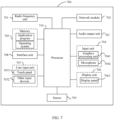
- FIG. 7 is a schematic diagram of a hardware structure of a terminal implementing the embodiments of this application.
- the terminal 700 includes but is not limited to at least part of these components: a radio frequency unit 701, a network module 702, an audio output unit 703, an input unit 704, a sensor 705, a display unit 706, a user input unit 707, an interface unit 708, a memory 709, a processor 710, and the like.
- the terminal 700 may further include a power supply (for example, battery) supplying power to the components.
- the power supply may be logically connected to the processor 710 via a power management system, so that functions such as charge management, discharge management, and power consumption management are implemented via the power management system.
- the structure of the terminal shown in FIG. 7 does not constitute any limitation on the terminal, and the terminal may include more or fewer components than shown in the figure, or combine some of the components, or have different arrangements of the components. Details are not described herein.
- the input unit 704 may include a graphics processing unit (Graphics Processing Unit, GPU) 7041 and a microphone 7042.
- the graphics processing unit 7041 processes image data of a static picture or video obtained by an image capture apparatus (such as a camera) in an image capture or video capture mode.
- the display unit 706 may include a display panel 7061.
- the display panel 7061 may be configured in a form of a liquid crystal display, an organic light-emitting diode display, or the like.
- the user input unit 707 includes at least one of a touch panel 7071 and other input devices 7072.
- the touch panel 7071 is also referred to as a touchscreen.
- the touch panel 7071 may include two parts: a touch detection apparatus and a touch controller.
- the other input devices 7072 may include but are not limited to a physical keyboard, a function button (for example, volume control button or on/off button), a trackball, a mouse, and a joystick. Details are not described herein.
- the radio frequency unit 701 receives downlink data from a network-side device and transfers the data to the processor 710 for processing; and the radio frequency unit 701 can additionally send uplink data to the network-side device.
- the radio frequency unit 701 includes but is not limited to an antenna, an amplifier, a transceiver, a coupler, a low noise amplifier, a duplexer, and the like.
- the memory 709 may be configured to store software programs or instructions and various data.
- the memory 709 may include a first storage area for storing programs or instructions and a second storage area for storing data.
- the first storage area may store an operating system, an application program or instructions required by at least one function (for example, a sound playback function or an image playback function), and the like.
- the memory 709 may be a volatile memory or a non-volatile memory, or the memory 709 may include both a volatile memory and a non-volatile memory.
- the non-volatile memory may be a read-only memory (Read-Only Memory, ROM), a programmable read-only memory (Programmable ROM, PROM), an erasable programmable read-only memory (Erasable PROM, EPROM), an electrically erasable programmable read-only memory (Electrically EPROM, EEPROM), or a flash memory.
- ROM Read-Only Memory
- PROM programmable read-only memory
- Erasable PROM Erasable PROM
- EPROM electrically erasable programmable read-only memory
- EEPROM electrically erasable programmable read-only memory
- the volatile memory may be a random access memory (Random Access Memory, RAM), a static random access memory (Static RAM, SRAM), a dynamic random access memory (Dynamic RAM, DRAM), a synchronous dynamic random access memory (Synchronous DRAM, SDRAM), a double data rate synchronous dynamic random access memory (Double Data Rate SDRAM, DDRSDRAM), an enhanced synchronous dynamic random access memory (Enhanced SDRAM, ESDRAM), a synchronous link dynamic random access memory (Synch link DRAM, SLDRAM), and a direct rambus random access memory (Direct Rambus RAM, DRRAM).
- RAM Random Access Memory
- SRAM static random access memory
- DRAM dynamic random access memory
- DRAM synchronous dynamic random access memory
- SDRAM double data rate synchronous dynamic random access memory
- Enhanced SDRAM, ESDRAM enhanced synchronous dynamic random access memory
- Synch link DRAM, SLDRAM synchronous link dynamic random access memory
- Direct Rambus RAM Direct Rambus RAM
- the processor 710 may include one or more processing units.
- the processor 710 may integrate an application processor and a modem processor.
- the application processor primarily processes operations involving an operating system, user interface, application program, or the like.
- the modem processor primarily processes radio communication signals, for example, being a baseband processor. It can be understood that the modem processor may alternatively be not integrated in the processor 710.
- the radio frequency unit 701 is configured to acquire first information of a first synchronization signal block SSB from a network-side device and receive the first SSB based on the first information.
- the first SSB is a non-cell-defining SSB; and the first information includes at least one of the following: a frequency domain start position, a Subcarrier Spacing SCS, an SSB index, an SSB period, SSB transmission power, and a Physical Cell Identifier PCI.
- the frequency domain start position is configured based on an absolute frequency domain position or a frequency offset parameter.
- the frequency domain start position is determined based on a frequency offset reference position
- the frequency offset reference position includes at least one of the following: a start position of a first bandwidth part BWP, an end position of the first BWP, a start position of a second BWP, an end position of the second BWP, a start position of a second SSB, an end position of the second SSB, a start position of a control resource set with an index of 0, an end position of the control resource set with the index of 0, a start position of a first control resource set, an end position of the first control resource set, a reference point A, a start position of a serving cell, and an end position of the serving cell.
- the first control resource set is a control resource set with a smallest index or largest index on the first BWP
- the first BWP is at least one of an initial BWP of the terminal and an active BWP of the terminal
- the initial BWP is independent of the second BWP
- the second BWP contains the second SSB
- the second SSB is a cell-defining SSB.
- the first control resource set is associated with at least one of the following:
- the first information is contained in at least one of the following signaling:
- the first signaling carrying the first information includes at least one of the following: terminal-specific signaling, cell-specific signaling, and system information.
- the second information of the first SSB is carried by second signaling, and the second signaling comprises at least one of: system information, a first object, terminal-specific radio resource control RRC signaling, and an RRC connection release message.
- the first object is downlink physical layer signaling or Layer 1 signaling.
- the processor 710 is configured to: determine, in a case that the terminal has received second information carried by the first object and second information carried by a second object, the second information of the first SSB based on the first object and the second object.
- the second object includes at least one of the system information, the terminal-specific RRC signaling, and the RRC connection release message.
- the second information of the first SSB includes at least one of the following:
- the availability information includes at least one of the following:
- the time length of the validity period of the second information satisfies at least one of the following conditions:
- the start time instant of the validity period of the second information includes one of the following:
- the unavailability information includes at least one of the following:
- the processor 710 is configured to: determine, in a case that no target indication is received by the terminal, whether the first SSB is available or unavailable.
- the processor 710 is configured to expect, in a case that the terminal is to monitor for a paging or a paging early indication on a first BWP, to receive at least one of the first information of the first SSB and the second information of the first SSB, where the first BWP is at least one of an initial BWP of the terminal and an active BWP of the terminal, the initial BWP is independent of a second BWP, and the second BWP contains a cell-defining SSB.
- the radio frequency unit 701 is further configured to send a first request to the network-side device based on a first uplink resource, where the first request is used to request the network-side device to send the first SSB on the first BWP, the first BWP is at least one of an initial BWP of the terminal and an active BWP of the terminal, the initial BWP is independent of a second BWP, and the second BWP contains a cell-defining SSB.
- the first uplink resource includes any one of the following: a physical random access channel resource, a resource corresponding to message 3, a resource corresponding to message A, and a granted physical uplink shared channel resource that is semi-persistently configured.
- the response information to the first request includes at least one of the first information and the second information of the first SSB.
- An embodiment of this application further provides a network-side device including a processor and a communication interface.
- the communication interface is configured to send first information of a first synchronization signal block SSB and send the first SSB based on the first information.
- the first SSB is a non-cell-defining SSB; and the first information includes at least one of the following: a frequency domain start position, a Subcarrier Spacing SCS, an SSB index, an SSB period, SSB transmission power, and a Physical Cell Identifier PCI.
- This network-side device embodiment corresponds to the foregoing network-side device method embodiment. All processes and implementations in the foregoing method embodiment are applicable to this network-side device embodiment, achieving the same technical effect.
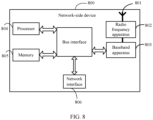
- the network-side device 800 includes an antenna 801, a radio frequency apparatus 802, a baseband apparatus 803, a processor 804, and memory 805.
- the antenna 801 is connected to the radio frequency apparatus 802.
- Uplink the radio frequency apparatus 802 receives information through the antenna 801, and sends the received information to the baseband apparatus 803 for processing.
- Downlink the baseband apparatus 803 processes to-be-transmitted information, and sends the information to the radio frequency apparatus 802; and the radio frequency apparatus 802 processes the received information and then sends the information out through the antenna 801.
- the method executed by the network-side device in the aforesaid embodiments may be implemented on the baseband apparatus 803.
- the baseband apparatus 803 includes a baseband processor.
- the baseband apparatus 803 may include, for example, at least one baseband processing unit, where a plurality of chips are disposed on the baseband processing unit. As shown in FIG. 8 , one of the chips is, for example, a baseband processor, and connected to the memory 805 through a bus interface, to invoke the program in the memory 805 to perform the operations of the network device shown in the foregoing method embodiment.
- the network-side device further includes a network interface 806, where the interface is, for example, a common public radio interface (Common Public Radio Interface, CPRI).
- CPRI Common Public Radio Interface
- the network-side device 800 in this embodiment of the present invention further includes an instruction or program stored in the memory 805 and executable on the processor 804.
- the processor 804 invokes the instruction or program in the memory 805 to execute the method executed by the modules shown in FIG. 5 , with the same technical effects achieved. To avoid repetition, details are not described herein again.
- An embodiment of this application further provides a readable storage medium, where the readable storage medium may be non-volatile or volatile.
- the readable storage medium stores a program or instructions, and when the program or instructions are executed by a processor, the processes of the foregoing embodiments of the method for receiving a synchronization signal block or the method for transmitting a synchronization signal block are implemented, with the same technical effects achieved. To avoid repetition, details are not described herein again.
- the processor is a processor in the terminal described in the foregoing embodiment.
- the readable storage medium includes a computer-readable storage medium such as a computer read-only memory ROM, a random access memory RAM, a magnetic disk, or an optical disc.
- the chip includes a processor and a communication interface, the communication interface is coupled to the processor, and the processor is configured to run a program or instructions to implement the processes of the foregoing embodiments of the method for receiving a synchronization signal block or the method for transmitting a synchronization signal block, with the same technical effects achieved. To avoid repetition, details are not described herein again.
- An embodiment of this application further provides a computer program/program product, where the computer program/program product is stored in a non-transient readable storage medium, and the computer program/program product is executed by at least one processor to implement the processes of the foregoing embodiments of the method for receiving a synchronization signal block or the method for transmitting a synchronization signal block, with the same technical effects achieved. To avoid repetition, details are not described herein again.
- An embodiment of this application further provides a communication system including a terminal and a network-side device.
- the terminal may be configured to execute the foregoing method for receiving a synchronization signal block
- the network-side device may be configured to execute the steps of the foregoing method for transmitting a synchronization signal block.
Landscapes
- Engineering & Computer Science (AREA)
- Signal Processing (AREA)
- Computer Networks & Wireless Communication (AREA)
- Mobile Radio Communication Systems (AREA)
Applications Claiming Priority (2)
| Application Number | Priority Date | Filing Date | Title |
|---|---|---|---|
| CN202210102661.XA CN116567688A (zh) | 2022-01-27 | 2022-01-27 | 同步信号块接收方法、同步信号块发送方法及相关设备 |
| PCT/CN2023/073274 WO2023143413A1 (zh) | 2022-01-27 | 2023-01-20 | 同步信号块接收方法、同步信号块发送方法及相关设备 |
Publications (2)
| Publication Number | Publication Date |
|---|---|
| EP4472272A1 true EP4472272A1 (de) | 2024-12-04 |
| EP4472272A4 EP4472272A4 (de) | 2025-04-30 |
Family
ID=87470816
Family Applications (1)
| Application Number | Title | Priority Date | Filing Date |
|---|---|---|---|
| EP23746292.4A Pending EP4472272A4 (de) | 2022-01-27 | 2023-01-20 | Synchronisationssignalblockempfangsverfahren, synchronisationssignalblocksendeverfahren und zugehörige vorrichtung |
Country Status (6)
| Country | Link |
|---|---|
| US (1) | US20240372677A1 (de) |
| EP (1) | EP4472272A4 (de) |
| JP (1) | JP2025503239A (de) |
| KR (1) | KR20240136418A (de) |
| CN (1) | CN116567688A (de) |
| WO (1) | WO2023143413A1 (de) |
Families Citing this family (14)
| Publication number | Priority date | Publication date | Assignee | Title |
|---|---|---|---|---|
| CN119865870A (zh) * | 2023-10-19 | 2025-04-22 | 维沃移动通信有限公司 | 行为执行方法、装置、终端、网络侧设备及介质 |
| WO2025137990A1 (zh) * | 2023-12-28 | 2025-07-03 | 北京小米移动软件有限公司 | 信息指示方法、终端、网络设备、通信系统和存储介质 |
| CN120321797A (zh) * | 2024-01-12 | 2025-07-15 | 维沃移动通信有限公司 | 触发小区发送ssb和/或sib的方法、装置及设备 |
| WO2025166601A1 (zh) * | 2024-02-06 | 2025-08-14 | 北京小米移动软件有限公司 | 信息处理方法、通信设备及存储介质 |
| CN120568447A (zh) * | 2024-02-27 | 2025-08-29 | 维沃移动通信有限公司 | 同步信号块ssb的信息确定方法、装置、终端及设备 |
| WO2025213307A1 (zh) * | 2024-04-07 | 2025-10-16 | 北京小米移动软件有限公司 | 发送和接收同步信号的方法、装置及存储介质 |
| CN120835410A (zh) * | 2024-04-18 | 2025-10-24 | 维沃移动通信有限公司 | 下行接收和测量方法、装置及通信设备 |
| CN120935818A (zh) * | 2024-05-08 | 2025-11-11 | 中国移动通信有限公司研究院 | 配置方法、基站、终端、存储介质及计算机程序产品 |
| CN120935742A (zh) * | 2024-05-10 | 2025-11-11 | 维沃移动通信有限公司 | Ssb接收方法、发送方法、装置、终端及网络侧设备 |
| WO2025251256A1 (zh) * | 2024-06-06 | 2025-12-11 | 上海移远通信技术股份有限公司 | 通信方法、终端设备和网络设备 |
| CN121240228A (zh) * | 2024-06-28 | 2025-12-30 | 大唐移动通信设备有限公司 | 信息传输方法、装置及设备 |
| CN121463157A (zh) * | 2024-08-03 | 2026-02-03 | 维沃移动通信有限公司 | 信号处理方法、装置、设备以及存储介质 |
| CN121604098A (zh) * | 2024-08-20 | 2026-03-03 | 维沃移动通信有限公司 | 通信方法、装置、终端、网络侧设备及存储介质 |
| CN119789229B (zh) * | 2025-03-07 | 2025-08-22 | 中国移动通信有限公司研究院 | 同步方法、装置、网络设备、终端、存储介质及程序产品 |
Family Cites Families (7)
| Publication number | Priority date | Publication date | Assignee | Title |
|---|---|---|---|---|
| CN110830187B (zh) * | 2018-08-07 | 2021-08-17 | 维沃移动通信有限公司 | 信息的传输指示方法、网络设备及终端 |
| WO2020164142A1 (zh) * | 2019-02-15 | 2020-08-20 | Oppo广东移动通信有限公司 | 同步信号块信息处理方法、装置及通信装置 |
| US11470565B2 (en) * | 2020-04-10 | 2022-10-11 | Qualcomm Incorporated | Periodic lean synchronization signal design |
| KR20230010623A (ko) * | 2020-05-15 | 2023-01-19 | 엘지전자 주식회사 | 무선 통신을 위한 신호 송수신 방법 및 이를 위한 장치 |
| KR20250028504A (ko) * | 2020-05-15 | 2025-02-28 | 엘지전자 주식회사 | 무선 통신을 위한 신호 송수신 방법 및 이를 위한 장치 |
| CN113873568B (zh) * | 2020-06-30 | 2025-11-11 | 维沃移动通信有限公司 | 一种传输处理方法、装置及终端 |
| CN112236977B (zh) * | 2020-09-11 | 2023-08-18 | 北京小米移动软件有限公司 | 参数配置方法、装置、通信设备和存储介质 |
-
2022
- 2022-01-27 CN CN202210102661.XA patent/CN116567688A/zh active Pending
-
2023
- 2023-01-20 KR KR1020247027695A patent/KR20240136418A/ko active Pending
- 2023-01-20 WO PCT/CN2023/073274 patent/WO2023143413A1/zh not_active Ceased
- 2023-01-20 JP JP2024544817A patent/JP2025503239A/ja active Pending
- 2023-01-20 EP EP23746292.4A patent/EP4472272A4/de active Pending
-
2024
- 2024-07-16 US US18/774,533 patent/US20240372677A1/en active Pending
Also Published As
| Publication number | Publication date |
|---|---|
| CN116567688A (zh) | 2023-08-08 |
| KR20240136418A (ko) | 2024-09-13 |
| US20240372677A1 (en) | 2024-11-07 |
| JP2025503239A (ja) | 2025-01-30 |
| EP4472272A4 (de) | 2025-04-30 |
| WO2023143413A1 (zh) | 2023-08-03 |
Similar Documents
| Publication | Publication Date | Title |
|---|---|---|
| EP4472272A1 (de) | Synchronisationssignalblockempfangsverfahren, synchronisationssignalblocksendeverfahren und zugehörige vorrichtung | |
| JP7802906B2 (ja) | 初期帯域幅部分構成の取得方法、端末及びネットワーク側機器 | |
| EP4546884A1 (de) | Aufwecksignalüberwachungsverfahren und -vorrichtung, elektronische vorrichtung, netzwerkvorrichtung und medium | |
| US20250071683A1 (en) | Monitoring method and apparatus, terminal, network-side device, and readable storage medium | |
| EP4366365A1 (de) | Positionierungsmessverfahren und positionierungskonfigurationsverfahren und -vorrichtungen sowie kommunikationsvorrichtung | |
| JP7804104B2 (ja) | 信号の受信方法、装置及び端末 | |
| EP4525535A1 (de) | Signalverarbeitungsverfahren, endgerät und netzwerkvorrichtung | |
| US20240324004A1 (en) | Information transport method and device | |
| EP4460053A1 (de) | Kanalschätzungsverfahren und -vorrichtung, endgerät, netzwerkseitige vorrichtung und medium | |
| CN116321427B (zh) | Pei的配置方法、终端及网络侧设备 | |
| US20250023690A1 (en) | Resource processing method and apparatus, and terminal | |
| CN114696975A (zh) | 速率匹配方法和设备 | |
| CN116074953B (zh) | Pei检测方法、确定接收时间方法、装置、设备以及介质 | |
| EP4383816A1 (de) | Messrelaxationsverfahren und -vorrichtung, endgerät und netzwerkseitige vorrichtung | |
| WO2024078611A1 (zh) | 信息配置方法、装置、终端及网络侧设备 | |
| EP4376510A1 (de) | Positionierungsverfahren und -vorrichtung sowie kommunikationsvorrichtung | |
| EP4510657A1 (de) | Informationserfassungsverfahren und -vorrichtung, informationssendeverfahren und -vorrichtung, endgerät und netzwerkseitige vorrichtung | |
| EP4572375A1 (de) | Messverarbeitungsverfahren und -vorrichtung sowie endgerät und netzwerkseitige vorrichtung | |
| EP4618611A1 (de) | Verfahren und vorrichtung zur verarbeitung von messlückenkonflikten sowie endgerät und netzwerkseitige vorrichtung | |
| CN116264741B (zh) | Idc信息的发送和接收方法、终端及网络侧设备 | |
| EP4601374A1 (de) | Downlink-übertragungsverfahren sowie endgerät und netzwerkseitige vorrichtung | |
| EP4383815A1 (de) | Verfahren und vorrichtung zur bestimmung eines niedrigen mobilitätszustands, endgerät und netzwerkseitige vorrichtung | |
| EP4598105A1 (de) | Verfahren und vorrichtung zur meldung von lückeninformationen sowie kommunikationsvorrichtung, system und speichermedium | |
| CN116996974A (zh) | 信息传输方法、装置及通信设备 | |
| CN120786388A (zh) | 下行信号或下行信道检测方法、下行信号或下行信道发送方法、装置、ue、网络侧设备、介质及计算机程序产品 |
Legal Events
| Date | Code | Title | Description |
|---|---|---|---|
| STAA | Information on the status of an ep patent application or granted ep patent |
Free format text: STATUS: THE INTERNATIONAL PUBLICATION HAS BEEN MADE |
|
| PUAI | Public reference made under article 153(3) epc to a published international application that has entered the european phase |
Free format text: ORIGINAL CODE: 0009012 |
|
| STAA | Information on the status of an ep patent application or granted ep patent |
Free format text: STATUS: REQUEST FOR EXAMINATION WAS MADE |
|
| 17P | Request for examination filed |
Effective date: 20240717 |
|
| AK | Designated contracting states |
Kind code of ref document: A1 Designated state(s): AL AT BE BG CH CY CZ DE DK EE ES FI FR GB GR HR HU IE IS IT LI LT LU LV MC ME MK MT NL NO PL PT RO RS SE SI SK SM TR |
|
| A4 | Supplementary search report drawn up and despatched |
Effective date: 20250328 |
|
| DAV | Request for validation of the european patent (deleted) | ||
| DAX | Request for extension of the european patent (deleted) | ||
| RIC1 | Information provided on ipc code assigned before grant |
Ipc: H04W 72/0453 20230101ALI20250324BHEP Ipc: H04W 36/34 20090101ALI20250324BHEP Ipc: H04L 5/00 20060101ALI20250324BHEP Ipc: H04W 56/00 20090101ALI20250324BHEP Ipc: H04W 36/08 20090101ALI20250324BHEP Ipc: H04W 24/08 20090101AFI20250324BHEP |