EP4546884A1 - Aufwecksignalüberwachungsverfahren und -vorrichtung, elektronische vorrichtung, netzwerkvorrichtung und medium - Google Patents
Aufwecksignalüberwachungsverfahren und -vorrichtung, elektronische vorrichtung, netzwerkvorrichtung und medium Download PDFInfo
- Publication number
- EP4546884A1 EP4546884A1 EP23830502.3A EP23830502A EP4546884A1 EP 4546884 A1 EP4546884 A1 EP 4546884A1 EP 23830502 A EP23830502 A EP 23830502A EP 4546884 A1 EP4546884 A1 EP 4546884A1
- Authority
- EP
- European Patent Office
- Prior art keywords
- terminal
- wakeup signal
- information
- preamble
- target
- Prior art date
- Legal status (The legal status is an assumption and is not a legal conclusion. Google has not performed a legal analysis and makes no representation as to the accuracy of the status listed.)
- Pending
Links
Images


Classifications
-
- H—ELECTRICITY
- H04—ELECTRIC COMMUNICATION TECHNIQUE
- H04W—WIRELESS COMMUNICATION NETWORKS
- H04W52/00—Power management, e.g. Transmission Power Control [TPC] or power classes
- H04W52/02—Power saving arrangements
- H04W52/0209—Power saving arrangements in terminal devices
- H04W52/0212—Power saving arrangements in terminal devices managed by the network, e.g. network or access point is leader and terminal is follower
- H04W52/0219—Power saving arrangements in terminal devices managed by the network, e.g. network or access point is leader and terminal is follower where the power saving management affects multiple terminals
-
- H—ELECTRICITY
- H04—ELECTRIC COMMUNICATION TECHNIQUE
- H04W—WIRELESS COMMUNICATION NETWORKS
- H04W52/00—Power management, e.g. Transmission Power Control [TPC] or power classes
- H04W52/02—Power saving arrangements
- H04W52/0209—Power saving arrangements in terminal devices
- H04W52/0225—Power saving arrangements in terminal devices using monitoring of external events, e.g. the presence of a signal
- H04W52/0229—Power saving arrangements in terminal devices using monitoring of external events, e.g. the presence of a signal where the received signal is a wanted signal
-
- H—ELECTRICITY
- H04—ELECTRIC COMMUNICATION TECHNIQUE
- H04W—WIRELESS COMMUNICATION NETWORKS
- H04W52/00—Power management, e.g. Transmission Power Control [TPC] or power classes
- H04W52/02—Power saving arrangements
- H04W52/0209—Power saving arrangements in terminal devices
- H04W52/0225—Power saving arrangements in terminal devices using monitoring of external events, e.g. the presence of a signal
- H04W52/0229—Power saving arrangements in terminal devices using monitoring of external events, e.g. the presence of a signal where the received signal is a wanted signal
- H04W52/0235—Power saving arrangements in terminal devices using monitoring of external events, e.g. the presence of a signal where the received signal is a wanted signal where the received signal is a power saving command
-
- H—ELECTRICITY
- H04—ELECTRIC COMMUNICATION TECHNIQUE
- H04L—TRANSMISSION OF DIGITAL INFORMATION, e.g. TELEGRAPHIC COMMUNICATION
- H04L5/00—Arrangements affording multiple use of the transmission path
- H04L5/0001—Arrangements for dividing the transmission path
- H04L5/0003—Two-dimensional division
- H04L5/0005—Time-frequency
-
- H—ELECTRICITY
- H04—ELECTRIC COMMUNICATION TECHNIQUE
- H04L—TRANSMISSION OF DIGITAL INFORMATION, e.g. TELEGRAPHIC COMMUNICATION
- H04L5/00—Arrangements affording multiple use of the transmission path
- H04L5/0091—Signalling for the administration of the divided path, e.g. signalling of configuration information
-
- H—ELECTRICITY
- H04—ELECTRIC COMMUNICATION TECHNIQUE
- H04W—WIRELESS COMMUNICATION NETWORKS
- H04W68/00—User notification, e.g. alerting and paging, for incoming communication, change of service or the like
- H04W68/02—Arrangements for increasing efficiency of notification or paging channel
- H04W68/025—Indirect paging
-
- H—ELECTRICITY
- H04—ELECTRIC COMMUNICATION TECHNIQUE
- H04W—WIRELESS COMMUNICATION NETWORKS
- H04W76/00—Connection management
- H04W76/20—Manipulation of established connections
- H04W76/28—Discontinuous transmission [DTX]; Discontinuous reception [DRX]
-
- H—ELECTRICITY
- H04—ELECTRIC COMMUNICATION TECHNIQUE
- H04L—TRANSMISSION OF DIGITAL INFORMATION, e.g. TELEGRAPHIC COMMUNICATION
- H04L5/00—Arrangements affording multiple use of the transmission path
- H04L5/003—Arrangements for allocating sub-channels of the transmission path
- H04L5/0053—Allocation of signalling, i.e. of overhead other than pilot signals
-
- Y—GENERAL TAGGING OF NEW TECHNOLOGICAL DEVELOPMENTS; GENERAL TAGGING OF CROSS-SECTIONAL TECHNOLOGIES SPANNING OVER SEVERAL SECTIONS OF THE IPC; TECHNICAL SUBJECTS COVERED BY FORMER USPC CROSS-REFERENCE ART COLLECTIONS [XRACs] AND DIGESTS
- Y02—TECHNOLOGIES OR APPLICATIONS FOR MITIGATION OR ADAPTATION AGAINST CLIMATE CHANGE
- Y02D—CLIMATE CHANGE MITIGATION TECHNOLOGIES IN INFORMATION AND COMMUNICATION TECHNOLOGIES [ICT], I.E. INFORMATION AND COMMUNICATION TECHNOLOGIES AIMING AT THE REDUCTION OF THEIR OWN ENERGY USE
- Y02D30/00—Reducing energy consumption in communication networks
- Y02D30/70—Reducing energy consumption in communication networks in wireless communication networks
Definitions
- This application pertains to the field of communication technologies, and specifically relates to a wakeup signal monitoring method and apparatus, an electronic device, a network device, and a medium.
- a terminal may first control a main communication module of the terminal to be in a sleep state, and monitor, by using a low-power receiving module of the terminal, a wakeup signal (Wake Up Signal, WUS) sent by a network device, and then control, only in a case that the WUS is detected, the main communication module to be in a working state, and receive, by using the main communication module, a paging message on a paging occasion (Paging Occasion, PO) associated with the WUS, to achieve an objective of reducing power consumption of the terminal.
- WUS Wake Up Signal
- PO paging Occasion
- the network device when the network device pages a target terminal, the network device sends a WUS to a plurality of terminals. Therefore, a case that the network device does not page the target terminal, but the target terminal controls a main communication module to be in a working state to receive a paging message may occur. Consequently, power consumption of the terminal is high.
- a wakeup signal monitoring method is provided and is applied to a network device.
- the method includes: sending, by the network device, a configuration parameter to a first terminal.
- the configuration parameter is used by the first terminal to configure a parameter for monitoring a wakeup signal, so that the first terminal monitors a target wakeup signal based on the configuration parameter, where the target wakeup signal is used to wake up or page the first terminal.
- the configuration parameter includes at least one of the following: a configuration parameter corresponding to a preamble; a configuration parameter of payload data; a time domain resource of the wakeup signal; a frequency domain resource of the wakeup signal; a transmission period parameter of the wakeup signal; an identity of a target terminal group to which the first terminal belongs; the quantity of terminal groups; a parameter of terminal information carried by the preamble; and a parameter of terminal information carried by the payload data.
- a wakeup signal monitoring apparatus includes a sending module.
- the sending module is configured to send a configuration parameter to a first terminal.
- the configuration parameter is used by the first terminal to configure a parameter for monitoring a wakeup signal, so that the first terminal monitors a target wakeup signal based on the configuration parameter, where the target wakeup signal is used to wake up or page the first terminal.
- the configuration parameter includes at least one of the following: a configuration parameter corresponding to a preamble; a configuration parameter of payload data; a time domain resource of the wakeup signal; a frequency domain resource of the wakeup signal; a transmission period parameter of the wakeup signal; an identity of a target terminal group to which the first terminal belongs; the quantity of terminal groups; a parameter of terminal information carried by the preamble; and a parameter of terminal information carried by the payload data.
- a terminal includes a processor and a communication interface.
- the communication interface is configured to receive a configuration parameter from a network device, where the configuration parameter is used to configure a parameter for monitoring a wakeup signal.
- the processor is configured to monitor a target wakeup signal based on the configuration parameter, where the target wakeup signal is used to wake up or page the terminal.
- a wakeup signal monitoring system includes a terminal and a network device.
- the terminal may be configured to perform the steps of the method according to the first aspect.
- the network device may be configured to perform the steps of the method according to the third aspect.
- a readable storage medium stores a program or instructions.
- the program or instructions are executed by a processor, the steps of the method according to the first aspect are implemented, or the steps of the method according to the third aspect are implemented.
- a computer program or program product is provided.
- the computer program or program product is stored in a storage medium.
- the computer program or program product is executed by at least one processor to implement the steps of the method according to the first aspect or implement the steps of the method according to the third aspect.
- the first terminal can monitor the target wakeup signal based on the configuration parameter.
- the first terminal can accurately monitor the target wakeup signal based on at least one of the following: the configuration parameter corresponding to the preamble, the configuration parameter of the payload data, the time domain resource of the wakeup signal, the frequency domain resource of the wakeup signal, the transmission period parameter of the wakeup signal, the identity of the target terminal group, the quantity of terminal groups, the parameter of the terminal information carried by the preamble, and the parameter of the terminal information carried by the payload data. Therefore, a case that the network device does not page the first terminal but the first terminal controls a main communication module to be in a working state to receive a paging message can be avoided, and power consumption of the first terminal can be reduced.
- a terminal may include a main communication module and a low-power receiving module, where the main communication module is configured to send and receive mobile communication data, and the low-power receiving module is configured to receive an LP-WUS.
- the main communication module is configured to send and receive mobile communication data
- the low-power receiving module is configured to receive an LP-WUS.
- the terminal may receive the paging message on the corresponding PDSCH based on the P-RNTI, and determine, based on whether a terminal identity of the terminal is included in a terminal identity list in the paging message, whether a network device is paging the terminal.
- the LP-WUS may include a preamble (Preamble) and payload (Payload) data.
- the preamble may be used for any one of the following: detecting and synchronizing the LP-WUS, determining the payload data, carrying other information, and the like.
- the payload data is used to carry data.
- the network device may classify terminals with a same PO within coverage of the network device into a plurality of terminal groups, so that when the network device pages a terminal, the network device can send a WUS to a terminal group to which the terminal belongs.
- technologies described in the embodiments of this application are not limited to a long term evolution (Long Term Evolution, LTE)/LTE-Advanced (LTE-Advanced, LTE-A) system, and can also be used in other wireless communication systems, such as code division multiple access (Code Division Multiple Access, CDMA), time division multiple access (Time Division Multiple Access, TDMA), frequency division multiple access (Frequency Division Multiple Access, FDMA), orthogonal frequency division multiple access (Orthogonal Frequency Division Multiple Access, OFDMA), single-carrier frequency division multiple access (Single-carrier Frequency Division Multiple Access, SC-FDMA), and other systems.
- code division multiple access Code Division Multiple Access
- Time Division Multiple Access Time Division Multiple Access
- FDMA frequency division multiple access
- OFDMA Orthogonal frequency division multiple access
- SC-FDMA single-carrier Frequency Division Multiple Access
- SC-FDMA single-carrier Frequency Division Multiple Access
- the described technologies may be used for the foregoing systems and radio technologies, and may also be used for other systems and radio technologies.
- the new radio (New Radio, NR) system is described for an illustrative purpose, and NR terms are used in most of the following descriptions.
- These technologies may also be applied to other applications than an NR system application, for example, a 6th Generation (6 th Generation, 6G) communication system.
- 6G 6th Generation
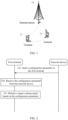
- FIG. 1 is a block diagram of a wireless communication system to which an embodiment of this application may be applied.
- the wireless communication system includes a terminal 11 and a network device 12.
- the terminal 11 may be a terminal-side device such as a mobile phone, a tablet personal computer (Tablet Personal Computer), a laptop computer (Laptop Computer) or a notebook computer, a personal digital assistant (Personal Digital Assistant, PDA), a palmtop computer, a netbook, an ultra-mobile personal computer (ultra-mobile personal computer, UMPC), a mobile Internet device (Mobile Internet Device, MID), an augmented reality (augmented reality, AR) or virtual reality (virtual reality, VR) device, a robot, a wearable device (Wearable Device), vehicle user equipment (VUE), pedestrian user equipment (PUE), a smart home (a home device having a wireless communication function, such as a refrigerator, a television, a washing machine, or furniture), a game console, a personal computer (personal computer, PC), a teller machine, or
- the wearable device includes a smartwatch, a smart band, a smart headphone, smart glasses, smart jewelry (a smart bracelet, a smart wrist chain, a smart ring, a smart necklace, a smart anklet, a smart ankle chain, or the like), a smart wristband, smart clothing, or the like.
- the network device 12 may include an access network device or a core network device.
- the access network device 12 may also be referred to as a radio access network device, a radio access network (Radio Access Network, RAN), a radio access network function, or a radio access network element.
- RAN Radio Access Network
- the access network device 12 may include a base station, a WLAN access point, a Wi-Fi node, or the like.
- the base station may be referred to as a NodeB, an evolved NodeB (eNB), an access point, a base transceiver station (Base Transceiver Station, BTS), a radio base station, a radio transceiver, a basic service set (Basic Service Set, BSS), an extended service set (Extended Service Set, ESS), a home NodeB, a home evolved NodeB, a transmission and reception point (Transmission and Reception Point, TRP), or another appropriate term in the art.
- the base station is not limited to specific technical terms. It should be noted that in the embodiments of this application, only a base station in an NR system is used as an example for description, but a specific type of the base station is not limited.
- a wakeup signal monitoring method and apparatus, an electronic device, a network device, and a medium provided in embodiments of this application are hereinafter described in detail by using some embodiments and application scenarios thereof with reference to the accompanying drawings.
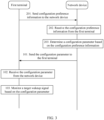
- FIG. 2 is a flowchart of a wakeup signal monitoring method according to an embodiment of this application. As shown in FIG. 2 , the wakeup signal monitoring method provided in this embodiment of this application may include the following step 101 to step 103.
- Step 101 A network device sends a configuration parameter to a first terminal.
- the network device before the network device sends a wakeup signal, the network device sends the configuration parameter to the first terminal.
- the configuration parameter is used by the first terminal to configure a parameter for monitoring a wakeup signal, so that the first terminal monitors a target wakeup signal based on the configuration parameter.
- the target wakeup signal is used to wake up or page the first terminal. It may be understood that in a case that the first terminal detects the target wakeup signal, the first terminal can control a main communication module of the first terminal to be in a working state.
- the target wakeup signal may be specifically an LP-WUS.
- the target wakeup signal includes a preamble (Preamble) and/or payload data (Payload data).
- the configuration parameter includes at least one of the following:
- the configuration parameter corresponding to the preamble includes at least one of the following:
- the length of the preamble may be specifically either of the following: a duration of the preamble and a character length of the preamble.
- the duration of the preamble may be z microseconds ( ⁇ s), where z is a positive number; or assuming that the length of the preamble is the character length of the preamble, the character length of the preamble may be b bits (bit), where b is a positive number.
- the first indication is used to indicate that the length of the preamble is fixed or variable.
- the length of the preamble is different, it may be considered that an amount of information carried by the preamble is also different.
- N is a positive integer.
- the third indication is used to indicate that the duration of the payload data is fixed or variable.
- the data rate of the payload data may be d kilobits per second (kps), where d is a positive number.
- the data length carried by the payload data may be specifically e bits, where e is a positive number.
- the fourth indication is used to indicate that the data length carried by the payload data is fixed or variable.
- M is a positive integer.
- the M payload data types may include at least one of the following: type 1, type 2, and the like.
- different payload data types have different payload data lengths (such as durations or character lengths).
- the time domain resource includes X time domain resources
- the frequency domain resource includes Y frequency domain resources
- both X and Y are positive integers, where different time domain resources correspond to different preamble types, or different time domain resources correspond to different preamble sequence indexes, or different time domain resources correspond to different terminal groups; and different frequency domain resources correspond to different preamble types, or different frequency domain resources correspond to different preamble sequence indexes, or different frequency domain resources correspond to different terminal groups.
- the time domain resource of the wakeup signal may include at least one of the following: time domain resources corresponding to different preamble types, time domain resources corresponding to different preamble sequence indexes, and time domain resources corresponding to different preamble groups.
- preamble groups correspond to terminal groups, that is, "time domain resources corresponding to different preamble groups" may be understood as time domain resources corresponding to different terminal groups.
- the frequency domain resource of the wakeup signal may include at least one of the following: frequency domain resources corresponding to different preamble types, frequency domain resources corresponding to different preamble sequence indexes, and frequency domain resources corresponding to different preamble groups.
- preamble groups correspond to terminal groups, that is, "frequency domain resources corresponding to different preamble groups" may be understood as frequency domain resources corresponding to different terminal groups.
- the transmission period parameter includes at least one of the following: a transmission period of the wakeup signal, a duration of the wakeup signal, and a start transmission time of the wakeup signal.
- the identity of the target terminal group is used to indicate the first terminal to detect the target wakeup signal.
- the first terminal may be a terminal in the target terminal group.
- the identity of the target terminal group includes at least one of the following: an identity calculated based on a terminal identity of the first terminal and an identity configured by the network device.
- the parameter of the terminal information carried by the preamble is used to match a terminal identity or terminal group.
- terminal information carried by the preamble may be understood as terminal information included in the preamble or terminal information corresponding to the preamble.
- the terminal information is used by the first terminal to identify whether the target wakeup signal is detected.
- the terminal identity (or terminal group) matching the parameter of the terminal information carried by the preamble matches the terminal identity of the first terminal (or the terminal group to which the first terminal belongs), it can be considered that the target wakeup signal is detected.
- the parameter of the terminal information carried by the preamble includes at least one of the following: the quantity of bits of the terminal information carried by the preamble and a bit range of a terminal identity corresponding to the terminal information carried by the preamble.
- the quantity of bits of the terminal information carried by the preamble may be 3 bits.
- the bit range of the terminal identity corresponding to the terminal information carried by the preamble may be m bits higher than an n th bit, where n is a positive integer and m is a positive number, for example, ⁇ b m+x-1 , b m+x-2 , b m+x-3 , ..., b n >, such as ⁇ b 12 , b 11 , b 10 >.
- the parameter of the terminal information carried by the payload data includes at least one of the following:
- the amount of the terminal information carried by the payload data may be specifically 1 or 32.
- the data length of each piece of terminal information carried by the payload data may be specifically q bits, where q is a positive number.
- the bit range of the terminal identity corresponding to the terminal information carried by the payload data may be t bits higher than an r th bit, where r is a positive integer and t is a positive number, for example, ⁇ b r+t-1 , b r+t-2 , b r+t-3 , ..., b r >, such as ⁇ b 9 , b 8 , b 7 , b 6 , b 5 , b 4 , b 3 , b 2 , b 1 , b 0 >.
- the amount of the terminal group information carried by the payload data may be specifically 8.
- the data length of each piece of terminal group information carried by the payload data may be specifically w bits, where w is a positive number, and one bit corresponds to one terminal group.
- the temporary mobile subscriber identity may be specifically a 5G-S (subscriber) temporary mobile subscriber identity (5G S-temporary mobile subscriber identity, 5G-S-TMSI).
- 5G-S-TMSI 5G S-temporary mobile subscriber identity
- the equipment identity is a unique identity allocated by the network device.
- step 101 may be specifically implemented by the following step 101a.
- Step 101a The network device sends a first message to the first terminal.
- the first message may include a plurality of first sub-messages.
- Each of the plurality of first sub-messages includes one part of configuration parameters.
- Step 102 The first terminal receives the configuration parameter from the network device.
- the configuration parameter is used to configure the parameter for monitoring the wakeup signal.
- step 102 may be specifically implemented by the following step 102a.
- Step 102a The first terminal receives the first message from the network device.
- the first message includes the configuration parameter; the first message includes at least one of the following: a system information broadcast message, a NAS message, and an RRC message; the NAS message includes either of the following: a service accept message and a tracking area update accept message; and the RRC message includes either of the following: an RRC reconfiguration message and an RRC release message.
- Step 103 The first terminal monitors the target wakeup signal based on the configuration parameter.
- the target wakeup signal is used to wake up or page the first terminal.
- the first terminal in a case that the first terminal detects the target wakeup signal, the first terminal can control the main communication module to be in the working state to receive a paging message sent by the network device.
- Step 103a The first terminal determines first information based on the configuration parameter.
- the first information includes any one of the following:
- the first terminal may determine the first information based on the configuration parameter.
- the first information includes at least one of the target wakeup signal index, the target preamble index, and the target preamble type.
- the first terminal may directly determine the index of the preamble as the target preamble index.
- the first terminal may directly determine the index of the wakeup signal as the target wakeup signal index.
- the first terminal may determine a preamble type corresponding to the quantity of preambles as the target preamble type.
- the first terminal may determine the target wakeup signal index based on the quantity of wakeup signals by using a first algorithm.
- the first algorithm is described in detail in the following embodiment. Details are not described herein in this embodiment of this application.
- the first terminal may determine a preamble type corresponding to the length of the preamble as the target preamble type.
- the first terminal may determine a corresponding preamble type based on whether the length of the preamble is fixed or variable, and determine the corresponding preamble type as the target preamble type.
- the first terminal may first determine a length of the detected preamble, and determine a target preamble type corresponding to the length of the preamble.
- the first terminal may determine the N preamble types as target preamble types.
- the first information includes the target preamble type.
- the first terminal may determine a preamble type corresponding to the time domain resource of the wakeup signal as the target preamble type.
- the first terminal may determine a preamble type corresponding to the frequency domain resource of the wakeup signal as the target preamble type.
- the first terminal may determine the time domain resources of the wakeup signal based on the transmission period parameter of the wakeup signal, and determine a preamble type corresponding to the determined time domain resource of the wakeup signal as the target preamble type.
- the first information may include the target wakeup signal index.
- the first terminal may determine the target wakeup signal index based on the identity of the target terminal group by using a second algorithm.
- the second algorithm is described in detail in the following embodiment. Details are not described herein in this embodiment of this application.
- the first terminal may first determine the identity of the target terminal group based on the quantity of terminal groups, and then determine the target wakeup signal index based on the identity of the target terminal group by using the second algorithm.
- the configuration parameter includes the configuration parameter corresponding to the preamble, and the configuration parameter corresponding to the preamble includes the quantity of wakeup signals; and the first information includes the target wakeup signal index.
- the foregoing step 103a may be specifically implemented by the following step 103a1.
- Step 103a1 The first terminal determines the target wakeup signal index based on the quantity of wakeup signals and a terminal identity of the first terminal.
- the terminal identity of the first terminal may be specifically at least some bits of a temporary mobile subscriber identity of the first terminal.
- the first terminal may determine the target wakeup signal index based on the quantity of wakeup signals and the terminal identity of the first terminal by using the first algorithm.
- the first algorithm may be specifically: where Q is an integer greater than 0, Q is the quantity of wakeup signals, and UE _ID is at least some bits of the temporary mobile subscriber identity of the first terminal.
- the configuration parameter includes the configuration parameter corresponding to the preamble and the identity of the target terminal group, and the configuration parameter corresponding to the preamble includes the quantity of wakeup signals; and the first information includes the target wakeup signal index.
- the foregoing step 103a may be specifically implemented by the following step 103a2.
- Step 103a2 The first terminal determines the target wakeup signal index based on the identity of the target terminal group and the quantity of wakeup signals.
- Step 103b The first terminal determines that a first wakeup signal is the target wakeup signal.
- information of the first wakeup signal matches the first information.
- the information of the first wakeup signal may include any one of the following: an index of the first wakeup signal, an index of a preamble of the first wakeup signal, a type of the preamble of the first wakeup signal, and a resource location of the first wakeup signal.
- the resource location of the first wakeup signal may include at least one of the following: a time domain resource location of the first wakeup signal and a frequency domain resource location of the first wakeup signal.
- the first terminal may determine that the target wakeup signal is detected.
- the first terminal can first determine the first information based on the configuration parameter, and then determine the first wakeup signal whose information matches the first information as the target wakeup signal, accuracy of determining the target wakeup signal can be improved. Further, a case that the network device does not page the first terminal but the first terminal controls the main communication module to be in the working state to receive a paging message is avoided.
- step 103 may be specifically implemented by the following step 103c and step 103d.
- Step 103c The first terminal decodes a second wakeup signal based on the configuration parameter to obtain a target identity.
- the first terminal decodes the second wakeup signal based on the configuration parameter to obtain the target identity.
- the first terminal may decode a preamble of the second wakeup signal based on the parameter of the terminal information carried by the preamble to obtain the target identity.
- the first terminal may decode payload data of the second wakeup signal based on at least one of the configuration parameter of the payload data and the parameter of the terminal information carried by the payload data to obtain the target identity.
- the first terminal determines the second wakeup signal as the target wakeup signal in a case that the target identity matches the terminal identity of the first terminal.
- the first terminal may determine that the target wakeup signal is detected.
- the first terminal can decode the second wakeup signal based on the configuration parameter to obtain the target identity, and determine the second wakeup signal as the target wakeup signal in the case that the target identity matches the terminal identity of the first terminal, accuracy of determining the target wakeup signal can be improved. Further, a case that the network device does not page the first terminal but the first terminal controls the main communication module to be in the working state to receive a paging message is avoided.
- the following uses different examples to illustrate how the network device sends the configuration parameter to the first terminal, so that the first terminal can monitor the target wakeup signal.
- the first message is a system information broadcast message.
- the network device may send the system information broadcast message, so that the first terminal can receive the system information broadcast message.
- the system information broadcast message includes the configuration parameter.
- the configuration parameter includes at least one of the following: the configuration parameter corresponding to the preamble, the configuration parameter of the payload data, the time domain resource of the wakeup signal, and the frequency domain resource of the wakeup signal.
- the configuration parameter corresponding to the preamble includes at least one of the following: the quantity of preambles and the quantity of wakeup signals.
- the first message includes a system information broadcast message and a NAS message (or RRC message).
- the network device may send the system information broadcast message and the NAS message (or RRC message), where the system information broadcast message includes one part of configuration parameters, and the NAS message (or RRC message) includes another part of configuration parameters, so that the first terminal can receive the system information broadcast message and the NAS message (or RRC message) to obtain the configuration parameters. Therefore, the first terminal can determine the target wakeup signal index (or target preamble index) based on the configuration parameters, to monitor the target wakeup signal based on the target wakeup signal index (or target preamble index).
- the time of sending the system information broadcast message and the time of sending the NAS message (or RRC message) by the network device are not limited in this example.
- the network device may send the system information broadcast message before sending the NAS message (or RRC message).
- the first message includes a system information broadcast message and a NAS message (or RRC message).
- the network device may send the system information broadcast message and the NAS message (or RRC message).
- the system information broadcast message includes one part of configuration parameters.
- the NAS message (or RRC message) includes another part of configuration parameters.
- the one part of configuration parameters include at least one of the following: the quantity of terminal groups, the quantity of preambles, the quantity of wakeup signals, time domain resources of the wakeup signals, and frequency domain resources of the wakeup signals.
- the other part of configuration parameters include at least one of the following: the identity of the target terminal group to which the first terminal belongs. Therefore, the first terminal can receive the system information broadcast message and the NAS message (or RRC message) to obtain the configuration parameters. Therefore, the first terminal can determine the target wakeup signal index (or target preamble index) based on the configuration parameters, to monitor the target wakeup signal based on the target wakeup signal index (or target preamble index).
- each terminal group of the network device corresponds to one wakeup signal. Therefore, the identity of the target terminal group may be understood as the target wakeup signal index (or target preamble index). Therefore, the second algorithm can be used to determine the target wakeup signal index (or target preamble index).
- the time of sending the system information broadcast message and the time of sending the NAS message (or RRC message) by the network device are not limited in this example.
- the first message includes a system information broadcast message and a NAS message (or RRC message).
- the network device may send the system information broadcast message and the NAS message (or RRC message).
- the system information broadcast message includes one part of configuration parameters.
- the NAS message (or RRC message) includes another part of configuration parameters.
- the one part of configuration parameters include at least one of the following: the quantity of terminal groups, the quantity of preambles, the quantity of wakeup signals, time domain resources of the wakeup signals, and frequency domain resources of the wakeup signals.
- the other part of configuration parameters include at least one of the following: the identity of the target terminal group to which the first terminal belongs, and indexes of the wakeup signals. Therefore, the first terminal can receive the system information broadcast message and the NAS message (or RRC message) to obtain the configuration parameters. Therefore, the first terminal can determine the target wakeup signal index (or target preamble index) based on the configuration parameters, to monitor the target wakeup signal based on the target wakeup signal index (or target preamble index).
- the time of sending the system information broadcast message and the time of sending the NAS message (or RRC message) by the network device are not limited in this example.
- the first message is a system information broadcast message.
- the network device may send the system information broadcast message, so that the first terminal can receive the system information broadcast message.
- the system information broadcast message includes the configuration parameter.
- the configuration parameter includes at least one of the following: the configuration parameter corresponding to the preamble, the configuration parameter of the payload data, the time domain resource of the wakeup signal, and the frequency domain resource of the wakeup signal.
- the configuration parameter corresponding to the preamble includes at least one of the following: the first indication, the second indication, and the N preamble types.
- the configuration parameter of the payload data includes the third indication, the fourth indication, and the M payload data types. Therefore, the first terminal can monitor the target wakeup signal based on the configuration parameter.
- the configuration parameter corresponding to the preamble includes the N preamble types, such as preamble type 1 and preamble type 2.
- Preamble type 1 includes 2 x preambles, including an x-bit terminal identity
- preamble type 2 includes 2 y preambles, including a y-bit terminal identity. Therefore, the first terminal can determine whether the terminal identity of the first terminal matches the x-bit terminal identity, to determine whether the target wakeup signal is detected, or can determine whether the terminal identity of the first terminal matches the y-bit terminal identity, to determine whether the target wakeup signal is detected.
- the first message includes a system information broadcast message and a NAS message (or RRC message).
- the network device may send the system information broadcast message and the NAS message (or RRC message).
- the system information broadcast message includes one part of configuration parameters.
- the NAS message (or RRC message) includes another part of configuration parameters.
- the one part of configuration parameters include at least one of the following: the time domain resource of the wakeup signal and the frequency domain resource of the wakeup signal.
- the other part of configuration parameters include at least one of the following: the configuration parameter corresponding to the preamble and the configuration parameter of the payload data.
- the configuration parameter corresponding to the preamble may include at least one of the following: the index of the wakeup signal, the second indication, and the N preamble types.
- the configuration parameter of the payload data may include at least one of the following: the third indication and the M payload data types. Therefore, the first terminal can receive the system information broadcast message and the NAS messages (or RRC message) to obtain the configuration parameters. Therefore, the first terminal can monitor the target wakeup signal based on the configuration parameters.
- the time of sending the system information broadcast message and the time of sending the NAS message (or RRC message) by the network device are not limited in this example.
- the first message includes a system information broadcast message and a NAS message (or RRC message).
- the network device may send the system information broadcast message and the NAS message (or RRC message).
- the system information broadcast message includes one part of configuration parameters.
- the NAS message (or RRC message) includes another part of configuration parameters.
- the one part of configuration parameters include at least one of the following: the quantity of terminal groups, the configuration parameter corresponding to the preamble, the time domain resource of the wakeup signal, and the frequency domain resource of the wakeup signal.
- the configuration parameter corresponding to the preamble includes at least one of the following: the quantity of preambles and the quantity of wakeup signals.
- the other part of configuration parameters include at least one of the following: the identity of the target terminal group to which the first terminal belongs, the configuration parameter corresponding to the preamble, and the configuration parameter of the payload data.
- the configuration parameter corresponding to the preamble includes at least one of the following: the index of the wakeup signal, the second indication, and the N preamble types.
- the configuration parameter of the payload data includes at least one of the following: the third indication, the fourth indication, and the M payload data types. Therefore, the first terminal can receive the system information broadcast message and the NAS messages (or RRC message) to obtain the configuration parameters. Therefore, the first terminal can monitor the target wakeup signal based on the configuration parameters.
- the time of sending the system information broadcast message and the time of sending the NAS message (or RRC message) by the network device are not limited in this example.
- the network device may send the configuration parameter to the first terminal, where the configuration parameter is used to configure the parameter for monitoring the wakeup signal, so that the first terminal can monitor the target wakeup signal based on the configuration parameter, where the target wakeup signal is used to wake up or page the first terminal, where the configuration parameter includes at least one of the following: the configuration parameter corresponding to the preamble; the configuration parameter of the payload data; the time domain resource of the wakeup signal; the frequency domain resource of the wakeup signal; the transmission period parameter of the wakeup signal; the identity of the target terminal group to which the first terminal belongs; the quantity of terminal groups; the parameter of the terminal information carried by the preamble; and the parameter of the terminal information carried by the payload data.
- the first terminal can monitor the target wakeup signal based on the configuration parameter.
- the first terminal can accurately monitor the target wakeup signal based on at least one of the following: the configuration parameter corresponding to the preamble, the configuration parameter of the payload data, the time domain resource of the wakeup signal, the frequency domain resource of the wakeup signal, the transmission period parameter of the wakeup signal, the identity of the target terminal group, the quantity of terminal groups, the parameter of the terminal information carried by the preamble, and the parameter of the terminal information carried by the payload data. Therefore, a case that the network device does not page the first terminal but the first terminal controls a main communication module to be in a working state to receive a paging message can be avoided, and power consumption of the first terminal can be reduced.
- the first terminal may also report preference information to the network device, so that the network device can send the configuration parameter to the first terminal based on the reported preference information, or send an updated configuration parameter to the first terminal again.
- the network device sends the configuration parameter to the first terminal based on the reported preference information, the following uses a specific example for description.
- the wakeup signal monitoring method provided in this embodiment of this application may further include the following step 201 to step 203.
- Step 201 The first terminal sends configuration preference information to the network device.
- the configuration preference information is used to indicate a preference of the first terminal for the target wakeup signal.
- the first terminal may send the configuration preference information to the network device.
- the configuration preference information includes at least one of the following:
- the device information of the first terminal may be mobility status information of the first terminal, a power consumption sensitivity type, battery information, and the like.
- the device information of the first terminal may be information about the first terminal being in a stationary state, information about the first terminal moving at a low speed (that is, moving at a speed lower than or equal to a preset speed), information of a high power consumption sensitivity type, information about a battery limitation, and the like.
- the preamble preference information includes at least one of the following:
- the fifth indication is used to indicate that the first terminal prefers the preamble of the target wakeup signal to be a dynamic preamble; a preamble type or length of the dynamic preamble is variable; and T is a positive integer.
- the T preamble types may include at least one of the following: preferred preamble type 1, preferred preamble type 2, and the like.
- preferred preamble length may be understood as a length of a preamble used when the first terminal prefers the target wakeup signal sent by the network device.
- the preferred preamble length may be any one of the following: a long sequence, a short sequence, x bits, and the like, where x is a positive number.
- the payload data preference information includes at least one of the following:
- the preferred payload data type may be any one of the following: preferred type 1, preferred type 2, and the like.
- the preferred data rate of the payload data may be specifically any one of the following: a high rate (that is, higher than a preset rate), a low rate (that is, lower than or equal to the preset rate), and y kps, where y is a positive number.
- step 201 may be specifically implemented by the following step 201a.
- Step 201a The first terminal sends a second message to the network device.
- the second message includes the configuration preference information.
- the second message includes at least one of the following: a NAS message and an RRC message.
- the NAS message includes any one of the following: a registration request message (Registration Request), a service request message (Service Request), and a tracking area update request message (Tracking Area update Request).
- the RRC message includes terminal assistance information (UE Assistance Information).
- the second message may include a plurality of second sub-messages.
- Each of the plurality of second sub-messages includes a part of configuration preference information.
- Step 202 The network device receives the configuration preference information from the first terminal.
- step 202 may be specifically implemented by the following step 202a.
- Step 202a The network device receives the second message from the first terminal.
- the second message includes the configuration preference information.
- the second message includes at least one of the following: a NAS message and an RRC message.
- the NAS message includes any one of the following: a registration request message (Registration Request), a service request message (Service Request), and a tracking area update request message (Tracking Area update Request).
- the RRC message includes terminal assistance information (UE Assistance Information).
- Step 203 The network device determines the configuration parameter based on the configuration preference information.
- the network device may provide the configuration parameter for the first terminal based on the configuration preference information reported by the first terminal.
- the first terminal may send the configuration preference information used to indicate the preference of the first terminal for the target wakeup signal to the network device, so that the network device can determine the configuration parameter based on the configuration preference information. Therefore, the configuration parameter can better match the preference of the first terminal for the target wakeup signal, to achieve better communication performance.
- the wakeup signal monitoring method provided in this embodiment of this application may further include the following step 301 and step 302, and the foregoing step 201 may be specifically implemented by the following step 201b.
- Step 301 The network device sends switch configuration information to the first terminal.
- the switch configuration information is used to indicate whether the first terminal is capable of sending the configuration preference information; and the configuration preference information is sent in a case that the switch configuration information indicates that the first terminal is capable of sending the configuration preference information.
- the switch configuration information includes a tenth indication, and the tenth indication is used to indicate whether the first terminal is capable of sending the configuration preference information.
- the tenth indication may be specifically a configuration of setting up (Setup) the configuration preference information, that is, the tenth indication is used to indicate that the first terminal is capable of sending the configuration preference information, or may be a configuration of releasing (Release) the configuration preference information, that is, the tenth indication is used to indicate that the first terminal is incapable of sending the configuration preference information.
- the switch configuration information in the case that the switch configuration information indicates the first terminal to send the configuration preference information, the switch configuration information includes at least one of the following:
- the preferred preamble range includes at least one of the following:
- the preferred payload data range includes at least one of the following:
- step 301 may be specifically implemented by the following step 301a.
- Step 301a The network device sends a third message to the first terminal.
- the third message includes the switch configuration information, and the third message includes at least one of the following: a NAS message and an RRC message; the NAS message includes any one of the following: a registration accept message, a service accept message, and a tracking area update accept message; and the RRC message includes an RRC reconfiguration message.
- the third message may include a plurality of third sub-messages.
- Each of the plurality of third sub-messages includes a part of switch configuration information.
- Step 302 The first terminal receives the switch configuration information from the network device.
- step 302 may be specifically implemented by the following step 302a.
- Step 302a The first terminal receives the third message from the network device.
- the third message includes the switch configuration information, and the third message includes at least one of the following: a NAS message and an RRC message; the NAS message includes any one of the following: a registration accept message, a service accept message, and a tracking area update accept message; and the RRC message includes an RRC reconfiguration message.
- Step 201b In a case that the switch configuration information indicates the first terminal to send the configuration preference information, the first terminal sends the configuration preference information to the network device based on the switch configuration information.
- the first terminal can send the configuration preference information to the network device only in the case that the switch configuration information indicates the first terminal to send the configuration preference information, instead of directly sending the configuration preference information to the network device, air interface resources can be saved.
- the wakeup signal monitoring method provided in this embodiment of this application may further include the following step 401 to step 403.
- Step 401 The first terminal sends second information to the network device.
- the second information is used to indicate a type of wakeup signal supported by the first terminal.
- the second information may be specifically capability information.
- the second information may include at least one of an RRC capability and a NAS capability.
- Step 402 The network device receives the second information from the first terminal.
- the second information is used to indicate the type of wakeup signal supported by the first terminal.
- Step 403 The network device determines third information based on the second information.
- the third information includes at least one of the following: the configuration parameter and the switch configuration information.
- the network device may determine, based on the second information, a parameter that conforms to the type of wakeup signal supported by the first terminal as indicated by the second information, to determine the configuration parameter.
- the first terminal may send the second information used to indicate the type of wakeup signal supported by the first terminal to the network device, so that the network device can determine at least one of the configuration parameter and the switch configuration information based on the second information. Therefore, a case that the switch configuration of the configuration preference information does not match due to mismatch of the type of wakeup signal supported by the first terminal can be avoided.
- the wakeup signal monitoring method provided in the embodiments of this application may be performed by a wakeup signal monitoring apparatus.
- a wakeup signal monitoring apparatus provided in the embodiments of this application is described by assuming that the wakeup signal monitoring method is performed by the wakeup signal monitoring apparatus in the embodiments of this application.
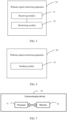
- FIG. 5 is a schematic diagram of a possible structure of a wakeup signal monitoring apparatus according to an embodiment of this application.
- the wakeup signal monitoring apparatus 50 includes a receiving module 51 and a monitoring module 52.
- the receiving module 51 is configured to receive a configuration parameter from a network device, where the configuration parameter is used to configure a parameter for monitoring a wakeup signal.
- the monitoring module 52 is configured to monitor a target wakeup signal based on the configuration parameter received by the receiving module 51, where the target wakeup signal is used to wake up or page the wakeup signal monitoring apparatus, where the configuration parameter includes at least one of the following: a configuration parameter corresponding to a preamble; a configuration parameter of payload data; a time domain resource of the wakeup signal; a frequency domain resource of the wakeup signal; a transmission period parameter of the wakeup signal; an identity of a target terminal group to which the wakeup signal monitoring apparatus 50 belongs; the quantity of terminal groups; a parameter of terminal information carried by the preamble; and a parameter of terminal information carried by the payload data.
- the configuration parameter corresponding to the preamble includes at least one of the following: an index of the preamble; an index of the wakeup signal; the quantity of preambles; the quantity of wakeup signals; a length of the preamble; a first indication; a second indication; and N preamble types, where the first indication is used to indicate that the length of the preamble is fixed or variable; the second indication is used to indicate the wakeup signal monitoring apparatus 50 to determine the length of the preamble based on the detected preamble; and N is a positive integer.
- the configuration parameter of the payload data includes at least one of the following: a duration of the payload data; a third indication; a data rate of the payload data; a data length carried by the payload data; a fourth indication; and M payload data types, where the third indication is used to indicate that the duration of the payload data is fixed or variable; the fourth indication is used to indicate that the data length carried by the payload data is fixed or variable; and M is a positive integer.
- the time domain resource includes X time domain resources
- the frequency domain resource includes Y frequency domain resources
- both X and Y are positive integers, where different time domain resources correspond to different preamble types, or different time domain resources correspond to different preamble sequence indexes, or different time domain resources correspond to different terminal groups; and different frequency domain resources correspond to different preamble types, or different frequency domain resources correspond to different preamble sequence indexes, or different frequency domain resources correspond to different terminal groups.
- the transmission period parameter includes at least one of the following: a period of the wakeup signal, a duration of the wakeup signal, and a start transmission time of the wakeup signal.
- the identity of the target terminal group includes at least one of the following: an identity calculated based on a terminal identity of the wakeup signal monitoring apparatus 50 and an identity configured by the network device.
- the parameter of the terminal information carried by the preamble includes at least one of the following: the quantity of bits of the terminal information carried by the preamble and a bit range of a terminal identity corresponding to the terminal information carried by the preamble.
- the parameter of the terminal information carried by the payload data includes at least one of the following: an amount of the terminal information carried by the payload data; a data length of each piece of terminal information carried by the payload data; a bit range of a terminal identity corresponding to the terminal information carried by the payload data; an amount of terminal group information carried by the payload data; and a data length of each piece of terminal group information carried by the payload data.
- the terminal identity includes at least one of the following: at least some bits of a temporary mobile subscriber identity, a hashed identity, at least a part of an international mobile equipment identity, and an equipment identity.
- the equipment identity is a unique identity allocated by the network device.
- the monitoring module 52 is specifically configured to determine first information based on the configuration parameter, and determine that a first wakeup signal is the target wakeup signal, where information of the first wakeup signal matches the first information, where the first information includes any one of the following: a target wakeup signal index; a target preamble index; a target preamble type; and a target resource location, where the target resource location includes at least one of a target time domain resource location and a target frequency domain resource location.
- the configuration parameter includes the configuration parameter corresponding to the preamble, and the configuration parameter corresponding to the preamble includes the quantity of wakeup signals; and the first information includes the target wakeup signal index; and the monitoring module 52 is specifically configured to determine the target wakeup signal index based on the quantity of wakeup signals and a terminal identity of the wakeup signal monitoring apparatus 50.
- the configuration parameter includes the configuration parameter corresponding to the preamble and the identity of the target terminal group, and the configuration parameter corresponding to the preamble includes the quantity of wakeup signals; and the first information includes the target wakeup signal index; and the monitoring module 52 is specifically configured to determine the target wakeup signal index based on the identity of the target terminal group and the quantity of wakeup signals.
- the monitoring module 52 is specifically configured to decode a second wakeup signal based on the configuration parameter to obtain a target identity, where in a case that the target identity matches a terminal identity of the wakeup signal monitoring apparatus 50, the wakeup signal monitoring apparatus 50 determines that the second wakeup signal is the target wakeup signal.
- the receiving module 51 is specifically configured to receive a first message from the network device, where the first message includes the configuration parameter, where the first message includes at least one of the following: a system information broadcast message, a NAS message, and an RRC message; and the NAS message includes either of the following: a service accept message and a tracking area update accept message; and the RRC message includes either of the following: an RRC reconfiguration message and an RRC release message.
- the wakeup signal monitoring apparatus 50 may further include a sending module, where the sending module is configured to send second information to the network device, where the second information is used to indicate a type of wakeup signal supported by the wakeup signal monitoring apparatus 50.
- the wakeup signal monitoring apparatus 50 may further include a sending module, where the sending module is configured to send configuration preference information to the network device, where the configuration preference information is used to indicate a preference of the wakeup signal monitoring apparatus 50 for the target wakeup signal, where the configuration preference information includes at least one of the following: device information of the wakeup signal monitoring apparatus; preamble preference information; and payload data preference information.
- the sending module is specifically configured to send a second message, where the second message includes the configuration preference information, where the second message includes at least one of the following: a NAS message and an RRC message; the NAS message includes any one of the following: a registration request message, a service request message, and a tracking area update request message; and the RRC message includes terminal assistance information.
- the preamble preference information includes at least one of the following: a fifth indication; T preferred preamble types; and a preferred preamble length, where the fifth indication is used to indicate that the wakeup signal monitoring apparatus 50 prefers the preamble of the target wakeup signal to be a dynamic preamble; a preamble type or length of the dynamic preamble is variable; and T is a positive integer.
- the payload data preference information includes at least one of the following: a sixth indication; a seventh indication; a preferred payload data type; a preferred data length of the payload data; and a preferred data rate of the payload data, where the sixth indication is used to indicate that the wakeup signal monitoring apparatus 50 prefers the target wakeup signal sent by the network device to carry the payload data or not; the seventh indication is used to indicate that the wakeup signal monitoring apparatus 50 prefers the payload data of the target wakeup signal to be dynamic payload data; and a payload data type, a data length, or a duration of the dynamic payload data is variable.
- the receiving module 51 is further configured to receive switch configuration information from the network device, where the switch configuration information is used to indicate whether the wakeup signal monitoring apparatus 50 is capable of sending the configuration preference information; and the sending module is specifically configured to send the configuration preference information to the network device based on the switch configuration information in a case that the switch configuration information indicates that the wakeup signal monitoring apparatus 50 is capable of sending the configuration preference information, where in the case that the switch configuration information indicates that the wakeup signal monitoring apparatus 50 is capable of sending the configuration preference information, the switch configuration information includes at least one of the following: target indication information; a preferred preamble range; and a preferred payload data range, where the target indication information is used to indicate whether the wakeup signal monitoring apparatus 50 is capable of sending the device information of the wakeup signal monitoring apparatus 50 to the network device.
- the receiving module 51 is specifically configured to receive a third message from the network device, where the third message includes the switch configuration information, where the third message includes at least one of the following: a NAS message and an RRC message; the NAS message includes any one of the following: a registration accept message, a service accept message, and a tracking area update accept message; and the RRC message includes an RRC reconfiguration message.
- the preferred preamble range includes at least one of the following: a preferred preamble type; a preferred preamble length; and an eighth indication, where the eighth indication is used to indicate whether the preamble of the target wakeup signal is allowed to be a dynamic preamble; and a preamble type or length of the dynamic preamble is variable.
- the preferred payload data range includes at least one of the following: a preferred payload data type; a preferred data length of the payload data; and a ninth indication, where the ninth indication is used to indicate whether the payload data of the target wakeup signal is allowed to be dynamic payload data; and a payload data type, a data length, or a duration of the dynamic payload data is variable.
- the wakeup signal monitoring apparatus can monitor the target wakeup signal based on the configuration parameter.
- the wakeup signal monitoring apparatus can accurately monitor the target wakeup signal based on at least one of the following: the configuration parameter corresponding to the preamble, the configuration parameter of the payload data, the time domain resource of the wakeup signal, the frequency domain resource of the wakeup signal, the transmission period parameter of the wakeup signal, the identity of the target terminal group, the quantity of terminal groups, the parameter of the terminal information carried by the preamble, and the parameter of the terminal information carried by the payload data.
- the network device does not page the wakeup signal monitoring apparatus, but the wakeup signal monitoring apparatus controls a main communication module to be in a working state to receive a paging message can be avoided, and power consumption of the wakeup signal monitoring apparatus can be reduced.
- the wakeup signal monitoring apparatus in this embodiment of this application may be an electronic device, for example, an electronic device with an operating system, or may be a component in an electronic device, for example, an integrated circuit or a chip.
- the electronic device may be a terminal, or may be other devices than a terminal.
- the terminal may include but is not limited to the foregoing illustrated type of the terminal 11.
- the other devices may be a server, a network attached storage (Network Attached Storage, NAS), and the like. This is not specifically limited in this embodiment of this application.
- the wakeup signal monitoring apparatus provided in this embodiment of this application can implement each process implemented in the method embodiments in FIG. 1 to FIG. 4 , with the same technical effect achieved. To avoid repetition, details are not described herein again.
- the wakeup signal monitoring method provided in the embodiments of this application may be performed by a wakeup signal monitoring apparatus.
- a wakeup signal monitoring apparatus provided in the embodiments of this application is described by assuming that the wakeup signal monitoring method is performed by the wakeup signal monitoring apparatus in the embodiments of this application.
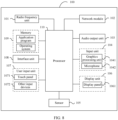
- FIG. 6 is a schematic diagram of a possible structure of a wakeup signal monitoring apparatus according to an embodiment of this application.
- the wakeup signal monitoring apparatus 60 includes a sending module 61.
- the sending module 61 is configured to send a configuration parameter to a first terminal.
- the configuration parameter is used by the first terminal to configure a parameter for monitoring a wakeup signal, so that the first terminal monitors a target wakeup signal based on the configuration parameter, where the target wakeup signal is used to wake up or page the first terminal, where the configuration parameter includes at least one of the following: a configuration parameter corresponding to a preamble; a configuration parameter of payload data; a time domain resource of the wakeup signal; a frequency domain resource of the wakeup signal; a transmission period parameter of the wakeup signal; an identity of a target terminal group to which the first terminal belongs; the quantity of terminal groups; a parameter of terminal information carried by the preamble; and a parameter of terminal information carried by the payload data.
- the configuration parameter corresponding to the preamble includes at least one of the following: an index of the preamble; an index of the wakeup signal; the quantity of preambles; the quantity of wakeup signals; a length of the preamble; a first indication; a second indication; and N preamble types, where the first indication is used to indicate that the length of the preamble is fixed or variable; the second indication is used to indicate the first terminal to determine the length of the preamble based on the detected preamble; and N is a positive integer.
- the configuration parameter of the payload data includes at least one of the following: a duration of the payload data; a third indication; a data rate of the payload data; a data length carried by the payload data; a fourth indication; and M payload data types, where the third indication is used to indicate that the duration of the payload data is fixed or variable; the fourth indication is used to indicate that the data length carried by the payload data is fixed or variable; and M is a positive integer.
- the time domain resource includes X time domain resources
- the frequency domain resource includes Y frequency domain resources
- both X and Y are positive integers, where different time domain resources correspond to different preamble types, or different time domain resources correspond to different preamble indexes, or different time domain resources correspond to different terminal groups; and different frequency domain resources correspond to different preamble types, or different frequency domain resources correspond to different preamble indexes, or different frequency domain resources correspond to different terminal groups.
- the transmission period parameter includes at least one of the following: a period of the wakeup signal, a duration of the wakeup signal, and a start transmission time of the wakeup signal.
- the identity of the target terminal group includes at least one of the following: an identity calculated based on a terminal identity of the first terminal and an identity configured by the wakeup signal monitoring apparatus 60.
- the parameter of the terminal information carried by the preamble includes at least one of the following: the quantity of bits of the terminal information carried by the preamble and a bit range of a terminal identity corresponding to the terminal information carried by the preamble.
- the parameter of the terminal information carried by the payload data includes at least one of the following: an amount of the terminal information carried by the payload data; a data length of each piece of terminal information carried by the payload data; a bit range of a terminal identity corresponding to the terminal information carried by the payload data; an amount of terminal group information carried by the payload data; and a data length of each piece of terminal group information carried by the payload data.
- the terminal identity includes at least one of the following: at least some bits of a temporary mobile subscriber identity, a hashed identity, at least a part of an international mobile equipment identity, and an equipment identity.
- the equipment identity is a unique identity allocated by the wakeup signal monitoring apparatus 60.
- the sending module 61 is specifically configured to send a first message to the first terminal, where the first message includes the configuration parameter, where the first message includes at least one of the following: a system information broadcast message, a NAS message, and an RRC message; the NAS message includes either of the following: a service accept message and a tracking area update accept message; and the RRC message includes either of the following: an RRC reconfiguration message and an RRC release message.
- the wakeup signal monitoring apparatus 60 may further include a receiving module, where the receiving module is configured to receive configuration preference information from the first terminal, where the configuration preference information is used to indicate a preference of the first terminal for the target wakeup signal; and the sending module 61 is configured to determine the configuration parameter based on the configuration preference information received by the receiving module, where the configuration preference information includes at least one of the following: device information of the first terminal; preamble preference information; and payload data preference information.
- the receiving module is specifically configured to receive a second message from the first terminal, where the second message includes the configuration preference information, where the second message includes at least one of the following: a NAS message and an RRC message; the NAS message includes any one of the following: a registration request message, a service request message, and a tracking area update request message; and the RRC message includes terminal assistance information.
- the preamble preference information includes at least one of the following: a fifth indication; T preferred preamble types; and a preferred preamble length, where the fifth indication is used to indicate that the first terminal prefers the preamble of the target wakeup signal to be a dynamic preamble; a preamble type or length of the dynamic preamble is variable; and T is a positive integer.
- the payload data preference information includes at least one of the following: a sixth indication; a seventh indication; a preferred payload data type; a preferred data length of the payload data; and a preferred data rate of the payload data, where the sixth indication is used to indicate that the first terminal prefers the target wakeup signal sent by the wakeup signal monitoring apparatus 60 to carry the payload data or not; the seventh indication is used to indicate that the first terminal prefers the payload data of the target wakeup signal to be dynamic payload data; and a payload data type, a data length, or a duration of the dynamic payload data is variable.
- the sending module 61 is further configured to send switch configuration information to the first terminal, where the switch configuration information is used to indicate whether the first terminal is capable of sending the configuration preference information, where the configuration preference information is sent in a case that the switch configuration information indicates that the first terminal is capable of sending the configuration preference information; and in the case that the switch configuration information indicates that the first terminal is capable of sending the configuration preference information, the switch configuration information includes at least one of the following: target indication information; a preferred preamble range; and a preferred payload data range, where the target indication information is used to indicate whether the first terminal is capable of sending the device information of the first terminal to the wakeup signal monitoring apparatus 60.
- the sending module 61 is specifically configured to send a third message to the first terminal, where the third message includes the switch configuration information, where the third message includes at least one of the following: a NAS message and an RRC message; the NAS message includes any one of the following: a registration accept message, a service accept message, and a tracking area update accept message; and the RRC message includes an RRC reconfiguration message.
- the preferred preamble range includes at least one of the following: a preferred preamble type; a preferred preamble length; and an eighth indication, where the eighth indication is used to indicate whether the preamble of the target wakeup signal is allowed to be a dynamic preamble; and a preamble type or length of the dynamic preamble is variable.
- the preferred payload data range includes at least one of the following: a preferred payload data type; a preferred data length of the payload data; and a ninth indication, where the ninth indication is used to indicate whether the payload data of the target wakeup signal is allowed to be dynamic payload data; and a payload data type, a data length, or a duration of the dynamic payload data is variable.
- the receiving module is further configured to receive second information from the first terminal, where the second information is used to indicate a type of wakeup signal supported by the first terminal; and the wakeup signal monitoring apparatus 60 provided in this embodiment of this application may further include a determining module, where the determining module is configured to determine third information based on the second information received by the receiving module, where the third information includes at least one of the following: the configuration parameter and the switch configuration information.
- the wakeup signal monitoring apparatus may send the configuration parameter used to configure the parameter for monitoring the wakeup signal to the first terminal
- the first terminal can monitor the target wakeup signal based on the configuration parameter.
- the first terminal can accurately monitor the target wakeup signal based on at least one of the configuration parameter corresponding to the preamble, the configuration parameter of the payload data, the time domain resource of the wakeup signal, the frequency domain resource of the wakeup signal, the transmission period parameter of the wakeup signal, the identity of the target terminal group, the quantity of terminal groups, the parameter of the terminal information carried by the preamble, and the parameter of the terminal information carried by the payload data. Therefore, a case that the wakeup signal monitoring apparatus does not page the first terminal, but the first terminal controls a main communication module to be in a working state to receive a paging message can be avoided, and power consumption of the first terminal can be reduced.
- the wakeup signal monitoring apparatus in this embodiment of this application may be an electronic device, for example, an electronic device with an operating system, or may be a component in an electronic device, for example, an integrated circuit or a chip.
- the electronic device may be a terminal, or may be other devices than a terminal.
- the terminal may include but is not limited to the foregoing illustrated type of the terminal 11.
- the other devices may be a server, a network attached storage (Network Attached Storage, NAS), and the like. This is not specifically limited in this embodiment of this application.
- the wakeup signal monitoring apparatus provided in this embodiment of this application can implement each process implemented in the method embodiments in FIG. 1 to FIG. 4 , with the same technical effect achieved. To avoid repetition, details are not described herein again.
- an embodiment of this application further provides a communication device 70, including a processor 71 and a memory 72.
- the memory 72 stores a program or instructions executable on the processor 71.
- the steps of the foregoing embodiment of the wakeup signal monitoring method are implemented, with the same technical effect achieved.
- the steps of the foregoing embodiment of the wakeup signal monitoring method are implemented, with the same technical effect achieved.
- the steps of the foregoing embodiment of the wakeup signal monitoring method are implemented, with the same technical effect achieved. To avoid repetition, details are not described herein again.
- An embodiment of this application further provides a terminal.
- the terminal is a first terminal, and the first terminal includes a processor and a communication interface.
- the communication interface is configured to receive a configuration parameter from a network device, where the configuration parameter is used to configure a parameter for monitoring a wakeup signal.
- the processor is configured to monitor a target wakeup signal based on the configuration parameter, where the target wakeup signal is used to wake up or page the first terminal.
- the terminal embodiment corresponds to the foregoing terminal-side method embodiment, and each implementation process and implementation of the foregoing method embodiment can be applied to the terminal embodiment, with the same technical effect achieved.
- FIG. 8 is a schematic diagram of a hardware structure of a terminal for implementing an embodiment of this application.
- a first terminal 100 includes but is not limited to at least some components such as a radio frequency unit 101, a network module 102, an audio output unit 103, an input unit 104, a sensor 105, a display unit 106, a user input unit 107, an interface unit 108, a memory 109, and a processor 110.
- a radio frequency unit 101 includes but is not limited to at least some components such as a radio frequency unit 101, a network module 102, an audio output unit 103, an input unit 104, a sensor 105, a display unit 106, a user input unit 107, an interface unit 108, a memory 109, and a processor 110.
- the first terminal 100 may further include a power supply (for example, a battery) supplying power to all components.
- the power supply may be logically connected to the processor 110 through a power management system. In this way, functions such as charge management, discharge management, and power consumption management are implemented by using the power management system.
- the terminal structure shown in FIG. 8 does not constitute a limitation on the terminal.
- the terminal may include more or fewer components than those shown in the figure, or some components are combined, or component arrangements are different. Details are not described herein again.
- the input unit 104 may include a graphics processing unit (Graphics Processing Unit, GPU) 1041 and a microphone 1042.
- the graphics processing unit 1041 processes image data of a still picture or video obtained by an image capture apparatus (such as a camera) in a video capture mode or an image capture mode.
- the display unit 106 may include a display panel 1061, and the display panel 1061 may be configured in a form of a liquid crystal display, an organic light-emitting diode, or the like.
- the user input unit 107 includes at least one of a touch panel 1071 and other input devices 1072.
- the touch panel 1071 is also referred to as a touchscreen.
- the touch panel 1071 may include two parts: a touch detection apparatus and a touch controller.
- the other input devices 1072 may include but are not limited to a physical keyboard, a function button (such as a volume control button or a power button), a trackball, a mouse, and a joystick. Details are not described herein again.
- the radio frequency unit 101 may transmit the downlink data to the processor 110 for processing.
- the radio frequency unit 101 may send uplink data to the network device.
- the radio frequency unit 101 includes but is not limited to an antenna, an amplifier, a transceiver, a coupler, a low noise amplifier, a duplexer, and the like.
- the memory 109 may be configured to store software programs or instructions and various data.
- the memory 109 may primarily include a first storage area for storing programs or instructions and a second storage area for storing data.
- the first storage area may store an operating system, an application program or instructions required by at least one function (such as an audio play function and an image play function), and the like.
- the memory 109 may include a volatile memory or a non-volatile memory, or the memory 109 may include both a volatile memory and a non-volatile memory.
- the non-volatile memory may be a read-only memory (Read-Only Memory, ROM), a programmable read-only memory (Programmable ROM, PROM), an erasable programmable read-only memory (Erasable PROM, EPROM), an electrically erasable programmable read-only memory (Electrically EPROM, EEPROM), or a flash memory.
- ROM Read-Only Memory
- PROM programmable read-only memory
- Erasable PROM Erasable PROM
- EPROM electrically erasable programmable read-only memory
- EEPROM electrically erasable programmable read-only memory
- the volatile memory may be a random access memory (Random Access Memory, RAM), a static random access memory (Static RAM, SRAM), a dynamic random access memory (Dynamic RAM, DRAM), a synchronous dynamic random access memory (Synchronous DRAM, SDRAM), a double data rate synchronous dynamic random access memory (Double Data rate SDRAM, DDR SDRAM), an enhanced synchronous dynamic random access memory (Enhanced SDRAM, ESDRAM), a synchlink dynamic random access memory (Synch Link DRAM, SLDRAM), and a direct rambus random access memory (Direct Rambus RAM, DRRAM).
- RAM Random Access Memory
- SRAM static random access memory
- DRAM dynamic random access memory
- DRAM synchronous dynamic random access memory
- SDRAM double data rate synchronous dynamic random access memory
- Enhanced SDRAM, ESDRAM enhanced synchronous dynamic random access memory
- Synch Link DRAM Synchlink dynamic random access memory
- SLDRAM direct rambus random access memory
- Direct Rambus RAM Direct Rambus RAM,
- the processor 110 may include one or more processing units.
- the processor 110 integrates an application processor and a modem processor.
- the application processor mainly processes operations related to the operating system, a user interface, an application program, and the like.
- the modem processor mainly processes a wireless communication signal.
- the modem processor is a baseband processor. It may be understood that the modem processor may alternatively be not integrated in the processor 110.
- the radio frequency unit 101 is configured to receive a configuration parameter from a network device, where the configuration parameter is used to configure a parameter for monitoring a wakeup signal.
- the processor 110 is configured to monitor a target wakeup signal based on the configuration parameter.
- the target wakeup signal is used to wake up or page the first terminal;
- the configuration parameter includes at least one of the following: a configuration parameter corresponding to a preamble; a configuration parameter of payload data; a time domain resource of the wakeup signal; a frequency domain resource of the wakeup signal; a transmission period parameter of the wakeup signal; an identity of a target terminal group to which the first terminal belongs; the quantity of terminal groups; a parameter of terminal information carried by the preamble; and a parameter of terminal information carried by the payload data.
- the terminal is the first terminal. Because the network device may send the configuration parameter used to configure the parameter for monitoring the wakeup signal to the first terminal, the first terminal can monitor the target wakeup signal based on the configuration parameter. In other words, the first terminal can accurately monitor the target wakeup signal based on at least one of the following: the configuration parameter corresponding to the preamble, the configuration parameter of the payload data, the time domain resource of the wakeup signal, the frequency domain resource of the wakeup signal, the transmission period parameter of the wakeup signal, the identity of the target terminal group, the quantity of terminal groups, the parameter of the terminal information carried by the preamble, and the parameter of the terminal information carried by the payload data. Therefore, a case that the network device does not page the first terminal but the first terminal controls a main communication module to be in a working state to receive a paging message can be avoided, and power consumption of the first terminal can be reduced.
- the radio frequency unit 101 is specifically configured to receive a first message from the network device, where the first message includes the configuration parameter, where the first message includes at least one of the following: a system information broadcast message, a NAS message, and an RRC message; the NAS message includes either of the following: a service accept message and a tracking area update accept message; and the RRC message includes either of the following: an RRC reconfiguration message and an RRC release message.
- the radio frequency unit 101 is further configured to send second information to the network device, where the second information is used to indicate a type of wakeup signal supported by the first terminal.
- the radio frequency unit 101 is further configured to send configuration preference information to the network device, where the configuration preference information is used to indicate a preference of the first terminal for the target wakeup signal, where the configuration preference information includes at least one of the following: device information of the first terminal; preamble preference information; and payload data preference information.
- the radio frequency unit 101 is specifically configured to send a second message to the network device, where the second message includes the configuration preference information, where the second message includes at least one of the following: a NAS message and an RRC message; the NAS message includes any one of the following: a registration request message, a service request message, and a tracking area update request message; and the RRC message includes terminal assistance information.
- the radio frequency unit 101 is further configured to receive switch configuration information from the network device, where the switch configuration information is used to indicate whether the first terminal is capable of sending the configuration preference information.
- the radio frequency unit 101 is specifically configured to send the configuration preference information to the network device based on the switch configuration information in a case that the switch configuration information indicates that the first terminal is capable of sending the configuration preference information, where in the case that the switch configuration information indicates that the first terminal is capable of sending the configuration preference information, the switch configuration information includes at least one of the following: target indication information; a preferred preamble range; and a preferred payload data range, where the target indication information is used to indicate whether the first terminal is capable of sending the device information of the first terminal to the network device.
- the radio frequency unit 101 is specifically configured to receive a third message from the network device, where the third message includes the switch configuration information, where the third message includes at least one of the following: a NAS message and an RRC message; the NAS message includes any one of the following: a registration accept message, a service accept message, and a tracking area update accept message; and the RRC message includes an RRC reconfiguration message.
- An embodiment of this application further provides a network device, including a processor and a communication interface.
- the communication interface is configured to send a configuration parameter to a first terminal.
- the configuration parameter is used by the first terminal to configure a parameter for monitoring a wakeup signal, so that the first terminal monitors a target wakeup signal based on the configuration parameter, where the target wakeup signal is used to wake up or page the first terminal, where the configuration parameter includes at least one of the following: a configuration parameter corresponding to a preamble; a configuration parameter of payload data; a time domain resource of the wakeup signal; a frequency domain resource of the wakeup signal; a transmission period parameter of the wakeup signal; an identity of a target terminal group to which the first terminal belongs; the quantity of terminal groups; a parameter of terminal information carried by the preamble; and a parameter of terminal information carried by the payload data.
- the network device embodiment corresponds to the foregoing method embodiment of the network device, and each implementation process and implementation of the foregoing method embodiment can be applied to
- the network device 200 includes an antenna 201, a radio frequency apparatus 202, a baseband apparatus 203, a processor 204, and a memory 205.
- the antenna 201 is connected to the radio frequency apparatus 202.
- the radio frequency apparatus 202 receives information by using the antenna 201, and sends the received information to the baseband apparatus 203 for processing.
- the baseband apparatus 203 processes to-be-sent information, and sends the information to the radio frequency apparatus 202; and the radio frequency apparatus 202 processes the received information and then sends the information out by using the antenna 201.
- the method performed by the network device in the foregoing embodiment may be implemented in the baseband apparatus 203.
- the baseband apparatus 203 includes a baseband processor.
- the baseband apparatus 203 may include, for example, at least one baseband unit, where a plurality of chips are disposed on the baseband unit. As shown in FIG. 9 , one of the chips is, for example, the baseband processor, connected to the memory 205 by using a bus interface, to invoke a program in the memory 205 to perform the operation of the network device shown in the foregoing method embodiment.
- the network device may further include a network interface 206, where the interface is, for example, a common public radio interface (common public radio interface, CPRI).
- a common public radio interface common public radio interface, CPRI.
- the network device 200 in this embodiment of the present invention further includes a program or instructions stored in the memory 205 and executable on the processor 204.
- the processor 204 invokes the program or instructions in the memory 205, the method performed by each module shown in FIG. 9 is performed, with the same technical effect achieved. To avoid repetition, details are not described herein again.
- An embodiment of this application further provides a readable storage medium.
- the readable storage medium stores a program or instructions.
- the program or instructions are executed by a processor, each process of the foregoing embodiment of the wakeup signal monitoring method is implemented, with the same technical effect achieved. To avoid repetition, details are not described herein again.
- the processor is a processor in the terminal in the foregoing embodiment.
- the readable storage medium includes a computer-readable storage medium, such as a computer read-only memory ROM, a random access memory RAM, a magnetic disk, or an optical disc.
- an embodiment of this application provides a chip.
- the chip includes a processor and a communication interface.
- the communication interface is coupled to the processor.
- the processor is configured to run a program or instructions to implement each process of the foregoing embodiment of the wakeup signal monitoring method, with the same technical effect achieved. To avoid repetition, details are not described herein again.
- the chip provided in this embodiment of this application may also be referred to as a system-level chip, a system chip, a chip system, a system-on-chip, or the like.
- an embodiment of this application provides a computer program or program product.
- the computer program or program product is stored in a storage medium.
- the computer program or program product is executed by at least one processor to implement each process of the foregoing embodiment of the wakeup signal monitoring method, with the same technical effect achieved. To avoid repetition, details are not described herein again.
- An embodiment of this application further provides a wakeup signal monitoring system, including a terminal and a network device.
- the terminal may be configured to perform the steps of the foregoing wakeup signal monitoring method.
- the network device may be configured to perform the steps of the foregoing wakeup signal monitoring method.
- the computer software product is stored in a storage medium (such as a ROM/RAM, a magnetic disk, or an optical disc), and includes several instructions for instructing a terminal (which may be a mobile phone, a computer, a server, an air conditioner, a network device, or the like) to perform the methods described in the embodiments of this application.
- a storage medium such as a ROM/RAM, a magnetic disk, or an optical disc
- a terminal which may be a mobile phone, a computer, a server, an air conditioner, a network device, or the like
Landscapes
- Engineering & Computer Science (AREA)
- Signal Processing (AREA)
- Computer Networks & Wireless Communication (AREA)
- Mobile Radio Communication Systems (AREA)
- Data Exchanges In Wide-Area Networks (AREA)
Applications Claiming Priority (2)
| Application Number | Priority Date | Filing Date | Title |
|---|---|---|---|
| CN202210775699.3A CN117377040A (zh) | 2022-07-01 | 2022-07-01 | 唤醒信号监听方法、装置、电子设备、网络设备及介质 |
| PCT/CN2023/104625 WO2024002339A1 (zh) | 2022-07-01 | 2023-06-30 | 唤醒信号监听方法、装置、电子设备、网络设备及介质 |
Publications (2)
| Publication Number | Publication Date |
|---|---|
| EP4546884A1 true EP4546884A1 (de) | 2025-04-30 |
| EP4546884A4 EP4546884A4 (de) | 2026-03-11 |
Family
ID=89383352
Family Applications (1)
| Application Number | Title | Priority Date | Filing Date |
|---|---|---|---|
| EP23830502.3A Pending EP4546884A4 (de) | 2022-07-01 | 2023-06-30 | Aufwecksignalüberwachungsverfahren und -vorrichtung, elektronische vorrichtung, netzwerkvorrichtung und medium |
Country Status (4)
| Country | Link |
|---|---|
| US (1) | US20250159611A1 (de) |
| EP (1) | EP4546884A4 (de) |
| CN (1) | CN117377040A (de) |
| WO (1) | WO2024002339A1 (de) |
Families Citing this family (9)
| Publication number | Priority date | Publication date | Assignee | Title |
|---|---|---|---|---|
| CN120456192A (zh) * | 2024-02-07 | 2025-08-08 | 中兴通讯股份有限公司 | 一种信息发送方法 |
| CN118139190B (zh) * | 2024-02-08 | 2025-06-13 | 荣耀终端股份有限公司 | 一种通信处理方法及通信装置 |
| CN118303091A (zh) * | 2024-02-08 | 2024-07-05 | 北京小米移动软件有限公司 | 通信方法、装置、终端、网络设备、通信系统、存储介质 |
| WO2025211694A1 (en) * | 2024-04-03 | 2025-10-09 | Samsung Electronics Co., Ltd. | Method and apparatus for configuring and monitoring low-power wake up signal in wireless communication system |
| CN120835325A (zh) * | 2024-04-16 | 2025-10-24 | 华为技术有限公司 | 通信方法和通信装置 |
| CN118488474B (zh) * | 2024-07-09 | 2024-11-22 | 荣耀终端有限公司 | 一种终端分组方法及相关设备 |
| WO2025123741A1 (en) * | 2024-08-16 | 2025-06-19 | Zte Corporation | Method, device and computer program product for wireless communication |
| CN121771898A (zh) * | 2024-09-30 | 2026-03-31 | 大唐移动通信设备有限公司 | 唤醒信息获取、传输方法、装置、终端及网络设备 |
| CN121531464A (zh) * | 2026-01-16 | 2026-02-13 | 荣耀终端股份有限公司 | 数据传输方法、通信装置、系统及存储介质 |
Family Cites Families (7)
| Publication number | Priority date | Publication date | Assignee | Title |
|---|---|---|---|---|
| WO2020032629A1 (ko) * | 2018-08-09 | 2020-02-13 | 엘지전자 주식회사 | 협대역 사물 인터넷을 지원하는 무선 통신 시스템에서 상향링크 데이터를 전송하는 방법 및 그 장치 |
| JP7232898B2 (ja) * | 2018-08-17 | 2023-03-03 | アイディーエーシー ホールディングス インコーポレイテッド | 無線通信における省電力信号 |
| CN111132280B (zh) * | 2018-11-09 | 2023-04-14 | 维沃移动通信有限公司 | 信号传输方法及设备 |
| CN112956256B (zh) * | 2018-11-20 | 2022-12-13 | 华为技术有限公司 | 监听或发送唤醒信号的方法和装置及通信设备 |
| WO2020220239A1 (zh) * | 2019-04-30 | 2020-11-05 | Oppo广东移动通信有限公司 | 一种控制终端接收信息的方法及装置、终端 |
| CN112399529B (zh) * | 2019-08-15 | 2022-10-28 | 华为技术有限公司 | 一种通信方法及相关设备 |
| CN113965994A (zh) * | 2020-07-21 | 2022-01-21 | 维沃移动通信有限公司 | 直接通信启动控制方法及相关设备 |
-
2022
- 2022-07-01 CN CN202210775699.3A patent/CN117377040A/zh active Pending
-
2023
- 2023-06-30 WO PCT/CN2023/104625 patent/WO2024002339A1/zh not_active Ceased
- 2023-06-30 EP EP23830502.3A patent/EP4546884A4/de active Pending
-
2024
- 2024-12-31 US US19/006,761 patent/US20250159611A1/en active Pending
Also Published As
| Publication number | Publication date |
|---|---|
| US20250159611A1 (en) | 2025-05-15 |
| WO2024002339A1 (zh) | 2024-01-04 |
| EP4546884A4 (de) | 2026-03-11 |
| CN117377040A (zh) | 2024-01-09 |
Similar Documents
| Publication | Publication Date | Title |
|---|---|---|
| EP4546884A1 (de) | Aufwecksignalüberwachungsverfahren und -vorrichtung, elektronische vorrichtung, netzwerkvorrichtung und medium | |
| US20240372677A1 (en) | Synchronization signal block receiving method, synchronization signal block sending method, and related device | |
| EP4297493A1 (de) | Zustandsumschaltverfahren und -vorrichtung sowie bakensignalsendeverfahren und -vorrichtung | |
| US20240430807A1 (en) | Discontinuous reception drx parameter configuration method and apparatus, terminal, and network-side device | |
| US20250071684A1 (en) | Wake-up signal transmission method and apparatus, ue, network side device, and medium | |
| US20250106757A1 (en) | Energy-saving wake-up method and apparatus, and terminal, base station and storage medium | |
| US20250133493A1 (en) | Uplink signal transmission method, terminal, and network side device | |
| EP4468790A1 (de) | Verfahren und vorrichtung zur konfigurationsbestimmung, endgerät und netzwerkseitige vorrichtung | |
| US20250159752A1 (en) | Channel signal transmission method and apparatus, terminal, and network-side device | |
| US20250133498A1 (en) | Wake-up signal monitoring method and apparatus, wake-up signal monitoring indication method and apparatus, terminal, and network side device | |
| US20250071685A1 (en) | Signal processing method, terminal, and network device | |
| US20240314859A1 (en) | Session Establishment Method and Apparatus for Internet of Things Device | |
| US20250317863A1 (en) | Signal processing method and apparatus, terminal, and network side device | |
| US20250056589A1 (en) | Power determining method, terminal, and readable storage medium | |
| US20240414655A1 (en) | Information responding method, information sending method, terminal, and network-side device | |
| EP4694004A1 (de) | Funkrufverfahren und kommunikationsvorrichtung | |
| US20250324364A1 (en) | Method and apparatus for processing signal detection result and terminal | |
| EP4355017A1 (de) | Verfahren und vorrichtung zur stromsparsignalüberwachung sowie vorrichtung und medium | |
| WO2023116685A1 (zh) | Pei的配置方法、终端及网络侧设备 | |
| US20250016590A1 (en) | Information sending method, information receiving method, sending end, and receiving end | |
| EP4568307A1 (de) | Verfahren und vorrichtung zur steuerung der kapazität eines benutzergeräts sowie endgerät und netzwerkseitige vorrichtung | |
| US20230337315A1 (en) | Reference signal configuration method and apparatus, and terminal | |
| EP4383816A1 (de) | Messrelaxationsverfahren und -vorrichtung, endgerät und netzwerkseitige vorrichtung | |
| US20260067924A1 (en) | Paging physical downlink control channel monitoring processing method and apparatus, and related device | |
| US20250261027A1 (en) | Gap Information Reporting Method, UE, and Network-Side Device |
Legal Events
| Date | Code | Title | Description |
|---|---|---|---|
| STAA | Information on the status of an ep patent application or granted ep patent |
Free format text: STATUS: THE INTERNATIONAL PUBLICATION HAS BEEN MADE |
|
| PUAI | Public reference made under article 153(3) epc to a published international application that has entered the european phase |
Free format text: ORIGINAL CODE: 0009012 |
|
| STAA | Information on the status of an ep patent application or granted ep patent |
Free format text: STATUS: REQUEST FOR EXAMINATION WAS MADE |
|
| 17P | Request for examination filed |
Effective date: 20250123 |
|
| AK | Designated contracting states |
Kind code of ref document: A1 Designated state(s): AL AT BE BG CH CY CZ DE DK EE ES FI FR GB GR HR HU IE IS IT LI LT LU LV MC ME MK MT NL NO PL PT RO RS SE SI SK SM TR |
|
| DAV | Request for validation of the european patent (deleted) | ||
| DAX | Request for extension of the european patent (deleted) | ||
| A4 | Supplementary search report drawn up and despatched |
Effective date: 20260205 |
|
| RIC1 | Information provided on ipc code assigned before grant |
Ipc: H04W 52/02 20090101AFI20260130BHEP Ipc: H04W 76/28 20180101ALI20260130BHEP Ipc: H04W 68/02 20090101ALI20260130BHEP Ipc: H04L 5/00 20060101ALN20260130BHEP Ipc: H04W 72/044 20230101ALN20260130BHEP |