EP4472183A1 - Verfahren und vorrichtung zur steuerung einer drahtlosen nahbereichsverbindung, fahrzeug, endgerät und medium - Google Patents
Verfahren und vorrichtung zur steuerung einer drahtlosen nahbereichsverbindung, fahrzeug, endgerät und medium Download PDFInfo
- Publication number
- EP4472183A1 EP4472183A1 EP23196060.0A EP23196060A EP4472183A1 EP 4472183 A1 EP4472183 A1 EP 4472183A1 EP 23196060 A EP23196060 A EP 23196060A EP 4472183 A1 EP4472183 A1 EP 4472183A1
- Authority
- EP
- European Patent Office
- Prior art keywords
- vehicle
- terminal
- short
- range wireless
- target terminal
- Prior art date
- Legal status (The legal status is an assumption and is not a legal conclusion. Google has not performed a legal analysis and makes no representation as to the accuracy of the status listed.)
- Pending
Links
Images





Classifications
-
- H—ELECTRICITY
- H04—ELECTRIC COMMUNICATION TECHNIQUE
- H04M—TELEPHONIC COMMUNICATION
- H04M1/00—Substation equipment, e.g. for use by subscribers
- H04M1/72—Mobile telephones; Cordless telephones, i.e. devices for establishing wireless links to base stations without route selection
- H04M1/724—User interfaces specially adapted for cordless or mobile telephones
- H04M1/72403—User interfaces specially adapted for cordless or mobile telephones with means for local support of applications that increase the functionality
- H04M1/72409—User interfaces specially adapted for cordless or mobile telephones with means for local support of applications that increase the functionality by interfacing with external accessories
- H04M1/724098—Interfacing with an on-board device of a vehicle
-
- H—ELECTRICITY
- H04—ELECTRIC COMMUNICATION TECHNIQUE
- H04W—WIRELESS COMMUNICATION NETWORKS
- H04W4/00—Services specially adapted for wireless communication networks; Facilities therefor
- H04W4/80—Services using short range communication, e.g. near-field communication [NFC], radio-frequency identification [RFID] or low energy communication
-
- H—ELECTRICITY
- H04—ELECTRIC COMMUNICATION TECHNIQUE
- H04B—TRANSMISSION
- H04B11/00—Transmission systems employing ultrasonic, sonic or infrasonic waves
-
- B—PERFORMING OPERATIONS; TRANSPORTING
- B60—VEHICLES IN GENERAL
- B60Q—ARRANGEMENT OF SIGNALLING OR LIGHTING DEVICES, THE MOUNTING OR SUPPORTING THEREOF OR CIRCUITS THEREFOR, FOR VEHICLES IN GENERAL
- B60Q9/00—Arrangement or adaptation of signal devices not provided for in one of main groups B60Q1/00 - B60Q7/00, e.g. haptic signalling
-
- B—PERFORMING OPERATIONS; TRANSPORTING
- B60—VEHICLES IN GENERAL
- B60R—VEHICLES, VEHICLE FITTINGS, OR VEHICLE PARTS, NOT OTHERWISE PROVIDED FOR
- B60R16/00—Electric or fluid circuits specially adapted for vehicles and not otherwise provided for; Arrangement of elements of electric or fluid circuits specially adapted for vehicles and not otherwise provided for
- B60R16/02—Electric or fluid circuits specially adapted for vehicles and not otherwise provided for; Arrangement of elements of electric or fluid circuits specially adapted for vehicles and not otherwise provided for electric constitutive elements
- B60R16/023—Electric or fluid circuits specially adapted for vehicles and not otherwise provided for; Arrangement of elements of electric or fluid circuits specially adapted for vehicles and not otherwise provided for electric constitutive elements for transmission of signals between vehicle parts or subsystems
-
- G—PHYSICS
- G01—MEASURING; TESTING
- G01S—RADIO DIRECTION-FINDING; RADIO NAVIGATION; DETERMINING DISTANCE OR VELOCITY BY USE OF RADIO WAVES; LOCATING OR PRESENCE-DETECTING BY USE OF THE REFLECTION OR RERADIATION OF RADIO WAVES; ANALOGOUS ARRANGEMENTS USING OTHER WAVES
- G01S11/00—Systems for determining distance or velocity not using reflection or reradiation
- G01S11/02—Systems for determining distance or velocity not using reflection or reradiation using radio waves
- G01S11/06—Systems for determining distance or velocity not using reflection or reradiation using radio waves using intensity measurements
-
- G—PHYSICS
- G01—MEASURING; TESTING
- G01S—RADIO DIRECTION-FINDING; RADIO NAVIGATION; DETERMINING DISTANCE OR VELOCITY BY USE OF RADIO WAVES; LOCATING OR PRESENCE-DETECTING BY USE OF THE REFLECTION OR RERADIATION OF RADIO WAVES; ANALOGOUS ARRANGEMENTS USING OTHER WAVES
- G01S5/00—Position-fixing by co-ordinating two or more direction or position line determinations; Position-fixing by co-ordinating two or more distance determinations
- G01S5/18—Position-fixing by co-ordinating two or more direction or position line determinations; Position-fixing by co-ordinating two or more distance determinations using ultrasonic, sonic or infrasonic waves
- G01S5/28—Position-fixing by co-ordinating two or more direction or position line determinations; Position-fixing by co-ordinating two or more distance determinations using ultrasonic, sonic or infrasonic waves by co-ordinating position lines of different shape, e.g. hyperbolic, circular, elliptical or radial
-
- G—PHYSICS
- G01—MEASURING; TESTING
- G01V—GEOPHYSICS; GRAVITATIONAL MEASUREMENTS; DETECTING MASSES OR OBJECTS; TAGS
- G01V7/00—Measuring gravitational fields or waves; Gravimetric prospecting or detecting
-
- H—ELECTRICITY
- H04—ELECTRIC COMMUNICATION TECHNIQUE
- H04L—TRANSMISSION OF DIGITAL INFORMATION, e.g. TELEGRAPHIC COMMUNICATION
- H04L5/00—Arrangements affording multiple use of the transmission path
- H04L5/003—Arrangements for allocating sub-channels of the transmission path
- H04L5/0048—Allocation of pilot signals, i.e. of signals known to the receiver
-
- H—ELECTRICITY
- H04—ELECTRIC COMMUNICATION TECHNIQUE
- H04M—TELEPHONIC COMMUNICATION
- H04M1/00—Substation equipment, e.g. for use by subscribers
- H04M1/72—Mobile telephones; Cordless telephones, i.e. devices for establishing wireless links to base stations without route selection
- H04M1/724—User interfaces specially adapted for cordless or mobile telephones
- H04M1/72403—User interfaces specially adapted for cordless or mobile telephones with means for local support of applications that increase the functionality
- H04M1/72409—User interfaces specially adapted for cordless or mobile telephones with means for local support of applications that increase the functionality by interfacing with external accessories
- H04M1/72412—User interfaces specially adapted for cordless or mobile telephones with means for local support of applications that increase the functionality by interfacing with external accessories using two-way short-range wireless interfaces
-
- H—ELECTRICITY
- H04—ELECTRIC COMMUNICATION TECHNIQUE
- H04W—WIRELESS COMMUNICATION NETWORKS
- H04W4/00—Services specially adapted for wireless communication networks; Facilities therefor
- H04W4/30—Services specially adapted for particular environments, situations or purposes
- H04W4/40—Services specially adapted for particular environments, situations or purposes for vehicles, e.g. vehicle-to-pedestrians [V2P]
- H04W4/48—Services specially adapted for particular environments, situations or purposes for vehicles, e.g. vehicle-to-pedestrians [V2P] for in-vehicle communication
-
- H—ELECTRICITY
- H04—ELECTRIC COMMUNICATION TECHNIQUE
- H04W—WIRELESS COMMUNICATION NETWORKS
- H04W64/00—Locating users or terminals or network equipment for network management purposes, e.g. mobility management
- H04W64/003—Locating users or terminals or network equipment for network management purposes, e.g. mobility management locating network equipment
-
- H—ELECTRICITY
- H04—ELECTRIC COMMUNICATION TECHNIQUE
- H04W—WIRELESS COMMUNICATION NETWORKS
- H04W76/00—Connection management
- H04W76/10—Connection setup
- H04W76/14—Direct-mode setup
-
- H—ELECTRICITY
- H04—ELECTRIC COMMUNICATION TECHNIQUE
- H04W—WIRELESS COMMUNICATION NETWORKS
- H04W76/00—Connection management
- H04W76/30—Connection release
-
- G—PHYSICS
- G01—MEASURING; TESTING
- G01S—RADIO DIRECTION-FINDING; RADIO NAVIGATION; DETERMINING DISTANCE OR VELOCITY BY USE OF RADIO WAVES; LOCATING OR PRESENCE-DETECTING BY USE OF THE REFLECTION OR RERADIATION OF RADIO WAVES; ANALOGOUS ARRANGEMENTS USING OTHER WAVES
- G01S5/00—Position-fixing by co-ordinating two or more direction or position line determinations; Position-fixing by co-ordinating two or more distance determinations
- G01S5/18—Position-fixing by co-ordinating two or more direction or position line determinations; Position-fixing by co-ordinating two or more distance determinations using ultrasonic, sonic or infrasonic waves
- G01S5/30—Determining absolute distances from a plurality of spaced points of known location
-
- H—ELECTRICITY
- H04—ELECTRIC COMMUNICATION TECHNIQUE
- H04M—TELEPHONIC COMMUNICATION
- H04M1/00—Substation equipment, e.g. for use by subscribers
- H04M1/72—Mobile telephones; Cordless telephones, i.e. devices for establishing wireless links to base stations without route selection
- H04M1/724—User interfaces specially adapted for cordless or mobile telephones
- H04M1/72403—User interfaces specially adapted for cordless or mobile telephones with means for local support of applications that increase the functionality
- H04M1/72442—User interfaces specially adapted for cordless or mobile telephones with means for local support of applications that increase the functionality for playing music files
-
- Y—GENERAL TAGGING OF NEW TECHNOLOGICAL DEVELOPMENTS; GENERAL TAGGING OF CROSS-SECTIONAL TECHNOLOGIES SPANNING OVER SEVERAL SECTIONS OF THE IPC; TECHNICAL SUBJECTS COVERED BY FORMER USPC CROSS-REFERENCE ART COLLECTIONS [XRACs] AND DIGESTS
- Y02—TECHNOLOGIES OR APPLICATIONS FOR MITIGATION OR ADAPTATION AGAINST CLIMATE CHANGE
- Y02D—CLIMATE CHANGE MITIGATION TECHNOLOGIES IN INFORMATION AND COMMUNICATION TECHNOLOGIES [ICT], I.E. INFORMATION AND COMMUNICATION TECHNOLOGIES AIMING AT THE REDUCTION OF THEIR OWN ENERGY USE
- Y02D30/00—Reducing energy consumption in communication networks
- Y02D30/70—Reducing energy consumption in communication networks in wireless communication networks
Definitions
- the present invention relates to the field of short-range wireless technology, such as Bluetooth ® , in particular to a method and a device for controlling a short-range wireless connection, a vehicle, a terminal and a medium.
- short-range wireless technology such as Bluetooth ®
- a vehicle speaker may be paired to the terminal via vehicle-mounted short-range wireless technology, such as Bluetooth ® .
- vehicle-mounted short-range wireless technology such as Bluetooth ® .
- This object is achieved by methods according to claims 1 or 6, devices according to claims 11 or 12, a vehicle according to claim 13, a terminal according to claim 14 and a storage medium according to claim 15. Further developments of the invention are defined in the independent claims.
- a method for controlling a short-range wireless connection executed by an electronic control unit on a vehicle, includes: controlling a loudspeaker on the vehicle to send an ultrasonic signal, in which the ultrasonic signal is configured for a target terminal to determine position information of the target terminal relative to the loudspeaker, and the target terminal is connected to the electronic control unit via the short-range wireless connection; determining whether the target terminal is located in the vehicle based on the position information in response to receiving the position information sent by the target terminal; and maintaining the short-range wireless connection in response to determining that the target terminal is located in the vehicle.
- the method further includes: disconnecting the short-range wireless connection in response to determining that the target terminal is located outside the vehicle.
- controlling the loudspeaker on the vehicle to send the ultrasonic signal includes: obtaining identification information of the target terminal; and controlling the loudspeaker to send the ultrasonic signal, in which the ultrasonic signal carries the identification information.
- the method further includes: determining that the target terminal is located in the vehicle in response to receiving position indication information sent by the target terminal, wherein the position indication information is configured for indicating that the target terminal is located in the vehicle.
- a method for controlling a short-range wireless connection includes: receiving an ultrasonic signal sent by a loudspeaker on a vehicle; determining position information of the terminal relative to the loudspeaker based on the ultrasonic signal; and sending the position information to an electronic control unit on the vehicle, in which the position information is configured for the electronic control unit to determine whether to maintain the short-range wireless connection with the terminal.
- the ultrasonic signal carries identification information of an apparatus connected to the electronic control unit via the short-range wireless technology; and the method further includes: obtaining the identification information from the ultrasonic signal; and performing a step of determining the position information of the terminal relative to the loudspeaker based on the ultrasonic signal in response to determining that the identification information matches identification information of the terminal.
- the method further includes: obtaining signal strength information and moving state information of the terminal in case that the position information is not determined, in which the signal strength information is configured for representing a short-range wireless signal strength between the terminal and the electronic control unit; determining whether the terminal is located in the vehicle based on the signal strength information and the moving state information; and disconnecting the short-range wireless connection in response to determining that the terminal is located outside the vehicle.
- the method further includes: sending the position indication information to the electronic control unit in response to determining that the terminal is located in the vehicle, in which the position indication information is configured for indicating that the terminal is located in the vehicle, so that the electronic control unit maintains the short-range wireless connection.
- determining whether the terminal is located in the vehicle based on the signal strength information and the moving state information includes: determining that the terminal is located outside the vehicle in case that the signal strength information becomes smaller and the moving state information represents that the terminal is currently in a moving state.
- a device for controlling a short-range wireless connection including: a first controlling module configured to control a loudspeaker on a vehicle to send an ultrasonic signal, in which the ultrasonic signal is configured for a target terminal to determine position information of the target terminal relative to the loudspeaker, and the target terminal is connected to the electronic control unit via the short-range wireless connection; and a first determining module configured to determine whether the target terminal is located in the vehicle based on the position information in response to receiving the position information sent by the target terminal; in which the first controlling module is further configured to maintain the short-range wireless connection in response to the first determining module determining that the target terminal is located in the vehicle.
- the first controlling module is further configured to disconnect the short-range wireless connection in response to the first determining module determining that the target terminal is located outside the vehicle.
- the first controlling module includes: a first obtaining submodule configured to obtain address information of the target terminal; a controlling submodule configured to control the loudspeaker to send the ultrasonic signal, in which the ultrasonic signal carries the address information.
- the first determining module is further configured to determine that the target terminal is located in the vehicle in response to receiving position indication information sent by the target terminal, in which the position indication information is configured for indicating that the target terminal is located in the vehicle.
- a device for controlling a short-range wireless connection including: a receiving module configured to receive an ultrasonic signal sent by a loudspeaker on a vehicle; a second determining module configured to determine position information of a terminal relative to the loudspeaker based on the ultrasonic signal; and a sending module configured to send the position information to an electronic control unit on the vehicle, in which the position information is configured for the electronic control unit to determine whether to maintain the short-range wireless connection with the terminal.
- the ultrasonic signal carries address information of an apparatus connected to the electronic control unit via the short-range wireless technology; and the device further includes: a first obtaining module configured to obtain the address information from the ultrasonic signal; and a second determining module further configured to determine the position information of the terminal relative to the loudspeaker based on the ultrasonic signal in response to determining that the address information matches address information of the terminal.
- the device further includes: a second obtaining module configured to obtain signal strength information and moving state information of the terminal in case that the position information is not determined by the second obtaining module, in which the signal strength information is configured for representing a short-range wireless signal strength between the terminal and the electronic control unit; a third determining module configured to determine whether the terminal is located in the vehicle based on the signal strength information and the moving state information; and a second controlling module configured to disconnect the short-range wireless connection in response to the third determining module determining that the terminal is located outside the vehicle.
- a second obtaining module configured to obtain signal strength information and moving state information of the terminal in case that the position information is not determined by the second obtaining module, in which the signal strength information is configured for representing a short-range wireless signal strength between the terminal and the electronic control unit
- a third determining module configured to determine whether the terminal is located in the vehicle based on the signal strength information and the moving state information
- a second controlling module configured to disconnect the short-range wireless connection in response to the third determining module determining that the terminal
- the sending module is further configured to send the position indication information to the electronic control unit in response to the third determining module determining that the terminal is located in the vehicle, in which the position indication information is configured for indicating that the terminal is located in the vehicle, so that the electronic control unit maintains the short-range wireless connection.
- a third controlling module is further configured to determine that the terminal is located outside the vehicle in case that the signal strength information becomes smaller and the moving state information represents that the terminal is currently in a moving state.
- a vehicle including: a processor; and a memory configured to store instructions executable by the processor: in which the processor is configured to run the instructions executable by the processor to implement a method for controlling short-range wireless connection according to any item of the first aspect.
- a terminal including: a processor; and a memory configured to store instructions executable by the processor; in which the processor is configured to run the instructions executable by the processor to implement a method for controlling a short-range wireless connection according to any item of the second aspect.
- a computer readable storage medium storing a computer program thereon, in which when the computer program is executed by a processor, a method for controlling a short-range wireless connection according to any item of the first aspect or a method for controlling a short-range wireless connection according to any item of the second aspect is performed.
- the electronic control unit may control the loudspeaker to send the ultrasonic signal, and after receiving the ultrasonic signal sent by the loudspeaker, the target terminal may determine the position information of the target terminal relative to the loudspeaker by using an ultrasonic positioning technology. The target terminal may then send the position information of the target terminal relative to the loudspeaker to the electronic control unit. The electronic control unit may determine whether the target terminal is located in the vehicle based on the position information of the target terminal relative to the loudspeaker, to realize accurate positioning of the target terminal by the electronic control unit.
- the short-range wireless connection with the target terminal may be continuously maintained, so that a short-range wireless audio may be continuously played. Even if a user opens a door of the vehicle, when it is determined through ultrasonic positioning that the terminal is still in the vehicle, it may be inferred that the user does not get off the vehicle, and therefore continuing to play the short-range wireless audio may improve the user experience.
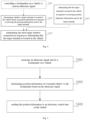
- the embodiment shows a flow chart illustrating a method for controlling a short-range wireless connection.
- the method may be executed by an electronic control unit on a vehicle.
- the electronic control unit may be, for example, a vehicle-mounted multimedia host (short for head unit), a vehicle control unit (VCU), a cockpit domain controller and the like.
- the method may include the following steps from S101 to S103.
- a loudspeaker on the vehicle is controlled to send an ultrasonic signal, in which the ultrasonic signal is configured for a target terminal to determine position information of the target terminal relative to the loudspeaker, and the target terminal is connected to the electronic control unit via the short-range wireless connection.
- the short-range wireless connection such as Bluetooth ® , is maintained in response to determining that the target terminal is located in the vehicle.
- a driver or passenger of the vehicle carries a terminal (e.g. a mobile phone, an smart wearable device, a tablet computer, etc.) into the vehicle and then closes a door.
- a terminal e.g. a mobile phone, an smart wearable device, a tablet computer, etc.
- the electronic control unit is connected to the terminal via the vehicle-mounted short-range wireless technology.
- the electronic control unit actively disconnects the short-range wireless connection even if a user is still in the vehicle and does not get out of the vehicle, causing short-range wireless music playing to stop and causing the user to feel bad.
- the electronic control unit may control the loudspeaker on the vehicle to send the ultrasonic signal in case it is confirmed that the vehicle is powered on and the door is closed.
- Controlling the loudspeaker to send the ultrasonic signal may be one of controlling the loudspeaker to send the ultrasonic signal once, or continuously send the ultrasonic signal, or periodically send the ultrasonic signal.
- Ultrasonic frequency may for example be above 20KHz.
- the electronic control unit controls each loudspeaker on the vehicle to send the ultrasonic signal, and the ultrasonic signal may carry position information of the loudspeaker, and the position information may be actual position information of the loudspeaker in the vehicle.
- the ultrasonic signal sent by each loudspeaker may carry the position information of the loudspeaker.
- each terminal may receive the ultrasonic signal sent by the loudspeaker through its own microphone.
- the terminal that has established the short-range wireless connection with the electronic control unit is determined as the target terminal.
- the target terminal may determine the position information of the target terminal relative to the loudspeaker, which is configured for representing relative position information of the target terminal relative to the loudspeaker, by using an ultrasonic positioning technology based on the position information of the loudspeaker carried in the ultrasonic signal.
- the target terminal may then send the determined position information of the target terminal relative to the loudspeaker to the electronic control unit, for example via short-range wireless connection between the target terminal and the electronic control unit.
- the electronic control unit may determine the position information of the target terminal (the position information is configured for representing an absolute position of the target terminal) based on pre-stored position information of the loudspeaker (the position information is configured for representing an absolute position of the loudspeaker) and the received position information of the target terminal relative to the loudspeaker.
- the electronic control unit may determine whether the target terminal is located in the vehicle based on the determined position information of the target terminal, i.e., the absolute position of the target terminal.
- the position information of the target terminal relative to the loudspeaker may include, but is not limited to, distance information and azimuth angle information of the target terminal relative to the loudspeaker.
- the electronic control unit may determine the position information of the target terminal, i.e. an actual position of the target terminal, based on the position information of the target terminal relative to the loudspeaker and the position information of the loudspeaker. For example, coordinate position information of the loudspeaker is pre-stored in the electronic control unit. After obtaining the distance information and the azimuth angle information of the target terminal relative to the loudspeaker, coordinate position information of the target terminal may be calculated, i.e. the position information of the target terminal may be obtained.
- the electronic control unit may calculate a plurality of pieces of the position information of the target terminal based on the position information of the target terminal relative to each loudspeaker and the position information of each loudspeaker, and finally determine the position information of the target terminal by combining the plurality of pieces of position information. For example, averaging the plurality of pieces of position information to obtain final position information of the target terminal.
- the short-range wireless connection with the target terminal may be continuously maintained when the electronic control unit determines that the target terminal is located in the vehicle. That is to say, in case that the electronic control unit is playing audio from the target terminal via the short-range wireless connection, the playing of the short-range wireless audio may be continued by continuing to maintain the short-range wireless connection between the electronic control unit and the target terminal. Even if the vehicle engine is stopped (at this time, the vehicle is not powered down) and the user opens the door on the driver's side, when it is determined by ultrasonic positioning that the terminal is still in the vehicle, it may be inferred that the user does not get off the vehicle, and therefore continuing to play the short-range wireless audio may improve the user experience.
- the electronic control unit may control the loudspeaker to send the ultrasonic signal, and after receiving the ultrasonic signal sent by the loudspeaker, the target terminal may determine the position information of the target terminal relative to the loudspeaker by using the ultrasonic positioning technology. The target terminal may then send the determined position information of the target terminal relative to the loudspeaker to the electronic control unit. The electronic control unit may determine whether the target terminal is located in the vehicle based on the position information of the target terminal relative to the loudspeaker, to realize accurate positioning of the target terminal by the electronic control unit.
- the short-range wireless connection with the target terminal may be continuously maintained, so that a short-range wireless audio may be continuously played. Even if the user opens the door of the vehicle, it may be inferred that the user does not get off the vehicle when it is determined by the ultrasonic positioning that the terminal is still in the vehicle, and therefore continuing to play the short-range wireless audio may improve the user experience.
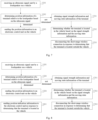
- FIG. 2 is a flow chart illustrating a method for controlling short-range wireless connection according to another embodiment of the present invention. As shown in FIG. 2 , the method further includes the following step S201.
- the short-range wireless connection is disconnected in response to determining that the terminal is located outside the vehicle.
- a control condition of the short-range wireless disconnection is not that the vehicle engine is stopped and the door on the driver's side is opened, but based on a distance between the electronic control unit and the terminal (the distance may be determined by a short-range wireless signal strength). For example, when the distance between the terminal and the electronic control unit exceeds a preset distance, and the short-range wireless signal strength between the terminal and the electronic control unit is lower than a preset threshold, the electronic control unit disconnects the short-range wireless connection with the terminal.
- the short-range wireless audio is still played in the vehicle, which results in unnecessary power consumption.
- the short-range wireless connection with the target terminal may be actively disconnected. That is to say, in case that the electronic control unit is playing the audio from the target terminal via the short-range wireless, the playing of the short-range wireless audio may be stopped by disconnecting the short-range wireless connection between the electronic control unit and the target terminal, solving the problem that the short-range wireless audio is still played in the vehicle when the terminal carried by the user is located outside the vehicle, improving the user experience, avoiding the unnecessary power consumption and being beneficial to energy saving.
- FIG. 3 is a flow chart illustrating a method for controlling a loudspeaker on a vehicle to send an ultrasonic signal in a method for controlling a short-range wireless connection according to another embodiment of the present invention.
- controlling the loudspeaker on the vehicle to send the ultrasonic signal may include the following steps S301 to S302.
- identification information of the target terminal is obtained.
- the loudspeaker is controlled to send the ultrasonic signal, in which the ultrasonic signal carries the identification information.
- the electronic control unit obtains the identification information of the target terminal, for example, through the short-range wireless connection between the electronic control unit and the target terminal.
- the identification information of the target terminal may be MAC (Media Access Control) address information of the target terminal, or short-range wireless address information of the target terminal, or device identification code information of the target terminal, or any identification information that may uniquely identify the target terminal.
- the loudspeaker may be controlled to send ultrasonic information, and the ultrasonic signal carries the identification information of the target terminal obtained by the electronic control unit.
- each terminal may obtain the identification information carried by the ultrasonic signal.
- the terminal may determine whether it is the target terminal by comparing the identification information of the terminal with the identification information carried by the ultrasonic signal. For example, when the comparison result indicates that two pieces of identification information are consistent, it is determined that the terminal is the target terminal.
- the terminal may perform a subsequent operation of determining the position information of the terminal relative to the loudspeaker based on the ultrasonic signal, i.e. performing an operation of ultrasonic positioning. In the case where it is determined that the terminal is not the target terminal, the terminal may not perform the operation of ultrasonic positioning.
- the electronic control unit may obtain the identification information of the target terminal connected to the electronic control unit via the short-range wireless connection, and then may carry the identification information of the target terminal in the ultrasonic signal and send the identification information out.
- the ultrasonic signal contains unique identification information that may determine whether the terminal is the target terminal. Therefore, it may be ensured that only the terminal that has established the short-range wireless connection with the electronic control unit performs the subsequent operation of ultrasonic positioning, and other in-vehicle terminals do not need to perform the ultrasonic positioning even if they receive the ultrasonic signal, avoiding unnecessary operations.
- FIG. 4 is a flow chart illustrating a method for controlling a short-range wireless connection according to yet another embodiment of the present invention. As shown in FIG. 4 , the method may include the following step S401.
- the electronic control unit may also receive the position indication information sent by the target terminal, for example, via the short-range wireless connection between the electronic control unit and the target terminal.
- the target terminal may determine whether the target terminal is located in the vehicle through relevant positioning techniques.
- the target terminal may determine whether the target terminal is located in the vehicle based on the short-range wireless signal strength between the target terminal and the electronic control unit.
- the target terminal may determine whether the target terminal is located in the vehicle based on the short-range wireless signal strength between the target terminal and the electronic control unit, and a moving state of the target terminal.
- the moving state may represent whether the terminal is currently in the moving state or a stationary state. It may be determined that the target terminal is located outside the vehicle in case that the short-range wireless signal strength becomes smaller and the target terminal is currently in the moving state. It may be determined that the target terminal is located in the vehicle in case that the short-range wireless signal strength is greater than a preset threshold of the short-range wireless signal strength.
- the target terminal may send the position indication information to the electronic control unit, in which the position indication information may indicate that the target terminal is located in the vehicle.
- the electronic control unit may determine that the target terminal is located in the vehicle after receiving the position indication information. In this way, the electronic control unit may continue to maintain the short-range wireless connection with the target terminal.
- a determining manner of whether the target terminal is located in the vehicle is added for the electronic control unit, namely, the target terminal is determined to be located in the vehicle via the position indication information sent by the target terminal.
- the electronic control unit may also determine that the target terminal is located in the vehicle under a condition that the electronic control unit receives the position indication information. Accordingly, the short-range wireless connection with the target terminal is maintained, the playing of the short-range wireless audio is continuously maintained, improving the user experience.
- FIG. 5 is a flow chart illustrating a method for controlling a short-range wireless connection according to an embodiment of the present invention, in which the method may be executed by the terminal, such as a mobile phone, a smart wearable device, a tablet computer and the like. As shown in FIG. 5 , the method may include the following steps S501 to S503.
- an ultrasonic signal sent by a loudspeaker on a vehicle is received.
- position information of the terminal relative to the loudspeaker is determined based on the ultrasonic signal.
- the position information is sent to the electronic control unit on the vehicle, in which the position information is configured for the electronic control unit to determine whether to maintain the short-range wireless connection with the terminal.
- the terminal may receive the ultrasonic signal sent by the loudspeaker through its own microphone, and the ultrasonic signal sent by the loudspeaker carries the position information of the loudspeaker.
- the terminal may calculate a relative position of the terminal and each loudspeaker based on the ultrasonic positioning technology.
- the terminal then sends the calculated position information of the terminal relative to the loudspeaker to the electronic control unit, for example, via the short-range wireless connection between the terminal and the electronic control unit.
- the electronic control unit may determine whether the terminal is located in the vehicle and further determine whether to maintain the short-range wireless connection with the terminal based on the received positional information of the terminal relative to the loudspeaker.
- the electronic control unit may determine the position information of the terminal (the position information is configured for representing the absolute position of the terminal) based on the pre-stored position information of the loudspeaker (the position information is configured for representing the absolute position of the loudspeaker) and the received position information of the terminal relative to the loudspeaker.
- the electronic control unit may determine whether the target terminal is located in the vehicle based on the determined position information of the terminal, that is, the absolute position of the terminal.
- the short-range wireless connection with the terminal may continue to be maintained when the electronic control unit determines that the terminal is located in the vehicle. That is to say, in case that the electronic control unit is playing the audio from the target terminal via the short-range wireless connection, the short-range wireless audio may be played continuously by continuing to maintain the short-range wireless connection between the electronic control unit and the target terminal. Even if the vehicle engine is stopped and the user opens the door on the driver's side, it may be inferred that the user does not get off the vehicle when it is determined via the ultrasonic positioning that the terminal is still in the vehicle, and therefore continuing to play the short-range wireless audio may improve the user experience.
- FIG. 6 is a flow chart illustrating a method for controlling a short-range wireless connection according to yet another embodiment of the present invention.
- the ultrasonic signal carries identification information of an apparatus connected to the electronic control unit via the short-range wireless connection.
- the method may further include the following steps S601 to S602.
- the identification information from the ultrasonic signal is obtained.
- a step of determining the position information of the terminal relative to the loudspeaker based on the ultrasonic signal i.e., S502, is performed in response to determining that the identification information matches identification information of the terminal.
- each terminal may receive the ultrasonic signal sent by the loudspeaker through its own microphone. Since the ultrasonic signal carries the identification information of the apparatus connected to the electronic control unit via the short-range wireless connection, it may be determined whether the identification information carried by the ultrasonic signal matches the identification information of the terminal by comparing the two pieces of identification information after the terminal receives the ultrasonic signal. For example, it is determined that the two pieces of identification information are matched in case that the two pieces of identification information are consistent.
- the terminal In case that it is determined that the identification information carried by the ultrasonic signal matches the identification information of the terminal, it may be known that the terminal is the apparatus connected to the electronic control unit via the short-range wireless connection, i.e. the target terminal described above, which needs to perform the subsequent operation of ultrasonic positioning. However, in case that it is determined that the identification information carried by the ultrasonic signal does not match the identification information of the terminal, it may be determined that the terminal is not the apparatus connected to the electronic control unit via the short-range wireless connection, and at this time, the terminal may not perform the subsequent operation of ultrasonic positioning.
- the identification information of the apparatus connected to the electronic control unit via the short-range wireless connection may be MAC address information of the apparatus, or short-range wireless address information of the apparatus, or device identification code information of the apparatus, or any identification information that may uniquely identify the apparatus.
- the electronic control unit may carry the identification information of the apparatus connected to the electronic control unit via the short-range wireless connection in the ultrasonic signal and send the identification information out.
- the ultrasonic signal contains the unique identification information that may determine whether the terminal is the apparatus connected to the electronic control unit via the short-range wireless connection. Therefore, it may be ensured that only the terminal that has established the short-range wireless connection with the electronic control unit performs the subsequent operation of ultrasonic positioning, and other in-vehicle terminals do not need to perform the ultrasonic positioning even if they receive the ultrasonic signal, avoiding unnecessary operations.
- FIG. 7 is a flow chart illustrating a method for controlling a short-range wireless connection according to yet another embodiment of the present invention. As shown in FIG. 7 , the method may further include the following steps S701 to S703.
- signal strength information and moving state information of the terminal are obtained in case that the position information is not determined, in which the signal strength information is configured for representing a short-range wireless signal strength between the terminal and the electronic control unit.
- the short-range wireless connection is disconnected in response to determining that the terminal is located outside the vehicle.
- the terminal may be unable to determine the position information based on the ultrasound signal due to the in-vehicle interference.
- the terminal may not receive any ultrasonic signal sent by the loudspeaker, or the received ultrasonic signal is incomplete, or the ultrasonic signal sent by a part of the loudspeakers is not received, or other situations where the position information may not be determined based on the ultrasonic signal.
- the terminal may determine whether it is located in the vehicle based on the short-range wireless signal strength between the terminal and the electronic control unit, and the moving state information.
- the moving state information is configured for representing whether the terminal is currently in the moving state or the stationary state.
- its own moving state information may be obtained through an acceleration sensor provided on the terminal.
- a magnitude of the short-range wireless signal strength may represent the distance between the terminal and the electronic control unit. Therefore, it may be determined whether the terminal is located in the vehicle by combining the moving state information and the magnitude of the short-range wireless signal strength.
- the terminal may actively disconnect the short-range wireless connection with the electronic control unit.
- the terminal when the terminal may not determine the position information based on the ultrasonic signal, it may still determine whether the terminal is located in the vehicle by an auxiliary positioning manner, i.e., combining the signal strength information and the moving state information, so that the terminal may still relatively accurately determine the position of the terminal relative to the vehicle when the ultrasonic positioning fails, and actively disconnect the short-range wireless connection with the electronic control unit when it is determined that the terminal is located outside the vehicle to stop the playing of the short-range wireless audio, and avoid the unnecessary power consumption while improving the user experience.
- an auxiliary positioning manner i.e., combining the signal strength information and the moving state information
- the step S702 may further include: it is determined that the terminal is located outside the vehicle in case that the signal strength information becomes smaller and the moving state information represents that the terminal is currently in the moving state.
- the terminal may determine that it is outside the vehicle, and actively disconnect the short-range wireless connection with the electronic control unit.
- FIG. 8 is a flow chart illustrating a method for controlling a short-range wireless connection according to yet another embodiment of the present invention. As shown in FIG. 8 , the method may further include the following step S801.
- position indication information is sent to the electronic control unit in response to determining that the terminal is located in the vehicle, in which the position indication information is configured for indicating that the terminal is located in the vehicle, so that the electronic control unit maintains the short-range wireless connection.
- a determining manner of whether the terminal is located in the vehicle is added for the electronic control unit, namely, the terminal is determined to be located in the vehicle via the position indication information sent by the terminal.
- the electronic control unit may also determine that the terminal is located in the vehicle under the condition that the electronic control unit receives the position indication information. Accordingly, the short-range wireless connection with the target terminal is maintained, the playing of the short-range wireless audio is continuously maintained, improving the user experience.
- FIG. 9 is a structural block diagram illustrating a device for controlling a short-range wireless connection according to an embodiment of the present invention.
- the device 900 for controlling the short-range wireless connection may be applied to the electronic control unit on the vehicle, and the electronic control unit may be, for example, the vehicle-mounted multimedia host, the vehicle control unit, the cockpit domain controller and the like. As shown in FIG.
- the device 900 for controlling the short-range wireless connection may include: a first controlling module 901 configured to control a loudspeaker on the vehicle to send an ultrasonic signal, in which the ultrasonic signal is configured for the target terminal to determine position information of the target terminal relative to the loudspeaker, and the target terminal is connected to the electronic control unit via the short-range wireless connection; and a first determining module 902 configured to determine whether the target terminal is located in the vehicle based on the position information in response to receiving the position information sent by the target terminal; the first controlling module 901 is further configured to maintain the short-range wireless connection in response to the first determining module 902 determining that the target terminal is located in the vehicle.
- the electronic control unit may control the loudspeaker to send the ultrasonic signal, and after receiving the ultrasonic signal sent by the loudspeaker, the target terminal may determine the position information of the target terminal relative to the loudspeaker by using the ultrasonic positioning technology. The target terminal may then send the determined position information of the target terminal relative to the loudspeaker to the electronic control unit. The electronic control unit may determine whether the target terminal is located in the vehicle based on the position information of the target terminal relative to the loudspeaker, to realize the accurate positioning of the target terminal by the electronic control unit.
- the short-range wireless connection with the target terminal may be continuously maintained, so that the short-range wireless audio may be continuously played. Even if the user opens the door of the vehicle, it may be inferred that the user does not get off the vehicle when it is determined via the ultrasonic positioning that the terminal is still in the vehicle, and therefore continuing to play the short-range wireless audio may improve the user experience.
- the first controlling module 901 may also be configured to disconnect the short-range wireless connection in response to the first determining module 902 determining that the target terminal is located outside the vehicle.
- the first controlling module 901 may include a first obtaining submodule configured to obtain identification information of the target terminal; and a controlling submodule is configured to control the loudspeaker to send the ultrasonic signal, in which the ultrasonic signal carries the identification information.
- the first determining module 902 may also be configured to determine that the target terminal is located in the vehicle in response to receiving position indication information sent by the target terminal, in which the position indication information is configured for indicating that the target terminal is located in the vehicle.
- FIG. 10 is a structural block diagram illustrating the device 1000 for controlling the Short-range wireless connection according to an embodiment of the present invention.
- the device 1000 for controlling the short-range wireless connection may be applied to the terminal, and the terminal may be, for example, the mobile phone, the smart wearable device, the tablet computer and the like. As shown in FIG.
- the device 1000 for controlling the short-range wireless connection may include: a receiving module 1001 configured to receive an ultrasonic signal sent by a loudspeaker on a vehicle; a second determining module 1002 configured to determine position information of the terminal relative to the loudspeaker based on the ultrasonic signal; and a sending module 1003 configured to send the position information to the electronic control unit on the vehicle, in which the position information is configured for the electronic control unit to determine whether to maintain the short-range wireless connection with the terminal.
- the target terminal may determine the position information of the target terminal relative to the loudspeaker by using the ultrasonic positioning technology.
- the target terminal may then send the position information of the target terminal relative to the loudspeaker to the electronic control unit, so that the electronic control unit may determine whether the target terminal is located in the vehicle based on the position information of the target terminal relative to the loudspeaker, realizing the accurate positioning of the target terminal by the electronic control unit.
- the electronic control unit determines that the target terminal is located in the vehicle, the short-range wireless connection with the target terminal may be continuously maintained, so that the short-range wireless audio may be continuously played. Even if the user opens the door of the vehicle, it may be inferred that the user does not get off the vehicle when it is determined via the ultrasonic positioning that the terminal is still in the vehicle, and therefore continuing to play the short-range wireless audio may improve the user experience.
- the ultrasonic signal carries identification information of the apparatus connected to the electronic control unit via the short-range wireless connection.
- the device 1000 for controlling the short-range wireless connection may further include: a first obtaining module configured to obtain the identification information from the ultrasonic signal; and a second determining module 1002 further configured to determine the position information of the terminal relative to the loudspeaker based on the ultrasonic signal in response to determining that the identification information matches identification information of the terminal.
- the device 1000 for controlling the short-range wireless connection may further include: a second obtaining module configured to obtain signal strength information and moving state information of the terminal in case that the position information is not determined by the second determining module 1002, in which the signal strength information is configured for representing the signal strength of the short-range wireless connection between the terminal and the electronic control unit; a third determining module configured to determine whether the terminal is located in the vehicle based on the signal strength information and the moving state information; and a second controlling module configured to disconnect the short-range wireless connection in response to the third determining module determining that the terminal is located outside the vehicle.
- the sending module 1003 may be further configured to send position indication information to the electronic control unit in response to the third determining module determining that the terminal is located in the vehicle, in which the position indication information is configured for indicating that the terminal is located in the vehicle, so that the electronic control unit maintains the short-range wireless connection.
- the third determining module may be further configured to determine that the terminal is located outside the vehicle in case that the signal strength information becomes smaller and the moving state information represents that the terminal is currently in the moving state.
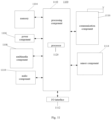
- FIG. 11 is a block diagram illustrating an electronic device 1100 according to an embodiment.
- the electronic device 1100 may be a terminal, such as a mobile phone, a computer, a digital broadcast terminal, a messaging device, a game console, a tablet device, a medical device, a fitness device, a personal digital assistant, or the like.
- the electronic device 1100 may include one or more of the following components: a processing component 1102, a memory 1104, a power component 1106, a multimedia component 1108, an audio component 1110, an input/output (I/O) interface 1112, a sensor component 1114, and a communication component 1116.
- a processing component 1102 a memory 1104, a power component 1106, a multimedia component 1108, an audio component 1110, an input/output (I/O) interface 1112, a sensor component 1114, and a communication component 1116.
- the processing component 1102 typically controls overall operations of the electronic device 1100, such as the operations associated with display, phone calls, data communications, camera operations, and recording operations.
- the processing component 1102 can include one or more processors 1120 to execute instructions to perform all or some of the steps in the method for controlling the short-range wireless connection applied to the terminal.
- the processing component 1102 may include one or more modules which facilitate the interaction between the processing component 1102 and other components.
- the processing component 1102 may include a multimedia module to facilitate the interaction between the multimedia component 1108 and the processing component 1102.
- the memory 1104 is configured to store various types of data to support the operation of the electronic device 1100. Examples of such data include instructions for any applications or methods operated on the electronic device 1100, contact data, phonebook data, messages, pictures, videos, etc.
- the memory 1104 may be implemented using any type of volatile or non-volatile memory devices, or a combination thereof, such as a static random access memory (SRAM), an electrically erasable programmable read-only memory (EEPROM), an erasable programmable read-only memory (EPROM), a programmable read-only memory (PROM), a read-only memory (ROM), a magnetic memory, a flash memory, a magnetic or optical disk.
- SRAM static random access memory
- EEPROM electrically erasable programmable read-only memory
- EPROM erasable programmable read-only memory
- PROM programmable read-only memory
- ROM read-only memory
- magnetic memory a magnetic memory
- flash memory a flash memory
- magnetic or optical disk
- the power component 1106 provides power to various components of the electronic device 1100.
- the power component 1106 may include a power management system, one or more power sources, and any other components associated with the generation, management, and distribution of power in the electronic device 1100.
- the multimedia component 1108 includes a screen providing an output interface between the electronic device 1100 and the user.
- the screen may include a liquid crystal display (LCD) and a touch panel (TP). If the screen includes the touch panel, the screen may be implemented as a touch screen to receive input signals from the user.
- the touch panel includes one or more touch sensors to sense touches, swipes, and gestures on the touch panel. The touch sensors may not only sense a boundary of a touch or swipe action, but also sense a period of time and a pressure associated with the touch or swipe action.
- the multimedia component 1108 includes a front camera and/or a rear camera.
- the front camera and/or the rear camera may receive an external multimedia datum while the electronic device 1100 is in an operation mode, such as a photographing mode or a video mode.
- an operation mode such as a photographing mode or a video mode.
- Each of the front camera and the rear camera may be a fixed optical lens system or have focus and optical zoom capability.
- the audio component 1110 is configured to output and/or input audio signals.
- the audio component 1110 includes a microphone (MIC) configured to receive an external audio signal when the electronic device 1100 is in an operation mode, such as a call mode, a recording mode, and a voice recognition mode.
- the received audio signal may be further stored in the memory 1104 or transmitted via the communication component 1116.
- the audio component 1110 further includes a speaker to output audio signals.
- the I/O interface 1112 provides an interface between the processing component 1102 and peripheral interface modules, such as keyboards, click wheels, buttons, and the like.
- the buttons may include, but are not limited to, a home button, a volume button, a starting button, and a locking button.
- the sensor component 1114 includes one or more sensors to provide status assessments of various aspects of the electronic device 1100. For instance, the sensor component 1114 may detect an on/off status of the electronic device 1100, relative positioning of components, e.g., the display and the keypad, of the electronic device 1100, a change in position of the electronic device 1100 or a component of the electronic device 1100, a presence or absence of user contact with the electronic device 1100, an orientation or an acceleration/deceleration of the electronic device 1100, and a change in temperature of the electronic device 1100.
- the sensor component 1114 may include a proximity sensor configured to detect the presence of nearby objects without any physical contact.
- the sensor component 1114 may further include a light sensor, such as a CMOS or CCD image sensor, for use in imaging applications.
- the sensor component 1114 may further include an acceleration sensor, a gyroscope sensor, a magnetic sensor, a pressure sensor, or a temperature sensor.
- the communication component 1116 is configured to facilitate wired or wireless communication between the electronic device 1100 and other devices.
- the electronic device 1100 can access a wireless network based on a communication standard, such as Wi-Fi, 2G, or 3G, or a combination thereof.
- the communication component 1116 receives a broadcast signal or broadcast associated information from an external broadcast management system via a broadcast channel.
- the communication component 1116 further includes a near field communication (NFC) module to facilitate short-range communications.
- NFC near field communication
- the NFC module may be implemented based on a radio frequency identification (RFID) technology, an infrared data association (IrDA) technology, an ultra-wideband (UWB) technology, a short-range wireless technology (such as Bluetooth ® ), and other technologies.
- RFID radio frequency identification
- IrDA infrared data association
- UWB ultra-wideband
- Bluetooth ® short-range wireless technology
- the electronic device 1100 may be implemented with one or more application specific integrated circuits (ASICs), digital signal processors (DSPs), digital signal processing devices (DSPDs), programmable logic devices (PLDs), field programmable gate arrays (FPGAs), controllers, micro-controllers, microprocessors, or other electronic elements, for performing the method for controlling the short-range wireless connection applied to the terminal in the above-mentioned embodiments.
- ASICs application specific integrated circuits
- DSPs digital signal processors
- DSPDs digital signal processing devices
- PLDs programmable logic devices
- FPGAs field programmable gate arrays
- controllers micro-controllers, microprocessors, or other electronic elements, for performing the method for controlling the short-range wireless connection applied to the terminal in the above-mentioned embodiments.
- non-transitory computer readable storage medium including instructions, such as the memory 1104 including instructions, executable by the processor 1120 in the electronic device 1100, for completing the above-mentioned method for controlling the short-range wireless connection applied to the terminal.
- the non-transitory computer-readable storage medium may be a ROM, a random access memory (RAM), a CD-ROM, a magnetic tape, a floppy disc, an optical data storage device, and the like.
- a computer program product including a computer program executable by a programmable apparatus, in which the computer program has code portions for performing the method for controlling the short-range wireless connection applied to the terminal when executed by the programmable apparatus.
- FIG. 12 is a block diagram illustrating a vehicle 1200 according to an embodiment.
- the vehicle 1200 may be a hybrid vehicle, or may be a non-hybrid vehicle, an electric vehicle, a fuel cell vehicle, or another type of vehicle.
- the vehicle 1200 may be a self-driving vehicle, a semi-self-driving vehicle, or a non-self-driving vehicle.
- the vehicle 1200 may include various subsystems, for example, an infotainment system 1210, a perception system 1220, a decision control system 1230, a driving system 1240, and a computing platform 1250.
- the vehicle 1200 may also include more or fewer subsystems, and each subsystem may include a plurality of components.
- the interconnection between subsystems and between components of the vehicle 1200 may be implemented by means of wire or wireless.
- the infotainment system 1210 may include a communication system, an entertainment system, a navigation system, and the like.
- the perception system 1220 may include several types of sensors for sensing information of the environment surrounding the vehicle 1200.
- the perception system 1220 may include a global positioning system (which may be a GPS system or a Beidou system or other positioning system), an inertial measurement unit (IMU), a lidar, a millimeter-wave radar, an ultrasound radar, and a camera.
- a global positioning system which may be a GPS system or a Beidou system or other positioning system
- IMU inertial measurement unit
- lidar a lidar
- millimeter-wave radar a millimeter-wave radar
- ultrasound radar an ultrasonic radar
- the decision control system 1230 may include a computing system, a vehicle controller, a steering system, a throttle, and a braking system.
- the driving system 1240 may include components that provide powered motion to the vehicle 1200.
- the driving system 1240 may include an engine, an energy source, a transmission system, and wheels.
- the engine may be one or a combination of internal combustion engines, electric motors, air compression engines.
- the engine is capable of converting energy provided by the energy source into mechanical energy.
- the computing platform 1250 may include at least one processor 1251 and memory 1252, in which the processor 1251 may execute instructions 1253 stored in the memory 1252.
- the processor 1251 may be any conventional processor, such as a commercially available CPU.
- the processor may also include, for example, a graphic process unit (GPU), a field programmable gate array (FPGA), a system on a chip (SOC), an application specific integrated circuit (ASIC), or a combination thereof.
- GPU graphic process unit
- FPGA field programmable gate array
- SOC system on a chip
- ASIC application specific integrated circuit
- the memory 1252 may be implemented using any type of volatile or non-volatile memory devices, or a combination thereof, such as a static random access memory (SRAM), an electrically erasable programmable read-only memory (EEPROM), an erasable programmable read-only memory (EPROM), a programmable read-only memory (PROM), a read-only memory (ROM), a magnetic memory, a flash memory, a magnetic or optical disk.
- SRAM static random access memory
- EEPROM electrically erasable programmable read-only memory
- EPROM erasable programmable read-only memory
- PROM programmable read-only memory
- ROM read-only memory
- magnetic memory a magnetic memory
- flash memory a flash memory
- magnetic or optical disk a magnetic or optical disk.
- the memory 1252 may store data, such as road maps, route information, vehicle position, direction, speed, etc.
- the data stored by the memory 1252 may be used by the computing platform 1250.
- the processor 1251 may execute the instructions 1253 to perform all or some of the steps in the method for controlling the short-range wireless connection applied to the electronic control unit.
- a computer readable storage medium including program instructions which, when executed by the processor, implement some or all steps of the method for controlling the short-range wireless connection applied to the electronic control unit.
- the computer-readable storage medium may be the memory 1252 including program instructions executable by the processor 1251 of the vehicle 1200 to perform the method for controlling the short-range wireless connection applied to the electronic control unit.
- a computer program product including a computer program executable by a programmable apparatus, in which the computer program has code portions for performing the method for controlling the short-range wireless connection applied to the terminal when executed by the programmable apparatus.
Landscapes
- Engineering & Computer Science (AREA)
- Signal Processing (AREA)
- Computer Networks & Wireless Communication (AREA)
- Physics & Mathematics (AREA)
- General Physics & Mathematics (AREA)
- Human Computer Interaction (AREA)
- Remote Sensing (AREA)
- Radar, Positioning & Navigation (AREA)
- Mechanical Engineering (AREA)
- Life Sciences & Earth Sciences (AREA)
- General Life Sciences & Earth Sciences (AREA)
- Geophysics (AREA)
- Measurement Of Velocity Or Position Using Acoustic Or Ultrasonic Waves (AREA)
- Telephone Function (AREA)
Applications Claiming Priority (1)
| Application Number | Priority Date | Filing Date | Title |
|---|---|---|---|
| CN202310637679.4A CN117939444A (zh) | 2023-05-31 | 2023-05-31 | 蓝牙连接的控制方法、装置、车辆、终端和介质 |
Publications (1)
| Publication Number | Publication Date |
|---|---|
| EP4472183A1 true EP4472183A1 (de) | 2024-12-04 |
Family
ID=88016398
Family Applications (1)
| Application Number | Title | Priority Date | Filing Date |
|---|---|---|---|
| EP23196060.0A Pending EP4472183A1 (de) | 2023-05-31 | 2023-09-07 | Verfahren und vorrichtung zur steuerung einer drahtlosen nahbereichsverbindung, fahrzeug, endgerät und medium |
Country Status (3)
| Country | Link |
|---|---|
| US (1) | US20240405889A1 (de) |
| EP (1) | EP4472183A1 (de) |
| CN (1) | CN117939444A (de) |
Citations (3)
| Publication number | Priority date | Publication date | Assignee | Title |
|---|---|---|---|---|
| US20180352066A1 (en) * | 2017-06-02 | 2018-12-06 | Hyundai Motor Company | Bluetooth apparatus of vehicle and method and apparatus for managing communication connection of vehicle |
| EP3672291B1 (de) * | 2018-12-19 | 2022-11-02 | Nxp B.V. | Mobilvorrichtungslokalisierer |
| WO2023072120A1 (zh) * | 2021-10-30 | 2023-05-04 | 华为技术有限公司 | 一种位置的获取方法以及相关设备 |
-
2023
- 2023-05-31 CN CN202310637679.4A patent/CN117939444A/zh active Pending
- 2023-08-25 US US18/238,418 patent/US20240405889A1/en active Pending
- 2023-09-07 EP EP23196060.0A patent/EP4472183A1/de active Pending
Patent Citations (3)
| Publication number | Priority date | Publication date | Assignee | Title |
|---|---|---|---|---|
| US20180352066A1 (en) * | 2017-06-02 | 2018-12-06 | Hyundai Motor Company | Bluetooth apparatus of vehicle and method and apparatus for managing communication connection of vehicle |
| EP3672291B1 (de) * | 2018-12-19 | 2022-11-02 | Nxp B.V. | Mobilvorrichtungslokalisierer |
| WO2023072120A1 (zh) * | 2021-10-30 | 2023-05-04 | 华为技术有限公司 | 一种位置的获取方法以及相关设备 |
Also Published As
| Publication number | Publication date |
|---|---|
| US20240405889A1 (en) | 2024-12-05 |
| CN117939444A (zh) | 2024-04-26 |
Similar Documents
| Publication | Publication Date | Title |
|---|---|---|
| CN110751854B (zh) | 汽车的停车指引方法、装置及存储介质 | |
| CN116552556B (zh) | 变道预警方法、装置、设备及存储介质 | |
| CN116546502B (zh) | 中继攻击的检测方法、装置及存储介质 | |
| CN115938407A (zh) | 播放控制方法、装置、设备、用户终端和存储介质 | |
| EP4472183A1 (de) | Verfahren und vorrichtung zur steuerung einer drahtlosen nahbereichsverbindung, fahrzeug, endgerät und medium | |
| CN116546068B (zh) | 车辆控制方法、装置、车辆、适配器、终端及介质 | |
| CN109189068B (zh) | 泊车控制方法、装置及存储介质 | |
| CN116546069B (zh) | 车辆控制方法、装置、车辆、适配器、终端及介质 | |
| CN117944686A (zh) | 车辆驾驶模式确定方法、装置、电子设备及存储介质 | |
| CN114462212B (zh) | 续航里程的仿真方法、装置及计算机存储介质 | |
| CN118283528B (zh) | 通信卡的保护方法、装置、存储介质、终端与车辆 | |
| EP4667269A1 (de) | Verfahren zur verarbeitung interaktiver informationen, medium, produkt und elektronische vorrichtung | |
| EP4489355A1 (de) | Kommunikation zwischen einem mobilen endgerät und einem fahrzeug mit einem usb-adapter | |
| CN117768851B (zh) | 车辆位置的确定方法、装置、终端、车辆及存储介质 | |
| CN114415676B (zh) | 车辆控制方法、装置、设备及计算机可读存储介质 | |
| EP4579435A1 (de) | Anzeigesteuerungsverfahren und -vorrichtung, fahrzeug, endgerät und speichermedium | |
| JP7575124B2 (ja) | 自動運転車及び自動運転車用プログラム | |
| CN119840635A (zh) | 车道宽度确定方法、装置、电子设备及存储介质 | |
| CN116709101A (zh) | 耳机与车载显示屏连接切换方法、装置、设备及介质 | |
| CN120676288A (zh) | 音频播放方法、装置、存储介质及程序产品 | |
| CN121310094A (zh) | 通信方法、通信装置、车辆、介质及程序产品 | |
| CN120529273A (zh) | 车钥匙的处理方法、装置及存储介质 | |
| CN121665177A (zh) | 车辆钥匙的定位方法、装置、设备、车辆、介质和芯片 | |
| CN118819457A (zh) | 音频播放方法、装置、车辆、介质及程序产品 | |
| CN120523428A (zh) | 动画显示方法、相关装置、系统、存储介质及程序产品 |
Legal Events
| Date | Code | Title | Description |
|---|---|---|---|
| PUAI | Public reference made under article 153(3) epc to a published international application that has entered the european phase |
Free format text: ORIGINAL CODE: 0009012 |
|
| STAA | Information on the status of an ep patent application or granted ep patent |
Free format text: STATUS: REQUEST FOR EXAMINATION WAS MADE |
|
| 17P | Request for examination filed |
Effective date: 20230907 |
|
| AK | Designated contracting states |
Kind code of ref document: A1 Designated state(s): AL AT BE BG CH CY CZ DE DK EE ES FI FR GB GR HR HU IE IS IT LI LT LU LV MC ME MK MT NL NO PL PT RO RS SE SI SK SM TR |
|
| REG | Reference to a national code |
Ref country code: DE Ref legal event code: R079 Free format text: PREVIOUS MAIN CLASS: H04M0001724000 Ipc: H04M0001724420 |
|
| GRAP | Despatch of communication of intention to grant a patent |
Free format text: ORIGINAL CODE: EPIDOSNIGR1 |
|
| STAA | Information on the status of an ep patent application or granted ep patent |
Free format text: STATUS: GRANT OF PATENT IS INTENDED |
|
| RIC1 | Information provided on ipc code assigned before grant |
Ipc: H04M 1/72442 20210101AFI20260123BHEP Ipc: G01S 11/06 20060101ALI20260123BHEP Ipc: G01S 5/28 20060101ALI20260123BHEP Ipc: H04W 4/48 20180101ALI20260123BHEP Ipc: H04M 1/72409 20210101ALI20260123BHEP Ipc: H04M 1/72412 20210101ALI20260123BHEP Ipc: G01S 5/30 20060101ALI20260123BHEP |
|
| INTG | Intention to grant announced |
Effective date: 20260205 |